Huawei first unveiled the HarmonyOS 2.0 (also known as Hongmeng OS 2.0) at the Huawei Developer Conference 2020. The tech giant has today officially announced the release of the developer beta version of the new ROM targeted at app developers.
According to Wang Chenglu, president of Huawei’s consumer BG software department, this year, Midea, Joyoung, Boss Electronics, and Puffin Technology have all released products that run on Hongmeng OS. The tech giant’s goal in 2021 is to cover more than 100 million devices from 40+ mainstream brands.
HarmonyOS was conceived originally for the Internet of Everything, with a better experience and more adaptations. For instance, with HarmonyOS, JD’s app can run on TVs, even refrigerators, and other screen-equipped devices. Thus, hundreds of millions of devices including cars equipped with a smart screen can run the JD app or any other app. This opens up several possibilities like allowing payment portals such as UnionPay to be accessed using multi-devices like PC, TV, etc.
At present, the beta version public test recruitment activities have been rolled out and developers and partners can apply to participate for free. However, it is open to just the Mate 40 series and Huawei P40 series as well as the MatePad Pro tablet.
Starting from today (December 16), Huawei will provide developers with two ways to get the beta version on the selected devices. Developers can use the remote simulator in Huawei DevEco Studio by downloading the DevEco Studio 2.0 Beta3 version from the HarmonyOS official website to get it. Alternatively, they can use the exclusive OTA to upgrade their device. First, you have to register and when approved, you will then receive the official Huawei public beta invitation email. According to the email content guidelines, you can get OTA push.
Here are the complete mobile phones and tablet models that the HarmonyOS mobile phone beta supports in China.
For mobile phones, there is the Huawei P40 full Netcom (5G dual card), as well as the P40 Pro Full Netcom version. Others include the Huawei Mate 30, Mate 30(5G), Mate 30 Pro, Mate 30 Pro(5G), the model list is ANA-AN00, ELS-AN00, TAS-AL00, TAS- AN00, LIO-AL00, LIO-AN00.
Tablet: Huawei MatePad Pro Full Netcom version, Full Netcom version (5G), WIFI version. The model list is MRX-AL19, MRX-W09, MRX-AN19.
The company adds that we can expect smartphones running on HarmonyOS in 2021. You can get more details about the schedule on the Huawei developer’s website.
Recent reports have revealed that the Samsung Galaxy S21 trio heading to markets like the U.S. and South Korea will be driven by the Snapdragon 888 chipset. India and European markets are expected to get the Exynos 2100 powered S21 editions. At Geekbench 5, the Galaxy S21 Ultra (mentioned with SM-G998B model number) has been spotted with the Exynos 2100 SoC, 12 GB of RAM, and Android 11 OS. The listing states that the yet to be announced chipset has a base frequency of 2.21GHz.
While the performance of the Exynos 2100 powered device appears to be better than the Snapdragon 888 powered S21, readers should know that the S21 models benchmarked at Geekbench are unfinished prototypes. Recent reports have revealed that the Exynos 2100 is equipped with a Cortex-X1 core clocking at 2.91GHz, a 3 x Cortex-A78 cores ticking at 2.81GHz, and 4-Cortex-A55 efficiency cores working at 2.21GHz. The SoC is also said to include a Mali-G78 GPU.
Samsung Galaxy S21 Ultra 5G render by Letsgodigital
Last week, a tipster had claimed that the Exynos 2100 will consume far less power than the Exynos 990 predecessor chip. The Cortex-A78 and Cortex-A55 cores offer faster performance than their counterparts found in the Snapdragon 888 SoC. This may allow the Exynos 2100 to offer marginally better performance than the SD888. Samsung is expected to unleash the Exynos 2100 before the end of this month. It is only then a good comparison can be done between the two chipsets.
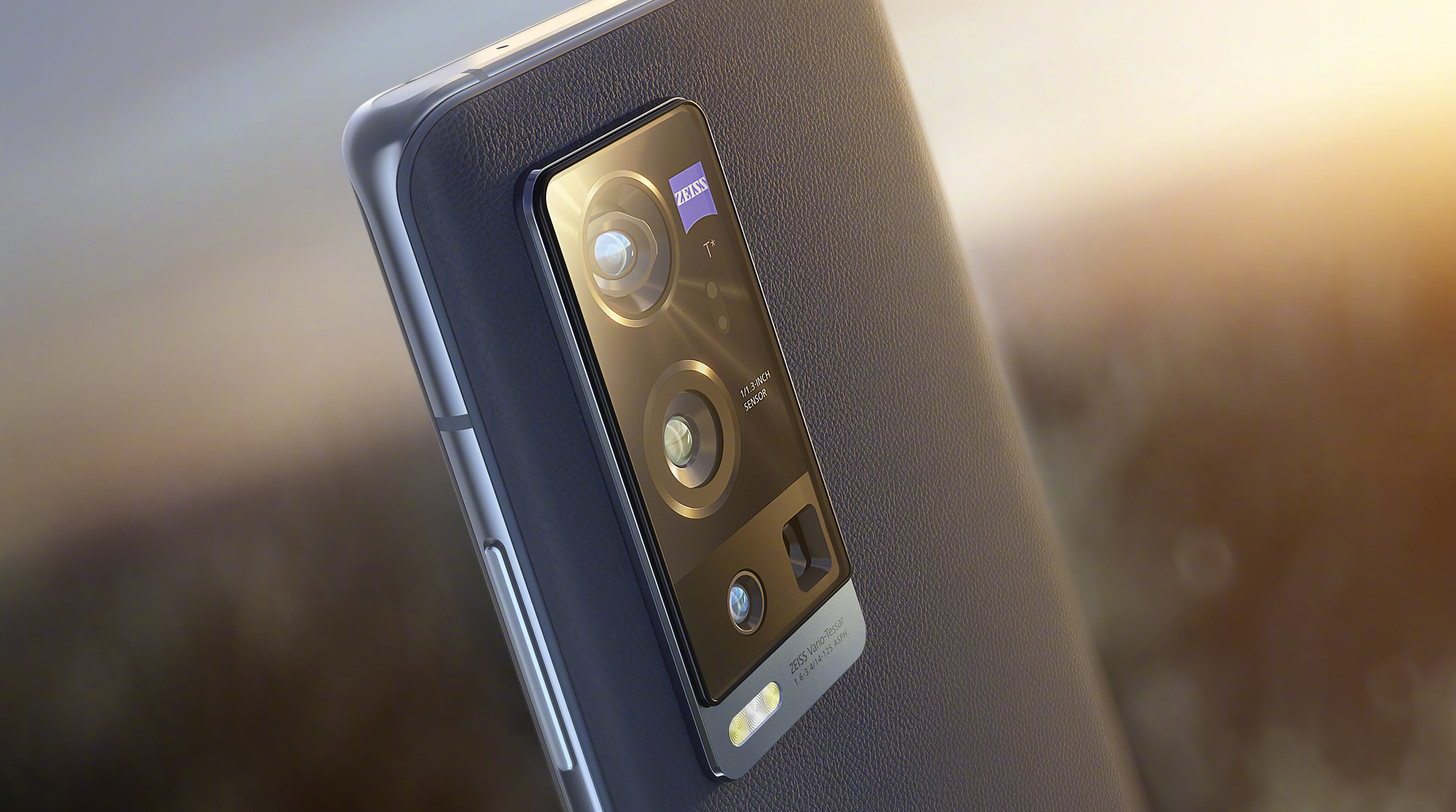
Vivo is likely to announce the Vivo X60, X60 Pro, and X60 Pro+ smartphones on Dec. 28 in China. Like the predecessor Vivo X50 series, the Vivo X60 models are expected to deliver a stellar photography experience. Ahead of the official announcement, a reliable tipster from China has shared the camera configurations of the Vivo X60 trio.
According to the tipster, the Vivo X60 will have a triple camera system led by a 48-megapixel main camera with an f/1.6 aperture. It will be accompanied by a 13-megapixel superwide lens, and a 13-megapixel portrait camera.
The Vivo X60 Pro has a quad-camera setup featuring a 48-megapixel main camera, a 13-megapixel superwide lens, a 13-megapixel portrait sensor, and an additional 8-megapixel periscope zoom lens that will bring support for 5x optical zoom and up to 60x digital zoom.
Also, the Vivo X60 Pro’s main camera gets an f/1.48 aperture for the main camera. The Vivo X60 and X60 Pro will feature the second-generation micro-gimbal stabilization powered by ZEISS optics.
Coming to the Vivo X60 Pro+, it is expected to sport an L-shaped camera setup. However, he did not share the configurations of the camera sensors. He added that the Vivo X60 Pro+ will have a centered punch-hole display like the X60 and X60 Pro. It will be driven by the Snapdragon 888v mobile platform, whereas the X60 and X60 Pro will be equipped with the Exynos 1080 chipset.
The Vivo X60 trio is likely to arrive with support for up to 120Hz refresh rate and 33W fast charging. The X60 series will be the first Vivo phones to arrive with OriginOS flavored Android 11 OS. It is speculated that the V2059A, V2047A, and V2046A Vivo phones that were recently approved by the 3C authority of China could be the upcoming X60 series smartphones.
Huawei will be announcing the Huawei Nova 8 series of smartphones on Dec. 23. The upcoming unveiling event could see the arrival of the Nova 8 and Nova 8 Pro smartphones. Leaked posters that surfaced yesterday revealed that the front and rear design of the Huawei Nova 8 Pro. The handset was seen with a unique quad-camera setup that is housed inside an oval-shaped module. A leaked render that gives a closer at the rear camera system of the Nova 8 series smartphone has surfaced on Twitter. The leakster who shared the render also revealed the camera configurations of the Nova 8 series phone.
As it can be seen in the image below, the camera module of the upcoming Nova 8 series smartphone features a main camera at the top. The other three cameras and an LED flash unit are placed below the main lens.
The new leak claims that the camera setup includes a 64-megapixel main camera, 8-megapixel lens, and a pair of 2-megapixel cameras, probably for macro shots and adding depth effects. The Huawei Nova 8 SE that debuted last month came with the same camera setup. A recent leak had revealed that the Nova 8 and Nova 8 Pro will have an identical camera setup.
The predecessor Huawei Nova 7 and Nova 7 Pro smartphones came with different cameras. The Nova 7 came with a quad-camera setup featuring a 48-megapixel main shooter, an 8-megapixel ultrawide lens, a 2-megapixel macro camera, and a 2-megapixel depth sensor. On the other side, the quad-camera setup of the Nova 7 Pro featured a 64-megapixel main shooter, an 8-megapixel periscope telephoto lens, an 8-megaipxel ultrawide lens, and a 2-megapixel macro lens. It can be assumed based on recent reports that all the phones in the Nova 8 series may carry identical camera setup.
A mysterious 5G phone has appeared in the database of the 3C authority of China with a 120W charger. A reliabe tipster has speculated that this device could be the alleged iQOO 7 flagship phone, which is expected to debut in early 2021.
The 3C listing reveals that the Vivo Mobile Communications Co. Ltd has a new 5G phone for the Chinese markets. The model number of the device is V2049A and it has been spotted with a charger that has a model number of V12060L0C0-CN. The new charger supports charging rates such as 9V/2A, 11V/2A, 11V/3A, 20V/5A, and 20V/6A Hence, the newly spotted V2049A smartphone is likely to support up to 120W fast charging.
While the listing does not directly carry the iQOO branding, a well-known Chinese tipster has speculated that this device could be the iQOO 7. It is not the first time that an iQOO phone has been spotted with the 120W V12060L0C0-CN charger. The iQOO 5 Pro that debuted in August came with support for 120W superfast charging. According to the company, the 120W charger can fully charge iQOO 5 Pro’s 4,000mAh battery in just 15 minutes.
The tipster who spotted the 3C listing had recently shared a few details of the upcoming iQOO flagship. The tipster claimed that the next iQOO flagship will be equipped with the Snapdragon 888 mobile platform. The iQOO 5 Pro featured a curved edge display, but its successor is likely to arrive with a flat-screen. He revealed that it may come with a slightly larger battery as compared to the iQOO 5 Pro.
iQOO 5 Pro
The other specs of the iQOO 7 could be the same as the iQOO 5 Pro. Hence, it is likely to arrive with a 50-megapixel triple camera system and a 16-megapixel selfie snapper. It may arrive preloaded with iQOO UI / Origin OS flavored Android 11 OS.
In October, Vivo unveiled the Vivo Y3s and Vivo Y30 smartphones in China. While the Vivo Y3s arrived as a tweaked version of the Vivo Y17 available in India, the Vivo Y30 debuted as a better version of the Indian Vivo Y20 handset. A new handset named as the Vivo Y30 Standard Edition has silently gone official in China.
Vivo Y30 Standard Edition specifications and features
While the Vivo Y30 for China was fueled by the Snapdragon 460 chipset, the newly announced Vivo Y30 Standard Edition phone is driven by the Helio P35 chipset. The phone ships with 6 GB of LPPDR4x RAM and 128 GB of built-in storage. The handset is preinstalled with FunTouch OS UI 10.5 based Android 10 OS.
The Vivo Y30 Standard Edition has a 6.51-inch IPS LCD display with a waterdrop notch. The phone produces an HD+ resolution of 720 x 1600 pixels and a 20:9 aspect ratio. According to Vivo, the Y30 Standard Edition delivers a screen-to-body ratio of 89 percent.
At the front, the Vivo Y30 Standard Edition has an 8-megapixel selfie camera. The backside of the device is fitted with a vertical camera setup that features a 13-megapixel primary shooter and a 2-megapixel depth assist lens.
The Vivo Y30 Standard Edition has a 5,000mAh battery that supports 10W charging. It has a side-facing fingerprint reader. It comes with connectivity options such as dual SIM support, 4G VoLTE, Wi-Fi 802.11ac, Bluetooth 5.0, GPS, microUSB, and a 3.5mm audio jack. It weighs 191.4 grams and measures 164.41 x 76.32 x 8.41mm. In terms of specs and design, it appears to be a modified version of the Vivo Y12s phone that went official in India last month.
Vivo Y30 Standard Edition pricing
The Vivo Y30 Standard Edition has arrived in China with a pricing of 1,398 Yuan. It comes in two colors such as Aurora and Cloud Water Blue.
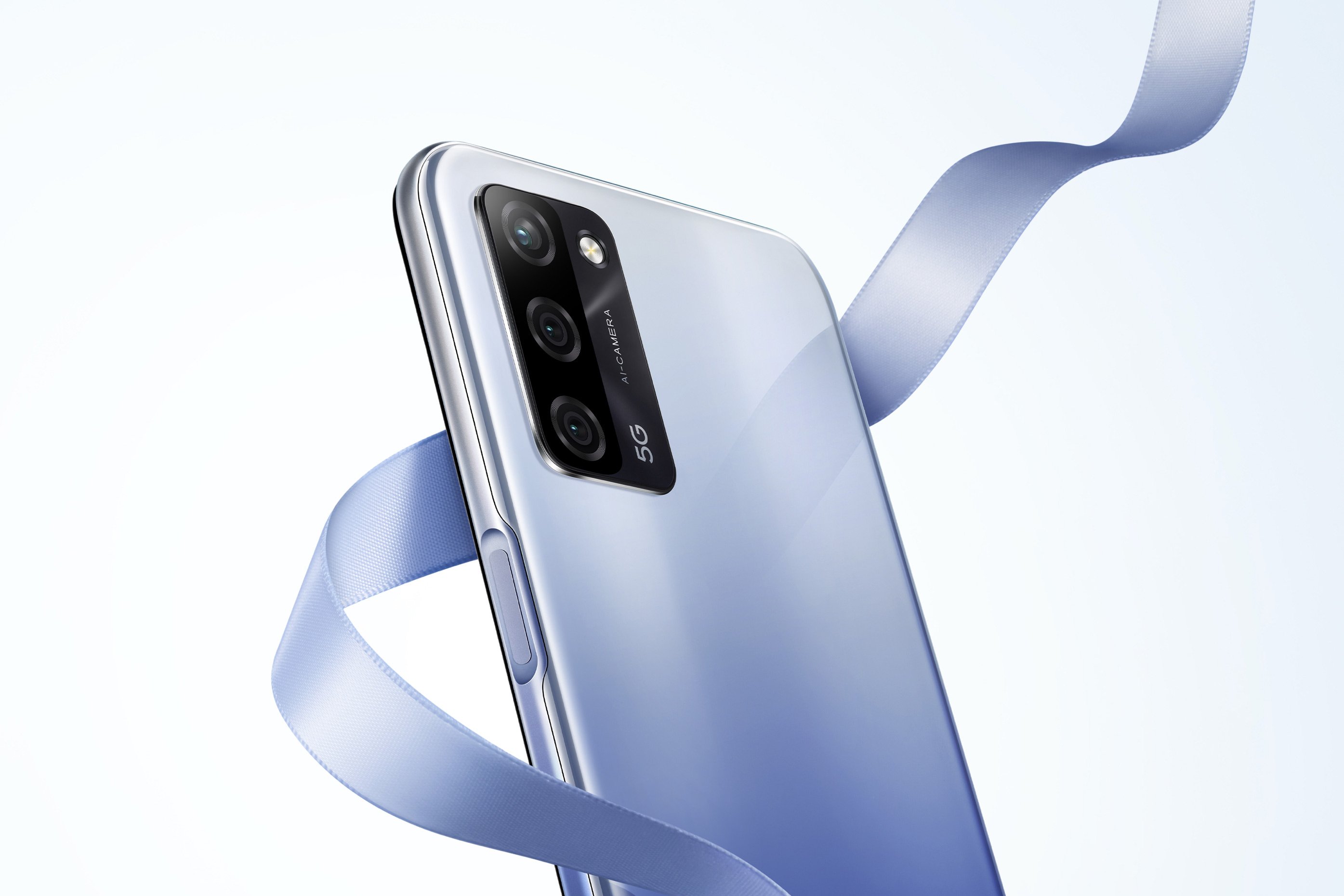
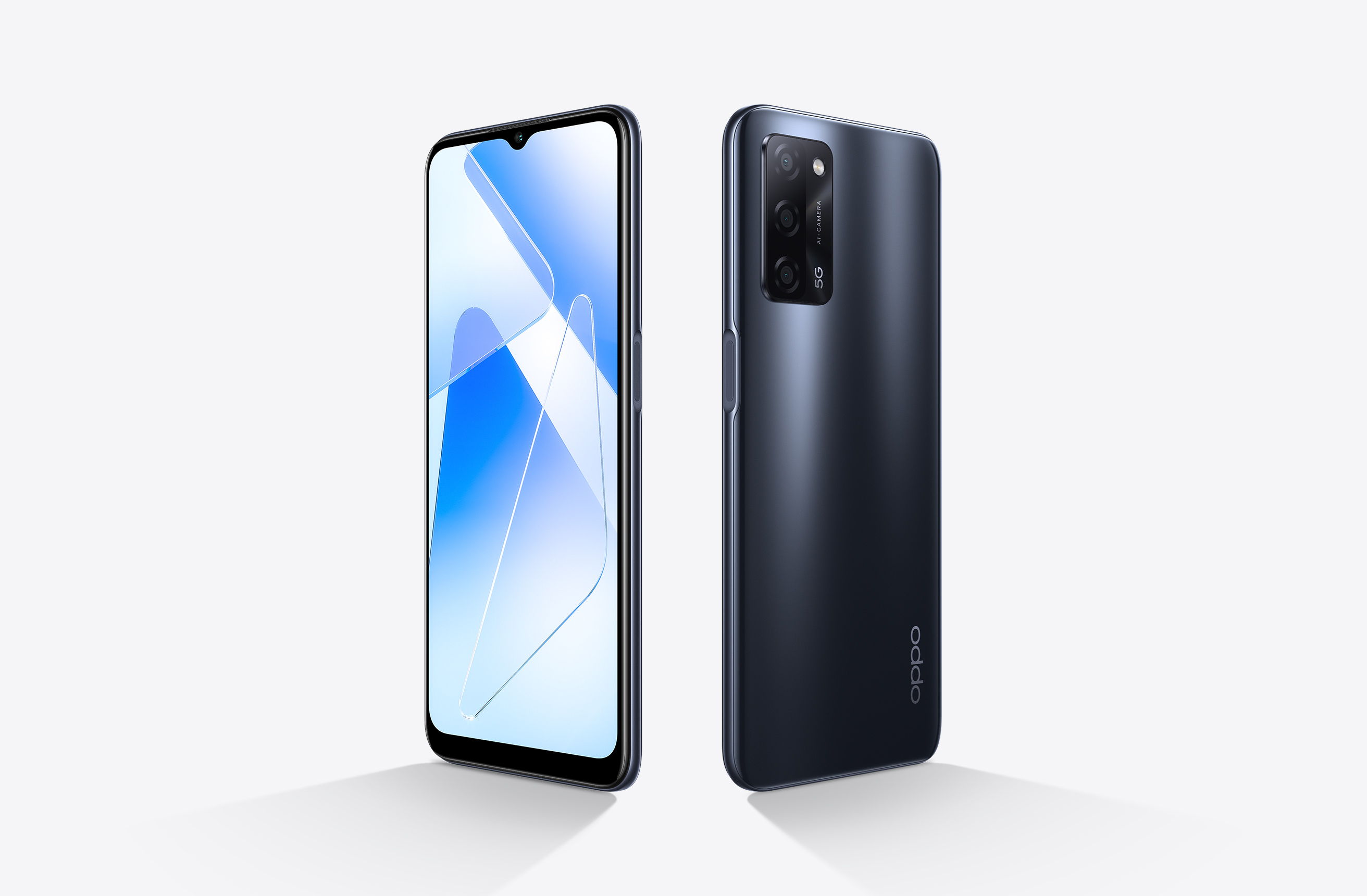
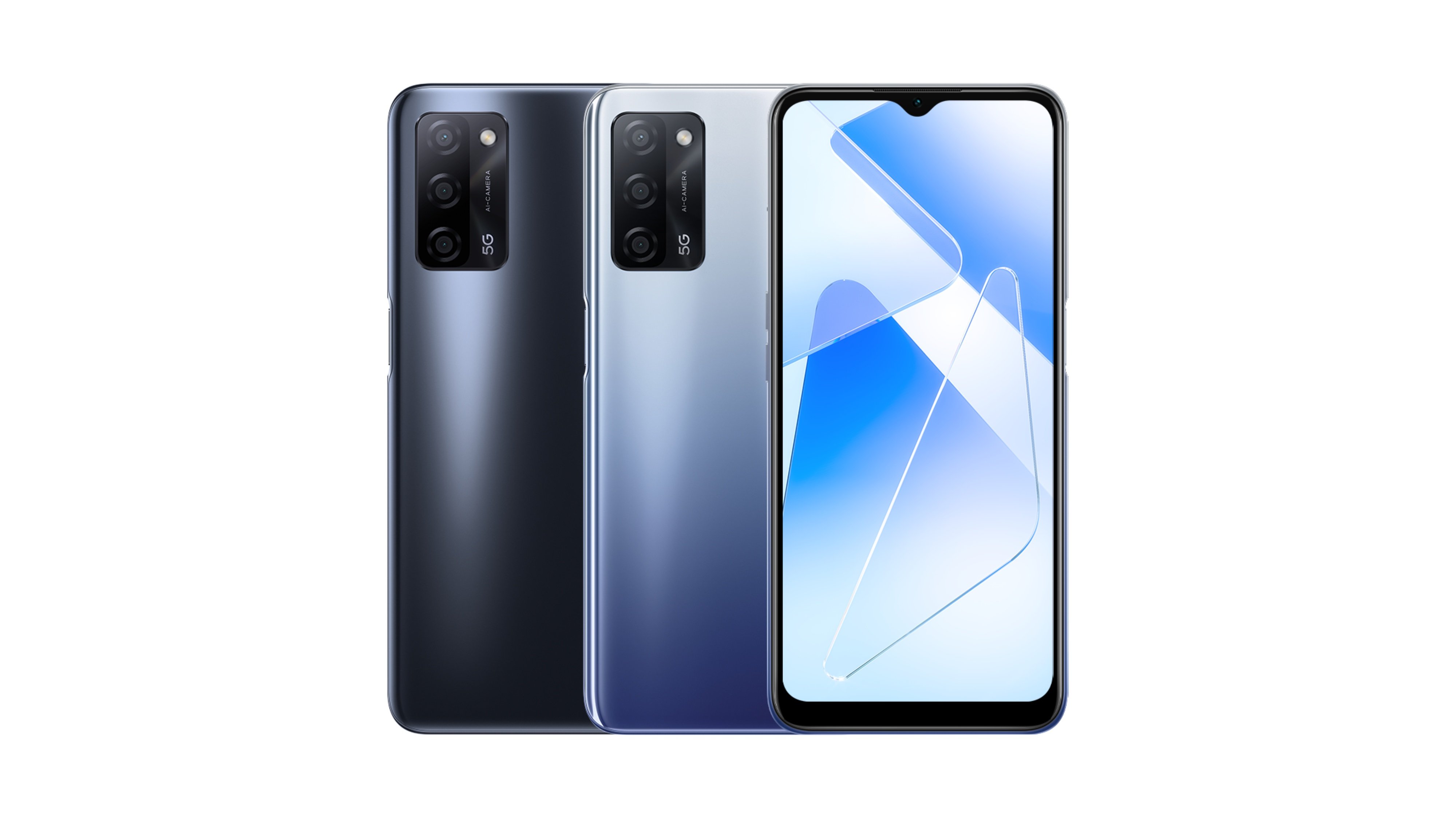
A leaked promo pic of the OPPO A15s was spotted a few days back. Yesterday, another image appeared to reveal the pricing of the smartphone for India. These leaks suggest that the launch date of the A15s may not be far away. Ahead of the impending launch, 91mobileshas collaborated with tipster Ishan Agarwal to share the leaked renders of the OPPO A15s.
The leaked images that have surfaced recently only revealed the rear appearance of the OPPO A15s. However, the new leak reveals that it features a waterdrop notch display. The other image shared by the publication shows that it will be available in two color variants such as Dynamic White and Dynamic Black.
The previously seen images of the OPPO A15s had showcased its Rainbow Silver color variant. The A15s is a variant of the OPPO A15 phone that went official in October. It comes in Dynamic Black and Mystery Blue. The publication claims that the A15s may not be available in the Mystery Blue edition.
Recent reports have revealed that the OPPO A15s will be arriving in India with 4 GB of RAM and 64 GB of storage and it could be priced at Rs 11,490 (~$156). This indicates that the A15s will be positioned higher than the OPPO A15 that comes in two options such as 2 GB RAM + 32 GB storage for Rs 8,990 (~$122) and 3 GB RAM + 32 GB storage that is priced at Rs 9,990 (~$135).
The OPPO A15s is expected to arrive with a 6.52-inch HD+ display. The rear side of the phone has a square-shaped camera housing that houses three cameras and an LED flash. A fingerprint scanner is also available on the backside of the device.
The 4-minute long animated video titled “Exynos: Thank You” reminds us of the Pixar animated movie, Up. The description for the video is a short letter from the Exynos Team that talks about how the year has been challenging for everyone including the Exynos team.
Dear fans,
Although 2020 will be remembered as a year full of challenges, both global and personal, it also gave people time to reflect and think about what is most important to our lives. In rediscovering these personal values, we’ve learned to cherish every precious moment we have with family and friends, and to believe in our inner strength and ability to tackle life’s challenges head-on.
The same goes for the #Exynos team. Now more than ever, we realize how important the support of our fans is towards going further. With a renewed confidence in the talent of our team, we have refocused our efforts to meet our fans’ expectations by developing a whole new #MobileProcessor.
To all of you, especially our fans that have waited patiently and supported us, we offer a heartfelt thank you. We hope this story will bring you a warm smile and that you have a happy holiday with family, friends, and loved ones.
#ThankYou again for all you have done for us. Stay tuned for more stories.
Sincerely,
The Exynos team
The second paragraph of the letter reproduced above says the team has refocused their efforts to the expectations of fans by “developing a whole new Mobile Processor”. While there is no specific mention of the name of this “whole new mobile processor”, we want to believe it is a teaser for the Exynos 2100.
There have been reports that the Exynos 2100 will be an exceptional chipset and it appears Samsung is taking its time before it officially unveils the new chipset which will power the Galaxy S21 series when it launches roughly a month from today.
The race is on for the OEM that will be the first to launch a Snapdragon 888-powered flagship. Xiaomi had earlier hinted that it would be the first to launch a phone bearing the latest Qualcomm flagship chip. The race is apparently for the swift as Samsung has also hinted that it will announce the Galaxy S21 in January 2021. This has just been confirmed by TM Roh, the President and Head of Samsung’s mobile division.
The Samsung mobile division head wrote a blog post which among other things outlined with admiration what the company accomplished in 2020. He also rolled out the tech giant’s plans for next year. Apart from the Galaxy S21 launch date, the Samsung chief also confirmed that the device will come with S Pen support, something that is associated with the Note series in the past.
Find some important quotes from the post below:
“Thank you to everyone who supported us in 2020. I look forward to sharing more in January!” concludes the post, shortly after this promise: “We’ve also been paying attention to people’s favorite aspects of the Galaxy Note experience and are excited to add some of its most well-loved features to other devices in our lineup.”
While the S Pen support will be one of the features, it will most likely be limited to the Galaxy S21 Ultra. Samsung may also extend it to the foldable Galaxy Z-series but that wasn’t stated.
Further, Roh disclosed that the company will expand its portfolio of foldable smartphones since the Note series will be rested. He hinted that foldables will become more accessible, which seems to affirm rumors that there will be four Galaxy Z foldable smartphones next year.
“Be on the lookout for super-intelligent, pro-grade camera and video capabilities in 2021,” Roh added. There are rumors that the Galaxy S21 Ultra will use a next-generation 108 MP main sensor and will have up to 10x periscopic zoom capability.
Huami announced two new smartwatches today, one of which is the Amazfit GTS 2e. This new smartwatch brings the models under the Amazfit GTS 2 series to three which is a lot considering last year’s GTS watch was only available in one model.
Amazfit GTS 2 vs Amazfit GTS 2e vs Amazfit GTS 2 Mini
When the Amazfit GTS 2 Mini was announced, I wrote an opinion piece on why the smartwatch was a better purchase than the standard Amazfit GTS 2. Now that there is a third model now, we are sure our readers will want to know which of these three watches is worth purchasing. We hope this post makes it easier for you to choose from the lineup. First, let’s have a spec by spec and features comparison of the features of all three watches:
Amazfit GTS 2
Amazfit GTS 2e
Amazfit GTS 2 Mini
Display and Resolution
1.65-inch Super Retina AMOLED Display with 3D glass
34I PPI
1.65-inch Super Retina AMOLED Display with 2.5D glass
341 PPI
1.55 inch AMOED Display with 2.5D glass
301 PPI
Material
Aluminum Alloy with optical Diamond-like Carbon Coating
Heart rate measurement
SpO2 measurement
Sleep tracking
Temperature measurement
Heart rate measurement
SpO2 measurement
Sleep tracking
Women's health management
Battery capacity and battery life
246mAh
Typical usage - 7 days
Basic Watch mode - 20 days
246mAh
Typical usage - 14 days
Basic Watch mode - 24 days
220mAh
Typical usage - 14 days
Basic Watch mode - 21 days
Dimensions and weight
42.8 x 35.6 x 9.7 mm
24.7 grams without the straps
42.8 x 35.6 x 9.85 mm
25 grams without the straps
40.5 x 35.8 x 8.95 mm
19.5 grams without the straps
Colors
Obsidian Black, Dolphin Gray, and Streamer Gold
Obsidian Black, Dark Green, Roland Purple
Obsidian Black, Rose Powder, and Deep Pine Green
Price
¥999
$179.99
€169
£159
¥799
¥699
The table clearly shows the differences between the three smartwatches which cuts across multiple areas including the display, features, and price. Below, we will focus on the major differences
Display and Materials
This is the part of the smartwatch users will interact with the most, so it will most likely be the dealbreaker or dealmaker for anyone who is considering any of the three watches.
The Amazfit GTS 2 and GTS 2e both have the same screen which is a 1.65-inch Super Retina Display. Where they differ is in the glass covering the screen – you get a 3D curved glass on the former while the latter has 2.5D glass. Apart from aesthetics, the screens are the same. So you can’t go wrong with either of them.
However, the Amazfit GTS 2 Mini has a smaller and less sharp AMOLED display. It is not bad but it won’t measure up to that of its siblings.
Coming to materials, Huami uses the same material for the case of all three watches which is commendable. It is aluminum alloy but the finish is different and that is one of what makes them different.
The Amazfit GTS 2 lineup supports a plethora of sports modes – 90 modes on the Amazfit GTS 2 and GTS 2e while the GTS 2 Mini has 70, which is more than sufficient if you ask me.
All three of the watches support the basics too such as heart rate measurement, blood oxygen level detection, and sleep tracking. The GTS 2e adds temperature measurement, a feature not available on the more expensive GTS 2 and the more affordable GTS 2 Mini. According to Huami, you can use the temperature sensor to measure ambient temperature and also the skin (surface) temperature of the wearer.
The Amazfit GTS 2 Mini’s own unique feature is support for women’s health and it is surprising it is the only one of the three that has it. This will make it appeal more to women as the menstrual calendar along with reminders for periods and ovulation will surely come in handy.
The Amazfit GTS has its own unique features too, one of which is built-in storage that allows users to store their own songs on the watch. Another feature it has is support for Bluetooth calls, so you can pick calls on it and talk back as it has not only a microphone but a speaker too. It is also the only one that connects via Wi-Fi.
Battery life
The Amazfit GTS 2 and Amazfit GTS 2e have the same battery capacity but the latter has better battery life. The Amazfit GTS 2 Mini which has a smaller battery but of course smaller screen also has a great battery life too that matches that of the Amazfit GTS 2e.
Price
The Amazfit GTS 2 is the most expensive of the three, and Huami may justify that with its sharper display, built-in storage, support for calls, and more premium finish. The Amazfit GTS 2e is more affordable while retaining most of the features of its sibling. It also has a significantly better battery life which is one of the cons of the Amazfit GTS 2.
The GTS 2 Mini is the most affordable of them all and that low price is due to the tradeoffs in the screen size and type, fewer sports modes, and motor type. Its battery life also matches that of the new Amazfit GTS 2e.
Conclusion
I already said there isn’t a compelling reason to get the Amazfit GTS 2 since there is the Amazfit GTS 2 Mini, and the launch of the Amazfit GTS 2e further reinforces that point. The GTS 2e packs the same display as the GTS 2, most of its features, and a way better battery life at just ¥100 more than the Mini model. All of these make the Amazfit GTS 2 a hard sell.
So if you want to pick up a model from the second-gen GTS series, the Amazfit GTS 2e or the Amazfit GTS 2 Mini are what we will consider first before the Amazfit GTS 2.
Twitter has been slapped with a fine over a bug that made private tweets appear public. This marks the first-ever sanction against a cross-border firm after the new GDPR dispute resolution mechanism. What’s more surprising is that the bug had occurred in early 2019.
As Reuters reports, Ireland’s DPC(Data Protection Commission) has imposed a fine of 450,000 euros ($547,000) on Twitter. Besides, this is a result of a 2019 investigation according to which Twitter violates Article 33(1) and 33(5) of the GDPR. Precisely, some of the users’ private protected tweets became public due to an Android App bug.
This doesn’t go well with the DPC as GDPR law requires a company to notify the breach of privacy on time(within 72 hours) and document it properly(scope of vulnerable data, security measures, etc.,). However, Twitter has responded to this saying that it occurred due to an “unanticipated consequence of staffing between Christmas Day 2018 and New Years’ Day”.
For the unware, GDPR is Europe’s General Data Protection Regulation. Made in 2016, the new law is in force since May 2018. Its scope widens to the European Union and the European Economic Area. DPC, on the other hand, is a lead privacy supervisor for many tech giants including Apple, Twitter, Facebook, Google in the EU region.
The Irish watchdog already has a total of 20+ cases pending so far. Generally, it has the power to impose a fine up to 4% of a company’s global revenue or €20 million, whichever is higher. Plus, the new sanction is the first against a US firm after the new Dispute resolution system as mentioned above.
Accordingly, it empowers a national regulator to make a decision before consulting with other regulators of the EU. Anyway, Twitter’s response to the final ruling also says that it is fully responsible for this mistake and remains fully committed to protecting the privacy and data of our customers.
The 2020 edition of Mobile World Congress, shortly referred to as MWC, was canceled due to the ongoing COVID-19 pandemic. The organizers, GSMA even refunded the amount for attendees and companies. Moving forward, it recently rescheduled the MWC Barcelona event to June 2021 for better interests. Now, the organization announces that MWC Shanghai 2021 will return as a physical event.
Credit: GSMA
GSMA(formerly: GSM Association) in a press release(via PR Newswire) announced the details of the in-person event. For starters, MWC 2021 Shanghai, China, will take place between February 23-25 at Shanghai New International Expo Centre (SNIEC). The theme for MWC 2021 is Connected Impact. Besides, people who attend the 2021 edition will witness 5G, AI, IoT, smart home, and many such breakthrough technologies.
Some of the exhibiting companies at the event include China Mobile, China Telecom, China Unicom, CICT, Ericsson, H3C, Huawei, Nokia Shanghai Bell, and ZTE. Out of the entire list of keynote and sessions speakers, some notable keynote speakers include:
Ken Hu, Rotating Chairman, Huawei
Yang Yuanqing, Chairman & CEO, Lenovo
Xu Ziyang, CEO, ZTE
Yang Jie, Chairman, China Mobile
Ke Ruiwen, Chairman, China Telecom
In addition to in-person events, MWC also says it will allow an online international audience from around the globe. The virtual experience will cover content, networking, and exhibition of the event.
That said, the event has four types of passes- Online Pass, Full Exhibition Pass, 5G Smartphone Conference Card, VIP Meeting Card. You can take a look at their pricing below:
Online Pass- 390 RMB($59.64)
Full Exhibition Pass- 690 RMB($105.5)
5G Smartphone Conference Pass- 6,200 RMB($948)
VIP Pass- 6,300 RMB($963.39)*
*This is a discounted price. Original price is 9,000 RMB($1376)
In case you didn’t know, MWC is an annual trade show. It showcases new concepts and technologies from smartphones, networking companies, etc., every year. Coming back, as per the official press release, MWC 2019 witnessed about 500 exhibitors and 65,000 attendees from around the world.
However, it is hard to expect such an audience next year given the pandemic is easing out very slowly. Nevertheless, if you are interested in visiting the event, you can book the passes here-> MWC Shanghai 2021 Pass.
Realme made an official announcement today but it isn’t for a smartphone or any other smart gadget. Instead, the company unveiled its first mascot known as Realmeow. The mascot is a reflection of the vision of the company and is said to be the brand’s so-called Chief Trend Officer.
The Realmeow mascot is designed by famed animator Mark A. Walsh in conjunction with Realme’s design team. The designer is a regular when it comes to animation as he has worked on numerous animation films like Finding Nemo and Monsters Inc. Realme says the mascot is 18 years old showing that the company is trying to appeal to Gen-Z.
It comes in Realme’s typical yellow and sports stylish laser glasses. Realmeow, whose name sounds like a cat and has some physical attribute of one, loves to skate, dance to hip-hop, and listen to rap. It also aims to deliver Realme’s message to be more daring, original, and be a trendsetter.
1 of 4
Realme disclosed that Realmeow will be a regular on marketing materials and also be an integral part of the design of future products. Already a Realmeow exclusive gift bag has leaked continuing a Realme Buds Air Pro, Realme Smart Watch S, Realmeow Hand Bag, and a Realmeow face mask.
Realme describes itself as an emerging mobile phone brand that is committed to offering mobile phones with powerful performance, stylish design, and sincere services. The company established in 2018 has continued to see a rise in its market share in several regions. From India where it was first established, the company has expanded to more markets in South-east Asia, Europe, and China. The brand is eying a further expansion into more markets driven by a powerful and innovative product regime.
Honor appears to be be marching along with the Xiaomi in terms of its fitness band products. To compete agaisnt the Xiaomi Band 5, Honor came up with a improved Band 6 fitness band carrying a large display and some smarrtwatch features. It is a hybrid band which lies in between fitness band and SmartWatch category availabel for the effective price of $56.99 from Gearbest.
The user gets additional $3 discount while paying via Paypal. The offer is valid for the first 1000 orders, so we suggest you to grab it as soon as possible. Honor Band 6 is available in three different colors of Black, White and Pink.
The device carries a 1.47-inch color display along with 2.5D Cirved Glass Design. It carries a fast magnetic suction charging and provides 10-14 days of battery standby upon full charge. It supports convinient blood oxygen monitoring which can accurately detech blood pressure. Moreover, the device comes with a support for 10 different professional sports and activities including riding, walking, swimming and others.
It is 5ATM waterproof which makes the fitness band more practical and useful. The smart band comes in three different color options of Meteorite black, Seagull grey and Coral pink.
It’s a limited time deal on Gearbest. Make sure to grab the maximum discount before the sale fades away.
Apple is planning to boost the iPhone production in 2021 according to a Nikkei report. The move comes at a time when it already faces shortages of several components for the iPhone 12 series.
According to the report, Apple is planning to make 96 million iPhones in H1 2021. That’s a 30% YoY increase which is reportedly due to the demand for its 5G devices. Apple brought the 5G connectivity to iPhones with the iPhone 12 series. Since then, there has been a good demand for the devices in Europe, China, and other Asian markets. In fact, it’s initial demand forecasted a two-week recovery period due to shortages of supplies.
Anyway, the report says Apple has directed suppliers to get ready for the target which also includes iPhone 11, and iPhone SE. Further, Apple is also planning to take it deep with a total of 230 million iPhone shipments next year. Recently, Apple got pushed to 4th place by Xiaomi in Global Smartphone Shipments.
Precisely, the company has so far shipped 116 million iPhones in 2020. Out of this, the majority of shipment is from the 5G devices according to the report. Either way, it has crawled back up with just a 1% YoY dip in shipments so far. And with the global smartphone market’s recovery far away in 2022, Apple has no choice but to crank it up a notch and do something.
However, Apple has a main concern to address in order to achieve the next year’s target. Although the report says Apple has enough stocks of processor, it has been increasingly facing shortages of components. A recent report on IC shortages for iPhone 12 Pro which could last till Q2 2021 gives more bad news.
That’s not all as the report says in spite of reallocated parts of the iPad to the iPhone 12 range, Apple is chasing for other components to meet demand. Experts also say that even though a positive atmosphere lies ahead in 2021, Apple won’t benefit from Huawei’s absence, unlike other companies. Either way, Apple’s target for 2021 is a 20% YoY increase from 2019.
The Qualcomm Snapdragon 678 is an Octa-Core CPU built on the 11nm LLP process. As per the official press release, the SoC brings a minute performance upgrade over the predecessor. Accordingly, it has a Kryo 460 CPU clocked at 2.2GHz compared to 2.0GHz on the Snapdragon 675. However, the GPU on the 678 is the same Adreno 612 but Qualcomm says it has increased the performance.
For the unware, Kryo is a series of semi-custom ARM cores that Qualcomm uses on its Snapdragon SoCs. Here, the Kryo 460 refers to Cortex A76 and Cortex A55 cores. Out of this, 2xA76 high-performance cores are clocked up to 2.2GHz as mentioned by Qualcomm.
Snapdragon 678 Specifications
For specs, the SoC supports display up to FHD+ with a max resolution of 2520×1080 pixels and 10-bit color depth. For cameras, it has a 14-bit Qualcomm Spectra™ 250L ISP. This supports a single camera up to 192MP and a single/double camera with MFNR up to 25/16MP respectively. Here, MFNR refers to Multiple Frame Noise reduction.
Qualcomm says the 3rd gen Qualcomm® AI engine supports camera features like portrait mode, low-light, laser auto-focus, 4K video at 30fps, 5x Optical zoom, slow-mo(up to 1080p at 120fps), and more. It also supports HEVC(High-Efficiency Video Coding) and has Accelerated EIS support.
As mentioned above, the Adreno 612 GPU is the same as the predecessor. However, Qualcomm says this SoC is optimized for Unity, Messiah, NeoX, and Unreal Engine 4, among other top games, and more.
Similarly, the SD678 has the same X12 LTE modem. As the name suggests it doesn’t support 5G. However, it supports peak download, upload speeds of 600,150 Mbps respectively. There is Dual-SIM VoLTE and 3x20MHz downlink carrier aggregation support as well.
As for connectivity, we have Wi-Fi 802.11ac, Bluetooth 5.0, NFC, Beidou, Galileo, GLONASS, GPS, QZSS, SBAS for navigation. For ports, you get USB-C with USB-3.1 support.
Other features include 8GB DDR4 RAM at 1866MHz, video playback up to 4K with HEVC, AVC codec support, Qualcomm® aptX™, aptX™ HD audio, audio playback up to 4W, Quick Charge™ 4+ technology, and more.
The Nova 8 is a new Huawei phone scheduled to launch on December 23. While Huawei has already teased the design of the phone with a poster announcing its launch date, two photos that have surfaced on Weibo are the ones that give us our best look at the smartphone and its unique rear camera design.
The poster shows that the Nova 8 (or Nova 8 Pro) will have a curved display with a double punch hole for two front-facing cameras. The curved screen has caused the power and volume buttons to be close to the back of the phone in a fashion similar to the Mate 40.
The rear of the phone is the more interesting part of the phone’s appearance with its large camera housing that is shaped like a really big pill. There is a single large sensor at the top and below it are four holes that house other cameras and an LED flash.
The poster confirms that the phone will have a 120Hz refresh rate and also have support for 66W fast charging. Another feature it says the phone has is a Vlog Mode that allows the user to record from both the front and rear cameras at the same time.
A tweet by Teme (@RODENT950) says the primary camera is a 64MP sensor and it will be paired with an 8MP ultrawide angle camera, and two 2MP sensors which should be for capturing the depth of field details and macro photography.
A second photo which was also posted by Digital Chat Station on Weibo shows a brand ambassador holding the gradient pink variant of the phone. The image shows that there is a Nova logo at the bottom of the screen.
Amazon has just announced that its virtual assistant, Alexa now supports a Live Translation feature, allowing users who speak different languages to communicate with each other. The complex process will involve the virtual assistant translating both sides of such a conversation.
Amazon Echo Dot Kids Edition
At the moment, Alexa can translate English, Spanish, German, Italian, Brazilian Portuguese, and Hindi, with the Live Translation feature. Amazon said the feature is supported on Echo devices with the location set to English U.S.
The Live Translation feature draws support from existing Amazon systems and features, including Alexa’s automatic-speech-recognition (ASR) and its text-to-speech systems. These, in combination with Amazon Translate, as well as the whole gamut of Amazon’s machine learning models, designed and optimized for conversational-speech translation all combine seamlessly to produce the Live Translation feature, Amazon said in a recent statement.
The berthing of this translation feature opens up new vistas in real-time communication, providing exciting possibilities with the seeming demolition of the communication barrier.
Similar to what obtains with most ASR systems, Amazon said that the live translation system incorporates both an acoustic model and a language model, both models combining to provide insights for the ASR system to decide between alternative interpretations of the same sequence of phonemes.
To provide users with a near-natural experience, Amazon adapted Alexa to a conversational speech by modifying its end-pointer to accommodate longer pauses for the Live Translation feature. Alexa uses the end-pointer to determine when a person has finished speaking. Alexa can also easily identify pauses in the middle and end of sentences.
Search engine giant Google also offers a similar feature called Interpreter Mode. It is yet to be seen how the two services square up side by side, but this certainly provides an additional option for live translation and inter-language communication.
China’s search giant, Baidu Inc is putting plans afoot to actualize the design and production of its own electric vehicles. In actualizing the plans, the company has had discussions with some automakers. This latest move pits Baidu in line as the race among tech firms to develop smart cars gathers momentum.
The search-engine giant is also into the design and development of autonomous vehicles and internet connectivity infrastructure and will consider contracting the manufacturing, to an automaker or in the alternative, create a majority-owned company with automakers.
Baidu thus joins its peers like Tencent Holdings, Amazon, and Alphabet, which have done a lot in research and development in automobile technology or invested in smart-car auto firms.
Baidu has held preliminary talks, although no definitive decisions were reached, with some Chinese automakers on possible business collaboration, insiders have said. The insiders spoke under the cover of anonymity since they were not authorized by Baidu to speak on the issue.
Baidu on their part declined to comment on the matter. The automaker, GAC, mentioned among those that have had discussions with Baidu, stated that it has a strategic partnership with the search giant and that any further cooperation was subject to discussion. Geely said it was not aware of such talks while FAW failed to respond to inquiries.
Baidu established its autonomous driving division Apollo in 2017 and it supplies AI-generated technology and other ancillary jobs to automakers such as Geely, Volkswagen, Toyota, and Ford.
Baidu also operates autonomous taxi service Go Robotaxi with safety drivers on board in Beijing and a growing number of Chinese cities, with plans to scale up expansion in the next three years. It recently got clearance to test five cars in Beijing unmanned.
Building cars would represent a dramatic shift in the company’s plans to diversify and shore up income forecasts outside its core business model as a search engine, where revenues fell short of projections in 2019.
The OnePlus Nord N100 is the cheapest OnePlus smartphone ever. This handset was announced for Europe and the US after the OnePlus 8T launch in late October. However, it is yet to go on sale in the latter region. Ahead of it, the phone is receiving its fourth system update.
The latest update for the OnePlus Nord N100 comes with build number OxygenOS 10.5.4. Just like the previous update that was rolled out in the fourth week of November, this one too brings a couple of fixes.
These fixes are for the phone not waking up under certain circumstances and certain known issues. The new update is also said to improve system stability.
OnePlus Nord N100 OxygenOS 10.5.4 Official Changelog
System
Fixed an issue where the phone may not wake up under certain circumstances
Fixed known issues and improved system stability
For those unaware, Oneplus smartphones that launched in the second half of 2020 have been receiving multiple updates since their launch worldwide. All of these updates are related to fixes.
Hence, it suggests that the brand has been facing difficulties in providing stable software builds with the increase of its product portfolio. We hope OnePlus finds a solution to this problem soon. Because the company is expected to introduce more categories in the coming months.
We use cookies on our website to give you the most relevant experience by remembering your preferences and repeat visits. By clicking “Accept”, you consent to the use of ALL the cookies.
This website uses cookies to improve your experience while you navigate through the website. Out of these, the cookies that are categorized as necessary are stored on your browser as they are essential for the working of basic functionalities of the website. We also use third-party cookies that help us analyze and understand how you use this website. These cookies will be stored in your browser only with your consent. You also have the option to opt-out of these cookies. But opting out of some of these cookies may affect your browsing experience.
Necessary cookies are absolutely essential for the website to function properly. This category only includes cookies that ensures basic functionalities and security features of the website. These cookies do not store any personal information.
Any cookies that may not be particularly necessary for the website to function and is used specifically to collect user personal data via analytics, ads, other embedded contents are termed as non-necessary cookies. It is mandatory to procure user consent prior to running these cookies on your website.