Vivo may be preparing to add another device to its V series lineup. A new leak from XpertPick has revealed the upcoming V60 Lite 4G, complete with renders and full specs. The phone is set to succeed last year’s V50 Lite 4G, but this time, Vivo is packing in a few upgrades to keep it competitive.
Vivo V60 Lite 4G Specifications (Expected)
The V60 Lite 4G will feature a 6.77-inch AMOLED display with a 120Hz refresh rate and a 94.2 percent screen-to-body ratio. The edges are curved, and the front looks almost entirely screen, which should give it a premium feel despite its “Lite” branding.
Powering the device is Qualcomm’s Snapdragon 685, paired with 8GB of RAM and 256GB of storage. On the software side, the phone will ship with Android 15 running under Vivo’s FunTouch OS 15.
Around the back, there’s a 50MP main shooter with Sony’s IMX882 sensor, joined by an 8MP ultrawide. On the front, Vivo has fitted a 32MP selfie camera.
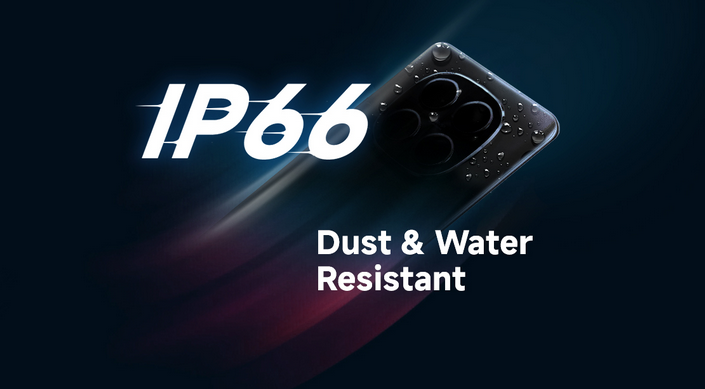
The V60 Lite 4G will pack a 6,500mAh cell with support for 90W fast charging to keep things running. Other notable features include an in-display fingerprint sensor, dual speakers, and an IP65 rating for splash and dust resistance. At 7.59mm thick, the phone is also impressively slim for one with such a large battery.
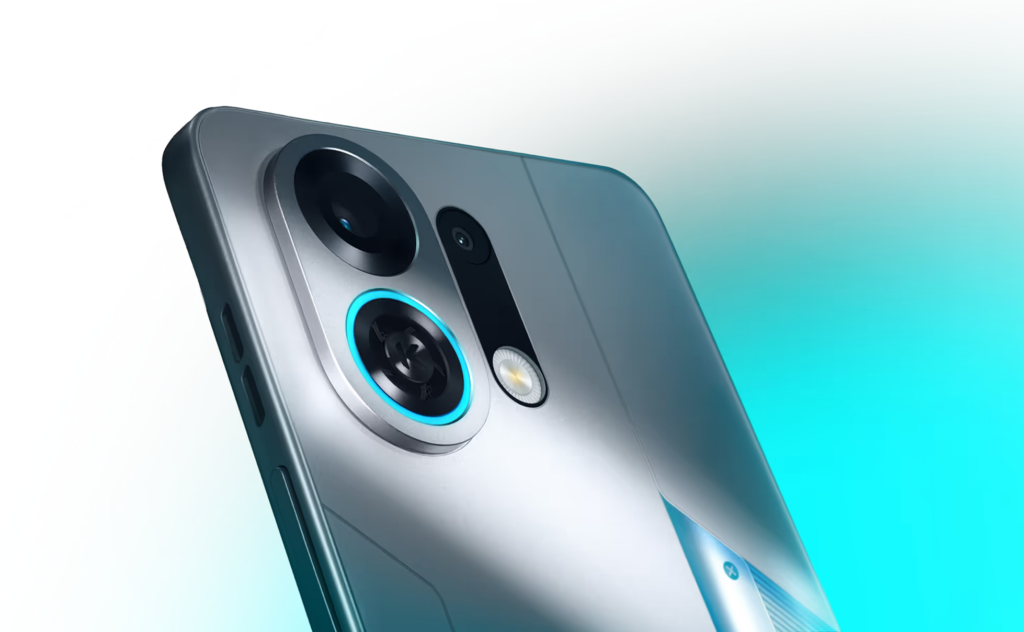
Design-wise, the leaked renders show off two color options — black and blue — with a vertical dual-camera setup and a distinctive ring LED flash.
Pricing and availability details remain under wraps for the time being, but with leaks this detailed, an official launch shouldn’t be far away.
For more daily updates, please visit our News Section.
REDMI is widening its budget lineup with the Redmi 15C 5G, now available across several European countries. The phone follows the 4G version that landed earlier this month, but adds faster connectivity while keeping the familiar design and big battery that made its predecessor popular.
Retail listings in Poland, France, Spain, and Hungary confirm the new model. Prices start at around €150 for 4GB RAM and 128GB storage, while the 256GB version costs a little more. That’s only a slight bump from the 4G edition, which is still selling for about €130 in some markets.
The key change here is the processor. REDMI has swapped the older Helio G81 Ultra for MediaTek’s Dimensity 6300. It’s built on a 6nm process, with two performance cores at 2.4GHz and six efficiency cores at 2.0GHz. It’s not a powerhouse, but it should run daily apps and light games better while sipping less power.
Most of the hardware is carried over. There’s still a 6.9-inch LCD screen with a 120Hz refresh rate, along with a 6,000mAh battery that supports 33W charging (though no charger is included in the box). The camera setup is modest: a 50MP main sensor on the back and an 8MP selfie shooter in the front notch.
Other details include IP64 splash protection, NFC in certain regions, a headphone jack, and a side-mounted fingerprint reader.
The Redmi 15C 5G may not feel new to anyone who’s seen the 4G model, but for buyers after a cheap 5G phone with strong battery life, it looks like another solid option in REDMI’s growing lineup.
OnePlus has started rolling out OxygenOS 15.0.2.600 for the OnePlus Nord 5 in India. The update is being released in batches, with a wider rollout expected in the coming days.
The new build, labeled CPH2707_15.0.2.600(EX01), introduces a series of improvements across system performance, privacy features, and usability. Among the key changes, animations when tapping Live Alerts or notifications on a locked screen have been refined for a smoother experience.
The Photos app gains a map album feature, allowing users to view all location-tagged images on a map. Photos moved from the Private album back to public view will now appear in their original locations for easier access. Users can also change privacy passwords from each secondary page of Private Safe and from the Locked album in Photos.
Phone Manager now displays daily and weekly screen time data under App Management, giving users better insight into usage patterns. The IR Remote app has also been updated with a more organized layout for its control panel buttons.
On the system side, the September 2025 Android security patch is integrated, providing enhanced protection against potential vulnerabilities.
As with previous rollouts, the update is incremental. Only a limited number of devices will receive it initially, followed by a broader release after stability is confirmed. Users can manually check for the update by navigating to Settings > System > System Updates.
For Indian users, OnePlus has made device issue reporting more accessible. Bug reports can be filed directly through the OnePlus Community App under the “Bug Report” section in the user profile. Alternatively, users can dial *#800# to open the feedback tool and submit problems directly.
For more daily updates, please visit our News Section.
Blaupunkt has introduced its first QLED Smart TVs with JioTele OS in India. The range includes 43-inch, 50-inch, and 55-inch models. Alongside, the company has announced the SigmaQ series with 24-inch, 32-inch, and 40-inch options for compact use.
The Blaupunkt JioTele OS QLED 4K lineup comes with AI-based content recommendations, a sports mode, and access to more than 300 free live TV channels through Jio Store. Buyers get a three-month JioHotstar subscription. The TVs have a bezel-less AirSlim design for edge-to-edge viewing.
The 55-inch model supports HDR and covers over 1.1 billion colors. It runs on an Amlogic processor with 2GB RAM and 8GB storage. Audio output is delivered by 50W Dolby Audio speakers with multiple sound modes. The display has 4K resolution at 60Hz with a brightness of 450 nits. Connectivity features include Bluetooth 5.0, dual-band Wi-Fi, HDMI ARC and CEC, and optical audio. Pre-installed apps include Netflix, YouTube, JioCinema, and Hotstar. JioTele OS provides a voice assistant in more than ten languages, 300+ JioGames, 200+ apps, and Hello Jio integration. The 43-inch and 50-inch models come with 40W and 48W speakers respectively. All QLED models include three HDMI ports, two USB ports, and a one-year warranty.
The SigmaQ series focuses on smaller sizes. It offers QLED panels with HD resolution on the 24-inch and 32-inch models and Full HD resolution on the 40-inch variant. Brightness levels are 300 nits on the 24-inch and 400 nits on the 32-inch and 40-inch models. The 40-inch SigmaQ comes with 36W speakers, while the 24-inch offers 24W output and the 32-inch provides 36W. All models use an Amlogic chipset with 512MB RAM and 4GB storage. The series runs on a Linux-based operating system with support for Prime Video, JioHotstar, YouTube, Sony LIV, and Zee5. Connectivity includes two HDMI ports, two USB ports, a headphone jack, Bluetooth, Wi-Fi, and screen mirroring. Warranty is one year.
Pricing & availability
Prices for the JioTele OS QLED TVs are ₹17,599 for the 43-inch, ₹21,999 for the 50-inch, and ₹26,699 for the 55-inch. The SigmaQ models are priced at ₹6,199 for the 24-inch, ₹8,299 for the 32-inch, and ₹12,499 for the 40-inch. The televisions will be sold on Flipkart during Big Billion Days, with early access from September 22 for Plus and Black members and open sale from September 23.
For more daily updates, please visit our News Section.
Xiaomi’s smart home range is about to get a new member. The Vacuum Cleaner P30 has quietly appeared on the company’s global website, suggesting an international rollout is around the corner. The cordless stick vacuum is drawing attention for its very light build and promising suction power—features that could make it an appealing option for anyone looking for a capable and compact cleaner.
The P30’s main talking point is weight. At just 860 grams for the motor unit, it’s noticeably lighter than many competitors. That unit also holds the 200ml dustbin and an 8,000mAh battery, keeping things compact and easy to handle. Instead of a chunky pistol grip, Xiaomi has gone for a smoother extension of the handle into the suction tube.
Performance-wise, the vacuum cleaner relies on a 180W motor that spins up to 110,000 rpm and delivers 22,000 Pa of suction. That’s more than enough for everyday dust and debris, and Xiaomi includes a 2-in-1 brush so it can also be used as a handheld for smaller tasks—think furniture, curtains, or car interiors.
Battery life is rated at up to 40 minutes in standard mode. Switching to turbo drops that down to about 10 minutes. Interestingly, charging happens over USB-C, and Xiaomi includes the cable and charger in the box, a welcome move in a market full of proprietary docks.
Pricing and release details are still unknown, but the P30 looks like a straightforward, practical vacuum with a focus on portability. If Xiaomi can keep the price in check, it could become a solid pick for buyers who want modern design and decent power without paying premium-brand prices.
Samsung looks ready to expand its budget A-series again. Following the success of the Galaxy A16 5G, which was the best-selling Android phone worldwide last quarter, a 4G-only version of the Galaxy A17 has now surfaced. A retailer listing out of Kenya gives us an early look at the phone’s price, specs, and design, and it seems like Samsung is doubling down on value for money rather than headline-grabbing features.
The listing, spotted on Gadgets Leo, shows the Galaxy A17 4G with 6GB of RAM and 128GB of storage at KSH 22,400—roughly $173. That makes it the cheaper companion to the A17 5G while keeping the core experience intact.
The design is familiar: a slim body with a slightly thinner chin than last year’s model and a pill-shaped camera island on the back. The triple camera setup is led by a 50MP main sensor, joined by a 5MP ultra-wide and a 2MP macro. A 13MP selfie camera sits in a punch-hole cutout at the front.
Inside, Samsung is sticking with the MediaTek Helio G99 of the predecessor. It’s a chip that dates back to 2022, so it won’t wow with speed, but it should handle basic apps like WhatsApp and YouTube without much trouble. The real standout is the 6.7-inch AMOLED screen, which offers Full HD+ resolution and a smooth 90Hz refresh rate—features that are still uncommon in this price bracket. Battery life should also be solid, thanks to a 5,000mAh unit with 25W charging.
The most eye-catching detail, though, is Samsung’s promise of six Android version upgrades and six years of security updates. That’s rare even among mid-range phones, let alone in the entry-level space.
If accurate, the Galaxy A17 4G could be one of the best-balanced budget phones of the year—combining an AMOLED display, solid cameras, and unmatched software support for under $180.
Ayaneo is bringing retro gaming to the masses with its most accessible handheld yet. The Pocket Air Mini, officially unveiled this week and now open for reservation, is an aggressively priced Android-powered console starting at just at $69.99 globally. While the brand is known for premium handhelds, this entry-level device tries to democratize mobile gaming without ditching its flagship DNA.
Ayaneo Pocket Air Mini Specifications
The Pocket Air Mini features a 4.2-inch LCD screen with a 4:3 aspect ratio and 1280×960 resolution. The display reaches up to 500 nits of brightness and supports a high color gamut with factory calibration.
Ayaneo has equipped the handheld with a MediaTek Helio G90T octa-core processor. The chipset includes two Cortex-A76 performance cores and six Cortex-A55 efficiency cores, paired with a Mali-G76 MP4 GPU. The device comes in 2GB RAM/32GB and 3GB RAM/64GB variants, with storage expansion via MicroSD.
The Pocket Air Mini features an active cooling system with a built-in fan that helps maintain stable temperatures during extended gaming sessions. It runs on a 4500mAh battery that supports 18W fast charging, ensuring longer playtime with quick top-ups. Connectivity options include a USB Type-C port, 3.5mm headphone jack, dual-band (5GHz) Wi-Fi, and Bluetooth 5.0 for wireless accessories.

Ayaneo has integrated Hall-effect joysticks and triggers with RGB lighting. The controls include a D-pad, ABXY buttons with conductive rubber, shoulder buttons, and vibration motors with XInput support. The device also features an AYA key and navigation buttons for quick system access.
The console runs on Android 11 with Ayaneo’s software suite, including AYASpace and AYAHome. These apps provide performance tuning, button mapping, fan control, and game library management. Ayaneo has included the same software features found in its higher-end handhelds.
The Pocket Air Mini weighs 269 grams and measures 165.9 x 82.5 x 18.7 mm, with the grip area reaching up to 27.6 mm thick. It is available in three color variants: Retro White, Aurora Black, and Retro Power.
Pricing and Availability
The Ayaneo Pocket Air Mini starts at 499 yuan for the 2+32GB version in China, limited to the first 3,000 units on JD.com. The 3+64GB variant goes for 599 yuan. Globally, early bird pricing begins at $69.99 and $79.99, rising to $89.99 and $99.99 once fully launched.
In related news, OneXPlayer has recently introduced the X1 Air handheld, powered by Intel Core Ultra processors and a 2K 120Hz display. Anbernic has also unveiled the RG 477M, an Android handheld featuring a Dimensity 8300 chip, a 120Hz screen, and a metal chassis
For more daily updates, please visit our News Section.
While Apple’s new iPhone Air has been praised for its sleek, ultra-thin design, striking display, and flagship components, it isn’t without limitations. Before you jump in, here are the kinds of users who may want to look elsewhere. So here’s everything you need to consider if you’re considering buying this super slim iPhone.
Apple iPhone Air
Design Comes at a Cost
One of the biggest selling points of the iPhone Air is its ultra-thin profile, measuring just 5.6mm thick and weighing around 165 grams. Apple managed to achieve this impressively slim body, which is thinner than even Samsung’s Galaxy S25 Edge, by using a titanium frame and Ceramic Shield 2. However, a slim design tends to mean compromises in internal space for battery capacity and cooling.
If you’re someone who uses heavy gaming, does long video editing, or keeps many power-hungry apps open at once, that slimness may translate into shorter battery life or more frequent charging. The “all-day battery” promised by Apple won’t have as much endurance in real word use as the bulkier iPhone 17 models.
Camera Versatility Limitations
The iPhone Air includes a 48MP “Fusion” main rear camera and an 18MP front camera. While the brand claims that the primary camera can offer 12MP 2x optical quality shots (like a telephoto), this is still just one camera sensor. Many devices already make this claim, especially on models with a large main camera. But unlike the base iPhone 17 or even the more expensive iPhone 17 Pros, the iPhone Air misses out on an ultra wide angle lens.
So you’re lacking the ability to take wider shots for group photos, landscapes, or other scenarios. The new telephoto shooters on the iPhone 17 Pro series were also a big highlight, which is another sensor the slimmest iPhone lacks. Considering its 999 US Dollar starting price (same as last year’s base iPhone 16 Pro model), justifying one camera is hard. Even its primary rival, the Galaxy S25 Edge, at least offers a secondary ultra wide camera.
eSIM-Only Might Be an Issue
On paper, eSIM sounds like the natural next step in connectivity. The iPhone Air is Apple’s first model to completely eliminate the physical SIM card slot entirely, which helped it make more space on the inside for the battery. However, it has potential downsides. Some carriers or regions still don’t fully support eSIMs, and switching phones or plans might become a bit more cumbersome. Travel roaming or dual SIM scenarios could also become an issue.
Lower Endurance Under Heavy Use
While Apple claims up to 40 hours of video playback with the optional MagSafe battery accessory, and all-day battery under normal conditions, the slim build and power-hungry display and chipset mean heavy users will see the drawbacks. Gaming, frequent video recording, or its high refresh rate display is easily going to drain the battery. With many phones offering larger than 5,000mAh battery packs, the iPhone Air might seem like a step backwards in terms of battery life.
Pricing vs What You Get
The iPhone Air starts at a premium price tag of 999 US Dollars. To recall, the 128GB iPhone 16 Pro had the same retail price. While the iPhone 17 Pro didn’t see any price jump, its base 256GB model costs 1,199 US Dollars. So at this price range, the Pro models definitely make more sense in terms of practicality, features, better sustained performance, and photography options.
For more daily updates, please visit our News Section.
The Dreame D10 Plus Gen 2 Robot Vacuum Cleaner is here to ease your daily chaotic cleaning tasks with a never-before price. This sleek white robotic cleaner is known for making your floor spotless without breaking a sweat. The cleaner is up for grabs from Amazon India at just ₹22,999 (down from ₹49,998, a whopping 54% off!).
Additionally, for more savings, with an SBI Credit/Debit Card, you can get ₹2,750 off, making the effective price just ₹20,249. So if you have an SBI Credit/Debit card, do not forget to pay through the card.
Please Note: When you buy something using the links in our articles, we may earn a small commission at no cost to you.
Dreame D10 Plus Gen 2 Robot Vacuum Features Specifications
The vacuum cleaner packs 6000Pa Vormax suction that deters pet hair and carpet crud quite effectively, all thanks to its movable rubber brush that won’t tangle up. The 4L dust bag makes sure more dirt can be sucked up within a sprint and lasts up to 90 days. It vacuums and mops in one go, which is quite good, with a 150ml tank and adjustable water flow for just the right dampness.
The robot comes with a 2850 mAh battery for non-stop action, and it’s got a ~4-star rating from over 9K ratings, with buyers praising how it handles Indian homes’ chaos.
Specs
4-liter dust capacity
6000 Pa suction
Movable rubber brush
2-in-1 vacuuming, mopping
150 ml water tank
Intelligent Pathfinder technology
Precise obstacle avoidance
Customizable multi-floor mapping
Adjustable no-go zones
Going through the Amazon reviews, some users have reported occasional app glitches, but the Dreame team is expected to address these in future updates.
Grab the deal from Amazon India through the direct link given below.
BUY Dreame D10 Plus Gen 2 Robot Vacuum: AMAZON INDIA. For more discounts this festive season, go through our deals section.
Since its official rollout beginning with the Galaxy S25 series, Samsung’s One UI 8 is bringing a wave of meaningful improvements. The company’s new smartphone custom skin features the latest Android, along with various UI refinements and better AI integration. If you own a compatible Galaxy device, here are the reasons you’ll want to update sooner rather than later.
One UI 8 integrates multimodal AI which considers visual, auditory, and text input to offer suggestions relevant to your context. Whether it’s recognizing what you see or adapting based on notifications and your routine, the system can anticipate what you might want to do next. Features like Now Bar and Now Brief also provides quick glance at live info like media playback, reminders, traffic, and more.
2. Better Privacy & Security Controls
Samsung has also emphasize security and privacy with the One UI 8 update. The South Korean tech giant introduced KEEP (Knox Enhanced Encrypter Protection), which allows each app its own encrypted storage environment. This allows all data to be isolated. There is also a Personal Data Engine that works behind the scenes to manage sensitive data, with additional protection for your Galaxy devices that are connected to public WiFi thanks to post-quantum cryptography (PQC).
3. UX Refinements That Improve Day-to-Day Use
To improve one hand use, the company has brought refinements to the user experience to make the experience less cluttered. One UI 8 features updates to the adaptive lock clocks that can adapt to pets or people on your wallpapers. These upgrades also include new wallpaper features like AIR suggested wallpapers, audio eraser in Gallery, and a better Secure Folder.
4. Enhanced Multitasking & Productivity
Samsung has a bunch of smartphones with large screen real estate, which can take advantage of the improved multitasking and productivity. This is especially true for foldable Galaxy devices, which support drag-and-drop of AI generated content between apps. The handling experience of multiple windows is seeing an improvement, with support for AI writing and drawing tools. All this helps power users who want to get more done without being limited by the UI.
5. More Devices Getting the Update & Long-Term Support
Samsung has committed to rolling out One UI 8 to many Galaxy devices throughout late 2025. This includes various older phones like the Galaxy S24 series, Galaxy Z Fold 6 and Z Flip 6, recent Galaxy Tabs, and various budget and mid range Galaxy smartphones as well. If you have any of these, updating will likely bring new features to your phone you didn’t have before. Considering Galaxy AI is being made backwards compatible, you’re not giving up functionality just because your phone isn’t brand new.
6. Final Thoughts
If you’re on a supported Samsung Galaxy device, One UI 8 is a major upgrade. Between strengthened privacy, smarter suggestions, refined multitasking, and visual polish, it makes your daily interaction with your phone smoother, safer, and more intuitive. Updating sooner lets you benefit from new tools and protections.
For more daily updates, please visit our News Section.
A curious new project has surfaced online, and it’s already sparking conversation among among researchers and coders. An open-source tool promises to track the “stupidity level” of major AI models in real time. While the name is tongue-in-cheek, the tool itself is serious—it’s designed to measure performance drops and help developers understand when popular models are cutting corners.
The tool, hosted at aistupidlevel.info, claims to be the first of its kind to monitor large language models for signs of decline. It currently tracks systems like OpenAI’s GPT-5 family, Anthropic’s Claude Opus 4, and Google’s Gemini 2.5 Pro, with support for xAI’s Grok 4 on the way.
Its approach is straightforward but wide-ranging: more than 140 coding and debugging tests run continuously, scoring models on correctness, stability, recovery, efficiency, and other factors. Results are fed into a live dashboard that shows how “smart” or “stupid” a model looks at any given time.
Another interesting element is cost analysis. The tool doesn’t just look at API pricing, but how many attempts a model needs to get something right. A supposedly “cheaper” model may waste cycles, while a more expensive one could finish the job faster and end up costing less overall.
Everything is open-source, with the code and API available on GitHub for anyone to review or contribute to. Since going live earlier this year, the site says it’s drawn nearly a million visitors, showing just how eager developers are for transparency in an increasingly closed-off industry.
Whether it’s a gimmick or a genuine accountability tool, the Stupid Meter highlights a growing frustration with AI performance swings. For developers and enthusiasts, it could become a useful way to separate hype from reality.
Apple might be shaking up its MacBook lineup with two new major releases. We might finally be getting a true budget friendly MacBook this year, while next year is expected to bring a major upgrade to the MacBook Pro models. Together, these two MacBooks could allow Apple to cater to both entry level users and high end professionals.
Apple Could Disrupt Budget Friendly Laptops with $599 MacBook
The Cupertino based giant is rumored to launch the MacBook Pro with an OLED display. This marks a major display upgrade, with the panel allegedly supporting touchscreen functionality as well. Now, known tipster Ming-Chi Kuo has revealed that a more affordable MacBook is also in the works. It will be the most affordable MacBook in the lineup, arriving as the entry level model that is positioned below the MacBook Air.
Apple MacBook
Based on our previous report, the iPhone maker will debut the budget MacBook with an iPhone chip (an A series processor). If this is true, then Apple could be blurring the lines between the iPad and MacBook. Ming-Chi Kuo further adds that the iPhone A series chip powered MacBook will enter mass production in the fourth quarter of this year, but will skip touch support.
It might be equipped with the A18 Pro SoC, which is the same chip that powers the iPhone 16 Pro models and could sport a 12.9-inch display. Pairing this with the OLED MacBook Pro with touch support, the next generation of Apple computers seems quite interesting and appealing for creative professionals and budget buyers. Unfortunately, this is all the information we have at the moment, so stick around for more.
For more daily updates, please visit our News Section.
Garmin has launched the Venu 4 series in two sizes, 41mm and 45mm. Both models use AMOLED displays, long battery life, and a wide range of health and fitness features.
The 41mm version has a 1.2-inch AMOLED screen with a 390×390 resolution. It weighs 33g without the band and 46g with the band. The strap is 18mm silicone. The 45mm version has a 1.4-inch AMOLED screen with a 454×454 resolution. It weighs 38g without the band and 56g with the band. Its strap is 22mm silicone.
Battery life on the 41mm model lasts up to 10 days in smartwatch mode and 3 days with the always-on display. The 45mm model runs up to 12 days in smartwatch mode and 4 days with the always-on display. Both are water resistant at 5 ATM and can be used while swimming.
Health features include heart rate, heart rate variability, ECG, Pulse Ox, sleep tracking, stress monitoring, Body Battery, women’s health tracking, and hydration logging. Fitness options cover more than 25 activities along with Garmin Fitness Coach, multisport tracking, running, cycling, swimming, and golf.
Venu 4 – 45 mmVenu 4 – 41 mm
Smart functions include notifications, onboard music storage, Garmin Pay, voice calls, text replies, voice commands, and support for Connect IQ apps. Other features are an LED flashlight, spoken watch face, color filters for different types of color blindness, safety and tracking options, and a wheelchair mode.
The Venu 4 is offered in silicone or leather bands with several color choices. The 41mm model comes in Lunar Gold with Bone silicone, Silver with Periwinkle silicone, and Slate with Black silicone. There is also a Lunar Gold with Bone silicone option paired with a Light Sand leather band. The 45mm model is available in Slate with Black silicone, Silver with Silver Gray silicone, Silver with Citron silicone, Slate with Black silicone with a Brown leather band, and Silver with Black silicone.
Nothing has officially unveiled its latest premium truly wireless earbuds. The Nothing Ear (3) isn’t just one of the premium earbuds that promise great audio and powerful ANC, but also brings some nifty new features. There are several new updates this year, so let’s check them out.
Nothing Ear (3): What makes it special?
Getting some of the typical specs and features out of the way first, the Nothing Ear (3) just debuted with 12mm dynamic drivers. These earbuds support in-ear detection, Low Lag Mode, and 8-band Equalizer. Nothing promises improved bass and treble along with a wider soundstage. The Ear (3) connects via Bluetooth 5.4, bringing LDAC support. Oddly enough, these models skip LHDC 5.0 support, which was available in its predecessor.
The Nothing Ear (3) features up to 45dB ANC (Active Noise Cancellation) that can be adjusted with 4 modes. You also get a transparency mode and clear voice technology, which is powered by a 3 microphone setup. But what makes these hearables actually stand out is the Super Mic tech. The brand even uses a bone-conduction Voice Pick-up Unit (VPU) that can detect micro vibrations from the jaw and ear canal. This feature has the charging case double as a dedicated mic since it houses a dual microphone setup.
Nothing Ear (3)
Nothing claims that the system can filter ambient noise up to 95dB, which can be used to record voice notes directly from the case to Nothing’s Essential Space. The charging case also gets a redesign with a metallic body that includes a transparent top lid. Apart from using AI for the environmental noise cancellation system, the earbuds also arrive with ChatGPT integration similar to the Nothing Ear (a). On a single full charge, the earbuds offer up to 10 hours of audio playback, which falls to 5.5 hours with ANC enabled. Pairing it with the charging case, the battery life jumps to up to 38 hours (22 hours with ANC on).
For convenient controls, the Nothing Ear (3) arrives with pinch controls like the AirPods Pro. So users can pinch to play/pause, skip forward, skip back, answer calls, reject calls, and even switch between ANC and transparency modes, control volume, and launch the assistant. Other notable features include AAC and SBC audio codecs, Hi Res audio, Google Fast Pair, Microsoft Swift Pair, dual device connection, Static Spatial Audio, and an IP54 rating on both the earbuds and case for water and dust resistance.
The charging case supports Qi wireless charging and offers 10 hours of playback with just 10 minutes of charging. Nothing’s Ear (3) has just been announced in White and Black color variants for 179 US Dollars. Pre-orders are already live via the brand’s official website and through select partners. First sales kick off on 25th September 2025. As of right now, the pricing and availability details have been confirmed for the US, UK, and Europe. However, the details for a wider release should surface soon.
For more daily updates, please visit our News Section.
Huawei just made a massive power play in the AI hardware wars. At Connect 2025 in Shanghai, rotating chairman Eric Xu unveiled the Atlas 950 and Atlas 960 SuperPoDs – absolutely enormous clusters of Ascend accelerators that are clearly designed to challenge Nvidia’s upcoming Rubin-era systems (although Nvidia AI chips are banned now in China) and push China’s AI capabilities to new heights.
Atlas 950 SuperPoD
The Atlas 950 SuperPoD is built around 8,192 Ascend 950DT chips, and the performance figures are genuinely impressive. We’re looking at 8 EFLOPS of FP8 compute power and 16 EFLOPS at FP4 precision, backed by a massive 16.3 PB/s of interconnect bandwidth.
In practical terms, this translates to some serious AI workload performance: 4.91 million tokens per second for training and 19.6 million tokens per second for inference. That’s a 17× and 26× improvement over their current Atlas 900 A3 system, which is no slouch itself.
The physical footprint is equally massive – we’re talking 160 cabinets all connected via Huawei’s new UnifiedBus 2.0 optical protocol. Huawei claims this interconnect is ten times faster than today’s internet backbone infrastructure, which is critical when you’re moving data between thousands of accelerators.
SuperCluster
Here’s where Huawei’s ambitions become clear. They’re planning to link 64 of these SuperPods into Atlas 950 SuperClusters, creating systems with more than 520,000 NPUs delivering 524 EFLOPS of FP8 compute.
Xu wasn’t shy about the competitive positioning either; he directly claimed this setup will outperform Elon Musk’s xAI Colossus and even Nvidia’s upcoming NVL144 and NVL576 deployments, citing six to seven-fold compute advantages plus superior memory and network throughput.
Atlas 960
But Huawei isn’t stopping there. The Atlas 960 SuperPoD, slated for 2026, essentially doubles every major specification: 15,488 Ascend 960 chips, up to 30 EFLOPS FP8, 60 EFLOPS FP4, and 34 PB/s bandwidth. The companion 960 SuperCluster is projected to hit 2 ZFLOPS of FP8 performance when it arrives in 2027, numbers that start to sound almost surreal.
New Ascend Roadmap
Behind all this hardware is a completely refreshed Ascend chip roadmap. The 950PR and 950DT arrive in 2026, featuring Huawei’s own HBM variants: HiBL 1.0 for cost-efficient prefill operations and HiZQ 2.0 optimized for decode and training workloads.
The 960 follows in 2027, then the 970 in 2028. Each generation promises to “double compute” while expanding support for emerging formats like FP8, MXFP4, and HiF4.
Scale-Over-Silicon Strategy
For a company that’s been cut off from advanced Western semiconductor fabs, Huawei’s strategy is becoming crystal clear: if you can’t win on per-chip performance, win through sheer scale and system integration.
By controlling the entire stack, memory subsystems, networking fabric, packaging, and interconnects, and by deploying hundreds of thousands of chips behind ultra-low-latency interconnects, they’re betting they can meet China’s massive demand for model training compute while seriously challenging Nvidia’s market position.
Reality Check
Of course, there’s always a gap between conference announcements and real-world deployments. These massive systems will face significant challenges around power consumption, thermal management, and perhaps most critically, software ecosystem maturity. Nvidia’s CUDA advantage didn’t happen overnight, and replicating that software stack optimization across such massive clusters is no small feat.
But from a pure ambition standpoint, Huawei has definitely fired a serious shot across the Pacific. Whether these enormous machines can deliver their promised performance outside of PowerPoint presentations will largely depend on solving real-world engineering challenges around power budgets, cooling infrastructure, and software optimization.
The AI hardware race just got a lot more interesting.
Xiaomi‘s latest launch in the European market is a small EV. The new Xiaomi Electric Scooter 5 Plus is finally arriving in the region, which is known for its walkable cities. Taking advantage of the pedestrian space, this new electric scooter brings an impressive range, multiple power modes, and much more.

Xiaomi Electric Scooter 5 Plus Rolls Out in Europe
The Chinese tech giant’s new Electric Scooter 5 Plus was just unveiled with up to a 900W motor. This allows the new e-scooter to hit a top speed of 25kph (roughly 16mph). It can even go up 20 percent incline. It houses a sizeable 477.4Wh battery pack, which the brand promises can offer a range of up to 60 kilometers (about 37 miles). There are three power modes that users can toggle between, namely Pedestrian (6kph), Standard (15kph) and Sport (25kph).
Xiaomi Electric Scooter 5 Plus
Xiaomi’s Electric Scooter 5 Plus model arrives with 12-inch tubeless tires along with front scock absorber for a more comfortable riding experience. Comparing it to the Xiaomi Electric Scooter 5, Xiaomi Electric Scooter 5 Pro, and Xiaomi Electric Scooter 5 Max, the Plus variant has a wider deck and taller handlebars. Other notable features include smart headlights, brake lights, a dual braking system, traction control, and Bluetooth support that offers additional controls via the app.
This model weighs around 26.6 kilograms and has started rolling out in France and Italy for 549.99 Euros. Xiaomi also plans on releasing this electric scooter in other European regions soon, including the Netherlands, Spain and Germany, positioned right between the Xiaomi Electric Scooter 5 Pro and Xiaomi Electric Scooter 5 Max.
For more daily updates, please visit our News Section.
The iPhone 17 Pro lineup, powered by Apple’s new A19 Pro chip, is already being put through its paces. Early benchmark results show the GPU making a big jump over last year’s A18 Pro, especially in graphics-heavy tests. But while Apple has clearly raised the bar, Qualcomm and MediaTek aren’t far behind, and in some areas, still edge out the iPhone maker.



The iPhone 17 Pro and Pro Max mark the debut of the A19 Pro. Popular reviewer Xiaobai’s Tech Reviews has shared early scores that paint a clearer picture of where the new chip stands in the ongoing mobile performance race.
On 3DMark’s Wild Life Extreme test, the A19 Pro inside the iPhone 17 Pro Max scored 6,557 points. That’s a healthy jump—around 35%—over the A18 Pro’s 4,812 from last year’s iPhone 16 Pro Max. Still, Qualcomm’s Snapdragon 8 Elite (7,156) and MediaTek’s Dimensity 9400 (7,003) keep Apple from taking the outright lead, with next-generation chips from both companies due within weeks.
Where Apple shines is in ray-tracing. The Solar Bay Extreme benchmark, which stresses realistic lighting and reflections, saw the A19 Pro post 2,411 points. That’s nearly 50% higher than the A18 Pro, and well ahead of the Dimensity 9400 (1,160) and Snapdragon 8 Elite (1,277).
The Steel Nomad Light test shows a similar pattern. The A19 Pro reached 2,956 points—about 40% better than its predecessor—while the Snapdragon 8 Elite and Dimensity 9400 trailed slightly at 2,599 and 2,495, respectively.
Taken together, the A19 Pro delivers one of Apple’s biggest GPU gains in recent years. It may not claim the crown in every benchmark, but its ray-tracing advantage makes the iPhone 17 Pro and Pro Max serious contenders for gaming and creative workloads. With Qualcomm and MediaTek gearing up for their next releases, the GPU race is about to get even more interesting.
Tired of dealing with complicated dash cam installations that require hardwiring into your car’s electrical system? Baseus might have just solved that headache with their new PrimeTrip VD1 Pro dash cam.
Baseus PrimeTrip VD1 Pro Specifications
What makes this dash cam special is its Solar Sync System 2.0. Basically, it has a small solar panel that works with an internal battery to keep your dash cam running for up to 14 days of parking monitoring without relying on your car’s electrical system. That’s pretty impressive when you think about it.
Here’s where it gets interesting: when you park and walk away, the dash cam automatically goes into a low-power standby mode. But if someone bumps into your car, tries to break in, or even just gets too close, it wakes up instantly and starts recording. It’ll capture 30-second clips from both the front and rear cameras, storing up to 20 different incidents before it starts overwriting the oldest footage.
The front camera records in crisp 4K using Sony’s IMX335 Starvis sensor (the same type used in security cameras), while the 120-degree wide-angle rear camera captures 1080p footage. The front lens gives you a wide 170-degree view of the road ahead, and you can adjust it slightly if needed. Even in low light, the HDR processing helps balance out those tricky lighting situations we all deal with while driving.
Baseus didn’t forget about the smart features either. The built-in GPS tracks your speed and location, while the G-sensor can detect collisions with three different sensitivity levels. You can use microSD cards from 32GB up to 512GB (they include a 32GB card to get you started).
The dash cam connects to your phone via Wi-Fi 6, so you can quickly download clips or stream footage without waiting around. Plus, you can actually talk to it; voice commands like “Take picture” or “Show rear camera” work when you’re driving and don’t want to fumble with buttons.
Pricing and Availability
Baseus has priced the PrimeTrip VD1 Pro at $169.99. It is available on Amazon US. For Gizmochina readers, Baseus is offering an exclusive deal: use the $40 instant coupon along with the promo code QQPD4PTC (valid through October 31) to get an additional 5% off. This brings the final price down to approximately $123.50.
In related news, Baseus has recently introduced the PicoGo II lineup featuring compact GaN chargers and Qi2.2 magnetic accessories, and unveiled the premium Inspire audio range powered by Sound by Bose.
For more daily updates, please visit our News Section.
Garmin has just announced a series of new smartwatches, with the Instinct Crossover Tactical Edition arriving as a stealthy model. It is a feature-packed wearable built with a military inspired look, bringing both enhanced durability and handy functions for outdoor adventures.
Meet Garmin Instinct Crossover Tactical Edition: A Stealth Smartwatch for Extreme Conditions
The company’s latest smartwatch is built as a stealthy wearable with various special features. The tactical features include a new Applied Ballistics app, a dedicated night vision mode that makes them usable even with night vision goggles, a Stealth mode, a Jumpamaster mode, and a kill switch that immediately wipes the smartwatch. It sports a 1.2-inch AMOLED display with a 390 x 390 pixel resolution that is protected with Sapphire Crystal glass.
For added protection, there is also a fiber reinforced polymer and stainless steel. Garmin’s Instinct Crossover Tactical Edition can last for up to 14 days on a single full charge, which falls to 5 days of battery life with always on enabled. The smartwatch arrives with 4GB of RAM, multi band GPS, and support for project waypoints. Garmin packs the smartwatch with various health related trackers for blood oxygen monitoring, heart rate mapping, and much more. You also get support for various sports and exercise modes as well.
The built-in LED flash module makes a return, but this time, Garmin has a green flashlight. Thanks to the various tactical features and stealth mode makes it more expensive than the standard Instinct Crossover AMOLED watch. The wearable arrives with a 749.99 US dollar price tag, available in a single black color option.
Xiaomi has brought its latest budget-friendly offering, the Redmi 15, to the UK market. The new phone offers a gigantic battery, a super smooth display, and all the essentials you’d want in an affordable daily driver. So here’s everything you need to know about its price, specs, and features.
Redmi 15 Debuts in the UK
The Chinese tech giant unveiled the Redmi 15 in the UK as an entry level model, but there are some downgrades to achieve the affordable price tag. Xiaomi just released the Redmi 15 5G in the Indian market with the Snapdragon 6s Gen 3 SoC. However, the version of the Redmi 15 arriving in the UK features the weaker Snapdragon 685 SoC. So this model only supports 4G networking. This chip is paired with up to 6GB of RAM and 256GB of internal storage.
Redmi 15
The Redmi 15 is powered by a massive 7,000mAh battery pack, which supports 33W wired fast charging and 18W reverse charging. It sports a tall 6.9-inch IPS LCD panel with a 1080p resolution, a 144Hz refresh rate, DC dimming support, Wet Touch Technology 2.0 and 850 nits of peak brightness. For photography, the rear has a 50MP camera while the front houses an 8MP shooter for selfies and video calls.
Other notable features include a hybrid dual SIM with a microSD card slot for storage expansion, Bluetooth 5.1, and NFC. Xiaomi has just announced the Redmi 15 in the UK for £159 for the 6GB + 128GB model. Meanwhile, the higher end 8GB + 256GB variant costs £189. This model is available for purchase on the brand’s official UK website.
We use cookies on our website to give you the most relevant experience by remembering your preferences and repeat visits. By clicking “Accept”, you consent to the use of ALL the cookies.
This website uses cookies to improve your experience while you navigate through the website. Out of these, the cookies that are categorized as necessary are stored on your browser as they are essential for the working of basic functionalities of the website. We also use third-party cookies that help us analyze and understand how you use this website. These cookies will be stored in your browser only with your consent. You also have the option to opt-out of these cookies. But opting out of some of these cookies may affect your browsing experience.
Necessary cookies are absolutely essential for the website to function properly. This category only includes cookies that ensures basic functionalities and security features of the website. These cookies do not store any personal information.
Any cookies that may not be particularly necessary for the website to function and is used specifically to collect user personal data via analytics, ads, other embedded contents are termed as non-necessary cookies. It is mandatory to procure user consent prior to running these cookies on your website.