Advertisement

Huawei MatePad 12 X Goes Global with Stunning 2.8K Display & Ultra Slim 5.9mm Metal Design

Huawei has officially launched its latest premium tablet, the MatePad 12 X. This model is arriving in the global market with an impressively thin design and a vibrant high resolution display. There’s plenty of flagship level specs, features, and more, so here are all the details.

Huawei MatePad 12 X: What does it offer?

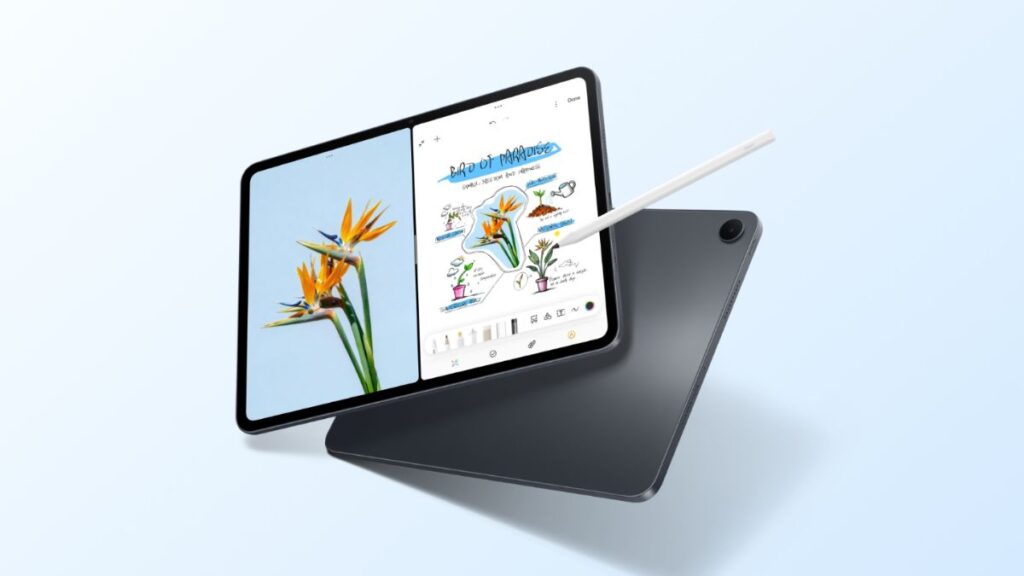
The Chinese tech giant’s new MatePad 12 X is a rebranded version of the MatePad Air, which debuted in China last month. It arrives with an all metal design, measuring just 5.9mm thick and weighing 555 grams. The MatePad 12 X sports a tall 12-inch LCD panel with a 2.8K resolution, up to 144Hz refresh rate (VRR support), up to 1000 nits of peak brightness, and TÜV Rheinland Low Blue Light certification. Buyers can also opt for a more premium model that features the PaperMatte display.

Huawei MatePad 12 X
Huawei MatePad 12 X (2025)

Huawei packs an advanced heat dissipation system that uses a PCBA-level 3D dispensing process and a custom 3D vapor cooling chamber. The brand claims that this allows the tablet to offer a 27 percent high performance. Powering this tablet is a sizeable 10,100mAh battery pack, which supports 66W wired fast charging. Other notable features include WiFi 7, Bluetooth 5.2 (BLE support), USB 3.1 port, HarmonyOS 4.3 out of the box, a six speaker setup, 12GB of RAM, and 256GB of internal storage.

The Huawei MatePad X was just announced in two color options, namely Greenery and White. It is available for purchase in the UK for 599.99 Pounds Sterling and 649.99 Euros in Europe. Huawei is also selling the Huawei Smart Magnetic Keyboard and the M-Pencil Pro stylus separately.

For more daily updates, please visit our News Section.

Tech enthusiast? Get the latest news first! Follow our Telegram channel and subscribe to our free newsletter for your daily tech fix! ⚡

iPhone 17 vs OnePlus 13R: Display, Performance, Camera & Battery Compared

iPhone 17 and OnePlus 13R represent two different approaches to premium smartphones in 2025. Apple focuses on refinement, ecosystem integration, and balanced performance, while OnePlus delivers aggressive hardware upgrades and competitive pricing. This comparison is important for buyers who want to know whether the refined Apple experience or the feature-packed OnePlus powerhouse offers better value.

1. Design and Display

iPhone 17
iPhone 17

Build and Feel:
iPhone 17 comes with a glass front and back protected by Ceramic Shield 2, paired with an aluminum frame. It is IP68 rated, ensuring solid resistance to dust and water immersion. The OnePlus 13R also uses glass with Gorilla Glass 7i protection and an aluminum frame, but it carries an IP65 rating, making it resistant to dust and light water jets rather than deep immersion. Apple’s higher water protection and premium Ceramic Shield provide more reliability for durability.

Verdict: The iPhone 17 feels more premium and secure in long-term use.

Display Quality:
Apple uses a 6.3-inch LTPO Super Retina XDR OLED panel with HDR10, peaking at 3000 nits brightness. The OnePlus 13R counters with a larger 6.78-inch LTPO 4.1 AMOLED display, supporting HDR10+, Dolby Vision, and HDR Vivid, peaking at 4500 nits brightness with 2160Hz PWM for reduced flicker. The OnePlus display is more advanced in terms of brightness and versatility, ideal for HDR streaming and gaming.

Verdict: OnePlus 13R leads in display technology.

Verdict:
While Apple offers more durability and compact elegance, OnePlus delivers a superior visual experience. Buyers valuing ruggedness may lean towards the iPhone 17, but for display enthusiasts, the OnePlus 13R is the better choice.

Please Note: When you buy something using the links in our articles, we may earn a small commission at no cost to you.

2. Specifications

Oneplus 13R
Oneplus 13R

Performance:
iPhone 17 runs on Apple’s A19 3nm chip with a 6-core CPU and 5-core GPU. It is known for unmatched single-core performance and software optimization. The OnePlus 13R runs the Snapdragon 8 Gen 3, paired with up to 16GB RAM and UFS 4.0 storage, offering multi-core efficiency and more RAM capacity. The A19 chip excels in sustained efficiency, while the Snapdragon delivers raw multitasking power.

Verdict: iPhone 17 is better for smoothness and updates, while OnePlus 13R is stronger for heavy multitasking.

Battery and Charging:
iPhone 17 houses a 3692 mAh battery with 50% charge in 20 minutes via wired PD2.0 and supports 25W wireless MagSafe/Qi2. OnePlus 13R packs a massive 6000 mAh battery with 80W fast charging, reaching 100% in under an hour. The difference is striking; OnePlus offers nearly double the endurance and far quicker charging.

Verdict: OnePlus 13R dominates in battery life and charging convenience.

Verdict:
Apple delivers optimized performance for longevity, but OnePlus offers sheer power and far better battery stamina. For heavy users, the OnePlus 13R is the practical choice.

3. Camera

iPhone 17
iPhone 17

iPhone 17 has a dual 48MP system—wide and ultrawide, both with advanced OIS and Dolby Vision HDR support. The OnePlus 13R offers a triple system: 50MP wide with OIS, 50MP telephoto with 2x optical zoom, and 8MP ultrawide. Apple ensures consistent image quality with excellent HDR processing, but OnePlus provides more versatility thanks to its telephoto lens.

Verdict: OnePlus 13R offers more flexibility, while iPhone 17 ensures more polished results.

Selfie Camera:
Apple equips an 18MP front camera with OIS, PDAF, and SL 3D sensors for depth and Face ID, capable of Dolby Vision HDR video. The OnePlus 13R uses a 16MP sensor with HDR and 1080p video. The iPhone 17 selfie system is significantly more advanced, making it better for creators and secure biometrics.

Verdict: iPhone 17 leads clearly in selfies and facial recognition.

Verdict:
OnePlus 13R is better for rear camera versatility, while the iPhone 17 dominates in selfies and video recording quality.

4. Pricing

OnePlus 13R
OnePlus 13R

iPhone 17 starts at around $800, while the OnePlus 13R costs about $600. With a $200 gap, OnePlus offers more aggressive specs for less money, making it the better value for budget-conscious buyers. However, Apple’s higher price reflects software support, stronger ecosystem integration, and durability.

Verdict: OnePlus 13R is better for value, but the iPhone 17 justifies its premium for long-term ecosystem benefits.

Disclaimer:
Prices are approximate and may vary based on country, region, and applicable taxes.

5. Conclusion

iPhone 17
iPhone 17

iPhone 17 brings Face ID with advanced SL 3D sensors, satellite connectivity for emergencies, and deep ecosystem integration with iOS 26. The OnePlus 13R highlights a larger 6000 mAh battery, ultra-bright 4500-nit display, 80W fast charging with Circle to Search, and Android 15 flexibility. Each phone has a unique focus: Apple on ecosystem and security, OnePlus on raw hardware and practicality.

Verdict:
For buyers wanting longevity, premium build, and the Apple ecosystem, the iPhone 17 is the safer pick. For those seeking hardware value, longer battery life, and a cutting-edge display at a lower price, the OnePlus 13R is the smarter option.

Read More:

Nothing Phone (3) software update brings camera, battery and Wi-Fi improvements

Nothing has released another major software update for the Phone (3), improving performance and fixing some buds. The build, Nothing OS V3.5-250911-2112, brings camera improvements along with fixes and system optimizations.

The update makes manual exposure control smoother and more precise. It also fixes a tint issue in certain scenes, which now show more natural colors. The AI SuperRes Zoom algorithm has been updated to improve the sharpness of text. Action Mode has been improved to cut down noise grains, and clarity has been enhanced for third-party camera apps. Video recording has also been upgraded with better contrast, making footage appear less hazy and more vibrant.

System changes include an optimisation for the Glyph Matrix display of Always-on Glyph Toys in multi-user mode. A bug that duplicated contact avatars when adding rules in Essential Notification has been fixed. Haptic issues when previewing Generative mode for notifications have been resolved. The About phone page now has better title alignment for Arabic.

The update also improves the Bluetooth device recording interface, available under Settings > Sound and Vibration > Bluetooth device recording. Battery usage has been optimised in certain situations, and heating has been reduced to give a more stable experience. Wi-Fi connectivity and overall network stability have been improved. Performance and system stability have also been fine-tuned.

Nothing OS V3.5-250911-2112 Changelog

Nothing has added a note that the device may temporarily heat up and use more power during the installation, but this will return to normal once the process finishes.

In other news, Nothing has teased its next major upgrade, Nothing OS 4.0, based on Android 16, calling it “Refined” and “Redefined.” With the stable release expected soon, the confirmed eligible devices are: Phone (3), Phone (3a), Phone (3a) Pro, Phone (2), Phone (2a), Phone (2a) Plus, CMF Phone 1, and CMF Phone 2 Pro.

For more daily updates, please visit our News Section.

Don’t miss a thing! Join our Telegram community for instant updates and grab our free daily newsletter for the best tech stories!

(Source)

Xiaomi announces HyperOS 3 stable rollout plan

Xiaomi HyperOS 3 stable rollout schedule

After launching HyperOS 3 last month in China, Xiaomi has quickly expanded the beta program to many devices, allowing a wider audience to get an early taste of the software. The brand has now revealed its complete rollout plans for the stable version of HyperOS 3, which will begin next month with the Xiaomi 15 series.

The HyperOS 3 stable rollout begins mid-October, but by the end of that month, Xiaomi plans to release the latest update to dozens of devices, including several flagship phones, high-end tablets, Redmi smartphones, televisions, and Xiaomi watches. The rollout will gradually cover more devices over the coming months and is scheduled for completion by January 2026.

Xiaomi HyperOS 3 stable rollout schedule

Note that HyperOS 3 has only been released in China, and this rollout plan is only applicable to that region.

October 2025

[By October 15]

  • Xiaomi 15 Ultra
  • Xiaomi 15S Pro
  • Xiaomi 15 Pro
  • Xiaomi 15
  • Redmi K80 Pro
  • Redmi K80 Supreme Edition

[By October 31]

  • Xiaomi MIX Flip 2
  • Xiaomi Civi 5 Pro
  • Xiaomi Pad 7 Ultra
  • Xiaomi Pad 7S Pro 12.5
  • Xiaomi Pad 7 Pro
  • Xiaomi Pad 7
  • Redmi K80
  • Redmi Turbo 4 Pro
  • Redmi Turbo 4
  • Redmi K Pad
  • Xiaomi TV S Pro Mini LED 2025 Series
  • Xiaomi TV S Pro Mini LED Series
  • Xiaomi TV S Mini LED 2025 Series
  • Xiaomi Watch S4 Sport
  • Xiaomi Watch S4
  • Xiaomi Watch S4 eSIM
  • Xiaomi Watch S4 eSIM (15th Anniversary Edition)
  • Xiaomi Watch S4 41mm

November 2025

[By November 15]

  • Xiaomi 14 Ultra
  • Xiaomi 14 Ultra Titanium Special Edition
  • Xiaomi 14 Pro
  • Xiaomi 14 Pro Titanium Special Edition
  • Xiaomi 14
  • Xiaomi MIX Fold 4
  • Xiaomi MIX Flip
  • Xiaomi Civi 4 Pro
  • Xiaomi Pad 6S Pro 12.4
  • Redmi K70 Pro
  • Redmi K70 Supreme Edition
  • Redmi K70
  • Redmi K70E
  • Redmi Pad 2

[By November 30]

  • Redmi TV X 2025 Series
  • Redmi Monitor G Pro 27U
  • Xiaomi Smart Band 10

December 2025

  • Xiaomi MIX Fold 3
  • Xiaomi 13 Ultra
  • Xiaomi 13 Pro
  • Xiaomi 13
  • Xiaomi Pad 6 Pro
  • Xiaomi Pad 6 Max 14
  • Redmi K60 Pro
  • Redmi K60 Supreme Edition
  • Redmi K60
  • Redmi Turbo 3
  • Redmi Note 15 Pro+
  • Redmi Note 15 Pro
  • Redmi Note 15
  • Redmi Note 14 Pro+
  • Redmi Note 14 Pro
  • Redmi Note 14 5G
  • Redmi Note 13 Pro+
  • Redmi Note 13 Pro
  • Redmi Note 13R Pro
  • Redmi Note 13 5G
  • Redmi Note 13R
  • Redmi Watch 5
  • Redmi Watch 5 eSIM
  • Xiaomi Smart Band 9 Pro
  • Xiaomi Smart Band 9

January 2026

  • Xiaomi MIX Fold 2
  • Xiaomi 12S Ultra
  • Xiaomi 12S Pro
  • Xiaomi 12S
  • Xiaomi 12 Pro
  • Xiaomi 12
  • Xiaomi Civi 3
  • Xiaomi Civi 2
  • Redmi K50 Supreme Edition
  • Redmi Note 15R
  • Redmi Pad Pro 5G
  • Redmi Pad Pro
  • Redmi Note 12 Turbo
  • Redmi Note 12T Pro
  • Redmi 14C
  • Redmi 14R 5G
  • Xiaomi TV S Mini LED Series
  • Redmi TV MAX 2025 Series
  • Redmi Smart TV A Pro Series
  • Redmi Smart TV A 2025 Series

This is the stable HyperOS 3 rollout plan for Xiaomi devices in China. For other regions, Xiaomi will likely announce a rollout plan at the HyperOS 3 global launch scheduled for September 24th.

Xiaomi will likely start rolling out the beta update soon after the global launch. If you want to be among the beta testers, check out this complete guide on how to install HyperOS beta updates.

Also read: Here are the five biggest upgrades to HyperOS 3

Remember to visit our HyperOS section regularly for the latest updates. Additionally, you can follow us on Telegram to stay on top of the latest tech trends and updates.

(source)

These OnePlus devices are eligible for four major Android updates: check if yours is on the list

OnePlus four major Android updates

OnePlus is a reliable brand when it comes to software updates. It offers timely software updates and longer software support, which is getting better with time. The brand offers a maximum of four major Android updates to its high-end smartphones. However, recent mid-range phones have also been promised the same treat.

Here, we’ve prepared a list of OnePlus phones and tablets that promise four major Android updates. Review the list below to find out if yours is in for a longer treat.

  • OnePlus 15 (last update: Android 20)
  • OnePlus 15R (last update: Android 20)
  • OnePlus 13 (Last update: Android 19)
  • OnePlus 13s (Last update: Android 19)
  • OnePlus 13R (Last update: Android 19)
  • OnePlus 13T (Last update: Android 19)
  • OnePlus 12 (Last update: Android 18)
  • OnePlus 11 (Last update: Android 17)
  • OnePlus Nord 5 (Last update: Android 19)
  • OnePlus Nord 4 (Last update: Android 19)
  • OnePlus Nord CE 5 (Last update: Android 19)
  • OnePlus Open (Last update: Android 17)
  • OnePlus Pad Lite (Last update: Android 19)

It’s great to see mid-range phones receiving the same software support as flagship phones, and hopefully, this trend will continue with upcoming phones as well.

Related: Here’s when your OnePlus device will get OxygenOS 16 update

OnePlus offers a maximum of four major OS updates, which doesn’t seem like a big deal, at least for their flagship devices, when you look at other brands. Take Oppo, for instance: it offers up to five OS updates. Even Motorola matches that. Samsung and Google are rocking the charts with up to seven major Android updates. Even the mid-range phones from Samsung now come with a promise of six OS updates. OnePlus, in the meantime, is stuck at four. It really feels like the brand needs an upgrade.

The brand is currently busy preparing for the stable OxygenOS 16 release, which would be based on Android 16. There hasn’t been an official announcement just yet, but the OxygenOS 16 closed beta testing is already live, hinting at an imminent release of the stable build.

You can head over to our Android 16 section to get all the updates on the same. Also, make sure to join us on Telegram so that you never miss an update.

Also read:
1. OnePlus devices eligible for OxygenOS 16 (Android 16) update
2. Android 16 will be the last major upgrade for these OnePlus devices

HUAWEI WATCH Ultimate 2 Review: The Versatile Safeguard & Courage Enhancer For Adventure

HUAWEI Ultimate Series

HUAWEI surprisingly updated their Watch Ultimate Series with the latest model – HUAWEI Watch Ultimate 2. The Ultimate series is undoubtedly one of the most ambitious and radical smartwatches currently available on the market. As it added professional golfing modes, diving modes and outdoor adventures, and sports tracking to the first Ultimate watch, it was destined to be one of the most versatile smart watches for both health tracking and sports assisting.

Over the past year, I’ve completed several outdoor adventures and sports activities wearing various Huawei watches, including the HUAWEI Watch Ultimate, HUAWEI Watch 5 series, and even the HUAWEI Watch Fit 4 Pro. This is likely all thanks to the Ultimate’s spirit of exploration and ambition. It has democratized professional outdoor activity tracking and route navigation across more affordable series (even given to the Fit 4 series), demonstrating far greater generosity than we’ve witnessed from the Apple Watch.

HUAWEI’s commitment to developing outdoor sports features is a boon for outdoor enthusiasts like mountaineers and hikers. The wearable market used to offer limited options with limited brands. Most of them with professional-grade features were really expensive models.

Now, HUAWEI’s integration of hardware and software capabilities across its various series has provided users with more options. In this review, I’ll share my real-world experience with the Ultimate 2, highlighting the pros and cons that might serve as reasons for your purchase.     

Structure & Design

Let us turn to the new Ultimate 2. It remains outstanding in sports tracking and health monitoring. Even by merely inheriting the predecessor’s core features, it’s more than capable of maintaining its unique competitiveness.

However, what continues to captivate me most about the new Ultimate is its design and build quality. The watch is available in Blue and Black editions. Especially the Black model, featuring rock and mountain elements, perfectly suits all kinds of outfits, though it might not be as eye-catching as the Blue one. The Ultimate 2 has an ultra-tough metal frame with a nanocrystal ceramic bezel and Sapphire-glass cover on the front face, shielding a 1.5” OLED display. I’ve tried to scratch the surface with a knife as a simple test for simulating everyday abrasion (though I know this is a bit much). Unsurprisingly, it left no visible scratches or damage.

X-TAP Sensor

The greatest upgrade is the X-TAP sensor on the side. We tried the great sensor on the HUAWEI Watch 5 Pro months ago. The X-TAP sensor houses three major sensors: ECG, PPG, and pressure sensors, which then provide faster, more accurate, and wider health measurement with fingertip touch and press. By pressing and touching the sensor for a few seconds, I can quickly start ‘Health Glance’ for a comprehensive check. And accordingly, the watch will generate a health report with up to 11 indicators. The detailed report will be accessed on the phone app, HUAWEI Health.

For outdoor activities, particularly those at high altitudes, SpO² is a particularly vital indicator. After comparing it with professional monitoring equipment, it is evident that the data measured by X-TAP from the fingertip is remarkably accurate.

Other details

Another notable design change is its more pronounced hollow-out design, lending the watch a greater sense of visual “lightness”. One more unseen design change lies in the strap, where a new release mechanism makes changing straps considerably easier.

150M Diving Mode: Water Resistance & Sonar-based Communication

In addition, to make it the most pro-smartwatch for deep diving, the designer gives it an insane water resistance structure for use down to 150 meters. I didn’t have time & testing device to put it through professional water pressure testing. And I believe most users will likely never reach its water resistance limits. However, as I have not personally tested it, I remain cautious about its ability to operate stably in deep water, and hope to update my experience in the future.

So, one of their key upgrades focuses on more professional diving capabilities, including support for diving operations at depths of 150 meters and independent underwater sonar-based communication. Regrettably, I was unable to complete a dive within the limited time available that would have sufficiently tested its new features. But I can explain in detail how it will help you complete your dive logs more safely with efficient & quick communication.

The constraints on underwater communication are markedly greater than those on land or in the air. Electromagnetic waves, on which above-water communication relies, attenuate rapidly in water, while sound waves are more sustainable for underwater but now carry less information. So the WATCH Ultimate 2 with a small sonar component can have quick and preset communication through delivering sound waves.  work better than electromagnetic or light waves, allowing for independent underwater communication.

I believe most underwater divers still rely on very primitive communication with their dive buddies, such as gestures, lights, and tapping objects. Now you can just add your dive buddies to the watch (both with the Watch Ultimate 2) and start standalone communication without any accessories. As HUAWEI claims, the watch supports over 50 predefined messages and one-touch SOS. And for the SOS function, the maximum transmission range is about 60m.

Currently, the only smartwatch I know of with similar functionality is the Garmin DESCENT series, but they place greater emphasis on pairing with the professional accessory DESCENT T2 Transceiver to accomplish a limited amount of critical communication, which is way less than the WATCH Ultimate 2 can do.

One-Touch SOS: Press and hold for 10 seconds to activate SOS mode. The Watch will automatically transmit distress signals every 25 seconds. This feature enables nearby divers to relay distress alerts, effectively expanding the transmission range of emergency signals.

More accurate positioning and navigation for Outdoors

Thanks to the Ultimate 2’s precise positioning and accurate altitude monitoring, I’ve made it an essential piece of gear for my hiking and mountaineering. I’ve worn it on numerous hikes through the Lake District in England, along the MacLehose Trail in Hong Kong, and up Mount Wutong (Elevation: 943 meters), the highest peak in Shenzhen, China. All were done alone.

Before each climb or walk, the route KML file would be imported into ‘My Route’ of the HUAWEI Health app, and sync it to my WATCH Ultimate 2 as well.

Instead of gripping my phone and constantly tapping the screen to check directions, I simply raised my wrist to display the route on the Ultimate 2. When you veer off course, the watch will also alert you with a voice prompt that you’re heading in the wrong direction.

Compared to its predecessor, the most noticeable improvement is its upgraded Sunflower positioning system. The watch supports dual-band five system positioning, including GPS, Glonass, Galileo, QZSS, and BeiDou. The mature system and updated positioning algorithm significantly reduced GPS Drift in environments with weak signals. The consistent performance of GPS has also benefited other outdoor sports that track trails and distance, such as Running and cycling. I know exactly that it takes 1.55km to run from my home to the nearest park track, and that one lap around the track is 545m. So I ran this complete route for a simple test (2.095km). Even accounting for the margin of error from pacing while waiting at two traffic lights, the distance recorded by this watch was also very satisfying: 2.15km.

As for the elevation tracking, it’s also accurate. For example, the elevation of Wutong Mountain, Shenzhen’s highest peak, is 943.7 meters, while the watch recorded my peak elevation of 940.1 meters—an error margin of less than 5 meters.

Another rather intriguing mode, particularly for outdoor users, is the expedition mode. It is functionally quite similar to hiking: adding route, positioning and navigation, and so on. But in this mode, you can mark the waypoints of important landmarks along the path to ensure a safe journey and guide a smooth return. Like the Glofing mode, the expedition mode is exclusive to the WATCH Ultimate series.

As for its performance in health tracking and sleep tracking, my conclusion remains unchanged: it absolutely stands head and shoulders above the rest. Whether introducing the new X-TAP sensor paired with the TruSense system to deliver more comprehensive and accurate monitoring, or integrating Health Glance feature to generate an instant report covering 11 indicators, these are features that other smartwatches struggle to replicate.

Cons: Software Experience

Over the past few years, I’ve reviewed various Huawei Watch series, and the distinct improvements and pleasant surprises can be sensed in each series and model. Unfortunately, even a powerhouse like the Ultimate 2 isn’t a perfect model. There is still room for improvement in its software and user experience. For example, when I import multiple routes to the watch, there’s no way to overlay multiple routes onto the map without navigation, and it’s also impossible to switch the routes during my outdoor tracking. Once I quit the navigation, the only way I can add another route to the map is to end the trip and restart it with another route navigation.

Huawei watches cannot directly connect and sync exercise data with certain fitness applications, such as AllTrails, a popular hiking tool. Whilst you may be able to sync data from the Huawei Health app to the target application via third-party solutions (such as Health Sync) – for instance, to Strava, which is used by most runners – this process is not particularly user-friendly.

Other features

There are a few ‘bonus’ features that I couldn’t go into in detail in the article, such as eSIM support (including eSIM with a standalone number), sleep breathing awareness, NFC support, and offline maps covering most countries and regions.  

Battery

As for the battery life, the fully charged Ultimate 2 can hold for about 5 days for regular use. But if you exercise daily for over 1 hour, it requires charging in about 4 days. But if you only wear it with expedition mode on, the battery life will extend to over 30 hours. Under diving mode and Golf mode, the watch lasts significantly longer, too (12-24 hours). And the watch might drain a bit faster with iOS system pairing.

Verdict

I believe you can find more specialized competitors in specific sports categories, but you’d be hard-pressed to discover a smart wearable as versatile as the Ultimate 2. Even though I still have my grievances with Ultimate 2, it remains my personal favorite at present.

I believe the best reason is that I always find myself excitedly strapping on my Ultimate 2 for outdoor activities, whether it’s running, hiking, cycling, or camping.

Yet the fact is that a smartwatch doesn’t directly grant you a healthier lifestyle or better athletic performance through its features alone. More likely, it becomes your safeguard and source of courage: by harnessing its various health and fitness features, users gain the confidence to challenge themselves and push their limits. In this regard, the Huawei Watch Ultimate 2 does a splendid job.

Vivo Y50i Debuts in China: Budget Phone with 90Hz Display & Gigantic Battery

Vivo has introduced its latest budget-friendly smartphone, the Vivo Y50i, combining performance and practicality at an affordable price point. This model brings a smooth display, an impressively large battery pack, and a capable processor. So let’s check it out.

This New Vivo Budget Phone Packs a Huge Battery & 120Hz Display

The Vivo Y50i sports a tall 6.74-inch LCD panel with an HD+ resolution, 90Hz refresh rate, up to 1000 nits of peak brightness, DC dimming, dark mode for eye comfort, up to 180Hz touch sampling rate, and TÜV Rheinland Low Blue Light certification. Under the hood, this model is equipped with the MediaTek Dimensity 6300 SoC, which powered the previous gen mid range smartphones.

Vivo Y50i
Vivo Y50i 5G

This chip is paired with up to 12GB of RAM and 256GB of internal storage. A massive 6,000mAh battery pack powers, which supports 15W charging. For photography, the rear has a 13MP shooter on the rear, while the front houses a 5MP camera for selfies and video calls. Out of the box, the Vivo Y50i runs on the OriginOS 5 custom skin, which brings various AI tools like AI erase.

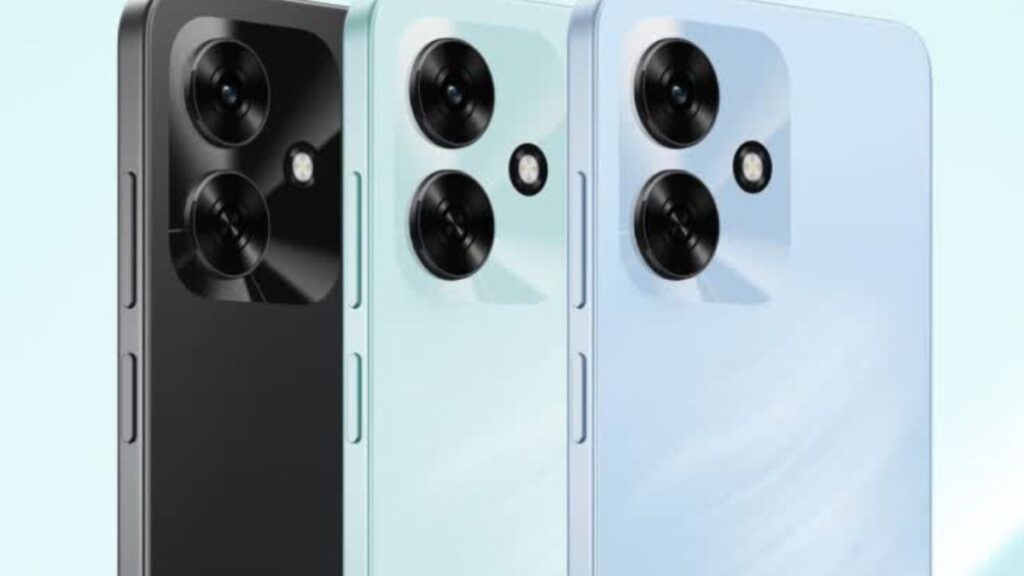
Other notable features include Bluetooth 5.4, Android 15 OS, a 3.5mm audio jack, and dual nano SIM support. Vivo has just announced the new Vivo Y50i model in the Chinese market for a budget price tag of 1,499 Yuan, which is roughly around 210 US Dollars. This is for its lone 6GB + 128GB configuration. It is available in three color options, namely Diamond Black, Azure, and Platinum. In related news, the brand also unveiled the Vivo Y31 Pro and Vivo Y31 models with an affordable pricing in the Indian market earlier this week.

For more daily updates, please visit our News Section.

Tech enthusiast? Get the latest news first! Follow our Telegram channel and subscribe to our free newsletter for your daily tech fix! ⚡
Xiaomi Pad 8 Pro to feature 11.2-inch display, Snapdragon 8 Elite

Xiaomi is preparing to launch the Pad 8 series later this month. It will debut alongside the Xiaomi 17 series smartphones, though the exact launch date is still under wraps.

Pre-reservations for the tablet have already opened in China, where potential buyers can secure a unit through Xiaomi Mall for just CNY 1.

Meanwhile, tipster Digital Chat Station has shared a few details about the upcoming Xiaomi Pad 8 Pro ahead of its launch.

Xiaomi Pad 8 Pro Specifications

The tablet is expected to feature an 11.2-inch LCD and a large battery with support for 67W fast charging. Powering the device will be the Snapdragon 8 Elite processor, while on the software side, it will run Xiaomi’s HyperOS 3.

A new Xiaomi device with model number 25091RP04C appeared on Geekbench last week, scoring 2831 in single-core tests and 9260 in multi-core. The listing also shows 16GB of RAM and Android 16. The device is believed to be the upcoming Pad 8 Pro.

Xiaomi is also adding tools to make the tablet function more like a laptop. These include a new split-screen layout, a PC-level browser, and support for productivity apps such as WPS, CAJ, and CAD. The company is preparing accessories as well, including a keyboard and a new stylus, to expand its productivity use cases.

Xiaomi may reveal more details about the Pad very soon. Lu Weibing, the company’s partner and brand president, is set to host a livestream tonight at CST 7 PM to address popular questions about the upcoming Xiaomi 17 series phones. The session could also bring fresh news on the Pad 8 lineup.

For more daily updates, please visit our News Section.

Stay ahead in tech! Join our Telegram community and sign up for our daily newsletter of top stories.

Everything we know about Snapdragon 8 Elite Gen 5 ahead of next week’s launch

Snapdragon 8 Elite Gen 5

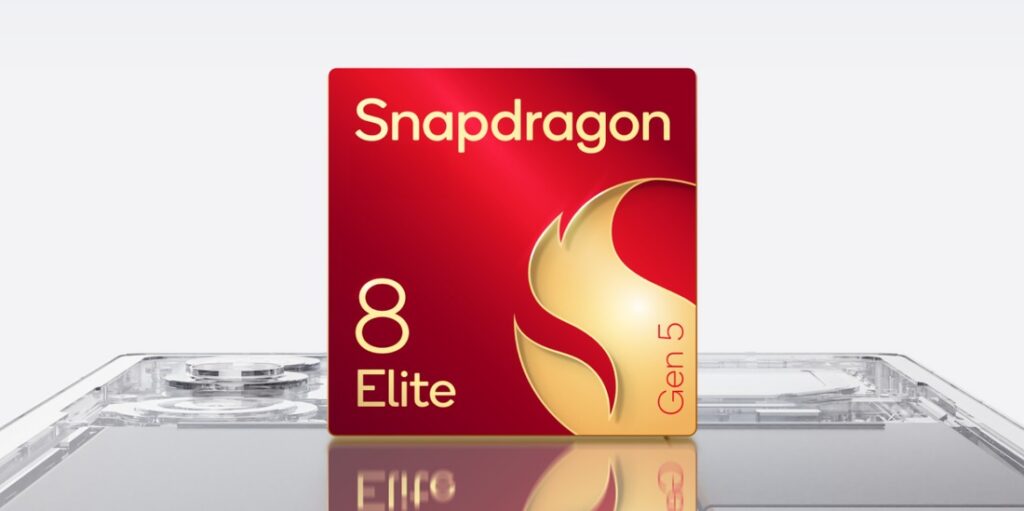
Building on the strong foundation established by last year’s Snapdragon 8 Elite, Qualcomm is set to launch its successor, the Snapdragon 8 Elite Gen 5, with stronger performance and efficiency. With less than a week to launch, there’s plenty of excitement around this flagship chipset. Thanks to early leaks and benchmarks, we already know much about the Snapdragon 8 Elite Gen 5. So, here’s everything you need to know about it ahead of the official launch.

Qualcomm’s weird naming scheme

The upcoming Qualcomm chip will be called “Snapdragon 8 Elite Gen 5,” which appears to be an unusual naming scheme, given that its predecessor was called Snapdragon 8 Elite. A rather simpler name could have been Snapdragon 8 Elite 2 or Snapdragon 8 Elite Gen 2, but for the chipmaker, the new name makes a lot of sense.

Qualcomm’s going back to the previous naming scheme. The first gen was 8 Gen 1, then 8 Gen 2, then 8 Gen 3, and then we got the Snapdragon 8 Elite (fourth generation), and now we’re heading towards the fifth-gen Snapdragon flagship. This wouldn’t have been that confusing if Snapdragon 8 Elite had actually been called Snapdragon 8 Elite Gen 4. I guess Qualcomm missed out on this.

Besides the Snapdragon 8 Elite Gen 5, Qualcomm may also unveil a slightly less powerful Snapdragon 8 Gen 5 at the Snapdragon Summit on September 23. Around mid-2026, there will be even more affordable Snapdragon 8s Gen 5 completing the lineup.

Snapdragon 8 Elite Gen 5: CPU, GPU, and other details

Qualcomm isn’t shifting to TSMC’s 2nm cutting-edge process node just yet. The upcoming Snapdragon 8 Elite Gen 5 will still utilize TSMC’s 3nm node, but with an improved ‘N3P’ technology. It can deliver a 5% better performance at the same power consumption as 8 Elite’s 3nm ‘N3E’ node.

The Snapdragon 8 Elite Gen 5 would still use the same “2+6” CPU cluster, but despite that, Qualcomm was able to achieve significant performance improvements in early benchmarks. According to Xiaomi 17 Pro’s Geekbench listing featuring the same chipset, there will be two custom Oryon cores at 3.63 GHz and six custom Oryon cores at 4.61 GHz.

Samsung appears to be preparing a “for Galaxy” version of the Snapdragon 8 Elite Gen 5 chipset, in partnership with the tech giant, featuring a higher clock speed. The alleged Geekbench listing of Galaxy S26 Edge, powered by the same chip, reveals two Oryon cores at 4.74 GHz and six Oryon cores at 3.63 GHz.

One of the key reasons for a performance boost will be a larger L2 and L3 cache. The last year’s 8 Elite has a 24MB cache (12MB L2, 12MB L3), and its successor will bring 32MB cache (16MB L2, 16MB L3).

The new Elite chip would also feature a new Adreno 840 GPU with a higher clock speed of 1.20 GHz. In contrast, the Snapdragon 8 Elite has an Adreno 830 GPU at 1.10 GHz. Some rumors suggest the new NPU may achieve up to 100TOPS of processing speed. If this turns out to be true, the 8 Elite Gen 5 will have a higher AI processing speed than most notebook-class chips.

Snapdragon 8 Elite Gen 5: Benchmark score

A Xiaomi smartphone, believed to be the Xiaomi 17 Pro, recently made an appearance on Geekbench 6.4 with the Snapdragon 8 Elite Gen 5 chip, showcasing its raw CPU performance. It achieved a single-core score of 3,831 and a multi-core score of 11,525, suggesting a considerable performance upgrade over Snapdragon 8 Elite (3,179/10,114).

Xiaomi 17 Pro (Snapdragon 8 Elite Gen 5) Geekbench score

The Apple A19 Pro (4,019/11,054), on the other hand, still leads in single-core performance, although the gap is narrowing; however, the Snapdragon chip makes a comeback in multi-core performance.

The AnTuTu listing hasn’t surfaced yet, but according to a reliable Chinese tipster, Digital Chat Station, the Snapdragon 8 Elite Gen 5 achieves about 4.4 million points on AnTuTu (version 11).

Xiaomi is likely to be the first brand to release a smartphone with the Snapdragon 8 Elite 5 chipset — possibly the Xiaomi 17 Pro. We’ll have more details about the chip and the upcoming devices featuring this flagship chip at the Snapdragon Summit next week.

Snapdragon 8 Elite Gen 5 (rumored)
StatusTo be announced (Sep 23)
Process nodeTSMC’s 3nm (N3P)
CPUOcta core
CPU cluster2 x 4.61 GHz — Oryon
6 x 3.63 GHz — Oryon
GPUAdreno 840 GPU at 1.20 GHz
Ray tracing support
NPUQualcomm NPU
Up to 100 TOPS
BenchmarkGeekbech v6.4:
– 3,831 (single core)
– 11,525 (multi core)
AnTuTu v11: about 4.4 million

You can read our section on Snapdragon 8 Elite Gen 5 for the complete coverage. Make sure to join us on Telegram for to stay up-to-date about the latest happenings in tech.

Cellcor Comet CBS-05 Pro wireless speaker launched with 10hr battery, 80W output

Cellecor, one of India’s rapidly growing lifestyle and electronics brands, has announced a new addition to its audio lineup. The company has confirmed the launch of the Comet CBS-05 Pro, a wireless speaker that combines style with functionality. Built for those who appreciate both aesthetics and performance, the speaker is targeted at modern consumers who see their devices as part of their lifestyle.

Comet CBS-05 Pro key specifications, features

Cellcor Comet CBS-05 Pro wireless speaker

The Comet CBS-05 Pro has been developed to deliver strong sound while enhancing interiors with its premium fabric finish. It is powered by an 80W acoustic system that includes dual tweeters and a single driver to provide crisp and immersive audio.

The device is equipped with a 4,000mAh battery that supports up to 10 hours of continuous playback, along with Type-C fast charging for efficient recharging. Connectivity options are diverse, including Bluetooth v5.3, USB drive, SD card, 3.5mm AUX port, and 6.35mm wired microphone input, making it versatile enough for everyday listening or karaoke sessions.

With its compact yet elegant design, the Comet CBS-05 Pro is positioned as a product that fits seamlessly into homes, offices, and social spaces while delivering dependable audio performance.

Cellecor has also confirmed that alongside this launch, it is preparing to expand its lineup with upcoming party speakers aimed at music lovers and entertainers.

Comet CBS-05 Pro price in India, availability

The Comet CBS-05 Pro is priced at Rs 5,499 (~$62). It is available through Cellecor’s official retail outlets, its website, and several retail partners across India, including BIG C Mobiles, PAI International Electronics, LOT Mobiles, Sonovision Electronics, B New Mobiles, Happy Mobiles, Sathya Agencies, Sangeetha Mobiles, and Celekt Mobiles.

For more daily updates, please visit our News Section.

Stay ahead in tech! Join our Telegram community and sign up for our daily newsletter of top stories.

Oppo K15 Turbo Pro’s first details leaked, could be launching soon

In April, Oppo unveiled the Oppo K13 Turbo series of smartphones in China. The performance-focused K13 Turbo and K13 Turbo Pro came equipped with the Dimensity 8450 and Snapdragon 8s Gen 4 chipsets, respectively. A new leak, courtesy of tipster Digital Chat Station, has confirmed the display and chipset details of the next-generation K Turbo Pro phone.

Oppo K15 Turbo series key details leaked

Details of the next K Turbo-series leaked

At present, there is no clarity on whether Oppo’s next-generation K Turbo-series phone will be called the K14 Turbo or the K15 Turbo. Some Chinese brands are known to skip the number “4” in the names of their devices, as it is considered a bad omen in some Asian markets. However, considering that Oppo did not skip the Reno 14 moniker, it remains to be seen whether its upcoming Turbo series will be dubbed K14 Turbo or K15 Turbo.

According to tipster Digital Chat Station, the Oppo K15 Turbo and K15 Turbo Pro will feature a 6.5x-inch display, slightly smaller than the 6.67-inch OLED panel. He did not reveal the standard model’s chipset but mentioned the Pro version is currently being tested with the Snapdragon 8 Gen 5 (SM8845), which is yet to go official.

The Snapdragon 8 Gen 5 is expected to deliver slightly lower performance compared to last year’s Snapdragon 8 Elite, despite achieving a 3.4 million score on AnTuTu versus the Elite’s 3.3 million. The upcoming chipset will be manufactured using TSMC’s advanced N3P process, ensuring improved efficiency and thermal management. It is also said to adopt a 2+6 architecture with Oryon CPU cores.

It is still too early to predict the launch timeline of the Oppo K15 Turbo series. If Oppo follows a six-month upgrade cycle, the device could debut around November. On the other hand, if it adheres to a one-year cycle, the launch may take place in April 2026. For now, it is best to wait for further reports to get more clarity on the K15 Turbo series.

For more daily updates, please visit our News Section.

Stay ahead in tech! Join our Telegram community and sign up for our daily newsletter of top stories.

[UPDATE] Xiaomi 17 Series May Launch on September 30

[UPDATE] Xiaomi has now confirmed that the Xiaomi 17 series smartphones, alongside the Xiaomi Pad 8 series will debut on September 25 in China.

The original story continues…

Earlier today, Xiaomi president Lu Weibing revealed he will host a livestream at 7PM CST to address questions about the new series, including why the company skipped the Xiaomi 16 name altogether. Meanwhile, an industry source has shared some details about its launch timeline in China.

According to our source, the Xiaomi 17 series may launch in China as early as September 30. While this has not been officially confirmed, Xiaomi recently began teasing the 17 Pro series, suggesting the official launch date could be announced soon.

Xiaomi 17 Pro

Reports indicate that Xiaomi will launch three models in the series: the Xiaomi 17, 17 Pro, and 17 Pro Max. While details on the standard version remain limited, information about the Pro models has already surfaced.

As per previous leaks and benchmarks, the Xiaomi 17 Pro, as well as the standard Xiaomi 17 will be powered by Qualcomm’s Snapdragon 8 Elite Gen 5 chip. This upcoming processor includes two performance cores at 4.61 GHz and six efficiency cores at 3.63 GHz. Early Geekbench scores show 3,096 in single-core and 9,382 in multi-core tests, pointing to strong performance for everyday use and gaming. The device will ship with 16GB of RAM and Android 16-based HyperOS 3.

A recent teaser from Xiaomi confirmed that the Pro lineup is also bringing back a rear display, now called the “Magic Back Screen.” The rectangular strip replaces the camera island and surrounds the lenses with a secondary display. It can be customized with clock faces, avatars, or GIFs, and will work as a selfie viewfinder, a panel for smart home controls, and other contextual shortcuts.

As for optics, the camera system on the 17 Pro is expected to feature a 50MP main sensor with f/1.67 aperture, a 50MP ultra-wide lens, and a 50MP telephoto with 5x optical zoom at f/3.0. The Pro Max version will offer a slightly brighter f/2.6 zoom lens. Like its predecessors, the cameras will be co-engineered and tuned in collaboration with Leica. You can click on this link to find out more about the Xiaomi 17 Pro and why it deserves your attention this year.

Don’t miss a thing! Join our Telegram community for instant updates and grab our free daily newsletter for the best tech stories!

For more daily updates, please visit our News Section.

Dreame Space confirmed as company’s first smartphone, set to release globally

There has been ongoing chatter about Dreame Technology making its way into the smartphone segment. Today, the brand put speculation to rest by officially confirming its first phone, the Dreame Space. According to the company, the device has not even launched yet, but has already gained billions of yuan in overseas pre-orders, signalling strong global confidence.

Dreame Space phone coming soon

Dreame Space phone coming soon
Dreame Space smartphone coming soon

As per the official press release, the Dreame Space is described as a product unlike others in the market. It is equipped with a celestial imaging system designed to merge advanced photography with everyday usability. This allows users, even in busy cities, to capture scenes of the night sky, moving clouds, and even the rotation of the Milky Way. The idea is to make astronomical beauty accessible from the palm of your hand.

The company says the device will deliver a consistent user experience across regions, focusing on safety, reliability, and comfort. This reflects Dreame’s approach of building technology that serves a broader, global audience rather than focusing narrowly on one market.

Why smartphones matter for Dreame

Dreame argues that smartphones are now the essential gateway to the digital age, serving as the central hub of the smart ecosystem. With expertise across hardware, software, algorithms, and connected platforms, the company claims it is well positioned to enter this field. Dreame frames this device as part of a larger mission of connection: linking people, technology, and the future.

The Dreame Space smartphone is expected to launch soon, marking the company’s first step into a market it hopes to reshape.

For more daily updates, please visit our News Section.

Stay ahead in tech! Join our Telegram community and sign up for our daily newsletter of top stories.

OnePlus 15 shows up on Geekbench again, this time with real flagship scores

After an underwhelming first outing on Geekbench, the OnePlus 15 has popped up on the benchmarking platform again, this time with numbers that look a lot more like what you’d expect from a 2025 flagship.

The device, listed under the model number PLK110, posted a single-core score of 3,709 and a multi-core score of 11,000. That’s a massive jump from its earlier appearance, where the phone only managed 639 single-core and 1,871 multi-core. The low numbers were likely because the first run was on prototype hardware.

OnePlus 15 with Snapdragon 8 Elite Gen 5 Geekbench

The latest listing reaffirms the Snapdragon 8 Elite Gen 5 chip at the helm, specifically the standard version clocked at 4.61GHz. The test unit was running Android 16 and paired with 16GB of RAM.

The Snapdragon 8 Elite Gen 5 has also shown up in the Xiaomi 17 on Geekbench, posting nearly identical results. It scored 3705 points in single-core and 11,228 multi-core tests.

OnePlus 15 Specifications

Apart from this, the OnePlus 15 is expected to feature a BOE display with 1.5K resolution and a 165Hz refresh rate. It will be one of the first flagships to get the Snapdragon 8 Elite Gen 5 chip, likely paired with up to 12GB of RAM. 

On the camera side, OnePlus is said to be going with a trio of 50MP sensors backed by a new DetailMax Engine. The company has even shared a handful of early samples to show off what the cameras can do. Fueling the phone will be a 7000mAh battery that supports both 100W wired and 50W wireless charging.

For more daily updates, please visit our News Section.

Stay ahead in tech! Join our Telegram community and sign up for our daily newsletter of top stories.

iQOO 15’s new teaser showcases RGB-lit camera module, pre-orders go live

Vivo and its sub-brand iQOO are gearing up to launch their latest flagship smartphones in China. Last week, Vivo opened pre-orders for the Vivo X300 series and confirmed that it will unveil additional products alongside the lineup, including the Vivo Pad 5e, TWS 5 series, and Watch GT 2. From today, iQOO has also begun accepting pre-orders for the iQOO 15. To build excitement, the brand has shared an official image offering a first look at the phone’s camera module.

iQOO 15 design teased

iQOO 15 pre-orders poster

Previous teasers, which only showed the lower half of the iQOO 15’s back panel, revealed that it will have a color-changing design. According to tipster Digital Chat Station, the new teases poster the porthole-style camera module, which will be positioned at the upper-left corner. It is equipped with a hidden RGB light strip, which appears to be an improved version of the Halo Light seen on last year’s iQOO 13.

He claimed that the iQOO 15’s camera module will be thicker because of the inclusion of the periscope telephoto camera. While the brand is yet to reveal the iQOO 15’s front design, DCS claims that it has a flat display with large, rounded corners. He also mentioned that the device has a flat metal frame with sharp edges.

While pre-orders of the iQOO 15 have already started, a recent Weibo post by DCS revealed that it is tentatively scheduled to launch on Oct. 20. So far, the brand has officially confirmed that the device is equipped with a 2K AMOLED screen that offers brightness levels ranging between 1 nit and 6,000 nits. It is also confirmed that the screen will have AR anti-reflection coating. Reports say that the screen size will be 6.85 inches.

The iQOO 15 was recently spotted on Geekbench with an underclocked version of the Snapdragon 8 Elite Gen 5, 12GB of RAM, and Android 16, which will have a layer of OriginOS 6 on top. Reports have revealed that the device will be equipped with the Q3 gaming chip, a 7,000mAh battery with 100W wired charging and wireless charging support, an ultrasonic in-screen fingerprint sensor, an 8K VC cooling unit, and a triple 50-megapixel camera setup on the back.

For more daily updates, please visit our News Section.

Stay ahead in tech! Join our Telegram community and sign up for our daily newsletter of top stories.

Why Xiaomi 17 Pro Deserves Your Attention This Year

The iPhone 17 series might have triggered the first wave of excitement in the 2025 flagship cycle, but Xiaomi is coming in hot, maybe even hotter, with the Xiaomi 17 Pro.

And this time, it’s not playing catch-up. It’s throwing punches straight at Apple’s most prized Pro models, with a striking new design, cutting-edge silicon, and a secondary display that could finally make the rear screen trend a thing.

Let’s break down why the Xiaomi 17 Pro feels like a genuine moment in smartphone design evolution, not just a spec bump.

Xiaomi 17 Pro

Matching Apple Head On

There’s a reason Xiaomi skipped the 16 series entirely. It wants to shadow Apple step for step. Xiaomi 17 Pro. iPhone 17 Pro. It’s not subtle. It’s deliberate. This is marketing warfare, and Xiaomi’s going all in.

What’s powering that ambition is Qualcomm’s upcoming Snapdragon 8 Elite Gen 5 chip, an absolute powerhouse featuring two performance cores clocked at 4.61 GHz and six high-efficiency cores at 3.63 GHz.

In early Geekbench tests, the Xiaomi 17 Pro scored a healthy 3,096 (single-core) and 9,382 (multi-core), trailing only slightly behind Apple’s A19 Pro in single-core but promising real-world parity in overall responsiveness and gaming muscle. It’s backed by 16GB of RAM and runs Android 16-based HyperOS 3 out of the box.

Rear Display Makes a Comeback

Let’s talk about that rear display. Yes, it’s back, but not in the gimmicky way we saw with the Mi 11 Ultra. Xiaomi has reimagined it as the “Magic Back Screen,” and it’s arguably the boldest design choice on any flagship this year.

This new rectangular strip replaces the entire camera island, surrounding the lenses with a functional secondary screen. You can customize it with animated clock faces, avatars, or GIFs. It’ll serve as a selfie viewfinder, show smart home controls, and adapt contextually based on your location or network. Think of it as a mini smartwatch embedded into your phone’s back and that’s kind of genius.

Leica Optics but Tweaked for the Pro Line

Co-developed with Leica, the Xiaomi 17 Pro’s triple-camera system is expected to include a 50MP main sensor (f/1.67), 50MP ultra-wide, and a 50MP telephoto with 5x optical zoom (f/3.0). It’s basically a continuation of Xiaomi’s long-standing obsession with camera excellence, but this time in a more compact Pro-sized form.

The Pro Max will get a slightly brighter f/2.6 aperture on the zoom lens, but the core experience remains the same. Given how well the Xiaomi 15 Ultra performed in global camera shootouts, we wouldn’t be surprised if the 17 Pro ends up being a quiet killer in mobile photography.

Compact Flagship Done Right

The Xiaomi 17 Pro isn’t trying to win with sheer size. It’s going for refinement. As per leaks, it features a 6.3-inch LTPO AMOLED panel with 1.5K resolution, ultra-thin bezels (1.1mm), and a 1 to 120Hz adaptive refresh rate. The 6,300mAh battery inside is paired with 100W wired and 50W wireless charging. It is also expected to feature IP69 water and dust resistance and an ultrasonic fingerprint sensor.

Compare that to Apple’s iPhone 17 Pro, and suddenly the size-to-performance ratio becomes very compelling for Android fans who hate giant slabs.

So, Is It Actually Worth Getting Excited About?

It’s easy to dunk on Xiaomi for copying Apple, whether it’s the naming, the UI, or the edge-to-edge camera bar aesthetic. But the Xiaomi 17 Pro isn’t just imitation. It’s iteration. It’s taking the best ideas from across the ecosystem, Apple’s polish, Samsung’s ambition, Huawei’s experimentation, and fusing them into something that might actually shift the flagship conversation.

The Pro Max will likely steal headlines, but the standard 17 Pro might be the smarter pick for most people. Smaller, cheaper, and just as capable. If Xiaomi manages to deliver on global availability and software polish, this could be the most exciting Pro-level Android phone of 2025.

And if nothing else, it just made Apple sweat a little.

For more daily updates, please visit our News Section.

Stay ahead in tech! Join our Telegram community and sign up for our daily newsletter of top stories! 💡

The Best iPhone 17 Pro Accessories You Actually Need

So you’ve got your hands on Apple‘s shiny new iPhone 17 Pro (or you’re about to pull the trigger). Nice choice! But let’s be real – a great phone deserves great accessories.

Whether you’re someone who’s constantly on the go or just wants to keep your investment protected, I’ve put together a list of accessories that are actually worth your money.

iPhone 17 Pro

1. Anker MagGo Wireless Charging Station

If you’re tired of having charging cables scattered all over your desk, this Anker station is a game-changer. It’s basically a one-stop shop for charging your iPhone, Apple Watch, and AirPods all at once – no more hunting for different chargers.

Anker MagGo Wireless Charging Station

The best part? Your iPhone gets the full 15W MagSafe charging speed, and your Apple Watch charges crazy fast (we’re talking full battery in just over an hour). The stand tilts up to 45 degrees, so you can actually see your phone’s StandBy mode or catch notifications without craning your neck.

Anker throws in everything you need: a 40W power adapter and a 5-foot cable. Plus, their ActiveShield technology keeps things from overheating by checking the temperature literally millions of times a day.

Price: $89.99

2. Anker Nano Power Bank

This little guy is perfect for those “oh crap, my phone’s dying” moments. At just 0.3 inches thick, it’s surprisingly slim for a 5,000mAh power bank. It snaps right onto your iPhone 17 Pro magnetically and gives you 15W wireless charging or 20W if you use the USB-C port.

Anker Nano Power Bank

According to Anker, it can juice up an iPhone 16 Pro to 25% in about 42 minutes, so the 17 Pro should be similar. The smart cooling system keeps it from turning into a hand warmer, which is always appreciated.

Price: $54.99

3. Baseus PicoGo AM31 Mini Magnetic Power Bank

Here’s where things get interesting – this power bank doubles as a phone stand. Same 5,000mAh capacity and charging speeds as the Anker, but with a built-in kickstand that’s perfect for watching videos or video calls while your phone charges.

Baseus PicoGo AM31 Mini Magnetic Power Bank

At less than 0.3 pounds, you’ll barely notice it in your bag. The magnets are strong enough to hold your phone securely, and you can even charge two devices at once if needed. Smart temperature control keeps everything running smoothly.

Price: $49.99

4. Apple iPhone FineWoven Wallet with MagSafe

Apple’s official wallet is pretty slick if you’re trying to minimize what you carry. It holds up to three cards and sticks magnetically to your phone. What’s really neat is that it works with Find My – so if you accidentally leave it somewhere, your phone will let you know.

Apple iPhone FineWoven Wallet with MagSafe

The FineWoven material is made from recycled stuff and feels pretty premium. It comes in some nice colors like Fox Orange and Moss if you want something more interesting than basic black.

Price: $59.00

5. Dbrand Tank Case

If you’re the type who drops their phone more often than you’d like to admit, the Tank Case is your friend. This thing is built like, well, a tank. Reinforced everything, raised edges around the screen and camera, and buttons that actually feel good to press.

Dbrand Tank Case

It’s not trying to win any beauty contests – this is all about keeping your phone safe from whatever life throws at it. The grip is excellent thanks to all the ridges and grooves, and it plays nice with MagSafe accessories.

Price: $49.95

6. Dbrand Ghost Case 2.0

Most clear cases turn yellow and gross after a few months. dbrand says their Ghost 2.0 won’t do that, thanks to some fancy polymer and anti-scratch coating. At 1.8mm thick and 43 grams, it’s barely there but still offers solid protection.

Dbrand Ghost Case 2.0

They’ve packed 18 magnets into this thing for better MagSafe performance, and the camera button works perfectly through the case. If you want to show off your phone’s design while keeping it protected, this is a solid choice.

Price: $49.95

For more daily updates, please visit our News Section.

Stay ahead in tech! Join our Telegram community and sign up for our daily newsletter of top stories! 💡

Ninkear S14 AMD Ryzen 7535HS Ultra-Slim: The Laptop Only 1KG

Ninkear has introduced its new S14 ultra-light laptop, combining powerful performance with a slim and portable design. The device is equipped with the latest AMD Ryzen 5 7535HS processor and comes with features aimed at students, professionals, and creators who need performance on the go.

Performance and Storage

At the core of the S14 is the AMD Ryzen 5 7535HS, a 6-core, 12-thread processor designed for multitasking and demanding applications. It is supported by 16GB DDR5 RAM running at 6400MHz, allowing the laptop to handle multiple tabs, applications, and heavy workloads smoothly. Storage is handled by a 1TB NVMe SSD, offering ample space for large files, AAA games, and 4K video projects while maintaining fast read and write speeds.

Display and Visuals

The S14 features a 14-inch 2.2K screen with 100% sRGB coverage, ensuring sharp details and accurate colors. This makes it suitable for professional design, editing, and entertainment. The panel runs at 60Hz, delivering fluid performance for everyday work and streaming.

Design and Portability

Weighing just 1kg, the laptop is built with an ultra-slim body, making it one of the most portable options in its class. The design includes a 180° hinge, giving users flexibility for different usage scenarios such as meetings, presentations, or casual browsing. The S14 is also packaged in a gift-ready box, highlighting its premium appeal.

Connectivity and Security

For wireless connections, the laptop comes with Wi-Fi 6 and Bluetooth 5.3, providing high-speed downloads, clear calls, and stable pairing with accessories. A fingerprint sensor enables secure login within 0.3 seconds, while the webcam includes a protective sliding cover for privacy. The high-resolution camera delivers clear video quality, supported by noise-free audio for smooth communication.

Battery and Charging

The laptop is powered by a 5195mAh battery, which offers up to 8 hours of runtime. Thanks to improved efficiency, battery performance is 30% better compared to standard models. The S14 supports fast Type-C charging, ensuring quick power-ups when on the move.

Durability and Quality Testing

Ninkear has emphasized durability with a series of tests. The S14 passed drop tests up to 75 cm, 20,000 hinge openings, and 300,000 key presses on the keyboard. It also endured salt spray tests, functioned between -20°C and 40°C, and maintained noise levels below 40 dB during operation.

Deals and Availability

The Ninkear S14 AMD Ryzen 7535HS Ultra-Light Laptop is currently available at a special promotional price on the official website. The regular price of €699.97 has been reduced to €629.97, giving buyers an immediate saving of €70. An additional €40 exclusive discount coupon is also offered at checkout, further lowering the cost.

For a limited time, customers can also benefit from a Buy One Get One Free offer, along with free gifts included in the package. This is a limited-time offer and available exclusively through Ninkear’s official store.

Vivo X300 and X300 Pro official images arrive to reveal design

Vivo has been teasing the arrival of the X300 series in China over the past few days. While pre-orders began last week, the company had not confirmed the design of the upcoming models. Today, Huang Tao, Vice President of Product at Vivo, released official images confirming the look of both the Vivo X300 and X300 Pro.

Vivo X300 design, key details officially confirmed

According to Huang, the year 2025 marks Vivo’s 30th anniversary. The company reflected on the success of the X200 series, which crossed two million sales and delivered strong growth. Building on this, the X300 is described as an evolved version of the X200 Pro mini, featuring an upgraded in-hand feel, more powerful imaging, and improved overall performance. The X300 Pro is positioned as the ultimate imaging flagship, combining industry-leading photography with cutting-edge hardware.

The official images show that the Vivo X300 series sports a round camera module similar to the X200 series, but with a more refined design. Although the front design has not been shown in today’s reveal, earlier teasers confirmed that both the X300 and X300 Pro will come with a flat display.

The design follows Vivo’s long-standing approach to Eastern-inspired aesthetics, with a focus on balance and natural beauty. The cold-sculpted glass back, refined transitions around the camera, and slim 1.28mm height difference create a more seamless feel. Colour options such as Lucky Color (Black), Easy Blue, Wilderness Brown, and Relaxed Purple are inspired by nature and intended to evoke a calm and refreshing experience.

The highlight of the X300 series is its fourth-generation Zeiss imaging system with dual 200-megapixel lenses. The X300 features a 23mm Zeiss 200-megapixel main camera, while the X300 Pro comes with an 85mm Zeiss 200-megapixel APO telephoto, regarded as one of the most advanced in the industry. Both cameras offer CIPA 4.5 and 5.5 level stabilisation, Zeiss T* coating, and deep absorption glass.

For video, the X300 Pro supports 4K 60fps portrait recording, dual focal 4K 120fps Dolby Vision HDR, and 4K 120fps 10-bit Log. The series is powered by the V3+ imaging chip with the Dimensity 9500, runs on OriginOS 6, supports Apple ecosystem interconnect, and features a BOE Q10 Plus display with 1 nit brightness.

As per reports, the Vivo X300 series will be unveiled on Oct. 13 in China.

For more daily updates, please visit our News Section.

Stay ahead in tech! Join our Telegram community and sign up for our daily newsletter of top stories.

OnePlus 12R Starts Receiving OxygenOS 15.0.0.860 Update: Brings Map Album, Privacy Updates, and September Security Patch

OnePlus has started rolling out the OxygenOS 15.0.0.860 update for the OnePlus 12R in India. The update is being released in batches, with a wider rollout expected in the coming days. Users who want to check manually can go to Settings > System > System Updates.

OnePlus-12R

The update version is CPH2585_15.0.0.860(EX01) and it brings new features, usability changes, and the September 2025 Android security patch.

For animations, the update improves the response when tapping Live Alerts or notifications on the lock screen.

In the Photos app, a map album has been added. This lets users view all photos with location data on a map. Photos that are moved from the Private album back to public will now return to their original folders, making them easier to find. Users can also change their privacy password on every secondary page of Private Safe and in the Locked album of Photos.

There are new screen time tools. Users can now view daily and weekly screen time in App Management under Phone Manager.

The IR Remote app has also been updated with a new button layout in the remote control panel. On the system side, the update adds the September 2025 security patch to improve security.

As with other OxygenOS updates, this one is incremental. A small percentage of users will get it first, followed by a broader release over the next few days.

For more daily updates, please visit our News Section.

Don’t miss a thing! Join our Telegram community for instant updates and grab our free daily newsletter for the best tech stories!

(Source)