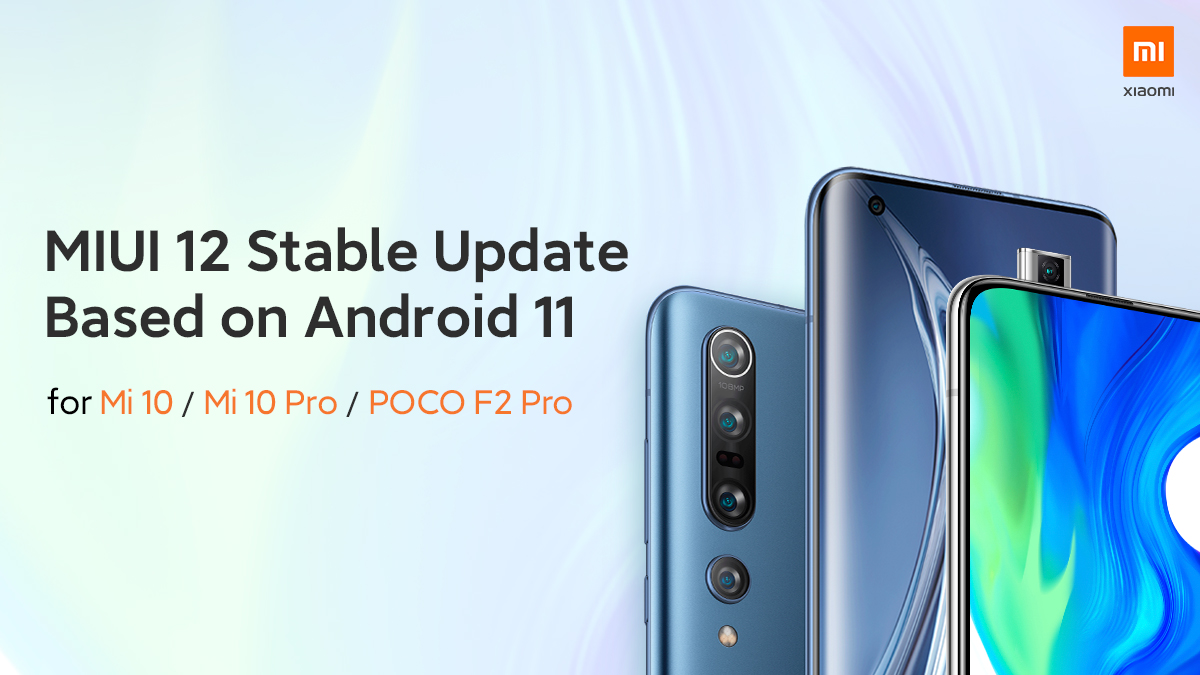
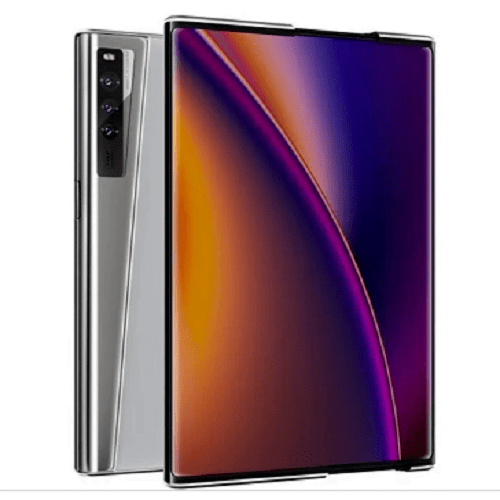
Xiaomi was one of the few companies part of the official Android 11 Beta program. The world’s third-largest smartphone maker enrolled four devices namely Mi 10, Mi 10 Pro, Redmi K30 Pro POCO F2 Pro for this initiative. Hence, these four handsets were also the first to receive MIUI 12 beta builds based on Android 11. Now, finally, the firm has started rolling out Android 11 stable update to these four phones.
The Mi 10 and the Mi 10 Pro are the 2020 flagship smartphones of Xiaomi. Similarly, Redmi K30 Pro is the flagship device from Redmi this year. The same phone is also sold as POCO F2 Pro in global markets as POCO’s best handset of 2020.
Therefore, it makes sense for these devices to get the Android 11 stable update first. But interestingly, the update is also live for the Indian version of Redmi Note 9 Pro, which is sold as Redmi Note 9S in other global markets.
That said, talking about the builds, Xiaomi finished the Android 11 stable rollout for Mi 10 in its home country China in the month of November itself. However, the builds for Mi 10 Pro and Redmi K30 Pro are still in the Stable Beta phase.
Talking about the international variants of these smartphones, Xiaomi has only completed the rollout for the Mi 10 Pro Global version. Whereas, builds released for all other regions are still in the Stable Beta phase.
In simpler words, the official Android 11 update for these phones is theoretically available worldwide. But it has been released only for select users. If these early adopters don’t face any major issues, the update will be soon rolled out to more users in the coming days.
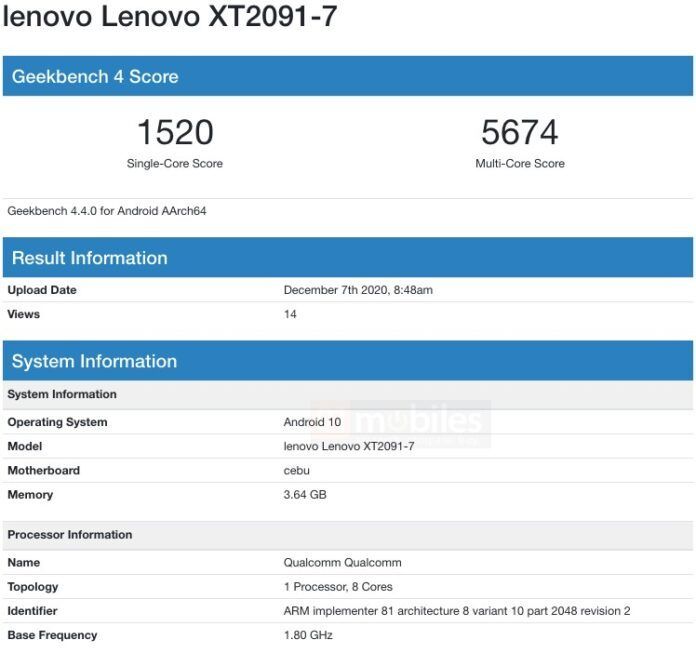
Lenovo is all set to launch the Lenovo K12 smartphone in China on Dec. 9. It is speculated that the company launch multiple Lenovo branded phones at the event. Recent reports have revealed that the new Lemon phones will be a rebranded versions of the Moto G and E series phones that were recently announced in markets outside of China. Today, one of the Lemon phones with model number XT2091-7 was spotted at the Geekbench benchmarking platform (via).
The XT2091-7 phone was recently seen at TENAA with a few specs and images, which suggested that it could be a rebranded version of the Moto G9 Power. This device is speculated to arrive as the Lenovo K12 Pro (or Lenovo Lemon K12 Pro) in China. The handset was also spotted at the FCC certification platform in the recent past and it now it has paid a visit to Geekbench with Snapdragon 662 chipset and 4 GB of RAM.
The XT2091-7 is loaded with Android 10 OS. In the single-core test, the handset scored 1520 points and it recorded a score of 5674 in the multi-core test. Previous reports have revealed that it has a square-shaped camera module, a rear-facing fingerprint reader, and a punch-hole display.
The Lenovo K12 Pro is expected to arrive with specs like a 6.8-inch IPS LCD HD+ display, a 6,000mAh battery with 20W fast charging support, a 16-megapixel selfie camera, a triple camera system with a 64-megapixel main lens, a 2-megapixel macro sensor, and a 2-megapixel depth sensor.
Recent reports have revealed that the Moto G9 Play could be rebadged as the Lenovo K12 in the homeland. The Moto E7 Plus is also expected to arrive as a rebranded Lemon series phone.
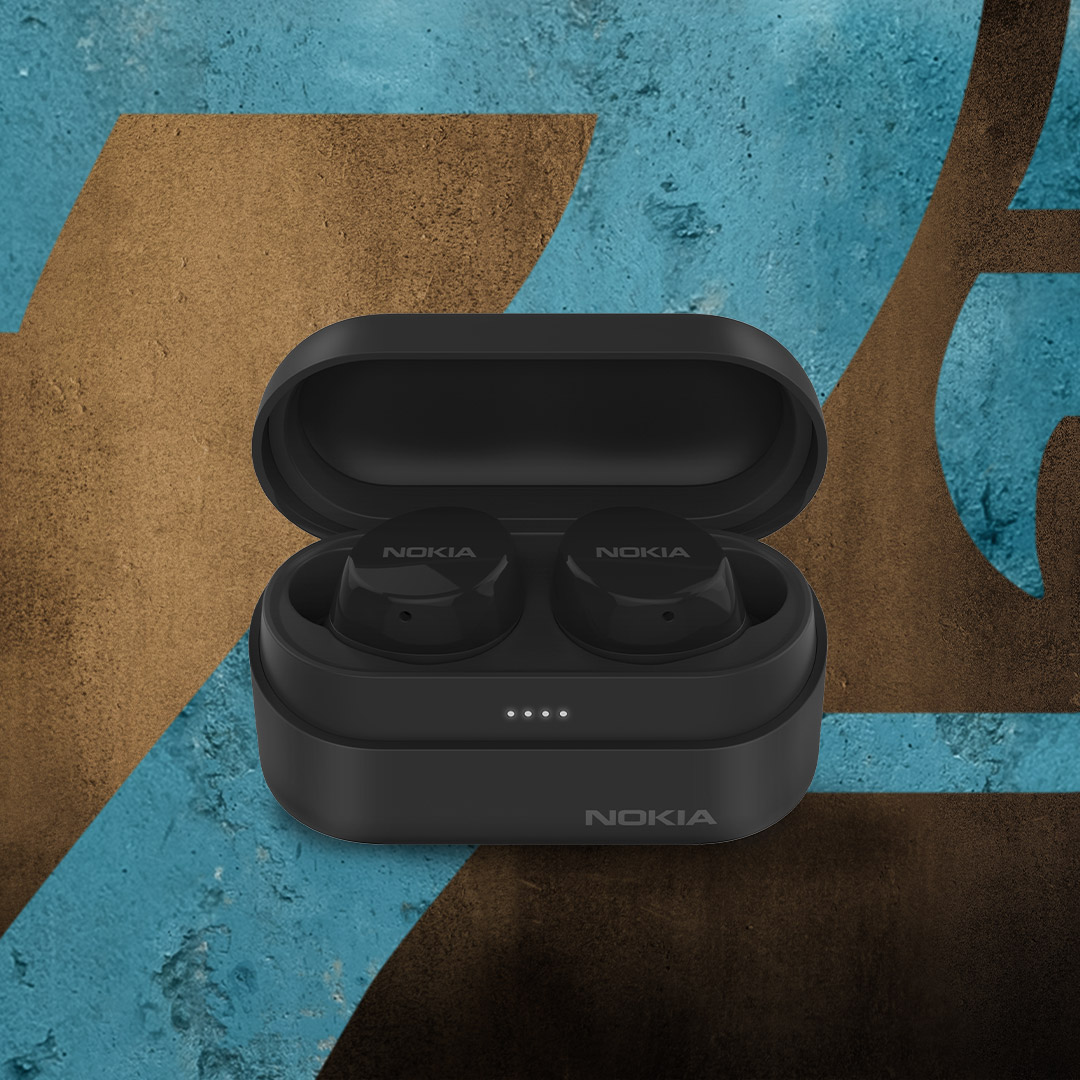
In late September, alongside the Nokia 2.4 and Nokia 3.4 budget smartphones, HMD Global also announced a new pair of truly wireless earphones and a portable wireless speaker. These earphones called Nokia Power Earbuds Lite aka Nokia BH-405 have now launched in China for almost half the international price.
Nokia Power Earbuds Lite (Nokia BH-405) Specifications and Features
As the name suggests, the new Nokia BH-405 TWS is a toned-down version of the original Power Earbuds from last year. The buds feature 6mm graphene drivers and connect to devices via Bluetooth 5.0 but only support AAC codec. Anyway, as an added bonus, they are IPX7 water-resistant, and therefore, users need not worry about sweat and rain.
Further, the biggest highlight of this product is its battery life as the company claims it to run for up to 35 hours. That’s because the charging case comes with a 600mAh battery. Hence, the case can fill up the buds for up to five times adding 30 hours of extra playback time, in addition to 5 hours that users can get from the battery of the buds themselves.
1 of 3
This case measures 68 x 36 x 31mm in dimensions and charges via USB Type-C port, whereas the buds with touch gesture control measure 25 x 23 x 23.8mm. Lastly, the product as a whole weighs 48.4 g and comes in three colors namely Charcoal, Fjord, and Snow
Nokia Power Earbuds Lite (Nokia BH-405) Pricing and Availability
The Nokia Power Earbuds Lite (Nokia BH-405) is priced at ¥299 in China. On the other hand, it costs €59.99 in Europe. In other words, these new pair of truly wireless earphones are 37% cheaper in China.
In the ongoing trade war between the United States and China, several companies have already bowed down to the pressure from the U.S. to ban Huawei from their 5G infrastructure development. Now, it seems that Korea could be added to the list soon.
As per a report coming from Korea, a U.S. Congress committee has submitted a new bill that urges Pentagon to consider mobile security risks posed by the Chinese tech companies when it deploys troops and weapons overseas.
The bill named the 2021 National Defense Authorization Act, has been approved by the Senate Armed Services Committees and will soon be put on the vote. If passed, it could be used to force host countries to ban Huawei or other companies that the United States deems as a security risk.
Given that Korea heavily relies on heavily armed U.S. troops for its defense, it could be forced to ban Huawei. This is because LG UPlus, one of the mobile network operator in Korea, is using 5G equipment from Huawei.
LG Uplus has been using Huawei equipment in its network since 2013, which now accounts for over 30 percent of its total infrastructure. While the U.S. government has asked LG Uplus to stop using equipment from the Chinese giant but the company maintains that it’s impossible to do so given the costs involved.
However, the company has said that it is using Ericsson’s equipment in Pyeongtaek and Uijeongbu, where U.S. military bases are located, and their vicinities. On the other hand, Korea says that it is up to the network operator to determine which equipment to use.
As the chip supplies for some electronic components in cars have been impacted due to the COVID-19 pandemic, China’s overall auto production could be interrupted, said Volkswagen AG — the biggest foreign carmaker in China.
China, which is the world’s biggest auto market, relies heavily on imported chipsets for electronic parts such as control units and stability programs. In a statement to Reuters, Volkswagen said that it is monitoring the situation and has been coordinating with the headquarters and suppliers for countermeasures.
On the other hand, BYD Auto has also confirmed a shortage of some semiconductor-related products in the automotive industry but added that the company has not been affected as it was prepared for the same in advance.
Apart from that, Xiaopeng Motors has also stated that it remains unaffected by the chipset shortage and the production and operation are going on normally. The report coming from China indicates that FAW Volkswagen and SAIC Volkswagen are the companies that had to halt production as they faced difficulties in sourcing chips.
Interestingly, BYD Auto also stated that the company has a complete industrial chain in terms of batteries for electric vehicles, chipsets, and more to become self-sufficient. However, it added that there’s still a balance of external supply.
China has been increasing its efforts to boost domestic chipset manufacturing because of the recent sanctions on Huawei by the United States. In line with that, there’s a chipset factory being set up in Wuhan for about $20 billion while Huawei has also completed the construction of its first chip manufacturing facility in China.
In October, Realme announced the Realme Q2 series of smartphones in China. As the name goes, the Realme Q2 Pro is the most powerful device in the series. It had arrived in two color options such as Rainbow gradient color and Light Tide Gray. Today, the company announced the arrival of two new color variants for the Q2 Pro.
As can be seen in the poster, the Realme Q2 Pro 5G will be available in two new colors such as Fantasy White and Fantasy Blue from Dec. 12. The company also confirmed that the 8 GB RAM and 128 GB storage variant of the Realme Q2 Pro will be available with reduced pricing of 1,499 Yuan (~$229). At launch, it was priced at 1,599 Yuan (~$244).
The Realme Q2 Pro has a 6.4-inch S-AMOLED display that produces a Full HD+ resolution of 1080 x 2400 pixels and a 20:9 aspect ratio. The display is integrated with a fingerprint reader. The Realme UI based Android 10 OS comes preinstalled on the smartphone.
The MediaTek Dimensity 800U chipset fuels the Realme Q2 Pro along with 8 GB of RAM. The phone is available in China in storage choices like 128 GB and 256 GB. It lacks a microSD card slot.
The Q2 Pro is backed by a 4,300mAh battery that supports 65W fast charging The phone has a front-facing camera of 16-megapixel and its rear-mounted camera module comprises a 48-megapixel main camera, an 8-megapixel ultrawide sensor, a 2-megapixel macro camera, and a 2-megapixel depth sensor.
Xiaomi’s upcoming flagship smartphone series, the Mi 11 has been in the news for the past few days. Now, in the latest development, the upcoming flagship smartphone’s protective case has leaked online.
The protective case of the Mi 11 Pro has been leaked online but its authenticity has not been verified. So, we would advise you to take this with a pinch of salt as it could turn out to be a fake or fan-made design.
The leaked image indicates that the smartphone will come with a quad-camera setup. It seems that the company has opted for a horizontal camera matrix and the module is placed in the top-left corner.
Previously, it was leaked that the smartphone could feature a 2K resolution display with a punch-hole cutout on top for housing the front-facing camera. It is also expected to come with support for a 120Hz refresh rate.
Xiaomi has already confirmed that the device will come powered by the newly launched Qualcomm Snapdragon 888 flagship mobile chipset. It is also being reported that the Mi 11 Pro could have support for 120W fast charging technology, which was unveiled by the Chinese company earlier this year.
While Xioami has not yet confirmed the launch date, there are reports indicating that the flagship smartphone from the company could get launched later this month. If that’s the case, then we expect a launch date announcement from the brand in the coming days.
As China is gearing up to become self-reliant in the chipset manufacturing sector and reduce its reliance on other countries, Chinese giant Huawei Technologies has reached a milestone in that direction.
A report reveals that Huawei’s first domestic chip manufacturing factory, called Wuhan Huawei Optical Factory Project (Phase II), has officially completed construction. The project is said to be spread across 208,900 sq. mt. and is located in Wuhan Optics Vallery Center.
This is also Huawei’s largest Research & Development base in China’s central region. It includes FAB Production Plant, CUB Power Station, PMD Software Factory, and some other supporting facilities. It will also sever as the company’s internal optical capability center, smart terminal R&D center, and some other cutting-edge technologies.
Once the project is completed, it will start the production work as Huawei’s first chip manufacturing factory in China. This will enable the Chinese giant to have a complete semiconductor industrial chain — from chip design to manufacturing, to testing and packaging, which is a rare feat.
But it seems that this won’t be the only such facility from Huawei. As per another report, the company is planning to have another chipset factory in Shanghai and will be managed by a Shanghai-based R&D company on behalf of Huawei.
Although the chipset factory is being set up, it won’t be able to compete with the current leaders. Huawei will start making 45nm chips next year and will progress to 28nm chipsets by 2022. This is nowhere near 5nm chipsets being launched nowadays that powers the premium flagship smartphones.
The development comes after the United States government imposed sanctions on Huawei and barred the company from procuring chipset or any technology that is made in the US. With the supply of necessary components halted, Huawei decided to focus on becoming self-reliant to keep the business afloat.
Demand for Smart TVs has been rising for the past few years. While more and more companies are entering this category, South Korean giant Samsung has managed to hold down its strong position in the market.
Most of the Smart TVs launching in the market are powered by Android TV with the company’s own custom interface on top, or they are using software like Roku or Amazon’s Fire TV. But Samsung is using its own Tizen OS, which is based on Linux.
Now, thanks to the strong sale of Samsung TVs, Tizen OS has been ranked as the world’s largest streaming TV platform. This is mostly due to the company’s TV sales in the third quarter of this year.
As per the report from Strategy Analytics, Tizen OS accounted for 12.5 percent of the connected TV devices in use, ahead of other platforms such as WebOS from LG, Sony PlayStation, Roku TV OS, Amazon Fire TV OS, and Google’s Android TV.
It also revealed that Samsung managed to sell 11.8 million Smart TVs worldwide in Q3 2020, which represents the best-ever quarter by Samsung so far and no other manufacturer has reached this level.
The numbers indicate that Samsung’s Tizen OS for Smart TVs is now being used in more than 155 million units, representing a rise of 23 percent when compared to last year.
Samsung has been trying to monetize its Tizen OS platform and with the rising number of users, it will be interesting to see how the South Korean giant manages to monetize the platform and keep the users happy.
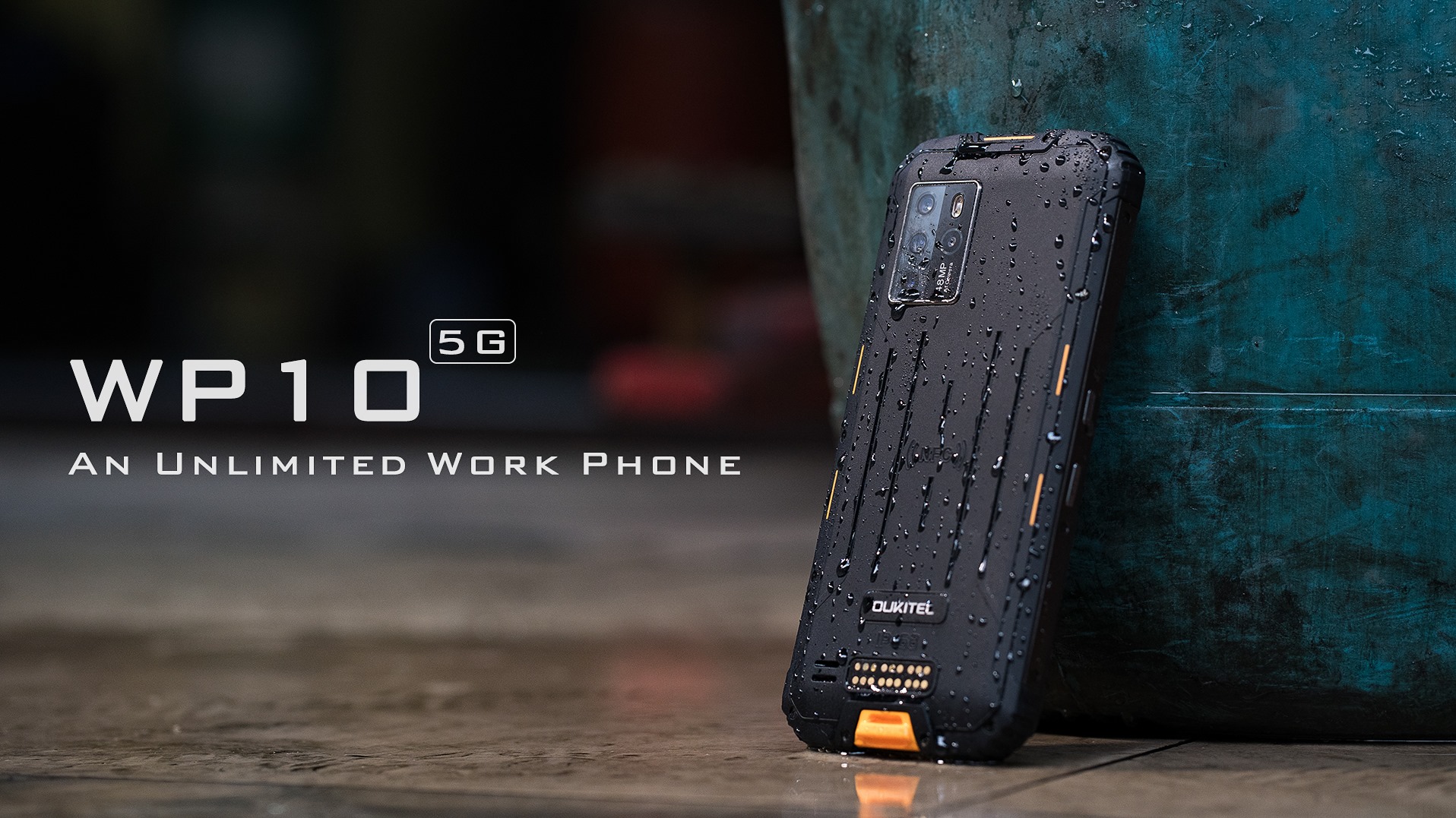
Gizmochina along with Oukitel is conducting an Oukitel WP10 phone as a giveaway gift to a lucky reader. Like always, you just have to follow the steps mentioned on the Gleam widget to get a chance to win this amazing gift.
Oukitel WP10 is a rugged phone with 5G supported, and it’s available on the official shop for $399.99. This price tag is in the same ballpark as the price of CAT S52 which was released by CAT around the same time last year.
How to enter this giveaway? Just follow these steps:
Share this giveaway contest on Facebook, Twitter, and Reddit.
The winner will be posted on Gizmochina’s twitter and Gizmochina’s Facebook, so please follow us on Twitter and Facebook, so that you don’t miss the winner announcement.
Terms & Conditions:
1. The giveaway is an international giveaway. 2. We are not responsible for lost shipments. 3. We are not responsible for any duties, import taxes that you may incur. 4. We reserve all rights to make any changes to this giveaway. 5. The prize will be shipped in a month when the giveaway ends.
* The winners of the last giveaway were announced last week on this Facebook page.
Just follow the steps mentioned in the Gleam widget to participate in the giveaway.
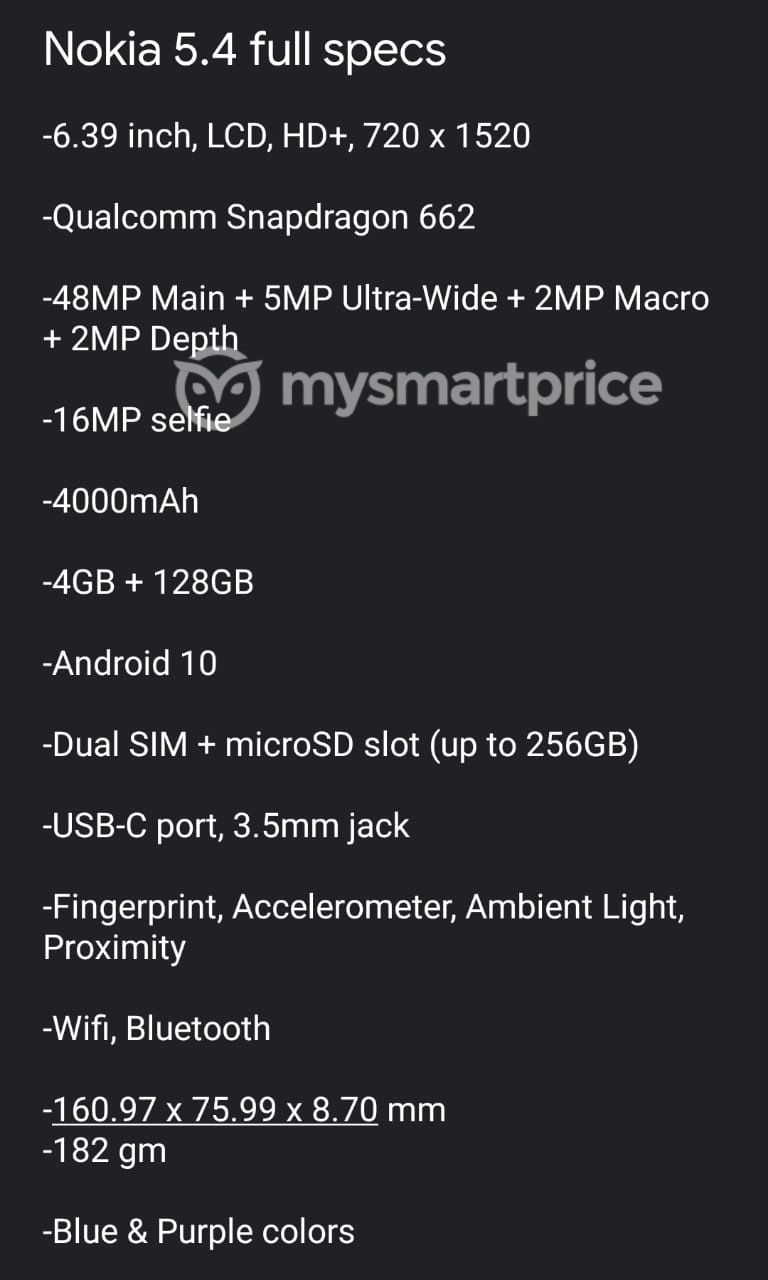
HMD Global is expected to soon launch its budget smartphone named Nokia 5.4 in the market. Ahead of the launch, the phone has been leaked a few times and now its full specifications have surfaced online.
The leak reveals that the phone will feature a 6.39-inch HD+ IPS LCD display offering a screen resolution of 1520 x 720 pixels. An earlier leak related to the device had revealed that it will come with a punch-hole cutout for the front-facing camera.
It is powered by the Qualcomm Snapdragon 662 chipset, along with 4GB of RAM and 128GB of internal storage. There’s also a microSD card slot, allowing users to further expand the storage capacity up to 256GB.
As for the camera configuration, it is said that the phone will be featuring a quad-camera setup on the back, consisting of a 48-megapixel primary sensor, a 5-megapixel ultra-wide lens, a 2-megapixel macro lens, and a 2-megapixel depth sensor.
On the front side, there will be a 16-megapixel selfie snapper. It is expected to be running the Android 10 operating system out-of-the-box and powered by a 4,000mAh battery. As of now, the phone’s fast-charging capacity is unknown but it’s likely to be 10W or 18W.
There will be a fingerprint sensor on the phone, likely mounted on the back panel, as a security feature. The report also notes that the device will be made available in two color options — Blue and Purple.
Recently, the phone was certified by FCC, along with a couple of other models, indicating that the official launch shouldn’t be far away. While the company has not yet confirmed this, we expect the phone to go official in the coming weeks.
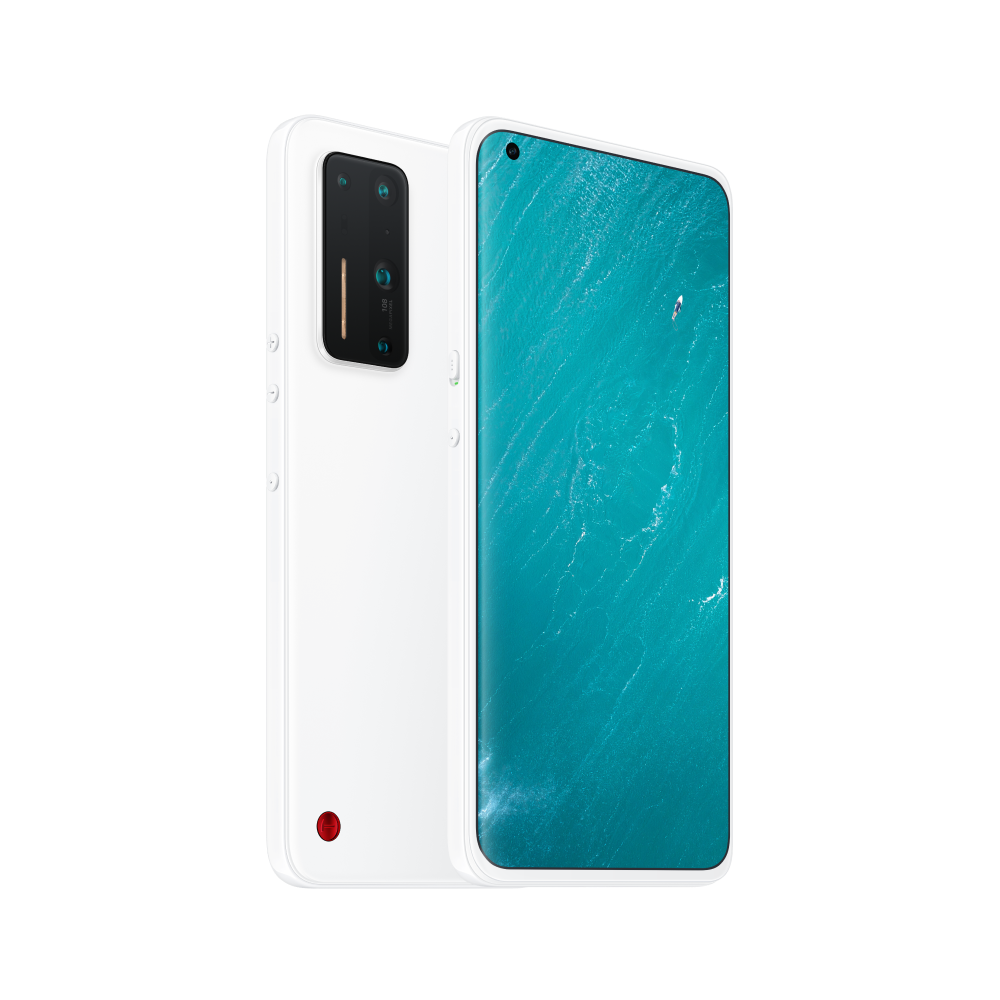
A couple of months ago, China-based smartphone maker Smartisan had launched its flagship smartphone in its home country, dubbed Smartisan Nut R2. While the Black and Green color models were made available for purchase soon after the official launch, the company is now finally all set to sell the White color variant.
At the time of launch, the company had said that it plans to produce only 2,000 limited editions of White color. It comes packed with 16GB RAM and 512GB of internal storage, for a price of 6,499 yuan which roughly converts to $995.
The Smartisan Nut R2 features a 6.67-inch Full HD+ AMOLED display with a screen resolution of 2340 x 1080 pixels, along with a 90Hz refresh rate and 180Hz touch latency. Under the hood, the device is powered by the Qualcomm Snapdragon 865 SoC.
As said, it comes packed with up to 16GB of LPDDR5 RAM and 512GB of UFS 3.1 internal storage, making it one of the few phones to have such high memory configuration. The phone is running Smartisan OS 8.0 which is based on the Android operating system.
Coming to the camera department, it sports a quad-camera setup on the back that includes a 108-megapixel primary sensor, an 8-megapixel telephoto lens, a 13-megapixel ultra-wide lens, and a 5-megapixel macro lens.
The camera configuration offers support for 3x optical zoom and 30x hybrid zoom, and 8K time-lapse photography. On the front side, it features a 20-megapixel snapper, taking care of the selfie and video calling needs.
It also has support for dual-mode 5G connectivity, along with Wi-Fi 6 and NFC. It comes with stereo speakers and DTS audio. There’s also a new slider button on the side that can quickly put the phone in silent mode. The smartphone is powered by a 4,510mAh battery that supports 55W fast charging technology.
This year in February, Xiaomi announced the Xiaomi Mi 10 and Mi 10 Pro smartphones in China. Rumors are rife that the Xiaomi Mi 11 series will be earlier than its predecessor. Last week, Qualcomm unleashed the Snapdragon 888 mobile platform. Soon after it was unveiled, it was claimed that the Chinese brand will reportedly take off the covers from the Xiaomi Mi 11 series later this month. Today, the alleged batteries of the Mi 11 lineup were found listed in the database of the 3C platform.
In the screenshot shown below, two batteries for forthcoming Xiaomi phones have bagged 3C certifications. The rated value of the first battery is 2,845mAh and the rated capacity of the second one is 2,390mAh.
The Xiaomi Mi 10 series debuted with 30W fast charging technology. The tipster has claimed that the Mi 11 and Mi 11 Pro will be powered by dual-cell batteries to carry support, which will bring faster-charging capabilities on both phones. The total rated value of the Mi 11’s battery could be 4,780mAh and the total rated size could be 4,970mAh. This suggests that the typical battery capacities of both phones could be around 5,000mAh.
The tipster has speculated that the Mi 11 and Mi 11 Pro will carry support for 55W rapid charging. If this turns out to be true, the Mi 11 duo may charge completely in around 35 minutes.
Xiaomi Mi 11 render by Benjamin Geskin
The Xiaomi Mi 11 and Mi 11 Pro could be debuting as the world’s first flagship phones powered by the Snapdragon 888 mobile platform. Also, the Mi 11 and Mi 11 Pro could be the first flagship smartphones from Xiaomi to arrive with support for Quad HD+ resolution as well as a 120Hz refresh rate. Recent reports have revealed that the Mi 11 duo will have a horizontal camera.
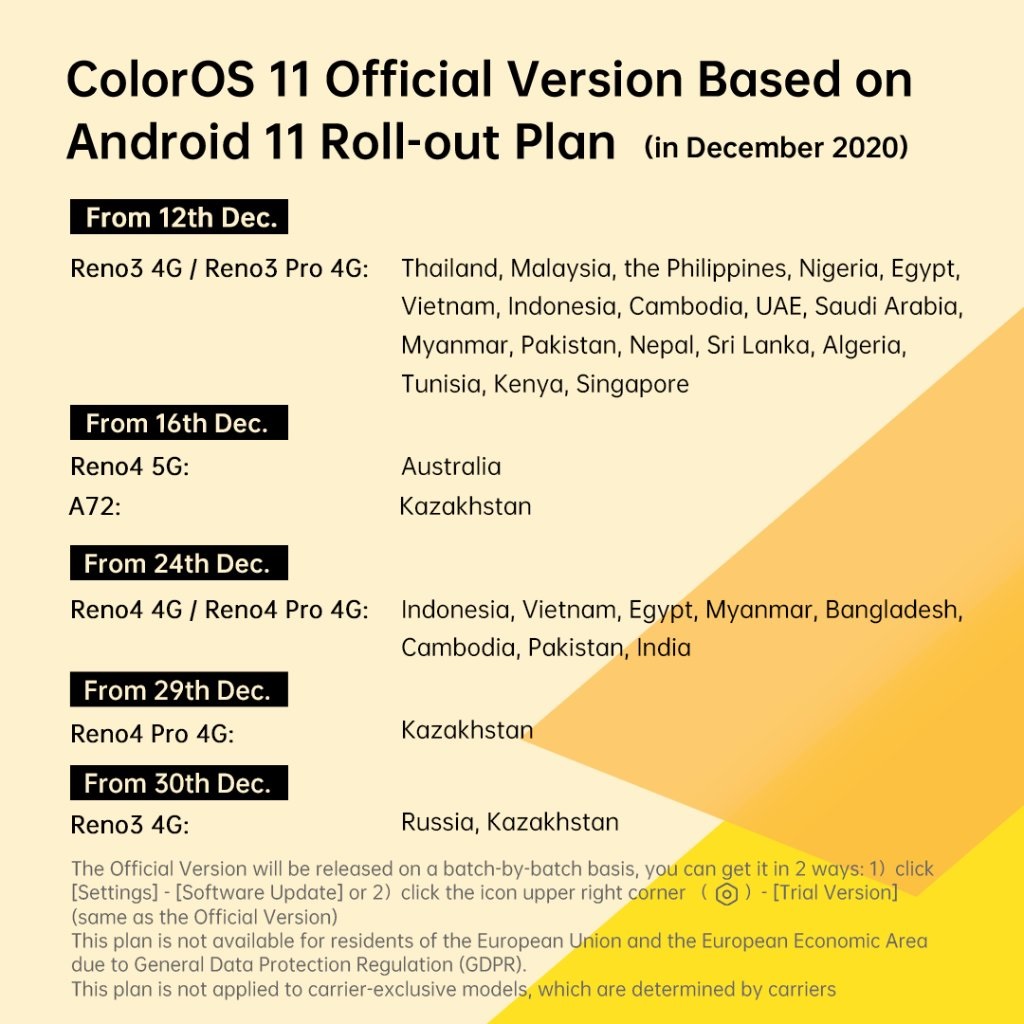
The OPPO Reno3 4G and Reno3 Pro 4G loth launched in March of this year with ColorOS 7 based on Android 10. The two phones are powered by MediaTek’s Helio P90 and Helio P95 processors respectively and are sold in several countries. According to the official ColorOS global account, these two phones will receive the ColorOS 11 update which is based on Android 11 this week.
The updates will begin to roll out from Saturday, December 12 in the following countries: Thailand, Malaysia, the Philippines, Nigeria, Egypt, Vietnam, Indonesia, Cambodia, UAE, Saudi Arabia, Myanmar, Pakistan, Nepal, Sri Lanka, Algeria, Tunisia, Kenya, and Singapore. Owners of the Reno3 4G in Russia and Kazakhstan will have to wait until December 30 before they get the update.
The poster also reveals that the ColorOS 11 update will be available for the Reno4 5G in Australia starting December 16 while the OPPO A72 will get the update on the same day in Kazakhstan.
Starting 24th of December, Reno4 4G and Reno4 Pro 4G users in Indonesia, Vietnam, Egypt, Myanmar, Bangladesh, Cambodia, Pakistan, and India will get the update while Reno4 Pro 4G users in Kazakhstan will begin to receive the update on December 29.
With the new update, users get more customization options that cover icons, wallpapers, ringtones, and Always-on Display styles (AOD). ColorOS 11 also brings new features such as optimized night charging which reduces the charging speed at night to reduce overcharging; three-finger translate which allows you to translate just a part of the screen; FlexDrop – a feature that allows you use to use an app in a floating window for better multitasking.
OPPO also plans to release the stable version of the update for users of the Find X2 Pro series, the Find X2, the Reno 4 Lite, and the Reno3 in Europe this month.
OPPO’s Reno5 series launches this week in China. All models that will be unveiled in the country will have support for 5G, but there will be a 4G version of the Reno5 for global markets. This 4G version has received its certification in a number of countries already, and now some of its key specs have been revealed.
According to a tweet by TheLeaks, the Reno5 4G will have a 6.43-inch FHD+ display with a 90Hz refresh rate. OPPO will ship it with a Snapdragon 720G processor just like the Reno4 4G that launched in July. We expect it to come with 8GB of RAM and 128GB of storage.
The leak says the phone will have four rear cameras – a 64MP primary camera, an 8MP camera which should have an ultrawide angle lens, and two 2MP sensors. The front camera is a single 44MP sensor. Those who didn’t find the 2MP depth sensor that accompanied the 32MP main selfie camera of the Reno4 4G should be pleased.
The Reno5 4G will pack a 4310mAh battery with support for 50W fast charging, a significant bump from the 30W fast charging of its predecessor. The phone will have a plastic frame and also have a plastic back.
realme 7 Pro with 1st gen SuperVOOC 50W, 90Hz refresh rate, different color and 44MP selfie cam https://t.co/JsnkNsB77e
Vietnamese leaker, Chun, corroborates the leak and even adds his own info. His tweet says the Reno5 4G is practically a realme 7 Pro with OPPO’s first gen SuperVOOC (50W) fast charging technology with a different color and a 44MP camera. Based on this info, the Reno5 4G should have a punch hole at the top left of its screen for the selfie camera.
OPPO is yet to announce a launch date for the Reno5 4G but there is a chance it will launch before the year runs out.
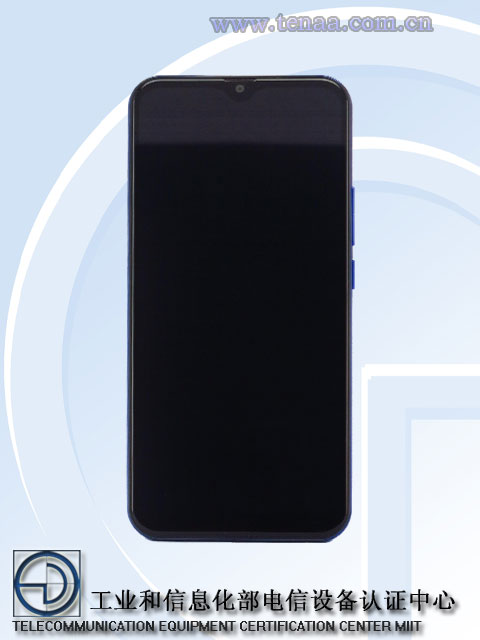
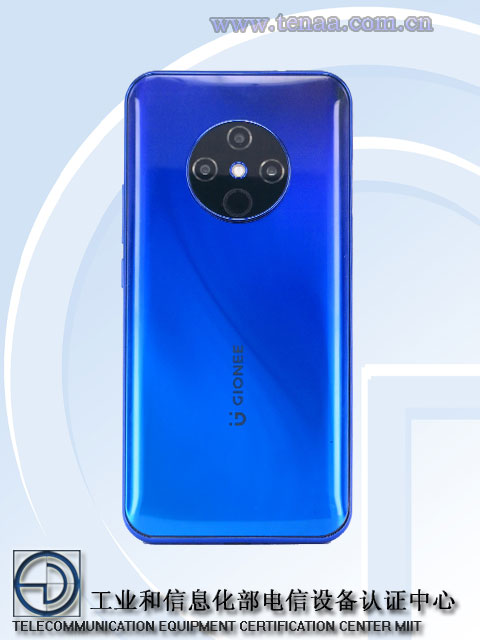
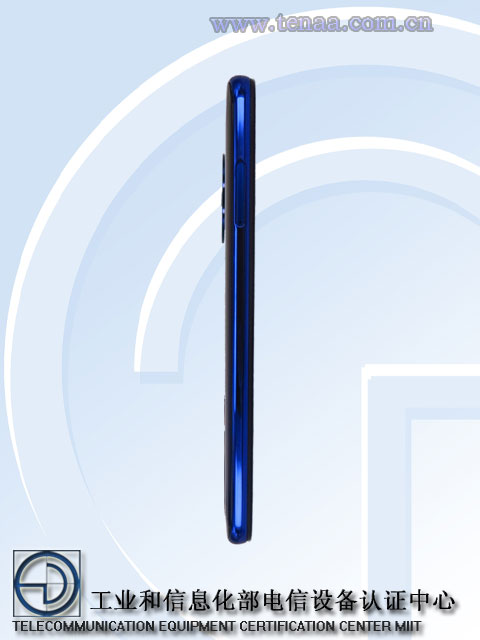
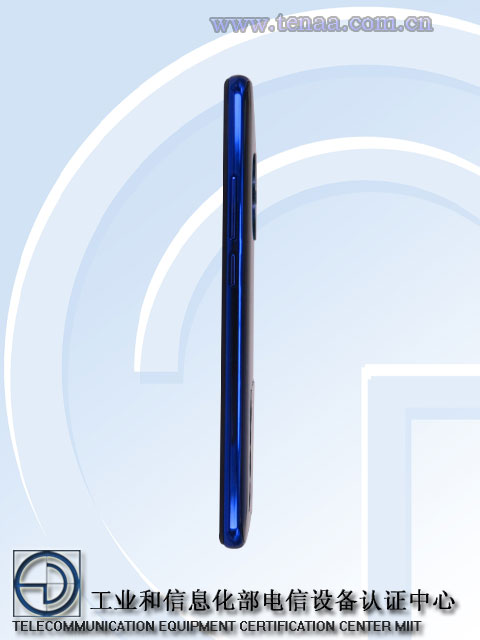
Gionee has a new smartphone coming and it has appeared on TENAA. The phone has a modern design but packs an outdated version of Android which may make it unappealing to buyers.
The Gionee GSE1020 has a 6.53-inch 1560 x 720 HD+ display with a waterdrop notch at the top of the screen for the front-facing camera. An unnamed 2.0GHz octa-core processor powers it along with 6GB or 8GB of RAM. The phone will be available in two storage configurations – a 128GB storage option and another with 256GB of storage. You also get a MicroSD card slot for adding up to an extra 256GB of storage space.
The cookie-shaped camera housing on the back of the phone is home to three cameras and an LED flash but the listing says there are only two cameras. The spec sheet mentions a fingerprint scanner which can be seen on the left side of the phone.
The Gionee GSE1020 runs Android 7.1.1 Nougat which is really outdated considering the latest version is Android 11. There is a 4000mAh battery inside the phone but there is no mention of fast charging support.
TENAA says the phone will be available for Rose Gold, Amber Gold, Magic Night Black, Starry Sky Blue, and Black Stone Green. The phone weighs 204.2 grams and measures 164.3 x 77.7 x 9.7 millimeters.
When it comes to the mid-range segment, one of the most popular devices in the Asian market is the OPPO F17 Pro. There are several reasons for its success and they include the fact that it is one of the thinnest and lightweight devices of the year. But a lot of people do not know that there could be better choices for their needs. Given the huge success it had, we decided to compare the F17 Pro to its main competitor from BBK Electronics in the same price segment. For this comparison, we chose the Vivo V20 and the Realme 7 because they offer very interesting specifications at a similar price.
OPPO F17 Pro vs Vivo V20 vs Realme 7
OPPO F17 Pro
Vivo V20
Realme 7
DIMENSIONS AND WEIGHT
160.1 x 73.8 x 7.5 mm, 164 g
161.3 x 74.2 x 7.4 mm, 171 g
160.9 x 74.4 x 8.1 mm, 175 g
DISPLAY
6.43 inches, 1080 x 2400p (Full HD+), Super AMOLED
As mentioned above, the OPPO F17 Pro is one of the thinnest and most lightweight devices of the year. But there is another device with similar specifications which is as thin as the OPPO F17 Pro and it even has a similar weight: the Vivo V20. At first glance, the F17 Pro may look slightly more attractive thanks to its punch-hole display and great color variants, but the Vivo V20 has better materials, including a glass back. With polycarbonate, you get more resistance, but a glass back is definitely more elegant. The Realme 7 is thick and heavier, so it loses the design comparison. Further, it has a side-mounted fingerprint scanner, while on the Vivo V20 and the F17 Pro, you get an in-display fingerprint reader.
Display
The OPPO F17 Pro and the Vivo V20 offer superior displays if compared to the Realme 7. We are talking about AMOLED panels, and not a simple IPS display. The OPPO F17 Pro has the best panel, offering a higher brightness and Super AMOLED technology. But the Vivo V20 remains a great handset in terms of the display if we consider its affordable price. The Realme 7 lacks an AMOLED display, but it has a 90 Hz refresh rate. As mentioned above, the F17 Pro and Vivo V20 sport an in-display biometric sensor for more comfortable authentication.
Hardware/Software
The Vivo V20 provides the best hardware department. It is fueled by the Snapdragon 720G mobile platform built at 8 nm and paired with 8 GB of RAM and up to 256 GB of internal storage. We give the silver medal to the Realme 7 packing a Mediatek Helio G95 processor and 8 GB of RAM. OPPO F17 Pro is weaker with its Helio P95 and 8 GB RAM. The max amount of native storage you can get with Realme 7 and OPPO F17 Pro is 128 GB. Realme 7 and OPPO F17 Pro run Android 10 out of the box, while Vivo V20 is based on Android 11.
Camera
Despite it comes with a lower amount of sensors, the Vivo V20 has the best main camera on the rear side, with a 64 MP resolution. Further, it has a better selfie camera with an awesome 44 MP resolution. The Vivo V20 wins the camera phone comparison. OPPO F17 Pro comes right after with the same 48 MP quad camera as the Realme 7, but it has a better front camera department including a dual 16 + 2 MP front camera. If we only consider the rear side, with Realme 7 and the OPPO F17 Pro you get exactly the same camera specifications, so the shots should not be so different. Even the software is similar, so whatever you choose, you get a decent and similar camera quality.
Battery
The battery life champion of this trio is the Realme 7 simply because it packs a bigger battery. Its components are less efficient compared to the Vivo V20, but it still lasts more because it packs a big 5000 mAh battery. You get only 4000 mAh with the Vivo V20 and the OPPO F17 Pro, but you can charge the Vivo V20 faster thanks to the 33W fast charging technology.
Price
Realme 7 is priced at Rs. 14,999 ($200) in India in its base configuration with 4 GB of RAM and 64 GB of native storage, OPPO F17 Pro has a listing price of Rs. 25,990 ($352) in the configuration with 8 GB of RAM and 128 GB of internal storage and Vivo V20 costs Rs. 24,990 ($338) in the same memory configuration. If you are looking for the longest battery life, then Realme 7 is a better phone for you. But the OPPO F17 Pro and the Vivo V20 offer an AMOLED display! Vivo V20 has a better hardware department and better cameras than OPPO F17 Pro. Further, it offers Android 11 out of the box. Despite the huge popularity of the OPPO F17 Pro, my personal choice would be Vivo V20 because its value for money is slightly higher and it has slightly better specifications. I would not choose the Realme 7 due to its IPS display, but it can let you save a lot of money.
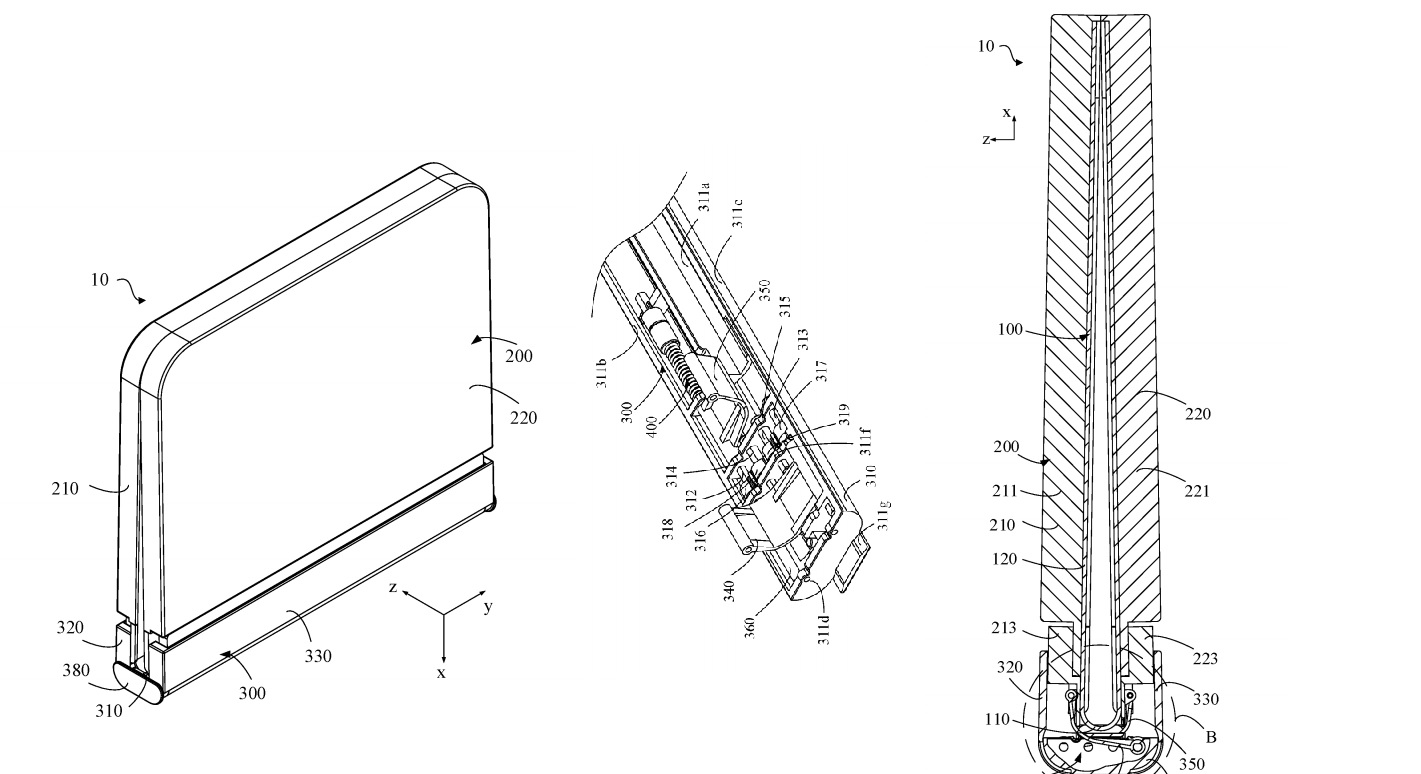
If you want a foldable phone that folds vertically, you have only two options – the Galaxy Z Flip line from Samsung or the Razr line from Motorola. We have seen other manufacturers patent phones with a similar design, but none other than the aforementioned two brands have one that you can buy right away. Now, an OPPO patent has surfaced that shows the Chinese manufacturer’s take on a vertically folding phone.
The patent was filed with the World Intellectual Property Organization (WIPO) and was approved and published on September 3. According to the documents, the foldable phone uses a rotating hinge with gears that allows the phone to be fixed at up to four different angles.
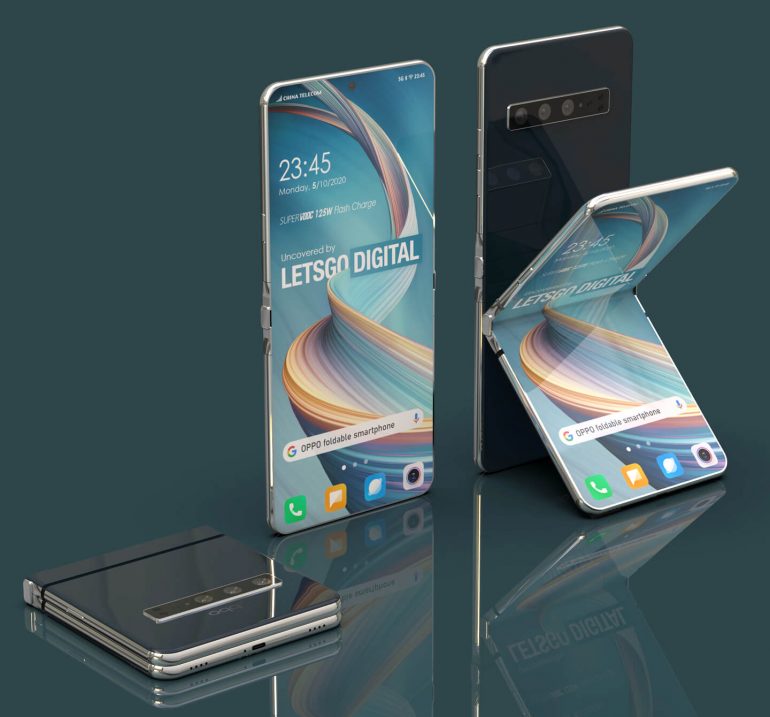
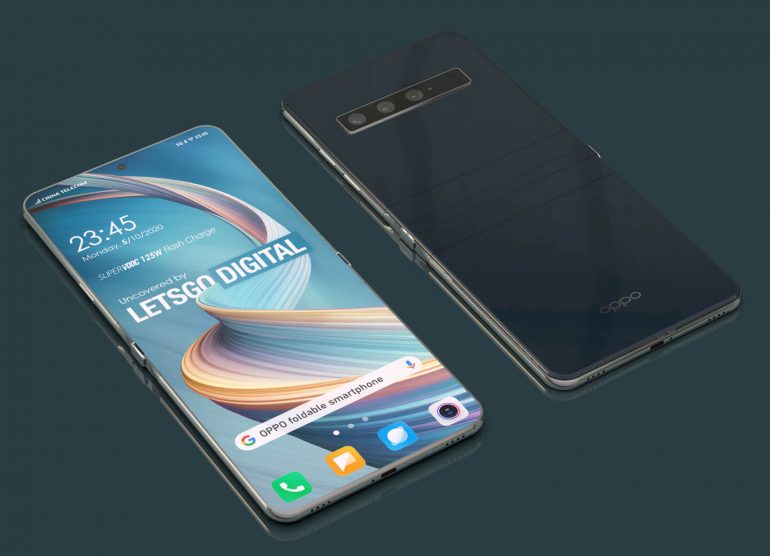
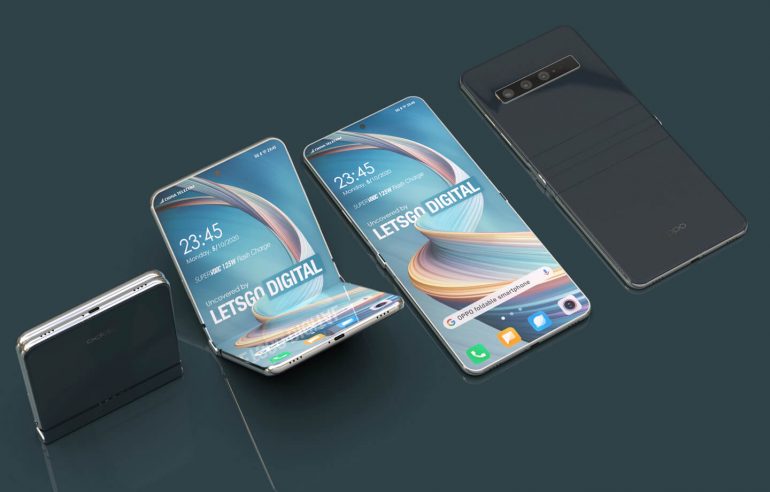
Renders made by LetsGoDigital based on the patent images show that OPPO’s foldable phone doesn’t have a cover display. This means when you fold the phone, you can’t see who is calling or what notification you just received until you unfold it. This is a striking difference from other foldable phones in the market which have a smaller display on the outside. On the other hand, the main display is more conventional, as it has a centered punch hole.
1 of 4
OPPO Flip Phone Patent
OPPO Flip Phone Patent
OPPO Flip Phone Patent
OPPO Flip Phone Patent
The renders show the OPPO device with three rear cameras even though the patent diagrams don’t reveal the number of cameras it has. However, OPPO is not one to shy away from loading its phones with cameras, so the chance of its first foldable phone having a single rear camera is pretty slim. The cameras are more than that of the Galaxy Z Flip and Motorola Razr which have two and one rear camera respectively. The sensors are also arranged in a fashion that reminds us of the Galaxy S10 Plus.
A patent doesn’t mean that a phone is on the way as we have heard no news of OPPO’s plan to launch a foldable smartphone next year. Nevertheless, it is time for a Chinese brand to make its entry into the vertically folding smartphone category.
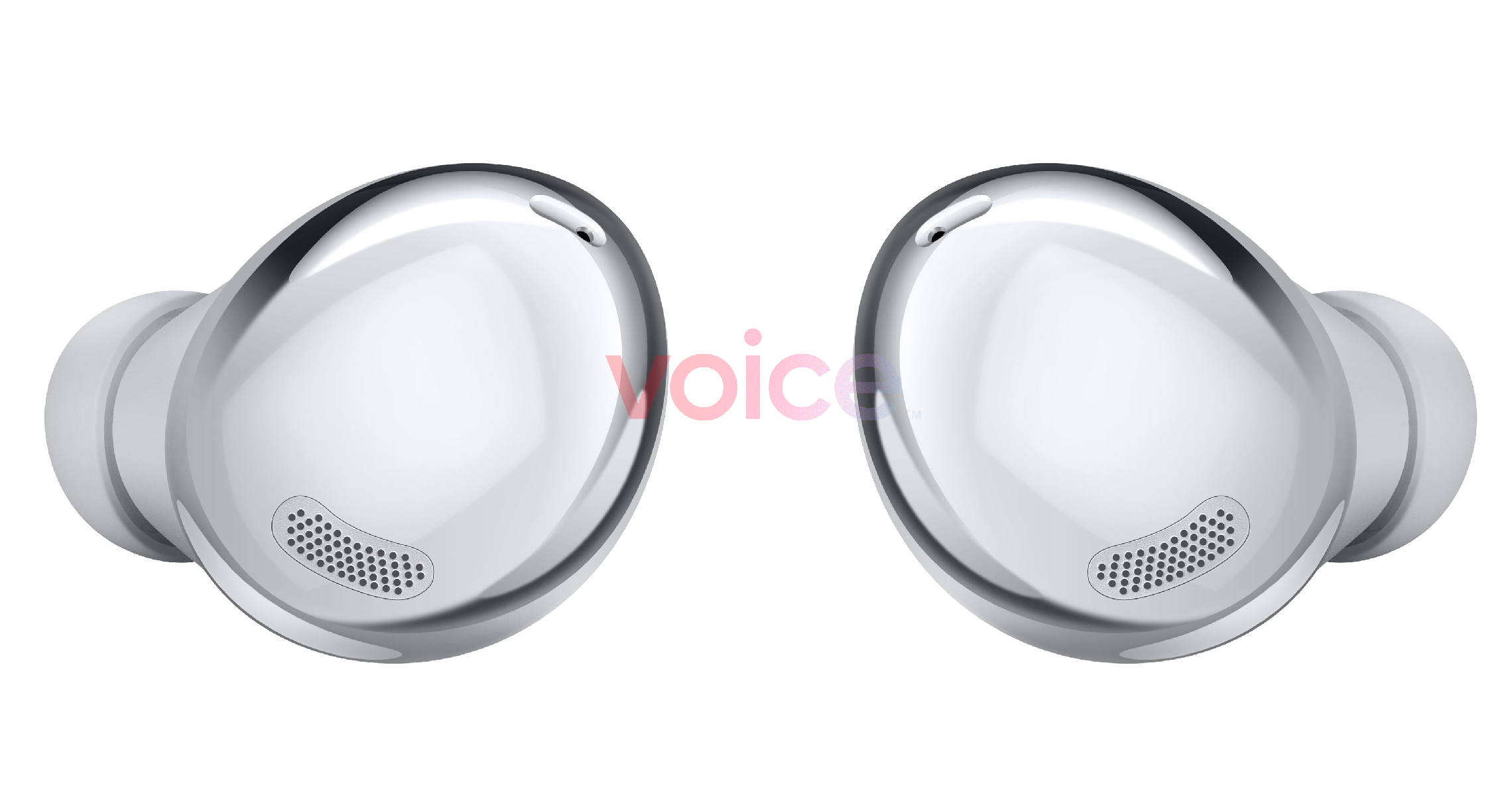
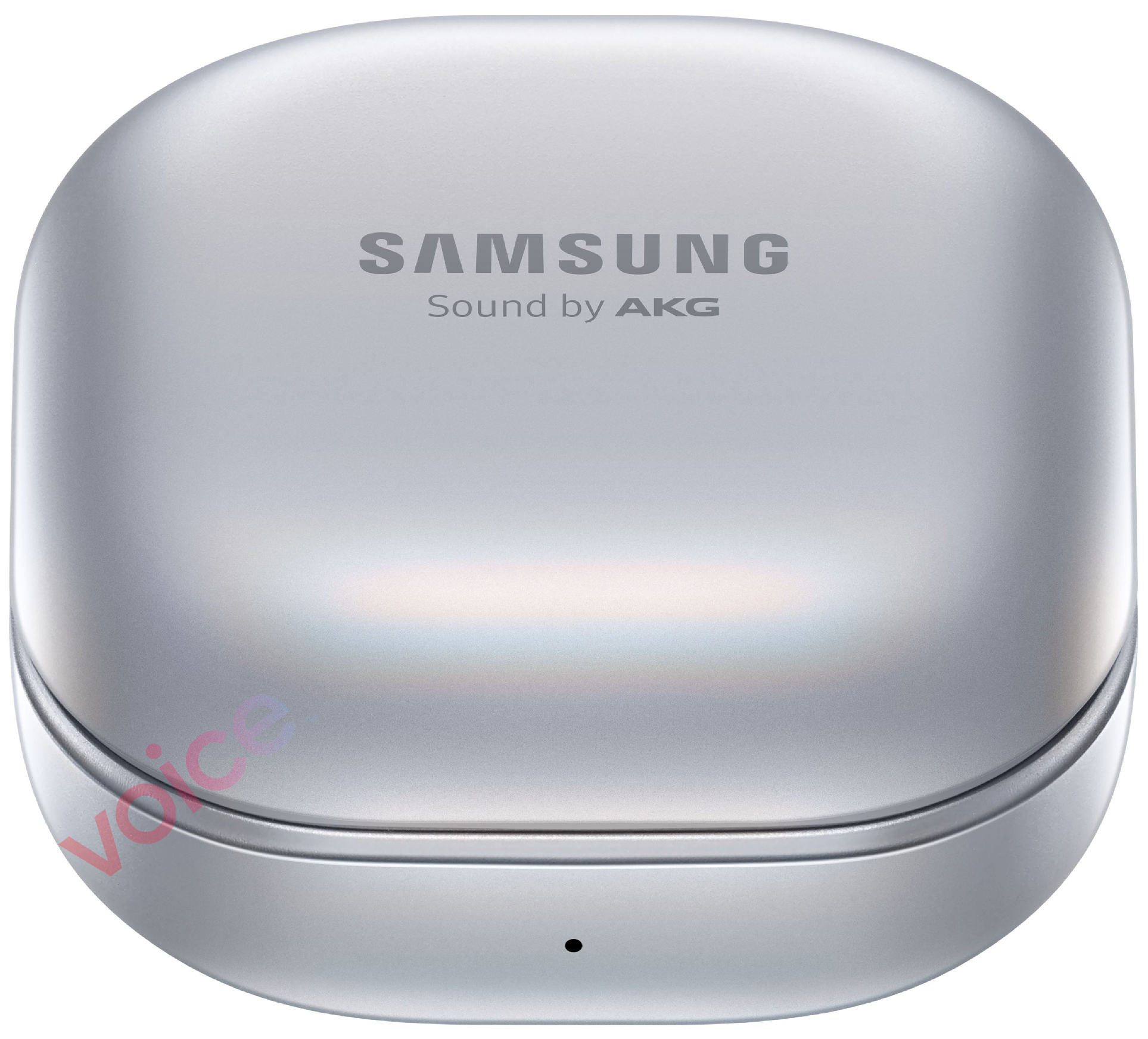
Update: Evan Blass has also shared photos of the Phantom Silver color variant of the Galaxy Buds Pro. The images have been added to the post below.
Beginning last year, Samsung‘s new tradition is to launch its TWS earbuds alongside its new flagship phones. The Galaxy Buds were announced alongside the Galaxy S10 series; the Galaxy Buds+ made its debut with the Galaxy S20 series, and the Galaxy Buds Live launched on the same day as the Galaxy Note20 series. Next year’s Galaxy S21 series will also come with a new pair of TWS earbuds that will launch as the Galaxy Buds Pro.
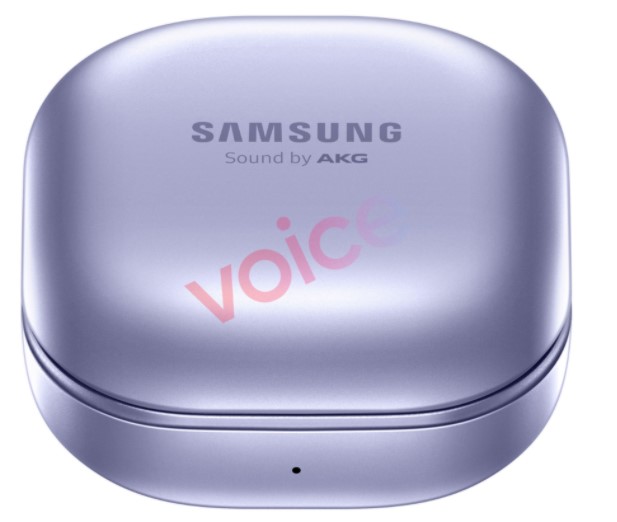
Ahead of its launch, the popular leaker, Evan Blass (@evleaks) has given us a first look at the new Samsung earphones. The images show the earbuds in violet and Phantom Silver along with a matching case.
With respect to design, Samsung has slightly deviated from the design of the Galaxy Buds and Galaxy Buds+. The Galaxy Buds Pro still has silicone tips to keep the sounds in but the body is now more rounded. There is a microphone at the top and a grille at the bottom of each earbud.
It has been reported that the new earbuds will feature active noise cancellation, so there is a possibility that the grille is housing more microphones. Samsung has also ditched the pill-shaped case of the previous models for a case similar to that of the bean-shaped Galaxy Buds Live. There is an LED in front of the case which should light up when charging it. Just like the case of the Buds Live, this too should support USB-C and wireless charging.
An FCC listing has revealed that the case of the new earbuds packs a 500mAh battery capacity which is significantly larger than the 270mAh battery capacity of the Galaxy Buds+’ case. This means users should be able to get a significant increase in total playback time/talk time.
The Galaxy Buds Pro will launch alongside the Galaxy S21 series which has been reported to arrive in January by some leaks while another report said the phones will not launch until February.
The year 2020 lived up to expectations as the year of 5G with 5G phones proliferating beyond flagship models into the affordable mid-range segment. Also, most of the processors released this year by the major chip makers were integrated with a 5G modem. However foldable phones did not experience the same level of proliferation, mainly due to the fact that it is still an expensive venture and the durability is still not awesome. However, OEMs seem to be progressing to another foldable form factor – Rollable displays.
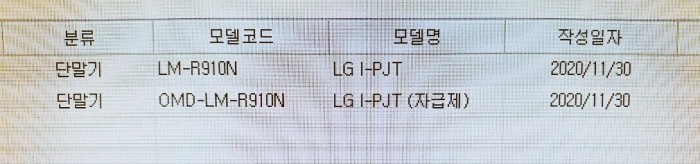
Looks like we’ll be seeing more rollable display packing phones in 2021 even though we can’t say if they will progress beyond concept phones. An LG rollable phone has reportedly been listed on the database of South Korea’s carrier Intranet. According to the Twitter leaker @Cozyplanes, the device is currently registered in the Korean operator’s internal database. The model of the device is LM-RN910N, while the unlocked model carries the model number OMD-LM-R910N.
Earlier rumors reveal that the specifications of LG’s rollable phone include a 7.4-inch expandable screen with a resolution of 2428×1080 pixels (20:9), a video mode of 2428×1366 pixels (16:9), and a productivity mode of 2428×1600 pixels (3: 2).
EXCLUSIVE#LG#Rollable has been registered in South Korea's carrier intranet (database)
Further, the LG Rollable is rumored to pack a 4200mAh battery and will be powered by Qualcomm’s latest Snapdragon 888 processor paired with 16GB of RAM. So don’t expect it to be a cheap phone.
The Twitter tipster @Cozyplanes also revealed details about how the device works. The device will expand on both sides, increasing the screen size by up to 100%. However, the top frame will not expand with the device. According to reports, LG will add a flexible frame that can be expanded to cover the exposed edge of the screen, and then retracted when the phone is closed. The phone will also have a locking device to prevent accidental deployment and prevent the screen from scrolling too fast, which can cause wrinkles on the screen.
LG is not the only company that is developing a mobile phone with a scrollable display. Samsung and TCL join OPPO on the list of OEMs that have applied for patents for smartphones with a scrolling display. Thus, we may certainly see a few more designs from others soon.
We use cookies on our website to give you the most relevant experience by remembering your preferences and repeat visits. By clicking “Accept”, you consent to the use of ALL the cookies.
This website uses cookies to improve your experience while you navigate through the website. Out of these, the cookies that are categorized as necessary are stored on your browser as they are essential for the working of basic functionalities of the website. We also use third-party cookies that help us analyze and understand how you use this website. These cookies will be stored in your browser only with your consent. You also have the option to opt-out of these cookies. But opting out of some of these cookies may affect your browsing experience.
Necessary cookies are absolutely essential for the website to function properly. This category only includes cookies that ensures basic functionalities and security features of the website. These cookies do not store any personal information.
Any cookies that may not be particularly necessary for the website to function and is used specifically to collect user personal data via analytics, ads, other embedded contents are termed as non-necessary cookies. It is mandatory to procure user consent prior to running these cookies on your website.