Advertisement

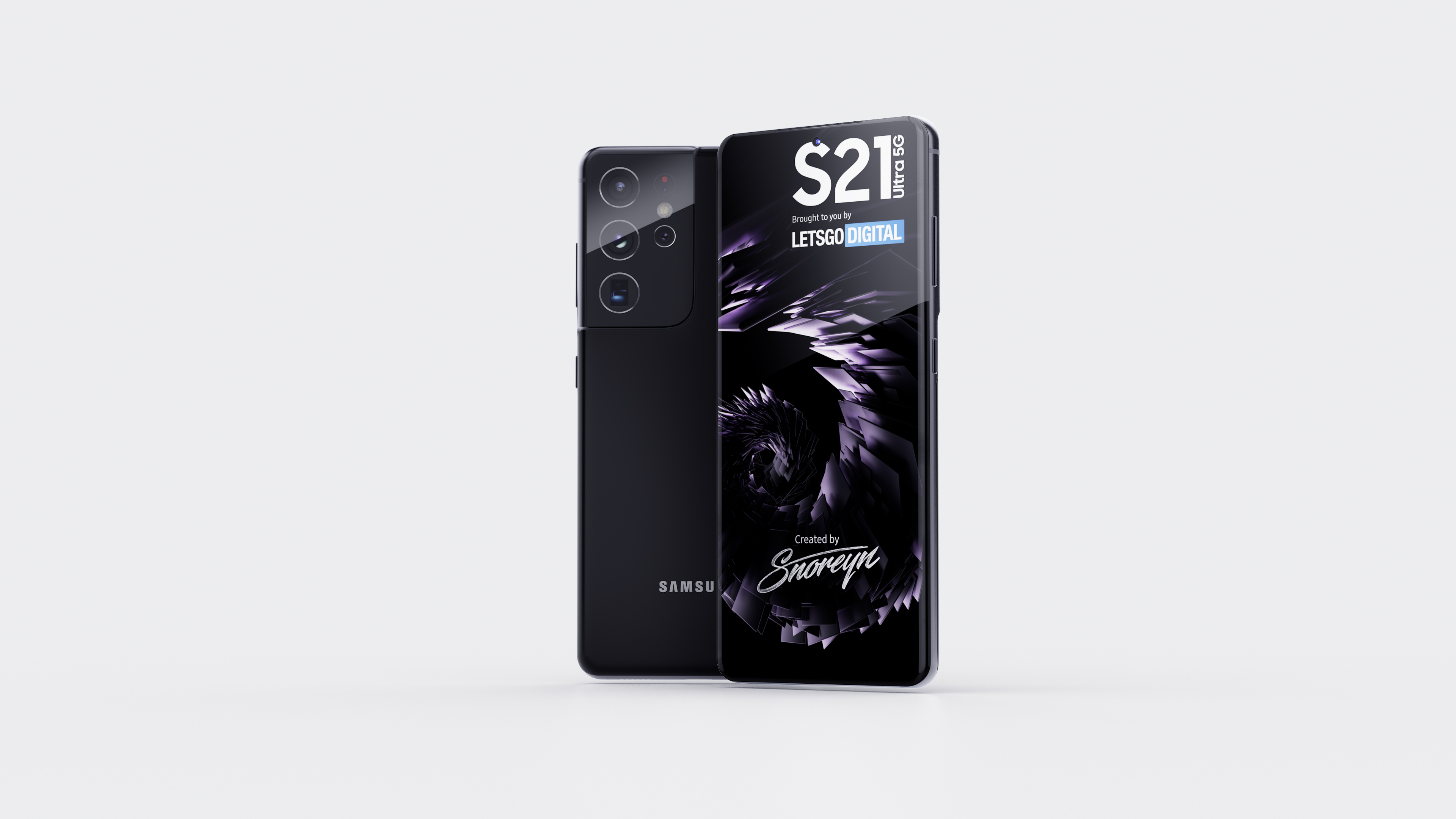
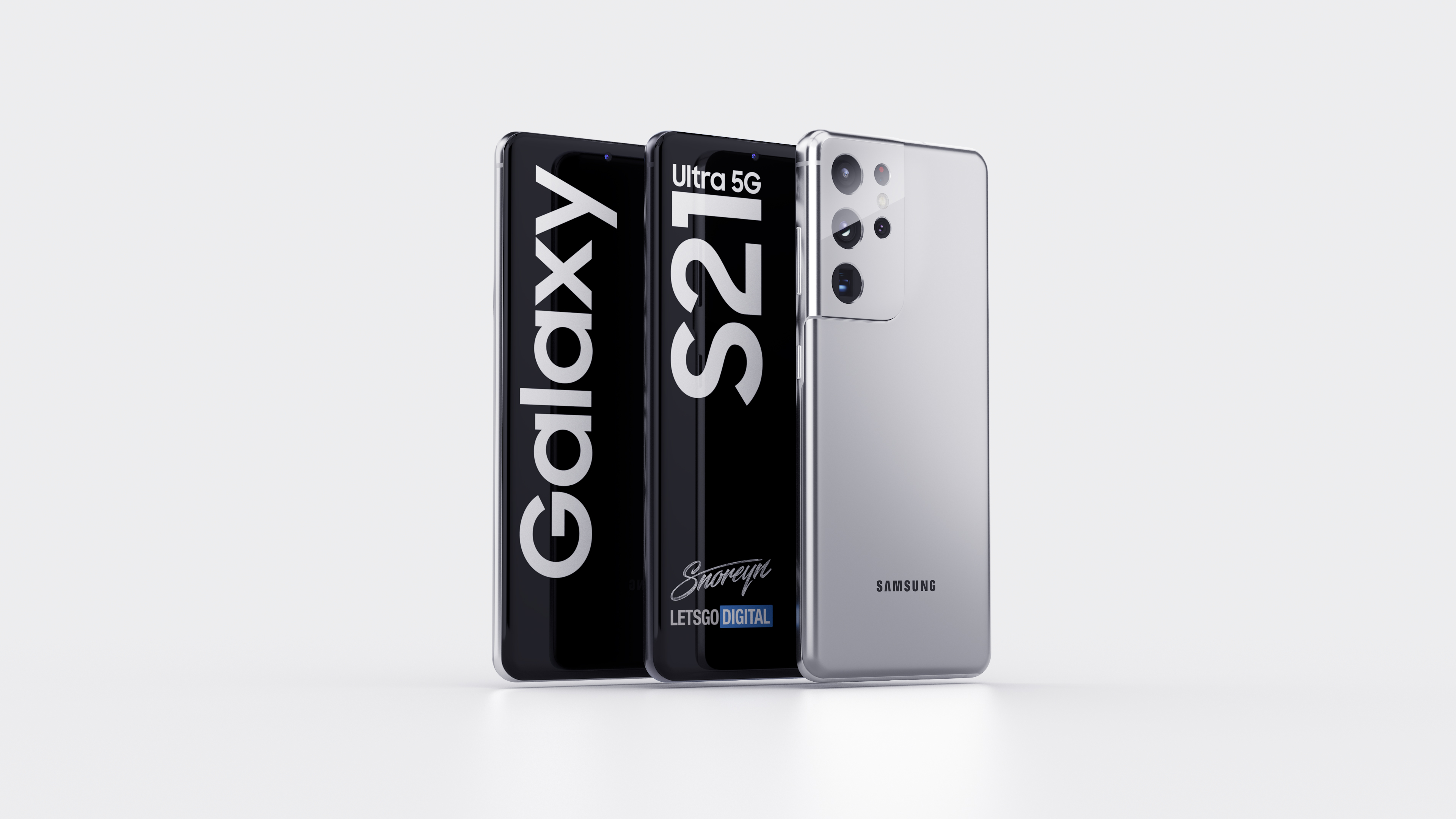
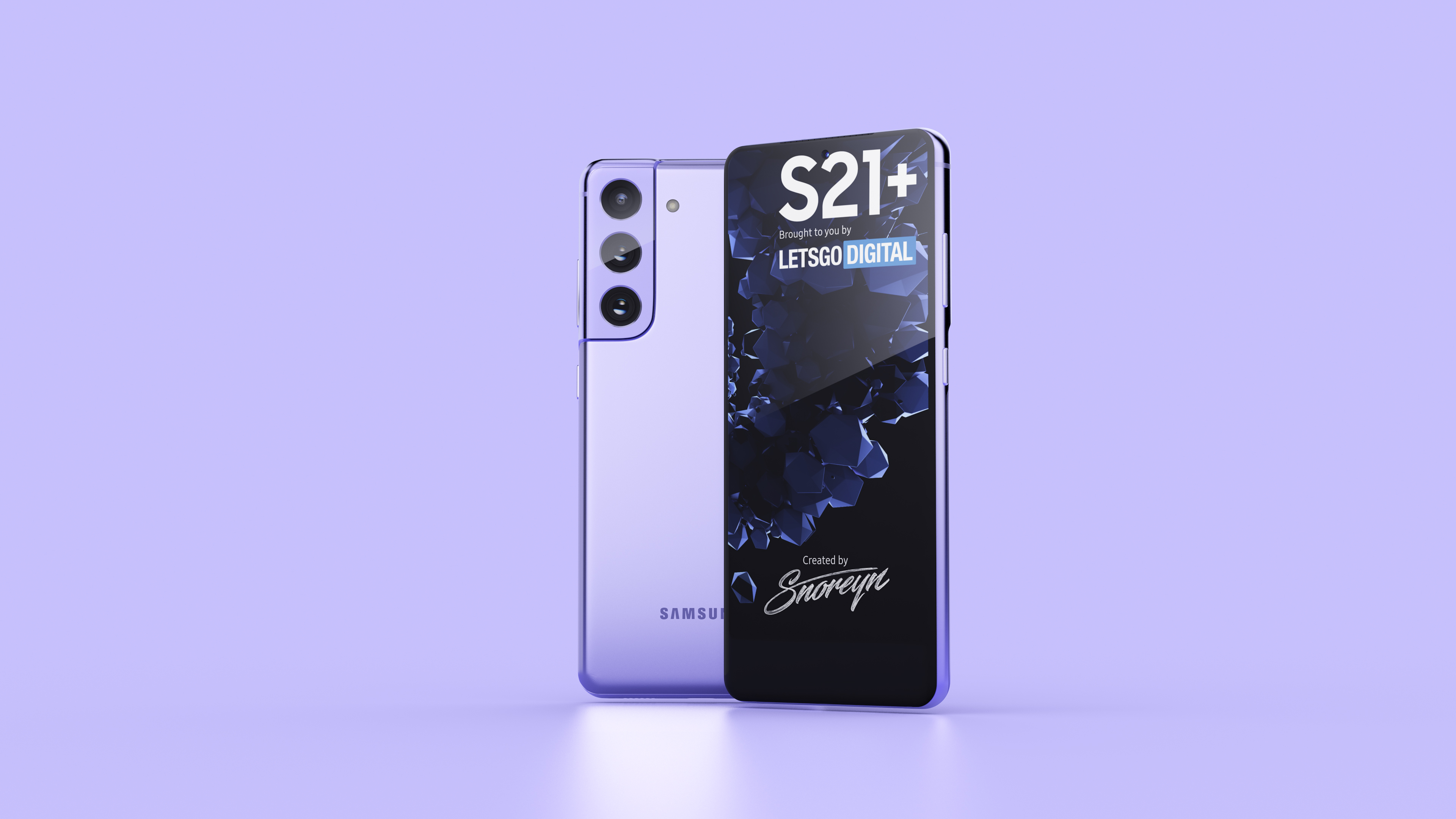
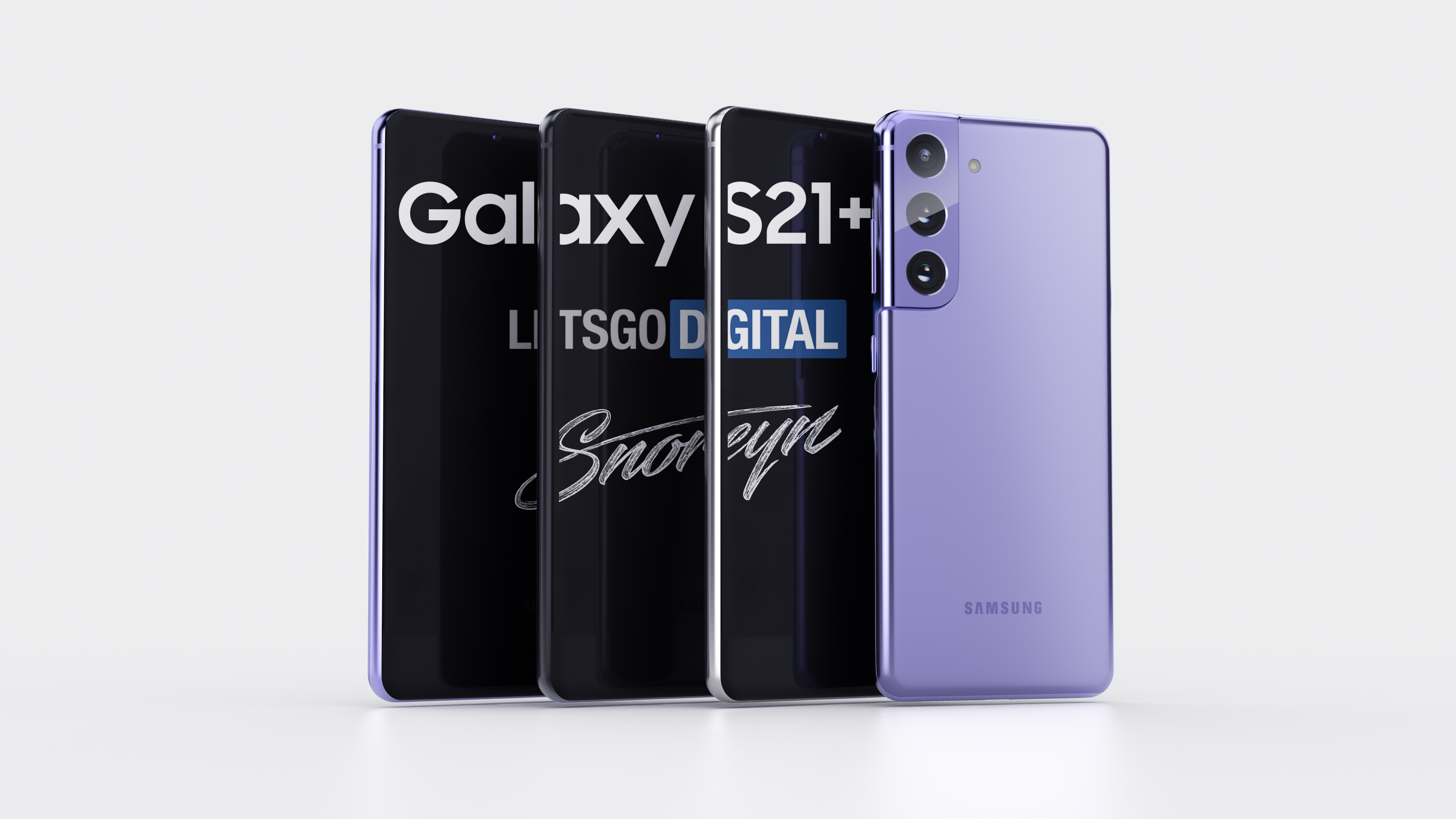
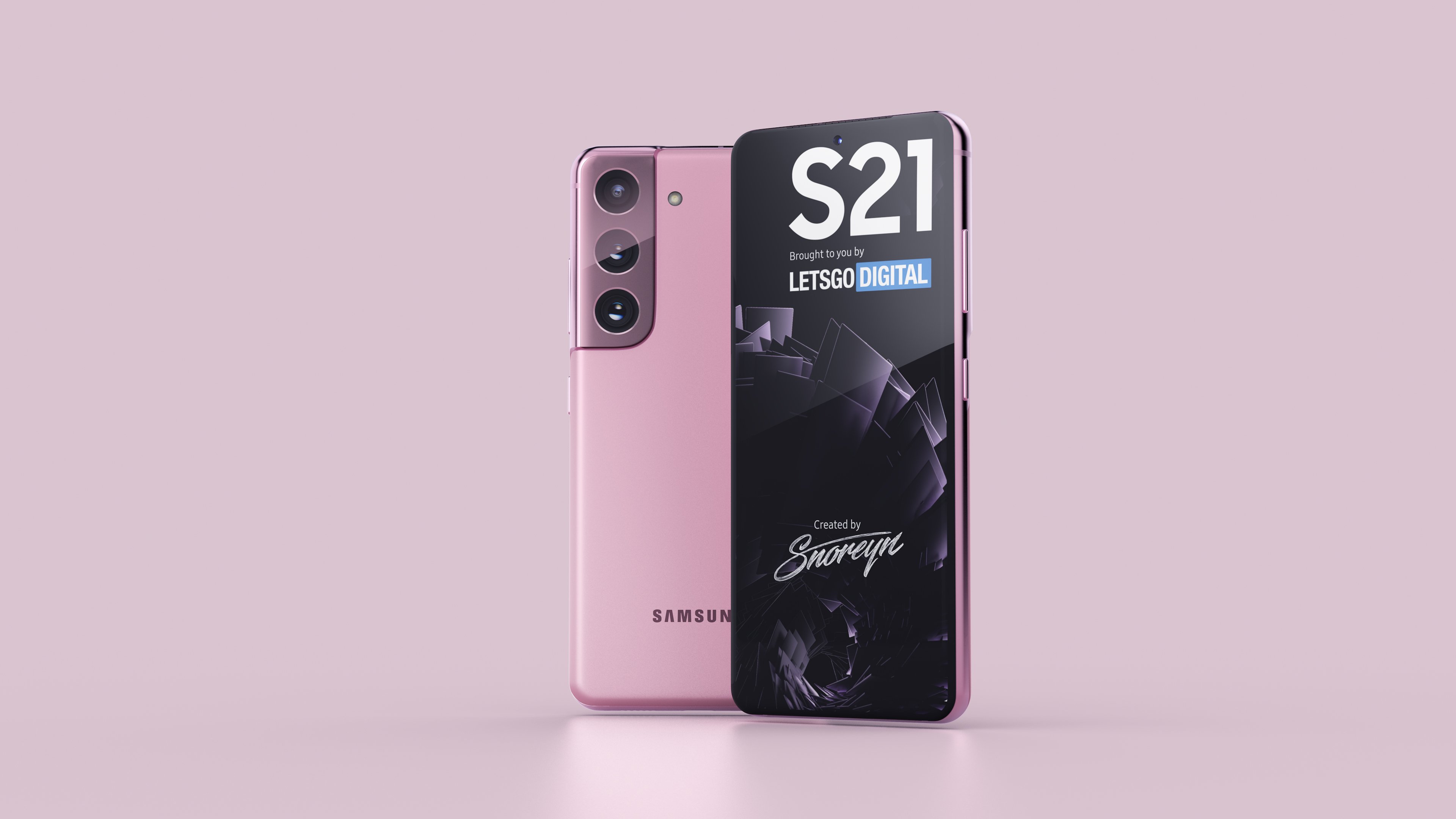
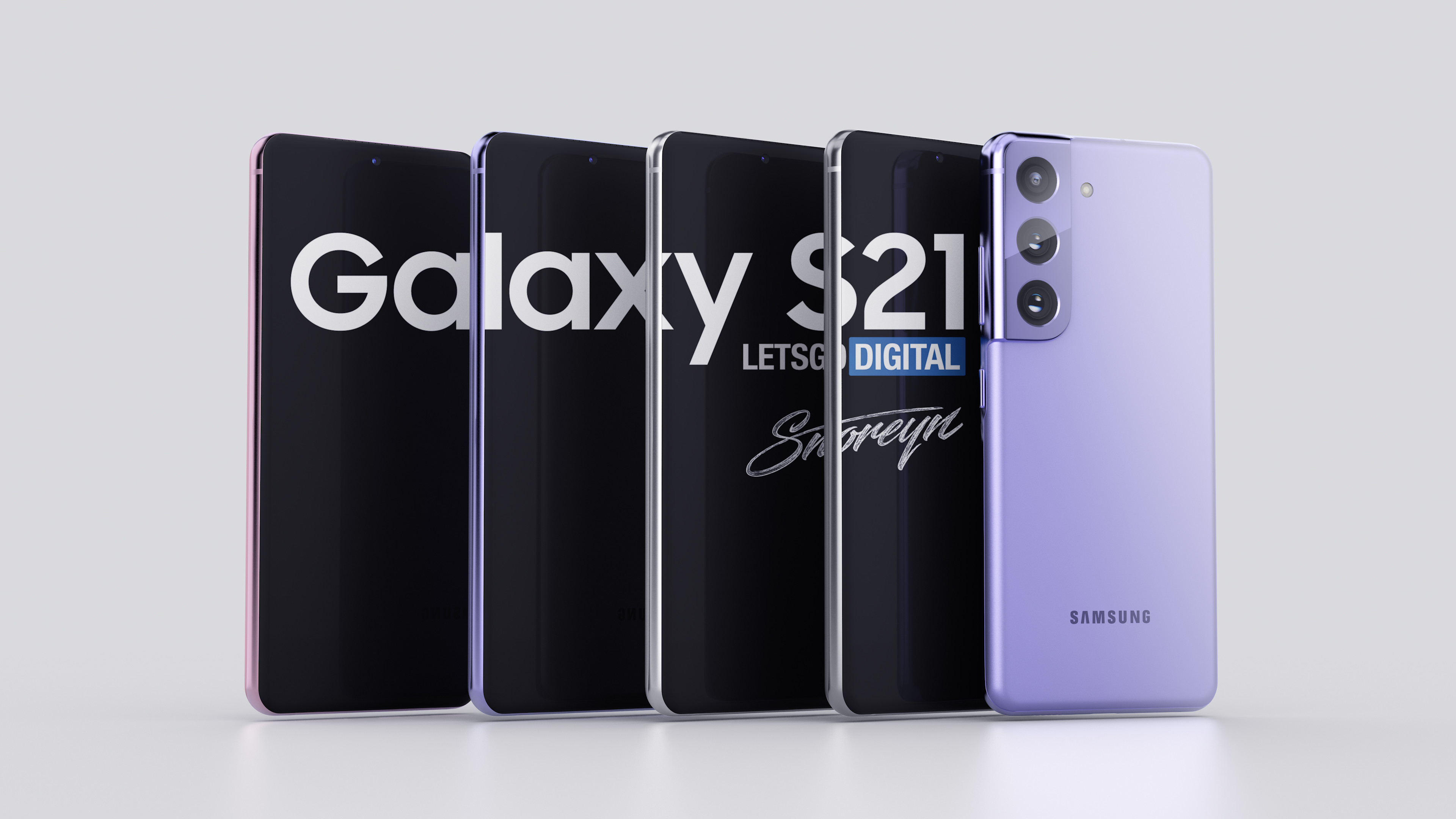
High-quality Galaxy S21 series renders expose the phones in all colors

The Samsung Galaxy S21 series is expected to launch in mid-January 2021. The successor to the Galaxy S20 series will include three models consisting of Galaxy S21, Galaxy S21+, and Galaxy S21 Ultra. The design of all three smartphones has already leaked in the form of renders as well as a live image. Now, new high-quality renders of these phones showcase them in all colors.
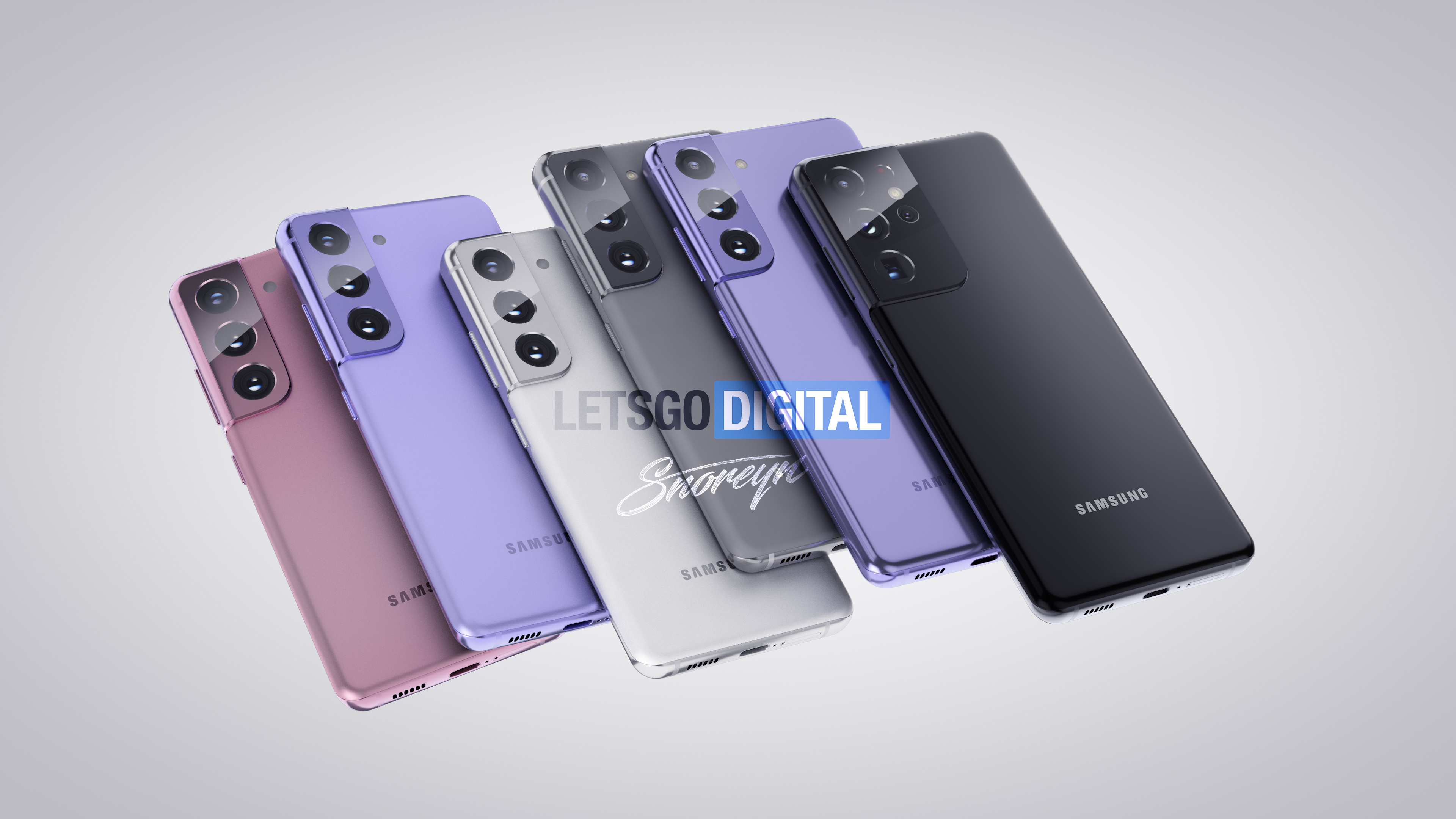
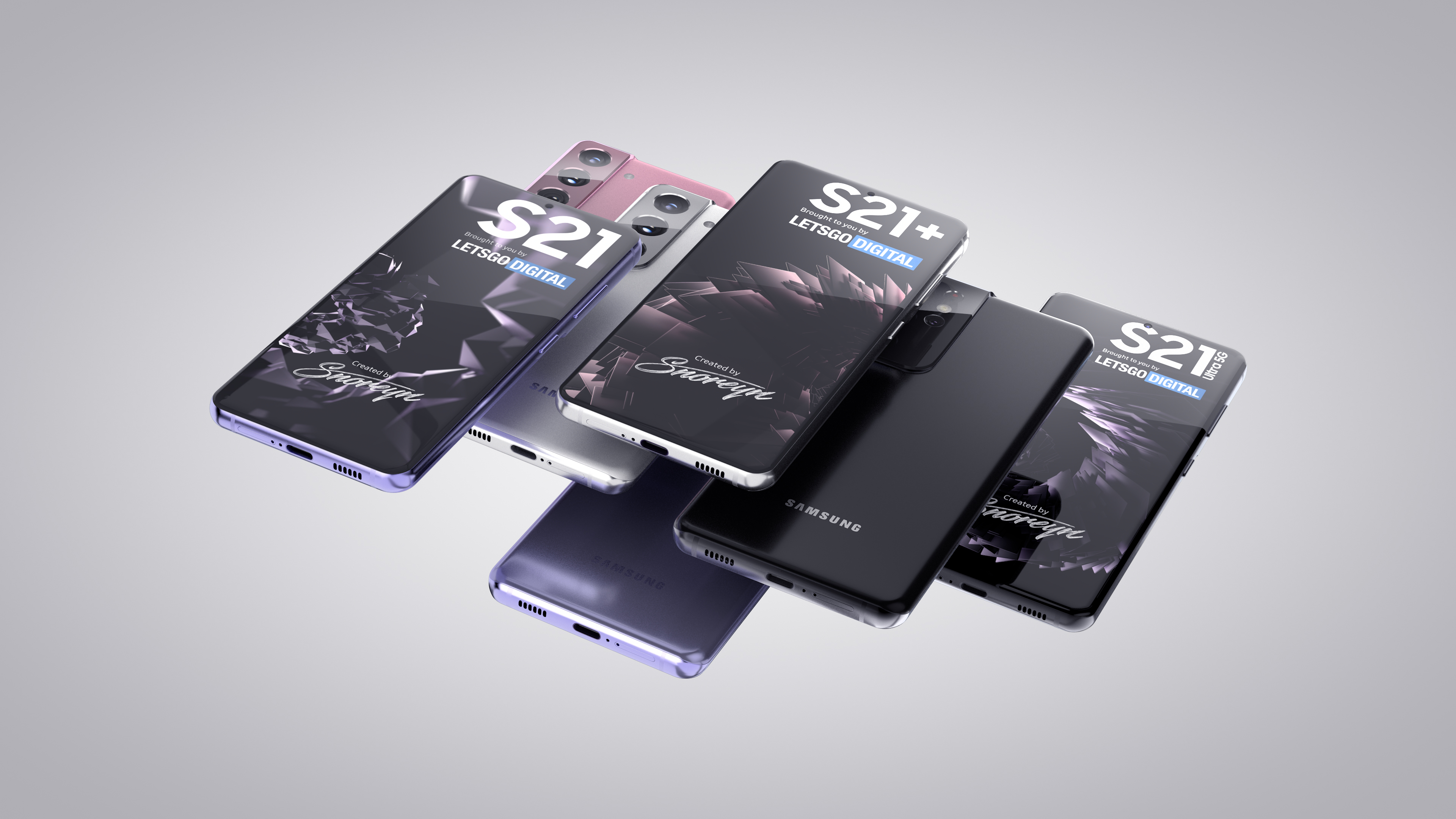
LetsGoDigital is well-known for patent and trademark-related stories. The publication also releases concept renders as well as renders based on leaks. But the new Galaxy S21 renders are based on information acquired from sources close to Samsung. Hence, the publication says that these renders are identical to the final products that will be released next month.

Since we have covered all the leaks of the Galaxy S21 series so far, we won’t be going through their entire specs in this article. Instead, we will talk about the new information revealed by this leak along with a few primary specs.
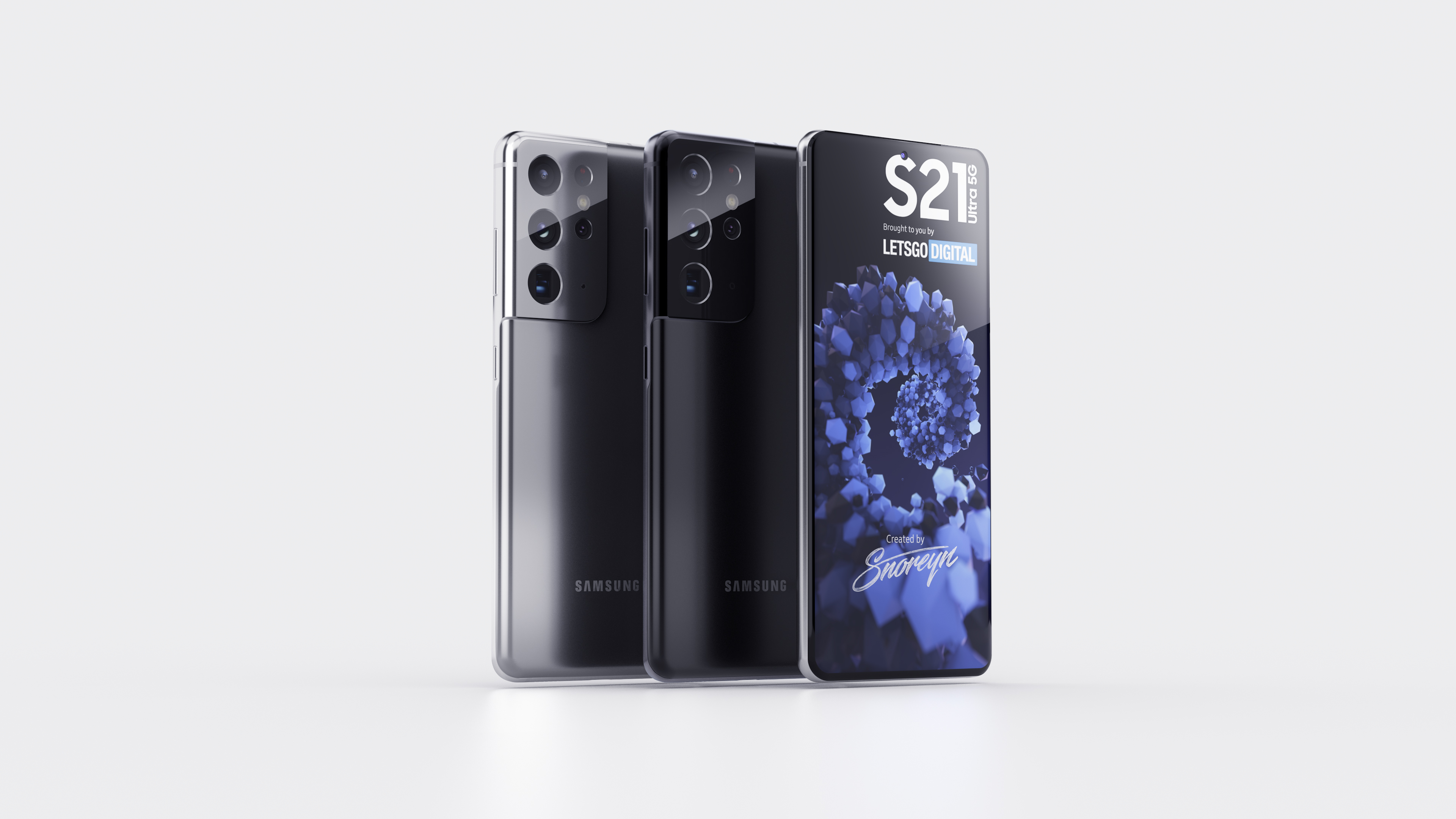
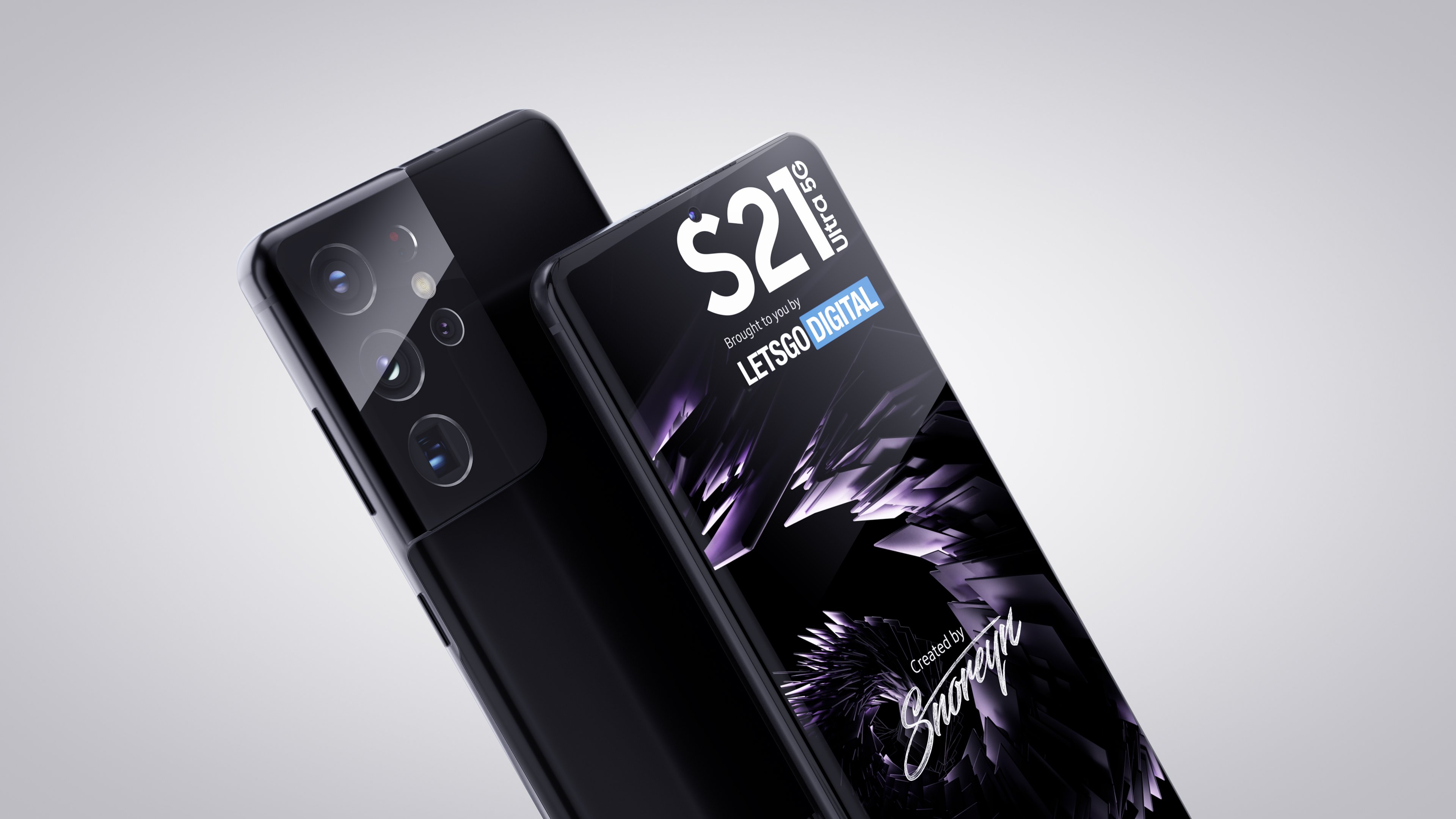
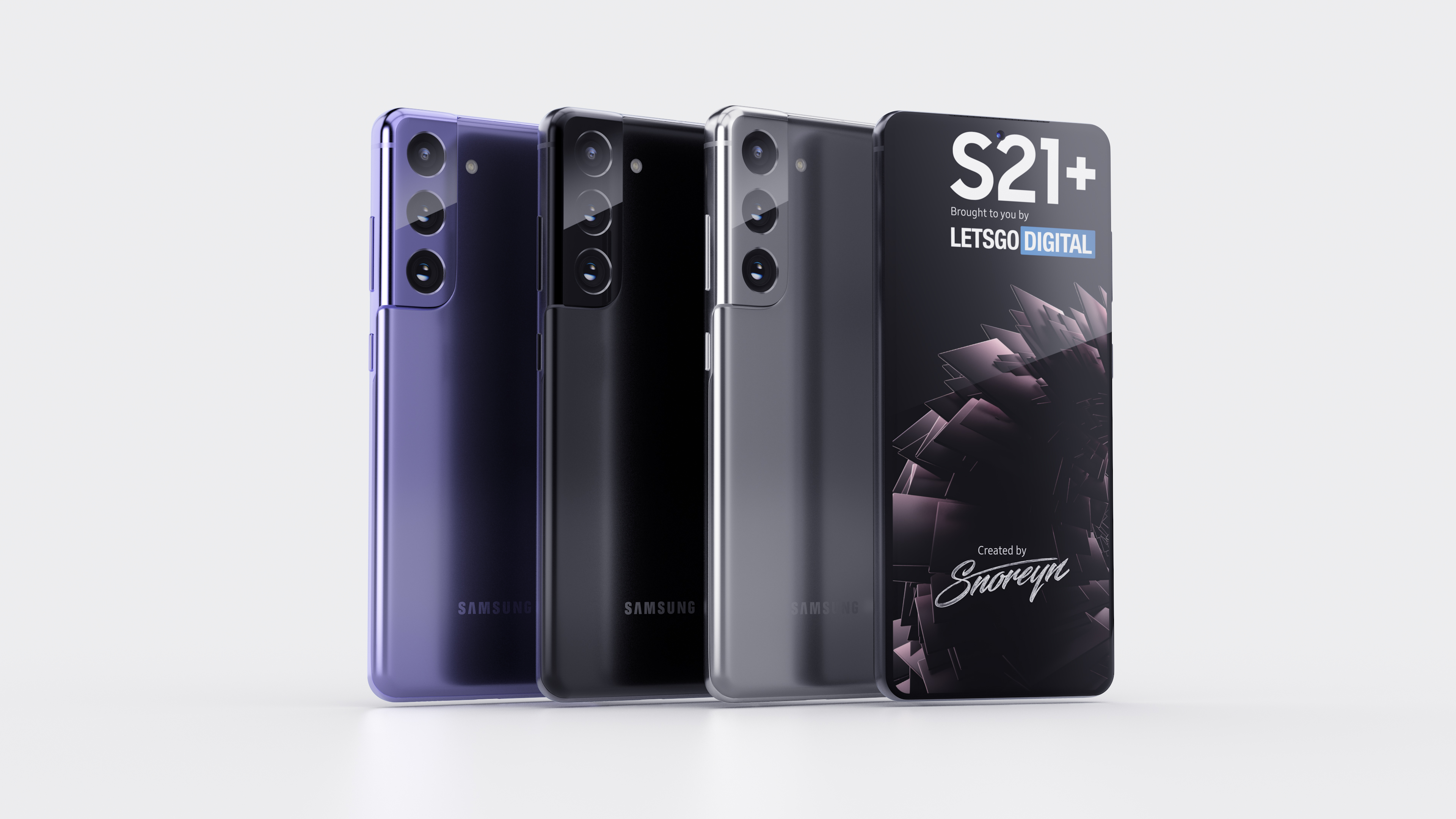
First and foremost, these renders are designed by an Italian designer called Giuseppe Spinelli (Snoreyn) based on details provided by LetsGoDigitial’s industry sources. With that being said, let us talk about some details.


According to these renders, the SIM card slot on the Galaxy S21 series will be located at the bottom, instead of the top. Further, they will come with a distinct camera array design. The regular Galaxy S21 and Galaxy S21+ will feature an identical triple camera setup, whereas the Galaxy S21 Ultra will sport a more advanced quad-camera setup.

Also, interestingly, only the ‘Ultra’ model will flaunt a metal and glass sandwich build since the ‘Plus’ and ‘Standard’ model will come with a plastic and metal build just like the Galaxy Note20.
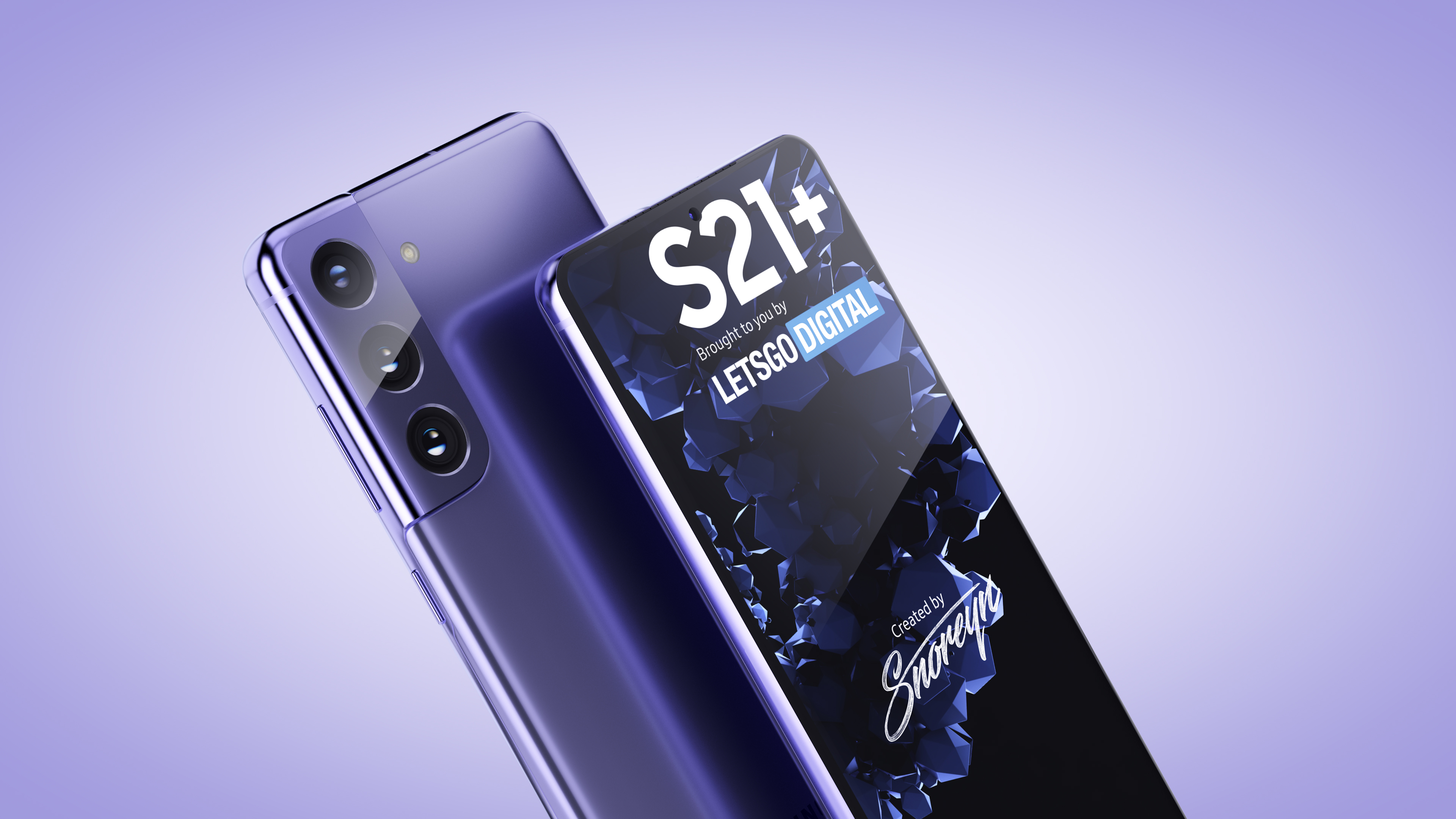
Similarly, only the expensive model will be equipped with a curved WQHD+ LTPO AMOLED display with a 120Hz adaptive refresh rate as found on the Galaxy Note20 Ultra. Interestingly, this panel will also support the S Pen stylus. On the other hand, the other two devices will include a flat FHD+ LTPS AMOLED display with a regular 120Hz refresh rate.

Although all three of them will be powered by the same Snapdragon 888/Exynos 2100 chipsets and run the identical Android 11-based One UI 3.1 operating system, the UWB chip will be limited to the Galaxy S21+ and Galaxy S21 Ultra. Additionally, the Ultra will be the only phone in this series to feature WiFi 6E
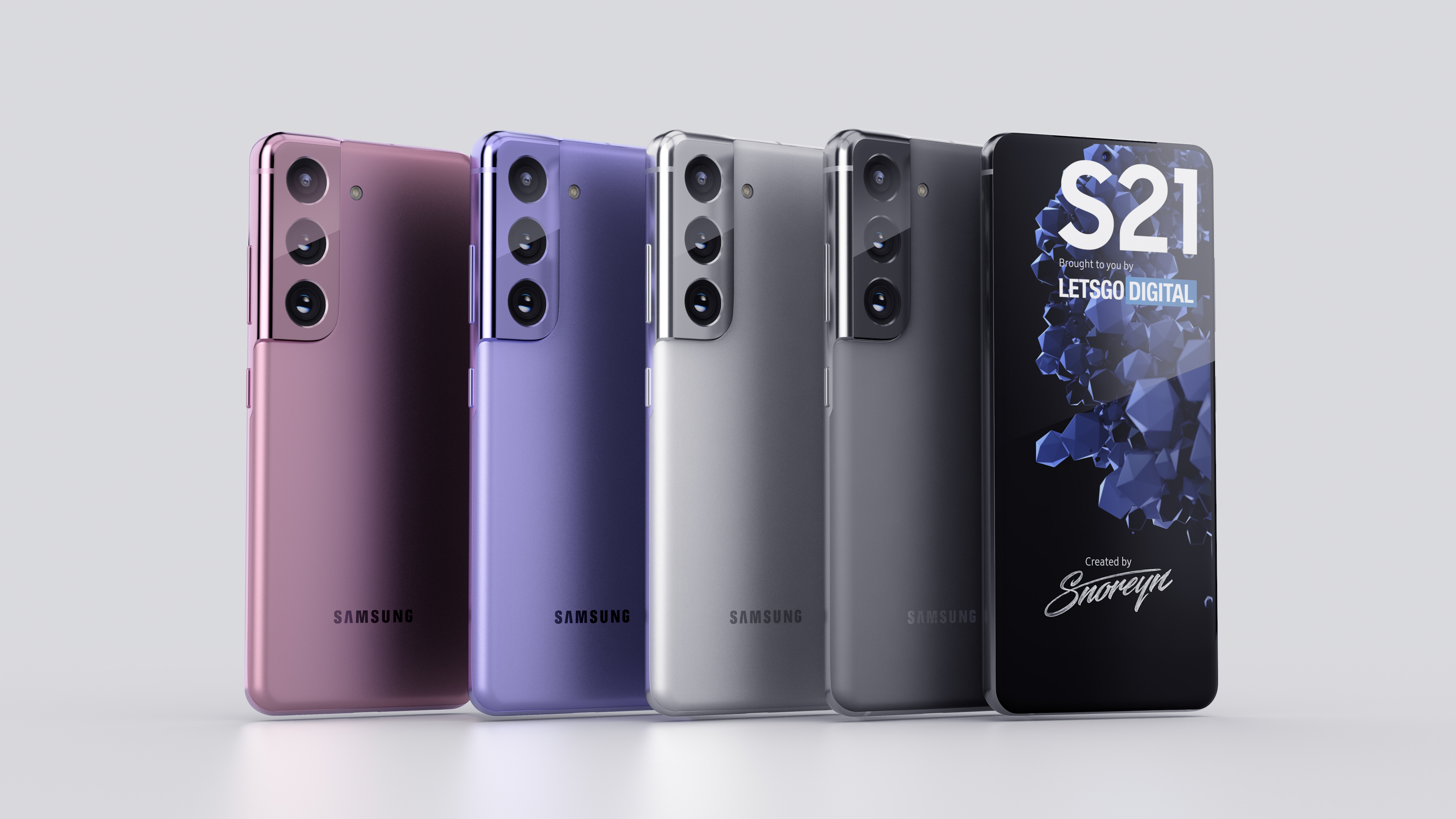
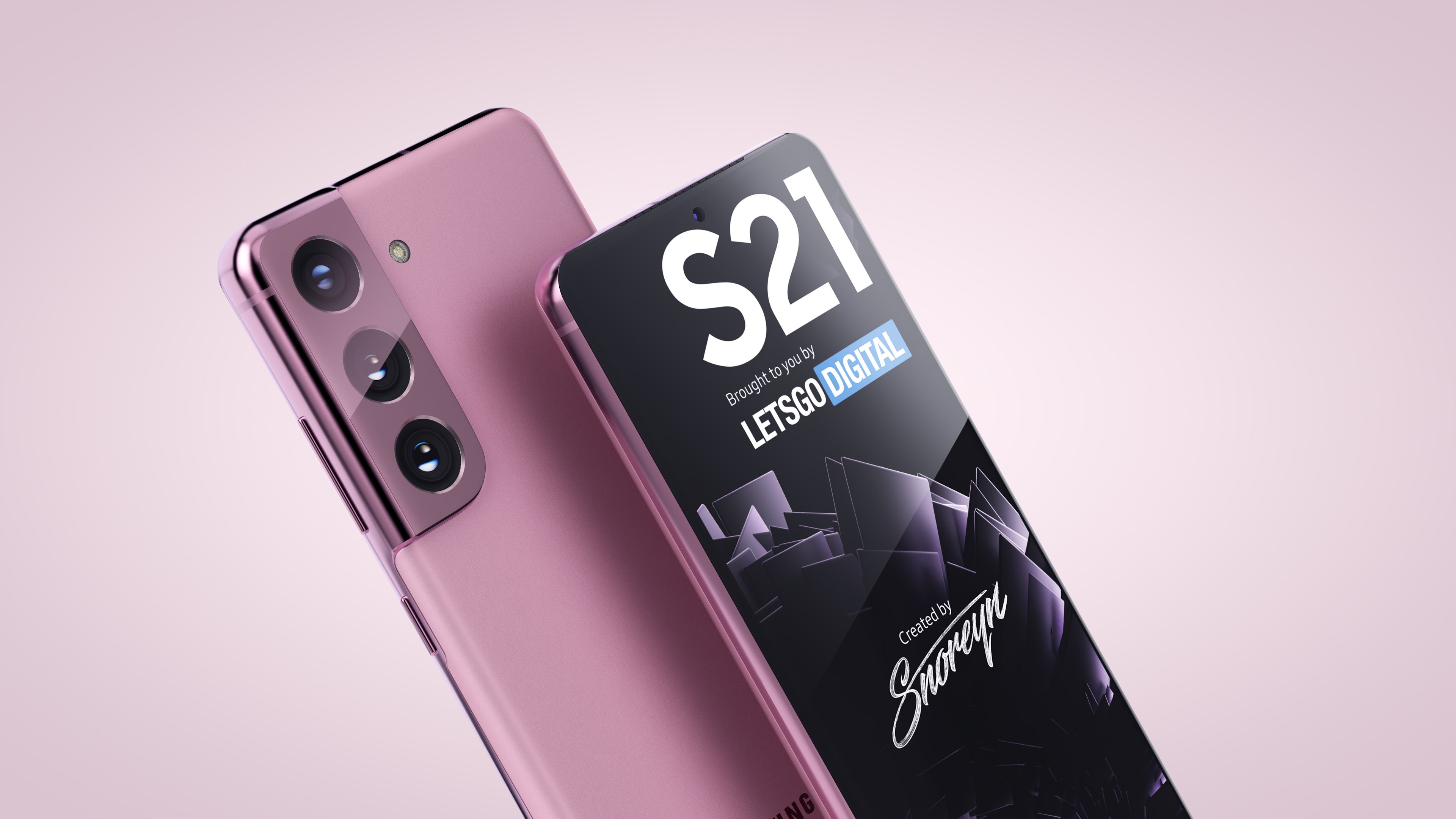
As far as colors are concerned, the Galaxy S21 will be available in three colors (Phantom Violet, Phantom Pink, Phantom Gray, Phantom White), whereas the Galaxy S21+ and Galaxy S21 Ultra will arrive in three (Phantom Silver, Phantom Black, Phantom Violet), and two colors (Phantom Black, Phantom Silver) respectively.

Last but not least, the Samsung Galaxy S21 series is reported to be cheaper than the Galaxy S20 series.


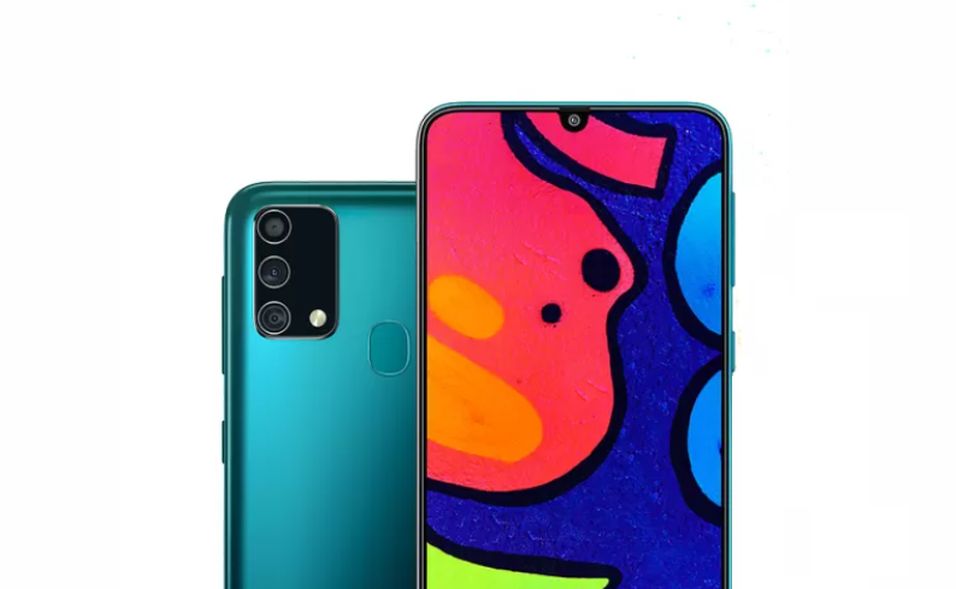
Samsung begins production of Galaxy F62 in India; could launch it in Q1 2021: Report

A few days back, an exclusive report confirmed that Samsung is working on a Galaxy F62. The device will probably succeed the Galaxy F42 that launched back in October. Today, another report from 91Mobiles says that the device could launch early next year now that it’s production has begun.

Samsung Galaxy F41 first look

Accordingly, Samsung has begun the production of Galaxy F62 in India. Citing its sources, the report says that the device will be one of the slimmest phones from the brand. If we recall, the recently launched Galaxy F41 has a 6,000mAh battery and a thickness of 8.9mm. Additionally, the older M series devices with the above battery have the same thickness(M21, M31, M31 Prime Edition).

However, the Samsung Galaxy M51 with a huge 7,000mAh battery has a 9.5mm thickness, the highest-ever for an M-series device. Hence, the report suggests that Samsung might have either found a way to balance build and battery or it could just lower the mAh and other design aspects. Anyway, it will be interesting to see how Samsung positions the new F-series device as the predecessor had a mix of everything.

Coming back, the production is currently happening in Samsung’s facility at Greater Noida. Further, the report also says that the device might launch earlier, i.e., sometime around Q1 2021. Now, this is just a prediction as there is no concrete info yet. Besides, a Galaxy F62 isn’t entirely new to us.

A few days ago, tipster Ishan Agarwal said that Samsung is working on a Galaxy F62(Tentative) smartphone with model number SM-E625F. Later, a device with a similar model number appeared on the Geekbench listing. According to the listing, the device will be powered by Exynos 9825 SoC.

This is a one-year-old flagship SoC and is present on the Galaxy Note 10 from 2019. Further, the listing also hinted at other specs like 6GB RAM, Android 11 OS. That said, we can expect other features like 4G LTE, AMOLED display, fast charging, and more. Stay tuned to our media channels to get updates for the F62 as and when they arrive.

LG is reportedly planning to outsource lower-end phone manufacturing to cut costs

Korean company LG Electronics announced on Monday that it had done a reorganization of its mobile phone division to increase efficiency and sales by outsourcing its low to mid-end smartphones, in a direct move analysts to significantly cut costs and compete with its competitors.

LG VELVET

The fortunes of the mobile communications subsidiary of the company have been on a downward spiral for over five years, with operating losses reported for 22 consecutive quarters, and this has led to a new management direction and the choice of Original Design Manufacturer (ODM), a spokeswoman for the company said (via).

LG had said last year that it will expand ODM to its mid-range smartphones from just low-end smartphones. The company will now outsource the design and manufacture of its smartphones, while still maintaining the LG brand name on the products.
LG has also jettisoned some of its research and production positions and realigned others to fit with its new business model, which may imply redundancy for a segment of the company’s staff. The move is part of plans to rely more on LG’s in-house research and development and production of high-end smartphones, with low and mid-end ones to be produced by ODM.

In 2013 LG was ranked No. 3 in the global smartphone market by Strategy Analytics, seven years later, the company is not even among the top seven OEMs, indicating massive regression in turnover and market share over this period, with Chinese brands like Huawei, Xiaomi, Oppo and Vivo, taking preeminent positions at the top, research firm Counterpoint stated.

Further illuminating the scenario, the research firm states that LG knows it is competing with Chinese competitors, not Apple or Samsung, and it is seeking to add to its lower-end models’ value by using Chinese original design manufacturers, according to Counterpoint analyst, Tom Kang.

Going further, Kang states that even if LG outsources the production of that segment of its products, without the requisite marketing ability, it is bound to come short against Chinese tech firms who have a better marketing strategy.

UP NEXT: Vivo Y52s with 90Hz screen, Dimensity 720, 48MP dual cameras and 5,000mAh battery launched


Apple is developing a 32-core processor for Macs that may launch next year

Apple launched its M1 chipset recently. The new processor, which replaces Intel’s own chipsets, which have powered Apple computers for years, is also one of the most powerful in a computer. The processor comes with 8 CPU cores but a new report says Apple is working on a much more powerful one that will have up to 32 cores.

Apple M1 Chip

Details of the new processor were first reported by Bloomberg and they say Apple engineers are working on multiple successors to its M1 processor. Some of these processors are expected to launch as early as next year.

Apple’s plan is to phase out completely Intel processors from its products by 2022 and its next-generation chips should help it achieve that goal. Some of these next-gen chips in development have been reported to have as many as 16 performance cores and four efficiency cores! However, it is said that Apple may first launch models with 8 or 12 performance cores depending on fabrication results.

The report says that Apple is also working on more powerful GPU processors and has begun testing 16-core and 32-core versions for its high-end laptops and mid-range desktops. It is also working on GPUs with 64 and 128 cores for its top-end computers. These chips are expected to arrive in late 2021 or even 2022.

Apple’s most powerful Mac Pro can be configured with up to 28 cores, so if it plans to replace the Intel Xeon W chips with its own, it must offer something significantly powerful.

There is a bit of waiting before these chips launch but it has been reported that Apple may announce the first successor to the M1 early next year alongside new MacBooks with MiniLED displays.

Bloomberg adds that news of these new chipsets caused Intel’s shares to drop by 1.7% earlier today.


Xiaomi crowdfunds the Mensarjor Kitchen Modular Integrated Sink

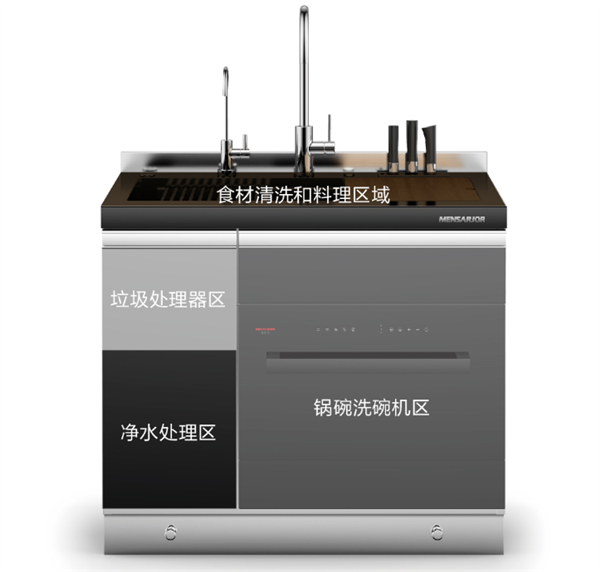
When a new house is built, there is always the need to install various kitchen appliances in the sink area. There is the sink cabinet body, as well as the dishwasher, water purifier, garbage disposer, and so on. Also, there’ll be a need to install new waterways and electric connections for the dishwasher.Mensarjor kitchen modular integrated sink

Xiaomi Youpin has launched a new modular integrated sink under crowdfunding known as Mensarjor Kitchen Modular Integrated Sink. The device carries a starting price tag of RMB 3,999 (~$612). The Mensarjor Kitchen Modular Integrated Sink integrates a dishwasher, water purifier, waste disposer, all in one tank.

Thus, you not only save space but also save money and get easy installation. The five modules integrate seven functional parts and seamlessly connect to save space. It provides integrated solutions for dishwashing, disinfection, drying, storage, garbage disposal, chopping vegetables, water filtration, and knife storage, and also eliminates the need for additional cabinets, countertops.

Furthermore, the Mensarjor Kitchen Modular Integrated Sink has a built-in water pipe and junction box with an integrated design which means you only need to connect 3 pipes and 1 power cord to use. The orderly distribution of water and electricity not only makes the cabinets tidy and orderly but also greatly reduces potential safety hazards.

Thanks to the modular design, if you want to replace or upgrade any of the five modules later, you don’t need to remove all of them, you can change the affected one.Mensarjor Kitchen Modular Integrated Sink

In addition, the double-layer plate structure in the tank can effectively prevent the tank from collapsing. The beam, raindrop plate, and body plate are all made of 304 stainless steel, which has a superb bearing capacity and corrosion resistance.

The device is also equipped with the MIJIA Water Purifier 400G which delivers quality level filtration. There is also a 370W waste disposer with an integrated grinding chamber with a capacity of 1170ml, leftovers, leftovers, seafood, bones, can be finely ground and discharged with the water.

The product is presently available on the Youpin website.

UP NEXT: Apple TV(2020) with iPad Pro’s SoC will reportedly launch on December 8

Galaxy S21+ and Galaxy S21 Ultra leak in a live image along with camera specs

The Galaxy S21 series will be the next big launch in the smartphone world. The trio is expected to be announced in mid-January. Ahead of it, they have leaked multiple times over the past few days. Now, the first live image of Galaxy S21+ and Galaxy S21 Ultra appear along with their camera specs.

Galaxy S21 Ultra Galaxy S21 Plus Live Image Leak

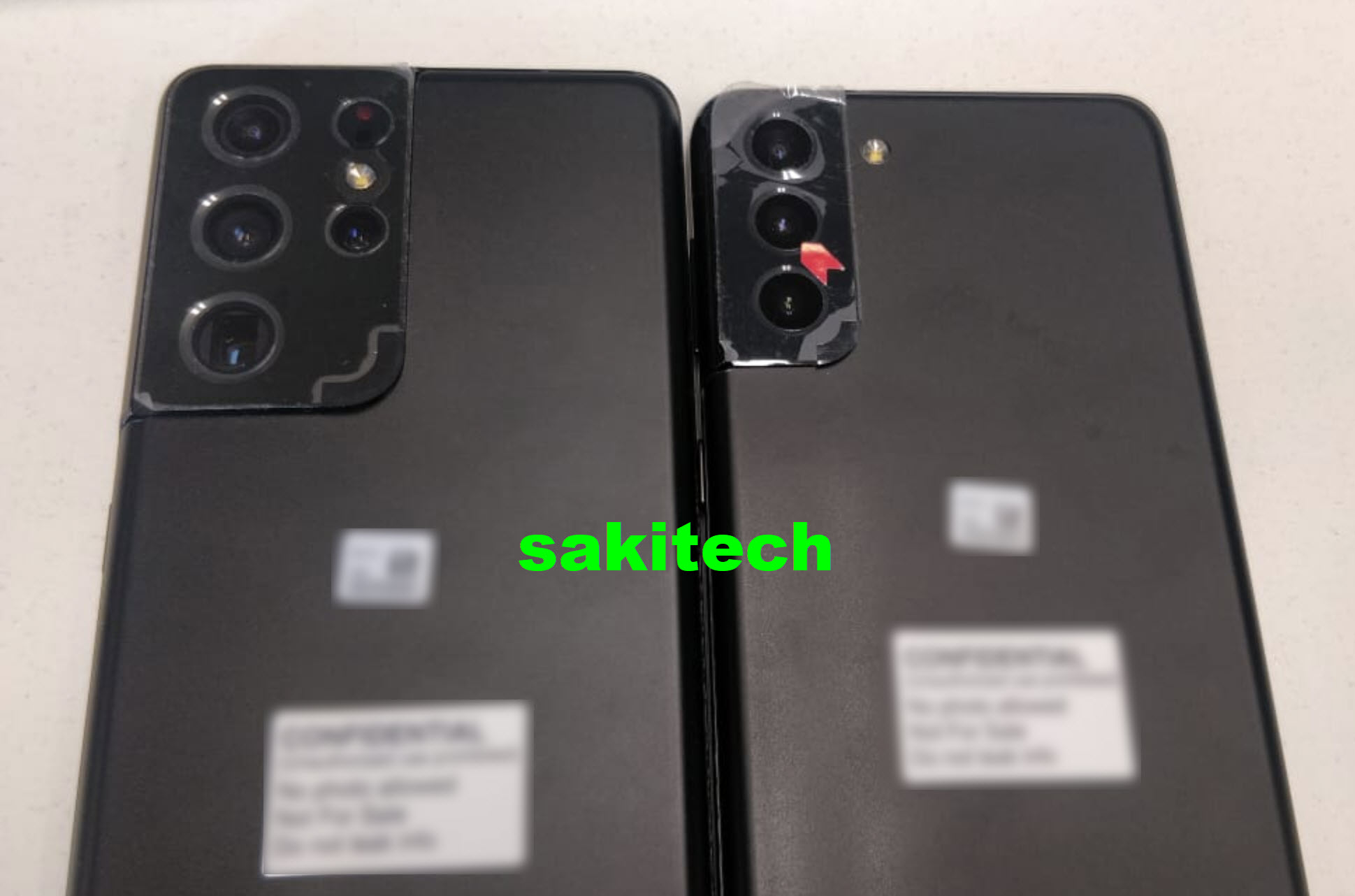
The latest leak of the Samsung Galaxy S21 series comes from a YouTube channel called sakitech. The person behind this channel obtained a live picture of Galaxy S21 Ultra and Galaxy S21+ side by side from an anonymous source. Apart from showing the image, the YouTuber also details the camera specifications.

Talking about the design first, the phones in the photo look similar to the 3D CAD renders by OnLeaks and xleaks7. They will arrive with a distinct camera array design, which is an improved version of the camera bump present on the Galaxy Note20 series

But unfortunately, both the devices in the photo are in Phantom Black color. Hopefully, we get to see more color options of the Galaxy S21 series before their official announcement.


Now coming to cameras, the larger Galaxy S21 Ultra will sport a quad-camera system, whereas the Galaxy S21+ and Galaxy S21 will come with an identical triple camera system. The former’s camera specs are not only revealed by this video but also by Ice Universe who tweeted a different picture.

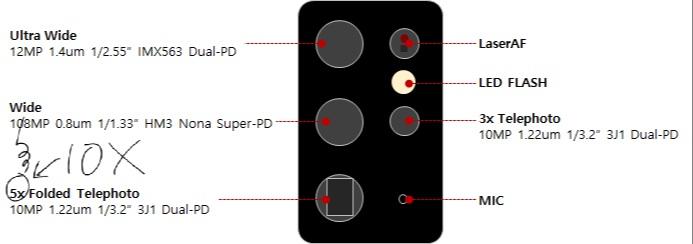
Anyway, according to both of them, the Galaxy S21 Ultra will come with the following camera setup.

  • Wide – 108MP ISOCELL HM3 sensor, 0.8µm pixel, f1/1.33” lens, Nona Super-PD AF
  • Ultra-wide – 12MP IMX563 sensor, 1.4µm pixel, f1/2.55” lens, Dual-PD AF
  • 3x telephoto – 10MP ISOCELL 3J1, 1.22µm pixel, f1/3.2” lens, Dual-PD AF
  • 10x telephoto – 10MP ISOCELL 3J1, 1.22µm pixel, f1/3.2” lens, Dual-PD AF

The camera bump also includes laser AF, LED flash, and a secondary microphone.

On the other hand, Galaxy S21+ and Galaxy S21 will feature the following camera setup.

  • Wide – 12MP
  • Ultra-wide – 12MP
  • Telephoto – 64MP

That said, what are your thoughts on the design and camera setup of the upcoming Samsung Galaxy S21 series. Do let us know in the comment section below.


Memory/SSD giant ADATA launches a smart Electric Tricycle with a range of 100km

Taiwanese memory and storage manufacturer ADATA Technology has officially entered the green energy logistics market. The company has launched its first commercial electric tricycle specially designed for the logistics industry under the brand “Visodon”.

The electric tricycle comes with a top speed of 80 kilometers per hour. The tricycle also has a maximum range of 100 kilometers on a single battery charge. It can easily reverse with one key and can even a U-turn on a 2.5-meter-wide lane. It is convenient for delivery personnel to quickly shuttle in busy, metropolis while carrying more load.

The core electric motor and controller system of the Visodon electric tricycle are all independently developed and manufactured by ADATA. It is also equipped with ADATA’s self-developed AI intelligent system, it supports safe monitoring of vehicle status, effective control of vehicle location, route planning, management, and delivery of objects.Adata Electric Tricycle

ADATA Technology is the world’s second-largest memory module factory and SSD. It has more than 500 memory-related international patents. Its main product lines include memory modules, U disks/memory cards, solid-state drives and mobile hard drives, Gaming peripheral products, and industrial solutions.

This year, the effect of the COVID-19 pandemic has led to the rapid growth of global logistics demand. This has prompted the company to accelerate the pace of launching electric tricycles to solve the problems of efficient transportation in the logistics industry while ensuring the safety of personnel in the distribution chain.

ADATA chairman Chen Libai is reported to have hinted that the company had invested in the research and development of electric vehicles since 5 years ago. He also expressed optimism that electric vehicles with “zero-emission, low noise, and safety” will become the future global development trend.

UP NEXT: JD.com becomes the first online retailer to accept China’s digital currency


Apple TV(2020) with iPad Pro’s SoC will reportedly launch on December 8

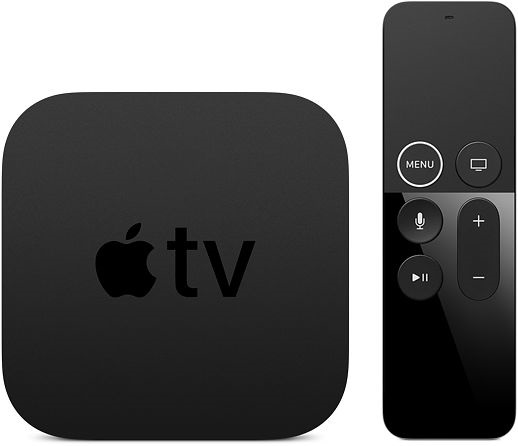
Apple is reportedly launching new products tomorrow(December 8). And if the latest leaks are true, one of them will be the Apple TV (2020) model. The new device is expected to launch with upgraded SoC, and storage for better streaming.

Credits: Apple

As leaked by LeaksApplePro(via wccftech) on Twitter, the new Apple TV will sport an A12Z Bionic SoC. If you recall, this is the same processor that powers the iPad Pro 2020 model. This new processor would be a significant upgrade over the A10X Fusion SoC on the current model(fifth-gen).

It’s worth noting that earlier reports pointed to an A12X chip which has a GPU core less than the A12Z. But it looks like Apple wants to crank it up a notch with 8-core GPU, and this, along with RAM likely up to 6GB, should ensure a stutter-free experience.

Moving on, the tipster also says that “HD is rip”. This suggests that Apple could skip the HD variant of the Apple TV and just launch a 4K-streaming model. Additionally, the streaming box should have 64/128GB storage, come bundled with an “Apple Fitness+” subscription. Here, the tipster isn’t sure about Apple bundling a free subscription alongside the box, and hence, let’s wait for the official announcement.

Regarding the design, earlier reports indicate that Apple TV 2020 would look a lot similar to the earlier version. However, the focus will be on the inside. Along with the A12Z, the sixth-generation streaming box is likely to have a cooling solution with a heat sink. Anyway, if the report is true, Apple should announce the product via a press-release(it’s usual trend for internal upgrades) tomorrow and get it ready to ship from Friday(December 11).

This tip also corroborates with early reports that said Apple contacted Apple Care centers to prepare for updated product variants, new prices, etc. Alongside the Apple TV, Apple is rumored to announce AirPods Studio and AirTags.

Leak details key specs of the next iQOO flagship; will not differ a lot from the iQOO 5 Pro

Vivo’s iQOO brand will also launch a Snapdragon 888-powered smartphone next year. We may even get more than one flagship phone from the manufacturer considering that it announced four phones powered by the Snapdragon 865 this year. The next flagship should arrive as the iQOO 6, and if you want to know what specs it will pack, then you are at the right place.
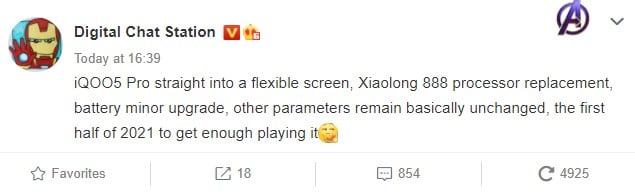
The Chinese leaker, Digital Chat Station, revealed on Weibo key details of the next iQOO flagship phone, and based on the info, we may be getting a phone that is not too different from the iQOO 5 Pro.

iQOO 6

According to him, the phone will ditch the curved screen of the iQOO 5 Pro for a straight one. This may be a growing trend in the industry next year as more manufacturers may follow Samsung in ditching curved screens.

The iQOO 6 (tentative name) will also pack a slightly bigger battery. The iQOO 5 Pro has a 4000mAh battery capacity, so its successor may come with a capacity that falls between 4100mAh and 4500mAh. Of course, it should support 120W fast wired charging too.

Apart from these changes, the remaining specs are said to be the same as those of the iQOO 5 Pro. This means the phone should come with a 50MP triple rear camera setup, a 16MP selfie cameras, up to 12GB of RAM, and 256GB of storage. We also expect it to come with a new version of its iQOO UI/Origin OS based on Android 11.

The iQOO 6 should launch in the first half of 2021.


OPPO F17 Pro receives its first price cut in India

The OPPO F17 Pro was the company’s star product for the Diwali festive season in India. In fact, the brand debuted it in the country two months ahead of the festival to boost its popularity and sales. Now, three months later, the smartphone received its first price cut in the country.

OPPO F17 Pro Magic Blue Featured
OPPO F17 Pro Magic Blue

The OPPO F17 Pro launched in India in early September priced at ₹22,990 for the sole 8GB and 128GB variant. Now, with the ₹1,500 price drop, it can be purchased for ₹21,490 from popular online as well as offline retailers. This piece of information comes from the sources of 91Mobiles.

At this new price, the OPPO F17 Pro will go head to head against the Moto G 5G (₹20,99), which is India’s most affordable 5G smartphone yet. Anyway, since India does not have 5G networks, the former phone could be termed as the better option over the latter as it comes with a finer set of specifications.

Some of the notable specs of the OPPO F17 Pro include a 6.43-inch Super AMOLED display with up to 800 nits of peak brightness, MediaTek helio P95 chipset, 4,015mAh battery with support for VOOC Flash Charge 4.0 (30W) fast charging, 7.48mm thickness, and ColorOS 11 based on Android 11.


Tencent partners with TCL, Hisense, and others to bring its START Cloud gaming service to TVs

Cloud gaming is the in-thing now. Some of the popular ones that have launched include Google Stadia, Xbox Game Pass, GeForce Now, and Amazon Luna. In China, there is also Tencent’s START which launched last year on Windows and macOS. Now, the tech giant is planning to bring the service to TVs.
Tencent announced today that it will officially launch the TV version of its START cloud gaming service on December 12. To start, Tencent will be partnering with TV manufacturers such as TCL, Hisense, Changhong, and Suning’s Biu. Tencent also revealed that it will partner with other major TV manufacturers too.

Tencent START TV Cloud Gaming Service

Tencent partnered with NVIDIA to launch its cloud gaming service last year. The service is partnered by NVIDIA’s GPU technology and provides a similar experience as to what users will get when “playing locally on a gaming rig”. Now that the service is coming to TVs, it means more people will be able to access the service and on a larger screen.

The solution is a win for both companies. NVIDIA already has GeForce Now which is available in Europe and North America, and with START, it has spread its tentacles into the Chinese market.

While Tencent didn’t say how these TVs will get the feature, we want to believe there will be an app for supported models. Some of the games available on the cloud gaming service are NBA 2K Online 2, FIFA Online 4, Biped, QQ Speed, League of Legends, and King of Fighters 14.


Xiaomi and Redmi to launch two flagship models with Snapdragon 888 SoC each

Just like Xiaomi, it’s leaks are also racing ahead in the industry. We already know that the company’s announcement of the Mi 11 as the first smartphone with Snapdragon 888 SoC. And, if we recall, Xiaomi and its sister Redmi launched two flagship series(With Snapdragon 865 SoC) in H1 2019. The former had the Mi 10, 10 Pro while the latter had Redmi K30 Pro. Well, it looks like the momentum will repeat again but double in 2021 as per a new tip.

As usual, the latest tip comes from Digital Chat Station, who, on Weibo says that Xiaomi and Redmi will launch two models with Snapdragon 888 SoC each. If each model has two devices, that makes a total of four devices powered by the flagship SoC. This is surprising considering Redmi has kept the Snapdragon’s flagship SoC tightened so far. For instance, the company debuted the K series with K20, K20 Pro in 2019.

However, it restricted the K20 to a mid-range chip and only Pro had Snapdragon 855 SoC. Similarly, the next year it succeeded the series with Redmi K30, K30 Pro, K30 Pro Zoom out of which only the Pro models had the flagship SoC. The Xiaomi Mi series, on the other hand, are premium flagships and do the opposite. The company keeps the basics like build quality, SoC as constant while varying other specs like camera between the models.

Coming back, considering this tip is very early, let’s just put a pin on it for now. Our guess is that he is referring to two different series of models positioned for H1, and H2 of 2021(eg. K40, K50 series). And if the leaker is true, all of them will have the 108MP camera as a standard norm. As of now, all we know is that Xiaomi has confirmed the Mi 11 while Redmi has it’s own flagship probably lined up for Q1 2021.

Besides, the Redmi flagship has not appeared that much in leaks so far. This could be because of the launch being at least two months from now. Anyway, the series is rumored to be called the Redmi K40 as of now. Leaks so far say that the device will have high-refresh-rate displays, with fast charging support.

Precisely, we can expect features like AMOLED, at least 90/120Hz punch-hole display, and faster memory(LPDDR5 RAM, UFS 2.1 storage). In any case, as per the tipster, Redmi’s 2021 flagships won’t feature a 2K(QHD+) screen like the Mi 11 that is about to launch later this month.

Grab Asus Rog Phone 3 at a discount price of Rs 43,249

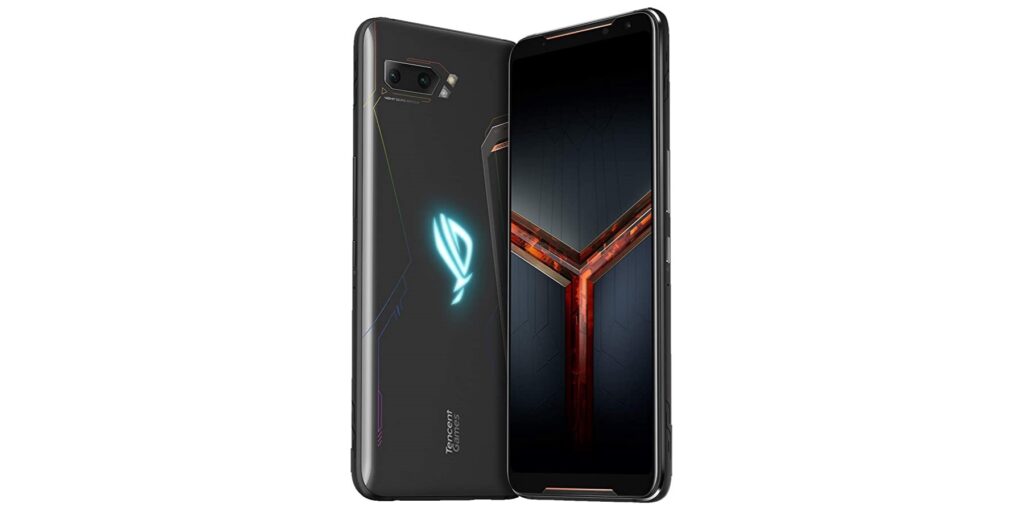
Asus is offering a great discount on its latest gaming smartphone – Asus Rog Phone 3 in India. The smartphone has received a Rs 2000 off over its actual retail price of Rs 46,000. In addition, the users can also get Rs 1750 Instant Discount on HDFC Bank Credit Card. Upon considering all the discounts, the effective price of the device reduces to Rs 43,249 via Flipkart.

Must See: ASUS ROG 3 vs Lenovo Legion Pro vs RedMagic 5S vs Black Shark 3S: The Best Gaming phones of 2020 Reviewed

Asus ROG Phone 3 is a gaming smartphone which carries Snapdragon 865+ chipset. It comes in 8GB RAM + 128GB, 12GB RAM + 256GB, 16GB + 512GB storage variants. The smartphone comes with a triple camera module with a 64MP primary camera, a 13MP ultrawide sensor and a 5MP macro lens. There’s a 24MP selfie camera on the front for video calling.

There’s a 6.59-inch AMOLED display coupled with 1080 x 2340 pixels resolution. It is protected with Corning Gorilla Glass 6 and supports 144Hz refresh rate and HDR10+. In connectivity, the device comes with Bluetooth 5.1, GPS, NFC, WiFi and USB Type C 3.1. There’s a 6000 mAh battery coupled with 30W fast charging. It is available in Black Glare color only. The smartphone comes with different sensor coupled with fingerprint, accelerometer, gyro, proximity and compass.

Asus ROG Phone 3 measures 171 x 78 x 9.9 mm in size and 240 grams in size.

You can grab the deal from Flipkart.

Grab Now

Must see: ASUS ROG Phone 3 price in India slashed by Rs 3,000 (~$40)

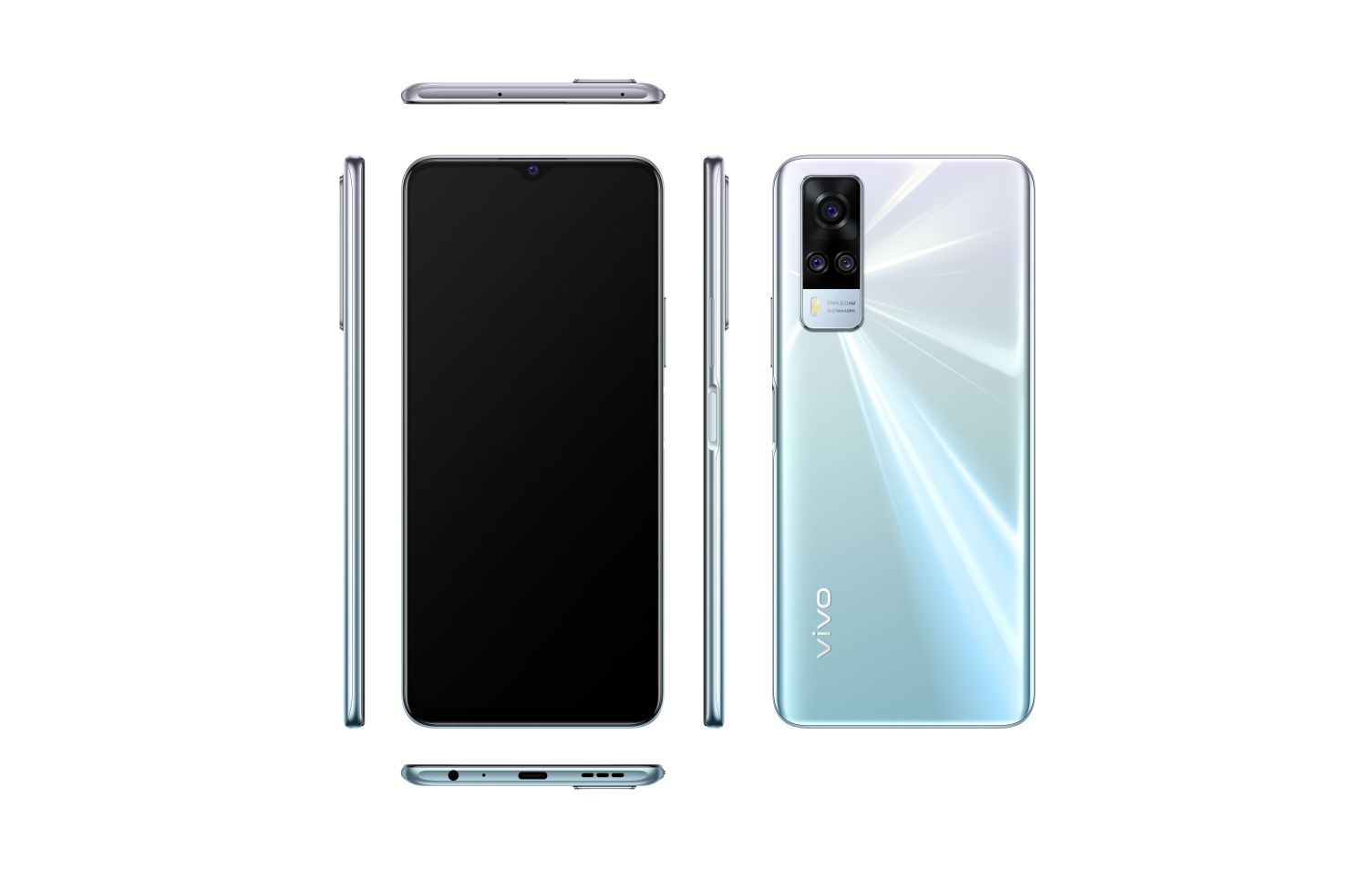
Vivo Y52s with 90Hz screen, Dimensity 720, 48MP dual cameras and 5,000mAh battery launched

The Vivo Y52s that was spotted last week in a China Telecom listing has gone official today in China. After the Vivo Y73s that debuted in October, the Vivo Y52s is the second Dimensity 720 powered phone from the brand. Some of its major highlights include a large screen with a tall aspect ratio, a 48-megapixel dual-camera setup, and a big battery.

Vivo Y52s specifications and features

The Vivo Y52s is equipped with a 6.58-inch IPS LCD display with a teardrop notch. It supports a Full HD+ resolution of 1080 x 2408 pixels, a 20.07:9 aspect ratio. The 90Hz refresh rate enabled screen offers a touch sampling rate of 180Hz, DCI-P3 color gamut, and HDR10.

The Dimensity 720 is present under the hood of the Vivo Y52s. The SoC is accompanied by 6 GB / 8 GB of LPDDR4x RAM. Both variants have 128GB of UFS 2.1 native storage and it comes with a dedicated microSD card slot. It has a 5,000mAh battery with 18W rapid charging support to keep the lights on.

Vivo Y52s
Vivo Y52s

The rear camera module of the Vivo Y52s has a 48-megapixel main camera and a 2-megapixel depth assist sensor. Selfies can be shot using the 8-megapixel front-facing camera. Both front and rear cameras support night scene mode. The rear snappers also support EIS, Full HD slo-mo video shooting, and 4K video recording at 30fps.

The Android 10 OS overlaid with FunTouchOS 10.5 comes preloaded on the Vivo Y52s. It offers security features such as a side-facing fingerprint sensor and face unlock. The smartphone is packed with the usual connectivity features.

Vivo Y52s pricing and availability

The 6 GB and 8 GB RAM editions of the Vivo Y52s are priced at 1,598 Yuan (~$244) and 1,798 Yuan (~$275) in China. The phone can be purchased in hues like Coral Sea, Monet, and Titanium Gray. There is no word on the availability of the Y52s outside China.


Xiaomi Mi QLED 4K TV will launch on December 16 in India

A few days back, Xiaomi India started teasing a new QLED TV for India. The company has since then teased it multiple times with a #QuantumLeapsAhead tag referring the Quantum Dot display technology. Today, it has confirmed that the TV will debut in the country on December 16.

Xiaomi India took to Twitter to confirm the launch event of the new QLED TV in India. As per the Tweet, the new QLED 4K TV will launch on December 16, at 12 PM in India. Xiaomi has shared a teaser video that shows the design. While the video hints that the TV’s design could be similar to Mi TV 5 Pro from China, Xiaomi’s website hints at new features.

Accordingly, an event page on mi.com is already live. The page also shows a TV design in silhouette with slim bezels on three sides. Let’s see if it sports the aluminum build like TV 5 Pro.  Anyway, the teaser says that the TV will have Quantum Dot visuals with features like Dolby Vision, HDR10+, and 4K resolution. Now if we recall, the Mi TV 5 Pro has HDR10+ but it lacks the Dolby Vision feature.

That said, the teaser page also mentions features like Dolby Audio and DTS-HD. For the unware, QLED TV stands for Quantum-Dot Light Emitting Diode. Typically, a QLED TV has an LED backlight, a layer of Quantum Dot film, an LCD matrix, and a color filter. Here, the Quantum dot(QD) uses quantum dots( semiconductor nanocrystals) to produce pure monochromatic red, green, and blue light.

Coming back, the QLED TV will also have the best patch wall according to the website. This suggests that the TV will come with at least the Patchwall 3.4 with a new carousel, user center, Live TVs out of the box. Further, the TV will also have HDMI 2.1, eARC (enhanced Audio Return Channel), ALLM(Auto Low Latency Mode), and AV1(AOMedia Video 1), and more. Let’s wait for more teasers in the coming days.

OnePlus reveals software support end dates for OnePlus 8/8 Pro and OnePlus Nord

OnePlus released a total of six smartphones this year. Out of this, three are high-end offerings, two budget devices, and a mid-range phone. But the company has only promised three years of software support for only four devices. Now, the brand has also published end of software support dates for three of these four smartphones.

Chinese smartphone maker OnePlus kicked off 2020 by launching the OnePlus 8 and OnePlus 8 Pro in April. These handsets were followed by the company’s first-ever mid-range phone – OnePlus Nord in July.

Further, the brand released OnePlus 8T in October as its high-end device for the second of 2020. Then, came the OnePlus Nord N10 5G and OnePlus Nord N100 in November as Oneplus’ first budget handsets.


Now, in December, the company has revealed the end of software support dates for the first three phones on the official ‘OnePlus Security Updates’ page (via PiunikaWeb). Let us take a look at these dates.

  • OnePlus 8 – April 2023
  • OnePlus 8 Pro – April 2023
  • OnePlus Nord – July 2023

As you can see from the above list, the software support for OnePlus 8, OnePlus 8 Pro, and Oneplus Nord will end exactly three years from their launch.  

The former two models will be getting three Android updates. They have already received one Android update in the form of OxygenOS 11 (Android 11). On the other hand, the OnePlus Nord is said to get only two Android updates and it is yet to receive any.

OxygenOS 11 Android 11 featured

Having said that, though OnePlus has not revealed the software support end date for OnePlus 8T, we believe that to happen in October 2023. Because just its siblings, it is also eligible for three years of support.

However, the software support for OnePlus Nord N10 5G and OnePlus N100 is expected to end by November 2022 itself since the brand has only promised two years of support and a single Android update for these handsets.


OPPO Reno5 Pro 5G images and key specs appear ahead of launch

The OPPO Reno5 Pro 5G is scheduled to go alongside the Reno5 and Reno5 Pro+ 5G in China on Dec. 10. Multiple reports have revealed the entire specifications and render of the Reno5 Pro. A couple of new images have appeared to showcase the design and key features of the Reno5 Pro ahead of its launch.

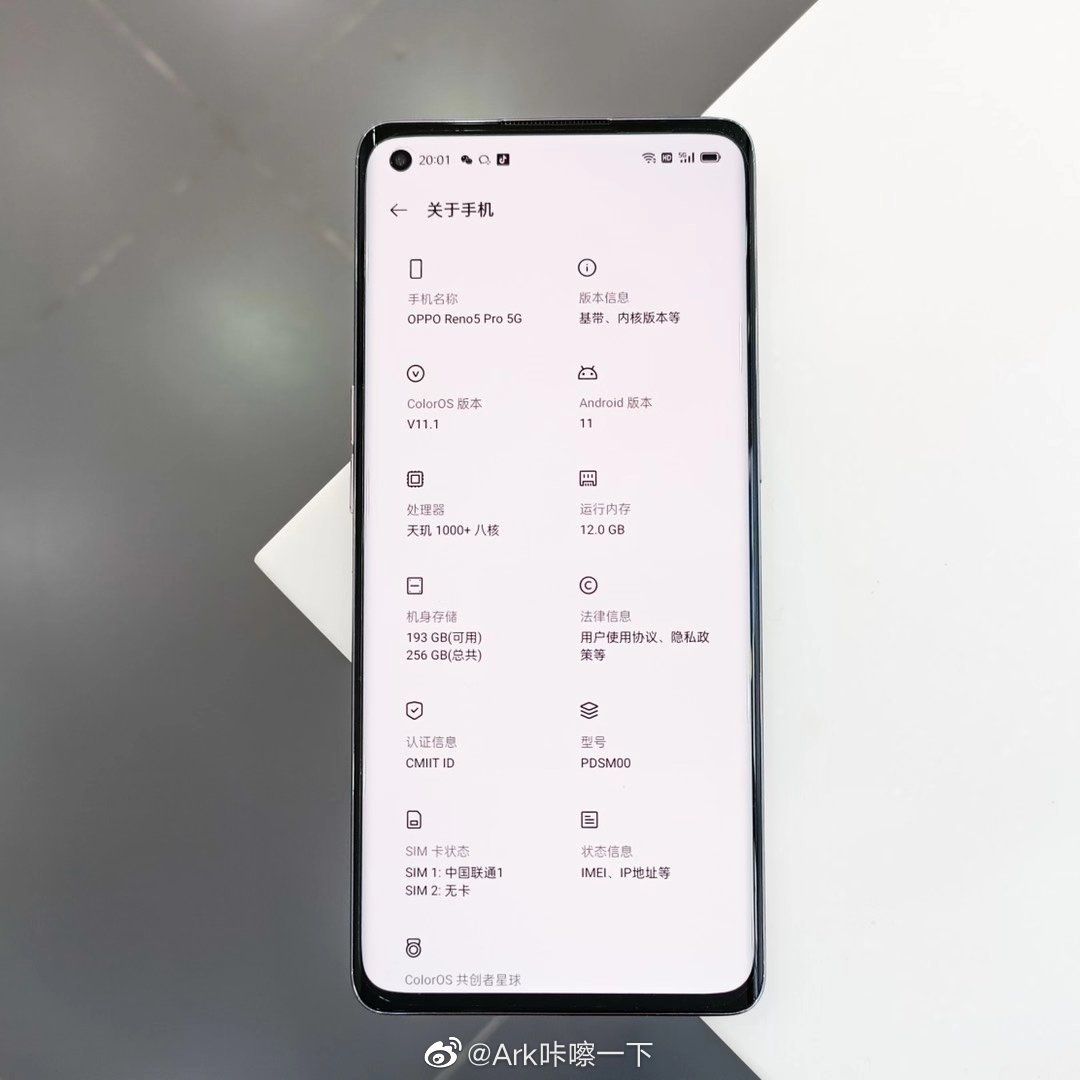
The leaked shot of the “About Phone” page of the OPPO Reno5 Pro 5G states that it is powered by the Dimensity 1000+ 5G chipset. It has 12 GB of RAM and 256 GB of built-in storage. The phone is preloaded with ColorOS 111 based Android 11 OS.

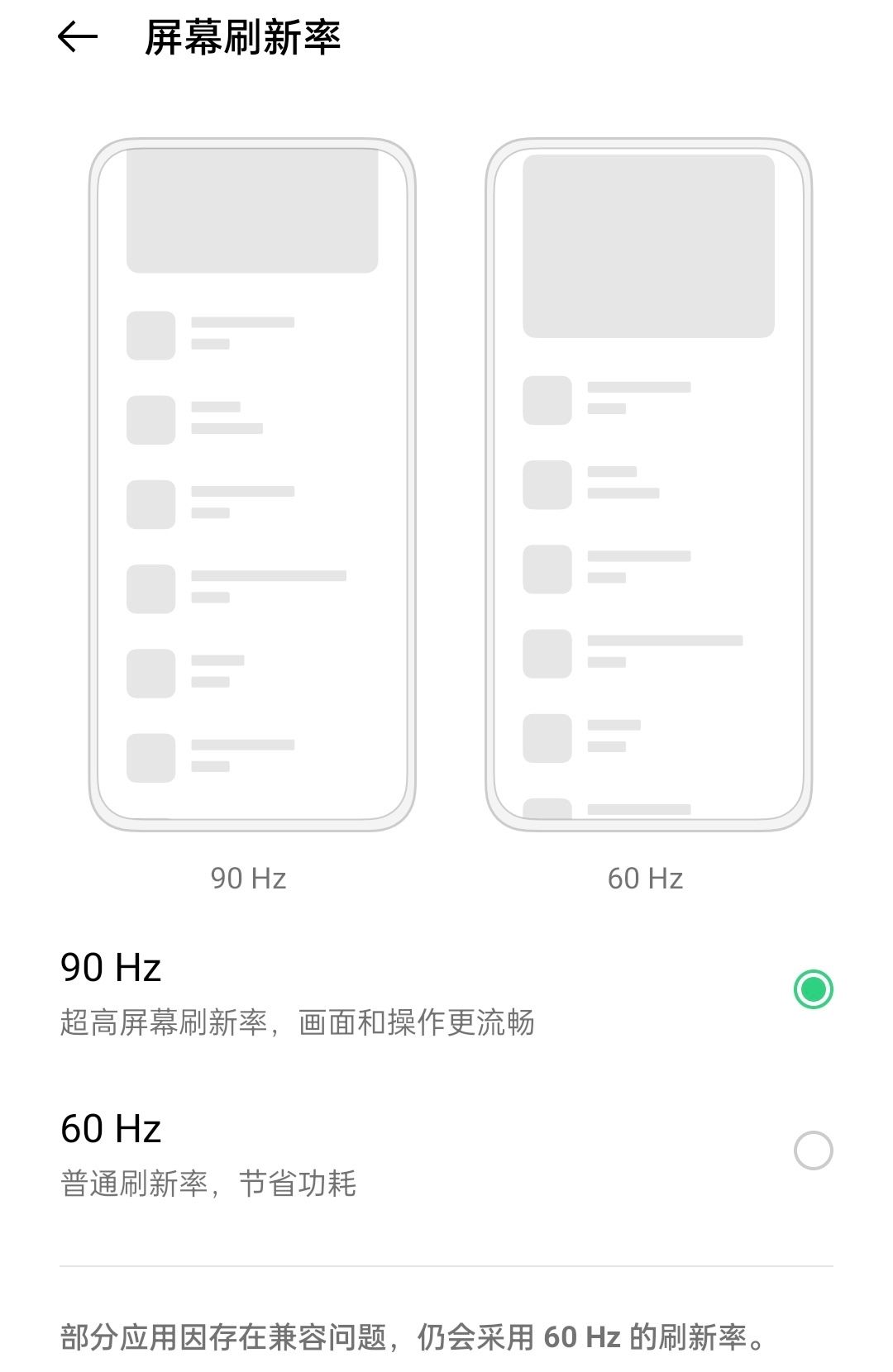
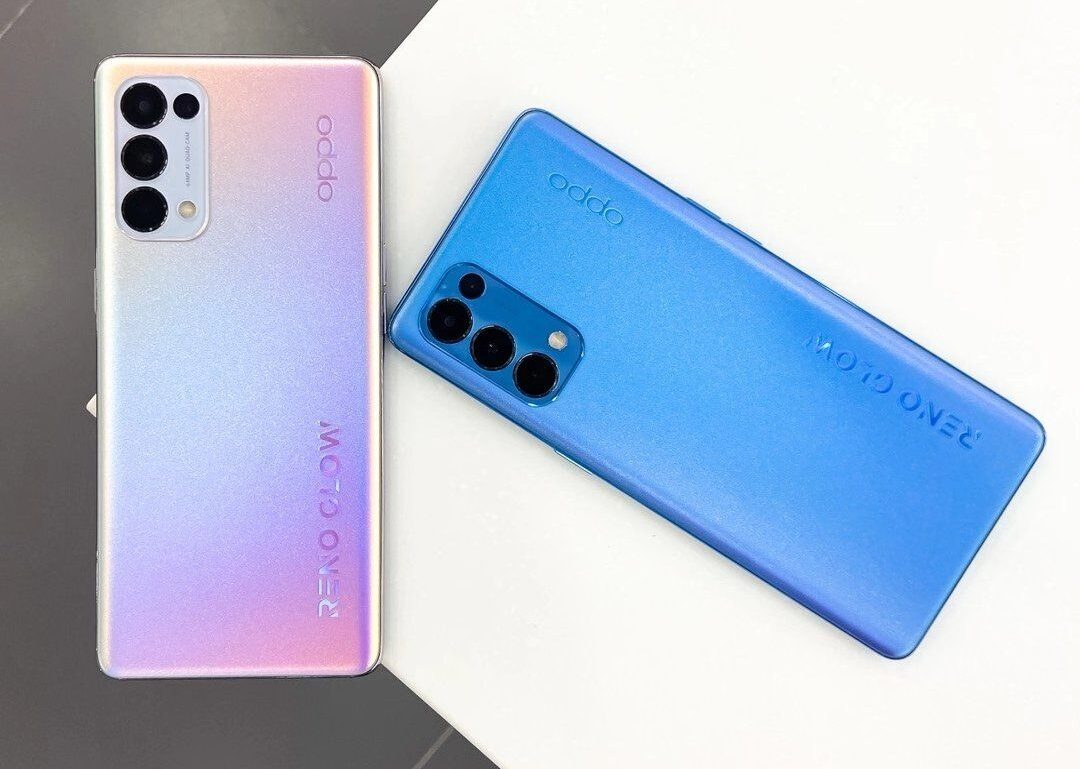
The other image shows that the Reno5 Pro 5G will carry support for a 90Hz refresh rate. The images of the phone show that its punch-hole display has curved edges. In the below image, the handset can be seen in Starry Dream and Aurora Blue colors. It is also expected to arrive in Moonlight Night (black) variant.

Previous reports have revealed that the OPPO Reno5 Pro 5G will have a front camera of 32-megapixel. The rear side of the phone is expected to feature a quad-camera system featuring a 64-megapixel main lens, an 8-megapixel secondary lens, and a pair of 2-megapixel sensors. The phone may feature the Sony IMX686 lens as a primary shooter. The handset is backed by a 4,300mAh battery that comes with 65W rapid charging. It is equipped with an in-screen fingerprint reader.

The China Telecom product library listing that appeared last week had revealed that it will be available in two options such as 8 GB RAM + 128 GB storage and 12 GB RAM + 256 GB of storage. These variants could eb priced at 3,899 Yuan (~$596) and 4,299 Yuan (~$657), respectively.

(source|via)


Xiaomi Mi 11 reportedly gets network certification in China; Another step closer to launch

Xiaomi has already confirmed that it’s Mi 11 will be the first smartphone to feature Qualcomm’s Snapdragon 888 SoC. The series reportedly includes Mi 11, Mi 11 Pro and is rumored to launch later this month. Usually, as we get closer to the launch of a new device, leaks start appearing from all corners. That is the case for Mi 11 too as a new report says that the standard edition has got network certification in China.

Xiaomi Mi 11 render by Benjamin Geskin

According to the report, a device with model number M2011K2C has got 5G certification in China. As you can see below, the device in question gets certified for 4G, 5G, GSM, and WLAN. The report says that this belongs to the Mi 11 Standard Edition. Now, if we recall, a device with similar model number M2012K11C appeared on Geekbench. This was believed to be one of the Mi 11 series devices with the flagship SoC.

Mi 11

Anyway, it’s a no-brainer that both the devices will support the latest 5G connectivity. Besides, the entire specs of the Mi 11, Mi 11 Pro has already been leaked. Accordingly, both the devices will share similar specs with a few differences in Camera, charging, and of course, Price. A new leak also sheds light on the 11 Pro allegedly featuring a different camera layout than the non-Pro.

Precisely, a concept render on Mi 11 Standard edition shows that the device will have a four-curved design and horizontally stacked triple-cameras. It will likely feature a S-AMOLED display with a 120Hz refresh rate and Quad HD+ resolution. For rear cameras, leaks say that the device will include a  108MP sensor, 13MP ultrawide, and 5MP Macro lens. Upfront, a 20MP is expected to be the selfie shooter.

While the Mi 11 is rumored to have a 4,780mAh battery, a new leak shows that the device will have a dual-cell battery to aid fast-charging. The 3C certification shows that both the batteries are 2,845mAh and 2,390mAh hinting at a typical value of around 4,900mAh. That said, we can expect other specifications like LPDDR5 RAM(at least 8GB), UFS 3.1(at least 128GB) storage, in-display fingerprint sensor, and more.

The Mi 11 will likely support 55W charging out of the box and charge the entire battery in 35 minutes. Rumored to be priced around 4,499($686), the device looks quite an upgrade from the predecessor, the Mi 10.

Upcoming Snapdragon 888 smartphones in 2021: Xiaomi, OnePlus, Nubia, & More

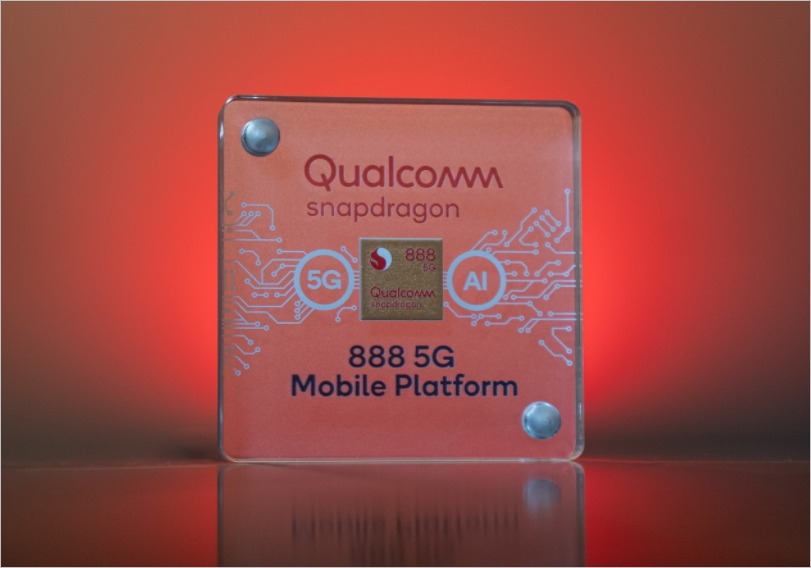
2020 isn’t over yet but it already feels like a new year as smartphone companies have announced plans for the next iteration of flagship devices. That is, the plans to bring a flagship with Qualcomm Snapdragon 888 SoC next year. The race has begun and hence, let’s look at the list of contenders for the “flagship of the year with Snapdragon 888 processor”.

Credit: Qualcomm; partners of Snapdragon 888

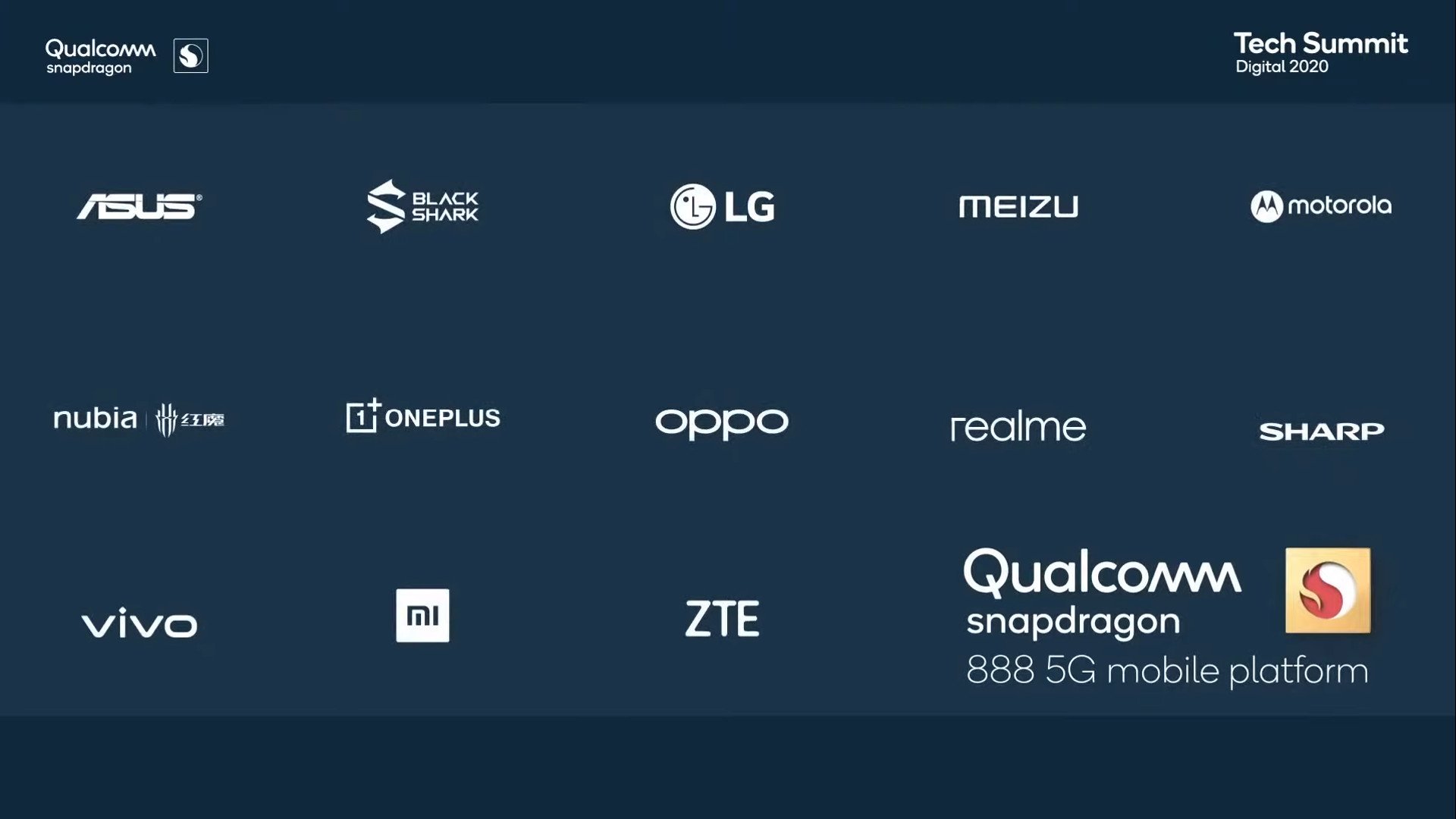
As always, we have got Chinese companies spearheading the list. In fact, Qualcomm itself has named the SoC based on the ‘888’ sentiment of China. This shows how much the American MNC values the Chinese vendors. Anyway, the list includes brands like Xiaomi, Vivo, Oppo, OnePlus, Motorola, iQOO, realme, Red Magic, Nubia, ZTE, Redmi.

Xiaomi(Mi 11), Redmi(K40?)

Xiaomi Mi 11

First off, as reported earlier, Lei Jun confirmed that Xiaomi Mi 11 will be the first flagship to launch with Snapdragon 888 SoC. The lineup will probably include Mi 11, and Mi 11 Pro. A leak of specifications shows that the devices will have an AMOLED display with a 120Hz refresh rate, a 20MP selfie shooter, LPDDR5 RAM, UFS 3.1 storage, in-display fingerprint sensor, and face unlock, RAM likely from 8GB, and storage starting at 128GB as common. However, the devices will differ in Camera, Battery, charging, and Price.

The Mi 11 will have a 4,780mAh battery, 50W wired, and 30W wireless charging, triple-camera with  108MP sensor, 13MP ultrawide, and 5MP Macro lens. The Mi 11 Pro will have a lesser 4,500mAh battery, 120W wired and 80W wireless charging, triple-camera with 48MP OmniVision OV48C sensor, 20MP ultra-wide, 12MP Telephoto(2x-Optical). They are rumored to be announced this month at 4,499($686), and 5,499yuan($838) respectively.

In addition to Xiaomi, Redmi also announced that it will launch the first batch of devices with Snapdragon 888 SoC. In our guess, it could be the K40 series of devices. And with leaks surrounding them already, we don’t think it would take that long. The Redmi K40 is likely to host a 120Hz OLED display, and fast charging tech(maybe 50W wired).

Nubia(Red Magic 6, Z), ZTE(Axon 30)

Nubia(independent entity since 2015) and its ex-affiliate ZTE brands also confirmed that they will launch flagships with Snapdragon 888 SoC next year. Among this, the Red Magic 6 series will be the first gaming smartphone to launch with the SoC. Considering the March launch window of Red Magic 5, we can expect the next iteration to launch around the same time.

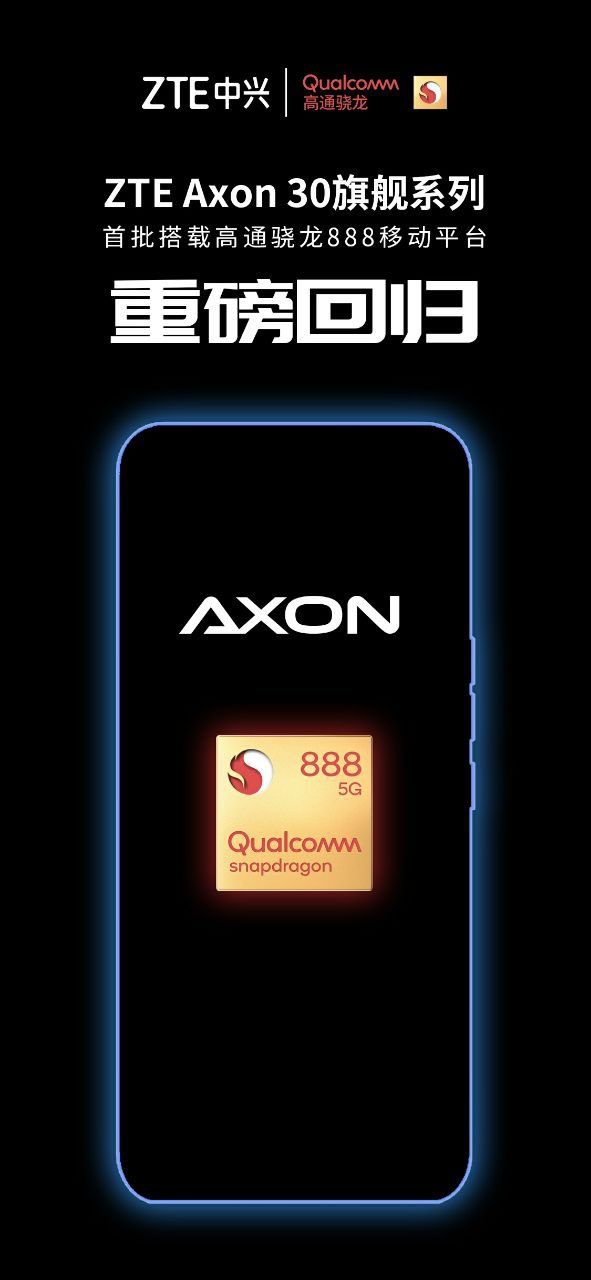
That said, Nubia also announced the Nubia Z, a new series with the flagship SoC. ZTE, on the other hand, confirmed that it is bringing the ZTE Axon 30 with a Snapdragon 888 version. If we recall, the company recently teased the camera features of Axon 30 that is probably coming very soon.

OPPO (Find X3)

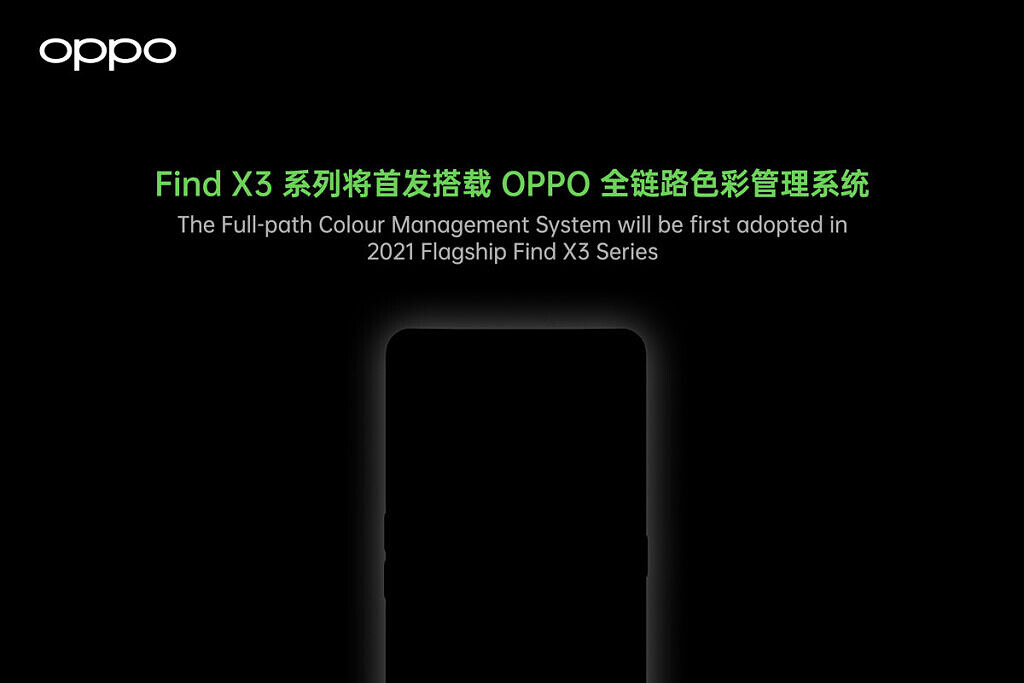
OPPO announced the OPPO Find X3 at the INNO DAY 2020 back in November. Later, as Qualcomm announced the new SoC, the company confirmed that the “Find X series will bring an unparalleled new experience to users worldwide”. The device is coming in Q1 2021 and since the Find X3 is already announced, it is safe to assume that Find X3 will host the Snapdragon 888 SoC.

OPPO Find X3 Display Technology

Called the “Full-Path color management system”, the device will support DCI-P3 wide color gamut. And native 10-bit color depth across “capture, storage, and display” to offer accurate colors. Additionally, it will have a JNCD≤0.4, 10-bit HEIF capture & storage, a Sony IMX7xx sensor, and more. Let’s wait for more details.

OnePlus (OnePlus 9 Series)

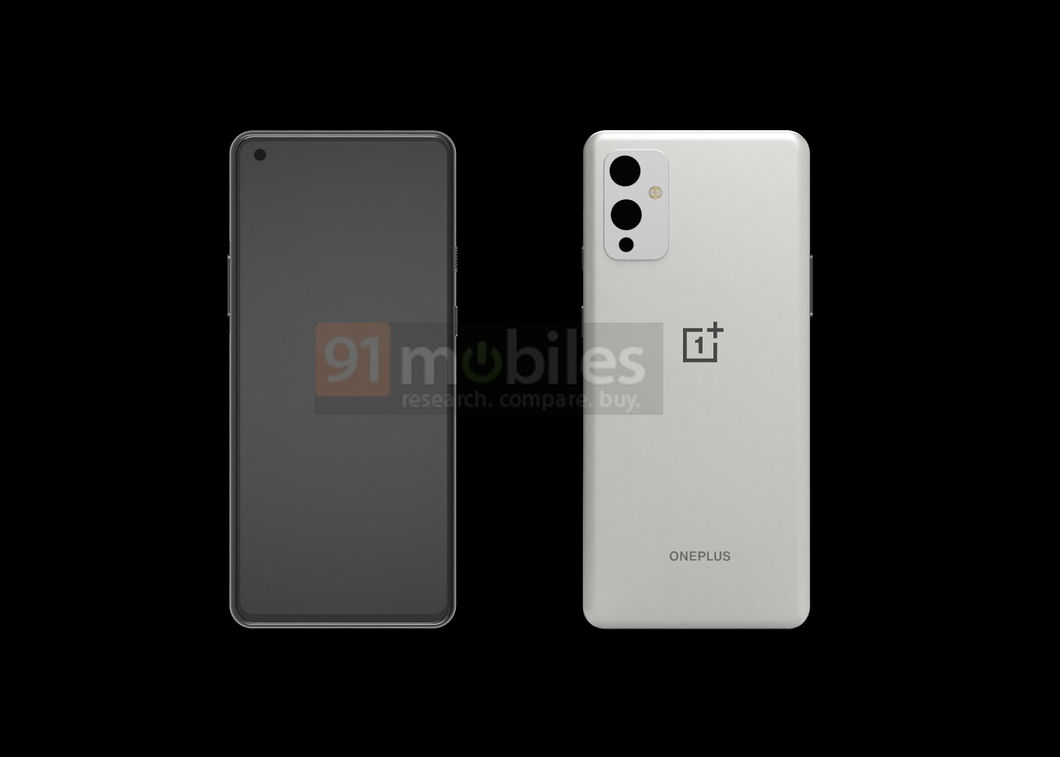
Although OnePlus officially confirmed it as a high-end flagship launching with Snapdragon 888 in H1 2021, rumors predict that it’s the OnePlus 9 series. And that the series is probably coming in mid-March of 2021. Recent leaks say that the series will also include a OnePlus 9E apart from 9, 9 Pro.

Anyway, as per the info we have, the OnePlus 9, OnePlus 9 Pro will have a slightly different design with and without curved displays, respectively. They will likely have an AMOLED 120Hz display(6.72-inch on 9 Pro, 6.65-inch on OnePlus 9), run the latest OxygenOS 11, have faster charging(at least 65W Warp Charge). Regarding the camera, the OnePlus 9 could also have a dual 48MP lens(primary, ultra-wide) on the back. Let’s wait for more leaks in the coming days.


realme (RACE)

realme, one of the fastest-growing brands in the world, announced a Snapdragon 888 flagship codenamed ‘RACE’. Assuming the company’s last realme X50 flagship launched around February, we can expect the same with the ‘RACE’.

realme Race

Anyway, the device, as confirmed by the company will probably adopt the ‘ACE’ series that was allegedly handed over to the company by OPPO. To corroborate this, a realme device similar to OPPO Ace2 surfaced online recently. According to the leak, the device, having model number RMX2202, will have 12GB RAM, 256GB storage, run realme UI 2.0 based on Android 11.


Vivo (V2056A), iQOO

After the confirmation of launching ‘mobile products’ with Snapdragon 888 SoC officially, a Vivo device hit the Geekbench listing recently. Being a first, the device has a model number V2056A and the benchmark shows 11.06GB(~Typical 12GB) RAM, Android 11 OS(could be OriginOS). While the listing doesn’t give away any other info, we feel that the Vivo would bring the SoC on its next NEX flagship.

Vivo Logo Featured

This is because the company’s COO Hu Boshan, in a video released on Qualcomm event page, talks about Vivo, and its sub-brand iQOO flagships. He mentions that the company launches NEX, X, S, and iQOO’s performance series of devices with flagship SoC. And will continue to do so with Snapdragon 888.

This strongly suggests that the Snapdragon 888 device could be NEX 4 and iQOO number series(maybe 7). That’s considering the next Vivo X60 is already tipped to launch with Exynos 1080 SoC.


Motorola Moto G series

Motorola Logo Featured

Lenovo-owned Motorola surprised everyone by announcing a Snapdragon 8xx series-powered “G series” device for 2021. The company says since it’s the 10th anniversary of the Moto G family, it would like to crank it up a notch with the flagship SoC.  While the 8xx could be anything, we can safely assume that it will at least be a Snapdragon 865/888 considering the announcement was at the event.

Motorola also announced a few upcoming Android 11 features like the Video calling using an “ultra-wide lens”, “desktop mode” for gaming, media, productivity. The Media launcher mode will be a separate interface after hooking the device to a TV, Monitor for streaming Apps, Games, Content.


1Other Brands to launch Snapdragon 888 devices

  • LG
    • LG executive Matthew Crowley confirmed that LG devices will leverage the Snapdragon 888 SoC in 2021. Reminding us of the first 5G in the USA, V50 ThinQ 5G, and LG’s first-swivel LG Wing 5G, the company said it would continue to work with Qualcomm and take advantage of the flagship processors.
  • Asus

    • Asus’ GM Brian Chen says the next ROG phone would make use of the flagship Snapdragon 888 SoC in 2021. He says the company would tap into the ultra-fast 5G, performance, and graphics performance of the Qualcomm SoC to make the device a gamer’s delight. However, considering the ROG Phone 3 launched back in July 2020, we aren’t sure if the brand would be so quick to bring the successor.
  • Black Shark

    • Luo Yuzhou of Black Shark Tech says that the company will launch the first batch of Black Shark products equipped with Snapdragon 888 in Q1 2021. He says, just like the Black Shark 3, that emphasized on the Snapdragon 865 5G to become the first 5G gaming phone, future products will make use of the faster AI, 5G, and performance of the latest processor.

Sadly, just like 2019, biggies like Samsung, Google, and Sony are missing at the event. In addition to these companies, brands like SHARP, MEIZU have also announced their partnership with Qualcomm. So things are bound to get interesting in the coming months.

Stay tuned and follow our social media to get all the updates on time!


Vivo Y51 with Snapdragon 662, 48MP triple cameras, and 5,000mAh battery launched in India for Rs 17,990 (~$243)

The Vivo Y51 is the latest mid-range phone to debut in India. A few months back, the Chinese manufacturer launched the Vivo Y51 smartphone in Pakistan. However, the Y51 that has landed in India is a different device.

Vivo Y51 pricing and availability

The Vivo Y51 is now available for purchase in India with a price tag of Rs 17,990 (~$243). The phone comes in two color variants like Titanium Sapphire and Crystal Symphony. The phone comes with a couple of offers like Home Credit’s zero down payment offer, Baja Finserv EMI offers that allow users to buy a Vivo phone by paying Rs 101, ad Jio benefits worth Rs 7,000 (~$95).

Vivo Y51
Vivo Y51

Vivo Y51 specifications and features

A 6.58-inch IPS LCD panel with a dewdrop notch can be found on the Vivo Y51. The tall aspect ratio screen supports a resolution of 1080 x 2400 pixels. The Snapdragon 662 is present under the hood of the Vivo Y51. The SoC is coupled with 8 GB of RAM. The phone offers users native storage of 128 GB and it carries support for an external storage slot.

A 16-megapixel selfie camera is available with the Aura Screen filter feature for shooting better selfies in low-light conditions. The rear camera setup borrows its design from Vivo X50 and V20 series. It comprises of the main camera of 48-megapixel, an 8-megapixel ultrawide lens, and a 2-megapixel sensor for adding depth effects.

The FunTouch OS 11 based Android 11 comes preinstalled on the Vivo Y51. The smartphone offers other specs such as dual SIM support, 4G VoLTE, Wi-Fi 802.11ac, Bluetooth 5.0, GPS, USB-C, a side-facing fingerprint reader, and a 3.5mm audio jack. Its dimensions are 163.86 x 75.32 x 8.38mm and it weighs 188 grams.