Advertisement

Huawei Smart Selection 720 Full-Effect Air Purifier 1i goes official

Xiaomi’s MIJIA Air Purifier should rank among the most popular brands in the market presently. Xiaomi celebrated the sales of 10 million units in five years as of December 2019. That figure has definitely gone up, especially as the sales of air purifiers are presently driven by the COVID 19 pandemic. Huawei Smart Selection 720 Full Effect Air Purifier 1i

Huawei is looking to grab a share of the air purifier market as it has launched a new air purifier dubbed Huawei Smart Selection 720 Full Effect Air Purifier 1i. The gadget adopts a design similar to the Mijia Air Purifier Pro. It features a compact body design with a length and width of 24cm and a height of 47.3cm. It covers an area smaller than A4 paper and so, is suitable for use in small apartments, rental rooms, baby rooms, and others. The device adopts a three-sided air intake design and the CADR value is up to 350m3/h. The air purifier can cover a usable area of 42 square metres.

Huawei Smart Selection 720 Full-Efficiency Air Purifier 1i is equipped with an H13 high-efficiency filter element, which filters the main pollutants in the home layer by layer. The H13 is a high-grade HEPA filter layer 99.95% filter out particles with a particle size of 0.3μm or more, focusing on PM2.5, pollen allergens, and dust.

At the same time, this air purifier is equipped with a high-precision laser particle sensor, which can detect tiny particles and feedback changes in indoor air quality in real-time. When the automatic mode is turned on, the purifier will automatically adjust accordingly to obtain a more efficient purification effect.

It is equipped with a circular screen, which can change according to the PM2.5 concentration. The green, yellow, and red air quality indicator will automatically change the color, giving intuitive feedback on the indoor air quality.

It also supports intelligent autonomous power on and off, which automatically starts when PM2.5 exceeds the standard and then automatically shut down when PM2.5 reaches the standard.

In sleep mode, Huawei Smart Selection 720 full-effect air purifier 1i has a noise level as low as 31db which is as if there is almost no sound. At the same time, in sleep mode, the screen and button indicators are turned off so they don’t disturb sleeping family members. The device can also be controlled via a smartphone as it supports Huawei HiLink smart assistant app.

Huawei Smart Selection 720 Full Effect Air Purifier 1i carries a decent 699 yuan (~$106) price tag and is presently available at Vmall.

UP NEXT: Oppo X 2021 unveiled as the world’s first smartphone concept with an extending display


With the Amazfit GTS 2 Mini, there’s no compelling reason to get the Amazfit GTS 2

Huami announced the Amazfit GTS 2 Mini yesterday as a more affordable version of the Amazfit GTS 2 which itself is still a new smartwatch. After comparing the specs of the two watches, I can not come up with a justifiable reason to choose the latter.

Amazfit GTS 2 Mini vs Amazfit GTS 2

The Amazfit GTS 2 Mini packs the necessary upgrades that earn it the tag of the true successor to the original Amazfit GTS that launched a year ago. It does this while keeping the price tag affordable. A few reviews I have come across said the Amazfit GTS 2 doesn’t offer enough to justify its price tag. For those who share a similar sentiment, I believe the GTS 2 Mini may be the smartwatch for them to purchase. I hope the points below help to convey why I believe so:

A smaller display but still AMOLED

The Amazfit GTS 2 Mini has an AMOLED screen. It is a 1.55-inch display with a 354 x 306 resolution and a ppi of 301. The screen is smaller than that of the original Amazfit GTS and the Amazfit GTS 2 and its resolution is also lower but it should suffice.

Amazfit GTS 2 Mini Screen

The display is housed in an aluminum alloy case with a plastic bottom shell. These are the same materials used for the Amazfit GTS 2. So just because it is cheaper doesn’t mean it comes with lower-quality materials. It is important to mention that Huami doesn’t say if the GTS 2 Mini has any form of protection for the screen but the GTS 2 drops the Gorilla Glass 3 protection of its predecessor for a diamond-like carbon coating that makes the screen more resistant to scratches and wear.

More than enough sports modes

The Amazfit GTS 2 launched with 12 sports modes out of the box but a recent update brought the total number to 90. That is definitely a lot and we are sure only a fraction of them will be used. The Amazfit GTS 2 Mini doesn’t disappoint either as it comes with 70 sports modes right out of the box. That is fewer than 90 but a lot more than the 12 sports the original Amazfit GTS has.

Amazfit GTS 2 Mini SpO2

SpO2 Sensor? Women’s Health? Check!

One of the upgrades the Amazfit GTS 2 brings over the first-gen model is support for blood oxygen level (SpO2) detection. The Amazfit GTS 2 Mini also comes with a SpO2 sensor. Another feature that the mini has is Women’s Health Management which tracks period and ovulation dates. Surprisingly the Amazfit GTS 2 doesn’t have this feature.

EDITOR’S PICK: Amazfit Pop Pro launched in China with built-in GPS, compass, and Xiao AI voice assistant

It has built-in GPS

Huami is known to remove GPS from the more affordable models of its smartwatches. The Amazfit Bip Lite and Amazfit Bip S Lite are examples. Thankfully, that is not the case with the Amazfit GTS 2 Mini. It has GPS and GLONASS for positioning when exercising outdoors. It also has an accelerometer, geomagnetic sensor, and gyroscope.

Amazfit GTS 2 Mini Assistant

AI Assistant and NFC on board

Just like the Amazfit GTS 2, the Amazfit GTS 2 Mini has Xiaomi’s XiaoAI Assistant, so you can set reminders, ask questions, and control compatible smart home products. We believe the global version will swap the Chinese assistant for Amazon’s Alexa assistant when it launches. The watch also has NFC but this will most likely not be available for the global version. The global version of the Amazfit GTS 2 also doesn’t have NFC but the one sold in China has.

Longer Battery Life

The Amazfit GTS 2 Mini has a smaller 220mAh battery capacity but its battery life – 14 days for typical usage is double that of the Amazfit GTS 2 which has a slightly larger 246mAh capacity.

What is missing?

To keep the price tag low, the GTS 2 Mini doesn’t have built-in storage so you can’t store songs or audiobooks on it but it does support music playback control when linked to a phone. It also doesn’t have a speaker so you cannot accept calls on it. Another missing feature is that its screen doesn’t rotate to accommodate both left and right-handed users. Other missing features are offline voice assistant, stress-level monitoring, and an air pressure sensor.

Conclusion

With a price tag of ¥699 (~$107), the Amazfit GTS 2 Mini costs even less than the original Amazfit GTS which launched for ¥899 (~$137). The Amazfit GTS 2 is ¥999 (~$152) in China, $179.99 in the US, €169 in Europe, and £159 in the UK.

We expect the global version of the GTS 2 Mini to be priced between $120 – $130 which makes it $50 to $60 cheaper than its sibling. For that price difference, and seeing that you are not missing much, the GTS 2 Mini will likely sell faster than its sibling.


Baseus MagSafe Charger costs only ¥109 ($17)

One of the new features on the new iPhone 12 models is MagSafe, which is nothing but a magnetic charging and mounting system. Apple has introduced it to build an ecosystem of accessories. Apple offers two first-party MagSafe chargers and both of them are costlier like any other product from the company. But a similar charger from Baseus is 56% cheaper.

Baseus MagSafe Charger BS-W517 Featured

Baseus MagSafe Charger (BS-W517) Specifications and Features

Baseus is one of the popular Chinese accessory brands. The company sells a wide variant of products like chargers, power banks, cases, cables, earphones, and more.

It has quietly launched a new product called Baseus MagSafe Charger with model number BS-W517. The charger is made of aluminum alloy and tempered glass. Further, it measures 93 x 93 x 6.2mm in dimensions and comes in three colors – Black, Gold, and Transparent. In other words, it is larger than the official Apple MagSafe charger but sports a striking design.

Baseus MagSafe Charger BS-W517

For input. the charger features a USB Type-C and ships with a USB Type-A to USB Type-C cable, manual, and warranty card. The charger also comes with a green-colored LED indicator. This light will glow brightly when the charger is in an idle state, whereas it will blink when in use. Additionally, it also turns on half when any external object is detected.

Talking about charging speeds, the Baseus charger offers the maximum 15W threshold for iPhone 12, iPhone 12 Pro, and iPhone 12 Pro Max. It also supports slower speeds such as 12W for iPhone 12 Mini along with 10W, 7.5W 5W, and 2.5W charging modes. As for input, the charger supports up to 24W and is compatible with USB PD (Power Delivery) as well as Qualcomm Quick Charge 3.0.

Last but not least, since the product uses the Qi wireless charging standard, it can be used to charge literally any compatible smartphone and accessory available in the market.

Baseus MagSafe Charger (BS-W517) Pricing and Availability

The Baseus MagSafe Charger costs only ¥109 ($17) but unfortunately, it is only available in China for the time being. Hopefully, it makes its way to other markets as the official Apple MagSafe Charger is priced at $39.


Redmi Note 9 5G vs Xiaomi Mi 10T Lite vs Redmi 10X 5G: Specs Comparison
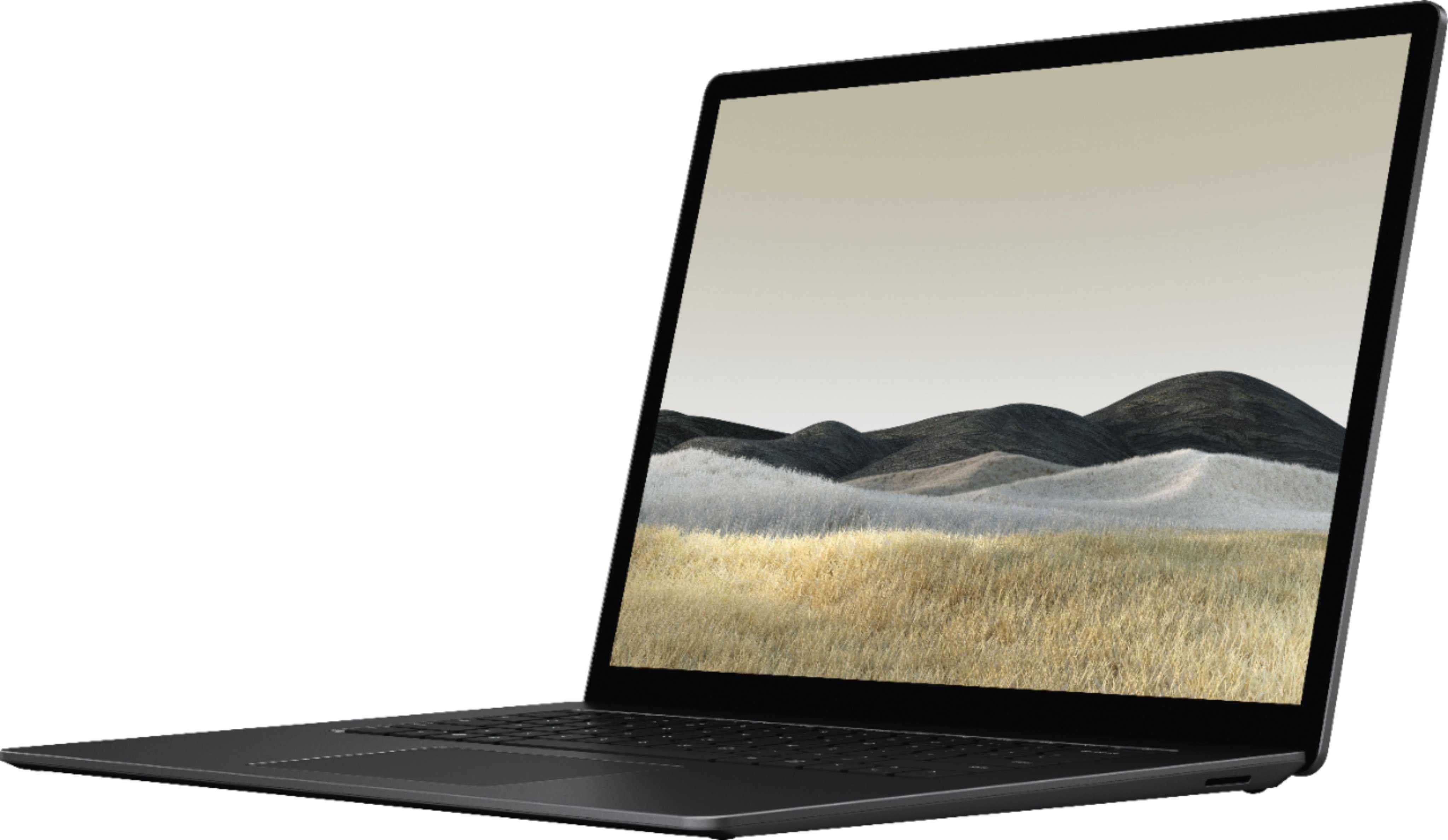
Xiaomi released several 5G devices this year, even in the affordable segment. If you want an affordable 5G phone you have a lot of choices and the latest one is the Redmi Note 9 5G. But is it also the best besides being the last? In order to establish this, we decided to compare the Redmi Note 9 5G with other Xiaomi affordable phones supporting 5G connectivity, in order to decrease the confusion around them. We chose the Xiaomi Mi 10T Lite and the Redmi 10X 5G because they belong to the same price segment. Note that the Xiaomi Mi 10T Lite is the only one available in the European market, while the Redmi devices are still Asia-exclusive.

Xiaomi Redmi Note 9 5G vs Xiaomi Mi 10T Lite vs Xiaomi Redmi 10X 5G

Xiaomi Redmi Note 9 5G Xiaomi Mi 10T Lite 5G Xiaomi Redmi 10X 5G
DIMENSIONS AND WEIGHT 162 x 77.3 x 9.2 mm, 199 grams 165.4 x 76.8 x 9 mm, 214.5 g 164.2 x 75.8 x 9 mm, 205 grams
DISPLAY 6.53 inches, 1080 x 2340p (Full HD+), 395 ppi, 19.5:9 ratio, IPS LCD  6.67 inches, 1080 x 2400p (Full HD+), IPS LCD 6.57 inches, 1080 x 2400p (Full HD+), 401 ppi, 20:9 ratio, AMOLED
PROCESSOR Mediatek Dimensity 800U, octa-core 2.4 GHz Qualcomm Snapdragon 750G, octa-core 2.2 GHz Mediatek Dimensity 820, octa-core 2.6 GHz
MEMORY 6 GB RAM, 128 GB – 8 GB RAM, 128 GB – 8 GB RAM, 256 GB – micro SD dedicated slot  6 GB RAM, 64 GB – 6 GB RAM, 128 GB – 8 GB RAM, 128 GB – micro SD dedicated slot 6 GB RAM, 64 GB – 6 GB RAM, 128 GB – 8 GB RAM, 128 GB – 8 GB RAM, 256 GB – micro SD slot
SOFTWARE  Android 10, MIUI  Android 10, MIUI Android 10, MIUI
CONNECTIVITY Wi-Fi 802.11 a/b/g/n/ac, Bluetooth 5.1, GPS  Wi-Fi 802.11 a/b/g/n/ac, Bluetooth 5, GPS Wi-Fi 802.11 a/b/g/n/ac, Bluetooth 5.1, GPS
CAMERA Triple 48 + 8 + 2 MP  f/1.8, f/2.2 and f/2.4
13 MP f/2.3 front camera
Quad 64 + 8 + 2 + 2 MP, f/1.9 + f/2.2 + f/2.4 + f/2.4
16 MP f/2.5 front camera
Triple 48 + 8 + 2 MP f/1.8, f/2.2 and f/2.4
16 MP f/2.3 front camera
BATTERY 5000 mAh
Fast charging 18W
 4820 mAh, fast charging 33W 4520 mAh, Fast charging 22.5W
ADDITIONAL FEATURES Dual SIM slot, 5G Dual SIM slot, 5G Dual SIM slot, 5G

Design

The ugly shape of the camera module and the waterdrop notch do not make the Redmi 10X 5G the most modern and beautiful device of the trio. The Xiaomi Mi 10T Lite is definitely better with its glass back, punch-hole display, and overall better look with more attractive color variants. The Redmi Note 9 5G comes right after, but it has a plastic back instead of a glass cover. On the other hand, Redmi Note 9 5G and Redmi 10X 5G have water-repellent coatings, while the Xiaomi Mi 10T Lite does not. You should also consider that Redmi 10X 5G has an in-display fingerprint reader, while on the Mi 10T Lite it is side-mounted.


Display

The most impressive display belongs to the Redmi 10X 5G: it is the only one to feature an AMOLED panel showing better colors and deeper blacks. It even supports the HDR10+ certification allowing for better image quality. The second place goes to the Xiaomi Mi 10T Lite which sports an IPS display with a 120 Hz refresh rate. Redmi Note 9 5G has an IPS display with a standard 60 Hz refresh rate, really nothing special. Unfortunately, Redmi 10X 5G lacks stereo speakers, or it would have been a perfect multimedia phone.


Hardware/Software

The MediaTek Dimensity 820 chipset found on the Redmi 10X 5G is a more powerful processor than the Dimensity 800U and the Snapdragon 750G found on the Redmi Note 9 5G and the Xiaomi Mi 10T Lite. And this is not the only element that makes the Redmi 10X 5G the winner of the hardware comparison. Redmi 10X 5G also offers a higher amount of RAM: up to 8 GB instead of 6 GB like its two rivals. The software you get with these phones is the same, if we exclude the fact that Redmi 10X 5G ships with MIUI 11 out of the box, while the other twos run MIUI 12.


Camera

The most advanced camera is on board the Xiaomi Mi 10T Lite: we are talking about the 64 MP main sensor paired with an 8 MP ultrawide lens and two 2 MP sensors for macro and depth. With the Redmi Note 9 5G and the Redmi 10X 5G you get the same rear cameras, but the front camera is better on the Redmi 10X 5G.


Battery

The Redmi Note 9 5G packs a bigger battery and its battery life is longer. But the Redmi 10X 5G and the Xiaomi Mi 10T Lite are still great battery phones with their above-average batteries. The Xiaomi Mi 10T Lite wins the fast charging comparison with its 33W power.


Price

Redmi 10X 5G is priced at about €205/$248 in China, Redmi Note 9 5G goes for €170/$205, and Xiaomi Mi 10T Lite costs €249/$300 globally. Technically, the most convincing phone of this trio is the Redmi 10X 5G due to its stronger chipset and AMOLED display. But some may prefer the Mi 10T Lite due to its Snapdragon chipset, faster charging, and better camera. Redmi Note 9 5G can let you save a lot of money, but it is inferior.


Xiaomi Redmi Note 9 5G vs Xiaomi Mi 10T Lite vs Xiaomi Redmi 10X 5G: PRO and CONS

Xiaomi Mi 10T Lite 5G

PROS

  • 120 Hz display
  • Great camera
  • Stereo speakers
  • Wider display
  • Faster charging

CONS

  • Dimensions


Xiaomi Redmi Note 9 5G

PROS

  • Very affordable
  • Compact
  • Stereo speakers
  • Water-repellent

CONS

  • Inferior display


Xiaomi Redmi 10X 5G

PROS

  • AMOLED display
  • HDR10+
  • Great hardware
  • Water-repellent

CONS

  • Smaller battery

Xiaomi launches the Homerun Pet Water Dispenser for ¥199 (~$30)

A good percentage of the world’s population live alone and as a result, there is a growing need for pets. As a matter of fact, kittens and puppies have become the companions of many young people. Xiaomi just launched a product that pet owners would find useful. The product dubbed Homerun Pet Water Dispenser is presently available for preorder on Xiaomi Youpin for 199 yuan (~$30). The actual retail price is 299 yuan (~$45).Homerun Pet Water Dispenser

The product is equipped with Homerun’s core patented wireless water pump technology which is safe and easy to disassemble and wash. This ensures that there is no need to worry about the difficult disassembly and cleaning associated with ordinary water dispensers.

Through the use of magnetic induction wireless power supply, combined with the technology of mobile phone wireless charging, this pet water dispenser truly realizes the separation of water and electricity. With the internal and external three-fold physical isolation, the known safety level is increased by 100%.Homerun Pet Water Dispenser

In addition, for the noise problem of ordinary pet water dispensers, Homerun has carefully designed 20 seamless and silent water channels to reduce the working decibel to 38dB. Thus, the quiet operation does not affect the normal life of the owner.

It is worth mentioning that the bucket and outer bucket of the Homerun Pet Water Dispenser are of separate design. The bucket has a smooth inner wall that has no corners and which is easy to clean.Homerun Pet Water Dispenser

Inside the machine, an integrated water level sensor is installed to monitor the water level more accurately. When the water level is lower than the safe water level, the water pump will stop working to prevent the water pump from burning due to overheating.

UP NEXT: Oppo X 2021 unveiled as the world’s first smartphone concept with an extending display


Global Smartphone production revives in Q3 2020; Xiaomi, OPPO dominate Samsung in QoQ rise

The smartphone industry is getting ready for a revival from the pandemic ever so slightly. And this is evident in the latest TrendForce Q3 2020 report. Accordingly, Chinese companies like Xiaomi, OPPO have raised the stakes in Q3 2020 Smartphone production by a huge QoQ margin. And the report predicts that the trend will continue into 2021.

smartphones

TrendForce has released the report on Global Smartphone production for Q3 2020 along with predictions for Q4 2020, and beyond. As per the report, global smartphone production reaches a total of 336 million in Q3. This is a 20% QoQ(Quarter over Quarter) from Q2 and the highest QoQ increase in recent years. Plus, the rise is reportedly due to easing pandemic, holiday season, high targets of companies.

As you can see below, Chinese companies like Xiaomi, OPPO are next to Samsung(23.2%) with 13.2, and 13.4% market shares respectively. However, despite the lower shares, production of Xiaomi, OPPO has grown 51%, and 64% respectively QoQ in Q3 2020. To compare, Samsung only grew about 42%. Further, both Xiaomi and OPPO will reportedly ramp up production in Q4 and reach about 47 and 46 million production units respectively.

Credit: TrendForce

Apple gets a meager rise of 2% QoQ for production in Q3. Thus, it sits behind the Chinese giants at 4th place with 42 million units. However, with iPhone 12 series launch it will substantially improve in Q4 2020. Despite showing a 19% decline QoQ, Huawei manages to make 42 million units in 2020. With this, it has not only managed to equate Apple in production but retain the market position in certain regions.

Regarding inventories, Huawei has already stockpiled enough chipsets by bulking the orders before the September deadline of the US came up. To recall, the USA had altered regulations and made getting a license for supplying Huawei mandatory. As a result, report says the company might enter the scarcity stage in Q1/Q2 2021 if licensing becomes an issue. In the table, Vivo manages to get only the last place with just 30 million unit production in 2020 despite a 13% QoQ rise.

Going into Q4 2020, the report predicts a production range of 351 million units with a 4% QoQ rise. Despite a YoY decline, the production will continue to revive gradually from the pandemic. But it is subject to responses from the semiconductor industry and geopolitical scenarios. To sum up, Global smartphone production will sit somewhere around 1.25 billion units for 2020. However, it could increase to 1.36 billion units in 2021 with 5G continuing to be the center of attraction.

Ulefone Armor 10 5G thrives in the performance test

Ulefone is the world’s renowned rugged smartphone maker. The company has launched exceptional rugged smartphones in the past offering value-for-money. Similarly, the company earned another laurel by introducing the world’s first 5G rugged smartphone – Ulefone Armor 10 5G. The primary highlights of the device are its Dimensity 800 5G SoC, 8GB RAM, 128GB ROM, and 64MP quad-camera among others.  It has recently undergone a performance test and the benchmark scores prove its worth.

Must See: Ulefone Armor 10 5G Rugged phone powered by Dimensity 800 SoC launched

In the video, the MediaTek Dimensity 800 powered device scored 307,629 points in the AnTuTu benchmark. The octa-core processor performed on par with Qualcomm’s Snapdragon 700 series chipsets. The AnTuTu benchmarks test the CPU, GPU, memory, and UX of the device to calculate the final scores.

In a world where every electronic item is turning into a smart device. While, software gets AI prowess to improve performance, battery efficiency, and camera productivity. In such an environment, it equally becomes important to test the AI processing of the smartphone. Ulefone Armor 10 5G has scored 85.3 points in the AI benchmark. Meanwhile, it scored 182,507 points on the AntuTu benchmark.

The device is a rugged masterpiece with splendid hardware features.

Ulefone Armor 10 5G features a 6.67-inch FullView display and carries an ultra-high resolution camera. The smartphone houses a 5800 mAh battery with 15W fast charging support. It supports contactless payments with NFC via Google Pay.

It will officially go on sale from December 7 for the price of $399 via Banggood. Moreover, the first 200 buyers will get a free Ulefone Watch. You can head over to the Ulefone official website to learn more about the device.

Related: Ulefone Armor 10 5G- Launch, Specifications and Giveaway Alert

iPhone 12 users report loss of connectivity to both 5G and 4G signals

Reports emanating from Apple‘s support online communities have quoted many iPhone 12 series owners saying that the new iPhone models might be having difficulties connecting to 4G and 5G networks. The problem has not yet been fixed by Apple as of the start of this week.

According to the concerned phone users (via), their iPhone 12 models usually lose all signal bars and the message on the display says “Your iPhone is not Activated.”  This problem occurs on both 4G LTE and 5G networks and toggling Airplane mode on and then off will usually restore the connection. Others said that they had to restart their phone or remove and replace their SIM card to get their phone to sync with their carrier’s network.

Apple iPhone 12 Featured
Apple iPhone 12

Apple iPhone 12 series users also voiced the problem on Reddit, with suddenly dropped signals being observed at short intervals. The only regular solution under such circumstances, that works to restore service is to reboot the phone, as claimed by one of the users.

Network carriers Verizon and AT&T seem to be most affected by this bug with some users seeing their iPhone lose signal whenever there is a switch of towers. The problem was also reported by some users outside the US. For example, an Australian iPhone 12 Pro owner said that “I have the same problem on Vodafone in Australia. After coming from an iPhone 11pro to iPhone 12 pro. My new phone just loses service completely sometimes and in some instances just shows 3G. I haven’t seen 3G for many years but now I find myself dropping to 3G more often than not – or no service completely”.

Users of the four iPhone 12 models have experienced a few problems with the phone. In November, it was discovered that the display on some units was glowing green and gray. In response, Apple told technicians not to service those units having this problem. Rather,  iPhone owners should regularly update their devices.  Therefore, we should expect a software update soon, and it is hoped that the present signal glitch might also be fixed with the software update.

UP NEXT: Oppo X 2021 unveiled as the world’s first smartphone concept with an extending display


Vivo Y51 might go live in Indonesia on December 3; official listing reveals renders and specs

Earlier today, a report exclusively tipped the price of the upcoming Vivo Y51 for India. The device is coming to both India and Indonesia as per early certifications. Now, it has officially been listed online in Indonesia along with renders, and specifications. The listing also shows that it is different from the Vivo Y51 that launched in Pakistan.

Vivo Y51 Indonesia


As spotted by MySmartPrice, the Vivo Y51 is now officially listed on the Indonesian website. The website’s ‘buy now’ redirects to Shopee’s website which is a popular retailer in the country. Accordingly, the poster inside the website shows a ‘coming soon’ tag and December 3, 2020 date. This suggests that the device might go live tomorrow in Indonesia.

That said, the website doesn’t hint anything about the pricing apart from a few discount vouchers, special gifts that will probably tag along the Vivo Y51 purchase. However, as mentioned above, a report says that the Y51 for India will debut under ₹20,000($272) in India. While we don’t exactly know about the Indian launch, it is likely to replace the Vivo S1 Pro that’s already retailing in the country.

To compare, the Vivo Y51 in Pakistan has a lot of similarities to the Vivo S1 Pro in India. This includes design, colors, diamond-shaped camera layout, display, 48MP rear camera. Take a look at the Indonesian renders below:

Vivo Y51 Indonesia Specifications

First off, the renders on the Indonesian website reveal that the display has a v-notch upfront and a rectangular triple-camera layout at the back. The layout looks like it has taken cues from the Vivo X50 series. There is a single large lens that accompanies two smaller lenses beneath. The colors listed are Titanium Sapphire(Blue), and Crystal Symphony(Green gradient).

Talking about specs, the device measures 163.86 × 75.32 × 8.38mm and weighs 188g. It features a 6.58-inch FHD+(1080p) IPS LCD display, Snapdragon 665 SoC paired with 8GB RAM, 128GB storage, 16MP front camera, triple-rear camera with 48MP f/1.79 main, 8MP f/2.2 ultra-wide, and a 2MP macro lens.

Other features include a 5,000mAh battery with 18W fast charging, Funtouch OS 11 based on Android 11, Wi-Fi 802.11ac, Bluetooth 5.0, 4G LTE, GPS, microSD(up to 1TB), 3.5mm audio jack, Type-C port for connectivity. Let’s wait for the official pricing for Indonesia.

Snapdragon 800 series Moto G phone coming next year; desktop mode and more coming to Motorola phones

Motorola had a segment during Qualcomm’s Tech Summit and the phone maker revealed some interesting details for next year. One of the announcements made is that the Moto G series will be getting a model with a Snapdragon 800 series processor in 2021.

Moto G 5G
Moto G 5G

The Moto G series will celebrate its 10th year anniversary next year and one of the ways Motorola plans to mark it is by launching a model with a Snapdragon 800 series processor. The announcement was made by Sergio Buniac, the Senior Vice President of Motorola.

While there is no specific mention of what chipset it is, there are speculations that it might be the new Snapdragon 888 processor. There is also a possibility that the phone may actually come with the Snapdragon 865 or Snapdragon 865+ processor that powers this year’s flagship. Regardless, this is a big shift for the Moto G series which usually comes with a Snapdragon 400, Snapdragon 600, or Snapdragon 700 series chipset.

Since the Moto G series is known as a budget series, there is a chance that the upcoming device will have an affordable price tag. This year, Motorola launched affordable Moto G phones with support for 5G such as the Moto G 5G and Moto G 5G Plus. We expect to see new affordable models next year.

Alongside the info about a Snapdragon 800 series Moto G phone, Motorola also revealed that its phones will get a desktop mode which will allow users to connect their phone to a screen and use it as a desktop computer. There will also be a Media Launcher mode which users can turn on when they want to watch content on a TV. This interface lists the streaming apps and games on the phone in an interface similar to Android TV.

Another feature that Motorola mentioned is the support for video calling using the ultrawide angle camera on the phone. This way, users will be able to fit in more people when making a video call.

These features have been reported to come with the Android 11 update but there is a possibility not all the features will be available on all the models.


OnePlus opens registrations for OnePlus 8T Closed Beta testers

OnePlus 8T is the latest high-end smartphone from OnePlus. The brand has released multiple updates to this device ever since its release to fix a wide variety of bugs. Thankfully, this may end soon as the company has started recruiting Closed Beta testers.

Oneplus 8T
OnePlus 8T

For those unaware, OnePlus releases OxygenOS builds in three channels namely Closed Beta, Open Beta, and Stable. The latter two types of builds can be downloaded and installed by any user. Whereas, the former build is limited to select users.

The Chinese smartphone maker runs a Closed Beta program for all of its smartphones. This program includes a limited quantity of members. For instance, the brand has only allocated 200 seats for OnePlus 8T. Hence, if you are interested in this program, then make sure to register as soon as possible from OnePlus Community.

If you get selected, you will be working closely with OnePlus engineers. Hence, you will have to sign an NDA (Non-Disclosure Agreement) with the company.

That said, users part of this program play an important role in the development of future software builds. Because these users will be testing the new builds before they make it to the other two channels. And hence, their feedback will be crucial for bug fixes and new features.

Anyway, this initiative is not everyone’s cup of tea. Therefore, stay away from it if you don’t like countless bugs on your beloved OnePlus 8T smartphone.


Grab OnePlus 7T Pro with 8GB RAM and 256GB storage at Rs 38,999 from Amazon

Under the Anniversary sale, OnePlus is offering massive discounts on all its smartphones on Amazon. However, there’s a special coupon discount of Rs 5000 on the OnePlus 7T Pro 8GB RAM and 256GB storage variant. It usually retails for the price of Rs 43,999, but with the coupon discount, the buyers can get it for Rs 38,999 via Amazon. It is the best price until now for the OnePlus 7T Pro 8GB RAM variant.

Must See: OnePlus records strong growth in Denmark, Finland and the Netherlands with the Nord

The company is providing a no-cost EMI of up to 6 months with HDFC credit/debit card and other partner institutions. Moreover, you can grab an instant discount of up to Rs 3000 on other OnePlus smartphones available at Amazon. Unfortunately, the instant discount offer can’t be clubbed with a Rs 5000 off coupon on OnePlus 7T Pro.

OnePlus 7T Pro Specs

It sports a 6.67-inch fluid display featuring 3120 x 1440 pixels resolution and 516 PPI pixel density. OnePlus 7T sports a triple rear camera module featuring a 48-megapixel primary sensor, an 8-telephoto lens, and a 16-megapixel ultrawide angle. There’s a 16-megapixel lens on the front for video calling and quality selfies.

It is powered by a Qualcomm Snapdragon 855 Plus chipset consisting of an octa-core processor and Adreno 640 GPU. The device is available in 8GB RAM + 128GB and 8GB RAM + 256 GB storage variant. The smartphone carries a 4085 mAh battery that supports 30W fast Warp charge technology.

It’s a one-time offer for interested users. You can grab it now by hitting the button below.

Grab Now for Rs 38,999

ZTE Blade V2021 5G debuts with Dimensity 720 SoC, 48MP camera for 999 yuan($152) in China

ZTE has finally launched the Blade V2021 5G in China. The device is a watered-down version of the ZTE Blade V2020 that launched back in October. Despite starting at a lower price of 999 yuan($152.21), the device retains features like a 48MP camera, 5G from the predecessor.

ZTE Blade V2021 5G Price, Availability, Offers

The company took to Weibo to confirm the pricing, and specifications of the device. Accordingly, ZTE Blade V2021 5G comes in three colors- Space Gray, Fantasy Blue, Space Silver. You can take a look at the pricing and storage variants below:

  • 4GB RAM, 64GB storage- 999 yuan($152.21)
  • 6GB RAM, 128GB storage- 1399yuan($213.16)

The ZTE Blade V2021 5G will be available on JD.com(Jingdong) starting tomorrow(December 3). The official listing on the website shows that the sale will start around 10:00 AM China time(UTC+08:00). The company is also giving initial discounts of up to 100 yuan($15.24) for the 6GB/128GB model. Hence, the effective price of it is 1299 yuan($197.92).

ZTE Blade V2021 5G Specifications

The ZTE Blade V2021 5G is totally different from the predecessor in design. It has a polycarbonate back with a vertical camera setup, a notch display, and a slightly underpowered CPU. Measuring 165.9×75.8×8.9mm, the device weighs around 188g. Upfront, there is a 6.52-inch TFT display with a 60Hz refresh rate.

Under the hood, MediaTek’s Dimensity 720 5G SoC powers the device. As mentioned above, the SoC is paired with 4/6GB RAM and 64/128GB storage. However, you also get a storage expansion via a MicroSD slot up to 512GB. For cameras, you get a 48MP f/1.79 main lens, 8MP 120° ultra-wide, and 2MP macro sensor. An 8MP selfie shooter sits at the front tucked under the notch.

Other specifications include a 4,000mAh battery, Bluetooth 5.1, Wi-Fi 802.11ac, 3.5mm audio jack, DTS sound, Type-C port, 5G SA/NSA, GPS for connectivity.

[Hot Deal] OnePlus smartphones getting an instant discount of upto Rs 3000 via HDFC cards

OnePlus is offering massive discounts on smartphones including OnePlus 8 Pro, OnePlus 8, OnePlus 8T, OnePlus Nord, OnePlus 7T, and OnePlus 7T Pro. In partnership with HDFC cards, the company is offering an instant discount of up to Rs 3000. The interested users can available no-cost EMIs of up to 6 months on select cards. Amazon has even extended the offer by bundling upto Rs 5000 off coupon with the OnePlus 7T Pro.

Note: The instant discount is applicable on Credit card EMI payments, Non-EMI payments, and Debit card EMI payments. However, the discount shrinks with Debit Card Non-EMI payments.

[Hot] The effective price for OnePlus 7T Pro goes to Rs 38,999 with 8GB RAM and 256GB storage variant. If you have an HDFC credit or debit card then grab it for another 2000 Instant discount.

Discount using 5000 off Coupon and non-HDFC card.

OnePlus 8 Pro is retailing for Rs 54,999 is available for the effective price of Rs 51,999 after a Rs 3000 instant discount with HDFC credit and debit cards. OnePlus 8 is retailing for Rs 39,999 and will be available for 37,999 with a Rs 2000 discount. Similarly, OnePlus Nord 5G gets a Rs 1000 discount, the OnePlus 7T with a Rs 1500 discount, and the OnePlus 7T Pro for a Rs 2000 discount.

The latest flagship from OnePlus i.e OnePlus 8T 5G is available for the price of Rs 42,999, but you can own it for Rs 40,999 with a Rs 2000 Instant discount.

Avail Rs 3000 Instant Discount

It is a great deal for the interested folks who missed the festive season deals.

Related: OnePlus 8T Cyberpunk 2077 Edition goes for sale on Giztop

Indian Govt intervenes to solve supply issues of local companies with MediaTek: Report

The Indian Government has reached out to MediaTek to mediate discriminatory allegations by Indian companies. A report says the company has been diverting the majority of its supplies to Chinese vendors. As a result, companies like Micromax and Lava are reportedly facing shortages of chipsets.

Mediatek logo

Citing its sources, ET reports that the Indian Govt’s intervention to solve the issue is to avoid further complications. Pankaj Mohindroo, Chairman of ICEA(India Cellular and Electronics Association) says the govt is reaching out through proper channels to MediaTek. Apparently, it is doing this to negotiate the issue that has resulted in about 95% shortage of components for Indian companies.

However, MediaTek denies these allegations. It says the entire industry is experiencing shortages globally. It adds that the main reason is the supply chain disruption due to COVID-19 in addition to demand, 5G rollout. After the outbreak of the virus, companies faced a lot of issues and even started importing devices from China. Although reports predict a revival in 2021, the market is still yet to balance the demand and supply crisis.

Anyway, while the seriousness of the allegations isn’t clear, experts believe that it could also be due to Huawei stockpiling MediaTek’s chipsets in Q2. Back in May, after realizing the extension of the US ban, it reportedly increased orders to MediaTek by 300%. Later, as the September 15 deadline was approaching, it entered survival mode by stockpiling chipsets for the next 2 years.

Coming back, the report says that if Govt doesn’t intervene, it will affect Indian companies’ goals for the PLI scheme. Previously, the govt announced incentives worth ₹50,000 crores ($6.6 billion) including PLI, SPECS, EMC 2.0 schemes. Out of this PLI(Production Linked Incentive) requires companies to manufacture high-end phones for a period of 5 years locally and achieve yearly goals to get 4-6% incentive.

That said, experts say that Indian companies will be able to reach the first-year target of the PLI scheme only if they get supplies till March 2021. And if the issue persists, it isn’t going to be a smooth ride for them. Let’s wait and see how the situation pans out after the involvement of the govt.

Samsung Galaxy Note series discontinuation confirmed by Reuters

The rumor mill which has been awash in recent months on the possible retirement of the Galaxy Note lineup of Samsung smartphones has finally gotten some authentication via Reuters.Samsung Galaxy Note 20 Ultra

What began as an unlikely news item around August 2020 has now gained sufficient traction to warrant the attention of a reliable news outlet like Reuters. It now looks almost certain that indeed Samsung will discontinue production of its Galaxy Note line. The latest confirmation of this news comes from Reuters and is based on several credible sources having sufficient knowledge of the plans of the tech giant on the matter.

The Reuters report is also in line with reports monitored this week from South Korea on the matter. The move is expected to highlight the impact of the coronavirus pandemic on the declining demand for Samsung’s flagship smartphones, coupled with other operational and design challenges faced by the Galaxy Note series. Samsung is rumored to be planning to move its development resources production attention to its upcoming foldable phone range.

One of the sources that spoke to Reuters also confirmed that Samsung is planning to bring S Pen support to its Galaxy S21 Ultra and next foldable phone with the smart stylus being sold separately in the two cases.

The Samsung Galaxy Note series, at launch, was designed as a series of high-end Android phablets and smartphones primarily oriented towards pen computing in that all Galaxy Note models come with a stylus pen and had incorporated a pressure-sensitive Wacom digitizer and a generally larger screen. The Galaxy Note models also have software features that are oriented towards the stylus and their large screens, such as note-taking and digital scrapbooking apps, and split-screen capabilities for multitasking. The Note line serves as Samsung’s flagship smartphone model, positioned above the Samsung Galaxy S series.

We’ll keep our fingers crossed while monitoring further developments as Samsung is set to release the S21 series in January 2020.

UP NEXT: Oppo X 2021 unveiled as the world’s first smartphone concept with an extending display


Xiaomi Mi 10T Pro to launch in Indonesia on December 8

The Mi 10T series made its debut in Europe in September. It then made its way to India in October. Today, Xiaomi has announced that the Mi 10T Pro will be launched in Indonesia this month.

The announcement which was made on Twitter revealed that the flagship phone will be launched in the country on December 8. The launch will be live-streamed and will begin at 7:30 PM Western Indonesian Time.

Mi 10T Pro Indonesia

The Mi 10T Pro will be the second Xiaomi flagship phone launched in the country. Earlier this year, the Mi 10 series made its way to Indonesia but only the standard model was announced. Seeing as the Mi 10 Pro 5G didn’t launch, it is understandable why it is only the Mi 10T Pro launching in the country now. Its other siblings, the Mi 10T and the Mi 10T Lite will not be sold there.

The Mi 10T Pro has a 6.67-inch LCD display with a 2400 x 1080 resolution. The screen which has a hole in the top left corner of the screen also has a 144Hz refresh rate. The screen is covered with Gorilla Glass 5.

Under the hood is a Snapdragon 865 processor paired with 8GB of RAM. The phone comes in 128GB and 256GB versions but we don’t know if just one or both will be available when the phone launches next week.

There is a 20MP camera in front of the device while the rear is home to a 108MP primary camera, a 13MP ultrawide angle camera, and a 5MP macro camera. The Mi 10T Pro can record in 8K at 30fps and in 4K at up to 60fps. There is no audio jack but you get stereo speakers. The phone also has NFC and Bluetooth 5.1.

There is a 5000mAh battery inside the phone with support for 33W fast wired charging. Xiaomi ships the Mi 10T Pro with MIUI 12 based on Android 10.


Vivo’s Snapdragon 888-powered device running OriginOS hits GeekBench

At the 2020 Snapdragon Technology Summit 2020 held yesterday, Qualcomm officially unveiled the latest Snapdragon 888 mobile platform built on TSMC’s 5nm process. The processor will power the next generation of flagship smartphones. The processor equally provides a fully integrated 5G modem.

Xiaomi‘s CEO Lei Jun did confirm that the brand will be the first to launch a Snapdragon 888-powered model which will be the Mi 11 expected in January 2021. Vivo also indicated that it will release a flagship with the new chipset in the first half of 2021.

The Vivo model powered by the Snapdragon 888 chipset has been spotted on the GeekBench database. The model appears with the model number Vivo V2056A and is powered by the Snapdragon 888 SoC listed with its codename Lahaina.

The device runs on Android 11 which will definitely have an overlay of Vivo’s custom OriginOS which is the only version running on Android 11. The device will also have 11GB of RAM.

The Snapdragon 888-powered Vivo phone is the first device to appear on benchmark database. As for the benchmark score, the Snapdragon 888 Vivo device has a single-core test score of 1135 points and a multi-core score of 3681 points. This is currently the highest score among the leaked engineering machines. The score almost doubles those of the Snapdragon 865-powered model both on the single and multi-core tests.

At the Snapdragon Technology Summit, Vivo Executive Vice President and Chief Operating Officer Hu Baishan stated: “The vivo brand and the iQOO brand will soon launch mobile phones equipped with the new Qualcomm Snapdragon 888 5G mobile platform. With the blessing of Snapdragon 888, the flagship products of vivo and iQOO will also bring consumers better image and photography capabilities, a more powerful gaming experience, as well as high-speed and convenient 5G connections and more intelligent functions.”

UP NEXT: Oppo X 2021 unveiled as the world’s first smartphone concept with an extending display


Alleged Samsung One UI 3.0 update schedule appears online

Samsung has been beta testing One UI 3.0 based on Android 11 for a while now. However, the company is yet to release an official list of eligible devices as well as update schedule. But now, we finally have an alleged update timeline, courtesy of Samsung’s community app.

Samsung One UI Logo Featured

Recently, Samsung had posted the One UI 3.0 update roadmap for users of the Samsung Members app in Egypt. This list was first shared by TizenHelp (via XDA Developers). 

This timeline should be mostly limited to Egypt but still, it gives us a rough idea about the Android 11 update rollout for Samsung devices worldwide. Anyway, let us take a look at this list but make sure to consider this piece of information with a pinch of salt.


One UI 3.0 Alleged Update Schedule

  • December 2020

    • Galaxy S20
    • Galaxy S20+
    • Galaxy S20 Ultra
  • January 2021

    • Galaxy Note20
    • Galaxy Note20 Ultra
    • Galaxy S10
    • Galaxy S10+
    • Galaxy S10 Lite
    • Galaxy Note10
    • Galaxy Note10+
    • Galaxy Z Flip
    • Galaxy Z Fold2
  • February 2021

    • Galaxy Z Fold
  • March 2021

    • Galaxy Note10 Lite
    • Galaxy A51
    • Galaxy M31
    • Galaxy M30s
    • Galaxy M21
    • Galaxy Tab S7
  • April 2021

    • Galaxy A50
    • Galaxy M51
  • May 2021

    • Galaxy A80
    • Galaxy A71
    • Galaxy A70
    • Galaxy A31
    • Galaxy A21s
    • Galaxy Tab S6
    • Galaxy Tab S6 Lite
  • June 2021

    • Galaxy A11
    • Galaxy M11
    • Galaxy A01
    • Galaxy A01 Core
    • Galaxy Tab A
  • July 2021

    • Galaxy A30
    • Galaxy Tab S5e
  • August 2021

    • Galaxy A30s
    • Galaxy A20s
    • Galaxy A20
    • Galaxy A10s
    • Galaxy A10
    • Galaxy Tab A 10.1
    • Galaxy Tab Active Pro
  • September 2021

    • Galaxy Tab A 8.0

As we mentioned in the beginning, this above-mentioned One UI 3.0 (Android 11) update roadmap is unproven. But since it comes directly from the Samsung Members app, the official update timeline should be similar nevertheless.


Samsung might begin the One UI 3.0 stable rollout tomorrow(December 3)

Samsung is busy perfecting it’s latest One UI 3.0 based on Android 11 with the beta program. The company, despite encountering several bugs, is on course to launch the stable build as soon as possible. And it might start tomorrow as a report says a stable version for Galaxy S20 is coming on December 3.

Samsung Galaxy S20 Series Featured

As reported by Tizenhelp, the Samsung support team has reportedly said that Samsung Galaxy S20 will get the stable version of One UI 3.0 based on Android 11 tomorrow i.e December 3. Accordingly, a screenshot shared by the report shows an alleged reply of a Samsung representative to a Korean user.

It says(Google Translated) that the schedule is on December 3 but information regarding this will appear on Samsung Members App. For the unware, Samsung is currently running a Beta program for the One UI 3.0. To try out the features, users will have to signup for it on the above-mentioned app under ‘One UI‘ banner. Coming back, the reply also includes a disclaimer that the update schedule may change even after the rollout. That is, it might get suspended if a bug is encountered.

This is understandable considering its Beta program hasn’t been that smooth, to say the least. After testing the One UI 3.0 Beta with developers, Samsung kicked off the program for users of Galaxy S20 and followed it up with various flagships including the yesteryear Galaxy S10. Although the company was right on track, it encountered issues like battery drain, lock-screen bug.

However, after overcoming the issues, it has reportedly stopped Beta updates for S20, and Note 20 series already in South Korea. This further strengthens that stable update isn’t that far away. That said, as the report states, the reply is for a community member in South Korea.

This suggests that just like every OTA update, Samsung could initially release it in South Korea before expanding to other regions. Let’s wait and see if this turns out true tomorrow.