Advertisement

Samsung Galaxy M31 Prime vs Motorola One Fusion+ vs Realme 6 Pro: Specs Comparison

Samsung recently launched the new Galaxy M31 Prime in India. With its affordable price tag and its well-balanced specifications, it is one of the most interesting options you can actually choose in the Android world. Will this handset cannibalize the sales of the Chinese concurrence? Is it a better option than other devices sold at similar prices? In order to let you make the best choice and know everything about the new Samsung affordable phone, we decided to write a comparison and we included two of the best handsets in the 4G midrange segment. We are talking about the Motorola One Fusion+ and the Realme 6 Pro, two of the best-selling devices of this year.


Motorola One Fusion+ vs Samsung Galaxy M31 Prime vs Realme 6 Pro

Motorola One Fusion+ Samsung Galaxy M31 Prime Realme 6 Pro
DIMENSIONS AND WEIGHT 162.9 x 76.4 x 9.6 mm, 210 grams 159.2 x 75.1 x 8.9 mm, 191 grams 163.8 x 75.8 x 8.9 mm, 202 grams
DISPLAY 6.5 inches, 1080 x 2340p (Full HD+), 396 ppi, IPS LCD 6.4 inches, 1080 x 2340p (Full HD+), 403 ppi, Super AMOLED 6.6 inches, 1080 x 2400p (Full HD+), 399 ppi, IPS LCD
PROCESSOR Qualcomm Snapdragon 730, octa-core 2.2 GHz Samsung Exynos 9611, octa-core 2.3 GHz Qualcomm Snapdragon 720G, octa-core 2.3 GHz
MEMORY 6 GB RAM, 128 GB – micro SD slot 6 GB RAM, 128 GB – micro SD dedicated slot 6 GB RAM, 64 GB – 6 GB RAM, 128 GB – 8 GB RAM, 128 GB – micro SD dedicated slot
SOFTWARE Android 10 Android 10, One UI Android 10, Realme UI
CONNECTIVITY Wi-Fi 802.11 a/b/g/n/ac, Bluetooth 5.0, GPS Wi-Fi 802.11 a/b/g/n/ac, Bluetooth 5, GPS Wi-Fi 802.11 a/b/g/n/ac, Bluetooth 5.1, GPS
CAMERA Quad 64 + 8 + 5 + 2 MP f/1.8, f/2.2, f/2.2 and f/2.2
16 MP f/2.0 front camera
Quad 64 + 8 + 5 + 5 MP f/1.8, f/2.2, f/2.4 and f/2.2
32 MP f/2.0 front camera
Quad 64 + 12 + 8 + 2 MP f/1.8, f/2.5, f/2.3 and f/2.4
Dual 16 + 8 MP f/2.1 and f/2.2 front camera
BATTERY 5000 mAh, fast charging 15W 6000 mAh, fast charging 15W 4300 mAh, fast charging 30W
ADDITIONAL FEATURES Hybrid Dual SIM slot, splash resistant Dual SIM slot Dual SIM slot, splash resistant

Design

If we only consider this trio, the Motorola One Fusion+ has the most interesting design because it sports a full-screen display. There is no notch and there are no holes in the display, because the phone features a motorized pop-up front camera. But I personally prefer the Realme 6 Pro for two reasons: first, it comes with a glass back, so more premium materials. Further, it has a more attractive galass back with its gradient colors. Its fingerprint reader is placed on the side, embedded in the power key, while on the Motorola One Fusion+ and the Samsung Galaxy M31 Prime you get a rear-mounted fingerprint scanner.


Display

Samsung has a big advantage on its side: it produces OLED panels. This means that it can use them for its devices with low costs. That is why you can find several OLED displays on Samsung affordable phones, including the Galaxy M31 Prime. The M31 Prime wins the display comparison because it is the only one with an AMOLED panel in this comparison, and it provides more brilliant colors. Further, it has an in-display fingerprint reader. The Realme 6 Pro has an IPS display, but it features a 90 Hz refresh rate. Unfortunately, the Motorola One Fusion+ has a standard refresh rate for its IPS panel, but it supports the HDR10 certification.


Specs & Software

If you need the best hardware department, then you should opt for the Realme 6 Pro. It packs a strong Snapdragon 720G chipset paired with up to 8 GB of RAM and up to 128 GB of internal storage depending on the configuration. The Motorola One Fusion+ is fueled either by a Snapdragon 730 or 730G depending on the version, so the chipset is more or less at the same level, but it packs just 6 GB of RAM. The SoC found on the Samsung Galaxy M31 is inferior to Snapdragon 720G and 730, so it loses the hardware comparison. On all of these phones, you can find Android 10 out of the box with a customized UI.


Camera

Realme 6 Pro is the winner even when it comes to the camera department. While it features the same 64 MP main camera as its rivals, it offers an additional telephoto sensor with 2x optical zoom, unlike Motorola One Fusion+ and Samsung Galaxy M31 Prime. Even the front camera setup is great: it is one of the few phones to feature a dual ultrawide front camera: it includes a main 16 MP selfie snapper and an 8 MP ultrawide sensor like the one included on the rear side. The silver medal goes to the Samsung Galaxy M31 Prime featuring a better 5 MP depth sensor and an awesome 32 MP front camera.


Battery

Samsung Galaxy M31 Prime is equipped with a bigger 6000 mAh and together with its efficient AMOLED display it lasts a lot more on a single charge. The Motorola One Fusion+ takes the second place with its 5000 mAh unit, while Realme 6 Pro has the smallest battery and the shortest battery life, but on the other hand it features a faster charging technology with a 30W power.


Price

Samsung Galaxy M31 Prime is priced Rs. 16,499 ($223) in India, Realme 6 Pro costs Rs. 19,999 ($270), and Motorola One Fusion+ is priced about Rs. 17,499 ($237). If it was not for the AMOLED display, my choice would definitely be the Realme 6 Pro due to its great hardware, cameras, fast charging and 90 Hz. But the Samsung Galaxy M31 Prime has a better display and bigger battery, so it is as interesting as the Realme option. The Motorola One Fusion+ sits in the middle with a bigger battery than Realme 6 Pro, but a 60 Hz IPS display and inferior cameras. Which one would you pick?


Motorola One Fusion+ vs Samsung Galaxy M31 Prime vs Realme 6 Pro: PROs and CONS

Motorola One Fusion+

PROs

  • Full screen display
  • HDR10 display
  • Water-repellent
  • Stock Android experience

CONS

  • Nothing particular


Samsung Galaxy M31 Prime

PROs

  • Best display (OLED)
  • Biggest battery
  • Nice front camera
  • Compact

CONS

  • Less impressive design


Realme 6 Pro

PROs

  • Faster charging
  • Best rear cameras
  • Ultrawide front camera
  • Wide display
  • 90 Hz

CONS

  • Smaller battery

Nokia 5.4 expected to launch soon; design, colors and configuration leaked

Just like a number of manufacturers, HMD Global’s product release schedule doesn’t have a clear cut pattern. The Nokia 5 series which launched in early 2017 got two successors the following year – the Nokia 5.1 and Nokia 5.1 Plus. In 2019, the series didn’t get a new model, and then in March of this year, the Nokia 5.3 was announced. A new report says that the Nokia 5.4 may be announced this year too.

The Nokia 5.4 is rumored to launch next month alongside the Nokia 7.3 5G if that launch doesn’t get postponed just like that of the Nokia 9.3 PureView. The blog, Nokia Power User, says they have gotten exclusive info regarding the design, configuration, and colors of the Nokia 5.4.

Nokia 3.4
The Nokia 5.4 has been reported to have a screen similar to that of the Nokia 3.4 pictured above

According to the source, the Nokia 5.4 will adopt the hole-punch design, dropping the waterdrop notch of its predecessor. The screen size is said to be the same 6.39-inch size as that of the Nokia 3.4 but the resolution is not stated. Considering the Nokia 5.3 has an HD+ screen, we believe this will be the case for its successor.

There is no specific info on the processor but it is reported to be more powerful than the Snapdragon 665 chipset inside the Nokia 5.3. The chip will be paired with 4GB of RAM and will be available in 64GB and 128GB variants. It is also expected to have four rear cameras. Buyers will be able to choose from two color options – Blue and Green.

There is no mention of the battery capacity, but we hope the phone supports at least 18W fast charging as HMD Global’s insistence to stick to 10W charging for a lot of its mid-range phones including the Nokia 5 and Nokia 6 series is bordering on ridiculous.

While it does come as a surprise that the Nokia 5.4 may be launching this year, we presume fans of the Nokia brand will rather see HMD Global launch new models for the series that are yet to get refreshed this year.


Microsoft’s “Project Latte” wants to bring Android apps to Windows 10 by Fall 2021

Microsoft is having a second attempt at bringing Android apps to Windows 10. The first attempt was in 2015 and was called Project Astoria which would bring support for Android apps to Windows 10 Mobile but was eventually canceled in 2018. This second attempt has been dubbed “Project Latte” and its goal is to bring Android apps to Windows 10 as early as next year.

Microsoft Store
Microsoft Store

A report by Windows Central says that the new project will most likely be powered by Windows Subsystem for Linux (WSL). When it goes live, developers will be able to bring their apps to Windows 10 easily “with little to no code changes”. The apps will be packaged as MSIX, Windows app package format before they are submitted to the Microsoft Store.

If Microsoft succeeds, the Windows app store should get several thousand more apps. However, the question of how the apps will look on Windows considering that the screen size of the average computer is way bigger than that of the average phone.

The source also mentions that Project Latte may also not support Play Services as Google doesn’t allow Play Services to be installed on devices that are not powered by Android or Chrome OS. So for apps that require Play Services may have to remove that requirement for their Windows version.

If Microsoft succeeds with Project Latte, it will make Windows a platform with support for several types of app packages including PWA, UWP, Win32, and Linux. It should also make devices powered by Windows 10 on Arm more alluring to consumers.

Microsoft is expected to announce the project next year and release it as part of the fall 2021 Windows 10 update.


Samsung Display will begin trials for QD-OLED displays in December: Report

It’s a no-brainer that Samsung Display has made a lot of in-roads in the field of Display Tech. Recently, the company advanced the QNED tech a step closer to the production stage. Today, another report by TheElec says that the company will begin trials for QD-OLED display panels.

Samsung

According to the report, Samsung Display will run trials for the production line of the QD-OLED displays next month(December). And the production line for QD-OLED panels is reportedly called Q1 at it’s Asan Factory, South Korea. This plant and its ex-Guami plant had already been focusing on OLED displays. The Q1 is an 8.5th generation line measuring(2,200×2,500mm). It will likely produce 15,000 substrates per month initially before swinging to the full 30,000 capacity.

For the unware, A Quantum dot(QD) display uses quantum dots( semiconductor nanocrystals) to produce pure monochromatic red, green, and blue light. When a light wave strikes them, they emit color. Thus, a QD-OLED(Quantum Dot-Organic Light Emitting Diode) is a hybrid tech that aims to bring the best of both worlds(OLED, QD). As a result, you can get the perfect blacks, contrast like OLED, and brightness levels with colors like a typical QLED(Quantum LED).

To quickly brush you on the difference between QLED vs OLED, QLED has an LED backlight, a layer of Quantum Dot film, an LCD matrix, and a color filter. However, OLED doesn’t have an LCD Matrix and uses an OLED light source(individual pixels light up/shut down) and a color filter to produce the images. Thus, by combining the goodies of QD from a QLED and combining it with OLED, it will result in the above-mentioned perks.

Coming back, Samsung has reportedly set up all the equipment back in July and with the latest development, it’s just hitting one more checklist. Further, if the report is true, it will take about three months to set up the flow and six months to get the proper yield rates. And if it fails, it might move over to the QNED tech to attract buyers like Samsung Electronics, Sony. If we recall, the company invested about $11 billion in the QD display tech which was a run-up to the QNED and QD-OLED tech.

Although the company is a pioneer in  QLED tech, it just lacks the momentum when it comes to large OLED panels. Especially, when you have a rival like the LG Display, which is way more experienced, you start to feel the heat. Hence, it’s planning to ship a whopping 2 million mini-LED TVs in 2021 to compete with LG.

And if it reaps benefits, the report says it might just switch over to QNED rather than risking it with QD-OLED. Either way, let’s play the waiting game to see if Samsung hits this one out of the ballpark.

Huawei may launch a ‘Pro’ variant of HUAWEI Sound smart speaker

HUAWEI Sound series of speakers are the company’s flagship smart speakers. The first model called HUAWEI Sound X was announced back in November 2019 at the MatePad Pro launch event. The firm showcased it once again at the P40 series launch event earlier this year and even introduced a Platinum edition shortly. Last month, at the Mate40 series launch event, the Chinese telecom giant unveiled the second model simply called HUAWEI Sound. Now, according to a tipster, the firm will be also launching a ‘Pro’ model. 
HUAWEI Sound X Featured
HUAWEI Sound X

The HUAWEI Sound X and HUAWEI Sound smart speakers are co-developed with Devialet, a French audio technology. Huawei Xiaoyi AI voice assistant powers these Hi-Res certified speakers, and they also offer a stereo experience when two units are paired together. The design of these speakers is inspired by Apple Homepod and the only difference between the two models is their size.
Therefore, we expect the Pro model to have similar features but with some bonus features and better sound quality. Anyway, the leakster @看山的叔叔 who confirmed the existence of this product did not say anything about its features and branding. Hence, we are not sure what it will be called. But we think it could either end up as HUAWEI Sound Pro or HUAWEI Sound X Pro. 

Having said that, since the company unveiled the last two speakers at its biggest launch events of the year, the Pro model may debut at the P50 series event or maybe even earlier if the firm has plans to launch Mate X2, nova8 series, or new MatePad tablets before the end of the year.


Huawei announces €30,000 prize pool for publishing Indie Games on its AppGallery

A month ago, Huawei expanded the AppGallery with Moovit,  yet another vital inclusion to the community. In fact, the company is trying its best to widen the universe and the latest attempt is by announcing a special funding program in partnership with Unity. This includes perks like revenue share, VIP support, prizes, and more.

Huawei AppGallery

As reported by cnTechPost, Huawei‘s new program is for Indie Game developers. For the unware, games from the indie community are independent and either from an Individual/Small group. Mostly, these teams don’t have a lot of technical/financial support when compared to the big names in the industry.

Hence, Huawei’s commitment to this funding program will help the developers gain the limelight and in turn popularize the AppGallery more. Accordingly, a special incentive will be provided for Games published on AppGallery between November 19 and December 14 through the Unity Distribution Portal(UDP). In case you don’t know, UDP helps developers by distributing games to multiple app stores(incl. AppGallery) through a single hub.

That said, the new funding program for indie games comes with many benefits. The highest of them is a whopping €30,000 prize pool for the 30 chosen games. You can take a look at the benefits of the special program below:

  • 85% IAP(In-App-Purchases) revenue share for game developers for the first 2 years. Usually, it is 70% for AppGallery Developers
  • VIP technical support and store spotlight.
  • Top indie games will also be featured on a special ‘Indie Game’ slot on the AppGallery store.
  • 30 indie games chosen will receive Huawei Ad Platform credit worth €1,000. And an account manager to set up the acquisition campaign.

Besides, the advantage of using the UDP is it just requires a single build & metadata profile as you don’t have to create multiple builds of your games w.r.t each App store. Some advantages of using alternative App stores and UDP is it reaches more than 1 billion players, revenue up to $5 billion outside of China.

That said, this is just one of the initiatives to expand the AppGallery ecosystem of Huawei. Introduced way back in 2018 globally, the app store has gained steam after the US ban. As a result, it is currently the third-largest store after Apple and Google counterparts. As per the UDP portal, AppGallery expands to 170+ countries, has 700 million users, and 400 million MAU(monthly active users).

Living to its earlier promise, the company has already brought biggies like Telegram, HungamaBoltHERE Maps to the store. For regions like India, it pre-installs MapmyIndia to distract Google Maps addiction. That said, the Recently added list of Apps also includes Moovit, Booking.com, eSky, Omio, Skyscanner/Turkish Airlines.

Grab Zeaplus Earbuds with ANC at just $19.99 for the Black Friday Sale

To make the most of the Black Friday festivities, Zeaplus has also boarded the “deal” ship and is offering a huge discount on Zeaplus Earbuds. This pair can currently be purchased at 60% off for just $19.00. Featuring a crisp audio quality and stable connection, this pair makes for a versatile addition to everyone’s accessories. Add the budgeted price range and a massive discount to it, and you are in for a double treat.Zeaplus Earbuds Deal

The most prominent feature Zeaplus Earbuds boast is the active noise cancellation (ANC) mode that offers an immersive listening experience. It features a transparent mode that keeps the user aware of their surroundings, enabling them to listen to horns, sirens, and more. This pair supports Bluetooth 5.0 to help maintain a strong and stable connection. Its stereo sound quality simply offers an enriching experience to the user.Zeaplus Buds earbuds featured

As for the battery, Zeaplus Earbuds offer up to 4 hours of playback and 3 hours of talk time in a single charge. And with a wireless charging case, it can provide more than 20 hours of listening time and 15 hours of talk time. One can conveniently control the media functions and answer calls through the earbuds for hands-free usage.

Zeaplus Buds

Packed with a host of top-notch features at a budgeted price, this pair makes for an ideal addition to one’s accessories. Zeaplus Earbuds are up for Black Friday sale and are currently being sold with 60% off for just $19.00. This offer stands only till November 30th, so hurry and buy one now.

Realme 7 Pro Android 11 Early Access update begins rollout

A select number of Realme 7 Pro owners in India have begun receiving the new realme UI 2.0 update which is based on Android 11. The Early Access update is available to just 300 users but a wider roll-out is definitely in the works.

Realme 7 Pro realme UI 2.0 update

The update is 3.57GB in size and packs several new features that include customizations and optimizations. Below is the full changelog for the update from the realme community website:

Personalizations

  • You can now create your own wallpaper by picking colors from your photos.
  • Third-party icons for apps on the homescreen are now supported
  • Three Dark mode styles are now available: Enhances, Medium, and Gentle. Wallpapers and icons can be adjusted to Dark mode. Display contrast can be automatically adjusted to ambient light.

High Efficiency

  • You can now drag text, images, or files out of a floating window or from one app to another app in Split-screen mode.
  • Optimized the editing page of SMart Sidebar: Two tabs are displayed and the order of items can be customized.
Improved Performance
  • Added “Optimized night charging”: An AI algorithm is used to control the charging speed at night to extend battery life.
System
  • Added Tone Tunes: Consecutive notification tones will be linked to form a single melody.
  • You can now determine a time period when Do Not Disturb is on.
  • Optimized the user interfaces of Notes: New visuals are provided on the list and editing pages.
  • Added weather animations to provide you with a more interesting experience
  • Optimized vibration effects for text input and gameplay
  • Optimized “Auto brightness”

EDITOR’s PICK: Realme is the world’s fastest smartphone brand to hit 50 million shipments

Launcher

  • You can now remove a folder or combine it with another one.
  • Added filters for “Drawer mode”: You can now filter apps by letters, install time, or usage frequency to quickly find an app.

Security and Privacy

  • Added System Cloner: You can create a system clone from your main system and use different fingerprints to enter different systems.
  • You can now turn “App lock” on or off in Quick Settings
  • Added “Low Battery message”: When your battery level is lower than 15%, you can quickly send a message to share your location with specified people
  • Emergency info: You can quickly display your personal emergency info to first responders. The information can be displayed even when your screen is locked.
  • Optimized “Permission manager”: You can now choose “Allow only once” for sensitive permissions to better protect your privacy.

Communications

  • You can share your personal hotspot with others via a QR code.

Photos

  • Added the cloud sync for Private Safe feature which allows you to sync the photos in your Private Safe to the cloud.
  • Optimized the photo editing feature with upgraded algorithms and more markup effects and filters
HeyTap Cloud
  • You can back up your photos, documents, system settings, WeChat data, and more, and easily migrate to a new phone.
  • You can select the types of data to be backed up or restored.

Camera

  • Added shortcuts to instantly share and edit photos or videos you just took.
  • Added the inertial zoom feature which makes zooming smoother during video shooting
  • Added the lens stain detection feature
  • Added the level and grid feature to help you compose videos

Realme Lab

  • Added Sleep Capsule to help you schedule downtime and secure your sleep time.
  • Added “Sound Amplifier”: You can amplify faint sounds in the environment and soften loud sounds when wearing headphones.


Xiaomi Redmi Note 9 Pro 5G is up for Pre-Ordering at Giztop

The Chinese tech giant Xiaomi has recently unveiled three new phones in the Redmi Note 9 series, with one of them being, Redmi Note 9 Pro 5G. Despite its recent launch, this device is already up for pre-orders at Giztop for just $269. The phone boasts upgraded specs and supports ultra-fast 5G connectivity. It comes in 3 color variants- pink, black, and blue that the consumers can choose from.
Redmi Note 9 Pro 5G -1-

Xiaomi Redmi Note 9 Pro 5G is powered by Qualcomm Snapdragon 750G, an octa-core CPU and Adreno 619 GPU. It runs on Android 10 based MIUI 12 and has up to 8GB RAM and 256GB storage options to choose from. Featuring 6.67-inch Full HD+ punch-hole screen with 2400 x 1080p resolution, this device offers an immersive viewing experience. Furthermore, it has a 120Hz refresh rate and is certified for HDR10 playback. The Gorilla Glass 5 layer on the top offers added protection against drops.

This Xiaomi flagship packs a 108MP+8MP+2MP+2MP quad-camera setup with a 16MP selfie camera housed within the notch cutout. The rear cameras can record 4K UHD videos at 30FPS with support for EIS. Redmi Note 9 Pro 5G also has stereo speakers, a side-mounted fingerprint sensor, and a Type-C port for charging. Its 4,820mAh battery supports 33W fast charging out-of-the-box, which the company claims can take the phone from 0-100% in 58 minutes tops.Redmi Note 9 Pro 5GVersatile, fast, and well-budgeted are some of the adjectives that best describe the Xiaomi Redmi Note 9 Pro 5G. This smartphone is already up for pre-ordering at Giztop for just $269.

Huawei starts pushing EMUI 11 Stable build to the P40, P40 Pro, and Mate 30 Pro

Chinese tech powerhouse Huawei has just commenced the rollout of its EMUI 11 stable for the Huawei P40, P40 Pro, and the Mate 30 Pro, respectively. A screenshot of the update was posted by the Turkish blog Huawei Ailesi. Though the changelog is in Turkish, we can see some of the notable updates, which are not too different from what has been available on the Beta version.

The most notable changes are certainly the subtle ones that further signify Huawei’s reliance on Android is a switch to Huawei’s Harmony OS. For example, in the boot-up screen, the EMUI splash display still comes up with the statement “Powered by Android” but has now jettisoned the green Android logo previously seen on start up.

The other important change is in the wording of the security patch level, which now gives the statement “Security patch level” thereby leaving out the word ‘Android’, as was the case previously.

Some new air gestures that were introduced on the Huawei Mate 40 series have now been extended to the P30 with the present update. Also, there is now a new EMUI theme called ‘Starry Night’ that is now available in all the stated models.

The update has version number 11.0.0.151 and will take up around 1.1 GB of memory space. With the subsisting US embargo on Huawei and its subsequent inability to secure a Google Services license, EMUI 11 is expected to be the last version of “Android” for this set of Huawei smartphones, and the first release of Harmony OS is set to be its successor. EMUI 11 lays the groundwork for some of the Huawei brand’s most popular smartphones to be updated to Huawei’s new Google-free OS.

UP NEXT: Oppo X 2021 unveiled as the world’s first smartphone concept with an extending display


Huawei leads Russia Online Smartphone market in Q3 2020 despite a QoQ decline: Counterpoint

Huawei must have a mixture of emotions now. The company is facing the heat as a result of US sanctions on one side but manages to survive in certain markets on the other. One such market is Russia where the company has maintained the top spot in online smartphone shipment share consecutively in Q3 2020.

Huawei Mate 30 Pro featured 01
Huawei Mate 30 Pro is one of the best smartphones in the market today but does not come with Google apps
because of the U.S. BAN

Counterpoint Research has released a report on the Smartphone market in Russia for Q3 2020. Although things are looking bad for Huawei overall, it maintains the lead in the Online Smartphone shipment market list with a share of 27.8%. This is a 2.2% YoY increase from 2019 but a 7.2% decline QoQ. Among this, the ex-sister brand‘s Honor 30 series helps it bag most of the online share in 5G models.

Overall smartphone sales get an increase of 5% YoY(Year on Year) in Russia whereas the online smartphone sales hit 34% in Q3 2020. This is a 2% QoQ(Quarter over Quarter) increase from Q2. Report says that strict public distancing norms along with promotional offers like gifts, cashback drove online sales.

Russia Online Smartphone Market Q3 2020
Credit: Counterpoint Research

Precisely, Honor offered cash coupons to boost its sales whereas companies like Xiaomi managed to crack Samsung with aggressive models. In fact, it has five of the top-10 online smartphone models with Redmi Note 8 Pro, 8A, Note 9 being its top three devices. Chinese company realme managed to enter the top-5 for the first time with a 1.7% YoY increase in share.

Although Samsung leads overall revenue in offline and online segments, it lost the online share to Huawei. In fact, its Galaxy A51, A31 are among the top-selling devices online and offline but its online shipment market share for Q3 is 26.3% making it trail behind Xiaomi and Huawei. The report says that Samsung’s decision to focus more on offline is the reason for this.

Anyway, the list also has Apple sitting at 4th place with an 8.3% online market share. As for the online platforms, M.Video-Eldorado, Russia’s biggest consumer electronic chain, leads the online platform in Russia with a share of 32.5%.

Research Associate Soumen Mandal says that Chinese brands are strengthening their position in lower and mid-price segments. This is evident in Q3 2020 report as the report says that the average price of smartphones dropped 5% YoY in Russia and sits at $224 in Q3 2020.

Huawei Founder accuses some U.S. politicians of trying to kill the company

Earlier this month, Huawei sealed the sale of its Honor smartphone brand to a group of about 30 Honor agents and dealers including China Telecom and some state-run businesses. The motivation behind the deal is the stringent restrictions that the U.S. has clamped on Huawei. The embargo extends to blocking the company from accessing its U.S. suppliers, including Google Mobile Services which has now been replaced by its own ecosystem. The restrictions also prevented Huawei from using Google’s core apps like Gmail, YouTube, the Play Store, Search, Maps, etc on its international models.Huawei Logo MWC 2019

In a well-scripted move one year after the U.S. first placed the company on the Entity List, the Commerce Department initiated an export rule volte-face that prevents manufacturers from exporting chips to Huawei if they were manufactured using U.S. technology unless a license was sought. The Commerce Department recently modified the rule to say that it would allow Huawei to receive chips but only those suitable for 4G, not 5G. Of course, this rule has significantly slowed the company’s progress in meeting production milestones.

Yesterday, Huawei founder Ren Zhengfei, in a message to Honor employees leaving Huawei, urged them to be more industrious to surpass expectations for the new company. Huawei has already set the mark in excellence as the second-largest smartphone manufacturer in the world. Ren also stressed that it was indeed a difficult decision to let go of Honor so as to safeguard the jobs of millions of Honor’s agents and salespeople.

Counterpoint Research analyst Flora Tang says that the chances of survival of Honor are bright if it can resume production. As expected, Huawei’s rivals in China are taking advantage of the U.S. sanctions by scaling up production massively while Huawei is unable to build new phones. Of the 51.7 million handsets that Huawei built in Q3 2020, about 26% were Honor phones.

During the speech, the Huawei founder also said, “Wave after wave of severe U.S. sanctions against Huawei has led us to finally understand, certain American politicians want to kill us, not just correct us.”

However, when President-elect Joe Biden is sworn in as the 46th U.S. president, U.S. policy toward Chinese interests could be relaxed. It will be interesting to see whether the new administration continues to ban Huawei devices and networking equipment based on yet-to-be-established concerns that Huawei uses backdoors on its products to collect data from U.S. consumers and corporations and shares it with government workers in Beijing. (via)

UP NEXT: Oppo X 2021 unveiled as the world’s first smartphone concept with an extending display


Samsung Level U2 neckband-style Bluetooth earphones launched for KRW 55,000 ($50)

Samsung is reported to launch a new TWS called Galaxy Buds Pro alongside the Galaxy S21 series. Ahead of it, the company has released the successor to its popular neckband-style Bluetooth earphones known as Level U. The new model is simply called ‘Samsung Level U2’.

Samsung Level U2 Featured

The South Korean tech giant launched the original Level U Bluetooth wireless earphones more than five years back, as per SamMobile. Usually, audio products don’t need an upgrade annually. But with the advent of more smartphone companies entering this segment, the competition became intense, and therefore, brands began to update their portfolio within a short span of time.


As a result, truly wireless earphones aka TWS have now become cheaper than ever before. Hence, more customers are now preferring them over neckband-style Bluetooth earphones. Despite that, Samsung has launched Level U2 after all these years. This new audio product from the company is currently available in South Korea priced at KRW 55,000 ($50). It should hit other markets as well.

Talking about specs, the new earphones from Samsung feature 12mm drivers and connect via Bluetooth 5.0. It supports HFP, HSP, A2DP, AVRCP, and SSC (Samsung Scalable Codec) audio profiles. The last one is only compatible with Samsung smartphones and tablets with Android 7.0 Nougat or later.

The product weighs 41.5g and has a 4-button remote control on the right side. Further, it is backed by a battery, which the company claims to offer 18 hours of music playback or 13 hours of talk time on a full charge. Last but not least, this battery charges via USB Type-C port.


Xiaomi launches the Deerma Smart Fog-free Humidifier for 499 yuan (~$75)

Humidifiers add moisture to the air to prevent dryness that can cause irritation in many parts of the body. This can be particularly effective for treating dryness of the skin, nose, throat, and lips. They can also ease some of the symptoms caused by the flu or common cold. Xiaomi has launched the Deerma Smart Fog-free Humidifier.Deerma Smart Fog-free Humidifier

The Deerma Smart Fog-free Humidifier has as its main selling-point a running water spray with a 510ml/h capacity. The device also comes with a running water spray. The humidifier also comes equipped with a 21-layer folding filter element and can be controlled via the MIJIA app.

Humidifiers in the market presently can be divided into three categories: pure evaporation type, thermal evaporation type, and an ultrasonic type. The first two use fans and heating to evaporate water, and do not care about the water quality. The ultrasonic type can only use pure water, otherwise, it is easy to release the minerals in the tap water and mineral water into the air and cause white powder.

The design of the Deerma Smart Fog-free Humidifier is inspired by the evaporation of natural water, which transforms water into nano-water molecules thereby making bacteria and particles unable to attach. It only outputs a humid and clean airflow without polluting the room environment.

A circulating water pump structure is added inside the machine to divert water to the top of the filter element and spray it from top to bottom. This action fully moistens the filter element to ensure that the water in the water tank circulates. It also makes it difficult for the water tank to be breeding for bacteria.

In addition, the humidifier uses a filter element composed of high-density absorbent fiber and resin which has a strong self-cleaning ability. The 21-layer structure can also fully intercept water impurities.Deerma Smart Fog-free Humidifier

The Deerma spray-type fog-free humidifier can also be controlled using a smartphone via the MIJIA app. Users can switch on/off the machine and adjust the humidification volume with one button. If the water level is too low, it can also remind users to replenish water in time.

The humidifier carries a price tag of 499 yuan (~$75) but is presently on pre-order at Xiaomi Youpin for 469 yuan(~$71)

UP NEXT: Oppo X 2021 unveiled as the world’s first smartphone concept with an extending display


OPPO ‘Reno5 Pro 5G’ naming confirmed via HDR10+ certification; launch imminent

OPPO is gearing up to launch successors of the Reno4 series of smartphones. Three models are likely in the pipeline- Reno5, Reno5 Pro, and Reno5 Pro Plus. After the TENAA listings, the ‘Pro’ model has now appeared on HDR10+ specification. According to the listing, both the PDSM00 and PDST00 appear as the Reno5 Pro 5G” confirming the device’s moniker and 5G support.

OPPO PDSM00, PDST00 Reno5 Pro TENAA

As reported by MySmartPrice, the listing on the HDR10+ website shows two model numbers under the OPPO branding. And regarding the display of the Reno5 Pro 5G, the listings on TENAA reveal that the OPPO device with model number PDSM00/PDST00 will have a 6.55-inch display with a resolution of 2400×1080 pixels. Considering the predecessors, we can expect an AMOLED display with a high refresh rate screen.

Now that it has got the HDR10+ certification, the device will likely play supported content in HDR10 out of the box. Although HDR10+ doesn’t quite match the Dolby Vision, it’s certification means that the Reno5 Pro 5G’s display will enhance colors/contrast according to the scene.

Reno5 Pro 5G HDR10+

Reno5 Pro 5G Specifications(Expected)

Apart from the HDR10+ certification and marketing name, the listing doesn’t have any other info. However, thanks to TENAA we know what to expect from the device. The Reno5 Pro will likely have a curved display at the front, and a rectangular layout with quad-cameras on the back.

The images on TENAA listed under PDSM00/PDST00 look to have a notch-less punch-hole design although we don’t have a clear picture on the website. Measuring 159.7×73.2×7.6mm, the device weighs 173g. Recently, the device with model number PDSM00 / PDST00 appeared on Geekbench benchmarking platform.

The results suggested that the device will have MediaTek Dimensity 1000+ SoC. Besides, the other two models of the series are likely coming with Snapdragon 765G, and 865 SoCs. Other specifications on TENAA listings are 4,250mAh battery(2×2,125mAh), quad-cameras with 64MP main lens, 8MP ultra-wide, and two 2MP sensors. Upfront it will likely host a 32MP selfie shooter.

Being a flagship device, we can also expect 8/12GB RAM, 128/256GB storage, features like 65W Charging, Android 11, and more. Let’s wait for more details as the launch doesn’t seem that far now.

‘Galaxy Buds Pro’ branding confirmed for Samsung’s next TWS

Yesterday, a report revealed that Samsung will be releasing a new Galaxy Buds model alongside the Galaxy S21 series. Now, we know that these new pair of truly wireless earphones will be called ‘Galaxy Buds Pro’. The revelation of the branding comes from Indonesia’s telecom certification bureau.

Samsung Galaxy Buds Plus Earbuds Featured
Samsung Galaxy Buds+

According to the certification (via MySmartPrice), the upcoming Galaxy Buds Pro will come with model number SM-R190. Turns out this very same product was recently even certified by China’s 3C. As per that, this TWS will be backed by a 472mAh battery. 

Additionally, Korea’s NRRA certification for these earbuds reveals them to be manufactured in Vietnam. This goes in line with another report from earlier this week, which said that the new Galaxy Buds codenamed ‘Attic’ will be initially mass-produced in Vietnam in the month of December and January. Also, it noted that the manufacturing will be further extended to Brazil in February.

Having said that, these certifications haven’t revealed any specifications of these upcoming wireless earphones except for their model number and battery capacity. But as per yesterday’s report, we know that they will feature a similar in-ear design as the Galaxy Buds+ and Galaxy Buds.

However, unlike the other two models, the new Galaxy Buds Pro is said to come with ANC (Active Noise Cancellation) and improved ‘Ambient Mode’.


DXOMARK Camera: iPhone 12 falls behind most Android flagships but excels in video performance

Earlier this month, DXOMARK reviewed the audio performance of the Apple iPhone 12. The smartphone scored 73 points, which happens to be two points more than last year’s iPhone 11 Pro Max (71 points) but lower by one point of iPhone XS Max (74 points). Now, the company has published the camera review of this handset.

Apple iPhone 12 DXOMARK Camera

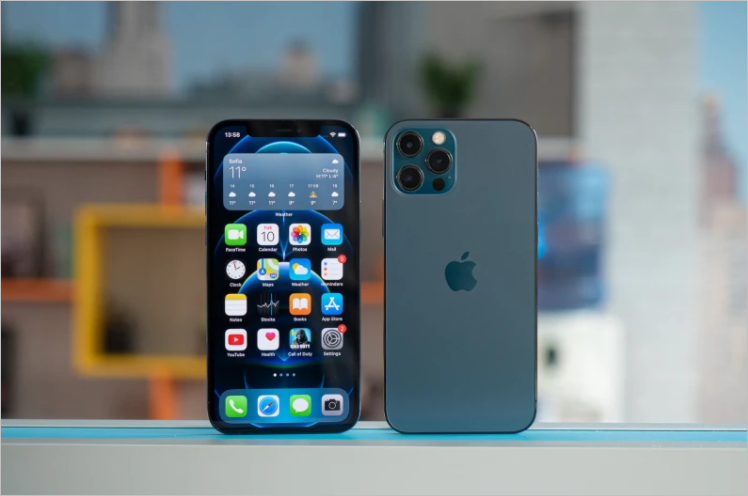
The iPhone 12 ranks distant 13th by scoring 122 points on DXOMARK. The device not only falls behind the iPhone 12 Pro Max (130 points) and the iPhone 12 Pro (128 points) but also scores fewer points than the iPhone 11 Pro Max (120 points).

Out of four new 5G smartphones launched by Apple in 2020, the iPhone 12 can be considered as the iPhone for most users. It features a dual-camera setup consisting of a primary 12MP sensor with 1.4µm pixels, f/1.6 lens, OIS, and PDAF. Whereas, the f/2.4 lens-equipped secondary unit sports a 12 MP 1/3.6-inch sensor.


This camera setup is capable of recording 4K videos at 24/30/60 fps, 1080p videos at 30/60/120/240 fps, Dolby Vision HDR videos(up to 30 fps). Lastly, it supports gyro-EIS and is paired with a dual-LED flash.

Talking about performance, the iPhone 12 scores 132 points for camera (pictures), 112 points for videos, and a mere 41 points for zoom capability as it lacks a telephoto lens.

In a nutshell, according to DXOMARK, the iPhone 12’s cameras perform well overall but falls behind the flagships from Samsung, Huawei, Xiaomi, OPPO, and even Apple’s own higher-end iPhones. However, its video performance is much better than most smartphones, In fact, it ranks third in this department by typing with the iPhone 12 Pro.

Apple iPhone 12 Featured
Apple iPhone 12

The camera system on the phone offers accurate and consistent autofocus, exposure, and colors (indoors). It also outputs detailed images both outdoors and indoors. Further, the videos recorded on this handset have a wide dynamic range, pleasant color and skin tones, and effective stabilization even while walking.

The above-mentioned pros do not mean iPhone 12’s camera performance is flawless. Because the cameras also have cons such as limited dynamic range in stills, visible noise in stills (especially lower light), color quantization, hue shift, visible ringing artifacts in stills, sub-par zoom performance, white balance casts in outdoor stills as well as videos, and low-detailed videos in low-light scenarios.


Xiaomi launches Aqara D100 Smart Door Lock with HomeKit & MIJIA app support

Xiaomi‘s ecological chain company Lumi technology which manufactures smart home products under the Aqara brand has launched a new product for the home. The product is dubbed Aqara D100 Smart Door Lock and is presently listed for sale on Xiaomi Youpin. It carries a price tag of 1899 yuan (~$288).

The Aqara D100 Smart Door Lock does not have a traditional horizontal door handle, which reduces the steps of pressing and pulling. It can be opened after fingerprint recognition with the thumb, making the process shorter.

According to the official description, the Aqara D100 smart door lock uses Apple and Xiaomi dual security chips, meaning it can be connected to Apple’s HomeKit and Mijia smart home IoT platforms. The fingerprint recognition uses the 3D semiconductor fingerprint recognition module of the Swedish PB company, with a financial-grade fingerprint detection algorithm.

In order to facilitate the needs of different users in the whole family, the D100 has seven different unlocking methods. One-time/periodical password unlocking can be used for on-site service with convenient maintenance personnel and nanny, NFC unlocking is suitable for the elderly and children with shallow fingerprints, and the NFC function supports compatible Xiaomi mobile phones/bands and Aqara NFC cards. In addition, the traditional lock cylinder of this door lock adopts a C-level cylinder, which has certain anti-technical unlocking capabilities.

Different from traditional motors, the Aqara D100 smart lock embeds the motor into the lock body, which greatly improves the response rate of the lock body. According to Greenmi Lab tests, the unlocking time of D100 can be as fast as 1 second.

According to the official description, this smart lock is equipped with a two-cell battery and lasts up to 12 months; there is a Type-C interface on the door that can be charged directly.

UP NEXT: Oppo X 2021 unveiled as the world’s first smartphone concept with an extending display


Redmi Note 9 4G EEC certified; Global launch could be nearing

On Thursday, Redmi unveiled the Xiaomi Redmi Note 9 4G, Redmi Note 9 5G, and Redmi Note 9 Pro 5G. The Eurasian Economic Commission (EEC) has recently approved a Redmi phone with model number M2010J19SG. The ECC certification (spotted by popular tipster Mukul Sharma) suggests that the device could be heading to the global market soon.

The ECC listing of the M2010J19SG has not revealed any information on its specs. However, a recent report has revealed that this model may launch as the Redmi 9T in global markets. Moreover, it is believed that this device will be arriving with a quad-camera setup instead of the triple camera system found on the Redmi Note 9 4G of China.

The Redmi 9T is reportedly coming with a 48-megapixel (main) + 8-megapixel (ultrawide) + 2-megapixel (macro) + 2-megapixel (depth) quad-camera system. In comparison, China’s Redmi Note 9 4G is equipped with a 48-megapixel (main) + 8-megapixel (ultrawide) + 2-megapixel (depth) triple camera system. It is advisable to wait for further reports to know whether the M2010J19SG will be arriving to global markets as the Redmi 9T.

Redmi Note 9 4G Specifications

The Redmi Note 9 4G has a 6.53-inch IPS LCD panel that produces a Full HD+ resolution of 1080 x 2400 pixels. The Snapdragon 662 mobile platform is fuelled by up to 8 GB of RAM and up to 128 GB of storage. The MIUI 12 based Android 10 OS runs on the device.

Redmi Note 9_4G
Redmi Note 9 4G

It has an 8-megapixel camera for capturing selfie shots. The phone houses a 6,000mAh battery with 18W charging. It has a side-facing fingerprint reader.


Samsung Galaxy M02’s official support page is now live, India launch could be near

Recent reports have revealed that the launch date of the Galaxy M02 could be nearing as its SM-M025F/SD model number has surfaced at various places like Wi-Fi Alliance, Bureau of Indian Standards (BIS), NEMKO AD, and Geekbench. It appears that the handset could be launching soon as its support page has gone live on Samsung India’s website.

The support page listing has only the SM-M025F/DS model number mentioned on it and it has no information on its specs. In December 2019, Samsung unveiled the Galaxy A01 smartphone and in June came the Galaxy M01. The only major difference between the two handsets was that the M01 featured a larger battery.

Speculations are rife that the recently unannounced Galaxy A02 phone could be coming to some markets as Galaxy M02. At present, there is no information on the differences between the Galaxy A02 and Galaxy M02. On Geekbench, the Galaxy M02 was spotted with a Snapdragon 450 chipset and 3 GB of RAM.

In related news, Samsung has recently announced the Galaxy A02s has a 6.5-inch HD+ display with a waterdrop notch. It is powered by an unknown 1.8GHz octa-core processor. The device has arrived with 3 GB of RAM and 32 GB of storage. It has a dedicated microSD card slot for more storage.

Galaxy A02s all colors

The Galaxy A02s has a 5,000mAh battery with 15W fast charging support. It has a 5-megapixel front camera and a 13-megapixel (main) + 2-megapixel (macro) + 2-megapixel (depth) triple camera system. It lacks support for a fingerprint reader.

The Galaxy A02s has arrived in Europe with a price tag of 150 euros (~$179). It comes in colors like blue, navy blue, red, and white.