Samsung has just begun the stable rollout of its latest One UI 3.0. However, it’s already working on the next version, dubbed the One UI 3.1. As per a report by Tizenhelp, the company will soon launch the next UI and it could happen at the Galaxy S21 series event.
According to the report, a Samsung representative in South Korea has revealed the development while answering to a user. To corroborate this, the report shares a screenshot that shows a user reporting his concern for errors in Night mode. To this, the Samsung support team replies(Google Translated) that the update will be correct by Google at its end by December. Later, Samsung will proceed with tweaks and deliver it in the One UI 3.1 update.
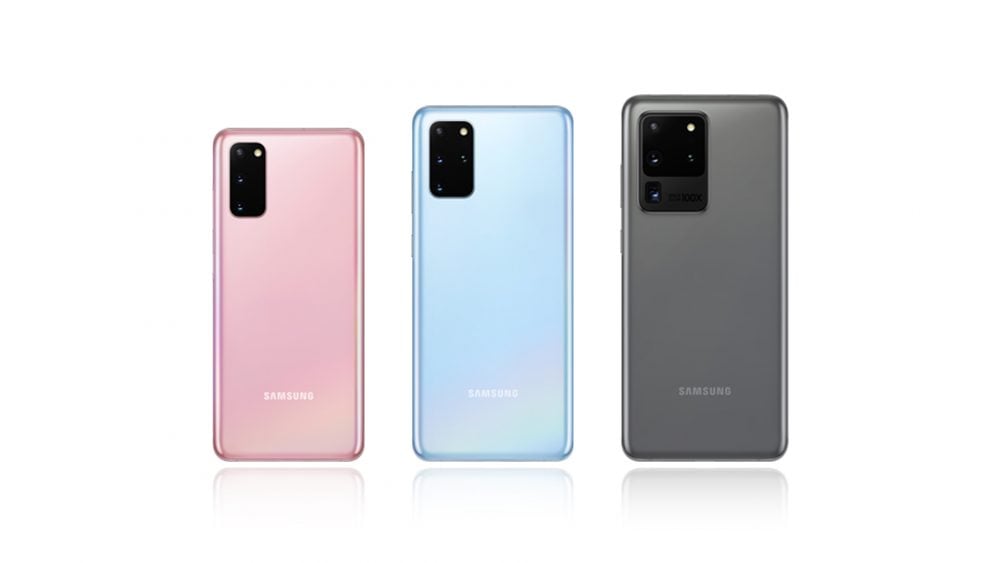
With this, the company indirectly confirms that it’s working on the next version of the UI. Also, as the report says, the One UI 3.1 will likely debut at the Galaxy S21 launch that is likely on January 14, 2021. This is because Samsung has introduced newer versions of the UI with the Major flagship launches in the past. For instance, the company launched the One UI 2.1 based on Android 10 with the Galaxy S20 series and Z Flip out of the box.
Similarly, the company brought the One UI 2.5 with the Galaxy Note 20 series and Galaxy Tab S7 back in August. For One UI 3.0, it started a Beta program in August for its flagships to test out the features before a stable rollout. Anyway, we will have to play the waiting game to know what improvements the new 3.1 UI will bring to the table over the One UI 3.0.
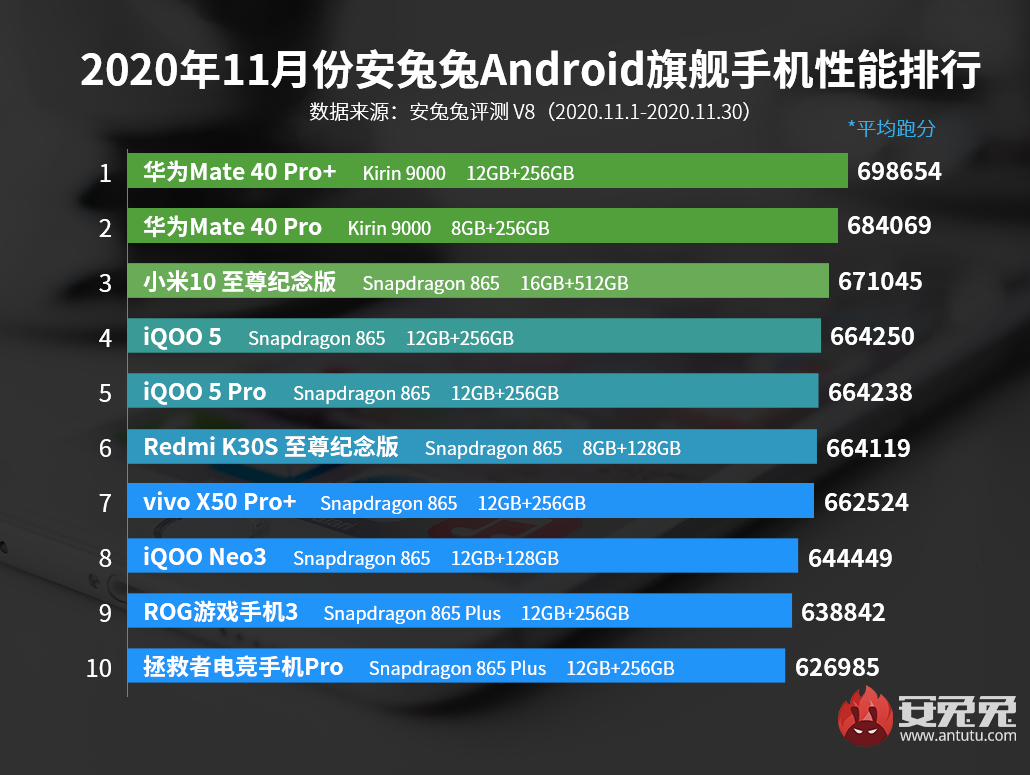
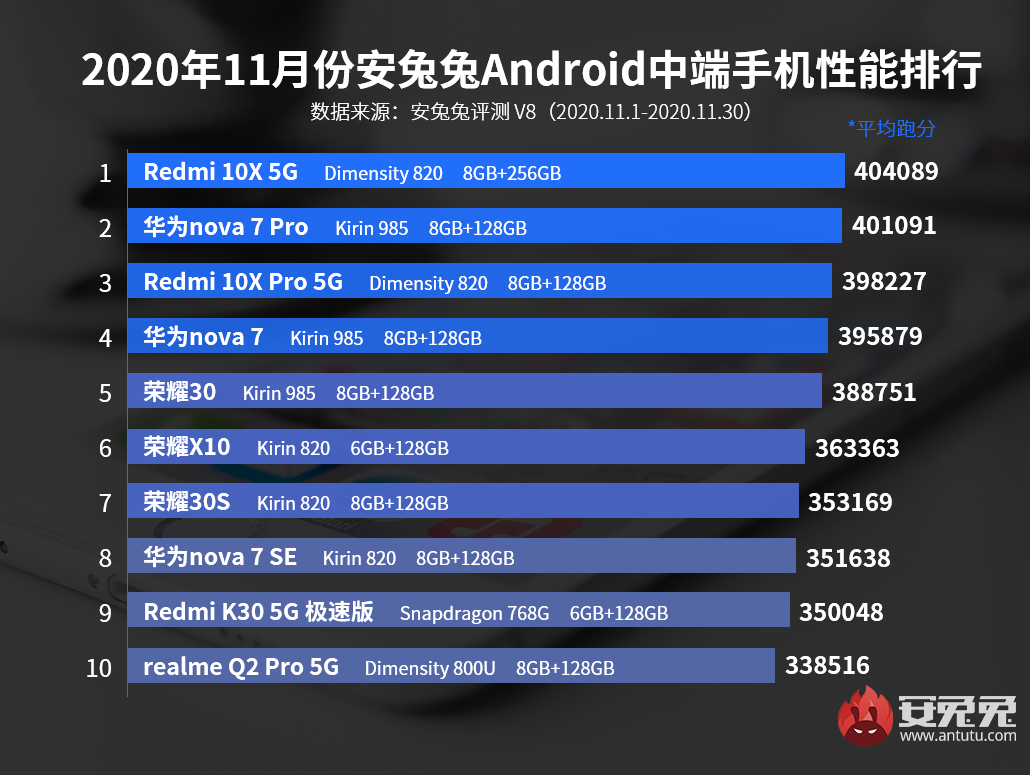
As we have entered December now, popular smartphone benchmarking platform AnTuTu Benchmark has published the report for November 2020. The updated list for top Android mid-range smartphone has a new entrant in the form of realme Q2 Pro 5G. On the other hand, a similar list for flagship smartphones now includes HUAWEI Mate40 Pro+ and iQOO Neo3. That’s not all, both the lists have been jumbled as well.
Talking about Android flagship smartphones first, HUAWEI Mate40 Pro+ leads the pack with 698,654 points, followed by HUAWEI Mate40 Pro with 684,069 points. For those unaware, last month, the latter device topped the chart.
Further, Xiaomi Mi 10 Ultra which came sixth in October’s list, comes third this time around with 671,045 points. As a result, the iQOO 5 (664,250 points) and the iQOO 5 Pro (664,238 points) are pushed down to fourth and fifth places in the new list.
The reaming five positions are acquired by Redmi K30S Ultra (664,119 points), vivo X50 Pro+ (662.524 points), iQOO Neo3 (644,449 points), ASUS ROG Phone 3 (638,842 points), and Lenovo Legion Phone Duel (626,885 points) respectively. The Black Shark 3S and OPPO Find X2 Pro are no longer part of the top list.
Coming to the list of Android mid-range smartphones, the Redmi 10X 5G (404,089 points) now tops the chart instead of the Redmi 10X Pro 5G (398,227 points) as it has been dropped to third place. The HUAWEI nova7 Pro (401,091 points) sits in the second position, whereas HUAWEI nova7 (395,879 points) comes fourth as HONOR 30 (388,751 points) slips to fifth place.
Having said that, we expect the lists for December to be identical to November’s with some minor changes. The lists will only change drastically with the launch of Snapdragon 888 powered smartphones in Q1 2020.
The Samsung Galaxy Chromebook is one of the premium Chromebooks you can purchase right now. The Chromebook which was announced at the beginning of the year at CES 2020 is now set for a successor which will arrive as the Galaxy Chromebook2.
The info comes from Evan Blass who posted an image on Voice showing the official name of the Chromebook. At the moment, there are no specs and images of the device but they are expected to surface soon seeing as the successor may also launch at CES.
The first-gen Galaxy Chromebook has a 13.3-inch 4K AMOLED touch display. It is powered by Intel’s 10th Gen Core i5 processor and comes with up to 16GB of RAM and 1TB of SSD storage. The Chromebook has a 1MP webcam and another 8MP camera that sits above the keyboard so you can snap photos when in tablet mode.
The Galaxy Chromebook also has an S Pen that fits into a slot on the right side. There is also a fingerprint scanner, stereo speakers, and its keyboard is backlit. It also has two USB-C ports, a 3.5mm microphone and an audio combo jack, and a MicroSD card slot. The Chromebook doesn’t have LTE but it has Wi-Fi 6.
The Chromebook didn’t go on sale until April 2020 and with a starting price of $999. We expect the Galaxy Chromebook2 will come with Intel’s 11th gen processor. We also hope Samsung will announce an LTE version as the original only comes with Wi-Fi connectivity. It will also be nice to see Samsung bring more color options including the strikingly gorgeous Fiesta Red of the first-gen model.
Samsung has finally began the One UI 3.0 stable rollout. Reports say that the company, which has been running a Beta program so far, is rolling the stable update in Europe, and the USA.
As reported by Sammobile, Samsung has started rolling out the One UI 3.0 stable update for the Galaxy S20 series in Europe, and the USA(Verizon Carrier version). Further, a screenshot shared by the report shows a firmware version G98xxXXU5CTKG for Europe and weighs 179.82MB. Accordingly, the update brings One UI 3.0 based on Android 11, along with December 1, 2020 security patch.
Although Samsung is yet to acknowledge this, it is reportedly rolling out in Germany, France, Italy, Poland, the United Kingdom, and Nordic countries. For the unware, five Nordic countries include Finland, Denmark, Norway, Sweden, and Iceland. Anyway, as reported earlier, the company is certainly living up to the promise of sticking to the schedule of One UI 3.0.
Besides, the changelog of the European firmware says the device gets improved performance to Camera, stability improvements, and fixes. That said, the USA update for Galaxy S20, S20+, S20 Ultra as per the Verizon website mentions the following changelog:
One UI 3.0- improvements to Quick Panel, Toolbars, Notifications, settings, and more.
Additionally, the changelog on the Verizon website says that the security patch is November 2020, unlike Europe. Nevertheless, the stable update is here and we can expect it to expand to other regions very soon. You can also go through our report on the entire features of One UI 3.0 to know what changes it brings to the devices.
Also, if Samsung were to stick to the schedule as mentioned above, the next lineup for One UI 3.0 stable rollout in January are Galaxy Note 20 series, Z Flip, Fold2, Galaxy S10 series, and Note 10 Series. Let’s wait and see if Samsung is able to carry the moment going forward.
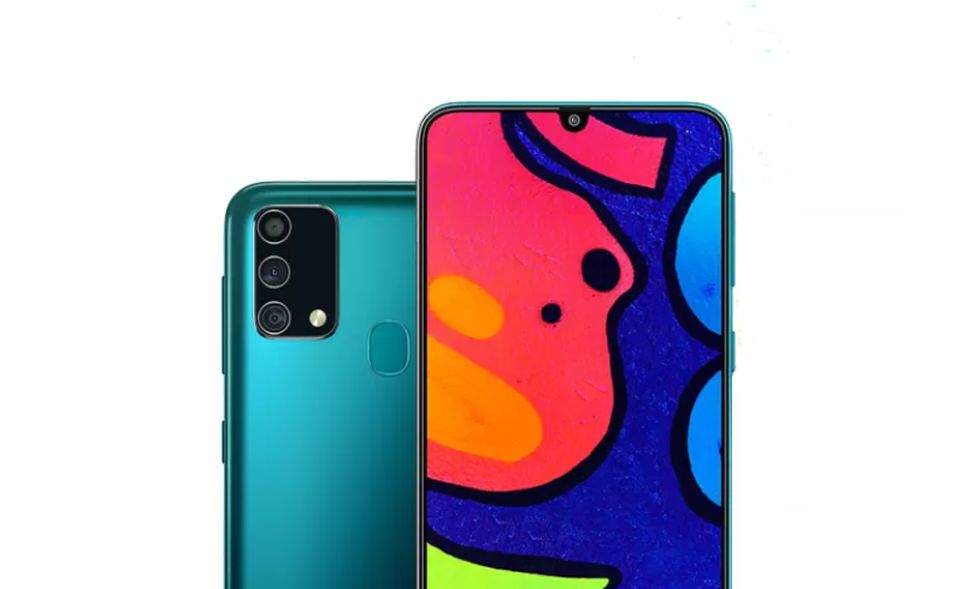
Back in October, Samsung launched the Galaxy F41 budget smartphone in India. It is the first model in the new Flipkart-exclusive Galaxy F series. Now, as per a report, the company may soon launch a new device in this series called Galaxy F62. This handset has been also spotted on Geekbench.
Samsung Galaxy F41
According to popular Indian leakster Ishan Agarwal (via 91Mobiles), the world’s largest smartphone maker is working on a phone with model number SM-E625F. This handset is expected to debut as Galaxy F62.
Going by the model number as well as the branding, this device will be mostly positioned around Galaxy M51. Unfortunately, its entire specifications and features are a mystery as of now. But we do know a little about this phone’s specs, courtesy of a benchmark listing.
As soon as this story was published, another tipster called Abhishek Yadav shared the Geekbench listing of the said Samsung smartphone. According to it, this handset will be powered by Exynos 9825 chipset paired with 6GB RAM.
Further, the device will run Android 11, which suggests it to debut with One UI Core 3.0. As far as scores are concerned, the phone bags 763 points and 1,952 points in single-core and multi-core tests respectively.
Having said that, we expect more leaks regarding the Galaxy F62 to emerge in the coming days ahead of its official launch. We think it may be announced sometime later in Q1 2021.
Vivo just launched the Vivo Y51 in Indonesia. However, it looks like the company is already in plans to bring the sibling Y51s. A report by MySmartPrice hints that the Vivo Y51s Indonesian and Russian launch isn’t that far away.
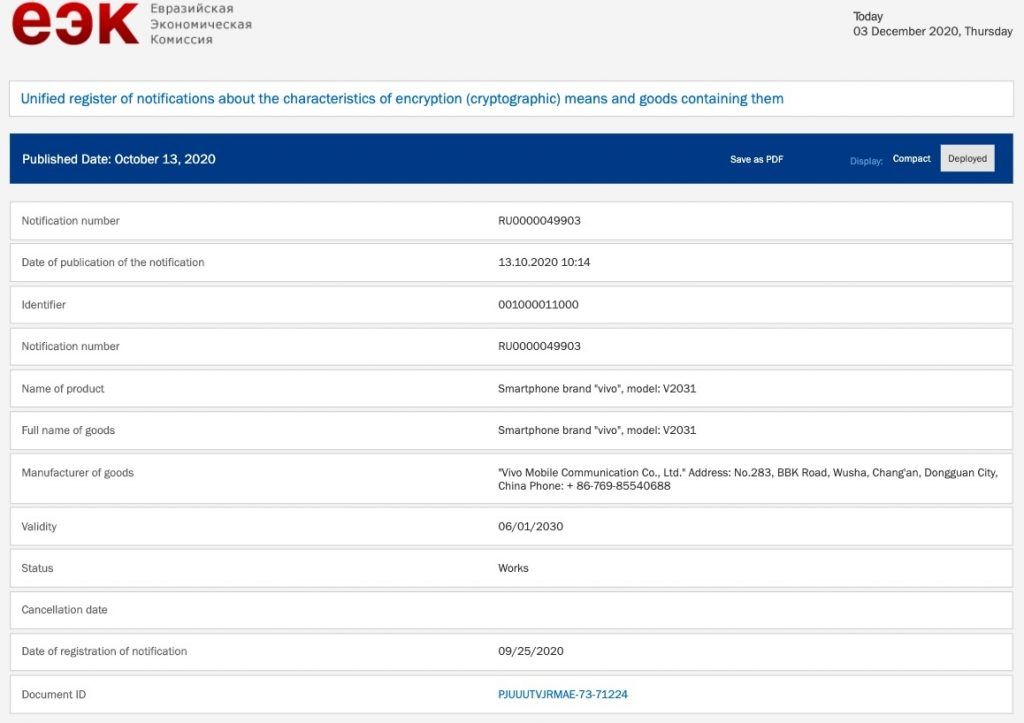
According to the report, a Vivo device with model number V2031 has been listed on Russia’s EEC certification portal. Additionally, the device has reportedly obtained Indonesia’s SDPPI certification as well. Here, the listing on SDPPI shows that the marketing name of the device is Vivo Y51s. To compare, Vivo Y51 that got certified in Indonesia has a model number V2030.
Anyway, the Vivo Y51s isn’t a new device for us. The company has already launched it in China back in July. The device, which currently retails for 1698 yuan($259) there, launched with 5G connectivity, and a punch-hole display. Let’s wait and see if Vivo makes any changes to the device for Indonesia and other markets.
1 of 2
Russia EEC
Indonesia SDPPI Telecom
Vivo Y51s Specifications
The Vivo Y51s in China itself has a lot of similarities to the Vivo Y70s. However, the main difference lies in the selfie camera, rear ultra-wide lens, and storage. Anyhow, the Vivo Y51s features a 6.53-inch FHD+ LCD display with a punch-hole on the top left. The display has a resolution of 2400×1080 pixels and a 19.5:9 aspect ratio.
Under the hood, Samsung’s Exynos 880 5G SoC powers the device. The integrated 5G modem in the SoC can fetch downlink, uplink speeds up to 2.55Gbps and 1.28Gbps respectively. Besides, the SoC is paired with a single 6GB RAM, 128GB storage in China. As for the optics, you get a 48MP main lens, two 2MP macro, and depth sensors tucked inside the rectangular layout with rounded corners. Upfront, you get an 8MP selfie shooter.
Other specifications include a 4,500mAh battery with support for 18W charging, micro USB port, Funtouch OS 10.5 based on Android 10, Wi-Fi, Bluetooth, side-mounted fingerprint sensor, 4G, GPS, BeiDou for connectivity.
As fast wireless charging is making its way into more and more smartphones, we can see an increase in the number of wireless charging accessories in the market. However, most of these wireless chargers sport a plain design, more focused on utility than appearance. There are a few exceptions though like the Moshi Otto Q, which brings both stylish design and function to the wireless charging market.
Moshi Otto Q Review: Design
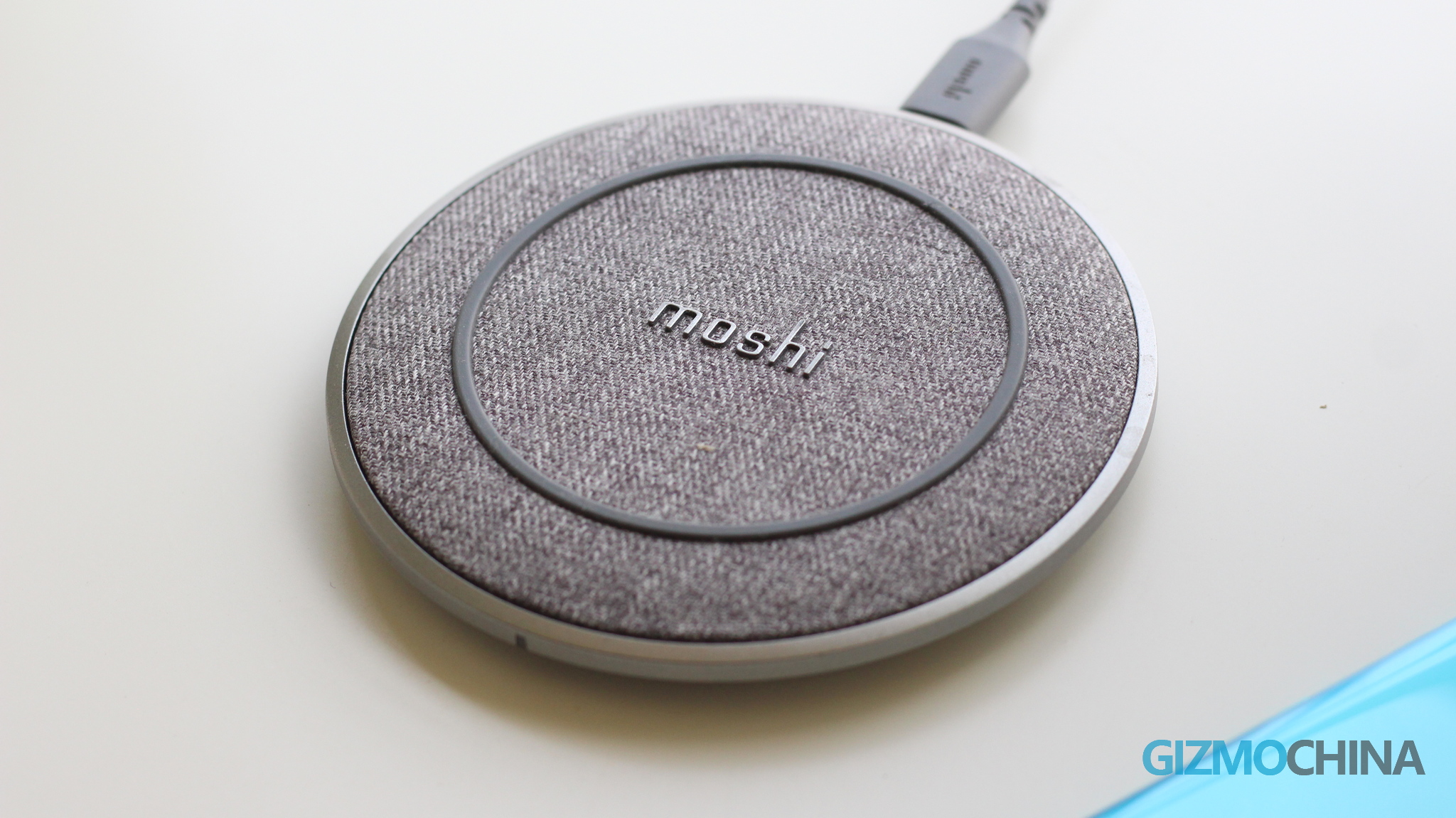
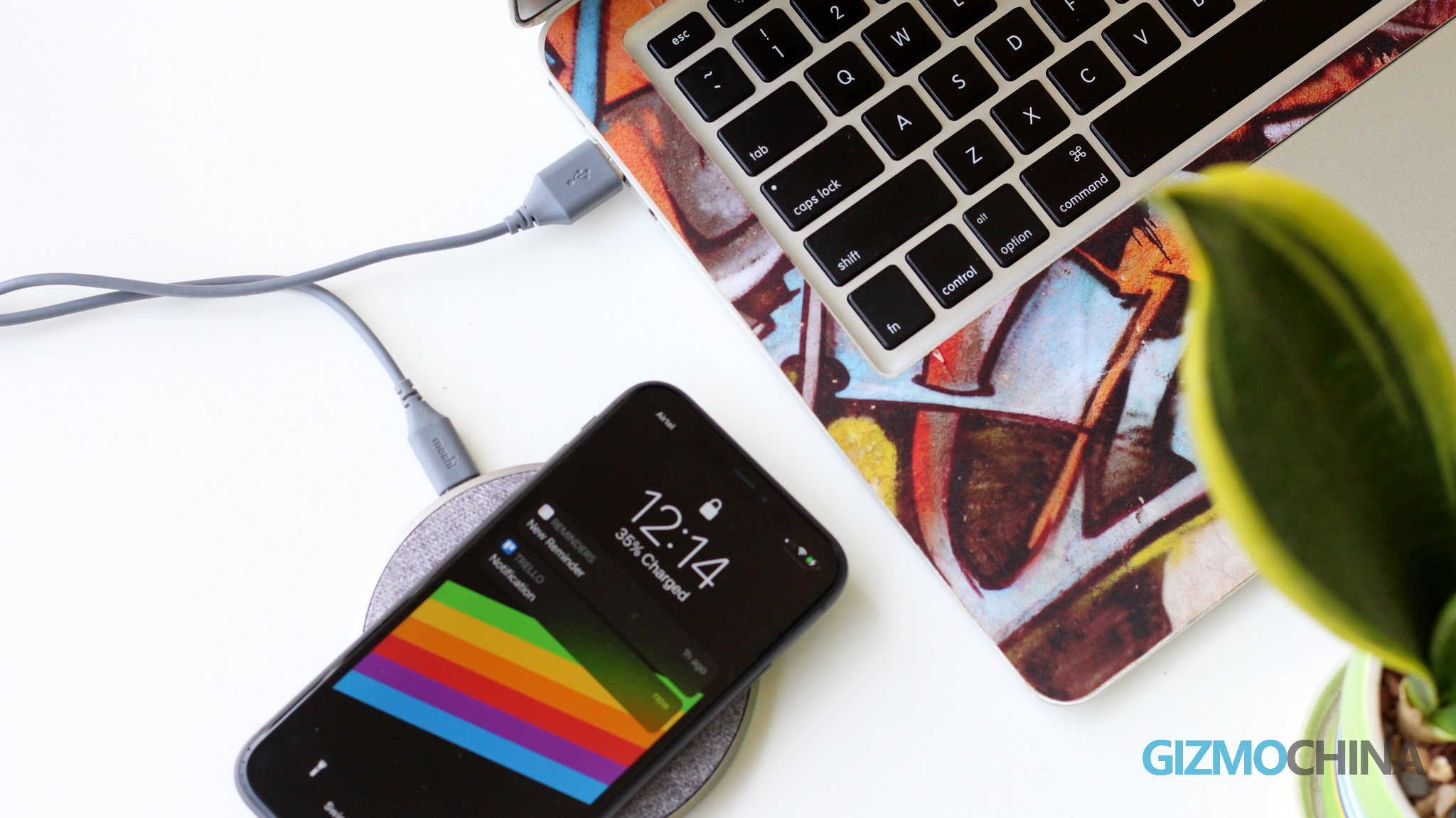
The Moshi Otto Q doesn’t look like a traditional wireless charger. It has a very stylish design and will easily blend in with your existing furniture. In fact, at first glance, you might not even identify it as a wireless charger. Moshi says that the design is inspired by Danish furniture design and I have to agree that it looks very premium and luxurious.
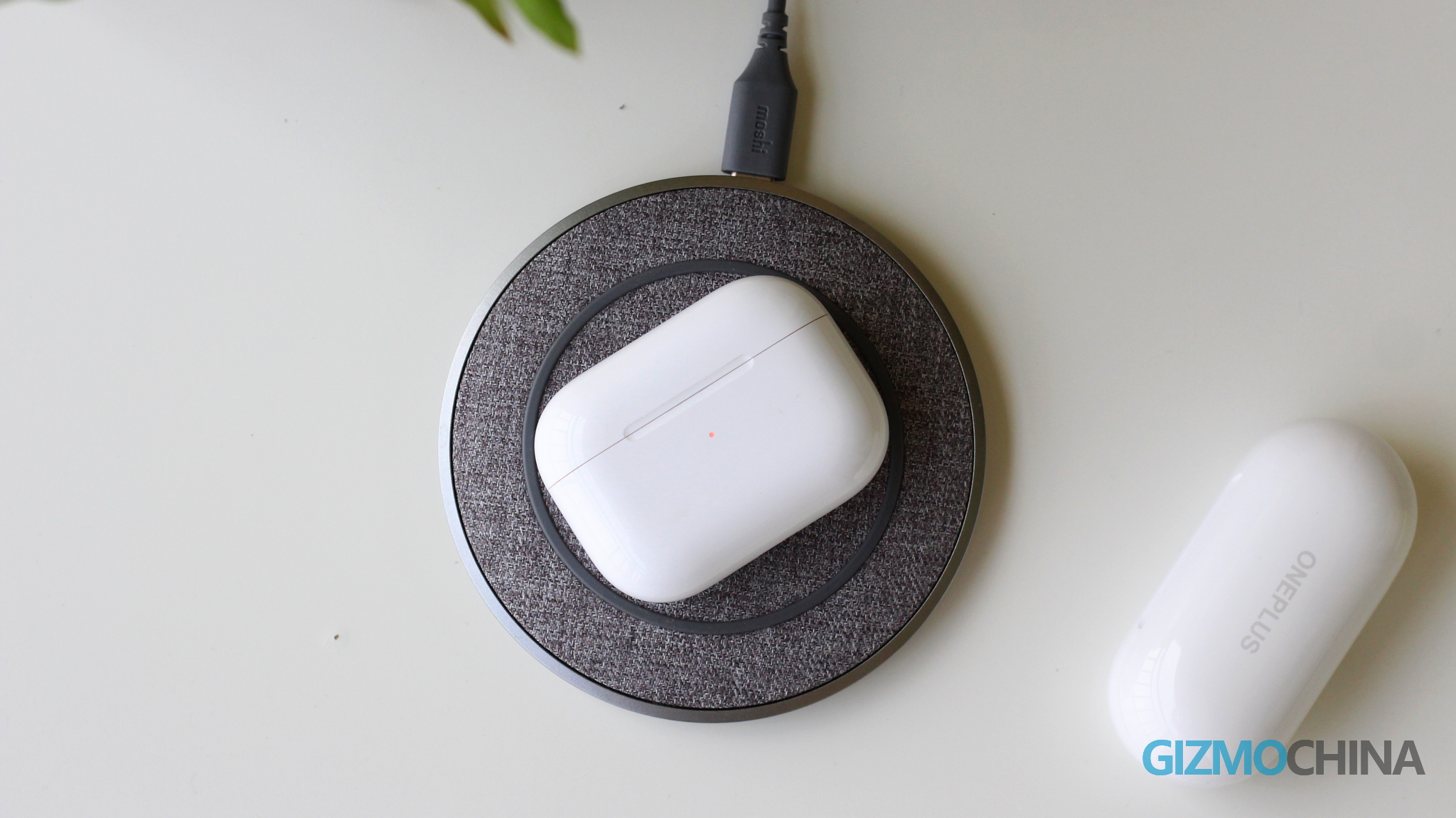
The top of the wireless charger is covered in a fabric-like material in a heather grey finish with a silicone surface ring that ensures your phone or other wireless charging compatible device stays firmly on top. The Otto Q comes with a matching grey color charging cable too, ensuring a uniformity. However, note that you don’t get the charging adapter in the box. Also, there’s just one color option for this charger – grey. The color looks very premium so I don’t think I would have opted for any other shade even if I had the option.
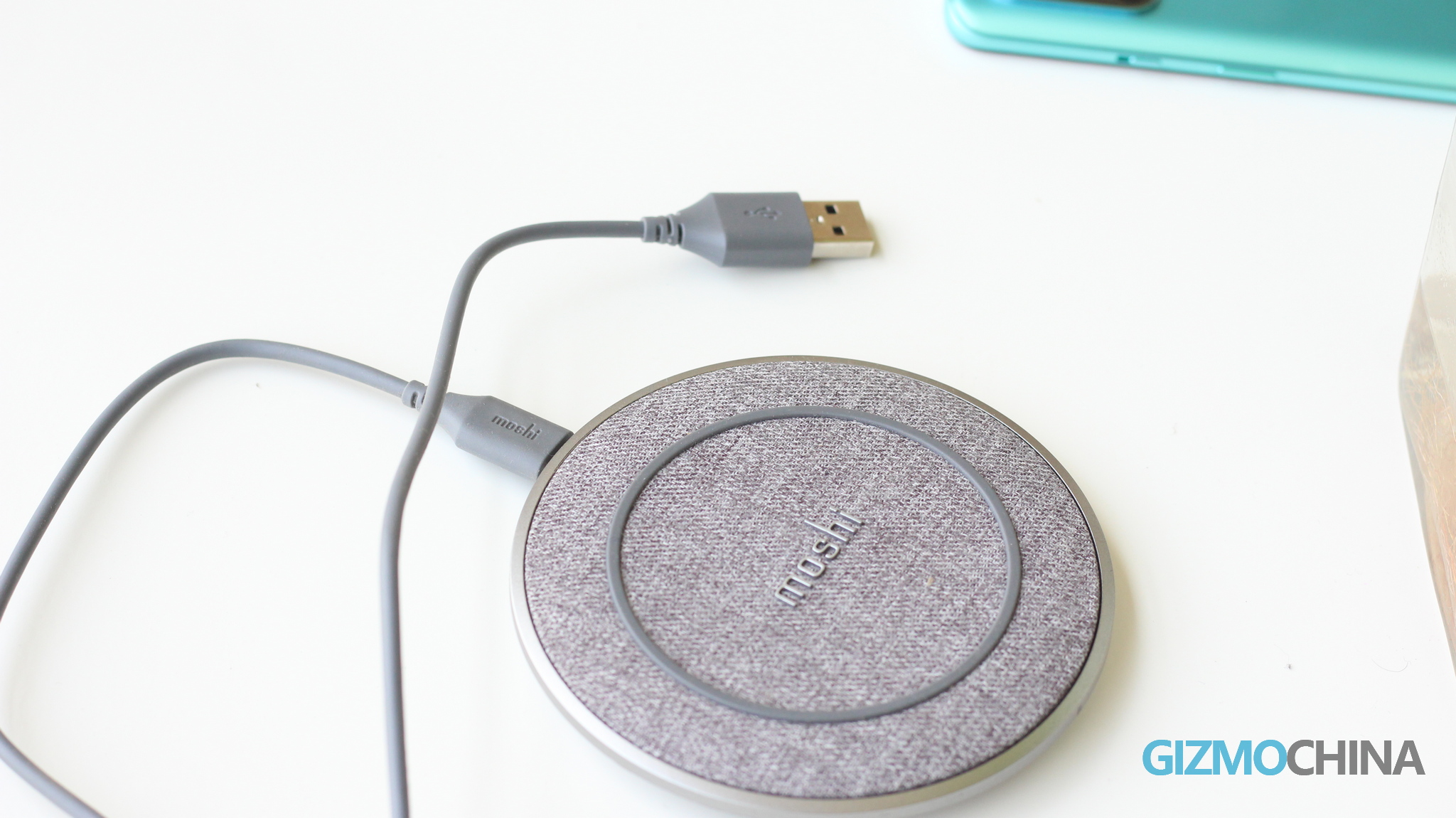
Moshi Otto comes with a USB-A to C wire but no adapter
The Moshi Otto Q wireless charger is pretty lightweight at just 137g and you can easily carry it around when you travel, even charging it via your laptop’s USB-C port. The 1-meter cable (USB-A to C) further ensures that you won’t have any issues connecting the charger to the nearest plug point.
The bottom of the charger is made out of an anti-slip material which helps it stay firmly in its place.
Moshi Otto Q Review: Charging Support / Speed
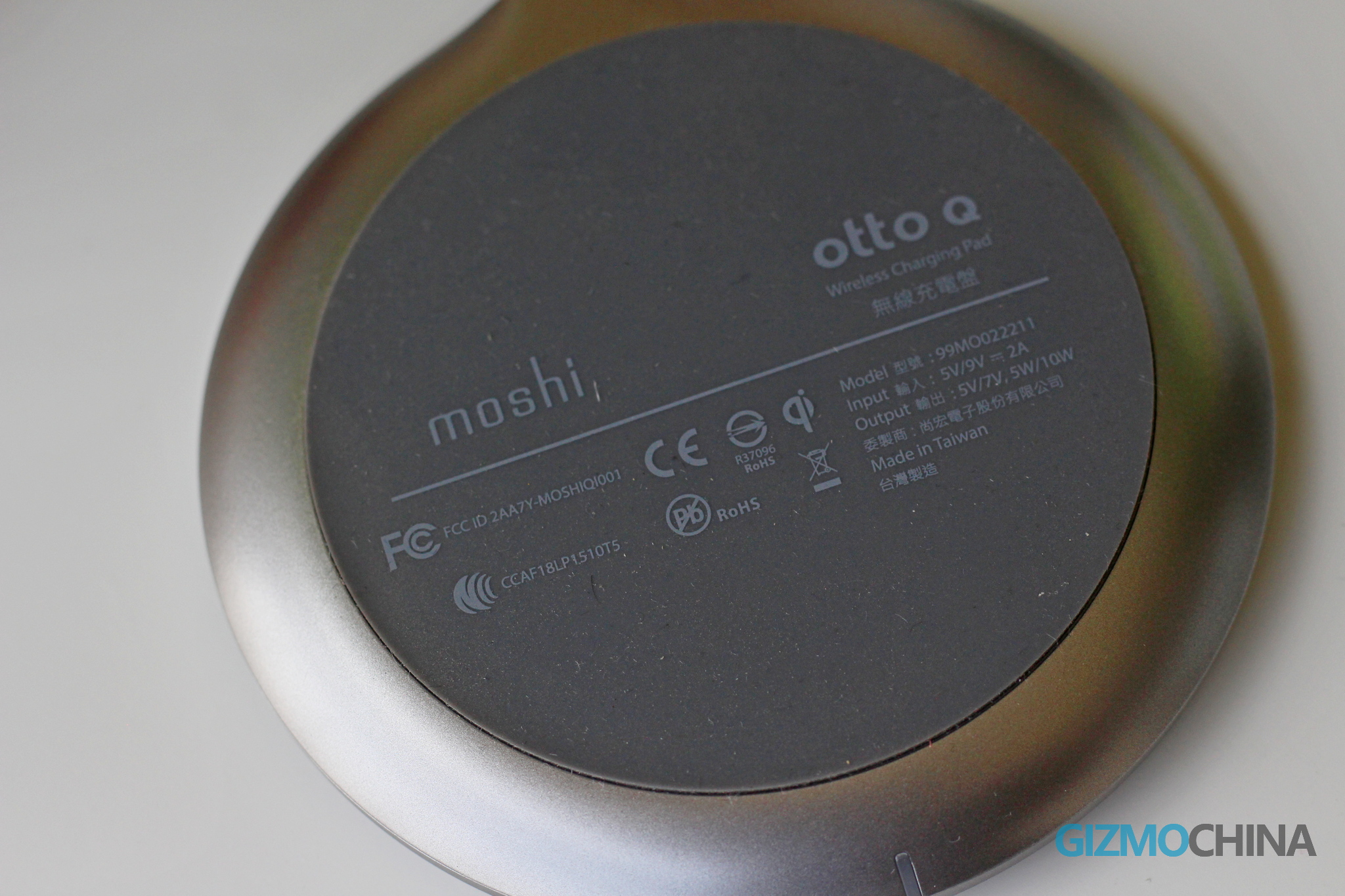
The Moshi Otto Q is not the fastest wireless charger around, maxing out at 10W output. However, it supports Qi wireless charging standard, so you should be able to charge any Qi-enabled device be it from Apple, Samsung, Xiaomi, or even Huawei at 5W/ 7.5W/10W.
Note that the wireless charging speed depends on the adapter that it’s connected to. So if you are powering the Moshi Otto Q via a 5W adapter, you’ll only get 5W charging on your devices, even if the device is capable of charging at 10W. To ensure you take advantage of 10W charging, always use a 10W+ charging adapter.
The Otto Q can charge smartphones with cases up to 5mm thick, all thanks to its innovative Q-coil™ module that reportedly features a 2.6 mm ferrite sheet for efficient charging.
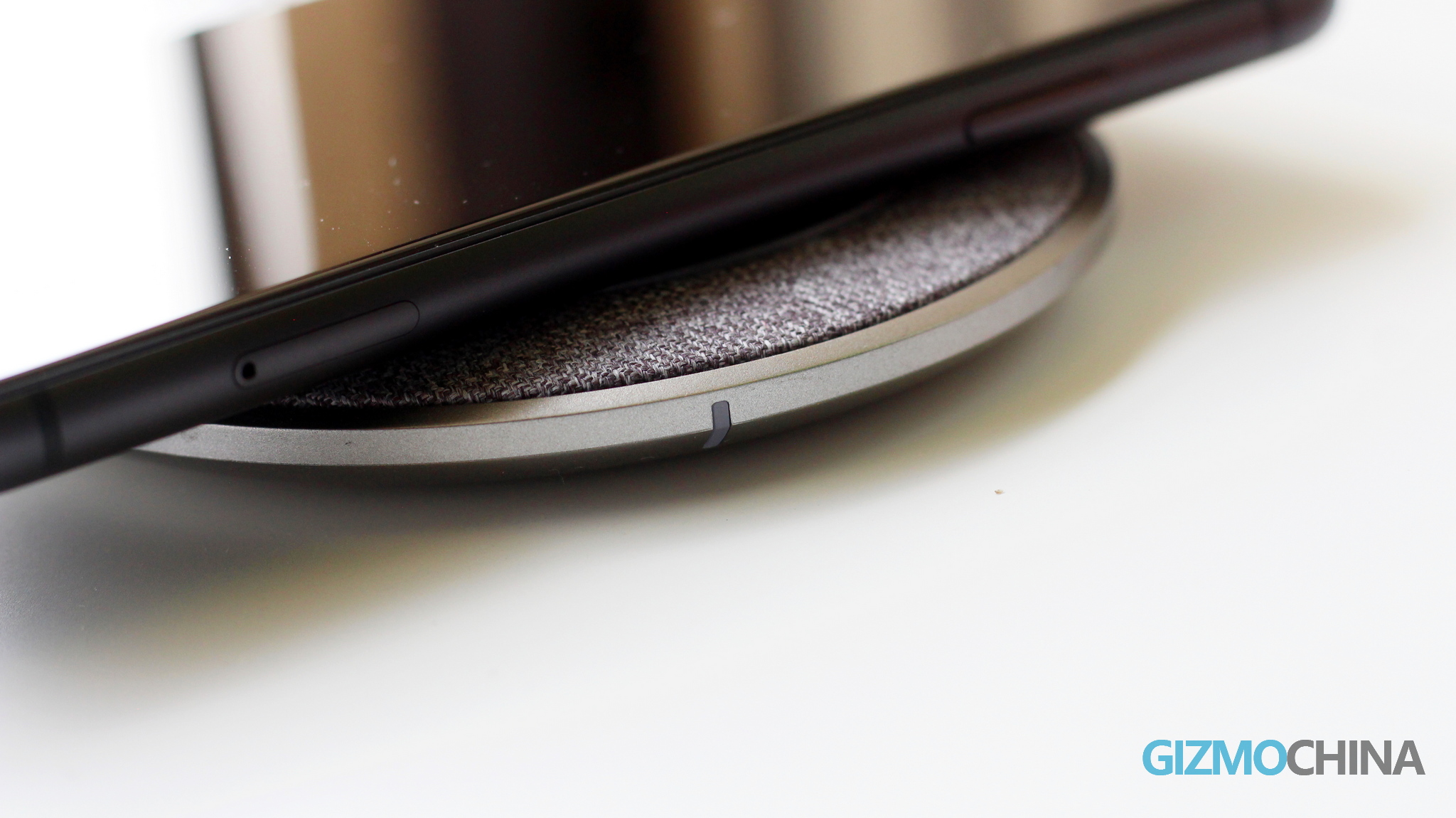
You also get an LED charging indicator that blinks every couple of seconds when the device is charging. When the device is completely charged, the LED light will stop blinking to indicate the same. Note that due to the limited surface area of the charger, you have to align your device perfectly to ensure that it starts charging. There were a couple of times initially where I missed this sweet spot and my phone wasn’t charging even when it was placed on the charger. But after a couple of days, you figure out this spot.
Other features include FOD (Foreign Object Detection) which has become standard among wireless chargers these days.
Moshi Otto Q Review: Usage
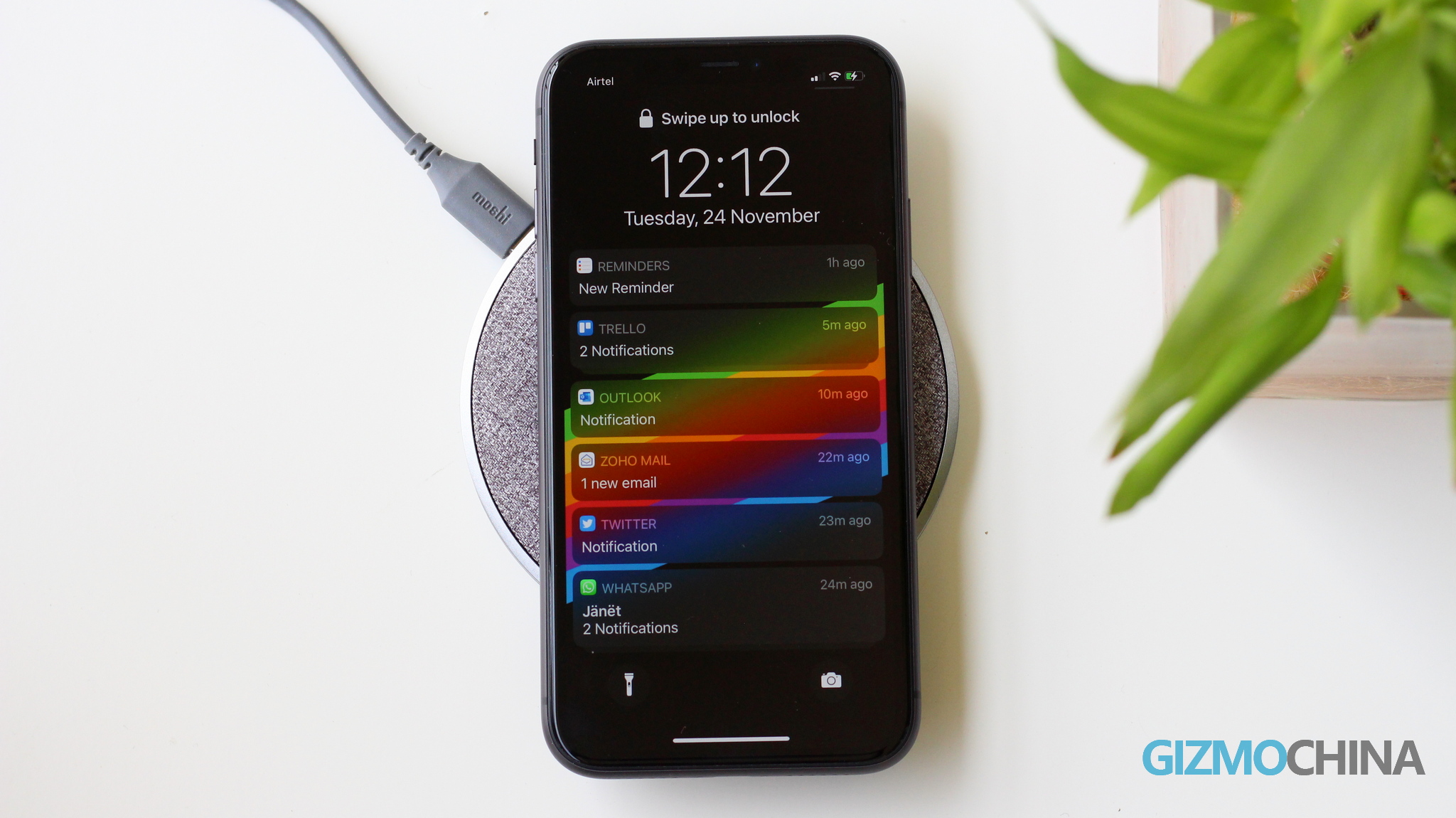
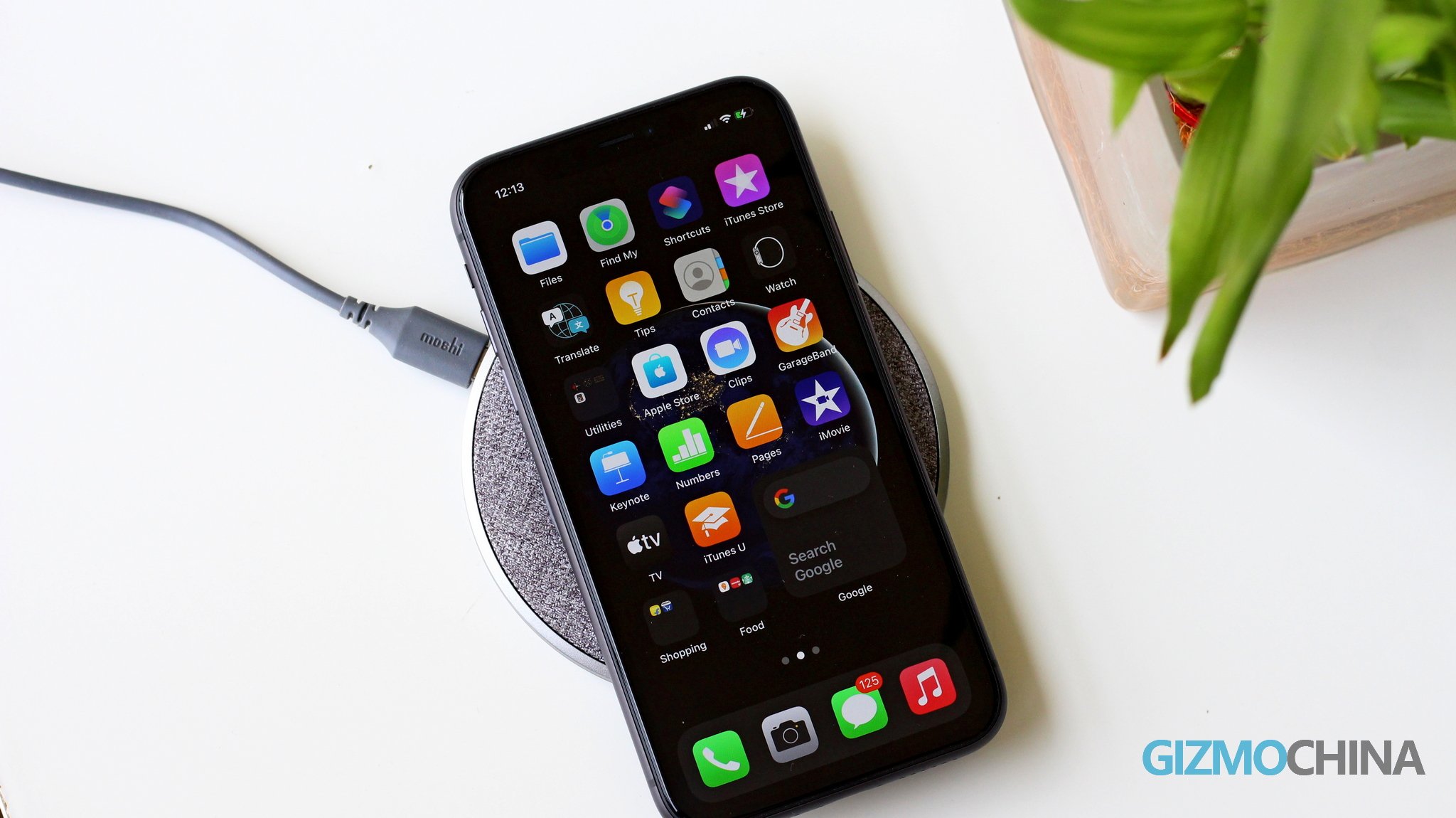
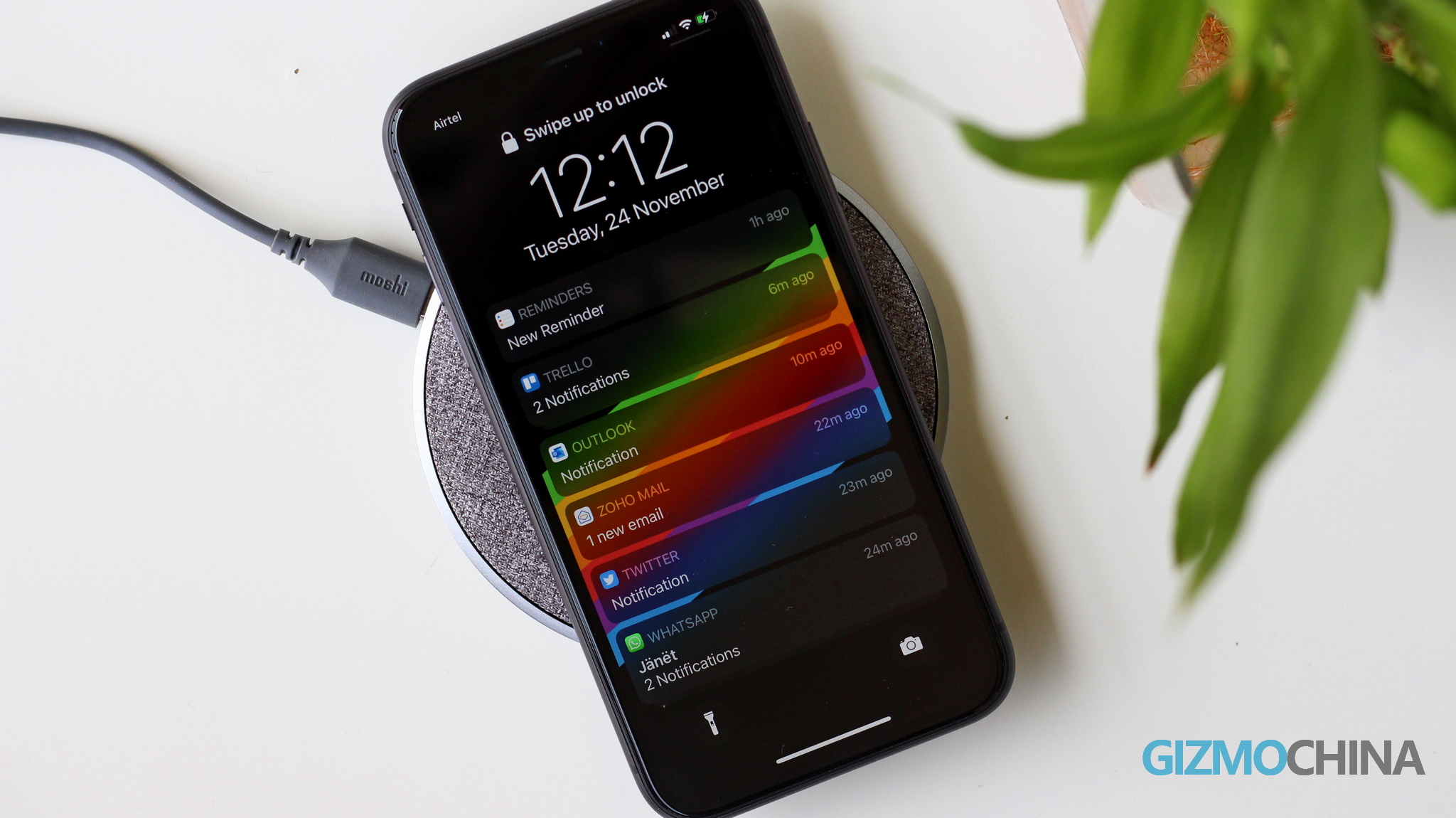
Like I mentioned above, the iPhone 11 which I charged on the Moshi Otto Q had to be perfectly aligned with the charger to start the charging process. This is because the wireless charging area is limited by design (a problem for most compact chargers), and I would have preferred it to be slightly larger. Note that the wireless charger worked perfectly well even with a Spigen case on the phone.
The Moshi Otto Q didn’t heat up while charging the iPhone 11 at 7.5W. It supports Qi-based charging up to 10W but at the time of testing the charger, I didn’t have a 10W supported device with me. But it can charge all Qi-enabled devices at up to 10W. It also immediately charged my Meizu and Airpods Pro earbuds without any issues.
You can easily carry it around while traveling or at a cafe and power it through your laptop USB. The charging will be a bit slower (because of your USB output) but the convenience of having a wireless charger everywhere will offset this drawback. I tried it with my Macbook Pro in a cafe and I had no issues charging my phone or earbuds case.
The fabric-like material on top looks pretty durable too and after a month of testing, there was no sign of wear and tear. The circumference looks like it’s made out of metal but note that it’s just solid plastic with a metallic finish. Still, the overall design looks pretty premium and will be an attractive addition to your table.
Moshi Otto Q Review: Verdict
The Moshi Otto Q is neither the fastest nor the cheapest (costs around $60 on Amazon) wireless charger in the market. But it is one of the most stylish wireless chargers I’ve seen and considering this is going to be a one-time investment for most users, I can recommend the charger to most users who want something more fancy and stylish than traditional wireless chargers.
Please note that the grey color is a bit lighter than what you see in this image. Its very close to the color in the images added above.
One drawback is its limited charging surface but this is an issue with most compact wireless chargers in the market. If you can look past this (you figure out the sweet spot after using it for a couple of days), the Moshi Otto Q can be a stylish yet functional accessory to charge your phone every day.
You can find more details about the Moshi Otto Q from the official website.
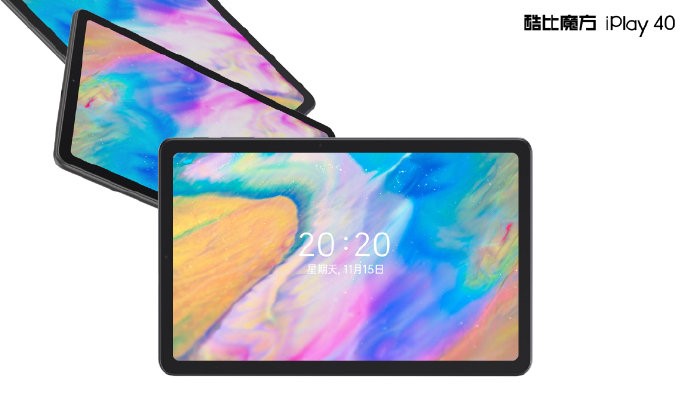
A few days back, Alldocube announced the iPlay 40 tablet’s specs and price. Today, the company has officially announced the launch date and availability of the flagship tablet.
Alldocube iPlay 40 Price, Availability
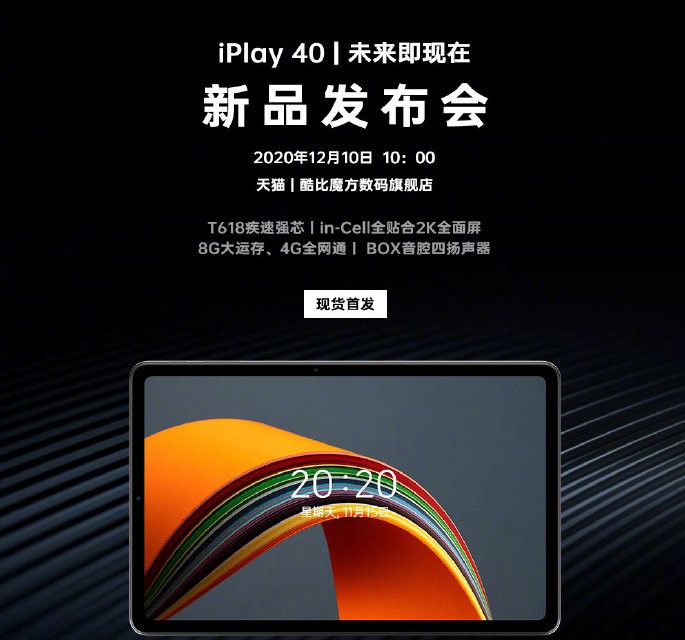
As per the official post on Weibo, the sale of the Alldocube iPlay 40 tablet will begin on December 10 at 10:00 AM China time(UTC+08:00). Plus, the company says that users can purchase it on Alldocube’s official website, and Tmall.
Regarding the price, as we all know, iPlay 40 comes in a single 8GB RAM, 128GB storage. The initial price of this tablet is 999 yuan($152). To compare, the predecessor Alldocube iPlay 30 is at 899($137.21) yuan but you get only 4GB of RAM in it.
Alldocube is a Chinese digital brand and Shenzhen Alldocube Science and Technology Co., Ltd owns it. In case you don’t know, it’s portfolio includes Android tablets, Windows 2-in1 PCs, MP3 & MP4 Players, E-books, and more. And some of the earlier launched tablets are iPlay 8 Pro, 10 Pro, iPlay 20, and the recently launched iPlay 30.
Alldocube iPlay 40 Specifications
The Alldocube iPlay 40 has a 10.4-inch 2K display and a resolution of 2000×1200 pixels. As per the company, it is an in-Cell technology and is a full-fit display with equal bezels on all sides. Talking about the design, it has a micro-frame design built on Magnesium Alloy. Weighing in at 474 grams, it has a thickness of about 7.8mm, and a rounded rectangle shape for ergonomics.
Under the hood, it is powered by the UNISOC Tiger T618 SoC. The chipset is UNISOC next-gen octa-core CPU built on a 12nm process. Regarding the cores, it has 2xCortex-A75 cores clocked at 2GHz, and 6xCortex-A55 clocked at 2GHz. It has a Mali G52 3EE game-level GPU.
That said, it also has one BOX cavity four Audio speakers that should ensure a great experience in gaming, and media consumption. Other features of the tablet include a new Customized UI, Memory expansion up to 2TB, Wi-Fi 802.11ac, Bluetooth 5.0, Dual-4G Network support.
Xiaomi entered the Indian smart TV market in early 2018. The company turned the industry upside down in the budget segment. With affordable televisions, the Chinese tech giant soon became India’s largest smart TV brand and it still holds this position. But with success came intense competition from established players as well as fellow smartphone brands.
Competitors now even offer premium spec’d TVs at a cheaper price than ever before. But Xiaomi has not launched a single premium model yet. Thankfully, it may happen soon as the company has started teasing the arrival of such kind of televisions.
Back in September, Xiaomi launched Mi TV 4A Horizon Edition in India in two sizes (32-inch and 43-inch) and resolutions (HD and FHD). The teasers for these products initially suggested them to feature QLED panels. But sadly, they turned out to be regular budget models with LED-backlit LCD panels.
Now, this time around the company may finally debut QLED televisions in India. We think Xiaomi may bring the Mi TV 5 Pro to India and not the newly launched Mi TV LUX Pro. There’s a chance that the firm may unveil a different model altogether.
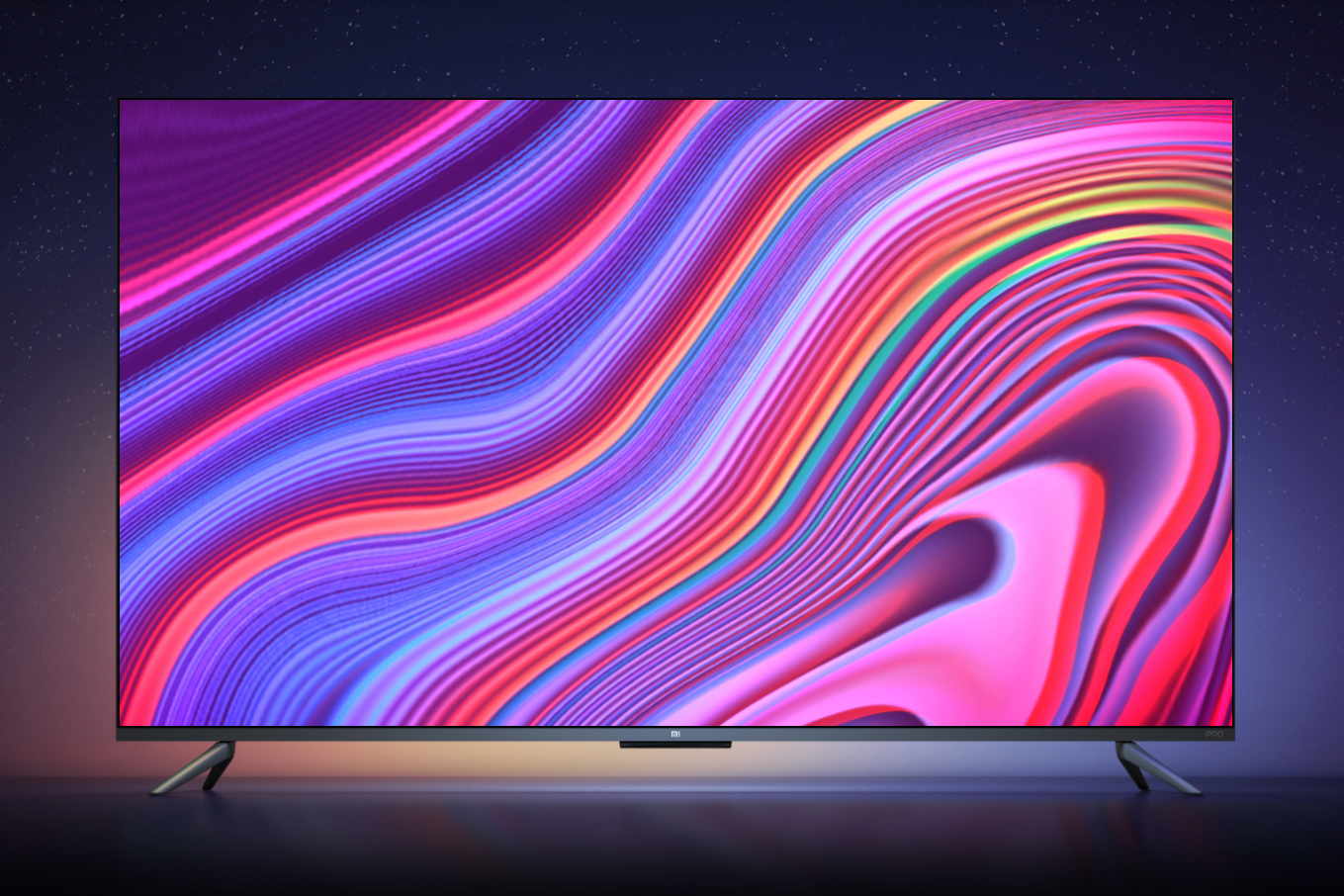
Having said that, last year, Xiaomi launched Mi TV 5 Pro in its home country China sporting a 4K HDR10+ QLED panel with 108% NTSC color gamut, 60Hz refresh rate, and MEMC. This model comes in three sizes – 55-inch, 65-inch, and 75-inch. They are currently sold for ¥4,199 (₹47,349), ¥5,299 (₹59,753), and ¥9,999 (₹1,12,751) respectively.
All three variants share an identical set of specifications and they only differ in size. That means all of them are powered by the same 12nm Amlogic T972 chipset paired with 4GB RAM and 64GB internal storage. This silicon is capable of 8K video decoding just like the chips inside the recently launched OPPO TV S1 and Mi Box 4S Pro.
Xiaomi Mi TV 5 Pro QLED 55-inch
They feature 2 x 8W speakers with support for Dolby Audio and DTS-HD decoding, dual-band WiFi, Bluetooth, 3 x HDMI (one of them is ARC compatible), 1 x AV, 1 x Analog DTMB, 2 x USB, 1 x S/PDIF, and 1 x Ethernet.
Other features include metal body, 97% screen-to-body ratio, and PatchWall UI based on Android. We are not sure if they have received an update to MIUI for TV 3.0.
Uber, the known taxi service provider, is planning on selling its air taxi business, Uber Elevate. The company is already in advanced talks to sell the unit to Joby Aviation, an aerospace based firm, as per a new report.
For those unaware, the company had been working on its air taxi unit and had even announced a partnership with Hyundai Motor Co back at the start of this year. This partnership was to develop electric air taxis. At the moment, Uber has yet to comment on the matter when reached out by Reuters. Similarly, even Hyundai did not immediately offer a comment regarding this.
Back in May, the company had to cut 23 percent of its workforce as a part of aggressive cost cutting after its operations were drastically hit by the Coronavirus outbreak. Since then, it has focused on its core ride hailing and food delivery businesses. Thus, selling the air taxi operations might be due to its inability to manage another project at the moment. Uber has been known to have already been working on other projects as well, including development of self-driving cars, the Elevate project, and even a freight logistics network.
However, these might soon also be being sold, as Uber is also in talks to sell its self driving business as well. Unfortunately, we currently do not have further details regarding the matter and will have to wait for more information or an announcement from the company itself to know more. So stay tuned for more updates.
Despite smartphone batteries greatly improving over the last couple of years, it is still a primary cause for concern on a long day. But with devices becoming more slimmer, accessories like power banks have also become more common. However, Samsung might have a different and more innovative idea for charging devices on the go.
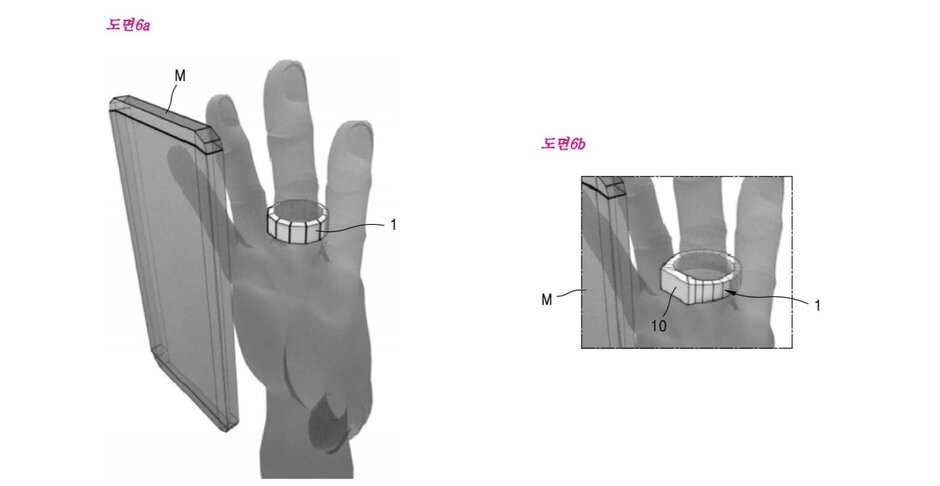
A recent patent filing by the South Korean tech giant has revealed that the company might be working on a new wireless charger that can top up smartphones and it isn’t anything like the ones the company has sold in the past. This one arrives as a ring, which is powered by the movement of the user. To explain the device in brief, it is not a small emergency battery to charge one’s phone with, rather, it uses a magnetic disc inside the ring which movers around when the users’ hand is in motion.
This process generates electricity, making the tiny product a mini generator of sorts. But this not the whole picture either, as the device is also capable of transferring heat from the users’ body to generate into electricity apart from just using kinetic energy alone. According to a PhoneArenareport, Samsung plans on having the device hold a small battery to store the generated electricity before charging your smartphones.
Charging your device is another interesting aspect of this patent, as the user will not be plugging in the device through the USB port. Rather, the handset will be charged wireless when one is using their device normally. This would mean that your finger must be in the position above where the wireless charging coils are housed to charge the phone. Keep in mind, this is still just a patent and we may never actually see the product being made for the commercial market, but it does offer a glimpse into possible future electronic accessories.
Earlier this week, Hammad Azhar, The Pakistani Federal Minister for Industries announced that Vivo will be setting up a smartphone manufacturing facility in the country and has already purchased land to build the facility.
In a tweet, the minister also added that the “International Smart Phone Brand VIVO has decided to establish a smart phone manufacturing facility in Pakistan. Land purchased. Deployment of DIRBS eliminated smuggled phones. It was followed up by Mobile Manufacturing Policy. Revenues already doubled and now local manufacturing taking off. ” The new facility will be set up in Faisalabad, as per a GeoNewsreport.
The agreement between the Chinese tech giant and the Pakistani government was signed just last month. Furthermore, the previous week even had the Minister for Industries Mian Aslam Iqbal chair a ceremony to sign an agreement for setting up a smartphone manufacturing plant in the M-3 Industrial Estate Faisalabad through bilateral collaboration. Duam Tai Ping, Vice President of Vivo, and Zhang bin, Director of Manufacturing, signed the agreement at the Faisalabad Industrial Estate Development & Management Company (FIEDMC) office.
Intl Smart Phone Brand VIVO has decided to establish a smart phone manufacturing facility in Pak. Land purchased.
Deployment of DIRBS eliminated smuggled phones. It was followed up by Mobile Manufacturing Policy. Revenues already doubled & now local manufacturing taking off. pic.twitter.com/VEL7gYgI2T
This agreement even had the company start with an initial investment of 10 million US Dollars. The meeting also had the FIEDMC CEO Aamer Saleemi attending. The move from Vivo is also likely to be an effort from the company to grow its presence in the region. So stay tuned for more, as we will be providing more updates when additional information is available.
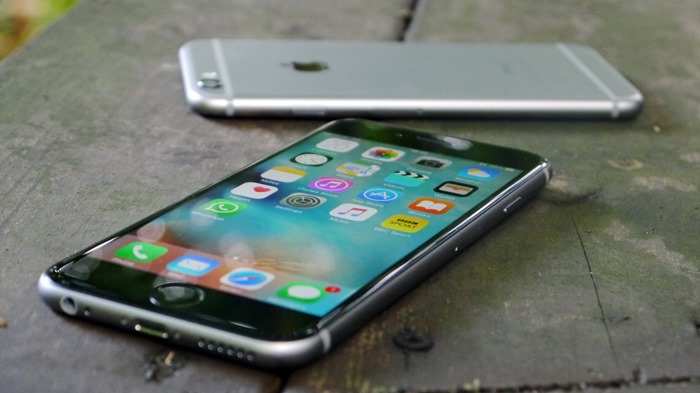
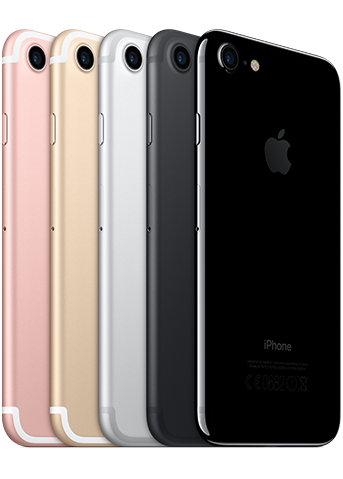
For those unaware, the term “batterygate” is used to describe manufacturers intentionally slowing down or throttling the performance older phones. This is apparently done to preserve system stability of older devices running newer firmware, but the practice has come into question in recent years. The Cupertino based giant previously payed 113 million US Dollars in settlements to consumers over fraud allegations in the US for this practice for its iPhone 6, iPhone 7, and iPhone SE models.
And now, a total of five European consumer organizations have filed another set of class actions lawsuits against Apple in Belgium and Spain. These allegations are over the similar planned obsolescence issue, and claims that iPhone 6 and iPhone 6s models are now facing intentional slowdowns as well. Furthermore, the lawsuit is asking the company to compensate customers affected by this issue with “at least €60 (around $70) per device” in both countries while additional lawsuits are being planned in Italy and Portugal.
iPhone 7
Apple has always denied the claims of batterygate lawsuits and said that it only reached a settlement to pay up its users to “avoid burdensome and costly litigation.” In other words, the settlements were just to remove the case and not to deal with the issue. Earlier this year, the company even paid out 25 US Dollars to each of its US customers over the identical issue for the iPhone 6. So, we will have to wait and see how the company responds to this matter.
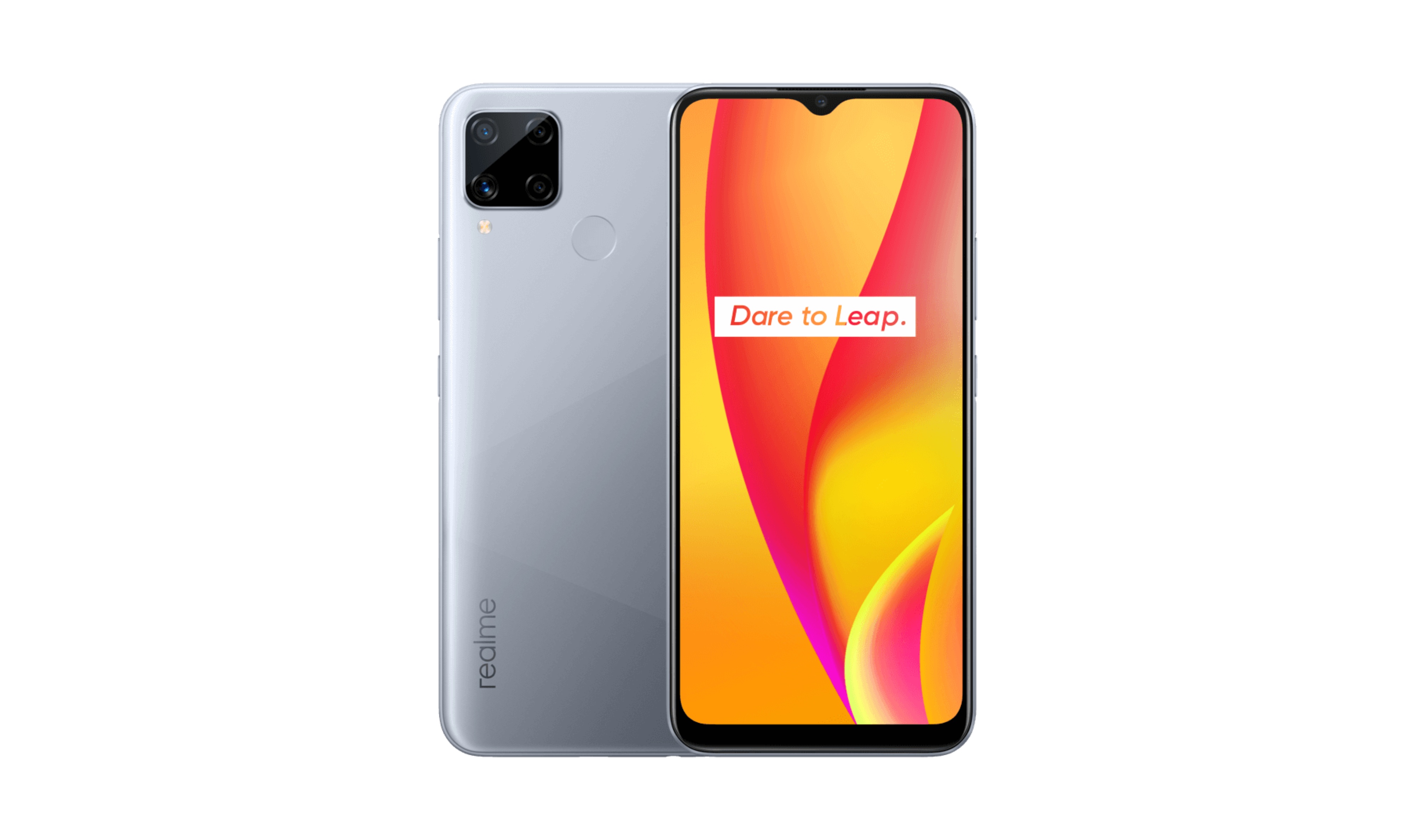
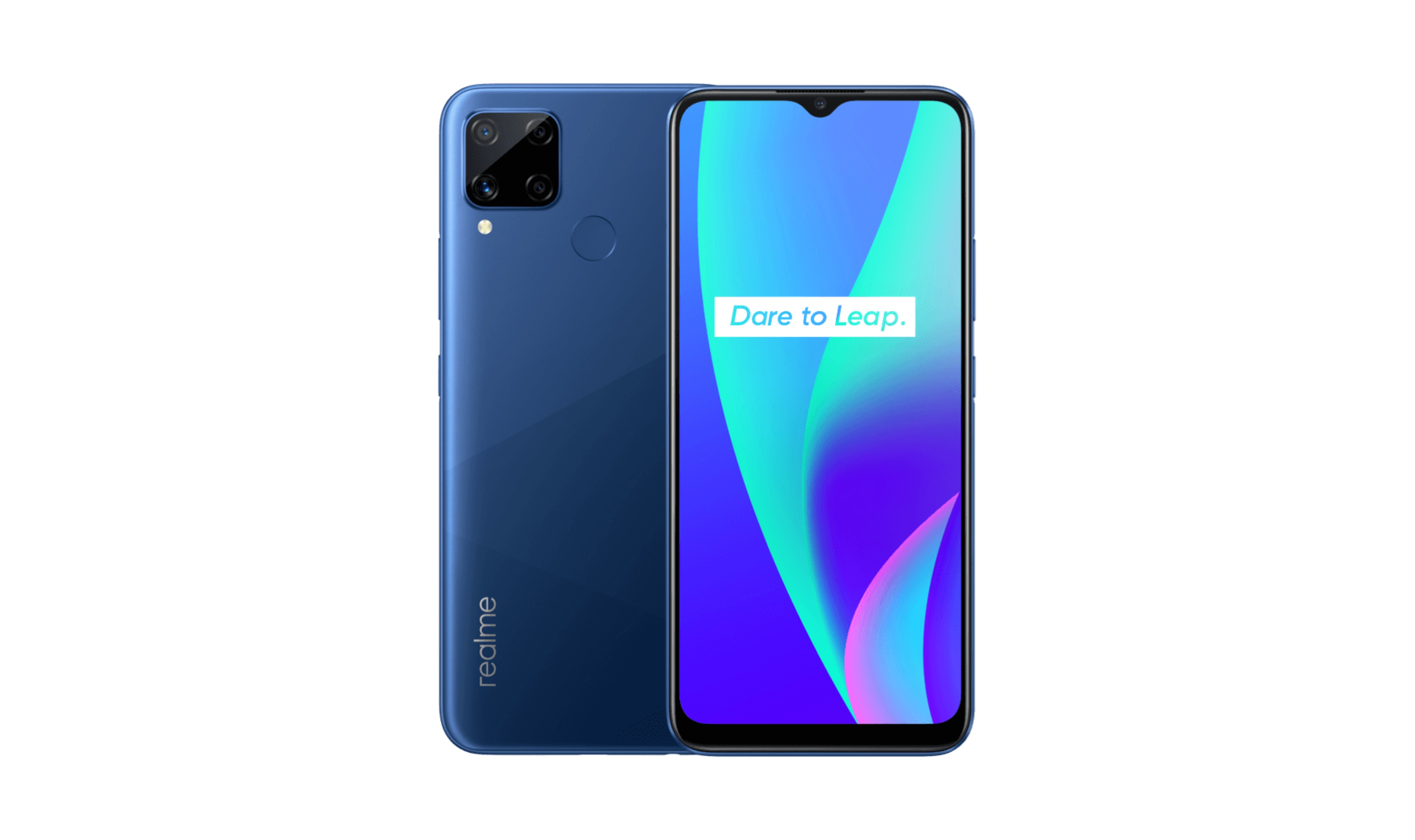
In late October, realme unveiled a new budget smartphone called realme C15 Qualcomm Edition. This handset is nothing but the regular realme C15 with a Snapdragon chipset instead of the MediaTek silicon that is present in the original. The brand has now launched this phone in Indonesia with ‘realme C15 Holiday Edition’ moniker.
realme C15 Holiday Edition Specifications and Features
The realme C15 Holiday Edition sports a 6.5-inch IPS LCD panel with a resolution of 1600 x 720 pixels (HD+), 20:9 aspect ratio, 600 nits peak brightness, 88.7% screen-to-body ratio, dew-drop notch, and Gorilla Glass protection.
It is powered by Qualcomm Snapdragon 460 chipset paired with 4GB LPDDR4X RAM and 64GB eMMC storage. Being a budget smartphone, it comes with a triple card slot (dual-SIM + microSD) along with a 3.5mm headphone jack and MicroUSB port.
The handset runs realme UI based on Android 10 and is backed by a 6,000mAh battery with support for 18W fast charging and reverse charging. As for cameras, it comes equipped with a quad-camera setup on the back consisting of a 13MP primary sensor with PDAF and an f/2.2 lens, an 8MP secondary sensor with an f/2.25 119° ultra-wide-angle lens, a 2MP monochrome sensor with an f/2.4 lens, and a 2MP depth sensor with an f/2.4 lens. There’s also an 8MP selfie camera on the front with an f/2.0 lens.
Other features of this device include single-band WiFi 5, Bluetooth 5.0, GNSS (GPS, BeiDou, GLONASS), a rear-mounted fingerprint sensor, ambient light sensor, proximity sensor, compass, and accelerometer.
Last but not least, it measures 164.5 x 75.9 x 9.8mm in dimensions, weighs 209g, and comes in two colors namely Marine Blue and Seagull Silver.
realme C15 Holiday Edition Pricing and Availability
The realme C15 Holiday Edition is currently limited to Indonesia priced at Rp 2,199,000 ($156). Anyway, if you reside in India, then you can buy the realme C15 Qualcomm Edition, which is exactly the same phone with a different name.
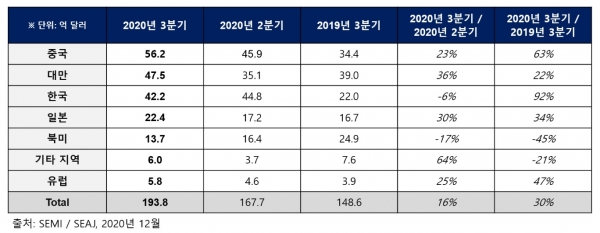
The semiconductor equipment sales have increased by a sizeable 30 percent worldwide in the third quarter of this year. This figure is a significant bump over the same quarter from back in 2019.
According to TheElecreport based on a SEMI analysis, the global sales of semiconductor equipment reached 19.4 billion US Dollars in Q3 2020. Out of this, China accounted for a notable 5.62 billion US Dollars. This was closely followed by Taiwan with 4.75 billion US Dollars. South Korea arrived third with 4.22 billion US Dollars, despite semiconductor equipment sales dropping by 6 percent in the third quarter compared to the previous quarter, but still saw an impressive jump of 92 percent over the same period last year.
Samsung Electronics and SK Hynix were notable figures and 2020 marked an increase in expenditure from both companies, which likely led to the growth. The former even began operations at its P2 line at its Pyeongtaek factory back in August. The South Korean tech giant has even signed contracts that are collectively worth 87.2 billion Won (or roughly 80 million US Dollars) in the third quarter for semiconductor equipment. Similarly, SK Hynix also signed two contracts worth 30.9 billion Won (roughly 28 million US Dollars) as well.
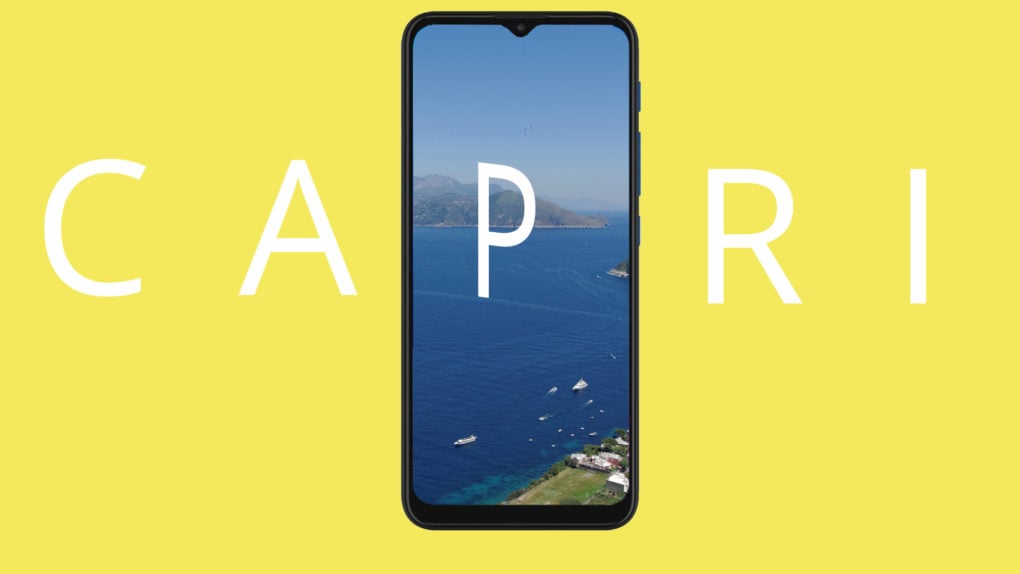
Motorola is reportedly working on a flagship phone that is codenamed as “Nio.” The Snapdragon 865 powered handset is expected to launch in Q1 2021. Fresh information shared by German publication Technik Newsreveals that the Lenovo-owned brand will also launch two budget phones in Q1 next year. These phones are codenamed as Capri and Capri Plus (caprip) and their respective model numbers are XT2127 and XT2129.
Motorola Capri and Capri Plus specifications (Expected)
The Motorola Capri is said to house a 60Hz display with a waterdrop notch and 720 x 1600 pixels HD+ resolution support. The Snapdragon 460 SoC powered device may ship with 4 GB of RAM and 64 GB of storage.
It has an 8-megapixel Samsung s5k4h7 lens as the front-facing camera. It rear-facing quad-camera module may feature a 48-megapixel s5kgm1st Samsung lens, an 8-megapixel ultrawide s5k4h7 Samsung sensor, a 2-megapixel OmniVision ov02b1b depth sensor, and a 2-megapixel GalaxyCore gc02m1 macro lens.
The Capri Plus has a 90Hz display that supports HD+ resolution. It is unclear which processor will be powering the device. The phone is expected to arrive in 4 GB RAM + 64 GB storage and 6 GB RAM + 128 GB storage options.
It will have a 13-megapixel Samsung s5k4h7 sensor as the selfie camera. The quad-camera setup of the device may comprise of a 64-megapixel OmniVision OV64B camera, a 13-megapixel Samsung s5k3l6 ultrawide lens, 2-megapixel OmniVision ov02b1b depth sensor, and a 2-megapixel GalaxyCore gc02m1 macro lens.
The battery size of both phones is not known yet. These phones are expected to arrive with some common features like Android 11 OS, NFC, and dual SIM support.
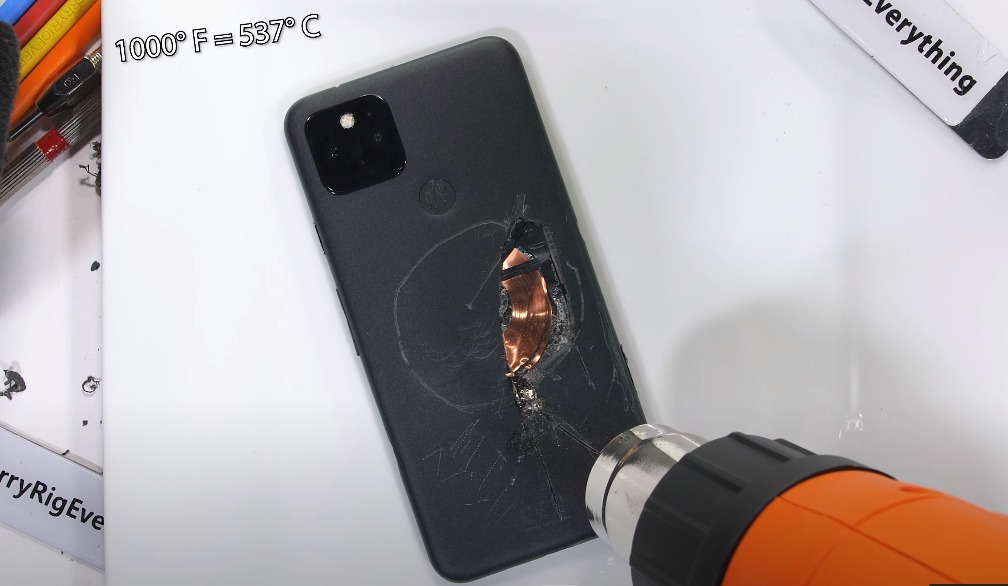
The Google Pixel 5 series is the company’s 2020 flagship lineup. While the search giant claims that the device is made out of metal, a recent durability test video revealed that the metal is actually buried under layers of plastic.
Known YouTube tech based content creator, JerryRigEverything, took to hunting down this metal that Google promised. In the video, we can observe him stress test and scratch test the Pixel 5. Apparently, the YouTuber wanted to find out for himself whether the company’s claims of using 100 percent recycled aluminum was true or not. Notably, since the Pixel 5 supported wireless charging, the claims from Google of an all metal device was already under scrutiny.
Apart from the power button, the rest of the smartphone is covered by layers of plastic. Google calls this finish, “bio resin,” which is just another name for plastic alloy. But, the device does have metal underneath all of these layers, although, one would have to dig around considerably. The video also reveals that once you go deep enough, you finally hit the wireless charging coils and the battery right underneath it.
Unfortunately, digging too deep had the YouTuber hit the battery, which caused fumes to come out of the rear. So, we advise you to not try this at home. To sum things up, Google did manage to make the device feel like metal, but its all just a clever trick that hides those fancy layers of plastic. You can check out the video yourselves above.
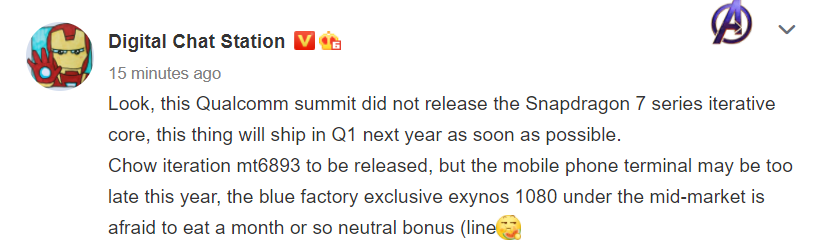
Last year, Qualcomm announced the Snapdragon 765 and Snapdragon 765G for upper mid-range phones alongside the Snapdragon 865. At the recently held Tech Summit Digital 2020, the company unveiled the Snapdragon 888 as the replacement to the SD865 chip, but it did not unveil the successor chip for SD765G. A fresh leak by Digital Chat Station reveals that it may debut in Q1 2021.
It is unclear whether the SD765G’s successor will be called Snapdragon 775G or Snapdragon 777. What is known is that it will be closely related to the Snapdragon 888. Qualcomm’s next Snapdragon 7-series chip is expected to rival MediaTek’s upcoming 6nm MT6893 chip and Samsung’s 5n Exynos 1080 SoC.
Past reports have revealed that its model number is sm7350 and it is codenamed Cedros. A prototype device powered with the chipset reportedly recorded over 530,000 points on AnTuTu benchmarks. The shipments of the chip is expected to begin soon after its announcement.
The alleged 6nm Snapdragon 777 is expected to arrive with several improvements over its predecessor. Phones powered with the new chip may arrive with up to 120Hz refresh rate supporting display, up to 12 GB of LPDDR5 RAM, and up to 256 GB of UFS 3.1 storage.
The Vivo X60 series that is expected to debut this month will be the first phones to feature the Exynos 1080 chip. The MediaTek MT6893 SOC is expected to go official this month. Phones feature the new Dimensity chip are expected to be available in the market next year.
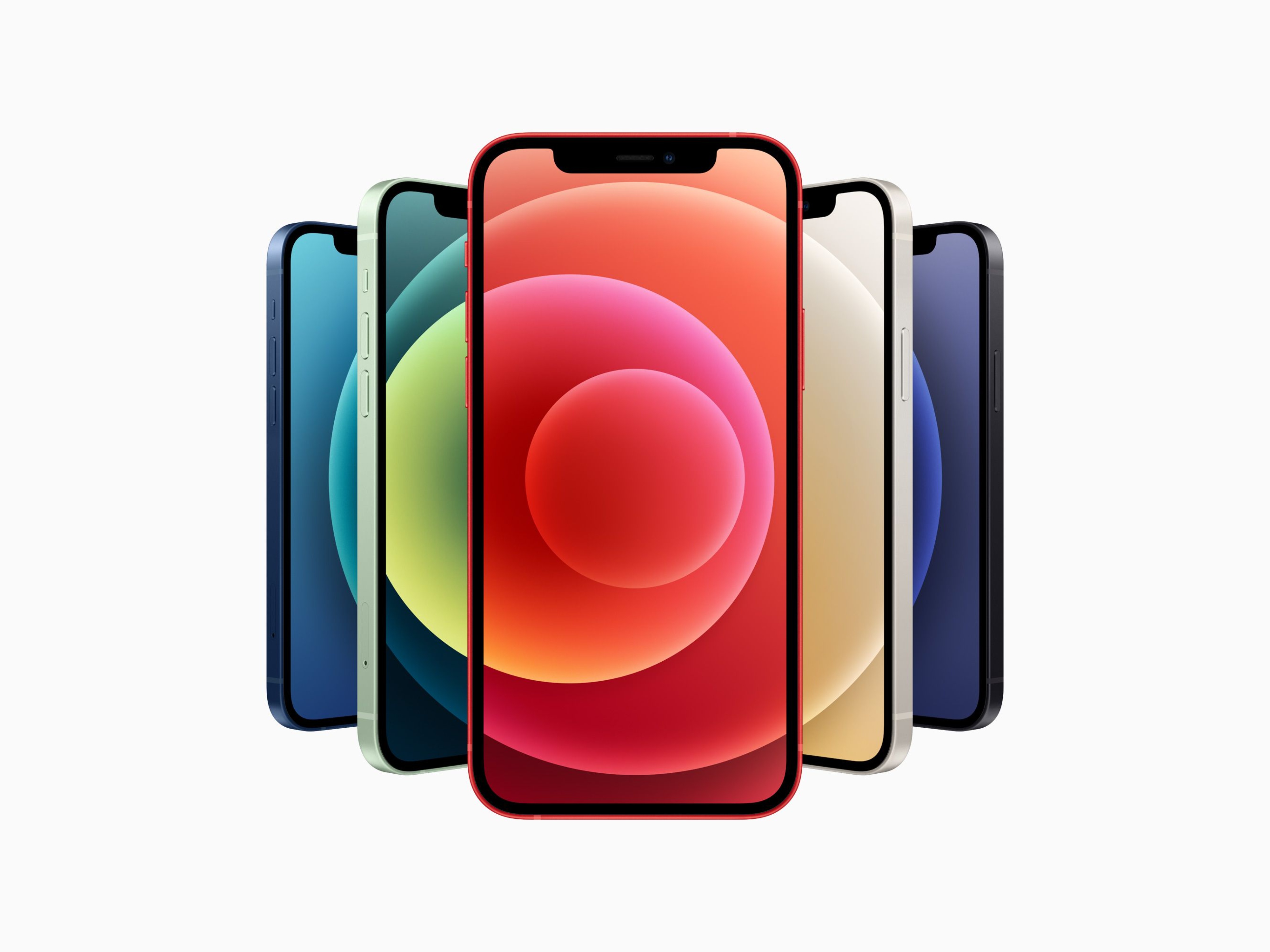
With the Apple iPhone 12 series, the company essentially removed any accessories that one would expect to arrive within the box. However, it seems that certain local laws are preventing the Cupertino based giant from following this practice in Brazil.
Previously, we had reported on Apple being forced to ship iPhones with the included EarPods in France due to local laws. Now, a similar case has occurred in Brazil, after the Brazilian state of São Paulo has basically forced the company to ship its new iPhones with the accessory included. According to a 9To5Macreport, local news agencies reported earlier today (3rd December 2020) that the public consumer protection agency has sent a notification to Apple, asking for clarification on the removal of the power adapter from the iPhone box.
Furthermore, the public agency is also asking the company to prove that not including the charger will be beneficial to the environment and the customers. Apple responded with its own arguments, which were its original points, that most users already have compatible chargers. Thus, removing the charger from the box will reduce the total carbon emissions. However, the Brazilian agency isn’t content with the response and ruled that the power adapter is an essential component of the product. So, shipping iPhones without it would be going against the Brazilian Consumer Defense Code.
As per the agency, the company hasn’t provided enough evidence that removing the chargers from the box would help the environment in any way. Additionally, Apple has also not guaranteed that it will offer the same technical support to consumers that purchased third party chargers. At the moment, the agency is waiting for Apple’s response, which must arrive by tomorrow lest the company faces a fine in the country. While the decision is exclusive to São Paulo State, Brazil’s National Consumer Secretary is considering enforcing this nationwide to have the company sell iPhones with its chargers.
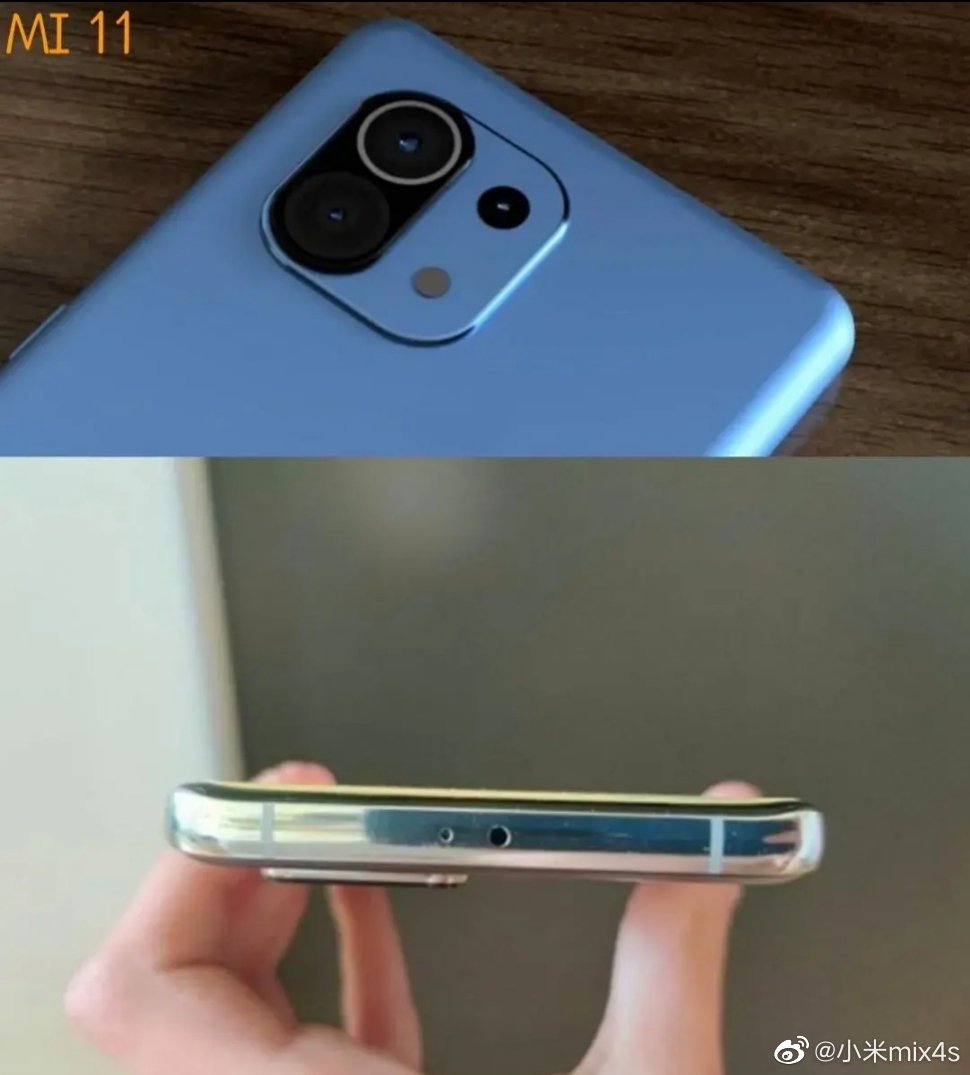
Xiaomi is expected to launch the Xiaomi Mi 11 series later this month. The lineup reportedly includes two handsets named the Mi 11 and Mi 11 Pro. Fresh leaks have surfaced on Weibo to reveal the specs of the two phones. Also, a couple of images have also surface to showcase the rear camera design of the Mi 11 duo. Before reading ahead, readers are advised to digest this report with a grain of salt since these leaks are not from regular leakers.
Xiaomi Mi 11 and Mi 11 Pro specifications (Unconfirmed)
The leak reveals that the Mi 11 and Mi 11 Pro will be equipped with S-AMOLED panels that offer a 120Hz refresh rate and quad HD+ resolution. The exact screen size is not mentioned in the leak. Both phones are said to be equipped with 20-megapixel front-facing cameras.
The Mi 11 could be backed by a battery of around 4,780mAh capacity and it may come with support for 50W wired charging and 30W wireless charging. The Mi 11 Pro could be coming with a smaller battery of around 4,500mAh capacity. It may support 120W wired charging and 80W wireless charging.
The leak states that Mi 11 may feature a 108-megapixel + 13-megapixel (ultrawide) + 5-megapixel (macro) triple camera setup. The Mi 11 Pro could be equipped with a 48-megapixel (OmniVision OV48C) + 20-megapixel (ultrawide) + 12-megapixel (telephoto with 2x optical zoom) triple camera setup.
The Snapdragon 888 will fuel the device with LPPDR5 RAM and UFS 3.1 storage. For security, these phones have an under-display fingerprint scanner and 2D face unlock. The other features that are available on Mi 11 duo include dual speakers, x-axis linear motor, IR blaster, and NFC. The leak states that the Mi 11 with 8 GB RAM + 128 GB storage may cost 3,999 Yuan (~$610) to 4,499 Yuan (~$686). The Pro model with the same RAM and storage may cost 5,299 Yuan (~$808) to 5,499 Yuan (~$838).
Tipster Digital Chat Station hinted today that the Mi 11 series will have a horizontal camera array. Shown above are some images that reveal that the Mi 11 duo will have a square-shaped camera module.
We use cookies on our website to give you the most relevant experience by remembering your preferences and repeat visits. By clicking “Accept”, you consent to the use of ALL the cookies.
This website uses cookies to improve your experience while you navigate through the website. Out of these, the cookies that are categorized as necessary are stored on your browser as they are essential for the working of basic functionalities of the website. We also use third-party cookies that help us analyze and understand how you use this website. These cookies will be stored in your browser only with your consent. You also have the option to opt-out of these cookies. But opting out of some of these cookies may affect your browsing experience.
Necessary cookies are absolutely essential for the website to function properly. This category only includes cookies that ensures basic functionalities and security features of the website. These cookies do not store any personal information.
Any cookies that may not be particularly necessary for the website to function and is used specifically to collect user personal data via analytics, ads, other embedded contents are termed as non-necessary cookies. It is mandatory to procure user consent prior to running these cookies on your website.