Advertisement

Huawei MateStation B515 PC for enterprises officially launched, arrives with AMD Ryzen 4700G and 23.8 inch Display

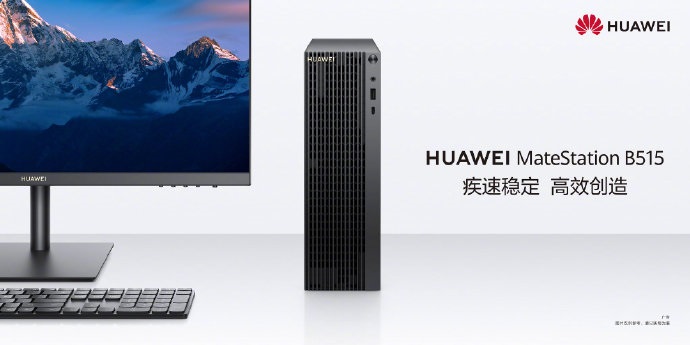
It is no secret that Huawei had been working on a desktop grade PC for a while now. While leaks and rumors had revealed most of its key specs already, the company has now officially launched the MateStation B515 for the government offices and other enterprises.
Huawei

The new desktop PC is not available for the commercial market and is being aimed at businesses only. Although, this doesn’t mean that the PC is by any means just basic, as it arrives with a powerful AMD Ryzen 7 4700G processor and a capable Ryzen 5 4600G, both of which are APUs that feature integrated Radeon graphics. Although, an option to upgrade to high performance discrete GPUs is also being offered. It is paired with either 8GB or 16GB of dual channel 3200MHz DDR4 RAM and the cabinet arrives as a set with a smart keyboard and mouse, and display as well. For storage, 1TB of memory is offered via hard drives along with 256GB or 512GB of SSD storage as well.

Huawei

The cabinet that houses the PC components adopts a grille design on the front but otherwise features a minimalistic aesthetic with a single color scheme. It arrives in matte black, which adds to its business and formal look. The cabinet’s total capacity is just 8 liters, which saves about 2/3 of space over a traditional desktop PC. Huawei also paid special attention to thermal management, equipping hte system with an intelligent temperature control system, which can automatically adjust fan speeds to manage temperatures.

Arriving at the monitor, it is a 23.8 inch display with narrow bezels on every side and a high screen to body ratio of 90 percent, and a resolution of 1920x1080px. This display arrives with eye protection as well and has even passed the TÜV Rheinland international certification standards. Furthermore, the keyboard also arrives with a compact body with 2.5mm keystrokes on a scissor switch design and 16.05mm large keycaps.
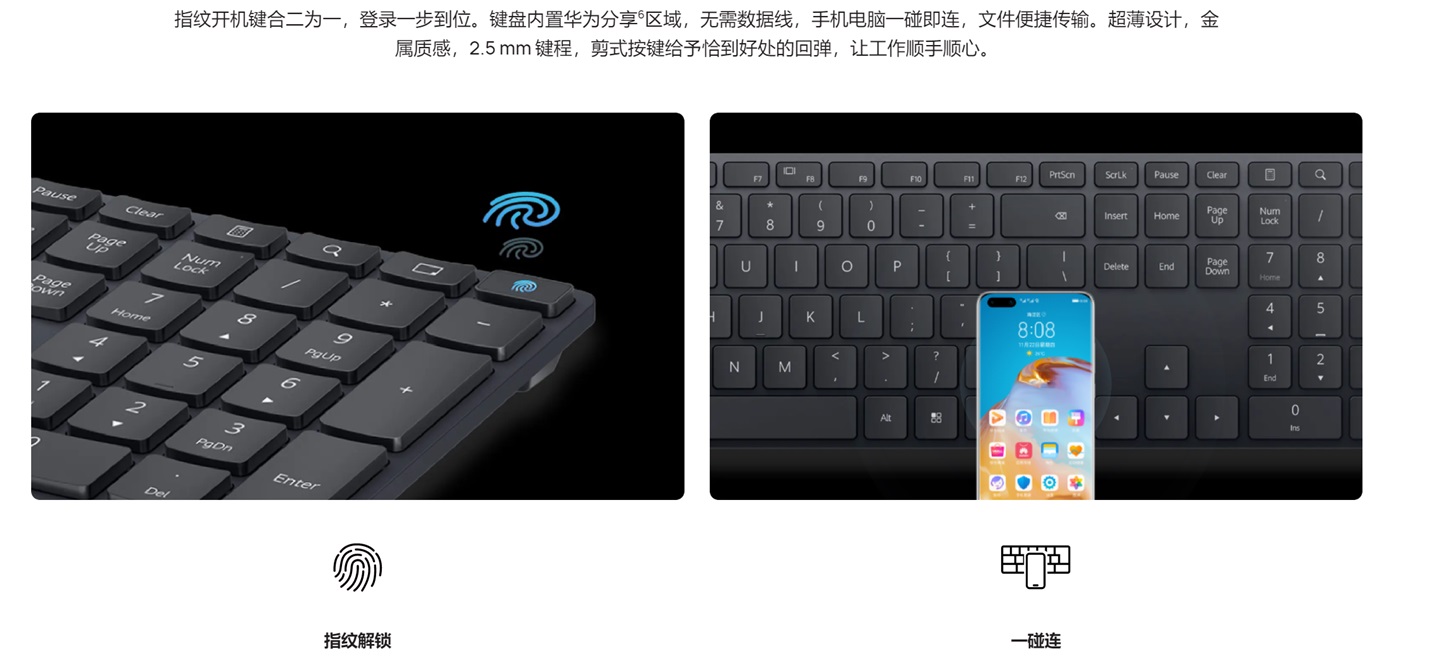
Notably, the keyboard also has built in NFC, which can connect with smartphones through the shift key area, allowing for wireless data transfers from the smartphone to the computer. For security, the keyboard also offers a fingerprint scanner on the power button to safely boot up and unlock the system in a seamless manner.

For connectivity, the Huawei MateStation B515 offers USB Type C, support 9V/2A mobile phone fast charging, USB, HDMI, VGA serial port, and 2×2 dual antenna WiFi and Bluetooth 5.0 as well. Unfortunately, since the desktop PC is only available for enterprises, its official pricing was not revealed to the consumer market. But the estimate ranges from 4,999 Yuan to 8,999 Yuan (roughly 760 US Dollars to 1,370 US Dollars) over 5 different configurations.


Smartphone OLED display prices to drop due to oversupply: Report

The prices of OLED panels for smartphones are expected to drop due to the extreme oversupply caused by the Coronavirus pandemic. The situation is further made worse due to the sanction against Huawei.

Smartphone

An UBI Research report stated that the global smartphone market slowed in the first half of 2020 because of the viral outbreak. This led to the fall of demand for OLED panels. In the third quarter of this year, 113 million smartphones with OLED displays were shipped, which is down by 17.9 percent from 2019. In the fourth quarter, a similar result is expected, as per UBI Research CEO Choong Hoon Yi.

According to TheElec report, there was one positive factor despite the overall decline as Apple shifted production of its latest iPhone lineup to include LED panels. In this year, around 50 percent of all iPhones will use OLED panels, and the number is only expected to rise to 75 percent by 2021 and 100 percent by 2022. The report also states that it previously believed that COVID-19 will have Apple only ship 180 million iPhone units in 2020, but this number has since increased to 220 million as the latest iPhone 12 is seeing healthy demand, with the Cupertino based giant seemingly overcoming the pandemic.

Smartphone

On the other hand, Huawei’s smartphone business is in decline and is expected to negatively affect the smartphone OLED market. In the second quarter of 2020, the Chinese tech giant accounted for 53.4 percent of all OLED smartphones in China, having a higher share than its competitors Oppo, Vivo, and Xiaomi combined. However, sources close to the matter have stated that the company is only expected to ship 50 million smartphone units in 2021.


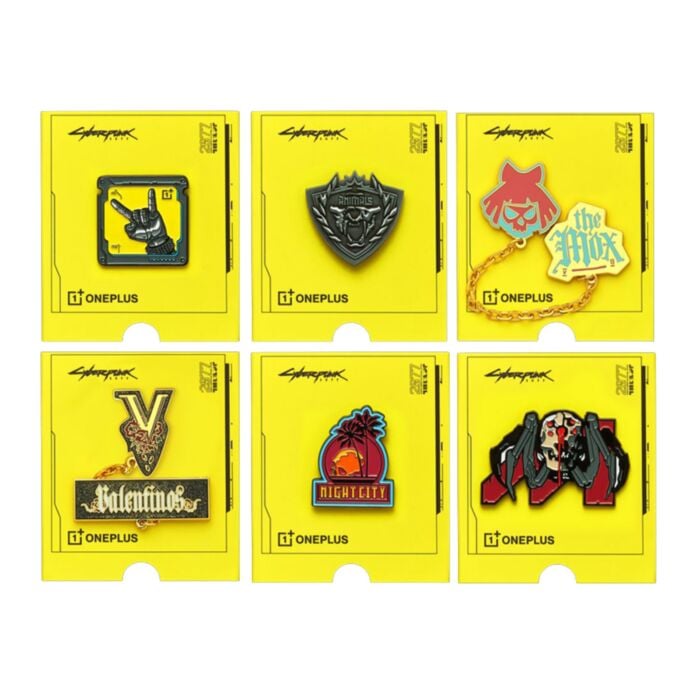
Cyberpunk 2077 Badges on sale for $99 via Giztop

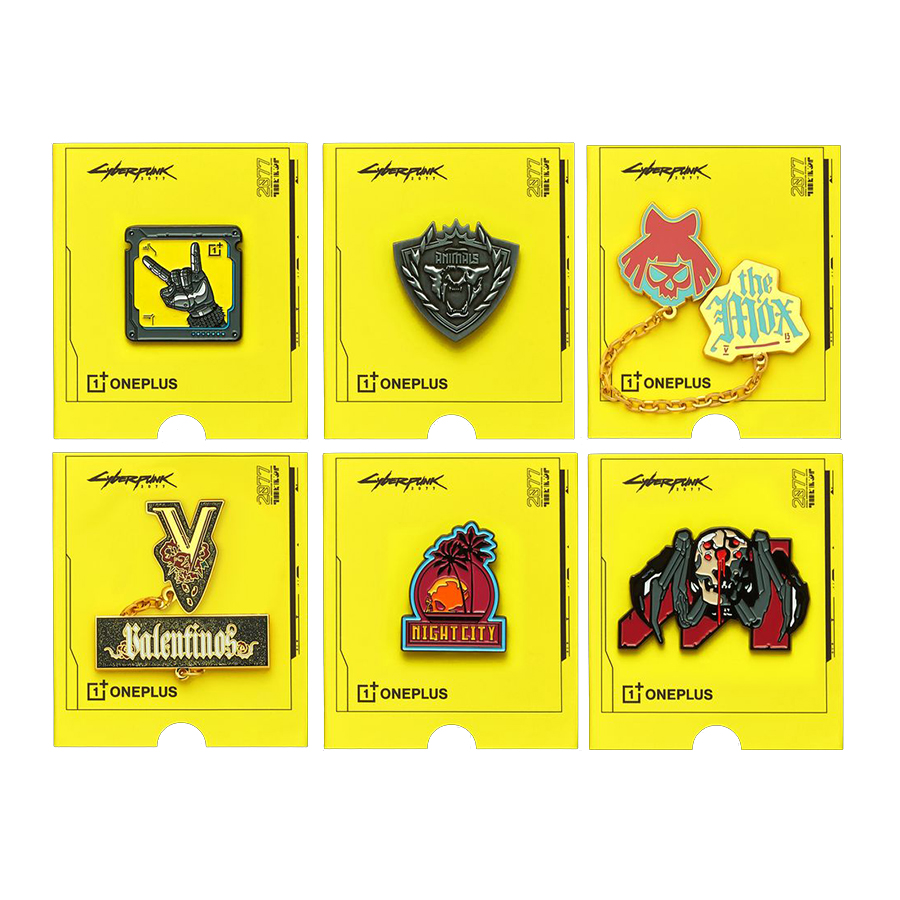
The Chinese smartphone maker  – OnePlus recently partnered with CD Project Red and introduced OnePlus 8T Cyberpunk 2077 edition. The smartphone hosts several design changes including bigger camera module and tint of yellow across different elements on the device. The crafty design of the smartphone makes it more interesting and different from others. Cyberpunk 2077 game is already out and now the badges are on sale via Giztop. A set of Cyberpunk 2077 badges including 6 PCS badges are on sale for $99.

Must See: OnePlus 8T Cyberpunk 2077 Edition goes for sale on Giztop

The new game fans can grab the exciting six different badges. You can ship them anywhere around the globe from Giztop.

OnePlus 8T CyberPunk 2077 Edition ships with modified UI including new system icons, animations, live wallpapers and much more. Even the charging animation gives it a unique look. The fingerprint unlock dynamic effect gives impression of artificial eye scanning. There’s a new Night City feature on the smartphone camera app. However, the CyberPunk 2077 Edition is limited to China.

These UI changes are currently not available for standard OnePlus 8T device.

The OnePlus 8T Cyberpunk 2077 Edition features same specifications as that of original OnePlus 8T. These new badges will be an addition to the Cyberpunk 2077 game.

Grab Now

Related: Malaysians can get the OnePlus 8T Cyberpunk 2077 for only RM49 ($12)


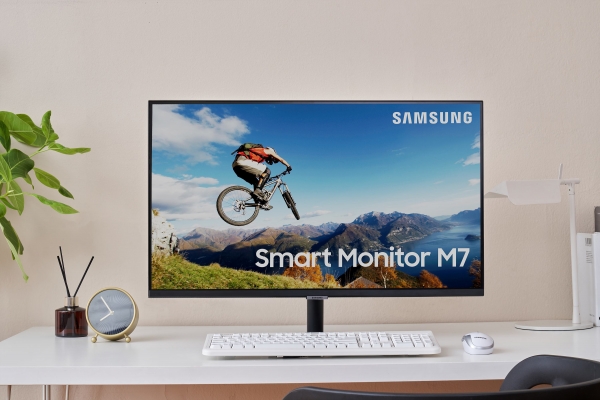
Samsung launches new smart monitors powered by Tizen OS

Earlier this week, Samsung Electronics announced that it plans on starting sales of its latest lineup of smart monitors in South Korea. This includes two new models, both of which run the Tizen OS.

Samsung

The new launch includes the 32 inch UHD M7 smart monitor and the FHD M5 smart monitor, which arrives in either a 27 inch or 32 inch variant. These monitors run Tizen OS and can act as a smart hub and can even offer content without being connected to a computer. Furthermore, these smart monitors can also directly connect to the internet via Wi-Fi and also offers popular streaming services like Netflix, YouTube, and Wave, as per TheElec report.

Other features include support and remote access to Microsoft’s Office 365 cloud service, along with a remote control that supports Bixby voice recognition as well. The new smart monitors arrive with support for Samsung DeX, which allows smartphones to be mirrored on the display, with tap view that allows smartphone screens to be loaded on the monitor. Apple AirPlay 2 is similarly supported as well.

A 65W charger that connects via a USB Type C port powers the M7 model and even offers 10Gbps data transfer speeds. Additional connectivity options include USB 2.0 and Bluetooth 4.2. A notable feature of the new monitors is that both arrive with an adaptive picture and eye saver to protect users’ eye sights. For audio, both models sport 2 channel 5W speakers that are built into the monitor.


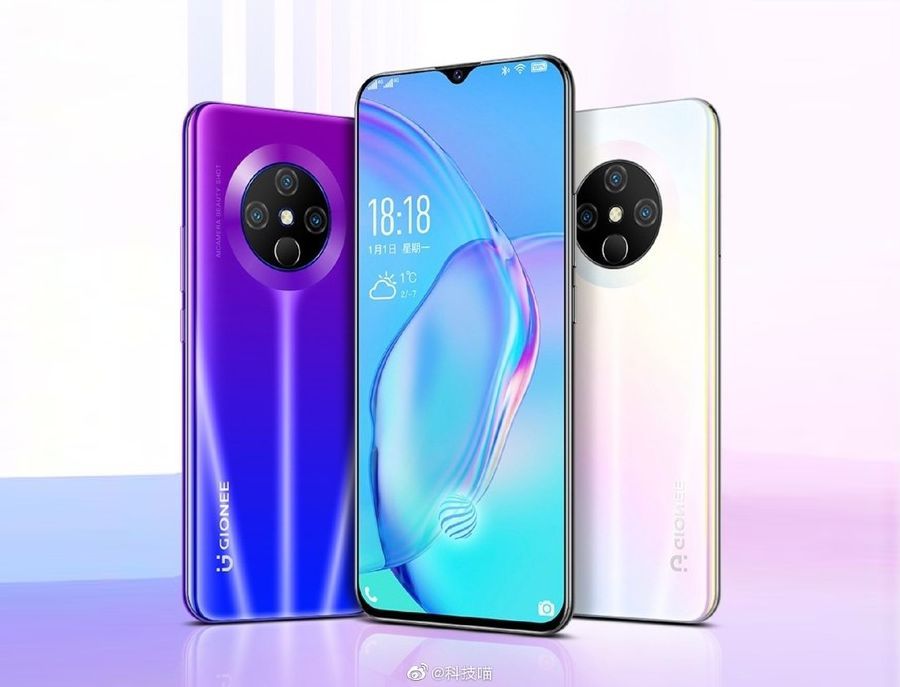
Gionee K30 Pro with 6.53-inch display, 16MP triple cameras, and 4,000mAh battery launched in China
Gionee had declared bankruptcy in December 2018. However, the Chinese brand has been gradually launching mid-range phones in markets like China and India. In August, the company unveiled the Gionee K3 Pro phone and today it has silently unveiled another K-series phone called the Gionee K30 Pro.

Gionee K30 Pro specifications and features

The Gionee K30 Pro has a 6.53-inch LCD screen with a teardrop notch. It supports an HD+ resolution of 720 x 1520 pixels. The back panel of the device is said to be made of glass. The phone measures 164.3 x 77.7 x 9.7mm and it weighs 204.2 grams. It is the same phone that had appeared with its GSE1020 model number at TENAA recently.

Gionee K30 Pro
Gionee K30 Pro

An unknown MediaTek chipset that ticks at 2.0GHz is present under the hood of the Gionee K30 Pro. The phone is backed by a 4,000mAh battery. It is unclear whether the phone supports fast charging.

The Gionee K30 Pro has a front camera of 8-megapixel. The back panel of the K30 Pro has a round-shaped camera module. While it seems to house quad cameras, the setup has only three cameras, an LED flash unit at the center, and a fingerprint reader. All that is known about the camera capabilities of the K30 Pro is that it has a 16-megapixel main camera, real-time AI beauty, macro shooting and 120-degree wide-angle shooting. Unfortunately, the phone runs on the obsolete Android 7.1.1 OS.

Gionee K30 Pro pricing

The Gionee K30 Pro comes in two variants such as 6 GB RAM + 128 GB storage and 8 GB RAM + 128 GB storage. They are priced at 699 Yuan (~$107) and 799 Yuan (~$122), respectively.


France, Germany, and 11 other EU nations join hands for semiconductor development

13 European nations including Germany, France, Spain, and others are teaming up to invest in processors and semiconductor technologies. The countries are making this move to grow in semiconductors and related fields, which will also include technology key to interconnected devices and data processing to rival the likes of the US and Asia.

France

At the moment, Europe’s share of the global semiconductor market, which is valued at 440 billion Euros (roughly 533 billion US Dollars), is just 10 percent. Furthermore, the EU relies on chips that are made overseas. According to a Reuters report, this dependence on foreign suppy for semiconductor technology came into spotlight during the Coronavirus pandemic. Furthermore, the concerns were further backed with increasing sensitivity towards security.

Certain nations are more concerned over security over some foreign governments. Thus, the group also have security minded reasons for joining hands to shift away from relying on foreign chips that are required in core areas like cars, medical care equipment, mobile phones, and networking as well. Earlier this year, the European Union had agreed to allocate 145 billion Euros, which is equal to a fifth of its virus economic recovery fund for digital projects.

France

These 13 nations will work together to boost Europe’s electronic presence and value in the global market. In a joint statement, the group stated that “This will require a collective effort to pool investment and to coordinate actions, by both public and private stakeholders.” The group wiil be reaching out to various companies to form industrial alliances for the purpose of research and investment for future projects and the development of processors while seeking further fundings as well.


Apple could use Samsung’s parts for camera module in iPhone launching in 2022

Smartphone photography has been reaching new heights for the past few years, thanks to the premium flagship smartphones. While companies like Samsung and Huawei are leading with the new innovative camera features, Apple is lagging behind.

For the iPhone models launching in the year 2022, the Cupertino-based giant is expected to opt for a folded zoom camera module. And for that, some of the components could be supplied by Samsung.

Apple iPhone 12
Apple iPhone 12 Pro

EDITOR’S PICK: Samsung has reportedly started working on its ambitious 600MP smartphone camera sensor

As per the report coming from Korea, Samsung won’t be supplying the components, such as actuators and lens, directly to Apple but will supply them to LG, and then LG Innotek will use them in the folded zoom camera module.

A folded zoom camera structure includes a mirror or prism that sits in the middle of the lens to reflect light. It works similar to the periscope technology but allows the camera to use the phone’s length and width rather than the thickness of the body and camera bump for the enhanced zoom feature.

Several smartphone companies, including Samsung, Huawei, and OPPO have already adopted this technology for their own flagship smartphones. For the Galaxy S20 Ultra, Samsung’s subsidiary Samsung Electro-Mechanics provided the folded zoom module.


Moto G9 Power for Rs 11,999 (~$162) offers 64MP triple cameras, 6,000mAh battery, SD662, and more

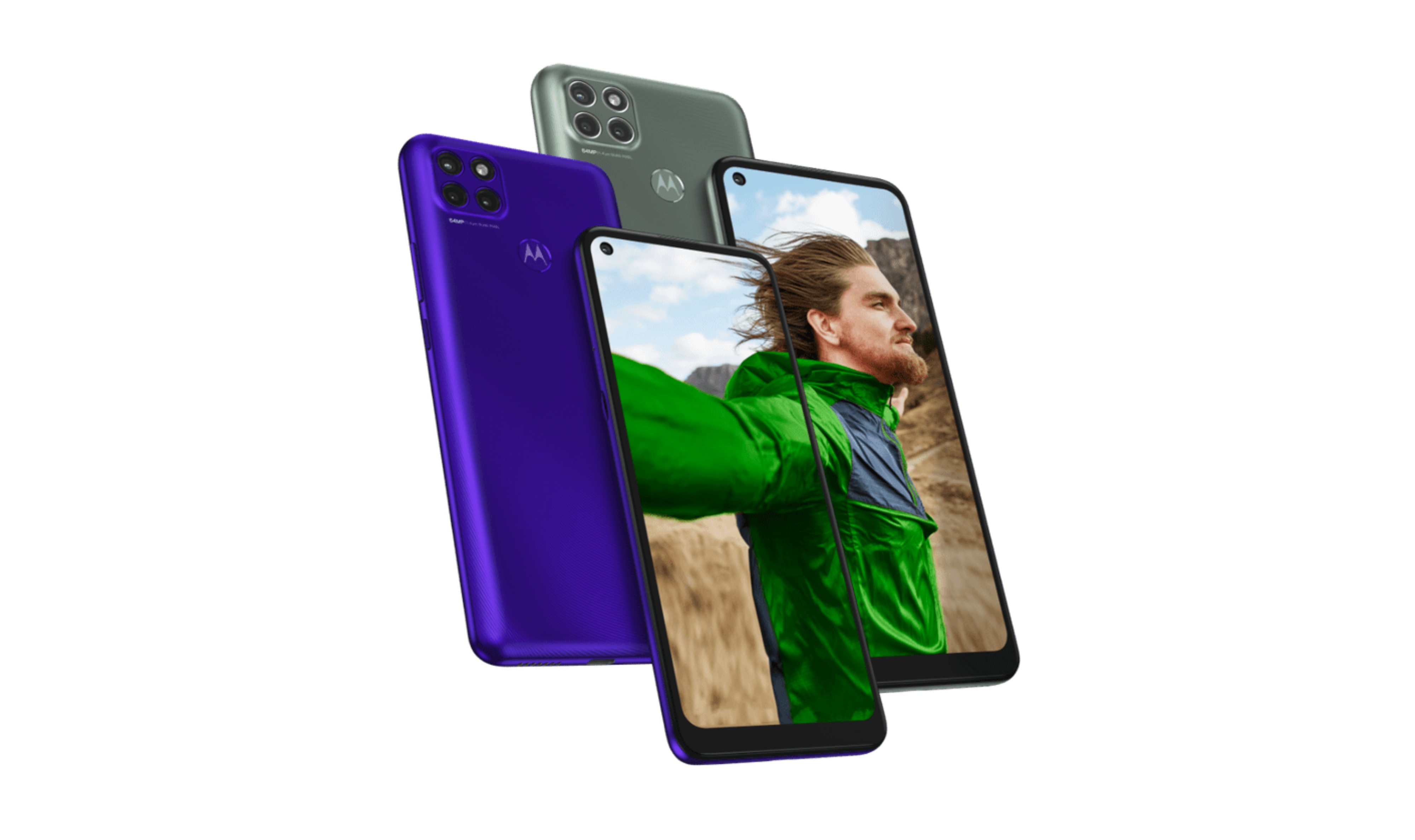
Last month, Motorola announced the Moto G9 Power and Moto G 5G phones in the global markets. Both phones are now official in India. While the Moto G 5G got introduced as the cheapest 5G phone in India earlier this month, the Moto G9 Power went official today.

Moto G9 Power price in India

The Moto G9 Power for India comes with 4 GB of RAM and 64 GB of storage. It is priced at Rs 11,999 (~$162) and it comes in two colors such as Sophisticated Metallic Sage and Vivid Electric Violet. Flipkart will begin the sales of the Moto G9 Power from Dec. 15 at 12 PM. Users with HDFC Bank cards can avail Rs 1,750 (~$24) instant discount, whereas Axis Bank credit card users can avail 5 percent unlimited cashback.

Motorola Moto G9 Power Featured
Motorola Moto G9 Power

Moto G9 Power specifications

The Moto G9 Power has a 6.8-inch IPS LCD HD+ display with a punch-hole design. It has an IP52 rated splash-resistant rear shell. A fingerprint scanner is integrated with the Moto logo on the rear.

The Snapdragon 662 SoC fuels the smartphone and it carries support for 20W fast charging for its 6,000mAh battery. The My UX based Android 10 OS comes preinstalled on the smartphone. There is a microSD card slot onboard for more storage.

The front side of the Moto G9 Power features a 20-megapixel selfie camera. The square-shaped camera module on its rear has a 64-megapixel main lens, a 2-megapixel depth helper, and a 2-megapixel macro sensor. It comes with other specs like dual 4G VoLTE, Wi-Fi 802.11ac, Bluetooth 5.0, GPS, USB-C, and a 3.5mm audio jack.


Samsung reportedly starts working on 600MP camera sensor

Samsung has been making impressive progress when it comes to camera technology, being the first to launch a few high-megapixel count sensors. Now, the company has an ambitious plan to make a camera sensor that goes beyond the human eye.

Earlier, Yongin Park, Executive Vice President of Samsung’s Sensor Business had expressed that the company could create a camera sensor that can go beyond the human eye, which in camera technology, said to have 576-megapixels.

Samsung Logo

EDITOR’S PICK: Nokia has been appointed to lead European Union’s Hexa-X 6G technology research project

Now, it seems that Samsung has started working on the same. The South Korean giant is developing a 600-megapixel camera sensor which features 0.8µm pixels and is 1/.0.57″ big. But, the company has a long way to go as the current prototype takes up about 12 percent of the smartphone’s area and results in a 22mm bulge.

The company is reportedly looking to employ the ISOCELL pixel binning technology to keep the camera bump in check. However, before we see the 600MP camera, we expect to see sensors like 150MP and 250MP.

Samsung’s focus for such a high-megapixel count camera sensor isn’t just smartphone photography but much beyond that. It believes that the technology could have several other use-cases, such as in the medical field and agriculture.

The company is also expanding the categories of its camera sensors usage from smartphones. It is now planning to provide camera sensors for including autonomous vehicles (AVs), drones, and other IoT (Internet of Things) devices.


Huawei Mate 40 Pro iFixit teardown reveals messy internals and difficult repairs

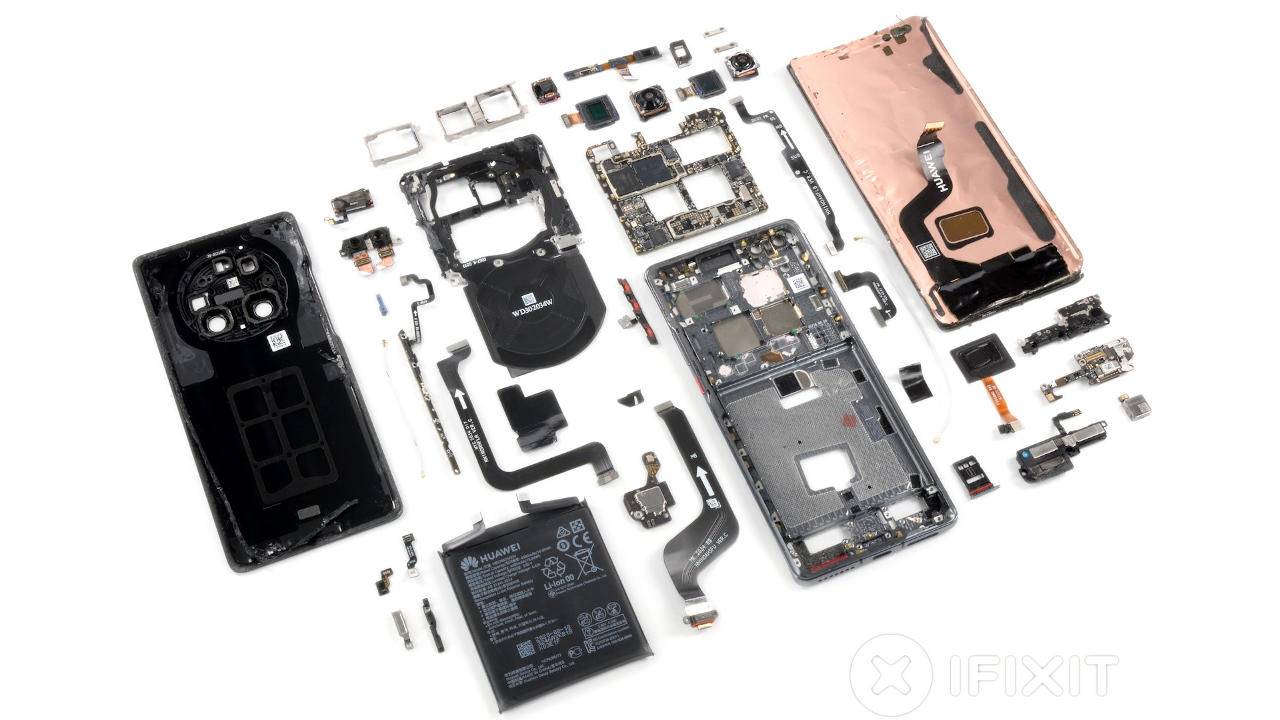
It is a well known fact that companies prefer that customers only reach out to them or their authorized partners for repairs of their smartphones. Apple takes an aggressive approach to this philosophy with near impossible third party repairs. Now, it seems that Huawei might have also unintentionally made repairs of the Huawei Mate 40 Pro impossible as well after a recent iFixit teardown revealed a mess of its components on the inside.

Huawei

Generally, smartphones with glass on the front and back are usually more likely to face more visible damage from hard drops. However, this also makes it harder for repairs as well, since trying to pry off the glass panels might cause them to break. iFixit tried to remove the Mate 40 Pro’s back panel by heating, prying and even slicing, although, the screen wasn’t as easy. This already makes the repairs for the most commonly broken part of Huawei flagship’s quite difficult and even expensive.

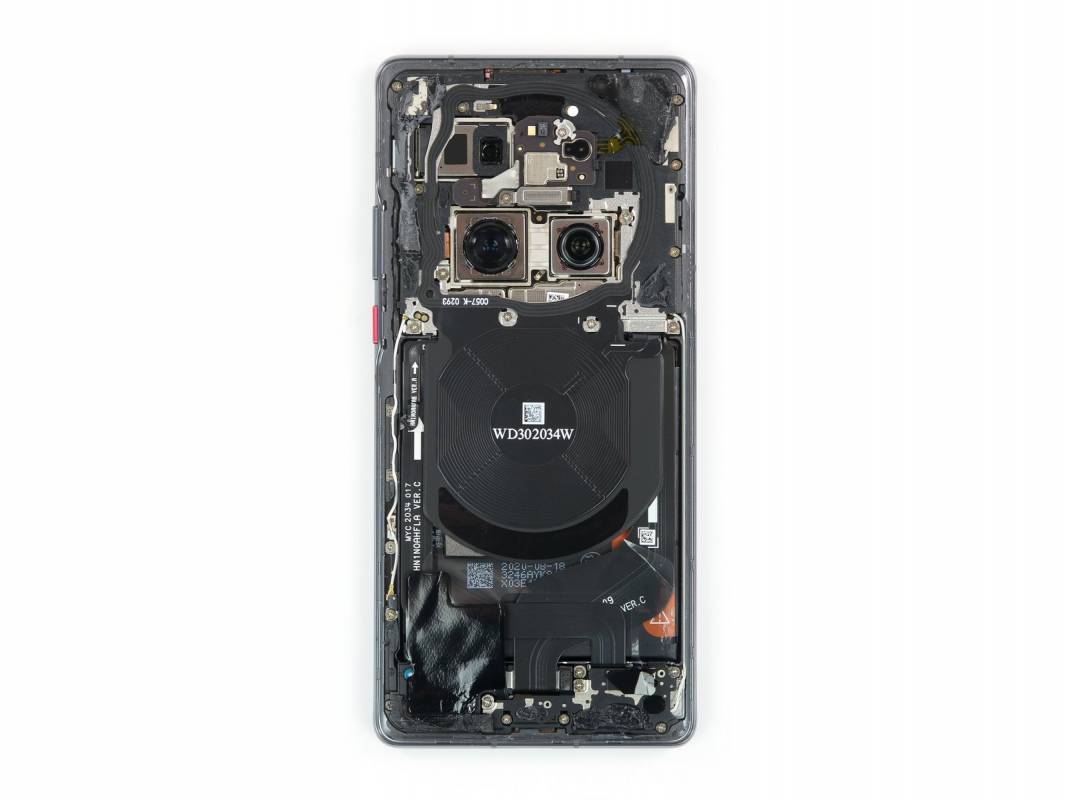
The issues with repairs don’t just stop there as the teardown discovered that the layout of the internal components also makes repairs hard. Due to the messy placements of certain parts, like the hidden flex cable that iFixit experts accidently cut off due to its close proximity to the power button. While OEMs sometimes focusing on packing the components neatly like art, it seems like Huawei just dumped the internal components into the housing and crammed everything in, as per a SlashGear report.

Huawei

Notably, iFixit didn’t just find negative aspects for repairs, with many parts being modular and easier for replacing in case of damage. Even the top speaker and the periscopic telephoto camera are also modular. So, switching out damaged components is easier, although, that depends on if one can get this deep enough for repairs without breaking anything in the first place. iFixit gave the Huawei Mate 40 Pro a 4 out of 10 in terms of repairability, which is even below the Apple iPhone 12 series.


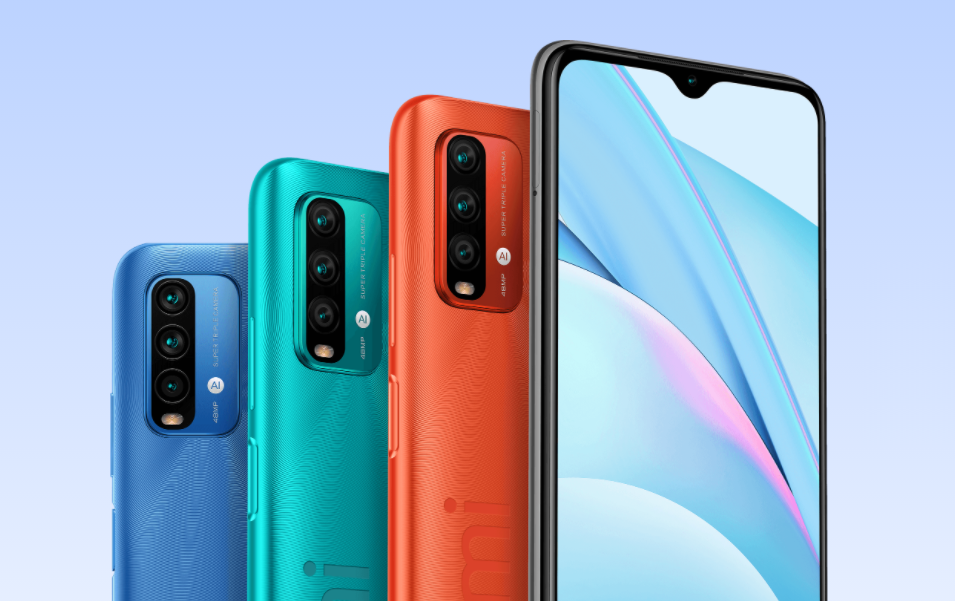
Redmi 9 Power launch teased in India

Xiaomi India has started a microsite for an upcoming Redmi phone. The listing only reveals that the phone will be packed with a huge battery and it will sport a quad-camera setup. Based on recent reports, the company could be teasing the launch of the Redmi 9 Power.

The Redmi 9 Power is speculated to debut on Dec. 15 as a modified version of the Redmi Note 9 4G that launched in China last month. Apart from an inclusion of an additional camera, the Redmi 9 Power is expected to sport identical specs as the Redmi Note 9 4G.
Redmi 9 Power specifications (Rumored)

The Redmi 9 Power could be arriving with a 6.53-inch IPS LCD FHD+ display with a waterdrop notch. The Snapdragon 662 SoC may fuel the device with a 6,000mAh battery that will support 18W fast charging and reverse charging.

Redmi Note 9_4G
Redmi Note 9 4G

For shooting selfies, it may possess an 8-megapixel snapper. The rear-mounted quad-camera system of the phone may include a 48-megapixel primary lens, an 8-megpaixel superwide sensor, a 2-megapixel depth assist lens, and a 2-megapixel macro shooter as an extra camera.

The Redmi 9 Power is expected to land in India in options like 4 GB RAM + 64 GB storage and 4 GB RAM + 128 GB storage. It will be available in three colors like black, blue, and green.

Xiaomi is yet to confirm the launch date for the Redmi 9 Power. There is no word on its pricing. The Redmi 9 Prime is the most powerful Redmi 9 series smartphone in India. Since the Helio G80 powered phone starts at Rs 9,999 (~$135), it is likely the Redmi 9 Power may cost Rs 10,999 (~$149) at launch.


OPPO Find X3 Pro leak reveals 120Hz adaptive refresh display, 50MP quad cameras, SD888, and more

At the beginning of this month, Qualcomm announced the Snapdragon 888 mobile chipset for 2021’s flagship phone. After the launch, OPPO confirmed that its Find X3 series of flagship smartphones will be driven by the SD888 SoC. The Find X3 and Find X3 Pro phones are expected to get announced in the first quarter of 2021. Well ahead of the launch, popular tipster Evan Blass has revealed the key specifications and features of the Find X3 Pro.

The tipster revealed that the Find X3 Pro is codenamed as Fussi and the device could be promoted with an “Awaken Color” tagline to highlight its 10-bit color support. The leak reveals that the Find X3 Pro will carry support for a full-path color management system that will make it possible for its display to natively support 10-bit color depth. In other words, the Find X3 Pro will be able to produce images in 1.07 billion colors just as the images captured by its quad cameras.

OPPO Find X3 Pro specifications

The Find X3 Pro has a 6.7-inch curved OLED display that will support 1440 x 3216 pixels resolution, a 525ppi pixel density, and an adaptive refresh rate ranging from 10Hz to 120Hz like the Samsung Galaxy Note 20 Ultra. It is unclear whether the smartphone has a punch-hole display. The curved back of the Find X3 Pro could be available in ceramic glaze or matte-frosted glass options. The thickness of the device is 8mm and it weighs 190 grams. It is expected to arrive in blue and black color variants. The company may release a white version a bit later.

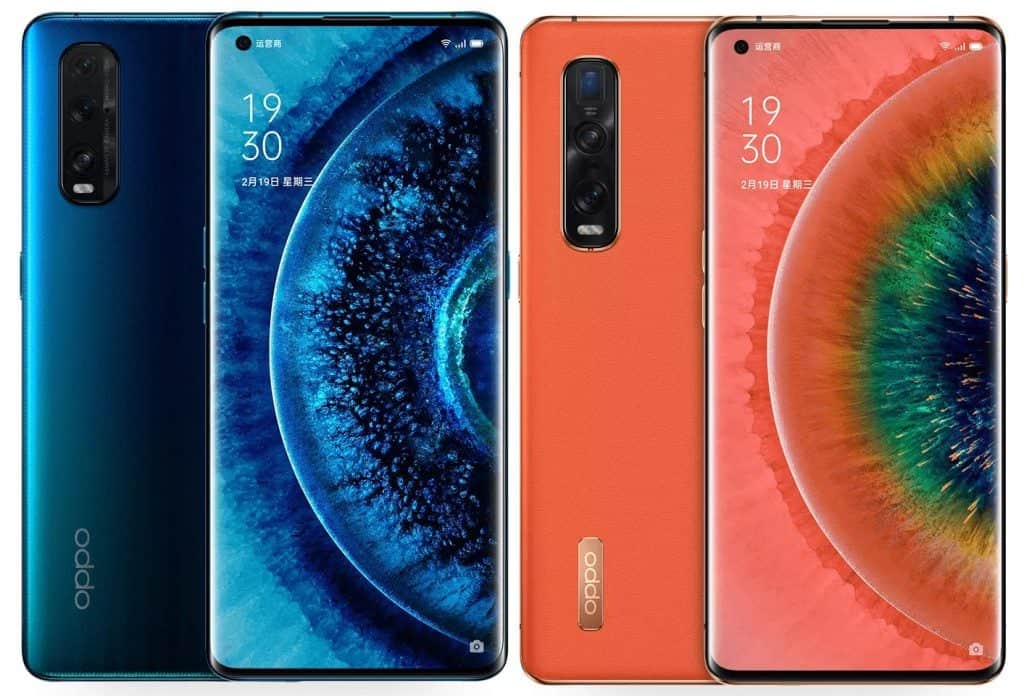
OPPO Find X2 and Find X2 Pro

The Snapdragon 888 5G mobile platform powers the Find X3 Pro. It is fueled by a 4,500mAh dual-cell battery that supports 65W SuperVOOC 2.0 fast charging and 30W VOOC Air wireless charging. It will come with a new NFC module with a dual-body antenna design. This new tech will allow users to make payments not only by touching the phone’s back to the reader but also by placing the front to the rear. The ColorOS 11 based Android 11 OS comes preinstalled on the smartphone.

The rear-facing quad-camera system of the Find X3 Pro will include two 50-megapixel Sony IMX766 cameras, one will be a primary lens and the other one will be a superwide sensor. It will have a 13-megapixel telephoto lens as the third camera that will carry support for 2x optical zoom, and the setup will also feature a 3-megapixel macro camera encircled with lights. The macro lens will function as a microscope as it will carry support for 25x zoom. The leak has no information on the front camera of the Find X3 Pro.


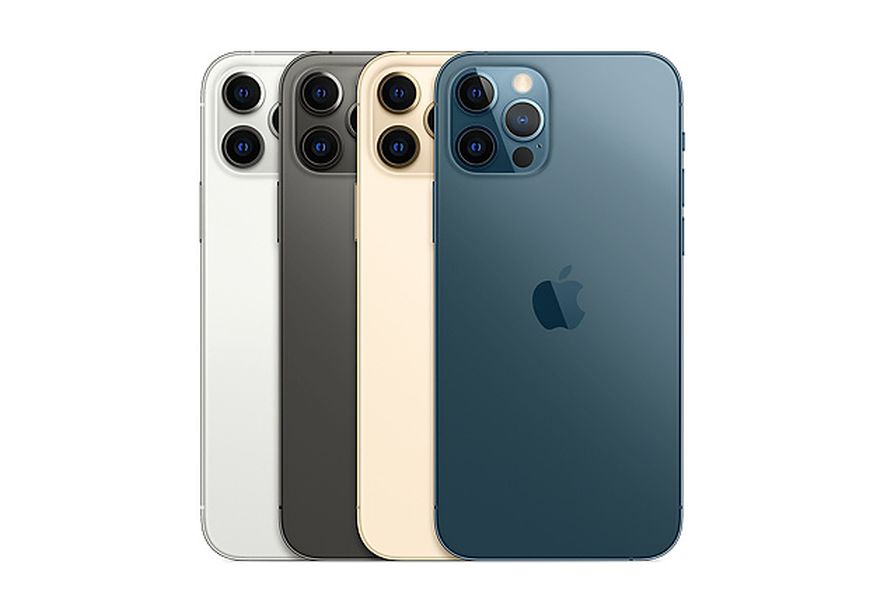
Apple iPhone 12 Pro and Pro Max demand strains the production lines

Apple iPhone 12 series has faced a healthy demand since its launch. However, it seems that the company has yet to catch up with supply as its production lines are straining to provide consumers with its latest flagship handsets.

According to an AppleInsider report, investment bank JP Morgan tracked the delivery times, which suggested that the demand for the iPhone 12 Pro and iPhone 12 Pro Max is still ahead of the company’s supply. Reportedly, this issue is not being reflected on the lower end variants in the series, including the iPhone 12 mini and iPhone 12.

Apple

As per analyst Samik Chatterjee, JP Morgan’s iPhone availability tracker has been witnessing a build up in lead times for shipments. In other words, the time for a customer to receive their iPhone Pro or Pro Max model has been rising. At the moment, the lead times for the iPhone 12 Pro has reached an average of 27 days across several regions. This is the longest lead time ever observed by JP Morgan, which has been tracking the lead times since the start of the iPhone 12 series’ launch.

On the other hand, the lead times for the iPhone 12 mini and iPhone 12 decreased over the previous week. This is suggestive of a more humble demand from the consumers. As of the first week of December, both the lower end iPhones had a lead time of only 3 days, while the iPhone 12 Pro Max takes 23 days to reach customers on average.

Apple

In the US, the Apple iPhone 12 Pro and iPhone 12 Pro Max lead times have surged even further and reached 33 days and 25 days respectively. This is notable considering that the region accounts for about 35 percent of the global iPhone shipments. Although, in store pickup for all models only had a lead time of just a single day. In this regard, China, UK, and other European regions saw slightly better lead times in comparison.


Huawei willing to accept Swedish government’s terms to end 5G ban

Huawei is apparently ready to accept any terms or requirements that the Swedish government may set on its 5G networking equipment. The company will also be willing to accept any measures to address any other concerns as well to avoid a complete ban in the country.

huawei

According to a senior executive from Huawei, the Chinese tech giant is willing to accept any terms after it faced a ban in the region, which also caused a delay in Sweden’s spectrum auction as well. For those unaware, Chinese telecommunications equipment providers Huawei and ZTE faced a ban in Sweden after the country’s telecom regulator PTS banned the use of equipment from both the companies.

However, since then Huawei has managed to win a court injunction and is even awaiting an appeal from PTS. Kenneth Fredriksen, Huawei Executive Vice President, said that “We are even willing to meet extraordinary requirements, such as setting up test facilities for our equipment in Sweden, for example, if they want to,” in a statement to Reuters. The senior executive further added that the company is “now in the middle of the court process, but we are willing to have pragmatic discussions. I can’t give you a concrete plan, but of course we will fight for our rights.”

Huawei Logo MWC 2019

In recent months, Europe has followed in the United States’ footsteps and have tightened regulations against Chinese made 5G networking equipment, alleging that the technology might be used by the Chinese government for spying and espionage. At the moment, the 5G spectrum auction has been delayed over the Huawei ban in Sweden, which is the second nation after the UK to ban the company. The date for the appeal court has yet to be set, so stay tuned for more updates regarding the matter.


Uber sells its self-driving car business to Aurora for $4 billion

Uber, the world’s leading cab-hailing service provider, has announced that it is selling its driverless self-driving car subsidiary to Aurora Technologies for $4 billion. Uber is also investing $400 million in the startup for a 26 percent stake.

As a part of the transaction, Uber’s Chief Executive Officer Dara Khosrowshahi will be serving on Aurora’s board. The startup, headquartered in Silicon Valley with an office in Pittsburgh, will also be acquiring engineers and support staff of Uber A.T.G.

Uber Self-Driving Car

This acquisition deal is expected to get closed in the first quarter of 2021. The sale of Uber’s Advanced Technologies Group has been valued at $4 billion, which is much lower than its valuation of $7.5 billion last year.

Although Uber is selling its Advanced Technologies Group (A.T.G.) division, the company says that it remains interested in the field. Going forward, the company will be collaborating with Aurora to launch driverless cars on its network. However, Aurora’s CEO Chris Urmson has confirmed that the startup’s first product won’t be a robot taxi but is likely to be a self-driving truck.

EDITOR’S PICK: Nokia appointed to lead European Union’s Hexa-X 6G technology research project

The driverless technology was a key focus for Uber’s founder and former CEO Travis Kalanick as it could help the company get rid of its biggest expense — drivers. With driver-related expenses reducing, the company was hoping to become profitable, ending years of enduring losses in billions of dollars.

However, the autonomous driving unit of Uber has been involved in several legal matters — from pedestrian death to intellectual property theft. While investors have been long pressuring the company to sell its self-driving unit, the company was finally forced to do so after revenue plummeted because of the COVID-19 pandemic.


Giveaway: Win a set Cyberpunk 2077 limited badges

Gizmochina along with Giztop is conducting 3 sets of Cyberpunk 2077 badges(a set that includes 6PCS badges) as a giveaway gift to 3 lucky readers. Like always, you just have to follow the steps mentioned on the Gleam widget to get a chance to win this amazing gift.

OnePlus recently partnered with CD Project Red and launched the OnePlus 8T Cyberpunk 2077 Edition smartphone bearing a crafty design. The Oneplus 8T Cyberpunk 2077 limited edition is available for $899 on Giztop.

The main features of Oneplus 8T Cyberpunk edition:

  • 6.5-inch DisplayMate A+ screen with 120Hz refresh rate.
  • Qualcomm Snapdragon 865 5G Soc, with Adreno 650 GPU.
  • Rear quad-cameras: 48MP+16MP+5MP+2MP, a 16MP selfie camera.
  • 8GB/12GB LPDDR4X RAM, 256GB/512GB UFS 3.1 storage.
  • 4500mAh battery, 65W super Warp charging.
  • Hydrogen OS base on Android 11.


Cyberpunk 2077 badges
How to enter this giveaway? Just follow this step:

  1. Subscribe to Gizmochina’s Youtube channel, follow us on Twitter and Facebook.

The winner will be posted on Gizmochina’s twitter and Gizmochina’s Facebook, so please follow us on Twitter and Facebook, so that you don’t miss the winner announcement.

Terms & Conditions:

1. The giveaway is an international giveaway.
2. We are not responsible for lost shipments.
3. We are not responsible for any duties, import taxes that you may incur.
4. We reserve all rights to make any changes to this giveaway.
5. The prize will be shipped in a month when the giveaway ends.

* The winners of the last giveaway were announced last week on this Facebook page.

Just follow the steps mentioned in the Gleam widget to participate in the giveaway.

Once again, good luck.

Giveaway: Win 3 Sets Cyberpunk 2077 Limited Badges

Update: The 3 winners are picked, please contact us via email: [email protected]. If the winner does not contact us within 2 weeks, it will be deemed to have automatically given up the prize.

Nokia appointed to lead European Union’s Hexa-X 6G research project

The European Union has funded a wireless project called Hexa-X which is focusing on the next generation of mobile technology — 6G. Now, the Finnish company Nokia has been appointed to lead a group of companies and universities working on the project.

The project aims to create unique 6G use-cases and scenarios as well as develop fundamental 6G technologies. It will also define a new architecture for the integration of the key 6G enablers.

Nokia Logo

Apart from Nokia, the project also includes Ericsson, Atos, Intel, Orange, Siemens, TIM, and Telefonica. Ericsson is also acting as the technical manager for the project. The University of Oulu and the University of Pisa are also a part of this initiative.

It’s interesting to see countries kickstarting preparations for the 6G technology at a time when 5G is still in the early stages of going mainstream and is available in select regions only. As per the report, there are about 100 wireless carriers globally that offer 5G connectivity, that too in limited regions.

EDITOR’S PICK: LG is reportedly planning to outsource lower-end phone manufacturing to cut cost

Nokia says that it is expecting the 6G technology to launch commercially by 2030, which follows the typical 10-year cycle between the new generations of mobile technology. It is expected to use super high-frequency terahertz airwaves and deliver advanced connectivity and even support real-time holographic imaging.

The Hexa-X project is set to commence from 1st January 2021 and has a planned duration of 30 months. Apart from the European Union, countries like South Korea and China have also started working on 6G technology.

 

Apple AirPods 3 reportedly set to launch in March next year

Apple has created a successful product lineup in the form of AirPods — the company’s own true wireless earphones. Currently, in the second-generation, the third-generation variant of the same, dubbed Apple AirPods 3 have been in the news for some months.

Now, a new report coming from @LeaksApplePro Twitter handle claims that the AirPods 3 could get official in March 2021. This is in line with the previous reports which indicated that the next-gen AirPods will go official in early 2021.

Apple AirPods 3

EDITOR’S PICK: Evidence of Samsung not shipping the Galaxy S21 series with a charger surface online

Previous reports have also indicated that the Apple AirPods 3 will come with a new design, which is similar to what the company is offering with the AirPods Pro. As for the components, Taiwan Career Technology is expected to be the main supplier.

Although it is expected to have an AirPods Pro design, it’s unlikely to get support for Active Noise Cancellation — the main feature that separates the Pro variant from the standard models. To know for sure, we will have to wait for the official launch.

While the next-generation AirPods will get launched after a few months, Apple is reportedly all set to launch the AirPods Studio within a few days. For those who are unaware, AirPods Studio is an over-ear headphone that is rumored to launch this week.


GUCCI releases new AirPods cases priced at $1,100 and $460 respectively

Apple is a classic tech company. Similarly, Gucci is one of the popular luxury fashion brands. When the latter makes accessories for the former, we expect them to be costlier. Unsurprisingly, that is the fact for the new Gucci cases for AirPods.

GUCCI AirPods Pro Case and GUCCI GG Marmont AirPods Case
GUCCI AirPods Pro Case (left) & GUCCI GG Marmont AirPods Case (right)

The Italian fashion brand has released two new cases for Apple AirPods. The first one is called ‘GUCCI AirPods Pro Case’. It can be worn around the neck like a mini handbag using the detachable strap.


As the name suggests, this accessory is designed for the AirPods Pro. It is made of beige & ebony colored GG Supreme canvas, leather, and metal. The case also features a faux lock and key inspired by the brand’s ‘Padlock’ rande and a ‘Bamboo Line’-inspired handle. Lastly, the inside of the case is red in color and comes with magnetic closure.

On the other second, the second new accessory is called ‘GUCCI GG Marmont AirPods Case’. Unlike the former case, this one can be attached to a belt loop or bag, thanks to the presence of a clasp. Further, the case is made of black leather and golden colored metal. It also sports the iconic double G GUCCI logo.

Now, coming to the prices, the GUCCI AirPods Pro Case costs a whopping $1,100, whereas the GUCCI GG Marmont AirPods Case is priced at $460.


(Via)

Evidence of Samsung not shipping the Galaxy S21 series with a charger surfaces

When Apple removed the earphone jack from the iPhone 7, a number of manufacturers mocked the Cupertino-based company before following suit and removing the connector from their own phones too. This year, Apple decided not to ship its new iPhones with chargers and it has been made fun of by different manufacturers including Samsung. Now, evidence has surfaced that shows the Korean giant will not include a charger in the box of the upcoming Galaxy S21 series.

There have been reports that Samsung will not ship its 2021 flagships with a charger following news of Apple starting the trend with the iPhone 12. While there was no confirmation and seeing that Samsung itself mocked Apple on Facebook for not including a charger in the box. The post which has now been deleted shows that Samsung may be shamelessly doing what it accused Apple of.

Galaxy S21 series ANATEL

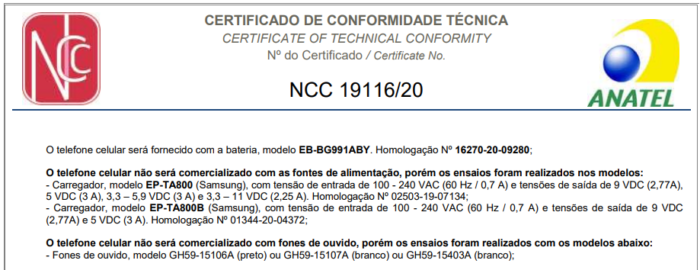
The evidence that the Galaxy S21 series will not ship with a charger comes from an ANATEL (Brazil’s equivalent of the U.S.’ FCC) certification that reveals the three phones will not ship with a charger and earphones. The news was first reported by Tecnoblog.

A translation of the portion of the certification document (pictured above) says that “The cellphone will not be sold with a power supply” but adds that the devices were tested with two Samsung chargers with model numbers EP-TA800 and EP-TA800B. It also says that the cellphones will not be sold with headphones but three headphones with model numbers GH59-15106A, GH59-15107A, and GH59-15403A were provided for testing.

However, there is a chance that buyers of the Galaxy S21 series in Brazil, at least, will get a charger and headset considering the country is forcing Apple to include a charger with the iPhone 12 models sold there. So while you won’t find one in the box, you should get one if you request for it.

Samsung will definitely not be the only one that won’t include a charger in the box of its phones next year. You can be sure a number of other manufacturers will follow suit until it sort of becomes standard, at least for flagship phones.