The year 2020 is bizarre in many ways. This year we have witnessed many out of support Android smartphones receiving updates. The Galaxy S6, Galaxy S6 Edge, Galaxy S6 Edge+, and Galaxy Note 5 are the latest devices to join this elite list. All these four handsets launched five years back in 2015.
The official support for the 2015 Samsung premium smartphones ended in 2018, three years from their release. Despite that, the Galaxy S6 series received January 2019 security patch earlier last year in UAE.

Now, the South Korean tech giant is rolling out another update to this trio along with Galaxy Note 5. This new update neither bumps up the security patch level nor brings new features. The changelog does not say much but according to SamMobile, it includes some security-related stabilization code.
In a nutshell, Samsung might have discovered a vulnerability and the company is addressing it by released a new patched build for these 5-year-old phones.
The update comes with the following firmware versions.
Galaxy S6 – G92xSKSS3ETJ1
Galaxy S6 Edge / Galaxy S6 Edge+ – G928SKSS3DTJ3
Galaxy Note 5 – N920SKSS2DTJ2
The surprise update is available in South Korea and some countries in Europe and Latin America. It may roll out in other regions as well. If you still own any of these devices and use it as your daily driver, then do head over to Settings to check for update.
After the installation of the update, these phones will continue to stay on Android Nougat with no new features.

Logitech is fast gaining a formidable reputation for its amazing products, usually computers and smartphones peripherals and accessories. The company has now launched a new wireless mouse. The Logitech G PRO X Superlight wireless gaming mouse which happens to be the brand’s lightest and fastest professional gaming mouse to date. The gaming mouse weighs only 63g.

As a way of promoting the gaming mouse, Logitech revealed that the ASTRARIS team used this mouse to win the S12 season ESL PRO league championship, and G2 used this mouse to win the LOL European championship.
In terms of configuration, the G PRO X Superlight uses a Hero 25K sensor with a DPI of 25600. It can be connected via a 2.4GHz adapter and features a standard battery life of 70 hours.


The G PRO X Superlight is scheduled to go on sale on December 3 and is priced at US$149.99. The mouse comes in black and white. The price in China is yet to be revealed. At this price, some critics believe that the Aerox 3 wireless mouse which weighs 66g is more cost-effective. The Aerox 3 comes with USB-C charging, Bluetooth dual-mode connection and more lighting effects. It equally comes with an IP54 waterproof rating.
Do recall that earlier this year, Logitech unveiled the Powered 3-in-1 Dock which is described as a fitting replacement for the discontinued Apple AirPower wireless charger. The $129 charging dock has the capability to wirelessly fuel an iPhone, Apple Watch, and a pair of AirPods all at once. The design includes two wireless charging zones: one stand-style pad meant for a phone and a flat pad for a pair of headphones. There is equally an extension to the right of the phone charging pad which houses a watch charger, also wireless.
After updating its premium smartphone to One UI 2.5, Samsung has begun to roll out the same update with fewer features to its budget devices. Starting with the Galaxy A series, the update has been also extended to the Galaxy M series. Now, Galaxy A50s has become the latest phone to get the new One UI update.
The Galaxy A71 was the first Samsung budget smartphone to receive One UI 2.5. The update was spoon made available for Galaxy A51. Later, even Galaxy M21 and Galaxy M31 received it but in the form of One UI Core 2.5
Now, a few days later, the update is also live for Galaxy A50s units in Vietnam with firmware version A507FNXXU5CTK3 (via SamMobile). Apart from bringing new features, the new system update for the handset bumps up the security patch level to November 2020.
Talking about new features, they are exactly the same ones that were delivered to Galaxy A51 and Galaxy A71. Hence, the changelog is identical. The only difference is that the build for those two devices came with the October 2020 security patch.
That means we are looking at the features like Network Quality Information Display, Request WiFi Password, Bitmoji stickers as AOD, split keyboard mode in landscape in Samsung Keyboard, enhancements for Pro Video feature, and SOS functionality in the Messages app.
Having said that, this update should be available for users in other regions in the coming days. To check if the OTA build has hit your device, head over to Settings > Software update.
UPDATE: Vivo has revealed the OriginOS update roadmap for its phones in China. You can take a look at the list here.
Vivo has officially unveiled its new UI dubbed OriginOS. The new skin has been completely remodeled from the ground up, making it quite distinct from FuntouchOS. Vivo aims to create a new digital world with OriginOS. We’ll take a look at some of the features of the new custom ROM.
OriginOS promises several enhancements in terms of performance. Vivo says it has enhanced the overall mobile phone experience – from the home screen to the wallpapers and from pictures to the game board; almost all functions have been upgraded. The overall experience is said to be smooth, convenient, and secure.
On the home screen, OriginOS introduced a brand new desktop grid system, bringing the Huarong Grid. It can flexibly and freely show the charm of every element of the desktop, and you can create a variety of imaginative layout combinations through each basic unit.
On the wallpaper, OriginOS brings behavioral wallpaper which is officially called performance wallpaper. Vivo engineers condensed the blooming process of flowers into just a few seconds, making the scenery that is usually scattered in the rush of time extraordinary and full of vitality.
The message notification also saw some improvement as OriginOS brings atomic notifications which can extract key information and can always tell you what you care about at the right time. It covers typical life scenes, and sends reminders in an elegant way, so as not to disturb the user and yet to avoid missing a message.
In terms of operation, OriginOS comes with brand new navigation gestures. There is no need to read complicated guides as the gestures are easy to understand. OriginOS arrives with 26 navigation combinations that can be completed by just clicking and operating, which almost covers mainstream operation methods.
In addition, OriginOS brings an atomic component library which carefully summarizes all atomic components and provides a variety of simple and convenient ways to retrieve them. In addition, dragging icons from the component library and placing them in the application interface can quickly generate small windows to meet multi-task operation scenarios.
The weather widget is also updated to optimize the weather information display form. It also intuitively display the temperature information. With a temperature color card with 90 color values, you can clearly perceive changes in cold and warm at a glance.
Further, OriginOS brings a brand new super card pack. Whether the phone is in the off-screen state or the interface has been navigated away from the home screen, the card pack can be called up with a single swipe. At the same time, the card package can customize the payment types that can be displayed.
For the core system optimization, OriginOS supports the latest Multi-Turbo 5.0 which brings three new technologies – memory fusion, process optimization, and application preloading. In terms of memory integration, Vivo innovatively integrates RAM and ROM through algorithm optimization. Part of the idle ROM space can be called to assume the function of RAM operation, which greatly improves the experience in background multi-application scenarios. In this way, more applications can be opened and run without the phone freezing.
Specifically, on a mobile phone with 8GB of RAM + 128GB of storage, the experience is equivalent to when the memory capacity is equivalent to 11GB, while on a mobile phone with 12GB+256GB, it is equivalent to 15GB of RAM, which greatly increases the availability of equivalent memory.
The second technical process optimization is in-depth control and optimization of system resident processes which reduces the memory usage of 100-200MB system operations. It also reduces system concurrency conflicts, increases concurrency capacity by 20%, and creates more room for mobile application operation.
The third point is application preloading. Through the application of preloading technology, users can intelligently preload applications that are ready to be opened, greatly reducing application startup time. This in turn increases application opening speed and reduces cold starts by 40%.
In addition, in terms of photography, games, and parallel worlds, Vivo’s OriginOS also brings many new features. Check out more of these features from the image below.
In February, Sony announced the Snapdragon 865 mobile platform powered Xperia 1 II and Xperia Pro smartphones. Both phones debuted as the company’s first 5G-ready handsets. Alongside these phones, the Japanese tech giant also unveiled the Xperia 10 II mid-ranger driven by the Snapdragon 665. Twitter user NodSikharulidze has claimed that the ley details of the upcoming Sony phones.
It was recently reported that the Snapdragon 720G SoC powered Xperia 10 II Plus was canceled so that the company could focus on 5G. According to the tipster, Sony is working on two phones powered by the Snapdragon 875 and Snapdragon 690 chipsets.
The flagship phone could be arriving in the market as the Xperia 1 III. Sony is yet to offer a quad-camera setup on its smartphone. It is speculated that the Xperia 1 III could be equipped with quad rear cameras.
On the other side, the Snapdragon 690 powered phone could be called Xperia 10 III. The same Twitter had claimed earlier that the company is working on an Helio P35 powered phone. This phone is hitting the shelves as the Xperia L5.
There is no word on the other specifications of the upcoming mid-range phones. It is likely that the Xperia 1 III, Xperia 10 III, and Xperia L5 smartphone may go official in February.
In September, Sony announced the Xperia 5 II flagship phone. Since its successor is likely to arrive in the second half of 2021, there is no information available on its specs. The Xperia 5 II came with a 6.1-inch FHD+ OLED display that supports 120Hz refresh rate, Snapdragon 865 chipset, 8 GB of RAM, up to 256 GB of storage, 12-megapixel triple rear cameras, 8-megapixel front camera, a side-facing fingerprint reader, and a 4,000mAh battery with 21W fast charging support.
A few days ago, Apple revealed the prices of MagSafe Duo Wireless Charger along with iPhone 12 leather cases. Now, it has confirmed via listing that the MagSafe Duo Wireless Charger will charge at less rate than the regular MagSafe Charger.
Credit: Apple
Mark Gurman of Bloomberg was quick to note(via Macrumors) the changes on Apple’slisting of the wireless Charger. As he says, Apple’s listing shows that MagSafe Duo Charger provides wireless charging up to 14W. Precisely, if you use a 20W charging USB-C adapter, the charger will give you Wireless charging up to 11W. Instead, if you use a 27W or higher adapter, you can get a maximum output of 14W.
That’s disappointing considering Apple’s MagSafe regular charger which costs lesser($₹4,500/$39) than the Duo, charges the iPhone 12 series at 15W(for iPhone 12 mini– 12W). Also, at the time of writing this news, Apple has updated the info only on the USA website and not on the Indian page.
Wow, Apple has just updated the MagSafe Duo page. The $129 charger only gets you 11 watts for charging with a 20 watt brick, or 14 watts with a 27 watt brick. That compares to 15 watts you get with the solo MagSafe charger. pic.twitter.com/Z9iWM4PGpU
For the unware, MagSafe is a proprietary standard that charges the iPhones wirelessly through a magnetically-attached charger. MagSafe Duo Wireless Charger is priced at $129/₹13,900 and can charge an iPhone(12 series), and an Apple Watch simultaneously. While buying the Duo charger in the future you will get only the charger and a USB-C to lightning cable.
Hence, you have to buy a separate charging adapter(if you don’t have one) to use the wireless charger. Apple recommends a 20W or higher brick for the 11W output and a 27W or higher for the 14W output. Interestingly, as Gurman says, Apple doesn’t sell a 27W adapter but has a 30W USB-C power adapter priced at $49/₹4,900. This shows that to use the MagSafe Duo Charger at 14W, you have to shell out $178 in the USA and ₹18,800 in India effectively(Wireless Charger+ Adapter).
Although a regular MagSafe Charger doesn’t always output the 15W, it doesn’t cost you more to buy a higher output charger. Anyway, let’s wait for real-world testing as the charger comes out. Right now, it is still listed as “coming soon”.
Verizon Wireless has launched Stream TV Gen 2 streaming device powered by Android TV. It comes with a new Verizon UI and is already up for sale priced at $69.99. The software on the original model released in February will also be updated to bring new UI and navigation improvements.
The Verizon Stream TV Gen 2 is sleeker than the original model from earlier this year. In case you are not aware, the first Stream TV looked like a normal set-top box. However, the latest version resembles a mini soundbar.
That said, the exact specifications of this device are not available. But it is said to support 4K streaming, HDR10, and HDR10+. Unlike the previous model, which got certified for Netlfix after launch, the new model ships with Netflix out of the box.
The streaming device is also certified for other platforms like YouTube TV, Amazon Prime Video, Disney+, ESPN+, Yahoo, Pluto TV, HBO Max, and Starz. In addition to these services, users can install several other apps and games from the Google Play Store.
Further, the Verizon Stream TV Gen 2 also comes with dual-band WiFi 6, which is uncommon in this segment. Lastly, being an Android TV-powered device, it also features Chromecast Built-in and ships with a Google Assistant remote control as well as a wall mount bracket.
1 of 2
Having said that, new Verizon Fios and 5G Home customers can get this streaming device for free. Additionally, the company has also released an app called Stream TV Mobile, through which customers can browse, buy, and watch VOD purchases.
Xiaomi’s Mi 11 series is expected to be the first Snapdragon 875 flagship smartphones. Accordingly, the devices(Tentatively: Mi 11, 11 Pro) are under the radar of leaks frequently. And now, a recent tip hints at the camera specs of the “Pro” device.
Tipster Digital Chat Station on Weibo has said that Xiaomi Mi 11 Pro he got to know had the camera layout and rear shell fully covered. Hence, he couldn’t spot the arrangement of cameras. However, from the system software settings, he reportedly found that the main camera of Mi 11 Pro shows 50MP resolution. Precisely, according to him, the output is a result of the 4-in-1(pixel binning) process.
Mi 11 Camera Specifications(Expected)
From what he says, it is understood that the marketing MP count of the sensor is not known yet. But the device’s main lens produces 50MP output. Moving on, tipster also mentions about a Telephoto lens on the Mi 11 Pro. Like the main lens, he says the software settings for Telephoto shows a 12MP output. However, he isn’t sure if it’s a proper 12MP lens or a 48MP sensor with a pixel binning technique.
Now, if you consider the specs of Mi 10, Mi 10 Pro, or even the Mi 10 Ultra, they have 108MP Primary sensor. Also, if we recall, the Mi 10 Pro has auxiliary sensors like the 8MP Telephoto, 20MP ultra-wide, and a 12MP portrait lens. Hence, in any case, Mi 11 Pro’s is likely to bring an upgrade in Telephoto lens.
That said, the above specs are only for the “Pro” version of the Mi 11 as the tipster says the camera specs of the Mi 11 non-Pro version is uncertain. Anyway, both the flagships are likely to darn different sensors(apart from Main lens) combination just like the predecessors.
Recently, Bomaker runs a Polaris 4K laser projector campaign on Indiegogo. It is an ultra-short-throw laser projector that produces 4K native resolution using full-color laser technology to deliver crisp imagery and an immersive viewing experience. Bomaker Polaris laser projector features a tri-color technology that blends red, green, and blue light from 3 individually calibrated light sources to cover 193% NTSC and deliver vivid pictures with precise color accuracy and incredible contrast. It is equipped with high-end Ricoh lenses and 3840 x 2160p resolution to deliver a better picture quality than HD projectors.
Gizmochina along with Bomaker is conducting 2 units of Bomaker 2.1 Channel Sound Bar as giveaway gift to a lucky reader. Like always, you just have to follow the steps mentioned on the Gleam widget to get a chance to win this amazing gift.
How to enter this giveaway? Just follow these steps:
Visit Bomaker Polaris 4k laser projector campaign and Subscribe;
Share this giveaway contest on Facebook, Twitter, and Reddit.
The winner will be posted on Gizmochina’s twitter and Gizmochina’s Facebook, so please follow us on Twitter and Facebook, so that you don’t miss the winner announcement.
Terms & Conditions:
1. The giveaway is an international giveaway. 2. We are not responsible for lost shipments. 3. We are not responsible for any duties, import taxes that you may incur. 4. We reserve all rights to make any changes to this giveaway. 5. The prize will be shipped in a month when the giveaway ends.
Just follow the steps mentioned in the Gleam widget to participate in the giveaway.
Pine64 is known for its Linux-based ARM-powered smartphones, tablets, smartwatches, laptops, server clusters, and other products. The company’s first production-ready PinePhones began to ship earlier this year. The firm partners with different OS vendors every few months for its phones. It has now joined hands with KDE to launch PinePhone KDE Community Edition.
The PinePhone by Pine64 uses a different Linux-based operating system with each batch. The name of the model is determined by the OS that comes pre-installed, in addition to the logo of the system software on the device’s rear panel.
Since the new batch of PinePhone will run KDE Plasma Mobile, the handset is called PinePhone KDE Community Edition. It will be available in two storage configurations – 2GB + 16GB and 3GB + 32GB (with USB Type-C dock), priced at $149 and $199 respectively.
As far as specs are concerned, the smartphone is powered by Allwinner A64 chipset with a quad-core ARM Cortex-A53 CPU and ARM Mali 400 MP2 GPU paired with 2GB/3GB LPDDR3 RAM and 16GB/32GB eMMC storage. It flaunts a 5.95-inch HD+ (1440 x 720 pixels) display (LCD) with 18:9 aspect ratio.
It includes all the necessary sensors like accelerometer, gyro, proximity, barometer, ambient, and compass. Whereas, for connectivity, it features 4G, single-band WiFi, Bluetooth 4.0, GNSS (GPS, A-GPS, GLONASS). It also has a 5MP rear camera, a 2MP front-facing camera, a 3.5mm headphone jack, and a USB Type-C port.
Last but not least, the device measures 160.5 x 76.6 x 9.2mm in dimensions, weigh 180-200g, and is backed by a 3,000mAh battery, which can be replaced with any SamsungGalaxy J7 battery.
The PinePhone KDE Community Edition will be available for pre-order starting December 1 on Pine64’s official website. The company is also working on a replacement back for this phone, which will add support for Qi wireless charging. This additional accessory will be available early next year.
Xiaomi initially launched the Redmi Note 9 Pro in India in March. Later, in the same month, this smartphone was announced for other global markets with the Redmi Note 9S moniker. The handset was released with MIUI 11 based on Android 10 and was only recently updated to MIUI 12. Now, it has even started receiving Android 11 update in India.
Chinese smartphone maker Xiaomi started rolling out the long-awaited MIUI 12 update to Redmi Note 9 Pro in India in mid-September. The company later began to push the update to global Redmi Note 9S in the next few weeks and by the end of October, the rollout was almost complete.
Now, certain Redmi Note 9 Pro users in India have begun to receive Android 11 update as well. The new system update comes with build number V12.0.1.0.RJWINXM. It is currently in the stable beta stage and therefore, it is only available for select users.
If the early adopters don’t face any major issues, the same build will be rolled out as stable for more users in the coming days. Hence, we can expect all the Redmi Note 9 Pro users in India to enjoy Android 11 in December.
That said, since the global Redmi Note 9S is basically the same device, it should also start getting Android 11 update very soon.
Samsung Electronics announced earlier today (18th November 2020) that it would be temporarily shutting down one of its research centers after a positive case of the COVID-19 infection surfaced.
The South Korean tech giant is ordered all of its employees that worked in the facility to work from home till at least the end of this week. This move is done to prevent the further spread of the infection. Similarly, another South Korean company, LG, also reported a positive case of coronavirus at its own research facility in Seoul, as per a SamMobile report. The Samsung research center was located in Suwon, where one of the workers was tested positive for the virus earlier this week.
The company has stated that it would follow all the procedures to curb the virus from spreading further. Samsung will sanitize the entire building and test every worker who were in contact with the employee that tested positive. Notably, this is the second case of the coronaviorus infection in the same facility, with the first case surfacing about five months ago. The quick and decisive move from the company is understandable as the virus is highly contagious. Samsung has been quick to adapt to COVID-19 situation and has even recovered well, with it reporting its highest ever quarterly earning in Q3 2020, despite the initial impacts of the virus on its operations.
A new rumor had recently surfaced, which suggested that Huawei and Leica‘s partnership had expired. However, the Chinese tech giant has denied the rumor, despite the source being a prominent Weibo leakster.
For those unaware, Huawei had first partnered up with Leica back in 2016, for its the flagship Huawei P9. The known camera company even contributed towards the image processing, UI design, and camera module design and has since been a staple partner of the smartphone maker for its flagship lineups. But now, it was rumored that this partnership had come to an end, when known leakster, DigitalChatStation revealed the information on Weibo, a Chinese microblogging website.
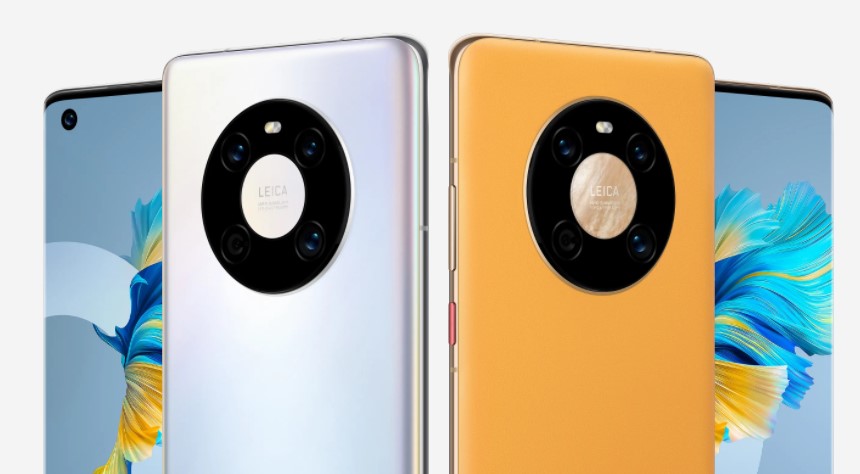
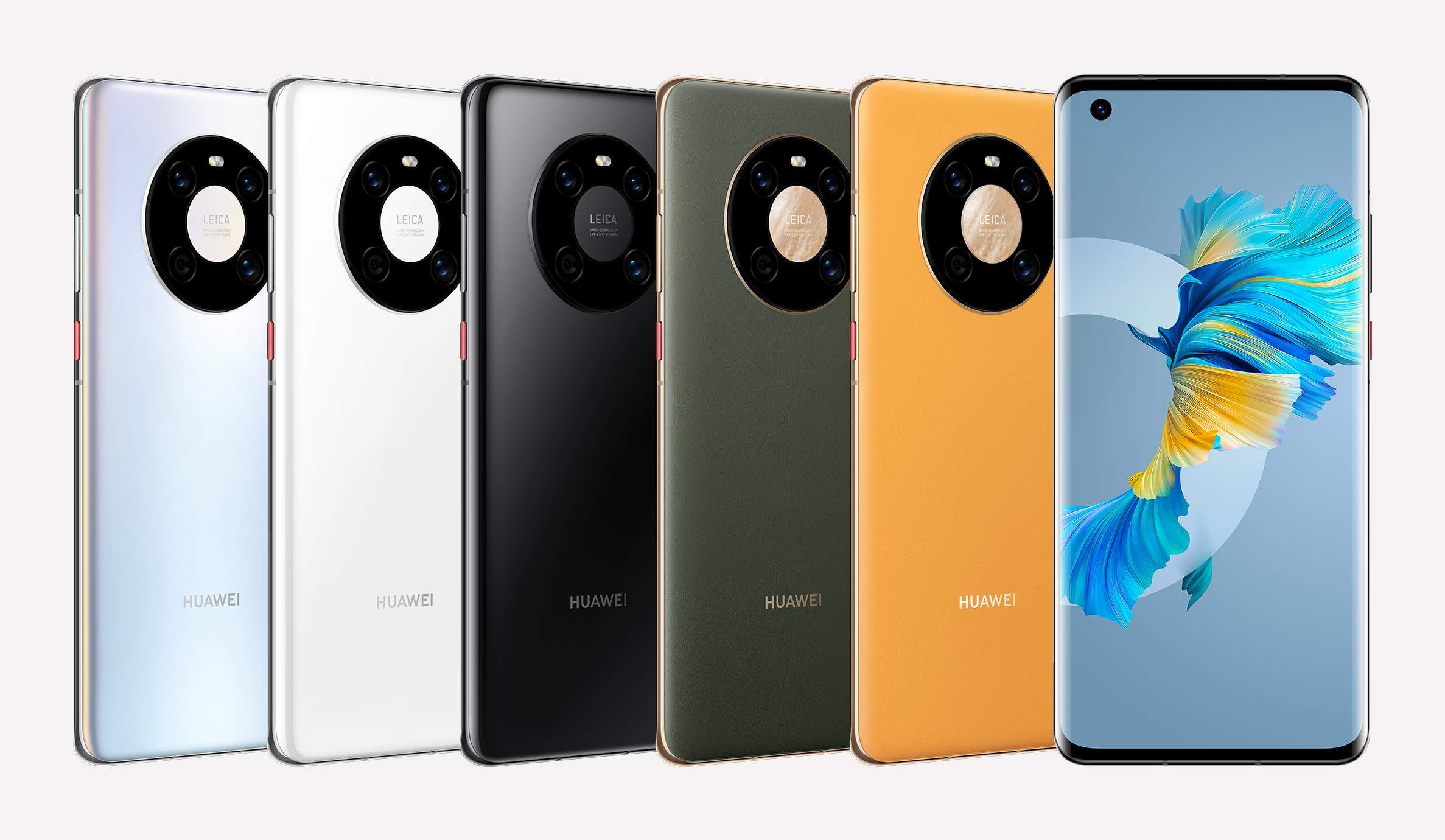
The leakster claimed that Leica has been contacted by a different Chinese smartphone manufacturer and had decided to end the partnership. Although, Huawei has since responded to AndroidAuthorityregarding this matter and called the rumor “absolutely fake news,” while a Leica representative stated that they “have no information about the termination of the partnership.” So for the moment, it seems that the partnership is still holding strong. Even the latest Huawei Mate 40 series featured Leica branding on the rear for its camera lenses.
Vingroup has partnered with Qualcomm to launch an ultra-affordable 4G smartphone in Vietnam. This phone called Vsmart Bee Lite is priced at only VND 600,000 ($26) and is only available for existing 2G and 3G customers of state-run carrier Viettel.
The Vsmart Bee Lite is just another entry-level smartphone, as per its specifications and features. But its price tag makes it stand out from the crowd.
Talking about specs, this device sports a 5.45-inch FWVGA+ (480 x 960 pixels) 18:9 display (LCD) on the front with a 2MP selfie camera above it. Whereas, the back of the phone houses a 5MP primary camera.
Further, the handset is powered by Qualcomm Snapdragon 215 chipset paired with 1GB RAM and 16GB internal storage. If needed, users can expand the storage using a microSD card (up to 64GB).
Other features of this phone include single-band WiFi, Bluetooth 4.2, GPS, accelerometer, proximity sensor, light sensor, 3.5mm headphone jack, and MicroUSB port.
That said, due to lower hardware, the device runs Android 10 Go Edition and is backed by a 2,550mAh battery. Last but not least, it will be available in two colors – Black & Green and will come with 18 months warranty
Most importantly, this affordable 4G smartphone will be only available under Viettel’s ‘1 for 1 upgrade’ and ‘switch for 101 days’ programs to push 4G among 2G and 3G handset users in Vietnam
Earlier today (18th November 2020), Xiaomi launched a new MIJIA product. It is the Mijia Multifunctional Smart Electric Kettle, which is priced at 169 Yuan (roughly 26 US Dollars) and is currently in crowdfunding for 139 Yuan (roughly 21 US Dollars).
The new MIJIA product is built for offering a simple and convenient method for making various recipes. It features 10 different power adjustment settings and can cover a range between 100W slow simmering and a 1000W high power heating. The device comes with built in programs and recipes, which are optimized to make different foods like tea, soup, or even deserts, and other customer recipes. Its design is minimalist and resembles a generic electric kettle, with a majority of its body surface being transparent as well.
Furthermore, the Mijia Multifunctional Smart Electric Kettle also offers a heat preservation control that lets users keep the temperature anywhere between 45 degree Celsius and 85 degree Celsius to maintain warmth and can even maintain that heat for up to 12 hours. Since it is a smart product, it can be controlled remotely with a smartphone through the MIJIA mobile application. This lets users set timers, or control the temperature in real time. So for those interested, you can back the device through the crowdfunding from Xiaomi.
IDC (International Data Corporation) has released a report on China Tablet Market Q3 2020. According to it, OEMs managed to ship approximately 6.9 million units gaining 21.7% YoY growth during this period. The last quarter also happens to register the highest YoY growth in a single quarter since 2014.
As per the report, the China Tablet Market shipped 3.34 million units of traditional tablets and 3.57 million units of detachable tablets. The former recorded an 11.6% YoY decline, whereas the latter registered an 87.9% YoY increase.
However, although the market witnessed the highest YoY growth in years, brands could not keep up to the demand. ‘Out of Stock’ was the norm across retailers in the third quarter of 2020. That’s because the supply chain issue will be only stabilized by year-end with the termination of large-scale purchases in the commercial market.
That said, the hurdle is expected to kick back once again in the second half of Q1 2021 as people will be continuing their work and education from home. But it will be once again balanced in H2 2021.
Further, according to the report, the commercial tablet market shipped 1.62 million units with 29.5% YoY growth. This was the result of peak shipment growth of 737% YoY and 42.2% YoY by the government census project and the education industry respectively. On the other hand, the consumer market grew 19.5% YoY by shipping 5.28 million units, But MoM shipments decreased by 5.9%.
Talking about brands, Huawei led the market with a 37.7% market share by shipping 2.6 million units. The company achieved 22.9% YoY growth but its future is uncertain due to the US ban. In fact, the competition is already catching up.
Apple was so close to Huawei in Q3 with 2.59 million shipments and a 37.5% market share. The American tech giant recorded a 35 YoY growth. Lastly, the third and fourth places were occupied by Lenovo and Microsoft with a mere 4.6% and 2.4% market shares. These two companies grew 42.1% YoY and 23.3% YoY by shipping 320,000 units and 170,000 units respectively.
Last but not least, the IDC report also says that TCL gained a whopping 290.1% YoY growth in the global tablet market in Q3 2020. The Chinese company attained the highest YoY growth among the top 10 OEMs worldwide.
The Oppo X 2021 Rollable Concept smartphone was just unveiled yesterday, which was a first of its kind device that could extend its display. During the announcement, the company had refrained from mentioning any particular detail regarding the display of the handset. But now, it is confirmed that the screen is made by Chinese display maker BOE.
For those unaware, the Oppo X 2021 Rollable Concept smartphone uses a rollable OLED panel, which allows the display to extend from 6.7 inches to 7.4 inches. This display was made by BOE, and the information was shared by the display maker’s Vice President, Li Xuezheng. The senior BOE executive shared the information with a post on Weibo, a Chinese microblogging website, which even carried a short video showcasing the smartphone’s display.
The device in question is a concept smartphone, meaning, it will not be commercially available at the moment. Although, the company aims on bringing the technology to consumers in due time. In the announcement, Oppo had mentioned the many challenges it faced while making the device. This includes a proprietary roll motor, a new back panel support structure and a redesign of internal circuitry for the OLED panel, which was likely a joint effort with BOE that has been working on the display technology for a while now.
Various Chinese smartphone brands have found great success in India. The Southeast Asian nation has been a big market for these companies, and now, a Vivo official has stated that the company considers India as a critical market and plans on opening over 100 exclusive stores in the region within one year.
Nipun Marya, Director Brand strategy, Vivo India, recently gave an interview to the BusinessInsider, regarding the year, the company’s future plans, and growth strategy for 2021. The senior official stated that 2020 had been a “difficult year,” but they “are seeing that the industry has seen a reasonably good recovery when it comes to sales. And we are seeing good growth, about 25% over last year during the festive season.” However, the Chinese smartphone maker is still expecting “single digit de-growth this year.”
Marya further added that Vivo has plans to expand its offline presence in the region by opening various exclusive and even experience stores. He said that “Currently we have around 450 stores. We are planning to open up more than hundred exclusive stores within the next 1 year.” This move would be crucial for the company as the bulk of its sales comes from offline channels.
Furthermore, the Vivo executive also said that “non-metros [Cities] are leading growth and that’s also true in the case of Vivo. Metros still remain in absolute terms the largest market, but in terms of growth percentage, it is certainly coming from non metros and that remains true for us.” In other words, while major cities are still the largest market in the country, the smaller towns have shown a higher potential for growth. He further added that, “We are manufacturing all our phones here but after the center comes up, we will also design the phones in India. Its an extremely important market for the brand and how importantly we take the market can very well be seen from the kind of investments we have done here so far.”
ZTE just dropped a new teaser this morning (18th November 2020). The company shared that a new announcement drops tomorrow, which might just be for a new smartphone launch.
ZTE Blade A7s 2020
The smartphone maker shared the news through its official Weibo account, a Chinese microblogging website. Previously, ZTE’s Lu Qianhao had revealed that the company is planning on launching a number of new smartphones in the month of November. So far, only one new launch has arrived, so we can expect that new handset could drop tomorrow.
While it is unknown which smartphone model will be revealed tomorrow, a few educated guesses can be made. The company had released the ZTE Blade A7s 2020 earlier this month. It was a budget entry level device, so we might see another launch within the same lineup. We had recently reported on live images of the ZTE Blade A51 surfacing online. The device has also passed through FCC certification with key specs being revealed as well. So we might hear more about the handset tomorrow.
Blade A51 Live image
Unfortunately, we do not have a lot of information to go on at the moment. While the a launch conference for a smartphone is highly likely tomorrow, we still don’t know with full certainty. So take this report with a pinch of salt, and stay tuned as we will be covering the announcement that is scheduled tomorrow.
According to the latest report from DigiTimes Research, the top five leading laptop companies saw their combined shipments in the month of October 2020 reach a new monthly high for the year.
The report claims that the shipments for the leading five companies reached over 17 million units in October. This is mainly attributed to the consumer markets in the United States and Europe entering the peak season and increased demand for these devices because of the COVID-19 pandemic as more and more people are working from home.
HP Spectre x360
Thanks to the strong demand for both — consumer and education models in laptops, HP retained its leadership position in the market for the month of October. However, Dell managed to unseat Lenovo for the second position, thanks to its growth in the Chromebook shipments because of the US education market.
Lenovo‘s shipments slipped in the month of October as the company fulfilled its education-use Chromebook orders from Japan. Also, the demand for notebooks in the company’s home market China was weaker than that in the US and Europe last month.
Further, the report goes on to add that Taiwan’s top three notebooks ODMs witnessed growth in the combined shipments by 13 percent. Among them, Compal Electronics posted the highest monthly shipment growth of over 30 percent, thanks to the significant increase in orders from Dell.
Recently, Strategy Analytics published a report for the global notebook PC market and revealed that the shipments reached a total of 62.2 million units in Q3 2020 with a growth rate of 34 percent Year-on-Year.
It also reported that HP came first with 14.7 million shipments, closely followed by Lenovo with 14.6 million units who was the market leader in the previous quarter. Whereas, the third, fourth, and fifth places were occupied by Dell, Apple, and Acer with 8.5, 6.0, and 4.9 million units respectively.
We use cookies on our website to give you the most relevant experience by remembering your preferences and repeat visits. By clicking “Accept”, you consent to the use of ALL the cookies.
This website uses cookies to improve your experience while you navigate through the website. Out of these, the cookies that are categorized as necessary are stored on your browser as they are essential for the working of basic functionalities of the website. We also use third-party cookies that help us analyze and understand how you use this website. These cookies will be stored in your browser only with your consent. You also have the option to opt-out of these cookies. But opting out of some of these cookies may affect your browsing experience.
Necessary cookies are absolutely essential for the website to function properly. This category only includes cookies that ensures basic functionalities and security features of the website. These cookies do not store any personal information.
Any cookies that may not be particularly necessary for the website to function and is used specifically to collect user personal data via analytics, ads, other embedded contents are termed as non-necessary cookies. It is mandatory to procure user consent prior to running these cookies on your website.