Apart from foldables, Samsung has been also patenting and trademarking designs and utilities related to normal smartphones. Last week, Samsung Display trademarked “Blad Bezel” for a variety of devices such as smartphones, digital cameras, video screens, and more. Now, Samsung Electronics has trademarked a similar thing called ‘Samsung Bade’
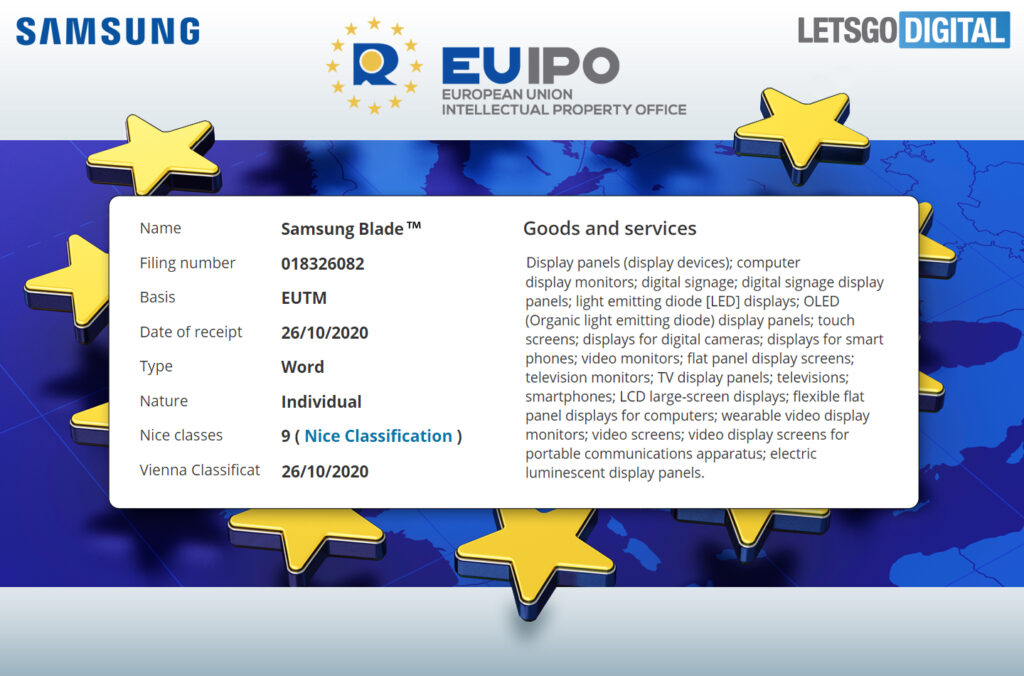
Just like last week, this week’s Samsung trademark was also spotted by none other than LetsGoDigital. According to the publication, Samsung Electronics filed for the trademark called ‘Samsung Blade’ with the EUIPO (European Union Intellectual Property Office categorized as Class 9.
The description of the new trademark includes the following things.
The above-mentioned description for ‘Samsung Blade’ indirectly suggests that the South Korean tech giant may use this for the Galaxy S21 series, especially Galaxy S21 and Galaxy S21+, which are expected to come with flat displays instead of curved panels found on their predecessors.
Since the Galaxy S21 series is reported to launch in January, much earlier than previous generations, the smartphones in the series have begun to receive certifications from multiple bureaus.
Now, as Samsung Electronics has filed this trademark at around the same time, there’s a high chance for the company to use it for the Galaxy S21 series.
JF Technology, a subsidiary of JF International, is entering into a partnership with the venture capital arm of Huawei Investment & Holdings Co Ltd. This partnership will be achieved through Huawei’s subscription to shares in JFH Technology.
According to TheStarreport, a recent filing with Bursa Malaysia had JF Technology state that Hubble Technology Investment will inject a total of 1.5 million US Dollars in JFH Technology. This will fortify the relationship with the Chinese firms as a key customer, while also maintaining a strategic partnership and gaining access to the Chinese market as well.
Out of the total contribution, 410,000 US Dollars will be credited to the increased registered capital of JFH while the remaining 1.09 million US Dollars will be credited to the capital reserve. Furthermore, JF International will have a 55 percent stake of its own 500,000 US Dollars capital contribution while HTI will own the remaining 45 percent.
JF Technology stated that the collaboration will allow the group to establish a long term business partnership with Hubble Technology Investment and other customers like Huawei in China. It further added that “With the opportunity for JFH Technology to work closely with HTI to develop new test contacting technology for 5G network and 6G network as well as in the future, there will be technological know how and knowledge transfer from JF Group to JFH Technology, enabling JFH Technology to move up the value chain of the semiconductor industry while developing local talents amongst Malaysians.”
The App Store is the only way to get apps and games on iPhones and iPads. Hence, whenever a slight change occurs on the platform, it affects all the users. This is one of the primary reasons why Apple is facing an anti-trust case against it. That said, a new change is on its way to the App Store for certain countries as a result of new taxes and foreign exchange rates.
The change we are talking about is the increase in prices of apps and games on the App Store as well as in-app purchases for the following countries.
Brazil
Colombia
India
Indonesia
Russia
South Africa
In India, price is being hiked due to the new equalization levy of 2%, in addition to the existing 18% GST (Goods & Services Tax). Whereas, in Indonesia, the changes are being made as a result of the new 10 % value-added tax for developers based outside of the country.
It is worth noting that the new changes will not affect auto-renewable subscriptions. Additionally, Apple also mentions that prices will be adjusted in Iceland and Albania as well. However, it is not sure if the final price will increase or decrease in these countries.
The new prices for apps and games on the Apple Apple store as well as in-app purchases will be rolled out in the coming days.
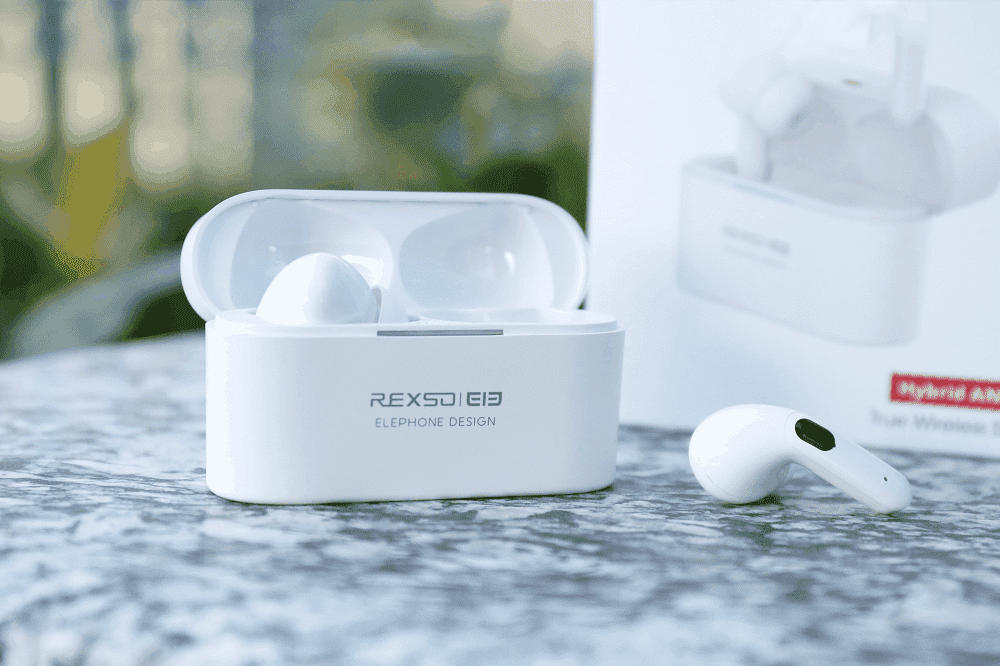
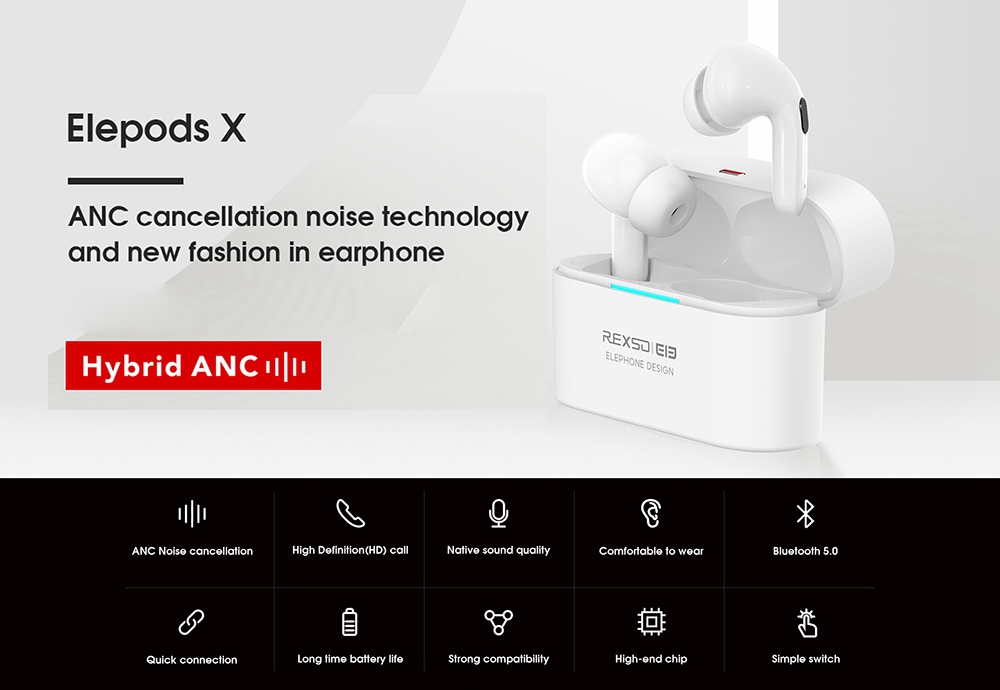
Ever since their launch, the ElePods X has created quite a buzz among people. This pair is not the stereotypical TWS earphones but are enhanced with top-touch features like active noise cancellation (ANC). Surprisingly, it comes in a pocket-friendly price range and is currently up for sale at a discounted price of just $69.99 on ELEPHONE’s website.
For a budgeted earpiece to offer an ANC feature is quite a big deal. ANC helps diminish the surrounding sounds to allow the user to get an immersive experience. ElePods X can quell up the ambient sounds for up to 30db. It also enables the user to control the noise level to alert the user of their surroundings while performing various tasks like running, cycling or traveling while listening to music.
Elepods X uses an inward-facing microphone and 9mm drivers that deliver studio-quality crisp sound. Its synchronous transmission technology transfers sound to both ears at the same time, restricting latency. With low-latency, the user can enjoy playing games with uninterrupted or delayed sound effects on both Apple and Android devices. AI algorithm allows the user to make HD calls that enable the other person to hear the human voice more clearly.
Elepods X supports Bluetooth 5.2 transmission protocol that provides a smooth and stable connection. Featuring 50mAH capacity on each earbud, this pair can offer up to 6-7 hours (official figure) of uninterrupted playback. Its case boasts a 550mAh battery that can allow 30 hours of seamless use.
These ELEPHONE earphones have an IPX5 rating that can prevent damage caused by water. Its ABS body can easily withstand minor bumps and accidental drops, making it ideal for everyday use. Furthermore, the silicone eartips provide an ergonomic and comfortable fit. ElePods X features a sleek and straightforward design that is inspired by AirPods and features a similar mesh microphone design on the stem as the Apple AirPods Pro.
ElePods X comes in Black and White color variants to cater to different consumer needs. Packed with a host of features and cutting-edge technology, this pair offers more than what one can expect for its pocket-friendly price range. This earpiece is currently being sold with a $20 discount. All interested readers can buy ElePods X at just $69.99 on their official website.
To know more about the product, click on the link below.
Samsung Electro-Mechanics will be increasing the number of camera modules for the company’s budget smartphone models. These devices will arrive in 2021 and would also account for over 10 percent of the sales next year, as stated by Samsung.
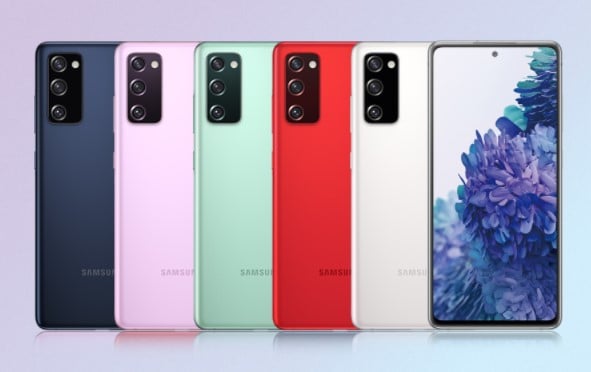
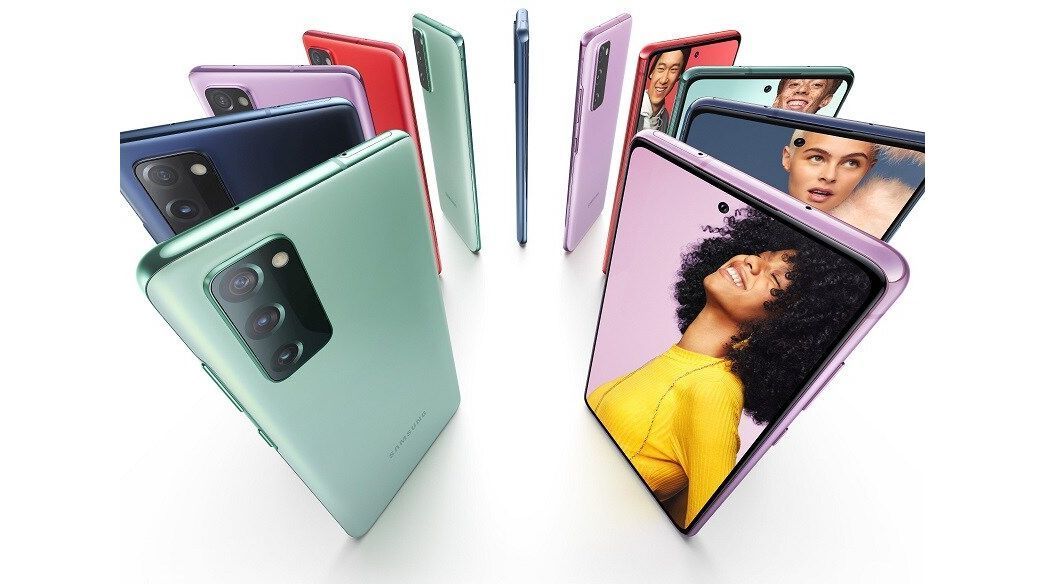
Samsung Galaxy S20 FE
According to TheElecreport, this is the first confirmation that the firm will be supplying camera modules for Samsung Electronics’ budget Galaxy handset models in 2021. Furthermore, the demand for affordable devices with higher end cameras has also risen, such as optical zoom lens, as per Samsung Electro-Mechanics’ during its third quarter conference call.
At the moment, the company has begun supply 3x optical zoom lenses with optical image stabilization (OIS) in Q3 of 2020, but the production is expected to rise further and will soon be found in mid tier smartphones as well in the near future. This would also lead to a double digit increase for related camera module products in 2021, as noted by the company. The South Korean firm is also planning on supplying the primary cameras on the Galaxy A52 and Galaxy A72, according to sources close to the matter.
Notably, Samsung Electro-Mechanics has also supplied the 3x optical zoom on the recently launched Galaxy S20 FE. Furthermore, the company is planning on increasing the portion of multi layer ceramic capacitor (MLCC) for auto-components to 10% of the total by the fourth quarter. With the North American automobile market also starting to recover, Samsung is expecting growth healthy demands to accelerate its growth.
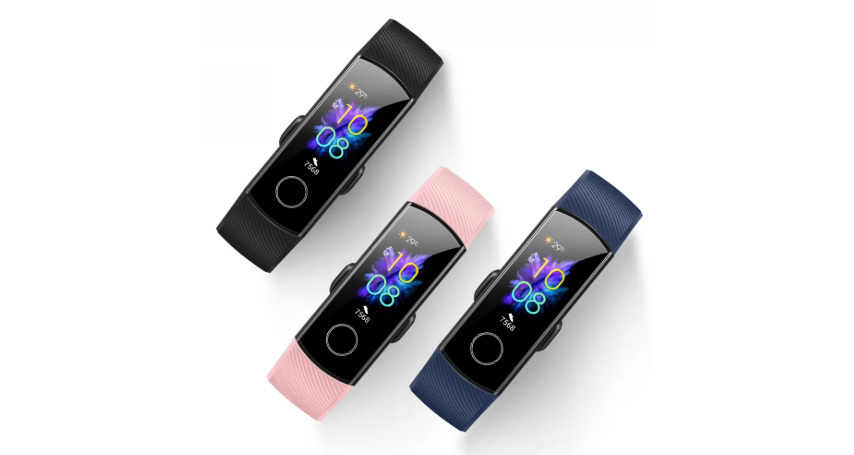
Huawei is going through hard times but the company as well as its sub-brand HONOR continues to launch new products. Though the Chinese telecom giant may not be able to produce smartphones in a few months from now (at least with its own chipsets), it might still continue to manufacture and sell connected products. According to a tip, HONOR will be soon launching a new fitness tracker called HONOR Band 6.
Honor band 5
Just like Xiaomi’s Mi Bands, Huawei also sells fitness trackers called HUAWEI Band and HONOR Band. Almost all the wearables from these two brands are identical with some minor differences.
Hence, this upcoming HONOR Band 6, as tipped by 长安数码君on Weibo may also launch as HUAWEI Band 5. That said, according to the said leakster, the HONOR Band 6 will be the first full-screen fitness tracker. Since this person has been accurate with almost all of his HUAWEI and HONOR-related leaks, we believe it could be true.
Anyway, we are not sure how much of a full-screen experience this fitness tracker will offer. But anything better than the current maximum screen-to-body ratio is a welcome change.
Apart from this little piece of information, nothing else is known about the forthcoming HONOR Band 6. There’s a chance that it may get unveiled alongside the rumored HONOR V40 series.
Chinese smartphone manufacturers, Xiaomi and Huawei, are among the top 20 favorite brands in Russia. This list comprises of companies from different industries as well and marks the growth in market share for Chinese OEMs in the region.
Over the course of the past few years, Xiaomi has been rising in this list and has ranked among the top favorite brands for Russians. Back in 2018, the company was selected within the top 20 for the first time and ranked 11th. Jumping to 2020, the Chinese tech giant is now in the 7th position. Similarly, Huawei has also entered the top 20 rankings and has been selected for the first time ever, ranking 13th this year, as per a SputnikNewsreport.
Notably, Xiaomi ranks higher than a number of popular brands including, Coca-Cola, LG, Zara, Puma, and even H&M. While on the other hand, Huawei also beat known competition like Ostin, McDonald’s, BMW, Pepsi, Asus, Reebok, and Levi’s. The leading spots in this list are still held by brands like Samsung, Adidas, Nike, and Apple. These rankings were a part of the “Russian Favorite Brand” survey that has been taken every year since 2008.
Interestingly, while Xiaomi isn’t among the top 5 rankings within the list, yet, it did launch a few smartphones that topped the handset market in the region. In 2016, Xiaomi overtook Apple to occupy the first and second spot in the market with the Redmi 4 Prime and Redmi Note 3 Pro. The company once again topped the list in the following year. In 2019, Redmi Note 7 again took the top rankings in terms of sales and its devices have been gaining popularity due to their affordable prices and reliability.
Huawei has today officially confirmed that the company will be launching its new Smart Screen on 30th October in China. The teaser poster shared by the company showcases a smart screen and a car, hinting at the product being an in-car smart display.
Earlier, it was reported that the Chinese giant could soon launch a new smart screen for cars, which will be powered by the company’s own HongMeng OS 2.0. It is also said to be a tablet-sized product that can be connected to Huawei’s smartphones for several additional features, including listening to music, watching videos, making phone calls, among others.
Huawei has been expanding its product offerings, especially in the smart screen category for the past few months. The company’s executive has revealed that the company has plans to create screens for four major areas — Home, Office, Car, and Sports.
It seems that this upcoming in-car smart screen isn’t the only car-related product coming from the Chinese giant. Last month, the company had registered Huawei Electric Technology with a capital of 250 million yuan, which focuses on engineering research, development, testing, and selling of smart automotive products.
During this year’s Huawei Developer Conference 2020 (HDC), the company held HMS for Car Smart Mobility sub-forum and introduced its new smart car cloud service solution. It also revealed that the company is also working with Volvo and Hongqi.
As for this new upcoming product, it is likely the HiCar Center Screen which received a Bluetooth certificate last month. The device will be powered by HiCar, Huawei’s own take on Android Auto but will have HongMeng OS as a base.
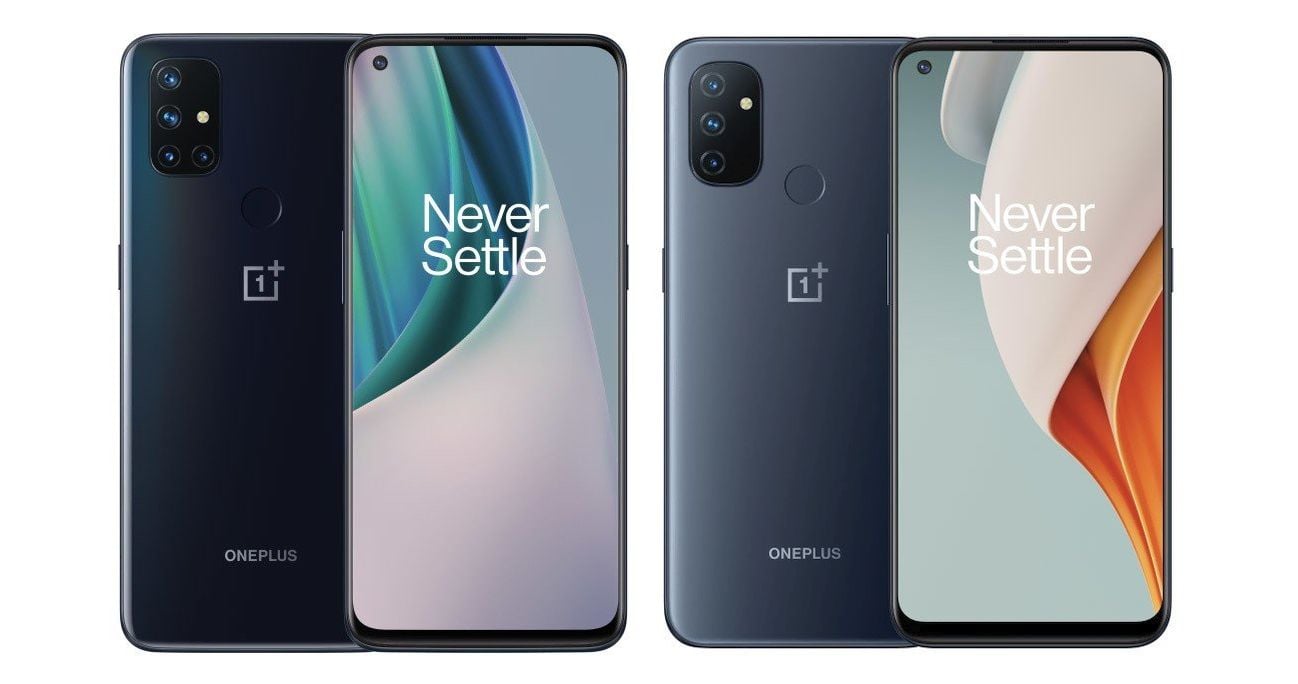
OnePlus silently announced the Nord N10 5G and N100 mid-range phones yesterday. At present, these are the cheapest smartphones from the OnePlus. OnePlus confirmed that both phones will be heading to markets like North America and Europe. A report by Android Centralclaims that the Nord N10 and N100 will not be releasing in India.
Weeks before the announcement of the Nord N10 5G and N100 the publication had spilled a lot of exclusive information on these phones. Now the same publication mentioned in the launch article of the Nord N10 5G and N100 that these devices will not be releasing in India. Hence, the Snapdragon 765G powered Nord will be the only OnePlus phone in the mid-range segment in the country.
OnePlus Nord N10 5G and N100 specifications and price
The OnePlus Nord N10 5G has a 6.49-inch IPS LCD screen with FHD+ resolution and a 90Hz refresh rate support. On the other side, the OnePlus Nord N100v has a 6.52-inch IPS LCD display that offers HD+ resolution and a 60Hz refresh rate. These phones are powered by Snapdragon 690 5G and Snapdragon 460, respectively.
The OnePlus Nord N10 5G has 6 GB of RAM, 128 GB of built-in storage, and a 4,300mAh battery with 30T Warp Charge support. The Nord N100 has 4 GB of RAM, 64 GB of storage, and a 5,000mAh battery with 18W charging support. Both phones have common features such as OxygenOS 10.5 based Android 10 OS, rear-facing fingerprint reader, microSD card slot, Wi-Fi 802.11ac, Bluetooth 5.0, GPS, and a 3.5mm audio jack.
The OnePlus Nord N10 and N100 feature 8-megapixel and 16-megapixel front-facing cameras, respectively. The N10 has a 64-megapixel + 8-megapixel + 2-megapixel + 2-megapixel quad-camera setup, while the N100 has a 13-megapixel + 2-megapixel + 2-megapixel triple camera setup.
The Nord N10 is priced £329/€329 (~$429) and comes in Midnight Ice hue. The N100 costs £179/€179 (~$233) and it can be availed in Midnight Frost color.
The Redmi K30S has dethroned iQOO Neo3, which has been exclusively available in China to become the most affordable Snapdragon 865 mobile platform. The phone features an attractive screen that supports up to 144Hz refresh rate. The device is backed by a huge battery that is coupled with fast charging support.
Redmi K30S specifications and features
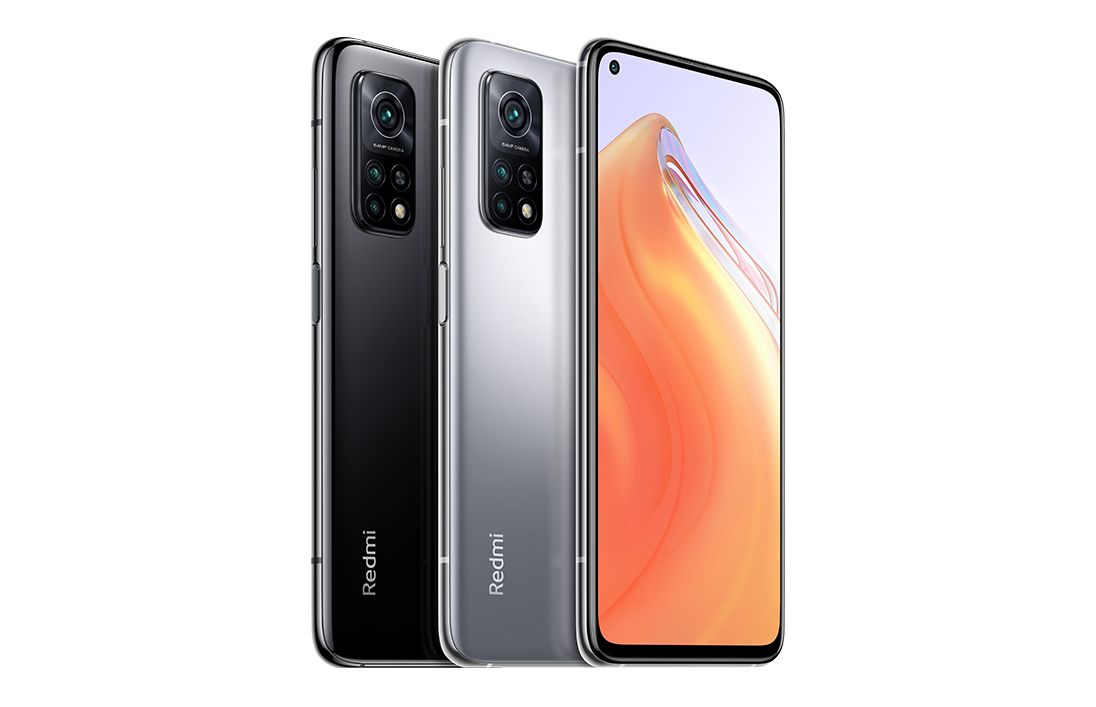
The Redmi K30S measures 165.1 x 76.4 x 9.3mm and 216 grams. It is shielded by Gorilla Glass 5 on the front and rear. The 6.67-inch supports a Full HD+ resolution, a 20:9 aspect ratio, HDR10+, MEMC, 650nits brightness, and up to 144Hz refresh rate. The phone comes with support for AI face unlock and it has a side-facing fingerprint reader. The Android 10 OS that is skinned with MIUI 12 comes preloaded on the Redmi K30S.
The rear-facing triple camera system of the Redmi K30S is led by a 64-megapixel Sony IMX682 main camera with f/1.89 aperture. It is accompanied by a 13-megapixel ultrawide lens with a 123-degree field-of-view and a 5-megapixel macro shooter. It supports 1080p slow-motion video shooting and up to 8K video recording.
The Redmi K30S is powered by the Snapdragon 865 mobile platform. The SoC is assisted by up to 8 GB of LPPDR5 RAM and up to 256 GB of UFS 3.1 storage. The retail package of the Redmi K30S includes a 33W fast charger for its 5,000mAh battery. The phone comes with other features like dual SIM, 5G / 4G, Wi-Fi 6, Bluetooth 5.1, NFC for contactless payments, dual-frequency GPS, and dual linear stereo speakers. The Redmi K30S lacks support for a 3.5mm audio jack and external storage. As is known, the K30S is a rebranded version of the Xiaomi Mi 10T that debuted in global markets and India in the recent past.
Redmi K30S price and availability
Here is the pricing of the different variants of the Redmi K30S:
8 GB RAM + 128 GB storage – 2,599 Yuan (~$388)
8 GB RAM + 256 GB storage – 2,799 Yuan (~$418)
Color variants: Cosmic Black and Lunar Silver
During the upcoming Nov. 11 Singles’ Day sales in China, both models will be available for 2,299 Yuan (~$343) and 2,499 Yuan (~$373), respectively.
It’s been just a few days since Apple announced its next-generation iPhone 12 models in the market and details about the next year’s smartphones have started making rounds.
The newly launched iPhone 12 models are powered by the Apple A14 Bionic chipset and now a new report has surfaced online which reveals what to expect from the next-generation Apple A15 Bionic chipset which will power the iPhone 13 models.
A report coming from China Times claims that the A15 Bionic will be manufactured using the N5P node by TSMC, which is among the three variants of 5nm node being developed by the Taiwanese manufacturer.
It also adds that the mass-production for the same could start in the third quarter of the upcoming year, i.e. Q3 2021. Apple has reportedly started working on the same to avoid any delays as the company had to delay the launch of this year’s iPhone models because of the COVID-19 pandemic.
Recently, it was reported that TSMC’s facility for the production of 5nm chips has been fully booked by Apple and the reason for the preferential treatment is likely the fact that almost one-fifth of the company’s total revenue comes from the Cupertino-based tech giant.
This probably is the reason which led to Samsung getting orders from Qualcomm for the mass-production of the upcoming flagship chipset — Snapdragon 875, which is also being manufactured using a 5nm node.
While the Apple A15 Bionic chipset is expected to use the 5nm process, manufacturers like TSMC and Samsung have already started working on more advanced technologies, which includes a 3nm process and even a 2nm process, which will be ready for use in mass-production of chipsets in the coming years.
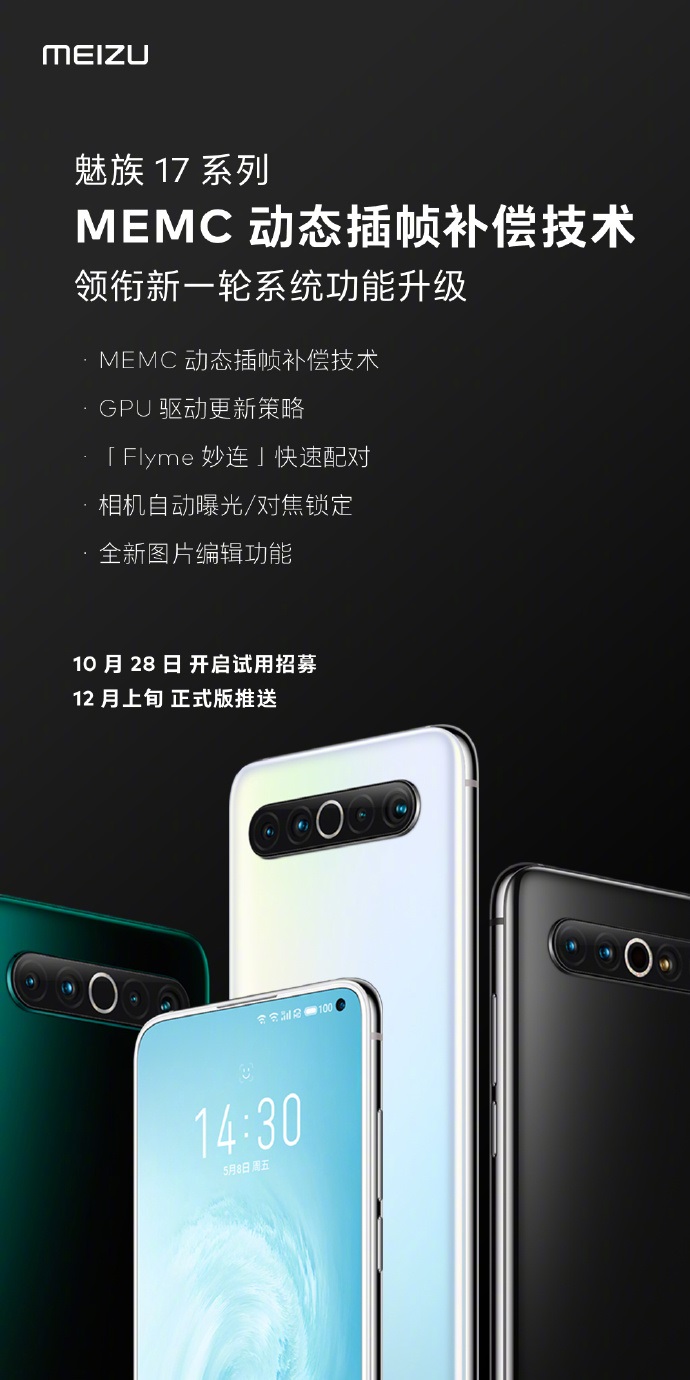
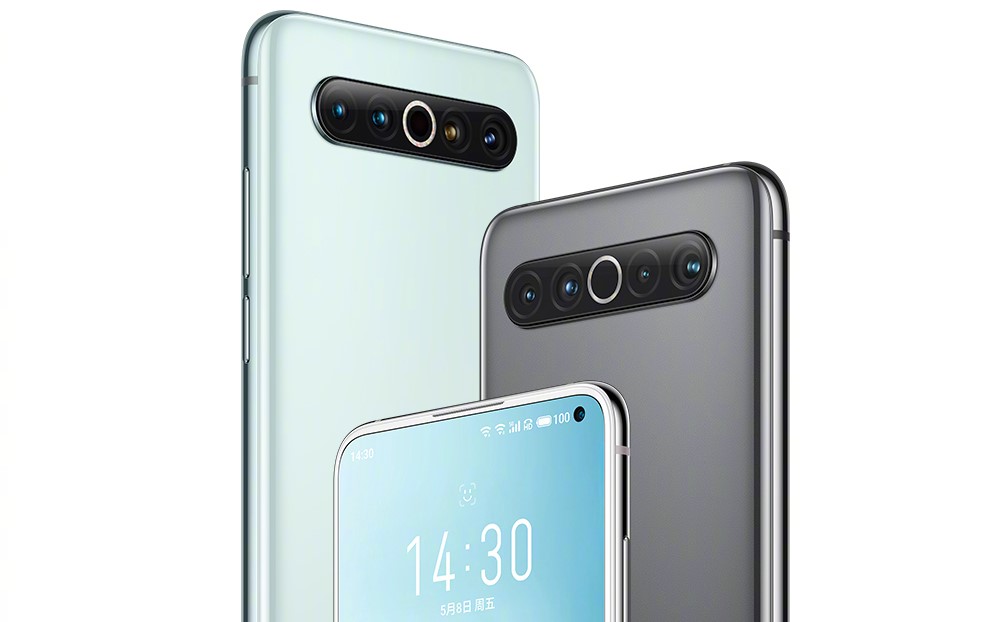
Earlier this year, in May, Meizu had launched its flagship smartphones in the form of the Meizu 17 series. Ever since the devices got launched, the company has been adding more and more features to the phones.
In the latest development, Meizu has announced that the Meizu 17 series smartphones will now get MEMC Dynamic Frame Compensation Technology. What it does is that it artificially adds frames to a video with a low frame rate so that it has a higher frame rate and offers a smooth effect. To know more about it, check out our detailed article about MEMC.
Along with MEMC technology, the new update will also offer improvements with regards to the graphics processor, “Flyme Magic” fast pairing system, automatic camera exposure, and introduce new photo editing features. Recruitment of beta testers for the update is expected to take place in the coming days while the update is expected to be available for users by the end of this year.
Soon after launching the flagship smartphones with 90Hz refresh rate support, the company released an update that enabled 120Hz refresh rate and added support for features like DC Dimming and HDR Playback.
After that, the company released an update that added support for stabilization for video recording from all cameras. Recently, the company had rolled out an important update with several bug fixes and a few new features.
In terms of specifications, both Meizu 17 and 17 Pro feature a 6.6-inch S-AMOLED Full HD+ display which comes with an in-display fingerprint sensor. Under the hood, the devices are powered by the Qualcomm Snapdragon 865 octa-core processor.
The Meizu 17 has a quad-camera setup that includes a 64-megapixel primary shooter, a 12-megapixel wide-angle lens, an 8-megapixel ultrawide sensor, and a 5-megapixel macro lens. On the other hand, the Pro model comes with a 64-megapixel main lens, an 8-megapixel telephoto shooter, a 32-megapixel ultrawide sensor, and a 0.3MP ToF lens.
Both the devices are equipped with a 20-megapixel front-facing snapper for taking selfies and video calling. Compared to the standard model, the Pro variant comes with features like ceramic chassis, LPDDR5 RAM, and 27W fast wireless charging.
A few days ago, China-based smartphone maker Smartisan launched its new flagship smartphone in its home country, dubbed as Smartisan Nut R2. This was the company’s first device after a long period of silence.
Now, days after announcing the device, it is now available for purchase in the Chinese market. The phone is available in two color options — Black and Green. The Black-colored model is available in two memory variants — 8GB RAM + 128GB Storage and 8GB RAM + 256GB storage. On the other hand, the Green-colored model comes is available in just the 8GB RAM + 256GB model.
As for the pricing, the 8GB + 128GB model is priced at 4,499 yuan, which is about $671 while the 8GB + 256GB costs 4,799 yuan, roughly $716. There’s also a limited-edition White color model that is not yet available for purchase.
The phone features a 6.67-inch Full HD+ AMOLED display with a screen resolution of 2340 x 1080 pixels, along with a 90Hz refresh rate and 180Hz touch latency. Under the hood, the device is powered by the Qualcomm Snapdragon 865 SoC. It comes packed with up to 16GB of LPDDR5 RAM and 512GB of UFS 3.1 internal storage.
In the camera department, it sports a quad-camera setup on the back that includes a 108-megapixel primary sensor, an 8-megapixel telephoto lens, a 13-megapixel ultra-wide lens, and a 5-megapixel macro lens. The camera configuration offers support for 3x optical zoom and 30x hybrid zoom, and 8K time-lapse photography. On the front side, it features a 20-megapixel snapper, taking care of the selfie and video calling needs.
It has support for dual-mode 5G connectivity, along with Wi-Fi 6 and NFC. The device comes with stereo speakers and DTS audio. There’s also a new slider button on the side that can quickly put the phone in silent mode. Running on the Android-based Smartisan OS 8.0, the is powered by a 4,510mAh battery that supports 55W fast charging technology.
Huawei has been releasing new smartphones at regular intervals, despite the company being restricted by the United States from sourcing technologies and components that are powered by or uses American technology.
But, with passing time, the company seems to be slowing getting its way forward as companies are being granted a license to continue doing business with the Chinese giant. After the likes of AMD and Intel, it is now Samsung which has received a green node from the United States government.
As per the report from Reuters, Samsung Display, a division of South Korean giant Samsung that develops display technologies, has been granted a license to continue supplying certain display panel products to Huawei Technologies.
But, it is still not clear whether Samsung Display will be able to export its OLED panels to Huawei as other firms in the supply chain that makes components necessary to manufacture panels would also have to get U.S. licenses.
Recently, LG Display, the rival of Samsung Display, had said that it needs to get a license to continue doing business with Huawei along with other companies are in the supply chain for making the display panels.
All the major companies that were doing business with Huawei before the tighter restrictions imposed by the U.S. have applied for required licenses to continue doing business with the Chinese giant.
Intel recently confirmed that it has been granted a license to supply chipsets to Huawei which are used in the company’s laptop products. Other companies like Qualcomm, MediaTek, Sony, Samsung Electronics, SK Hynix, and Kioxia, among others have also applied for a license with the United States.
Recent reports have revealed that Huawei will be announcing the Huawei Nova 8 SE smartphone in November. The three phones that will be a part of the Nova 8 series include Nova 8 SE, Nova 8, and Nova 8 Pro. Today, one of these phones appeared in the database of the 3C authority of China.
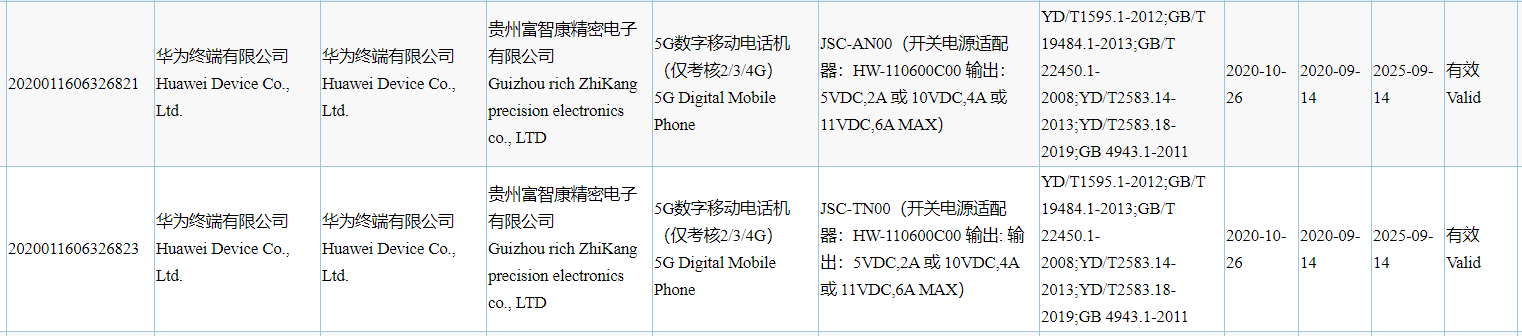
In September, two Huawei phones with JSC-AN00 / JSC-TN00 and HJC-AN00 / HJC-TN00 model numbers were certified by China’s MIIT authority. The JSC-AN00 / TN00 phone has now received 3C certification. The 3C listing shows that the device could be shipping with a charger that has an “HW-110600C00” model number with up to 66W fast charging.
It is the same charger that Huawei offers with the Mate 40 models. It is unclear which of the three Nova 8 series phones have the JSC-AN00 / JSC-TN00 model number. However, speculations claim that it could either be the Nova 8 or Nova 8 Pro smartphone.
A Chinese tipster revealed that YOR-AN00 / TN00, YOR-AN10 / TN10, YOR-AN00S, and YOR-N49 model numbers belong to the Honor V40 series of flagship phones. The tipster claimed that the Nova 8 series and Honor V40 phones are also equipped with the same 66W charger.
He said that these devices will have a high refresh rate supporting a 6.72-inch dual punch-hole display with curved edges supplied by BOE or Visionox. He added that these devices could be powered by the Kirin 9000 series. Since yesterday’s leak revealed that the Nova 8 SE has a waterdrop notch display and Dimensity 720 / 800U chipset, it appears that the JSC-AN00 / TN00 model number does not belong to it.
The Nova 8 series from Huawei is expected to rival the upcoming Vivo X60 lineup and OPPO Reno5 series in China.
The iPhone 12 series are covered in glass on both sides. However, the glass on the front is a different type called Ceramic Shield and it does a very good job at protecting the screen as seen in the drop test video below.
Ceramic Shield is a new type of glass developed by Corning and Apple says it is tougher than any smartphone glass and provides 4x better drop performance. The drop test video made by PhoneBuff decided to see if this new display protection is as good as advertised by doing a drop test of the iPhone 12 and iPhone 12 Pro.
Long story short – if your new iPhone 12 phone falls, pray it lands face flat. As seen in the video, Ceramic Shield is indeed really great at surviving falls. After several drops, the display is uncracked and it works well. However, the glass on the back which is a different type is less strong and doesn’t even survive the first drop for the iPhone 12.
The Ceramic Shield isn’t the only addition that Apple has made to make the iPhone 12 series more durable, but it has also designed the glass to flush with the edge of the phone, so when it falls, the aluminum frame (or stainless in the case of the Pro models) absorb the shock too.
It is important to remind you that the drop test was carried out in a controlled environment and real-life scenarios will be different with a chance that your phone hits an object before it even gets to the floor. So, we will advise you to get a case, at least to protect the back of the phone and the sides from scuff marks when the phone does fall from your hands.
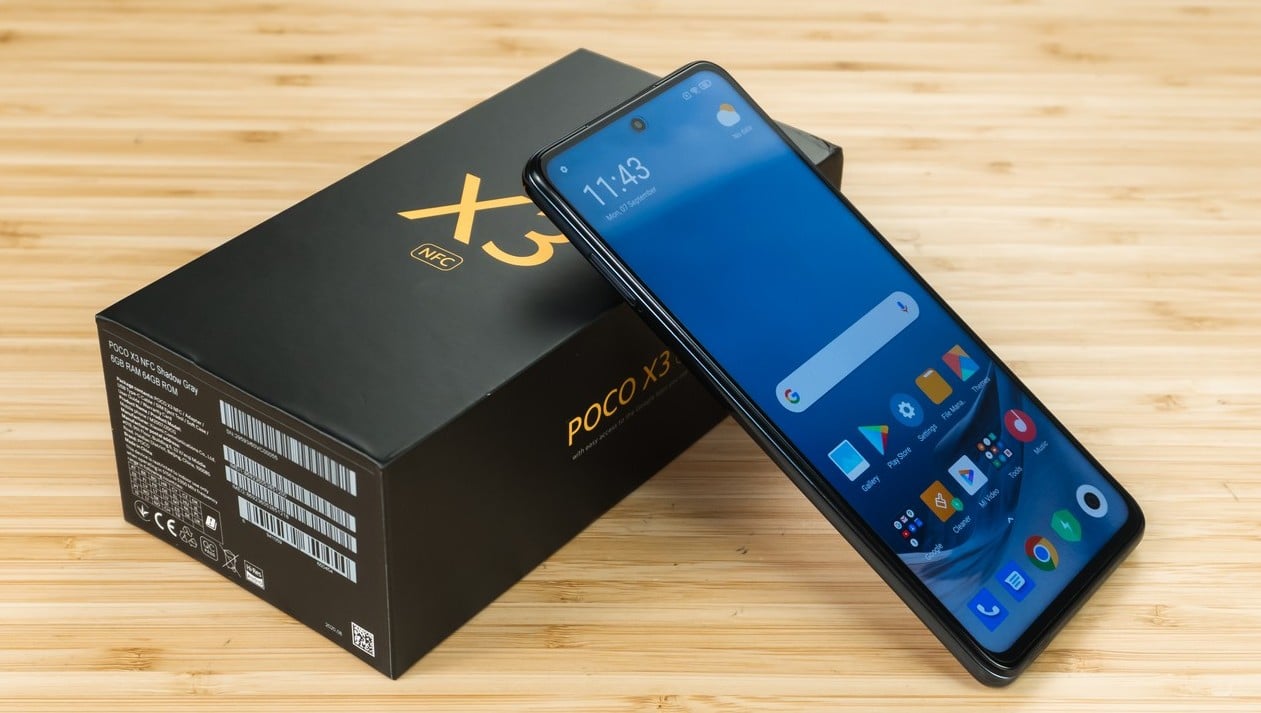
Recently, the Galaxy S20 was revealed to have an unofficial 96 Hz refresh rate option that wasn’t made available by Samsung. The guys at XDA Developers were able to force the device to load the 96 Hz refresh rate which will offer a better battery consumption than 120 Hz. A similar tweak has now come to the POCO X3 which allows you to keep the device locked on 120Hz, thanks to XDA member Slim K.
The POCO X3 as you may recall comes with a 120Hz refresh rate just like its predecessor. However, the drag is that POCO included a software feature known as Dynamic Refresh Rate. This feature intelligently adjusts the display refresh rate as a way to optimize battery usage. Thus, even when the refresh rate is set at full blast 120Hz by the user, the feature still reduces the refresh rate based on scenarios. For instance, the refresh rate will fall down to 60Hz during video streaming and even further down to 50Hz when scrolling through static images. While gaming, it then bumps up to 120Hz. The switch isn’t that smooth as it causes the phone to stutter, albeit momentarily but it is noticeable.
The discovery by XDA Member Slim K allows users to disable Dynamic Refresh Rate, thus unlocking the super-smooth 120Hz refresh rate in all apps. However, to be able to do this, you’ll need to unlock the bootloader and root the phone with Magisk v21.0. Mind you, this voids the warranty the phone has.
We should also point out that keeping the refresh rate permanently hooked on to 120Hz will have a huge toll on battery life. The smartphone comes with a massive 6000mAh battery for the non-NFC version released in India and a 5,160mAh battery for the NFC version so that may not be a big issue.
You can check out the step-by-step guide to disable the Dynamic refresh Rate from the XDA Forum thread from here.
Last year, Amazon announced its first wireless earbuds dubbed the Echo Buds. The Alexa-powered $130 earbuds have active noise cancellation and a case that supports wired charging via a MicroUSB port. Now, a successor is on the way and it will support wireless charging.
The info comes from listings of an Anker wireless charger at the FCC and Wireless Power Consortium that reveals the second-gen Echo Buds will have support for wireless charging.
A report by The Verge states the FCC listing is for an Anker wireless charging pad whose official name is PowerWave Pad for Amazon Echo Buds (2nd Gen with Wireless Charging)”.
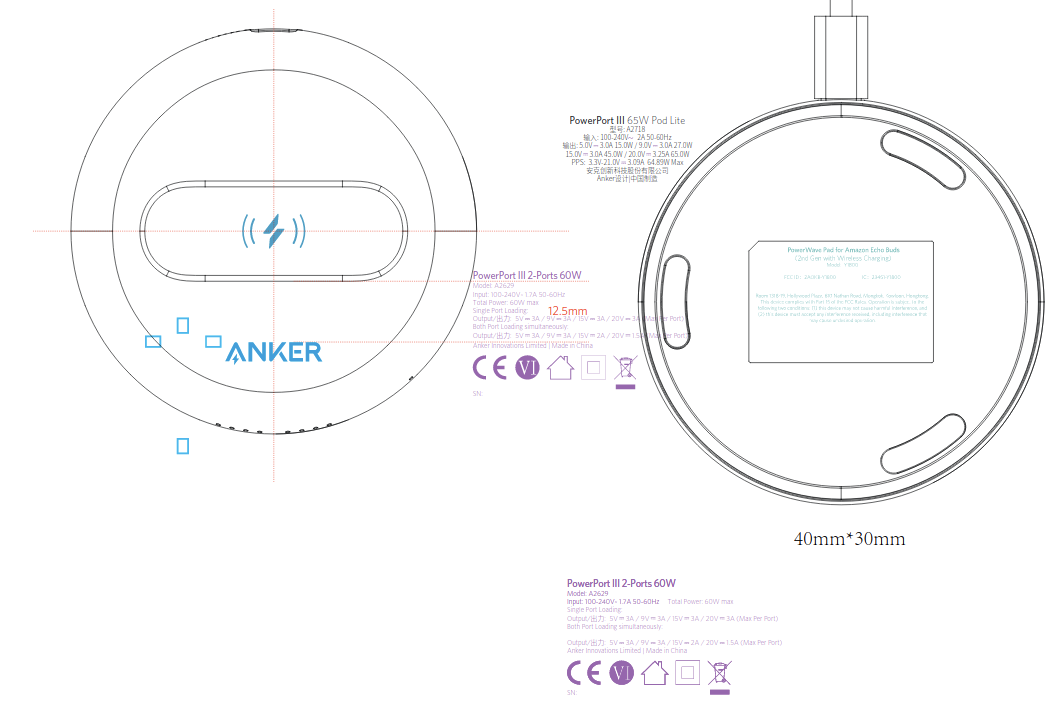
We decided to check the database of the Wireless Power Consortium (WPC) and found that the Anker wireless charger has also been certified there. The listing even includes a render of the charger that gives us an early look at the final product.
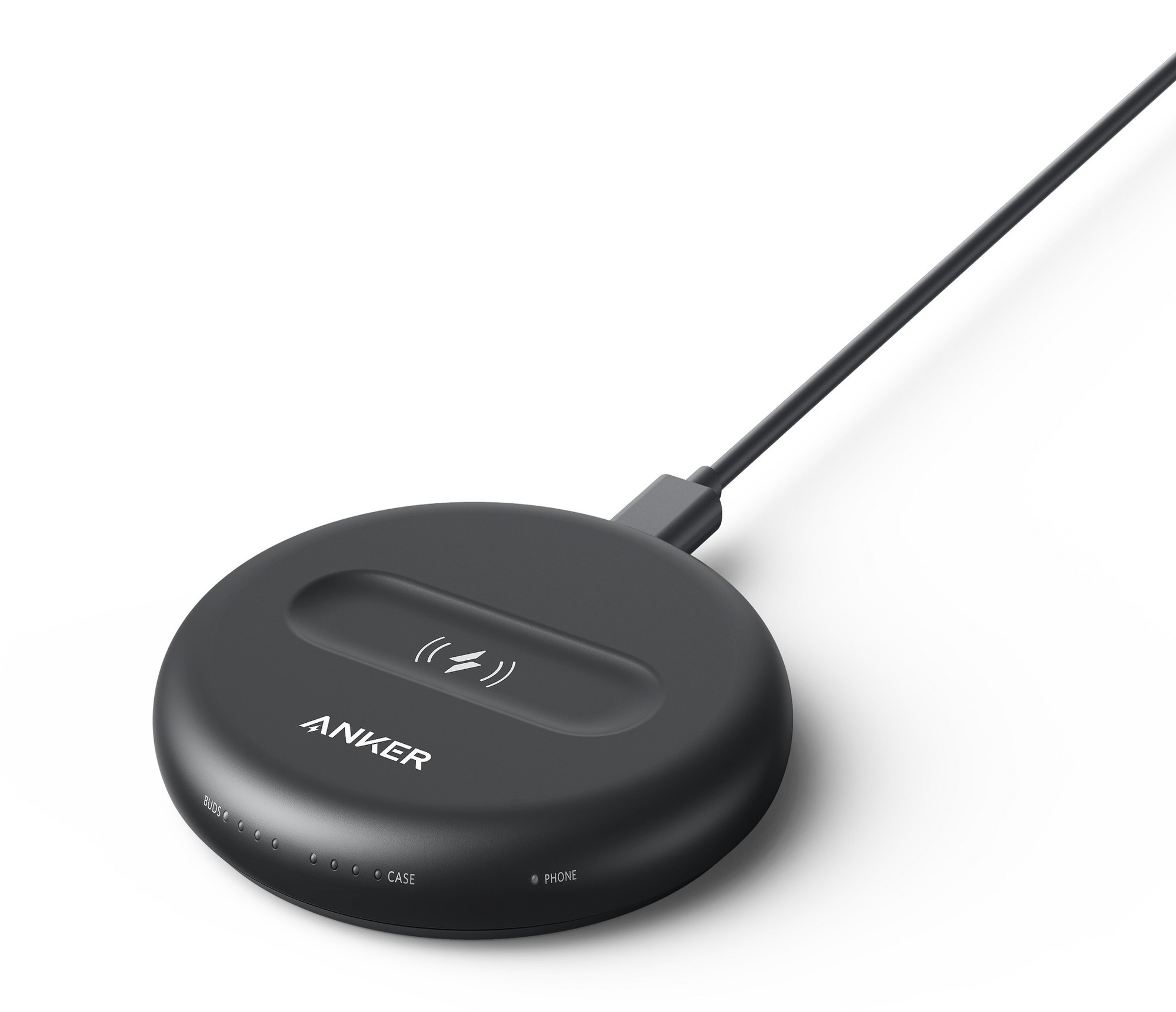
The image shows the Anker PowerWave Pad for Amazon Echo Buds (2nd Gen with Wireless Charging) is shaped like a round pebble and will come in black with a matte finish. While we are not sure, we want to believe the port at the back where the cable goes into the charger is a USB-C port. The top of the charger has a recess shaped like a pill, and it is speculated that the 2nd Gen Echo Buds may have a similar shape.
There are a total of 9 LEDs on the charger – four are placed beside an inscription that reads “BUDS“, another set of four LEDs are next to an inscription that says “CASE”, and the last is next to an inscription that says “PHONE”. Our theory is that the wireless charger will be able to indicate the battery level of not just the case but also the buds when charging which is why there are LEDs labeled “BUDS” and “CASE”. The LED labeled ”PHONE” should light up when you place a phone on the charger.
The original Echo Buds launched more than a year ago and the timing of these listings may be a hint a new model isn’t far off.
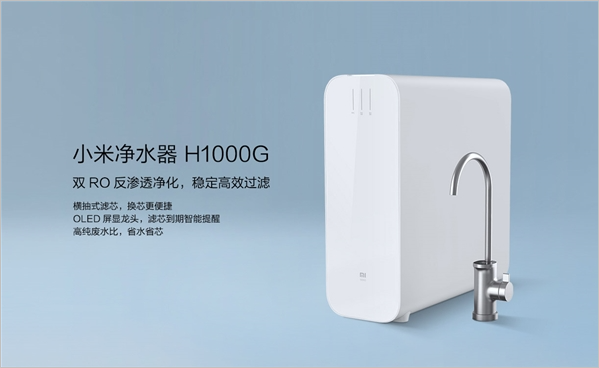
Just a couple of days back, Xiaomi launched the Mi Water Purifier H600G with a dual outlet design and 600G higher flux RO membrane. Just a few days after, the company released the Mi Water Purifier H1000G. The product carries a price tag of 3999 yuan (~$595) but early adopters can pick up the model for 2999 yuan ($446). It is scheduled to go on sale on November 1 via Xiaomi Youpin.
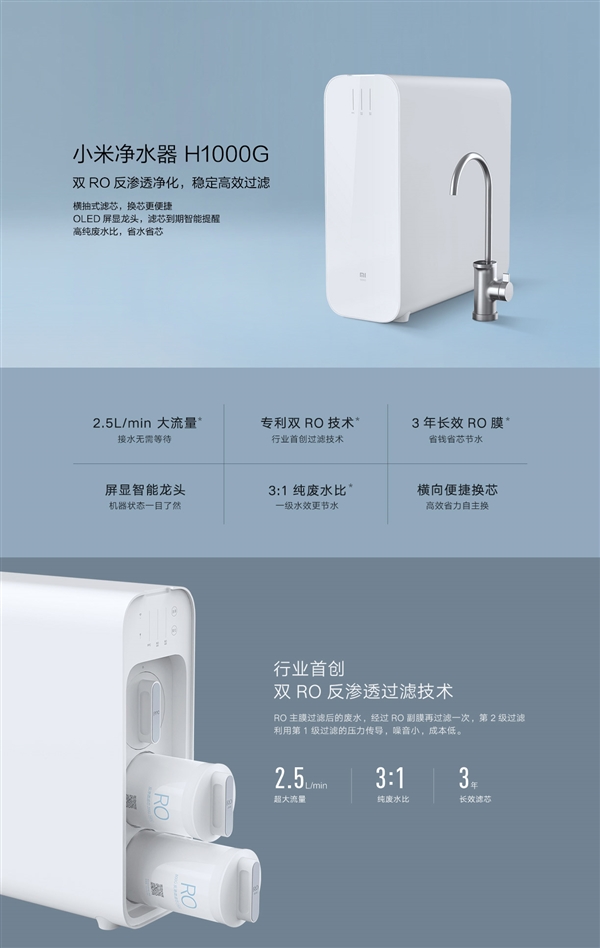
The Mi Water Purifier H1000G is Xiaomi’s water purifier with the strongest water purification capacity, the most water-saving and the fastest water output so far. It can purify 2.5L of water in 1 minute, which is close to the domestic water supply need of an average home.
The water purifier is said to have a stable 3:1 pure/wastewater ratio, which is higher than the national first-class water efficiency. In terms of water purification technology, the machine adopts the industry’s first double RO reverse osmosis filtration technology. The wastewater filtered by the RO main membrane is filtered again through the RO secondary membrane. The second stage filtration uses the pressure transmission of the first stage filtration, with low noise and low cost.
In addition to the double RO membrane, the three-stage filter element also includes folded PP cotton, pre-activated carbon, scale inhibitor, post-activated carbon, etc.
In terms of cost, the RO-800G filter element can be replaced after 3 years, and the cost of using it for the first three years is less than 1 yuan.
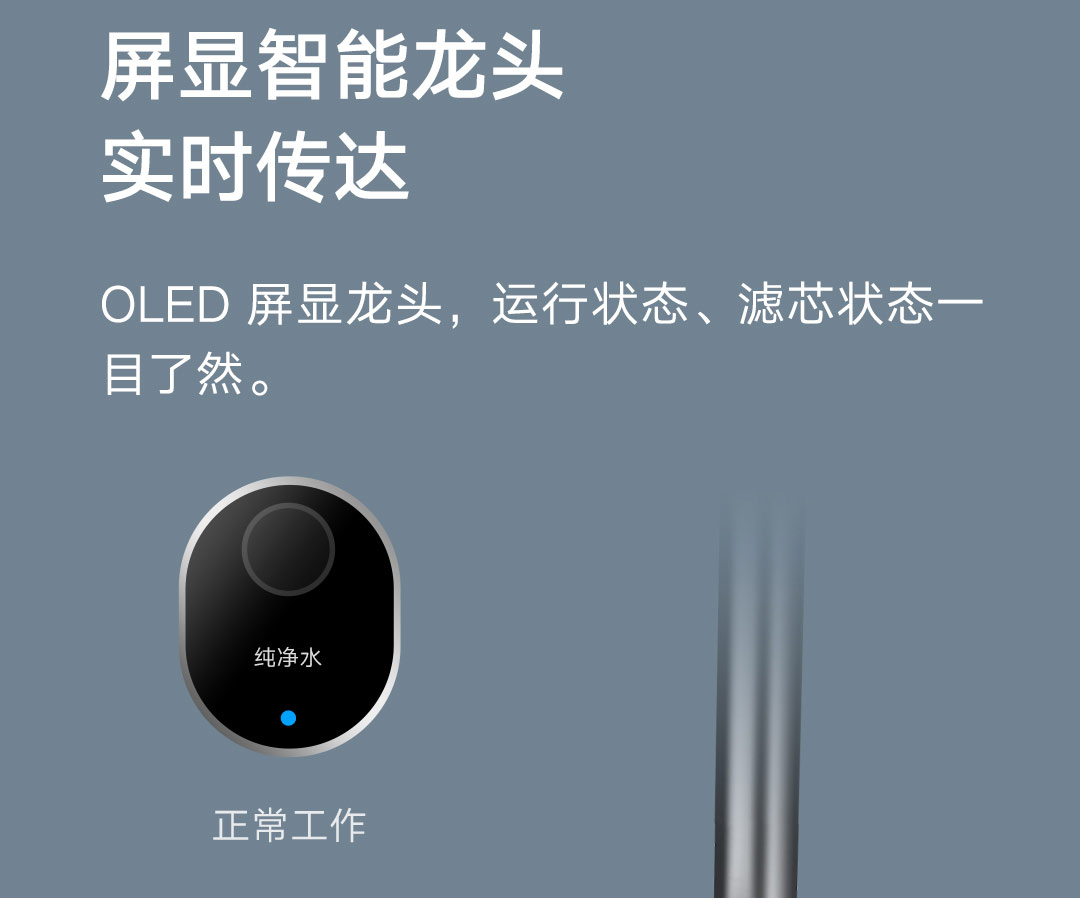
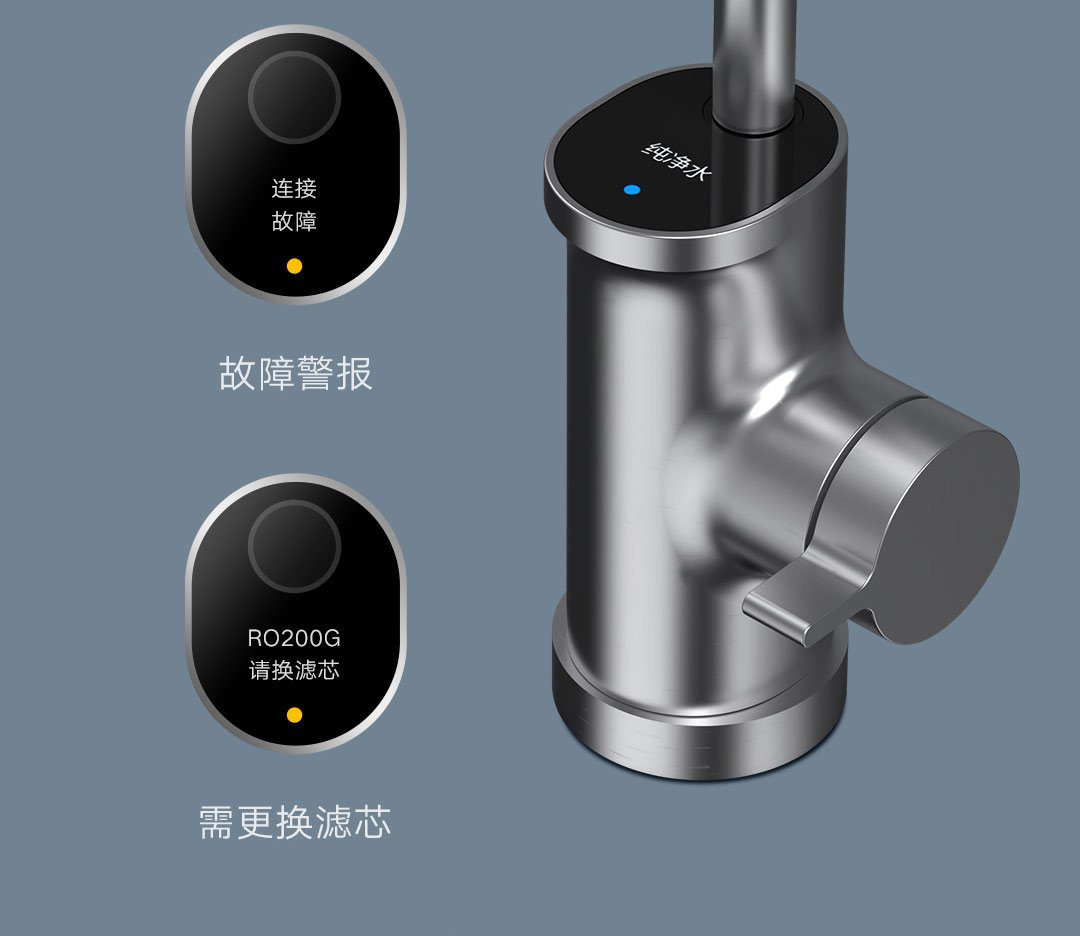
In addition, the Mi Water Purifier H1000G comes with a dedicated smart faucet which is equipped with an OLED display screen. The display screen shows the water purification status. It equally features a horizontal suction filter element and a design height of 43 cm with a water storage tank.
The new water purifier is also a smart home product, which means it can be paired with the MIJIA app. Through the app, users can check water quality, filter life, and other information in real-time.
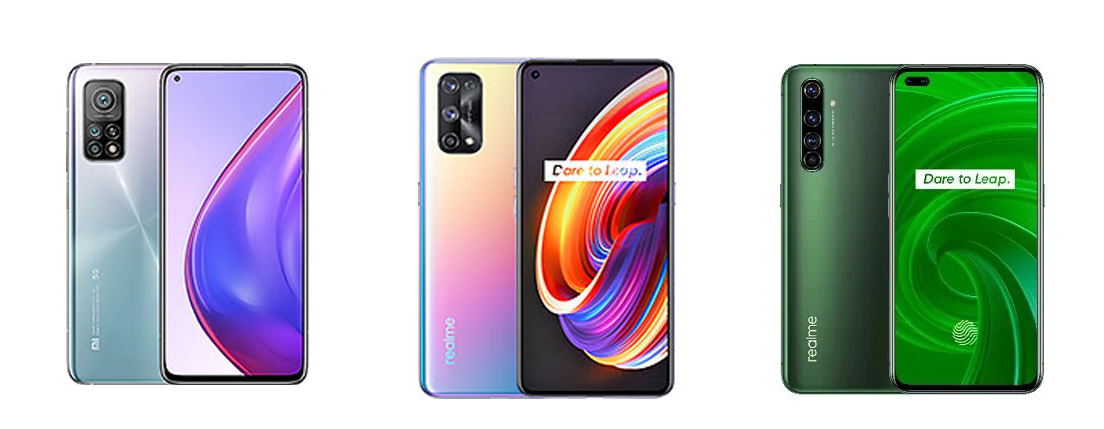
Flagship killers are here to stay. With top-tier flagships becoming every day more expensive, the attention of the consumers moved mainly to affordable flagships and upper-midrange phones. Xiaomi and Realme are two of the leading company in the flagship killers segment and they released devices with incredibly high value for money this year. The latest one comes from Xiaomi and it is the Mi 10T Pro, the successor of the Mi 9T Pro also known as Redmi K20 Pro in China and India. Realme released three flagship killers this year, two of which come with 5G connectivity just like the Xiaomi Mi 10T Pro: we are talking about the Realme X7 Pro and the Realme X50 Pro 5G. Here is a comparison between Xiaomi and Realme’s affordable flagships.
Xiaomi Mi 10T Pro vs Realme X7 Pro vs Realme X50 Pro
Xiaomi Mi 10T Pro
Realme X50 Pro
Realme X7 Pro
DIMENSIONS AND WEIGHT
165.1 x 76.4 x 9.3 mm, 218 g
159 x 74.2 x 8.9 mm, 209 g
160.8 x 75.1 x 8.5 mm, 184 g
DISPLAY
6.67 inches, 1080 x 2400p (Full HD+), IPS LCD
6.44 inches, 1080 x 2400p (Full HD+), Super AMOLED
6.55 inches, 1080 x 2400p (Full HD+), Super AMOLED
Triple 108 + 13 + 5 MP, f/1.7 + f/2.4 + f/2.4
20 MP f/2.2 front camera
Quad 64 + 12 + 8 + 2 MP, f/1.8 + f/2.5 + f/2.3 + f/2.4
Dual 32 + 8 MP f/2.5 and f/2.2 front camera
Quad 64 + 8 + 2 + 2 MP f/1.8, f/2.3, f/2.4 and f/2.4
32 MP f/2.5 front camera
BATTERY
5000 mAh, fast charging 33W
4200 mAh, fast charging 65W
4500 mAh, fast charging 65W
ADDITIONAL FEATURES
Dual SIM slot, 5G
Dual SIM slot, 5G
Dual SIM slot, 5G
Design
Realme X7 Pro has an amazing design. It is thinner and lighter than its rivals, and it is made of premium materials. Realme X50 Pro 5G has a less elegant dual punch-hole, but the camera module on the rear is less invasive and the phone is more compact. Xiaomi Mi 10T Pro is the biggest, heaviest and thickest device of the trio, that is why I do not like it much. Realme X7 Pro and Realme X50 Pro 5G have an under-display fingerprint scanner, while Xiaomi Mi 10T Pro has a side-mounted sensor making the phone thicker.
Display
The most impressive display belongs to the Realme X7 Pro 5G. In terms of dimensions, its AMOLED panel sits in the middle with a diagonal of 6.55 inches, but it is more interesting than the Realme X50 Pro 5G because it has a higher 120 Hz refresh rate. On the other hand, Realme X50 Pro 5G supports the HDR10+ standard. The Xiaomi Mi 10T Pro has the highest refresh rate with 144 Hz, but it has an IPS display, that is the reason why it loses this comparison. It is a great IPS panel, but its image quality does not reach the level of those AMOLED displays.
Hardware/Software
If you need the most powerful hardware, you must go for the Realme X50 Pro 5G as it sports a Snapdragon 865 chipset, up to 12 GB of RAM, and up to 256 GB of UFS 3.0 internal storage. The Xiaomi Mi 10T Pro has a Snapdragon 865 chipset as well, but it offers a max of 8 GB of RAM paired with its UFS 3.1 native storage. The Dimensity 1000+ chipset found on the Realme X7 Pro is a great flagship chipset, but it is inferior to the Snapdragon 865. Each of these devices comes with Android 10 out of the box: even the Xiaomi Mi 10T Pro is based on Android 10, despite it is very recent and it runs MIUI 12.
Camera
The most convincing camera phone is the Xiaomi Mi 10T Pro. It has the best main camera: a 108 MP sensor with OIS which is able to record videos with 8K resolution. On the other hand, Realme X50 Pro 5G is more interesting when it comes to zoom and front cameras: it is the only with a telephoto sensor and it has a dual ultrawide front camera with 32 and 8 MP resolutions. Realme X7 Pro has a midrange-class rear camera which can not compete with its opponents.
Battery
Xiaomi Mi 10T Pro has the biggest battery with a 5000 mAh capacity, but Realme X7 Pro and Realme X50 Pro 5G support faster charging thanks to their 65W power.
Price
Xiaomi Mi 10T Pro and Realme X50 Pro 5G are priced €599/$707 globally in their base variants, while Realme X7 Pro is only present in China where it carries a €347/$410 starting price. Due to its great display, amazing hardware, pretty nice cameras, and very fast charging, Realme X50 Pro 5G looks the most complete device of the trio, despite it is older. Xiaomi Mi 10T Pro offers a better photo quality and a bigger battery, but it comes with an IPS display and not everyone likes it on a flagship killer. Realme X7 Pro has the highest value for money but it is a slightly inferior phone.
We use cookies on our website to give you the most relevant experience by remembering your preferences and repeat visits. By clicking “Accept”, you consent to the use of ALL the cookies.
This website uses cookies to improve your experience while you navigate through the website. Out of these, the cookies that are categorized as necessary are stored on your browser as they are essential for the working of basic functionalities of the website. We also use third-party cookies that help us analyze and understand how you use this website. These cookies will be stored in your browser only with your consent. You also have the option to opt-out of these cookies. But opting out of some of these cookies may affect your browsing experience.
Necessary cookies are absolutely essential for the website to function properly. This category only includes cookies that ensures basic functionalities and security features of the website. These cookies do not store any personal information.
Any cookies that may not be particularly necessary for the website to function and is used specifically to collect user personal data via analytics, ads, other embedded contents are termed as non-necessary cookies. It is mandatory to procure user consent prior to running these cookies on your website.