Huawei‘s proprietary Hongmeng (Harmony) OS won’t find its way into smartphones any time soon but the company is rapidly expanding the use cases. A reliable blogger has now hinted that Huawei is about to release a car smart screen, equipped with Hongmeng OS system.
Last year, Huawei’s consumer business CEO Yu Chengdong disclosed that Huawei’s smart screen strategy covers four scenarios: home, office, car, and sports. Earlier in September, Huawei Electric Technology Co., Ltd. was established with a registered capital of 250 million yuan, and Huawei holds 100% of the shares. The company’s business scope includes engineering and technology research and test development; manufacture and sales of smart car equipment.
During this year’s Huawei Developer Conference 2020 (HDC), Huawei held the HMS for Car Smart Mobility Sub-forum with the theme of “Exploring a Better Digital Car Life”, introduced HMS for Car’s new smart car cloud service solution. The company is also working with car manufacturers such as Volvo and Hongqi, as well as Beep partners such as Liebili, Tongcheng Travel, Deep Love Listening, and Jidou gave speeches.
Huawei said that HMS for Car can also realize the interconnection and intercommunication of mobile phones, watches, speakers, smart screens and other devices with car data, and will create a full-scene smart travel experience.
As refreshing as it sounds, the Taiwanese Semiconductor giant TSMC has reportedly got a license from the US for supplying chips to Huawei. Before you take a breather and think about the turn of fortunes, this license for TSMC seems to have a twist.
As per a report from sina.com(via PhoneArena), sources familiar to them say that the license covers only mature process nodes. And not the latest ones that TSMC(Taiwan Semiconductor Manufacturing Company) uses for the fabrication of mobile chips. ‘Mature’ sometimes denotes the old or the one that is in the past. If we look from this perspective, older process nodes like 28nm or higher are reportedly on the list.
If the report turns out to be true, it’s a really bad news for Huawei as all modern-day chips are based on 10nm, 7nm, 5nm, etc. That said, the company has likely stocked enough of Kirin 9000 SoCs for the Huawei Mate 40 series launch this month. But it is a big question of how the company will survive post this as most of the fabs have abandoned the Chinese giant after September 15. That said, both Huawei and TSMC are yet to officially say a word.
Huawei had entered a ‘survival mode‘ as the above-mentioned date got closer. After stockpiling enough chips, the company is looking for options to be in the game. However, the US seems to have locked all the doors at least for the moment. For TSMC though, there might be smiles in the camp. It recently reported a 14.7% QoQ increase in revenue for Q3 2020.
While that’s most likely due to Huawei’s raid of chips, a 21.65% YoY increase compared to 2019 is staggering. A recent financial report from TSMC says the revenue is 84.488 billion yuan($73.9 million USD) breaking last year’s Q4 record. But we know the dust has settled now. And although it sorted out the vacant fabs with orders from Apple, it has lost one of its big customers.
Previously, few rumors said that TSMC agreed to build a factory in Arizona, USA, expecting something in return. However, Keith Krach, US Under Secretary of State for Economic Growth, Energy, and the Environment, quashed the allegations. The report finally says that the US will not totally reprimand Huawei. This is evident with reports of the country granting licenses to AMD and Intel. But the damage seems to have already been done by checkmating Huawei with mobile and 5G base station chips.
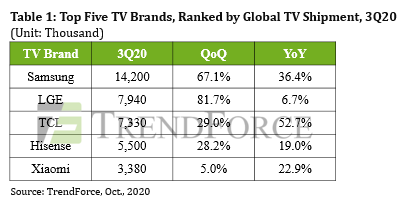
Global TV shipments have bloomed in the Q3 of 2020 according to a report. Samsung tops the chart with more than double the shipments while TCL gains a massive YoY increase.
Market research TrendForce mentions that a total of 62.5 million TV units were shipped globally in Q3 2020. This makes it gain a 38% rise QoQ (Quater on Quarter), and an improved 12% YoY (Year on Year). In Countries like North America, the growth is 20% YoY between January-August, 2020. And companies like Samsung, LG, TCL reportedly reaped benefits out of the pandemic. Amongst them, TCL saw the biggest leap with a whopping 57% YoY increase, shipping 7.33 million units totally in Q3 2020. The report says because of the longer quarantine period, TCL’s altered strategy of using in-house panels, aggressive pricing helped it.
However, Samsung leads the Global TV shipments with 14.3 million units in Q3. This is more than double the shipments it did in the last quarter. LG is surprisingly in second place though it recorded the least YoY growth. HiSense and Xiaomi from China capture the rest of the places behind TCL which sits at 3rd overall. That said, the report says that if demand continues to rise in Q4, the shipments will increase by another 4% to 64.53 million units.
Credit: TrendForce
And total TV shipments in 2020 will stand at 216.09 million units, which will be a 0.8% decrease YoY compared to 2019 if the situation turns out the way TrendForce predicts. Also, it’s obvious that the slump in percentage is due to various factors including the Global pandemic. Nonetheless, a drop of less than 1% will be an impressive comeback.
However, there is a caveat. As per the report, prices of TV panels rose 50% QoQ for 32-inch HD panels and 41% for 55-inch UHD panels in Q3. Although companies reportedly swallowed the profits to reach the shipment targets, they will have to adapt to the price hikes in Q4. That is to ensure they get steady supply from manufacturers as it could rise 15-20% more for both 32 & 55-inches.
Smartwatches are one of the most convenient pieces of technology that one can have on hand. Amazfit is one such smartwatch producer that offers everything from heart rate monitors to multiple application compatibilities in their products. Taking it a step further, Gearbest has decided to raise the bar and offer discounts on 3 of the brand’s intelligent and intuitive pieces of kit. Amazfit GTS, Amazfit Verge Lite, and Amazfit T-Rex are being sold at a discounted price of up to 59% off for a limited time frame.
All three of these Amazfit smartwatches boast common features like heart-rate monitoring to keep the user updated on any irregularities, GPS and calorie tracker, and weather forecast system. Their large touchscreen displays offer a vivid view, while the IOS, Android, and BlueTooth compatibility allow versatile connectivity. The band of these smartwatches is made from silicone to keep the user comfortable. However, what sets them apart is the distinctive features that they have to suit individual preferences.
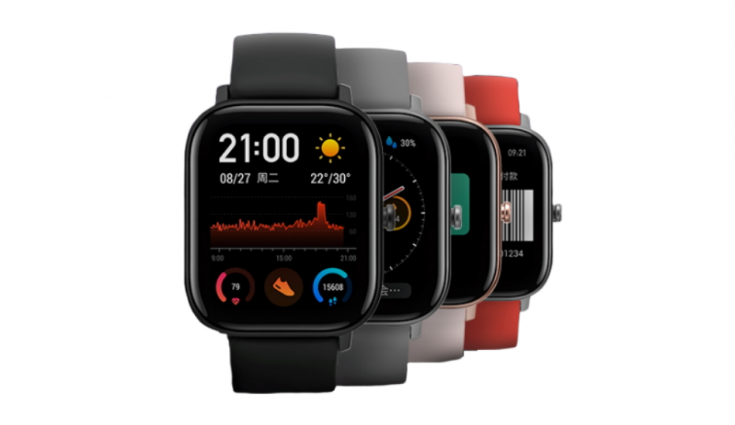
Amazfit GTS smartwatch boasts a 1.65-inch 341 PPI AMOLED display with customizable widgets to offer a personalized view. The watch vibrates to alert the user of any notifications. This piece features a 28nm ultra-low power consumption Sony GPS chip that offers up to 14-day battery life, making it an ideal outdoor companion. With a sleek metallic design, the Amazfit GTS smartwatch can easily resist minor bumps while exuding a minimalist appeal.
The Amazfit Verge Lite is built to meet all sports monitoring requirements and features 7 sports modes to track distance and time of activities like outdoor running, treadmill, and walking. The user can also enjoy listening to their favorite songs with a remote music function. Featuring up to 20-day standby time after a full charge, this smartwatch is sure to keep up with the user’s adventurous lifestyle.
Taking it up a notch, the Amazfit T-Rex has a military standard (MIL-STD-810) with up to 12 certifications to withstand various environmental extremes. This smartwatch can easily resist temperatures ranging from 70°C to -40°C, along with dampness. Featuring large metallic buttons on the side, this Amazfit smart watch allows convenient operation in various outdoor conditions. A high-end Sony GPS chip with 40-hour continuous working time enables the user to track the activity of that time frame.
Each of these Amazfit smartwatches come with numerous color variants for the user to choose from. To enjoy a discount of up to 59% on smartwatches like Amazfit GTS, Amazfit Verge Lite, and Amazfit T-Rex, readers can visit the Gearbest website.
Pakistan has joined the bandwagon of countries in banning the short video platform, TikTok. Accordingly, the country’s telecom regulator PTA(Pakistan Telecommunication Authority) has blocked the app in the country on Friday(October 9). The reason is the failure in neutralizing the “immoral and indecent” content on the platform.
According to a report by Reuters, the PTA spokesperson, TikTok reportedly has 20 million active users in Pakistan. Also, it is the third most downloaded App in the country in the last 12 months according to Sensor Tower. The ban didn’t out of the blue as the company was reportedly warned back in July. And, officials reportedly demanded an effective mechanism for getting rid of the obscene content on the platform. However, looks like TikTok didn’t take enough measures to satisfy the officials.
Instead, the officials have reportedly been getting complaints from various sections of society regarding the vulgarity of content on TikTok. Add to this, Pakistan PM Imran Khan’s directions to PTA only speeded up the process. Reacting to this TikTok says it will the law in every country and is reportedly in touch with PTA to work things out. PTA also says that it is ready to review the ban. That is if TikTok puts a satisfactory mechanism in place to moderate unlawful content.
Pakistan, which has more customary social practices, has not only blocked TikTok but five other dating apps including Tinder and Grindr. Having said, it joins a list of countries including India, USA who have already blocked it. Although other countries cite security and data theft as reasons, Pakistan’s intention seems to be something else.
However, Global rights Watchdogs Amnesty International says people of Pakistan are denied the right to express in the name of vulgarity. Let’s wait and see if TikTok pleases PTA to get back into business.
Funtouch OS is the Android skin that ships with Vivo phones and at the moment, the newest version is Funtouch OS 11. The new skin is available on the Vivo V20 but there has not been a proper unveiling of the new skin yet. While we wait for that to happen, Vivo has revealed features of the new skin on its Hong Kong website.
The new Funtouch OS 11 brings a number of new features and keeps a mostly white design. As you can see in the image above, Vivo is going for a uniform look with its apps. The apps all have a white backdrop while the texts and shapes are in black and blue.
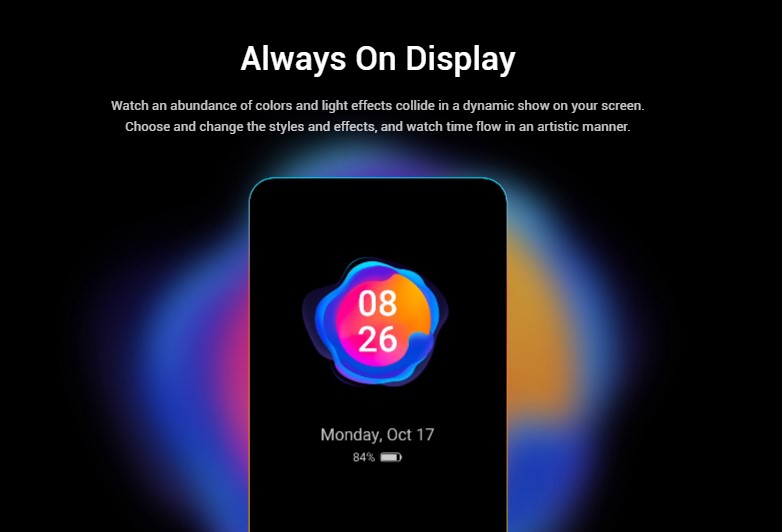
Vivo has offered the Always On Display feature for a while now and Funtouch OS 11 brings improvements. Users will be able to choose from different customization options that offer lots of colors and dynamic light effects.
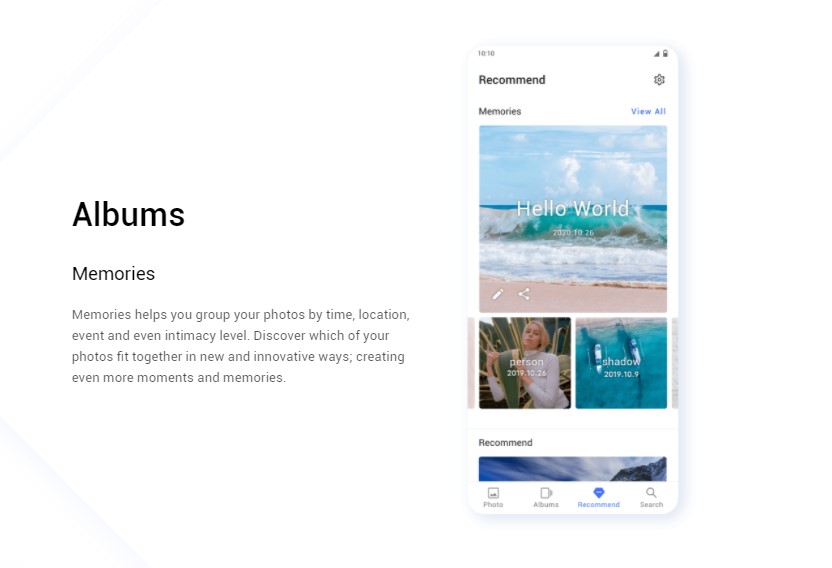
The Gallery app is also getting a new album called Memories. Photos under memories are grouped according to time, location, events, and even intimacy level (read relationships). Another feature is AI Editor which makes it easier to edit videos. Users will be able to use the AI Editor to identify the main characters and highlight key moments.
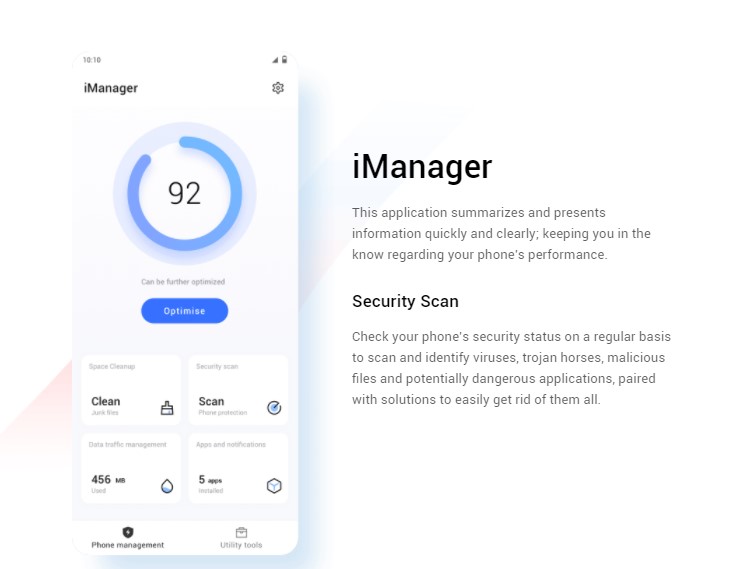
Another feature that comes with Funtouch OS 11 is iManager. This is an app that provides a summary of the details of your phone including performance. There is also a security scan feature that not only checks for viruses, trojan horses, and dangerous files and apps but also provides solutions to easily remove them.
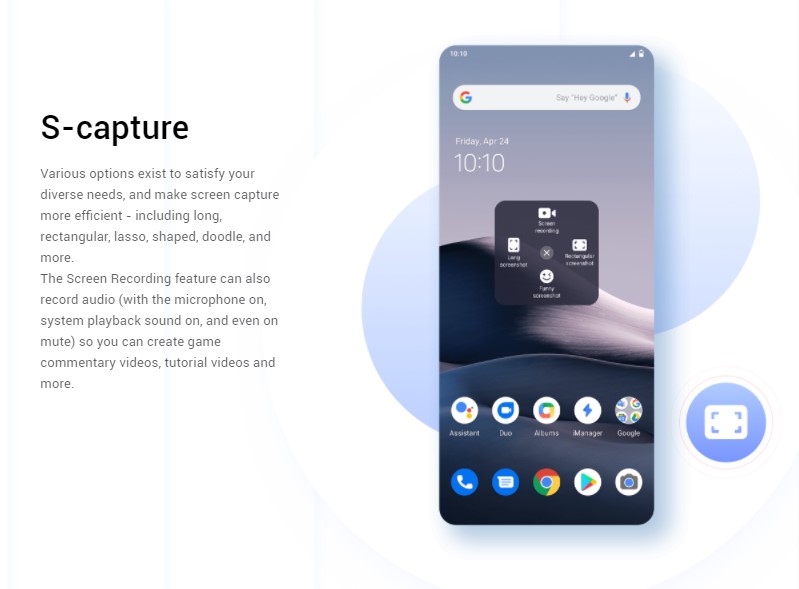
Funtouch OS 11 also has S-capture, a feature that brings more features to screen capturing. Users will now be able to take screenshots using shapes, the lasso mode in addition to the default rectangular mode. They will also be able to doodle on screenshots. The screen recording feature will also be able to record audio wither with the user’s microphone so you can provide commentary for games or make tutorial videos.
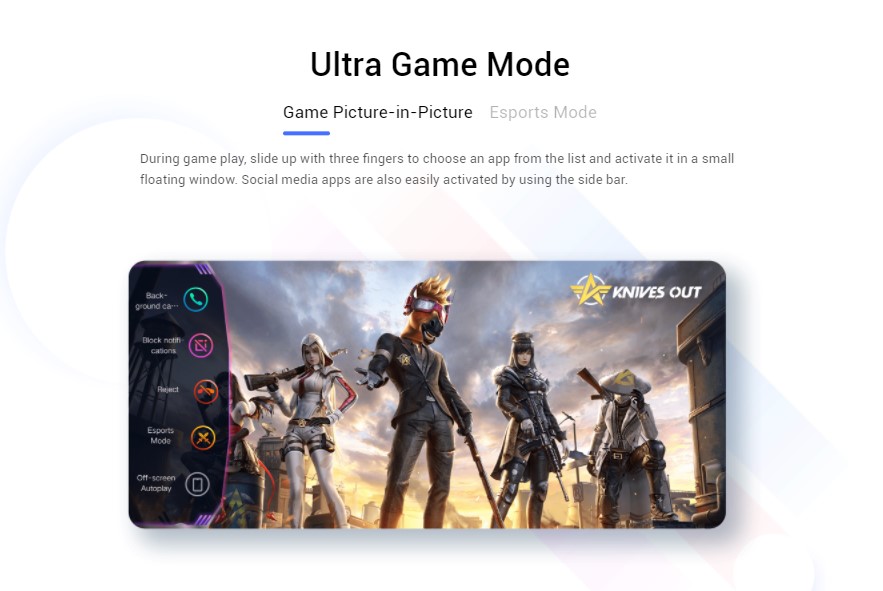
There is also an Ultra Game Mode that includes features such as Game Picture-in-Picture that allows you to launch an app (messages and chat apps) in a floating window mode while playing a game. Another feature is Esports mode which blocks alerts during gameplay for a more immersive experience. Vivo also says there is a real-time adaptive frame rate that boosts game performance.
At the moment, Vivo is yet to announce a roll-out schedule for the new UI but we expect more details will surface before the end of the year.
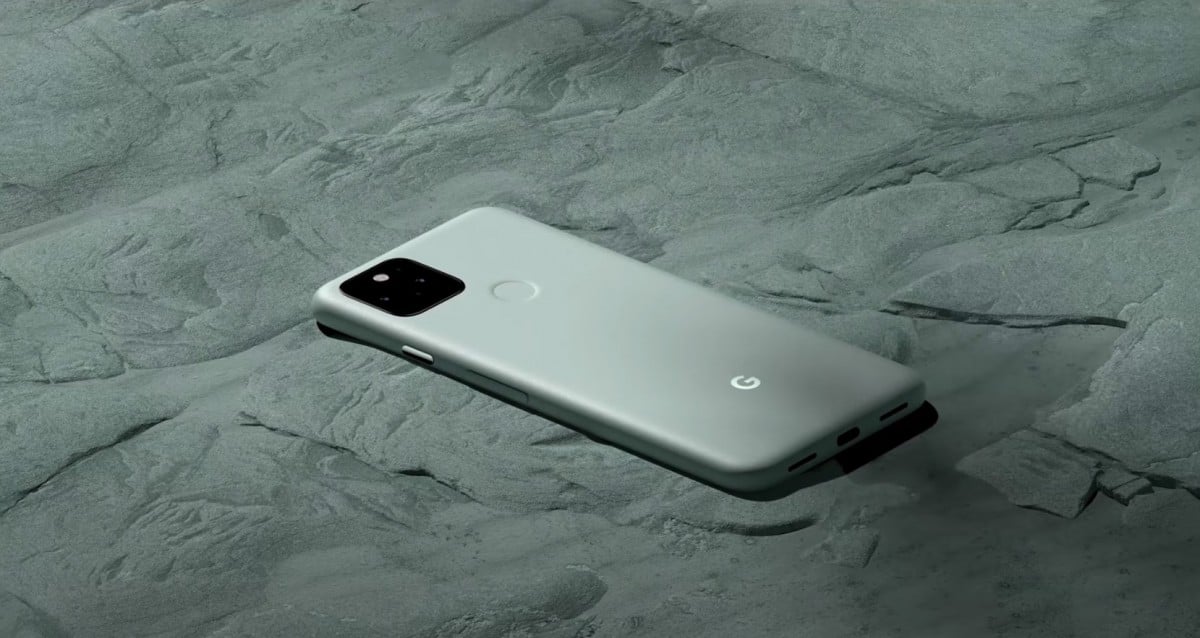
Google’s Pixel 5 is the most affordable flagship from the company yet. Starting at as low as £599, the device is up for pre-orders in Europe, the US, and other regions before sale. However, it looks like the device is already out of stock on Google Store in key European markets.
First reported by 9to5Google(via XDADevelopers), the pre-orders for Google Pixel 5 are out of stock in countries like UK, France, Germany, and Ireland. After a slow start in Germany, and Ireland, it reportedly picked up steam and is now out of stock on both “Sorta Sage” and “Just Black” variant. On the contrary, France gets only the “Just Black” variant. The reason for this said to be the country’s laws to mandatorily include headphones inside the box. Hence, to avoid packaging in different colors, Google apparently decided to limit the colors for France.
For the UK though, Google is giving an excellent offer of free Bose QC 35 II headphones if you buy a Pixel 4a(5G) or Pixel 5 between September 30 and October 19 on its store. Reasons like offers, exchange rates, attractive price points from Google might be the reason for the thunderous response.
Google launched the Pixel 5 along with 4a 5G a few days back. But, it will be available only a couple of weeks after the launch in many regions. Users can purchase the device from October 15 if they are in Australia, UK, France, Germany, Ireland, Japan, and Taiwan. However, people from the US and Canada will see it another couple of weeks later, October 29 to be precise. And it is still available for pre-orders in the US, unlike other markets.
Having said that, Google has reportedly kept its target low for the Pixel 5 in 2020 for various reasons. However, the new demand could change the plans of Google. But there is no clue when the pre-orders will resume on Google Store yet. Nevertheless, if you are someone living in either of these countries, you can try your luck in carrier partners, and retails stores to grab it early.
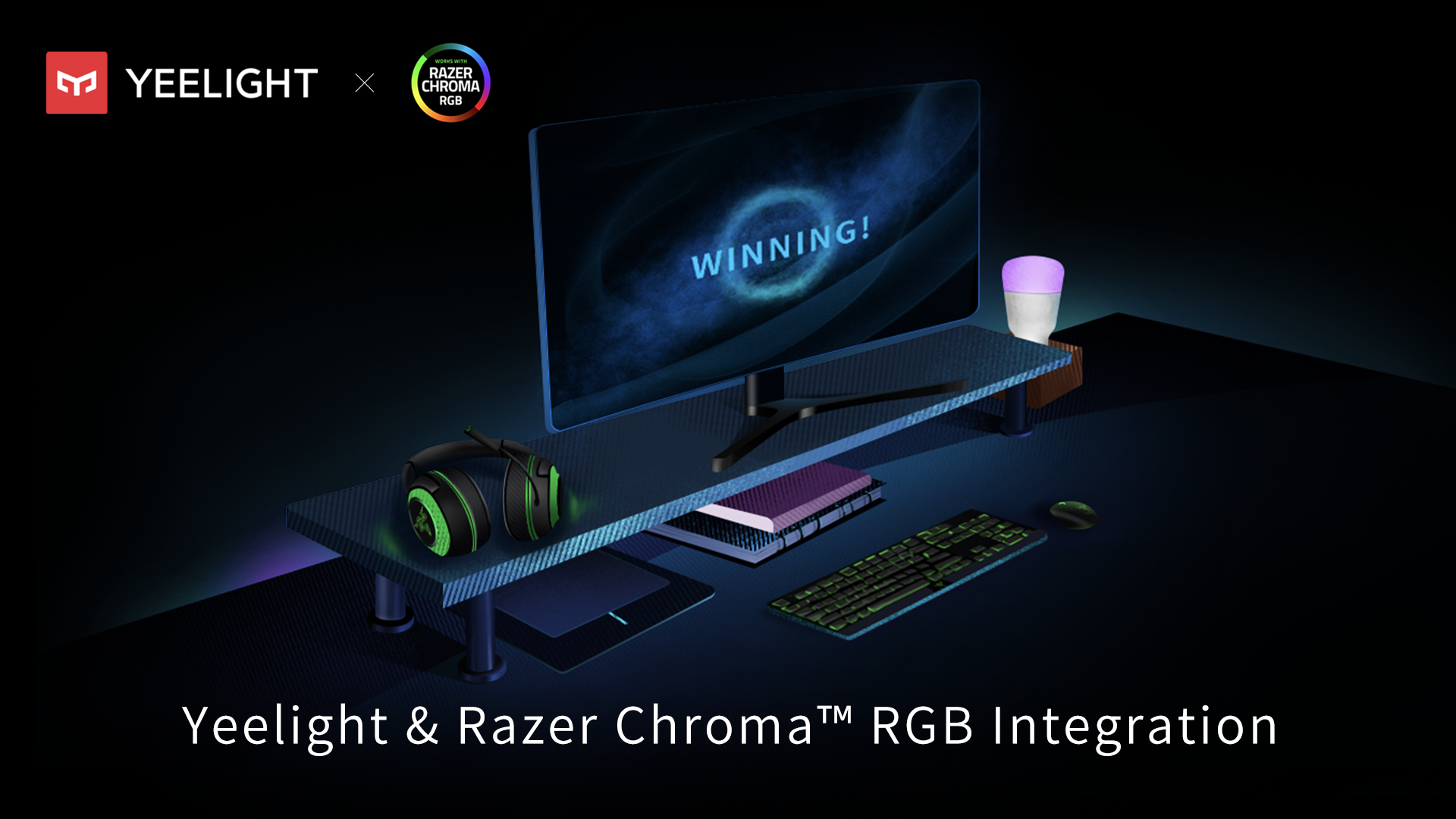
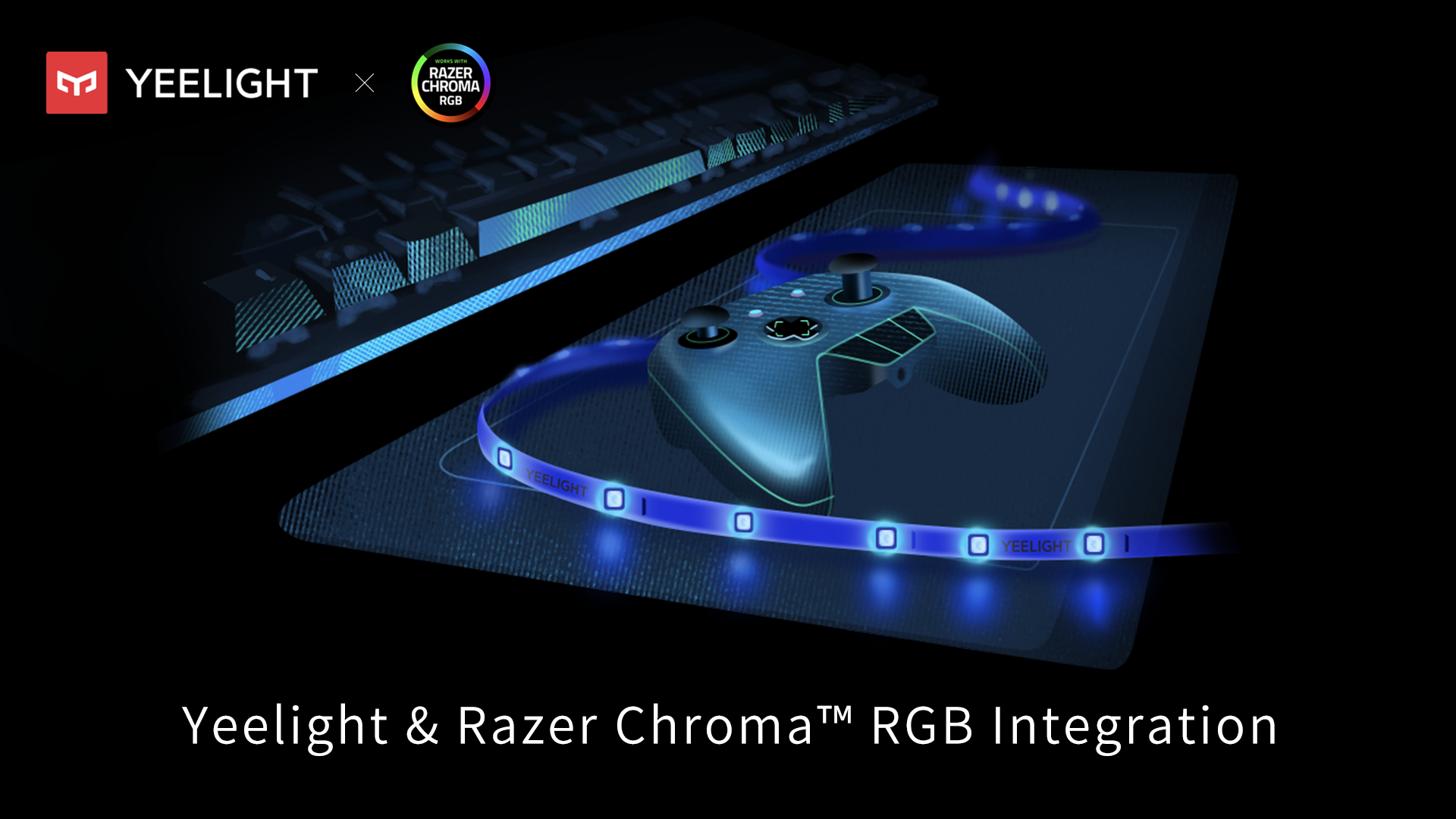
Razer Con 2020 is about to begin in a few hours and the even will be packed with new product launches, games, and demos. Ahead of the event, Yeelight, one of Xiaomi’s eco-chain lighting brand, has announced a partnership with Razer. It has officially joined the Razer Chroma connect program for synchronized lighting between its lights and Chroma-enabled products.
In a press release, the company says Starting today(October 10), gamers can connect its color-changing lights with Razer Chroma RGB enabled devices. Besides, the new partnership will span out to games like Overwatch, Fortnite, Apex Legends, and more. And, as a headstart, products like Yeelight Smart LED Bulb 1S(Color), and Yeelight Smart LED Lightstrip 1S will support the integration program. However, users need to update the firmware of its products on the Yeelight app to see the changes.
First, users will have to download the Yeelight Chroma Connector plug-in from Razer/Yeelight website. Then, enable the LAN control of the products. To do this, open Yeelight App and navigate to Device->device_name->More->LAN control->toggle on. Now, the lights should automatically connect to Razer Chroma.
For the unware, Razer Chroma is a lighting technology. It enables both Razer and third-party RGB products to synchronize with a lighting protocol. Previously, companies like Philips have joined it with their Hue smart lights. Razer basically allows third-parties to enter into its lighting protocol via API(Application Programming Interface). This will let them toggle RBG lighting using Chroma to synchronize them unanimously.
And, talking about the partnership, Kushal Tandon, Director of Software Marketing, Razer, says, “Gamers now have the freedom to choose between various Yeelight LED bulbs and light strips to integrate with Razer Chroma RGB for a truly colorful gaming experience”.
Also, apart from already mentioned products, the company says it will introduce more Chroma-compatible lights this year.
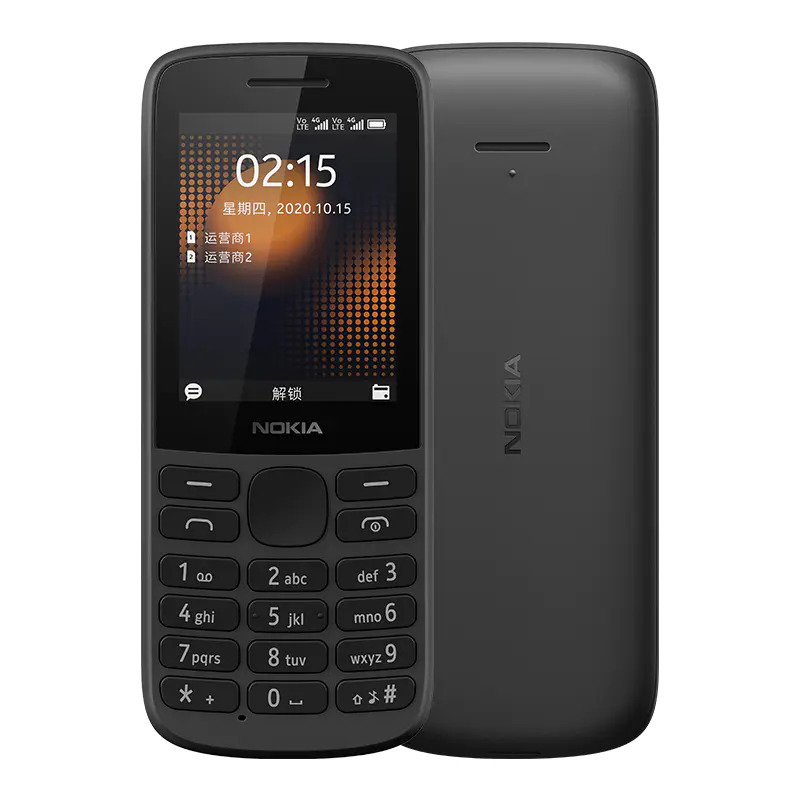
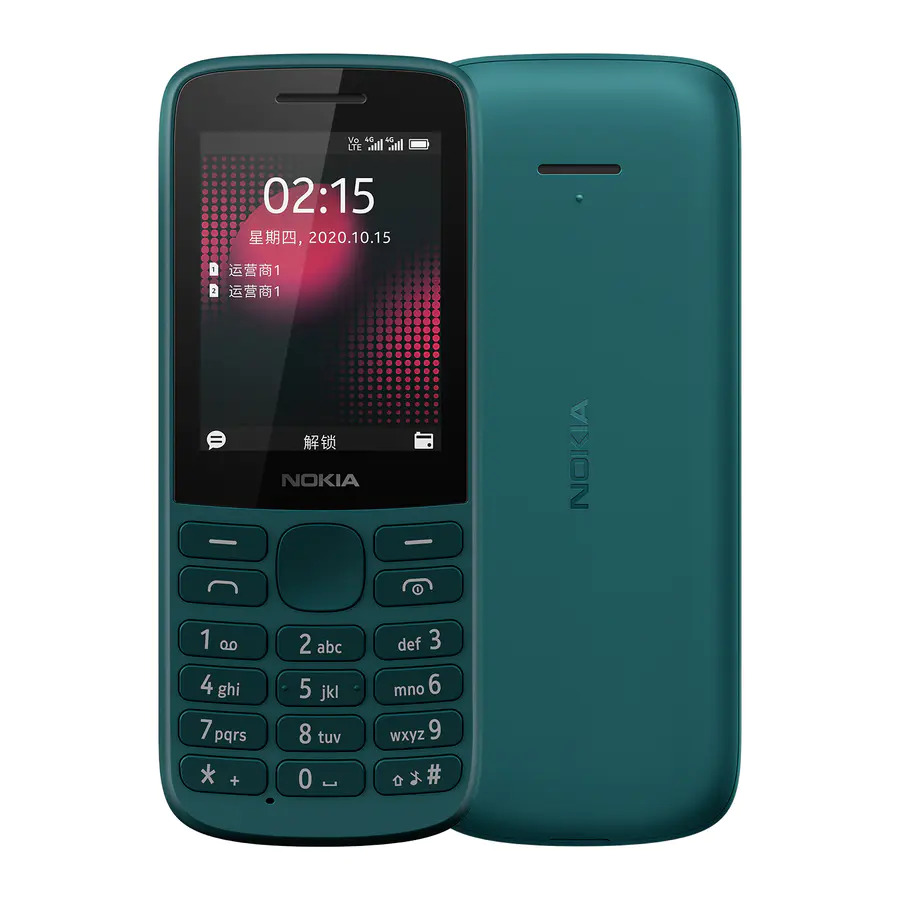
HMD Global has launched two new Nokia-branded feature phones with 4G connectivity in China. These handsets go by the name of Nokia 215 4G and Nokia 225 4G respectively. The former model costs 289 yuan ($43) and is already up for pre-order, whereas the latter is priced at 349 yuan ($52) and will be available for pre-order starting October 17.
The newly launched Nokia 215 4G and Nokia 225 4G come with T9 island-style numeric keypad like any other feature phone. But what makes them stand out is the support for 4G connectivity along with VoLTE for HD calls.
The cheaper model lacks the VGA camera present on the costlier model and its design is generic. On the other hand, the second model features a sort of premium design but still, both are made of polycarbonate.
Common features between the two include support for 4G connectivity on all the three major carriers in China, microSD card slot (up to 32GB), FM Radio, and LED flash. Unfortunately, we could not find other specs of these phones. We will try to update this article once we get hold on them.
1 of 3
Nokia 215 4G Black
Nokia 215 4G Green
Nokia 225 4G All Colors
Having said that, the Nokia 215 4G comes in two colors – Black & Green, whereas the Nokia 225 4G will be available in Black, Blue, and Gold. These handsets may debut in global markets in the coming days
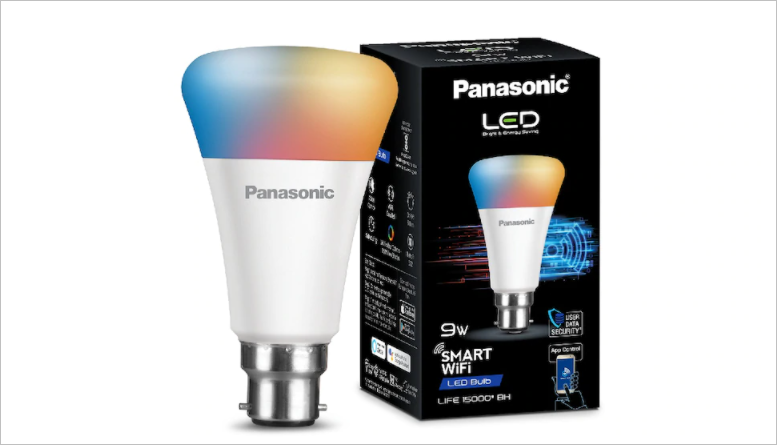
Panasonic has got a pretty solid footing in the Indian market and the electronics giant is putting that to good use. The brand’s latest product offering in India is a Wi-Fi enabled Smart LED Bulb.
The Panasonic Smart Wi-Fi LED Bulb is studded with multi-colour lighting options and users can also deploy the automated scheduling functions. It features a companion app known as Panasonic Smart Wi-Fi app which can be used to control the smart bulb right from a smartphone. The app can be downloaded from the PlayStore and App store. Further, the user can connect the smart bulb to Amazon Alexa or Google Assistant and use voice prompt to control the light.
The Smart Wi-Fi LED Bulb has an output rating of 9 watt and comes with almost 16 million shades, giving users a wide range of options. The bulb comes with auto-scheduling which lets users switch the lights on and off as desired. The lighting settings can also be adjusted to suit different occasions.
Panasonic is tyrin to create a smart ecosystem of connected AIoT gadgets and it says in the future, the Smart LED Bulb will be a part of the connected ecosystem that will be integrated seamlessly with Panasonic’s MirAIe – an intelligent IoT & AI-enabled connected living platform.
The price of the smart LED bulb is yet to be announced but the company says it will be available for purchase via Amazon and other online and offline stores.
The company has confirmed that a virtual pop-up event of OnePlus 8T will take place on October 14 at 8:20 PM IST on its 3D virtual reality platform OnePlus World. Furthermore, a new leak reveals the camera details of OnePlus 8T. As per Mukul Sharma(Twitter: @stufflistings), OnePlus 8T will have a 48MP Sony IMX586, 16MP wide-angle, 5MP Macro, and a 2MP black&white sensor on the back. On the front, it will have a 16MP Sony IMX471 sensor for selfies. And regarding the price, tipster Ishan Agarwal has leaked the sale date(October 17), and the prices of OnePlus 8T as below:
8GB/128GB- ₹42,999(~$587)
12GB/256GB-₹45,999(~$628)
Original Story(October 10)
OnePlus’ next flagship, the OnePlus 8T is just around the corner. Ahead of its launch, let us look at the already confirmed and other expected specifications along with the price for the device.
OnePlus began teasing the 8T a few weeks ago. The device will debut in India on October 14 at 7:30 PM IST and October 15 in China. The event will be streamed live via its official website. In terms of design, the device adopts a flatter display like the OnePlus 7T. This is understandable considering there isn’t an 8T Pro this time and the 8T will likely succeed the 7T and equate OnePlus 8 in features.
OnePlus 8T Design, colors
Design-wise, it will likely to have a sandwich of Corning’s Gorilla Glass 6 to be on the display and rear-panel with a metal frame inside. We can expect it to be structurally sound and water-resistant with an IP68 rating. The display will be flat and host a single punch-hole at the top left. The power button and OnePlus slider will be on the Right, and volume buttons to the left. Also, it will mostly have a thickness of 8.4mm without a camera and a whopping 9.3mm thanks to the bulging rear-camera cut-out that is flaunted in official renders.
The official render shows a rectangular camera layout on the back 4 cameras and LED flash. While this shape looks like its borrowed from Samsung, the rounded edges make it more subtle. And, for the color variants, it will come in Aquamarine Green and Lunar Silver options thanks to tipster Ishan Agarwal.
OnePlus 8T Specifications
Starting with display, OnePlus has confirmed that the device will have a 120Hz refresh rate screen. The device will feature a 6.55-inch AMOLED display with 2.5D curved glass. Its peak brightness will be 1,100 nits, covers 100% DCI-P3 color gamut, 0.3 JNCD(color difference), and a screen-body ratio of 91.9%. Powering the device will most likely be the Qualcomm Snapdragon 865 SoC, paired up to 12GB RAM and 256GB storage.
As for the optics, leaks say that OnePlus will sport the 48MP f/1.8 Sony IMX 586 sensor with OIS, EIS. Moving on, OnePlus has recently shared ultra-wide samples on the rear-camera confirming the presence. The samples show that the wide-angle lens can show its prowess in Night light too. That said, the other sensors probably are 16MP f/2.2 ultra-wide with 116˚ FOV, 5MP macro, and 2MP depth sensor. Sadly, it will drop the Telephoto lens from the 7T. For selfies, OnePlus has already confirmed that the device will have a wide-angle lens for selfies. And, if reports are true it will have a 16MP sensor. We can expect camera features like Nightscape, PDAF, steady-video, 4K recording, and more.
Other specifications include a 4,500mAh battery with 65W Warp Charging probably with a Type-C to Type-C connectivity, in-display fingerprint scanner, and 45W PD charging. The device will also come with OxygenOS 11 based on Android 11 out-of-the-box.
Expected Price, and Availability
The OnePlus 8T is expected to be priced at $599 for 8/128GB and $699 for 12/256GB variants. However, OnePlus can vary it across regions as it usually does. That said, the device will be officially sold via OnePlus’ website, Amazon, and its offline stores. However, Let’s wait for the official details on availability until next Wednesday.
Xiaomi announced the MIUI 12 custom ROM in late April and since then, it has continuously pushed the update to several of its smartphones by way of beta and stable builds. But there are still a couple of models that are yet to get either the beta or stable build of MIUI 12. The latest report is that the company will soon start pushing the MIUI 12 to the Redmi 9, Redmi Note 9S and Note 9 Pro which happen to be among the models that are yet to get the MIUI 12 update.
It was reported earlier on that the MIUI 12 update for the Redmi Note 9 Pro will be rolled out in October. But the latest information available is that the MIUI 12 update is scheduled to roll out for Redmi Note 9S, Redmi Note 9 Pro (global), and Redmi 9 from October 20. Since there is an indication that the Redmi Note 9 Pro update will be for the global version. We can assume those of the Redmi Note 9S and Redmi 9 are for the Chinese version.
However, there is yet to be an official announcement regarding any impending MIUI 12 update for these devices. But we expect the company to conclude the roll out oof the update to all eligible models by October ending.
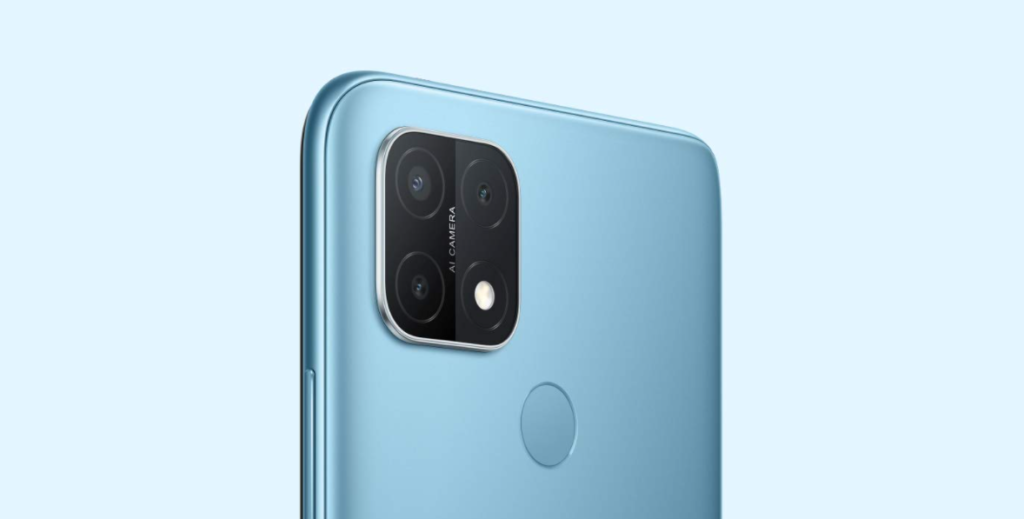
Last week, an OPPO smartphone with model number CPH2185 was spotted on FCC. This device had an identical design to realme narzo 10. Therefore, we thought it to be a rebranded handset. Turns out, this smartphone, which was confirmed earlier this week as OPPO A15 will be more than a rebadged device, as per the latest specs leak.
A few days after OPPO A15’s appearance on FCC, the smartphone was officially teased by Amazon India revealing its design and triple camera setup consisting of 13MP primary sensor paired with 2MP macro shooter and 2MP depth sensor.
Now, popular teenage leaker, Ishan Agarwal has partnered with the publication91Mobiles to bring this device’s entire specs to public. This leak reveals the forthcoming OPPO A15 to be totally different than realme narzo 20. The only common factor between these two handsets is their design.
That said, according to Ishan, this upcoming phone will be powered by MediaTek helio P35 chipset paired with 3GB RAM and 32GB internal storage. Like any other budget device, it will come with a microSD card slot to further expand the storage up to 256GB.
On the front, it will flaunt a 6.52-inch HD+ LCD panel with 296 ppi and a dew-drop notch housing a 5MP selfie camera. Whereas, on the back, apart from the square-sized camera module, the phone will also include a capacitive fingerprint sensor.
Other features of this handset include 3.5mm headphone jack, USB Type-C port, ColorOS 7.2 based on Android 10, 4,320mAh battery and 10W charging.
Last but not least, the OPPO A15 will measure 164 x 75 x 8mm in dimensions and weigh 175g.
OnePlus was one of the few companies part of Android 11 Beta program with two of its devices – OnePlus 8 and OnePlus 8 Pro. At the end of this initiative, the brand started releasing OxygenOS 11 Open Beta builds for these two smartphones. Now, finally, the firm has begun to roll out the stable release to its flagship duo of 2020.
OxygenOS 11, the latest version of OnePlus’ Android skin resembles Samsung’s One UI. In fact, the brand’s upcoming OnePlus 8T looks like a Galaxy smartphone rather than OnePlus.
Anyway, it is refreshing to see OnePlus revamping OxygenOS UI as the stock Android look had begun to stale over the years. That said, here are some of the notable new features in OxygenOS 11 based on Android 11, which is currently rolling out to OnePlus 8/8 Pro.
OxygenOS 11 Notable Features
Revamped UI
New Weather app
New Game Space features
Aways-on Display (AOD)
Updated Dark Mode
Zen Mode 2.0
Revamped Gallery app
Having said, the OxygenOS 11 stable update for OnePlus 8 and OnePlus 8 Pro is currently being rolled out in batches. Therefore, it may take time to reach your device.
Apart from these two handsets, OnePlus has also confirmed Android 11 update for the following devices.
Chinese smartphone brand Smartisan has been relatively silent for a long time now. The brand recently announced that it would launch a new product this October. A new teaser poster has now officially emegered showing that the company’s first product in over a year will be unveiled on October 20.
The last time Smartisan launched a major smartphone product was on October 31, 2019 when the Nut Pro 3 was unveiled. The phone is a flagship model powered by the Snapdragon 855 Plus processor and packing a Quad-camera setup.
The new product launch conference will be held physically at Wukesong·M Space at 19:30 on October 20. Regarding the press conference, Smartisan has indicated that the tickets for the press conference will not be sold and will be distributed to fans in the form of free tickets.
We expect the company to launch the Nut Pro 4, a successor to last year’s Nut Pro 3. The flagship device is expected to be equipped with a full-screen design and a white coloured rear panel. The Nut Pro 4 is also expected to feature a 108-megapixel camera.
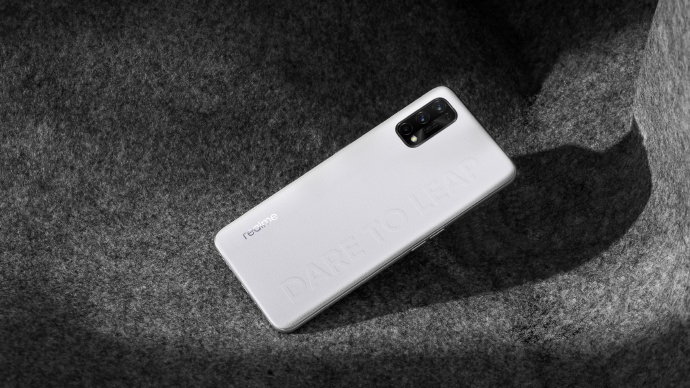
Chinese smartphone maker realme was tipped to launch realme Q2 series on October 13 for two times in the past few days. Unsurprisingly, it happens to be true as the brand has now officially confirmed it to be the official launch date for these two smartphones on Weibo.
Last year, realme launched realme Q as a rebranded realme 5 Pro for the Chinese market. For its successors – realme Q2 (RMX2117) and realme Q2 Pro (RMX2173), the brand seems to have tweaked the global versions of realme 7 and realme 7 Pro, as per leaks and certifications.
These two devices are expected to come with 5G chipsets instead of 4G silicons found in the realme 7 series. The standard realme Q2 is said to be powered by MediaTek Dimensity 720 as per Geekbench, whereas the realme Q2 Pro is tipped to feature MediaTek Dimensity 800U.
Another difference between these China-only devices and their international siblings is that only the costlier Q2 Pro will sport a quad-camera setup with a downgraded 48MP primary sensor paired with an 8MP ultra-wide unit, a 2MP macro snapper, and a 2MP depth sensor. On the other hand, the regular Q2 will come with a 48MP (wide) + 8MP (ultra-wide) + 2MP (depth) triple camera setup. However, both of them will have the same 16MP selfie camera.
Apart from the above-mentioned dissimilarities, the realme Q2 series is expected to be similar to realme 7 series in all other factors, including 60Hz Super AMOLED display and 65W fast charging for the realme Q2 Pro and 90Hz LCD panel and 30W fast charging on the standard realme Q2.
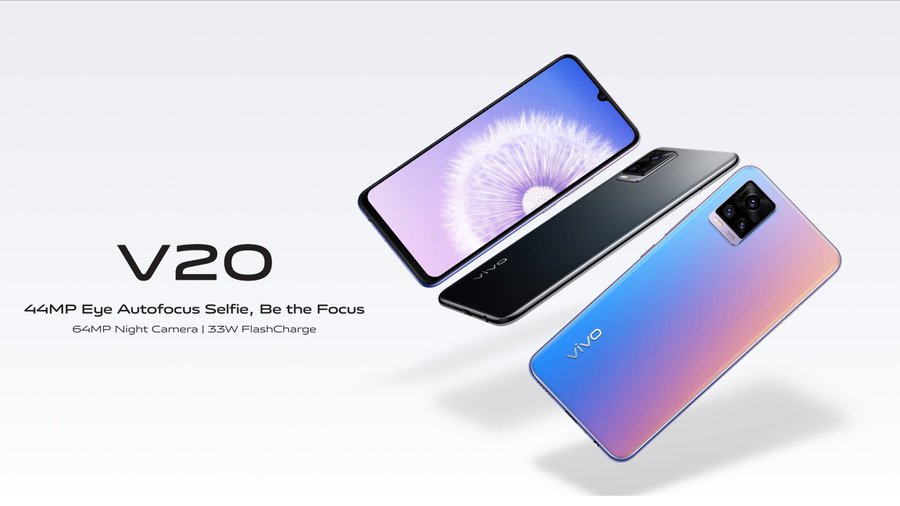
Earlier this week, a promo page appeared on Flipkart that confirmed that the Vivo V20 will go official in India on Oct. 13. The Vivo V20 series has recently launched in a couple of Southeast Asian markets. The lineup includes three devices such as the Vivo V20, Vivo V20 Pro, and Vivo V20 SE. However, it appears that the Chinese firm will be launching only the Vivo V20 in India on Oct. 13 and the other V20 series phones may arrive later. Popular tipster Ishan Agarwal has speculated on the pricing of the Vivo V20 for India.
According to the tipster, the Vivo V20 might be priced at Rs 24,990 (~$343). The handset will be replacing the Vivo V19 phone that will be replacing the Vivo V19 handset that had arrived in May with a price tag of Rs 27,990 (~$383).
The Vivo V20 has a 6.44-inch AMOLED screen with a waterdrop notch. The 20:9 aspect ratio supporting display produces a full HD+ resolution of 1080 x 2400 pixels. The Snapdragon 720G chipset is present under the hood of the device. It comes with 8 GB of RAM, 128 GB of internal storage, and a microSD card slot.
The smartphone comes preinstalled with FunTouch OS 11 based Android 11 OS. It has impressive eye autofocus enabled 44-megapixel selfie camera. The rear camera setup of the Vivo V20 has a 64-megapixel main camera, an 8-megapixel ultrawide shooter, and a 2-megpaixel mono lens.
The Vivo V20 has a 4,000mAh battery with 33W fast charging support. It also features an in-display fingerprint scanner. The above poster shows the phone in black and gradient blue color options. It will be available for purchase through Flipkart in the country.
Earlier this week, Samsung unveiled the Galaxy F41 smartphone in India. Priced at Rs 16,999 (~$233), the F41 is exclusively available for purchase through Flipkart in India. Samsung is gearing up to begin with the sales of the upcoming Galaxy M31 Prime Edition through Amazon India in the country. The promo page for the phone is now live on the retailer site. The updated page now reveals that the Galaxy M31 Prime Edition has a starting price of Rs 16,499 (~$226). The handset is expected to go on sale in India.
Samsung Galaxy M31 Prime Edition price in India
The Galaxy M31 Prime Edition has a starting price of Rs 16,499 which belongs to the 6 GB RAM + 64 GB storage edition. The promo page mentions that the phone will also come in 128 GB storage version. At present, there is no word on the pricing of the 128 GB variant.
The Prime Edition phone comes with a complimentary 3 months membership of Amazon Prime. The above-shown image shows that the phone gives one-swipe access to Amazon app. The listing still mentions that it is “coming soon.” The phone is expected to go on sale in India through the Great Indian Sale that is set to begin on Oct. 17 in India through Amazon India. Prime users will have early access from Oct. 16.
The entire specs of the Galaxy M31 Prime Edition are known yet. It has an Infinity-U notch enabled S-AMOLED display and a rear-facing fingerprint scanner. It has a front camera of 32-megapixel and a 64-megapixel + 8-megapixel (ultrawide) + 5-megapixel (macro) + 5-megpaixel (depth) quad-camera setup with 4K video recording support.
The Exynos 9611 chipset fuels the Galaxy M31 Prime Edition with LPPDR4x RAM. The phone houses a 6,000mAh battery with 15W fast charging support. It is expected to arrive in three colors such as Ocean Blue, Space Black, and Iceberg Blue.
Desktop PCs were thought to have outlived their relevance but in recent times,a number of products have come to dismantle such opinions. One of such products is AMD‘s latest desktop processors. The Ryzen 5000 series of CPUs was announced by the company yesterday, and it is manufactured based on its latest Zen 3 architecture. A totla of four new models were outed with the prices ranging from $299 to $799, effectively putting an end to the idea of AMD processors being cheaper alternatives.
At the the helm is the new Ryzen 9 5950X featuring 16 cores and 32 threads. The 5950X has a base clock frequency of 3.4GHz and a boost clock speed of 4.9GHz. The company claims this SoC possesses the highest single and multi-threaded performance of any mainstream desktop CPU. The L3 cache spread across its two chipsets is up to 64MB and it equally has a TDP of 105W.
The 5950X is a successor of the previous-gen Ryzen 3950X and is priced at $799. The price is just $40 higher than that of the 3950X which is priced at $749. It is well suited to take on the 18-core Intel Core i9-10980XE.
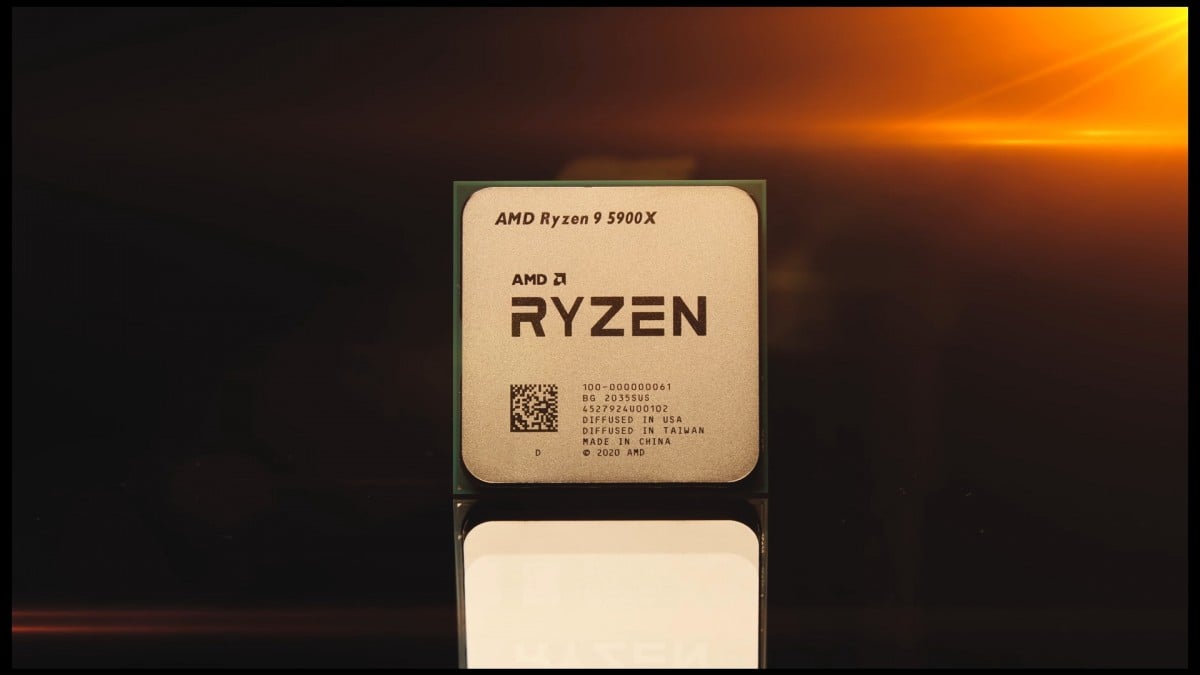
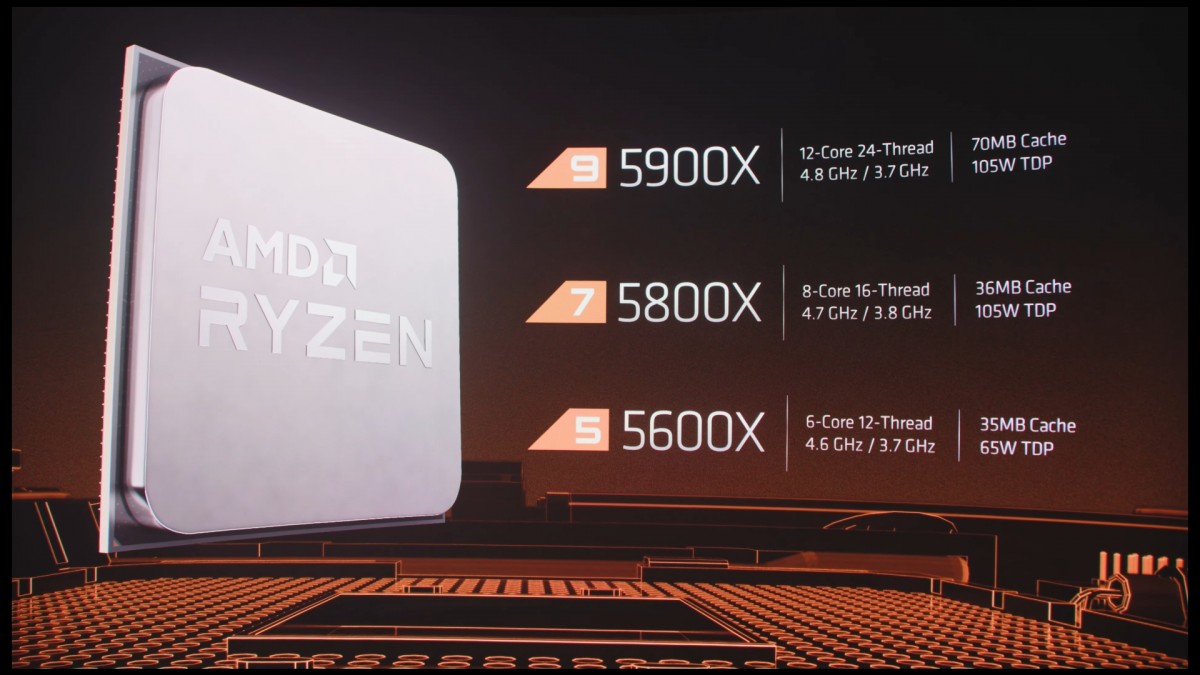
The second model is the Ryzen 9 5900X. The new processor comes with a 12-core architecture with 24 threads. The chipset has abase clock spoeed of 3.7GHz and a boost clock speed of 4.8GHz. The chipmaker touts this CPU as the best gaming CPU on the market. The Ryzen 5900X equally has 64MB of L3 cache spread across two chiplets and a TDP of 105W, just like the 5950X.
However, the Ryzen 9 5900X which replaces the $499 Ryzen 3900X, comes in at a lower price of $549. It will take on the 10-core Intel Core i9-10900K.
The third model in the series is the Ryzen 7 5800X, equipped with 8 cores and 16 threads. The 5800X can achieve a base clock of 3.8GHz and a boost clock of 4.7GHz. The CPU utilises a single chiplet design with the 8 cores and full 32MB cache on the single CCX. It also has a TDP of 105W.
AMD’s Ryzen 7 5800X comes with a price tag of $449 and will take on the 8-core Intel Core i7-10700K.
The last but not the least, is the Ryzen 5 5600X, which has 6 cores and 12 threads. The desktop CPU which is the cheapest among the lot, has a base clock of 3.7GHz and a boost clock of 4.6GHz. It also utilises a single chiplet design and has 32MB of L3 cache but the TDP is reduced to 65W. The 5600X is the only one out of the lot that will come with a stock cooler in the box.
The Ryzen 5 5600X is priced at $299 and will take on the 6-core Intel Core i5-10600K.
The new Ryzen 5000 series will be on store shelves from November 5. The CPUs will all be compatible with all motherboards running B550 and X570 chipsets at launch.
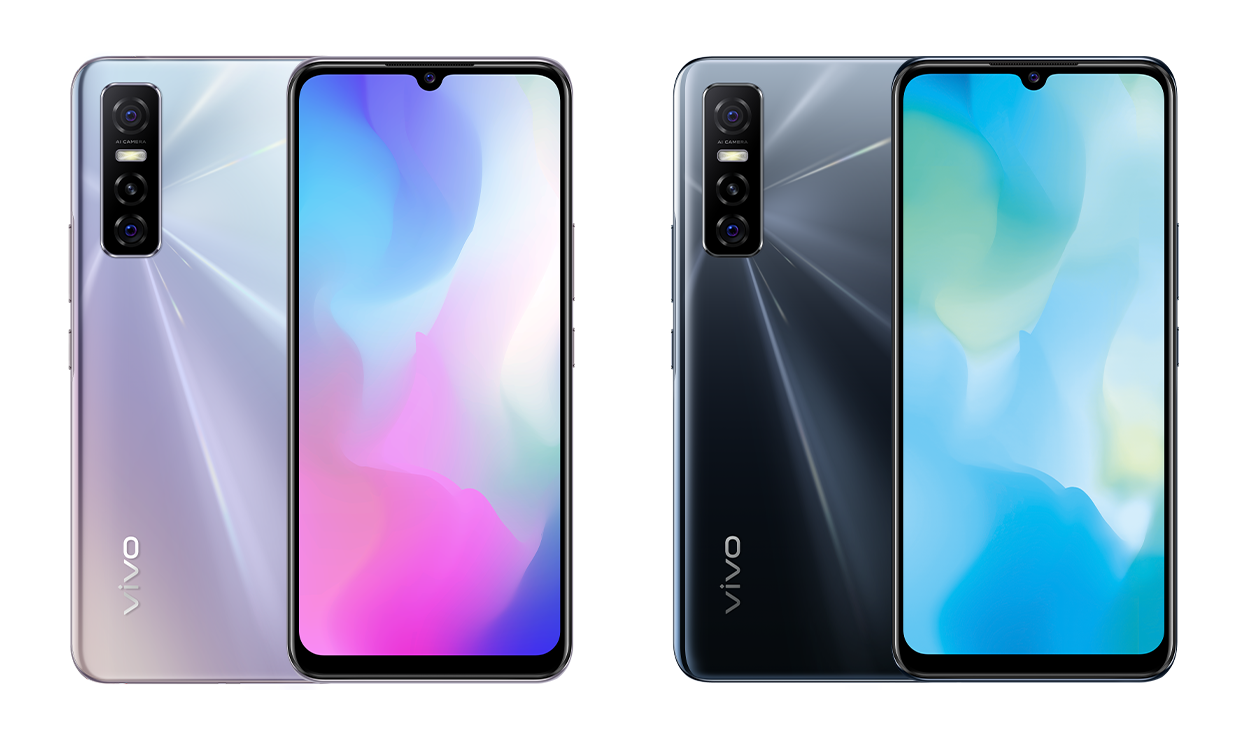
A budget-friendly Vivo smartphone named the Vivo Y73s 5G has gone official in China. The model number of the device is V2031A and it was seen in the database of China’s TENAA regulatory body last month. The Vivo Y73s is Vivo’s first smartphone to be driven by the Dimensity 720 chipset. Some of its highlights include a tall aspect ratio screen, 48-megapixel triple rear shooters, and a decent battery with 18W fast charging support.
Vivo Y73s 5G specifications and price
The Vivo Y73s 5G has a 6.44-inch AMOLED display with a waterdrop notch. It supports 1080 x 2400 pixels full HD+ resolution, a 20:9 aspect ratio, 103 percent NTSC color gamut, HDR10, and an in-screen fingerprint sensor. The phone offers a screen-to-body ratio of 90.1 percent.
The Dimensity 720 chipset with 8GB of LPDDR4x RAM and 128GB of UFS 2.1 storage drives the Vivo Y73s 5G. The device lacks support for a microSD card slot. The Android 10 OS along with FunTouchOS 10 comes preinstalled on the Vivo Y73s 5G.
The Vivo Y73s 5G has a front-facing camera of 16-megapixel with f/2.0 aperture. The backside of the phone has a 48-megapixel main camera with f/1.79 aperture, an 8-megapixel superwide lens with a 120-degree field-of-view with f/2.4 aperture, and a 2-megapixel portrait shooter with f/2.4 aperture. The phone supports photography feature such as night mode, macro shots, 10x digital zoom, EIS, and 4K video shooting,
The handset houses a 4,100mAh battery that supports 18W dual-engine fast charging through USB-C. It offers connectivity options such as dual SIM slot, 5G, Bluetooth 5.1, GPS, and a 3.5mm audio jack.
Vivo Y73s 5G pricing and availability
There is no information on whether the Vivo Y73s 5Gwill be heading to markets outside of China. In the homeland, the Vivo Y73s 5G is priced at 1,998 Yuan (~$298). It can be bought in two colors such as Silver Moon and Black Mirror.
We use cookies on our website to give you the most relevant experience by remembering your preferences and repeat visits. By clicking “Accept”, you consent to the use of ALL the cookies.
This website uses cookies to improve your experience while you navigate through the website. Out of these, the cookies that are categorized as necessary are stored on your browser as they are essential for the working of basic functionalities of the website. We also use third-party cookies that help us analyze and understand how you use this website. These cookies will be stored in your browser only with your consent. You also have the option to opt-out of these cookies. But opting out of some of these cookies may affect your browsing experience.
Necessary cookies are absolutely essential for the website to function properly. This category only includes cookies that ensures basic functionalities and security features of the website. These cookies do not store any personal information.
Any cookies that may not be particularly necessary for the website to function and is used specifically to collect user personal data via analytics, ads, other embedded contents are termed as non-necessary cookies. It is mandatory to procure user consent prior to running these cookies on your website.






 Amazfit GTS smartwatch boasts a 1.65-inch 341 PPI AMOLED display with customizable widgets to offer a personalized view. The watch vibrates to alert the user of any notifications. This piece features a 28nm ultra-low power consumption Sony GPS chip that offers up to 14-day battery life, making it an ideal outdoor companion. With a sleek metallic design, the Amazfit GTS smartwatch can easily resist minor bumps while exuding a minimalist appeal.