Advertisement

DxOMark: Samsung Galaxy Note 20 Ultra 5G scores 121 points; trails behind the Mi 10 Ultra

As promised, DxOMark has released the camera review for the Samsung Galaxy Note 20 Ultra 5G. The review lab has given the flagship an overall score of 121 points which places it even under the Galaxy S20 Ultra.
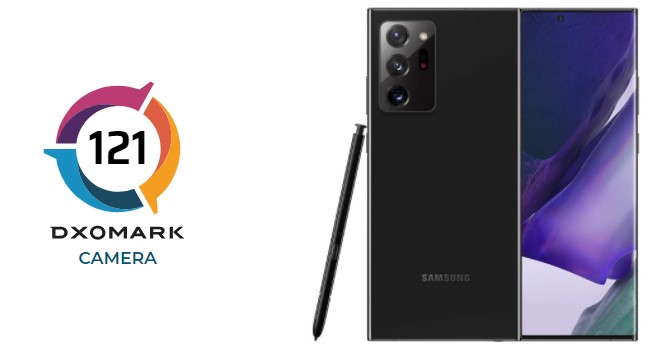
Samsung Galaxy Note 20 Ultra 5G DxOMark Score

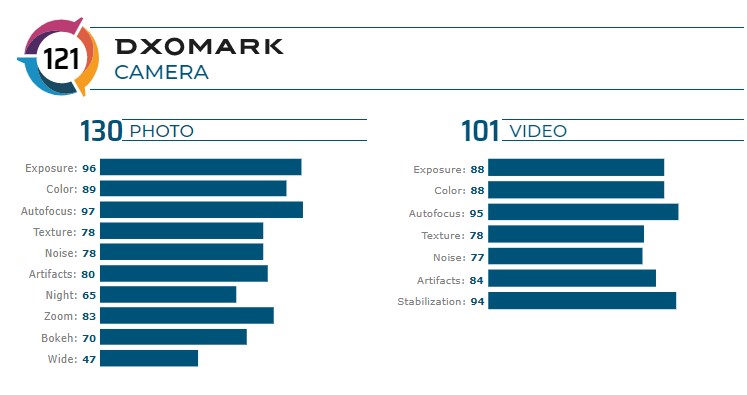
For photos, the stylus-toting smartphone scored 130 points. DxOMark says the phone has similar photo capabilities to the Galaxy S20 Ultra and praises its “vivid color rendering, fast autofocusing, and generally accurate exposure”.

The review says that the telephoto lens of the phone performs well at long range and it records good detail both indoors and outdoors. The exposure and color are also praised, however, issues begin cropping up in medium-range shots as lots of artifacts become visible and there is a “strong loss of texture and detail occurs in the outer field”.
Samsung Galaxy Note 20 Ultra 5G DxOMark Score test summary

The ultra-wide-angle camera also gets praised even though its field of view is not as wide as that of other phones such as the Mi 10 Ultra. The portrait mode is another strong area as DxOMark says the bokeh quality is very good and the depth-of-field effect is strong. However, there are times it falls short, and its depth estimation is said to not be as good as that of the S20 Ultra. The full review explains in detail the camera performance.

For video, the Galaxy Note 20 Ultra scored 101 points. DxOMark said that the test was done in 4K/30fps mode and that the phone captures bright and well-contrasted videos in simulated low light (20 lux) and bright light (1000 lux). However, its videos are darker than those of the S20 Ultra and Mi 10 Ultra in simulated low-light conditions (between 5 and 20 lux).

The phone scores are high with respect to the level of detail in bright light. The stabilization system also gets praise and autofocus is also great but there are some focus breathing issues that DxOMark says is also evident in photo mode.


OLED sales to rise by 107% in second half of 2020: Report

Organic light emitting diode or OLED display panels are expected to face a major bump in sales in the second half of this year. A new report has suggested that the display technology will see a rise in sales of 107 percent in the latter half.

Xiaomi Mi TV Master Series 65-inch OLED

According to TheElec report, a UBI Research analysis has revealed that the OLED panel shipments will reach 383 million units and sales worth 28 billion US Dollars in the second half od 2020. This marks a significant rise of 66 percent and 107 percent respectively when compared to the first half. It is also indicative of the growing OLED market, which has already surpassed the LCD panels.

In the first half of 2020, OLED shipments arrived at just 231 million units, which marked a drop of 29 percent when compared to the shipments from the second half of last year. The sales during this period also fell by 36 percent in comparison to 2019, with the overall sales value coming in at just 13.53 billion US Dollars. Notably, the rise in the second half of 2020 would likely also be influenced by major smartphone launches like the Huawei Mate 40 series and Apple iPhone 12 series as well.

boe oled

Furthermore, smartphone OLED display panel shipments accounted for 190 million units in the first half of 2020. In other words, smartphone displays amounted to 82.2 percent of all OLED panel sales across the globe. For sales, this was evaluated at 11.26 billion US Dollars or 83.3 percent of the total sales in the entire OLED display market. These panels were also used in smartwatches, which was the second highest in terms of shipment volumes, with 33.48 million units or 14.4 percent of the total shipments.


Samsung scraps the idea of introducing Under-Display Camera technology with the Galaxy S21 series: Report

Samsung has reportedly scrapped the idea of introducing Under Display Camera tech with the upcoming Galaxy S21 series. According to the latest report, the low production yield rate is the reason for dropping the idea.

South Korean media TheElec, in a report, says that Samsung will try to finally adopt it in the next iteration of the foldable device, allegedly called the Z Fold 3 in Q2 2021. Just like Galaxy S20 or Fold 2, early rumors said Galaxy S21 will include the UDC technology. But now, it seems like Samsung has done away with the idea as reported earlier.

As per the report, Samsung Display, which is the manufacturer of many Samsung smartphones’ displays has been trying the HIAA process for UDC technology. HIAA refers to Hole In Active Area. Introduced with the S10 series, it uses high-precision lasers to cut through the display to make way for cameras. The report says the process, which lowers the defect on adjacent electronic parts, has two methods- HIAA 1 and HIAA 2.

In the first method, Samsung punches a hole in a single shot whereas, in the second method, it does it with multiple micro holes. Out of this, HIAA 2, which was commissioned last year by Samsung, uses Wonik IPS’ vacuum chamber, and Philoptics laser. The company apparently tried to use HIAA 2 and also a transparent film method. However, it has reportedly faced low production yield-rates. It generally means the rate of undefective items out of total items produced.

Editor’s Pick: [UPDATED] Explained: Under Display Cameras & its Application with the CEO of OTI Lumionics

A recap of UDC technology

For the unaware, UDC is a new technology that aims to remove the concept of drilling holes on displays. Instead, the part of the display that is covering the camera turns transparent as the camera operates eliminating punch-holes/notches.

Under Display Camera Featured

Companies like Oppo, Xiaomi, Vivo have already been working on improving the technology. However, ZTE has come out with a first commercial device, Axon 20 5G. The technology behind all these companies’ prototypes is like the low-reflective glass covering the camera with high transmittance. When selfie is triggered, it becomes transparent allowing light to enter.

However, the Polyimide(PI) substrate that is predominant in OLED screens has a problem of distortion when allowing the light to pass through. Hence, it needs a camera tech that is both thinner and converts the distorted light with yellow tints to normal color for best results. From the looks of it, Samsung is yet to perfect the issues and hence, it will reportedly use the same punch-hole displays on the next S21 series.

Up Next: POCO C3 to arrive with HD+ display and 4GB of RAM

Group sold 7,000 Fake Huawei devices by rebranding phones worth 40 Yuan ($6)

Huawei is one of the largest and most popular smartphone brands in the world, especially in its home country, China, where it leads the local market. However, its popularity led a group to cash in on the company’s success as they were recently caught having sold over 7,000 smartphones that were rebranded as Huawei devices.

Huawei logo Mate featured 07

According to a MyDrivers report, Huawei smartphones have become more popular in China, despite the various issues it faces overseas. Due to this, a group seemingly faked the company’s branding to sell a large number of smartphones made from another Chinese smartphone maker. A recent bust revealed that a group was manufacturing and selling fake Huawei devices that were built using an inferior and more affordable device.

Reports have found three criminal suspects that are charged with counterfeit manufacturing and fraud. The authorities have discovered their base of operations and have frozen assets worth over 2 million Yuan (roughly 300,000 US Dollars). The police from the Jiangxi Province got a clue back in August 2020 regarding the suspected production and selling of counterfeit products, and in September 2020, the arrests were finally made.

Huawei Logo MWC 2019

At the moment, the police have seized over 1,300 counterfeit Huawei smartphones and a number of other gadgets like laptops, desktop computers, and more that were used to flashing the custom ROM onto the cheaper device that was only worth 40 Yuan (roughly 6 US Dollars). These devices were bought in large numbers and were resold online through various e-retailing websites at a price ranging from either 170 Yuan to 270 Yuan, attracting buyers through these special discounts/low prices promotion.


Huawei HarmonyOS to first arrive in Kirin 9000 5G powered devices: Report

Huawei is already working on bringing its proprietary operating system, HarmonyOS (HongMengOS in China) to smartphones. Earlier, the company confirmed that it will arrive in smartphones sometime in 2021 and a recent report has now revealed that the Kirin 9000 5G powered smartphones will be the first to feature the new OS.

Huawei

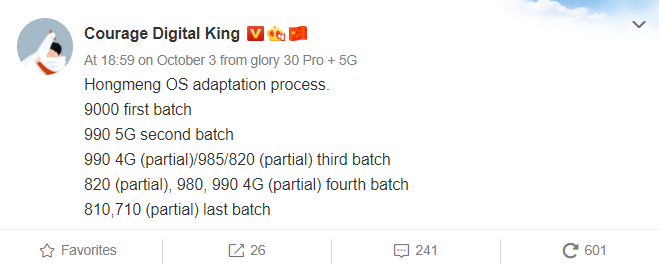
According to a new leak from @勇气数码君 on Weibo, the Chinese microblogging website, the first batch of devices that run HarmonyOS will be smartphones powered by the Kirin 9000 5G. Furthermore, the subsequent batches will include handsets that feature the Kirin 990 5G, followed by the 4G variant of the Kirin 990 and other processors like the Kirin 985, 980, 820, 810, and even 710 later down the road.

The fact that the Kirin 9000 5G powered smartphones will be the first to feature the company’s own OS, indicates that the Huawei Mate 40 series may be the first lineup to feature the proprietary operating system. Similarly, other assumptions can also be made, with the Huawei P40 Pro being possibly the second to receive the new OS as it sports the Kirin 990 5G chipset as well. This process of updates might take place gradually over the course of a few months and may soon include most smartphone models from the company.

Huawei

Unfortunately, this is still an unconfirmed report so take it with a pinch of salt for now. Furthermore, it is also unknown which devices the company is planning on including for the HarmonyOS update. So stay tuned for more updates, which should arrive soon as we grow closer to the Mate 40 series launch.


vivo X60 series may launch in a month or two

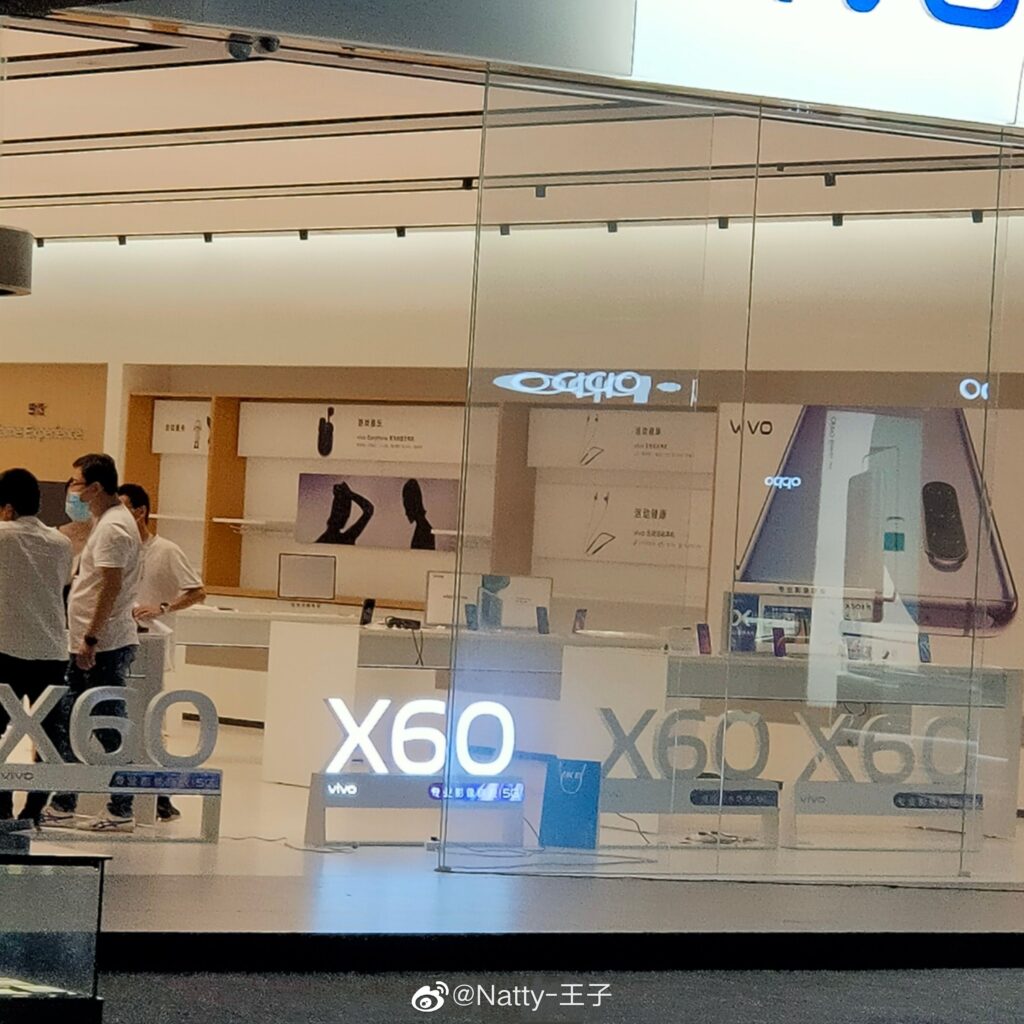
Popular smartphone maker vivo makes one of a kind devices targeted at fashionable and photography enthusiasts. The company’s X series combines both of these traits in a single package. The current-gen vivo X50 series includes some amazing features such as gimbal OIS system. The three devices in the series were unveiled back in June. Now, according to an alleged picture circulating on Weibo, their successors – vivo X60 series may launch very soon.

vivo X60 Series Retail Store Advertising Stands

Chinese smartphone makers are known to update their smartphones within two quarters. Previously, they used to launch a new phone in a series within an interval of four quarters (one year) but not anymore.

Therefore, this viral picture (via MySmartPrice) showing vivo X60 advertising stands in an official retail store could be indeed legit. The tagline of this series will be “Professional Imaging Flagship” (translated). That means these handsets will come with similar features as their predecessors.

In case you are not aware of, a similar alleged picture of OPPO Reno4 circulated in May before its launch in June. At that time, we thought it to be mostly fake as Chinese companies are not known for launching products with “4” moniker.

Anyway, if this picture is true, we can expect vivo to announce vivo X60 series sometime later in November or December. Similarly, OPPO might also launch Reno5 series at around the same time as the company unveiled Reno3 series last year in late December.


Xiaomi Youpin launches the ONEBOT Racing Car Drift Edition RC Toy

Just recently, the Xiaomi Youpin platform listed a new product from ONEBOT, which is a toy race car. The ONEBOT Race Car Drift Edition is priced at 299 Yuan (roughly 44 US Dollars), with a special coupon also offering an additional 10 Yuan (roughly 1.5 US Dollars) discount at checkout.

Xiaomi

The new toy race car has a rather complicated process of building, which is to make it as real to an actual race car. When finished, the ONEBOT race car spans a total length of 30 cm, and features a racing aerodynamic design, with various aspects reflecting the same. It also features a small but powerful motor that runs the toy car and is even offered along with precise controls.

The ONEBOT Race Car Drift Edition is made out of a number of 680+ PCS building blocks with the materials being safe, which also meets European and American RoHS standards. These building blocks also have a fine texture with good strength and are made with precision technology that fits well without any issues. Notably, ONEBOT is a brand of AIQI technology, which is backed by Xiaomi and Shunwei Capital (Xiaomi founders’ investment fund).

Xiaomi

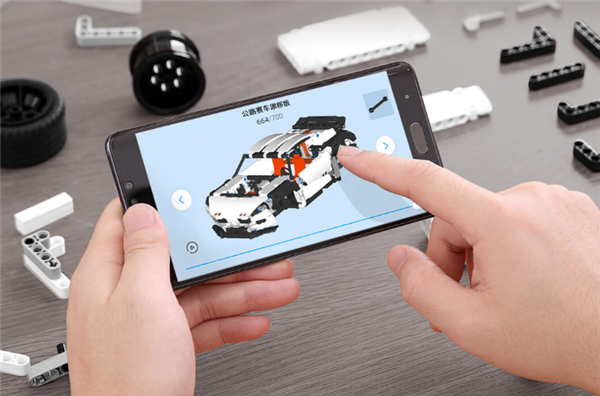
It also arrives with a dedicated smartphone app that displays the car in 3D, which allows for deconstruction and building of the car in the virtual space, while also offering a step by step guide for the entire process. Under the hood, a built in high capacity 2,000mAh battery that runs its powerful motor with 1700r/min. This battery is charged via a USB Type C charging port. So for those interested in getting a new toy racing car for young ones, you can definitely check out this one on Xiaomi Youpin.


LG smartphone prices to rise in India after recent import duty hike

LG recently announced that it will continue to assemble its smartphones in India despite the recent import duty hike on components shipped from overseas. However, this is also causing the company to expect a rise in prices for its smartphones in the region.

LG

According to Advait Vaidya, Mobile Communications Business Head at LG India, “We are totally committed to MAKE IN INDIA vision & will continue to manufacture in India. In the long term, this situation will also create possibilities of local production by vendors including display & other components.” In other words, the move from the Indian government is aimed to boost the local production of such components.

For those unaware, from 1st October 2020, the central government has levied a 10 percent basic customs duty on imports of various components like display assembly, touch panel/cover glass assembly, and more. This arrives despite various requests to the government to delay the levy by a year since these components aren’t currently made in India at the moment, which may lead to prices going up in the smartphone market by at least 3 to 5 percent as per industry estimates.

LG Velvet cameras
LG Velvet

Vaidya further added that “we are closely monitoring the situation, it may have an impact on prices,” when reached out to by ET. LG is assembling its smartphone through its Pune factory and only holds less than 1 percent of the total Indian market. The components that are facing the import duty hike also make up for 25 percent of the smartphone’s cost, and it may take at least two years to establish a dedicated display fab unit in India if the company does decide to invest 300 to 400 crores on a single unit.


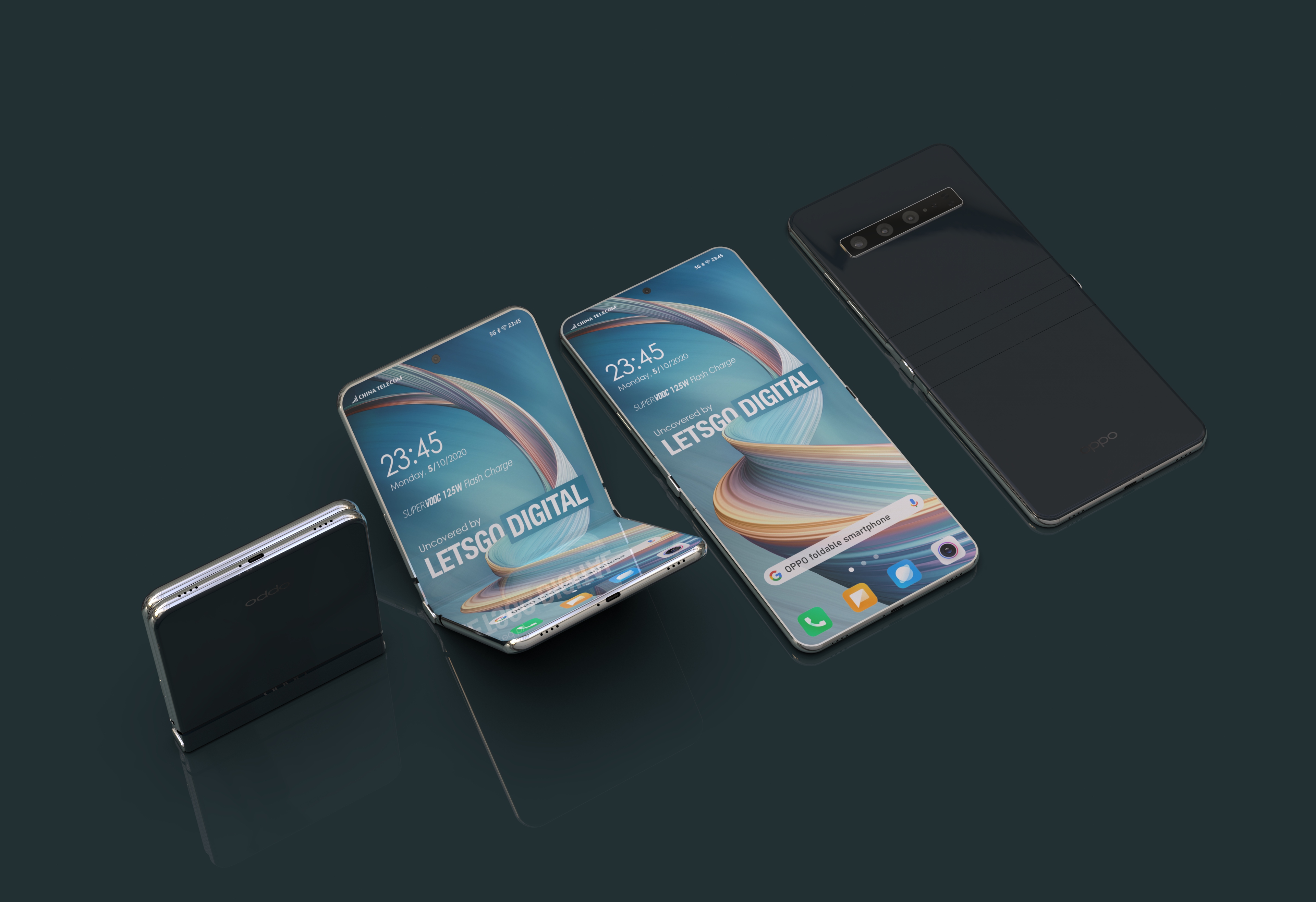
OPPO files a utility patent for clamshell foldable smartphone hinge

Electronics companies around the world are looking to introduce foldable smartphones. So far, only four companies have managed to achieve this feat and they are Samsung, Huawei, Motorola, and Royole. On the other hand, the remaining popular smartphone makers have been applying for patents related to this tech for the past few quarters. One of those companies is OPPO and it has applied for one more.

OPPO Utility Patent - Clamshell Foldable Smartphone Hinge 04

Chinese smartphone maker OPPO is known for its SuperVOOC fast charging technology and uniquely designed phones. But the company is yet to release a foldable smartphone. Anyway, it has been patenting design for such devices for a while now. Hence, we can expect the company to soon launch a commercial foldable smartphone.

That said, the new patent filed by Guangdong Oppo Mobile Telecommunications with the WIPO (World Intellectual Property Organization) is a utility patent for hinge and not design like the company’s previous foldable patents. 


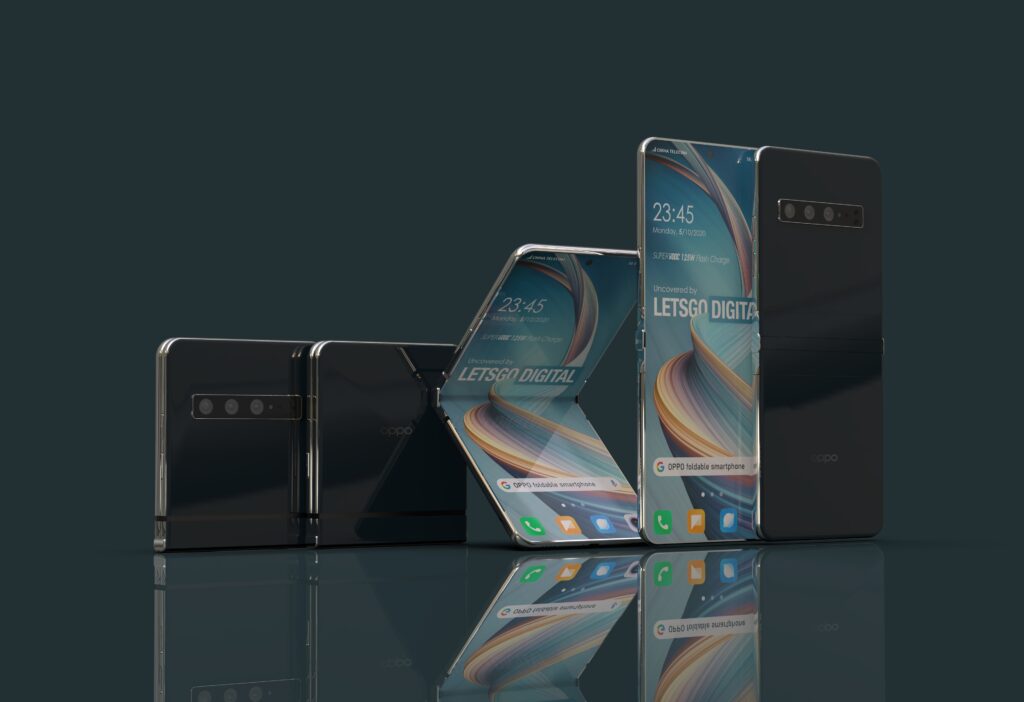
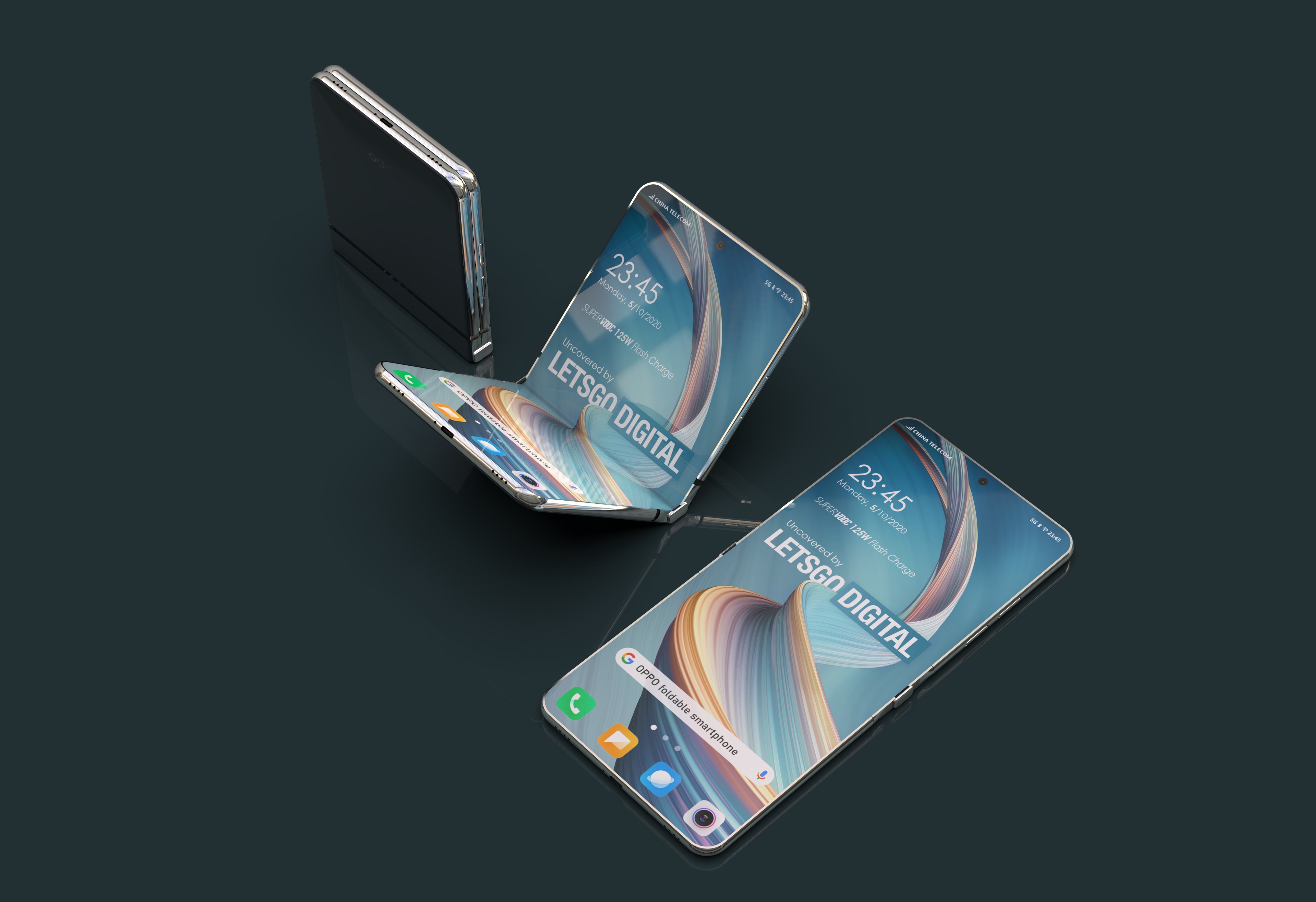
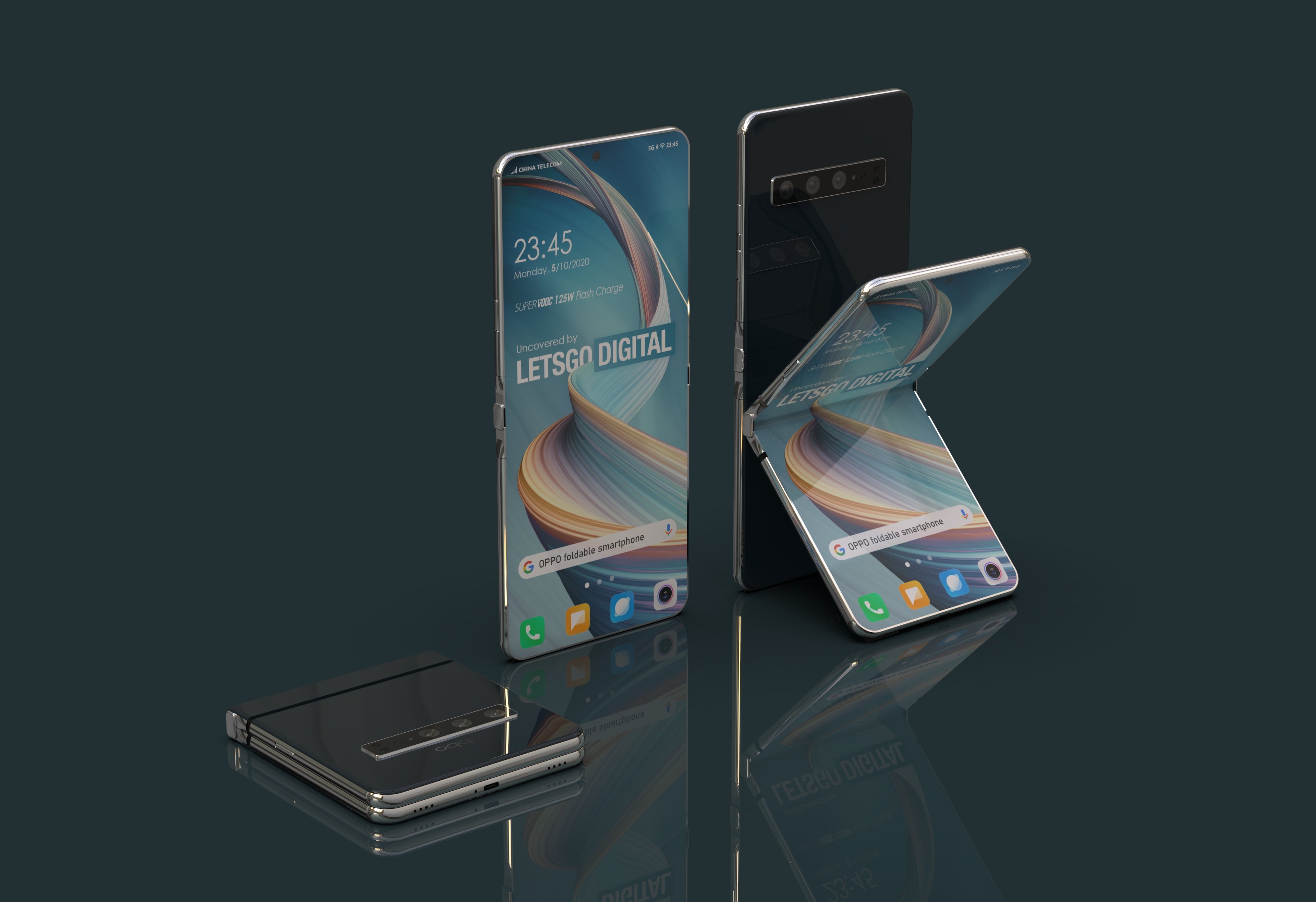
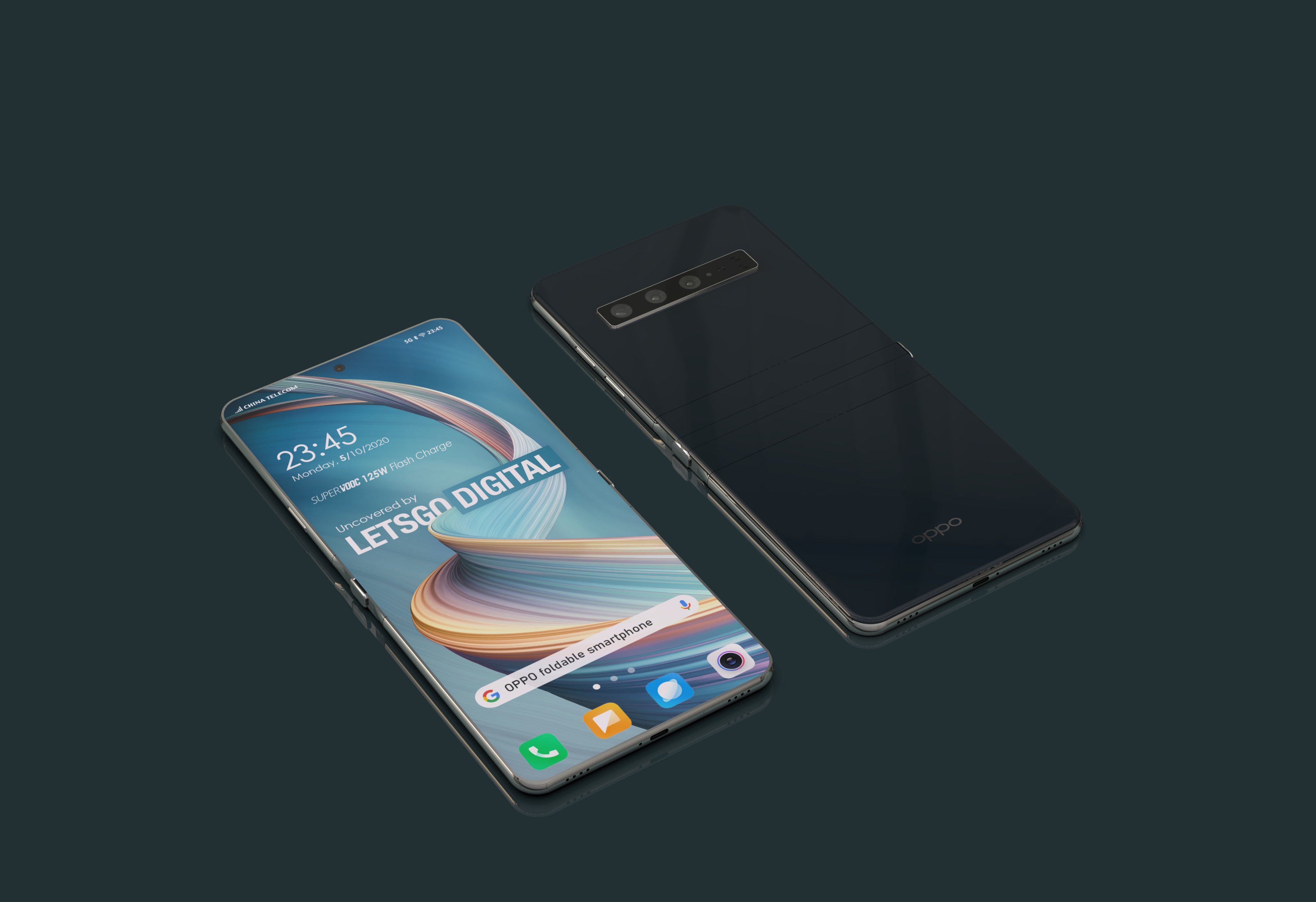
This patent was filed by OPPO in February but was only approved and published on September 3. As usual, the documents for this patent was unearthed by none other than LetsGoDigital and the publication even imagined the final design of a smartphone with this hinge in 3D renders.

OPPO Utility Patent - Clamshell Foldable Smartphone Hinge

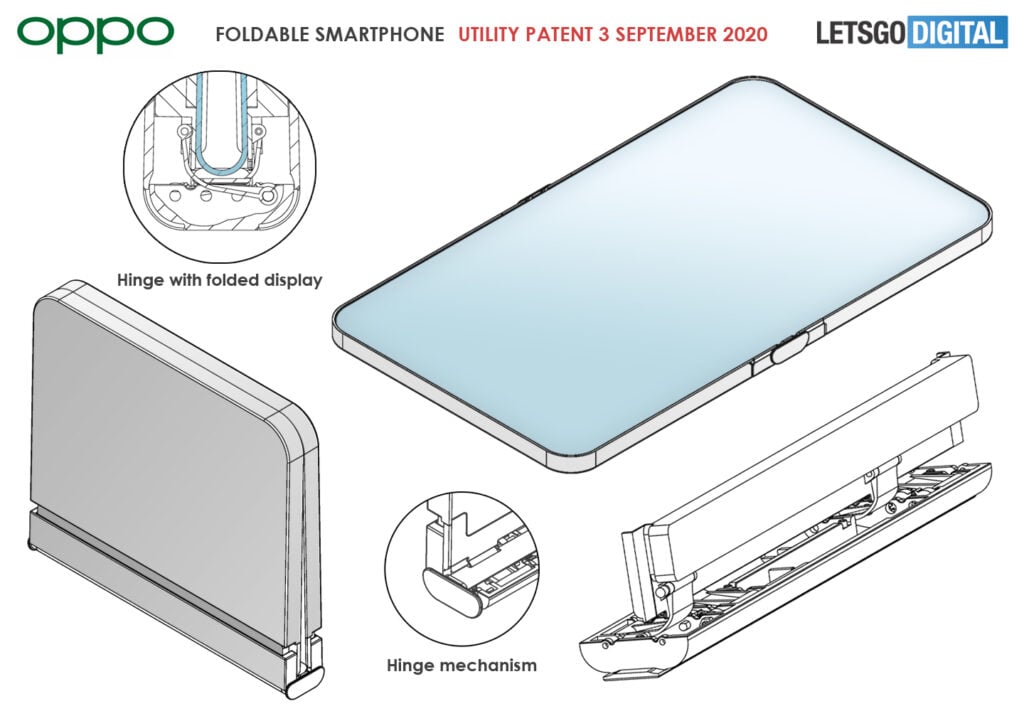
According to the patent diagrams and documents, this hinge is wider than any other hinge present in currently available foldable smartphones. It features a pair of rotatable cover plates coupled to the support plate to mitigate the length between the screen and the housing while folding and unfolding.

This hinge also allows the users to fix the display of the phone at four points – 30°, 60°, 90°, and 190° respectively. Since this hinge is meant for clamshell foldable, we cam imagine use cases like Flex Mode on Galaxy Z Flip.

Interestingly, one of the documents also mentions that this hinge will enable crease-free display experience, which is a bold claim. Anway, patents are patents and not all come into fruition. Hopefully, this one does.


WeChat app store ban blocked after US government appeals Judge’s ruling

The US Justice Department recently announced that it is appealing a judge’s ruling to block the government from banning Apple and Google from offering the popular Chinese app, WeChat, through their respective app stores.

WeChat

For those unaware, a recent crackdown saw the social media application also face a possible ban by the US Government, which might have even extended across Android and iOS devices in China. However, the government has now stated that is appealing the ruling passed by the Magistrate Judge Laurel Beeler. This judgment had blocked the US Commerce Department’s order, which would have barred every US based transactions with Tencent Holding’s WeChat. This would effectively have made the app unavailable/unusable in the US.

Initially, the Justice Department stated that Beeler’s orders were in error and “permits the continued, unfettered use of WeChat, a mobile application that the Executive Branch has determined constitutes a threat to the national security and foreign policy of the United States.” On the other hand, WeChat Users Alliance, the group that is fighting the legal battles against the WeChat ban said that the department “has still presented no compelling national security interest to justify such an unprecedented ban.”

WeChat

Furthermore, the group also added that Tencent had tried to negotiate a settlement with the Commerce Department as well, offering numerous mitigation measures and even to address any data security concerns. Judge Beeler also added that WeChat users have “have shown serious questions going to the merits of the First Amendment claim,” which guarantees freedom of speech. The app has millions of daily active users in the country and plays an integral role in many lives, especially Chinese students living in America. Although, it remains to be seen just how the entire situation plays out. So stay tuned for more updates.


India imposes 5% import duty on key components for TV manufacturing

India has imposed a customs duty of 5 percent on the import of key components used in manufacturing LCD and LED TVs. The notification was issued by the Finance Ministry and the duty went into effect from 1st October.

Earlier, the Ministry of Electronics and IT had proposed to impose a duty of 5 percent on open cell panels and bring the pure cell to zero percent in a bid to encourage the process of polariser film and COF bonding for open-cell.

Xiaomi Smart TV India

EDITOR’S PICK: Japanese companies Sony and Kioxia are seeking a license to do business with Huawei

ICEA, which is representing companies like LG, Xiaomi, and Micromax among others, has been opposing the move claiming concerns about the implementation as the anomaly in the differentiation of open-cell with bonding and open-cell without bonding — pure cell — still remains a challenge.

Last month, the body had written a letter to Revenue Secretary seeking an extension on zero duty on the open cell imports for three more years. It argued that the policy has given a huge fillip to domestic manufacturing of LED televisions and has also led to a reduction in imports from ASEAN countries.

It has also warned of the growth of the grey market on imposing 5 percent duty. It also claims that there will be a rise in imports of LED TVs, giving a major blow to the government’s ambitious Make In India initiative.

The Indian Smart TV market is poised to grow further as the Internet is penetrating at a faster pace and OTT consumption is growing in the market. Currently, Xiaomi is leading the Smart TV market in India, followed by LG and Samsung.


Japanese companies Sony and Kioxia seek license to do business with Huawei

As the United States imposed new sanctions on Chinese giant Huawei, more and more companies are facing the heat. With new restrictions, Japan-based companies that supply chips to Huawei, are facing the risk of losing billions of dollars in revenue.

Now, as per the latest report, in order to avoid losing money, Japanese companies Sony and Kioxia have applied for approval from the United States to continue doing business with Huawei. It’s noteworthy that Intel has already been granted a license to supply chipsets to the Chinese giant.

Huawei is one of the top buyers of image sensors from Sony while Kioxia is one of the world’s leading flash memory chip makers and is also a major supplier to the Chinese telecom giant, which was also the leading smartphone brand in Q2 2020.

Since the U.S. government added new sanctions on the Chinese giant, Sony trimmed its capital spending plan for three years, as there’s now a gap of billions of dollars in sales from supplying image sensors to Huawei.

EDITOR’S PICK: Xiaomi introduces RAMDISK for smartphones; significantly boosts game performance

On the other hand, Kioxia, which is a Toshiba spinoff, has warned that restricting supply to Huawei could trigger memory chip oversupply and thus lower the prices. Because of the uncertainty, the company has shelved its plan for a multi-billion dollar listing.

However, these Japanese companies are not the only ones in line to get a license from the U.S. South Korean companies like Samsung Electronics and SK Hynix have also applied to get a green signal to continue supplying components to Huawei.


Xiaomi Mi 10T series to launch in India on October 15

The Xiaomi Mi 10T series, the current flagship lineup from the Chinese tech giant, is making its way to the Indian market. The announcement was shared by the company earlier today (5th October 2020) through social media.

Xiaomi India’s official Twitter handle shared a tweet about the upcoming flagship lineup, which includes the Mi 10T 5G and Mi 10T Pro 5G. Back in September, the company had officially launched the new series that arrived with a few upgrades to the previously launched flagship, Mi 10 series. Notably, the Mi 10 Lite, which was also recently found receiving the SIG certification was also expected to make its way to the Indian market, however, the tweet failed to have any mention of the mid range level handset.

Xiaomi

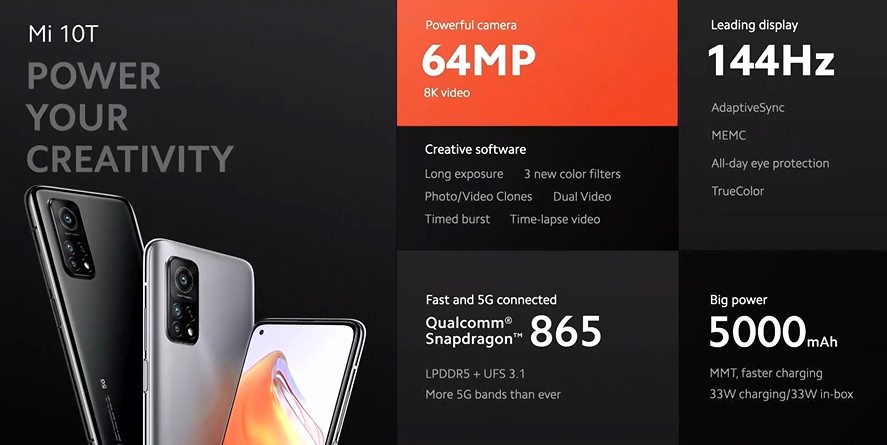
For those unaware, the Mi 10T series sports one of the highest refresh rate displays ever found in a smartphone, with 144Hz panels. Although to achieve this, the company had to use IPS LCD screens, which Xiaomi claims is one of the best in the industry. The series sports the Qualcomm Snapdragon 865 processor that also arrives with support for 5G, so it is future proofed in a manner since the newer standard of networking has yet to be commercially rolled out in the region. You can even check out our comparison between the Mi 10T Pro to the Mi 10 Ultra, which had some very interesting differences.


Motorola Razr 5G launched in India for Rs 1,24,999 (~$1,700)

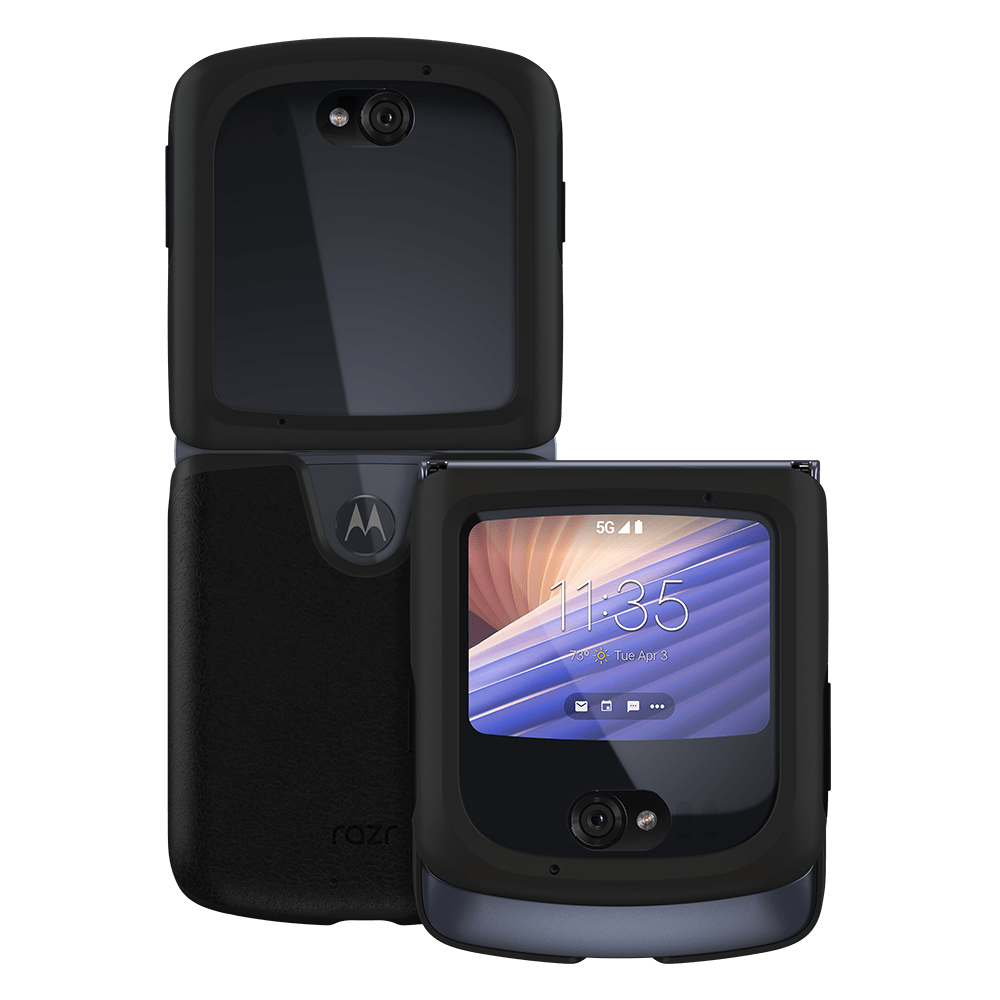
The Motorola Razr clamshell phone with foldable display went on sale in India in April with a hefty price tag of Rs 1,24,999 (~$1,700). Today, the Lenovo-owned company unleashed the Motorola Razr 5G which went official in global markets last month. The Razr 5G comes with several improvements over last year’s model such as improved cameras, a better chipset with 5G support, a repositioned fingerprint scanner, and a larger battery.

Motorola Razr 5G specifications and features

The Motorola Razr 5G has a 6.2-inch P-OLED screen which produces 876 x 2142 pixels and an aspect ratio of 21:9. It has a Quick View secondary screen of 2.7 inches. The G-OLED screen offers 800 x 600 pixels resolution and a 4:3 aspect ratio. The Snapdragon 765G mobile platform powers the device with 8 GB RAM and 256 GB of built-in storage.

Motorola Razr 5G Polished Graphite
Motorola Razr 5G in Polished Graphite shade

The Android 10 OS skinned with My UX UI comes preinstalled on the Motorola Razr 5G. It has a 2,800mAh battery that supports 15W charging. The Razr 5G has a 20-megapixel front-facing camera. Its rear features a 48-megapixel main camera with OIS support.

The Razr 5G is equipped with a nano-SIM slot and e-SIM support. The phone offers users with other connectivity features include Wi-Fi 802.11ac, Bluetooth 5.1, NFC< GPS< and USB-C. it does not feature a 3.5m audio jack.

Motorola Razr 5G price in India

The Motorola Razr 5G has arrived in India with a price tag of Rs 1,24,999 (~$1,700). It can be bought in Polished Graphite color. The Razr 5G is now up for pre-booking through Flipkart and its sales will begin on Oct. 12. Leading retailers will also begin with the pre-orders of the Razr 5G later today. Customers with HDFC bank card can take advantage of Rs 10,000 (~$136) instant discount.


Apple VP explains engineering behind Touch ID sensor in new iPad Air

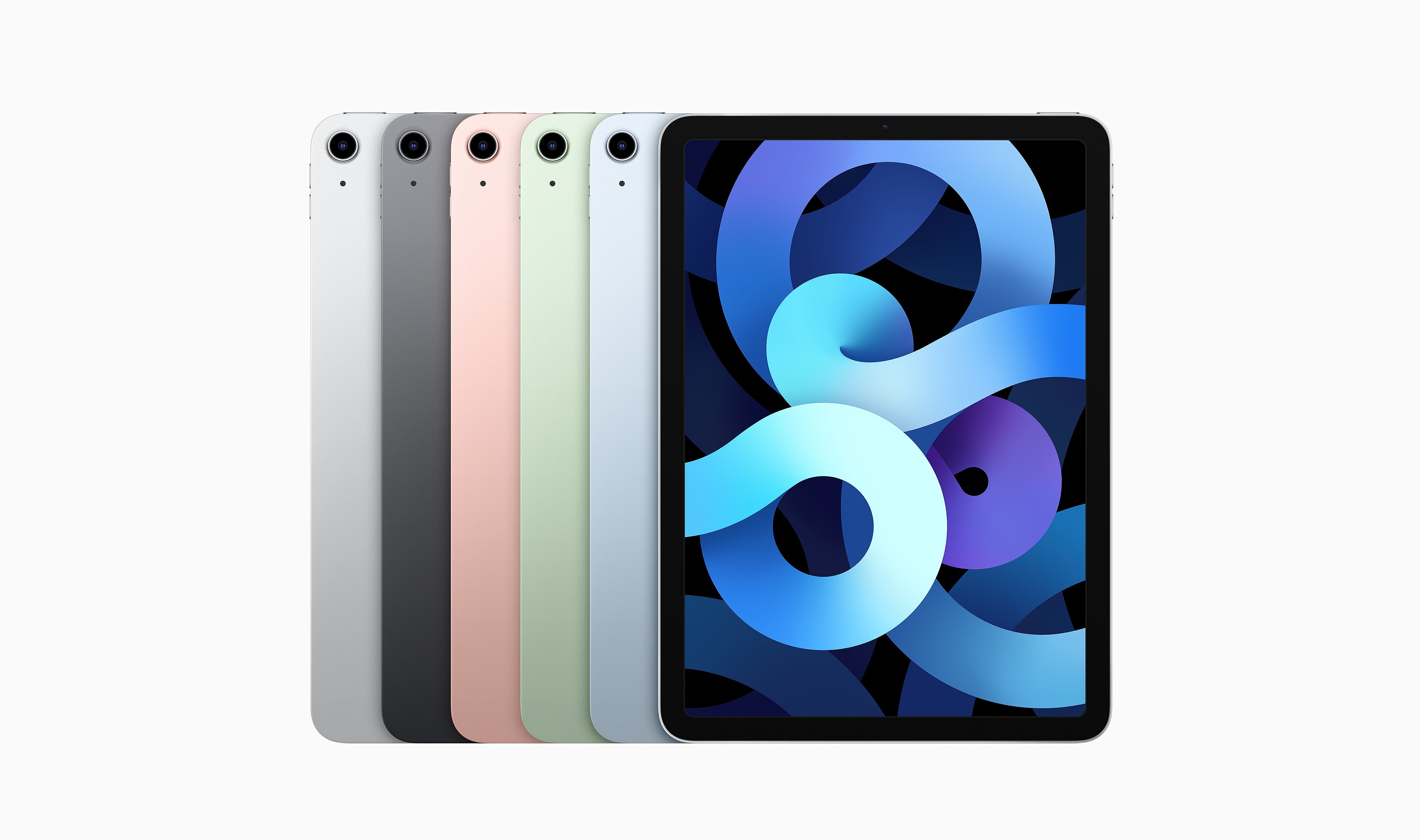
Apple recently unveiled its new fourth-generation iPad Air, which is now available for purchase. Now, in a new podcast, VP of Product Marketing Bob Borchers and VP of Hardware Engineering John Ternus have explained the development process of the tablet.

Talking about the new iPad Air, Bob Borchers said that the Touch ID sensor embedded in the power button in a much smaller form factor is an “incredible feat of engineering.” He says that the narrow aspect ratio made it a challenging implementation given that the sensor needed to be “incredibly sensitive” to capture a broader view of the fingerprint.

iPad Air 2020

On the other hand, John Ternus explains much effort was put in to ensure that the Touch ID sensor and the antenna on the cellular model, which is placed in the top portion of the enclosure, didn’t interfere with each other given that both are sensitive. He added that “hardcore silicon and engineering” went to ensure that the sensor delivers the same level of security as previous models.

Borchers also notes that the new iPad Air comes with an increased on-device processing power thanks to the introduction of the Neural Engine. It also brings more powerful capabilities along with a greater level of privacy for the users.

EDITOR’S PICK: Xiaomi introduces RAMDISK for smartphones; significantly boosts game performance

The new iPad Air is the first device from Apple to come powered by the A14 Bionic chipset, which is built on the 5nm process and will also be powering the upcoming iPhone 12 models. The Hexa-core processor has 11.8 billion transistors and boasts a 40% improvement in CPU performance and a 30% increase in GPU performance.

As for the design, it ditches the thick bezels for slimmer and uniform ones. It features a 10.9-inch liquid retina display along with anti-reflective coating, P3 color gamut, and True Tone support. It packs a 7MP f/2.0 selfie camera and the same 12MP f/1.8 rear camera available on the iPad Pro. It also has a USB-C port with support for 20W fast charging.


SMIC holds preliminary exchanges with US over export restrictions

Semiconductor Manufacturing International Corporation (SMIC), one of the largest chipset makers from China is under the radar of the US government and could face export restrictions. Now, the company has confirmed that it held preliminary exchanges with the U.S. Bureau of Industry and Security.

In its filing to the Hong Kong Stock Exchange, the company says that it is “conducting assessments on the relevant impact of such export restrictions on the company’s production and operation activities,” reports Reuters.

SMIC Logo

The company has added that it has been operating in compliance with all the relevant laws and regulations of all jurisdictions where it conducts business.

When the reports started surfacing online that the U.S. Department of Commerce has issued letters to some companies asking them to obtain a license to continue supplying goods and services to SMIC.

At that time, China-based SMIC had denied receiving any such notice from the U.S. government and had also mentioned that the company has no relationship with China’s military, which is said to be the reason behind such scrutiny.

EDITOR’S PICK: Xiaomi introduces RAMDISK for smartphones; significantly boosts game performance

The restrictions or the requirement of a license to conduct business with SMIC is similar to what the United States government has imposed on Huawei, the world’s leading telecom equipment manufacturer, making it very difficult for the Chinese company to maintain its business and operations.

SMIC, which is the largest foundry in China, heavily relies on equipment from the United States as well as US-allied countries for manufacturing chips. Getting restricted could severely impact the company’s ability to conduct business.

Although SMIC is the leading chipset manufacturer in China, the company lags behind in terms of technology compared to its rivals — TSMC and Samsung. However, it recently raised around $6.6 billion through STAR Market for advanced technology. It is also working on reducing its reliance on other countries and has recently purchased a used lithography system from SK Hynix for $11.02 million.


LG K92 5G render leak reveals the phone’s entire design

LG is not a big player in the smartphone market like Samsung, which is also from the same country – South Korea. As the company could not compete in the high-end segment, it has been focussing more in the mid-range and releasing unique products like LG Wing. Now, according to a new leak, the firm will be soon adding one more device in its affordable 5G handset portfolio in the form of LG K92 5G.

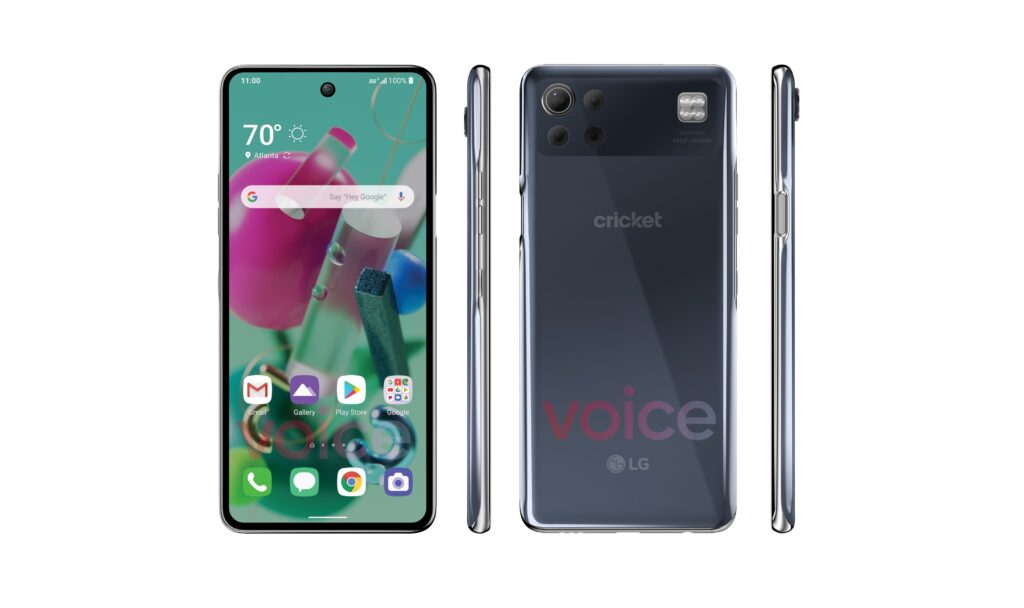
LG K92 5G Cricket Wireless Render Leak Evan Blass

LG’s budget and mid-range smartphones fall under Q and K series. Back in August, the company launched LG Q92 5G as the first 5G phone in Q series. Now, the South Korean electronics giant could be soon releasing LG K92 5G with a unique design as the first 5G smartphone in the K series.

The above-attached render was shared by popular leaker Evan Blass on a platform called Voice. According to him, this device will be sold by Cricket Wireless in the US. Unfortunately, he did not mention anything about its specs,

Anyway, going by its render, the LG K92 5G will sport a 64MP quad-camera setup aligned in a neat matrix manner and a quad-LED flash for some reason. Further, the device’s color tone will be darker where the camera is situated and lighter below it with Cricket and LG brandings.

Though the phone seems to come with a glass back and metal frame, we cannot rule out the possibility of them being polycarbonate with coatings. On the brighter side, it will feature a 3.5mm headphone unlike most handsets these days.

Last but not least, the volume keys and a dedicated Google Assistant key will be situated on the left side, whereas a power button with an embedded fingerprint sensor will be located on the right side.


Xiaomi introduces RAMDISK for smartphones; significantly boosts game performance

Nowadays, the RAM capacity in smartphones is increasing, and having a device with 8GB RAM is quite common. If you are into gaming, then the companies are launching gaming smartphones with up to 16GB RAM.

Xiaomi has now introduced RAMDISK technology for smartphones. In the most basic sense, the technology uses RAM as disk storage, which in turn boosts the performance of the particular app or game.

Xiaomi RAMDISK for Games on Smartphone

Although the technology exists for computers, this is probably the first time we are hearing about this technology on a smartphone. With this newly introduced RAMDISK Trial Mode, users of Mi 10 Ultra can make use of 16GB LPDDR5 RAM.

RAMDISK technology is used to set aside a portion of RAM to be used as virtual storage. The advantage of using this is that the speed of RAM is significantly faster than the storage technology used in smartphones.

For instance, Xiaomi Mi 10 Ultra smartphone uses LPDDR5 RAM and UFS 3.1 for internal storage. The speed of RAM on the device is 44GB/s while the read and write speed of UFS 3.1 is rated at 1700+MB/s and 750+MB/s respectively.

EDITOR’S PICK: Mi 10T series arrives with impressive displays, 5G, big batteries, and competitive price tags

Xiaomi RAMDISK for Games on Mi 10 Ultra

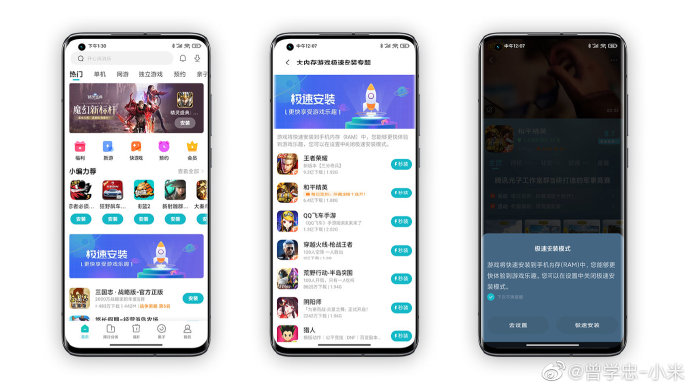
To use the RAMDISK Trial Mode on your Mi 10 Ultra smartphone, you will have to go to the “Speed Installation” section in the Game Center and enter the Game Trial mode to install it. As per the company, the installation of the Peace Elite game in this mode takes about 10 seconds, which is about 100 percent faster than the normal installation mode.

Currently, more than 10 popular games are supported, including QQ Speed, Glory of the King, and Peace Elite. If no longer needed, you can easily delete the game from your device and it will be deleted without leaving fragmented files or slowing down the phone.

However, do note that when the phone’s battery is exhausted or the device is restarted, the game installed through this RAMDISK mode will disappear since it is stored in the RAM. But, Xiaomi is also offering an option to transfer the game installed on RAM to the flash memory on the smartphone.


POCO C3 to arrive with HD+ display and 4GB of RAM

The POCO C3 is scheduled to debut on Oct. 6 at 12 PM IST in India. Rumors surrounding the POCO C3 have claimed that it will be a rebranded edition of the Redmi 9C.  The microsite of the phone available at Flipkart.com has revealed some of its key features.

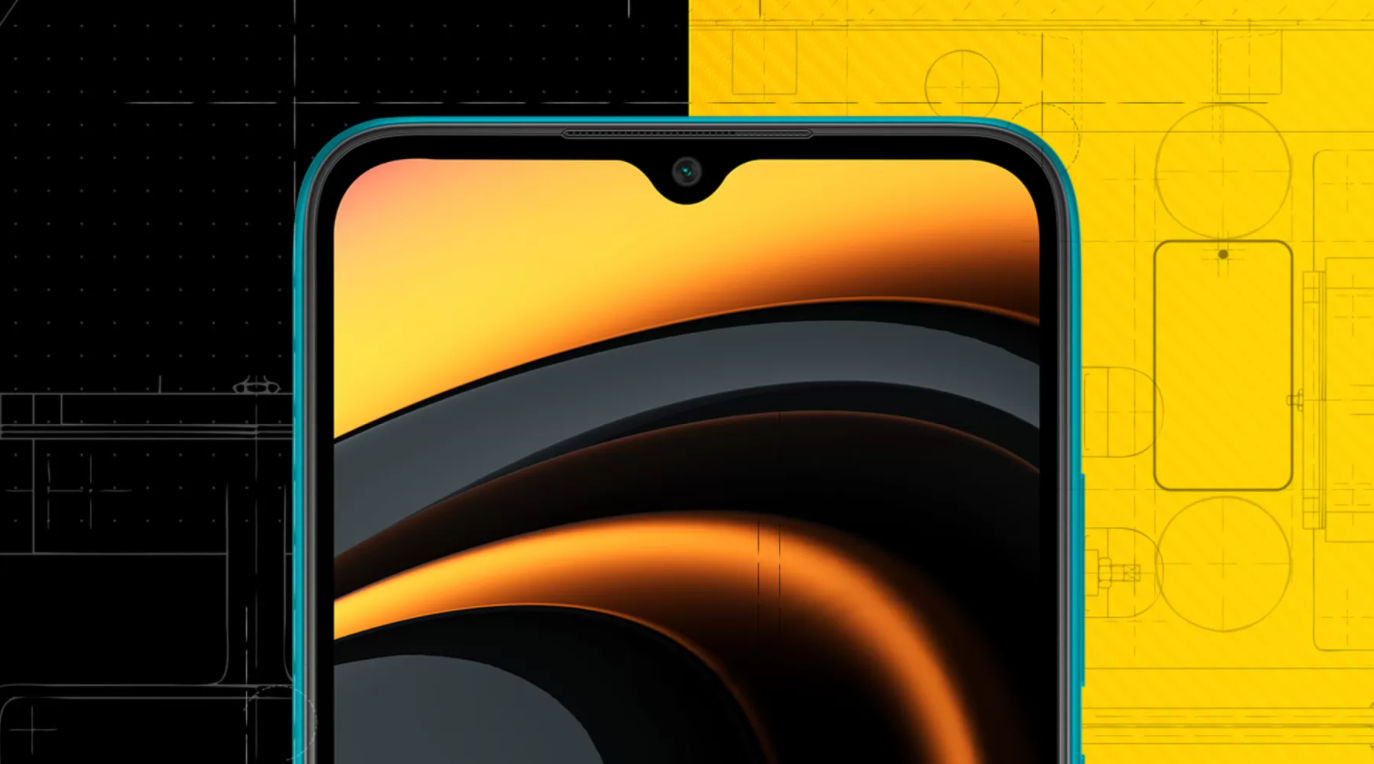
It is now known that the POCO C3 has a large immersive display that offers HD+ resolution. The phone is equipped with up to 4 GB of RAM and it houses a 5,000mAh battery. The phone will offer “blazing-fast performance,” but the chipset has not been confirmed.

POCO C3 display design

The rear side of the POCO C3 has a dual-tone design. It has a square-shaped camera housing. The camera module has a 13-megapixel main camera, a macro lens, a depth sensor, and an LED flash. A recent leak had revealed that the POCO C3’s 4 GB RAM + 64 GB storage suggested could be priced under Rs 10,000 (~$136). Hence, it is expected to arrive in India as the cheapest POCO smartphone.

Redmi 9C specifications

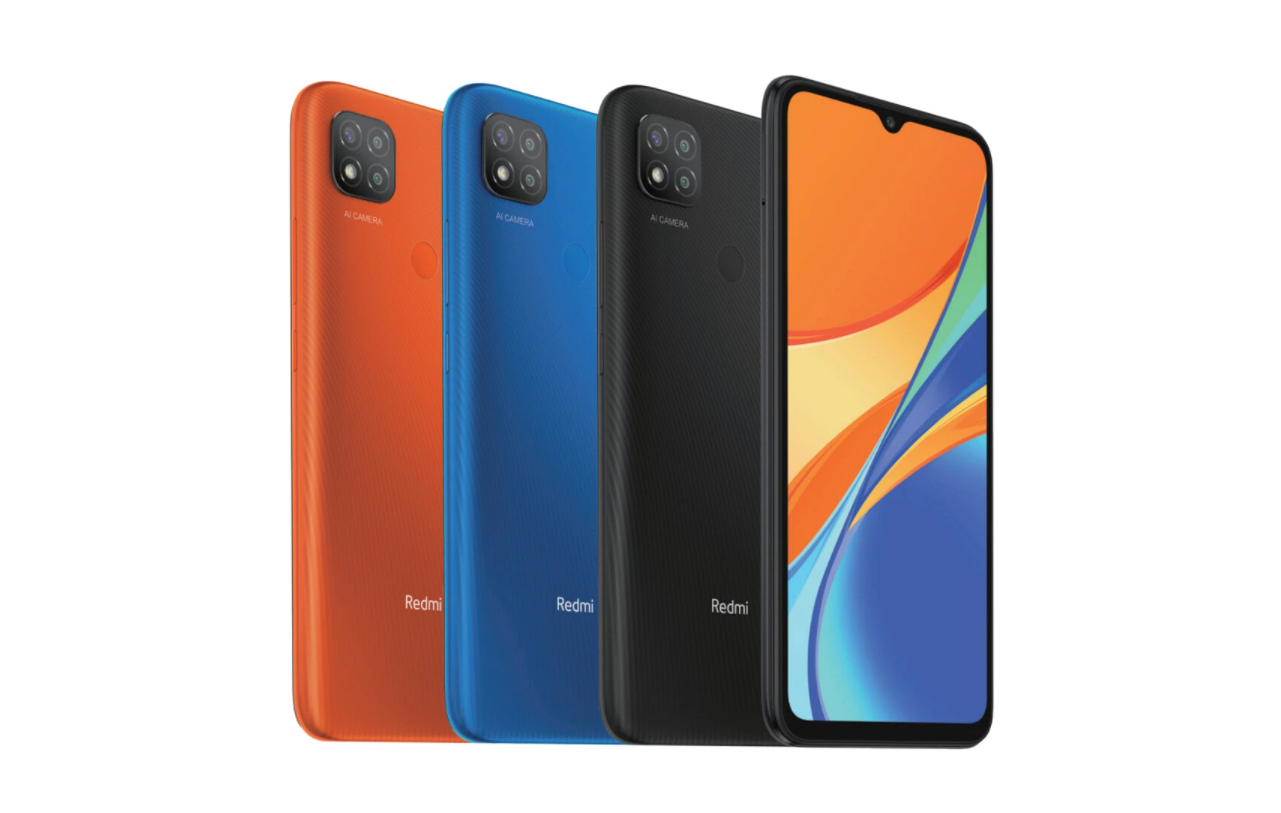
The Redmi 9C has a 6.53-inch IPS LCD screen with a waterdrop notch. It supports an HD+ resolution of 720 x 1600 pixels and a 20:9 aspect ratio. The MediaTek Helio G35 chipset is present under the hood of the Redmi 9C. The MIUI 12 based Android 10 OS comes preinstalled on the smartphone.

Xiaomi Redmi 9C
Xiaomi Redmi 9C

It has a 5-megapixel front-facing camera and it has a triple camera system that includes a 13-megapixel primary shooter, a 2-megapixel depth sensor, and a 2-megapixel macro lens. The phone houses a 5,000mAh battery with 10W charging support. The backside of the phone is also fitted with a fingerprint scanner.


Coolpad COOL 12A with 6.3-inch display, 16MP dual rear cameras, 4,000mAh battery launched for 599 Yuan (~$88)

Coolpad has announced a new smartphone called the COOL 12A in China. It is the next COOL series phone after the COOL 10 handset that was announced in June in the home market.  With pricing of 599 Yuan (~$88), the COOL 12A offers users with a tall aspect ratio display, a 16-megapixel dual-camera system, and a large-sized battery.

Coolpad COOL 12A specifications and features

The Coolpad COOL 12A measures 156.2 x 75.2 x 8.9mm and it weighs 202.5 grams. The JD.com listing of the phone states that the low-budget phone features a glass rear. The phone houses a 6.3-inch IPS LCD waterdrop notch screen that offers HD+ resolution and a 19:9 aspect ratio. The COOL 12A offers a screen-to-body ratio of 93 percent, claims the Chinese firm.

An unknown Spreadtrum chipset that has three Cortex-A55 CPU cores that clocks at 1.8GHz and 1 Cortex-A75 CPU cores that ticks at 2.0GHz powers the Coolpad COOL 12A with 4 GB of RAM. The device offers an internal storage of 64 GB and it has a microSD card slot for additional storage.

Coolpad Cool 12A

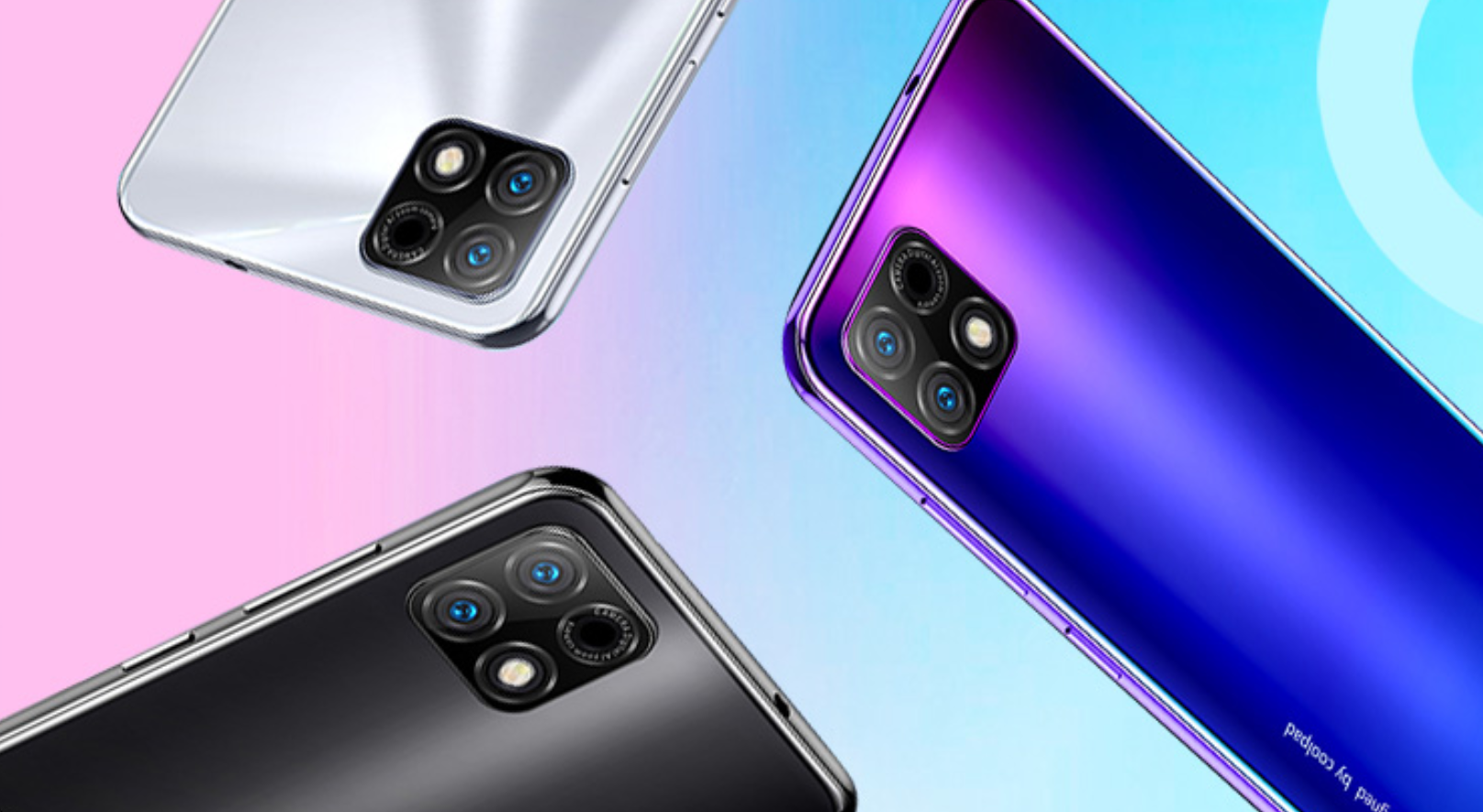
The Coolpad COOL 12A houses a 4,000mAh battery that can be charged through USB-C. The large battery promises a standby time of up to 14 days. It has a front camera of 8-megapixel. The rear side of the device features a square-shaped camera module that houses a 16-megapixel main sensor, a 2-megapixel depth sensor, and an LED flash. The COOL 12A also comes with a fingerprint scanner and face unlock support.

Coolpad COOL 12A pricing and availability

The Coolpad COOL 12A carries a price tag of 599 Yuan (~$88) in China. During the initial sale, the phone is available with a discounted price tag of 569 Yuan (~$84). The handset comes in three colors like Dream Black, Dream Blue, and Fantasy Silver.