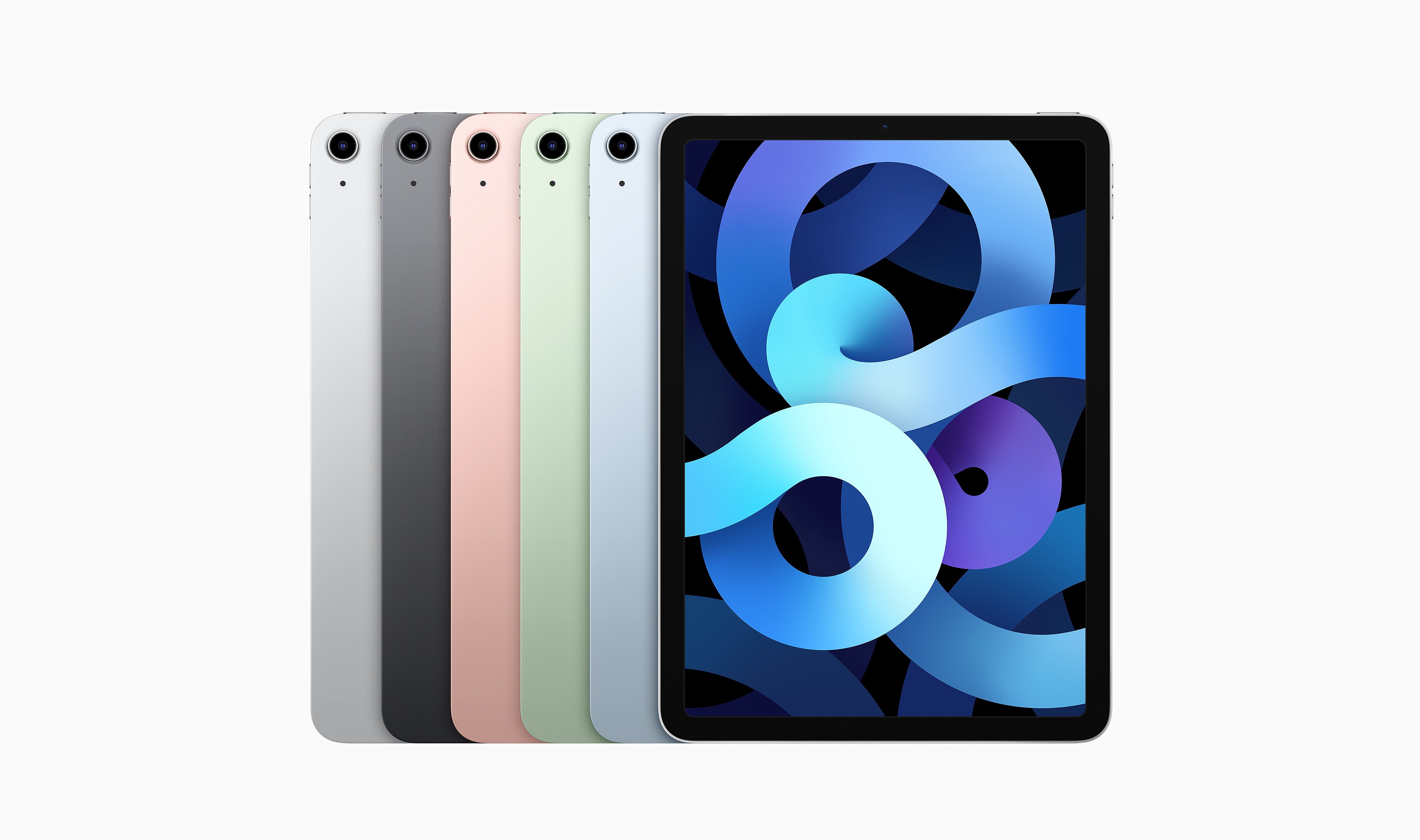
Apple recently unveiled its new fourth-generation iPad Air, which is now available for purchase. Now, in a new podcast, VP of Product Marketing Bob Borchers and VP of Hardware Engineering John Ternus have explained the development process of the tablet.
Talking about the new iPad Air, Bob Borchers said that the Touch ID sensor embedded in the power button in a much smaller form factor is an “incredible feat of engineering.” He says that the narrow aspect ratio made it a challenging implementation given that the sensor needed to be “incredibly sensitive” to capture a broader view of the fingerprint.
On the other hand, John Ternus explains much effort was put in to ensure that the Touch ID sensor and the antenna on the cellular model, which is placed in the top portion of the enclosure, didn’t interfere with each other given that both are sensitive. He added that “hardcore silicon and engineering” went to ensure that the sensor delivers the same level of security as previous models.
Borchers also notes that the new iPad Air comes with an increased on-device processing power thanks to the introduction of the Neural Engine. It also brings more powerful capabilities along with a greater level of privacy for the users.
The new iPad Air is the first device from Apple to come powered by the A14 Bionic chipset, which is built on the 5nm process and will also be powering the upcoming iPhone 12 models. The Hexa-core processor has 11.8 billion transistors and boasts a 40% improvement in CPU performance and a 30% increase in GPU performance.
As for the design, it ditches the thick bezels for slimmer and uniform ones. It features a 10.9-inch liquid retina display along with anti-reflective coating, P3 color gamut, and True Tone support. It packs a 7MP f/2.0 selfie camera and the same 12MP f/1.8 rear camera available on the iPad Pro. It also has a USB-C port with support for 20W fast charging.
Semiconductor Manufacturing International Corporation (SMIC), one of the largest chipset makers from China is under the radar of the US government and could face export restrictions. Now, the company has confirmed that it held preliminary exchanges with the U.S. Bureau of Industry and Security.
In its filing to the Hong Kong Stock Exchange, the company says that it is “conducting assessments on the relevant impact of such export restrictions on the company’s production and operation activities,” reports Reuters.
The company has added that it has been operating in compliance with all the relevant laws and regulations of all jurisdictions where it conducts business.
When the reports started surfacing online that the U.S. Department of Commerce has issued letters to some companies asking them to obtain a license to continue supplying goods and services to SMIC.
At that time, China-based SMIC had denied receiving any such notice from the U.S. government and had also mentioned that the company has no relationship with China’s military, which is said to be the reason behind such scrutiny.
The restrictions or the requirement of a license to conduct business with SMIC is similar to what the United States government has imposed on Huawei, the world’s leading telecom equipment manufacturer, making it very difficult for the Chinese company to maintain its business and operations.
SMIC, which is the largest foundry in China, heavily relies on equipment from the United States as well as US-allied countries for manufacturing chips. Getting restricted could severely impact the company’s ability to conduct business.
Although SMIC is the leading chipset manufacturer in China, the company lags behind in terms of technology compared to its rivals — TSMC and Samsung. However, it recently raised around $6.6 billion through STAR Market for advanced technology. It is also working on reducing its reliance on other countries and has recently purchased a used lithography system from SK Hynix for $11.02 million.
LG is not a big player in the smartphone market like Samsung, which is also from the same country – South Korea. As the company could not compete in the high-end segment, it has been focussing more in the mid-range and releasing unique products like LG Wing. Now, according to a new leak, the firm will be soon adding one more device in its affordable 5G handset portfolio in the form of LG K92 5G.
LG’s budget and mid-range smartphones fall under Q and K series. Back in August, the company launched LG Q92 5G as the first 5G phone in Q series. Now, the South Korean electronics giant could be soon releasing LG K92 5G with a unique design as the first 5G smartphone in the K series.
The above-attached render was shared by popular leaker Evan Blass on a platform called Voice. According to him, this device will be sold by Cricket Wireless in the US. Unfortunately, he did not mention anything about its specs,
Anyway, going by its render, the LG K92 5G will sport a 64MP quad-camera setup aligned in a neat matrix manner and a quad-LED flash for some reason. Further, the device’s color tone will be darker where the camera is situated and lighter below it with Cricket and LG brandings.
Though the phone seems to come with a glass back and metal frame, we cannot rule out the possibility of them being polycarbonate with coatings. On the brighter side, it will feature a 3.5mm headphone unlike most handsets these days.
Last but not least, the volume keys and a dedicated Google Assistant key will be situated on the left side, whereas a power button with an embedded fingerprint sensor will be located on the right side.
Nowadays, the RAM capacity in smartphones is increasing, and having a device with 8GB RAM is quite common. If you are into gaming, then the companies are launching gaming smartphones with up to 16GB RAM.
Xiaomi has now introduced RAMDISK technology for smartphones. In the most basic sense, the technology uses RAM as disk storage, which in turn boosts the performance of the particular app or game.
Although the technology exists for computers, this is probably the first time we are hearing about this technology on a smartphone. With this newly introduced RAMDISK Trial Mode, users of Mi 10 Ultra can make use of 16GB LPDDR5 RAM.
RAMDISK technology is used to set aside a portion of RAM to be used as virtual storage. The advantage of using this is that the speed of RAM is significantly faster than the storage technology used in smartphones.
For instance, Xiaomi Mi 10 Ultra smartphone uses LPDDR5 RAM and UFS 3.1 for internal storage. The speed of RAM on the device is 44GB/s while the read and write speed of UFS 3.1 is rated at 1700+MB/s and 750+MB/s respectively.
To use the RAMDISK Trial Mode on your Mi 10 Ultra smartphone, you will have to go to the “Speed Installation” section in the Game Center and enter the Game Trial mode to install it. As per the company, the installation of the Peace Elite game in this mode takes about 10 seconds, which is about 100 percent faster than the normal installation mode.
Currently, more than 10 popular games are supported, including QQ Speed, Glory of the King, and Peace Elite. If no longer needed, you can easily delete the game from your device and it will be deleted without leaving fragmented files or slowing down the phone.
However, do note that when the phone’s battery is exhausted or the device is restarted, the game installed through this RAMDISK mode will disappear since it is stored in the RAM. But, Xiaomi is also offering an option to transfer the game installed on RAM to the flash memory on the smartphone.
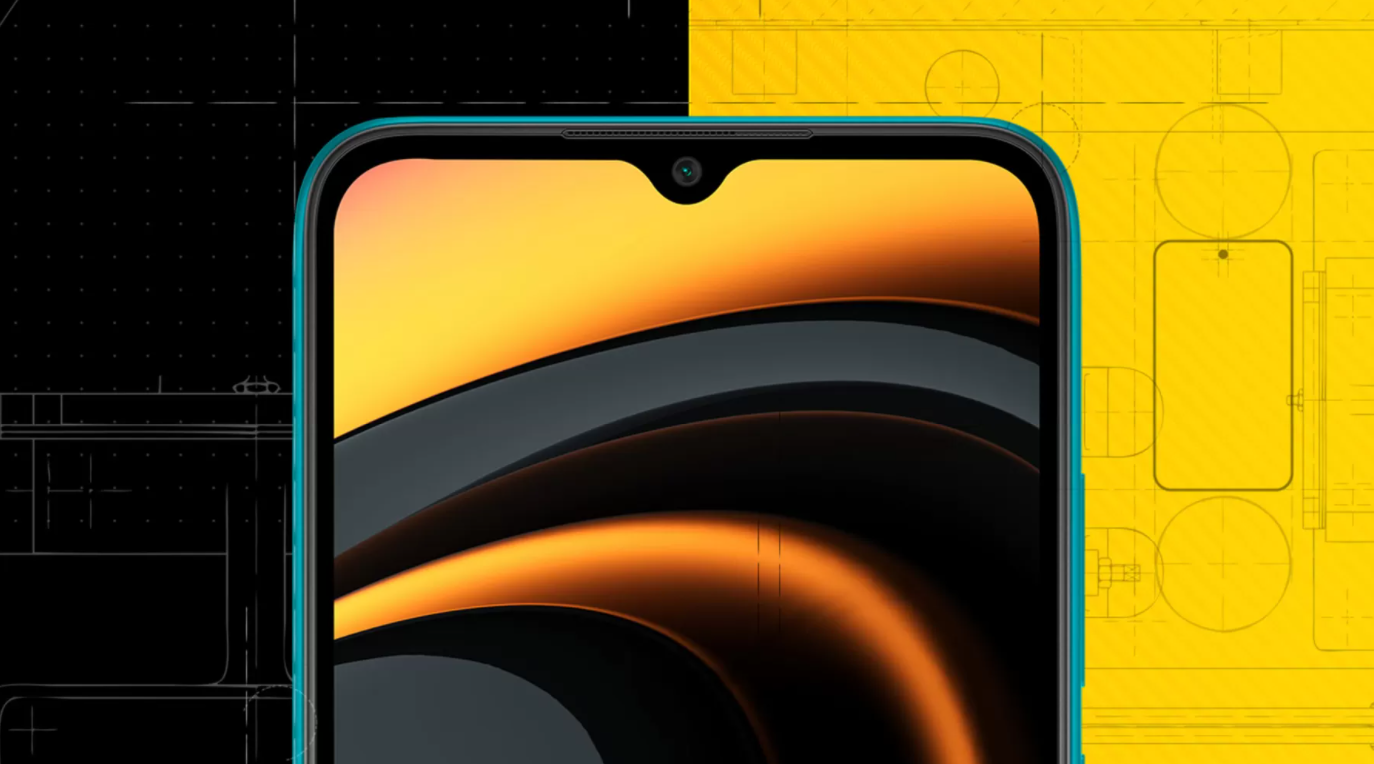
It is now known that the POCO C3 has a large immersive display that offers HD+ resolution. The phone is equipped with up to 4 GB of RAM and it houses a 5,000mAh battery. The phone will offer “blazing-fast performance,” but the chipset has not been confirmed.
The rear side of the POCO C3 has a dual-tone design. It has a square-shaped camera housing. The camera module has a 13-megapixel main camera, a macro lens, a depth sensor, and an LED flash. A recent leak had revealed that the POCO C3’s 4 GB RAM + 64 GB storage suggested could be priced under Rs 10,000 (~$136). Hence, it is expected to arrive in India as the cheapest POCO smartphone.
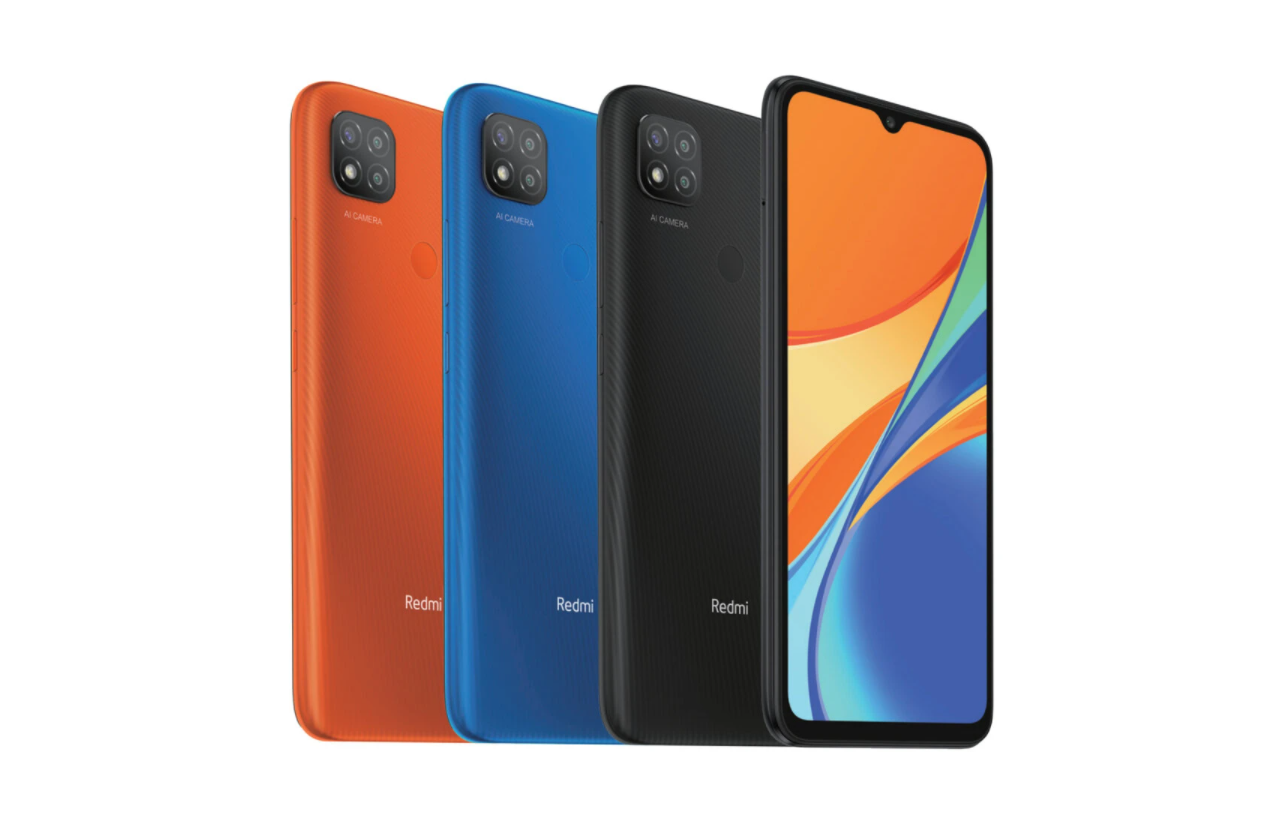
The Redmi 9C has a 6.53-inch IPS LCD screen with a waterdrop notch. It supports an HD+ resolution of 720 x 1600 pixels and a 20:9 aspect ratio. The MediaTek Helio G35 chipset is present under the hood of the Redmi 9C. The MIUI 12 based Android 10 OS comes preinstalled on the smartphone.
Xiaomi Redmi 9C
It has a 5-megapixel front-facing camera and it has a triple camera system that includes a 13-megapixel primary shooter, a 2-megapixel depth sensor, and a 2-megapixel macro lens. The phone houses a 5,000mAh battery with 10W charging support. The backside of the phone is also fitted with a fingerprint scanner.
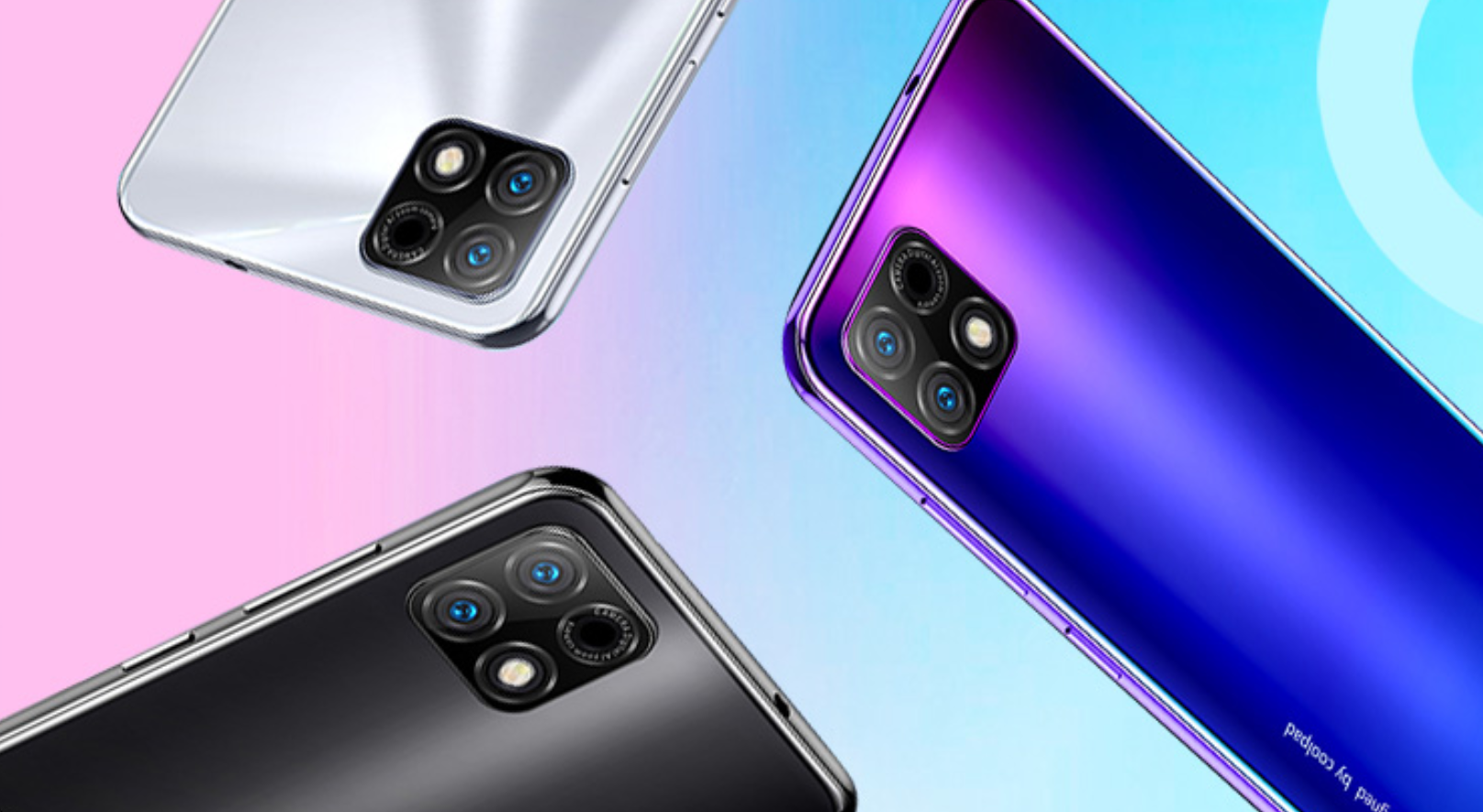
Coolpad has announced a new smartphone called the COOL 12A in China. It is the next COOL series phone after the COOL 10 handset that was announced in June in the home market. With pricing of 599 Yuan (~$88), the COOL 12A offers users with a tall aspect ratio display, a 16-megapixel dual-camera system, and a large-sized battery.
Coolpad COOL 12A specifications and features
The Coolpad COOL 12A measures 156.2 x 75.2 x 8.9mm and it weighs 202.5 grams. The JD.com listing of the phone states that the low-budget phone features a glass rear. The phone houses a 6.3-inch IPS LCD waterdrop notch screen that offers HD+ resolution and a 19:9 aspect ratio. The COOL 12A offers a screen-to-body ratio of 93 percent, claims the Chinese firm.
An unknown Spreadtrum chipset that has three Cortex-A55 CPU cores that clocks at 1.8GHz and 1 Cortex-A75 CPU cores that ticks at 2.0GHz powers the Coolpad COOL 12A with 4 GB of RAM. The device offers an internal storage of 64 GB and it has a microSD card slot for additional storage.
The Coolpad COOL 12A houses a 4,000mAh battery that can be charged through USB-C. The large battery promises a standby time of up to 14 days. It has a front camera of 8-megapixel. The rear side of the device features a square-shaped camera module that houses a 16-megapixel main sensor, a 2-megapixel depth sensor, and an LED flash. The COOL 12A also comes with a fingerprint scanner and face unlock support.
Coolpad COOL 12A pricing and availability
The Coolpad COOL 12A carries a price tag of 599 Yuan (~$88) in China. During the initial sale, the phone is available with a discounted price tag of 569 Yuan (~$84). The handset comes in three colors like Dream Black, Dream Blue, and Fantasy Silver.
OPPO has been consistently launching new A-series smartphones across the world. In the recent past, it has launched phones like OPPO A72 5G, OPPO A53, OPPO A33, OPPO A32, and OPPO A93. A new OPPO A-series named the OPPO A73 has gone official silently in Tunisia. The smartphone is now officially listed on the OPPO Tunisia website, but its pricing is not known yet. The handset has landed in the country has a rebranded version of the OPPO F17 phone that debuted in India last month.
OPPO A73 specifications and features
The OPPO A73 that sports a leather-textured rear has 159.8 x 72.9 x 7.45mm dimensions and it weighs 163 grams. The device features a waterdrop notch display of 6.44 inches. The AMOLED screen produces a full HD+ resolution of 1080 x 2400 pixels. a 20:9 aspect ratio, a 60Hz refresh rate, and up to 180Hz refresh rate. It comes with an in-screen fingerprint scanner and Gorilla Glass 3 protection. The phone offers a screen space of 90.7 percent.
The OPPO A73 has a Sony IMX471 16-megapixel camera for capturing selfie shots. The square-shaped camera housing of the smartphone has a 16-megapixel main shooter, an 8-megapixel ultrawide lens with 119-degree FOV, and a pair of 2-megapixel mono lenses.
The Snapdragon 662 mobile platform fuels the device with 6 GB of LPDDR4x RAM. It comes with 128 GB of UFS 2.0 storage and a microSD card slot for additional storage. The device is backed by a 4,015mAh battery that supports VOOC 4.0 30W fast charging.
The ColorOS 7.2 based Android 10 OS comes preinstalled on the OPPO A73. It offers users with other features such as dual SIM slot, 4G VoLTE, Wi-Fi 802.11ac, Bluetooth 5.0, GPS, USB-C, and a 3.5mm headphone jack. Navy Blue and Classic Silver are the two color variants of the OPPO A73.
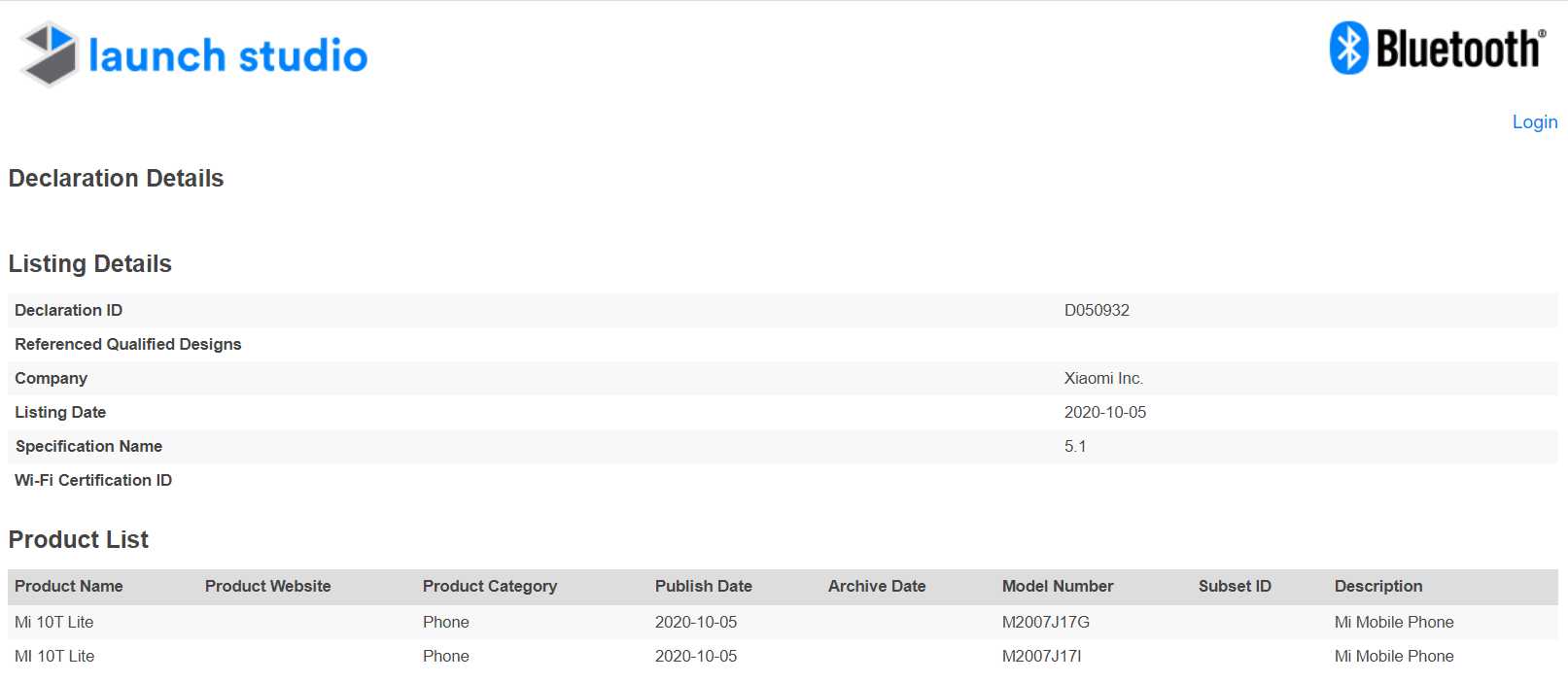
Last week, Xiaomi announced the Xiaomi Mi 10T series in the European markets. Soon after its launch, Xiaomi India Managing Director released a tweet that teased the arrival of the Mi 10T series in India. The teaser carried hashtags for Mi 10T and Mi 10T Pro, but it did not mention that the Mi 10T Lite. It appears that all three smartphones are heading to India as the Indian version of the Mi 10T Lite has received approval from the Bluetooth SIG authority.
The Bluetooth SIG listing shows that not only the global edition but also the Indian variant has received Bluetooth SIG approval. The specifications of the Mi 10T Lite are already known since it debuted last week. Now that the Mi 10T Lite has received Bluetooth certification, it is likely to break cover either by the end of this month or early next month in India.
The Xiaomi Mi 10T Lite has a 6.67-inch IPS LCD screen with a punch-hole design. It offers a full HD+ resolution and 120Hz refresh rate support. The smartphone boots to MIUI 12 flavored Android 10 OS.
The all-new Snapdragon 750G chipset is present at the helm of the Xiaomi Mi 10T Lite. The phone comes with 6 GB of LPPDR4x RAM and up to 128 GB of UFS 2.1 / UFS 2.2 storage. It comes with support for a microSD card slot for additional storage.
Xiaomi Mi 10T Lite
The Mi 10T Lite has a 16-megapixel selfie camera and its rear features a quad-camera system that comprises of a Sony IMX682 64-megapixel main camera, a 120-degree ultrawide lens, a 2-megapixel macro lens, and a 2-megapixel depth sensor. The device is backed by a 4,820mAh battery that supports 33W fast charging. The Mi 10T Lite offers users with other features like 5G, Wi-Fi 802.11ac, Bluetooth 5.1, dual-frequency GPS, USB-C, IR blaster, NFC, stereo speakers, and a 3.5mm audio jack.
The 6GB RAM + 64 GB storage and 6 GB RAM + 128 GB storage editions of the Xiaomi Mi 10T Lite are priced at 279 euros (~Rs 23,950; ~$327) and 329 euros (~Rs 28,250; ~$386). It comes in three colors like Atlantic Blue, Pearly Gray, and Rose Gold Bleach.
In August, OPPO announced the OPPO A53 smartphone in India. The OPPO F17 and OPPO F17 Pro smartphones were made official in the country in the following month. The Chinese manufacturer is now gearing up to launch a new A-series smartphone in India. The phone is called OPPO A17 and its teaser has already surfaced on Amazon India.
The OPPO A15 teaser on the retailer site showcases its rear design. It has a rear-mounted fingerprint scanner and a square-shaped camera module that houses three cameras and an LED flash. It appears to be an entry-level OPPO phone. The specifications of the OPPO A15 smartphone are currently under wraps. Hopefully, more details on its specs will appear in the coming weeks.
In related news, an OPPO phone with model number CPH2185 was certified by the Federal Communications Commission (FCC) authority. The listing carried a rear diagram of the phone. It showed the phone with a square-shaped camera housing that seemingly features an LED flash and triple cameras. A fingerprint scanner was also found to be present on the backside of the device.
The OPPO CPH2185’s appearance at FC revealed a few details on its specs. It is equipped with a 4,230mAh battery, 10W charger, and it is loaded with ColorOS 7.2. The smartphone was also found to be equipped with a 3.5mm audio jack and a USB-C port.
The mysterious device appears to be an A-series phone. In the recent past, the smartphone has also received certifications from Wi-Fi Alliance and Eurasian Economic Commission (EEC). While the rear design of the OPPO CPH2185, it is unclear whether this device is the OPPO A15 smartphone.
The OnePlus 8 and OnePlus 8 Pro both have a 16MP selfie camera with a standard lens. For the OnePlus 8T, it appears OnePlus will be going with a new selfie camera, one that has an ultrawide angle lens.
The info comes from the latest teaser for the OnePlus 8T that was shared on Twitter by OnePlus earlier today. The caption mentions an “Ultra Wide Angle Camera” and the short animated video shows that it is the selfie camera that is in question.
Strike a pose 📸 with the #OnePlus8T Ultra Wide Angle Camera.
The selfie camera is one area where OnePlus has not made significant changes in a while, save for the OnePlus Nord that has 32MP + 8MP dual selfie cameras. So it is quite interesting to see that the OnePlus 8T will also get a new selfie camera experience.
With an ultra wide-angle selfie camera, users will be able to take selfies that fit in more of their backdrop or more folks depending on the scenario.
The OnePlus 8T launches on October 14, but before then, we expect OnePlus to confirm/reveal more details of the device.
The first Galaxy Note was launched in 2011. Since then, Samsung has launched several other phones with the Galaxy Note branding including tablets such as the Galaxy Note 8.0 and the Galaxy Note Pro 12.2. Now, there are reports that Samsung is planning to terminate the series soon but not as early as next year.
The S Pen is what makes the Galaxy Note series special and ever since the series made its debut 9 years ago, no manufacturer has a smartphone line that offers a similar or even better stylus experience than the Galaxy Note series. However, the S Pen is no longer an exclusive of the Galaxy Note line as it is now a feature of some of Samsung’s tablets.
Now, it has been reported that the S Pen will be making its way to the Galaxy S series starting with next year’s Galaxy S21 Ultra. The next Galaxy Z Fold may even have a stylus too. If these smartphones now have the feature that makes the Galaxy Note line special, it may make the line redundant.
For this week’s poll, we want to know if you are for or against Samsung’s decision to terminate the Galaxy Note series. So please take the poll and also drop a comment sharing your thoughts on the topic.
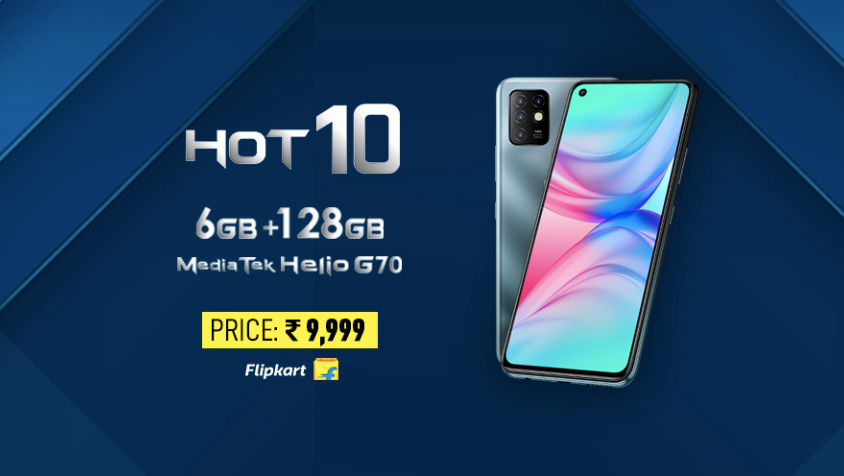
Infinix, today, announced a new smartphone in India. The Infinix Hot 10 is a mid-range phone that packs quite a lot for its price tag of ₹9,999 (~$137).
The Infinix Hot 10 has a 6.78-inch HD+ (1640 x 720) Full View-O display. The hole at the top left corner of the screen houses an 8MP f/2.0 camera. The spec sheet says there is even a dual-LED flash in front.
Under the hood is an Helio G70 processor and it is paired with 6GB of RAM and 128GB of storage. A dedicated MicroSD card slot is available if you want to add more storage.
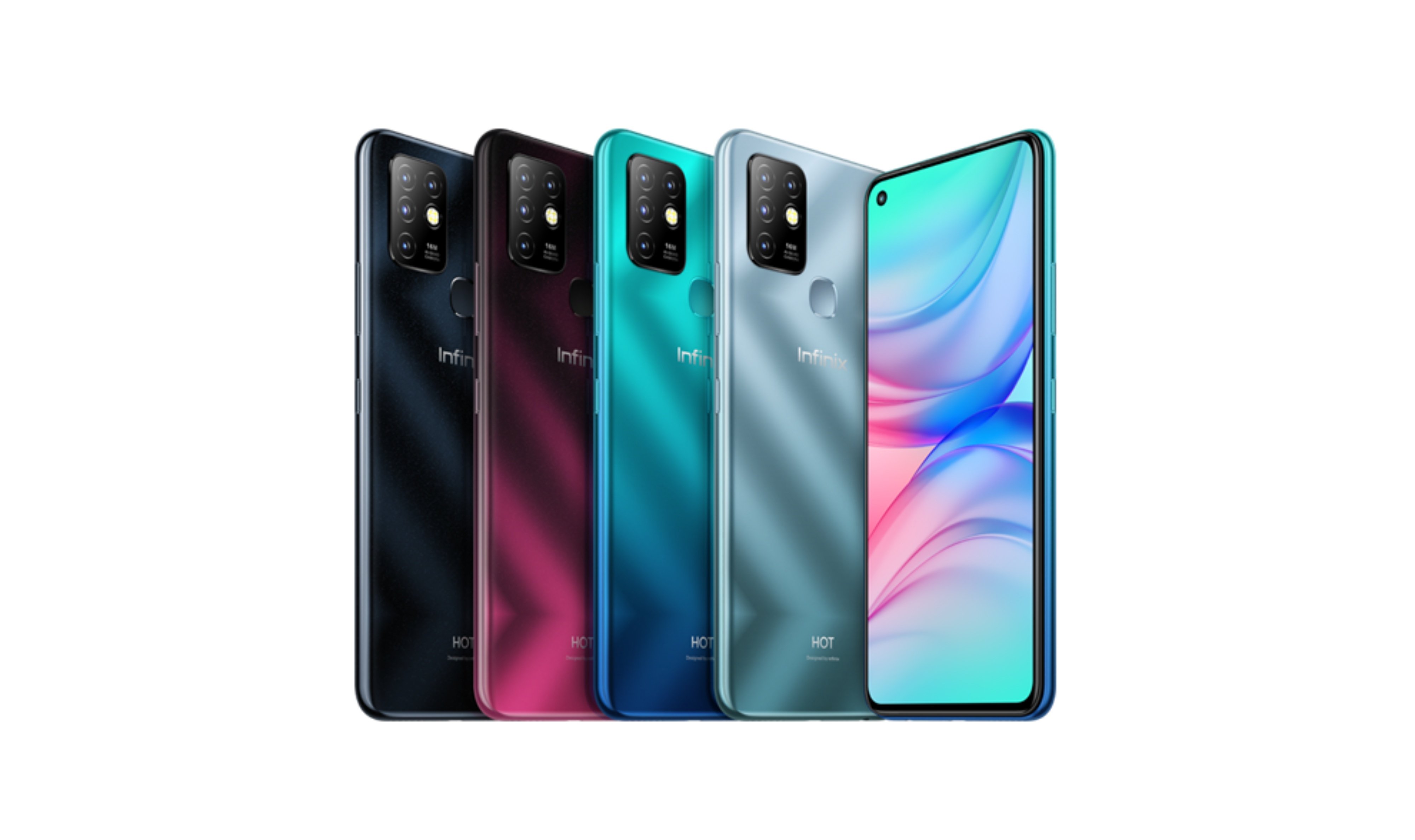
The Infinix Hot 10 has four cameras on the back. The primary camera is a 16MP f/1.85 sensor and it comes along with a 2MP depth sensor, a 2MP macro camera, and a “Low Light Sensor”. All four cameras are in a rectangular housing along with a quad-LED flash. The camera app is packed with lots of features including Super Night Mode and AR Animoji.
The phone has a rear-mounted fingerprint scanner, dual-SIM support, and an audio jack. It packs a 5200mAh battery and has support for 18W fast charging. Infinix ships the phone with XOS 7.0 based on Android 10.
The Infinix Hot 10 will be available in Moonlight Jade, Obsidian Black, Amber Red, and Ocean Wave. It will be sold on Flipkart, starting October 16.
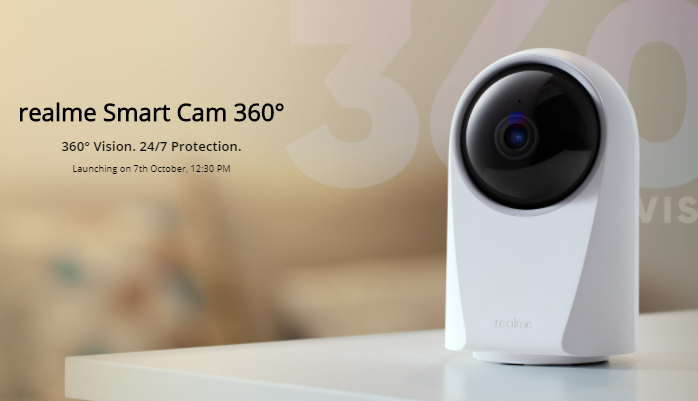
Realme has announced it has a launch event scheduled for October 7. Some of the products launching on that day are the Realme Buds Wireless Pro and the Realme Buds Air Pro. It has also been confirmed that Realme will launch its first home security camera on that day which will launch as the Realme Smart Cam 360°.
Realme has put up a banner on its Indian website that confirms the smart camera will launch in the country on October 7. We checked the European site but didn’t find it there. However, that is not to say that the security camera will not be sold in the region, it may just launch at a later date.
The Realme Smart Cam 360° has a white polycarbonate body that wraps around a black globe which houses the camera. The main body sits on a round base. Since this is a 360° camera, we believe the camera will be able to rotate on the round base to provide a 360° view of the room. While the image doesn’t show a power cord, we can’t say if the smart camera has a built-in rechargeable battery. Nevertheless, we hope it does.
There are lots of details we do not know about the camera but we believe it should have night vision, motion detection, storage expansion support, and an affordable price tag. The Realme Smart Cam 360° will be the manufacturer’s first home security camera. Realme will be going up against Xiaomi which has been offering home security cameras for years now. Its lineup includes the Mi Home Security Camera 360° which is priced at ₹ 2,899 (~$40).
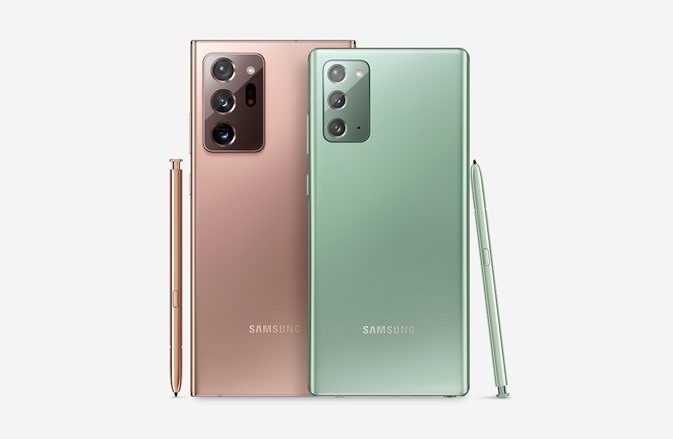
Shortly after the launch of the Galaxy Note 20 series, it was reported that Samsung may kill the popular series in 2021. Now a new report out of Korea says new Galaxy Note phones will launch next year but confirms that indeed, there are plans to kill the series.
Samsung Galaxy Note 20 Ultra and Galaxy Note 20
The original source of the info is said to be The Korea Herald by the Chinese blog IT Home. The publication reported that Samsung is indeed planning to axe the series and is moving some of its features to the S series such as the S Pen stylus which has been reported will be included in the Galaxy S21 Ultra. Apparently, the decision to bring some of the features of the Galaxy Note line to the S series is a marketing strategy to increase sales of the S series.
The source doesn’t mention when the Galaxy Note series will be killed but it does confirm that it is in Samsung’s plans.
Next year’s Galaxy Note line should arrive as the Galaxy Note 21. It should feature the same processors as the Galaxy S21 series such as the Exynos 2100 and the Snapdragon 875.
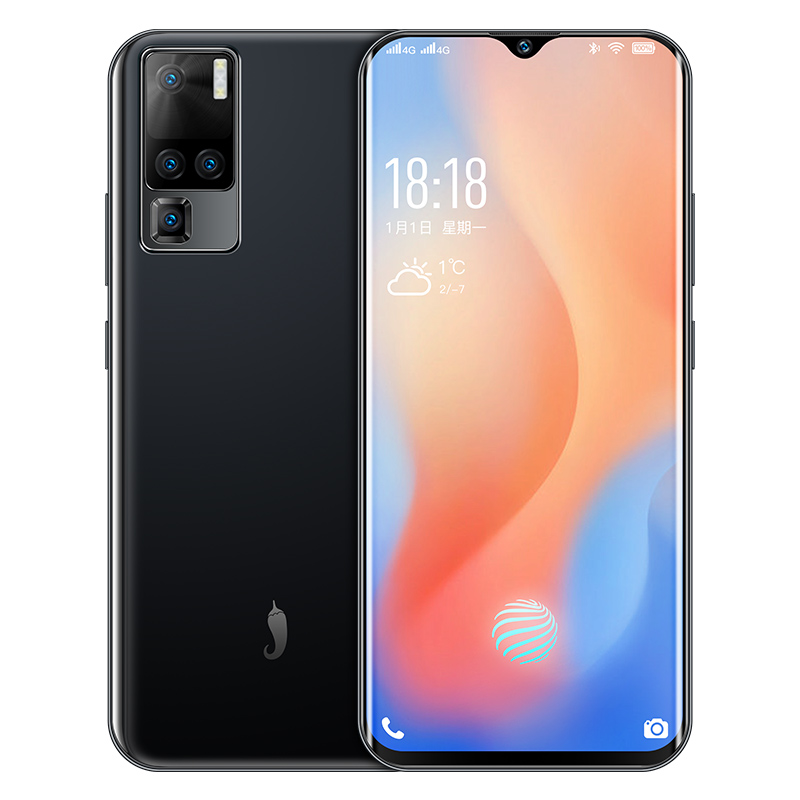
Little Pepper is a Chinese smartphone manufacturer that is known for shamelessly copying the designs of other smartphones. The company is back with a new phone called the Little Pepper X50 Pro and it borrows more than its name from the Vivo X50 Pro.
The Little Pepper X50 Pro is not a 1:1 clone of Vivo‘s phone. As you can see, it opts for a waterdrop notch and not a punch-hole. The 6.5-inch HD display is curved too and the size of its bezels is similar to those of the Vivo X50 Pro.
On the rear, is where the Little Pepper X50 Pro looks more like the Vivo X50 Pro with its camera design. The large rectangular camera housing is home to four cameras. The main camera is a 16MP sensor and it is not only significantly smaller than the 48MP main sensor on the Vivo X50 Pro but also lacks its gimbal stabilization. Sadly, the specs of the other rear cameras are not known but the spec sheet says the selfie camera is an 8MP sensor with support for Face Unlock.
The Little Pepper X50 Pro is powered by the Helio P60 processor and it is paired with 8GB of RAM and 128GB of storage. It has a side-mounted fingerprint scanner, a 3900mAh battery, and dual SIM support. The spec sheet says it runs Android but doesn’t mention the version.
The device is priced at ¥999 and comes in Blue, Gray, and Cherry Blossom.
After taking a break, DxOMark is back to releasing smartphone camera reviews. The camera review labs had said it will resume posting reviews in late October but surprised us with the camera review of the Vivo X50 Pro Plus on the first day of the tenth month. Now it has announced that the camera review for the Samsung Galaxy Note 20 Ultra is next.
According to a tweet by the official DxOMark account, the camera score and review for the Galaxy Note 20 Ultra will be published on Monday, October 5. This is a very important review and it will be interesting to see if Samsung’s flagship phone can take the crown from the Mi 10 Ultra which currently sits at the top with a score of 130 points. At the moment, there is only one Samsung phone on the top 10 list and it is the Galaxy S20 Ultra.
The Galaxy Note 20 Ultra has a 108MP f/1.8 main camera with optical image stabilization. It also has a 12MP f/3.0 periscope telephoto camera with OIS 5x optical zoom, and 50x hybrid zoom. Samsung adds another 12MP sensor, this time with an ultrawide lens to complete the triple camera setup.
Do you think the Galaxy Note 20 Ultra will score higher than the Mi 10 Ultra? Let us know in the comment box.
Last year, Flipkart launched the very first Nokia-branded smart TV in India, following the licensing of the Nokia name to the Walmart-owned retail giant. In the last six months, the 55-inch TV has gotten 43-inch and 65-inch siblings. Flipkart also announced a Nokia Android TV box in August. Now, it has been officially announced that new TV models are coming in a few days.
The official Nokia India site has revealed that a new range of Nokia Smart TVs will be launching on Tuesday, October 6. According to NokiaPowerUser, the new TVs should be a 32-inch model and a 50-inch model. The two TVs are reported to have been certified by the Bureau of Indian Standards back in early August.
The Nokia-focused blog has a different image of the poster which says that the TVs will feature Onkyo speakers. This is surprising as Nokia’s current smart TVs feature JBL speakers. It will be interesting to know why it has now switched to Japan-owned Onkyo.
The new smart TVs should run Android 9.0 out of the box and be pre-loaded with apps such as Netflix, Prime Video, and Disney+Hotstar. The 32-inch version will most likely have an FHD resolution, making it the cheapest of the lineup, while the 55-inch version should have a 4K panel.
Google Play Services for AR allows compatible devices to use apps built on the ARCore SDK. This means if your phone supports the service, you can use features such as the measure app which allows you to use your phone as a tape rule to measure dimensions or Live View in Google Maps.
Devices don’t usually have support for Google Play Services for AR out of the box. So it is no surprise that there are periodic announcements of the phones that now support the services. The new list of supported devices gotten from XDA-Developers is a pretty long one and includes mostly phones announced in the last quarter such as the Vivo X50 series, the Realme 7 series, and OnePlus Nord. Below is the full list:
If you own any of the above devices, you can confirm if there is support by heading to the Play Store and downloading the Google Play Services for AR app.
Xiaomi just launched its new flagship killer in the global market: the Mi 10T Pro. It is the successor of the Mi 10 Pro and it is currently one of the hottest devices out there. But despite Xiaomi Mi 10T Pro is the latest Xiaomi flagship, it is not the most advanced one. If you do not think so, you are not considered the Xiaomi Mi 10 Ultra: it did not launch globally, but it is actually better than the Mi 10T Pro. Let’s discover the reasons why the Mi 10 Ultra is more advanced and which one you should go for.
Xiaomi Mi 10T Pro vs Xiaomi Mi 10 Ultra
Xiaomi Mi 10T Pro
Xiaomi Mi 10 Ultra
DIMENSIONS AND WEIGHT
165.1 x 76.4 x 9.3 mm,
218 g
162.4 x 75.1 x 9.5 mm,
222 g
DISPLAY
6.67 inches, 1800 x 2400 pixels (Full HD+), IPS LCD
4500 mAh, Fast Charging 120W, fast wireless charging 50W
ADDITIONAL FEATURES
5G
Reverse wireless charging, 5G
Design
With both the Xiaomi Mi 10 Ultra and the Mi 10T Pro you get a premium design, including a glass back and an aluminum frame. The Xiaomi Mi 10 Ultra looks more elegant thanks to its curved display, but the Xiaomi Mi 10T Pro has a smaller camera module. I personally prefer the Xiaomi Mi 10 Ultra, but not everyone likes curved and edge-to-edge displays. These devices have high build quality, but despite they are flagships, they do not offer any kind of protection against water and dust.
Display
Xiaomi Mi 10T Pro has the highest refresh rate of this comparison and even the highest refresh rate ever seen on a phone, but this does not mean it has a better display. The Xiaomi Mi 10 Ultra is actually superior because it is equipped with an OLED panel instead of the IPS panel of the Mi 10T Pro. You get a better image quality with the Xiaomi Mi 10 Ultra, as well as a higher brightness. Both support the HDR10+ standard, both are protected by Gorilla Glass 5, both have the same 6.67-inch diagonal and the Full HD+ resolution. So, the element which makes the difference is the panel technology.
Specs & Software
Xiaomi Mi 10 Ultra and Xiaomi Mi 10T Pro both are powered by the Snapdragon 865 mobile platform which is actually the best Qualcomm’s chipset if we exclude the Snapdragon 865+ which offers a 10% performance boost. The SoC is paired with LPDDR5 RAM and UFS 3.1 native storage. The Xiaomi Mi 10 Ultra wins because it is available in a pair of memory configuration with 12 GB of RAM, while Xiaomi Mi 10T Pro stops at 8 GB. Further, you can get more internal storage with the Xiaomi Mi 10 Ultra: up to 512 GB. Xiaomi Mi 10 Ultra and Xiaomi Mi 10T Pro run Android 10 out of the box, customized by MIUI 12.
Camera
The best camera phone is the Xiaomi Mi 10 Ultra. It lacks the 108 MP sensor of the Xiaomi Mi 10T Pro, but it has a dual 48 MP sensor with up to 120x hybrid zoom, a 12 MP telephoto lens, and an ultrawide lens with a 20 MP resolution, as well as dual OIS. Xiaomi Mi 10T Pro lacks the periscope lens and the telephoto sensor of the Xiaomi Mi 10 Ultra and it is an inferior camera phone packing just a 108 MP main sensor, a 13 MP ultrawide camera, and a 5 MP macro shooter. The 108 MP sensor of the Xiaomi Mi 10T Pro is a great camera, but thanks to its better secondary sensors, the Xiaomi Mi 10 Ultra is able to click way better photos in a lot of situations. That is why the Xiaomi Mi 10 Ultra wins the camera comparison too.
The Xiaomi Mi 10T Pro packs a bigger battery than Mi 10 Ultra: 5000 mAh against 4500 mAh. But this does not necessarily mean that Xiaomi Mi 10T Pro will last more than Mi 10 Ultra on a single charge. The Xiaomi Mi 10 Ultra has a more efficient display thanks to the OLED technology and a lower refresh rate. That is why there should not be big differences between these two handsets in terms of battery life. Things change totally when it comes to charging speeds. Xiaomi Mi 10 Ultra supports a 120W fast charging technology, 50W wireless charging, and 10W reverse wireless charging. Xiaomi Mi 10T Pro stops at 33W for wired charging and it does not support wireless charging and reverse charging. This is what lets us give our battery award to the Xiaomi Mi 10 Ultra.
Price
Xiaomi Mi 10 Ultra is priced about €850/$1000 in China, while Xiaomi Mi 10T Pro costs €600/$700 in the global market. The Xiaomi Mi 10 Ultra is a superior device from every point of view: it has a better display thanks to the OLED technology, higher-end memory configurations with up to 12 GB of RAM, better cameras thanks to superior secondary sensors (periscope and telephoto), and more. But unfortunately, unlike the Mi 10T Pro, the Xiaomi Mi 10 Ultra will never come in the global market and it will remain China-exclusive. While the Xiaomi Mi 10 Ultra is a top-tier flagship (just like the Xiaomi Mi 10 Pro which did not have a lot of success in the global market), the Mi 10T Pro is more like a flagship killer: two devices belonging to different segments. The Xiaomi Mi 10 Ultra is the best Xiaomi device to date, while the Mi 10T Pro is one of the Xiaomi phones with the highest value for money.
A few days ago, OnePlus teased that it has a new audio product coming soon. We deduced that the new product is a pair of TWS earbuds which should launch as the OnePlus Buds Z. Today, OnePlus confirmed that it will indeed launch a new pair of earbuds on October 14.
According to a post made on Twitter, the new Buds will have an IP55-rating. The teaser from earlier this week showed that the earbuds will have silicone ear tips.
No matter the weather, you won't miss a beat with our new IP55-rated Buds. See them October 14.
The OnePlus Buds Z will be more affordable than the OnePlus Buds that was announced a few months ago. It has bee reported that the earbuds will also weigh less at 4.35 grams per earbud compared to the OnePlus Buds which have a weight of 4.6 grams per earbud. The OnePlus Buds Z should connect via Bluetooth 5.0 and work with the OnePlus Buds app.
The new earbuds will launch alongside the OnePlus 8T flagship smartphone.
We use cookies on our website to give you the most relevant experience by remembering your preferences and repeat visits. By clicking “Accept”, you consent to the use of ALL the cookies.
This website uses cookies to improve your experience while you navigate through the website. Out of these, the cookies that are categorized as necessary are stored on your browser as they are essential for the working of basic functionalities of the website. We also use third-party cookies that help us analyze and understand how you use this website. These cookies will be stored in your browser only with your consent. You also have the option to opt-out of these cookies. But opting out of some of these cookies may affect your browsing experience.
Necessary cookies are absolutely essential for the website to function properly. This category only includes cookies that ensures basic functionalities and security features of the website. These cookies do not store any personal information.
Any cookies that may not be particularly necessary for the website to function and is used specifically to collect user personal data via analytics, ads, other embedded contents are termed as non-necessary cookies. It is mandatory to procure user consent prior to running these cookies on your website.