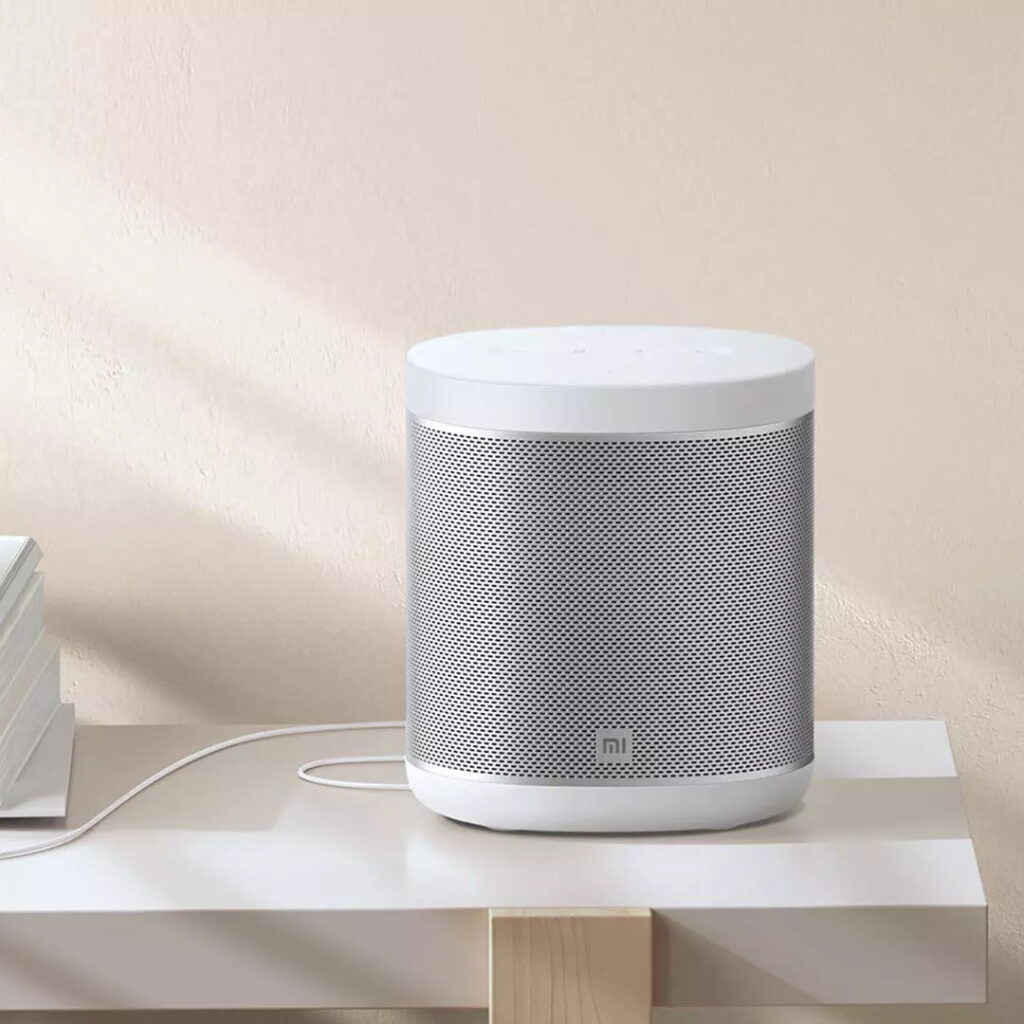
Xiaomi India has scheduled a launch event called “Smarter Living 2021” for September 29. The company is expected to launch a number of products such as Mi Smart 4 and Mi Watch Revolve to name a couple. Ahead of the event, the firm has been teasing these upcoming products on social media. Today’s teaser suggests that one of these forthcoming smart products will be XiaoAI Speaker Art.
The Xiaomi XiaoAI Speaker Art launched in China in the month of May for 349 yuan (₹3,383/$51). It is still selling for the same price in the country. Hence, we can expect it to be priced around ₹5,000 ($68) in India.
In Chian, this speaker is powered by Xiaomi’s XiaoAI voice assistant but in India, it should either feature Amazon Alexa or Google Assitant. Apart from that, the speaker may launch with a different name, however, with the same design and specifications.
That means, it will feature a metal build with 10,531 holes and a 16 million RGB LED strip at the top with capacitive touch keys for volume control, play/pause, and enable/disable far-field microphones.
Xiaomi XiaoAI Speaker Art
It comes with a 2.5-inch speaker with DTS sound. It can be also paired with a second unit to experience 2.0 stereo sound. As for connectivity, it sports dual-band WiFi 5 and Bluetooth 4.2.
Last but not least, it can be paired easily with devices running MIUI 12 but we are not sure if this feature will be available in India.
Dell has released a series of gaming notebook PCs dubbed Dell G5 gaming notebook laptops. The gaming notebook series all feature up to 10th generation Intel Core i7 processor, RTX 2070Max-Q, 300Hz screen, the price ranged from 5499 yuan ($811) to 12999 yuan ($1918).
The new G5 gaming notebook continues the tradition of the previous generation, packing large screens with narrow bezels. The screen has been upgraded to a high colour gamut of 72% NTSC. The high configuration also supports screens of 144Hz or even 300Hz.
This gaming notebook originally has excellent RGB lighting effects, a 12-zone RGB chassis light blade, a four-zone RGB custom backlit keyboard, and the atmosphere light on the bottom also supports multi-zone independent control.
In terms of the interface, the left side of the new G5 game notebook is a power interface, HDMI, USB-A, RJ45 network cable interface, and a Type-C interface from left to right. The laptop also packs an SD card slot and a 3.5mm headphone jack.
The laptop is available in five different models – a base variant with the 10th-generation Core i5 SoC with 16GB RAM and NVIDIA GTX1650 GPU and is priced at 5499 yuan (~$811. The 10th-generation Core i5 SoC version with 16GB RAM and NVIDIA GTX1650Ti GPU and is priced at 5899 yuan. The third version comes with 10th-generation Core i7 SoC with 16GB RAM and NVIDIA GTX1650Ti GPU and is priced at 6,699 yuan. There is an 8th-generation Core i7 SoC with 16GB RAM and NVIDIA GTX2060 GPU priced at 8199 yuan. Finally, the top-end model pacKs a 10th-generation Core i7 SoC with 16GB RAM, NVIDIA 2070MQ GPU and 300Hz refresh rate. It packs a retail price of 12,999 yuan ($1918).
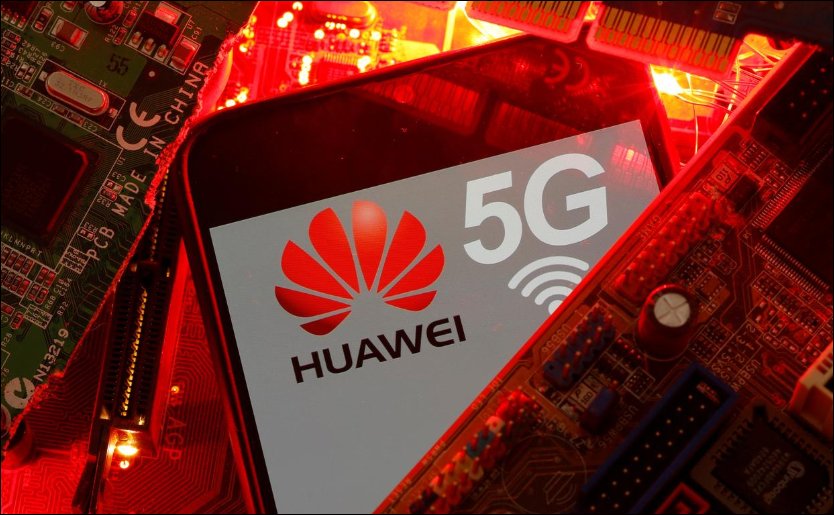
Huawei, the Chinese telecom giant, and the Thai government have worked together to jointly launch a facility aimed at developing the 5G infrastructure in the Southeast Asian country.
According to an NHK report, the Thailand 5G Ecosystem Innovation Center had its opening ceremony take place in Bangkok earlier this week. In the event, Thailand’s Minister of Digital Economy and Society, Buddhipongse Punnakanta, attended in place of the country’s Prime Minister Chan-o-cha. The government official also thanked the Chinese company for its cooperation in setting up the new center.
The newly built facility houses equipment to test products and even allows visitors that want to get a sensor of how 5G services work. This includes exhibitions involving medical robots and face recognition-based surveillance systems. The Chinese tech giant has invested 15 million US Dollars to the joint project and is even sending its engineers to the country to help with personnel training. In other words, apart from just providing 5G infrastructure, Huawei is also planning on stimulating its local economy by creating new job opportunities or prospects as well.
This arrives amid the rising US pressures, as the Trump Administration has recently reinforced regulations against Huawei. Furthermore, the company has also been facing increasing scrutiny over alleged ties with the Government of China, so gaining positive relations is crucial for the company. Huawei has also been focusing on other Southeast Asian regions as well and plans on increasing its presence throughout. Buddhipongse also stated that his country is open to cooperating with any country.
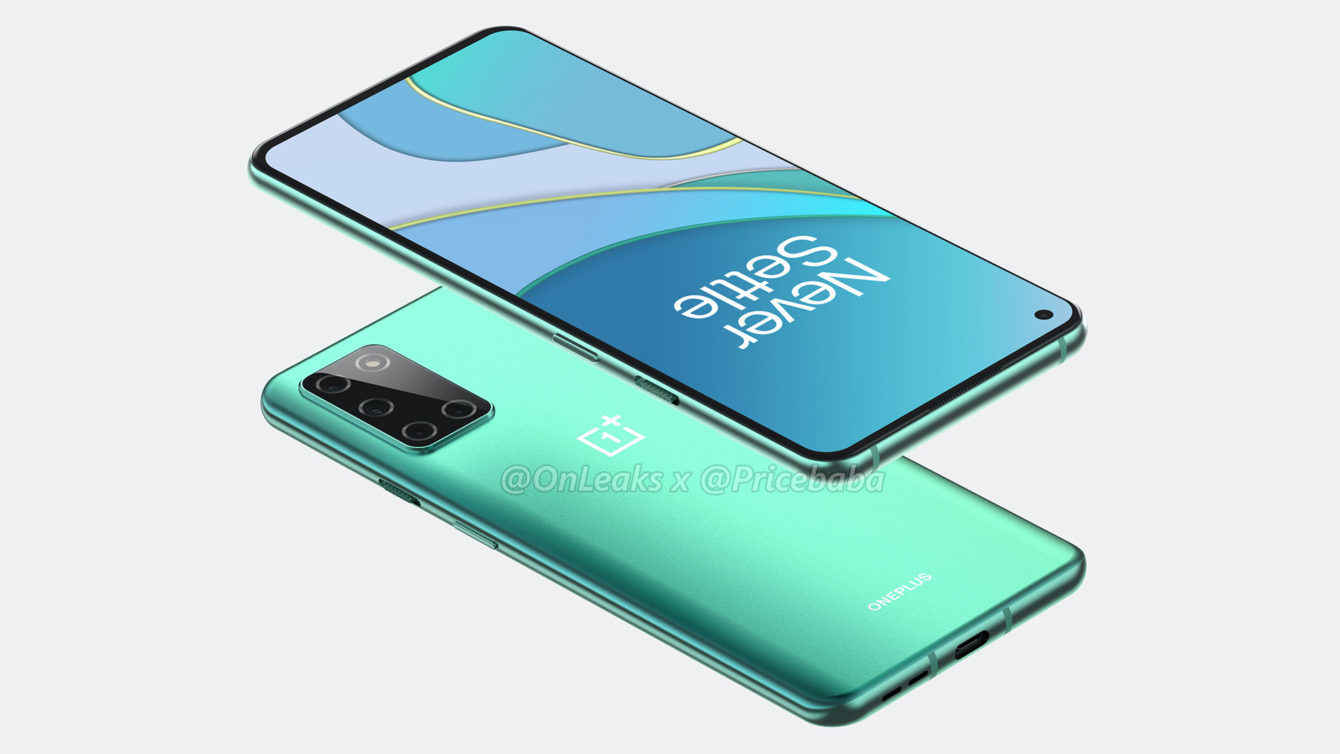
OnePlus is gearing up for the launch of its new OnePlus 8T series on 14th October 2020. A per a series of new teaser videos, the company emphasized on the upcoming smartphone’s speed and uncompromising nature along with the catchphrase “Ultra Stops at Nothing.”
At the moment, it is currently unclear what the ‘Ultra’ terminology stands for. However, the leading speculations have been that the company might not be launching an OnePlus 8T Pro, and would go for an Ultra variant instead for its high end offering. The short teaser video in question contained various action sequences, with the ‘Ultra’ slogan arriving at the 19 second mark.
Furthermore, OnePlus also released another shorted teaser trailer of the upcoming series, which featured the company’s brand ambassador, Robert Downey Jr. who talks about moving faster, which is likely regarding the 120Hz high refresh rate panel on the OnePlus 8T. Unfortunately, there isn’t much to go on or gather from either of these teaser videos although rumors and reports have hinted at the OnePlus 8T’s specifications.
The device is expected to feature a 6.55 inch AMOLED display with a 120Hz refresh rate. It is said to sport a 32 megapixel punch hole selfie shooter and will be powered by a Qualcomm Snapdragon 865 SoC. For memory, we can expect 8 to 12GB of RAM and up to at least 256GB of internal storage. These are just speculations so take it with a pinch of salt and stay tuned for more updates that should arrive soon.
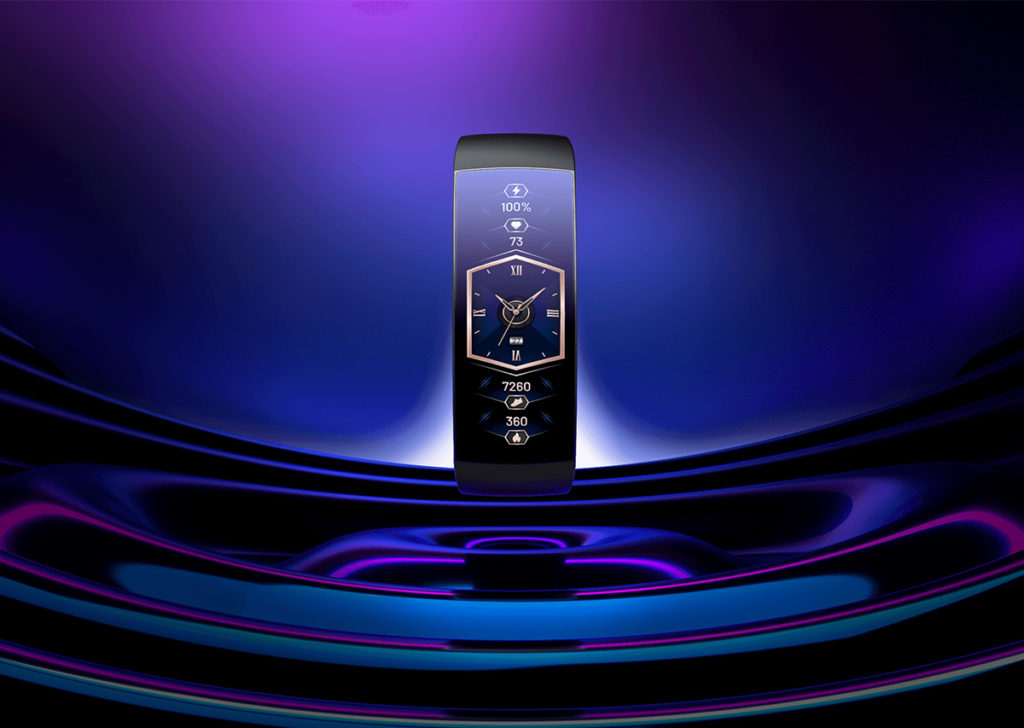
Back in August 2019, Huami Technology unveiled Amazfit X curved smartwatch. The company crowdfunded it earlier this year on Indiegogo for global customers, followed by on Xiaomi Youpin in China last month. Now, as the product has successfully reached its crowdfunding goals on both these platforms, the firm officially announced its retail price along with commercial availability for China at today’s Amazfit GTR/GTS 2 launch event.
The Amazfit X is one of a kind wearable with a curved flexible OLED display. Its only competitor is nubia Watch, which is also still in the crowdfunding phase. However, unlike the nubia wearable whose future is uncertain, the one from Amazfit now has an official retail price as well as rough information regarding its commercial availability.
At the Amazfit GTR 2 and Aamzfit GTS 2 launch event, Huami Technology, the company behind Amazfit-branded fitness products officially revealed that the retail price of Amazfit X will be 1,999 yuan ($295). Surprisingly, It happens to be 100% more or double than the curved smartwatch’s 999 yuan/$150 crowdfunding price.
Also, the firm did not announce the exact launch date of this wearable. Instead, it simply mentioned that it will be available in Q4 2020, which begins next month. Above all, it will be probably limited to China, at least for the first few months.
That said, if the mass manufacturing process goes as planned, interested customers in the company’s home country will be able to snag it from online and offline retailers before the end of this year.
Flexible displays have shown great advancements in recent times. Ever since their inception, the new breed of the display has branched out to fields like, smartphones, TVs and may soon be seen in other areas as well. Now, a recent LG patent reveals a new product that features a unique design with a rollable display.
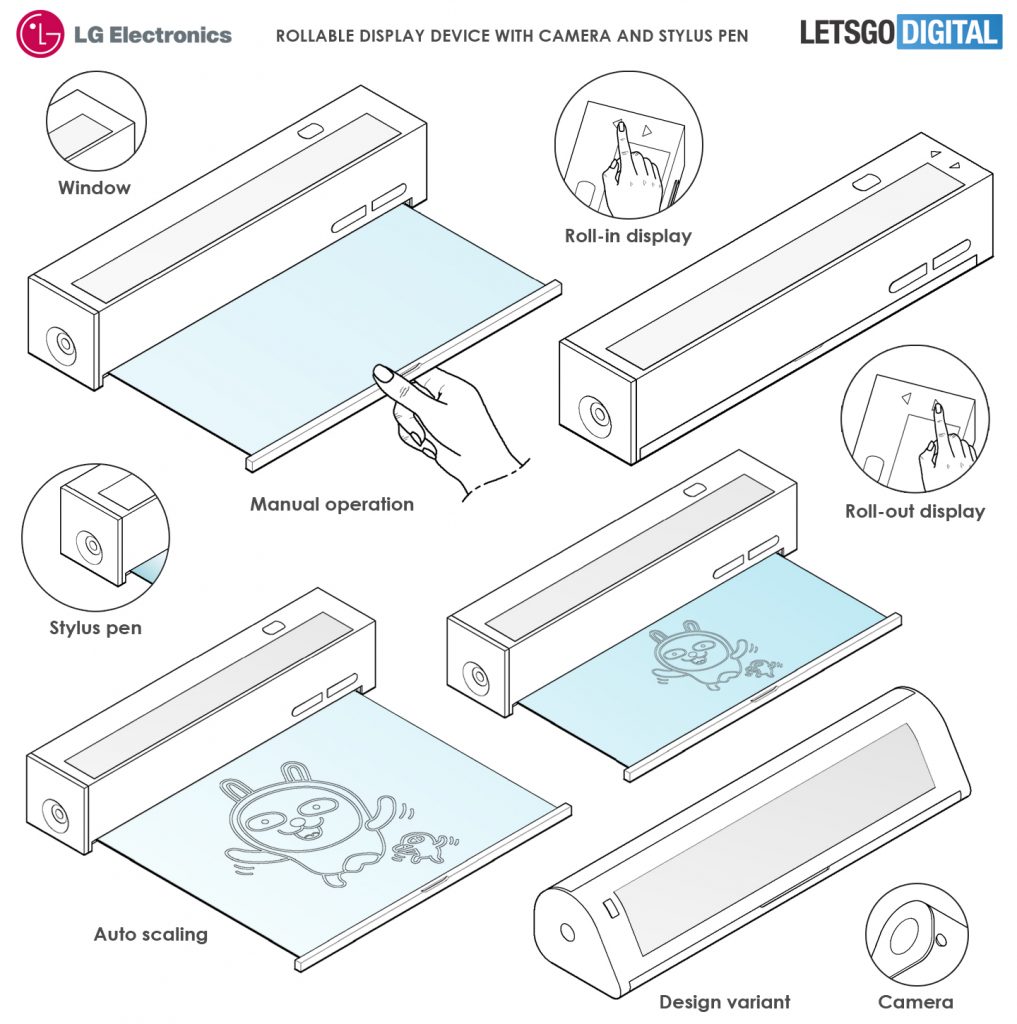
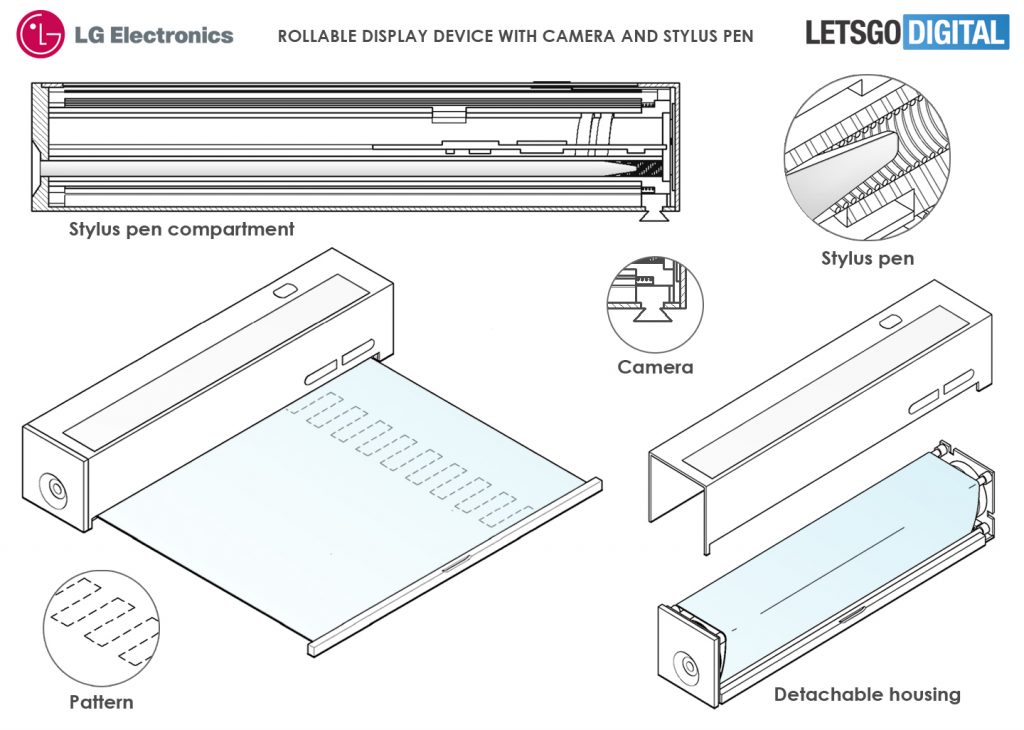
According to a LetsGoDigitalreport, the South Korean tech giant filed a patent application for this ‘Electronic device’ with the USPTO (United States Patent and Trademark Office) back in 2019. This got approved earlier this month arrives with various product sketches as well. Looking at these images, a device with a primary base can be observed which features all of the components as well as the rolled up display. This base has a square rectangular cuboid or triangular design, based on the variations.
Judging by its size, it is meant to be a compact and carryable device that might serve multiple purposes. The display is a rollable OLED panel, which is similar to the one seen in its Signature TV R that featured a rollable display as well. A power button can be found on top of the display device, while additional buttons are also placed next to it that control the display rolling out or rolling in. Although, images show that the user can also manually pull out the display if needed.
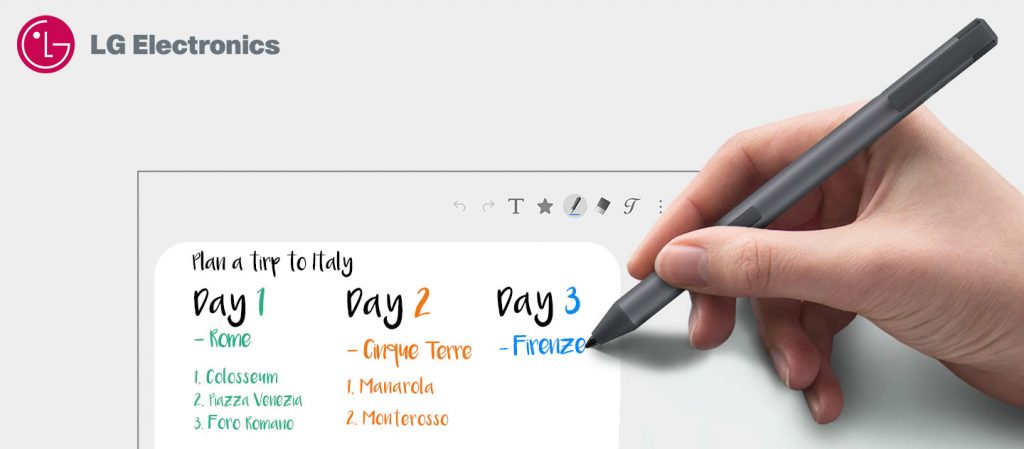
At the moment, it is unsure what purpose the device actually serves as the images reveal that it indeed has a camera as well on one end and the display can be used for multimedia entertainment. Another interesting feature is that the device also has a stylus, which may be indicative of the gadget being targetted towards professionals in the creative fields. Furthermore, when pulling out the display, the aspect ratio of the image being displayed is changed according to the amount of display that is rolled out. So, users can choose what length of the display they require.
Unfortunately, the name of this product is currently unknown and its internal specifications are also unclear. However, LG has provided an in depth breakdown of the components that will be housed on the inside of the device’s casing, so we can assume that the company might actually be working on such a device and could possibly showcase it in notable events like CES 2021. Although, that is just speculation so take it with a pinch of salt.
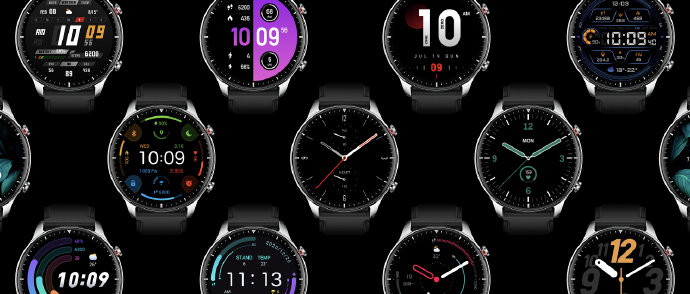
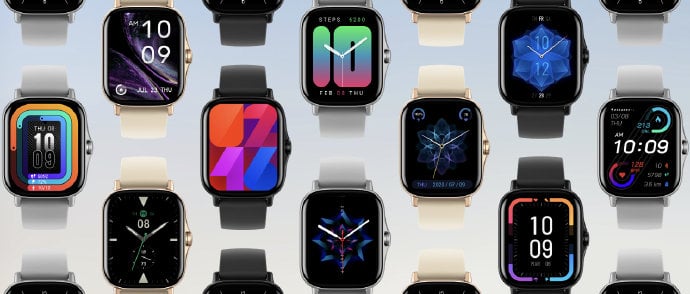
Huami has just announced two new wearable products in the company’s first offline launch conference earlier today (22nd September 2020). In the event, the Amazfit GTR 2 and Amazfit GTS 2 were unveiled, which arrive with various improvements alongside certain new features.
Amazfit GTR 2
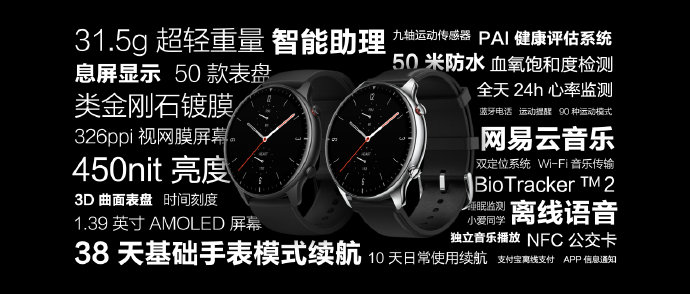
The Huami Amazfit GTR 2 is the second iteration of the GTR series and arrives with a 14 days long battery life. It also features new health-related features like blood oxygen detection and can also monitor sleep patterns. The wearable is built with a 3D glass on the top which is surrounded by a ceramic bezel. Huami claims that each watch goes through 35 processes and over 27 hours of polishing. The glass is also coated with a diamond-like carbon coating to prevent any scratches during use, with a 9H hardness comparable to sapphire.
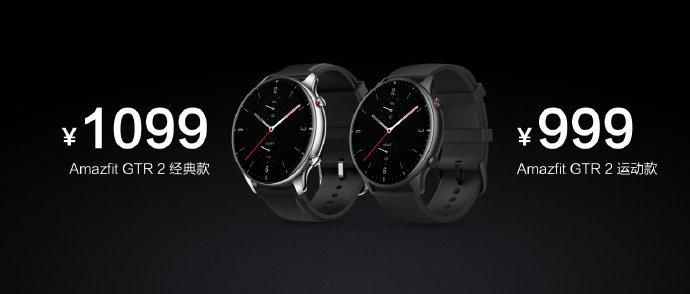
The display is a 1.39 inch AMOLED panel with a 328 PPI that has a maximum brightness of 450 nits. It is also slimmer than the previous generation and features two crowns on the right side. Two versions of the new smartwatch can be purchased, which includes a class model that has a stainless steel body and leather strap or a sports model that features an aluminum alloy body with a silicone strap.
New Health Tracking and Assessment System
The Amazfit GTR 2 is equipped with the latest BioTracker 2 PPG optical sensor that enables it to check the blood oxygen saturation levels alongside mapping the user’s heart rate. Huami said that the saturation measurements can reach up to 96 percent, which is almost the same as a professional oximeter that is used specifically for the task. The company has also developed a new sleep engine that can run with the blood oxygen detection feature to map the breathing cycles of the user during sleep.
In other words, this maps the blood oxygen levels at night as well, which is a feature that is likely inspired by the ongoing pandemic. The wearable also has a built-in PAI health assessment system that converts the various health data gathered over time into values that can be read later on through the use of algorithms. The Amazfit GTR 2 also features 12 different sports modes, which it can automatically detect, and has a water resistance of up to 50 meters. It also features essential connectivity options like Bluetooth and can connect with wireless earphones as well.
For storage, 4GB of internal storage is also offered and users can store music locally on the device. The latest Huami wearable is supported by both Android and iOS smartphones, features the XiaoAI voice assistant, and can even connect to WiFi to download music directly without a paired handset. This also allows the device to support GPS and GLONASS positioning systems. Its battery life can last for up to 14 days with regular use and about 38 days when used just as a basic watch. The device still supports NFC for various payments and other security features as well.
Amazfit GTS 2
The other wearable that Huami announced in the press conference was the Amazfit GTS 2. This device has a thinner and lighter design in comparison to the GTR 2 but still features the same “roundness, integration, and immersion,” in other words, a similar diamond-like coating for added protection. Unlike the GTR 2 however, the Amazfit GTS 2 features a rectangular 1.65 inch AMOLED display with rounded corners. It also has 450 nits of maximum brightness and a 341 PPI density for clear images.
The gadget has an anodized metallic body that arrives in three colors, namely obsidian black, streamer gold, and dolphin gray. Similar to GTR 2, it also features 12 sports modes and the company claims that it will support up to 90 different modes in the future. The Amazfit GTS 2 is also quite similar in terms of health-related prowess with the GTR 2 a well, with it also having the same PAI health system and smart functions. Its battery life lasts for about 7 days with regular use and 20 days when used as a simple watch.
Just like the Amazfit GTR 2, the GTS 2 also has onboard storage. It also has a microphone and speaker so users can take calls on their watch.
Price and Availability
The Amazfit GTR 2 is priced and 999 Yuan (roughly 146 US Dollars) for the Sports variant and 1,099 Yuan (roughly 162 US Dollars) for the Class variant. On the other hand, the GTS 2 is priced at 999 Yuan and both the smartwatches will be available through online sales on 23rd September 2020. It will be available through major Chinese online retailers like JD.com, Tmall, Xiaomi Youpin, Huami’s own stores, and more.
Xiaomi has been updating its smartphones to MIUI 12, the latest version of its Android-based mobile operating system worldwide. These devices have been getting the update first in China, followed by the global rollout. As the Mi 8 Lite and Mi Note 3 got the MIUI 12 update last month, they have now begun to receive it globally as well.
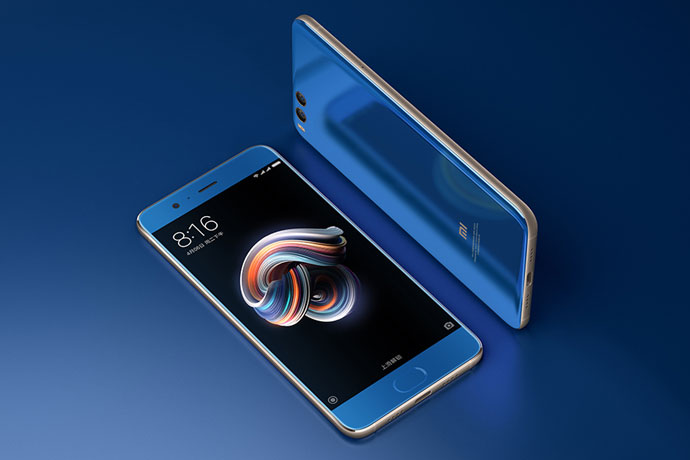
Xiaomi Mi Note 3
The Xiaomi Mi Note 3 is from 2017, whereas the Mi 8 Lite debuted in 2018. However, both of them launched with MIUI 9 out of the box but with Android Nougat and Android Ore respectively.
They have received two Android as well as MIUI updates each and are currently running MIUI 11 based on Android Pie and Android 10 respectively. MIUI 12, which has now begun to roll out to these handsets is expected to be their last major software update.
That said, the MIUI 12 update for Mi Note 3 comes with build number V12.0.1.0.PCHMIXM. On the other hand, the build for Mi 8 comes with version V12.0.3.0.QDTMIXM. They are currently being rolled out in batches and should reach all the units if the early adopters don’t face any major issues.
It is good to see Xiaomi providing updates to its older mid-range smartphones. Unfortunately, the same cannot be said for its most recent devices as the company’s software rollout has degraded over the years.
Samsung has launched both the flagship lineups of the years — Galaxy S20 series and Galaxy Note20 series. Now, the South Korean giant is gearing up to launch the next-generation Samsung Galaxy S21 series smartphones next year.
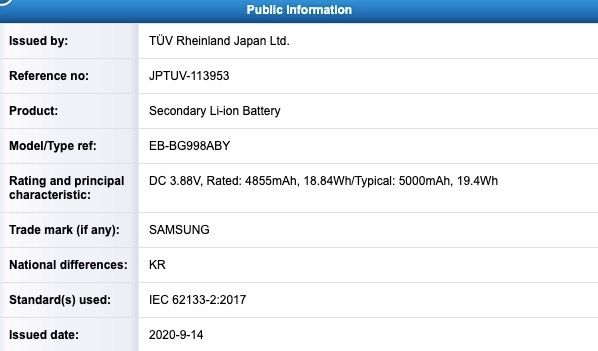
Even though there are few months for the Galaxy S21 models to go official, details about the smartphones have already started surfacing online. Now, the Samsung Galaxy S21 Ultra has reportedly been spotted on TUV Rheinland listing with model number SM-G998.
The listing reveals that the smartphone will come packed with a 5,000mAh battery. This is in line with the previous report which claimed that Samsung will use a battery with model number EB-BG998ABY which will be marketed as a 5,000mAh capacity battery. It could also support 60W fast charging technology.
The 3C listing of this series suggests that the Galaxy S21 will be fuelled by a 3,880mAh rated capacity battery while the Galaxy S21 Plus will pack a 4,660mAh battery. The batteries are reportedly manufactured by a Chinese company and not Samsung.
The upcoming flagship smartphone from Samsung could be powered by the company’s own 5nm Exynos chipset while the same models will also be available with the Qualcomm Snapdragon 875 SoC instead of Exynos chipset.
The company is expected to offer a 40MP selfie camera on the S21 Ultra. The phone is said to have a quad-camera setup on the back, featuring a 108MP ISOCELL HM2 sensor along with a 12MP ultra-wide camera, a 10MP telephoto lens, and another telephoto lens with 5x optical zoom support.
The flagship smartphone is also rumored to come with an under-display camera, eliminating the need for a notch on top of the screen. There are also rumors suggesting the Galaxy S21 Ultra having S-Pen support to replace the Note series of smartphones.
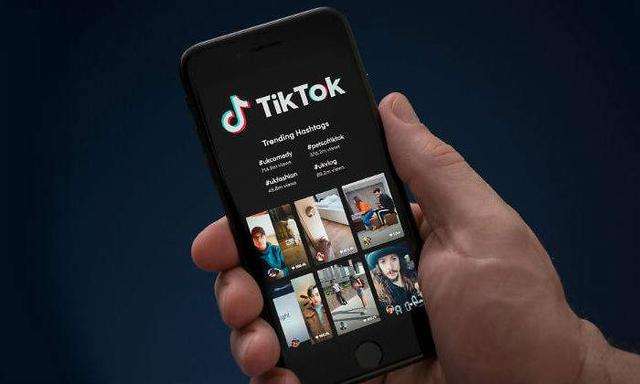
Earlier this week, Oracle made a notable statement to reporters regarding the ongoing deal with TikTok’s parent company. The company said that ByteDance will have no ownership over the new TikTok venture.
According to the company, “Upon creation of TikTok Global, Oracle/Walmart will make their investment and the TikTok Global shares will be distributed to their owners, Americans will be the majority and ByteDance will have no ownership in TikTok Global.” This differs significantly from previous reports that had said that ByteDance will still maintain a majority stake in the popular social media platform, which was previously a share of 80 percent to ByteDance and just 20 percent to Oracle and Walmart.
Notably, this news also arrives slightly after the US President, Donald Trump, stated that he might not sign off on the TikTok-Oracle deal, especially if an American company did not have a majority share in TikTok. In other words, the short video making app had to have an American firm behind it to continue its operations, which is indicative of the frictions between the US and China.
Unfortunately, ByteDance has yet to respond to this statement while Oracle has also declined to further elaborate on this when it was reached out by TheVerge. At the moment, many are still concerned regarding the national security concerns that surround TikTok and it also remains to be seen just how the Chinese government responds to the matter.
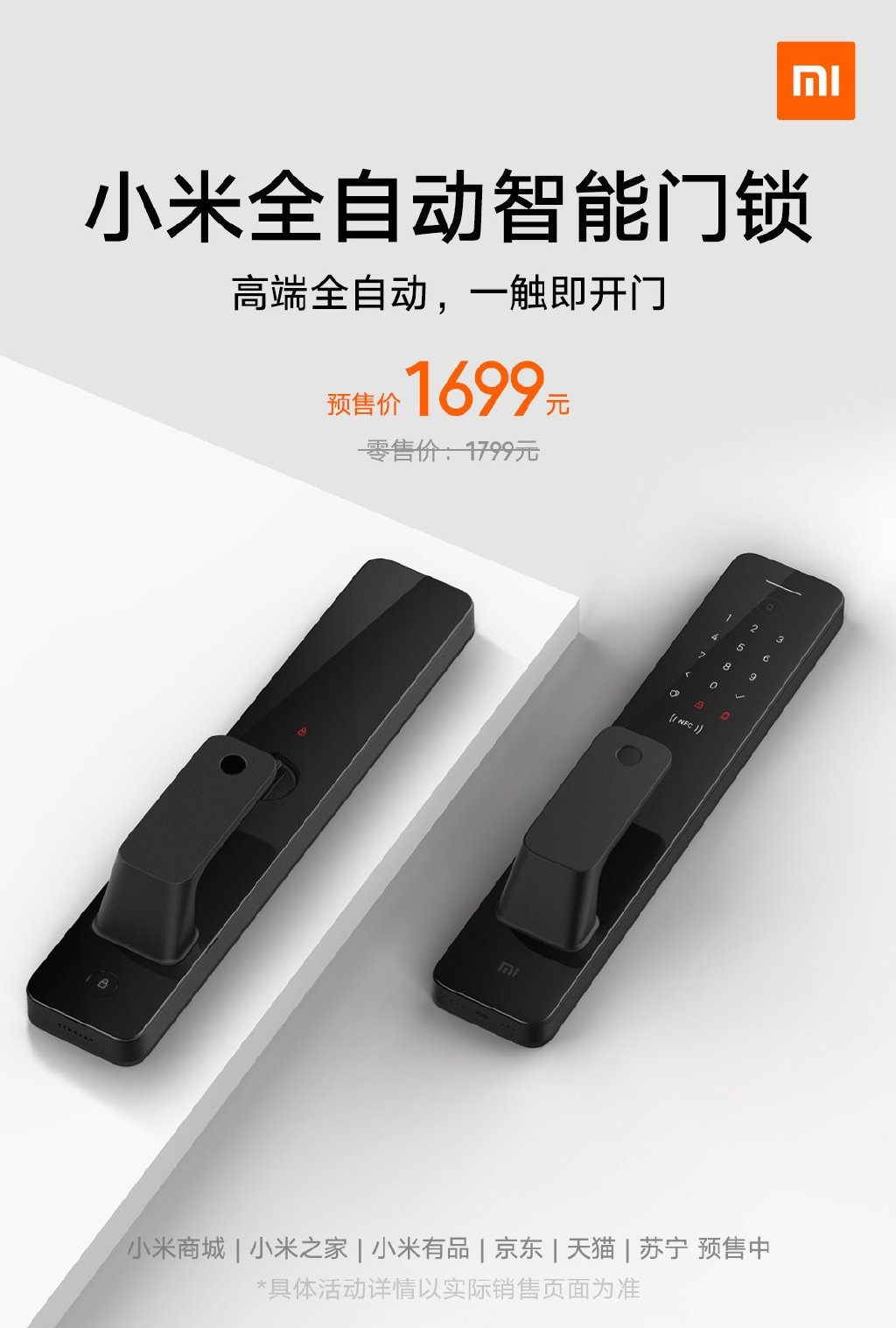
Xiaomi has been launching new Smart Home products at regular intervals in its home market China and today, the company has launched its first fully automatic smart door lock, called Xiaomi Automatic Smart Door Lock.
The product is now up for pre-order and will be shipped out by the end of this month, costing 1,699 yuan (~$250). This represents a 100 yuan discount over its retail price of 1,799 yuan, which is roughly $265.
The lock will automatically open when a fingerprint is recognized and after opening the lock, the door will automatically get locked within 0.8 seconds. This eliminates the need to rotate or push the handle to open or close the door.
Xiaomi says that the internal system of this new automatic door includes a set of power components which comprises the linear driving force, planetary gear reduction, micro-motor power, state perception, and a few other components.
Further, the company says that it has a C-level lock core that offers a fingerprint recognition rate of 98.94 percent. It can also be combined with multi-dimensional information such as fingerprints, skin, and conductivity.
It supports 50 sets of long-term passwords, periodic passwords, and a one-time temporary password. It also supports 20-bit virtual input as well as a few different unlocking methods such as NFC unlocking, mobile Bluetooth unlocking, HomeKit unlocking, among others.
The product is powered by eight AA batteries, offering 12 months of usage. There’s also a USB Type-C port that can be used for power supply in case of an emergency.
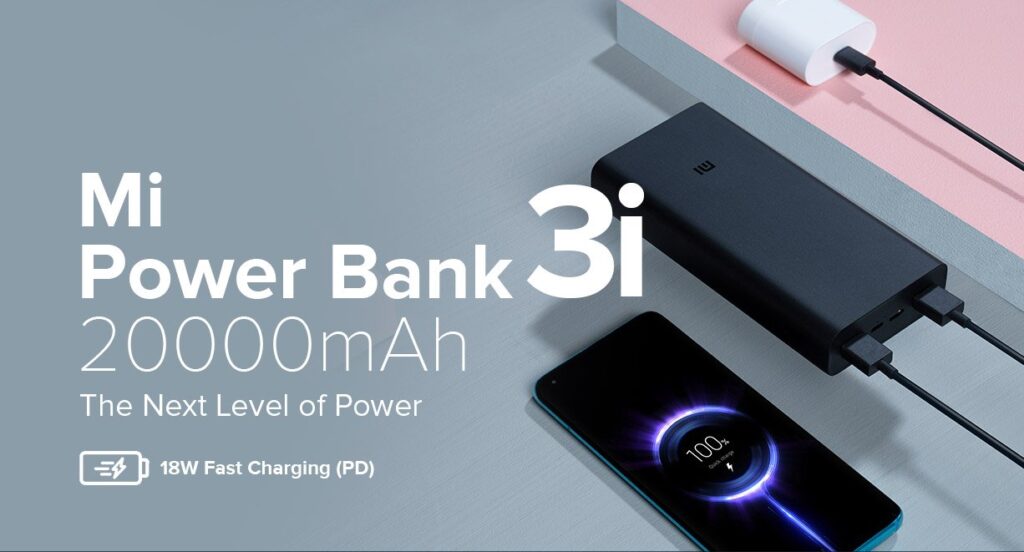
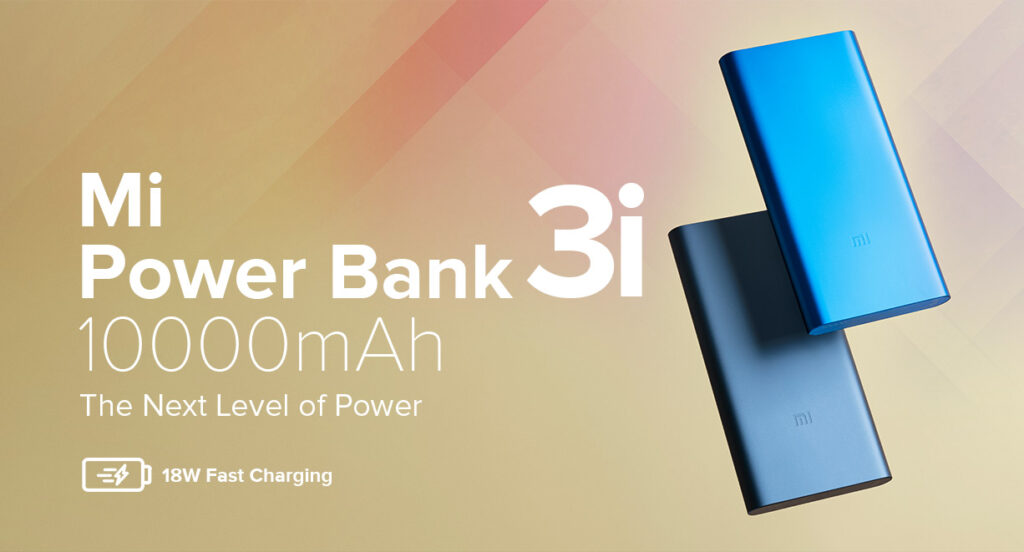
Last week, Xiaomi India teased to launch new power banks in the country. We predicted it to be the popular Mi Power Bank 3 series sold in China. Fortunately, that happens to be true, the company has launched the basic 10,000mAh and 20,000mAh models of this series as Mi Power Bank 3i in India priced at ₹899 ($12) and ₹1,499 ($20) respectively. They are already up for sale on Xiaomi online store (Mi.com) and Amazon India.
Just like their predecessor Mi Power Bank 2i series, the Mi Power Bank 2 models also feature metal casing for the 10,000mAh variant and plastic casing for the 20,000mAh version.
The smaller model comes with 2 x USB Type-A ports for output and a MicroUSB port as well as a USB Type-C port for input, On the other hand, the larger version sports 3 x USB Type-A for output, a MicroUSB port for input, and a USB Type-C port for both input as well as output (Power Delivery – PD).
Though both of them provide maximum charging speed of 18W, they differ in size and weight due to their capacity. Another common feature between the two is the low power charging mode for accessories like fitness trackers, TWS, and more.
The company says that they are manufactured (assembled) in India just like the previous models with 12-layer protection that includes temperature protection, input over-voltage protection, and electrostatic protection to name a few.
Last but not least, the Mi Power Bank 3i 20,000mAh is currently only available in Sandstone Black color version. Whereas, the Mi Power Bank 3i 10,000mAh can be purchased in either Midnight Black or Metallic Blue color variants.
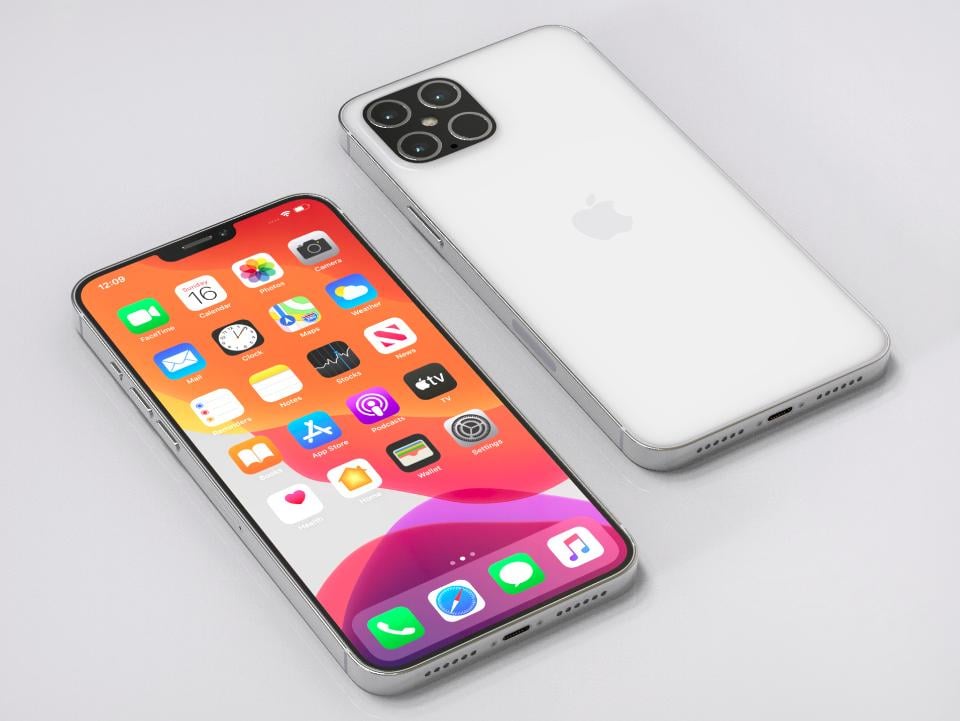
With Apple iPhone 12 series launch getting closer, more details about the lineup keep surfacing online. In the latest development, a leaker known as “L0vetodream” has shed light on the naming of the upcoming smartphones.
As per the leak, the four upcoming iPhone 12 models will be called iPhone 12 Mini, iPhone 12, iPhone 12 Pro, and iPhone 12 Pro Max. The 5.4-inch model of the device will be called Apple iPhone 12 Mini.
The model with a 6.7-inch display will be called iPhone 12 Pro Max while the two devices with a 6.1-inch display will be called iPhone 12 and iPhone 12 Pro. The naming scheme seems to be in line with the usual Apple iPhone naming, except for the Mini branding.
The Apple iPhone 12 Mini would be the first time for the company with a “Mini” moniker for the smartphone. The company has used the moniker for the iPad and Mac devices, so it seems possible for Apple to adopt the same for iPhones.
As per the reports, the 6.1-inch and 6.7-inch models of the iPhone 12 will have the same display notch like the iPhone 11 models. However, the 5.4-inch model will have a slightly narrow notch to show more information on the screen at the top edges.
Recently, it was revealed that the iPhone 12 cost somewhere between $699 to $749 while the iPhone 12 Max could be $799-849. The Pro and Pro Max models are expected to be priced around $1,100 to $1,200. To know for sure, we will have to wait for the official announcement from the company.
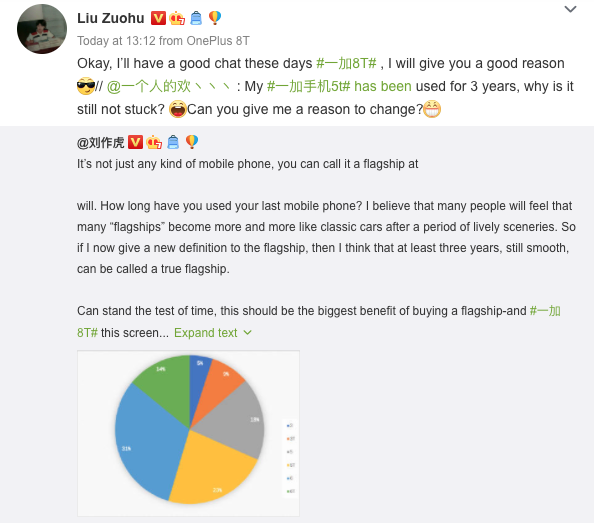
OnePlus is now gearing up to launch its new flagship smartphone of the year — OnePlus 8T, which is slated to go official on 14th October. Ahead of the official launch, the company’s CEO Pete Lau has taken to Weibo to hint at some of its features.
In a Weibo post, Pete Lau says that a true flagship smartphone should be lag-free for at least three years and adds that this is the problem with many so-called flagship phones. He then states that the OnePlus 8T will provide a smooth user experience for at least 3 years.
Apart from that, the phone is also set to offer a smooth screen given that the display on the OnePlus 8T will support a 120Hz refresh rate, as confirmed by the company. This is an upgrade compared to the 90Hz refresh rate in the OnePlus 8.
Interestingly, the phone will come with support for Full HD+ screen resolution. As per the report, the device will have a 6.5-inch S-AMOLED display panel with a punch-hole cutout for housing the front-facing camera.
Under the hood, the smartphone will be powered by the Qualcomm Snapdragon 865 SoC, along with up to 12 GB of RAM and 256 GB of internal storage. On the front side, the phone will have a 32 MP snapper for taking selfies and video calling.
There will be a quad-camera setup on the back, featuring a 48-megapixel main camera, an ultrawide lens of 16-megapixel, a macro shooter of 5-megapixel, and a depth sensor of 2-megapixel. It will run Android 11 out-of-the-box with OxygenOS 11 and the phone will be powered by a 4,500mAh battery with 65W fast charging support.
A recent leak revealed that the 8GB + 128GB model will cost 799 Euros while the 12GB + 256GB model will be priced at 899 Euros. Both models are expected to be priced at $799 and $899 respectively in the United States.
Huawei, the known consumer electronics maker, is apparently planning on expanding its sales operations in Russia. The company will do so by opening over 50 new stores across the country in 2021.
A report from SputnikNews stated that the company made the announcement earlier this week. Huawei said that “In 2021, Huawei will continue to develop its retail network and will additionally open 50 branded stores in major Russian cities: St. Petersburg, Yekaterinburg, Krasnodar, Krasnoyarsk, Vladivostok and others.” Furthermore, the smartphone maker will also be growing its customer service capabilities in the region.
These new stores will showcase and sell all the latest products launched by the company, which includes smartphones, laptops, wearables, and other IoT (Internet of Things) products as well. At the moment, there are currently only 18 physical Huawei stores present in the country. So, this move will greatly increase the scale of its operating by a notable degree.
Interestingly, these new stores will also follow the company’s ‘1+8+N‘ device ecosystem strategy that it had previously announced earlier this year. The ‘1’ stands for its smartphones, while the ‘8’ stands for PC, tablet, TV, audio, glasses, watches, locomotives, and headphones. Lastly, the ‘N’ represents the mobile offices, smart homes, sports and health, audio-visual entertainment, and smart travel products.
With new sanctions from the United States, Huawei has been barred from acquiring chipsets or manufacturing them if they use American technology. The situation for Huawei was getting worse day by day but now there’s some positive news.
According to the report coming from China, Intel has been granted a license by the United States to continue doing business with Huawei. This means that the Chinese giant will be able to keep making its laptop devices.
This is a major development for the Chinese company and gives some hope that there’s still a possibility for the company to turn the tides. But, there’s still no development regarding a special license for the smartphone business.
Recently, AMD was granted license by the United States to continue doing business with the Chinese companies that are in the Entity List. However, the company has not yet revealed the name of the companies it is allowed to do business with.
Such developments mean that even if there’s no license for Huawei right now, the United States is giving out licenses to companies for doing business with those firms that are in the Entity List. So, sooner or later, licenses can be granted to companies for doing business with Chinese giant Huawei.
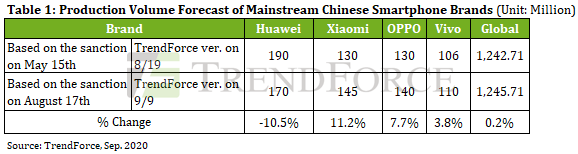
Back in August, the US Government reinforced its restriction against Huawei, which effectively regulated its supply of any technology that has originated from the US. This includes software as well and was set to take effect from 15th September. Now, reports have suggested that the effects of this ban might have the Chinese tech giant’s smartphone shipment fall by about 30 percent.
According to a TrendForcereport, the smartphone market in China may undergo a major reshuffling as the ban takes hold on one of its primary players. The analytical based firm stated that the stronger restrictions will drastically affect Huawei and projected that the smartphone production for 2020 will only reach about 170 million units, which is already 10 percent lower than previous estimates of 190 million units.
This means that the overall annual smartphone shipments from the company would fall by about 30 percent since the company shipped 240 million units back in 2019. This showcases a sharp decline of 70 million units. The primary reason for this steep drop is likely due to the lack of key components that Huawei would be able to acquire after recent US sanctions. With the company’s focus being mainly placed on the Chinese market at the moment, this may also have its rivals like Xiaomi, Oppo, and Vivo benefit from its current situation.
Although, the report also states that with the foundries operating at maximum capacity, material shortage for crucial components like processors and panel modules might make it harder for the other brands to raise production volumes on short notice. Thus, Huawei is still expected to maintain a market share of 14 percent in 2020, while Xiaomi’s share is expected to rise by 12 percent, Oppo’s by 11 percent and 9 percent for Vivo.
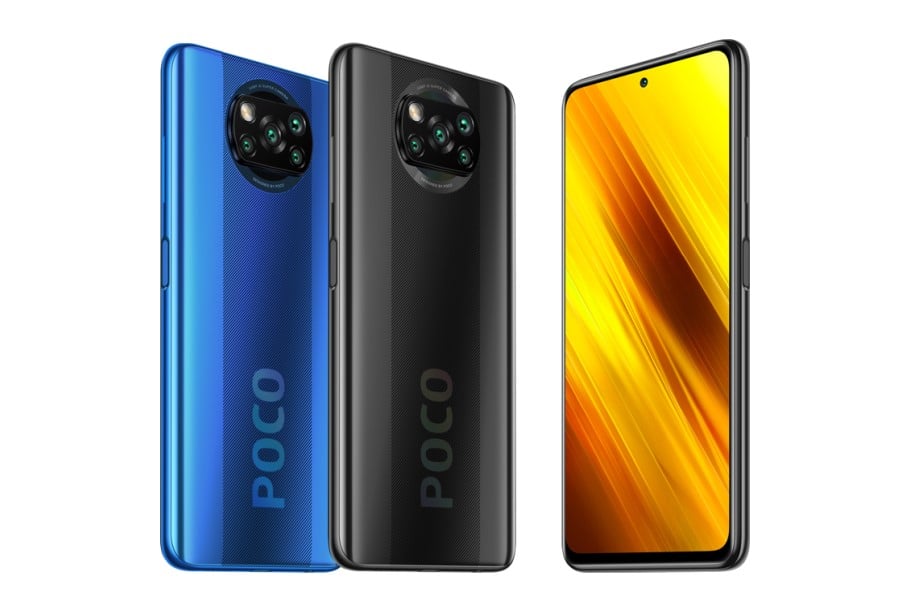
Earlier this month, POCO held a global unveil event to announce the POCO X3 NFC smartphone. The handset was made official today in India through a dedicated launch event. Unlike the global edition, the smartphone has arrived in India as POCO X3. Also, the Indian variant is slightly different from its global edition.
POCO X3 specifications and features
The POCO X3 sports a 6.67-inch IPS LCD screen that supports a full HD+ resolution of 1080 x 2400 pixels, a 20:9 aspect ratio, HDR10, a refresh rate of up to 120Hz, and a touch sampling rate of up to 240Hz. The 2.3GHz Snapdragon 732G chipset fuels the POCO X3 with LPDDR4x RAM and UFS 2.1 storage. The phone boots to MIUI 12 and POCO Launcher enabled Android 10 OS that is devoid of ads.
The global edition of the POCO X3 NFC features a 5,160mAh battery. The India edition is backed by a larger 6,000mAh battery. The retail package of the device includes a 33W fast charger. The LiquidCool Technology 1.0 Plus available on the POCO X3 has a 70 percent larger heat pipe and multiple layers of graphite sheet. The upgraded heat dissipation will allow the POCO X3 to run 6 degrees Celsius cooler than the previous generation.
The rear-facing quad-camera system of the POCO X3 features a 64-megapixel Sony IMX682 main lens, a 13-megapixel ultrawide lens with 119-degree FOV, a 2-megapixel depth sensor, a 2-megapixel macro lens with 4cm focal length, and an LED flash unit. The display punch-hole houses a 20-megapixel selfie snapper.
The phone comes with IP53 rated chassis and Gorilla Glass 5 protection for the display. It has a renewed textured rear for a better grip along with a large-sized logo. Its other features include a microSD card slot, dual stereo speakers, AI face unlock, a side-mounted fingerprint reader, an IR blaster, dual SIM support, 4G VoLTE, Wi-Fi 802.11ac, Bluetooth 5.1, GPS, USB-C, and a 3.5mm headphone slot. It lacks support for NFC connectivity.
POCO X3 price in India
Here is the pricing of the different variants of the POCO X3:
6 GB RAM + 64 GB storage – Rs 16,999 (~$231)
6 GB RAM + 128 GB storage – Rs 18,499 (~$251)
8 GB RAM + 128 GB storage – Rs 19,999 (~$272)
The POCO X3 comes in two colors such as Shadow Grey and Cobalt Blue. The first sale of the phone will be carried at 12 PM IST on Sept. 29 through Flipkart.
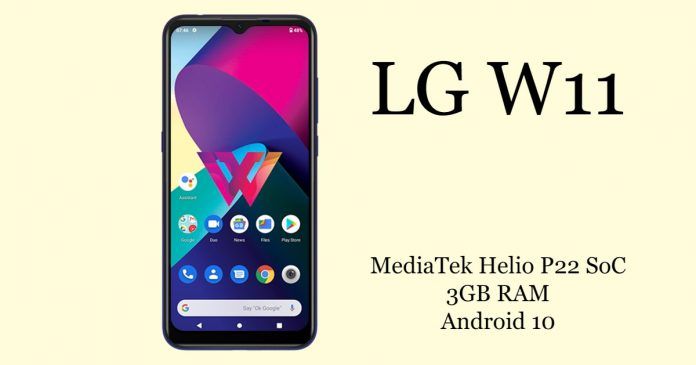
LG‘s smartphone business has not been able to catch up with the leading smartphone brands. The company is trying to play catch-ups with the leading OEMs with a couple of new releases like the Wing flagship phone and recent the K71 and K52. The brand has apparently got a new entry-level model in the works dubbed LG W11.
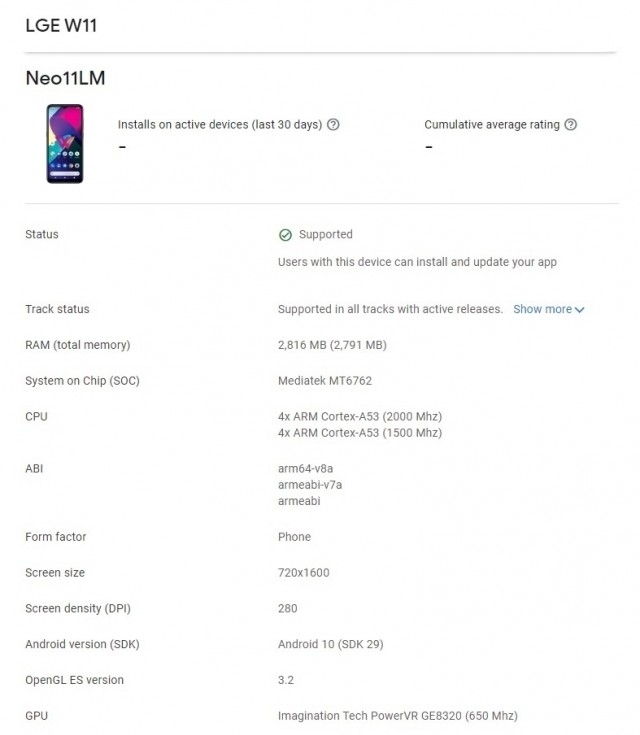
The LG W11 has been spotted on Google Play Console revealing some key specs. The device is powered by an Helio P22 chipset. LG is known for its innovative and peculiar designs even for entry-level phones.The Google Play Console listing shows the front design of the device and it includes a full-screen design with a waterdrop notch.
The LG W11 bears the codename Neo11LM and appears to be the same device, certified on FCC back in August. It is listed to pack an HD+ screen with a resolution of 1600 x 720 pixels and a 20:9 aspect ratio while the selfie camera is waterdrop notch. Some other features for this version include 3GB RAM and Android 10. The FCC listing shows the device will equally pack a 3,900 mAh battery under the hood. There is also 32GB of storage onboard.
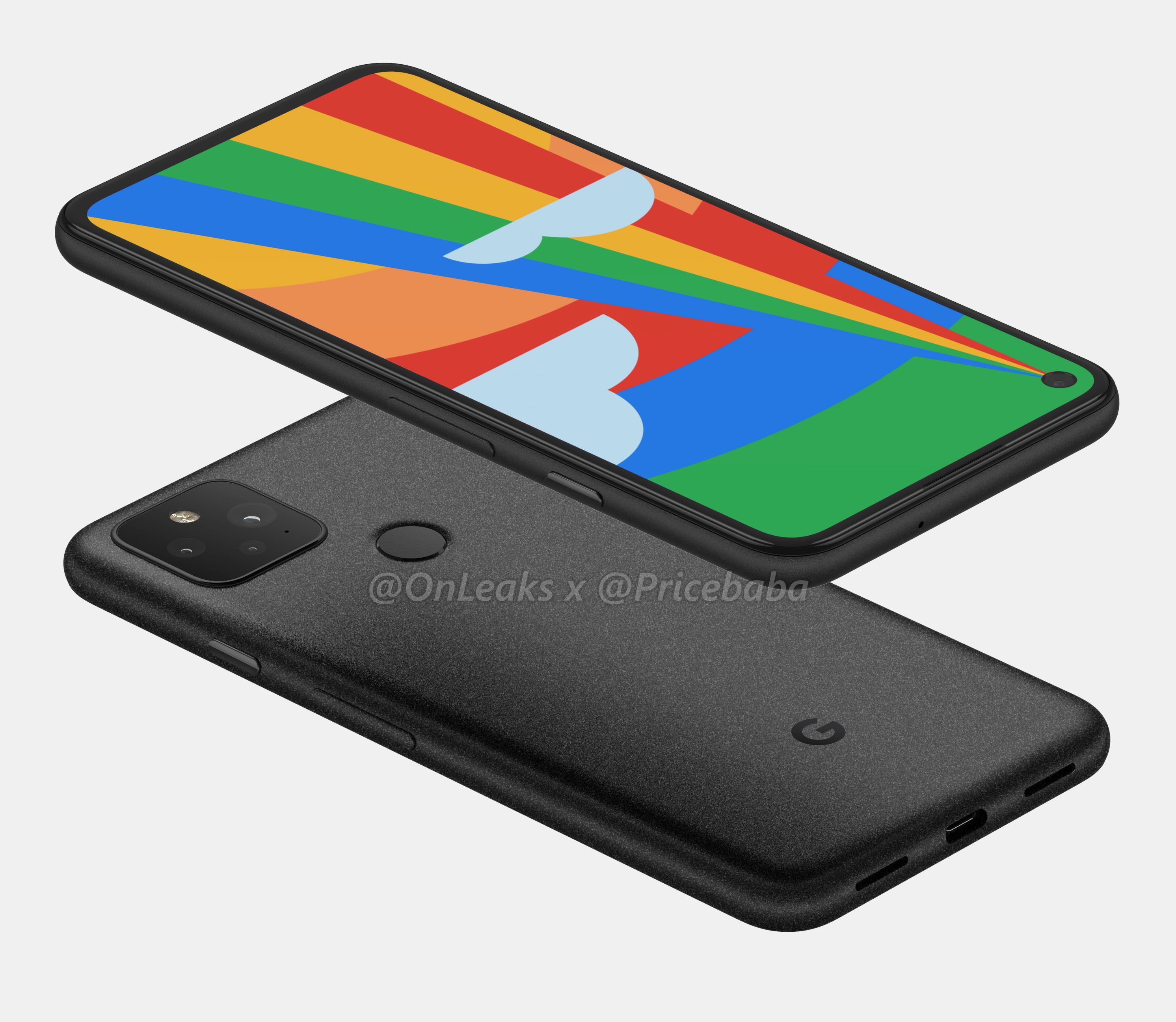
The Google Pixel 5 and Pixel 4a 5G are expected to debut on Sept. 30. Fresh information reveals that both phones were found listed in multiple European retailer sites. According to listings at BT.com, the Pixel 5 and Pixel 4a 5G smartphones will go on sale on Oct. 15. Both phones are expected to arrive with 128 GB of storage.
The Google Pixel 4a 5G is mentioned with £499 pricing (~$638) in the U.K. and its pricing for continental Europe is 499 euros (~$586). In the U.K., the Pixel 5 costs £615 (~$787) and it is priced at 629 euros (~$739) in mainland Europe. The Pixel 4a 5G will come in black and white color options, while the Pixel 5 will be available in black and green color editions.
Google Pixel 5 and Pixel 4a 5G specifications (Rumored)
The Google Pixel 5 has a 6.2-inch FHD+ OLED display with 90Hz refresh rate support. The Pixel 4a 5G is fitted with a 6-inch FHD+ OLED screen with 60Hz refresh rate support. Both phones have Sony IMX520 8-megapixel selfie cameras. These phones are powered by the Snapdragon 765G chipset. These devices will come with Android 11 OS preinstalled and they are equipped with rear-facing fingerprint sensors.
The Pixel 4a 5G has a single 12.2-megapixel Sony IMX363 lens on its back. On the other side, the Pixel 5 has a dual-camera system with a Sony IMX362 12.2-megapixel primary camera and an 8-megapixel superwide sensor. The Pixel 4a 5G will come with 6GB of RAM and a 3,800mAh battery with 18W fast charging support. The Pixel 5 has 8 GB of RAM and a 4,000mAh battery with 18W rapid charging tech.
We use cookies on our website to give you the most relevant experience by remembering your preferences and repeat visits. By clicking “Accept”, you consent to the use of ALL the cookies.
This website uses cookies to improve your experience while you navigate through the website. Out of these, the cookies that are categorized as necessary are stored on your browser as they are essential for the working of basic functionalities of the website. We also use third-party cookies that help us analyze and understand how you use this website. These cookies will be stored in your browser only with your consent. You also have the option to opt-out of these cookies. But opting out of some of these cookies may affect your browsing experience.
Necessary cookies are absolutely essential for the website to function properly. This category only includes cookies that ensures basic functionalities and security features of the website. These cookies do not store any personal information.
Any cookies that may not be particularly necessary for the website to function and is used specifically to collect user personal data via analytics, ads, other embedded contents are termed as non-necessary cookies. It is mandatory to procure user consent prior to running these cookies on your website.