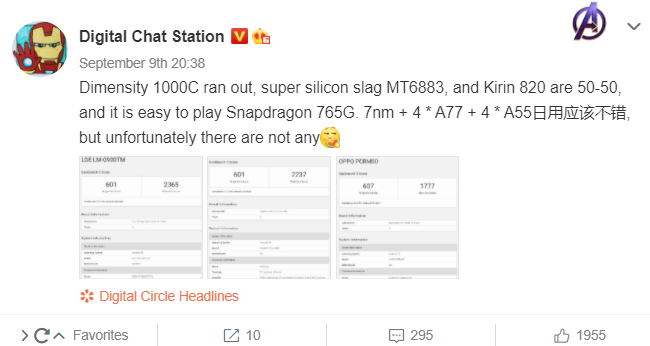
According to a post on Weibo, a Chinese microblogging website, the Dimensity 1000C is built on a 7nm process and features 4 ARM Cortex-A77 cores paired with another 4 ARM Cortex-A55 cores alongside the Mali-G57 GPU. The leak was shared by @数码闲聊站 on the popular Chinese social media platform with screenshots of performance scores of the processor through benchmarks.
Furthermore, the Dimensity 1000C uses a MediaTek AI processing unit (APU 3.0) that runs the smartphone’s AI cameras, voice assistant, and other applications as well. As per the benchmark scores, it achieved 601 points on Geekbench 5’s single core tests and 2,365 points in the multi core performance test. In comparison, the Snapdragon 765G scores 607 points in single core tests but only 1,777 points in the multi core tests.
According to ITHome, the processor is being built specifically for the United States market. Interestingly, the chipset is also housed in the LG Velvet 5G T-Mobile variant. It is a mid range chip with performance being more similar to Dimensity 800 series chip over the higher end Dimensity 1000 chips. Although, it still beats the Snapdragon 765G and manages to rival the Kirin 820 SoC as well.
On Sept. 17, Realme will be launching the Realme 7i and Realme 7 smartphones in Indonesia. The Realme 7 phone for Indonesia could be the same phone that recently went official in India. Last week, the renders of the phone were found listed on an Indonesian retailer site. Also, a recent leak had revealed the entire specs of the Realme 7i. Today, the smartphone has appeared on Geekbench benchmarking with key specs.
On Geekbench 5, the Realme 7i has appeared with its RMX2103 model number. The listing reveals that the phone is driven by a Qualcomm processor that is codenamed as ‘bengal’ which is associated with Snapdragon 460 and Snapdragon 662 chipsets. However, it is known through the specs sheet leak that the device is equipped with Snapdragon 662 chipset.
The Realme 7i Geekbench listing shows that it has 8 GB of RAM and it is preinstalled with Android 10 OS. In the single-core test and multi-core tests, the Realme 7i has scored 1516 and 5420 points, respectively.
Realme 7i specifications
The Realme 7i has a 6.5-inch 90H-inch IPS LCD panel that offers HD+ resolution. The punch-hole screen houses a 16-megapixel selfie camera. Its rear camera setup includes a 64-megapixel main lens, an 8-megapixel ultrawide sensor, and a pair of 2-megapixel lenses. The 5,000mAh battery of the device will be equipped with 18W fast charging support. The handset will be available in at least blue and green colors.
Earlier today (10th September 2020), the world’s largest contract chipmaker, TSMC, announced its revenue for the month of August. The company generated 4.2 billion US Dollars, setting a new record high for the company.
TSMC is a known chip manufacturer that supplies chips to various tech giants including, AMD, Apple, NVIDIA, and more. According to the company’s official website, TSMC generated 122.878 billion New Taiwan Dollars or roughly 4.2 billion US Dollars. This marks a notable increase of 15.8 percent year on year or 106.118 billion New Taiwan Dollars (roughly 3.6 billion US Dollars) during the same month in 2019.
Furthermore, the revenue doesn’t just mark a new record high for the company but also marks positive revenue growth after the chipmaker’s revenue fell by 12 percent month on month back in July 2020. TSMC saw a 16 percent increase in revenue over a month prior. Notably, the last time the firm’s revenue reached this high was back in June, when it generated 120.878 billion New Taiwan Dollars (roughly 4.12 billion US Dollars).
Details from TSMC’s official website also reveals that the revenue generated by the company in the first 8 months of this year reached 850.137 billion New Taiwan Dollars (roughly 29 billion US Dollars). This marks an increase of over 195 billion New Taiwan Dollars from the same period back in 2019 or a sizeable increase of 30.7 percent year on year, which is quite an impressive performance considering the ongoing Coronavirus pandemic affecting many economies and industries across the globe.
The OPPO A32 has silently gone official in China. While the moniker is new, it is a rebadged edition of the OPPO A53 that had debuted in Indonesia and India in August. The company has been launching 5G-ready phones in China, but the newly unveiled OPPO A32 is a low-priced 4G smartphone.
OPPO A32 specifications and features
The OPPO A32 has a 6.5-inch punch-hole display. The IPS LCD screen supports a 90Hz refresh rate and HD+ resolution. The Snapdragon 460 mobile platform is present under the hood of the device. The handset comes in 4 GB and 8 GB RAM editions. Both models are equipped with 128 GB of native storage.
The Android 10 OS with ColorOS 7.2 UI. It has an f/2.0 aperture 16-megapixel front-facing camera. Its rear has a rectangle-shaped camera module that includes a 48-megapixel main camera, a 2-megapixel macro lens, and a 2-megapixel depth sensor.
The phone houses a 5,000mAh battery that supports 18W fast charging. It comes with support for other specs such as a rear-mounted fingerprint reader, dual SIM slot, Wi-Fi 802.11ac, Bluetooth 5.0, GPS, USB-C, and a 3.5mm audio jack.
OPPO A32 pricing and availability
The OPPO A32 is set to hit the Chinese markets on Sept. 15. It will come in colors like Mint Green, Fantasy Blue, and Glass Black. The OPPO A32 variants such as 4 GB RAM + 128 GB storage and 8 GB RAM + 128 GB storage are priced at 1,199 Yuan (~$175) and 1,499 Yuan (~$219).
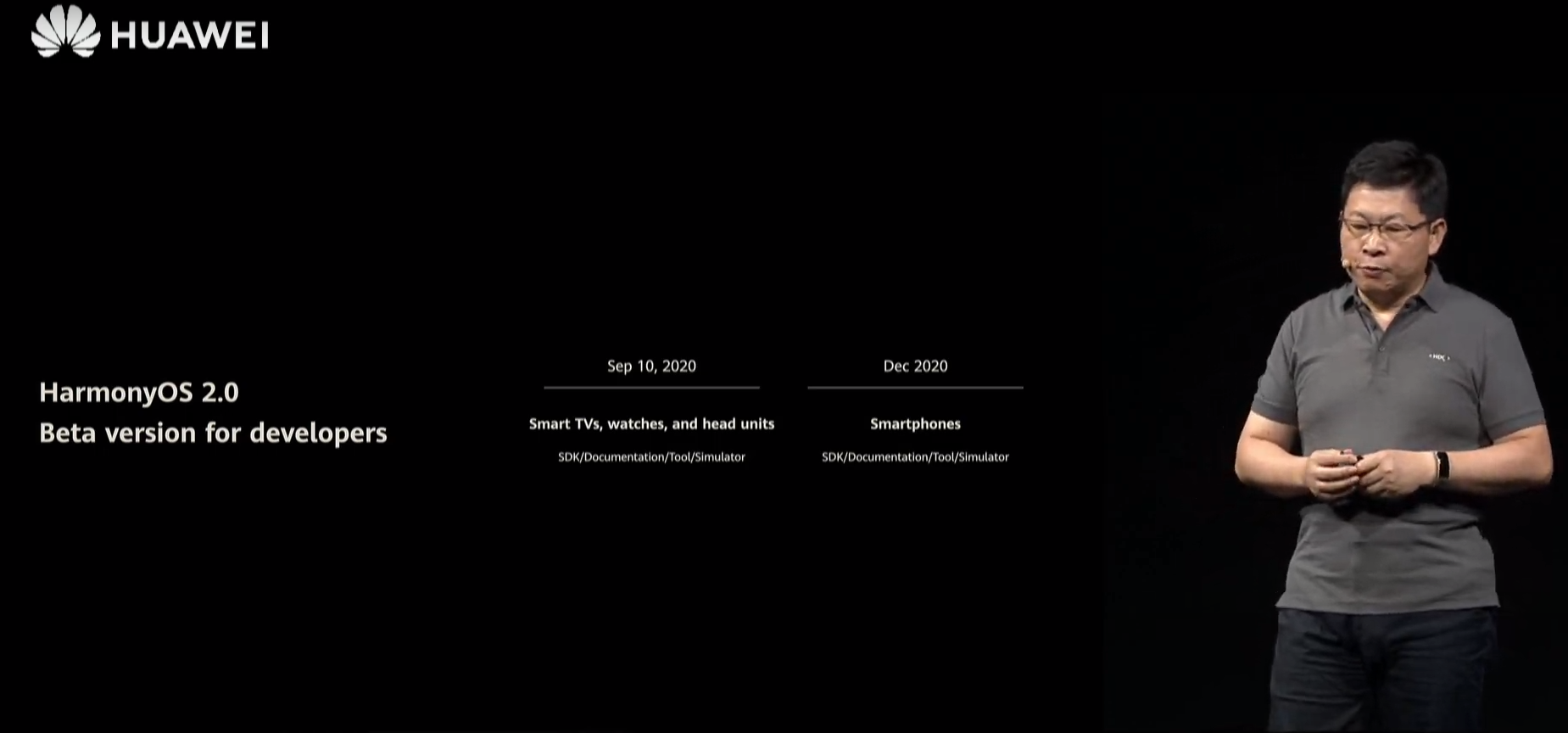
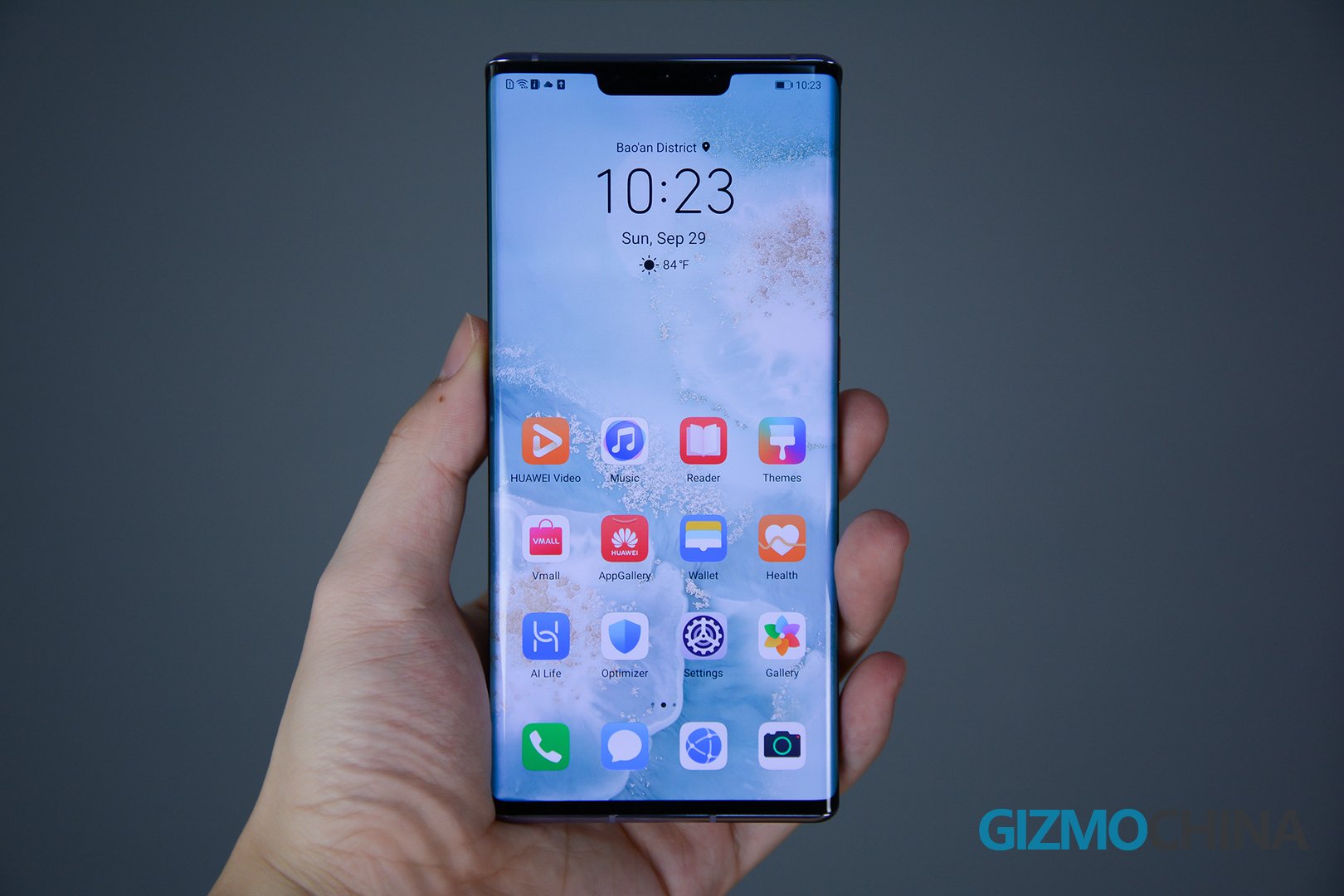
Huawei launched its HarmonyOS 2.0 platform at its annual Huawei Developer Conference (HDC) 2020 conference in China today. The company’s rotating CEO, Richard Yu, confirmed at the event that Huawei will release HarmonyOS powered smartphones in 2021. The first beta release of HarmonyOS for smartphones will be available in December 2020 for developers.
Until now, Huawei had denied that it was planning to use HarmonyOS on smartphones. The company said that the OS was developed for smart devices and it didn’t have any plans to release it for phones anytime soon. But it looks like the increasing pressure from the US ban has forced the company to fast track the development of its own OS for smartphones.
Since May 2019, Huawei is barred from using Google Mobile Services that power Android phones across the world. And last month, after the US failed to renew its Temporary General License (TGL), the company lost access to Google’s support and updates to older devices. While Huawei confirmed that security updates will continue to roll out to its older devices, it still marked a big blow to the company’s smartphone strategy.
Huawei will release the HarmonyOS 2.0 beta version for smartphones with SDK, Documentation, Tool, and Simulator to developers in December 2020. The company adds that we can expect smartphones running on HarmonyOS in 2021.
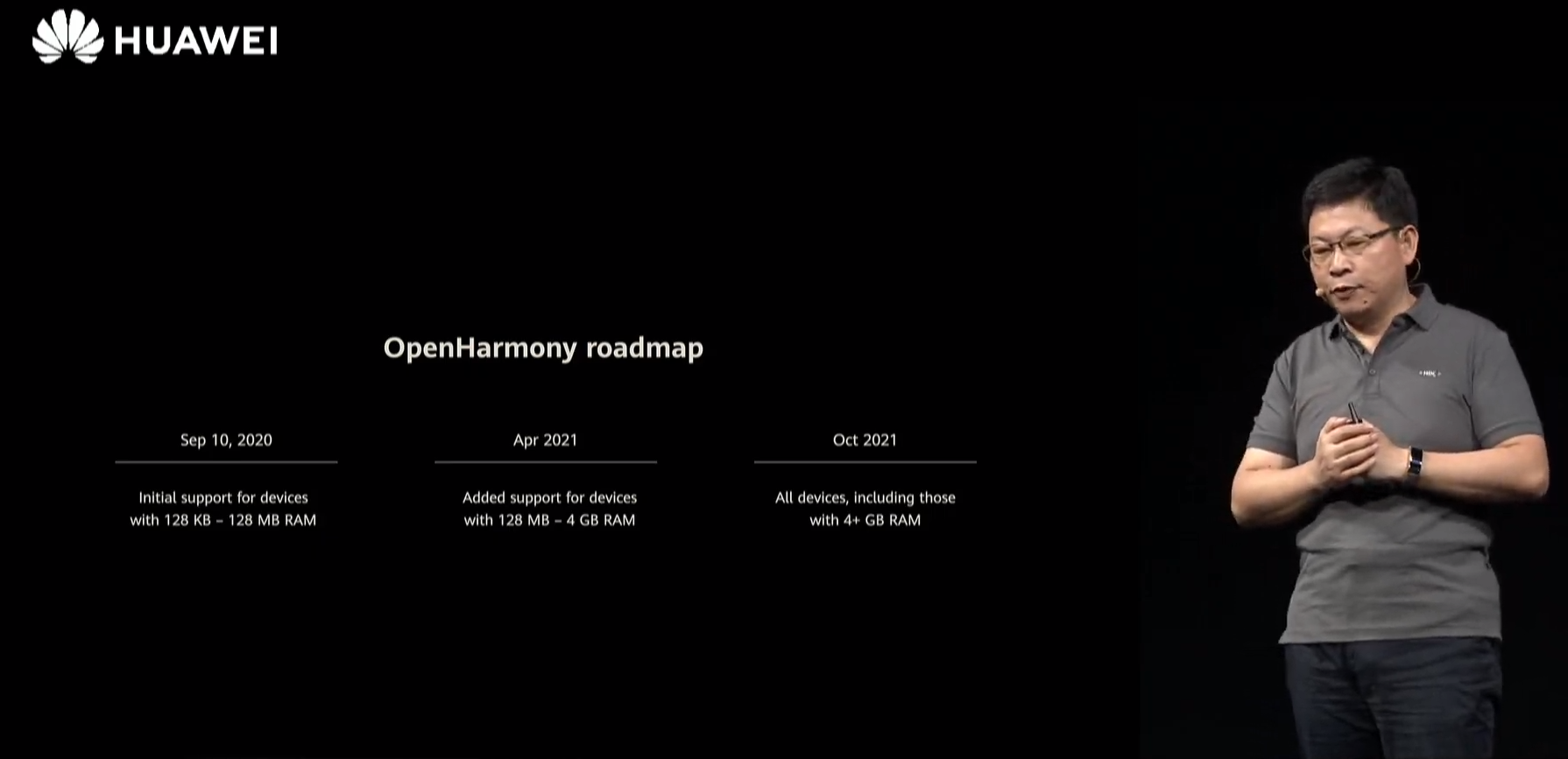
Richard Yu reveals that the initial version of HarmonyOS 2.0 will support devices with 128KB to 128MB of RAM. In April 2021, Huawei plans to add support for larger RAM devices between 128MB and 4GB. Finally, in October 2021, the company will add support for devices with 4+ GB RAM. This roadmap is for the HarmonyOS 2.0 version and not specifically for the smartphone OS. But it hints that the first batch of HarmonyOS smartphones may be targeted at the budget or mid-range segment with less than 4GB of RAM.
Note that Huawei’s HarmonyOS is an open-source platform, similar to Android. So you can consider Huawei’s relationship with HarmonyOS similar to Google’s relationship with Android. Even though Huawei will develop HarmonyOS, since it’s an open-source platform, Huawei is likely hoping that other companies can use it on their own devices in the future.
Huawei Mate 30 Pro came with HMS instead of GMS
Now that it aims to take on Google’s Android with its own OS, the next few months will be extremely interesting. It remains to be seen if HarmonyOS powered smartphones can coexist with its Android competitors next year.
Samsung Display is apparently seeking to acquire an export license to continue supplying Huawei. This arrives just before the US exports restrictions coming into effect by next week.
According to a Reutersreport, the South Korean tech giant’s display unit is looking to supply the Chinese brand as per an industry source. However, the former has declined to comment on the matter at the moment. Notably, Apple is also a major customer of Samsung for its OLED displays. Earlier this week, Samsung Display’s rival, LG Display, said in a statement that the US sanctions on Huawei have no real effect on the company due to its limited number of shipments to the Chinese company.
For those unaware, the US is tightening its restrictions against Huawei. The Trump administration reinforced certain regulations, which will make it harder for the telecom giant to acquire crucial components and technology that are American made or originate from the US. Thus, companies that wish to continue selling US technology must acquire a special license from the government.
Previously, the US Department of Commerce had announced similar restrictions, but only regarding the semiconductors that are crucial for its operations. Now, it has expanded the ban to include other components as well and US technology in general. At the moment, Huawei is in “Survival Mode” and it remains to be seen if Samsung Display does manage to acquire the license.
The Asus Zenfone 7 Pro is the company’s latest flagship device, which was recently seen in a new teardown video. This disassembly reveals the smartphone’s internals, revealing the new flip up camera design.
The video was shared on YouTube by PBKreviews, and it showcases the device being taken part. In the video, one can observe that the motor that powers the flip mechanism is housed within the camera module, which is different from the Zenfone 6 that had it’s motor housed next to the camera module and not built into it. Apart from this not a lot of unique design changes have been made on the internals.
The PCB stack design has also remained unchanged, with two boards being stacked on top of each other. Both boards are cooled via thermal paste and copper, through two heat pipes, which take the heat away from the chipset and into a copper block that has been stuck behind the display. The Asus Zenfone 7 Pro was relatively easy to dismantle for the most part as per the video, but the use of adhesives made things difficult in certain areas.
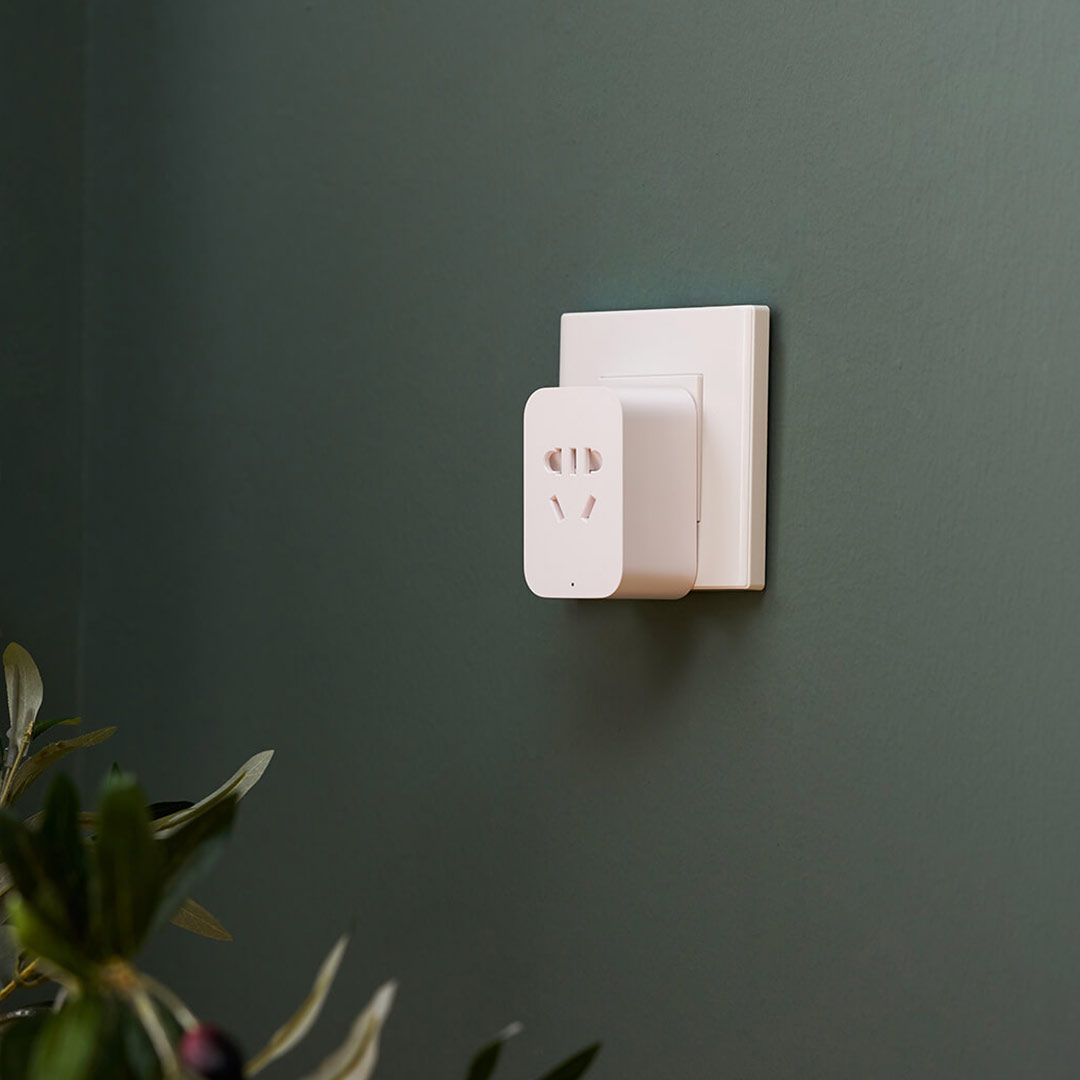
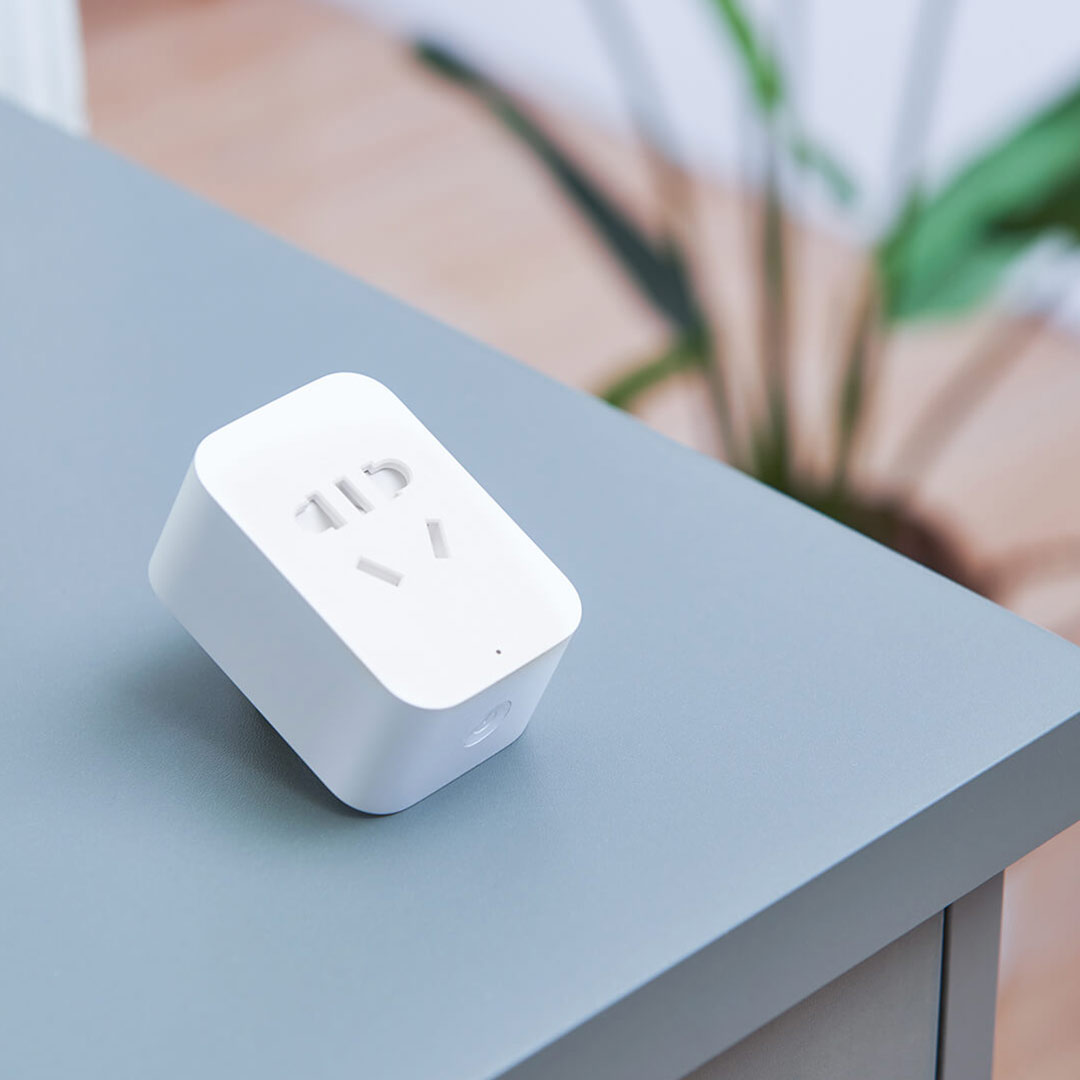
Xiaomi has today launched a new product in its home market China — Xiaomi Mijia Smart Socket 2 Bluetooth Gateway Edition. As the name itself indicates, the device is an upgraded variant and successor to the Smart Socket Bluetooth Gateway launched last year.
This second-generation model is now available for purchase in China through Xiaomi Youpin platform for a price of 49 yuan, which is about $7. It is 30 yuan (~$4) cheaper than the cost of the original model.
One of the reasons for the newer model to be cheaper is that the company had ditched the two USB-A ports on the socket and now it comes with just one standard jack. It also has several features and functions, including remote switch, voice-based control, intelligent linkage, power statistics, and overload protection, among others.
Being a Bluetooth Gateway, it connected to sub-devices and collects useful data to provide insights. The data of all the connected devices such as a thermostat, smart door lock, or any smart home product, can be viewed through the Mijia app.
The company has revealed that the outer body of the device is made of 750-degree Celcius high-temperature flame-retardant material. The internals adopts a wave soldering process for quality assurance.
It also comes with features like Child Safety Door. The company adds that users won’t get an electric shock if they accidentally touch the jack. There’s also functionality to monitor the internal temperature in real-time.
When the internal temperature gets too high, the smart socket automatically powers off. It also has support for countdown function, allowing smart home devices to run for a pre-defined time duration.
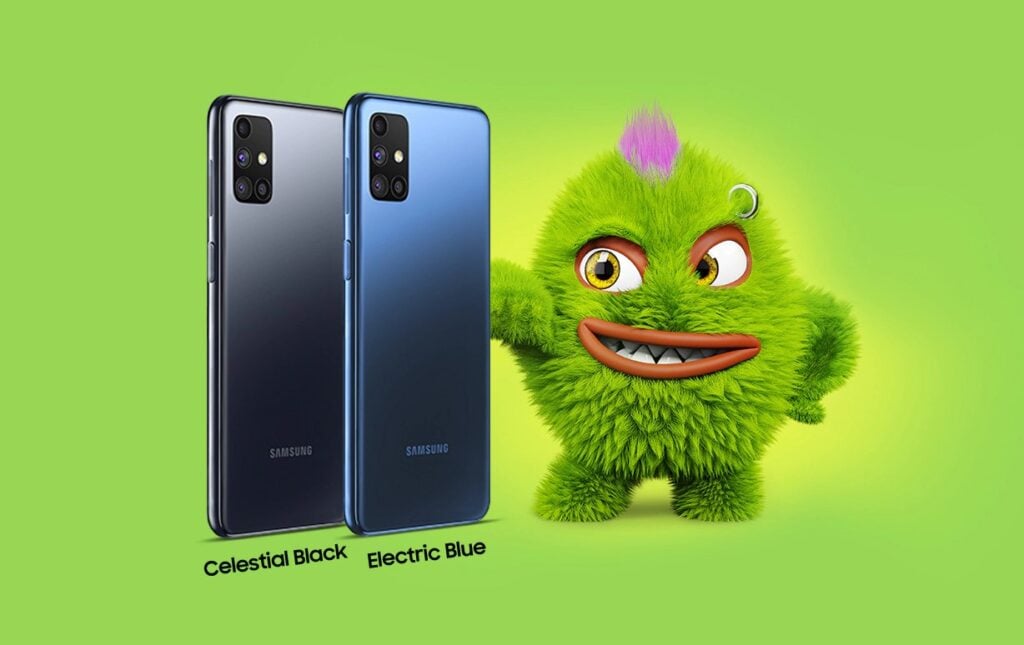
The Samsung Galaxy M51 has finally launched in India after a plethora of leaks and teasers. It will be available in two storage configurations – 6GB + 128GB and 8GB + 128GB priced at ₹24,999 and ₹26,999 respectively. Buyers can pick it up in either Electric Blue or Celestial Black color. The device can be purchased from Samsung online store, Amazon India, and partner retailers. The first sale for this phone is scheduled for September 18 at 12 PM. Customers can also avail a ₹2,000 discount on Amazon up until September 20 using HDFC Bank cards.
The new Samsung Galaxy M51 comes equipped with a 6.7-inch Super AMOLED Plus Infinity-O display with a resolution of 1080 x 2340 pixels (FHD+), 20:9 aspect ratio, a maximum brightness of 420 nits, and Gorilla Glass 3 protection. Also, a 32MP selfie camera nests inside the centrally-aligned punch-hole at the top of the screen.
This panel was previously reported to be supplied by TCL CSOT and not Samsung Display like any other device from Samsung Electronics. However, it doesn’t seem to be the case.
As for the build, the frame and the back of the phone are made of polycarbonate. Samsung markets the latter as “Glasstic”. The rear panel houses an identical quad-camera setup as found on the recently launched Galaxy M31s. That means it has got the same 64MP Sony IMX682 primary shooter, 12MP ultra-wide unit, 5MP macro snapper, and a 5MP depth sensor.
Further, the handset is powered by Qualcomm Snapdragon 730G paired with 6GB/8GB RAM and 128GB internal storage with support microSD card up to 512GB via a dedicated slot. In the software department, the phone runs One UI Core 2.1 based on Android 10.
Taking about the elephant in the room, the Galaxy M51 is backed by a humongous 7,000mAh battery with support for 25W fast charging and reverse charging. What’s more interesting is despite the huge battery, the smartphone only weighs 213g.
Other features of the handset include a side-mounted fingerprint sensor, 3.5mm headphone jack, USB Type-C port, 4G LTE, dual-band WiFi 5, and Bluetooth 5.1. Unfortunately, though the phone comes with NFC, it does not support Samsung Pay like the similarly priced Galaxy A51.
With the UK government planning to remove all Huawei components from within their infrastructure by the year 2027, the country might face a delay of up to 3 years. This could cost the economy 18.2 billion Pounds (roughly 23.6 billion US Dollars), according to a report from Assembly Research.
The report also states that the year delay which the government is expecting at the moment for its 5G roll out may cost it’s economy a dire sum. 18.2 billion pounds is an estimate, with approximately 10 billion pounds of productivity benefits being missed out on. Similarly, even the mobile sector would lose out on the opportunity to generate about 4.7 billion pounds while related industries are likely to lose out on 2 billion pounds as well.
Furthermore, apart from just missing out on an estimated 173 billion pounds of incremental GDP over the course of 10 years (between 2020 to 2030), the delay in 5G roll out could also potentially impact innovation. Victor Zhang, Vice President of Huawei stated that “This new research shows how the US administration has directly impacted Britain’s economy, ending the UK’s leadership in 5G, holding the country back from realizing its full potential for years to come.”
TikTok-owner ByteDance has reportedly increased the urgency of talks with the Trump administration in order to avoid getting banned in the United States without selling its operations to an American company.
The report from Wall Street Journal claims that the China-based ByteDance has been working on this plan for months with the US, but time getting out of hand, the intensity of pursuing has grown rapidly to avoid selling the business.
Another report from CNBC claims that both the entities are in discussion to avoid a full sale of TikTok and could include restricting ByteDance. It also adds that this was the case before Donald Trump got involved in this matter.
Last month, Microsoft confirmed that the company has been in talks with ByteDance to acquire its US operations. A couple of weeks ago, TikTok CEO Kevin Mayers announced his resignation. It was being speculated that the resignation could be because of the acquisition deal getting finalized. Later, Walmart partnered with Microsoft for a joint bid to acquire TikTok in the US and a few other regions.
TikTok is being forced to sell off its U.S. operations to an American company by the government amid intense political scrutiny because of the platforms’ country of origin. It has also been under fire because of its data collection practices, which the United States claims put its national security at risk.
Even though the short video social media platform has been banned in India and is getting scrutinize worldwide for data collection, it remains the most popular application worldwide. It saw the highest number of downloads in both the App Store and Google Play, making it the highest download app in August 2020.
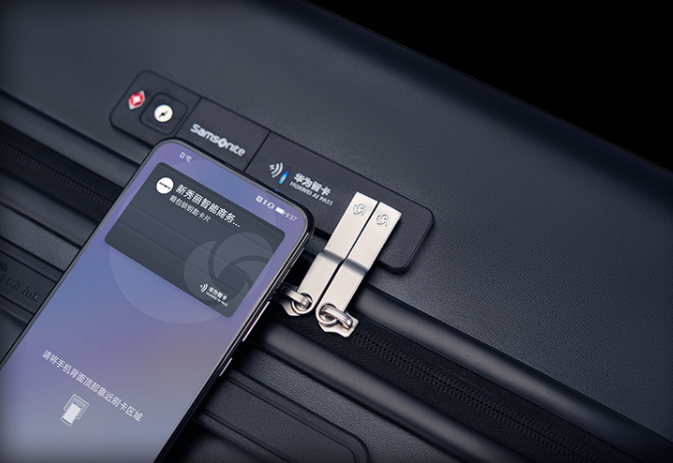
At a time when Huawei is under immense pressure to find out ways to keep its smartphone business afloat, the company has launched a new lifestyle product — Huawei Smart Business Suitcase.
The new Smart Business Suitcase from Huawei has been developed in partnership with Samsonite. It comes in three different sizes — 20-inch, 25-inch, and 28-inch, costing 1,999 yuan (~$292), 2,299 yuan (~$337), and 2,599 yuan (~$380) respectively.
One of the most interesting features of this suitcase is the ease of unlocking. If the Smart Busines Suitcase has been linked to a Huawei smartphone, bringing the device close to the password sensing area unlocks the suitcase, even when the phone’s screen is off.
It also comes with several other features, including built-in charging, storage box, and external USB port, which makes it easier for the users to charge their smartphones or other such handheld devices.
The company says that the internal compartments in the suitcase have been designed with environmentally friendly fabrics. It also comes with a dry and wet separation bags to make it easy to organize the storage.
It comes with a thicker aluminum alloy tube wall and is lighter and durable. There’s also a secure TSA code lock, which makes it a convenient option for clearing through customs during international travel.
Xiaomi-backed Roborock, which is known for making smart cleaning robots, has announced that it has completed the Research & Development work for its commercial cleaning robot and now it is in the testing phase.
The commercial shipping robots from the company mainly target shopping malls, large supermarkets, office buildings, airports, and other large indoor spaces. The company expects the demand for commercial sweeping robots to rise with increasing labor costs.
As per the report, it seems that the company will be making the commercial devices on a pre-order basis and Roborock has two primary OEMs carry this out — Xinwangda and Dongguan Great Wall.
Roborock has also made a few customized sweeping robots for Xiaomi, including the Mijia Sweeping Robot 1S. It is the first Xiaomi ecological chain company to get listed on the Science and Technology Innovation Board.
Earlier this year, in February, the company got listed and raised around 4.5 billion yuan, which is approximately $641 million through Initial Public Offering (IPO). The company had said that it will be using the IPO proceeds to develop next-generation robotic home cleaners and a data analysis platform.
The company was founded in the year 2014 and as said, it designs and sells intelligent home cleaners and other cleaning appliances. Xiaomi owns about 24.7% of Roborock, a robotic cleaning appliances provider, through its associated companies Tianjin Jinmi Investment Partnership and Shunwei Capital. Other investors in the company include Gaorong Capital and Qiming Venture Partners.
Apple is known for making innovative and premium consumer electronics products. However, due to the on-going COVID-19 pandemic, the company has designed and manufactured its own face mask.
As per the report from Bloomberg, the face mask, which is being called Apple Face Mask, uses three layers of material to filter out particles. Apart from this, the company also has another mask called ClearMask which is the first completely clear surgical mask that has been approved by the FDA.
Thanks to the transparency in the material, the ClearMask will enable those who are deaf or hard at listening to lipread the other person. As per the report, the Face Mask has been designed and manufactured entirely by Apple’s internal teams while the ClearMask has been sourced from outside.
Further, the company has carefully sourced materials so that it doesn’t take away supplies of materials needed for PPE in hospitals. To replace the standard cloth masks worn by the employees, Apple will start sending out the new masks to corporate and retail employees over the next few weeks.
As for the design, the mask looks quite unique with large coverings on the top and the bottom for the nose and chin. It also comes with adjustable strings so that it easily fits around the person’s ears.
It is not yet known if the company plans to manufacture these new masks for external use. Apple Store policy requires employees and customers to wear face masks, with Apple Stores distributing masks to customers upon entering the store.
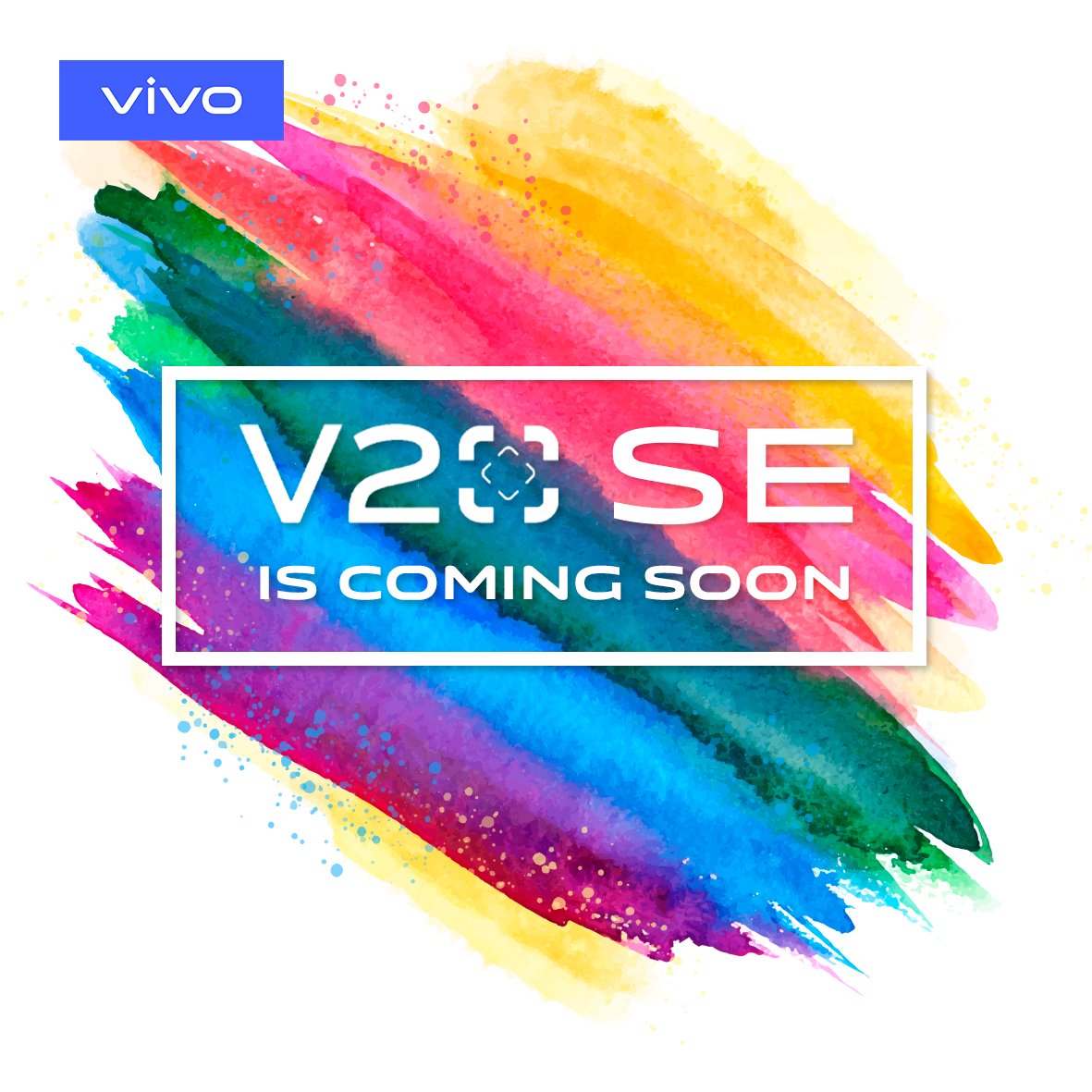
Vivo is planning to launch the Vivo V20 series soon. Rumors surrounding have revealed that the lineup includes three models such as Vivo V20 SE, Vivo V20, and Vivo 20 Pro. It appears that the Vivo V20 SE could be the first device in the series to go official as the Malaysian wing of Vivo has started teasing on its arrival.
The Chinese firm released two posters to confirm the arrival of the Vivo V20 SE smartphone. The official posters only say that the device is coming soon, and it probably hints that it will be coming in vibrant colors. Also, it is expected to arrive as the cheapest phone in the Vivo V20 series.
The Vivo V20 SE was recently spotted in a Geekbench listing. It revealed that the phone is driven by Snapdragon 665 chipset, 8 GB of RAM, and Android 10. It was also found through its CQC certification that it may come with a 33W fast charger. The other details of the V20 SE are under wraps.
In related news, a recent report had revealed the renders o the Vivo V20 smartphone. The leak revealed that the phone will be sporting a dual punch-hole display and it will have a triple camera system on its back. The phone is expected to arrive in color editions such as gray and blue-pink gradient. There is no information available on its specifications yet.
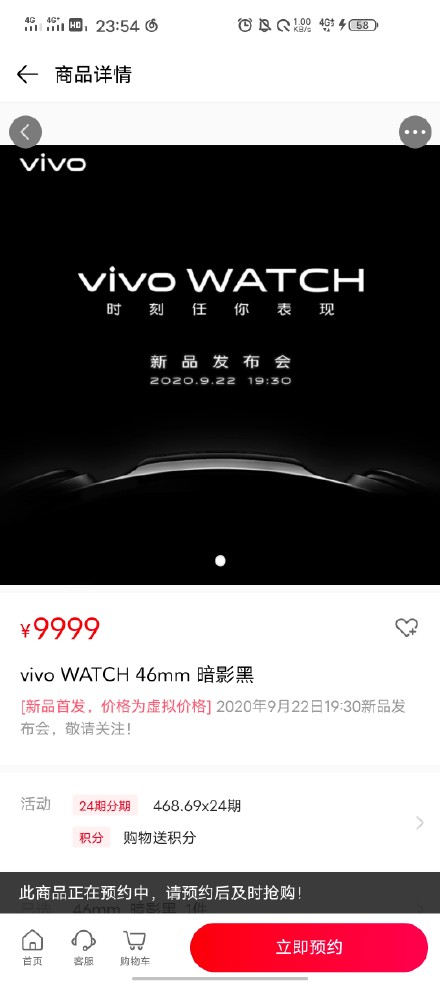
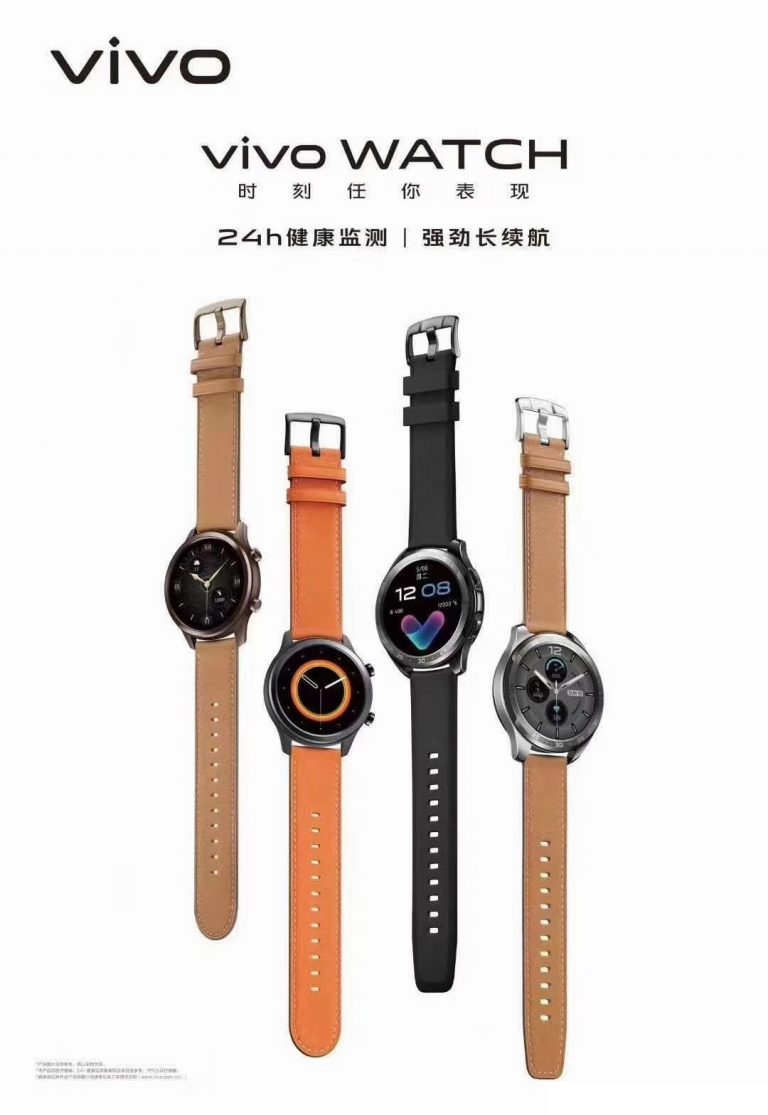
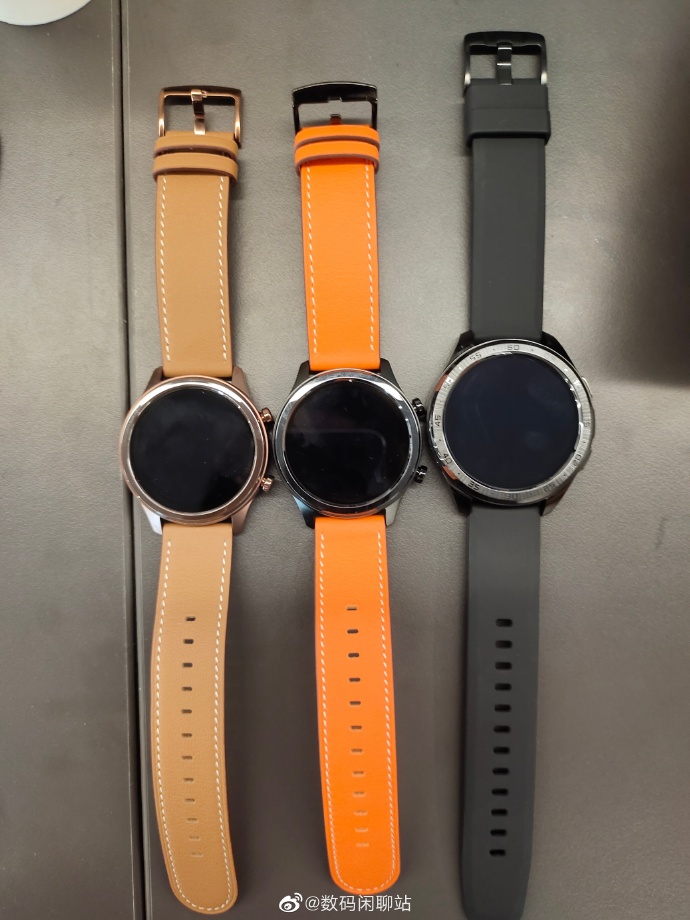
Update: A Chinese retailer listing shows that the Vivo Watch is scheduled to go official on Sept. 22. Moreover, there is a poster of the smartwatch that is now doing rounds on Weibo. It shows the Vivo Watch in different color options.
1 of 2
Original story continues…
Recent reports have revealed that Vivo is working on its first smartwatch. The Bluetooth and 3C certifications have revealed that W2052 and W2056 model numbers belong to the upcoming Vivo Watch. Recently, a tipster had claimed that the Vivo Watch could be debuting within a timeframe of two months. However, he is now claiming that the Vivo Watch will go official at September end.
The tipster has shared an image of a smartwatch in his Weibo post that tells about the September-end launch for the Vivo Watch. It is not clear whether it is a placeholder image or a live shot of the Vivo Watch. However, the description of the Vivo Watch shared by the tipster does match with the device shown in the image.
According to the tipster, the Vivo Watch has a round-shaped AMOLED display, a stainless-steel chassis, and a leather strap. The device is expected to go official in 42mm and 46mm variants.
The exact battery size of the Vivo Watch is not known. However, it is said that it can deliver 18 days of battery life. The tipster has said that it will not be running on WearOS. Just as the OPPO Watch came with ColorOS in China, the Vivo Watch could be coming with FunTouchOS in the homeland.
The Vivo Watch is expected to offer features such as independent music playback, NFC for making payments, heart rate sensor, blood oxygen content tracker, Bluetooth 5.1, and more. The smartwatch may cost around 1,000 Yuan and it may sell in colors like Mocha, Mixia, Shadow, and Fengshang.
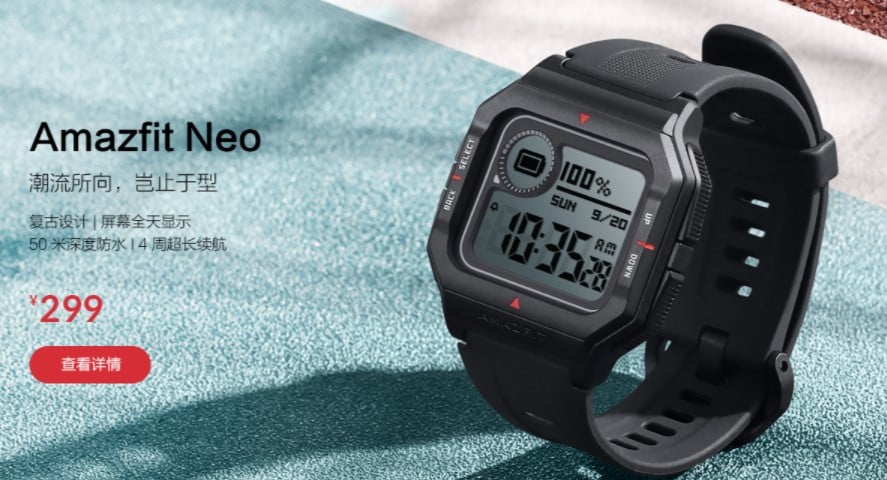
Nearly two weeks after going on pre-order on AliExpress, the Amazfit Neo is now official. The retro-inspired smartwatch by Huami was announced in China today and you can pick it up immediately.
The Amazfit Neo has a 1.2-inch STN LCD always-on display that is visible under direct sunlight. In the dark, there is a backlight that illuminates the display; all you have to do is raise your wrist to turn it on.
The watch can track three sports modes – running, walking, and cycling. It is also waterproof up to 50 meters, so you can take it for a swim. The Amazfit Neo has a heart rate sensor for 24-hour heart rate monitoring (at 30-minute intervals). It also has sleep tracking with support for daytime naps. You also get the PAI health assessment that is available on other Amazfit watches.
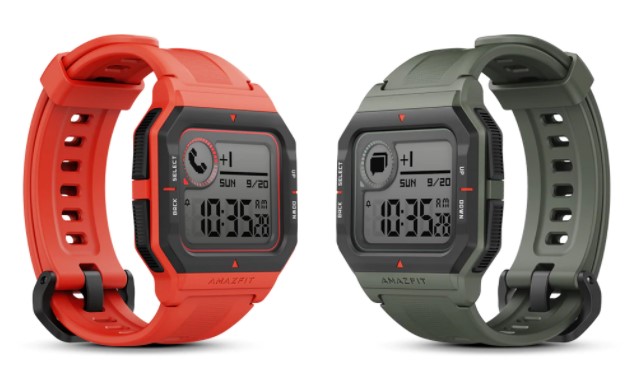
The Amazfit Neo has a 160mAh battery that should last up to 4 weeks on a single charge. The manufacturer says with typical usage, you should get 28 days of battery life while in basic mode (no heart rate tracking and Bluetooth turned off), it will go up to 37 days. It connects via Bluetooth 5.0 BLE to the Zepp app and works with both Android and iOS devices. It can sync text messages, emails, and notifications by displaying the icon as seen in the image below.
The watch is available in three colors – Grass Gray Green, Coral Orange, and Classic Black – with matching PUR straps. It is priced at ¥299 (~$44) and is available for purchase on Tmall. You can still grab it for $39.99 on the official AliExpress store but it is only available in black.
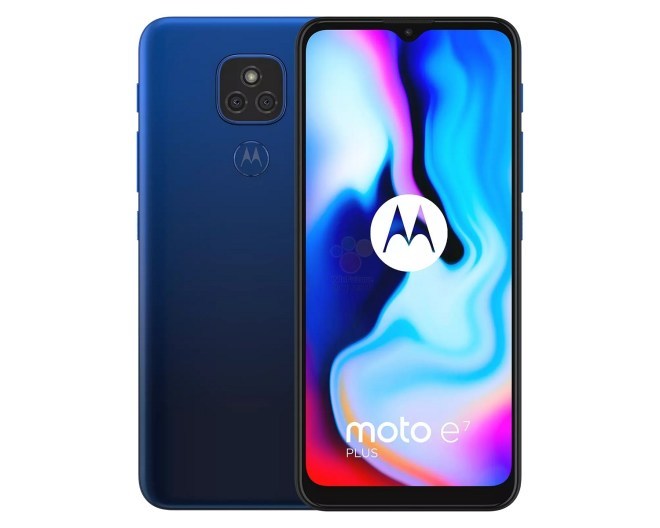
The Motorola Moto E7 Plus is a new budget smartphone from the Lenovo-owned company. The phone was expected to launch today but Motorola skipped its announcement. Nevertheless, its specs and price have been published on the web.
The Moto E7 Plus has a 6.5-inch LCD display with a 1600 x 720 resolution and a waterdrop notch at the top for the selfie camera. Just as we have seen on a number of budget mid-range phones announced in the past few weeks, this also features a Snapdragon 460 processor according to the German blog, Winfuture, and it is paired with 4GB of RAM and 64GB of storage. If you need more storage, there is a MicroSD card slot available.
There are two cameras on the back of the Moto E7 Plus and they are housed in a square housing with rounded corners along with an LED flash that sits above the sensors. The primary camera is a 48MP sensor with an f/1.7 aperture and it is paired with a 2MP depth sensor. Up in front is an 8MP selfie camera with an f/2.2 aperture.
The Moto E7 Plus has a 5000mAh battery which is sort of the standard battery capacity for mid-range phones these days. Unfortunately, while you should get up to 2 days of usage, you will not be able to quickly top up the battery when you are running low as the phone only supports 10W charging. Another letdown is that it has a MicroUSB port.
The phone has its SIM tray on the left side and has support for Dual SIM. There is also an audio jack at the top of the phone. The Moto E7 Plus ships with Android 10 out of the box with Motorola’s My UX interface and Moto Actions.
Xiaomi just came up with a device that is already considered by a lot of people the smartphone with the highest value for money of 2020: the POCO X3 NFC. With this handset, you get much at a very affordable price. It just launched in the global market, where several Xiaomi budget phones are actually among the best-sellers of the year. Is the new POCO X3 NFC better than every other Xiaomi phone in terms of value for money? Why is it so affordable? It is really the best deal or there are hidden compromises to face? We will try to answer these questions in this comparison between POCO X3 NFC, Xiaomi Mi Note 10 Lite, and Redmi Note 9 Pro.
Xiaomi POCO X3 NFC vs Xiaomi Redmi Note 9 Pro vs Xiaomi Mi Note 10 Lite
Xiaomi POCO X3 NFC
Xiaomi Mi Note 10 Lite
Xiaomi Redmi Note 9 Pro
DIMENSIONS AND WEIGHT
165.3 x 76.8 x 9.4 mm, 215 grams
157.8 x 74.2 x 9.7 mm, 204 grams
165.8 x 76.7 x 8.8 mm, 209 grams
DISPLAY
6.67 inches, 1080 x 2400p (Full HD+), IPS LCD
6.47 inches, 1080 x 2340p (Full HD+), 398 ppi, AMOLED
Quad 64 + 8 MP + 2 + 5 MP f/1.9, f/2.2, f/2.4 and f/2.4
16 MP f/2.5 and f/2.5 front camera
Quad 64 + 8 + 5 + 2 MP f/1.9, f/2.2, f/2.4 and f/2.2
16 MP f/2.5 front camera
BATTERY
5160 mAh, fast charging 33W
5260 mAh
Fast charging 30W
5020 mAh, Fast charging 30W
ADDITIONAL FEATURES
Dual SIM slot, splash proof
Dual SIM slot
Dual SIM slot
Design
At a first glance you would not say that Xiaomi Mi Note 10 Lite is the most premium device of this trio because of its waterdrop notch, since its two rivals come with more modern punch-hole display. But the truth is that Xiaomi Mi Note 10 Lite is more compact and it is also made with more premium materials, including a glass back protected by Gorilla Glass 5 and an aluminum frame. With the POCO X3 NFC, you get an aluminum frame but a plastic back, while the Redmi Note 9 Pro has a glass back and a plastic frame. That is why Xiaomi Mi Note 10 Lite wins the design comparison. But you should note that POCO X3 NFC is splash-proof with the IP53 certification.
Display
Do you prefer having an AMOLED display with a standard refresh rate or an IPS panel with a high 120 Hz refresh rate? If you need a better image quality, then you should go for the HDR10 display of the Xiaomi Mi Note 10 Lite coming with the AMOLED technology. If you need a smoother viewing experience because you are a gamer or you just like smoothness, choose the POCO X3 NFC, but you will get an inferior image quality. Redmi Note 9 Pro is pretty disappointing since it sports a classic IPS display with a standard refresh rate. Note that Xiaomi Mi Note 10 Lite has a smaller display than its two opponents (6.47 inches vs 6.67 inches).
Hardware/Software
The most advanced chipset belongs to the POCO X3 NFC: we are talking about the Snapdragon 730G which is actually an upgrade of the Snapdragon 730G found on the Xiaomi Mi Note 10 Lite. But there is something to specify: the differences between Snapdragon 730G and 732G are not big, and the Xiaomi Mi Note 10 Lite offers a higher amount of RAM in its most advanced configuration (8 GB vs 6 GB). That is why Xiaomi Mi Note 10 Lite looks a more interesting choice. We discard the Redmi Note 9 Pro since it comes with a weaker Snapdragon 720G and max 6 GB of RAM. Android 10 is installed out of the box, but only with the POCO X3 NFC you get the MIUI 12 directly.
Camera
With the POCO X3 NFC, you get a slightly better camera experience because it has a better ultrawide sensor with a 13 MP resolution. But its macro camera is inferior with a 2 MP resolution. The differences between the cameras of POCO X3 NFC, Xiaomi Mi Note 10 Lite, and Redmi Note 9 Pro are just marginal and in each case, we are talking about midrange camera phones.
Battery
The Xiaomi Mi Note 10 Lite provides both the biggest battery and the longest battery life because it features a more efficient and smaller AMOLED display. Right after, despite its smaller battery than POCO X3 NFC, there should be Redmi Note 9 Pro because it comes with a standard refresh rate. But the POCO X3 NFC is still a great battery phone.
Price
POCO X3 NFC carries a starting price of just €229/$270 (€199 for the first day) in the global market and it has the best value for the money. But the Xiaomi Mi Note 10 Lite is my favorite one because of its AMOLED display, more premium design, and a bigger battery. However, you have to spend almost €300/$353 to get it. With the POCO X3 NFC around, there is no reason to buy a Redmi Note 9 Pro with the actual prices ranging between €220/$260 and €230/$270, so you should wait for its price to drop if you are interested in it.
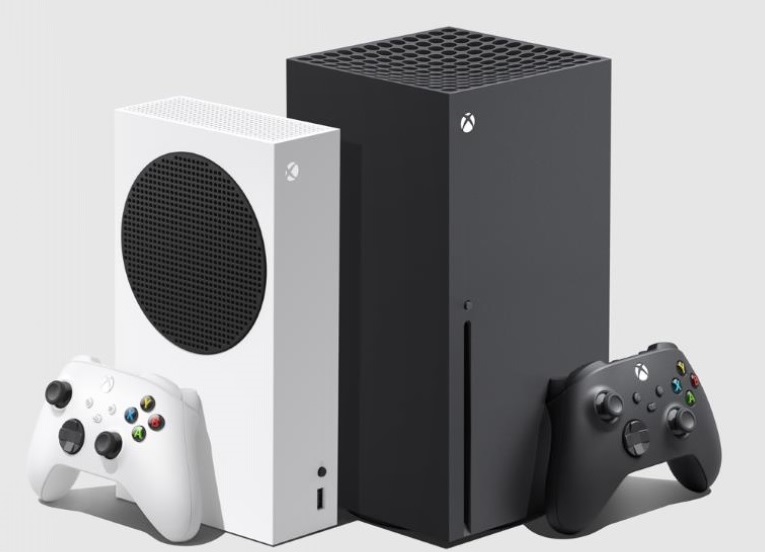
Microsoft has announced the prices of the Xbox Series X and Xbox Series S gaming consoles. While we already know the series S is the cheaper and smaller model, there are other differences under the hood that explain the $200 difference between the two next-gen consoles.
The two consoles differ in processing power, GPU, RAM, and storage which we have highlighted in the table below:
Parameters
Xbox Series S
Xbox Series X
CPU
3.6GHz AMD Zen 2 CPU
3.8GHz AMD Zen 2 CPU
GPU
AMD RDNA 2 GPU 20 CUs clocked at 1.565GHz
AMD RDNA 2 GPU 52 CUs clocked at 1.825GHz
GPU Power
4 Teraflops
12.15 Teraflops
RAM
10GB GDDR6
16GB GDDR6
Storage
512GB PCie Gen 4 NVME SSD
1TB PCie Gen 4 NVME SSD
Expansion Card
Support for 1TB expansion card
Support for 1TB expansion card
Output
1440p @60fps, up to 120fps
4K @ 60fps, up to 120fps
Disc Drive
No drive
4K UHD Blu-ray
As you can see, the Xbox Series X is significantly more powerful. Its processor is clocked higher, it has triple the GPU power of the Series S, and also has 6GB more RAM. On top of that, you get double the storage, it outputs 4K, and you also have the option of using physical discs. That sure is worth the extra $200 you are paying.
That is not to say the Xbox Series S is not a good buy. It is actually a great console especially if you are on a budget. Not everyone has a 4K TV and 1440p is pretty great. Let’s not forget that the framerate goes up to 120fps. Microsoft has also revealed that it has Quick Resume so you can switch easily between games, and if 512GB isn’t enough, you can add up to an additional 1TB via an expansion slot.
The Xbox Series S and Xbox Series X go on pre-order on September 22 and will be announced on November 10. Do let us know in the comment box which of the two consoles you will be getting.
We use cookies on our website to give you the most relevant experience by remembering your preferences and repeat visits. By clicking “Accept”, you consent to the use of ALL the cookies.
This website uses cookies to improve your experience while you navigate through the website. Out of these, the cookies that are categorized as necessary are stored on your browser as they are essential for the working of basic functionalities of the website. We also use third-party cookies that help us analyze and understand how you use this website. These cookies will be stored in your browser only with your consent. You also have the option to opt-out of these cookies. But opting out of some of these cookies may affect your browsing experience.
Necessary cookies are absolutely essential for the website to function properly. This category only includes cookies that ensures basic functionalities and security features of the website. These cookies do not store any personal information.
Any cookies that may not be particularly necessary for the website to function and is used specifically to collect user personal data via analytics, ads, other embedded contents are termed as non-necessary cookies. It is mandatory to procure user consent prior to running these cookies on your website.