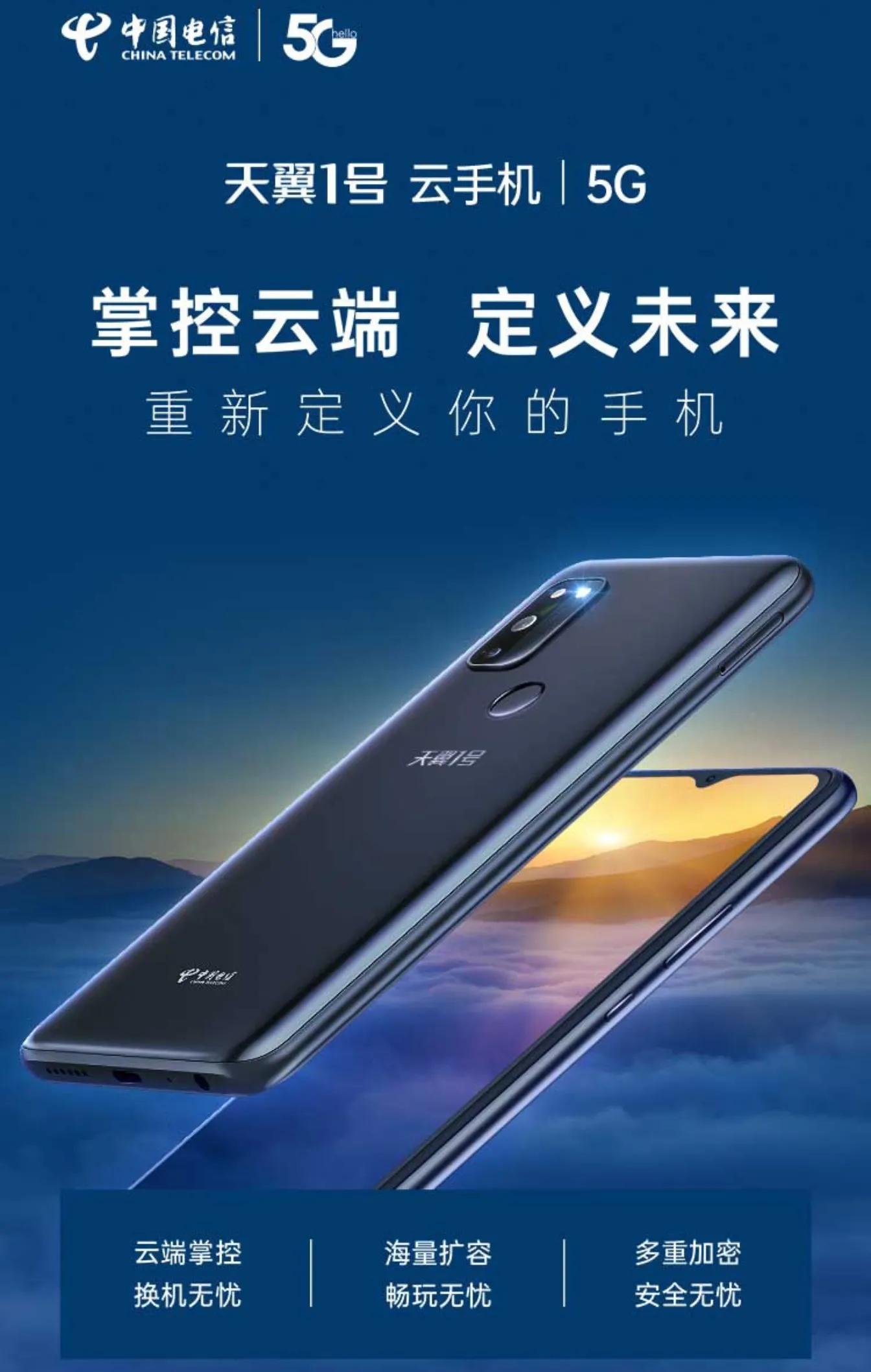
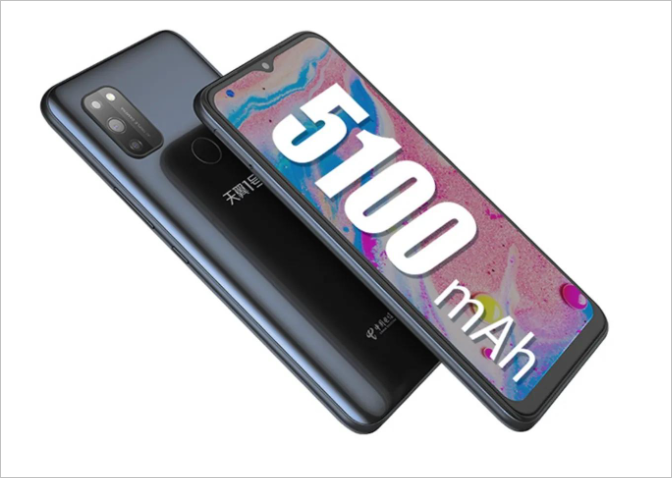
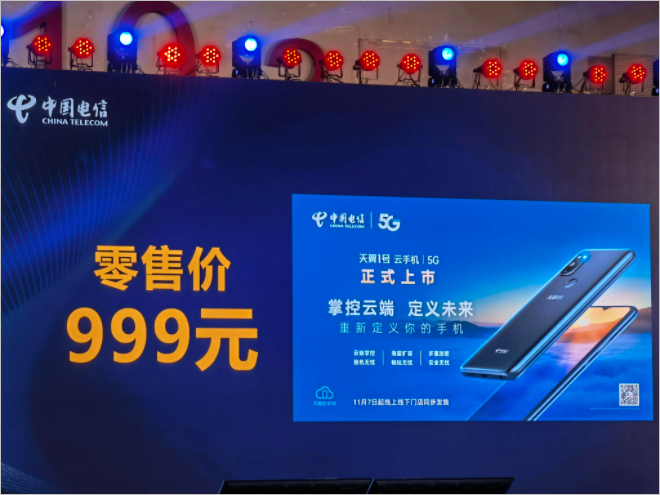
China Telecom has launched the Tianyi No. 1 Cloud Mobile phone at the 2020 Tianyi Intelligent Ecological Expo. The smartphone features a 5G chipset and carries an affordable price tag of 999 yuan (~$151) and is already available in China via online and offline channels.
The Tianyi No. 1 mobile phone is equipped with UNISOC T7510 5G chip, which was also used by Coolpad’s budget 5G mobile phone – Coolpad X10. The data shows that the UNISOC T7510 is built with TSMC’s 12nm process, the eight-core CPU is a quad-core A75+quad-core A55, and the GPU is a PowerVR GM 9444. The affordable 5G phone supports SA/NSA dual-band 5G network mode. The chipset also supports all the mainstream 5G frequency bands in China as well as full Netcom 4G. It adopts HD voice EVS over 5G NR technology, 2T4R transmission technology, Wi-Fi MIMO dual-antenna technology.
In other respects, the Tianyi No. 1 smartphone is equipped with a 6.5-inch waterdrop screen with HD+ resolution. The device packs a rear-mounted fingerprint sensor. It is available in 4GB RAM and 64GB storage option. Keeping the lights on is a built-in 5100mAh battery while the phone runs on Android Pie OS.
On the camera aspect, the phone packs triple camera setup at the rear made up of a 12MP main sensor and two 2MP sensors which are the depth of field and macro lenses.
In addition to cloud phones, China Telecom also plans to develop 7 categories of cloud products, including cloud pads, cloud computers, cloud TVs, and cloud routers.
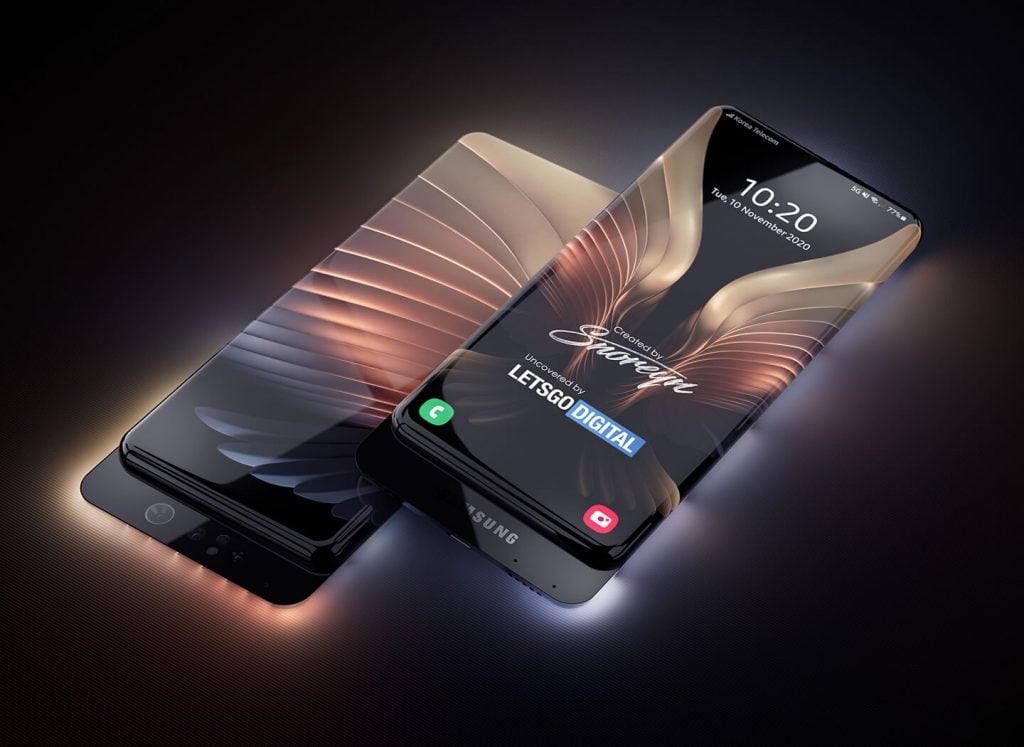
Although Samsung Display is leading the technology when it comes to displays, it never shies to innovate further. However, the latest patent from its sibling Samsung Electronics defies every myth with an all-display and a portless design.
Credit: LetsGoDigital/Snoreyn
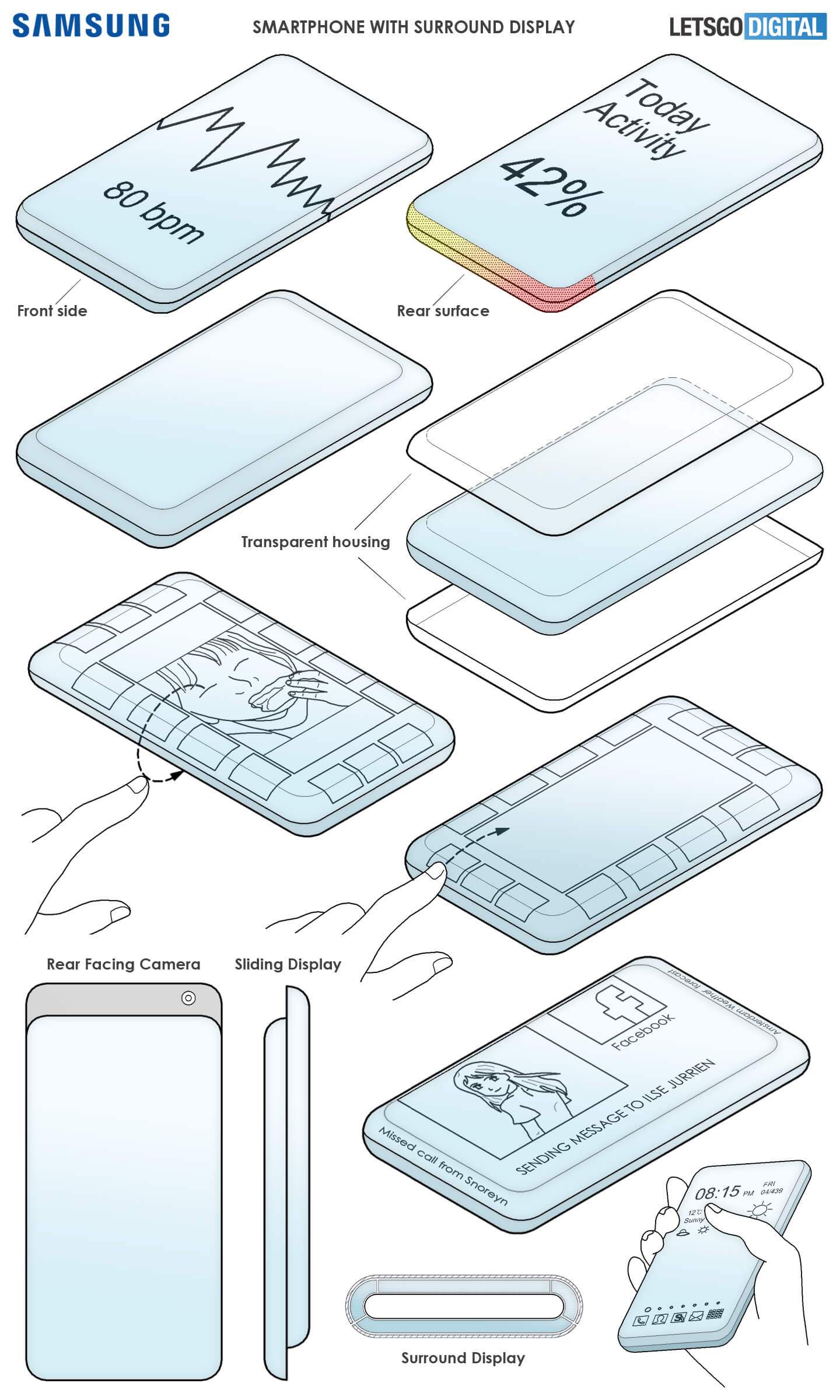
The new patent, as spotted by LetsGoDigital, is a true 100% display device. The images show multiple displays wrapped around the device. There are no ports, cameras, and physical buttons. Samsung Electronics has filed it at USPTO(US Patent and Trademark Office) back in July 2020. It has been published on October 29,2020, and also visible in the WIPO(World Intellectual Property Office) database.
Display, Transparent Housing designs
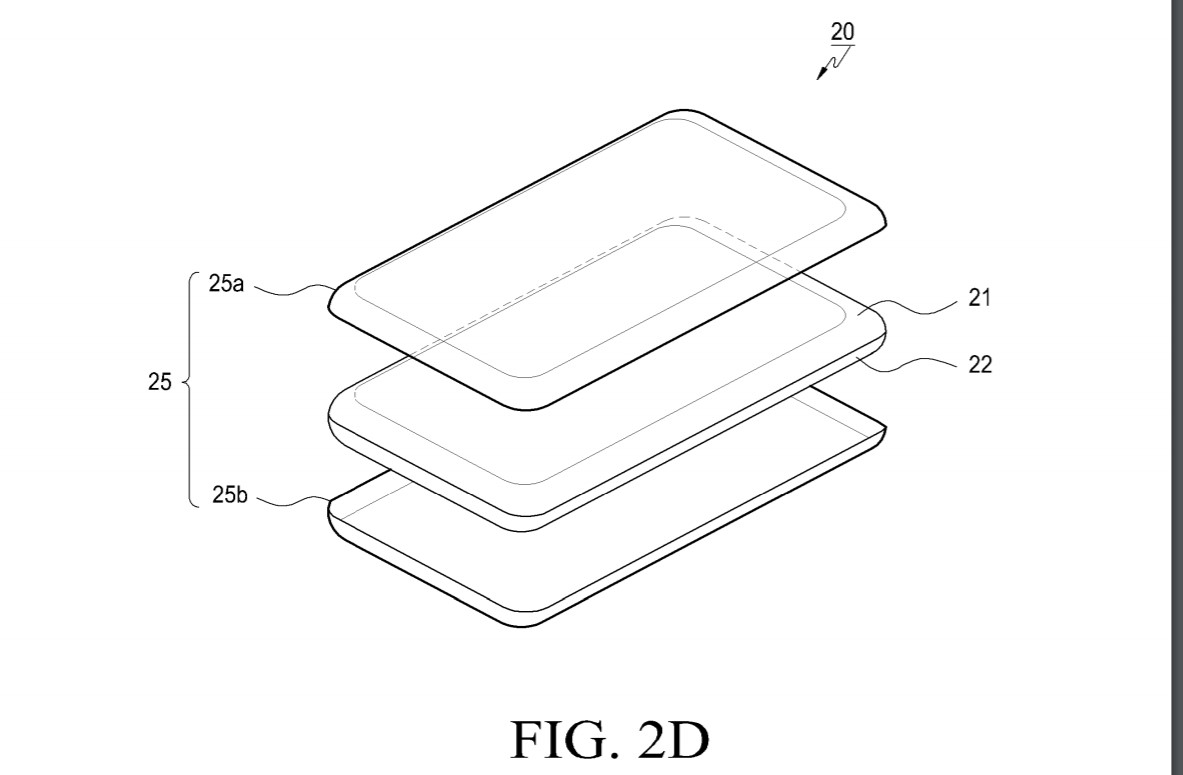
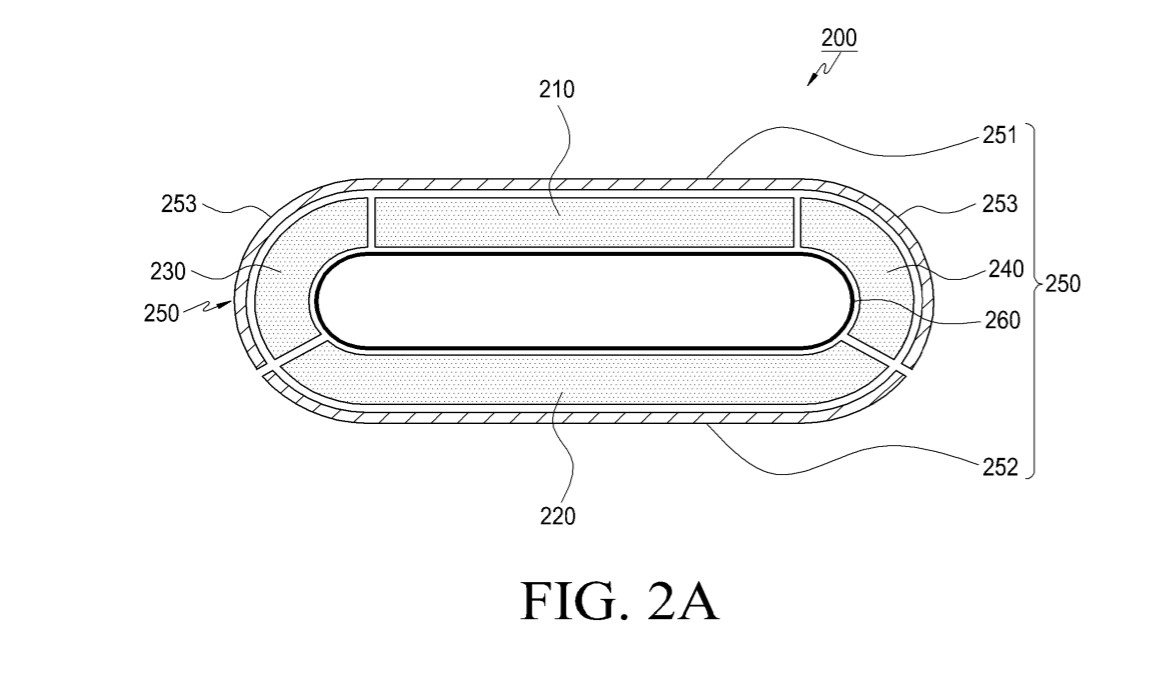
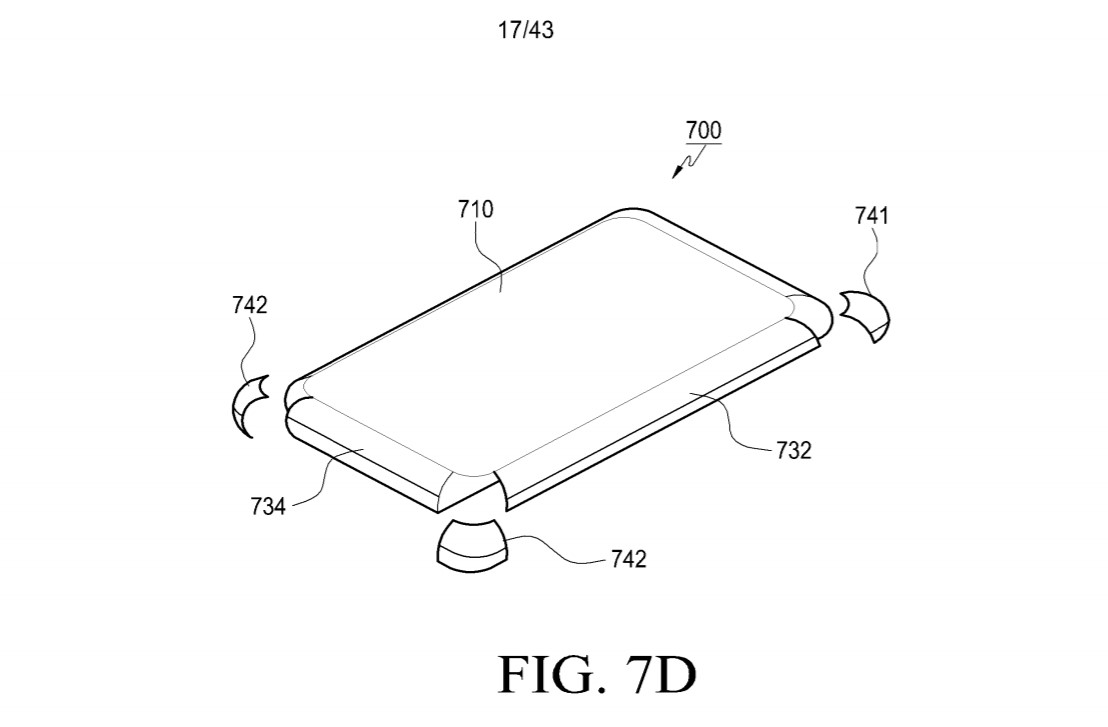
Talking about the displays, we see a curved display at the front. However, the rear panel’s display sits flat. And has many semi-rounded displays on the sides. Additionally, the display is covered by transparent housing on the front and back. The report mentions that it is made of a transparent “acrylic material”. Other components inside are hidden under this surrounding display with support columns.
Additionally, the device also has a sliding camera. The device reportedly has two parts with the cameras fixed to the back of the front part. Accordingly, a user needs to slide the rear part down to reveal the cameras. That said, for selfies, he/she can turn to the rear display. And use the same camera for taking selfies.
1 of 4
Credit: LetsGoDigital/Samsung
Transparent housing
Display on all sides
All this makes the device completely covered by display, and give a true full display smartphone experience. Further, the patent also mentions a secondary camera hidden inside. This is reportedly to find out which display the user is staring at. Other features like in-display fingerprint sensor, speaker, and sensors are under the display.
However, as mentioned earlier, there are no visible buttons, ports in the design. But the patent details say that the device can be turned on/off via screen using a piezoelectric sensor. The patent also talks about the possibility of eSIM and wired/wireless charging albeit having no ports.
Use-case Scenarios of Transparent housing, Sliding Camera
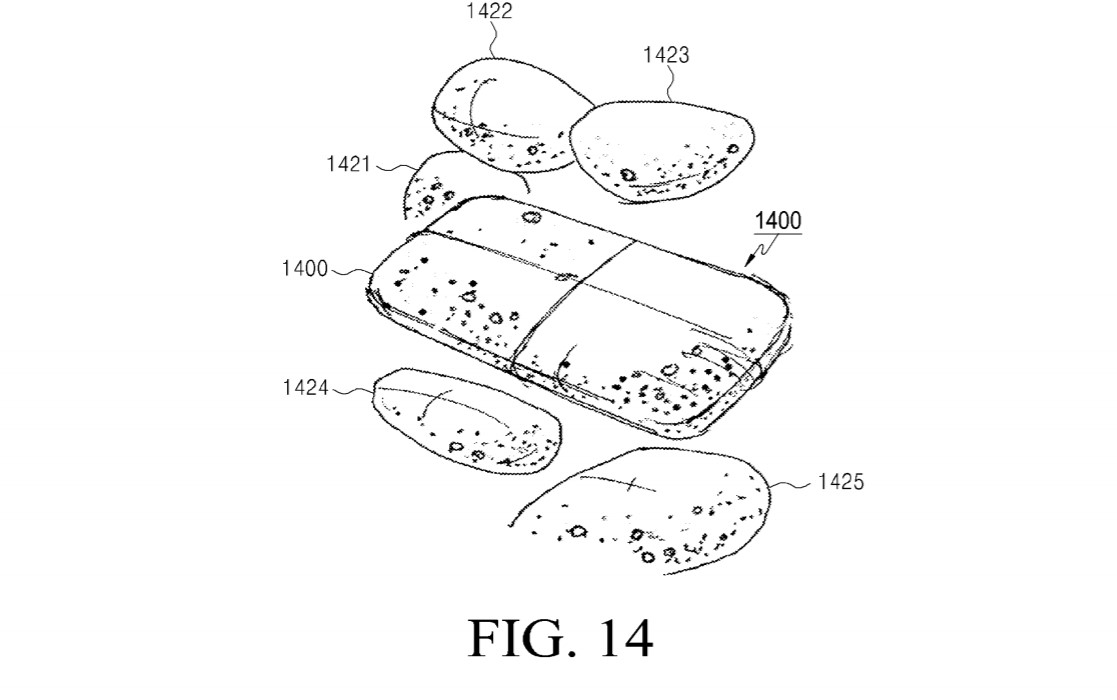
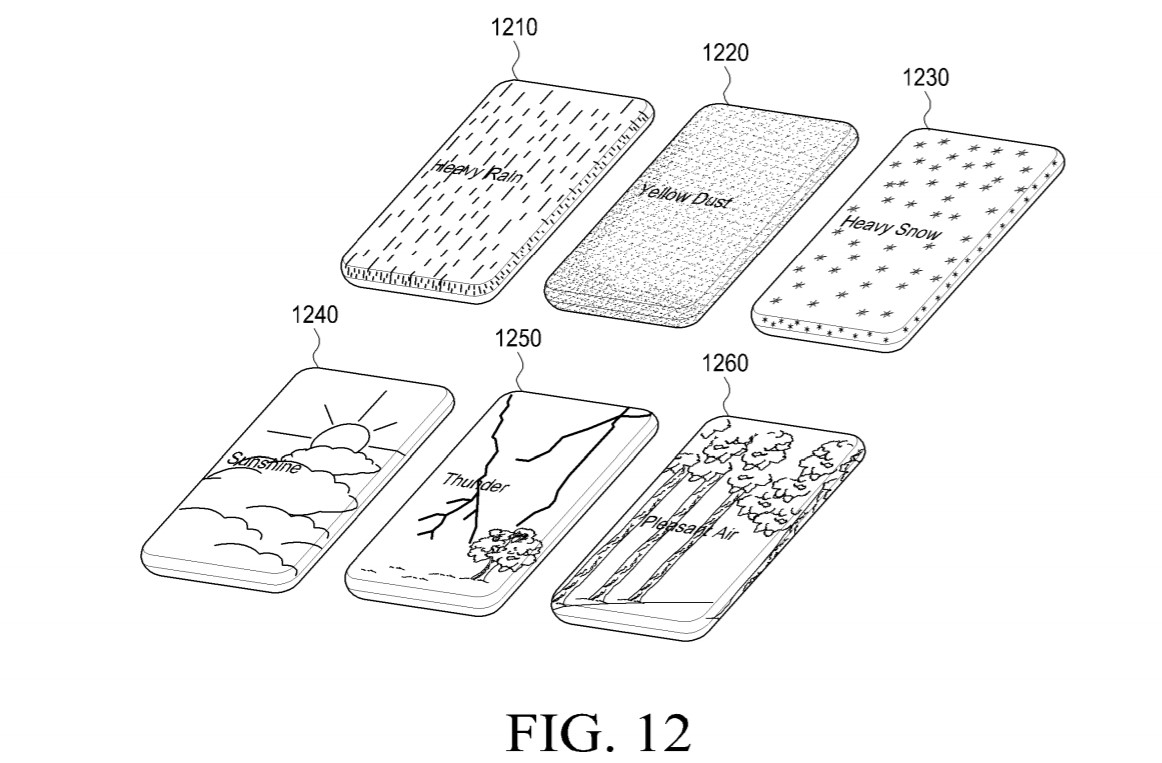
The new housing and all-display inside has several use-case scenarios. These include displaying weather information, health/training info via graphics on the entire screen. The report says the housing also can adapt to the environment by detecting colors, and displaying images accordingly.
For instance, scanning a pebble, it can turn the entire device look like a pebble by displaying it on all the images. Additionally, the device would also use AI to reportedly adapt to situations, read environments, and display data like Weather, traffic information accordingly.
1 of 3
Credit: LetsGoDigital/Samsung Camera App use case
Transparent housing use-case
All Display use-case
As for the display and hidden camera, they reportedly will work in tandem for various actions. It can track and activate the display accordingly when the device is in hands, table, etc. The other displays, that aren’t in use, can show preset images like thumbnails of recent images.
Users can swipe it from the sides to expand into the screen in use. Other features include turn-over the screen while watching a video to see file info, project contents on all display at the same time, etc. Nevertheless, if the design gains momentum and becomes a final product, it is sure to be attractive than wrap-around Mi Mix Alpha, and portless Meizu Zero.
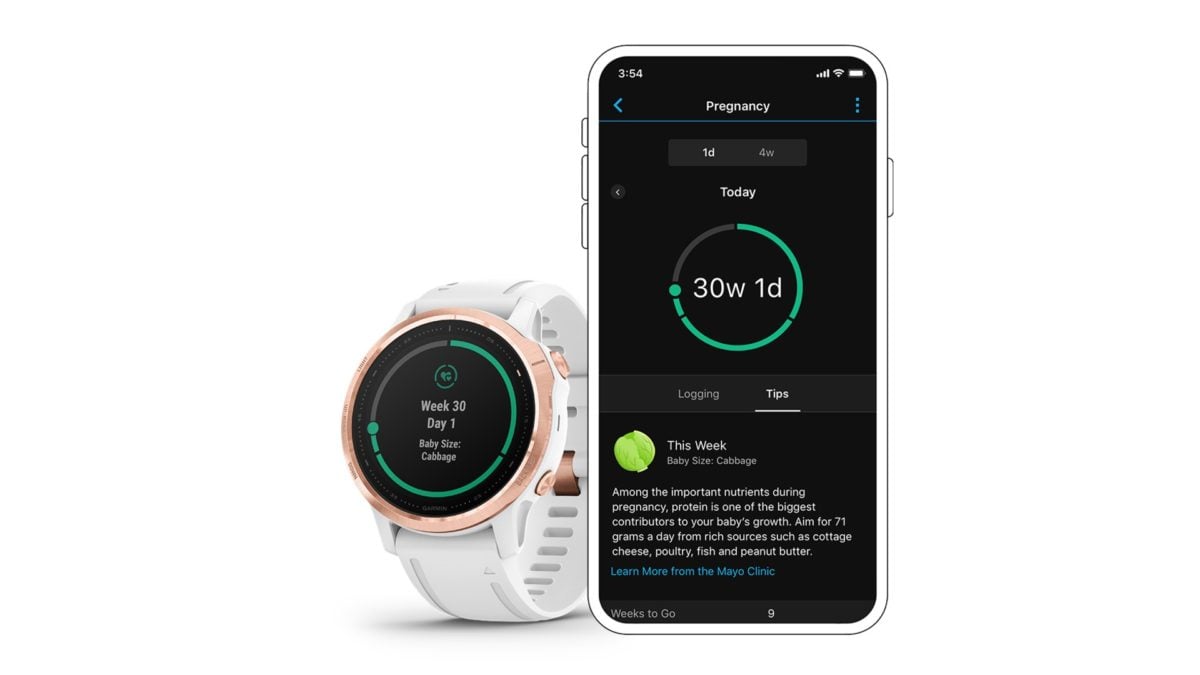
It is uncommon to find women’s health tracking features on most smartwatches more than period tracking. Renowned watch manufacturer Garmin has introduced a new pregnancy tracking feature which would be on some of its most popular wearables, including the Garmin Venu, Vivoactive, Forerunner, Fenix, and Vivomove series.
There are several pregnancy tracking apps available presently but this is obviously the first that we’re seeing on a smartwatch. The watch feature is designed to track a pregnancy from start to finish, right from your wrist.
The Garmin pregnancy tracking feature comes with several benefits which include the ability to track your baby’s progress on a timeline, track daily symptoms, log your baby’s movements inside your belly, track trimester dates, get hydration and nutrition tips, and more. You can learn more about the feature from the video below.
When the baby is due to arrive, you can even track the duration and frequency of your contractions via the Contraction Timer Connect IQ app on your smartwatch.
The new pregnancy tracking feature can be activated from the Garmin Connect app on your smartphone. The settings can be found within the menstrual cycle tracking feature on the app. You can access it on the Garmin Venu, Vivoactive, Forerunner, Fenix smartwatch by downloading it from the Connect IQ store. However, it can be gotten through the women’s health tracking widget on the Vivomove series.
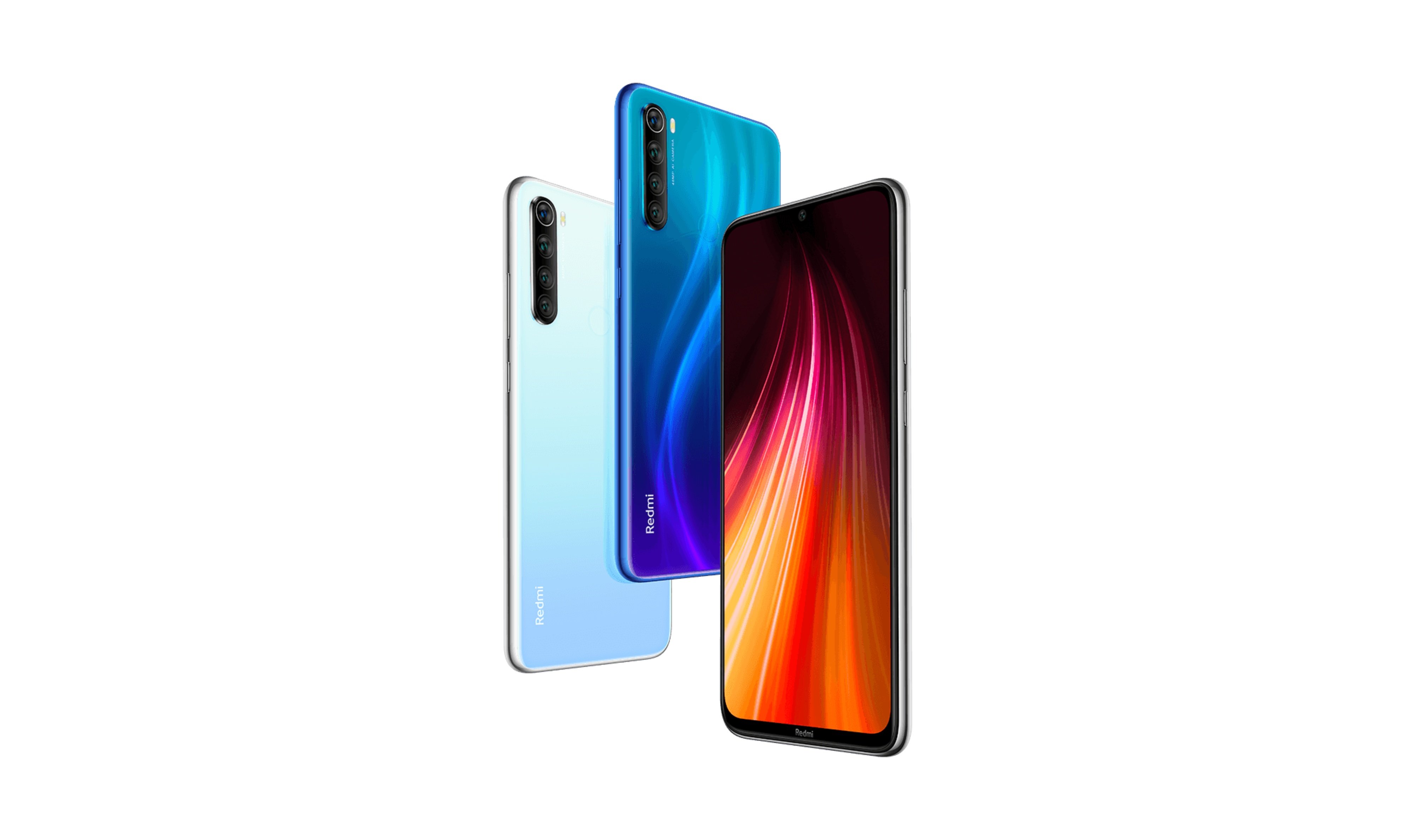
Xiaomi has been updating its devices to MIUI 12 since April. The company is yet to finish the rollout as the list of eligible devices is long and there are multiple versions of certain devices. The Redmi Note 8 from the second half of 2018 began to get the update only in late September in China, followed by the global rollout in October. Now, the users in India are also being treated with the latest version of MIUI.
The Redmi Note 8 has been Xiaomi’s best-seller worldwide multiple times in the past quarters. Despite that, the company did not provide the Android 10 update to this handset, let alone MIUI 12. The device only received MIUI 11 update after its launch.
But now, a year after its release, the firm began to deliver MIUI 12 update along with Android 10 in China. The same update was later extended to other regions and now, it has finally reached India, which is Xiaomi’s largest market outside its home country.
The MIUI 12 update for Redmi Note 8 users in India comes with build number V12.0.1.0.QCOINXM. Like all OTA system update, it is currently being pushed in batches. If early adopters don’t face any critical issues, the build will be made available for more users in the coming days.
The Redmi Note 8 is not eligible for Android 11 update and therefore, the currently rolling out Android 10 update is its last Android upgrade. However, it should receive MIUI 13 whenever Xiaomi releases it.
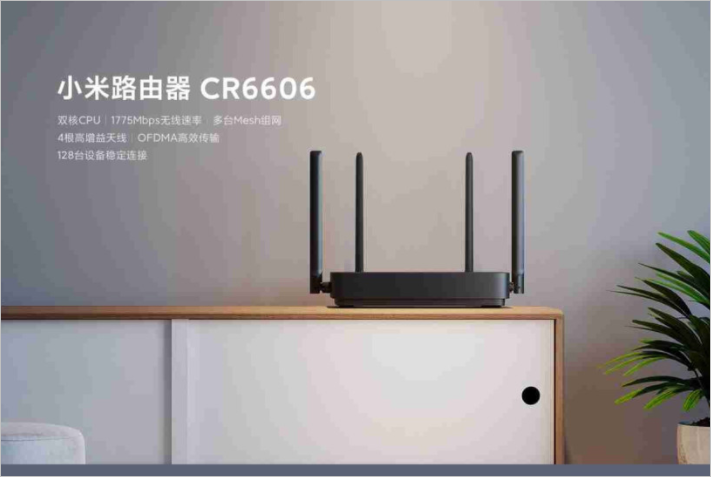
Xiaomi and China Unicom has jointly launched the Xiaomi WiFi 6 Router CR6606 today. The router carries a price tag of 299 yuan (~$45).
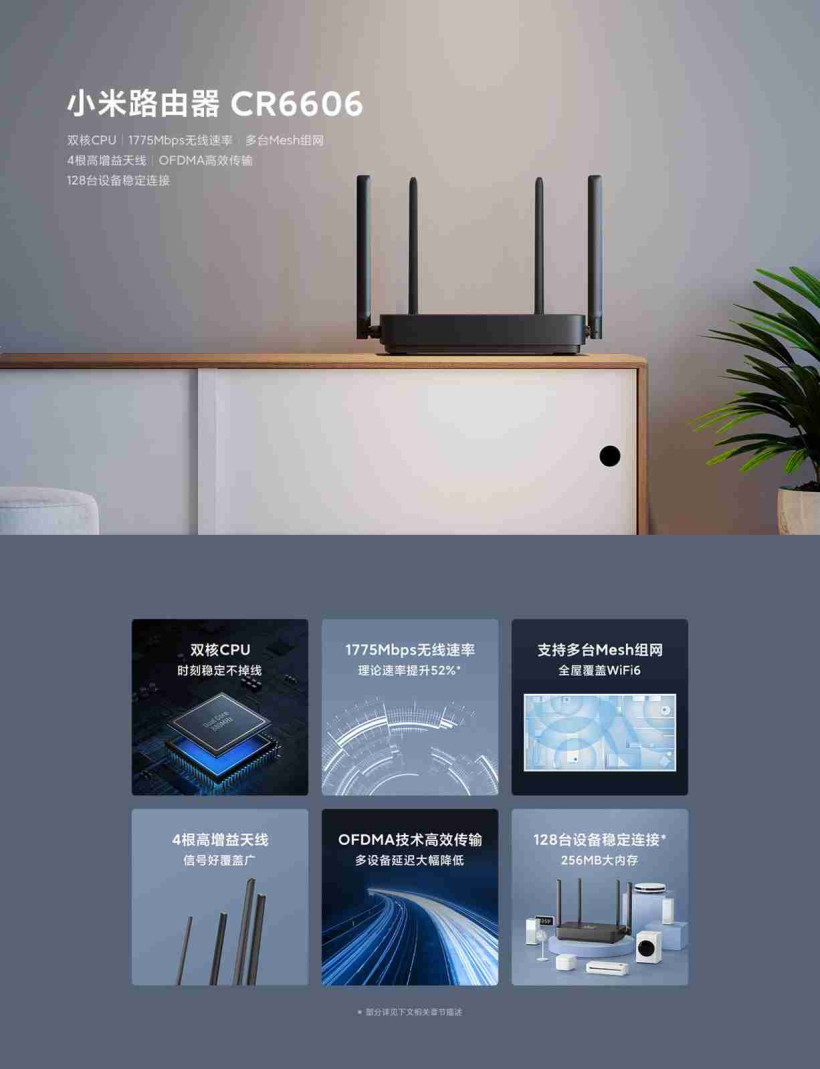
The Xiaomi WiFi 6 Router CR6606 is equipped with a dual-core four-thread 880MHz processor, which can easily support the flow of data in gigabit. It also comes with Ethernet ports and gigabit dual-band WiFi with lower network latency. The router uses 256MB large memory to ensure the stability of data transmission. It can stably connect 128 devices without pressure.
The Xiaomi router CR6606 adopts a new generation of Wi-Fi 6 technology, with a dual-band concurrent wireless rate of up to 1775Mbps, which is 52% higher than that of mainstream AC1200 routers. It uses a full mega-network port to make full use of every mega bandwidth. It equally supports OFDMA efficient transmission, reduces network congestion and enables smoother internet access on multiple devices. The router is equipped with four external 5dBi high-gain omnidirectional antennas with a reasonable structure layout. It supports LDPC error correction algorithm, significantly enhancing the anti-interference ability and signal coverage during data transmission.
Xiaomi router CR6606 supports Mesh networking, 5GHz WiFi, even network cable can be used to connect the router. the theoretical rate of wireless networking is as high as 1201Mbps, and multiple routers can form a star, chain or wired and wireless hybrid network. If there is a change in the routing equipment of the channel network, the network can be actively re-synced to ensure a stable Internet experience. At the same time, it supports Xiaomi’s smooth connection function, and smart devices can easily get access to the network with just the click of a button.
The Xiaomi WiFi 6 Router CR6606 is now on sale in China via China Unicom.
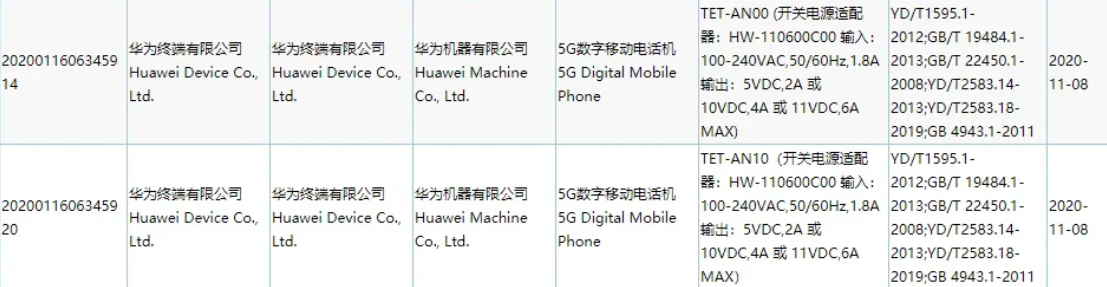
Recent reports have revealed that the upcoming Huawei Mate X2 foldable phone is codenamed as “Teton.” In September, its TET-AN00 model number was spotted at the database of China’s TENAA authority. Today, the TET-AN00 model number along with its network variant with model number TET-AN10 received approval from the 3C authority of China. The 3C certification is a good hint that the arrival of the Mate X2 may not be far away.
The 3C certification of the Huawei TET-AN00 / AN10 smartphone reveals that it supports 5G connectivity and it may ship with a 66W charger. It is the same charger that is available with the Mate 40 series of flagship phones. No other information on the specs of the Mate X2 can be found in its 3C listing.
At the end of September, the Wi-Fi Alliance authority certified one of the global editions of the Mate X2 that has a TET-NX9 model number. The Wi-Fi certification revealed that the device supports Wi-Fi 6 and it is loaded with EMU 11.
Speculations surrounding the Mate X2 have revealed that it will be sporting an inward folding design like the Galaxy Z Fold 2. In other words, it won’t be equipped with an outward folding design like the predecessor Mate X and Mate Xs.
The Mate X2 is expected to feature an 8-inch foldable screen that will offer a resolution of 2248 x 2220 pixels. It is likely to draw power from the Kirin 9000 5G chipset. There is no word on the launch date of the device. Hopefully, the rumor mill will spill some information on the Mate X2 in the coming days.
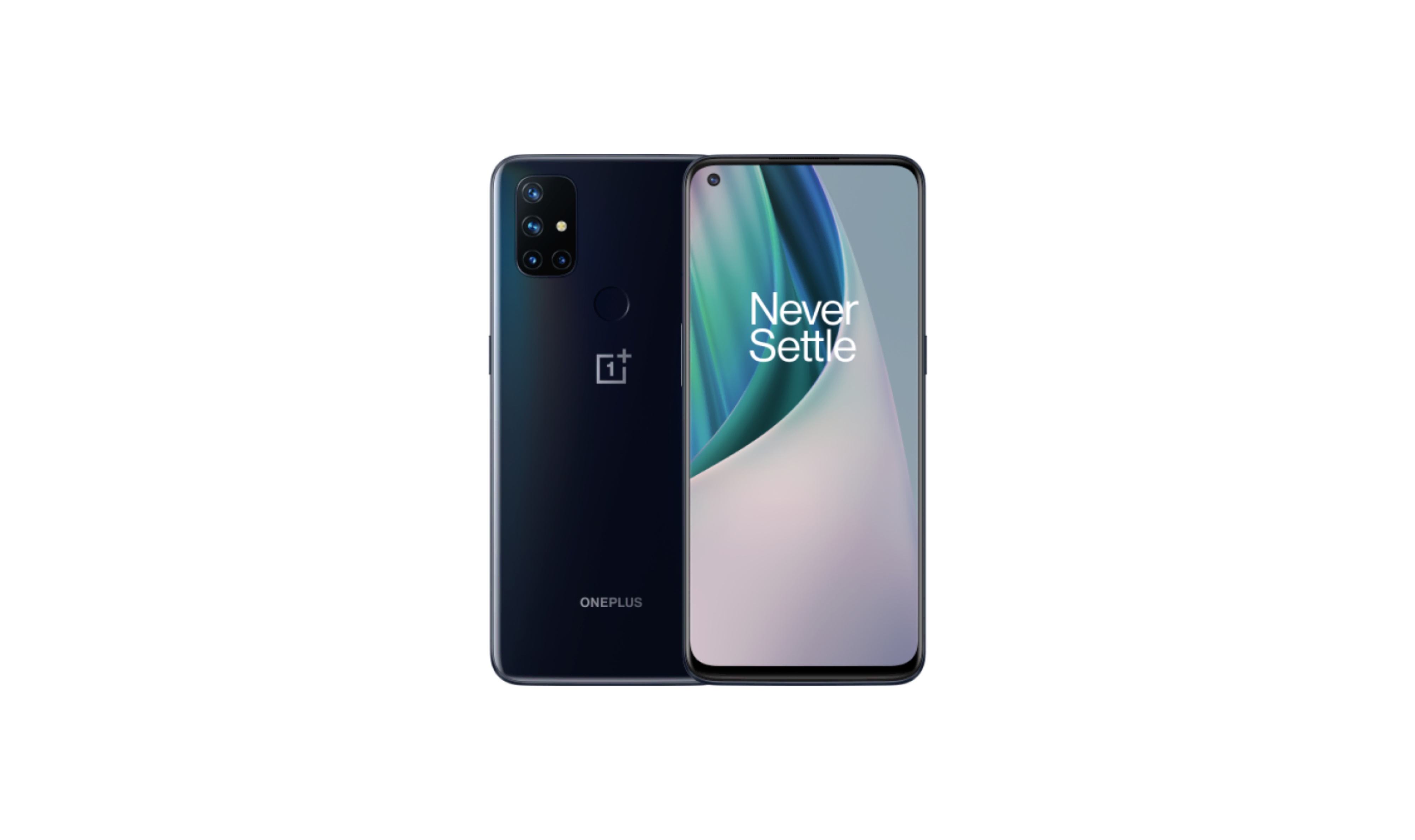
OnePlus recently announced the budget Nord N10 5G, and N100 in the US, and EU. And, a report by Android Central claimed that the devices won’t make the cut to countries like India. Now, one of the devices has hit Singapore’s IMDA certification suggesting an imminent launch.
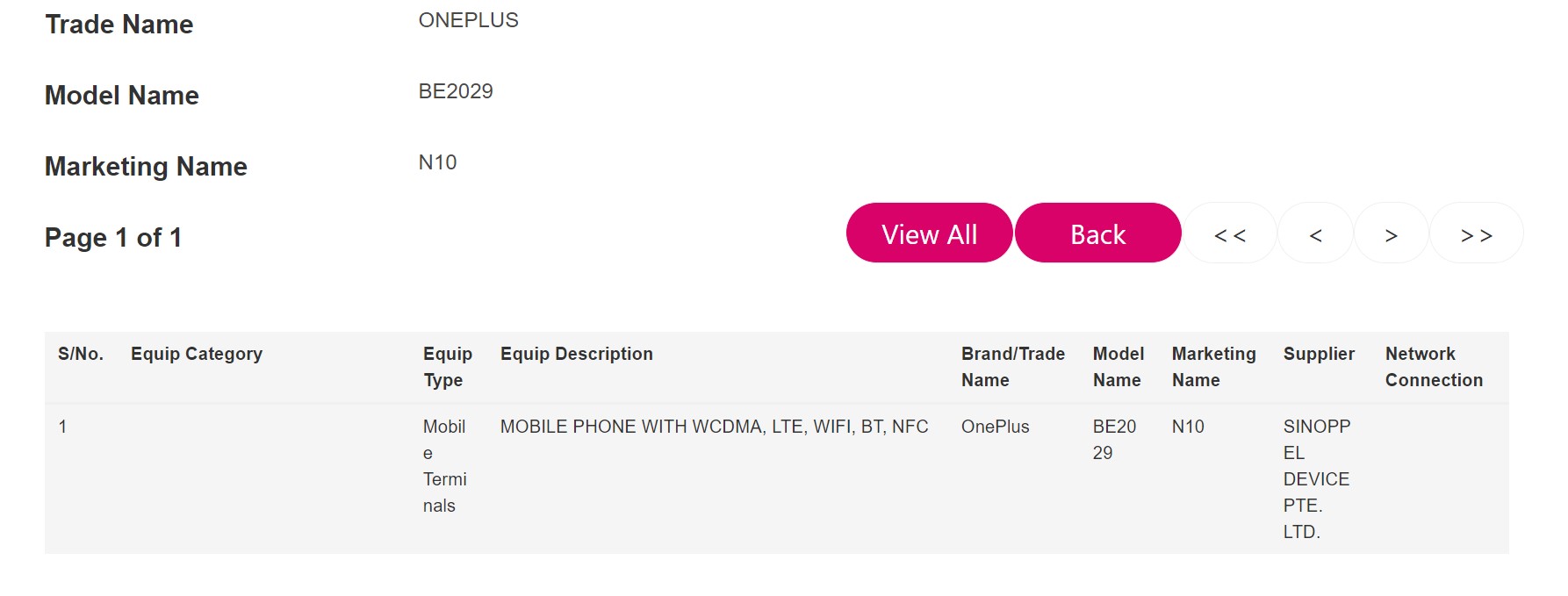
The new tip comes from Mukul Sharma who posted the information on his Twitter account. We personally verified Singapore’s IMDA database and found that the device has a model number “BE2029” and marketing name “N10”. Now, if you recall, a similar device hit the Geekbench listing back in July. It had the model number “BE2028” and Snapdragon 690 5G which is present on the Nord N10 5G.
This further confirms that the device with model number BE2029 is indeed the Nord N10. And it could just be another model number for Singapore. That said, this also strongly hints that the OnePlus might launch it in some countries of Asia although we won’t place our bet on the Indian launch just yet.
OnePlus Nord N10 5G Specifications
OnePlus Nord N10 5G features a 6.49-inch FHD+ LCD display with a 90Hz refresh rate. Under the hood, it is powered by Qualcomm Snapdragon 690 5G SoC and is paired with 6GB RAM, 128GB storage.
At the back, it has four cameras. The primary lens is a 64MP sensor, while other sensors include an 8MP ultra-wide and two 2MP sensors. Upfront, we have a 16MP sensor tucked under punch-hole for selfies. Other features include MicroSD slot, 5G, Wi-Fi, Bluetooth 5.0, GPS, rear fingerprint sensor, 3.5mm headphone jack.
The device has a 4,300mAh battery with support for Warp Charge 30T via USB-C port. Sadly, it runs OxygenOS 10.5 based on Android 10 and not Android 11 out of the box. The device retails for £329/€329 (~$429) and comes in single Midnight Ice Blue color. We will have to wait and see how OnePlus markets these devices in Asia.
Timex is one of the popular wristwatch brands in the world. The Indian subsidiary of the company called Timex Group India Ltd has launched a new product called Timex Fitness Band. Unlike most fitness trackers in the market, this one is targeted at fashionable customers just like the OPPO Band Fashion.
Timex Fitness Band Features & Specifications
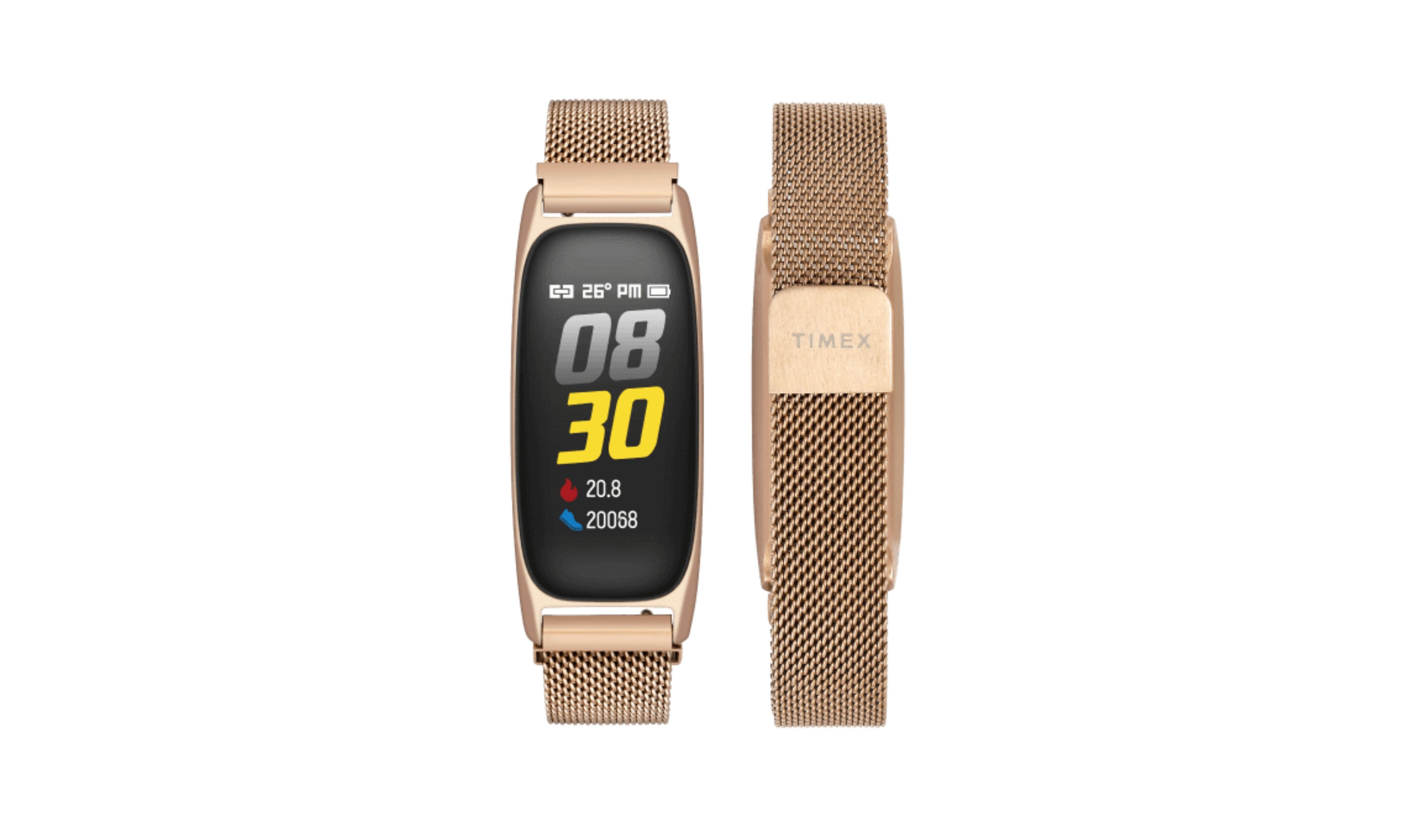
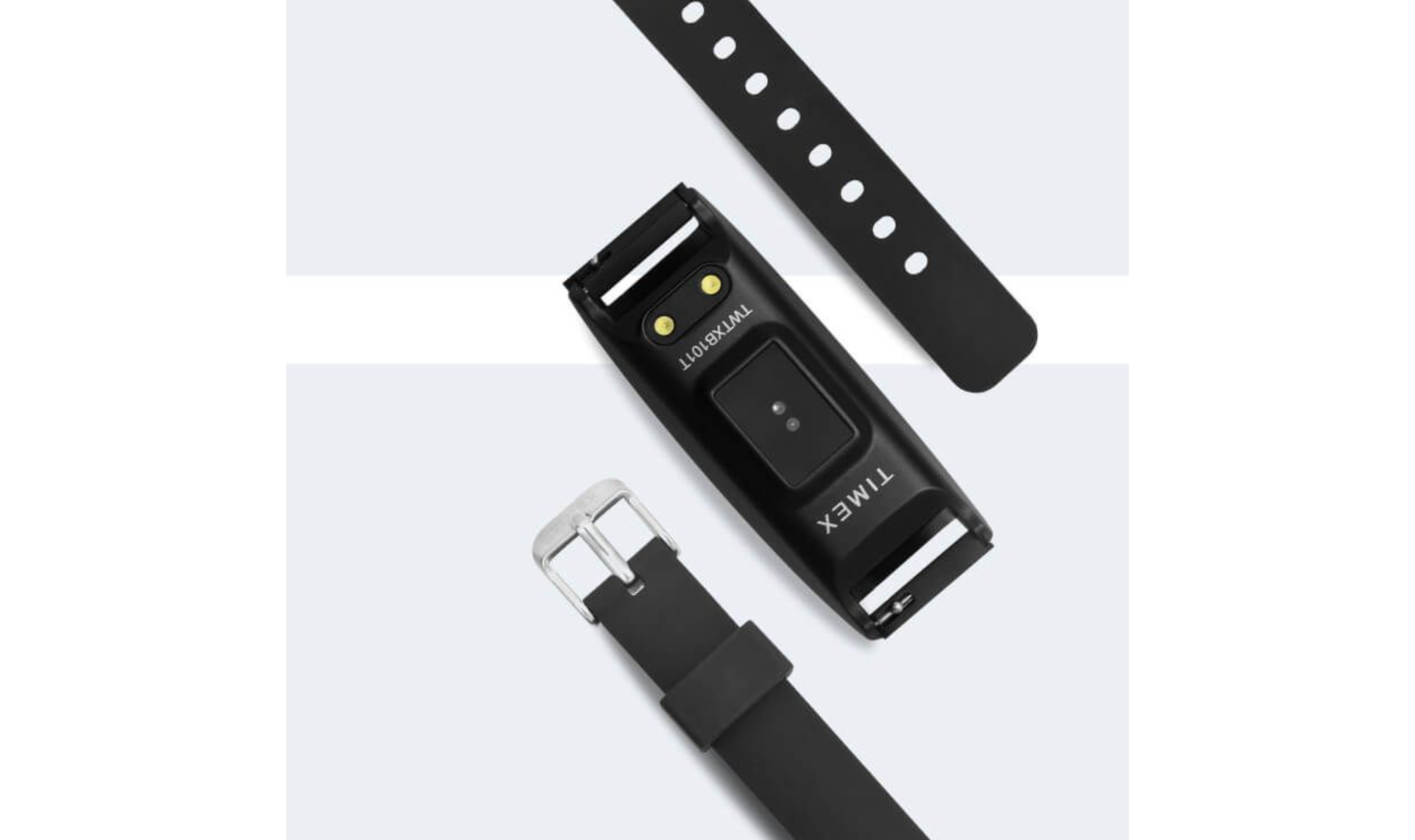
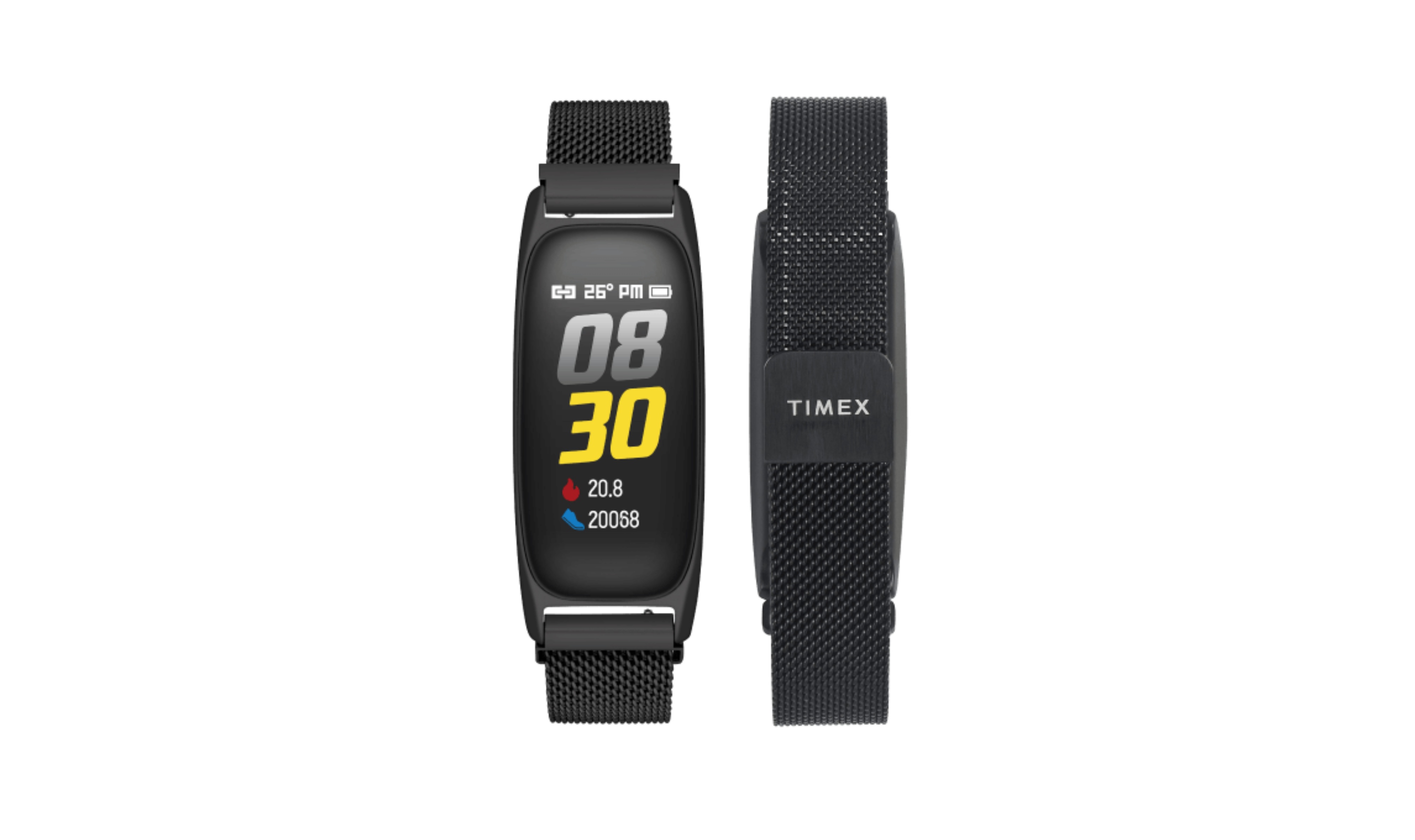
The newly launched Timex Fitness Band sports an alloy casing and ships with a stainless steel mesh strap. However, interested customers can opt for an optional black-colored silicon band if required.
The fitness band comes in two colors namely Rose Gold and Black with model numbers TWTXB100T and TWTXB101T respectively.
The tracker comes equipped with a 0.96-inch color display with a resolution of 160 x 80 pixels and support for touch input. The type of the panel is not known but going by the 5-day battery life claim, it must be featuring an LCD panel.
Since Timex is a traditional watch brand, the company does go detail into the hardware specs and features of its fitness tracker. As per its website (via Mr. Phone), the tracker supports heart-rate monitoring, activity tracking, call/SMS notifications, and music control.
In a nutshell, the Timex Fitness Band is a basic fitness tracker with a classic design like no other in the category.
Timex Fitness Band Pricing & Availability
The Timex Fitness Band is priced at ₹4,495 and is available starting today from authorized retailers across the country. It can be also bought online from the company’s official website but the product is listed “Coming Soon” as of publishing this article.
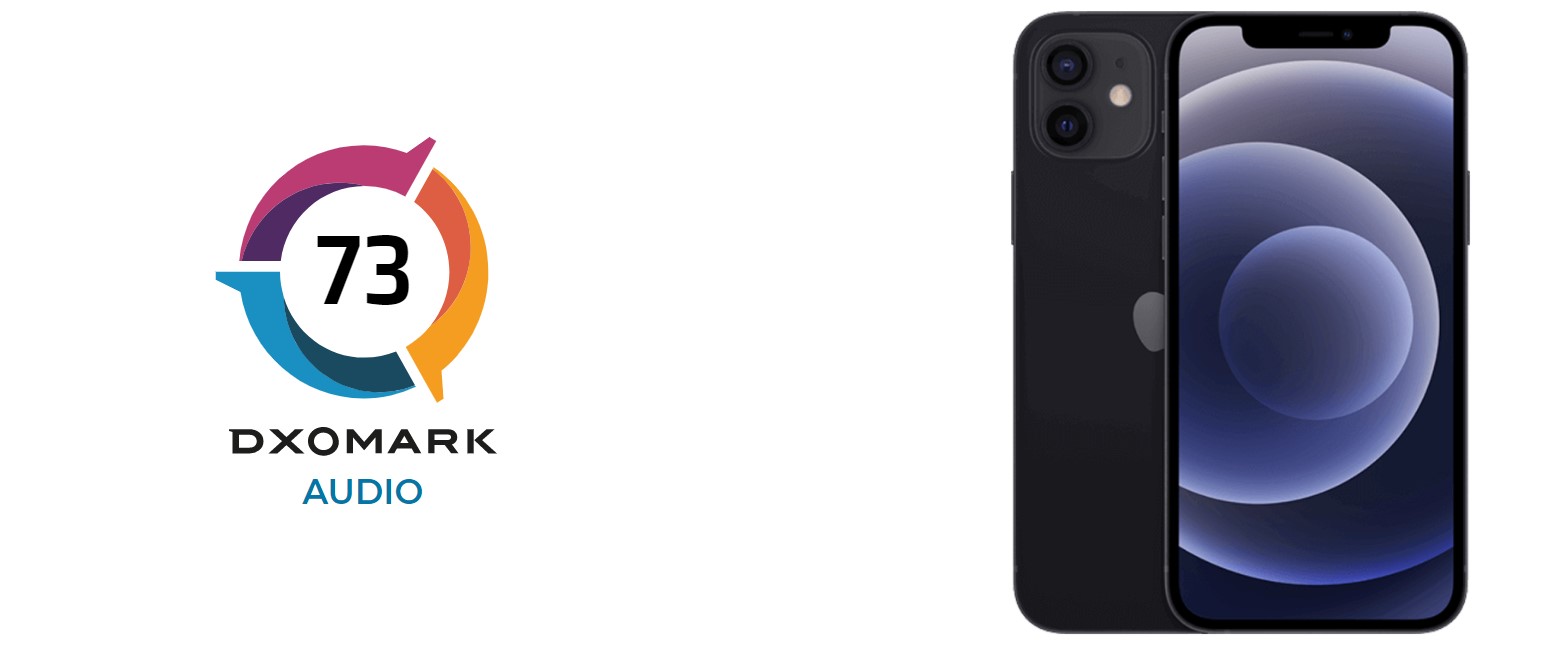
Last year, DXOMARK, primarily known for camera reviews, published benchmarks for its audio performance of smartphones. It includes many testing parameters like Timbre, Spatial, maximum volume, and its artifacts. The company has now published the audio performance of the recently launched iPhone 12. And it almost matches the top-scoring device in their list.
Credit: DXOMARK
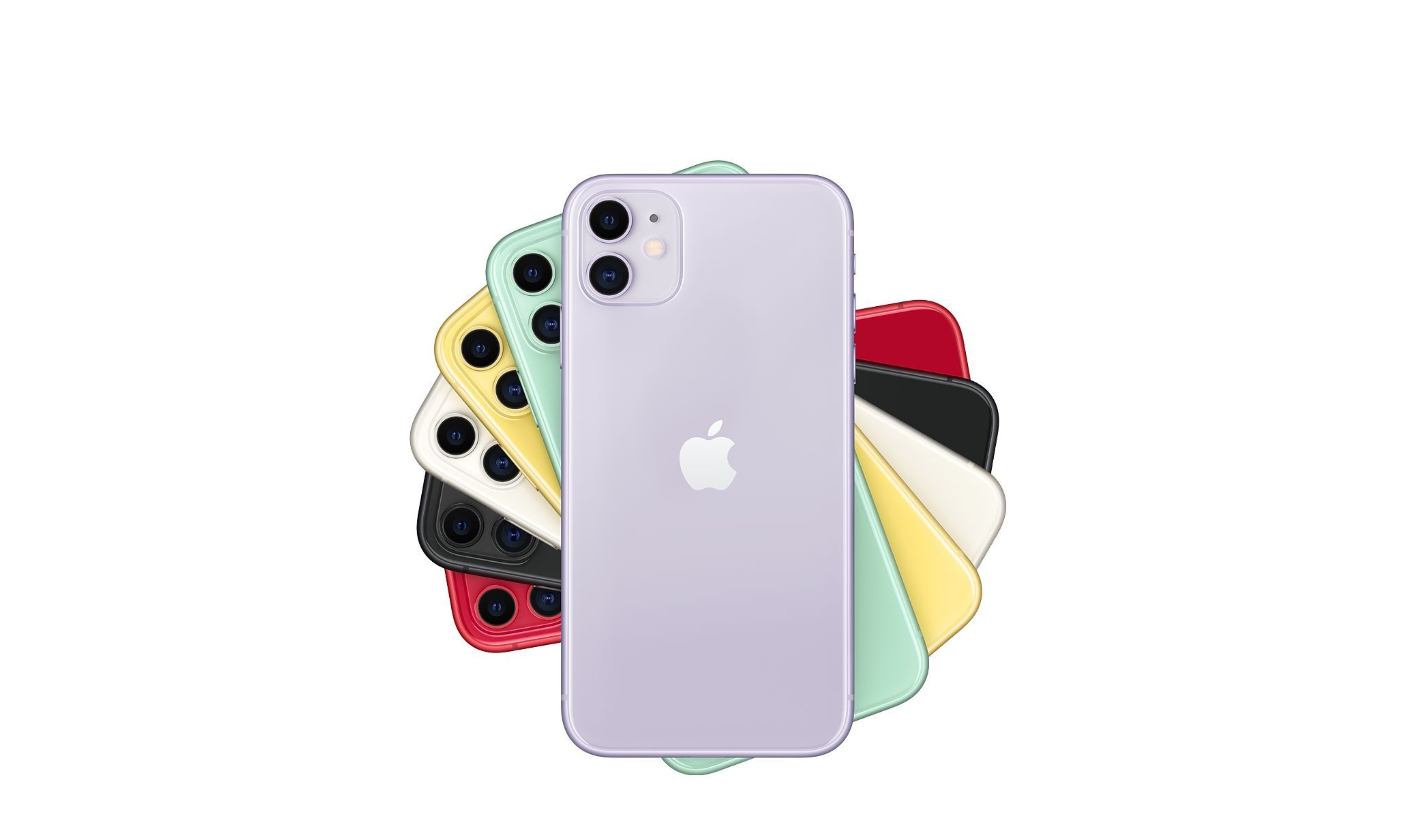
The iPhone 12 has obtained an overall audio score of 73 in the DXOMARK Audiotest. This is a very slight improvement if we look at the 72 score of the iPhone 11. However, it manages to sneak into the top 10 list of DXOMARK smartphone audio rankings. Accordingly, it sits currently in sixth place just above the yesteryear Apple flagship, iPhone 11 Pro Max.
However, it surprisingly fails to secure a rank above the iPhone Xs Max and misses out just by a score of one. Xiaomi’s Mi 10 Pro currently tops the list with a score of 76. Talking about the audio performance of the iPhone 12, DXOMARK says it offers an overall good performance albeit not bringing that big of a change from iPhone 11. You can take a look at the audio hardware(specifications), features of iPhone 12 below:
2xSpeakers(1-Bottom, 1-Top)
2xMicrophones(1-Primary,1-Secondary) with NC(Noise Cancellation)
Audio Zoom
Dolby Atmos Surround Sound
That said, the iPhone 12 scores 73 in both the audio and playback sections. As per the report, it performs well in subcategories like Timbre, and spatial rendering. It also seems to have a good and satisfying maximum volume.
Audio: Pros and Cons
The highlight of the speakers is reportedly seen in Gaming mode with a little help from the proper placement of speakers. Similarly, in recording tests, it shows good character with frequency response, punchy sounds with good attributes, and loudness. The recordings also have natural effects.
However, its drawbacks are few distortions while playing audio in the low spectrum. Plus, the device’s microphone placement is a bit obstructive at times. And recordings have modest distortion at times in loud volumes. The device also performs badly in Artifacts(sudden unwanted sound) and DXOMARK says it’s due to the heavy compression of the iPhone 12.
To sum up, if you look at the pros, it has excellent timbre, a wider sound stage, good loudness. But has Cons like high-volume distortion(Playback & recording), inverted channels in landscape mode, and obstructing microphone placements.
In late October, Canalys published a report on Global Smartphone Market Q3 2020. According to that, Xiaomi beat Apple to become the world’s third-largest smartphone brand for the first time. Now, more than a week later, the research firm has revealed the most-shipped devices in the same period.
As per Canalys, Samsung was the world’s largest smartphone brand in the third quarter of 2020 with a 23% market share by shipping 80.2 million units. Then, came Huawei at the second spot with a 14.9% share and 51.7 million shipments, followed by Xiaomi in the third place with 47.1 million shipments and 13.5% market share.
Lastly, the fourth and fifth positions were captured by Apple and vivo respectively. The American tech giant shipped 43.2 million units with a 12.4% market share, whereas the Chinese smartphone maker gained 9.1% share with 31.8 million units in shipments.
Talking about the most shipped smartphones, five of them were Samsung, three devices were by Xioami, and two from Apple.
The iPhone 11 and iPhone SE 2020 acquired the first two positions. Whereas, the Samsung Galaxy A21s, Galaxy A11, Galaxy A51, Galaxy A31, and Galaxy A01 Core captured third, fourth, fifth, eighth, and tenth places respectively.
On the other hand, Xiaomi obtained sixth, seventh, and ninth positions with Redmi Note 9/Redmi 10X 4G, Redmi 9, and Redmi 9A respectively.
Most Shipped Smartphones in Q3 2020 – Canalys
iPhone 11
iPhone SE 2020
Galaxy A21s
Galaxy A11
Galaxy A51
Redmi Note 9 / Redmi 10X 4G
Redmi 9
Galaxy A31
Redmi 9A
Galaxy A01 Core
What are your thoughts on this list? Did you expect any of these devices? Do let us know in the comment section below.
At the MIUI 12 launch event earlier this year, Xiaomi announced a number of features for the MIUI Health app that would normally require a fitness tracker or a smartwatch. These features are now finally available for users in China seven months after the announcement.
Xiaomi has recently updated the MIUI Health app to v2.9.12 in China. This latest version of the app can be installed on supported Xiaomi and Redmi smartphones from the first-party app store.
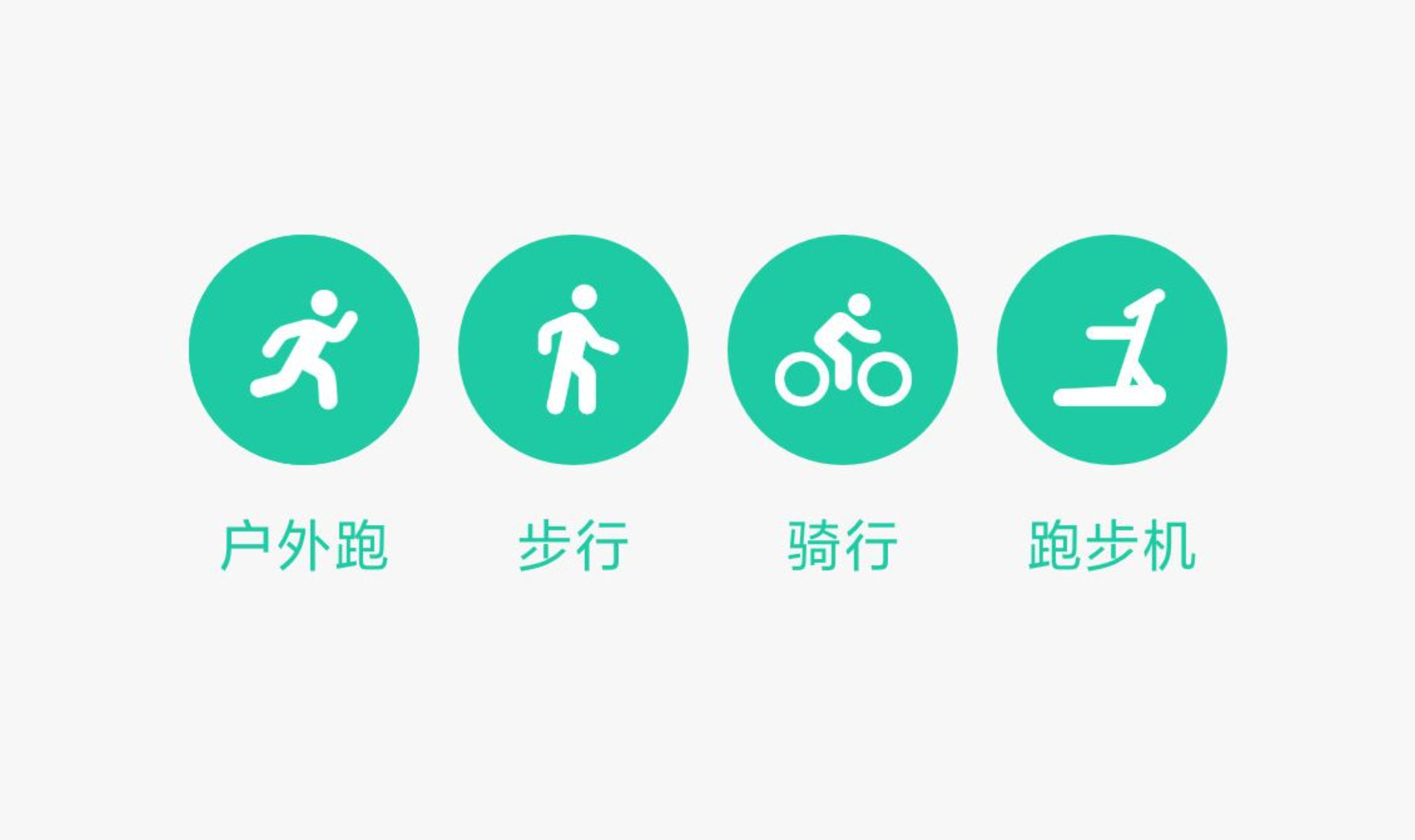
The new update for the MIUI Health app finally brings the sports modes that the company showcased at the MIUI 12 launch conference back in late April. Interested users can now use the app to track the following four activities.
Outdoor Running
Walking
Cycling
Treadmill
In addition to tracking, users can also set goals and share their results with friends and family.
Having said that, we are not sure how accurate the readings from the app is. However, it is worth noting that the same app added a function to measure heart rate using the phone’s camera and LED flash in September. In our testing, we found it to be on par with Xiaomi’s own Mi Band 4.
Therefore, we expect the app to provide similar readings for the sports modes as well. Anyway, we would not recommend it for daily usage as fitness trackers and smartwatches also provide other stats like heart rate and blood oxygen levels while working out, which is not possible using the MIUI health app.
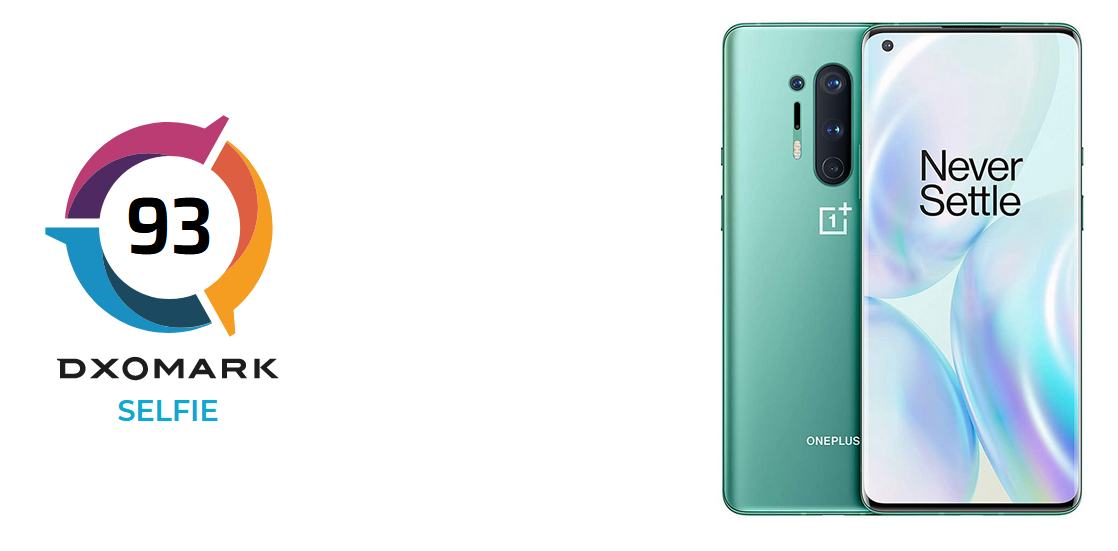
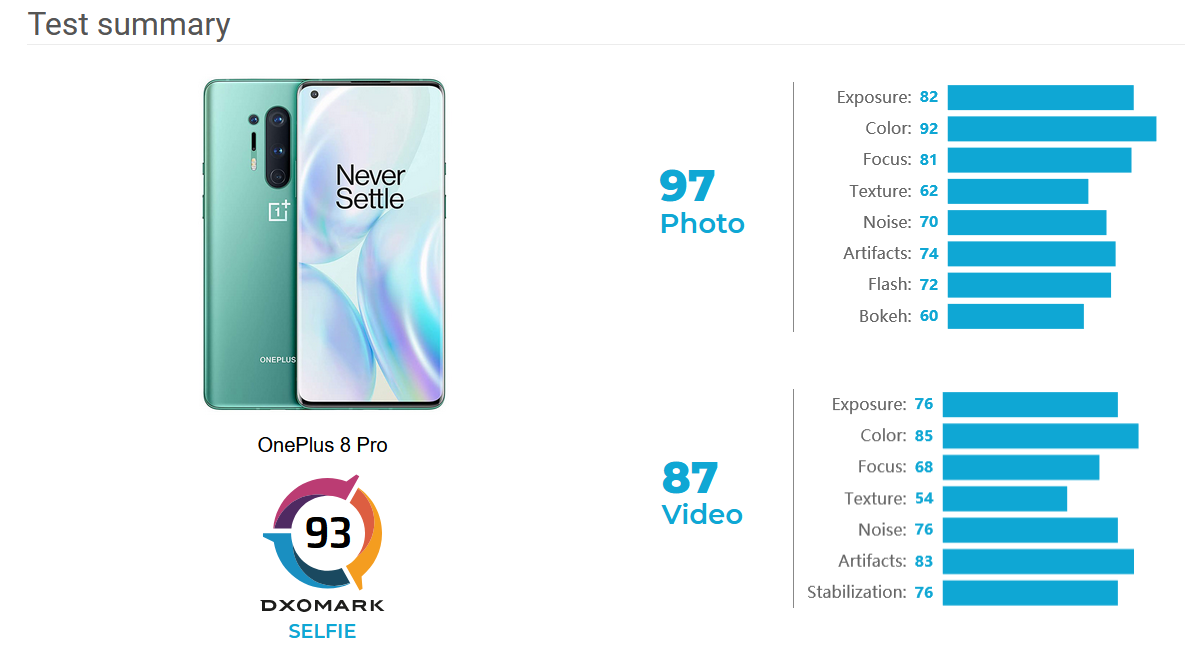
The OnePlus 8 Pro was recently reviewed again by DxOMark. This time, the known testing firm reviewed the selfie camera of the 2020 OnePlus flagship, offering praises for its “solid performance.”
The OnePlus 8 Pro achieved a high score of 93 points on the selfie camera testing. This gives the device a ranking of 12th in the DxOMark rankings, just below the Huawei Mate 30 Pro, which scored a similar 93 points and above the Apple iPhone 11 Pro Max that scored 92 points. For photography, the premium grade handset scored 97 points while in the video the device received 87 points.
It received praise for its accurate color reproduction and good exposure when taking pictures. However, the OnePlus 8 Pro tended to overexpose or blow the highlights out of proportion during certain well lit scenarios. Furthermore, noise being visible during the day was another major weak point of the 16 megapixel selfie shooter that sports an F/2.5 aperture.
On the video front, DxOMark tested the selfie shooter in its highest resolution and framerate, which is 1080p at 30 frames per second. Here, the negative aspects of the camera became more apparent, with it facing noticeable difficulty in adapting to certain scenes or changes in conditions. Despite this, the color was generally bright and vivid, with accurate white balance and well controlled noise levels as well. All in all, the device offered a solid performance on both stills and videos, which should satisfy most users.
Few years ago, Lenovo used to sell Lemon-branded budget phones to target the youth in China. Soon, other brands like Xiaomi, OPPO, and Vivo flourished in the home market while Lemon phones started disappearing from the market. There is good news for people who have missing Lemon branded phones. Last evening while interacting with netizens, Lenovo’s General Manager for Mobile Business Department Chen Jin said in an interview that the company will once again sell Lemon branded phones.
Last year, Lenovo actively launched phones like Lenovo Z6 Pro, Z6 Pro 5G, Z6 Youth, K10 Note, and a few more. This year, the brand has only launched the Legion Pro gaming phone in China. Motorola has been under the wing of Lenovo since the time it was acquired in 2014. In 2019, it launched the Motorola P50 phone, and this year, it unveiled the Motorola Razr 5G.
So, in the past two years, China has received only two Motorola phones. It appears that there has been some confusion in the company on how to manage the two brands for selling phones in the home market.
Jin said Lenovo’s mobile phone product line for China has been sorted out clearly. Lenovo and Motorola now have different focuses in terms of positioning their products. Motorola will cater to the mid-to-high-end audience, while Lenovo’s Legion line will focus on selling performance-driven phones. The Lemon phones will be aimed at the entry-level market.
Priced at around 1,000 Yuan, the Lemon K3 from 2014 was a well-received phone. It was rivaled by Redmi 2. Later, Lenovo released the Lenovo K3 Note to rival take on the Redmi Note series. Motorola has launched plenty of phones this year in the global markets. It is likely one of the cheaper Motorola phones could be rebranded as a Lemon named device soon.
In related news, Motorola XT2091 was approved by the FCC in October. The handset recently debuted as the Moto G 5G upper midrange phone. Interestingly, the FCC listing also revealed that it could be coming to some market as with Lenovo branding.
Earlier today (10th November 2020), Coolpad released an official statement through its Weibo account, a Chinese microblogging website, saying that it would actively be withdrawing its series of patent infringement lawsuits against Xiaomi.
According to Coolpad’s official statement, “We deeply feel that the country’s development is still in a period of important strategic opportunities, and the domestic and international environment is undergoing profound and complex changes. Breaking through technological bottlenecks and promoting the industry’s better and faster development is the top priority for industry Coolpad and Xiaomi.”
Thus, the company has decided to voluntarily terminate all patent infringement lawsuit against Xiaomi and cancel any related cases as well. Coolpad also added that it would carry out “various forms of technical exchanges and cooperation with excellent companies inside and outside the industry.” Furthermore, it would respect technological innovation and intellectual property rights, following the principle of “technological self-reliance and self-reliance.”
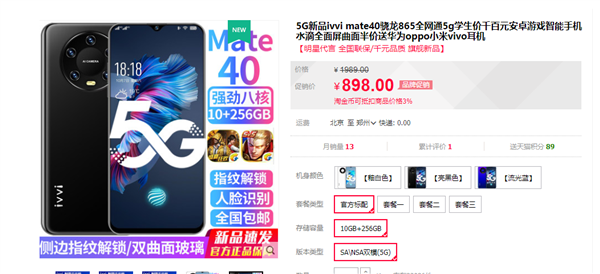
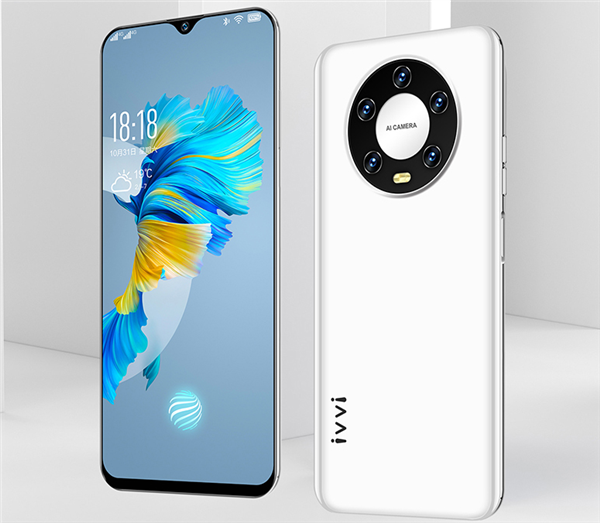
Clones and imitations of popular smartphones from major brands are not uncommon. The Apple iPhones are usual targets, and now, a Huawei Mate 40 clone called ivvi Mate 40 has been spotted on an online listing as well.
Huawei had launched its 2020 flagship Mate 40 series just last month. But now, a copycat version of the device has launched, which also features a Qualcomm Snapdragon 865 SoC but is priced at only a fraction of the cost of the actual Mate 40 series. The device was listed online for a price of just 898 Yuan (roughly 135 US Dollars).
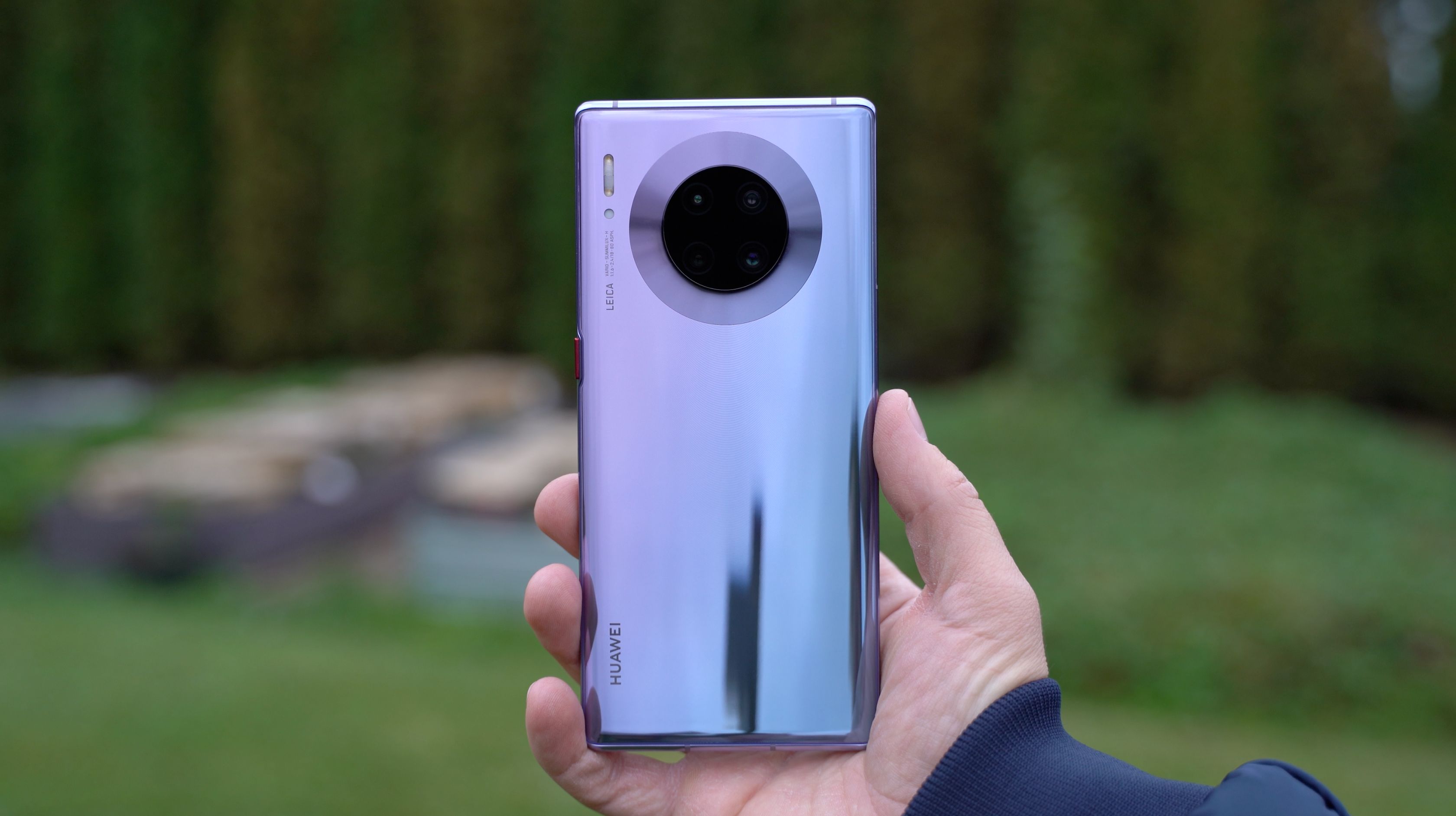
The online listing also states that the device sports a 50 megapixel penta camera setup. Furthermore, it houses 10GB of RAM and 256GB of internal storage. The handset also sports dual mode 5G and features a design that is quite similar to the original Huawei Mate 40. Notably, the “LEICA” branding for the circular camera lenses has been replaced by “AICAMERA” on the rear along with a different position for the LED flash as well.
On the front, a water drop styled notch can be found on the display, which has minimal bezels on every side. Unfortunately, while this deal seems too good to be true, it probably is as well. These copies of smartphone models from big name companies always try and take advantage of the popularity and brand name of established OEMs.
A few days back, OnePlus announced the OnePlus Nord N10 5G as its most-affordable 5G handset alongside OnePlus Nord N100, which is the brand’s cheapest smartphone of 2020. Both of them are yet to go on sale but the company has already pushed the first-ever system update to the former device.
In case you do not know, the OnePlus Nord N10 5G and OnPlus Nord N100 are limited to Europe and the US only. However, the company has only announced the pricing and availability for Europe. No one knows how much these devices will cost and when will they go on sale in the US.
Therefore, the first-ever system update for OnePlus Nord N10 5G has only been released (via PiunikaWeb) for the European variant with build number OxygenOS 10.5.5. As per the changelog, the new build bumps up the security patch level to October 2020, optimizes power consumption, and optimizes camera shooting experience.
Hence, if you are going to going to get this handset, make sure to update the phone to the latest available software on booting up.
OnePlus Nord N10 5G OxygenOS 10.5.5 Official Changelog
Apple has been rumored to be working on a new product named AirTag that will allow users to track any object the device is attached to using the company’s Find My system. Now, the upcoming Apple AirTag accessory has been leaked online.
The leak, coming from Fudge, showcases an alleged Apple AirTag carrying accessory. It looks like a small leather sleeve for the AirTag which can allow users to easily place them within the leather cover, which is attached to the stainless steel keyring.
Potentially AirTag carrying accessory in Saddle Brown.
Looks a lot like this previously reported patent, but take it with a bit of salt though since something similar is easily reproducible in China. pic.twitter.com/HHRi2p4Cyu
Further, it has the text “Designed by Apple in California” and “Assembled in China” written over the ring. The leather used for this product seems to the same Saddle Brown color that Apple introduced for the official iPhone 12 Leather Sleeve.
However, the leaker also cautioned to take this information with a pinch of salt as it may not be an official Apple product but a Chinese replica based on Apple’s schemes.
The Apple AirTags has been a bit of a mystery. The product was first reported in April 2019 and since then several reports have claimed different launch schedules. Even Apple itself had confirmed that the company is working on it. However, the product still remains unannounced and there’s no information available about its launch date.
Apple is holding a launch event today (10th November) but the company is unlikely to reveal anything about AirTags. It is expected to launch the highly anticipated MacBooks powered by the ARM-based Apple Silicon chipset.
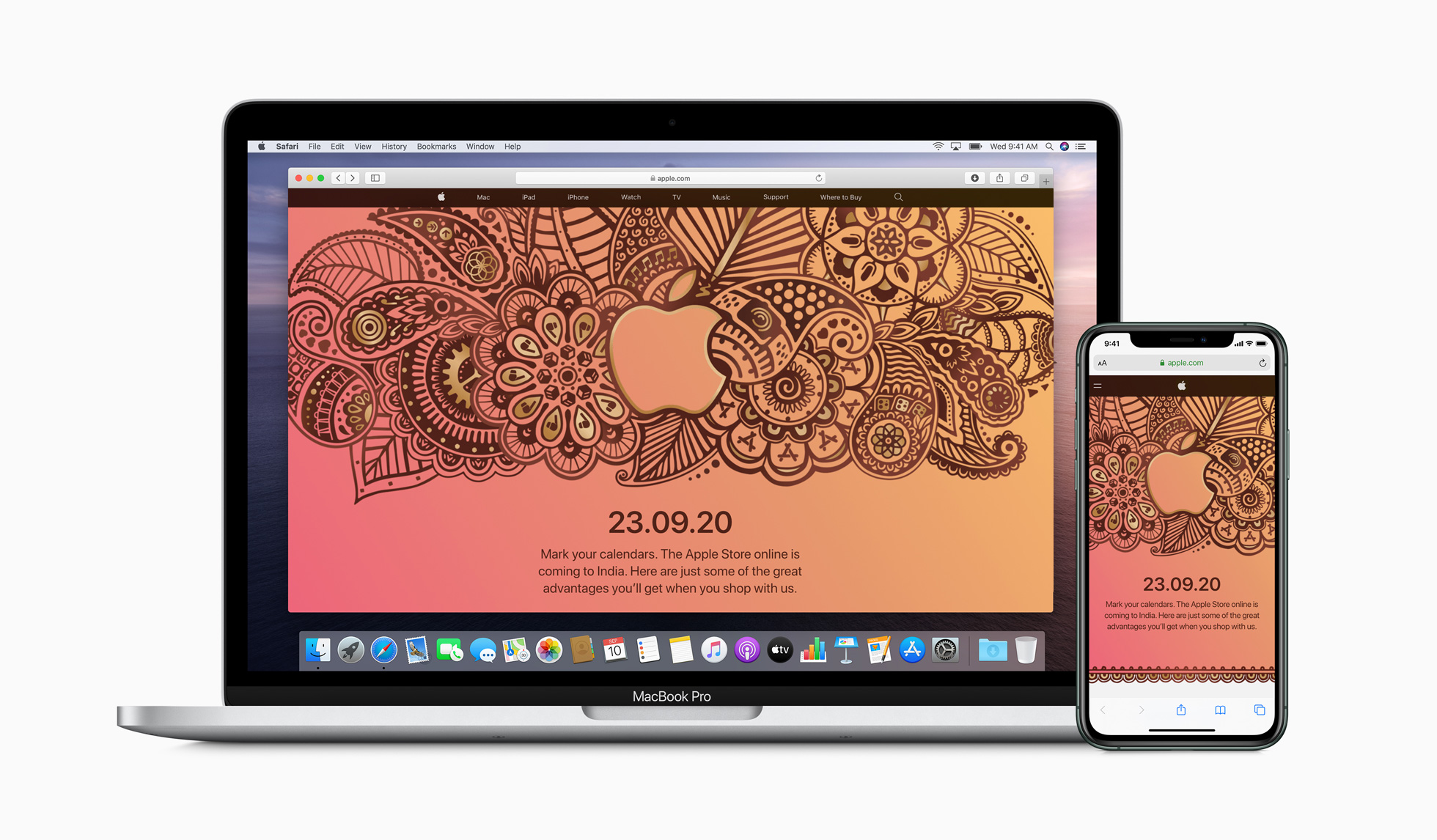
Apple is seeing a sizeable jump in revenue in India. The Cupertino based giant saw a rise of 29 percent, bringing the revenue to 13,755.8 crore INR (roughly 1.85 billion US Dollars) in the financial year of 2020.
According to a DeccanHeraldreport, the smartphone manufacturer also saw notable growth in net profits as per documents sourced by business intelligence platform Tofler. Apple had reported a revenue of 10,673.7 crore INR (roughly about 1.43 billion US Dollars) in India for the fiscal year that ended on 31st March 2019. Furthermore, the company recorded a net profit of 926.2 crores INR (roughly 124 million US Dollars) in FY20 in the Southeast Asian nation.
This is a sizeable jump from the 262.27 crores INR (roughly 35 million US Dollars) net profit that Apple recorded in the previous year. Unfortunately, the company has yet to respond to this report at the moment. Although, it does mark the iPhone maker’s growth in the premium smartphone segment in India, which has been dominated by companies like OnePlus and Samsung in recent times.
In other words, Apple is aggressively pushing for a better footing in the high end market. Tim Cook, Apple CEO had recently stated that the company had “set a September quarter record in India, thanks in part to a very strong reception to this quarter’s launch of our online store in the country.” Back in September, the company also finally launched its first online store in India, while also ramping up local production of its iPhones in the region. Its profits were backed by strong iPhone sales, which were supplemented by Mas and iPads due to strong demand for remote working or work from home in the nation amid the lockdown.
Chinese telecom giant Huawei announced EMUI 11 as the latest version of its mobile operating system in September. Since then, the company has been beta testing this software on a number of its devices. Last week, the firm even began to roll out stable builds to HUAWEI P40 & Mate30 series in China. Now, the stable update is also available for HUAWEI Mate30 Pro in global markets.
For those unaware, apart from running a beta program in its home country China, Huawei has also been running a similar initiative in select global markets for HUAWEI P40, HUAWEI P40 Pro, HUAWEI P40 Pro+, and HUAWEI Mate30 Pro. Now, weeks later, the last device in the list has become the first to get EMUI 11 stable in international markets.
The information regarding the availability of this update was shared by Twitter user @RODENT950 (via XDA Developers), who is known for his HUAWEI and HONOR-related leaks.
The latest system update for HUAWEI Mate30 Pro brings all the new features of EMUI 11 as it is a flagship smartphone. However, the update does not bump up the Android version to 11. That’s because EMUI 11 is based on Android 10 just like EMUI 10 and EMUI 10.1 before it.
Anyway, Huawei has promised to bring select Android 11 features to the EMUI 11 eligible devices before upgrading them to HarmonyOS next year.
Google is facing an antitrust investigation in a couple of countries, including the United States and China, and now yet another country has joined the list — India, which is also one of the biggest markets for the company.
India’s antitrust watchdog, the Competition Commission of India (CCI) has opened an investigation into allegations about Google using its dominant position as an app store to promote its payment service in the country.
Now, CCI will be reviewing the claims of whether the tech giant prominently promotes its payment service named Google Pay during the setup of an Android smartphone and if Play Store’s billing system is designed “to the disadvantage of both i.e. apps facilitating payment through UPI, as well as users.”
The complaint against Google alleges that the Play Store’s billing system favors the Google Pay app and the in-app purchases for apps downloaded through Play Store are also mandated to support Google Pay service “if they want to be listed on the Play Store” and are required to pay a “high commission” for the same.
In response to this, the company has told CCI that Android is not dominant in the Indian market as it faces significant competition from feature phone operating systems as feature phones now come with functions and performance that attributes to a smartphone.
The search engine giant also says that its 15 percent and 30 percent service fee is not arbitrary and is market-based, legitimate, and pro-competitive as it covers third party fees and supports investments in Play Store, including resources for developers.
For those who are unaware, Google Pay was launched in India around three years back but at that time, the service was called Google Tez. Currently, Google Pay is the second-largest online payment service in India, slightly behind Walmart’s PhonePe.
Apart from this investigation, the company is also facing two other antitrust inquiries in the Indian market which includes allegations about abusing its dominance of Android in the Smart TV market and another regarding its dominance of Android in the mobile market.
We use cookies on our website to give you the most relevant experience by remembering your preferences and repeat visits. By clicking “Accept”, you consent to the use of ALL the cookies.
This website uses cookies to improve your experience while you navigate through the website. Out of these, the cookies that are categorized as necessary are stored on your browser as they are essential for the working of basic functionalities of the website. We also use third-party cookies that help us analyze and understand how you use this website. These cookies will be stored in your browser only with your consent. You also have the option to opt-out of these cookies. But opting out of some of these cookies may affect your browsing experience.
Necessary cookies are absolutely essential for the website to function properly. This category only includes cookies that ensures basic functionalities and security features of the website. These cookies do not store any personal information.
Any cookies that may not be particularly necessary for the website to function and is used specifically to collect user personal data via analytics, ads, other embedded contents are termed as non-necessary cookies. It is mandatory to procure user consent prior to running these cookies on your website.