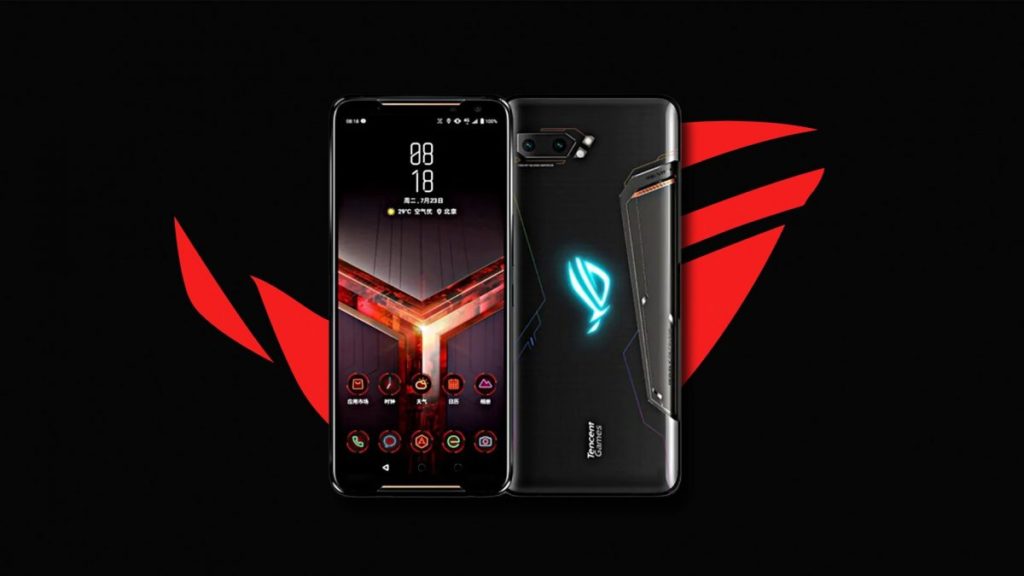
In late July, ASUS launched ROG Phone 3 as its third generation gaming smartphone. The phone is well-received by both media and customers. However, certain users are facing “black crush” issue. To address this, the Taiwanese company is seeding out a system update.
The ROG Phone 3 has received multiple updates since its launch. The previous builds brought features like Google Lens integration in the camera app, three-finger screenshot gesture, Outdoor mode for speakers, and more.
Now, the new update with build number 17.0823.2007.58 brings fixes for the infamous back crush issue on the device’s AMOLED display, battery usage statistics, and detection issue with ROG Strix Arion SSD. It also adds ROG Connect community and enables Telia VoLTE/VoWiFi in Norway, Sweden as well as Finland.
ROG Phone 3 Software Build 17.0823.2007.58 Official Changelog
Armoury Crate now also supports portrait mode. Added ROG Connect community.
Enabled Telia VoLTE/VoWiFi in Norway, Sweden and Finland
Fixed the conflict between Netflix app and System brightness function
Fixed not able to detect ROG Strix Arion SSD issue from bottom USB port
Fixed a large difference between the total power consumption items under the battery page and the actual power display in the status bar.
It is worth noting that the company has confirmed to further tune the handset’s display to fix all the anomalies.
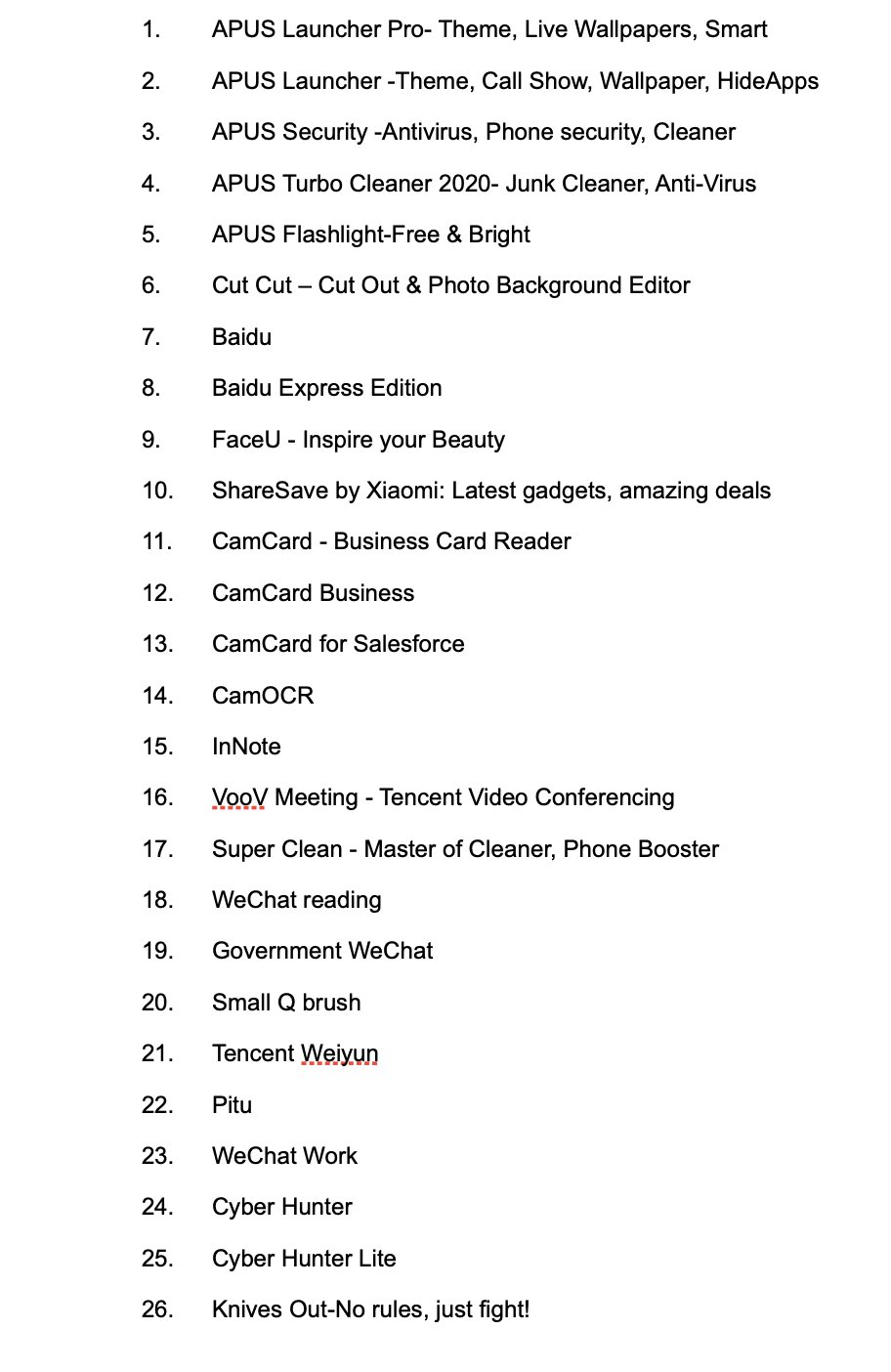
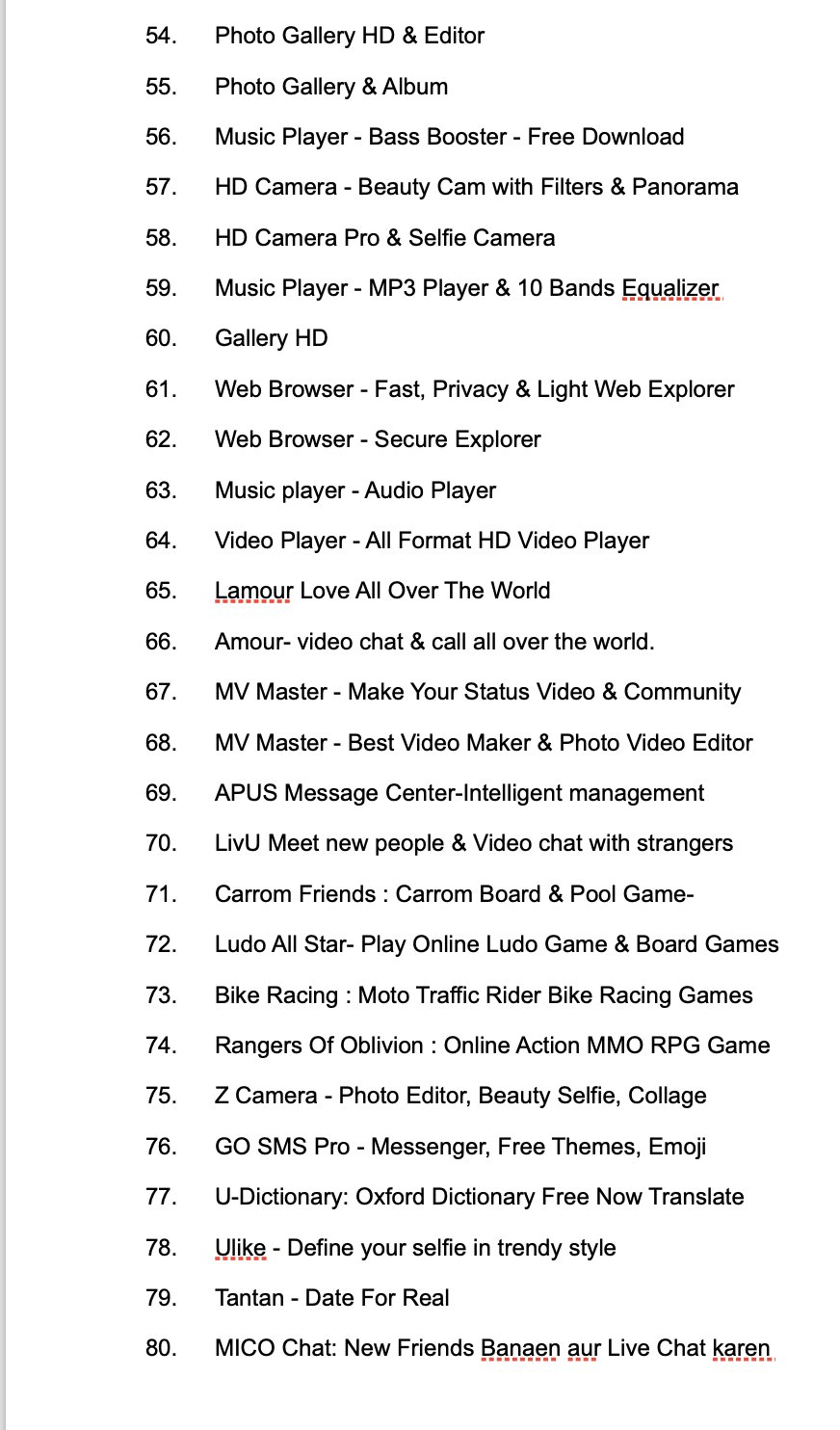
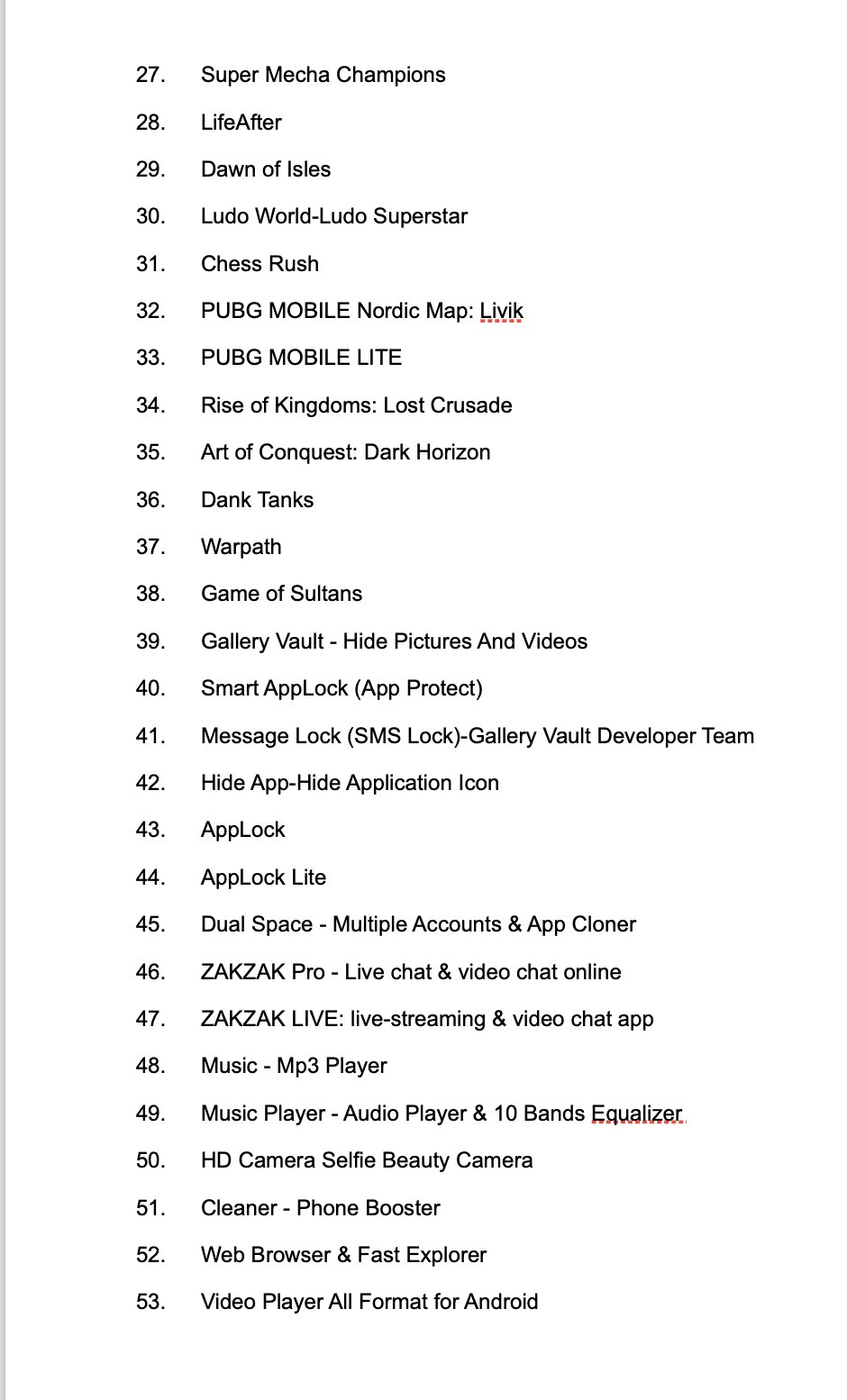
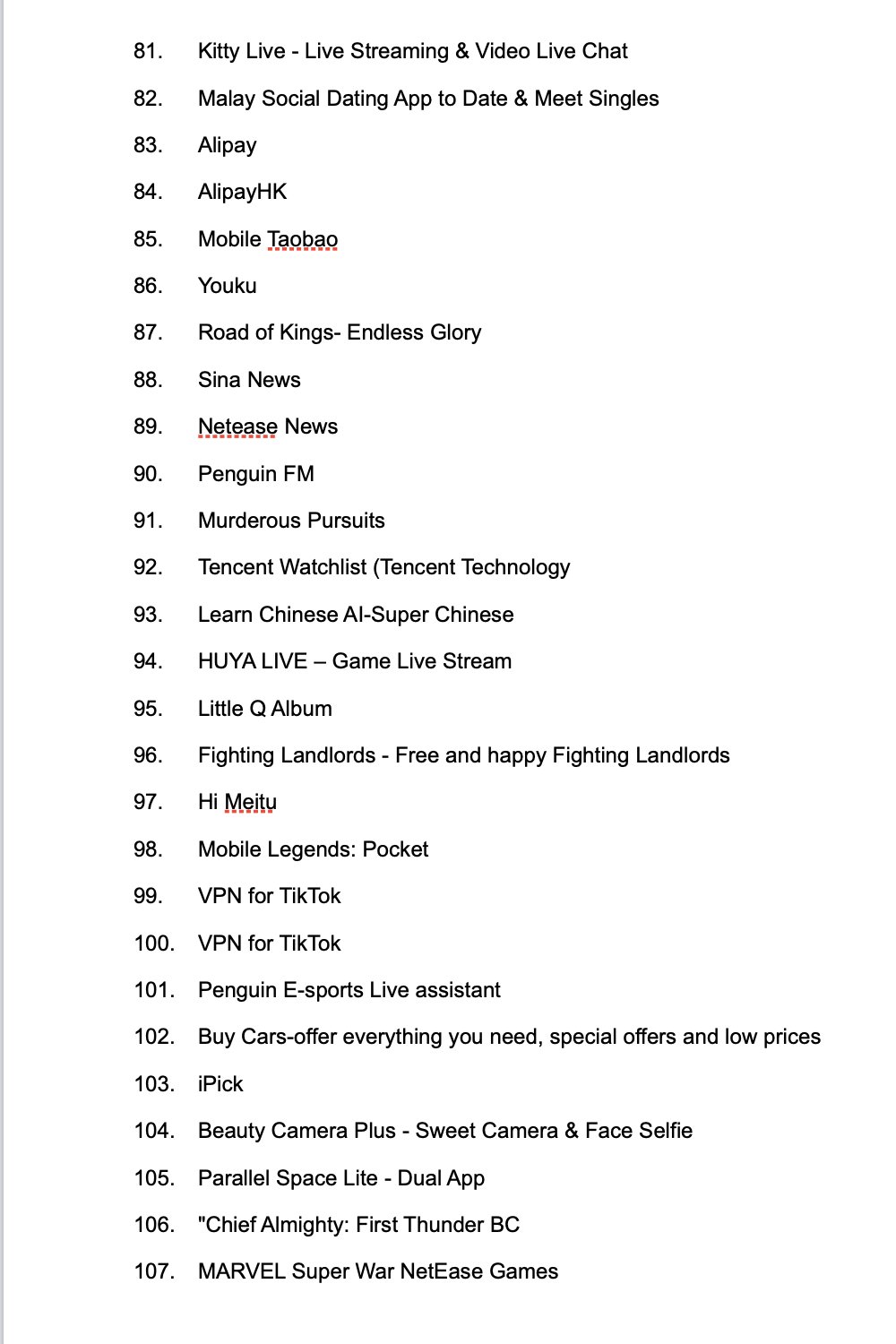
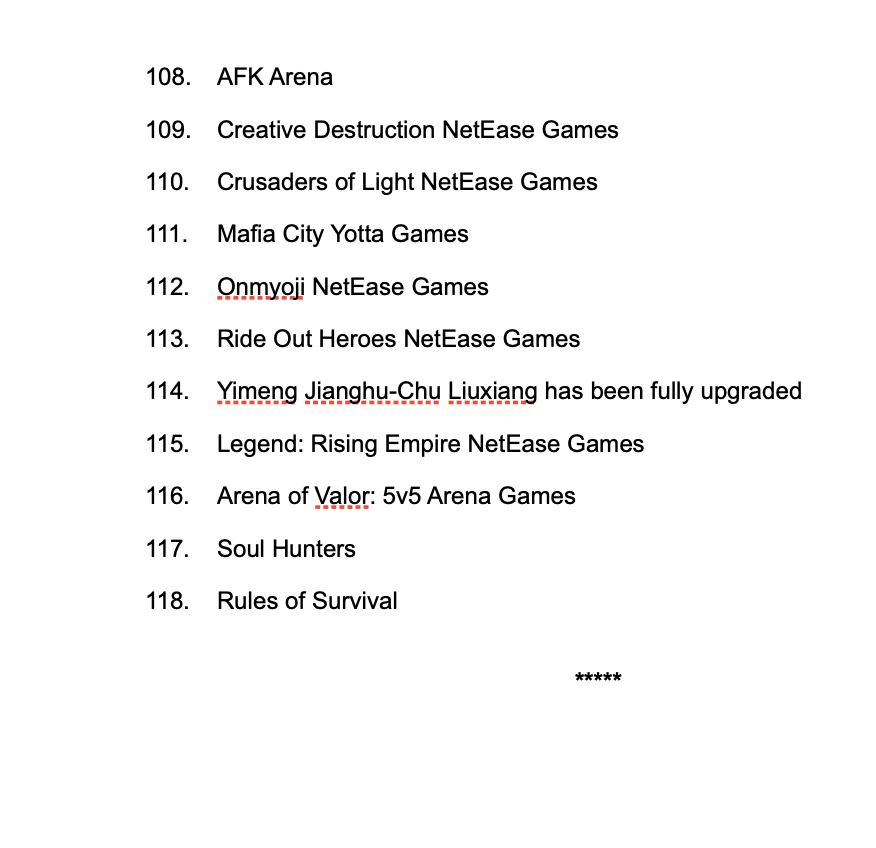
The Indian government has finally gone ahead with plans to ban more Chinese mobile apps. The apps include popular ones such as PUBG Mobile, CamCard, Baidu, Cut Cut, VooV, Tencent Weiyun, Rise of Kingdoms, Zakzak and others.
Recall that the Indian government banned 59 Chinese apps earlier this year including some of the most popular apps such as TikTok, ShareIt, UC Browser, WeChat, CamScanner, and more. The ban was hinged on security and privacy concerns but there is no doubt it is linked to the deteriorating diplomatic row triggered by border dispute in the Ladakh/Aksai Chin region.
Among the banned apps, the ban of PUBG Mobile will definitely hit the hardest. PUBG or PlayerUnknown’s Battlegrounds is one of the most popular Battle Royale games around the globe. The game is available for mobile phones, Xbox console as well as for Windows PC. It is extremely popular in India especially among the youths with India ranking as having the highest number of downloads globally.
1 of 5
The game, just like any other game can be addictive if caution isn’t exercised with cases of addiction common among teenage players. There have been a couple of reported deaths as a result of addiction to the game. However, the government’s ban isn’t tied to the rising cases of addiction but for the security of the state and the defense of the country.
It remains to be seen how this ban will be received in India but apparently, the ban only covers new downloads. If you already have the app installed n your smartphone. It may likely still work fine. Do confirm in the comments section if you have the app installed and can still play the game.
HMD Global is back to rolling out OS upgrades after taking a break for a few months. The last OS upgrade was for the Nokia 1 in early July. Now, it has announced that Android 10 (Go Edition) is now available for the Nokia 2.1.
The Nokia 2.1 was released in 2018 and it ran Android 8.1 Oreo (Go Edition) out of the box. HMD Global had promised the update will be available in the second quarter of the year, but as you can see, it has arrived late.
The update brings new features such as smart reply, dark mode, and Adiantum Encryption for Android go devices. It should also include a security patch. It will begin rolling out to users in Bangladesh, Cambodia, India, Laos, Malaysia, Myanmar, Nepal, Philippines, Sri Lanka, and Thailand. Ten percent of users in these countries should get it today and everyone should get it by September 7.
The Nokia 2.1 has a 5.5-inch HD display with the now-abandoned 16:9 aspect ratio. There is a Snapdragon 425 processor under the hood along with 1GB of RAM and 8GB of expandable storage. The phone has front-facing stereo speakers, an audio jack, an 8MP rear camera, a 5MP selfie camera, and packs a 4000mAh battery.
This is the second major OS upgrade for the device but it should still get one more going by HMD Global’s tradition.
Update: More details have surfaced and it reveals the ZMI MINI Power Bank has 22.5W 2-way fast charging. The article has been modified to reveal this and other new info.
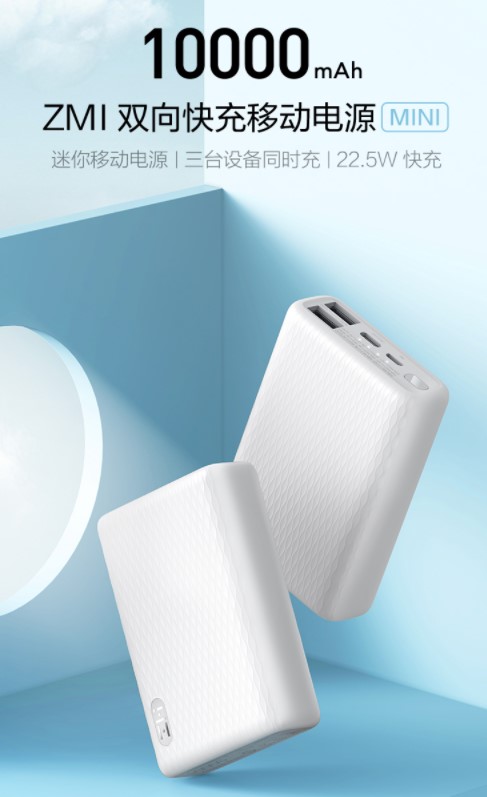
ZMI, the popular Chinese power accessory maker, has a new portable power bank. The new power bank was announced today in China and will go on sale tomorrow (now available).
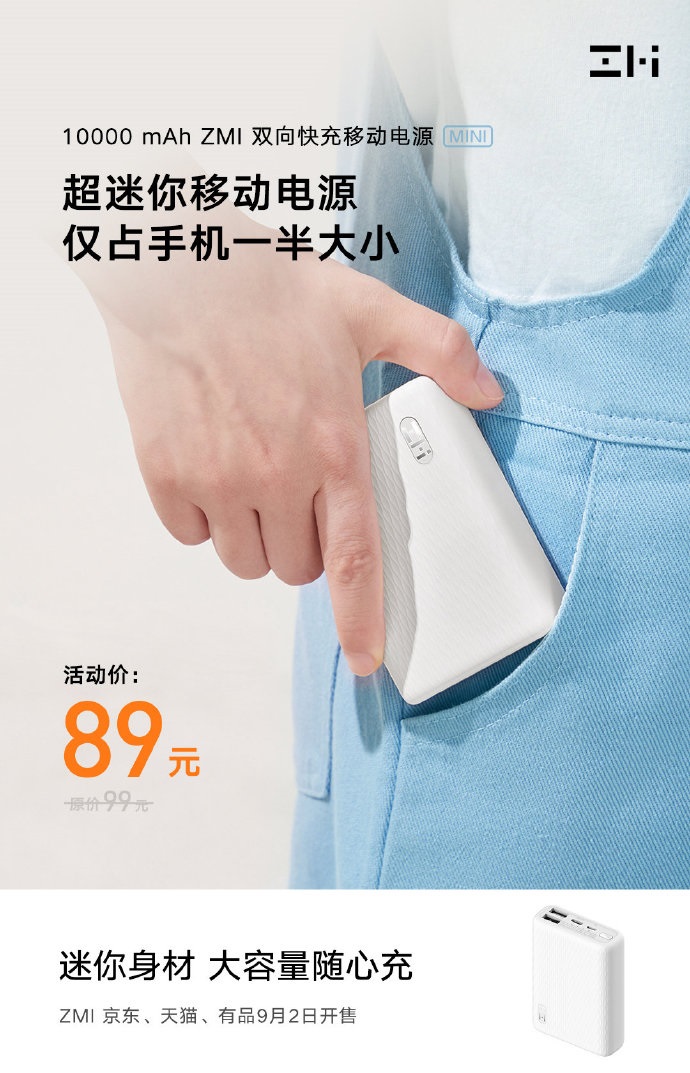
The new power bank has a 10000mAh battery capacity and has four ports. The ports include two full-sized USB ports, a MicroUSB port, and a USB-C port. The selling point of the power bank is its small size which the manufacturer says is half the size of a mobile phone and its support for 22.5W 2-way fast charging.
This means you will be able to charge a device at a maximum power output of 22.5W as well as the power bank itself. The USB-C port allows for two-way fast charging, so you can use the port to charge the power bank if you connect it to a charger that outputs 22.5W. The MicroUSB port also supports 22.5W input while each of the USB-A ports and the USB-C port has a maximum power output of 22.5W at a time. ZMI says charging the power bank takes 3.5 hours when using a 22.5W charger.
The power bank has an ABS body with a white textured finish that should provide a firm grip when you hold it. It also supports the charging of low-current devices such as fitness trackers and Bluetooth headsets. All you have to do is double press the power button to enter into the low-current mode.
The MINI Power Bank will sell for ¥89 (~$13) and you can pick it up on JD.com, TMall, and on ZMI’s own online store.
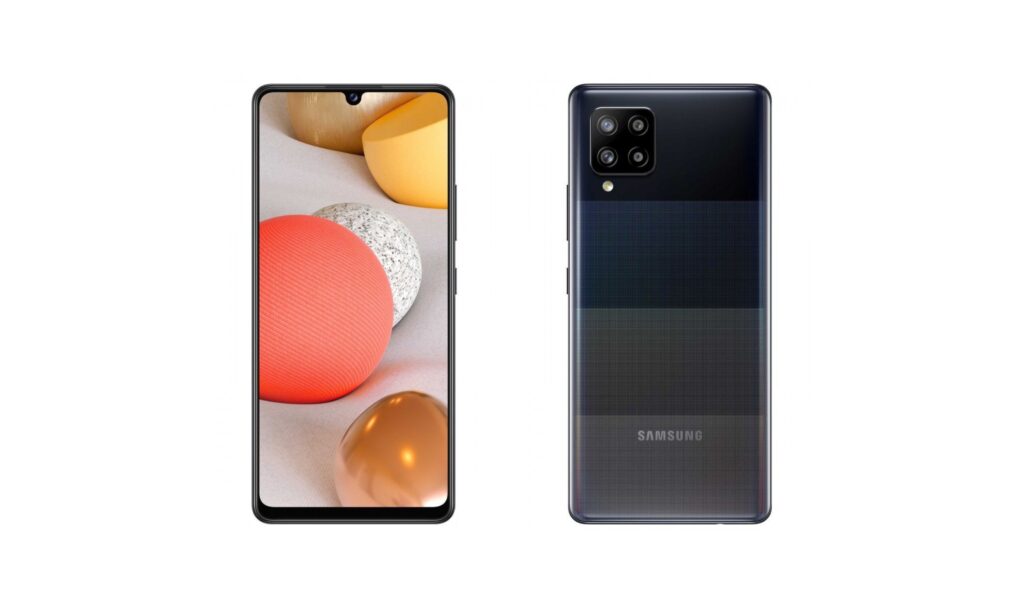
The Galaxy A42 5G is in the news for a while as the cheapest 5G smartphone from Samsung. A few hours back, the company surprised everyone by announcing it officially. Unfortunately, it only disclosed certain features of this handset. Everything about this phone, including its price, will be revealed closer to its launch later this year.
According to a press release by Samsung, the upcoming Galaxy A42 5G will sport a 6.6-inch Infinity-U Super AMOLED display, a quad-camera setup, and an in-display fingerprint sensor. That’s all the company revealed about its most affordable 5g handset to date.
But since this phone leaked multiple times, we have a couple of more details about it. As per 3C and Safety Korea certifications, it will be backed by a 5,000mAh battery, which is small compared to Galaxy M51’s 7,000mAh battery but larger than most devices.
Further, a Geekbench listing of this smartphone suggests it will come with Qualcomm Snapdragon 690, the cheapest Qualcomm smartphone SoC with support for 5G connectivity. This very same chipset is also expected to power an upcoming OnePlus device.
The Samsung Galaxy A42 is also expected to come in a 4G variant just like Galaxy A51 and Galaxy A71. But the processor underneath it is still a mystery.
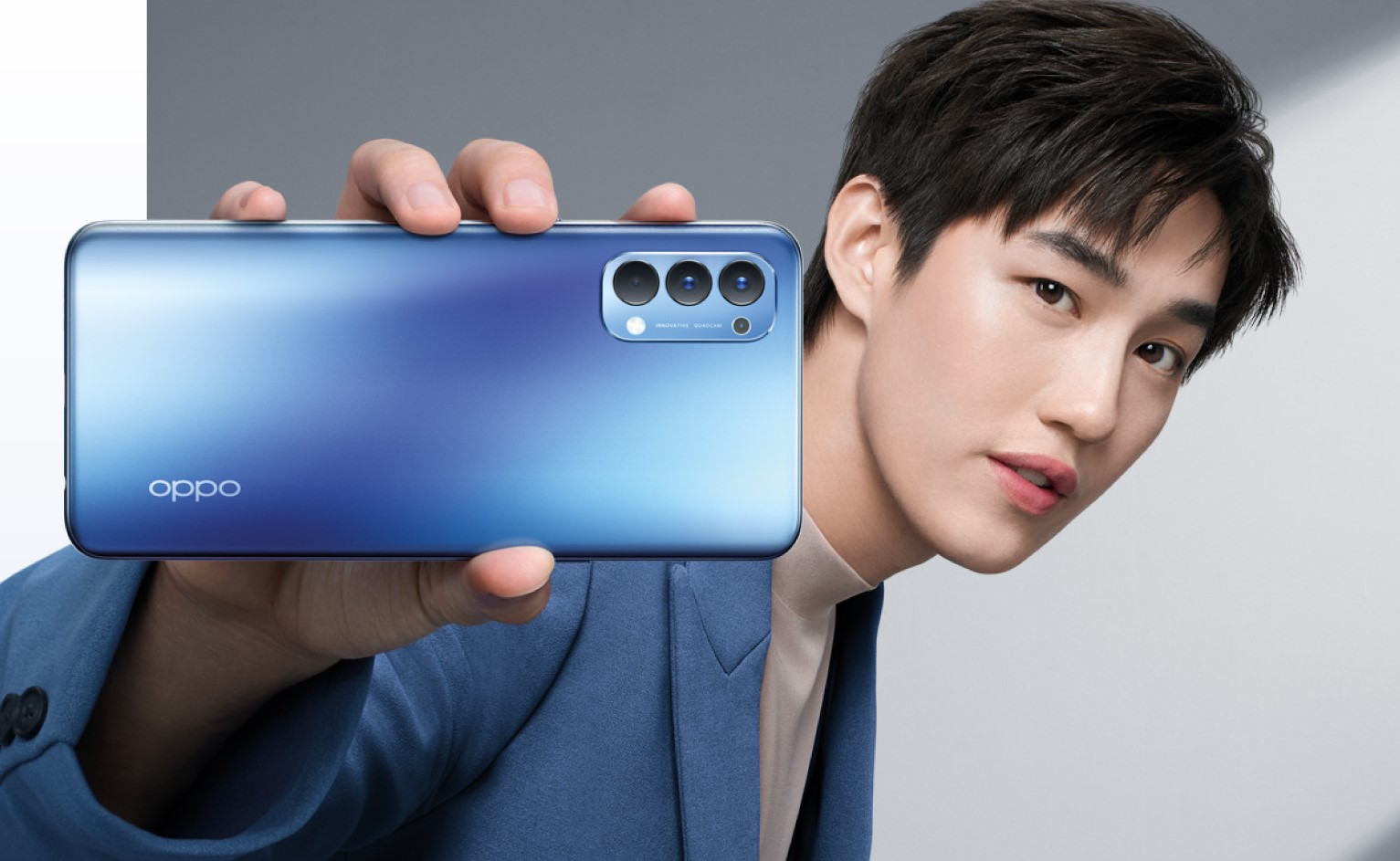
According to a report from China, OPPO is looking to capitalize on the void that’ll be left by Huawei in some key markets by significantly increasing smartphone production in the second half of the year. This report comes right after OPPO confirmed that Pete Lau will become the Senior VP of its holding company, OPlus.
The recent chip ban on Huawei will adversely affect its smartphone shipments in the coming months which will create a void in the market. So this is a crucial time for other smartphone makers like OPPO to take advantage of the situation.
OPPO Reno4 Global
China Starmarket exclusively reports that OPPO has been ramping up the production of its smartphones on a large scale. The company expects to ship around 100 million units in total by the end of the year. However, the publication’s supply chain sources give a more conservative estimate of around 85 million units.
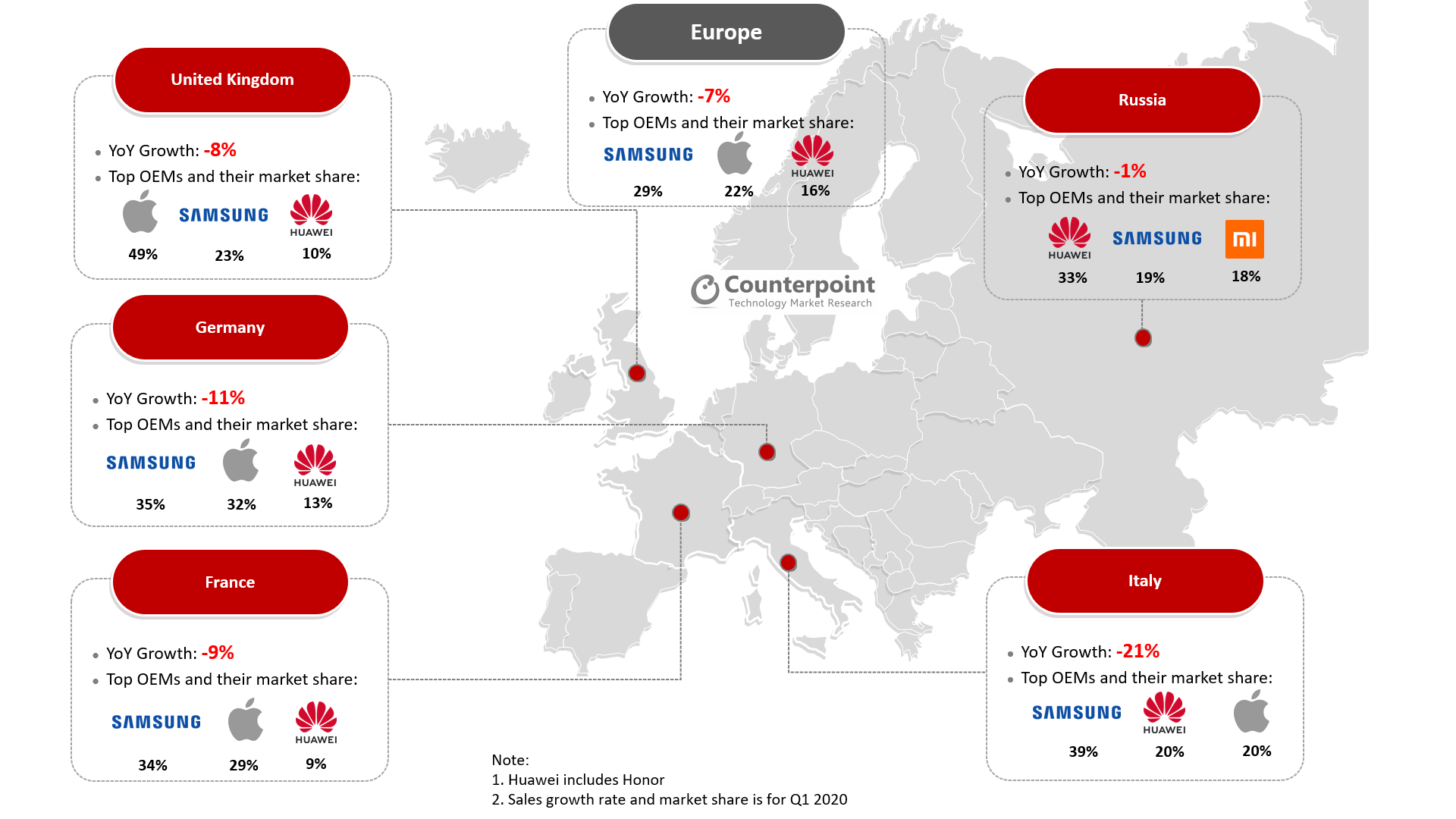
OPPO’s push is expected to be focused on the European market. The company has still not managed to make its mark in the region (with a market share of only around 3%), but this would be a good opportunity to turn things around. On the other hand, Huawei is a major player in the Europe, with the company ranked among the top three smartphone vendors in key EU markets.
After the chip ban, Huawei is expected to quickly lose its market share in all these key European markets. So Europe will be the real battleground for Chinese companies like OPPO and Xiaomi. According to counterpoint, these brands managed to grow at an impressive 41 percent and 55 percent respectively in the European market in Q2 2020. However, Huawei posted a decline of 46 percent YoY sales in the same quarter.
OPPO recently became the top smartphone maker in South East Asia in terms of market share. The company managed to edge out Samsung after grabbing a market share of 20.3 percent (vs 19.5 percent). OPPO is also increasing its presence in the Latin American market through its partnership with America Movil – the largest carrier in the region.
Overall, it looks like the smartphone market will see some major changes in the coming months.
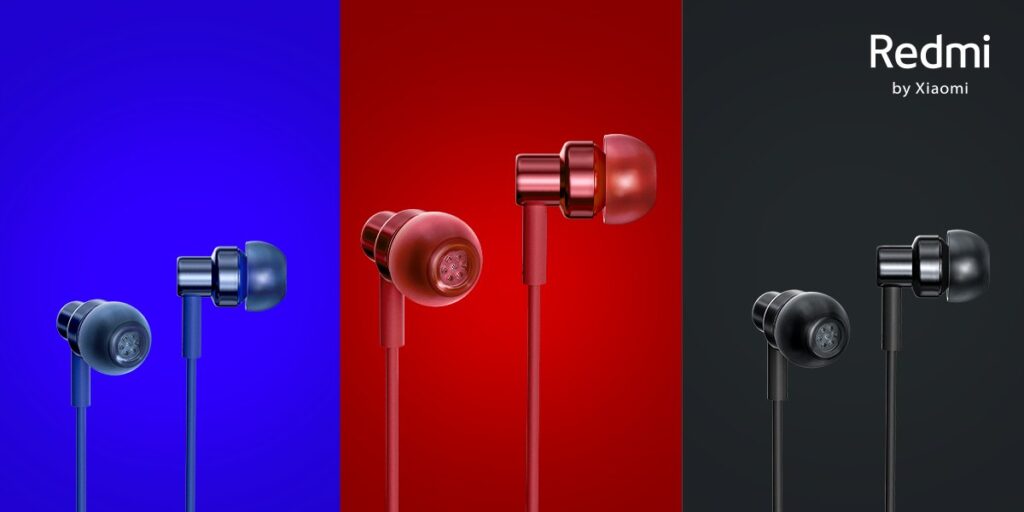
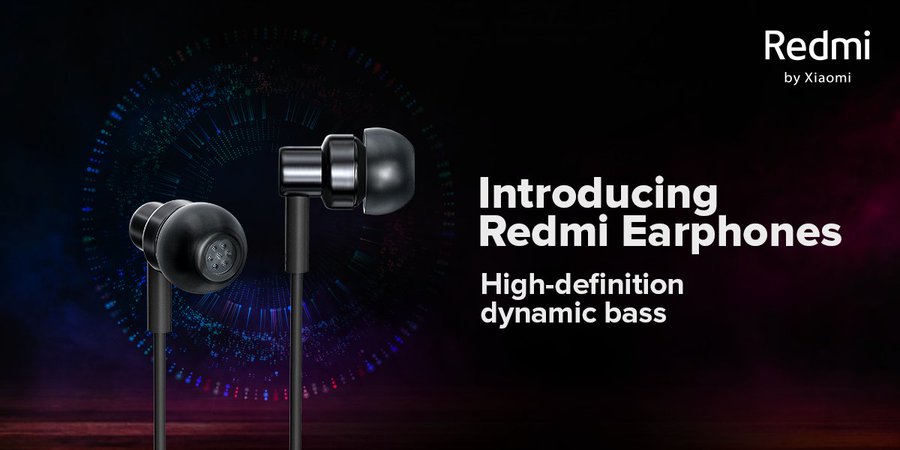
Alongside Redmi 9A, Xiaomi also launched Redmi Earphones in India priced at only ₹399 ($5). It will be available for purchase starting September 7 from across Mi online stores, offline retailers, Amazon India, and Flipkart.
The new Redmi Earphones are Xiaomi India’s cheapest audio product launch after a long time. The last one was Mi Earphones Basic, which has the same ₹399 ($5) price tag. Looks like both of them will co-exist as the latter is still listed on Mi.com.
Both of them feature 10mm drivers but the Redmi model is also Hi-Res Audio certified and hence, it should theoretically offer better performance with supported devices.
Though the two models come with aluminium alloy sound chamber, they are different in shape. Additionally, the Redmi Earphones also features magnets, Y-shaped junction, microphone, single-button in-line control, and gold-plated 3.5mm headphone jack.
Further, their net weight is 13g and the total length of their cable is 1.25m. Last but not least, it comes with three sets of silicone ear tips and will be available in three color options namely Black, Red, and Blue.
The Redmi Earbuds will compete with realme Buds Classic and Mi Earphones Basic in India as all three of them cost the same.
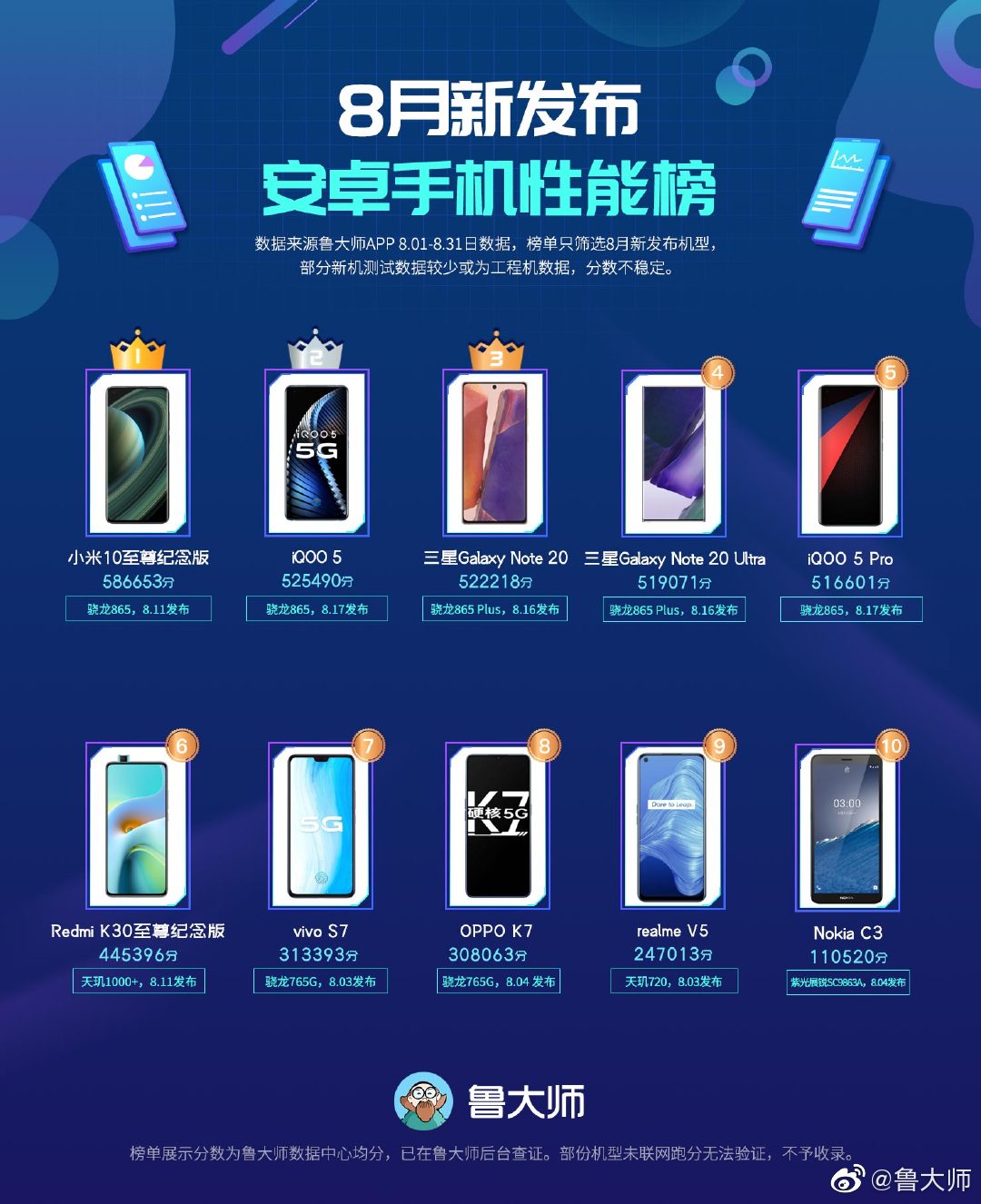
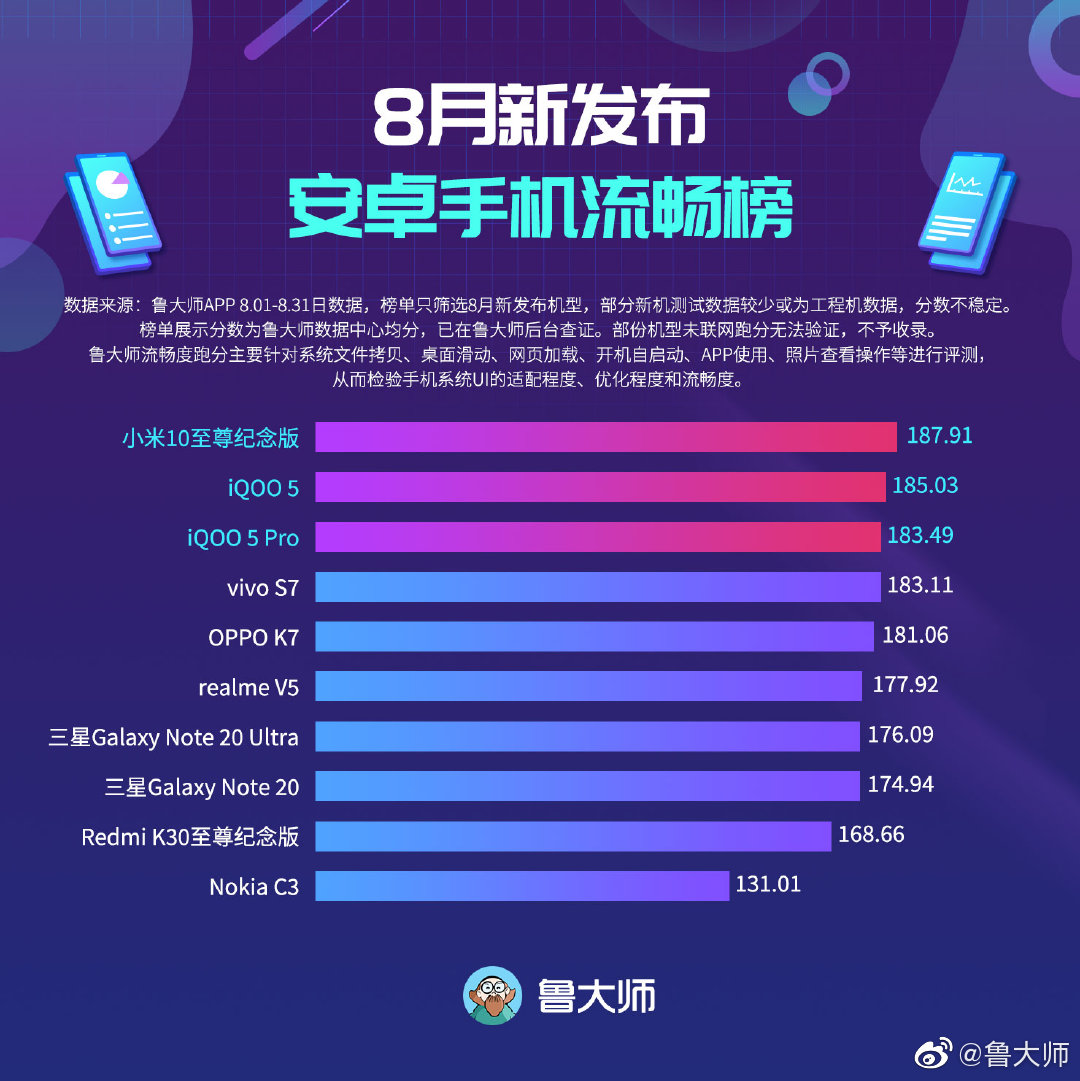
Like every month, Master Lu Benchmark has released the lists of best smartphones launched in August in terms of performance and UI fluency. The Xiaomi Mi 10 Ultra aka Mi 10 Extreme Commemorative Edition leads both the lists, followed by iQOO 5.
Master Lu is a popular benchmarking platform in China. Like AnTuTu, it also releases monthly lists of best smartphones. The company shared the list of best-performing devices yesterday, followed by UI fluency list today on Weibo.
Surprisingly, the Xiaomi Mi 10 Ultra tops both the lists despite it being powered by Qualcomm Snapdragon 865 unlike Snapdragon 865+ (Plus) present in Galaxy Note20 Ultra. Also, the regular iQOO 5 comes second instead of iQOO 5 Pro, which is at the fifth position.
Similarly, the regular Galaxy Note20 ranks third in performance, whereas the Ultra captures fourth place. However, in UI fluency, the latter comes at distant seventh, followed by the former at eighth.
Other notable handsets in the performance list include Redmi K30 Ultra, vivo S7, OPPO K7, realme V5, and Nokia C3 from sixth position onwards.
1 of 2
Master Lu Performance August 2020
Master Lu UI Fluency August 2020
Unsurprisingly, the Redmi K30 Ultra ranks ninth, just ahead of Nokia C3 in UI fluency. This goes in line with our review, in which we experienced it to be janky despite featuring MediaTek Dimensity 1000+ (Plus) chipset. Xiaomi really needs to optimize the software on this phone.
Last but not least, the vivo S7, OPPO K7, and realme V5 rank fourth, fifth, and fifth respectively in UI fluency.
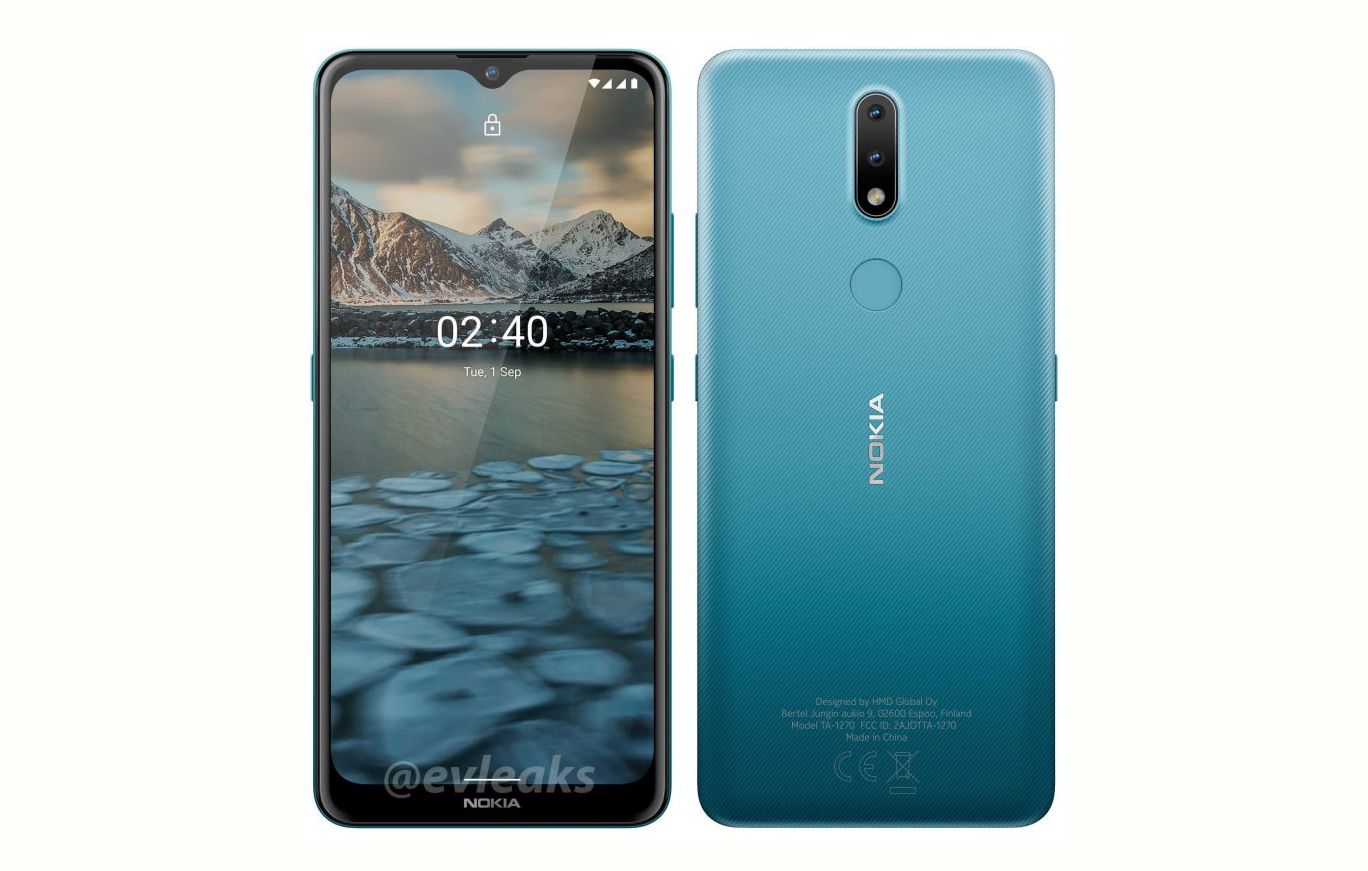
The IFA 2020 tech trade show will take place later this week in Berlin, Germany. Rumors have it that the HMD Global may use the platform to announce a couple of new devices such as Nokia 2.4, Nokia 3.4, Nokia 6.3, and Nokia 7.3. Ahead of the rumored launch, reliable tipster Evan Blasshas shared a leaked press render of the Nokia 2.4 phone.
The leaked press render shows that the Nokia 2.4 has a waterdrop notch display. It seems to be equipped with a dedicated hardware key on the left edge for accessing the Google Assistant. A volume rocker and a power key is available on the right side of the Nokia 2.4.
The Nokia 2.4 has a gradient colored plastic rear. At the center of its upper half, there is a vertical dual-camera system with an LED flash. Below it is a fingerprint reader.
Rumors surrounding the Nokia 2.4 smartphone have revealed that is codenamed as “Wolverine” and its model number variants are TA-1270, TA-1274, TA-1275, and TA-1777. The handset 165.85 x 76.3mm dimensions and it could be sporting an HD+ resolution of 6.5 inches. The phone will boot to Android 10. It had appeared on the Geekbench benchmarking platform in the recent past with the Helio P22 chipset.
The Nokia 2.4 could be backed by a 4,500mAh battery. It is likely to come in two variants such as 2 GB RAM + 32 GB storage and 3 GB RAM + 64 GB storage. There is no word on the pricing of these models. It is expected to arrive in grey, blue, and purple colors.
International Data Corporation (IDC) has predicted in its first China Quarterly Smart TV Tracker report that 44.8 million units of Smart TVs could be shipped in China in 2020. This represents a decrease of 4.4 percent compared to last year.
The report goes on to add that features like improved connectivity and interaction intelligence in newer Smart TV models could lead to increased consumption of smart TVs in the Chinese market.
IDC believes that the evolution of Smart TVs in the Chinese market is yet to take off because most manufacturers are continuing to focus on video entertainment capabilities instead of expanding diversified scenarios.
Sophie Pan, Research Manager for Client Systems Research at IDC China, said: “With 95% penetration of China’s smart TV market shipments, IDC sees an opportunity for smart TV’s to get to the next stage of Smart TV development and increase its market share.”
It adds that the future direction of smart TVs, which the company calls “TV Plus” ecosystem, has five aspects — core, connection, perception, data, and software ecosystem, which will lead third-party developers to build diversified application services.
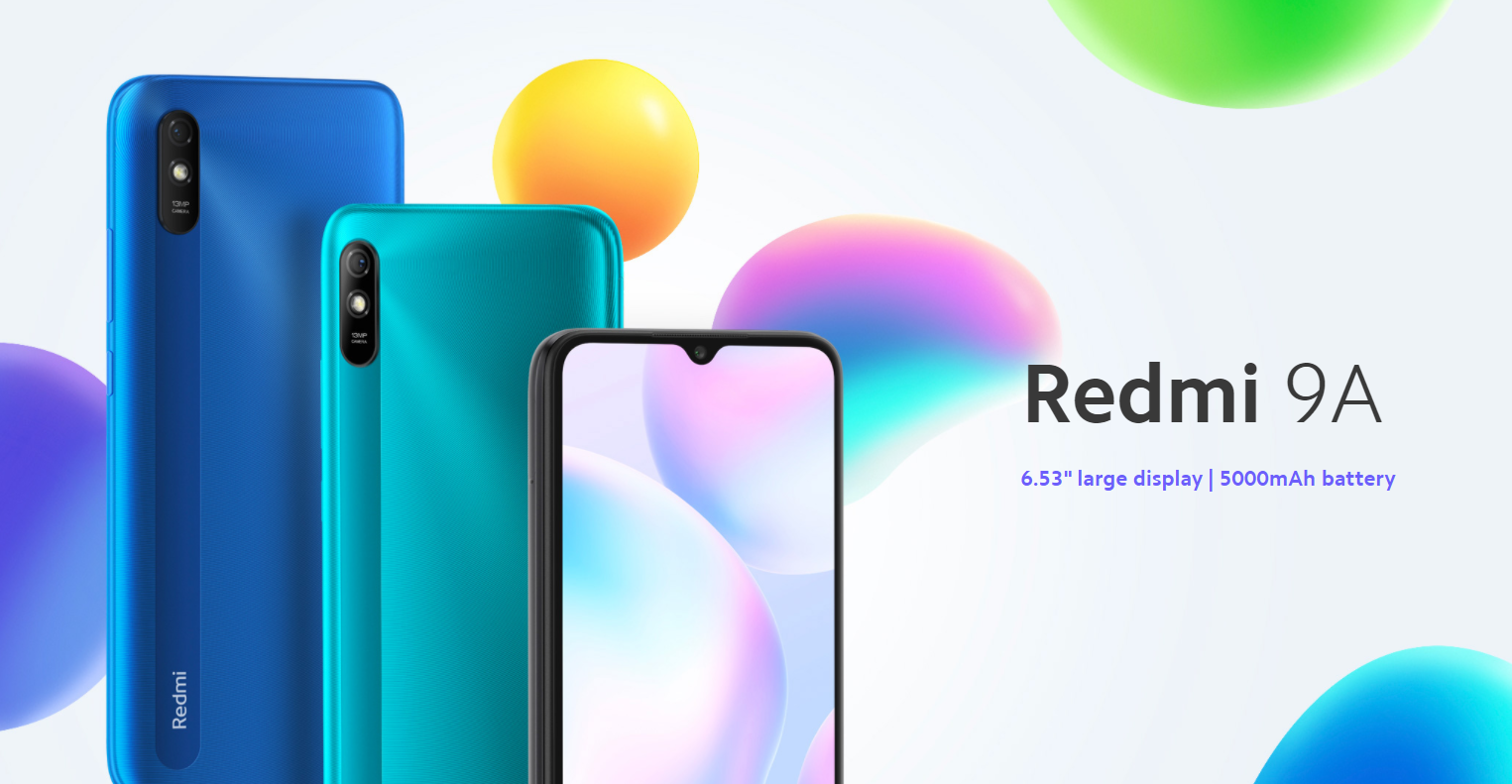
The Redmi 9A smartphone has gone official in India today. Previously, the phone had launched in Malaysia in June and in China in July. With a price tag of Rs 6,799 (~$93), it is the cheapest phone in the Redmi 9 series.
Redmi 9A specifications and features
The Redmi 9A features a 6.53-inch IPS LCD HD+ resolution display that supports a 20:9 aspect ratio. The 12nm Helio G25 is present under the hood of the device. The phone comes with a 12nm Helio G25 chipset and with HyperEngine Gaming technology that brings gaming capabilities on the entry-level phone. The phone ships with 2 GB / 3 GB of LPDDR4x RAM and 32 GB of eMMC 5.1 storage.
Redmi 9A
The MIUI 12 flavored Android 10 OS comes preloaded on the Redmi 9A. It has a 5,000mAh battery with 10W charging support. It has an AI-powered 13-megapixel with LED flash on its back. It offers features like AI portrait mode, AI scene detection, and Pro mode. The front-facing 5-megapixel camera offers users with features like screen flash and AI portrait mode.
The Redmi 9A does not have a fingerprint sensor. Instead, the company offers face unlock security feature on it. The Redmi 9A delivers connectivity options such as dual 4G VoLTE, Wi-Fi 802.11 b/g/n, Bluetooth 5.0, GPS, microUSB, and a 3.5mm audio jack.
When it comes to design, the Redmi 9A has a splash-resistant P2i nano-coating and has a textured plastic rear that promotes a better grip and prevents fingerprints. The phone has 164.9 x 77 x 9mm dimensions and it weighs 196 grams.
Redmi 9A price in India and availability
The 2 GB RAM + 32 GB storage and 3 GB RAM + 32 GB storage variants of the Redmi 9A for India is priced at Rs. 6,799 (~$93) and Rs. 7,499 (~$103), respectively. The phone can be availed in three colors such as Midnight Black, Sea Blue, and Nature Green.
The first sale of the Redmi 9A will be carried out in India through platforms like Amazon India, M.com, Mi Store, Mi Studio stores on Sept. 4 at 12 PM (local time). The phone will be also made available through offline markets soon. The company also announced Redmi earphones worth Rs. 399 (~$5). It will be available through Flipkart, Amazon India, and offline retail partners from 12 PM on Sept. 7.
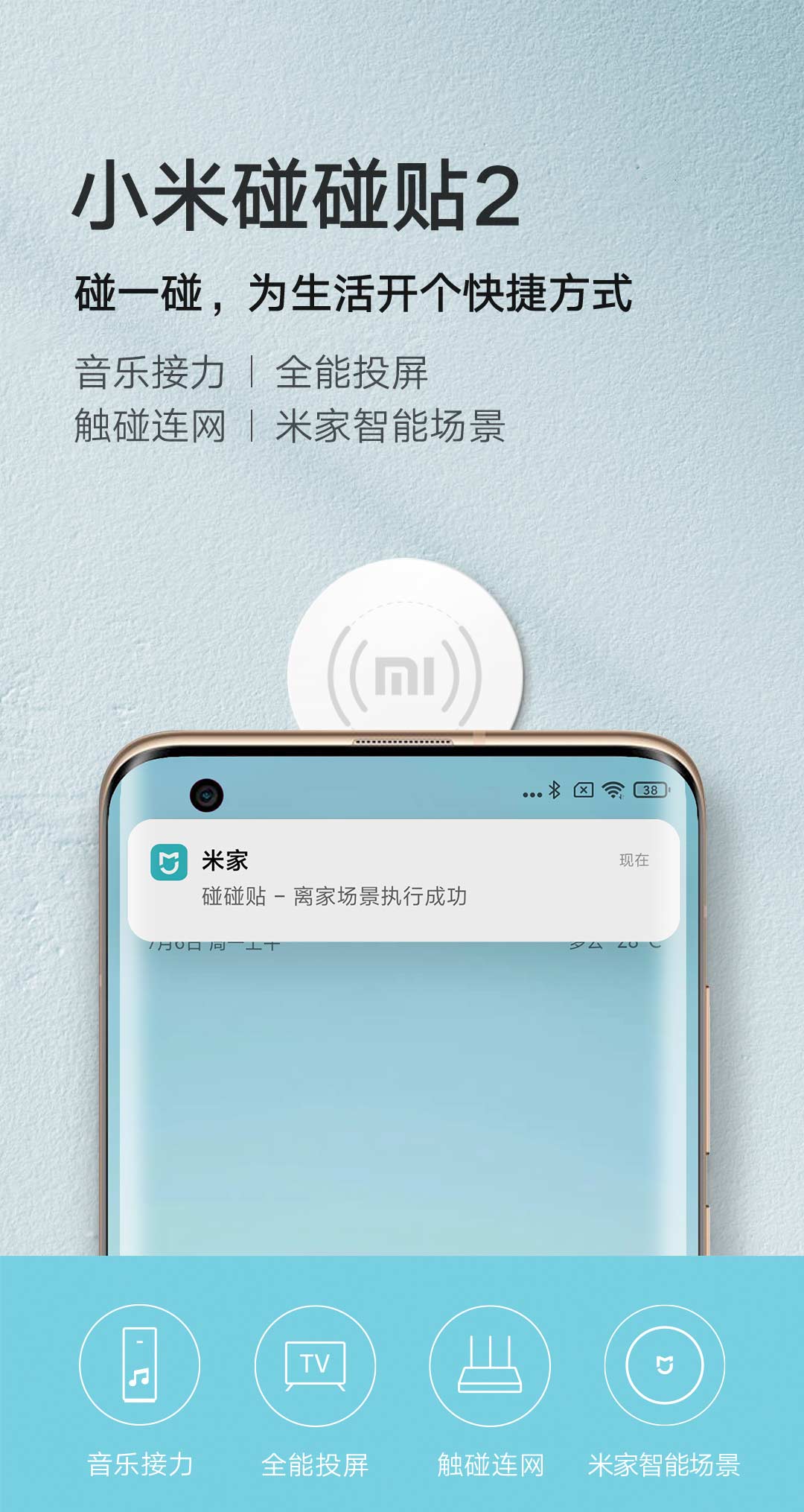
A few years ago, in 2014, Xiaomi had released a product named Xiaomi NFC Touch Sticker and now the company has unveiled the second-generation of the same, named Xiaomi NFC Touch Sticker 2.
The company had put up the Xiaomi NFC Sticker product for crowdfunding for a price of 19.9 yuan, which is about $3. Now, it seems that the Chinese company has already raised about 995,000 yuan from the campaign.
As you would expect from any of the NFC stickers, the Xiaomi Touch Sticker 2 also triggers a variety of the functions when tapped with a smartphone. The functions on the sticker can be configured using Mijia App.
It supports a range of functions, including music relay, all-round screen projection, touch connection, Miji Smart Home support, etc. All you need to do to use this NFC sticker is to enable the NFC feature on the smartphone and tap on the NFC card with the phone.
The official listing from the company claims that the Xiaomi NFC Touch Sticker 2 comes with support for more than 2,200 smart devices, including 89 IoT platforms from companies like Philips and Op, along with its own ecosystem of products.
Xiaomi has been launching quite a few smartphones in the market, at a regular interval, and now the company seems to be gearing up to launch a new 5G smartphone in the market, which is likely a budget to the mid-range offering.
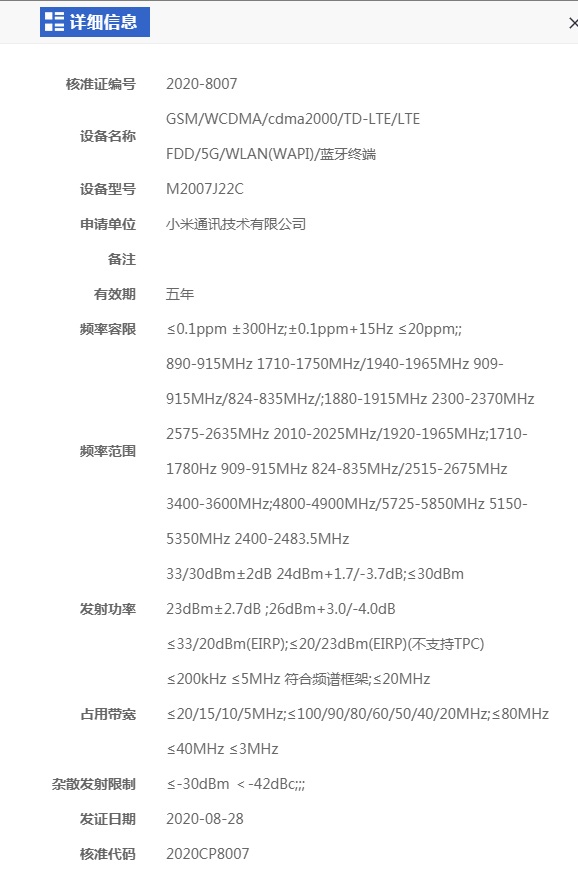
A new Xiaomi smartphone with model number M2007J22C has been approved for network access, as per the report. It is being speculated that the device in question is the upcoming Redmi Note 10 smartphone.
It is also being reported that the device will come powered by the MediaTek Dimensity 820 SoC. This makes sense given that the Redmi Note 9 was also powered by the Helio G85 gaming-centric chipset from MediaTek.
This is the same chipset that powers the China-exclusive Redmi 10X 5G and Redmi 10X Pro 5G. A leak related to the device revealed that the phone has 8GB of RAM and runs Android 10 operating system out-of-the-box.
As for MediaTek Dimensity 820, the chipset is focused on the mid-range and upper mid-range smartphones, and the chipset is jointly built by Xiaomi and MediaTek. It is based on a 7nm process and comes with 4 x Cortex A76 cores and 4 x Cortex A55 cores.
We expect the Redmi Note 10 smartphone to be accompanied by a Pro model as well, which should have a high refresh rate display, NFC support, and more. While not many details about the phones are known at this time, the Redmi Note 10 lineup is expected to be priced around 1,000 yuan (~$146) in China.
POCO is gearing up to launch the POCO X3 NFC through a global launch event on Sept. 7. The company seems to be having different plans for India. Today, the company released a fresh tweet to confirm that it will be launching the POCO M2 phone on Sept. 8. Hence, there is a possibility that the company may hold a dedicated POCO X3 launch event for India on a later date.
The POCO M2 teaser reveals that it will be made official at 12 PM (local time) in India on Sept. 8. The tweet carries a link to the phone’s landing page on Flipkart. The latter has no word on the specifications of the POCO M2, but it only mentions that it has a large screen, more amount of RAM, and a big battery. The teasers also suggest that it will be good in the photography department.
It's time to change all your WTF moments to #PowerFTW moments.
Get ready, the #POCOM2 is arriving on 08th September at 12 noon on @Flipkart.
Judging from the moniker, the POCO M2 will have weaker specs than the POCO M2 Pro that debuted in July. The POCO M2 Pro is now selling in India with a starting price of Rs. 13,999 (~$191). There is a possibility that the POCO M2 may debut in the country with a price tag of around Rs. 10,000 (~$137). Hence, it could end up as the most affordable smartphone from the brand.
In June, the Xiaomi phones with model numbers M2004J19I and M2004J19PI received certification from the Bureau of Indian Standards (BIS). In the same month, the M2004J19I and M2004J19PI along some other model number variants had appeared as Redmi 9.
The M2004J19I and M2004J19PI models had also appeared in the database of TUV Rheinland certification platform. Interestingly, the M2004J19I and M2004J19PI were mentioned as Redmi and POCO devices, respectively.
The Redmi 9 Prime that debuted last month in India has M2004J19PI. Hence, a slightly lower version of the Redmi 9 could be announced in India as POCO M2. Hopefully, more details of the POCO M2 will surface before the Sept. 8 launch.
After much anticipation and delays, Google recently launched the much-awaited Pixel 4a smartphone. At the time, the company had revealed that it will soon be launching the Pixel 4a 5G as well as Google Pixel 5 smartphones.
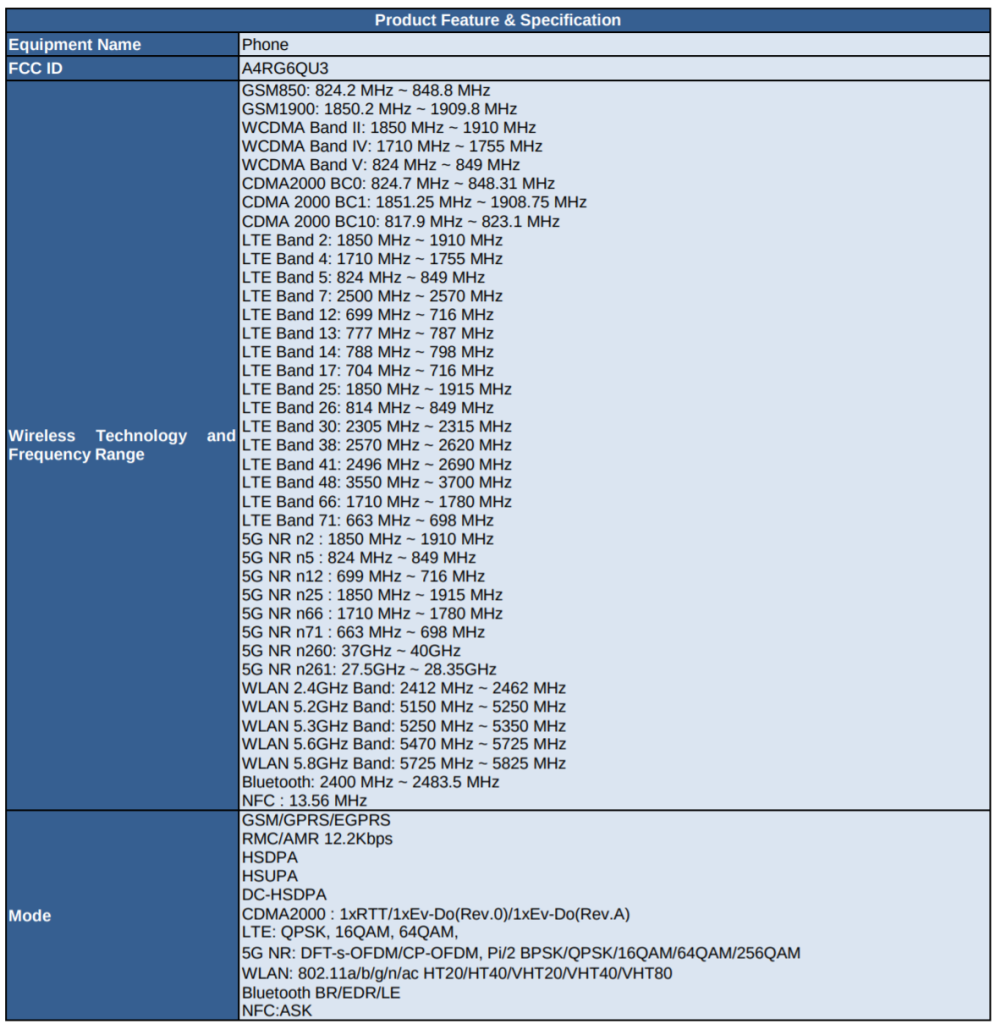
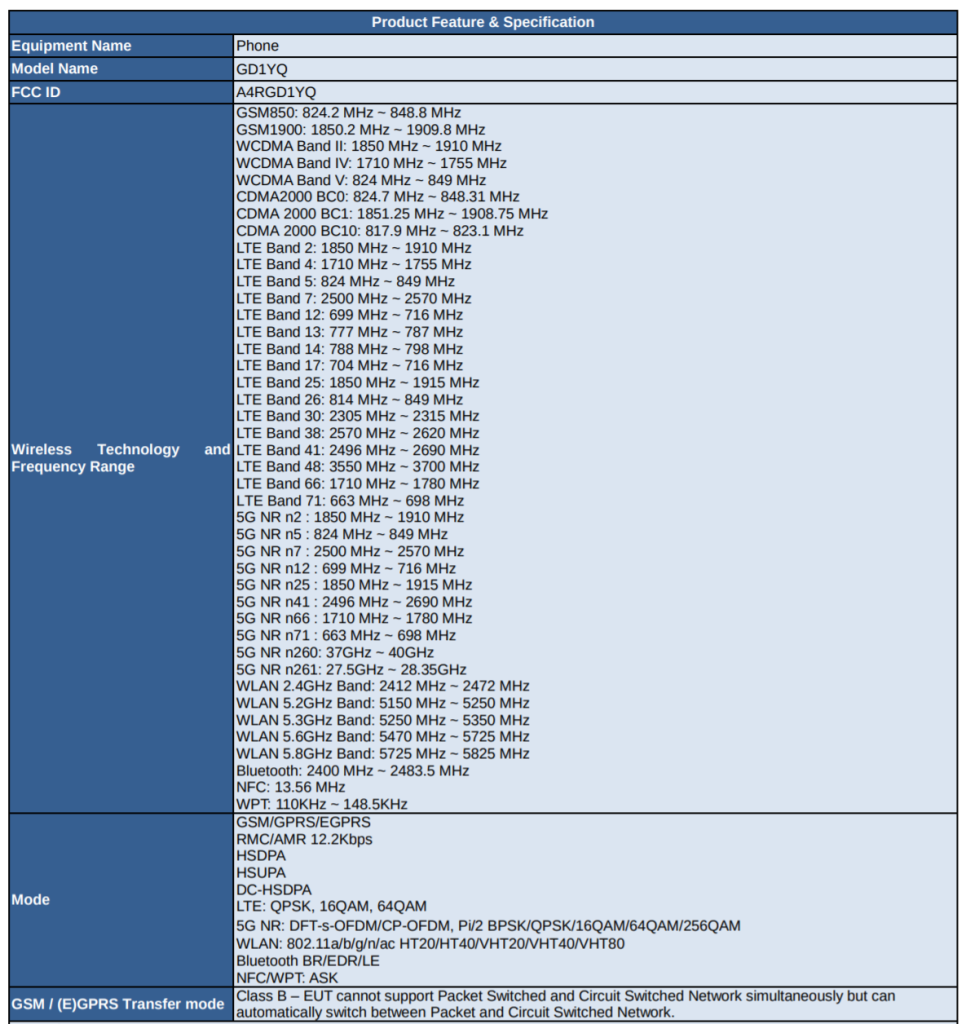
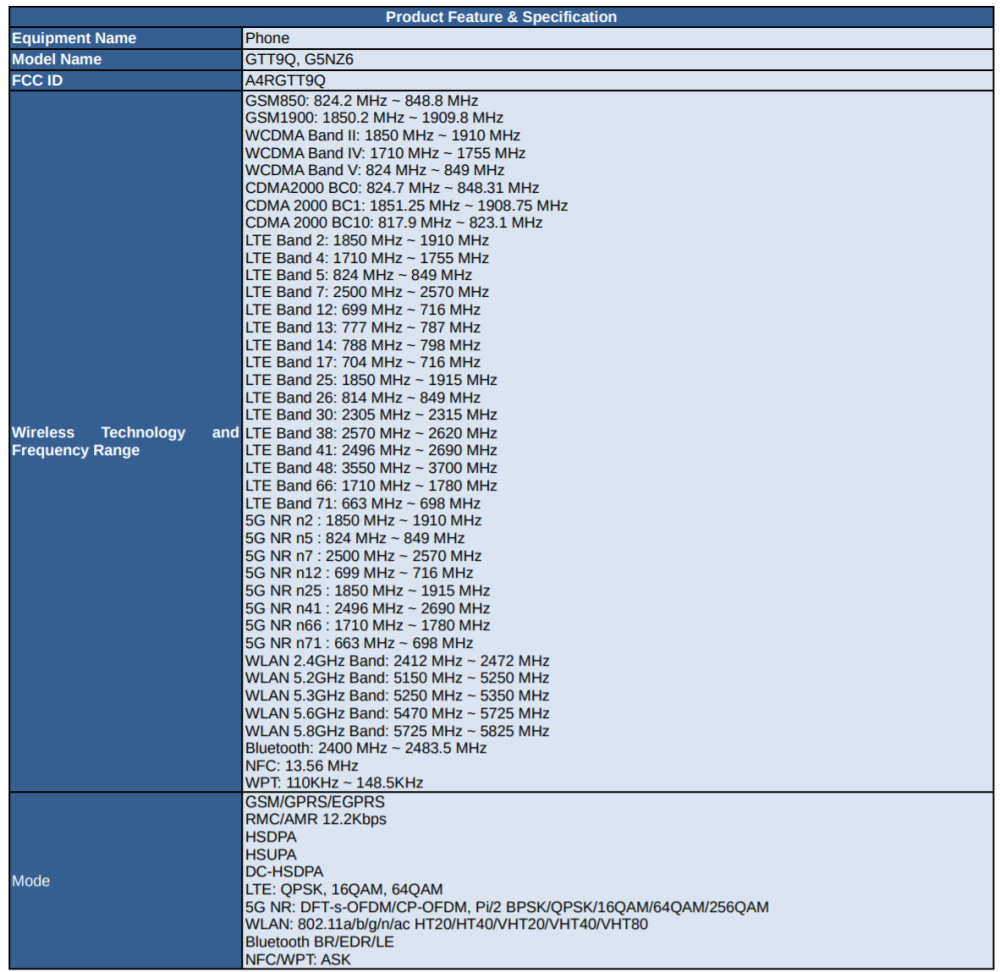
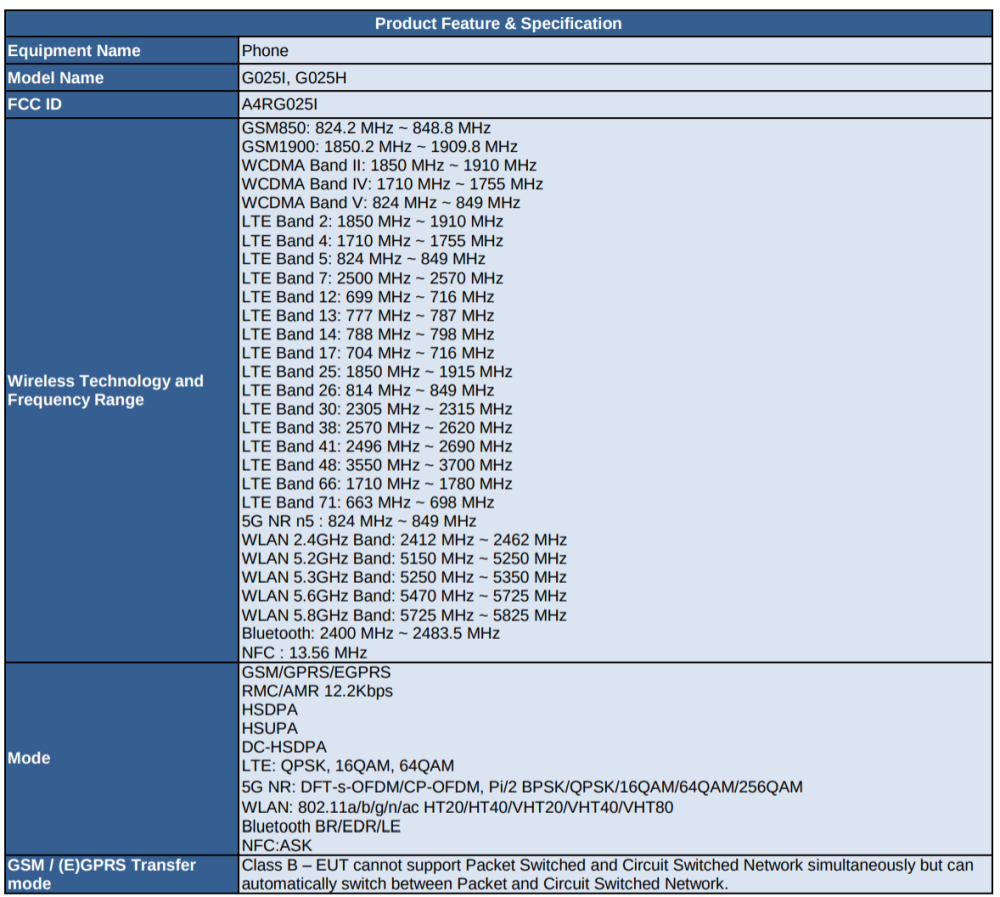
While the company has not yet revealed the launch timeframe for the upcoming devices, reports indicate that both of them could go official by the end of this month. Now, both — Pixel 4a 5G and Pixel 5 have passed through FCC certification.
From the listing, it seems that the Pixel 4a models A4R G025E, G025H, and G025I are the 5G variant of the device. It is also revealed that the phone features a plastic body and comes with 6GB of RAM and a 3.5mm headphone jack.
Under the hood, it is powered by the Qualcomm Snapdragon 765G chipset. It comes with a bigger screen, a dual-camera setup on the back, and support for sub-6 5G bands. We are expecting a similar design to the original model.
As for the Google Pixel 5, models, A4R GD1YQ and GTT9Q have been listed. It also reveals that the phone will have support for Wireless Power Transfer (WPT). This will enable the smartphone to charge accessories, like Pixel Buds.
From the listing, it is revealed that the model number GTT9Q doesn’t have support for mmWave and is relying on the sub-6 band but the other models, including GD1YQ and G6QU3, have support for both the bands.
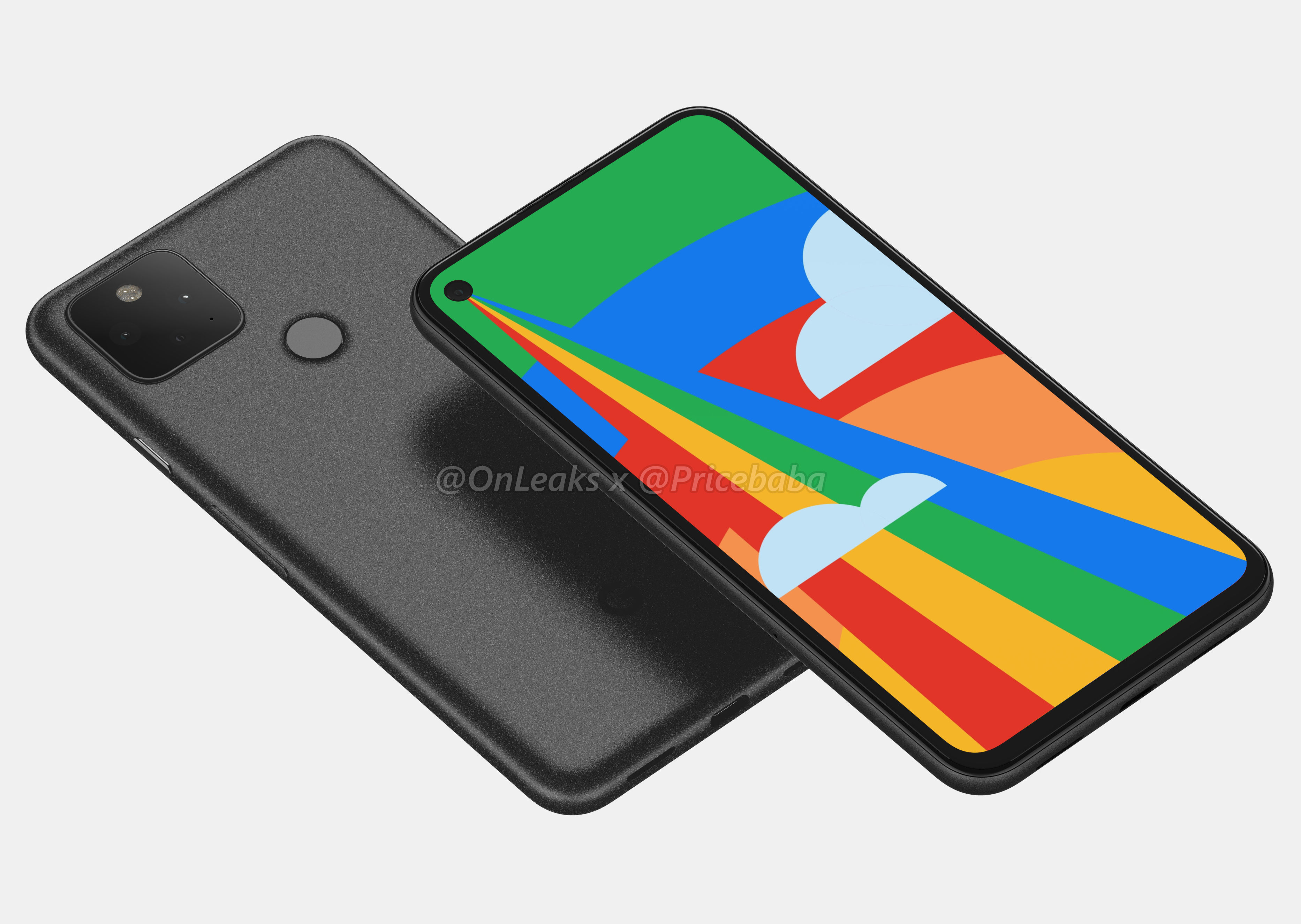
The Google Pixel 5 is rumored to come featuring a 6-inch Full HD+ display with a 90hz refresh rate. It is said to come packed with 8GB of RAM and a 4,000mAh battery. Unlike the Pixel 4a models, this one won’t have a 3.5mm headphone jack, being a so-called “premium” phone.
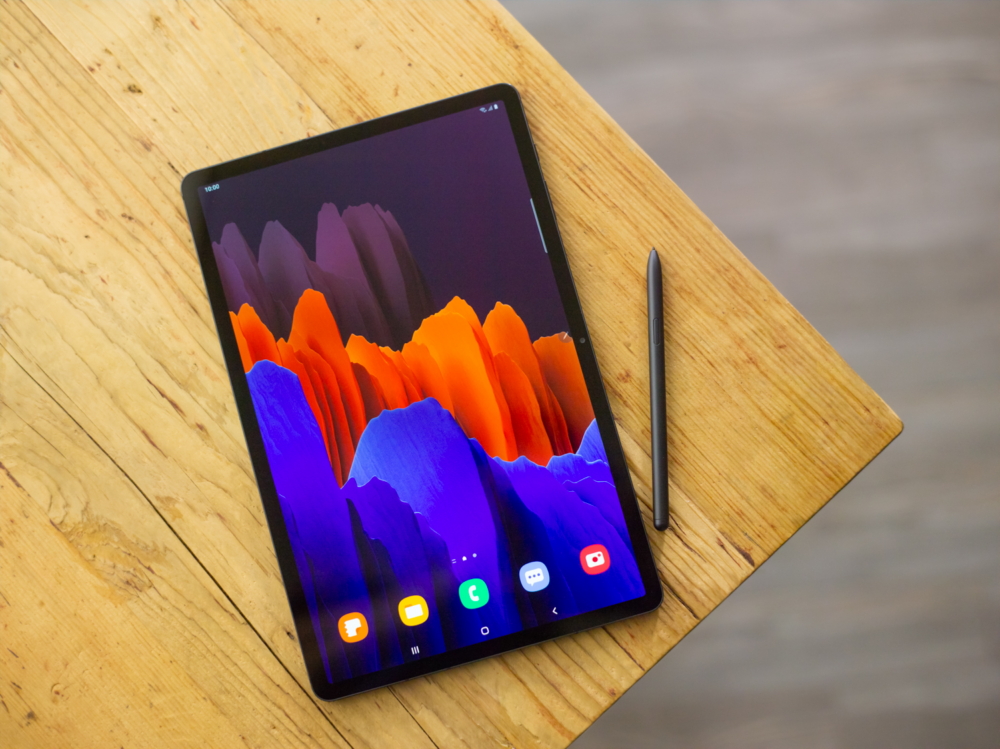
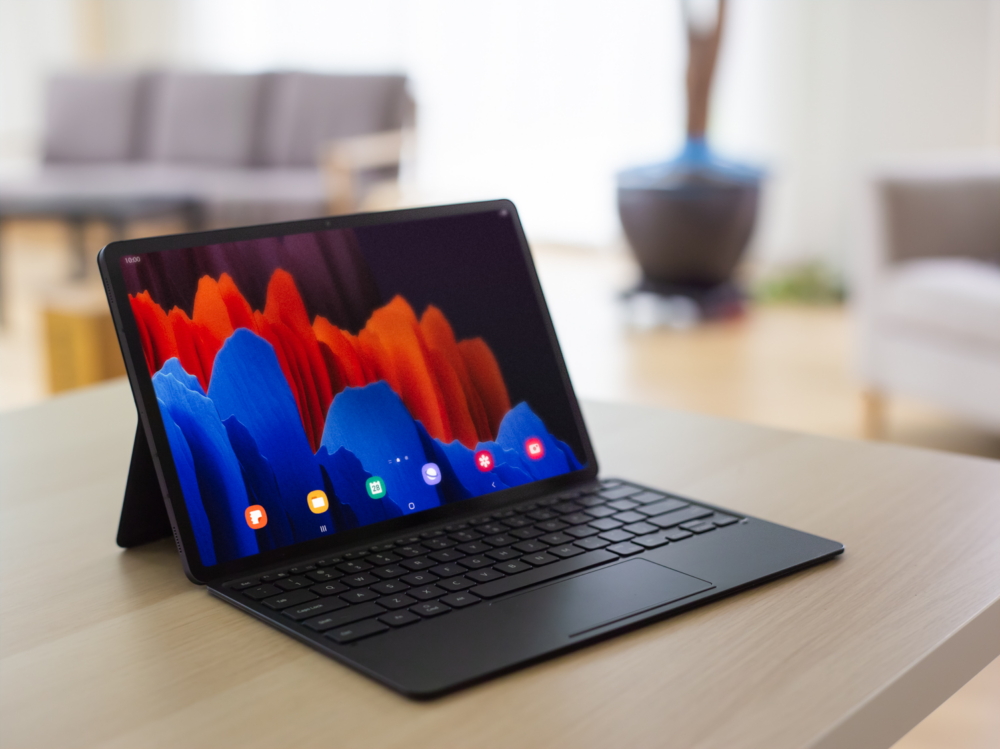
Along with launching the Galaxy Z Fold 2 5G smartphone, South Korean giant Samsung also launched the 5G version of the Galaxy Tab S7. With this, the company has now become one of the first brands to add 5G connectivity to its tablet lineup.
The device will be available for purchase in the market from 18th September, carrying a price tag of $800. This is $200 more than the pricing of the standard model. The Galaxy Tab S7+, on the other hand, costs $1,050.
It seems that the only difference between the non-5G and 5G version is the support for 5G connectivity and everything else remains the same. The Samsung Galaxy Tab S7 sports an 11-inch LPTS TFT LCD with a WQXGA resolution of 2560×1600 pixels.
On the other hand, the Galaxy Tab S7+ has a bigger and better 12.4-inch Super AMOLED display with a screen resolution of 2800 × 1752 pixels. Both displays come with support for the 120Hz refresh rate.
Under the hood, the device is powered by Qualcomm’s Snapdragon 865 Plus SoC, which is paired along with 6GB LPDDR5 RAM and 128GB UFS 3.0 storage. It comes with another memory configuration that packs 8GB of RAM and 256GB of internal storage.
The device has a microSD card slot that can expand the storage capacity up to 1TB. As for the camera configuration, it has a dual-camera setup on the back that includes a 13MP primary sensor with f/2.0 aperture and an 8 MP secondary sensor with f/2.2 aperture.
Both devices have support for recording 4K resolution videos at up to 30fps from the rear cameras. For taking selfies and video calling, they come with an 8MP snapper with an f/2.0 aperture lens.
As for the software, the device runs the Android 10 operating system out-of-the-box with Samsung One UI 2.5 on top. They also come with support for S-Pen and on-device Samsung DeX, enabling a PC-like experience.
The Samsung Galaxy Tab S7 packs an 8,000mAh battery whereas the larger Galaxy Tab S7+ comes with a mammoth 10,090mAh battery. Both have support for Samsung’s 45W Super Fast Charging technology, which is based on the USB Power Delivery 3.0 specification with Programmable Power Supply (USB-PD PPS).
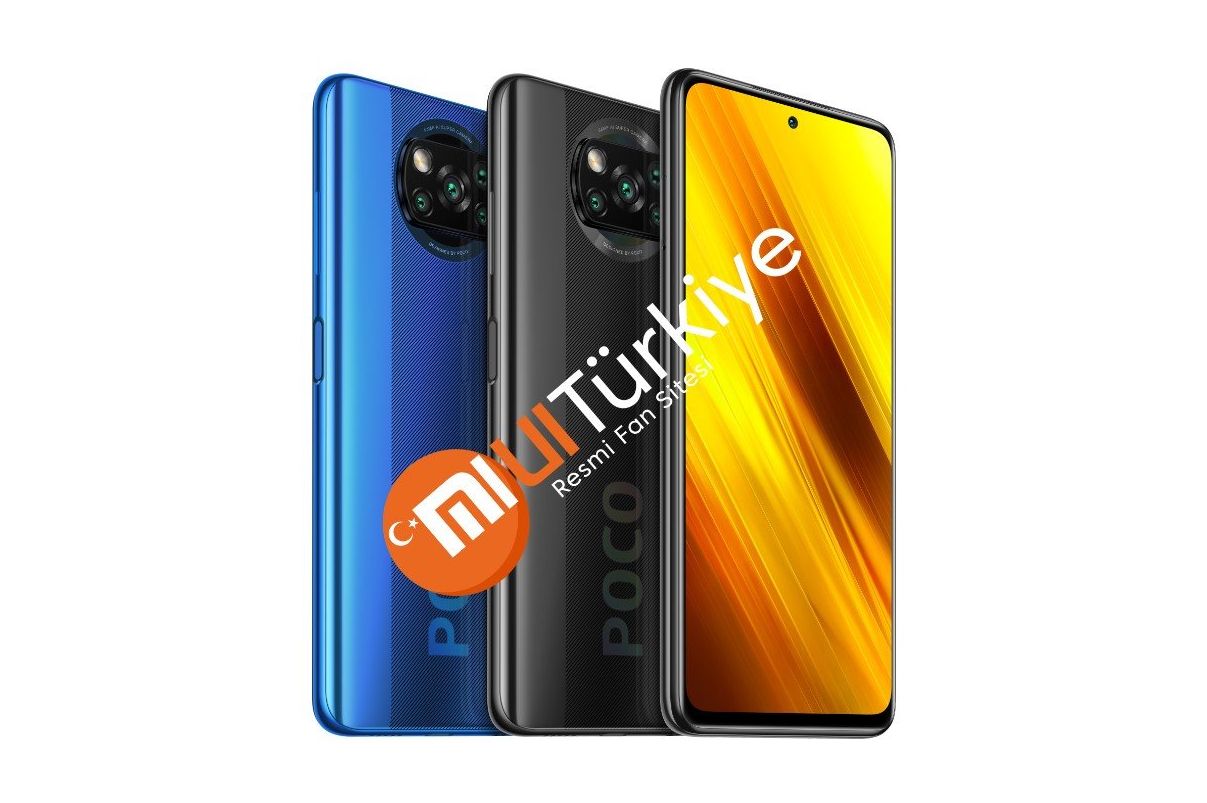
POCO has recently confirmed that it will be launching the POCO X3 NFC on Sept. 7. The phone will be announced globally through an online launch event. Malaysia is one of the markets where the POCO X3 NFC will be launching on the same date. Yesterday, POCO started a promotional campaign for the POCO X3 NFC. The poster that revealed the details of the campaign carried POCO X3 Pro moniker. Hence, it appears that there could be a POCO X3 series variant dubbed as POCO X3 Pro.
Chinese publication ITHomehas shared a screenshot of the promo image, which has been taken down. The image states that those who participate in the campaign will stand a chance to win the POCO X3 Pro smartphone. The company did not share any details on the specs of the POCO X3 Pro.
The promo image has been replaced by a new one that mentions that the winner will win a POCO X3 NFC phone. It is unclear whether the POCO X3 Pro phone really exists, or it was the moniker was mentioned erroneously.
The POCO X3 NFC could be flaunting a 6.67-inch FHD+ AMOLED display with top-center positioned punch-hole. It is expected to arrive with support for the 120Hz refresh rate and 240Hz touch sampling rate. It will come preinstalled with MIUI 12 based Android 10 OS.
The POCO X3 NFC will be the first phone from the brand to feature the Snapdragon 732G processor. It recently appeared on Geekbench with 6 GB of RAM. The phone is expected to draw power from a 5,160mAh battery. It is likely to arrive with support for 33W rapid charging technology. Rumors have it that the fast charging tech will fully charge the POCO X3 NFC in 65 minutes. The backside of the device will be fitted with a 64-megapixel quad-camera system
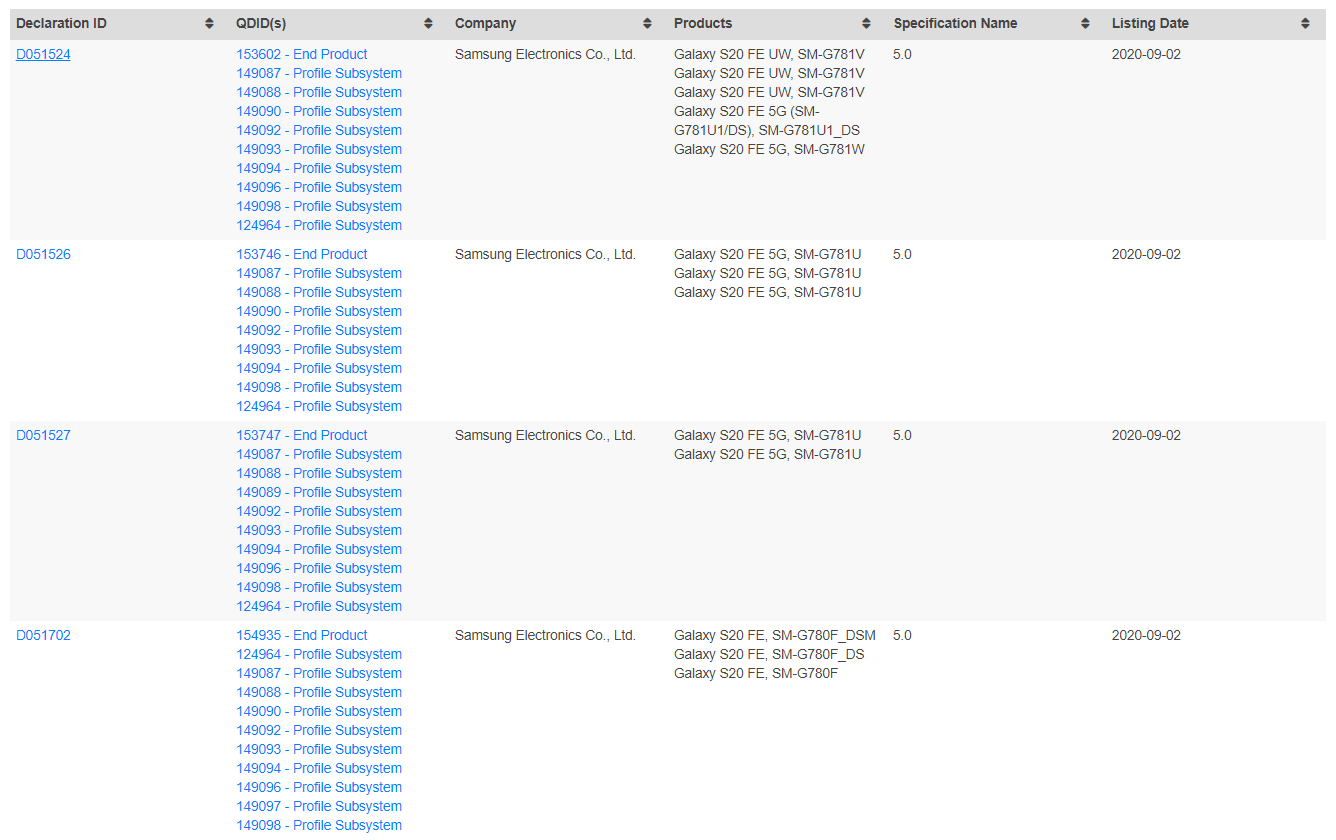
Recent reports have revealed a lot about the upcoming Samsung Galaxy S20 Fan Edition. Previous reports had suggested that the Galaxy S20 FE may launch towards the end of the year. Now that the rumor mill has revealed almost everything about the device, it appears that its launch may not be far away. Today, the 5G and 4G LTE editions of the Galaxy S20 FE received approval from the Bluetooth SIG authority. Hence it appears that the smartphone may break cover by the end of September or in early October.
The Galaxy S20 FE Edition’s 5G versions that have appeared in the database of Bluetooth SIG authority are SM-G781U (US, China), SM-G781V (Verizon), SM-G781 (Canada), SM-G781 (dual-SIM variant for the US). The SM-G781F (Asia, Europe), and SM-G781F/DS (dual-SIM version for Europe, Asia) is 4G LTE versions of the Galaxy S20 FE.’
The Bluetooth certification only reveals the support for Bluetooth 5.0 on the device. Devices that appear in the Bluetooth SIG’s database are known to go official around a month after receiving the certification. Hence, the South Korean company may launch it by September end or early October.
The Galaxy S20 Fan Edition has a 6.5-inch S-AMOLED screen with Infinity-O punch-hole appearance. The screen offers FHD+ resolution and a 120Hz refresh rate. The Snapdragon 865 SoC will fuel the device. It is speculated that India and some other markets will receive the Exynos 990 chipset version.
The Galaxy S20 FE 5G will come with 6 GB of RAM and 128 GB of internal storage. The handset will be loaded with One UI 2.5 skinned Android 10 OS, and it will come with a microSD card slot for more storage.
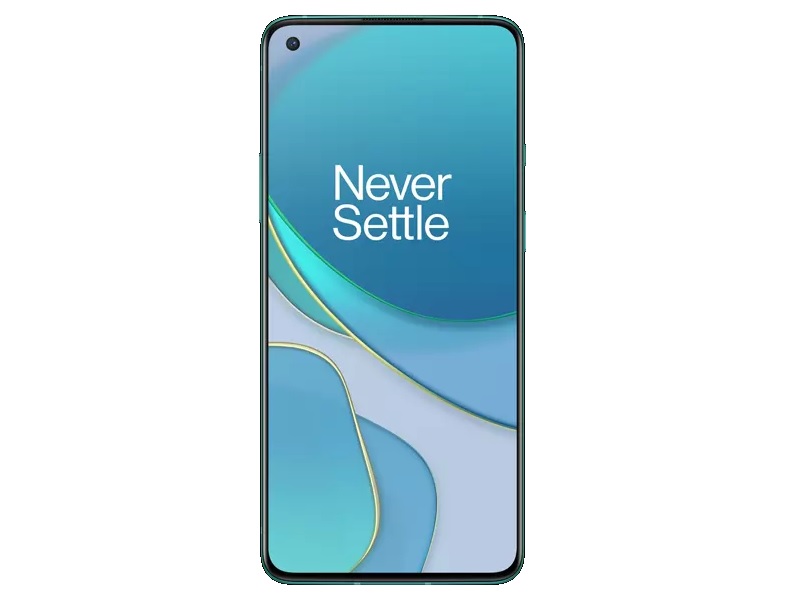
OnePlus has a couple of new smartphones waiting in the pipeline to go official. Last week, a report had revealed the specifications of an entry-level OnePlus phone codenamed as “Clover.” Recent reports have revealed that the “Billie” and “Kebab” are the codenames of the other upcoming OnePlus phones. It appears that the company is working on one more device with the “Lemonade” codename.
As per a tweet by XDA Developers’ Mishaal Rahman who cites information shared by an XDA forum member reveals that there are five variants of the OnePlus Lemonade device. These variants are mentioned as lemonade, lemonadep, lemonadept, lemonadet, and lemonadev. The final marketing name of the OnePlus Lemonade device is under wraps. Hopefully, newer reports will more information on the OnePlus Lemonade.
As it is known, the Billie codename belongs to the OnePlus phone powered by Snapdragon 690. There are around two to four variants of the device such as Bille, Bille2/2T, and Bille8/8T. The OnePlus 8T is said to be codenamed as Kebab and its two variants are Kebab and Kebabt. The OnePlus 8T is likely to be powered by the Snapdragon 865 Plus and it may come with a 65W fast charger.
The Snapdragon 460 powered OnePlus Clover could be the cheapest OnePlus phone. The handset is rumored to cost around $200 in the U.S. It is expected to come with specs like 6.52-inch IPS LCD HD+ screen, 4 GB of RAM, 64 GB of internal storage, microSD card slot, rear-facing fingerprint reader, a 6,000mAh battery with 18W fast charging support, and a 13-megapixel + 2-megapixel + 2-megapixel triple camera system.
Zepp has clarified that it will co-exist with Amazfit but will operate as an independent brand. Amazfit will focus on hardware and will be connected to Zepp’s platform, while the Zepp brand will release hardware devices as well as digital health management software solutions.
Original Story as follows…
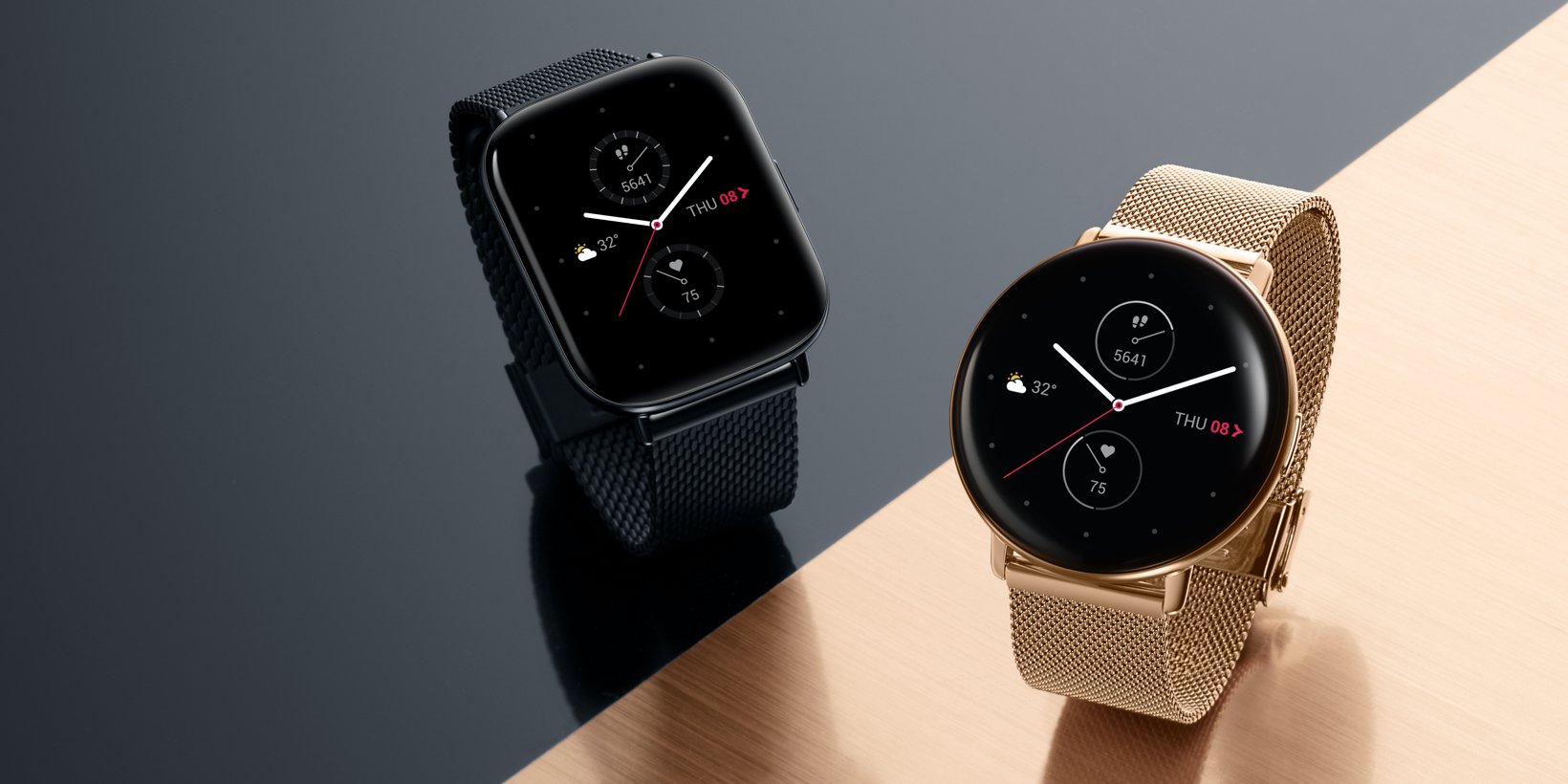
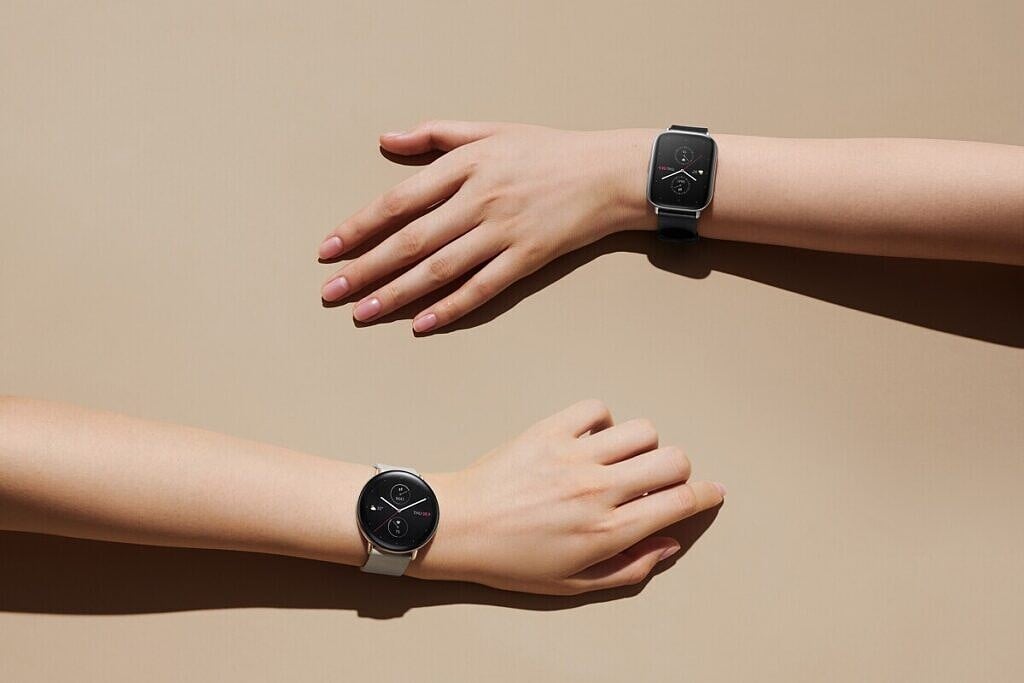
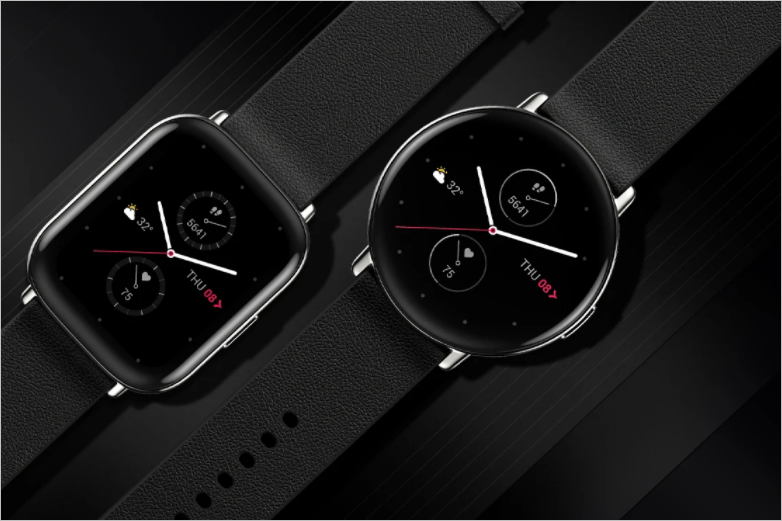
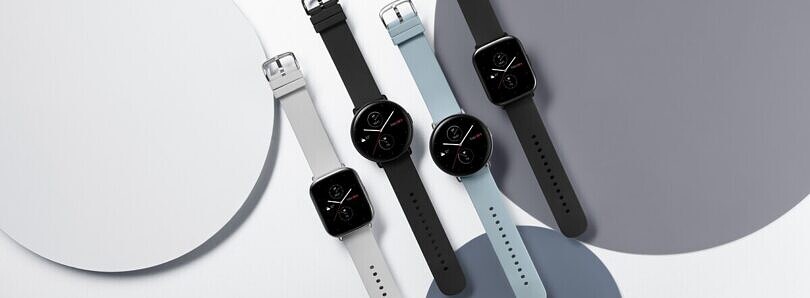
Huami recently renamed the Amazfit app on Google Play Store as Zepp, fuelling speculations that the company was about to restructure the brand. Indeed, Huami has unveiled the Zepp E smartwatches which comes in two iterations Zepp E Circle and Zepp E Square.
The new products announce the birth of a new brand lineup instead of a total replacement of the Amazfit brand. Huami did clarify that the Amazfit and Zepp brands will exist side by side.
The Zepp E Circle and Zepp E Square both come with all the bells and whistles of a decent smartwatch. Apart from the usual heart rate monitoring, it also features sleep tracking and there is a SpO2 sensor onboard for monitoring the blood-oxygen saturation.
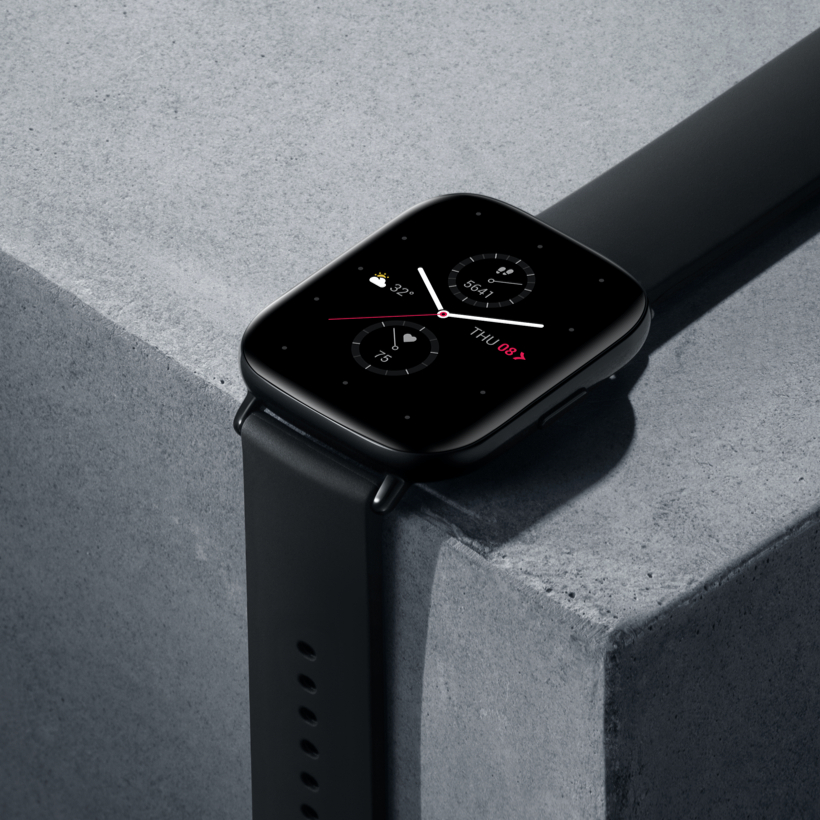
The Zepp E Circle features a round screen shape, adorning a 1.28-inch AMOLED display with a resolution of 416×416 pixels. On the other hand, the Zepp E Square packs a larger 1.65-inch AMOLED display with 348×442 pixels resolution. The two models adopt a stainless steel body and are available with different strap colors, the bands all having different textures since they are made from different materials.
The color options include a leather band in “Polar Night Black” or “Moon Grey” and a fluoroelastomer band for both models, the “Onyx Black”, the Square gets a unique “Deep Sea Blue” leather band, “Pebble Grey” fluoroelastomer band, and “Metallic Black Special Edition” while the Circle gets its own unique “Ice Blue” fluoroelastomer band and “Champagne Gold Special Edition.”
The Zepp E series arrives with 11 sports modes, including cycling, climbing. swimming, walking, indoor and outdoor running, and more. They also feature the ability to track a wearer’s sleep stages, including light sleep, deep sleep, Rapid Eye Movement (REM), and awake time. The data is provided on the app which users can use to take actionable steps to improve their sleep quality.
Furthermore, the smartwatches are rated as 5ATM water-resistant but there is no GPS on board for location tracking. The heart rate sensor inside will also provide wearers with information about stress, a feature that Huami says will come in a future OTA upgrade.
In terms of battery life, the Zepp E packs a 188mAh battery which boasts of up to 7 days of battery life. In the basic watch mode, battery life can be extended to up to 15 days. It charges via a 2-pin pogo pin connector on a magnetic charging base.
The watches don’t run on Wear OS instead, they pack the Huami’s latest Zepp’s proprietary RTOS, a customized real-time operating system. The OS offers five watch faces built-in, though more can be downloaded from the Zepp app.
As for the pricing and availability, the Zepp E smartwatches are priced at $249 in the US. In the UK, it is priced at £209 and will start shipping on September 1.
We use cookies on our website to give you the most relevant experience by remembering your preferences and repeat visits. By clicking “Accept”, you consent to the use of ALL the cookies.
This website uses cookies to improve your experience while you navigate through the website. Out of these, the cookies that are categorized as necessary are stored on your browser as they are essential for the working of basic functionalities of the website. We also use third-party cookies that help us analyze and understand how you use this website. These cookies will be stored in your browser only with your consent. You also have the option to opt-out of these cookies. But opting out of some of these cookies may affect your browsing experience.
Necessary cookies are absolutely essential for the website to function properly. This category only includes cookies that ensures basic functionalities and security features of the website. These cookies do not store any personal information.
Any cookies that may not be particularly necessary for the website to function and is used specifically to collect user personal data via analytics, ads, other embedded contents are termed as non-necessary cookies. It is mandatory to procure user consent prior to running these cookies on your website.