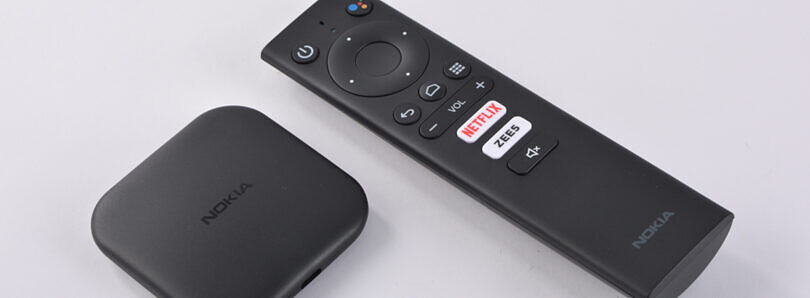
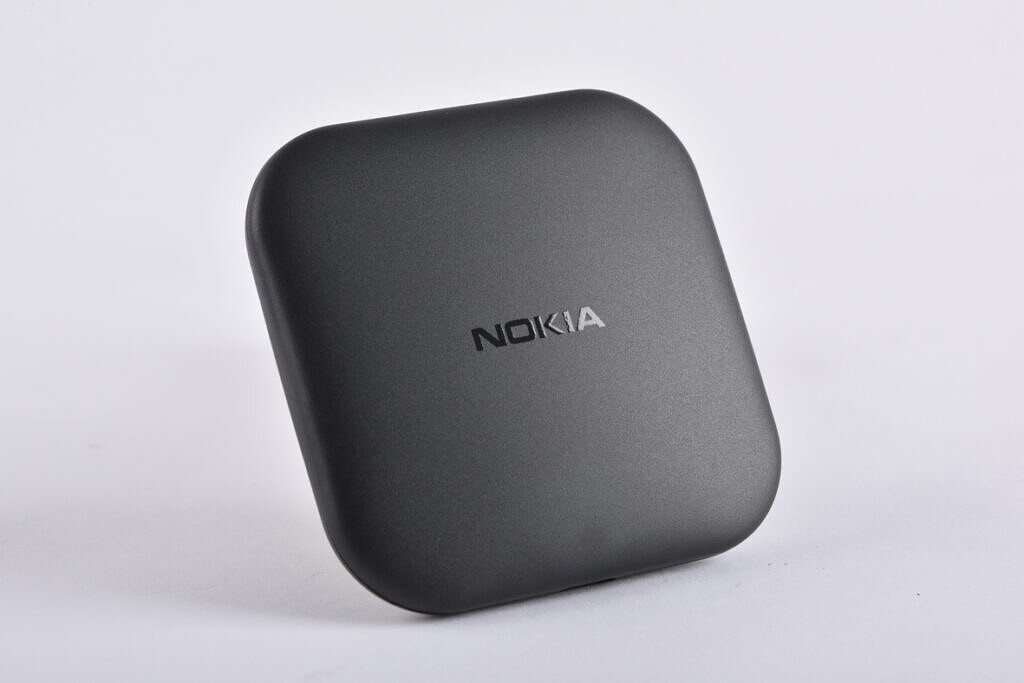
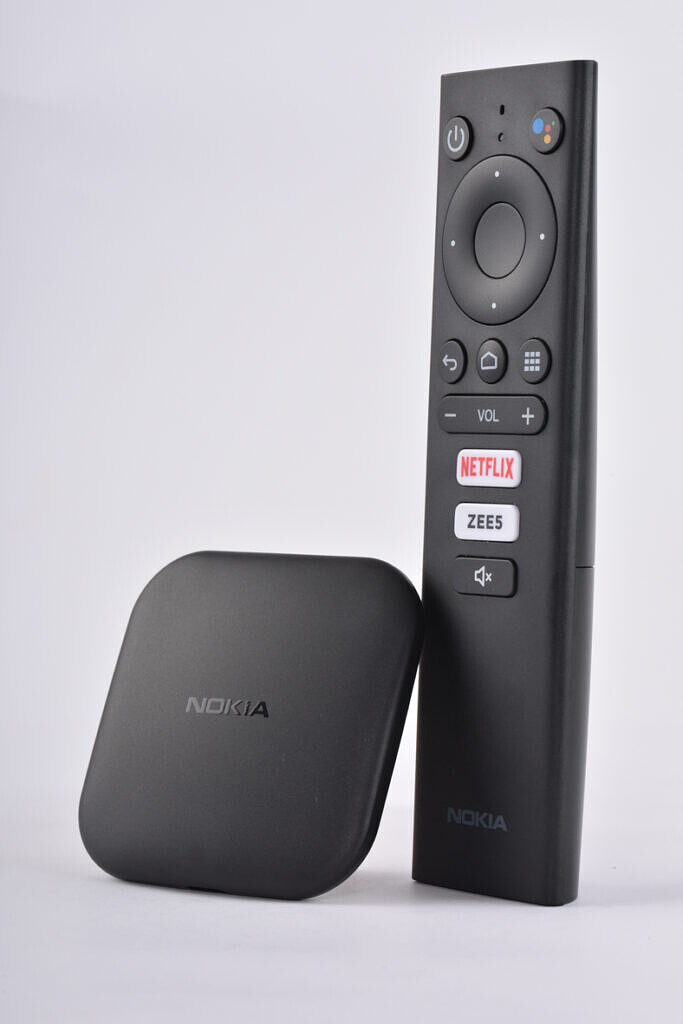
Nokia has joined the league of OEMs with Android TV box to their names like Amazon and Xiaomi. The Finnish company has just launched the Nokia Media Streamer, an Android TV box in India.
This segment has been the exclusive preserve of Amazon for quite a while with its Fire TV sticks but a number of manufacturers have in recent times launched their own Android TV box like the Mi Box 4K and lately the Mi TV Stick earlier this month.
Recently, it was revealed that Flipkart has got the license to release Nokia branded smart products in India. The Nokia Media Streamer is the first product to hit the stage.
The TV box runs on Android 9.0 and is capable of streaming content at full HD (1920x1080p) resolution. The device is powered by a quad-core processor, paired with 1GB of RAM and 8GB RAM. It also features support for dual-band WiFi for better reception. The streaming box comes with Dolby Digital Audio and a voice-controlled remote with Google Assistant, which will allow users to control their TV using voice commands.
In addition, Nokia announced a partnership with ZEE5 which will see the device feature a dedicated ZEE5 hotkey, giving users access to over 100 TV channels from the streaming service. The TV box also has a hotkey for Netflix. There is also voice control support via Google Assistant and Android mobile app remote.
The Android TV box also features Wi-Fi 2.4 GHz / 5 GHz for dual-band, multi I/O antenna for better reception, built-in Chromecast and Google Home.
The Nokia Media Streamer is priced at Rs. 3499 (~$46) and is expected to go on sale on Flipkart starting from August 28th.
The feature phone market has continued to shrink due to the prominence of smartphones but manufacturers have continued to push features that will make these feature phones to retain their appeal among buyers. One of such features is 4G connectivity.
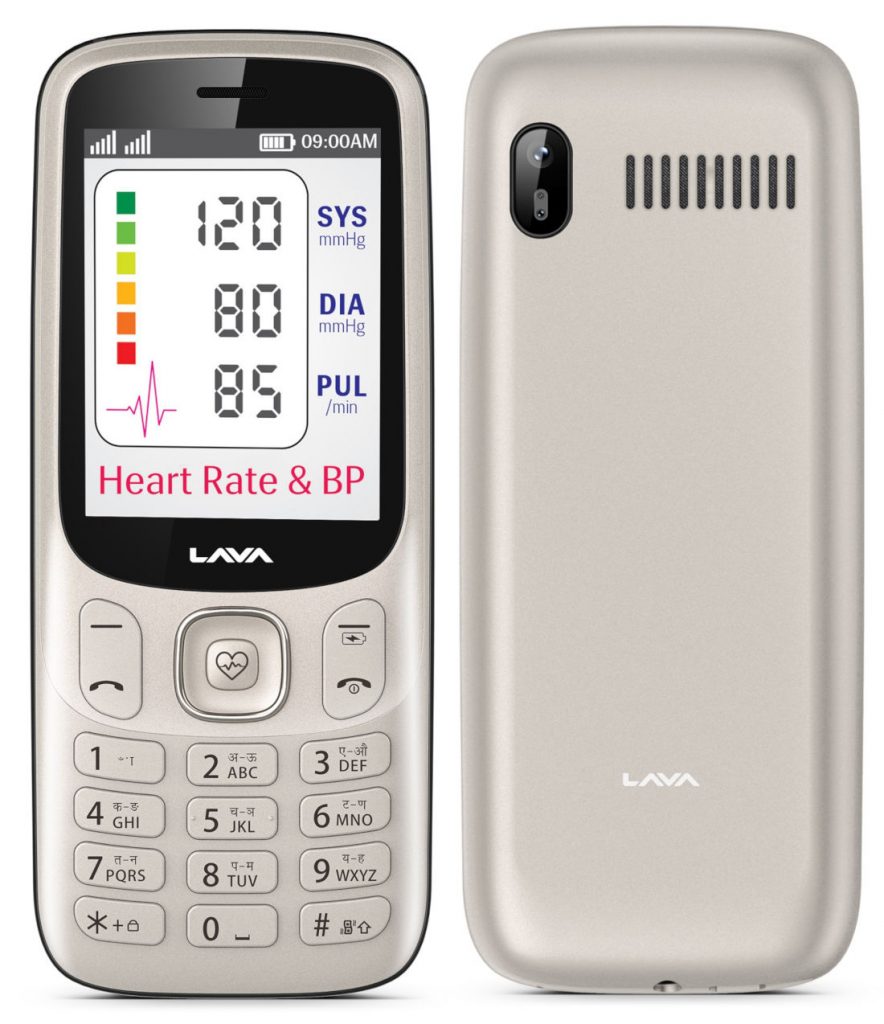
Indian phone maker Lava has taken things several steps higher with the launch of its latest model known as Lava Pulse. The Pulse is a feature phone which has a heart rate and blood pressure sensor. The device is touted to be the first phone with such functions. The mobile phone comes with a pulse scanner located on the navigation button. The user simply places his thumb on the scanner to detect the heart rate or blood pressure. The reading is displayed on the phone’s screen. The data can also be saved on the phones for future reference. There is also the option of sharing the data with others via SMS.
The Indian phone maker claims the Lava Pulse’s heart rate and BP sensors have accuracy similar to present electronic Heart rate and Blood pressure measuring digital devices and are ACC/AHA certified. However, it clearly isn’t a substitute for the medical device.
On the hardware side, the Lava Pulse packs a 2.4-inch 65K colour display with QVGA resolution of 240 x 320 pixels. The body is made from polycarbonate with military-grade certification. The phone’s processor is unknown but it features 32MB RAM and expandable memory. Other features include dual SIM, Bluetooth, micro USB port, wireless FM radio with recording, and a camera with video recording. The phone packs a decent 1800 mAh battery with super battery mode which can last up to 6 days on a single charge.
As for the pricing, the Lava Pulse feature phone comes in Rose Gold colour, is priced at Rs. 1599 ($21). The device will be available online on Amazon, Flipkart and at several retail stores across India.
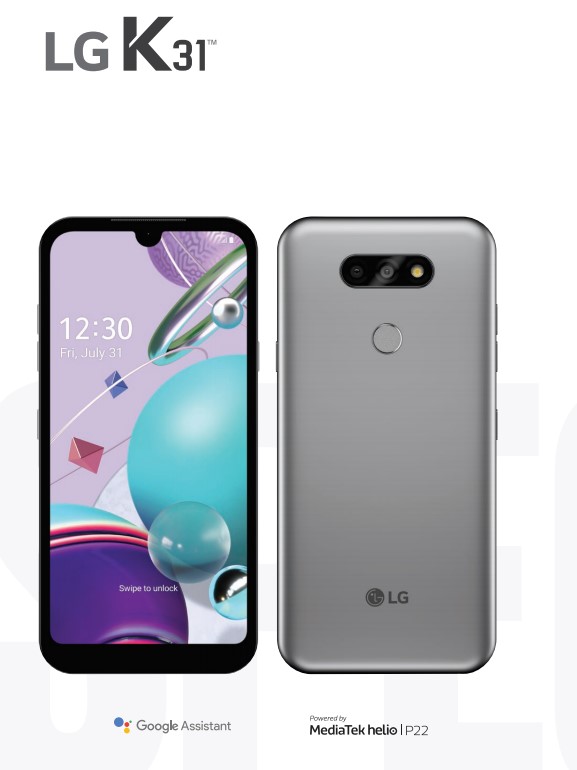
LG Mobile has announced a new budget phone in the US. The new LG K31 packs modest specs and is sold unlocked in the country.
The LG K31 has a 5.7-inch FullVision HD+ display with a waterdrop notch and Panda King Glass screen protection. This is a budget device, so its thick bezels can be forgiven. There is an Helio P22 octa-core processor under the hood along with 2GB of RAM and 32GB of storage. The spec sheet says only 17GB is usable though that figure is said to vary depending on software versions and settings.
On the back of the phone is a 13MP f/1.8 PDAF main camera that is paired with a 5MP ultrawide angle camera that has a 120° field of view. You get a 5MP front-facing camera for selfies and video calling and with features such as Gesture Shot, Auto Shot, and Gesture Interval Shot.
LG has also added a fingerprint scanner to the phone and it sits just below the horizontally-placed rear cameras. Under the hood is a non-removable 3000mAh battery that charges via a MicroUSB port. The phone also has an audio jack at the bottom.
The right side of the phone is home to the power button while the left houses the volume rocker, a dedicated Google Assistant key, and the SIM tray. There is support for a MicroSD card but the maximum capacity is 32GB. The LG K31 is MIL-STD 810G compliant, has an M3/TR hearing aid rating, and runs Android 10 out of the box with LG UX 9.1 on top.
The phone is priced at $149.99 and is available in a single variant – silver. It is available for purchase on the official LG website.
LG will sell the phone under a different name in its home country. As you can see in the tweet below from Abhishek Yadav, the LG K31 is the same device as the LG Q31.
LG Q31 Launching On August 20 i.e. Tomorrow •Android 10 •8.7mm Thickness •Silver Colour •Dual Rear Camera •Nano Sim Card •5.7inch HD+ Display •13MP+5MP Rear Camera •5MP Front Camera •3GB Ram + 32GB Storage •3000mAh Battery pic.twitter.com/YSP7V3AblX
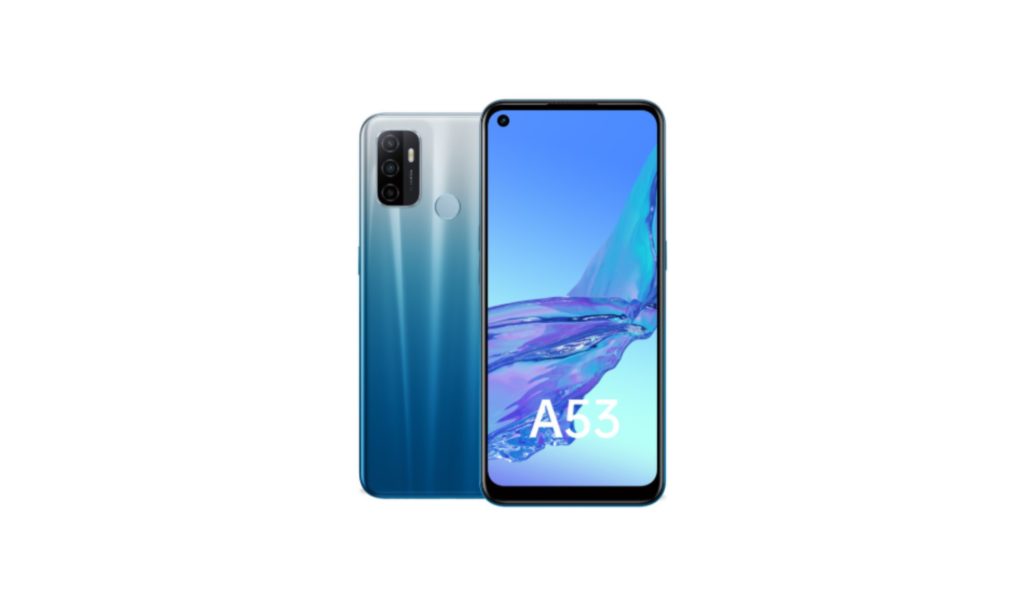
OPPO A53 2020 quietly launches in Indonesia as the world’s first smartphone with Qualcomm Snapdragon 460. It comes in a single 4GB + 64GB storage configuration priced at Rp 2,499,000 ($169). The handset is available in two colors namely Electric Black and Fancy Blue.
The new budget smartphone from OPPO flaunts a 6.5-inch HD+ (1600 x 720 pixels) LCD panel with 90Hz refresh rate, 20:9 aspect ratio, and a single punch-hole at the top left corner housing a 16MP selfie camera.
The rear of the phone is made of shiny polycarbonate to mimic glass build. There’s a 12MP (wide) + 2MP (macro) + 2MP (depth) triple camera setup, a fingerprint sensor, and OPPO branding on this back panel.
Other features of this handset include microSD card slot to expand storage up to 256GB, 3.5mm headphone jack, USB Type-C, ColorOS 7.2 based on Android 10, 5,000mAh battery, and 18W fast charging support.
The phone is up for pre-orders in Indonesia starting today until August 26. It should make its way to other markets like India in the coming days.
The other upcoming Snapdragon 460 devices are vivo Y20, Motorola Moto E7 Plus, and Nokia 3.4. None of them has a launch date yet.
Huawei’s Honor brand has announced that it will hold a keynote event at IFA 2020 in Berlin. The event will be held on September 4 and is promoted with the theme “expand your smart life”.
The company has now shared a teaser which confirms a smartwatch will be among the products to launch in September. The smartwatch is the Honor Watch GS Pro which has been confirmed by CEO. Details of the smartwatch are still not known but the watch is expected to feature a round shape with buttons at the side. It is also said to be designed for mountain lovers.
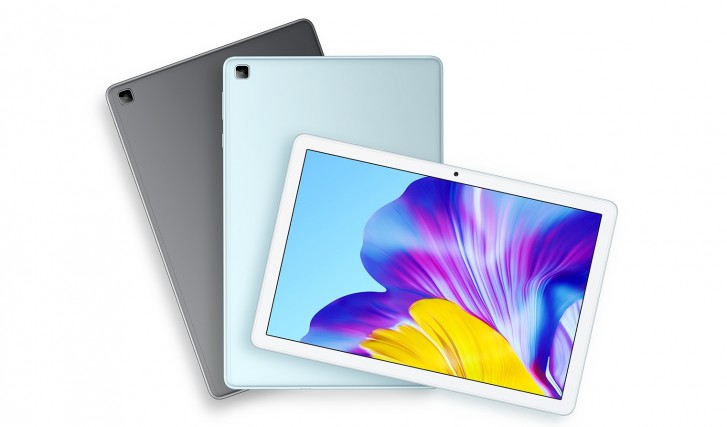
Honor is also expected to launch two new tablets dubbed Honor Pad 6 and Honor Pad X6. The Honor Pad X6 was launched in China as Tablet X6 with a starting price of around $155. The tablet features a 9.7-inch screen while the Pad 6 features a bigger 10.1-inch panel.
In addition, the tech giant will also launch a new Magicbook laptop with AMD Ryzen 5 4000 CPUs.
The launch event will hold at 11.25 AM on September 4.
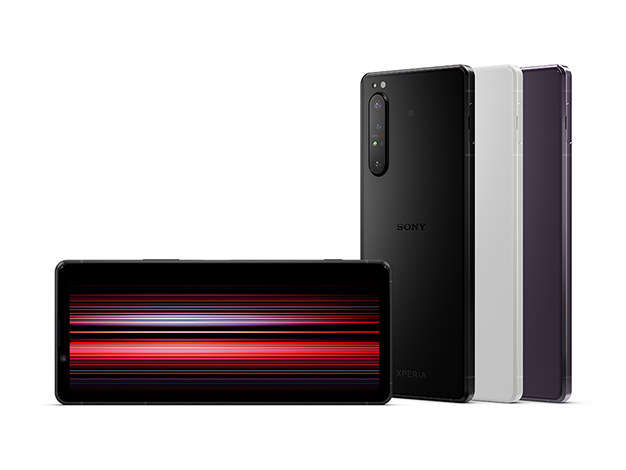
The Xperia 1 II is Sony’s flagship phone for 2020. Announced back in February, the phone has a tall 21:9 aspect ratio and is powered by the Snapdragon 865 processor. It is also available in one configuration – 8GB RAM + 256GB of storage for the international variant and 8GB RAM + 128GB for the Japanese model. Sony has announced that Japan will be getting a new variant with more RAM and it will also be available in a new colorway.
The new model which has model number XQ-AT42 will have 12GB of RAM and 256GB of storage. It will be unlocked and not sold by Japanese carriers, NTT Docomo and au. The new Xperia 1 II will also have dual SIM support, unlike the carrier-locked model that has a single SIM slot.
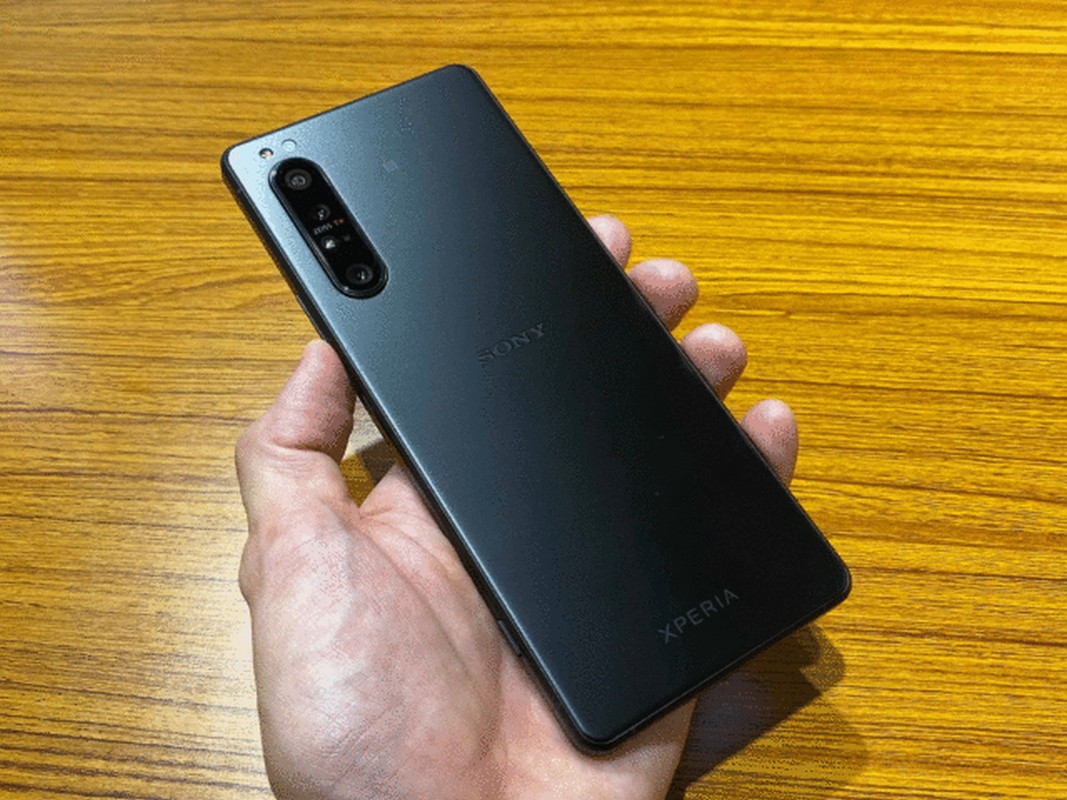
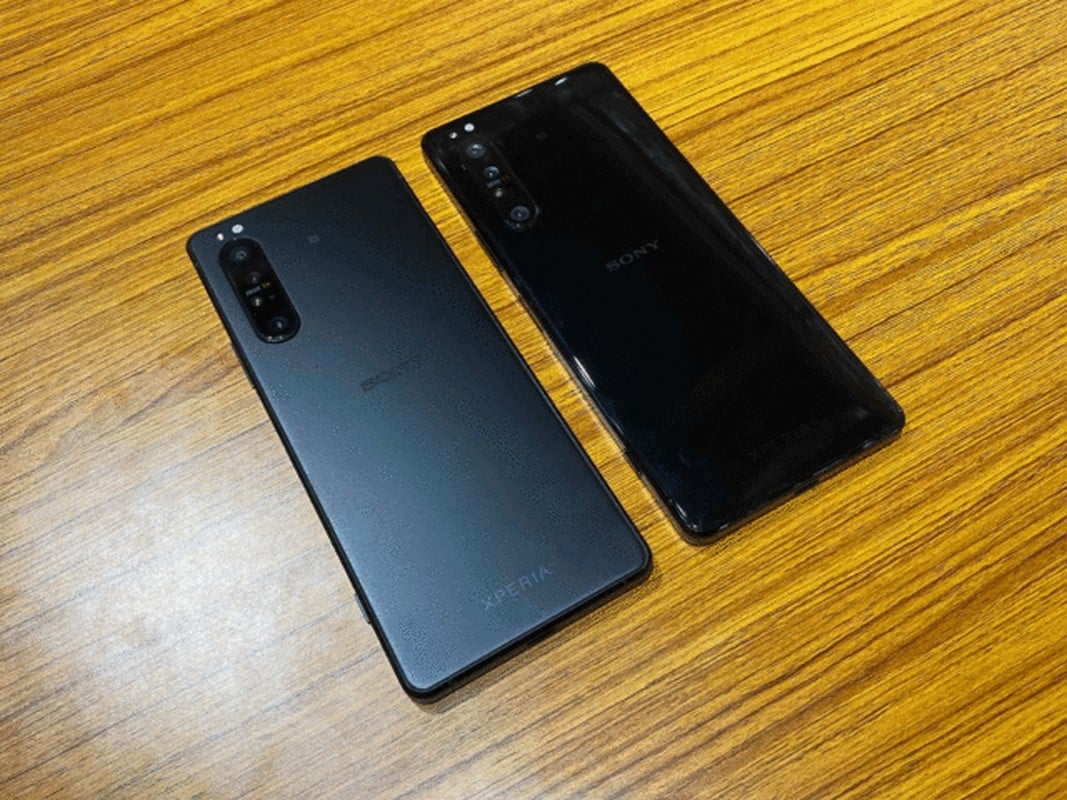
Sony will make the new variant available in White, Purple, and a limited Black variant that has a frosted finish. The frosted back should mean less-visible fingerprint smudges compared to the glossy black of the international variant. Live photos of this new colorway have been provided by Xperiablog.net.
Xperia 1 II in Frosted Black
Xperia 1 II in Frosted Black and Glossy Black
The new Xperia 1 II will be available for purchase on October 30 which is more than 2 months away. It will sell for JPY 124,000 (~$1170).
Sony has also announced that the Xperia 1 and Xperia 5 will be getting unlocked variants with support for dual SIM. These SIM-free versions will also have 128GB of storage, double that of the ones sold by carriers. They will be priced at JPY 79,000 (~$745) and JPY 69,000 (~$651) respectively and are already available for pre-order.
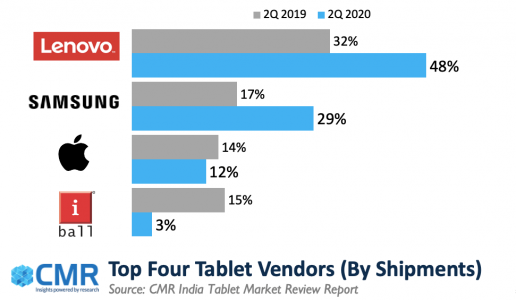
The India Tablet Market grew 23% QoQ in Q2 2020 in terms of shipments according to CyberMedia Research (CMR). Lenovo led the market, followed by the Samsung and Apple in second and third positions respectively.
The COVID-19 global pandemic made everyone continue their work and education from home. This resulted in a demand for tablets across the world. The Indian market was no different in the second quarter of 2020.
The overall market increased by 23% QoQ, whereas shipments of tablets with WiFi grew by 98% QoQ. Tablets with 7-8-inch display constituted 35% of total shipments. On the other hand, tablets with 10-inch and above displays accounted for 64%.
Lenovo conquered 48% of the entire India Tablet Market shipments by growing 24% QoQ. However, in the second position with 29% market share, Samsung was the most successful brand in the quarter with a whopping 143% QoQ growth. Lenovo M10 (HD, FHD, FHD Plus) and Galaxy Tab A 10.1 2019 (LTE, Wi-Fi) were the best-selling models of these two brands.
Apple garnered 12% market share by growing 36% QoQ with the help of iPad 7th Generation. Surprisingly, iBall clinched to the fourth position with a mere 3% market share.
Having said that, CMR forecasts the India Tablet Market to continue growing in the coming quarters even if the COVID-19 vaccine is out.
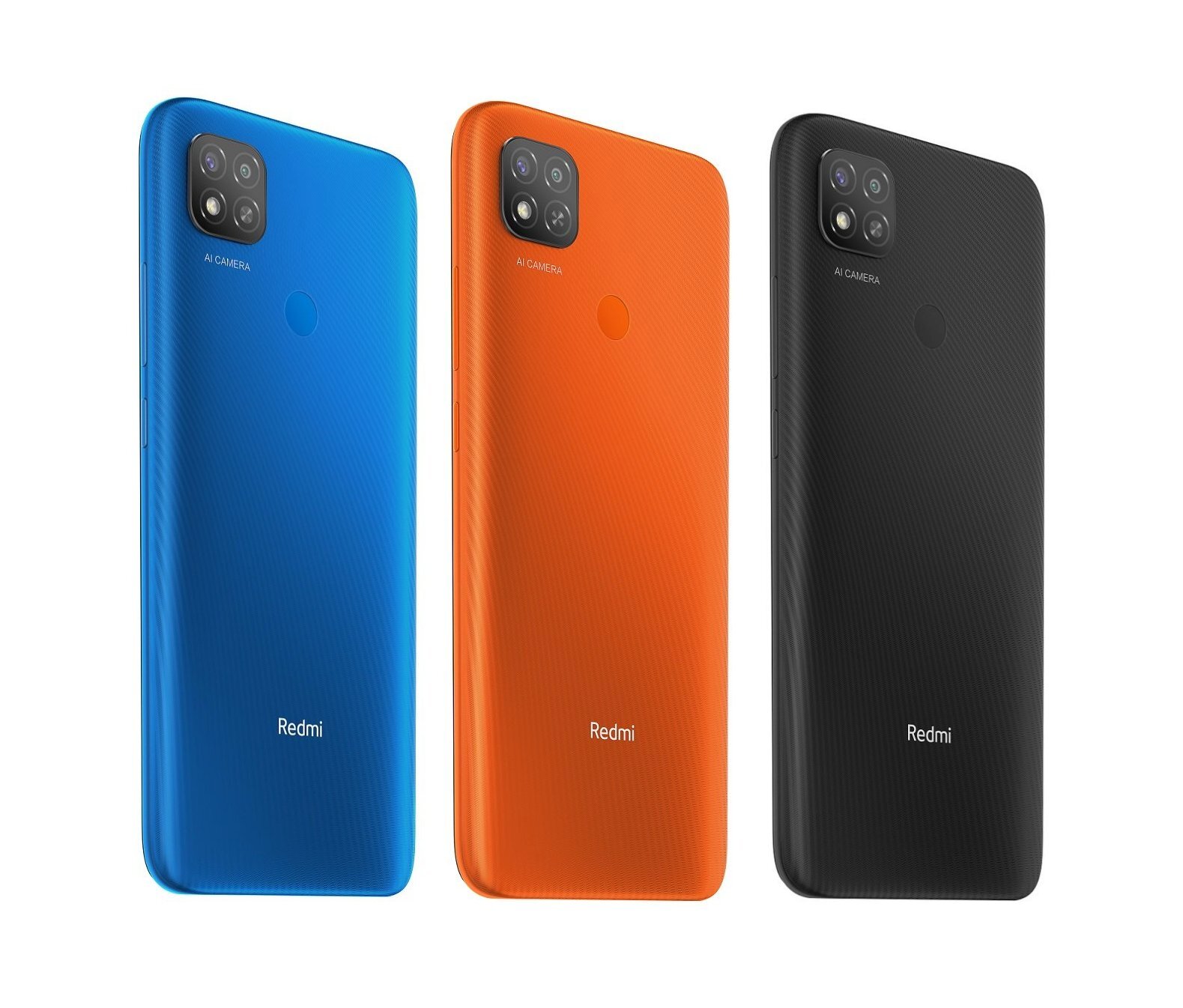
Yesterday, Xiaomi teased the launch of next Redmi 9 series smartphone in India. Earlier today, the company officially revealed the upcoming phone will be called Redmi 9 and it will be debuting on August 27. A few hours later, the renders and entire specifications of this handset leak except for its price.
The original Redmi 9 (aka Redmi 10X 4G in China) launched as Redmi 9 Prime in India on August 4. Now, the company has scheduled an event for August 27 in the country to announce Redmi 9 as a tweaked version of Redmi 9C.
The only difference between Redmi 9 (India) and Redmi 9C (Global) will be dual-camera setup on the former compared to triple on the latter. For those unaware, POCO M2 Pro follows a similar principle. It shares everything with Redmi Note 9S but with different rear pattern and faster-charging support.
According to the leak, the Redmi 9 launching in India next week will be powered by MediaTek Helio G35 chipset paired with 2GB/3GB RAM and 32GB/64GB internal storage. It will sport a 6.53-inch HD+ (1600 x 720 pixels) LCD screen with a dew-drop notch nesting a 5MP selfie camera.
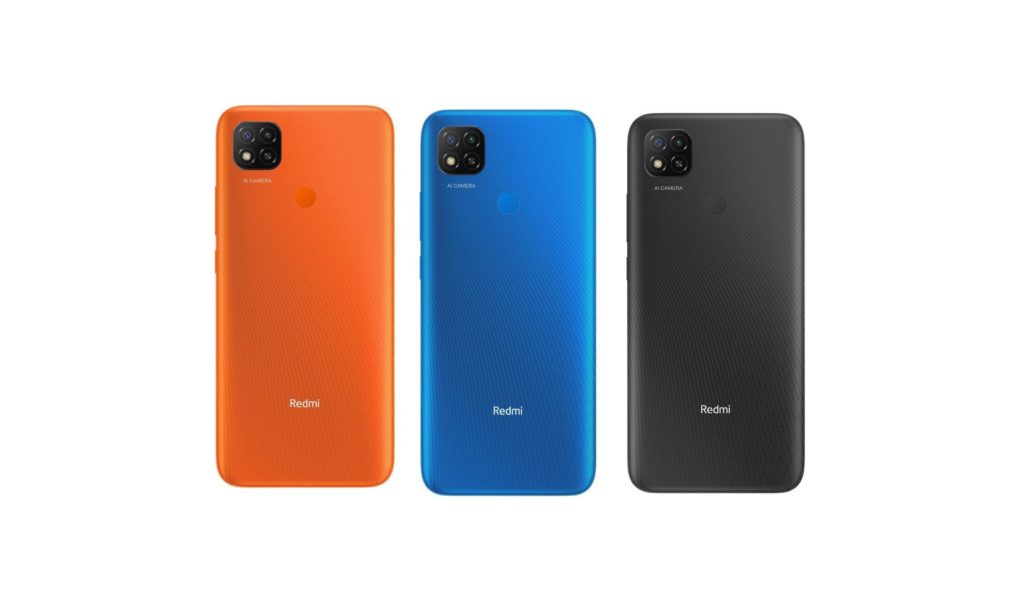
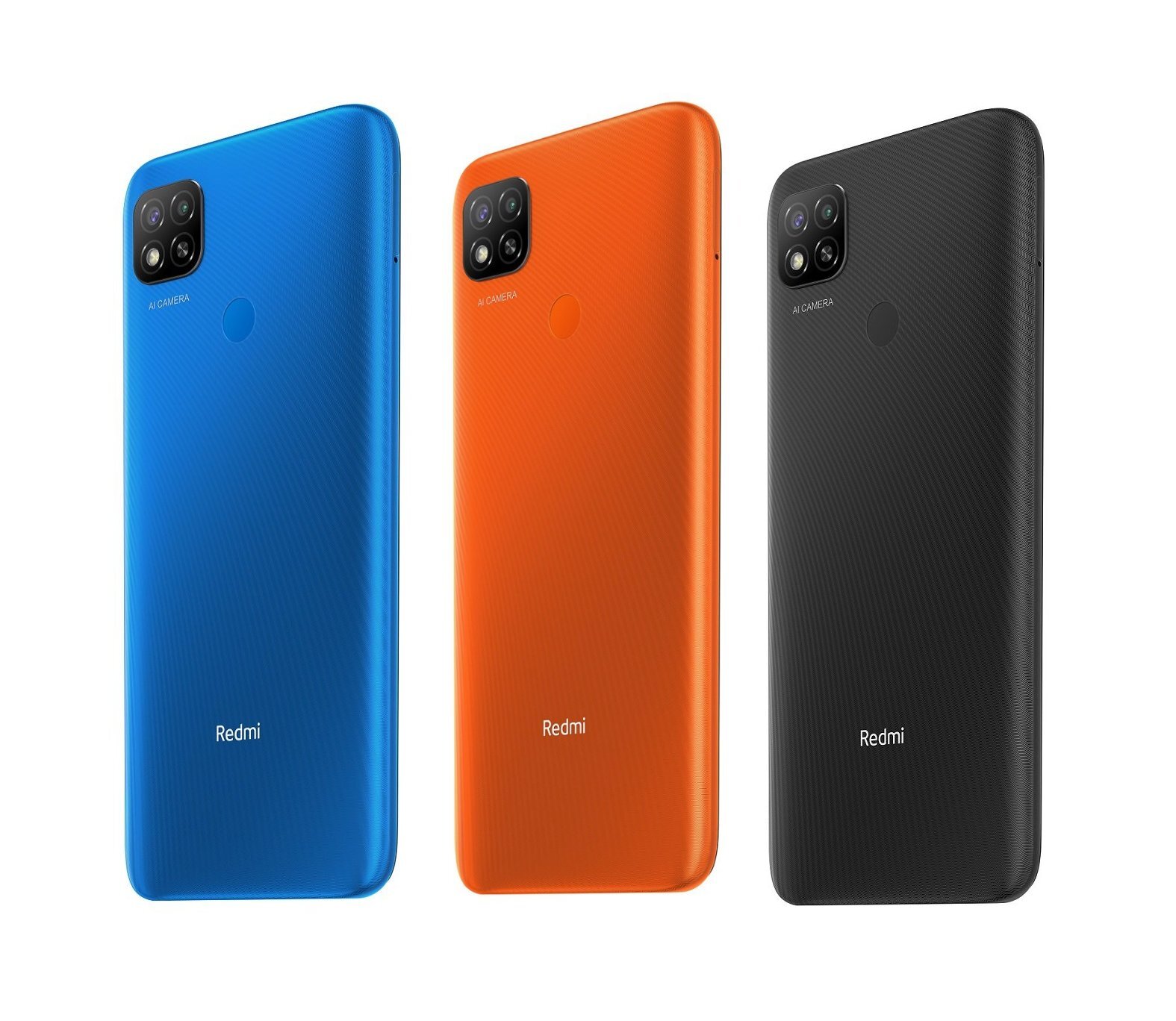
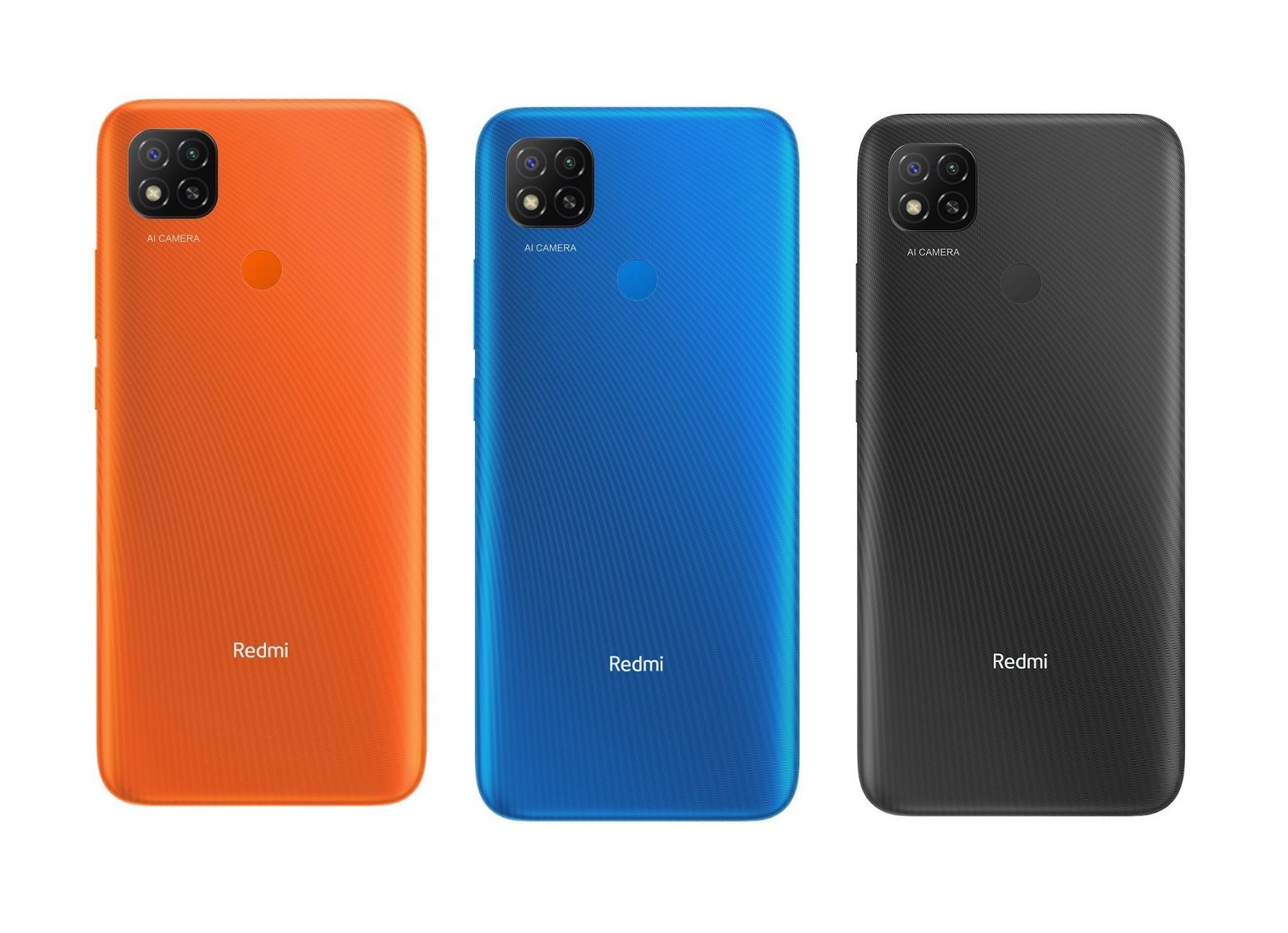
The textured plastic back of the phone will house a square module at the top left corner with a 13MP (wide) + 2MP (depth) dual camera, an LED flash, and an empty circle in which the original Redmi 9C houses a 5MP ultra-wide camera. The rear panel will also include a fingerprint sensor.
1 of 3
Unlike Redmi 9 Prime, the Redmi 9 will launch with MIUI 12 based on Android 10 out of the box. Further, it will come in three colors – Black/Blue/Orange with 3.5mm headphone jack, dedicated microSD card slot, MicroUSB port compared to USB Type-C on its predecessor Redmi 8, and a 5,000mAh battery with support for 10W charging.
So why India is getting a tweaked Redmi 9C? That’s because the original is said to launch as POCO C3 in the country.
MediaTek, the known chipmaker, has conducted the world’s first public test of advanced IoT 5G satellite communications. The test was undertaken through Inmarsat’s Alphasat L-band satellite, with the trial being successful, according to a PR Newswirereport.
The test had data transferred to the satellite Geostationary Orbit (GEO) 35,000 kilometers above the equator. Furthermore, the results obtained from these tests will contribute to the 3rd Generation Partnership Project (3GPP)’s Rel-17 standardization work on Non-Terrestrial Network (NTN). In simpler terms, it is a broader advancement of 5G networking coverage, which will grow to soon include more services and technology.
In the test, a bi-directional link between the 5G satellite NB-IoT technology and MediaTek’s satellite was established. This broke new grounds for a truly global IoT coverage. Meaning, this is a very important step that builds on the foundation for a hybrid satellite and cellular networks that has huge applications in 5G IoT related services on a global scale.
According to Dr. Ho-Chi Hwang, MediaTek General Manager of Communication System Design, “MediaTek’s collaboration with Inmarsat will accelerate industry efforts to converge cellular and satellite networks in the 5G era. MediaTek is a leading connectivity provider and contributor to 3GPP standards, and our ongoing work with Inmarsat GEO satellites will help drive 5G innovation across verticals like IoT.”
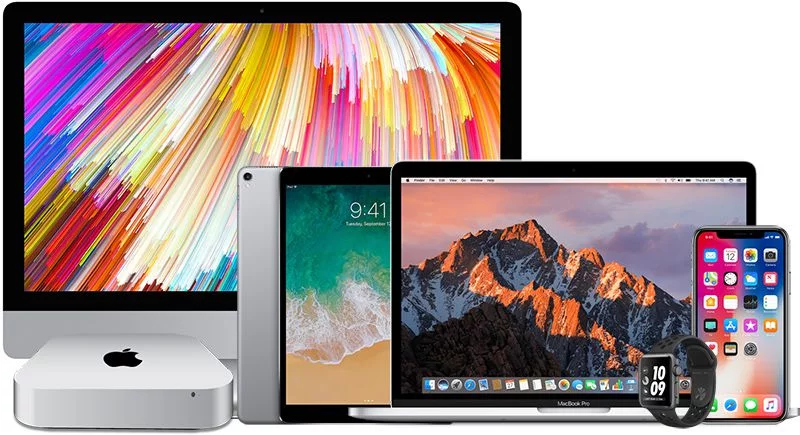
Earlier this week, the United States International Trade Commission announced that it is launching an investigation regarding an alleged infringement of Maxwell patents by Apple products. Despite hitting a 2 trillion US Dollar in market value, the company is still facing various lawsuits and allegations.
For those unaware, Maxwell is a Japanese company that makes consumer electronics products. It had filed a lawsuit against the Cupertino based giant earlier this year and even filed a complaint with the ITC. Maxwell sought for ITC to issue an exclusion order along with a cease and desist order as well. This would essentially prohibit Apple from importing devices that carry infringed technology into the US.
The ITC has since responded to the complaint and announced that it will be starting an investigation to find out if Apple products do infringe on the Japanese company’s patents and intellectual properties. According to a notice published by the ITC, ” “mobile devices, tablets, smartwatches, and laptop computers sold under the Apple brand name” will also fall under the investigation, which will test over 10 separate patent infringement claims from Maxwell.
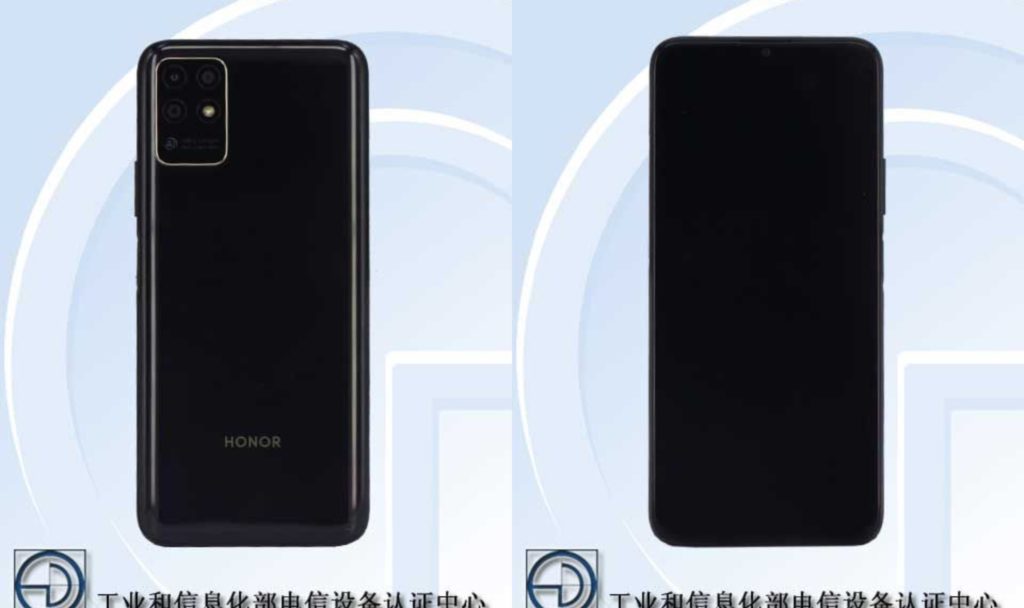
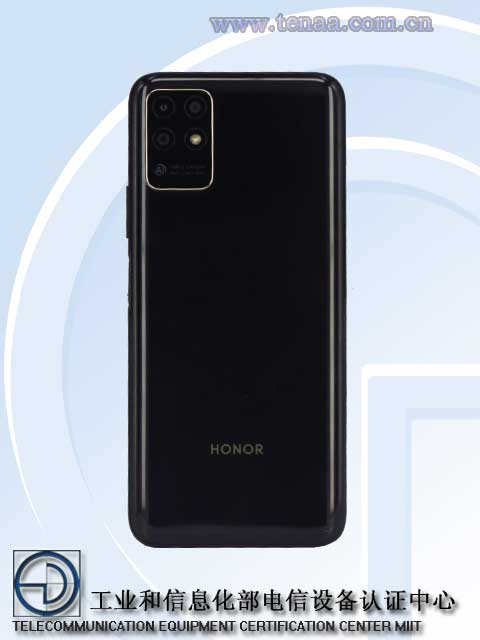
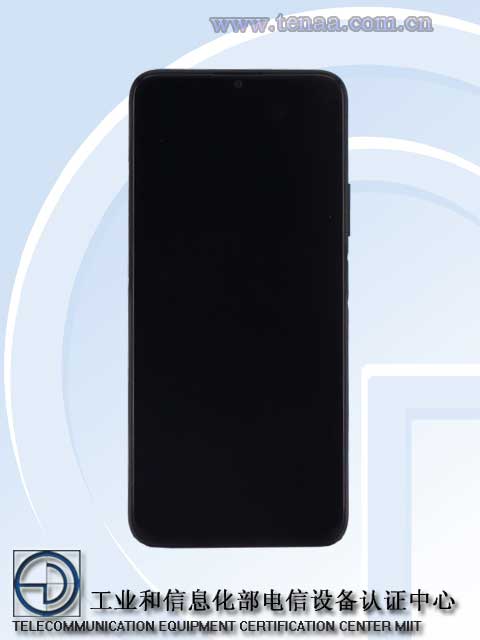
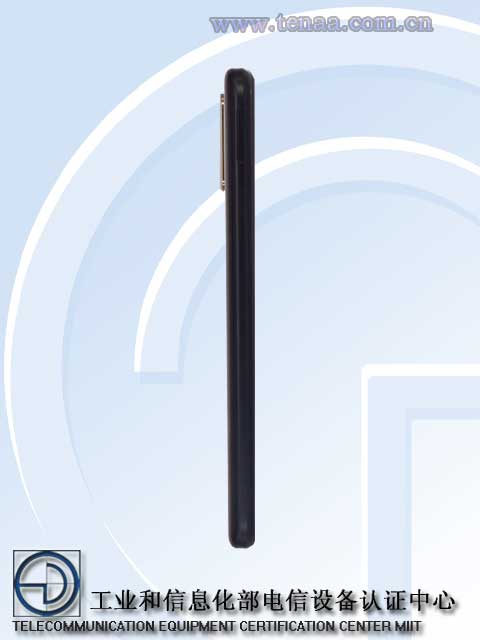
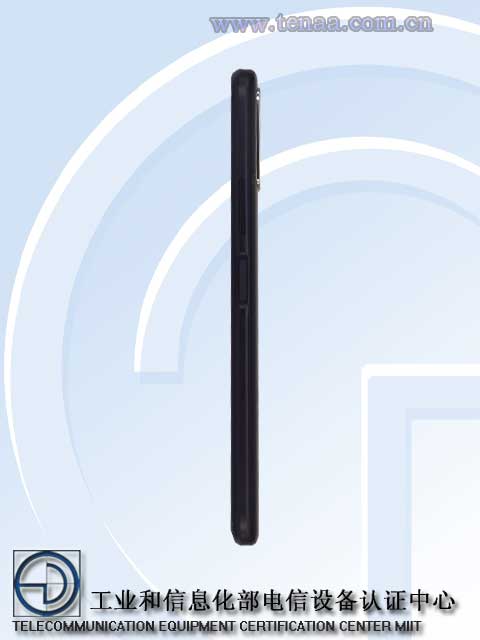
HONOR is expected to launch its HUNTER gaming laptops and Watch GS Pro very soon. But it looks like the brand has one more product up in its sleeve. The device is a mysterious 5G smartphone with model numbers NZA-AN00 and NZA-TN00 respectively.
The two variants of the same handset recently got certified by China’s telecom regulatory TENAA. The listings also reveal some of the primary specifications of this phone as well as live pictures from all sides.
According to it, this upcoming HONOR smartphone (NZA-AN00 / NZA-TN00) will be 5G-ready powered by a 2.0GHz octa-core processor. It will be available in two storage configurations – 4GB + 64GB and 6GB +128GB with support for microSD card expansion up to 512GB.
On the front, it will sport a 6.6-inch TFT LCD panel with a resolution of 1600 x 720 pixels (HD+) along with a selfie camera. Whereas, at the back, it will house a triple camera setup in a rectangular module at the top left corner.
Other features include Android 10, 3.5mm headphone jack, gravity sensor, proximity sensor, light sensor, side-mounted fingerprint sensor, 5,000mAh battery, two colors – Black/Blue, and only 1080p (FHD) video recording.
1 of 4
All of the above-mentioned specs make us believe this device to be the cheapest 5G smartphone from the house of HONOR. Having said that, the company is yet to announce its marketing name and launch date.
A new report from the Korean Herald has revealed that various startups from South Korea are banding together to call for an investigation against Apple and Google. The probe would be for both tech giants’ in app purchase systems.
The group between the various developers and small scale companies have submitted a petition to the Korea Communications Commission earlier this week. In the petition, the group sought an investigation against both Apple and Google, which may be violating South Korean laws regarding in-app purchases and anti-competitive behavior. They said that Apple has been forcing developers to use their proprietary in app purchase structure since 2011.
This payment structure has Apple take a 30 percent cut off the total expenditure as commission. Similarly, Google demands the same from gaming application, requiring them to use its own in app purchase system for games on its platform. According to Choi Sung-jin, President of the Korea Startup Forum, “While the 30 percent commission rate is too high in itself, it is more problematic that they force a specific payment system for the app markets.”
Sung-jin further added that unlike larger developers, the small scale or newer startups have fewer opportunities to negotiate the terms with either Apple or Google. Furthermore, they fear that an attempted negotiation might lead to a hike in commissions for the in app purchases done by the customer. In 2019, both known brands account for 87.8 percent of the total South Korean app market. Notably, this arrives just after Epic sued both companies for anti competitive practices regarding their respective app stores for very similar reasons.
Earlier today (20th August 2020), the Lenovo ThinkPad X1 Fold was teased through the company’s official Weibo account, a Chinese microblogging website. The teaser video showcased the laptop’s lightweight, which is less than 1 kg.
The preview of the ThinkPad X1 Fold reveals that Lenovo is making thin and light laptop even more portable. In the video, the laptop is seen being compared to cotton signifying its airy nature. Similarly, other items included a balloon, a feather, and even a 1000 grams weight. All of which were heavier than the laptop which according to Lenovo, weighs just 999 grams. This would make it very easy to carry around and use on the go.
The laptop is expected to arrive with a 13.3 inch 2K pOLED display, with a 4:3 aspect ratio. It is built on lightweight alloys and carbon fiber and sports an Intel processor along with integrated UHD graphics as well. In terms of memory, up to 8GB LPDDR4XX RAM can be found along with 1TB of PCIe NVMe SSD storage. The ThinkPad X1 Fold also features a unique torque hinge structure and arrives with a Bluetooth Mini folding keyboard.
Late last year, Xiaomi launched its first-ever proper smartwatch. Soon, OPPO followed suit with its product earlier this year. The former is still limited to China but the latter has made its way to global markets. According to certifications, vivo will be the next Chinese smartphone maker to join this bandwagon. A UI patent by the company now reveals the watch faces of the brand’s first smartwatch.
Just like most patents, this one was also first spotted by LetsGoDigital. Vivo filed this patent in April and it got published by CNIPA (China National Intellectual Property Administration) on August 7.
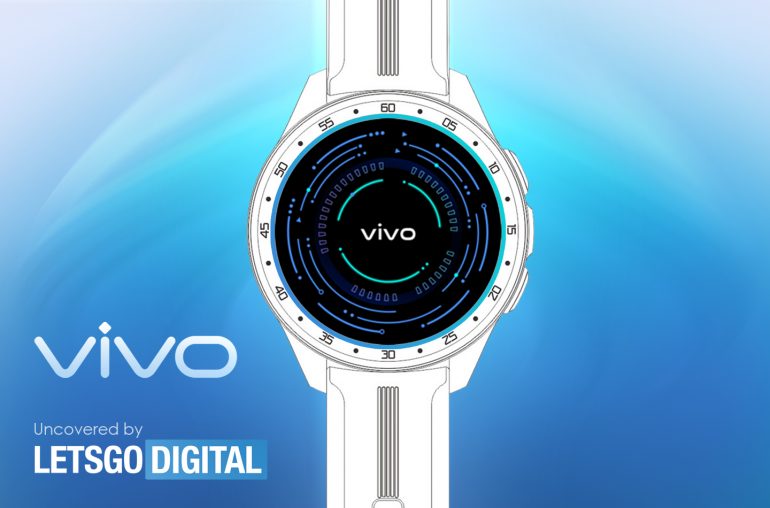
Vivo patented only two watch faces. The first one has blue and green circles with vivo logo at the centre. As per the description in the document, the circles will change according to the user’s goal progress. In other words, it is a knock-off of Apple Watch’s Rings.
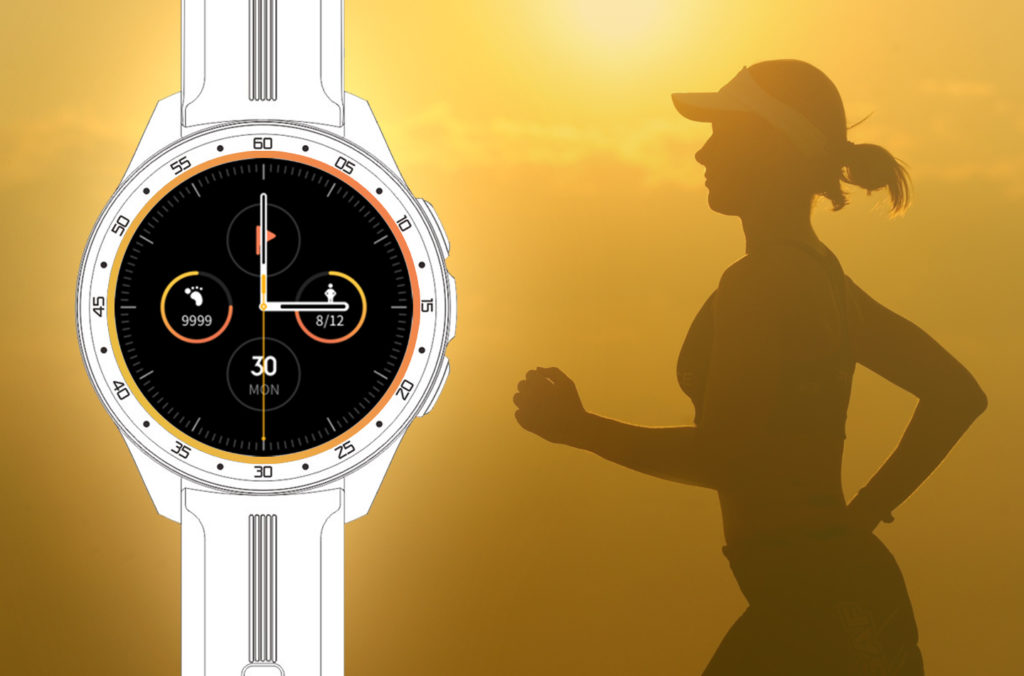
On the other hand, the second watch face has an analog clock with vital details like date, step count and two more things which could not understand.
Having said, these watch faces confirm the upcoming vivo smartwatch to feature a circular design unlike Xiaomi Mi Watch and OPPO Watch. This wearable even passed through 3C and Bluetooth SIG recently. Hence, we can expect Vivo to launch it anytime soon in the coming weeks.
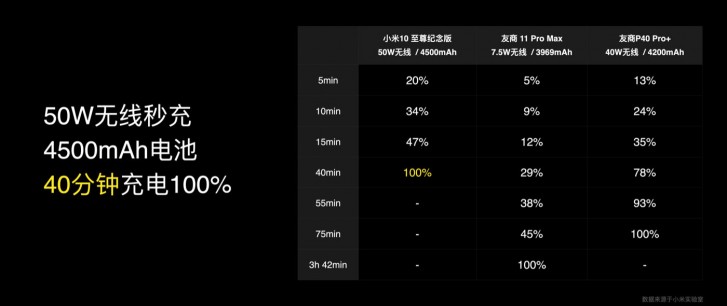
While the Xiaomi Mi 10 Ultra grabbed the spotlight for its whopping 120W wired fast charging support, it was equally if not more admirable that it reached up to 50W wireless fast charging rates as well. This is something most smartphones don’t support through wired charging. Now, the company has revealed a lengthy video explaining how they managed to achieve charging a 4,500mAh battery pack in just 40 minutes.
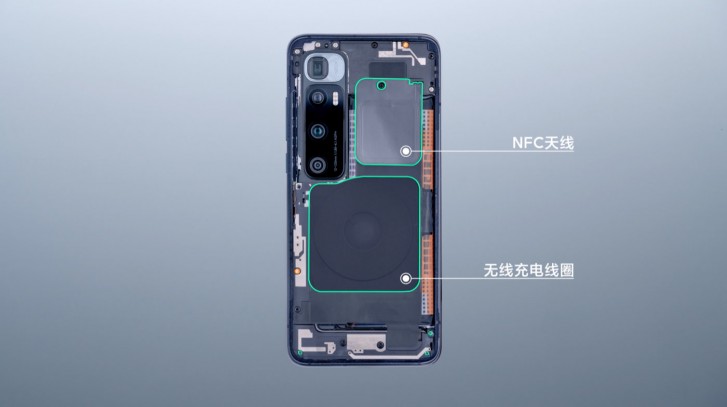
According to the video, the crucial aspect that allowed the Chinese tech giant to make this technology was to change the layout of the bits between the coil and the battery. In other words, the charging pumps, which are DC-DC converters that are used to increase or decrease voltage. Unlike a traditional layout of having them in series, Xiaomi set them up parallel to each other.
Another benefit of this layout was that the new parallel pump system had the new technology be more energy efficient. Conventional pumps are only 97 percent power efficient, so placing them in series (97% * 97% = 94%). But in the case of parallel pumps, the loss occurs only once with a 98.6 percent efficiency. The difference may not seem like a lot, but just a small change can greatly increase thermal performance.
The materials used in the connectors were also built with a highly conductive graphene-based material that also improved efficiency. Furthermore, the battery itself was split into two halves of 2,250mAh, to maximize charging rates. Xiaomi also focused heavily on the coils, with a multi strand winding technology being used to tightly weave wire in 5 layers. In simpler terms, a lot of clever technology hides beneath the company’s latest flagship handset.
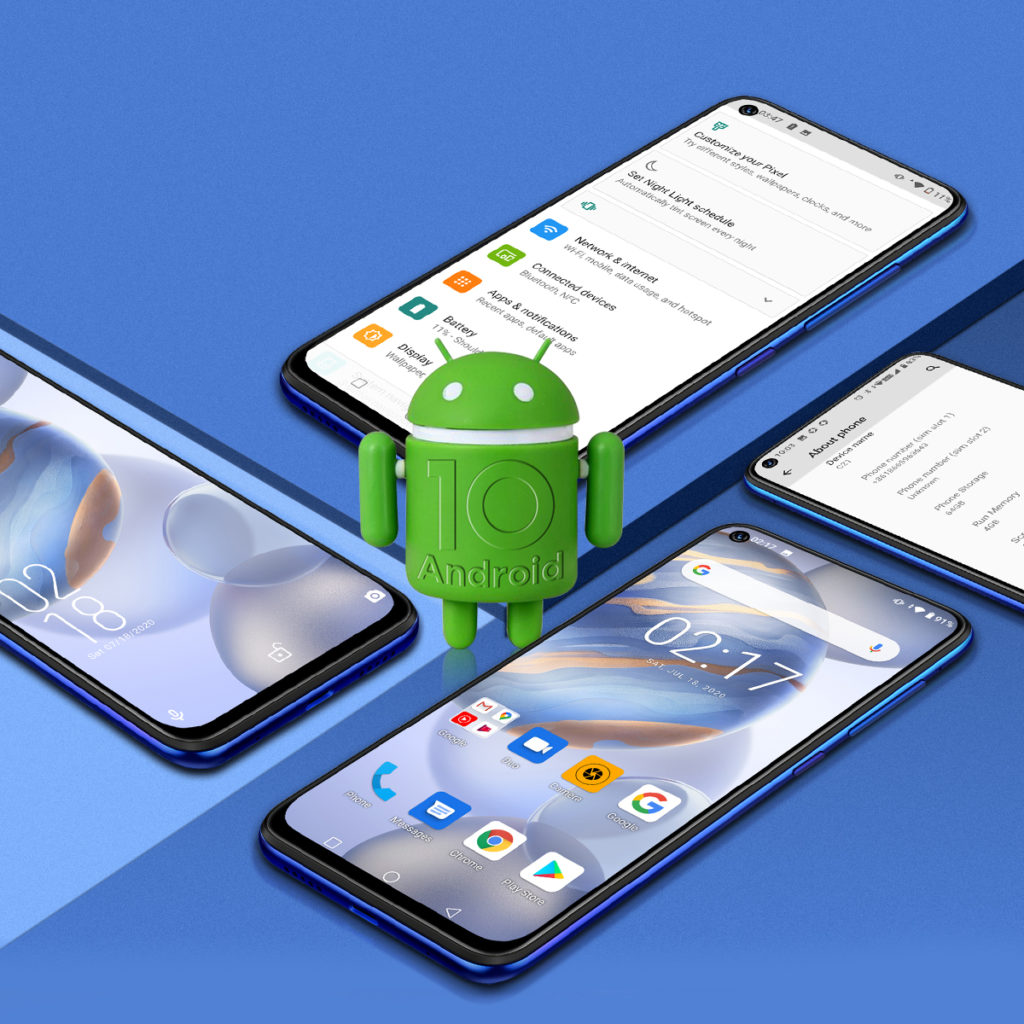
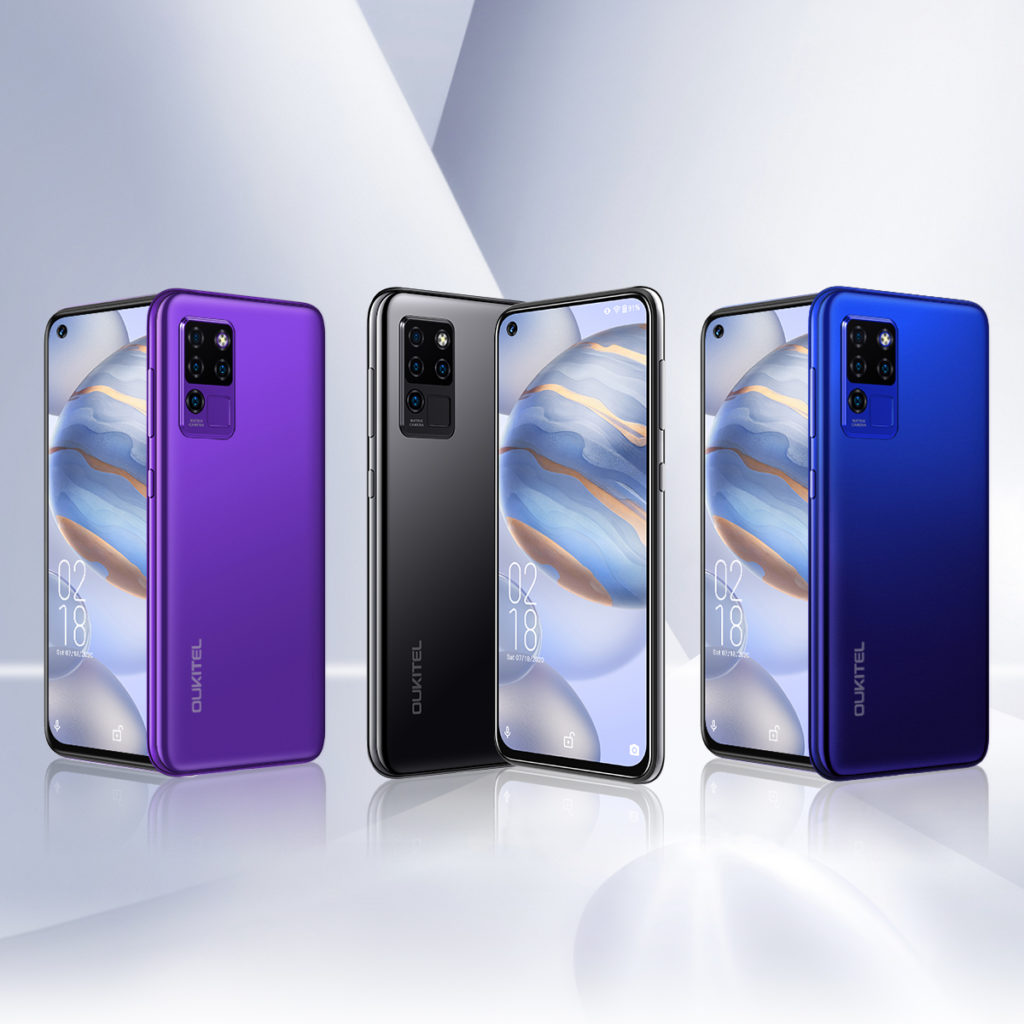
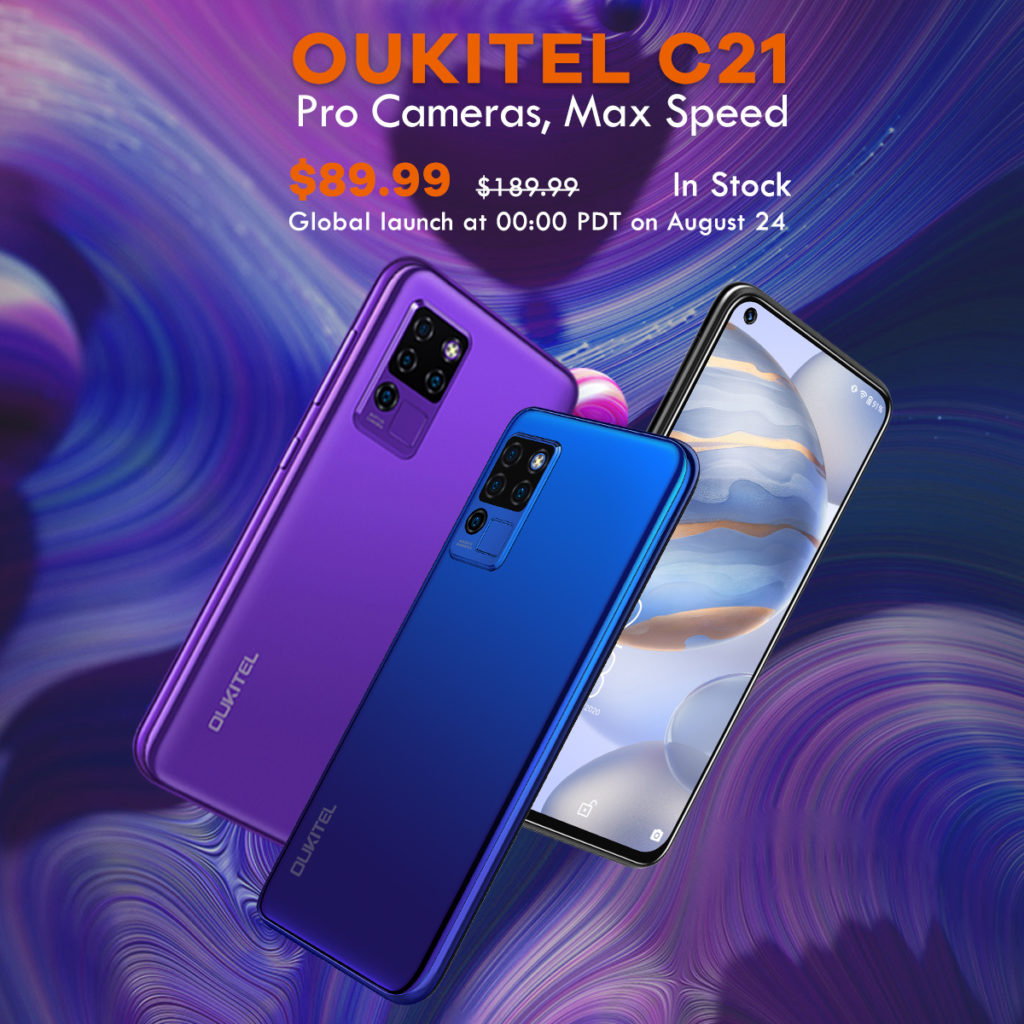
Oukitel recently launched the C21 affordable smartphone in the mid-range segment. The smartphone is scheduled to start retailing from August 24 at an incredible price of $89.99. Primarily, the smartphone houses a Full HD+ punch-hole display coupled with the Helio P60 processor and 16-megapixel quad-camera module. It is regarded as the best budget smartphone of 2020.
Oukitel C21 comes with a beautiful 6.4-inch punch-hole display featuring a Full HD resolution of 1080 x 2310 pixels and a 19.3:9 aspect ratio. It is quite an attractive feature for the devices under $100 price. The small bezels and punch-hole camera design make the screen-to-body ratio clocks to 93%. The is fully efficient to bring you breathtaking visuals and enjoy the content with a wider view. The smartphone features 398 PPI Pixel density for better clarity and sharpness.
The smartphone comes with a wonderful Helio P60 SoC coupled with an octa-core processor with a clocking speed of 2.0GHz and ARM Mali-G72 MP3 GPU. It is built on 12nm technology which makes the chipset highly efficient and optimized for today’s demand. It can easily handle CPU and graphics-intensive tasks easily.
Oukitel C21 features a quad-rear camera featuring a 16-megapixel main sensor, a 2-megapixel macro lens, a 2-megapixel blue lens, and a 2-megapixel auxiliary lens. There’s a 20-megapixel AI selfie camera on the front for quality selfies and video calling. Overall, it is a high0end smartphone that can even shoot quality photos in the low-light environment.
Oukitel C21 runs on stock Android 10 OS with all the new features such as improved dark mode, better privacy controls, and enhanced data security. It houses a 4000 mAh battery with 10W charging for uninterrupted 24 hours use. The smartphone support dual-band WiFi, Bluetooth 5.0, and dual LTE connect for better internet and network connectivity.
Considering the above splendid specifications, the Oukitel C21 is a very well-priced smartphone at $89.99. It is worth every cent and really is the best budget smartphone of 2020.
The interested users can gran the IOukitel C21 in three color options of Ocean Blue, Neon Purple, and Midnight Black from AliExpress official store. However, the company is also running a big giveaway for the new smartphone where the participants can win Oukitel C21. You can enter the giveaway can enjoy the new smartphone for free. You can know more about the smartphone by hearing to the official website.
Motorola has started teasing the arrival of a new smartphone in India. The company is currently mum on the name of the device. The microsite of the phone at Flipkart retailer site reveals that it will be made official on Aug. 24th.
The teaser released by the Lenovo-owned company suggests that the phone is built to deliver impressive performance and camera experience. The Motorola logo on the backside of the phone could be integrated with a fingerprint sensor.
The bottom edge of the mysterious phone has a USB-C port and a speaker grille. The right edge of the phone seems to be equipped with a dedicated button for accessing voice-assistant apart from the volume rocker and a power button.
The handset has a waterdrop notch display. The top edge of the device has a 3.5mm audio jack and a microphone hole. A vague view suggest that the phone could be fitted with a square-shaped camera module on its back.
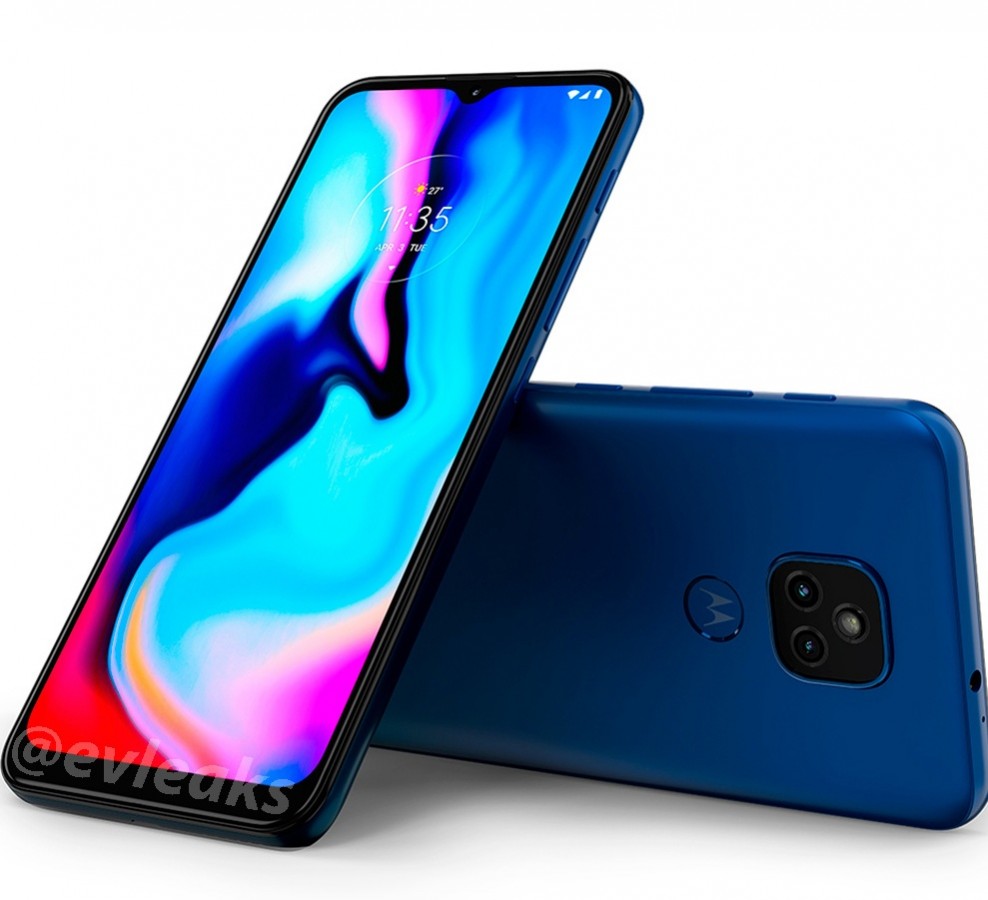
The teased phone seems to resemble the leaked render of the Moto E7 Plus that appeared yesterday. Hence, it appears that the Lenovo-owned firm may launch the Moto E7 Plus on Aug. 24 in India. There is a possibility that the teased phone could be something else, and not Moto E7 Plus. Hence, it is advisable for newer teasers to know more about the mysterious phone.
Moto E7 Plus specifications
So far, past reports have revealed that the Moto E7 Plus phone is fueled by the Snapdragon 460 chipset. It has 4 GB of RAM and 64 GB of storage. The Moto E6 Plus’s successor is equipped with a 5,000mAh battery and it is loaded with Android 10 OS. The backside of the phone has a 48-megapixel dual-camera system that will offer users with Night Vision mode for low-light photography.
Last year, OnePlus made its big move by expanding into the Smart TV category with its OnePlus TV Q1 series. The premium TV model offered an excellent OLED panel and high-end features at a high-end price. But in a segment dominated by veteran TV makers like LG and Samsung, OnePlus’ TV was always going to have a tough time.
Fast forward nine months and OnePlus is back with a couple of cheaper TV lineups – the OnePlus U series and the OnePlus Y series.
In a lot of aspects, the OnePlus U series is an embodiment of its origin philosophy – providing premium specs at an affordable price tag. The OnePlus U1 series, specifically its 55-inch model, offers sophisticated features at a relatively affordable price. Well, it’s not exactly cheap at ₹49,999, but at this price, you get a high-quality 4K LED panel, fluid and useful interface, a redesigned remote, and a number of smart connectivity features.
But these things are all on paper.
How’s the experience in real life? That’s what we’ll find out in this review of the OnePlus TV U1 55-inch.
OnePlus TV U1 55-inch Review: Installation
At the time of delivery, my apartment complex didn’t allow visitors or outsiders to enter the building premises (we had a COVID-19 case nearby). So I had to take the delivery in the lobby and carry the TV to the lift (with a little help from my security guard), and then to my apartment.
Naturally, the package is huge, and I thought I would have a tough time installing this huge TV. But to my surprise, the hardest part of installing the TV was lifting the TV to place it on my table.
Inside the box, you get the 55-inch OnePLus U1 TV, a user manual, remote with two AAA batteries, a couple of cables, and two table stands that go on each side. Note that the TV is heavy and if you are installing it on your own for some reason, be very careful when you are lifting it up or attaching the table stand.
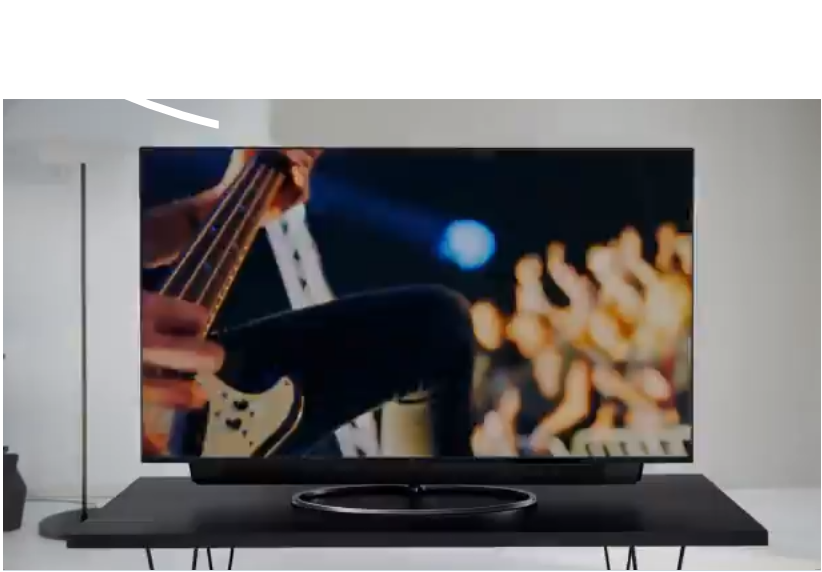
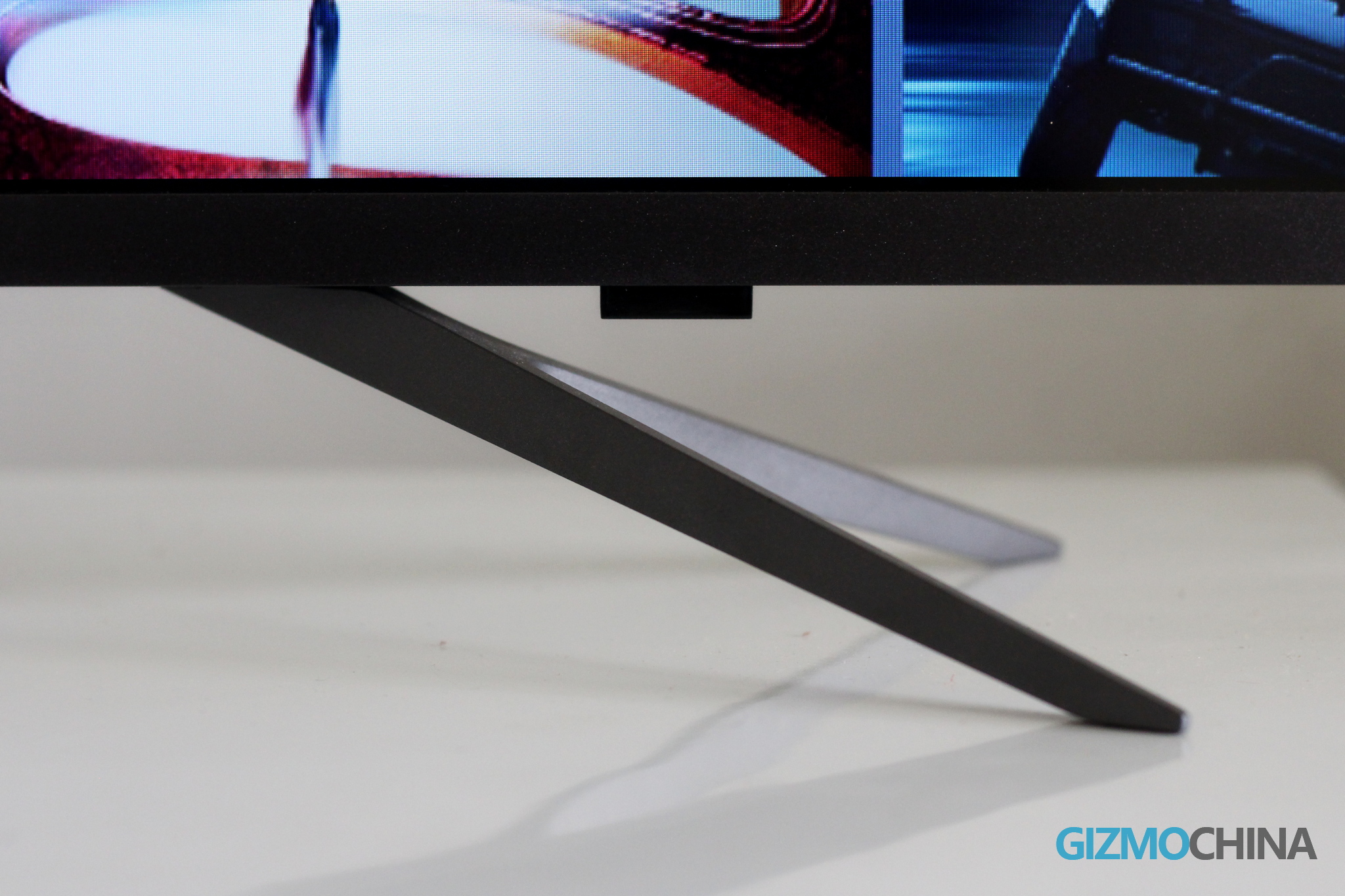
Installing the table stand was very easy. Ensure that you lay the TV on a safe surface and you just have to attach the stand to the TV with three screws on each side. It’s pretty straightforward and despite its thin profile, the stand does an outstanding job of keeping the TV sturdy on the table. This is a significantly better solution that the circular base found on its premium Q1 series.
OnePlus Q1 QLED TV comes with a circular base
The TV doesn’t come with a wall mount in the box. But OnePlus informed me that customers can request the wall mount at the time of delivery free of charge.
The OnePlus TV U1 runs on Android TV 9 Pie. Even if you have never used the Android TV platform before, note that it’s similar to Android’s setup screen and you’ll be able to finish up the installation process within minutes.
OnePlus TV U1 55-inch Review: Design
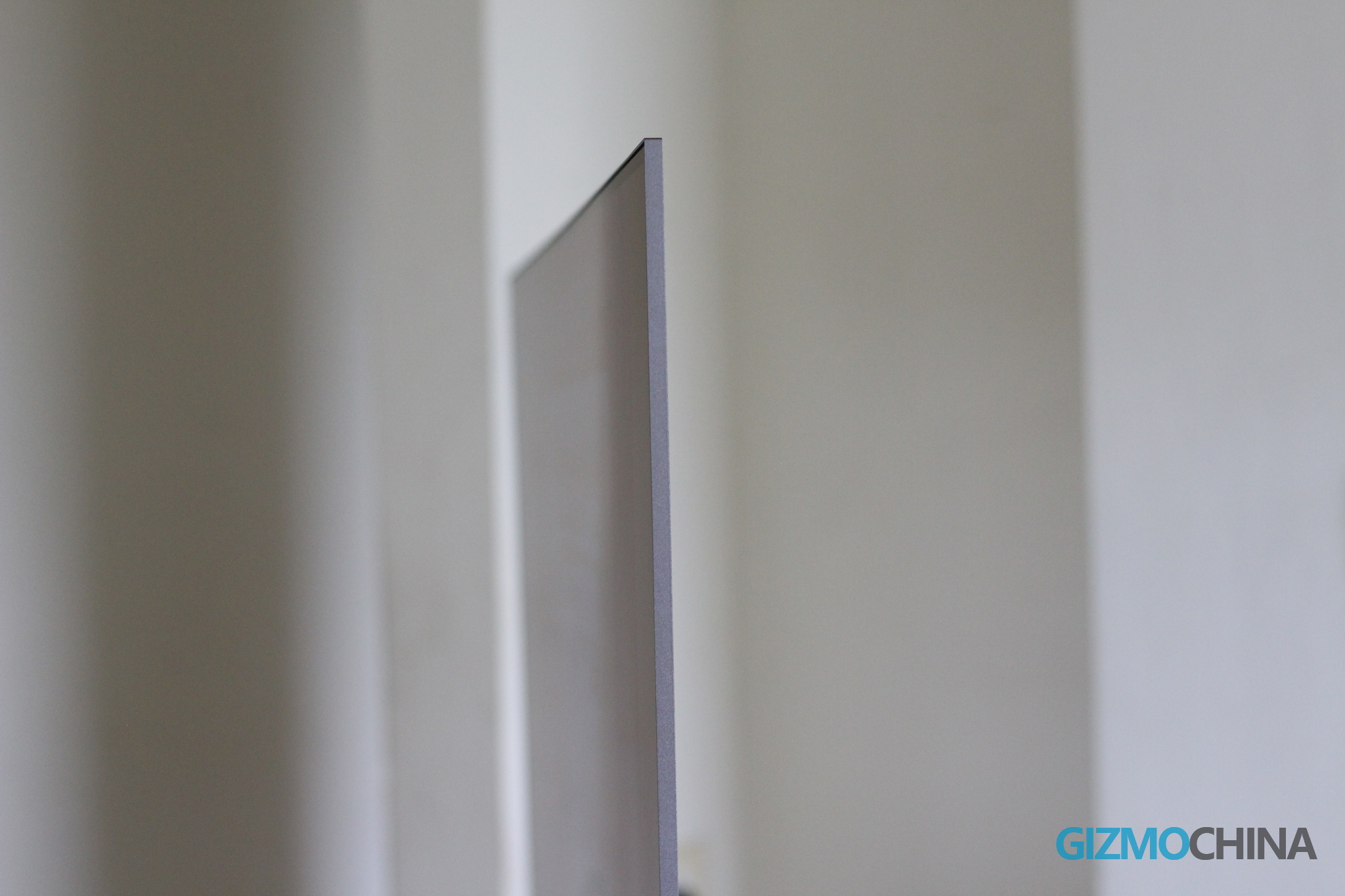
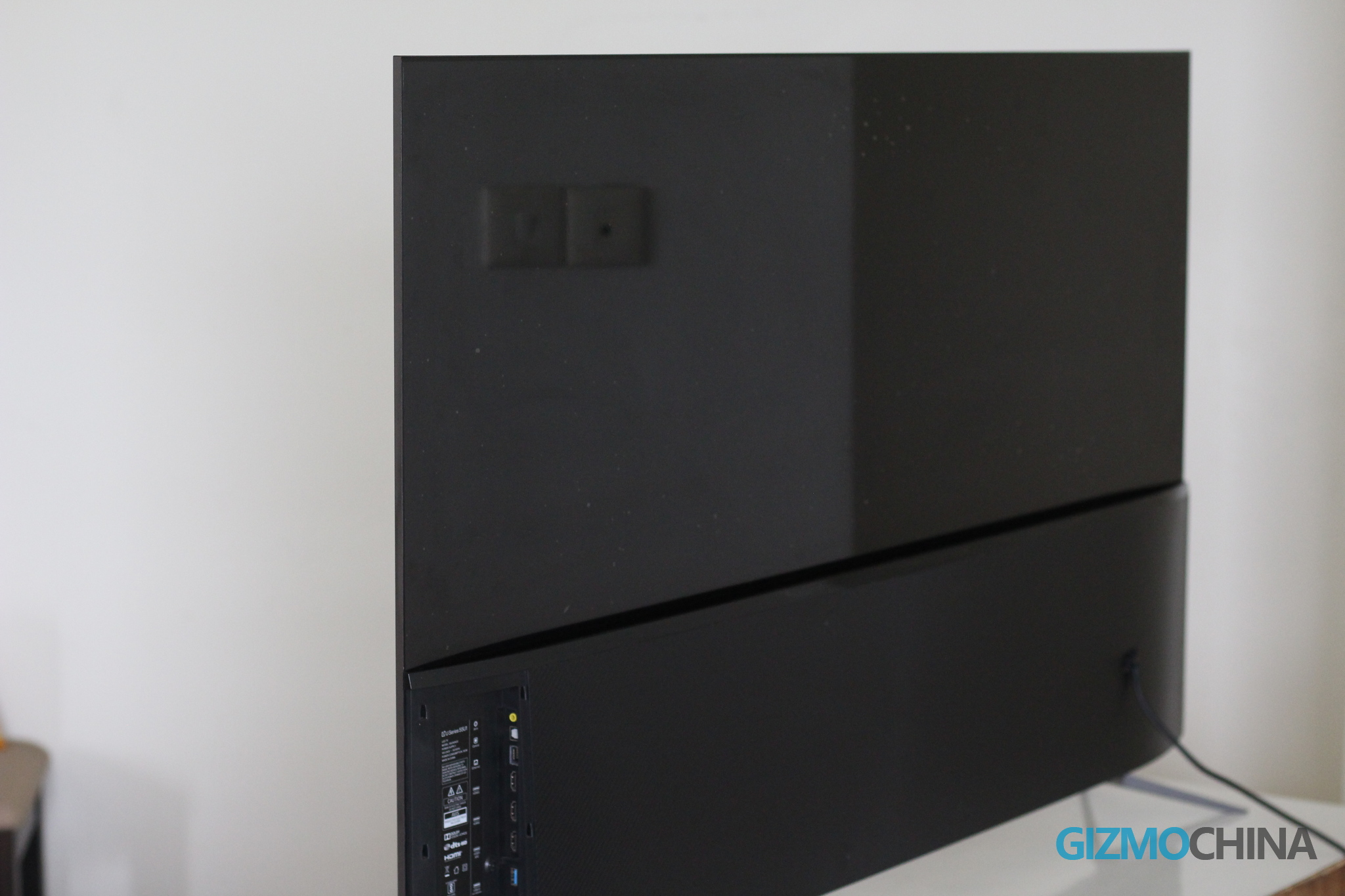
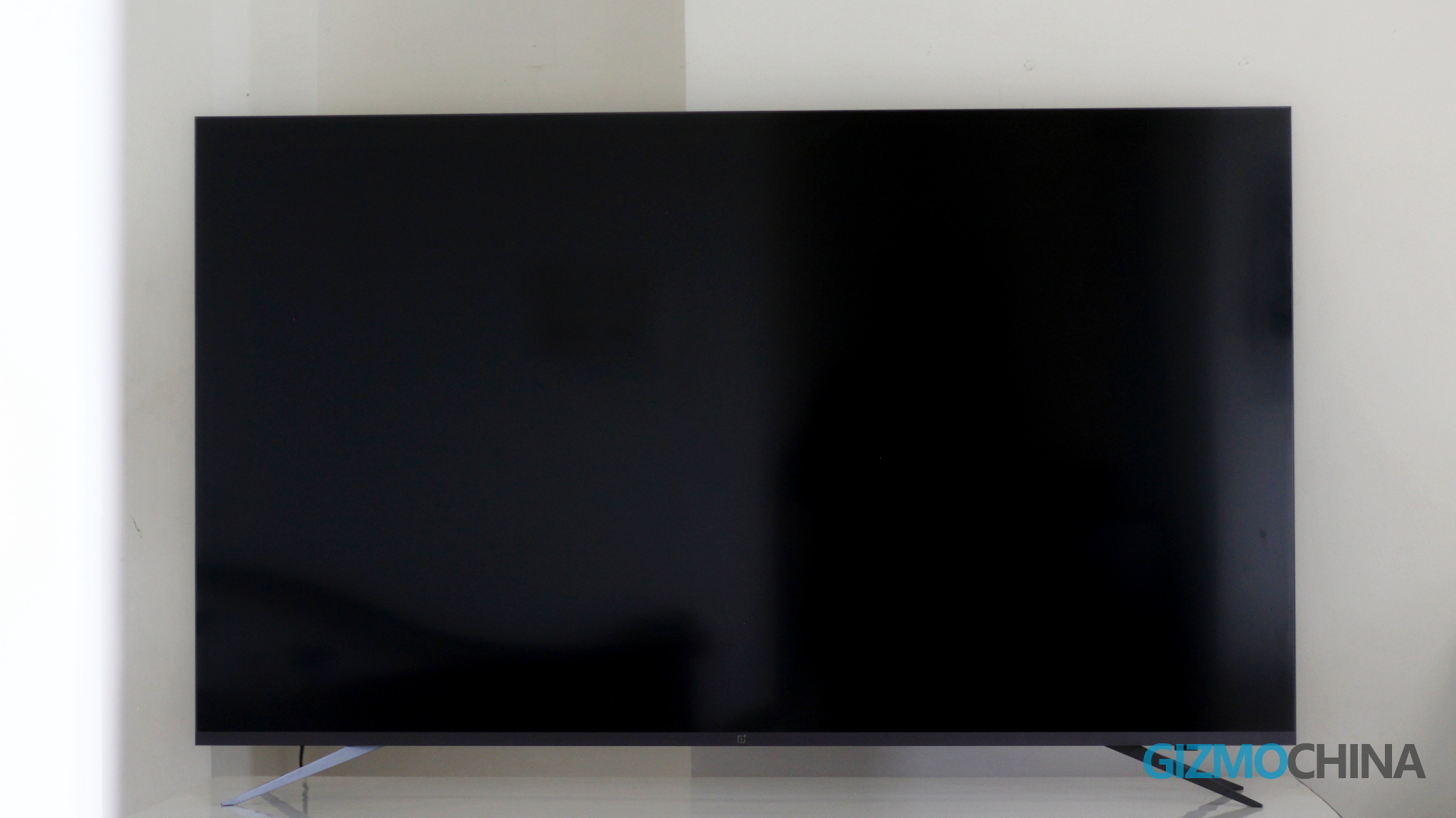
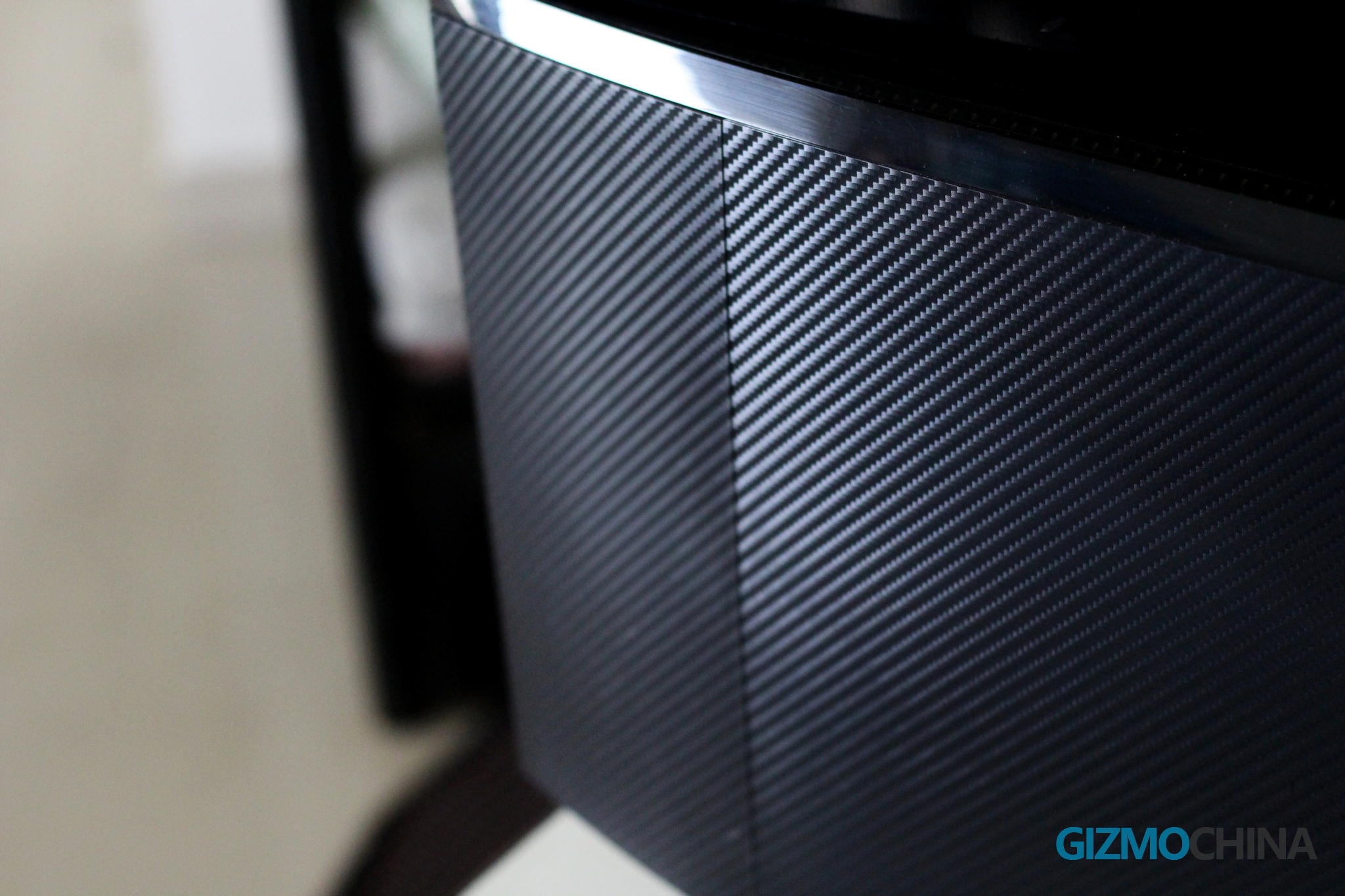
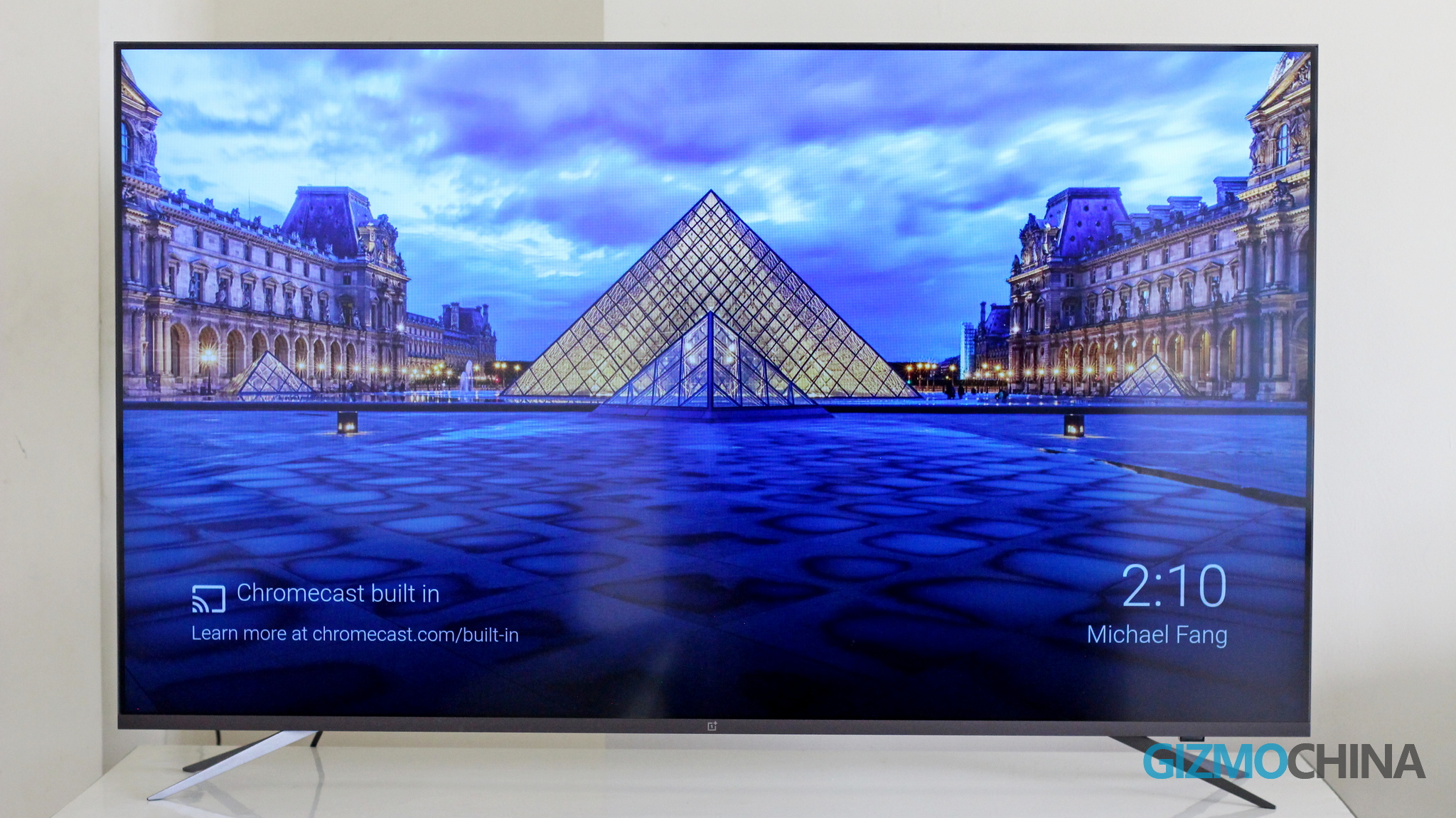
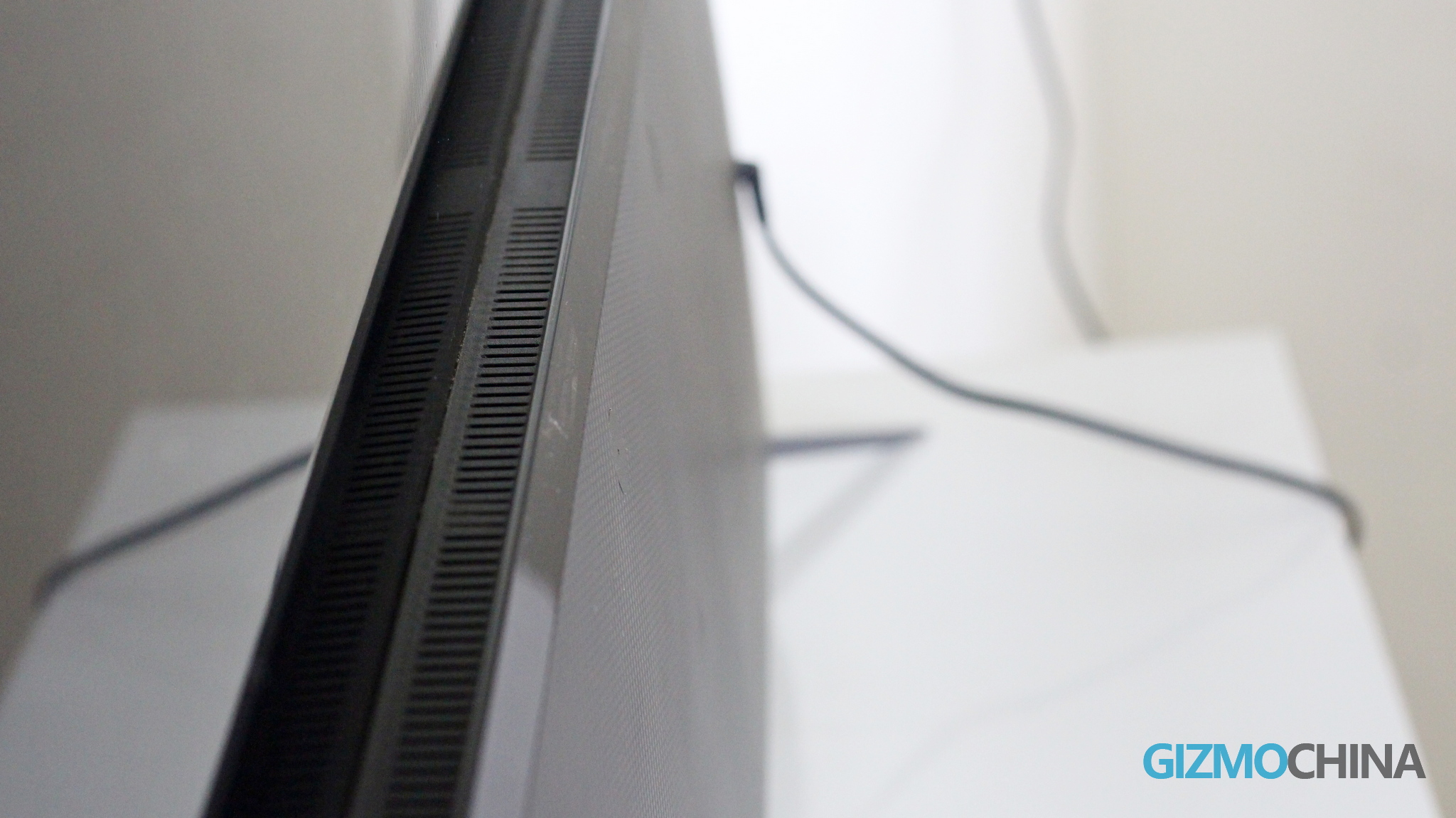
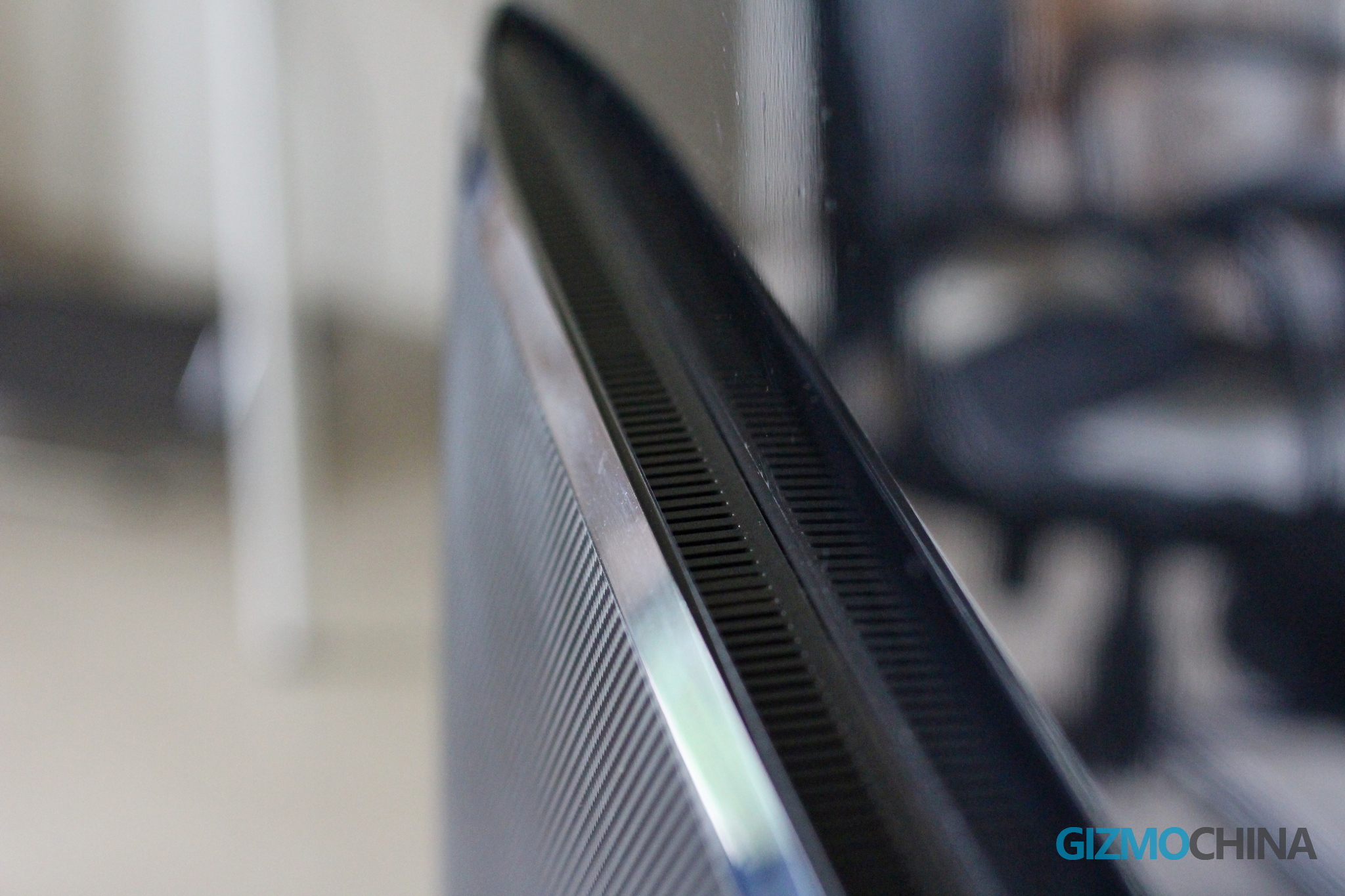
A 55-inch TV is so large that it’ll definitely stand out in your living room. And the OnePlus TV U1 55-inch stands out in a really good way. The TV is extremely slim, measuring just 6.9mm for almost two-thirds of its body. The thicker, lower third of the body, which houses all the components including the 30W speakers comes in a carbon fiber finish.
OnePlus TV U1 Super Slim Design
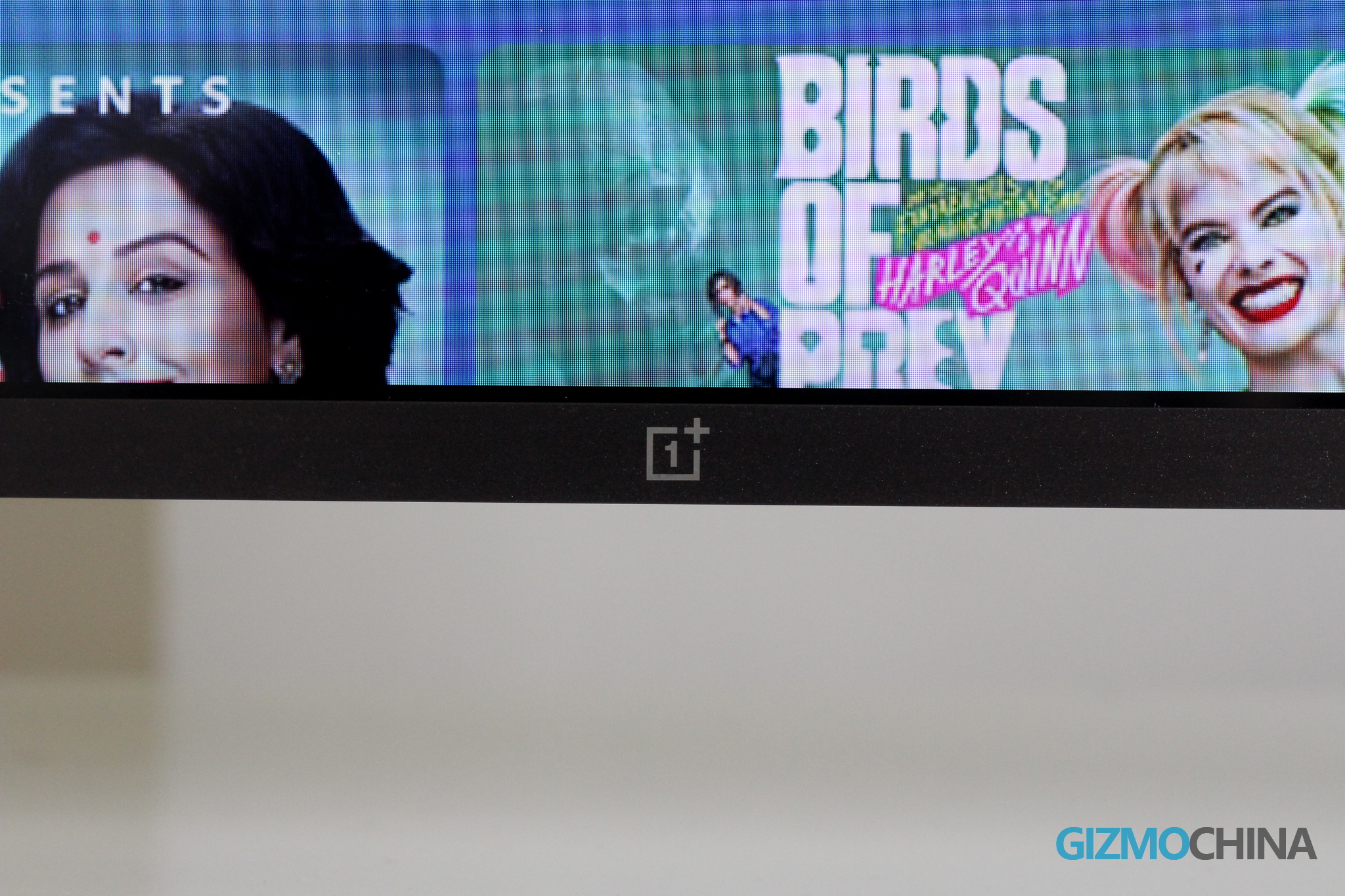
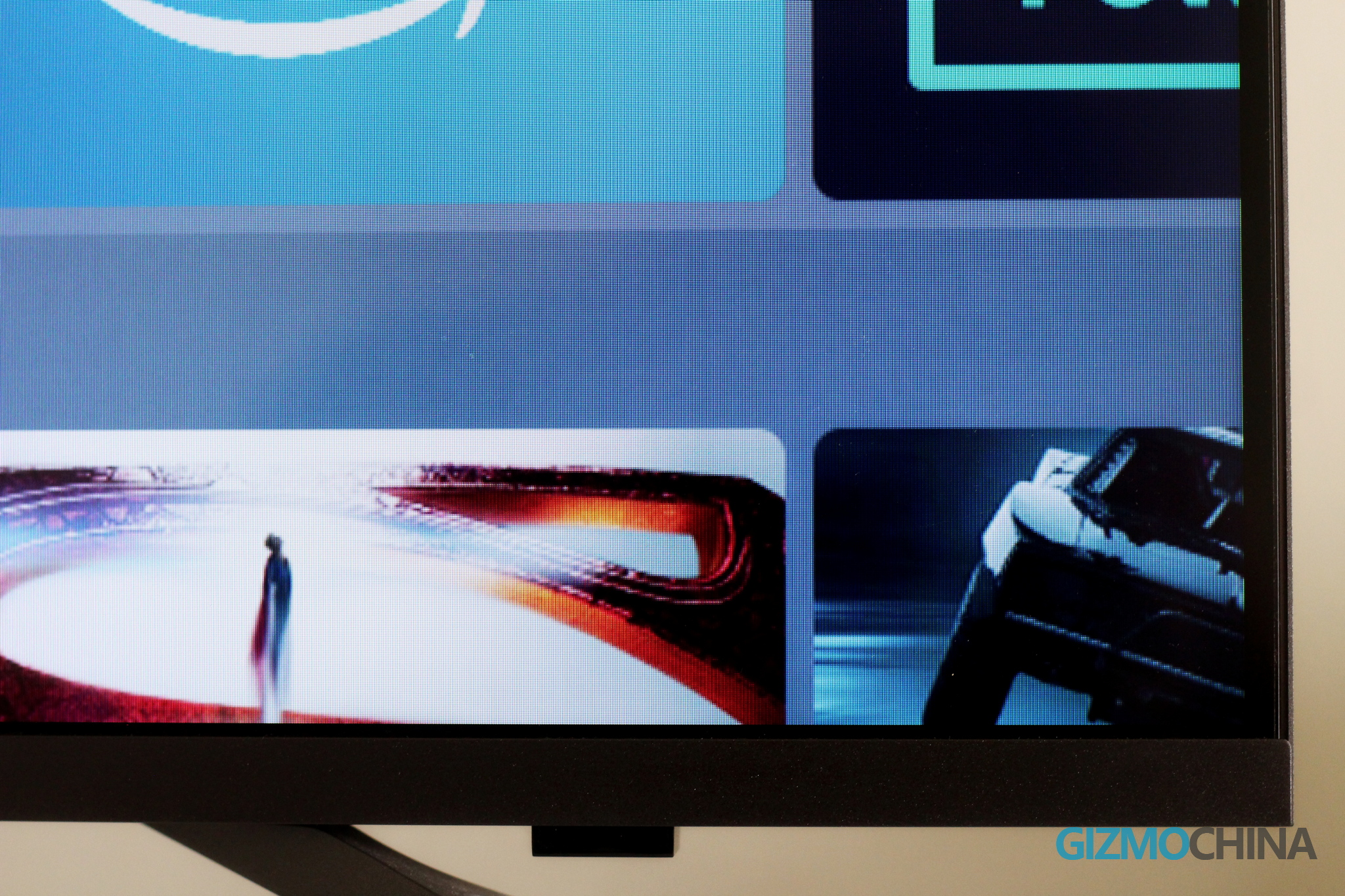
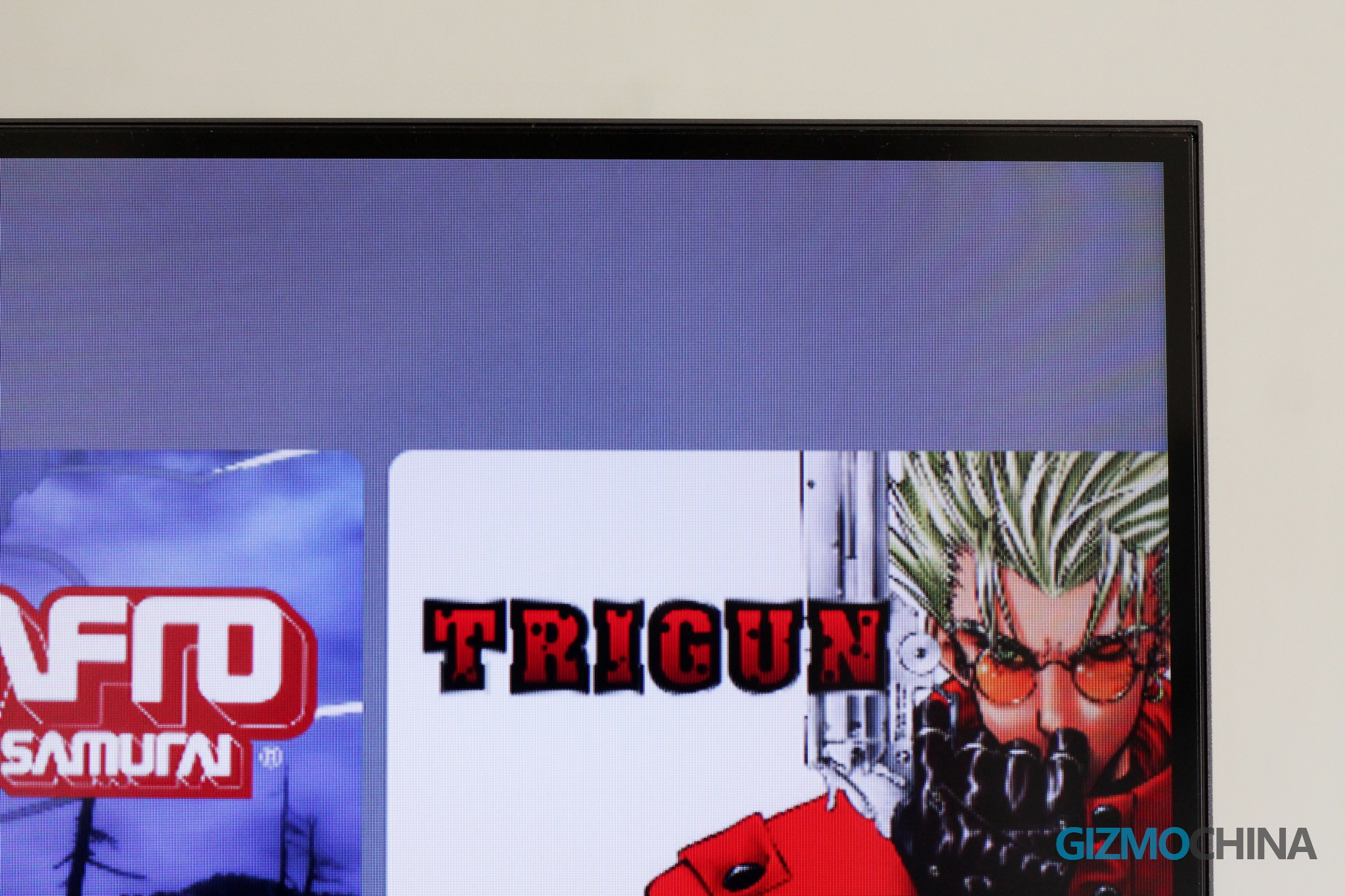
The front bezels are extremely thin and even the bottom bezel which houses the OnePlus logo is thin enough not to affect your viewing experience. OnePlus says that the screen occupies a substantial 95% of its body.
1 of 5
The bezels are extremely thin
OnePlus logo on yhr bottom bezels
OnePlus TV U1 Top Bezels
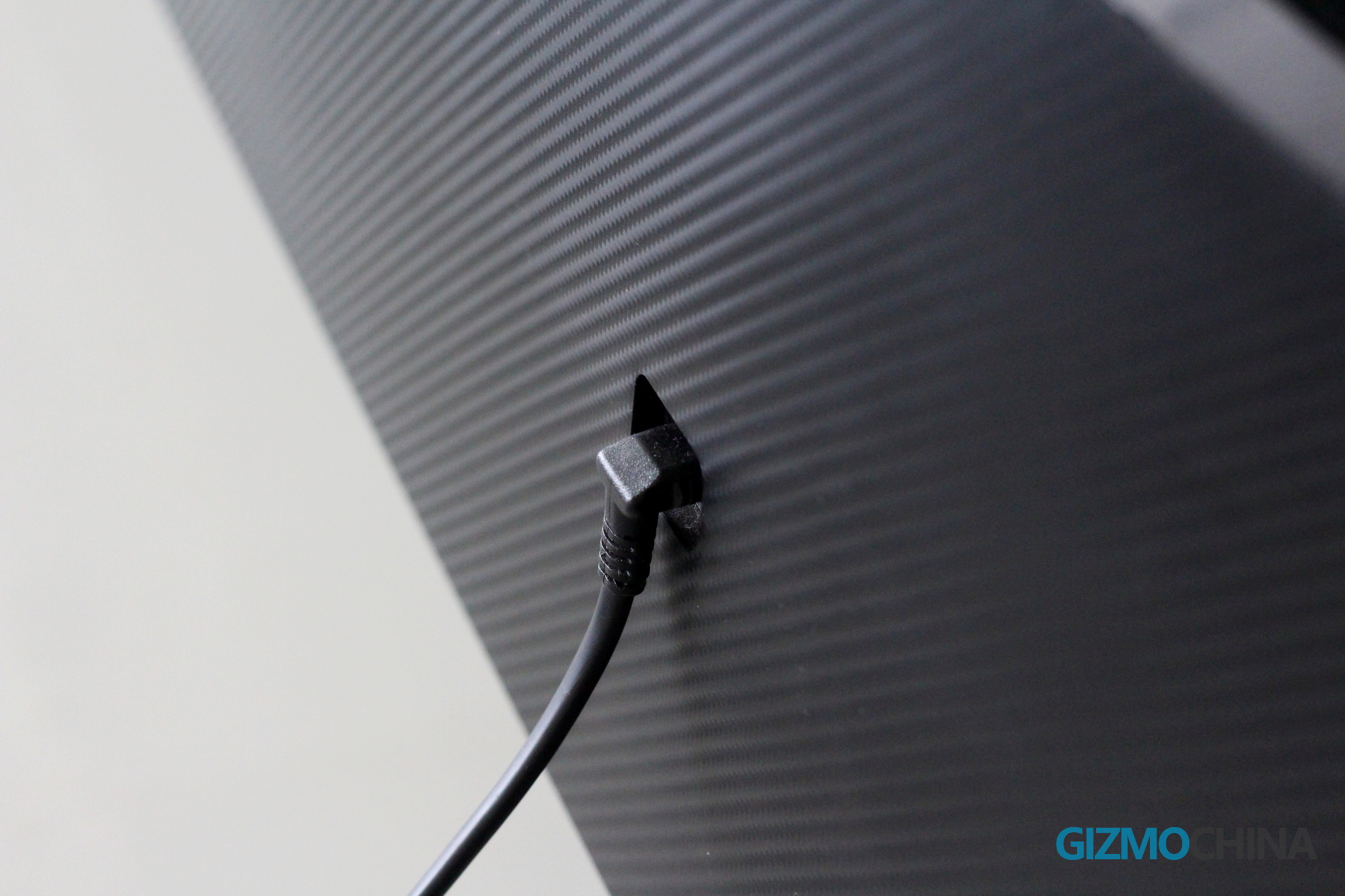
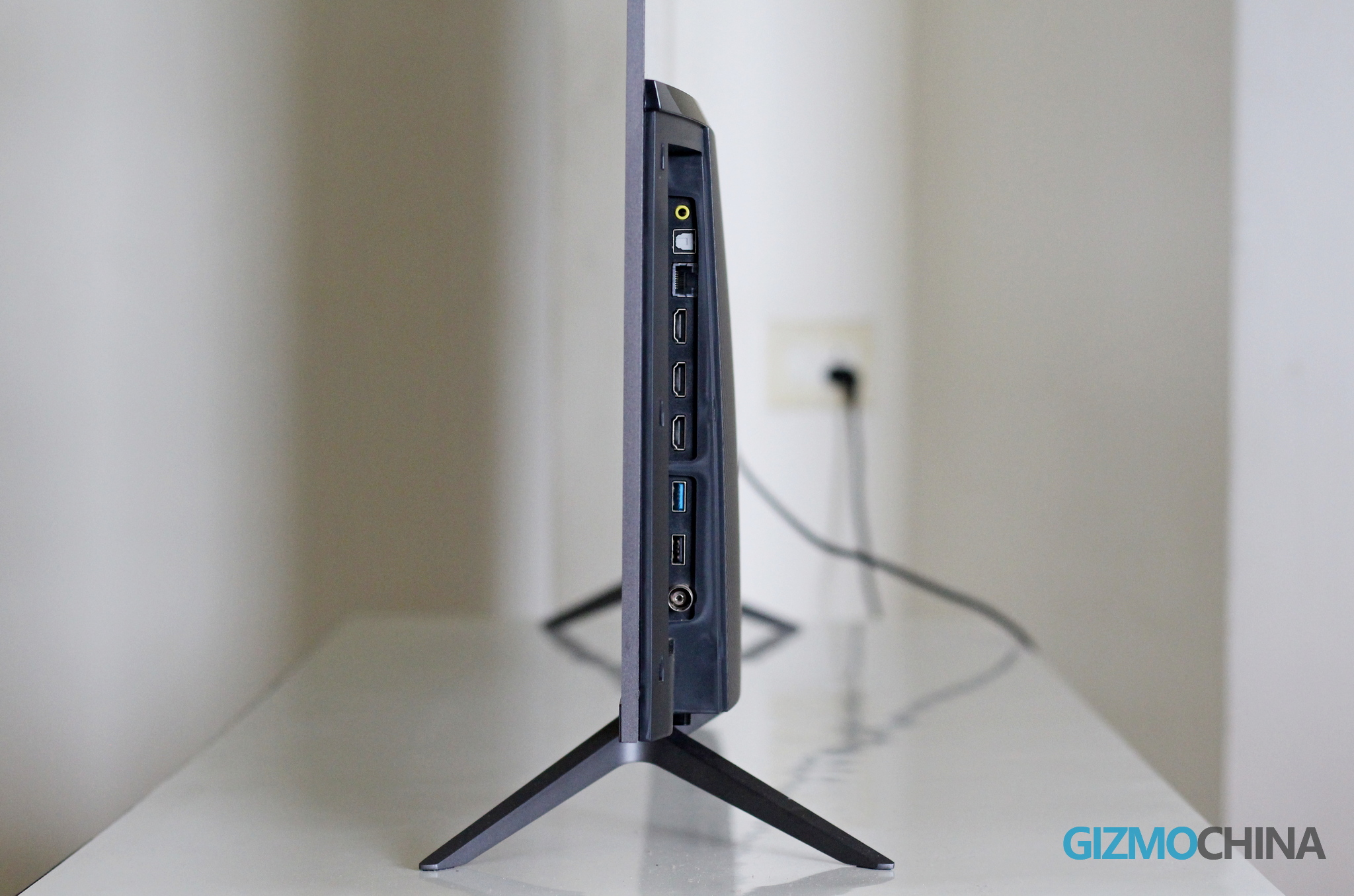
The carbon fiber finish is a nice touch on the back, even if it doesn’t come on the visible side of the TV. All the important ports are on the right side of the TV – situated at the back. The power port is on the left side. There’s a receiver at the bottom right corner of the TV with a white LED light indicating its power status.
1 of 6
OnePlus TV U1 Ports
OnePlus TV U1 Back Cover Closed
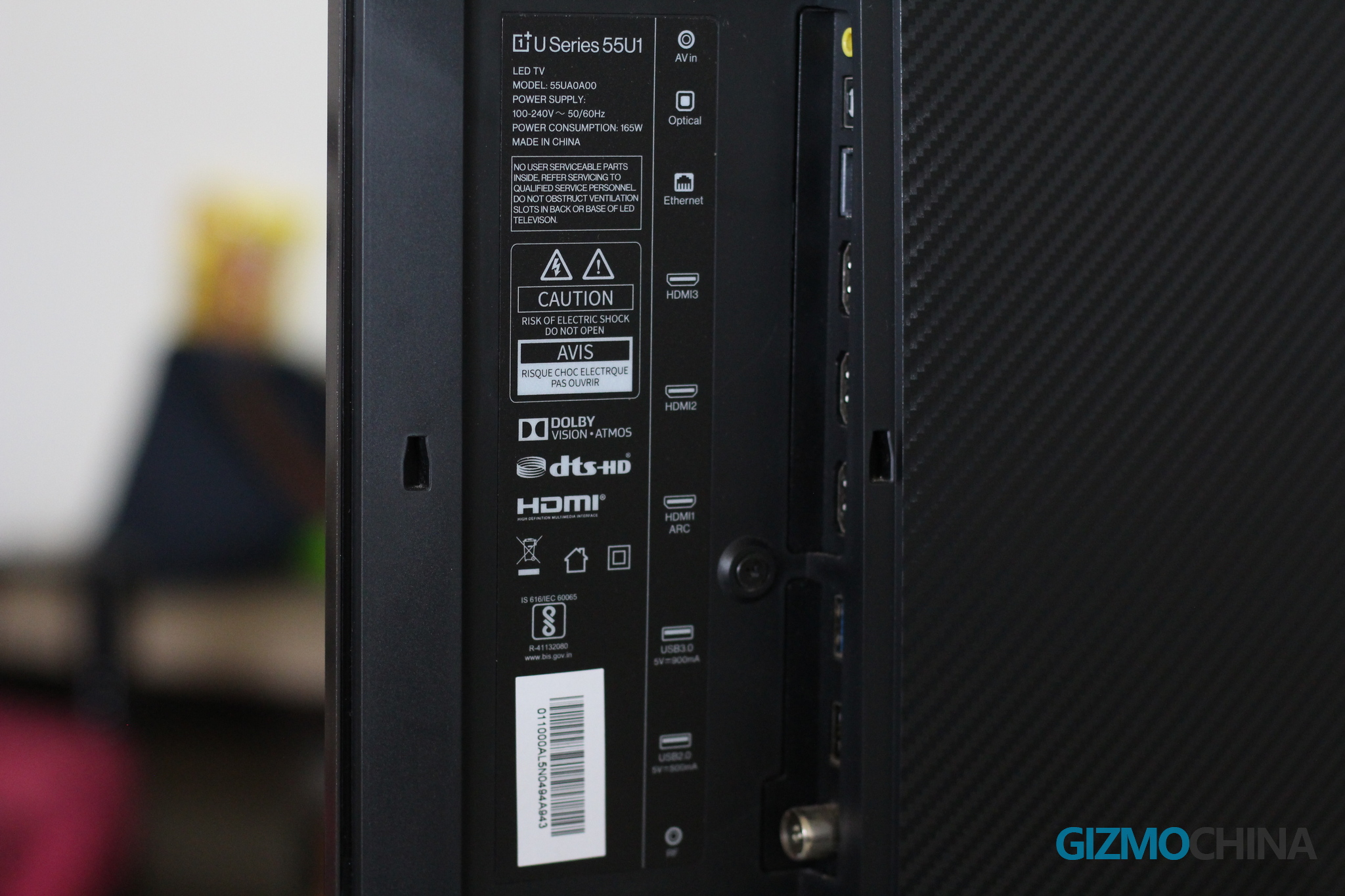
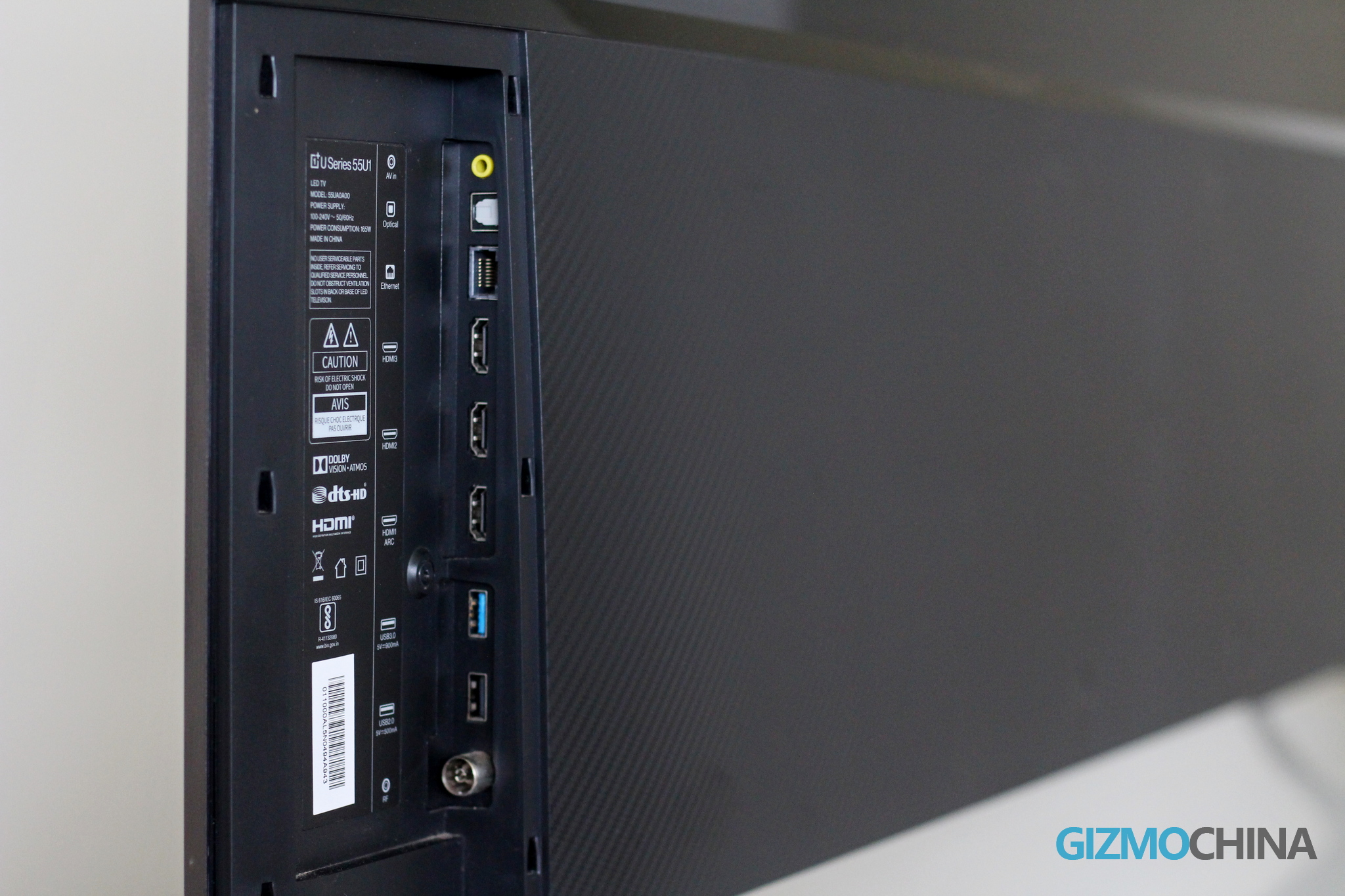
The TV hides all the ports under a removable cover, which also gets a carbon fiber finish. But I was surprised to find out that you can’t close this cover once you plug in the cables as it doesn’t have a cut out to route the wires out. I hope OnePlus finds a solution to this in the next model as I prefer covering up the cables at the back to maintain its clean look.
The bezels and the table stands have a gunmetal gray finish. This color, along with the near bezel-less screen of the TV gives it a premium look.
Another thing to note here is that the two table stands are placed pretty wide apart. So you’ll need a long table to keep this TV. Also, the table stand doesn’t raise it high enough to house an Xbox or a soundbar underneath. A few centimeters higher up and my Xbox would have snuggly fit under the TV. While I feel some soundbars and set up boxes (or even a PS4) might still be able to fit underneath, if the stand had lifted up the TV further by a few centimeters, it would have been perfect.
The OnePlus TV U1 55-inch gets a decent set of ports. You have three HDMI ports (HDMI1 supports arc), two USB-A ports (one with USB 3.0 support), an RF port for the antenna / cable, an AV-in composite port, an optical audio out for your speakers, and an ethernet port for plugging in your wired internet.
OnePlus TV U1 Ports
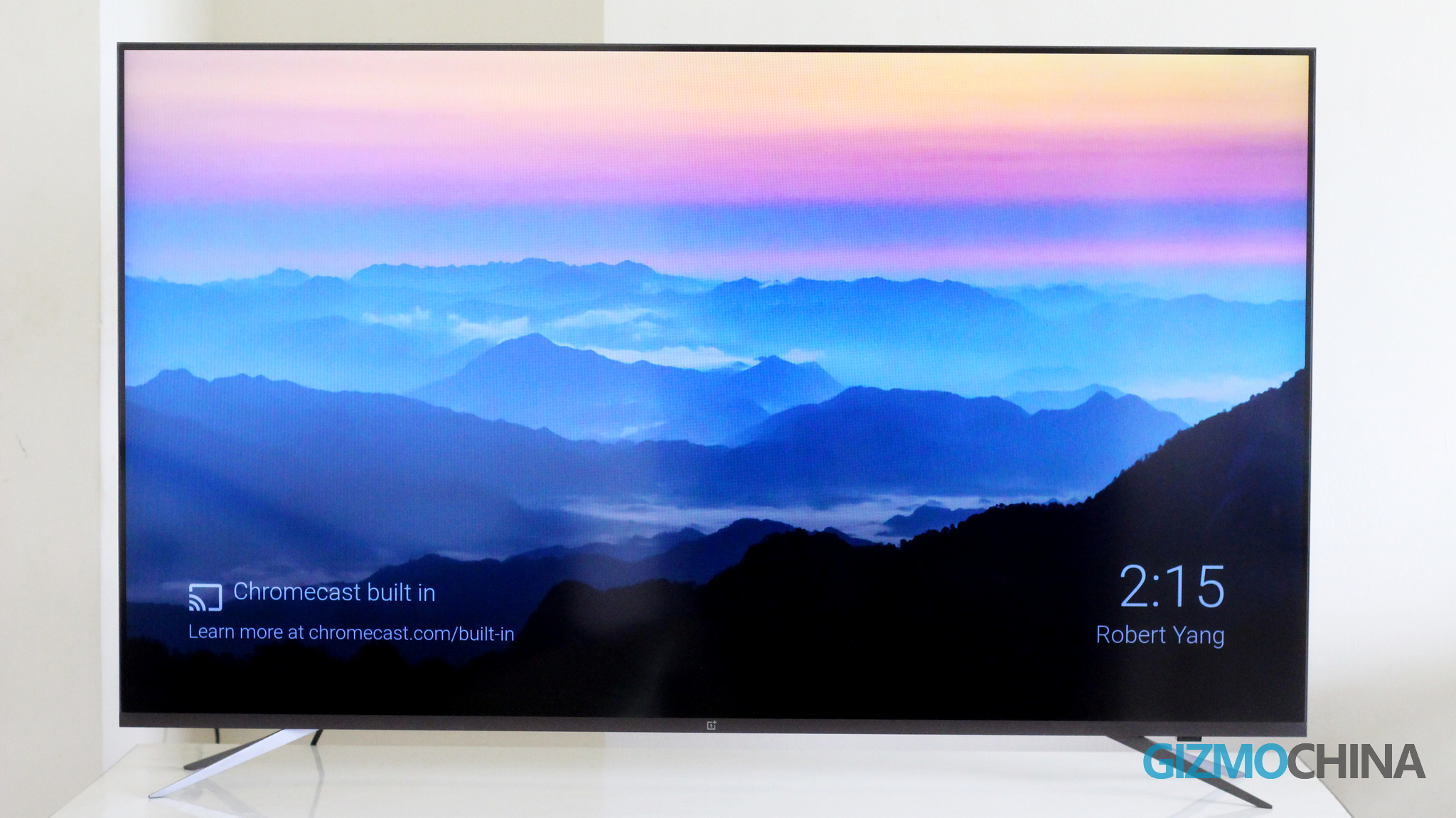
You don’t have a 3.5mm headphone jack. But you do get Bluetooth 5.0, Wi-Fi 802.11n, and Google Chromecast built-in.
As for the speakers, you have a total of four units with a rated sound output of 30W. The TV supports up to Dolby Atmos and DTS: HD formats. There’s also a Bluetooth Stereo mode that transforms your TV into a speaker.
OnePlus TV U1 Speakers 30W
OnePlus TV U1 55-inch Review: Display Quality
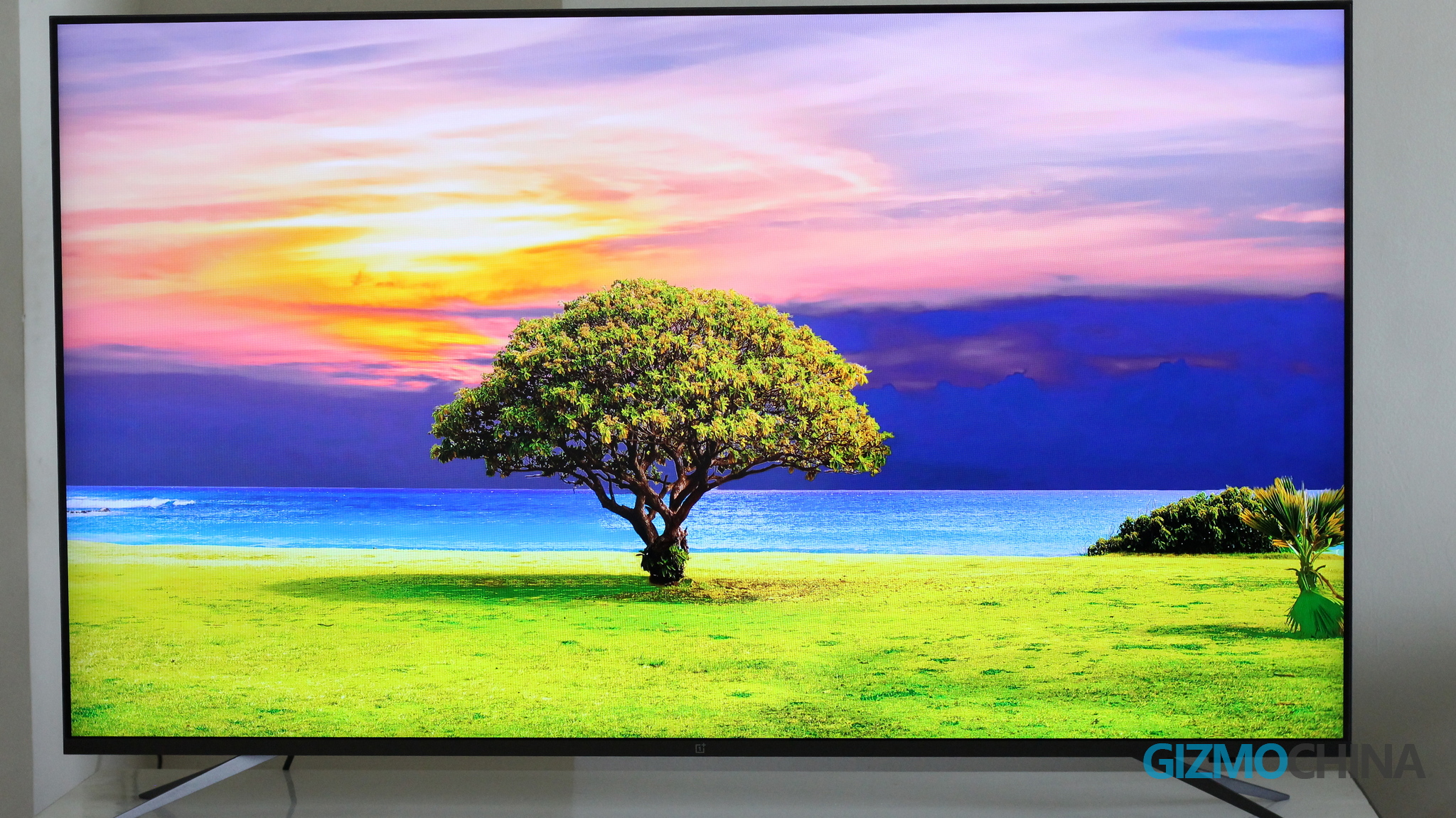
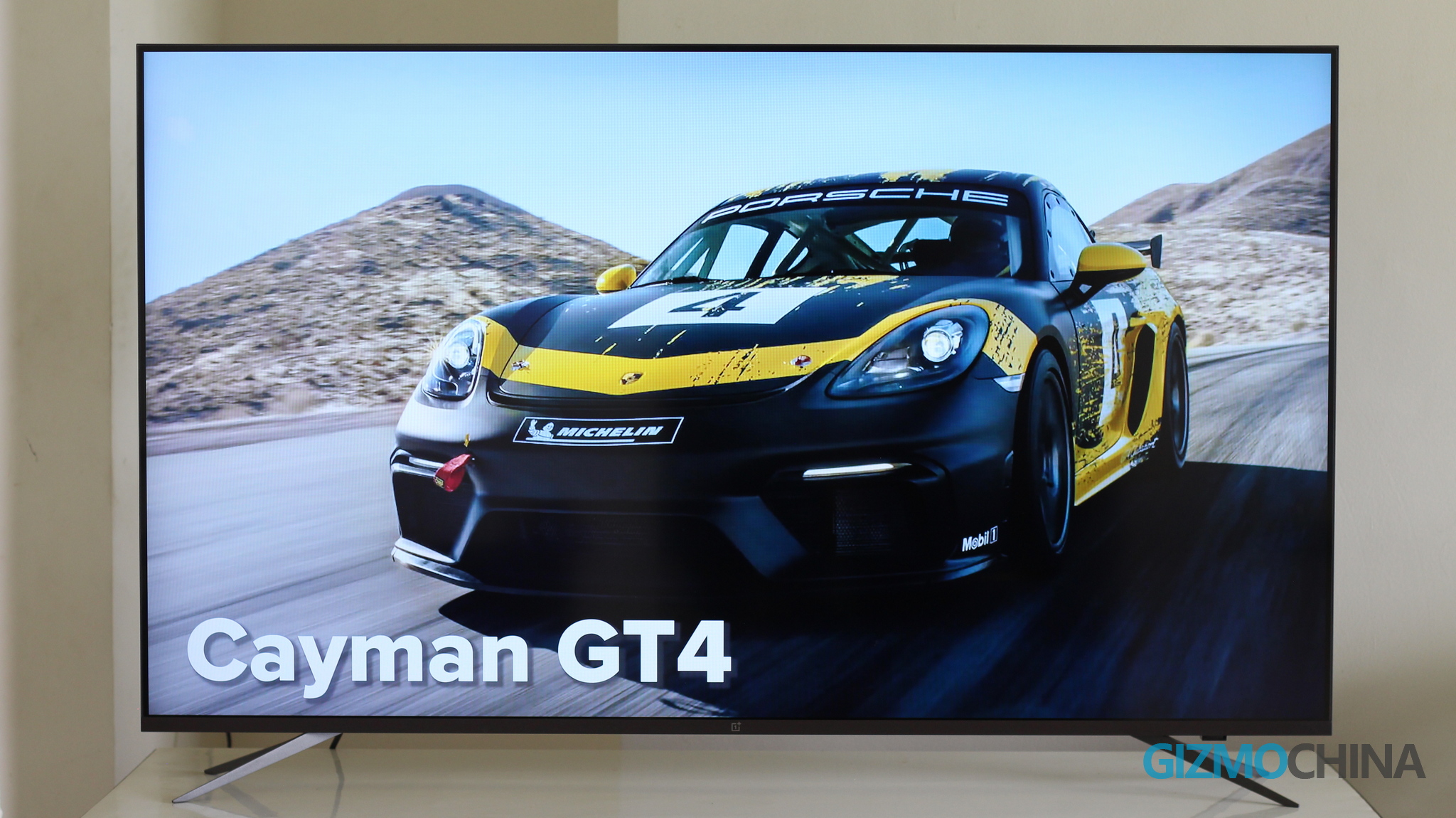
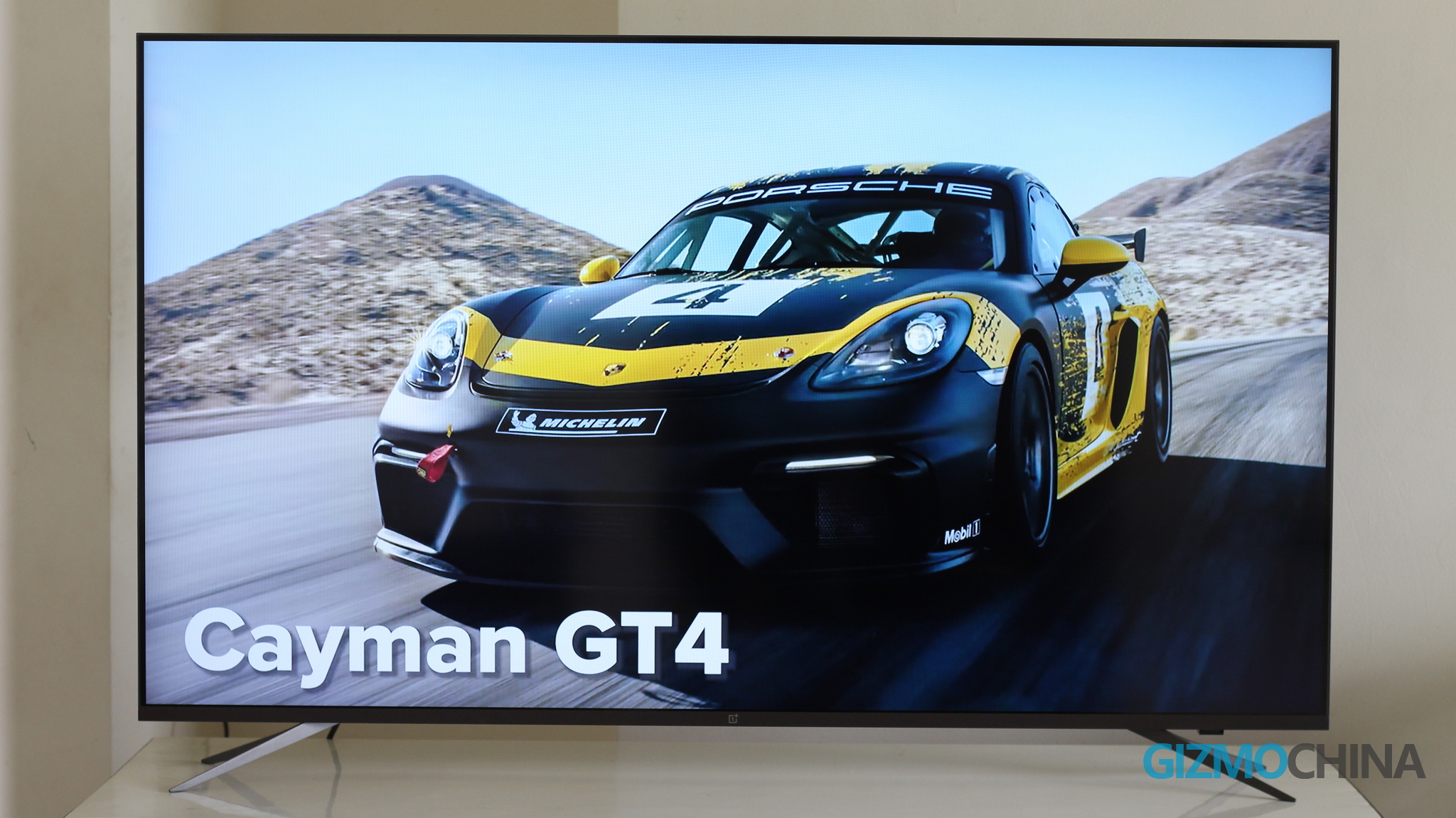
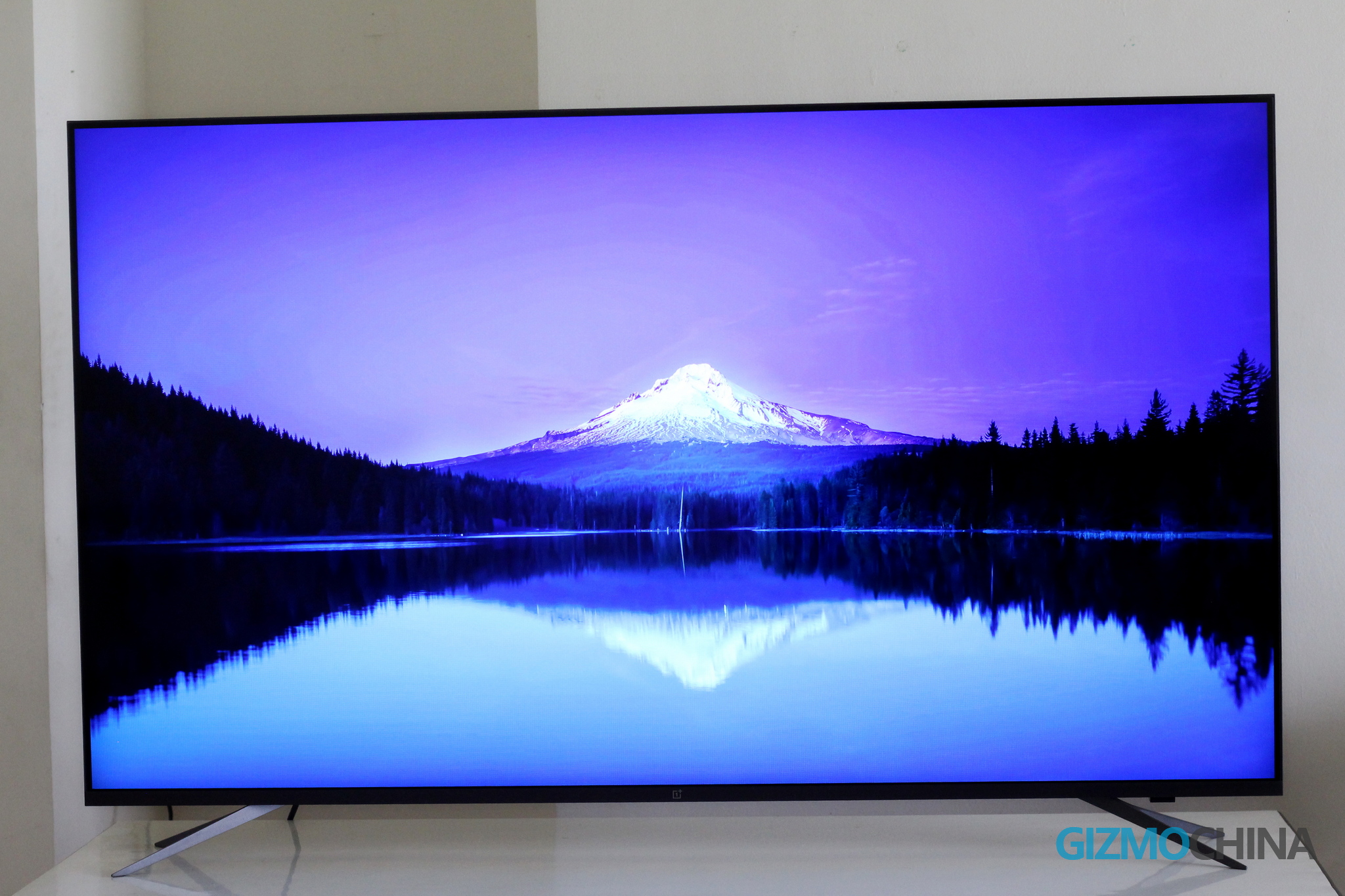
The OnePlus TV U1 has a LED-backlit VA panel with 4K 3840 x 2160 resolution and DCI-P3 93% color gamut. It supports Dolby Vision, HDR10, HDR10+, HLG HDR formats.
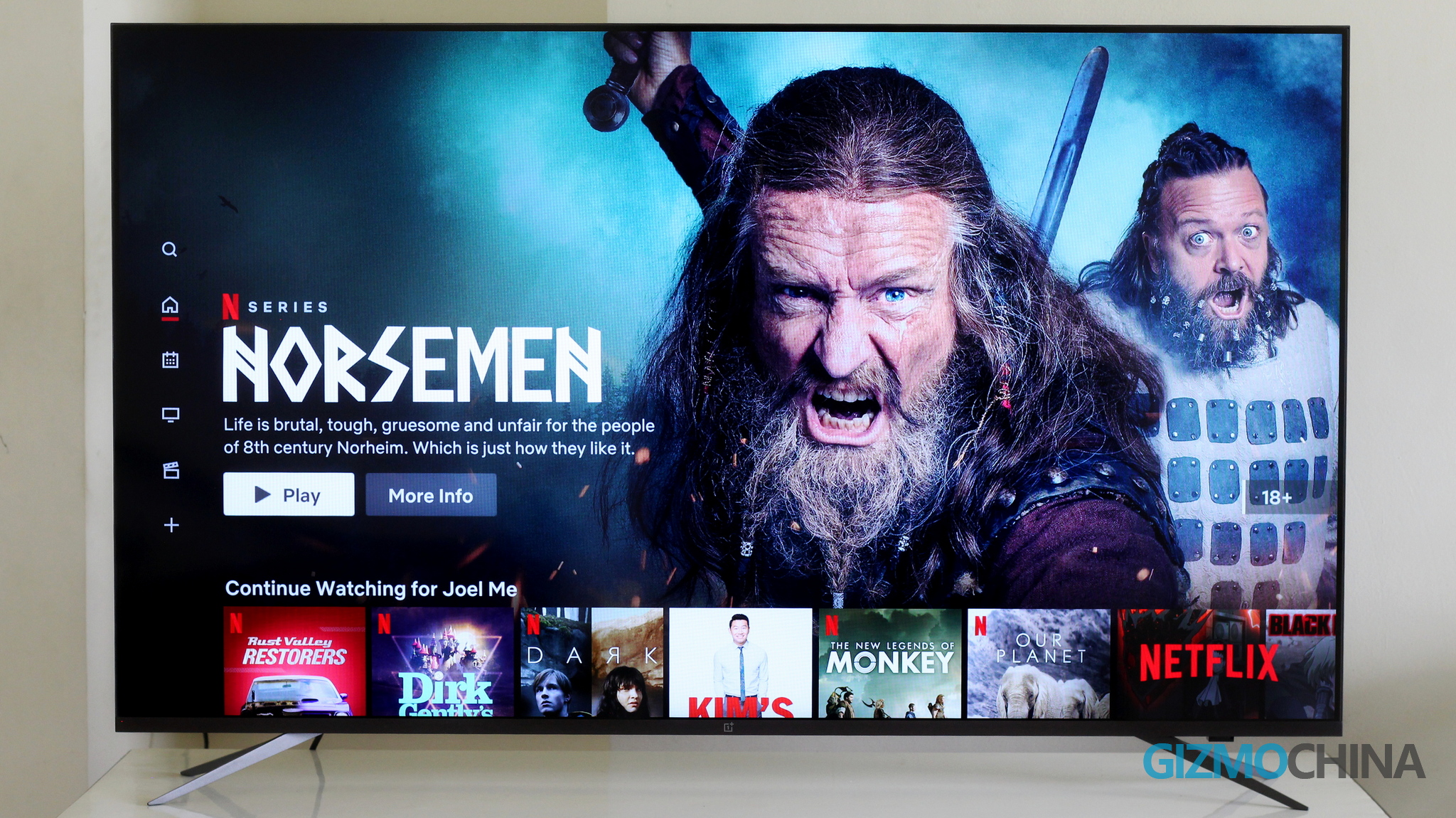
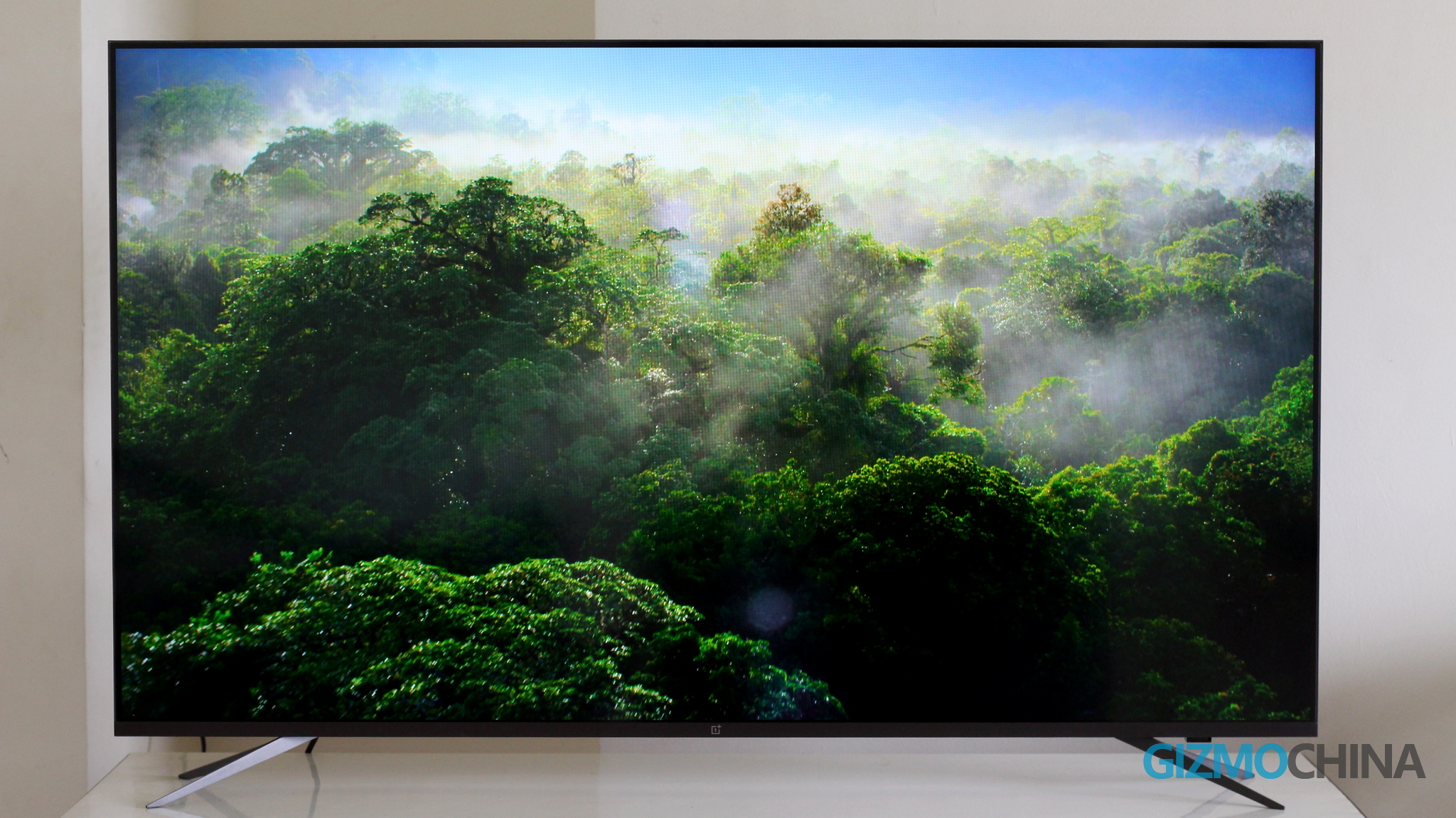
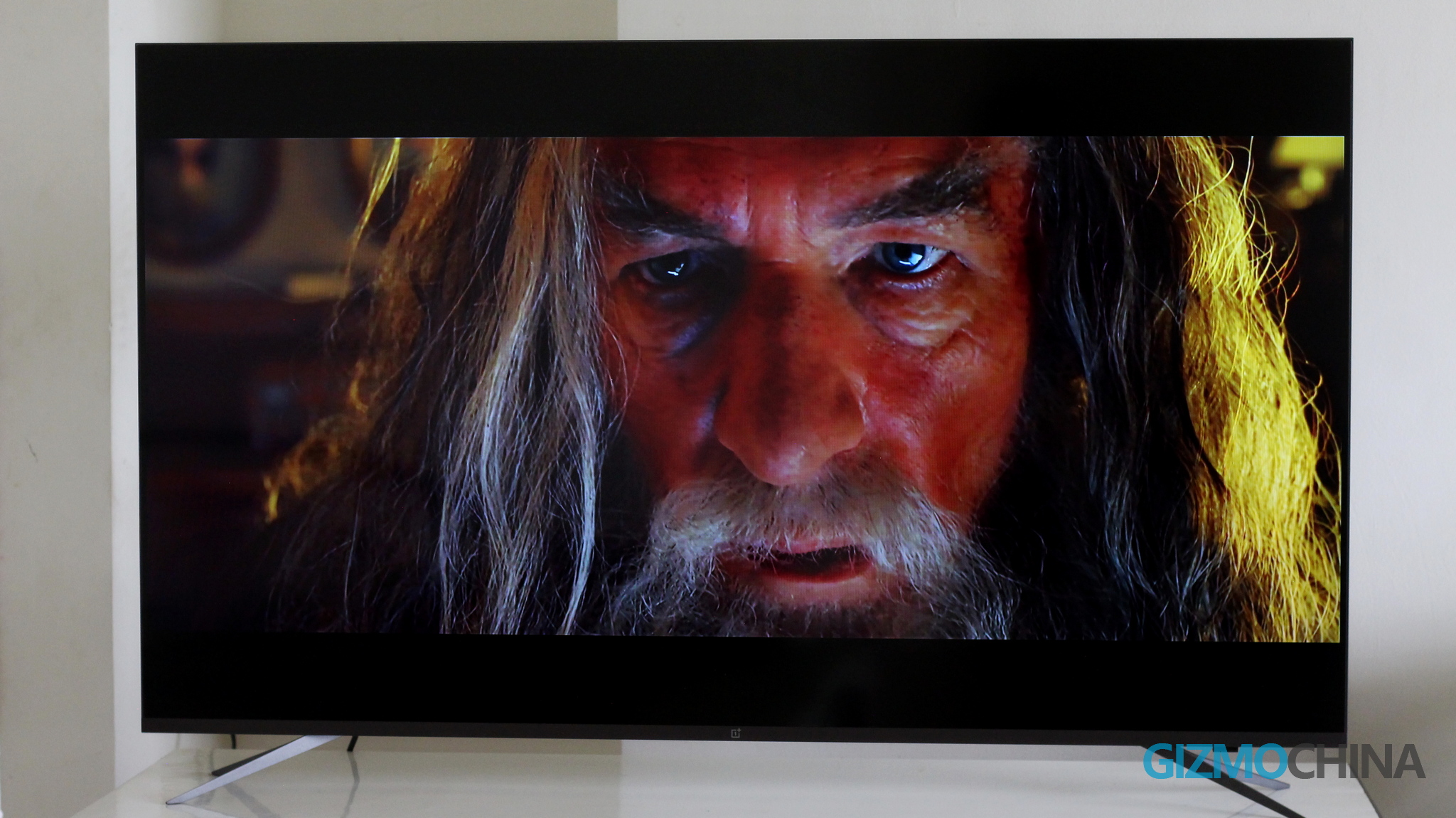
The OnePlus TV U1 does an excellent job of displaying vivid colors and sharp images. Watching Our Planet in Dolby Vision was a treat to the eyes.
The TV also managed to upscale 1080p and 720p content very well. I was actually surprised how well 1080p content looked on the big screen. Even for 720p content, the upscaling was pretty good. Of course it wasn’t nearly as sharp as 1080p or 4K but considering how the TV has nine times as many pixels as 720p, the results are pretty good.
720p upscaled
4K
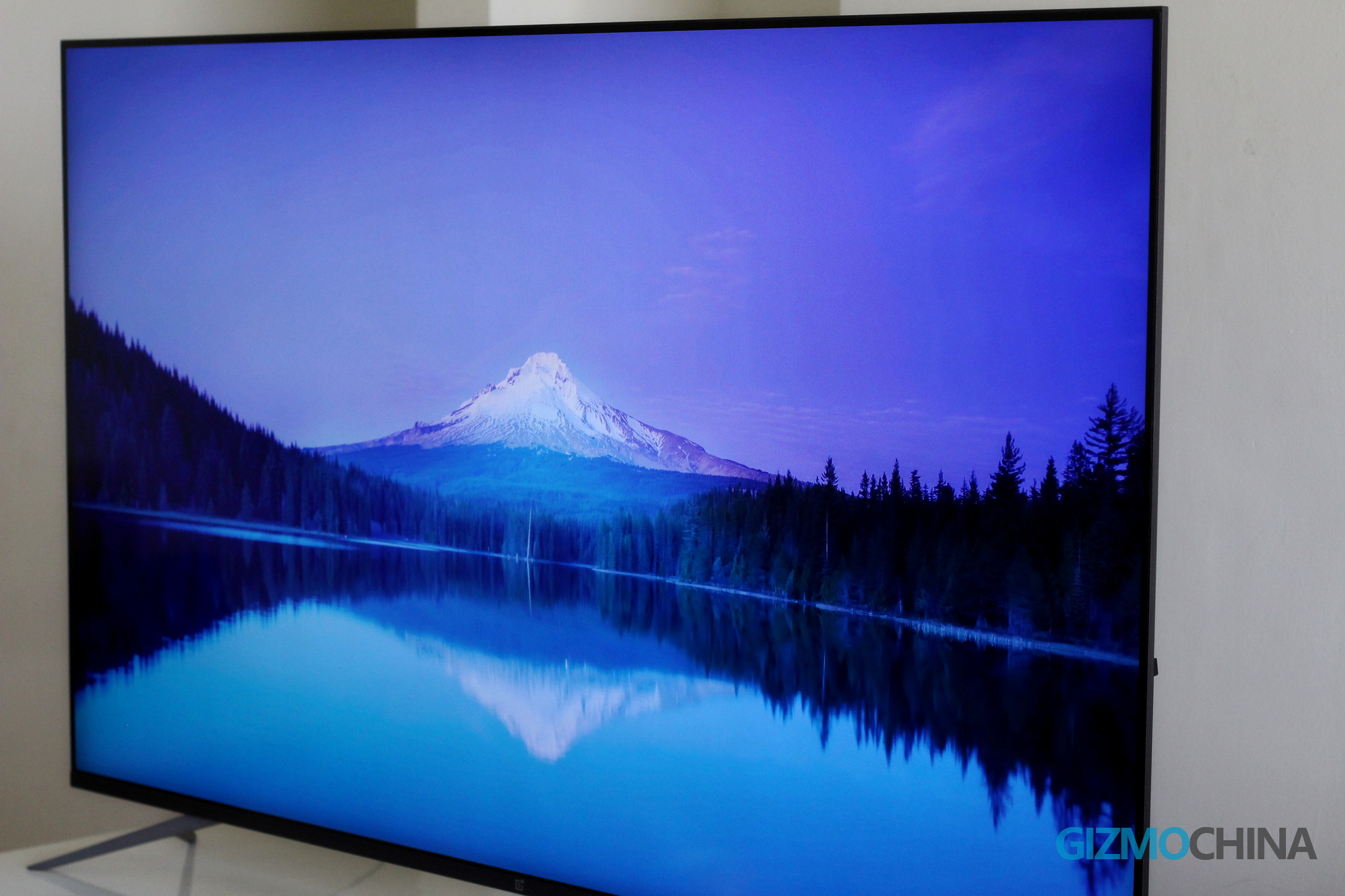
Being an LED VA panel, the TV screen is sufficiently bright. So even if you have a lot of ambient light in the room, the viewing experience will still be good. The viewing angles are also satisfactory with a slight color shift at very wide angles.
OnePlus TV U1 Side Viewing Angle
The OnePlus TV U1 panel comes with a contrast ratio of 4000:1 which is decent. In real life viewing experience, the image contrast is excellent, ensuring the darker zones don’t look washed out.
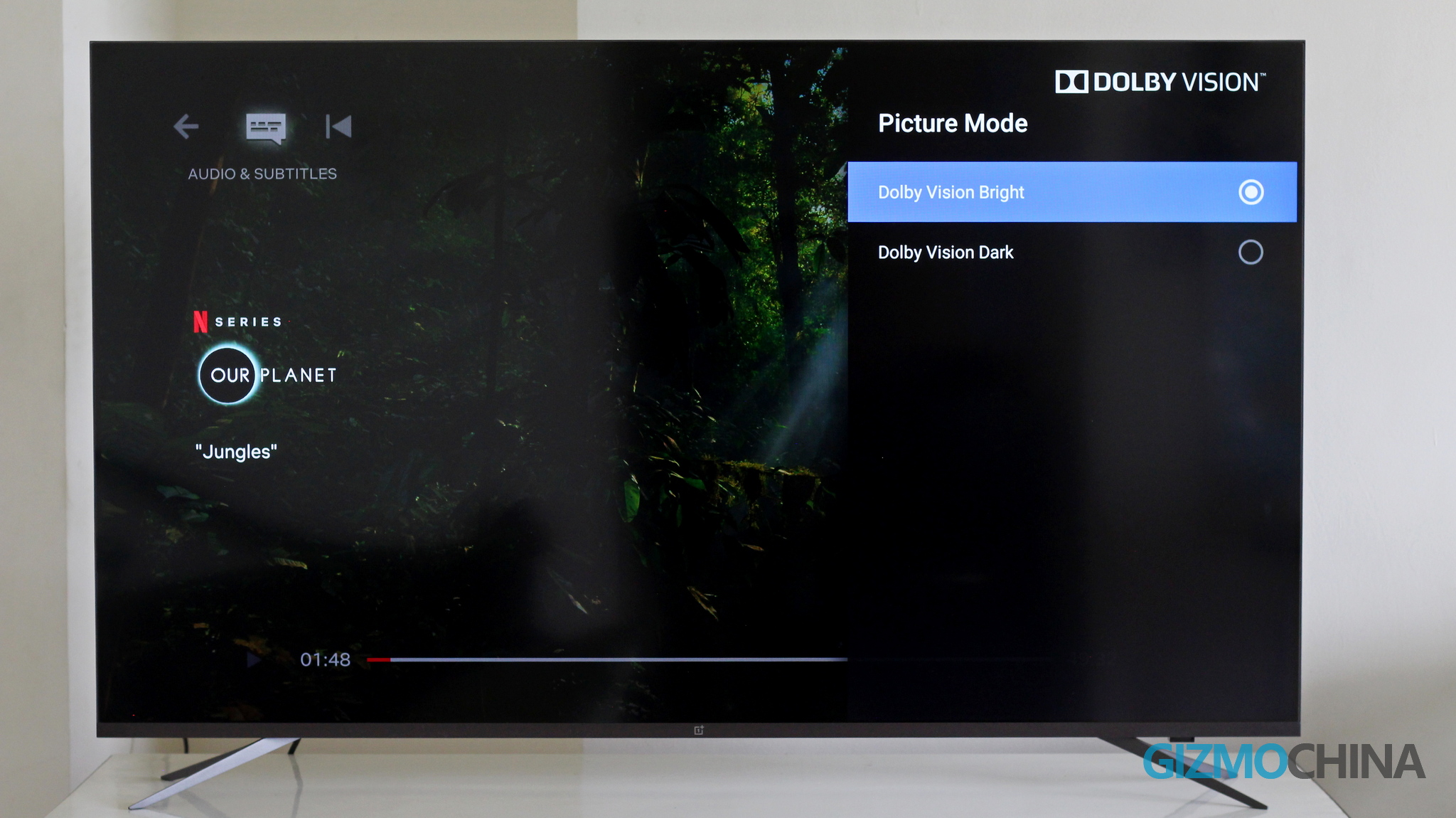
Dolby Vision, of course, brings a significant improvement in contrast and colors. You’ll see the Dolby Vision logo on the top right corner whenever you play supported content (this notification can be disabled in the settings).
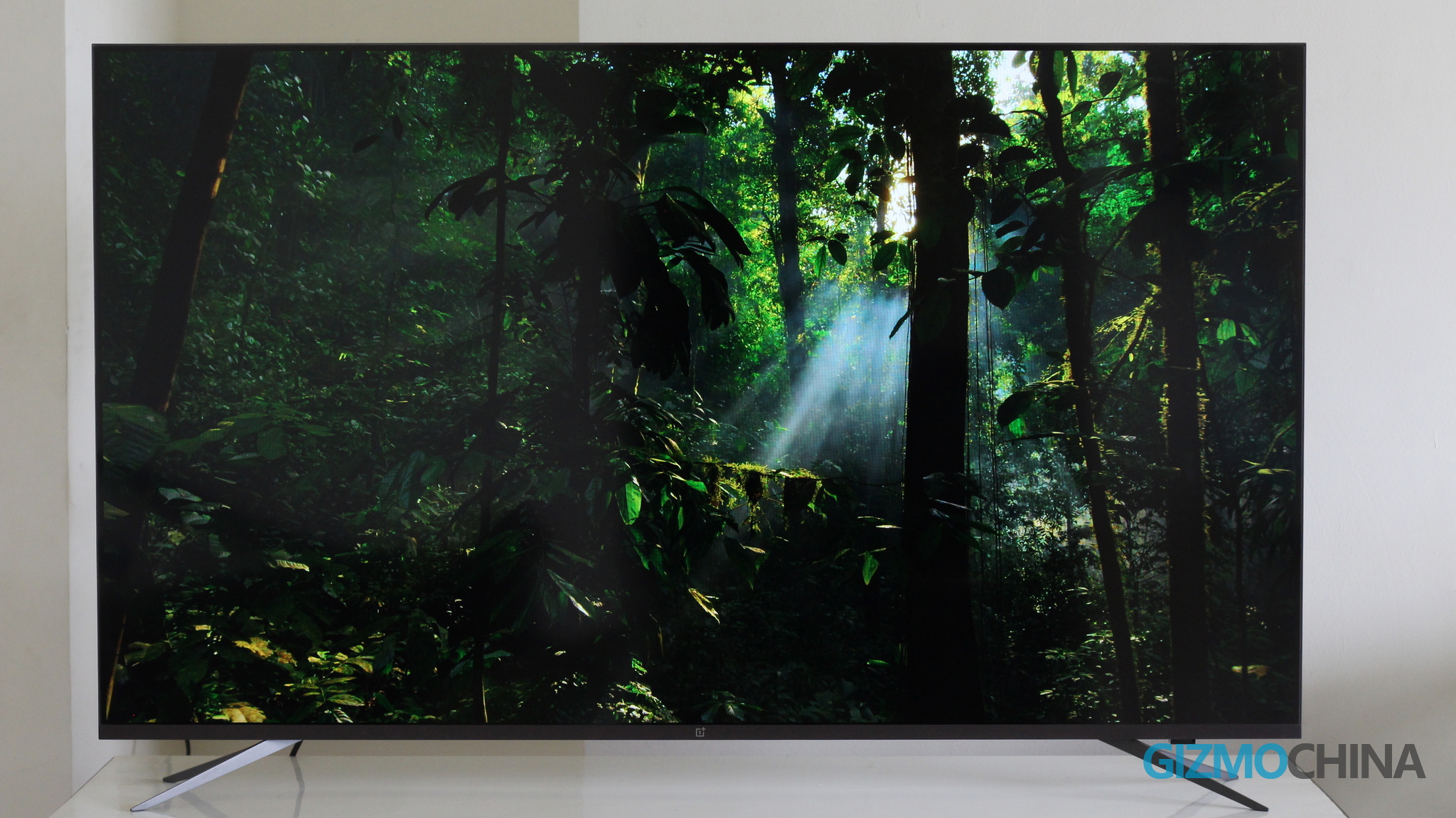
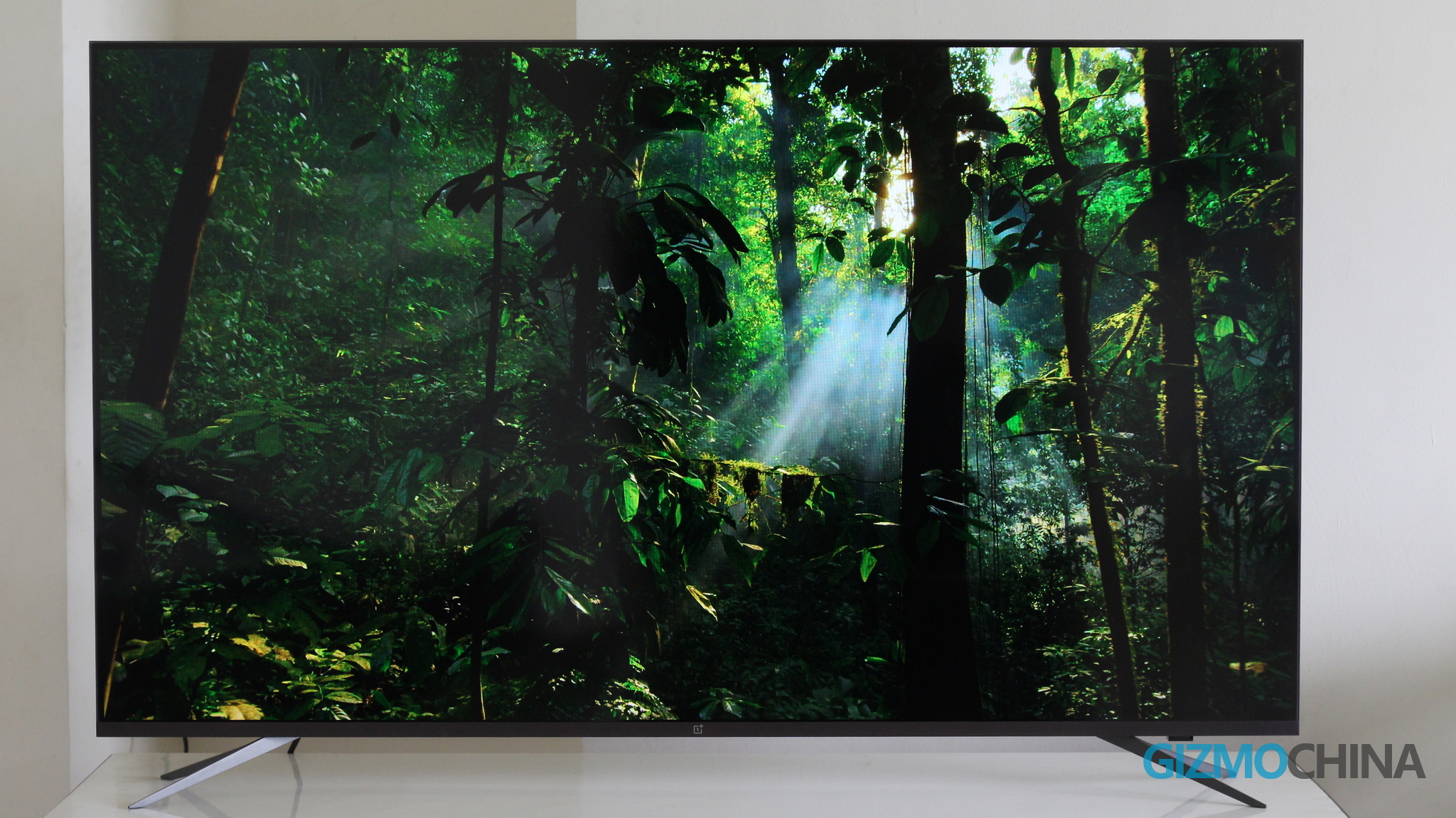
However note that whenever you are running Dolby Vision content, you can’t tweak the picture quality. You only get two options – Dolby Vision Dark and Dolby Vision Bright modes. The bright mode enhances darker scenes with better saturation and details, while the dark mode can bring out the details in scenes which are pretty bright.
1 of 3
OnePlus TV U1 Dolby Vision Bright and Dark
OnePlus TV U1 Dolby Vision Dark Mode
OnePlus TV U1 Dolby Vision Bright Mode
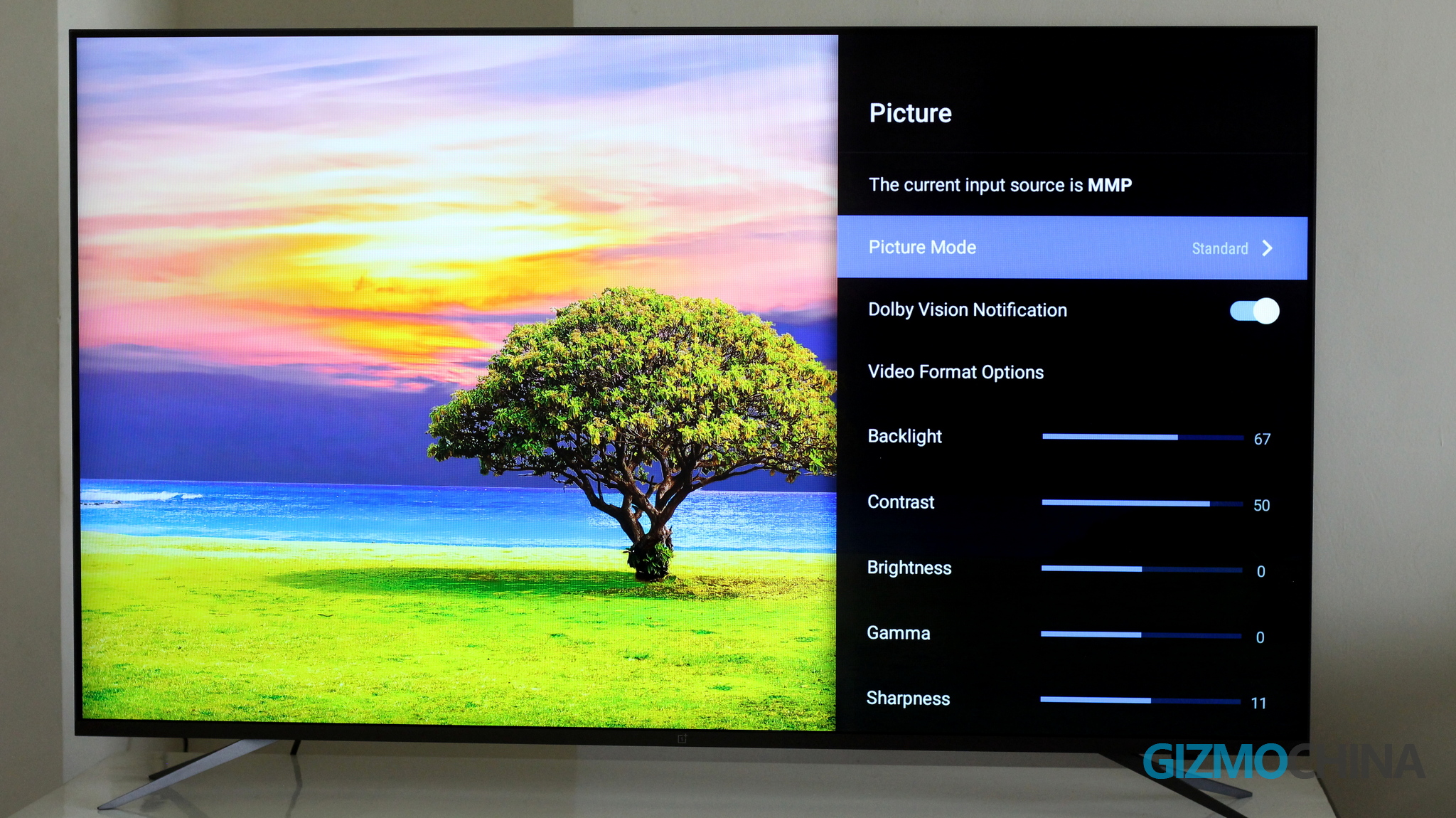
When not running Dolby Vision, the TV allows you to tweak the picture quality with a wide variety of inbuilt settings. There’s a special AI PQ mode that automatically detects the scene and optimizes the picture quality. In my experience, the AI mode has done a good job of selecting the right settings for the content so far. But there are other options too like Vivid mode, Eye Protection mode (filters out blue light), and custom brightness, sharpness, and contrast settings.
OnePlus TV U1 Picture Settings
OnePlus TV U1 Advanced Settings Picture
Note that the TV automatically recognizes and enters gaming mode (with low input lag – 22-second latency) whenever you are connected to a console. I’m not much of a heavy gamer but in the gaming mode, when my Xbox One S was connected, it automatically upscaled the content to 4K. I didn’t experience any significant issues while playing games like Fortnite or Forza Horizon. Overall, you should have no significant problems while gaming on the OnePlus TV U1.
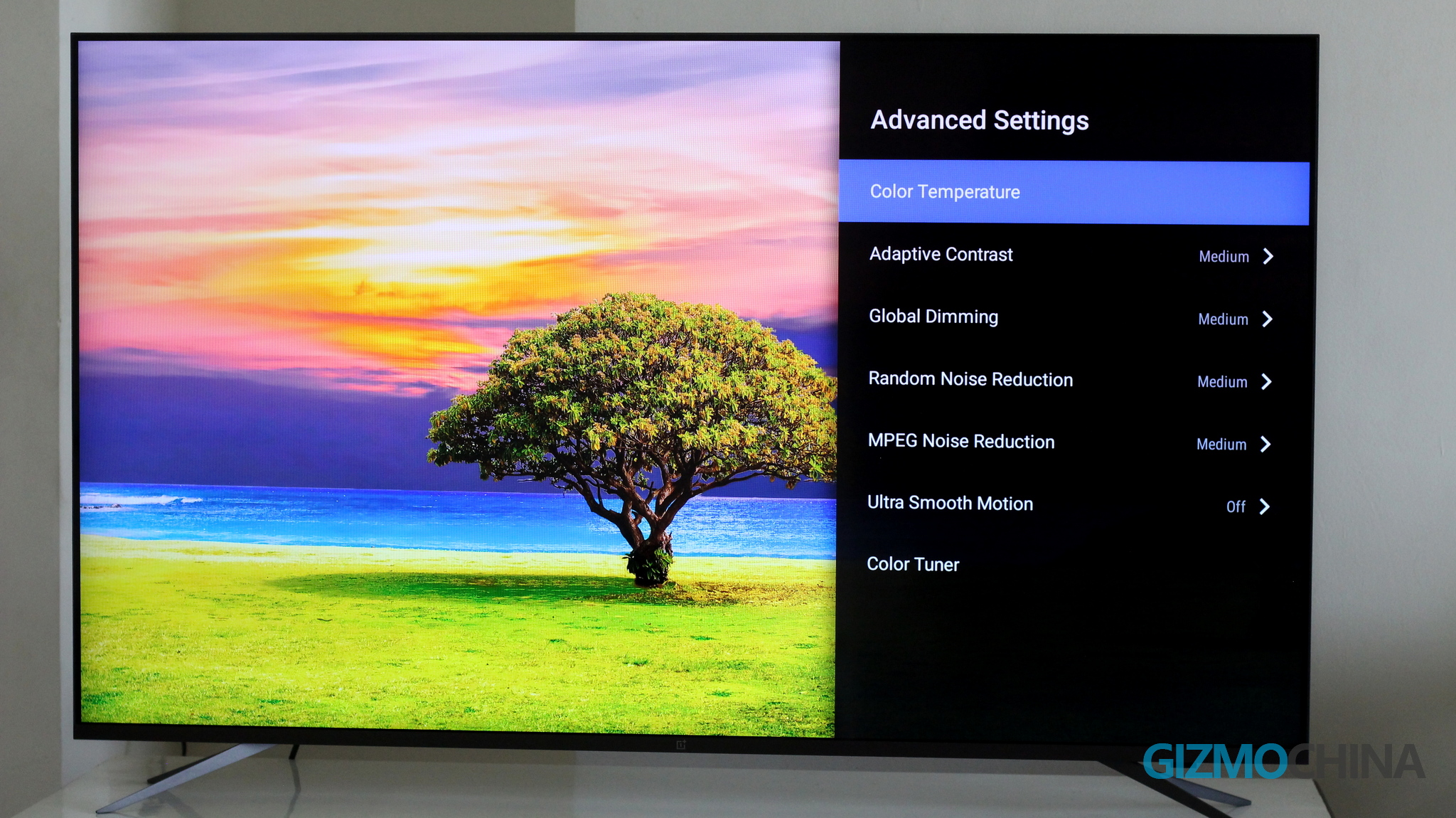
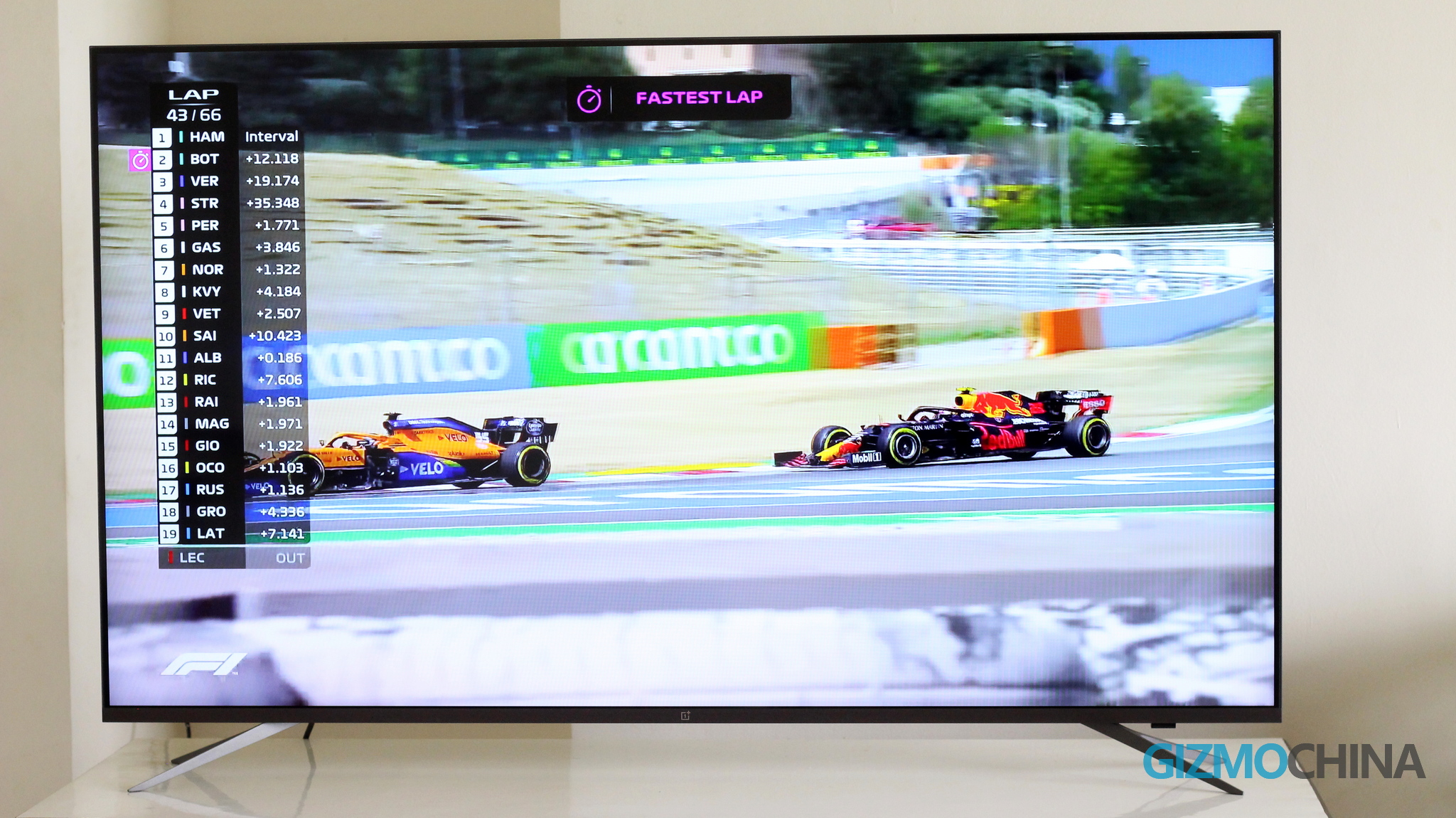
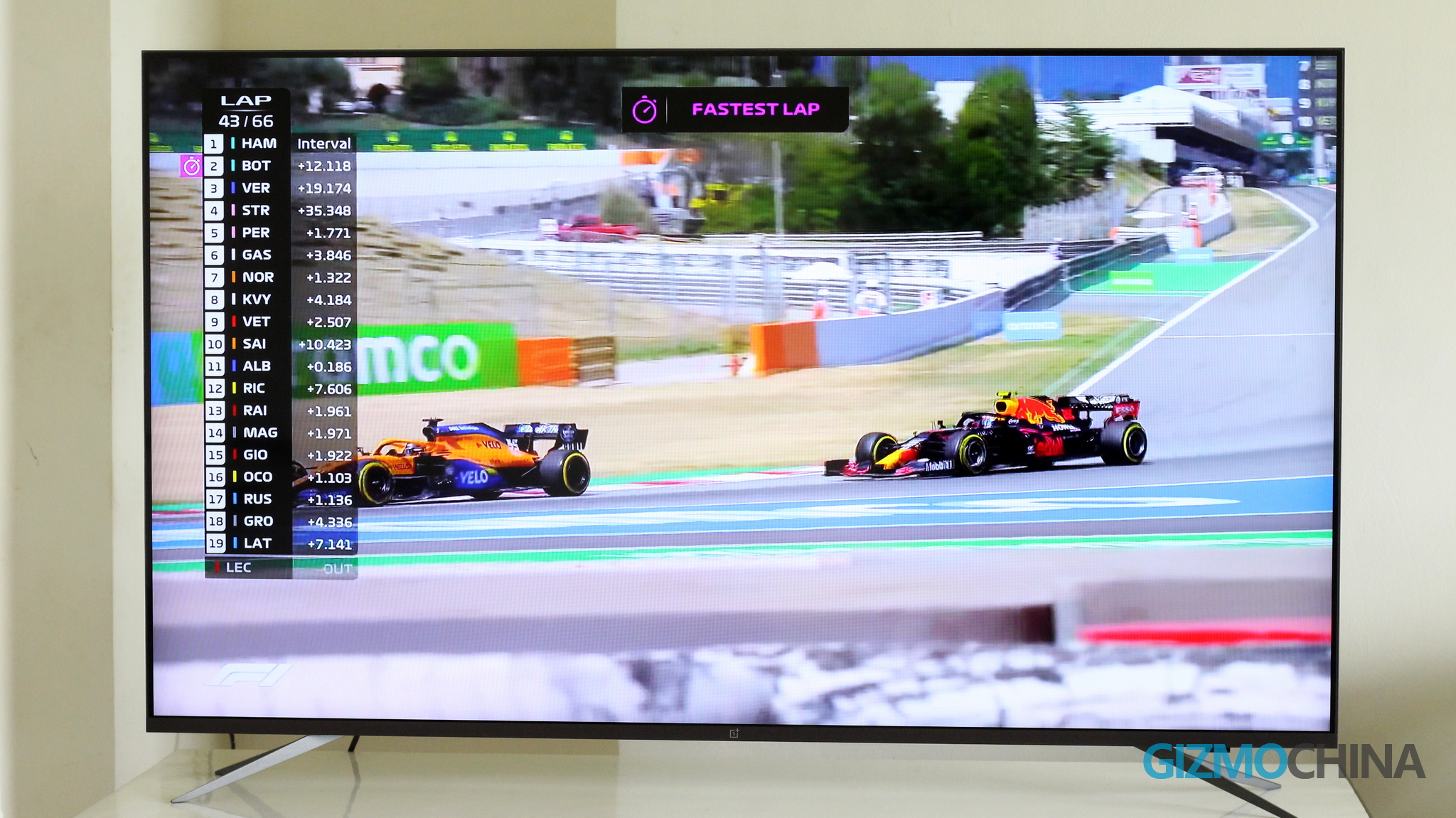
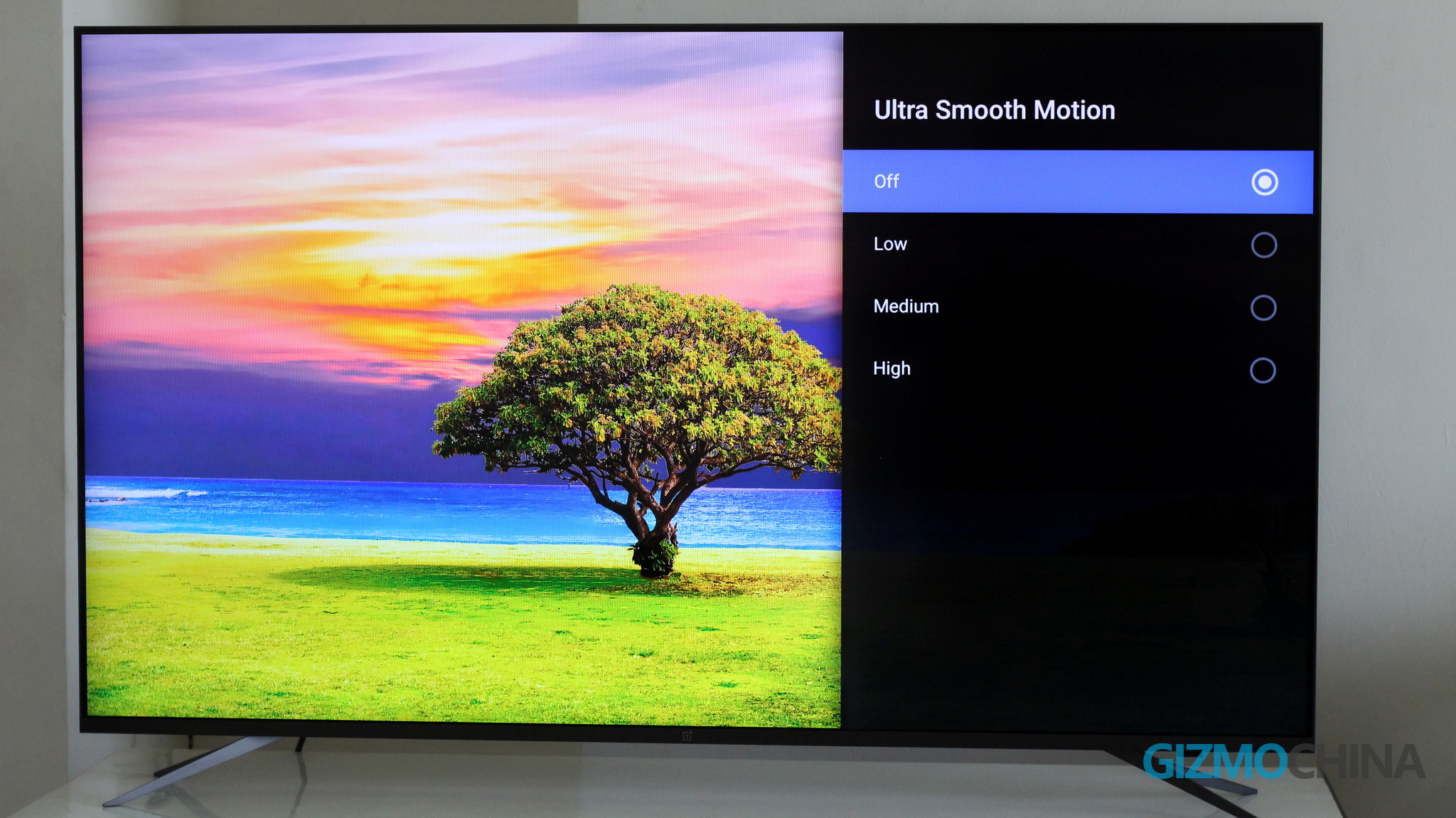
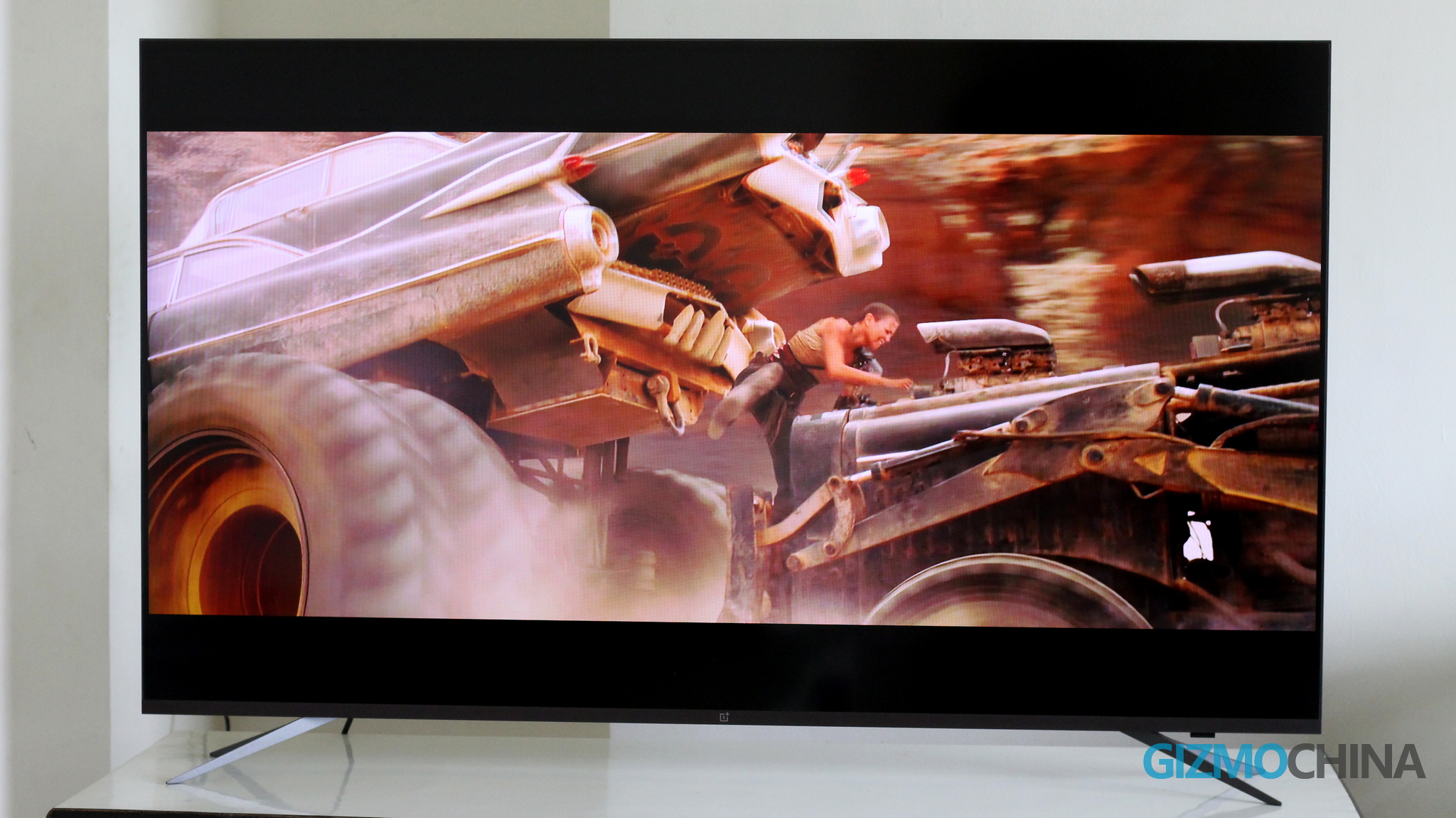
This OnePlus TV also offers MEMC (Motion Estimation Motion Compensation) which is very useful when watching content with fast-moving subjects – like F1 or football. And the TV does a good job of smoothening the fast-paced motion by interpolating the frames in each scene.
OnePlus TV U1 MEMC turned off
However, except for sports, I keep MEMC off or set to low. This feature is not really ideal for watching movies or TV shows as it has a tendency of over smoothening the scenes. If MEMC is turned on, you’ll find that the video looks a bit odd creating a “soap opera effect”. This is because you are used to watching movies and TV series at 24p (most of the high-quality content from Hollywood is shot at 24p). So when your TV interpolates the video to 60p, things look off and most of you will notice this difference. But you can switch off MEMC from Pictures> Advanced Settings> Ultra Smooth Motion.
OnePlus TV U1 MEMC aka Ultra Smooth Motion Settings
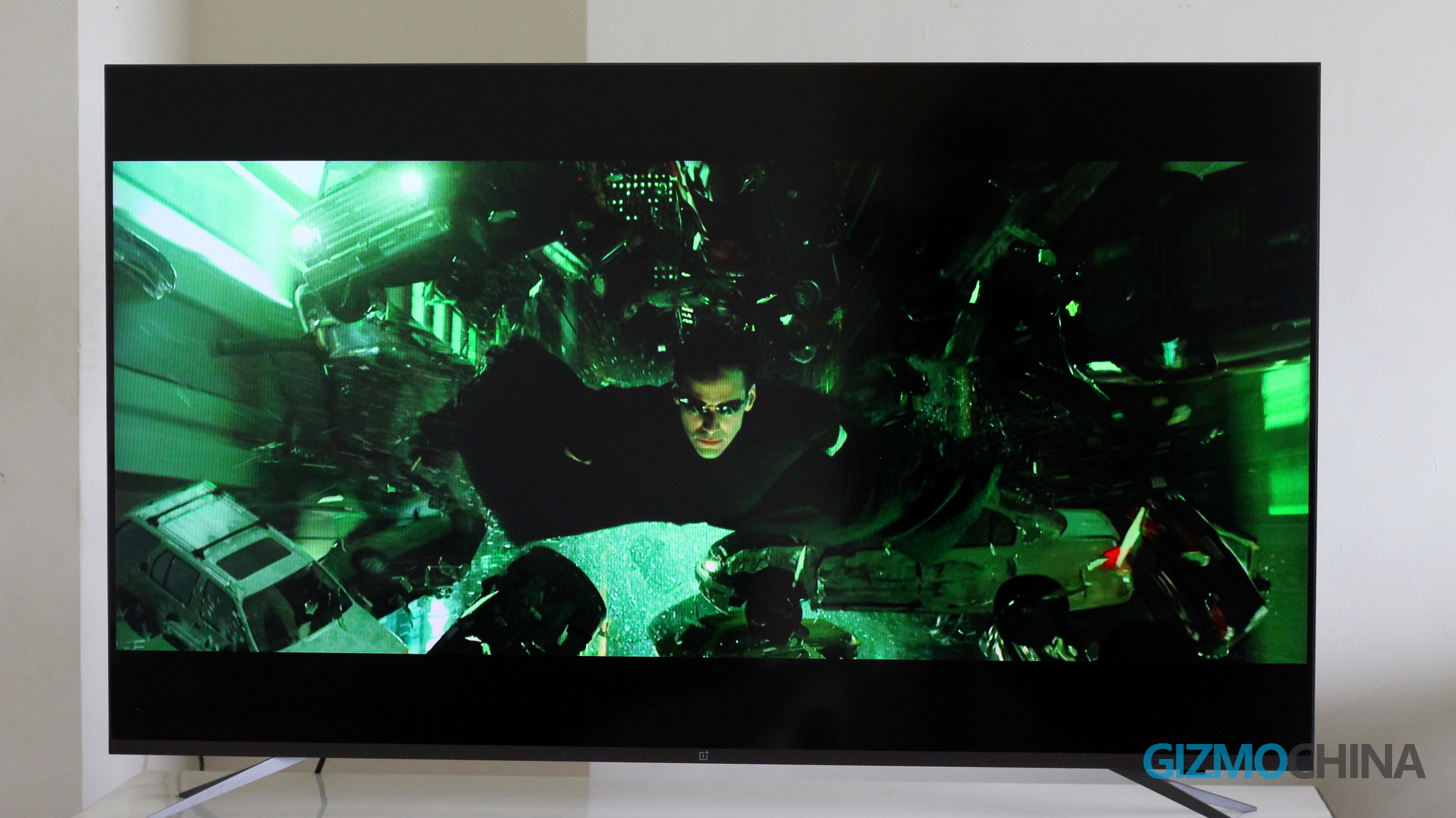
One drawback of this 4K panel would be that it lacks deep blacks. But that’s an inherent issue with LED-backlit panels. You won’t notice this drawback unless you are watching a movie or a TV show with an extremely dark background. For example, OnePlus U1 TV did pretty well in most scenes. However, in extremely dark scenes, you’ll notice that the blacks were not really black, but it was rather a dark grey. Note that the dark scenes look better if the content supports Dolby Vision (especially in Bright mode).
1 of 4
OnePlus TV U1 Dolby Vision Bright Mode
OnePlus TV U1 55-inch Review: Software, Interface & Performance
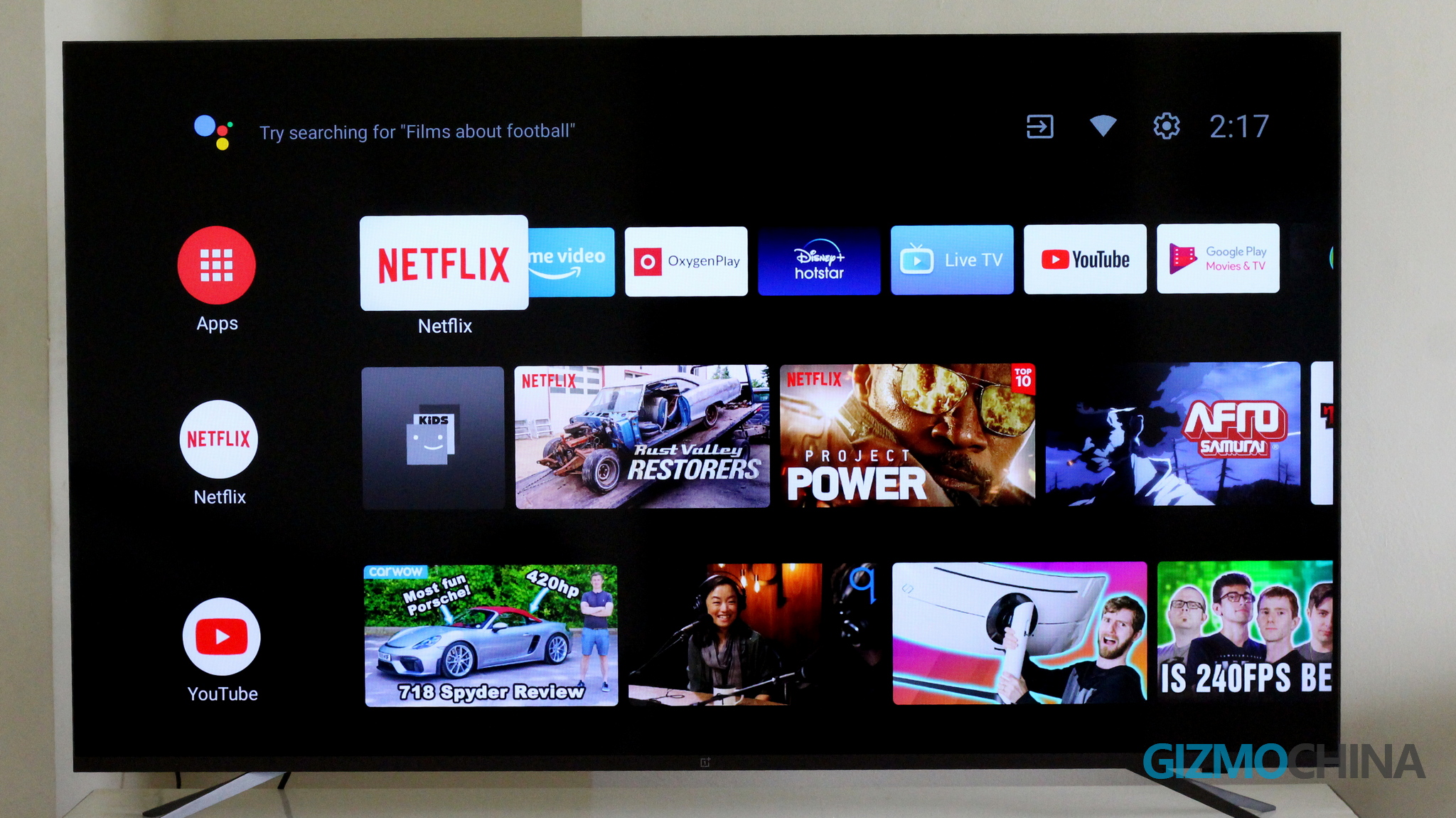
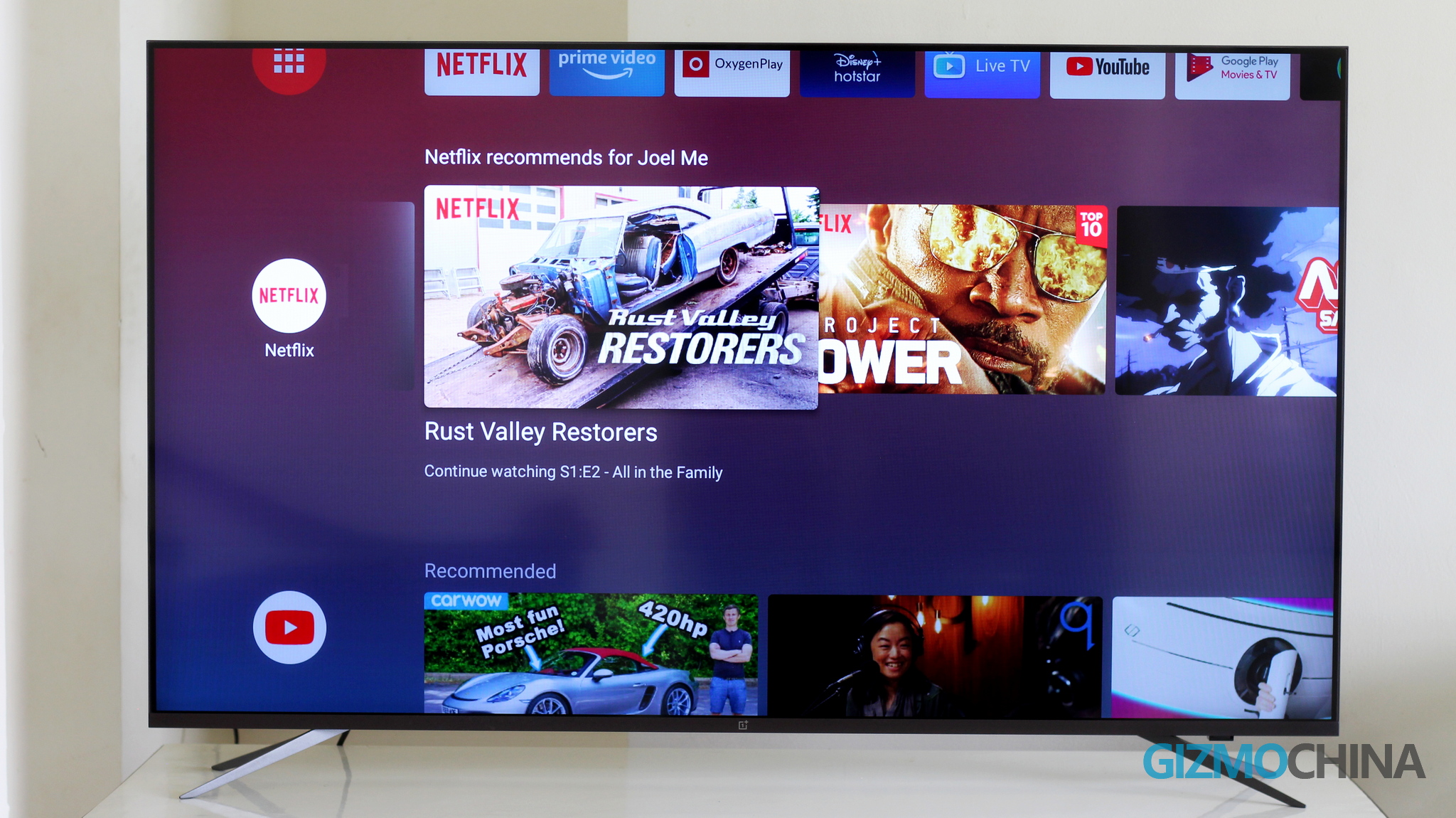
The OnePlus TV U1 runs on the Android TV 9 Pie platform with OxygenPlay launcher on top. So you have two homescreens on the TV, a traditional app-focused Android TV home screen and a content-focused one from OxygenPlay. You have two dedicated buttons on the remote to take you to either one of these homescreens – the OnePlus button takes you to OxygenPlay while the button with a single circle takes you to the Android TV home screen.
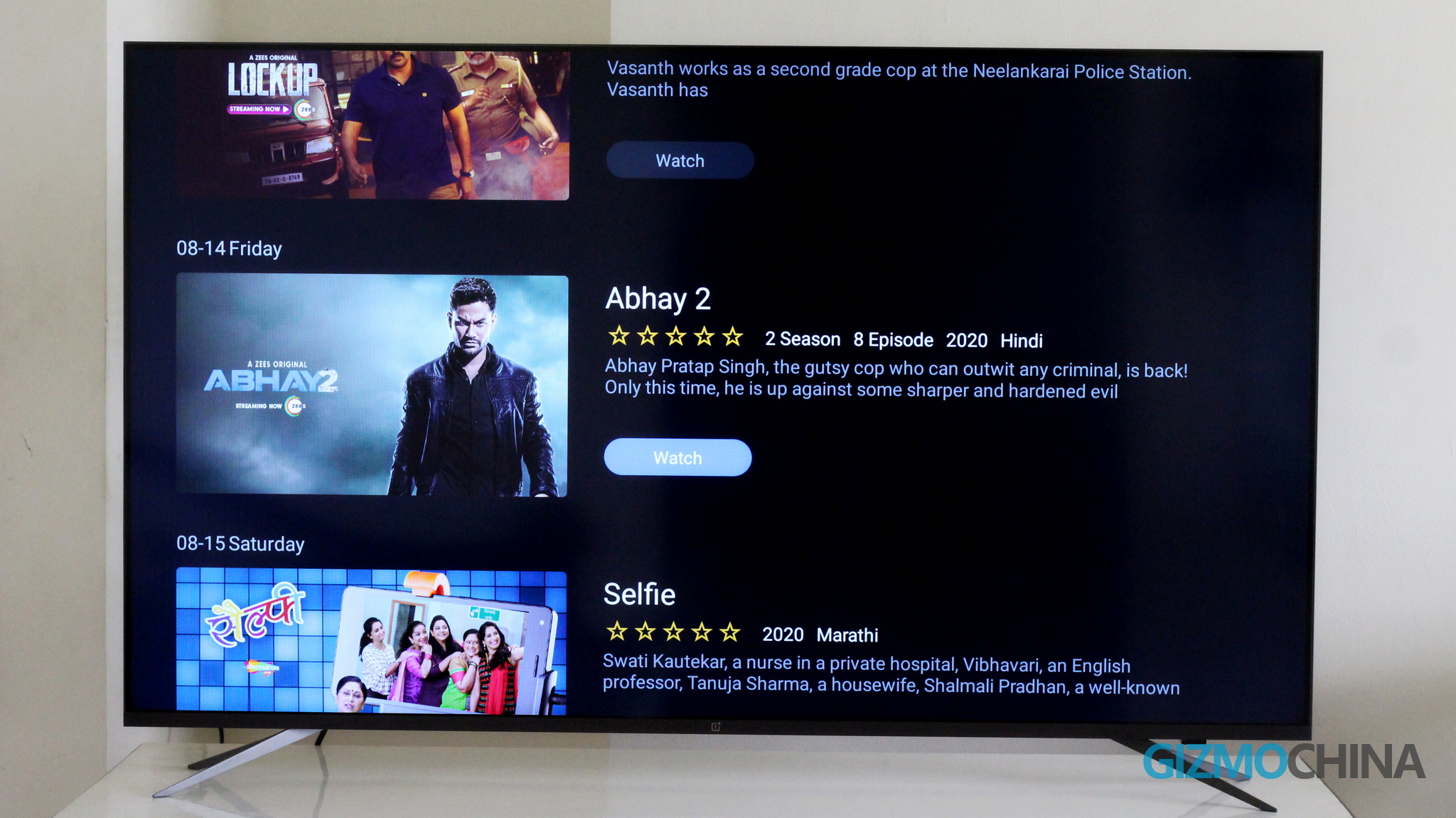
Oxygen Play is a content aggregator platform bringing in movies and TV shows from over 15 leading content providers in India, like Amazon Prime, SonyLiv, Voot, ZEE, HungamaPlay, etc. One notable omission seems to be Netflix, as I couldn’t find any movies or TV shows from the app in the platform.
I like that OxygenPlay segregates the content from all these platforms into practical categories like Movies, TV Shows, Music, Kids, and even Upcoming. You can further filter each of these sections based on languages like English, Hindi, Tamil, Marathi, and more. The All button on the home screen gives you a lot more options for languages and genres.
oxygenplay launcher calendar 2
The Upcoming section gives you the option to add reminders for upcoming TV shows and movies. It’s a cool feature if you don’t want to miss out on the latest content. However, once again, it’s a shame that I can’t find upcoming shows from Netflix – which is my most used streaming app.
But overall, I can see how OxygenPlay will be appealing to a lot of consumers, especially for content discovery. Bringing in TV shows and Movies from 15+ apps under one platform makes your life extremely easy to find something interesting to watch every single day.
If you are someone who sticks to a couple of streaming apps, the Android TV Home screen makes more sense. It’s an app-centric platform, with the first row showing all the major streaming apps followed by each app with recently watched or recommended shows.
Here, Netflix, Prime Video, and YouTube get priority, but it has a section for OxygenPlay too. Personally, I prefer the Android TV home screen but that’s because I usually know what I want to watch on the TV.
The overall TV interface is fluid and responsive. I didn’t encounter any significant lags or stutters and I can be very rough while browsing. Apps take a second to load, which is normal for a TV, and the overall software experience feels refined. This isn’t surprising since the TV has the hardware for smooth performance. The OnePlus TV U1 runs on the Cortex-A53 quad-core MediaTek MT5887 chip with 3GB of RAM and 16GB of internal storage.
OnePlus TV U1 55-inch Review: Smart & Connected Features
It’s the year 2020 and when you are paying ₹50,000 for a 4K TV, you expected it to have smart as well as connected features. And in this regard, the OnePlus TV U1 doesn’t disappoint.
OnePlus TV U1 Remote Google Assistant
You can control the TV via Google Assistant as well as Amazon Alexa. Since the Google Assistant is built into the TV with a dedicated button on the remote, I often use it to search for content on the TV. There’s a second’s delay for voice search but it works well most of the time.
I also tried connecting Alexa to the OnePLus TV U1 and I could turn on / off the TV, search for a specific TV show or movie with just my voice via Alexa. Note that you have to install the OnePlus TV skill first on the Alexa app. Also, make sure that you are signed in with the same OnePlus account in the Alexa skill as the OnePlus TV. Then it’s pretty straightforward – add the TV to Alexa with the Discover device feature on the Alexa app and you are all set to control the TV with your Alexa smart speaker.
OnePlus TV U1 55-inch Review: Speakers & Sound Output
I’ll be honest, at first, I thought that the speakers on the OnePlus TV sounded terrible. But you get decent sound output from the 30W 4-speaker setup built-into the TV once you tweak the settings.
The standard sound mode produces underwhelming sound clarity. It was loud enough, but the speaker setup wasn’t clear or punchy.
Changing the sound setting to clarity has improved the overall sound quality. Dialogues are clearer and the sound quality is crisp too.
OnePlus TV U1 Speakers
The OnePlus TV speakers are decent for an inbuilt TV speaker setup, but if you are investing so much on a TV, it makes sense to get a good soundbar too for a premium entertainment experience. Simply put, the inbuilt 30W speaker doesn’t feel premium. It’s loud but the sound output is not rich.
OnePlus TV U1 Review: Remote
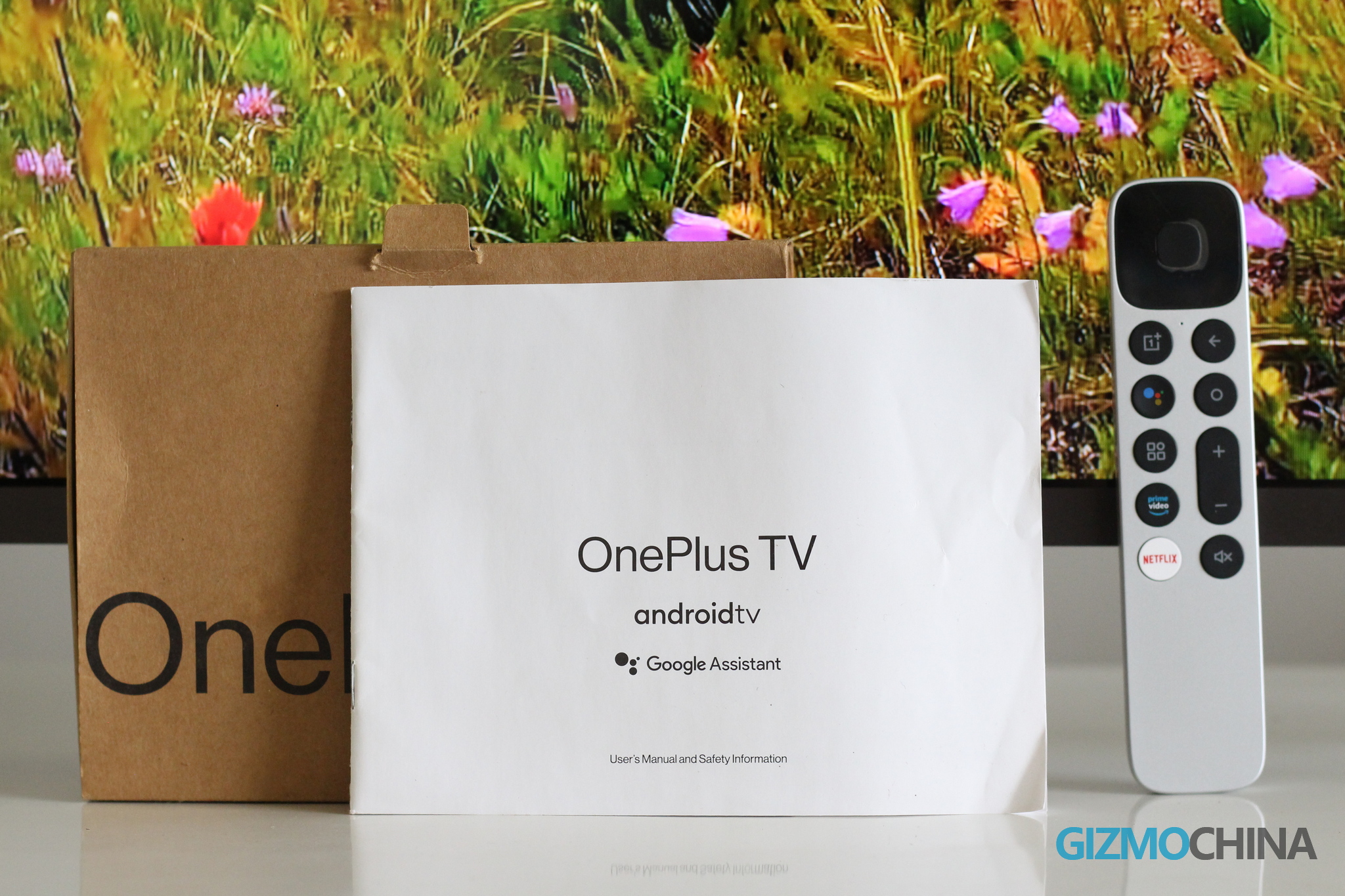
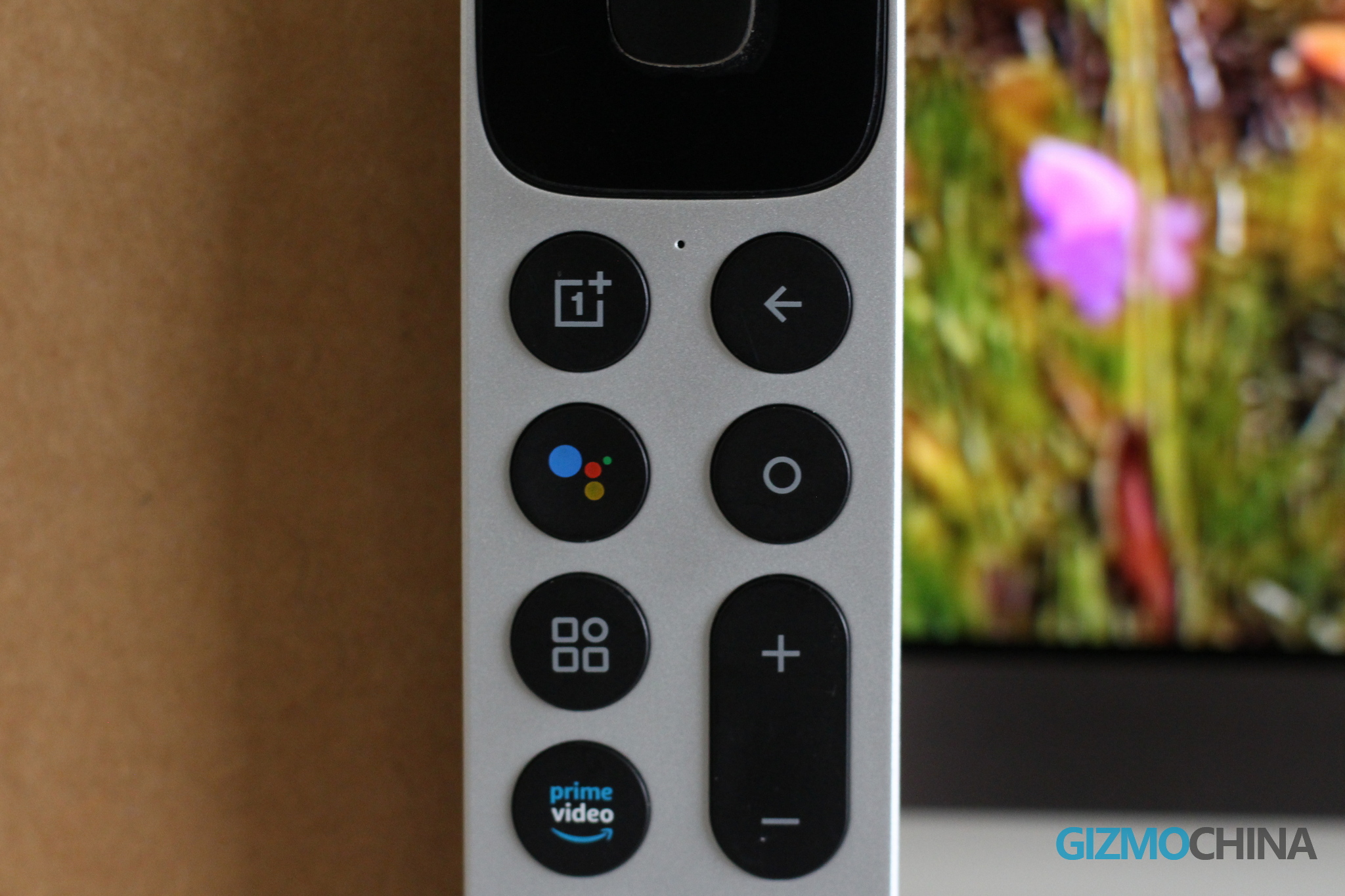
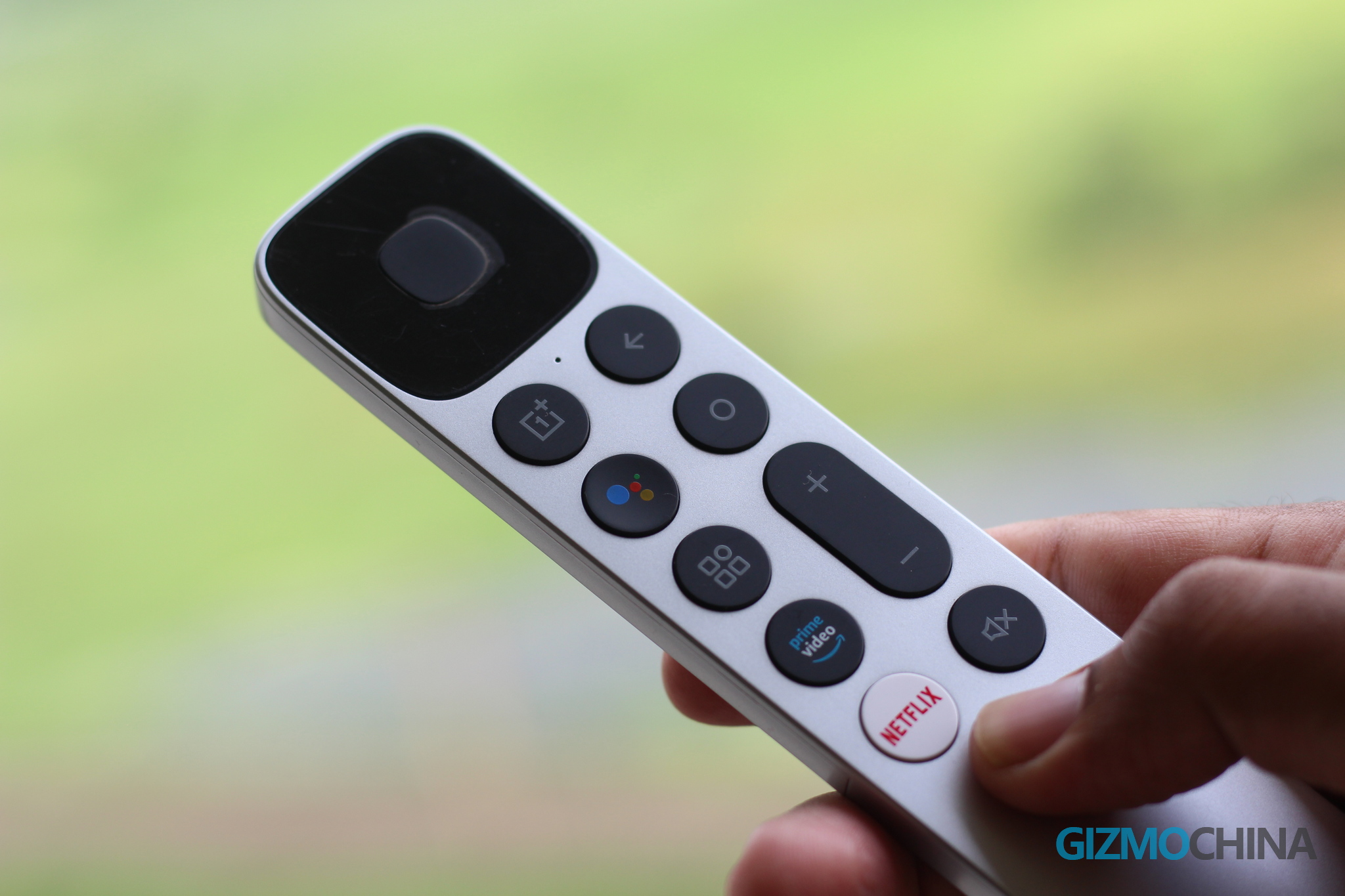
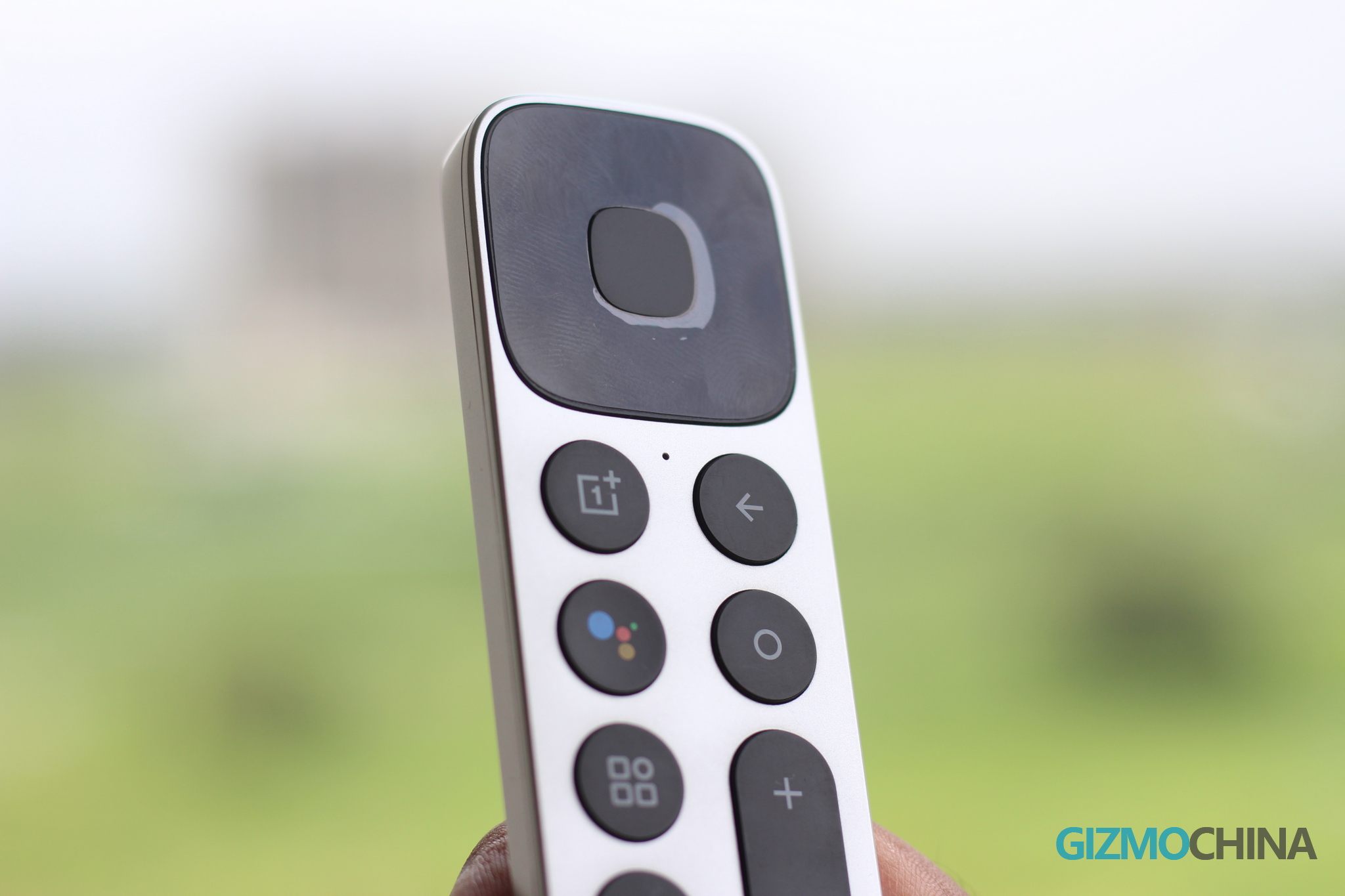
The OnePlus TV U1 Remote is thinner and smaller than other remotes in the market. The basic form factor remains the same as the original OnePlus U1 TV remote but the remote gets a redesigned layout for better user experience.
The remote is still plastic but feels good. The silver color finish gives it a premium look. Some of the major changes in the new remote include the new placement of the volume buttons (shifted from the side to the front). The remote is powered by two AAA batteries instead of having to charge it via USB-C port in the first-generation model.
The placement of the buttons feel natural. The D-Pad lies on top followed by other buttons – the back button, OnePlus button (single press to launch OnePlus OxygenPlay launcher or long press to sleep/ switch off), Android TV button, Quick Settings, Google Assistant, Quick Setting, Prime and Netflix, and finally a mute button.
The placement of the back button is perfect. However, I would have preferred the D-Pad in the middle of the remote because that’s where your thumb rests naturally when u grab the remote.
OnePlus TV U1 Quick Settings
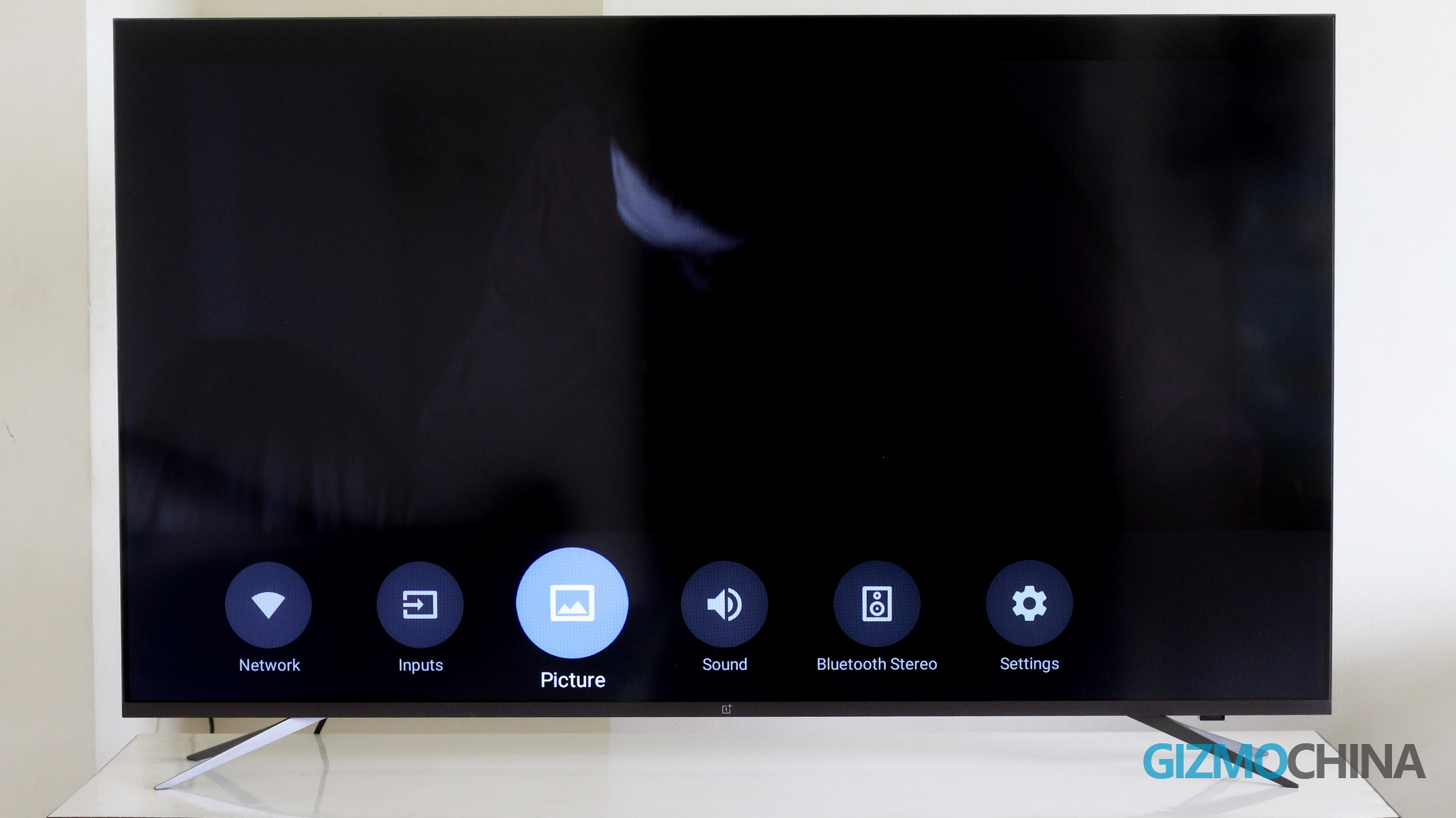
The Quick Settings button (the one with three squares and a circle) is also a handy addition as you can quickly tweak the settings without leaving the current screen. The quick settings panel gives you options to control the picture, sound, input, and other settings right from your movie or TV screen.
Overall, this is a much better design than the first-generation model.
OnePlus TV U1 Review: Verdict
The OnePlus TV U1 offers excellent value for your money. The vibrant 4K panel, stylish design, and a very useful Android TV / OxygenPlay interface ensures a high-quality user experience on the TV.
If you can look past the underwhelming speakers and the lack of deep blacks, the OnePlus TV U1 is very easy to recommend to anyone looking for a good quality TV under ₹50,000.
With various US sanctions seeking to pressurize Huawei and limit its supply chain, the company is facing various challenges. Due to the company not being able to manufacture its chips through TSMC, its chip designing subsidiary is losing its engineers as it plans on building 45nm chip fabrication lines.
According to reports from DigiTimes (1,2), “The mounting US trade sanctions are driving HiSilicon to the brink and many engineers have left the Huawei IC design arm’s team in Taiwan.”This will not just affect the company’s operations, but may also hamper its plans for the future. Another report also revealed that Huawei is planning on building its own 45nm fabs for the severely outdated 45nm chips.
So, the already Herculean task is further made difficult with the fact that the company is bleeding its talent at the moment. One of the reasons why the engineers might be abandoning ship could be related to recent news of the US not granting temporary licenses that allowed companies using American designed chips to continue trading to Huawei. Currently, Huawei is expecting the final batches of its chip orders from TSMC, which will end by 14th September 2020. So, the Huawei Mate 40 series may be the last flagship to feature the company’s custom HiSilicon Kirin chips.
The OPPO F15 debuted in India in January this year. While OPPO fans expected to see a Pro version, the company only sold the vanilla edition in the country. OPPO is now gearing up to launch a new F-series phone in the country. A fresh teaser released by the company confirms that the name of the device is OPPO F17 Pro and it will be selling with a price of under Rs. 25,000.
The teaser released by the company states that the OPPO F17 Pro will be “the sleekest phone of 2020.” The company has revealed that the F17 Pro is a lightweight smartphone that weighs only 164 grams. Also, its thickness is only 7.48mm.
As can be seen in the teaser image, the phone has a SIM card tray and volume up and down buttons on the left edge. The OPPO F15 had featured a vertical camera module with four cameras inside it. The side of the OPPO F17 Pro gives of two camera sensors. Hence, there is a possibility that the F17 Pro could be featuring a square-shaped camera module with four cameras inside. The disclaimer text at the bottom of the teaser has revealed that it will be costing less than Rs. 25,000.
The Chinese firm is yet to confirm the launch date of the OPPO F17 Pro for India. Tipster Mukul Sharma had claimed recently that OPPO may announce the F17 series in the first week of September. At present, there is no official information available on the specifications of the OPPO F17 Pro. it is unclear whether the company will be also announcing the OPPO F17 vanilla variant with the Pro model.
We use cookies on our website to give you the most relevant experience by remembering your preferences and repeat visits. By clicking “Accept”, you consent to the use of ALL the cookies.
This website uses cookies to improve your experience while you navigate through the website. Out of these, the cookies that are categorized as necessary are stored on your browser as they are essential for the working of basic functionalities of the website. We also use third-party cookies that help us analyze and understand how you use this website. These cookies will be stored in your browser only with your consent. You also have the option to opt-out of these cookies. But opting out of some of these cookies may affect your browsing experience.
Necessary cookies are absolutely essential for the website to function properly. This category only includes cookies that ensures basic functionalities and security features of the website. These cookies do not store any personal information.
Any cookies that may not be particularly necessary for the website to function and is used specifically to collect user personal data via analytics, ads, other embedded contents are termed as non-necessary cookies. It is mandatory to procure user consent prior to running these cookies on your website.






-1-1024x1024.jpg?x44794)