In the year 2020, 5G technology has become a norm for smartphone and most of the high-end devices as well as mid-range phones come with support for this next-generation communications technology.
However, people rely more on the Wi-Fi network for data consumption, more than 5G or 4G. This is also getting updated as the next-generation Wi-Fi 6 is now being included in flagship smartphones.
Now, based on a report by LetsGoDigital, OPPO seems to be working on a new smartphone that supports Li-Fi technology, which is much faster than the Wi-Fi. The Li-Fi technology has been in development for years as an alternative to Wi-Fi.
Instead of relying on radio waves like Wi-Fi, the Li-Fi technology uses light through an LED lamp and thus, its name — Light Fidelity. OPPO filed for a patent of a phone with Li-Fi support, which has now been published.
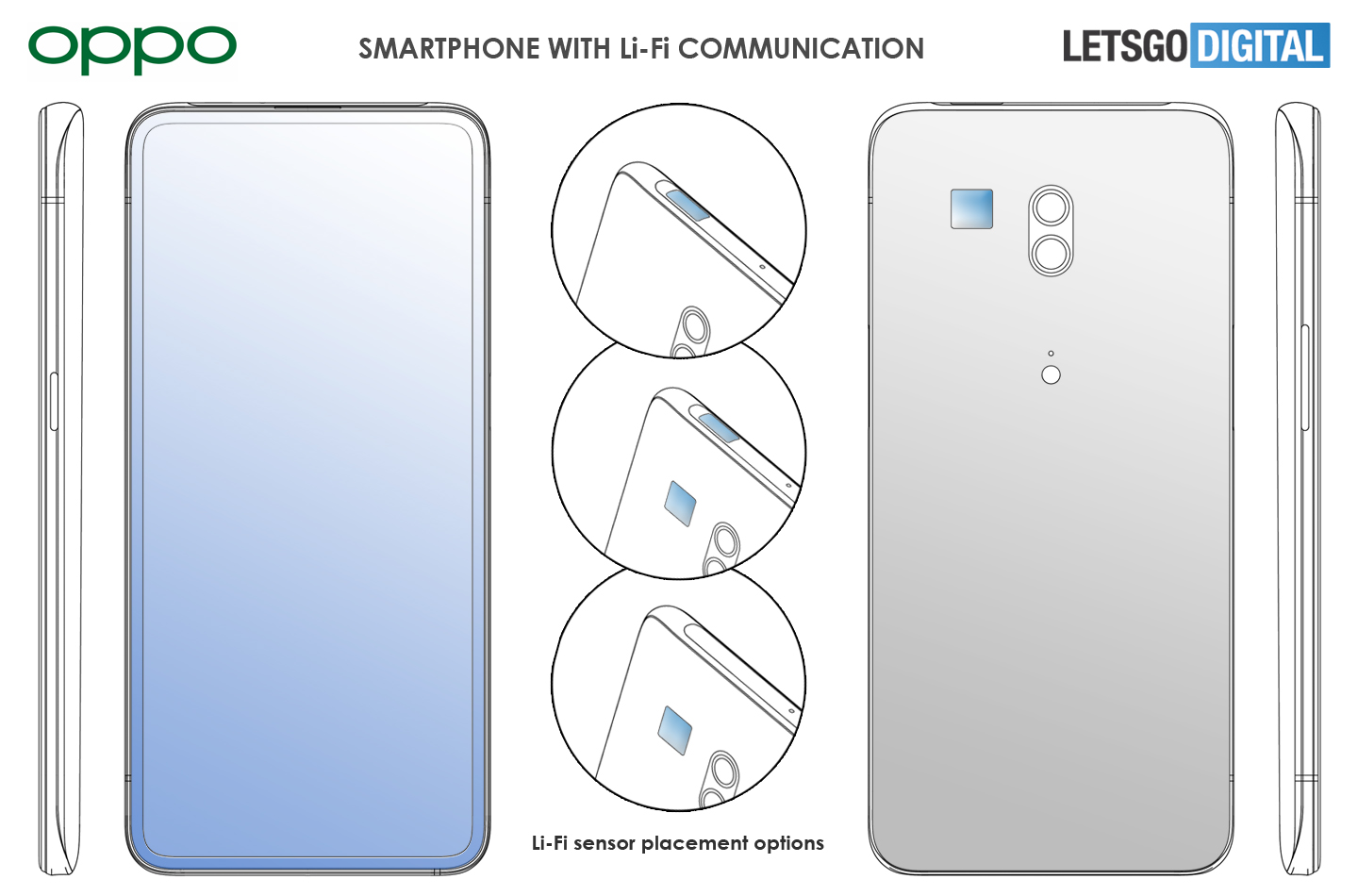
The patent shows a smartphone with a full-screen design and narrow bezels. There’s no front-facing camera visible, which could mean that it has a pop-up mechanism for the front camera sensor.
It also shows possible placements for the Li-Fi sensor — right next to the camera module on the back, or at the top edge of the phone. The sensor is square in shape and is likely to be a photodetector that converts the change in amplitude to an electrical signal to enable Li-Fi communication with a smartphone.
Currently, there’s no information available about how OPPO is planning to implement this technology on the smartphone. We are not even sure if the company is seriously considering this option for a commercial device. And if it is, then we don’t expect the company to launch it anytime soon.
PureLiFi, a UK-based startup that is working on incorporating this technology on laptops and smartphones, had showcased the same during Mobile World Congress last year. At the time, it had predicted that we could see phones using Li-Fi somewhere around 2022.
Many smartphone OEMs are working on phones with under display camera technology. It is speculated that flagship phones arriving in 2021 could be sporting the new camera technology to offer users with full experience without any notch or punch-hole cutout. While multiple smartphone manufacturers are working on the technology, ZTE has jumped the gun to confirm that it will be soon launching the world’s first under display camera smartphone. It appears that the ZTE Axon 20 5G could be the first phone to sport the technology.
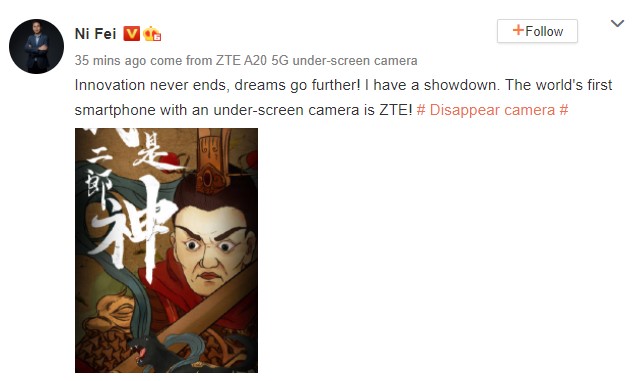
Ni Fei who was appointed as ZTE’s President of Mobile Devices in June took to Weibo today to confirm that ZTE will launch the world’s first smartphone with under display camera technology. Fei did not reveal the name or launch date of the smartphone. However, a well-known Chinese tipster has revealed that the advanced selfie camera technology will be first seen on the ZTE A20 5G.
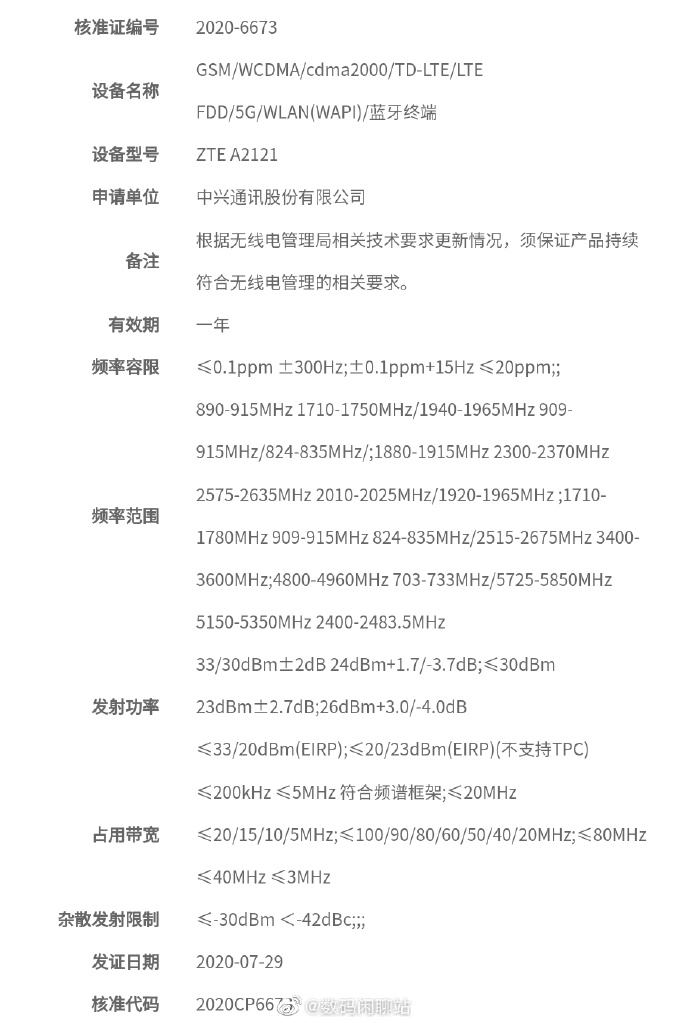
The tipster shared a screenshot to reveal that the ZTE A2021 phone that has bagged certification from the State Radio Regulation of China (SRRC) will be debuting as the ZTE A20 5G. it appears that the handset could actually arrive as an Axon series phone.
The ZTE Axon 10 Pro 5G flagship that went official earlier this year has an A2020 model number. Hence, the SRRC certified A2021 could be the Axon 20 5G phone. At present, there is no word on the specs of the device.
As far as the under display camera technology is concerned with Axon 20 5G is concerned, ZTE is likely to make use of China-based Visionox’s solution. Last month, Visionex confirmed that it has started the mass production of its under display camera solution and phones featuring will be debuting soon.
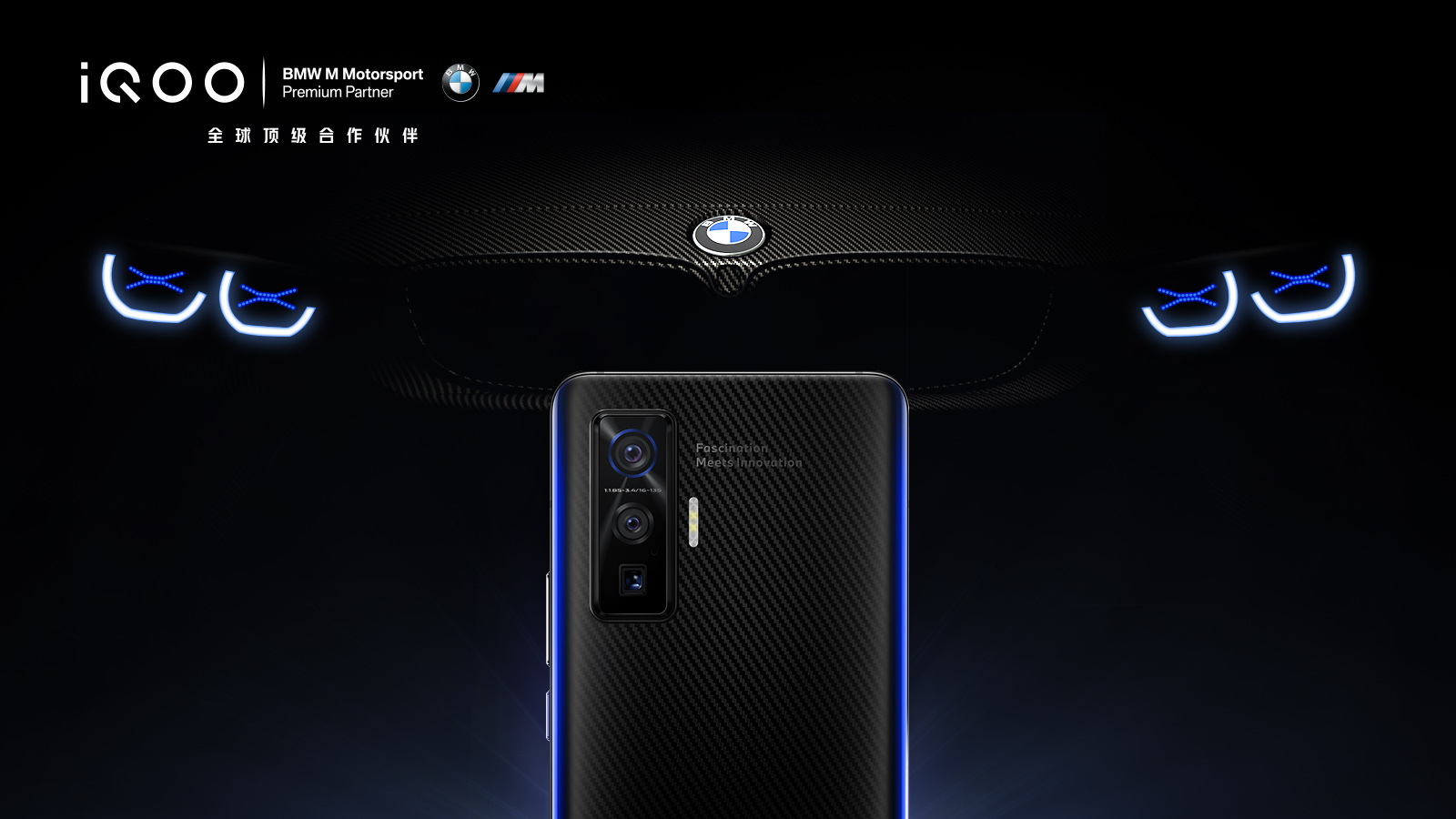
iQOO recently confirmed that it has become an official partner of BMW M Motorsport for the 2020 DMT season. Also, it was revealed that the company will be launching a special BMW edition of the iQOO 5 series on Aug. 17. Today, the company rolled out a new teaser that gives a good look at the rear of what appears to the iQOO 5 Pro BMW Edition.
The poster of the BMW edition iQOO 5 series shows that its textured rear could be made from carbon fiber material. The rear panel of the device has curved edges with blue accents. There are three cameras housed inside a vertically-aligned camera setup. The configurations of the three lenses are not known yet. The setup has a periscope zoom lens as the third shooter.
According to a reliable tipster, the iQOO 5 Pro supports 16mm to 135mm focal length. It is expected to arrive with support for 5x optical zoom and 60x digital zoom.
The iQOO 5 series includes two handsets such as iQOO 5 (V2024A model number) and iQOO 5 Pro (V2025A model number). Both phones are expected to arrive with support for up to 120Hz refresh rate. The Snapdragon 865 mobile platform will be powering the series with LPPDR5 RAM and UFS 3.1 storage.
It is speculated that the iQOO 5 series has a 6.56-inch AMOLED panel. The vanilla model may feature a flat display while the Pro edition have a curved display. The iQOO 5 is expected to arrive with support for 55W fast charging. On the other side, the iQOO 5 Pro will arrive 120W rapid charging technology. The 120W tech is expected to completely charge the iQOO 5 Pro in just 15 minutes.
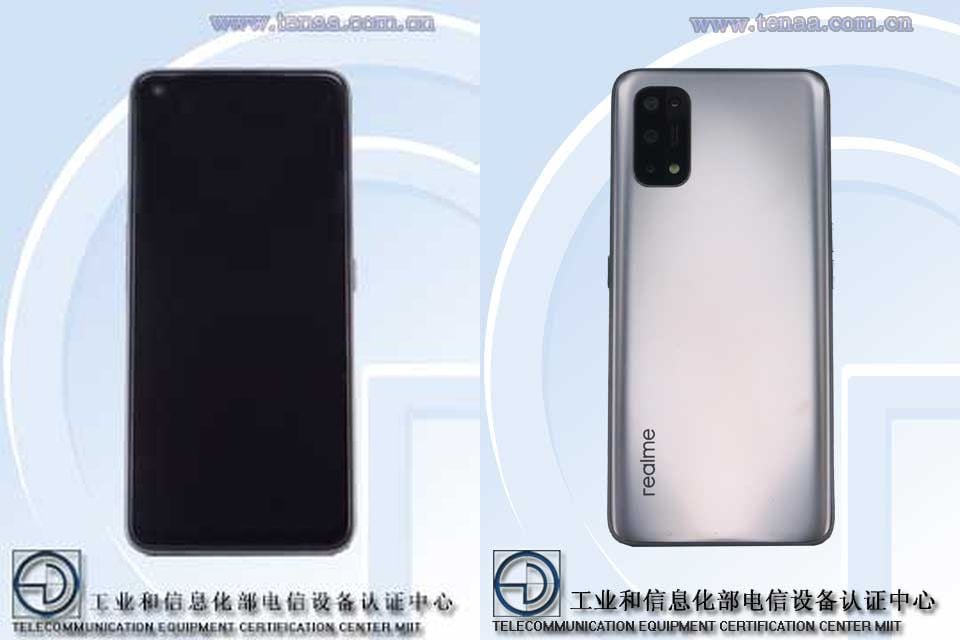
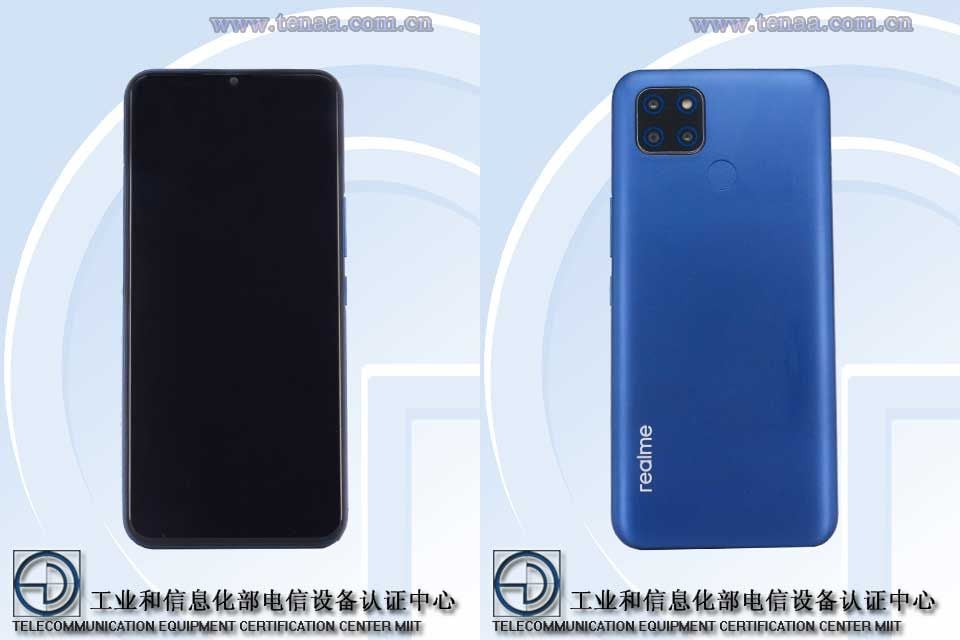
TENAA has two new listings of upcoming Realme RMX2200 and RMX2176. It is believed that the RMX2200 phone could be powered by Dimensity 720v and it may debut as the most affordable 5G phone in China. The RMX2176 seems to be an upper mid-range offering from the brand. Yesterday, the phone had appeared with few details like dimensions, display size, and battery capacity at TENAA. The listing is now updated with its images and remaining specs.
Realme RMX2176 specifications
Measuring 160.9 x 74.4 x 8.1mm and weighing 175 grams, the Realme RMX2176 has a 6.43-inch AMOLED screen with punch-hole. It supports Full HD+ resolution of 1080 x 2400 pixels and 20:9 aspect ratio. Blue, white, and symphony are the three color variants mentioned in the TENAA listing.
The Realme RMX2176 has a dual-cell battery with a rated size of one of its batteries is 2,100mAh. Its combined capacity could be 4,300mAh. The handset carries support for 50W / 65W rapid charging. The phone draws power from a 2.4GHz. It is speculated that it could be yet another Snapdragon 765G powered smartphone.
The RMX2176 may come in RAM options such as 6 GB and 8 GB RAM and storage variants like 128 GB and 256 GB in China. It lacks support for external storage. The Android 10 OS comes preinstalled on the phone.
The rear shell of the Realme RMX2176 has a 64-megapixel + 8-megapixel + 2-megapixel + 2-megapixel quad-camera system. It has a front camera of 32-megapixel. A fingerprint reader is embedded under the AMOLED display of the RMX2176. The final product name of the device is still a mystery. It is likely to go official later this month.
The Realme RMX2200 had appeared on TENAA with minimum information on its specs yesterday. The entire specifications and images of the mysterious phone is now available on the updated TENAA listing. It appears that the Realme RMX2200 will debut as the company’s most affordable 5G smartphone.
RMX2020 specifications
The RMX2200 phone has 164.4 x 76 x 8.6mm dimensions and it weighs 190 grams. The phone may arrive in blue or silver editions in China. The images of the phone show that its right edge has a volume rocker and power key. The Realme RMX2200 features a 6.52-inch LCD display that produces 720 x 1600 pixels and a 20:9 aspect ratio. The phone houses a 4,890mAh rated battery.
The handset is fueled by a 2GHz octa-core processor. It is speculated that the Dimensity 720 SoC will be powering the device. If it turns out to be true, it will be the second Realme phone after the Realme V5 to arrive with the D720 chip. The RMX2200 could be positioned lower than the Realme V5 phone.
The SoC of the RMX220 is assisted by 4 GB, 6 GB, and 8 GB of RAM. The handset may arrive in 64 GB and 128 GB storage editions in the home market. The Android 10 OS runs on the device and it has a microSD card slot for more storage.
A fingerprint scanner can be seen on the rear shell of the RMX2200. The back panel also features a square-shaped camera housing that includes a 13-megapixel + 5-megapixel + 2-megapixel triple cameras along with an LED flash. For capturing selfies, the RMX2200 has an 8-megapixel front camera.
There is no word on the final product name of the Realme RMX2200. With TENAA certification in tow, the device is likely to go official later this month.
The Surface Duo is an upcoming product from Microsoft. The dual-screen device was first announced nearly a year ago with a promise for it to be available for purchase in time for this year’s holidays. A new video of the device has surfaced from Panos Panay along with a leak that shows its accessories as well as its price, which we warn you, is not affordable.
The Chief Product Officer of Microsoft shared on Twitter a 10-second video showing the Surface Duo’s 360° hinge in action. As you can see, the device will not only open up to reveal the dual-displays but can also be folded backward completely so you can use just one of the screens like a regular phone (with thick bezels).
Prior to the tweet, a leaker shared renders of the device and its accessories. He also revealed the price tag of the Surface Duo.
The renders were posted on Twitter by a leaker that goes by Panda (@samsungbloat). One of the images shows the device alongside a case, the Surface Pen stylus, its charger, and a USB-C to USB-C cable. Another shows it alongside the Surface Earbuds. A few hours after posting the images, the leaker revealed the price of the Surface Duo.
According to him, the Surface Duo will have a starting price of $1400! That is a lot considering the device has a Snapdragon 855+ processor, 6GB of RAM, and the base model is rumored to have just 64GB of storage.
The Android-powered device is expected to launch very soon with reports pointing at an August 24 launch date. It will be sold unlocked and also by AT&T.
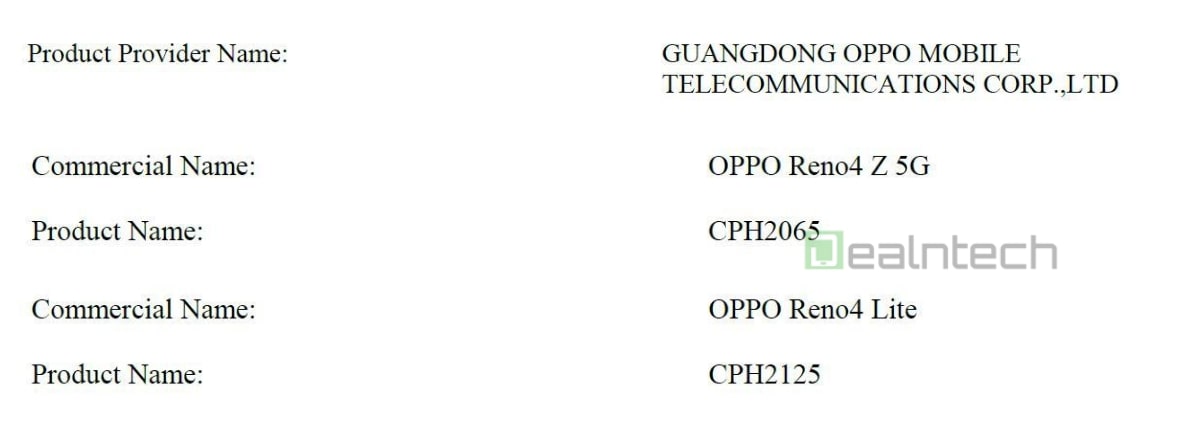
The Reno4 family is about to get bigger. With four members already, OPPO has received certification for two new models dubbed Reno4 Z 5G and Reno4 Lite.
Reno4 Z 5G
The last Reno Z model was the Reno2 Z as OPPO didn’t release a Reno3 Z. The Reno4 Z 5G has model number CPH2065. The device has been certified by the Bluetooth SIG and the certification page says it has a 6.57-inch HD+ screen, a 2.0GHz octa-core processor from MediaTek which may be the Dimensity 720 or the Dimensity 800. It also says the phone has a 4000mAh battery, dual-band Wi-Fi, and runs ColorOS 7.1.
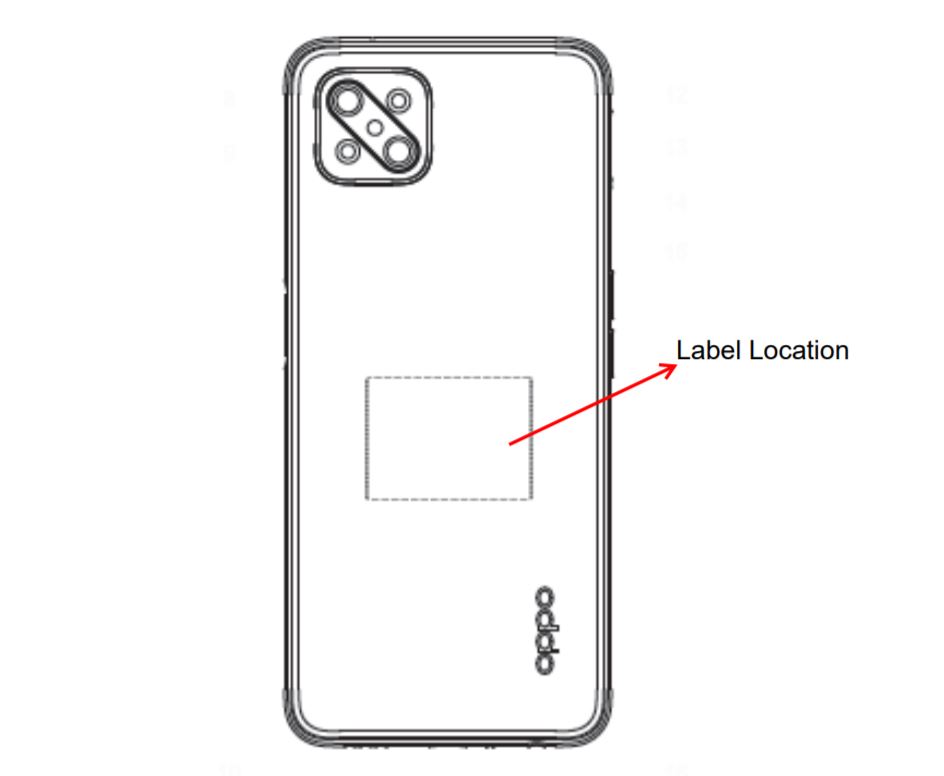
Image of the Reno4 Z 5G from FCC
The device has also been certified by the FCC and the documentation includes an image of the device which shows the phone with a quad-camera setup similar to that of the OPPO A92s. There are speculations the device may even be a rebadged OPPO A92s.
Reno4 Lite
The Reno4 Lite is also coming according to findings by DealnTech. The device has model number CPH2125 and has been certified by the Bluetooth SIG too. It has a 6.43-inch HD+ display, a MediaTek 2.0GHz octa-core processor, a 4000mAh battery, and runs ColorOS 7.2. Unlike the Reno4 Z 5G, it doesn’t have support for 5G, so it should have a more affordable price tag.
Both phones should launch in the coming weeks or months.
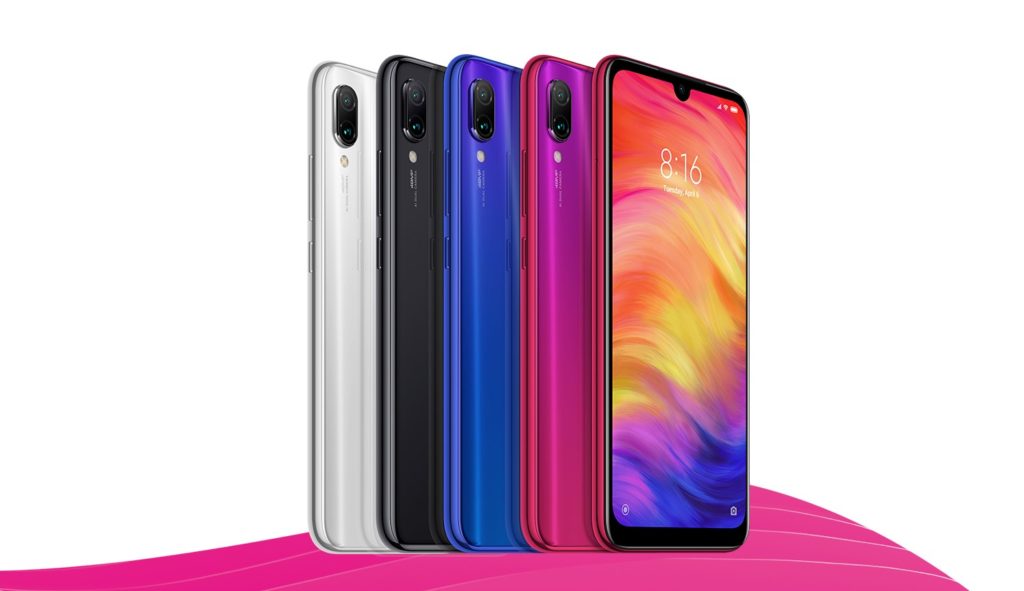
After over a year from their launch, Xiaomi has finally rolled out Android 10 update for Redmi Note 7/7S and Redmi Note 7 Pro in India. Unfortunately, the update comes with MIUI 11 and not the latest MIUI 12. The OTA update is being rolled out in batches and will be hitting every unit in the coming days.
These devices have already received Android 10 in Chia back in June. They were thought to get this update in India in July but that did not happen. Anyway, it is finally being seeded out now.
The Android 10 update for these phones is being rolled out to limited users. Xiaomi calls this type of builds as Stable Beta. If the users who already received it don’t face any issues, the company will gradually seed it out to more users.
The build for Redmi Note 7/7S comes with August 2020 security patch, whereas the one for Redmi Note 7 Pro features July 2020 security patch level. That said, here are the build numbers of Android 10 for these devices.
Redmi Note 7/7S – V11.0.3.0.QFGINXM
Redmi Note 7 Po – V11.0.2.0.QFHINXM
Unfortunately, Android 10 will be the last platform update for these handsets but they will be getting MIUI 12 and maybe MIUI 13 as well.
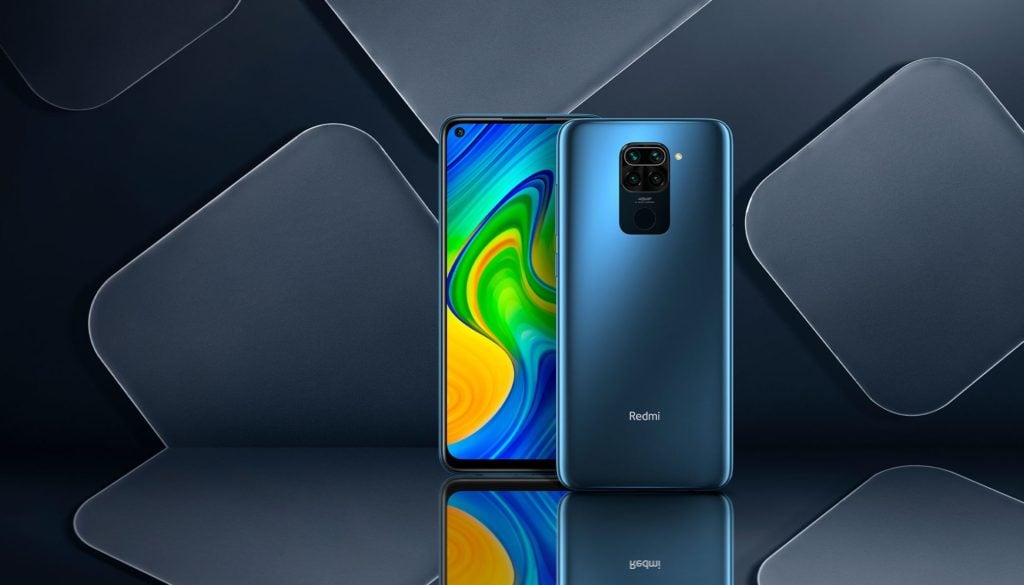
Xiaomi launched the Redmi Note 9 last month in India with MIUI 11 based on Android 10. Within a month from its launch, the handset is being updated to MIUI 12 stable in the country. The device has already received the company’s latest mobile software update in many regions.
The first-ever MIUI update for Redmi Note 9 in India comes in less than a month from its release. That means current users and future buyers of this phone will probably have a common number of MIUI updates like any other older Xiaomi/Redmi/POCO device that launched with MIUI 11.
Having said that, the update comes with build number v12.0.1.0.QJOINXM and is being rolled out in batches. Being a budget smartphone, it does not get all the features of MIUI 12 like AOD+ as it sports an LCD panel.
However, users get to experience fundamental features like the new control centre, granular permission management for apps, new system animations, revamped Settings app, Dak Mode 2.0, and more.
Additionally, Redmi Note 9 is also eligible for Android 11. But unfortunately, going by the Android 10 update rollout by Xiaomi, the upcoming version of Android culled arrive for this phone as late as next year.
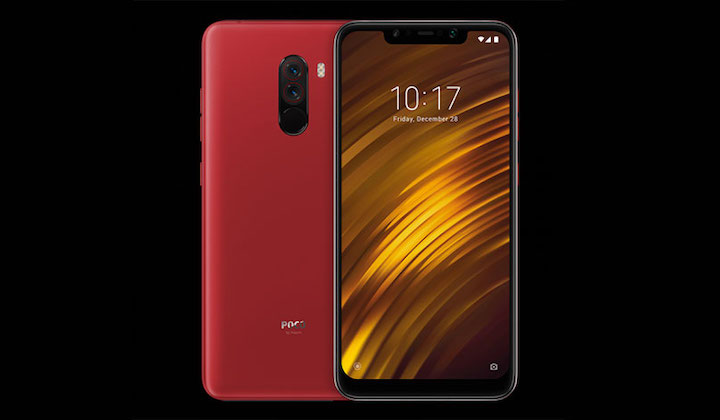
In late July, Xiaomi began to roll out MIUI 12 stable update for Mi 8 in China. At that time, we mentioned POCO F1 should be getting it soon since both the handsets share identical hardware. Now, nearly two weeks later, the company has started to seed out the update to the “Pilot Testers” of the first-ever POCO smartphone.
POCO F1 becomes the third POCO-branded smartphones after POCO F2 Pro and POCO X2 to get MIUI 12 update. Anyway, the update is currently limited to certain users called “Pilot Testers” who got selected for the program after enrolling themselves.
If these limited users find no major problems, then Xiaomi will roll out the update to more users in the form of Stable Beta update. If the build gets approval at that stage, then it will be finally rolled out to more users.
That means the MIUI 12 update for POCO F1 should be available for most users by the end of this month. That said, the update that is currently being rolled out to testers carries build number v12.0.0.3.QEJMIXM.
MIUI 12 is the third MIUI update for POCO F1 and the handset already received two Android updates (Pie and 10). Hence, it is not eligible for Android 11 but there is a slight chance for it to get MIUI 13 next year going by Xiaomi’s track records.
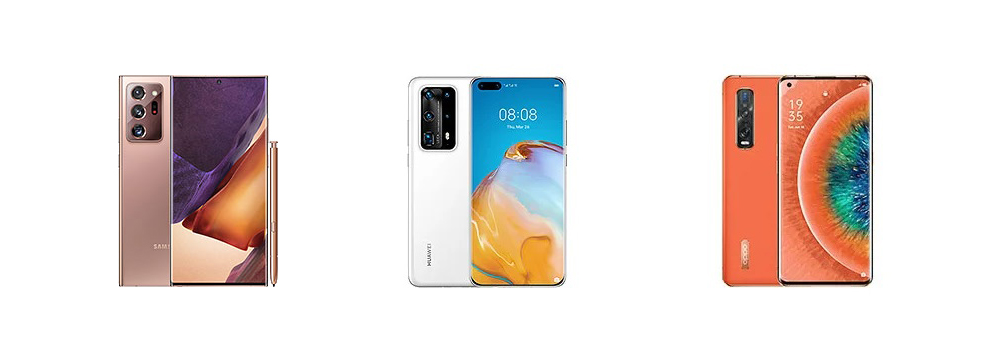
The Samsung Galaxy Note 20 Ultra is currently one of the most expensive smartphones out there and it is currently on pre-order with amazing features and specifications. But did Samsung really release the best smartphone of the second half of 2020 or you can actually get something better in the market? In order to answer this question, we decided to compare it with other top-tier flagships you can find on the shelves. We chose the Huawei P40 Pro+ and the Oppo Find X2 Pro for this comparison because they are among the most expensive and advanced Android devices, just like the Samsung Galaxy Note 20 Ultra.
Samsung Galaxy Note 20 Ultra 5G vs Huawei P40 Pro+ vs Oppo Find X2 Pro
Oppo Find X2 Pro
Samsung Galaxy Note 20 Ultra 5G
Huawei P40 Pro+
DIMENSIONS AND WEIGHT
165.2 x 74.4 x 8.8 mm, 200/208 g
164.8 x 77.2 x 8.1 mm, 208 g
158.2 x 72.6 x 9 mm, 226 g
DISPLAY
6.7 inches, 1440 x 3168p (Quad HD+), AMOLED
6.9 inches, 1440 x 3088p (Quad HD+), Dynamic AMOLED 2X
Dual SIM slot, fast reverse wireless charging 27W, 5G, eSIM
Design
Given its unique materials (it is available in a ceramic version and a vegan leather version), the Oppo Find X2 Pro has the most attractive design. It has a more minimalistic look and it is more compact than the Samsung Galaxy Note 20 Ultra. But when it comes to the build quality, the Samsung Galaxy Note 20 Ultra wins the battle with its stainless steel frame and the new Gorilla Glass Victus protection by Corning. The Huawei P40 Pro+ is the most compact of the trio and it offers a ceramic design just like the Find X2 Pro, but with a bigger camera module and a bigger punch hole.
Display
The most interesting display in terms of image quality belongs to the Oppo Find X2 Pro. This handset and the Galaxy Note 20 Ultra come with very similar display specifications, but the 10-bit panel of the Oppo Find X2 Pro can use 120 Hz even while it is using the Quad HD+ resolution, while if you want to use 120 Hz with the Galaxy Note 20 Ultra, you are forced to switch to 1080p. But note that the Galaxy Note 20 Ultra supports the S Pen which is a huge added value for productivity. Further, it has a better ultrasonic in-display fingerprint reader. Unfortunately, Huawei P40 Pro+ has both a lower display resolution and a lower refresh rate: Full HD+ and 90 Hz, respectively. But you get a 3D facial recognition system.
Hardware/Software
The most advanced hardware belongs to the Samsung Galaxy Note 20 Ultra if we consider its U.S. version. It is powered by the new Snapdragon 865+ mobile platform paired with 12 GB of RAM and up to 512 GB of UFS 3.0 storage. But if we consider the EU version powered by the Exynos 990, then Oppo Find X2 Pro is a lot better with its Snapdragon 865 and 12 GB of RAM. Huawei P40 Pro+ is inferior to both with its Kirin 990 and 8 GB of RAM. Further, note that the Huawei P40 Pro+ does not include Google services in its global variant due to the U.S. ban.
Camera
Here it is a very hard battle since these devices are all top camera phones. Unfortunately, we still had no chance to test the Samsung Galaxy Note 20 Ultra thoroughly, so we can not give you a definitive verdict. On the paper, the Huawei P40 Pro+ looks like the most stunning one with its 10x optical zoom, dual OIS, and 50 MP main sensor. But Samsung Galaxy Note 20 Ultra and Oppo Find X2 Pro are very close.
Battery
Samsung Galaxy Note 20 Ultra has a bigger 4500 mAh battery, but it has to manage a bigger display with a higher resolution, compared to the Huawei P40 Pro+. So it is not certain that it will last more than the Huawei P40 Pro+ on a single charge. The Oppo Find X2 Pro is still close in terms of battery life and it has the fastest charging technology, while Huawei P40 Pro+ has the fastest wireless charging technology.
Price
Oppo Find X2 Pro is priced €1199/$1407 globally, Huawei P40 Pro+ starts from €1399/$1642, and Samsung Galaxy Note 20 Ultra has a €1329/$1300 starting price. The S Pen makes the real difference here, that is why we think a lot of people would go for the Galaxy Note 20 Ultra. Huawei P40 Pro+ has potentially better cameras but an inferior display, while Oppo Find X2 Pro has an amazing display and a very original design. Which one would you pick?
The OnePlus Nord launched last month and is available in two colors. There is the bright and captivating Blue Marble colorway and then there is the Gray Onyx variant for those who prefer darker colors. It has now been reported that a third colorway will be arriving in a few months.
OnePlus Nord in Gray Onyx
The info was revealed by Roland Quandt on Twitter. According to him, the OnePlus Nord will be launched in a new color variant called “Gray Ash”. He adds that the new colorway will be announced at the beginning of October.
The news of the arrival of the new color variant was also confirmed by Max.J (@maxJmb), the OnePlus leaker.
This is not the first time we have heard of the Gray Ash colorway. The color variant was found in OxygenOS code a few weeks ago.
Announcing a new color variant is a trend in the mobile industry and OnePlus is not an exception.
Other than a new color variant, OnePlus is also going to launch a 6GB+64GB version of the Nord. however, it will be arriving next month and will be exclusive to India.
Yesterday, OnePlus released HydrogenOS 11 based on Android 11 Beta 3 for Oneplus 8/8 Pro in China. Today, the company unveiled the same software in the form of OxygenOS 11 for global markets. Users with these two devices can download and install it to experience all the new features.
OxygenOS 11 is a ditto of HydrogenOS 11 with Google Mobile Services (GMS). OnePlus did not even modify the changelog much. That means the new mobile software by the Chinese smartphone maker brings AOD (a much-awaited feature), revamped system apps, optimized dark mode, a new font, Zen Moe 2.0, and more.
Here’s the official changelog for OxygenOS 11 based on Android 11 Beta 3 (aka Android 11 Developer Preview 3)
New visual design (including Weather app, Launcher, Gallery, Notes)
New layout for more comfortable and convenient one-handed operation
Always-on display function, including 11 new clock styles
Live wallpaper that changes according to the time of day
New OnePlus Sans font that improves readability
Optimized Dark Mode, including the ability to automatically turn on and off and a shortcut in Quick Settings
3 new Zen Mode themes, more timing options, and new Group feature to let you experience Zen Mode with your friends
New Gallery function that automatically creates a weekly story based on your photos and videos
With that out of the way, here are the possible issues on this software build.
Some third-party applications may not function as expected
System stability issues
Network stability issues in some scenarios
Having said that, interested users can visit the source link provided at the end of this post for the tutorial on installing OxygenOS 11 on OnePlus 8/8 Pro as well as download links for builds.
It is worth noting that this is the last Android 11 Beta for these two OnePlus phones after Beta 2 in July and Beta 1 in June. We expect the brand to release OxygenOS Open Beta for these phones in the coming days, followed by Android 11 stable update.
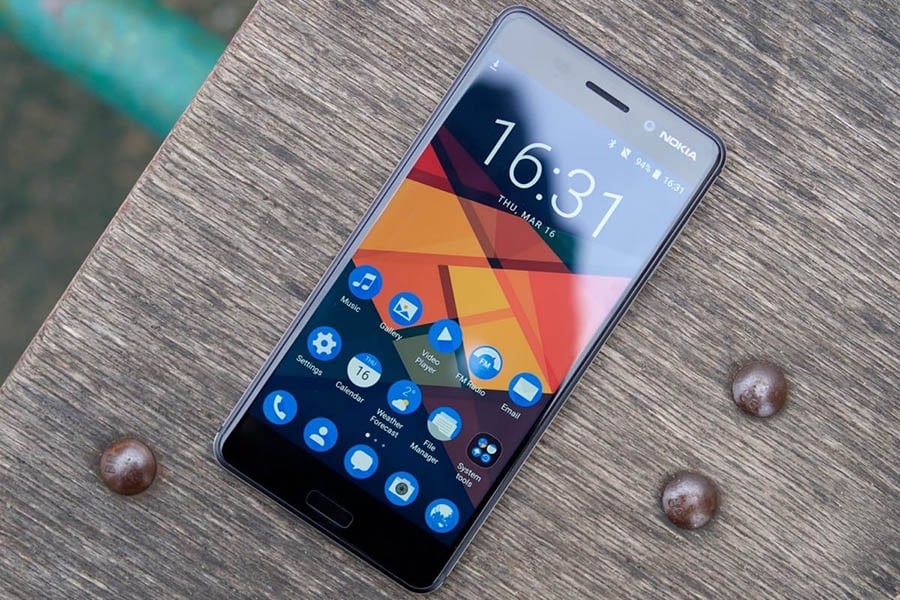
HMD Global which controls the Nokia phone brand has announced that it has been able to amass $230 million in a “series A2” round of funding from some of its existing strategic partners. The partners include Google, Qualcomm, as well the Nokia’s consumer division. Some of the investors were not named.
The Finnish company reportedly disclosed that the new funding is the first phase of a drive which could see the company receive further funds from investors in the near future.
The company through a spokesperson equally affirmed that the HMD Global brand is no valued more than $1 billion. This is an indication of the profitability of HMD Global’s drive to revive the Nokia brand which saw it launch its first Nokia-branded phone in 2016 or thereabout. Even though Nokia has divested from consumer devices, the brand still has a large following built by years of offering quality products especially feature phones. HMD has been able to replicate the quality with several durable and impressive smartphones under its belt
HMD Global is looking to expand its market share and recently launched its first 5G phone – the Nokia 8.3. This fresh investment of $230 million will help the company to “accelerate” its mission to make 5G smartphones accessible to more consumers globally. The company hopes to achieve this by enacting more alliances with U.S. carriers and building on existing partnerships with US carriers such as Verizon, Cricket Wireless, and AT&T that kicked off last year.
The Nokia smartphone brand present commands a market share of around 1%, recent report by market research firm Counterpoint shows. Nokia is ranked at the 13th spot among vendors in the global market which is not really profitable. It is hoped that the brand will invest in R&D as well as ways to expand its market presence.
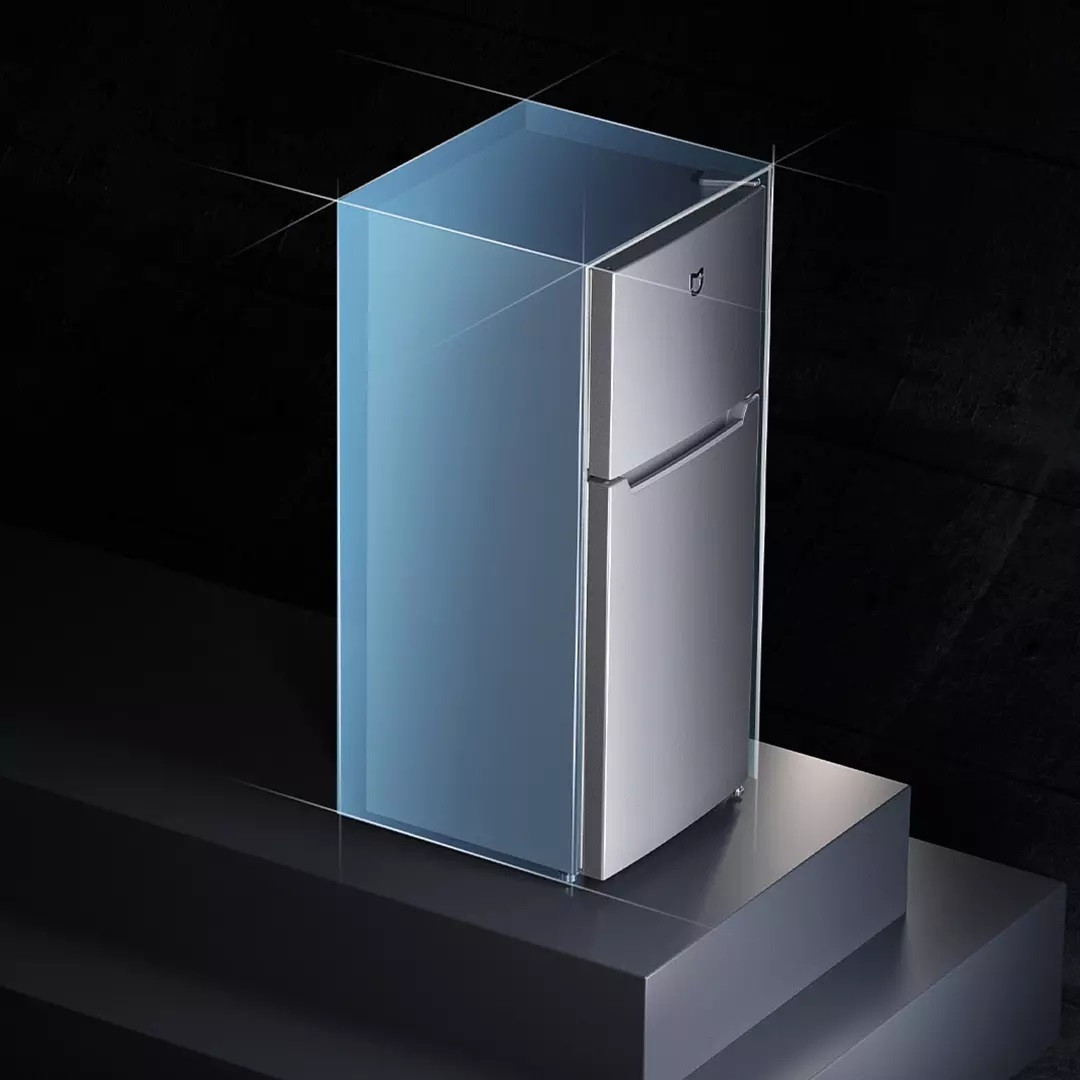
Chinese conglomerate, Xiaomi has an ever-expanding portfolio of products that ranges from smartphones to personal mobility vehicles, to home appliances. The brand has just launched a new home appliance in China. The MIJIA Double-door Small Refrigerator is Xiaomi’s cheapest refrigerator yet, as it carries a price tag of 899 yuan (~$129).
The MIJIA Double-door small refrigerator has total compartment size of 118L and a dimension of 470x527x1137mm. The fridge won’t take too much space as it covers an area of only 0.25 square metres. The top compartment which is the freezer area is 33L while the refrigerator compartment is 85L in volume. The refrigerator also has several compartments which can be adjusted as desired.
The MIJIA refrigerator uses branded high-efficiency compressors with operating noise of only 36 decibels and 0.49 kWh/day. The freezer compartment uses a winding hidden evaporator, which can effectively reduce frost while strong cooling. It uses fluorine-free foaming technology for better heat preservation.
In terms of the appearance, the Mijia double-door refrigerator 118L uses a hidden built-in handle, a built-in multi-layer adjustable bracket, and seen storage spaces. The body is an integrated U-shaped box, the shelf is made of tempered glass, and the inner tank, drawers, bottle racks, and other internals are all made from food contact grade materials.
The MIJIA double-door refrigerator is presently on pre-sale in China on Mi.com and Xiaomi Youpin.
At today’s launch event, Xiaomi also announced three charging accessories. The three accessories are the Mi 55W Wireless Charging Stand, the Mi 20W Smart Tracking Charging Pad, and the Mi 100W Car Charger.
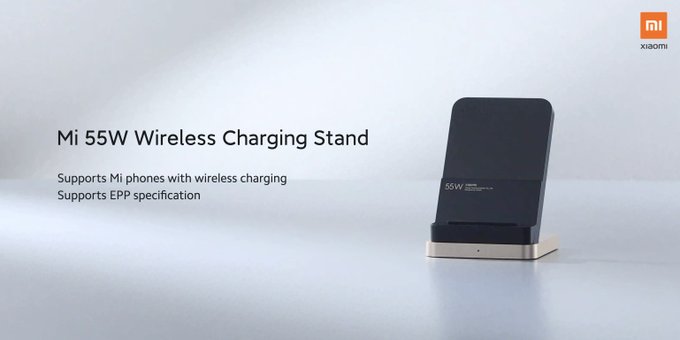
Mi 55W Wireless Charging Stand
The wireless charger has a dual-color design – a black upper part and a gold base that appears to be made of metal but might actually be plastic. There is an LED at the bottom which should turn on when the device is plugged in.
The charger will charge any Xiaomi phone with support for wireless charging including the Mi 10 Ultra that supports 50W wireless fast charging. It also supports the Extended Power Profile (EPP) specification.
The Mi 55W Wireless Charging Stand is priced at ¥199 (~$29), the same price as the 30W wireless charger that was announced alongside the Mi 10 series in March.
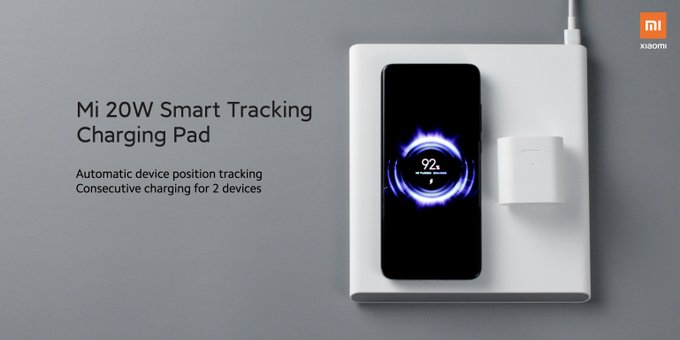
Today, the Mi 20W Smart Tracking Charging Pad was announced again. It has a price tag of ¥499 (~$72), comes in white, and can charge two devices at the same time.
Mi 100W Car Charger
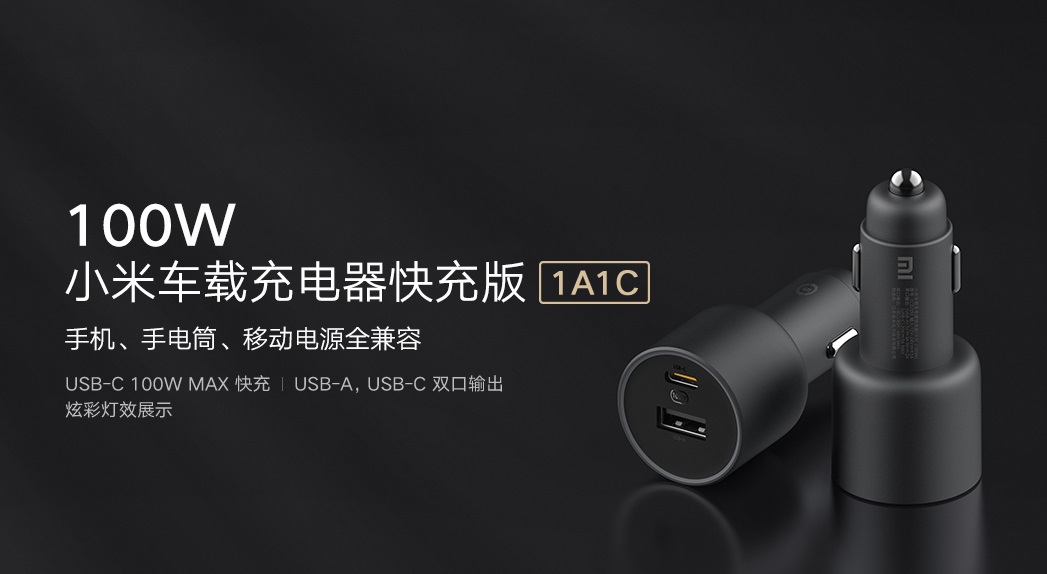
If you are always on the road, Xiaomi has got a fast charger for you. The Mi 100W Car Charger costs just ¥99 (~$14) and it has a USB-C port and a USB-A port.
The charger has a maximum output of 68W when charging two devices at the same time, with the USB-A port outputting a maximum of 18W. The USB-C port has a maximum power output of 100W (when charging just one device) and will charge the Mi 10 Ultra from empty to full in just 25 minutes.
Xiaomi has unveiled the Ninebot GoKart Pro Lamborghini Edition at the 10th-anniversary event held Tuesday night. The new product is one product that is aimed to take racing fun to another plane. The model looks like a stylized version of the Ninebot Gokart Pro that was launched earlier this year in China.
As the name implies, the vehicle is the product of the partnership between Ninebot-Segway, a Xiaomi-owned company and world-renowned carmaker Lamborghini. The go-kart bears the iconic yellow colour of Lamborghini and comes with a design that creates a truly hyper-car feel. It also packs a sports steering wheel and carries a very nice spoiler at the back.
The Gokart Pro Lamborghini edition uses a high-strength steel frame with an effective load of up to 100kg, which provides better torque rigidity and can effectively cope with road impacts at high speeds. The kart is also equipped with TPE soft anti-collision front lip and aerodynamically-shaped TPE side skirts with better impact cushioning performance and driving safety. Ninebot says this prevents issues such as the bumper breaking with a slight impact.
The product, which is completely electric and built on a 432 Wh battery pack, brings a high-level drift experience with its special tires. According to Xiaomi, the NineBot GoKart Pro Lamborghini edition is also capable of emitting an artificial race car engine sound. The kart can race around a 400-meter track with a fully charged battery 62 times at a speed of 40 km/h.
Xiaomi is yet to announce the pricing and availability details of the product.
After launching the Mi 10 in 2010, the company is here with Mi 10 Ultra exactly after 10 years. The new smartphone went official today carrying some commendable features and specifications. Xiaomi Mi 10 Pro Ultra features several improvements advancements over the Mi 10 Pro which was launch in February this year.
It is available for the starting price of $760 coupled with 8GB RAM and 128GB storage. Other storage variants include 8GB RAM + 256GB storage, and 12GB RAM + 256GB storage which retails for the price of $805 and $1005, respectively. The smartphone will start shipping from August 16 and will e limited to China, until any new information arrives. However, global fans can also pre-order the device via Giztop for international shipping.
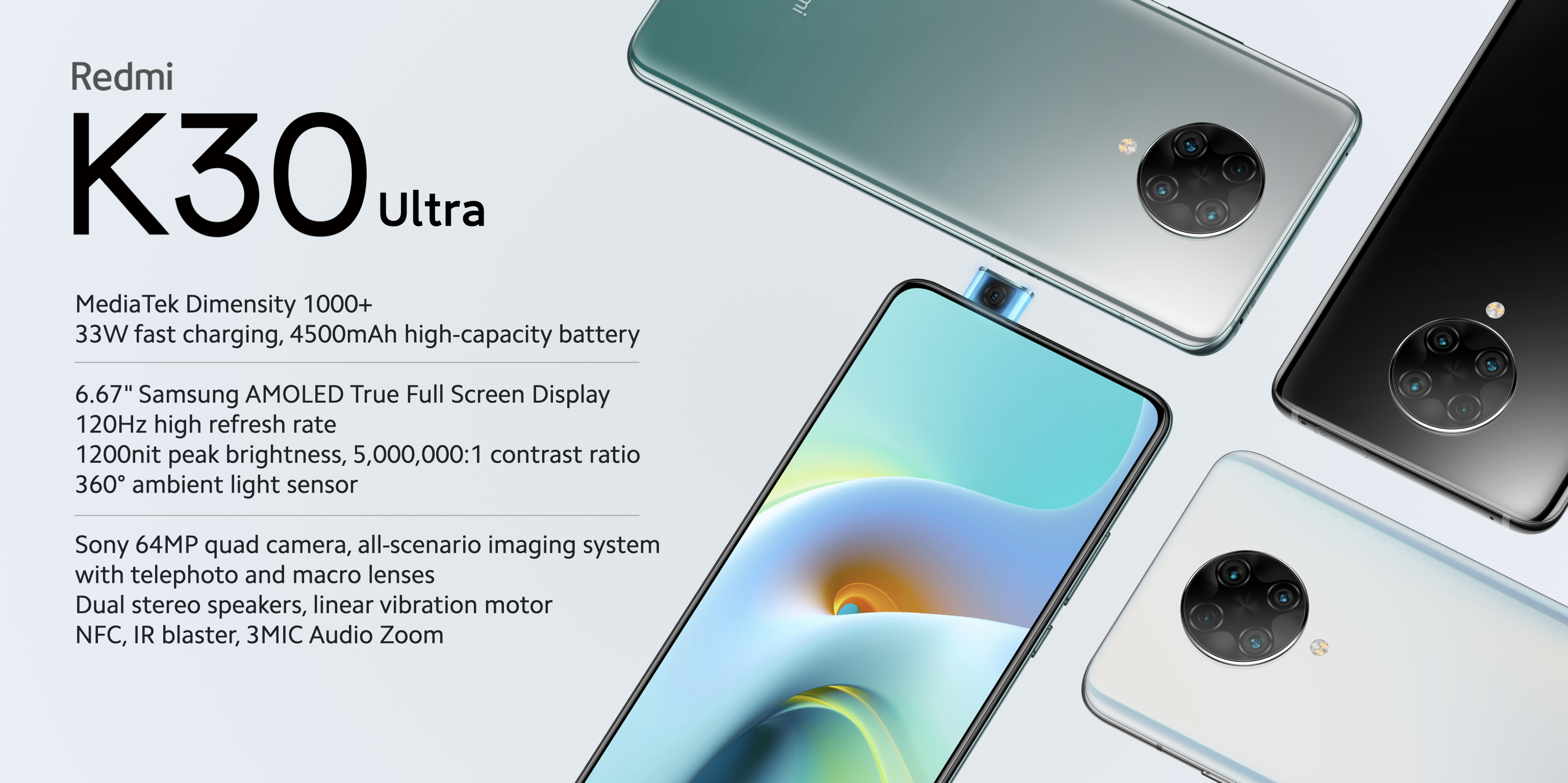
Xiaomi also launched the new Redmi K30 Ultra smartphone to attract users looking for a mid-range device. It includes a MediaTek Dimensity 1000+ SoC, 6.67-inch display, 120Hz refresh rate, and 33W fast charging. There’s a quad-rear camera with 64-megapixel primary sensor, a 13-megapixel ultrawide sensor, a 5-megapixel macro sensor, and a 2-megapixel depth lens. A 4500 mAh battery is present which can provide backup for a whole day upon extensive smartphone usage.
Redmi K30 Ultra is available in three different storage variants featuring 6GB RAM + 128GB, 8GB + 128GB and 8GB + 256 GB internal storage variant. The smartphone is currently limited to China and will start retailing from August 14. The interested users around the globe can pre-order the device via Giztop.
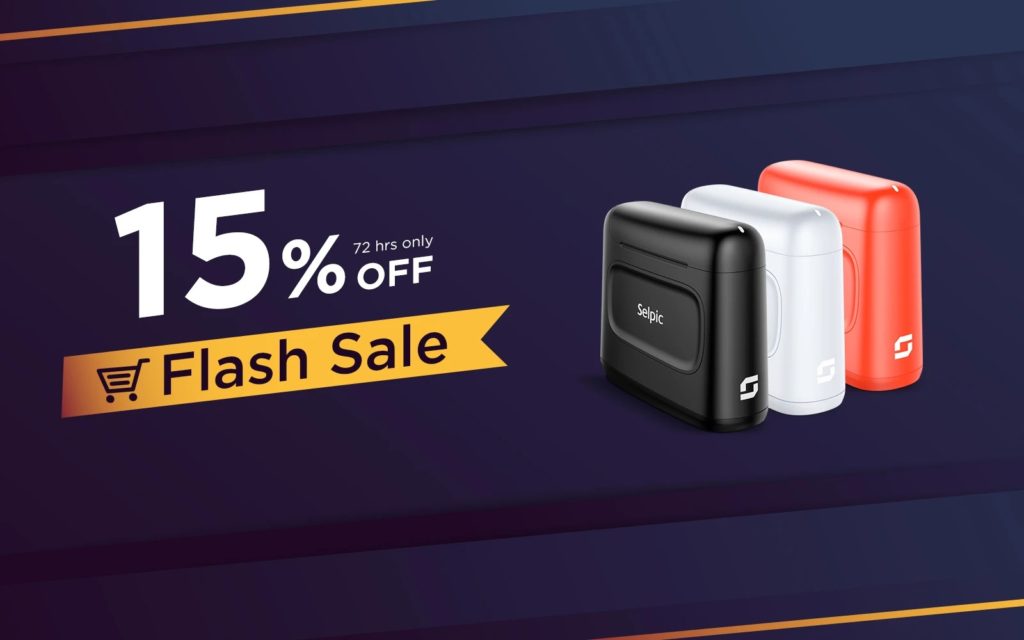
Selpic is a popular handheld printer manufacturer offering useful printing solutions. The company offering a massive discount on the Selpic S1 printer. The useful device was already available at an affordable price but the recent 15% discount makes the deal even sweeter. Selpic S1 brings an option to print different graphics on surfaces such as paper, textiles, wood, glass, ceramics, and even human skin.
Selpic S1 enables the user to bring branding material anywhere without any excessive efforts. The world’s most portable and easy to handle printer can quality print on almost any surface. It prints at ultra-fast pace and weighs only 92 grams in size. It can easily fit in your palm and pocket.
Selpic S1 houses a 0.5-inch print head which can print at 600 DPI resolution effectively. The user can easily print QR codes, barcodes, logos, images, and can even print text easily at any angle. The quick-drying ink further improves the usability of the printer as your hands remain clean.
A large 40ml ink tank is present inside which can print around 900 A4 papers with 5% ink coverage. Selpic S1 supports multi-line printing which improves the printing speed. The printer can work 6 hours upon full charge and can remain on standby for three days. It supports 9 languages.
Slepic S1 can be easily controlled via the SELPIC app which allows the users to edit graphics and then facilitates easy printing.
Technical Specifications
Startup Time: 1 Second
Printing Technology: Inkjet
Cartridge Capacity: 40ml/1.35os
CPU: ST Microelectronics (Swiss)
Resolution: 600 DPI
Standby TIme: 72 Hours
Working HOurs: 6 Hours
Charging Time: 2.5 Hours
Startup Time: 1 Second
Charging Port: Micro-USB Port
Weight 260g/9.17OS
Battery Capacity:!200 mAh
Connectivity: WiFi
Print Head: 0.5-inch, 300 jets, 600 DPI
Print SPeed: 20-2000 mm/sec
Android and iOS app supported
Selpic S1 handheld printer has a lot to offer rather for the discount price of $199. You can grab it bu heading to the Selpic official website.
Update: The Selpic P1 pocketable printer is on Indiegogo for crowdfunding, $99 for early bird price: Indiegogo
Xiaomi finally held the much-anticipated 10th-anniversary launch event where the company’s founder/CEO Lei Jun took us on a journey down memory lane to when the company started and the progress so far. The company also announced several interesting products with the Mi 10 Ultra stealing the show. Apart from the Mi 10 Ultra, Xiaomi also launched the flagship Redmi K30 Ultra in the smartphone segment.
Unlike the Mi 10 Ultra which has some marked differences from the Mi 10 Pro, the Redmi K30 Ultra looks exactly like the Redmi K30 Pro. However, the K30 Ultra packs several upgraded hardware that dwarfs those of the K30 Pro.
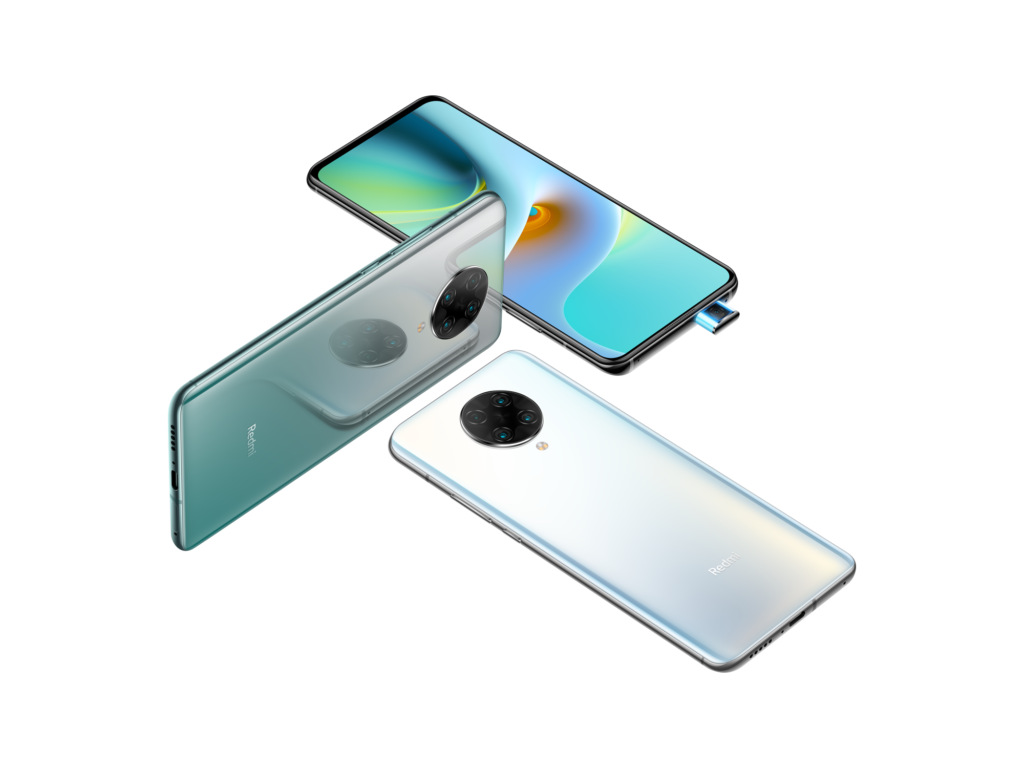
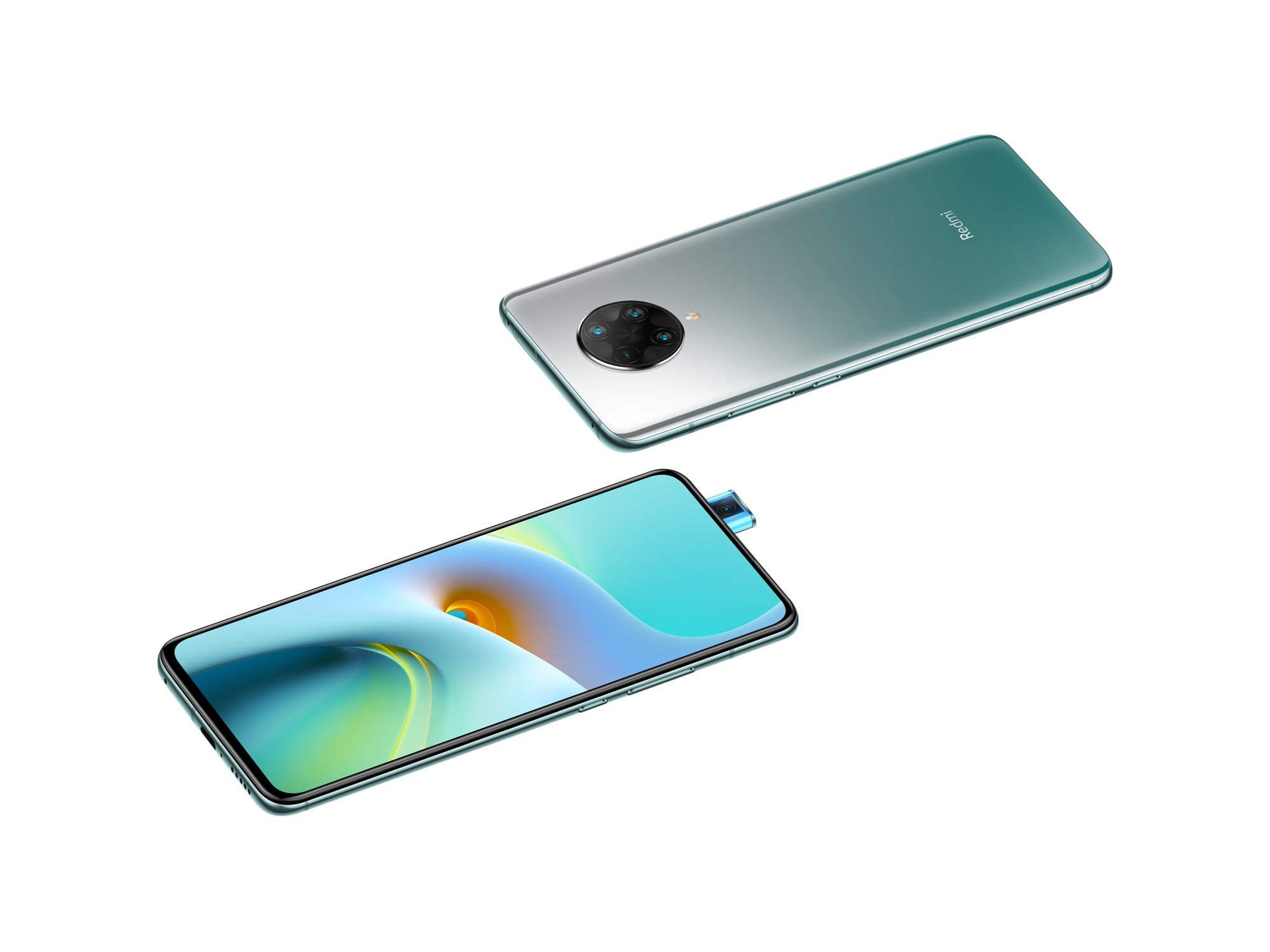
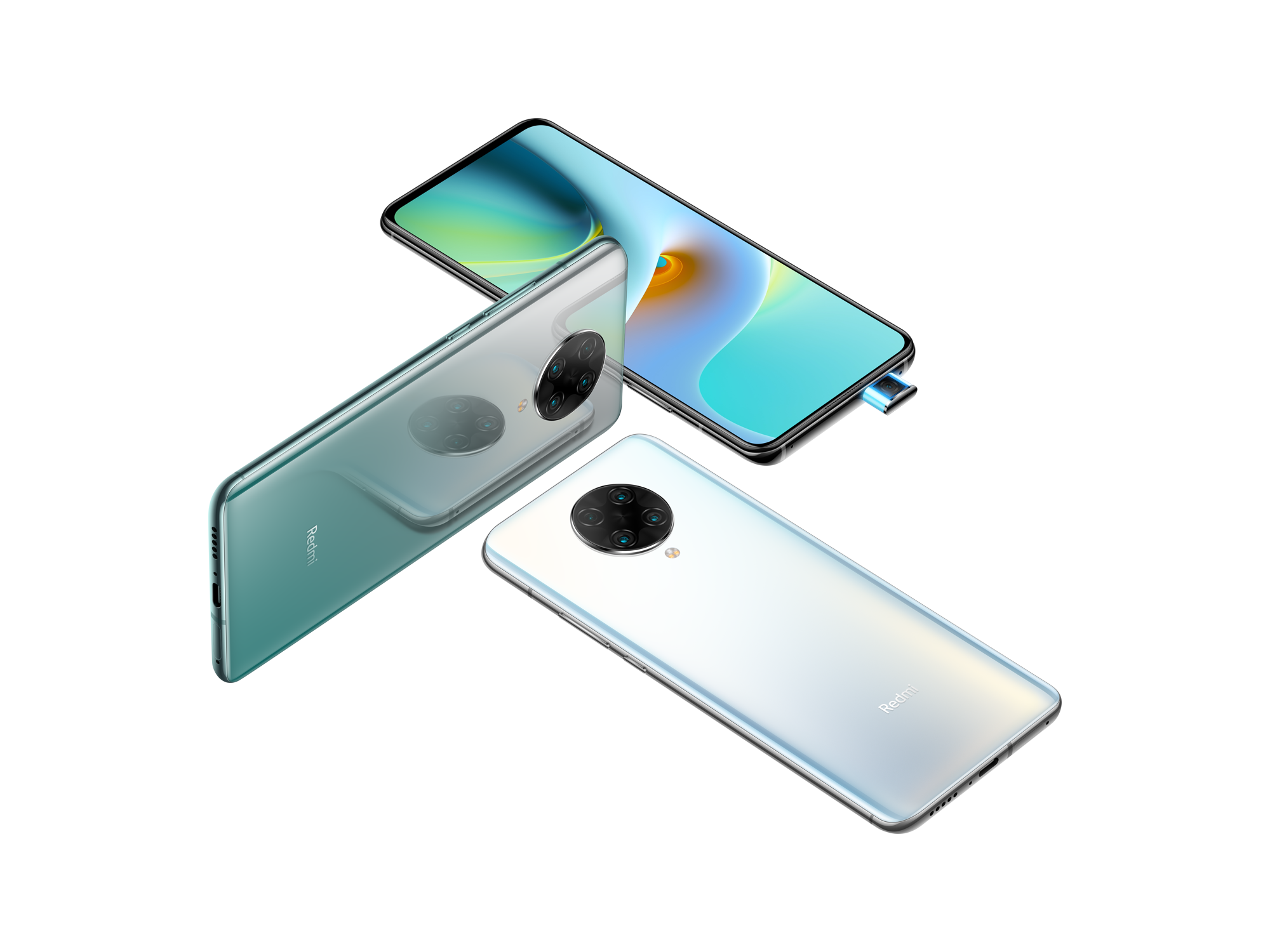
The Redmi K30 Ultra sports a 6.67-inch Samsung AMOLED display with an FHD+ resolution of 2400×1080 pixels. The display also comes with up to 1,200nits of brightness, 5,000,000:1 contrast ratio, 100% coverage DCI-P3 color gamut, and HDR10+ support, to guarantee a vivid and colorful viewing experience. The display supports 120Hz refresh rate and 240Hz touch sampling rate, enabling ultra-smooth and responsive high frame-rate gaming and video viewing. The device also optimizes battery consumption by automatically switching between 60Hz/120Hz frame rates. The phone also comes with a pop-up front camera which ensures no notches blemish the front display giving it a 92.7% screen ratio.
The Redmi K30 Ultra is powered by MediaTek’s flagship Dimensity 1000+ 5G processor. The chip is built on a 7nm process and packs the latest high-performance ARM Cortex-A77 and Mali-G77 cores. The chipset has an AnTuTu score of over 530,000. The device supports SA/NSA dual-mode 5G as well as dual 5G standby.
The smartphone boasts outstanding AI functionality with a six-core independent APU 3.0 composed of a combination of large and small cores that enable accurate adjustment for more application scenarios. The handset efficiently balances computing power with power consumption, and flexibly processes AI-based tasks. Redmi K30 Ultra has been ranked first in the ETH Zurich AI-Benchmark ranking.
Running on dual Hyper Engine 2.0 and Game Turbo optimization engines, Redmi K30 Ultra is a perfect fit for most games on the market, ensuring rapid, responsive and frictionless gaming experience.
To also enhance the gaming experience, is a 3,495mm² ultra-large area vapour chamber along with a graphene + graphite 3D heat dissipation system, which ensures stable performance even after long usage.
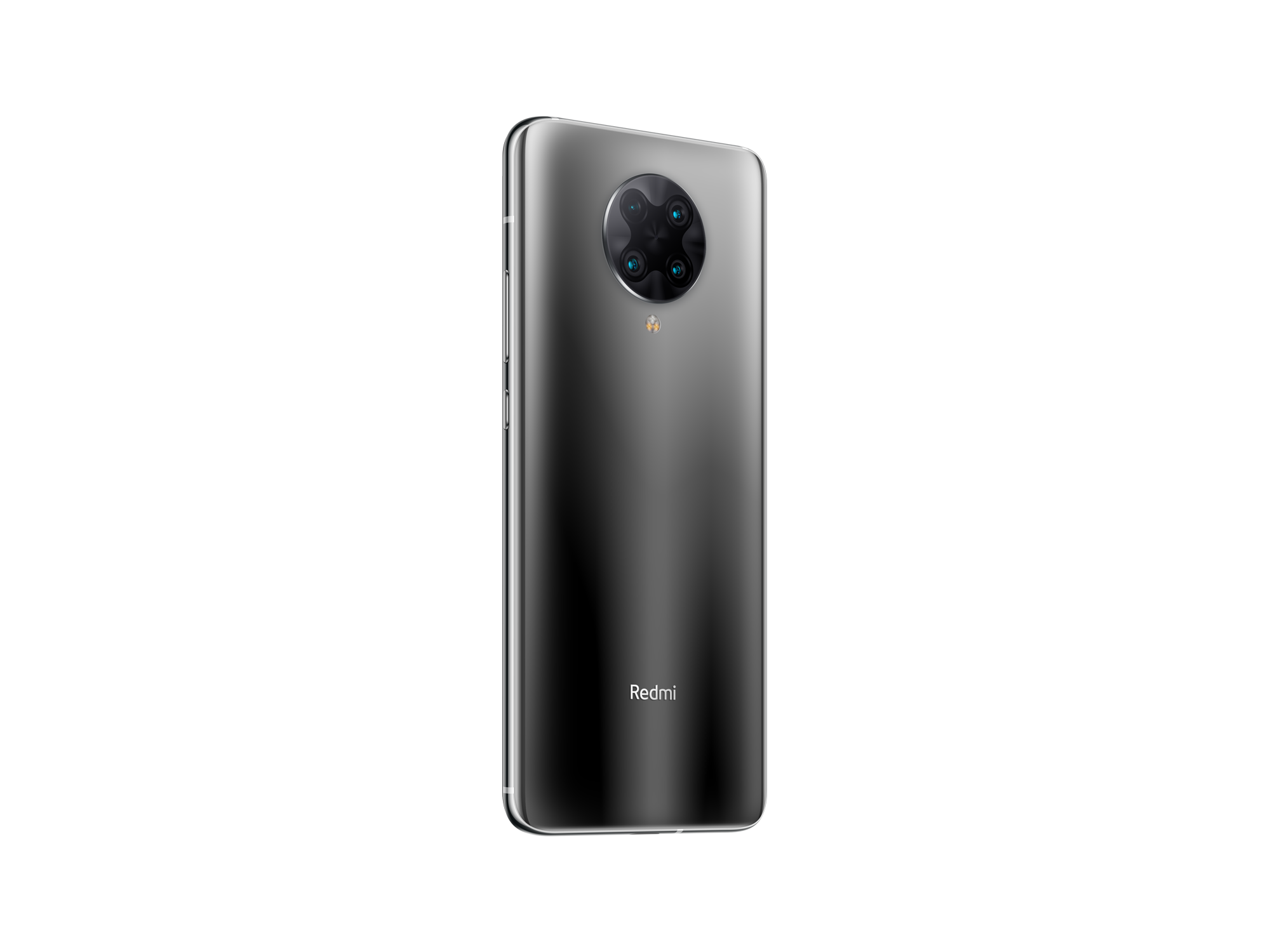
For photography, the Redmi K30 Ultra features a quad rear camera setup at the rear, consisting of a 64MP high-resolution main camera, a 13MP ultra-wide-angle camera, a 5MP telemacro camera, and a 2MP portrait depth sensor. The 64MP high-resolution main camera supports four-in-one 1.6μm large pixels, allowing the hardware to combine four smaller pixels to output 64MP ultra-clear images with large pixels. Meanwhile, the 119° ultra-wide-angle lens makes room for stunning landscape snaps, while the portrait depth sensor lens combined with the main camera takes beautiful portraits with natural background blurring.
The telemacro lens boasts a 50mm equivalent focal length, twice the length of the standard smartphone macro lens on the market. It allows images to be taken from much further afield than usual while avoiding disturbance to the objects being photographed. This significantly increases the number of scenarios in which the macro lens can be used.
For videos, Redmi K30 Ultra comes with Audio Zoom support. Unlike ordinary dual-mic phones, Redmi K30 Ultra has three microphones, which allows it to “zoom” in on the sound along with the image and capture clear audio even from further away, considerably improving sound reception during filming.
Redmi K30 Ultra enables a myriad of creative photography functions based on its AI capabilities, such as AI Skyscraping and Photo Clones. Photo Clones allows users to take fun surreal photos at any time with no post-editing required. The AI Skyscraping feature captures a section of the sky in the photo and allows users to switch and edit it with one tap to create high-quality beautiful images regardless of weather conditions and location.
The phone is equipped with a large 4,500mAh capacity battery which can easily get you through a full day of use. There is also support for 33W fast charging, the smartphone can go from low to full battery within just one hour. The phone also comes with NFC and an IR blaster that can turn the device into a remote control for traditional household appliances. There is also an in-screen fingerprint sensor for extra security.
Pricing and Availability
The Redmi K30 Ultra comes in three colors: Moonlight White, Midnight Black, and Mint Green. The phone is available in four variants;
6GB+128GB ———————————————RMB 1,999 (~$287)
8GB+128GB ———————————————-RMB 2,199 (~$316)
8GB+256GB———————————————-RMB 2,499(~$359)
8GB+512GB———————————————-RMB 2,699 (~$388)
The Redmi K30 Ultra will be available for purchase on August 14th through all official Xiaomi channels in Mainland China.
We use cookies on our website to give you the most relevant experience by remembering your preferences and repeat visits. By clicking “Accept”, you consent to the use of ALL the cookies.
This website uses cookies to improve your experience while you navigate through the website. Out of these, the cookies that are categorized as necessary are stored on your browser as they are essential for the working of basic functionalities of the website. We also use third-party cookies that help us analyze and understand how you use this website. These cookies will be stored in your browser only with your consent. You also have the option to opt-out of these cookies. But opting out of some of these cookies may affect your browsing experience.
Necessary cookies are absolutely essential for the website to function properly. This category only includes cookies that ensures basic functionalities and security features of the website. These cookies do not store any personal information.
Any cookies that may not be particularly necessary for the website to function and is used specifically to collect user personal data via analytics, ads, other embedded contents are termed as non-necessary cookies. It is mandatory to procure user consent prior to running these cookies on your website.