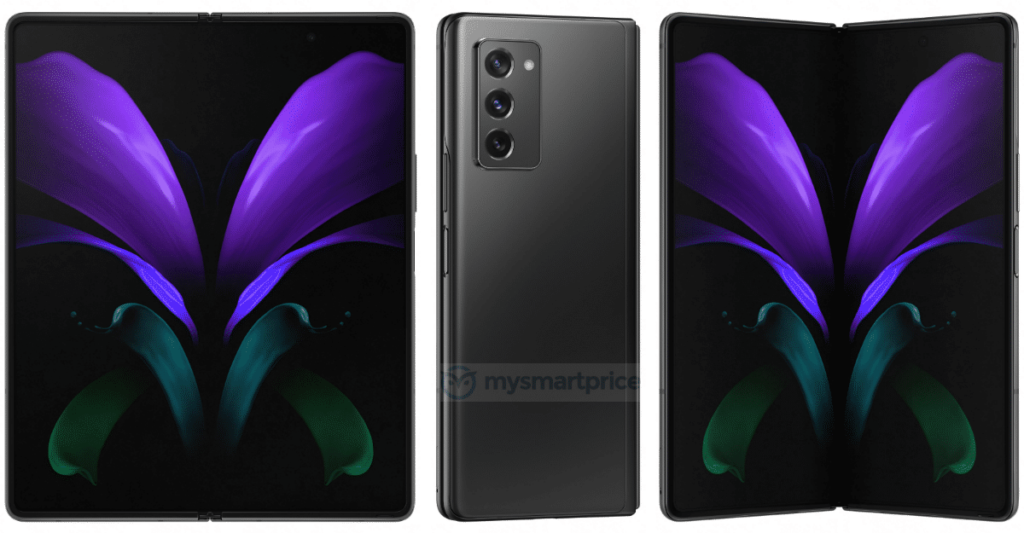
Samsung is expected to unveil the much-awaited Galaxy Z Fold 2 on August 5 Galaxy Unpacked event. Like any other device, it has leaked multiple times. Yesterday, even its entire design was revealed, courtesy of press renders leak. Now, a new report, fresh out of South Korea, mentions it to retail for the same price as the original Galaxy Fold.
According to a report by DDaily (via SamMobile), the carriers in South Korea have begun to test the Galaxy Z Fold 2 last week. Even, they tentatively agreed with Samsung on its release date as well as the retail price.
The report says the company’s third commercial foldable smartphone will go on sale starting September 18 in its home country. This goes in line with a previous report, which suggested the chaebol to ship the handset in Septemeber, followed by Galaxy S20 FE (Lite) in October.
As far as price is concerned, the Galaxy Z Fold 2 is reported to retail for 2,398,000 South Korean Won, which roughly translates to ($2,005). This is exactly the same price Samsung debuted its predecessor last year. That means the second-gen Galaxy Fold will be priced similar to the original ($1,980) in international markets as well.
Previously, it was thought to be priced lower than the 2019 model. Anyway, it is good to see that the price has not increased like the Galaxy S20 series.
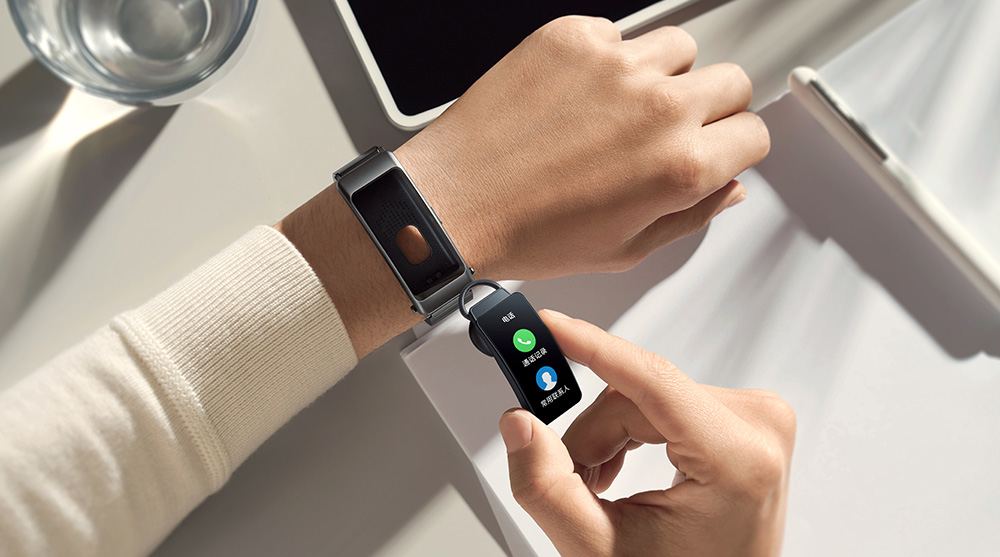
Huawei officially launches TalkBand B6, a fitness tracker cum Bluetooth headset in China. It comes in three variants namely Sports, Fashion, and Exclusive. They are priced at 999 yuan ($142), 1,199 yuan ($171), and 1,499 yuan ($214) respectively.
The Huawei TalkBand B6 sports a 1.53-inch flexible curved AMOLED display with a resolution of 460 x 188 pixels and 326 PPI. It comes powered by the company’s in-house HiSilicon Kirin A1 chipset.
As a fitness tracker, it packs all the necessary sensors such as accelerometer, gyroscope, heart rate sensor, SpO2 sensor, ambient light sensor, and hall effect sensor (compass). It connects to smartphones via Bluetooth 5.2 and the company claims it to offer a maximum connection distance of 150m.
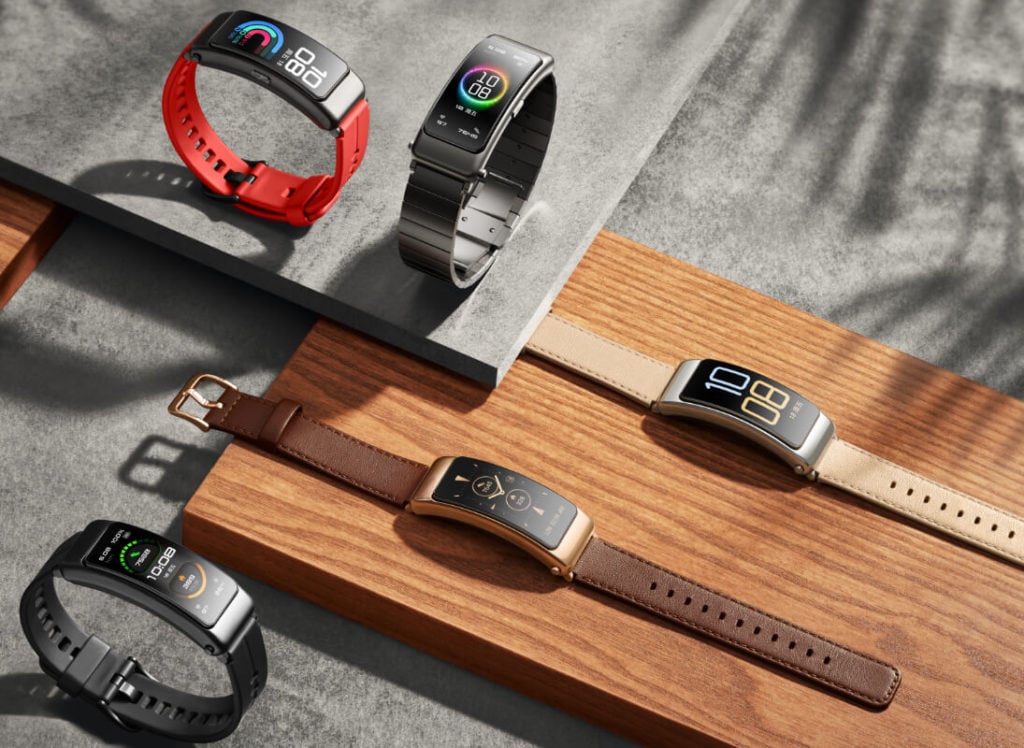
The wearable can be paired with both Android 4.4+ and iOS 9.0+ devices. The casing of the tracker is made of stainless steel, however, buyers can choose from these three types of straps – Silicon, Leather, and Metal.
As for colors, the Silicon strap comes in Obsidian Black and Coral Red version, whereas the Leather strap comes in Camellia Brown and Mocha Brown variants. Lastly, the metal strap comes only in Titanium Silver Gray color.
Talking about features, the Huawei TalkBand B6 supports fitness tracking, app alerts, weather, music controls, Xiaoyi AI voice assistant, sleep tracking, menstrual cycle tracking, and more. Also, it is IP57-certified for dust and water resistance but it does not apply for the leather strap.
Last but not least, the wearable is backed by a 120mAh battery, which charges via USB Type-C.
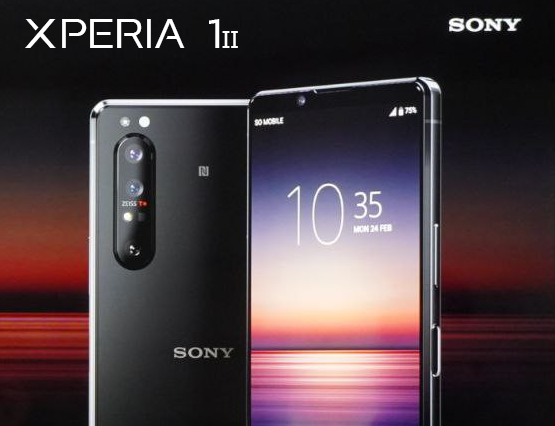
Sony has just teased the launch of a smartphone for 6th August 2020, earlier today (30th July 2020). The teaser was shared on the company’s official Weibo account (a Chinese microblogging website) and might be for the flagship Xperia 1 II or even its WH-1000XM4 wireless noise canceling headphones.
Sony Xperia 1 II
For those unaware, Sony had unveiled its 2020 flagship, the Xperia 1 II, back in February. It features a 6.5 inch OLED HDR display with 3,840 x 1,644 resolution, 643ppi, a 90Hz refresh rate and even a 21:9 aspect ratio. The device was powered by Qualcomm’s Snapdragon 865 SoC along with 8GB of RAM and 256GB of storage. The device had a 3.5mm headphone jack and supported wired fast charging and wireless charging as well.
Similarly, the other possible launch candidate is the WH-1000XM4 series wireless headphones from Sony. These headphones featured a 40mm audio driver with a frequency response of up to 30kHz. On a single full charge, the device can last for up o 30 hours and could also be paired with two Bluetooth devices at the same time, with a quick switch with just a single button.
Unfortunately, apart from the teaser of an upcoming launch of a product and the date, we have no confirmation as to what the company is planning on unveiling. Thus, we will have to wait for August 6 to know for sure, so stay tuned as we will be covering the launch.
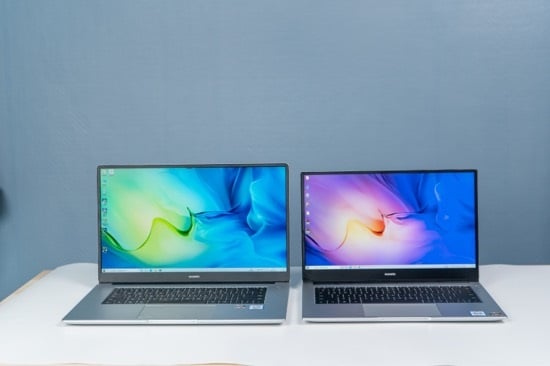
Earlier today (30th July 2020), Huawei launched its latest series of MateBook notebooks. The new laptops, MateBook D 14 and MateBook D 15, feature AMD’s latest Ryzen 4000 series processors.
MateBook D 14
The Huawei MateBook D 14 is the company’s latest addition to its 14 inch notebook offering. It features a 1080p display with minimal bezels on the top and the corners on the sides. The D 14 measures in at 15.9mm thick and weighs just 1.38 kilograms. This makes it a very portable ultrabook laptop. Under the hood, a Ryzen 5 4500U or Ryzen 7 4700U processor powers the laptop with 16GB of RAM and 512GB SSD storage on both variants.
Apart from the display size, the MateBook D 15 from Huawei is nearly identical to its 14 inch counterpart. It also features a 1080p display with thin bezels and has either a Ryzen 5 4500U or Ryzen 7 4700U processor. For storage, the 16GB of RAM and 512GB SSD storage is also offered here, while the laptop itself is slightly thicker at 16.9mm and a bit heavier weighing 1.53 kilograms.
Pricing and More
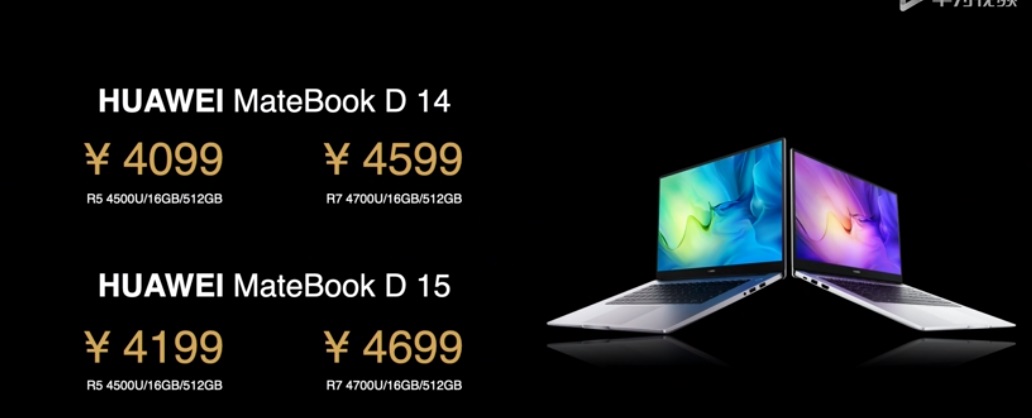
Both laptop models have arrive with Fn+P enabled and support Huawei share, touch connection, allow users to make calls via their smartphone and access documents, and use mobile applications after pairing/screen mirroring. Here is the pricing for the new ultrabook laptops:
MateBook D 14 (Ryzen 5 4500U) – 4,099 Yuan (roughly 585 US Dollars)
MateBook D 14 (Ryzen 7 4700U) – 4,599 Yuan (roughly 656 US Dollars)
MateBook D 15 (Ryzen 5 4500U) – 4,199 Yuan (roughly 599 US Dollars)
MateBook D 15 (Ryzen 7 4700U) – 4,699 Yuan (roughly 670 US Dollars)
Recently, the Chinese smartphone maker, Huawei, agreed to pay the US Chipmaker Qualcomm a large sum of 1.8 billion US Dollars to settle their long disputed patent infringement lawsuit. Since then, both companies have signed a new long term deal despite the rising tension between the US and China.
For those unaware, Qualcomm currently holds patents on various key smartphone components and generally licenses its products/IP for revenue. Huawei had been one of its customers but had allegedly withheld payments since 2017. Back in 2019, the latter finally agreed to pay 150 million US Dollars for every quarter for using the former’s technology up until 2018.
After the settlement, Huawei and Qualcomm have now inked a new agreement that will license the latter’s patented technology to the former. This deal is also a sort of a win-win scenario for both sides, with the chipmaker already seeing the benefits as its stock value has risen to record heights just by the deal. Huawei also benefits from the deal by gaining access to various Qualcomm technology, especially key components for smartphones, which is quite crucial after the company lost its chip supply from TSMC due to US sanctions.
Notably, Qualcomm CEO also stated that the new deal is “consistent with the framework of our licensing programme and incremental to the partial payments received from Huawei under the interim agreement in prior years”. So, we will have to wait and see as to what more this new deal might bring to the table in the near future.
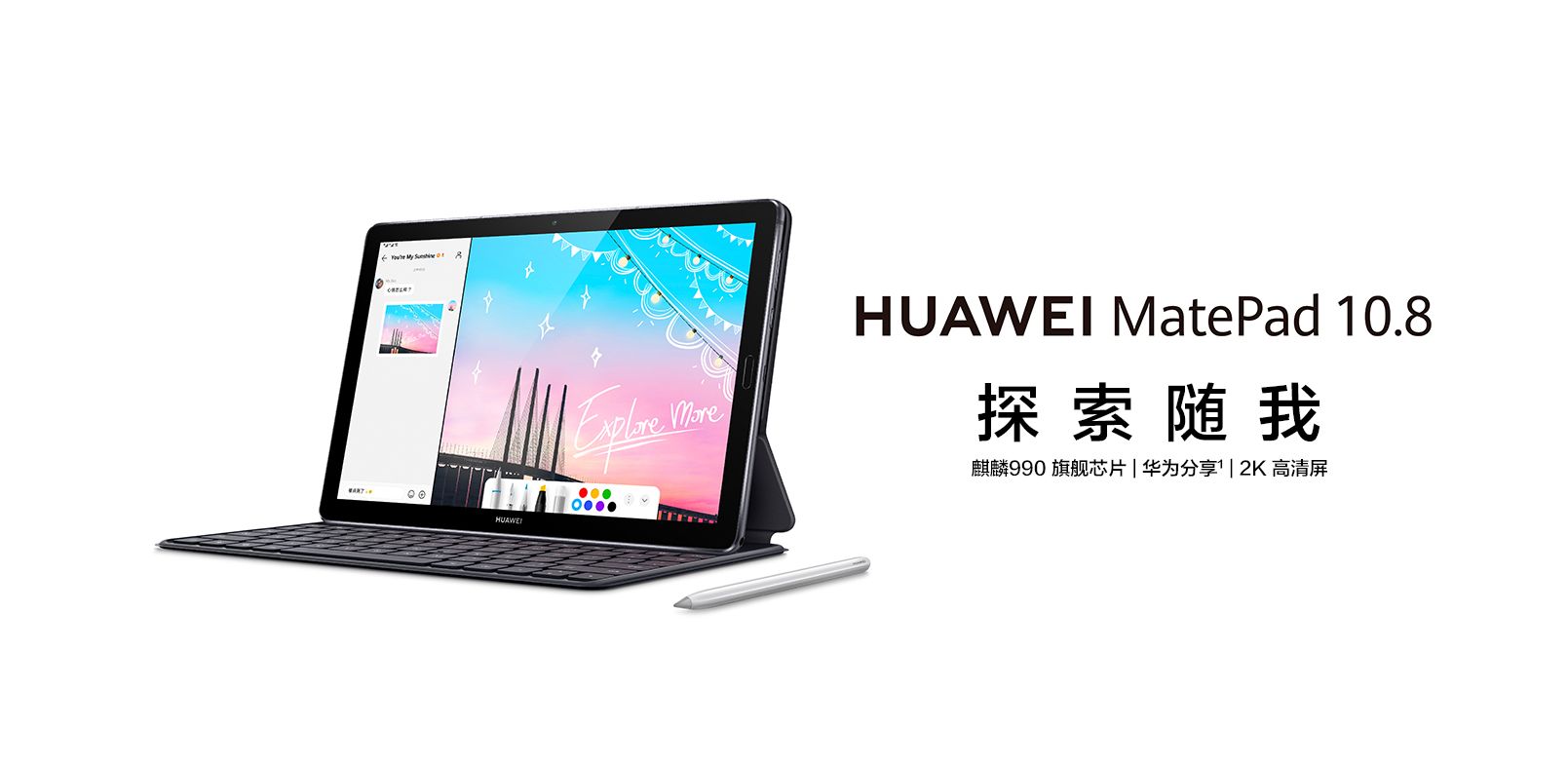
The Huawei MatePad 10.8 tablet has gone official in China. The tablet was announced alongside other products such as Huawei MateBook D 15 2020 Ryzen Edition notebook, Huawei TalkBand B6, and Huawei Kids Watch 4X. The major highlights of the MatePad 10.8 include 2K resolution supporting display, flagship processor, a large-sized battery, and support for M-Pencil stylus.
Huawei MatePad 10.8 specifications
The Huawei MatePad 10.8 features a 10.8-inch IPS LCD display that produces 1600 x 2560 pixels resolution and 280ppi pixel density. The tablet is fueled by Kirin 990 chipset SoC and 6 GB of RAM. It comes with up to 256 GB of built-in storage.
The tablet comes loaded with EMUI 10.1 based Android 10 OS. There is a microSD card slot for expanding its storage. The tablet is equipped with an f/2.0 aperture 8-megapixel front camera. Its rear is fitted with a 13-megapixel camera with f/1.8 aperture and autofocus. However, it does not feature an LED flash.
The MatePad 10.8 has a big battery 7,500mAh capacity. It supports 22.5W fast charging. The tablet has pogo-pin slots on its edges to connect a keyboard. It is fitted with Harmon Kardon tuned quad speakers. For audiophiles, the tablet comes with support for Histen 6.1 sound effects. The other features available on MatePad 10.8 include fingerprint scanner, LTE, Wi-Fi 6, Bluetooth 5.0, USB-C, and a 3.5mm audio jack. The tablet measures 257 x 170 x 7.2mm and it weighs around 500 grams.
Huawei MatePad 10.8 price and availability
The Huawei MatePad 10.8 has arrived in China in four models such as 6 GB RAM + 64 GB storage (Wi-Fi only), 6 GB RAM + 128 GB storage (Wi-Fi only), 6 GB RAM + 256 GB storage (Wi-Fi only with keyboard), and 6 GB RAM + 128 GB storage (LTE). These models are priced at 2,399 Yuan (~$342), 2,799 Yuan (~$399), 3,599 Yuan (~$513), and 3,199 Yuan (~$456).
The tablet is now up for pre-sale in China. The sales of the device will start on Aug. 13. There is no word on the international availability of the MatePad 10.8.
The US Ambassador in Brazil warned the country of ‘consequences’ if it allows Huawei Technologies to gain access to the country’s telecom infrastructure to build and develop 5G networking, in a recent interview as per Reuters.
The US has been actively working to restrict the Chinese telecom equipment provider’s role in the region. For those unaware, Huawei is a pioneer in the 5G networking field and had planned on developing the newer and faster bandwidth in the Latin American country. However, the US has been stepping up its efforts to limit the company, in fear of data being sent to the Chinese government for spying.
While Huawei has, on multiple occasions, denied any such allegations, it has still faced pressures from the western nation on multiple fronts. An example being the UK, where the US government had pressured the lawmakers in the region to reconsider allowing Huawei to build its 5G network. Furthermore, Todd Chapman, US Ambassador, said that Brazil would not face reprisals for allowing Huawei, but could face consequences.
According to the official, “Each country is responsible for its decisions. The consequences we are seeing in the world are that firms involved in intellectual property are scared to make investments in countries where intellectual property is not protected.” Notably, the Trump administration had also recently set up a new funding agency, that would help its allies develop 5G networking by help cover costs of buying from trusted sources over Huawei thanks to its $60 billion budget.
With mobile gaming becoming a bigger phenomenon day by day, various OEMs have recognized the market and are building their smartphones with gaming optimizations in mind. One would usually hear something like GPU Turbo or other enhancing techniques and it seems that Xiaomi and Qualcomm are also working on launching their own iteration of the same.
Super Leak:Xiaomi Mi10 Pro+ has a unique feature: Game Turbo, a mode developed by Xiaomi and Qualcomm's GPU team, which is unprecedented. You can use it to adjust GPU parameters and modes, including GPU frequency adjustment and so on. pic.twitter.com/Tu609T7Dy9
According to a recent Tweet by known leakster Ice Universe, the Chinese tech giant and the known chipmaker have partnered up to develop Game Turbo. It is a new unique feature that is said to arrive in the Mi 10 Pro+ and was co-developed by Xiaomi and Qualcomm’s GPU teams. This new software will help mobile gamers enhance their gaming experience by giving them a degree of control that is generally found in PC gaming.
In other words, apart from just boosting your smartphone’s performance, users can also tweak various graphical settings like Anti-Aliasing, Anisotropic Filtering, and even Texture Filtering. Looking at the images shared in the tweet, Game Turbo also offers free control over the GPU’s parameters, letting users adjust the GPU frequency. So, one can tweak not only the device but the game they are playing, which is something no OEM has offered before.
Xiaomi Mi 10 Pro
Furthermore, the images also reveal different GPU performance profiles, which are saved under default, save power, balanced, high quality, and a custom profile as well. These are quite similar to PC gaming’s NVIDIA control panel, which also offers the ability to customize multiple in game settings. The controls also seem streamlined and clutter free, so it should be easy to navigate for even a beginner.
As countries around the world have begun to deploy 5G networks, smartphone OEMs are working on more affordable 5G handsets. Last year, we had 5G connectivity only on flagship models. In 2020, one can experience 5G even on mid-range devices. By the end of this year or mostly in 2021, we will have 5G support even on budget phones. One of these devices is expected to be Samsung Galaxy A32 5G, which is said to be under development according to a new leak.
The news regarding the existence of Galaxy A32 5G comes from GalaxyClub. According to the sources of the publication, this phone will retain 48MP primary camera from its predecessor Galaxy A31. But this sensor will be accompanied by a 2MP depth sensor instead of 5MP found on the current generation.
Further, this phone way probably come with model number SM-A326. Also, It is worth noting that this is not the first time we are hearing about the Galaxy A32. That’s because Samsung already filed trademarks for its Galaxy AX2 series earlier this year, which includes Galaxy A12, A22, A32, A42, A52, A62, A72, A8 and A92.
Apart from Galaxy A32 5G, the South Korean tech giant is also working on Galaxy A42 5G. This handset was recently spotted on 3C with a 5,000mAh battery. We can expect more leaks regarding these two smartphones in the coming days.
While we had reported on previous rumors that pointed at the possible delay of the Apple iPhone 12 series, it seems that the known chipmaker, Qualcomm, might have just confirmed the reports.
Earlier this week, Qualcomm shared its financial report for Q3 2020 and also shared a few expectations for the next quarter, as per a 9to5Mac report. Here, the chip giant revealed that it expects an impact on Q4 shipments, due to a delay in the launch of a particular 5G flagship smartphone. Furthermore, Qualcomm’s chief financial officer, Akash Palkhiwala stated that a few of its 5G chips, which were slated to ship in September, have been delayed till the end of this year.
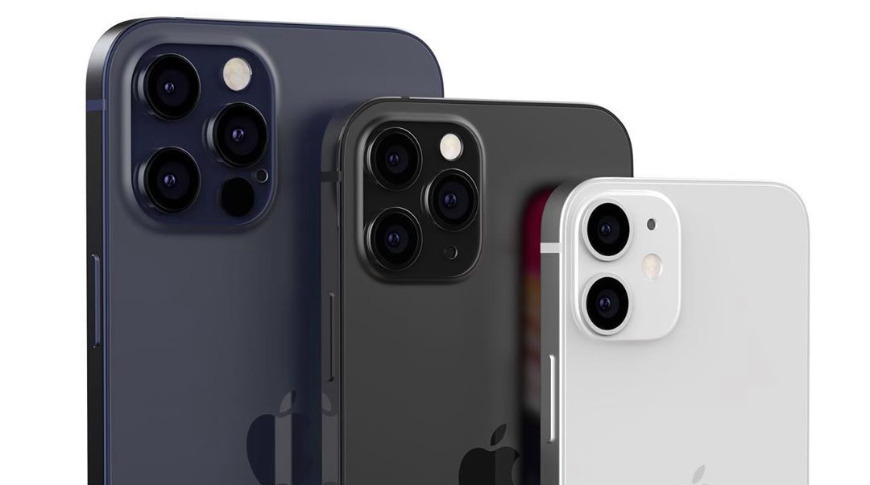
While Qualcomm refrained from directly mentioning any names, Apple seems to be the company in question. Rather, Apple is about the only company known to launch the iPhone traditionally in September. At the moment, the company is expected to launch 4 new iPhone models this year, all of which support 5G networking. However, the various complications caused by the Coronavirus pandemic might have delayed the launch to late October to even possible early November.
Xiaomi Youpin crowdfunding platform has today launched a new device on the platform — Zuodian XiaoAI Smart Moxibustion Device X8. It is priced at 399 yuan, which roughly converts to $57.
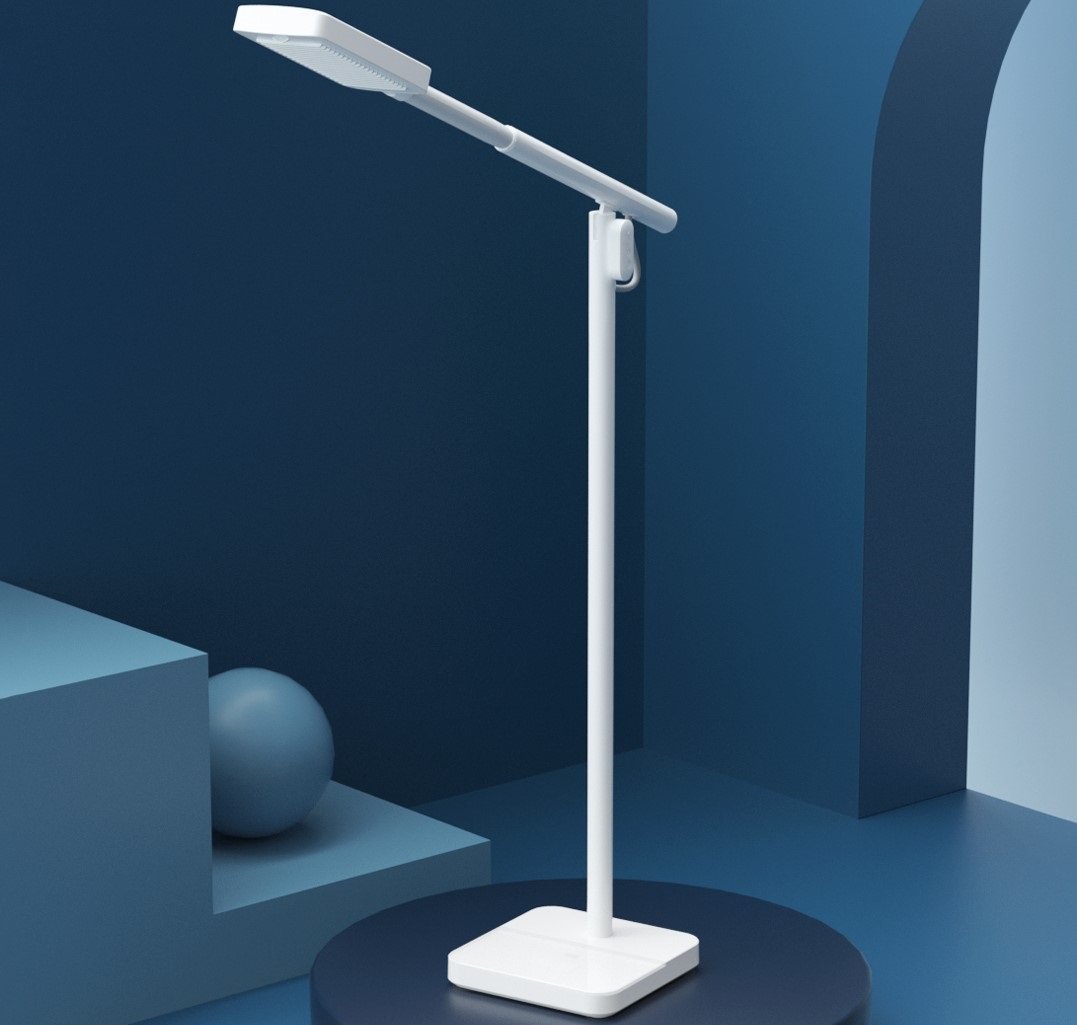
In terms of design, it continues with Xiaomi‘s usual simple and sleek design with a White finish. The device is powered through a socket and doesn’t have smoke heating. It comes with two moxibustion heating chamber and the temperature can also be adjusted through a mobile application.
For those who are unaware, Moxibustion is a traditional Chinese medicine therapy. In this heat therapy, dried plant materials called “moxa” are burned on or very near the surface of the skin to warm and invigorate the flow of Qi in the body.
As for the product, it comes with a heating part placed on a gooseneck hose so that the moxibustion heating panel can be placed on the sore parts of the body. The device uses algorithms to calculate the remaining time for moxibustion cake and reminds users when it needs replacement.
The Smart Moxibustion Device X8 comes with support for five different modes and allows users to adjust the duration and temperature in each mode — Comfort, Mild, Spacer, High-Temperature, and Custom. As mentioned, it can also be adjusted and operated through Xiaomi’s Mijia App.
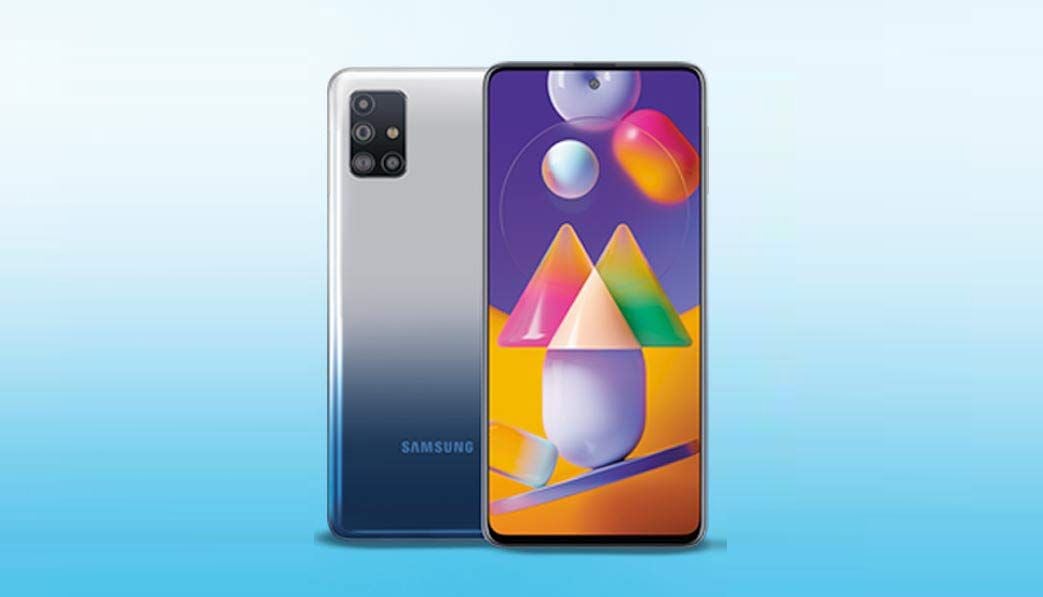
The Samsung Galaxy M31s smartphone has gone official in India. It is an improved version of the Galaxy M30s that was announced in February this year. The Galaxy M31s has many attractive features such as Sony IMX682 64-megapixel main camera, faster-charging capabilities, and a huge battery.
Samsung Galaxy M31s specifications
The Samsung Galaxy M31 comes with an attractive gradient rear and it houses an S-AMOLED display of 6.5 inches with Infinity-O design. The display notch has been replaced by a punch-hole on the screen. The display supports Full HD+ resolution, 20:9 aspect ratio, 78960:1 contrast ratio, and peak brightness of 420nits. The phone offers a screen space of 91 percent. In comparison, the Galaxy M31 had come with a 6.4-inch S-AMOLED display with waterdrop notch.
The 10nm Exynos 9611 with clocking speeds of up to 2.3GHz powers the Galaxy M31s. The same processor had powered the Galaxy M31 phone and the Galaxy M30s that debuted in September last year. The SoC of the M31s is assisted by 6 GB / 8 GB of LPDDR4x RAM. The handset comes with a native storage of 128 GB. There is a dedicated microSD card slot onboard for expanding its storage. The Android 10 OS along with One UI 2.1 skin comes preloaded on the smartphone.
The Galaxy M31s retail box includes a 25W fast charger and a USB-C to USB-C cable that can be used for charging other devices with USB-C port. The handset houses a behemoth battery of 6,000mAh capacity. The 25W charger can completely charge the it in 97 minutes, claims the company.
The Galaxy M31s inherits the 32-megapixel front-facing camera that was made available on the Galaxy M31 phone. The backside of the device has a rectangle-camera housing. It is the first smartphone to feature the new Sony IMX682 64-megapixel lens with f/1.8 aperture as the primary snapper. It replaces the Samsung GW1 64-megapxiel lens that was made available on the Galaxy M31. The main sensor of the Galaxy M31s is accompanied by a 123-degree ultrawide lens, a 5-megapixel macro shooter, and a 5-megapixel lens for adding depth effects.
The main sensor that is dubbed as Intelli-Cam offers an enhanced photography experience through the Single Take that lets users to capture up to 7 photos and 3 videos in one take. The other photography features available on the Galaxy M31s include the ability to switch between front and rear cameras while video shooting, night hyperlapse for better photography in low-light conditions, AR Doodle, AR Emoji, 4K video recording, and more.
The Galaxy M31s has security features such as face unlock and a side-facing fingerprint reader. The connectivity features available on the smartphone include dual 4G VoLTE, Wi-Fi 802.11ac, Bluetooth 5.0, GPS, USB-C, and a 3.5mm audio jack.
Samsung Galaxy M31s price and availability
The Galaxy M31s is priced at Rs. 19,499 (~$260) for the 6 GB RAM + 128 GB storage. The higher 8 GB RAM + 128 GB storage edition costs Rs. 21,499 (~$487). The phone will be available in Mirage Blue and Mirage Black color editions. Samsung India’s online shop and Amazon India will begin the sales of the Galaxy M31s from Aug. 6. Amazon’s Prime Day sale also begins on Aug. 6 in the country.
The Galaxy M31s seems to be Samsung’s weapon to battle with the likes of the Xiaomi Redmi Note 9 Pro Max and Realme 6 Pro. What’s your opinion on the Galaxy M31s’ specifications and pricing? Share us your views by posting your comments below.
Along with smartphones, the demand for smart TVs is also high, thanks to the recent developments in technology and lower pricing. While smart TVs now come with impressive features, the entry-level models pack weak components, limiting their performance.
Now, in order to fix that issues, Huawei has announced new chipsets for Smart TVs — Huawei HiSilicon FHD. As per the report coming from China, the company has launched two chips — one with 512MB built-in memory and another with 1GB RAM. Both of them are said to be pin-to-pin compatible.
The company claims that this new chipset has been optimized and thus, even the 512MB RAM variant can run the latest Android TV 9.0 version smoothly. This is impressive given that chipsets with 512MB memory don’t usually support Android TV 9 and are stuck Android 4.4 which was released in 2013.
The new HiSilicon FHD chip platform also comes with a high-performance quad-core A53 CPU that supports 4K resolution at 30Hz decoding, allowing users to consume media content at higher quality on FHD products.
Huawei claims that the new FHD chip platform offers better image quality as its processing of noise and sharpness is more balanced in a natural way. It also has an integrated screen time control module.
The company further adds that both the chips share the same code which makes it easier for the TV manufacturer to adopt them without repetitive development and thus can put in more effort towards product enhancement.
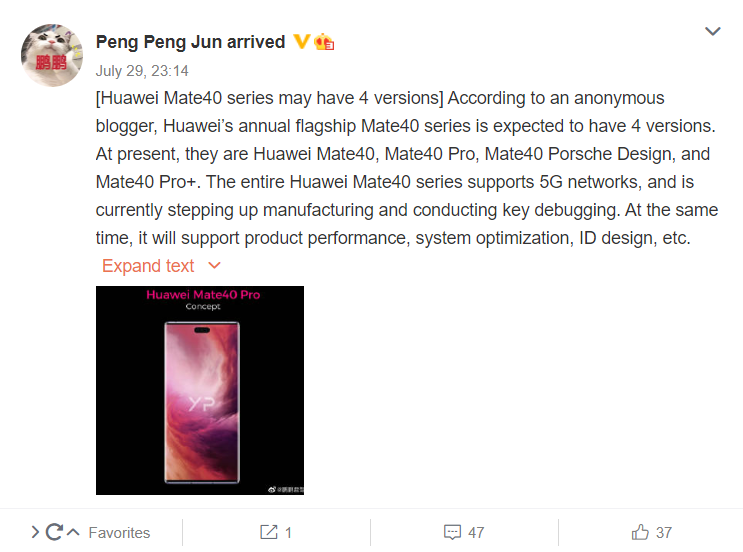
The Huawei Mate 40 series’ launch is edging closer and, with it, new rumors are surfacing. Now, the latest one suggests that the flagship lineup will have a total of four total variants, including a new Mate 40 Pro+.
Huawei Mate 40 Concept Render
According to a Weibo (Chinese microblogging website) blogger @鹏鹏君驾到, the company will launch four smartphone models under the Mate 40 lineup. This includes the base Mate 40, the higher end Mate 40 Pro, the new top offering Mate 40 Pro+, and a Mate 40 Porsche Special Edition. Notably, Huawei had also launched a P40 Pro+ within its flagship P40 lineup earlier this year. So, the rumor does hold some ground and is possible.
Furthermore, the Chinese tech giant’s entire flagship series will support 5G networking, with the company currently working on stepping up manufacturing and conducting key debugging phases. Huawei is apparently also working on a few new features as well that will improve its product’s performance, boost system optimization, and more. Unfortunately, this is still an unconfirmed rumor, so take it with a grain of salt for now and stay tuned for more updates.
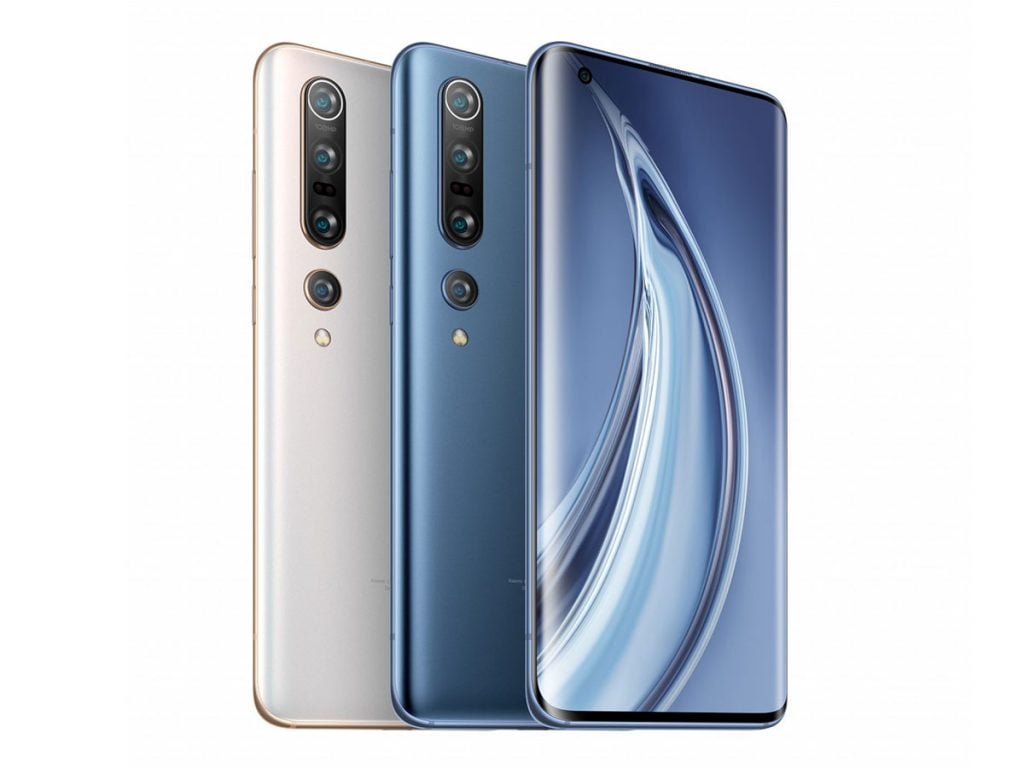
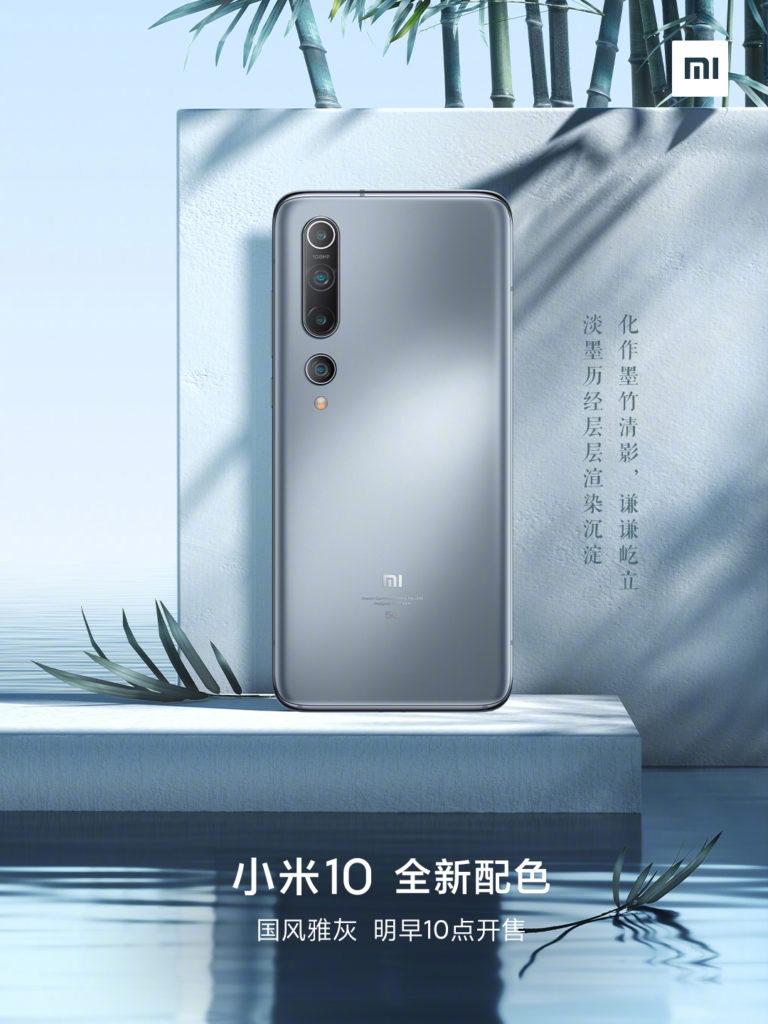
Xiaomi announced a new Gray color variant of Mi 10 in its home country China. This version of the handset will be available starting tomorrow (July 31) in the region. Unfortunately, it is not known in which storage configuration this color option will be made available.
The Mi 10 and Mi 10 Pro are the most expensive commercially available flagship smartphones from Xiaomi. The major difference between the two is their camera setup. Though both of them have the same 108MP primary sensors, the accompanying sensors are different from each other.
The duo was unveiled in February of this year. The regular Mi 10 was introduced in three colors namely “Coral Green”, “Twilight Gray”, “Peach Gold”. Now, after 5 months from its launch, the device is getting a fourth color in China.
Xiaomi calls this color as “Guofeng Ya Gray” (Country Style Elegant Gray) and it is different than the already available “Twilight Gray” variant. This color looks more like the new Liquid Silver Redmi 10X Pro but with a matte finish.
Having said that, it is not known if this color variant of Mi 10 will be made available in international markets. The probability of Xiaomi launching them can be considered next to zero as the Mi 10 series start at €799/₹49,999 competing directly against Samsung, Apple, and OnePlus in these regions.
In the second quarter of this year in China, while Huawei continued dominating the local smartphone market, Apple has seen a surge in demand for iPhones. As per the report, the company has witnessed a 225 percent quarterly growth in sales volume.
The reason is being attributed to price cuts as the Chinese market is slowing recovering from weak demand because of the COVID-19 pandemic. For the quarter that ended in June, Apple sold 13 million units of iPhone in China, reports research firm CINNO.
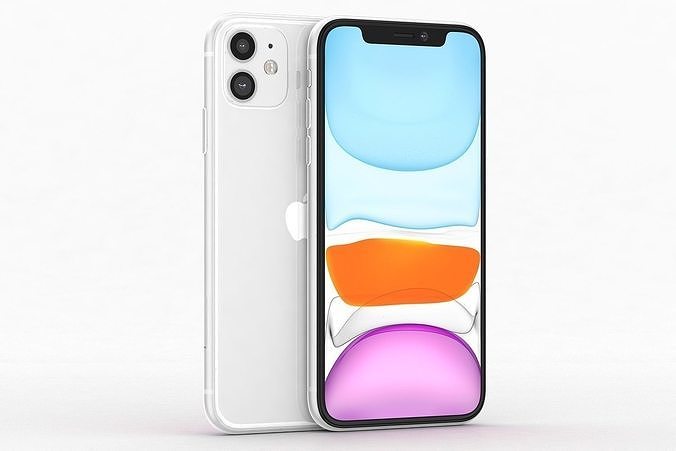
Apple iPhone 11
The numbers represent an increase of four million units compared to the previous quarter. A recent report from Counterpoint Research claims that Apple was the fastest-growing major smartphone brand in China for the second quarter, with 32 percent growth.
For Apple, Greater China, including Mainland, Hong Kong, and Taiwan, is the third-largest geographical market, after America and Europe. In the first three months that ended March 28, the company recorded total China sales of $9.46 billion, showing a decline of $1 billion from a year ago, mainly because of the COVID-19 pandemic.
In Q2 2020, Apple was the fourth-largest smartphone vendor in China, behind Huawei, Vivo, and OPPO but ahead of Xiaomi, reports Counterpoint. Huawei, combined with Honor, has captured around 46 percent of China’s smartphone market.
At the height of COVID-19, Chinese smartphone sales declined 22 percent in the first quarter. The market is now slowing recovering and research firm CINNO estimates that smartphone sales in China have reached 94 million units in June.
Samsung has been hard at work to catch up and compete with TSMC, the world’s leading chipset manufacturer. The company has been putting in efforts to boost its chipset production and has now started mass-producing 5nm chipset.
In a recent announcement regarding the company’s Q2 2020 performance, the South Korean giant confirmed that it has begun mass-production of 5nm chipsets. Further, the company revealed that it is also working on 4nm chipsets.
The development is in line with the company’s earlier announcement of starting mass production of 5nm chipset by the end of Q2 2020. The company reveals that it has also strengthened the foundation for expansion by starting investments in production lines in the Pyeongtaek complex.
For those who are unaware, the Pyeongtaek complex in South Korea is the new chipset production facility from Samsung which will be focusing on making 5nm chips. The company has planned to invest around KRW 10 trillion ($8.1 billion) in this facility.
The new facility is responsible for making AI-powered (artificial intelligence), high-end smartphones, and HPC (high-performing computing) chips. Samsung’s plan is to diversify applications into HPC and consumer products to improve profitability.
On the other hand, Taiwan Semiconductor Manufacturing Company (TSMC) has already started manufacturing 5nm chipsets for Apple. The chipset, Apple A14, will be powering the company’s upcoming iPhone 12 lineup.
The company will reportedly use Exynos 1000 SoC for the upcoming Galaxy S-series flagship smartphones, which will be manufactured using the 5nm process. Not only that, but Samsung has also reportedly bagged orders for mass production of Qualcomm Snapdragon 875G and Snapdragon 735G chipsets on 5nm node.
Samsung is among the very few smartphone companies to build its own chipsets. The South Korean giant has ambitious plans for the future and aims to become the leading semiconductor company in the world by 2030.
Samsung has been dominating the smartphone market worldwide and has been a leader for the past many years. Well, that has now changed, at least for the second quarter of this year. According to the report from Canalys, Huawei has overtaken Samsung to become the leading smartphone brand globally in Q2 2020.
This is an impressive performance from Huawei, which managed to become the world’s leading smartphone brand in terms of shipments, despite being banned in the United States and facing heat in other markets.
The report adds that for the period of April 2020 to June 2020, Huawei shipped 55.8 million units. On the other hand, Samsung managed to ship 53.7 million units. This shows how strong is Huawei’s foothold in its home market.
Huawei’s two-third smartphones are being sold in its home market, China. Also, Huawei, along with its sub-brand Honor, is dominating the Chinese smartphone market, capturing almost half of the market.
The company has around 46 percent of the market share in China, which is more than the combined total of Vivo, OPPO, and Xiaomi in the Chinese market. This is the highest market share for Huawei ever in China.
Globally, the sales of Huawei devices fell by 5 percent compared to the same period last year, but Samsung registered a 30 percent drop in sales for the same duration. This is likely because of weak demand in markets like the United States, Europe, and Brazil.
Recently, Huawei revealed that its revenue in the first half of this year grew 13.1 percent compared to the same period last year. The company managed to grow, despite the impacts of COVID-19 pandemic and sanctions from the United States.
It remains to be seen if Huawei manages to hold on to this leading smartphone position for the upcoming quarter as well. Samsung has new premium smartphones lined up for launch in the coming days and the company is also releasing mid-ranges devices at regular intervals, as it aims to grow its market share.
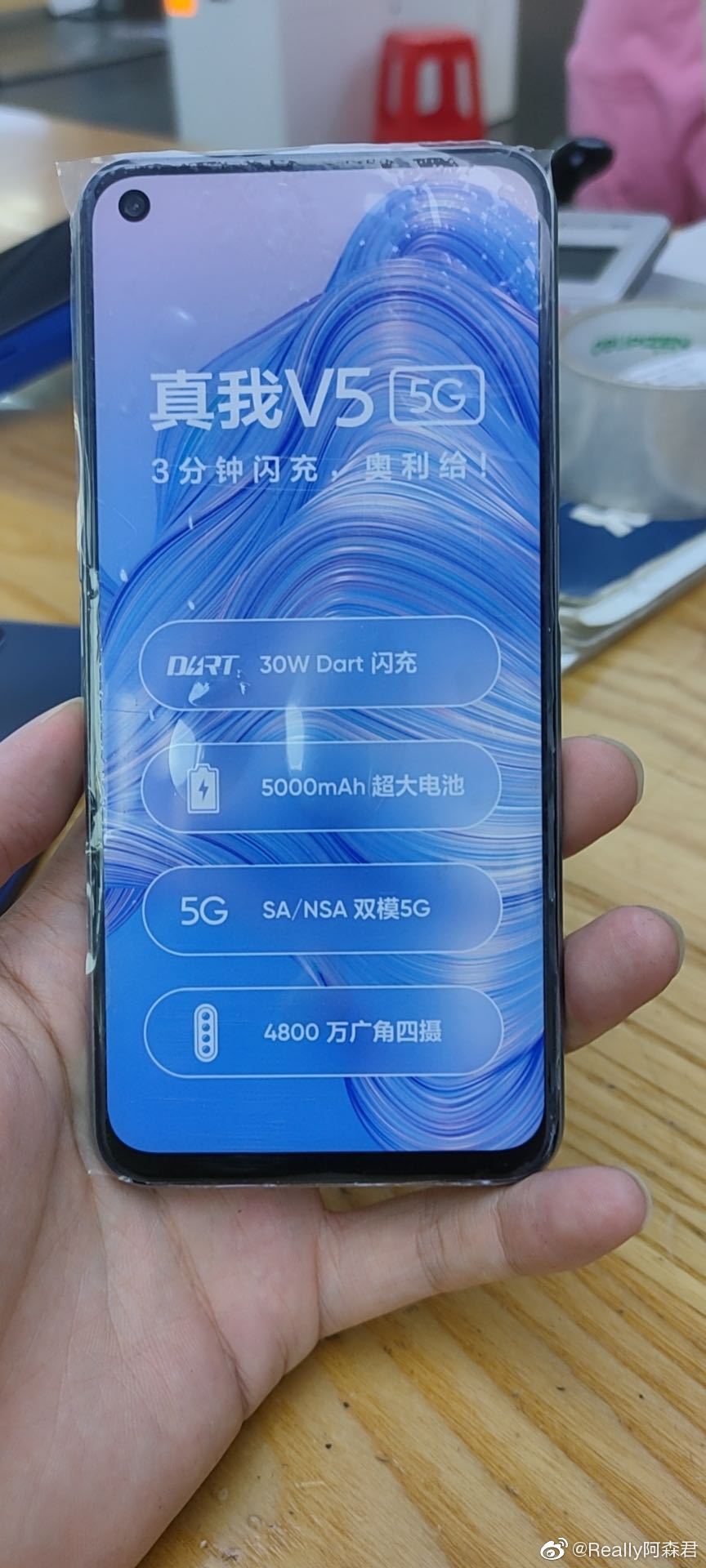
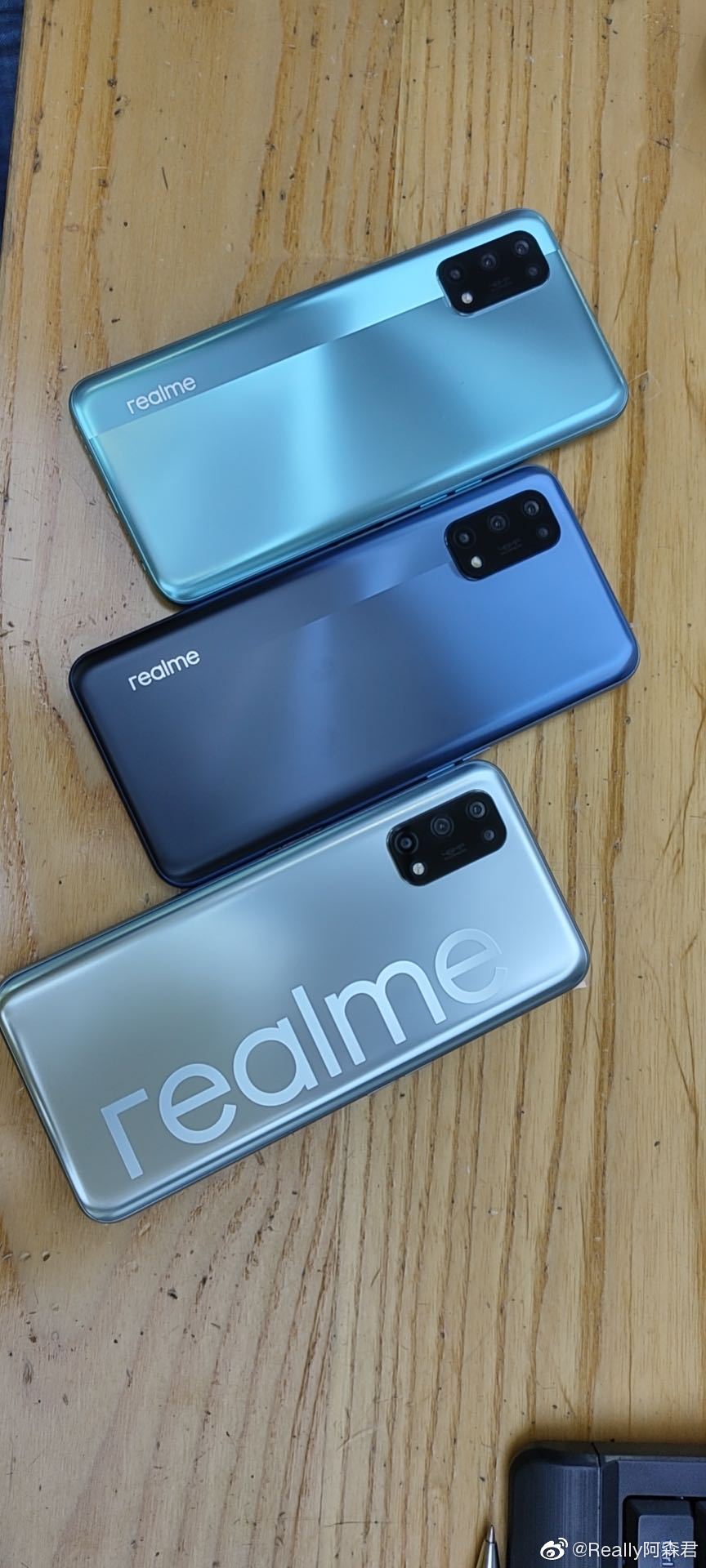
The Realme V5 is all set to break cover on Aug. 3 in China. The device was recently spotted with its entire specifications on TENAA. Also, a retailer site in China has listed the Realme V5 for reservations. The listing has the renders of the three color variants of the Realme V5. A tipster from China has shared live shots of the Realme V5 to reveal its appearance in real.
The first image showcases the front side of the Realme V5. The handset has a small round-shaped cutout for the selfie at the top-left corner of the screen. The V5 promises a high screen-to-body ratio as its display is surrounded by slim bezels.
Recent reports have revealed that the IPS LCD panel gf the Realme V5 5G measures 6.5 inches and it offers Full HD+ resolution. The handset may come with 6 GB / 8 GB of RAM and 128 GB of internal storage. The Android 10 OS customized with Realme UI will run on the device.
The backside of the Realme V5 has a 48-megapixel + 8-megapixel + 2-megapixel + 2-megapixel quad-camera system. It has a front-facing camera of 16-megapixel. The device is equipped with a side-facing fingerprint reader. Since the Realme V5 is fueled the Dimensity 720 chipset, it is expected to launch as the cheapest 5G phone from the brand.
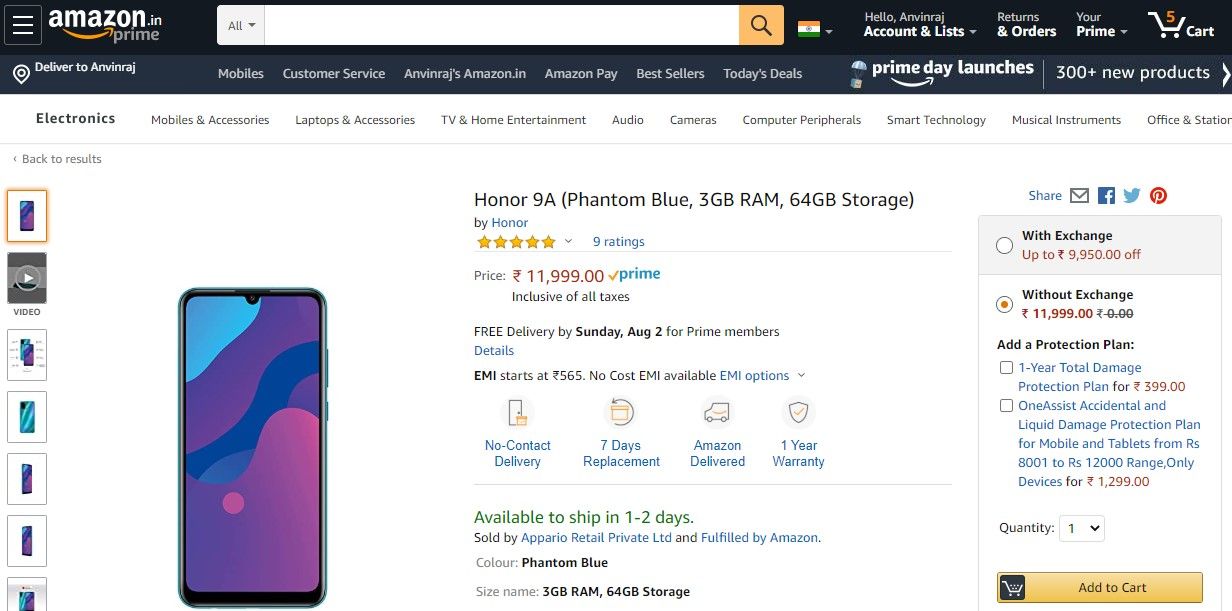
Tomorrow, Honor will be taking off covers from the Honor 9A and Honor 9S budget-friendly phones along with the Honor MagicBook 15 notebook in India. It is surprising to know that the Amazon India has already listed the Honor 9A. Reported first by FoneArena, the listing even allows users to make payments and purchase the device.
The listing states that the Honor 9A smartphone with 3 GB of RAM and 64 GB of built-in storage is priced at Rs. 11,999 (~$160). It is unclear whether the pricing is correct as the product is yet to go official. However, it could be the actual price since the retailer is accepting its orders.
The specifications of the Honor 9A are already known since it debuted in China and Europe in recent months. The Honor 9A has a large-size display of 6.3 inches. It supports HD+ resolution and 20:9 aspect ratio. The Helio P22 fuels the device along with 3 GB of RAM. It has a built-in storage of 64 GB.
The rear side of the Honor 9A has a 13-megapixel + 5-megapixel (ultrawide) + 2-megapixel (depth) triple camera system. It has a front camera of 8-megapixel. The device lacks Google apps, but comes with access to Huawei’s AppGalllery. The Magic UI based Android 10 OS runs on the smartphone.
The Honor 9A is backed by a 5,000mA battery. It has a rear-mounted fingerprint sensor. Also, it features a dedicated microSD card slot.
The Honor 9A, Honor 9S, and MagicBook 15 will be unveiled at 2 PM IST in India tomorrow. It is only available in Phantom Blue color.
We use cookies on our website to give you the most relevant experience by remembering your preferences and repeat visits. By clicking “Accept”, you consent to the use of ALL the cookies.
This website uses cookies to improve your experience while you navigate through the website. Out of these, the cookies that are categorized as necessary are stored on your browser as they are essential for the working of basic functionalities of the website. We also use third-party cookies that help us analyze and understand how you use this website. These cookies will be stored in your browser only with your consent. You also have the option to opt-out of these cookies. But opting out of some of these cookies may affect your browsing experience.
Necessary cookies are absolutely essential for the website to function properly. This category only includes cookies that ensures basic functionalities and security features of the website. These cookies do not store any personal information.
Any cookies that may not be particularly necessary for the website to function and is used specifically to collect user personal data via analytics, ads, other embedded contents are termed as non-necessary cookies. It is mandatory to procure user consent prior to running these cookies on your website.









 The backside of the Realme V5 has a 48-megapixel + 8-megapixel + 2-megapixel + 2-megapixel quad-camera system. It has a front-facing camera of 16-megapixel. The device is equipped with a side-facing fingerprint reader. Since the Realme V5 is