Advertisement

Oppo patents five new Find X2 designs with in-screen camera

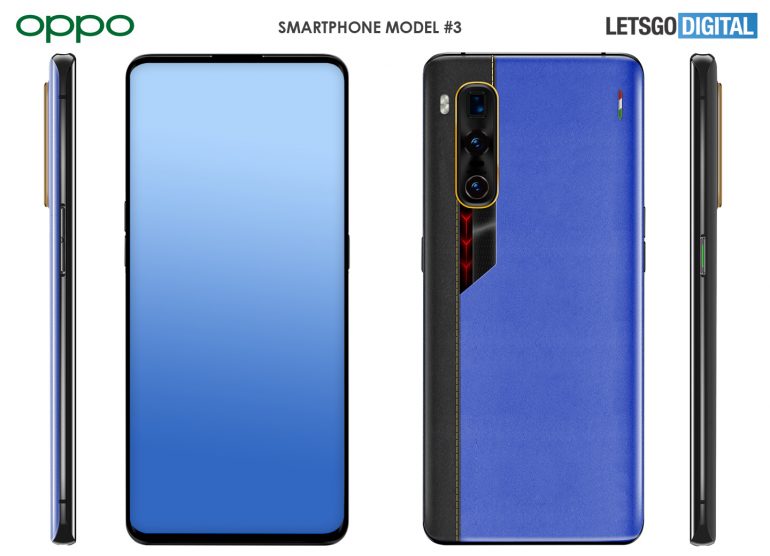
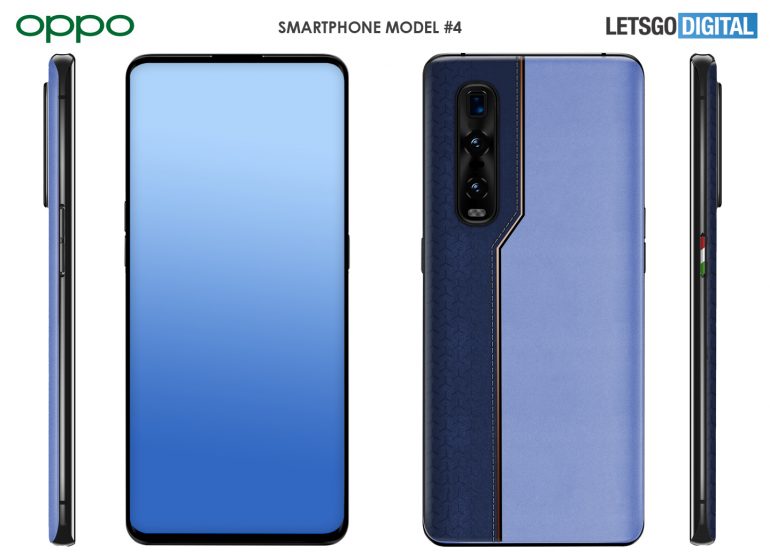
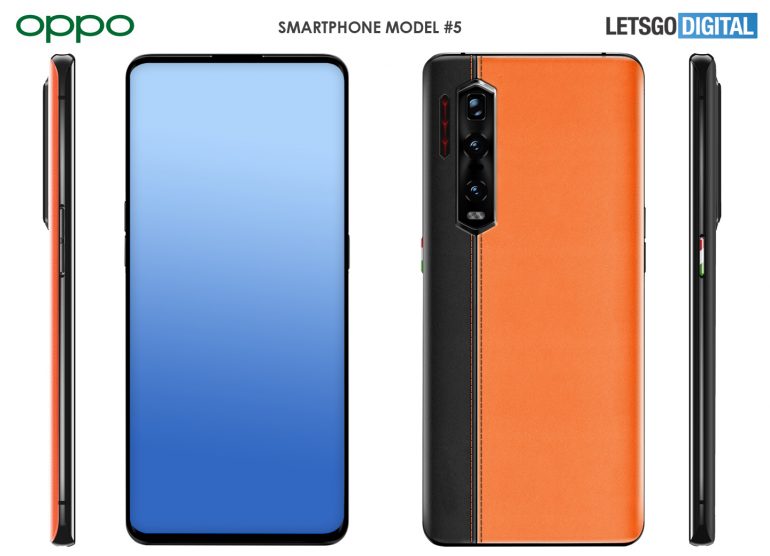
The Oppo Find X2 series consists of three primary devices namely Find X2, Find X2 Pro, and Find X2 Pro Automobili Lamborghini Edition. Then, there’s Find X2 Neo and Find X2 Lite, which is basically a rebadged  Reno3 Vitality Edition and Reno3 Youth Edition for international markets. Now, a set of design patents have emerged, which reveal a Find X2 series device with an in-screen (under display) camera.
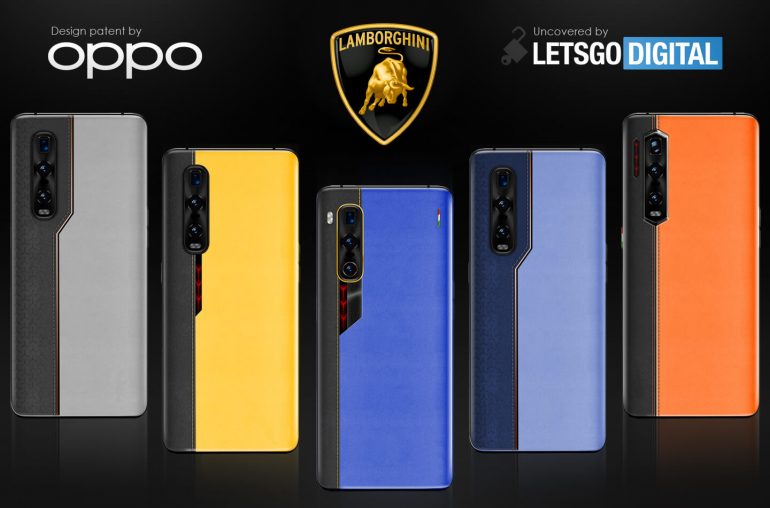
Oppo Find X2 Pro Automobili Lamborghini Edition In-Screen Under Display Camera Design Patent Featured

Last year, Oppo showcased a prototype smartphone with a front camera underneath the display. Then, at the of 2019, the company had applied design patent for this particular smartphone pictured above at the CNIPA (China National Intellectual Property Office).

The documents for the same was released on July 7, which was unearthed by none other than LetsGoDigital, a publication well-known for patent-related findings.

Looking at the images, we can see that there are five different colors with subtle design differences. One of them has a unique LED flash module placement and even an Italian flag. Whereas, three models have Lamborghini’s signature taillights, which might act as a notification light. But all of them have artificial leather backs.
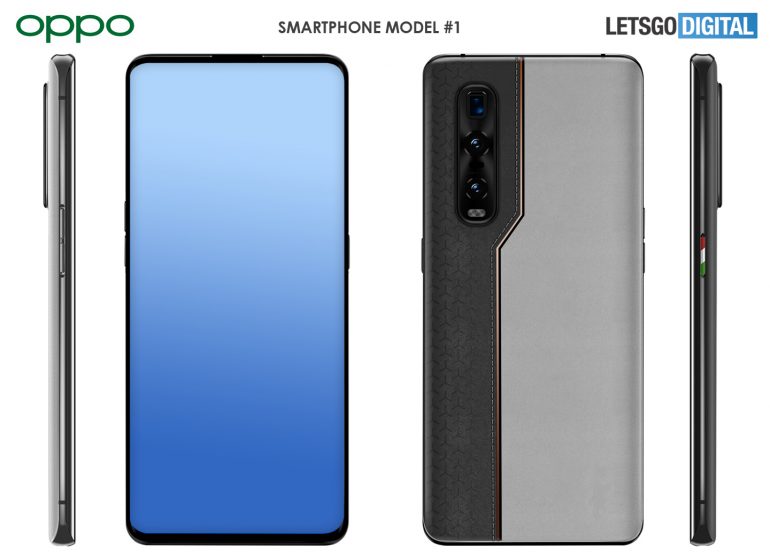
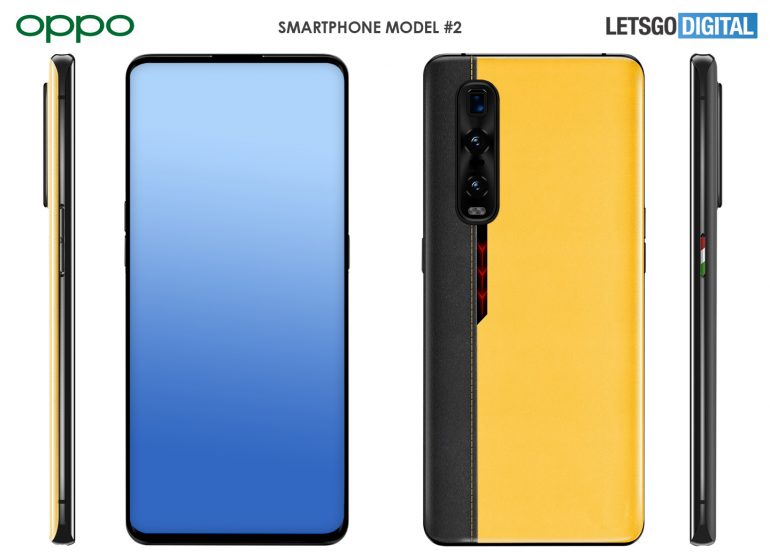
We can clearly say that this is another Lamborghini Edition Oppo smartphone but with different design and more importantly in-screen camera. It is worth noting that 65W SuperVOOC was introduced in the Find X Automobili Lamborghini Edition. Hence, it makes sense for the company to debut new tech on a limited edition and keep it premium for a particular period of time.

Anyway, as these are merely design patents, we cannot say for sure if it will ever make it to end consumers. But we do expect smartphones with an under-display camera soon as Visionox’s tech is ready for mass production.


Samsung confident in its 2020 TV sales target despite major impact from COVID-19

Samsung seems pretty positive regarding its TV sales target for this year. Apparently, the South Korean tech giant is still confident that it can hit its 45 million TV shipment mark by the end of 2020, despite the Coronavirus pandemic causing sales for the first half to fall by a sizeable 60 percent year on year.

Samsung

The great deflation in expected sales figures occurred largely due to the COVID-19 outbreak which ravaged the world. After originating from China, the infection soon spread worldwide and has caused consumer spending to drop to an all time low in a very long time. This has affected various industries and economies, with a multinational corporation like Samsung being no exception.

In other words, Samsung has to ship 35 million TVs in just 6 months. Needless to say, the target is nothing short of overly ambitious at the moment. Back in 2019, Samsung had shipped over 41 million TVs. However, given the situation of this year, it doesn’t seem that the company would even come up getting closer to the figures from last year.

Samsung

Notably, the Samsung target was also set back when the Tokyo Summer Olympics was still planned and where the company hoped to make major sales. Although, with the delay of the event, it doesn’t seem likely that it can rely on it any longer. Maybe Samsung has a very aggressive strategy in mind, but unfortunately, it seems like blind optimism at best. So stay tuned for more updates on the matter.


(Via)

Xiaomi crowdfunds 8H Smart Mattress, offers sleep aid features and adjustable softness

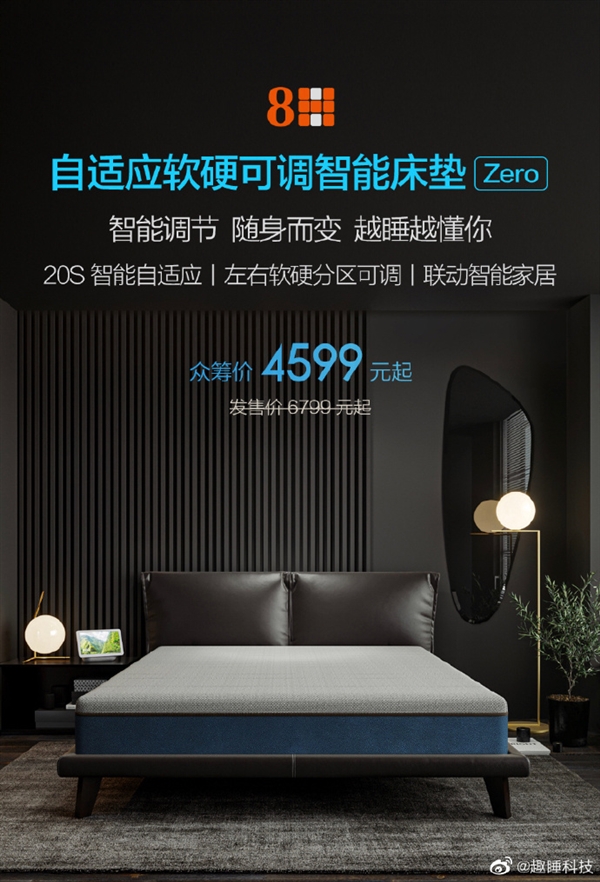
Earlier today (7th July 2020), Xiaomi announced the 8H Smart Mattress. It is a new smart product that is currently being crowdfunded and brings various smart features. The crowdfunding starts from 4,599 Yuan (roughly 654 US Dollars).

Xiaomi

The newly unveiled 8H Smart Mattress can intelligently determine the softness or hardness and can adjust according to different postures and can also determine the partition between the left and right halves. Furthermore, it also features sleep aid mode, 5 algorithm support, XiaoAI smart voice assistant, and independent 6 zone airbag among other things.

Through its smart algorithm, the mattress’ inbuilt AI can automatically sense and map the human body data and calculate the airbag pressure which is suitable for the body. This process occurs in just 20 seconds and is subjective to different users. The 8H Smart Mattress is 26cm thick and covered with 3 cm thick Italian Schcott natural latex. The independent pocket springs combined with the independent 6 zone airbag helps provide support for the spine as well.

Additionally, the system in the mattress can adjust the air around one’s shoulder, waist, arms, lumbar region, and more. This allows it to offer the most amount of comfort. The 8H Smart Mattress from Xiaomi can also be used with the Mijia app and controlled wirelessly or touchless with the XiaoAI voice assistant. Through the app, users can also get a report regarding recent sleeping patterns.


Huawei patents a smartphone that resembles the Samsung Galaxy Z Flip

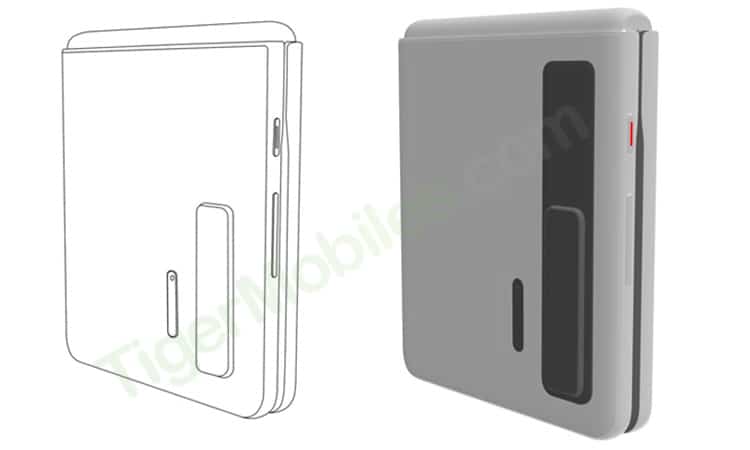
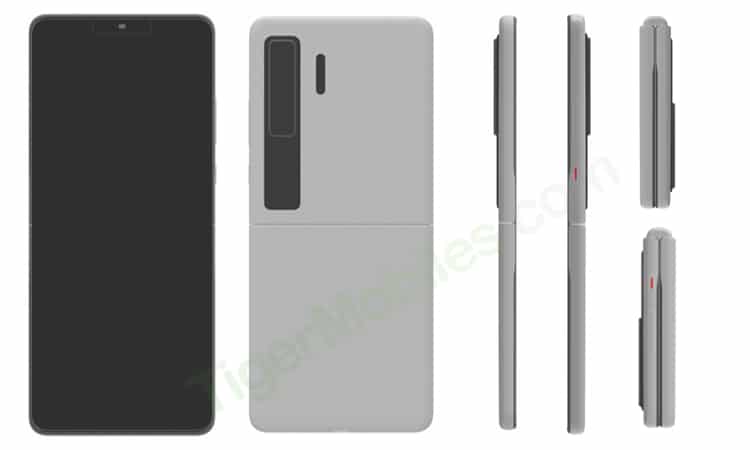
Huawei is apparently working on a new foldable smartphone, but this one follows a different design that its Mate X series. According to a recently surfaced patent, the new foldable phone has a clamshell design, which resembles the Samsung Galaxy Z Flip.

Huawei
Images via TigerMobiles

The patent was filed by Huawei with the Chinese patent authority CNIPA back in August 2019 that was finally granted earlier today (7th July 2020). The patents reveal a foldable flip phone designed handset with a vertically stacked camera module on the rear. A secondary display can also be found on the back, while the front has a notch display, which should house all the necessary sensors.

Looking at the images, it is clear that the phone bends inwards, from top to bottom rather than side to side. This design has been used by the Galaxy Z Flip previously, which had a rounded hinge mechanism as well. Industry sources believe that Huawei is currently working on a clamshell styled smartphone. The Chinese tech giant is expected to launch an aggressively priced foldable device later this year and has also purchased UTG (ultra thin glass) that is also used on the Galaxy Z Flip.

Huawei

A new trademark application for a device called Mate V was recently spotted. It is unclear whether the trademark is for a smartphone or not, but it is similar to the existing lineup of Huawei smartphones. It might be for the clamshell handset, which might launch later this year. Unfortunately, it is still too soon to tell, so stay tuned for more updates.


(Via,Source)

Oppo helped the UK in deploying the first 5G Standalone Network

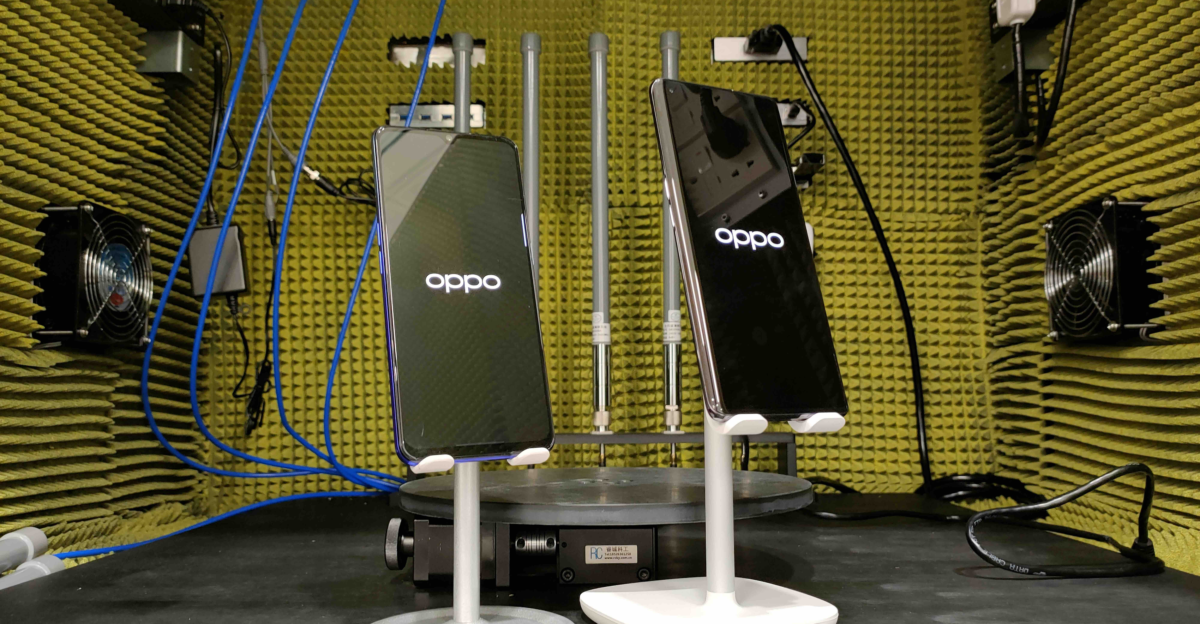
Oppo, the Chinese smartphone manufacturer, has recently helped in deploying the first 5G Standalone (SA) Network in the UK. The company partnered up with Vodafone and Ericsson and offered networking slicing services.

Oppo

The new service was built in Coventry University and was verified through 5G enabled smartphones from the Chinese tech giant. This included the Oppo Find X2 Pro and Redo3, in which the former was powered by a Qualcomm processor and the latter with a MediaTek‘s 5G chip. Oppo stated that the network slice switching software was co-developed with Qualcomm Technologies and lets users switch between two slices for different needs.

According to Oppo, one network slice enables access to high speed internet, while the other has been developed for campuses to share resources in school, with low latency and high definition for online learning. For those unaware, SA is an independent network that utilizes 5G base stations and core networks. On the other hand, 5G network slicing divides the core networks into multiple end to end networks, with each sliced network having independent resources.

oppo logo

Interestingly, Oppo is aggressively pushing into the networking field, with partnerships being announced across Europe on more than 40 major telecom carriers. It is also pushing forward for wider adoption of 5G networking and its supporting infrastructure.


(Via)

OnePlus Launcher v4.5.6 adds a quick toggle to switch between Google Discover & OnePlus Shelf

OnePlus launcher is the default home app on OnePlus smartphones. In the latest version, the brand has implemented a quick toggle on the left pane to switch between Google Discover and OnePlus Shelf.

Unlike most other launchers out there, the OnePlus launcher comes with OnePlus Shelf, which offers quick access to certain apps and functionalities. But with the launch of OnePlus 8 series, the brand replaced it with Google Discover. 

However, the shelf returned again last month with a new way to access – a swipe-down gesture. But now, in OnePlus launcher v4.5.6, the brand has added a quick toggle to access it.

This quick toggle is not available for all users on OnePlus launcher v4.5.6 as it seems to be a server-side update. As you can see from the 9to5Google YouTube video embedded above, the toggle appears on the top right corner on the left side pane.

The implementation is neat as users can now change between Google Discover feed and the old OnePlus shelf with a simple tap. 

The brand has a made good decision in this regard as though most users prefer Google Discover with recommended news and updates, there are certain users who make use of the OnePlus Shelf.


TikTok to stop services in Hong Kong due to new national security laws

The popular social media app, TikTok, is pulling its service out of Hong Kong. The news arrives after the region adopted new national security laws that grow the Mainland Chinese government’s powers.

TikTok

According to a spokesperson, “In light of recent events, we’ve decided to stop operations of the TikTok app in Hong Kong.” For those unaware, Hong Kong has recently adopted China’s Draconian regulations which have often been criticized for its censorship standards. Thus, global tech giants like Google, Facebook, and Twitter have already stopped processing requests for users’ data from the local government.

TikTok’s parent company ByteDance is a Chinese firm that has been struggling to differentiate its extremely successful western application from its parent company and Douyin (the Chinese version of the social video app). It has faced various criticism regarding its handling of information, and we had even reported on a claim of its harvesting user data.

tiktok india ban

TikTok has always denied sharing any of its information with the Chinese government. Although now, the new security laws in Hong Kong might undermine this position as it would require companies to hand over various forms of data to the government. Notably, the US is considering a ban on TikTok and other Chinese applications, with India already banning the social media platform along with 58 other apps from China.


(Via,Source)

Poco M2 Pro launched as a rebranded Redmi Note 9 Pro with Faster Charging & Dual Tone design

Xiaomi launched the Redmi Note 9 Pro in India back in March 2020. Now, three months after the launch, the same model, with a faster charging has been re-launched in the SAME market with a different name – the Poco M2 Pro.

Image

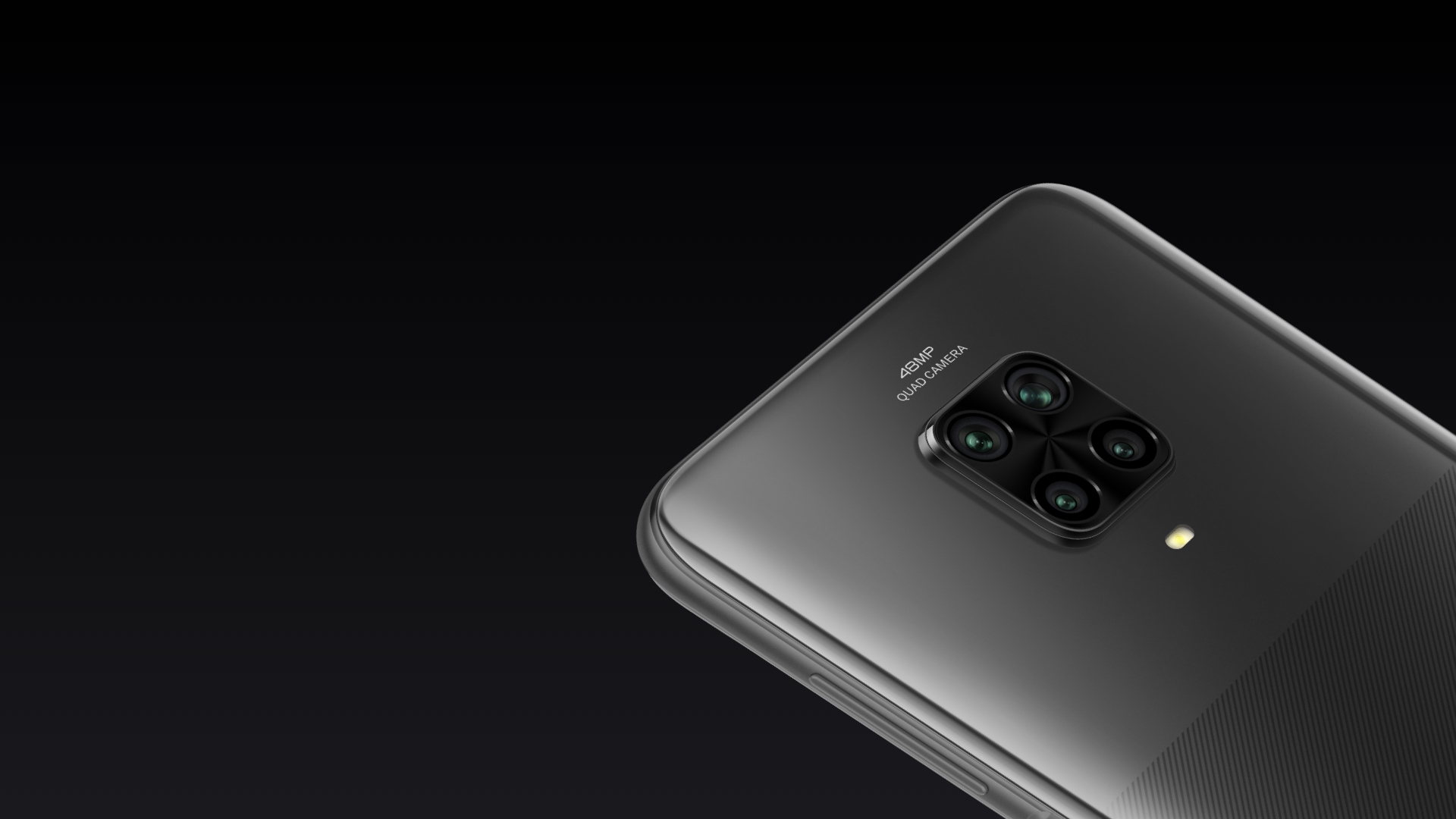
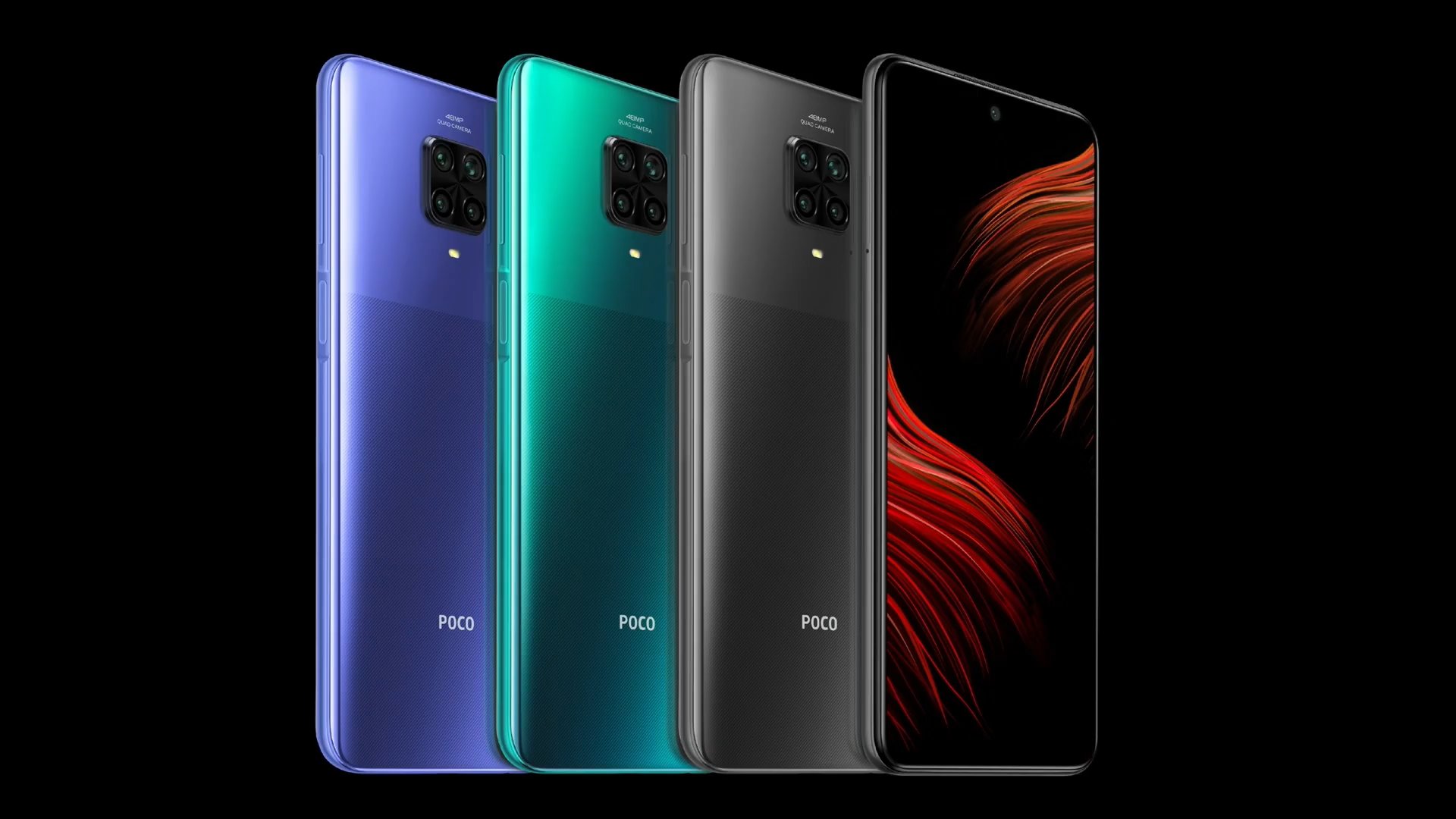
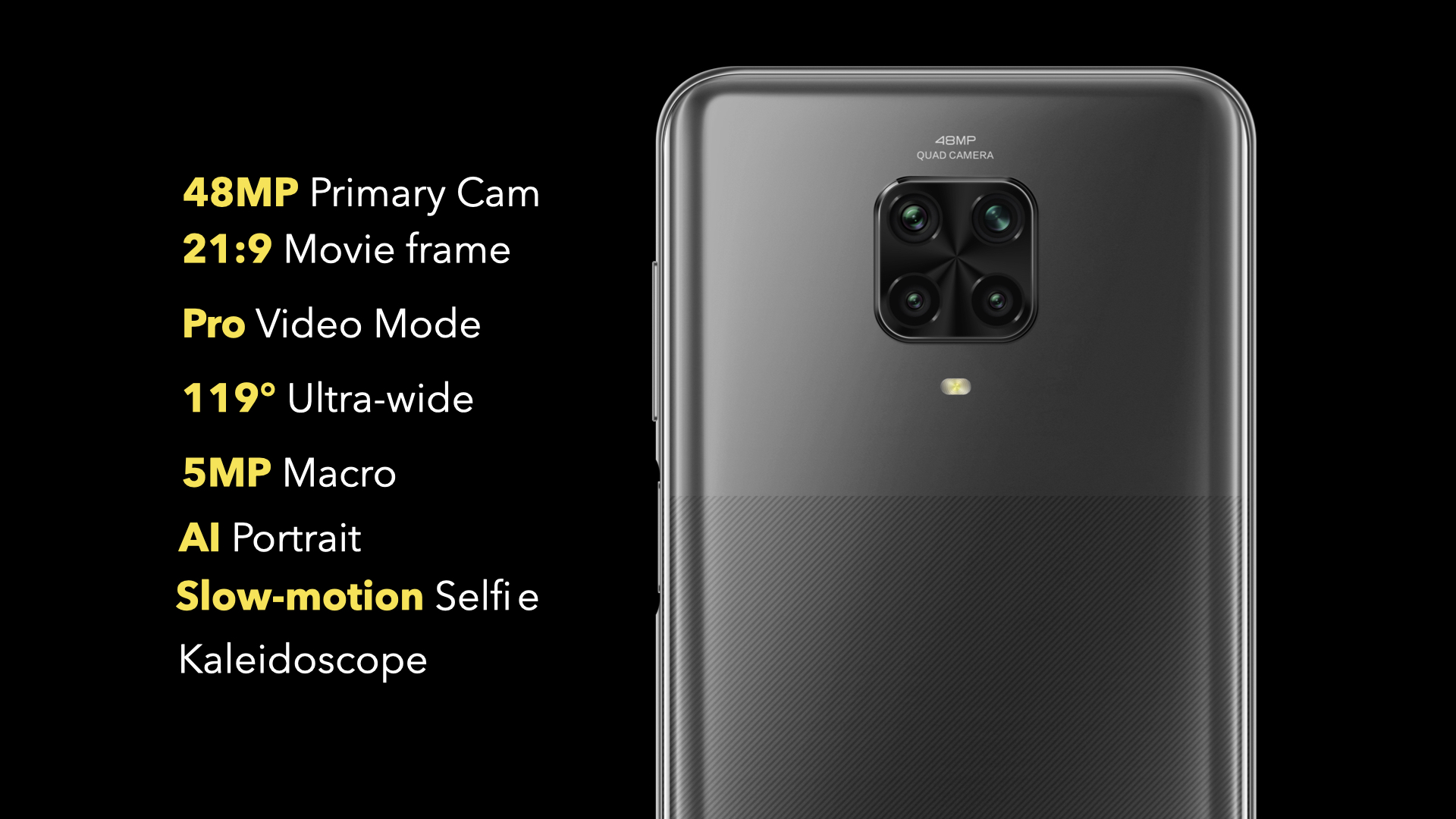
Initially, the Poco M2 Pro was expected to be a rebranded Redmi Note 9 Pro Global edition for India. But that’s not exactly the case here. The new Poco phone borrows the two-tone design as well as 33W fast charging from the global variant but keeps the 48MP quad-camera setup from the Indian variant.

The Poco M2 Pro is priced as follows:

  • 4GB + 64GB – Rs. 13,999 ($187)
  • 6GB + 64GB – Rs. 14,999 ($200)
  • 6GB + 128GB – Rs. 16,999 ($227)

I’m not surprised that the Poco M2 Pro is even priced exactly the same as the Redmi Note 9 Pro (after GST hike). In short, you are getting a fancier design, faster charging, and a Z-axis vibration motor from the Note 9 Pro Max model (Poco is officially calling it the Z-Shocker Haptics) for the same price and with the Poco launcher on top (so no ads too).

This could also mean that Redmi may stop selling the Redmi Note 9 Pro in India soon simply because Poco offers much better value at the same price. But we haven’t got an official confirmation yet.

The Poco M2 Pro will be available in three colors: Out of the Blue, Green, and Greener, and Two-Tone Black.

Image

Poco M2 Pro Specs

The Poco M2 Pro comes with the same specs as the Indian variant of the Redmi Note 9 Pro. So you get Snapdragon 720G processor on board with 4GB / 6GB RAM. You also get the same 48MP f/1.8 quad-camera setup with an 8MP 119º ultra-wide-angle camera, 5MP macro shooter, and a 2MP depth sensor. On the front, you have a 16MP selfie camera sensor.


Image

The M2 Pro is P2i dust and water-resistant. Up front, you get a 6.67-inch FHD+ IPS LCD display with Gorilla Glass 5 protection. The phone features a 5000mAh large battery with 33W fast charging.

Poco M2 Pro Specs overview:

  • 6.67-inch FHD+ 2400 x 1080 display with a punch-hole
  • Snapdragon 720G
  • 4GB or 6GB RAM
  • 64GB or 128GB of storage
  • Dedicated MicroSD card slot
  • Dual SIM (2 x nano) Card slot
  • 48MP + 8MP + 5MP + 2MP quad rear cameras
  • 16MP selfie camera
  • Side-mounted fingerprint scanner
  • 5020mAh battery
  • 33W fast charging with 33W charger in the box
  • Audio Jack, IR Blaster, Bluetooth 5.0

Overall, the Poco M2 Pro is an excellent smartphone in its price segment.

However, it’s a bit frustrating for recent Redmi Note 9 Pro buyers in India to see Poco M2 Pro users getting better value for the same price. The Note 9 Pro went on sale today, just before the M2 Pro’s official launch and it goes back on sale on July 14 at 12PMwhich is also when the Poco M2 Pro goes on sale for the first time on Flipkart!


So what are your thoughts on the Poco M2 Pro as a rebranded Redmi Note 9 Pro?


China warns of consequences if UK bans Huawei

Liu Xiaoming, the Chinese Ambassador of the UK, has recently given out a statement as a warning to the UK. The government official said that banning Huawei will have consequences.

China

Earlier this year, Huawei had been allowed to help build the 5G networking infrastructure, although only on noncore areas and with a market cap. However, just a few months after this announcement, criticism against the Chinese tech giant caused the Parliament to announce a complete phase out of telecommunications equipment made by Huawei by 2023.

According to Liu Xiaoming, “banning Huawei sends out a very wrong message.” Furthermore, Liu claimed that the US is to blame and that the UK is still influenced by the former’s policies. Although no specifics were given out regarding the “consequences,” but Xiaoming had hinted at investment or investors from China withdrawing from the UK.

China

“If you want to make China a hostile country, you’ll have to bear the consequences,” said the Chinese Ambassador. Thus, the UK Prime Minister, Boris Johnson, is in a tough position where he could offend either the US or China. 5G networking is the newest hallmark for a developed nation and was said to vastly improve various fields within the country’s infrastructure. An example of this being newer and faster bandwidth helping in the upcoming elections.


(Via)

Samsung discovers amorphous boron nitride that could lead semiconductor paradigm shift

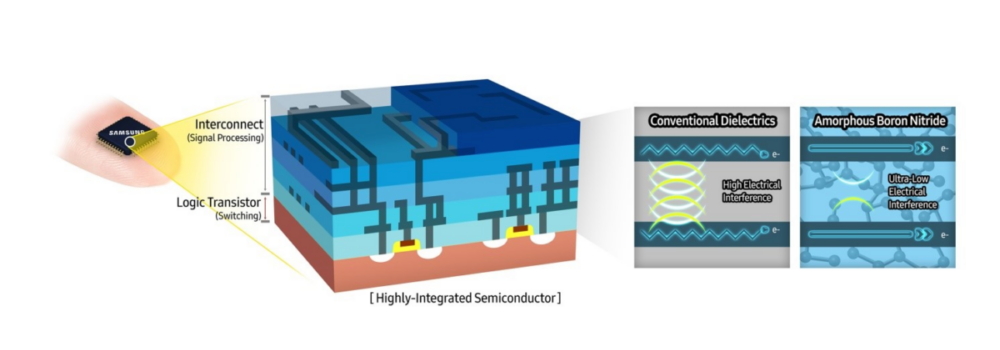
The team at Samsung Advanced Institute of Technology (SAIT) has announced the discovery of new material — amorphous boron nitride (a-BN), in collaboration with Ulsan National Institute of Science and Technology (UNIST) and the University of Cambridge.

The South Korean giant claims that it has the potential to accelerate the advent of the next generation of semiconductors. The amorphous boron nitride (a-BN) consists of boron and nitrogen atoms with an amorphous molecule structure.

Samsung Amorphous Boron Nitride

While amorphous boron nitride is derived from white graphene, which includes boron and nitrogen atoms arranged in a hexagonal structure, the molecular structure of a-BN makes it uniquely distinctive from white graphene, says Samsung.

Amorphous boron nitride has a best-in-class ultra-low dielectric constant of 1.78 with strong electrical and mechanical properties and can be used as an interconnect isolation material to minimize electrical interference.

The material can also be grown on a wafer-scale at a low temperature of just 400°C. And thus, this newly discovered material is expected to be widely applied to semiconductors such as DRAM, NAND solutions, next-generation memory solutions for large-scale servers.

Samsung Advanced Institute of Technology (SAIT) has been working on the research and development of two-dimensional (2D) materials – crystalline materials with a single layer of atoms. It has been working on the research and development of graphene and has achieved groundbreaking research outcomes in this area. SAIT has been working to accelerate the material’s commercialization.


iQOO Z1x 5G Master Lu listing reveals key specs ahead of July 9 launch

On Thursday, the iQOO Z1x 5G will be made official in China. Ahead of the launch, the company has confirmed some of the key specifications of the device. Yesterday, Master Lu shared the benchmarks scores of the iQOO Z1x 5G.

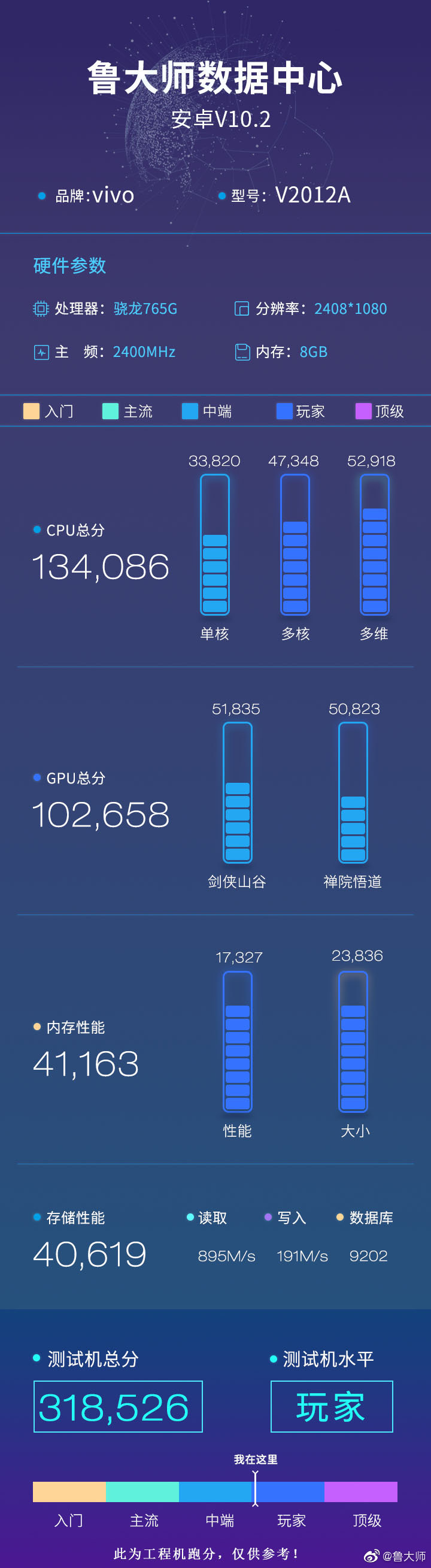
The iQOO Z1x 5G with V2012A model number recorded a score of 318,256 on Master Lu benchmarks. This score classifies it as a high-end device. The score is an average of CPU, GPU, RAM, and storage tests in which the iQOO Z1x 5G scored 134,086, 102,658, 41,163, and 40,619, respectively.

The variant of the iQOO Z1x 5G that was benchmarked on Master Lu has 8 GB of RAM and 256 GB of storage. The screen of the device produces 1080 x 2408 pixels Full HD+ resolution. As the company has officially confirmed, the Snapdragon 765G SoC will be present under the hood of the device.

iQOO Z1x Master Lu

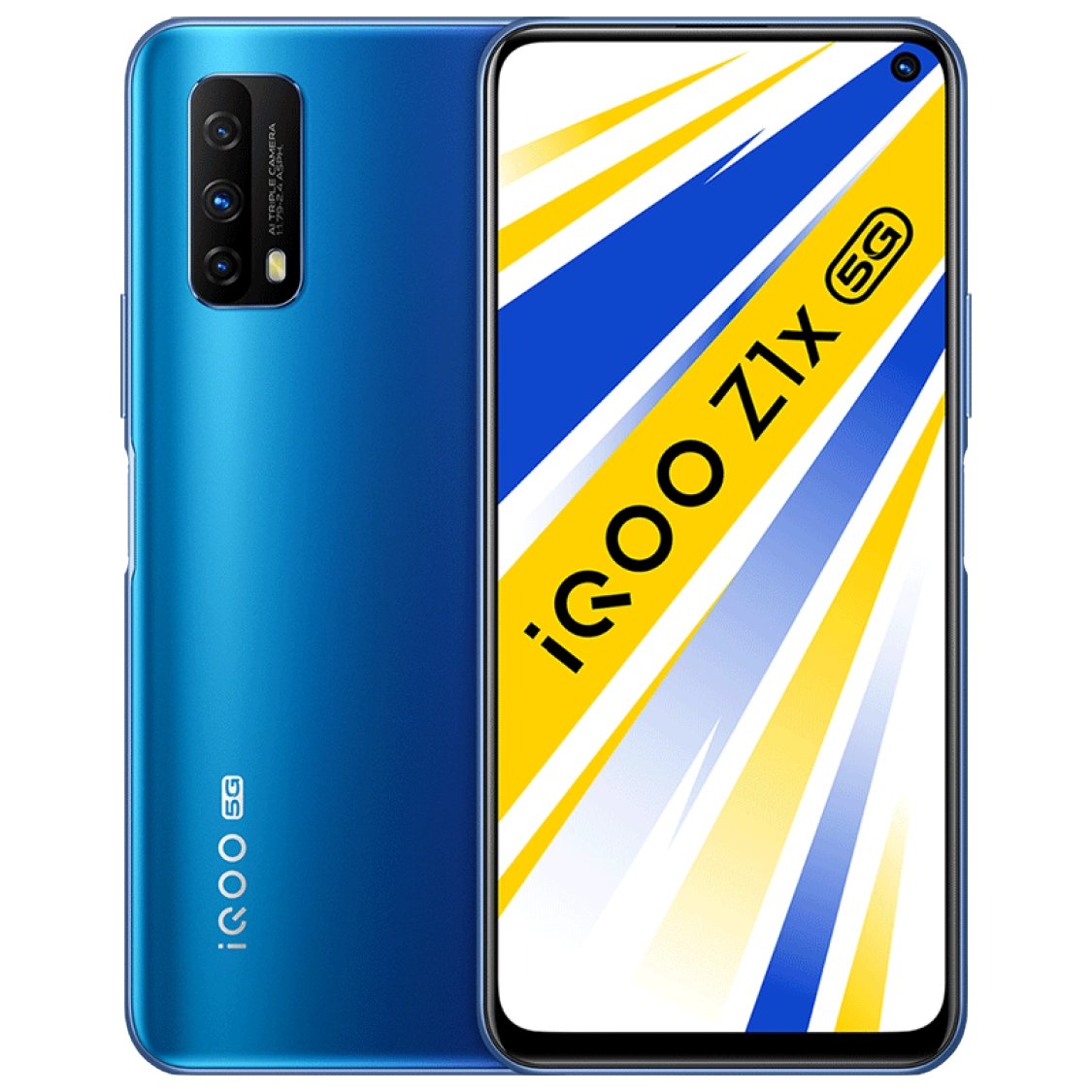
The iQOO Z1x 5G will be iQOO’s first phone with the Snapdragon 7XX series chipset. Its 6.57-inch IPS LCD punch-hole display will support up to 120Hz refresh rate. The device will be backed by a 5,000mAh battery that supports 33W fast charging. It has a side-mounted fingerprint scanner.

iQOO Z1x
iQOO Z1x

It has a front camera of 16-megapixel. The rear side of the phone features a 48-megapixel + 2-megapixel + 2-megapixel triple camera unit. It is equipped with a side-mounted fingerprint reader. As far as pricing is concerned, it could be priced between 1,500 Yuan (~$214) and 2,000 Yuan (~$285). The handset will be available in China in color options like black, blue, and white.


(source)

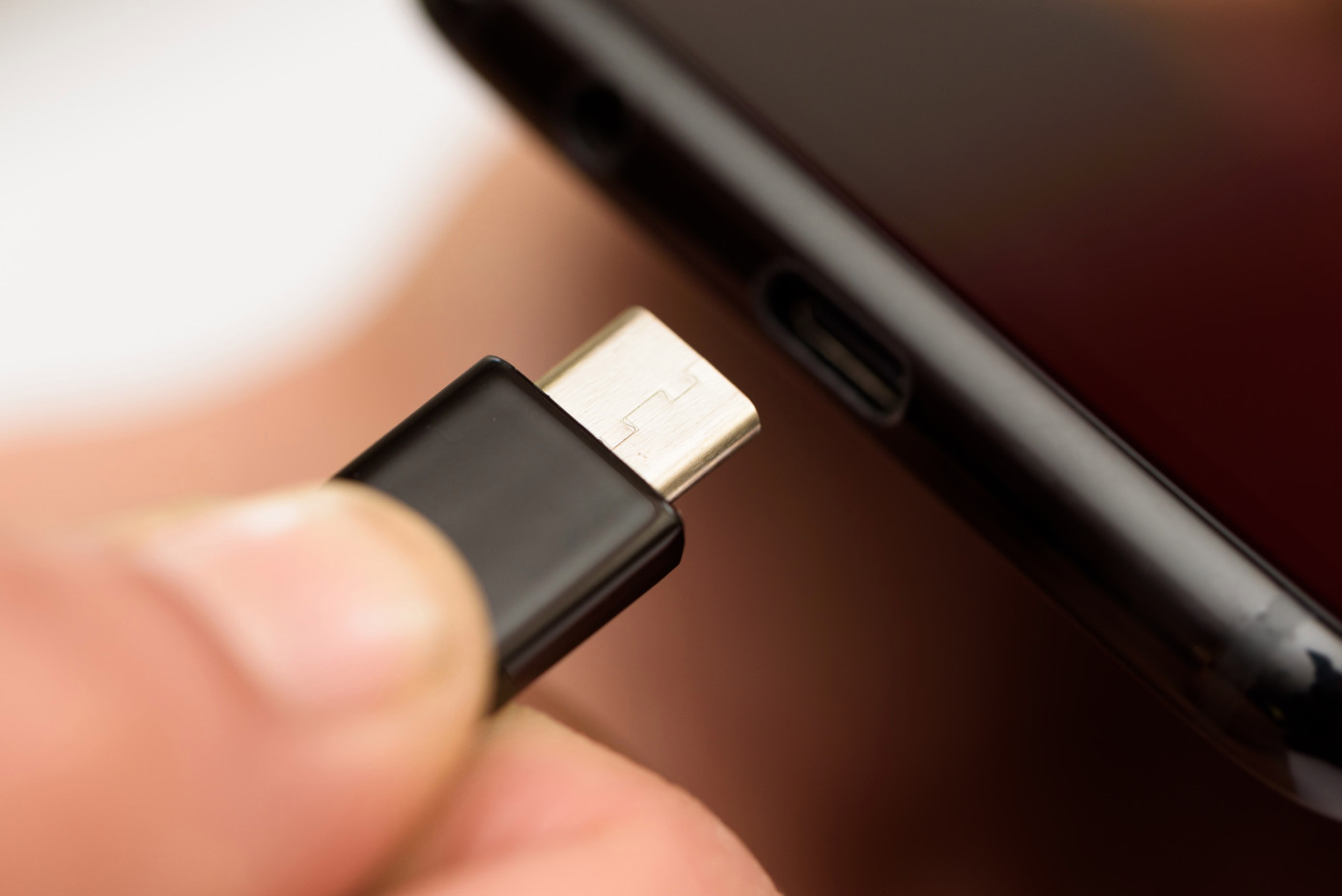
More than 50% of smartphones to use USB-C interface this year: Omdia

While smartphones still don’t have a universal charging solution, smartphone manufacturers have mostly stopped using their proprietary solutions in favor of the MicroUSB or USB-C port.

In recent times, the adaptation of the USB-C port for smartphones has increased significantly and it still keeps on growing. Now, as per the report from market research agency Omdia, almost half of the smartphones getting launched this year will feature a USB-C port.

USB-C Interface

The report further adds that by the year 2022, more than half of the computing devices supporting data transmission will be featuring at least one USB-C port. So, this is not just limited to smartphones and also counts in products like laptops.

USB Type-C or USB-C is a new USB connector system with 24-pins that has a rotationally symmetrical connector. The standard, which was finalized in August 2014, is now being widely adopted by the manufacturers in smartphones and laptops.

Apart from charging the device, the USB-C port can also be used for several other functions such as data transmission, video output, power supply and can also be equipped with USB Power Delivery for a faster-charging speed.

Although not every smartphone manufacturer is using the same solution for charging smartphones, that could change soon. Earlier this year, the European Union voted to establish a common charging standard for mobile devices.

The aim of this to improve convenience for consumers, and cut considerable electronic waste from the disposal of discarded chargers. But there’s no yet specific timeline or plan about how this will be accomplished.

(Source)

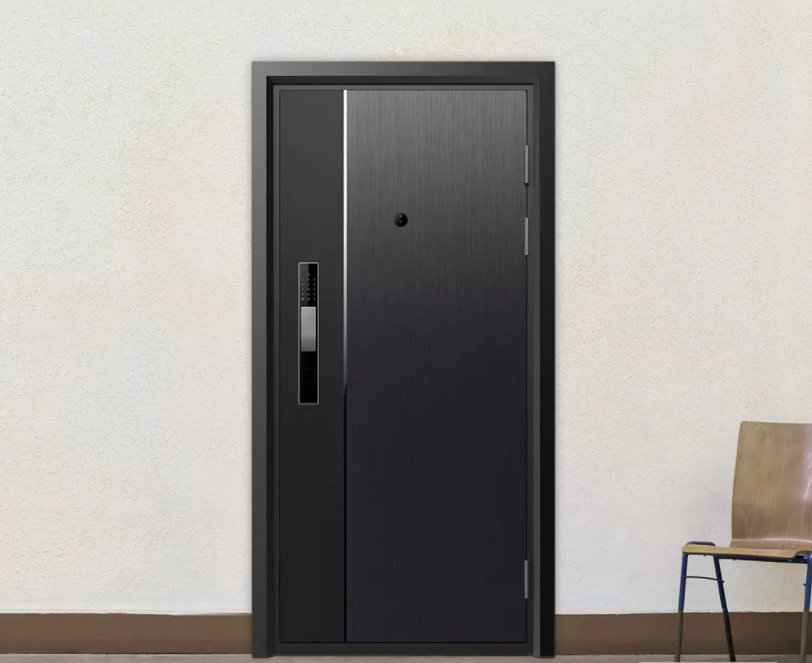
Xiaomi announces Xiaobai Wisdom Gate H1 smart door crowdfunding in China

Just a day after Xiaomi announced the crowdfunding for a new coffee machine in China, the company has today announced that it will be crowdfunding its first smart door, dubbed as Xiaobai Wisdom Gate H1.

During the crowdfunding campaign, the smart door will be available for 3,999 yuan (~$570) but the actual retail price is set at 4,999 yuan (~$713). There’s a battery-powered version as well, which costs 4,399 yuan (~$627). Xiaomi is also offering a free installation service worth 1,040 yuan (~$148).

Xiaomi Xiaobai Wisdom Gate H1

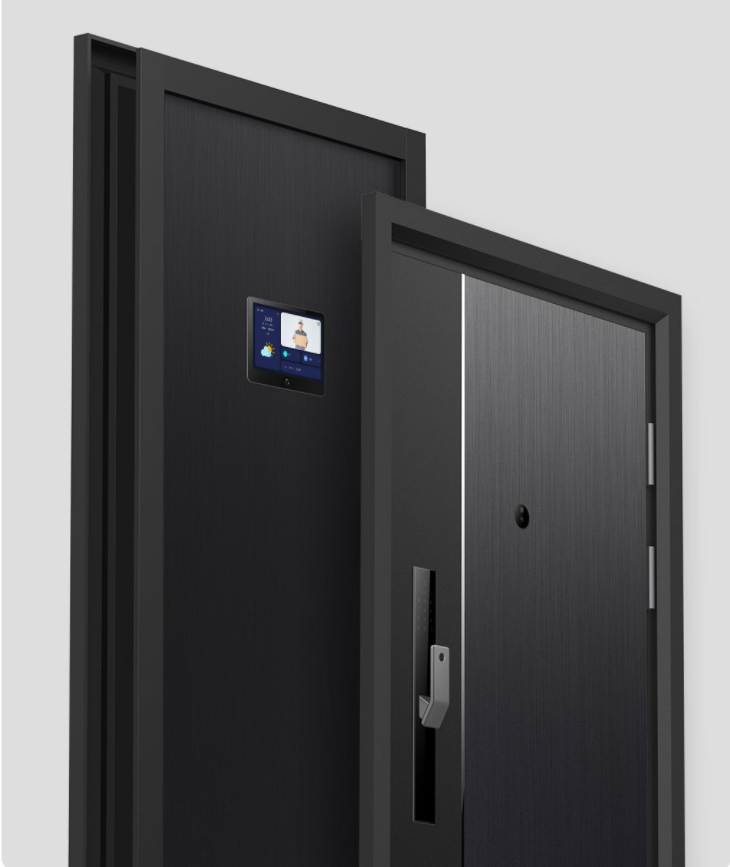
The newly unveiled Xiaobai Wisdom Door H1 is 2050mm high and 960mm wide. It has a traditional door design, which has two doors — left and right, and either can be open at a time or both simultaneously.

It is said that the door is made of up Stainless Steep through the precision casting process and comes with built-in reinforced iron bone. The door has a thickness of 95mm and weighs around 85 kilograms.

The interior is filled with sound-absorbing honeycomb panels, says the company. There’s also a 10-inch IPS touch-screen panel equipped with an HD 1080p camera sensor that supports 150-degree wide-angle, infrared night vision, and Xiaomi facial recognition algorithm to identify the person and determine age, gender, and other information.

As for unlocking the door, along with the standard lock, it also supports fingerprint-based unlocking, which the company claim has a pass rate of 99.7 percent. Xiaomi claims that to make this product, the company went through 15 months of careful research and development process, along with 300,000 tests, and filed 28 product patents.

Similar to most other smart home products from Xiaomi, this one too can be easily controlled using the company’s Mi Home application.


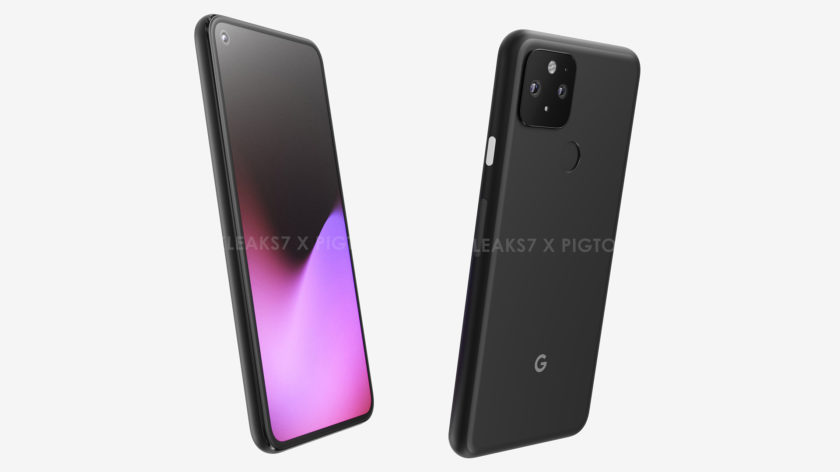
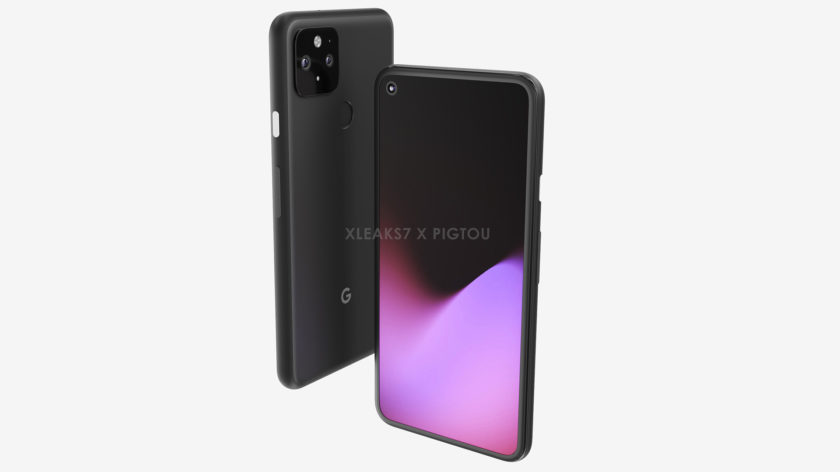
Google Pixel 5 CAD renders leak reveal punch-hole display and fingerprint reader

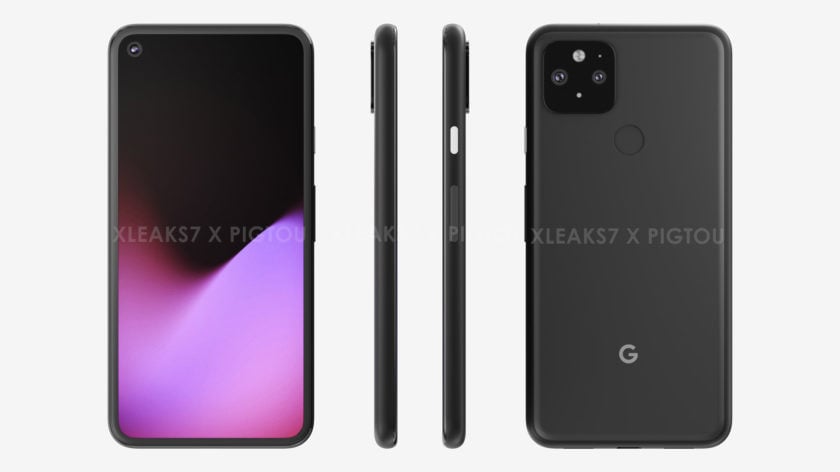
Pixel fans are eagerly waiting for the Pixel 4a mid-range phone, but the company is silent on its arrival. Since it recently received certifications from Singapore’s IMDA and India’s BIS, it is being said that the phone may launch this month. However, there are contradictory rumors that claim that the launch has been postponed to October. It is unclear whether the Pixel 4a will be arriving alongside the Pixel 5 series that is expected to debut in October. Speaking of Pixel 5, publication Pigtou in partnership with XLeaks7 has shared its CAD renders to reveal its design.

The leak reveals that the Google Pixel 5 has 144.6 x 70.4 x 8mm dimensions. With the camera bump, its thickness may increase up to 9.5mm. The appearance of the Pixel 5 not too different from the Google Pixel 4 from last year.

The device seemingly features a 5.78-inch display and the CAD renders show that it is surrounded by thick and symmetrical bezels. The display has a punch-hole placed at its top-left corner.

The Pixel 4 series lacked a fingerprint scanner and its users were provided with face unlock as the only biometric recognition feature. The Pixel 5 CAD renders show that the company will bring back the fingerprint scanner on the device.

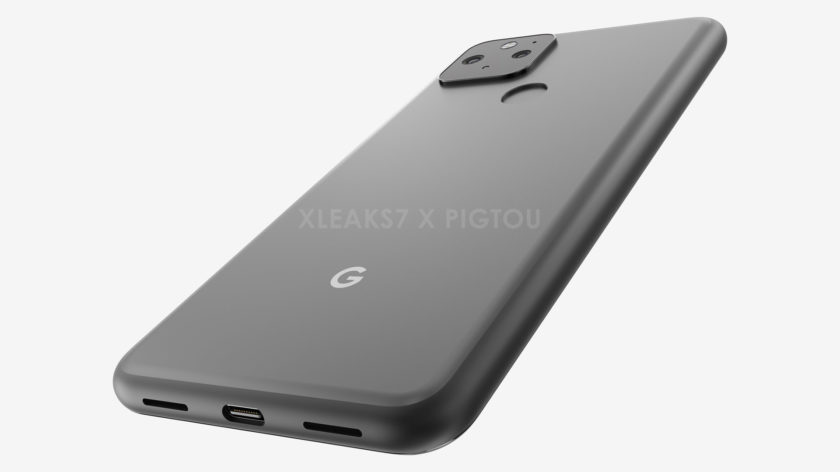
The Pixel 5 seems to be sporting a glass back and an aluminum frame. The square-shaped module on the back houses the cameras along with an LED flash. A USB-C port along with a pair of external speakers can be found on the bottom edge of the Pixel 5. It lacks a 3.5mm headphone jack.

According to Android Police’s David Ruddock, Google’s hardware team is in total chaos and it is yet to decide on the Pixel 5. This is the reason why the Pixel 5 leaks have not appeared yet. Since the authenticity of the Pixel 5 CAD renders could not be confirmed, readers are advised to digest the leak with a grain of salt.


(source 1, 2)

Foldable smartphones to keep using UTG, CPI for next 5 years: UBI Research

Last year, companies like Samsung and Huawei introduced their first foldable smartphones in the market and now both the companies are gearing up to launch a second-generation of the same pretty soon.

Apart from these two brands, other smartphone makers are also working on their own foldable devices. While companies are working on an innovative design for their smartphones, it seems that technology will remain unchanged for years.

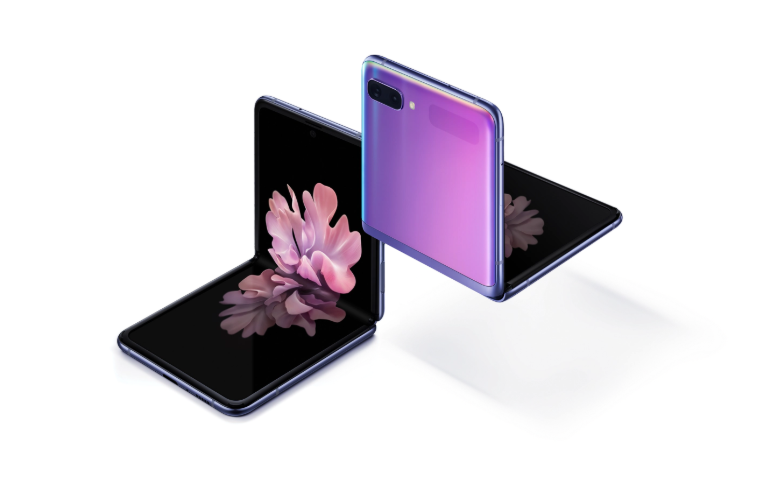
Samsung Galaxy Z Flip featured
Samsung Galaxy Z Flip

According to the report from market research firm UBI Research, foldable smartphones are expected to keep using the ultra-thin glass (UTG) and colorless polyimide (CPI) at least for the next five years.

It further added that the shipments for the CPI films and UTG will reach 4.5 million units and 3.5 million units, respectively, this year. The firm predicts that both the materials will grow in the next 5 years.

As per the estimated, by the year 2024, CPI films shipment will reach 37.1 million units and UTG 30.5 million units. The research firm said it took into account the outlook for foldable OLED panels and manufacturers’ yield rates.

Samsung Electronics is procuring its foldable OLED panels from Samsung Display which uses Sumimoto Chemical’s CPI films. On the other hand, BOE and Royole both have used CPI films from South Korea’s Kolon Industries.

The Samsung Galaxy Z Flip smartphone, launched earlier this year, was the first foldable smartphone from Samsung to use ultra-thing glass (UTG). The company will be using the same for the upcoming Galaxy Z Fold 2, which is expected to launch next month.

The report from UBI Research claims that Samsung Display will supply Samsung Electronics with foldable OLED panels with UTG while shipping those with CPI films to Huawei. But, most other vendors will use CPI films but are researching foldable OLED panels that use UTG as well.

(Via)

Samsung India introduces customer care via WhatsApp amid COVID-19

Amid the COVID-19 pandemic, people are stuck at home and can’t really go outside much, especially in a country like India which is among the worst-hit countries globally. So, Samsung India has come up with a new plan for offering customer service.

The South Korean giant has introduced customer care services for Indian users through WhatsApp with an aim to provide prompt resolution to queries of consumers without needing them to leave their homes.

Samsung India WhatsApp Customer Care

This new service will be available on Samsung’s WhatsApp support number (1800-5-SAMSUNG) from 9 AM to 6 PM, seven days a week. The company has also said that the users can use the service for seeking technical support related to any Samsung product, get information about service center locations, the status of a repair, new offers, and also request for demo and installation of Samsung products.

The WhatsApp-based customer care service from Samsung comes on top of other “contactless” services that the company is already offering — remote support, live chat, call center assistance, and DIY videos.

Meanwhile, the company is now gearing up to launch its new flagship smartphones next month, possibly on 5th August. Along with the Galaxy Note20 series and the Galaxy Z Fold 2 smartphones, the company will also be launching the Galaxy Watch 3.


Samsung Galaxy Note20 Ultra live shots reveal curved display, slimmer bezels, and sleek rear

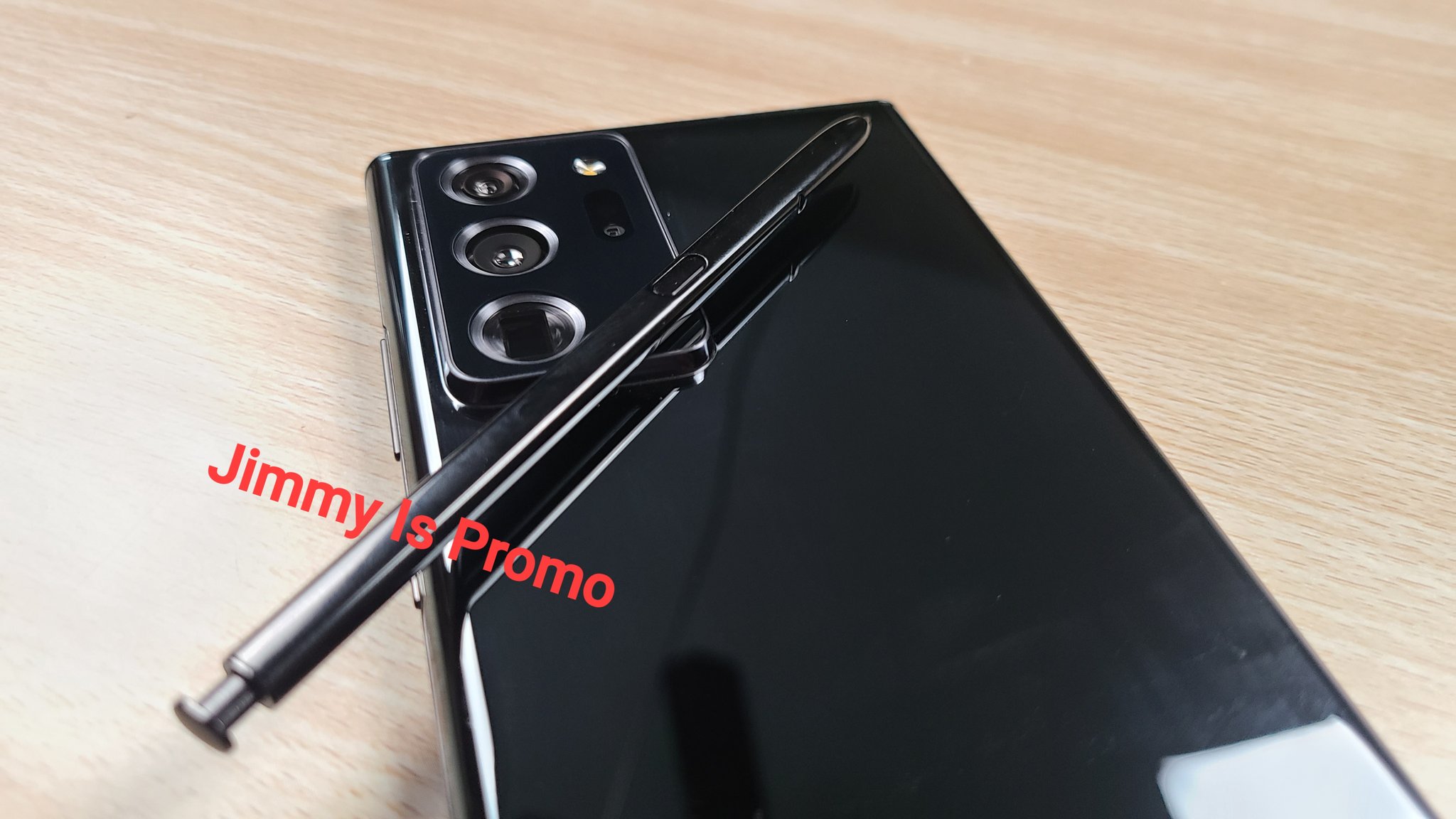
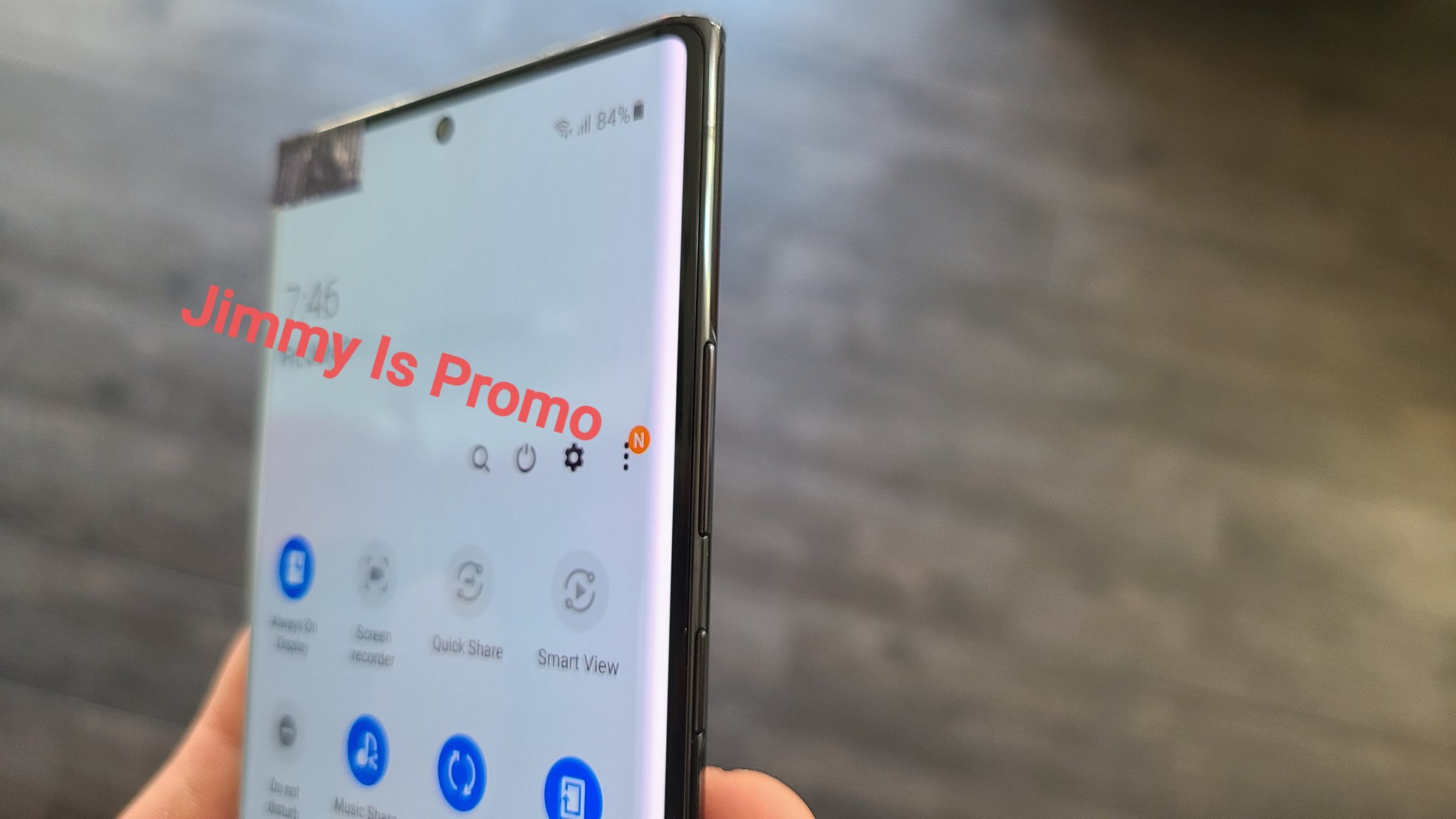
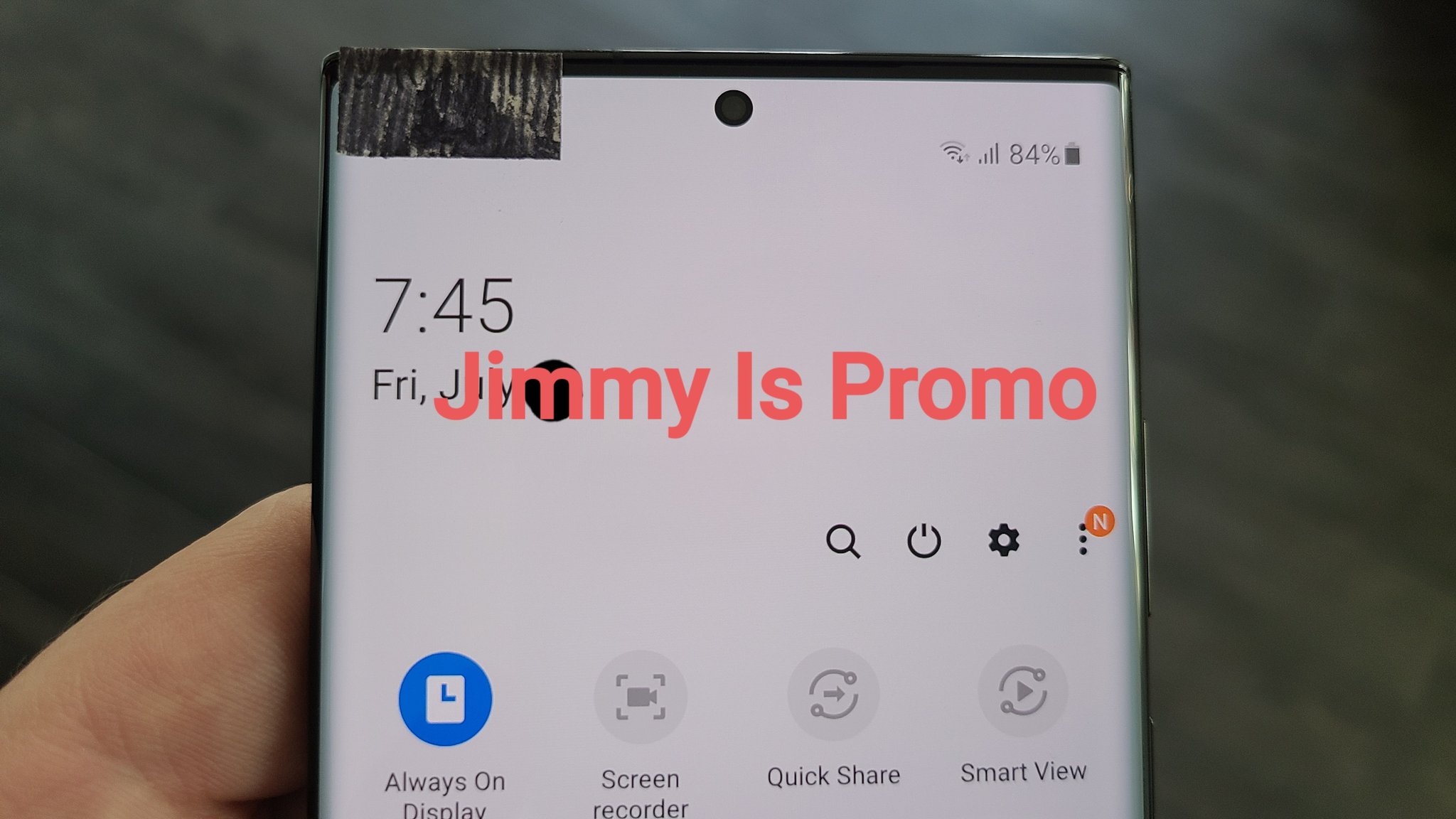
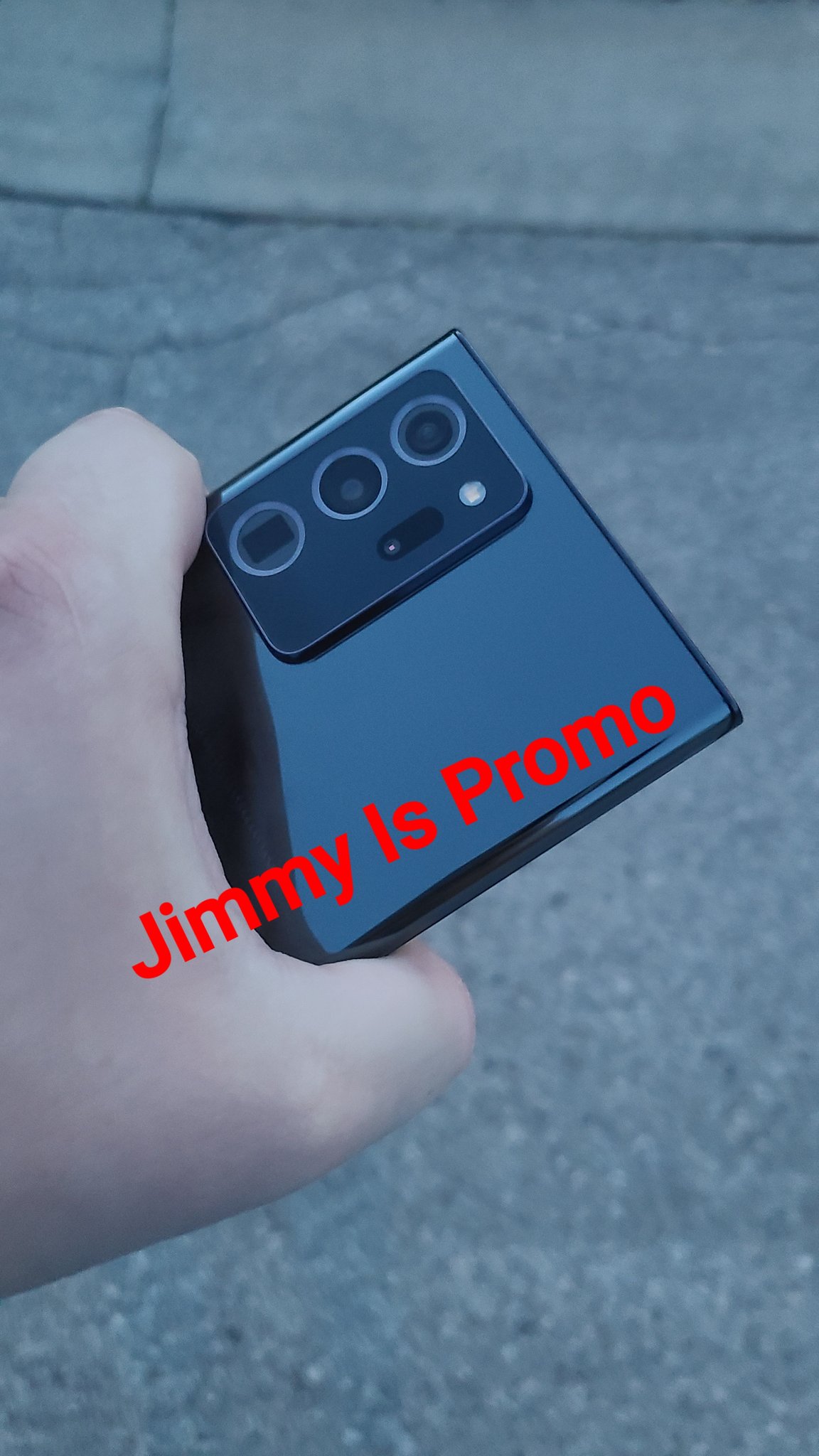
Samsung will be launching the Galaxy Note20 series in August. The rumored launch date is Aug. 5. Speculations are rife that the most advanced model in the series will be called Galaxy Note 20 Ultra. Twitter user and Youtuber Jimmy is Promo shared the leaked shots of the Galaxy Note20 Ultra. The new images showcase the sleek design of the phablet.

The live shots of the black variant of the Galaxy Note20 Ultra show that it has a glossy appeal. Recently, the Mystic Bronze edition had surfaced inadvertently on Samsung Ukraine’s website. The bronze edition seemingly Matte AG Glass finish. However, this finish seems to be absent on the black variant.

Here is a comparison done by a well-known Chinese tipster between the front design of the Galaxy Note 20 Ultra and last year’s Galaxy Note10+.

The leakster mentions the Galaxy Note20 Ultra’s screen will be more curved and it will be surrounded by slimmer bezels. The South Korean company seems to have reduced the size of the camera hole. Lastly, the device appears more squarish.

The camera bump is easily noticeable on the backside of the Galaxy Note20 Ultra. Three camera lenses, an LED flash, and another sensor can be seen inside it. The third lens appears to be a periscope zoom lens.

The redesigned chassis of the Note20 Ultra features the volume rocker and power button on its right edge. The leakster who shared the images claims that the location of the S-Pen and the speaker are now on the left side of the USB-C charging port. The device lacks a 3.5mm headphone jack.

Rumors have it that the Galaxy Note20 Ultra will have a 120Hz refresh rate supporting 6.87-inch QHD+ display. It will be fueled by Snapdragon 865+ SoC and may come with up to 12 GB of RAM. The 108-megapixel triple camera system of the Note20 Ultra may support up to 50x zoom. The phablet may house a 4,500mAh battery. According to a latest report on ETNews South Korean publication, the Galaxy Note20 series will be available for purchase from Aug. 21 in the home market.


(source)

Vivo Watch Bluetooth SIG certified, Launching next month?

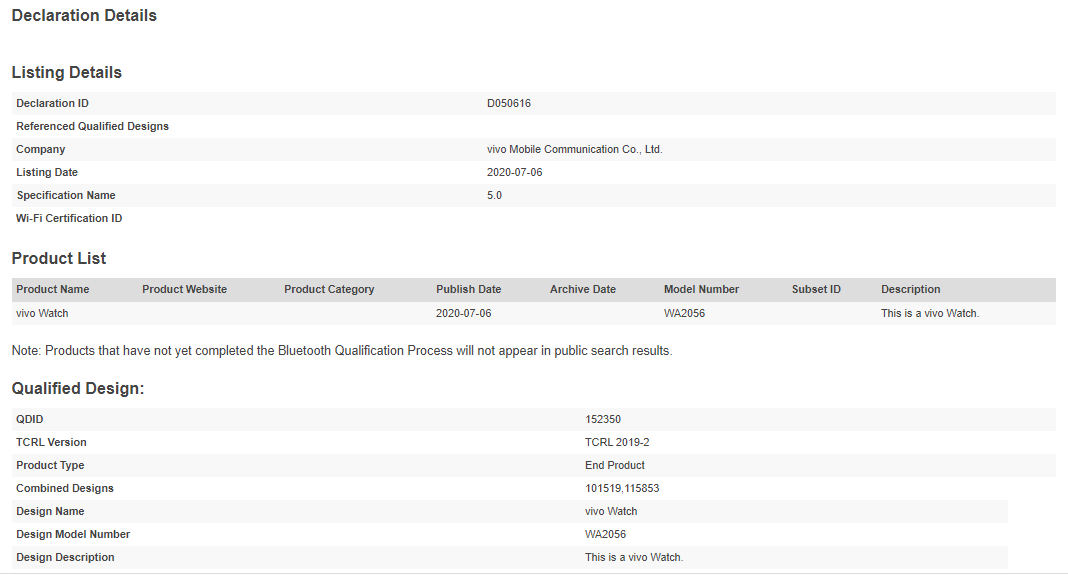
Vivo is reportedly working on a smartwatch. The moniker of the device could be Vivo Watch. Two variants of the Vivo Watch were spotted at the 3C certification platform in the previous month. The listings suggested that the smartwatch could be inching towards its launch in China. Yesterday, the Vivo Watch was found listed in the database of the Bluetooth SIG certification platform. Devices are known to go official in a timeframe of around one month after appearing at Bluetooth SIG. Hence, there is a possibility that the Vivo Watch may break cover as early as next month.

The Vivo Watch variant that has received approval from the Bluetooth SIG as a W2056 model number. The listing only confirms the support for Bluetooth 5.0 on the device.

Vivo Watch Bluetooth Sig

The 3C listing of the Vivo Watch had revealed two model numbers namely, W2056 and W2052. The 3C listing only confirmed that the device may come with 5W charging. The two model numbers may belong to the two size variants of the Vivo Watch.

It was in June 2019 that Vivo China had claimed that it would be launching devices like smartwatches and AR glasses in the future. Since then, it has been silent on the existence of Vivo Watch. In April, a reputed tipster from China had first spoken about the existence of the Vivo Watch wearable device. He had revealed that the company began with the production of the Vivo Watch. Hence, it appears that the arrival of the Vivo Watch may not be far away.

At present, there is no word on the design and specifications of the Vivo Watch. Hopefully, the rumor mill will spill more details before its official announcement.


(via)

Huawei Mate V moniker trademarked possibly for in-ward folding foldable phone

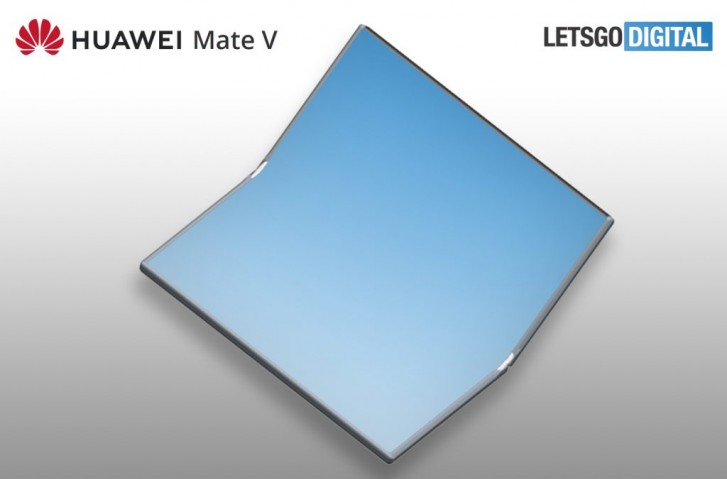
Among the mainstream smartphone brands, Huawei and Samsung are the two companies that have successfully launched foldable smartphones that can transform into a tablet-like device. Samsung will be announcing the Galaxy Z Fold 2 in the coming month. Like the predecessor Galaxy Fold from last year, the upcoming model will be flaunting inward folding design. On the other side, Huawei’s Mate X from last year and the Mate Xs that went official earlier this year both arrived with fold-out design. A fresh report on LetsGoDigital states that Huawei Technologies trademarked the “Mate V” brand name with European Union Intellectual Property Office (EUIPO). It is speculated that the Huawei Mate V could be arriving later this year with a fold-in design like Samsung’s foldable phones.

Reports surrounding the upcoming foldable phone from Huawei claims that it could be called Huawei Mate X2. However, since it is likely to arrive with a completely new form factor, the company may adopt a new name for it just as Samsung is now rumored to call its next Fold product as Galaxy Z Fold 2, and not Galaxy Fold 2.

Huawei Mate V patent design 1 The publication has shared some design renders of how the Huawei Mate V with fold-in design will appear. The Mate V name appears suitable since the letter V looks like a book-like folding design. One of the patent filings that Huawei had filed in August had carried the design of a fold-in foldable phone. The images in the post belong to those patent filings.
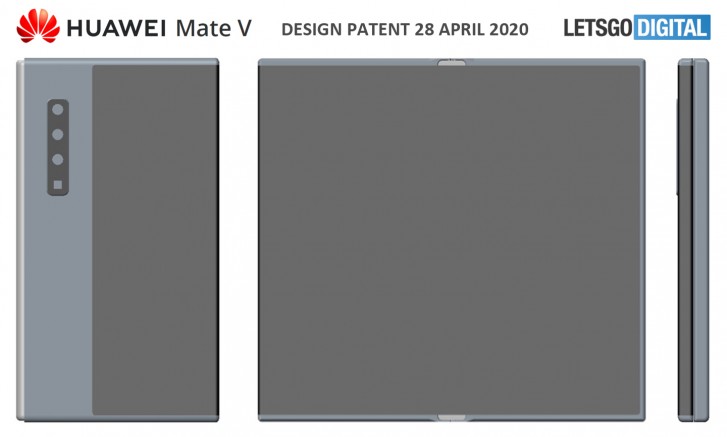
The images show the presence of a large inner display and a smaller display on the outside. The backside of the device has a quadruple-camera unit. The fourth lens in the setup appears square which indicates that it could be a periscope zoom lens.

Huawei Mate V patent design 2

Rumors have it that the main display of the upcoming foldable smartphone will support a 120Hz refresh rate. The Huawei Mate Xs reportedly encountered lackluster sales due to its hefty price tag. It remains to be seen whether the Mate V arrives with an enticing price tag.


(via)

OPPO Reno4 Pro India launch could be between July 20 and 24

Recent reports have revealed that OPPO is gearing up to launch the OPPO Reno4 series in India. Fresh information shared by 91mobiles reveals that the Chinese firm will launch the OPPO Reno4 Pro in the third week of this month. Its arrival is going to clash the launch of the OnePlus Nord that is expected to go official on July 21. It will also rival with the Vivo X50 and Vivo X50 Pro phones that are rumored to launch around July 16.

It is unclear whether the company will be launching the vanilla OPPO Reno4 alongside the Pro model. There is no word on the pricing of the Reno4 Pro for India. The predecessor OPPO Reno3 Pro had landed in India for Rs. 29,990 (~$402) and the pricing had increased to Rs. 31,990 (~$429) in April due to the GST hike in the country. Hence, it seems that the Reno4 Pro could be priced between Rs. 30,000 (~$402) and Rs. 35,000 (~$469) in the country.

OPPO Reno4 Pro live shot

OPPO Reno4 Pro specifications

The OPPO Reno4 Pro that debuted in June in China came with a 6.55-inch Full HD+ AMOLED display that supports the 90Hz refresh rate. Rumors are rife that the India edition of the phone will support a 120Hz refresh rate. The rest of the specs of the phone could be identical with its Chinese variant.

The Reno4 pro is powered by up to 12 GB of LPDDR4x RAM and 256 GB of UFS 2.1 storage. It runs on ColorOS 7.2 based Android 10 OS. It has a 4,000mAh battery that supports 65W SuperVOOC 2.0 fast charging. The smartphone is powered by a Snapdragon 765G mobile platform.

The Reno4 Pro has a 32-megapixel front camera. Its back is fitted with a triple camera system that includes an OIS ready 48-megapixel main camera, a 13-megapixel telephoto lens and a 120-degree 12-megapixel dedicated ultrawide video camera.


(source)