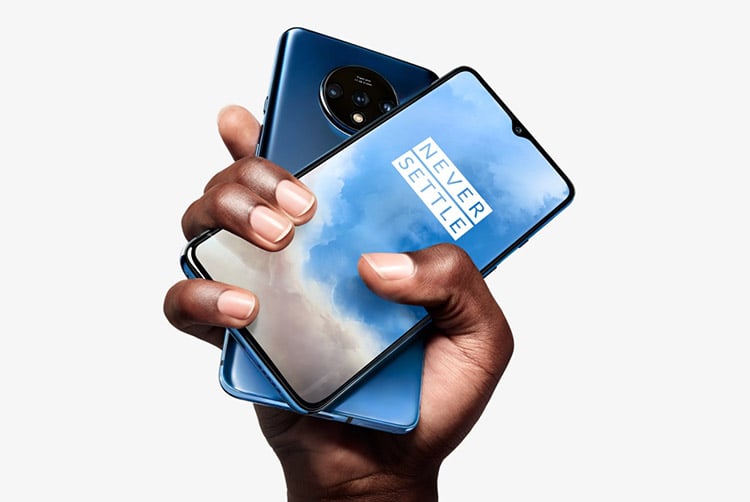
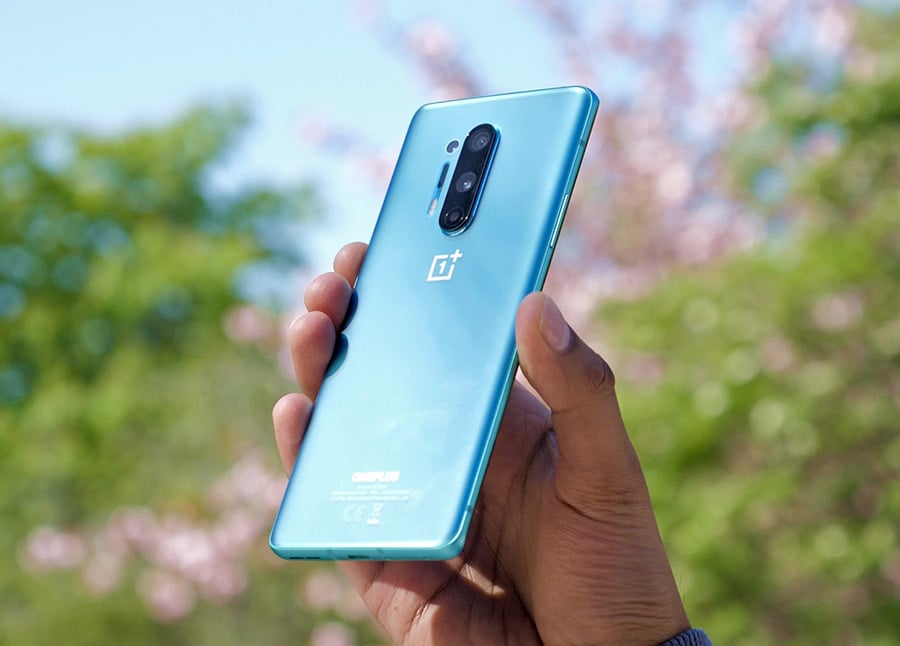
Last week, the OnePlus 7 / 7T series receivedOxygenOS Open Beta 14 / 4. Now, a week later, these handsets are receiving OxygenOS 10.3.3 / 10.0.11 stable update. Apart from May 2020 security patch, the new build also brings a number of new features and fixes to these devices.
The software build number for these handsets vary from each other due to region-specific features. Thus, we have listed the models with their respective builds for better understanding.
According to OnePlus, the latest update for theOnePlus 7 / 7T series optimizes volume adjustment, improves battery life, improves system stability, and also fixes general bugs.
Further, the update adds Dolby Atmos support for OnePlus Bullets Wireless Z along with lens stain detection. Additionally, the new stable update also brings Epic Games Store in Game Space (India only) and 960fps slow-motion video recording at 720p forOnePlus 7T series.
Anyway, here’s the official changelog for OxygenOS 0.3.3 / 10.0.11 stable update that is being rolled out to OnePlus 7 / 7T series worldwide.
System
OnePlus Bullets Wireless Z can now be integrated with Dolby Atmos for better sound quality
Optimized the volume adjustment to improve user experience
Improved the battery life user experience
Improved system stability and fixed general issues
Updated Android Security Patch to 2020.04
Camera
Supported the slow-motion recording at 720p at 960fps (7T series only)
Adding lens stain detection
Phone
Newly added Epic Games in Game Space (India only)
As with any OTA update, it is being rolled out in batches and hence, might take time to reach every unit.
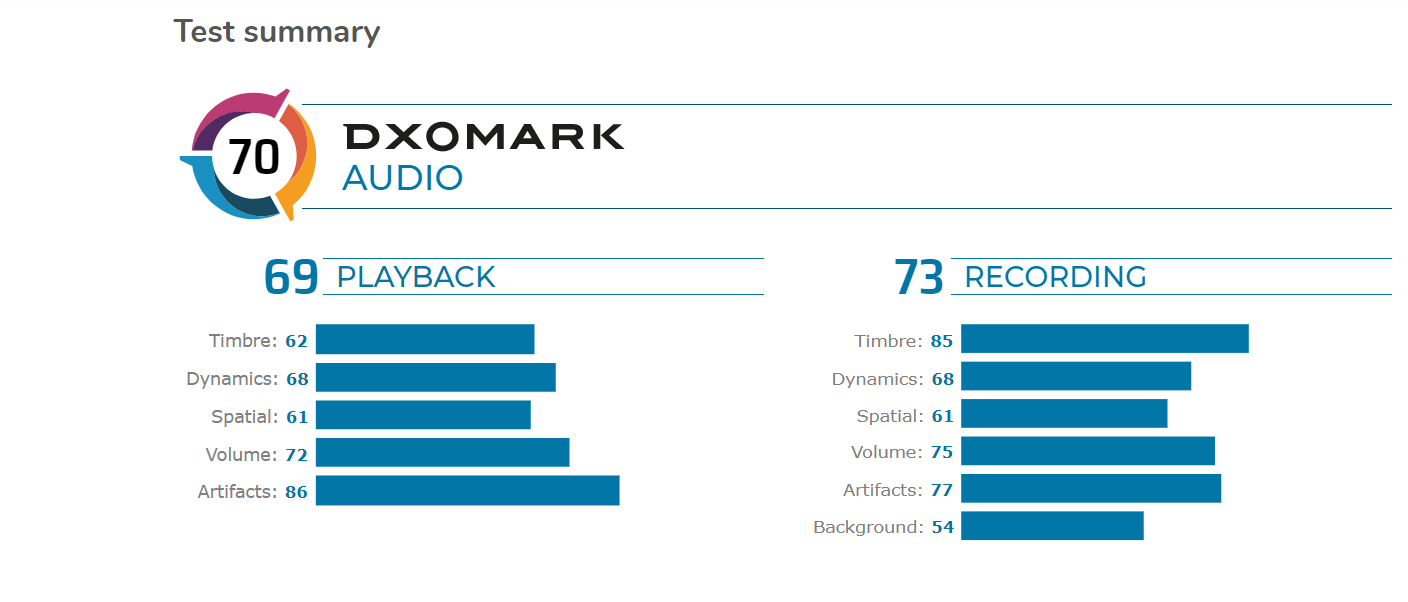
The Apple iPhone SE 2020 has just received its Audio scores from DxOMark, a known rating firm. It achieved 70 points in the testings, which is one of the best within the mid range segment the device targets.
With a score of 70, the iPhone SE 2020 is just below Apple iPhone 11 Pro Max, and iPhone 11 and right above the Dolby/AKG-boosted Samsung Galaxy S20 Ultra. This is indicative of the flagship level audio quality in a device targetted for the mid range segment. DxOMark used various testing methods and the firm’s review is generally seen as accurate within the industry.
Notably, the audio score iPhone SE 2020 received is only 1 point lower than Apple’s current flagship iPhone 11 series. This had the handset come in at the 7th position in the leaderboard for audio. The smartphone received a score of 69 for playback, with aspects like artifacts, volume, and dynamics receiving an impressive rating. Furthermore, it achieved a score of 73 recordings, in which timbre, volume, artifacts, and others that also received a good review.
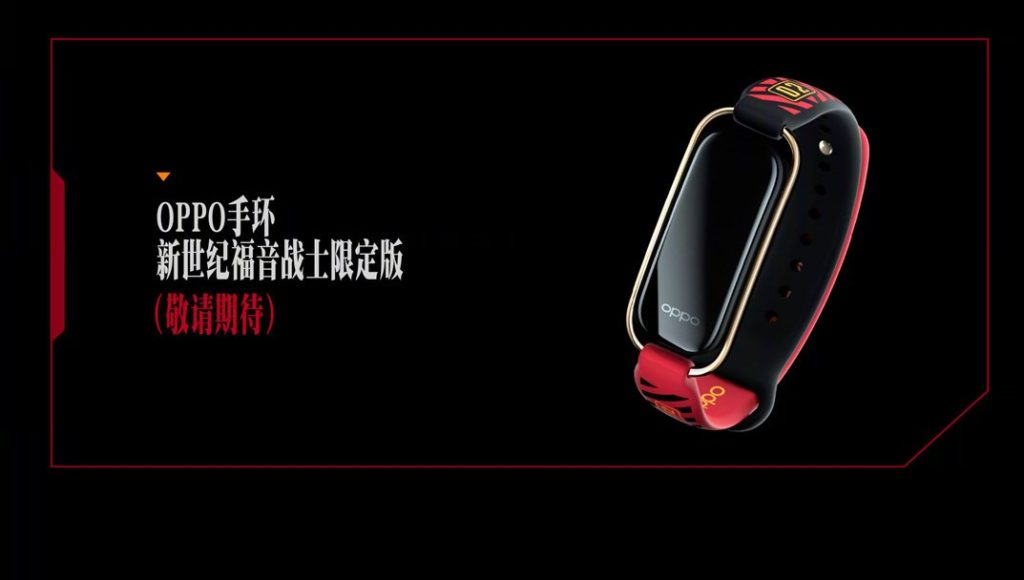
Oppo is celebrating the 25th anniversary of Neon Genesis Evangelion anime by launching a number of limited edition products. One of those accessories is Oppo Band EVA Limited Edition. I am sure you are surprised as me since there’s no regular Oppo Band, to begin with. So where did this come from?
Oppo has been lately making various accessories apart from smartphones. The Chinese tech company revealed its plans for launching AIoT devices last December at Oppo Innovation Day conference.
The company teased a smartwatch, AR Glasses, 5G CPE hub, TWS, and more. Some of these products are available for purchase. Interestingly, the brand has not mentioned anything about Oppo Band up until now.
The Oppo Band has now made its first appearance as an EVA Limited Edition accessory along with others. But since the company is yet to announce the regular version of this wearable officially, the price of the limited edition is kept under wraps.
According to some bloggers on Weibo, the Oppo Band could debut alongside the Reno 4 series whose launch date is yet to be announced by the company. That said, we can only confirm that it will feature a 2.5D curved display going by the render shared by the company.
Anyway, we expect the company to drop more teasers of Oppo Band in the coming days if it is indeed launching with Reno 4 series.
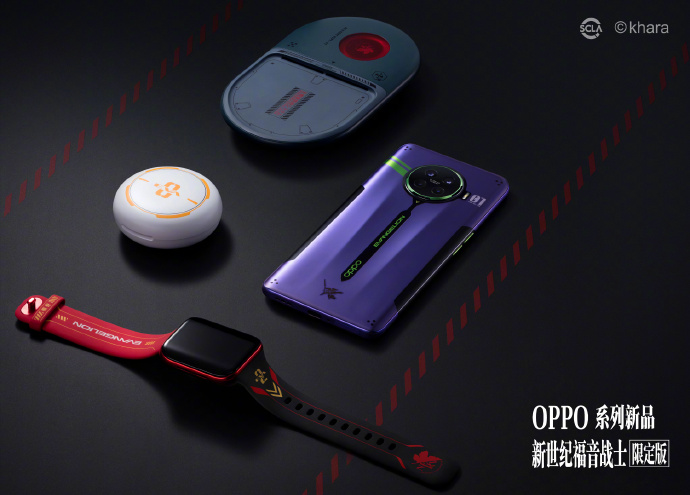
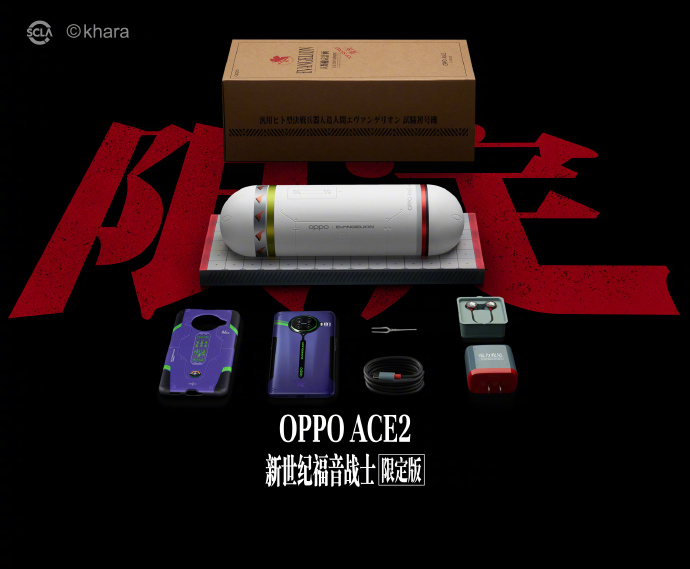
Oppo Ace2 EVA Edition has just been officially launched. The flagship smartphone has been released alongside 4 cool themed accessories, which are based around the iconic Anime series Neon Genesis Evangelion.
The Oppo Ace2 EVA Edition is basically identical to the original Ace2, but with a unique aesthetical design based around the anime. It features the iconic color scheme of the series’ EVA (giant man controlled mechas/robots) with a purple primary on top of which angular green stripes and branding are etched. This design is also mirrored in the protective case that is also offered alongside the handset. Notably, the box in which the smartphone arrives in is also an easter egg in the form of a white capsule.
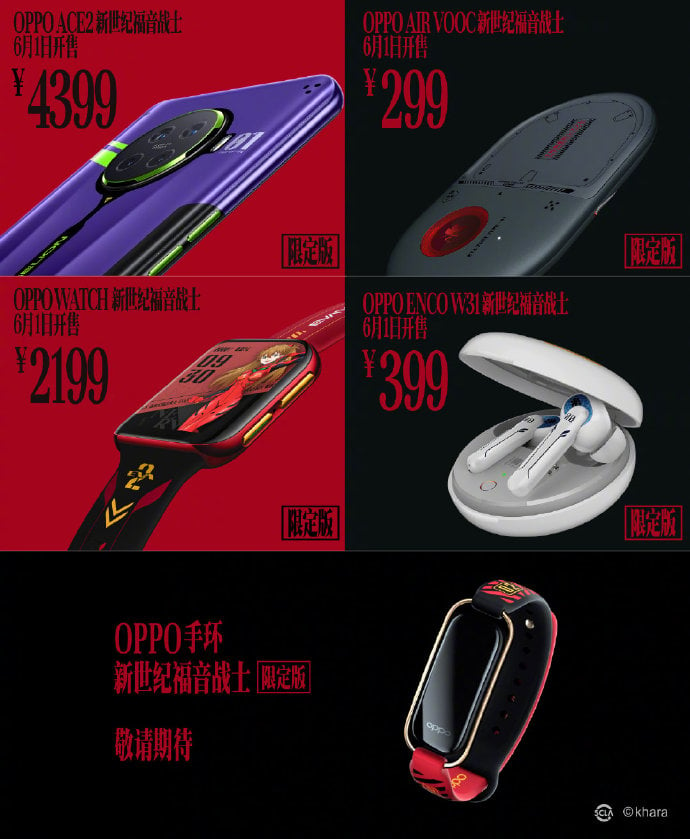
Alongside the smartphone, the Chinese tech giant is also offering a bunch of other limited edition peripherals. This includes an Enco W31 TWS earbuds, Oppo Air VOOC wireless charger, Oppo Watch, and a new Band as well. These products also feature unique aesthetics based around the show and are also available in limited quantities. The Oppo Ace2 EVA Edition is priced at 4,399 Yuan (roughly $614) and only has 10,000 units available.
The Oppo Enco W31 TWS earbuds will be available for 399 Yuan (roughly $55) while the Oppo Watch and Air VOOC Wireless Charger will go for 2,199 Yuan and 299 Yuan (roughly $307 and $41) respectively. The price for the new EVA themed Band has yet to be announced but for those interested, the entire lineup of EVA Edition products goes on sale on 1st June 2020 and you can click on the link here.
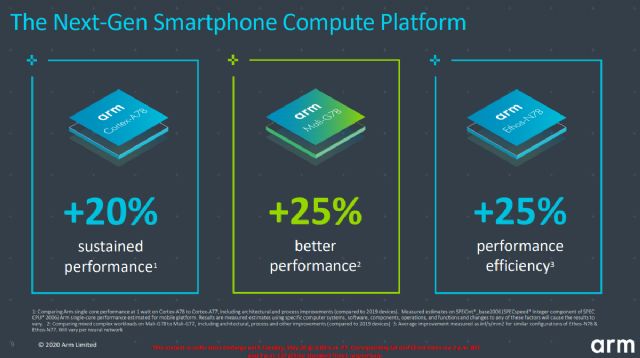
Samsung recently completed the post production for its upcoming 5nm chipset, Exynos 992. And now, reports from South Korea reveal that the mass production of the new 5G processor begins in August 2020 and will feature ARM’s latest Cortex-A78 cores and Mali G78 GPU.
The new cores and GPU technology is said to be more powerful and efficient than the previous generation’s Cortex-A77 cores and Mali-G77 GPU. ARM claimed that the new core generation will be 20 percent more energy efficient than its predecessors with a 25 percent bump in GPU performance as well. Unlike the Exynos 990, the Exynos 992 SoC is said to bring major upgrades over just minor improvements.
A notable improvement is the shift to the new 5nm fabrication process, which will be the company’s first. In comparison, Qualcomm’s current flagship mobile processor, the Snapdragon 865, uses a custom version of the ARM Cortex-A77 cores and Cortex-A55 for low power tasks. So we can expect the Exynos 992 SoC to rival the Snapdragon 865 Plus, which may launch later this year.
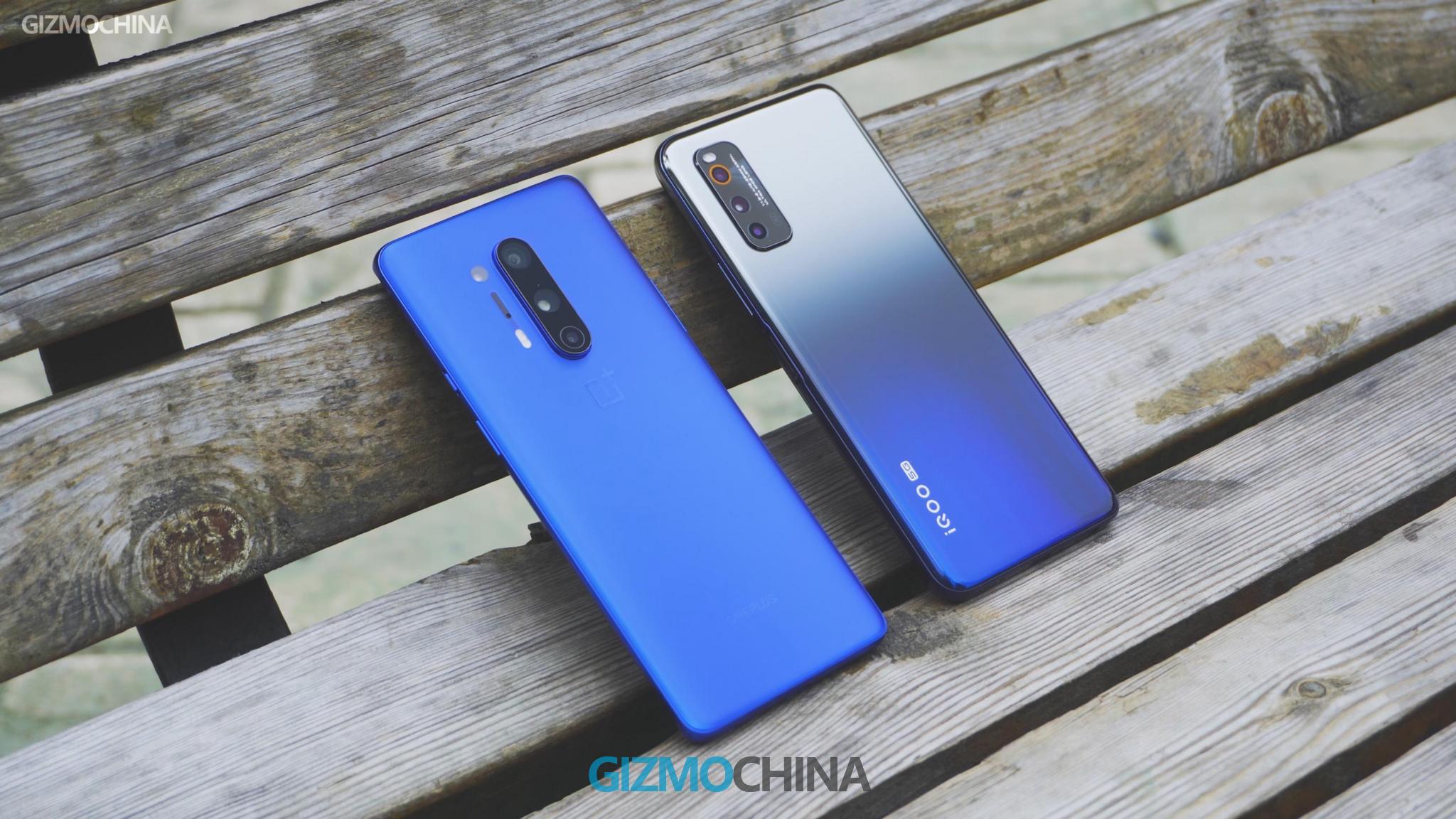
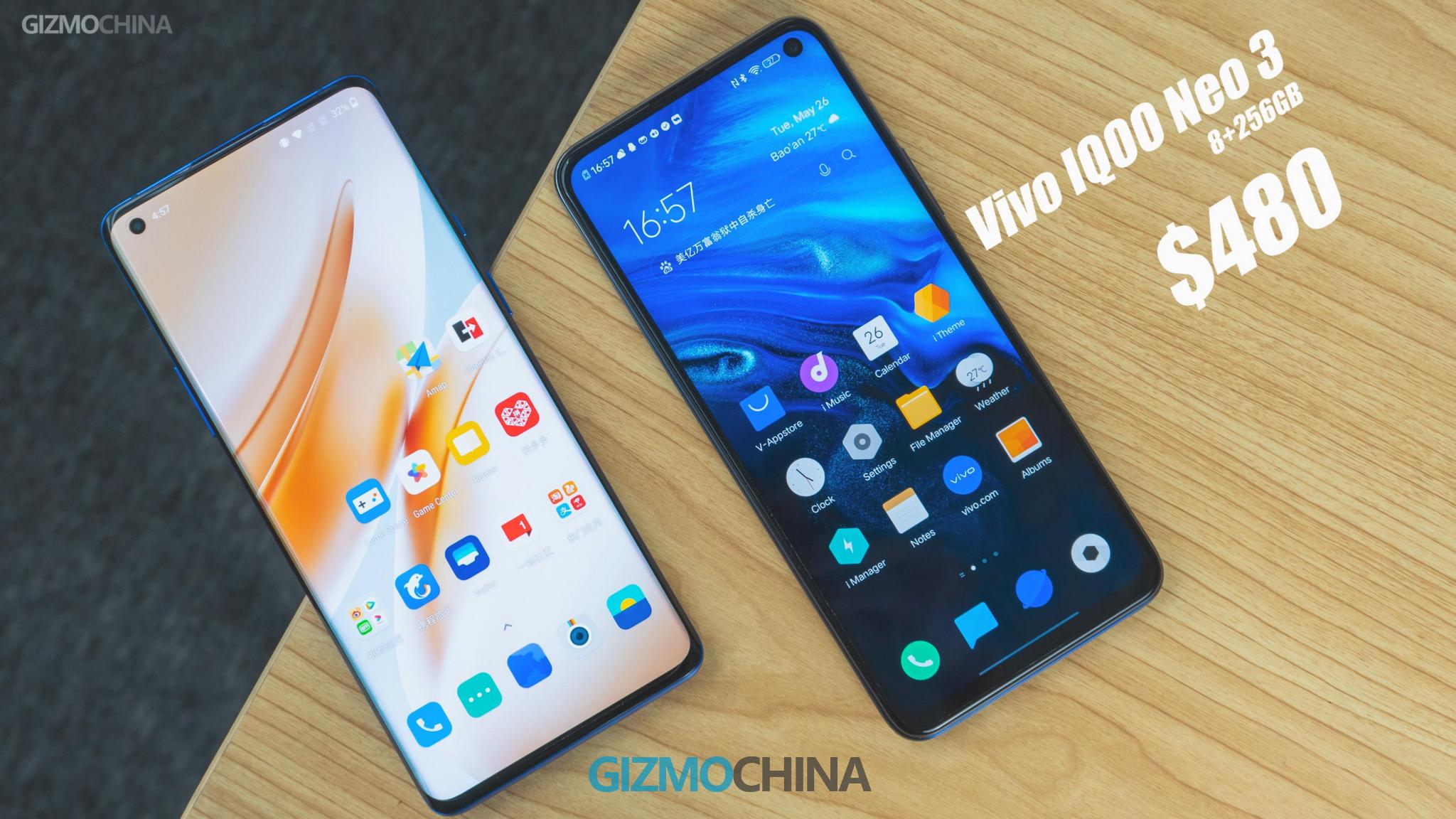
In the last review, we compared the cameras on the OnePlus 8 Pro vs Huawei P40 Pro. This time let’s take a closer look at gaming on the OnePlus 8 Pro. And for this, we pit the OnePlus 8 Pro vs iQOO Neo 3.
The latest iQOO Neo 3 is a really cost-effective gaming phone. Even if you consider the top-end version, it only costs around 480 USD. Compared to the OnePlus 8 Pro’s price tag starting from 899 USD, I think it’s worth looking at the performance of both the devices in terms of gaming. The price difference is huge and if you are looking for a high-end gaming smartphone, it’s worth checking out if the affordable iQOO Neo 3 can be as good as the top-end players.
OnePlus 8 Pro vs iQOO Neo 3: Display
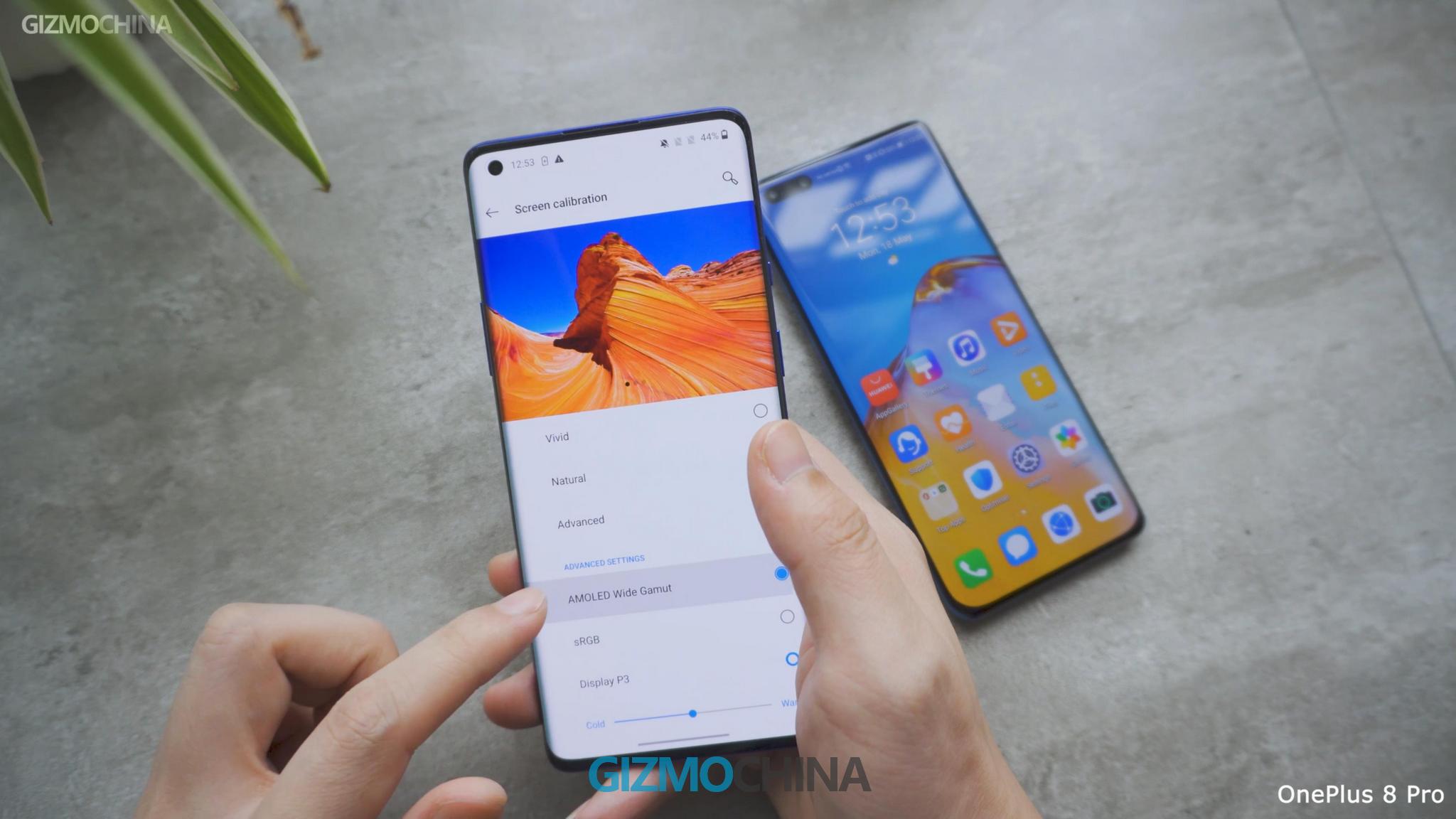
Let’s start with their displays. For the OnePlus 8 Pro, the 6.78-inch display is pretty amazing just like we saw in the last video. This customized Samsung Super AMOLED display features up to 120Hz refresh rate with 2k resolution, which is already better than most current smartphone displays. In addition to this, OnePlus continues the excellent tuning of its displays including high color accuracy under different color modes.
The tested result of delta E is even lower than 1 in the standard mode, making it one of the best smartphone displays in the market right now. But it’s not just about right color tuning, the phone’s display is also able to boost its peak brightness under strong sunlight. OnePlus also developed a video frame interpolation technology (you can read more about MEMC tech here) for playing videos in specific apps and included players, which used to be applied on some high-end TV sets for smoother video output, adapting to the high-refresh-rate display.
While, for iQOO Neo 3, the 6.57-inch display amazingly supports up to 144Hz refresh rate. In the last few weeks, we saw just how useful the 144Hz display of Red Magic 5G is for improving gaming experience and system fluency. And this time, iQOO has given us an even cheaper model with the same quality display. But compared to the OnePlus 8 Pro, the display gap between 120Hz and 144Hz is hard to perceive.
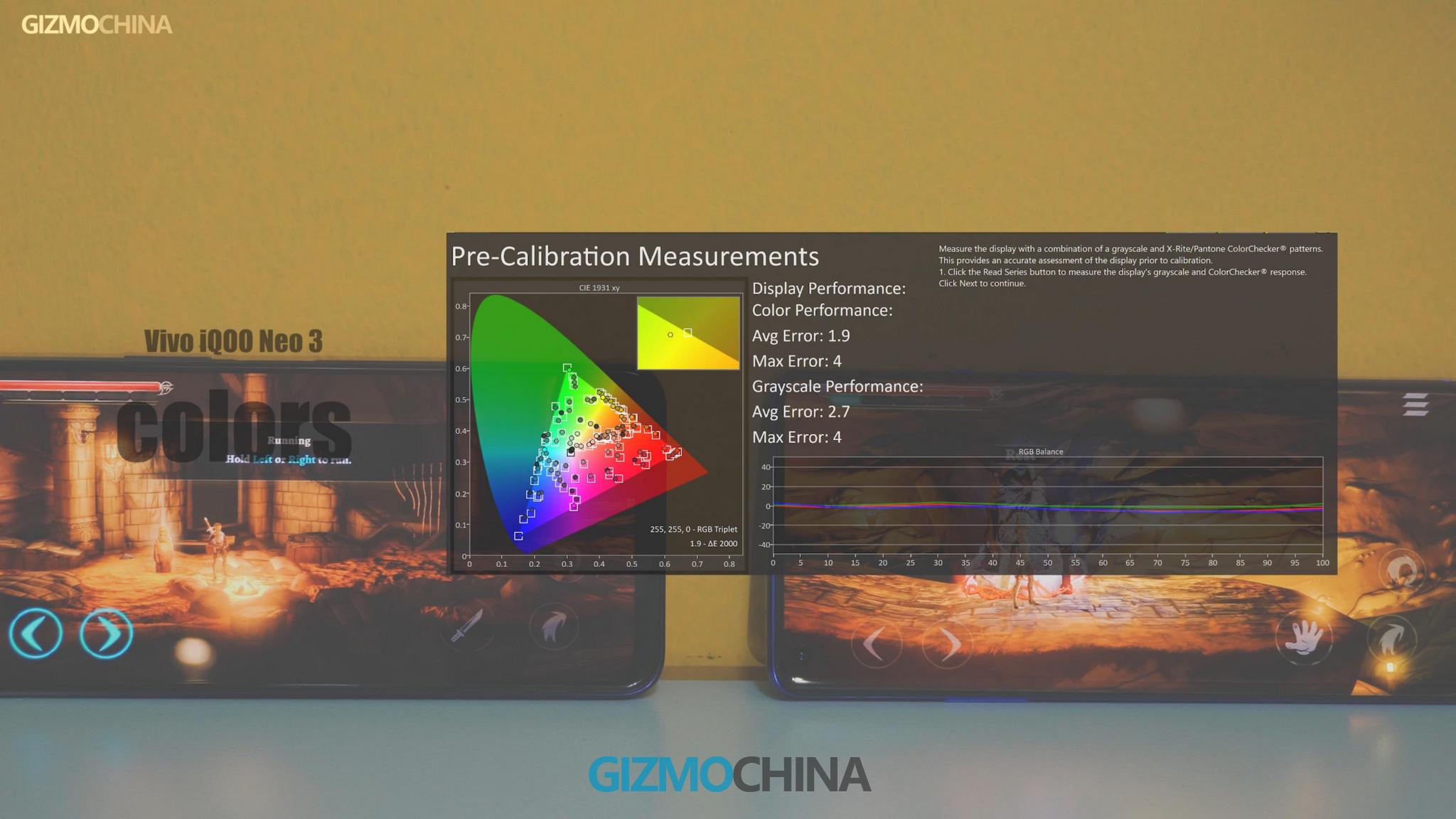
Meanwhile, it’s important to note that iQOO Neo 3 comes with an LCD 1080P display, which forces it to use a side fingerprint-reader. Although it responds fast enough, the in-screen fingerprint reader of the OnePlus 8 Pro provides a more comfortable user experience besides being fast. As for the display colors, although it’s not as accurate as the OnePlus 8 Pro, the standard mode delta E also gets a pretty decent score at 1.9. But when we switch to the default mode, the number rises to 3.8. As for the gaming experience, there is no doubt that OnePlus will have a better visual experience.
By the way, the front cameras are pretty small, so it doesn’t take up a lot of the display space. It is also worth adding that the iQOO model can be a fingerprint magnet if you remove the screen protector because it doesn’t have an oleophobic coating on the display, unlike the OnePlus 8 Pro.
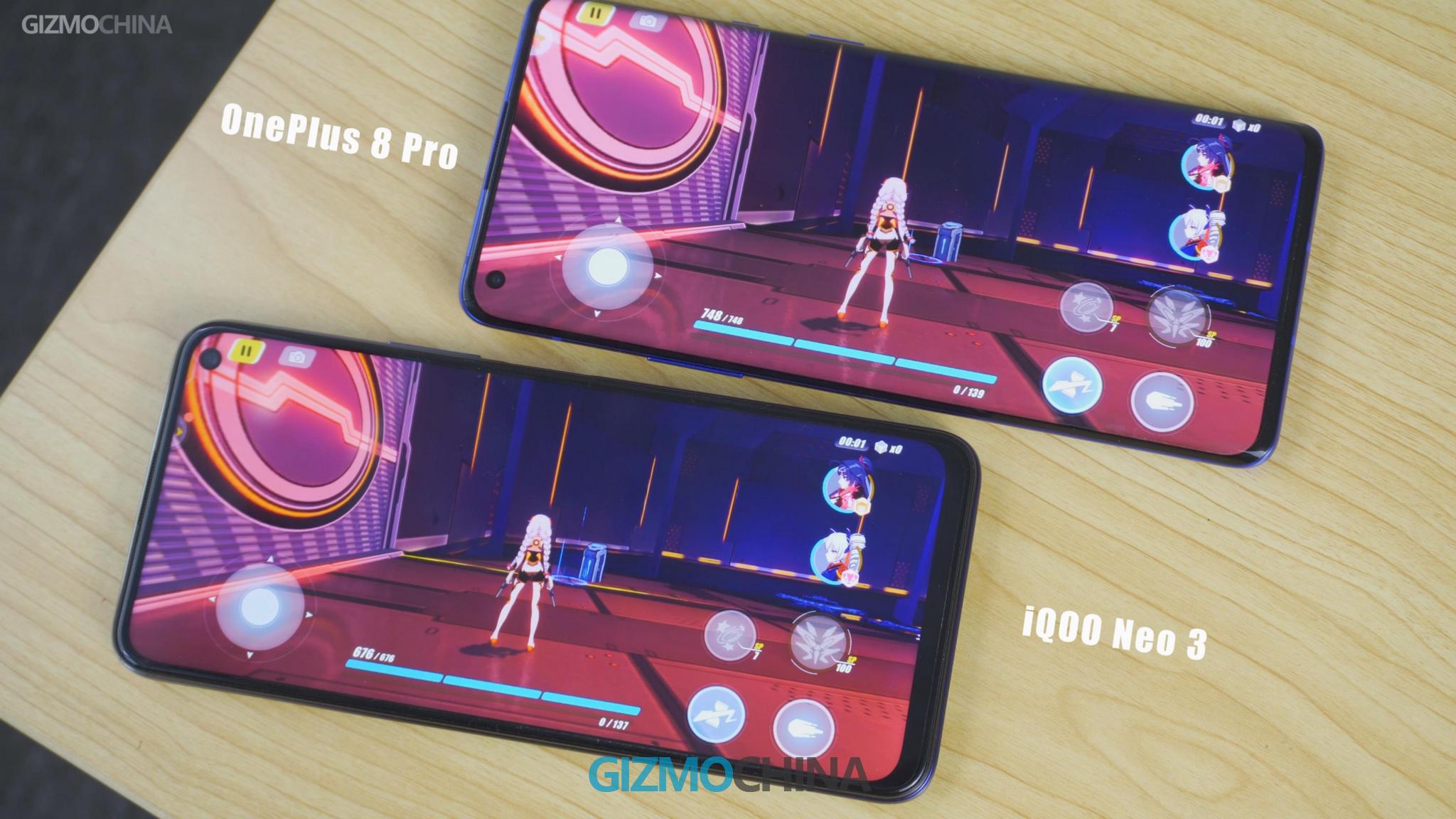
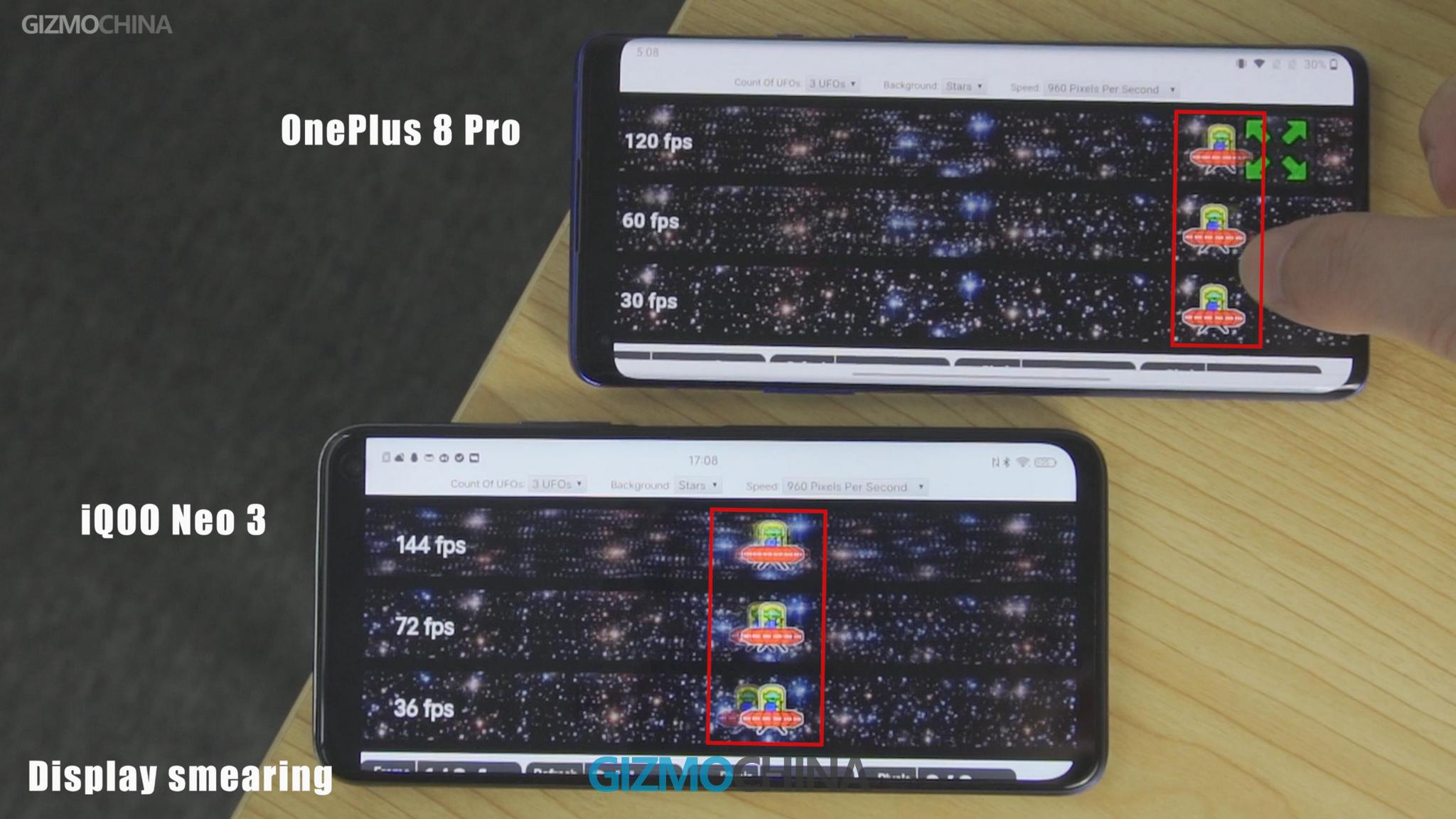
I would also like to add that despite having a higher refresh rate, the iQOO Neo 3 isn’t unsusceptible to display smearing. As you can see here in this image (or check the review video at the start of this article), the display on the iQOO models smears a bit. So the OnePlus 8 Pro does a better job in the display department.
In addition to better visuals, gamers should also be interested in the sound output of a smartphone during gaming. Both phones come with dual speakers for creating stereo audio. But here we would like to give credit to the OnePlus 8 Pro, it sounds much better, no matter for music or gaming. But the Neo 3 has 3.5mm earphone jack, so if you are going to take the Neo 3, make sure to use your wired headphone to experience better sound quality.
OnePlus 8 Pro vs iQOO Neo 3: Benchmark Performance
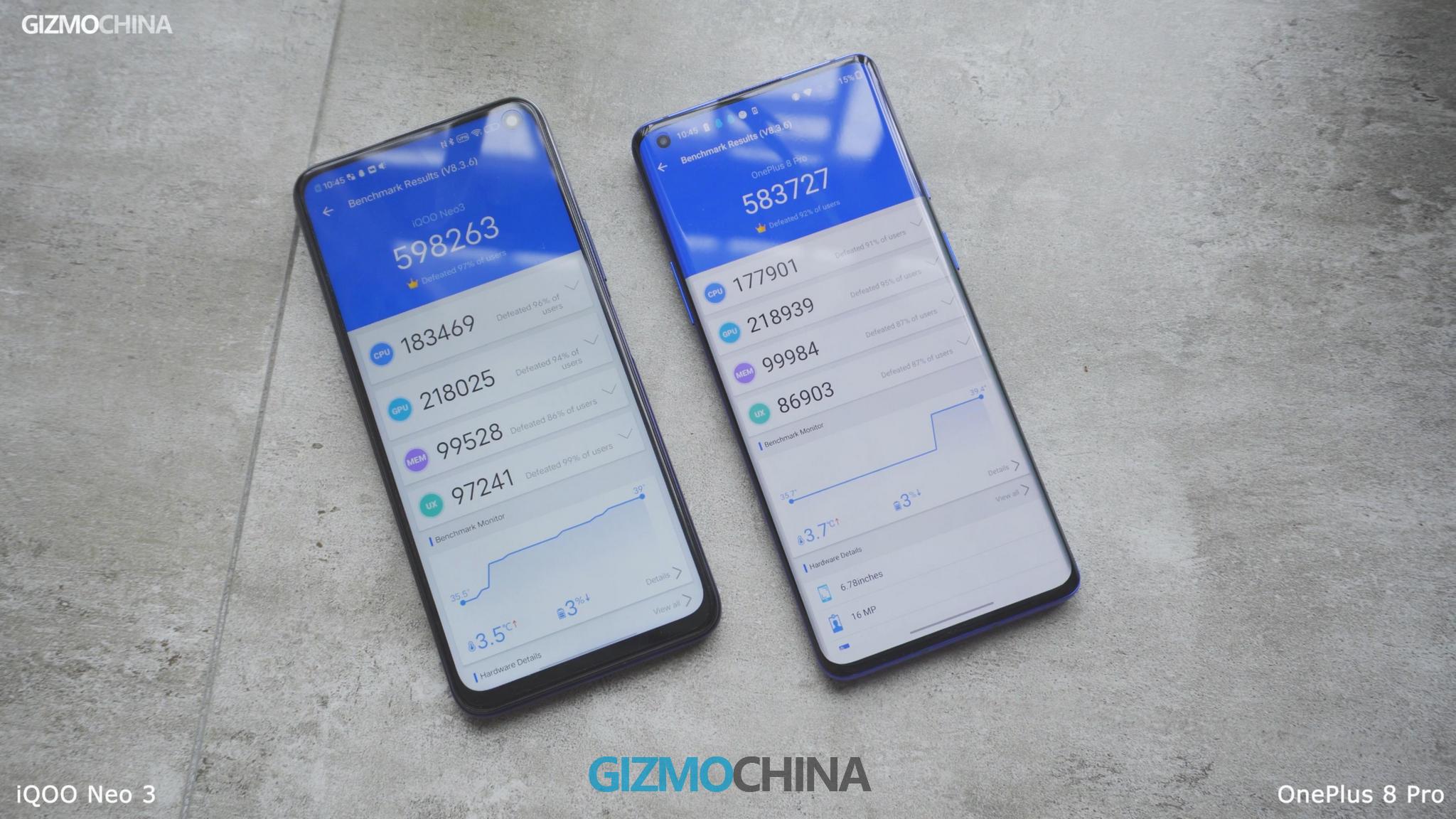
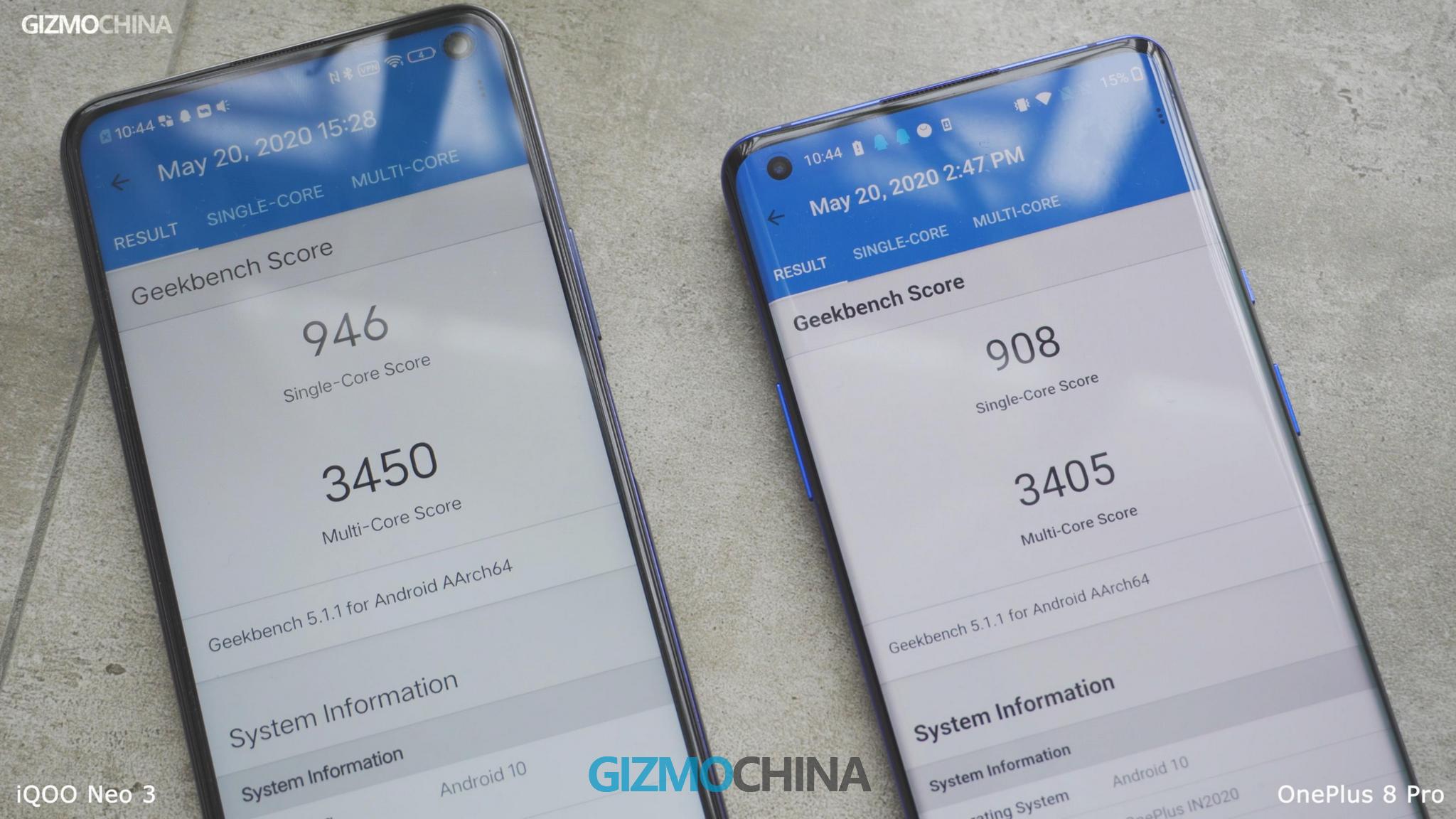
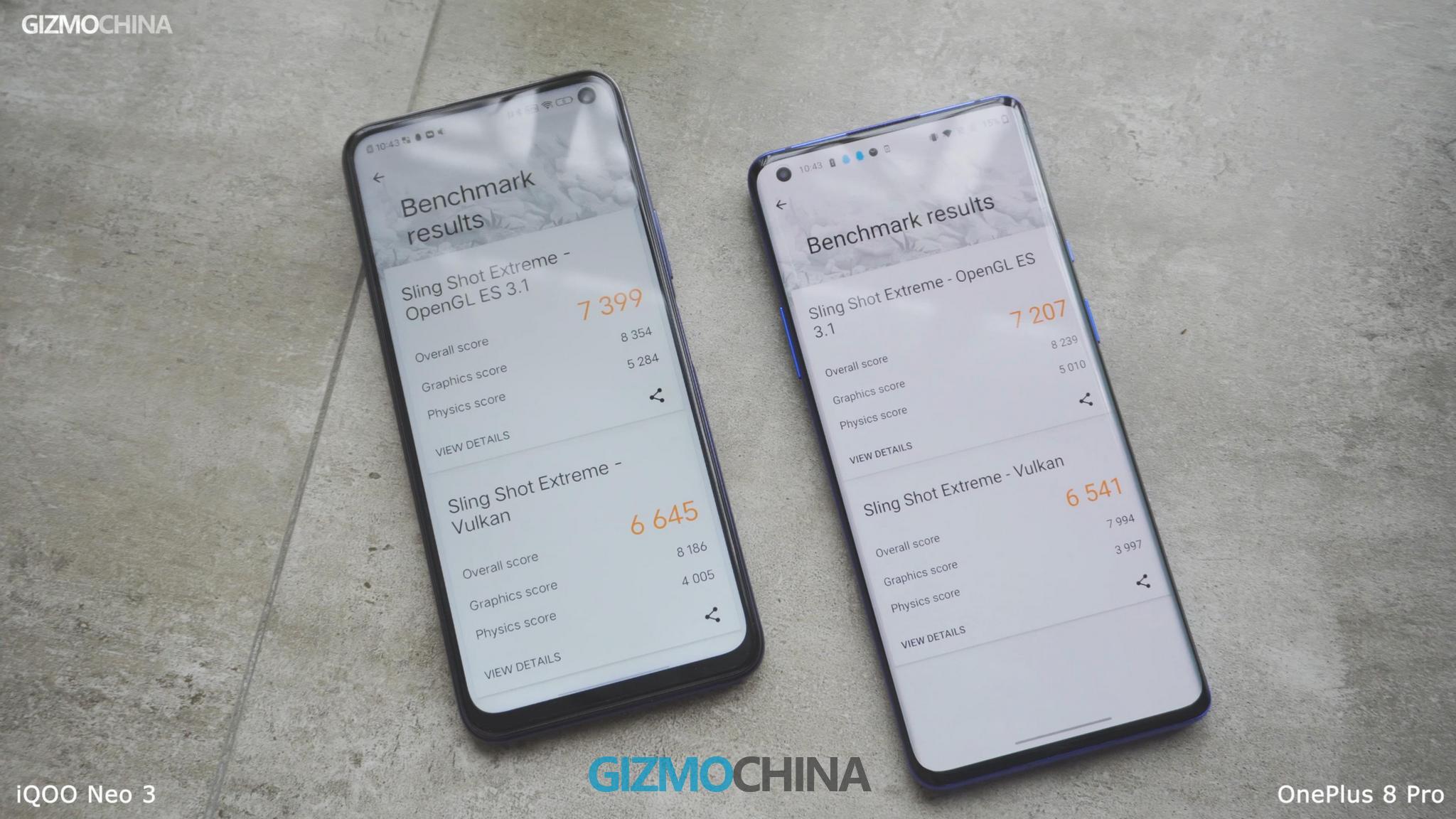
Before we move on to the actual gaming test, let’s run some typical benchmark apps. In 3Dmark, the iQOO Neo 3 takes the lead and the result is closer to Redmagic 5G that we’ve tested before. And 7207 point for the OnePlus 8 Pro was also good enough for a Snapdragon-865 model. And the results in Geekbench 5 is similar to what we got in 3Dmark. The iQOO model still takes the lead in both single-core and multi-core test but there is a small gap between them. In the Antutu benchmark, the overall score of the Neo 3 is also a bit higher than the OnePlus 8 Pro but the GPU test tells us there should be a very small gap in their gaming performance.
1 of 3
But are they really close to each other when we actually play games? Of course not.
OnePlus 8 Pro vs iQOO Neo 3: Gaming
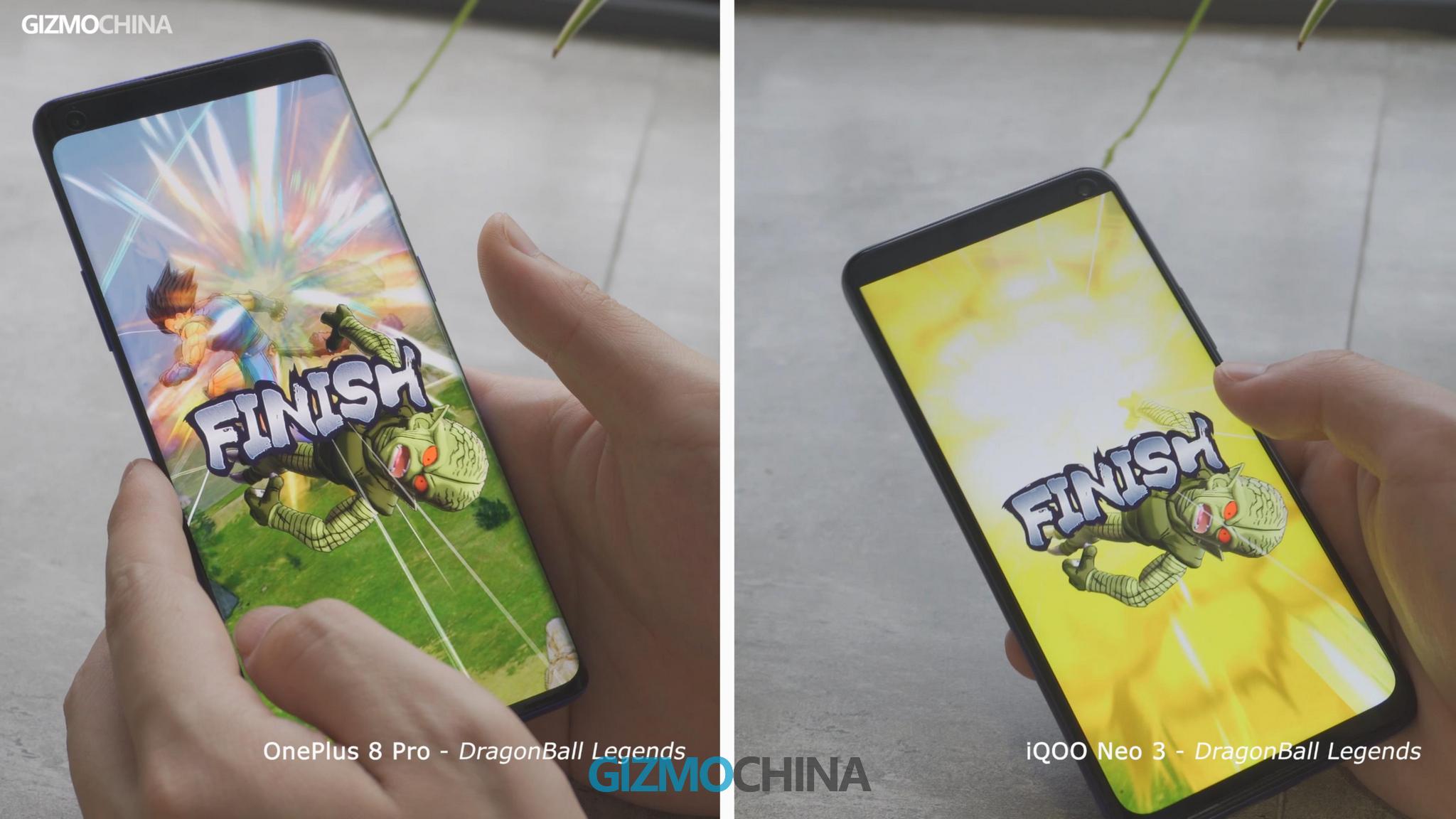
In the actual gaming test, the better display quality of the OnePlus 8 Pro will naturally provide better image quality including better resolution and better colors. So when it comes to gameplay, it was really fun to play games on the OnePlus 8 Pro.
When you consider Android games supporting high framerates like 120fps or even higher, all I can tell you is that there are only a few popular games that allow you to fully use the highest frame rate, whether its the OnePlus 8 Pro or the iQOO Neo 3.
Maybe you’ve already seen a list of 120fps android games on the internet. Then I have to say the list does not hold true for all high-refresh-rate smartphones – at least according to our test. The games mentioned in most lists were only able to run high at framerate on the iPad. We tested so many games on the list on both these phones, but hardly any game performed over 60fps.
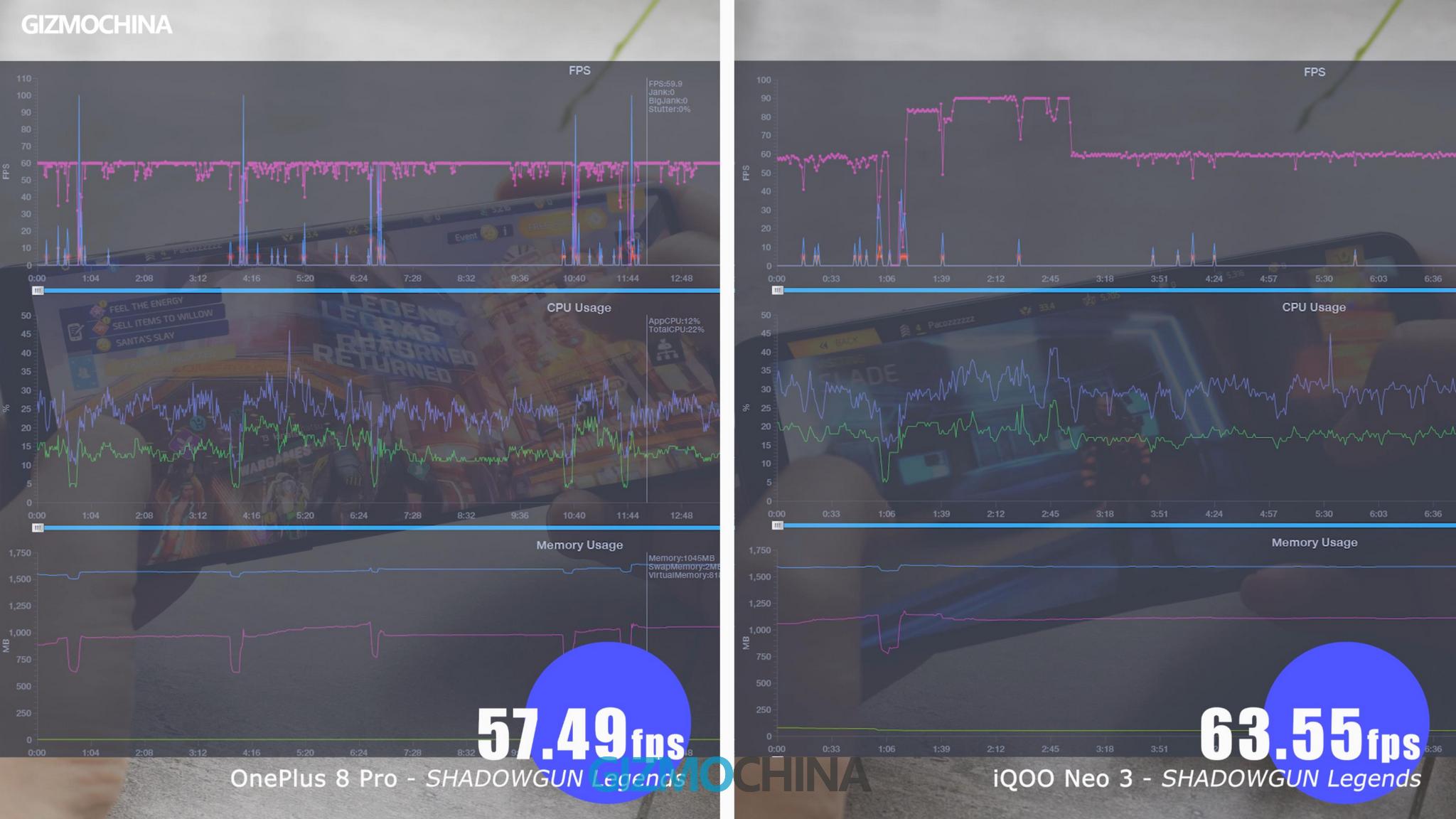
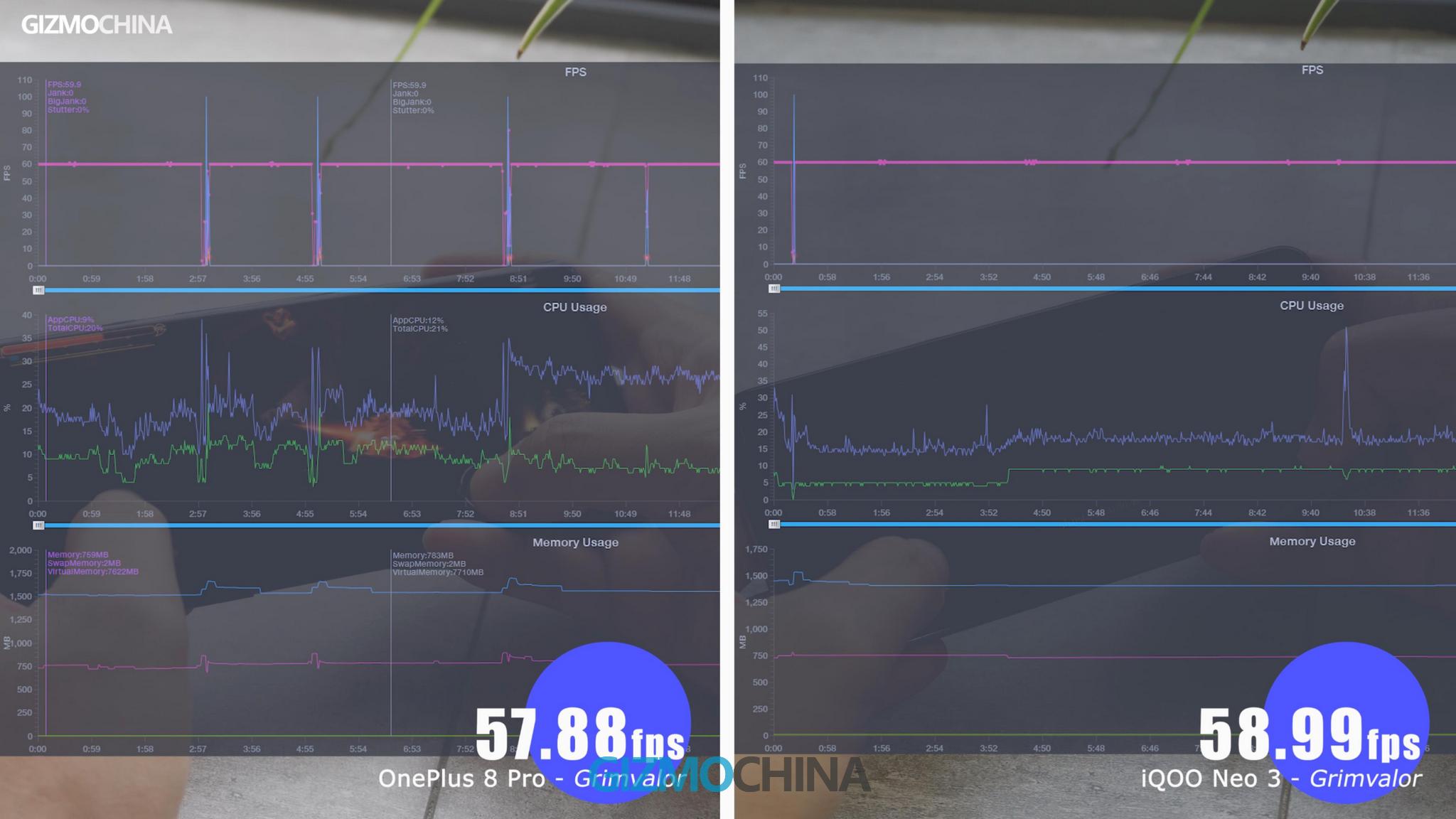
On almost all games, the OnePlus model with snapdragon 865 handled graphics very well and was able to stably maintain 60 fps framerate. On the other hand, the iQOO Neo 3 sometimes was able to have up to 90fps framerate in certain games. For example, in shadow-gun legends, the Neo 3 could peak at 90fps over a short period but suddenly fell down to 60fps level. It seems that iQOO Neo 3’s system would allocate the CPU resources according to the phone temperature automatically. But we checked the CPU temperature and the hand-perceived heat and confirmed that it wasn’t really very high for the phone to throttle the CPU performance. So it was surprising to see the performance drop down on the iQOO Neo3 even without a significant rise in temperature.
1 of 5
OnePlus 8 Pro vs iQOO Neo 3 gaming
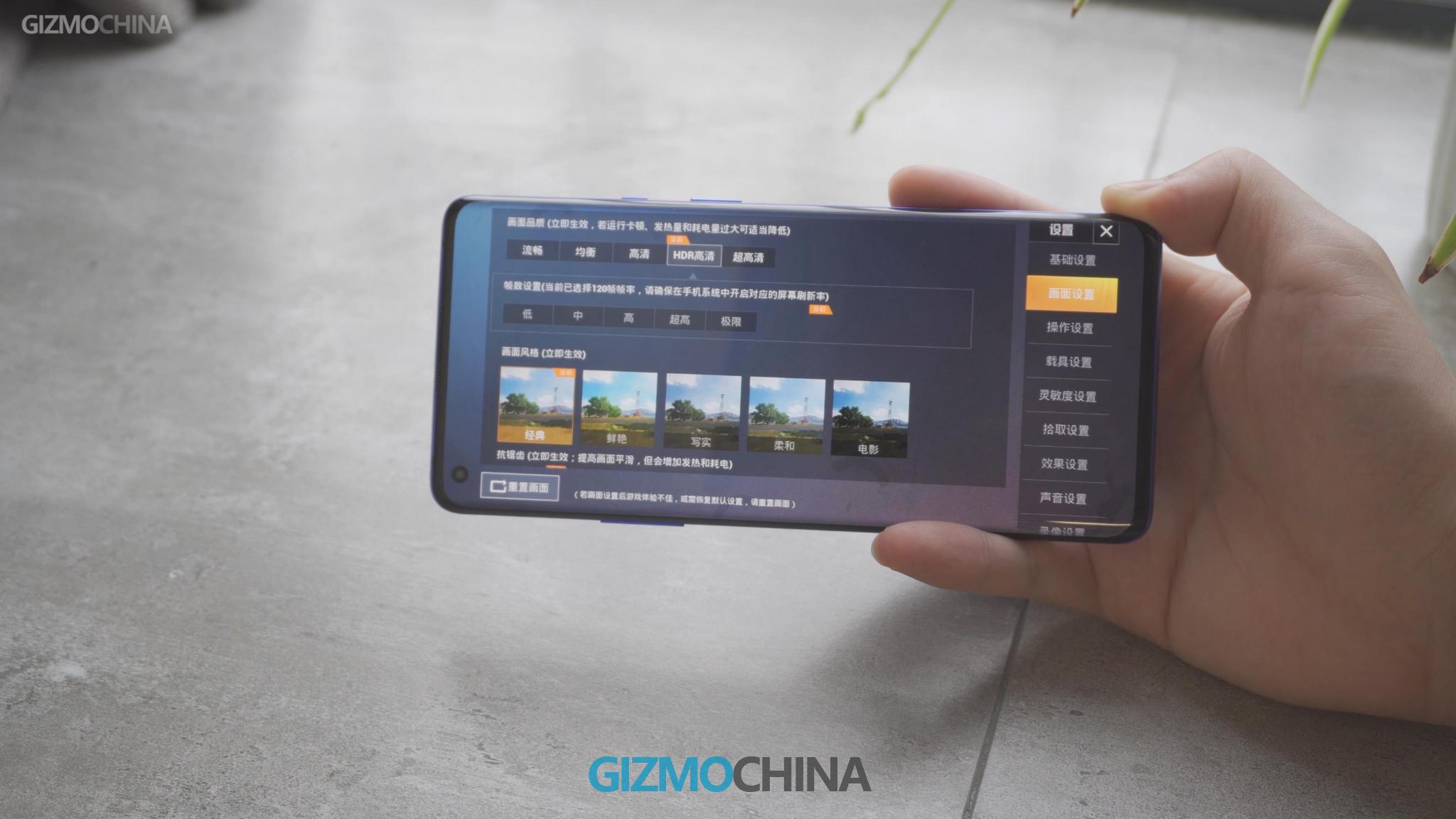
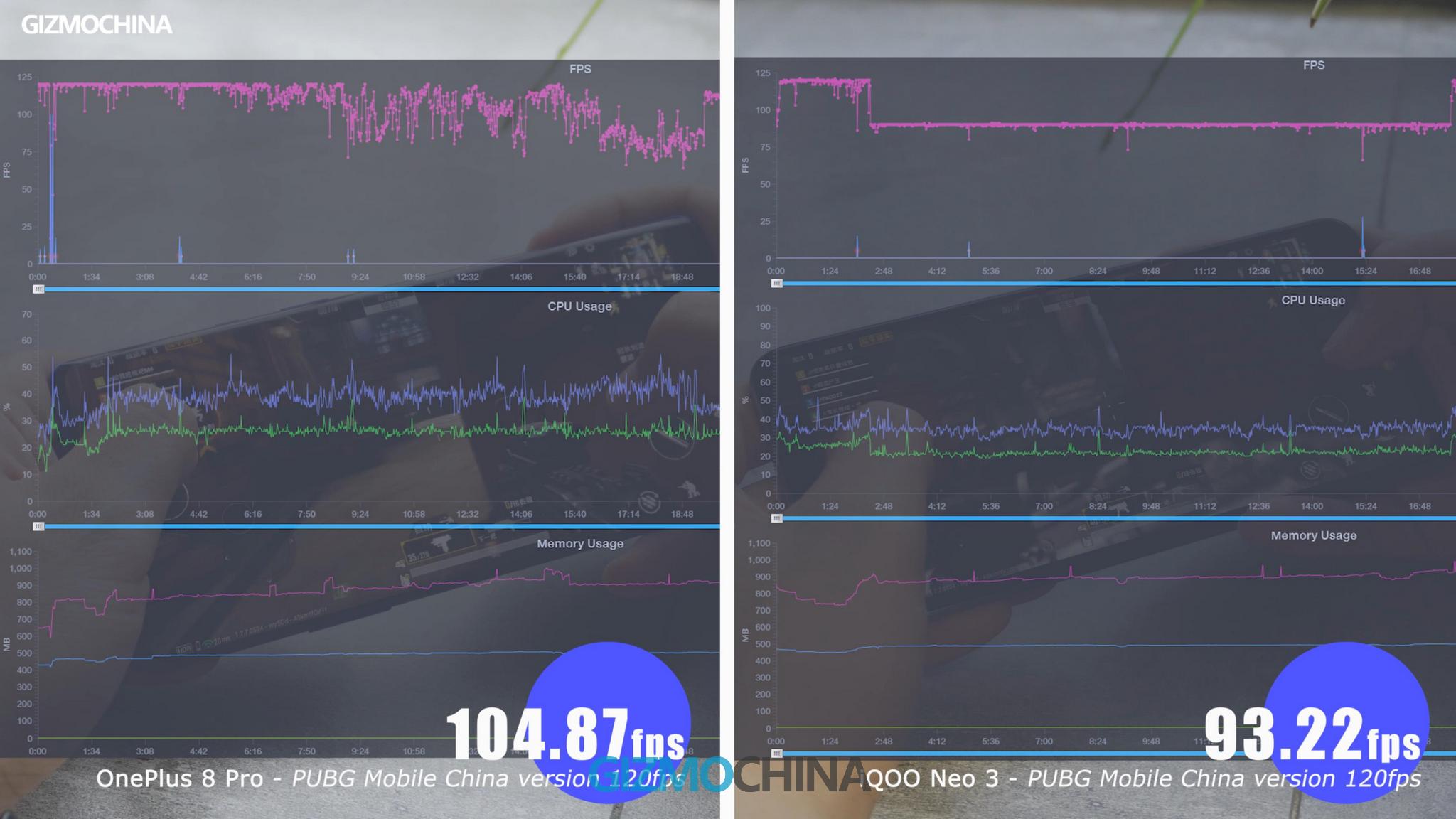
And then we tested running the PUBG Mobile China version where we applied the highest graphic settings including HDR quality and 120fps mode on these two models. In the 30-min gaming test, the iQOO Neo 3 still got the problem of framerate reduction. The strategy used by the Neo 3 is more likely to maintain a stable framerate over a period while controlling the temperature well. So overall, although it could peak at 120fps, the average framerate for the Neo 3 only remained at 93.2fps. For the OnePlus 8 Pro, the result was better than expected. Though it fluctuated a lot during combat, the average framerate still remained at 104.9fps.
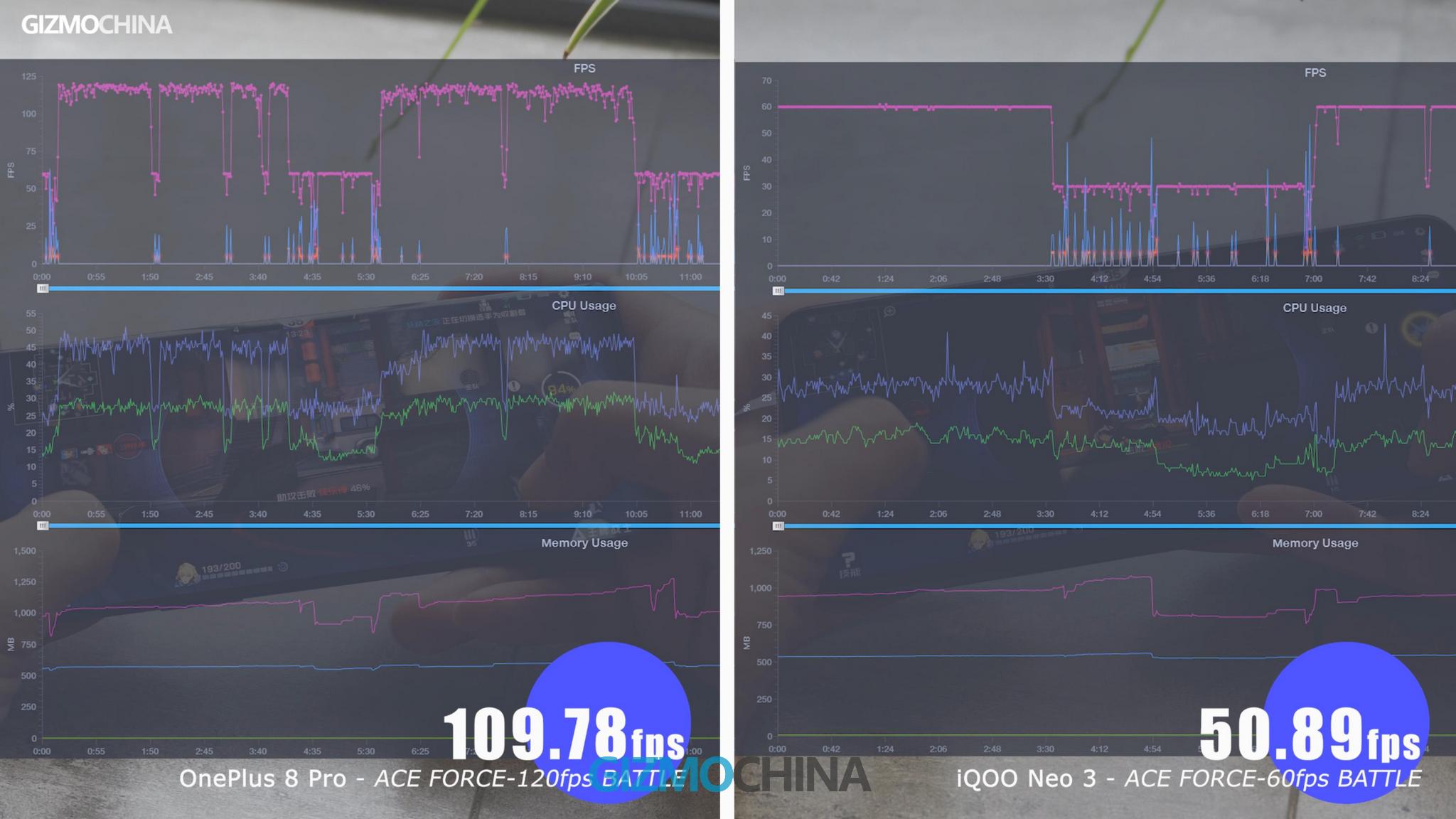
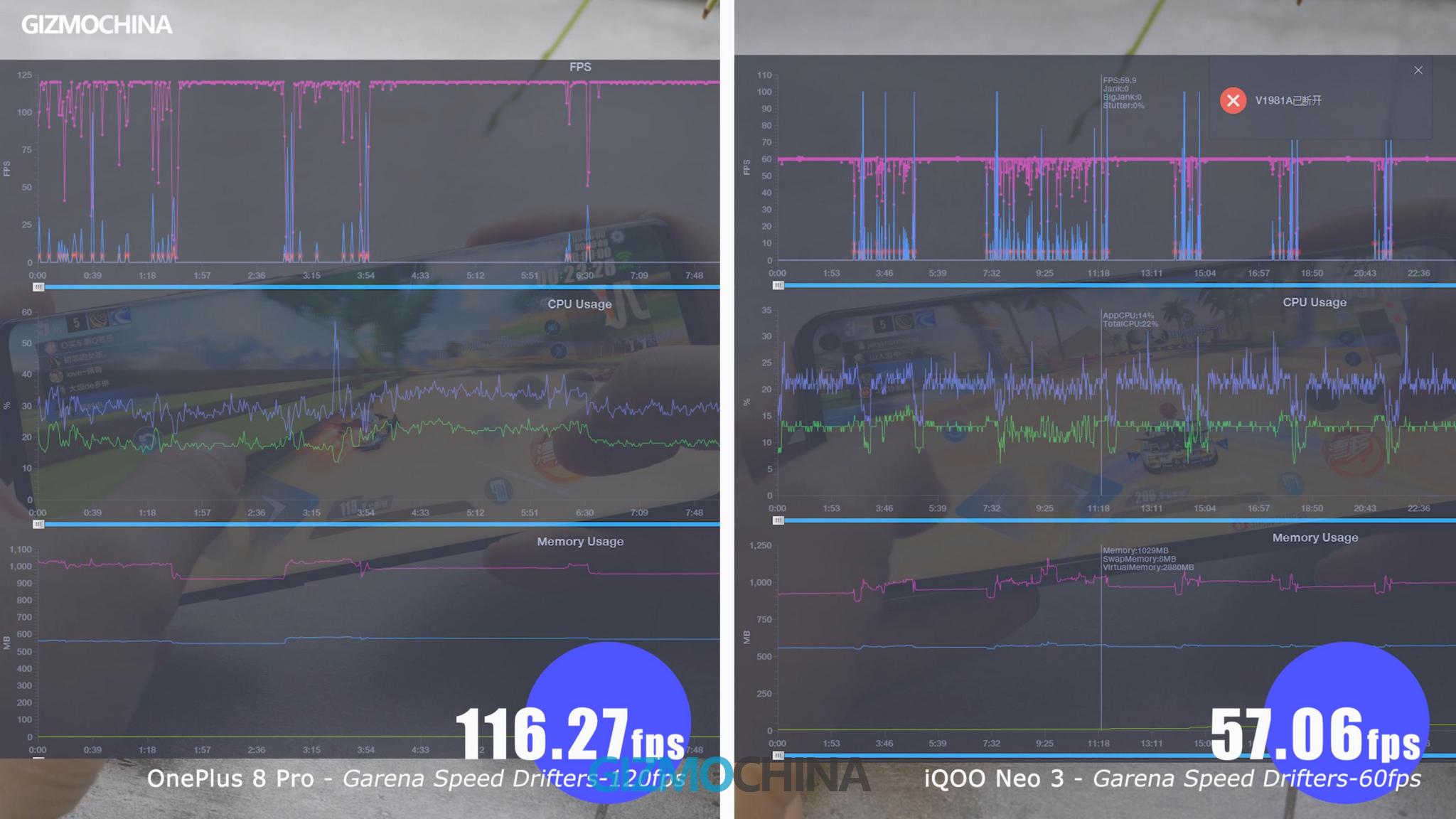
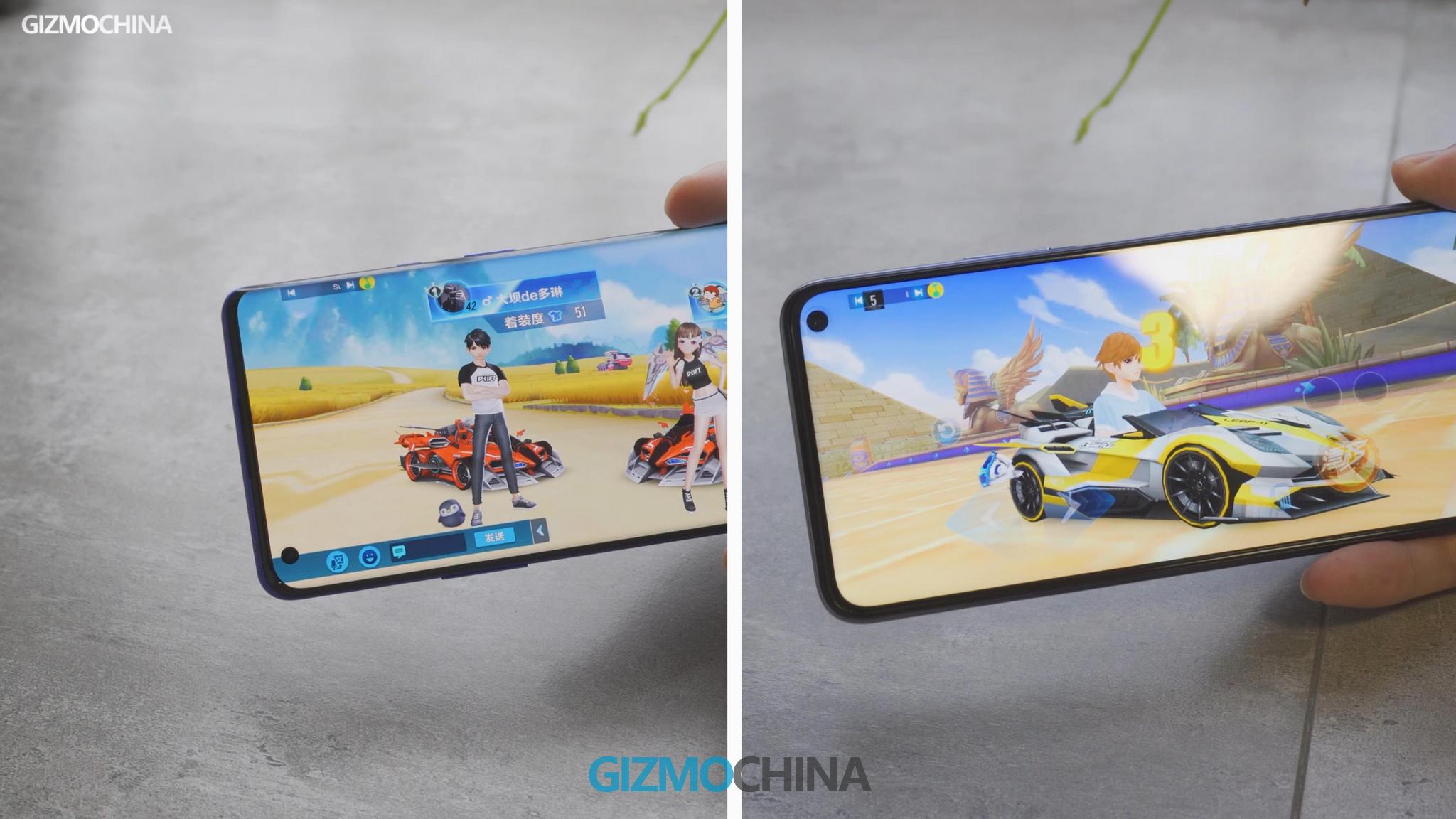
And for OnePlus 8 Pro, there are two more Chinese games supporting 120fps. One is called Garena Speed Drifters, another one is Ace force. But neither of them is available on the Google Play store. For Garena Speed Drifters, the 8 Pro ran at an average of 116fps, but the game did not support high framerate for the Neo 3, so it only ran at 57fps on it. The FPS game Ace force, which is very similar to the PC game overwatch, could run at 109.8fps on the OnePlus 8 Pro, but only run at 58.95fps on the Neo 3 due to the framerate limitation. Note that now the OnePlus 8 and 8 Pro can both run Fornite at 90fps!
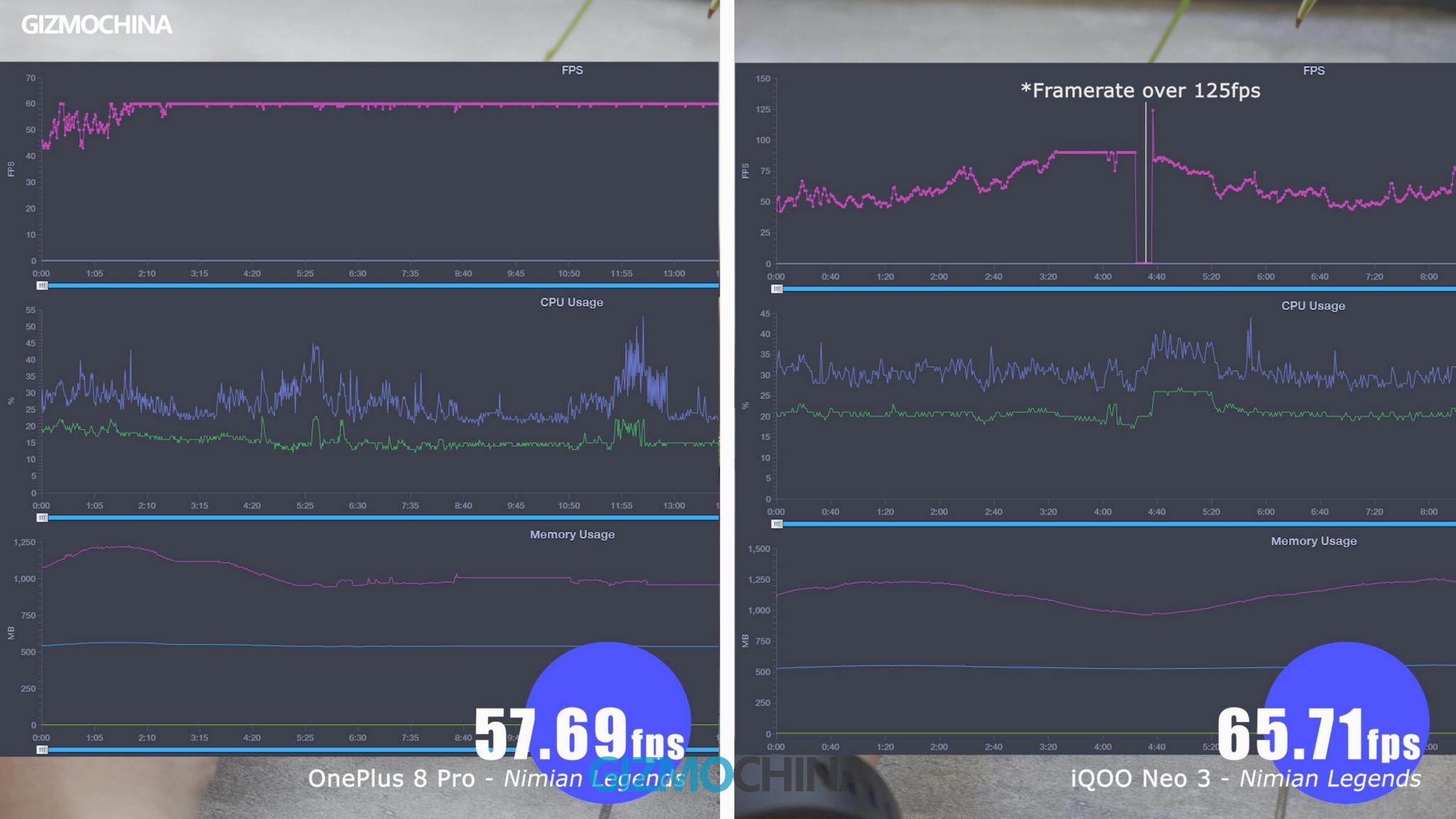
And in the end, we did the stress test with the Nimian Legend. The Neo 3 was able to peak at 144fps framerate under simple scenarios and run at an average of 65.7fps, while the OnePlus 8 Pro met with frame limitation again and ran at 60fps maximum framerate. But the average framerate wasn’t bad at 57.7fps.
So there are still a lot of obstacles to pursue high framerate gaming experience on Android phones. Whether its 144Hz on the Neo 3 or the 120Hz on the OnePlus 8 Pro, both phones couldn’t fully unleash their power of the excellent displays and SOCs. It seems that game developers and phone manufacturers haven’t come to an agreement to provide the best mobile gaming experience for users yet in most games.
Although the OnePlus model achieved better performance in certain optimized games that were customized for higher framerate for the OnePlus 8 Pro, most of them were not available for global users. And the occasional heating issue on the OnePlus 8 Pro is also a negative factor for hardcore gamers.
As for iQOO Neo 3, the problem is more complicated. It often automatically cut down the performance to cool down the CPU. While this helped the phone stay cool most of the time, we also lost gaming performance as a result.
OnePlus 8 Pro vs iQOO Neo 3: Battery Life & Charging
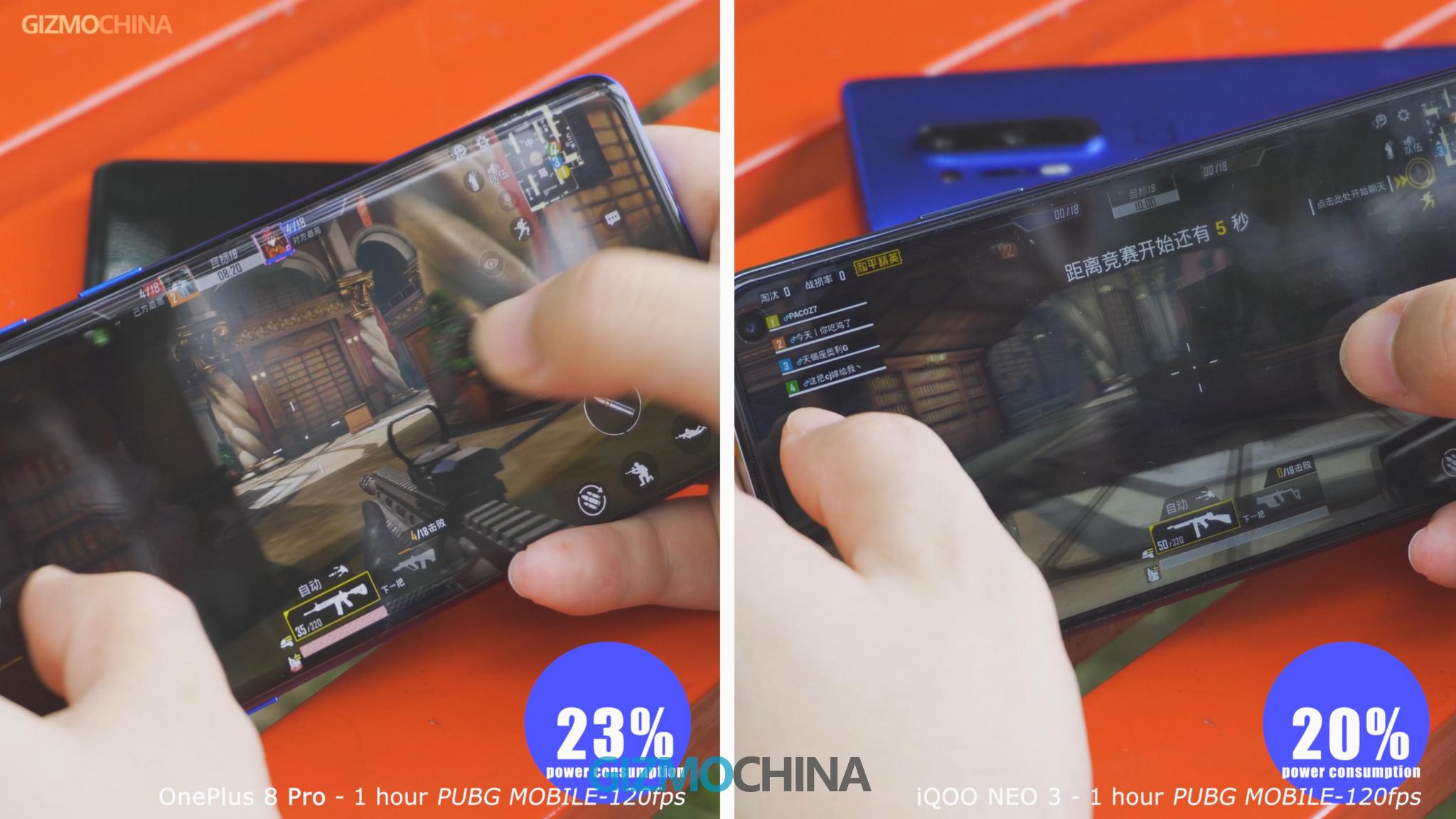
In daily use, battery life and charging efficiency are also important for a gamer. As compared to most smartphones, the OnePlus 8 Pro generally consumed more power when the display was switched to the high-resolution and high-refresh-rate mode. In our 1-hour PUBG Mobile test, the OnePlus 8 Pro with the highest display options consumed 23% of power, while the iQOO neo 3 consumed around 20% in the 144Hz mode.
1 of 2
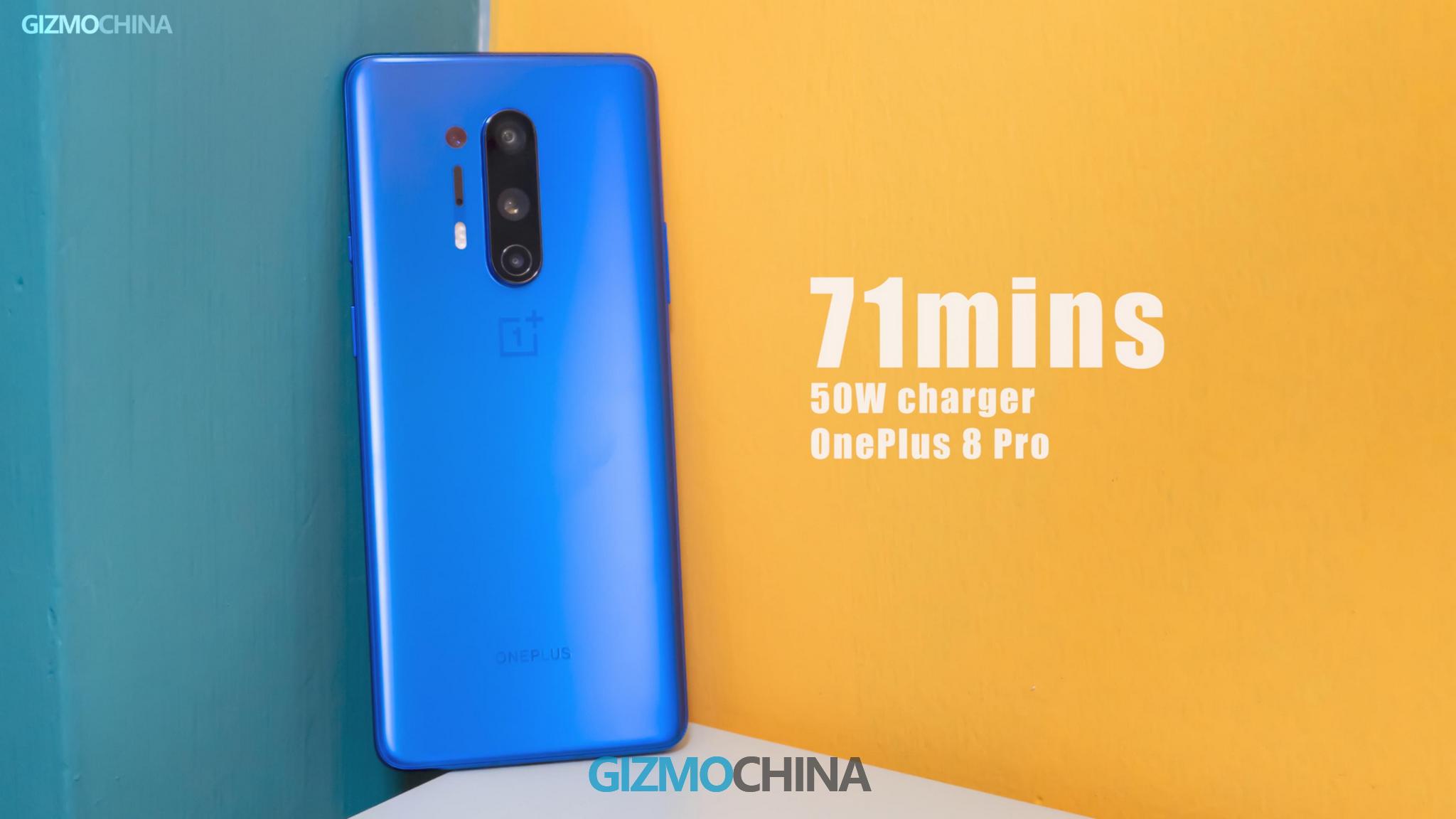
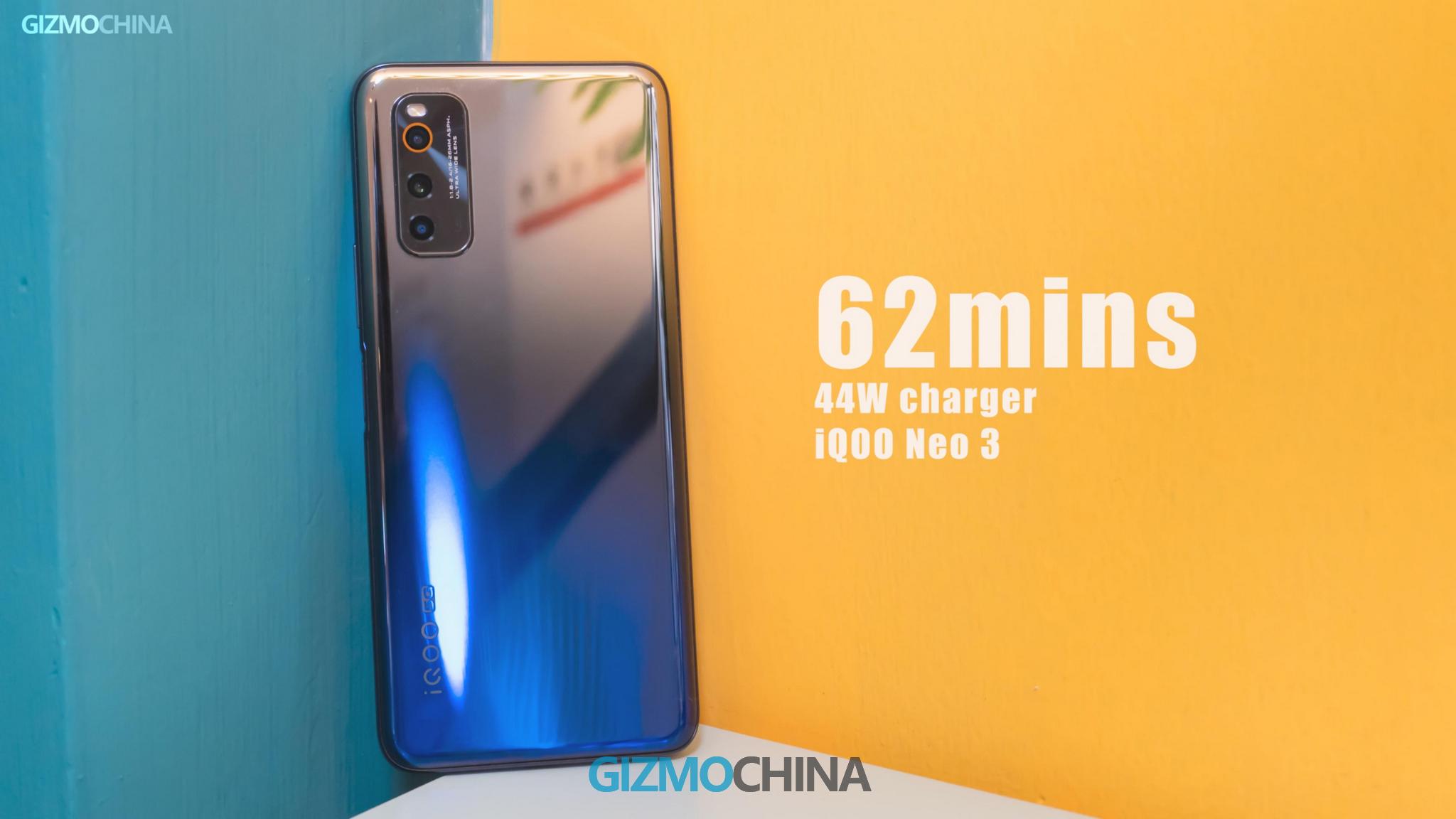
These two models feature a 4500mAh battery. In our 100% charging test, the OnePlus 8 Pro took 71 mins to fully charge with its 50W charger. And it only took 62 mins for the Neo 3 to finish the test. In addition to the tests we did, in daily use, the OnePlus 8 Pro sometimes gave me a feeling of battery anxiety as the premium display really consumed a lot of power.
So that’s it. There’s no doubt that the OnePlus 8 Pro has better gaming graphics and more stable performance. However, it doesn’t mean that the iQoo Neo 3 totally lost the competition. On the contrary, the Neo 3 achieved better cooling and also a higher peak frame rate during gameplay.
More importantly, iQOO Neo 3 is a LOT cheaper! Just imagine you’re able to pay half price of the OnePlus 8 Pro to get similar gaming experience.
So if you are looking for a gaming smartphone but don’t want to spend a lot of money, the iQOO Neo3 is a very good option. The OnePlus 8 Pro offers a slightly better gaming experience and is definitely more feature-rich too. So if you have the money, you’ll not be disappointed with OnePlus 8 Pro’s gaming performance either.
Huawei Technologies has built up its reserves for important US made Chips, which will last for up to 2 years. According to sources, the move was made by the Chinese tech giant to safeguard its operations against US sanctions.
Sources revealed that the ample reserves were primarily for server grade processors made by Intel and Xilinx for programable chipsets. These processors are apparently the ‘most essential components’ that Huawei uses for its base stations and emerging cloud business. For those unaware, the Chinese vendor is a major player in the 5G networking infrastructure and equipment industry and is also developing cloud based services, similar to Amazon.
Image Via Asia Nikkei
The recent sanctions from the US government had cut off the chip supply to Huawei, but it seems that the company had already prepared in advance. It currently has an inventory that will last for 1.5 or up to 2 years. However, analysts have claimed that the reliance on stockpiled chips could end up hindering the company’s competitiveness.
Huawei had recently revealed that it had spent 167.7 billion Yuan ($23.45 billion) in stockpiling chipsets, components, and more in 2019, which is a significant jump of 73 percent from 2018. In particular, it seems that Huawei was more focused on building reserves for programmable chips from Xilinx, since it’s difficult to replace the processors at the moment, even from its own chip designer, HiSilicon.
Similarly, the company has also increased stocks for memory components like NAND and DRAM from Samsung, SK Hynix, Micron, and Kioxia during the same period. So, judging by how this looks, it would seem that Huawei is preparing for a battle of attrition against the US government. The impacts of the new US regulations will likely impact the Chinese OEMs operations, but only time will tell.
Xiaomi recently launched the MIJIA Smart Electric Kettle Pro in its home market China for a price of 249 yuan, which roughly converts to $35. Now, just a day after that, the company has introduced the MIJIA Smart Electric Kettle 1S which as the same indicates, is cheaper compared to the Pro model.
The company has confirmed that the MIJIA Smart Electric Kettle 1S is priced at 149 yuan which is approximately $21 and will be available for purchase in China from 1st June.
It has a capacity of 1.7 liters and the company has added a new insulation button to keep the temperature at 55-degree celsius. As per the company, that temperature is most suitable for immediate drinking.
The product packs a 1800W high-power concentrating heating ring, same as the Pro model. As per the company, it takes about six minutes to completely boil a full volume of water. With the British STRIX thermostat, it can offer precise temperature control and stop when the water is boiled.
Additionally, the inner liner, spout, and inner cover are made of food-contact 304 stainless steel which is touted to be safe and healthy and without odor. This is the same material used for the Pro variant as well.
The fuselage has double-layer anti-scalding design, hollow insulation to make sure that when there’s boiling water inside, the outside body of the product doesn’t heat up. Xiaomi‘s MIJIA Smart Electric Kettle 1S also comes with several other features which include easy to clean, triple safety protection for power, electric shock protection, heat preservation indicator, among others.
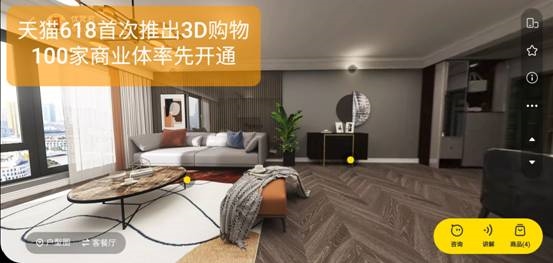
Earlier today (28th May 2020), Tmall announced that it will be launching its 3D shopping service. The new service uses 3D mapping technology and already has over 100 commercial retailing giants like IKEA joining in.
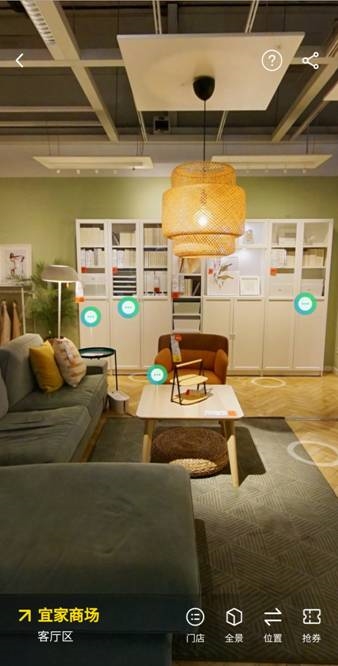
Through 3D Shopping, customers can simply browse the entire mall on their smartphones as they would if they were physically present. These measures have been implemented due to the ongoing Coronavirus pandemic, to encourage people to avoid densely populated areas like malls and shopping complexes. The 3D shopping service will use 5G networking and has a lot of potential in the commercial retailing industry.
Since people are advised to generally not move around in public too often, this technology could help many businesses in achieving a sizeable shift into the digital spheres. Furthermore, the 3D shopping service can also make the entire shopping experience more immersive and interactive, paving the way for more advanced technology and interfaces that could be used in the e-commerce industry in the future.
According to reports, this service already has 100 brands adopting this technology as the first batch. It includes major names like IKEA, which is a major home furnishing store. IKEA stores are known to be large, with 1:1 reproduction of its 3,000 square kilometer store being shifted into the digital realm. So, customers familiar with the place would actually find it easier to navigate through the store from their homes as well.
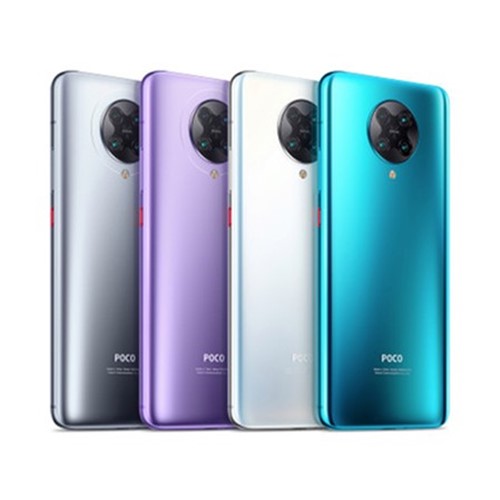
Earlier this month, Poco held an unveiling event to announce the Poco F2 Pro flagship phone. The handset had debuted as a rebranded version of the Redmi K30 Pro 5G phone. Today, the smartphone was made official in Malaysia with a starting price of RM 2,199 (~$505).
The Poco F2 Pro has arrived in Malaysia in two options such as 6 GB RAM + 128 GB storage and 8 GB RAM + 256 GB. They are priced at RM 2,199 (~$505) and RM 2,599 (~$596), respectively. In Europe, the same models were introduced for 499 euros and 599 euros, respectively. The Poco F2 Pro will be available for purchase starting from June 10.
The Poco F2 Pro has a 6.67-inch IPS LCD panel with a notch-less design. The full HD+ resolution supporting display offers a traditional refresh rate of 60Hz. The Snapdragon 865 mobile platform is present under the hood of the device. The base model has LPDDR4X RAM and the higher version has LPDDR5 RAM. Both variants have UFS 3.1 storage and there is no microSD card slot.
The handset features a 20-megapixel pop-up selfie camera. The rear shell of the smartphone has a quad-camera setup that includes a Sony IMX686 64-megapixel main lens, a 5-megapixel telephoto macro sensor, a 13-megapixel ultrawide sensor, and a 2-megapixel depth sensor.
The Poco F2 Pro is equipped with a 4,700mAh battery. The handset supports 30W fast charging.
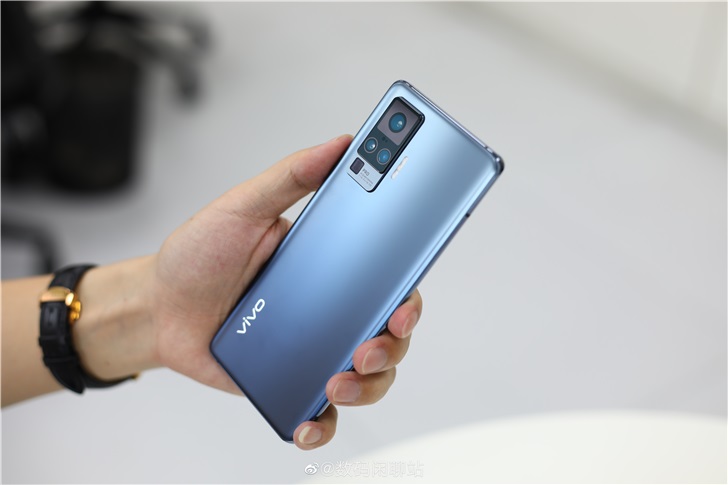
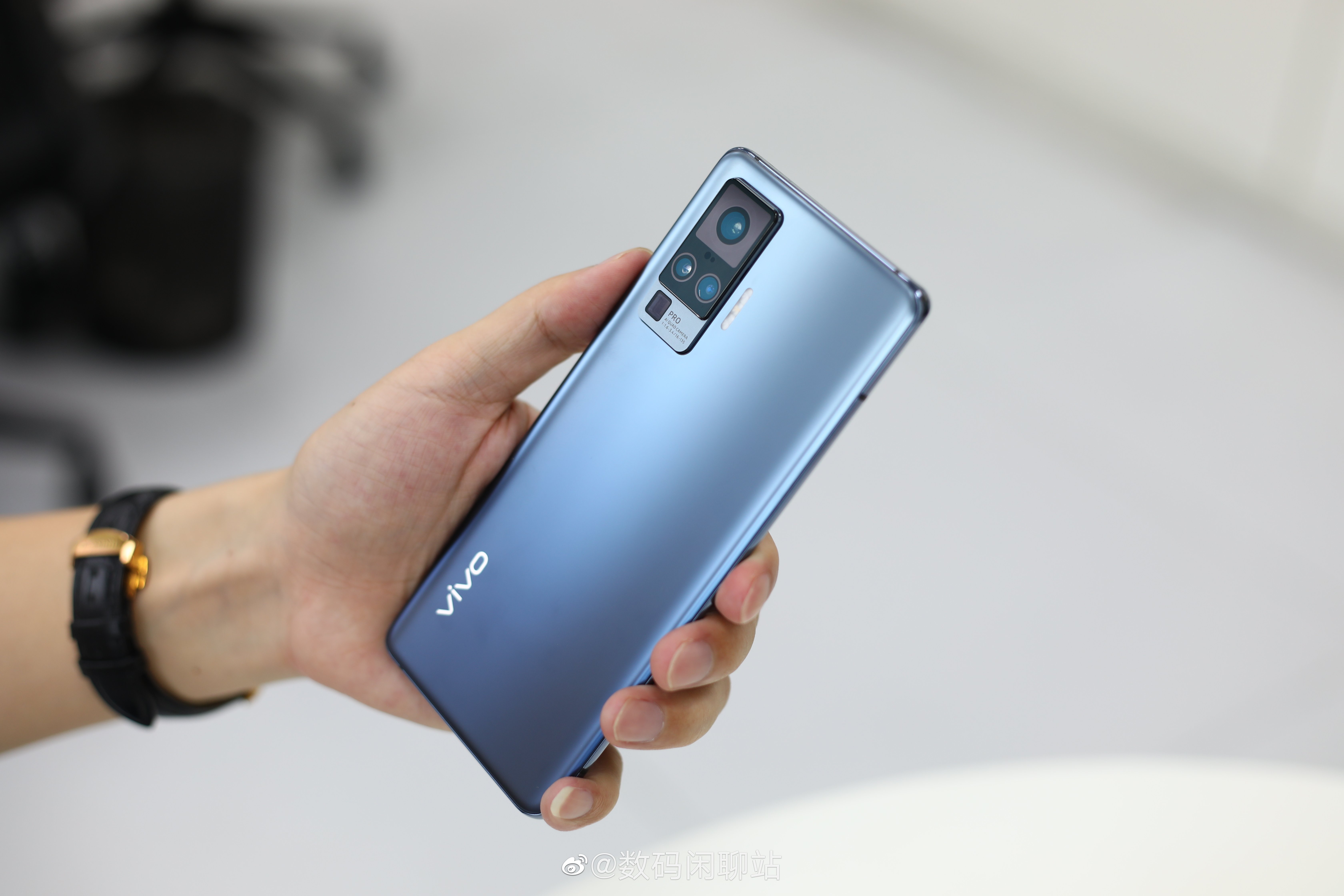
The Vivo X50 series’ launch is just around the corner. However, just prior to its actual announcement, live images of the Vivo X50 Pro have been revealed while the base X50 variant has had some of its specifications leaked as well.
The Chinese tech giant shared an official teaser for its upcoming flagship device. In the teaser video, the company places a great deal of emphasis on the device’s key highlighting feature, its camera system. The Vivo X50 Pro has a specially designed camera module which has been built to offer a gimbal like stable performance. In other words, the stabilization technology has been improved upon greatly and has been referred to as the “micro-cloud” stabilization.
Its primary camera is the 48 megapixel Sony IMX598 sensor, along with a 13 megapixel Samsung S5K3L6 sensor. An OmniVision 8 megapixel telephoto lens for either 2x or 3x zoom and an 8 megapixel Hynix Hi-846 sensor. On the front, a 32 megapixel Samsung GD1 sensor will be housed in a punch hole camera. Under the hood, the Vivo X50 will sport a Qualcomm Snapdragon 765G processor and be powered by a 4,315mAh battery. It will also feature a DAC chip (AK4377a), improving the audio quality from its 3.5mm audio jack.
Amid the COVID-19 pandemic, OnePlus announced its latest OnePlus 8 and 8 Pro flagship smartphones in the month of April. Since then, the smartphone has been made available for purchase in the select regions but not its most important market — India.
Soon after the launch announcement, the company had revealed the India-specific pricing for the smartphones. A few days after that, it was revealed that the phones will be available for purchase in the Indian market from 29th May. But the company has now announced a change in plan.
Today, the company has announced that it is postponing the first sale of OnePlus 8-series phones in India due to unforeseen circumstances. OnePlus said that its production was temporarily halted last week and thus it has to alter the sales plan.
While the production has now resumed, the company has not yet confirmed the new dates for the first sale of OnePlus 8 and OnePlus 8 Pro smartphones in the Indian market. However, the company will hold a special sale of OnePlus 8 5G at 12:00 PM tomorrow.
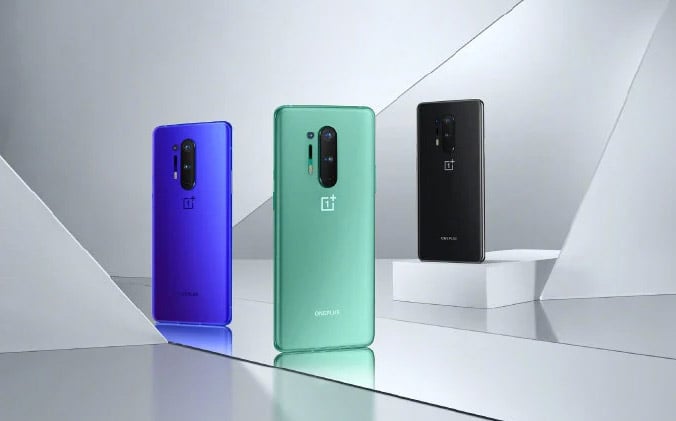
As for the pricing, the base model of the OnePlus 8, which comes in 6GB RAM and Glacial Green color, is priced at ₹41,999 (~$549). The 8GB RAM model comes in Glacial Green and Onyx Black for ₹44,999 (~$588) while the 12GB RAM model adds a third color option of Interstellar Black and is priced at ₹49,999 (~$653).
On the other hand, the OnePlus 8 Pro 8GB RAM model comes in Glacial Green and Onyx Black and costs ₹54,999 which is about $718. The top-end variant in the lineup, the 12GB RAM + 256GB storage option comes in Glacial Green, Onyx Black, and Ultramarine Blue colors for a price of ₹59,999 which roughly converts to $784.
Although the sale of the latest OnePlus 8 series smartphones in the Indian market thas been further delayed, the company is already selling the OnePlus Bullets Wireless Z earphones in India for ₹1,999 (~$26).
Meanwhile, the demand for the OnePlus 8 Pro has been high in the United States even though it carries a price tag of $899 that the company cannot keep up. After the initial sales, the stock for the smartphone quickly got cleared by early buyers. With the Chinese company struggling to stock up more units, the OP8Pro is now getting listed on sites like eBay and Swappa for a massive premium of up to $300.
Samsung is expected to announce three new smartphones in India at the beginning of June’s first week. The specifications of the Galaxy M01 yesterday and the details of the Galaxy M11 are already known since it has debuted in markets like Vietnam and UAE in the recent past. The Galaxy A31 is also expected to break cover in the first week of June. It is rumored to arrive with a price tag of Rs. 23,000 (~$303). Reliable tipster Ishan Agarwal has leaked the pricing of the Galaxy M01 and Galaxy M11 smartphones.
Samsung Galaxy M11 pricing (Rumored)
The Galaxy M11 is expected to land in India in two options such as 3 GB RAM + 32 GB storage and 4 GB RAM + 64 GB storage. They are likely to be priced at Rs. 10,999 (~$145) and Rs. 12,999 (~$171), respectively. It could be available in colors like black, blue and violet. The aforementioned prices for Galaxy M01 and Galaxy M11 are for retail stores. Their online pricing could be slightly different.
The Galaxy M11 has a 6.4-inch punch-hole display that offers HD+ resolution. It is powered by Snapdragon 450 chipset and 5,000mAh battery with 15W charging support. It has a 13-megapixel + 5-megapixel + 2-megapixel triple camera system and a frontal shooter of 8-megapixel.
The leak reveals that the Galaxy M01 will be arriving with a price tag of Rs. 8,999 (~$120). The handset is rumored to arrive in a single version featuring 3 GB of RAM and 32 GB of internal storage. The phone is expected to land in India in colors like black, blue, and red.
The Galaxy M01 has a 5.71-inch IPS LCD notch display that supports HD+ resolution. The Snapdragon 439 chipset is present under the hood of the device. It has a 4,000mAh battery that supports 5W charging. It has a front camera of 5-megapixel and a rear-mounted 13-megapixel + 2-megapixel dual-camera system.
A couple of months ago, in March this year, OPPO launched its new Find-series flagship smartphones in its home country — OPPO Find X2 and Find X2 Pro. When the device first went on sale in China, it was available in just two colors — Black and Orange.
Later, the company started selling the Find X2 Pro in Gray color option as well. Now, the company has started taking pre-orders for the Bamboo Green color variant of the OPPO Find X2 Pro in China.
The OPPO Find X2 Pro in Bamboo Green color option comes with 12GB RAM and 256GB of internal storage. It is priced at 6,999 yuan which roughly converts to $977 and will be up for purchase from 1st June.
Coming to the specifications, the smartphone features a large 6.7-inch OLED HDR10+ display with a QHD+ screen resolution of 3168 x 1080 pixels and a 120Hz refresh rate. The IP68 rated device is powered by the Qualcomm Snapdragon 865 octa-core processor, coupled with Adreno 650 GPU.
In the camera department, the phone has triple-camera setup on the back which includes a 48-megapixel primary sensor, coupled with a 12-megapixel sensor and a 13-megapixel sensor. On the front, there’s a 32-megapixel snapper for taking selfies and video calling.
The phone, which comes with Dual Mode 5G, is running the company’s own ColorOS 7.1 which is based on the Android 10 operating system. Powering the device is a 4,260mAh battery that has support for the super-fast 65W SuperVOOC 2.0 Flash Charge technology.
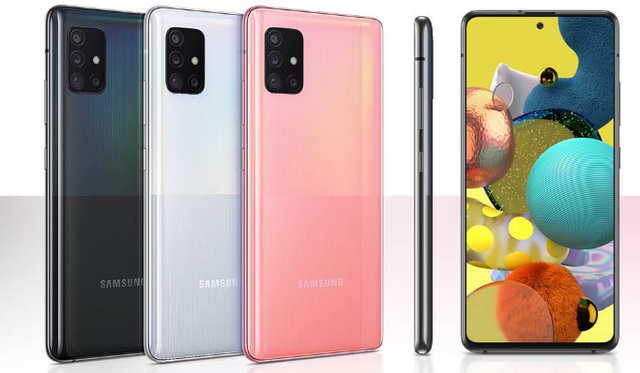
Samsung Galaxy A51 smartphone, which first made its debut in December last year, was launched in India in January earlier this year. The 6GB RAM and 128GB storage model was made available in the Indian market for ₹23,999 (~$316).
Recently, the phone’s pricing in India was increased to ₹25,250 after the government hiked the GST rate for smartphones. Now, Samsung has launched the 8GB RAM model of the same in the Indian market, for a price of ₹27,999 which is roughly $369.
The new variant comes in the same color options as the 6GB RAM model — Prism Crush Black, Prism Crush White, and Prism Crush Blue. The device will be up for sale in India through offline retail stores, leading e-commerce portals, and Samsung.com.
Coming to the specifications, the Samsung Galaxy A51 features a 6.5-inch Infinity-O S-AMOLED display with Full HD+ screen resolution and a 20:9 aspect ratio. It also comes with an in-display fingerprint sensor for added security.
Under the hood, the device is powered by the company’s own Exynos 9611 octa-core processor clocked at 2.3GHz. As for the camera setup, it comes with a 32-megapixel snapper on the front side for taking selfies and video calling.
On the backside, the device features a rectangular camera module where the sensors are placed in an L-shaped design. The quad-camera setup includes a 48-megapixel primary lens with f/2.0 aperture, a 5-megapixel depth sensor, a 5-megapixel macro lens, and a 12-megapixel ultra-wide-angle lens.
The smartphone runs the latest Android 10 operating system out-of-the-box with the company’s own Samsung One UI 2.0 custom user interface on top. The device is powered by a 4,000mAh battery with 15W fast charging support.
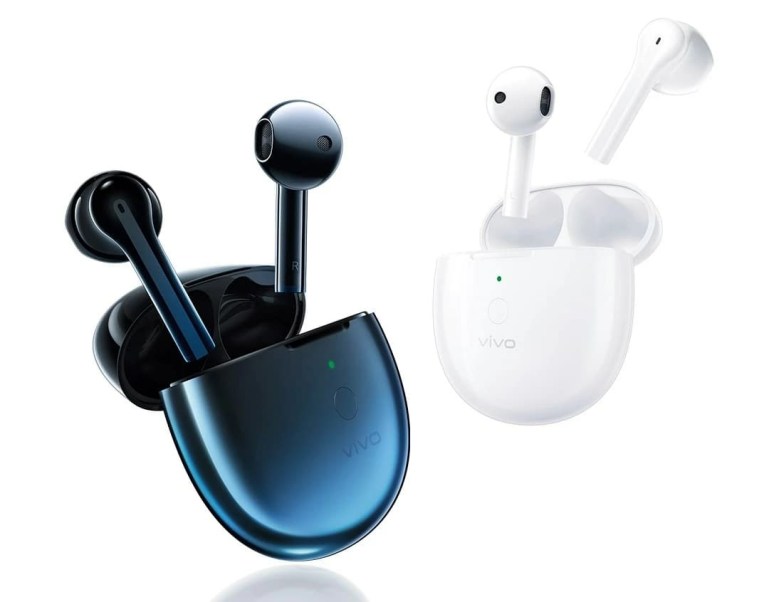
Vivo will be launching the Vivo X50 series of smartphones on June 1. The same event will also see the arrival of Vivo TWS Neo earbuds. It is expected to arrive as a cheaper version of the Vivo TWS earbuds that debuted in September last year. The landing page of the Vivo TWS Neo is now available on the online store of Vivo China. The listing has revealed the key details of the earbuds.
In terms of design, the Vivo TWS Neo earbuds are almost identical to the original Vivo TWS. The device will be arriving with an oval-shaped case. It will be available blue and white shades
Each earbud will come with 14.2 drivers and will carry support for AptX codec from Qualcomm. The latter will enable high quality streaming on the earbuds. The earbuds will have support for EQ settings like Super Bass, Bright Treble, and Clear Vocals.
The specifications of the Vivo TWS Neo earbuds are under wraps. On the online store, the device is mentioned with a placeholder pricing. The Vivo TWS is now available in China for 799 Yuan (~$111). The Neo is likely to arrive with a cheaper price tag.
In related news, the specifications of the upcoming Vivo X50 have leaked. It has a Full HD+ 6.56-inch flat S-AMOLED display that supports 90Hz refresh. The Snapdragon 765G powered device will have a 4,315mAh battery with 33W fast charging support. It will have a front camera of 32-megapixel. The backside of the phone is expected to house 48-megapixel + 13-megapixel + 8-megapixel + 8-megapixel quad-camera system. The handset is expected to arrive in China in color options such as black, blue, and pink.
The Vivo X50 and Vivo X50 Pro smartphones are scheduled to go official on June 1 in China. The renders of both smartphones have appeared on Chinese retailer sites. A trustworthy leakster from China has shared the key specifications of the Vivo X50 phone. At the same time, some real-life images of the Vivo X50 series have appeared on Weibo.
Vivo X50 Specifications (Rumored)
The leak reveals that the Vivo X50 has a flat 6.56-inch Super AMOLED display. The punch-hole screen offers a Full HD+ resolution of 1080 x 2376 pixels and it carries supports 90Hz refresh rate. The X50 will come equipped with an in-screen fingerprint reader.
Vivo X50
The Vivo X50 has a front-facing camera of 32-megapixel Samsung GD1 sensor. The back panel of the smartphone has a quad-camera setup. It includes a Sony IMX598 48-megapixel primary shooter, a 13-megapixel Samsung S5K3L6 lens, an 8-megapixel OmniVision OV08A10 telephoto sensor and an 8-megapixel Hynix Hi846 ultrawide lens.
The Vivo X50 has a 4,315mAh battery and as the 3C listing of the phone suggested, it will be arriving with support for 33W fast charging. The phone will have a 3.5mm audio jack and an AK4377a Hi-Fi audio chip. The Geekbench listing of the Vivo X50 series revealed that it will be driven by Snapdragon 765G. The new leak also states the SD765G will powering the X50 phone.
The two images shown above belongs to the Vivo X50 Pro smartphone. It can be seen sporting a punch-hole display with curved edges. The back panel of the device has a slightly different design for the camera module as compared to the vanilla X50. The X50 Pro will be arriving with an eye-like gimbal camera system that will make it possible to capture highly stable photos and videos.
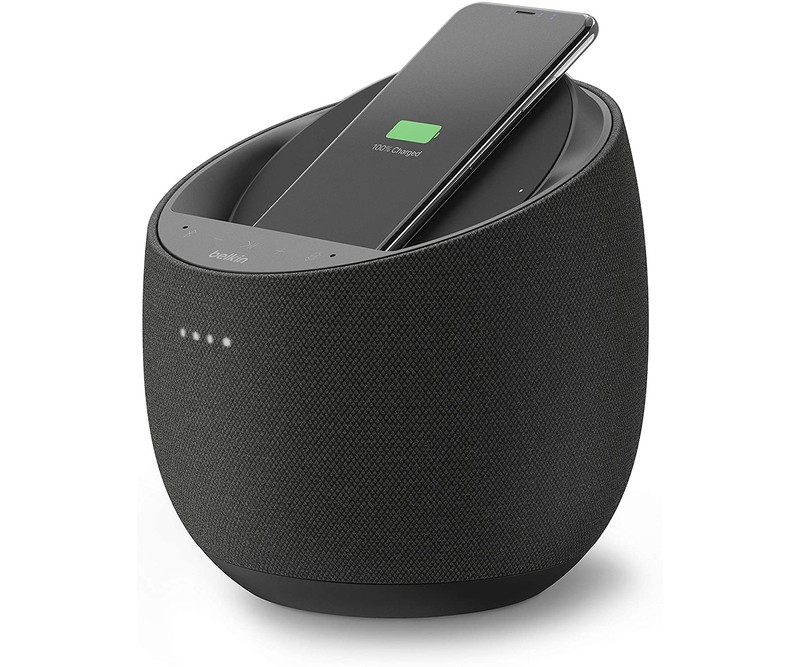
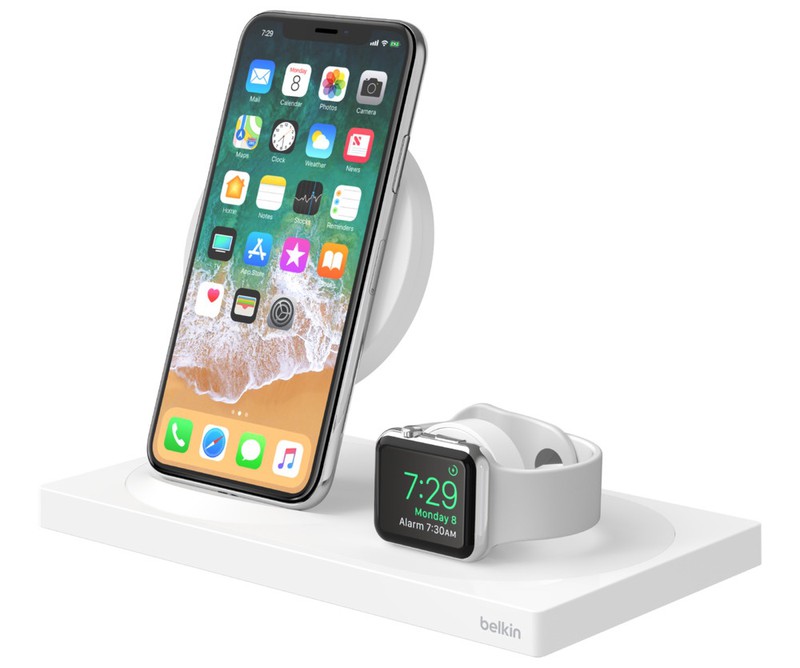
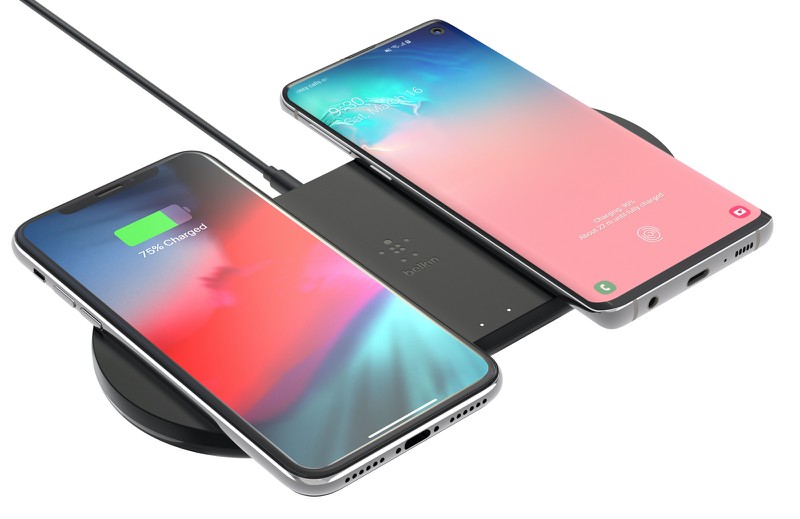
Belkin is one consumer electronics manufacturer with worldwide renown for connectivity devices. The American company unveiled its latest array of mobile charging solution including a smart speaker+ wireless charger at CES 2020. The products have now been announced to be on sale on Amazon and other third-party retailers.
The star of the pack is no doubt Belkin’s Soundform Elite Smart Speaker + Wireless Charger which combines wireless charging capabilities with speaker technology from Devialet. The smart speaker looks very much like a HomePod but one with the top cut off to provide a wireless charging spot for an iPhone. The speaker is also compatible with Google Assistant. It comes with a $300 price tag.
The second product is the Boost Charge 3-in-1 Wireless Charger priced at $120. The wireless charger can be deployed to charge an iPhone, AirPods, and an Apple Watch all at once. The gadget adopts a sleek, compact design which includes an upright charging platform for the phone as well as a charging puck for the Apple Watch. There is also a space between the Apple Watch’s band to charge the AirPods.
Finally, Belkin’s Dual Wireless Charging Pads are on offer for $50. The pads offer 7.5W fast charging and that can be delivered to two iPhones at once on a single pad. The pad has a dual-device design, though.
All three products are presently available to buy directly from Belkin and also on Amazon.
Yesterday, Honor Play Product Manager Wei Xiaolong Raul took to Weibo to tease the arrival of a new Honor Play series product. This morning, Honor took to Weibo to confirm that the new Honor Play4 series will break cover on June 3.
Honor Play4 series poster released today by the company only confirms that it will debut at 3 PM (local time) on June 3. The poster seems to show some hints on the features that will be available on the device. The image suggests that the Play4 series will be 5G-ready devices and will comes with gaming capabilities. It is unclear as to how many devices are included in the Honor Play4 series. Rumors have it that it comprises of Honor Play4 5G and Honor Play4 Pro 5G phones.
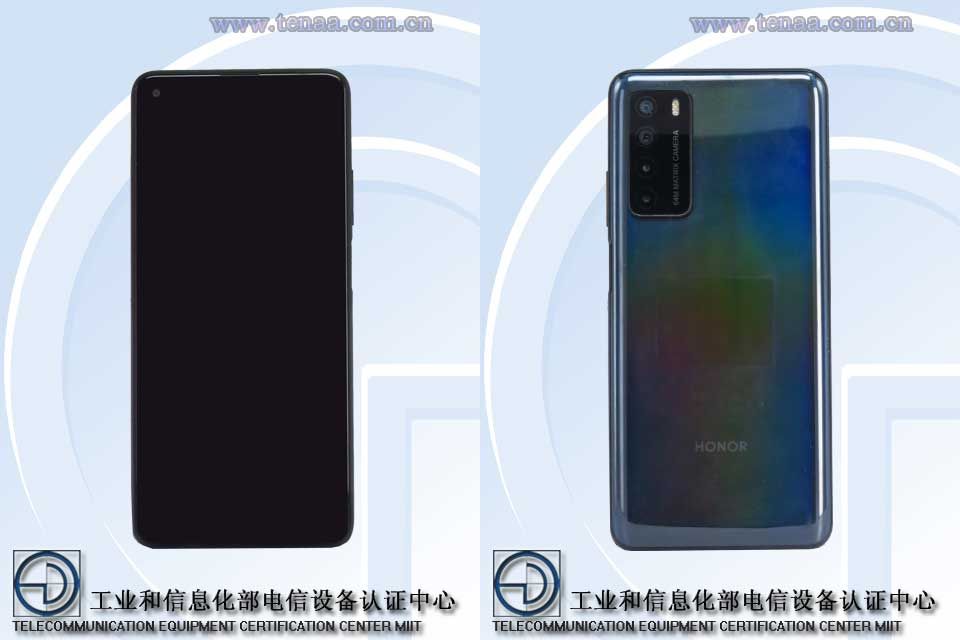
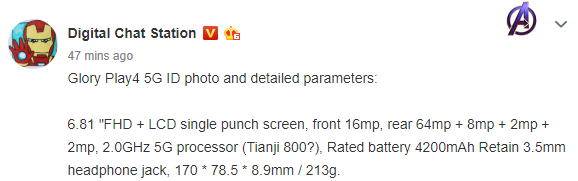
Speaking of Honor Play4 5G, the handset has already appeared on TENAA today with all its specifications. The smartphone has a model number of TNNH-AN00. It has a full HD+ punch-hole display of 6.81 inches and it houses a 16-megapixel front camera. Its rear is fitted with a 64-megapixel quad-camera system. An unknown 2.0GHz octa-core processor fuels the device with up to 8 GB of RAM.
Honor Play4 5G
The Honor Play4 5G is likely to arrive in China with up to 256 GB of built-in storage. The handset is loaded with Android 10 OS and has a NM card slot for more storage. The phone has a 4,200mAh rated battery with rapid charging support. It has a side-facing fingerprint sensor.
Honor Play4 Pro
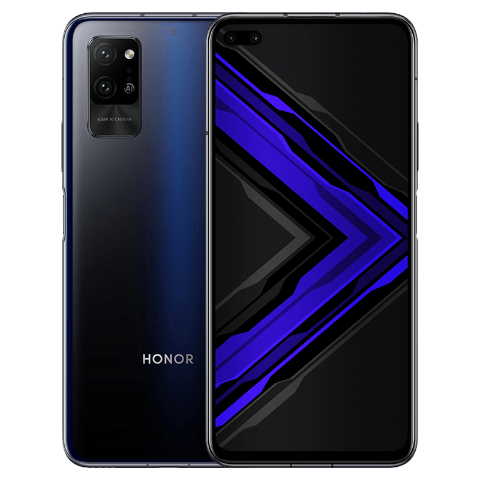
The Honor Play4 Pro 5G powered by Kirin 990 5G chipset is available for reservations in China. It is likely to arrive in Midnight Black and Mecha Blue color editions. The phone is rumored to come with features like Sony IMX600y 40-megapixel rear camera, 40W fast charging, and IR blaster. It is likely to cost around 3,000 Yuan (~$420).
Wei Xiaolong Raul, the Product Manager of Honor Play series has started teasing the arrival of a new Play series product. He could be teasing the arrival of the Honor Play4 Pro smartphone that is now available for reservations through Vmall in China. Rumors have it that the Honor Play4 Pro smartphone could be accompanied by a vanilla model named Honor Play4. A new 5G-ready Honor smartphone with TNNH-AN00 model number has surfaced at the database of China’s TENAA telecom authority. A reliable tipster from China has claimed that this phone will be debuting as Honor Play4 5G.
Honor Play4 5G specifications
The Honor Play4 5G (TNNH-AN00) measures 170 x 78.5 x 8.9mm and weighs 213 grams. China is expected to receive the handset in colorways like red-blue gradient, black and blue. The handset has a large-sized IPS LCD punch-hole screen of 6.81 inches. It offers a Full HD+ resolution of 1080 x 2400 pixels and a tall aspect ratio of 20:9.
The smartphone is fueled by an octa-core processor that works at 2.0GHz. The handset draws power from a rated battery of 4,200mAh capacity. The device is equipped with support for rapid charging.
The phone may ship in 4 GB, 6 GB and 8 GB RAM variants in China and it could be available in storage options like 64 GB, 128 GB, and 256 GB. The phone has a NM card slot for additional storage.
The punch-hole on the display of the Honor Play4 5G has a 16-megapixel selfie camera. The back panel of the hone has a rectangle-shaped camera module. It includes a 64-megapixel + 8-megapixel + 2-megapixel + 2-megapixel quad-camera system. The power button on the right edge of the phone is integrated with a fingerprint reader.
We use cookies on our website to give you the most relevant experience by remembering your preferences and repeat visits. By clicking “Accept”, you consent to the use of ALL the cookies.
This website uses cookies to improve your experience while you navigate through the website. Out of these, the cookies that are categorized as necessary are stored on your browser as they are essential for the working of basic functionalities of the website. We also use third-party cookies that help us analyze and understand how you use this website. These cookies will be stored in your browser only with your consent. You also have the option to opt-out of these cookies. But opting out of some of these cookies may affect your browsing experience.
Necessary cookies are absolutely essential for the website to function properly. This category only includes cookies that ensures basic functionalities and security features of the website. These cookies do not store any personal information.
Any cookies that may not be particularly necessary for the website to function and is used specifically to collect user personal data via analytics, ads, other embedded contents are termed as non-necessary cookies. It is mandatory to procure user consent prior to running these cookies on your website.