Xiaomi has more smart home products launched under its ecological chain than Mi branded smart home gadgets. The list even keeps expanding by the day. The latest addition is the BigDipper C2 IoT Steamer-integrated Stove which has just been launched under the Youpin crowdfunding platform.
The stove is a six-in-one kitchen appliance and uses smoke-free technology,.It can also be connected to the Mijia app and carries a crowdfunding price of 7,999 yuan (~$1,126). There are options for natural gas or liquefied gas.
The BigDipper C2 IoT Steamer-integrated Stove uses a pan-side suction design which means that the fume is completely under the negative pressure of the hood as soon as it is produced. With the huge air volume of 1140 m3/h, the fume is sucked away by the hood before it can diffuse. The cooker is manufactured using a simple style but with a high standard.
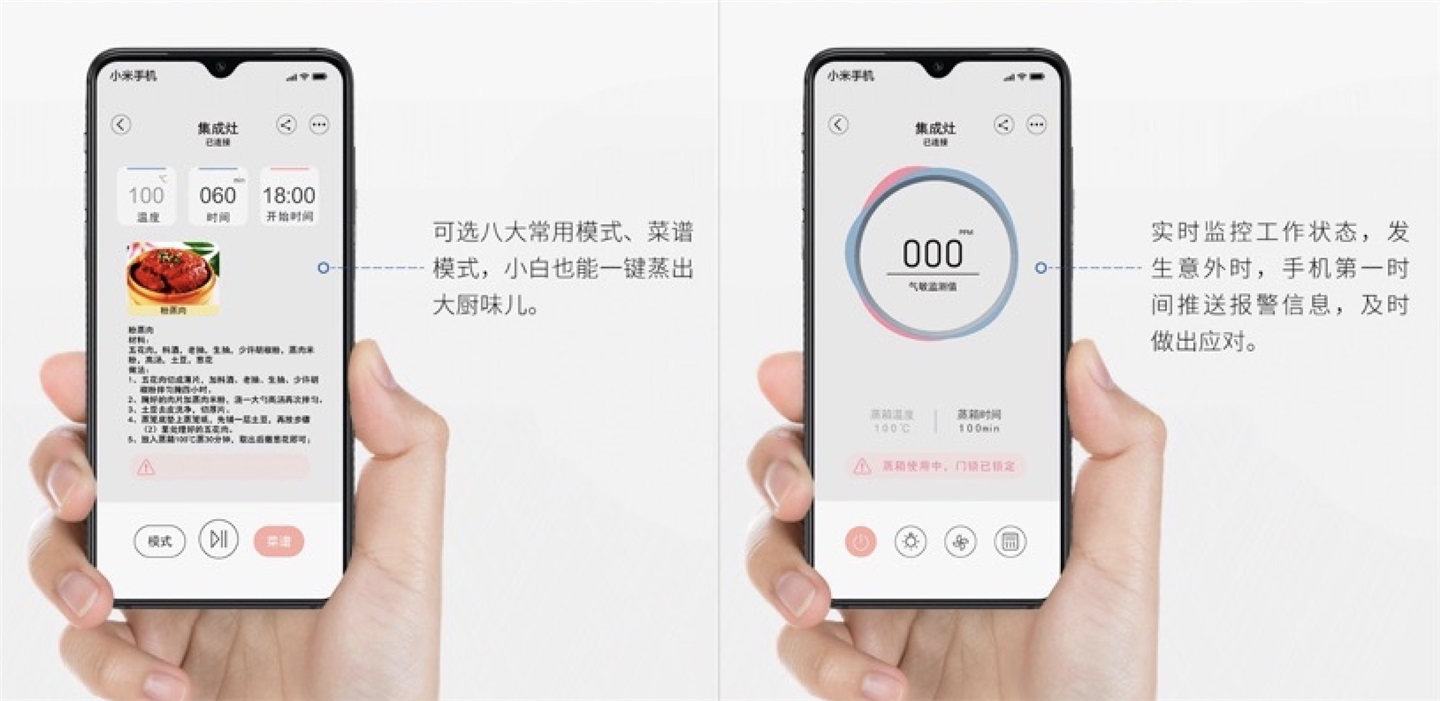
In addition, this integrated stove has a 66L large-capacity steamer. With one-click smart menu, you can set more scientific and accurate temperature and time for different recipes. Further, the smart stove can be monitored smartly using the MIJIA app. At the same time, there are a large number of recipes to choose from after connecting to the Mijia app based on your preference.
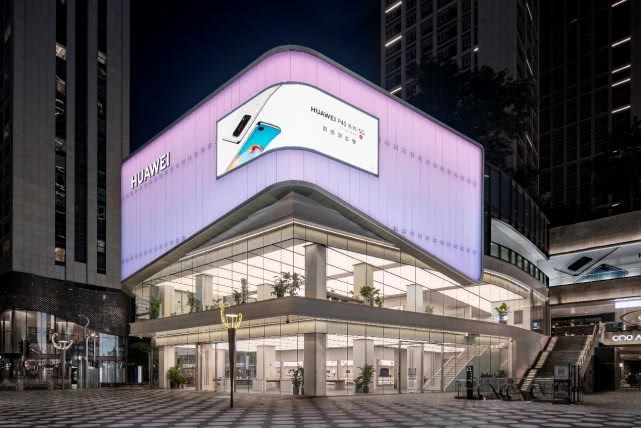
Huawei is a company of many parts. Its consumer business depart has several products that stretch from smartphones to smartwatches and many other smart home products. Huawei is planning to showcase a smart flagship store in China housing all of its products. The store known as Huawei Smart Living Pavilion is located at Zhuo Yue Center, Futian District, Shenzhen at 10:28 pm on June 6.
The store is more like a concept store that you won’t find scattered across cities. In terms of the architectural style and production display, it is a marvel. The building incorporates multiple elements such as trendy and stylish architectural design.
The facade of the Huawei Smart Living Pavilion is pure and flawless, with a patchwork and overall curve that is soft and stylish. According to reports, the overall building is a four-story structure with a construction area of nearly 1,300 square meters. The first two floors are surrounded by glass walls and doors. The modelling glass also has a layer of LED luminous atmosphere screen, which is crystal clear throughout the day, and when night comes, the giant atmosphere screen lights up, creating different scenes of Aurora, ocean, forest and other atmospheric effects.
The smart living pavilion is said to have more than 2,000 products on display, covering smartphones, PCs, Pads, watches, smart screens, humidifiers, robot vacuums and other range of products from Huawei. It also plays host to Huawei’s ecological cooperation products such as robots and even cars.
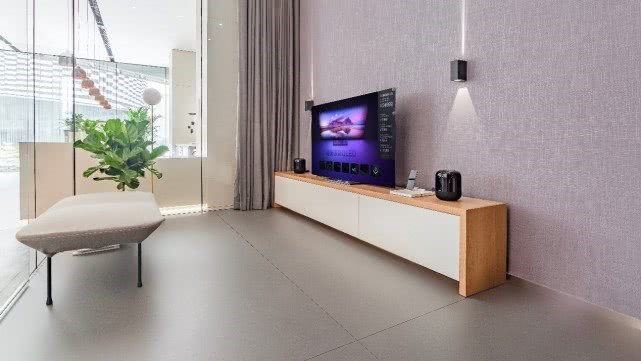
The Huawei flagship store uses a “scenario-based” product display logic: through a smart interconnection between different products to build five major life scenarios of mobile office, smart home, sports health, smart travel, and audio-visual entertainment, users can experience smart linked life experience.
The Huawei Smart Living Pavilion also has an open interior space and an ecological coffee bar is set on the second floor half of the area, equipped with high-quality coffee and pastries, suitable for relaxation.
When the smart store is officially opened on June 6, a P40 pop-up store and a video art exhibition will be specially set up. This is to give fans who are yet to get the P40 a close understanding of Huawei’s P40 series products. Visitors will also feast their eyes on the video works shot by professional photographers using the P40 series mobile phones.
In addition, this year’s new high-end flagship phones Huawei P40 Pro+ and Mate Xs will go onsale for the first at the store’s opening event. Richard Yu, head of Huawei’s Consumer Business division will be on hand to sign some autographs and show appreciation fans for their support over the years.
A few weeks back, Facebook announced to invest $5.7 billion in Reliance Jio for a 9.9% stake. It was soon followed by a report, which revealed Google is also in talks with Vodafone Idea to buy 5% stake in the company. Now, a fresh report by Reuters says Amazon is also joining the bandwagon as it is eyeing to buy 5% stake in Bharti Airtel for $2 billion.
According to the report, the sources close to the matter revealed both the US-based tech giant and India’s third-largest telecommunication company are in early talks for a new deal.
Amazon is willing to invest $2 billion for 5% stake in Airtel, however, the deal could either change or even agreement may not be reached according to the sources.
Having said that, one of the sources also cited that if the stake buyout fails, the companies will look at a commercial transaction that could give Airtel customers cheap access to Amazon products.
Both the companies declined to comment on the deal when Reuters reached out to them.
The investments from US tech giants can sort of help the suffering carriers in India, which are yet to pay out their AGR (Adjusted Gross Revenue) dues. In return, these companies get access to one of the largest market in the world to push their products.
Samsung‘s Galaxy M series is as popular as the A-series. The Galaxy M11 and M01 were recently launched in the market and apparently, they did cause a bit of rattle. OPPO is now gearing up to launch three new smartphones to take on the Galaxy M series.
91 mobiles cite retail sources to have hinted that the OPPO A12, A11k and A52 will be launching in India as early as next week. Noted tipster Ishan Agarwal also corroborated this rumour.
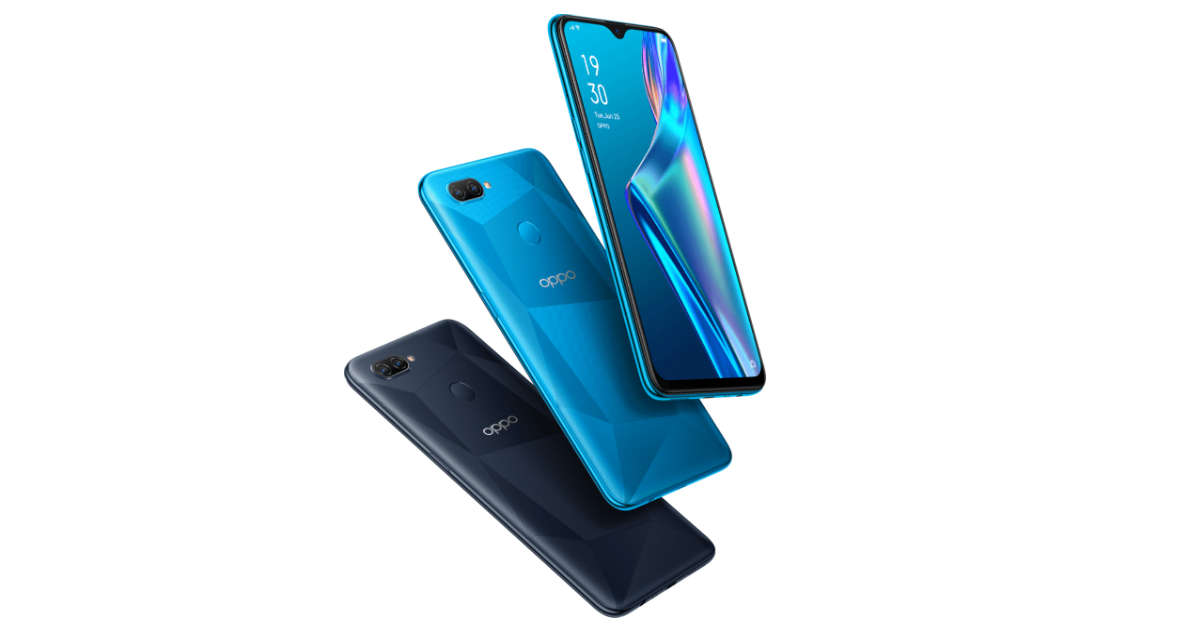
The OPPO A12 has already been launched in Indonesia back in April. A leaked poster said to be from retail sources contained sone of the key specs of the A12 as well as the launch offers. The phone features a dual-camera setup, 4,230mAh battery, Android 9.0 OS fingerprint sensor and AI face unlock. It will be available in two memory variants- 3GB+32GB and 4GB + 64GB. The retail price for the Indian market is yet to be revealed but we expect it to be similar to that of Indonesia which starts at IDR 2,499 (around Rs 12,300).
Ishan Agarwal tips the OPPO A11k to have a similar design as the A12. The difference will be in the RAM size as it will feature 2GB of RAM and 32GB storage. The phone will pack an Helio P35 processor, Android 9.0 OS and 6.33-inch HD+ display, among others. It will also be the cheapest among the trio.
The OPPO A52 has also been launched in China back in April and comes with a 1,599 yuan (~Rs 17,325) price tag. It will have a better 6.5-inch FHD+ punch-hole display and is powered by the Snapdragon 665 SoC paired with 8GB RAM and 128GB internal storage. The A52 will also pack a quad-camera setup that includes a 12MP primary sensor, an 8MP ultra-wide-angle lens, a 2MP depth sensor, and a 2MP macro lens. For selfies, there will be an 8MP front shooter. Keeping the lights on is a 5,000mAh battery with 18W fast charging support. The phone will run Android 10 out of the box.
Honor has quietly announced Honor 8S 2020 in the United Kingdom. The entry-level smartphone is available to purchase from the brand’s official website for only £99.99.
The newly announced Honor 8S 2020 is nothing but the same Honor 8S aka Honor Play 8 (China) from last year. The original phone launched in 2GB + 32GB and 3GB + 64GB configurations depending on regions.
Since the UK only received lower storage model last year, the brand has re-released the phone with more internal storage and RAM with 2020 moniker. The same variant of Honor 8S is available in other European nations without the new 2020 branding.
Under the hood, the handset packs a 12nm MediaTek Helio A22 SoC, which includes a quad-core Cortex-A53 CPU and PowerVR GE8320 GPU. On the front, the phone sports a 5.71-inch HD+ (1520 x 720 pixels ) LCD panel with 294 ppi and 19:9 aspect ratio.
The device features a total of two cameras, a 13MP primary shooter at the back and a 5MP selfie snapper in a dew-drop notch at the front. Connectivity on the handset includes 4G, single-band (2.4GHz) WiFi, GPS, MicroUSB port, and 3.5mm headphone jack.
The phone runs EMUI 9.0 based on Android Pie and gets its energy from a 3,020 mAh battery with no support for fast charging. Last but not least, it only comes in Navy Blue color option.
A recent Samsung patent has revealed a new AR glasses technology. The South Korean tech giant has dabbled with AR (augmented reality) and VR (virtual reality) technologies in the past and the new patent reveals an improved and easier navigation system.
According to the patent description, the new AR glasses will be capable of offering users step by step instructions when assisting during navigation. The innovative navigation system offers users directions directly through the glasses. This system highly resembles a heads up display that is seen in fighter aircraft and recently in a few cars’ windshields as well. However, the AR glasses might offer a more immersive experience that might distract the user less while driving.
The Samsung AR glasses will be able to provide an overlay that offers navigational information in real time. This device could even provide information regarding different points of interest that a driver may notice while looking around, making it more versatile and informative at the same time. For example, information can be displayed for exit ramps, fuel stations, or even food joints if needed.
The AR glasses from Samsung would require a few additional systems to work, namely sync with a map application, GPS tracking, multiple cameras within the car, and sensors as well. At the moment, the company does offer various smart car related products that feature these components, but it seems like Samsung is taking it a step further and making it more interactive.
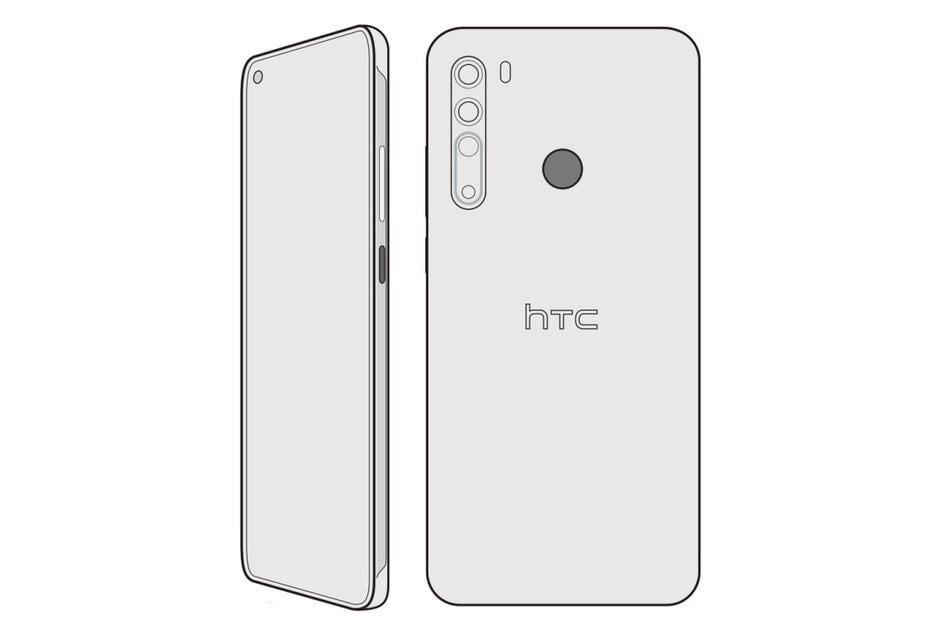
HTC is no longer a big name in the smartphone market. Still, a design sketch of Desire 20 Pro emerged at the end of April courtesy of Evan Blass aka @evleaks. Now, its specifications leak as well through Google Play Console.
Going by the design, the HTC Desire 20 Pro certainly looks like any other mid-range smartphone in 2020, however, its internal specs are outdated.
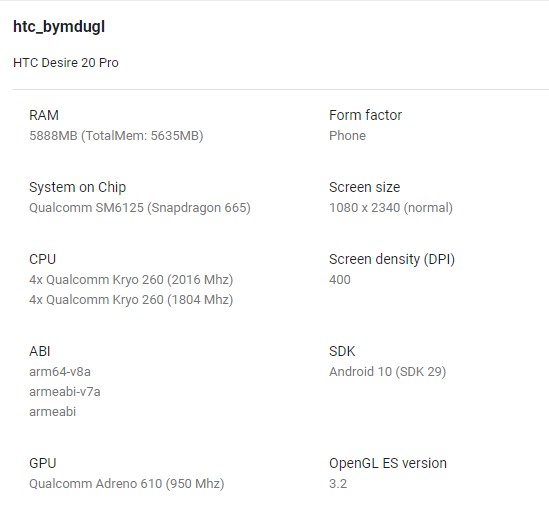
As per the Google Play Console listing, the handset’s codename, as well as model number, are htc_bymdugl and HTC 2Q9J10000 respectively. But if we recall, Mr Blass claimed the codename to be Bayamo.
Further, the listing reveals the phone to be powered by Qualcomm Snapdragon 665 SoC paired with 6GB RAM, which is a bummer since the chip is over a year old and is mostly found in budget smartphones.
Whereas, the display of the phone will be fairly modern as it will be an FHD+ (2340 x 1080 pixels) panel with a punch-hole at the top left corner. Lastly, like any other new Android smartphone, it will run Android 10 out of the box.
Unfortunately, the listing lacks camera specs along with the official renders of the device. Also, it is not sure when HTC will announce this handset but hopefully, the brand prices it aggressively.
Earlier this year, Samsung had unveiled the Galaxy Tab S6 Lite. Although the tablet has been available in the global market for a while now, its Indian launch had been delayed due to Government mandated lockdowns due to the Coronavirus pandemic. Now, Samsung India went on Twitter to tease the launch of the Galaxy Tab S6 Lite, which could arrive in the country soon.
The Samsung Galaxy Tab S6 Lite sports a 10.4 inch TFT LCD display with a 2000 x 1200px resolution. It runs the Exynos 9611 SoC with 4GB of RAM and up to 128GB of internal storage. The device is powered by a large 7,000mAh battery and runs OneUI 2.0 based on Android 10. It will also support the S Pen stylus similar to the high end Galaxy Tab S6.
On the front, a 5 megapixel selfie shooter is housed, while the rear features an 8 megapixel image sensor. The Galaxy Tab S6 Lite houses a 3.5mm headphone jack alongside dual AKG speakers. Its price in China for the 4GB RAM + 64GB storage WiFi-only version is 2,799 Yuan or roughly 30,000 INR ($392), while the higher end 128GB storage LTE version is priced at 3,399 Yuan or roughly 36,000 INR ($477).
Unfortunately, the pricing is still unconfirmed and this is just a speculation based on overseas pricing. Hence, take this report with a grain of salt. With the lockdown and restrictions easing in India, vendors are looking forward to launching their respective offerings that had been delayed. So stay tuned as will be offerings updates regarding the launch.
Despite the Coronavirus pandemic disrupting various economies and industries, the smartphone market is still holding on thanks to fresh launches. While the industry has seen a noticeable decline in sales, brands like Apple, OnePlus, Xiaomi, and others have still kept an interest in the market thanks to their new offerings during this time of crisis.
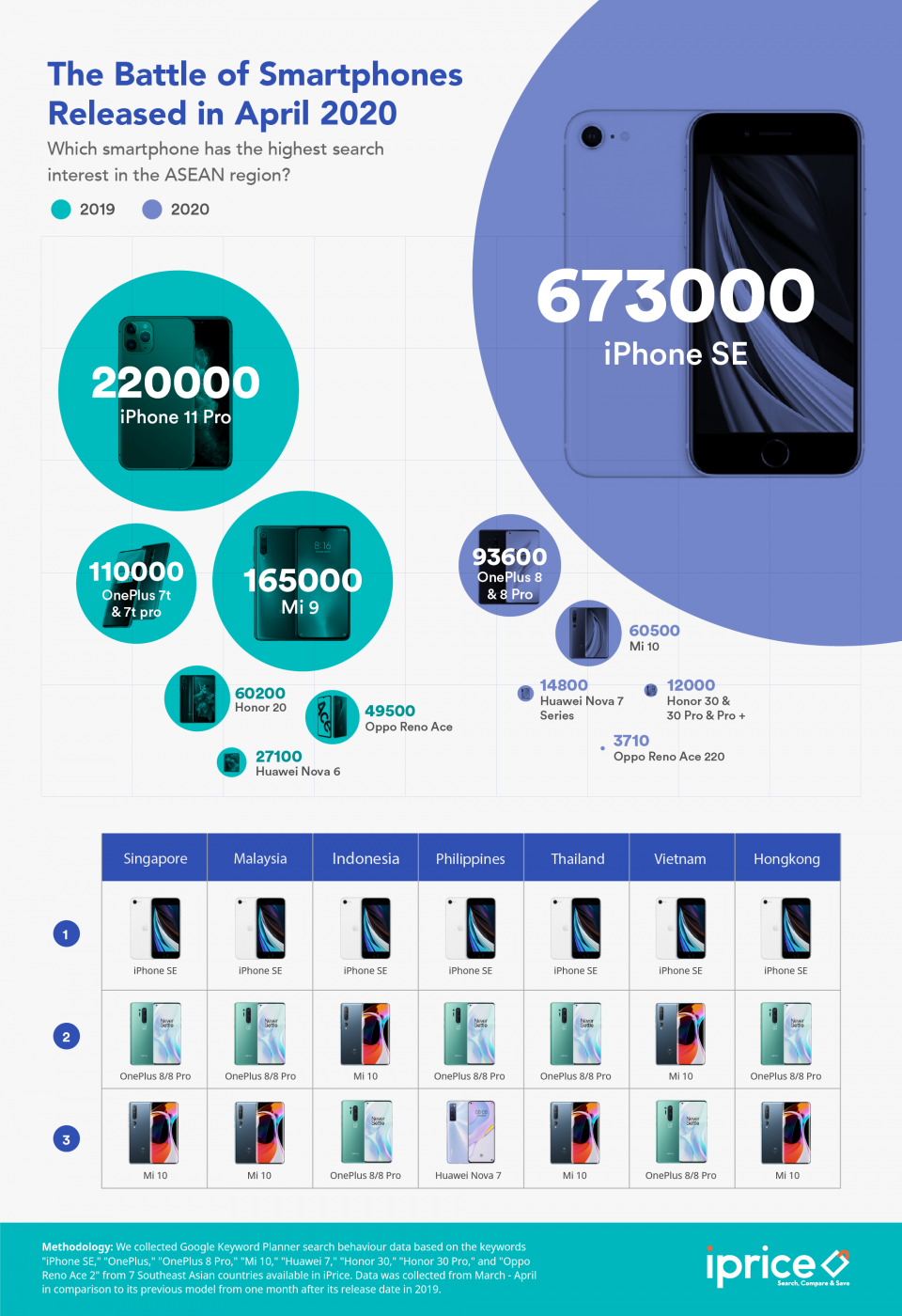
According to a report from iPrice, Apple’s latest smartphone, the iPhone SE 2020, has come out on top, with the highest number of searches online. The new iPhone model retained the highest demand across 7 countries (Singapore, Malaysia, Indonesia, Thailand, Vietnam, the Philippines, and Hongkong) in April 2020. The Apple mid ranger witnessed a search interest rise of a massive 206 percent, which was over triple of the Cupertino based giant’s flagship, iPhone 11 Pro.
Similarly, the OnePlus 8 series arrived second on the interest list in countries like Singapore, Malaysia, The Philippines, Thailand, and Hongkong. Xiaomi’s Mi 10 came in third, with a 7 percent search market share from March to April 2020. The iPhone SE 2020 saw an average of 673,000 during the same period, which accounts for nearly 78 percent of the total search market.
Image Via iPrice
With Apple’s iPhone prices crossing the $1000 mark, an affordable and smaller handset was frequently demanded by its customer base. While the original iPhone SE didn’t see great success, the company has clearly worked on a lot of issues and offered a more attractive handset at the price range.
Samsung launched the Galaxy M01 and Galaxy M11 budget smartphones in the Indian market a couple of days ago and now the South Korean company has launched another smartphone in India, this time under the Galaxy A-series.
The Samsung Galaxy A31 has been launched in India today, as the company had promised. It is among the handful of offerings from the brand as the phone comes powered by a MediaTek chipset.
The smartphone features a 6.4-inch Full HD+ Infinity-U Super AMOLED display and has an in-display fingerprint sensor. Under the hood, it is powered by a MediaTek Helio P65 SoC which has two cores clocked at 2.0GHz and six cores clocked at 1.7GHz.
It comes in two configurations — 4GB RAM with 64GB internal storage and 6GB RAM with 128GB internal storage. However, the company has launched only the 6GB RAM model in the Indian market. There’s also a microSD card slot that allows users to further expand the storage capacity up to 512GB.
The device has a quad-camera setup on the back where the sensors are placed on a rectangular-shared module. It houses a 48MP f/2.0 primary camera, an 8MP f/2.2 ultrawide angle lens, a 5MP f/2.4 depth sensor, and a 5MP f.2.4 macro camera. On the front side, it comes with a 20MP snapper with f/2.2 aperture.
The phone is running the latest Android 10 operating system out-of-the-box with the company’s own One UI 2.0 on top and comes with support for Samsung Pay. The device is powered by a 5,000mAh battery that supports 15W fast charging.
The Samsung Galaxy A31 comes in four color options in India — Prism Crush Black, Prism Crush Blue, Prism Crush Red, and Prism Crush White. It is priced at ₹21,999 (~$291) and will be available for purchase through online as well as offline stores.
Xiaomi has just invested in the top OLED manufacturer in China. The smartphone vendor has invested 143 million Yuan (roughly 20 million US Dollars) in Dalian Zhiyun Automation Company, which specializes in making LCD, OLED and even mini LED display technology.
The amount Xiaomi has invested in Zhiyun accounts for about 15.5 million shares in the company. This translates to exactly 5.63 percent of Zhiyun’s total share value. For those unaware, Zhiyun is China’s biggest company that deals in display technology and has worked with other known industry names like BOE, Huaxing, Tianma, and Visionox.
These brands also rival the South Korean tech giant, Samsung, which is one of the largest OLED manufacturers in the world. The company roles in the market also increased with the massive demand for smartphone and display technologies like LCD. This caused the market price of its share to skyrocket in the Shanghai Stock Exchange, breaking the monopoly of Japanese and South Korean companies in the Chinese market.
Now, analysts claim that a similar trend could be witnessed with Zhiyun’s OLED technology, including research into flexible displays, bonding, dispensing, and lamination technology. With the companies trying to shift more towards local sourcing, Zhiyun and other display based companies may soon see an influx of orders from Chinese vendors.
According to a new report, Google Chrome is leading the browser market for 2020. The popular browser from the search engine giant recorded a new high for the fifth straight month with a new high of 69.8 percent market share.
The report was published by Net Applications, an analytics firm from California, US. The market share held by Chrome has only been achieved by Microsoft‘s then signature browser, Internet Explorer, which held a 70 percent market share back in 2008. So if Google’s Chrome manages to break past the 70 percent mark, it would be the third browser to ever do so.
Microsoft isn’t completely out of the picture yet either. The company’s Edge browser as been gaining popularity in recent months. By its current growth rate, Microsoft Edge is expected to achieve a market share of 10.3 percent by this time in 2021. Another popular contender, Mozilla Firefox, with a market share of 7.2 percent as of May 2020. Although, its growth rate in recent times has been relatively flat. So, at this current rate, it seems that Google will continue to dominate the market until some new player makes an appearance and disrupts the market.
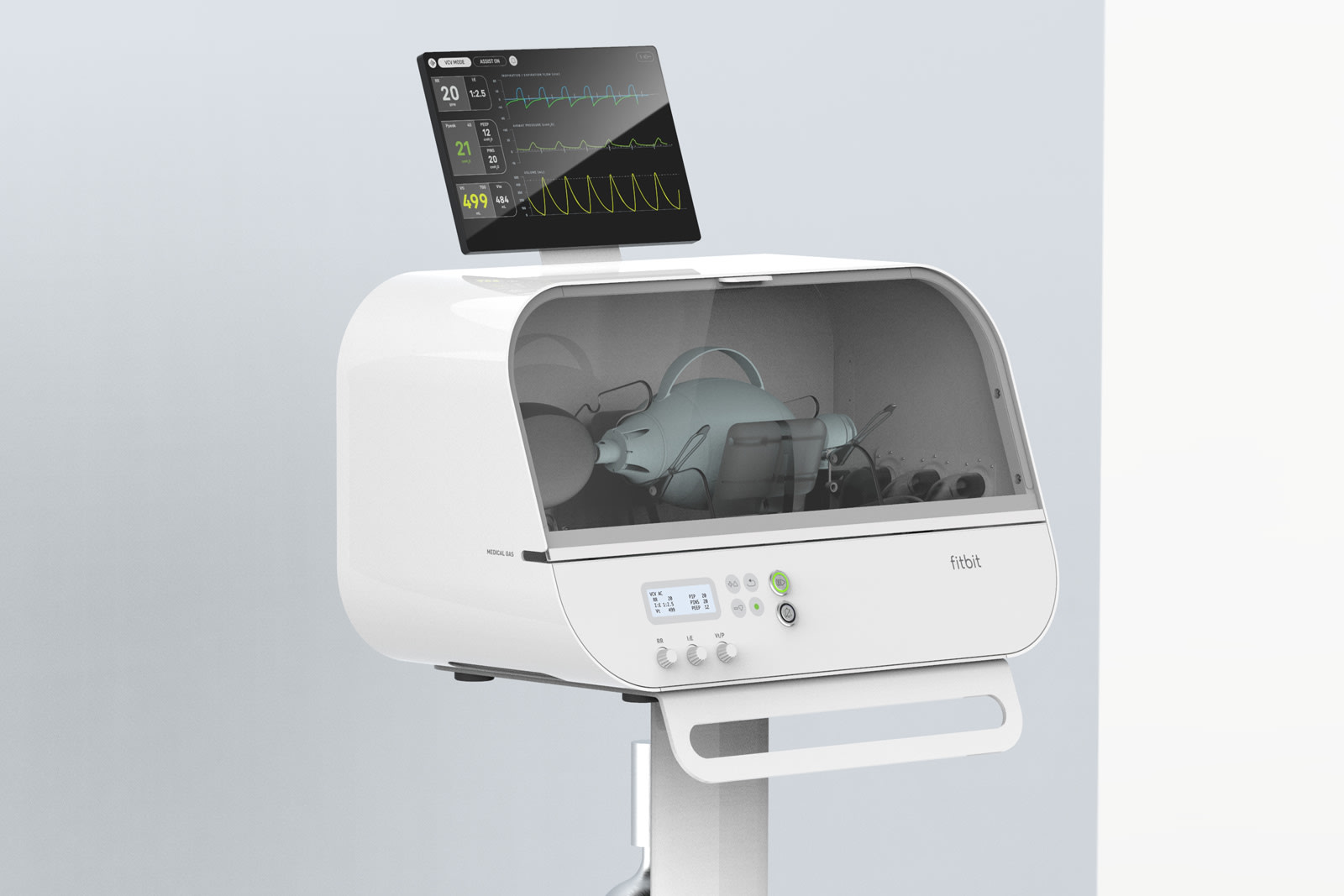
The known wearables and smart products maker, Fitbit, has its upcoming ventilator receive an emergency approval from the FDA. The US government’s Food and Drug Administration has given Fitbit an Emergency Use Authorization for its Flow ventilators, which will be used to help patients with COVID-19 infection.
At the moment, the US government is reportedly “in talks” with Fitbit to supply its Flow ventilator units. For those unaware, Flow is a ventilator built with advanced sensors and alert systems that features a simple user interface and is easy to operate. This would eliminate the need for specialized training and is also built to target “lower price range” or cost effective emergency ventilators.
Fitbit is confident in its production capabilities, stating that it will have an advantage in activity tracking since it is a known smart product manufacturer. However, the company still has a few hurdles to tackle, with the primary one being a customer base. It needs to find customers to sell to since its arrival to the market is relatively late. Furthermore, the demand for this ventilator is also uncertain as another wave of COVID-19 occurring is unknown as well. As it stands right now, the Flow could be crucial in key areas, but only if the situation demands it.
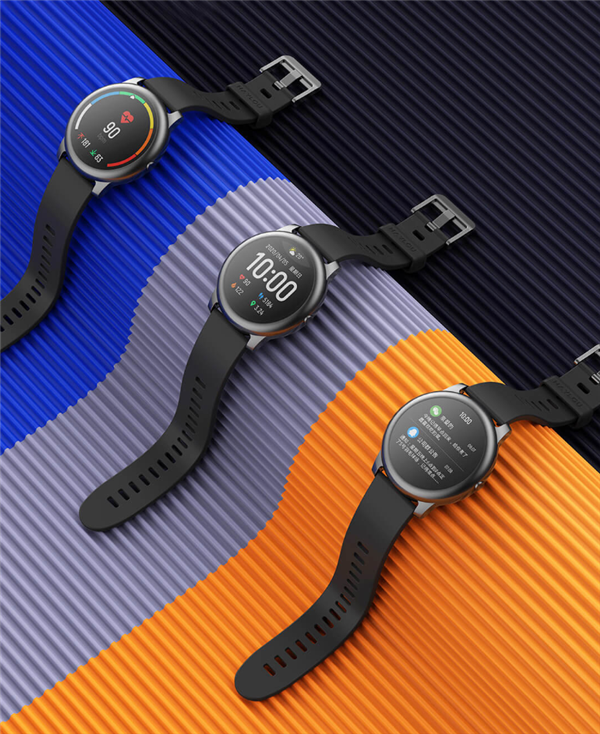
Earlier today (4th June 2020), Xiaomi launched the Haylou LS04 Solar Smartwatch through its Youpin platform. The smartwatch features a heart rate sensor housed within a metallic body, with 30 day long standby battery life.
Looking at the Haylou LS04 Solar Smartwatch, its design follows a minimalistic philosophy. The watch dial is round and sports a 1.28 inch TFT display with a resolution of 240 x 240px. While the body of the dial is metallic, the band is made from silicon, which has been designed to be comfortable when worn for long periods of time.
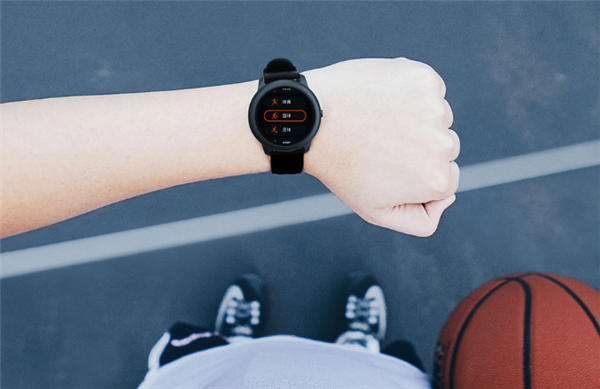
The wearables have a built in heart rate sensor that monitors users’ heartbeat 24 hours. This allows it to detect any underlying heart issues and can even adjust users’ exercise time and recommend the amount of exercise accordingly. To facilitate this, it also supports 12 different sports activity modes, which is higher than the 9 modes that were supported on the previous LS01 model, which was launched last year.
The Haylou LS04 Solar Smartwatch is rated IP68 for water and dust resistance and can be safe against accidental splashes and rains. The device is powered by a lithium battery that offers up to 30 days of standby on a single full charge, up from 14 days over the older LS01 variant. If you’re interested in buying the smartwatch, you can check out this link here for the Haylou LS04 Solar Smartwatch, it is priced at 179 Yuan (roughly 25 US Dollars).
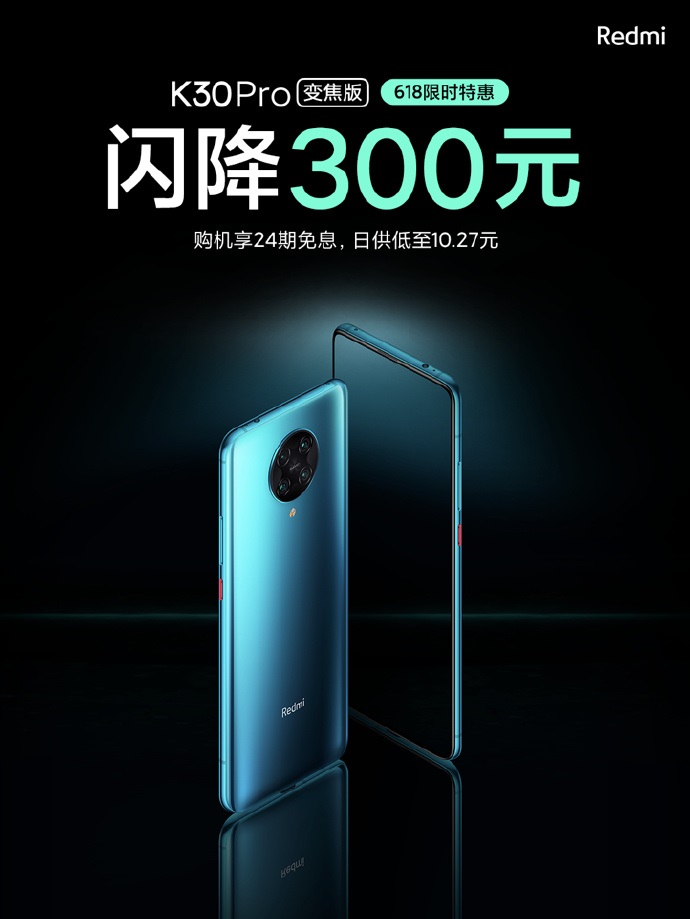
Last month, after weeks of leaks and rumors, Xiaomi-backed Redmi finally launched the Redmi K30 Pro Zoom edition smartphone in its home market China. Now, the company has announced a massive price cut on the smartphone for a limited time.
As a part of the 618 sales in China, the company has announced that it will be cutting the pricing for Redmi K30 Pro Zoom edition by 400 yuan, which is around $56. This significantly reduces the phone’s pricing during the sale period.
The top-end variant of the phone, which packs 12GB RAM and 512GB internal storage, will be available for 4,099 yuan (approximately $575) after the 400 yuan discount, instead of its original price of 4,499 yuan (~$634).
The company is also offering discounts for the 8GB RAM + 128GB storage and 8GB RAM + 256GB storage models, which are priced at 3,799 yuan (~$537) and 3,999 yuan (~$565) respectively. However, it remains to be seen how much discount these models get.
The Redmi K30 Pro Zoom Edition features a 6.67-inch Full HD+ E3 Super AMOLED display. Under the hood, the device is powered by Qualcomm Snapdragon 865 tagging along with a Snapdragon X55 modem, providing support for both SA/NSA 5G modes.
The highlight of the smartphone is the quad-camera setup which includes a 64MP Sony IMX686 1/1.7″ sensor with four-axis OIS, an 8-megapixel telephoto lens with support for 3x optical and 30x digital zoom, a 13-megapixel 123° ultra-wide-angle lens and a 2MP depth sensor.
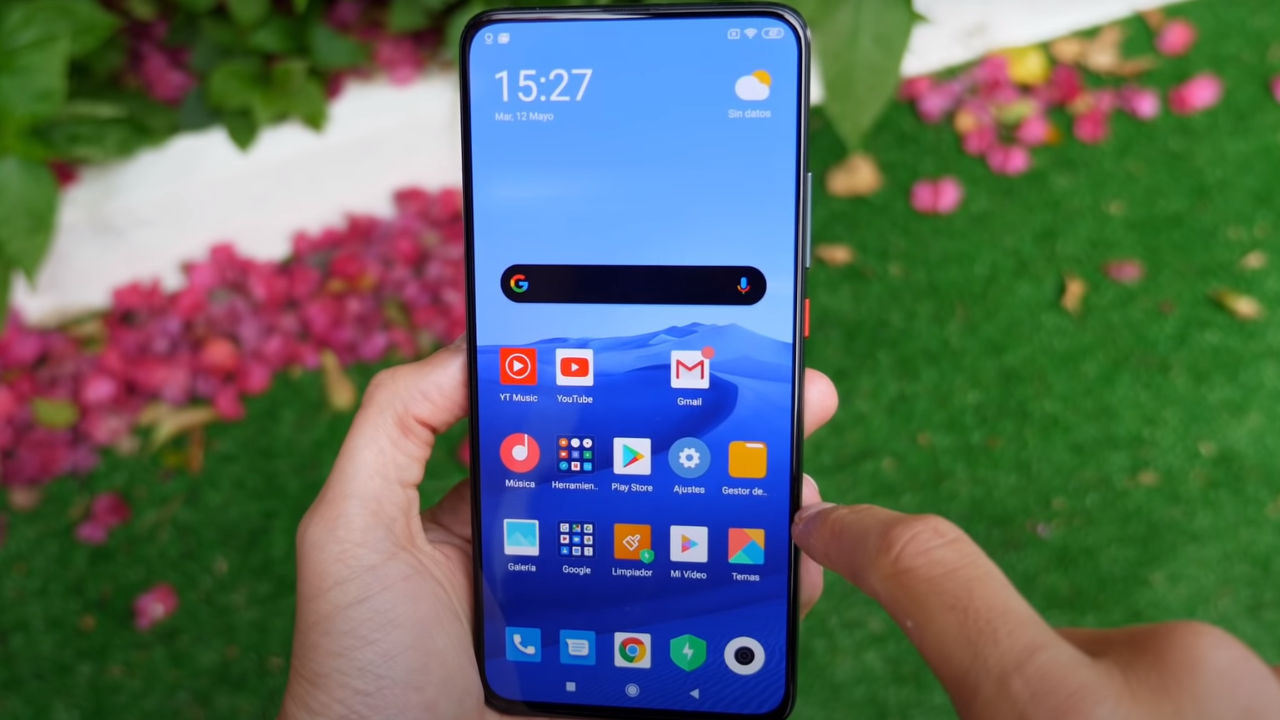
On the front side, the device is equipped with a pop-up mechanism for housing a 20-megapixel snapper with support for 120 fps slo-mo videos and time-lapse shooting. The phone runs Android 10-based MIUI 11 out-of-the-box and is powered by a 4,700mAh battery with 33W fast charging support.
POCO F2 Pro, the latest flagship smartphone from the Xiaomi-backed brand was launched a few weeks ago and is available for purchase in some regions, including the United States, Europe, and Malaysia.
Now, JerryRigEverything, the popular YouTube channel which does durability tests on smartphones, has released a video about the durability test of the POCO F2 Pro and the device successfully passes the test.
First of all, let’s talk about the display. The screen is protected by Corning Gorilla Glass 5 and in the scratch test, it started showing scratch signs at level 6 and grooves from level 7. In the burn test, when the screen is burned with a lighter, the pixels go white on that portion after 30 seconds but quickly recovers after some time.
As for the material, the device is built with an aluminum frame and has a glass body, which is quite sturdy. The phone comes with a pop-up camera where the sensor is placed behind a sapphire glass, which has no effect when scratched.
However, the pop-up module for the camera enclosure is made of plastic and gets scratched easily. The pop-up mechanism has several fail-safes in place and the way it is made is impressive. After deliberately trying to break the pop-up module by thumping it on the table, it’s slider mechanism stopped working but it seems that the phone fixed and adopted it after some time.
On the back, there’s a quad-camera module placed in the top-center position which bumps out from the body. When tried to scratch the screen, there were no issues with it. As for the bend test, the phone also survived it. Although the phone makes a cracking sound, there were no issues on the screen or the body of the phone.
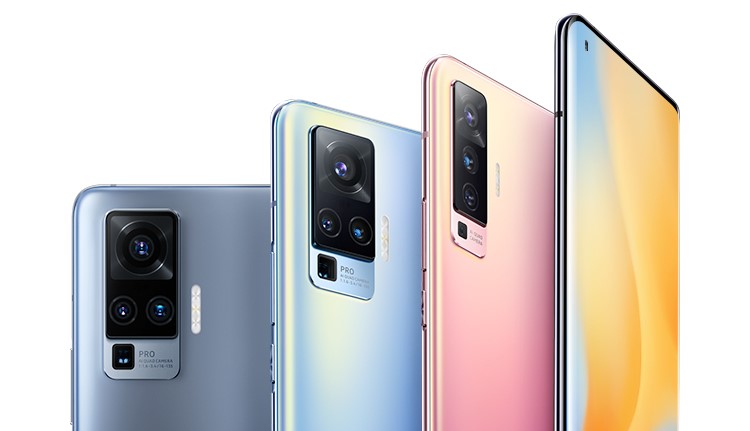
A couple of days ago, Vivo announced its all-new Vivo X50 series smartphone with a heavy focus on the photography features. The devices in the lineup include Vivo X50, X50 Pro, and X50 Pro+, all of which come with support for 5G connectivity.
Today, the company has confirmed that the Vivo X50 will be available for purchase in China for the first time on 6th June. It will be available in both the models — 8GB + 128GB and 8GB + 256GB, costing 3,498 yuan (~$490) and 3,898 yuan (~$547) respectively. It remains to be seen if it’s available in all three color options — Black, Blue, and Pink.
As for the specifications, the Vivo X50 features a 6.56-inch AMOLED display with a screen resolution of 2376 x 1080 pixels. There’s also support for the 90Hz refresh rate and it comes with an in-display fingerprint sensor.
Under the hood, the device comes powered by the Qualcomm Snapdragon 765G SoC, along with 8GB of LPDDR4X RAM and up to 256GB of UFS 2.0 flash internal storage. Thanks to the SD765G chipset, the phone has 5G connectivity support.
In the camera department, the smartphone features a 32MP snapper on the front with features like night view, portrait, photo, video, panorama, dynamic photo, slow motion, short video, AR cute shoot, and others.
On the back, it is equipped with a quad-camera setup that includes a 48MP Sony IMX598 primary camera sensor, along with a 13MP portrait lens, an 8MP wide-angle sensor, and a 5MP macro lens. The gimble camera technology is not available on the standard model and is only supported on X50 Pro.
The phone is running Android 10 operating system with the company’s own FunTouch OS user interface on top. The Vivo X50 is powered by a 4,200mAh battery and comes with support for 33W fast charging technology.
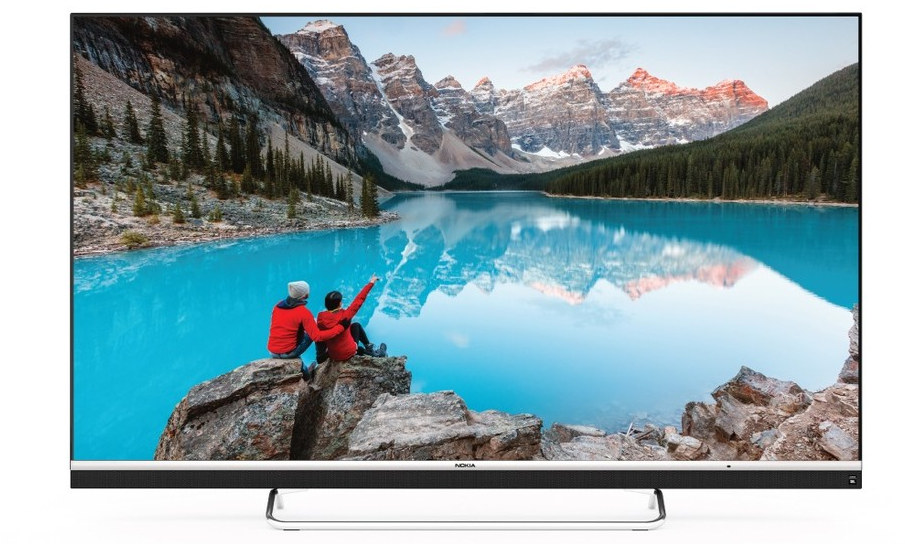
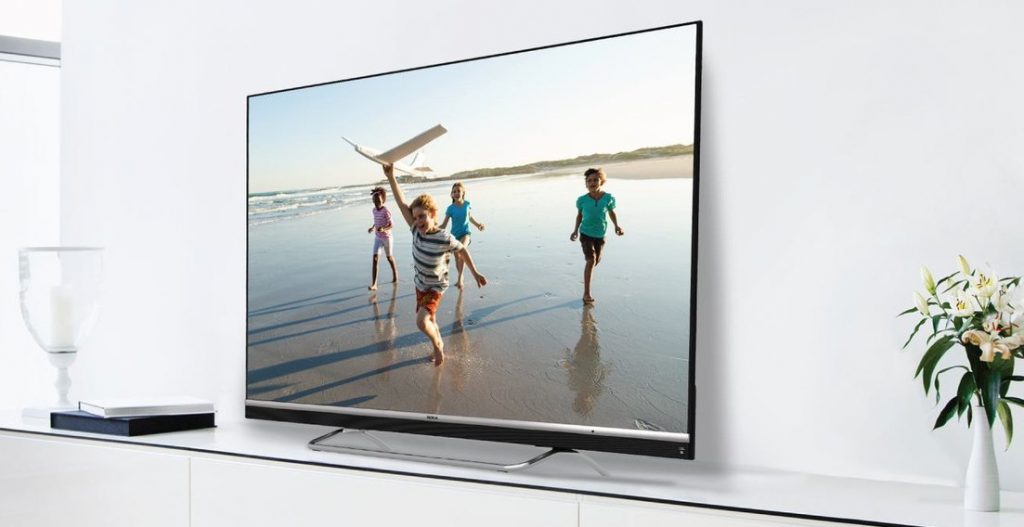
As teased, Nokia has today launched a new model of its Smart TV in the Indian market. The company has today unveiled the Nokia 43-inch 4K LED Smart Android TV, which will be available exclusively via Flipkart.
The smart TV comes with a 43-inch display having support for 4K Ultra HD resolution. The bezels surrounding the screen are quite thin, which are aimed at offering an infinity edge-to-edge viewing experience to users.
It also comes with support for MEMC technology, along with features like intelligent dimming, wide color gamut, and Dolby Vision. For the audio, it has 24-watt speakers on the bottom which support DTS TruSurround, Dolby Audio, and the company says that they are optimized by JBL to offer deeper bass.
Under the hood, the device comes powered by a 1GHz PureX quad-core Cortex A53 processor, along with Mali 450 MP4 GPU. As for the memory configuration, it packs 2.25GB of RAM and 16GB of internal storage.
Coming to the software department, the Nokia 43-inch 4K LED Smart Android TV is running the Android TV 9 operating system and comes with support for Google Assistant. It also has built-in Chromecast and Play Store for downloading more apps on the TV.
For the connectivity features, the smart TV also has Wi-Fi 802.11 a/b/g/n support along with Bluetooth 5.0. The device has three HDMI ports, one USB 2.0 port, one USB 3.0 port, and an Ethernet port.
The Nokia 43-inch 4K LED Smart Android TV is priced at ₹31,999 (~$424) in the Indian market and will be available for purchase from 8th June, exclusively via Flipkart. In the first sale, Citi Credit and Debit Card holders can get a flat ₹1,500 discount.
This is the second smart TV comes from Nokia in the Indian market. Just like the earlier model, this one too will be limited to the Indian market given that it’s not Nokia or HMD Global which is making these TVs but Flipkart which has got the license to use Nokia brand for its TVs in the Indian market.
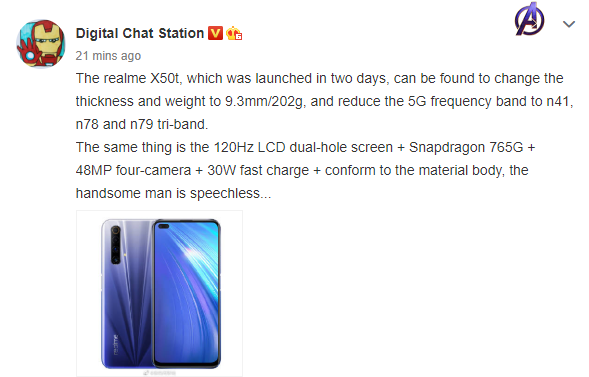
The Realme X50 series includes three devices such as Realme X50 5G, Realme X50 Pro 5G, Realme X50m, and Realme X50 Pro Player Edition. The latter was introduced last month as a new variant of the Realme X50 5G with inferior cameras. Recent reports have revealed that the Chinese firm is working on another phone called Realme X50t 5G that has a model number of RMX2052. It is rumored to come with specs identical to the Realme X50m phone. A reliable tipster claimed through Weibo yesterday that the Realme X50t’s arrival is only two days away. He revealed some vital information on the smartphone.
According to the tipster, there are only a few differences between the Realme X50m and the upcoming Realme X50t. The Realme X50m supports 7 5G frequency bands. However, the Realme X50t will support only 5G frequency bands such as n41, n78, and n79 in China.
The other noticeable thing about the Realme X50t is that it is slightly thicker and heavier than the Realme X50m. The X50t seems to weigh 202 grams and has a thickness of 9.3mm. In comparison, the X50m measures 8.9mm in thickness and it weighs 193 grams.
The other specifications that are expected to be available on the Realme X50t are dual punch-hole LCD panel with 120Hz refresh rate support, Snapdragon 765G, 48-megapixel quad cameras and 30W fast charging. These specs are also available on the Realme X50m. The leakster did not mention the battery size of the Realme X50t. However, its TENAA listing suggests that it could be coming with a 4,200mAh battery. The X50m also features the same sized battery.
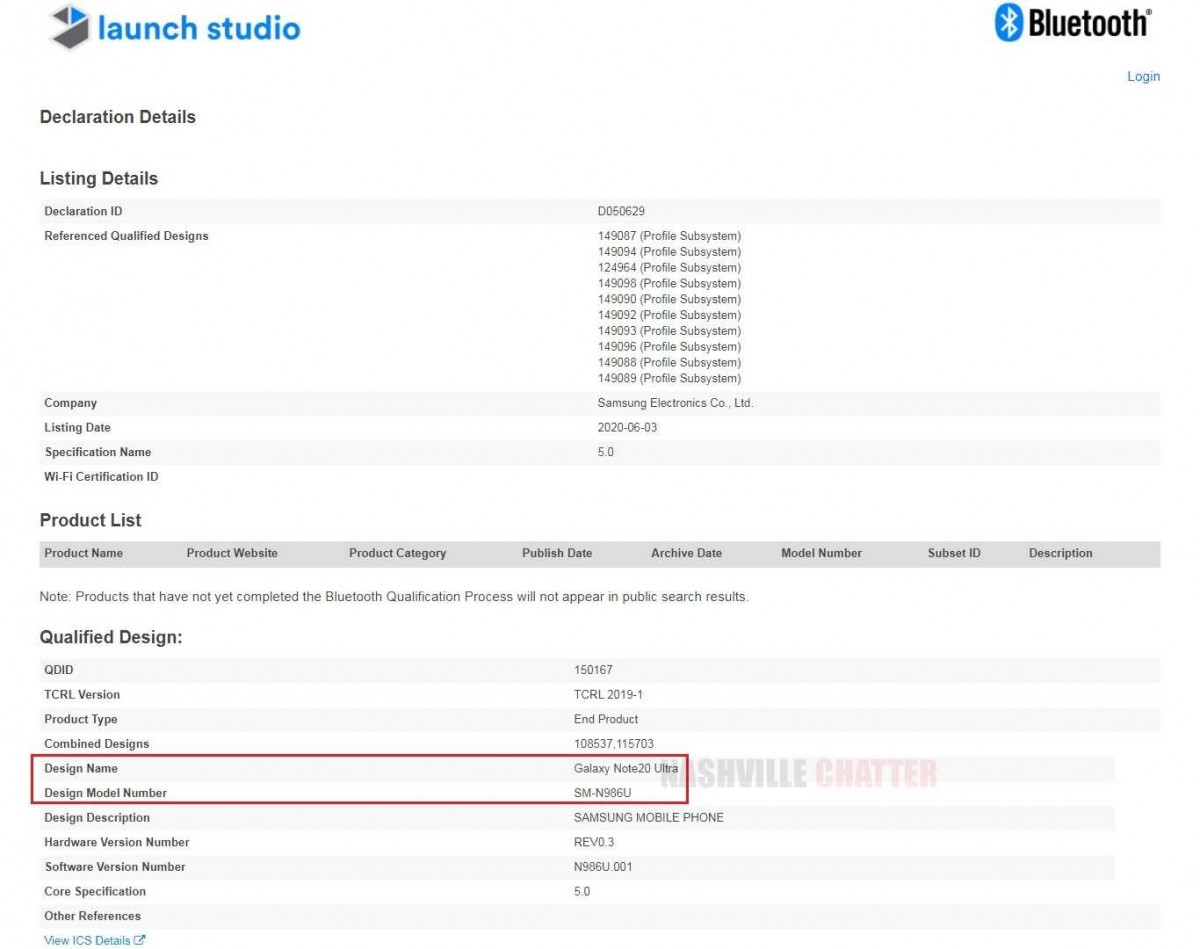
Samsung is expected to launch the Galaxy Note 20 series in August as successors for last year’s Galaxy Note 10 and Galaxy Note 10+. The rumor mill has been speculating that the upcoming Note 20 models could be called Galaxy Note 20 and Galaxy Note 20+. The SM-N986U phone had appeared on Geekbench last month. At that time, the rumor mill had dubbed it as Galaxy Note 20+. However, the Bluetooth certification of the SM-N986U device reveals that it could be arriving in the market as Galaxy Note 20 Ultra.
The Bluetooth certification of the Galaxy Note 20 Ultra only confirms the support for Bluetooth 5.0 and nothing else on its specifications. The Chinese variant of the same phone has SM-N9860 model. The 3C certification of the SM-N9860 had revealed that it could be coming with a 25W fast charger.
Popular tipster Ice Universe is of the view that the Snapdragon 865+ SoC could be powering the device. The reason behind it is that the Geekbench listing showed the processor’s large core frequency as high as 3.09GHz. In comparison, the SD865 offers maximum clocking speeds of 2.84GHz. In some markets, the phone may ship with Exynos 992 chipset. The tipster claimed that the appearance of the Galaxy Note 20 Ultra moniker could be an error and it could be called Note 20+. Interestingly, the Bluetooth listing has been taken down.
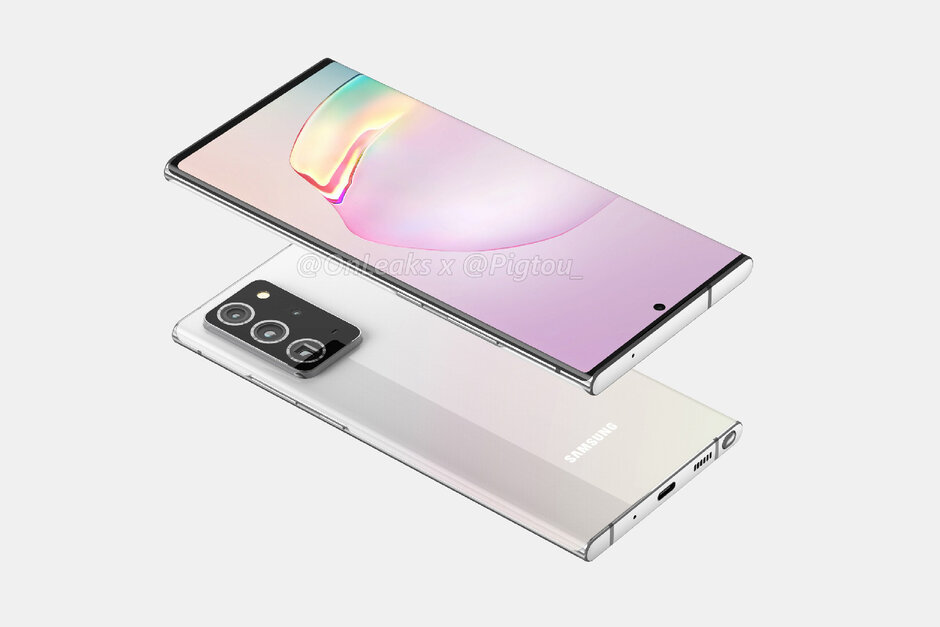
So far, the rumor mill has revealed that the Galaxy Note 20 Ultra will have a 6.9-inch 120Hz Infinity-O S-AMOLED display with quad HD+ resolution support. It is likely to feature the same in-display fingerprint scanner that was made available on the S20 series. The phone may come with up to 16 GB of RAM and up to 512 GB of built-in storage.
It could be coming with a 40-megapixel front camera. The back panel of the phone is said to feature a 108-megapixel main camera, a 12-megapixel ultrawide lens, a 13-megapixel periscope lens with 50x hybrid zoom support and a laser autofocus unit. Some of its other rumored features include improved S-Pen, stereo speakers, and support for sub6 and mmWave 5G bands. In August, the Note 20 series is expected to break cover along with Galaxy Fold 2.
We use cookies on our website to give you the most relevant experience by remembering your preferences and repeat visits. By clicking “Accept”, you consent to the use of ALL the cookies.
This website uses cookies to improve your experience while you navigate through the website. Out of these, the cookies that are categorized as necessary are stored on your browser as they are essential for the working of basic functionalities of the website. We also use third-party cookies that help us analyze and understand how you use this website. These cookies will be stored in your browser only with your consent. You also have the option to opt-out of these cookies. But opting out of some of these cookies may affect your browsing experience.
Necessary cookies are absolutely essential for the website to function properly. This category only includes cookies that ensures basic functionalities and security features of the website. These cookies do not store any personal information.
Any cookies that may not be particularly necessary for the website to function and is used specifically to collect user personal data via analytics, ads, other embedded contents are termed as non-necessary cookies. It is mandatory to procure user consent prior to running these cookies on your website.