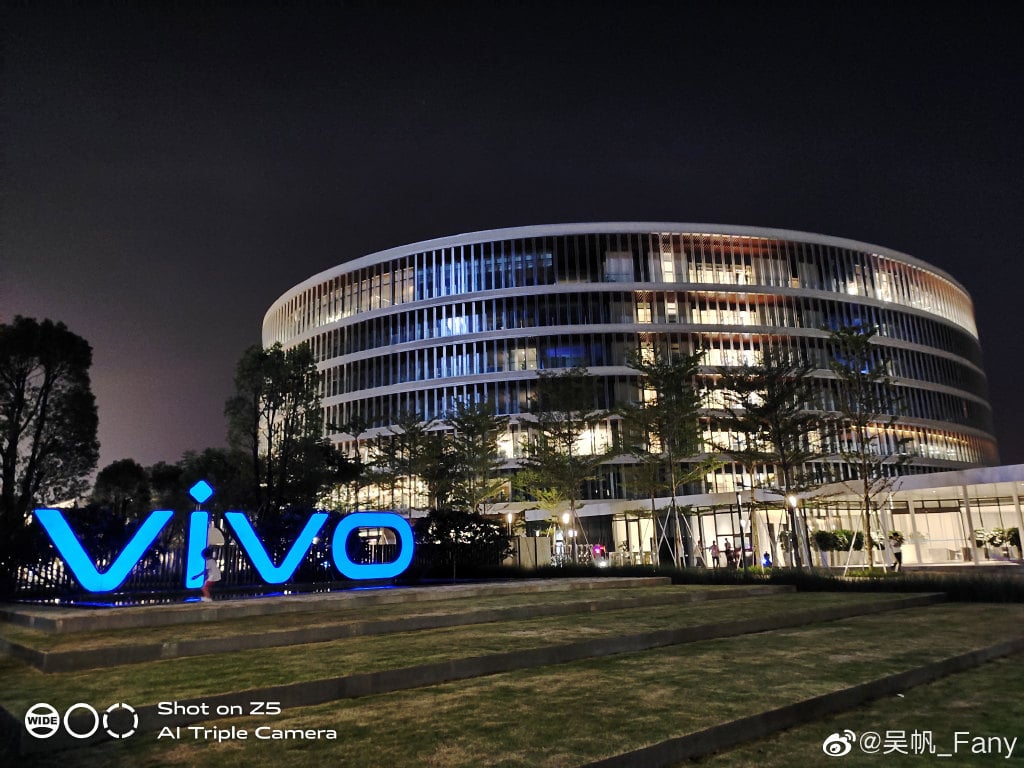
Vivo, the Chinese smartphone manufacturer, is building a new high rise office in Shenzhen, China. This new project will be its future headquarters and has already had the company shell out over 180 million US Dollars.
The 32 storey Vivo headquarters is scheduled to be completed in 2025 and is designed by US architectural firm NBBJ. This is the same firm that had previously designed Samsung Electronic‘s Silicon Valley campus and even the Amazon Spheres in Seattle. After its completion, the building will also house the company’s flagship store, with indoor gardens at every level, a spiraling exterior with self-shading glass, and can house 5,800 employees.
Vivo’s current HQ in Dongguan, an industrial city in southern Guangdong province
The move is in line with the construction boom from China’s technology sector. as Vivo joins brands like Tencent Holdings and ByteDance with major investments in new office spaces. Tencent has already spent 1.2 billion US Dollars on campus, while Vivo has paid 1.3 billion Yuan (roughly 182 million US Dollars) on the site of its headquarters alone.
Similarly, ByteDance has also recently acquired land worth 1.1 billion Yuan for future construction in the city’s Downtown area. According to a few economists, the building boom is a signal of an overheated economy that precedes a crash. Although, NBBJ argues that the Chinese tech giants are just seeking space to settle in before a potential future global expansion wave.
Shenzhen is a hotspot for tech campuses, with various Chinese tech firms coming in, coinciding with the local government’s trillion-dollar effort to both stimulate the economy and lay the foundations for next-generation internet technology (Image Via South China Morning Post)
Robert Mankin, NBBJ official, said that “What we’ve seen now is part of a natural life cycle of these companies where they’ve outgrown their current facilities, and they need new ones to operationally support their growing global reach. It’s increasingly rare in the US for companies to build their individual headquarters campus, and you still see it in Asia.”
In May, Redmi announced the Redmi K30i 5G smartphone as an inferior version of the Redmi K30 5G that went official in December last year. The handset was made official in a single variant featuring 6 GB of RAM and 128 GB of storage. The Chinese firm confirmed today that it will begin with the sales of its 8 GB RAM variant starting from tomorrow.
The newly announced 8 GB RAM edition of the Redmi K30i 5G has 256 GB of storage. It is priced at 1,999 Yuan (~$283). The existing 6 GB RAM + 128 GB storage version costs 1,799 Yuan (~$254).
The Redmi K30i 5G has a 6.67-inch IPS LCD panel with a dual punch-hole design. The Full HD+ resolution supporting screen produces up to 120Hz refresh rate. The Snapdragon 765G SoC fuels the device with LPDDR4x RAM and UFS 2.1 storage. It lacks a microSD card slot.
The Redmi K30i 5G has a side-facing fingerprint scanner. The device is equipped with a 20-megapixel + 2-megapixel dual selfie camera setup. The rear side of the phone has a 48-megapixel + 8-megapixel (120-degree ultrawide) + 2-megapixel (macro) + 2-megapixel (depth) quad-camera system. It houses a 4,500mAh battery that supports 30W fast charging. The MIUI 11 based Android 10 OS comes preinstalled on the Redmi K30i 5G.
Max has a good track record when it comes to leaks and we trust him on this. However, while he does say it is not a rebadged Reno4, it doesn’t mean the OnePlus Nord may not be a rebadged (OPPO) phone or at have a familiar look.
Other than the Reno4 5G, another OPPO phone with dual-selfie cameras is the Reno3 Pro (Helio P95 version). Not only does it have dual front-facing cameras, but it also has quad rear cameras which the OnePlus Nord is said to have. Of course, the Reno3 Pro doesn’t have a high refresh rate, which the Nord will have. So it might have a very similar design but definitely is not a rebadged version of the Reno3 Pro.
Anyway, the above is just speculation. The good news is that we may not have to wait for long to find out what the OnePlus Nord looks like. The special documentary OnePlus made that talks about the phone’s design premieres today and it may give us our first look at the upcoming mid-range phone.
The OnePlus Nord has undergone multiple changes since we first heard about it last year. It was originally referred to as the OnePlus 8 Lite and then the OnePlus Z. It was also expected to come with a MediaTek 5G processor and have a hole punch in the center just like the Galaxy S20. Now, the phone goes by a new name, has a Snapdragon processor, and has been confirmed to have dual front-facing cameras that point at a pill-shaped hole in the display.
After launching a couple of chipsets under its new 5G-focused Dimensity lineup, MediaTek has now announced two new entry-level processors under its gaming-focused G series, which also supports HyperEngine Game Technology.
The HyperEngine technology offers intelligent resource management that ensures sustained and smooth performance, even in demanding and resource-heavy situations. For instance, if the Wi-Fi is weak, it intelligently triggers Wi-Fi & LTE concurrency within milliseconds.
Along with managing connectivity and calling features during game-play, the HyperEngine Game technology also ensures intelligent and dynamic management of the CPU, GPU, as well as memory.
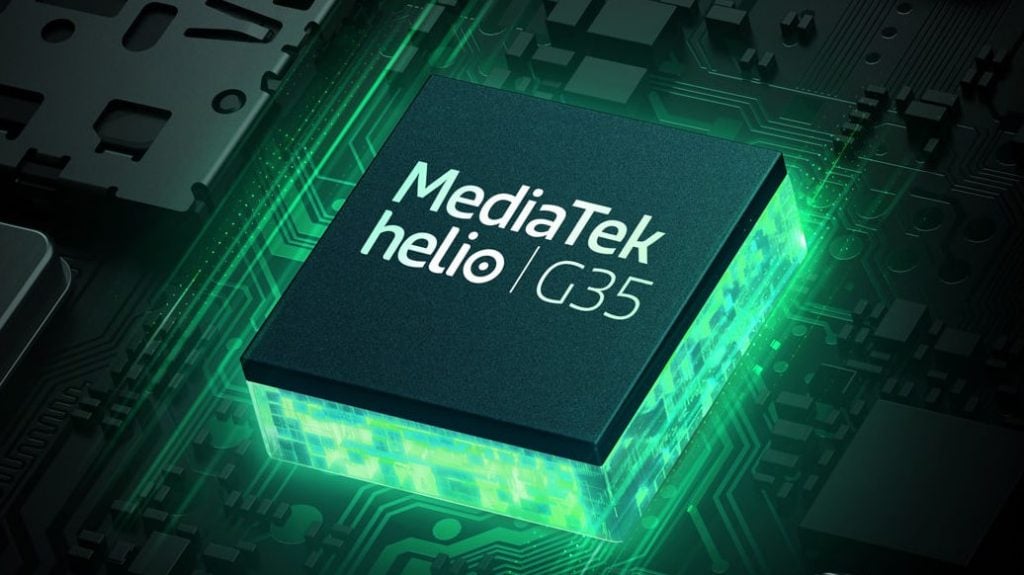
MediaTek Helio G35
The Helio G35 is manufactured using TSMC’s 12nm process and comes with eight ARM Cortex-A53 CPUs clocked at 2.3GHz and for graphics, it packs IMG PowerVR GE8320 clocked at 680MHz. It comes with support for LPDDR4x RAM up to 6GB at 1600MHz and eMMC 5.1 for storage.
It supports Full HD+ display with 2400 x 1080 pixels screen resolution at 20:9 aspect ratio and 60Hz refresh rate. For connectivity, it supports VoLTE\ViLTE\WoWi-Fi along with Dual-Band Wi-Fi 5, Bluetooth 5.0, GPS + Glonass + Beidou + Galileo, and FM radio.
In the camera department, the Helio G35 supports configurations up to 25MP and dual-camera of 13MP + 13MP. The camera can be coupled with features such as AI-driven Bokeh effects, electronic image stabilization (EIS), rolling shutter compensation (RCS), beauty mode, and more.
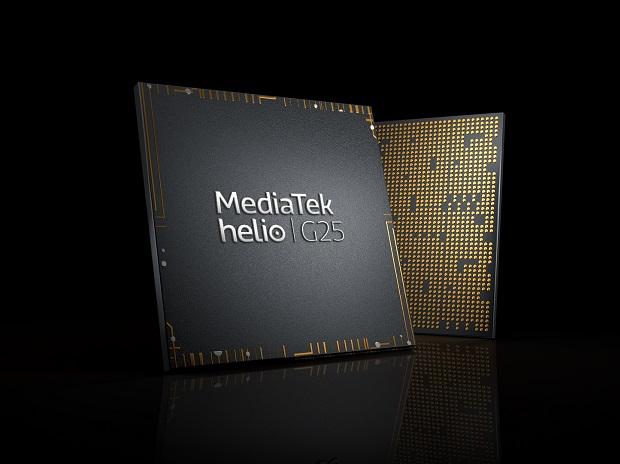
Similar to the Helio G35, the MediaTek Helio G25 is also manufactured using the 12nm FinFET process by TSMC. It also packs eight ARM Cortex-A53 CPUs, but they are clocked at 2.0GHz, along with IMG PowerVR GE8320 at 650MHz.
It supports HD+ display at 1600 x 720 pixels resolution and a 20:9 aspect ratio with a 60Hz refresh rate. As for the memory, the chipset supports LPDDR4x RAM up to 6GB at 1600MHz and eMMC 5.1 for storage.
For optics, the Helio G25 has all the supporting features of Helio G35 but the resolution has been limited to 21MP, and thus, the dual-camera setup can have 13MP + 8MP sensors. It can record 1080p videos at 30fps.
Xiaomi’s Redmi as well as Realme have already announced their smartphones powered by these two new chipsets. While Redmi has launched the Redmi 9A powered by the Helio G25 SoC, Realme has unveiled Realme C11 which is powered by Helio G35 chipset.
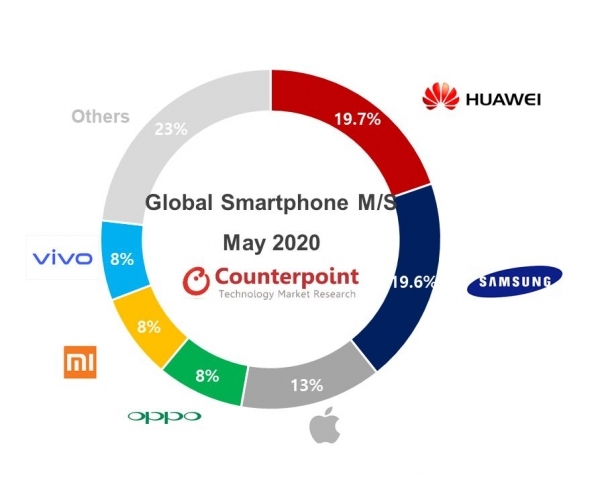
At the moment, the Chinese tech giant has a market share of 19.7 percent while Samsung follows very closely behind with a 19.6 percent share in the period of May where 81.97 million smartphones were shipped. However, while Huawei still holds the title for the world’s largest smartphone maker, there is only a 0.1 percent difference. In contrast, Huawei had a 21.4 percent market share back in April, while Samsung had just 19.1 percent.
Thus, it would seem likely that the company might not be able to retain the title for the third month in a row and that the South Korean firm will stand atop again in June. One of the contributing factors that led to Samsung closing the gap in May as its sales in the US, where smartphone sales rose by 56 percent over April. In the US, the company had a market share of 33 percent of the total of 8.4 million smartphones that were sold.
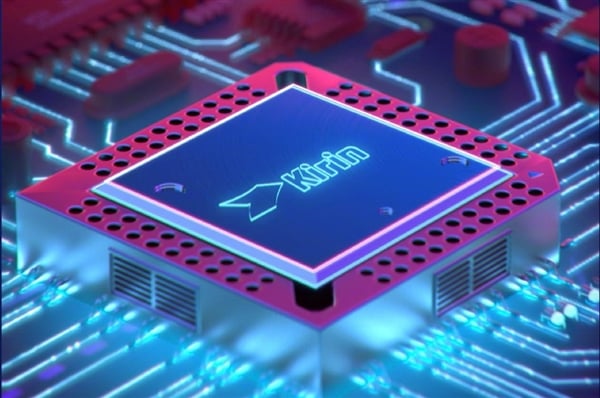
At the same time, it has been said that much if Huawei’s success came with its popularity in its home country, which was at the cost of its overseas business. Furthermore, the Chinese vendor’s fate for September and later this year also remains uncertain. Its upcoming flagship Mate 40 series is expected to launch during this period, but the loss of its primary HiSilcon Kirin chip supplier, TSMC, might make things difficult for it.
Huawei’s Kirin chipsets are manufactured by TSMC
A source close to the matter also said that Samsung losing its top spot to Huawei completely was very likely if the US Sanctions hadn’t been imposed against the Chinese OEM. Although, the early reopening of the Chinese economy during the Coronavirus pandemic also helped the company regain grounds faster than its competitors.
As the month of September approaches, rumors and reports about the upcoming iPhone 12 series have started making rounds. In the latest report, details about the higher video frame rate recording specs have surfaced online.
A new report coming from EverythingApplePro claims that a few models of the iPhone 12 series will come with support for 4K video recording at 240 frames per second, in an interpolated manner.
This is a major upgrade over what Apple currently offers on iPhone 11 series. The iPhone 11 Pro has support for 4K video recording at 60fps and the reported support for 4K at 240fps on iPhone 12 models will be a huge step forward in terms of motion smoothness. So far, 240fps recording has mostly been limited to 1080p videos in slow-mo.
Earlier, the beta code of iOS 14 as well as reports from leakster Max Weinbach hinted about support for 240fps 4K slow-mo recording. This means that the upcoming Apple A14 chipset, being manufactured using the 5nm process, will be a powerhouse.
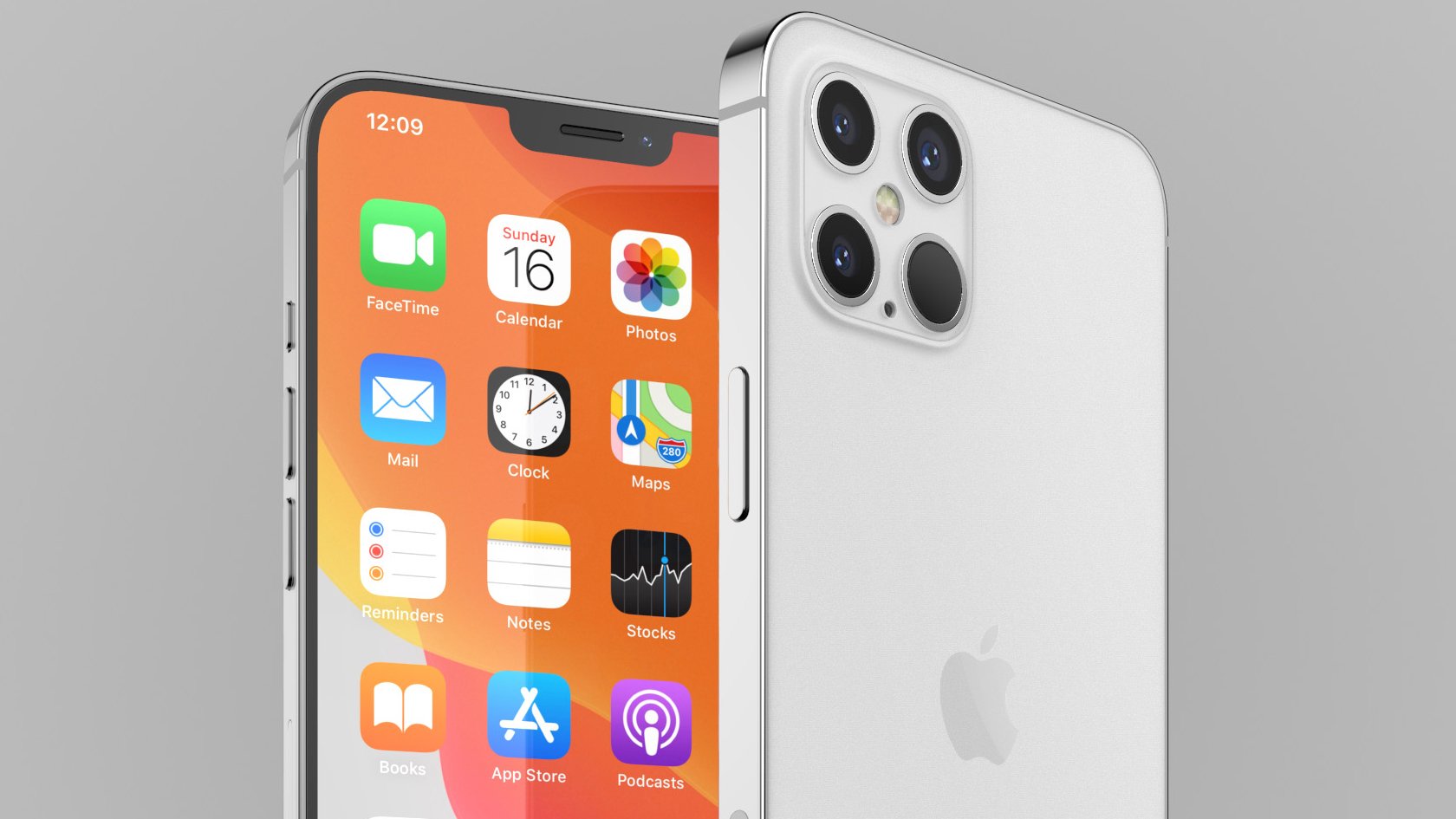
Apple will be launching its flagship next-generation iPhone 12 series smartphones this fall and as per the reports, the company is expected to launch four variants this time, which include iPhone 12, iPhone 12 Max, iPhone 12 Pro, and iPhone 12 Pro Max.
Recently, we reported that the standard iPhone 12 will have a 5.4-inch display with support for screen resolution of 2340 x 1080 pixels. The Max variant, on the other hand, will have a 6.1-inch panel with 2532 x 1170 pixels resolution. The iPhone 12 Pro will also come with a 6.1-inch display but will have 2532 x 1170 pixels screen resolution. The iPhone 12 Pro Max with having a massive 6.7-inch screen with 2778 x 1284 pixels resolution.
The models with Pro variant will come with 10-bit color depth and will feature a 120Hz refresh rate. Under the hood, all four models will come powered by the Apple A14 chipset which is being manufactured using the 5nm node process. Another major feature that these devices will bring is the support for 5G connectivity.
The company is also expected to launch a couple of 4G-only models as well, with pricing starting at $549. Rumors indicate that Apple could remove the EarPods as well as a power adapter from the in-box contents for the iPhone 12 series.
The Galaxy A51 and Galaxy A71 are the first A-series phones from Samsung to arrive with 5G capabilities. The A51 5G is currently the most affordable 5G phone from the South Korean brand. More members in the A-series are expected to arrive with 5G support in the future. A fresh report on Sammobile claims that the Galaxy A42 5G arriving in 2021 could be the cheapest 5G phone from Samsung.
The Galaxy A42 5G is said to have a model number of SM-A426B. The handset is likely to arrive in the 4G version as well. To be precise, the SM-A426B model number belongs to the global edition of the Galaxy A42 5G.
The Galaxy A42 5G may arrive with an internal storage of 128 GB. The Galaxy A41 that went official earlier this year came with 64 GB of native storage. The smartphone could be available in color edition like gray, black, and white. The other details of the phone are under wraps.
In related news, Samsung is gearing up to launch multiple products in the coming months. The company may announce Galaxy Watch 3 smartwatch and Galaxy Buds Live in July. Some rumors claim that these devices may go official on July 22. The next month could also see the arrival of the Galaxy Tab S7 series of flagship tablets.
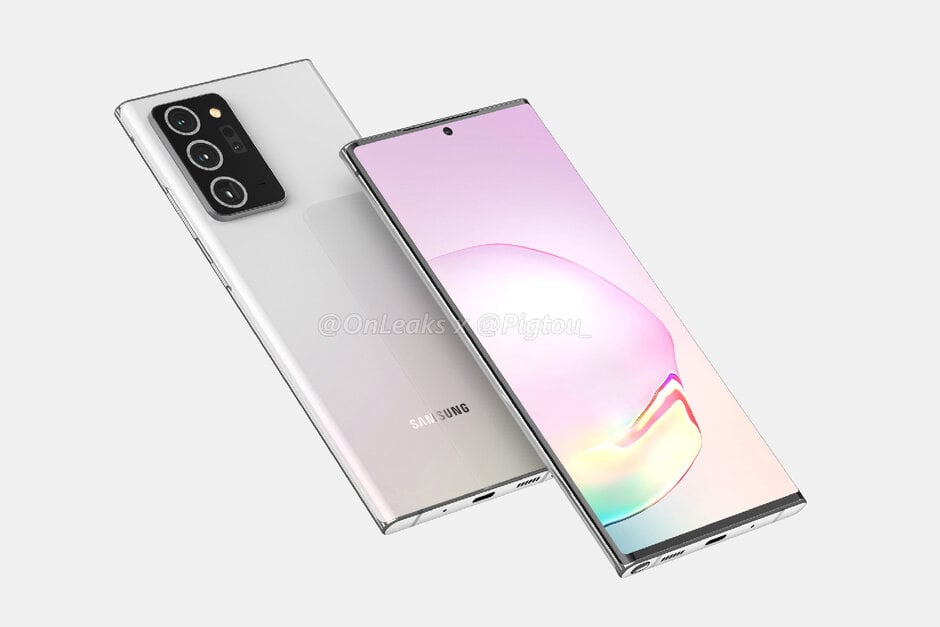
On Aug. 5, Samsung is likely to announce the Galaxy Fold 2 foldable phone, Galaxy Note 20 series and Galaxy Z Flip 5G. As of this writing, Samsung is yet to release an official confirmation on the arrival of these products.
Smartisan, the China-based smartphone maker, hasn’t launched any new device in recent times. There has been no new smartphone from the brand this year so far and last year, it only launched one device — Smartisan Nut Pro 3.
But if you have been wondering if the company is dead, then the answer is no. Recently, Zhu Haizhou, Product Manager of the Nut smartphone series, revealed in interaction with users on Weibo that a new smartphone is “on the way”.
Smartisan Nut Pro 3
He also said that the company has probably set the launch date of the new smartphone announcement but the official communication regarding the same is pending. While he has not confirmed this, it is expected that the upcoming smartphone is 5G compatible.
Since the device is confirmed to be a part of the Nut series, it won’t be surprising if the smartphone turns out to be the Smartisan Nut Pro 4. If that’s the case, then the phone could be powered by the Qualcomm Snapdragon 865 chipset.
Given that nothing is known about the smartphone in question, the official launch of the smartphone could be months away. However, we expect the smartphone to have a similar design to its predecessor, along with premium specs and features like 90Hz refresh rate display, SD865 SoC, and dual-mode 5G connectivity, among others.
Last year, in October, the company launched Smartisan Nut Pro 3 flagship smartphone powered by Snapdragon 855+ SoC, 12GB RAM, and 256GB storage. It was running Smartisan OS 7.0 which packs several new features and improvements.
Honor will be announcing the Honor X10 Max and Honor 30 Lite (Youth Edition) 5G-ready phones in China on July 2. Both phones are now listed in the product library at China Telecom with their expected pricing for their different variants. The listing states that the Honor 30 Lite (Youth Edition) 5G will arrive in three models and a starting price of 2,099 Yuan (~$296).
Honor 30 Lite (Youth Edition) 5G pricing
The Honor 30 Lite 5G is mentioned in three models on the China Telecom site such as 6 GB RAM + 64 GB storage, 6 GB RAM + 128 GB storage and 8 GB RAM + 128 GB storage. These variants are priced at 2,099 Yuan (~$297), 2,299 Yuan (~$325), and 2,599 Yuan (~$368). The pricing information could be incorrect. Hence, it is advisable to wait for the official announcement to know the pricing of the Honor 30 Youth Edition 5G. The handset is listed in color editions like Magic Night Black, Wizard of Oz, Summer Rainbow, and Magic Mirror Silver.
The Honor 30 Lite 5G features a 6.5-inch display waterdrop notch. The IPS LCD panel delivers a Full HD+ resolution of 1080 x 2400 pixels and an aspect ratio of 20:9. The screen will support a refresh rate of up to 90Hz. The Magic UI 3.1.1 flavored Android 10 OS will be available preinstalled on the device.
The Dimensity 800 5G SoC will be at the helm of the Honor 30 Youth Edition 5G. It has a 4,000mAh battery that is equipped with 22.5W fast charging.
The Honor 30 Lite 5G has a front camera of 16-megapixel. Its rear shell has a 48-megapixel + 8-megapixel + 2-megapixel triple camera system. It has a side-facing fingerprint sensor.
LeEco, the Chinese company which dared to take on the likes of Netflix and Tesla and called Apple as “outdated” at the same time, was making quite a progress. But suddenly, the world of LeEco, earlier known as LeTV, crumbled as the company faced a number of setbacks. It was growing too fast without a solid financial foundation.
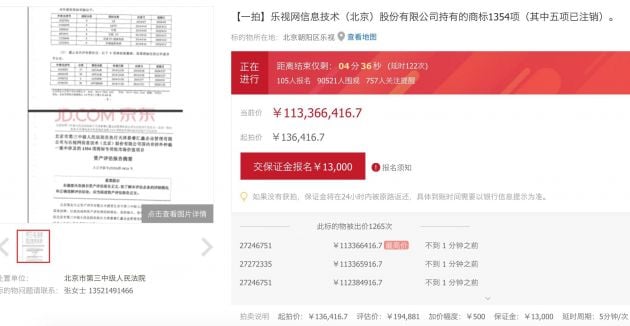
The company is now facing a number of lawsuits in its home country from various vendors, although the same has been going on for years now. In the latest development, Jingdong Judicial Auction listed 1,354 patents held by LeTV Information Technology (Beijing) Co. for judicial auction.
The listing had a starting price of 136,000 yuan (approximately $19,240) and the current bid for the trademarks has reached 113 million yuan. It began the bidding process on 29th June at 10:00 AM local time and the process was closed today, i.e. on 30th June at 10:00 AM local time.
The process seems to have attracted more than 90,000 people but only 105 signed up for the bidding. This first auction of the company’s assets and IP includes trademarks like “LeTV TV” and “LeTV Super TV” among others.
The auction process for the trademarks was based on the increased-price method where a reserved price is set and then each bid increases the price by at least 500 yuan (~$71). The competition among the bidders is fierce given that most bids were only a minute apart and the bid has been increased by 800 times compared to the reserved price.
Earlier this month, the auction of around 22.1 million shares of LeEco held by Jia Yueting, the company’s founder, took place on 13th June and 14th June. Despite over 14,000 people interested, none of them participated in the bidding process.
The auction price of the share was decided based on the average closing price of 20 trading days before the trading was suspended. With the price of 2.51 yuan (~$0.36) per share, the total comes down to 55.47 million yuan.
It’s noteworthy that the auction price almost doubles the price of the share from the 1.69 yuan per share cost on the last trading day before LeTV’s suspension. The company entered the delisting consolidation period on 5th June and thus, the LETV stock trading was suspended in China. By the end of 12th June, the company’s share price fell below 0.9 yuan (~$0.13) per share, bringing down the market value to 3.59 billion yuan.
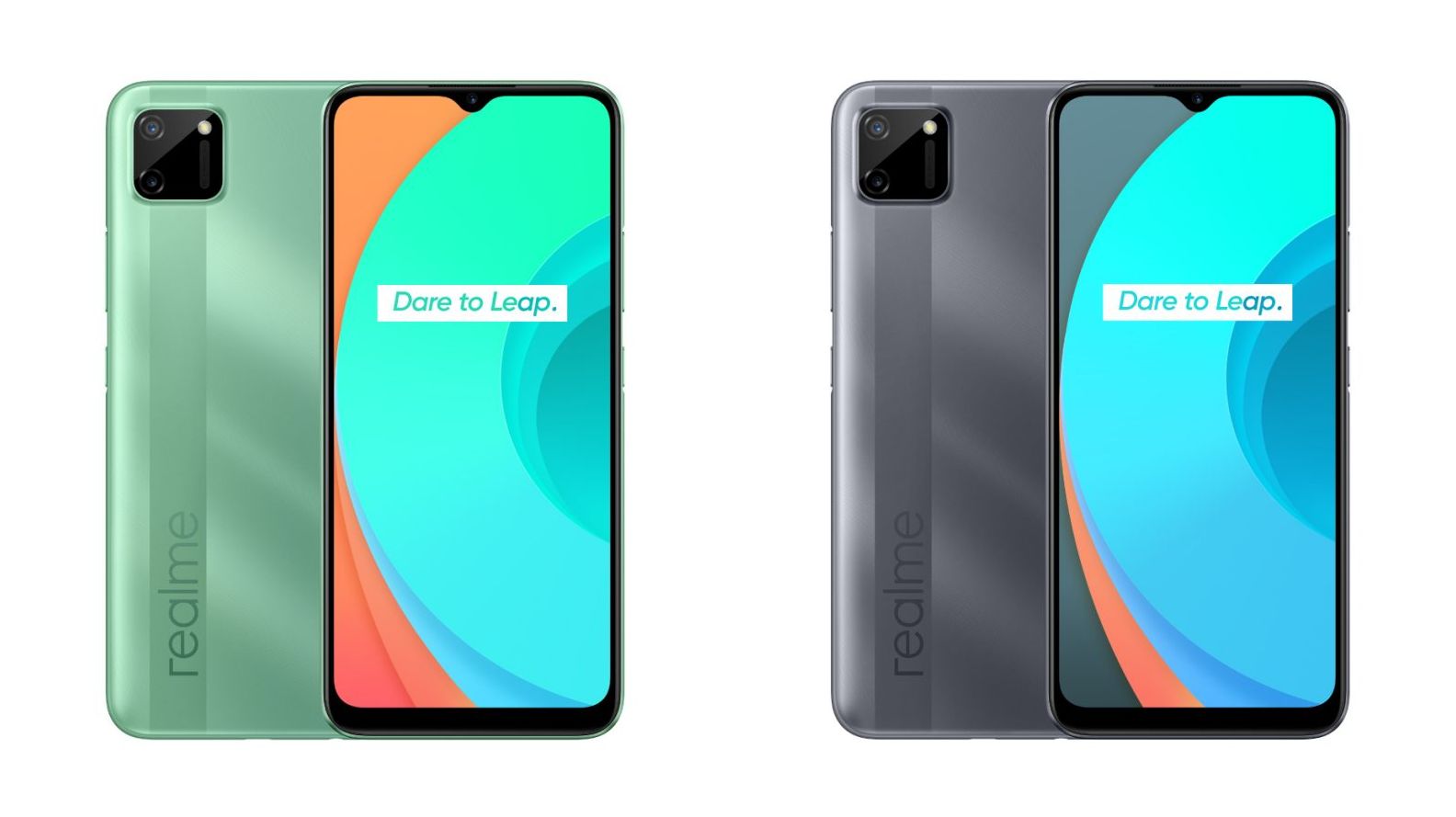
The Realme C11 is now official in Malaysia. It is the second Helio G35 phone to go official in the country after the Xiaomi Redmi 9C that was announced earlier today. The Realme C11 comes with a large-sized tall aspect ratio supporting display and it receives to perform from a massive battery. It is the first Realme smartphone to feature a square-shaped rear camera housing.
Realme C11 specifications
The polycarbonate bodied Realme C11 has 164.4 x 75.9 x 9.1mm dimensions and it weighs 196 grams. The mini-drop notch IPS LCD panel of the Realme C11 measures 6.5 inches. The 20:9 aspect ratio display delivers an HD+ resolution of 720 x 1600 pixels. According to Realme, the device offers a screen space of 88.7 percent.
The Helio G35 with processing speeds of up to 2.3GHz powers the device with 2 GB of RAM. The phone has an internal storage of 32 GB and a microSD card slot for additional storage. It is preinstalled with Android 10 OS and Realme UI.
The Realme C11 has a 5,000mAh battery that supports 10W charging. It has a front camera of 5-megapixel with f/2.4 aperture. The rear camera module has a 13-megapixel main lens with f/2.2 aperture, a portrait lens of 2-megapixel with f/2.4 aperture, and an LED flash. The device comes with usual connectivity features like dual 4G VoLTE, Wi-Fi 802.11 b/g/n, Bluetooth 5.0, GPS, USB port, and a 3.5mm headphone slot.
Realme C11 pricing
Malaysia has received the Realme C11 with a price tag of RM 429 (~$100). The first sales of the phone will be held through Shopee retailer site in the country on July 7. The phone can be bought in Mint Green and Pepper Grey colorways.
Earlier this year, Samsung launched its next-generation Galaxy S-series flagship smartphones that included Galaxy S20, S20 Plus, and S20 Ultra. Unlike the S20 and S20 Plus, the Ultra model features a 108MP primary camera sensor on the back.
However, the S20 Ultra suffers from a focusing issue where the focus of the camera is much slower, and sometimes it misses the subject altogether. Reports indicate that this could be because of the lack of dual-pixel PDAF on the 108MP sensor.
Now, Samsung is gearing up to launch the Galaxy Note20 series smartphones in the coming months and as per the report, the focusing issue with the 108MP camera sensor has been resolved on the upcoming devices. But what exactly did the company do to solve the issue has not been revealed yet.
As for the chipset, all the models of the Galaxy Note20 lineup will come powered by the upcoming Qualcomm Snapdragon 865 Plus SoC, which as the name itself indicates, is an upgraded variant of the SD865 chipset.
Not just the Note20 series, the Galaxy Fold 2, Galaxy Z Flip 5G, and the Galaxy Tab S7 are also said to come powered by the Snapdragon 865 Plus chipset. However, in some regions, the devices could be powered by Samsung’s own Exynos 992 SoC.
Samsung typically announces the Galaxy Note series flagship smartphones in the month of August and is expected to follow the trend this year as well. As per the reports, Samsung Galaxy Unpacked event could be hosted on 5th August but the company is yet to confirm the launch date. If this turns out to be true, then it will be the first online-only Unpacked event from the South Korean giant, because of the COVID-19 pandemic.
It remains to be seen if the company decides to start selling the smartphone soon after the official announcement, given that the sales could be impacted if the situation doesn’t improve anytime soon. The Samsung Galaxy S20 series, despite being the leader in 5G smartphone sales in the United States, is underperforming compared to its predecessors.
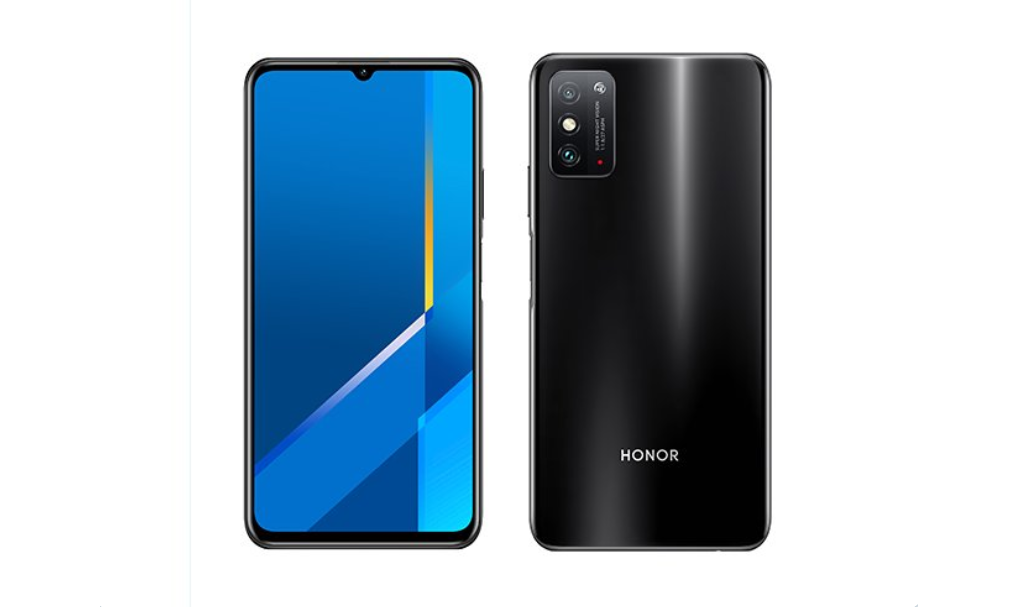
On July 2, Honor will be launching two smartphones namely, the Honor 30 Lite (Youth Edition) 5G and the Honor X10 Max 5G. While the former is a rebranded version of the Huawei Enjoy Z, the latter will be arriving as a sequel for 2018’s Honor 8X Max. Ahead of the launch, the Honor X10 Max 5G has appeared in the database of the China Telecom with pricing for its three variants.
Honor X10 Max 5G pricing
The Honor X10 Max will be launching in three options such as 6 GB RAM + 64 GB storage, 6 GB RAM + 128 GB storage and 8 GB RAM + 128 GB storage. These phones are mentioned with respective price tags of 2,299 Yuan (~$325), 2,599 Yuan (~$368), and 2,799 Yuan (~$396).
The Honor X10 Max’s color variants include Speed Black, Light Silver, and Racing Blue. Readers are advised to digest the pricing information with a grain of salt as pricing details of unannounced phones at this site have often turned out to be incorrect.
The Honor X10 Max 5G has a massive IPS LCD display of 7.09 inches. As the company confirmed, it will be equipped with RGBW technology that will make it possible to view the display under bright sunlight without any problem. The screen offers a Full HD+ resolution of 1080 x 2280 pixels. The device is loaded with Magic UI 3.1.1 based Android 10 OS.
The Honor X10 Max 5G is fueled by Dimensity 800 5G chipset. There is support for 22.5W fast charging for its 5,000mAh battery. The device is equipped with a front-facing camera of 8-megapixel. The back panel of the smartphone features a 48-megapixel + 2-megapixel dual camera setup. Some of the other features that are available on the Honor X10 Max are side-mounted fingerprint sensor, dual speakers, NFC, 3.5mm audio jack, and USB-C.
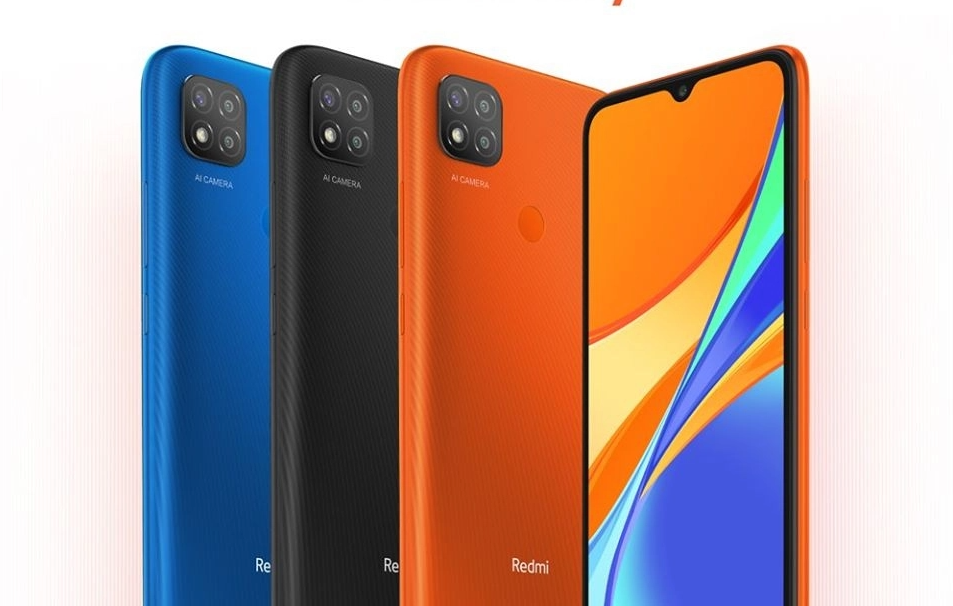
Earlier this month, Malaysia became one of the first countries to receive the Redmi 9 smartphone. Today, Xiaomi unveiled the Redmi 9A and Redmi 9C entry-level phones in Malaysia with an attractive starting price of RM 359 (~$83). The Redmi 9A and 9C offer users with large-sized screens, big-sized batteries, up to three rear cameras, Helio G35 / G25 chipset, and more.
Redmi 9A and Redmi 9C specifications
The Redmi 9A and Redmi 9C are equipped with IPS LCD panels of 6.53 inches. The dot-drop notch screen produces an HD+ resolution of 720 x 1600 pixels and a 20:9 aspect ratio. Both devices are packed with 5,000mAh batteries. These handsets are equipped with 2 GB of LPPDR4x RAM and 32 GB of eMMC 5.1 internal storage. For additional storage, these devices come with a microSD card slot. The Android 10 OS along with MIUI 11 comes preloaded on the Redmi 9A and Redmi 9C smartphones.
Xiaomi Redmi 9A
The Redmi 9A draws power from the Helio G25 octa-core processor that works at 2GHz whereas the Redmi 9C is equipped with the Helio G35 octa-core SoC that ticks at 2.3GHz. Both phones have 5-megapixel front-facing cameras.
The Redmi 9A has a single rear camera of 13-megapixel and it lacks a fingerprint reader. On the other side, the Redmi 9C is blessed with a square-shaped camera module that includes a 13-megapixel main shooter, a 5-megapixel ultrawide lens, a 2-megapixel depth assist lens and an LED flash. The 9C features a rear-mounted fingerprint sensor. The Redmi 9A and 9C come with other common features like dual SIM slot, 4G VoLTE, Wi-Fi 802.11 b/g/n, Bluetooth 5.0, GPS, USB-C, IR blaster and 3.5mm audio jack.
Redmi 9A and Redmi 9C pricing
The Redmi 9A will be available for purchase in Malaysia through Lazada from July 7. It is priced at RM 359 (~$83) and its color variants are Midnight Grey, Twilight Blue, and Peacock Green.
The Redmi 9C will be hitting the Malaysian markets by the end of July. It costs RM 429 (~$100) and it comes in orange, black and blue colors. The Redmi 9 was introduced in the country for RM 499 (~$116).
Xiaomi has become a household name when it comes to TVs. The Chinese company which is best known for making smartphones ventured into the smart TV market a few years ago and has become a market leader in countries such as India.
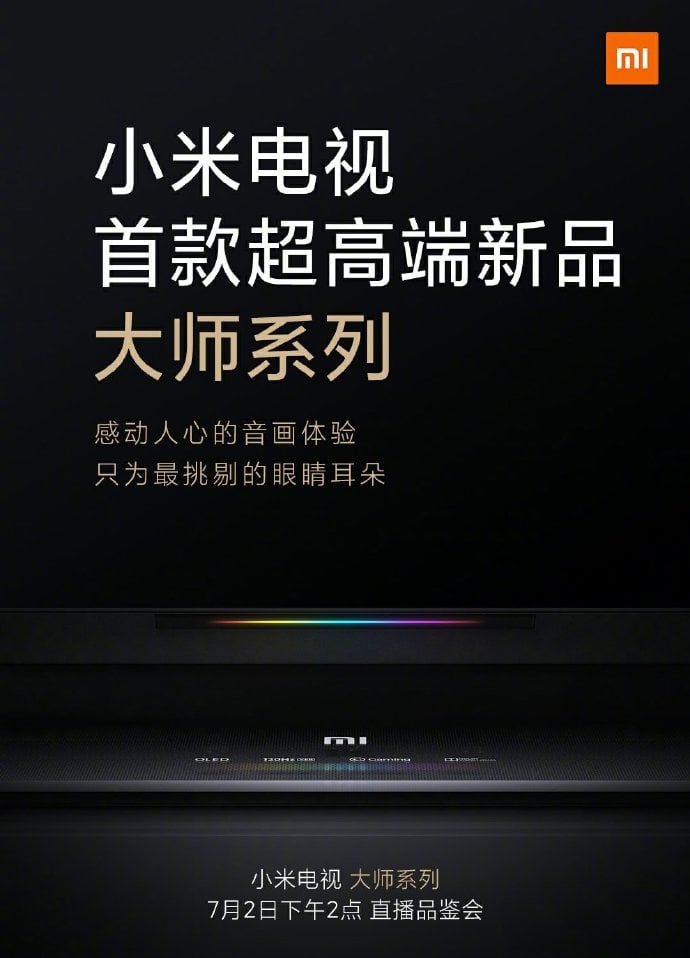
With a lineup that includes both budget and high-end TVs, Xiaomi is now ready to enter into the ultra-high-end TV market that is currently controlled by Samsung, Sony, and LG. Today, the manufacturer announced that the first of its ultra-high-end Master TV series will be unveiled in China on July 2 at 2 PM.
The poster teases some of the features of the TV such as an OLED panel, a 120Hz refresh rate, gaming features, and Dolby Atmos Audio. There is no news on the screen size but we won’t be surprised if it comes in multiple sizes.
There is also no news yet about an international release, though that is not expected to happen immediately if at all. Pricing is also not known but this new product should sell for a higher price tag than any of its current TVs.
What do you think about Xiaomi’s entry into the high-end TV market? Do you think it has what it takes to challenge Samsung, LG, and Sony?
Despite the lockdown, budget phones keep selling a lot in the Indian market. Among the devices with the biggest success in the last period, there is surely Realme Narzo 10: the first handset from the new Realme’s Narzo series which beaten important sale records. But is it really the best affordable phone to opt for in that price segment? In order to establish this, we decided to compare it with the newly-announced Redmi 9 and the Motorola Moto G8 Power. If you are looking for a device sold at a very affordable price, these are amazing alternatives to the Realme Narzo 10. Through this comparison, you will learn whether they are actually a better choice for your needs or not.
Xiaomi Redmi 9 vs Realme Narzo 10 vs Motorola Moto G8 Power
Quad 13 + 8 + 5 + 2 MP f/2.2, f/2.2, f/2.4 and f/2.4
8 MP f/2.0 front camera
Quad 48 + 8 + 2 + 2 MP f/1.8, f/2.3, f/2.4 and f/2.4
16 MP f/2.0 front camera
Quad 16 + 8 + 8 + 2 MP f/1.7, f/2.2, f/2.2 and f/2.2
16 MP f/2.0 front camera
BATTERY
5020 mAh, fast charging 18W
5000 mAh, fast charging 18W
5000 mAh, fast charging 18W
ADDITIONAL FEATURES
Dual SIM slot
Dual SIM slot, splash resistant
Hybrid Dual SIM slot, water repellent
Design
The most modern and futuristic design belongs to the Motorola Moto G8 Power. Even though it is very affordable, it still features an elegant punch-hole display like flagship phones. Further, it has a water-repellent coating that protects from rain and splashes. With the Motorola Moto G8 Power, you even get a 6000 series aluminum frame making it even more elegant and sturdier. Both Redmi 9 and Realme Narzo 10 are made of polycarbonate, but the Realme Narzo 10 offers protection against water.
Display
Realme Narzo 10 loses the comparison when it comes to the displays because it sports a lower resolution. It has a HD+ panel instead of a Full HD+ display found on the Redmi 9 and the Narzo 10. Note that in each case we are talking about cheap IPS panel, nothing special. But Redmi 9 and Moto G8 Power actually offer a way higher image definition. Redmi 9 has the widest display, while Motorola Moto G8 Power is more compact due to its smaller diagonal.
Specs & Software
It is a hard fight between the Helio G80 found on the Redmi 9 and Realme Narzo 10, and the Snapdragon 665 found on the Moto G8 Power. A lot of people would choose the Snapdragon 665 just because it is a Qualcomm chipset, but also because it is built with a better production process and it has a lower energy consumption. But Helio G80 is actually better in terms of performance, according to benchmarks. However, you should note that Redmi 9 comes in a variant with 6 GB of RAM, while Moto G8 Power has just 4 GB of RAM, so worse performance in multi-tasking. Motorola Moto G8 Power also comes with 64 GB of internal storage, while you can get up to 128 GB with Redmi 9 and Realme Narzo 10.
Camera
Realme Narzo 10 actually comes with an amazing main sensor for its rear camera department which shoots very detailed photos. But overall, Moto G8 Power is a better camera phone due to its brighter focal aperture, a telephoto lens and the support to 4K video recording. With its 13 MP quad camera and an 8 MP front camera, Redmi 9 is the most disappointing and you should definitely discard it if you need the greatest camera phone.
Battery
With Moto G8 Power, Redmi 9 and Realme Narzo 10 you get more or less the same battery capacity. But Realme Narzo 10 provides a longer battery life because it has a lower display resolution. Realme Narzo 10 is also the only one to support reverse charging, so you can use it as a power bank to charge other devices.
Price
Moto G8 Power is expected to hit India in July with a Rs. 17,890 / $237 price tag, Realme Narzo 10 is priced Rs. 11,999 / $159, and Redmi 9 is expected to launch in August with an Rs. 11,790 / $156 price tag. You have to spend more for the Moto G8 Power, but it is actually the best handset of this trio. If you want to save money, it is not necessary to wait for the Redmi 9 as the Realme Narzo 10 is actually a better handset on the paper (if we exclude the display).
As tensions continue to rise between the Indian and Chinese governments following a clash at their borders earlier this month, the former has announced today a list of 59 Chinese mobile apps that have been banned in the country. The list includes popular apps such as TikTok, UC Browser, the mobile game Clash of Kings, and apps from Xiaomi.
TikTok and 56 other apps banned by the Indian Government
The Indian Government of India says the reason for the ban is because of security and privacy concerns. It stated that the apps are engaged in activities that put the security of the state and the defense of the country at risk and that the matter requires emergency measures.
The official statement said the government is “invoking its power under section 69A of the Information Technology Act read with the relevant provisions of the Information Technology (Procedure and Safeguards for Blocking of Access of Information by Public) Rules 2009”.
It was also stated that the Indian Cyber Crime Coordination Center has sent a recommendation for blocking the malicious apps
Below is a complete list of the apps:
1. TikTok
2. SHAREit
3. Kwai
4. UC Browser
5. Baidu Map
6. SHEIN
7. Clash of Kings
8. DU Battery saver
9. Helo
10. Likee
11. YouCam Makeup
12. Mi Community
13. CM Browser
14. Virus Cleaner
15. APUS Browser
16. ROMWE
17. Club Factory
18. NewsDog
19. BeautyPlus
20. WeChat
21. UC News
22. QQ Mail
23. Weibo
24. Xender
25. QQ Music
26. QQ Newsfeed
27. Bigo Live
28. SelfieCity
29. Mail Master
30. Parallel Space
31. Mi Video Call – Xiaomi
32. WeSync
33. ES File Explorer
34. Viva Video – QU Video Inc
35. Meitu
36. Vigo Video
37. New Video Status
38. DU Recorder
39. Vault
40. DU Cache Cleaner
41. DU Cleaner
42. DU Browser
43. HAGO – Play With New Friends
44. CamScanner
45. Clean Master – Cheetah Mobile
46. Wonder Camera
47. Photo Wonder
48. QQ Player
49. WeMeet
50. Sweet Selfie
51. Baidu Translate
52. Vmate
53. QQ International
54. QQ Security Center
55. QQ Launcher
56. UV Video
57. VFly-Status Videos, Status Maker, New Video Status
58. Mobile Legends
59. DU Privacy Vault
The Indian Government says that by banning these apps, it is ensuring the safety and sovereignty of the Indian cyberspace.
Last year, Huawei was faced with an enormous task of finding a replacement for Google Apps. Its solution was to develop Huawei Mobile Services and investing in its AppGallery app store. But next year, Huawei will face an even bigger challenge – chipsets. With TSMC barred from manufacturing chips for Huawei’s chip subsidiary – Hisilicon, the company will be forced to look for alternatives very soon.
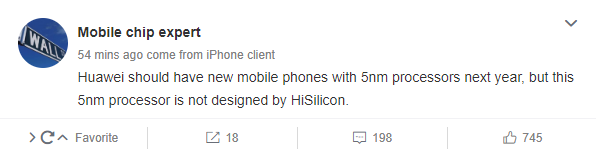
According to an industry insider on Weibo, Huawei’s flagship smartphones in 2021 could be powered by a 5nm chip from a third party vendor. The insider didn’t expand on his comment but the most likely contender for Huawei’s chip supply should be none other than MediaTek.
This comment by the insider is a bit confusing especially if you have been reading reports about the 5nm Kirin 1000 or 1020 that’s all set to launch this year. But here, he’s talking about 5nm chips for Huawei’s 2021 flagships and not the upcoming Mate 40.
TSMC Can Still Supply Chips To Huawei Until September 2020
In May 2020, the Trump administration added a new rule which barred overseas companies from supplying components to Huawei if it was made using US technology. Given how US equipment plays an important role in manufacturing semiconductor chips, this technically bars TSMC, SMIC, and even Samsung from manufacturing chips for Huawei. However, the US has granted a grace period of 120-days before the rule takes into effect. So TSMC can continue supplying chips to Hisilicon until September 15, 2020.
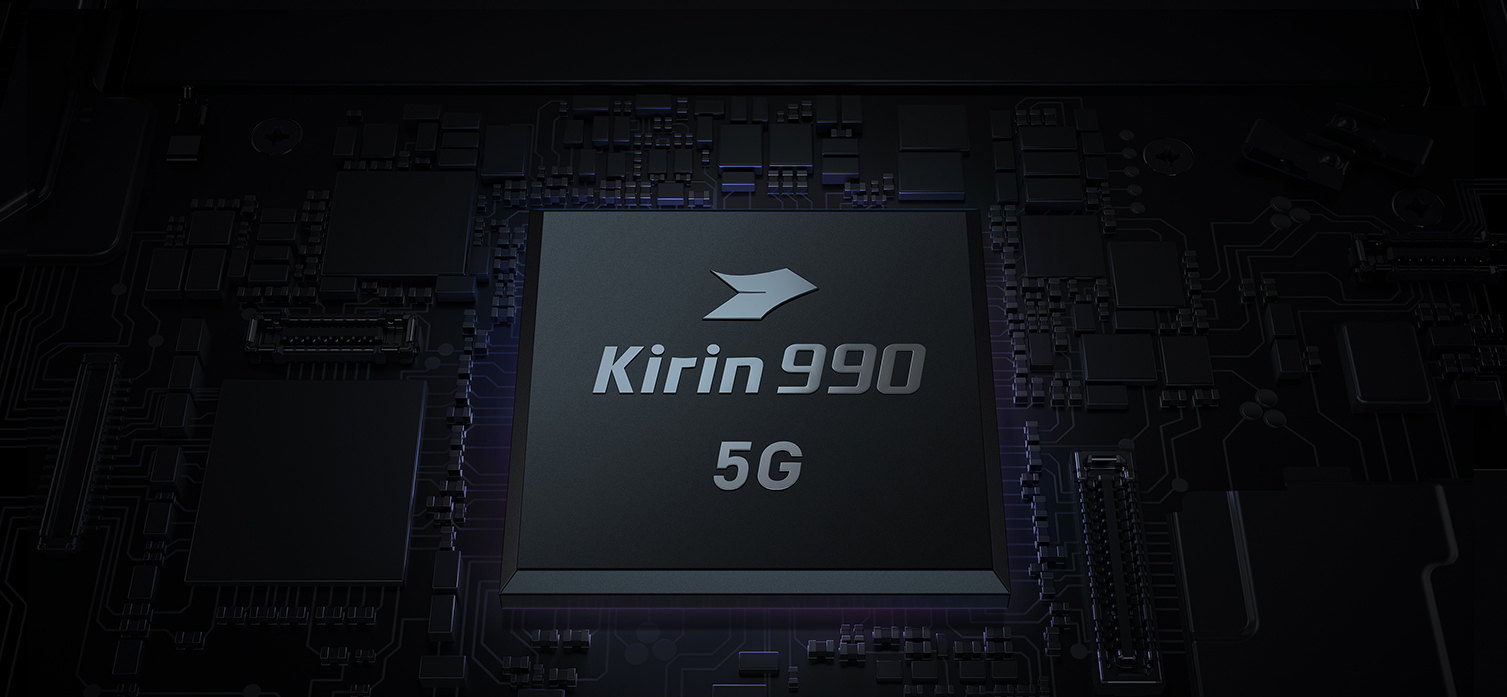
Kirin 990 5G is a 7nm chip manufactured by tsmc
There was also a recent report which said that Huawei has placed an urgent order with the TSMC for 5nm chips. This means Huawei’s upcoming Kirin 1000 or 1020 (name is yet to be confirmed) 5nm chipset can still be manufactured by TSMC and released on schedule.
Unless the US government extends the grace period after September, TSMC, or for that matter even the Chinese SMIC cannot manufacture chips for Hisilicon. This would leave Huawei with very limited options. An alternative could be to procure 5nm chips from a third-party vendor so that Huawei’s flagships next year are competitive, even without its own Hisilicon chips.
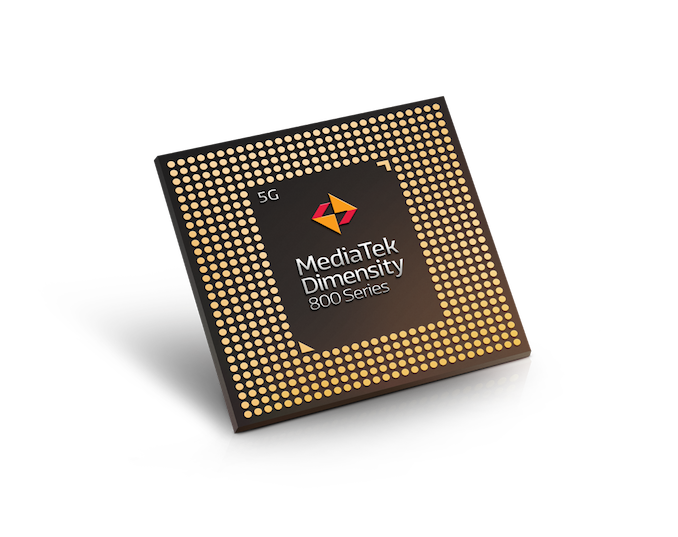
MediaTek’s Dimensity series looks promising this year!
Since Qualcomm is a US company, it’s not a viable alternative. This leaves either MediaTek or even Samsung as the potential vendor of next-generation 5nm chips for Huawei.
But it remains to be seen if Samsung or MediaTek can legally sell its own chips to Huawei that’s manufactured using US technology. There are reports which say TSMC and Samsung are looking at setting up production lines without US equipment but we haven’t heard anything concrete yet.
Xiaomi has crowdfunded several LCD writing tablets in the past couple of years. Some of the popular ones are the Wicue LCD Writing Tablet and the Mijia LCD Digital Drawing Tablet. We have spotted a new one on the Youpin Store and it comes with a larger display with an improved LCD as well as new features.
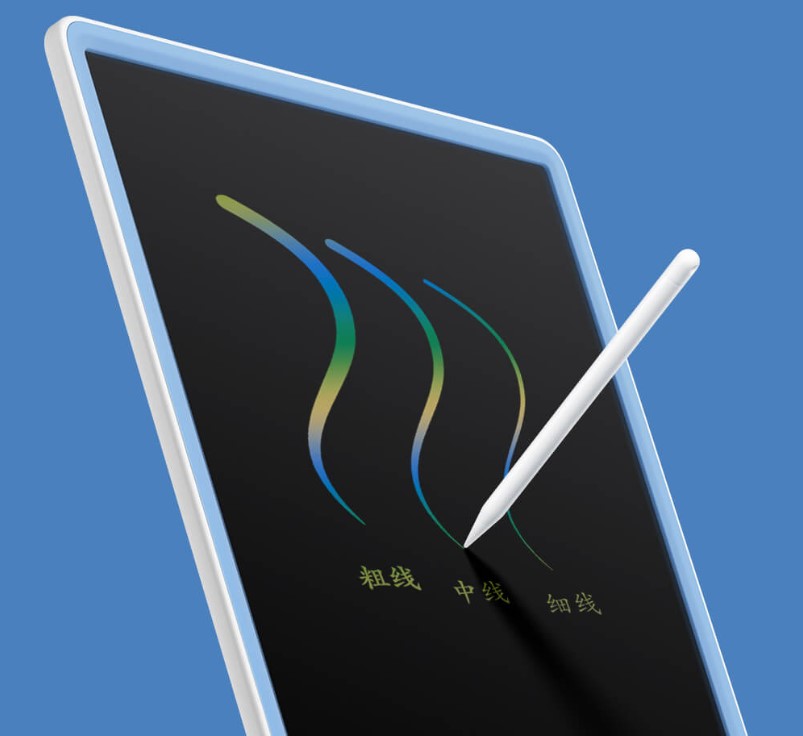
The Xiaoxun 16-inch Color LCD Tablet is designed for kids but can actually be used by anyone. The tablet can be used for drawing and writing, and unlike the Mijia LCD Digital Drawing Tablet which displays just one color, the Xiaoxun tablet displays three colors (blue, yellow, and green).
It comes bundled with a steel stylus that attaches magnetically to the side of the tablet just like the iPad’s stylus. Another cool feature is its support for pressure. This means that the thickness of the lines drawn depends on the pressure applied by the user.
The tablet has a one-button at the bottom of the screen for erasing what is on the screen. There is also a lock on the side that disables the erase button.
The body is made from ABS Polycarbonate which should make it pretty light even for its size. It measures 36.8 x 26.8 x 0.8 centimeters but its weight wasn’t revealed. Just like the other drawing tablets, the Xiaoxun 16-inch Color LCD Tablet is powered by a CR2025 coin battery that should last up to two years before needing replacement.
It comes in Pink and Blue and is priced at ¥199 (~$28) on the Youpin store.
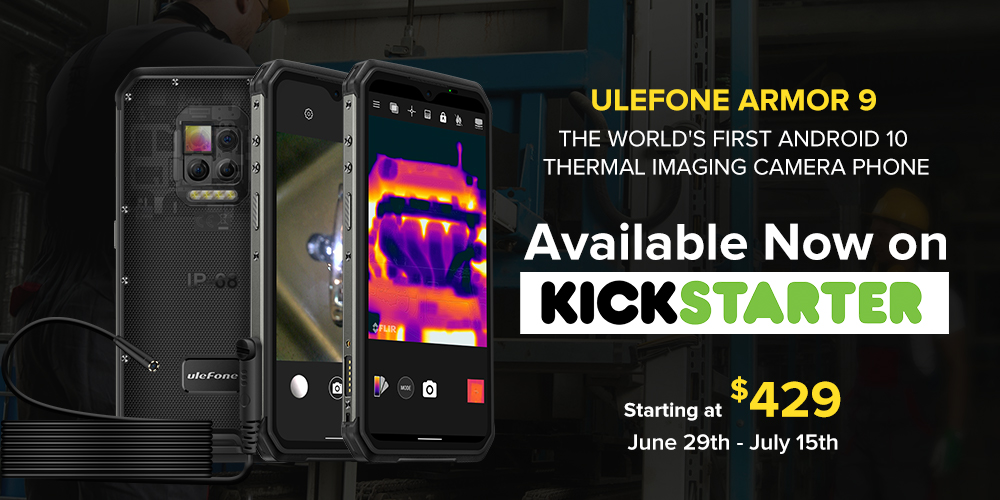
Ulefone is China’s popular rugged smartphone manufacturer, and the Armor series is the company’s best selling rugged smartphone series. After launching the affordable Ulefone X7 Pro a few weeks ago, the company is here with powerful and high-end specifications packed Armor 9 rugged smartphone. It has surfaced on the Kickstarter crowdfunding platform available for the starting price of $429. The company is offering early bird discount on all the available bundles.
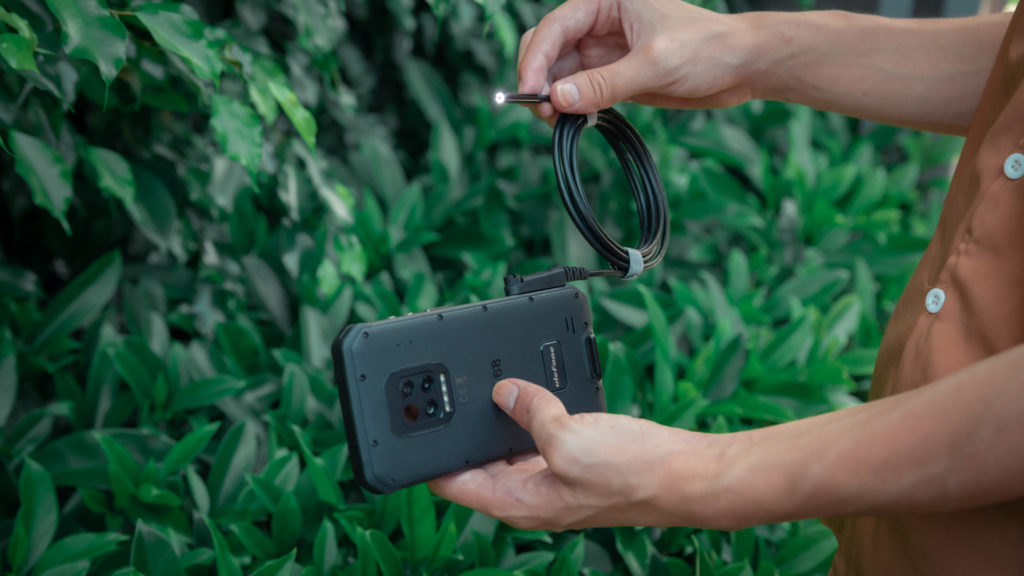
The users can opt for a super offer q package for $429.99 which consists only a smartphone unit. You can grab a smartphone unit along with a protective case and 180° rotatable back clip and a carabiner. While Offer 3 worth $459.99 brings Armor 9 unit, and 3-in-1 waterproof endoscope. The user needs to shell out $479 if you want to get a protective case and a 3-in-1 waterproof endoscope. Furthermore, a set of five Armour 9 is available for $2149 and the set of unit 10 is available for $4199.
The above offers are applicable for only first 200 orders, later the price will increase by $20 on each package.
Ulefone Armor 9 Specifications
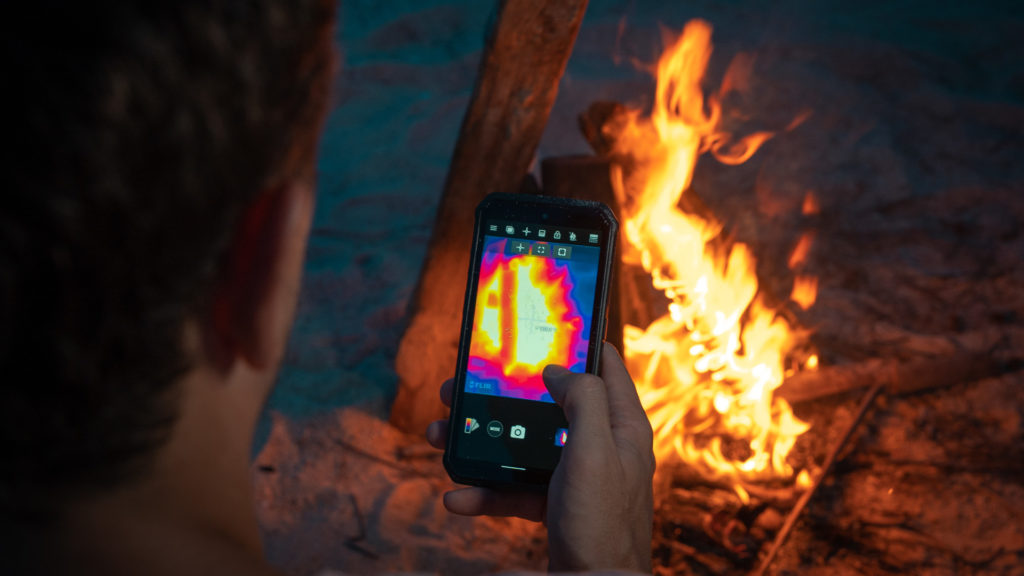
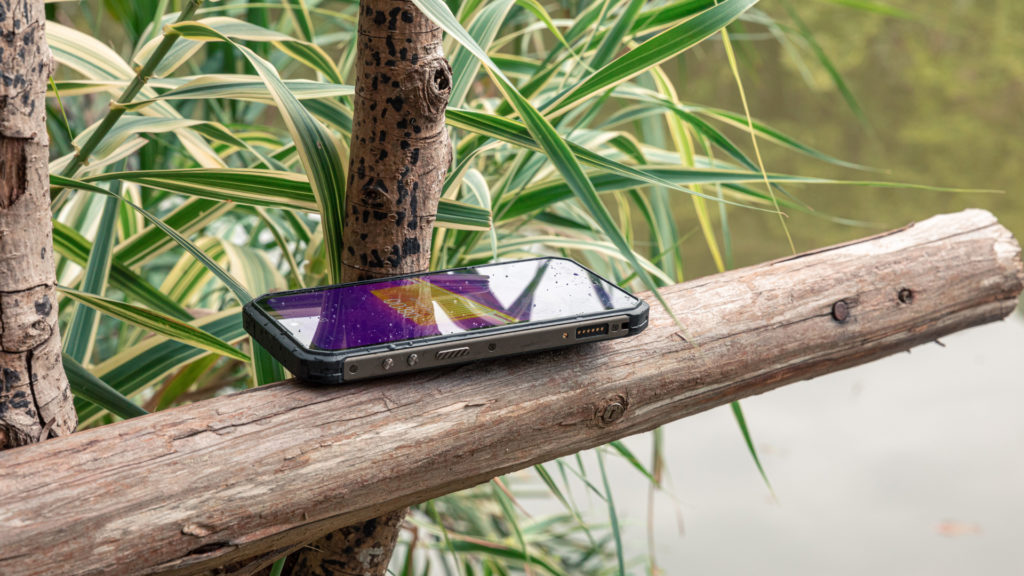
Ulefone Armor 9 features a FLIR thermal imaging camera to detect the temperature of different objects. It carries a triple rear sensor with a primary Samsung GW1 sensor of 64MP to capture detailed photos even in the low light environment. On the front, there’s an 8-megapixel selfie camera for easy face uncloaking and video calling.
The device is powered with Helio P90 chipset clocked at 2.2GHz frequency coupled with 8GB RAM and 128GB internal storage. It supports expandable storage up to 128GB storage via microSD card slot. It is IP68/IP69K and MIL-STD-810 certified device featuring a dustproof, waterproof and drop-proof body. In connectivity, you will get a GPS, GLONASS, Beidou, Galileo quadruple navigation system, and fingerprint ID, NFC, and 4G VoLTE support. It houses a 6600 mAh battery which can keep it running for several days.
It runs on Android OS featuring all the luxuries of the version. There’s a 6.5-inch Full HD+ waterdrop display.
You can get Ulefone Armor 9 from Kickstarter with any of the above offers until July 14. You can head over to the campaign page to know more about the device and pre-book the device.
We use cookies on our website to give you the most relevant experience by remembering your preferences and repeat visits. By clicking “Accept”, you consent to the use of ALL the cookies.
This website uses cookies to improve your experience while you navigate through the website. Out of these, the cookies that are categorized as necessary are stored on your browser as they are essential for the working of basic functionalities of the website. We also use third-party cookies that help us analyze and understand how you use this website. These cookies will be stored in your browser only with your consent. You also have the option to opt-out of these cookies. But opting out of some of these cookies may affect your browsing experience.
Necessary cookies are absolutely essential for the website to function properly. This category only includes cookies that ensures basic functionalities and security features of the website. These cookies do not store any personal information.
Any cookies that may not be particularly necessary for the website to function and is used specifically to collect user personal data via analytics, ads, other embedded contents are termed as non-necessary cookies. It is mandatory to procure user consent prior to running these cookies on your website.