Qualcomm has announced that it has partnered with BOE Technology Group, one of the leading player in the displays market, to produce new flexible displays that feature the 3D Sonic ultrasonic fingerprint sensors.
The company has also begun working on incorporating its security feature into BOE’s flexible OLED panels. Qualcomm says that this partnership is intended to provide a more streamlined solution to OEMs.
Roawen Chen, senior vice president and chief operations officer, QCT, Qualcomm Technologies, Inc, said: “Qualcomm Technologies continuously strives to improve our collaboration in China, and collaboration with BOE will be another example of the dedication and our long-term commitment to driving innovations in this vibrant ecosystem.
He adds that the collaboration will offer more opportunities to design cutting-edge products that feature OLED displays made with the Qualcomm 3D Sonic fingerprint sensor technology, in the areas like 5G, XR and IoT.
Qualcomm also believes that this partnership will result in a streamlined supply chain and reduced bill of materials (BoM) and research and development expenses. Based on the collaboration, BOE will offer integrated displays with Qualcomm 3D Sonic fingerprint sensors to its customers. It further adds that commercial devices featuring this integrated solution are expected to be available in the second half of 2020.
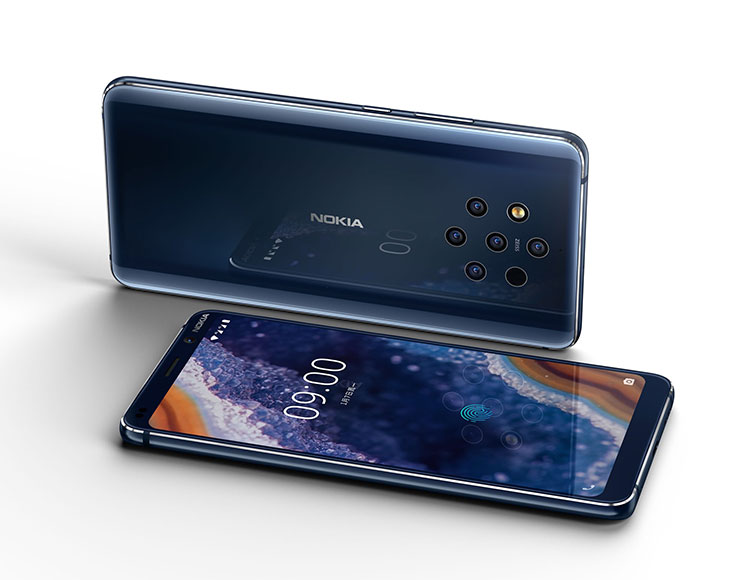
If recent reports are to be believed, HMD Global is repeatedly delaying the arrival of the Nokia 9.3 PureView flagship phone. It is speculated to break cover in the second half of the year. A recent report had claimed that the Finnish firm will hold an unveil event in Q3 to announce the Nokia 9.3 PureView and Nokia 7.3 smartphones. The probable reason behind the delay of the Nokia 9.3 PureView is that the company could be working on adding features that will allow it to rival with other flagship phones. The handset is now rumored to arrive with a high refresh rate display.
According to Nokia_anew that is known for its credible leaks on the upcoming Nokia phones, the Nokia 9.3 PureView will be equipped with a 120Hz refresh rate display. If this rumor turns out to be true, the Nokia 9.3 PureView will be able to rival with the likes of Samsung Galaxy S20 and OnePlus 8 Pro.
There is no information available on the display design of the Nokia flagship. It would be good if the company offers a curved display on the Nokia 9.3 PureView.
The Snapdragon 865 mobile platform is expected to fuel the device. Being a part of the Android One program, the smartphone may run on the stock version of Android 10 OS. After the recently announced Nokia 8.3 5G, it will be the second phone to arrive with 5G support.
The Nokia 9.3 PureView is expected to sport a penta-lens setup like the predecessor model. Nokia_anew has also claimed that the smartphone may either feature a Samsung made 64-megapixel or 108-megapixel primary lens. The setup may include a telephoto lens, a depth sensor, a macro shooter. The company is also expected to add support for OIS for photography. It may flaunt a 48-megapixel front camera. Some reports have claimed that it may sport an under-display camera.
Days after unveiling its new logo and brand vision, ZTE-backed Nubia has today confirmed that it will be holding an online launch event on 21st April to launch its new device named Nubia Play which will have 5G connectivity support.
The company has not yet revealed anything related to this upcoming smartphone but going by the name, it seems likely that the Nubia Play will be a gaming smartphone. However, Nubia already has a gaming lineup under the Red Magic series.
So, we expect the upcoming Nubia Play smartphone to be a youth centric device and a mid-range gaming device, since the brand’s Red Magic lineup already covers the premium gaming market.
Interestingly, the company had also launched a smartphone series named Nubia M2 Play back in 2017. So, this could a part of that lineup and the company may have decided to ditch the ‘M2’ branding. To know for sure, we’ll have to wait for a few more days.
Recently, a Nubia smartphone with model number NX651J was spotted on 3C certification website which could be the upcoming Nubia Play 5G smartphone. The listing shows that the phone could have 30W fast charging support and is compatible with Quick Charge, PD, PPS and other charging protocols.
This will also mark the first device getting launch after the company unveiled its new logo, which has ditched the red dot design and has adopted a typography-based modern and bright red-colored branding.
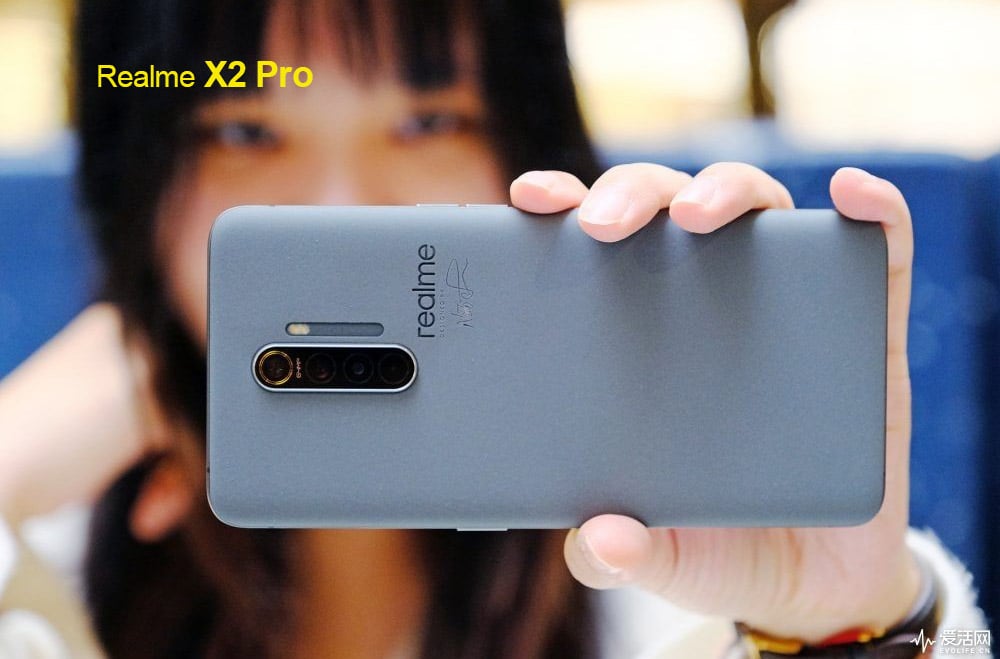
In Oct. 2019, Realme announced its first flagship phone in China and Europe. Dubbed as the Realme X2 Pro, the Chinese smartphone manufacturer’s latest handset was made available in the Indian market in November last year.
Marketed as the ‘Full Speed Flagship,’ the Realme X2 Pro has a global version that you can buy from Giztop. The Realme X2 Pro Global Version ships with 8GB of RAM and offers a hefty 128GB of internal storage space for you to save your favorite content.
The aforesaid model would normally set you back $419, but Giztop is giving you a chance to save a considerable amount of money even before you place your order. You can apply coupon code RealmeX2Pro20 to save $20 at the time of checking out.
In other words, you can bring the already reasonable asking price of the Realme X2 Pro further down to just $399 simply by applying the aforesaid coupon code. An absolute steal at this price, the X2 Pro Global Version sports a 6.5-inch Super AMOLED full HD+ display with a refresh rate of 90Hz.
Moreover, it is powered by a Snapdragon 855 Plus 2.96GHz Octa-core processor and packs a highly competent Adreno 640 GPU under the hood. In the optics department, the X2 Pro Global Version features a quad-camera set up at the back comprising a Samsung GW1 64MP, 13MP, an 8MP, and a 2MP camera. Upfront, it houses a 16MP selfie camera.
The Realme X2 Pro Global Version is backed by a 4000mAh battery that supports 50W SuperVOOC flash charge and USB-PD and 18W rapid charging. Aside from that, it runs ColorOS 6.1 Realme Edition based on Android 9.0 Pie OS and even supports dual-frequency GPS, and NFC.
You can head straight to this link to check out more details about the Realme X2 Pro Global Version and take advantage of the $20 Off Coupon before it expires.
The Gizmochina Coupons is a community that finds, reports and evaluates deals and coupons of Chinese products from online shops. Please visit it here to find more coupons to save money on mobiles and smart gadgets.
On Apr. 13, Oppo gave us a brief glimpse of its new earbuds dubbed Enco W31 TWS earbuds via various videos. The latest entrant in the Enco series, the Enco W31 is a Bluetooth earphone that offers one of the lowest delays in audio, coupled with 94ms latency.
The recently unveiled earbuds have gone up for sale bearing an unbeatable price via Giztop, one of China’s most reliable e-tailers. Carrying a $56.99 price tag, the Oppo Enco W31 earbuds come in three eye-catching color options including white, pink and black.
These Oppo-branded true-wireless earphones sport an open-fit design and come with silicone in-ear tips to ensure a better fit for a longer duration. Featuring a smooth matte surface, the charging case also serves as a wireless charger for the earphones.
The USB-C port can be used to recharge both the case, as well as the buds. Moreover, the Enco W31 uses Bluetooth low-latency dual transmission for a faster connection experience. On top of that, there is a noteworthy improvement in Bluetooth anti-interference ability.
The Enco W31 offers the bass mode and the balanced mode, and you can simply double-click the left bud to switch between the modes. Moreover, the earbuds draw their juices from a robust battery that lasts 3-5 hours, and 15 hours with the charging case, which is backed by a 350mAh battery.
The earbuds have passed through IP54 dustproof and waterproof and the professional structure design certification. You can enjoy your favorite music for 1 hour after charging for only 10 minutes and don’t even need to worry about sweat and accidental splashes whether in the gym or on the go.
Integrated with dual microphone beamforming technology, the Enco W31 has a wind noise-proof cavity design, and supports the ENC noise reduction algorithm, allowing you to make clear calls even in noisy settings. You can follow this link to know more about these amazing earbuds from Oppo and place your order.
Motorola will be holding an unveil event on April 22 to announce the new Edge series of smartphones. The Lenovo-owned company is expected to announce Motorola Edge and Edge+ smartphones. The latter is a 5G flagship phone powered by Snapdragon 865 mobile platform whereas the former is an upper mid-range phone with 5G capabilities. Ahead of the April 22 launch, the Motorola Edge has been spotted on Geekbench benchmarking platform.
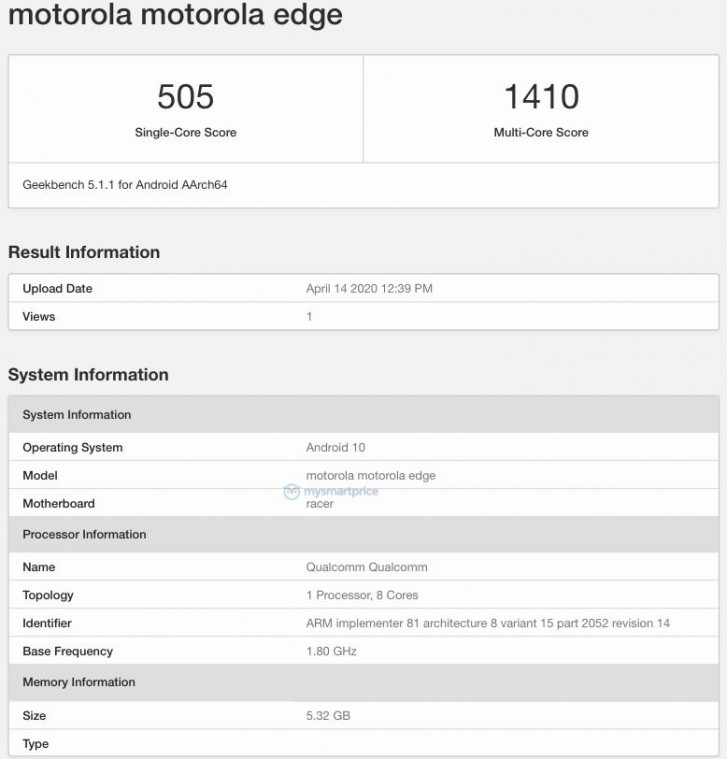
The Motorola Edge+ was spotted on Geekbench 5 at the beginning of this year. Now the vanilla Edge phone has surfaced on Weibo with Qualcomm’s octa-core chipset that has a base frequency of 1.8GHz. Based on the reports surrounding the Motorola Edge, it can be said that the Qualcomm SoC that powers it is the Snapdragon 765.
The Geekbench 5 listing of the Motorola Edge reveals its “racer” codename and further states that it is equipped with 6 GB of RAM and Android 10 OS. It recorded a single-core score of 505 and a multi-core score of 1410.
The specifications of the Motorola Edge phone are no secret as they had emerged in the previous month. The handset will be flaunting a waterfall OLED panel of 6.67 inches with extremely curved edges. It will be a punch-hole screen that will offer full HD+ resolution and a refresh rate of 90Hz. The display cutout will be housing a selfie camera of 25-megapixel.
The back panel of the phone will be fitted with a triple camera system that will comprise of a 64-megapixel primary shooter, a 16-megapixel ultrawide lens and an 8-megapixel telephoto sensor.
The Motorola Edge may draw power from a 4,500mAh battery. Some of the other features that are expected to be available on the Edge include fast charging support, in-display fingerprint reader, dual speakers, NFC, 3.5mm audio jack and USB-C. There is no word on its pricing.
iQOO has recently confirmed that it will be unveiling the Snapdragon 865 mobile platform powered iQOO Neo3 phone on April 23. The company has also confirmed that it will be arriving with a 144Hz refresh rate supporting display. A new video teaser released by the company on Weibo reveals the front design of the iQOO Neo3.
Past reports have revealed that the iQOO Neo3 will be arriving with a punch-hole display. It is now officially confirmed through the video teaser that the Neo3 will indeed house a display that features a punch-hole at the top-right corner like the iQOO 3 5G. However, unlike the iQOO 3 5G that has an AMOLED panel, the Neo3 is rumored to be equipped with an LCD screen. The exact size of the iQOO Neo3 phone is not known yet.
So far, the company has confirmed that the iQOO Neo3 features Snapdragon 865 SoC and UFS 3.1 storage. Recent reports have revealed that the base model of the phone will be equipped with 6 GB of RAM and 128 GB of built-in storage. The FunTouch OS 10 based Android 10 OS will come preloaded on the device.
Some other rumors surrounding the smartphone have claimed that it is equipped with a 48-megapixel quad camera setup on its back. The device may house a 4,500mAh battery along with support for 44W fast charging. The model number of the iQOO Neo3 is V1981A. The handset is yet to appear at the databases of 3C and TENAA regulatory bodies of China.
With a price tag of 2,999 Yuan (~$425), the Redmi K30 Pro is available in China as the most affordable Snapdragon 865 powered phone. It is speculated that the iQOO Neo3 may bag the title of the cheapest SD865 phone by arriving with a starting price of 2,998 Yuan.
Yesterday, Meizu took to Weibo to confirm that it will be announcing some vital information on the upcoming Meizu 17 smartphone on April 17. The machine translated text of the forthcoming event describes it is as “Meizu 17 mSmart 5G fast and stable technology sharing meeting.” Hence, it appears that it may not be a launch event, but some sort of a platform to share the 5G-related innovations that could available on the Meizu 17. Rumors surrounding the Meizu 17 have revealed that it could be accompanied by a more advanced model called the Meizu 17 Pro. The Pro variant seems to have received approval from the 3C authority of China.
A new 5G-enabled Meizu phone with model number M091Q has been spotted at 3C. The listing reveals that the phone could be arriving with a UP2018 charger that supports up to 20V/2A charging speeds.
Earlier this month, the Meizu 17 that has a model number of M081Q had bagged 3C certification. It had reveled that the phone may ship with a 30W fast charger. Hence, it appears that the M091Q phone could be the rumored Meizu 17 Pro handset that may arrive with 40W rapid charging technology.
The Snapdragon 855+ powered Meizu 16s Pro flagship phone from last year had arrived with 24W mCharge technology. Various Chinese smartphone OEMs are offering phones with faster charging capabilities. The new 3C listings reveal that Meizu too will offer enhanced charging speeds on the upcoming Meizu 17 5G series.
Meizu is yet to reveal the specifications of the Meizu 17 5G series. Both phones are expected to be powered by the Snapdragon 865 mobile platform and punch-hole display. At present, there is no information available on how the Meizu 17 Pro phone will differ from the Meizu 17 handset. It is speculated that the Chinese firm may also announce Meizu 17 Audio Special Edition smartphone alongside the Meizu 17 and 17 Pro.
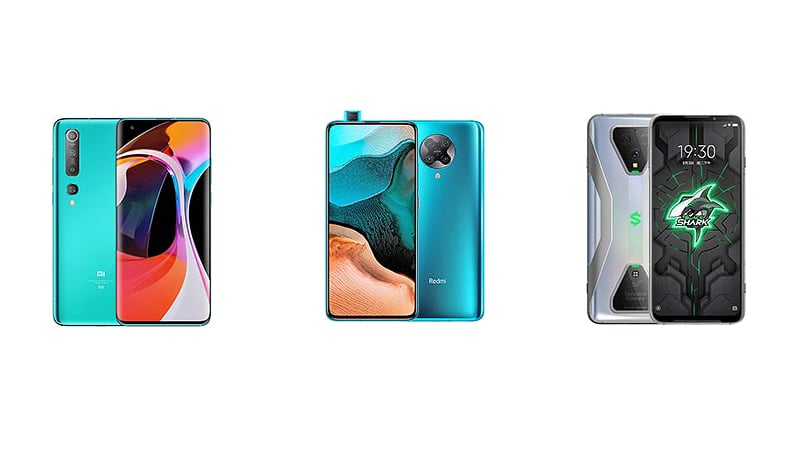
Until now, Xiaomi and brands connected to the company launched three affordable flagship smartphones series in 2020. We decided to compare them in order to clear all the doubts regarding their specifications and tell you which one is worth buying. One is Xiaomi Mi 10, which is the vanilla version of the main Xiaomi’s flagship lineup. Then we saw the Redmi K30 Pro series and for this comparison, we chose the Redmi K30 Pro Zoom that is the most advanced version of the K30 lineup. Last but not least, the gaming phone Black Shark 3. Here you will learn the differences between these handsets as well as their strong and weak points.
Xiaomi Mi 10 vs Xiaomi Redmi K30 Pro Zoom vs Xiaomi Black Shark 3
Xiaomi Mi 10
Xiaomi Black Shark 3
Xiaomi Redmi K30 Pro Zoom
DIMENSIONS AND WEIGHT
162.6 x 74.8 x 9 mm, 208 g
168.7 x 77.3 x 10.4 mm, 222 g
163.3 x 75.4 x 8.9 mm, 218 g
DISPLAY
6.67 inches, 1080 x 2340p (Full HD+), Super AMOLED
6.67 inches, 1080 x 2400p (Full HD+), AMOLED
6.67 inches, 1080 x 2400p (Full HD+), Super AMOLED
Triple 64 + 13 + 5 MP, f/1.8 + f/2.3 + f/2.2
20 MP f/2.2 front camera
Quad 64 + 8 + 13 + 2 MP
20 MP front camera
BATTERY
4780 mAh, fast charging 30W, Fast wireless charging 30W
4720 mAh, fast charging 65W
4700 mAh, fast charging 33W
ADDITIONAL FEATURES
Dual SIM slot, reverse wireless charging 10W, 5G
Dual SIM slot, 5G, magnetic charging 18W, LED lights, shoulder buttons
Dual SIM slot, 5G
Design
Xiaomi Mi 10 and Redmi K30 Pro Zoom come with very elegant and premium designs. The former sports a punch-hole display, while the latter has a notch-less and holeless screen thanks to the presence of a pop-up selfie camera. Both come with a glass back and an aluminum frame. But I personally prefer the Xiaomi Mi 10 due to its amazing curved display, its very high screen-to-body ratio and its very minimal glass back sporting a smaller camera module. Black Shark 3 is a gaming-centric device with a gaming-centric design, so its aesthetics are specifically targeted to gamers, who get useful shoulder buttons and LED lights.
Display
Xiaomi Mi 10 and Black Shark 3 are equipped with more advanced displays compared to the Redmi K30 Pro. The two flagships have two displays with the same specifications, including HDR10+ and a smooth 90 Hz refresh rate, as well as the Super AMOLED technology and a Full HD+ resolution. Redmi K30 Pro Zoom has HDR10+ as well, but unfortunately, it lacks a high refresh rate.
Hardware/Software
With all of these devices, you get the amazing Snapdragon 865 chipset by Qualcomm, despite their price is not excessive. On the paper, Redmi K30 Pro Zoom looks better since it sports UFS 3.1 native storage and up to 512 GB of internal storage. But the advanced cooling system of the Black Shark 3 and its gaming-centric features make it more interesting for power users. However, there will be only marginal differences in the performances of these three handsets. Android 10 and MIUI 11 are installed out of the box on all of these flagships.
Camera
If you need the most advanced camera, just do not go for the Black Shark 3. It lacks a high-end main camera and a telephoto sensor, so it simply not an impressive camera phone. Xiaomi Mi 10 has the most awesome main sensor with a 108 MP resolution, but the OIS-enabled 64 MP sensor found on the Redmi K30 Pro is supported by a better secondary sensor: we are talking about a telephoto lens with OIS and 3x optical zoom (absent on the Mi 10).
Battery
With the Xiaomi Mi 10, you get a bigger battery, but we suppose that Redmi K30 Pro Zoom will last more since it lacks a 90 Hz refresh rate. However, we still recommend the Xiaomi Mi 10 because of the marginal difference and the support to both wireless charging and reverse wireless charging. Black Shark 3 does not support wireless charging, but it has the fastest wired charging technology and it supports magnetic charging, which is very comfortable during gaming sessions.
Price
We will refer to the Chinese prices since China is the only country in which all of these phones are available. Redmi K30 Pro Zoom base is CNY 3,799 ($535), Xiaomi Mi 10 starts at 4299 Yuan ($610), and Black Shark 3 is priced at CNY 3,499 ($496) for the base variant. There is not a definitive winner of this comparison. As a casual user, I would go for the Xiaomi Mi 10 since it offers a better display than Redmi K30 Pro Zoom, a better camera than Black Shark 3 and wireless charging which is not present on both its rivals. But for gamers who do not care about high photo quality, Black Shark 3 is actually a better option. More or less, Redmi K30 Pro can be considered a Xiaomi Mi 10 with an inferior display and more interesting cameras.
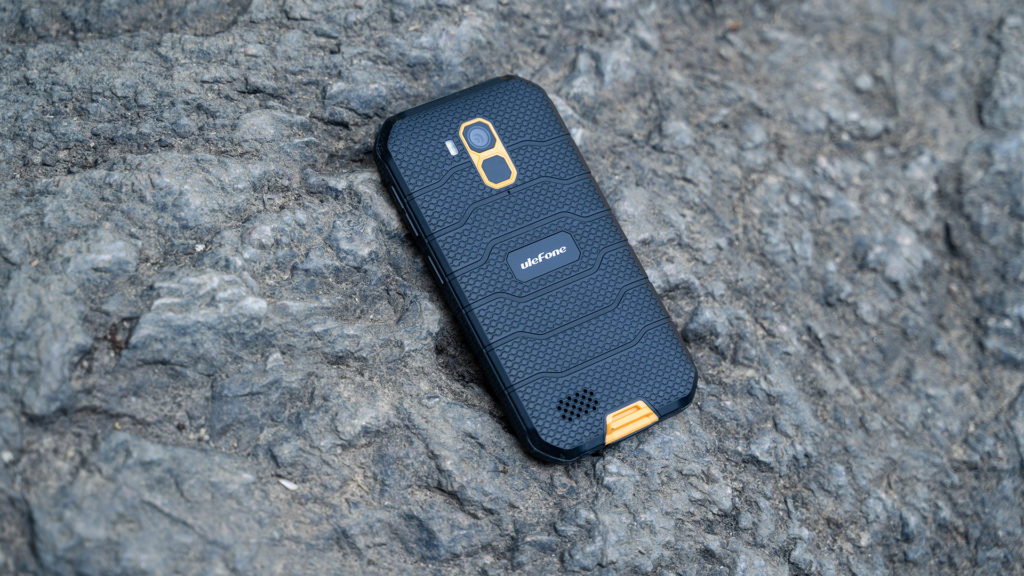
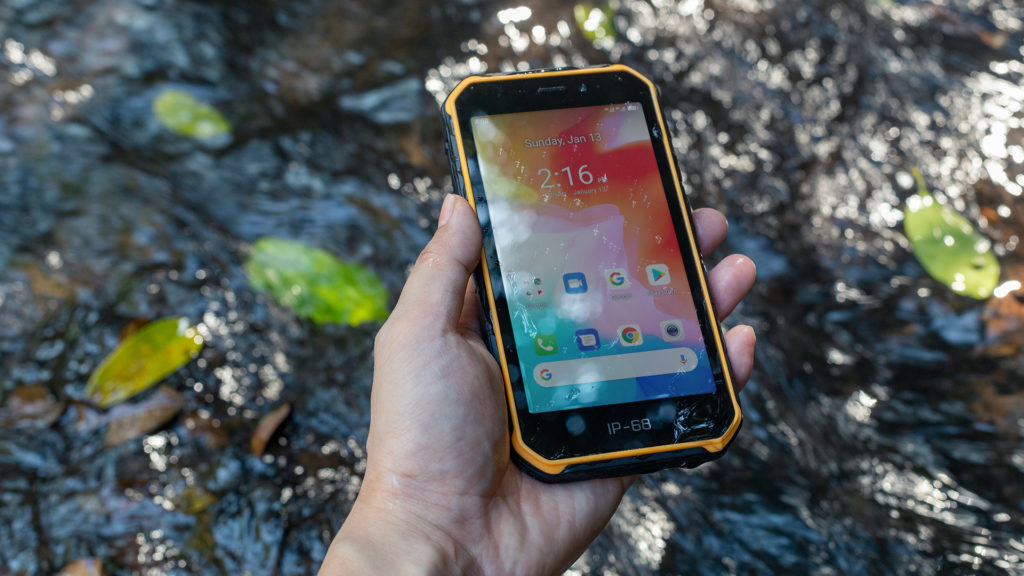
Ulefone Armor X7 is an entry-level rugged smartphone that has gone through durability and various other tests to prove its metal. However, a new screen rigidity test has surfaced on YouTube showing the toughness of the screen. Ulefone Armor series is built to keep running amid any type of condition or situation. The Ulefone Armor X7 test video is showcased below:
Ulefone Armor X7 has gone through several tests in the video to confirm that the device sports a solid display. It has gone through a test cutting a cucumber or a piece of paper using a sharp knife on it. It is even tested using an electric drill, cracking walnuts, hammering nails to wood. The tester even pounded a concrete block and a hammer to hit against the display. After such torture, the Ulefone Armor X7 display remains intact without any sign of a tear.
Ulefone Armor X7 sports a 5-inch LCD display with an IPS technology featuring 1280 x 720 pixels resolution and 294 PPI. In the camera department, there’s a 13-megapixel rear camera with video recording support of up to 1920 x 1080 pixels. On the front, there’s a 5-megapixel selfie camera with f/2.2 large aperture.
Ulefone Armor X7 supports 4000 mAh battery with built-in lithium-ion polymer battery while supporting 5W charging. There’s a fingerprint unlock touch sensor for fast authentication. In the connectivity, the smartphone will get GPS, GLONASS, Galileo, and digital compass. In sensors, there’s an acceleration sensor, p-sensor, l-sensor, m-sensor, e-compass, and fingerprint.
Ulefone Armor X7 retails for $79.99 on Aliexpress. You can know more about the device, by heading over to the official website.
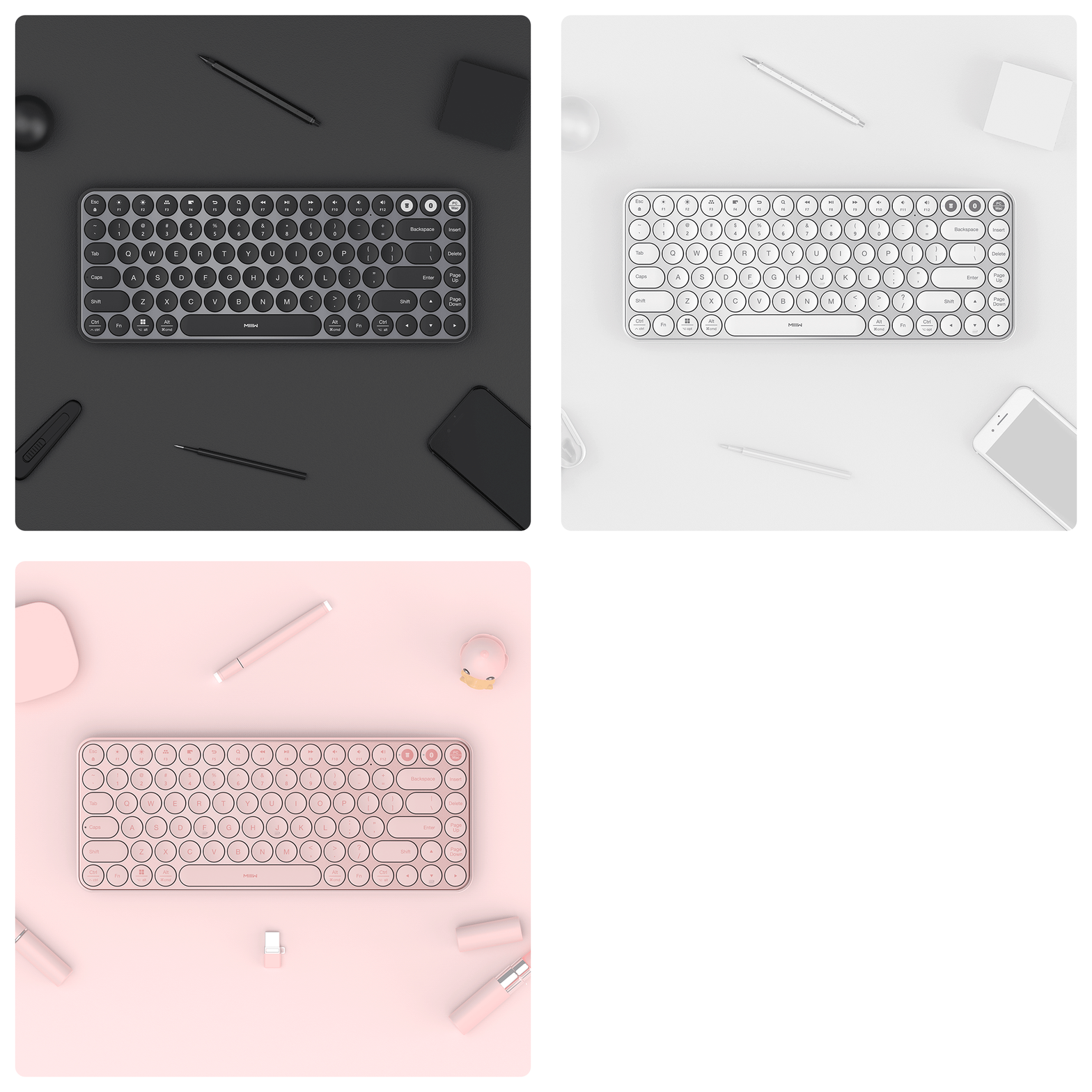
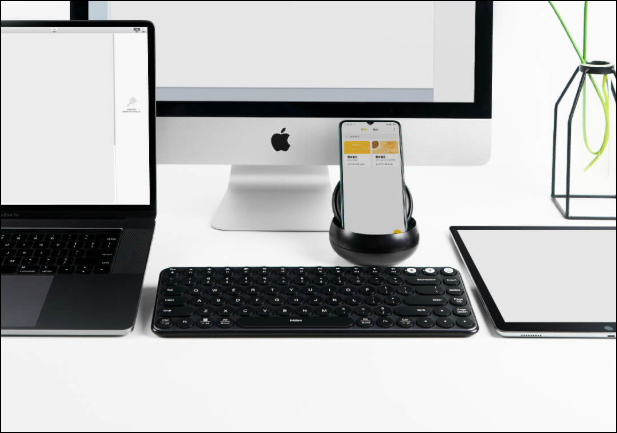
Xiaomi‘s ecological chain company MIIIW has launched the MIIIW Air 85 Bluetooth Dual-mode Mini Keyboard. As the name implies, the keyboard comes with 85 keys arranged in a beautiful layout.
The keycap is round while the device has well-chamfered edges and a thickness of 7.8 mm. Instead of a flat base, the new MIIIW keyboard has an 8-degrees elevation which raises the rear base up slightly for easier typing and to reduce finger fatigue. The key characters are engraved using laser technology making them more beautiful and bold.
The keyboard is a wireless device and supports dual-mode connection, that is it can be connected via Bluetooth and also via a dedicated USB wireless receiver. You can now easily switch between the two connection modes as there are dedicated buttons for switching. It also comes with support for Windows, Android, iOS and MacOS. There is also a dedicated button for switching OS.
The MIIIW Air 85 Bluetooth Dual-mode Mini Keyboard comes in black and pink colours and is priced at 159 yuan (~$22). It is presently available on Xiaomi Youpin’s website.
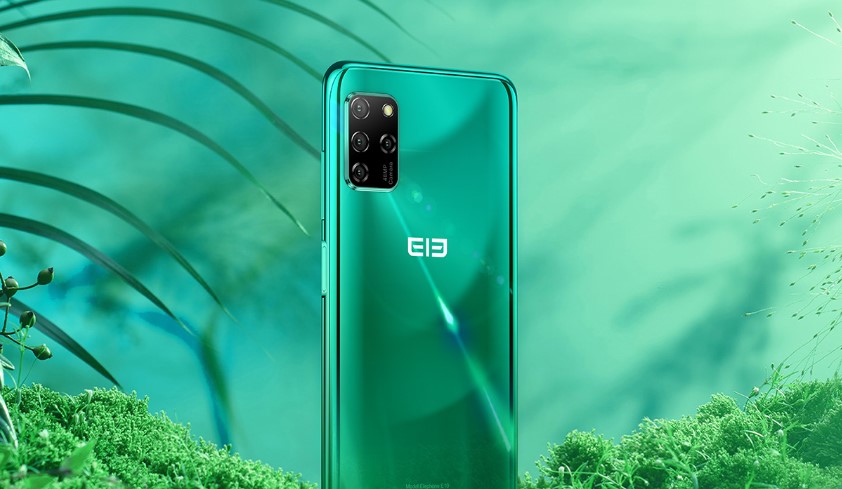
Elephone is primarily known for its devices featuring powerful hardware while maintaining an affordable price tag. Moving on to the same ideology, Elephone announced an Elephone E10 smartphone with great camera specs and fully optimized software. The quad-rear camera setup is smart enough to capture high-resolution and detailed images.
Elephone E10 houses a primary 48-megapixel primary sensor, another 120-degree ultra-wide-angle lens, a depth-sensing camera, and another 4cm macro camera. The smartphone is capable enough to take photos from far enough to macro-level distance. Moreover, the smartphone houses a 6.5-inch waterdrop display with a Full HD resolution having a 19:9 aspect ratio and a 90.3% screen-to-body ratio.
Elephone E10 comes powered with an Octa-Core processor, 4GB RAM, and 64GB internal storage. It is built on the 16nm process with a maximum frequency of 2.0 GHz. The smartphone is powerful enough to handle CPU intensive tasks easily and efficiently.
The users can even pay wirelessly as it supports NFC. Elephone E10 is currently on sale for a discounted price of $109. The interested users can know more about the smartphone by heading over to the official website.
OnePlus today took the wraps off the OnePlus 8 series and equally announced a couple of hardware accessories for the models. The company also announced improvement improvements to the OxygenOS Android implementation on the new handsets. The company claims that there they OS features 280 new optimizations that are designed to guarantee a smoother Android experience on the 120Hz or 90Hz displays. Although the new features were not all mentioned, here are the few features the company unveiled.
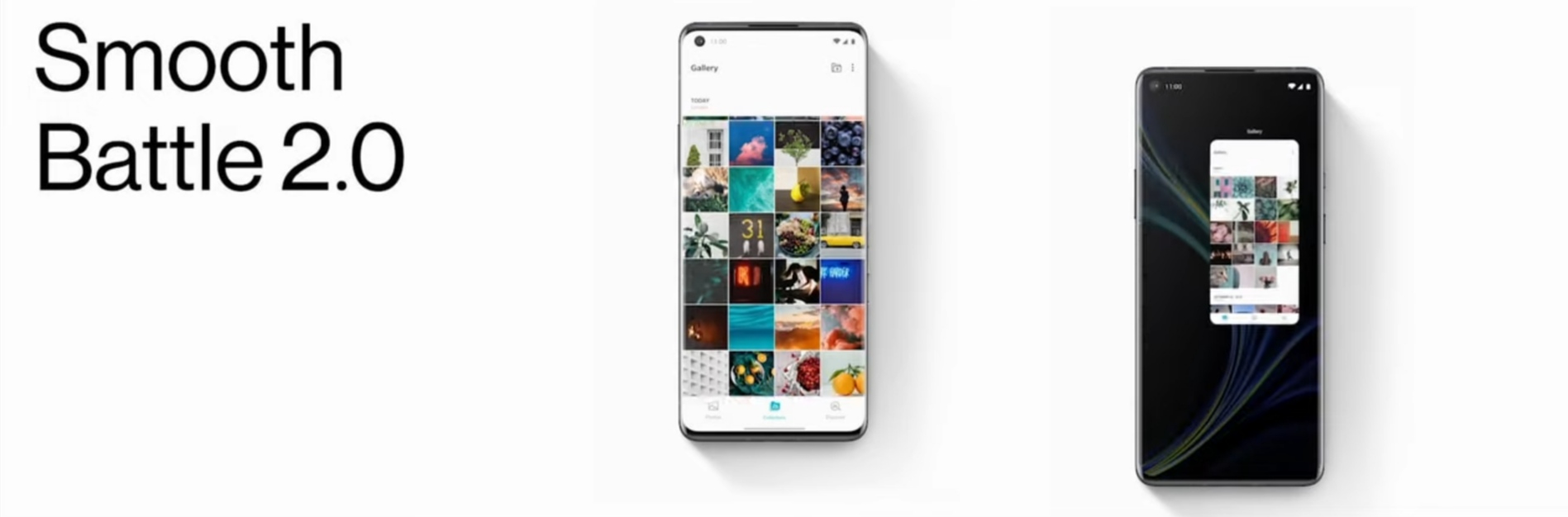
Smooth Battle 2.0
The new OxygenOS features several optimizations to make scrolling smoother and hassle-free. The operating system is lightweight and provides a seamless software experience which makes it a fan favourite. As stated earlier, there are 280 optimizations to make scrolling and navigation smoother and more fluid than on previous models.
New dark theme
Dark theme has become one of the interesting features on smartphones UI mostly because of the cool effect on the eyes and lesser battery consumption. OnePlus says it has refreshed the dark theme for the OnePlus 8 but there are no specifics as to the features this would bring.
Dynamic Wallpaper
OnePlus says it is introducing new dynamic wallpapers that change with the weather.
Live Caption
The new OxygenOS also brings Live Caption to the OnePlus 8 models. This is an Android feature introduced by Google in May last year. Live caption provides audio and video captions in realtime.
The OxygenOS already has such impressive features such as quick gestures, optimized charging, the cool OnePlus launcher.
OnePlus also says it is teaming up with Google One to provide up to 100GB of cloud storage. This will come with 3 months free trial.
In addition, Google’s Stadia cloud gaming service will be available on the OnePlus 8 Pro series. This feature will also be available on a selection of Oneplus models which will be announced soon. The device also comes with Amazon Alexa app preinstalled.
We’ll serve you more details of the new OxygenOS on the OnePlus 8 series as they emerge.
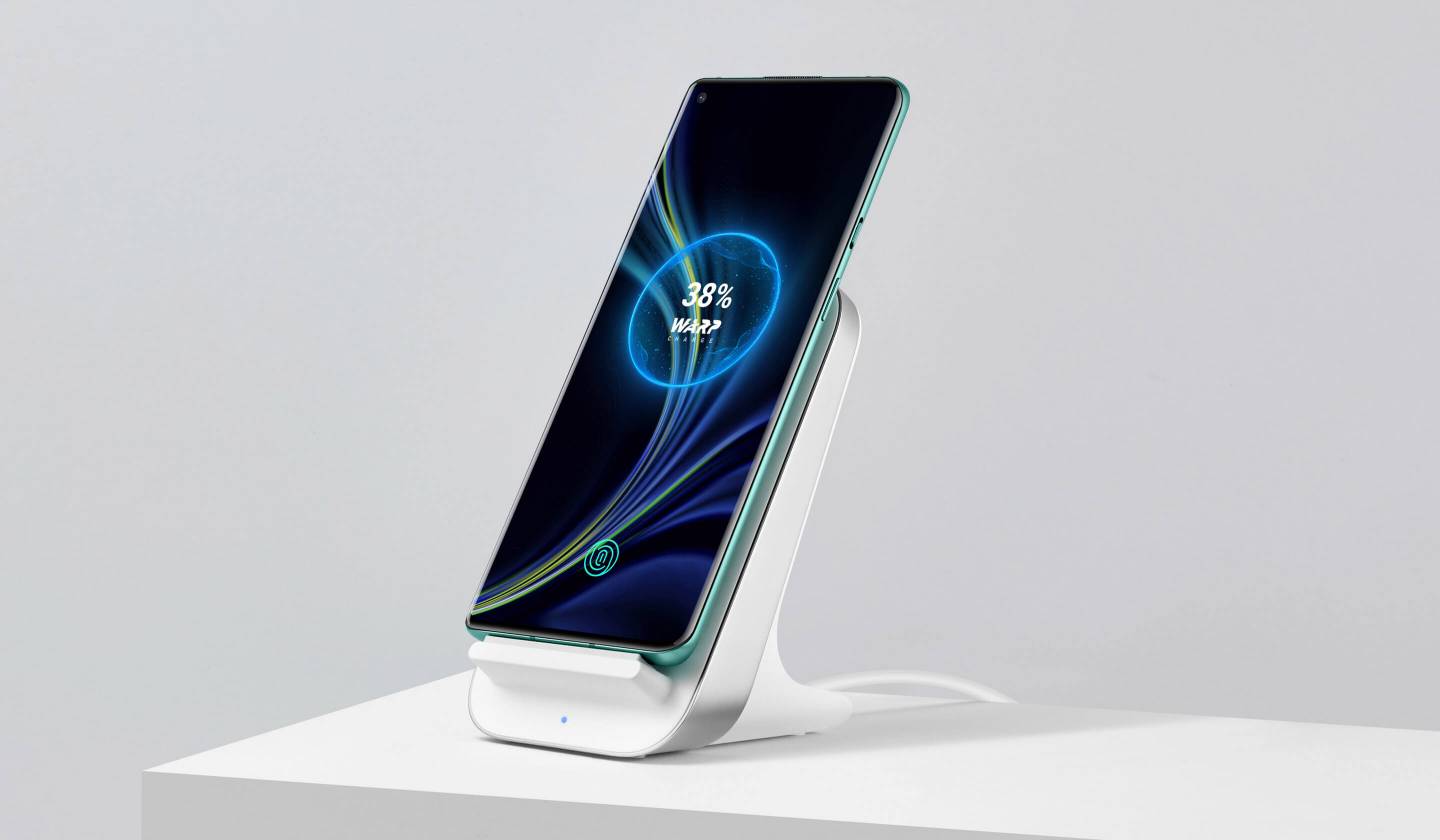
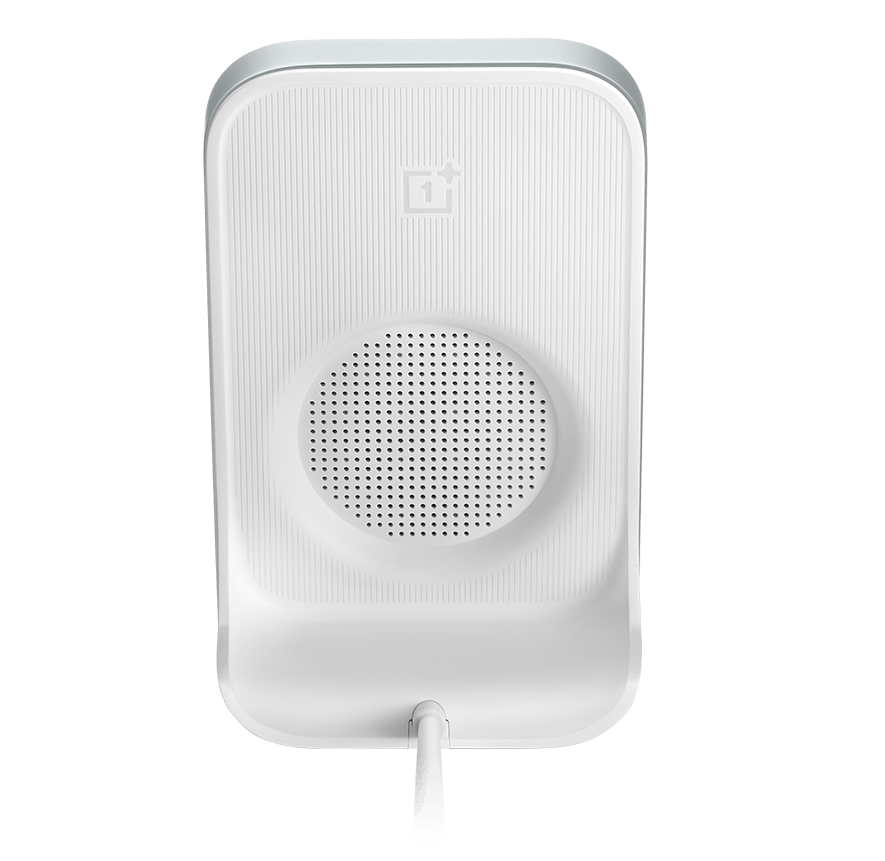
The OnePlus 8 Pro is OnePlus’s first phone with support for wireless charging and with it comes their first wireless charger. The OnePlus Warp Charge 30 Wireless Charger has a vertically-standing design which means your phone is propped up while charging.
The charger is capable of charging the OnePlus 8 Pro from 0 to 50% in just 29 minutes. It also has support for other devices with Qi/EPP compatibility, charging them at up to 10W (5W and 7.5W supported too). Unfortunately, the wireless charger has a massive design flaw that will make it really annoying to use.
OnePlus has designed the charger in such a way that the cable that connects the charger to the adapter is not removable. What this means is that you can’t detach the adapter from the rest of the body.
You may be wondering why anyone will want to do so but if you need to pass the cable through the cable hole which most desks have, you can’t. The adapter is too big to pass through which means your attempt at cable management just went out the window. The image below shared on Twitter by Ron Amadeo of Ars Technica should help you better understand.
This big ass power brick isn't going to fit through any wire management holes you might have in a desk or something.
For a company that hammers on design, this was poorly thought out.
If you do not mind the design flaw, you can grab the OnePlus Warp Charge 30 Wireless Charger for $69.95 on top of the $899/$999 you are paying for the phone. It has a built-in fan and also has a customizable bedtime mode that charges the phone at 10W rather than 30W. It also has foreign object detection, overheating protection, overcurrent protection, and overvoltage protection.
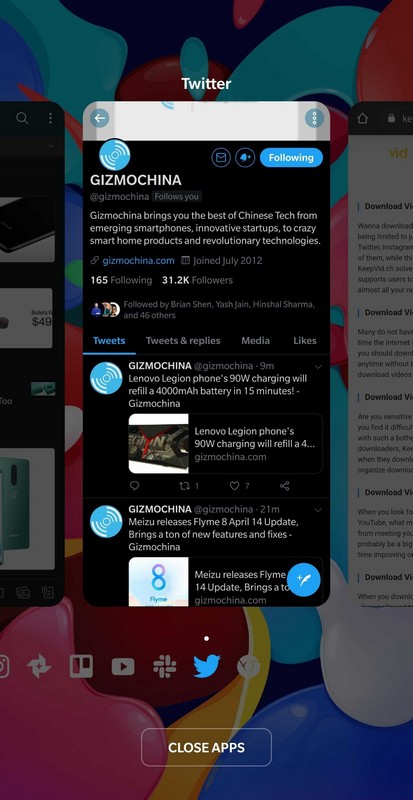
OnePlus is well-known for its OxygenOS Android skin apart from the great hardware it makes. The company’s phones come with OnePlus Launcher as default. Recently, the brand updated it to version 4.4.2, which brings a revamped app switcher view to improve the overall experience.
Previously, the app switcher on Android used to be a core feature of the operating system. Hence, if an OEM wants to tweak it, they had to release an OTA update. It is still the same with heavy-skinned Android skins like MIUI, EMUI, and ColorOS to name a few.
But the phones running near-stock Android 10 like OxygenOS simply require a launcher app update from the Google Play Store to bring changes. That’s what OnePlus has done with the OnePlus Launcher v4.4.2 as the app switcher is now part of the device’s launcher rather than the core software as earlier.
The icons for the apps are now at the bottom for easy reach
The new update changes the overall look of the app switcher on OnePlus smartphones running OxygenOS 10. The running apps now have their icons below them for better clarity with their names at the top. Also, there is a new ‘CLOSE APPS’ button replacing the old circular icon with a cross. Further, the user has to now long press on the desired app to access the menu for multi-window and pinning as the three-dot menu has been removed.
If you are an OnePlus user, then make sure to update the OnePlus Launcher to v4.4.2 from the Google Play Store to experience the new changes.
I am going to be honest with you guys. The only thing I can afford right now from all the products OnePlus announced today is the Bullets Wireless Z Bluetooth earphones. I am sure that is the same for a lot of you reading this too.
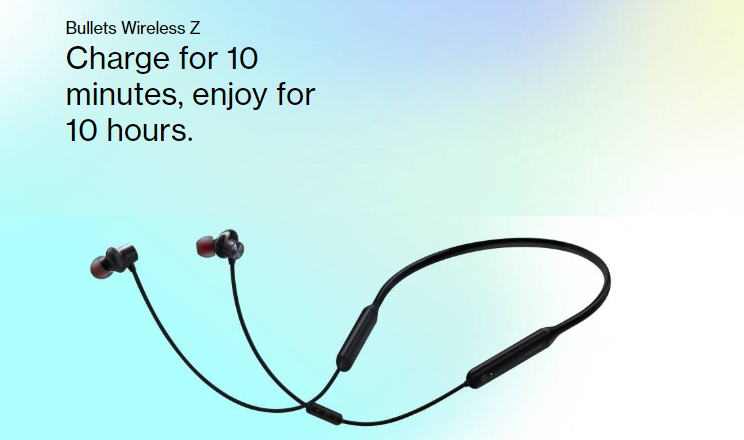
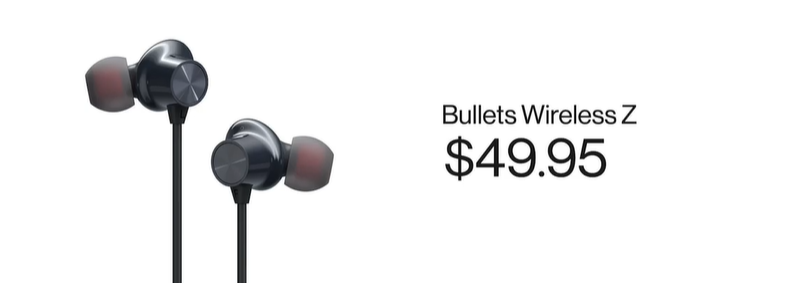
The OnePlus Bullets Wireless Z is OnePlus’ latest wireless earphones. It keeps the design of the OnePlus Bullets Wireless 2 and brings some of its features but for half the price.
The earbuds which have an IP55 rating boast a battery life of 20 hours; six hours more than that of the Bullets Wireless 2. It also supports Warp Charge via USB Type-C, allowing you to listen for 10 hours after charging for just 10 minutes.
The in-ear earbuds have an in-line remote for answering calls, controlling music playback, and calling up the voice assistant. It connects via Bluetooth 5.0 and has a Bluetooth range of 10 meters.
The OnePlus Bullets Wireless Z supports easy pairing and can be connected to more than one device with support for easy switching. The earbuds also have magnetic control, so you can stick the earbuds together to pause what you are listening to and vice versa.
OnePlus has put a price tag of $49.95 on the Bullets Wireless Z and it comes in Black, Blue, Mint, and Oat. However, if you purchase the OnePlus 8 series on launch day (April 15 for the US), you get a free pair.
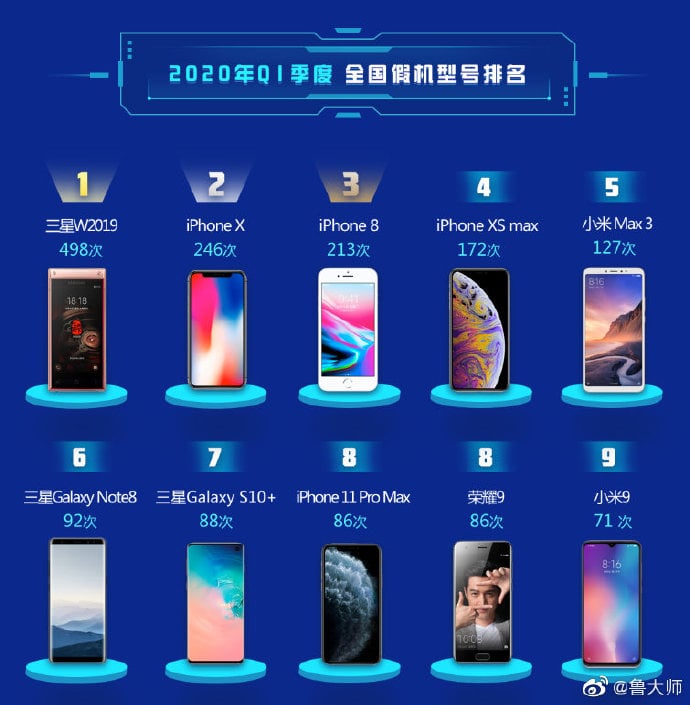
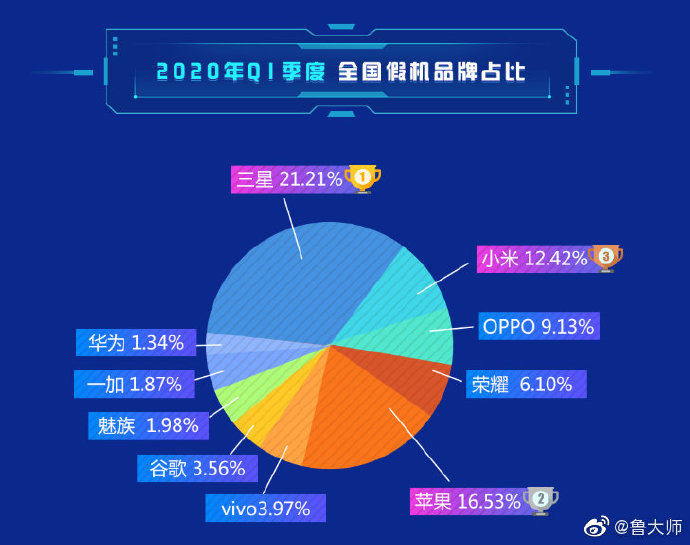
Chinese benchmarking outfit Master Lu has released its ranking of the most-faked smartphones in Q1 2020. Since the data is based on benchmark app appearance, we really didn’t expect the data to change significantly from that of the last quarter of 2019.
Worthy of note is the fact that most of the faked models in the top 9 listed are Samsung and Apple models with Xiaomi making the cut with a few models. The benchmark app detects underlying details that you cannot read from the “about phone” menu. As seen on the chart above, a total of 1,295,457 inspections were carried out in Q1 2020, of which the total number of fake phones reached 7,931 units.
The top five models on the list are; Samsung W2019, iPhone X, iPhone 8, iPhone XS Max and Xiaomi Mi Max 3. Samsung W2019 is the most-faked model with 498 units detected although we can’t tell if the app detects if a single device runs through it several times. Fake iPhone X models were detected 246 times, iPhone 8 213 times, iPhone XS Max 172 times, and Xiaomi Mi Max 3 was detected 127 times. It is also noteworthy that the Mi Max 3 is the only mid-range model in the top 5.
In terms of regional spread, the Chinese provinces with the highest number of counterfeit models in descending order include; Guangdong, Shandong, Henan, Hebei, Sichuan, Jiangsu, Hunan, Zhejiang, Jiangxi, and Guangxi.
Meizu has released a new update for its Flyme 8 Android skin. The company is calling it April 14 update and a number of its devices are eligible for it. The update brings lots of new additions along with fixes for the old issues.
The new Flyme 8 April 14 update adds a number of features to the already feature-rich mobile software by Meizu. You can check out all of them in the official changelog provided by the company. Some of the interesting ones include dynamic wallpaper, improved emojis, custom vibration intensity, and others. The update also brings fixes for bugs from the previous version of the software.
Here’s the official changelog for Flyme 8 April 14 update (translated from Chinese).
Sogou input method Meizu version
Rich emoji expressions, while enhancing input association and candidate word display, enjoy chatting without fear of embarrassment
Customize the vibration intensity of the keys to enjoy the input
Path: Input method -> Button feedback
The clipboard supports storing 100 pieces of data, easily responding to text transfer between different applications
The keyboard supports searching and sending of emoticon packages. Movies and TV, cute pets, and secondary elements are all available.
More optimizations: Support up / down input symbols under Pinyin full keyboard, remove the full-screen mobile phone keyboard lifting process
Dynamic wallpaper
Drawing inspiration from the natural surging of rivers, lakes and lakes, the deep mood and the soothing animation will make you do n’t worry
Path: Settings -> Theme and Wallpaper -> Wallpaper -> Live Wallpaper
Puzzle
Some puzzle posters support custom text, easily record the picture story and mood at the moment, the memories are more full
System
Automatically switch to a mobile data network when connecting to a public wireless network to avoid data leakage and hidden property risks
Users of the above-mentioned devices can already install the new Flyme 8 April 14 update. However, they will have to do it manually as they are in the beta stage as of now. Anyway, we expect the company to soon roll out the update in stable version to all the users in the coming days.
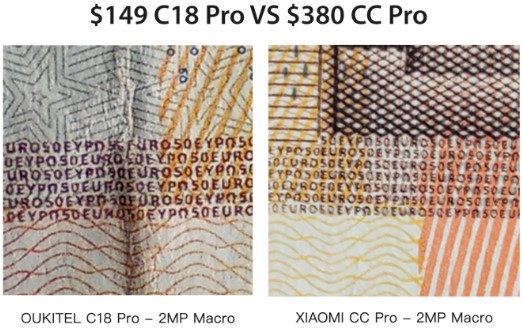
OUKITEL is expected to launch its next smartphone, the C18 Pro in the coming days. To be precise, on April 20th for $149. Until then, the company has been teasing one or another about the device and its features so far. As such, a new video is out on YouTube in which the company shares some camera samples output by the supposed macro sensor of the OUKITEL C18 Pro.
The OUKITEL C18 Pro is a budget smartphone as you can deduce from the price tag. It’s destined to compete with other smartphones like Xiaomi CC Pro. But, after going through the samples in the video, the samples are seemingly too good for a mid-range device. OUKITEL largely emphasis boasting the macro stills and it wants us to believe the device to be much better than the CC Pro at least in the macro photography department.
The YouTube video lasts around 1.5 minutes in duration, and it shows nothing but a beautiful transition of macro camera stills. As per OUKITEL, the video is made of different scenes, in each scene, there are two pictures used to demonstrate the macro camera. As you can see, images of various objects, including a tomato, walnut, rose, a lighter, and so on caught by the 5MP macro camera of the C18 Pro are featured in the video. What you think of the image quality, we are pleased with them and perhaps exceeded our expectations.
As of other specs, the C18 Pro flaunts a 6.55-inch HD+ (1600 x 720) display, along with 4GB of RAM and 64GB of onboard storage. Including the 5MP macro, the device is equipped with four cameras in the rear, 16MP Main + 8MP 120° Wide Angle + 2MP Depth and the 5MP macro camera which is the highlight of the video. If it matters, the phone’s storage is expandable via a microSD card as well. A 4,000mAh battery powers the phone, and it supports up to 10W fast charging.
As mentioned earlier, the C18 Pro will hit the shelves on April 20 for $149. So, do you plan of picking up one for you or your relatives? Do let us know down in the comments what you think of the device. You can know more about their device by going to its official website.
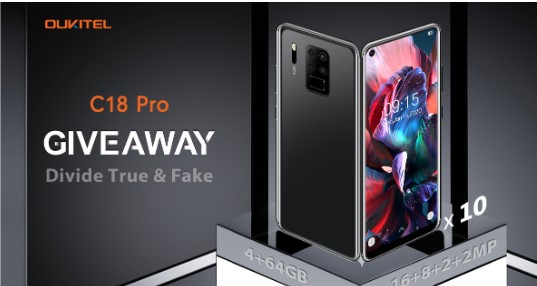
Oukitel C18 Pro Giveaway
A giveaway for Oukitel C18 Pro is also going on from the last few days. You can enter the giveaway from the widget below.
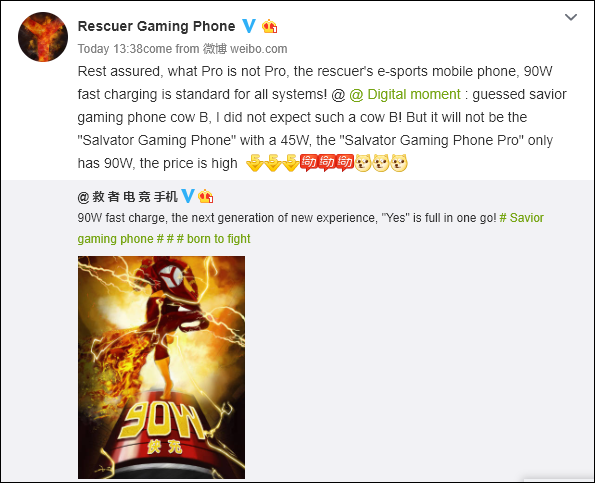
Since December last year, Lenovo had revealed it was working on a gaming smartphone that borrows its name from the popular Legion gaming laptop series. In recent weeks, several details of the gaming phone have appeared on the internet. Just yesterday, the company teased the presence of a mammoth 90W fast charge support which the gaming phone will provide.
Today, a new teaser as emerged which suggests that the 90W fast charge on the gaming smartphone will be able to deliver a full charge to a 4000mAh battery in just 15 minutes. The teaser was shared from Lenovo’s Legion official Weibo handle which means it is an authentic one.
No doubt, that’s some ferocious charging speed which definitely floors all that we have seen so far in terms of smartphone charging power. In addition, you won’t have to worry about the 90W fast charge support being on the top-end “Pro” model only. Instead, the company has hinted that it will be on all models. That itself props up the possibility of the gaming phone coming in more than one variant, possibly a higher Pro version with higher RAM or larger storage size.
In addition, the teaser may have indirectly revealed to us that the Legion gaming smartphone will cram a 4000mAh battery. That would be more than adequate with this charging prowess. We also expect the company to implement an efficient cooling system onboard the device so as to keep it cool while charging or gaming.
We already know that the Lenovo Legion gaming phone will be powered by a Qualcomm Snapdragon 865 chipset. The renders of the device are also in the open. However, there is no word yet on the launch date.
We use cookies on our website to give you the most relevant experience by remembering your preferences and repeat visits. By clicking “Accept”, you consent to the use of ALL the cookies.
This website uses cookies to improve your experience while you navigate through the website. Out of these, the cookies that are categorized as necessary are stored on your browser as they are essential for the working of basic functionalities of the website. We also use third-party cookies that help us analyze and understand how you use this website. These cookies will be stored in your browser only with your consent. You also have the option to opt-out of these cookies. But opting out of some of these cookies may affect your browsing experience.
Necessary cookies are absolutely essential for the website to function properly. This category only includes cookies that ensures basic functionalities and security features of the website. These cookies do not store any personal information.
Any cookies that may not be particularly necessary for the website to function and is used specifically to collect user personal data via analytics, ads, other embedded contents are termed as non-necessary cookies. It is mandatory to procure user consent prior to running these cookies on your website.