Advertisement

Galaxy Tab S11 leaked renders reveal complete design

The Galaxy Tab S11 isn’t official yet, but leaks are already giving us a good idea of what Samsung has planned for its next mid-sized tablet. New renders that surfaced this week show a sleek design, paired with specs that suggest Samsung is aiming to make it a real alternative to Apple’s iPad Air.

According to WinFuture, the Tab S11 will pack an 11-inch AMOLED display with a 2560 x 1600 resolution and 120Hz refresh rate. Power is expected to come from MediaTek’s Dimensity 9400 chip, backed by 12GB of RAM and up to 512GB of storage.

Cameras aren’t the main focus here — the Tab S11 includes a 13MP rear camera and a 12MP front-facing one for video calls. Other hardware details include four speakers, Wi-Fi 6E, Bluetooth 5.4, and a 5G option.

The Tab S11 measures just 5.5mm thick and weighs 482g. Like other recent Samsung devices, it uses the company’s Armour Aluminium frame and has IP68 water resistance. Battery capacity sits at 8,400mAh with 45W fast charging. As expected, S Pen support is included.

On the software side, the tablet should launch with Android 16 and One UI 8. Samsung is also extending its update promise here, with seven years of OS and security updates confirmed.

Pricing in Europe is tipped at €899 (around $1,050). In the US, it may land closer to $899–$999. The launch is expected around IFA 2025 in September, where it will debut alongside the larger Tab S11 Ultra and the more affordable Tab S10 Lite.

If the leaks prove accurate, the Galaxy Tab S11 could shape up as a compact but capable option for buyers who don’t need the sheer size — or price tag — of the Ultra model.

Don’t miss a thing! Join our Telegram community for instant updates and grab our free daily newsletter for the best tech stories!

For more daily updates, please visit our News Section.

(Source)

Tecno to launch ultra-thin 5.95mm phone in India, could be priced at Rs 80,000 (~$915)

Tecno introduced its Spark Slim concept phone at MWC 2025, drawing attention for being the world’s slimmest smartphone. Now, the brand is preparing to launch an ultra-thin phone in India. A report has surfaced to reveal details on its pricing and design features.

Tecno’s upcoming ultra-thin phone: price, key specifications (rumored)

Tecno Spark Slim concept phone

Although Tecno has not officially confirmed the name for the Indian variant, it could be based on the Spark Slim. According to an NBT report, it has learned from the publication that the smartphone will be priced around Rs 80,000 (~$915), positioning it in the premium category. Since the brand is known for using “Spark” branding for entry-level phones, the Rs 80,000 slim phone may carry a different moniker.

The key specifications of this mysterious phone have also been revealed. Measuring just 5.95mm in thickness, it is slimmer than a pencil and designed to appeal to buyers looking for cutting-edge design. To recall, the Spark Slim concept sported a thinner 5.75mm design.

Tecno Spark Slim
Tecno Spark Slim

Speaking of the battery, the phone is expected to house a 5,200mAh battery, which adds to its appeal. It is said to feature a 6.78-inch AMOLED display with a 144Hz refresh rate, offering smooth and vibrant visuals. For photography, it will likely come with a 50-megapixel rear camera.

If launched as expected, Tecno will take on rivals like Samsung and Apple, who are also preparing slim flagships. Samsung recently unveiled the Galaxy S25 Edge with a thinner design, while Apple is preparing to announce the iPhone 17 Air in September. With the Spark Slim, Tecno could gain an edge in the market by offering the world’s slimmest 5G curved smartphone in India.

For more daily updates, please visit our News Section.

Stay ahead in tech! Join our Telegram community and sign up for our daily newsletter of top stories.

Redmi Note 15 Pro with 7000mAh Battery at Budget Price of $239

Redmi Note 15 Pro is designed to give users a powerful smartphone experience at an affordable price. With a large display, strong performance, and a massive battery, this phone balances entertainment, productivity, and daily use with ease.

Price and Availability 

Redmi Note 15 Pro is now available for purchase on Giztop, with a starting price of just $239. This makes it one of the most affordable smartphones in its segment, considering its large AMOLED display, powerful Dimensity 7400-Ultra processor, and massive 7000mAh battery. 

Brilliant Display for Entertainment

The phone comes with a 6.83-inch 1.5K AMOLED display that offers sharp resolution at 2772 × 1280 pixels. It supports a 120Hz refresh rate, making scrolling and gaming super smooth. With up to 3200 nits peak brightness, along with Dolby Vision and HDR10+, this display ensures vibrant colors and clear visibility even under sunlight. Whether you’re streaming movies, gaming, or just browsing, the screen quality truly stands out.

Strong Performance with MediaTek Dimensity

At the core, the MediaTek Dimensity 7400-Ultra processor powers the Redmi Note 15 Pro. This chip delivers excellent graphics performance and smooth multitasking. It also has advanced AI computing features, which improve everything from photography to app responsiveness. Paired with Xiaomi’s HyperOS 2 based on Android 15, the phone feels modern, fast, and user-friendly.

Dual Camera System with OIS

Photography is handled by a dual rear camera setup. The main 50MP Sony LYT-600 sensor supports OIS (optical image stabilization), ensuring sharp and steady shots, even in low light. An 8MP ultra-wide lens lets you capture landscapes and group photos with ease. On the front, the 20MP selfie camera provides crisp details, making it great for selfies and video calls.

Massive 7000mAh Battery

One of the biggest highlights is the 7000mAh battery, which easily lasts more than a full day of heavy usage. Charging is quick with 45W fast charging, and the phone even supports 22.5W wired reverse charging, meaning it can power up other devices in emergencies.

Connectivity and Extras

The Redmi Note 15 Pro supports dual SIM 5G, ensuring high-speed connectivity. It also includes Bluetooth 5.4, WiFi 6, NFC 3.0, an infrared sensor, and even a 3.5mm headphone jack, which many users still prefer.

Key Specs 

  • Display: 6.83-inch 1.5K AMOLED, 120Hz, Dolby Vision, HDR10+, 3200 nits brightness
  • Processor: MediaTek Dimensity 7400-Ultra Octa-core
  • OS: Xiaomi HyperOS 2 based on Android 15
  • Rear Cameras: 50MP Sony LYT-600 (OIS) + 8MP ultra-wide
  • Front Camera: 20MP
  • Battery: 7000mAh with 45W fast charging, 22.5W reverse charging
  • Connectivity: Dual SIM 5G, Bluetooth 5.4, WiFi 6, NFC 3.0, infrared, 3.5mm headphone jack

iQOO Neo 11 series key specifications tipped again, chipset, display details emerge

iQOO is expected to announce the iQOO 15 equipped with the Snapdragon 8 Elite 2 chip in October this year in China. After the iQOO 15, the brand may unveil the Neo 11 and 11 Pro, which may go official in November or December this year in China. Last month, tipster Digital Chat Station leaked the key specifications of the Neo 11 series. Today, he published a new Weibo post to reiterate the same details.

iQOO Neo 11 series key specifications (rumored)

iQOO Neo 11 series leak

As can be seen above, DCS has claimed that the iQOO Neo 11 series will feature a 2K resolution display and a metal middle frame. Under the hood, the lineup will feature the Snapdragon 8 Elite (SM8750) and Dimensity 9500 chipsets.

To be precise, the iQOO Neo 11 may feature last year’s Snapdragon 8 Elite, whereas the Pro version could be equipped with the Dimensity 9500, which is expected to break cover next month. Both models are also expected to feature a 6.8x-inch OLED panel equipped with an anti-reflective coating and an ultrasonic in-screen fingerprint sensor.

The series is also said to pack a 7,000mAh+ battery and support 100W charging. It will come preloaded with OriginOS 6-based Android 16. The other details of the series are under wraps.

As far as flagship offerings are concerned, iQOO is also said to be working on the iQOO 15 Ultra. The iQOO 15 and 15 Ultra are said to be equipped with key specifications such as a 6.85-inch 2K OLED LTPO screen integrated with an ultrasonic fingerprint sensor, a Snapdragon 8 Elite 2 chip, a triple 50-megapixel camera setup including a 3x periscope telephoto camera, and a 7,000mAh battery.

The Ultra variant is said to have additional features like a built-in cooling fan, gaming trigger buttons, and wireless charging. This variant is expected to launch in the first half of 2026.

For more daily updates, please visit our News Section.

Stay ahead in tech! Join our Telegram community and sign up for our daily newsletter of top stories.

Google Pixel 10 Pro XL vs Samsung Galaxy S25 Ultra: Which should you choose?

Google and Samsung are the two names that come up first when you think of the best Android phones. And with Google’s brand-new Pixel 10 Pro XL now official, it’s only natural to wonder, is it the better buy over Samsung’s current best Galaxy S25 Ultra?

Both devices are the very best each company has to offer. On Google’s side, the Pixel 10 Pro XL makes a strong case with meaningful upgrades, faster wired and wireless charging, a more efficient Tensor G5 chip built for AI, and the largest battery ever put in a Pixel.

Google Pixel 10 Pro XL vs Samsung Galaxy S25 Ultra

On the other side, Samsung’s Galaxy S25 Ultra has been out for half a year but still feels like the benchmark to beat. Samsung packed it with the best display in the business, a versatile camera system, and a durable build.

So here we are: Google’s newest challenger versus Samsung’s proven workhorse. If you’re standing at the crossroads of these two phones, which one actually makes more sense to buy? Let’s dive in.

1. Design and durability

The Pixel 10 Pro XL sticks to the design language Google has used for years: glass front, glass back, and an aluminum frame. It feels premium but also bulky at 232 grams. The Galaxy S25 Ultra, meanwhile, comes in slightly lighter at 218 grams despite being bigger, thanks to its use of a titanium frame. 

Samsung also uses Corning Gorilla Armor 2 on the front, which is rated harder than Gorilla Glass Victus 2 and adds a DX anti-reflective coating for better visibility outdoors.

Please Note: When you buy something using the links in our articles, we may earn a small commission at no cost to you.

Please Note: When you buy something using the links in our articles, we may earn a small commission at no cost to you.

2. Display quality

Google gave the Pixel 10 Pro XL a strong 6.8-inch LTPO OLED panel that reaches up to 3300 nits of peak brightness. That makes it one of the brightest displays on any phone. The resolution is sharp at 1344 x 2992 pixels with HDR10+ support.

Samsung counters with a slightly larger 6.9-inch Dynamic LTPO AMOLED 2X panel at 1440 x 3120 pixels. Peak brightness is lower on paper at 2600 nits, but Samsung balances this with an anti-reflective coating and better outdoor visibility. More importantly, the S25 Ultra stretches the display to a 92.5% screen-to-body ratio, meaning less bezel and more immersive viewing.

The Pixel looks great indoors, but Samsung’s combination of panel tech, anti-reflective layer, and higher resolution means it’s simply easier to use in real-world conditions.

3. Performance and hardware

Performance is where Samsung pulls ahead most clearly. The Pixel 10 Pro XL uses Google’s Tensor G5, a chip built on 3nm but optimized mainly for AI workloads and photography. It’s suitable for daily use, but historically, Tensor chips have lagged behind Qualcomm’s top-tier processors in terms of raw performance and efficiency.

The Galaxy S25 Ultra ships with the Snapdragon 8 Elite, Qualcomm’s most powerful chipset yet. Its Oryon V2 CPU and Adreno 830 GPU deliver not only higher benchmarks but also better sustained performance for gaming, video editing, and multitasking. 

For anyone planning to keep their phone for several years, Samsung’s hardware advantage makes a difference in long-term performance and battery efficiency.

4. Camera systems

Google has done an incredible job using AI to squeeze more out of its camera hardware. The Pixel 10 Pro XL can take some of the best still photos on the market. 

It now even supports 100X Pro Res Zoom, which leverages its 48MP telephoto lens and Tensor G5’s AI compute to fill in the lost details. Besides this, it comes with a 50MP main sensor and a 48MP ultrawide. 

Samsung, on the other hand, is betting more on the hardware. The S25 Ultra has four rear lenses, including a 200-megapixel main sensor, a dedicated 3x telephoto, a 5x periscope zoom, and a 50MP ultrawide. That variety means you can shoot in almost any situation without relying entirely on software correction.

The Pixel’s AI tricks work well, but Samsung’s setup offers more flexibility in real-world shooting. For someone who uses their phone as their only camera, the S25 Ultra’s quad system is the safer bet.

5. Software and features

Both phones promise seven years of Android updates, which puts them at the top of the industry for longevity. The Pixel 10 Pro XL launches with Android 16, while Samsung ships the S25 Ultra with Android 15 and One UI 7.

Google keeps its software clean and emphasizes AI tools like Circle to Search, Best Take, and skin temperature monitoring. Samsung includes most of the same AI features but pairs them with extras like Samsung DeX (a desktop mode via wired or wireless display), better multitasking tools, and deeper customization.

The S25 Ultra also comes with an S Pen stylus, which adds note-taking, precise editing, and remote shutter functions. It’s niche, but for anyone who values productivity, it’s something the Pixel simply doesn’t offer.

6. Connectivity and extras

Both phones have 5G, Wi-Fi 7, and UWB (Ultra Wideband) support. But Samsung goes further with Bluetooth 5.4 versus Google’s older Bluetooth 6.0 implementation. The Galaxy also supports DisplayPort 1.2 output over USB-C, meaning you can connect it directly to monitors for DeX or media playback.

On the audio side, Samsung tunes its speakers with AKG and supports 32-bit/384kHz audio, while the Pixel sticks with standard stereo speakers. Neither has a headphone jack, but Samsung’s audio stack is aimed at people who still care about wired quality through DACs.

7. Battery and charging

Google gives the Pixel 10 Pro XL a 5200 mAh battery with 45W wired charging, 25W wireless charging, and reverse wireless charging. It even supports bypass charging to reduce heat during gaming.

The Galaxy S25 Ultra uses a slightly smaller 5000 mAh battery, but thanks to the Snapdragon chip and Samsung’s optimization, efficiency is typically better. It also supports 45W wired charging (65% in 30 minutes) and 15W wireless charging. 

8. To sum it up

The easiest way to sum up the choice is this: the Pixel 10 Pro XL is a phone built around AI. Google’s strategy is to let software do the heavy lifting, whether that’s through computational photography or predictive features in Android. It’s a focused vision, but it leaves gaps in hardware versatility.

The Galaxy S25 Ultra is a phone built to cover every base. It’s not just fast; it’s durable, versatile, and also comes with its own suite of Galaxy AI features that just as good as Google’s, if not better. 

So really, the choice comes down to what you value most. If you want AI front and center, the Pixel makes sense. But if you want a phone that leaves no box unchecked, the Ultra still feels like the safer bet.

For more daily updates, please visit our News Section.

Stay ahead in tech! Join our Telegram community and sign up for our daily newsletter of top stories.

Red Magic 11 Pro Geekbench spotted, reveals Snapdragon 8 Elite 2’s performance, configuration

Qualcomm is expected to announce the Snapdragon 8 Elite 2 chip at the Snapdragon Summit in September 2025. While Chinese flagships like the Xiaomi 16 series, Honor Magic 8 lineup, OnePlus 15, Realme GT 8 series, and iQOO 15 are anticipated to feature the standard version of the chip, the Samsung Galaxy S26 Ultra is expected to debut with an overclocked variant known as the Snapdragon 8 Elite 2 for Galaxy. The Galaxy S26 Ultra recently surfaced on Geekbench with this enhanced version, and now the upcoming Nubia Red Magic 11 Pro has appeared on Geekbench with the regular edition, confirming its configuration for the first time.

Red Magic 11 Pro Geekbench listing

The Geekbench listing shows the Nubia NX809J, believed to be the Red Magic 11 Pro, powered by the Snapdragon 8 Elite 2. The chip features two cores clocked at 4.19GHz and six cores running at 3.63GHz, paired with an Adreno 840 GPU. In the benchmark tests, the device scored 3,309 points in the single-core test and 10,742 points in the multi-core test. The listing also confirms 16GB of RAM and Android 16 OS.

The regular version of the Snapdragon 8 Elite 2 chip comprises two cores working at 4.19GHz and the remaining six cores operating at 3.63GHz. The source code of the listing reveals that it is equipped with the Adreno 840 for graphics. In the single-core test of Geekbench, the chipset scored 3309 points, and it achieved 10,742 points in the multi-core test. The listing also reveals the inclusion of 16GB of RAM and Android 16.

Samsung Galaxy S26 Ultra with Snapdragon 8 Elite 2 for Galaxy on Geekbench

In comparison, the overclocked Snapdragon 8 Elite 2 for Galaxy includes two cores running at an increased speed of 4.74GHz, with the remaining six at 3.63GHz. On Geekbench, this version achieved 3,393 points in single-core and 11,515 points in multi-core testing.

As for the Red Magic 11 Pro itself, a recent leak suggests it could be the first gaming phone to offer IP68 water and dust resistance while incorporating a built-in cooling fan. Other specifications remain undisclosed, but the device is rumoured to launch in October this year.

For more daily updates, please visit our News Section.

Stay ahead in tech! Join our Telegram community and sign up for our daily newsletter of top stories.

(via)

OnePlus Ace 6, Realme Neo 8 battery size could be around 8,000mAh

OnePlus is expected to announce the OnePlus Ace 6 alongside the OnePlus 15 in October this year. Realme, on the other hand, is preparing the GT 8 and GT 8 Pro for an October launch in China, while the Realme Neo 8 may arrive by December 2025 or early 2026. A new leak from tipster Smart Pikachu has now hinted at the possible battery sizes of the Ace 6 and Neo 8.

Rumors suggest that upcoming flagship smartphones will feature batteries ranging between 6,000mAh and 7,500mAh. However, sub-flagship and mid-range models are reportedly being designed with capacities of 8,000mAh, or even higher. According to Smart Pikachu, OnePlus and Realme are both working on devices with batteries around 8,000mAh, pointing to the OnePlus Ace 6 and Realme Neo 8 as likely candidates.

Alleged OnePlus Ace 6 and Realme Neo 8 battery size tipped

OnePlus Ace 6

Previous DCS leak claims OnePlus phone with 7800mAh battery in works

The leak suggests that the OnePlus’ phone has a battery that is close to 8,000mAh capacity. As can be seen in a related leak by tipster Digital Chat Station, which he shared in July, OnePlus is working on a phone with a 7,800mAh battery. Recent leaks about this device that have surfaced suggest this could be the upcoming OnePlus Ace 6.

As far as other specs are concerned, the OnePlus Ace 6 is expected to feature a 6.83-inch flat OLED 1.5K 165Hz screen integrated with an ultrasonic fingerprint sensor, a Snapdragon 8 Elite chipset, a metal middle frame, and ColorOS 16-based Android 16, and an IP68-rated chassis. A slightly modified version of this device may be released globally as the OnePlus 15R.

Realme Neo 8

Previous DCS leak hints alleged Realme Neo 8’s battery size

A recent DCS leak revealed that the Realme Neo 8 with a battery of around 8,000mAh is in the works. While it is expected to feature an LTPS 1.5K screen integrated with an ultrasonic in-screen fingerprint sensor, it is yet to be decided whether it will feature the upcoming Dimensity 9500e or Snapdragon 8 Gen 5. The new leak by Smart Pikachu suggests that Neo 8’s battery size may exceed the 8,000mAh mark.

For more daily updates, please visit our News Section.

Stay ahead in tech! Join our Telegram community and sign up for our daily newsletter of top stories.

What I Learned After Reviewing Two Robot Vacuums Back-to-Back

When I first reviewed the Narwal Freo two years ago, it felt like stepping into the future of home cleaning. It was polished, well-executed, and reliable in ways that made me wonder if we had already reached peak robot vacuum. At the time, it set a benchmark for what a premium robot cleaner could deliver, handling vacuuming and mopping with surprising finesse.

I didn’t encounter many of the frustrations that early robot vacuum owners used to complain about, getting stuck on socks, smearing dirt instead of cleaning it, or running out of power halfway through a job. It felt almost flawless.

Fast forward to now, and I’ve spent time with back-to-back two latest flagships from Eureka. Testing them right after the Narwal Freo gave me a unique perspective: robot vacuums haven’t just improved, they’ve transformed. The pace of progress in this niche has been surprisingly fast, and the gap between then and now feels much larger than two years should reasonably allow.

Roborock Saros Z70

From novelty to super-powered assistants

The biggest shift has been in capability. These machines no longer just roll around sucking up dust. They’ve become true cleaning systems. Modern flagships can vacuum with stronger suction, with 20,000Pa now practically standard, mop with precision that actually scrubs floors, and intelligently navigate obstacles instead of bumping their way through rooms.

AI-driven features are no longer gimmicks either; they’re practical. Robots can now recognize furniture and carpets, steer clear of tangled wires, lift their bodies to pass over small objects, cut through trapped hair, and adapt their cleaning strategies to the type of mess they encounter.

Not only that, some of the latest models even go a step further by physically picking up small objects with integrated arms before cleaning the area properly, eliminating blind spots that older robots would have missed.

Roborock Saros Z70

It isn’t just the tech inside the robots that has improved. The ecosystem has expanded. We’ve gone from a handful of ambitious startups leading the way to legacy brands stepping in.

Samsung now has a flagship robot vacuum. DJI, best known for drones and gimbals, has entered the space too. When companies like these decide to compete, it signals that robot vacuums aren’t just niche gadgets anymore; they’re part of mainstream consumer tech.

Price no longer holds you back

The most striking change though, is how the pricing landscape has shifted. Robot vacuums used to be status symbols, expensive luxuries that most people weren’t ready to gamble on. Now, the market is flooded with options across every budget.

Flagships still command premium prices, but you don’t have to spend top dollar to get solid cleaning performance. The sheer number of brands in the game has driven costs down and features up. It’s one of those rare categories where the competition has genuinely benefited the consumer.

Roborock Saros Z70

Should you buy one?

The short answer: yes. If you’re someone who works long hours, struggles to keep up with daily chores, or just wants a neat environment without constant effort, a robot vacuum is worth it. For smaller spaces like a bedroom or a home office, it’s almost perfect. Set it up once, and it will reliably keep things clean.

For entire households, the picture is more complicated. These robots are capable of covering larger spaces, but they’re still limited by clutter, unexpected obstacles, and the quirks of your floor plan.

In those cases, I’d argue handheld vacuums are emerging as a better complement, especially since many of them are now just as smart and portable. Using a robot vacuum in specific, well-managed zones is still the best way to extend its long-term health and efficiency.

The takeaway

DJI Romo P

Reviewing these vacuums back-to-back has made one thing clear: this category isn’t slowing down. Two years ago, I thought the Narwal Freo had already solved most of the problems. Today, I realize that was just the beginning.

The latest machines from Eureka, like the J15 Pro Ultra and J15 Max Ultra, along with innovative models such as the Roborock Saros Z70 and new releases from Dreame and Xiaomi, show that robot vacuums are evolving into multi-functional, AI-powered assistants built to take over most everyday cleaning tasks.

For now, the decision comes down to your lifestyle. If you want help managing a single room, it’s a no-brainer. If you’re looking for a whole-home solution, be ready to put in a little work yourself to make the robot’s job easier. Either way, it’s hard not to recommend one. After all, these machines are finally living up to the promise of giving us back time, and that’s what real tech progress is supposed to do.

And this is just the start. I expect to see even more refined, efficient, and AI-driven models in the near future, and I’ll be sharing updates as I continue testing where this fast-moving category heads next.

For more daily updates, please visit our News Section.

Stay ahead in tech! Join our Telegram community and sign up for our daily newsletter of top stories! 💡

Oppo Reno 15 series tipped with three display sizes under testing

Apart from the Find X9 series, Oppo is also said to be developing its next-generation Reno-branded phones – the Reno 15 series. Since the Reno 11 lineup, which debuted in November 2023, the Reno range has consistently featured a standard and a Pro version in China. However, a new leak suggests that the upcoming Reno 15 series will include three models.

Oppo Reno 15 series may include three models

To recap, the Reno 13 and Reno 14 series offered a standard model with a 6.59-inch screen and a Pro edition with a 6.83-inch display. The first Reno 15 leak, shared by tipster Digital Chat Station in June, indicated that Oppo was considering a standard variant with a 6.3-inch display and a Pro version with a 6.78-inch panel. The latest update from the same source now reveals that a 6.59-inch option has also been added to the lineup.

According to DCS, Oppo is currently testing three display sizes for the Reno 15 series – 6.3-inch, 6.59-inch, and around 6.78-inch. This suggests that a new “mid cup” model will join the small and large versions. All three prototypes are said to feature flat displays.

There is currently no confirmed information about the chipset and other hardware details of the 6.59-inch edition. Recent reports, however, claim that the Reno 15 Pro with a 6.78-inch display could be powered by the Dimensity 8450. Its camera setup may include a 200-megapixel Samsung HP5 primary sensor, an ultra-wide lens, and a 50-megapixel periscope telephoto camera. Both the 6.3-inch and 6.78-inch models are rumored to feature a metal middle frame and wireless charging support, while the 6.3-inch variant is also expected to include a periscope telephoto camera.

The Reno 15 series is expected to launch in November in China with ColorOS 16 based on Android 16. Before the Reno 15 lineup, the brand is expected to announce the Find X9 series in October in China.

Increased demand for compact smartphones

Oppo Find X8s
Oppo Find X8s with 6.32-inch display

Demand for compact flagships with 6.3-inch screens has been strong in China. Last year, Vivo launched the X200 Pro Mini, and this year, OnePlus unveiled the 13T with a compact display. This year, while Oppo launched the Find X8s with a 6.32-inch screen, Vivo also introduced the S30 with a 6.3-inch panel. Reports further suggest that the Xiaomi 16 series will also include a 6.3-inch option in addition to the standard Xiaomi 16 and 16 Pro. The Vivo X300 is expected to continue the trend, and Oppo, along with Honor are reportedly preparing Dimensity 9500-powered compact flagships for the first half of 2026.

For more daily updates, please visit our News Section.

Stay ahead in tech! Join our Telegram community and sign up for our daily newsletter of top stories.

JBL Boombox 4 vs Boombox 3: Which Speaker Should You Buy?

JBL has long dominated the portable speaker scene with its Boombox lineup, and the new Boombox 4, which debuted in China and is expected to roll out globally soon, pushes the series forward with more power, smarter sound processing, and an eco-friendlier build. But how much of an upgrade is it over the still-popular Boombox 3? Here’s a closer look at how the two compare.

JBL Boombox 4

1. Design and Build

The Boombox 3 introduced a bold refresh to the series, keeping the iconic silhouette while adding a sturdy metal handle with silicone grips and side caps. It weighed 6.7 kg, making it hefty but still portable for its size. Its IP67 rating meant protection against dust and water, good enough for poolside parties or beach outings.

The Boombox 4 takes that formula and trims it down. At 5.89 kg, it’s 12 percent lighter despite being slightly larger, which makes it easier to carry around. JBL has also given it an IP68 rating, which means it can handle deeper water immersion and better dust protection. The body is made with recycled materials and eco-friendly packaging, giving it a sustainability edge. It retains the rugged, oversized speaker look but feels more practical in day-to-day use.

2. Audio Performance

The Boombox 3 delivered massive JBL Original Pro Sound with a three-way speaker system: a subwoofer, midrange drivers, and tweeters. On AC power, it pumped out 80W + 2x40W + 2x10W RMS, while battery mode scaled it back slightly. Its sound signature leaned heavily on thumping bass, which JBL fans love, though at times mids could feel overshadowed.

The Boombox 4 steps up significantly with a seven-driver setup: dual 5-inch woofers, dual 0.75-inch tweeters, and three passive radiators. The output jumps to 210W RMS on AC power and 180W on battery, making it the most powerful Boombox yet. Bass response is deeper and tighter thanks to AI Sound Boost, a real-time algorithm that balances dynamics and reduces distortion. Add in the two-level Bass Boost mode, and it’s clear JBL wants this to be a true outdoor party beast.

3. Connectivity and Features

Both speakers come with Bluetooth streaming, PartyBoost pairing, and power bank functionality. The Boombox 3 runs on Bluetooth 5.3, which is stable and efficient, and it supports JBL PartyBoost, letting you link it with other PartyBoost-enabled speakers for stereo or multi-speaker setups.

The Boombox 4 builds on this with Bluetooth 5.4 and adds Auracast support, a more open and reliable standard for linking multiple speakers. That means you still get PartyBoost compatibility, but now you also have a future-ready option that can create larger, more stable multi-speaker systems with fewer connection drops.

It also introduces USB-C lossless audio playback with a built-in DAC, something the Boombox 3 lacks, making it friendlier for high-resolution playback from PCs and other digital sources. Both models integrate with the JBL Portable app, but the Boombox 4 offers more refined EQ adjustments and smoother stereo/multi-speaker management.

4. Battery Life and Charging

Battery performance has always been a highlight for the Boombox series. The Boombox 3 promised 24 hours of playback on a single charge, with a 6.5-hour recharge time.

The Boombox 4 pushes this further, packing a 99Wh battery rated for 28 hours of use, extendable to 34 hours with Playtime Boost mode. It also doubles as a 30W power bank with PPS fast charging (20V/1.5A), making it more versatile for powering smartphones or tablets on the go. Charging is also handled through USB-C, which aligns better with today’s standard devices.

5. Verdict

The JBL Boombox 3 remains a powerhouse portable speaker with a proven track record of durability and bass-heavy sound. Priced at $499.95 in the US, it offers strong value for those who want big audio performance without stepping into the next tier.

The Boombox 4, meanwhile, refines nearly every aspect: it’s lighter, tougher with IP68 protection, smarter with AI-driven sound, more versatile with USB-C lossless playback, and longer-lasting with a 99Wh battery. At 3999 yuan (around $557), it comes at a premium, but it feels justified for anyone who wants JBL’s biggest portable speaker to date without compromise.

In short, the Boombox 3 makes sense for buyers looking for proven performance at a slightly lower price, while the Boombox 4 is the more future-ready option once it rolls out globally.

In related featured articles, we recently covered the best upcoming camera-focused smartphones of 2025 and reviewed the Vivo V60, a phone known for its camera, durable build, and long battery life.

For more daily updates, please visit our News Section.

Stay ahead in tech! Join our Telegram community and sign up for our daily newsletter of top stories! 💡
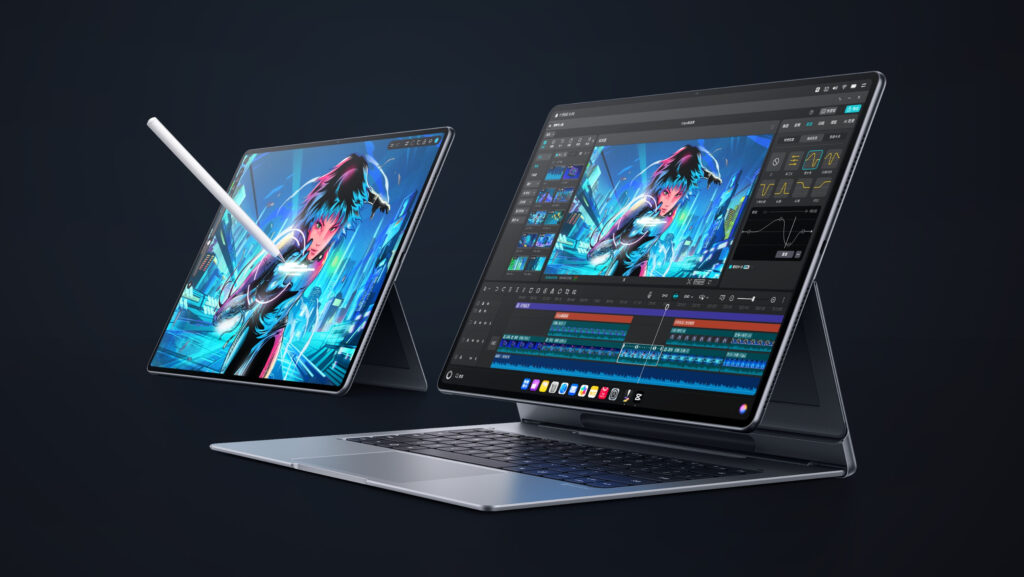
Xiaomi Mix Flip 2 Diamond Limited Edition launched with luxury design, gemstone frame, and premium accessories  

In June, Xiaomi unveiled the Mix Flip 2 as the world’s first flip phone powered by the Snapdragon 8 Elite chipset. Since its launch, the device has been available in four colours: white, purple, green, and gold. Today, just ahead of China’s Qixi Festival, Xiaomi introduced a special edition of the Mix Flip 2, designed to combine jewellery-grade craftsmanship with advanced foldable technology.

Xiaomi Mix Flip 2 flaunts premium design with diamond detailing

Xiaomi Mix Flip 2 Diamond Limited Edition

The Xiaomi Mix Flip 2 Diamond Limited Edition is priced at Rs 6999 Yuan (~$975) and is offered in a single 12GB RAM and 512GB storage configuration. It is available in two themed colors, Cherry Red and Glacier White. The main highlight lies in the middle frame, which is embedded with a lab-grown diamond featuring a Cupid cut, certified by NGTC.

The back panel adopts crocodile-textured Kona leather with a metal Xiaomi nameplate for a premium feel. Buyers also receive a customised gift box including a rotating protective case, pearl chains of varying lengths and a textured storage pouch.

Xiaomi Mix Flip 2 Mix Diamond Limited specifications

Xiaomi MIX Flip 2
Xiaomi MIX Flip 2

On the hardware front, the limited edition shares its configuration with the standard Xiaomi Mix Flip 2. It features a 6.86-inch inner screen and a 4.01-inch outer display compatible with over 500 apps. Both panels deliver 1.5K resolution, 460 PPI, peak brightness of 3200 nits and a 120Hz refresh rate.

The device is powered by the Snapdragon 8 Elite chipset, paired with a 5165mAh battery supporting 67W wired and 50W wireless charging. For photography, it carries a 50-megapixel Leica main sensor, a 50-megapixel Leica ultra-wide lens, and a 32-megapixel front camera.

The Xiaomi Mix Flip 2, including its Diamond Limited Edition, is currently restricted to the Chinese market, and there is no confirmation yet regarding its global availability.

For more daily updates, please visit our News Section.

Stay ahead in tech! Join our Telegram community and sign up for our daily newsletter of top stories.

Meizu 22 postponed again as Meizu enhances photography features

At the beginning of this month, Meizu confirmed that it will announce the Meizu 22 flagship phone this month in China. However, according to an official announcement released by the brand today, its launch has been postponed. The company confirmed that the release will now take place in early to mid-September, with the delay attributed to significant imaging refinements.

Meizu 22 to launch in September

Meizu 22 launch is delayed until September

The brand revealed that the decision to delay was influenced by extensive feedback received from early prototypes of the Meizu 22. Many users highlighted improvements in camera performance, while industry experts suggested fine-tuning in various imaging aspects. As a result, its research and development team is updating 13 imaging algorithms to further optimise the photography experience.

The Meizu 22 will come with a 6.3-inch display, a size the company considers ideal for balancing portability and functionality. According to the update, the device will be equipped with one of the strongest imaging hardware configurations in the segment, designed to establish it as a comprehensive flagship for mobile photography. The enhancements are intended to ensure sharper results across different focal lengths, aligning with the company’s ambition of offering an all-focus imaging solution.

Pre-orders for the Meizu 22 are already live, starting at just 1 Yuan. Customers who book in advance will gain additional benefits, including a 365-day replacement guarantee and exclusive gifts such as a PANDAER magnetic protective case.

Recent reports have revealed that the Meizu 22 will feature the Snapdragon 8 Elite chipset and a 5,500mAh battery with 80W charging. It will feature a telephoto camera with a 72mm focal length and 3x optical zoom support. A dedicated with UWB support is also said to be in the works.

For more daily updates, please visit our News Section.

Stay ahead in tech! Join our Telegram community and sign up for our daily newsletter of top stories.

Pixel 10’s Daily Hub takes cues from Samsung’s Now Brief

Google has rolled out the Pixel 10 lineup with a fresh batch of AI tools, but one new feature is drawing particular attention for its familiar approach. The “Daily Hub,” shown off at the company’s Made by Google event, looks a lot like Samsung’s Now Brief introduced earlier this year with the Galaxy S25.

Available across the Pixel 10, Pixel 10 Pro, Pixel 10 Pro XL, and Pixel 10 Pro Fold, Daily Hub acts as a personalized feed that updates throughout the day. A swipe from the home screen or a tap on its icon brings up schedules, weather forecasts, reminders, news headlines, playlists, and more. Google says its “Magic Cue” AI can even pull useful details from emails and messages to surface things like bill reminders or to-do tasks.

The idea echoes Samsung’s Now Brief, which also aggregates timely info but ties more closely into Samsung’s ecosystem, pulling health stats from Galaxy watches, for example. Google hasn’t confirmed whether Daily Hub will support third-party integrations at launch, but its focus appears to be on unifying Google services like Calendar, News, and YouTube Music.

All Pixel 10 models ship with Android 16 and the new Tensor G5 chip, alongside Gemini Live for conversational AI features. Pricing starts at $799 for the Pixel 10 and climbs to $1,799 for the Pixel 10 Pro Fold, with availability beginning soon after the event.

By bringing Daily Hub to the Pixel line, Google is positioning itself directly against Samsung’s AI-driven approach to personalization. While the concept isn’t entirely new, Google’s tight integration across its own apps could give it an edge for users already locked into the company’s ecosystem.

Don’t miss a thing! Join our Telegram community for instant updates and grab our free daily newsletter for the best tech stories!

For more daily updates, please visit our News Section.

Honor Magic V Flip 2 debuts with 200MP camera and biggest battery yet in a flip phone

Honor has officially unveiled the Magic V Flip 2 in China, a clamshell foldable that takes direct aim at rivals like Samsung’s Galaxy Z Flip 7 and Motorola’s Razr 60 Ultra. The new model focuses on two standout features — a massive battery and a high-resolution main camera — setting it apart in the increasingly competitive flip phone market.

The Magic V Flip 2 packs a 5,500mAh silicon-carbon battery, the largest ever in this category. It supports 80W wired charging, 50W wireless charging, and 7.5W reverse wireless charging. Honor says this should give users far more endurance than typical clamshell foldables, which often struggle with smaller cells.

On the back, the phone carries a 200MP main camera with a 1/1.4-inch sensor, f/1.9 aperture, and OIS, alongside a 50MP ultrawide with a 120-degree field of view. For selfies, there’s a 50MP front-facing camera, giving the Flip 2 one of the most ambitious camera systems on a foldable flip to date.

The inner screen is a 6.82-inch LTPO OLED panel with 2868×1232 resolution, 120Hz refresh rate, and a peak brightness of up to 5,000 nits. On the outside, there’s a 4.0-inch LTPO OLED cover screen at 1200×1092 resolution, reaching 3,600 nits. Under the hood sits Qualcomm’s Snapdragon 8 Gen 3 chip, paired with up to 16GB RAM and 1TB storage.

The phone runs MagicOS 9.0.1 on Android 15 and brings AI tools such as AI-assisted photo editing—similar to Google’s “Help me Edit” on the Pixel 10 series—alongside features like “AI Smart Cutout” and “AI Stylized” (translated from Chinese).

The device also includes IP58/IP59 ratings, SGS durability certification, dual speakers, Wi-Fi 7, Bluetooth 5.3, and NFC. It comes in Purple, White, Gray, and a limited-edition Blue. Buyers can choose from 12GB+256GB, 12GB+512GB, 12GB+1TB, and 16GB+1TB variants. Pricing in China starts at CNY 5,499 (around $765), with sales kicking off on August 28.

Global availability hasn’t been confirmed yet, but the Magic V Flip 2’s combination of battery life, cameras, and high-brightness displays could make it a strong contender if Honor takes it international.

Don’t miss a thing! Join our Telegram community for instant updates and grab our free daily newsletter for the best tech stories!

For more daily updates, please visit our News Section.

(Source: Honor)

ASUS ROG Xbox Ally and Ally X Launch October 16 With AMD Ryzen Z2 Chips

ASUS Republic of Gamers (ROG) announced that the ROG Xbox Ally and ROG Xbox Ally X will be available starting October 16, 2025. Both handhelds will be on display and playable for the first time at Gamescom 2025, where ROG is also showcasing its full 2025 laptop lineup.

ASUS ROG Xbox Ally

At launch, the devices will be available in the United States, the United Kingdom, Australia, Japan, Germany, Canada, and several other markets across Asia, Europe, and the Middle East. China will initially receive only the Xbox Ally X, while the standard Ally will launch there in early 2026. Other markets, including Brazil, India, Indonesia, and Thailand, will follow later. Pricing and pre-order details will be announced in the coming weeks.

Specifications

The ROG Xbox Ally is powered by an AMD Ryzen Z2 A processor with four Zen 2 cores, eight threads, and eight RDNA 2 GPU cores. It includes 16GB of LPDDR5X-6400 RAM, a 512GB M.2 SSD, and a 60Wh battery.

ASUS ROG XBOX ALLY

The ROG Xbox Ally X is equipped with the AMD Ryzen AI Z2 Extreme processor. It features eight Zen 5 cores with 16 threads, 16 RDNA 3.5 GPU cores, and a built-in NPU. The device has 24GB of LPDDR5X-8000 memory, a 1TB M.2 SSD, and an 80Wh battery.

Optimized Gaming

Xbox has worked with game developers to ensure thousands of PC titles run smoothly on the handheld. Games will display “Handheld Optimized” or “Mostly Compatible” labels. Handheld Optimized titles are ready to run with proper controls, resolution, and text clarity. Mostly Compatible titles may require small setting adjustments.

The Xbox app now supports advanced shader delivery, which preloads shaders during download. This allows games to start up to ten times faster and reduces stutter while saving battery.

On the Ally X, the NPU will enable new AI features from early 2026, including automatic super resolution upscaling and AI highlight reels.

Both handhelds will be playable with games such as DOOM: The Dark Ages, Final Fantasy VII Remake Intergrade, Gears of War: Reloaded, Hogwarts Legacy, and Roblox.

Don’t miss a thing! Join our Telegram community for instant updates and grab our free daily newsletter for the best tech stories!

For more daily updates, please visit our News Section.

(Source)

Galaxy S25 Edge sees a major price cut in the US

Samsung’s ultra-thin flagship, the Galaxy S25 Edge, is now available at $829.95 on Amazon US, slashed from its original $1,099.99 price tag. This deal applies to the Titanium Jetblack model, while Titanium Silver and Titanium Icyblue are discounted to $849.99.

Galaxy S25 Edge

The S25 Edge stands out as Samsung’s thinnest smartphone yet—just 5.8 mm thick and weighing only 163 g. It’s built around a titanium frame and boasts an IP68 rating for water and dust resistance, offering durability in a slim package.

Powered by the Snapdragon 8 Elite processor and 12GB RAM, the phone delivers strong performance for everyday use and gaming. Its 6.7-inch QHD+ Dynamic AMOLED 2X display supports a 120 Hz refresh rate and reaches up to 2,600 nits brightness, paired with Gorilla Glass Victus 2 for extra screen protection.

The camera setup features a 200 MP main sensor alongside a 12 MP ultra-wide lens, enhanced by Samsung’s AI-powered ProVisual Engine for improved clarity and color—especially in low-light scenes. However, unlike the S25 Plus, it lacks a telephoto lens, which some may miss.

Battery life is a notable trade-off. The S25 Edge packs a 3,900 mAh battery, significantly smaller than the S25 Plus’s 4,900 mAh unit. In real-world usage, it trails the Plus and Ultra by several hours. Reviewers also note that heavy users may struggle to get through a full day without a charge.

For those who don’t mind staying near a charger, the Galaxy S25 Edge delivers a slick, lightweight in-hand feel while still offering flagship-level performance in most areas. Its successor, expected in January 2026, is rumored to include a larger 4,400mAh battery—the same capacity as the Z Fold7. Until then, this limited-time deal makes the S25 Edge a compelling choice.

Don’t miss a thing! Join our Telegram community for instant updates and grab our free daily newsletter for the best tech stories!

For more daily updates, please visit our News Section.

Here’s why Samsung is choosing Exynos 2600 over Snapdragon 8 Elite 2 for Galaxy S26 series

Samsung may be preparing to lean more heavily on its in-house silicon for the upcoming Galaxy S26 series, with a new report suggesting a cost-driven return to Exynos processors.

Exynos 2600
Exynos 2600

According to South Korean media cited by SamMobile, Samsung plans to equip at least two models in the S26 family — likely the Galaxy S26 Pro and S26 Edge (or S26 Air) — with the new 2nm Exynos 2600. The top-tier S26 Ultra, however, is still expected to use Qualcomm’s Snapdragon 8 Elite 2.

The move comes as Samsung faces higher component expenses. In the first half of 2025, chipset procurement costs for its DX division reportedly rose 29.2%, largely due to pricier Snapdragon 8 Elite chips used in the Galaxy S25 series and the popular Galaxy Z Fold 7. Qualcomm’s rising prices, combined with TSMC’s higher production costs for 3nm chips, have put extra pressure on Samsung’s margins. By relying more on its own 2nm Exynos, built at Samsung’s foundry, the company could cut costs significantly while still offering competitive performance thanks to a 10-core CPU design and improved power efficiency.

This wouldn’t be Samsung’s first step back toward Exynos. The Galaxy Z Flip 7 shipped earlier this year with the Exynos 2500, marking the first foldable to move away from Snapdragon. That said, Samsung still faces challenges with chip yields — currently around 40%, compared to TSMC’s 60% — along with concerns around efficiency and thermals.

If those hurdles are addressed, the Exynos 2600 could power most of the S26 range. Mass production of the Exynos 2600 is reportedly scheduled for November 2025. For Samsung, adopting its own chip in the S26 is about more than cost savings — it’s also a way to strengthen its semiconductor business and reduce reliance on external suppliers. Whether the Exynos 2600 can match Snapdragon in real-world performance will be key to how this strategy plays out when the Galaxy S26 launches in early 2026.

Don’t miss a thing! Join our Telegram community for instant updates and grab our free daily newsletter for the best tech stories!

For more daily updates, please visit our News Section.

(Source)

Need a New Pixel? Here’s Which Pixel 10 Model Suits You Best

Google’s latest lineup, the Pixel 10, Pixel 10 Pro, Pixel 10 Pro XL, and Pixel 10 Pro Fold, offers something for every kind of user. There’s an everyday companion, a camera powerhouse, and even a full-fledged tablet in your pocket. All of these pack new and improved hardware, new AI features, and much more. So here’s a breakdown to help you choose the Pixel that fits your priorities.

1. Pixel 10 – The Everyday Value Phone

Google Pixel 10
Google Pixel 10

Out of the entire lineup, the Pixel 10 gets a mixed bag of hardware changes. On the one hand, you get a downgraded primary and ultra wide camera, but there is a new telephoto shooter (first for the base model), Pixelsnap wireless charging support, and the new Tensor G5 chip as well. For a starting price tag of $799, you still get AI enhancements like Magic Cue, a bright and compact 6.3-inch OLED display, and a bigger battery over its predecessor.

So if you’re looking for the latest Pixel experience without breaking the bank on the top models, the Pixel 10 will meet all of your needs. Google’s software optimizations for both the UI and cameras ensure you get a true Pixel experience and capable photography.

2. Pixel 10 Pro & Pixel 10 Pro XL – Advanced Cameras, Built for Power Users

Google Pixel 10 Pro & Pixel 10 Pro XL

For the more expensive Pro models, Google pulled out all the stops with no compromises on cameras. Both models are nearly identical with just a few differences. The Pixel 10 Pro is a compact flagship with a 6.3-inch LTPO AMOLED screen. It is a more serious shooter with a larger new primary, ultra wide, and periscope telephoto cameras. You also get top tier AI tools (with advanced 100x zoom and 8K super res), the new Tensor G5, and a larger battery.

But for those who need an even bigger battery and a larger 6.8-inch display, we have the Pixel 10 Pro XL. Another big advantage of the Pixel 10 Pro XL is support for the Qi2.2 standard, which brings 25W magnetic wireless charging. In other words, this model will also appeal to creatives, gamers, or binge watchers. This directly competes with the likes of Apple iPhone 16 Pro Max and Samsung Galaxy S25 Ultra. The duo are quite expensive, representing the best Google has to offer, starting from $999 and $1,199, respectively.

3. Pixel 10 Pro Fold – Ultimate Productivity with Foldable Flexibility

Google Pixel 10 Pro Fold

The Pixel 10 Pro Fold is Google’s latest foldable flagship. It is the most expensive model out of the lot, costing $1,799. At this price range, it targets power users who crave a tablet experience, creatives, and multitaskers who enjoy the foldable form factor. It sports a 6.4-inch cover and a huge 8-inch Super Actua Flex inner display. Despite being a foldable phone, the Pixel 10 Pro Fold is the first of its kind to offer IP68 water and dust resistance.

The Tensor G5 makes a return alongside the various AI tools it powers, like the Camera Coach, Magic Cue, Gemini Live, and more. Google claims that the hinge is twice as durable as before, with the body using aerospace-grade aluminum. You get a sizeable 5,050mAh battery pack, which even supports the new Qi2 wireless charging standards. The camera system is basically the same as the base Pixel 10, but with a slightly smaller ultra wide angle lens. While the cameras don’t impress on paper, this is where Google’s impressive software tuning kicks in.

For more daily updates, please visit our News Section.

Don’t miss a thing! Join our Telegram community for instant updates and grab our free daily newsletter for the best tech stories!

Realme Goes Big on Battery with New 10,000mAh+ Phone

Realme is gearing up to redefine endurance in smartphones. Back in May 2025, we got our hands on the Realme GT Concept Phone, which was a prototype model with a ridiculous 10,000mAh battery pack. But now, it appears that the brand is taking things a step further soon.

Realme Teases Phone with Over 10,000mAh Battery

Earlier today (21st August 2025), the Chinese smartphone maker shared a new teaser that states ‘THE BIGGEST JUST GOT EVEN BIGGER’. Realme is going to shake up the smartphone industry soon. In a short video shared by Realme’s vice president, Chase Xu, and the company’s president of realme global marketing, a creative teaser was shared that confirms a new smartphone is in the works that will have a cell larger than 10,000mAh.

Realme GT 10000mAh concept phone-
Realme GT 10000mAh concept phone

The brand might release a 12,000mAh powered device, which is quite impressive. In comparison, the base iPhone 16 houses a battery that is around 3,500mAh. If we exclude rugged phones or other special kind of models, this could be the biggest battery on any modern commercial phone. There have been unique models with huge batteries but their bulk made them impractical for regular users.

Every few years, we see a new trend in the smartphone industry, like telephoto shooters, pop up cameras, and others. But now, the battery race is the most popular thing in town. Unfortunately, we still don’t have any details on this upcoming Realme smartphone, although, the company will showcase this model on 27th August 2025. So stick around for more.

For more daily updates, please visit our News Section.

Tech enthusiast? Get the latest news first! Follow our Telegram channel and subscribe to our free newsletter for your daily tech fix! ⚡

ASUS ROG Raikiri II Xbox Wireless Controller Brings 1000Hz Polling, Anti-Drift Joysticks, and 30-Hour Battery Life

Asus has officially launched the ROG Raikiri II Xbox Wireless Controller at Gamescom 2025. The new model succeeds the Raikiri wired controller introduced in 2023 and brings wireless connectivity, improved precision, and expanded compatibility.

The controller offers a 1000Hz polling rate on PC for ultra-low latency in both wired and 2.4GHz wireless modes. The wireless option uses ROG SpeedNova Wireless technology to reduce delay further. Asus has equipped the controller with TMR joysticks, which provide higher accuracy and power efficiency compared to Hall-effect joysticks. They are also designed to prevent stick drift, giving the Raikiri II long-term reliability.

For customization, the controller includes four programmable rear buttons and dual-mode triggers. Gamers can switch between short-travel micro-switch triggers or full-travel TMR sensor triggers depending on the game. The D-pad, ABXY buttons, bumpers, and rear inputs also feature micro-switches for fast response and clear tactile feedback.

The Raikiri II supports tri-mode connectivity. Players can use low-latency 2.4GHz wireless with the included USB-C dongle, connect over Bluetooth, or use a wired USB-C connection. In 2.4GHz wireless mode, the controller runs for at least 30 hours on a single charge when RGB lighting, audio, and vibration are turned off. It works with Windows 10 and 11 PCs, Xbox Series X|S, Xbox One consoles, and the ROG Xbox Ally handheld.

The controller measures 105 x 65 x 155 mm, weighs 345 g, and includes a 3.5 mm analog audio jack for output and microphone input on PC and Xbox. A 3 m USB-C to USB-A detachable cable is included in the box.

Asus also provides premium accessories with the Raikiri II. The package includes a portable protective case that allows charging while the controller is stored, a charging stand, and two swappable joystick caps. Asus has not announced pricing or availability yet.

For more daily updates, please visit our News Section.

Tech enthusiast? Get the latest news first! Follow our Telegram channel and subscribe to our free newsletter for your daily tech fix!

(Source)