Transsion Holdings subsidiary Tecno is known in China as the “King of Africa” and that is because the brand has been able to penetrate the continent with its affordable models. Tecno is also doing well in India where it just launched the Camon 15 and Camon 15 Pro.
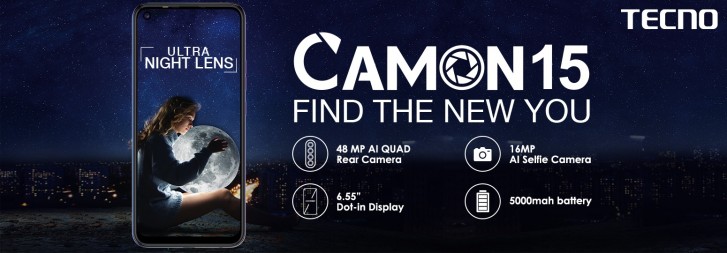
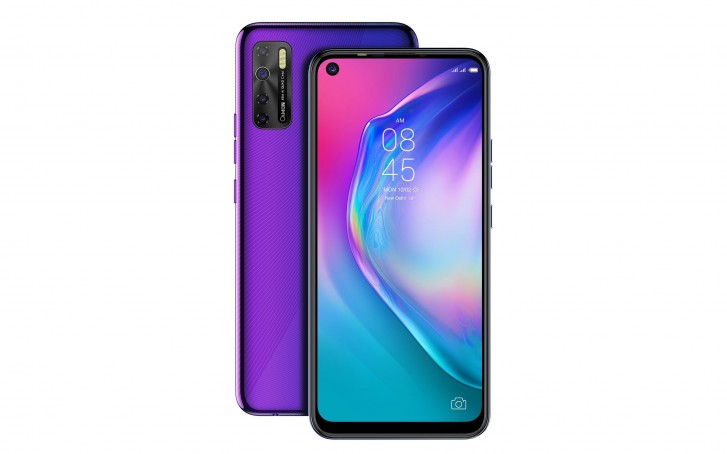
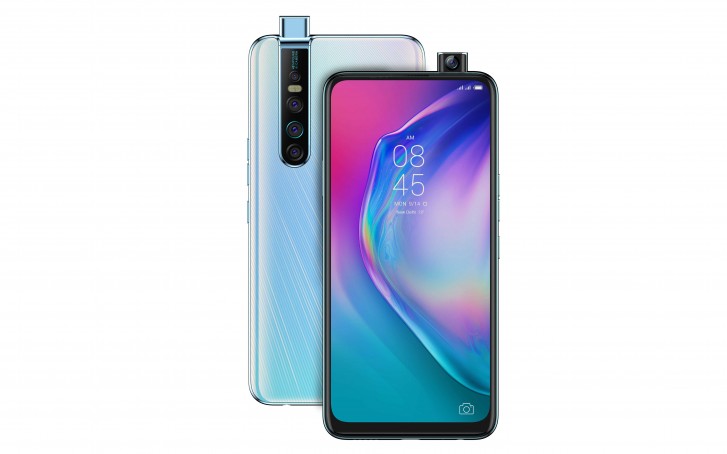
The Tecno Camon 15 and Camon 15 Pro are both mid-range models and feature designs that are spectacular and somewhat similar but with some slight differences. or instance, the Camon 15 features a punch-hole design but the Camon 15 Pro houses its own selfie camera on a pop-up camera mechanism. However, the two phones are said to arrive as the first models with a 48MP quad shooter apiece in their respective price ranges. The models also come with Android 10 out of the box.
Specs-wise, Tecno Camon 15 features a 6.55-inch display with a punch-hole in the upper left corner which houses a 16MP selfie camera. The device crams a big 5,000 mAh battery with what Tecno calls “safe charge” feature.
On the other hand, Tecno Camon 15 Pro packs a 6.53-inch display with full HD+ resolution. The device is powered by an Helio P35 chipset paired with 6GB of RAM and 128GB of internal storage. The device packs a 32MP selfie camera mounted on a pop-up mechanism. At the rear, there is a 48MP quad-camera setup but the specs of the three other sensors were not disclosed. The Pro models pack a smaller 4,000 mAh cell.
As for the prices, the Camon 15 which comes in a 4GB RAM and 64GB storage combo is priced at Rs.9,999 ($140). The device is offered in three colours – Shoal Gold, Fascinating Purple, Jade. On its part, the Camon 15 Pro with 6GB+128 GB memory is priced at Rs.14,999 ($210) and comes in Ice Jadeite and Opal White colour options. Both models will go on sale across India from February 25.
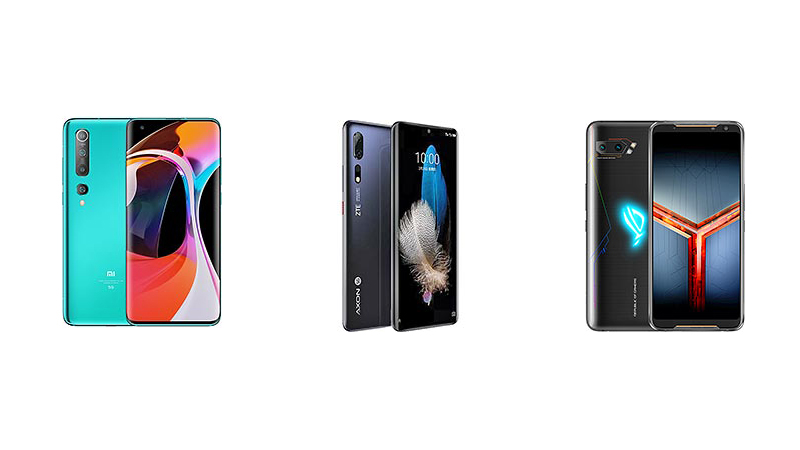
If you need a flagship smartphone boasting the highest performance and Android, most of the time you have to opt for a device fueled by one of the latest Qualcomm’s high-end processors. The latest flagship SoC by the San Diego-based chipmaker is the Snapdragon 865. If we exclude the expensive Samsung Galaxy S20 lineup, the only smartphones announced with that chipset are Xiaomi Mi 10 and ZTE Axon 10s Pro 5G. Here, we decided to compare them and, for obvious reasons, we also decided to include the best gaming phone out there in the comparison: Asus ROG Phone II. If you want to find the best affordable flagship with a monster performance, go ahead with this specs comparison.
Xiaomi Mi 10 vs ZTE Axon 10s Pro vs Asus ROG Phone II
Xiaomi Mi 10
ZTE Axon 10s Pro
Asus ROG Phone II
DIMENSIONS AND WEIGHT
162.6 x 74.8 x 9 mm, 208 g
159.2 x 73.4 x 7.9 mm, 175 g
171 x 77.6 x 9.5 mm, 240 g
DISPLAY
6.67 inches, 1080 x 2340p (Full HD+), Super AMOLED
Triple 48 + 8 + 20 MP, f/1.7 + f/2.4 + f/2.2
20 MP f/2.0 front camera
Dual 48 + 13 MP, f/1.8 + f/2.4
24 MP f/2.2 front camera
BATTERY
4780 mAh, fast charging 30W, Fast wireless charging 30W
4000 mAh, fast charging 18W and wireless charging
6000 mAh, fast charging 30W
ADDITIONAL FEATURES
Dual SIM slot, reverse wireless charging 10W, 5G
Hybrid Dual SIM slot, 5G
Dual SIM slot, reverse charging, support for external accessories, RGB LEDs
Design
Glass backs, aluminum frames, and great build quality. These are the aspects these three devices share in common. Asus ROG Phone II is a gaming phone, so you get a gaming-centric design that is all but elegant and sober. It comes with RGB LEDs and an aggressive look for gamers who can attach to it some interesting external accessories. Xiaomi Mi 10 looks the most elegant one due to its punch-hole display with a front camera embedded and a display with curved sides. On the other hand, ZTE Axon 10s Pro has the most compact and thinnest body since it packs a smaller display and a smaller battery.
Display
If you are a gamer or you like having a smooth user experience, go for the Asus ROG Phone II. I would prefer it because of its high 120 Hz refresh rate, 240 Hz touch sampling rate, a 108% DCI P3 coverage and powerful stereo speakers placed frontally. Xiaomi Mi 10 has a lower refresh rate (90 Hz) and a lower touch sampling rate (180 Hz) but it still comes with an amazing display and, unlike the ROG Phone II, it supports the HDR10+ technology for improved image quality on streaming platforms. ZTE Axon 10s Pro has an HDR display with a standard 60 Hz refresh rate, so nothing really special for a flagship.
Hardware/Software
Xiaomi Mi 10 and ZTE Axon 10s Pro are powered by a better chipset: the Snapdragon 865. It is currently the best chipset you can find on Android-powered devices. The Asus ROG Phone II is fueled by the best Qualcomm chipset of 2019: the Snapdragon 855+. But even though it has a lower-end chipset, you should not underestimate the Asus ROG Phone II. Its SoC has lower performance, but the smartphone comes with an amazing cooling system, up to 1 TB of internal storage (which you do not get on the Xiaomi Mi 10 and ZTE Axon 10s Pro) and the support to interesting external accessories such as a desktop dock. On the other hand, Asus ROG Phone II lacks 5G connectivity, unlike its rivals. And it runs Android 9 Pie out of the box, but it was updated to Android 10.
Camera
On the paper, Xiaomi Mi 10 has a much better camera department. It mounts a quad camera including a great 108 Megapixel main sensor with OIS, an ultrawide sensor, a dedicated macro camera, and a depth sensor. Unlike the ZTE Axon 10s Pro coming with 3x optical zoom, Xiaomi Mi 10 lacks a telephoto sensor and this may be a big con for several users. The weakest point of the Asus ROG Phone II is the camera department: it has just a dual camera and it does not even come with OIS.
Battery
Asus ROG Phone II is the winner of the battery comparison since it packs a mammoth 6000 mAh battery and it is one of the longest-lasting flagships on a single charge. Unfortunately, it does not support wireless charging, unlike Xiaomi Mi 10 and ZTE Axon 10s Pro. But that huge battery can also be used as a power bank through wired charging. The silver medal goes to Xiaomi Mi 10 with a 4780 mAh battery, the fastest charging speeds, wireless charging and reverse wireless charging.
Price
Xiaomi Mi 10 starts from about €530/$572 in China, while Asus ROG Phone II is available for about €500/$540 globally in its base variant (street price). ZTE Axon 10s Pro is still not on sale. Our final verdict awards the Xiaomi Mi 10: Asus ROG Phone II is definitely a very interesting and unique phone, but it lacks 5G connectivity and flagship cameras. But if you are a gamer, Asus ROG Phone II may fit your needs more due to its huge battery, amazing 120 Hz display, those Asus external accessories, and more.
Android 10 received its successor today with a lot of new changes and enhancements. Google posted the Android 11 Developer Preview featuring a lot of new features to strengthen the whole ecosystem. It is quite surprising to see the first Developer Build made available a few months earlier than the usual time. Various new APIs and features are part and parcel of the latest and the greatest Android 11.
Along with the support for next-generation technologies, the primary focus is to enhance the security and privacy of the users’ data. Android 11 developer preview build carries several new APIs to improve the connectivity, and support for new technologies such as 5G and foldable displays are some primary features. A new conversations tab under notification area, Facebook like chat heads, improved permissions, Project Mainline will help the users to get easy accessibility.
The new Android version also features Dark Mode scheduling as reported earlier. There’s a lot more in Android 11, let’s have a look one by one.
Android 11 Features
Chat Bubbles
After waiting for over a few years, Android brings support for a Facebook messenger like chat heads. It will allow users to interact with multiple conversations intuitively enhancing the overall accessibility.
Privacy and Permissions
One-time permissions for locations, microphone and camera use will enhance the users’ privacy. It will allow the system to take back controls from the app once it’s stopped. Moreover, the apps will be required to request location access via Google’s permission. Only Google-approved apps will benefit from background location data.
New Conversation Tab
There will be a dedicated conversation tab in the notifications panel to see the most recent messages. It also features an improved way to respond to messages from the notification panel. Moreover, the users will be able to send images directly from the notifications.
Supports New Technologies
Android 11 packs APIs that bring native support for 5G, Foldable devices, and machine learning. It will help the device manufacturers to bring next-generation smartphones without relying on any third-party code. There’s also support for low-latency video decoding, better call screening, and Google’s neural network APIs.
Improved Sharing UI
Android 11 will allow users to pin their favorite social networks to the top of the sharing menu. However, the same feature was present in Android 9 and earlier versions, but somehow it was deboarded in Android 10.
Dark Mode Scheduling
In Android 10, Google heard the demands of several advanced users to bring global dark mode. Meanwhile, the Android 11 debuts Dark Mode schedule. As revealed in a report earlier, it allows the users to toggle dark mode automatically depending on the time.
Airplane Mode doesn’t affect Bluetooth
Gone are the days when you won’t have access to Bluetooth upon activating the Airplane Mode. The users can now continue using device Bluetooth to remain connected with smart wearables or audio headsets.
Increase Touch Sensitivity
Google added a new option to increase Touch Sensitivity via the settings panel. A user can increase display touch sensitivity before wearing gloves or while using screen protectors. It is quite a useful feature that will help users in various ways.
Mute Notifications while using Camera
A new set of APIs in the Android 11 will help the users to mute any notifications while using the camera. It will be more useful while on a video call.
Samsung recently unveiled its newest smartphones – the Galaxy S20 Ultra, Galaxy S20+, and Galaxy S20 with the trio scheduled to go on sale in early March. The Korean tech giant already gave us an in-depth analysis of the features onboard the three devices during the Unpacked event earlier this month. While all the three models pack very similar, cutting-edge hardware, the Ultra is said to pack a crazy telescopic 4x optically-zooming camera, which can go up to 100x zoom when the digital algorithms kick in.
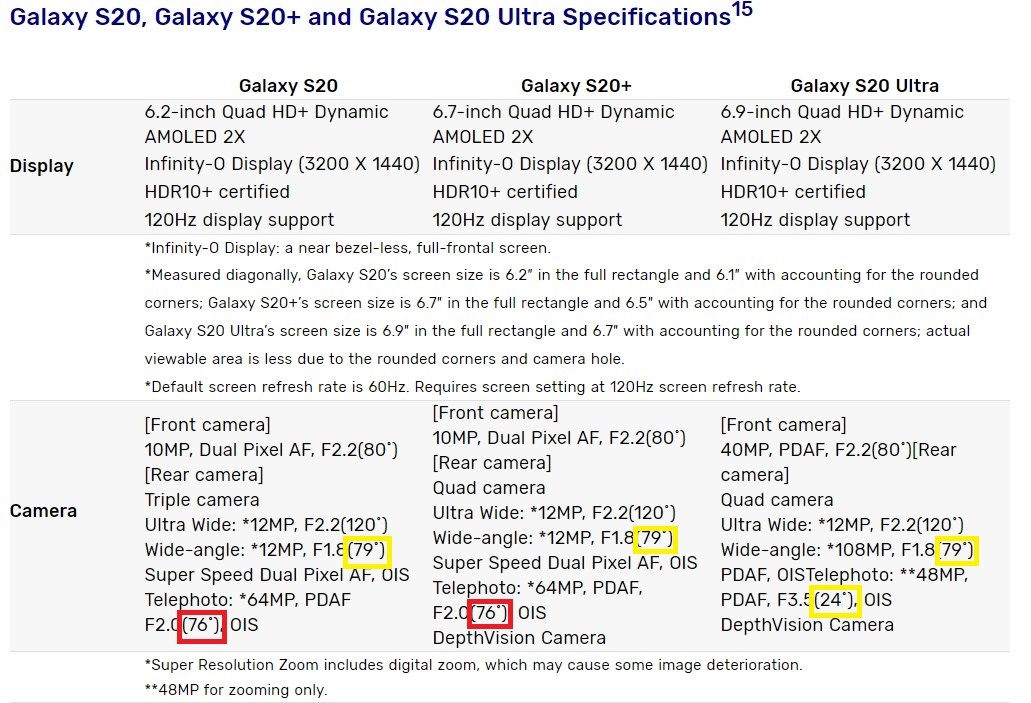
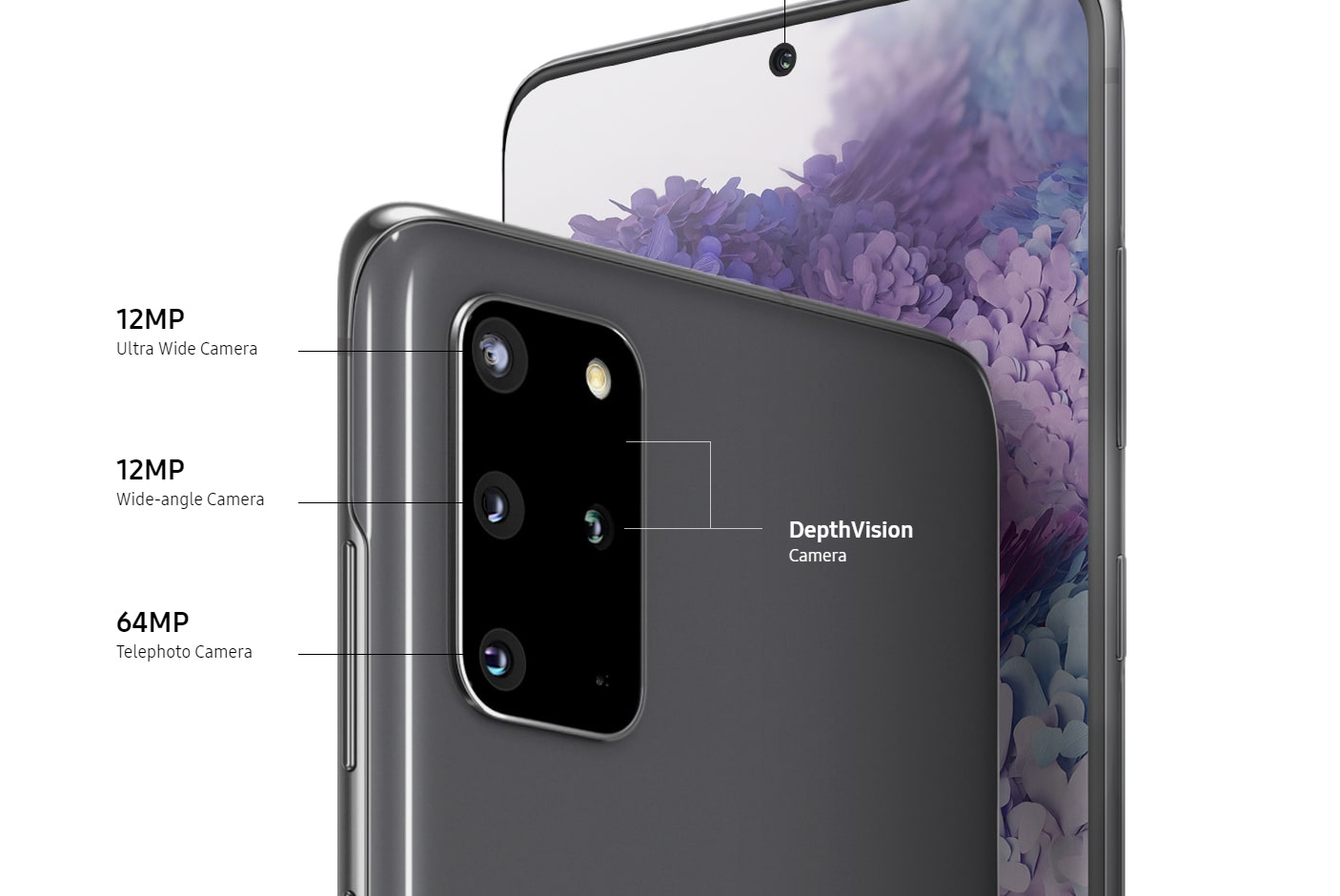
Samsung also touted the Galaxy S20 and Galaxy S20+ as also packing impressive camera modules with absolutely “no compromise”. However, there are reasons to suggest that Samsung may be trying to overhype the cameras on the S20 and S20+. The specs sheet released by the company shows that both models have telephoto cameras. Telephotos are understood to mean bringing optical zoom in order to magnify things. The specs sheet equally lists the Galaxy S20 and Galaxy S20+’s telephoto cameras to have 3x “hybrid optic zoom”.
However, a check by the guys at NotebookCheck.net has shown that the Galaxy S20 and Galaxy S20+’s “telephoto camera” in reality sports a wide-angle lens. The “telephoto” lens is only capable of providing a 1.06 zoom compared to the regular camera. This means that the 3x “hybrid optic zoom” is actually almost entirely a digital crop. The presence of a 64MP sensor may be to provide more information for the crop.
In any case, only the Galaxy S20 Ultra has a proper optical zoom and what can be called a telephoto lens. However, the 3X hybrid optic zoom may not be entirely disappointing, neither would the entire camera. We still expect the Galaxy S20and Galaxy S20+ to come with superb camera output. However, Samsung isn’t being entirely truthful marketing the models as having telephoto lens when in fact there is just digital zoom at play.
Realme X50 Pro 5G smartphone has been confirmed to get launched in the Indian market on 24th February, making it the first 5G smartphone in the market. Ahead of the official launch of the device, Realme has shared a few teaser posters revealing its features and key specifications.
Now, a new report suggests the pricing of this upcoming smartphone for the Indian market. A report from PTI quotes the company’s executive suggesting that the Realme X50 Pro 5G will be priced around ₹50,000 (~$696) in India.
The pricing seems quite on the upper side, especially considering the price conscious Indian smartphone market. The pricing also seems a bit higher given that Realme is positioned as a budget brand in India, rivaling Xiaomi’s Redmi brand.
If this pricing turns out to be true, then Realme could face trouble selling the device in the Indian market given that iQOO is all set to launch its next-generation iQOO 3 5G flagship smartphone the very next day in India.
As per the reports, the 4G variant of iQOO 3 will cost around ₹35,000 while the 5G model will be priced around ₹45,000, lower than the suggested pricing of Realme’s upcoming phone. It’s noteworthy that India doesn’t have 5G infrastructure in the country yet.
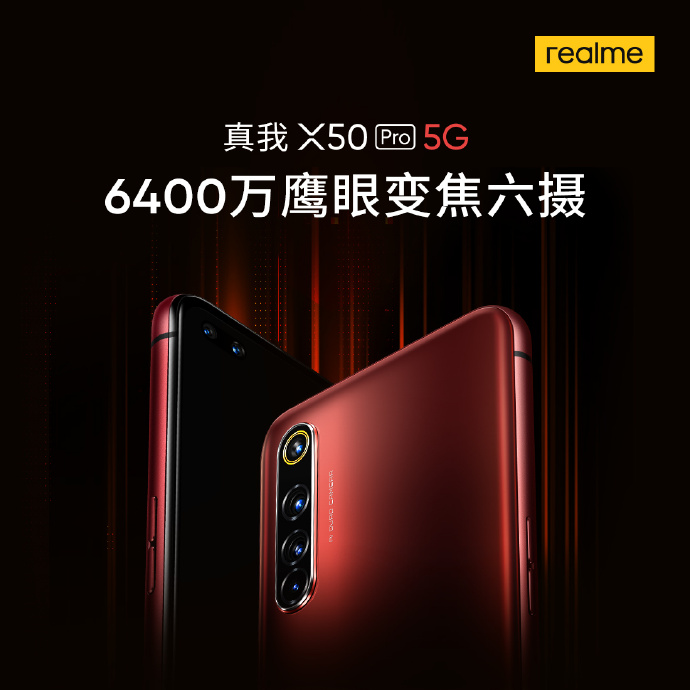
Realme recently confirmed that the phone will come with a 64MP primary sensor in the quad-camera setup. It has also been revealed that the camera will come with features like 20X hybrid zoom support, Realme’s SAT smooth zoom technology, seamless switching between photo and video mode, among others.
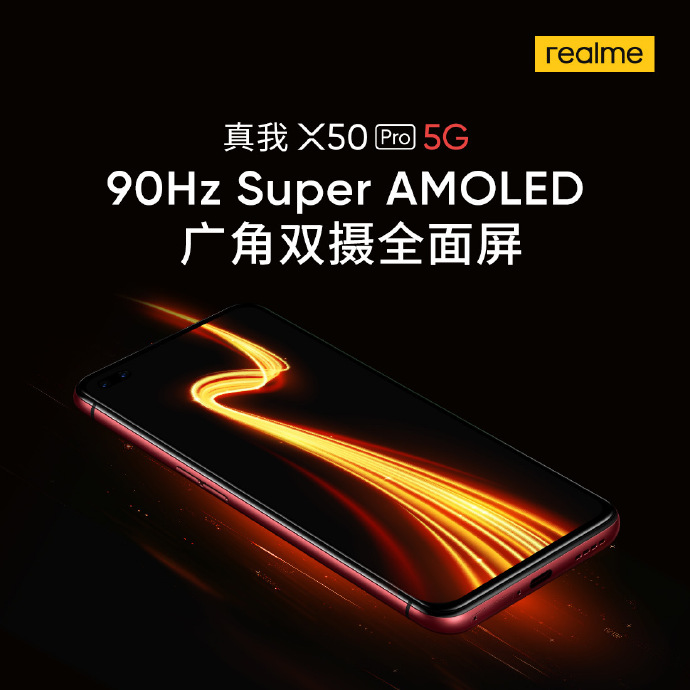
The company has also confirmed that the Realme X50 Pro 5G will come with a Super AMOLED screen from Samsung with a refresh rate of 90Hz and E3 light-emitting material. As per the earlier reports, the phone will feature a Full HD+ display with a screen resolution of 2400 x 1080 pixels and 20:9 aspect ratio.
Under the hood, the device will be powered by the latest Qualcomm Snapdragon 865 SoC along with Snapdragon X55 5G modem that enables dual-mode 5G. It is also said to pack up to 12GB of LPDDR5 RAM and 256GB of internal storage.
Yesterday, Samsung announced the Galaxy A71 in India, a few months after it first launched in Vietnam. The phone is powered by the Snapdragon 730 processor and supports 4G networks. Back in November, it was reported there would be a 5G version of the phone with model number SM-A716. That version has now appeared on Geekbench.
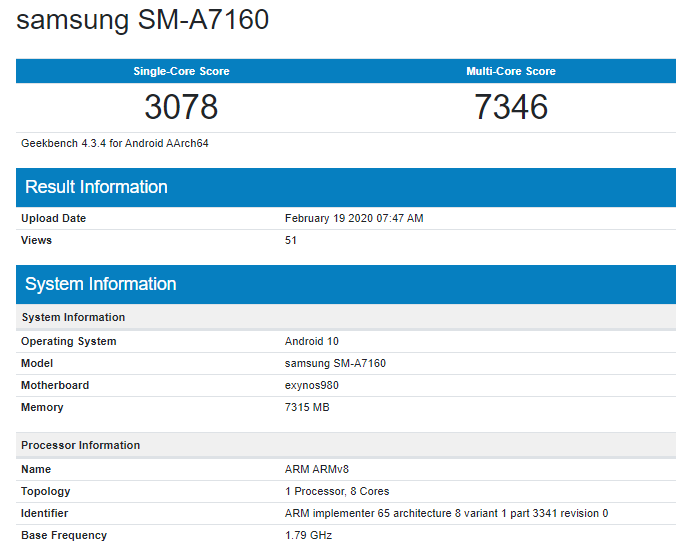
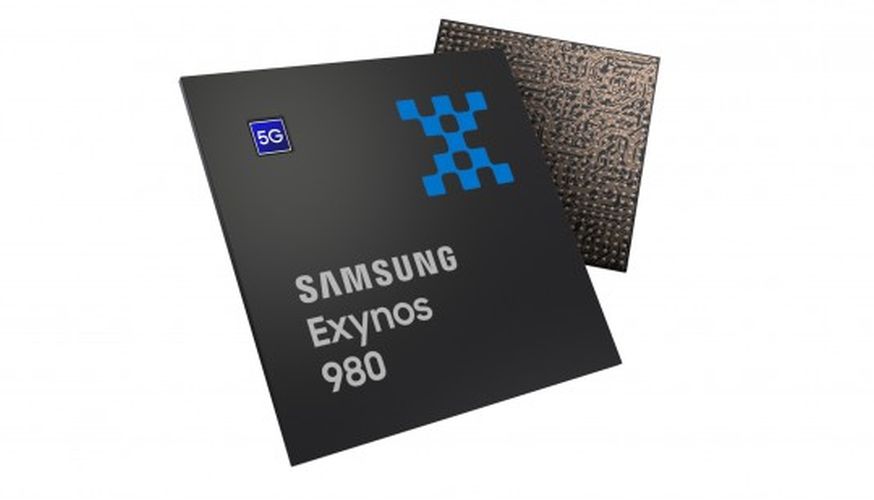
The Galaxy A71 5G was benchmarked yesterday and the Geekbench listing reveals it is powered by the Exynos 980 processor. This is Samsung’s first processor with a built-in 5G modem. It first appeared in the Vivo X30 and Vivo X30 Pro.
The Galaxy A71 5G (SM-A7160) runs Android 10 and has 8GB of RAM and it scored 3078 points in the single-core test and 7346 points in the multi-core test.
We do not know if the processor will be the only difference between the Galaxy A71 5G and the Galaxy A71 4G. However, what we are sure about is that it will sell for a higher price tag.
The Galaxy A71 has a 6.7-inch 2400 x 1080 Super AMOLED Infinity-O display. It has 8GB of RAM and 128GB of storage with a dedicated MicroSD card slot for users who need more storage.
The phone has a 64MP primary camera paired with a 5MP depth sensor, a 12MP ultrawide angle camera, and a 5MP macro camera. The selfie camera is a 32MP sensor. Other features include a 4500mah battery with 25W Super-Fast Charging, NFC, an in-display fingerprint scanner, and Dolby Atmos.
Along with the next-generation Galaxy S-series flagship smartphones — Galaxy S20, S20 Plus, and S20 Ultra, South Korean giant also launched its second foldable smartphone named Galaxy Z Flip at its ‘Unpacked’ event earlier this month.
While the new Galaxy S20 series smartphones have already been launched in India and are currently up for pre-orders, the company has today launched the Samsung Galaxy Z Flip foldable smartphone in India.
In India, the Samsung Galaxy Z Flip comes with a price tag of ₹1,09,999 which roughly converts to $1,534. It is offered in just one variant — 8GB RAM + 256GB storage and in three color options — Mirror Purple, Mirror Black, and Mirror Gold.
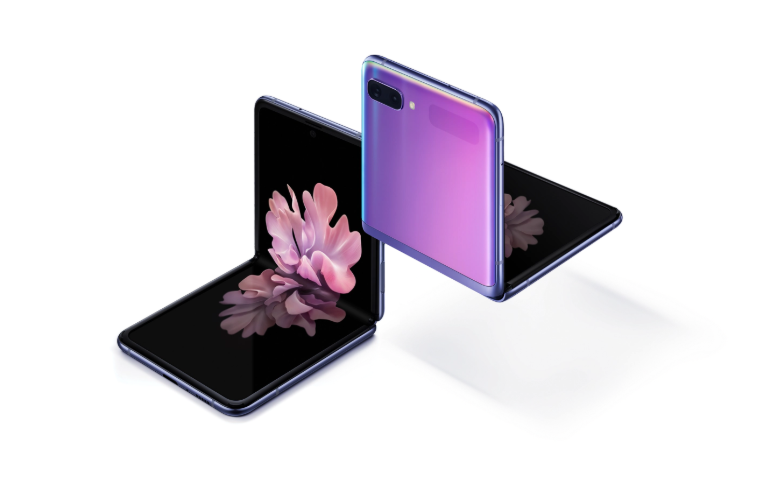
Coming to the smartphone, it comes with a 6.7-inch flexible hole-punch display covered with Ultra-Thin Glass (UTG). Samsung has designed the phone to be used in three ways. In the closed mode using the small 1.1-inch Super AMOLED cover display on the back; open mode as a regular smartphone; and Flex Mode where the display can be stopped at any angle similar to adjusting the screen of laptop.
Under the hood, the device is powered by Qualcomm Snapdragon 855 Plus octa-core processor, coupled with 8GB of RAM and 256GB of UFS 3.0 internal storage. As for the camera department, it features dual-camera setup on the back consisting of a 12MP f/1.8 1.4um primary rear camera paired with another 12MP camera with an f/2.2 aperture.
On the front side, the device features a 10MP camera with f/2.4 aperture for taking selfies and video calling. The phone also comes with a fingerprint scanner embedded on the right-side frame of the upper part of the device.
The smartphone is running Android 10 operating system out-of-the-box with the company’s One UI 2.0 on top. The company has also designed certain apps to make the best use of Flex Mode position. The device is powered by a 3,300mAh battery and comes with support for 15W fast charging technology.
Samsung, the South Korean tech giant, has just announced that it has started the mass production of 6nm and 7nm EUV (Extreme Ultraviolet) chipsets. These are the latest from the company and are being manufactured in Samsung’s newly built V1 facility, a first of its kind dedicated production line for synthesizing chips.
For those unaware, Samsung Electronics is a diverse group with its business operations ranging apart from just home appliances and consumer grade electronic products like smartphones. One of its most successful and impactful business is its chipset production, with the company being a market leader in this field. According to the official announcement, the company will be delivering its 6nm and 7nm EUV chips to its various customers in the first quarter of 2020.
Samsung’s V1 facility which is located in Hwaseong, South Korea, is a specialized facility with state of the art technology is responsible for the production. The company has even future proofed the facility as it is even capable of production of chipsets as small as 3nm in the near future. Notably, the 5nm process has already been depleted by Samsung, who is now moving over to 4nm chips.
Furthermore, the overall investment that the Samsung facility will receive by the end of this year is estimated to be around 6 billion US Dollars. This will also cause the production capacity of the production line to grow to a size nearly triple that of last year. Similarly, its other manufacturing facilities like S1, S3 are also capable of synthesizing such sub-10nm wafers, which are currently in high demand.
Samsung Exynos 980 5G chipset
According to Samsung, the EUV lithography process, which is the technology behind it, is crucial to creating more complex patterns on the wafers. Additionally, the chips made from this advanced process will serve various different purposed like 5G networking, artificial intelligence and a lot more. As of right now, the company has six production lines like this which are already taking in orders from industry giants like Qualcomm, Baidu, NVIDIA, and even Intel.
To play on nostalgia, the Windows phone was a thing just a few years ago. Nokia had launched numerous smartphones that arrived with a mobile version of Windows that has since died out. The dominance of the Android and iOS platform proved to be a tough challenge for Microsoft‘s attempt at cross platform integration and smartphones carrying the OS are no longer sold. However, all is not lost as a company called Emperion might just reignite the Windows phone.
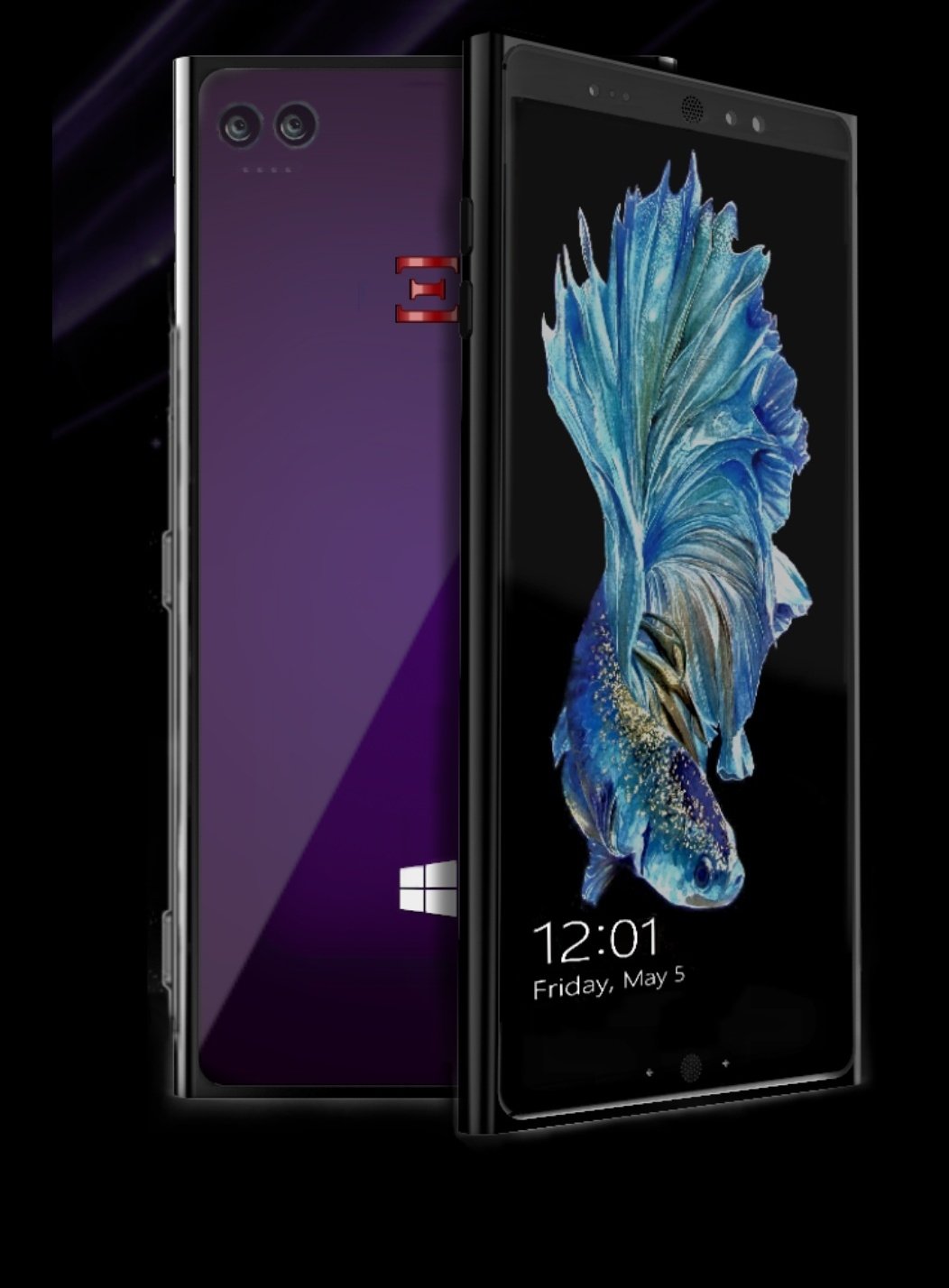
Previously, the last attempt of the streamline cross integration of Windows 10 on smartphones ocurred in 2015. Since then, the platform has been more or less abandoned. But Emperion has teased its latest smartphone, dubbed Nebulus, which runs on Windows 10 on ARM. It is a notable feat since it is not a Windows phone but a full fledged Windows 10 operating system running on ARM based processors.
According to official notes, Emperion plans on delivering the same features we have on x86 and x64 based computers but it in a smartphone. Unfortunately, this also brings along with it, certain shortcomings as Windows was never meant to be able to make cellular calls. A smartphone without voice calls isn’t even a mobile phone, so we can expect Emperion to make special workarounds for it.
It is likely that the smartphone wil have a proprietary UI that runs on top of Windows 10 OS which enables it to run better on smartphones. Notably, this has to be done as the full PC version of Windows was never meant to run on such devices. Thus, Emperion has also stated that the handset will also run Android apps without switching between the two operating systems. As of right now, it is unclear how the company managed to achieve this considering both softwares are very different from each other.
One of the interesting features the Nebulus brings with it is the ability to switch to a desktop mode with USB Type-C or wireless connection. In terms of functionality, it is quite similar to Continuum on Windows 10 mobiles. The desktop mode allows users to have a proper Windows experience since the device already runs the full version. Under the hood, the Nebulus will sport Qualcomm’s Snapdragon 845 SoC, which is already outdated by two years but is understandable considering development stretched far longer than initially planned.
Emperion Nebulus
So far, Windows 10 on ARM chipsets generally involve the Snapdragon 850 chipset or the specialized Snapdragon 8cx for notebooks. Lastly, Emperion’s Nebulus is a very interesting handset, strictly speaking from an oversaturated Android smartphone market point of view. We will have to wait and see if the device compares to today’s standards in the industry and avoids making the same mistake as its predecessors.
In the wake of the COVID-19 epidemic in China that has crippled social and economic activities, sale of facemask and sterilisation gadgets have spiked. Xiaomi Youpin has played host to several sterilization lamps in recent time but the latest is a PC monitor desktop stand having a sterilization lamp onboard. The gadget dubbed Lego S6 Pro disinfection table comes with an affordable price of 999 yuan.
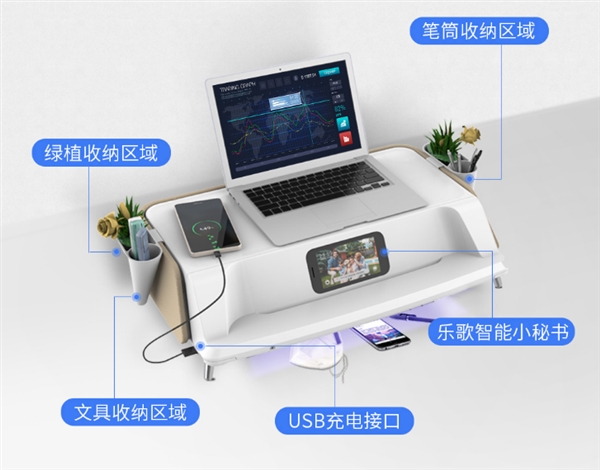
The gadget consists of a display stand and a desktop storage rack with UV disinfection. A UV-C sterilization lamp is embedded in the bottom to provide a 10-minute timer sterilization function. It uses ultraviolet rays with high sterilization and disinfection efficiency and strong ability, which can interfere with viral RNA replication and inactivate its proteins, thereby killing bacteria and microorganisms.
When the user needs disinfection, he only needs to place the items in the UV lamp covered area under the Lego disinfection table and press the switch. The UV lamp will automatically turn off after 10 minutes, which is very worry-free.
In addition to UV disinfection, it is also an elevated shelf and storage rack that can raise the display by 13.5 cm, allowing users to view the display at a healthy level, correcting the wrong sitting posture of the user bending over the hump, and reducing the burden on the cervical spine.
It also has a built-in hidden oversized storage drawer to store office supplies. It also has a USB charging port and supports a removable side storage box for easy storage.
It is worth mentioning that it has a built-in smart assistant with a 4.5-inch touch screen. The smart assistant can provide office assistants, AI voice assistants, communication and collaboration, health detection and other functions.
Electric toothbrushes have existed for a while and they provide certain advantages that manual toothbrushes don’t. For example, they are better at removing plaque and are great for people with mobility issues such as carpal tunnel and arthritis. If you are planning to switch to an electric toothbrush, you may want to check out the Mi Electric Toothbrush T300 announced today by Xiaomi India.
The Mi Electric Toothbrush T300 has a number of interesting features. First, it has a 25-day battery life (if you brush twice a day for 2 minutes each) which means you can take it along when traveling for short trips and not have to worry about charging it throughout your stay. It also supports fast charging via a USB Type-C port at the bottom. Unlike some other electric toothbrushes, the T300 has an LED indicator that alerts you about the battery and charging status
The toothbrush has a magnetic levitation motor and is low noise at less than 65 decibels. Xiaomi says it produces up to 31000 vibrations per minute. The brush head uses DuPont Tynex StaClean Antimicrobial bristles and is designed to cover two teeth areas at once. Xiaomi says the bristles are inclined at a 10-degree angle that effectively loosens and removes plaque and debris.
[envira-gallery id=”306242″]
The Mi Electric Toothbrush T300 has two pro brush modes. There is also a standard mode and a gentle mode for those with sensitive teeth. When brushing, it will pause after every 30 seconds to remind you to switch to another quadrant. The toothbrush has an IPX7 waterproof rating and an anti-slip bump strap design for a firm grip. Included in the package are three interchangeable color rings for the base so you can easily identify your toothbrush if your family has more than one.
Xiaomi has set up a crowdfunding page for the Mi Electric Toothbrush T300. It has a crowdfunding price of INR 1,299 (~$18) and it has already reached 65% of its 1000 units goal. If you are interested, you should hurry as the final retail price is INR 1599 (~$22).
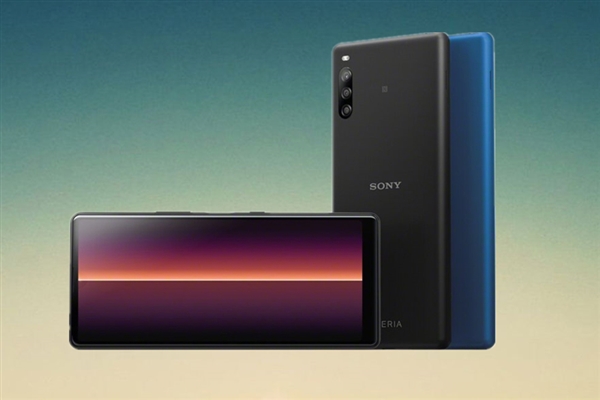
Sony suddenly took a detour from its ionic Xperia design style last year when it released the Xperia 1 with a trimmed down bezels and larger display as well as 21:9 aspect ratio. While we wait for another flagship Xperia model this year, Sony has unveiled a surprise model dubbed Xperia L4. The device is a mid-range model but takes a cue from the Xperia 1.
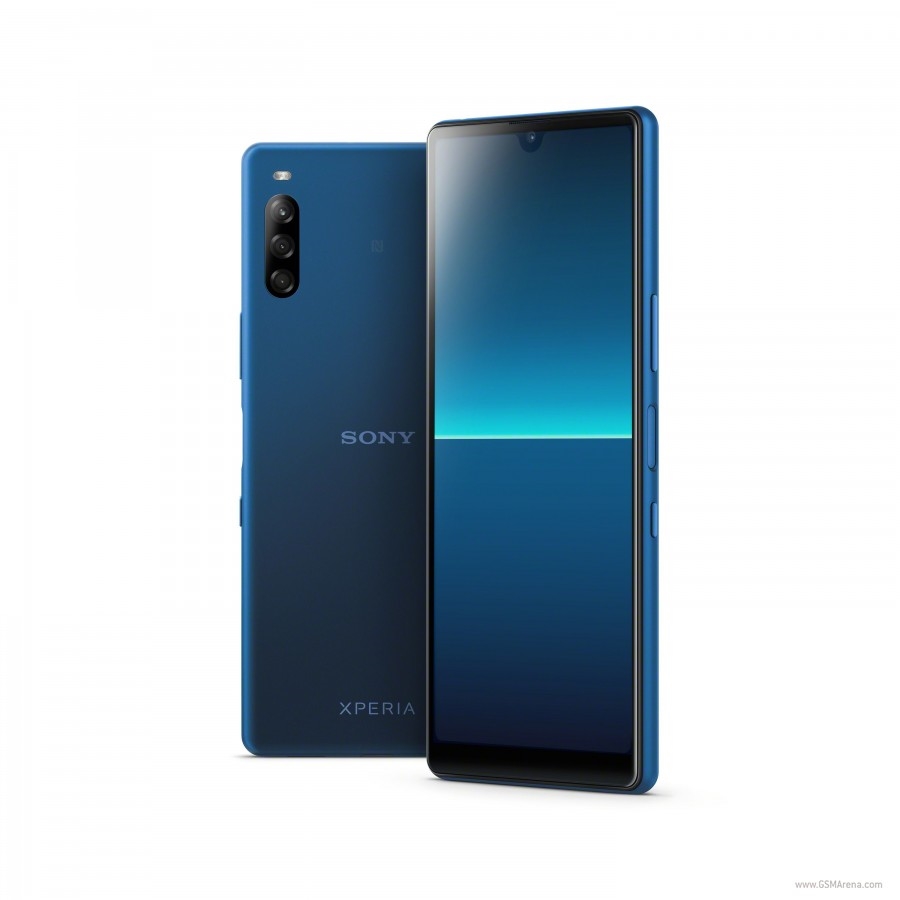
Sony Xperia L4 features a 6.2-inch LCD display with an HD+ resolution of 720 pixels and a waterdrop notch for the selfie camera. The display also uses the 21:9 aspect ratio that first featured on the Xperia 1. The aspect ratio brings an immersive and wide display that is good for watching movies on the mobile set as well as for split-screen multitasking.
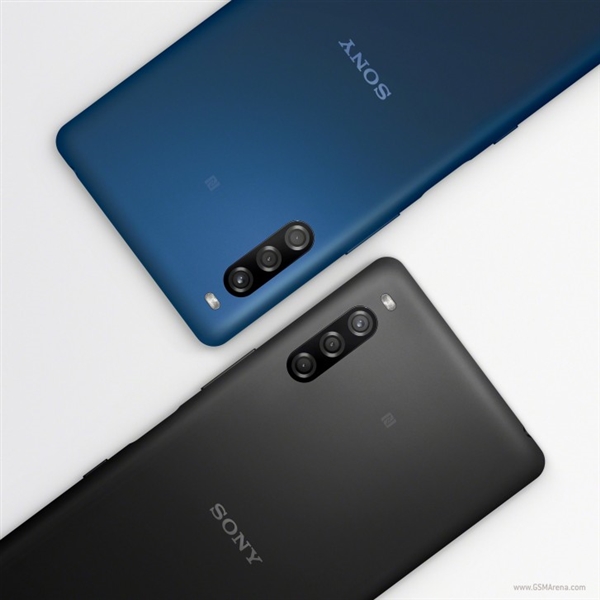
The Xperia L4 houses a triple camera setup at the rear aligned vertically at the top left corner. The camera sensors include a 13-megapixel wide-angle (phase focus), 5-megapixel ultra-wide-angle, and 2-megapixel depth sensor. At the front, there is an 8-megapixel selfie lens hidden in the “water drop” notch.
In terms of hardware, the Xperia L4 is a bit disappointing, as it is powered by a MediaTek Helio P22 processor. The processor is in the same league as the Snapdragon 625 SoC. The processor is paired with 3GB RAM and 64GB storage. The phone doesn’t have any fingerprint sensor but packs a 3.5mm headphone jack. There also seems to be an extra button on the side apart from the volume rockers and power button. The button is a side-mounted fingerprint sensor. The phone gets its power from a 3580mAh battery and supports NFC.
As for the pricing and availability, Sony is scheduled to release the L4 in the Spring. The mobile phone will be available in Black and blue but the price is yet to be disclosed.
Volatility is a term generally used in different industries to measure the constant changes. But no other industry is as volatile as the smartphone business which has new advancements keeping OEMs on their toes. In this market, a company must either adapt to new technology quickly and include them in their offerings or fear being left behind. Wi-Fi 6 technology is one of these latest advancements but a Huawei executive has stated that it is not worth the upgrade.
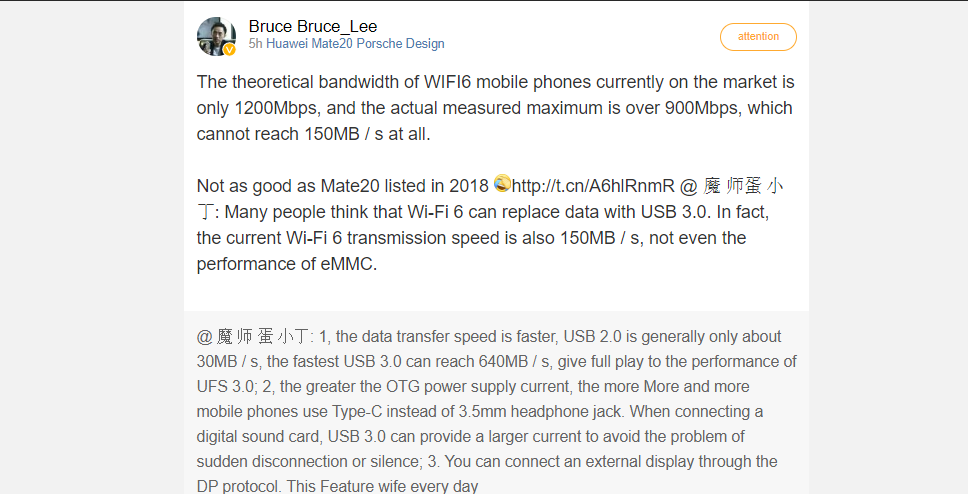
After the Xiaomi Mi 10 series launched, it seems like 2020 would set a standard of smartphones arriving with the latest Wi-Fi 6 standard. Many users believed that through this new technology even USB 3.0 is rendered obsolete thanks to its faster data transfer capabilities. Theoretically, Wi-Fi 6 can achieve 150MB/s but according to Bruce Lee, the Product Manager at Huawei Technologies, that is not the case.
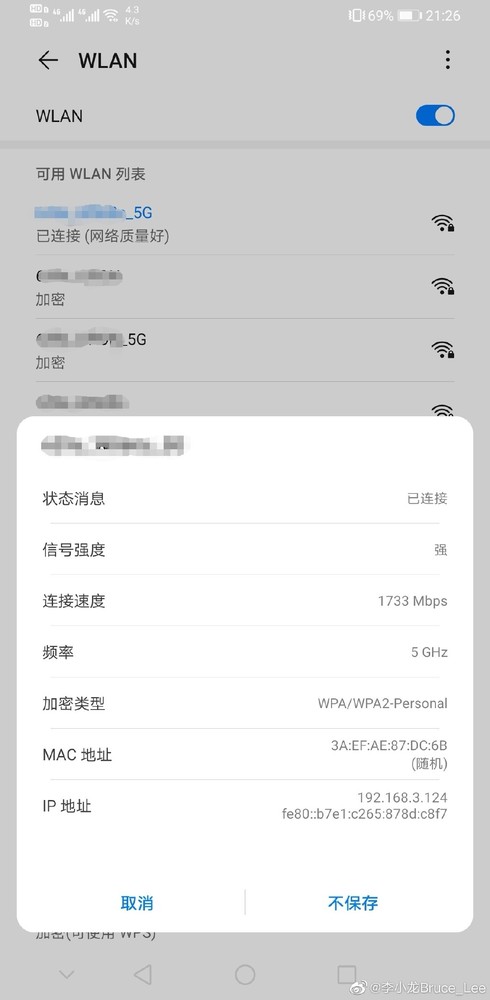
The senior executive went on Weibo, a Chinese microblogging website, to share his views on the topic. He mentioned that the current Wi-Fi 6 technology which is featured in most smartphones can only reach up to 1200Mbps (MegaBits) while the highest recorded is around 900Mbps. This implies that these smartphones cannot achieve 150MB/s (MegaBytes) data transfer speeds. In simpler terms, although Wi-Fi 6 has great potential, its current iterations are not as impressive as they are made out to be.
The screenshot from Lee’s Mate 20
To elaborate further and prove his point, Lee revealed his own WiFi connection using his Huawei Mate 20. His device reached 1733Mbps which makes it technically faster than the smartphones featuring Wi-Fi 6. This may also imply that the Huawei P40 series or other flagship grade smartphones from the Chinese tech giant being launched later during this year might not feature the newer standard. But, it wouldn’t be surprising if the company does actually add the feature later down the road.
In the wake of the MWC 2020 being canceled in Barcelona, many OEMs are now looking at independent methods of promotion. The Mobile World Congress is a major event in which company’s across the globe host their respective launch events or concept teasers. Thus, the cancellation leaves a gap between the expectations of the people and the various brands. Hence, Huawei is now planning on hosting a special launch event on the 24th of February 2020.
According to a series of Weibo posts (Chinese microblogging website) from Huawei, the company plans on hosting a special launch event. The three posts which were shared arrive in quick succession and revealed that three different flagship products will be launched at the conference. These include a smartphone, a tablet, and a notebook as well. From what we know so far, the flagship launches are expected to be the Huawei Mate Xs, Huawei Matepad Pro 5G and the 2020 Mate X Pro.
The Mate Xs is likely to be the signature launch in this event as it has been highly anticipated and hyped smartphones. It will be the successor to the original Mate X which was launched in 2019 and will feature improvements across the board. Previously, certain details regarding the upcoming foldable smartphone were revealed to be an improvement on the hinge mechanism, a faster processor (Kirin 990 5G SoC) and a better flexible display.
Furthermore, the MatePad Pro 5G and the Mate X Pro are other welcomed entries from Huawei. The former will feature 5G networking which is still uncommon in the tablet market while the latter will be a laptop sporting the latest hardware which is currently available. So stay tuned for the launch event and any additional information as well.
In recent years, OnePlus has cemented its spot in the smartphone industry. The relatively young smartphone manufacturer has grown significantly in Southeast Asia and is seeing growth even in the European regions as well. One of the company’s many strong suits was undoubtedly its flexibility and quick adoption of new trends and technologies, with none other than camera technology being an important part of it.
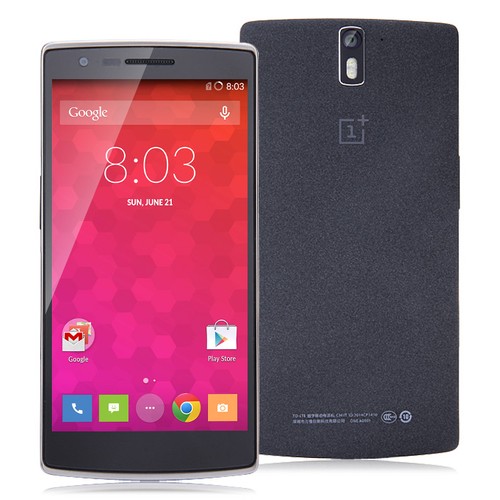
A passionate OnePlus fan on Weibo who goes by the name of Xiao Kanmei (@小侃妹) shared a video on the Chinese microblogging website that presented every OnePlus smartphone ever launched. It showcased the company’s different designs and the changes over the years and the post was even recognized by OnePlus as well. Looking at the video, OnePlus smartphones ls starting from the OnePlus One to the latest OnePlus 7T Pro and the Concept One device can be seen.
OnePlus One
Changes in Functionality
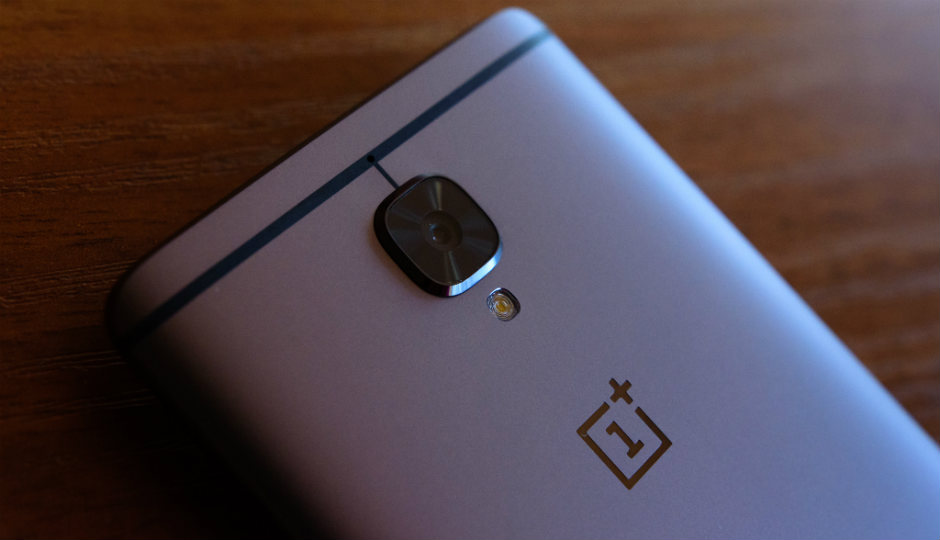
Starting from the first ever released smartphone to OnePlus 3/3T, the company had launched handsets with a single camera on the rear. A few notable inclusions in the technology used was the OnePlus 2‘s laser autofocus and OIS on the OnePlus 3 series. After the 3rd generation, however, the company rapidly shifted to the dual camera setup, with the OnePlus 5 featuring the telephoto lens. The additional sensor opened the doors for portrait photography that has since become a staple in the company’s offerings.
OnePlus 3T
Oddly, the devices that followed OnePlus 5 never featured a secondary camera that offered a separate function since, until the OnePlus 7 Pro launched back in 2019. The smartphone arrived with a triple camera module, a first for the company, and featured a primary sensor, ultra wide angle lens, and the telephoto lens as well. From then on, other releases like the OnePlus 7T and 7T Pro also offered a similar setup, apart from the base OnePlus 7 variant that offered just a depth sensor, similar to the ones found in OnePlus 6/6T.
When looking at the design, the early years of OnePlus had the company experiment heavily with its format and structure of a smartphone. Each generation had a very different design from the last, with the camera going from the center middle, top left, just the middle and more. But with the recent generations from the OnePlus 6 series to the 7 and 7T series, a mature and recognizable design of stacked cameras in the middle can be observed.
OnePlus 5T Star Wars Edition
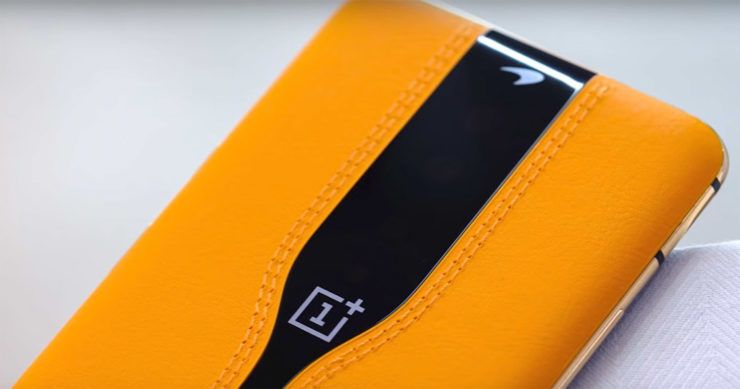
However, the company is known to be flexible with its design and that might soon change in the upcoming 8th iterations. One particular smartphone that stood out was the OnePlus Concept One. The handset isn’t a commercially available product from the OEM but was developed to tease a new vanishing camera technology. In other words, the lens at the back disappears when not in use.
OnePlus Concept One
All in all, OnePlus has grown impressively as a smartphone brand, especially in India where it is the market leader in the premium smartphone segments. Furthermore, its 2020 lineup is also expected to arrive with various improvements and we are looking forward to seeing what new features and designs OnePlus has in store for us.
Household items such as can openers, coffee makers, cooking utensils, etc are considered important come in handy in day to day life, while there are some equally-essential household goods such as the thermometer hygrometer that we rarely consider purchasing due to the steep price tags these items usually carry.
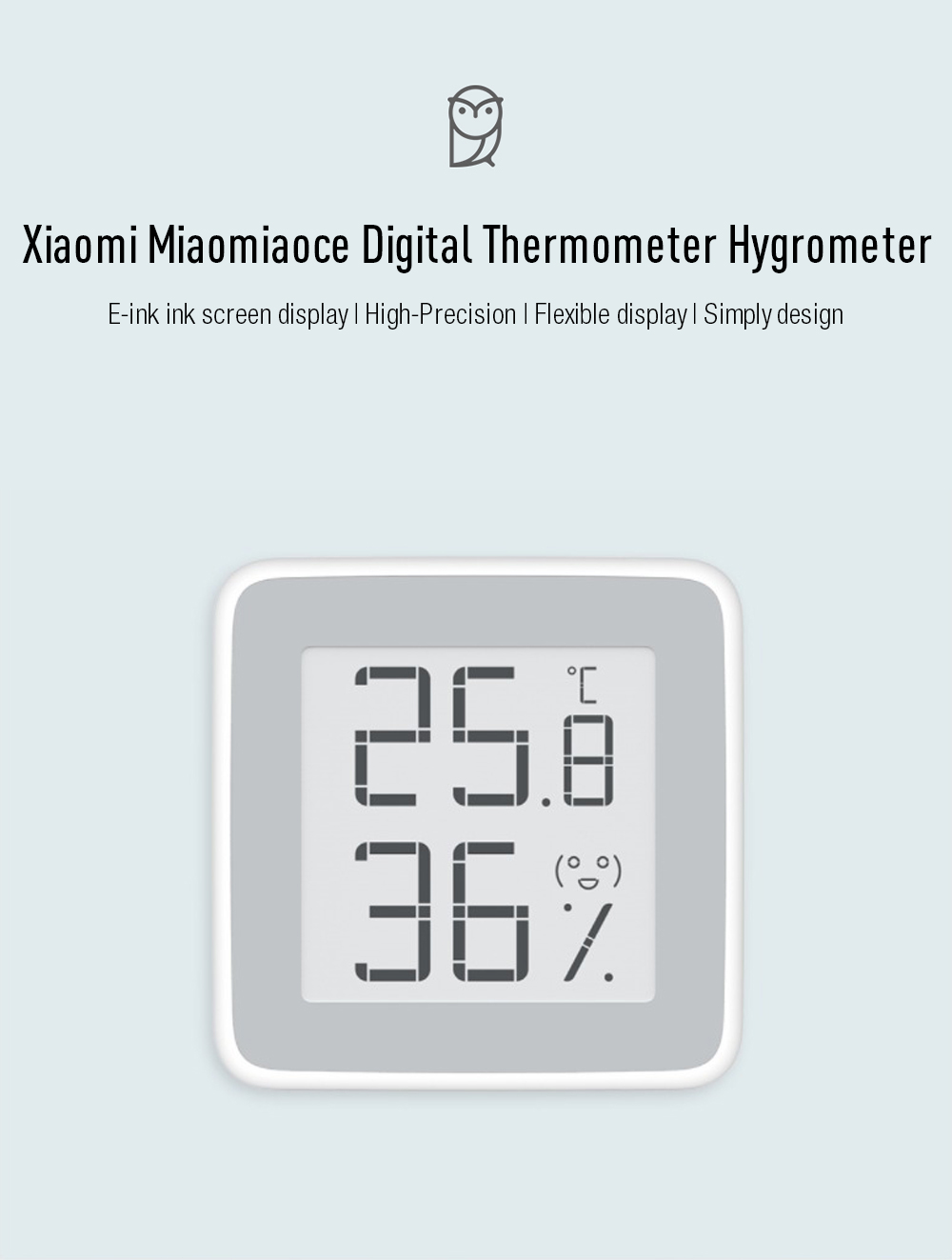
If you are searching for an inexpensive hygro thermometer (a combination of the hygrometer and a thermometer) alternative that doesn’t disappoint in terms of performance, you have come to the right place. As part of its latest flash deals, GeekBuying is now offering the Xiaomi Miaomiaoce Digital Thermometer Hygrometer for a lowered price.
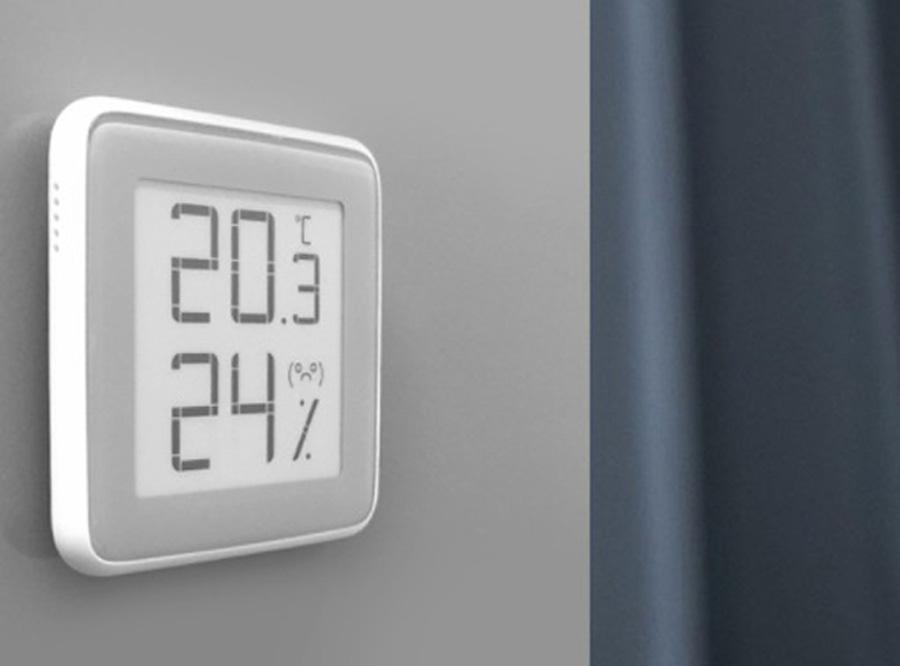
This digital thermometer hygrometer from Xiaomi is designed to measure the temperature, as well as the humidity of the room. The device then shows these calculated parameters on an e-ink display, which also preserves battery power to ensure it runs up to a year on just a single charge.
The aforesaid e-ink display utilizes a 3D curved display screen, which is further adorned with eye-catching curved edges. Furthermore, the Xiaomi Digital Thermometer Hygrometer shows six types of notifications which represent the state of the room in the form of facial expressions on the screen, helping you to better protect the health of your loved ones.
As mentioned earlier, GeekBuying is currently offering the Xiaomi Miaomiaoce Digital Thermometer Hygrometer for a lowered price, allowing even cost-conscious buyers to take advantage of this highly-advantageous device. While it usually retails for $23.96, the Chinese e-tailer is giving you a chance to purchase the Xiaomi Digital Thermometer Hygrometer for a lowered price of just $ 14.99.
In addition to receiving this 37 percent discount, you can get an extra 2 percent discount by applying the New User Coupon at checkout, provided this is your first order with GeekBuying. To place your order now, simply follow this link. Note that the flash deal is slated to end in just one day.
The Gizmochina Coupons is a community that finds, reports and evaluates deals and coupons of Chinese products from online shops. Please visit it here to find more coupons to save money on mobiles and smart gadgets.
As the industry is moving towards 5G networking, the faster bandwidth speeds also open up possibilities of larger downloads as well. Now, a person can easily stream 4K movies or even download them, but the cost of memory on a smartphone could be a lot over time. Nowadays, it is uncommon for smartphones to arrive with slots for additional memory but Xiaomi may soon change the entire game.
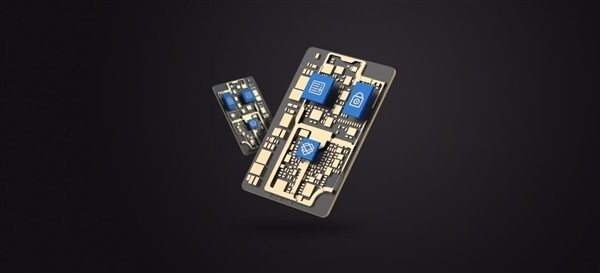
According to a patent, the Chinese tech giant is developing a 5G SIM card that is capable of both networking and serving storage functions as well. Notably, this technology is not an entirely new concept and was first seen back in 2019 from a different company. However, it seems like Xiaomi has also taken an interest in this technology and is planning on developing one of its own.
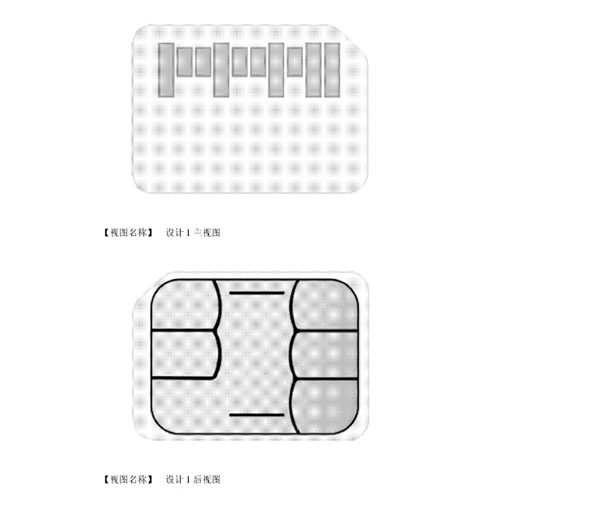
The new patent from the popular smartphone manufacturer details a memory card which also serves as a SIM card. Thus, it also makes it quite similar to the “super” SIM card which was first introduced by Ziguang last year. To allow for both functionalities, the technology features a memory card technology on one side and components for a SIM card on the back.
The patent reveals a SIM card on the bottom while the front carries storage features
The implications of this technology could be massive in the smartphone industry. While a few OEMs offer additional memory in their dual hybrid SIM card slots, the higher end flagship smartphones generally skip this feature but provide larger internal storage. But the new technology could be a smarter way of future proofing the need for additional storage on any device. Furthermore, it also would allow for easier migration of data for a user when switching smartphones.
Gearbest is one of China’s most reliable e-tailers that offers a wide range of products across multiple categories including smartphones, tablets, phablets and more at unbeatable prices. Staying true to the aforesaid reputation, Gearbest is now doling out a noteworthy discount on the Teclast P10HD phablet.
The 3GB RAM+32GB ROM Teclast P10HD variant would normally set you back $159.99, but you can purchase it for a lowered price of just $109.99 through Gearbest. This converts to a 31 percent discount that will be valid for the black color option.
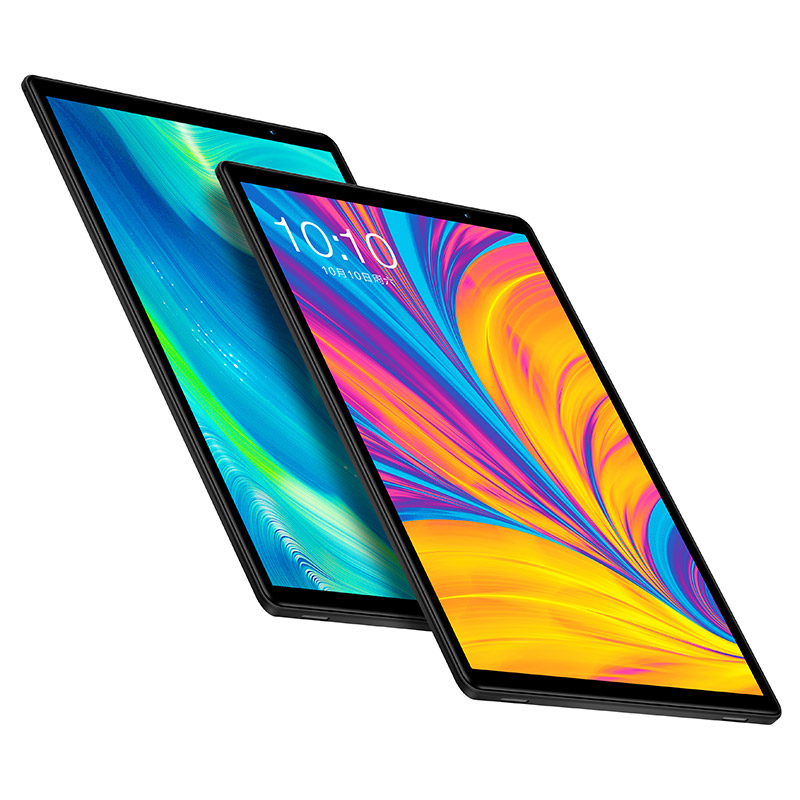
The irresistible Teclast P10 HD 4G Phablet sports an easy-to-read 10.1 inch Full HD IPS screen with a high resolution of 1920 x 1200 pixels. This display is integrated with the AI intelligent image algorithm and it has 7mm thin bezel with a touch panel.
The phablet is housed in a sturdy metal body that makes it comfortable to carry even for a longer period. Under the hood, it packs a powerful Spreadtrum SC9863A 8 Core 1.6GHz processor along with a highly competent Power VR RogueGE8322 GPU, which delivers a better experience in playing games and watching videos as compared to its predecessors. The processor consumes less power but delivers high performance.
The Teclast P10 HD is a single-SIM phablet that supports the TDD+FDD 4G network for an uninterrupted calling experience. It features big speakers for large volumes and immersive experience whether you are listening to your favorite soundtrack, playing a game or simply watching a video.
Furthermore, the phablet runs Android 9.0 Pie OS and is backed by a 6000mAh large capacity battery that delivers a video playback of up to 10 hours. It also houses a 5MP rear camera and a 2MP front-mounted camera for video calling.
You can follow this link to check out more details about the Teclast P10HD phablet and place your order. With more than 600 units sold at the time of writing, the promo is slated to end in four days.
The Gizmochina Coupons is a community that finds, reports and evaluates deals and coupons of Chinese products from online shops. Please visit it here to find more coupons to save money on mobiles and smart gadgets.
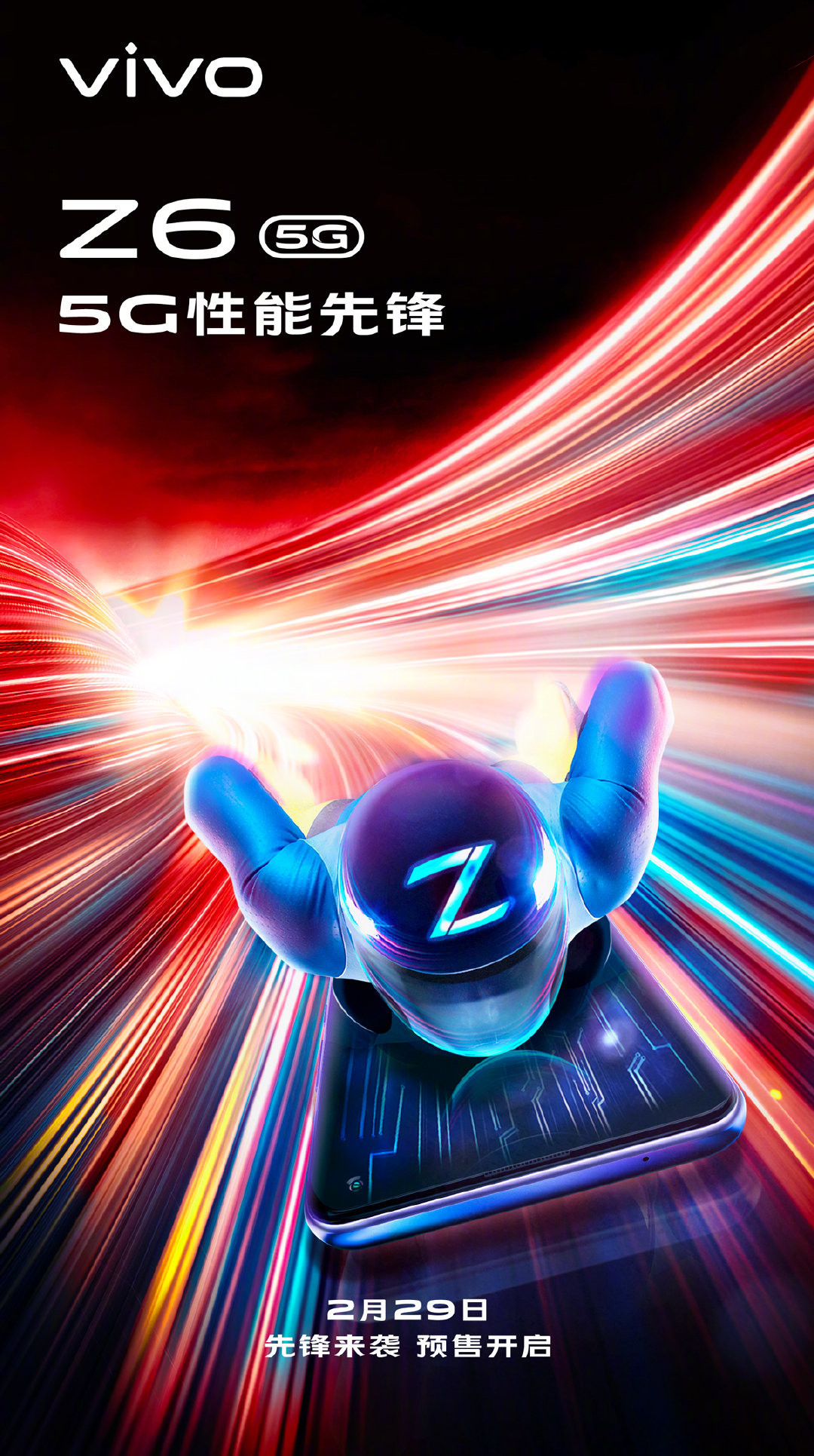
After several rumors related to the Vivo Z6 5G smartphone, the company has today finally confirmed that the Vivo Z6 5G smartphone will get launched in its home country China at an event on 29th February.
Since Vivo has positioned the Z-series of smartphones as mid-range, we expect the upcoming Vivo Z6 5G to be a mid-range pricing and thus, its pricing should not exceed 2,000 yuan, roughly $285.
The company has already created a landing page for the device and has started taking pre-orders for the same. Those who pre-order the Vivo Z6 5G by 28th February will be getting XE900 Headphones for free.
The poster for announcing the phone’s launch date reveals that the smartphone will come with a punch-hole display where the cut-out for the front-facing camera sensor will be located in the top-right corner.
Another teaser image of the smartphone confirms that it will come with PC-grade cooling support. With such feature, the company seems to be all set to compete the device against the likes of Xiaomi Mi 10, which is a premium smartphone.
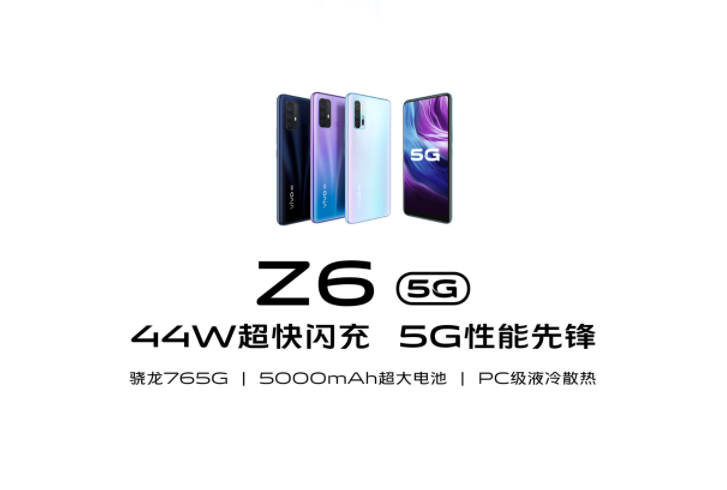
The upcoming Vivo Z6 5G is confirmed to come powered by the newly announced Qualcomm Snapdragon 765G SoC which packs X55 5G modem. This is the same chipset that powers the Redmi K30 5G from Xiaomi.
The phone’s render on the landing page shows that it will come with a quad-camera setup on the back in which the sensors are placed inside a rectangular camera module, accompanied by an LED flash.
It has also been revealed that the device will come powered by a 5,000mAh battery along with support for 44W fast charging technology. The handset, which features a rear-mounted fingerprint sensor, is expected to run Android 10 out-of-the-box and will come with Dual 4G VoLTE as well as dual-mode SA/NSA 5G connectivity.
Huawei was expected to launch a number of products at the Mobile World Congress 2020 in Barcelona, Spain. However, with MWC 2020 getting cancelling due to coronavirus outbreak, the Chinese giant announced that it will host a Virtual Press Event on 24th February.
The company is expected to launch the same devices at this virtual event as the company had initially planned for the the MWC 2020. Now, Huawei has shared a new teaser poster which hints at the launch of a new MateBook device.
While the poster clearly hints at a laptop, the company has not yet revealed what it will be be launching. However, the laptop device in question is most likely to be the upgraded Huawei MateBook X Pro 2020.
Along with teasing the launch of a new laptop, the company has also shared a teaser poster hinting at a new tablet launch. The caption of the teaser poster reads: “Every inspiration has the opportunity to grow into creativity, every idea has the potential to change the world, and it will give both hands the power to rebuild creativity with a strong core.” While nothing has been confirmed, the tablet could come powered by the company’s own Kirin 990 SoC.
In its Virtual Press Conference, Huawei will screen a pre-recorded keynote at the event in Barcelona, followed by a demo experience on-site. Along with the new laptop and tablet, we have confirmed that the company will be launching a new foldable smartphone.
The foldable smartphone could be the Huawei Mate Xs which the company’s CEO Richard Yu had confirmed last year to feature better processor (Kirin 990 5G), an improved display and an upgraded hinge mechanism. The phone will come with some changes in its design that’ll make it more compact and durable.
We use cookies on our website to give you the most relevant experience by remembering your preferences and repeat visits. By clicking “Accept”, you consent to the use of ALL the cookies.
This website uses cookies to improve your experience while you navigate through the website. Out of these, the cookies that are categorized as necessary are stored on your browser as they are essential for the working of basic functionalities of the website. We also use third-party cookies that help us analyze and understand how you use this website. These cookies will be stored in your browser only with your consent. You also have the option to opt-out of these cookies. But opting out of some of these cookies may affect your browsing experience.
Necessary cookies are absolutely essential for the website to function properly. This category only includes cookies that ensures basic functionalities and security features of the website. These cookies do not store any personal information.
Any cookies that may not be particularly necessary for the website to function and is used specifically to collect user personal data via analytics, ads, other embedded contents are termed as non-necessary cookies. It is mandatory to procure user consent prior to running these cookies on your website.













 The Teclast P10 HD is a single-SIM phablet that supports the TDD+FDD 4G network for an uninterrupted calling experience. It features big speakers for large volumes and immersive experience whether you are listening to your favorite soundtrack, playing a game or simply watching a video.