Samsung Electronics and LG Innotek have shut down their factories operating in South Korea after reports confirmed that the Coronavirus infection was found in certain employees and workers.
Samsung’s smartphone factory in Gumi, a region that has the most number of confirmed Coronavirus cases has been closed until Sunday evening (1st March 2020). The company is working on disinfecting the entire floor where the workers tested positive for the virus were working on. The company stated that these floors will reopen later on Tuesday afternoon (3rd March 2020).
Samsung Galaxy Z Flip
Furthermore, the tech giant is seeking “all necessary measures” to ensure the prevention of the virus spreading further. For those unaware, China was recently hit with an epidemic after a new strain of the virus, which originated in the Wuhan region, spread across mainland China. Reports of the virus spreading to multiple other countries have surfaced and are a cause for major alarm.
The Gumi line being closed would be a major hit to Samsung, considering that the site is known to manufacture the Galaxy Z Flip and Galaxy S20 series of smartphones. Both models are high end flagship smartphones but are still just a small portion of their total output.
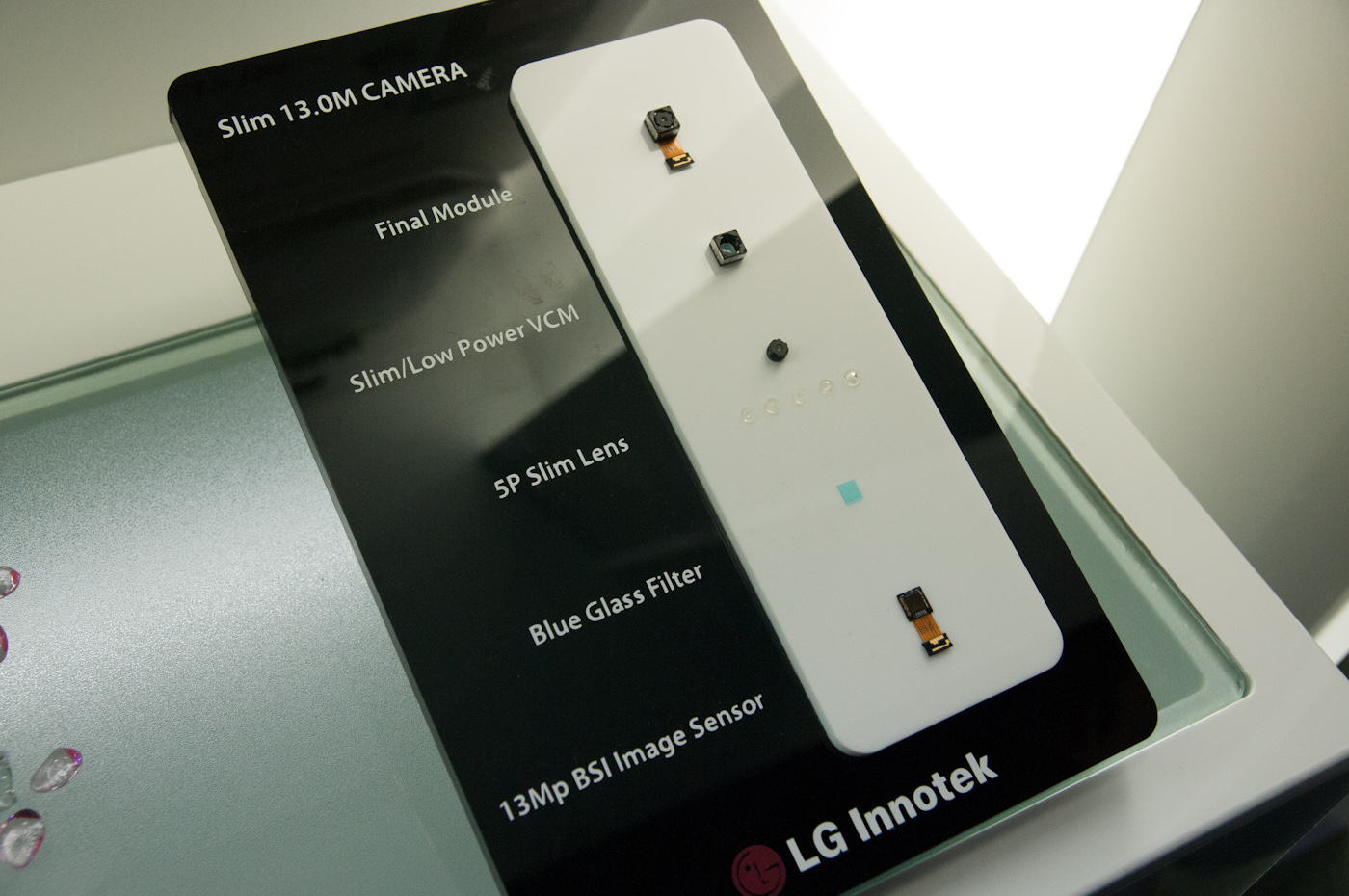
LG Innotek (known to supply camera modules for Apple’s iPhones)
Similarly, LG Innotek, a known supplier of Apple’s camera modules, has also shut down its factory in the same region as well. The company also had to shut down its production lines when a worker tested positive for Coronavirus, according to an official. As or right now, the plant is closed for disinfection and will reopen today (2nd March 2020).
2020 has already seen its fair share of popular technological trends. In smartphones, UFS 3 storage is becoming a flagship standard alongside LPDDR5 memory. Similarly, Wi-Fi 6 standard is now quickly becoming the norm as well, both in smartphones and in WiFi routers. Now, a report suggests that the Wi-Fi 6 market share is being dominated by Huawei in China and globally to a certain degree.
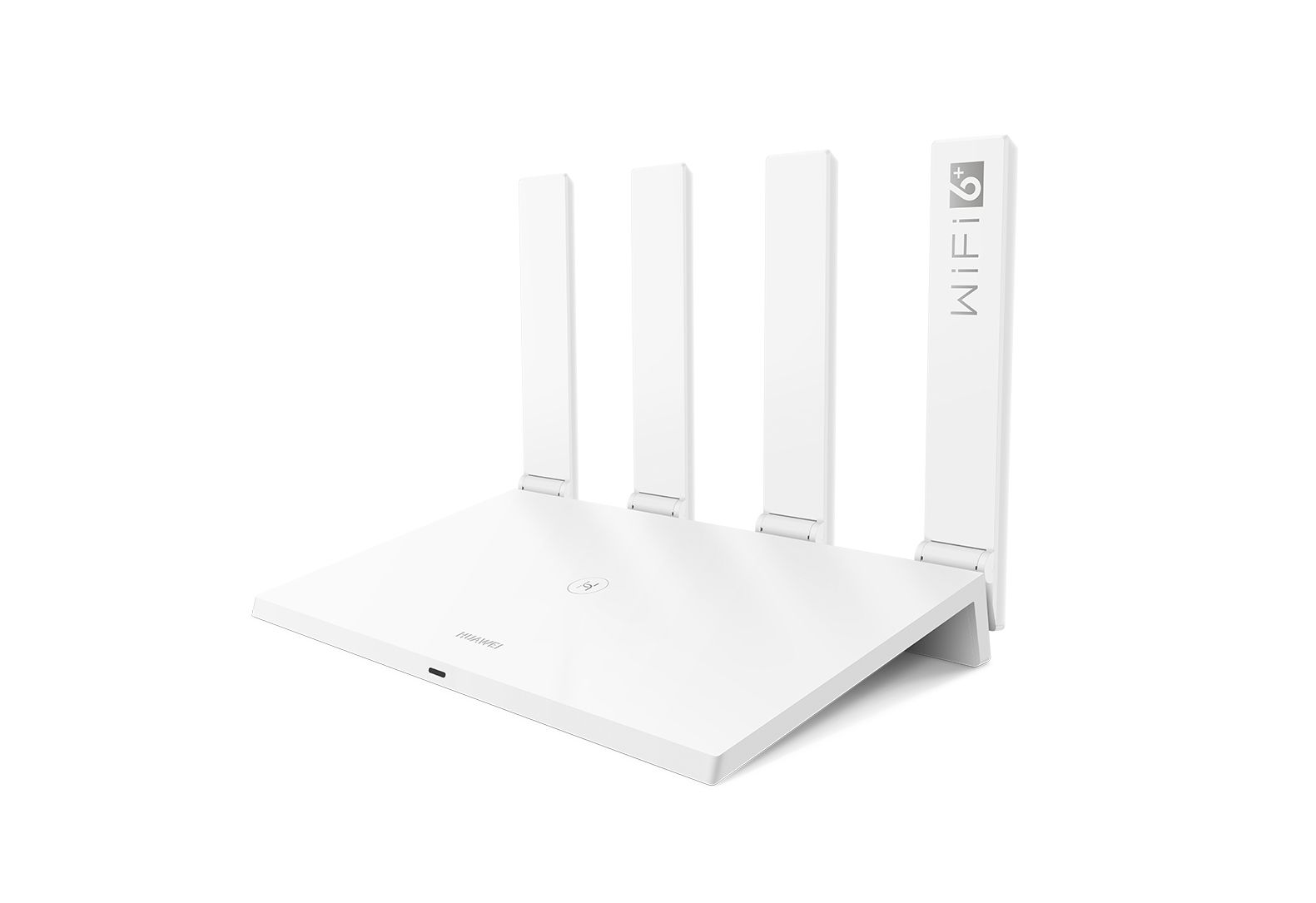
Huawei WiFi AX3 (Supports Wi-Fi 6 Standards)
According to Dell’Oro, a research and analytics firm, Huawei products with Wi-Fi 6 ranked first with 49.7% of the total market share in China. Across the globe (excluding North America), the Chinese tech giant had a market share of 39% in the international market. This report was titled under Q3 of 2018 to 2019. Huawei was the first to launch Wi-Fi 6 branded products back in 2019 when the standard officially launched.
Notably, the company was already well ahead of the competition with various patents and proposals being submitted to the 802.11ax standard group. Huawei accounted for about 163 such proposals, which accounted for 15% of all proposals. This was the highest contribution from any vendor. The company is also a pioneering figure in 5G infrastructure and equipment, so it comes as no surprise that its expertise extends to include the new WiFi standard.
Recently, the company launched its AX3 series of Wi-Fi 6 routers. The reason for their specific mention is due to its properties since it was the first smart Wi-Fi 6 router. This was launched last month on 24th February 2020 and was known for its large bandwidth of 1024-QAM and 160MHz. Meaning, it was a dual band router with speeds as high as 3000Mbps (2.4GHz600Mbps + 5GHz 2400Mbps).
Redmi will be launching the Redmi K30 Pro smartphone in China in this month. Scouring through the MIUI 11 China Developer ROM, XDA Developer’s senior forum member came across the names of the upcoming Xiaomi / Redmi phones that will be coming to China. These include the Redmi K30 Pro which is already and newer devices such as Redmi K30 Pro Zoom Edition, Redmi Note 9 and Redmi 10X 4G.
The upcoming Redmi K30 Pro is a 5G phone that is fueled by the Snapdragon 865 mobile platform. It is expected to arrive with a pop-up dual selfie camera setup and a notch-less display. Its rear is expected to house 64-megapixel quad cameras and it could be coming with a 4,700mAh battery with 33W fast charging support. Nothing is known on the Redmi K30 Pro Zoom Edition smartphone. Judging by the name, the handset is expected arrive with some stellar zooming capabilities.
Xiaomi India has already started teasing on the arrival of the Redmi Note 9 smartphone in India. The teaser revealed by the company suggests that it will be sporting a glass rear and its bottom edge has features like an external speaker, a USB-C port and a 3.5mm audio jack. It will be announced on March 12 in India. At present, nothing is known on the specifications of the Redmi Note 9.
The Redmi 10X 4G seems like an entirely new device. Usually, Xiaomi is known for selling Mi series phones with “X” in its names such as Xiaomi Mi 6X and Mi 5X in China. For the first time, a Redmi phone with X in its name has been spotted. The Redmi 10X 4G moniker suggests that there could be a 5G version of the phone too. The 10X text could be referring to zooming capabilities of the phone. It is advisable to wait for further reports to know more about it.
The OPPO India unveiled the Reno3 Pro smartphone in India today. Unlike the Snapdragon 765G powered 5G version of the Reno3 Pro that was announced in December 201 in China, the Reno3 Pro for India features the latest MediaTek Helio P95 chipset. The Reno3 Pro is the first phone in the world to arrive with 44-megapixel dual punch-hole display. Also, the phone manages in the photography department with its 64-megapixel quad camera setup.
OPPO Reno3 Pro specifications
The Reno3 Pro features a 6.4-inch E3 S-AMOLED display that offers full HD+ resolution of 1080 x 2400 pixels and 20:9 aspect ratio. It supports 100 percent DCI-P3 color gamut, a high contrast ratio of 2400000:1 and it supports a peak brightness of 1200 nits. The TUV Rheinland certified screen safeguards the eyes of the users from harmful blue rays coming out of the display. The Reno3 Pro has a smooth glass rear with a minimal finish. It is lightweight device as it weighs only 175 grams and with a thickness of 8.1, it is the slimmest Reno series phone from the company.
OPPO Reno3 Pro
The elliptical punch-hole on Reno3 Pro’s screen has a main selfie camera of 44-megapixel which is coupled with a 2-megapixel sensor for adding bokeh effect. The selfie snappers offer users features like Ultra Night Selfie Mode, video bokeh EIS driven Ultra Stead Video 2.0 and AI Beauty Mode. The quad camera setup on the backside of the Reno3 Pro consists a 13-megapixel telephoto sensor, 64-megapixel Ultra Clear primary lens, a 2-megapixel mono lens and a 120-degree 8-megapixel ultrawide lens. The quad cameras deliver features like 5x hybrid zoom, 20x digital zoom, Ultra Clear 108MP photography, Ultra Dark Mode, EIS driven Ultra Steady Video, Ultra Steady Video Pro and Video Bokeh.
The 12nm MediaTek Helio P95 chipset is present under the hood of the OPPO Reno3 Pro. The smartphone comes with LPDDR4x RAM and UFS 2.1 storage editions such as 128 GB and 256 GB. There is 30W VOOC 4.0 fast charging technology for power the 4,025mAh battery of the Reno3 Pro. The company claims that the phone can reach 50 percent battery in just 20 minutes. The smartphone comes with a 4,025mAh battery. There is multi-cooling system onboard that can effectively bring the phone’s temperature by 13 percent.
The ColorOS 7 based Android 10 OS comes preloaded on the OPPO Reno3 Pro. For smoother performance while gaming, the Hyper Boost technology kicks in to enable frame rate and touch optimizations. The in-display fingerprint scanner available on the Reno3 Pro can unlock it only 0.3 seconds. When it comes to connectivity, the Reno3 Pro offers features like dual SIM support, 4G VoLTE, Wi-Fi 802.11ac, Bluetooth, GPS and USB-C.
OPPO Reno3 Pro price and availability
The 8 GB RAM + 128 GB storage edition of the Reno3 Pro is priced at Rs. 29,999 (~$416) and its sale will commence on March 6. The higher 8 GB RAM + 256 GB storage version costs Rs. 32,999 (~$457) and it will be made available in near future. The phone comes in three colors like Auroral Blue, Midnight Black and Sky White.
At the Reno3 Pro launch event, OPPO also announced Enco W31 and OPPO Enco Free wireless headphones. They are priced at Rs. 4,499 (~$61) and Rs. 7,990 (~$110), respectively. These earbuds will be available for purchase from March 4.
On the first three days of the sale, the Reno3 Pro will be available with a 10 percent cash back for HDFC debit / credit card users. On the first sale date, buyers can avail the phone with zero down payment from Bajaj FinServ, IDFC First Bank, HDFC Bank and more. Customers purchasing the phone offline will be provided with complete damage protection and 1,000 lucky customers can get the Enco Free true wireless earbuds for free.
For customers pre-ordering the device online, customers buying the Reno3 Pro today can take advantage of 10 percent instant discount through Yes Bank credit card and HDFC Bank debit /credit cards. The Chinese manufacturer is also providing limited quantities of OPPO wireless speakers for only Re. 1 and Enco Free TWS with a discount of Rs. 2,000.
Redmi Note 9 is confirmed to release on March 12 in India and will be sold via Amazon.
Original Story below.
Redmi is all set to launch a new lineup in India this month, the Redmi Note 9. The company has started teasing the upcoming budget device today, with the brand signing up Ranveer Singh to promote the new series. Earlier today, Ranveer released a small video on Twitter asking Manu Kumar Jain about the release of the Redmi Note 9 lineup.
My main man @RanveerOfficial. Of course 9️⃣ ayega. And it'll be here very soon. 😎
Legend says that it takes only 9️⃣ secs to spot the 9️⃣ in this photo! 😉
Mi Fans, are you fast enough? Screenshot it & tweet with #ILoveRedmiNote!
Manu responded by posting an image showing off a handful of Redmi devices. You can easily figure out the phones in the image which included the Redmi K20 Pro, Note 8 Pro, and even a Redmi 1S. However, there was one phone which was partially hidden under the newspaper, and that’s likely the new Redmi Note 9 model. Unfortunately, the image reveals very little about the device. What we can confirm is that the Redmi 9 will feature a headphone jack, USB-C port, and a speaker grill at the bottom, much like most other devices in the Redmi lineup. We can also see that the phone has a glossy back in a gradient blue shade. So it’s likely that it comes in a glass sandwich design.
Now that the promotional campaign for the Redmi 9 series has officially kicked off, we can expect more updates in the coming days. Also, since Xiaomi has signed up Ranveer for the promotion of the new lineup, expect to hear more from him as well.
Earlier today (2nd March 2020), the Realme band was finally revealed officially in India. It is the first wearables from the company and most of its features have also been showcased.
Features
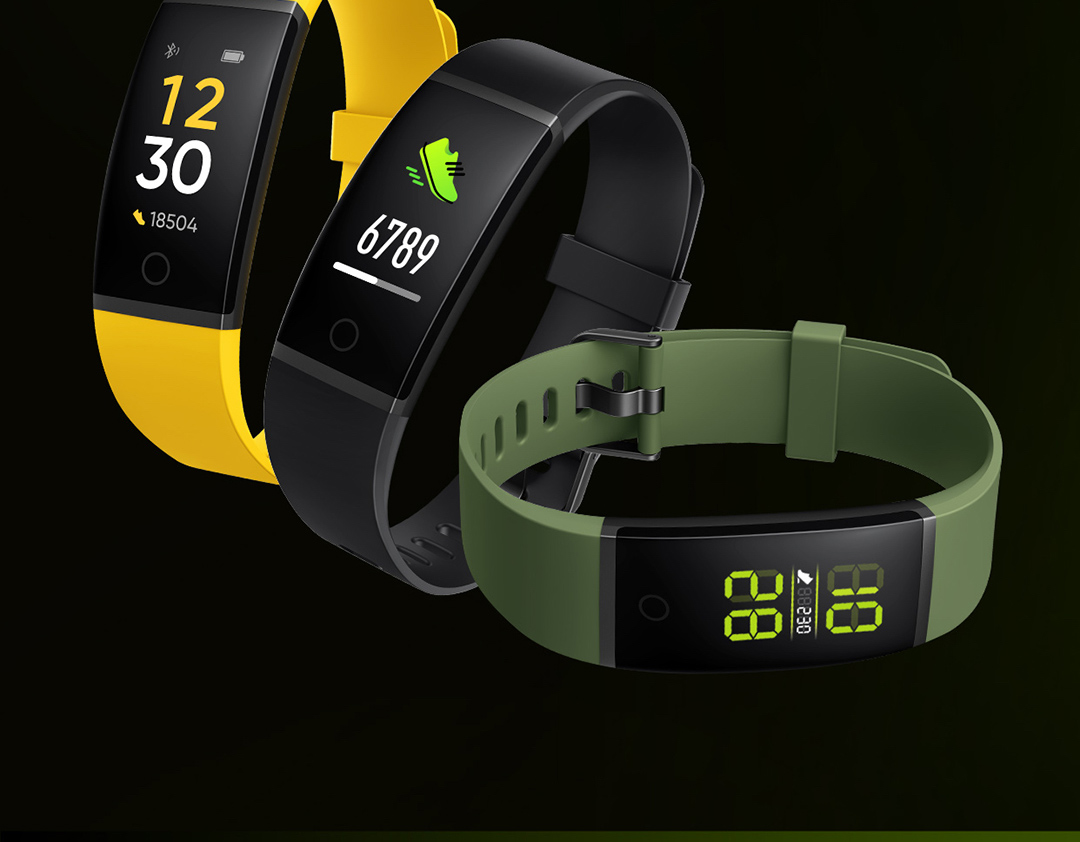
The Realme Band is one of the first IoT (internet of things) products from the company. It has been a highly anticipated launch in India and many of its features have finally been revealed. The gadget arrives with a colored display and has a singe utility button on the bottom of the screen. This single button is responsible for cycling through the menu and various other screens and also allows for switching between modes.
Realme is offerings various activity trackers with the Band and these include different categories like, walking, cycling, running, hiking, climbing, yoga, fitness, and even cricket. Through its built in sensor, the device is also capable of measuring the user’s heart rate and the calories being burnt through any of the above mentioned activities. The Realme Band is also IP68 certified water and dust resistant and connects to a smartphone via Bluetooth technology. Thus, it can even show messages and other notifications as well.
One can use the button to navigate through the screen and select any particular activity and long press the button to activate it. After which, the Realme Band starts tracking the steps, calories burnt and heart rate of the user, in accordance to the activity being set. Notably, the device can also track sleep and charges directly through its main body. This means that you don’t have to carry an additional wire, just remove the band the side of the band the holds the built in USB port, and plug it into an adapter, laptop or PC port.
Design
The Realme Band is not a gadget that immediately sticks out in the crowd of wearables. Its design is simple and resembles various other products from this category. Although, it does arrive with a healthy selection of different colored bands, including Yellow, Green, and black. Other colors or types of bands have yet to be announced. In the middle is the curved colored display that shows the time, various activities and even the heart rate and notifications.
Availability
The Realme Band will officially go on sale on the 5th of March 2020. The sale will begin around 12:30 PM and a “Hate to wait” sales begin later in the evening between 2-4 PM.
Apple has officially raised the prices of its current flagship smartphones, the iPhone 11 Pro and 11 Pro Max in India. The hike in price arrived after the Indian Government increased the Basic Custom Duty rates (BCD) after the newly recent union budget was publicly announced.
The iPhone 11 Pro series wasn’t the only device affected as the iPhone 8 series prices have also been affected. Notably, other Apple smartphones like the iPhone XR and iPhone 7 prices will not be affected as the Cupertino based giant has been assembling these models locally within India through its known manufacturers Foxconn and Wistron.
Apple iPhone 11 Pro
Furthermore, iPhone 11 prices will also remain unchanged as the company decided to absorb the cost after the increased customs duty. Apple’s other gadget offerings like the prices of the Apple Watch, Mac and iPads are unaffected as well. So now, the iPhone 11 Pro Max 64GB variant is priced at 1,11,200 INR while the 256GB variant is offered at 1,25,000 INR and 512GB variant arrives at 1,43,200 INR. Previously, the model started from 1,09,900 INR in India.
Similarly, the iPhone 11 Pro 64GB version is now priced at 1,01,200 INR while the 256GB version now sells for 1,15,200 INR and 512GB carries a price tag of 1,33,200 INR. The smartphone was originally priced at 99,900 INR. Finally, the iPhone 8 Plus 64GB variant will no sell for 50,600 INR and its 128GB variant will be priced at 55,600 INR. The base iPhone 8 64GB now costs 40,500 and the 128GB version is now sold for 45,500.
Apple iPhone 8 series
Thus, a price hike varying from 1,300 to 700 INR can be observed in the aforementioned Apple iPhones. In 2019, Apple saw one of its best performances in India as it finished sith in Q4 of 2019. Its the highest ranking the company has ever reported on since 2013, according to Canalys. Apple sold over 925,000 iPhones in the final quarter which is nearly double that of the same quarter from the previous year.
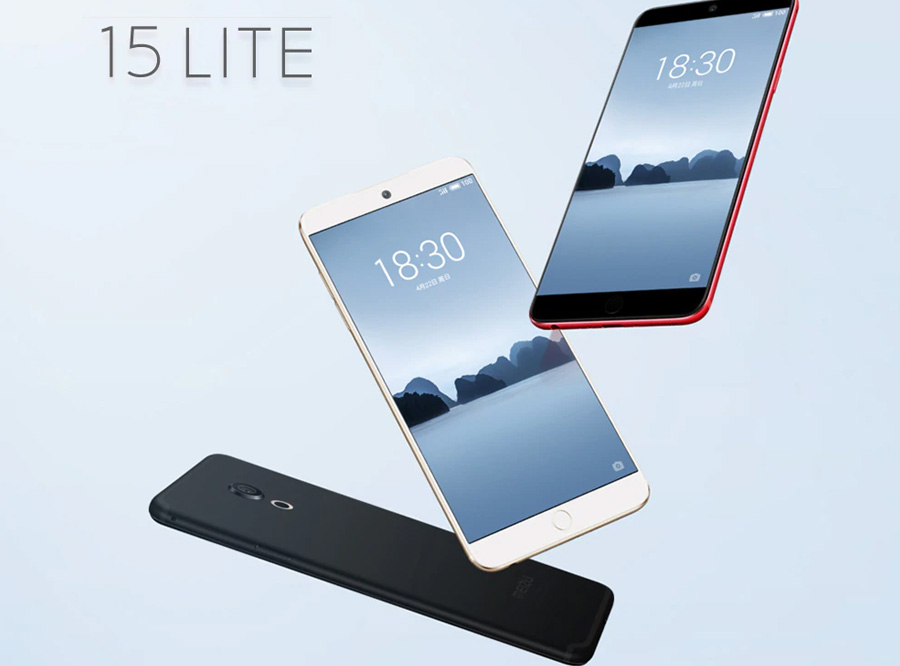
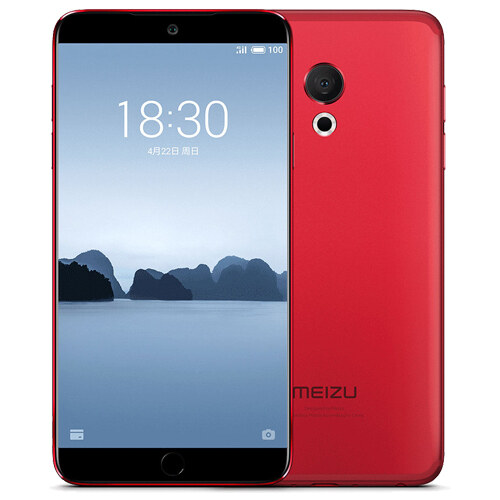
To mark its 15th anniversary with a red-letter Meizu launched three smartphones on April 22nd, 2018 including the Meizu 15, 15 Plus and 15 Lite. Touted as the most affordable handset in the series, the Meizu 15 Lite is a great choice for those on a tight budget.
The global version of the Meizu 15 Lite that ships with 4GB RAM and offer 32GB of internal storage space is currently available for a lowered price through AliExpress. You can choose between multiple bundles including one that comes with a 64GB TF card, an N silicone case, a standard model and one that comes with an EP2X earphone.
64GB TF Card (20% Off)
Moreover, the Meizu 15 Lite is available in black, as well as red color options. The black-tinted model usually retails for $172.73, but you can now purchase it for just $138.18. Likewise, the red color option would normally set you back $175.99, but can now be yours for a lowered price of just $140.79.
N Silicone Case (20% Off)
This model is specifically available in the black color option. While it would normally set you back $153.59, AliExpress is offering it for just $122.87.
Standard (20% Off)
The black color Standard variant normally sells for $149.99, but if you purchase it through AliExpress, you can get it for only $119.99. Similarly, the red color option which sells for $153.73 has gone up for sale bearing a reduced price tag of only $122.98.
EP2X Earphone (20% Off)
A great choice for music lovers, this bundle comes with Meizu EP2X Earphone. The black color option’s original selling price of $163.99 has been reduced to just $131.19, and the red color option that retails for $167.99 is now up for grabs for just $134.39.
The Meizu 15 Lite feels like a flagship device with ultra-narrow side bezels that offers a superior viewing experience. The phone sports a 5.46 inches Full HD display with 1920 x 1080 pixels resolution and is powered by Qualcomm’s octa-core processor. Moreover, it packs an ARM Mali G72 MP3 800MHz GPU.
There’s a 12MP camera with DualTone LED flash and AF and the back and a 20MP front-mounted camera for selfies and video calling. The dual-SIM smartphone runs Android 7.0 Nougat and draws its juices from a 3,050 mAh Lithium-Polymer battery.
You can head straight to this link to check out more details about the Meizu 15 Lite smartphone and place your order. Don’t forget to take advantage of the $2 Off New User Coupon if this is your first order with AliExpress. Note that you will qualify for an additional $2 off if your order exceeds $99.
The Gizmochina Coupons is a community that finds, reports and evaluates deals and coupons of Chinese products from online shops. Please visit it here to find more coupons to save money on mobiles and smart gadgets.
Huawei’s next big move in India is likely to strike a partnership with the Indian regional operating system, IndusOS. The move will grant Huawei access to over 400K regional applications in India in over 12 different Indian languages. This could turn out to be an important strategy for the Chinese giant’s revival in the Indian market this year.
The report comes via Economic Times which states that a deal between Huawei and IndusOS will soon be finalized. The Chinese giant hasn’t been able to crack the Indian market, unlike its rivals like Xiaomi, Realme, and OPPO. The trade ban last year further impacted the company’s business in the region. Therefore this is a very important deal for the company that’s looking to make a comeback in the Indian market.
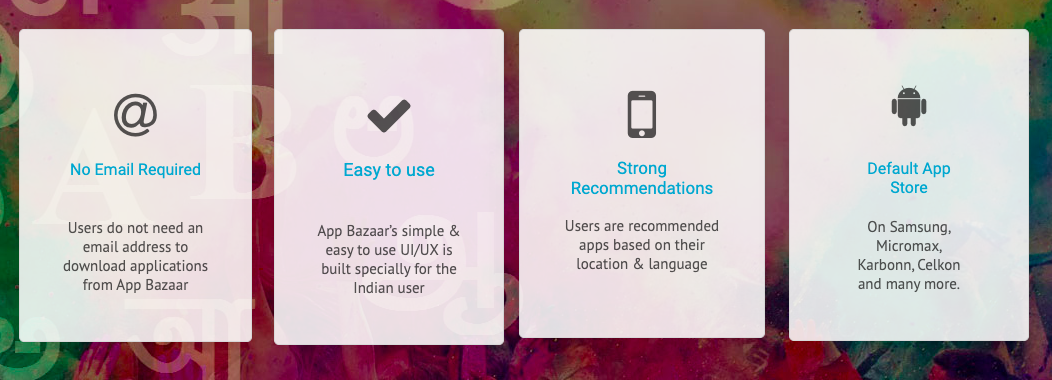
Huawei’s partnership with IndusOS makes sense. Last year, the same company partnered with Samsung to offer over 400K regional apps to Galaxy smartphone users via its App Bazaar platform. Further, in July 2019, Samsung’s investment arm, Samsung Ventures acquired a 20 percent stake in the company. IndusOS is also the default app store on a number of local smartphone brands like Micromax, Intex, Karbonn.
Tapping the regional market is vital for Huawei’s growth in the region. The lack of Google apps like Gmail, YouTube, and Maps is going to be a huge drawback for Huawei in India. However, with the right strategy which includes a customized experience for Indian users, the company may have some hope for revival.
Huawei’s retail strategy will also decide its success in the Indian market. As IDC India research director, Navkendar Singh notes, retailers will play a vital role in helping consumers choose a smartphone brand. He adds that they can “easily convince buyers to go to phones with Google support”.
Software is the biggest pain point for Huawei right now. But it has already allocated $1 billion for a global fund to boost app development. The company is also promising incentives up to $17K to the top 150 developers in India to publish apps on its own Huawei AppGallery store. In an official event in late February, the company revealed that Huawei AppGallery is currently the third-largest app store in the world.
However, even if its store features millions of published apps, it remains to be seen whether regional customizations and strategic tie-ups with top developers is enough to convince consumers to use alternatives for highly popular apps like Gmail and YouTube.
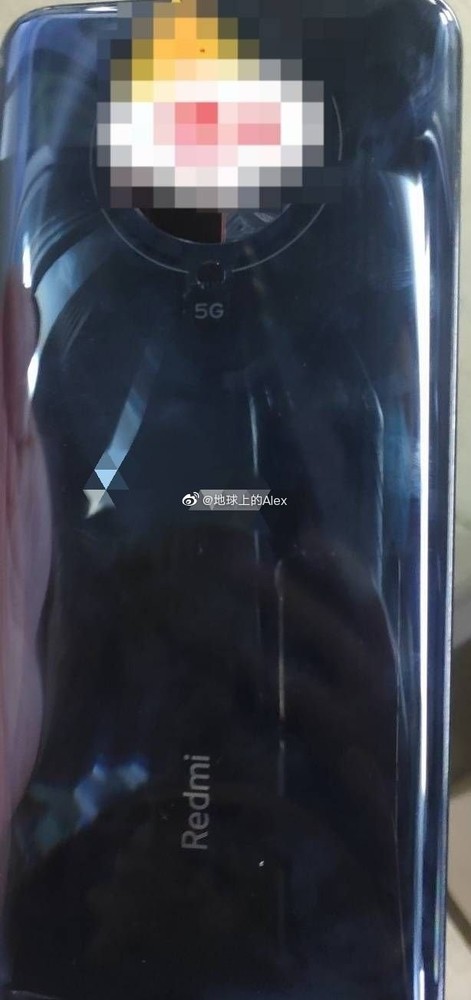
Redmi had recently confirmed that the Redmi K30 Pro flagship phone will be debuting this month. Rumors surrounding the smartphone have revealed some information on its specs and design. It is speculated Redmi K30 Pro 5G is expected to sport a notch-less display like the predecessor Redmi K20 Pro. Its rear is expected to look similar to the Redmi K30, albeit slight modifications. A leaked image of the purported Redmi K30 Pro has appeared on Weibo to reveal. While it showcases the phone in dark blue color, it does not reveal the rear camera setup completely.
The dark blue colored rear shell of the alleged Redmi K30 Pro curves towards its edges. There is a circular ring in the upper half of the phone’s back panel. The image has been edited in such a way that it does not reveal the number of cameras present inside the ring. The rear design of the phone’s seems to resemble with its render that had appeared in the last month.
The circular ring could be housing at least three cameras. Similar to the below render, the leaked image also shows the presence of a fourth lens on the edge of the ring. The 5G logo can be also seen below it. The Redmi K30’s rear camera setup lacked a telephoto sensor.
Since the Redmi K20 Pro’s triple camera setup featured it, it is likely the upcoming Redmi K30 Pro may also come equipped with it. Hence, there is a possibility that the rear camera system of the K30 Pro may include Sony IMX686 64-megapixel main lens, a telephoto lens with optical zoom, an ultrawide shooter and a macro lens.
The Redmi K30 5G came with an LCD display. Its upcoming Pro edition is expected to sport an OLED display with in-screen fingerprint reader. It is speculated that the phone’s pop-up selfie camera setup may include two cameras. The device is expected to come with some other features like LPDDR5 RAM, 256 GB of storage and 4,700mAh battery with 33W fast charge support.
Regular smartphone users fancy buying handsets that sport highly appealing designs rather than going for a mobile phone that’s designed to survive a harsh environment. Adventure or sports junkies who engage in outdoor adventurous activities, on the other hand, understandably prefer purchasing a rugged phone.
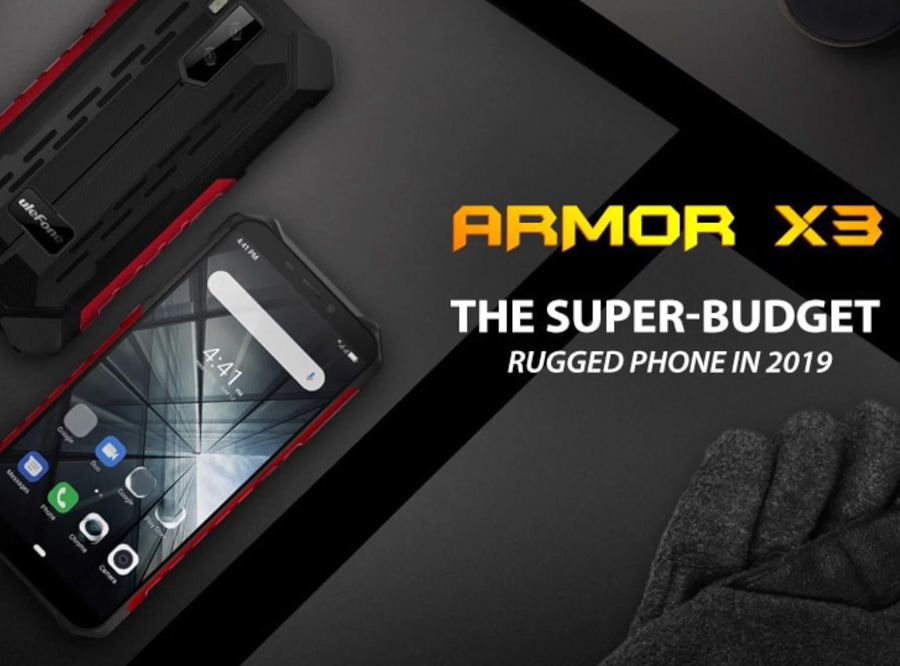
Ulefone’s Armor series comprises rugged smartphones that have garnered huge popularity after hitting the store shelves. Last year, the popular lineup received a new super-budget variant dubbed the Armor X3 and Ulefone released a hands-on video that demonstrated its performance.
Before we dive into more details about the device’s awe-inspiring features and top-end specs, it might interest you to know that Giztop is now offering the Ulefone Armor X3 for a lowered price. The original asking price of the 2GB RAM+32GB ROM model that usually sells for $129, has been reduced to just $99.99.
In short, the popular Chinese e-tailer is giving you a chance to save $29.01. The Ulefone Armor X3 comes in three eye-catching color options including black, red and silver.
The Ulefone Armor X3 sports a 5.5-inch all-screen display with 720×1440 pixels resolution and Corning Gorilla 5 on top for added protection. It packs a powerful MT6580 Quad-Core processor, paired with 2GB of RAM for uninterrupted multitasking.
Carrying the IP68/IP69K rating, the Armor X3 can withstand 2 hours of immersion in 2m of water, which means, it can prevail against 24 hours of submission in 1m of concrete. Aside from that, the rugged phone can also withstand drops up to 1.2 meters.
In the optics department, the Armor X3 houses a dual rear camera setup comprising an 8MP and a 2MP camera. Upfront, it features a 5MP camera which can be used for capturing self-portraits and video calling. The dual-SIM phone runs Android 9.0 Pie OS and is backed by a 5000mAh battery that lasts for 440 hours or 25 hours of talk time.
You can head straight to this link to check out more details about the Ulefone Armor X3 and take advantage of the discount by placing your order through Giztop.
The Gizmochina Coupons is a community that finds, reports and evaluates deals and coupons of Chinese products from online shops. Please visit it here to find more coupons to save money on mobiles and smart gadgets.
Spending a lot of money for a gym membership and then about an hour daily to workout isn’t practicable for a lot of people, especially if you are a frequent traveler, a student or spend hours at work.
Thankfully, the market is teeming with fitness gadgets such as fitness bands and smart bracelets that help you keep track of your fitness while monitoring all your activities. You’d either need to shell out a great deal of money to get your hands on a feature-laden smart bracelet or settle for an inexpensive alternative that offers just run-of-the-mill efficacy.
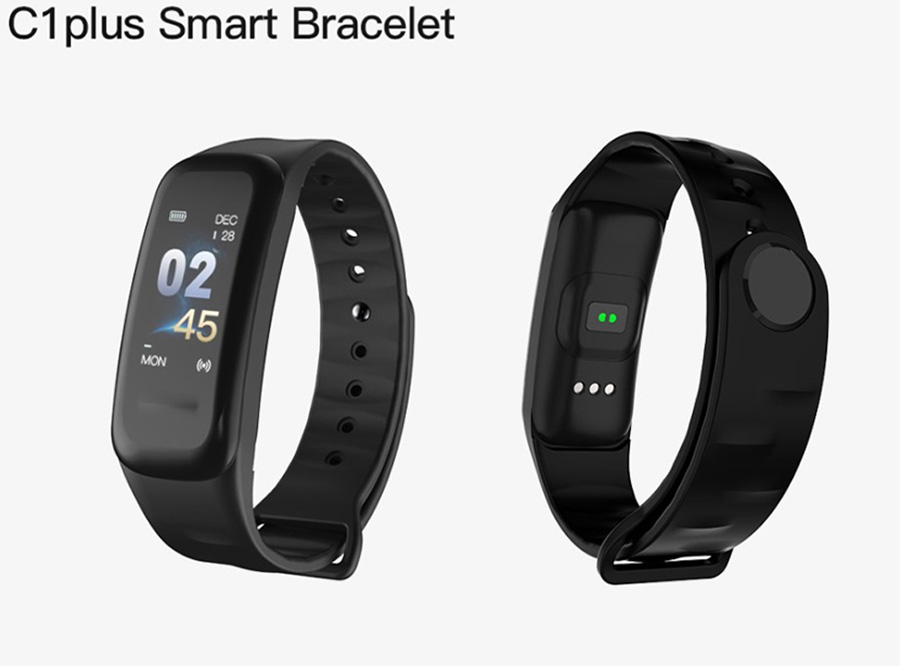
If you are in the market for a smart bracelet that boasts an impressive array of features but doesn’t cost a bomb, we got good news for you. Known for offering a wide range of products across multiple categories for unbeatable prices, Gearbest is now giving you a chance to purchase the C1Plus smart bracelet for a lowered price.
Available in black, purple, orange, green, red and blue color options, the C1Plus usually retails for $15.99. As part of its latest flash sale, Gearbest is offering the smart bracelet for just $8.99, which converts to a noteworthy 44 percent discount.
An absolute steal at this price, the C1Plus Smart Bracelet packs a built-in-high-speed processor that accurately records changes in the heart rate of the wearer, along with exercise data and trajectory for the entire day. Aside from a heart rate monitor, the C1Plus comes with a phone call reminders and a sleep monitor.
The C1Plus Smart Bracelet sports a 0.96-inch TFT full-color IPS display and is backed by a 90 mAH battery that offers 7 days of standby time. Weighing in at just 20g, the smart bracelet can be worn throughout the day without experiencing any sort of discomfort. Moreover, the length of its wristband can be adjusted between 120-200mm.
Since the C1Plus has a phone call reminder, you don’t need to worry about missing any important calls or messages even on the go. Moreover, you can capture memorable moments using its remote camera. On top of that, the smart bracelet carries an international IP67 waterproof rating, which means you can wear it even when washing hands.
You can visit this link to check out more details about the C1Plus Smart Bracelet and place your order. With few pieces already sold out at the time of writing, the flash sale is slated to end in 17 days.
The Gizmochina Coupons is a community that finds, reports and evaluates deals and coupons of Chinese products from online shops. Please visit it here to find more coupons to save money on mobiles and smart gadgets.
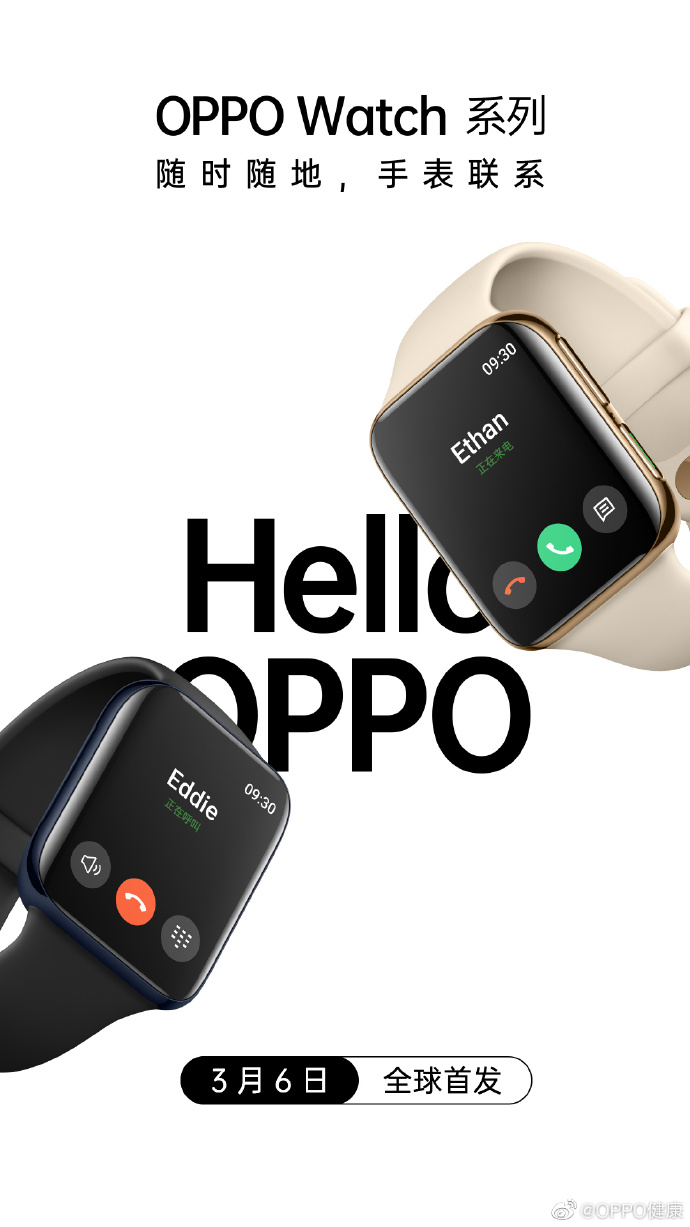
OPPO will be announcing the Find X2 series of smartphones on March 6. The OPPO Watch which is the first smartwatch from the company will be also unveiled at the same event. A poster that has been released by the company confirms some of the key features of the device.
The OPPO Watch can be seen in two color variants in the new poster. The gold variant has a cream-colored silicon strap whereas the blue model has a black silicon strap. The smartwatch flaunts a square-shaped display that curves towards the edges. The right spine of the device has two flat hardware buttons.
The image also confirms that the OPPO Watch support voice call function. Hence, there is a possibility that that it may come with support for e-SIM. There are no details available on the specifications of the OPPO Watch yet. Hopefully, some leaks will appear ahead of the launch to reveal some of its other functionalities. Also, it yet to be confirmed whether the device is running on Android Wear OS.
In related news, a recent leak has revealed key differences between the Find X2 and Find X2 Pro. The Find X2 will be arriving with differing features like 8 GB of RAM, 4,200mAh battery, Z-axis liner motor, 13-megapixel telephoto + 12-megapixel Sony IMX708 movie lens + ultrawide 48-megapixel Sony IMX586 triple camera setup and the Pro model will have 12 GB of RAM, 4,260mAh battery, X-axis linear motor and 13-megapixel periscope telephoto lens + 48-megapixel Sony IMX586+ 48-megapixel Sony IMX689 triple camera setup.
The OPPO Find X2 and Find X2 Pro will be coming with plenty of common features like quad HD+ 6.7-inch S-AMOLED display that offers quad HD+ resolution. The Snapdragon 865 SoC powers both phones. Other common features of both phones include Sony IMX616 32-megapixel selfie camera, 65W Super Flash Charge 2.0, ColorOS 7.1 based Android 10 OS, stereo speakers and NFC.
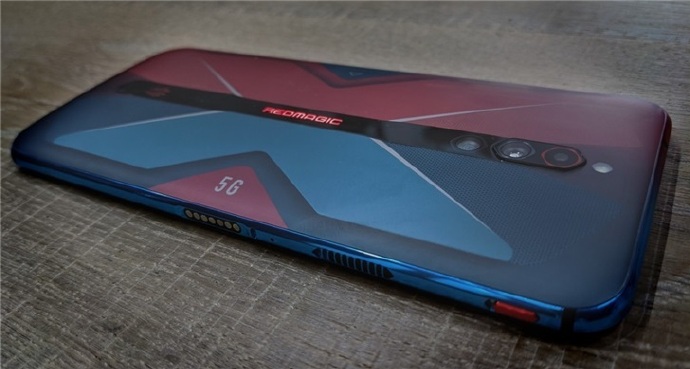
Gaming smartphones are getting more and more powerful and ZTE sub-brand Nubia is all set to launch its next-generation gaming phone, dubbed as Nubia Red Magic 5G, which claims to have broken all the records when it comes to performance.
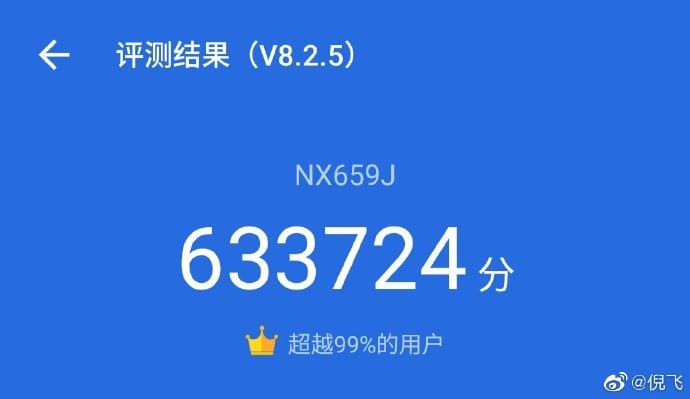
Ni Fei, President of Nubia has today officially revealed through sharing a screenshot on Weibo that the upcoming Nubia Red Magic 5G smartphone has scored 633,724 points on AnTuTu benchmarking platform, the highest score ever.
Prior to this, a screenshot of a similar test of the upcoming Black Shark 3 Pro 5G gaming smartphone claimed that it was the highest-scoring phone with AnTuTu score of 620,925. The Xiaomi Mi 10 managed to score over 600K points after a new software update while the iQOO 3 5G has scored 575,883 points on AnTuTu.
Coming back to the Nubia Red Magic 5G, the AnTuTu benchmark test shows a smartphone with model number NX659J scoring 637,724 points while the Master Lu score of the same model device has 563,588 points.
Ni Fei had earlier confirmed that the Red Magic 5G smartphone will be the “world’s first 144Hz 5G gaming phone”. It has also been revealed that the phone will come powered by Qualcomm Snapdragon 865 SoC along with Snapdragon X55 modem for dual-mode SA and NSA 5G connectivity support.
As per the leaks, the device is expected to be the first to come with a massive 16GB of RAM in its top-end variant. It was previously revealed that the phone will have LPDDR5 RAM, which will be supplied by Samsung.
It has also been leaked that the smartphone will be running the latest Android 10 operating system out of the box with a custom Redmagic OS version 3.0 user interface, along with January 2020 security patch.
The Nubia Red Magic 5G is also said to have triple rear cameras, Wi-Fi 6, 240Hz touch sampling rate, and a built-in cooling fan. A recent Geekbench listing revealed 2K display. As for the benchmark score, the 8GB RAM model scored 4,308 points in single-core and 13,537 in the multi-core test while the 12GB RAM model scored 4,333 points in single-core and 13,489 points in the multi-core test.
Smartphone maker Meizu is getting ready to launch its next-gen Meizu 17th smartphone in China and ahead of the launch, information related to the device keeps surfacing online.
Now, a new render of the upcoming smartphone has surfaced online, which shows that the Meizu 17th will come with a quad-camera setup on the back. However, the interesting part is arrangement of camera sensors.
It shows that the sensors will be arranged horizontally. This is surprising given that the earlier reports have claimed that the phone will have “Oreo” camera, which means that the sensors will be arranged on a circular camera module. It was also said to come with a triple-camera setup on the back having 100MP + 20MP + 20MP camera sensors.
Prior to this, a leaked render of the phone showcased its front panel, which also contradicted earlier leaks. The render revealed a punch-hole cutout on top of the display for the front-facing camera while earlier leaks indicated a full-screen notch-less screen.
This newly leaked render further increases the confusion as it shows that the smartphone carries a punch-hole cutout on top of the display but instead of having it in the centre position, it in in the top-right corner.
There are reports suggesting that the upcoming Meizu 17th will be featuring an OLED display with 2206 x 1080 pixels Full HD+ screen resolution but the screen size is not yet known. Under the hood, the device will be powered by Qualcomm Snapdragon 865 octa-core flagship chipset, and will be running Flyme OS 8 user interface, on top of Android 10.
The Meizu 17th smartphone is expected to get launched in the Chinese market soon and thus, we expect to know more about the device in the coming days or weeks.
Xiaomi’s sub-brand Redmi is currently gearing up to launch its flagship Redmi K30 Pro smartphone in its home country China in the coming days. As the name itself confirms, the device is the upgraded or Pro variant of the Redmi K30 smartphone that was launched a couple of months ago.
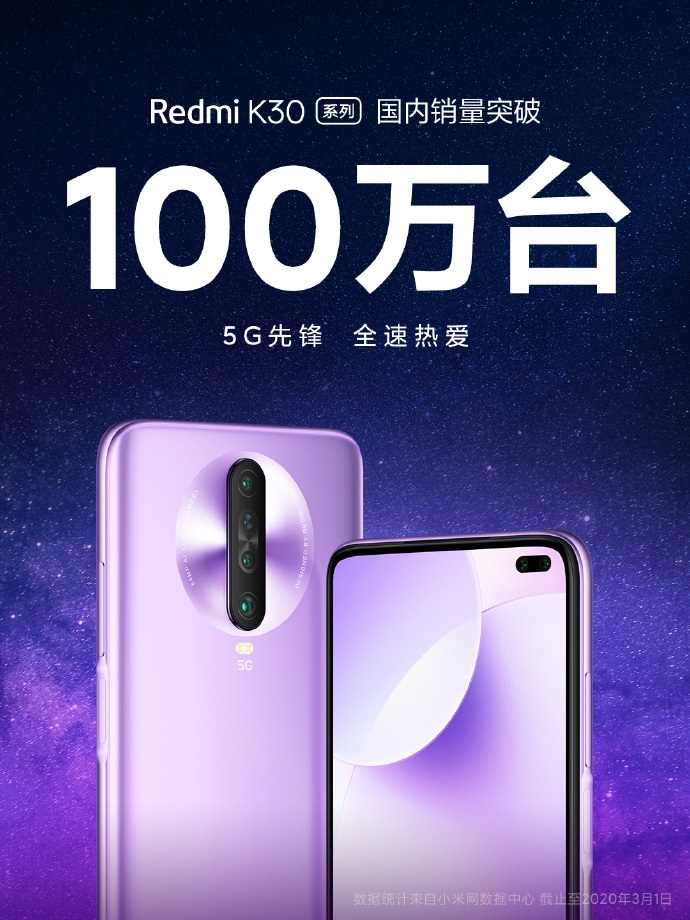
Now, the company has officially confirmed that the sale of Redmi K30 models have crossed the mark of one million units in China. This is quite impressive given that it’s less than three months since the device has been available for purchase. The sales number includes both the models — Redmi K30 4G and Redmi K30 5G.
The Redmi K30 5G features a 6.67-inch IPS LCD display and comes with an elliptical punch-hole on the screen at the top-right corner for housing the dual selfie camera. Under the hood, the device is powered by the Qualcomm Snapdragon 765G SoC.
In the camera department, it has a quad-camera setup on the back, consisting of Sony IMX686 64-megapixel primary sensor, an 8-megapixel ultra-wide sensor, a 2-megapixel depth assist lens, and a 2-megapixel macro lens. On the front side, it comes with a 20-megapixel primary sensor and a 2-megapixel secondary sensor.
The smartphone is running the latest Android 10 operating system out-of-the-box with the company’s own MIUI 11 on top. The phone, which has side-mounted fingerprint sensor, is powered by a 4,500mAh battery along with 30W fast charging support.
On the other hand, the Redmi 4G comes with identical set of specifications, with few changes. It comes powered by the Snapdragon 730 chipset and the 5MP lens in the quad-camera setup has been replaced by a 2MP sensor. Also, it lacks dual-frequency GPS and has support for 27W fast charging technology.
The pricing for the 4G variant starts at 1,599 Yuan (~$227) and goes up to 2,199 Yuan (~$312) while the pricing for the 5G variant starts at 1,999 Yuan (~$284) and the top-end variant costs 2,899 Yuan (~$412).
A few days ago, Vivo’s iQOO sub-brand, which started operations last year, launched its latest flagship smartphone — iQOO 3 5G. The phone was launched in China as well as in India, marking the brand’s debut in the Indian market.
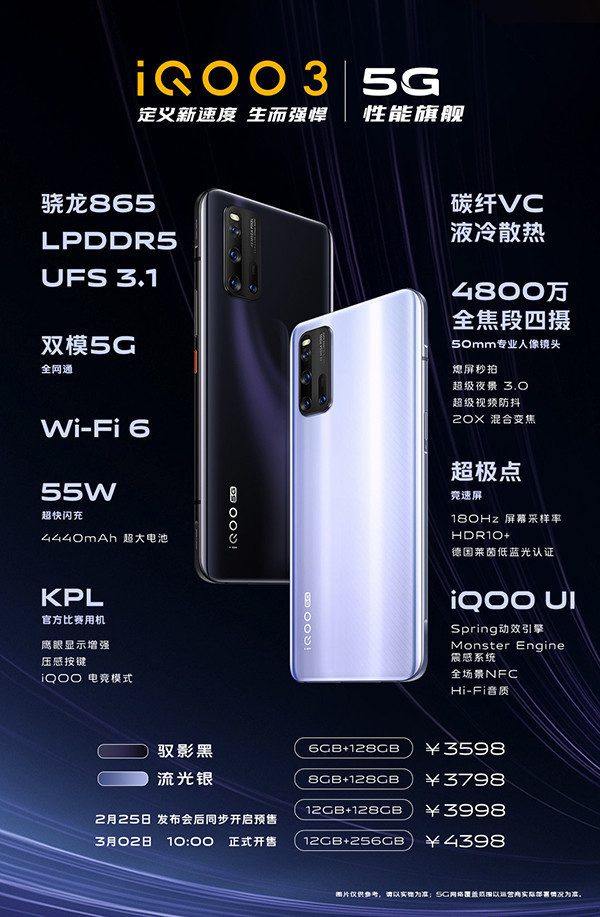
Today, the iQOO 3 5G officially went on sale in China. The smartphone comes in four variants based on the memory configuration. The base model packs 6GB of RAM and 128GB of internal storage and costs 3,598 yuan, which is roughly $514.
The 8GB RAM and 128GB storage model costs 3,798 yuan ($543) while the 12GB RAM and 128GB storage model is priced at 3,998 yuan, which is approximately $572. The top-end variant of the smartphone packs 12GB RAM and has 256GB of internal storage and is priced at 4,398 yuan, which roughly converts to $629.
As for the specifications, the iQOO 3 5G smartphone features a 6.44-inch HDR10+ complaint S-AMOLED display that offers Full HD+ screen resolution of 1080 x 2400 pixels and 20:9 aspect ratio, 800nits of full screen brightness and 100 percent P3 color gamut.
The device also has an under-display fingerprint sensor which the company claims can unlock the device in just 0.31 seconds. There’s carbon fiber VC liquid cooling technology onboard that can effectively reduce surface temperature by 3.5-degree Celsius and CPU temperature by 12-degree Celsius.
Under the hood, the device is powered by Qualcomm Snapdragon 865 SoC, along with LPDDR5 RAM and UFS 3.1 storage. The device also has “Monster Touch” buttons that can be used to map gaming functions such as shoot, jump, fly, etc.
In the camera department, the smartphone features a quad-camera setup that consists of a 48-megapixel main shooter, a 13-megapixel ultrawide lens, a 13-megapixel telephoto sensor and a 2-megapixel portrait lens. On the front side, the device features a 16-megapixel selfie camera.
For enhanced audio experience, the iQOO 3 is equipped with AK4377A Hi-Fi audio chipset and Hi-Res audio certification. The Android 10 OS is pre-loaded on the device along with iQOO UI 1.0 custom skin.
There’s also Multi-Turbo technology for boosting the phone’s performance while gaming. It also offers other gaming friendly features such as 180Hz touch response rate, 4D in-game vibrations, and Ultra Game Mode.
The iQOO 3 smartphone is fuelled by a 4,400mAh battery that supports 55W Super FlashCharge technology and the company says that it takes only 15 minutes the phone to reach 50 percent battery juice from scratch.
Vivo left us in awe when it unveiled the APEX 2020 phone last week. The concept phone boasts features such as 60W superfast wireless charging, an under-display selfie camera, a 48MP gimbal camera, and a waterfall display with a 120° curve radius. While the APEX 2020 may not launch as a commercial device soon, Vivo has a new phone in the pipeline that will be available for purchase. A leak from China says this phone will launch as the Vivo NEX 3S 5G.
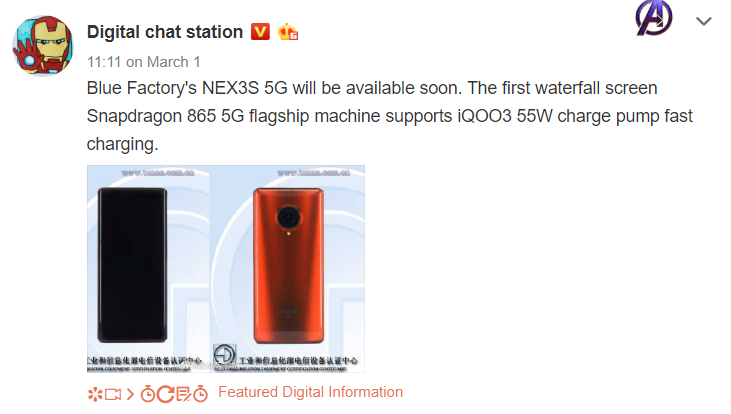
The info was revealed on Weibo yesterday by Digital Chat Station. The Chinese leaker stated that the Vivo NEX 3S 5G will launch soon. The phone will be the first Snapdragon 865 flagship with a waterfall display and will have support for 55W fast charging just like that of the iQOO 3 5G.
The Vivo NEX 3S 5G (Vivo V1950A) will have a 6.89-inch 1080 x 2256 AMOLED display. The Snapdragon 865 processor will be paired with 8GB of RAM and be available in 128GB and 256GB variants.
There will be three cameras on the back of the phone – a 64MP primary sensor paired with a 13MP telephoto camera and a 13MP ultrawide angle camera. Just like the NEX 3, this also has a motorized pop-up selfie camera with a 16MP sensor.
TENAA says the phone has an in-display fingerprint scanner, runs Android 10, and packs a 4250mAh battery. It has support for SA and NSA 5G bands 41, 78, and 79.
The Vivo NEX 3S 5G will come in a single color which is stated as golden on the TENAA listing but which looks more like Sunset Red. The phone will weigh 219.5 grams and measure 167.44 x 76.14 x 9.4 millimeters.
There is no launch date yet but we expect it to arrive this month.
Later this week, Realme will announce the Realme 6 series. The two phones in the series are the Realme 6 and Realme 6 Pro, and from what we already know, both phones pack some pretty interesting features including displays with a 90Hz refresh rate and four rear cameras each.
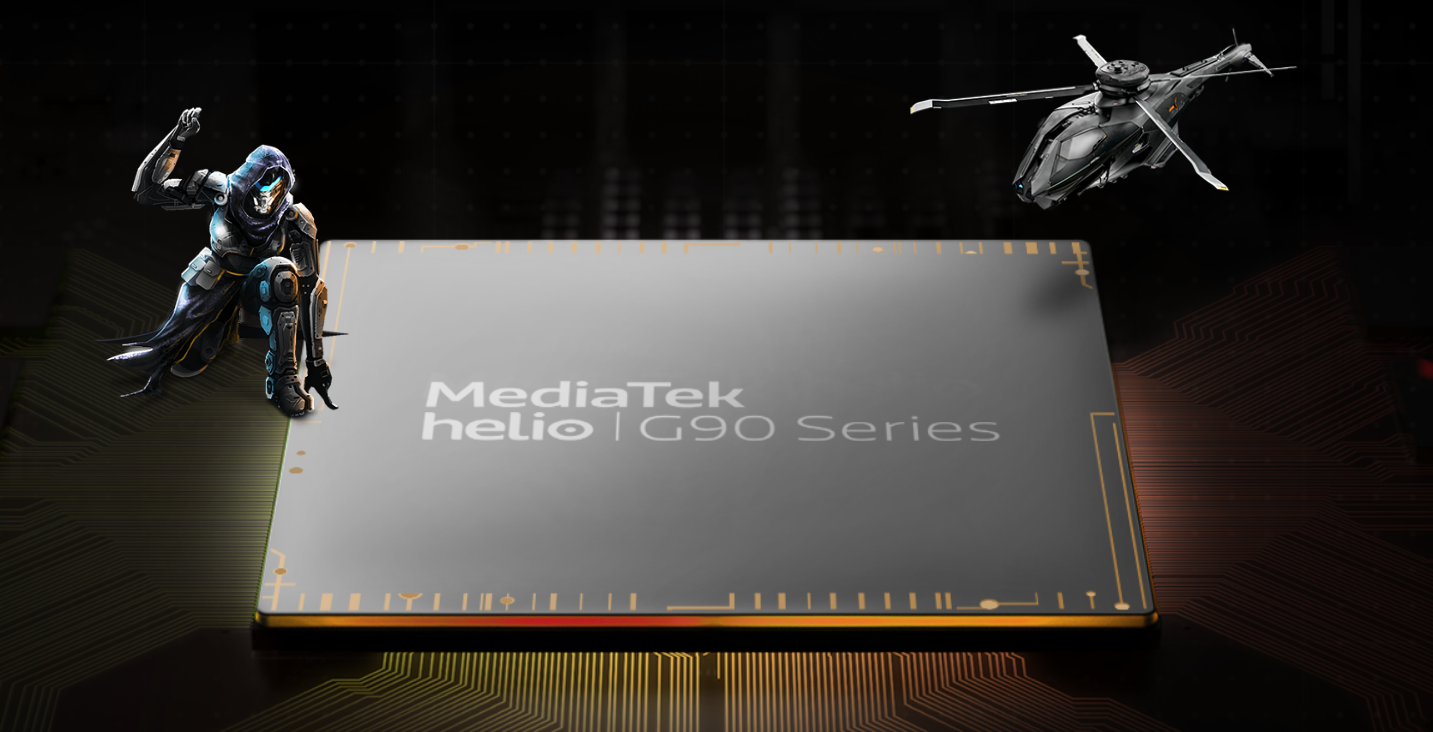
However, both phones will differ with respect to the processor inside them. The Realme 6 will have a MediaTek Helio G90 processor whilethe Realme 6 Pro will have a Snapdragon 720G chipset made by Qualcomm. The two processors are actually quite similar and are both designed for gaming, so they should be able to handle any modern mobile game thrown at them.
Snapdragon 720G – 8nm octa-core processor (2x Kryo 465 based on Arm’s Cortex-A76 cores clocked at 2.3GHz + 6x Kryo 260 based on Arm’s Cortex-A55 cores clocked at 1.8GHz).
Helio G90 – 12nm octa-core processor (2x Cortex A76 clocked at 2.0GHz+ 6x Cortex-A55 cores clocked at 2.0GHz).
As you can see from above, the two processors have the same type of cores and core arrangement, differing only with respect to node size and clockspeed. Of course, they also have different GPUs.
So for this week’s poll, we want to know which of the two devices you will choose (considering only the chipset). Is it the Realme 6 with its Helio G90 chipset or the Realme 6 Pro with its Snapdragon 720G SoC? Do take the poll and let us know why you prefer one over the other.
About a month before the official launch of the flagships from the P40 series, Huawei officially announced the affordable variant of the new lineup: Huawei P40 Lite. It is not a completely new device since it is just a rebranded version of the device known in China as the Huawei Nova 6 SE. The difference is that the Huawei P40 Lite is for the global market. For this specs comparison, we chose one of the latest devices launched in the global market: Samsung Galaxy A51. We also included one of the most popular mid-rangers in the European market: Xiaomi Mi 9T. Does the Huawei P40 Lite represent a better option? This comparison will try to give you the final answer.
Huawei P40 Lite vs Samsung Galaxy A51 vs Xiaomi Mi 9T
Quad 48 + 8 + 2 MP f/1.8, f/2.4, f/2.4 and f/2.4
16 MP f/2.0 front camera
Quad 48 + 12 + 5 + 5 MP f/2.0, f/2.4, f/2.4 and f/2.2
32 MP f/2.2 front camera
Triple 48 + 13 + 8 MP, f/1.8, f/2.4 and f/2.4
20 MP f/2.2 front camera
BATTERY
4200 mAh, fast charging 40W
4000 mAh, fast charging 15W
4000 mAh, fast charging 27W with Quick Charge 4.0
ADDITIONAL FEATURES
Hybrid Dual SIM slot
Dual SIM slot
Dual SIM slot
Design
Do you like punch-hole displays to get rid of bezels or do you prefer a notch-less and holeless display on a phone equipped with a pop-up selfie camera? If the first option is your choice, we believe you should go for the Samsung Galaxy A51, which provides a single punch-hole display and a higher screen-to-body ratio than Huawei P40 Lite. But if you do not hate the pop-up camera, Xiaomi Mi 9T has a more interesting design since it is built with more premium materials. Despite it is just a mid-ranger, it comes with a glass back and an aluminum frame just like flagship smartphones. Xiaomi Mi 9T is even more compact, but it is thicker and one of the reasons is the presence of a motorized pop-up camera.
Display
Huawei P40 Lite is not so trendy with its IPS display. On the other hand, Xiaomi Mi 9T looks very gorgeous with its AMOLED display boasting the HDR certification. It is a notch-less panel with brilliant colors and a great image quality, great for multimedia-addicted users. Samsung Galaxy A51 is another device with an amazing display. Just like the Xiaomi Mi 9T, it has a Full HD+ AMOLED panel with high contrast, brightness, and screen-to-body ratio. Unfortunately, it is not HDR-compliant, but it remains an awesome display for a mid-ranger.
Specs & Software
On the paper, the Kirin 810 found on the Huawei P40 Lite is the best chipset. It has great CPU and GPU performance, as well as a very low energy consumption since it is built with a 7 nm production process. And Huawei P40 Lite also offers a higher amount of RAM than Samsung Galaxy A51 and Xiaomi Mi 9T: up to 8 GB. Huawei P40 Lite has expandable internal storage, while Xiaomi Mi 9T does not. And unlike the Xiaomi Mi 9T, it has Android 10 out of the box, despite it does not come with Google services, replaced by Huawei Mobile Services. Samsung Galaxy A51 has inferior hardware to both Xiaomi Mi 9T and Huawei P40 Lite.
Camera
We still had no chance to test every camera department of these devices, but on the paper, Xiaomi Mi 9T looks more interesting. It is the only one to offer a telephoto lens, so it is the only with optical zoom, despite it has a triple camera instead of the quad-camera setup found on its rivals. Samsung Galaxy A51 looks to have a better front camera, but its rear cameras do not look promising.
Battery
With its 4200 mAh capacity (200 mAh more than Samsung Galaxy A51 and Xiaomi Mi 9T) and a very efficient chipset, Huawei P40 Lite should last more than its opponents with most of the usage patterns. It also charges a lot faster thanks to its 40W fast charging technology.
Price
You can get all of these devices for less than €300/$332 and for those prices, Huawei P40 Lite looks like a slightly better handset. But it lacks an AMOLED display and a really premium design, so keep that in mind. Further, I believe Xiaomi Mi 9T can offer a higher value for money due to a lower street price (less than €270/$299 in the 6/64 GB configuration).
We use cookies on our website to give you the most relevant experience by remembering your preferences and repeat visits. By clicking “Accept”, you consent to the use of ALL the cookies.
This website uses cookies to improve your experience while you navigate through the website. Out of these, the cookies that are categorized as necessary are stored on your browser as they are essential for the working of basic functionalities of the website. We also use third-party cookies that help us analyze and understand how you use this website. These cookies will be stored in your browser only with your consent. You also have the option to opt-out of these cookies. But opting out of some of these cookies may affect your browsing experience.
Necessary cookies are absolutely essential for the website to function properly. This category only includes cookies that ensures basic functionalities and security features of the website. These cookies do not store any personal information.
Any cookies that may not be particularly necessary for the website to function and is used specifically to collect user personal data via analytics, ads, other embedded contents are termed as non-necessary cookies. It is mandatory to procure user consent prior to running these cookies on your website.