Advertisement

Buy Roborock S6 Robot Vacuum Cleaner for $549.99 from Gearbest

Marketed as an upgraded version of the Roborock S5, the Roborock’s new flagship robot vacuum cleaner dubbed the S6 boasts a slew of new design improvements.
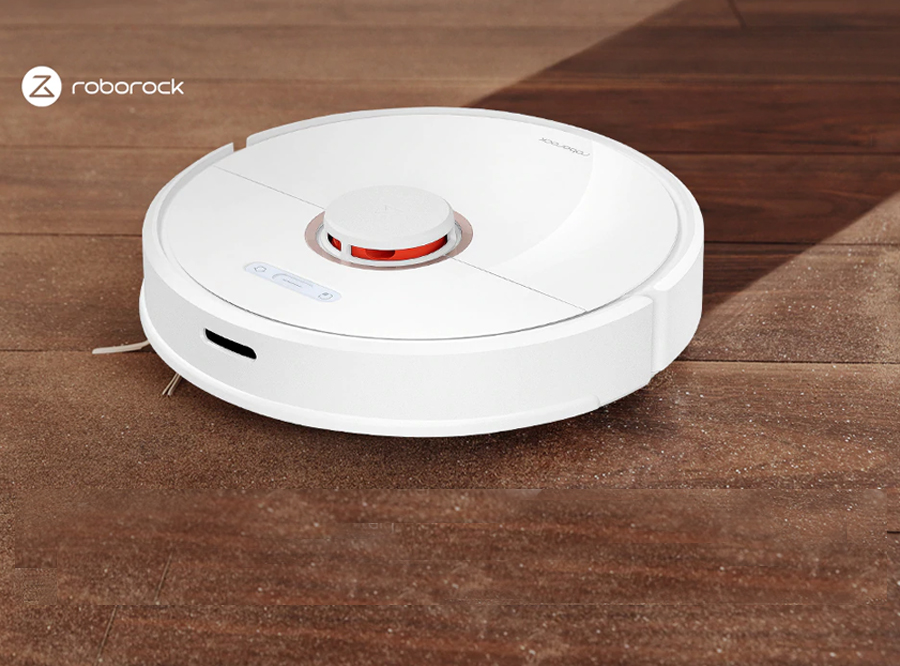
The Roborock S6 robot vacuum cleaner is capable of automatically cleaning your room. The improved Roborock navigation maps the area and determines the route in real-time.

The latest mapping feature makes the S6 20 percent more efficient as compared to its predecessor. Moreover, it can identify rooms, complete the cleaning process based on the schedule you set with just a single click.
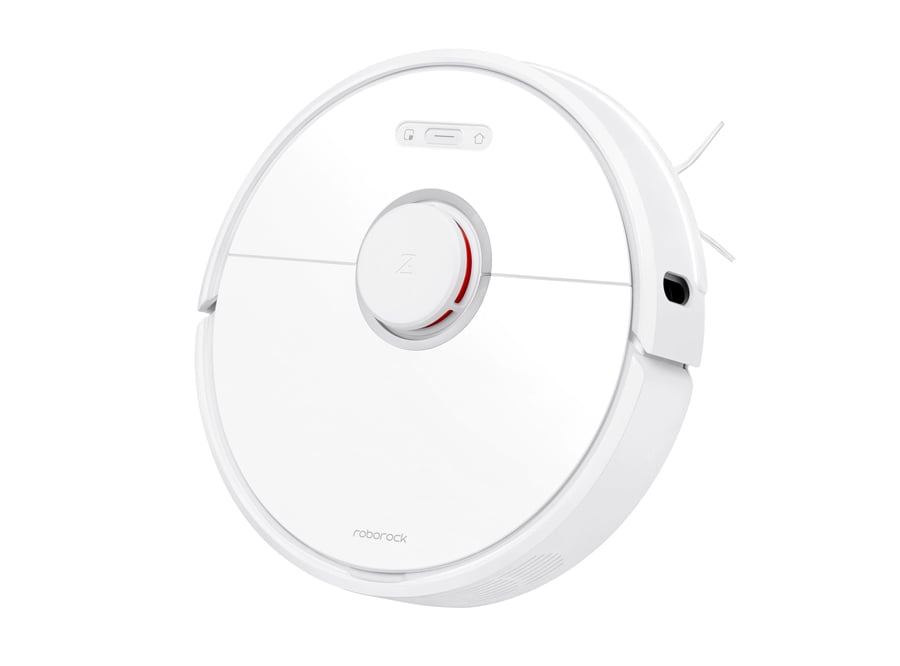
The Roborock S6 serves as a robot vacuum, as well as a mop. It can mop, sweep and mop simultaneously without leaking water or missing out even a single spot. It comes with disposable mopping rags that can be thrown out after use, which means you do not need to get your hands dirty.

More importantly, you can now get your hands on the Roborock S6 without emptying your pocket as Gearbest is currently offering it for a lowered price. The Graphite Black-tinted model would normally set you back a pretty penny, but you can purchase it for only $549.99 from the popular Chinese e-tailer. This translates to a noteworthy 22 percent off.

Roborock S6

Alternatively, you can go for the Roborock S6 white color option avail of a 15 percent off through Gearbest. This model usually retails for $657.46, but thanks to the aforesaid discount, you can now buy it for just $559.99.

An absolute steal at this price, the S6 features a bionic 140ml tank that enables you to adjust the volume of water. It is powered by a Mabuchi motor that offers 2000pa strong suction for thorough cleaning.

To know more about this amazing robot vacuum cleaner and to take advantage of the discount, simply follow this link without wasting time. At the time of writing, 30 units of the Graphite Black and over a hundred units of the white color options were sold out. It is also worth noting that the promo will be valid for seven days only.

The Gizmochina Coupons is a community that finds, reports and evaluates deals and coupons of Chinese products from online shops. Please visit it here to find more coupons to save money on mobiles and smart gadgets.
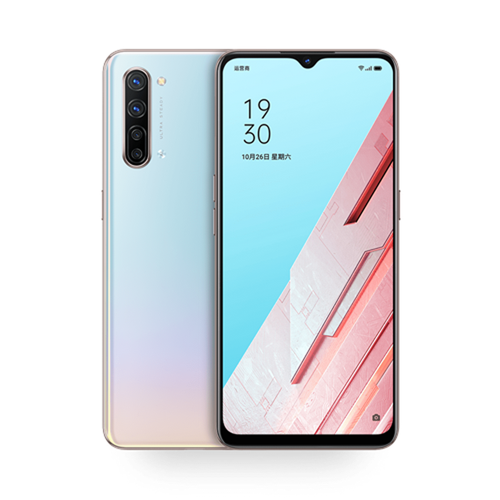
OPPO Reno3 Vitality Edition goes on sale in China for 2999 yuan ($430)

OPPO recently unveiled its new mid-range 5G smartphone, named OPPO Reno3 Vitality Edition. As the name suggests, it is basically OPPO Reno3 smartphone but with SD765 SoC so that it supports 5G connectivity.

A few days ago, the smartphone was listed on the company’s official website for pre-orders and today, the device is available for purchase in its home country, i.e. China. The device is priced at 2,999 yuan which roughly converts to $430.

Reno3 Vitality Edition featured b

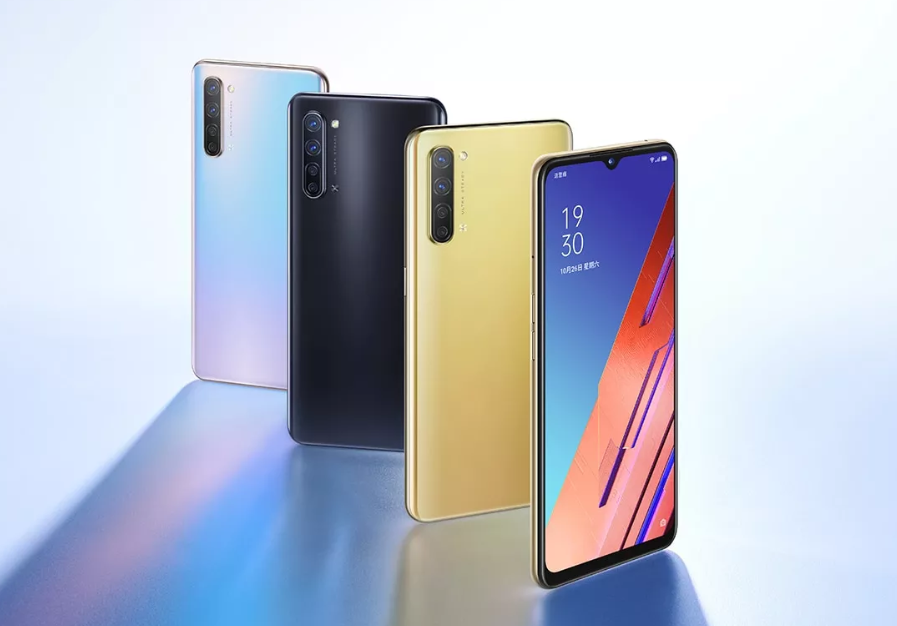
Unlike the Reno3 series, this new Reno3 Vitality Edition comes in just three color options — Sky Mirror White, Moonlight Black, and Streamer Gold. The phone’s design is also similar, sporting a flat display and a curved glass back.

Coming to the specifications, the smartphone features a 6.4-inch Full HD+ OLED display with a waterdrop notch and 20:9 aspect ratio. The device also comes with a third-generation in-display fingerprint sensor.

Under the hood, the phone is powered by Qualcomm Snapdragon 765 processor which is paired with 8GB of RAM and 128GB of UFS 2.1 storage. The Reno3 Vitality Edition is equipped with Link Boost 2.0 which not only supports dual Wi-Fi acceleration, but also supports SLA 2.0 5G + Wi-Fi dual channel, which doubles the network speed.

As for the cameras, the phone comes with a quad-camera setup on the back which consists of an 8MP ultrawide angle camera, a 48MP f/1.7 primary camera, a 2MP black and white portrait camera and another 2MP portrait style camera.

Oppo Reno3 Vitality

On the front side, it comes equipped with a 32MP f/2.0 sensor for taking selfies and video calling. Coming to the software department, the phone is running OPPO’s own ColorOS custom user interface on top of Android 10 operating system.

It also comes with features such as Link Boost 2.0, Hyper Boost which provides GPU performance boost, improves touch response and reduces lags while gaming, along with services like OPPO Wallet and OPPO Cloud Service.

The phone comes with the usual set of connectivity options, including 5G, Wi-Fi, Bluetooth 5.0, NFC, and USB Type-C port. The OPPO Reno3 Vitality Edition is powered by a 4,025mAh battery which comes with support for 30W VOOC 4.0 fast charging support.


Buy Huawei Honor Band 5 Smart Bracelet for Just $29.40 from Gearbest

Last year, reports about Honor’s upcoming Mi Band competitor started doing the rounds online as the Huawei-owned company’s chief executive Zhao Ming showing off the new wearable via a Weibo post. The post not only revealed the smart wearable’s design but also brought some of its features to light.

HUAWEI Honor Band 5 Smart BraceletLaunched alongside the Honor 9X and 9X Pro in July 2019, the latest smartband is called the Honor Band 5. Before we dive into more details about what the device has to offer in terms of features and specifications, it might interest you to know that Gearbest is currently doling out a noteworthy discount on the Honor Band 5.

The Honor Band 5 usually retails for $36, but you can now get your hands on the feature-lade smartband for a lowered price of just $29.40. In short, you can avail of an 18 percent off on the device’s original asking price. As if that weren’t enough, you can even choose between two highly appealing color options including black, and blue.

Sporting a simplistic, yet stylish design, the Honor Band 5 bears a striking resemblance to its predecessor i.e. the Honor Band 4. For instance, the new smartband retains the circle button that we have seen on the earlier model. Despite drawing inspiration from the previous version in terms of design, the Honor Band 5 boasts an array of newfangled features.

The Huawei Honor Band 5 smart bracelet offers the following features:

  • 0.95-inch Color AMOLED Touch Screen
  • Waterproof up to 50 meters
  • Blood oxygen level sensor to measure blood SpO2 levels
  • 24×7 heart rate monitoring sensor
  • Ten sports modes
  • Sleep monitor to determine sleeping problems
  • 14 days of battery life

You can head straight to this link to check out more details about the Huawei Honor Band 5 Smart Bracelet and place your order as the promo is slated to end in just one day. Gearbest had already sold 9 units of the black and 1 unit of the blue color option at the time of writing.

The Gizmochina Coupons is a community that finds, reports and evaluates deals and coupons of Chinese products from online shops. Please visit it here to find more coupons to save money on mobiles and smart gadgets.

Huawei Honor Band
5 Smart Bracelet

Xiaomi sold Mi 10 units worth 200 million yuan within a minute in its first sale in China

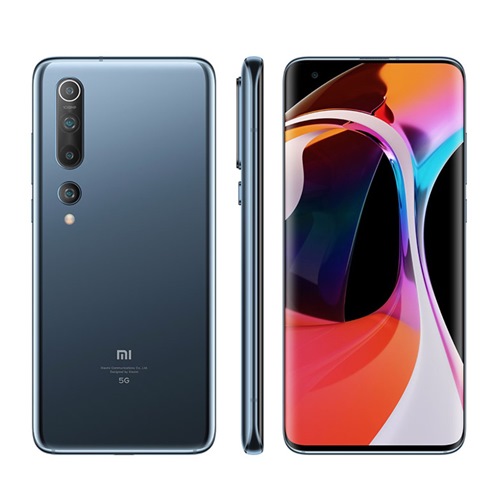
Xiaomi’s newly launched next-generation flagship smartphone — Mi 10 went on sale in China today for the first time and the device got sold out within a minute. As per the company, this first sale of Mi 10 generated revenue of more than 200 million yuan. However, the company has not disclosed the number of units it managed to sell within that time period.

As per Xiaomi, the phone was sold out on every store, including Tmall, JD.com, and Xiaomi Mall. The company has also announced that the second sale for the same device will now take place next week, on 21st February.

Xiaomi Mi 10 First Sale in China

The Xiaomi Mi 10 smartphone comes in three variants — 8GB RAM + 128GB storage, 8GB RAM + 256GB storage, and 12GB RAM + 256GB storage, costing 3999 yuan ($573), 4299 yuan ($615), and 4699 yuan ($673) respectively.

To remind you of the specifications, the Xiaomi Mi 10 comes with a 6.67-inch curved AMOLED display with a 90Hz refresh rate and 180Hz touch sampling rate. The peak brightness on the panel reaches 1200 nits with a contrast of 5,000,000:1.

Under the hood, the device comes powered by Qualcomm’s octa-core Snapdragon 865 chipset, coupled with up to 12GB of LPDDR5 RAM, and UFS 3.0 storage. Thanks to SD865 SoC, the phone comes with support for both SA and NSA dual-mode 5G connectivity.

As for cooling, the phone comes with Vapour Chamber liquid-cooling system with multiple layers of graphite and AI machine learning to keep the temperature under control. The company is also offering a special cooling fan as a separate accessory.

Xiaomi Mi 10 5G

Coming to the camera department, the Mi 10 comes with a quad-camera setup on the back, consisting of 108MP primary sensor, a 13MP ultra-wide-angle lens, a 2MP depth sensor, and a 2MP macro lens. On the front side, it features a 20MP camera sensor for taking selfies and video calling.

For connectivity, the Mi 10 series features support for Wi-Fi 6, Bluetooth 5.1, dual-mode 5G, and NFC. The smartphone, running Android 10, is powered by a 4,780mAh battery which comes with 30W wired fast charging and 30W wireless fast charging as well as support for 10W reverse wireless charging.


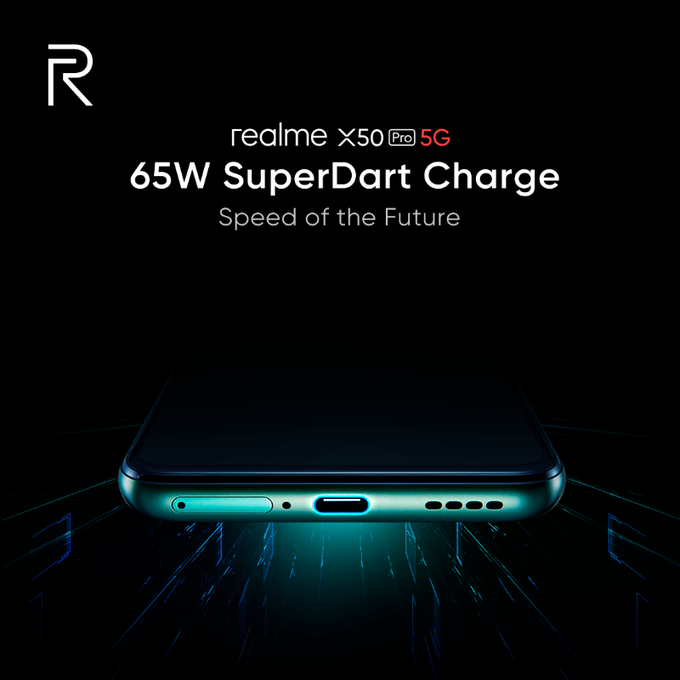
Realme confirms 65W SuperDart charging on the Realme X50 Pro 5G

In December last year, Chinese tech giant Realme filed trademarks for the monikers Dart and SuperDart. The names were believed to refer to new charging solutions for its smartphones. The names bring to mind the VOOC and SuperVOOC fast charging which Vivo used on its phones. Realme has now confirmed that the SuperDart flash charging solution will feature first on the Realme X50 Pro 5G.

The company revealed this via a tweet with a poster showing that the device will feature a 65W SuperDart charge support. The charging estimation for the smartphone wasn’t given but the teaser promises it will be very fast.

Realme was supposed to unveil the X50 Pro 5G at the MWC 2020 which has now been cancelled. The company has revealed, though, that the X50 Pro 5G will be launched via an online event holding on February 24.

As for the specs, the Realme X50 Pro 5G is said to feature a Full HD+ display with a screen resolution of 2400 x 1080 pixels and 20:9 aspect ratio. The display also has a 120Hz refresh rate. Realme is yet to reveal the battery capacity of the X50 Pro but whatever size it is, you may likely never run out of battery power as the battery can quickly be refilled in just minutes. The Snapdragon 865 SoC will power the phone with a Snapdragon X55 5G modem that enables dual-mode 5G. Providing the interface is an Android 10-based Realme UI 1.0. The X50 Pro 5G will have 12GB of LPDDR5 RAM and 256GB of storage.

The launch event Livestream will start at 9:30 AM CET on February, 24. You can keep a tab from here.


(source)


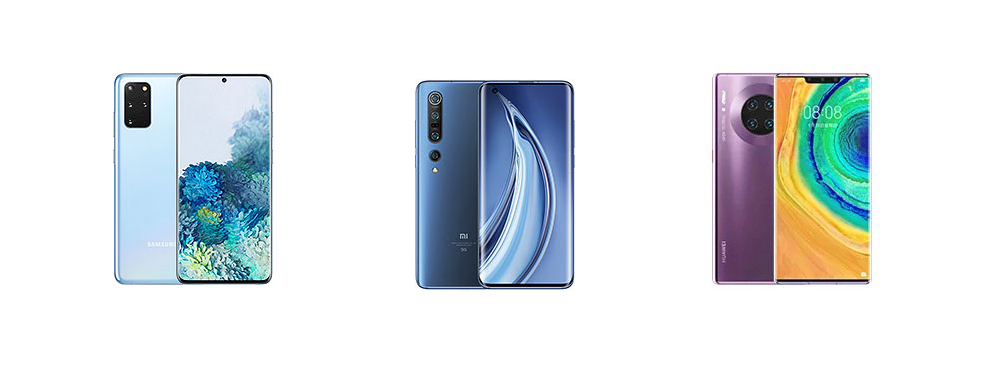
Xiaomi Mi 10 Pro vs Samsung Galaxy S20+ vs Huawei Mate 30 Pro 5G: Specs Comparison

We are in the middle of a generational change in the smartphone market. Samsung and Xiaomi just unveiled their new flagship series and they will soon go on sale. Just like every time a new flagship is official, we are here for a specs comparison. Here, we decided to compare Xiaomi Mi 10 Pro, Samsung Galaxy S20+ and Huawei Mate 30 Pro 5G: if we exclude the expensive and top-tier Galaxy S20 Ultra, they are the most powerful and expensive devices from the main three hi-tech giants in the Android smartphones world from the latest flagship lineups. Let’s highlight the differences between them and find out who is the best.

Xiaomi Mi 10 Pro vs Samsung Galaxy S20+ vs Huawei Mate 30 Pro 5G

Huawei Mate 30 Pro Samsung Galaxy S20+ Xiaomi Mi 10 Pro
DIMENSIONS AND WEIGHT 158.1 x 73.1 x 8.8 mm, 198 g 161.9 x 73.7 x 7.8 mm, 188 g 162.6 x 74.8 x 9 mm, 208 g
DISPLAY  6.53 inches, 1176 x 2400p (Full HD+), OLED 6.7 inches, 1440 x 3200p (Quad HD+), Dynamic AMOLED 2X 6.67 inches, 1080 x 2340p (Full HD+), Super AMOLED
PROCESSOR Huawei Hisilicon Kirin 990, octa-core 2.86 GHz Samsung Exynos 990, octa-core 2.73 GHz
Qualcomm Snapdragon 865, octa-core 2.84 GHz
MEMORY  8 GB RAM, 128 GB – 8 GB RAM, 256 GB – 8 GB RAM, 512 GB – nano memory card slot 12 GB RAM, 128 GB – 12 GB RAM, 256 GB – 12 GB RAM, 512 GB – micro SD slot 8 GB RAM, 256 GB – 12 GB RAM, 256 GB – 12 GB RAM, 512 GB
SOFTWARE  Android 10, EMUI 10 Android 10, One UI Android 10, MIUI
CONNECTIVITY  Wi-Fi 802.11 a/b/g/n/ac, Bluetooth 5.0, GPS  Wi-Fi 802.11 a/b/g/n/ac/ax, Bluetooth 5.0, GPS Wi-Fi 802.11 a/b/g/n/ac/ax, Bluetooth 5.0, GPS
CAMERA  Quad 40 + 40 + 8 MP + TOF camera, f/1.6 + f/1.8 + f/2.4
32 MP front camera
Quad 12 + 64 + 12 + 0.3 MP TOF, f/1.8 + f/2.0 + f/2.2 + f/1.0
10 MP f/2.2 front camera
Quad 108  + 8 + 12 + 20 MP, f/1.7 + f/2.0 + f/2.0 + f/2.2
20 MP f/2.0 front camera
BATTERY  4500 mAh, fast charging 40W, Fast wireless charging 27W 4500 mAh, fast charging 25W, Fast wireless charging 15W 4500 mAh, fast charging 50W and fast wireless charging 30W
ADDITIONAL FEATURES Hybrid Dual SIM slot, reverse wireless charging, waterproof IP68, Face ID Hybrid Dual SIM slot, reverse wireless charging, waterproof IP68 Dual SIM slot, reverse wireless charging

Design

In each case, you get a simply awesome design. Xiaomi Mi 10 Pro and Samsung Galaxy S20+ sport a punch-hole display, while Huawei Mate 30 Pro 5G has a notched display but extremely curved bezels allowing to get rid of physical keys thanks to a side touch technology. Samsung Galaxy S20+ and Huawei Mate 30 Pro 5G are waterproof, while Xiaomi Mi 10 Pro is not. Huawei Mate 30 Pro 5G has a wide notch, but also a higher screen-to-body ratio. Further, you can find a 3D facial recognition system inside that notch. Samsung Galaxy S20+ is the only with an ultrasonic in-display fingerprint scanner (the others have an in-display fingerprint reader).


Display

We have no doubt about the fact that Galaxy S20+ boasts the best display. first of all, it is the only with a Quad HD+ resolution, so it provides a higher level of detail. Further, it comes with a higher 120 Hz refresh rate. And it even has a new generation Dynamic AMOLED 2X display with outstanding image quality, as well as the HDR10+ certification. Right after, we got the Xiaomi Mi 10 Pro with a 90 Hz display sporting a 180 Hz touch sampling rate, HDR10+, and high DCI-P3 coverage.


Hardware/Software

The best hardware is provided by the Xiaomi Mi 10 Pro and the U.S. variant of the Samsung Galaxy S20+ (not the European one). They both come with a Snapdragon 865 chipset including an integrated 5G modem, up to 12 GB of RAM and up to 512 GB of UFS 3.0 internal storage. Huawei Mate 30 Pro 5G has an inferior Kirin 990, but it is still an amazing flagship when it comes to performance. All run Android 10 out of the box, but they are customized by different user interfaces. With Xiaomi Mi 10 Pro and Galaxy S20+ boasting the same hardware department, software optimization will be decisive.


Camera

On the paper, Xiaomi Mi 10 Pro wins the camera comparison with a 108 MP quad camera department including a telephoto sensor with 10x hybrid optical zoom, a portrait lens, an ultrawide sensor and a 108 MP main sensor with a bright aperture and OIS. We are yet to test the Samsung Galaxy S20+, so we can not give you a definitive verdict yet. Our judgments are only based on the specs on the paper since both Xiaomi Mi 10 Pro and Galaxy S20+ just became official.


Battery

All of these devices feature a huge 4500 mAh battery, so we do expect a great battery life and no big differences between them. What really differs is the charging speed. Xiaomi Mi 10 Pro has both the fastest wired charging technology and the fastest wireless charging technology with 50W and 30W powers, respectively. Huawei Mate 30 Pro 5G comes right after with 50W and 27W, while Samsung Galaxy S20+ is way slower with 25W and 15W.


Price

Samsung Galaxy S20+ 5G starts from €1,099/$1199, Xiaomi Mi 10 Pro will cost about €660/$715 in China, and Huawei Mate 30 Pro is currently available for less than €1,000/$1100 globally thanks to online street prices. Overall, Xiaomi Mi 10 Pro and Samsung Galaxy S20+ look slightly superior to the Huawei Mate 30 Pro 5G due to their better hardware, display and more. Xiaomi Mi 10 Pro has better cameras than Samsung Galaxy S20+, while Galaxy S20+ has a better display and, unlike the Xiaomi Mi 10 Pro, it is waterproof. Further, Xiaomi Mi 10 Pro should launch globally at a more affordable price.


Xiaomi Mi 10 Pro vs Samsung Galaxy S20+ vs Huawei Mate 30 Pro 5G: PRO and CONS

Huawei Mate 30 Pro

PROS

  • Innovative design
  • Waterproof IP68
  • 3D facial recognition
  • Horizon display with side touch

CONS

  • No Google services globally


Xiaomi Mi 10 Pro

PROS

  • Awesome cameras
  • Fastest wireless charging technology
  • Fastest charging technology
  • Good price

CONS

  • Nothing particular


Samsung Galaxy S20+

PROS

  • Best display
  • Ultrasonic fingerprint reader
  • IP68 waterproof
  • Micro SD slot

CONS

  • Slower charging

Xiaomi announces it is postponing Mi 10′ global launch

Prior to the cancelation of MWC 2020 yesterday, Xiaomi had issued a press statement on Tuesday, February 11, reaffirming it will be in Barcelona for the event though it will take extra precautions to protect its staff, guests and media partners. Unfortunately, since the GSMA has canceled this year’s edition of the event, Xiaomi has been left with no choice other than to announce the cancelation of the global launch event of its Mi 10 and Mi 10 Pro phones scheduled for February 23.

The official statement put up on Twitter says a separate launch event in Europe will be arranged for a later date. This launch event will be for the Mi 10 series and “more amazing products”.


This is the first time the event has been canceled since it was renamed to Mobile World Congress in 2008. Prior to 2008, the event has been called multiple names including GSM World Congress and 3GSM World Congress.

It was also first held in Brussels and then moved to different cities including Nice, Berlin, Lisbon, Athens, and Madrid. In 1996, the event was held in Cannes and it remained that way for 10 years before finally settling in Barcelona.

Earlier today, Realme announced that its product launch scheduled for February 24 at MWC will now be an online event. This year should have been the manufacturer’s first time of attending MWC but it has now been forced to cancel the offline event.

OPPO has also rescheduled its Find X2 launch event that was originally set for February 22 at a pre-MWC event. The much-awaited flagship will now be unveiled in March. However, the exact date remains unknown.

HMD Global also announced yesterday, prior to the cancellation, that it will not be attending MWC 2020 and will announce a new date for the launch of its products.

Surprisingly, Huawei announced yesterday it has a pre-MWC event set for February 23. The event will most likely get canceled now that MWC will no longer hold this year.


(Source)

Hands-on video and photo of red Galaxy S20+ and red Galaxy Buds+ posted on Instagram

The red variant of the Samsung Galaxy S20+ has appeared in a hands-on video posted on Instagram. The video gives us a good look at the color variant which is exclusive (for now) to South Korean carrier, KT.

The Instagram user also shared a photo of the phone along with a never-before-seen red variant of the Galaxy Buds+. The Galaxy Buds+ was announced in black, blue, and white but there was no mention of a red variant.

While this color is exclusive to Korea, it won’t be for long. Sudhanshu Ambhore, the Indian leaker has shared images of the same color variant heading to Europe. According to his tweet, the colorway will be called Aura Red. His tweet includes images for both the Galaxy S20 and the Galaxy S20+.

The Galaxy S20 series launched on Tuesday in San Francisco, it starts at $999 for the Galaxy S20 5G and goes up to $1399 for the Galaxy S20 Ultra 5G. The new Galaxy S series flagships bring improved cameras, bigger batteries, and new features.


(Sources: 1, 2 | Via)

Pixel Phones Likely to Get Ultra-Low Power Mode for Improved Battery Performance; New Code Suggests

Long battery life is one of the most lauded features when it comes to marketing a smartphone in today’s fast-paced life as consumers do not fancy spending a lot of time charging their mobile phones. Regrettably, the new Pixels failed to meet these expectations this year, all thanks to the Pixel 4’s unimpressive battery endurance.

Google Pixel 4 XL

While the 4 XL offers better performance, there’s still room for improvement, which is exactly why Google is introducing an ultra-low power mode for its devices. Originally discovered by XDA Developers, new code in the public Android repository on AOSP hints at a highly competent power-saving mode that enhances the performance of the battery “at the cost of user experience.”

The latest Android-powered devices, including Pixel phones, are already equipped with built-in Battery Saver modes that restrict a slew of factors such as location and display brightness from running in the background for upgraded battery life. The aforesaid mode; however, is expected to up the ante.

It remains to be seen whether or not the search engine giant removes a few features to accommodate the new battery saving mode. Moreover, details about devices that are slated to get this feature and the time when it will be made available are still scarce. The Pixel 4 is the most deserving candidate to receive the ultra-low power mode, but the Pixel 4a and the Pixel 5 are also likely to get the new mode as well.

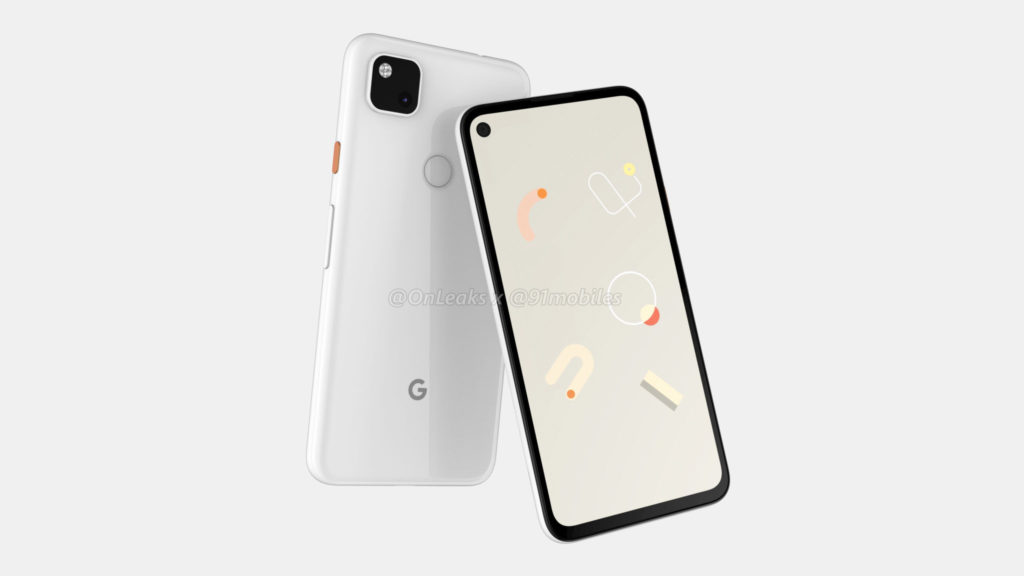
Pixel 4a

Leading OEMs such as Huawei and Samsung have been offering proprietary software hacks that enable users to make maximum use of the power cell. There is a possibility Google could roll out the new feature exclusively for Pixel devices, rather than making it available for the next generation of Android devices in general.

Popular handset makers are now adopting battery-saving technologies for their devices, and it is quite interesting to see Google jump on the battery saving mode bandwagon as well. It is worth mentioning here that the inclusion of the new battery-saving technique could hint at noteworthy advancements in the software optimization area, which is Google’s strong point.

If this comes to fruition, the Pixel maker could get another edge against various other technologies that are already available in the market today.


(Source, Via)

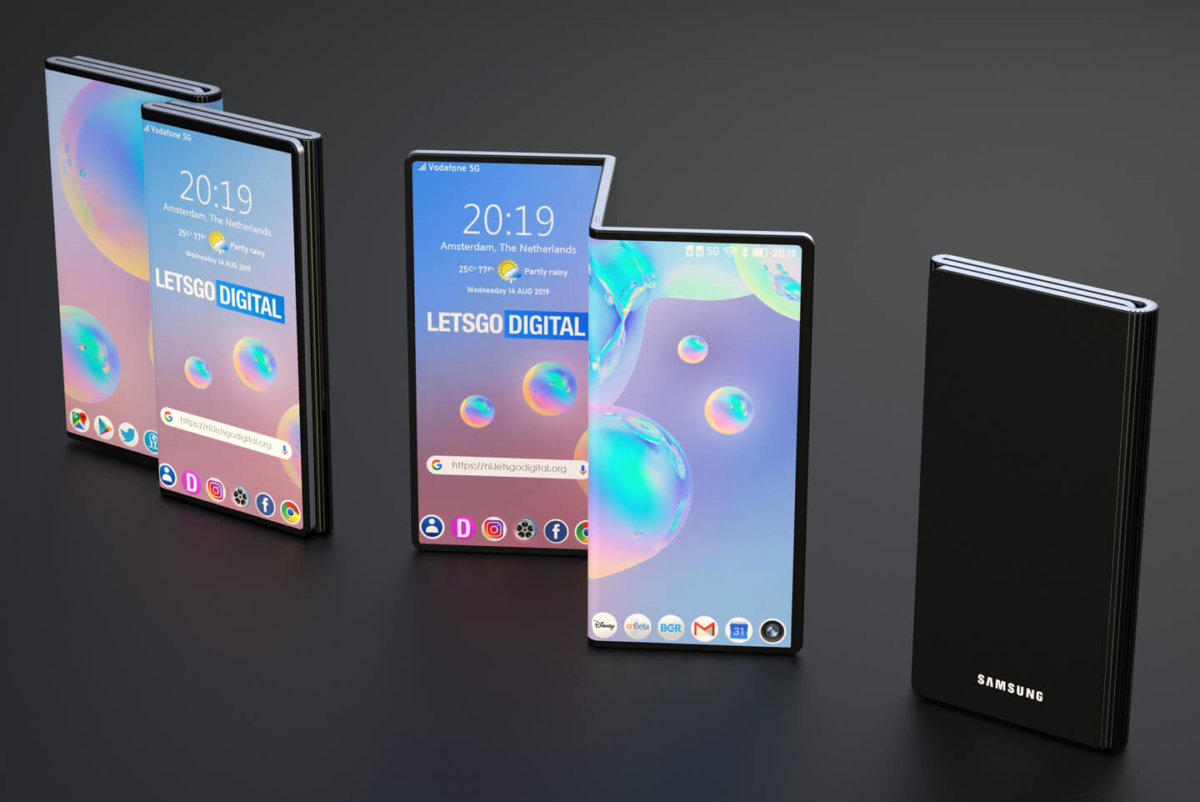
Samsung says tri-fold smartphones are doable but thinks the world is not ready for it

Samsung first plunged into the manufacture of foldable smartphones last year but the initial release was marred by some design flaws which the Korean company promptly fixed. The Galaxy Fold was the result and it was a commercial success. The company recently launched the Galaxy Z Flip as its second-generation model.

After this, the question that has popped up and demanded an answer was when the company will venture into a tri-fold model whose schematics have been spotted in Samsung patent applications.

Roh Tae-moon, president and head of Samsung’s mobile divisions spoke to the Korea Herald where he revealed the brand’s plan in that regard. “Technologically, we are capable of designing phones that fold even more times, but what’s more important than the folding technology itself is the kind of value to be offered for consumers,” he said.

However, Roh also expressed pessimism as to the preparedness of the industry for such a device.

“It’s also important to have an ecosystem for sufficient content and services before releasing more foldable variants,” he said. “We can release new foldable phones at an opportune time when there are enough services available on those phones and provide needed values for consumers.”

“I envision a future of foldable devices in which people will easily carry around large-size screens in accordance with their needs and the screens are folded (no matter how many times) in any sizes that they want,” Roh said.


(source)


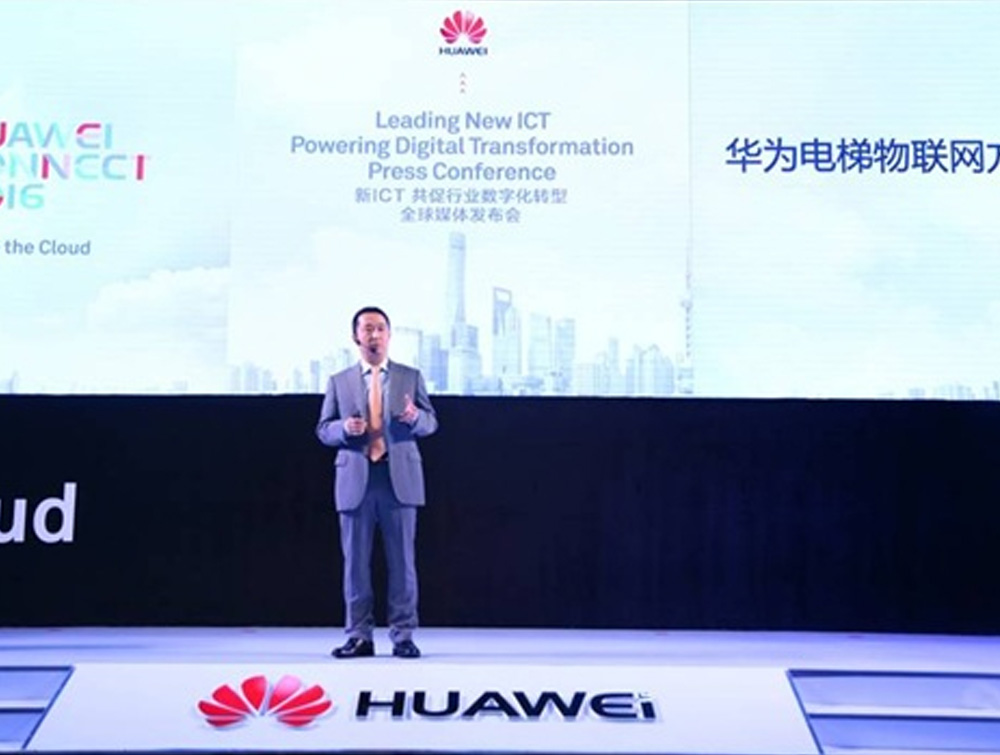
Huawei introduces Smartphone controlled Elevator Solution to Minimize the Risk of Virus Infection

In collaboration with Wanglong Intelligent, Huawei Cloud IoT has designed a contactless intelligent elevator solution that restricts contact between people and the keys of an elevator.

Huawei Elevators Connection SolutionThe recently introduced contactless intelligent elevator solution ensures unified access management as far as elevators are concerned. Aside from that, it delivers a slew of other benefits including the ability to remotely call the elevator using the mobile phone APP, mobile phone Bluetooth, and WeChat applet.
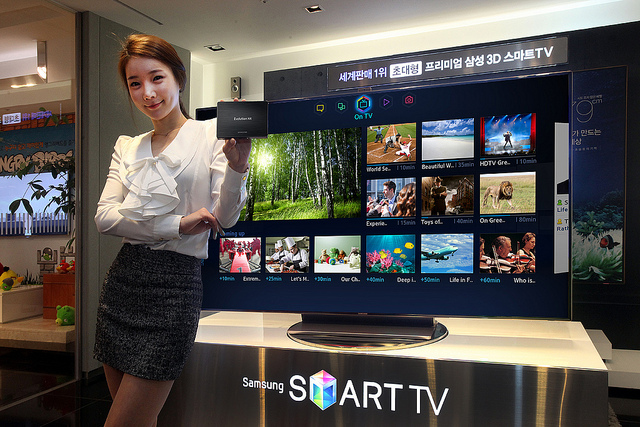
Huawei CloudThe destination floor gets automatically illuminated, which means, people will no longer need to touch the elevator keys, nor will they have to wait for a long time for it to arrive. Moreover, this also eliminates the inappropriate use of traditional elevators.

Starting from now, until June 30th this year, government agencies, communities, enterprises, schools, and various other sections across the country will be able to take full advantage of the standard software services that comprise contactless intelligent elevator solutions. This is likely to minimize the risk of coronavirus infection.


(Source)

Samsung and LG said to be working on portable monitors for smartphones

Smartphones applications are so broad that we can’t keep count. From playing extreme games to watching movies, typing and working on the go, the applications are numerous. However, it is usually cumbersome to type on a smartphone screen keyboard for long. It is usually not as easy and seamless as it would be on a desktop PC.

However, in order to simplify the use of smartphones as desktop, Samsung and LG have reportedly gone to the drawing board to develop a portable monitor for smartphones. The monitors are designed to allow users to leverage the computing power of their smartphones to the full potential using the larger display, even when they’re out of their desks. These upcoming portable monitors will have a lightweight design and will work over both wired and Bluetooth connections. The main goal behind this idea is to provide power users with a larger display for a better experience while watching content on-the-go, editing photos/videos, or getting some work done.

Before now, OEMs have tried different methods to transform the smartphone display to a larger one. Google had introduced a new Desktop Mode in Android 10. This mode essentially allows users to connect their smartphones to a large display and get their work done efficiently. Samsung has offered a similar DeX Mode on its devices for quite a while and its Korean rival LG also introduced a similar experience in its Android 10 software release. However, this new smartphone display will bring portable monitors designed specifically for smartphones. The portable display’s from Samsung and LG won’t have a built-in keyboard and will require users to connect their own peripherals.

Samsung has reportedly named its portable display Samsung DeXbook. The device will feature a 14.1-inch FHD display and a 10,000 mAh battery, while still weighing well under 1kg. On the other hand, LG calls its own ‘Cloud Top’ and it will also offer a 14.1-inch FHD display, but features a smaller 5,000 mAh battery. This brings down the weight to just 600g. Both the products will be priced anywhere between 400,000-500,000 Won (~$340-420) and they will be launched sometime in the second quarter of 2020.


(source)


Less than 20% Employees Likely to Resume Work in China amid Coronavirus Outbreak

Less than 20 percent of employees are likely to resume work in China after their extended Lunar New Year holiday, according to a report from Digitimes. According to sources with direct knowledge of the matter, several component plants in the country are determined to halt production until February 25th.

The decision to not resume production at the moment is quite understandable, as there are still no signs of the novel coronavirus (2019-nCoV) epidemic paring down. Aside from that, very few Taiwanese IT firm employees are likely to rejoin work amid the outbreak.

Foxconn’s manufacturing for Apple is expected to be affected as well. Meanwhile, MediaTek is expecting its worldwide 5G phone sales to drop drastically due to the epidemic.


(Source)

Samsung announces two new fast-charge power banks; one supports wireless charging

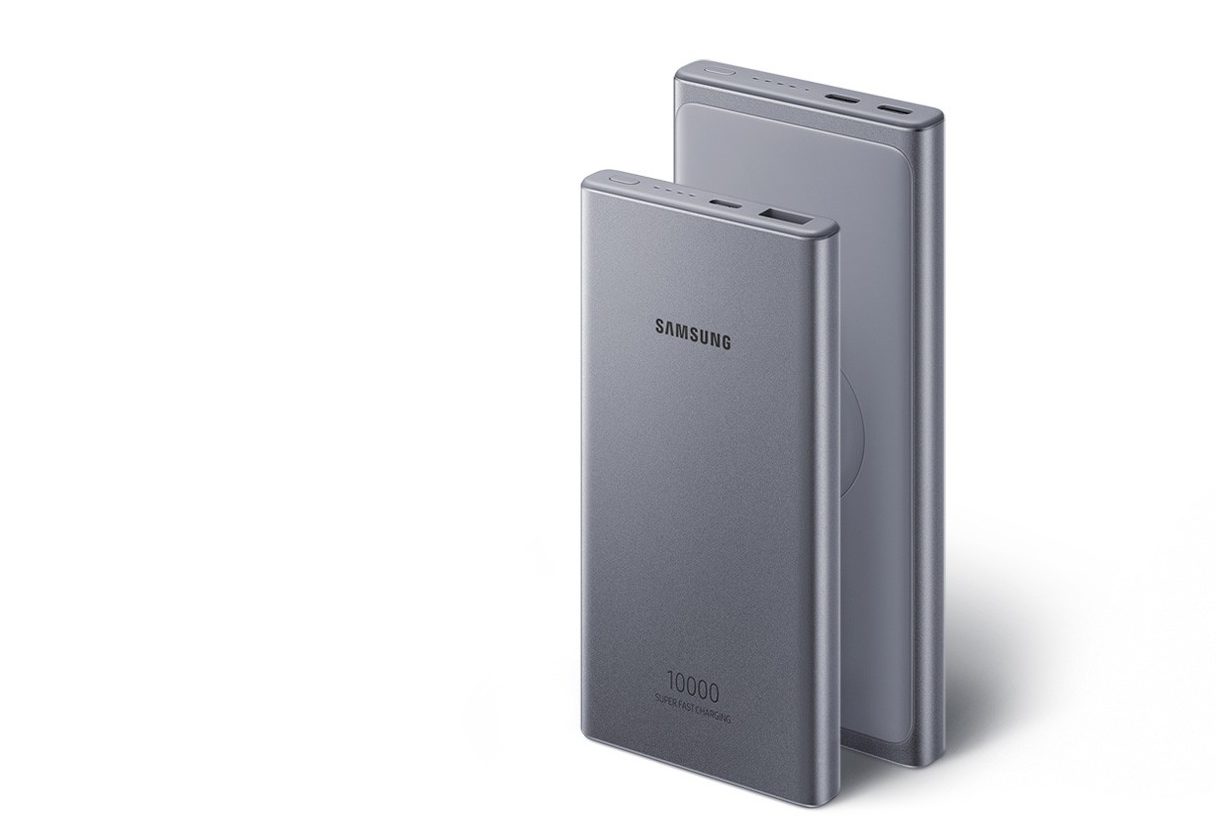
Samsung has announced two new fast-charging power banks. The new power banks have USB-C ports and support 25W Super Fast Charging. However, one of them has support for wireless charging. The two power banks are the 25W Battery Pack and the 25W Wireless Battery Pack.

Samsung 25W Fast Charging Power Banks

25W Wireless Battery Pack

The power bank has a gray finish and is mostly covered in anodized aluminum save for the top where the wireless charging pad is which is made of a different material.

It has two USB Type-C ports for charging and four LEDs to indicate battery level. It also has a power button that doubles as a reset button. The wireless charging pad supports 7.5W fast charge and will be able to charge your Galaxy Buds, Galaxy Watch, or even your Qi-certified phone lets assume you don’t have a cord to use.

The power bank will ship with a USB-C to USB-C cable in the box.

[envira-gallery id=”305384″]
25W Battery Pack

The power bank has the same gray finish as its sibling and even the same 10000mAh battery capacity albeit in a smaller body. it has a full-sized USB output port and a USB Type-C port that works for both input and output. While you can charge two devices at the same time, Samsung says 25W Super Fast Charging will not be available.

The power bank is designed for Samsung’s phones but is also “engineered to be compatible with different types of charging protocols”.

There are four LEDs beside the USB Type-C port to indicate battery level and on the far right is a power button. The product page says if your device is not charging when connected, you can reset the power bank by holding down the power button for 7.5 seconds.

Samsung is yet to reveal the price of the power banks as well as details about availability.


(sources: 1, 2 | Via)

Xiaomi announced 7 new accessories for the Mi 10 series today: We Take a Quick Look!

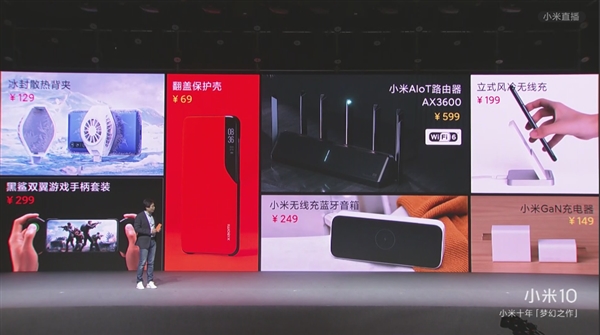
Along with the Xiaomi Mi 10 series, the company also announced 7 new accessories for smartphones today. They range from wirelessly charging Bluetooth speakers to GaN-based 65W fast chargers. Let’s take a quick look at all the accessories announced at the event.

Xiaomi accessories Mi 10 event

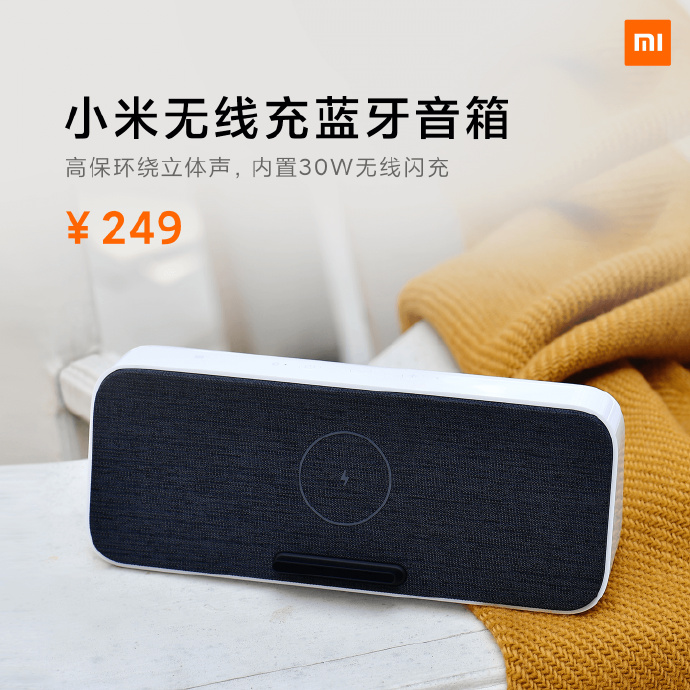
1. Wireless Charging Bluetooth Speaker

Xiaomi announced a new Bluetooth Speaker in China today. The highlight of the new speaker is its ability to charge wirelessly, even while it’s playing music. The Mi Wireless Bluetooth Speaker can charge wirelessly at 30W, the same speed as the Xiaomi Mi 10 series and the Mi 9 Pro 5G. The speaker can pair via NFC and comes with Bluetooth 5.0 support.

xiaom smart wireless speakers

The Wireless Charging Bluetooth Speaker is priced at ¥249 ($36) in China.

Xiaomi was the first to pioneer 30W fast wireless charging tech in the market and now it’s steadily building a portfolio of products built around this technology. This brings us to the next accessory, the Vertical wireless charger.


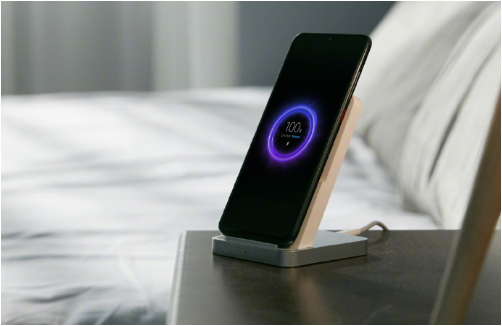
2. Xiaomi 30W Vertical Wireless Charger

We are familiar with Xiaomi’s 30W vertical wireless charger and the company seems to have reannounced it with the Mi 10 series today.

Xiaomi 30W wireless charger

The 30W wireless charger has an ultra-quiet built-in fan and an air duct, which helps in better heat dissipation. The company promises fast wireless charging even when the charger is at maximum load, all thanks to better heat management. We have already covered the 30W wireless charger in detail previously, so you can read our story here. The charger will go on sale at ¥199 ($29), the same price as before.


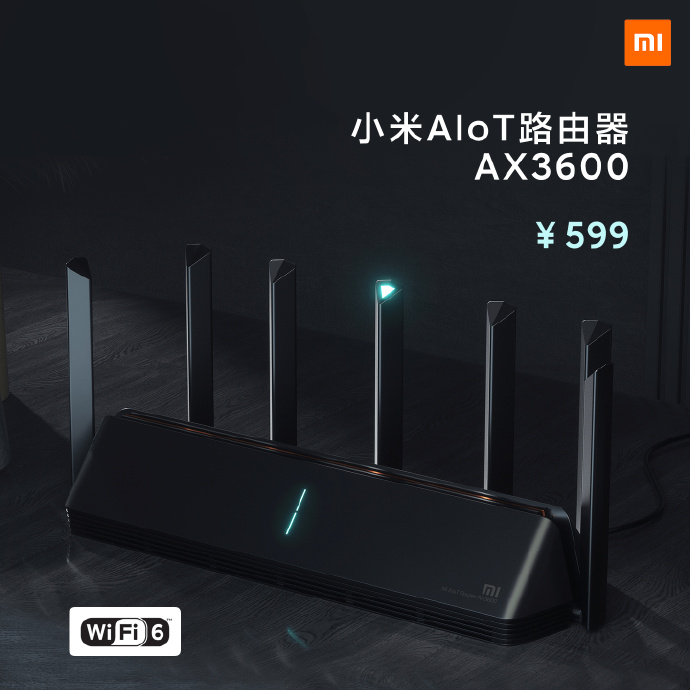
3. Xiaomi AIoT AX3600 Wi-Fi 6 router

Featuring 7 antennas, Qualcomm’s IPQ8071A chipset and paired with 512MB of RAM and 256MB of storage, Xiaomi’s first Wi-Fi 6 router, the AX3600 promises high-end performance and up to 9.6Gbps speeds. One of the seven antennas on the router is a dedicated AIoT antenna that supports dual-frequency and provides speeds of up to 150Mbps for IoT devices. You can read more about the Xiaomi AIoT AX3600 router from our launch article here.

Xiaomi AIOUT AX3600 router

The Wi-Fi 6 Xiaomi router is priced at ¥599 (~$86).


4. Special Xiaomi Mi 10 Air cooling fan

For your long hours of gaming, Xiaomi announced a special Ice cooling fan accessory for the Xiaomi Mi 10.

Xiaomi Mi 10 air cooling accessory

Unlike other portable cooling fans for smartphones, the Mi external fan seems to run on its own battery. So, your USB-C port is still available to connect other accessories like a Gamepad.

The cooling fan for the Xiaomi Mi 10 is priced at ¥129 ($19).


5. Gamepad for Xiaomi Mi 10

Talking about gamepads, the company also unveiled a special gamepad for the new flagship lineup today. It is priced at ¥299 ($33) in China. In the image shared at the end of the event, you get a glimpse of the gamepad (bottom left corner), but that’s all we have so far.

Xiaomi accessories Mi 10 event


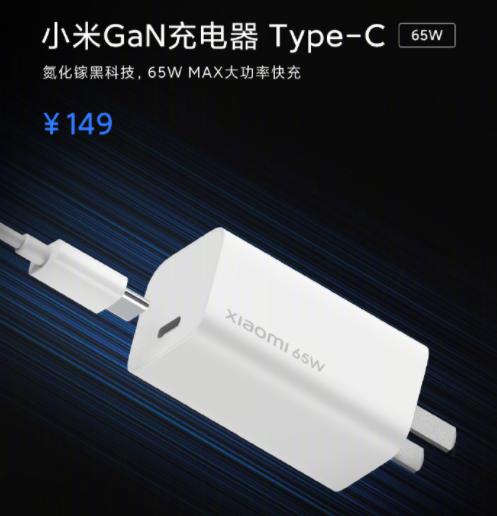
6. Xiaomi 65W GaN Compact Type-C Charger

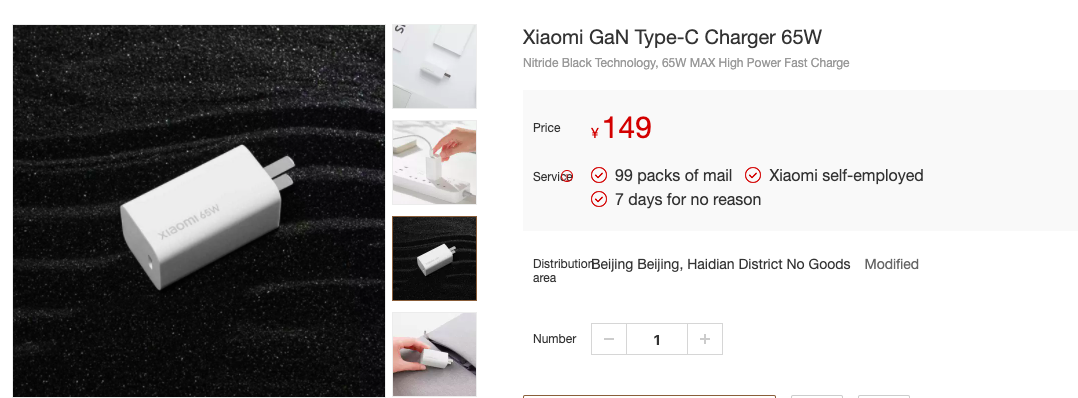
Xiaomi also announced a super-compact 65W GaN charger for smartphones, laptops, and other devices.

Xiaomi GaN 65W charger

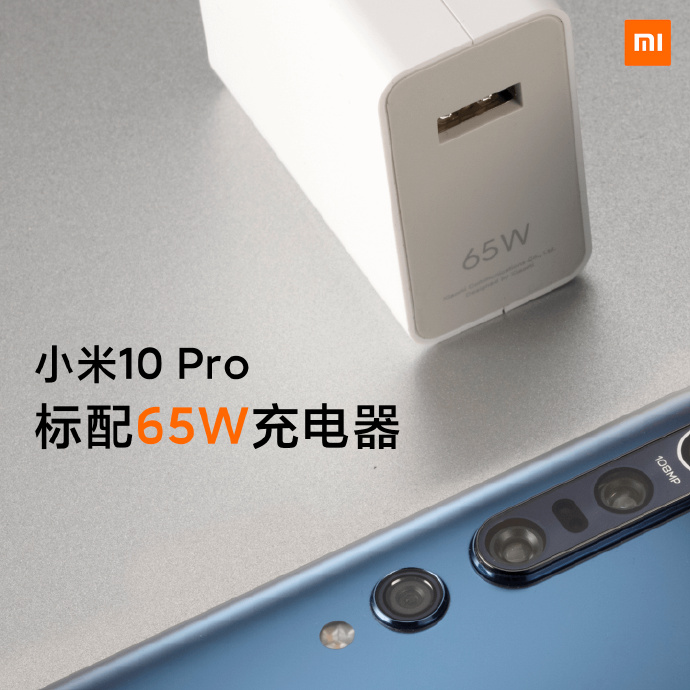
The charger can fully charge the Mi 10 Pro at a max rate of 50W in just 45 minutes. And for devices like laptops that support 65W charging, it can unleash its full wattage to quickly juice it up. Being a GaN-based (Gallium Nitride) charger, it’s extremely compact and easy to carry as well.

65W Gan Xiaomi charger

It is priced at ¥149 ($21) and is up for pre-order on the Xiaomi Youpin website.

It is also worth adding that the Xiaomi Mi 10 Pro ships with a 65W charger (not the above model) out of the box.

65W wireless charger on mi 10


7. Xiaomi Mi 10 flip case

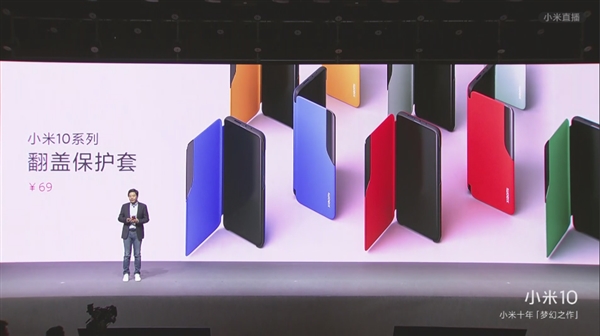
The Mi 10 series is getting a cool new case in multiple color options. The case comes with a cut out on the side to display key updates, similar to what we have seen on Samsung’s S view cases.

Xiaomi Mi 10 case

While personally, I’m not a fan of this orange shade (OnePlus’ papaya orange has spoiled me), it’s good to know that there are a lot of color options for the flip case like Blue, Red, and Green.

Xiaomi Mi 10 case 02


Realme X50 Pro 5G will now launch online on February 24

Chinese tech giant Realme was billed to make a presentation at this year’s Mobile World Congress in Barcelona where the Realme X50 Pro 5G was expected to be unveiled. Since the tech show has been cancelled as a result of the novel coronavirus epidemic, the company has now revealed that the X50 Pro will be launched online. The event will be streamed live from the launch location in Madrid, Spain on February 24.Realme X50 New Year Edition

In a statement, Realme said “Since the outbreak of the novel coronavirus, realme has been concerning about the effects and working on alternatives of all possible situations, including having planned our event undertaken by our European team based in Spain without any staff from China. Keeping in light with the impact of the virus and the cancellation of MWC 2020, realme has decided to cancel the participation at MWC Barcelona 2020, accordingly”.

The statement also indicated that Realme’s VP and Chief Executive Officer of Realme India, Madhav Sheth will attend the launch. The company will also unveil its AIoT plans. Realme will soon announce the updated arrangements of realme X50 Pro 5G online launch event.

The Realme X50 Pro 5G is expected to come with Full HD+ display having a screen resolution of 2400 x 1080 pixels and 20:9 aspect ratio as well as 120Hz refresh rate. While the battery capacity is not yet known, the device is expected to come with 50W fast charging support.


(via)


Mi 10’s display is made by TCL’s Huaxing Optoelectronics; cost a lot of money to develop

It is no news that Chinese phone manufacturers are looking to local manufacturers to supply the components needed for their products. Top brands such as Xiaomi have invested in local companies involved in the manufacturing of displays and chipsets, and it is beginning to pay off.

CEO of Xiaomi, Lei Jun, has revealed that the curved AMOLED punch-hole display of the Mi 10 is actually made by a local manufacturer, Huaxing Optoelectronics, which is a subsidiary of TCL. The company executive revealed that they spent huge sums of money to customize the display to meet their requirements.

The display is actually a 6.7-inch panel with a 2340 x 1080 resolution and a 19.5:9 aspect ratio and it is the first domestically produced flexible AMOLED screen with a punch-hole. The hole in the display measures 2.6 millimeters and is reported to be even smaller in diameter than that of the Galaxy S10 and Galaxy Note10.

It has also been revealed that the screen is manufactured using what is called Direct On-cell Touch (DOT) Technology which has the touch sensor built into the thin-film encapsulation of the display. Other display manufacturing methods place the touch film on the panel. The advantages DOT Technology has are a thinner display and a reduction in production cost. This year’s iPhones are expected to use a similar display technology.


The display also uses an improved ultra-narrow bezel technology that results in slimmer bezels compared to its predecessor. The Mi 10’s side bezels measure 3.32 millimeters as against the Mi 9’s 3.6 millimeters bezel size. The Mi 10 also has a bottom bezel that is less than 1.8 millimeters in size.

The display uses TCL’s Pearl Arrangement for the pixels and has a screen brightness of 500 nits. The maximum brightness is 800 nits while the peak brightness is more than 1100 nits. The screen has a DCI-P3 color gamut of 100% and a contrast ratio of 5,000,000:1.

Other features of the display include a 90Hz refresh rate and a 180Hz touch-sampling rate for smoother gaming. It also uses DC Dimming, has HDR10+ support, and a TUV Rheinland Certification which means it has reduced blue-light and is flicker-free.


(Source)

Alleged OnePlus 8 appears on GeekBench database

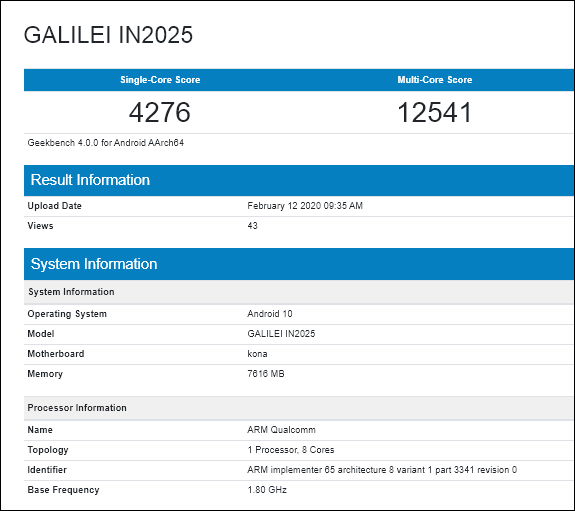
In January this year, a OnePlus model had appeared on GeekBench with the codename GALILEI IN2023. The device was thought to be the codename for the OnePlus 8 Pro and has 12GB of RAM onboard. A new model with the codename GALILEI IN2025 has now made an appearance on Geekbench version 4 database.The device is believed to be the OnePlus 8.OnePlus 8 Geekbench

The device appeared on the database on February 12 and runs Android 10 which definitely gets an overlay of  OnePlus’ custom Oxygen or Hydrogen skin depending on the region it will be sold. The device is also listed with 8GB of RAM paired with the Snapdragon 865 processor listed as Kona. We know it is the Snapdragon 865 because it has the same motherboard name as the Sony Xperia flagship that was spotted on Geekbench last month.

The OnePlus 8 scored 4279 points in the single-core test and 12,541 points in the multi-core test. The scores are in the same zone as those of the OnePlus 8 Pro but are lower than that of the Sony phone which we believe is the flagship, Xperia 5.

The OnePlus 8 is expected to feature a curved AMOLED display with a punch-hole at the top left corner and has been reported to have a 120Hz refresh rate. It will also have quad rear cameras and an in-display fingerprint scanner.


(source)


OPPO Find X2 Global launch rescheduled to March after MWC 2020 gets canceled

Companies like Xiaomi, Realme, and OPPO had pre-MWC events scheduled in Barcelona, Spain this month. However, with the MWC 2020 being canceled, we wondered whether these companies would go ahead with their individual events. Now, OPPO has come forward to announce that it has rescheduled its Find X2 Global Launch event to March. The company’s flagship was initially set to launch on Feb. 22, just before MWC 2020 kicked off in Barcelona.

OPPO, in an official statement, said, “OPPO respects and understands GSMA’s decision to cancel the MWC Barcelona 2020 event. After serious consideration, we have also decided to reschedule the OPPO Find X2 Global Launch Event, originally scheduled on 22nd February. As of now, the event will be rescheduled for March and more information will be shared soon. Thank you for your continued support, and we kindly look forward to unveiling our latest flagship 5G smartphone in the near future.”

The company is expected to announce more details in the coming weeks. All we know right now is that the announcement is going to be held in March. It’s the same month the Huawei P40 Pro is also expected to launch in China, so things could get heated in the premium segment.

Xiaomi, Realme, and Nubia, had individual flagship launch events before MWC. It’s likely that all those events are going to be rescheduled for a later date. However, we are waiting for an official response from these companies.

OPPO’s Find X2 is expected to come with a punch-hole curved AMOLED display with a triple camera setup at the back. The phone’s highlight could be its camera setup that’s rumored to feature the custom 48MP IMX689 Sony sensor and an IMX708 Sony lens for extreme ultra-wide shots.


Xiaomi India teases new Mi Speaker; will launch on Feb. 17

Just a few days ago, Redmi India announced the Redmi 8A Dual and the Redmi Power Bank that comes in 10000mAh and 20000mAh models. Come next week there will be another product launch but this time from Xiaomi India and the teaser released points at a speaker.

The short teaser video was posted on Twitter by Xiaomi India’s MD, Manu Kumar Jain, earlier today, and from the tweet, it is easy to decode that it is a portable Bluetooth speaker.

Xiaomi has a plethora of speakers and it is hard to tell which one of the speakers it sells in China is making its way to India. Last month, it announced the Mi Outdoor Speaker Mini in China which is a smaller version of the Mi Outdoor Bluetooth Speaker that was announced in September 2019.

Our guess for February 17’s launch is one of the two speakers. The speakers are priced at ¥99 (~$14) and ¥199 (~$29) respectively and will fit well among Xiaomi’s current speaker lineup sold in India.

At the moment, Xiaomi sells three Bluetooth Speakers in India. There is the ₹799 (~$11) Mi Compact Bluetooth Speaker 2, the ₹1499 (~$21) Mi Pocket Speaker 2, and the ₹1799 (~$25) Mi Bluetooth Speaker Basic 2.


(Source)