Xiaomi officially announced two new premium flagships in China today, the Xiaomi Mi 10 and the Mi 10 Pro. The Pro version is currently rated as the top camera flagship by DxOMark, beating the popular Huawei Mate 30 Pro 5G flagship for the throne. And it looks like the Mi 10 and Mi 10 Pro models are heading over to international markets such as India, Indonesia, Russia, and EEA (European Economic Area) that includes countries like Poland, Netherlands, Portugal, Italy, and Spain.
Xiaomi Mi 10
The news comes from the folks over at XDA developers (tipped by recognized developer yshalsager) who spotted MIUI builds for the Mi 10 (codename: umi) and the Mi 10 Pro (codename: cmi) for international markets. Specifically, Xiaomi is building MIUI codes for five different regions: India, Indonesia, Russia, EEA, and Global. Since these builds are in development, we can expect the new Mi 10 series to launch in the above-mentioned markets.
However, making such a device requires state of the art facilities, which are not available in India.
We will have to import 100% of units if we launch the #Mi10 in India. Hence, it will have a different pricing model than usual.
Xiaomi India’s MD, Manu Kumar Jain has also given hints about the Mi 10 series’ launch in India. While tweeting about the launch earlier today, he said, “we’re working hard to give you all first access to cutting edge smartphone technology in India”. Further, in another tweet, he added that the Mi 10 will have a different pricing model if it launches in India because 100% of units will have to be imported from China.
While Xiaomi dominates the budget and mid-range segments in India, over the past couple of years, the company has failed to launch a decent premium smartphone in the market. Notably, the last premium Xiaomi smartphone in India was the three-year-old Mi Mix 2. So the new Mi 10 series with its DxOmark approved quad-cameras could be the perfect lineup to make a comeback to the premium segment this year.
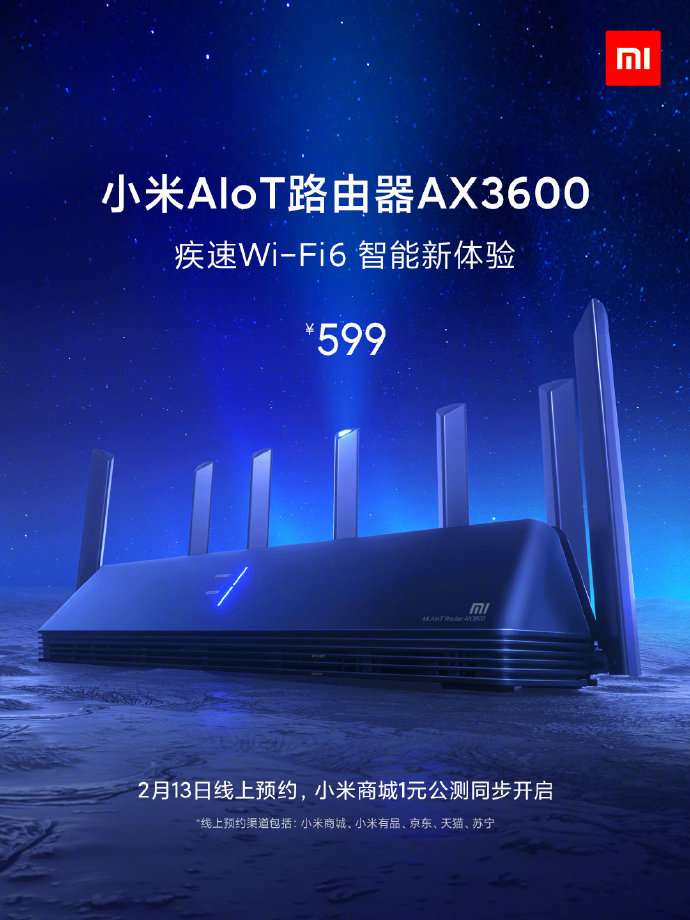
Just as 5G is the new network standard, there is also a new generation of Wi-Fi technology called Wi-Fi 6. Wi-Fi 6 brings upgrades in speed (9.6Gbps against Wi-Fi 5’s 3.5Gbps) and more. Today, Xiaomi announced its first Wi-Fi 6 router, the Mi AIoT Router AX3600 alongside the Mi 10 and Mi 10 Pro.
The Mi AIoT Router AX3600 is a flagship router powered by Qualcomm’s IPQ8071A chipset and paired with 512MB of RAM and 256MB of storage. The chip has four Cortex-A53 cores and is clocked at 1.0GHz. It also has a 1.7GHz dual-core NPU for network acceleration which is why it is marketed as a 6-core chip. Xiaomi says up to 248 devices can be connected to the router.
The router has 7 high-gain antennas. One of the antennas is an IoT device antenna, two are 2.4GHz antennas and the remaining five are 5GHz antennas. Devices can connect via 2.4GHz or 5GHz networks. Xiaomi says the AIoT antenna also supports dual-frequency and provide speeds of up to 150Mbps for IoT devices. When compared to the Mi Router AC1200, the new router is 155% faster.
The router also supports OFDMA technology (Orthogonal Frequency-Division Multiple Access) which allows the router to send data to multiple terminal devices using only one transmission. Other routers that don’t support OFDMA have to send data via multiple transmissions which is less efficient. However, the terminal device has to support OFDMA too.
[envira-gallery id=”305324″]
The Mi AIoT Router AX3600 works with the Mijia app and setting it up is easy. The device automatically detects IoT devices around you and allows you to set up a one-click configuration for easy connection. You can also use the dedicated WiFi App which has now been updated to version 5.0 that brings new features such as real-time notification when a device connects or disconnects from the network.
The router supports WPA3 security protocol and IPv6. It has four ethernet ports on the back and ships with a 12V 2A power adapter
The new router has a price tag of ¥599 (~$86) and comes in black. It is available for pre-order on Mi.com but there is no info on when it will begin shipping to owners.
As Xiaomi took the wraps off its long-awaited Mi 10 annual flagship smartphone, the Chinese phone maker made a voluntary announcement, stating the company’s total revenue for last year is likely to surpass 200 billion yuan (US$28 billion).
Moreover, the announcement confirmed that Xiaomi’s R&D (research and development) expenses are envisioned to be about 7 billion yuan (~US$1 billion). Concurrently, the company’s R&D investment for this entire year is expected to surpass RMB 10 billion (~US$1.43 bn).
Aside from that, Xiaomi said it will continue to be devoted to the technology industry and continue investing in research and development. Xiaomi will not deviate its focus from 5G + AIoT in an attempt to broaden its leading edge in IoT. By the end of this year i.e. December 31st, the company’s yearly R&D expenses are likely to exceed RMB 10 billion.
It is worth noting that Xiaomi has stated that the 2019 final results are currently been reviewed, which means, there are chances that the final figures may turn out to be different.
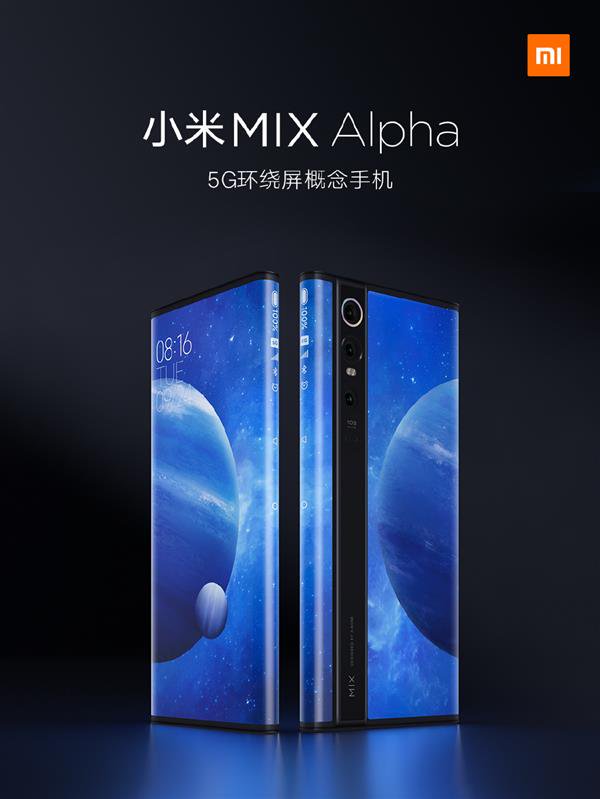
The recently announced Mi Mix Alpha is a result of Xiaomi’s investment into R&D. Although touted as a concept phone, the foldable phone is slated to go into small-scale production. The company planned to launch the Mi Mix Alpha in December last year but decided to postpone the launch indefinitely.
In addition to that, Xiaomi has the bragging rights for releasing the world’s fastest wireless charging technology. Last year, the tech giant announced the new Mi Charge Turbo with capabilities of delivering up to 30W of fast wireless charging.
Wireless charging technology has always been associated with slow charging speeds, but by introducing the Mi Charge Turbo, Xiaomi managed to amend its run-down reputation. The new charger offers relatively faster speeds as compared to its 27W wired charging tech that usually comes with bundled with its flagship devices.
Even the newly announced Mi 10 models feature 30W fast wireless charging as default.
At the Samsung Unpacked event on Tuesday, the Galaxy Flip Z Thom Browne Edition was partially unveiled and Samsung said a proper announcement would be made at the New York Fashion Week the following day.
The Galaxy Flip Z Thom Browne Edition not only includes a Pebble Gray version of the phone with the Thom Browne stripes and branding but also includes a Galaxy Watch Active2 and Galaxy Buds+ in the same colors. The Watch Active2 comes with two custom Thom Browne straps – a gray leather strap shown in the image below and a black rubber strap. You also get exclusive watch faces.
Samsung has also included a custom Thom Browne theme with wallpapers, sounds, icons and more. There is also an exclusive Thom Browne app pre-loaded on the phone.
In the press statement released by Samsung, Thom Browne, the founder of the fashion brand, said: “Partnering with Samsung to create Galaxy Z Flip Thom Browne Edition was an incredible opportunity to reimagine how consumers express themselves through their smartphone,”.
So how much does this custom edition cost? An image shared by Max Weinbach of XDA Developers shows the Galaxy Flip Z Thom Browne will cost a whopping $2480!!! However, there is a $440 discount that brings it down to $2040.
The Galaxy Flip Z Thom Browne Edition will be available for pre-order on February 14 on Samsung.com, Thombrowne.com, NET-A-PORTER, and MR PORTER. There will be an official launch in March.
These days Artificial Intelligence has become an essential part of smartphones. The AI is being used in camera apps, battery optimization, keyboards, and various other utility apps to improve the overall user experience. The presence of virtual assistants such as Google Assistant, Alexa, or Siri has improved the automation of smartphones. Samsung’s Bixby is another virtual assistant that is limited to its smartphones and a few other devices. However, some of the features are only limited to the latest Samsung flagships.
We have created a detailed guide that allows users to enable Bixby Routines on Galaxy S9 and Galaxy Note 9. The users can sideload the Bixby Routines app to enable the service on old flagship devices. However, there might be some bugs as the official support is not yet available.
Our folks over at the Android Police have tested the Bixby Routines apk to be working fine on Galaxy S9 and Note 9 devices. Even it is reportedly working on the Galaxy S8 units running Android 9 Pie.
Bixby has a short journey as a virtual assistant. It has evolved a lot since its first rollout on the Galaxy S8 series. It receives timely updates with improved features such as Bixby Voice, Bixby routines, etc. Samsung has even offered Bixby service for Mid-range smartphones such as Galaxy A, J, and some other devices.
Enable Bixby Routines on Galaxy S9 and Note 9
It is quite easy to get Bixby Routines to work on Galaxy S9 and Note 9. The users have to follow the below steps carefully.
Steps to install Bixby Routines on Galaxy S9 and Note 9
Enable App Installation from unknown sources by heading to device settings.
Installing Bixby Routines app after downloading from the above link.
Now, head over to the Settings > Advanced features > Enable Bixby routines from the top.
Tap on the Bixby Routines to get a list of configurable settings.
Select or enable the desired routines and enjoy automation!
That’s it
We hope you have successfully installed Bixby Routines on Galaxy S9 and Note 9. Before leaving the page, confirm whether it worked for you or not? Even it will help other fellow readers.
Xiaomi has officially announced two new premium flagship smartphones in China via an online-only event: the Xiaomi Mi 10 and the Xiaomi Mi 10 Pro. This year, the company aims to finally break into the premium category segment with high-end specs and a beautiful design. Both phones are powered by Snapdragon 865 and come with a curved custom AMOLED display panel, similar to the OnePlus 7T Pro.
Xiaomi Mi 10 and Mi 10 Pro design
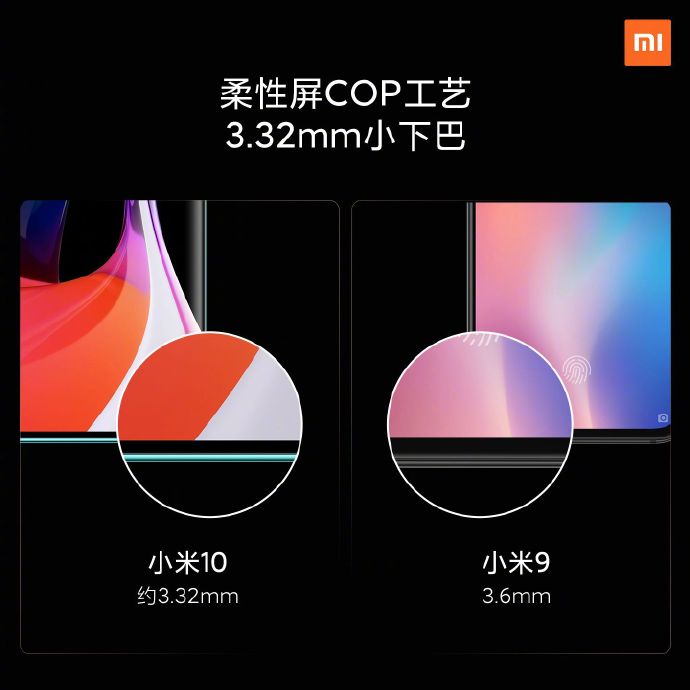
The Xiaomi Mi 10 and the Mi 10 Pro have near-identical designs. This includes a curved display on the front and a quad-camera setup place on the top left corner of the back. The company has reduced the chin on the display to just 3.32mm, offering a better screen to body ratio on the new models.
They measure 9mm in thickness with 4500mAh+ batteries on board. The only major difference in design between the two models is the additional Laser focus sensor at the back of the Pro model.
Both the phones also feature a punch-hole camera on the top left corner of the screen.
Xiaomi Mi 10 and Mi 10 Pro Display
The Xiaomi Mi 10 and Mi 10 Pro come with a 6.67-inch curved AMOLED display with a 90Hz refresh rate and 180Hz touch sampling rate. The peak brightness on both the panels reach 1200 nits with a contrast of 5,000,000:1.
In order to improve the automatic brightness adjustment on both the devices, the company has equipped them with dual front and rear light sensors. This will ensure that the phone’s brightness is controlled well offering a pleasant viewing experience, indoors as well as outdoors.
The Mi 10 Pro comes with a 6.67-inch curved AMOLED panel with a JNCD (Just Noticeable Color Difference) of less than 0.55. The company claims that the Pro’s display is superior to both the iPhone 11 Pro Max and the Mate 30 Pro 5G. Also, Xiaomi adds that the panel’s △ E (delta E color difference) is 1.1 which once again makes it better than the iPhone and Huawei flagship models.
Xiaomi Mi 10 and Mi 10 Pro Specs
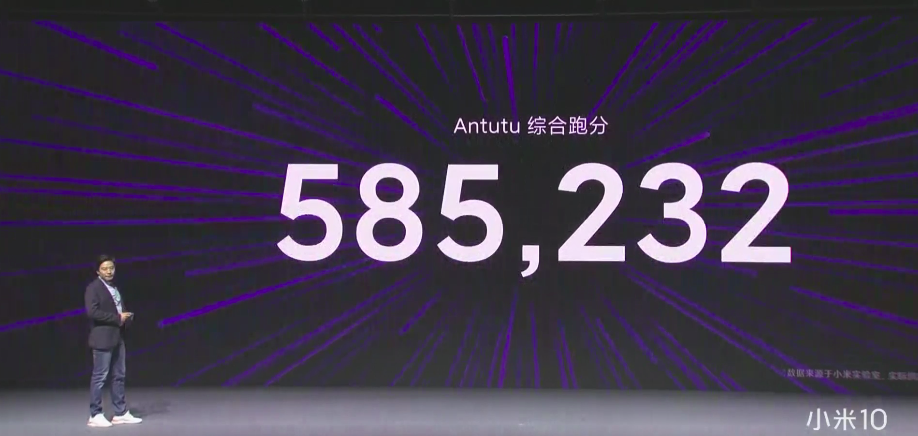
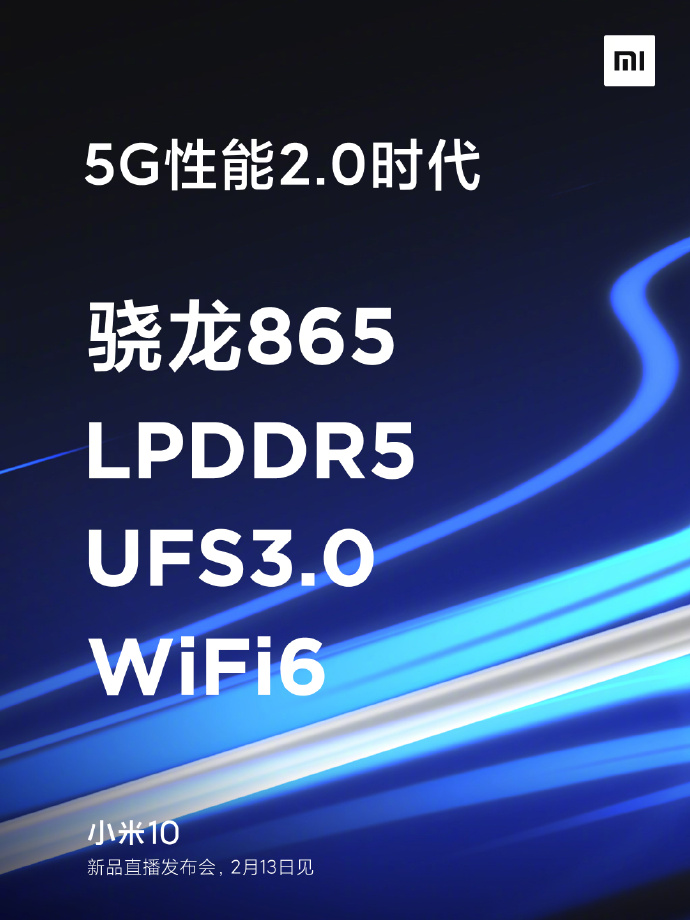
The Xiaomi Mi 10 and Pro models come with the 7nm octa-core Snapdragon 865 under the hood with up to 12GB of LPDDR5 RAM, and UFS 3.0 storage. Both the phones support Wi-Fi 6 which comes with a throughput rate of 9.6Gbps. Thanks to these specs, the Mi 10 is able to score more than 585,000 points on the AnTuTu benchmark.
Of course, with SD865 on board, the phones support both SA and NSA 5G standards out of the box.
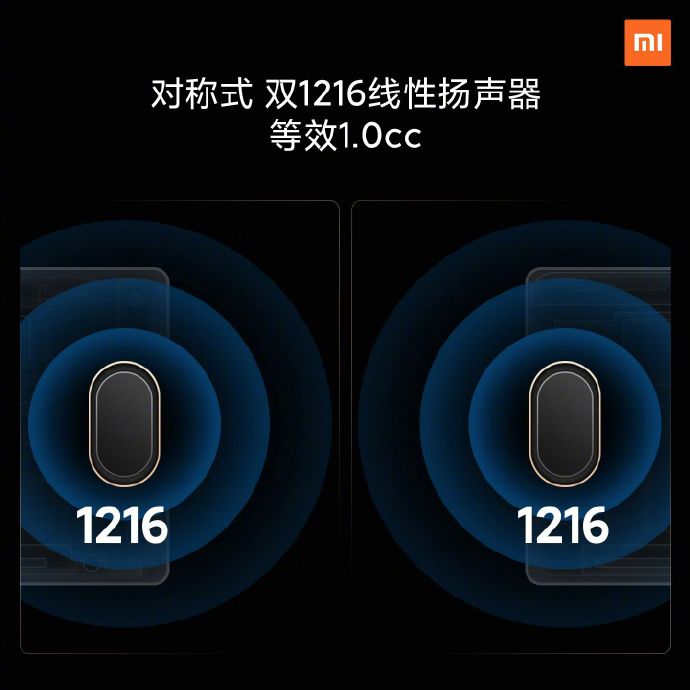
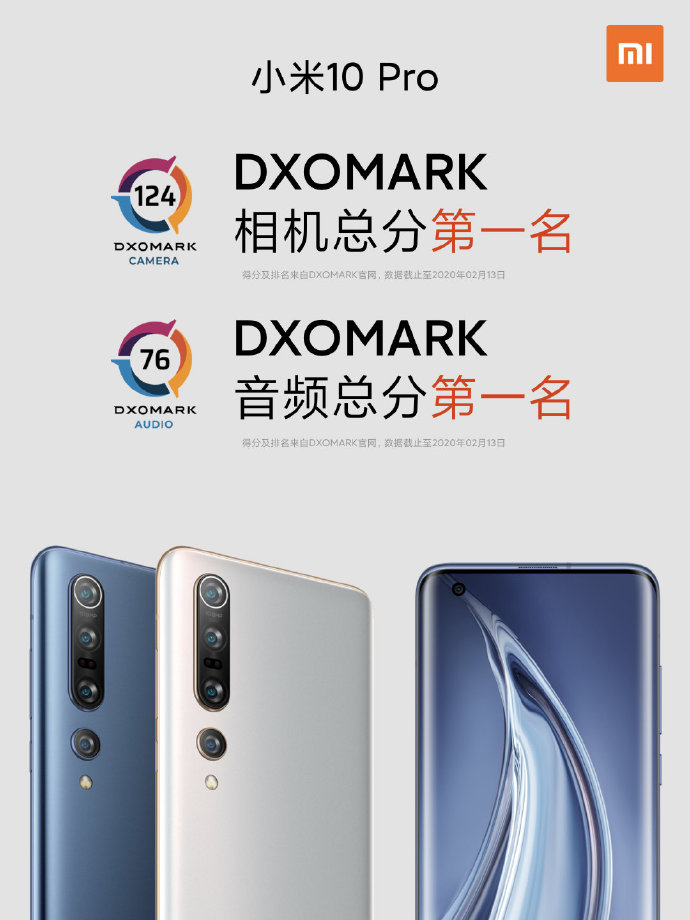
The Xiaomi Mi 10 comes with dual linear 1.0cc stereo speakers. However the Mi 10 Pro is the real king of audio in the flagship series as it comes with a larger chamber 1.2cc dual stereo speakers. Unsurprisingly, the Xiaomi Mi 10 Pro is the top-scoring smartphone on DxOMark’s audio test, beating the previous leader, the Mate 20 X 5G by one point.
Mi 10 stereo speakers
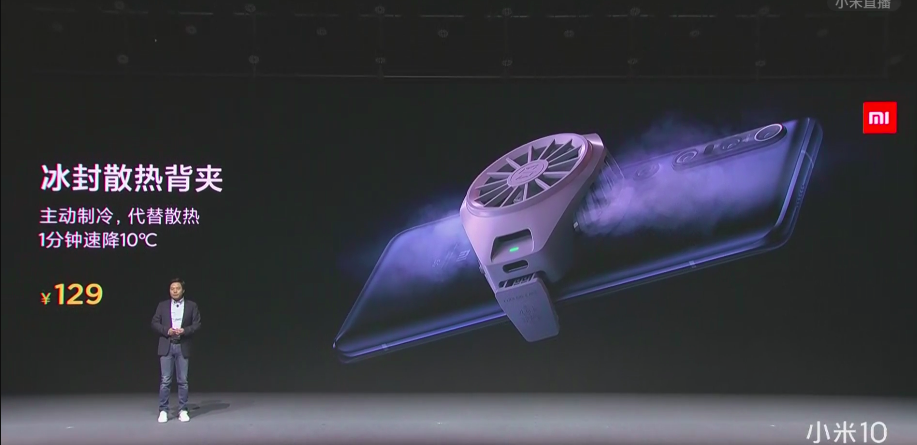
In terms of cooling, both the models come with Vapour Chamber liquid-cooling system with multiple layers of graphite and AI machine learning to keep the temperature under control. The company is also offering a special cooling fan as a separate accessory for the new models.
Xiaomi Mi 10 and Mi 10 Pro Cameras
We all knew that the Mi 10 series was going to feature a 108MP camera setup. The company revealed today that the standard Mi 10 will come with a quad-camera setup at the back featuring a custom 108MP sensor along with a macro, depth, and wide-angle lens.
The detailed camera specs of the Mi 10 are as follows.
– 2MP depth sensor f/2.4
1.75um sensor
– 108MP 1/1.33″ sensor 7P lens
4in1 pixel binning OIS 1.6um pixels
– 2MP macro lens f/2.4
1.75um 2-10cm stabilizes
– 13MP ultra-wide-angle lens
f/2.4 1.12um
123° FoV
The Xiaomi Mi 10 Pro comes with a more advanced quad-camera setup at the back. This includes a 108MP primary camera with a 10X hybrid optical zoom lens, a dedicated portrait lens, and a wide-angle lens.
The complete camera specs of the Mi 10 Pro are as follows:
– 108MP primary high-resolution custom camera sensor with 8P lens
– 12MP dedicated portrait lens
– dedicated telephoto lens for 10x hybrid optical zoom, and 50x digital zoom
– 20MP ultra-wide-angle lens
– OTHER FEATURES: dual OIS, laser focus, AI scene recognition
The Mi 10 Pro is currently the highest-rated DxOMark smartphone with a score of 124 points. This is a point higher than the Mate 30 Pro 5G, which was leading previously. So, the Mi 10 Pro currently tops both Audio as well as Camera tests on DxOMark.
Mi 10 Pro tops dxomark’s Audio and Camera tests
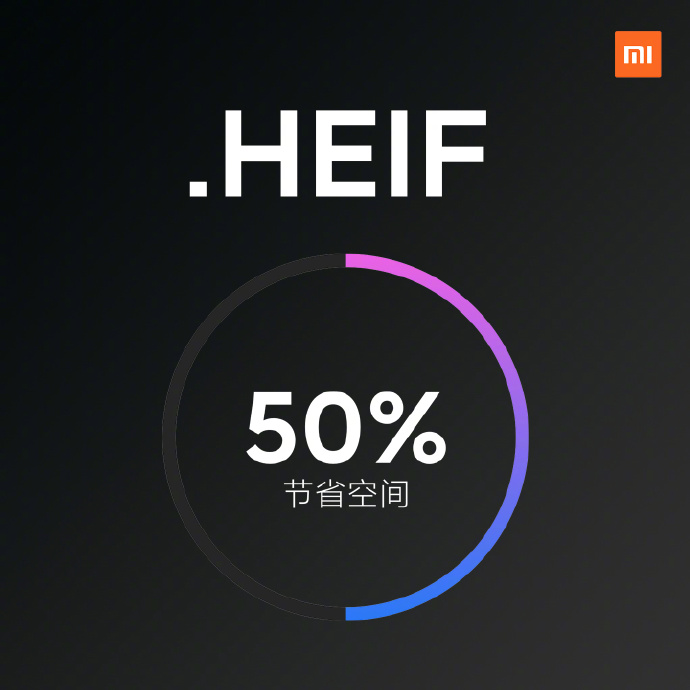
Both Xiaomi Mi 10 models support 8K video recording, OIS, and EIS. They feature AI scene recognition, super night mode, and a variety of movie modes for video shooting.Since they come with 108MP super high-resolution cameras, Xiaomi has added support for the new HEIF file format. So, both the models are capable of capturing images in HEIF instead of JPEG, which will reportedly save storage space by up to 50 percent.
The cameras also feature a special document and ID scanner mode which removes shadows and makes the resulting images look like a scanned copy. This is a very handy tool for people who upload documents online regularly.
Xiaomi Mi 10 and Mi 10 Pro Battery
The Xiaomi Mi 10 comes with a larger 4780mAh battery with 30W wired and 30W wireless charging support. The phone also supports 10W reverse wireless charging.
The Mi 10 Pro on the other has a slightly smaller 4500mAh battery onboard, however, the charging speed is increased to 50W. Wireless charging and reverse wireless speeds remain the same as the non-Pro model.
Xiaomi Mi 10 and Mi 10 Pro Pricing & Availability
The Xiaomi Mi 10 will come in three storage variants. They are as follows:
8GB + 128GB – 3999 yuan ($573)
8GB + 256GB – 4299 yuan ($615)
12GB + 256GB – 4699 yuan ($673)
The Xiaomi Mi 10 Pro will come in the following variants:
8+256GB – 4999 yuan ($716)
12+256GB – 5499 yuan ($788)
12+512GB – 5999 yuan ($859)
The company is also offering a special flip cover for both the models for 69 yuan ($10).
The Xiaomi Mi 10 is already available for pre-order and will go on sale on February 14 in China at 10 AM.
The Mi 10 Pro pre-orders are also underway and shipping starts from February 18 in China.
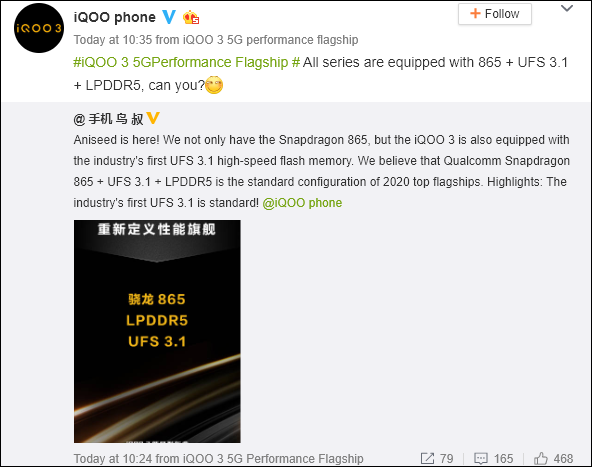
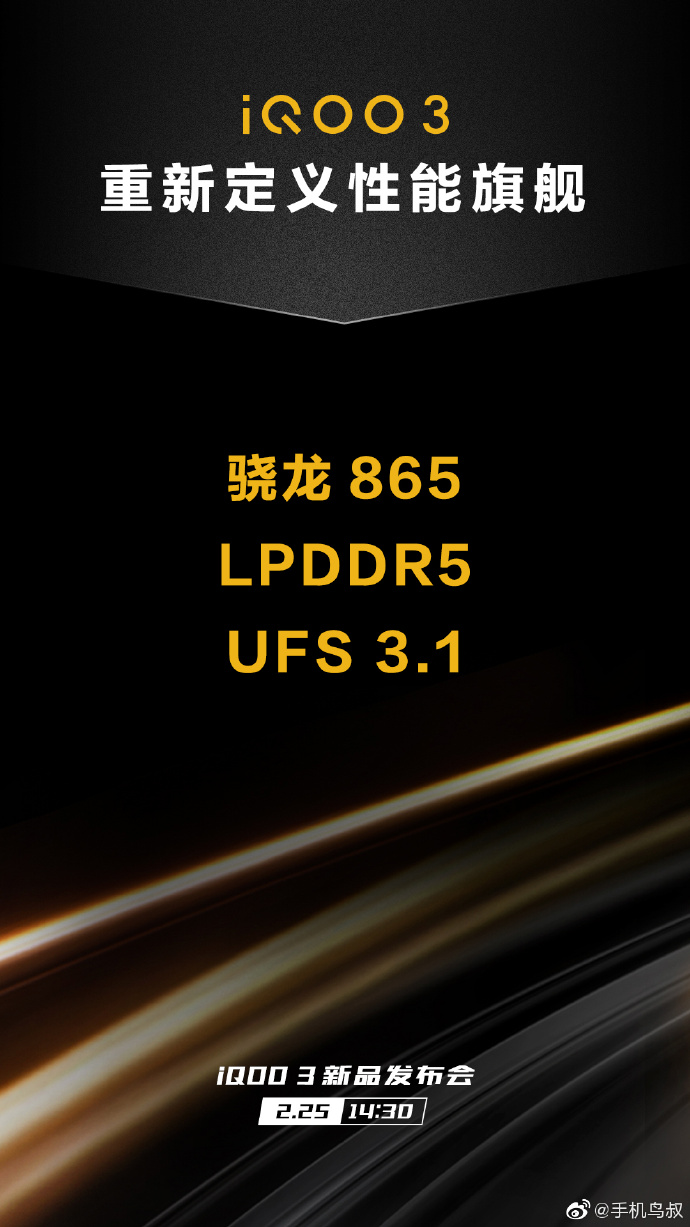
Vivo’s iQOO brand yesterday announced that the iQOO 3 will be launched on February 25 in China. The iQOO 3 has been the subject of several leaks giving us details of the model, including its appearance on TENAA. Earlier this month, the iQOO 3 was tipped to come with a UFS 3.1 flash storage. iQOO’s vice president Fengyu Fei has now confirmed on Weibo that the next-gen iQOO brand will come with a UFS 3.1 flash memory. The iQOO exec equally stated that the device will have a Snapdragon 865 chipset on board as well as LPDDR5 memory.
This potentially makes the IQOO 3 the first smartphone to launch with the latest UFS 3.1 which was announced by JEDEC Solid State Technology Association in January 2020. The Mi 10 series beat the device in packing an LPDDR5 RAM and the new RAM seems to have become the mainstream standard. The iQOO 3 will be among the first few models to have such power RAM onboard but there are no phones with UFS 3.1 flash memory yet.
The latest UFS memory is specifically tailored for mobile applications and computing systems requiring high performance and low power consumption. The new version supports three new features: Write Booster, Deep Sleep, and Performance Throttling Notification.
In other aspects, the iQOO 3 features a 6.44-inch S-AMOLED display. It will be a punch-hole screen that will offer full HD+ resolution of 1080 x 2,400 pixels, an aspect ratio of 20:9 and 120Hz refresh rate. Like all the predecessor iQOO phones, the iQOO 3 is said to be equipped with an in-display fingerprint reader.
The Snapdragon 865 mobile platform-driven iQOO 3 is expected to hit the Chinese markets in RAM choices like 6 GB, 8 GB and 12 GB of RAM.
The coronavirus outbreak seems to be sparing none of the Chinese phone makers, and Xiaomi is the latest smartphone manufacturer to be affected by the epidemic. Xiaomi’s China-based supply chain has taken a huge hit, forcing the company to hike the price of Redmi Note 8 by Rs. 500 in India.
The company deems the price hike as temporary and it hopes to start selling the phone for its original asking price as soon as the component cost stabilizes. Amid the price hike, the Redmi Note 8 has gone out of stock on Amazon; however, Xiaomi has confirmed it will go soon on sale via the e-commerce giant. It is worth mentioning here that the price hike is only applicable to the 4GB RAM+64GB ROM Redmi Note 8 variant.
While the aforesaid model originally retailed for Rs. 9,999, it now carries a slightly steeper price tag of Rs. 10,499. While talking to Gadgets 360, a Xiaomi spokesperson explained that “the extended shutdown in China is likely to have an impact on our Supply chain and, there is a risk of impact on the overall quantum of component supplies.”
Xiaomi is leaving no stone unturned in an attempt to find alternative supply channels for these components, as well as raw materials. In the meantime, the short supply is likely to negatively impact the prices of these peripherals. As a result, the company is left with no choice but to temporarily hike the price of the product.
The effect of the shortage of component supplies is apparent on Xiaomi’s official online store, Mi.com, and Amazon. At the time of writing, the Redmi Note 8 was out of stock on Amazon, but Xiaomi has assured it will be available soon. The Amazon product page suggests the Redmi Note 8 4GB + 6GB model will be available in stock on February 18th.
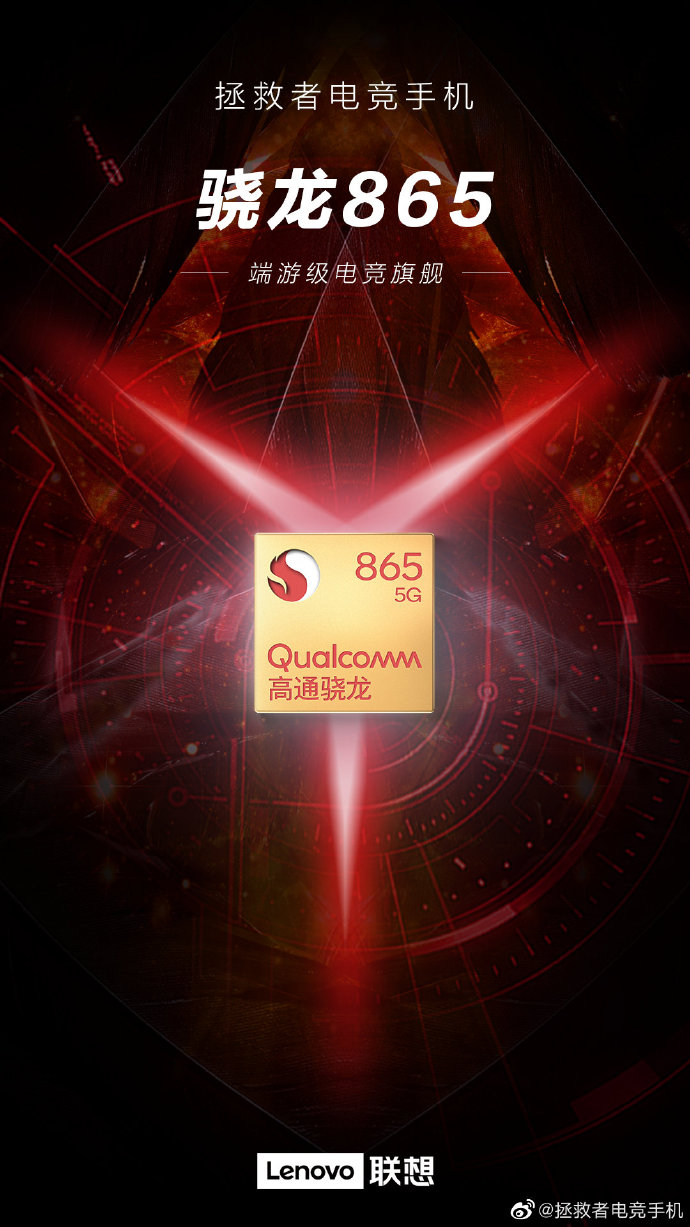
Lenovo’s Legion gaming brand is entering a highly competitive market this year: Mobile gaming. In this regard, the brand will unveil its first-ever gaming smartphone later this year. Today, the company confirmed that the phone will be powered by the Snapdragon 865 processor.
Lenovo Legion joins the likes of Razer, Black Shark, Nubia Red Magic, and ASUS ROG to release a gaming smartphone in the market. The Android-based gaming flagships feature top of the line specifications and cooling systems to ensure long hours of gaming. So we can expect the same on the upcoming Lenovo Legion gaming smartphone as well.
The Snapdragon 865 is currently one of the world’s best mobile processors in the market. The 7mm Snapdragon 865 octa-core chipset includes four ARM Cortex-A77 based Kryo 585 performance cores out of which three cores are clocked at up to 2.4GHz and the one works at up to 2.84GHz. The four remaining Kry 585 Cortex-A55 powered efficiency cores are clocked at 1.8GHz. A powerful Adreno 650 takes care of the graphics needs. The chip supports up to 4K resolution at 60GHz, Quad HD+ resolution with 144Hz refresh rate, Rec2020 color gamut, HDR10, and HDR10+. The CPU and GPU both offer up to 25 percent better performance than their predecessors.
Xiaomi Mi 10 specs confirmed We can expect similar specs on the Lenovo gaming phone too!
We can also expect the Lenovo Legion gaming phone to feature 2020 specifications like 5G support, Wi-Fi 6, LPDDR5 memory, and UFS 3.0 or 3.1 storage. These features are standard on the flagship Xiaomi Mi 10 as well, all set to debut today in China.
We still have no word on the release date of the Legion gaming phone but expect more details in the coming weeks.
Dutch tech publication LetsGoDigital recently discovered a patent that hints at a stylus-equipped Oppo phone. The patent suggests the Chinese handset maker might soon jump on the stylus phone bandwagon, allowing users to perform multiple tasks such as making calls using a stylus pen with its new handset. At first glance, the smartphone seen in the patent doesn’t seem to adopt a radically overhauled design element. While it seems to adopt a form factor we’d normally associate with a standard flagship, a closer look reveals there’s more to it than meets the eye.
The stylus features a mic, as well as a receiver. Aside from that, there are multifunction buttons embedded into the outer edges that serve as a volume rocker during calls. The most modern styli are usually equipped with supercapacitor; however, this Oppo stylus packs a battery, which means, it will last longer even if used as a Bluetooth-enabled stylus or while making calls.
Other Unique Features of the Oppo Stylus
Aside from the ability to make calls, the design of the Oppo stylus, in general, is unique. As can be seen in the image, the company has left no stone unturned in an attempt to keep the stylus as a separate part of the phone.
While leading smartphone manufacturers including Motorola, LG, and Samsung have used stylus in their designs, these companies normally accommodate it inside the device itself via an aptly-sized socket. In tablets; however, the stylus is usually attached either to the frame or the rear panel using magnets. For instance, the Samsung Galaxy Tab S6 adopts this more common design.
The patent suggests Oppo has deviated from the design concept by treating the stylus as another device. Despite that, the stylus is an important part of the smartphone. Sporting ultra-slim bezels, the patented device seems to draw inspiration from modern smartphone design. The near bezel-less design has been extended to the left, right side edges, and the bottom as well.
Furthermore, the patent shows a larger-than-usual bezel at the top. This is because when the stylus is attached to the phone, it still serves as the device’s receiver. It becomes a part of the top bezel when attached.
When the stylus is removed, we see only a small portion of the top bezel. That portion accommodates the front-mounted camera, as well as the sensors. Although this architecture gives the stylus an uncanny appearance, its functionalities remain unaffected.
Attaching the module doesn’t seem to be a backbreaking task since all you need to do to attach the module is to slide the pen-tip into the slot available on the camera module. The remaining portion of the pen then seems to attach via magnetic pins for charging purposes. When attached, the stylus buttons face outwards. They are double as adjustable ring volume when the stylus is hooked on to the phone.
A Final Design Unlikely to Arrive Soon
The patent showcases a smartphone that can be described as nearly complete, which is seldom the case with patents. It is worth mentioning here that Oppo has already put the above-mentioned stylus to test. The findings of the company’s researchers are briefly mentioned.
Nevertheless, that doesn’t hint at an imminent arrival of the device as Oppo currently has its hands full with the launch of the Find X2, which is expected to take place before the MWC 2020 kicks off on February 24th.
Although the Find X2 has been subject to multiple leaks, none of them suggest it will feature a removable stylus that can come in handy while making calls. It remains to be seen whether or not Oppo reveals more details about the purported stylus-equipped phone later this month.
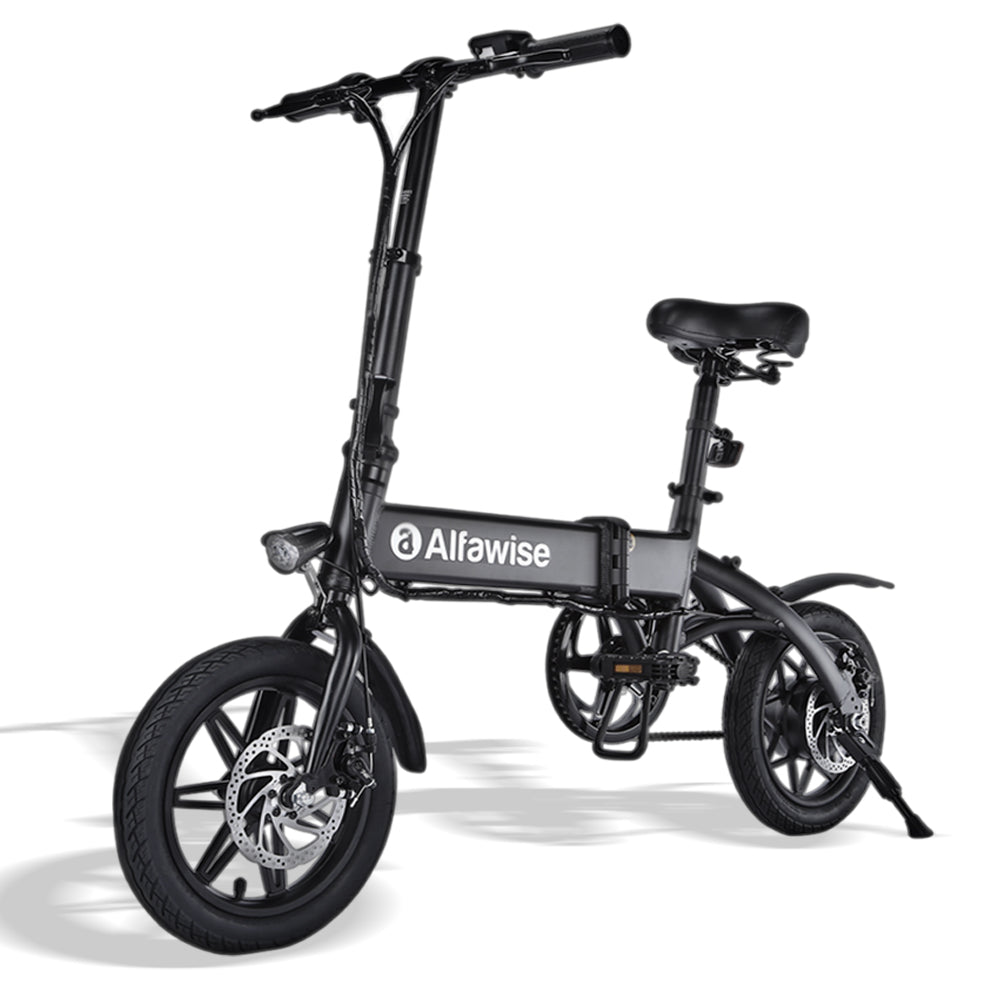
Crafted to serve as an ideal transit option during outdoor recreational activities, electric bikes or scooters are more eco-friendly modes of transportation. On the downside, they aren’t easy on the pocketbook.
Those who settle for an inexpensive alternative, on the other hand, usually end up compromising on quality. But much to the relief of those on a tight budget, Gearbest is offering Alfawise X1 Folding E-bike Bicycle Electric Bike for a considerably lowered price.
The black-tinted Alfawise X1 Folding Electric Bike with 10.4Ah battery would normally set you back a pretty penny, but the popular Chinese e-tailer is now offering it for a lowered price of just $515.99. This is a noteworthy 22 percent reduction in the e-bike’s original asking price of $660.01.
Alternatively, you can go for the 7.8Ah battery-backed Alfawise X1 version that usually retails for $629.91. Thanks to a 25 percent off, you can now get your hands on this model for a lowered price of just $469.99. This version is available in black color option.
The Alfawise X1 features three modes including pure electric mode, moped mode, a pedal mode that are designed keeping city riders and for urban commuters in mind. The e-bike draws its juices from powerful built-in 7.8Ah / 10.4Ah Li-ion battery, delivering up to 30km mileage in pure electric mode, and an impressive 60km mileage in moped mode.
Furthermore, storing the Alfawise X1 is child’s play. It adopts a 3 steps quick-folding design and housed in a lightweight aluminum alloy collapsible frame, which allows you to conveniently carry it even in crowded places such as subways. It uses an inflatable 14-inch rubber tire with anti-slip texture so that you can ride it comfortably on different types of roads.
To know more about the Alfawise X1 Folding E-bike and to place your order, all you need to do is to follow this link without wasting time. Note that the promo is slated to end shortly.
The Gizmochina Coupons is a community that finds, reports and evaluates deals and coupons of Chinese products from online shops. Please visit it here to find more coupons to save money on mobiles and smart gadgets.
Essential is dead! Many may have seen it coming but a few of us held on to a tiny string of hope that the company founded by Andy Rubin will launch a new smartphone.
In a post released on its website, Essential announced that Project GEM, the colorful and interesting phone that showed up in images on the web last October will not be launching. “Given this, we have made the difficult decision to cease operations and shutdown Essential,” the blog post said.
The Essential PH-1, the one and only smartphone the company released throughout its existence
Essential said in the post that the February 3 security update rolled out to the Essential PH-1 is the final update for the device. The phone will continue to work but there will be no more updates or customer support. However, they will host a prebuilt vendor image as well as everything else needed by developers for the PH-1 on their GitHub. So expect custom ROMs and the likes to continue to be available for the PH-1.
They also announced that Newton Mail, the paid cross-platform email app it owns, will continue to work until April 30, 2020.
Essential has also shared some videos that show Project GEM in action. While they give us a look at the features of a phone that will never launch, they are actually quite interesting. You can check out the videos in the source link.
Essential may have had a very short stint in the mobile phone industry but it will always be remembered as a company that tried to do things differently.
Huawei‘s latest Mate 30 Pro flagship has really not blossomed to full capacity. That isn’t because the device isn’t an amazing phone. Damn, it is! But the US ban on Huawei has made it impossible to ship the phone with Google Services onboard. That has, in no small way, hampered the sales of the phone outside China. Despite the ban, the phone has been released in some regions and is now set to make its entry in the UK.
The Mate 30 Pro will go on sale on February 20 in the UK and would be sold exclusively online by Carphone Warehouse. Intending buyers can register their interest already ahead of the sales. In order to attract more buyers, Huawei is offering the Mate 30 Pro bundled with a pair of Huawei Watch GT 2 and the Huawei FreeBuds 3 earbuds. This amazing offer will be valid while stock last. Of course, we don’t expect the stock to last for a very long time.
Even without the mouthwatering offer, the Huawei Mate 30 Pro presents with an amazing 6.53-inch ‘waterfall’ edge-to-edge screen called ‘horizon display’. The device packs four rear cameras in a circular housing and a large front-facing notch housing a trio of selfie cameras. It is powered by a flagship Kirin 990 chipset which brings along 5G compatibility. Keeping the light on is a 4,500mAh battery.
The Mate 30 Pro will adopt a retail price of £899, which is not unheard of for a flagship phone of this calibre but combined with the smart accessories, it becomes a true bargain. We can’t say for sure if the decision to bundle the Mate 30 along with some valuable freebies who attract the needed number of buyers. We’ll have to wait and see how this plays out.
After a series of companies announced their withdrawal from MWC 2020 this week, GSM Association, the organizers of the event has decided to cancel the tech event this year. MWC is the world’s biggest mobile tech show of the year and its cancelation is a strong indication of the gravity of the ongoing coronavirus epidemic.
This announcement doesn’t really come as a surprise given how major tech giants like LG, MediaTek, Vivo, AT&T, Sony, and Amazon backed out of the event in the past few days. All these companies expressed their concern for the safety of their employees as well as the attendees of the event this year.
Xiaomi, Realme, and Huawei had recently confirmed their attendance at the event. Xiaomi and Realme also announced pre-MWC launch events for their devices. But with the event officially canceled, we’ll have to wait for an official statement from these companies regarding their pre-MWC events.
In an emailed statement to Bloomberg, John Hoffman, the CEO of GSMA, said the outbreak made it “impossible” to hold MWC 2020.
JUST IN: The 2020 Mobile World Congress has been canceled by GSMA because of #coronavirus fears.
In an emailed statement, John Hoffman, the CEO of GSMA, said the outbreak has made it "impossible" to hold the event #MWC2020pic.twitter.com/PS1BqTCzU8
Over 1100 people have died in China after contracting the covid-19 aka novel coronavirus and over 40,000 people have been infected so far. These numbers are rising every day. WHO has already declared coronavirus as a global health emergency. And with a number of important MWC attendees withdrawing weeks before the event, the GSMA was left with no choice but to cancel the tech show this year.
The US ban has forced Huawei to find an alternative to Google’s Mobile Services. The Chinese giant has developed its own mobile app infrastructure called Huawei Mobile Services (HMS). The latest news from Turkey says Turkish operator, Turkcell, has now signed a partnership with Huawei to use its mobile app infrastructure.
The info was announced at a news conference that had in attendance Turkcell CEO, Murat Erkan, and the country manager of Huawei Turkey Consumer Electronics Group, Seth Wang.
Mr. Erkan saidTurkcell has a sales target of 1 million HMS-enabled Huawei phones between April 2020 and the end of next year. Huawei currently has 4.6 million mobile users in Turkey with a Huawei ID.
The CEO also revealed that they have begun working on the integration of nearly 30 Turkcell apps into Huawei Mobile Services. The first set of Huawei devices sold in Turkey that will run HMS will be available this April.
Ever since Xiaomi revealed that it would be launching the Mi 10 series on February 13 via an online-only event, the media has been buzzing consistently with juicy details of the Mi 10 and Mi 10 Pro spilling out daily. Barely some hours before the models go live, a poster containing the full specifications of the Mi 10 and Mi 10 Pro has leaked online.
Most of the details of the models have already been out such as the display size and SOC. Recently, the Mi 10 as revealed to pack a 4500mAh battery with support for 50W rapid charge, 30W wireless charge and 10W reverse wireless charge. However, the poster says otherwise. The poster shows that the Mi 10 Pro will, in fact, get a 4500mAh battery as well as support for 50W rapid charge, 30W wireless charge and 10W reverse wireless charge. The rapid charge is said to be capable of delivering charge from 0-100% in 45 minutes.
On the other hand, the Mi 10 will pack a 4780mAH battery but will support 30W rapid charge, 30W wireless charge and 10W reverse wireless charge. Whatever reduction the device has got in its fast charge support, it makes up for that with a bigger battery. Despite the slightly bigger battery pack onboard the Mi 10, both models weigh 208g and have a dimension of 162.6mm X 74.8mm X 8.96mm.
Both the Mi 10 and Mi 10 Pro will sport a 6.67-inch AMOLED display with an FHD+ resolution of 2340 x 1080 pixels.
We also stumbled on a live hands-on video of the Mi 10 on Weibo. The video doesn’t really show anything different from what we already have known about the Mi 10’s design.
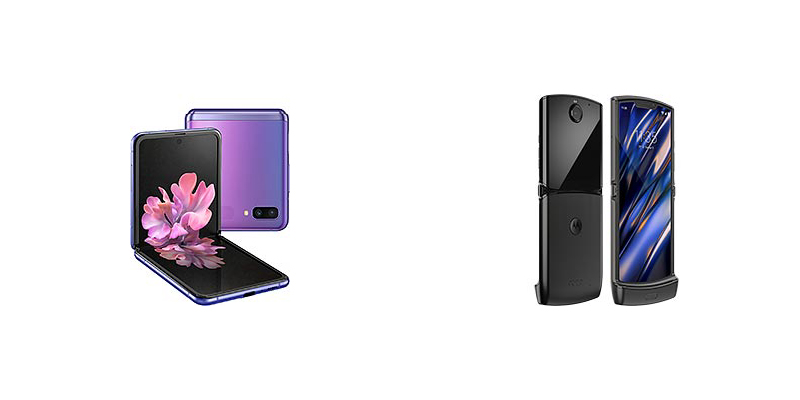
With the new Motorola Razr, Motorola created a brand new niche of foldable smartphones consisting of regular phones folding in half in order to become extremely compact. After the Razr, even Samsung came up with such a foldable phone: the Galaxy Z Flip. Just like the Motorola Razr, it folds in half and it has an external display showing notifications and other important things. But which design philosophy is the best and which is the best foldable phone in terms of specifications? In order to answer these questions, we decided to publish a specs comparison between Samsung Galaxy Z Flip and Motorola Razr: the only foldable phones with a clamshell form factor.
Samsung Galaxy Z Flip vs Motorola Razr
Samsung Galaxy Z Flip
Motorola Razr
DIMENSIONS AND WEIGHT
167.3 x 73.6 x 7.2 mm, 183 grams
172 x 72 x 6.9 mm, 205 grams
DISPLAY
6.7 inches, 1080 x 2636p (Full HD+), 425 ppi, Foldable Dynamic AMOLED
1.1 inches, 112 x 300p, Super AMOLED external display
6.2 inches, 876 x 2142p (HD+), 373 ppi, Foldable P-OLED
2.7 inches, 600 x 800p, G-OLED external display
PROCESSOR
Qualcomm Snapdragon 855+, octa-core 2.95 GHz
Qualcomm Snapdragon 710, octa-core 2.2 GHz
MEMORY
8 GB RAM, 256 GB
6 GB RAM, 128 GB
SOFTWARE
Android 10, One UI
Android 9 Pie
CONNECTIVITY
Wi-Fi 802.11 b/g/n/ac, Bluetooth 5.0, GPS
Wi-Fi 802.11 b/g/n/ac, Bluetooth 5.0, GPS
CAMERA
Dual 12 + 12 MP f/1.8 and f/2.2
10 MP f/2.4 front camera
Dual 16 MP f/1.7 + TOF 3D camera
5 MP f/2.0 front camera
BATTERY
3300 mAh, fast charging 15W, wireless charging
2510 mAh, fast charging 15W
ADDITIONAL FEATURES
eSIM, foldable display
eSIM, foldable display
Design
The new Motorola Razr is a revival of the iconic Motorola Razr that is one of the devices which made the biggest success in the era of feature phones. So its design is definitely more interesting and attractive than Galaxy Z Flip, at least according to us. The Galaxy Z Flip is undoubtedly an elegant phone and given that its foldable display can be placed in several angles it even offers a more innovative user experience, but the Motorola Razr is the most amazing in terms of aesthetics. It does not have the resistant Ultra Thin Glass layer found on the Samsung Galaxy Z Flip which should make the display more durable, but on the other hand, it is splash resistant.
Display
The best internal foldable display is the one mounted on the Samsung Galaxy Z Flip. It has a higher resolution, a better image quality, it can be opened in various angles (and not only flat) and it is even HDR10+ compliant. But when it comes to external displays, Motorola Razr wins. The Galaxy Z Flip has just a mini 1.1-inch display which can only show notifications and a few other things, while Motorola Razr has a wide 2.7-inch external display allowing to shoot selfies, answer calls and performing many other advanced tasks. You can partially use your phone while it is folded, and you can not do it with the Samsung Galaxy Z Flip.
Specs & Software
When it comes to hardware, Motorola Razr is just a mid-ranger. It is fueled by a Snapdragon 710 chipset paired with 6 GB of RAM and 128 GB of internal storage. Nothing special for a device that costs more than €1000. Galaxy Z Flip is a real flagship, fueled by the Snapdragon 855+ SoC paired with 8 GB of RAM. Further, unlike the Motorola Razr, it has Android 10 out of the box. Unfortunately, none of these devices supports 5G connectivity. The Motorola Razr does not even have a SIM slot: it relies on eSIM technology. Samsung Galaxy Z Flip wins the hardware and software comparison.
Camera
Samsung Galaxy Z Flip is a way better camera phone than Motorola Razr. It does not allow shooting selfie through its dual rear camera like the Motorola Razr, but it has a pretty nice 10 MP selfie camera. On the rear side, Galaxy Z Flip comes with a dual camera including OIS and an ultrawide sensor. Motorola Razr has just one single sensor and it can be considered a midrange camera phone, nice photos, but not a huge deal. At least you can take selfies with the rear camera, while the smartphone is folded.
Even on the battery side, Samsung Galaxy Z Flip takes the gold medal, It has an above-average battery if compared to the actual flagships, but at least you do not risk of running out of battery before the end of your working day. Both feature 15W fast charging, but Samsung Galaxy Z Flip is the only with Qi wireless charging. Motorola Razr has a 2510 mAh battery which barely reaches the end of the day with moderate use. We still did not test the battery of the Galaxy Z Flip, but given the capacity, it will surely be a lot better.
Price
You need whopping €1500 to purchase both Samsung Galaxy Z Flip and Motorola Razr, in the European market. Galaxy Z Flip is priced $1379 in the U.S. while Motorola Razr costs $1,500. There is no doubt: Galaxy Z Flip is a more advanced foldable phone thanks to its better hardware, better cameras, and longer battery life. It even offers a more advanced user experience while unfolded (but the external display Motorola Razr allows doing more while the phone is folded). But if we talk about the design only, then the nostalgic effect provided by the Motorola Razr has no rivals.
Samsung Galaxy Z Flip vs Motorola Razr: PRO and CONS
HMD Global is the latest among manufacturers to announce it will no longer be attending one of the world’s biggest technology events. Its announcement comes in the wake of Sony, LG, NVIDIA, Amazon, Vivo, Intel, and MediaTek’sannouncements to not attend the event which is scheduled to begin on February 24 and end on February 27.
The health and safety of our employees, partners, customers, and media is our first priority. With that in mind, we are making the prudent choice to cancel our participation at #MWC20. https://t.co/eH3gelws19
The press statement put up on their official website says the decision was made after much deliberation and careful monitoring of the Covid-19 (Coronavirus) outbreak. HMD Global said that the health and safety of its employees, partners, customers, and media is its first priority hence the reason for canceling its participation at MWC 2020.
The press release also stated that they will update their partners and customers on a new timeline for the launch of its products.
It has been reported that the GSMA will make a decision this Friday to determine if this year’s MWC will be canceled. The organization overseeing the event may decide to go on but introduce extra measures to protect attendees.
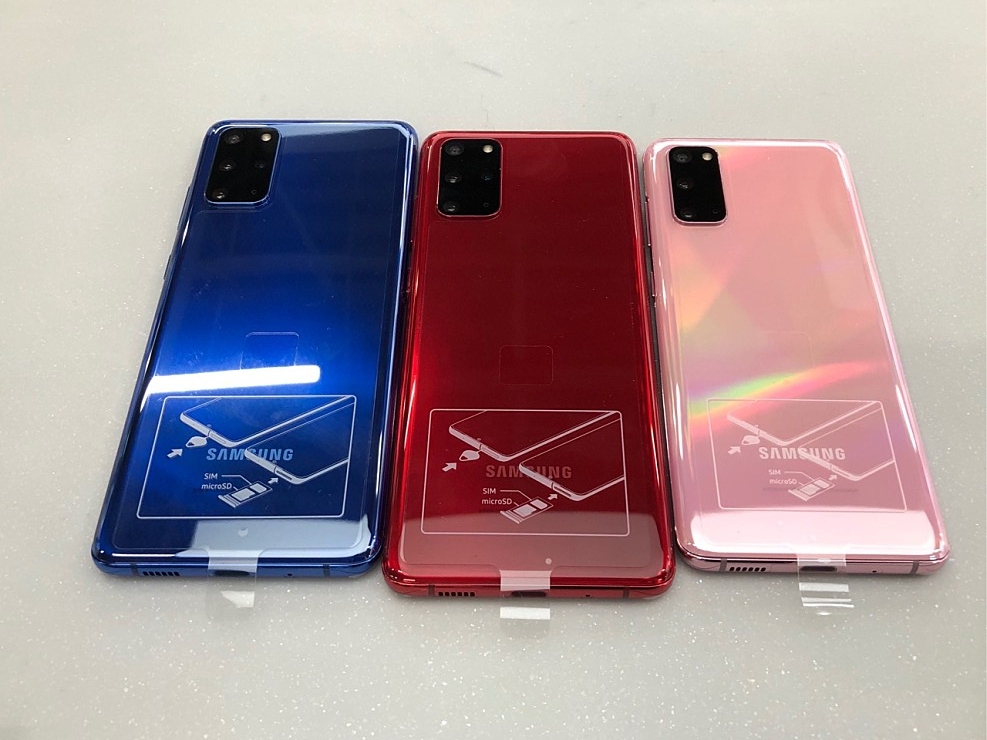
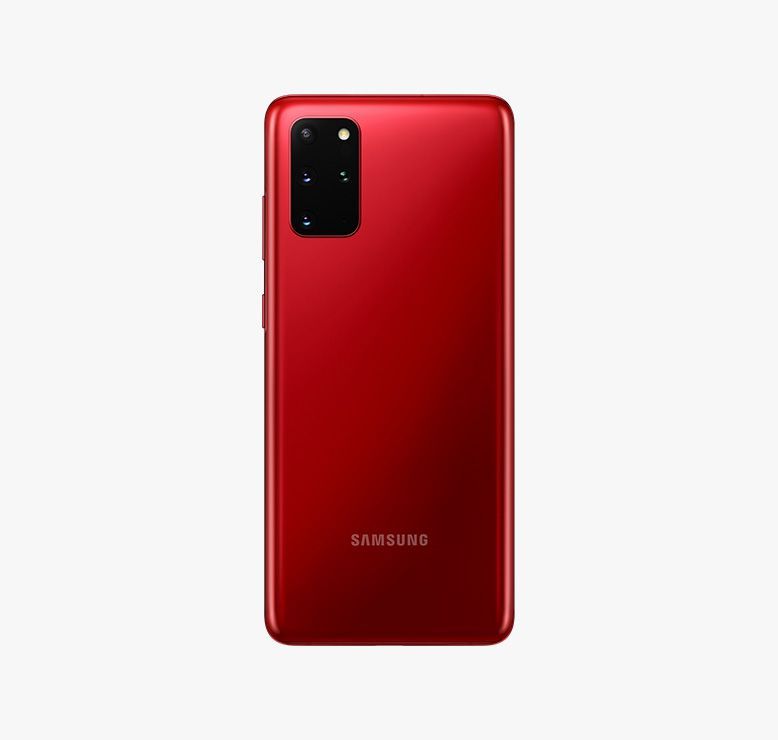
The Galaxy S20 series comes in a number of color variants, although some colorways are exclusive to certain models. However, none of the models comes in white or Cloud White as it is officially called except in South Korea.
The Galaxy S20+ 5G and Galaxy S20 5G are available in Cloud White in Samsung’s home country alongside Cloud Blue and Cosmic Gray. A leak has revealed that it is not the only color that will be exclusive to Korea.
[envira-gallery id=”305168″]
Weibo posts by Ice Universe have revealed the Galaxy S20+ will also be available in red and blue in Korea. He also shared images to back up the statement.
As you can see in the images below, the blue is a much darker shade when compared to the Cloud Blue colorway and the red variant has the same shade as the red Galaxy Note10 Lite.
However, only the Cloud White variants are currently listed on the Samsung Korea official website. The blue and red colorways will most likely be announced later.
1 of 3
Samsung is not new to announcing new color variants for its flagship phones, so we won’t be surprised if these colorways are announced in other countries later. We may also get more colorways later in the year.
Are you purchasing the Galaxy S20/S20+/S20 Ultra? Let us know which color variant you like best.
In the face of the fight to prevent the spread of the novel Coronavirus epidemic ravaging China, Xiaomi has launched a new non-contact infrared thermometer. The device dubbed Bencom Infrared thermometer can take the temperature reading in just one second with a measuring accuracy of 0.2 degrees. The device is priced at 169 yuan ($24) and will start shipping on February 26. Infrared thermometers are rated as the best instrument to take an accurate measurement of human body temperature. Infrared thermometers usually use a lens to focus infrared light from one object onto a detector called a thermopile. The thermopile absorbs the infrared radiation and turns it into heat. The more infrared energy, the hotter the thermopile gets. This heat is turned into electricity. The electricity is sent to a detector, which uses it to determine the temperature of whatever the thermometer is pointed at. The more electricity, the hotter the object is. The Bemcom Infrared thermometer is equipped with a German Heiman thermopile high-precision sensor.
The device needs to be pointed at the forehead and must be within a 5cm distance, in order to get a correct reading. If the working distance exceeds 5cm no reading is taken. The device has a display and a single button which is used to initiate the temperature measurement. The gadget vibrates after the temperature reading has been taken. If the temperature of the measured object is lower than 38 degrees, the machine will vibrate once. If the temperature of the measured object exceeds 38 degrees, the machine will vibrate three times, indicating that you may have a cold and fever.
The display is an ultra-clear LED screen which uses white characters on a black background. This makes it easy for use by persons with poor vision.
Apart from body temperature, the device can also be used to measure other temperatures such as water temperature, milk temperature, etc. In addition, the thermometer automatically saves up to 32 temperature readings which can come in handy if there is a need to monitor changes in temperatures.
It is worth mentioning that in order to avoid operating errors, the Bemcom Infrared thermometer also has a built-in temperature sensor and working environment temperature compensation sensor, which can help to obtain accurate temperature measurement data in various environments.
We use cookies on our website to give you the most relevant experience by remembering your preferences and repeat visits. By clicking “Accept”, you consent to the use of ALL the cookies.
This website uses cookies to improve your experience while you navigate through the website. Out of these, the cookies that are categorized as necessary are stored on your browser as they are essential for the working of basic functionalities of the website. We also use third-party cookies that help us analyze and understand how you use this website. These cookies will be stored in your browser only with your consent. You also have the option to opt-out of these cookies. But opting out of some of these cookies may affect your browsing experience.
Necessary cookies are absolutely essential for the website to function properly. This category only includes cookies that ensures basic functionalities and security features of the website. These cookies do not store any personal information.
Any cookies that may not be particularly necessary for the website to function and is used specifically to collect user personal data via analytics, ads, other embedded contents are termed as non-necessary cookies. It is mandatory to procure user consent prior to running these cookies on your website.


 Moreover, the announcement confirmed that Xiaomi’s R&D (research and development) expenses are envisioned to be about 7 billion yuan (~US$1 billion). Concurrently, the company’s R&D investment for this entire year is expected to surpass RMB 10 billion (~US$1.43 bn).
 In addition to that, Xiaomi has the bragging rights for releasing the world’s fastest wireless charging technology. Last year, the tech giant




 The company deems the price hike as temporary and it hopes to start selling the phone for its original asking price as soon as the component cost stabilizes. Amid the price hike, the
 At first glance, the smartphone seen in the patent doesn’t seem to adopt a radically overhauled design element. While it seems to adopt a form factor we’d normally associate with a standard flagship, a closer look reveals there’s more to it than meets the eye.
 Nevertheless, that doesn’t hint at an imminent arrival of the device as Oppo currently has its hands full with the launch of the Find X2, which is expected to take place before the