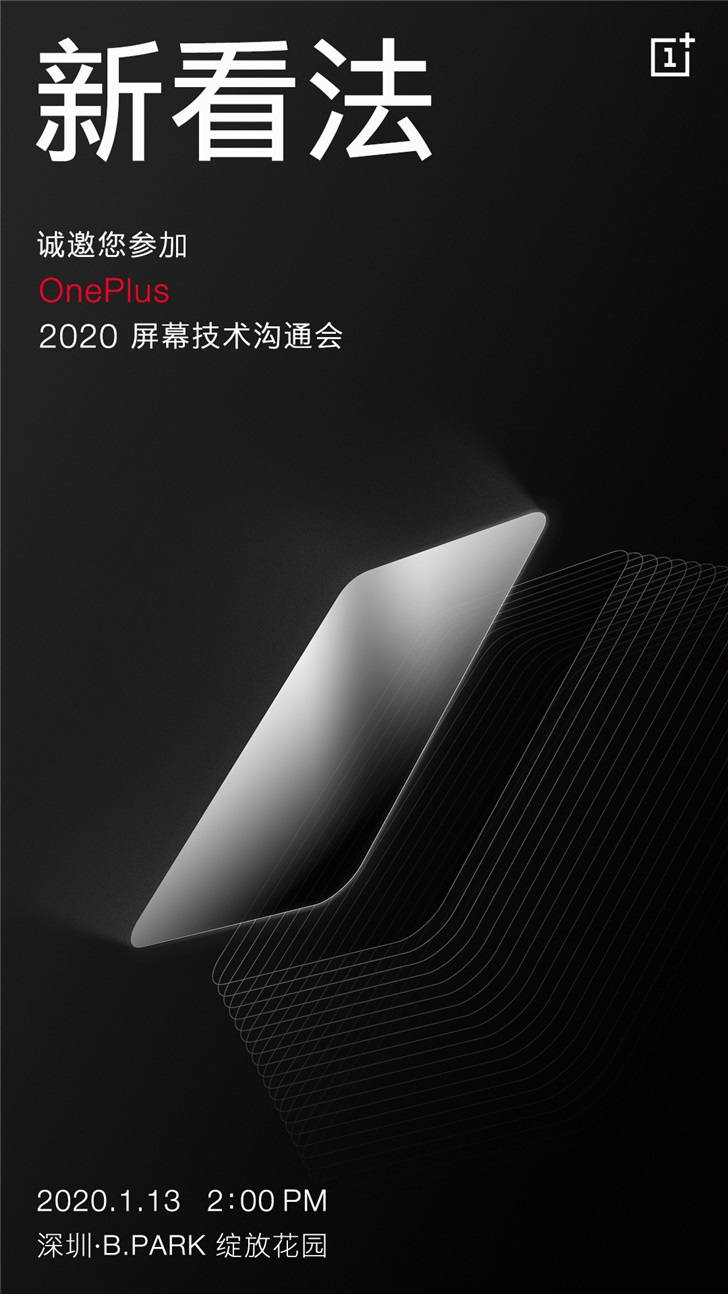
Earlier today (13th January 2020), OnePlus held a media conference meeting in Shenzhen, China. Here, the company unveiled its developments in the screen technology area and revealed the completion of a 120Hz display.
OnePlus screen technology conference 2020
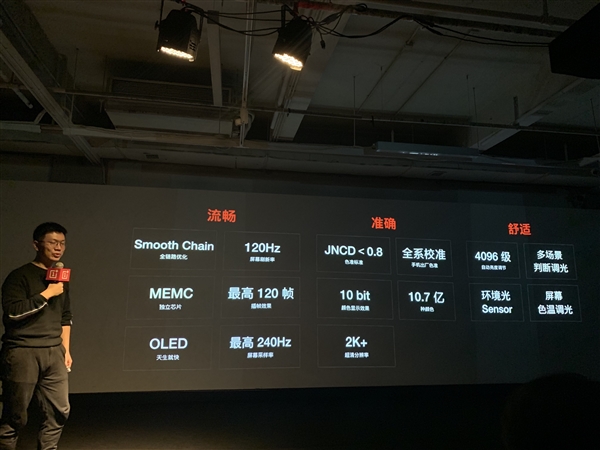
In the conference, OnePlus’ upcoming flagship smartphone series, the OnePlus 8, had one of its highlighting aspects revealed. It will feature a 2K OLED display with a refresh rate of 120Hz and a screen sampling rate of 240Hz, the highest in the industry. Furthermore, it was also revealed that OnePlus’ new screen has the highest color reproduction standard of JNCD <0.8, which beats the iPhone 11 Pro Max‘s JNCD <0.9 and the industry average of JNCD <2.
Notably, the company has even claimed that it was made a few unique optimizations to the 120Hz display; all of which to enable three major user-friendly factors, namely smoothness, accuracy and comfort. The exact details are as follows:
Details regarding the new display technology and its class leading specs
Smooth Chain Optimization
MEMC Independent Chip
Up To 120Hz refresh rate
240Hz screen sampling rate
JNCD <0.8
Color calibration of smartphones being manufactured
It is a big deal considering the display was one of the areas where the company had received criticism on initially. Starting from the OnePlus 7 series, the company has started giving importance to the display of its smartphones, which now arrive with a higher refresh rate and better resolution. This has even led to the feature almost becoming a standard in the premium grade segment of mobile phones.
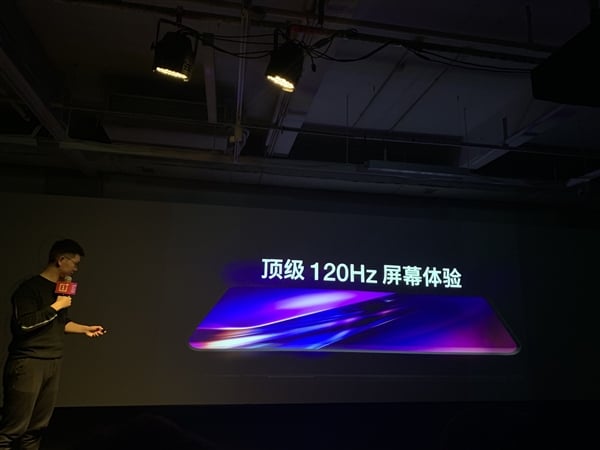
OnePlus 8 series will arrive with a 2K OLED display with 120Hz refresh rate
OnePlus is also very active in the gaming community and even optimizes its handset offerings to better perform in games; thus, it comes as no surprise that the higher refresh rate will even work to further improve on the mobile gaming experience the company has to offer.
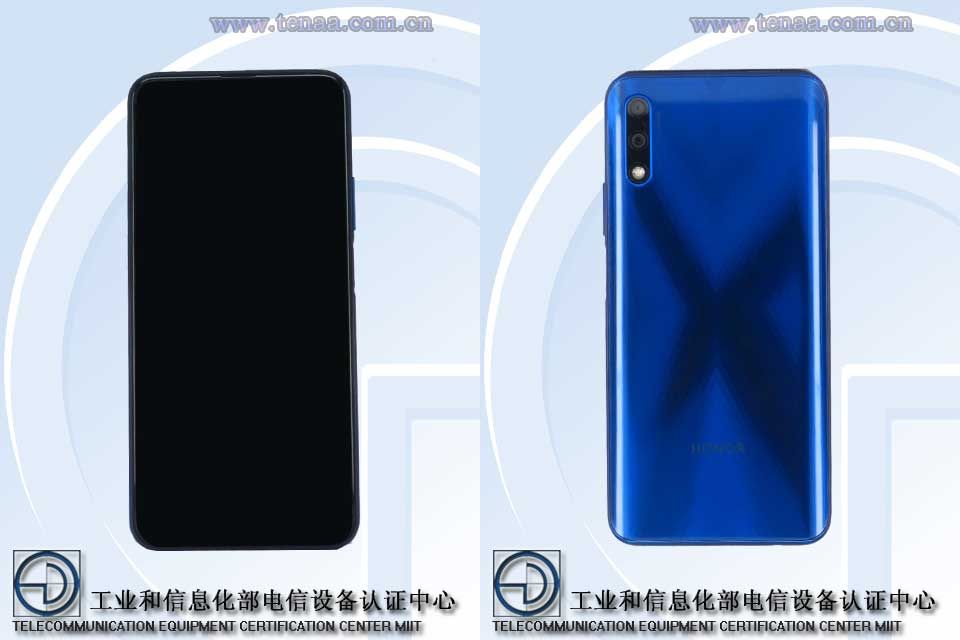
Honor had launched the Honor 9X smartphone that has a model number of HLK-AL00/TL00 in China in July last year. A new listing for HLK-AL00a Honor phone has appeared on TENAA with its entire specifications. With a model number similar to the Honor 9X, the newly spotted HLK-AL00a seems to be a new variant with a different processor.
Honor HLK-AL00a Specifications
The Honor HLK-AL00a smartphone has 163.1 x 77.2 x 8.8mm dimensions and it weighs 206 grams. Its color variants are listed as black, blue, red, gradient purple, gradient blue, etc. The device houses a notch-less screen that of 6.59 inches. The phone offers full HD+ resolution of 1080 x 2340 pixels. A minimum rated battery of 3,900mAh capacity is present under the hood of the HLK-AL00a. Its typical capacity could be 4,000mAh battery. There is no support for fast charging on the device.
An octa-core processor that clocks at 2.0GHz is at the helm of the Honor HLK-AL00a smartphone. The phone is expected to release in China in 4 GB and 6 GB RAM options. Its storage sizes listed on TENAA are 64 GB, 128 GB and 256 GB.
There is a microSD card slot on the Honor HLK-AL00a for more storage. The phone is loaded with the Android 9 Pie OS. A fingerprint integrated with the power button is fitted on the right edge of the device. Above it is the volume rocker.
The back panel of the Honor HLK-AL00a has a vertical dual camera setup. It includes a 48-megapixel main lens and a 2-megapixel secondary shooter. For capturing selfie shots, the phone possesses a pop-up selfie snapper of 16-megapixel.
As it can be seen, the specs and design of the Honor HLK-AL00a are exact match with Honor 9X. The only major difference is that the Honor 9X is driven by the Kirin 810 2.27GHz octa-core processor whereas the HLK-AL00a has a 2.0GHz octa-core CPU onboard.
The HLK-AL00a to be a new variant of the Honor 9X. The TENAA certified phone is expected to break cover as the first Honor phone of 2020. The Chinese firm is yet to confirm on the arrival of a new phone. Hopefully, the HLK-AL00a will be made official within this month.
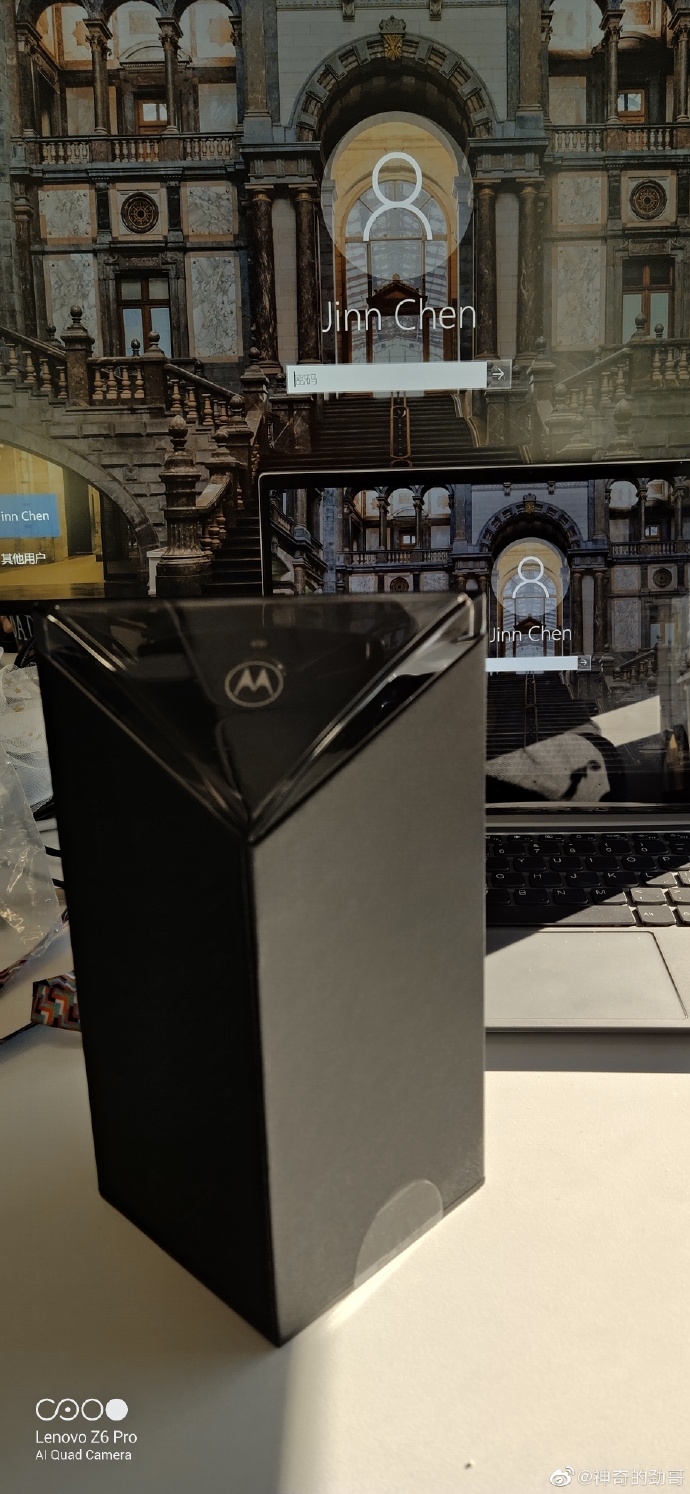
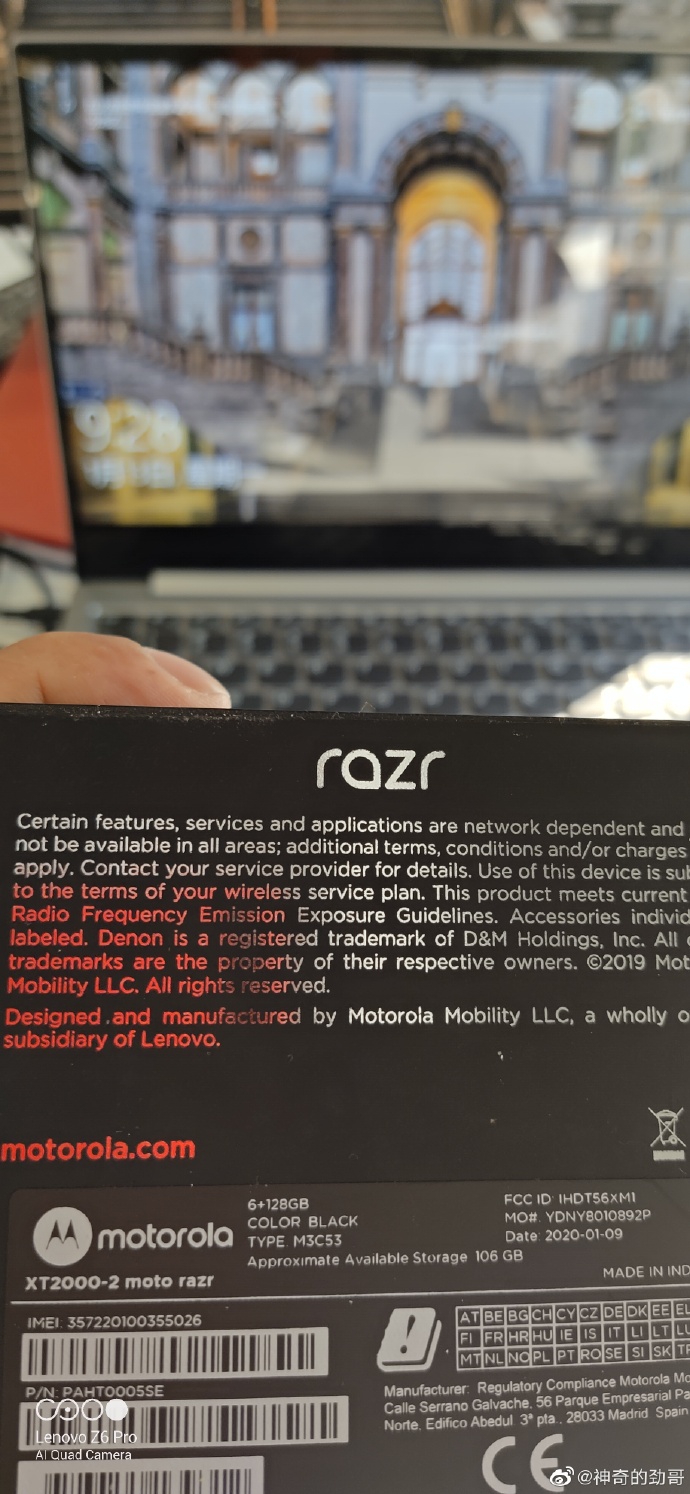
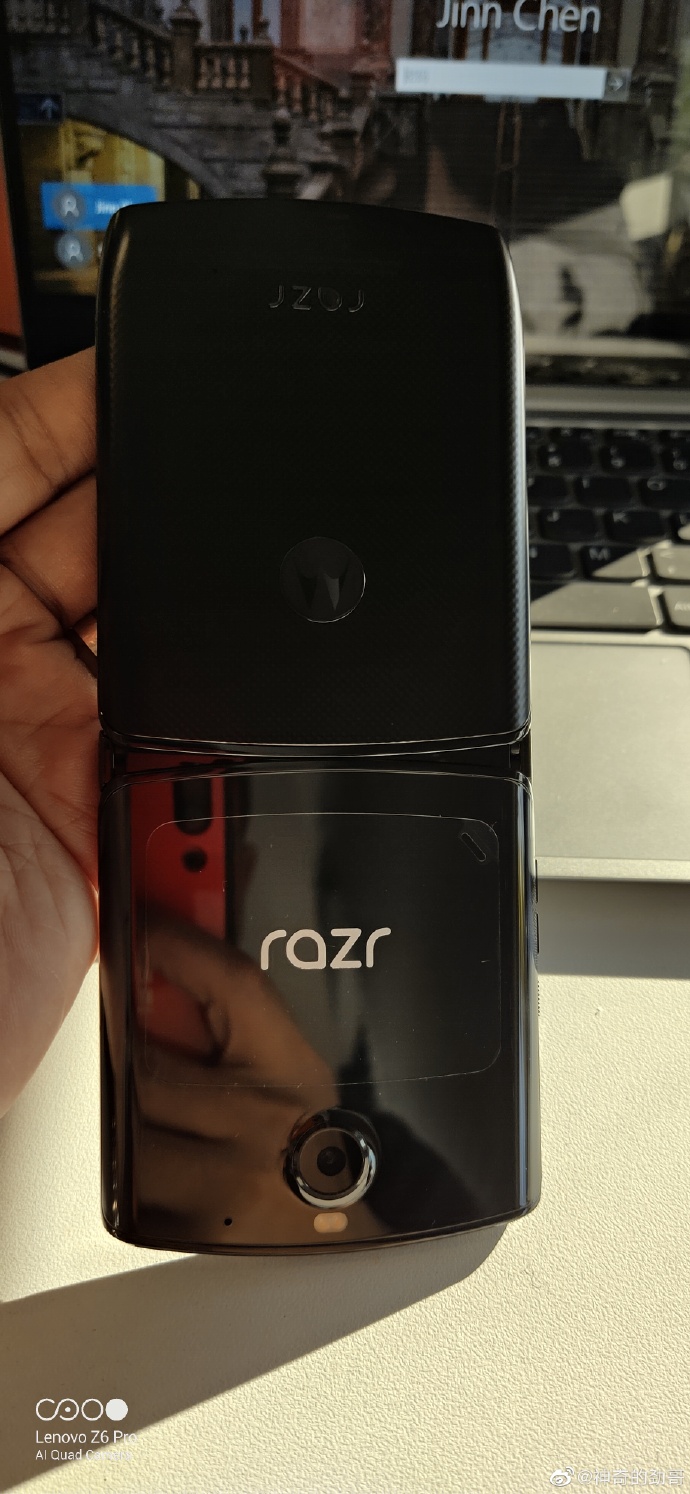
The Motorola Razr, despite discussions and criticisms, is still one of the hottest smartphones coming soon, and with the device’s Chinese launch coming soon, the company has been drumming up hype for it on Weibo with pictures of the production unit and the device’s box.
The box is rather unique next to the plethora of other boxes in the smartphone market. It’s triangular in shape, and stands tall instead of flat on the ground. There’s still all the information you expect on the back, showing us the device’s name, specifications and details. It’s very good looking box, and it complements the device very well.
After launching the Motorola Razr smartphone in November in the United States, Yang Yuanging, Chairman and CEO of Lenovo Group confirmed that the phone’s sale in the U.S. has been postponed due to demand and supply issues.
The Motorola Razr has a 6.2-inch Flex View P-OLED display with a 21:9 aspect ratio and a notch for a 5MP selfie camera. When folded, there is a smaller 2.69-inch 800 x 600display on the back that displays notifications and caller IDs.
Inside the Razr is a Snapdragon 710 processor with 6GB of RAM and 128GB of storage. Due to its design, the Razr packs a measly 2510mAh battery capacity but has support for 15W TurboPower fast charge. There is a 16MP camera on the back of the phone as well as a fingerprint scanner under the Motorola logo.
The Motorola Razr also has NFC, Bluetooth 5.0, and an eSIM. It runs Android 9 Pie though but we hope an Android 10 update is released shortly after it goes on sale because asking for $1499 for a device that doesn’t run the latest version of Android is a bit outrageous.
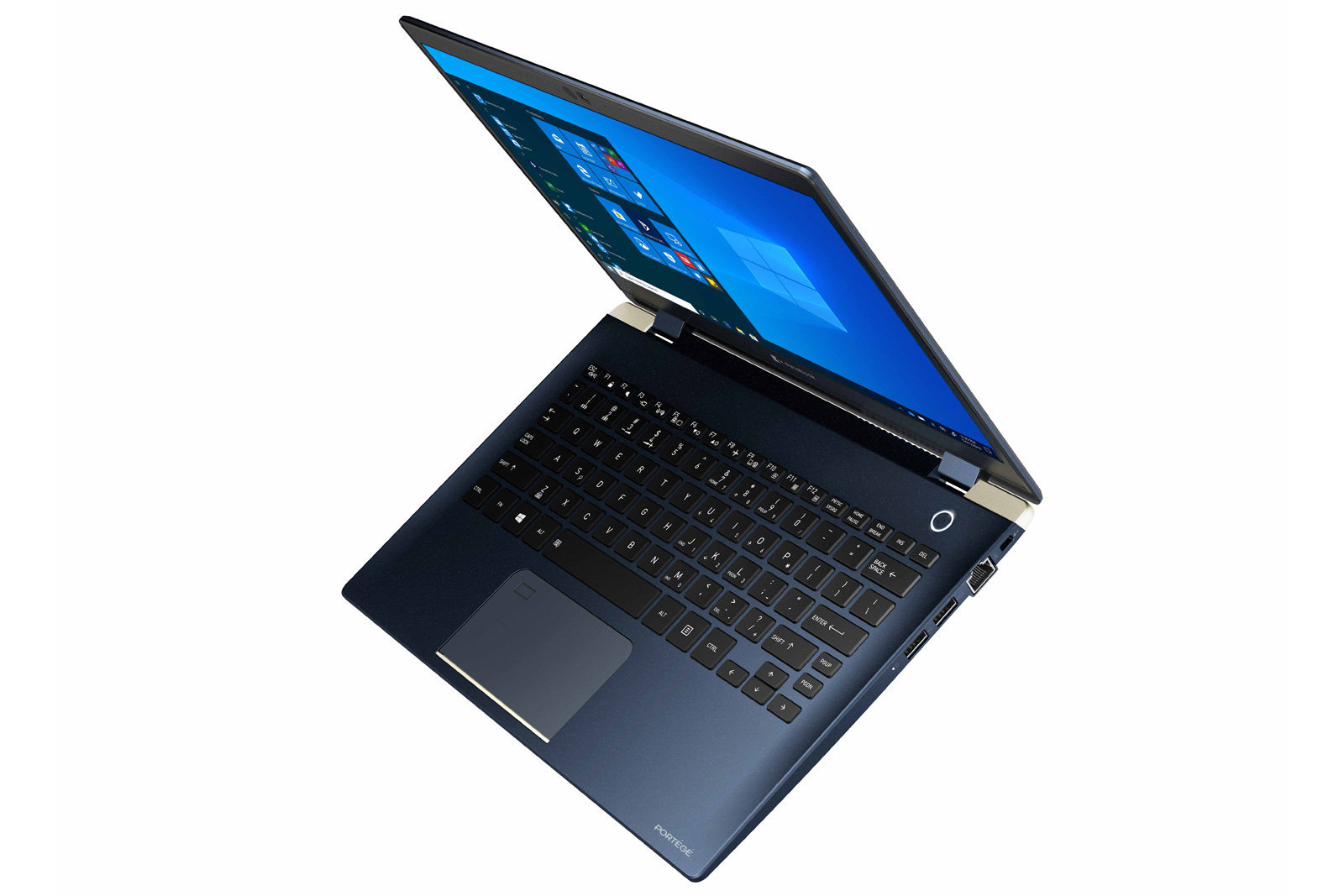
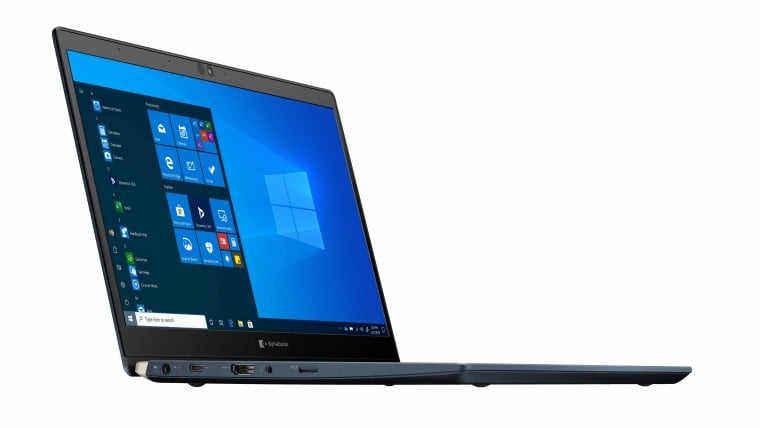
Sharp‘s Dynabook series of laptops have just received a new entry in its lineup. It is a 13 inch laptop which is one of the lightest PC currently available. The notebook is dubbed the Portégé X30L-G and arrives with notable specs in a very light package. It was revealed at the Consumer Electronics Show of 2020 (CES 2020)
Sharp’s (Dynabook series) Portégé X30L-G is one of the lightest laptop ever made
Portégé X30L-G
Sharp Dynabook lineup (formerly Toshiba’s) have made an entry in the notebook market with a light and portable laptop that doesn’t compromise on performance. One of the notable aspects of the device is its processor and weight, which is the 10th Generation Intel Core Processor in a 1.9 pounds (860 grams) form factor. Notably, Sharp’s latest Dynabook laptop achieved its featherweight feature since it was manufactured using a light magnesium alloy (avoiding the heavier aluminum).
Despite its incredibly lightweight, the laptop still features a U-series processor (low power consuming chips from Intel), an IGZO display with a maximum brightness of 470 nits, WiFi 6 and a generous offering of ports; including one USB Type C, two USB Type A, an Ethernet port and an HDMI. Additionally, Sharp Dynabook Portégé X30L-G also arrives with a military grade dust and drop resistance and a battery life ranging around 14.5 hours on a full charge.
The Portégé X30L-G is made from magnesium alloy that helps achieve its feather weight
Price and Availability
Due to its unique and extreme light weight design, people interested in buying Sharp Dynabook Portégé X30L-G have to shell out 1,600 US Dollars (roughly 11,000 Yuan). The laptop will be available for purchase sometime in February 2020.
For more coverage on CES 2020 launches and event, click here.
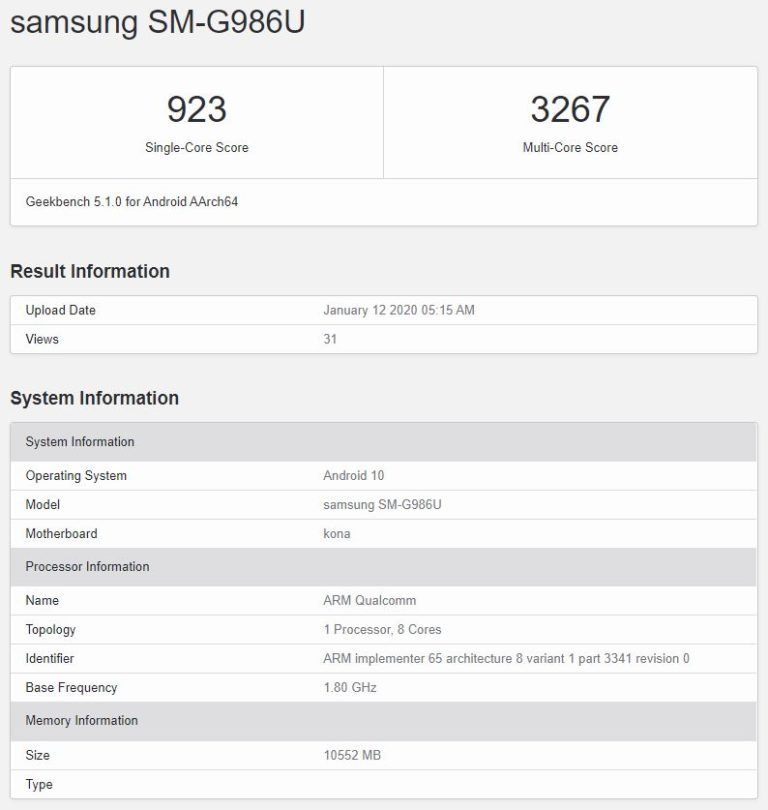
Samsung will be debuting the Galaxy S20 series of smartphones in the coming month. Ahead of the launch, the rumor mill is actively working on revealing vital information on the S20 smartphones. The live shots of the Galaxy S20+ 5G had appeared over the weekend. The images corroborated with the renders of the phone that had appeared in the last month. The Galaxy S20+ 5G smartphone that is believed to have a model number of SM-G986U has been benchmarked on Geekbench. As usual, the benchmarking platform has revealed some of the details of the device
The Geekbench 5 listing of the Galaxy S20 reveals that it is preloaded with Android 10. The handset is expected to feature the latest One UI 2.0 custom interface. The phone is powered by a processor that is mentioned as ‘kona’ which is the codename of the Snapdragon 865 mobile platform that was made official last month. The base frequency of the processor is 1.80GHz.
The SoC is assisted by 12 GB of RAM. The device could be equipped with the latest LPDDR5 RAM. On Geekbench 5’s single-core test, the phone has scored 923 and in the multi-core test, it has reached a score of 3267.
Rumors surrounding the Galaxy S20+ 5G is expected to house a 6.7-inch resolution S-AMOLED display with Infinity-O design. The display is expected to deliver 120Hz refresh rate. Some markets are expected to receive the Exynos 990 chipset version of the Galaxy S20+ 5G smartphone. It may come equipped with an internal storage of 256 GB. The phone could be housing a 4,300mAh battery. It could be coming with a 25W fast charger. The rear-facing quad camera setup of the phone could be housing a 108-megapixel main lens.
The Galaxy S20 series is rumored to include five devices such as Galaxy S20, Galaxy S20 5G, Galaxy S20+, Galaxy S20+ and Galaxy S20 Ultra 5G. The South Korean tech giant confirmed in the last week that it will be holding the Galaxy Unpacked Event 2020 on Feb. 11 in San Francisco at 11 AM (PST). At the same event, the company is expected to unleash its clamshell foldable phone called Samsung Galaxy Z Flip. Rumors have it that it could be a Snapdragon 855 mobile platform powered device.
A few months ago, in September 2019, HMD Global launched the Nokia 7.2 mid-range smartphone which has now been reviewed by DxOMark. While the result seems similar to the Nokia 9 PureView, the report says that the performance differs widely.
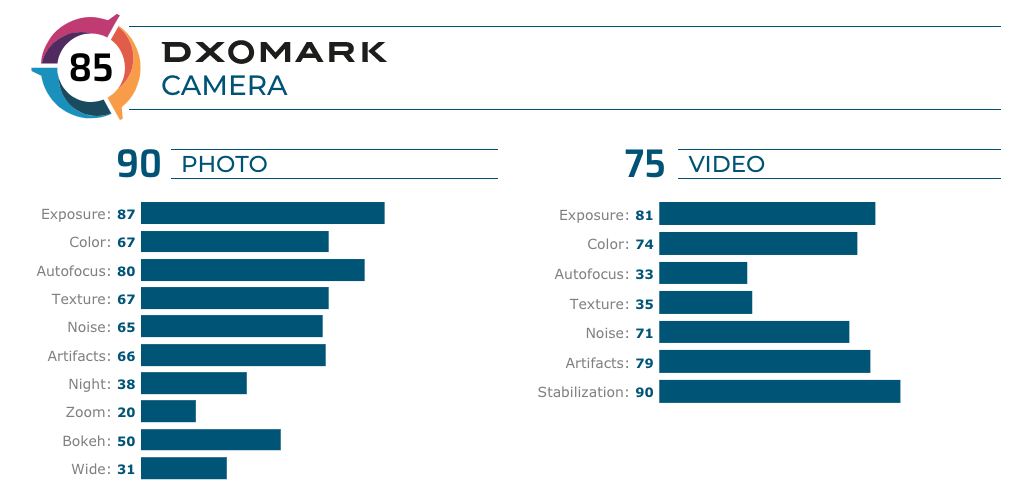
Nokia 7.2 smartphone has secured an overall DxOMark Camera score of 85, showing a notable improvement over the older Nokia 8. The result of this smartphone is broadly comparable to the Nokia 9 PureView launched earlier in 2019.
The smartphone has hit a photo score of 90 points, witnessing very modest improvement for still images over the Nokia 9 PureView at 88. The company adds that while the scores are very similar across the board, there are some notable differences in the performance of the two rival Nokia devices.
It also says that the addition of an ultra-wide lens helps boost the final score for the Nokia 7.2 but the phone isn’t quite as good as Nokia 9 PureView when it comes to color, autofocus, or night shots. In the video category, the phone has scored 75 points.
The device comes with a triple-camera setup on the back. The primary camera uses a 1/2-inch 48Mp Quad-Bayer sensor with 0.8µm pixels coupled to a standard wide-angle f/1.8-aperture lens with PDAF autofocus. It also has an ultra-wide second shooter built around an 8MP sensor with a 13mm-equivalent f/2.2-aperture lens and a 5MP dedicated depth sensor for Portrait mode.
It comes with bokeh effects such as ZEISS Modern, ZEISS Swirl, and ZEISS Smooth for adjusting several features when you take a portrait photo. There is also a Night Mode which uses a combination of advanced image fusion and multiple exposures for brighter images with rich details.
The Nokia 7.2 features a 6.3-inch FHD+ PureDisplay with the same PixelWorks processor for real-time HDR conversion. It also has a notch at the top which houses a 20MP camera with Carl Zeiss lens. It is powered by Snapdragon 660 processor with 4/6 GB RAM and 64/128 GB of expandable storage.
The phone runs Android 9 Pie operating system out-of-the-box and is promised by the company to get 2 years of OS updates and 3 years of security updates. The device has a 3500mAh battery and with AI features like Adaptive Battery and HMD Global has promised a 2-day battery life.
OnePlus has scheduled an event in China today named “OnePlus 2020 Screen Technology Communication Meeting” where the company is expected to unveil and showcase its next-generation screen technology.
Now, just hours before the event, OnePlus CEO Pete Lau has confirmed on Chinese microblogging platform Weibo that the company has completed development of 120Hz screens. He also added that more details about the same will be shared at the Screen Technology event planned for later today.
The said event will be held today, i.e. on 13th January at 14:00 local time in Shenzhen B.PARK bloom garden. The development of 120Hz refresh rate display is yet another major step forward for the company as it now focusing on offering premium specs and features.
There are lots of major developments happening when it comes to smartphone displays — from in-display fingerprint sensors to in-display camera modules to higher refresh rate. With OnePlus 7T series coming with 90Hz refresh rate display and the company having completed development of 120Hz screen, it’s safe to assume that the next-gen flagship device from the company will have this new screen technology.
Earlier, Pete Lau had confirmed that all the future smartphones from the company will now come with 90Hz refresh rate display or a more advanced technology. This new development from the company seems to in line with that promise.
The news about this new screen technology comes just days after OnePlus showcased its OnePlus Concept One smartphone at CES 2020 in Las Vegas. It features a vertical triple camera system that is neatly tucked under an electrochromic glass. When a current is applied, the glass can swiftly change from opaque to transparent.
In this smartphone, when the camera is turned on, the three sensors become instantly visible. When the camera app is closed, the triple cameras again become invisible. The company claims that it takes only 0.7 seconds for the glass to transition from transparent to opaque or vice versa.
OnePlus will be revealing more details about the 120Hz refresh rate display at the “2020 Screen Technology Communication Meeting” in a few hours and we’ll be bringing all the details from the event here for you. Stay tuned!
It has been more than three months since Android 10 was officially released. Since then, manufacturers have been working on rolling out the update to users. However, there are several devices still stuck on an older version of Android. Some may not even get the update at all even with the new mechanisms put in place for upgrades to be available much faster such as Project Treble.
It has also been more than seven months since Google updated the Android Distribution Board, thus we do not know the percentage of devices running the latest version of Android.
So for this week’s poll, we want to know what version of Android your phone is on. Are you running Android 10 already or you are still stuffing yourself full with Android 9 Pie or Android 8 Oreo? Do take the poll and let us know. We also want to know if you will be switching brands in the future due to the manufacturer’s attitude to updates, so please drop a comment too.
In roughly a month, Samsung will announce the Galaxy S20 series. According to a tweet by XDA Developers writer, Max Weinbach, we will be getting five Galaxy S20 phones. The five phones are the Galaxy S20, Galaxy S20 5G, Galaxy S20+, Galaxy S20+ 5G, and the Galaxy S20 Ultra 5G. Since all the phones that will be powered by the Snapdragon 865 will have a 5G modem, it is safe to say the non-5G versions of the Galaxy S20 are the ones powered by the Exynos 990 chipset.
Ahead of the release, Max has also posted live photos of the Galaxy S20+ 5G and they confirm what we already know about the design of Samsung’s upcoming flagship.
The biggest change is the display which no longer has a pill-shaped punch hole at the top left corner for dual front-facing cameras but a centered one for a single camera. Max says in a separate tweet that the display is not as curved as that of its predecessor, the Galaxy S10+. The reason for this is because Samsung is using 2.5D glass for the display.
The Galaxy S20+ also has fewer buttons as the Bixby button is now gone, hopefully for good.
As I mentioned in the article, the Galaxy S20+ isn't very curved. It actually feels flat in the hand. This is because Samsung is using 2.5D glass. For those who hate curved screens, you all will be very excited.
2.5D glass is the same type of curve as the Pixel 2 XL.
Another of the live images show the phone’s rear with the now-familiar rectangular camera housing. There are four cameras – three vertically arranged on the left while the fourth is nestled between the LED flash and a microphone on the right.
Other than a difference in the processors, we don’t know if there will be any other significant differences between the Galaxy S20+ and the Galaxy S20+ 5G.
Max said he has more details about the phone including videos of the device. So keep your eyes peeled for more Samsung leaks this week.
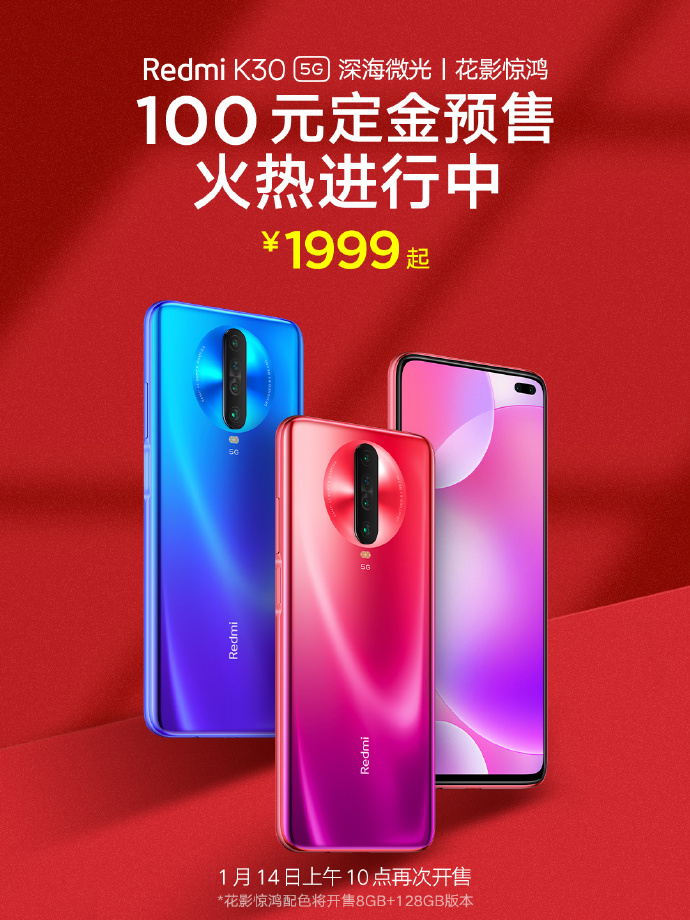
Xiaomi-backed Redmi had introduced the Redmi K30 series smartphones in China in December 2018. While the 4G edition had released in the company’s home market last month, the Redmi K30 5G was made available for purchase for the first time in China on 7th January.
In the sale, which lasted for just two hours, only the 8GB RAM + 128GB storage model was made available. However, the company has now revealed that the 6GB RAM model will be available for purchase tomorrow.
The 6GB + 64GB model is priced at 1,999 yuan (~$289) while the 6GB + 128GB model costs 2,299 yuan (~$333). Both these variants can now be pre-booked with a deposit of 100 yuan (~$14).
As for the specifications, the smartphone features a 6.67-inch punch-hole display and Gorilla Glass 5 panels for protection on its front and rear. The HDR 10 complaint display produces a tall aspect ratio of 20:9 and offers Full HD+ screen resolution of 1080 x 2400 pixels. It is also the first Redmi phone to arrive with support for 120Hz refresh rate.
Under the hood, the device is powered by the new 7nm Qualcomm Snapdragon 765G chipset and comes with up to 8GB of LPDDR4x RAM and 256GB UFS 2.1 inbuilt storage. There’s also a microSD card slot on the device for expanding the storage capacity.
The back panel of the phone features a vertical quad camera setup which is placed inside a glossy round pattern. It comes with Sony IMX686 64-megapixel primary lens with an f/1.89 aperture and a 1/1.73″ sensor size. The other sensors on the device include an 8-megapixel ultra-wide lens with 120-degree field-of-view, a 5-megapixel macro lens and a 2-megapixel depth assist lens.
The company claims that the Redmi K30 5G has the same camera algorithms that is available on the Xiaomi Mi CC9 Pro that features 108-megapixel penta-lens camera setup. On the front, the Redmi K30 5G features an AI powered dual camera setup that includes a 20-megapixel main lens and a 2-megapixel depth sensor.
It is the company’s first phone to arrive with Android 10 OS which is overlaid with the latest MIUI 11 user interface. The Mi Turbo 2.0 optimised the system performance whereas Game Turbo 2.0 enhances the device for gaming. It is powered by a 4,500mAh battery and carries support for 30W fast charging technology.
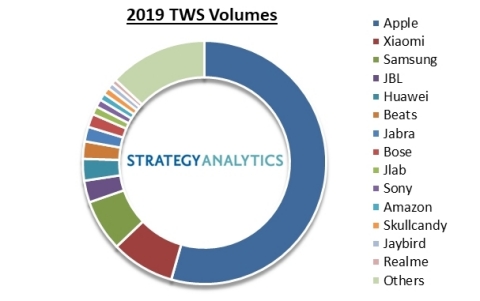
Strategy Analytics has published a report on the TWS headset market for 2019. According to the report, Apple is at the top with a market share of more than 50% while Xiaomi and Samsung follow in second and third positions respectively.
It is no surprise that Apple has the largest market share seeing as the Cupertino-based company practically created the category with the launch of the AirPods in 2016. Ken Hyers, the head of Strategy Analytics said: “Apple’s AirPods are the dominant Bluetooth headset in terms of sales volumes and revenues in the TWS segment”. He added that Apple will continue to dominate the category through the middle of the next decade.
In 2019, the revenues from the sales of TWS headsets grew by more than 200% and Apple took 71% of the total. It is predicted that wholesale revenues will grow beyond $100 billion by 2024 and new players in the market should be able to make their own share of the money.
Xiaomi and Samsung who are the second and third largest respectively each have a market share of less than 10%. One of Xiaomi’s TWS headsets, the Redmi AirDots is one of the cheapest headsets in the market and a popular alternative for those who can’t afford premium ones from manufacturers such as Samsung, JBL, Beats, and Sony.
Samsung will announce a follow-up to its Galaxy Buds on February 11 and it will launch as the Galaxy Buds+. We also expect the Redmi AirDots will get a successor this year.
Based on this report, it is safe to say TWS headsets are here to stay, and with the new features Bluetooth will bring with LE Audio, they should even get better.
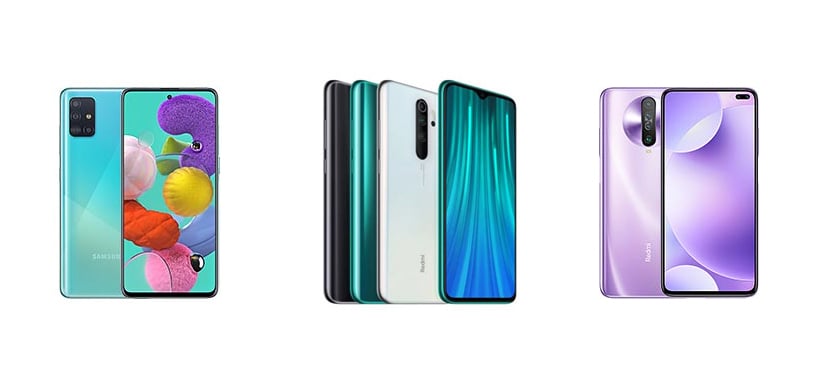
Never listen to people who say you need a flagship to get everything you need from a smartphone. A lot of users can grab the perfect device without spending a lot of money, thanks to actual mid-rangers. Among the latest high value for money, smartphones announced there are Samsung Galaxy A51 and Redmi K30. Given their well-balanced specs sheets, we think it is worth including them in a comparison to establish which one is the best. We also added Redmi Note 8 Pro to the comparison since we believe it is one of the most amazing smartphones you can get at a very affordable price.
Samsung Galaxy A51 vs Xiaomi Redmi Note 8 Pro vs Xiaomi Redmi K30
Quad 64 + 8 + 2 + 2 MP f/1.8, f/2.2, f/2.4 and f/2.4
20 MP front camera
Quad 48 + 12 + 5 + 5 MP f/2.0, f/2.4, f/2.4 and f/2.2
32 MP f/2.2 front camera
Quad 64 + 8 + 2 + 2 MP f/1.9, f/2.2, f/2.4 and f/2.4
Dual 20 + 2 MP f/2.2 and f/2.4 front camera
BATTERY
4500 mAh, fast charging 18W with Quick Charge 4+
4000 mAh, fast charging 15W
4500 mAh, fast charging 27W
ADDITIONAL FEATURES
Hybrid Dual SIM slot
Dual SIM slot
Hybrid Dual SIM slot
Design
While Redmi Note 8 Pro comes with a classic waterdrop design, Redmi K30 and Samsung Galaxy A51 offer something more innovative. They come with punch-hole notch-less displays. I personally prefer the Samsung Galaxy A51 because it has a single punch hole, a thinner profile, more compact dimensions, and an in-display fingerprint scanner. Both the fingerprint scanners of the Redmi Note 8 Pro and Redmi K30 are side-mounted.
Display
A lot of people might initially think that Samsung Galaxy A51 has a better display since it is the only one sporting an AMOLED panel in this trio. But despite having an LCD display, Redmi K30 is way more interesting as it features both the HDR10 certification and a high 120 Hz refresh ratio. And actually there is just a limited amount of mid-rangers with a 120 Hz display. The 120 Hz refresh rate provides smoother user experience and it is amazing for gamers. Further, Redmi K30 has a wider display diagonal.
Specs & Software
On the paper, the most powerful hardware department is on board of the Redmi Note 8 Pro. The device boasts an Helio G90T chipset paired with up to 8 GB of RAM and up to 256 GB of UFS 2.1 internal storage. The silver medal goes to the Redmi K30 with its Snapdragon 730G, despite a lot of people actually prefer to buy a device with a Qualcomm’s chipset due to the higher reputation of the San Diego-based chipmaker. Android 10 is installed out of the box on Redmi K30 and Samsung Galaxy A51, while Redmi Note 8 Pro is based on Android 9 Pie. Samsung Galaxy A51 has a lower-end chipset and it only comes with 6 GB of RAM in its most expensive variant.
Camera
While there is no way Samsung Galaxy A51 can compete with its opponents in terms of hardware and performance, its cameras are all but bad. But we will have to test them thoroughly to give a definitive opinion, as the device is still not in the market. Redmi K30 and Redmi Note 8 Pro come with the same rear camera department, but Redmi K30 is the only with a dual front camera including a depth sensor.
Battery
The best battery phone here is the Redmi K30 and the reason si very simple: it has the biggest battery with a 4500 mAh capacity and the most efficient chipset. Further, it even features a faster charging technology.
Price
Samsung Galaxy A51 is going to hit the global market with a €379,90 price tag, Redmi Note 8 Pro actually costs less than €250 globally, while Redmi K30 is available for €255, but only in China. The amazing, wider display, the good hardware department and the long-lasting battery would let me go for the Redmi K30 which we choose as the winner of this comparison.
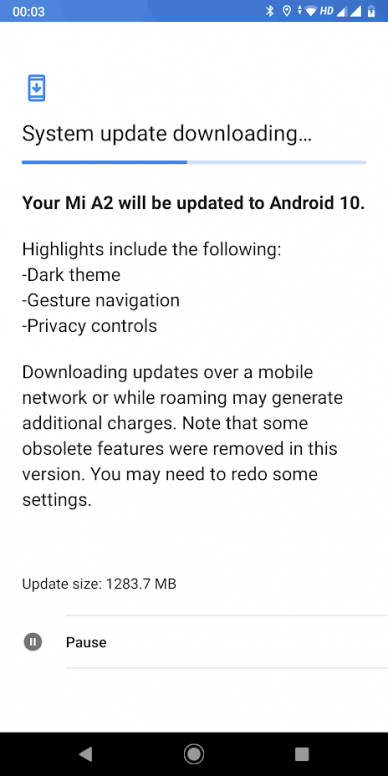
A few days ago, we reported that there is a petition by owners of the Xiaomi Mi A3 to force Xiaomi to release the Android 10 update for the phone. In what can be termed a surprise, Xiaomi has now released the Android 10 update…..for the Mi A2.
Yes, the Android 10 update is now available for the older Mi A2 that was released in 2018. However, there is a chance the Mi A3 will follow shortly as Xiaomi released the Android 10 kernels for both devices simultaneously.
Image source: laviniuc (Mi Community)
The Mi A2’s update weighs in at almost 1.3GB in size. Along with all the new features Android 10 has to offer such as Smart Replies, Dark Mode, Family Link parental controls under Digital Wellbeing, and the new gesture navigation; the update also comes with December 2019’s security patch and the camera app has a new icon.
There are a few issues reported by those who have updated already. Some say there are UI glitches in a few places and VoWiFi is missing. While another user said Google Services stopped working for a while before things returned to normal. There are also a few bugs in the camera app and there is still no support for camera2api.
It appears Xiaomi rushed the update. We advise you to wait for more users to post their feedback. And if you are going to update, make sure you back up your data.
The Mi A2 launched with Android Oreo out of the box and was updated to Android 9 Pie the same year. There is a high chance this is its last major OS upgrade.
We are already aware that OnePlus will announce three new phones in the first half of the year. There is the OnePlus 8 and the OnePlus 8 Pro which are successors to last year’s OnePlus 7 and OnePlus 7 Pro respectively. We will also be getting a third device called the OnePlus 8 Lite. Ahead of the release date which may likely be earlier this year compared to last year, the OnePlus 8 Pro has been spotted on Geekbench.
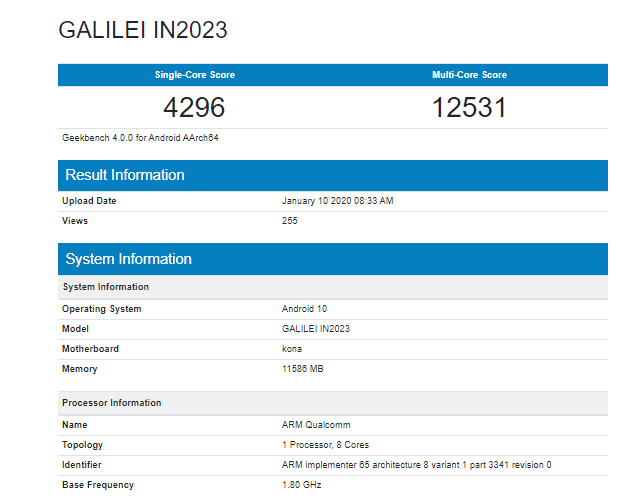
The device was benchmarked on Friday, January 10, and appears on Geekbench’s database as “GALILEI IN2023”. It runs Android 10 and has 12GB of RAM paired with the Snapdragon 865 processor. We know it is the Snapdragon 865 because it has the same motherboard name as the Sony Xperia flagship that was spotted on Geekbench last month.
The OnePlus 8 Pro scored 4296 points in the single-core test and 12,531 points in the multi-core test. The scores are lower than that of the Sony phone which we believe is the flagship, Xperia 5.
The OnePlus 8 Pro will have a curved AMOLED display with a punch-hole at the top left corner and has been reported to have a 120Hz refresh rate. It will also have quad rear cameras and an in-display fingerprint scanner. The phone will come in multiple configurations with the base model having 8GB of RAM.
Smartphones have become the lifeline for every working human being. It has become the sole companion as it is widely used around the globe to connect. Smartphones have become the primary source to store data, including our photos, contacts, passwords, and even some financial information. It is acting as our personal data bank these days, along with flawless connectivity. It has become necessary to keep a backup of our stored data on smartphones. We have crafted a guide to backup essential data on Android smartphones.
Recovering Data – The sole and primary motive of doing a backup is to improve it if any data loss happens.
Individual File Restoration – It is not necessary to restore the full backup, the user can recover individual files.
Protection Against Hardware Failure – In case of sudden hardware failure like bricking the smartphone, Backups can play a vital role in getting back essential data.
Enhanced reliability – If you’re using any custom ROM, or any Framework, it is highly recommended to create backups.
There are different ways to backup Android data, including Contacts, Call Logs, SMS, images, videos, and other files. Some of the below-mentioned ways need root access, but most of the methods are rootless.
Root Based Methods to Backup Android Phones
Titanium Backup
Using a rooted device offers you more flexibility in creating backups using different apps. One such app is the Titanium Back, which helps to backup app settings, system data, and even Wi-Fi passwords within a single console. It is quite a powerful app that allows to backup and restores data with few taps. It can be easily used by following the steps below:
Download and Install the Titanium Backup app.
Open the app, press the hamburger icon on the top-right corner, and select ‘ batch actions.’
Select the different options to backup or select every option to fully backup the smartphone.
It also offers the flexibility to upload the backup to Google Drive or Dropbox directly. Choose the desired option in the settings.
The user can also choose to create a recovery compatible .zip backup file. (Note: This option can unbrick your device if you found it unresponsive.)
That’s it
This is the most productive way to backup every file and settings present on your smartphone.
Backup Android Phone Without Root Access
Using Google Services
Android being native to Google services and products, it is always recommended to backup essential data by using Google’s inbuilt service on Android system. There are different ways to backup every document on Google servers. Follow the steps below to recover Photos and Videos, Contacts And Call Logs, WhatsApp, and other apps data.
Photos and Videos
Google Photos is the sole app that allows users to store unlimited photos and videos on Google servers in high quality. It is the easiest way to backup and restores videos and pictures to the cloud. The Google Photos app is always available on Android Phones. Otherwise, the users can download it here. Here are the steps to use Google Photos App Auto Backup:
Download and Install Google Photos app
Open Settings and Tap ‘Backup & Sync’ to turn on Sync
Select ‘Upload Size’ to enable ‘High quality with free unlimited storage, or Original with Google Drive storage limits.’
Enjoy Easy Backup!
You can successfully upload photos, and videos present in your smartphone by toggling each folder in your Photos App.
Other Files
Google Drive is the best companion app to store every other file to the cloud. It can act as a primary backup location for the files present on your Android smartphones. The user can add files or folders to the Google Drive app:
Open Google Drive App
Press the ‘+’ button and upload files you’d like to backup.
That’s it!
Other Settings and Contacts data
The service essentially backs-up every useful app and its data to Google servers. It can be easily turned on by heading to Android Backup services as follows:
Open Smartphone settings app.
Head over to ‘Accounts and Backup”
Tap on ‘Backup and Restore’
Enable ‘Back up my data’ switch and select your Google Account.
Google also offers the inbuilt facility to back up most of the settings and contacts to the cloud.
You can enable the feature to backup contacts and other apps data by heading to the Settings>Accounts>Google>Enable Sync option for backup.
Using Other Apps
There are a lot of other apps that let users to backup and store data on Android Phones easily. Using other Apps is a perfect choice to backup important data on external media. Super Backup & Restore app allows users to backup all individual items, including apps, SMS, contacts, calendars, voice calls, and more.
Select items or categories you want to backup on the smartphone.
Tap on “Backup”
It’s Done!
Using Other PC/Laptop
It’s free, and anyone having a PC/Laptop can backup phone data by connecting via USB cable. The user can use specific PC Suites for easy data backup and restore options. However, the Mac users can install Android File Transfer App to backup Android devices to a computer. Follow the steps below to backup Android Phones using PC/Laptop:
Connect Phone with your PC/Laptop using a USB cable.
Goto respective PC Suite or open Phone Storage by going to ‘My Computer’.
Now enable Sync or directly use Windows or Mac commands to backup or restore files.
These are some best ways to backup your Android smartphones. Based on your phone status, you can follow the respective method. If you have any queries, please follow up via the comments below.
At the just-concluded 2020 edition of CES, Samsung demoed a number of products to a select number of individuals. One of the products is its soon-to-be-released second foldable phone with a clamshell design. A leaked photo from the event showed the phone, which was originally referred to as the Galaxy Fold 2, with the name “Galaxy Bloom”. Now, a new leak has revealed that is not the official name of the phone but its codename.
Popular leaker Ice Universe (@UniverseIce) took to Twitter a few hours ago and posted a tweet saying “Bloom is just a code name…” and that “the real name is Galaxy Z ****”. A few hours later, probably unable to contain his excitement, he shared a photo showing the official name of the device.
According to the tweet, the device known as the Galaxy Bloom will launch as the Galaxy Z Flip. Based on this new info, it is safe to say the Galaxy Z is a new line of smartphones from Samsung.
The Samsung Galaxy Z Flip will have a fold across its horizontal axis, unlike the Galaxy Fold that folds across its vertical axis.
It has been reported that the device will come with a Snapdragon 855 processor under the hood rather than the new and more powerful Snapdragon 865. It will also feature a new type of glass covering the display called Ultra Thin Glass which replaces the polymer film used for the Galaxy Fold.
Other features of the Galaxy Z Flip include support for 8K video recording, dual cameras, and an Infinity-O display with a centered punch-hole for the selfie camera. It should also run Android 10 based on OneUI out of the box. You can check out images of the device that leaked last month here.
Samsung will announce the Galaxy Z Flip alongside the Galaxy S20 series at an event scheduled for February 11.
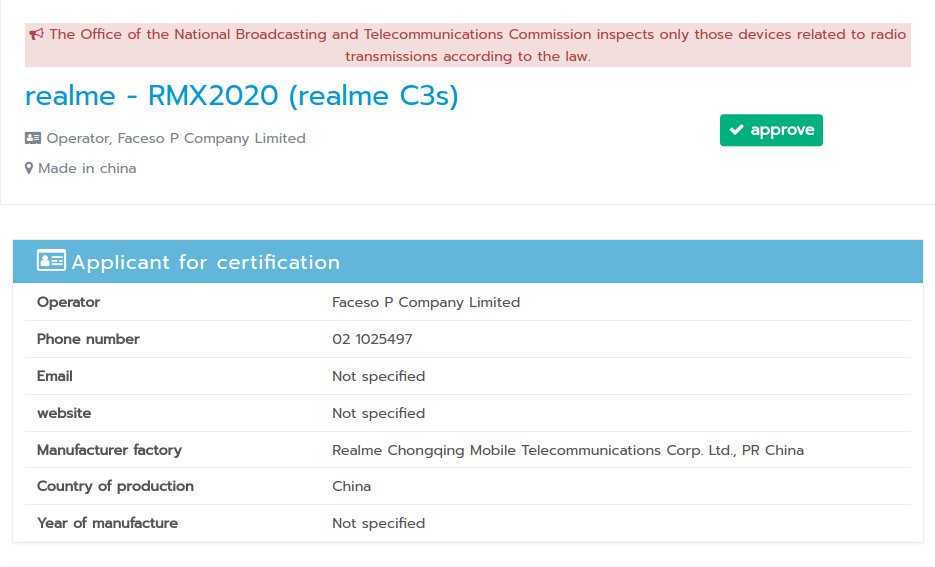
A few days ago, we reported that Realme announced a new phone in Thailand called the Realme C2s. That phone may be getting a successor soon as Thailand’s National Broadcasting and Telecommunications Commission (NBTC) has certified a new phone called the Realme C3s.
The certificate reveals the Realme C3s has the model number RMX2020. While there is no other info about the device, we believe this will be a variant of the yet-to-be-announced Realme C3. And both phones will differ just the same way the Realme C2s differs from the Realme C2 with respect to RAM and storage.
Just a couple of days ago, Realme had an event in China where it announced the Realme X50 5G along with some lifestyle products. The manufacturer may be planning another event soon, most likely in India, where it will unveil its first fitness band that was recently teased by its CEO. There is a possibility the successor to the Realme C2 will be announced at the event too.
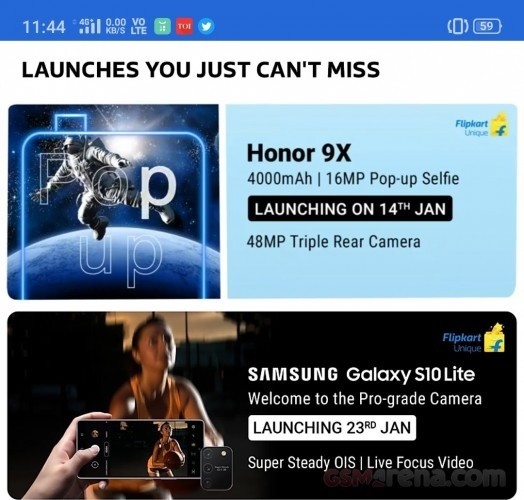
Just a few days into the year, Samsung announced the Galaxy S10 Lite and Galaxy Note10 Lite as affordable versions of its 2019 Galaxy S and Galaxy Note flagships. The two phones were also on display at CES 2020 where those who attended were able to get hands-on experience. Samsung is set to launch it in India, and thanks to Flipkart, we now know the exact date.
The Galaxy S10 Lite will be launched on January 23 in India according to a screenshot from the mobile app. There is no mention of the Galaxy Note10 Lite but it should arrive on the same day since the Samsung India website has both phones listed.
Flipkart has a landing page for the Galaxy S10 Lite that lists some of its top features such as its pro-grade camera system. The phone has a 5MP macro camera paired with a 48MP main camera with Super Steady OIS and a 12MP 123° ultrawide angle camera on the rear. Up in front and nestled inside the centered punch-hole is a 32MP sensor.
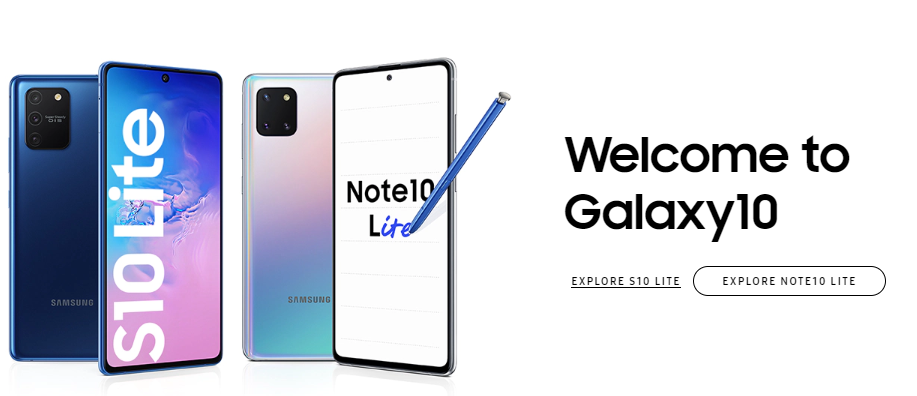
Galaxy S10 Lite and Galaxy Note10 Lite listed on Samsung India’s website
The Galaxy S10 Lite has a 6.7-inch FHD+ Super AMOLED Infinity-O display. There is a Snapdragon 855 processor inside it with 6GB or 8GB of RAM and 128GB of expandable storage irrespective of the RAM variant. It packs a 4500mAh battery with support for 25W Super Fast Charging and runs One UI 2.0 based on Android 10 out of the box. There is an in-display fingerprint scanner but there is no audio jack.
The Galaxy Note10 Lite shares some of its specs with the Galaxy S10 Lite such as its screen, RAM and storage variants, battery capacity, and selfie camera. It swaps out the Snapdragon 855 for the older and less-powerful Exynos 9810; it has a 12MP main camera paired with a 12MP ultrawide camera and a 12MP telephoto camera; keeps the audio jack; and of course, has an S Pen.
For fans of the POCOPHONE F1, last year was definitely not a great one seeing as Xiaomi didn’t release a successor. It became a norm to find users ask about the POCO F2 when Xiaomi and its executives made an announcement via any of their social media channels. Today, there is good news for them.
Screenshots showing a trademark application for “POCO F2” were shared on twitter by @_the_tech_guy. The images show the application was filed on the 4th of December, 2019 at the China Trademark Office and has application number 4280005.
[envira-gallery id=”300285″]
For those wondering why the trademark was filed in China seeing as the POCO brand isn’t available there, it will interest you to know that Xiaomi filed a trademark application for the POCO F1 in its home country too in June 2018 before it launched in August 2018.
The trademark application is proof that there is a successor to the POCO F1 (POCOPHONE F1) in the works. However, there is still no info on when the POCO F2 will launch, though we presume it may arrive in February or March seeing as the POCO F1 arrived two months after its trademark application.
That date also makes sense, especially for India. There are reports the Mi 10 series will launch next month but unfortunately, Xiaomi will not launch the Mi 10 and Mi 10 Pro in India. So, announcing the POCO F2 flagship killer in India between February and March is plausible.
The POCO F1 was a huge success as it offered flagship specs at an affordable price. It launched with the same processor as other flagships such as the Samsung Galaxy S9 and the OnePlus 6T but sold for significantly less.
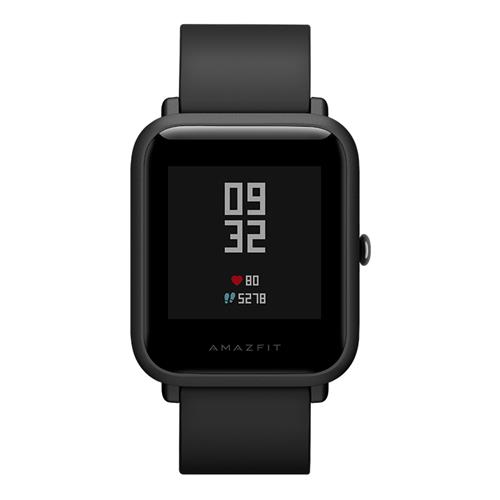
Back in 2018, Huami launched the Bip Lite fitness tracker under its well-received AMAZIT brand. Encouraged by its success, the Xiaomi-backed wearable device company launched another variant of the Bip Lite dubbed the Huami AMAZFIT Bip Lite smartwatch.
Before we dive into more details about the AMAZFIT Bip Lite’s awe-inspiring features and specifications, it might interest you to know that you can now get your hands on the newfangled smartwatch without emptying your pockets via Giztop. The Chinese e-tailer is currently offering the Amazfit Bip Lite for $69.99.
You can use coupon code GTAZBPL20 to reduce the retail price of the smartwatch to just $49.99. In short, you can save $20 simply by applying the aforesaid coupon code before placing your order.
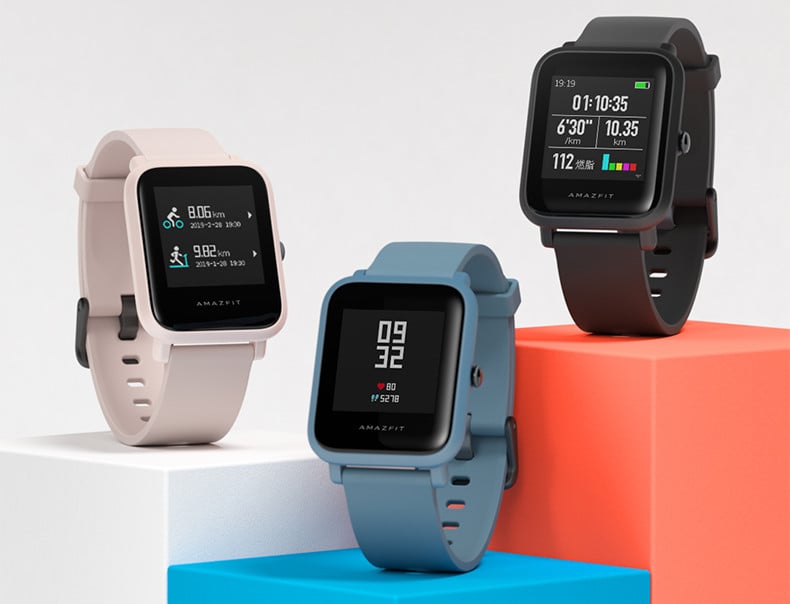
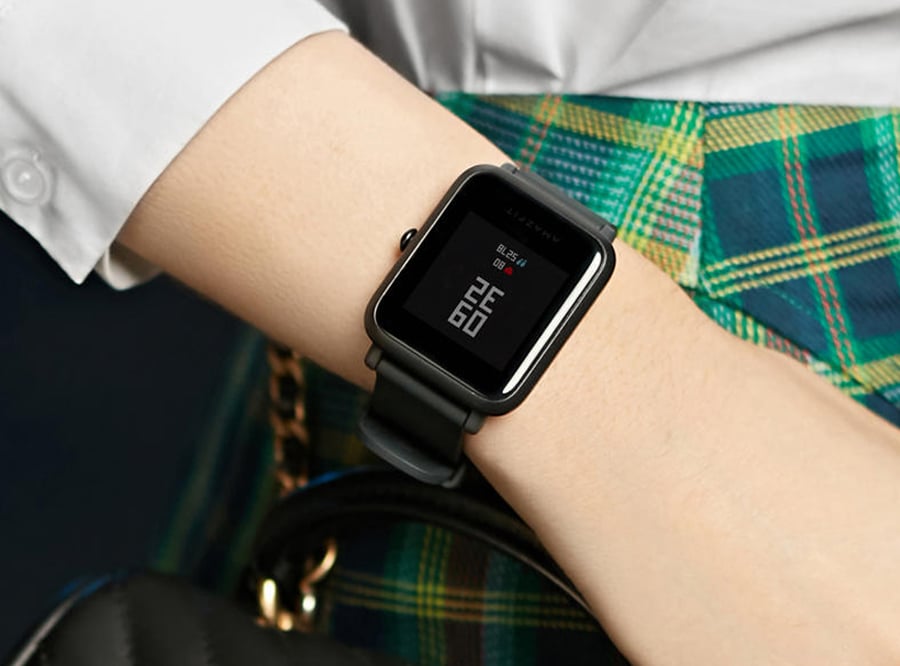
Available in black color option, the AMAZFIT Bip Lite is a perfect fitness and sports companion. The smartwatch boasts an impressive array of features that come in handy while you are working out at the gym or doing an adventurous outdoor activity such as trekking, hiking, dirt biking, etc.
It has a 1.28-inch screen which offers a high resolution of 176×176 pixels for enhanced readability. Moreover, it is housed in a high-quality polycarbonate material body and has Corning Gorilla 3 tempered glass + AF coating on top for supplemental protection.
With a 3ATM waterproof rating, the AMAZFIT Bip Lite is designed to efficiently withstand water during daily activities such as washing hands. Moreover, you can wear this smartwatch while swimming (up to 30 meters’ water pressure). However, the company advises avoiding wearing it for bathing, sauna, and diving.
Furthermore, the AMAZFIT Bip is compatible with Android 4.4, iOS 8 or above OS and is backed by a 200mAh LiPo battery that lasts for 45 days. On top of that, the smartwatch has been integrated with a slew of useful sensors including an acceleration sensor and a slew of other functions including heart rate monitoring, message reminder and more.
To know more about the Amazfit Bip Lite and to take advantage of the coupon, simply follow this link. Note that the coupon code will be valid for the first hundred units only.
We use cookies on our website to give you the most relevant experience by remembering your preferences and repeat visits. By clicking “Accept”, you consent to the use of ALL the cookies.
This website uses cookies to improve your experience while you navigate through the website. Out of these, the cookies that are categorized as necessary are stored on your browser as they are essential for the working of basic functionalities of the website. We also use third-party cookies that help us analyze and understand how you use this website. These cookies will be stored in your browser only with your consent. You also have the option to opt-out of these cookies. But opting out of some of these cookies may affect your browsing experience.
Necessary cookies are absolutely essential for the website to function properly. This category only includes cookies that ensures basic functionalities and security features of the website. These cookies do not store any personal information.
Any cookies that may not be particularly necessary for the website to function and is used specifically to collect user personal data via analytics, ads, other embedded contents are termed as non-necessary cookies. It is mandatory to procure user consent prior to running these cookies on your website.



 With a 3ATM waterproof rating, the AMAZFIT Bip Lite is designed to efficiently withstand water during daily activities such as washing hands. Moreover, you can wear this smartwatch while swimming (up to 30 meters’ water pressure). However, the company advises avoiding wearing it for bathing, sauna, and diving.