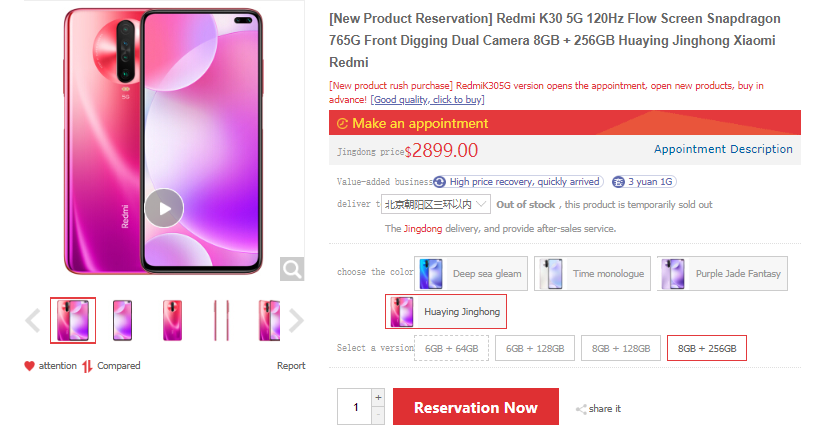
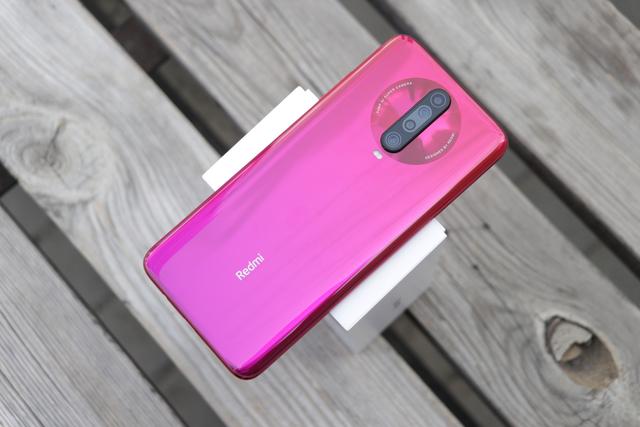
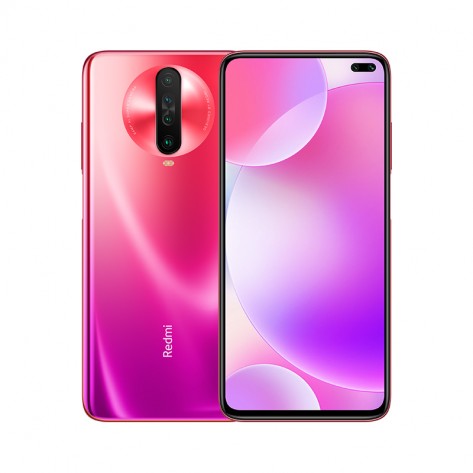
In the previous week, Redmi had held an unveil event in China to announce the 4G and 5G flavors of the Redmi K30 smartphone. The Chinese manufacturer has started with the sales of the Redmi K30 4G. At the unveil event, the company announced that the Redmi K30 5G will be releasing in China in January 2020, but it did not confirm the specific release date. The reservations of the smartphone have started on Jingdong Mall. The shipping date mentioned on the Redmi K30 5G JD listing is Jan. 15.
The Redmi K30 5G listing shows that it will be made available in color variants such as Time Monologue, Purple Jade Fantasy, Deep Sea Glow and Flower Shadow (Chinese names translated using Google Translator). The phone will be arriving in four edition such as 6 GB RAM + 64 GB storage, 6 GB RAM + 128 GB storage, 8 GB RAM + 128 GB storage and 8 GB RAM + 256 GB storage. These models are respectively priced at 1,999 Yuan (~$286), 2,299 Yuan (~$329), 2,599 Yuan (~$373) and 2,899 Yuan (~$415).
The Redmi K30 5G smartphone has an IPS LCD panel of 6.67 inches. It offers full HD+ resolution of 1080 x 2400 pixels. There is a pill-shaped punch-hole on the screen of the Redmi K30 5G. It houses 20-megapixel + 2-megapixel dual front-facing cameras.
The Snapdragon 765G mobile platform that supports dual-mode 5G fuels the Redmi K30 5G. The phone is backed by a 4,500mAh battery that is equipped with support for 30W fast charging. The Android 10 OS customized with MIUI 11 runs on the device. The backside of the device features a 64-megapixel + 8-megapixe (ultrawide) + 5-megapixel (macro) + 2-megapixel (depth) quad camera system. The phone is equipped with a side-facing fingerprint reader. There is a shared SIM slot on the device for expanding its storage.
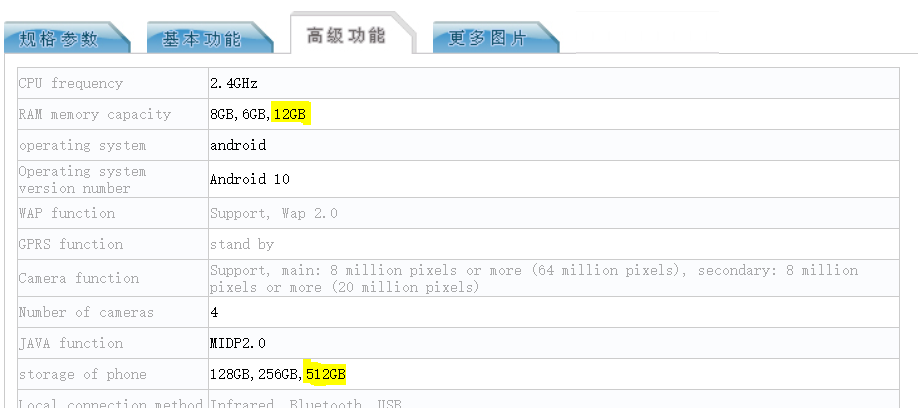
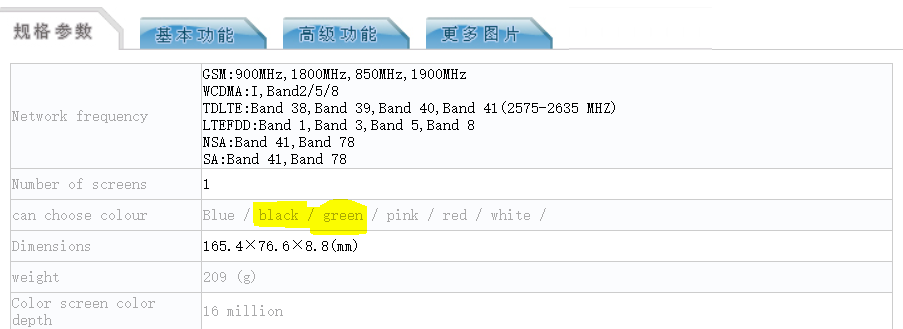
In related news, the Redmi K30 5G had appeared on the database of TENAA over the weekend. The listing revealed that the company may announce a higher variant of the Redmi K30 5G with 12 GB of RAM and 512 GB of storage in the near future. The listing had also revealed some new color variants of the smartphone. Hopefully, the higher variant of the Redmi K30 5G may go official at some time in early January.
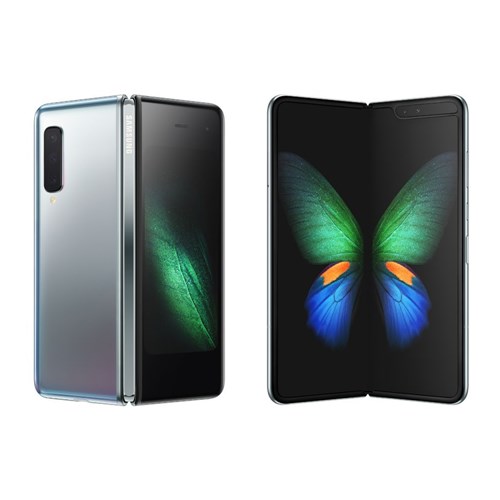
Samsung Electronics has historically been at the forefront of technological advancements and trends, especially in the smartphone market. The best examples of this are its early adoption and introduction of 5G handsets and foldable smartphones like the Galaxy Fold. Now, thanks to its quick grasp on the early stages of the newer and faster bandwidth, the company leads the 5G smartphone market in Q3 of 2019.
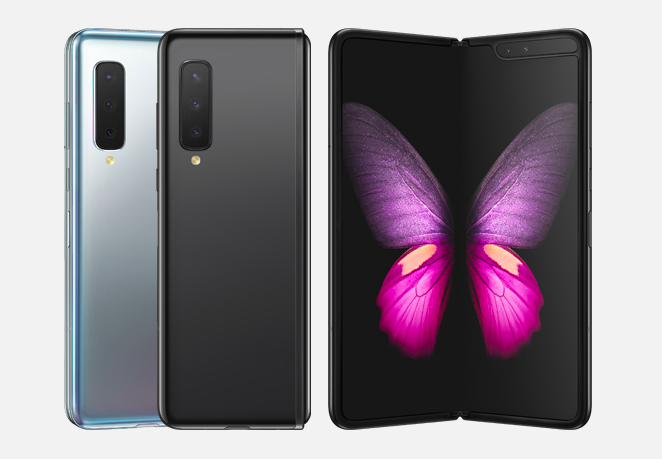
Samsung Galaxy Fold 5G
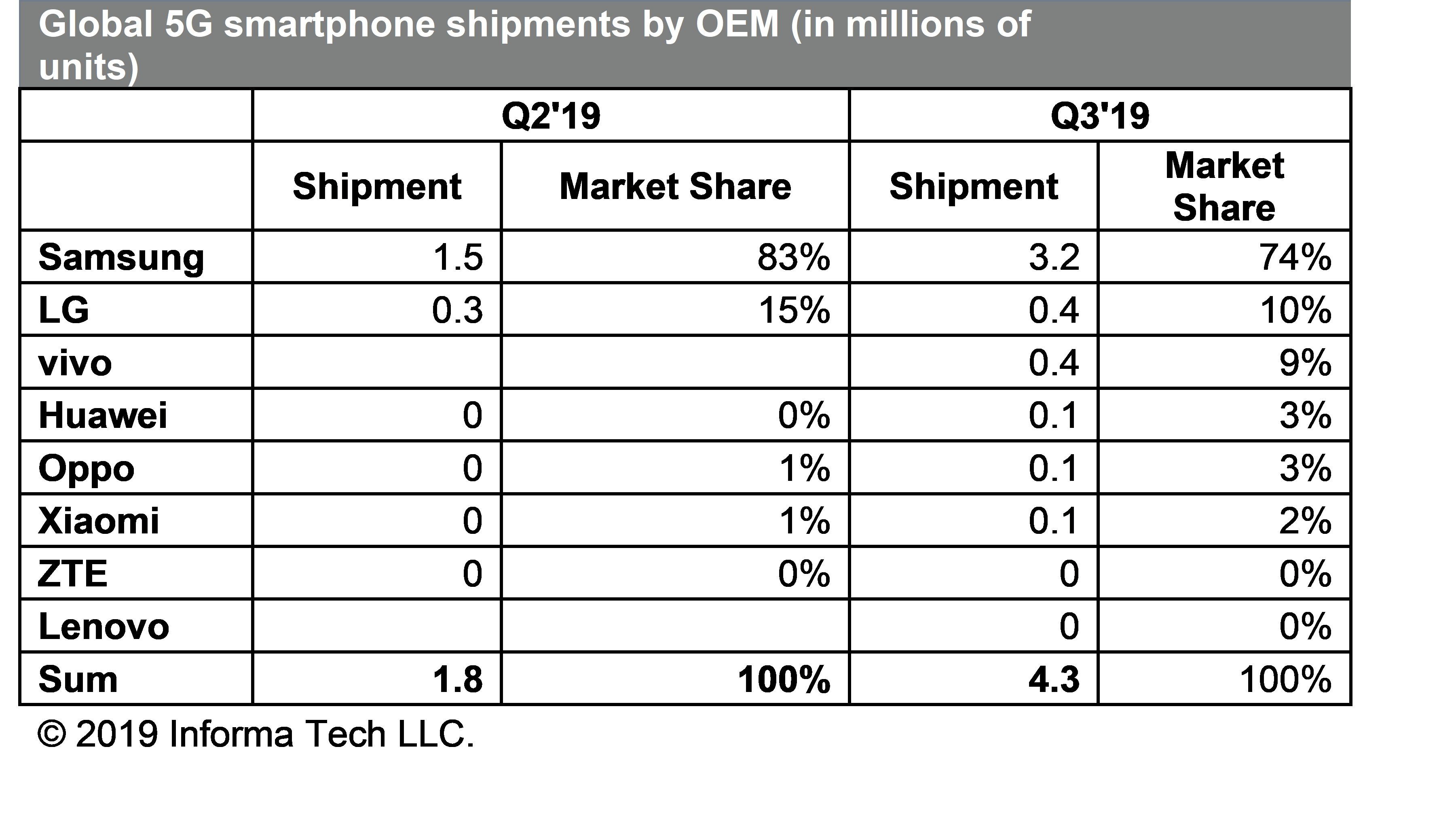
According to a new report, the South Korean tech giant shipped 3.2 million 5G smartphones in the third quarter of 2019. This number represents 74 percent of the total of 4.3 million units sold in the global market. Furthermore, Samsung’s 5G smartphone shipments have essentially doubled in the third quarter in comparison to the 1.5 million units shipped in the second quarter of 2019; which also saw it hold a massive lead with 83 percent share in total 5G smartphones shipments.
Samsung Dominates the 5G smartphone market (Image Via IHS Markit)
Gerrit Schneemann, senior analyst, smartphones, at IHS Markit stated that the company capitalized on its home field advantage with the faster bandwidth. Owing to South Korea’s market developing rapidly, the company managed to take advantage of the early stages of 5G networking integration in the country. Notably, Samsung had quickly introduced 5G capabilities in its devices ranges giving it the largest 5G smartphone portfolio amongst any other brand.
South Korea is advancing ahead with its 5G market. The country has already planned its wireless operators officially commencing service in April 2020. This has led to Samsung and even LG, ranked second in the 5G smartphone market, to take initiatives with aggressive promotions within the country for the newer and faster bandwidth. It has allowed both companies to largely benefit from the bandwidth advancement and also take leading spots in the 5G market as a whole.
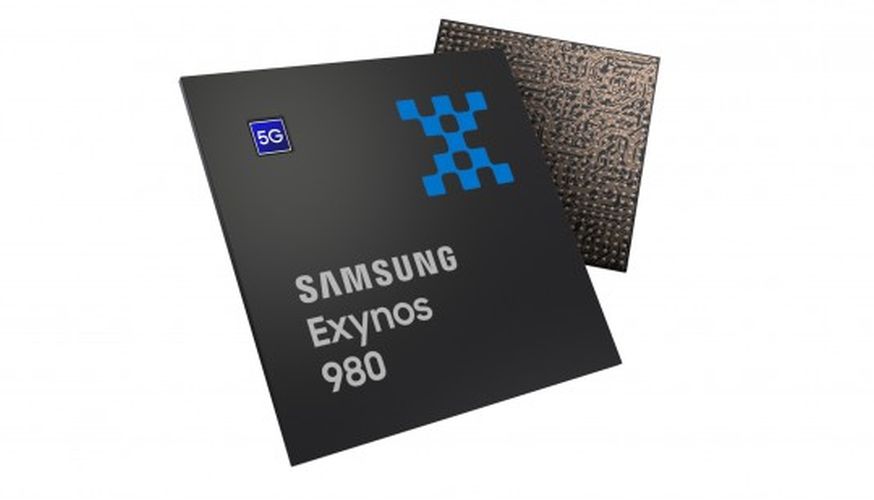
Samsung Exynos 980 5G chipset
Others in the 5G market include brands like Xiaomi, Huawei, Oppo, Vivo, and ZTE from China. These brands represented about 17 percent of the total 5G shipments with 700,000 units in the second and third quarters. As 5G services begin to roll out in China, it is expected that the aforementioned brands will see a drastic rise in the overall standings and metrics.
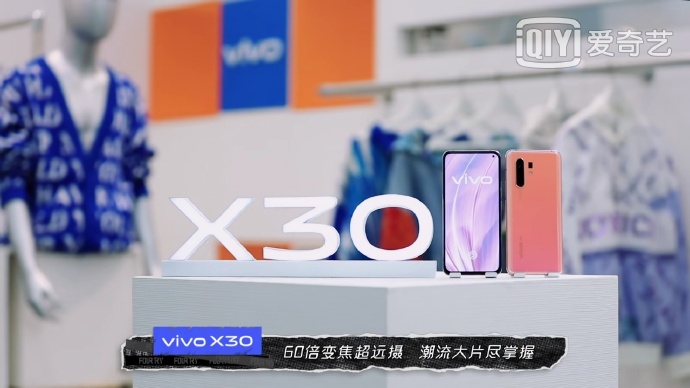
Vivo X30 and X30 Pro smartphones are scheduled to go official at 5 PM (local time) today in China. Ahead of the launch, leaked information on the specs of the Vivo X30 Pro have been shared by a tipster from China. Another source has revealed the pricing of the Vivo X30 and X30 Pro smartphones.
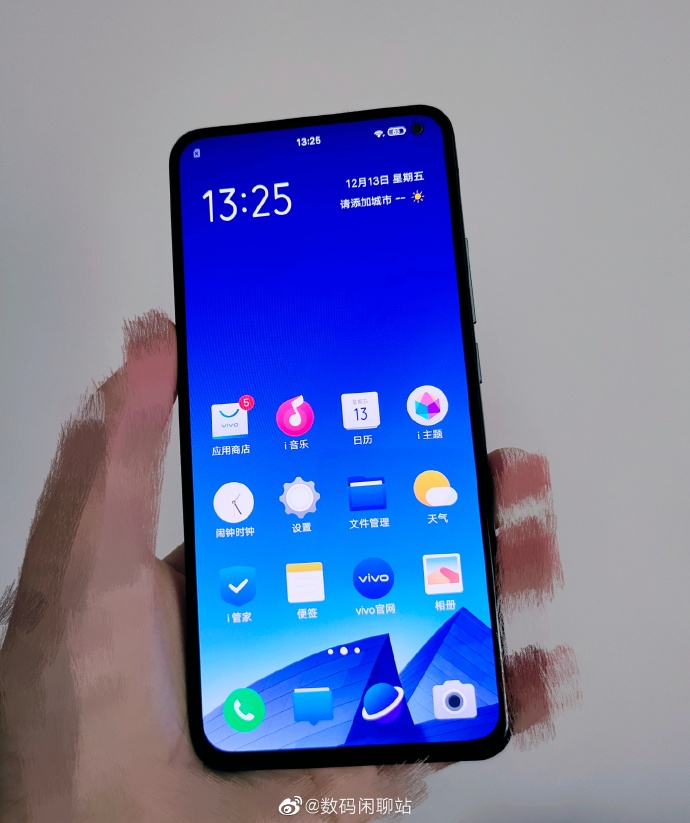
A fresh leak reveals that the Vivo X30 Pro has a 6.44-inch Samsung E3 AMOLED display. Vivo has already used the same display on other newly released phones such as Vivo S5 and Vivo V17 (India version). The display has a punch-hole placed at the top-right corner. Also, the screen of the Vivo X30 Pro is embedded with a fingerprint reader. The display produces full HD+ resolution of 1080 x 2400 pixels which indicates that it offers a tall aspect ratio of 20:9.
For capturing selfies, the Vivo X30 Pro has a front camera of 32-megapixel. The mains lens of the quad camera setup that is placed on its back is of 64-megapixel. It is assisted by an 8-megapixel ultrawide lens and a 32-megapixel portrait lens. There is a periscope lens of 13-megapixel on the device that brings support for up to 60x digital zoom. The quad cameras are assisted by EIS and OIS features.
The tipster has also revealed that the Exynos 980 chipset powered Vivo X30 Pro has a 4,350mAh battery that carries support for 33W fast charging. The Android 9 Pie OS runs on the device. The phone also supports NFC connectivity.
Another source has revealed that the Vivo X30 Pro will come in two models such as 8 GB RAM + 256 GB storage and 12 GB RAM + 256 GB storage. These variants could be respectively priced at 3,998 Yuan and 4,298 Yuan. There is no confirmation on how the Vivo X30 model differs from its Pro sibling. The leak states that the Vivo X30 will be arriving two model such as 8 GB RAM + 128 GB storage and 8 GB RAM + 256 GB storage. These models may hit the Chinese markets with respective price tags of 3,198 Yuan and 3,498 Yuan.
While the Vivo X30 Pro specs leak appears to be correct, there is no confirmation on the pricing leak of the X30 series. The launch event that will take place in few hours will reveal the pricing of the different variants of the Vivo X30 and X30 Pro phones.
IRAdvocates has filed a federal class action lawsuit today on behalf of 14 Doe Plaintiffs who are either guardians of children killed in tunnel or wall collapses while mining cobalt in the Democratic Republic of Congo (“DRC”) or children who were maimed in such accidents. The DRC has the world’s largest deposits of cobalt, an essential element of rechargeable lithium-ion battery in products made by all tech and electric car companies.
The lawsuit names Apple, Alphabet (Google), Dell, Microsoft, and Tesla as defendants. Plaintiffs have evidence that these companies in particular aided and abetted the mines that abused and profited from forcing plaintiffs and other children to mine cobalt under conditions that led to their deaths or serious, crippling injuries.
“The young children mining Defendants’ cobalt are not merely being forced to work full-time, extremely dangerous mining jobs at the expense [of] their educations and futures,” says the suit, “they are being regularly maimed and killed by tunnel collapses and other known hazards common to cobalt mining in the DRC.”
“Cobalt is a key component of every rechargeable lithium-ion battery in all of the gadgets made by Defendants and all other tech and electric car companies in the world,” it continues, “that has brought on the latest wave of cruel exploitation fueled by greed, corruption and indifference to a population of powerless, starving Congolese people.”
The suit seeks a trial by jury and ultimately damages and costs to the miners. It also wants the companies to fund “appropriate medical care” for the plaintives, “and clean up the environmental impacts.” The suit seeks a trial by jury and ultimately damages and costs to the miners. It also wants the companies to fund “appropriate medical care” for the plaintives, and clean up the environmental impacts.”
Dr. Liwanga, a DRC national, commented: “this is the beginning of the end of impunity for those who have been economically benefiting from child labor in the DRC’s mining industry. DRC children also have an inherent and inalienable right to be protected from economic exploitation.” None of the companies have made any public statements regarding the suit.
The South Korean tech giant denied the media reports that claimed it had sold 1 million units of the Galaxy Fold; If it were true, the units sold would be twice as high as the company’s initial sales expectation. Apparently, the words of Samsung’s President, Young Sohn, had been taken out of context by a news report that led to a frenzy of false media coverage, according to a spokesperson.
In TechCrunch Disrupt Berlin event 2019, Sohn stated that “And I think that the point is, we’re selling [a] million of these products…There’s a million people that want to use this product at $2,000.” This quote was interpreted in a misleading fashion with the spokesperson also stating that Sohn had confused the figure of the company’s initial sales target for the year. It also implies that Samsung has yet to reach the 1 million Galaxy Fold units milestone.
According to analysts, Samsung has sold anywhere from 400,000 to 500,000 units of the Galaxy Fold. From the company’s side, it is reported that Samsung expected to sell around 500,000 units globally. Unfortunately, Samsung has not revealed its actual sales figures so it is uncertain whether this goal has been reached either.
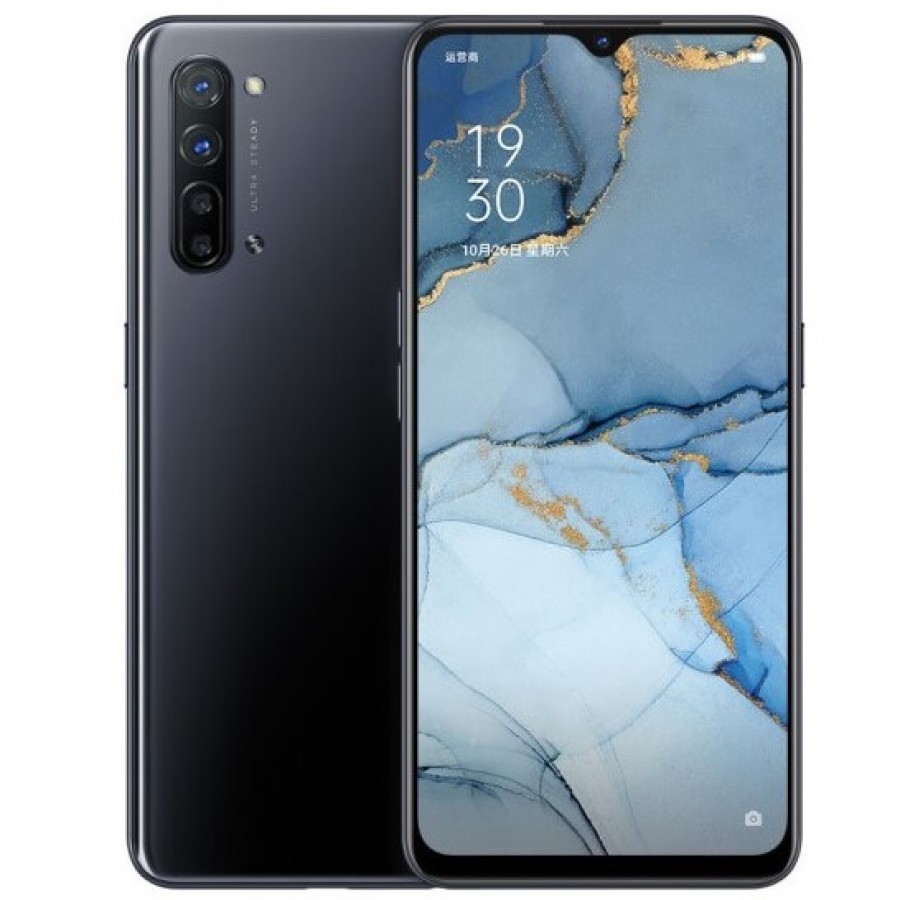
Oppo has already confirmed the launch of Oppo Reno3 smartphone series in China on later this month. After teasing the ambassador of the upcoming phone, the company has today confirmed that Xiao Zhang will be the ambassador of Oppo Reno3.
The company is expected to launch two variants of the phone — Oppo Reno3 and Reno3 Pro. It has been confirmed that the standard model will come powered by MediaTek Dimensity 1000L 5G SoC while the Pro model will pack Snapdragon 765G chipset.
The Oppo Reno3 will feature 64-megapixel quad-camera setup on the back. Along with the primary sensor, the device will also come with an 8-megapixel + 2-megapixel + 2-megapixel camera sensors.
On the other hand, the Pro variant will come with a 48-megapixel + 13-megapixel + 8-megapixel + 2-megapixel quad camera setup on the backside. The phone will come equipped with video stabilization feature.
Both the devices will feature a 32-megapixel primary lens on the front side. The smartphones will come running Android 10 operating system out-of-the-box, and will have features like in-screen fingerprint reader.
The devices are expected to come powered by a 4,025mAh battery with 30W VOOC 4.0 enhanced edition fast charging support. The pricing of the Reno3 and Reno3 Pro will be revealed during the launch event.
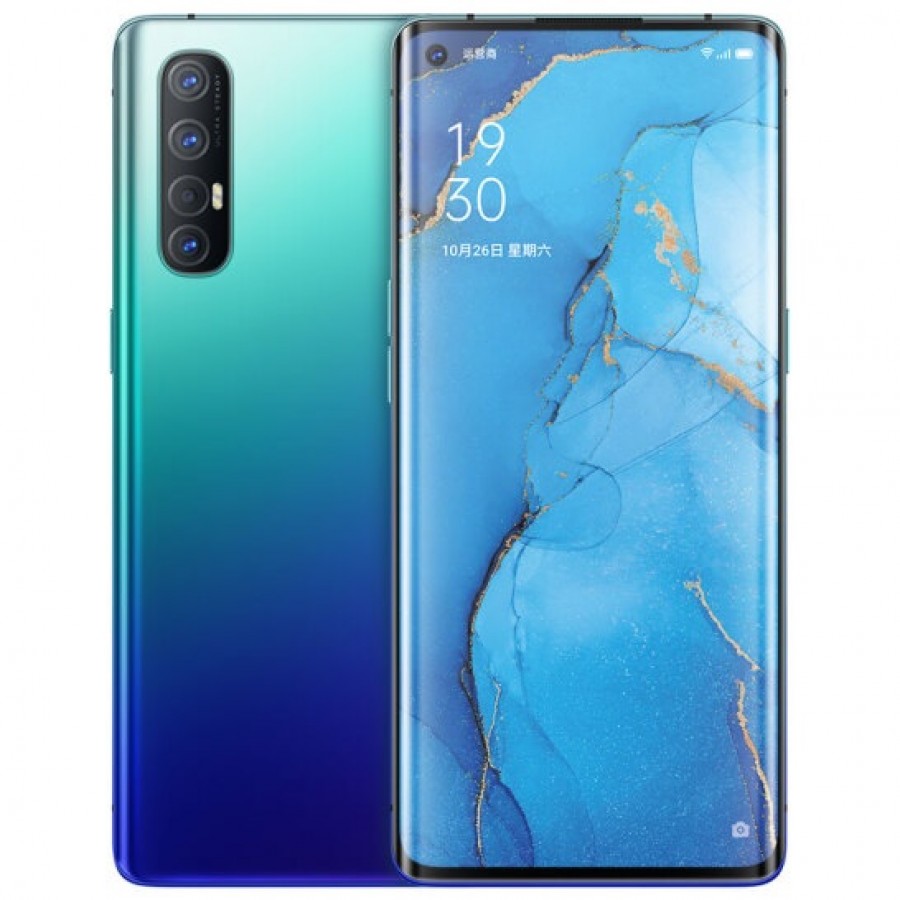
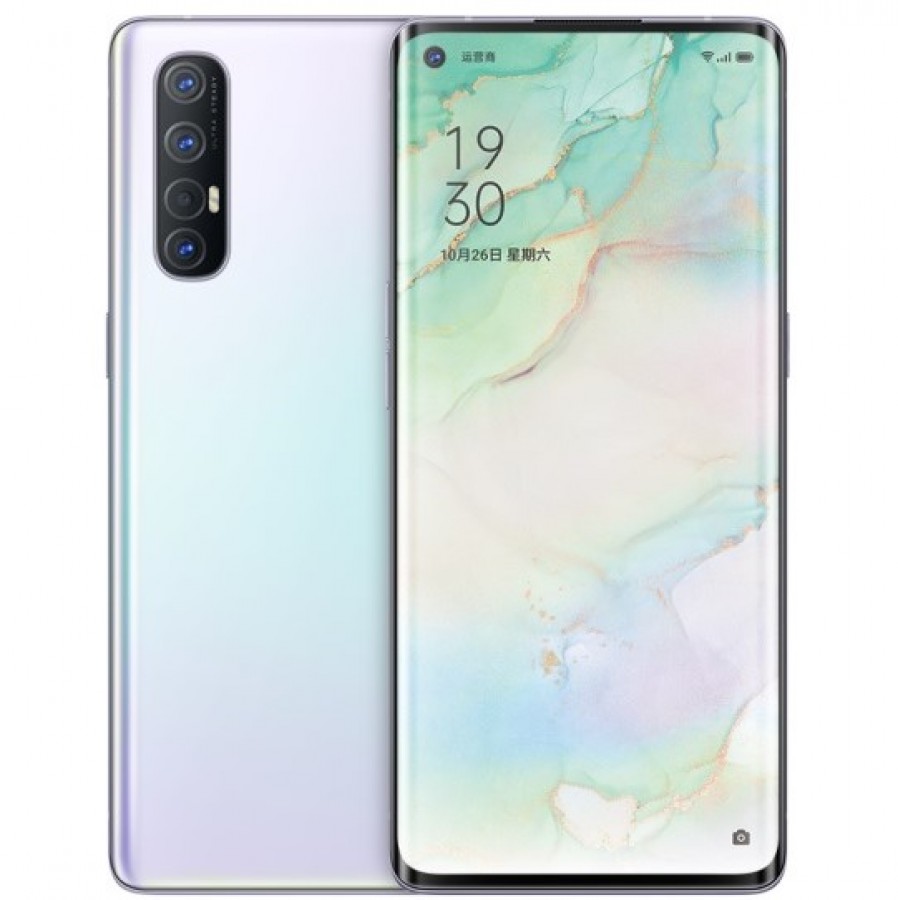
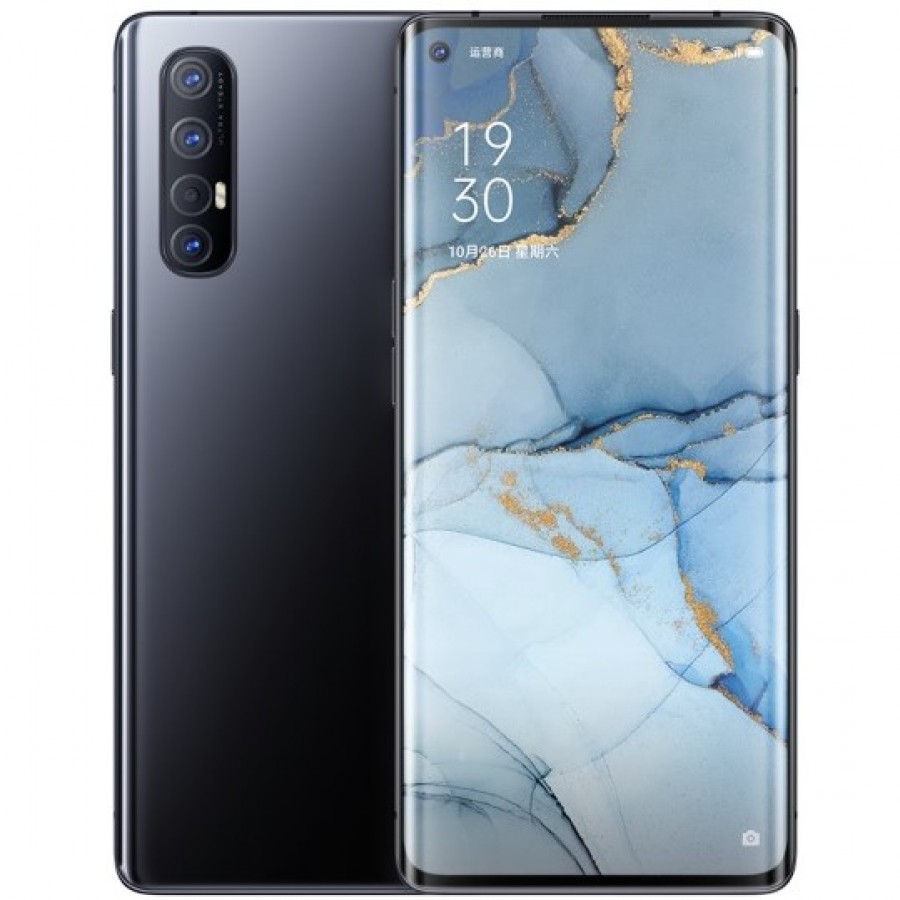
The Oppo Reno3 is now listing online as the phone is now available for reservation. The listing reveals that the device will come in four colors — Sunrise Impression, Misty White, Moonlight Black and Blue Starry Night.
In the recent wake of Germany planning to ban Huawei Technologies from selling 5G wireless equipment, the Chinese ambassador to Berlin has threatened to put an end to the booming business that German automakers enjoy in China. At a Handelsblatt event on Saturday, ambassador Wu Ken said, “The Chinese government will not be a mute spectator if Germany were to exclude Huawei from conducting business in the country”.
There has been a growing concern in Chancellor Angela Merkel’s coalition government regarding Germany’s business policy with China. The ambassador’s comments closely followed the introduction of a bill that would ban ‘untrustworthy’ 5G vendors from operating on German soil. Although the German legislation does not mention Huawei, it is tailored for the Chinese company. Huawei has rejected every allegation of espionage.
In an interview with Der Tagesspiegel, German Economy Minister Peter Altmaier said, “We should refrain from singling out institutions, and instead focus on using the most reliable hardware components and safety protocols when it comes to matters of national security. Whoever fails to meet the standards are out”.
Huawei’s future as a global business conglomerate is currently uncertain, following POTUS Donald Trump urging US allies to sever business ties with the company. This could prove to be costly for the Chinese tech giant considering the heavy investments in developing 5G technology. Huawei recently filed a lawsuit against the Federal Communications Commission in a bid to fight the US sanctions imposed on it.
Commenting on the situation, ambassador Wu said Huawei has no legal obligation to provide information to the Chinese government. While reminding the audience that German automakers sell close to 28 million cars in China every year. “Could we suddenly say one day that these German cars are unsafe, simply because we now have the technology required to manufacture our own vehicles? No. That would simply be protectionism”. Wu said in a video posted on the Handelssblat website.
China is the biggest market for German automakers, including Volkswagen AG, Daimler AG, and BMW AG. Every German auto manufacturer has invested heavily in China, setting up its own manufacturing and distribution network. Although the Chinese auto market has seen a slump in the past year. It is still miles ahead of Europe and America in terms of total sales figures.
Despite the slowdown, German automobiles are faring better than most Chinese carmakers in the major cities. While Chinese automakers continue to sell vehicles in rural areas due to their products being cheaper. Meanwhile, German automakers plan on investing further in China to promote electric vehicle sales and add new models to their existing portfolio.
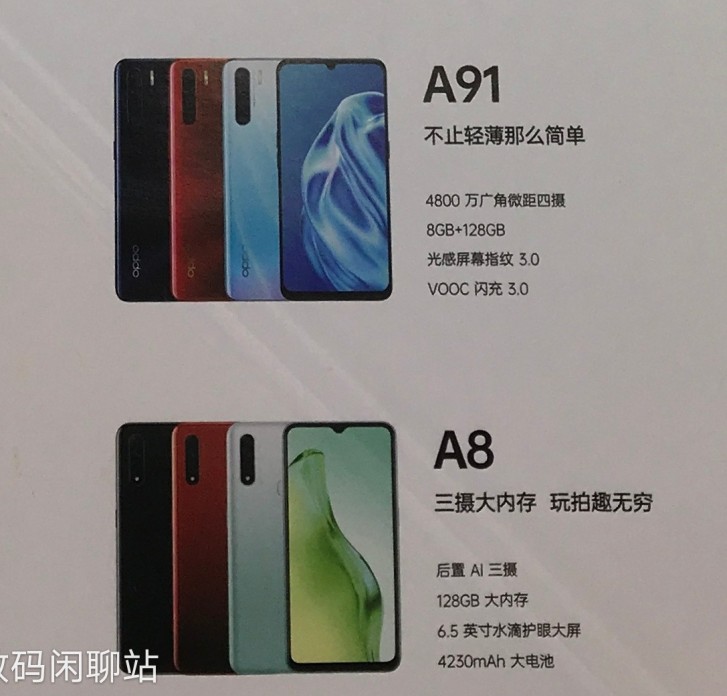
OPPO will be launching the Reno3 series of 5G smartphones on Dec. 26. However, a leaked poster that is now doing rounds on Weibo reveals that apart from Reno3 series, the Chinese firm may also debut two new A-series phones called OPPO A91 and OPPO A8. The key specs and images of these phones can be seen on the leaked poster.
OPPO A91 Specifications
The image of the OPPO A9 reveals that it features a display with waterdrop notch and a ultra-slim chassis. The back panel of the phone has a vertical quad camera setup. There is no fingerprint scanner on the rear shell of the device. The smartphone can be seen in color options like Black, Red and Blue. The key features that of the OPPO A91 include 48-megapixel quad rear cameras, 8 GB of RAM, 128 GB of storage, in-screen fingerprint reader and VOOC 3.0.
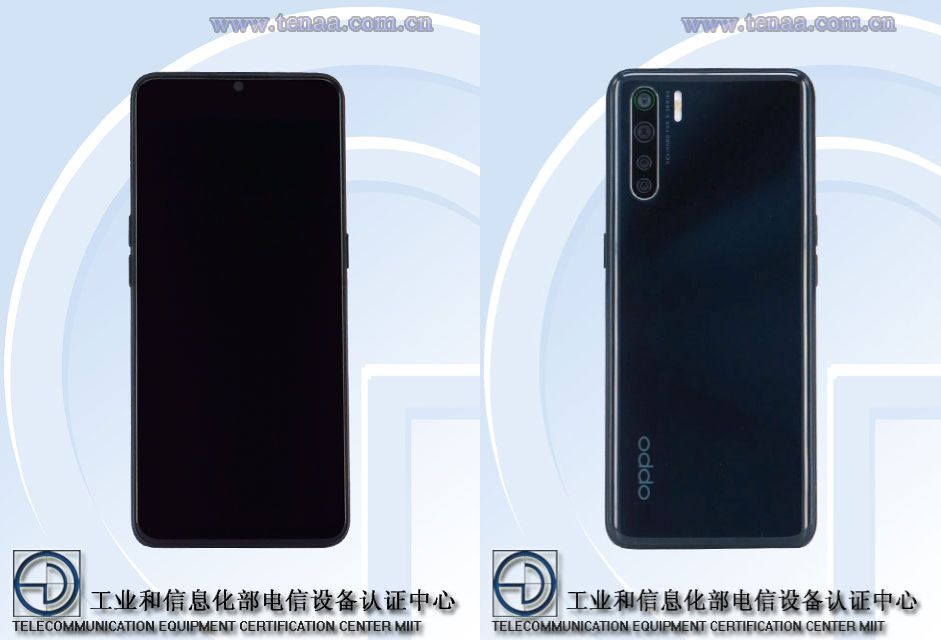
OPPO PCPM00 / PCPT00 TENAA listing
This phone seems to be the PCPM00 / PCPT00 smartphone that was approved by TENAA earlier this month. Its 6.4-inch AMOLED display supports 20:9 aspect ratio and 1080 x 2400 pixels full HD+ resolution. The 2.1GHz octa-core processor powers the smartphone with 8 GB of RAM. It has a native storage of 128 GB and there is a microSD card slot for more storage. The 48-megapixel + 8-megapixel + 2-megapixel + 2-megapixel quad camera setup is placed on the backside of the phone. It has a front camera of 16-megapixel. The device is backed by a minimum rated battery of 3,935mAh capacity.
The OPPO A8 also features a waterdrop notch screen. The rear side of the phone features a triple camera system and a fingerprint reader. Black, Red and White are three the color variants of the OPPO A8. The key features of the smartphone include AI triple rear cameras, 128 GB of storage, 6.5-inch display and 4,230mAh battery.
OPPO PDBM00 TENAA listing
The OPPO PDBM00 phone that was recently certified by TENAA seems to be the OPPO A8 smartphone. The handset features a 6.5-inch display that offers HD+ resolution of 720 x 1600 pixels. The device is powered by 2.3GHz octa-core processor and 4 GB of RAM. It has an internal storage of 128 GB and carries support for additional storage through microSD card slot. It is loaded with Android 9 Pie OS. The rear shell of the smartphone features a 12-megapixel + 8-megapixel + 2-megapixel triple camera system. It has a front camera of 8-megapixel. The smartphone has dimensions and weighs
There is no word on the pricing and launch date of the OPPO A91 and OPPO A8 smartphones.
According to a new report, Huawei is set to play a role in the building of 5G networking in the European country Norway. The company is expected to work with other industry experts on networking in the country despite pressures from the US.
The Chinese tech giant will work alongside Ericsson which is one of the few companies that still operate with the former despites its western complications. Huawei is still suffering from the aftershocks of the US ban and is facing difficulties in European operations as well.
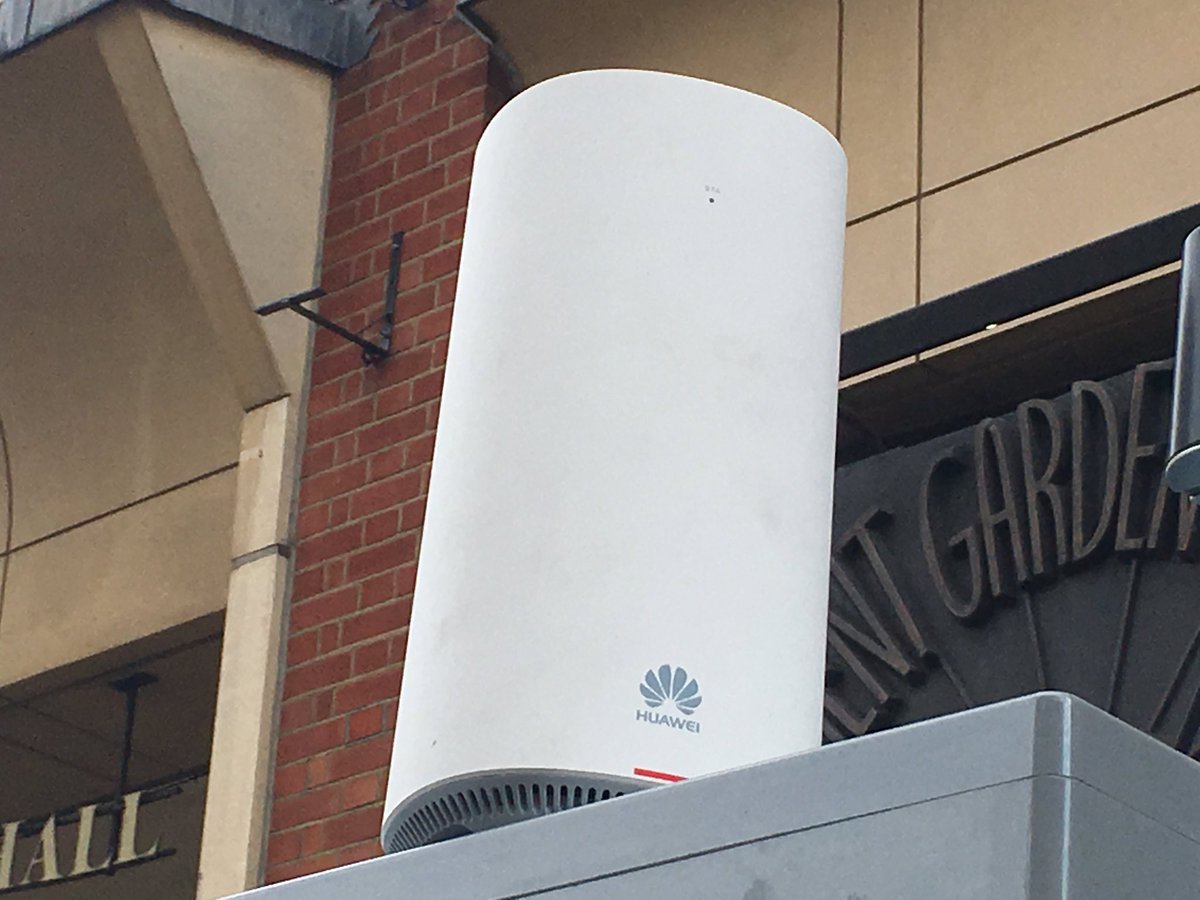
Huawei 5G Modem
Over the past 10 years, Telenor (a Norwegian telecommunications company) has worked with Huawei for 4G networking in Norway, according to Telenor VP for communications. The senior executive also went on to state that, “Ericsson has been introduced as a new vendor for 5G RAN, but we will also work with Huawei both to maintain the 4G network and also upgrade to 5G coverage in selected areas of Norway.”
Notably, Petter-Boerre Furberg, the head of Telenor Norway, stated that the operator would gradually phase Huawei network components in the country over a 4-5 years modernization period. This points to a broader image of Huwaei facing increasing difficulties in European regions amidst the US accusations regarding security threats. The security concerns have also risen in countries like Spain and are hampering the company’s operations in the area.
US-China Trade Disputes
To sum things up, Norway will utilize Ericsson’s technology for the newer and faster bandwidth while having Huawei maintain the existing 4G networking. However, the latter will also help in developing 5G in a few selected areas.
The Amazfit Sports Watch 3 is a smartwatch for sports enthusiasts and professional athletes. It comes in two versions – a Standard Edition and an Elite Edition, and now we get to add another variant to that list, the Star Wars Exclusive Edition which was officially launched earlier today and will go on sale exclusively on Tmall in China.
The watch rocks a 1.34-inch 320×320 JDI Full-Moon™ reflective low-power color display. The display is said to be specially designed for outdoor use and Huami says the stronger the light, the clearer the display. It’s similar to the Elite edition with AF+AR coated sapphire glass and a titanium bezel and features quick-release fluoro-rubber straps.
There’s also, as you’d expect from a Star Wars licensed product, references to Star Wars. The fluoro-rubber custom strap comes with one of Master Yoda’s quotes “Train You Must” inscribed on one side while the short strap says “Vader Is My Motivator”. It also has a custom dial, customized bezel, and comes in a special box with souvenirs.
So, where can you get one and for how much? The Amazfit Sports Watch 3 Star Wars Exclusive Edition will go on sale from December 19 carrying a promo price of 1599 yuan ($230) instead of the standard 1699 yuan ($241). Unfortunately, it’s currently exclusive to the Chinese market, and Amazfit isn’t likely to start having it sold out of China, so your best bet will be to import one after it goes on sale.
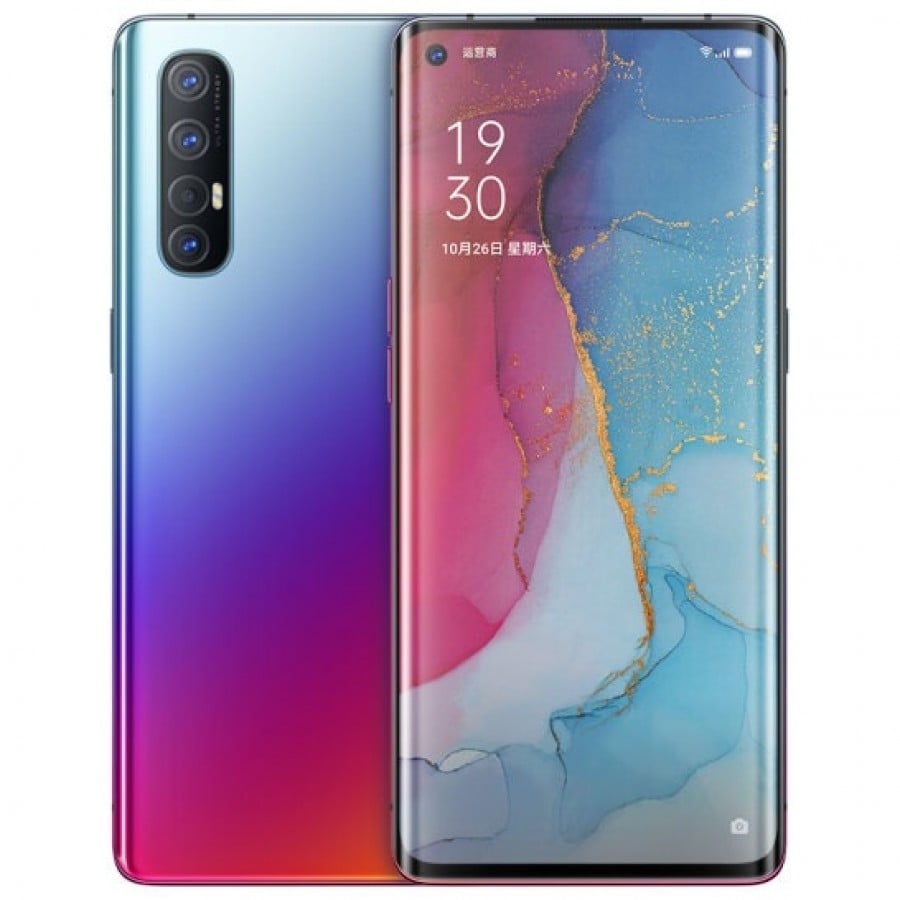
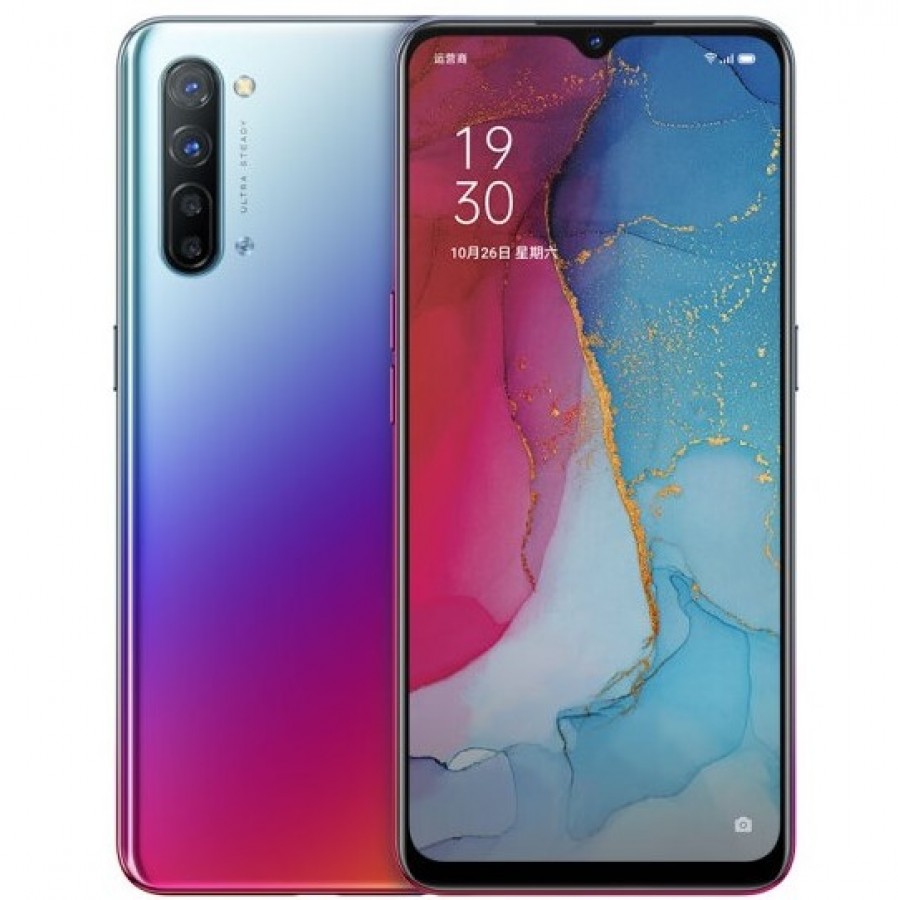
OPPO will be unleashing the Reno3 and Reno3 Pro smartphones in China on Dec. 26 at 3PM (local time). Ahead of the launch, OPPO has revealed the appearance of both phones through official listings. The listings have not only confirmed the color options of the Reno3 and Reno3 Pro phones, but also have revealed their storage and RAM editions. The 5G editions of both phones are listed on JD.com.
OPPO Reno3 and Reno3 Pro 5G Variants and Color Options
The OPPO Reno3 is listed on four colors on OPPOShop.cn website such as Sunrise Impression, Misty White, Moonlight Black and Blue Starry Night. The two RAM and storage editions of the Reno3 include 8 GB RAM + 128 GB storage.
1 of 4
The JD listing of the Reno3 5G and Reno3 Pro 5G have revealed that both phones will have an additional color option of Moonlight White. The 5G variants listings also reveals the existence of an extra variant of 12 GB RAM + 256 GB storage. The pricing information of Reno3 series is currently under the wraps.
The Reno3 with PDCM00 / PDCT00 smartphone features a 6.4-inch S-AMOLED display with waterdrop notch that offers full HD+ resolution of 1080 x 2400 pixels. The Dimensity 1000L that clocks at 2.2GHz powers the smartphone. The rear side of the Reno3 features a 64-megapixel + 8-megapixel + 2-megapixel + 2-megapixel quad camera system. The smartphone measures 160.3 x 74.37 x 7.96mm and it weighs 181 grams.
The Reno3 Pro has a punch-hole AMOLED display of 6.5 inches. It produces full HD+ resolution of 1080 x 2400 pixels. The display of Reno3 Pro carries support for 90Hz refresh rate. The Snapdragon 765G mobile platform powers the smartphone. The 48-megapixel + 13-megapixel + 8-megapixel + 2-megapixel quad camera setup resides on the backside of the Reno3 Pro. The smartphone measures 159.4 x 72.4 x 7.7mm and it weighs 172 grams. The below shown video show on the OPPO Reno3 Pro reveals that the phone will come equipped with video stabilization feature.
The Reno3 and Reno3 Pro smartphones comes with other features such as 32-megapixel primary lens, Android 10 OS, in-screen fingerprint reader and a 4,025mAh battery with 30W VOOC 4.0 enhanced edition fast charging support. The pricing of the Reno3 and Reno3 Pro will be revealed during the launch event.
Redmi K30 5G smartphone went official in China a couple of weeks ago. Now, a Chinese analyst has revealed that the cost of components used to make the device.
It is said that the Redmi K30 5G 6GB RAM and 64GB storage model costs around 1,746 yuan, which is roughly $250. However, the cost estimated is just for the components used and doesn’t include cost of research and development, assembly and after sales expenditure.
This indicates that the company isn’t making much money from the smartphone as the margin for the same is very low. For those who are unaware, the pricing of the Redmi K30 5G smartphone starts at 1,999 yuan which is roughly $284.
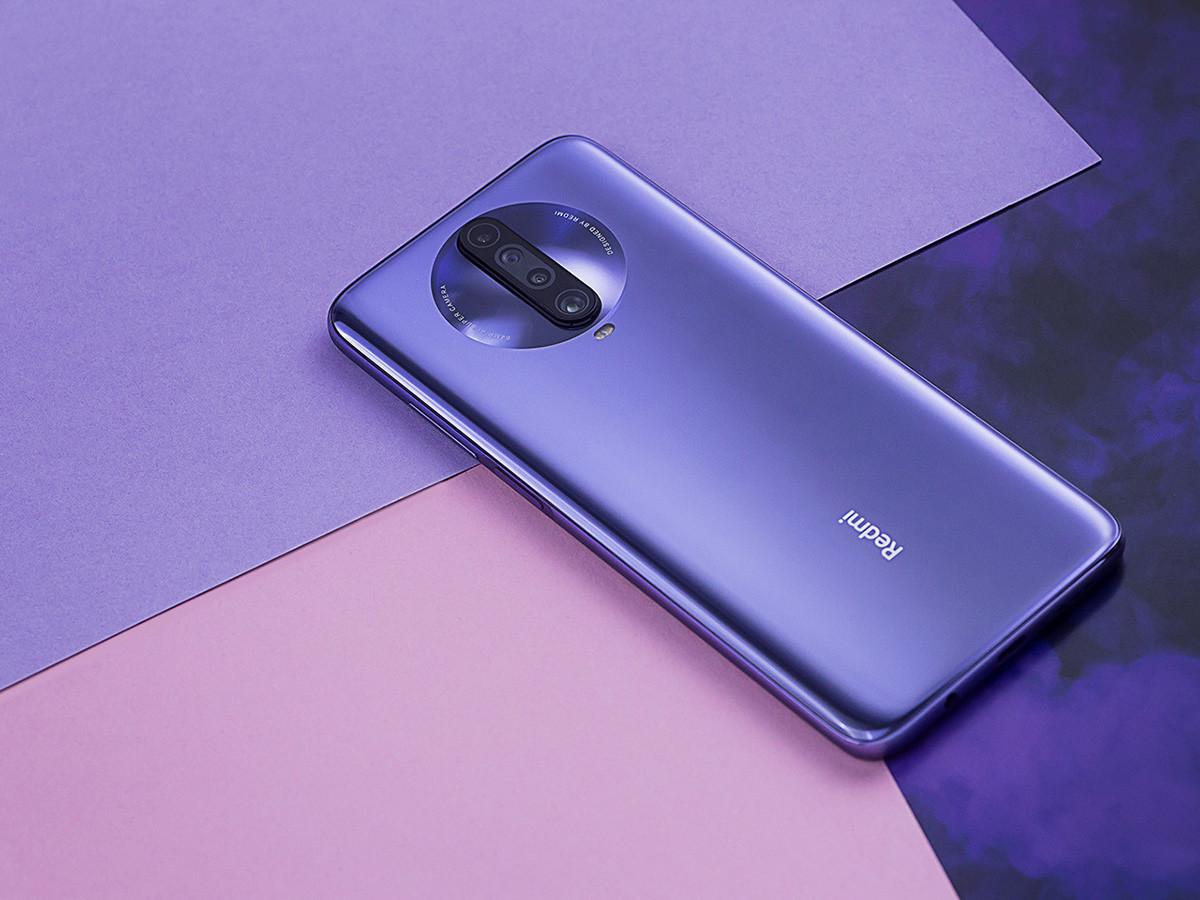
Redmi K30
The smartphone features a 6.67-inch punch-hole display and Gorilla Glass 5 panels on its front and rear. The HDR 10 complaint display produces a tall aspect ratio of 20:9 and offers full HD+ resolution of 1080 x 2400 pixels. It is also the first Redmi phone to arrive with support for 120Hz refresh rate.
Under the hood, the device is powered by the new 7nm Snapdragon 765G and comes with up to 8GB of LPDDR4x RAM and inbuilt storage of up to 256GB UFS 2.1. A microSD card slot is available on the device for expanding the storage capacity.
It is the company’s first phone to arrive with Android 10 OS which is overlaid with the latest MIUI 11 skin. The Mi Turbo 2.0 optimised the system performance whereas Game Turbo 2.0 enhances the device for gaming.
The back panel of the phone features a vertical quad camera setup which is placed inside a glossy round pattern. It features the Sony IMX686 64-megapixel primary lens with an f/1.89 aperture and a 1/1.73″ sensor size. The other sensor of the Redmi K30 5G’s rear camera setup includes an 8-megapixel ultra-wide lens with 120-degree field-of-view, a 5-megapixel macro lens and a 2-megapixel depth assist lens.
The company claims that the Redmi K30 5G has the same camera algorithms that is available on the Xiaomi Mi CC9 Pro that features 108-megapixel penta-lens camera setup. On the front, the Redmi K30 5G features an AI powered dual camera setup that includes a 20-megapixel main lens and a 2-megapixel depth sensor.
The device is powered by a 4,500mAh battery and carries support for 30W fast charging technology. The smartphone is equipped with an independent high-efficiency charge pump with a charging conversion efficiency of up to 97 percent.
The Redmi K30 5G model will be available for purchase in January 2020 while the pre-sale of the 4G model is now available for purchase in the market.
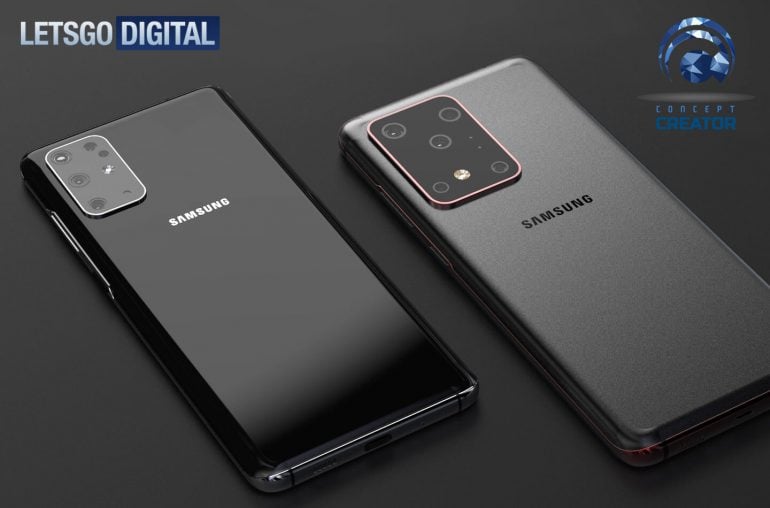
The Samsung Galaxy S11 is launching on the 18th February 2020, and while most of the specs have leaked, the only real-life picture that has leaked did not reveal too much, except that the camera protrusion will be rather significant. That means we are still relying on renders, and today we have an excellent render created by LetsGoDigital and the famed Concept Creator, showing the Samsung Galaxy S11.
The renders gives us another look at the upcoming device, along with its massive camera bump. The render is perfectly in line with previous reports claiming that the rear camera hump adds 1.1mm thickness to the S11’s body. It’s definitely not the prettiest design choice, but it apparently has some pretty sophisticated camera tech behind it.
The Galaxy S11 will feature a large 108MP camera sensor, probably the ISOCELL BRIGHT HMX Samsung sensor at the back. The primary sensor will be further supported by a 5x optical zoom setup on both these devices. There will also be two more sensors, an ultrawide-angle lens and a time-of-flight sensor for depth detection. Both the devices are expected to be launched in February 2020.
The Galaxy S11 will allegedly arrive in two different variants. One with the recently-unveiled Qualcomm Snapdragon 865, and the other with the Exynos 990 (Exynos 9830). Both chipsets are 5G-enabled and feature up to 12GB of RAM and 512GB of native storage depending on the variant.
The Galaxy S11 is also likely to sport wireless charging, IP68 certification, and an in-display fingerprint scanner. Samsung is currently working on its upgraded UI, One UI 2.0, which should also make an appearance on the S11. The smartphone will run on Android 10 out-of-the-box. Samsung will offer the device with both 4G and 5G compatibility, instead of only offering 5G.
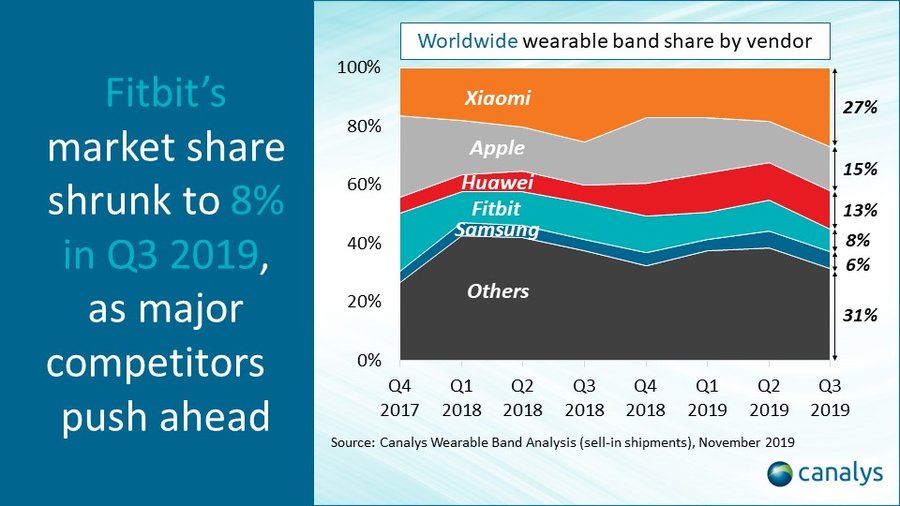
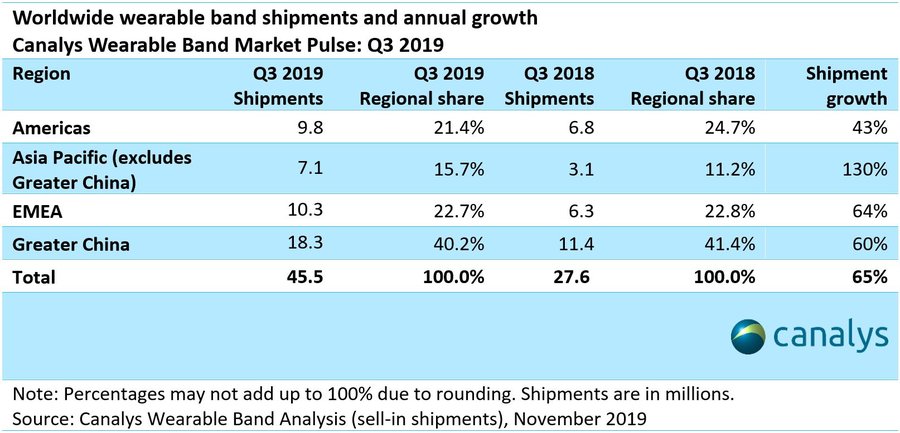
Over the past decade, we’ve seen smartphones become an essential part of our daily lives. Thanks to rapid advancements in technology, we can now say the same about wearable market. Market research firm Canalys has released the latest shipment numbers for the wearables segment in the third quarter, with Xiaomi at the front of the pack as expected.
The massive success of the Mi Band helped Xiaomi to become the number one brand in the global wearables market. Shipments of the company’s smart wearables totaled 12.2 million units for 27 per cent Q3 market share, with an impressive 74 per cent growth year-over-year. The primary reason behind Xiaomi’s success is its good old strategy of selling feature-rich products at competitive price points.
Apple placed second with 15% market share, where 60% of shipments were attributed to the newest Apple Watch Series 5. During the same month, Apple had cut the price of the Watch Series 3 to $199. Canalys notes that Apple recorded its highest year-over-year growth since Q2 2017.
Huawei ranked third with 5.9 million units and 13% market share and saw a 243% annual growth thanks to growing sales in China. Unlike Xiaomi and Apple, Huawei manufactures both fitness trackers and smartwatches, giving them a slight upper hand.
Fitbit (soon to be acquired by Google) made up 8% of the market, and was the only vendor that didn’t see much growth compared to last year. Samsung on the other hand managed to hold its position at number fifth in terms of market share. The research firm notes that the Galaxy Fit was well received by consumers in Asia. Following this we have many other smaller brands that acquired 31% market share.
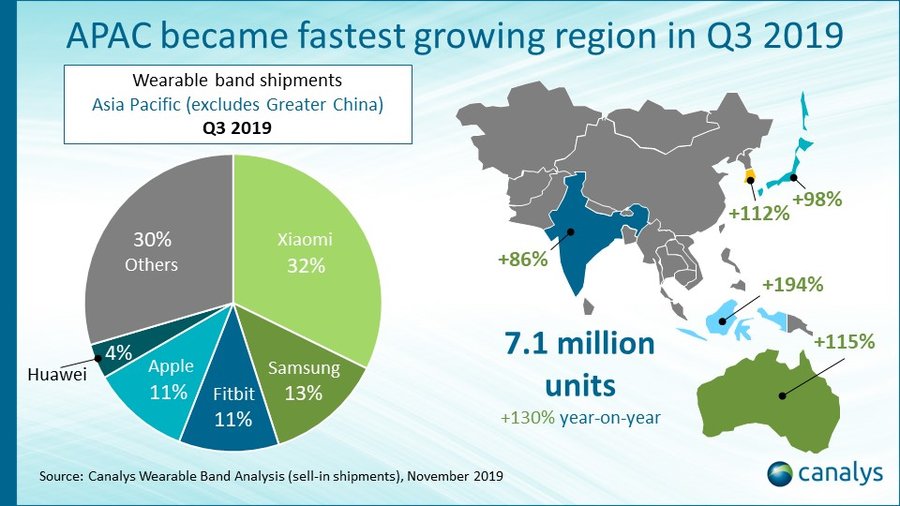
The American market was mostly dominated by Apple. As mentioned above, the Apple Watch Series 5 brought many nifty features like an always-on display, improved customization, and many more. The highly price-sensitive market of Asia-Pacific was mostly ruled by Xiaomi, Samsung, and Fitbit. Surprisingly, both Android and iOS users contributed to the rapid success of Mi Band 4 in India.
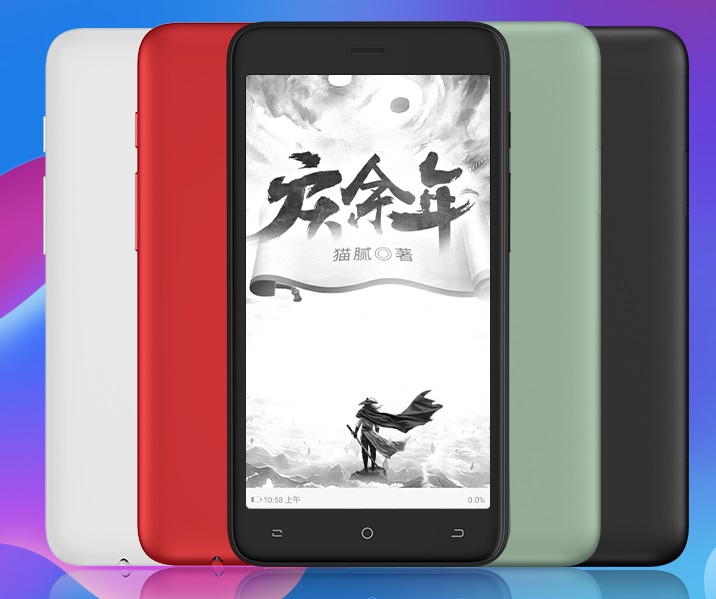
Chinese giant Tencent has today officially launched its second-generation eBook reader in the country, named Tencent Pocket Reader II. The product, priced at 1,099 yuan (approximately $158), comes in multiple color options.
The Tencent Pocket Reader II measures 145 × 75 × 8.5mm and weighs around 130 grams. It comes featuring a 5.2-inch e-ink screen that offers 284 PPI pixel density and has 36 backlit reading lights.
It has the latest Carta 2 ink screen along with 2.5D AG process glass optical technology which the company claim improves the paper effect on the screen. Under the hood, the eBook reader is powered by a quad-core A53 CPU. The device also comes with physical keys that enables users to turn the pages UP or DOWN.
The product also supports 4G mobile card / data card networking, along with support for calling, text messaging and WiFi networking. Users also have an option to switch ON the flight mode with just a single click.
The Tencent Pocket Reader II is directly linked to Tencent Reading Group’s book resource library. Between Pocket Reading and mobile QQ reading app, users can synchronise bookshelves, accounts, and reading progress across platforms.
It also enables users to import local books through Bluetooth or USB, and has also strengthened the support of third-party applications in the application system. It can independently select the refresh mode and supports more reading apps.
The device is powered by a built-in 2,000mAh battery and has a USB Type-C port for charging the product. The Tencent Pocket Reader II comes in Black, Green, and Red color for a price of 1,099 Yuan, which is roughly $158.
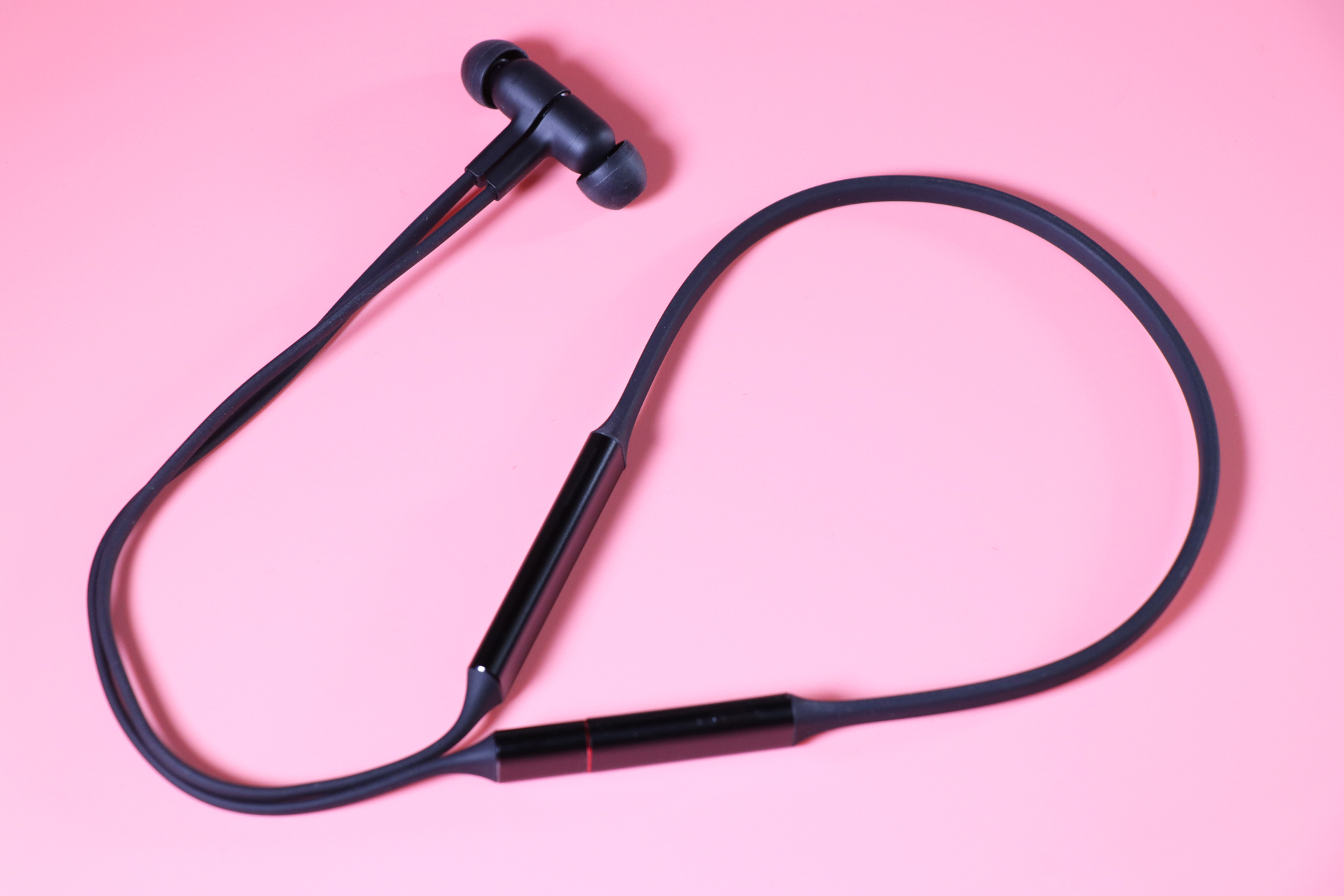
While wireless earbuds are becoming more popular, it doesn’t mean other types of earphones and headphones have become unpopular. Several wireless earphones and headphones, as well as wired types, were also launched this year. Notable examples are the OnePlus Bullets Wireless 2 and the Huawei Freelace which are fantastic wireless neckband-style earphones or the Sony WH-XB900N Wireless Active Noise Cancelling Headphones that takes the top spot in several rankings.
For this week’s poll, we want to know which type of headphones or earphones you use. Have you switched to wireless but prefer over-the-ear headphones to wireless earbuds or do you prefer wireless earphones with the neckband design? Or do you prefer wired earphones even if your phone no longer has an audio jack?
Do take the poll below and also post a comment telling us what influenced your current choice of headphones/earphones?
The OPPO Reno3 launch draws closer and with each passing day more details about the phone surface. The latest are live photos of the phone that reveal some of the phone’s specs.
The images were shared on Weibo by @Digital Chat Station and they show the system app, AIDA64 running on the phone. The Reno3 5G is shown to have a waterdrop notch, a blue power button, and a black frame.
The AIDA64 app confirms the phone is powered by MediaTek‘s MT6885 processor which will be officially known as the Dimensity 1000L. The second image shows the Dimensity 1000L has four Cortex-A55 cores clocked at 2.0GHz and 4 unknown cores clocked at 2.2GHz.
[envira-gallery id=”295252″]
The Reno3’s TENAA listing said the SoC is clocked at 2.2GHz, so these unknown cores are the performance cores and should be the Cortex-A77. Also, the AnTuTu result already revealed the chipset has a Mali-G77 GPU
The phone in the image has 8GB of RAM and 128GB of storage just as the TENAA listing revealed but we won’t rule out OPPO announcing other variants in the future.
The Reno3 will have a 6.4-inch FHD+ AMOLED screen, a 64MP primary rear camera paired with an 8MP ultrawide angle camera, a 2MP macro camera, and a 2MP depth sensor. There will also be a 32MP camera in front for selfies.
OPPO will ship it with a 4025mAh battery and ColorOS 7 based on Android 10. It will also have an in-display fingerprint scanner.
Prior to the launch of the Redmi K30 series, TENAA published the specs of the 4G version of the phone but didn’t do so for the 5G version. The agency has now published the specs of the Redmi K30 5G and it reveals we may get a new variant in the future.
The Redmi K30 5G (M2001G7AE) was announced in four variants – 6GB+64GB, 6GB+128GB, 8GB+128GB, and 8GB+256GB. However, the TENAA listing states there is a 12GB RAM version with 512GB of storage.
That sure is a lot of RAM and storage for an upper mid-range device but there is still no confirmation that Redmi will eventually release this version.
The TENAA listing also reveals there are black and green color variants of the phone which were not announced at the launch. So we may not only get a new 12GB RAM version in the future but also new colorways.
Redmi will not begin selling the phone until January 2020, so there is still a bit of waiting to do before it goes on sale.
The Redmi K30 5G has a 6.67-inch 2400 x 1080 IPS LCD display with two punch-holes. Yes, there are actually two separate holes but Redmi uses software to darken the space between the holes so it appears as a single pill-shaped hole. Also, the display has a 120Hz refresh rate and HDR10 support.
Inside the phone is the Snapdragon 765G processor. There are four cameras on the back of the phone – a 64MP Sony IMX686 primary camera, an 8MP 120° ultrawide angle camera, a 5MP 2CM macro camera, and a 2MP depth sensor. The Redmi K30 5G also has a 20MP primary selfie camera paired with a 2MP depth sensor.
Redmi has included a 4500mAh battery with support for 30W fast charge. There is also NFC, an audio jack, IR Blaster, dual-frequency GPS, Bluetooth 5.0, and a USB Type-C port. The Redmi K30 5G also has a side-mounted fingerprint scanner, Hi-Res Audio and runs MIUI 11 based on Android 10.
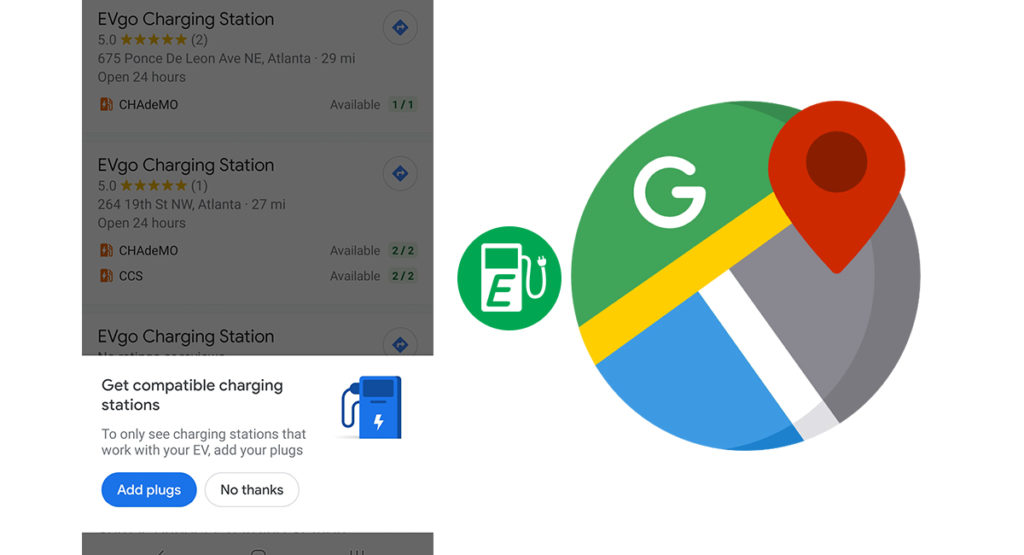
Google always keeps incrementing its services using new features and enhancements. They always tend to make the services user-friendly and feature-rich by listening to users’ demands in real-time. On such a similar note, Google Maps has recently received a new filter to classify the Electronic Vehicles charging stations based on plug type. Google Maps adds filter of plug type for EV charging stations
The search giant finally paid heed to the users’ demand who own an electric vehicle. There are different types of charging connectors used by several car manufacturers. For example, Nissan use CHAdeMO, Tesla uses its connector, and the BMW and VW use CCS plug type for charging their cars. However, the users can choose from different plugs, including J1772, CCS (Combo 1), Type 2, CCS (Combo 2), CHAdeMO, and Tesla.
Since the inception of the EV search facility got over Google, the users were missing out on the ability to filter results based on the connector type. The recent update will surely a sigh of relief for the daily drivers. It will help them to drive card directly to the compatible charging station. Especially, travelers using Electronic Vehicles will surely benefit from such a service.
To use the new feature, the users can head over to the Google Maps > Settings > Electric Vehicle Settings >Your Plugs > Choose and save. This way, users can flawlessly search the compatible EV stations using Google Maps. It’s a crucial feature for the users and will end the users’ reliability of using third-party apps like PlugShare.
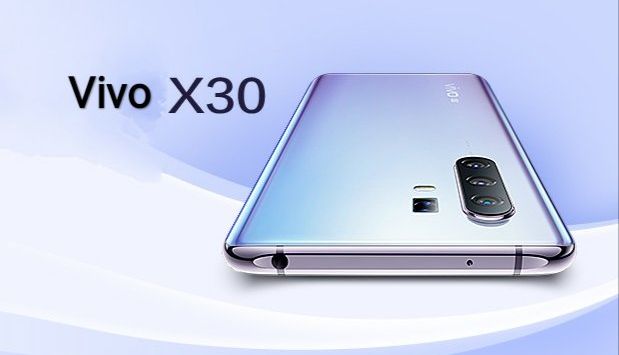
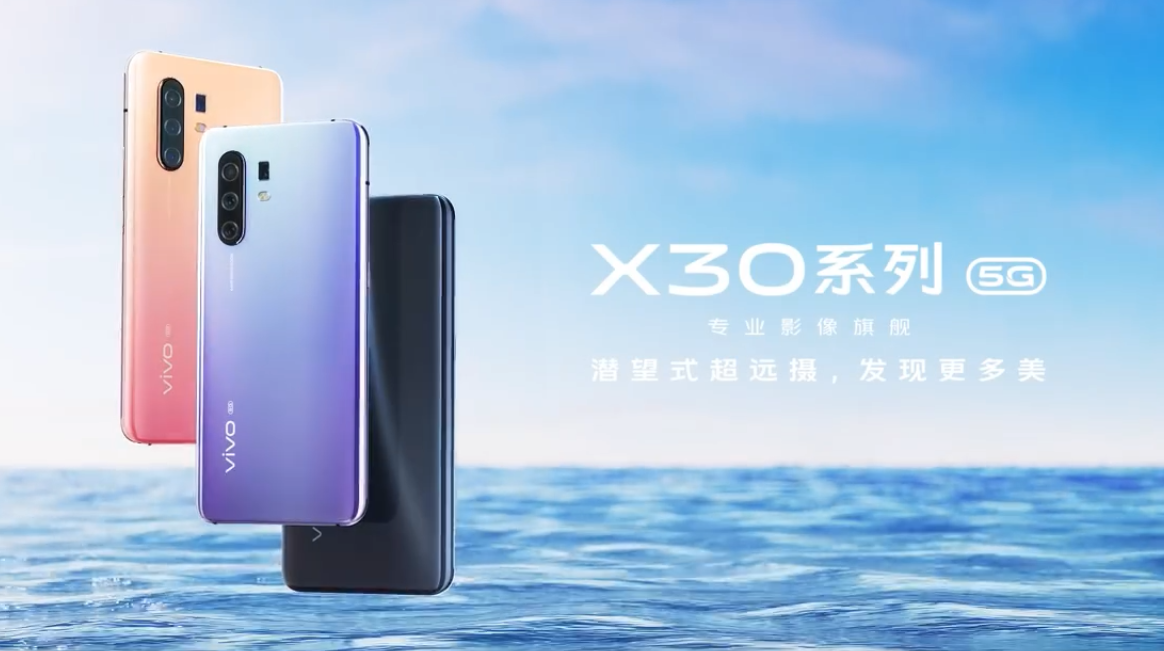
Only a handful of hours is separating us from the official launch of the Vivo X30 series. The new Vivo’s line-up will be composed of Vivo X30 and X30 Pro alongside their 5G variants and it will include the first smartphones from the X series to carry the support to 5G connectivity. Ahead of the launch, a lot of official information and leaks appeared online, so we know almost everything about the specifications of the new handsets. Here is a rumor roundup with all the reliable info about these devices we got in the last period.
Vivo X30 and X30 Pro (5G) Rumor Roundup
Design
Vivo X30 and X30 Pro will offer very attractive aesthetics. Official teasers confirmed that the new series will offer punch-hole displays and a very high screen-to-body ratio. Just like most of the premium smartphones, Vivo X30 and X30 Pro will come with high build quality, so they will sport a glass back and an aluminum frame.
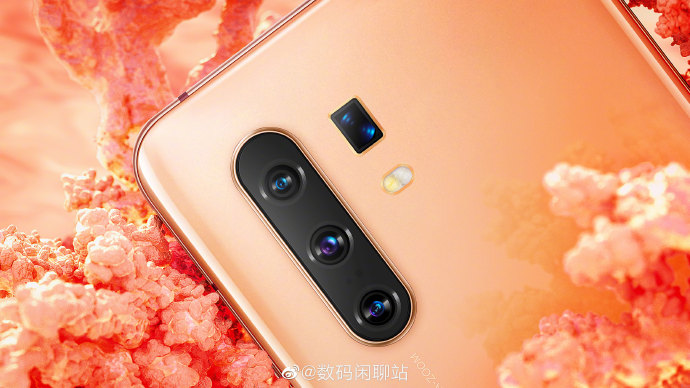
On the rear side, there will be a quad-camera setup with three sensors placed vertically and a fourth sensor on the right of the main camera module. The LED flash will be placed under the fourth camera module which will be a periscope lens. The phones will arrive in at least three color variants: there will be a Black version as well as two gradient color options: a blue/purple one (Aurora) and Coral Red.
As we already mentioned above, the Vivo X30 series will offer punch-hole displays. There will be no notch and the front camera will be integrated into the screen. Both the Vivo X30 and Vivo X30 Pro are tipped to come with a 6.5-inch Super AMOLED display. The panel should have a 20:9 aspect ratio and a Full HD+ resolution with 1080 x 2400 pixels. It will also integrate an in-display fingerprint reader. Thanks to the punch-hole display, the phones will have very narrow bezels without the need for a notch.
Vivo X30 and X30 Pro will be the first smartphones equipped with the world’s first processor sporting an integrated 5G modem. We are talking about the Exynos 980 developed jointly by Samsung and Vivo. It supports both SA and NSA connectivity and it can reach download speeds of up to 2.55 Gbps. While using both 4G and 5G dual connectivity, it can be even better as it can reach up to 3.55 Gbps download speeds. Besides 5G, Exynos 980 also supports Wi-Fi 6.
It is a chipset composed of Cortex A77 CPUs and a Mali G76 MP5 GPU, so we are talking about a high-end SoC, in case you missed that. It has an octa-core architecture and it reaches a max frequency of 2.2 GHz. Vivo X30 Pro will be equipped with 8 GB of RAM and 128 GB of internal storage, but we still do not know if there will be other memory configurations. Unfortunately, they are tipped to come with Android 9 Pie in a period in which the most important mainstream brands are launching Android 10-powered smartphones.
The OS will be customized by Funtouch OS. Vivo X30 Pro recently surfaced on AnTuTu benchmark: the phone scored more than 326,000 points in the benchmarking platform. While it is not comparable to the most performing flagships, X30 Pro managed to obtain a pretty nice high-end score. It is a total score superior to every Qualcomm’s midrange chipset, even the new Snapdragon 765G found on the Redmi K30.
5G and the camera department will be the main features of the Vivo X30 series. The rear camera department of the X30 Pro will be composed of four sensors: a 64 MP main lens, a 32 MP portrait sensor, an 8 MP ultrawide lens and a 13 MP periscope lens. The smartphone will offer up to 60x digital zoom experience. There will be both OIS and EIS for an excellent stabilization.
Vivo’s product line manager Luan Xinlin has published a photo that looks like the night time moon shot captured with the X30 Pro main camera. As you probably know, it is almost impossible to shoot a decent photo to the moon with almost every smartphone out there. But this device does it pretty well. And thanks to its 32 MP lens it will also be able to shoot great portrait shots. The front camera will be a 32 MP sensor.
Vivo X30 Pro is expected to come with a satisfying 4500 mAh battery and, according to 3C, the smartphone will support a 33W fast charging technology. We are not talking about the highest battery capacity and neither about the fastest charging technology, but everything is above-average on the battery side.
The Vivo X30 series will be officially announced on December 16. On this date, the company will also reveal the official listing prices of both the smartphones, while now we have no info about them. We can only tell you that their predecessors Vivo X27 and X27 Pro were launched in China with CNY 3198 and CNY 3998 prices respectively.
According to rumors, the Pro version may cost less than 3000 Yuan which roughly translates into $426. The smartphones are not expected to leave the Asian market (at least initially) and they will be launched in China. A future launch in the Indian market is expected too. If you want to have all the possible information about the new line-up, head to our dedicated page including all the news we published about the X30 series.
We use cookies on our website to give you the most relevant experience by remembering your preferences and repeat visits. By clicking “Accept”, you consent to the use of ALL the cookies.
This website uses cookies to improve your experience while you navigate through the website. Out of these, the cookies that are categorized as necessary are stored on your browser as they are essential for the working of basic functionalities of the website. We also use third-party cookies that help us analyze and understand how you use this website. These cookies will be stored in your browser only with your consent. You also have the option to opt-out of these cookies. But opting out of some of these cookies may affect your browsing experience.
Necessary cookies are absolutely essential for the website to function properly. This category only includes cookies that ensures basic functionalities and security features of the website. These cookies do not store any personal information.
Any cookies that may not be particularly necessary for the website to function and is used specifically to collect user personal data via analytics, ads, other embedded contents are termed as non-necessary cookies. It is mandatory to procure user consent prior to running these cookies on your website.