Advertisement

Oppo F31, F31 Pro tipped to feature with massive 7000mAh battery

It was just in March that Oppo released its mid-range F29 series, but now we’re already hearing about its successors. The lineup will reportedly be succeeded by the Oppo F31 series.

The upcoming F31 phones are rumored to feature the same IP68 and IP69 ratings as their predecessor, along with the tagline “Next Level Durability.” A new leak also suggests the phones will ship with massive 7,000mAh batteries.

The information comes from tipster @passionategeekz, who revealed that the F31 lineup is expected to debut in India next month.

Oppo F29 Pro 5G

According to the leak, the F31 series won’t bring major improvements in cameras or chipsets compared to the F29 models launched earlier. Instead, Oppo seems to be focusing on durability, with the phones said to feature 360-degree Armor Body protection and enhanced network performance.

As usual, we are likely to see two models in the lineup: the F31 and F31 Pro. And since the core hardware doesn’t seem to be changing much, here’s a quick refresher on what the F29 brought to the table.

Oppo F29 series specs

Both Oppo phones feature a 6.7-inch Full HD+ AMOLED display with a 120Hz refresh rate and peak brightness of 1200 nits. 

Powering the F29 Pro 5G is MediaTek’s Dimensity 7300 Energy, while the standard F29 5G runs on the Snapdragon 6 Gen 1 chipset.

The Pro model offers up to 12GB of LPDDR4x RAM and 256GB of UFS 3.1 storage, while the F29 5G supports up to 8GB RAM and 256GB storage. Both phones also come with stereo speakers.

The Oppo F29 Pro 5G features a 50MP main camera with optical image stabilization (OIS) and a 2MP depth sensor, along with a 16MP Sony front camera for selfies. The standard F29 5G also has a 50MP primary sensor, though it uses Samsung’s JN5 sensor, plus a 2MP monochrome sensor and a 16MP front camera.

The Pro model packs a 6,000mAh battery with 80W fast charging, while the standard F29 5G carries a larger 6,500mAh battery but only supports 45W charging.

For more daily updates, please visit our News Section.

Tech enthusiast? Get the latest news first! Follow our Telegram channel and subscribe to our free newsletter for your daily tech fix! ⚡

(Source)

Oppo Find X9, X9 Pro teasers to begin in September, Find X9 Ultra Q2 2026 launch confirmed

Chinese smartphone makers are gearing up to unveil their next-generation flagships powered by the latest chipsets. Xiaomi is expected to announce the Xiaomi 16 series by the end of September in China, while the Vivo X300 lineup may debut around the same time. Following these launches, the Oppo Find X9 series is tipped to go official in October. Recently, tipster Digital Chat Station claimed that the Find X9 lineup, including the Find X9 Pro, will be unveiled in October. This has now been supported by Oppo Find series product manager Zhou Yibao, who confirmed the launch window.

Oppo Find X9, X9 Pro launch timeframe

Oppo Find X9 series teasers to begin in September in China

Yibao, currently on a business trip to Brazil, revealed that he is testing two new phones. While he did not explicitly name them, it is likely that these are Find X9 series models being tested ahead of their launch. When asked about the teaser schedule, he confirmed that Oppo would begin teasing the devices in September, once he returns to China later this month.

Meanwhile, reports suggest that MediaTek will introduce the Dimensity 9500 chipset on Sept. 22, with the Vivo X300 series expected to debut as the world’s first smartphone powered by the new chip. Since the Find X9 and X9 Pro are scheduled for an October launch, official teasers from Oppo may start appearing by mid-September.

Oppo Find X9 Ultra launch timeframe

Oppo Find X9 Ultra launch timeframe officailly confirmed

As can be seen above, Yibao has confirmed that the Oppo Find X9 Ultra will debut in the second quarter of 2026. Unlike the standard and Pro models, the Ultra edition is expected to feature the Snapdragon 8 Elite 2 chip. Likely, the brand may also announce the Find X9s (a compact flagship) and the Find X9s+ alongside the Ultra model.

For more daily updates, please visit our News Section.

Stay ahead in tech! Join our Telegram community and sign up for our daily newsletter of top stories.
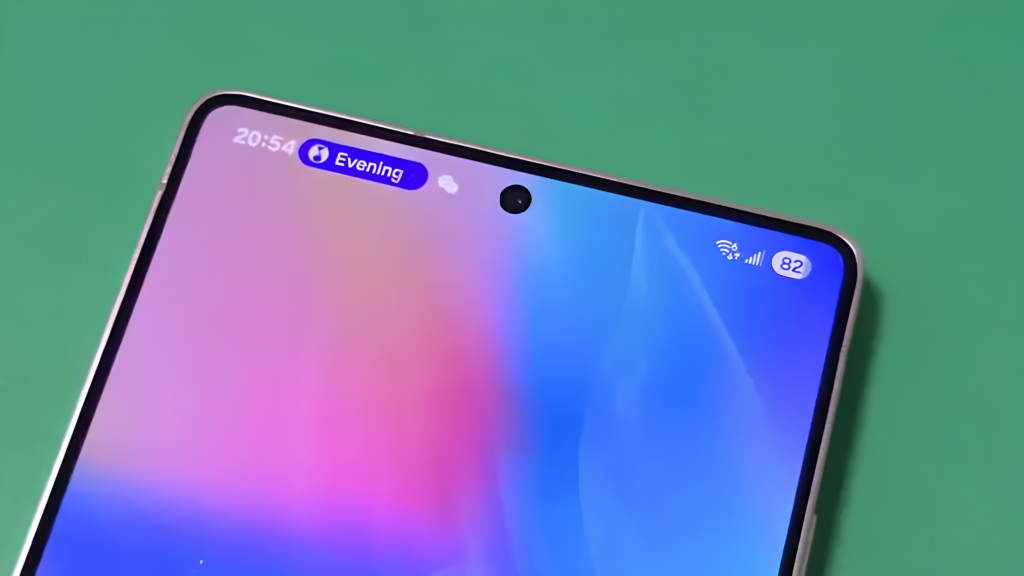
Galaxy S26 Pro leak points to bigger screen and slight battery bump

Samsung’s next flagship lineup is still months away, but leaks are already hinting at what to expect from the Galaxy S26 Pro. The phone is tipped to launch in early 2026 alongside the S26 Ultra and S26 Edge, and fresh details highlight changes to the display and battery.

Samsung-Galaxy-S25

According to Weibo tipster Digital Chat Station, the Galaxy S26 Pro (SM-S9420) will feature a 6.27-inch Dynamic AMOLED 2X display, up slightly from the 6.2-inch panel on the Galaxy S25. The difference may come down to slimmer bezels rather than a wider frame, but users can still expect the usual Samsung upgrades in brightness and color accuracy. The panel could also share similarities with the next-gen screen that’s rumored for the S26 Ultra.

Battery life is also set for a minor boost. The S26 Pro is listed with a 4,175mAh cell, which will likely be marketed as 4,300mAh — 300mAh more than last year’s model. While the upgrade is welcome, it still trails rivals like the OnePlus 13T (our review), which packs a 6,260mAh silicon-carbon battery. Charging details for the Pro aren’t clear yet, but the Ultra’s rumored jump from 45W to 60W suggests the standard model could also move up from its 25W rating — especially given that Samsung’s Galaxy A56 already supports 45W, outpacing the flagship S25.

Other leaked specs include a Snapdragon 8 Elite Gen 2 or Samsung’s in-house 2nm Exynos 2600 chip and 12GB base RAM. Qi2 wireless charging and an extra NFC antenna are also said to be on board.

With its compact footprint and incremental upgrades, the Galaxy S26 Pro looks like it will follow the same formula as its predecessor — albeit with a “Pro” moniker — aiming to be the “small flagship” of the series rather than the spec monster. More details should surface as Samsung gears up for its January launch window.

Don’t miss a thing! Join our Telegram community for instant updates and grab our free daily newsletter for the best tech stories!

For more daily updates, please visit our News Section

(Source)

Galaxy A17 5G India pricing tipped

Samsung looks set to add another option to its affordable 5G lineup, with the Galaxy A17 5G now popping up in a new leak. The latest info points to Indian pricing, giving us a good idea of where this phone will sit in the mid-range market.

Samsung Galaxy A17
Samsung Galaxy A17

Pricing and variants

Tipster Abhishek Yadav shared on X that the Galaxy A17 5G could start at ₹18,999 for the 6GB + 128GB model. That matches the starting price of last year’s Galaxy A16 5G, though that one began with 8GB RAM instead. Samsung seems to be adding a cheaper 6GB option this year, while the 8GB + 128GB version is listed at ₹20,499, and the 8GB + 256GB model at ₹23,499. At those figures, the A17 5G goes up against rivals like the iQOO Z10 and Z10R, which offer stronger specs across the board — from the chipset to battery life and charging speeds.

The Galaxy A17 5G is expected to ship with a 6.7-inch Full HD+ Super AMOLED panel running at 90Hz, reportedly powered by Samsung’s Exynos 1330 chip. It will boot Android 15 with One UI 7, and Samsung will likely promise up to six years of updates. A 5,000mAh battery with 25W charging should keep things ticking.

The cameras also see a notable bump, with the 50MP main sensor now getting OIS support for steadier shots. It’s paired with a 5MP ultrawide, 2MP macro, and 13MP selfie. The phone itself has a slimmer design this time — 7.5mm thick and 192g — and a pill-shaped rear camera layout.

The Galaxy A17 5G is expected to launch in India around September 2025, with more markets likely to follow soon after.

Don’t miss a thing! Join our Telegram community for instant updates and grab our free daily newsletter for the best tech stories!

For more daily updates, please visit our News Section

(Source)

Google Pixel 10 Pro Fold full specs leak ahead of launch

Google’s next foldable is almost here, and a fresh leak has laid bare nearly everything about the Pixel 10 Pro Fold. Just days ahead of its official August 20 unveiling, the spec sheet points to a device that makes steady refinements in design, performance, and durability — all while keeping Google’s AI push front and center.

Google Pixel 10 Pro Fold

According to WinFuture, the Pixel 10 Pro Fold keeps a design close to its predecessor but with some notable upgrades. The cover display measures 6.4 inches, offering 1080×2364 resolution, a 60–120Hz refresh rate, and a massive 3,000-nit peak brightness — up from last year. Inside, the 8-inch LTPO OLED main panel matches that brightness while keeping its 2076×2156 resolution intact.

Durability also takes a step forward. The Pixel 10 Pro Fold is the first foldable to carry an IP68 rating, putting it on par with regular flagships for dust and water resistance. Google is also leaning into sustainability here, with the frame made entirely from recycled metals.

Under the hood, the Pixel 10 Pro Fold runs on Google’s new Tensor G5 chip alongside the Titan M2 security module. It’s paired with 16GB of LPDDR5X RAM and up to 1TB of UFS 4.0 storage, so performance shouldn’t be an issue.

The rear camera system looks similar to the Pixel 9 Pro Fold — a 48MP main, 10.5MP ultrawide, and 10.8MP telephoto — but now with improved 10x optical zoom. Dual 10MP selfie cameras handle front-facing shots.

Battery capacity has been bumped to 5,015mAh, with 30W wired charging (50% in 30 minutes) and 15W PixelSnap wireless charging, Google’s Qi2-based solution. Out of the box, it runs Android 16 with seven years of updates, plus AI tools like Gemini Live and Call Assist.

In Germany, the Pixel 10 Pro Fold is expected to be priced at €1,899 (around $2,100) for the 256GB version. Buyers will be able to choose between Moonstone and Jade finishes.

Stay ahead in tech! Join our Telegram community and sign up for our daily newsletter of top stories!

For more daily updates, please visit our News Section

(Source)

AOC launches insanely fast 420Hz gaming monitor for under $230

AOC has released a new gaming monitor in China under the model name 25G4K. The 24.5-inch display is listed on JD.com for 1,599 yuan ($222). It targets esports players and competitive gamers, focusing on speed and motion clarity.

AOC 25G4K Monitor

AOC 25G4K Monitor Specifications

The AOC 25G4K monitor uses a Fast IPS panel with a native resolution of 1920 × 1080 pixels. It supports an overclocked refresh rate of up to 420Hz via DisplayPort, enabling extremely fluid gameplay.

The display achieves a 1ms GTG response time and a 0.3ms MPRT rating, significantly minimizing motion blur during high-speed action. AOC has equipped this model with VESA DisplayHDR 400 certification, allowing it to hit 400 nits of peak brightness and display HDR content with better contrast and brightness range.

Each unit comes with factory calibration and a Delta E value of less than 2. The monitor covers 92% of the DCI-P3 color space, according to the CIE 1976 standard. It includes a six-axis color adjustment system, which gives users control over hue and saturation for each channel.

AOC 25G4K Monitor

AOC has integrated its proprietary MBR Sync technology to further reduce motion blur. The monitor also supports AMD FreeSync and Adaptive-Sync to eliminate screen tearing and stuttering.

In terms of gaming features, the monitor includes Dark Boost for better visibility in dark scenes and an intelligent crosshair system with a sniper zoom mode for FPS gamers. It also supports GameMode and GameColor settings, allowing users to tweak contrast and saturation or switch presets based on game genres.

AOC equips the monitor with an ergonomic stand that supports 130mm height adjustment, -5° to 23° tilt, ±30° swivel, and ±90° pivot. It is also compatible with 100 × 100mm VESA wall mounts.

In terms of connectivity, the monitor includes one DisplayPort 1.4 port, two HDMI 2.0 ports, and a 3.5mm audio output jack. AOC uses DC dimming and hardware-level low blue light technology to help reduce flicker and eye strain during extended use. The monitor weighs 4.22kg with the stand and 2.85kg without it.

In related news, Xiaomi recently launched the 2026 edition of the Redmi A27U Type-C monitor featuring 4K HDR visuals and 90W USB-C charging. Meanwhile, AOC has introduced a 500Hz QD-OLED gaming monitor with HDR True Black 500 certification and a 0.03ms response time.

For more daily updates, please visit our News Section.

Stay ahead in tech! Join our Telegram community and sign up for our daily newsletter of top stories! 💡

(JD)

Ads in ChatGPT? OpenAI Says It’s Not Off the Table

OpenAI is exploring new ways to generate revenue and has not ruled out the possibility of introducing ads into ChatGPT. In an interview with The Verge, ChatGPT head Nick Turley said the company is open to the idea but emphasized the need to be “very thoughtful and tasteful” if it moves forward. He said ChatGPT may not be suitable for advertising because it must closely align with user goals, but other OpenAI products in the future could support different business models.

ChatGPT

Turley said he remains confident in the subscription-based approach, which has driven rapid revenue growth. OpenAI expects to generate $12.7 billion in revenue this year, more than triple the $3.7 billion it made in 2024, according to Bloomberg. Despite this, the company still operates at a loss and does not expect to achieve positive cash flow before 2029.

ChatGPT recently surpassed 700 million total users, and as of April, the platform had 20 million paid subscribers. Turley said most users remain on the free tier, but added that this user base creates an opportunity to convert them to premium services.

OpenAI is also working on new monetization features, including product recommendations through ChatGPT. Turley said the company is testing a system called “Commerce in ChatGPT,” which could allow OpenAI to earn a cut from purchases. He said OpenAI does not plan to allow affiliate revenue to influence recommendations and wants the product selection process to remain independent.

Sam Altman, OpenAI CEO, has expressed concerns about mixing ads with AI. During a Harvard Business School event last year, he said the idea made him “a little uneasy” and should only be used as a last resort. However, in a podcast episode this June, Altman said he is “not entirely opposed” to ads if implemented responsibly.

Turley said OpenAI is also considering future product directions that go beyond the current chatbot format. He said ChatGPT could evolve into a more deeply integrated tool for productivity and business use, where different monetization strategies might apply.

In related news, an insider dismissed the August launch hype around DeepSeek-R2 as pressure grows on its AI goals, while Huawei’s new AI UCM tech is said to help China counter chip sanctions and improve performance.

For more daily updates, please visit our News Section.

Stay ahead in tech! Join our Telegram community and sign up for our daily newsletter of top stories! 💡

(Source)

Gmktec launches M6 Ultra Mini PC with Ryzen 5 7640HS, Radeon 760M & up to 128GB DDR5 RAM

Gmktec has officially launched the M6 Ultra mini PC in the Chinese market. The device will go on sale from August 19 with a barebone version available at a promotional price of 1499 yuan ($210). The 16GB RAM + 512GB SSD model is listed at 1999 yuan ($280), while the 32GB RAM + 1TB SSD version is priced at 2499 yuan ($350).

Gmktec M6 Ultra

Gmktec M6 Ultra Specifications

The M6 Ultra has a compact body measuring 128.8 × 127 × 47.8 mm. It runs on the AMD Ryzen 5 7640HS processor based on the Zen 4 architecture and built on TSMC’s 4nm process. The CPU comes with six cores and twelve threads, a boost clock up to 5.0 GHz, and 22 MB of combined cache. It operates at a configurable 50W TDP to deliver stable performance for multitasking and demanding applications.

Coming to the graphics, the mini PC integrates AMD Radeon 760M GPU with RDNA 3 architecture. The GPU features eight cores clocked up to 2600 MHz. Gmktec claims the GPU matches Nvidia’s GTX 1650 Ti. Benchmark tests show Forza Horizon 5 running at 65-96 FPS on medium settings, Genshin Impact at 54-68 FPS, and Cyberpunk 2077 at 47-63 FPS on low settings. The Witcher 3 averages between 40-68 FPS.

The mini PC supports up to 128 GB of DDR5 RAM at 4800 MT/s through two SO-DIMM slots. Storage expansion is available via dual M.2 PCIe 3.0 ×4 SSD slots with support for up to 8 TB capacity per drive. Gmktec has added a tool-free quick-release system to make upgrades easier.

Gmktec M6 Ultra

In terms of cooling, the system uses a dual-fan setup, with one fan dedicated to the CPU and the other ensuring airflow for SSDs and memory. The setup improves thermal stability and reduces noise during extended use.

The M6 Ultra provides dual 2.5G Ethernet ports, Wi-Fi 6E, and Bluetooth 5.2 for connectivity. It also includes a USB 4.0 port with 40 Gbps transfer speed, 100W PD input, and external GPU dock support. Additional ports include HDMI, DisplayPort, USB 3.2 Gen2, USB 2.0, and a 3.5mm audio jack. The system supports triple-display output up to 8K resolution.

In related news, Gmktec recently launched the NucBox M3 Ultra Mini PC, featuring an Intel Core i7-12700H, support for up to 64GB RAM, and triple 4K display output.

For more daily updates, please visit our News Section.

Stay ahead in tech! Join our Telegram community and sign up for our daily newsletter of top stories! 💡

(JD)

OxygenOS July 2025 FAQ Explains Battery Drain, Restart Fix, and Mind Space Setup

With July ending, OnePlus has released its latest OxygenOS FAQ, addressing recurring user issues and clarifying updates to the operating system.

Users facing automatic device restarts are advised to update Google Play Services to version 25.25.33 or higher, which should fix the issue. For mismatched contact information between WhatsApp and the Contacts app, logging out of WhatsApp and logging back in is the recommended solution.

Some models are experiencing abnormal battery drain. OnePlus confirmed that the issue is under investigation and asked affected users to report details through the Feedback app.

The FAQ also details the rollout of the V90P00 version, which began on July 10 and was fully released by July 31. This update introduces multi-language translation features and an optimized photo gallery with one-click AI composition.

Guides for new tools were also included. Mind Space, described as a digital therapy space, can be set up through Settings > Accessibility & convenience > Mind space > Save to mind space. The Scramble clock, meant for important reminders such as games or pre-sale events, can be enabled by opening Clock > Alarm > “+” > Scramble, then setting the alarm time and customizing the date or sound alerts.

Another feature, Temporarily Block, is designed to stop notifications while gaming or watching videos. It can be activated through Settings > Notification and Control Center > Banner Notification > Temporary Block.

The July FAQ follows last month’s release and continues OnePlus’s effort to respond directly to user concerns while explaining updates.

For more daily updates, please visit our News Section.

Stay ahead in tech! Join our Telegram community and sign up for our daily newsletter of top stories.
(Source)

Huawei Watch 5 gets new Aurora Green and Galaxy Blue colors

Huawei is adding two new colors to its Watch 5 lineup. The company announced on Weibo that the 42mm model will soon be available in Aurora Green, while the 46mm version gets a Galaxy Blue option. Both go on sale in China on August 22, with pre-orders already open through Huawei’s Vmall store.

Huawei Watch 5 in new colors

The Galaxy Blue version, priced at 2,999 RMB (around $410), comes with a denim-style strap and is exclusive to the 46mm model. Aurora Green is limited to the 42mm version, priced at 2,699 RMB (around $375), and uses a fluororubber strap. These join the existing finishes, including Nebula Apricot, Phantom Moon Black, and Galaxy Purple.

Specs remain unchanged. The 42mm has a 1.38-inch AMOLED display, while the 46mm features a 1.5-inch panel, both with 466×466 resolution and up to 3,000 nits of brightness. Beyond colors, the materials differ slightly between the two sizes: the 46mm model uses spherical sapphire glass and an aerospace-grade titanium alloy case, while the 42mm version comes with a stainless steel case. Both models also include plain leather composite straps.

Huawei’s X-Tap sensor handles health tracking with ECG, PPG, and SpO2 support, and the watches are rated for IP69 and 5ATM water resistance. Battery life is listed at up to 3 days for the 42mm and 4.5 days for the 46mm. The Watch 5 runs on HarmonyOS 5.1 and is the first AI smartwatch to incorporate Pangu and DeepSeek large language models.

The new colors don’t change much on the hardware side, but they give the Watch 5 lineup a bit more variety as it’s to compete with the upcoming Apple Watch Ultra 3.

Don’t miss a thing! Join our Telegram community for instant updates and grab our free daily newsletter for the best tech stories!

For more daily updates, please visit our News Section

(Source: 1, 2)

Xiaomi launches Redmi A27U Type-C 2026 monitor with 4K HDR & 90W USB-C charging

Xiaomi has refreshed the Redmi A27U Type-C monitor with its 2026 edition. The new model is now available for pre-sale on JD.com and is tailored for professionals and creators who require high resolution, accurate colors, and reliable connectivity. It carries a retail price of 1799 yuan ($250), while the pre-sale price is set at 1399 yuan ($194).

Redmi A27U Type-C 2026 Monitor

Redmi A27U Type-C 2026 Monitor Specs

The Redmi A27U Type-C monitor features a 27-inch IPS panel with a resolution of 3840×2160. The display supports a 60Hz refresh rate and 178-degree wide viewing angles.

It has DisplayHDR 400 certification with 400 nits of brightness, which enables brighter highlights and deeper contrast for both work and entertainment. The monitor covers 100% of the sRGB color gamut and 93% of the DCI-P3 gamut. It also supports 10-bit color depth and can display up to 1.07 billion colors.

The monitor achieves a ΔE<1 color accuracy rating. This ensures precise color reproduction for design, editing, and other professional tasks. Xiaomi has added multi-color consistency technology to keep colors uniform across the entire panel.

Redmi A27U Type-C 2026 Monitor

The monitor also comes with Qingshan eye protection technology. It includes hardware-level low blue light and flicker-free performance to reduce strain during long hours of work. The three-sided narrow bezel design also helps create an immersive viewing experience without increasing the footprint of the display.

The Redmi A27U Type-C monitor comes with a multifunctional USB Type-C port that supports video, data transfer, and up to 90W reverse charging for laptops and tablets. The monitor also includes two HDMI 2.0 ports, one DP 1.4 port, two USB 2.0 ports, and a headphone jack.

The stand supports height adjustment, tilt, swivel, pivot, and wall mounting. The on-screen display rotates automatically when the monitor is used in portrait mode. Xiaomi is offering a three-year warranty with this monitor.

In related news, AOC has launched a 500Hz QD-OLED monitor with HDR True Black 500 and a 0.03ms response time, while Samsung has introduced the world’s first 500Hz OLED gaming monitor in the US.

For more daily updates, please visit our News Section.

Stay ahead in tech! Join our Telegram community and sign up for our daily newsletter of top stories! 💡

(JD)

AOC launches 500Hz QD-OLED monitor with HDR True Black 500 & 0.03ms response

After Samsung, AOC has now launched the Q27G4KD, a 500Hz QD-OLED gaming monitor designed for competitive gamers and creators. The display measures 27 inches (26.5 inches viewable) and features a QHD resolution of 2560 × 1440 pixels. It is priced at 4,999 yuan ($696) in China, making it significantly affordable than the Odyssey OLED G6 G60SF.

AOC Q27G4KD Monitor

AOC Q27G4KD Monitor Specifications

The Q27G4KD uses a QD-OLED panel that combines OLED self-emissive technology with quantum dots for improved brightness and color. It supports a 500Hz refresh rate and a response time of 0.03ms (GtG), enabling smooth motion and reduced blur during fast gameplay. AOC positions the monitor as an option for players running high-end GPUs from the RTX 40 and 50 series.

The monitor holds VESA DisplayHDR True Black 500 certification and can reach a peak brightness of 1000 nits in HDR mode with a 3% APL. In SDR mode, it delivers 300 nits of brightness. The panel achieves a 1.5 million-to-1 contrast ratio, offering deeper blacks and vivid highlights. It also carries ClearMR 21000 certification, confirming its motion clarity performance.

AOC Q27G4KD Monitor

The Q27G4KD supports 10-bit color depth and covers 100% of the sRGB, 99% of the DCI-P3, and 98% of the Adobe RGB color gamuts. Each unit is factory calibrated to a Delta E < 2 for accurate color reproduction. The monitor provides six-axis color adjustment for users who want further customization. For eye safety, AOC includes hardware-level low blue light technology and TÜV Rheinland-certified flicker-free operation.

The monitor is equipped with two HDMI 2.1 ports, one DisplayPort 2.1, an audio output, one USB-B upstream, and two USB-A 5Gbps downstream ports. The ergonomic stand supports tilt adjustment from –5° to 23°, swivel at ±30°, pivot rotation at ±90°, and height adjustment up to 130mm. It also supports 100 × 100 VESA mounting.

The Q27G4KD includes gaming enhancements such as dynamic crosshair overlays, black equalizer, sniper scope modes, FPS counters, and one-click mode switching. It weighs 6.54kg with its stand and 5.08kg without, with a packaged weight of 9.75kg.

In related news, Samsung has launched the 37-inch and 40-inch Odyssey G7 G75F curved monitors featuring up to 5K2K resolution and a 180Hz refresh rate, while LG has introduced the UltraGear 27G810A gaming monitor with support for both 4K 180Hz and FHD 360Hz modes.

For more daily updates, please visit our News Section.

Stay ahead in tech! Join our Telegram community and sign up for our daily newsletter of top stories! 💡

OnePlus now requires an application to unlock the bootloader in China

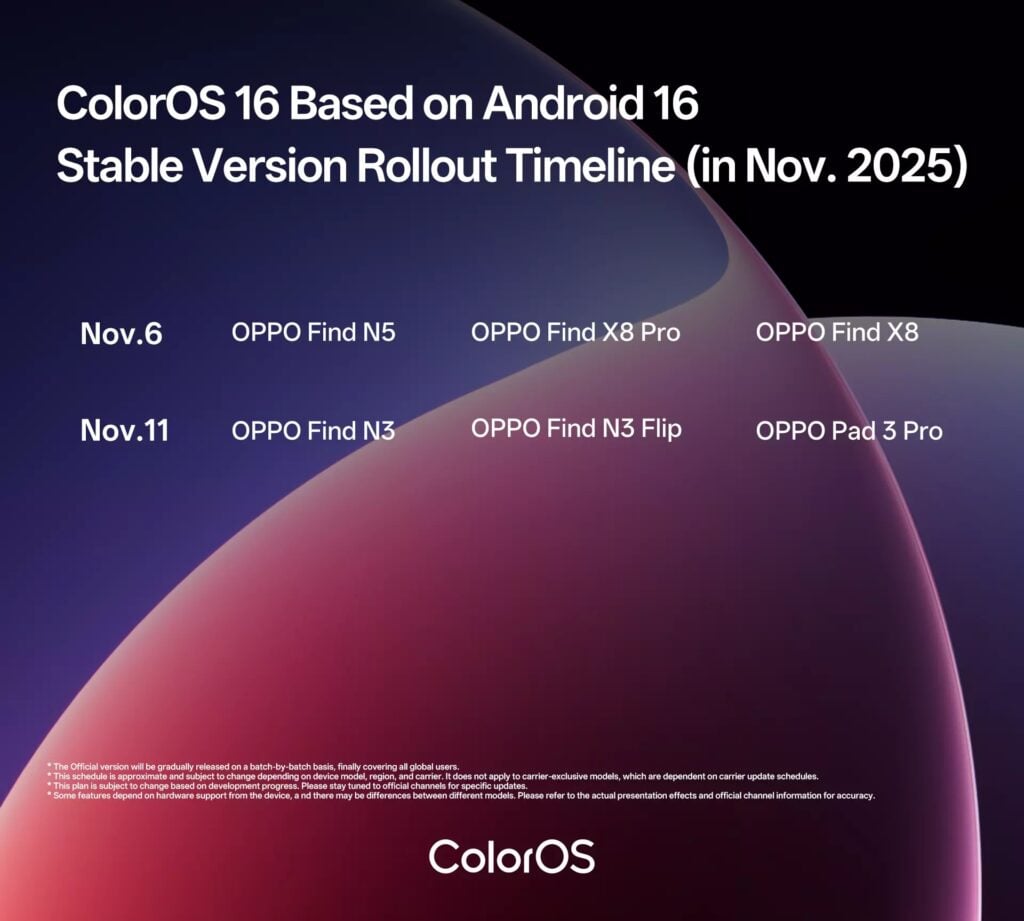
OnePlus is tightening the rules around bootloader access with its latest software update. With the rollout of ColorOS 16 in China, users who want to unlock their phone’s bootloader will now need to apply through official channels instead of simply toggling a setting in developer options.

In a post this week, the company said the change is meant to “ensure device and data security and enhance system stability.” Users and developers who still want the option can apply for what OnePlus calls an “in-depth testing program.” 

OnePlus 13 Arctic Dawn

The requirement applies only to devices running ColorOS 16 in China, and OnePlus also notes that it will require an account with no “abnormalities or violations” to move forward.

This means that bootloader unlocking will no longer be a straightforward process in China, at least on newer devices. Previously, users could just enable “OEM unlocking” inside the phone’s settings to begin the process. That option won’t be available out of the box anymore.

OnePlus is not alone

The move puts OnePlus in line with other manufacturers that have been restricting bootloader access in recent years. Xiaomi, for instance, has tightened up how long users must wait before unlocking, while Samsung has already removed the option altogether on some devices running its latest One UI 8 update.

It’s not the first time OnePlus has limited unlocking, either. For now, the new policy is limited to China, and OnePlus hasn’t said whether it plans to expand the requirement elsewhere.

The Android 16 update hasn’t fully rolled out yet, so it may take some time before the full impact of the change is clear. But for users in China who rely on custom ROMs or rooting, OnePlus devices are about to get a little less open.

For more daily updates, please visit our News Section.

Tech enthusiast? Get the latest news first! Follow our Telegram channel and subscribe to our free newsletter for your daily tech fix! ⚡

(Source)

Huawei Pura 80 Ultra vs Oppo Find X8 Ultra: Premium Power or Best Value?

Huawei Pura 80 Ultra and Oppo Find X8 Ultra represent two of the most advanced flagship smartphones of 2025, each targeting users with distinct priorities. While Huawei focuses on durability, extreme zoom photography, and premium design, Oppo emphasizes performance, display quality, and value. This comparison is important as both devices push boundaries in different directions, offering buyers a clear choice between cutting-edge camera innovation and all-around flagship efficiency.

1. Design and Display

Huawei Pura 80 ultra
Huawei Pura 80 Ultra

Build and Feel:
The Huawei Pura 80 Ultra and Oppo Find X8 Ultra both deliver premium builds with glass and metal, offering durability with IP68/IP69 water resistance. Huawei leans on its Kunlun Glass 2 protection, known for high toughness, while Oppo uses Gorilla Glass but doesn’t specify the version. Huawei also offers a slightly slimmer profile, while Oppo’s weight balance and refined edges give it a sleeker in-hand feel. Overall, Huawei emphasizes rugged strength, while Oppo focuses on modern elegance.

Verdict: Huawei is better for durability, while Oppo feels slightly more refined.

Display Quality:
Huawei’s 6.8-inch LTPO OLED pushes brightness up to 3000 nits peak with HDR Vivid, ensuring excellent outdoor visibility. Oppo counters with a 6.82-inch LTPO AMOLED that supports Dolby Vision, HDR10+, and Ultra HDR with 2160Hz PWM dimming, making it more eye-friendly and color-accurate for content streaming. Oppo also has a higher resolution at 1440p compared to Huawei’s 1276p. Huawei excels in raw brightness, while Oppo delivers better overall versatility and visual quality for multimedia.

Verdict: Oppo wins in display quality due to higher resolution and broader HDR standards.

Verdict:
The Huawei Pura 80 Ultra is tougher with stronger protective glass, while the Oppo Find X8 Ultra provides a more refined multimedia experience with sharper visuals and Dolby Vision. For everyday durability, Huawei edges ahead, but for display brilliance, Oppo takes the crown.

2. Specifications

OPPO Find X8 Ultra
OPPO Find X8 Ultra

Performance:
The Huawei Pura 80 Ultra runs on the Kirin 9020 chipset, which is competitive but limited by its 7nm process. Oppo Find X8 Ultra, powered by the Snapdragon 8 Elite (3nm), delivers cutting-edge performance with stronger efficiency, better gaming, and AI capabilities. Oppo also benefits from UFS 4.1 storage speeds, while Huawei focuses more on large RAM configurations. For demanding apps, gaming, and future-proofing, Oppo is significantly ahead.

Verdict: Oppo has a clear performance advantage.

Battery and Charging:
Huawei equips its international model with 5170 mAh and the Chinese variant with 5700 mAh, paired with 100W wired, 80W wireless, and versatile reverse charging. Oppo includes a larger 6100 mAh battery, promising longer endurance, with 100W wired and 50W wireless. However, Huawei still has the edge in faster wireless and reverse charging speeds. For longevity, Oppo’s bigger cell helps, but Huawei is more versatile with charging options.

Verdict: Oppo lasts longer, Huawei charges faster.

Verdict:
The Oppo Find X8 Ultra dominates in raw performance with its Snapdragon platform, while Huawei emphasizes balanced charging convenience and slightly higher reverse power support. Performance hunters will lean towards Oppo, while those who value versatile charging may prefer Huawei.

3. Camera

Huawei Pura 80 Ultra

Main and Secondary Lenses:
Huawei Pura 80 Ultra packs a 1-inch primary sensor and two strong periscope lenses, one at 3.7x and another at 9.4x optical zoom, making it one of the most versatile zoom setups on the market. Oppo’s system also impresses with dual periscope telephotos (3x and 6x), Hasselblad color tuning, and equally strong stabilization. Huawei’s ultra-telephoto at 212mm gives it a unique advantage for extreme zoom clarity, but Oppo’s Hasselblad processing offers more consistent, natural tones across scenarios.

Verdict: Huawei leads in extreme zoom, Oppo in color accuracy and versatility.

Selfie Camera:
Huawei uses a 13MP ultrawide with autofocus, offering a wide perspective and flexibility for group selfies. Oppo counters with a sharper 32MP sensor with PDAF, producing cleaner detail and more natural depth in portraits. For content creators, Oppo offers better detail, while Huawei provides more flexibility with the ultrawide field of view.

Verdict: Oppo edges ahead with sharper selfies, though Huawei’s wide-angle has its uses.

Verdict:
The Huawei Pura 80 Ultra dominates with unmatched zoom capabilities, while the Oppo Find X8 Ultra shines in color science and front camera quality. Power zoom users should choose Huawei, but Oppo is more balanced for photography enthusiasts.

4. Pricing

Oppo Find X8 Ultra
OPPO Find X8 Ultra

The Huawei Pura 80 Ultra is priced around $1500, while the Oppo Find X8 Ultra costs about $1000. For $500 less, Oppo delivers a more powerful processor, excellent display, large battery, and strong camera system. Huawei justifies its higher price with unique zoom capabilities, stronger glass, and faster wireless charging.

Verdict: Oppo offers far better value for money, while Huawei is aimed at premium buyers seeking durability and zoom superiority.

Disclaimer:
Prices are approximate and may vary based on country, region, and applicable taxes.

5. Conclusion

Oppo Find X8 Ultra
OPPO Find X8 Ultra

Huawei stands out with BDS satellite calling/messaging (China only), Kunlun Glass 2 durability, and its rare dual periscope zoom combination, giving it strong niche appeal. Oppo’s uniqueness lies in Snapdragon 8 Elite performance, Hasselblad color tuning, satellite SOS messaging, and Ultra HDR display support. Both target different strengths, Huawei with zoom and toughness, and Oppo with raw power and multimedia.

Verdict:
Huawei Pura 80 Ultra is ideal for those who prioritize extreme photography zoom, rugged glass protection, and versatile charging. The Oppo Find X8 Ultra, at a much lower price, is the smarter choice for users seeking top-tier performance, display quality, and balanced camera output.

For most users, Oppo provides better value, while Huawei appeals to those who want premium exclusivity and camera innovation.

Read More:

Stuffcool Odin: 10,000mAh Qi2 MagSafe Powerbank with 15W Wireless and 35W PD Launched

Stuffcool has launched Odin, a Qi2-certified 15W MagSafe powerbank with a 10,000mAh capacity. It is designed for iPhone, Samsung, and Pixel users and combines fast charging with a compact build.

Stuffcool Odin Qi2 Powerbank

Odin supports Qi2 wireless charging at 15W, charging iPhones twice as fast as standard wireless chargers. Users can snap the iPhone onto the powerbank without cables. For Samsung devices, Odin supports Super-Fast Charging for models including the Galaxy S22, S23, S24, and S25 Ultra. The powerbank weighs 230g and measures 7.0 x 10.8 x 2.0 cm, making it slim enough for daily use.

Stuffcool Odin

For wired charging, Odin offers a 35W Power Delivery output. It can charge an iPhone or Pixel to 50 percent in 30 minutes. The built-in Type-C cable provides 35W output and 20W input, so no additional cables are needed. The powerbank can charge multiple devices, including iPhones, Samsung and Pixel phones, and AirPods Pro.

The device has a built-in stand that activates StandBy Mode for hands-free use such as streaming or video calls. It also includes a digital display that shows battery levels in real time. Odin is BIS-approved and made in India.

Technical specifications include a 10,000mAh (38.5Wh) battery, Type-C input at 5V 3A, 9V 2.22A, 12V 1.67A (20W max), Type-C output at 5V 3A, 9V 3A, 12V 2.5A, 15V 2.33A (35W max), PPS output at 3.3–11.0V 3.20A (35W max), and wireless output options of 5W, 7.5W, 10W, and 15W.

Pricing & availability

The Stuffcool Odin is available on stuffcool.com and Amazon.in.

For more daily updates, please visit our News Section.

Stay ahead in tech! Join our Telegram community and sign up for our daily newsletter of top stories.
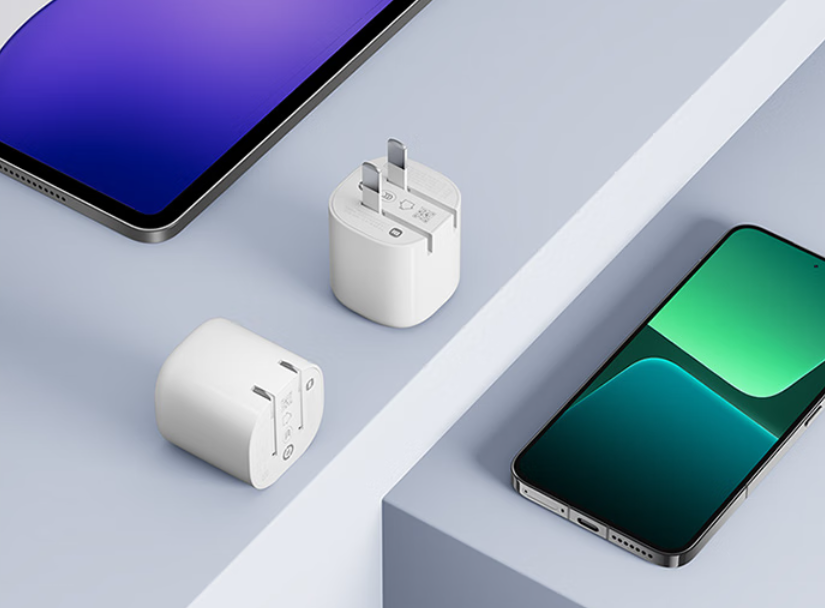
Next-Gen Samsung Galaxy Tab S11 & Tab S11 Ultra Leak Reveals Flagship Specs & Ultra-Slim Design

Samsung’s upcoming Galaxy Tab S11 lineup is shaping up to be a compelling blend of performance and design. A fresh leak has revealed more details regarding the next gen premium tablets, with flagship hardware, slim design, and much more. So let’s check it out.

Samsung Galaxy Tab S11 Ultra

The South Korean tech giant just had their key details revealed in a recent tweet from Ahmed Qwaider. This model will sport a tall 14.6-inch Dynamic AMOLED 2X display with a 120Hz refresh rate. We can also expect a high resolution and high brightness. It is rumored to be equipped with MediaTek’s flagship Dimensity 9400+ SoC, which could be paired with up to 16GB of RAM and up to 1TB of internal storage.

Galaxy-Tab-S10-Ultra
Samsung Galaxy Tab S10 Ultra

A massive 11,600mAh battery pack is expected to power this device, which may support 45W wired fast charging. All of this is packed in a slim 5.1mm body, which is as thin as Apple’s iPad Pro 13. So Samsung is also catching up with Apple for thin high-end tablets. For photography, the Galaxy Tab S11 Ultra gets a 13MP + 8MP camera setup on the rear and a 12MP selfie shooter on the front. Other notable features include WiFi 7, IP68 rating, SPen support, eSIM, Galaxy AI, and One UI 8.

Samsung Galaxy Tab S11

Another tweet from the tipster revealed details of the base Galaxy Tab S11 as well. This entry level model sports an 11-inch Dynamic AMOLED 2X display with a 120Hz refresh rate. Just like the higher end model, you get the same IP rating, fast charging speeds, Dimensity 9400+ chip, Galaxy AI, software, eSIM, and camera (excluding the 8MP ultra wide). The smaller version also packs an 8,400mAh cell.

This capacity is in line with our recent report. Both models will be available in at least a gray/silver color option with support for Samsung DeX. However, the base Tab S11 downgrades to the WiFi 6E. It also won’t be as thin with the leak hinting at a 5.5mm body, which is similar to its predecessors. The storage configuration also maxes out with 12GB of RAM and 256GB of storage. Keep in mind that this is still just speculation at the moment, so take this news with a pinch of salt and stick around for more.

For more daily updates, please visit our News Section.

Tech enthusiast? Get the latest news first! Follow our Telegram channel and subscribe to our free newsletter for your daily tech fix! ⚡

Panasonic launches LUMIX S1II and S1IIE full-frame cameras in India with pro video and photo features

Panasonic India has added two new full-frame mirrorless cameras to its LUMIX S Series lineup, the LUMIX S1II and LUMIX S1IIE. Both models were announced globally in May and are now available in India.

LUMIX S1II: New Sensor and High-Speed Recording

Panasonic LUMIX S1II

The LUMIX S1II uses a 24.1MP full-frame partially stacked CMOS sensor with the Venus Engine processor. It can record in 4K at 120p, 5.8K at 60p, and 5.1K at 60p. The camera delivers up to 15 stops of dynamic range in V-Log at frame rates below 30p.

For still photography, it supports burst shooting at up to 70 frames per second in SH and SH PRE modes. In High-Speed Plus mode, it can shoot at 10 fps with a mechanical shutter. The Open Gate function now supports 5.1K at 60p for more flexibility.

LUMIX S1IIE: Cinemascope and Extended Dynamic Range

LUMIX S1IIE

The LUMIX S1IIE is built on a 24.2MP sensor based on the one in the LUMIX S5II. It records 6K at 30p in a 3:2 Open Gate format and delivers more than 14 stops of dynamic range in V-Log. It also introduces a 2.4:1 Cinemascope format that records up to 60p with no crop. The camera shares the same ergonomic design and control layout as the S1II and S1RII.

Shared Features

Both cameras include Phase Hybrid autofocus with improved subject tracking. Face, eye, and body detection are built in, and a new Urban Sports mode improves tracking for fast movements such as skateboarding or breakdancing. In-body image stabilization provides up to 8 stops of correction and supports cropless video stabilization.

Recording options include internal Apple ProRes RAW HQ and Apple ProRes on CFexpress Type B cards. ARRI LogC3 support is available through a software upgrade. Both cameras feature a 5.76 million-dot electronic viewfinder, a 1.84 million-dot tilt and free-angle touchscreen, and dual card slots for SD and CFexpress Type B. They are rated for use at temperatures as low as -10°C.

Software support covers Capture One, Frame.io, LUMIX Lab, and LUMIX Flow. Upcoming updates will add HEIF image format, waveform monitor, vectorscope, and wireless mirroring.

Pricing and Availability

The LUMIX S1II is priced at ₹3,29,990. The LUMIX S1IIE is priced at ₹2,69,990. Both models are available starting today through Panasonic-authorised dealers and the company’s direct sales channels.

For more daily updates, please visit our News Section.

Stay ahead in tech! Join our Telegram community and sign up for our daily newsletter of top stories!

Xiaomi Brings Smarter Home Cleaning in Europe with its New Robot Vacuum H40

Xiaomi has introduced the Robot Vacuum H40 in Europe, expanding its smart home ecosystem with a powerful yet affordable cleaning solution. To recall, this is the refreshed global release of the MIJIA H40 Robot Vacuum Mop that debuted in China with HyperOS last year. It brings much of the same features and some upgrades, so here are all the details.

Xiaomi H40 Robot Vacuum Brings Smarter, Longer Cleaning

Just like the original model, the Xiaomi Robot Vacuum Cleaner H40 features the anti-tangle brush to prevent any hair from getting trapped, but upgrades the 6,000 Pa suction power to 10,000 Pa. Users get access to four cleaning power modes, which includes Quiet, Standard, Strong, and Turbo. Apart from vacuuming up all the dirt, there is even a 210ml water tank under the hood for simultaneous mopping.

Xiaomi Robot Vacuum Cleaner H40

There’s plenty of customizable options that you can access via the Xiaomi Home app. This robot vacuum cleaner navigates using the LDS system and operates on a 5,200mAh battery pack. On a full charge, it can last for around 180 minutes. Xiaomi’s H40 Robot Vacuum cleaner automatically docks to the charging station for recharging and also automatically empties out the dustbin into a larger 4L bin in the charging dock, which the user only needs to empty once every 3 months.

As of right now, the Xiaomi Robot Vacuum Cleaner H40 has just debuted in Germany for a price tag of 299.99 Euros. Although, it is currently on sale on the official website for a discounted price tag of 249.99 Euros. The Chinese tech giant will likely roll out this model in more regions in the EU.

For more daily updates, please visit our News Section.

Don’t miss a thing! Join our Telegram community for instant updates and grab our free daily newsletter for the best tech stories!

CLAW Stag Retro Vinyl Record Player Launched with 10W Stereo Sound and MP3 Recording

CLAW has launched the Stag Retro Vinyl Record Player, a portable turntable that combines a vintage look with modern features. It is designed for people who want to enjoy vinyl records while also having the convenience of Bluetooth streaming and USB recording.

The Stag Retro looks like a compact suitcase, making it easy to carry and store. The casing is lightweight but sturdy, protecting the player and records while giving it a classic style. It can be placed at home, carried to a picnic, or used at small gatherings as both a functional music player and a display piece.

The player has twin 5W stereo speakers that deliver 10W of output. The sound is designed to be crisp, clear, and powerful enough to fill a room without the need for extra speakers or amplifiers. Music can be played directly from vinyl records or streamed from devices using Bluetooth.

CLAW Stag Retro Vinyl Record Player

It supports three vinyl record speeds: 33⅓, 45, and 78 RPM. This allows users to play LPs as well as older singles and shellac records. Switching between speeds is simple and does not require any technical setup.

On the technology side, the Stag Retro comes with Bluetooth version 5.3 for stable wireless streaming. It also includes a USB recording feature that lets users convert vinyl tracks into MP3 format. A USB stick of up to 32GB in FAT32 format can be used for recording. Bluetooth does not work while recording, and the USB should be removed only after the player is powered off.

The control panel includes buttons to change tracks, pause, play, and switch between Bluetooth, USB, or AUX modes. For private listening, it has a 3.5mm headphone jack.

Pricing & availability

The CLAW Stag Retro has launched in Grey and Black for ₹7,990. It can be purchased on Originshop.co.in and Amazon.in. Currently, the Claw Stag Retro Vinyl Record Player is selling for as low as ₹5,490.

For more daily updates, please visit our News Section.

Tech enthusiast? Get the latest news first! Follow our Telegram channel and subscribe to our free newsletter for your daily tech fix!

Huawei phones just started showing their processor details again

Huawei recently rolled out a new HarmonyOS NEXT update for the Pura 80 series in China, and it’s a hefty one at 1.52GB. The version 5.1.0.217 SP2 update brings the usual system optimizations along with a handful of tweaks to the Calendar and Memo apps.

But what makes this update stand out is a small yet significant change. For the first time in years, Huawei is openly listing the processor inside its flagship phones.

Kirin 9020 confirmed!

On the Pura 80 Pro+’s About page, the phone is now confirmed to be running on Huawei’s in-house Kirin 9020 chip, something we had long suspected. 

The Kirin 9020 is built on a 1+3+4 CPU architecture (one 2.5GHz large core, three 2.15GHz mid-cores, and four 1.6GHz efficiency cores) paired with Huawei’s in-house Maleoon 920 GPU.

It’s the first time in years that Huawei has openly shared a chip detail on its device. The company stopped naming processors or even acknowledging them in the launch events since the Kirin 9000 series.

The reason was clear, though. The decision came as US restrictions hit its supply chain and raised uncertainty around Huawei’s chip development. For years, every new Huawei phone launch led to online speculation and teardown reports just to figure out what processor was inside.

That seems to be changing now, and it wouldn’t be surprising if Huawei rolls out similar updates to the rest of its lineup soon.

Don’t miss a thing! Join our Telegram community for instant updates and grab our free daily newsletter for the best tech stories!

For more daily updates, please visit our News Section.