As the US-China trade talks resume, Huawei reportedly has a ray of hope. According to the latest report, the Trump administration is ready to approve some licenses that allow U.S. companies to sell goods and services to Huawei. This should come as a respite to the Chinese telecommunications giant whose products like the Huawei Mate 30 Pro haven’t had a proper international release.
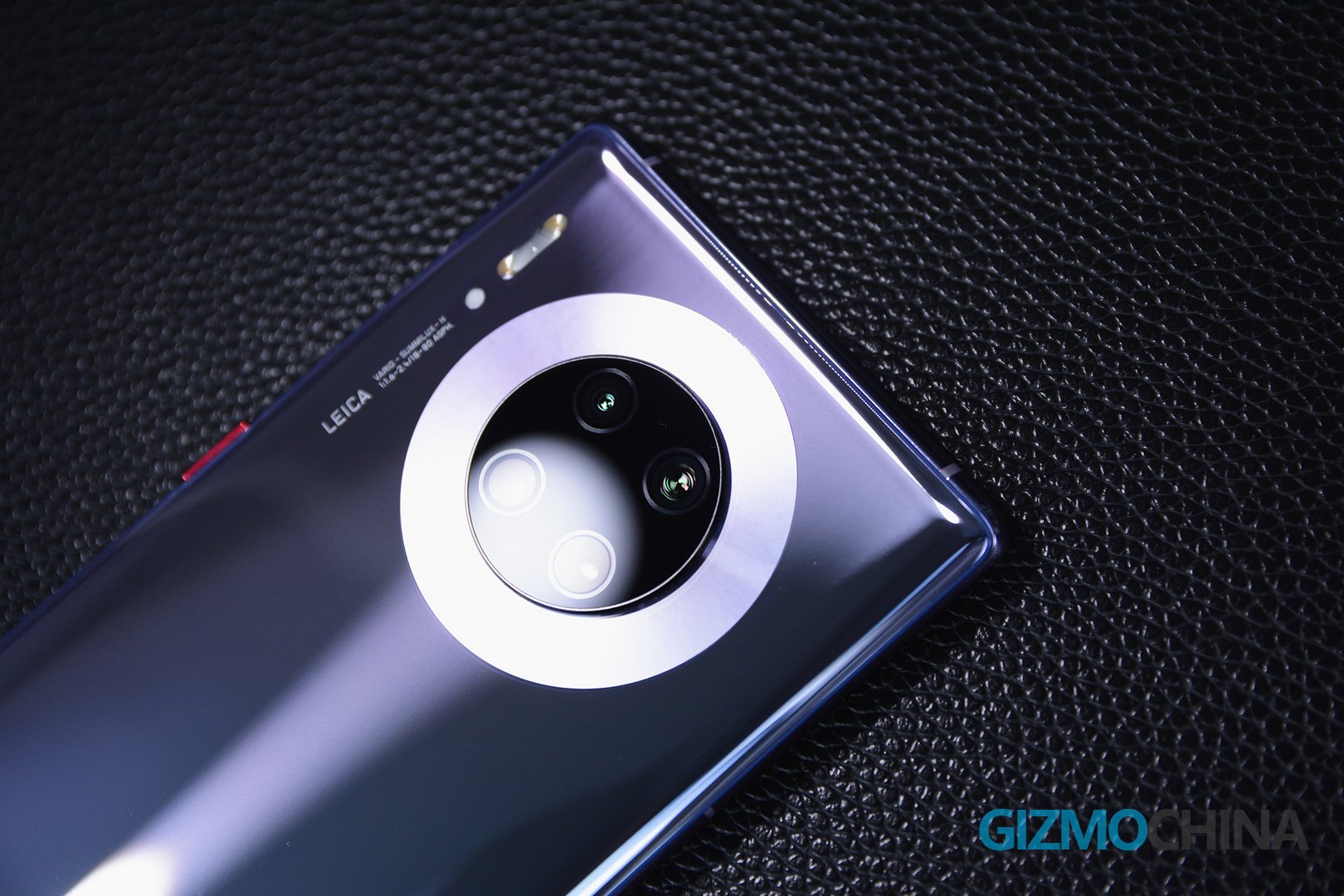
Huawei Mate 30 Pro is one of the best smartphones in the market today but does not come with Google apps
NYTimes reports that these approved licenses will allow a ‘select few American companies’ to resume selling their products to Huawei. It is worth adding that back in August, the U.S. government had received over 130 license requests for the same. But it’s possible only a select few of these requests will be approved.
Without Google apps, the Huawei Mate 30 series is practically DOA in the international market. So the company needs to get Google back on board. Also, its position in the global smartphone market is at risk, with Apple predicted to overtake Huawei by the end of this year. Even Samsung’s smartphone department posted better than expected results last quarter, at Huawei’s expense.
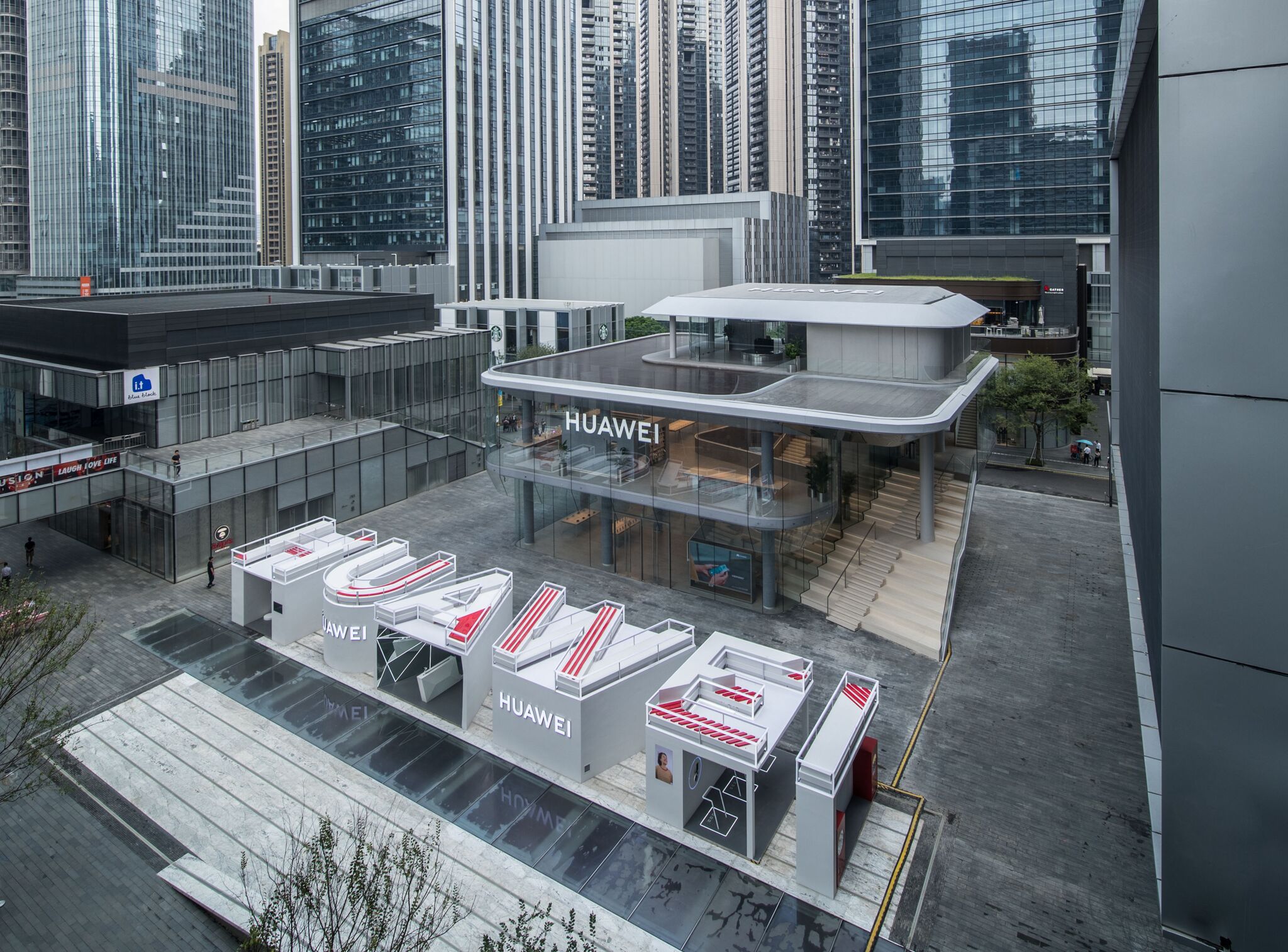
Huawei’s global flagship store in Shenzhen
However, Huawei’s fate will ride on how the trade negotiations go between these two countries this week. And the atmosphere is quite tensed right now after China slammed U.S. companies for supporting Hong Kong. In fact, recently, Chinese companies like Vivo, Tencent, and CCTV suspended ties with the American NBA association after a Houston Rockets executive tweeted supporting Hong Kong’s pro-democracy protesters.
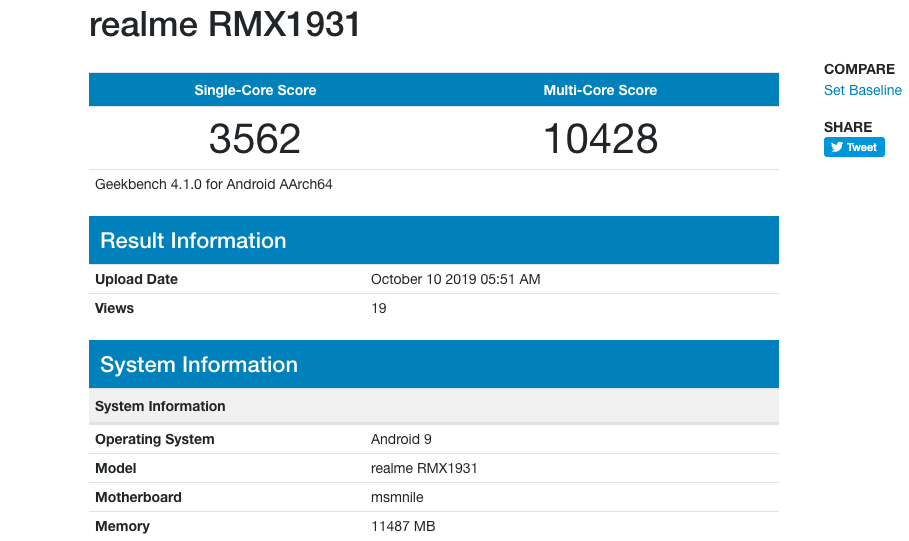
According to the Geekbench listing, the Realme X2 Pro scores a single core score of 3562 points and a multi core score of 10,428 points. The smartphone is equipped with the “msmnile” chipset which is the codename for Snadragon 855 mobile platform. Both the multi-core and single-core of the Realme smartphone are comparable to handsets like OnePlus 7T and the Xiaomi Black Shark 2 Pro which feature the same chipset.
As previously mentioned, the Realme X2 Pro in the Geekbench listing has 12 GB of RAM which will be the top of the line variant. While the benchmarking website does not reveal its other important aspects like display size and camera resolution, they can be obtained via prior leaks and reports.
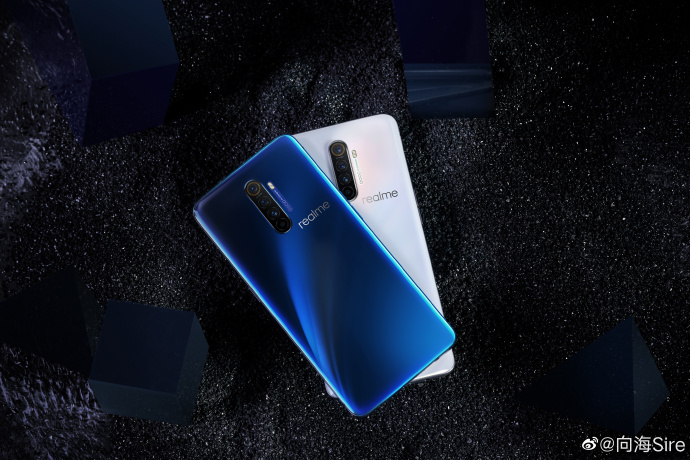
Realme X2 Pro (rear panel)
Accordingly, the Realme X2 Pro will have a 6.5 inch Full HD+ AMOLED display that has a waterdrop notch up top. Its display panel wil have a refresh rate of 90 Hz which we feel is a praiseworthy feature. Another highlighting aspect of the handset will be its Quad camera setup which will be comprised of 64 MP + 13 + 8 MP + 2 MP resolution sensors.
The Realme X2 Pro will also have a 16 MP selfie camera which will be housed in the notch above the display. In terms of dimesinons, it measures 161.0×75.7×8.7 mm and tips the scale at 199 grams. The upcoming handset will be powered by a 4,000 mAh battery, which pleasingly will be capable of fast charging with 50W of power.
All in all, the upcoming flaghsip from Realme seems like an impressive handset and if company manages to price it as aggressively as its previous launches, it will manage to turn a lot of heads. The handset will launch in China on the 15th of October which will be soon followed by its launch in India.
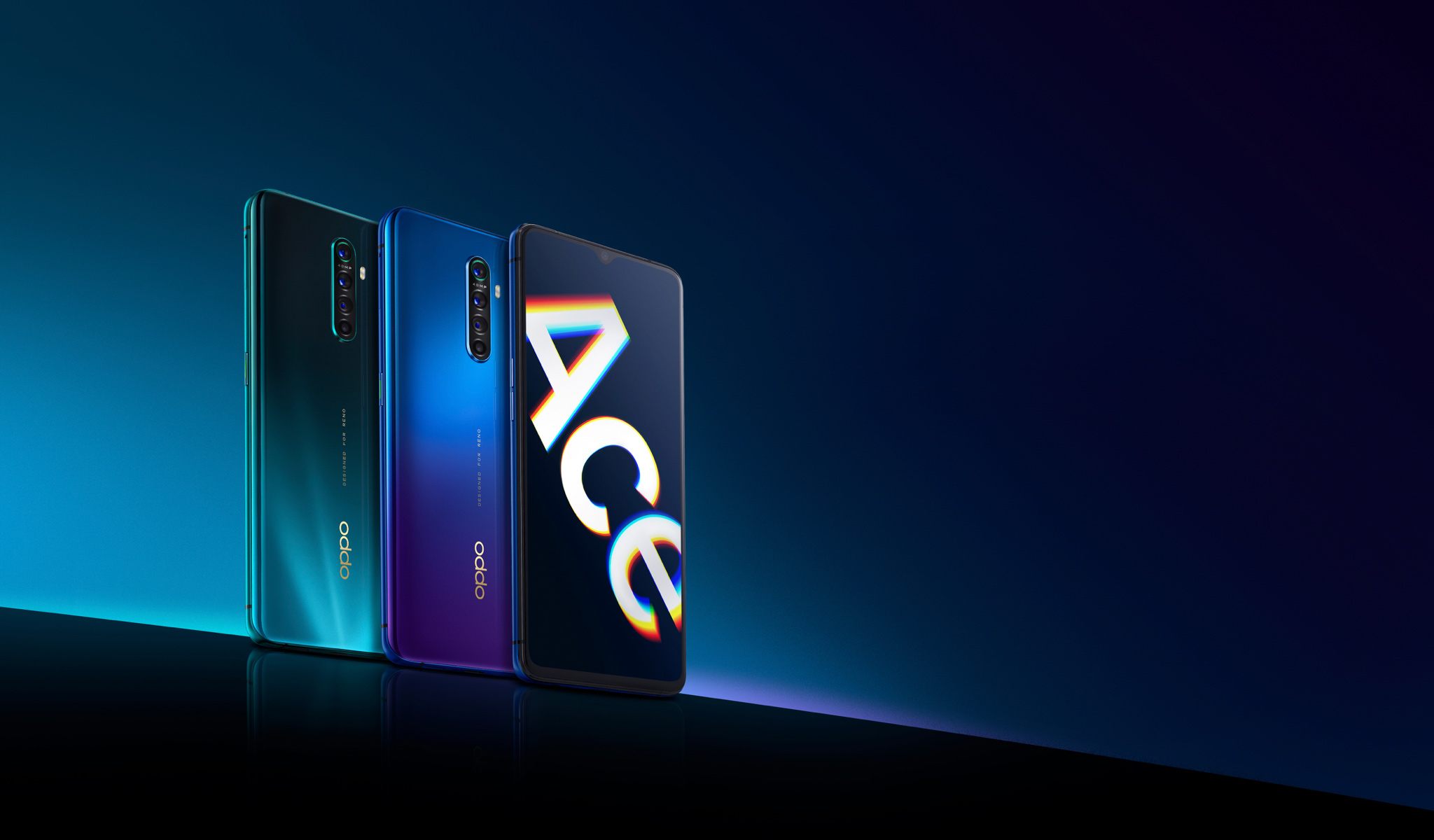
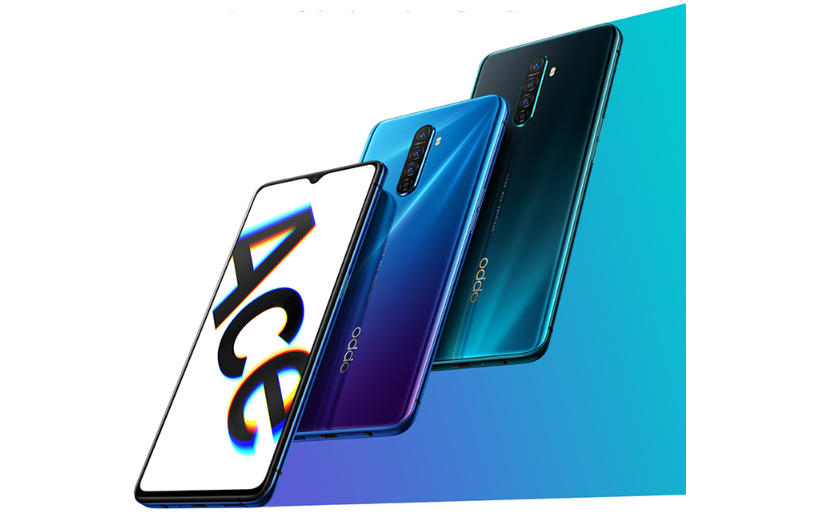
The OPPO Reno Ace is the latest flagship phone from the Chinese manufacturer. It has been unveiled alongside the OPPO K5 upper mid-range device. The main selling features of the Reno Ace include 90Hz refresh rate display, Snapdragon 855+ mobile platform and 65W SuperVOOC 2.0 Flash Charge technology. The handset has arrived with an attractive starting price of 3,199 Yuan (~$449).
OPPO Reno Ace Specifications and Features
The OPPO Reno Ace comes with a magnificent 90Hz refresh rate supporting AMOLED display of 6.5 inches. The display produces a tall aspect ratio of 20:9 as it supports 1080 x 2400 pixels full HD+ resolution. The display supports 1000nits of brightness and delivers a sampling rate of 135Hz for smoother experience. The AMOLED screen that is integrated with fingerpint sensor.
The latest Snapdragon 855+ chipset by Qualcomm powers the Reno Ace smartphone. The 2.96GHz octa-core processor chipset is coupled with up to 12 GB of RAM. The highest configuration model of the smartphone has up to 256 GB of UFS 3.0 storage. There is no external storage support on the device. There is a heat dissipation pipe inside the phone for regulating its internal temperature.
The OPPO Reno Ace is fueled by a 4,000mAh battery. The smartphone is blessed with 65W fastest charging technology on the earth. It takes only 30 minutes to completely charge the device with the new SuperVOOC 2.0 Flash Charge technology. By charging it only for 5 minutes, the battery can gain 27 percent power. In addition, the Reno Ace supports other rapid charging technologies like USB-PD and Qualcomm’s Quick Charge.
The back panel of the OPPO Reno Ace features a vertically mounted quad camera system. It comprises of a Sony IMX586 48-megapixel main lens with f/1.8 aperture, a 13-megapixel telephoto lens with support for 5x hybrid zoom, an ultrawide lens of 8-megapixel and a macro lens of 2-megapixel. There is a selfie camera of 16-megapixel inside the front notch of the smartphone.
The ColorOS 6.1 based Android 10 comes preinstalled on the OPPO Reno Ace. There is Game Boost 2.0, Frame Boost 2.0 and Touch Boost 2.0 for optimizing the phone’s performance. The connectivity features that are available on the smartphone include dual SIM support, 4G VoLTE, Wi-Fi 802.11ac, dual-frequency GPS, NFC, USB-C and 3.5mm audio jack.
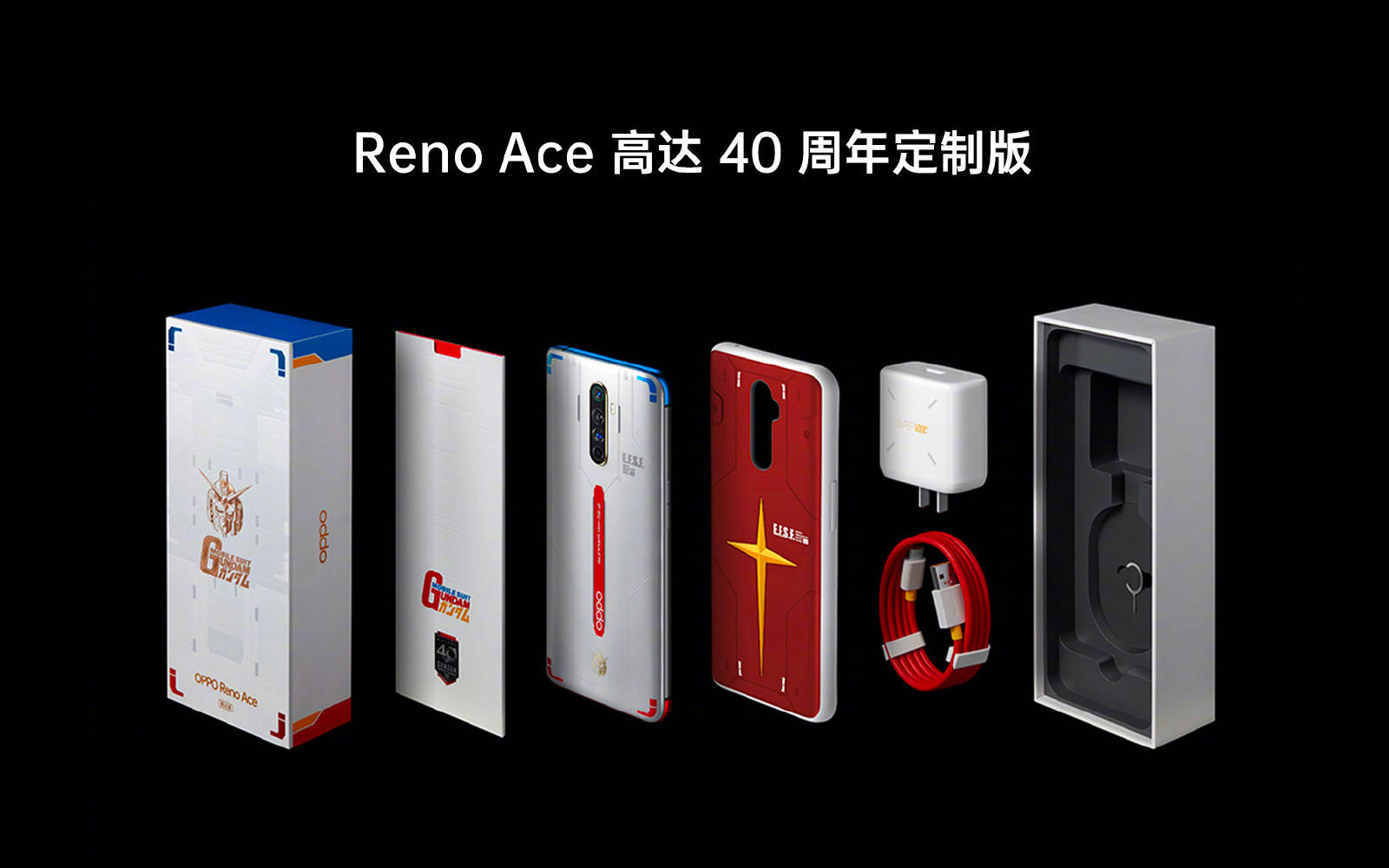
To celebrate the 40th anniversary of the company, OPPO also announced the OPPO Reno Ace Gundam Edition that comes in a special appeal along with some customized accessories. The company is only selling the 30,000 units of the smartphone. An optional gamepad is also available for the special edition Reno Ace.
OPPO Reno Ace Price and Availability
The OPPO Reno Ace has arrived in three variants in China. Their pricing are as follows:
Color variants: Electroacoustic Violet and Interstellar Blue.
The 8GB+128GB and 8GB+256GB editions of the Reno Ace will be available with 200 Yuan (~$28) discount during its first sale in China on Oct. 17. The Gundam Edition has 3,599 Yuan (~$505) price tag. The pre-orders of this special edition phone will kick off on Oct. 21 followed by market release on Nov. 11.
The Chinese manufacturer is also selling Unicorn Gundam C1 gamepad that can be attached to the special edition Reno Ace. It is priced at 299 Yuan (~$42). Its pre-sales will take place on Oct. 10 and its sales will also begin on Nov. 11.
The OPPO Reno Ace appears to be a good rival for the OnePlus 7T. What’s your opinion on the specs and price of the Reno Ace? Share us your views by posting your comments below.
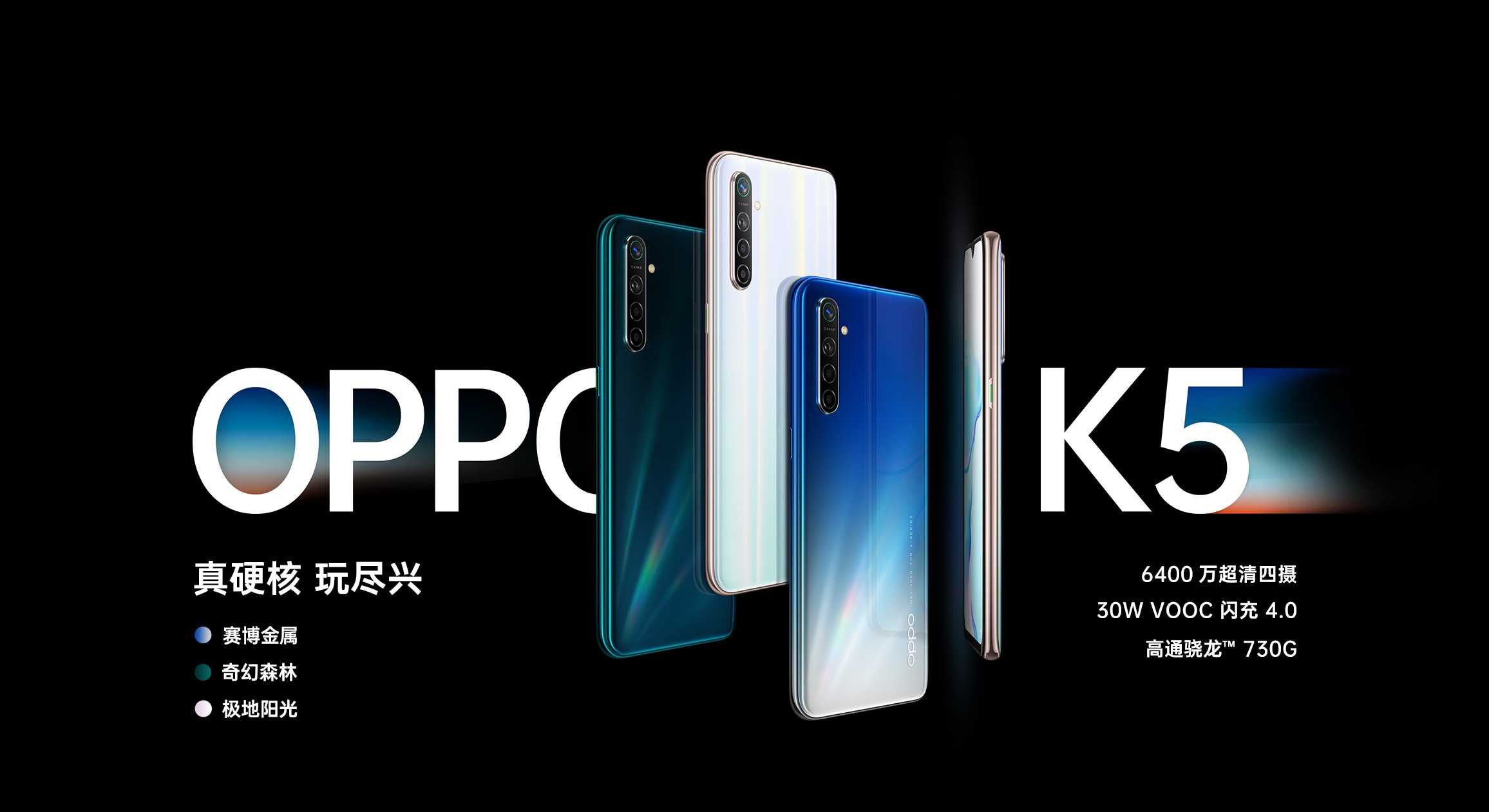
Through an unveil event in China, OPPO unveiled the OPPO K5 mid-range smartphone alongside the OPPO Reno Ace flagship phone. The OPPO K5 has arrived as the successor for the OPPO K3 smartphone that was made official earlier this year. Apart from in-display fingerprint scanner, the other salient features of the OPPO K5 are Snapdragon 730G processor, rear-mounted 64-megapixel quad cameras and VOOC 4.0 charging technology.
OPPO K5 Specifications and Features
The OPPO K3 had featured a notch-less display and a pop-up selfie camera. The newly unveiled OPPO K5v features a 6.4-inch AMOLED panel with a reduced waterdrop notch. It offers full HD+ resolution of 1080 x 2340 pixels and 19.5:9 aspect ratio. The display is integrated with a fingerprint sensor that offers faster 7.9 percent unlocking speed. The rear side of the smartphone features a glass panel with 3D design. The handset measures 158.7 x 75.16 x 8.5mm and it weighs around 182 grams.
The Snapdragon 730G octa-core processor with Adreno 618 graphics powers the smartphone with up to 8 GB of LPDDR4X RAM. The handset offers users with up to 256 GB of UFS 2.1 storage. The smartphone is packed with a 4,000mAh battery. The OPPO K5 is the first OPPO smartphone to arrive with VOOC 4.0 fast charging technology. The company has previously claimed that VOOC 4.0 can fully charge the device in just 73 minutes.
The rear shell of the OPPO K5 of the smartphone is fitted with a quad camera system. It includes Samsung GW1 64-megapixel primary lens with f/1.8 aperture, an 8-mgeapixel superwide lens with 119-degree field-of-view and f/2.2 aperture, an f/2.4 aperture 2-megapixel macro lens with 4cm focal length and a 2-megapixel depth sensor with f/2.4 aperture. The quad cameras offer features like LED flash, anti-shake, EIS, smart HDR, portrait mode and 4K video shooting at 30fps. Placed on the front is a 32-megapixel AI selfie camera with f/2.0 aperture. It offers features like AI Beauty, HDR, portrait mode, face recognition and 1080p video recording at 30fps.
The ColorOS 6.1 based Android 9 Pie OS runs on the OPPO K5. OPPO has included its own features like HyperBoost 2.0 acceleration engine, Link Book network acceleration technology and Breeno assistant on the device. The other features of the OPPO K5 are dual 4G VoLTE, Wi-Fi 802.11ac, Bluetooth 5.0, GPS, NFC, USB-C and 3.5mm audio jack.
OPPO K5 Price and Release Date
The pricing of the three variants of the OPPO K5 for China are as follows:
6 GB RAM + 128 GB storage – 1,899 Yuan (~$267)
8 GB RAM + 128 GB storage – 2,099 Yuan (~$295)
8 GB RAM + 256 GB storage – 2,499 Yuan (~$351)
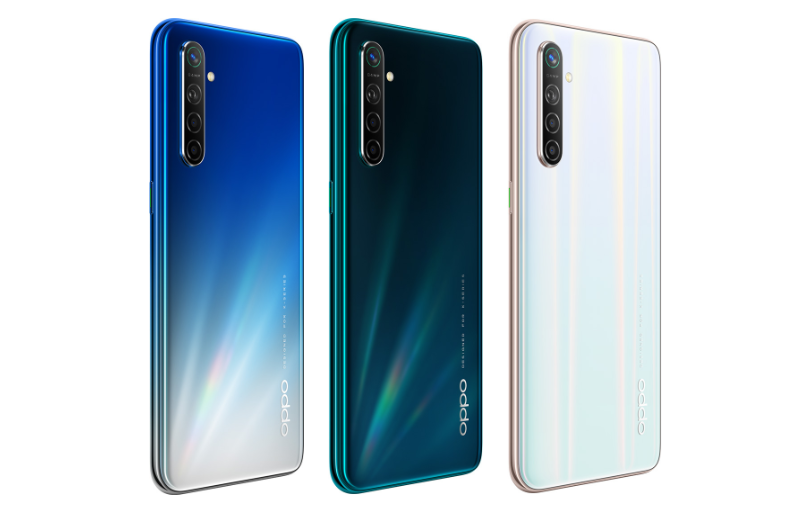
Color variants: Cyber Metal (Blue), Fantasy Forest (Green) and Polar Sunshine (White)
Currently, the company selling only the 6GB+128GB and 8GB+128GB models of the OPPO K5. Also, it can be availed in Fantasy Forest and Polar Sunshine colors only. For the first sale, these variants will be available with 100 Yuan discount.
While Nokia has made a comeback to the smartphone industry with its Android handsets, a considerable chunk of its resources are still spent towards research and development of alternate technologies which include 5G. On the 9th of October, Nokia said that it has been awarded more than 2000 patent families which are essential for “5G” standards to the European Telecommunications Standards Institute (ETSI).
Out of all these patents, the two most notable patents include US patent US9,338,785B2 and European patent EP2848055B1. A statement shared by the company said that both these patent provide network resources for smartphones, industrial devices and other equipment to access services with shorter latency, increased reliability and higher throughput, the company.
In simpler words, they exhibit an end to end guide of technologies and methods that are required to facilitate 5G, right from the signal emmitting towers to smartphones that are equipped with this technology.
Besides, the same statement also added that the standardization process of 5G that is managed by 3GPP — a consortium of seven standards develoment organisations which includes ETSI, has already been carried out. And products complying with the set standard will be compatible with each other and work interoperably in a seamless manner, so manufacturers can provide a wide variety of options to the end consumers.
Marcus Weldon who is Chief Technology Officer and President at Nokia Bell Labs boasted of his companies achievemnents saying “ The tradition of technologies invented by Nokia Bell Labs leading the world clearly continues in the 5G era.”
Likewise, President of Nokia Technologies, Jenni Lukander shared her perspective saying “ Through licensing, other businesses and industries can benefit from Nokia’s innovation, as we seek to enable an ever more connected world.”
Lastly, after the 2000 newly awarded patents, Nokia Cellular’s portfolio of standard essential patents (SEPs) for all G standards now account for more that 2,700 patent families that has apparently put the company in a strong position in the domain of 5G which is regarded as the next generation of Telecommunication.
Adventure junkies and sports enthusiasts who participate in mountain biking races usually spend a lot of money on electric mountain bikes that amplify their pedaling power while adding increasing the fun you will have on the trail.
If you are in the market for an electric-assist mountain bike that would enhance your overall mountain biking experience without emptying your pocket, we got good news for you. Gearbest is currently doling out a noteworthy 20 percent off on the SAVADECK Knight 3.0 Electric Mountain Bike, which normally sells for $1999.
Thanks to the aforesaid discount, you can now buy the SAVADECK Knight 3.0 Electric Mountain Bike for a lowered price of just $1599. Powered by the RM GO20.250D engine, the SAVADECK Knight 3.0 can reach a maximum mileage of 40km. Based on the driver’s weight and the type of road, the bike offers a mileage of about 20KM.
Housed in a 17-inch carbon fiber frame, the KNIGHT 3.0 Electric Mountain Bike displays various information including speed, gear, battery, and capacity. The bike draws its juices from a 36Vx13AH battery that offers a range of about 90KM.
The KNIGHT 3.0 is equipped with SHIMANO ALTUS 3×9 and SHIMANO MT200 brake for superior biking experience. Aside from the KMC chain, the bike features B829 Mtb pedals, 11-32T 9s flywheel, a bottle-shaped battery box, KEDISI Double assistant, Lishul LSK 1488, 36V controller, and a KEDISI 5 Gear display.
You can follow this link to place your order and grab the discount before the promotion comes to an end.
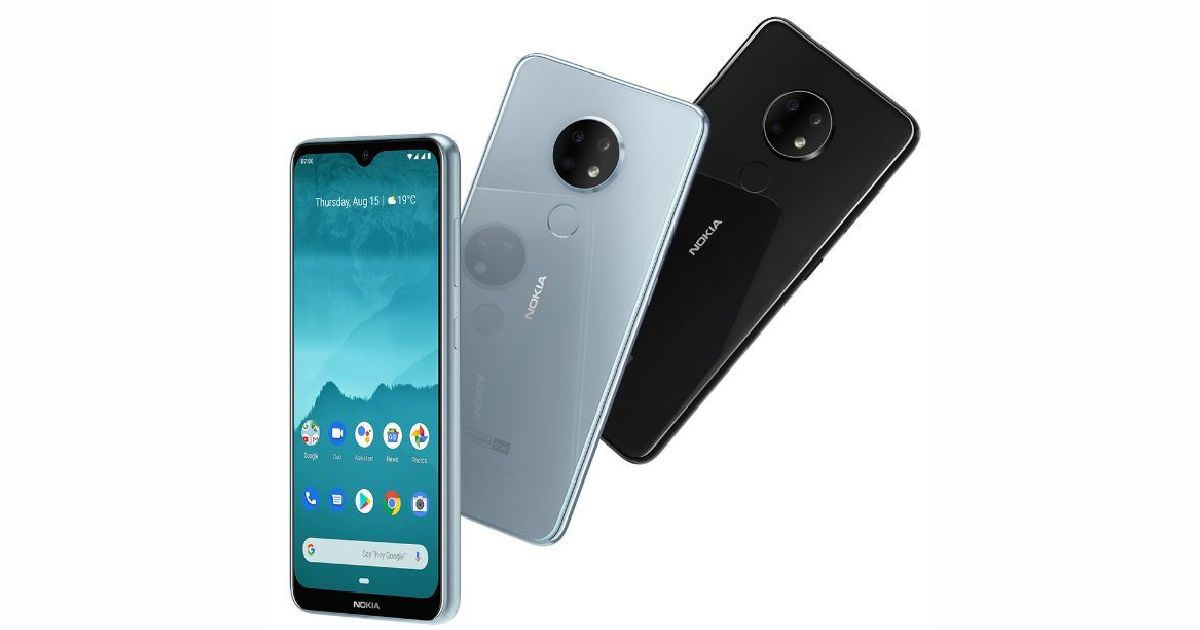
HMD Global had unveiled the Nokia 7.2 and Nokia 6.2 smartphones at the IFA tech exhibition in September. The Nokia 7.2 was brought to India on Sept. 19. Amazon India’s mobiles page states that the Nokia 6.2 will be made official in the country tomorrow.
Nokia 6.2 Specifications
In terms of specs, the Nokia 6.2 appears like a weaker sibling of the Nokia 7.2 smartphone. The handset is equipped with a 6.3-inch PureDisplay that comes with support for HDR 10. The IPS LCD full HD+ screen has a waterdrop notch and it offers a tall aspect ratio of 19.5:9. The display of the phone is shielded by Gorilla Glass 3. Its rear side also features the reinforced glass protection.
The Nokia 6.2 is powered by Snapdragon 636 SoC and it is expected to come with up to 4 GB of RAM. The handset may offer with an inbuilt storage of up to 128 GB. A microSD card slot is available on the device for additional storage.
The rear side of the smartphone has a circular camera housing that includes a primary lens of 16-megapixel, a 115-degree ultrawide sensor of 8-megapixel and a depth sensor of 5-megapixel. Upfront is an 8-megapixel selfie shooter. The Android 9 Pie OS in its Android One edition comes preinstalled on the device. Hence, it is likely to be soon treated with the latest Android 10 update.
A fingerprint scanner can be seen below the camera system of the Nokia 6.2. The 3,500mAh battery supports 10W charging through USB-C. The international edition of the phone has NFC support. Its Indian variant may not feature it.
Nokia 6.2 Price
The 4 GB RAM + 64 GB storage and 6 GB RAM + 64GB storage models of the Nokia 7.2 are respectively priced at the Rs. 18,599 (~$261) and Rs. 19,599 (~$275) in India. Being an inferior device, the Nokia 6.2 will be priced lesser than the Nokia 7.2. It is likely to arrive in Ceramic Black and Ice color editions in India.
What could be the ideal price for Nokia 6.2 in India? Share us your thoughts by posting your comments below.
It’s already known that Amazon is planning to launch its own food delivery service in India, however, nothing has materialised so far. But if the new report is to be believed, then the eCommerce giant is all set to launch the service around Diwali.
The report claims that Amazon’s food delivery business will be operational in India around Diwali and the company is expected to invest around $500 million to get the business started to take on the likes of Zomato and Swiggy. While it has not been confirmed with which cities the company will start this new business, we expect it to be limited to select cities initially, most probably with Bangalore.
To undercut competition, the company will reportedly charge lower commission rates to the restaurants. The report cites a restaurant chain owner who claims that they were charged only one-fourth of what other players in field charge. Currently, Swiggy and Zomato — the dominating players in the market charge around 20 percent from restaurants.
Further, the report adds that Amazon will be adopting Swiggy’s strategy of deploying cloud kitchens that only offer food delivery service and no dine-in facility. Amazon will also start an aggressive hiring process for new delivery agents in order to reduce delivery times. To lure customers, the company is expected to offer reduced pricing and cashback schemes linked with the Amazon Pay wallet.
India’s food delivery market is booming right now and is forecast to be worth $17 billion by 2023. Swiggy, which has raised around $1.3 billion in funding so far, is perhaps the largest player in this segment in India, with a valuation of around $3.3 billion. On the other hand, Zomato has raised around $750 million having valuation of $2 billion.
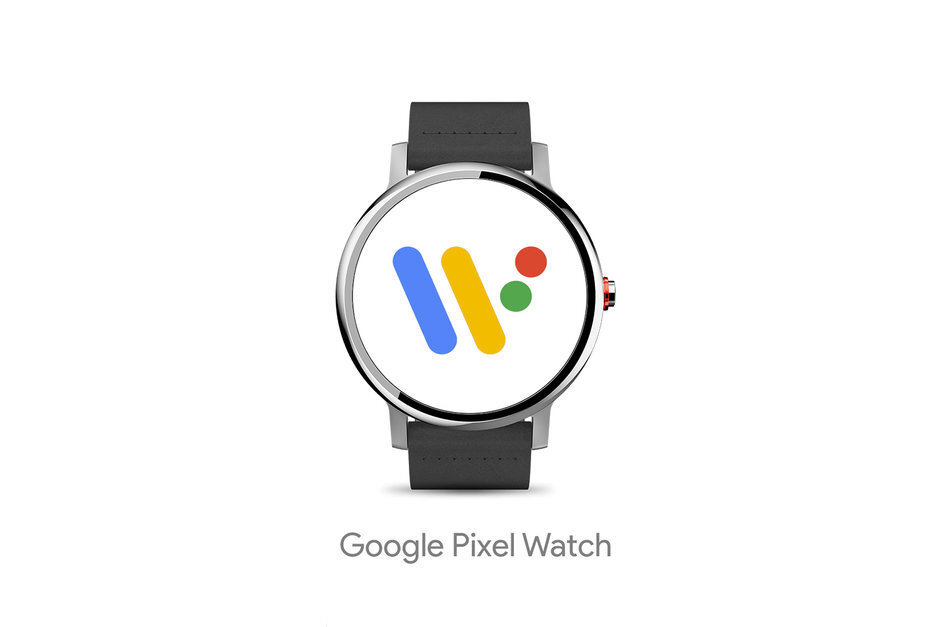
Google will unveil its latest flagship smartphones, the Pixel 4 lineup at its upcoming “Made By Google” event which is scheduled for the 15th of October. At the same event, the company will also lift covers from the long-awaited Pixel Watch and a new notebook claims a report published by Asia Nikkei.
Last year, there were rumours that Google would introduce its first smartwatch, but that clearly did not happen as such a device was nowhere to be found at 2018 Made by Google event. Following the event, a report surfaced that stated Google is not satisfied with WearOS, therefore, the launch of the alleged Pixel Watch did not take place.
Earlier this year, the company spent $40 million to acquire an intellectual property from Fossil which is referred to as “innovative” smartwatch. At that time, a Fossil executive said that the intellectual property bought by Google is “based on something out of our timeline, it’s new to the market technology and we think it’s a product that has features and benefits that aren’t in the category today.”
In the month of September, it was revealed that the IP purchased by Google was linked to a hybrid smartwatch i.e a timepiece that resembles a conventional watch but has smart features. It was dubbed di-ana which is derived from the words di-gital and an-alog. While Google had shelled out a serious sum of money to acquire this IP, it did not appear to be a worthy purchase. With that being said, it is assumed that Google wanted to get hold of the 20 engineers from Fossil which were a part of the deal.
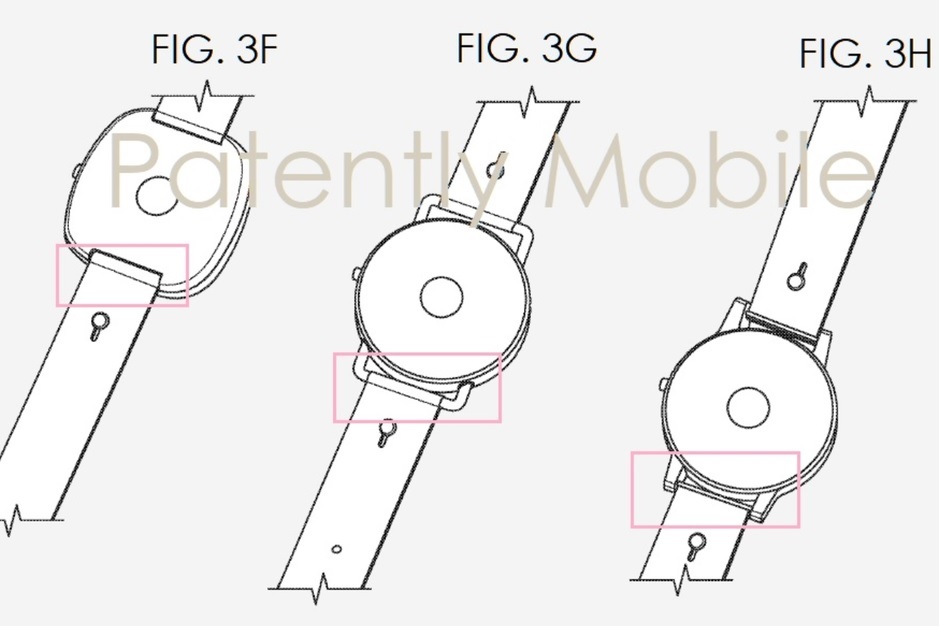
Noteworthy, the USPTO had published a smartwatch patent in the month of April, this year which was assigned to Google. The patent exhibits a “quick swap feature” which, as the name suggests, will allow device owners to quickly replace the wrist straps on their smartwatch.
To wrap things up, the claim of Google unveiling its first Pixel Watch at 2019 Made By Google seem highly likely. However, we will have to wait until the event which is scheduled for next Tuesday, in order to verify whether these claims turn out real or not.
In an unexpected move, Qualcomm recently launched the Snapdragon 855 Plus octa-core processor which is an upgraded variant of the Snapdragon 855 SoC. Now, just months after the launch of SD855+ chipset, the company is now set to launch the next-generation SoC.
If the new reports are to be believed, then the Qualcomm Snapdragon 865 processor is all set to launch next month. It is said that the chipset could be fabricated using TSMC’s second-generation 7nm processor.
Qualcomm Snapdragon Processor
Contradicting earlier reports of SD865 getting launched in December this year, the new report claims that the Snapdragon 865 SoC will get launched in November in order to keep up with the competition from Huawei.
Further, the report goes on adding that the smartphone manufacturers Samsung, Oppo, Vivo, and Xiaomi will also be showcasing early prototypes of devices running Qualcomm Snapdragon 865 chipset.
While the report claims that the next-generation flagship chipset from Qualcomm is all set to get launched next month, we are yet to come across leaks related to this upcoming processor but given the launch timeline, we should get more information soon.
The Qualcomm Snapdragon 855 Plus comes with the same Kryo 485 CPU cores but is now clocked at 2.96GHz, up from the 2.84GHz clock speed of the Snapdragon 855. The Adreno 640 GPU is also reported to have gained a 15% boost in speed.
As per the company’s claim, the upgrade in the GPU department makes the Snapdragon 855 Plus a great chipset for gaming. Also, it should also make it quite useful for AR and VR devices. The processor doesn’t have the new X55 modem. Even the X50 modem isn’t integrated, so manufacturers who want to use this for 5G phones will have to install the X50 modem separately.
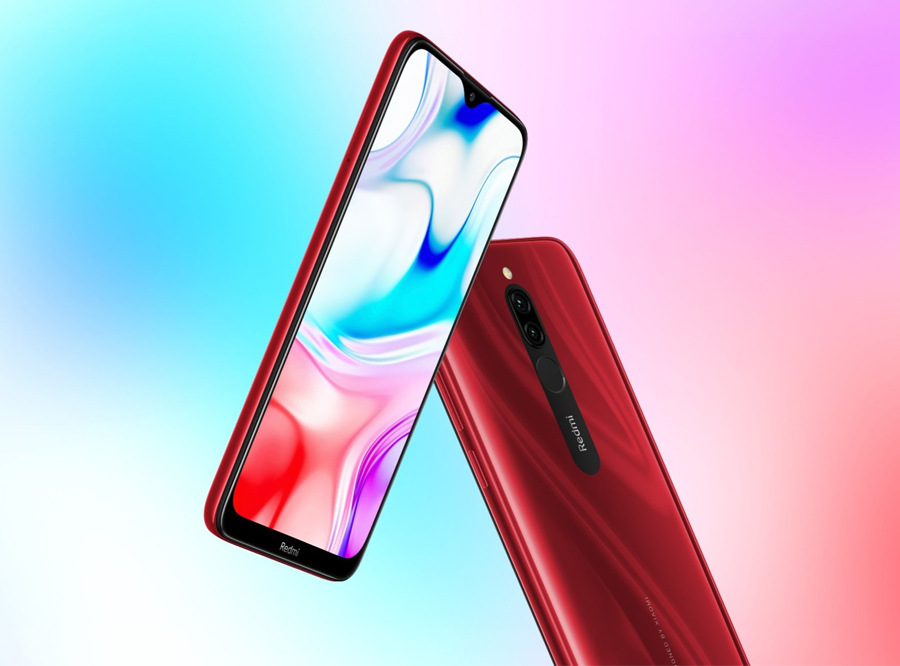
Xiaomi unveiled the Redmi 8 smartphone earlier this month. The phone is loaded with impressive features including a waterdrop notch enabled display, a 5,000mAh battery with 18W fast charging, and more.
Before we delve into more details about the phone’s awe-inspiring features and top-end specifications, let us check out where you can pre-order the Redmi 8 for an unbeatable price. Available in Saphire Blue, and Red color options, the global edition of the Redmi 8 has gone up for pre-order bearing a $129.90 price tag on Giztop.
The Xiaomi Redmi 8 is an irresistible smartphone that sports a highly appealing 6.22-inch HD+ waterdrop notch display with an aspect ratio of 19:9. It comes with a finger scanner and a face-unlock feature for added protection. You can unlock your phone simply by swiping your finger on the backside.
It packs a powerful Qualcomm Snapdragon 439 Octa-core processor, paired with 4GB of RAM and ample storage space in the form of 64GB of ROM. On the photography front, the Redmi 8 houses 12MP+2MP dual AI cameras at the back and an 8MP front shooter for selfies and video calling.
The phone runs MIUI 10 base on Android 9 Pie OS and draws its juices from a 5000mAh battery that supports Quick Charge 3.0 18W. Moreover, the dual-SIM smartphone can be used as a mobile hotspot. In other words, you can share your 4G data connection with your friends and family using compatible wireless devices.
You can follow this link to place your pre-order and check out more details about the Xiaomi Redmi 8 smartphone. Note that the phone will ship in mid-October.
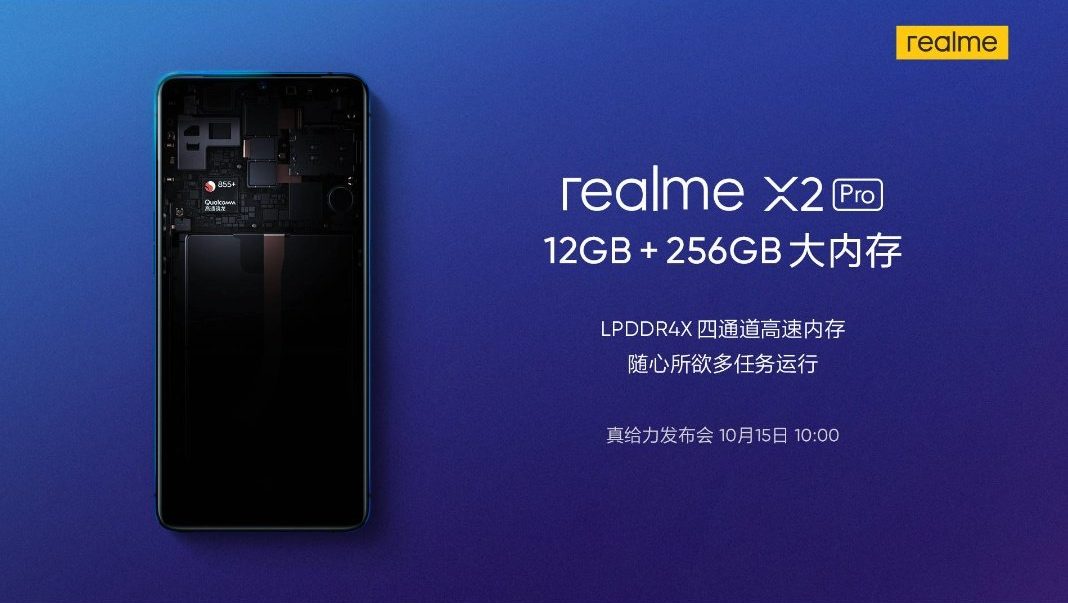
The Realme X2 Pro is scheduled to go official in Europe and China on Oct. 15. Realme has been consistently on the features of the smartphone through the social media channels of Realme Europe and China. It is known that the flagship phone will be driven by the Snapdragon 855+ mobile platform. Today, Realme China has confirmed through Weibo that it will be selling the Realme X2 Pro in 12 GB RAM + 256 GB storage version.
The 12 GB RAM + 256 GB storage version could be the highest storage version of the Realme X2 Pro smartphone. It remains to be seen whether the phone comes in lower models such as 8 GB RAM + 128 GB storage and 6 GB RAM + 64 GB storage.
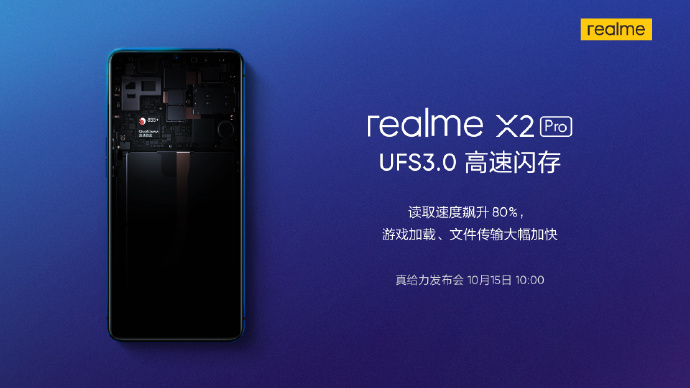
It is good to see that the company is offering the Realme X2 Pro with the latest storage standard of UFS 3.0. Compared to previous generation, the UFS 3.0 offers 80 percent faster read speed. The handset will be equipped with LPDDR4X RAM. The Snapdragon 855+ chipset that powers the handset can deliver clocking speeds of up to 2.96GHz.
The Realme X2 Pro will come with a waterdrop notch enabled AMOLED display of 6.5 inches that will produce full HD+ resolution of 1080 x 2340 pixels. However, the exciting thing about the display of the X2 Pro it will support a refresh rate of 90Hz. It will also be embedded with an in-screen fingerprint reader. The third-generation sensor can unlock the device in just 0.23 seconds, claims the company.
For capturing selfies, the phone is expected to arrive with a frontal shooter of 16-megapixel. The rear shell of the phone has a quad camera system with 64-megapixel primary lens, a 13-megapixel ultrawide lens with 115-degree field-of-view, an 8-megapixel telephoto lens and a 2-megapixel depth assist lens. The handset will be drawing power from a 4,000mAh that can be fueled by a using 50W SuperVOOC Flash Charging technology.
The Realme X2 Pro also features the good old 3.5mm audio jack. It will be loaded with Android 9 Pie OS that will be overlaid with the latest version of ColorOS 6. It will be lacking a microSD card slot. The pricing of the smartphone is currently under the wraps. However, considering the premium features that it will be offering, it seems that it may command an expensive price tag.
Yao Yanzhong, Vice President of JD Group and President of JD Communications Division as well as Ni Jiayue, Director of Honor Domestic Sales and Service Department held a meeting and have signed an agreement for 5G smartphones.
As per the agreement, Honor’s first 5G smartphone, which is coming to the market later this year, will be sold through JD.com in China. With this agreement, both the companies have reached a deep cooperation for 5G services and JD.com will provide users with a full-service one-stop solution for Honor 5G products and will also support its development.
As for the marketing collaboration, both the companies will strengthen online and offline omni-channel cooperation and aims to reach the target consumer groups. They plan to continuously introduce more accurate marketing that directly touches people’s hearts.
Further, it adds that for the cooperation related to the smartphone business, both the companies — Honor and JD.com will create new product activities through the in-depth exploration of user needs, and help Honor reach a new height of business growth.
Honor and JD.com have set up many records in the Chinese eCommerce market and with this new agreement, both the companies are expect to showcase solid outcome in terms of sales and market share, especially with JD’s 11.11 Global Good Things sales festival coming next month.
While nothing has been revealed about this upcoming Honor 5G smartphone, reports are making rounds since past few weeks that the company is gearing up to launch the Honor V30 and V30 Pro smartphones which will be powered by the company’s own Kirin 990 octa-core flagship chipset that has built-in 5G modem. It is being speculated that the devices should be get launched later this month and should go on sale by 11.11 Singles’s Day sale in China next month.
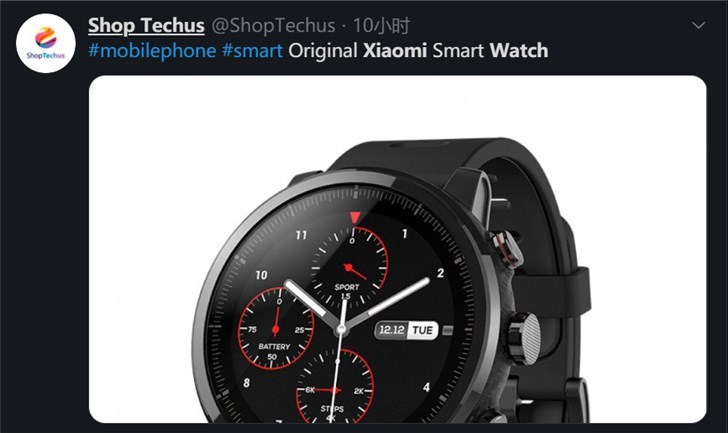
Xiaomi has managed to establish its presence in the wearables market thanks to the Mi Band series of fitness tracker. However, the company is moving a step forward and is reportedly all set to launch its first smartwatch in China later this month.
The report coming from China claims that the upcoming smartwatch will be powered by the Xiaomi Wear chipset and will also also come with support for eSIM card, 4G LTE network connectivity, multi-function NFC, and smart voice assistant.
It further adds that the device will be running a customized version of Google’s Android Wear operating system out-of-the-box which could be named “Mi Wear” OS. The report has also revealed an alleged image of the Xiaomi Smartwatch coming this month.
From the design point-of-view, there’s nothing unique in the smartwatch compared to other devices in the market featuring a circular dial. However, do note that it has not been confirmed if this is indeed the upcoming Xiaomi Smartwatch.
In early September, the Chinese company had registered a few trademarks, including “Millennium MIX ALPHA”, “Mi MIX Alpha” and “Mi Watch COLOR”. Since the Mi MIX Alpha smartphone has already been unveiled, the launch of Xiaomi’s Mi Watch COLOR should not be far away.
As mentioned, Xiaomi currently sells wearable devices under its eco-chain companies which includes Huami Technology. Apart from the Mi Band fitness tracker, it has a line of smartwatches under Amazfit branding but none of them are running Android Wear OS. The upcoming smartwatch will be the first to come with company’s own branding.
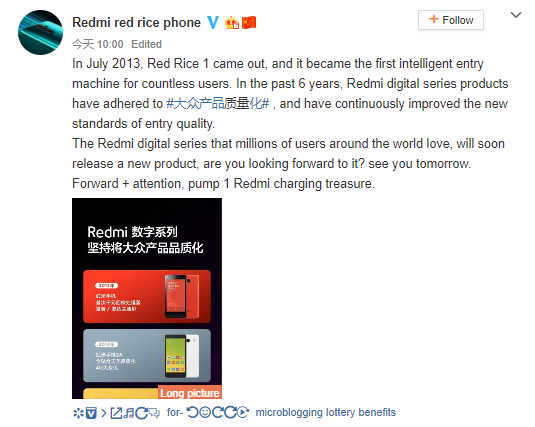
Yesterday, Xiaomi had launched the Redmi 8 smartphone in India and at the end of the previous month, it had introduced the Redmi 8A in the country. Today, Redmi has confirmed that it will be launching a new Redmi series of smartphones tomorrow in China. It is likely that the Chinese firm will launch the Redmi 8 and Redmi 8A phones in the home market tomorrow.
In the below shown screenshot of Redmi’s Weibo post, the company has claimed that it has been consistently increasing the quality of entry-level Redmi phones since first Redmi 1 phone that was announced in July 2013. There are now millions of users of Redmi’s entry-level phones around the world. It has further stated that it will be announcing a new Redmi series product tomorrow. Since the Redmi 8 and Redmi 8A were both certified by the TENAA telecom authority in the recent past, it appears that both phones may go official in China tomorrow.
The Xiaomi Redmi 8 features a 6.22-inch display whereas the Redmi 8A has a 5.71-inch display. Both IPS LCD displays have waterdrop notch and they carry support for HD+ resolution of 720 x 1520 pixels and 19:9 aspect ratio. The displays are shielded by Gorilla Glass 5 panels and their polycarbonate back feature splash-resistant P2i nano-coating. The MIUI 10 based Android 9 Pie OS runs on both devices.
The Snapdragon 439 chipset powers both smartphones. They are packed with massive 5,000mAh batteries that are blessed with support for 18W fast charging through USB-C. The rear side of the Xiaomi Redmi 8A has a 12-megapixel Sony IMX363 camera. The Redmi 8 also features the same rear camera along with a 2-megapixel depth sensor. Upfront, they are equipped with an 8-megapixel selfie camera.
The Redmi 8 and 8A come with wireless FM radio support. There is a dedicated microSD card slot on both phones for more storage. The Redmi 8A lacks a fingerprint sensor. However, Redmi 8 features it below the dual rear cameras.
In India, the Redmi 8A variants such as 2 GB RAM + 32 GB storage and 3 GB RAM + 32 GB storage are respectively priced at Rs. 6,499 (~$91) and Rs. 6,999 (~$99). The Redmi 8 models like 3 GB RAM + 32 GB storage and 4 GB RAM + 64 GB storage respectively cost Rs. 7,999 (~$112) and Rs. 8,999 (~$127). Initially, 5 million units of 4 GB RAM variant of Redmi 8 will be also at Rs. 7,999.
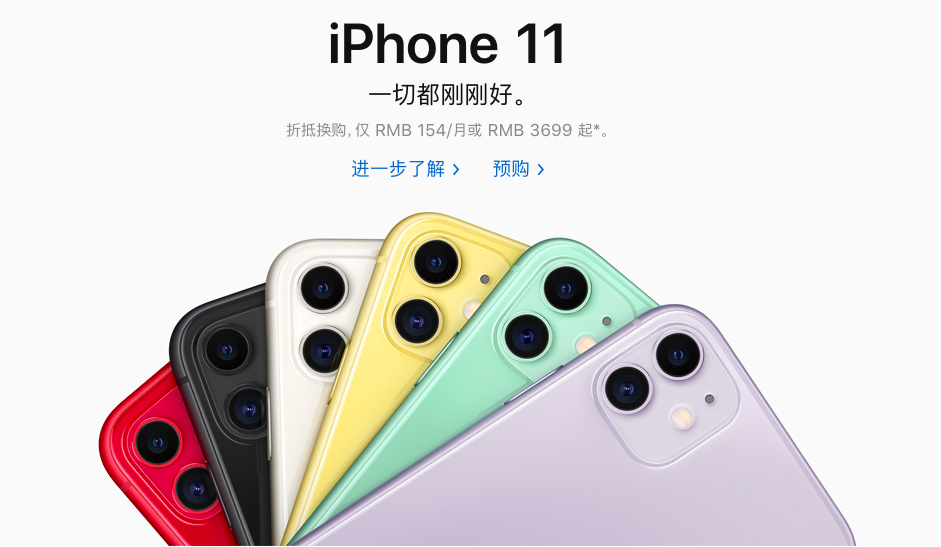
China’s state-run People’s Daily criticized Apple for approving a Hong Kong app that crowd-sources and maps updates about police and protester locations, as well as for returning a song “advocating Hong Kong independence” to Apple Music. While the newspaper did not name the song it was referring to, it’s likely to be “Glory to Hong Kong,” which many in the city are calling their “national” anthem.
“Nobody wants to drag Apple into the lingering unrest in Hong Kong. But people have reason to assume that Apple is mixing business with politics, and even illegal acts,” said the article, published under the byline Bo Lan Ping, or “calming the waves,” a pseudonym used frequently by the newspaper for commenting on Hong Kong issues in recent weeks. “Apple has to think about the consequences of its unwise and reckless decision.”
In what appears to be a threat to its access to the vast market in China, the commentary said Apple’s “mixing of political, commercial and illegal activities” is “unwise” and “imprudent” and would only “draw more turbulence” for the company. This is very worrisome, especially with the trade wars going on.
In another bit of news however, it seems Apple iPhone users in Macau and Taiwan discovered that they no longer had access to an emoji bearing the image of the Taiwanese flag, considered a controversial symbol on mainland China.
The removal is being treated by activists and pro-Hong Kong supporters as another attempt from mainland China to establish sovereignty over areas it considers under its control. Because of Taiwan’s political status, the People’s Republic of China considers any mention of or allusion to its independence as an offense against its sovereignty.
It is still possible to use the Taiwan flag emoji, however. Apparently it still displays in apps and on websites, and you can bring it up by typing the word “Taiwan” or by copying and pasting it.
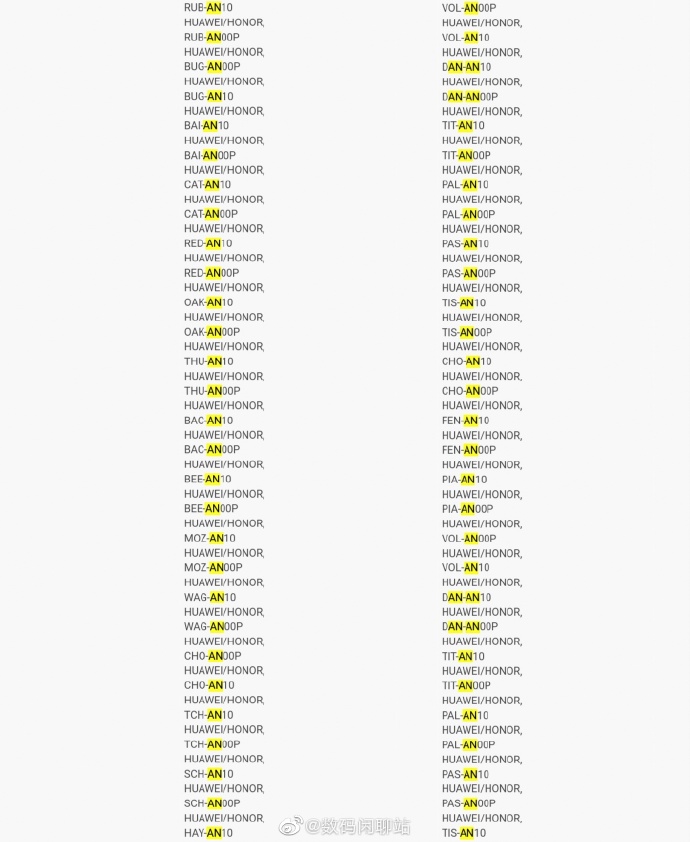
New info has revealed that both Huawei and Honor have more 5G devices on the way. According to the source, both brands have more than twenty 5G smartphones combined which have all received 5G certification. The devices are said to belong to the flagship category.
The source of the info is Chinese blogger and leaker who goes by Digital Chat Station on Weibo. A post he made on Weibo revealed the details along with an image showing the model numbers of the phones.
None of the model numbers are familiar but they should begin to surface in the coming months. We believe a number of them will be announced next year when the second generation of 5G phones will enter the market.
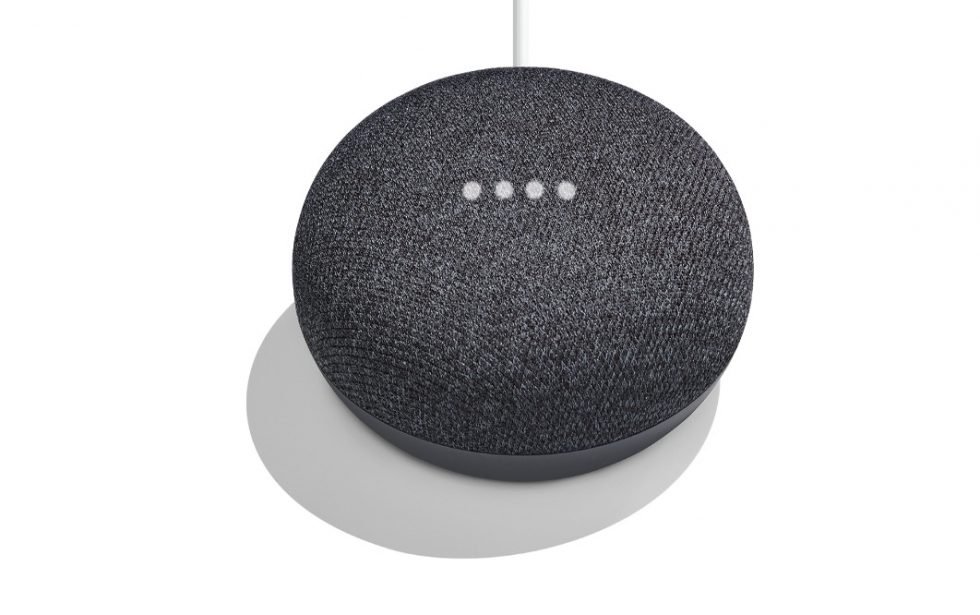
As more houselholds pick up their first smart speaker or smart TV, others are purchasing a second or a third or more. If you belong to the latter category, Google has a new feature that will make playback easy among your devices. Called Stream Transfer, you will be able to move playback (podcasts, music, and videos) between compatible smart devices.
Stream Transfer is easy to use, the easiest way is to call up the Google Assistant and tell it to move what you are watching or listening to the speaker or smart TV where you want it. For example, you can say “Hey Google, play it on living room TV” and what you are watching in the bedroom or on your Nest Hub Max will begin to play on the living room TV. The same applies to audio playback.
Another way to use stream transfer is to go to the Google Home app, tap the cast button to show a list of your devices and select which device or group you want to move playback too.
Stream Transfer works with YouTube for videos and YouTube Music, Spotify, Pandora and more for music. The feature began rolling out to all Chromecasts, Google Home, and Nest smart speakers and displays yesterday.
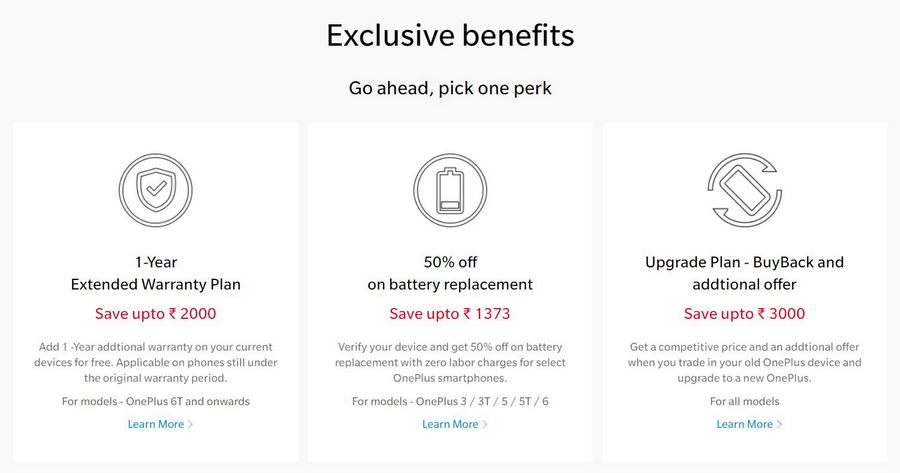
OnePlus has today launched OnePlus Care, the company’s own post-purchase program for its consumers. Making the announcement, the company said: “The OnePlus Care program was envisioned with the community in mind and is another step towards enabling a superior experience for users.”
As you’d guess, OnePlus Care is an after-sales service program for all OnePlus products. The service will be applicable on all OnePlus phones ever sold. Yes, even if you own the very first OnePlus One, you are eligible for this service from the company. And the best part is that the offers will change for all devices in phases.
Essentially, OnePlus customers will have to download the OnePlus Care app from the Google Play Store and register with their device’s IMEI number. Once that is done, all the offers meant for that particular OnePlus phone will automatically be applied and if there’s a need for after-sales service, the customer will be eligible to avail the benefits.
To celebrate the launch of the OnePlus Care program in India, users of OnePlus smartphones can enjoy OnePlus Care benefits of up to Rs 3,000. OnePlus is offering free 1-year extended warranty, or up to 50% off on battery replacement and extra discounts of up to Rs 3,000 on upgrade plans.
The 1-year extended warranty program is applicable to the following devices – OnePlus 6T, 7, 7 Pro and 7T, while the 50% off on battery replacement is applicable to the OnePlus 6, 5T, 5, 3T and 3. The additional discount of up to Rs 3,000 is applicable on the OnePlus 1, 2, X, 3, 3T, 5, 5T, 6 and 6T.
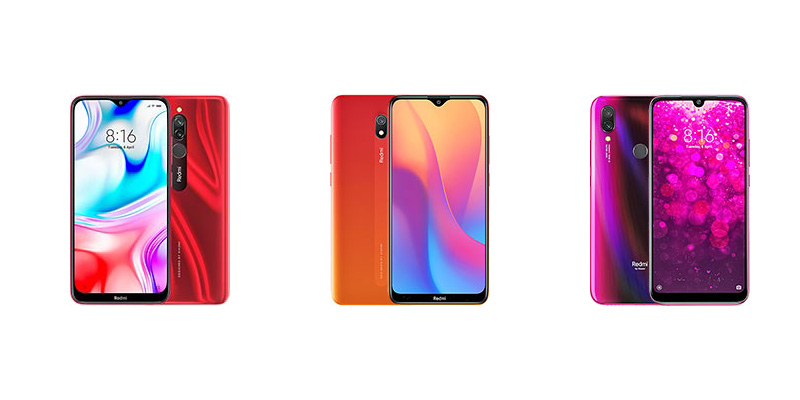
Xiaomi just expanded its entry-level smartphones line-up with the Redmi 8 which followed the launch of the lower-end Redmi 8A that is currently the most affordable Xiaomi phone if we exclude the Redmi Go. Both these devices are among the best options for people who have a very limited budget and they want to spend max €100/$110 for a new device. There is also another low-end phone released by Xiaomi that is currently available in the most affordable price range: the selfie-centric Redmi Y3. This is a specs comparison which will let you find out who is the Xiaomi entry-level phone with the highest value for money in its current 2019 line-up.
Xiaomi Redmi 8 vs Xiaomi Redmi 8A vs Xiaomi Redmi Y3
Despite Redmi 8, 8A and Y3 are just low-end devices, Xiaomi put a lot of effort in their aesthetics. All of them have elegant design schemes as well as a splash resistant body. Redmi 8 and Y3 have definitely the most impressive bodies in terms of look, due to their reflective backs. However, none of these devices is made of premium materials: all of them have a plastic body. Despite Redmi 8 boasts the more recent Aura Mirror design, Redmi Y3 remains a very elegant and minimalistic phone: given that they are both beautiful and well-built, choose by basing on your tastes. I personally prefer the Redmi Y3 due to its cleaner back and the U-shaped waterdrop notch.
Display
On each of these devices, you will get more or less the same display size, as well as the same resolution and the same display technology (IPS LCD). Due to their resolution, they are below-average panels, but still sufficient for most of the users. We do not suggest you focus on the display quality as they all offer more or less the same thing. Note that Redmi 8A does not have a fingerprint scanner, while Redmi 8 and Redmi Y3 do (but it is not in-display).
Specs & Software
Redmi Y3 wins the performance comparison because it is equipped with a better chipset: the Snapdragon 632 running at a max frequency of 1.8 GHz. It provides smoother and more stable performance thanks to more powerful custom cores, while the Snapdragon 439 found on Redmi 8 and 8A is less powerful but more efficient thanks to its 12 nm production process. Between Redmi 8 and 8A, the former is better since it has a higher memory configuration with 4 GB of RAM and 64 GB of internal storage, but you obviously have to spend more for it. Android 9 Pie is out of the box on each of these devices, but Redmi 8 and 8A already come with MIUI 10 while Redmi Y3 is still based on MIUI 9.
Camera
The best rear camera setup belongs to the Redmi 8 which comes with a 12 MP dual camera boasting a bright f/1.8 aperture and a depth sensor. But if you want the best selfies, then Redmi Y3 is your choice as it is definitely one of the best affordable phones ever for taking selfies, thanks to its 32 MP front camera. Redmi Y3 has a dual rear camera too, while Redmi 8A does not, that is why we would not recommend the Redmi 8A if you asked us about the best camera phone here.
Battery
Redmi 8 and 8A are equipped with bigger 5000 mAh batteries as well as very efficient SoCs, so they have a longer battery life than Redmi Y3. They even support a faster charging technology with a max power of 18W.
Price
Redmi 8 starts from just €100/$110 in China, Redmi 8A costs €90/$100 in India and Redmi Y3 had a starting price of about €130 in India but it is now available for just €100/$110 thanks to online street prices. Whatever you choose, the differences will be just marginal. Overall, I would go for the Redmi Y3 due to the better front camera and the higher performance, but some may not have the same opinion since Redmi 8 and 8A offer a much bigger battery, as well as a better main camera sensor.
We use cookies on our website to give you the most relevant experience by remembering your preferences and repeat visits. By clicking “Accept”, you consent to the use of ALL the cookies.
This website uses cookies to improve your experience while you navigate through the website. Out of these, the cookies that are categorized as necessary are stored on your browser as they are essential for the working of basic functionalities of the website. We also use third-party cookies that help us analyze and understand how you use this website. These cookies will be stored in your browser only with your consent. You also have the option to opt-out of these cookies. But opting out of some of these cookies may affect your browsing experience.
Necessary cookies are absolutely essential for the website to function properly. This category only includes cookies that ensures basic functionalities and security features of the website. These cookies do not store any personal information.
Any cookies that may not be particularly necessary for the website to function and is used specifically to collect user personal data via analytics, ads, other embedded contents are termed as non-necessary cookies. It is mandatory to procure user consent prior to running these cookies on your website.

 In simpler words, they exhibit an end to end guide of technologies and methods that are required to facilitate 5G, right from the signal emmitting towers to smartphones that are equipped with this technology.