Realme has already confirmed that the it will be hosting a launch event in China on 24th September where the company will launch the Realme X2 smartphone. Francis Wang, Chief Marketing Officer of Realme has already confirmed that the X2 is the re-branded version of the XT for China.
Earlier, the company had confirmed that the phone will feature a 64-megapixel quad-camera setup. Now, it has revealed that the smartphone will be featuring a 32-megapixel camera sensor on the front. Notably, the Realme XT features a 16-megapixel front camera.
It features a 6.4-inch S-AMOLED display with waterdrop notch, Full HD+ screen resolution, and 19.5:9 aspect ratio. The phone is powered by Qualcomm Snapdragon 712 AIE octa-core processor, with up to 8GB RAM and 128GB internal storage.
The quad camera system on the phone comes with 64-megapixel Samsung GW1 main lens, 8-megapixel ultra-wide lens, 2-megapixel dedicated macro camera and 2-megapixel depth sensor. While the 16-megapixel front-facing snapper is on XT, the X2 will come with a 32-megapixel selfie snapper.
Running on Android 9 Pie-based ColorOS 6.0.1, the smartphone is powered by a 4,000mAh battery and VOOC 3.0 fast charging support. To know which variants the company launches as well as its pricing, we’ll have to wait for the official launch next week.
Meanwhile, the Oppo-backed company is also gearing up to launch the Realme XT 730G smartphone. The device is expected to have the same configuration, except for the chipset which will be Snapdragon 730G. The phone will be launched in India in December this year.
At Huawei Connect 2019, the Chinese telecom giant announced its strategy for the computing market and has released Atlas 900, which is claimed to be the world’s fastest AI training cluster. The company says that Atlas 900 will help make AI more readily available for different fields of scientific research and business innovation.
Atlas 900 combines the power of thousands of Ascend processors and takes only 59.8 seconds to train ResNet-50 for measuring AI training performance. This is 10 seconds faster than the previous world record.
It brings new possibilities to different fields of scientific research and business innovation – astronomy, weather forecasting, autonomous driving, oil exploration, etc. Huawei also deployed Atlas 900 on Huawei Cloud as a cluster service, making it more accessible to its customers across different industries.
Based on Huawei’s experience in over 500 projects across more than 10 industries, Zheng Yelai, President of Huawei’s Cloud BU, pointed out that industry AI is crossing the commercial chasm and becoming the key driver for reshaping how companies go digital.
Huawei estimates that in the next five years, statistical computing will become the mainstream and AI computing will account for more than 80 percent of all computing power used around the world. Huawei’s strategy will focus on four key areas:
Architecture innovation – Huawei has launched the Da Vinci architecture, an innovative processor architecture. The company will continue to invest in basic research.
Investment in all-scenario processors – Huawei has a full lineup of processors: Kunpeng processors for general purpose computing, Ascend processors for AI, Kirin processors for smart devices, and Honghu processors for smart screens.
Clear business boundaries – Huawei won’t sell its processors directly. Instead, it will provide them to its customers in the form of cloud services, and to its partners in the form of components, prioritizing support for integrated solutions.
Building an open ecosystem – In the next five years, Huawei will invest another $1.5 billion in its developer program. The aim is to expand the program to support five million developers and enable Huawei’s worldwide partners to develop new applications.
Commenting on the company’s strategy, Ken Hu, Huawei’s Deputy Chairman said: “The future of computing is a massive market worth more than two trillion US dollars. We’ll keep investing with a strategy that focuses on four key areas. We will push the boundaries of architecture, invest in processors for all scenarios, keep clear business boundaries, and build an open ecosystem.”
Xiaomi is hosting a launch event in China on 24th September where the company will be launching a few products, including the Mi 9 Pro 5G — the company’s second 5G-enabled smartphone in its home market.
Ahead of the phone’s official launch in China, the company has shared a new teaser poster on Weibo which reveals some key details about the phone’s charging capabilities. Xiaomi confirms that Mi 9 Pro 5G will come with Mi Charge Turbo triple fast charging feature.
The smartphone will have 40W wired fast charging, 30W wireless fast charging as well as 10W reverse charging support. The 30W Super Wireless Flash charing is claimed by the company to charge the 4,000mAh battery up to 50 percent in 25 minutes and takes around 69 minutes to fully charge.
Additionally, the phone also supports 10W reverse wireless charging, making it the first flagship smartphone from the company this year to support reverse wireless charging. This means that the phone can be used to power other devices.
The 40W wired fast charging support for the Mi 9 Pro 5G is a massive upgrade over 27W fast charging support in the Xiaomi Mi 9 smartphone. While it’s on-par with Huawei’s fast charging technology, it lacks behind Vivo’s 44W and OPPO’s new 65W fast charging.
The Mi 9 Pro 5G has already been certified by TENAA, which reveals that the phone will come with a 6.39-inch display and should come powered by Snapdragon 855 Plus SoC, coupled with up to 12GB of RAM and 512GB of internal storage. The smartphone is expected to come powered by a 4,000mAh battery.
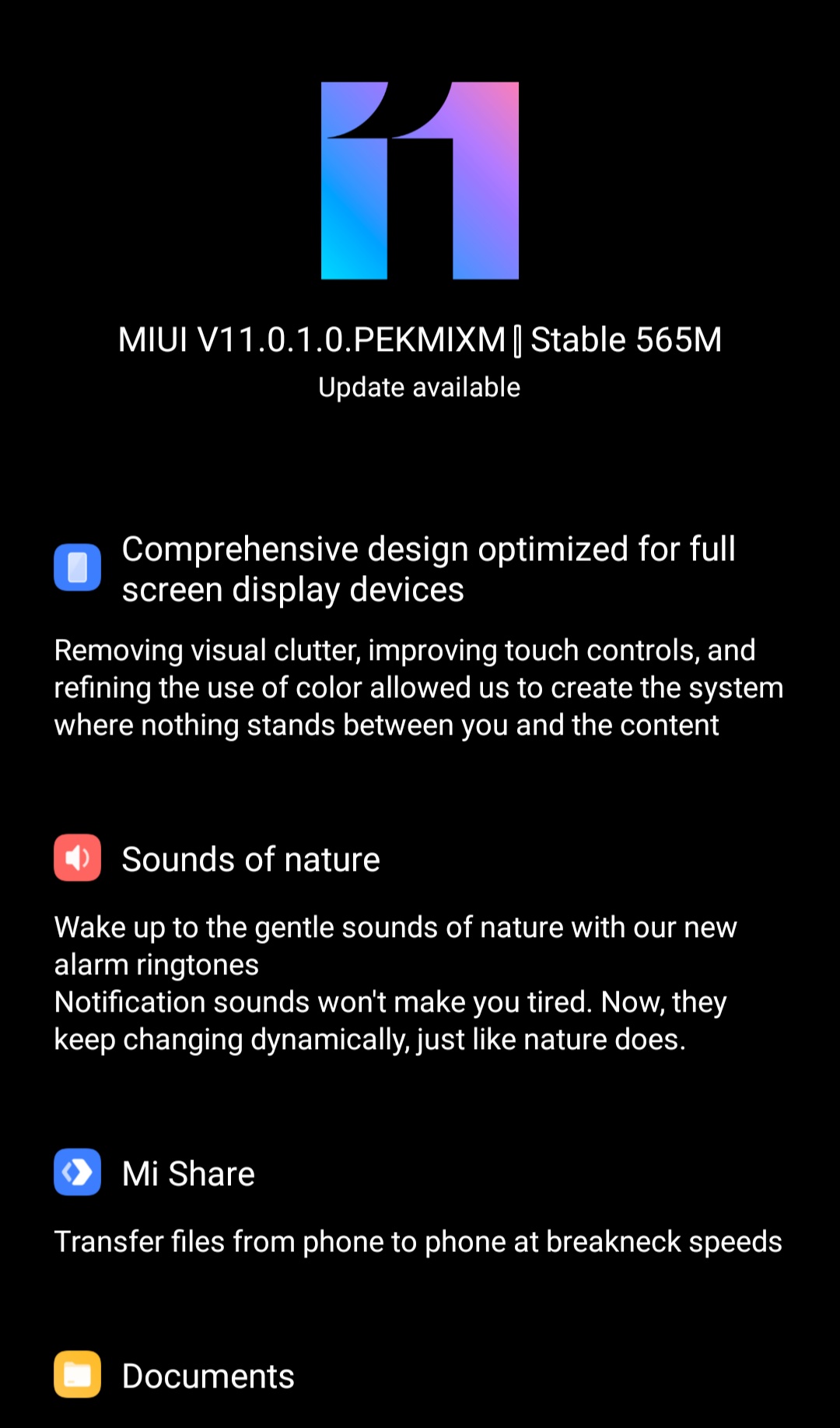
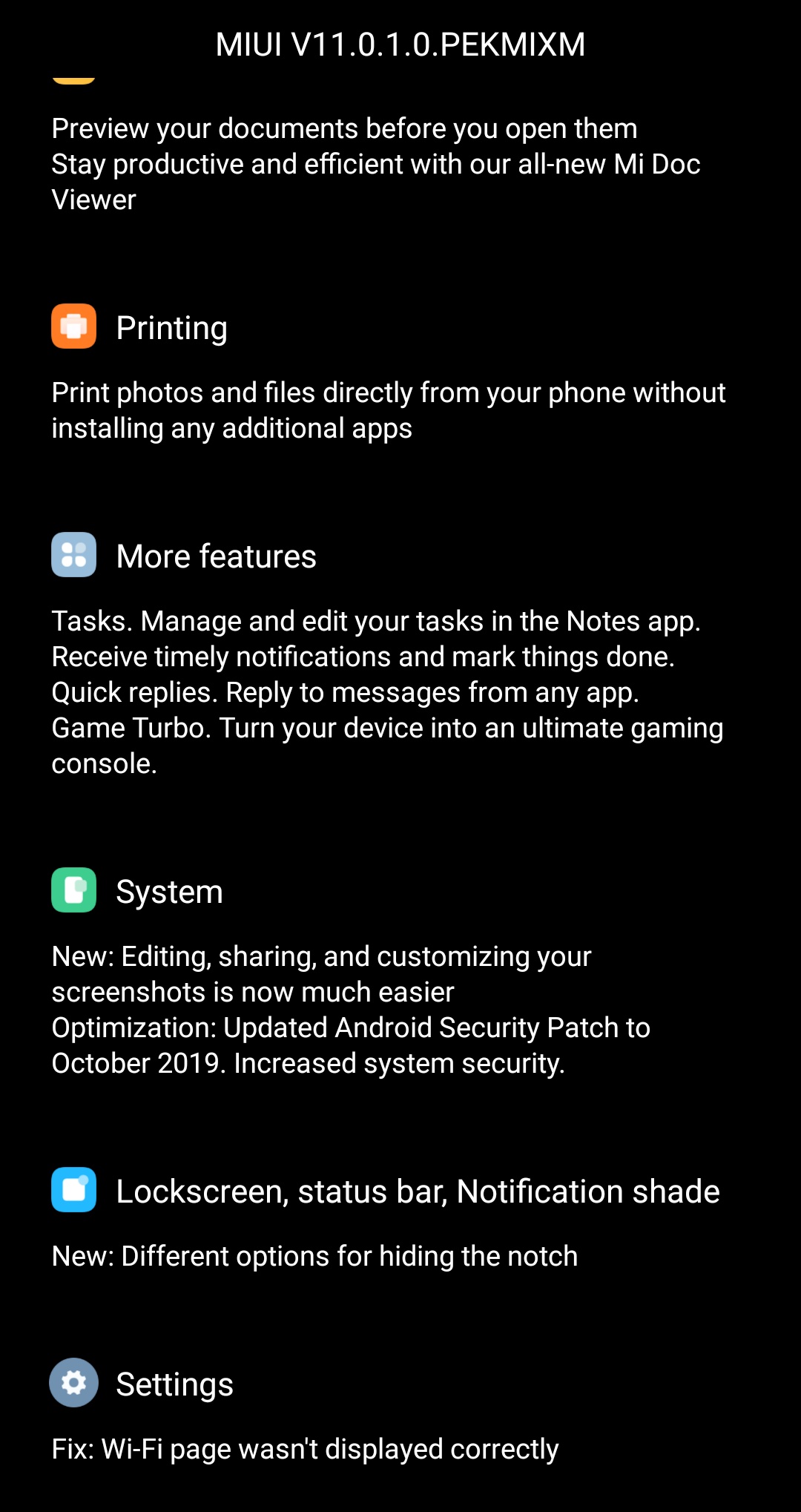
Along with the Mi 9 Pro 5G, Xiaomi is also set to introduce its new Mi MIX 4 flagship smartphone which could feature a 100-megapixel camera sensor. The company will also be launching a new Mi TV model and its new MIUI 11 operating system with major updates.
A few months ago, Xiaomi-backed Redmi launched the Redmi K20 Pro flagship smartphone which comes with up to 8GB RAM and 128GB internal storage. Yesterday, we reported that the company will launch an Exclusive Edition of the same phone on 19th September.
Now, it has been confirmed that the Redmi K20 Pro Exclusive Edition will come packed with 512GB of internal storage. It was earlier confirmed that the smartphone will be powered by the newly launched Qualcomm Snapdragon 855 Plus octa-core processor.
With 512GB of internal storage, this will be the second smartphone from the Xiaomi’s brands to offer such massive storage capacity. Currently, the Black Shark 2 gaming smartphone is the only one that comes with 12GB RAM and 512GB internal storage.
The Qulacomm Snapdragon 855+ has a higher clock speed of 2.96GHz and offers 15 percent improvement in GPU performance. Redmi’s General Manager Lu Weibing says that this upcoming smartphone variant scores as high as 473,183 points on AnTuTu. The standard edition scored 458,754 points on the benchmark test.
The Redmi K20 Pro features a 6.39-inch Full HD+ AMOLED display with 1080 x 2340 pixels screen resolution. It also comes with an in-display fingerprint scanner for added security and the display is notch-less.
The phone comes with up to 8GB of RAM and up to 256GB of storage. As for the camera setup, the phone has a triple-camera setup on the back — 48MP + 8MP + 13MP while on the front side, it features a 20MP snapper for taking selfies and video calling.
Connectivity options on the device include 4G VoLTE, WiFi 802.11 b/g/n/ac, Bluetooth 5, GPS + GLONASS, NFC, and USB Type-C port. The phone runs MIUI 10 based on Android Pie and is powered by a 4,000mAh battery with 27W fast charging technology.
Xiaomi has announced the rollout of a new update for the Mi Band 4. The update brings some more refreshing outlook to the smart wearable. One of such is several custom watch faces.
The Mi Band 4 already has many custom watch faces available to users but the new update adds some more to the mix. With so many watch faces available to users, you definitely will find a few that will catch your fancy. To check for this update, head over to the Mi Fit app and update the wearable to the latest version. This new feature is available also to the NFC version.
The Mi Band 4 comes with an elegant look spearheaded by a colour AMOLED display. The screen size is said to be 39.9% bigger than its predecessor. There’s also 2.5D scratch-resistant tempered glass protection on top of the display. It already comes pre-installed with several watch faces and you can also download some more from the Mi Fit app on a smartphone when the device is paired. The wearable device also comes with water resistance up to a depth of 5ATM (50 meters). There is also an upgraded 6-axis high-precision sensor as well as the regular features such as sleep tracking, heart rate monitor, GPS etc.
Xiaomi has almost covered all product categories with its ecological chain products consisting of smart home products and all other gadgets that we need either at home, in our cars, at the office etc. And talking of office equipment, the prolific brand has launched the MIJIA Inkjet printer. The gadget is presently on sale for just 999 yuan ($141).
The MIJIA Inkjet printer comes with a portable build and keeps up with Xiaomi’s traditional minimalist design. The printer is equipped with a 1.2GHz quad-core processor. With WPS’s powerful real-time file conversion function onboard, it can easily realize the remote printing of mobile and cloud files. The printing accuracy of Xiaomi Mi’s inkjet printer can reach 4800x1200dpi, and a thin line of 0.1mm can also be printed clearly. The unique paper path design supports a variety of printing materials and different paper sizes.
The MIJIA inkjet printer also comes with an anti-clog print head and has an automatic maintenance function. Where it is left constantly connected to a power source, the print head will automatically maintain and clean every 7 days. Alternatively, the owner can manually activate the maintenance function from the MIJIA app. Sure, the MIJIA Inkjet printer can be connected to MIJIA app meaning it is a smart product with WiFi connectivity. It also supports photo scan via the MIJIA app, remote printing, smart correction and several other innovative features. You also don’t need to install any driver as it is a plug and play device.
Inside the box, is a set of printer cartridges having four different ink colours namely, cyan, magenta, yellow, and black. The ink cartridges are colour coded so that the wrong colour isn’t added to the machine. It is also easy to swap the cartridges. According to the manufacturer, a set of ink cartridge supports 9500 pages of colour printing, as well as 3200 pages of black and white printing.
The Redmi Note 8 series will soon get a global release. The official Xiaomi Twitter account already teased the launch a few days ago but is yet to reveal the date.
It appears the launch is close as it has been reported that some European retailers have already listed the devices.
For those curious about the price of the Redmi Note 8 Pro, Sudhanshu Ambhore tweeted that the phone will be available in two variants – 6GB RAM + 64GB which will sell for €259 and 6GB RAM + 128GB which will sell for €289 according to listings by unnamed European retailers.
At the moment, the European price for the Redmi Note 8 is still unknown.
The Redmi Note 8 Pro packs a 6.53-inch FHD+ LCD display with a waterdrop notch. It is powered by the Helio G90T processor which draws power from a 4500mAh battery. It has a 64MP primary rear camera, an 8MP ultrawide angle camera, a 2MP Macro camera, and a 2MP depth sensor. The selfie camera is a 20MP sensor. Other features include a rear-mounted fingerprint scanner, dual-SIM support, MicroSD card slot, NFC, and an IR port. It also supports 18W fast charge and Quick Charge 4+.
The Redmi Note 8 has a smaller 6.3-inch FHD+ display with a notch for a 13MP selfie camera. It is powered by the Snapdragon 665 chipset paired with up to 6GB of RAM and 128GB of storage. Its quad-camera configuration is 48MP + 8MP + 2MP + 2MP. It also has a rear-mounted fingerprint scanner but no NFC. There is a 4000mAh battery under its glass back with support for 18W fast charge. Both phones run MIUI 10 based on Android 9 Pie.
The Realme XT may have just been revealed last week, but the company’s wasting no time getting a Realme XT update out of the door. The RMX1921EX_11_A.10 update improves the camera previews and photo quality of the device. It also updates the device to the latest version of the Android security patch, that being the September patch.
The update is currently rolling out over the air, but it’s likely a staged rollout. Realme does these all the time where they release the update to a small batch of users to see if there are any major issues. If there aren’t any issues, all users should be able to download the new Realme XT update soon enough.
Apart from its high-resolution camera, the Realme XT comes with Snapdragon 712 processor, 4000mAh battery with VOOC 3.0 fast charging. It’s one of the best mid-rangers available on the market right now, especially with its beautiful 6.4-inch Super AMOLED dewdrop display and other impressive features at its price range.
Just two days are separating us from the launch of the Huawei Mate 30 series. The new line-up from the Chinese giant will include four variants: Huawei Mate 30, Mate 30 Pro, Mate 30 RS Porsche Design and Mate 30 Lite. Just like every year, when a new important flagship series is about to launch, a lot of leaks and rumors surface, revealing all the main specifications and features of the upcoming devices. That is why we know almost everything about the Huawei Mate 30 series.
Here is all you need to know about the new line-up ahead of the launch. Given that the Mate 30 Lite will probably be a re-branded Nova 5i Pro for the global market, we will focus on the Mate 30 and 30 Pro.
Mate 30 Lineup by evleaks
Design
Huawei Mate 30 and 30 Pro will have a brand new design way different from their predecessors from the P30 series. The rear side will house a circular camera module including several sensors, while the front panel will differ depending on the variant. The vanilla Mate 30 will have a classic flat display with a small notch, while the Mate 30 Pro will come with a new waterfall display that will offer side controls. It will be a screen with an extremely curved side and it will include a wider notch housing additional sensors for 3D face unlock.
huawei-mate-30-pro-rendered-by-case-maker
According to the latest renders, there will be four color options at launch: Blue, Black, Purple, and Green. Huawei Mate 30 RS Porsche Design will lack the circular housing for the camera and it will feature a black narrow strip that goes from the top towards the bottom. On at least one of the devices (Mate 30 Pro), there should also be an IR blaster and a volume slider touch bar. Unfortunately, there will be no 3.5 mm headphone jack on the Mate 30 Pro, but the phone will come with IP68 certification for water and dust resistance.
Mate 30 Pro’s expected design
Display
Usually, the Mate series comes with better displays than the P series. But we expect different display quality depending on the variant. Huawei Mate 30 is tipped to come with a lower Full HD+ display resolution, while the Mate 30 Pro should have a Quad HD+ display boasting a 90 Hz refresh ratio. As mentioned above, the Mate 30 Pro will have a different waterfall display panel with a wider notch, and it will include side controls. The screens will obviously include under-display fingerprint readers. LG is said to supply OLED panels to Huawei for the Mate 30 Pro.
Huawei Mate 30 and 30 Pro will be Huawei’s first phones to be powered by the new Kirin 990 chipset. It will be the world’s first SoC to feature an integrated 5G modem and it will also come in a cheaper version with 4G only. The mobile platform is built with a 7 nm+ production process by TSMC. Alongside the Kirin 990, on the Mate 30 Pro, there will supposedly be 8 or 12 GB of RAM depending on the variant and up to 512 GB of internal storage expandable with a microSD. Due to the issues coming from the U.S. ban and Android license by Google, the Huawei Mate 30 series will ship without Play Store and Google apps. The phones will still have Android but it will include third-party alternatives to Google apps running on a bespoke version of Android 10. Obviously, 5G-enabled variants will not be missed, given the 5G capabilities of the Kirin 990 chipset. But expect a higher price.
Camera
Just like most of Huawei’s flagships released in the past few years, even on the new Mate line-up, the camera department will be a key feature. Inside the round-shaped camera housing of the Huawei Mate 30 Pro, there will be four sensors with super slow motion support: two of them will come with a 40 MP resolution.
The first sensor will be a Sony IMX600 with an f/1.6 aperture and optical stabilization, the secondary sensor will be a 40 MP wide cine camera, the third one will be an 8 MP telephoto lens with an f/2.4 focal aperture, and the fourth will be a ToF sensor. The phone is even rumored to sport a Xenon flash and a color temperature sensor. With these specifications, it may be the best camera phone out there.
Battery
Huawei Mate 30 will get a 4200 mAh battery, while the Mate 30 Pro will feature a larger 4500 mAh unit. Both will support 40W fast charging alongside a wireless charging technology reaching a max power of 27W. There should even be reverse wireless charging just like the P30 series.
Unfortunately, there is no information about the prices of the Huawei Mate 30 series. We can only tell you that the Mate 20 Pro had a price of about $1,150 at launch, so expect a similar price tag. Just like Apple did, the company might even decide to decrease the prices as after the U.S. ban its sales dropped and the devices will not feature Google apps. The series may release first in China, then it will expand to other markets.
Huawei Mate 30 Launch Date
Huawei will officially announce the Mate 30 series through an event that will be held in Munich, Germany, on September 19. There is no official confirmation about the arrival of a successor of Mate 20 X (the Mate 30 X). In case you missed it, the Mate 20 X was a bigger variant of the Mate 20 (our review here). It is Huawei’s first smartphone with 5G connectivity to hit the shelves and also the first one supporting a stylus with thousands of pressure levels like Samsung’s Galaxy Note series.
Are you interested in the new line-up? Which device from the Mate 30 series are you waiting for? Let us know in the comment section below.
Huawei Mate 30 Pro will be unveiled alongside the Mate 30 on September 19 which is just two days away. As the launch date draws closer, we expect the rumour mill to continue to buzzing with leaks and rumours. The latest leak is a purple variant of the Mate 30 Pro flaunting the front and rear designs. Let’s take a closer look at the design.
The Mate 30 Pro has been rumoured to utilise a waterdrop notch and on other occasions, a wide notch. The leaked images of the device confirm the latter, with the device packing a wider front notch which is said to be narrower than that of the Mate 20 Pro. The notch is said to house three camera sensors – a 32MP main lens, an unknown ultrawide lens and a ToF sensor.
The rear design includes a circular module just like what OnePlus is doing on the OnePlus 7T. ut we must add that Huawei’s looks more premium with a cool circular reflective accent on the glass panel bordering the circular module. It has four lenses inside the module.
An earlier leaked specs sheet reveals the camera setup as a Sony IMX600 f/1.6 aperture main lens with OIS, a 40-megapixel wide-angle camera, an 8-megapixel telephoto lens with f/2.4 aperture, OIS and 3x optical zoom and a ToF sensor. The quad cameras of Mate 30 Pro will be powered by a Xenon flash and color temperature sensor.
The Mate 30 Pro’s bottom edge will have a mono speaker and an earpiece. The power button and volume rockers are on the right side of the display. The device is also said to come with an IP68 certified dustproof and water-resistant and pack a 4500mAh battery with support for 40W wired and 27W wireless super-fast charge. The phone will be powered by a Kirin 990 5G chipset and will run EMUI 10 based on Android 10, the first Huawei device to have Googe’s latest Android fork.
The Huawei Mate 30 Pro is expected to bring along several innovative features. We’ll have to wait for the launch event to get the entire package.
Update: The sales figures include that of the Mi 9T series too seeing as the official Xiaomi Twitter account tweeted the same but for the Mi 9T series.
The Redmi K20 series has been quite a hit since it launched. Today Redmi has revealed that it has sold 3 million units globally.
That figure took only 4 months to achieve and that figure should even be higher for two reasons. First, the Redmi K20 series didn’t launch in India until July and the first sale was on July 22, two months after it launched in China.
Second, this is just for two markets, as the Redmi K20 series are sold as the Mi 9T series in markets other than China and India. If Redmi were to include the sales of the Mi 9T series, then the figure should be higher.
The Redmi K20 and Redmi K20 Pro share a similar design. They have a notch-less display, triple rear cameras, and a pop-up selfie camera. They also have the same battery capacity. However, the K20 has a Snapdragon 730 processor while the K20 Pro is powered by the Snapdragon 855 processor. The Pro model also supports 27W fast charging while the K20 maxes out at 18W.
Some Redmi K20 Pro users already received Android 10 in China and India but Redmi says a wider roll-out will begin in October.
OnePlus CEO Pete Lau is known for his essays explaining the design of its upcoming smartphones but that is usually restricted to sketches. However, the CEO took a rare step today by unveiling renders of the OnePlus 7T first on the OnePlus community.
The design looks familiar and that is because it has popped online as far back as December 2018, leaked by teenage tipster Ishan Agarwal back in December 2018. The sketch was also shared by Twitter leakster Evan Blass a few weeks back. What makes it stand out is the circular camera module at the middle.
Pete Lau took us down memory lane, highlighting the design progression right from the OnePlus One to the OnePlus 7. He also gave us an insight into the design language of the OP 7T and why the company adopted such a design. He noted that the camera housing is completely reimagined and they expect it to make a bold visual statement. The camera is also designed to flow naturally with the overall design for a seamless appearance.
The circular housing holds a triple camera setup with the three sensors making a perfect symmetry when viewed from any direction. The CEO hinted that the design was selected after perusing over fifty design iterations. The rear panel is made from the 4th generation matte-frosted glass.
The front design wasn’t featured in Pete Lau’s essay so we can’t say for sure the type of notch the OP7T will have or even if it will have one or not. However, leaked 3D renders point to a waterdrop notch design to be on the OnePlus 7T display.
Are you tired of seeing Huawei Mate 30 Pro leaks and teasers yet? Well, too bad, because Huawei has just teased even more features coming to the device on their Weibo page. There are simply no breaks on the Huawei Mate 30 info train, and it seems it’ll stay that way until the launch. For now, let’s take a closer look at these teaser videos.
1. Super Slo-mo Video recording
The first teaser video has a waiter pulling away a tablecloth like you’d see in science projects, but it’s happening in super slo-mo. This one’s an obvious nod to the super slo-mo functionality we’ve heard will be in the new Mate 30 Pro. The Mate 20 Pro had 960fps slo-mo, but rumors are claiming the Mate 30 Pro will feature 7680fps slo-mo, which is crazy.
2. Super Fast Wireless Charging
In this one, a guy who’s doing some exercise in the background manages to inflate a balloon that’s sitting in the foreground without making any contact with it. What’s more, he does it extremely quickly. Not as clear as the last one, but it’s hinting at the Mate 30 Pro’s super fast wireless charging. According to leaks, the Mate 30 Pro will be capable of 25W wireless charging, which is much faster than the current 10W standard.
We’re inside a airplane, and one of the passengers decides to open his window. It’s a lot brighter for him compared to everyone else, probably because he has Huawei’s night mode turned on. Night mode has been a staple on many of Huawei’s recent devices, so it’s not surprising that the fan favourite feature is back again.
4. Air Gestures
This one guy is bowling. He walks up to the bowling alley and throws absolutely nothing, but manages to score a strike despite this. This one threw us for a bit of a loop, but we believe Huawei will be implementing some form of air gestures into the new Mate 30 Pro. While they’ve never been a big thing in the past, perhaps Huawei has found a way to make them more practical?
The Huawei Mate 30 and Mate 30 Pro flagships are all set to be announced on September 19. We have been getting a steady stream of leaks about the lineup in the past couple of weeks, but it’s not long now before we finally get to see the actual devices launch. Whether they live up to the hype remains to be seen, but we’re feeling pretty optimistic it’ll be good.
Today, UMIDIGI announced that its next flagship, the successor of F1, the UMIDIGI F2, will be officially revealed globally on September 23rd. As we’ve seen in previous news, the device will be the first Android 10 phone of the Chinese manufacturer and will come with a hole-punch display as well as a 48MP AI quad-camera. Now, new leaked render confirms these specs and reveals more information.
For starters, the render shows that it will come in 2 colors: Gradient Blue and Black. Also, following the industry trends, the back cover will have a curved texture when the light hits on it. As you can see, the photo indicates that the selfie shooter will host a 32MP sensor which is assumed to be the same flagship sensor found in Huawei P30 Pro and Honor 20 Pro, Samsung GD1. What’s also revealed is that the F2 will feature a side-mounted fingerprint sensor, leaving the back cover clean and more consistent-looking.
In addition, it is confirmed that the main camera will be a vertically-aligned quad setup with a 48MP main sensor plus ultra-wide, macro, and depth cameras. It seems unbelievable that such a camera setup shows up in budget flagship already but you better believe it.
The rest of the specs are yet to be known but we expect information on UMIDIGI’s Aliexpress store to be proven true. So, there will be a big, 5150mAh battery, three slots to host 2 SIM cards and a microSD card at the same time, as well as 6GB/128GB memory configuration. We’re waiting for the official announcement next week to find out the full details.
VOOC 4.0 will also bring 30W charging to devices but via wired charging. It surpasses Xiaomi’s 27W Mi Turbo Wired Charging. OPPO says the new technology is the Flash Charge solution for all.
The new charging solution will allow users to charge a 4000mAh battery to 67% in 30 minutes and to 100% in 73 minutes – a 12% increase in speed compared to the previous generation. OPPO adds that the optimized VFC algorithm helps reduce the charging time required for the last 10%. The charging technology also features reduced internal resistance and reduced heat generation thanks to an efficient adapter and an advanced battery design. With VOOC 4.0, the temperature is controlled even when playing a game and charging at the same time.
VOOC 4.0 is also backward compatible with all Flash Charge technologies up to VOOC 3.0, so you are fine using a VOOC 4.0 charger for your older devices.
OPPO also revealed that the new technology will appear first in the upcoming OPPO K5, a successor to the OPPO K3. This is the first time we are hearing of the device. So other than the new charging technology, we practically know nothing else about it. We expect more details will surface soon.
VOOC technology was first launched in 2014 and now OPPO has filed over 1700 patents related to the technology. It is now used in over 30 devices and serves more than 145 million users. OPPO has also licensed the technology to other companies.
Nowadays is easier than ever to buy a laptop that isn’t just affordable but also combines good build-quality and performance. Manufacturers like XIDU has made that possible and the XIDU Tour Pro is a perfect example having a ton of great features that make it a standout laptop. One of its killer features is the one-touch power button that besides turning the laptop on, it identifies your fingerprint at the same time through Windows Hello and you can enter the Desktop in as little as 5 seconds. Let’s check out the rest of the specs.
Display
Tour Pro comes with a compact 12.5″ 2K IPS display and viewing angles that reach up to 178 degrees. Images and videos are viewed in exceptional definition and high quality. It is combined with Intel’s HD 610 Graphics so you can enjoy some light gaming too.

Storage
Laptops from Chinese manufacturers usually come with slow eMMC storage but that’s not the case with Tour Pro as it sports 128GB SDD storage combined with 8GB of DDR4 RAM. Storage can be expanded to 510GB as there is an SSD card slot.
Processor and Connectivity
Inside the device lies the Intel Celeron 3867U CPU, a dual-core processor that can handle Windows 10 Home easily. in addition, there is dual-band 802.11ac/a/b/g/n WiFi as well as Bluetooth 4.0. You’ll have little to none interference or congestion with this configuration connections.
Lightweight and Long-Lasting Battery
The choice of implementing a 12.5″ isn’t random as it makes the laptop perfect for carrying around all day. After all, it is just 14.9mm thick and it weighs just 1kg. Despite its thin profile, you’ll still be able to enjoy up to 7 hours of use on a single charge.
Warranty and after-sales support
XIDU is confident that you’ll be 100% satisfied with the Tour Pro and offers a 1-year warranty. And if something goes wrong, they’ve got you covered. You can contact their support at [email protected]. Also, you’ll get a free mouse to go with your purchase.
If you are wondering what the target group of the Tour Pro is, we’d tell you that it is suitable both for a student and for a professional that is often on-the-go and wants a device easy to carry and with good performance. We like the fact that it’s easy to turn on and power up with the one-touch power button as well as the fact that it sports a high-quality/high-res display.
As we said before, it comes with a free mouse and you can get it on the company’s official shop $30 off using coupon FLASH30. You can also get it on Aliexpress with a coupon waiting for you on the product page as well as on Amazon US and Amazon UK. Lastly, you can get discount coupons for more XIDU products here.
Huawei will release the Mate 30 series on September 19 in Munich, Germany. The Chinese company is also expected to launch the Huawei Watch GT 2 during the conference. Ahead of the launch, the real-life picture of the Watch GT 2 has leaked online showing us the design.
The Watch GT 2 is the second-generation model of the premium Huawei Watch GT that was launched last year. From the picture, we can see that the Watch GT is not different from the Watch GT2 in terms of the design. It comes with two control buttons at the side which looks more sturdy than those on the Watch GT. The watch also comes with the same brown leather strap on the first-gen model.
In terms of the specifications, the Watch GT 2 is said to pack a Kirin A1 chip and would run on HarmonyOS. This will make the smartwatch the first watch to run on Huawei’s custom OS. In addition, the watch is also said to feature support for pairing with iOS and Android devices, support phone address book, sleep monitoring, Bluetooth call, remote control camera and other functions. The watch will equally come in Sports and Classic versions.
The Huawei Watch GT is made of 316L stainless steel with ceramic bezels and the Watch GT 2 seems to retain this build. It may equally retain the OLED screen panel but we can say if the screen is bigger than 1.39 inches which is the size of the earlier model. We expect other features found on the Watch GT like a durable battery, GPS, always-on screen, water-resistance and more.
Following the launch of the Snapdragon 855 Plus processor, we have seen manufacturers release refreshed models of their flagships already. Now, Redmi’s General Manager has revealed the Redmi K20 Pro will also be getting a Snapdragon 855 Plus version called the Redmi K20 Pro Exclusive Edition.
The Redmi K20 Pro was released in May and went on sale in June. When it was announced, it was one of the Snapdragon 855-powered phones with the highest AnTuTu score.
[envira-gallery id=”276759″]
Mr. Weibing said the goal of the company is to create a true flagship with the strongest performance that can defeat the competition hence the announcement of a Redmi K20 Pro Exclusive Edition powered by the new Snapdragon 855 Plus.
The Snapdragon 855+ has a higher clockspeed of 2.96GHz and a 15% improvement in GPU performance. Mr. Weibing adds that the exclusive edition scores as high as 473,183 points on AnTuTu. The standard edition scored 458,754 points on the benchmark test.
You don’t have to wait long for the Redmi K20 Pro Exclusive Edition as the official Redmi Weibo account has revealed that it will launch on Thursday, September 19 at 8 PM (local time).
Other than the change in the processor, the rest of the specs should be the same as that of the standard edition of the Redmi K20 Pro.
The Redmi K20 Pro has a 6.39-inch display with a 1080 x 2340 resolution. It is an AMOLED panel with an in-display fingerprint scanner. There is no notch and neither is there a punch hole in the screen. What you get is a motorized pop-up selfie camera.


The phone comes with up to 8GB of RAM and up to 256GB of storage but we presume the Exclusive Edition may come in only one configuration. There is a 48MP + 8MP + 13MP triple camera setup on the rear of the phone while the selfie camera is a 20MP sensor.
The phone also has an audio jack, NFC, Bluetooth 5.0, and a USB Type-C port. It packs a 4000mAh battery with support for 27W wired charging and Quick Charge 4+.
ASUS, the Taiwan-based smartphone maker launched its new gaming smartphone — ASUS ROG Phone 2 in July this year and now the company is all set to launch the same device in the Indian market.
The company has today confirmed that the ASUS ROG Phone 2 gaming smartphones will be launched in India on 23rd September. It has also revealed that the phone will be available for purchase through online marketplace Flipkart.
The ASUS ROG Phone 2 features a 6.59-inch AMOLED display with a 120Hz refresh rate, 10-bit HDR, Gorilla Glass 6 protection, 1ms response time, a 49ms touch latency, and a touch sampling rate of 240Hz.
It comes with an in-display fingerprint sensor, has stereo front-facing speakers with DTS:X 7.1 surround sound, and an NXP 9874 Smart Amplifier. It is the first smartphone to be powered by Qualcomm Snapdragon 855 Plus chipset and comes packed with up to 12GB RAM and 512GB internal storage.

Coming to the camera department, the device comes equipped with a dual-camera setup on the back, featuring a 48MP Sony IMX586 primary camera and a 13MP super wide-angle camera. On the front side, it features a 24MP snapper for taking selfies and video calling.
It also has improved touch-sensitive triggers on the side with better haptic feedback. There is also a liquid cooling system called GameCool II with a 3D vapor chamber. The famous Aura logo is also on the back and is customizable too.
The ASUS ROG Phone 2 is powered by a 6,000mAh battery with support for 30W fast charging, USB-PD, and Quick Charge 4+. The Tencent Elite version with 8GB RAM and 128GB storage is priced at ¥3499 (~$509) while the Classic Version with 12GB RAM and 512GB storage costs ¥5999 (~$872).
The phone also comes in Extreme Edition which is priced at ¥7999 (~$1163) and will be available in the fourth quarter of the year. The last is e-Sports Armor Editon that carries a price tag of ¥12,999 (~$1890).
Last week, Xiaomi announced its Mi Charge Turbo 30W wireless charging technology, a significant upgrade to its 20W wireless Mi Charge Turbo that it announced earlier this year. Today, OPPO announced its own 30W wireless VOOC Flash Charge technology to rival Xiaomi’s.
The new wireless charging technology will now tie with Xiaomi’s Mi Charge Turbo for the crown of highest-rated wireless charging technology.
Zhang Jialiang who heads OPPO’s Flash Charge division said at the announcement that the wireless charging technology can charge a 4000mAh battery from empty to full in 80 minutes. This is slower than Xiaomi’s own which charges a 4000mAh battery in 69 minutes.
1 of 2
He also revealed that the charging temperature is controlled and does not exceed 40°C. The wireless charging technology uses a custom wireless charging chip, has foreign object detection and five protections built-in.
The 30W Wireless VOOC Flash Charge technology actually charges at 20V 1.5A but also supports 5W and 10W wireless charging. OPPO said in the official press statement that it “uses real-time adjustment of the charging process and efficient charging components to ensure a more efficient and safer charging while avoiding overheating.”
Mr. Zhang said the wireless charging technology will soon appear in a commercial product but did not specify which of its upcoming phones it is.
We use cookies on our website to give you the most relevant experience by remembering your preferences and repeat visits. By clicking “Accept”, you consent to the use of ALL the cookies.
This website uses cookies to improve your experience while you navigate through the website. Out of these, the cookies that are categorized as necessary are stored on your browser as they are essential for the working of basic functionalities of the website. We also use third-party cookies that help us analyze and understand how you use this website. These cookies will be stored in your browser only with your consent. You also have the option to opt-out of these cookies. But opting out of some of these cookies may affect your browsing experience.
Necessary cookies are absolutely essential for the website to function properly. This category only includes cookies that ensures basic functionalities and security features of the website. These cookies do not store any personal information.

Any cookies that may not be particularly necessary for the website to function and is used specifically to collect user personal data via analytics, ads, other embedded contents are termed as non-necessary cookies. It is mandatory to procure user consent prior to running these cookies on your website.