Advertisement

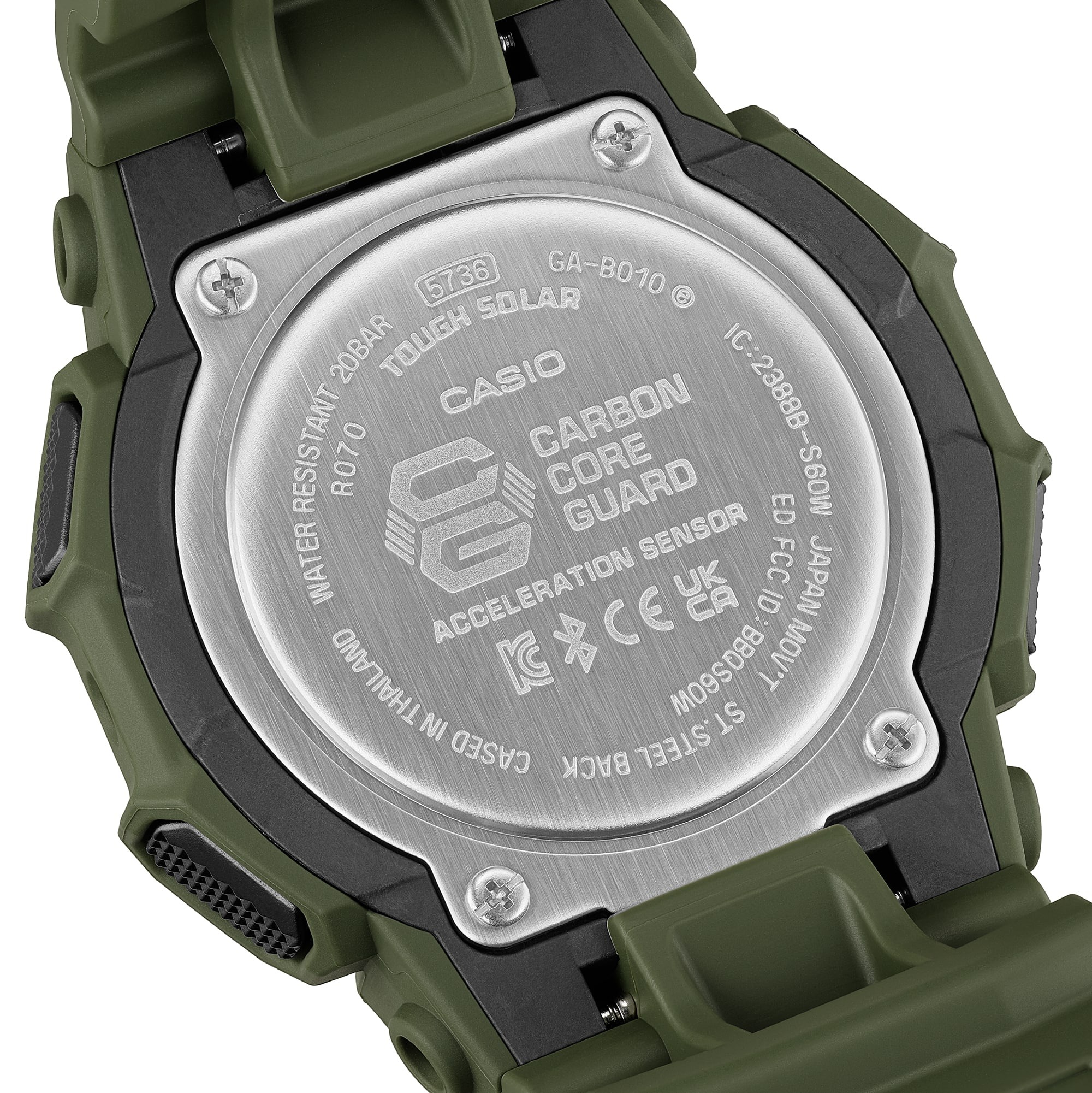
Rollme GT3S for $49 brings dual-band GPS, 90-day standby battery, military-grade build with AMOLED screen

Rollme has announced a new affordable smartwatch named Rollme GT3S, targeting users who want outdoor-ready features without breaking the bank. Some of its key features include dual-band GPS, a vibrant AMOLED display, military-grade durability, and AI-powered tools. Read on for its full specifications and find out how much it costs and where to buy it.

Rollme GT3S specifications and features

The Rollme GT3S features a 1.56-inch AMOLED screen that ensures vivid visuals and good readability in bright outdoor environments. It sports a three-button design that includes a dedicated GPS shortcut, a power button, and a function key that can be customised. The watch supports Bluetooth calling through its built-in microphone and speaker, allowing users to stay connected without reaching for their phone.

One of its core strengths is the dual-band GPS setup, enhanced by support for six satellite systems. This enables precise route tracking, even in complex environments. Additional outdoor tools include route import, a compass, and a barometric altimeter. With 3ATM water resistance and MIL-STD durability, the GT3S is built for active users. It houses a 650mAh battery that can deliver up to 90 days of standby time, making it a reliable choice for long trips.

For health monitoring, the watch offers round-the-clock heart rate, sleep, and blood oxygen tracking. It supports more than 100 workout modes to cover a wide range of activities. AI features such as GPT-powered conversation and smartwatch face generation further enhance the experience. Finally, it also comes with support for Bluetooth calling.

Rollme GT3S price and availability

The GT3S is available in black and silver, each paired with a silicone strap in two color options. Pricing and availability have been confirmed through Rollme’s official store.

For more daily updates, please visit our News Section.

Stay ahead in tech! Join our Telegram community and sign up for our daily newsletter of top stories.

Vivo X300 camera specifications tipped again, telephoto macro support revealed

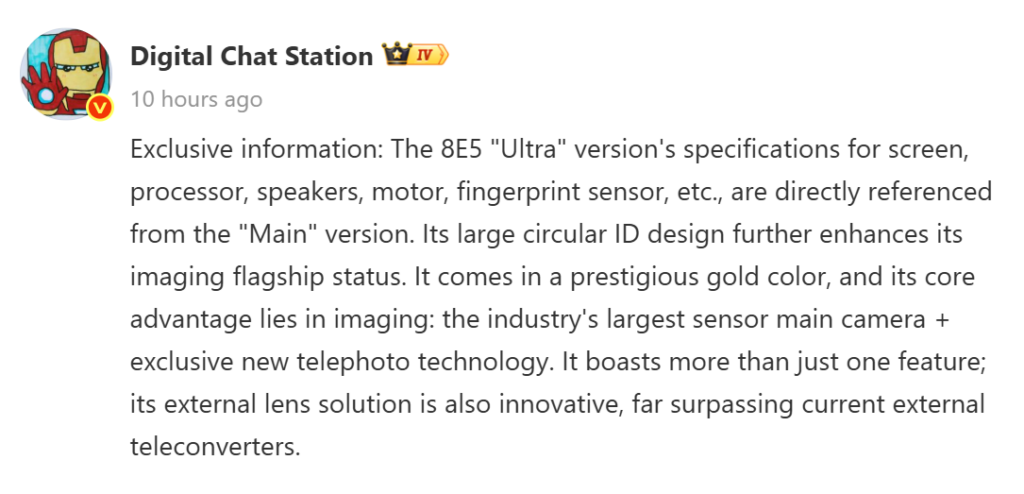
Recently, tipster Digital Chat Station released Weibo posts to reveal the camera specifications of the Vivo X300 and X300 Pro. Now, in a new Weibo post, he has shared more details about the X300’s cameras. The leak suggests that it will offer a significant improvement in the photography department compared to the X200 from last year.

Vivo X300 camera specifications (rumored)

Vivo X300 camera specs leak

Last week, DCS revealed that the Vivo X300’s rear camera setup will include a 200-megapixel main camera backed by a 1/1.4-inch image sensor. It will be joined by a 50-megapixel ultra-wide lens and a 50-megapixel Sony IMX882 telephoto camera with 3x optical zoom.

In a newer Weibo post, the tipster claimed that the phone will also support in-sensor zoom with high-quality 35mm and 50mm crop modes. He added that the periscope camera, which will be equipped with a 1/2-inch sensor, will support 3x optical zoom via a prism design. While it’s not a flagship-style large periscope setup, the tipster revealed that it will support telephoto macro photography.

While the predecessor model featured a 6.67-inch OLED display, reports surrounding the X300 suggest that it will be a compact offering featuring a 6.31-inch screen. The screen is said to be integrated with an ultrasonic in-screen fingerprint sensor. It is also said to come with other features like wireless charging and full waterproofing.

According to reports, the Vivo X300 Pro is expected to feature an impressive triple-camera setup, headlined by the all-new 50-megapixel Sony LYT-828 main sensor. This primary camera features a large 1.13-inch sensor size with 1.22μm pixels and supports Hybrid Frame-HDR technology, which combines Dual Conversion Gain and a Variable Shutter for a dynamic range exceeding 100dB, even surpassing that of Sony’s 1-inch LYT900 sensor. Complementing the main camera are a 50-megapixel ultra-wide lens and a 200-megapixel periscope telephoto lens, the latter using a 1/1.4-inch sensor for high-quality long-range shots.

The Vivo X300 series will debut either by September-end or in October. Both phones will feature the Dimensity 9500 chipset.

For more daily updates, please visit our News Section.

Stay ahead in tech! Join our Telegram community and sign up for our daily newsletter of top stories.
Honor Magic 8 Mini may feature Dimensity 9500, Honor’s Dimensity 8500 phone also in the works

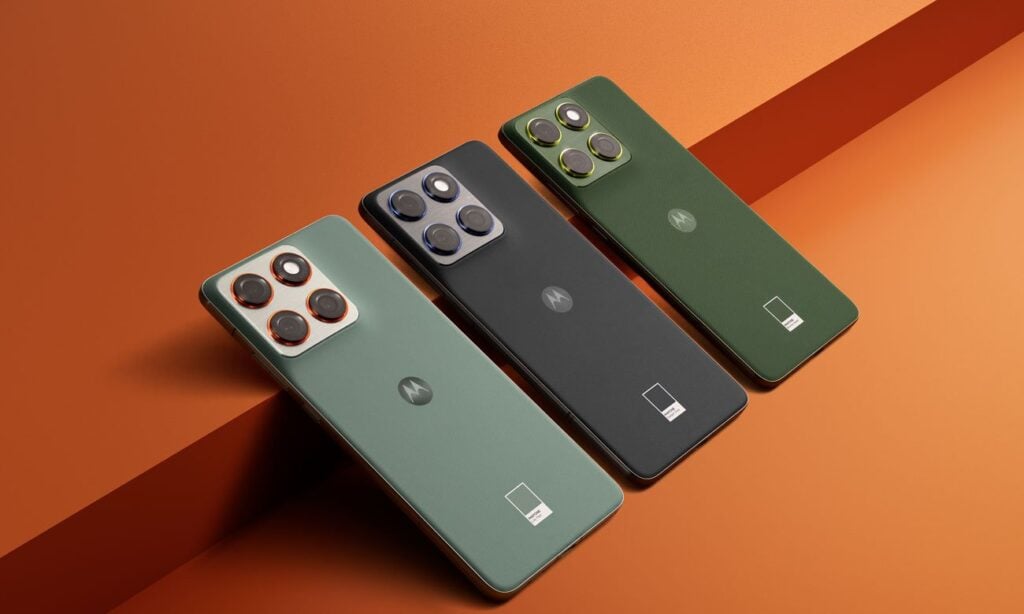
Honor is expected to unveil the Honor Magic 8 series of smartphones this year in October. The lineup debuting this year may include only two models: the Honor Magic 8 and Magic 8 Pro. The brand may also unveil the Magic 8 RSR Porsche Design, a more premium version of the Pro with a few changes. Rumours are rife that the lineup will comprise a compact model, which is tentatively dubbed the Honor Magic 8 Mini. A new development reveals that the device may feature a Dimensity chipset.

Honor Magic 8 Mini chipset tipped

Honor Magic 8 Mini may feature Dimensity 9500

According to tipster Digital Chat Station, Honor is currently testing the Dimensity 9500 and Dimensity 8500 chipsets. Among the two, the Dimensity 9500 is being tested in a compact flagship device featuring a 6.31-inch display. This device is said to be the Magic 8 Mini.

Leaks suggest that the Dimensity 9500 could debut as early as September. The Vivo X300 series, which is expected to launch by the end of September or in October, will be the first to feature the D9500. The Oppo Find X9 series, expected in October, may also feature the said SoC.

DCS adds that Honor is testing the Dimensity 8500 on a new mid-range device powered by an ultra-large battery. While the moniker of this device is not known yet, it is expected to rival the Redmi Turbo 5, which is also said to feature the same chipset.

Coming back to the Honor Magic 8 Mini, DCS revealed at the beginning of this month that it will not debut alongside the Snapdragon 8 Elite 2v-powered Magic 8 and 8 Pro. Therefore, it is likely that the device may debut in the first half of 2026.

For more daily updates, please visit our News Section.

Stay ahead in tech! Join our Telegram community and sign up for our daily newsletter of top stories.
Xiaomi 16 Ultra to set new milestone in mobile photography, confirms Xiaomi exec

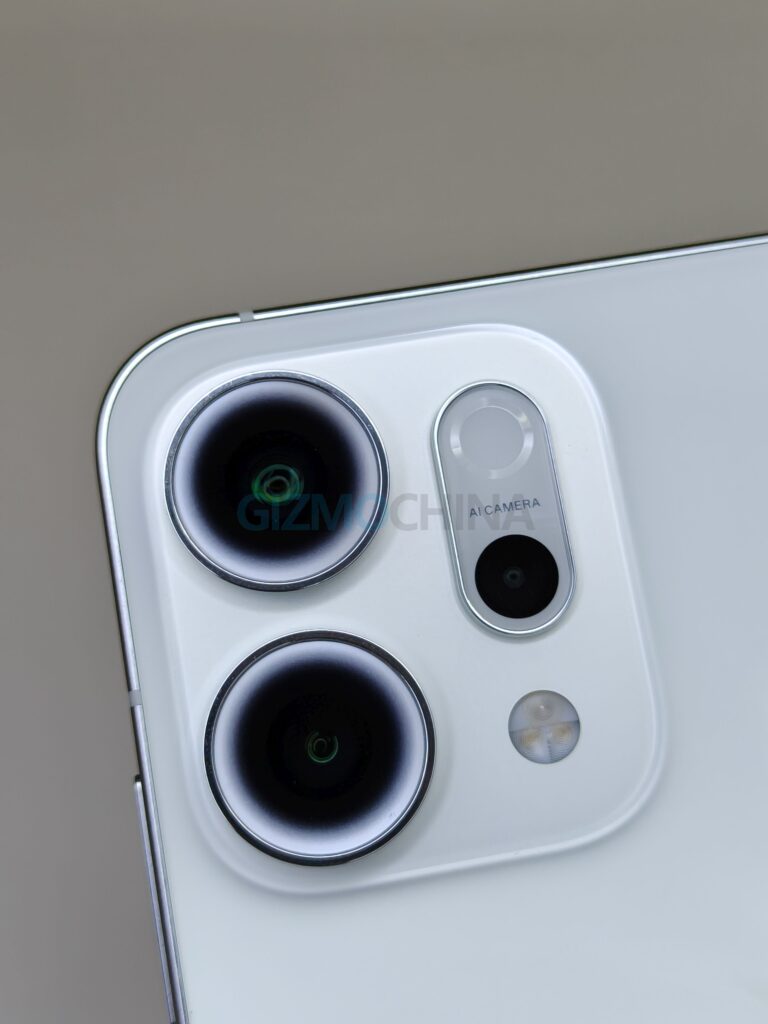
In September, Xiaomi is expected to unveil the Xiaomi 16 series, which may include three models, such as the Xiaomi 16, Xiaomi 16 Pro Mini (tentative name), and Xiaomi 16 Pro. Since the Xiaomi 15 Ultra was announced in February this year, it is likely that the 16 Ultra may break cover around the same time next year. As per a new Weibo post released by Lu Weibing, Partner and President of Xiaomi Group, as well as the President of the Smartphone Department and General Manager of the Xiaomi brand, the 16 Ultra will set heights in the world of mobile photography.

Xiaomi 16 Ultra promised to deliver top-notch photography experience

xiaomi-15-ultra-photography-hands-on-01
Xiaomi 16 Ultra

In a new Weibo post, Weibing said he was honored to be invited to Shanghai to celebrate Leica’s 100th anniversary. As a special gesture, he presented the Xiaomi 15 Ultra “Centennial Tribute” global limited collector’s gift box to Mr. Kaufmann, Chairman of Leica’s Supervisory Board.

Reflecting on the Xiaomi-Leica partnership, he noted that over the past four years, both companies have collaborated on more than 20 smartphone models. He described the cooperation as both enjoyable and highly productive. Emphasizing the strength of their relationship, he said Xiaomi and Leica have always been close partners and will continue to be so in the future.

He expressed strong confidence that the upcoming Xiaomi 16 Ultra will represent a new milestone in mobile imaging. Meanwhile, tipster Digital Chat Station speculated that since Xiaomi has already started teasing the 16 Ultra, it might even debut earlier than expected, possibly before the end of this year.

Like the Xiaomi 16 series models, the 16 Ultra is expected to feature a flat display. However, it is unclear whether the device will feature the upcoming Snapdragon 8 Elite 2 chipset or the company’s in-house and forthcoming Xring O2 chip. A recent leak claimed that it may feature a 1-inch 50-megapixel main camera, a 200-megapixel periscope telephoto camera backed by a 1.28-inch sensor with up to 5x optical zoom, a 50-megapixel Sony LYT-600 ultra-wide lens, and a 50-megapixel front camera. It may pack a 7000mAh to 7500mAh battery.

For more daily updates, please visit our News Section.

Stay ahead in tech! Join our Telegram community and sign up for our daily newsletter of top stories.

(source)

Best Smartphone Controllers to Level Up Your Mobile Gaming

Smartphone gaming has grown far beyond simple touch-based controls. Whether you’re diving into fast-paced shooters, racing sims, or platformers, having a reliable game controller can seriously upgrade your gameplay experience. There are great options to choose from in the market, so here’s a small list of the top smartphone controllers for mobile gaming enthusiasts.

1. Backbone One

Backbone One: Xbox Edition
Backbone One

Starting off the list, we have the Backbone One. It is a sleek and lightweight controller that directly plugs into your device. The controller only supported iOS initially, but support for Android phones dropped later on. There are even PlayStation and Xbox models with button designs similar to a DualSense controller. You get responsive analog sticks, tactile buttons, and support for passthrough charging. So apart from your usual mobile games, the experience with this controller is great, with remote play to enjoy both Xbox and PlayStation titles.

Please Note: When you buy something using the links in our articles, we may earn a small commission at no cost to you.

2. GameSir G8 Galileo

GameSir G8 Galileo
GameSir G8 Galileo

The GameSir G8 Galileo is another highly rated smartphone controller that is both adaptable and has a comfortable design. While it is slightly heavier than your typical smartphone controller, you get a console controller quality design with great buttons and sticks. There is even support for PS5 Remote Play and Xbox Game Pass, just like the Backbone One. Thanks to its Hall sensor sticks, gamers can avoid the frustrating stick drift issue that plagues even the more expensive console controllers.

Please Note: When you buy something using the links in our articles, we may earn a small commission at no cost to you.

3. Razer Kishi V2

Razer
Razer Kishi V2 Xbox Edition

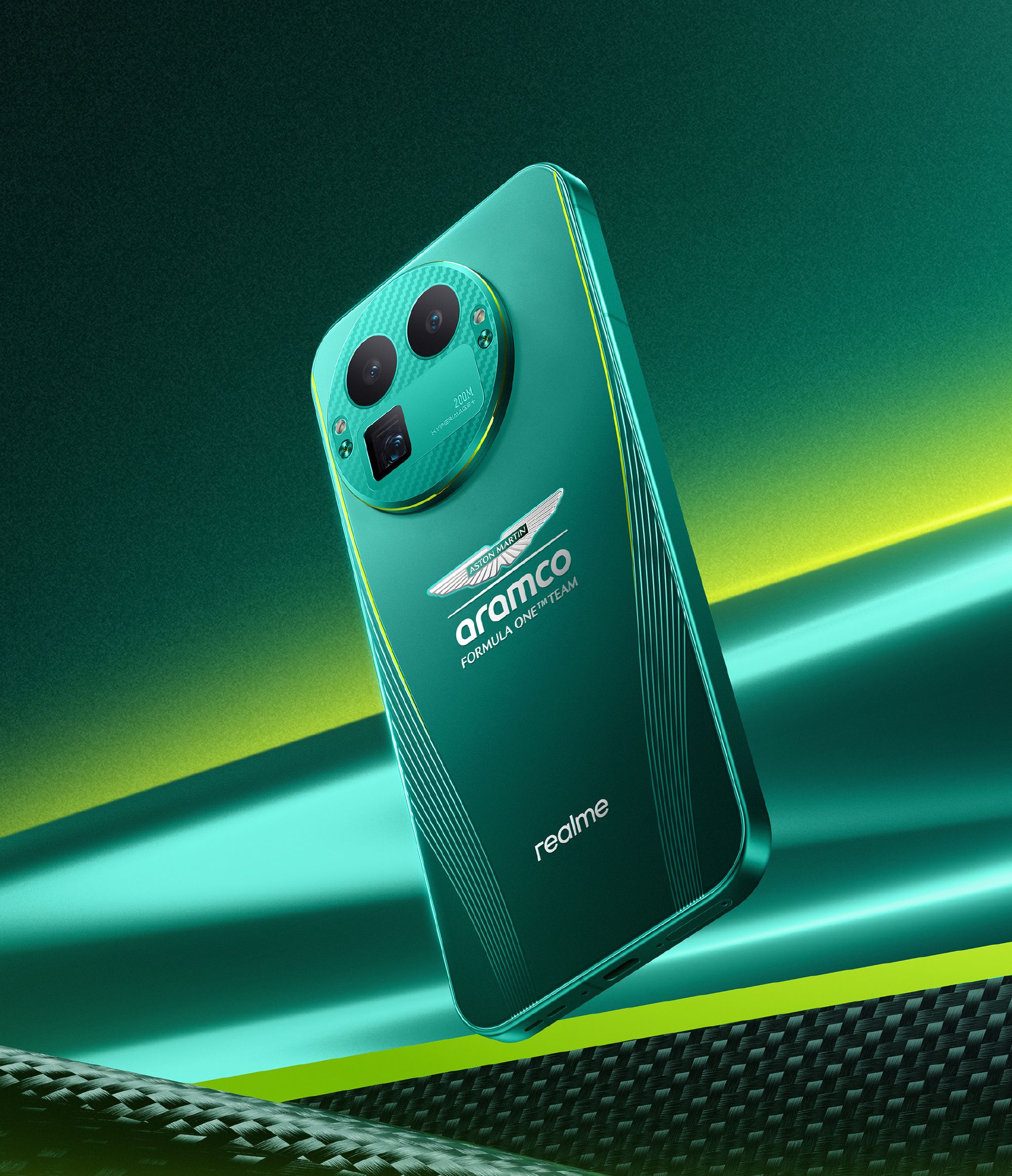
Razer is a known brand in the gaming space, from high-end gaming laptops to a whole range of peripherals and accessories. With the Razer Kishi V2, the brand expands its mobile gaming accessories portfolio. The company aims to offer a console-like feel, bringing both wireless (Bluetooth) and wired connectivity that works across Android and iOS. The Razer Nexus app adds support for remapping and customization, making it ideal for competitive gamers.
Please Note: When you buy something using the links in our articles, we may earn a small commission at no cost to you.

4. Xbox Wireless Controller with Adapter

Best Smartphone Game Controllers
Xbox Wireless Controller with smartphone adapter

For those who want the familiarity of a console controller, the Xbox Wireless Controller is a solid choice when paired with a clip-on phone adapter. You get the reliable form factor and controls. It supports both Bluetooth and wired connections that work with both Android and iOS. If you’re coming from console gaming, this makes it perfect for long gaming sessions. I’d recommend this option for those who already own an Xbox Wireless Controller, since the cost of buying the phone adapter will be the most affordable out of this list.

Please Note: When you buy something using the links in our articles, we may earn a small commission at no cost to you.

For more daily updates, please visit our News Section.

Don’t miss a thing! Join our Telegram community for instant updates and grab our free daily newsletter for the best tech stories!

OPPO Reno 14F or Realme 13 Pro: Which Midrange Phone Offers Better Bang for Your Buck?

Oppo Reno 14F 5G and Realme 13 Pro are two feature-packed midrange smartphones priced around $500, targeting users who want flagship-like features without a premium price tag. With both brands offering strong display tech, capable cameras, and large batteries, choosing between them isn’t straightforward. This comparison matters because while they seem similar on paper, they take different approaches to performance, durability, and camera versatility, making the right pick dependent on what you value most.

1. Design and Display

OPPO Reno 14F
OPPO Reno 14F

Build and Feel:

The Oppo Reno 14F 5G brings a distinct advantage in durability with its IP68/IP69 rating, offering full dust protection and resistance to high-pressure water jets. This is a rare inclusion in the midrange category and makes the device feel purpose-built for rugged, everyday use. Its sleek design and matte back enhance grip and lend it a premium in-hand feel. Meanwhile, the Realme 13 Pro features an IP65 rating, which is adequate for splash resistance but doesn’t match the protection level offered by Oppo. The Realme’s Gorilla Glass 7i adds resilience to front-facing damage, but the overall construction feels slightly more conventional compared to the Reno 14F’s rugged approach.

Verdict: The Oppo Reno 14F 5G clearly takes the lead in durability and real-world protection, offering a stronger build that makes it better suited for harsh environments or users seeking longevity.

Display Quality:

Both phones feature AMOLED panels with support for 1 billion colors and a 120Hz refresh rate, ensuring smooth visuals. However, the Realme 13 Pro steps ahead with its larger 6.7-inch display and an impressive 2000 nits peak brightness, which significantly boosts visibility in bright outdoor conditions. It also supports HDR playback, enhancing video quality with deeper contrasts and richer colors. The Reno 14F 5G has a slightly smaller 6.57-inch display and tops out at 1400 nits brightness, which is still excellent, but falls short compared to Realme’s output under intense light. Oppo’s AGC Dragontrail protection is robust but doesn’t quite match the HDR support and luminance of Realme’s panel.

Verdict: The Realme 13 Pro emerges superior in display quality due to its HDR capabilities and higher brightness, making it more appealing for media enthusiasts and outdoor users.

Please Note: When you buy something using the links in our articles, we may earn a small commission at no cost to you.

2. Specifications 

Realme 13 Pro
Realme 13 Pro

Performance:

Under the hood, the Realme 13 Pro is powered by the Snapdragon 7s Gen 2, a more advanced chip compared to the Snapdragon 6 Gen 1 found in the Oppo Reno 14F 5G. With higher CPU clock speeds and the same 4nm architecture, Realme delivers smoother multitasking and better thermal efficiency during sustained workloads. The performance edge becomes more visible when handling games, background apps, or AI-assisted tasks. While both phones utilize the Adreno 710 GPU and offer UFS 3.1 storage, Realme’s slightly newer processor translates into better everyday speed and future-proofing for app compatibility.

Verdict: The Realme 13 Pro holds the upper hand in performance, offering a more fluid user experience for those who prioritize speed and processing strength.

Battery and Charging:

The Reno 14F 5G impresses with a massive 6000mAh battery, significantly larger than the 5200mAh unit on the Realme 13 Pro. Despite both supporting 45W fast charging, the larger cell on the Reno results in noticeably longer endurance, stretching well into two-day usage territory for moderate users. Realme’s device does charge slightly quicker to 50% in just 27 minutes, thanks to software optimization, but the overall battery life still tilts in Oppo’s favor. Moreover, Reno supports reverse wired charging, adding a practical benefit in emergency scenarios, a feature Realme lacks.

Verdict: Oppo Reno 14F 5G stands out in the battery department with longer-lasting power and reverse charging, making it ideal for users needing consistent battery reliability.

3. Camera

OPPO Reno 14F
OPPO Reno 14F

Main and Secondary Lenses:

Both devices carry a 50MP primary sensor with optical image stabilization and an 8MP ultrawide camera. However, the Reno 14F adds a 2MP macro lens and a dedicated color spectrum sensor, enhancing its versatility in different shooting environments. Realme focuses more on quality over quantity with its dual-lens setup, and its newer image signal processor ensures slightly crisper images and better low-light output. Still, Reno’s broader camera range allows for macro photography and improved color accuracy in mixed lighting, giving users more creative flexibility.

Verdict: While Realme delivers sharper photo quality overall, the Oppo Reno 14F offers greater versatility with more lenses and better adaptability for varied shooting needs.

Selfie Camera:

Both smartphones feature a 32MP front camera, but the Reno 14F gains a notable advantage with autofocus support. This allows it to consistently lock onto faces and deliver sharper selfies, especially useful for group shots or vlogs. Realme’s fixed-focus camera performs well in bright conditions, but it struggles with focus accuracy in complex frames or at varying distances. Oppo’s slightly wider aperture and enhanced focusing abilities improve overall selfie clarity and usability.

Verdict: The Oppo Reno 14F offers a superior front camera experience, especially for users who value sharp, focused selfies and video clarity.

4. Pricing

Realme 13 Pro
Realme 13 Pro

Both smartphones are priced at approximately $500, putting them squarely in the premium midrange bracket. Realme offers more internal storage options, starting from 128GB, which could slightly reduce the base price in certain regions. However, it lacks a microSD card slot. 

The Oppo Reno 14F starts at 256GB and provides a microSDXC slot, which offers added flexibility for those who prefer expandable storage over higher upfront internal storage. While Realme might attract users with more initial configurations, Oppo provides better long-term value for users with evolving storage needs.

Verdict: Both phones cost around $500, but the Reno 14F offers greater value with expandable storage, while Realme gives more tiered options for internal storage buyers.

5. Conclusion 

OPPO Reno 14F
OPPO Reno 14F

The Oppo Reno 14F 5G distinguishes itself with a rugged IP68/IP69 rating, a massive 6000mAh battery, microSD card support, and autofocus in the selfie camera, all of which contribute to a practical, feature-rich experience. These additions make it ideal for users who prioritize endurance, durability, and versatility in imaging. On the other hand, the Realme 13 Pro appeals more to performance-focused users. Its Snapdragon 7s Gen 2 processor, HDR10-certified display with 2000 nits brightness, and refined image output make it a compelling pick for media consumption and smooth multitasking.

Verdict: The Oppo Reno 14F 5G is the better choice for users needing all-day battery, rugged design, and camera versatility. The Realme 13 Pro, however, is a more suitable option for those who value display brilliance and a snappier chipset. 

Both offer solid value at $500, but their appeal depends on what matters more: endurance and practicality or performance and visual excellence. Ultimately, the Oppo Reno 14F 5G offers a more well-rounded package for most users.

Read More:

Exynos 2600’s early Geekbench scores hint at Galaxy S26’s potential

Samsung’s upcoming Exynos 2600 chip — likely to power next year’s Galaxy S26 — has made its appearance on Geekbench, offering a glimpse into what the next generation of flagship performance might look like. While the scores come from a pre-production unit, they give an early look at how the chip stacks up against current and upcoming competition.

Tested on Geekbench 6.4, the Exynos 2600 posted a single-core score of 2,155 and a multi-core score of 7,788. For context, the Snapdragon 8 Elite Gen 2 (expected to power the Ultra model) reportedly scores over 4,000 and 11,000 in the same tests. These numbers are also lower than previously speculated figures for the Exynos 2600 itself. In fact, the results closely resemble the CPU performance of the just released Galaxy Z Flip7, which runs on the Exynos 2500—suggesting there could be a noticeable performance gap between the S26 models powered by Exynos and those powered by Snapdragon.

That said, this is just an early development-stage test, and performance is expected to improve as Samsung continues refining resource management, thermals, and other system-level optimizations. These initial results are more a reflection of the current state of development than a final verdict. We’ll know more once benchmark scores for the Ultra model—likely powered by Qualcomm’s 8 Elite Gen 2—start appearing.

For now, the Geekbench listing confirms a few details about the Exynos 2600: it packs a 10-core CPU. The CPU cluster includes one Cortex-X930 core running at 3.55GHz, three Cortex-A730 cores at 2.96GHz, and six more A730s at 2.46GHz. This chip is said to be based on Samsung’s 2nm SF2 process.

It’s likely that the Exynos 2600 will be used in select Galaxy S26 models across Europe and Asia, while Snapdragon variants could be reserved for the US and Chinese markets.

Don’t miss a thing! Join our Telegram community for instant updates and grab our free daily newsletter for the best tech stories!

For more daily updates, please visit our News Section.

(Source)

Galaxy S26 Ultra Leak Hints at Samsung’s New HP2+ Camera and Wider Aperture

Samsung‘s next top flagship is already making the rounds online months ahead of its official announcement. There are rumors of the Galaxy S26 Ultra bringing a major upgrade to its camera system, and now, a fresh leak has revealed info regarding this new image sensor. So here’s what you need to know.

Galaxy S26 Ultra rumored with new & improved HP2+ sensor

To recall, a recent rumor hinted at the Galaxy S26 Ultra featuring a 200MP Sony CMOS sensor that has a large 1/1.1-inch sensor size. This would mark a big shift away from Samsung’s proprietary ISOCELL camera. However, known tipster Ice Universe claims that the brand’s 2026 flagship will have the new and improved ISOCELL HP2+ camera (Galaxy S25 Ultra features HP2). He further adds that this new camera will have a wider aperture, which would allow for better low light photography performance.

Samsung Galaxy S26 Ultra

For those unaware, a larger aperture helps increase the light input to the camera sensor. The tipster believes that this is the biggest upgrade on any Samsung flagship since the Galaxy S20 Ultra. Unfortunately, this was all the information shared in the tweet. But apart from the camera system, the company is expected to bring improvements to the fast charging rate (from 45W to 65W) as well.

In our recent report, the Galaxy S26 Ultra is also believed to use the Samsung-made Snapdragon 8 Elite 2 SoC. The new chipset will reportedly be based on Samsung’s 2nm GAA process. Meanwhile, the more affordable base model might pack the Exynos 2600 chip. We are still a long while away from the S26 series launch, so take these unconfirmed reports with a grain of salt for the time being.

For more daily updates, please visit our News Section.

Tech enthusiast? Get the latest news first! Follow our Telegram channel and subscribe to our free newsletter for your daily tech fix! ⚡

Samsung’s Galaxy Z Fold7, Flip7, Flip7 FE, and Watch8 series now available globally

Samsung’s latest foldables and smartwatches—Galaxy Z Fold7, Z Flip7, Z Flip7 FE, and the Watch8 series—have officially landed in stores around the world. Following weeks of anticipation and record-breaking pre-orders, these new devices are now available across 49 markets, including the US, UK, India, and more, with a wider rollout planned soon.

Galaxy Z Fold 7
Samsung Galaxy Z Fold 7

Starting at $899 for the Galaxy Z Flip7 FE, $1,099 for the Z Flip7, and $1,999 for the Galaxy Z Fold7 in the US, this year’s lineup has been met with strong demand, especially in markets like Europe and India. Among the most popular choices is the Blue Shadow color variant, which has already emerged as a favorite among early buyers.

The Galaxy Z Fold7 arrives slimmer than ever at 8.9mm when folded, featuring a powerful 200MP camera and a large 8-inch AMOLED display. The Z Flip7, with its 4.1-inch FlexWindow, introduces a new 50MP FlexCam for improved shots even when the device is partially folded. Meanwhile, the more affordable Z Flip7 FE offers the core foldable experience at a lower price point, appealing to budget-conscious users. For those interested, here’s how Samsung made the new foldables slim and lightweight.

On the smartwatch front, the Galaxy Watch8 and Watch8 Classic bring advanced health tracking features, including a new Antioxidant Index and AI-powered insights. The Watch8 comes in two sizes—40mm and 44mm—while the Watch8 Classic is available in a larger 46mm design.

To bring these devices closer to users, Samsung has also set up Galaxy Experience Spaces in cities like London, Dubai, and Seoul, allowing visitors to get hands-on with the new tech. A refreshed store locator tool on Samsung’s website makes it easy to find the nearest retail location.

Samsung’s July 25 launch marks another step forward in blending foldable innovation with smart AI features. With strong early interest and a bold design direction, the company is hoping to reshape how users interact with smartphones and wearables.

Don’t miss a thing! Join our Telegram community for instant updates and grab our free daily newsletter for the best tech stories!

For more daily updates, please visit our News Section.

Vivo X200 FE’s First Software Update Improves 5G, Camera, and Fixes Heating Issue

Vivo has rolled out the first software update for the X200 FE, just days after its launch in India on July 14, 2025. The update, version PD2465BF_EX_A_15.0.11.7.W30, comes with Funtouch OS 15 based on Android 15 and has a file size of 262 MB.

Vivo X200 FE

The update includes the July 2025 Google security patch to improve system security. It also brings several performance improvements and bug fixes.

Network stability has been improved, especially for 5G connections. Vivo has also updated the system’s temperature control strategy to fix abnormal heating in some scenarios. Users who noticed the phone getting unusually warm during use should see better performance after the update.

The camera system has also been improved. The update makes the camera functions more stable and optimises photo effects in specific conditions to improve image quality.

Full Changelog:

  • Updated to the July 2025 Google security patch
  • Improved performance and stability of 5G network
  • Fixed abnormal temperature increase with new temperature control settings
  • Improved performance and stability of camera functions
  • Optimised photo effects in certain scenarios

During the update, the phone might use more power and the temperature may rise slightly, so keeping it connected to a charger is recommended. Right now, the update is rolling out only in India. It should reach other regions soon.

Please Note: When you buy something using the links in our articles, we may earn a small commission at no cost to you.

For more daily updates, please visit our News Section.

Stay ahead in tech! Join our Telegram community and sign up for our daily newsletter of top stories!

(via)

Oppo A series is getting new GT and Max models with big screens and bigger batteries

Oppo could soon be expanding its A-series lineup with the addition of new GT and Max models, according to a leak from tipster Digital Chat Station. These new devices are said to be priced in the thousand-yuan range and are expected to bring a mix of upgraded display tech, reliable performance, and solid battery life to the budget segment.

While the exact model names haven’t been revealed yet, the leak hints that the upcoming phones will feature a 1.5K LTPS flat display, Snapdragon 7-series chipsets, 50MP dual cameras, and large batteries. That puts them a step above the current Oppo A5 and A5 Pro in terms of specs, especially in the display and performance department.
For context, the Oppo A5, which launched in March this year at a starting price of 1,299 yuan, comes with a 6.7-inch AMOLED display, a Snapdragon 6 Gen 1 processor, and a massive 6,500mAh battery. It also supports 45W fast charging, making it one of the more battery-focused phones in its price bracket.

Then there’s the Oppo A5 Pro, which was released in December 2024 with a MediaTek Dimensity 7300 chip, a 6,000mAh battery, and a display Oppo markets as a “super bright sunlight screen.” It also comes with an IP69 rating for durability and debuted at 1,949 yuan.

Oppo A5 Pro
Oppo A5 Pro

The GT and Max variants could be Oppo’s way of refreshing the A series with more targeted models, possibly with performance (GT) and battery/display (Max) priorities.

The leak does not mention any official launch date, but given that these will be mass-produced models, an announcement may not be far off.

For more daily updates, please visit our News Section.

Stay ahead in tech! Join our Telegram community and sign up for our daily newsletter of top stories!

Keychron Black Myth Wukong Mechanical Keyboard Brings 75% Layout, Custom Keycaps, and TTC Switches

Keychron has launched the Black Myth Wukong wireless mechanical keyboard. It comes in Standard and Deluxe versions and features a 75% layout, CNC-machined 6063 aluminum body, and themed elements based on the upcoming game Black Myth: Wukong. Both editions include decorative keycaps, a themed knob, and a 2.4 GHz receiver.

Keychron Black Myth Wukong Special Edition wireless mechanical keyboard

The keyboard supports 2.4 GHz wireless, Bluetooth 5.2 with up to three devices, and a Type-C wired connection. It has a 4000 mAh rechargeable battery that lasts up to 200 hours without a backlight. The polling rate is 1000 Hz on 2.4 GHz and wired modes, and 125 Hz on Bluetooth. It uses the WB32F3G71 MCU with 256 KB flash memory.

Keychron Black Myth Wukong Special Edition wireless mechanical keyboard

The keyboard uses QMK open-source firmware and supports Keychron Launcher, a browser-based tool for key remapping, macros, and per-key RGB lighting. It works on Windows, macOS, Linux, and across Chrome, Edge, and Opera browsers. No software installation is needed.

It has south-facing RGB backlighting and uses a PC plate with a screw-in PCB stabilizer. The internal structure includes IXPE foam, PET film, EVA foam, and sound-absorbing foam. The mount style is a gasket, designed to reduce acoustic feedback and typing fatigue. The keyboard weighs 1650 grams and has a front height of 19.22 mm and a back height of 31.43 mm.

The switches are pre-lubed TTC Bluish White (tactile) or TTC Golden Pink (linear). The Bluish White switch has a 37g start force, 52g end force, and clear tactile feedback. The switches have a lifespan of 100 million keystrokes. The keyboard supports hot-swapping with most 3-pin and 5-pin MX-style mechanical switches.

Pricing & availability

The Standard version is priced at $229 and includes the Bluish White switch, a Destined One’s Eye knob, and golden paint dye-sub PBT keycaps. The Deluxe version is priced at $259 and adds a brass Ebongold Spaulder escape key, a resin gourd-shaped knob, and one additional decorative keycap.

For more daily updates, please visit our News Section.

Stay ahead in tech! Join our Telegram community and sign up for our daily newsletter of top stories!

OPPO Reno 13A vs Vivo T3: Which Budget Phone Makes the Smarter Choice?

With OPPO Reno 13A and Vivo T3 targeting the same mid-range market, buyers are left choosing between camera versatility and raw performance. Both offer AMOLED displays, fast charging, and 5G support, but with very different strengths. This comparison matters because it pits OPPO’s durability and battery life against Vivo’s processing power and price advantage, helping users decide which phone delivers better overall value in 2024.

1. Design and Display

OPPO Reno 13A
OPPO Reno 13A

Build and Feel:
The OPPO Reno 13A offers a premium construction with IP68/IP69 ratings, making it fully dustproof and highly water-resistant, a rare feature at this price point. It also integrates a slightly more refined AGC Dragontrail STAR2 glass on the front. In contrast, the Vivo T3 settles for an IP54 rating, meaning it’s only protected against water splashes and dust ingress to a minor extent. Vivo provides an eco-leather option, which adds a textured grip and aesthetic appeal, but its protection and longevity are not on par with the Reno 13A.

Display Quality:
Both phones use AMOLED panels with a 120Hz refresh rate and Full HD+ resolution, but the Vivo T3 goes brighter with a peak brightness of 1800 nits, compared to 1200 nits on the Reno 13A. However, Reno 13A features in-display fingerprint authentication and likely offers better panel durability due to its tougher glass. Vivo’s display is slightly smaller but offers an excellent screen-to-body ratio and more vivid peak brightness, enhancing outdoor visibility.

Verdict:
While Vivo T3 wins in brightness and aesthetic customization, the OPPO Reno 13A offers better durability and full IP69 protection, making it the better pick for rugged everyday use.

Please Note: When you buy something using the links in our articles, we may earn a small commission at no cost to you.

2. Specifications 

Vivo T3
Vivo T3

Performance:
The OPPO Reno 13A is powered by the Snapdragon 6 Gen 1 chipset built on a 4nm process, whereas the Vivo T3 uses MediaTek’s Dimensity 7200, also a 4nm chip. The Dimensity 7200 generally edges ahead in raw CPU performance, especially for sustained tasks and gaming, due to its Cortex-A715 high-performance cores. Additionally, the Mali-G610 GPU in the T3 handles graphics better than the Adreno 710 in the Reno 13A. Vivo T3 also supports up to 256GB storage, which is an advantage for heavy users.

Battery and Charging:
OPPO Reno 13A packs a larger 5800mAh battery versus Vivo T3’s 5000mAh. Reno also charges slightly faster at 45W, compared to Vivo’s 44W. While the difference is minimal in charging time, Reno’s higher capacity offers noticeably longer screen-on time, ideal for heavy media users and travelers. Both support Type-C and lack wireless charging.

Verdict:
Vivo T3 leads in performance and graphics, making it better for gamers and power users, while the Reno 13A takes the win in battery longevity and faster top-up, making it more reliable for all-day endurance.

3. Camera

OPPO Reno 13A
OPPO Reno 13A

Main and Secondary Lenses:
Both phones feature a 50MP primary camera with OIS, but OPPO includes an 8MP ultra-wide and a 2MP macro, offering more versatile photography options. Vivo T3 uses a simpler dual-camera setup with a 2MP depth sensor, which adds little practical value. The Reno 13A’s ultra-wide lens enhances group shots and landscapes, offering real utility.

Selfie Camera:
OPPO Reno 13A has a 32MP front-facing camera, which captures sharper and more detailed selfies compared to the 16MP unit on the Vivo T3. While both offer 1080p video recording, the Reno’s higher resolution sensor provides better dynamic range and clarity in varied lighting conditions.

Verdict:
OPPO Reno 13A clearly wins the camera battle with its more versatile triple-lens rear setup and a higher-resolution selfie camera, making it a better choice for photography enthusiasts.

4. Pricing

The OPPO Reno 13A is priced around $330, whereas the Vivo T3 is more affordable at $250. This slight price gap reflects in features like better ingress protection, a larger battery, and enhanced camera versatility on the Reno 13A. However, the Vivo T3 provides better performance for the price and suits budget-conscious users who prioritize speed and display brightness over camera features and rugged build.

Disclaimer:
Prices are approximate and may vary based on country, region, and applicable taxes.

5. Conclusion

Vivo T3
Vivo T3

The OPPO Reno 13A stands out with its IP68/IP69 rating, triple-camera setup including ultra-wide, and larger 5800mAh battery, making it a rare all-rounder under $350. Vivo T3, meanwhile, offers brighter display, superior chipset, and competitive pricing, appealing to performance-centric users. The Reno 13A is a better pick for users seeking camera flexibility, durability, and long battery life, while the Vivo T3 is best suited for those wanting high performance and modern display features at a lower cost.

Final Verdict:
Choose the Reno 13A for durability, camera versatility, and battery strength. Pick the Vivo T3 for better gaming performance, brighter visuals, and better value under budget.

Overall, for most users seeking a balanced, long-lasting phone with added protection and photography flexibility, the OPPO Reno 13A would be the more complete and future-proof choice.

Read More:

Redmi Watch 5 Active is available for just Rs. 1,990 with cashback

Redmi Watch 5 Active is a budget-friendly smartwatch with many attractive features at this price point. It was launched back in August 2024 in India and many other countries. The main highlight of the Redmi Watch 5 Active is the 18 days of battery life on a single charge. So if you’re looking for a smartwatch with all the basic sensors at an affordable price, then Redmi Watch 5 Active is very good option.

Redmi Watch 5 Active deal details

The smartwatch was launched with a Rs. 2,799 price tag back in 2024. Now the list price of Redmi Watch 5 Active on Amazon India is Rs. 2,090. Now, if you pay through Amazon Pay ICICI Bank credit card you will get 5% cashback, that is Rs. 100. So the effective price of Redmi Watch 5 Active is just Rs. 1,990.

Please Note: When you buy something using the links in our articles, we may earn a small commission at no cost to you.

Redmi Watch 5 Active specifications and features

The Watch 5 Active features a minimalist design with curved edges. Its standout 2-inch display, boasting 500 nits peak brightness, ensures enhanced visibility and a smooth user interface. The smartwatch is robustly built with water resistance up to 5ATM and an IPX8 rating, making it suitable for various activities. It is powered by a 470mAh battery, delivering impressive longevity with up to 18 days of use on a single charge.

On the functionality front, the Watch 5 Active is equipped with comprehensive health tracking including 24/7 heart-rate monitoring, a SpO2 sensor, stress and sleep tracking, a menstrual cycle tracker, and a breathing reminder. It supports over 140 sports modes with automatic recognition for select activities. Additional smart features include a built-in speaker and microphone for Bluetooth voice calls, SOS, privacy lock, theatre mode, torch, find your phone, and built-in Alexa for voice commands. The smartwatch operates on Xiaomi’s HyperOS, marking it as the first Redmi wearable to do so.

 To know more deals, you must visit our deals section.

This Infinix Phone Is Almost as Thin as the Galaxy S25 Edge, But with a Bigger Battery

Infinix has just unveiled the Hot 60 Pro+, which is pushing the limits of design with a razor-thin body and a surprisingly large battery. It is making headlines for being nearly as slim as the Samsung Galaxy S25 Edge, but it manages to deal with the battery compromise and also offers a 3D curved design. So let’s check it out.

Infinix Hot 60 Pro+: What makes it special?

Ultra thin phones might be making a return as Infinix brings the new Hot 60 Pro+, just a while after the Galaxy S25 Edge. It is being marketed as the thinnest smartphone on the market that carries a 5,160mAh battery pack. To recall, the Galaxy S25 Edge received praise for its thin 5.8mm body that measured 163 grams in weight. While the Infinix Hot 60 Pro+ is marginally thicker at 5.95mm, it weighs impressively light at 155 grams. This makes it even lighter than the Galaxy S25.

Infinix Hot 60 Pro+
Infinix Hot 60 Pro+

You’re not missing out on the fast charging either, like the Edge, since it supports 45W wired charging speeds. On the front, it sports a tall 6.78-inch curved AMOLED display with a 1.5K resolution, a 144Hz refresh rate, peak brightness of 4500 nits, and Gorilla Glass 7i for protection. The rear has a 50MP dual camera setup, while the rear has a 13MP selfie shooter. Both the rear and back feature dual LED flash.

Infinix equips this phone with the MediaTek Helio G200 SoC, which is a budget chip. So there is still a big catch here. You can expect to get decent performance on a day-to-day basis, but this is nowhere as capable as the 8 Elite on the S25 Edge. Other notable features include an aluminum frame, nanofiber rear panel, 8GB RAM, and up to 256GB of internal storage. Pricing details are still at large, although, Infinix has confirmed the Hote 60 Pro+’s color options. This includes Misty Violet, Cyber Green, Sonic Yellow, Coral Tides, Sleek Black, and Titanium Silver.

For more daily updates, please visit our News Section.

Don’t miss a thing! Join our Telegram community for instant updates and grab our free daily newsletter for the best tech stories!

OPPO Reno 14 vs OnePlus Nord CE5: Which Is The Best Midrange Phone of 2025?

The OPPO Reno 14 and OnePlus Nord CE5 are two of the most compelling midrange 5G smartphones of 2025, both offering flagship-level specs at competitive prices. With nearly identical chipsets but differing approaches to design, battery, and camera capabilities, this comparison matters for users torn between performance and premium features versus value and practicality.

1. Design and Display

OPPO Reno 14
Oppo Reno 14

Build and Feel:
The OPPO Reno 14 delivers a more premium in-hand experience thanks to its Gorilla Glass 7i front, glass back, and aluminum alloy frame, along with IP68/IP69 certification. This means it can withstand full submersion in water and high-pressure water jets. In contrast, the OnePlus Nord CE5 features a polycarbonate frame and slightly lower IP65 water resistance, making it less durable in extreme conditions. The Reno 14’s build materials and flagship-grade sealing give it an edge in durability and finish. For users valuing ruggedness and sophistication, the Reno 14 is clearly the superior option.

Display Quality:
The Reno 14’s 6.59-inch AMOLED display offers a sharper 1256 x 2760 resolution and 460 ppi, delivering better clarity than the Nord CE5’s 1080 x 2392 display at 387 ppi. However, the Nord CE5 has a slightly larger 6.77-inch Fluid AMOLED screen with higher brightness levels at 1430 nits peak, making it better for direct sunlight visibility. Both support HDR10+ and 1B colors, but the Reno 14 adds 3840Hz PWM dimming, ideal for reducing eye strain during low brightness usage. While Nord CE5 gets brighter, Reno 14’s higher resolution and eye-friendly tech make it better for content detail and comfort.

Verdict:
The OPPO Reno 14 offers a more refined build and sharper, eye-friendly display, while the Nord CE5 focuses on size and brightness. Overall, Reno 14 wins on premium build and sharper visuals.

2. Specifications

OnePlus Nord CE5

Performance:
Both phones are powered by the same 4nm MediaTek Dimensity 8350 platform, but the Nord CE5 uses the slightly enhanced Dimensity 8350 Apex version. Though both chips use the same core architecture, the Apex variant may deliver marginally better sustained performance and thermal efficiency. RAM and storage options also differ; the Reno 14 scales up to 1TB storage and 16GB RAM, while the Nord CE5 caps out at 256GB/12GB. Additionally, the Reno 14 supports UFS 3.1 and lacks microSD, whereas the Nord CE5 adds expandable storage. For power users, Reno 14’s higher RAM and storage capacity give it the edge in multitasking.

Battery and Charging:
The Reno 14 boasts a massive 6000 mAh battery with 80W wired charging and support for 13.5W PD and 33W PPS, offering wider compatibility. The Nord CE5 offers two battery configurations: a 5200 mAh cell globally and a massive 7100 mAh variant in India. While both support 80W fast charging, the Nord CE5 includes bypass charging to reduce heat during gaming. With a higher peak capacity in India and bypass tech, the Nord CE5 provides better longevity for power-hungry users.

Verdict:
Reno 14 takes the lead in storage flexibility and thermal power, while the Nord CE5 edges ahead in battery life and thermal-aware charging in India. Overall, it’s a close match, but Nord CE5 pulls slightly ahead on practical endurance.

3. Camera

Oppo Reno 14 Sun and Moonlight-
Oppo Reno 14

Main and Secondary Lenses:
The Reno 14 boasts a triple-camera system: a 50MP main sensor with OIS, a 50MP 3.5x telephoto lens, and an 8MP ultrawide with autofocus. This is a major advantage over the Nord CE5, which only has a dual setup, a 50MP main and an 8MP ultrawide, without telephoto. The inclusion of optical zoom on the Reno 14 enhances versatility, making it more capable for portrait and distant shots. Both record up to 4K60fps video, but Reno also includes a color spectrum sensor for improved color fidelity. For users into photography, the Reno 14 offers a more professional, flagship-grade setup.

Selfie Camera:
The Reno 14 continues its lead with a high-resolution 50MP selfie camera that supports 4K60fps recording and autofocus. The Nord CE5 settles for a basic 16MP fixed-focus sensor with 1080p recording. For content creators or video callers, the Reno 14 delivers sharper, more dynamic selfies and higher-quality video capture. The difference is especially noticeable in low light and focus responsiveness.

Verdict:
With a dedicated telephoto lens, advanced sensors, and a far superior selfie camera, the Reno 14 clearly outperforms the Nord CE5 in imaging. It’s the better pick for users prioritizing camera performance.

4. Pricing

The OnePlus Nord CE5 is priced around $400, while the OPPO Reno 14 retails at approximately $500. That $100 price difference reflects the premium features offered by the Reno 14, such as a telephoto lens, higher-resolution display, advanced build quality, and better front camera. On the other hand, the Nord CE5 offers strong value for budget-conscious users, especially with its larger battery (in India) and the same core processor.

For users looking to maximize value under $400, Nord CE5 is the smarter buy. However, for those willing to spend extra for better cameras and display, the Reno 14 justifies the higher price.

Disclaimer:
Prices are approximate and may vary based on country, region, and applicable taxes.

5. Conclusion

OnePlus Nord CE5

The OPPO Reno 14 stands out with several flagship-tier features rarely seen at this price: a dedicated telephoto camera, Gorilla Glass 7i protection, IP68/IP69 rating, and 3840Hz PWM dimming for eye comfort. It’s ideal for users who prioritize design finesse, advanced photography, and display sharpness. The OnePlus Nord CE5 focuses more on practical upgrades like a larger battery (up to 7100 mAh in India), bypass charging for gamers, and expandable storage. It caters to users who want battery endurance and solid overall performance at a lower price point.

Verdict:
Choose the OPPO Reno 14 if you value superior cameras, sharper display, and premium build. Go for OnePlus Nord CE5 if budget-friendliness, large battery, and good all-round performance matter more.

Read More:

Honor Introduces Pad X7 Budget Tablet with 8.7-Inch Display and 7020mAh Battery

Honor has added a new entry-level tablet to its lineup with the launch of the Pad X7. The company already offers the gaming-focused Pad GT 2 Pro and the mid-range Pad 10 with a 12.1-inch screen. The Pad X7 is positioned as a compact, budget-friendly option.

Honor Pad X7

The Pad X7 has an 8.7-inch TFT LCD (IPS) display with a resolution of 1340 x 800 pixels, 90Hz refresh rate, and 625 nits peak brightness in sunlight mode. It offers an 85% screen-to-body ratio, 16.7 million colors (8-bit color depth), NTSC color gamut coverage, 180 PPI, and a contrast ratio of 1500:1.

Honor Pad X7

The tablet runs on the Qualcomm Snapdragon 680 processor (6nm), featuring an octa-core setup with 4x Cortex-A73 cores at 2.4GHz and 4x Cortex-A53 cores at 1.9GHz. It comes with up to 6GB RAM and 128GB internal storage, expandable via microSD card. On AnTuTu v10, the chipset averages around 310,000 points.

Honor Pad X7

For cameras, it includes an 8MP rear camera (f/2.0, autofocus) and a 5MP front camera (f/2.2, fixed focus). The tablet is powered by a 7020mAh lithium-ion battery (6900mAh rated) with 10W wired charging and reverse wired charging support. It runs Android 15 out of the box. The Pad X7 has a metal back panel, weighs 365g, and measures 211.8mm x 124.8mm x 7.99mm. Connectivity options include dual-band Wi-Fi 5 (2.4GHz/5GHz) and Bluetooth 5.0.

Pricing & availability

The Honor Pad X7 is now on sale in Saudi Arabia. The 4GB + 128GB variant is priced at SAR 449 (around USD 119 or EUR 101). Honor has not confirmed international availability yet, but a wider release is expected, similar to previous Pad models.

For more daily updates, please visit our News Section.

Stay ahead in tech! Join our Telegram community and sign up for our daily newsletter of top stories!

Huawei Pura 80 repair parts prices announced ahead of sale

Huawei officially unveiled the Pura 80 series last month, and pre-sales for the base model began on July 23. The phone is set to hit store shelves on July 30. Now, the company has also revealed official spare part pricing, giving potential buyers a clear idea of repair costs in case of accidental damage. The Pura 80 “Digital Edition” will be available with a starting price of CNY 4,699 (around $655).

Huawei Pura 80
Huawei Pura 80

According to Huawei’s official repair pricing, a screen assembly replacement will cost CNY 849 (around $118), and customers can opt for on-site service that includes free recycling of the old display. A screen replacement will cost CNY 1,949 (around $271).

Battery replacements are relatively affordable, priced at CNY 199 (roughly $28) for the 5,600mAh cell (China), which should ease concerns about long-term power longevity.

Motherboard repairs are priced based on storage variants:

  • CNY 2,099 ($292) for the 12GB/256GB version
  • CNY 2,399 ($334) for the 512GB variant
  • CNY 3,099 ($431) for the top-tier 1TB model

Camera module repairs are also detailed, with the 50MP main camera costing CNY 609 ($85) to replace. Other modules are cheaper—CNY 579 ($80) for the 12MP telephoto, CNY 299 ($42) for the color camera on the Red Maple edition, and CNY 269 ($37) for the front-facing or wide-angle lens.

Other components remain budget-friendly too. The battery cover is priced at CNY 299 ($42), the charging port at CNY 119 ($17), and the SIM card tray at just CNY 11 ($1.50). Even accessories like the USB cable (CNY 69 / $10) and charger (CNY 139 / $19) are reasonably priced.

With transparent repair costs and reasonable component pricing, Huawei seems to be focusing not just on the device’s features, but also on post-sale support. Whether or how much this approach pays off in long-term user satisfaction remains to be seen.

Don’t miss a thing! Join our Telegram community for instant updates and grab our free daily newsletter for the best tech stories!

For more daily updates, please visit our News Section.

(Via)

OPPO Reno 14 Now Available in Mint Green, starting at ₹37,999 (~US$439)

OPPO has added a new Mint Green colour option to its Reno 14 smartphone in India. The phone was earlier available in Pearl White and Forest Green. The new variant keeps the same hardware and features as the previous models.

OPPO Reno 14

The Reno 14 features a 6.59-inch OLED flat display with a 2760 x 1256 resolution, 120Hz refresh rate, 240Hz touch sampling rate, 1200 nits peak brightness, and 3840Hz PWM dimming. It has Corning Gorilla Glass 7i protection.

It is powered by the 4nm MediaTek Dimensity 8350 processor with a Mali-G615 MC6 GPU. It comes with 8GB or 12GB LPDDR5X RAM and 256GB or 512GB UFS 3.1 storage. The phone runs on Android 15 with ColorOS 15.

OPPO Reno 14

The rear camera setup includes a 50MP main sensor (IMX882) with OIS and f/1.8 aperture, an 8MP ultra-wide camera (OV08D) with a 112-degree field of view and f/2.2 aperture, and a 50MP periscope camera (JN5) with OIS and f/2.8 aperture offering 3.5x zoom. It supports 4K video recording at 60fps with HDR. The front camera is a 50MP Samsung JN5 sensor with f/2.0 aperture and also supports 4K video recording at 60fps.

Other features include an in-display fingerprint sensor, infrared sensor, stereo speakers, USB Type-C audio, and dust and water resistance rated at IP66, IP68, and IP69. It has 5G SA/NSA, Dual 4G VoLTE, Wi-Fi 6, Bluetooth 5.4, GPS, Beidou, GLONASS, Galileo, QZSS, and USB Type-C connectivity. The phone has a 6000mAh battery and supports 80W SuperVOOC fast charging.

Pricing & availability

The Mint Green Reno 14 is priced at ₹37,999 for the 8GB + 256GB version, ₹39,999 for 12GB + 256GB, and ₹42,999 for 12GB + 512GB. It is available starting today on Amazon, Flipkart, OPPO’s online store, and offline retailers.

Stay ahead in tech! Join our Telegram community and sign up for our daily newsletter of top stories!

For more daily updates, please visit our News Section.

Galaxy S23 series’ camera takes a hit after One UI 7 update

Samsung’s One UI 7 update, based on Android 15, was supposed to bring new features and refinements to Galaxy phones. But for many Galaxy S23 users, it’s something more than that—especially when it comes to camera performance.

Since the update began rolling out, users of the Galaxy S23, S23 Ultra, and S23 FE have taken to Reddit and Samsung’s Community forums to voice frustrations over degraded camera quality. Some say distant shots now look blurry, close-ups also appear overly soft, and colors lack the punch the S23 series was known for—even in good lighting conditions.

One S23 user wrote on Samsung’s community forum that since the update, their phone “can’t capture long distance scenery and there is something like blur in photos.”

Samsung hasn’t made an official statement yet, but moderators on the company’s Community forum are encouraging users to submit detailed bug reports through the Samsung Members app, including log files to help engineers investigate.

The timing is frustrating for S23 owners, especially those who bought the more expensive Ultra model. With the S23 series still under Samsung’s seven-year update commitment, a fix is likely—though there’s no word yet on when that might arrive.

In the meantime, affected users are hoping that what was meant to be a meaningful update won’t leave their phone’s best feature stuck in a blurry mess.

Stay ahead in tech! Join our Telegram community and sign up for our daily newsletter of top stories!

For more daily updates, please visit our News Section.