After the recent launches from Lenovo, OnePlus, and Asus, the Xiaomi Mi 9 is not the only affordable flagship-killer in the market anymore. And it seems that Xiaomi is feeling the pressure of its competition as its latest flagship has just been discounted in China. On the famous Chinese store JD.com, the variant with 6 GB of RAM and 128 GB of internal storage was discounted from 2999 Yuan to 2949 Yuan, that is a 50 Yuan decrease.
The discount is even higher for the higher-end version with 8 GB of RAM and 128 GB of internal storage, which went down from 3299 Yuan to 3199 Yuan. The price of the most expensive memory variants (256 GB and the top-tier 12/256 GB) remain the same, at least for now. The price change did not reflect on other stores such as Suning, Tmall, and Xiaomi official store in China, so we still do not know if it is a decision by Xiaomi or just a promotion from Jingdong.
That is why it is still early to conclude if Xiaomi is facing the heat from the new entrants in the market. As we mentioned in our comparisons, Xiaomi Mi 9 still offers the most versatile camera department among affordable flagships in the lowest price range, with a 48 MP main sensor, an ultrawide lens and a telephoto lens with 2x optical zoom.
Other key specifications include an octa-core Snapdragon 855 chipset by Qualcomm running at a max frequency of 2.84 GHz and a Super AMOLED display with an in-display fingerprint scanner, a Full HD+ resolution, and the HDR10 support. The handset is not waterproof, but it offers solid protection thanks to its aluminum 7000 series frame and a Gorilla Glass 5 back. The battery has a capacity of 3300 mAh and it supports fast Qi wireless charging up to 20W.
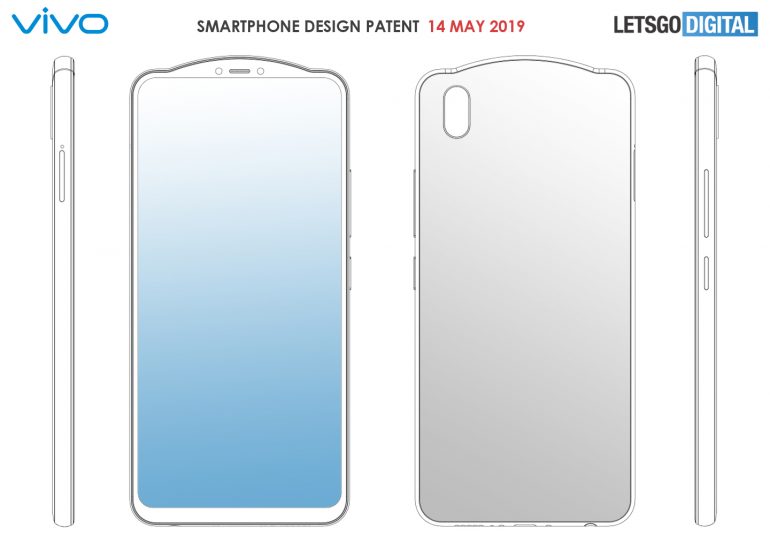
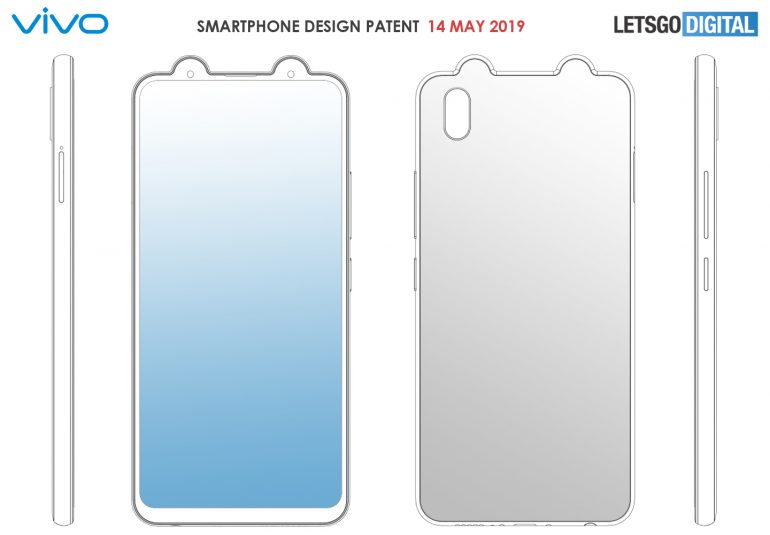
Smartphone manufacturers are trying a lot of solutions in order to get rid of bezels around the displays, so much that it is becoming hard to remember each of them. Vivo created the most interesting solution which allows getting rid of notches and other interruptions on the display while reaching a high screen-to-body ratio: the pop-up front camera which debuted on the Vivo NEX series. But the company is also testing other solutions, as a new patent suggests. The Chinese giant owned by BBK Electronics just patented two brand new smartphones designs.
The patent was filed mid-2018 at WIPO (World Intellectual Property Organization) and it was made public a few days ago, on May 14. The patent shows a comeback of the notch, but not as we know it. The attached images show the world’s first “reverse notches”. Both the smartphones shown in the images have notches, but they do not interrupt the display. Instead, they protrude out of the phones’ perimeter. In the first case, we are seeing a sort of half-moon protruding out of the phone on the upper part, which contains two front cameras and an earpiece in the middle.
In the second case, there are two separate waterdrop-like notches and each of them includes one front camera. Judging from the overall design, the two devices seem to be either entry-level or midrange affordable smartphones. Besides the reverse notches, the two Vivo handsets also sport thicker bezels and a 3.5 mm audio jack. On the lower border, they only have one single grille for a mono speaker. On the back, there is a cutout for either a dual camera setup or a single camera paired with a LED flash. Currently, it is unknown whether or not these patents will ever become a reality.
Earlier this week, WinFuture.de carried a report that contained the leaked renders of the upcoming Huawei P20 Lite 2019. The renders revealed that the phone will be arriving with a punch-hole screen and quad rear cameras. The report had also carried the speculated specs of the phone. It had claimed that the internals of the phone were similar to the Huawei P20 Lite phone from last year. However, a fresh report from the same publications states that the phone will be arriving with some updated innards.
The previous report by the publication had claimed that the Huawei P20 Lite 2019 has a 5.84-inch screen. However, fresh information shared by the publication states that it will be arriving with a 6.4-inch IPS LCD panel with a punch-hole at its top-left corner. It will carry support for 1080 x 2310 pixels full HD+ resolution. The punch-hole on the display will be housing an f/2.2 aperture 16-megapixel selfie camera.
The Kirin 710 chipset will be powering the phone with 4 GB of RAM. It will be coming with a native storage of 128 GB. There is a possibility that the phone could be available in 64 GB option as well.
The back panel of the Huawei P20 Lite 2019 has a quad camera setup that includes an f/1.8 aperture 24-megapixel primary lens, an 8-megapixel ultrawide lens and a pair of 2-megapixel sensors for depth effects and macro shots. The smartphone will come loaded with Android 9 Pie OS customized with EMUI 9.1 skin will come preloaded on the device.
The P20 Lite 2019 will be backed with a 4,000mAh battery. However, it will carry support for 10W charging rate only. It will take around 130 minutes for the handset to charge completely. The other features of the smartphone include rear-mounted fingerprint reader, NFC, Bluetooth 4.2, Wi-Fi 802.11ac, USB-C with OTG, 4G VoLTE and dual-SIM support.
The Huawei P20 Lite 2019 will be hitting in the European markets in color options like Midnight Black, Crush Blue and Charming Red. It could be priced between 280 euros and 330 euros. The smartphone is expected to go official in the coming weeks. Some rumors claim that the handset may debut as Nova 5i in some markets.
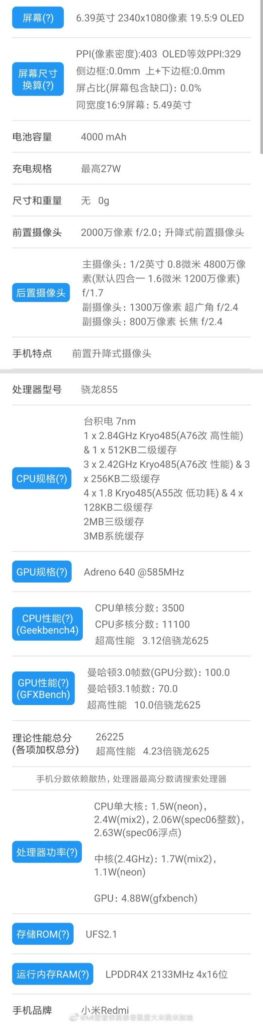
Redmi has recently confirmed that its upcoming flagship phone will be releasing in the market as Redmi K20. Rumors have it that the Chinese firm may unleash it before the end of this month. The purported specs sheet of the Redmi K20 phone has appeared on Weibo to reveal what to expect from the first Redmi flagship phone.
The leak reveals that the Redmi K20 will be featuring a 6.39-inch OLED screen that will be produce full HD+ resolution of 1080 x 2340 pixels. It will be a notch-less display that offers an aspect ratio of 19.5:9. The handset is packed with a 4,000mAh battery that is equipped with support for 27W rapid charging.
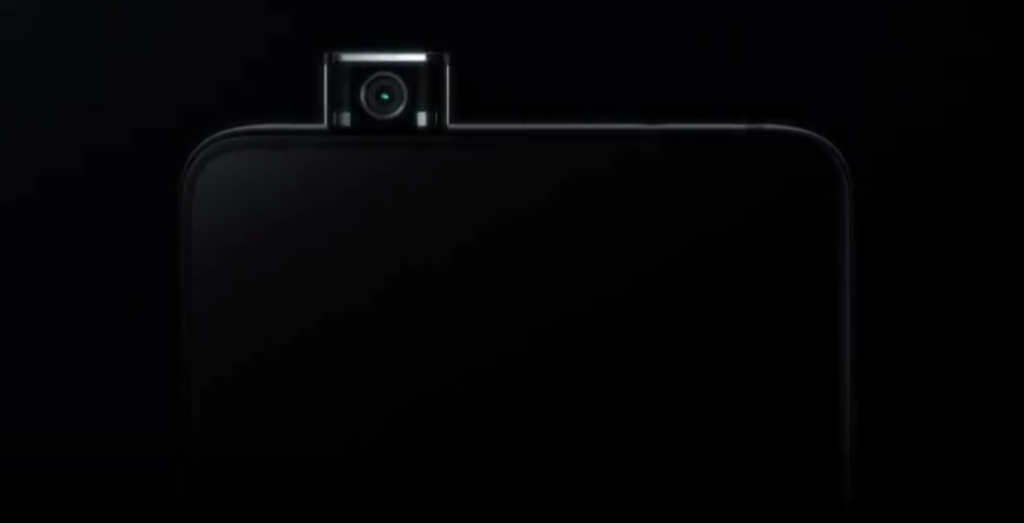
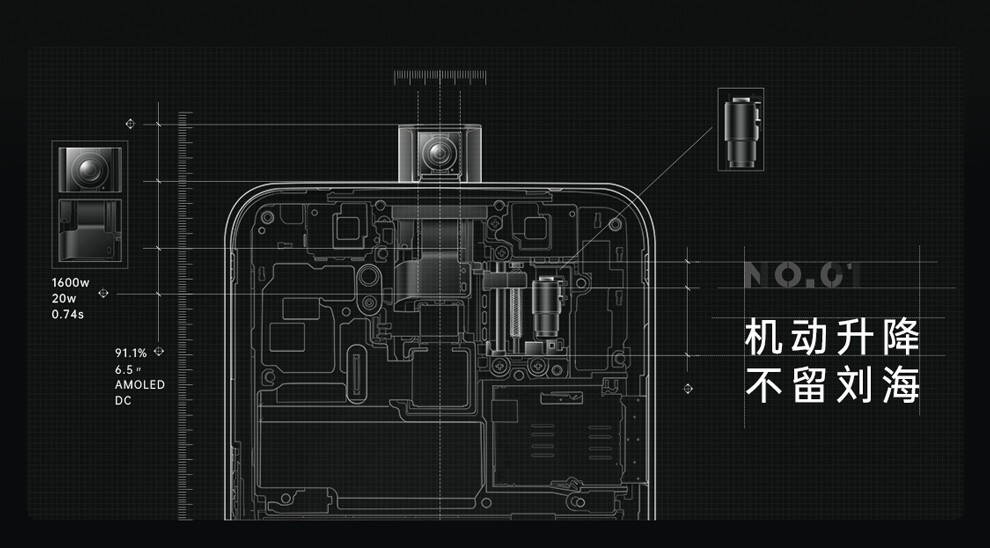
The leak further states that the Redmi K20 will be coming with a pop-up selfie snapper of 20-megapixel with f/2.0 aperture. The rear shell of the phone may come with a triple camera module featuring an f/1.7 aperture 48-megapixel main sensor coupled with 13-megapixel superwide lens with f/2.4 aperture and an 8-megapixel telephoto lens with f/2.4 aperture. The leak also includes the scores of Redmi K20 on benchmarking platforms like Geekbench, GFXBench and more. The leak doe not reveal whether it is equipped with a rear-facing fingerprint reader or an in-screen fingerprint sensor.
The Snapdragon 855 chipset will be fueling the smartphone. The handset was recently spotted on AnTuTu with an amazing benchmarking score of 458,754. The leak only reveals that the phone is equipped with UFS 2.1 storage and LPDDR4X RAM.
A recent report had claimed that Redmi will be launching two flagship phones. These could be the Redmi K20 and Redmi K20 Pro smartphones. It is speculated that the forthcoming flagship phones from Redmi will be available in variants like 6 GB RAM + 64 GB storage, 6 GB RAM + 128 GB storage, 8 GB RAM + 128 GB storage and 8 GB RAM + 256 GB storage. Both phones are expected to available in color choices such as Carbon Fiber, Blue and Red. As of this writing, there is no information on the price tag of Redmi K20.
Sony‘s latest Xperia 1 flagship was designed to give the company an edge in the smartphone market and the device lives up to expectations in terms of its specs. However, we really can say the same for the price. When the device was first announced at MWC 2019, no mention was made of the price. However, Sony has announced that the Xperia 1 will go on sale in the US on July 12 for $949.
The Xperia 1 is in a class of its own as it features a super tall 21:9 4K HDR OLED display, which Sony claims is a first for a mobile device. The back panel is made of glass which gives it a premium look. The device is powered by a Snapdragon 855 processor with 6GB of RAM and 128GB of internal storage. Can we really agree with Sony that the price tag befits the Xperia 1? Not really. While the display may be a marvel, there are several options you can get for almost half the price of the Xperia 1. The Mi 9, Mi Mix 3 5G, OnePlus 7, Lenovo Z6, Viivo iQOO, APEX 2019 etc, all come to mind. Besides, the device doesn’t even have an in-display fingerprint sensor. Rather, it utilises a side-mounted fingerprint. In addition, for such a powerful display resolution Sony crammed a 3300mAh battery under its hood which we think is rather inadequate. So, you may really not get an extended usage period with the 4K display.
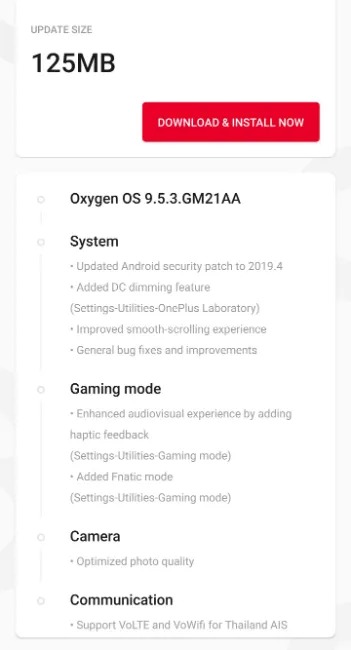
OnePlus launched the OnePlus 7 Pro a few days ago with high-end specifications. The flagship device is now receiving its first update carrying features like DC Dimming, April Security patch and other last minute optimizations. The OxygenOS 9.5.2 firmware is now rolling out to all the OnePlus 7 Pro units across the globe. OnePlus 7 Pro receiving the first update with DC Dimming and other optimizations
OnePlus 7 Pro update will optimize the device’s Fluid AMOLED with DC Dimming technology. It saves eyes from unnecessary strain when using it in low-brightness. The technique adjusts the DC current to dim the display. Users can access the feature by heading to Settings > Utilities > OnePlus Laboratory.
The update even enriches the experience with 90Hz refresh rate AMOLED display. The gamers can now enjoy the new Fnatic mode with enhanced gaming experience. It limits the background data usage so that the user can fully enjoy maximum bandwidth. Haptic feedback also improves the gaming experience with more control over vibrations. It can be turned on by going to Settings > Utilities > Gaming mode. The update brings improvements to the camera.
Digital Wellbeing also features various new improvements with additional features such as Wind Down and Grayscale. The update includes the April Security patch for improved security enhancements. Changes such as smooth scrolling and general bug fixes are also part of the update, enhancing the overall device performance.
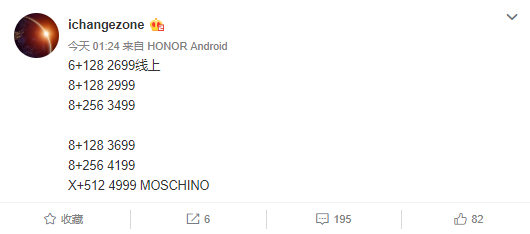
Honor 20 and Honor 20 Pro flagship phones will be made official on May 21 through an unveil event in London. These phones will be also announced in China on May 31. A tipster who is known for leaking information on upcoming Huawei / Honor phones has shared the rumored pricing of the Honor 20 and Honor 20 Pro smartphones.
Honor 20 and Honor 20 Pro Pricing Leak (Rumored)
According to the tipster, the Honor 20 will be arriving in three models such as 6 GB RAM + 128 GB storage, 8 GB RAM + 128 GB storage and 8 GB RAM + 256 GB storage. These models are rumored to be respectively priced at 2,699 Yuan (~$390), 2,999 Yuan (~$423) and 3,499 Yuan (~$506).
The Honor 20 Pro will be coming with 8 GB RAM + 128 GB storage and 8 GB RAM + 256 GB storage. These models are respectively priced at 3,699 Yuan (~$535) and 4,199 Yuan (~$607). The Honor 20 Pro MOSCHINO is also expected to go official in China. The leak reveals that it will be packed with an inbuilt storage of 512 GB. However, there is no information on the amount of RAM it will be arriving with.
Honor 20 and Honor 20 Pro Specifications (Rumored)
Earlier this week, WinFuture.de had shared the entire specifications of the Honor 20 smartphone along with its images. It had revealed that the Honor 20 will be arriving with a 6.26-inch IPS LCD panel with a punch-hole at its top-left corner to house a 32-megapixel selfie camera. The Kirin 980 SoC will be fueling the phone along with 6 GB of RAM. It may come with a native storage of 128 GB.
The smartphone will include a 3,750mAh battery that may arrive with support for SuperCharge fast charging technology. The Magic UI 2.1 flavored Android 9 Pie OS will be available preinstalled on the device. The rear shell of the phone may feature a quad camera setup with a 48-megapixel Sony IMX586 primary sensor, a 16-megapixel ultrawide lens, an 8-megapixel telephoto lens and a 2-megapixel macro lens. The Honor 20 could be featuring a power button embedded fingerprint sensor. It may come with Sapphire Blue and Midnight Black color variants.
The Honor 20 Pro could be equipped with a 6.5-inch OLED display with in-screen fingerprint sensor, 32-megapixel selfie shooter, an advanced quad camera system, Kirin 980 chipset, 8 GB of RAM, native storage of up to 256 GB, around 4,000mAh battery with rapid charging technology.
In a world in which flagship phones become every day costlier, the number of people searching for flagship-killers is increasing every day more. Nowadays, you can get the same flagship-like performances as the most expensive handsets by spending less than half of their listing prices, but only if you know what to buy. The newly-announced Asus Zenfone 6, Xiaomi Mi 9 and Lenovo Z6 Pro are currently among the most impressive flagship phones sold at an affordable price, and this is the perfect comparison for people who want the highest performance with the smallest (and smartest) expense.
Asus Zenfone 6 vs Xiaomi Mi 9 vs Lenovo Z6 Pro
Asus Zenfone 6
Xiaomi Mi 9
Lenovo Z6 Pro
DIMENSIONS AND WEIGHT
159.1 x 75.4 x 9.2 mm, 190 g
157.5 x 74.7 x 7.6 mm, 173 g
157.5 x 74.6 x 8.7 mm, 185 g
DISPLAY
6.4 inches, 1080 x 2340p (Full HD+), IPS LCD
6.39 inches, 1080 x 2340p (Full HD+), Super AMOLED
6.39 inches, 1080 x 2340p (Full HD+), Super AMOLED
Triple 48 + 16 + 12 MP, f/1.8, f/2.2 and f/2.2
20 MP f/2.0 front camera
Quad 48 + 16 + 8 + 2 MP, f/1.8, f/2.2 and f/2.4 and f/1.8
32 MP f/2.0 front camera
BATTERY
5000 mAh, fast charging 18W with Quick Charge 4.0
3300 mAh, fast charging with Quick Charge 4+, wireless charging
4000 mAh, fast charging 27W
ADDITIONAL FEATURES
Dual SIM slot, rotating cameras
Dual SIM slot
Hybrid Dual SIM slot
Design
Asus Zenfone 6 deserves an award just for its incredibly innovative form factor. Its display is almost completely bezel-less and it does not have a notch, thanks to the presence of a rotating camera setup on its rear side. It even comes with an astonishing build quality thanks to the glass back protected by Gorilla Glass 6, its aluminum 6000 series frame and its rotating camera tested with up to 100,000 flips, that is equivalent to 28 selfies a day for five years. On the other hand, it is still worth noting that Xiaomi Mi 9 and Lenovo Z6 Pro come with very elegant and premium aesthetics. Between Xiaomi Mi 9 and Lenovo Z6 Pro, the former has a better build quality as it is made with stronger materials.
Display
Asus Zenfone 6 is equipped with a panel which shows very realistic colors as it has a 100 percent DCI-P3 coverage and the HDR10 technology. But it is just an IPS panel, so you do not get the same deep blacks and vivid colors you can get with the Xiaomi Mi 9 or the Lenovo Z6 Pro. I personally prefer these two handsets because of their AMOLED panels but also because they have an in-display fingerprint reader which is much more comfortable than the traditional rear scanner found on the Zenfone 6.
Hardware/Software
Given that all of these devices are powered by the amazing Snapdragon 855 chipset which is currently the best SoC by Qualcomm, in each case you get incredibly fast performances in every scenario. But there is still a winner in terms of hardware: the Lenovo Z6 Pro. In its most advanced variant, it boasts 12 GB of RAM and 512 GB of internal storage, that is the most powerful memory configuration ever found on an affordable flagship phone. All these three phones are based on Android 9 Pie but only Mi 9 and Z6 Pro have a custom user interface installed. Both the Asus Zenfone 6 and the Lenovo Z6 Pro feature a micro SD slot which allows expanding the internal storage, while Xiaomi Mi 9 does not.
Camera
The most complete and versatile rear camera department belongs to the Xiaomi Mi 9. It has a total of three sensors with a main 48 MP lens, an ultrawide secondary sensor and a telephoto lens with 2x optical zoom. Unlike its rivals, it can record super slow motion videos at 960 fps with a 1080p resolution, and it boasts very accurate laser autofocus. Asus Zenfone 6 does not have a front camera, but you can use the main cameras as selfie cameras thanks to the rotating mechanism. The most convincing front camera belongs to the Lenovo Z6 Pro with a 32 MP resolution.
Battery
Asus is basing most of its marketing efforts for the Zenfone 6 on the rotating cameras and the huge battery. With a high 5000 mAh, there is no affordable flagship which can beat the Zenfone 6 when it comes to battery life. And with its reverse charging technology, it can even double as a power bank. The second place goes to the Lenovo Z6 Pro with its 4000 mAh battery which is still able to last two days with moderate use, despite it can not reach three days unlike the Zenfone 6. Xiaomi Mi 9 has the smallest battery and it is just an average unit, but it is the only to feature a wireless charging technology. And we are talking about fast wireless charging with a power of 20W: Asus Zenfone 6 and Lenovo Z6 Pro can only be charged via cable with a max power of 18W!
Price
The Lenovo Z6 Pro was launched in China with a starting price of just €400/$445 for the base 6/128 GB variant, Xiaomi Mi 9 starts from €450/$500 globally in the 6/64 GB version, and Asus Zenfone 6 starts from €500/$560 in the 6/128 GB configuration. Overall, Asus Zenfone 6 is making a big difference with its bigger battery, stereo speakers, reverse wireless charging and very innovative design, despite it lacks an AMOLED display and a UD fingerprint scanner.
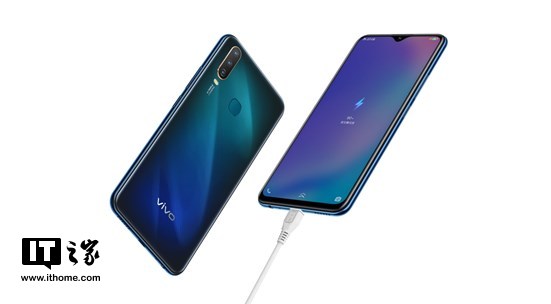
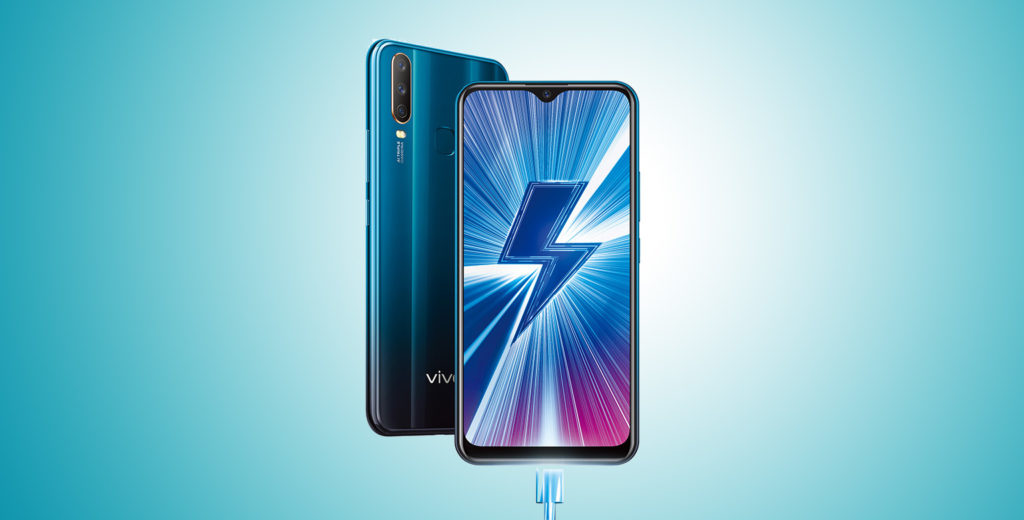
Vivo has today launched a new smartphone that goes by the name Vivo Y3. The Y3 is a mid-range model but is crammed with top-of-the-pack hardware and sleek design. Perhaps, the most spectacular is the triple AI camera that adorns the back. The device also packs a mammoth 5000mAh battery onboard. Despite the rich specs lineup, the device comes with a 1498 yuan (~$216) price tag.
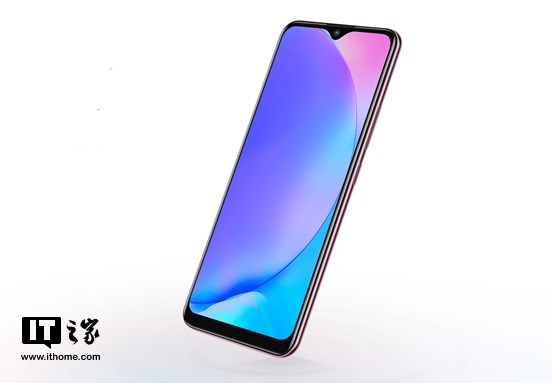
In terms of the design, the Vivo Y3 utilises a water drop notch which has room for the selfie camera only. The device features a 6.35-inch screen with narrow bezels on all sides, giving it a screen ratio of 89%. At the rear aspect, the Y3 uses a new nano-scale coating process, available in three different colour variants; peacock blue, peach pink and ink blue.
On the camera, the mid-range device is equipped with a 16MP HD front camera. As stated, there are three AI cameras at the rear comprised of a 13MP main camera. The second sensor is a 120 ° wide angle, while the third is a depth of field camera. There is also a rear-mounted fingerprint sensor on the device. Apart from this biometric feature, the Y3 also has Face Unlock.
The Y3 crams a MediaTek MT6765 processor clocked at 2.3GHz under its hood. The processor is paired with 4GB of RAM while there is 128GB of storage onboard which can be expanded up to 256GB via microSD card.
Despite packing a big 5000mAh battery, the Y3 equally comes with 9V/2A flash charging and support OTG reverse charging. It is worth mentioning that the Vivo Y3 has a built-in game box, the Game Cube, which provides a lot of immersive game experience, such as the built-in e-sport mode 2.0. For the convenience of the elderly, it can not only switch to easy mode but also built the Jovi voice assistant.
After bringing the OPPO A9 last month in China, the company today unveiled OPPO A9X with few advancements. The latest mid-range smartphone carries a 48MP rear camera instead of the 16MP unit on the OPPO A9. Furthermore, OPPO A9X features VOOC 3.0 fast charging instead of traditional charging. There are more differences between both devices.
The OPPO A9x looks identical twin to its predecessor with a 3D gradient back. It carries the same 6.53-inch Full HD+ display with the resolution of 2340 x 1080 pixels and features a dewdrop notch. MediaTek Helio P70 12nm octa-core processor sits inside carrying Mail G72 GPU. It runs on Android 9 Pie based ColorOS 6.0 with features like Game Boost 2.0 to enhance gaming performance.
For optics, OPPO upgraded the dual camera module with a 48-megapixel f/1.7 primary sensor and a 5-megapixel secondary camera. On the front, there’s a 16MP f/2.0 camera for beautiful selfies and video calls. As like its predecessor, OPPO carries a rear fingerprint sensor. There’s a 3.5 mm jack and FM radio. In connectivity, the device supports Dual 4G VoLTE, WiFi 802.11 ac (2.4GHz + 5GHz), Bluetooth 4.2 and GPS/GLONASS.
The battery capacity remains the same with added support for VOOC 3.0 fast charging.
OPPO A9x is available in 6 GB RAM + 128 GB internal storage version for the price of 1999 Yuan (~$289). It can be bought in two color options of Meteorite black and Ice Jade white. However, the OPPO A9 is available in Mica green, Ice Jade White, and Fluorite purple color version. It will go on sale from May 21.
Vivo is also joining the league of smartphone makers who have launched phones with the punch-hole display. According to a new leak from a Weibo user, Vivo Z5X will be the company’s first smartphone to host punch-hole display. As revealed earlier, it will be backed by a massive 5000 mAh battery. To refresh its Z-series, Vivo is introducing a batch of new smartphones starting with Vivo Z5x.
The new leak confirms the smartphone’s recent battery test, which revealed the B-G7 battery model number and 4880mAh/8.78Wh rated battery capacity. There’s no more information available concerning its design or specifications.
However, the smartphone is expected to feature Snapdragon 675 or 670, as Vivo used Snapdragon 660 on Vivo Z3x launched last month. Moving along its predecessor’s path, the Z5X is believed to follow an aggressive pricing strategy. It will run on Android Pie atop Funtouch OS 9.
Additionally, Vivo Z3X was recently launched in China for 1198 Yuan (~$173). It features a 6.26-inch Full HD+ display with a screen resolution of 2280 x 1080 pixels. It is powered by a Qualcomm Snapdragon 660 and coupled with 4GB RAM and 64 GB internal storage. Vivo Z3X embeds a dual-camera module with 13-megapixel primary and a 2-megapixel secondary sensor. Whereas, a 16-megapixel shooter is available on the front for selfies.
Many mid-range smartphones are launching soon with several new features. Xiaomi is also unveiling the Redmi Note 7S on May 20 with an improved camera. A small soft launch event is scheduled to air on the company’s website. Manu Kumar Jain, Global VP and MD of Xiaomi India yesterday confirmed the presence of a new 48MP primary rear camera on upcoming Redmi Note 7S. Just ahead of the launch, Xiaomi published camera samples taken from Redmi 7S teasing its stunning camera capabilities. The watermark on photos is also confirming dual camera sensors on the device.
Multiple images showcase different aspects of the Redmi Note 7S camera. The clarity and saturation among the images look superb. The images are carrying lots of details which are improving the overall quality. The Redmi Note 7S camera has managed to pull every possible detail in the daylight. However, it beautifully captured colors during low-light conditions. The clarity is visible without much noise (graininess) in the photo taken under a normal street light.
As like of the Redmi Note 7 and Note 7 Pro, we expect Night Mode to debut on the Redmi Note 7S also. Redmi has confirmed the presence of a 48MP camera, but the detail of a secondary camera is still under clouds. According to reports, there might be a 2 MP secondary camera, and a 13 MP selfie shooter on the front.
The specifications are expected to resemble the other two Redmi Note 7 series smartphones. It will feature a Qualcomm Snapdragon 660 SoC coupled with Adreno 512 GPU, a 6.3-inch full HD+ display with a drop notch and a 4000 mAh battery with Quick Charge 4.0. It will be coming in 3/4GB RAM and 32/64GB internal storage models.
Vivo has recently launched the Vivo Y17 smartphone in India. Recent reports have revealed that the Vivo Y15 is an upcoming Y-series from the company. Fresh information that has surfaced today reveals that the Chinese firm will be also announcing another Y-family phone called Vivo Y12 in the near future. It is expected to arrive in India with a price tag of Rs. 12,000 (~$170).
Vivo Y12 and Y15 Launch Nearing
According to 91mobiles, the Vivo Y12 phone may go official with the Vivo Y15 phone later this month. The Y15 is expected to carry a price tag of Rs. 14,990 (~$213). The Y12 will be a cheaper device with Rs. 12,000 (~$170) price tag. At present, there is no information on the specifications of the Vivo Y12 phone.
Like the Vivo Y17 smartphone, the Vivo Y15 is expected to arrive with a triple camera setup on its rear. This means that the Vivo Y15 will be one of the few phones under Rs. 15,000 (~$214) in India to arrive with triple rear cameras. The upcoming Vivo Y12 and Y15 are expected to be made available for purchase through offline channels.
Vivo Y91 New Version
In January, Vivo India had launched the Vivo Y91 smartphone with Helio P22 SoC and 2 GB of RAM. It had arrived with a price tag of Rs. 10,990 (~$157). With subsequent discounts, its price was reduced to Rs. 8,990 (~$128). The Chinese firm has recently launched a new version of Vivo 91. It comes with Snapdragon 439 SoC that is coupled with 3 GB of RAM. It carries a price tag of Rs. 9,990 (~$142).
The Vivo Y91 comes with a 6.22-inch IPS LCD display panel. The waterdrop-style notched screen offers HD+ resolution of 720 x 1520 pixels. The rear shell of the phone features a dual camera setup with f/2.2 aperture 13-megapixel primary sensor and a secondary depth sensor of 2-megapixel. For capturing selfie snaps, the Vivo Y91 features an 8-megapixel front camera. The handset houses a 4,030mAh battery. The rear shell of the phone features a fingerprint reader.
Meizu launched the Meizu 16X smartphone in the Chinese market last year and now the company is gearing up to launch the Meizu 16Xs. The phone has already passed through TENAA, which reveals its design and some key specifications.
From the images, it appears that the phone will come with a triple camera setup on the back panel. This makes it the first smartphone from Meizu to feature three rear-facing camera sensors.
The back camera sensors are placed vertically in the top-left corner and are accompanied by an LED flash. The power button and the volume rocker keys rest on the right edge of the smartphone.
As per the report, the device will come powered by the Qualcomm Snapdragon 712 processor, which is a minor upgrade given that its predecessor is powered by Snapdragon 710 chipset. It will pack 6GB of RAM and 128GB of internal storage.
Along with the usual set of connectivity options, the smartphone will also support NFC and will come with a 3.5mm headphone jack. As for the pricing, the phone will reportedly cost around 2,000 yuan, which roughly converts to $289.
The Meizu 16X features Snapdragon 710 processor clocked up to 2.2GHz with 6GB of LPDDR4X RAM and Adreno 616 GPU. It comes with a 6-inch AMOLED display featuring 90.62% screen to body ratio.
As for the camera, the phone comes with a powerful 20MP camera on the front side while the rear camera setup includes a 12MP IMX380 + 20MP IMX350 dual cameras with 1.55um large pixels, HDR, OIS and AI.
It is powered by a 3,100mAh, which should be enough to last an entire day with normal usage. The pricing of the Meizu 16X for the base model with 6GB RAM + 64GB storage starts at 2098 Yuan (approximately $306).
In recent years, more and more people focus on exercise and health, and most of the young people would like to record their outdoor activities by motion cameras.
Although there are more and more motion camera at the market, GoPro is at a dominant position which is like drones for DJI.
Last year, DJI launched OSMO Pocket 3-Axis Stabilized Handheld camera, which even made us think it was a competitor for GoPro Hero7. The advantages of DJI OSMO Pocket camera is the small size of the 3-axis stabilizers, while the advantages of GoPro Hero7 is the accumulation of motion cameras. But now, DJI OSMO ACTION motion camera has been launched, and it will be the strong rival for GoPro.
Design:
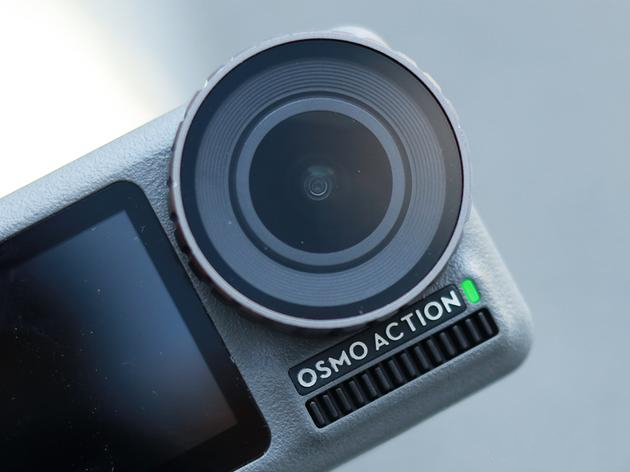
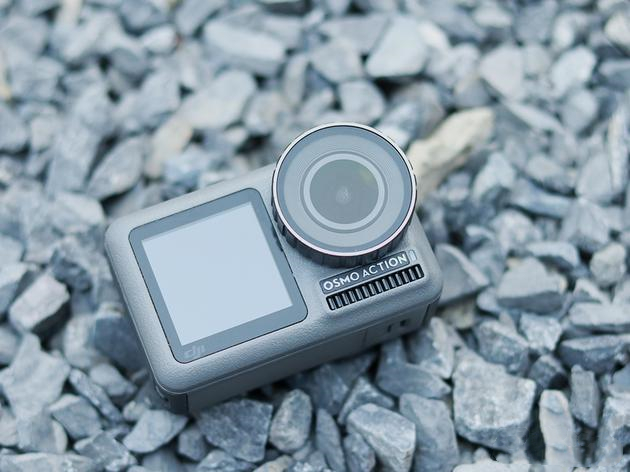
The size of OSMO Action is small, which looks like a automobile data recorder. The motion camera design is very delicate which should catch people’s eyes, and it can be operated by one hand.
Although the size of OSMO Action camera is small, the internal part is made of magnesium alloy frame, and the external part is made of PC plastic and soft rubber package which is processed specially, which makes sure the camera has sturdy design and good holding.
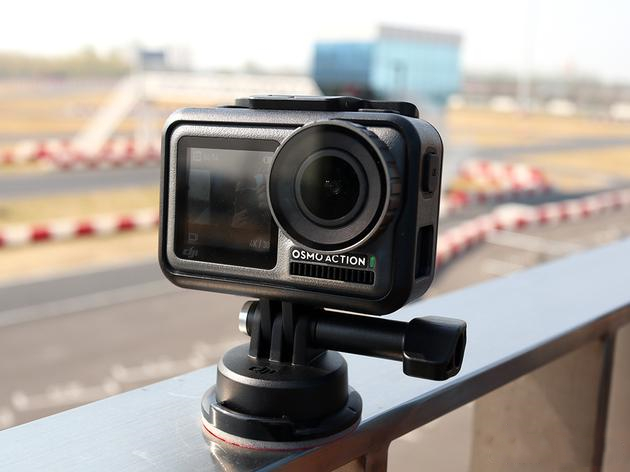
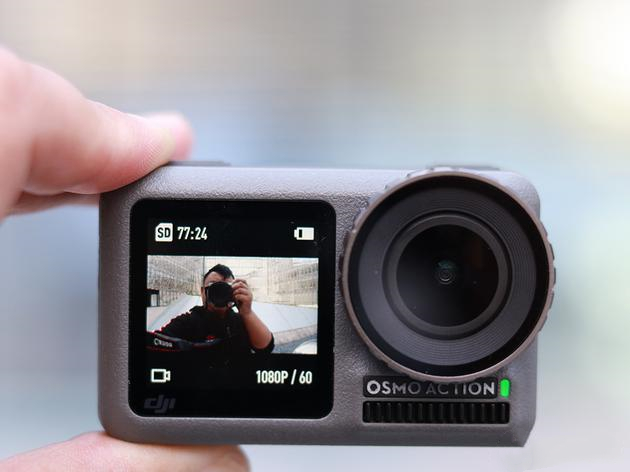
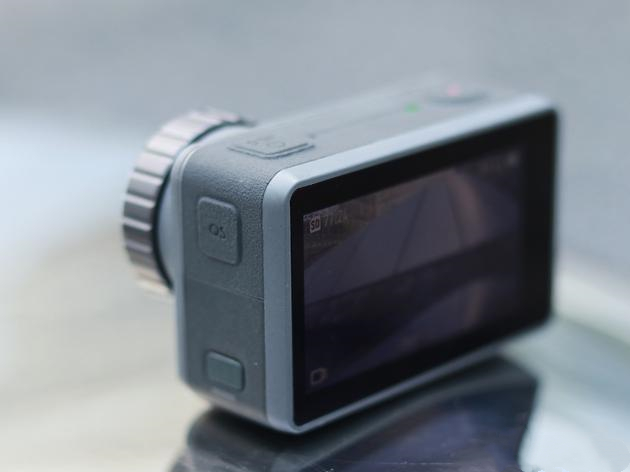
The most attractive point is the dual screen design, which has a 2.25-inch rear touching home screen having the resolution of 640 x 360 pixels. The monitor surface is covered with AF coating for oil drainage and antifouling, and some common operations are mainly completed through this home screen.
There is a 1.4-inch screen having the pixel density of 300ppi, which is used for showing the real-time shooting picture, recordable time of SD card, battery level and other information.
The brightness of the two screens is up to 750cd/m2, which can be seen clearly. Also, the OSMO Action has a built-in heat conduction system, which directs the heat generated by front screen and battery to the lens metal shield and metal heat sink placed on the front of the camera, that is to ensure the heat level of the camera is at a reasonable level.
Although the OSMO Action comes with dual screens, the buttons are fully equipped.
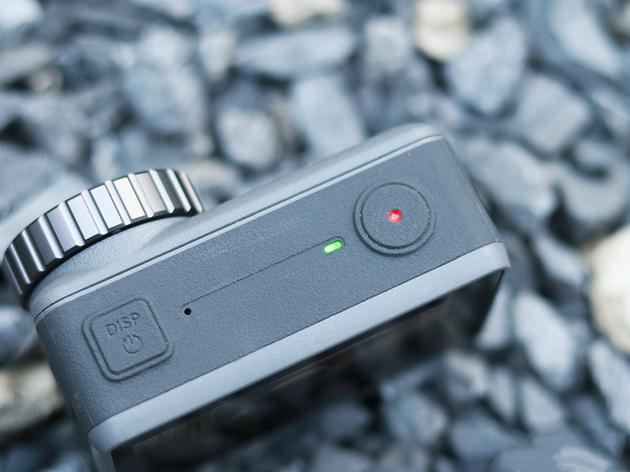
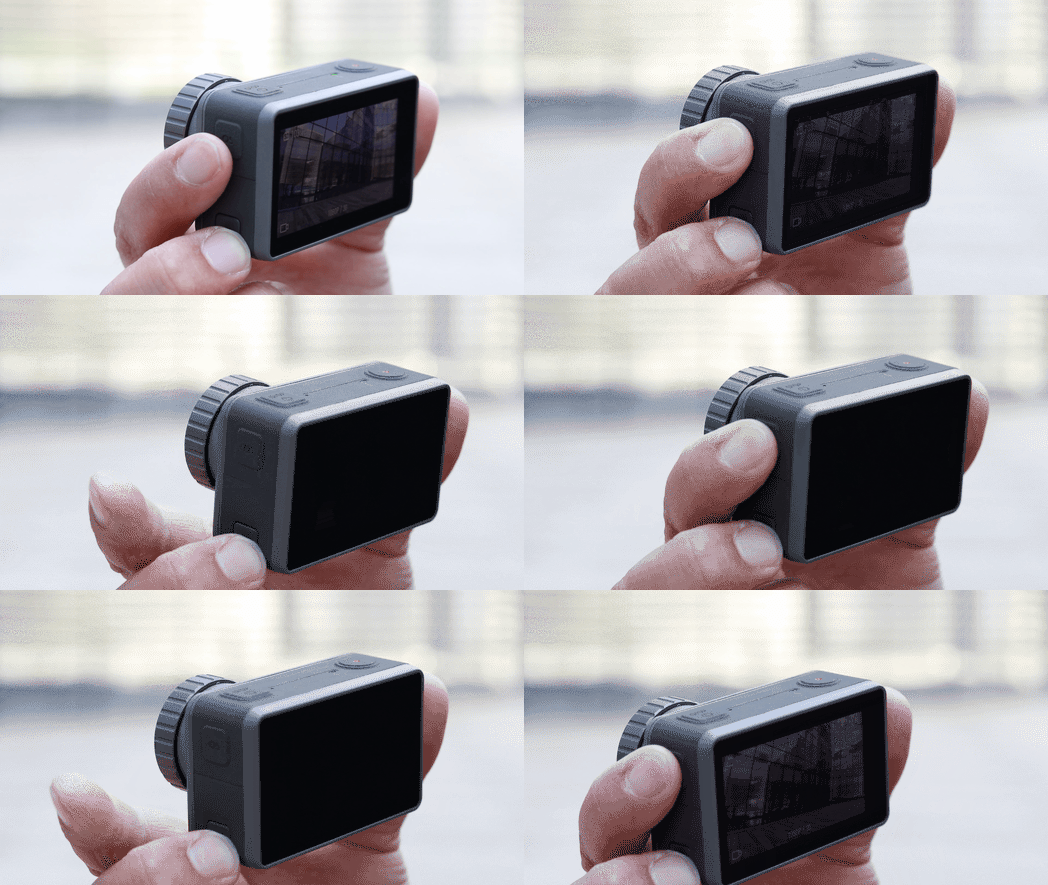
There are a power button and a capture button on the top side, and a switch button is on the left side which is to switch the front screen to rear screen and common modes operation.
It may be because the thick rubber on the surface, it is significantly heavier when pressed.
Performance:
The most attractive point is the dual screen viewfinder feature. Though the GoPro Hero 7 has a screen on both sides, the front screen is a monochrome LCD screen that can only display some information about the phone’s current operation, which is not a viewfinder. Therefore, GoPro Hero 7 just to be a single motion camera, which is not quite suitable to take vlogs.
GoPro Hero 7 is a small size motion camera, and you often use it with a selfie stick. After taking a selfie video for about 10 minutes, you realize the video didn’t get you, which will be annoyed. However, through the front screen of OSMO Action, you can know where your position is.
In addition, due to the small size of the OSMO Action, the front screen can act as an auxiliary viewfinder with a variety of accessories. The lens also supports the replacement of the filter.
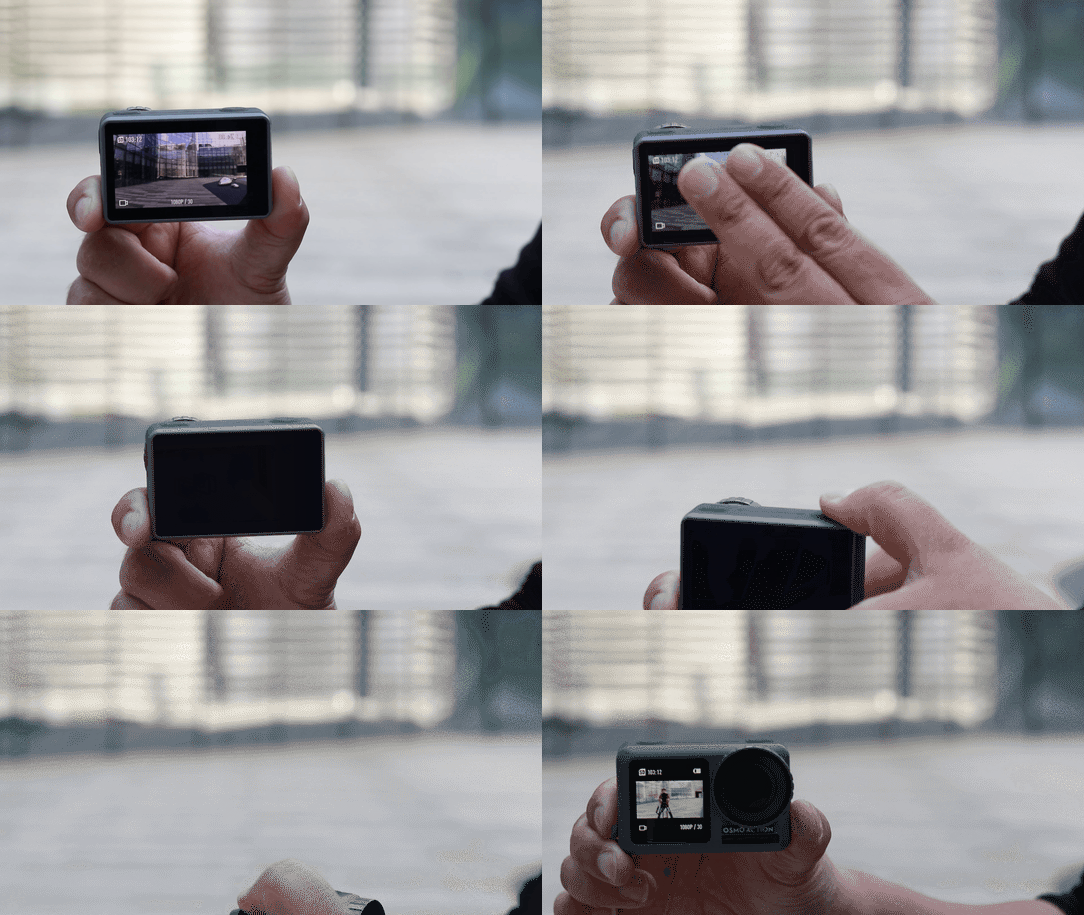
It’s easy to switch between the front and rear screens, double-clicking the home screen with two fingers or pressing the buttons on the side.
Overall, the dual screen of OSMO Action is suitable for Vlogger. In addition, the port of OSMO Action is compatible for most of accessories of motion camera at the market.
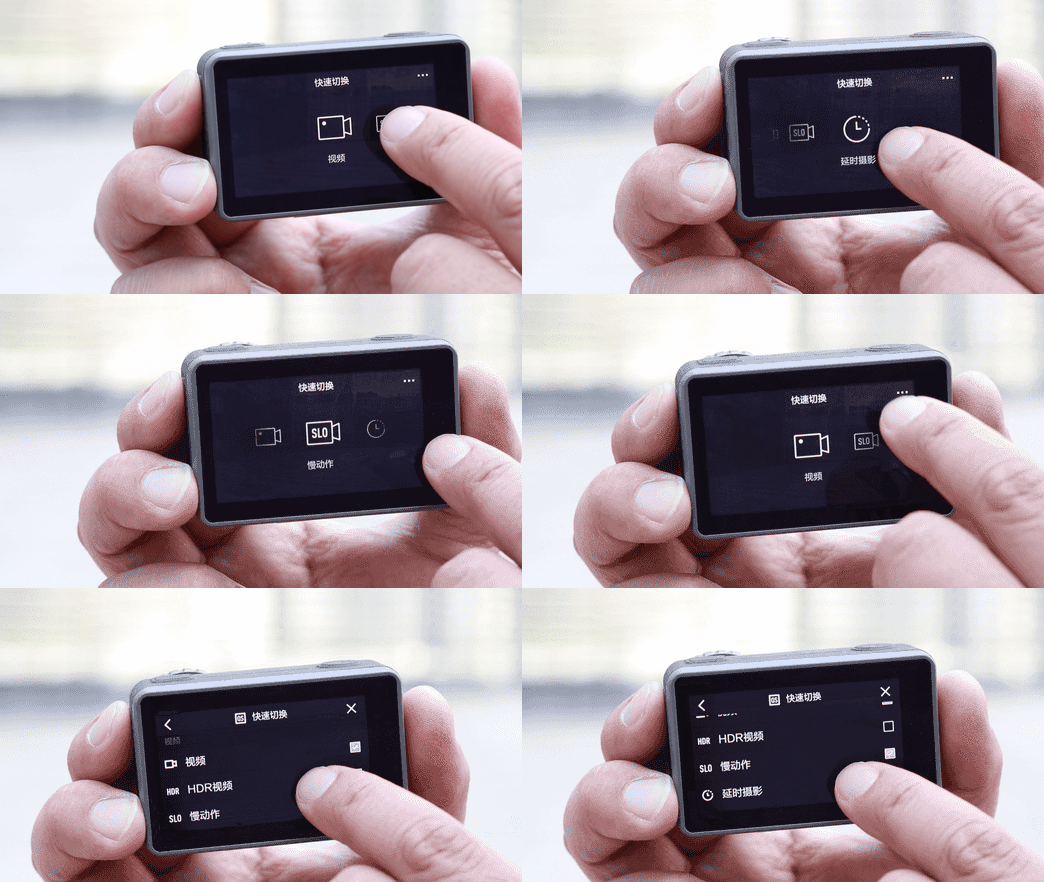
OSMO Action runs DJI’s Action OS for scenes used in motion cameras. The operation is simple, which can operate it by sliding the screen. In addition to the regular screen touching operation, OSMO Action can also use the physical buttons with dual screens to switch the camera modes. When the camera is completely closed, users can also click the shooting button in accordance with the preset shooting mode to snap shot.
What’s more, OSMO Action can be controlled by voice. Simply speak a specific command for the motion camera, and the camera will automatically complete the command. OSMO Action currently supports five voice commands like filming, capturing photos, and powering down the device effortless.
Camera capability is an important indicator of a motion camera. Let’s check out how the OSMO Action camera performs.
OSMO Action comes with a 12MP wide-angle lens with f/2.8 and FOV of 145 degrees, and has a built-in 1/2.3 inch CMOS sensor. It is easy to shoot a video that simulates first person vision wearing on the head or chest.
According to the sample, OSMO Action films have good saturation and contrast in daytime, which can restore the color.
The image quality is also good at night and in low light, but there is serious noise.
DCIM100MEDIADJI_0560.JPG
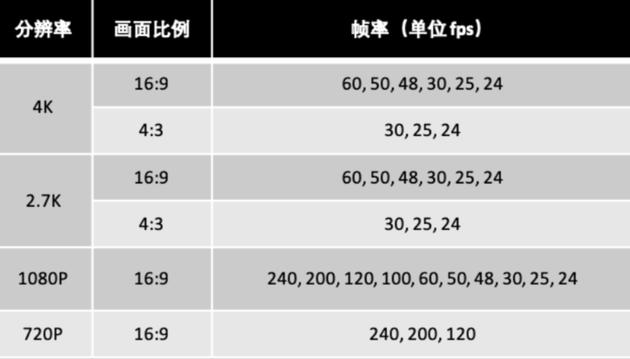
In the video part, the OSMO Action supports up to 4K 60fps of 10Mbps video.
Anti-shake performance has always been a key factor for motion cameras, so we test the anti-shake performance in the video part.
GoPro 7 adopts HyperSmooth anti-shake technology, which is to achieve electronic anti-shake by movement compensation. While the OSMO Action adopts RockSteady stabilization technology, which comes with the latest stabilization algorithm researched by DJI. The shaking in all directions can be automatically identified and effectively eliminated. This technology can make sure that the camera’s normal steering motion can be preserved at the maximum while eliminating shaking.
In order to test the stability of the OSMO Action, I held the OSMO Action to shoot videos while ran and took the stairs. The video quality is well and smooth.
As a special note, I test the OSMO Action camera in handheld mode. This is the advantage of RockSteady stabilization technology, which can greatly reduce the picture dithering caused by camera shaking without the need of accessories.
Many motion scenes are shot by a motion camera placing on a stabilizer. However, in addition to losing the advantages of compact and light of motion camera, it also lose the ability to shoot certain scenes because the stabilizers themselves cannot be as waterproof and dustproof as motion cameras.
OSMO Action has other features in video mode, which supports 8x slow motion, timelapse and timed shooting mode.
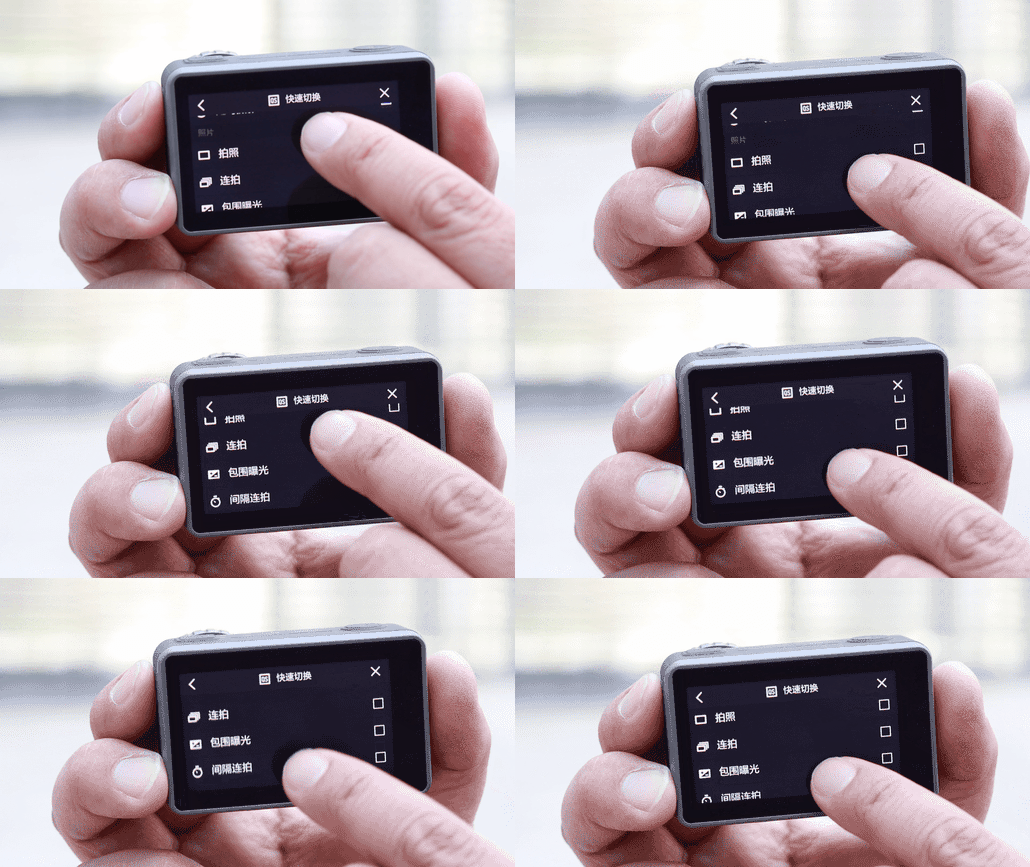
In the default single shot mode, user can adjust the photo’s exposure, sensitivity, shutter speed and other common operations. It also supports 120s custom exposure settings and store RAW files.
What’s more, OSMO Action can connect to phone’s Mimo app by WiFi, and upload some of the videos to edit.
Battery:
OSMO Action is fueled by 1300mAh battery which is charged by Type-C port and charging time is about 88 minutes. A fully charged battery can support video recording at regular video mode for up to 40 minutes.
Conclusion:
OSMO Action as the first motion camera of DJI has good performance. Of course, it also has some disadvantages, such like the 12MP camera, which has serious noises in night shot.
Compared with GoPro’s emphasis on extreme sports, OSMO Action focuses more on life and is more suitable for novice users.
In price, the GoPro Hero 7 is priced at $399.99, and the OSMO Action is priced at $349. There is no essential difference in shooting quality, but the OSMO Action has dual viewfinders.
Overall, the powerful rival of GoPro Hero 7 shows up.
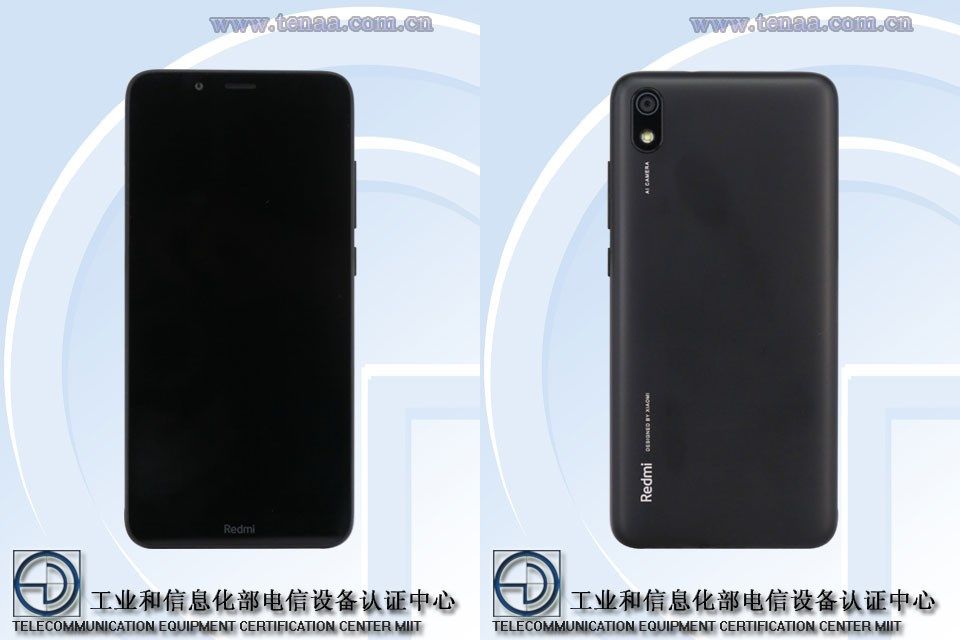
A new Redmi phone with model number M1903C3EC / M1903C3EE has been certified by China’s TENAA telecom authority. The specifications of the smartphone have not appeared on TENAA yet. Only the images of the phone have appeared on the database of the Chinese agency. Through the images it can be concluded that the M1903C3EC / M1903C3EE Redmi phone is an entry-level smartphone. Probably, it could be the Redmi 7A entry-level phone.
The Redmi M1903C3EC / M1903C3EE smartphone seems to be featuring an 18:9 aspect ratio display with thick bezels around it. The upper bezel houses a front-facing camera and an earpiece. The “Redmi” branding can be seen on the bottom bezel of the phone.
The rear side of the Redmi M1903C3EC / M1903C3EE smartphone seems to be made out of plastic. There is no fingerprint scanner on its rear. It appears that the phone may only have the face unlock feature for user authentication.
A single camera along with its LED flash and “AI Camera” text is placed at the top-left corner of the back panel. The “Redmi” brand name as well as “Designed by Xiaomi” are etched towards the bottom of its rear shell. The left side of the Redmi phone has a SIM tray while its right edge is flanked with a volume rocker and a power button. The design of the phone clearly suggests that it will be a low-priced Redmi phone.
In 2018, Redmi 6A was unveiled as the company’s cheapest phone. The Redmi M1903C3EC / M1903C3EE could be the successor of the Redmi 6A phone. The specifications of the alleged Redmi 7A may soon appear on TENAA in the coming days.
The Redmi 6A comes with a 5.45-inch HD+ 18:9 aspect ratio display. It is fueled by Helio A22 chipset and up to 3 GB of RAM. It is powered by 3,000mAh battery. It features a 13-megapixel rear camera and a front-facing snapper of 5-megapixel. The Redmi 7A could be arriving with a larger display, a better chipset and a larger battery.
The M1903F11C is the other phone from the company that has appeared on the database of TENAA. Unfortunately, nothing is known about it since its TENAA listing is yet to be updated with specifications and images.
Oppo is currently gearing up to launch the Oppo K3 smartphone in China, which seems to be the successor of the Oppo K1. Now, ahead of the phone’s launch on 23rd May, the company has shared a new poster of the device, which reveals its specifications.
The image confirms that the device will be powered by the Qualcomm Snapdragon 710 octa-core processor. The image also shows a render of the smartphone, confirming that it features a pop-up front-facing snapper.
On the back side, the smartphone features dual camera sensors, placed vertically in the top-center position. There’s no fingerprint sensor visible, which confirms that the phone will indeed come with support for an in-display fingerprint sensor.
The phone was also was recently spotted on China Unicom’s product library detailing most of the specifications. The phone, which carries model number PCGM00, it is powered by a Qualcomm Snapdragon 710 octa-core chipset, coupled with 8GB of RAM and 128GB of internal storage.
Oppo K1 features a 6.5-inch Full HD+ display with a screen resolution of 2340 x 1080 pixels. There’s also a dual rear camera module comprising of a 16 MP + 2 MP sensors and a 16 MP pop-up selfie camera on the front side for taking selfies and video calling.
As per the reports, the Oppo K3 will come in three color options — Nebula Purple, White, and Black. The phone will come with a USB-C type interface and could be powered by a 3,700mAh battery with 20W fast charging support.
From the leaks specifications of the phone, the Oppo K3 seems very similar to the recently launched Realme X smartphone. Going by this, the phone could come in three variants — 6GB + 64GB, 6GB + 128GB, and 8GB + 128GB.
As for the pricing, the Oppo K3 should be a bit more expensive than the Realme X. For the uninitiated, Realme started off as a sub-brand of Oppo but later split from the parent company to work independently. However, Realme is still backed by Oppo.
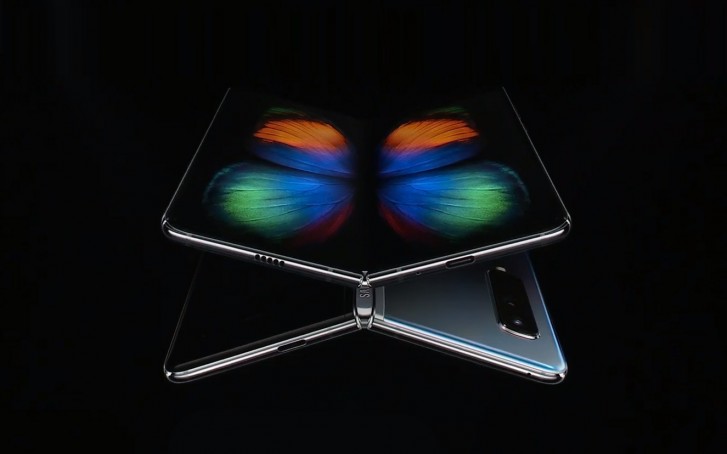
Samsung’s ambitious and futuristic smartphone — Samsung Galaxy Fold, the company’s first foldable smartphone, was finally unveiled a couple of months ago after being in development for years.
However, just days before the phone’s launch, the company postponed the sales of the Galaxy Fold smartphone based on the feedback received from the early users of the device regarding issues with the display.
At that time, the company simply said that the new launch of the Galaxy Fold smartphone will soon be announced it thoroughly checks the device. While the company said that it’ll fix the issues, it didn’t reveal how it plans to do so.
A new report from Yonhap News claims that the company is planning to tuck the protective display layer into the body. This will help prevent users from removing it, which some users did as they considered it to be a screen protector. It further adds that Samsung will also block the gaps at the top and bottom of the hinge to prevent debris from damaging the foldable display of the phone.
The company is reportedly testing the smartphone on Korean networks. The report also adds that Samsung is expected to launch the Galaxy Fold in June but it’s not yet confirmed and the company could change the launch timeline.
As for the specifications, the Samsung Galaxy Fold smartphone presents a 7.3-inch Infinity Flex Display with a 1536 x 2152 resolution. In this mode, you can use three apps at the same time which Samsung calls Three-app Multitasking.
When folded into phone mode, it offers a 4.6-inch 840 x 1960 display. It comes with a feature called App Continuity which automatically adjust an app when you switch screens. It is powered by a 7nm processor paired with 12GB of RAM.
The phone comes with a camera module that’s made up of a 16MP ultra-wide camera, a 12MP telephoto camera, and another 12MP wide-angle camera. On the front side, it comes with a 10MP sensor. It runs the latest Samsung One UI with Android 9 Pie operating system out-of-the-box. The phone packs a 4,380mAh battery which is split into two units.
Huawei’s chipmaking arm HiSilicon is reportedly planning to go aggressive for the development of 5G mobile chipsets with an integrated modem. It is also planning to make 5G mmWave solutions for smartphones after releasing a new chipset later this year.
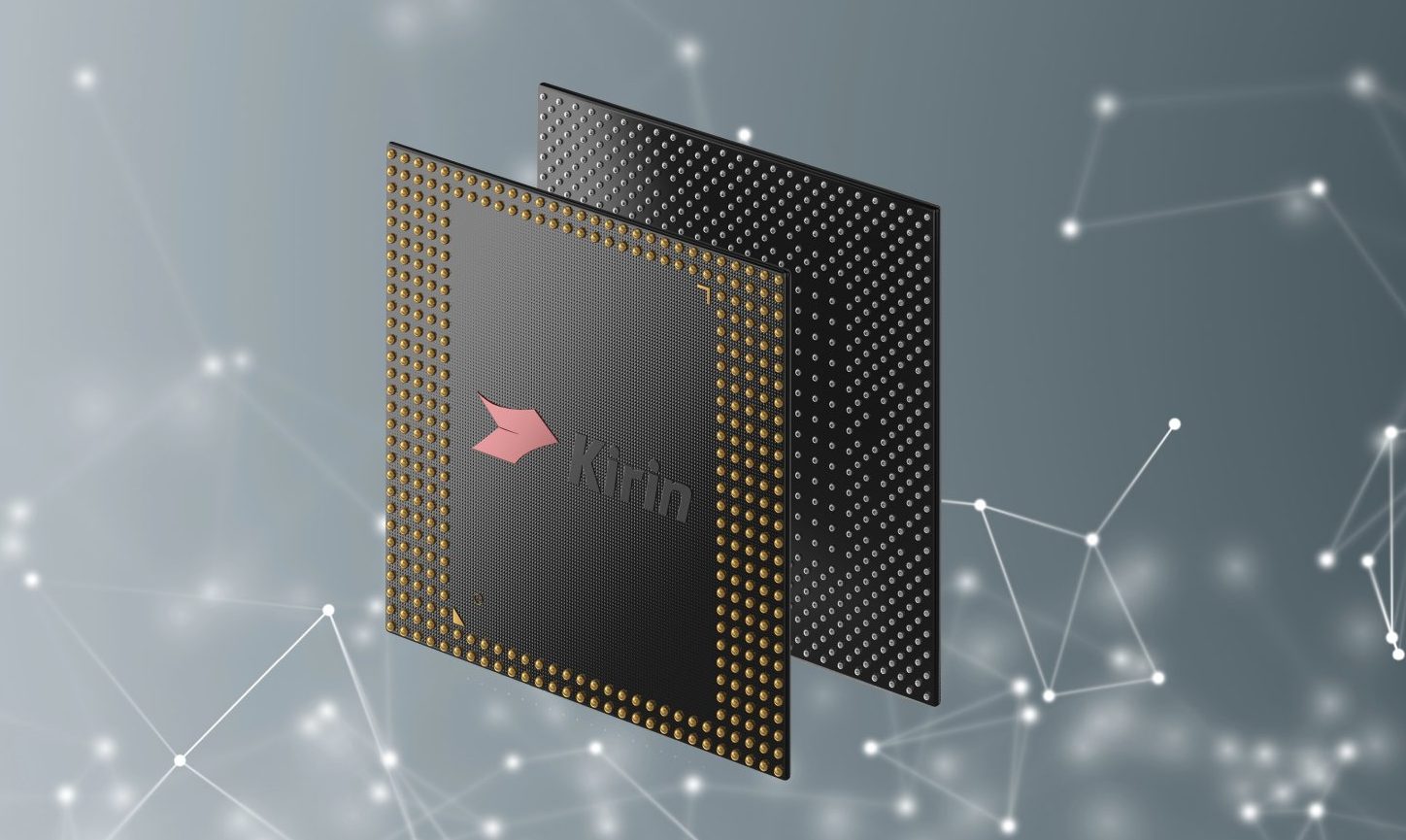
As per the reports, Huawei will be releasing its next chipset called the Kirin 985 in the second half of this year. The chipset will support Huawei’s high-end 4G smartphones, and can also come with add-on Balong 5G modem chips to support 5G sub 6GHz smartphones.
The same chipset could be used to power the company’s next flagship smartphone — the Huawei Mate 30 series, which is expected to launch in the fourth quarter of this year. The Kirin 985 chipset will be manufactured by TSMC on its 7nm+ node and packaged by ASE Technology Holding and its affiliated Siliconware Precision with FC-PoP technology.
Reports indicate that the company’s new mobile SoC will undergo trial production in the second quarter and based on that, it will go into mass production in the third quarter. Following the footsteps of Qualcomm, the leading company in the mobile chipsets market, Huawei is also going aggressive for the 5G.
It is planning to roll out 5G SoCs integrated with modem chips between late 2019 and early 2020, which are expected to become the mainstream AP solutions for smartphones in the 5G era. The company also plans to tap into the segment of mmWave 5G smartphone AP in early 2020.
To support the transition from 4G to 5G, chipmakers are also rolling out multiple mobile AP versions that can be installed with add-on 4G and 5G modem chips, before launching the chipsets integrating 5G modem chips and mmWave 5G SoCs in 2020.
With such rapid pace development, Qualcomm and Huawei are eyeing to be among the top two suppliers of 5G SoC. On the other hand, Taiwan-based MediaTek is set to release a sub 6GHz 5G chip by the end of this year while Apple is not expected to join the 5G market until 2020.
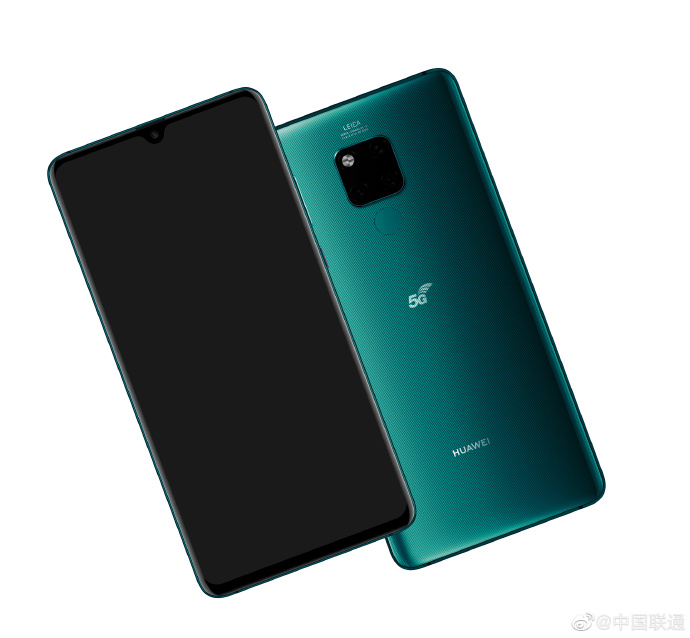
Huawei had first announced the Mate 20 X 5G model back in February. The phone made it to Switzerland a couple of weeks ago. It was the first country in the EU to get this Huawei flagship. Now, the company has launched the Mate 20 X 5G in the UK as well, and sales begin in June.
The 5G phone will support all the major networks in the UK like EE, O2, Three, and Vodaphone. The Mate 20 X 5G is very similar to its 4G edition, with the only major difference being the battery capacity. The new model features a 4200mAh battery as opposed to the 4G model’s 5000mAh battery. But the charging tech gets upgraded to 40W (instead of 22.5W on the 4G model!). The battery size reduction is probably due to space constraints caused by the addition of the Balong 5000 5G modem inside. Rest of the specifications remain the same as the regular Mate 20 X (you can find its full specs here!).
Interestingly, the Huawei Mate 20 X 5G is going to be a lot more expensive than in Switzerland. In the UK, the phone will start at £999 ($1278), which is way more than its price tag of CHF 997 ($987) in Switzerland.
Even with a battery reduction, the Mate 20 X 5G is a beast in terms of specs. With the Kirin 980 powering the device, the phone can handle everything thrown at it with ease. In the camera department, the phone does well all thanks to its 40MP f/1.8 triple camera setup. But the best feature of the phone is its beautiful 7.2-inch display supporting M-Pen stylus with 4096 levels of pressure sensitivity.
We have reviewed the Mate 20 X 4G model and we loved it! You can check out our review from below.
We use cookies on our website to give you the most relevant experience by remembering your preferences and repeat visits. By clicking “Accept”, you consent to the use of ALL the cookies.
This website uses cookies to improve your experience while you navigate through the website. Out of these, the cookies that are categorized as necessary are stored on your browser as they are essential for the working of basic functionalities of the website. We also use third-party cookies that help us analyze and understand how you use this website. These cookies will be stored in your browser only with your consent. You also have the option to opt-out of these cookies. But opting out of some of these cookies may affect your browsing experience.
Necessary cookies are absolutely essential for the website to function properly. This category only includes cookies that ensures basic functionalities and security features of the website. These cookies do not store any personal information.
Any cookies that may not be particularly necessary for the website to function and is used specifically to collect user personal data via analytics, ads, other embedded contents are termed as non-necessary cookies. It is mandatory to procure user consent prior to running these cookies on your website.