Advertisement

DJI unveils Romo, its first-ever robot vacuum, launching August 6

DJI has officially announced that it will launch its first-ever robot vacuum cleaner, named Romo, on August 6 at 8 PM (Beijing time). The company made the announcement through its official Weibo account, revealing a teaser poster with the product’s name and the slogan “Unmatched Power.” This move marks DJI’s formal entry into the smart home appliance segment after years of dominance in drones, gimbals, and action cameras.

DJI ROMO Robot Vacuum

Sources familiar with DJI’s internal roadmap say the company has spent over four years developing this product. The Romo is expected to leverage DJI’s core technologies in visual navigation, object avoidance, and intelligent path planning.

The teaser image offers the first clear look at the Romo system. It shows the robot vacuum paired with a docking station in two distinct forms. One appears with a Nothing-style semi-transparent or open structure, revealing the dock’s internal components such as the dustbin, water tank, and mop-cleaning system.

This version highlights the engineering beneath the surface and appears designed to showcase the hardware’s complexity and modular layout. The second variant features a fully enclosed white shell with smooth contours and a front-facing flap labeled “Romo.” This version emphasizes minimalism and is clearly designed to blend into modern home environments.

The robot itself follows a clean, circular layout with a low profile. It features front-facing sensors that are likely used for 3D navigation and obstacle detection. Twin side brushes are visible underneath, suggesting that it is built to sweep debris efficiently toward the central suction path. The visual design suggests a balance of functionality and aesthetics, consistent with DJI’s broader product philosophy.

Inside the open-style docking station, the layout appears highly organized. There are clearly marked zones for dust collection and water storage, as well as a rotating element that indicates support for automatic mop washing and drying. The design also hints at an automatic refill and self-cleaning system, similar to what’s seen in high-end models from brands like Roborock and Dreame.

In related news, DJI recently introduced the Agras T100, a high-performance agricultural drone designed for modern farming needs. The company has also launched the FlyCart 100, its new flagship cargo drone capable of carrying up to 80kg, featuring advanced safety systems for reliable transport.

For more daily updates, please visit our News Section.

Stay ahead in tech! Join our Telegram community and sign up for our daily newsletter of top stories! 💡

(Source)

Redmi Turbo 5 Pro May Arrive with Faster 100W Charging

Xiaomi could be planning on upgrading the fast charging speeds of its upcoming smartphones. It has just registered a new power brick with impressive fast charging speeds. So, we might be getting an upgrade on the charging speeds of upcoming devices like the Redmi Turbo 5 Pro.

Redmi Turbo 5 Pro Charging Speed Upgrade?

Just recently, China’s 3C certification platform listed new power bricks from Chinese tech giants like Xiaomi, Oppo, and Vivo (Via NotebookCheck). The three brands registered the charger with 100W output, with Xiaomi’s model featuring a 20 volt(V)/5 amp (A) system. These faster charging bricks are likely arriving with the next generation of phones that are expected to pack massive battery packs.

Redmi Turbo 4 Pro Pink Gold
Redmi Turbo 4 Pro in Pink Gold

To recall, the new Redmi Turbo 5 just had its key specs leaked, which revealed a new Dimensity 8500 and a humongous 7,000mAh+ battery pack. On the other hand, rumors have hinted at the Redmi Turbo 5 Pro taking it a step further with a mind-boggling 8,000mAh+ cell. So to keep up with the increase in battery capacity, the Turbo 5 Pro could get this new 100W charger, which marks a slight bump from 90W charging support on the Redmi Turbo 4 Pro.

The new Redmi Turbo 5 series might also make their global debut with POCO’s branding like last time. Although, details are still scarce at this moment. Keep in mind that this is still just an unconfirmed report, so take this news with a pinch of salt and stick around for more. In related news, Xiaomi has just shared a teaser for the Redmi 15 5G that is set to launch in the Indian market soon.

For more daily updates, please visit our News Section.

Tech enthusiast? Get the latest news first! Follow our Telegram channel and subscribe to our free newsletter for your daily tech fix! ⚡

Samsung Galaxy A17 5G: Camera Upgrade Confirmed, No Chipset Change

Samsung is getting ready to launch the Galaxy A17 5G later this year. The main upgrade is optical image stabilization (OIS) on the rear camera, a first for the A1x series. Samsung plans to use a spring-based OIS system that costs 20% less than regular OIS setups, making it affordable for an entry-level phone. The company is hoping this feature will help the A17 stand out from other budget phones.

Samsung Galaxy A16 5G

While the camera gets an upgrade, the chipset stays the same. The Galaxy A17 5G has shown up on Geekbench with the Exynos 1330, the same chip used in the Galaxy A14 5G and A16 5G. It’s a 5nm chip with two Cortex-A78 cores at 2.4GHz, six Cortex-A55 cores at 2.0GHz, and a Mali-G68 MP2 GPU. This means performance will likely be similar to the last two models.

The phone supports LPDDR4X and LPDDR5 RAM. The tested unit had 6GB RAM, but other versions may offer 4GB or 8GB, like the A16 5G. It also supports both UFS 2.2 and UFS 3.1 storage. The chip can run displays at 1080p+ with up to 120Hz refresh rate, but previous A1x models have only offered up to 90Hz, and that might not change. The software is Android 15 with One UI 7.

In short, the Galaxy A17 5G brings a better camera to Samsung’s budget range, but keeps the same performance.

For more daily updates, please visit our News Section.

Stay ahead in tech! Join our Telegram community and sign up for our daily newsletter of top stories!

(Source 1, 2, via)

Realme GT 8 and GT 8 Pro launch timeline leaks, dual-flagship strategy in play

Realme seems to be changing how it rolls out its flagship phones. According to a new leak, both the Realme GT 8 and GT 8 Pro are expected to launch together in October.

This would be a notable departure from the company’s recent pattern. Last year, Realme introduced the GT 7 Pro in November, but the standard GT 7 didn’t show up until May 2025. 

That split launch not only separated the spotlight between devices but also meant a considerable hardware gap. While the GT 7 Pro featured Qualcomm’s Snapdragon 8 Elite chip, the regular GT 7 settled for MediaTek’s Dimensity 9400e.

Realme GT 8 and GT 8 Pro with Snapdragon 8 Elite 2

This time, Realme appears to be aiming for parity. The leak suggests that both the GT 8 and GT 8 Pro will come powered by Snapdragon 8 Elite 2 (SM8850), Qualcomm’s upcoming flagship chip, expected to deliver major performance gains. 

The phones are also rumored to feature competitive upgrades in screen quality, periscope zoom, and battery life, putting it in direct contention with other top-tier Android flagships.

Realme GT 7 Pro

Speaking of which, the Realme GT 8 Pro could feature a flat 6.85-inch 2K OLED display from Samsung. The screen is expected to have the same AR anti-glare coating as the Galaxy S25 Ultra.

Fueling the phone will be a 7,000mAh+ battery put together in place with a metal middle frame. The phone will also reportedly support 100W fast charging. 

On the camera front, the standout is expected to be a 200-megapixel periscope telephoto sensor — possibly Samsung’s HP9 — which may also be used on Oppo’s upcoming Find X9 Pro.

That is all we know about the GT 8 Pro; the vanilla model is still in secrecy. But expect to learn more about them soon.

For more daily updates, please visit our News Section.

Stay ahead in tech! Join our Telegram community and sign up for our daily newsletter of top stories.

iQOO Z10R Launched in India with 120Hz Curved AMOLED Display, Dimensity 7400 and 5700mAh Battery Revealed

iQOO has launched the Z10R smartphone in India as part of its Z series. It comes with a curved AMOLED display, a large battery, IP68 and IP69 ratings for durability, and the latest Android 15 software. The phone will be available from July 29 through Amazon.in and the iQOO eStore.
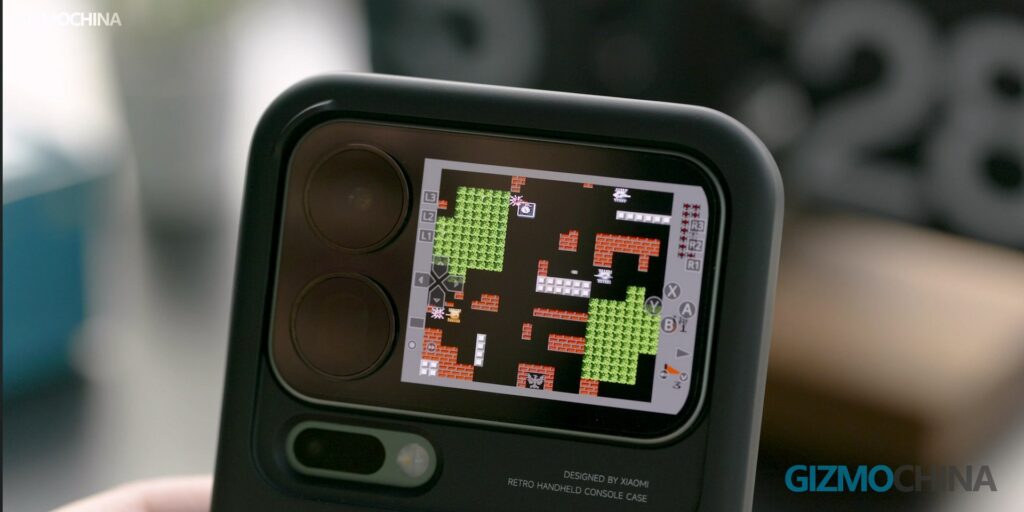
iQOO Z10R

The iQOO Z10R features a 6.77-inch Full HD+ AMOLED quad-curved display with a 120Hz refresh rate, HDR10+ support, and peak brightness of 1800 nits. The screen has SCHOTT Xensation α glass protection and a 19.9:9 aspect ratio.

It runs on the MediaTek Dimensity 7400 4nm processor with Mali-G615 MC2 GPU. The phone includes graphite cooling with a 13,690mm² total cooling area. It comes in 8GB and 12GB LPDDR4X RAM options, with 128GB or 256GB UFS 2.2 storage. Virtual RAM support goes up to 12GB.

The rear camera setup includes a 50MP Sony IMX882 main sensor with f/1.79 aperture and a 2MP Galaxycore sensor with f/2.4 aperture. The front camera is 32MP with f/2.45 aperture. Both front and rear cameras support 4K video recording at 30fps. The phone also includes Aura Light for better low-light photos.

It runs Android 15 with Funtouch OS 15 and will receive two major Android updates and three years of security updates. The phone has an in-display fingerprint sensor, stereo speakers, and USB Type-C audio. It supports dual SIM, Wi-Fi 6, Bluetooth 5.4, GPS, and 5G across multiple bands.

The phone is IP68 and IP69 certified for dust and water resistance and meets military-grade durability (MIL-STD-810H). It packs a 5700mAh battery and supports 44W fast charging.

Please Note: When you buy something using the links in our articles, we may earn a small commission at no cost to you.

Pricing & availability

The Z10R comes in Aquamarine and Moonstone colours. Prices are ₹19,499 for 8GB + 128GB, ₹21,499 for 8GB + 256GB, and ₹23,499 for 12GB + 256GB. Launch offers include ₹2,000 off with HDFC or Axis Bank cards or an exchange bonus, and up to 6 months no-cost EMI.

For more daily updates, please visit our News Section.

Stay ahead in tech! Join our Telegram community and sign up for our daily newsletter of top stories!

Samsung reveals all the changes behind Z Fold 7’s slim design

Samsung‘s Galaxy Z Fold 7 and Flip 7 are hitting shelves on July 25. This year’s models take foldable design to the next level, offering slimmer profiles, lighter builds, and stronger materials—all while improving durability and functionality.

Samsung Galaxy Z Fold 7

The Galaxy Z Fold 7 measures just 4.2mm when open and 8.9mm when folded, making it 48% thinner than last year’s Fold 6. At 215 grams, it’s even lighter than the Galaxy S25 Ultra, which weighs 218 grams. Samsung says its third-generation Armor FlexHinge is a key contributor to this transformation—27% slimmer and 43% lighter than before, using refined alloys and a new multi-rail design that allows smoother folding and helps reduce the visible crease.

The Fold 7’s 8-inch AMOLED inner screen also features a reworked display structure and a thicker layer of Ultra Thin Glass for added strength. A titanium lattice frame reinforces the overall build, while the cover display adopts a more natural 21:9 ratio similar to standard smartphones. It’s all protected by tougher materials, including Gorilla Glass Ceramic 2 and a new version of Samsung’s Advanced Armor Aluminum. For those interested, here are the key upgrades that make the Galaxy Z Fold 7 a solid choice.

Samsung Galaxy Z Flip 7

Meanwhile, the Galaxy Z Flip 7 trims down to 6.5mm when unfolded and 13.7mm folded, thanks in part to a 29% slimmer hinge that still supports Flex Mode. Despite its leaner frame, Samsung managed to squeeze in a larger 4,300mAh battery—a notable jump from the previous model. Space was freed up using a redesigned ultra-dense circuit board.

Visually, the Flip 7 now features a larger 4.1-inch Infinity Cover Display with dramatically reduced bezels (from 3.94 mm to 1.25 mm) and no more black notch.

Samsung’s latest foldables strike a balance between sleek design and everyday toughness. With thinner bodies, lighter weights, and stronger builds, the Fold 7 and Flip 7 mark a significant leap forward.

Don’t miss a thing! Join our Telegram community for instant updates and grab our free daily newsletter for the best tech stories!

For more daily updates, please visit our News Section.

(Source)

Snapdragon 8 Elite Gen 2 promises more power — without a price hike for 2026 flagships

With Qualcomm’s next-gen Snapdragon 8 Elite Gen 2 on the way, the next wave of Android flagships could deliver serious performance when they arrive in late 2025 and early 2026. And while better specs often mean higher prices, a new leak suggests this chip won’t push phone prices up — a rare win for buyers.

Qualcomm’s upcoming Snapdragon 8 Elite Gen 2, set to debut in late September, will be priced similarly to the current Snapdragon 8 Elite. That’s good news for flagship buyers, especially with memory prices on the rise — LPDDR5X DRAM costs are already up 5%, with more hikes likely by the end of the year, according to Weibo tipster DCS.

Built on TSMC’s 3nm process, the Snapdragon 8 Elite Gen 2 will feature second-generation Oryon CPU cores, reportedly delivering up to 25% better performance. Geekbench 6 scores have crossed 4,000 in single-core tests and hit around 11,000 in multi-core, if early numbers are to be believed.

The new Adreno 840 GPU is also expected to bring a 30% jump in graphics performance — enough to handle demanding tasks like 120Hz gaming or high-res video editing with ease. On top of that, AI processing upgrades will power advanced multi-modal AI features such as Samsung’s Real-Time Visual AI.

With a September 2025 reveal on the cards, Qualcomm’s Snapdragon 8 Elite Gen 2 looks set to deliver meaningful upgrades without driving prices up. If that holds true, Samsung’s Galaxy S26 could be one of 2026’s standout flagships for both power and value.

Tech enthusiast? Get the latest news first! Follow our Telegram channel and subscribe to our free newsletter for your daily tech fix!

For more daily updates, please visit our News Section.

(Source: DCS on Weibo)

Xiaomi Teases Redmi 15 5G for India, while leak confirms 7000mAh Battery, 144Hz Display & more

Xiaomi has started teasing the Redmi 15 5G for the Indian market. The teaser shows a side view of the phone and highlights its large battery, claiming up to 7.5 hours of standby time with just 1 percent charge. The phone will be sold on Amazon.in, mi.com, and in offline stores.

An early image leak has revealed most of the phone’s details. The Redmi 15 5G will feature a 6.9-inch Full HD+ screen with a 144Hz refresh rate. It will run on the Snapdragon 6s Gen 3 processor and pack a 7000mAh battery with 33W fast charging support. The rear camera setup includes a 50MP main sensor and a 2MP secondary camera. On the front, there is an 8MP selfie camera.

The phone has an IP64 rating for dust and splash resistance. NFC is listed as a feature, but it may not be available in all regions, including India. In some markets, the Redmi 15 5G is priced at RM 699, which is around USD 165, for the 8GB RAM and 256GB storage model. A 6GB RAM and 128GB storage variant is also expected to be available. Xiaomi is likely to make the official announcement later this week. The Indian release is expected in early August.

In other news, Xiaomi has reportedly cancelled the launch of the Xiaomi 15 Civi in India, signaling a shift away from the premium mid-range segment. The device, expected to be a rebranded Civi 5 Pro with high-end specs and Leica cameras, was likely dropped due to poor market response to its predecessor, the Xiaomi 14 Civi.

For more daily updates, please visit our News Section.

Stay ahead in tech! Join our Telegram community and sign up for our daily newsletter of top stories!

(Source)

Android 16 will be the last major upgrade for these Motorola devices

Motorola Android 16 last update

Google’s Android 16 has arrived months ahead of its usual release timeline. It’s already available for Google Pixels, and other brands, including Motorola, are also preparing for the rollout. Motorola has already begun inviting users to try Android 16 beta, and soon, it will start pushing the stable build.

With the Android 16 update, several Motorola devices will reach the end of the road. This means they will spend the rest of their lives running on the same version of Android. We’ve prepared a list of such Motorola devices. Check it out below to find out if you’ll need to upgrade next year.

These Motorola phones will receive Android 16 as their final major upgrade

  • Motorola Edge 40 Pro
  • Motorola Edge (2024)
  • Motorola ThinkPhone
  • Motorola Razr 2023 / Razr 40
  • Motorola Razr+ 2023 / Razr 40 Ultra
  • Motorola Moto Pad 60 Pro
  • Motorola Moto G85
  • Motorola Moto G55
  • Motorola Moto G35

The above list is mostly based on Motorola’s software update policy. If yours is on the list, you might need to upgrade sometime next year to continue receiving the latest features and enhancements.

Also read: Motorola phones confirmed to receive Android 16 update

When will Motorola start rolling out Android 16 update?

Motorola is a bit slower than its peers when it comes to software rollouts. The brand is still busy pushing out last year’s Android 15 update to several phones, but that doesn’t necessarily mean the next upgrade is far off. In fact, Motorola has already begun inviting participants to try the Android 16 beta, but the seats are very limited, and it’s only for specific regions and devices.

Full-fledged public beta testing is still a missing piece for Motorola devices, which are offered by many of its competitors. You can check out the Current Testing Opportunities page on the forum to see available testing opportunities. Good luck if your device made the cut.
As for the release date, Motorola hasn’t announced it yet, and it probably won’t do it at all. We only become aware of it when a device actually receives the update. However, based on previous rollouts, Motorola users can expect Android 16’s rollout to go live sometime around September or October.

Don’t forget to visit our Android 16 page regularly to stay up-to-date with the latest developments. You can also follow our Telegram channel and subscribe to our free newsletter to get the latest Oppo update news delivered straight to your inbox.

Sony Launches Massive 98” BRAVIA 5 4K Mini LED TV in India at ₹6.49 Lakh

Sony India has launched the BRAVIA 5 98-inch TV (model K-98XR55A), the largest model in its BRAVIA lineup. The 55-inch, 65-inch, 76-inch, and 85-inch models of the BRAVIA 5 Series TVs were introduced last month. The new 98-inch variant is designed to offer a full cinematic experience at home with its large screen, premium visuals, and immersive sound.

Sony BRAVIA 5 4K Mini LED TV

The 98-inch 4K UHD display uses Mini LED technology and is powered by the XR Processor, which combines AI and cognitive intelligence to process visuals and sound the way the human brain does. It features a 120Hz refresh rate and includes XR Backlight Master Drive, XR Contrast Booster 10, and XR TRILUMINOS PRO for improved contrast, peak brightness, and wide color range. The TV supports HDR10, HLG, and Dolby Vision.
The TV comes with a 40W speaker system and Acoustic Multi-Audio for accurate sound positioning. It also supports Dolby Atmos for spatial sound. It runs on Google TV, based on Android, and supports Wi-Fi 6 and Bluetooth 5.3. Connectivity options include four HDMI ports with support for 4K at 120Hz, eARC, and VRR, and two USB ports. Included in the box are a power cord, remote control, stand and setup guides.
The BRAVIA 5 also features Prime Video Calibrated Mode, which automatically optimizes picture settings for content on Prime Video. This is in addition to Netflix Adaptive Calibrated Mode and Sony Pictures Core Calibrated Mode. Studio Calibrated Mode is available for matching the filmmaker’s intended picture output. Sony Pictures Core allows access to Sony films in high-resolution formats. The TV weighs 71.4 kilograms.

Pricing & availability

It is priced at ₹6,49,990 and is now available across Sony Centers, ShopatSC.com, major electronics stores, and top e-commerce platforms in India. Launch offers include a three-year warranty, ₹25,000 cashback on select credit cards, and a fixed EMI of ₹19,995 per month.

Please Note: When you buy something using the links in our articles, we may earn a small commission at no cost to you.

For more daily updates, please visit our News Section.

Tech enthusiast? Get the latest news first! Follow our Telegram channel and subscribe to our free newsletter for your daily tech fix!

Samsung acknowledges One UI 7 black line bug and offers a solution

Samsung’s latest One UI 7 update is packed with new features, but for some Galaxy Z Flip owners, it’s also brought along an annoying visual glitch. Several users have noticed a black line appear on the main screen after using Smart View. Now, Samsung has acknowledged the issue (via Sammy Fans) and is working on a fix.

Samsung Galaxy Z Flip 6

The glitch seems to appear when users fold their phone and disconnect from Smart View while the screen ratio is set to “Full screen on connected device.” The black line that shows up is temporary, but it can be distracting. According to a Samsung community moderator, the issue mostly affects Z Flip models. There haven’t been similar reports from users of the Galaxy Z Fold7 or the Galaxy S25 series so far.

Samsung has shared a simple workaround in the meantime. To avoid triggering the bug, change the Smart View settings by swiping down to open Quick Settings, tapping the Smart View icon, connecting to your device, then selecting the floating Smart View button. From there, go to More Options > Settings, and choose Full screen on phone. This should stop the black line from appearing when you fold the device.

While the bug doesn’t affect overall performance, it can take away from the otherwise smooth experience of the 6.7-inch AMOLED display on the Flip series. Samsung says it’s preparing a software update to permanently fix the issue. Once available, users will be able to install it by heading to Settings > Software update > Download and install.

Samsung confirmed the problem on July 24 and is expected to roll out a fix soon. If you’re still seeing the issue after trying the workaround, you can reach out to Samsung support.

Don’t miss a thing! Join our Telegram community for instant updates and grab our free daily newsletter for the best tech stories!

For more daily updates, please visit our News Section.

OnePlus Pad Lite vs Redmi Pad 2: Which Budget Android Tablet Is Right for You?

The sub-₹20,000 Android tablet space in India has suddenly become very interesting, thanks to the near-simultaneous launches of the OnePlus Pad Lite and the Redmi Pad 2. Both tablets are priced aggressively, offer large 11-inch displays, run Android 15 out of the box, and support 4G LTE connectivity. But despite similar footprints, these two devices serve slightly different users and use cases. After spending time evaluating both spec sheets, software integrations, and value propositions, here’s a breakdown of how the two stack up.

Redmi Pad 2

1. Display and Design

Both tablets feature 11-inch LCD panels with 90Hz refresh rates, but the Redmi Pad 2 maintains a technical edge on paper. Its 2.5K (2560×1600) resolution delivers a sharper 274ppi pixel density compared to the OnePlus Pad Lite’s HD+ panel at 1920×1200. The Redmi Pad 2 also gets brighter in outdoor conditions, peaking at 600 nits, while the OnePlus Pad Lite caps out at 500 nits.

Both displays are TÜV Rheinland certified for low blue light and flicker-free viewing. However, Redmi adds more with circadian-friendly tuning, DC dimming, wet-touch support, and Reading Mode for extended comfort.

In terms of design, the differences are minor but noticeable. The Redmi Pad 2 is slightly thinner at 7.36mm and lighter at 510–519g, compared to the OnePlus Pad Lite’s 7.39mm thickness and 530g weight. While neither tablet feels bulky, Redmi’s tighter dimensions and extra display clarity make it a better choice for prolonged reading, streaming, or stylus-based tasks.

Please Note: When you buy something using the links in our articles, we may earn a small commission at no cost to you.

2. Performance and Software

Under the hood, both tablets share the same 6nm MediaTek Helio G100 SoC, a mid-tier chip with Cortex-A76 and Cortex-A55 cores and a Mali-G57 GPU. Day-to-day performance, browsing, video playback, and productivity apps should be nearly identical.

Where things diverge is the software. OnePlus Pad Lite runs OxygenOS 15.0.1, while Redmi Pad 2 runs HyperOS 2, both based on Android 15. OxygenOS comes with useful integration tools like Screen Mirroring, Clipboard Sharing, and Shared Gallery, which will appeal to existing OnePlus smartphone users. On the other hand, HyperOS introduces Circle to Search, Face Unlock, Gemini, and deeper smart home integration across Xiaomi’s ecosystem.

For stylus fans, Redmi wins again. It supports the Redmi Smart Pen with 4096 pressure levels and ultra-low latency. OnePlus offers no stylus input.

3. Speakers, Battery, and Connectivity

Each tablet offers a quad-speaker setup, and both support Hi-Res Audio, but Redmi Pad 2 adds Dolby Atmos and even a 3.5mm headphone jack, a rare bonus in this price range. OnePlus, however, touts its Omnibearing Sound Field, which adapts speaker directionality depending on orientation, enhancing the experience while watching videos or gaming.

Battery life is competitive on both ends. The OnePlus Pad Lite packs a slightly larger 9340mAh cell with 33W fast charging, while the Redmi Pad 2 houses a 9000mAh unit with slower 18W charging (and a 15W charger in the box). So, if fast top-ups matter, OnePlus gets the edge here.

Both offer Wi-Fi and LTE variants. The Redmi Pad 2 cellular model supports a broader band spectrum, dual-SIM functionality, and GPS, making it the better choice for those wanting a connected tablet on the go.

4. Cameras

Neither of these tablets is a photography champion, but the Redmi Pad 2 again edges out slightly with its 8MP rear and 5MP front sensors, both supporting HDR and document modes. OnePlus sticks to 5MP shooters front and back, serviceable for video calls but not much else.

5. Pricing

The base models of both tablets start at ₹12,999 (after bank offers), with the Redmi Pad 2 Wi-Fi (4GB/128GB) and OnePlus Pad Lite Wi-Fi (6GB/128GB) priced similarly. For LTE variants, Redmi’s 6GB/128GB Cellular and OnePlus Pad Lite 8GB/128GB LTE both cost ₹17,999 (₹14,999 effective in OnePlus’ case).

Redmi offers more flexibility with three configurations and up to 256GB of storage, while OnePlus sticks to two SKUs with identical storage. If you need LTE, 8GB RAM, and maximum storage, Redmi gives you more for the same price.

6. So, Which One Should You Buy?

If display quality, stylus support, GPS, and cross-platform sharing features matter to you, the Redmi Pad 2 is the more well-rounded option. Its brighter, sharper display, higher-res cameras, and 256GB variant offer better long-term value, especially for students and creatives.

But if you’re already deep into the OnePlus ecosystem or want faster charging and a slightly larger battery, the OnePlus Pad Lite makes a lot of sense, particularly for media consumption and casual productivity.

At these prices, both tablets deliver serious bang for the buck. But if we had to pick one for most users, Redmi Pad 2 edges it out with a more complete feature set and better display, even if it charges a bit slower.

For more daily updates, please visit our News Section.

Stay ahead in tech! Join our Telegram community and sign up for our daily newsletter of top stories! 💡

Xiaomi 15 Civi reportedly cancelled, brand may move away from premium mid-range segment

Xiaomi appears to be shifting gears in India once again. As per a report from SmartPrix, the company has reportedly decided to cancel the launch of the Xiaomi 15 Civi smartphone in India. This move comes amidst signs of a strategy shake-up, particularly around the brand’s push into the premium mid-range segment. While details are still emerging, the source claims the device was deep in development before plans were called off.

Xiaomi 15 Civi cancellation marks shift in focus

Xiaomi CIVI 5 Pro
Xiaomi Civi 5 Pro

The Xiaomi 15 Civi was positioned to be a notable upgrade over its predecessor, the 14 Civi, which launched in India in June 2024. It was expected to be a rebranded version of China’s Xiaomi Civi 5 Pro, featuring a 6.55-inch micro-curved display with a 1.5K resolution, 120Hz refresh rate, and a peak brightness of 3,200 nits. Powering the device was the Snapdragon 8s Gen 4 processor, paired with up to 16GB of LPDDR5X RAM and 512GB of UFS 4.0 storage.

On the imaging front, the phone was planned with Leica-backed triple rear cameras, including a 50-megapixel main sensor, a 12-megapixel ultra-wide lens, and a 50-megapixel telephoto. A 50-megapixel selfie camera was also in the mix, powered by a 6,000mAh battery with 67W wired fast charging.

The cancellation could indicate that Xiaomi is pulling back from the Rs 35,000 to Rs 45,000 segment, likely influenced by underwhelming performance of the Xiaomi 14 Civi. That model is currently retailing at a reduced price, hinting at weaker-than-expected demand. With this move, Xiaomi might be redirecting focus towards its budget-friendly Redmi series instead of doubling down on mid-premium offerings.

For more daily updates, please visit our News Section.

Stay ahead in tech! Join our Telegram community and sign up for our daily newsletter of top stories! 

(source)

Purported iQOO Z10 Turbo Pro+ with Dimensity 9400+ spotted on Geekbench, arriving soon with 8000mAh+ battery

iQOO is reportedly working on two new Z10-series phones for the Chinese market. These include the iQOO Z10 and Z10 Turbo Pro+ (tentative name). As per reports, both devices are expected to land in China by next month (August). Ahead of the expected launch, the alleged Z10 Turbo Pro+ has surfaced on Geekbench, revealing key details.

Alleged iQOO Z10 Turbo Pro+ Geekbench listing

iQOO Z10 Tuirbo Pro+ Geekbench listing

As shown above, a new Vivo phone with the V2507A model number has appeared on Geekbench. The chipset details that have surfaced through the listing reveal that it is powered by the Dimensity 9400 Plus chipset.

The listing also reveals that the device has 16GB of RAM and Android 15. It scored 2882 and 8762 points in the single-core and multi-core tests of Geekbench, respectively.

This device has been previously spotted in the databases of China’s MIIT and 3C certification platforms. While the MIIT listing revealed that it will pack an 8000mAh (rated value) battery, the 3C certification revealed that it may support 90W charging.

The other specs of the iQOO Z10 Turbo Pro+ could be identical to the Snapdragon 8s Gen 4-powered Z10 Turbo Pro, which debuted earlier this year in China. Therefore, the upcoming Pro+ edition is expected to feature a 6.78-inch AMOLED 1.5K 144Hz display housed inside an IP65-rated body. It may feature a 16-megapixel front camera and a 50-megapixel (main, OIS) + 8-megapixel (ultra-wide) dual-camera system.

The Z10 Turbo Pro+ is expected to ship with other specs, such as LPDDR5x RAM, UFS 4.1 storage, dual speakers, and an in-screen fingerprint sensor. It will run on OriginOS 5-based Android 15.

For more daily updates, please visit our News Section.

Stay ahead in tech! Join our Telegram community and sign up for our daily newsletter of top stories! 

(via)

Redmi 15 5G specs leak reveals 144Hz display, 7000mAh battery, 50MP dual cameras, and more

Redmi is expected to unveil the Redmi 15 series of smartphones in multiple markets in the coming days. While the lineup is said to include the Redmi 15 5G, Redmi 15C 5G, Redmi 15 (4G), and Redmi 15C (4G), all of these are unlikely to launch simultaneously. The rumor miil has already leaked the key specifications and render of the Redmi 15C (4G). Now, a leaked poster of the Redmi 15 5G has emerged to reveal almost everything about it.

Redmi 15 5G specifications (rumored)

Redmi 15 5G key specifications-

As can be seen in the above poster, the Redmi 15 5G’s two main features are its display and battery. The phone has a 6.9-inch LCD panel with FHD+ resolution and supports a 144Hz refresh rate, which appears to be an overkill for a mid-range phone. It will be the first Redmi phone with a 7,000mAh battery to be sold in markets outside of China. It will come with support for 33W fast charging.

The Redmi 15 5G is powered by the Snapdragon 6s Gen 3 processor and comes with up to 8GB of RAM, 8GB of virtual RAM, and up to 256GB of internal storage. It features a 50-megapixel + 2-megapixel dual rear camera and an 8-megapixel front-facing camera. The phone runs on Android 15 with HyperOS 2.0 pre-installed.

Redmi 15 5G will be available in Malaysia in three colour options: black, champagne, and green. The starting price is set at MYR 699 (approximately $165). In Malaysia, the device goes up against models like the Oppo Reno 14F 5G, Oppo A5 5G, Infinix Note 50x, Honor X9c Smart, and Samsung Galaxy A16 5G

For more daily updates, please visit our News Section.

Stay ahead in tech! Join our Telegram community and sign up for our daily newsletter of top stories! 

(via)

Huawei Pura 80 Ultra vs Pro: Is the $500 Extra Really Worth It?

The Huawei Pura 80 Ultra and Pura 80 Pro represent Huawei’s latest flagship push, each tailored to different premium users. With both phones offering stunning design, powerful cameras, and top-end displays, the real question lies in how much extra value the Ultra brings over the Pro’s more affordable price. This comparison matters for anyone deciding between Huawei’s best, whether to go all-in or stick with high-end essentials.

1. Design and Display

Huawei Pura 80 ultra
Huawei Pura 80 Ultra

Build and Feel:
Both models feature premium materials: a glass front and back with an aluminum frame, and both are IP68/IP69 rated for water and dust resistance. However, the Pura 80 Ultra feels more solid and flagship-grade due to its slightly heavier build and second-gen Crystal Armor Kunlun Glass. This added durability justifies its higher tier. The Pura 80 Pro shares the same dimensions but uses standard Kunlun Glass 2, making it slightly lighter but offering slightly less resilience in extreme conditions.

Display Quality:
Both phones sport a 6.8-inch LTPO OLED display with 1B colors, HDR Vivid, 120Hz refresh rate, and 1440Hz PWM dimming, delivering stunning visuals and peak brightness of 3000 nits. In day-to-day use, the difference is negligible, but the Ultra’s upgraded screen protection means it’s better suited for long-term durability. Both provide nearly identical visual quality and brightness.

Verdict:
While both are stunning in design and display, the Pura 80 Ultra offers a more rugged premium build and enhanced glass protection, making it the better choice for users seeking both elegance and added durability.

2. Specifications

Huawei Pura 80 Pro
Huawei Pura 80 Pro

Performance:
The Pura 80 Ultra runs on the new 7nm Kirin 9020 chipset paired with the Maleoon 920 GPU, offering advanced processing and power efficiency. Its 16GB RAM configuration ensures smoother multitasking compared to the 12GB RAM options on the Pura 80 Pro. The Pro also lacks clear chipset details but seems less tuned for extreme multitasking or heavier tasks. In high-performance gaming or editing, the Ultra will hold up better under pressure.

Battery and Charging:
Both models come with a 5170 mAh battery internationally (5700 mAh in China), but charging speeds set them apart. The Ultra supports 100W wired and 80W wireless charging across all regions, whereas the Pro offers only 66W wired charging outside China. The Ultra also supports both 20W reverse wireless and 18W reverse wired charging, offering more flexibility. For international users, especially, the Ultra brings more complete fast-charging capabilities.

Verdict:
The Pura 80 Ultra outperforms the Pro in both raw performance and charging versatility, making it the more future-proof option for power users and international buyers.

3. Camera

Huawei Pura 80 Ultra

Main and Secondary Lenses:
The Ultra houses a quad-camera setup, including two periscope telephoto lenses (3.7x and 9.4x optical zoom), in addition to a 1.0″ type 50MP main sensor and a 40MP ultrawide. The Pura 80 Pro features a triple setup with a 48MP telephoto lens (4x zoom) and similar wide and ultrawide sensors. The Ultra’s dual telephoto system offers significantly better zoom versatility and maintains detail even at extreme distances. Also, the Ultra uses the same large sensor across its zoom lenses, leading to more consistent image quality.

Selfie Camera:
Both phones have a 13MP ultrawide selfie camera with autofocus, capable of 4K recording and HDR. In practice, there’s little difference in selfie output, but the Ultra may have a slight edge in software tuning thanks to its higher-tier processing power.

Verdict:
The Ultra leads in camera hardware, especially in telephoto versatility. It’s the superior option for photography enthusiasts or professionals who need reliable zoom and high detail across focal lengths.

4. Pricing

The Huawei Pura 80 Ultra is priced at around $1500, while the Pura 80 Pro sits at approximately $1000. The $500 difference reflects the Ultra’s superior chipset, larger RAM, dual periscope lenses, and more robust charging options.

For users seeking value and core flagship features, the Pura 80 Pro offers excellent performance for its price. However, for those prioritizing top-tier zoom photography, longer-term durability, and ultimate power, the Ultra justifies the premium.

Disclaimer:
Prices are approximate and may vary based on country, region, and applicable taxes.

5. Conclusion 

Huawei Pura 80 Pro
Huawei Pura 80 Pro

The Pura 80 Ultra stands out with its dual periscope telephoto cameras, upgraded Crystal Armor Kunlun Glass, 100W charging globally, and a higher RAM configuration. It also brings more advanced satellite calling features in China. These upgrades are not just incremental but impactful for power users, photographers, and travelers needing rugged reliability.

Verdict:
The Huawei Pura 80 Ultra is a full-fledged ultra-premium flagship built for professionals and enthusiasts who demand the best of Huawei’s tech. Meanwhile, the Huawei Pura 80 Pro is a refined flagship that offers excellent performance at a much lower price, making it ideal for those who want a top-tier experience without the ultra-premium cost.

Choose the Ultra for maxed-out specs, or go with the Pro for excellent value.

Read More:

Nokia could be planning a comeback — seeking new smartphone partner

Nokia might be eyeing a return to the smartphone scene — though its latest move raised more questions than answers. Nokia’s community manager recently posted an open call on the r/Nokia subreddit, inviting “large-scale mobile manufacturers” to explore partnership opportunities via nokia.com/partners. The post, however, has since been deleted, adding a curious twist to an already unusual approach.

Nokia company logo

The now-deleted post stirred fresh speculation about Nokia’s future in smartphones. While reaching out to potential manufacturing partners on Reddit seems like an odd choice for serious business talks, the fact that Nokia floated the idea publicly suggests it’s at least considering a return to the market. After all, its long-running partnership with HMD Global — the brand behind recent Nokia phones — is winding down, with HMD reportedly shifting focus to its own devices. Nokia, meanwhile, has stayed in the feature phone space, reviving classics like the 3310.

HMD’s licensing deal reportedly expires in 2026, giving Nokia the freedom to seek new manufacturing partners. Past collaborators like Foxconn or Wingtech — who reportedly handled over half of Nokia’s smartphone production in earlier years — could be in the mix. The goal likely remains the same: affordable devices with global reach, backed by Nokia’s strong patent portfolio, especially in 5G tech.

Under HMD, Nokia’s smartphones, like the XR21, focused on sustainability and rugged design but struggled to impress on software support and specs. A new partner could offer a chance to shake off that reputation.

Even though the Reddit post was short-lived, it hints that Nokia isn’t ready to leave the smartphone world behind. Whether this was a marketing misstep or an early move in a bigger comeback plan, it’s a story worth watching.

Don’t miss a thing! Join our Telegram community for instant updates and grab our free daily newsletter for the best tech stories!

For more daily updates, please visit our News Section.

After flagship Phone (3), Nothing could shift focus to ‘Lite’ or ‘T’ series

Fresh off the launch of its premium Phone (3), Nothing may be switching gears. A new leak suggests the company is now exploring more affordable “Lite” or “T” branded smartphones — a move that could broaden its appeal beyond the high-end market.

Indian tipster Yogesh Brar posted on X that Nothing is considering budget-focused models after its “Pro” line didn’t quite hit the mark. The only recent “Pro” offering — the Phone (3a) Pro — was a modest upgrade over the regular Phone (3a), priced at $459 compared to $379. Brar, who previously predicted Nothing’s three-phone rollout in early 2025, now claims the company may aim even lower in price.

There are no confirmed specs yet, but the “Lite” or “T” monikers point to streamlined versions of existing models — perhaps with simplified hardware to cut costs. That could mean fewer premium materials, toned-down camera setups, or a more affordable chip like one from Qualcomm’s Snapdragon 7 series.

Still, fans can likely expect Nothing’s trademark transparent aesthetic and a clean and thoughtful UI. The idea seems to be bringing the brand’s unique identity to more accessible price points — potentially lowering the barrier for buyers considering a switch to Nothing.

With the Phone (3), launched on July 1 for ₹79,999 (~$950), receiving mixed feedback due to its price and divisive camera design, these new budget models could help Nothing reach a wider audience — especially in markets like India and Southeast Asia.

If the rumors pan out, Nothing’s next move might not be about chasing specs, but about making its signature style available to more people.

Don’t miss a thing! Join our Telegram community for instant updates and grab our free daily newsletter for the best tech stories!

For more daily updates, please visit our News Section.

OnePlus 15T could be priced lower than the 13T, hints new leak

OnePlus seems to be setting the stage for 2026 with the upcoming OnePlus 15T — a compact flagship that could challenge rivals like the Xiaomi 16 and Samsung Galaxy S26. And if a new leak is anything to go by, it might do so with a more tempting price tag than its predecessor.

OnePlus 15T Concept Render

On July 22, tipster Digital Chat Station claimed on Weibo that the OnePlus 15T will carry a “more attractive price” than the OnePlus 13T’s CNY 3,999 (roughly $470) launch price. Whether that means an actual price cut or simply better value remains to be seen, but it has sparked some early excitement.

The OnePlus 13T (our review), launched in April 2025 (13s in India), drew mixed reviews for its dual rear setup, USB 2.0 port, lack of wireless charging, and a basic IP65 rating instead of IP68. The 15T is expected to address at least some of those shortcomings, with a triple-camera setup (main, ultrawide, and telephoto), a 3D ultrasonic fingerprint sensor, and wireless charging support.

The phone is expected to stick with a 6.3-inch display but will reportedly be powered by Qualcomm’s yet-to-be-announced Snapdragon 8 Elite Gen 2, promising up to 25% faster CPU performance. The battery could get a significant bump too — up to 7,000mAh from the 13T’s 6,260mAh — with 80W wired charging, making it a standout in endurance for a compact flagship. Running OxygenOS 16 based on Android 16, the 15T may also feature some advanced AI-powered tools as well.

OnePlus 15T
OnePlus 15T (Last Phone on the Right)

While global pricing remains unclear, a US launch at around $600 could make the 15T a serious contender — especially against compact flagships like the Galaxy S26. For reference, the 6.2-inch Galaxy S25 is currently listed on Samsung’s official US website and Amazon for $799.

The OnePlus 15T leak suggests the phone is set to deliver triple cameras, a huge battery, and possibly a better price than the 13T — a combination that could make it one of the most interesting compact phones to watch in 2026.

Don’t miss a thing! Join our Telegram community for instant updates and grab our free daily newsletter for the best tech stories!

For more daily updates, please visit our News Section.

Galaxy F56 shines in teardown video with near-top repairability score

The Samsung Galaxy F56, launched in May 2025, is turning heads — not just for its specs or price, but for how easily it can be taken apart. A new teardown video gives us a look inside the mid-range phone and shows that Samsung might finally be getting serious about long-term repairability.

On July 22, YouTube channel PBKreviews shared a detailed disassembly of the Galaxy F56 5G. The process kicks off with prying off the glass back, which is held in place by adhesive — fairly standard these days. From there, a handful of Phillips screws are removed to reveal the phone’s internals. What stands out is the clean layout and modular design: a plastic frame, protective rubber gaskets around ports, and a large 6,000mAh battery that’s relatively easy to remove despite the adhesive.

Inside, the F56 is powered by Samsung’s own Exynos 1480 chip and sports a 6.74-inch Super AMOLED+ display. Thanks to its repair-friendly build, the phone earned a strong 9/10 repairability score — one of the best ratings for a Samsung phone in this segment.

PBKreviews praised the phone’s easy battery replacement, accessible charging port, and good availability of spare parts. However, it did lose minor points in two areas: internal organization (some clutter made parts slightly harder to reach) and screen repairs, which require extra care to avoid damage — a common issue in AMOLED phones. These two areas each scored 1.5 out of 2.

At just 7.2mm thick, with Gorilla Glass Victus+ protection, the Galaxy F56 manages to balance durability with repairability — a rare combo in the mid-range space. Priced around ₹29,999 (~$300) for the 8GB/256GB model, it also promises six years of software support, making ease of repair a key long-term advantage.

With the EU pushing brands toward user-replaceable batteries, Samsung’s move with the F56 could be a sign of things to come. Curious to see the phone opened up? You can watch the full teardown on YouTube.

Don’t miss a thing! Join our Telegram community for instant updates and grab our free daily newsletter for the best tech stories!

For more daily updates, please visit our News Section.