Lenovo had earlier teased the launch of Lenovo Z6 Pro smartphone during the Mobile World Congress 2019 last month in Barcelona, Spain. However, instead of launching the smartphone, the company just revealed that the phone will make its debut soon.
Now, Lenovo Group Vice President Chang Chengfa has officially announced that the company’s next flagship smartphone Lenovo Z6 Pro will be unveiled on March 27. He said that people won’t have to wait for the device and he calls it “new species” and “new experience”, hinting that it’ll be a special device.
In addition to that, it mentions the word “HYPER VIDEO” but nothing much is known about this feature. If nothing unexpected, this will be the main function of the Lenovo Z6 Pro smartphone. Earlier, it was revealed that the “Hyper Videos” will be the trend of the 5G era.
Although he didn’t explain what Hyper videos are, he did say they will be transferred at higher speeds than current videos. Phones, including Z 6 Pro, will record this hyper videos will feature new camera technologies.
Mr. Chang finally revealed that the Lenovo Z6 Pro will launch in China in June with support for 5G. The company announced a 5G partnership with China Unicom, so the Z6 Pro will most definitely be available on the carrier.
The phone’s launch, which is scheduled to take place on 27th March, is unexpected as earlier the company had revealed that the Z6 Pro will be launched in June 2019 with support for 5G. There’s a possibility that the non-5G variant could launch this month while the 5G model will be launched in June.
The company’s current flagship smartphone — Lenovo Z5 Pro, is already ahead of the competition since it had launched the Lenovo Z5 Pro GT as the world’s first smartphone powered by Snapdragon 855 SoC in December 2018. It is also the first smartphone ever to feature 12GB of RAM.
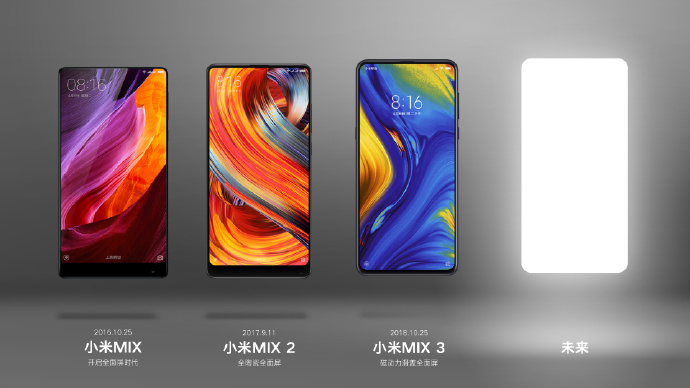
In October last year, Xiaomi had introduced the Xiaomi Mi MIX 3 smartphone and its 5G edition was announced in Europe in the previous month. Through a new Weibo post, the company has teased the arrival of a new Mi MIX series phone. Could it be the Xiaomi Mi MIX 4?
Neither the teaser nor the Weibo post has any mentioning of the Mi MIX 4 moniker. However, the image suggests that it is the next flagship model in the series. In October 2016, Xiaomi had launched the Mi MIX concept phone with ceramic rear and tri-bezeless display. The Mi MIX 2 that was unveiled in November 2017 arrived with the same design.
The handset was succeeded by Mi MIX 3 in October 2018. It had arrived with a slider design which allowed it to boast a higher screen-to-body ratio. The company had also announced the Mi MIX 2S as an upgraded edition of the Mi MIX 2S in March 2018. There is no confirmation on whether the company has any plans to launch a phone with Mi MIX 3S moniker. The arrival of Mi MIX 3S seems unlikely since it has recently launched the Mi MIX 3 5G edition. Probably, the company could be hinting the arrival of the Mi MIX 4.
The Mi MIX phones are usually introduced in early fourth quarter of the year. Now that the company has released a teaser for an upcoming Mi MIX phone, it appears that the Mi MIX 4 may debut early this year. Each generation of Mi MIX series have offered surprises in design. Hence, the Mi MIX 4 is expected to offer a higher screen space than the Mi MIX 3. It is also rumored to arrive with triple camera setup equipped with a periscope lens.
A recent report had revealed that the Xiaomi may soon announce the Xiaomi Mi MIX 3 5G phone in China. It is advisable to wait for further reports to confirm whether the company could be teasing the Mi MIX 3 5G edition for China or the Mi MIX 4 with a surprising new design.
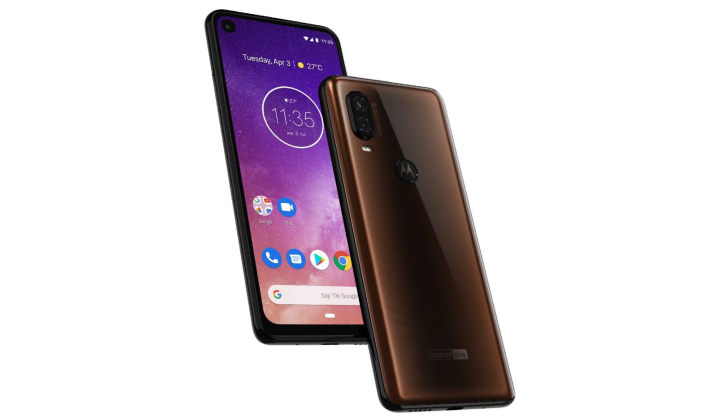
Recent reports have revealed that the Motorola One Vision is an upcoming Android One phone from the company. The same smartphone is expected to release in China as Motorola P40 as the successor for the Motorola P30 phone from last year. Key details on the specs had appeared in the previous week. A leaked render of the Motorola One Vision has appeared to reveal its front and rear design.
The Motorola One Vision can be seen sporting a tall aspect ratio screen with a punch-hole camera cutout on its top-left corner. The brown colored back panel of the phone features a vertical dual camera module followed by an LED flash. The Motorola logo on the rear will be embedded with a fingerprint reader. The Android One logo can be also seen towards the bottom edge of the rear shell of the phone. An external speaker and USB-C port is available on the bottom edge of the device.
A recent leak had revealed that the Motorola One Vision will be arriving with a 21:9 tall aspect ratio display that includes a camera cutout of 174 x 167 pixels on the display. The screen is said to support a full HD+ resolution of 1080 x 2560 pixels.
The smartphone is expected to get unveiled as the first Exynos powered device from Motorola. It is likely to be fueled by the Exynos 9610 SoC. The chipset could be coupled with 3 GB or 4 GB RAM. It may hit the market in storage choices such as 32 GB, 64 GB and 128 GB. It may come packed with a 3,500mAh battery.
The Motorola One Vision is expected to feature 48-megapixel primary sensor in its dual camera setup. By default, it will be able to snap photos of 12-megapixel resolution. The Exynos 9610 will assist the One Vision to capture 48-megapixel shots through Quad Color Filer Array at slower speeds of 18 fps. The Long Exposure feature that is expected to be available on the Motorola One Vision will let users to capture optimized photos in dim-light conditions. The smartphone is expected to go official in the second quarter of the year.
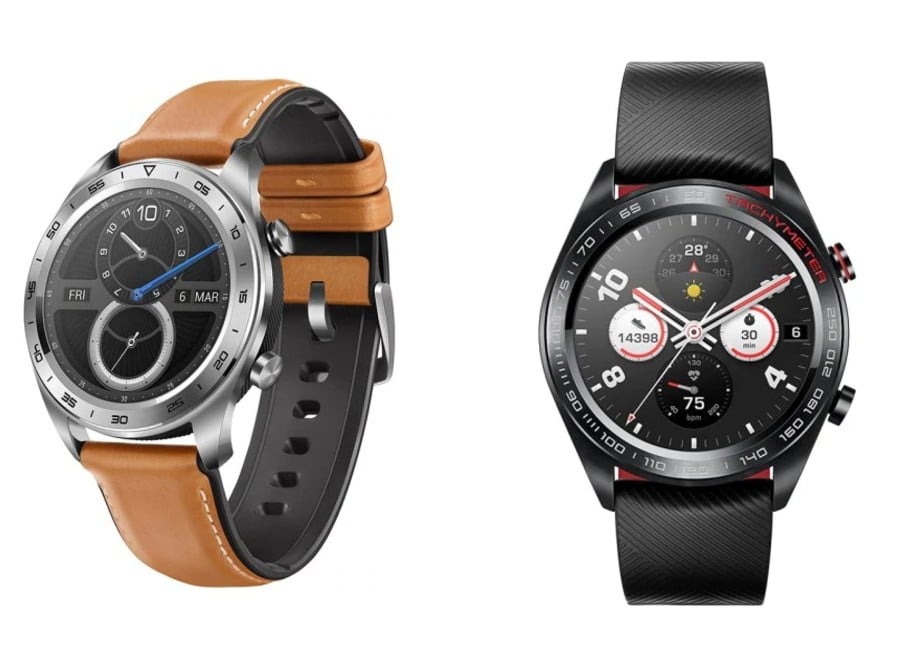
The recently concluded Mate 20 event saw the debut of Huawei’s long-awaited Watch GT. Honor, the popular sub-brand of the Chinese consumer electronics manufacturer promptly came up with the equally-anticipated Honor Magic smartwatch after that. The Huawei Honor Magic smartwatch not only became an instant hit among fitness purists who fancy monitoring their health and various activities, but it also garnered huge popularity among tech-loving and fashion-conscious men.
Taking its undying demand into consideration, Honor has now teamed-up with GeekBuying to offer its Honor Magic smartwatch at a reduced price. You can avail noteworthy discounts on the smartwatch shipping either from Poland or Hong Kong-based warehouse.
On top of that, you can get additional discounts by applying specific coupon codes at the time of checking out. We’ll reveal more details about that in just a bit.
Huawei Honor Magic Smart Watch (EU Stock)
The Honor Magic smartwatch would normally set you back $249.99, but you can now buy it for only $159.99 on GeekBuying. Moreover, you can extend this 36 percent discount by applying coupon code OQBUSAUV.
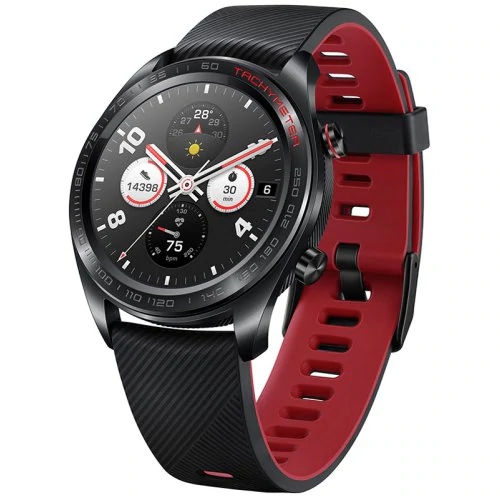
The aforesaid coupon helps you save $15 more by reducing the retail price of the smartwatch to only $154.99 before you place your order. You can visit this link to avail the discount, which will be valid for the silver color version of the watch. Alternatively, you can grab a 38 percent off on the black color version of the Honor Magic smartwatch. Regrettably, the promo will only be valid for just two days.
Shipping from a Hong Kong-based warehouse, the Honor Magic smartwatch usually carries a $239.99 price tag, but much to the delight of cost-conscious buyers, the device is now available for just $134.99 on GeekBuying.
This is a noteworthy 44 percent drop in the black color version of the smartwatch. On top of that, you can use coupon code YLUEOPSC and get an extra $50 off.
In other words, you can bring the already reduced selling price of the device further down to just $129.99 simply by applying the aforesaid coupon during the checkout process.
You can head straight to this link to take advantage of the aforesaid discount. There’s a 28 percent discount available on the silver color version of the Honor Magic smartwatch as well. Note that the promo was on the verge of wrapping up at the time of writing.
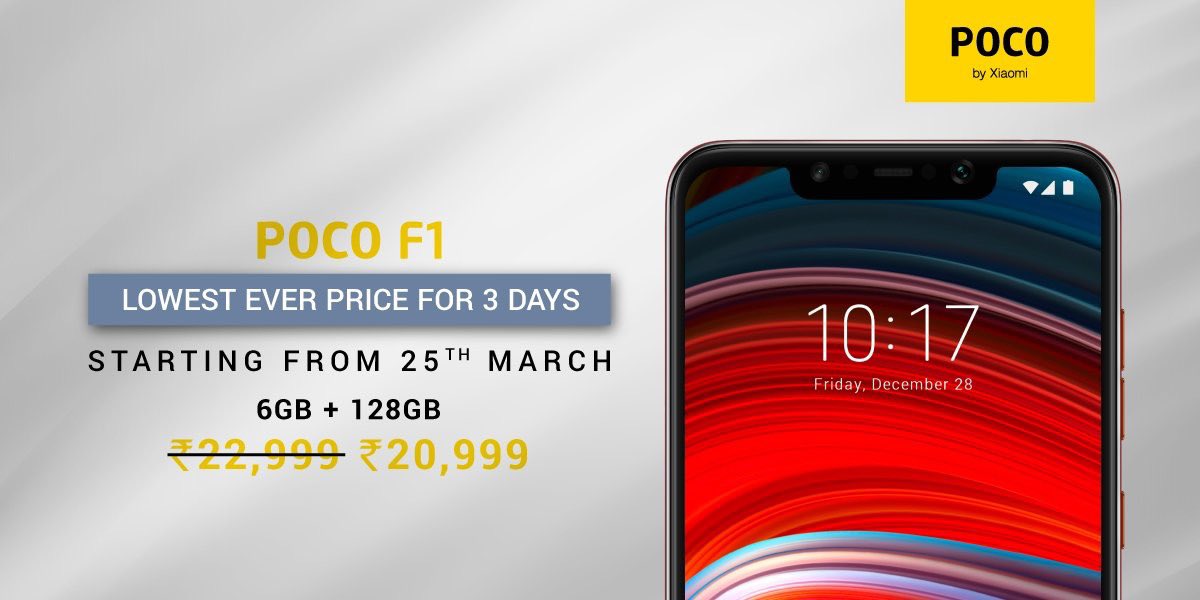
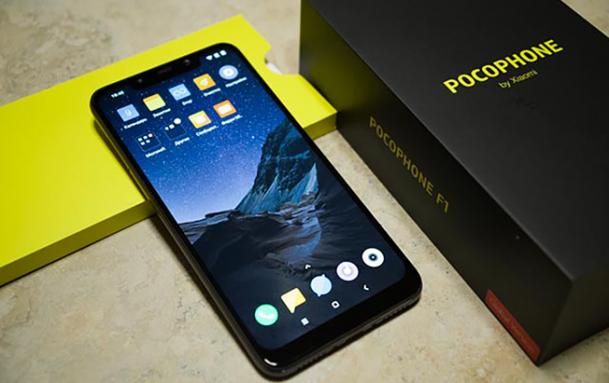
The Poco F1 smartphone by Xiaomi that was unveiled in August last year has received overwhelming response. Poco India has announced a new price cut of Rs. 2,000 (~$29) for the 6 GB RAM + 128 GB storage edition of the smartphone. It is a limited period offer that runs between March 25 and March 28. The announcement of the new price cut after the company rolled out the Game Turbo Mode for the Poco F1.
With the flat discount of Rs, 2000, the Poco F1 6 GB RAM + 128 GB storage will be available for Rs. 20,999 (~$304). It can be purchased through Mi.com and Flipkart. Also, the 6 GB RAM + 64 GB storage and 8 GB RAM + 256 GB storage editions of the Poco will be available with respective price tags of Rs. 19,999 (~$289) and Rs. 27,999 (~$405). These two models will be available with respective cashbacks of Rs. 2,000 (~$29) and Rs. 3,000 (~$44).
The Poco F1 has been treated with some important software updates in the recent months. In the past week, Poco India General Manager Manmohan Chandolu had confirmed on the arrival of Game Turbo mode for the Poco F1 smartphone. The feature was introduced after many Poco F1 users had asked for it. The Game Turbo mode ensures topnotch gaming experience by optimizing the performance of CPU and GPU.
The Poco F1 has also received Widevine L1 certification through an OTA software update. It brings support for HD video streaming services like Netflix, Hotstar, Prime Video, Hulu, HBO and so on. The smartphone has been also treated with three vital camera features such as handheld night photography and 960fps slow-motion video shooting.
The Poco F1 comes with a 6.18-inch IPS LCD display. The wider notch features a 20-megapixel selfie camera and infrared face recognition sensor. The handset is equipped with 12-megapixel + 5-megapixel dual camera module. The MIUI 10 Android 9 Pie OS comes preinstalled on the device. It is packed with a 4,000mAh battery that supports 18W fast charging.
Looking for a laser projector that delivers maintenance-free projection, coupled with an immersive viewing experience without emptying your pocket? We got good news for you. APPotronics has now teamed up with Gearbest to offer its S2 Laser Projector at a reduced price for a limited period of time.
The APPotronics S2 laser projector would normally set you back a pretty penny, but cinephiles who fancy watching their favorite movies on an HD 3D big screen without leaving the comfort of their homes can now buy it for only $899.99. This is a noteworthy 15 percent reduction in the device’s original asking price of $1061.03.
Aside from that, Gearbest is offering its new consumers an opportunity to grab an extra PayPal discount. As part of this promo, new customers will be eligible to receive $3 off if their cart total exceeds $50. On the downside, the promo will be valid only for the first 400 pieces.
An absolute steal at this price, the APPotronics S2 is an irresistible laser projector. The S2 packs a powerful quad-core A9 CPU that not only ensures stability but also expedites the operation. It sports an eye-catching DLP screen display that offers a contrast ratio of 2000:1 and 1280 x 800 pixels of original screen resolution for crystal clear images.
While its DLP 3D projection delivers a theater-like viewing experience, the APPotronics S2 can connect wireless to an available network, enabling you to choose from a wide selection of online films. Moreover, it uses Bluetooth 4.0.
Regardless of the content, you have in your digital device, it can be effortlessly displayed on the S2 as it supports multiple pictures, audio, video and TXT file formats. It supports 4K maximum resolution ratio to ensure seamless projection.
You can visit this link to check out more details about the APPotronics S2 and avail the discount, which will be valid for the Antique White color version of the feature-laden laser projector. With only 16 pieces remaining, the promo is slated to end in just five days.
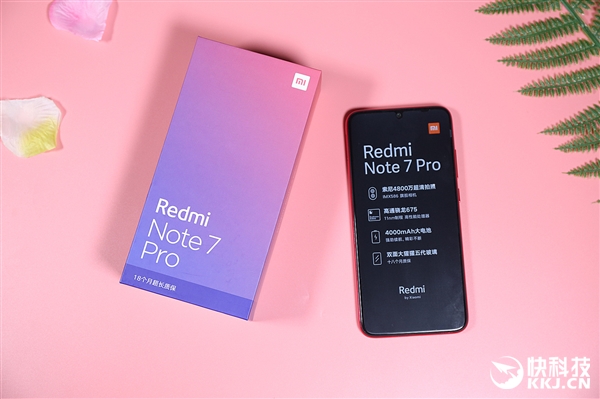
Xiaomi recently launched the Redmi Note 7 Pro alongside the Redmi Note 7 in China. The Redmi Note 7 Pro is obviously the top of the pack model among the two, packing a Snapdragon 675 chipset and a more powerful camera setup.
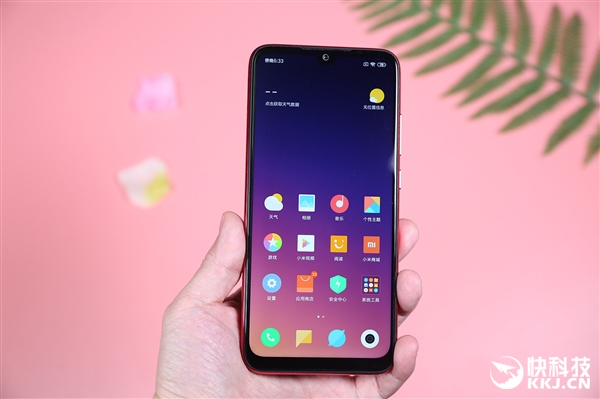
For designs, the Redmi Note 7 Pro is similar to the Redmi Note 7. It boasts a 6.3-inch Full HD+ display with 19.5:9 aspect ratio, 450 nits brightness and 15000:1 contrast ratio. The bezels surrounding the display measures just 1.95mm. The phone comes with a 2.5D curved glass on the front as well as back and is covered with a Corning Gorilla Glass 5 on both the sides. The U-shaped notch on top of the display houses a 13-megapixels front-facing camera with AI Beautify, Studio Lighting, Scene Detection, Portrait Selfie. It also comes with support for AI Face Unlock feature.
The phone has a USB-C port, a 3.5mm headphone jack and all other features you’ll find on the Redmi Note 7. Feast your eyes on more sleek pictures of the Note 7 Pro.
One of the features of the Realme 3 is its Nightscape mode. This allows for brighter pictures with less noise and no blur in low-light conditions. A few weeks ago, it was revealed that older Realme phones will also get the feature via an update. Today, the company’s CEO disclosed when the update will arrive.
[envira-gallery id=”242406″]
Madhav Sheth who is the CEO of Realme Mobiles shared in a Tweet earlier today that the nightscape mode will arrive on the Realme 1, the Realme 2 Pro, and the Realme U1 in the first half of 2019. He also added that the feature will come along with the update for Android Pie just as we predicted.
Rm 1, 2 Pro, and U1 users will get the “Nightscape” mode to arrive with their Android Pie update within the first half of 2019. Happy Sunday !!
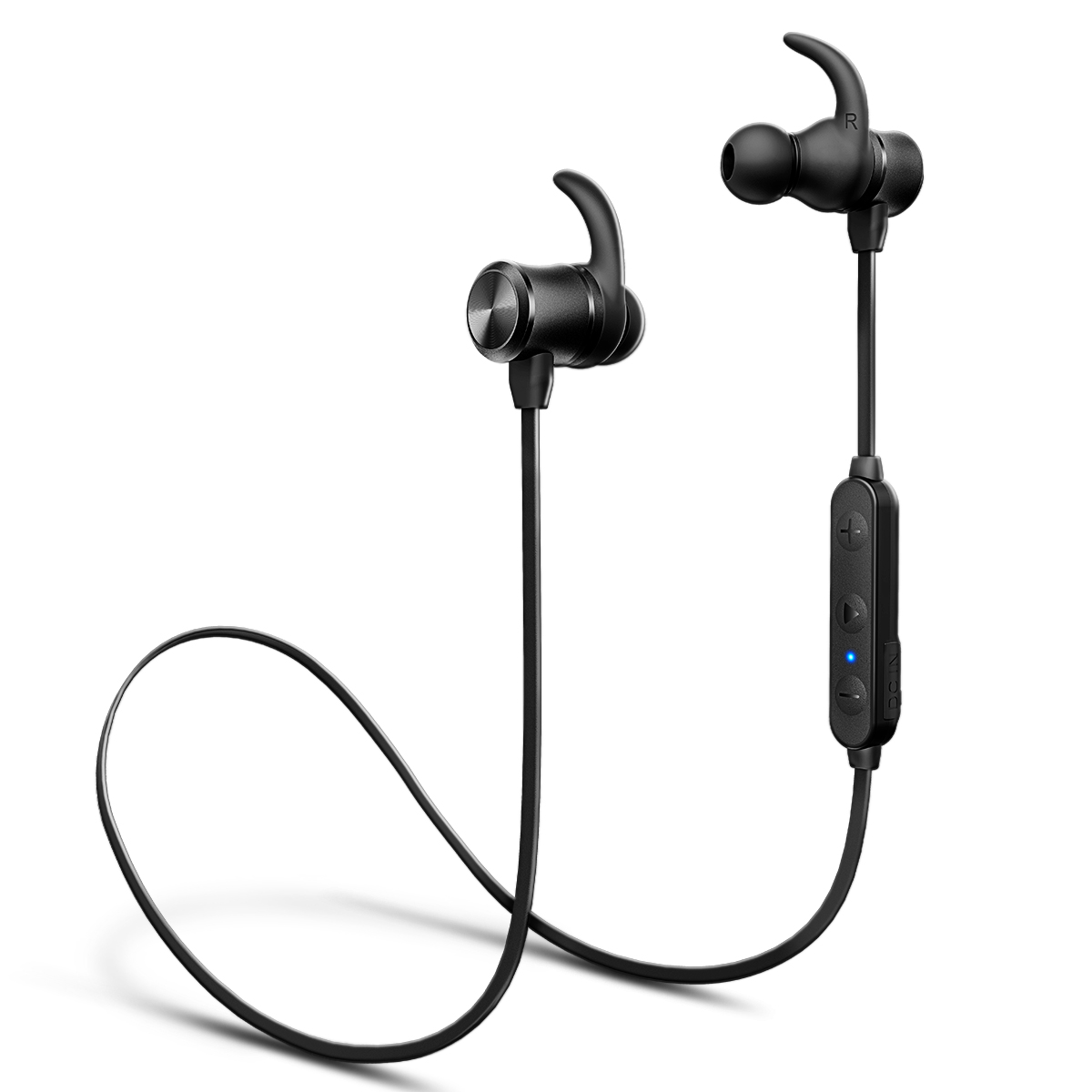
Innovative Chinese startup iTeknic indicated that it was working on a wireless Bluetooth headset that would offer users up to 24 hours playback time. Bluetooth headsets are quickly becoming one of the most popular ways to listen to music. The fun is usually cut short due to the battery capacity that is usually crammed into the earbud. If you’re lucky, you could see a wireless headset that can deliver up to 8 hours playback while others don’t even last more than 2-3 hours. However, the headset dubbed iTeknic IK-BH001 wireless stereo headset comes with a durable battery that can withstand a long period of usage. The tech company also unveiled a new Active noise cancelling wireless headphone with the model number IK-BHoo2.
The iTeknic IK-BH001 Bluetooth headset is touted to deliver up to 24 hours of playback time. This is perhaps, the standout feature of the Bluetooth headphone but the gadget is expected to coming packing several other premium features. The 24-hour playtime was achieved using the latest low power-consuming Bluetooth chips and improved battery capacity.
iTeknic IK-BH001 Wireless headset with 24-hour battery power
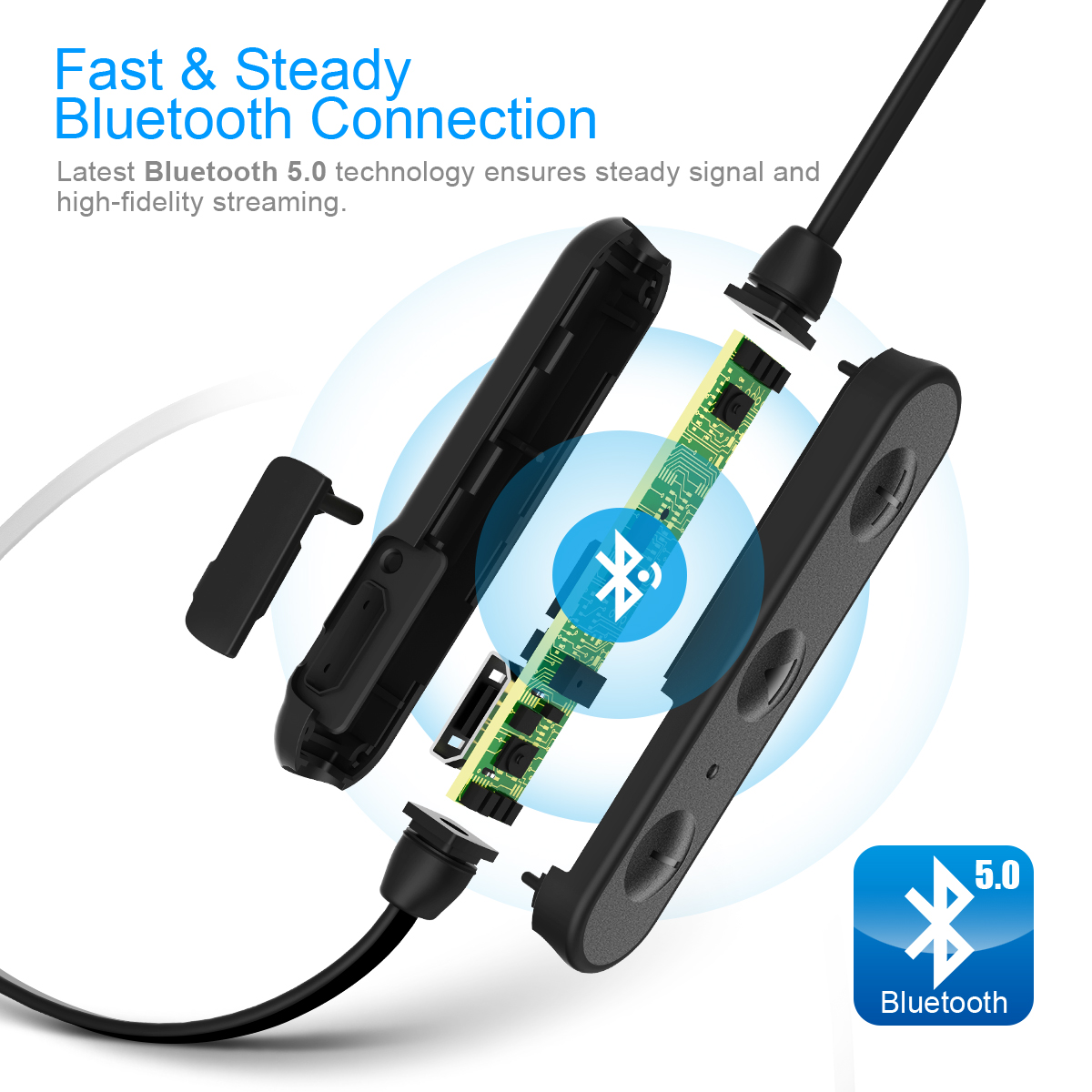
The iTeknic BH001 headset has a sleek, stylish design and a solid build. It is a high-performance headset ideal for exercise, although any outgoer will also find their lightweight functionality and impressive sound isolation highly appealing. In addition to offering 24 hours playback per charge when the volume is set at 70%, the headset has Bluetooth 5.0 which guarantees excellent call and streaming quality. There is also an IPX4 sweat and weather resistance. It adopts an in-ear design with a hook which keeps it firmly in place even if the wearer is out jogging or doing our vigorous exercises. There are also control buttons for volume control and to power on/off the gadget. The control buttons can also be used to control calls. The iTeknic IK-BH001 is presently available on Amazon for just $25.89.
iTeknic IK-BH002 Active Noise Cancelling Wireless Headphone
We can’t place the IK-BHoo2 in the same category with Boss headphones but it holds its own when it comes to the hardware and features. As the name implies, the headphone comes with active noise cancelling technology which effectively reduces the noise of city traffic, plane cabin or busy environments Thus, with the BH002, you can enjoy some quiet moment listening to music anytime and anywhere.
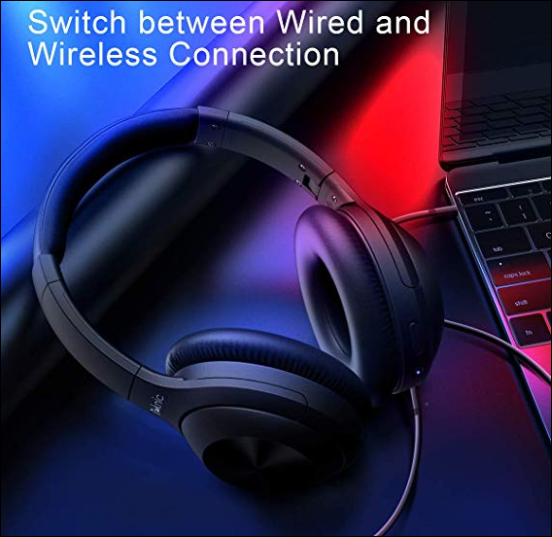
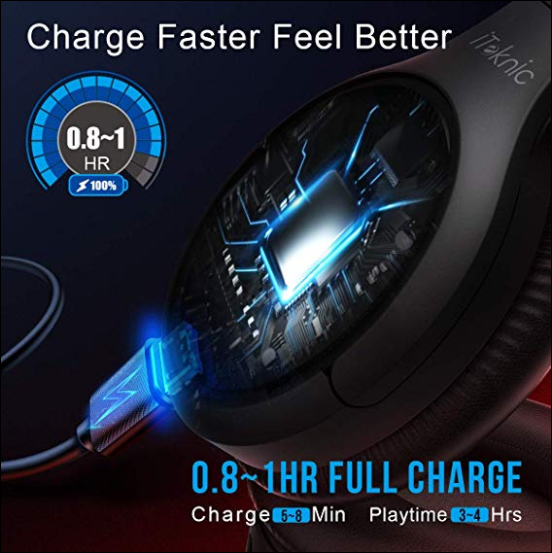
The iTeknic IK-BH002 Active Noise Cancelling Wireless headset comes with Bluetooth 5.0 and equally has a 3.5mm audio jack. This means that you can use the gadget on the wired and wireless mode. The noise cancellation function can work well both in wire and wireless mode. Each of the headsets has 1.75-inch/44mm audio drivers which allow the headset to stream high-resolution audio with deep, powerful bass. There is also a built-in cVc 6.0 microphone which ensures crisp, clear calls without ambient noise. One interesting aspect of this headset is the powerful battery it packs. The battery can deliver 15-20 hours of continuous playback. Even when you run out of battery power, you won’t have to wait for long before you can resume using the headphone. Just 5-8 hours of charging can give you 3-4 hours of playback at full blast. The headset can attain full charge in 45 minutes to 1 hour time. Another beautiful thing about the headset is the design. The headband is adjustable while the ear cups can be rotated up to 90 degrees. This rotation makes it possible to fold the headset such that it occupies minimal space. The gadget even ships with a solid carrying bag. The mufflers are equally soft and can give users maximum comfort if worn for long.
If you are interested in grabbing the iTeknic IK-BH002 Active Noise Cancelling Wireless headphone, visit the product page onAmazon where it is available for $57.99.
The Huawei Enjoy 9e is an upcoming smartphone scheduled to launch on March 25 alongside the Enjoy 9S and the MediaPad M5 Youth Edition 2019. A few days ago, Huawei released a teaser poster that revealed some of the phone’s specs and partial design, more specs have leaked along with official renders.
[envira-gallery id=”242384″]
The Huawei Enjoy 9e will come with a 6.08-inch HD+ display with a Dewdrop notch and a slightly thick lower bezel. The official renders reveal it will come in three colors – Sapphire Blue, Midnight Black, and a brown leatherback variant similar to the Huawei Y6 Pro (2019). Actually, both the Enjoy 9e and Y6 Pro (2019) share a near-identical design and even some specs.
The phone is powered by MediaTek’s 12nm Helio P35 SoC which debuted on the Xiaomi Mi Play. The chipset is paired with 3GB of RAM and 32GB/64GB of storage which can be expanded to up to 512GB via a MicroSD card slot. It has a 13MP f/1.8 rear camera and an 8MP f/2.0 front-facing camera.
Huawei Nova 4e debuted in China and in a few days it will launch in the global market under the Huawei P30 Lite moniker. That is why it will probably be the Huawei’s midrange phone that will catalyze most of the attention in this first half of 2019. Just like the Redmi 7 Pro by Xiaomi which comes with upper-midrange specifications at a very affordable price. Alongside these handsets, another device with an excellent quality-price ratio launched in the Chinese market recently is the Oppo F11 that comes with impressive cameras and long battery life. In this comparison, you will learn which of these three devices should be the most satisfying.
Huawei Nova 4e vs Oppo F11 vs Xiaomi Redmi Note 7 Pro
Triple 24 + 8 + 2 MP f/1.8 and f/2.4
32 MP f/2.0 front camera
Dual 48 + 5 MP f/1.8 and f/2.4
16 MP f/2.0 front camera
Dual 48 + 5 MP f/1.7 and f/2.4
13 MP front camera
BATTERY
3340 mAh, fast charging 18W
4000 mAh, fast charging with VOOC 3.0
4000 mAh, Fast Charging with Quick Charge 4
ADDITIONAL FEATURES
Hybrid Dual SIM slot
Dual SIM slot
Hybrid Dual SIM slot
Design
I personally think that Huawei P30 Lite is the most attractive phone when it comes to aesthetics. It sports an elegant glass back and it is also the thinnest device of this comparison, as well as the most compact one thanks to its smaller display. We even got very narrow bezels around the display and a small dewdrop notch. Right after, there is the Redmi Note 7 Pro with a catchy gradient back made of glass and protected by Gorilla Glass 5. It comes with thicker bezels, but it has a very nice build quality and it is water resistant, according to the company. Even though it has a very high screen-to-body ratio, Oppo F11 takes the last place due to its less attractive plastic body.
Display
All of these phones come with an LCD display, but Oppo F11 offers something more. It comes with the advanced LTPS technology as well as a bigger size that makes it more suitable for productivity, multimedia, and gaming. The resolution is exactly the same and the color reproduction is similar as well, so you will not notice important differences between these panels. You may need to know that Huawei Nova 4e and Xiaomi Redmi Note 7 Pro have a slightly smaller U-shaped notch instead of a V-shaped one like the Oppo F11.
Specs & Software
If you want to get the best performance with the fastest and smoothest device, go for the Redmi Note 7 Pro without thinking twice. Its Snapdragon 675 chipset is a very powerful beast and it comes with a pretty nice GPU that performs well even in demanding gaming scenarios. If you do not like the Redmi Note 7 Pro, then go for the Oppo F11 as it still comes with an upper-midrange SoC and it offers a longer battery life. In terms of performance, Huawei Nova 4e is more or less like the Oppo F11. In each case, you get a highly customized user interface based on Android 9 Pie.
Camera
It is hard to establish which camera is the best as the camera performances of these devices vary depending on the scenario. Huawei Nova 4e is definitely the most interesting one because it comes with a triple camera including an ultrawide sensor and a stunning 32 MP selfie camera. However, the rear department of the Redmi Note 7 Pro and the Oppo F11 is still pretty good as it includes a 48 MP main camera which provides a very high level of detail and good photos even in low light conditions. The rear cameras of the Redmi Note 7 Pro are slightly superior to the ones on the Oppo F11 but I would go for the Huawei Nova 4e due to its ultrawide sensor and good stabilization.
Battery
Huawei Nova 4e loses this comparison due to its smaller 3340 mAh battery, while it is a hard fight between Redmi Note 7 Pro and Oppo F11. The former is better on more scenarios thanks to its very efficient 11 nm chipset, a smaller display, and outstanding software optimization, but the differences in battery life are not so noticeable compared to the Oppo F11.
Price
You can get the Redmi Note 7 Pro for just €200 in China, while Huawei Nova 4e and Oppo F11 cost about €270. Overall, Redmi Note 7 Pro wins the comparison thanks to its higher value for money, big battery, and very performing hardware department.
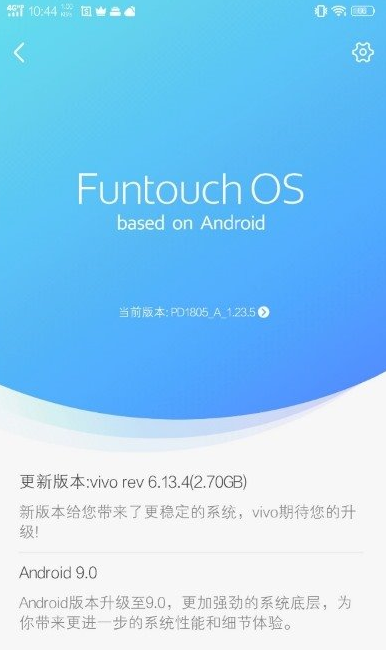
When Vivo’s first pop-up camera phone, the NEX S launched last year, it ran Android 8.1 Oreo out of the box which was actually the latest stable version of Android then. Android Pie has been out now for more than six months but Vivo is just rolling out the update to the 2018 flagship.
The update which is 2.7GB in size brings a ton of new features and a new user interface. Below are some of the new features:
Jovi Smart Scene – the Jovi AI assistant will provide useful suggestions and recommendations depending on where you are. So if you are driving or at work, the assistant will be able to tell and provide suggestions and bring up reminders related to your current location.
Jovi Voice Assistant – the Jovi AI assistant now supports voice commands. Just say the action word followed by your command.
Game Box – a game mode where you are not interrupted by notifications and calls. There is also a performance mode that improves the speed and performance of supported games.
iHousekeeper – an improved system and storage cleaning function.
Camera optimization – photo quality has been improved.
File Sharing – new interface, supports cross-platform sharing including the transfer of files from iPhones, and the transfer of web pages.
Simultaneous connection to two Bluetooth devices: You will be able to connect to two audio devices at once and set one of the devices for call audio output but ringtone will be played from both phones.
The Vivo NEX was the first phone to have a pop-up selfie camera. The feature is now available on other phones like the Vivo V15 Pro, the OPPO F11 Pro, the Vivo X27 and the X27 Pro.
Apple is struggling to maintain its smartphone market over the past year in China. Many local companies including Huawei and Xiaomi are giving stiff competition to the Cupertino giant. There are many reports citing reasons behind such a decline, but no one confirmed the actual numbers. Thanks to a new report from Reuters highlighting the extent of how many Chinese are moving away from Apple.
The report cites that Apple’s share in the Chinese market tumbled from 81.2 percent to 54.6 percent in the past year. Majorly, the products falling under $500-$800 categories are worst hit with the increasing competition from local brands. While referring to the iPhone X line, Neil Shah research director at Counterpoint said: “Most Chinese smartphone buyers are not ready to shell out beyond $1,000 for a phone, and This left a gap in the below-$800 segment which Chinese vendors grabbed with both hands.”
Chinese are also missing some key features on Apple devices, it constitutes either a single or a dual rear camera while its competitors like Huawei are flocking their devices with new innovations. These days Chinese consumer look for multiple cameras, and other premium features at an affordable price.
Huawei market share improved a lot in China, jumped from 26.6 percent from 8.8 percent within a year. Huawei P20 Pro and Mate 20 are the main attractions among smartphone users in China. Even confirmed by smartphone reseller He Fan, CEO of Huishoubao, said, “Huawei’s cameras have become noticeably better than Apple’s in that they suit the tastes of Chinese consumers more.”
Apple’s poor sales are not only limited to China but worldwide, many factories are running at half-capacity from past sometime. To overcome this situation, Apple needs to develop cheap phones, maintaining the same build quality and better specifications. More innovative features will also ensure Apple to earn back its share in China.
OnePlus always remain ahead in providing the latest upgrades on its devices. After rolling out Android Pie update on OnePlus 5 and 5T last year, now the company is dishing out the upgrade for OnePlus 3/3T. As promised, the company is starting a closed beta program for the OnePlus 3/3T. OnePlus is looking for new beta testers to begin the process of an impending rollout. Interested users need to hurry as only a few seats are available until today.
According to the post by Manu J, Global Product Operations Manager for OnePlus, the closed beta registrations for three years old device begins. He stated, “We have been hard at work baking that sweet pie, to ensure it tastes delicious we’d like to invite some of you to taste it first and make sure it’s ready to serve it to the rest of the community.”
OnePlus 3 and 3T has already received two major upgrades. First, just a month after its launch Android Nougat was rolled out and later followed by Android Oreo at the end of 2017. Interestingly, it would be the third significant OS upgrade for the device.
OnePlus CEO, Pete Lau recently confirmed users about the delay regarding Android Pie update, after an uproar by its users. A couple of days ago, OnePlus commenced the Android Pie Beta testing based on Hydrogen OS in China. OnePlus has drastically improved support for old devices after the OnePlus 2. From now, its the matter of some few days before the commencement of Android Pie stable update on OnePlus 3 and 3T.
Xiaomi’s new Mi Notebook is launching on March 26th in China. It will be lighter than the Macbook Air weighing over 1.07Kg. After entering the Notebook market with Mi Notebook Air in 2016, Xiaomi unveiled various new editions carrying upgraded hardware and features. Similarly, a new Xiaomi Mi Notebook is making its way this month, reveals a new teaser on its official Weibo Handle.
Xiaomi is advertising its thinness and lightweight as the main selling points. Comparatively, it is lighter than Apple MacBook Air which weighs 1.25kg, and 1.3kg Huawei MateBook 12.
Xiaomi is selling different sized Mi NoteBooks with a different set of features via its official Mi Store in China. Last year, they introduced 15.6-inch and 13.3-inch Notebooks featuring Intel i3/i5/i7 chipsets. The Chinese electronics maker’s products always share similarities with Apple devices.
Xiaomi will also upgrade its core specifications along with its lightweight and portability features. Only limited information regarding its specs and pricing is available. As always, new Mi Notebook will drive its design language from predecessors and Apple’s Macbook. We expect some more information to reveal via official teasers and renders ahead of its launch. Xiaomi scheduled the launch for Mi Notebook Air on March 26th.
A few days ago, there were reports that HMD Global was sending user data to China. The affected model is the Nokia 7 Plus and the issue was reported to affect several units of the phone sold in Norway. Yesterday, HMD Global released an official statement to clear the air on the matter.
According to the Finnish company which manufactures its phones in China via FIH Mobile, the Foxconn subsidiary, the Nokia 7 Plus didn’t share personal data with any third party. What the phones did send to a third party server in China is actually device activation data. However, this shouldn’t have happened in the first place.
Apparently, a certain batch of Nokia 7 Plus meant for countries outside China had the device activation client for China mistakenly installed on them, instead of that of the right country variant. HMD Global says the issue was fixed in February and almost all owners of the Nokia 7 Plus from the affected batch have installed the fix.
Below is an infographic that explains the data collected from users :
Nokia 7 Plus devices that already have the fix installed have build number “00WW_3_39B_SP03” or “00WW_3_22C_SP05”. You can check the build number by going to Settings > System > About Phone > and then scroll down to “Build Number”.
HMD Global says only devices sold in China have their data stored in China while the user activation data and user experience data (for those who opt-in for the latter) of the global variants are stored on their (HMD Global) servers in Singapore which is provided by Amazon Web Services.
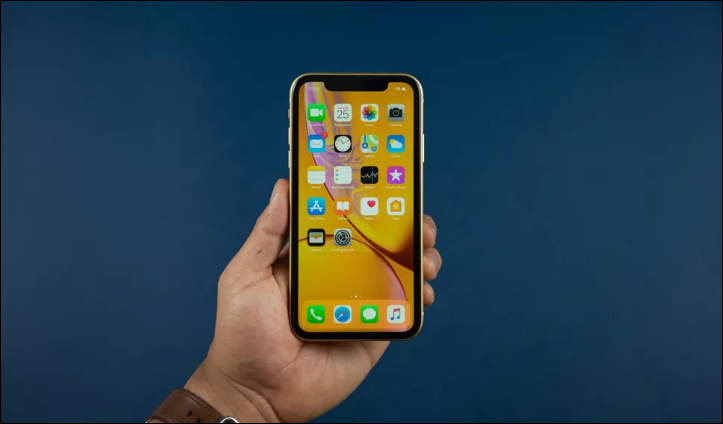
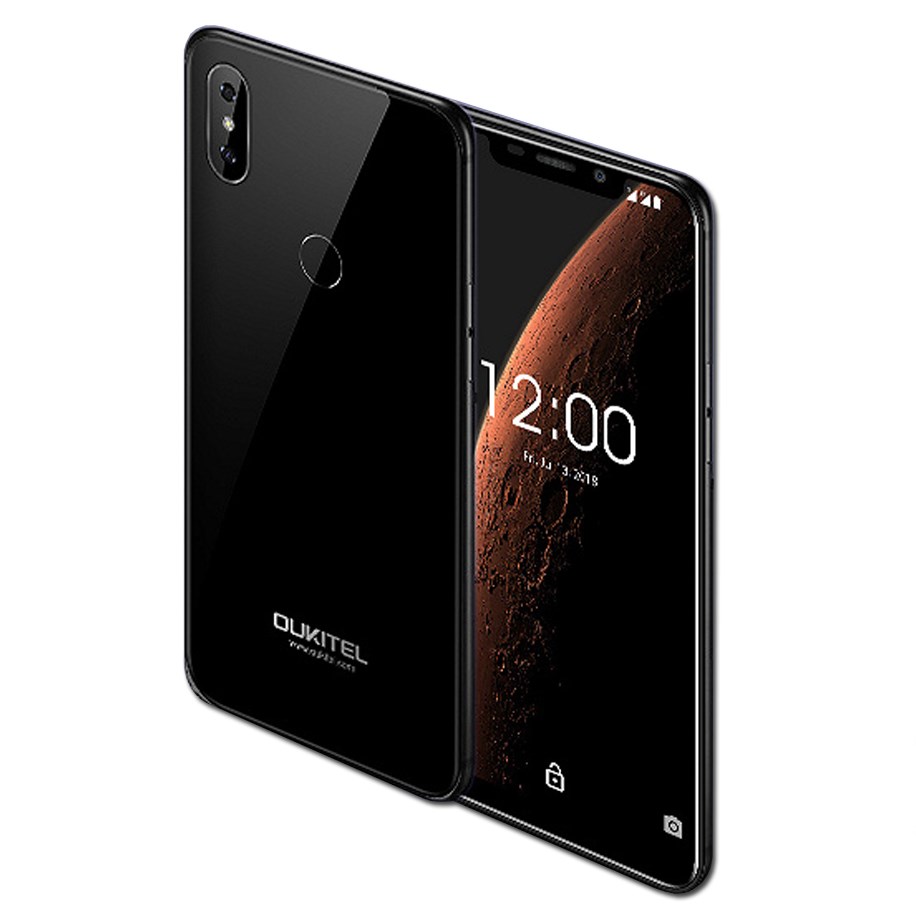
OUKITEL took the wraps off the C13 Pro in early March alongside the iPhone XR style. As expected, the phone became an instant hit among smartphone lovers looking for a top-end handset that doesn’t compromise on quality.
Much to the delight of OUKITEL fans, the international brand that focuses on making smartphones has now teamed-up with Banggood to offer its well-received C13 Pro at unbelievably lowered prices.
As part of its recently kicked-off flash, the Chinese online store is offering first 499 lucky consumers a chance to buy the OUKITEL branded smartphone for just $69.99. This is a significant 36 percent reduction in the device’s original asking price of $109.99. Those who miss out the aforesaid opportunity will be able to get their hands on the next 999 pieces of the C13 Pro by shelling out $74.99. Once the available pieces are sold out, the remaining 1499 pieces will go up for pre-order bearing a $79.99 price tag.
An absolute steal at this price, the OUKITEL C13 Pro boasts an impressive array of features. You can check out them out below:
6.18 Inch FW+ LCD IPS display with 480 x 996 pixels resolution
You can follow this link to check out the full specification and avail the discount, which will be valid for both the black and gold color versions of the C13 Pro smartphone. Note that the promo is slated to end on March 27th.
UMIDIGI announced the hotly-anticipated S3 Pro smartphone in December last year. It boasts an impressive array of features and top-end specifications that enhance the overall user experience with the phone.
If you have been waiting with bated breath to get your hands on the well-received smartphone at a lowered price, we got good news for you. The popular Chinese phone manufacturer has teamed up with leading online stores to offer the S3 Pro at lowest prices.
UMIDIGI S3 Pro 4G Smartphone on CooliCool
The European Union and Non-European Union Version of the UMI S3 PRO 4G smartphone have gone up for sale bearing significantly lowered prices on CooliCool.
Designed for those living in EU-28 countries, the European Union Version of the S3 Pro would normally set you back $369.99, but you can now get it for just $279.99 on CooliCool, which is touted as one of Asia’s online commercial corporations.
Those living outside EU-28 countries can go for the Non-European Union Version of the S3 Pro smartphone that normally sells for $369.99 but is currently available for only $279.99 on CooliCool.
It is worth noting that the UMIDIGI S3 Pro comes only in the black color version for both the European Union as well as the Non-European Union versions.
You can follow this link to visit the promotion page and grab the discount before the promo ends on March 25th.
Gearbest is doling out a noteworthy 30 percent discount on the black-tinted EU Version of the S3 Pro phablet that would normally set you back $397.63. As a result, the well-received version of the phablet can be yours if you are willing to shell out just $279.99.
The other version of the S3 Pro phablet which is designed for users living outside EU-28 countries usually carries a $397.63 price tag, but thanks to a 30 percent discount you can now buy it for only $279.99 on Gearbest. On the downside, there were only 93 pieces of the EU Version and 97 pieces of the Other Version remaining at the time of writing. You can follow this link to avail the discount before the promo wraps up in four days.
Known for offering the best bang for your buck, Banggood is now giving its loyal users to avail a 30 percent discount on both the European Union and the Non-European Union versions of the S3 Pro.
While the aforesaid versions usually retail for $399.99, Banggood users can pre-order them for just $279.99. This promotion sale which kicked off on March 18th is slated to end on Monday, March 25th.
You can head straight to this link and avail the discount before the promo comes to an end. Note that the expected processing time is on April 15th.
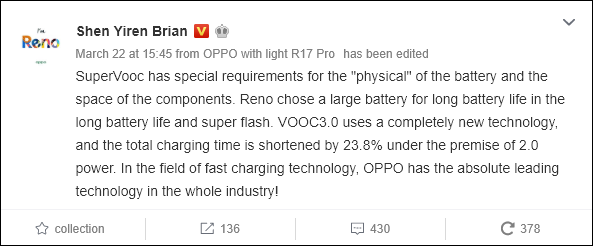
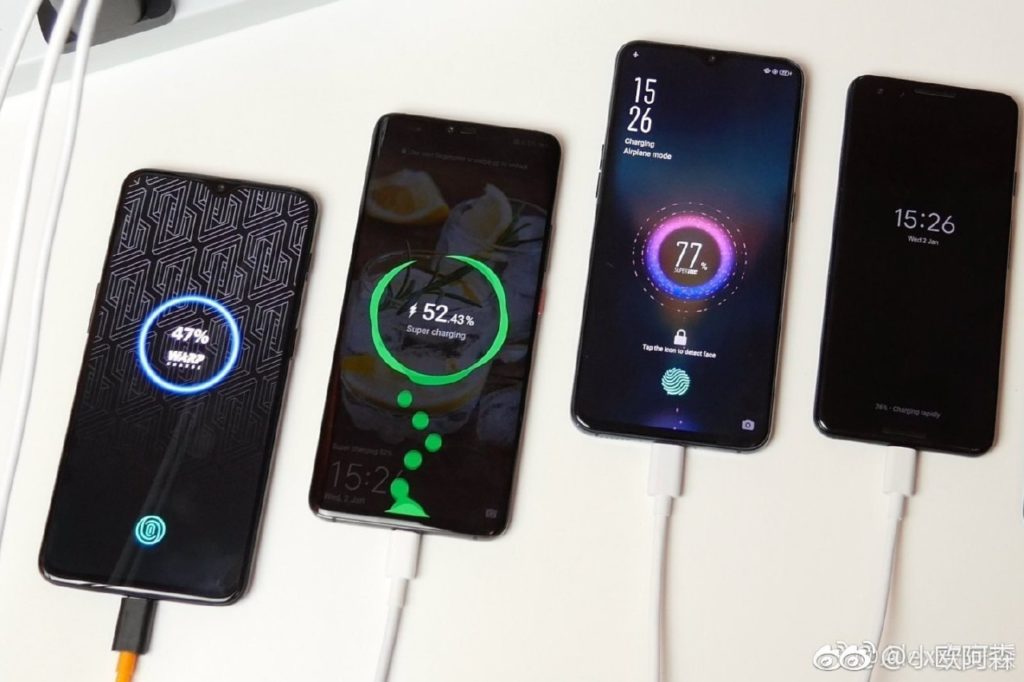
OPPO‘s SuperVOOC fast charging technology is unarguably the fastest quick charge technology for smartphones presently. While OPPO is launching car chargers with the supersonic SuperVOOC feature, the company has disclosed that the technology will not be on the upcoming OPPO Reno. Instead, the Reno will have the latest VOOC 3.0 technology.
The OPPO’s VP confirmed this on Friday in a Weibo post, offering some reasons why the Reno cannot have SuperVOOC technology. According to him, SuperVOOC has specific requirements regarding the physical size of the battery and space of the phone’s components. Reno doesn’t seem to meet those requirements instead, it comes with big battery capacity and the size may be too thin which would make the components to be compacted. The fast charging technology will be powered by VOOC 3.0. Bryan Shen revealed that the new VOOC 3.0 uses a completely new technology which brings the total charging time to 23.8% faster than the current VOOC 2.0. The VOOC fast charging technology is based on a low voltage pulse algorithm and customized super battery developed by the company. The charging technology churns out 20W of power just like OnePlus’s Dash Charge and lets you recharge your phone from 0 – 75% in 30 minutes.
OPPO’s flight to the limelight in the smartphone industry was perhaps propelled by the VOOC flash charge technology that it used on its smartphones. The company took the bar higher when it introduced the Super VOOC Flash Charge technology at the Mobile World Congress (MWC) 2016. The technology only found its way to the Find X Lamborghini edition that was launched last year. Notably, the Find X Lamborghini edition packs a 3,400mAh battery whereas the Reno is said to have a 4064mAh battery under its hood. Super VOOC can charge a 2500mAh battery in just 15 minutes or up to 45% in just 5 minutes. That is super fast and so, the company may have played safe by not using the technology on the Reno since it is not suited for big batteries. We expect the VOOC 3.0 to offer a fast charging performance that is almost on par with SuperVOOC, though.
Huawei is currently the world’s second largest smartphone manufacturer but, unlike its main rivals of the Android market (Samsung and Xiaomi), it still hasn’t entered the TV market. According to a report from a Chinese media, the company has finally decided to launch its first TV. It seems that a supply chain executive confirmed that the Chinese giant will officially announce its first TV line-up next month.
According to the source, the new products will not just be simple TVs, but they will be a sort of home hubs with special social and gaming features. And in the era of cloud gaming and smart TVs, this would be perfect. But the upcoming TVs will not focus only on software-related features: according to the report, they will be equipped with dual cameras. The cameras included on the frame will be used for video chats and streaming.
Huawei TVs are said to come in variants with 55 and 65-inch diagonals and the display is expected to be manufactured by BOE and Shenzhen China Star Optoelectronics. They are rumored to come under the Huawei AI Window moniker. It seems that the most important smartphones manufacturers understood how important TVs are in the hi-tech world nowadays, and they want to aim at conquering the TV market too. Indeed, even OnePlus is planning the launch of a TV.
We use cookies on our website to give you the most relevant experience by remembering your preferences and repeat visits. By clicking “Accept”, you consent to the use of ALL the cookies.
This website uses cookies to improve your experience while you navigate through the website. Out of these, the cookies that are categorized as necessary are stored on your browser as they are essential for the working of basic functionalities of the website. We also use third-party cookies that help us analyze and understand how you use this website. These cookies will be stored in your browser only with your consent. You also have the option to opt-out of these cookies. But opting out of some of these cookies may affect your browsing experience.
Necessary cookies are absolutely essential for the website to function properly. This category only includes cookies that ensures basic functionalities and security features of the website. These cookies do not store any personal information.
Any cookies that may not be particularly necessary for the website to function and is used specifically to collect user personal data via analytics, ads, other embedded contents are termed as non-necessary cookies. It is mandatory to procure user consent prior to running these cookies on your website.


 The Huawei Honor Magic smartwatch not only became an instant hit among fitness purists who fancy monitoring their health and various activities, but it also garnered huge popularity among tech-loving and fashion-conscious men.
 Alternatively, you can grab a 38 percent off on the black color version of the Honor Magic smartwatch. Regrettably, the promo will only be valid for just two days.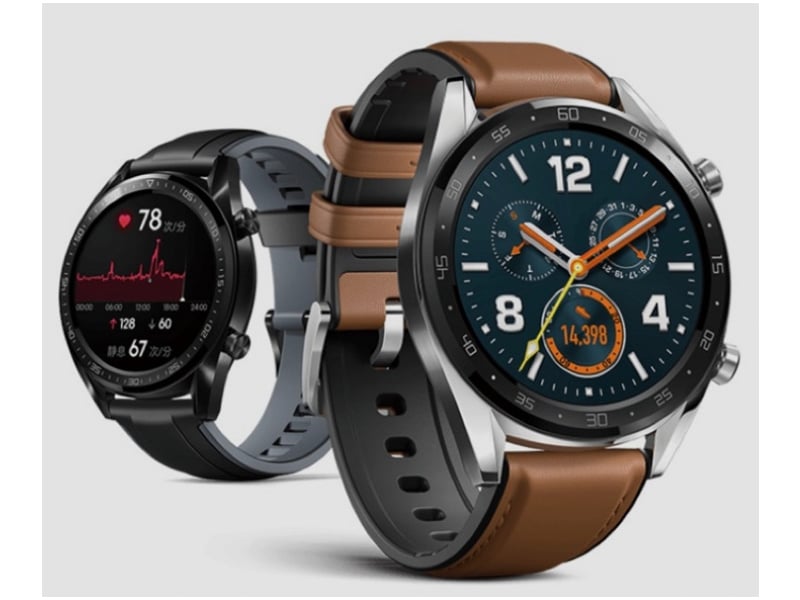



 Another beautiful thing about the headset is the design. The headband is adjustable while the ear cups can be rotated up to 90 degrees. This rotation makes it possible to fold the headset such that it occupies minimal space. The gadget even ships with a solid carrying bag. The mufflers are equally soft and can give users maximum comfort if worn for long.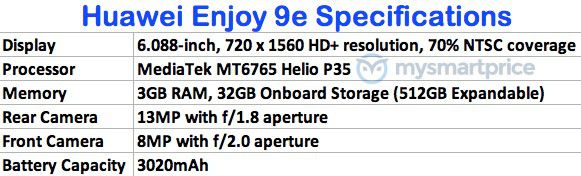





 Those who miss out the aforesaid opportunity will be able to get their hands on the next 999 pieces of the C13 Pro by shelling out $74.99. Once the available pieces are sold out, the remaining 1499 pieces will go up for pre-order bearing a $79.99 price tag.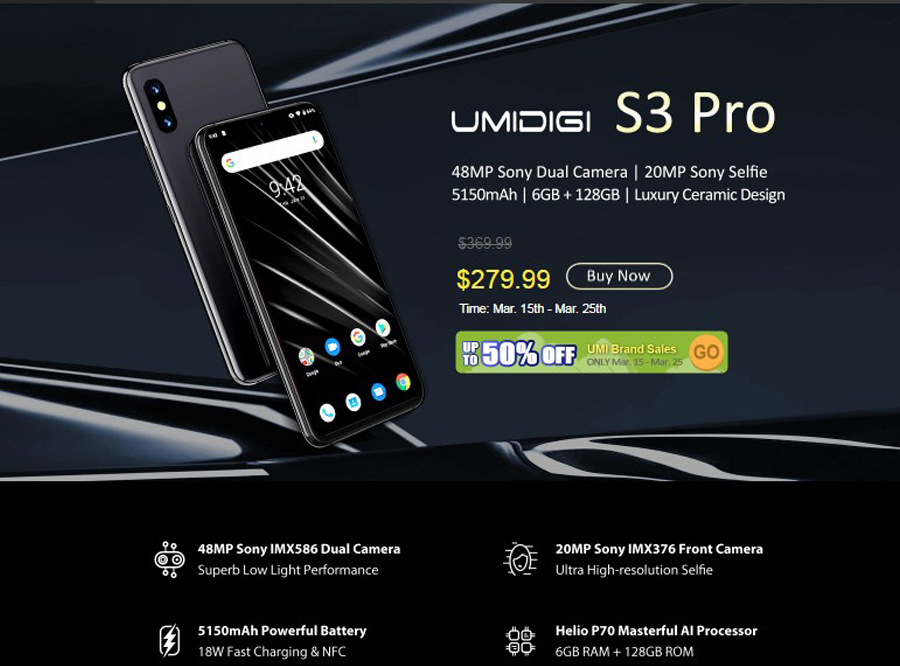
 On the downside, there were only 93 pieces of the EU Version and 97 pieces of the Other Version remaining at the time of writing. You can follow