Advertisement

Sony BRAVIA 8 II OLED TVs Launched in India with Dolby Vision, 120Hz Gaming Mode, and PS5 Support

Sony has launched its new BRAVIA 8 II OLED TV series in India, a couple of months after its initial global launch. It is available in 55-inch and 65-inch sizes, both featuring a Slim One Slate design with a flat back panel and a smudge-resistant finish.

Sony Bravia 8 II

Both TVs come with a 4K UHD OLED display (3840×2160) and a 120Hz refresh rate. They are powered by Sony’s XR Processor, which uses AI to recognize and adjust scenes for better picture quality. The OLED panel controls each pixel individually, allowing for deep blacks, bright highlights, and accurate colors.

Sony BRAVIA 8 II

The TVs support HDR10, HLG, Dolby Vision, and IMAX Enhanced. XR Triluminos Max and XR Contrast Booster 25 help improve brightness and contrast, and the picture looks clear even from wide angles.

For sound, Sony uses Acoustic Surface Audio+ with two actuators and two subwoofers built into the screen. This 50W setup lets sound come directly from where the action happens, and Dolby Atmos adds more depth.

Gaming features include 4K at 120fps, Variable Refresh Rate (VRR), Auto Low Latency Mode (ALLM), and Auto HDR Tone Mapping, optimized for PlayStation 5. A dedicated Game Menu lets users switch VRR and motion settings quickly.

The TVs support Wi-Fi 6, Bluetooth 5.3, four HDMI 2.1 ports, two USB ports, LAN, RF, and optical input. They run on Android TV OS with the Google TV interface. Voice control is supported through a built-in mic on the left side. Accessibility features include screen reader, audio description, colour inversion, closed captions, and text magnification.

Buyers also get access to Sony Pictures Core with 10 free movie credits in 4K HDR over 24 months. The TVs are built using Sony’s recycled SORPLAS material and include an Eco Dashboard 2 for energy tracking.

Pricing & availability

The 55-inch model (K-55XR80M2) is priced at ₹2,46,990. The 65-inch model (K-65XR80M2) is priced at ₹3,41,990. Both are available now at Sony Centers, ShopatSC.com, major electronics stores, and online platforms.

(via: Fonearena)

Nothing Phone (3) chipset officially confirmed ahead of July 1 launch

Nothing has finally confirmed a key detail about its upcoming Phone (3), set to launch on July 1 in London. With rumors of a new design and flagship ambitions swirling for weeks, the company has now revealed what powers its latest smartphone under the hood.

Through an X post, Nothing announced that the Phone (3) will run on Qualcomm’s Snapdragon 8s Gen 4 chipset. While it’s not the top-tier Snapdragon 8 Elite, it still packs serious performance gains over the Snapdragon 8+ Gen 1 used in the Phone (2).

This new chip delivers performance on par with the Snapdragon 8 Gen 3—the same processor found in devices like the Galaxy S24 Ultra and the OnePlus 12. The Snapdragon 8s Gen 4 also powers the performance-focused iQOO Neo 10, so buyers of the Phone (3) shouldn’t have much to worry about in terms of speed or responsiveness. According to Carl Pei, users can expect up to 36% faster CPU performance, an 88% GPU boost, and a 60% improvement in NPU performance compared to the Phone (2), promising a smoother and more responsive experience.

The Snapdragon 8s Gen 4 uses a mix of powerful cores, including one Cortex-X4 clocked at 3.2GHz and several Cortex-A720 and A520 cores. It’s designed to offer almost flagship-level performance without pushing prices too high — a move that could help Nothing price the Phone (3) competitively, possibly around $799 (~₹68,000), as hinted in recent leaks.

But performance isn’t the only thing that’s changing. The Phone (3) is expected to ditch the signature Glyph lighting system in favor of a new dot-matrix display on the back, which could allow for more visual customization.

Now the question is — can Nothing’s latest phone stand out against rivals like Samsung’s Galaxy S25 or OnePlus’s next flagship with its unique design? We’ll find out soon enough.

Don’t miss a thing! Join our Telegram community for instant updates and grab our free daily newsletter for the best tech stories!

For more daily updates, please visit our News Section.

(Source)

After Samsung, now Google takes playful jabs at Apple’s iOS 26

Apple’s unveiling of iOS 26 at WWDC 2025 has stirred up some friendly competition—Google is having a bit of fun with it. The company just released a new ad as part of its #BestPhonesForever series, and this time it’s gently ribbing Apple for introducing features Pixel users have had for years.

The short video, published on June 17, features a light-hearted conversation between a Pixel 9 Pro and an iPhone. As the iPhone excitedly lists off iOS 26’s new features—Live Translation for messages, Hold Assist, and Call Screening—the Pixel responds with calm amusement, pointing out that it’s had those capabilities for quite some time. In fact, Live Translate rolled out with the Pixel 6 back in 2021, Hold for Me appeared on the Pixel 5 in 2020, and Call Screen dates all the way back to the Pixel 3 in 2018.

The exchange ends with a sly nudge: the iPhone asks what’s coming in the Pixel 10, subtly suggesting Apple might be “inspired” again for the iPhone 17.

While the tone is playful, the message is clear—Google wants to remind users that some of Apple’s new features aren’t exactly groundbreaking in the broader smartphone landscape. Samsung, too, recently poked fun at iOS 26’s new Liquid Glass design and limited AI features, drawing comparisons to its own One UI 7 aesthetic and Galaxy AI.

On social media, reactions are mixed. Some users are enjoying the tongue-in-cheek rivalry, noting how Apple’s updates mirror features already available on Pixel or Galaxy devices. Others point out that inspiration often flows both ways, with Android occasionally adopting iOS’s design choices in return.

It’s a timely lead-up to the expected August launch of the Pixel 10 series, which is rumored to include a telephoto camera even on the base model, along with improved wireless charging.

In the end, it’s all part of the game. These playful jabs keep the rivalry interesting, and it’s a reminder that in tech, no one really has a monopoly on good ideas.

Please Note: When you buy something using the links in our articles, we may earn a small commission at no cost to you.

Don’t miss a thing! Join our Telegram community for instant updates and grab our free daily newsletter for the best tech stories!

For more daily updates, please visit our News Section.

Google Pixel 10 set to elevate close-up photography with new tele-macro mode

With the Pixel 10 lineup just weeks away from its expected August 20 launch, fresh leaks suggest Google is preparing a big leap in close-up photography. A new tele-macro mode, powered by the base model’s new telephoto lens, could offer sharper, more detailed shots than ever before — especially for those who love photographing flowers, textures, or tiny objects.

For the first time, even the base Pixel 10 is rumored to feature a 5x telephoto lens — something previously reserved for Pro models. According to AndroidHeadlines, the new tele-macro mode will take advantage of this lens to deliver close-ups with better clarity, smoother background blur, and less distortion than the ultrawide macro shots seen in earlier Pixels.

But Google isn’t ditching the ultrawide lens entirely. As reported by Android Authority, the Pixel 10 will automatically switch between the telephoto and ultrawide lenses depending on how close you are to the subject. If you’re too close for the telephoto’s minimum focusing distance, the ultrawide steps in — offering flexibility even if image quality takes a slight hit.

This approach isn’t entirely new. Brands like OnePlus and Vivo have already experimented with dual-lens macro photography, but for Google, it marks a noticeable shift. Historically, the company has lagged behind in offering dedicated tele-macro capabilities — something fans have long requested.

It’s still unclear whether this new feature will roll out to older Pixel devices via software updates. The Pixel 10 is expected to launch with Android 16 and Google’s latest Tensor G5 chip, and is shaping up to be a powerhouse for computational photography.

If the leaks hold true, Pixel fans — especially those into macro and nature photography — may have a compelling reason to upgrade this year.

Don’t miss a thing! Join our Telegram community for instant updates and grab our free daily newsletter for the best tech stories!

For more daily updates, please visit our News Section.

Xiaomi’s next Xring chip may use Arm’s Travis core for major performance leap

Xiaomi’s next-generation Xring chip could feature Arm’s upcoming “Travis” super core, according to a new leak from popular tipter Digital Chat Station. The Xring platform has reportedly received Arm architecture authorization, clearing the path for Xiaomi to integrate Arm’s most advanced CPU core yet.

Xiaomi-XRING-O1

Arm is expected to announce the Travis core in September. This next-generation design is set to replace the Cortex-X925 and promises a substantial performance upgrade. According to Arm, Travis delivers a double-digit improvement in IPC (Instructions Per Clock) and brings major gains in power efficiency. It will also support Armv9’s SME (Scalable Matrix Extension), enabling more advanced matrix-based operations in AI and machine learning workloads.

Xiaomi chipset leak DCS

If Xiaomi adopts Travis in its next Xring chip, it could mark the company’s biggest step forward in custom chip development. The Xring O1, introduced earlier this year, was based on Cortex-X925. Upgrading to Travis would give Xiaomi an edge in both performance and efficiency, potentially making the new Xring its most powerful chipset to date.

Talking about IPC, it plays a vital role in CPU performance by indicating how many instructions a processor can handle per clock cycle. Higher IPC enables the CPU to complete more tasks at the same frequency or maintain performance with lower power usage, which is especially important for smartphones facing heat and battery constraints.

Arm traditionally reveals its new CPU and GPU IP around May or June. This year’s reported September announcement for Travis would be unusually late, but could reflect a strategic shift or extended development cycle.

If Xiaomi’s next chip does integrate the Travis core, it could help the company compete more directly with flagship chips from Qualcomm and MediaTek, and signal Xiaomi’s growing ambitions in semiconductor design.

For more daily updates, please visit our News Section.

Stay ahead in tech! Join our Telegram community and sign up for our daily newsletter of top stories! 💡


Fujitsu Arrows Alpha F-51F Smartphone Launched in Japan with Dimensity 8350, Sony LYT 700C camera & 144Hz OLED Display

Fujitsu has launched a new smartphone, the Arrows Alpha F-51F, in Japan. The phone will be sold through NTT Docomo later this summer. Pricing and exact release dates have not been confirmed yet.

Fujitsu Arrows Alpha F-51F

The Arrows Alpha F-51F runs on the MediaTek Dimensity 8350 Extreme processor with an octa-core setup (3.35GHz + 3.2GHz + 2.2GHz). It comes with 12GB of RAM and 512GB of internal storage, which can be expanded up to 2TB using a microSD card. The phone runs Android 15.

It features a 6.4-inch OLED display with a resolution of 2670 x 1200 pixels and a 144Hz refresh rate. The rear camera setup includes a 50.3MP Sony LYTIA LYT-700C (IMX896) main sensor (1/1.5″) and a 49.9MP ultra-wide sensor (1/2.7″). On the front, there is a 49.9MP selfie camera (1/2.7″).

The phone has a 5,000mAh battery and supports 90W wired charging through a USB Type-C (USB 3.1) port. It does not have a headphone jack. The body measures 156 x 72 x 8.8 mm and weighs 188g.

Other features include:

  • IP68/IP69 water and dust resistance
  • Stereo speakers with Dolby Atmos
  • DisplayPort 1.4 and Miracast output support
  • Wi-Fi 6, Bluetooth 5.4
  • 5G, 4G, 3G, and GSM support across several global bands
  • NanoSIM and eSIM support
  • Dedicated action key

It will be available in black and white color options. More details can be found on Fujitsu’s official website.

(Source)

ARM’s new Travis core surfaces with IPC boost and SME support

ARM’s next big CPU upgrade is now a little more official, at least by leak standards. A new leak by industry tipster Digital Chat Station claims that ARM will introduce a new high-performance CPU core, codenamed Travis, this September. And reportedly, the main talking point of this core will be IPC or instructions per cycle.

IPC essentially measures how much work a processor can do at a given clock speed. DCS claims that the Travis core brings double-digit IPC gains compared to its predecessor. That’s a meaningful jump, especially as chipmakers are increasingly looking to efficiency and smart workload distribution rather than pushing clock speeds endlessly higher.

ARM’s Travis core will support SME and IPC

The core also supports the Scalable Matrix Extension (SME) feature that will improve performance in AI and ML-related tasks. SME is part of ARM’s broader strategy to modernize compute architecture for increasingly heterogeneous workloads across mobile and edge devices.

What adds weight to the leak is that DCS shared images from what appears to be an official ARM press conference confirming these features directly. 

While ARM is responsible for the core design, MediaTek appears to be first in line to ship it in a commercial product. The Dimensity 9500 is expected to be MediaTek’s answer to whatever Qualcomm is preparing with the Snapdragon 8 Elite 2. 

DCS suggests the new MediaTek chip is already showing signs of strong performance, and it will likely benefit not just from the CPU upgrades, but also from a new GPU design reportedly ARM’s Mali-G1 Ultra, codenamed Drage.

ARM hasn’t made any public announcements yet, but if these leaks hold, the Travis core could become one of the more important under-the-hood changes in next-gen Android flagships.

For more daily updates, please visit our News Section.

Stay ahead in tech! Join our Telegram community and sign up for our daily newsletter of top stories! 💡

(Source)

Blackview Oscal Pilot 3 rugged smartphone launched with 7500mAh battery and night vision sensor

Blackview has officially launched the Oscal Pilot 3, a rugged smartphone designed for demanding environments and productivity, powered by AI. It succeeds the Oscal Pilot 2, which debuted last year.

Blackview Oscal Pilot 3

Blackview Oscal Pilot 3 Specifications

The Oscal Pilot 3 features a 6.78-inch IPS LCD panel from BOE with a resolution of 1080×2460 pixels and a 20:9 aspect ratio. The display supports a 120Hz refresh rate and a 240Hz touch sampling rate. Blackview uses Corning Gorilla Glass 5 for protection, while peak brightness reaches 700 nits. The display includes eye comfort features such as dark mode, reading mode, and night light mode.

The device runs on MediaTek’s Dimensity 6300 chipset, fabricated on a 6nm process. It features an octa-core CPU comprising two Cortex-A76 cores at 2.4GHz and six Cortex-A55 cores at 2.0GHz, with a Mali-G57 MC2 GPU handling graphics. It supports up to 12GB of LPDDR4X RAM and allows 24GB of virtual RAM expansion, bringing the total to 36GB. In terms of storage, it includes 256GB of UFS 2.2, which can be expanded via microSD card up to 2TB.

Blackview Oscal Pilot 3

The device runs DokeOS 4.1 based on Android 15. Blackview has integrated AI features such as DeepSeek-R1, GPT-4o mini, and Gemini 2.0 Flash into the system. These tools support voice interaction, context-aware assistance, and creative functions like image editing, document parsing, and music generation. The phone also supports voice wake-up, real-time translation, and global smart controls through a redesigned AI assistant interface.

Coming to optics, the rear camera setup includes a 50MP Samsung JN1 main sensor (f/1.8), a 20MP Sony IMX376 night vision sensor, and a GC6133 auxiliary module. The front camera uses a 32MP GC32E1 sensor (f/2.2). Camera features include 2K video recording, sky replacement, portrait blur, and other AI-based editing options. The night vision sensor allows for clear imaging in complete darkness, targeting use cases like outdoor exploration and rescue missions.

The phone packs a 7500mAh battery that supports 33W fast charging and 6W reverse charging. According to Blackview, it delivers over 43 hours of call time and more than 750 hours of standby. It is also compatible with a smart charging dock, sold separately.

Blackview Oscal Pilot 3

In terms of durability, the Oscal Pilot 3 is rated IP68 and IP69K for water and dust resistance and meets MIL-STD-810H standards. It includes glove mode 2.0, underwater camera support, and a customizable shortcut key. Connectivity options include dual 5G SIM slots, Wi-Fi ac, Bluetooth 5.2, and NFC.

Pricing and Availability

The Oscal Pilot 3 is available in Orange and Black color variants. It is priced at $329.99 and can be purchased from Blackview’s official website. Shipping is expected to begin in early July.

In related news, Oukitel has launched the WP55 Pro, a rugged smartphone featuring a massive 11000mAh battery, 16GB of RAM, and a 120Hz display. Meanwhile, the company has also unveiled the WP300, a $400 rugged phone that comes with built-in earbuds and a detachable smartwatch.

For more daily updates, please visit our News Section.

Stay ahead in tech! Join our Telegram community and sign up for our daily newsletter of top stories! 💡

Honor X70 leak reveals design, display, battery, and charging details

Honor appears to be gearing up for a new mid-range smartphone launch next month. According to a recent leak, the upcoming device, likely to be named the Honor X70, is expected to debut in July. 

The tip comes from the well-known leaker Digital Chat Station, who also revealed a few technical and design details ahead of the official announcement.

Honor X70 Specifications

Internally codenamed “Martin,” the Honor X70 will reportedly feature a 6.79-inch OLED display with a 1.5K resolution. This is an upgrade over the LCD on the Honor X60

Under the hood, the X70 is tipped to run on a low-power chipset, though DCS didn’t name a specific chip. As a reference, its predecessor utilizes a 6nm MediaTek Dimensity 7025 Ultra chipset. 

Another vague piece of detail is battery capacity. Tipster Digital Chat Station notes the phone will carry a “big battery,” without naming an exact capacity. 

Interestingly, there’s also a mention of the Honor Power smartphone, which packs an 8,000mAh cell, along with a broader hint that batteries in the 8xxxmAh range are “starting to increase in quantity”. So it could be that the Honor X70 might just follow suit with something close to an 8,000mAh unit.

Design-wise, the X70 is expected to maintain a slim and lightweight build, which is in line with the company’s design philosophy for its X-series. However, subtle design changes may differentiate it slightly from earlier iterations. In terms of aesthetics, the device could be available in three color options: Moon Shadow White, Bamboo Blue, and Phantom Night Black.

No specific launch date has been confirmed yet, but the X70 is reportedly scheduled for release sometime in July. As always, these early leaks should be treated cautiously until Honor makes an official announcement.

For more daily updates, please visit our News Section.

Stay ahead in tech! Join our Telegram community and sign up for our daily newsletter of top stories! 💡

(Source)

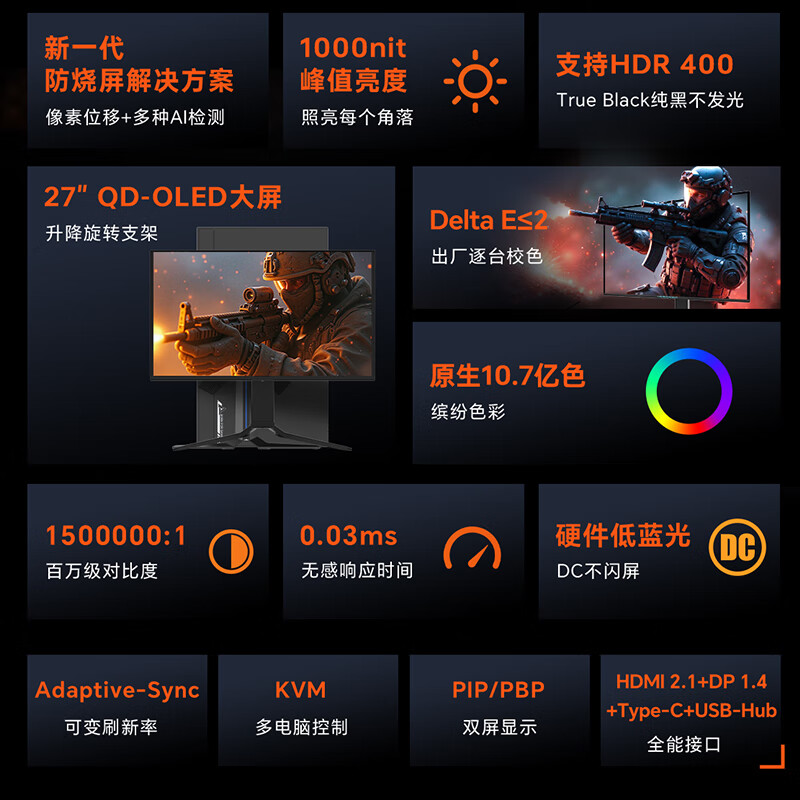
AOC launches AG275QSW, a 2K 320Hz gaming monitor with a refreshingly clean white design

AOC has launched a new 27-inch gaming monitor in China, the AG275QSW, under its AGON Pro lineup. The monitor features a white chassis and targets competitive gamers with a high refresh rate and factory-calibrated color accuracy. It is now available on JD.com for 1999 yuan (approximately $278).

AOC AG275QSW Monitor

AOC AG275QSW Monitor Specifications

The AG275QSW uses a Fast IPS panel with a native 2560×1440 (2K) resolution. It supports a maximum refresh rate of 320Hz through the DisplayPort 1.4 interface, while the two HDMI 2.0 ports are limited to a 144Hz refresh rate. The panel delivers a 1ms GtG response time and a 0.3ms MPRT, aiming to minimize motion blur in fast-paced games.

AOC has equipped the monitor with Adaptive Sync support and its in-house MBRSync motion blur reduction technology. These features work together to reduce screen tearing and maintain image clarity during competitive gameplay. The display is also VESA DisplayHDR 400 certified, offering a peak brightness of 450 nits in HDR mode and 350 nits in SDR.

The AG275QSW covers 100% of the sRGB color space and 95% of the DCI-P3 gamut. Each unit is factory-tuned with an average Delta E of less than 2 for high color accuracy. This makes the monitor suitable not only for gaming but also for content creation and color-sensitive work.

AOC has added a range of smart gaming features to the monitor, including a dynamic crosshair and a sniper zoom function that adjusts the on-screen targeting based on in-game conditions. These features aim to enhance the competitive experience.

The monitor features rear RGB lighting customizable via AOC’s Light FX system, offering 14 lighting effects, including sound-reactive modes. Its ergonomic stand allows for 130mm height adjustment, tilt between -5° and 23°, swivel up to 30°, and full pivot rotation. It also supports 100×100mm VESA mounting.

In terms of connectivity, the AG275QSW features two HDMI 2.0 ports, one DisplayPort 1.4, two USB 3.2 Gen 1 Type-A ports, a USB-B upstream port, and a headphone jack. It also supports KVM functionality for switching control between multiple connected devices.

In related news, HKC has introduced the world’s first gaming monitor with a native 800Hz refresh rate, while ViewSonic has launched a feature-rich 24.5-inch 2K 250Hz gaming monitor priced at just $150.

For more daily updates, please visit our News Section.

Stay ahead in tech! Join our Telegram community and sign up for our daily newsletter of top stories! 💡

(Source)

Nothing Headphone (1) European pricing leaks ahead of July 1 reveal

Nothing is getting ready to make its mark in the over-ear headphone market. The company’s first full-sized headphones, confirmed to launch on July 1 alongside the Nothing Phone (3), have now had their European price leaked—offering a potentially strong alternative to more expensive rivals.

According to trusted leaker billbil-kun via Dealabs, the Nothing Headphone (1) will cost €299 in Europe. That puts them well below high-end options like Apple’s AirPods Max (€509), and right in the mix with models like Sony’s WH-1000XM5. The leak also suggests the headphones will be available in white, gray, and black, with sales expected to begin by September 30. According to a previous leak, the Headphone (1) will cost $299 in the US.

Nothing first teased the headphones back in May, promising a fresh design language and a focus on user-friendly controls. Instead of touch-sensitive surfaces, the Headphone (1) is hinted to feature physical buttons for playback and volume—a choice that makes it easier for users to identify and operate the controls without guessing.

The company also hinted at high-quality audio and a distinctive look, likely staying true to Nothing’s minimalist and transparent design ethos. Their recent partnership with British audio brand KEF also raises expectations for solid audio performance, though official specs haven’t been revealed yet.

With just a few weeks to go, anticipation is building. If Nothing can deliver the same blend of style, performance, and value that it has with its Ear series, the Headphone (1) could become a standout option in the premium audio space—without the premium price tag.

Stay ahead in tech! Join our Telegram community and sign up for our daily newsletter of top stories!

For more daily updates, please visit our News Section.

(Source | Image)

Apple offers free repairs for M2 Mac mini’s “No Power” issue

If your M2 Mac mini refuses to power on, Apple might have you covered. The company has quietly launched a new global service program to address a rare “no power” issue affecting certain 2024 models—offering free repairs for eligible devices.

According to Apple, the issue affects a “very small percentage” of Mac minis manufactured between June 16 and November 23, 2024. While the company hasn’t shared what’s causing the problem, it says affected units may simply fail to turn on. Even if your device seems fine, it may still qualify for service under the program.

Repairs are free and can be handled through Apple Stores or authorized service providers. The program covers eligible devices for three years from their original sale date, giving owners plenty of time to take action.

To find out if your Mac mini is eligible, visit Apple’s support page and enter your serial number. Apple also recommends backing up your data before bringing in your device, and notes that if your Mac has any unrelated damage—like a cracked case—you might need to get that fixed first (which could incur a cost) before the power issue can be addressed.

Reactions online have been mixed. Some users on social media appreciated Apple’s proactive move, while others questioned how the issue made it past production in the first place. Regardless, this service program may help Apple maintain trust among Mac users.

This isn’t the first time Apple has launched a repair program—previous efforts have addressed things like MacBook keyboard issues and iPhone battery problems. If you’ve bought an M2 Mac mini recently, now’s a good time to check your serial number and see if you’re eligible for a free repair.

Tech enthusiast? Get the latest news first! Follow our Telegram channel and subscribe to our free newsletter for your daily tech fix!

For more daily updates, please visit our News Section.

(Source | Image)

Redmi K80 Ultra has a monster battery & audio hardware to match its gaming ambitions

Redmi continues to build anticipation around its upcoming flagship, the K80 Ultra. After teasing the device’s design and chipset earlier, the company has now revealed additional hardware details focused on battery, charging, audio, and haptics.

According to the latest teaser shared on Weibo, the Redmi K80 Ultra features a massive 7410mAh battery. Xiaomi claims the device delivers up to 2.26 days of usage on a single charge based on its internal “Days of Use” (DOU) metric. The phone also uses microarchitecture-level tuning to reduce power consumption during extended use.

Redmi has also introduced a new Bypass Charging Plus system, which directs power separately to the motherboard and the battery. This design helps minimize heat generation, particularly during gaming. The K80 Ultra also becomes the first Redmi device to support 100W fast charging.

The device includes an upgraded CyberEngine haptic motor with ultra-wideband feedback and nearly 100 customized vibration patterns. Xiaomi claims this is the strongest and most refined haptic system on any Android phone. It uses a closed-loop driver chip for consistent tactile response across various use cases.

In terms of audio, the K80 Ultra features what Xiaomi calls “Master-Class Coaxial Symmetrical Dual Speakers.” Each speaker includes both tweeter and woofer units in a coaxial structure, supported by aerospace-grade domes and an ultra-smooth diaphragm. The setup is designed to deliver a broader frequency response, reaching up to 20kHz, and reportedly improves 8k–20kHz sound pressure levels by 16dB on average.

As confirmed earlier, the K80 Ultra is powered by MediaTek’s flagship Dimensity 9400+ chipset and Xiaomi’s in-house D2 discrete GPU. The device scored over 3.24 million points on AnTuTu V10. It also integrates the brand’s largest 3D IceLoop vapor chamber and uses Fury Engine 4.0 for deeper performance optimization.

Xiaomi is also preparing to launch the Redmi K Pad alongside the K80 Ultra later this month in China. The tablet features an 8.8-inch LCD panel with 3K resolution and a 165Hz refresh rate. It runs on the Dimensity 9400+ chipset, supports up to 16GB of RAM, and ships with Android 15. The device also includes 67W fast charging and a minimalist design with a single rear camera and LED flash. It is positioned to compete with the iPad Mini 7, Red Magic Gaming Tablet 3 Pro, and Lenovo Legion Y700 (Gen 4).

For more daily updates, please visit our News Section.

Stay ahead in tech! Join our Telegram community and sign up for our daily newsletter of top stories! 💡

Vivo X Fold5 unboxed ahead of launch; USB-C port is thicker than the device itself

The vivo X Fold5 is just days away from its official unveiling, but that hasn’t stopped the leaks from flowing. Early unboxing videos have started popping up online, giving us a detailed look at vivo’s upcoming foldable. And there’s something quite unexpected: when unfolded, the phone is actually thinner than its own USB-C port.

Set to launch in China on June 25, with a possible global rollout on July 10, the X Fold5 is shaping up to be one of the slimmest foldables yet. The device reportedly measures just 4.3mm when unfolded and 9.33mm when folded — slightly thicker than the Oppo Find N5’s 8.9mm folded profile. For more context, the Galaxy Z Fold7 —teased as the thinnest Galaxy foldable ever — is rumored to measure 4.54mm when unfolded. The USB-C port on the X Fold5, however, juts out noticeably, which could raise some durability or design questions.

Despite its slim profile, vivo hasn’t compromised on battery life. The phone is officially confirmed to pack a 6,000mAh battery — the biggest ever in a foldable — rumored to be paired with 90W wired and 30W wireless charging. It’s also said to be lighter than its predecessor, weighing in at 209g, down from 219g. The Oppo Find N5 weighs 229g.

Under the hood, the X Fold5 runs on the Snapdragon 8 Gen 3 with 16GB of RAM, based on Geekbench results for model number V2436A. That makes it a step behind the Snapdragon 8 Elite used in the Oppo foldable — with around a 20% drop in single-core and 16% in multi-core performance.

vivo has also teased a new “Atomic Workbench” multitasking feature, seemingly inspired by Apple’s Stage Manager, to make better use of the foldable’s screen real estate. The X Fold5 features an 8.03-inch 2K+ AMOLED inner display and a 6.53-inch LTPO cover screen, aiming to blend productivity with portability.

With the official launch right around the corner, vivo’s X Fold5 looks to be pushing the boundaries of foldable design — even if it means having a USB-C port that’s a bit too proud of itself.

Don’t miss a thing! Join our Telegram community for instant updates and grab our free daily newsletter for the best tech stories!

For more daily updates, please visit our News Section.

(Source | Via)

Alleged “Snapdragon 8 Plus” could launch in Q4, as a real alternative to 8 Elite 2

Qualcomm could be preparing a new “Snapdragon 8 Plus” chip to shake up the premium mid-range segment in late 2025. According to recent reports, the chip—known internally as the SM8845—may serve as a more affordable alternative to the Snapdragon 8 Elite 2, which is expected to power next year’s top-tier Android flagships.

The Snapdragon 8 Elite 2 is set to be Qualcomm’s showcase processor for 2025, likely launching in Q3. Built on TSMC’s 3nm process and featuring custom Oryon CPU cores, the chip is expected to deliver a major leap in performance and efficiency. Devices like the Galaxy S26 Ultra and other ultra-premium models will likely adopt it—though early signs suggest prices could climb even higher than the already expensive 8 Elite.

That’s where the new Snapdragon 8 Plus could come in. Expected to arrive sometime in Q4 2025, this chip is not a direct successor to the Snapdragon 8s Gen 4, but rather a new tier altogether. It’s rumored to share key features—such as the same GPU architecture—with the Elite 2, while being priced more competitively. The idea seems to be offering near-flagship performance (finally) without the ultra-flagship price tag, a move that could benefit so-called “flagship killer” smartphones. The tipster also suggests that phones powered by this chip could pack significantly larger batteries—possibly around 7,000mAh—compared to flagship models running on the Elite 2.

Qualcomm had earlier positioned the Snapdragon 8s Gen 3 as a toned-down version of the top-tier Snapdragon 8 Gen 3. However, with the arrival of the 8s Gen 4, that strategy shifted. Instead of offering a true alternative to the flagship chip, the 8s Gen 4 merely matched the performance of last year’s Snapdragon 8 Gen 3. Now, Qualcomm seems to be repositioning things again, aiming to bridge the gap between the cost-effective “S” series and its full-fledged flagship lineup.

Don’t miss a thing! Join our Telegram community for instant updates and grab our free daily newsletter for the best tech stories!

For more daily updates, please visit our News Section.

(Source)

HKC unveils world’s first 800Hz native refresh rate gaming monitor

HKC has announced what it claims to be the world’s first gaming monitor with a native 800Hz refresh rate. While the company previously showcased a 750Hz prototype at CES 2025 under the Koorui G7 name, the newly revealed 800Hz model appears to be a separate or evolved product. HKC has not confirmed whether the final version shares the same model number or branding.

HKC 800Hz refresh rate gaming monitor

The new monitor features a 24.5-inch Full HD panel and combines multiple advanced technologies. It uses HKC’s in-house FSA VA panel powered by a-Si HyperSilicon high-frequency drive technology. It also includes 1152-zone Mini LED backlighting and a cadmium-free QDEF quantum dot enhancement film. This combination allows the display to deliver high motion clarity without compromising on color performance.

Regarding specs, it includes a native 800Hz refresh rate with a VRR range from 48Hz to 800Hz, 0.5ms GtG response time, 1200 nits peak brightness, and a 4000:1 contrast ratio. The panel offers wide color coverage with 95% DCI-P3 and 99% Adobe RGB, ΔE < 1.5 color accuracy, native 10-bit color depth, and support for up to 12-bit rendering.

HKC 800Hz refresh rate gaming monitor

The monitor carries VESA DisplayHDR 1000 certification and supports both Nvidia G-Sync and AMD FreeSync Premium Pro for adaptive refresh rates. It also includes a dynamic power-saving feature that lowers the refresh rate during static content to conserve energy.

HKC is positioning the 800Hz monitor as a professional-grade esports tool for players who need maximum clarity and responsiveness in fast-paced games like Counter-Strike 2 and Valorant. Unlike the earlier 750Hz Koorui G7, which used a TN panel, this model features a VA panel for stronger contrast and wider color coverage, aiming to deliver both speed and better image quality.

Anyway, the announcement puts the company ahead in the race for high-refresh displays, as brands like Samsung, MSI, and AOC continue pushing past 500Hz in their own product lines.

For more daily updates, please visit our News Section.

Tech enthusiast? Get the latest news first! Follow our Telegram channel and subscribe to our free newsletter for your daily tech fix! ⚡

(Via)

AI-powered ASUS Vivobook S14, S16 laptops launched in India with long battery life, Rs 69,900 starting price

Asus has introduced four new laptops under its Vivobook S series lineup in India. The information was officially shared by the brand, detailing the specs, features, and pricing of the new Vivobook S14 and S16 variants. These laptops are geared toward students, professionals, and creators looking for AI-ready, portable devices with dependable battery life and modern design.

Vivobook S14 (S3407QA) with Snapdragon X and 30-hour battery life

ASUS Vivobook S Series launched in India

The Vivobook S14 (S3407QA) stands out as an AI-focused device, powered by the Qualcomm Snapdragon X Series processor with a 45 TOPS NPU. This Copilot+ PC is tailored for next-gen AI tasks and comes preloaded with ASUS AI applications. The device features a 14-inch 2.5K IPS display with 400 nits of brightness, 100% sRGB coverage, and an 86% screen-to-body ratio. With a lightweight metal chassis weighing approximately 1.35 kg and a 70WHr battery that claims up to 30.5 hours of use, this laptop is clearly built for mobility. It also supports Wi-Fi 6E, comes with an FHD IR camera with privacy shutter, and offers a range of USB 3.2 and USB 4.0 ports.

Vivobook S14 (S3407CA) for daily productivity

The Vivobook S14 is powered by up to an Intel Core Ultra 7 255H processor paired with Intel Graphics and a 13 TOPS AI NPU. It features a 14-inch FHD+ IPS display with TÜV Rheinland certification for low blue light emission and a 16:10 aspect ratio. The 70WHr battery promises up to 20 hours of backup. At just 1.39 kg, it maintains a slim profile thanks to its sandwich metal build. Other highlights include DDR5 memory with upgrade options, Wi-Fi 6, Bluetooth 5.3, and a Windows Hello-compatible IR camera with a privacy shutter.

Please Note: When you buy something using the links in our articles, we may earn a small commission at no cost to you.

Vivobook S16 OLED (S3607CA) comes with a larger display, everyday AI

For users looking for more screen space, the Vivobook S16 OLED (S3607CA) comes with a 16-inch display option, offering either a 144Hz IPS panel or an OLED screen with an 89% screen-to-body ratio. It runs on up to Intel Core Ultra 7 255H processor with AI optimization and includes 16GB of DDR5 RAM and 512GB PCIe 4.0 SSD. The laptop weighs about 1.4 kg and maintains the same battery and build characteristics as its smaller sibling, offering versatility without adding bulk.

Please Note: When you buy something using the links in our articles, we may earn a small commission at no cost to you.

Vivobook S16 (S3607VA), an Intel Core i7 PC with affordable pricing

This version is equipped with an Intel Core i7-13620H processor, 16GB DDR5 memory, and a 144Hz 16-inch FHD+ IPS display. It’s suitable for users needing responsive performance for multitasking or content consumption. The laptop comes with military-grade durability, stereo speakers with Dolby Atmos, and essential I/O ports for connectivity. At 1.4 kg, it is both lightweight and sturdy, backed by a 70WHr battery with 65W fast charging.

Please Note: When you buy something using the links in our articles, we may earn a small commission at no cost to you.

Price and availability

  • Vivobook S14 (S3407QA) is priced at Rs 74,990 and is available via Flipkart.
  • Vivobook S14 (S3407CA) starts at Rs 80,990 and can be found online on Amazon, Flipkart, and offline via ASUS Exclusive Stores, Croma, and Vijay Sales.
  • Vivobook S16 OLED (S3607CA) is available for Rs 82,990 via Amazon.
  • Vivobook S16 (S3607VA) is the most affordable at Rs 69,990 and is listed on Amazon.
    All four models will be also available via Asus India’s e-shop.

For more daily updates, please visit our News Section.

Stay ahead in tech! Join our Telegram community and sign up for our daily newsletter of top stories.

Oppo Android 16 update list: complete list of eligible devices

Oppo ColorOS 16 (Android 16) update list

The stable version of Android 16 is now available for Google Pixels, and it will soon start rolling out to non-Google brands, such as Oppo. The Chinese brand has already released a few Android 16 betas for select devices, and it is now preparing for the final release.

The stable Android 16 update for Oppo devices will feature a layer of ColorOS 16 skin at the top, offering an additional set of new features and improvements. Review the list below to find out if your Oppo device is eligible for the Android 16-based ColorOS 16 upgrade.

Oppo Android 16 (ColorOS 16) eligible devices list

Oppo hasn’t announced which devices will be upgraded to Android 16. Therefore, we had to rely on the existing update policy and a little bit of guesswork to prepare the list.

Oppo Find N series

  • Oppo Find N5
  • Oppo Find N3
  • Oppo Find N3 Flip
  • Oppo Find N2
  • Oppo Find N2 Flip

Oppo Find X series

  • Oppo Find X8
  • Oppo Find X8 Pro
  • Oppo Find X8 Ultra
  • Oppo Find X7
  • Oppo Find X7 Ultra
  • Oppo Find X6
  • Oppo Find X6 Pro

Oppo Reno series

  • Oppo Reno 14
  • Oppo Reno 14 Pro
  • Oppo Reno 13
  • Oppo Reno 13 Pro
  • Oppo Reno 13F (LTE/5G)
  • Oppo Reno 12
  • Oppo Reno 12 Pro
  • Oppo Reno 12F (LTE/5G)
  • Oppo Reno 11
  • Oppo Reno 11 Pro
  • Oppo Reno 11F

Oppo A series

  • Oppo A5 (LTE/5G)
  • Oppo A5x (LTE/5G)
  • Oppo A5 Pro (LTE/5G)
  • Oppo A5 Energy

Oppo F series

  • Oppo F29
  • Oppo F29 Pro
  • Oppo F27
  • Oppo F27 Pro
  • Oppo F25 Pro

Oppo K series

  • Oppo K13
  • Oppo K12
  • Oppo K12x
  • Oppo K12 Plus

Oppo Pad series

  • Oppo Pad 4 Pro
  • Oppo Pad 3
  • Oppo Pad 3 Pro
  • Oppo Pad SE

If your Oppo device is on the list, it’s likely to be upgraded to Android 16 when the rollout begins. However, I’d still recommend checking the official list (when it will be announced) for the final confirmation. Those missing from the list should also wait for the official list before considering upgrading to a newer model.

When will Oppo start rolling out Android 16 update?

Oppo has not announced when it will start rolling out the Android 16-based ColorOS 16 update to its devices. However, we know that it usually takes a few weeks after Google releases the latest version of Android OS. Since Android 16 was released last week, we can expect the ColorOS 16 rollout to go live in early July 2025. We can’t discount the possibility of a delay if critical bugs are found.

Whenever the rollout begins, it will initially reach recent premium phones, such as the Find X8 series, Find N5, and Find N3 series. The update will then gradually expand to mid-range and cheaper models. Oppo will soon release a ColorOS 16 rollout schedule, which will reveal when the update will be available for your Oppo device.

Regularly visit out Android 16 section to get the latest news. Also, follow our Telegram channel and subscribe to our free newsletter for your daily dose of tech! ⚡

China’s PC market saw a boost in Q1 2025, and Lenovo secures the top spot

PC and tablet shipments in mainland China saw moderate growth in the first quarter of 2025, according to new data from Canalys. The report shows that PC shipments (excluding tablets) reached 8.9 million units in the mainland. It’s a 12% growth year-over-year. 

Meanwhile, the tablet shipments climbed to 8.7 million units, which is a 19% increase over the same period last year.

According to the report, the Chinese government’s subsidy program appears to be doing most of the heavy lifting. The incentives have been pushing consumers to upgrade older devices, especially notebooks, which saw a 20% jump compared to Q1 2024.

However, not all segments are sharing in the optimism. The commercial PC market showed less momentum. Canalys’ report shows purchases from large enterprises remained flat, while the SMB (small and medium-sized business) sector did show some signs of recovery after nearly three years of decline, growing 2% over the year.

Lenovo secures the top spot

Among PC vendors, Lenovo maintained its lead with 2.63 million units shipped and a 30% market share. However, this is still a 3% decline compared to Q1 2024. Huawei followed with 1.04 million units (12% share), posting 8% growth. 

iSoftStone, another Chinese company that also manufactures and sells PCs, shipped 890,000 units in Q1, 2025. It’s a massive 111% increment year-over-year, bringing its market share to 10%. 

Apple and HP rounded out the top five, with Apple growing 43% to 680,000 units (8% share), while HP declined 7% to 640,000 units (7% share).

In the tablet segment, Huawei led with 2.3 million units shipped (26% market share), closely followed by Apple with 2.1 million units (24%). Xiaomi reported the highest year-over-year growth at 57%, shipping 1.4 million units. Honor and Lenovo trailed, with Honor up 41% to 900,000 units, and Lenovo falling 23% to 500,000 units.

Looking ahead, Canalys forecasts a flat PC market for the rest of 2025, with slight 6% growth expected in 2026. The tablet market is projected to expand 5% this year, followed by an 8% contraction next year. 

(Via)

For more daily updates, please visit our News Section.

Stay ahead in tech! Join our Telegram community and sign up for our daily newsletter of top stories.

Trump Mobile launches T1 Phone as part of its America-first tech push, read price, specifications

Trump Mobile has officially entered the wireless market, unveiling its first smartphone alongside its cellular service offering. As revealed in a press announcement featuring Donald Trump Jr. and Eric Trump, the T1 Phone marks the beginning of the brand’s efforts to provide a high-performance yet value-driven mobile solution for American consumers. The announcement coincided with the 10-year anniversary of Donald Trump’s first presidential campaign.

Trump Mobile T1 Phone specifications

Trump Mobile T1 Phone

The Trump Mobile T1 is a sleek, gold-finish device featuring a 6.78-inch punch-hole AMOLED screen with an in-screen fingerprint sensor and AI face unlock. It runs on Android 15 and is powered by a chipset paired with 12GB of RAM and 256GB of internal storage.

For photography, the Trump Mobile T1 features a 50-megapixel primary rear camera, supported by 2-megapixel depth and macro sensors. On the front, the phone includes a 16-megapixel selfie shooter.

A 5,000mAh battery supports 20W PD fast charging, and the phone includes a USB Type-C port with OTG support as well as a 3.5mm headphone jack. For additional storage, it features a microSD card slot.

Trump Mobile T1 price and availability

Priced at $499, the T1 Phone is set to go on sale in August across the US, with exact pricing yet to be announced. Trump Mobile’s services are based on the infrastructure of all three major 5G networks in the country.

Its flagship plan, called “The 47 Plan,” is priced at $47.45 per month and offers unlimited talk, text, and data, along with features such as device protection, 24/7 roadside assistance, telehealth support, and free international calling to over 100 countries, including those with US military bases. There are no contracts or credit checks required. Customer service is entirely US-based and human-staffed, operating 24/7.

For more daily updates, please visit our News Section.

Stay ahead in tech! Join our Telegram community and sign up for our daily newsletter of top stories.