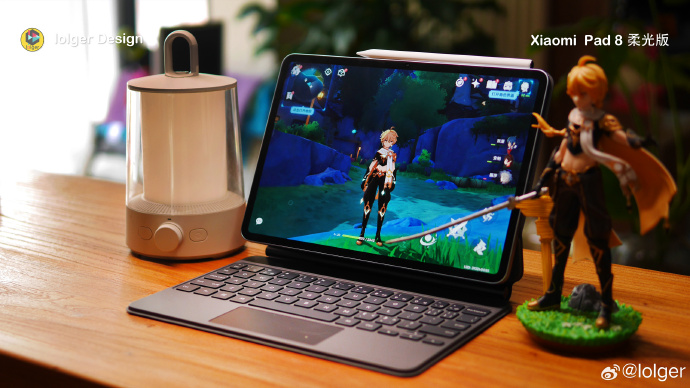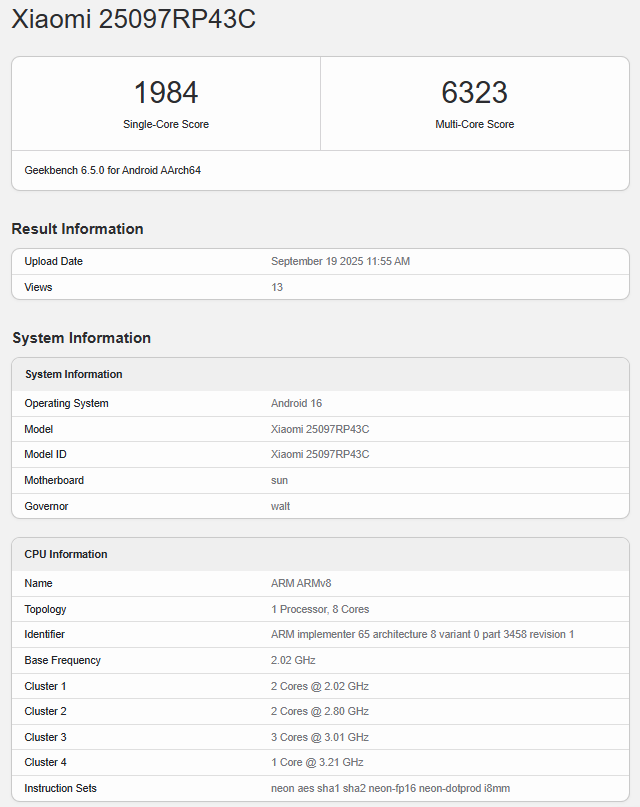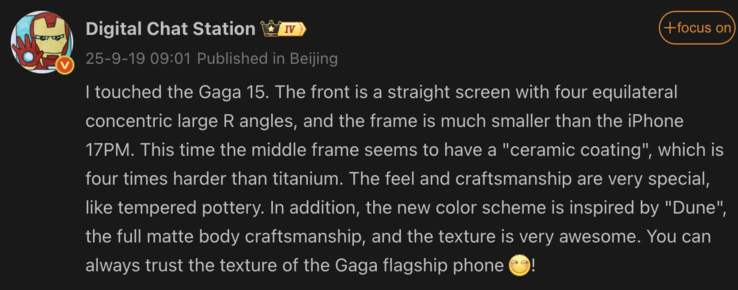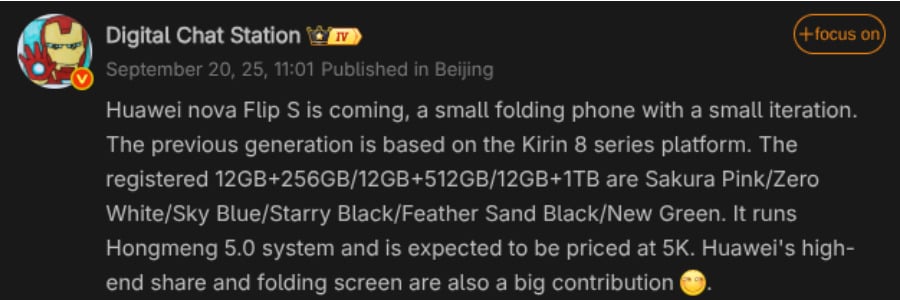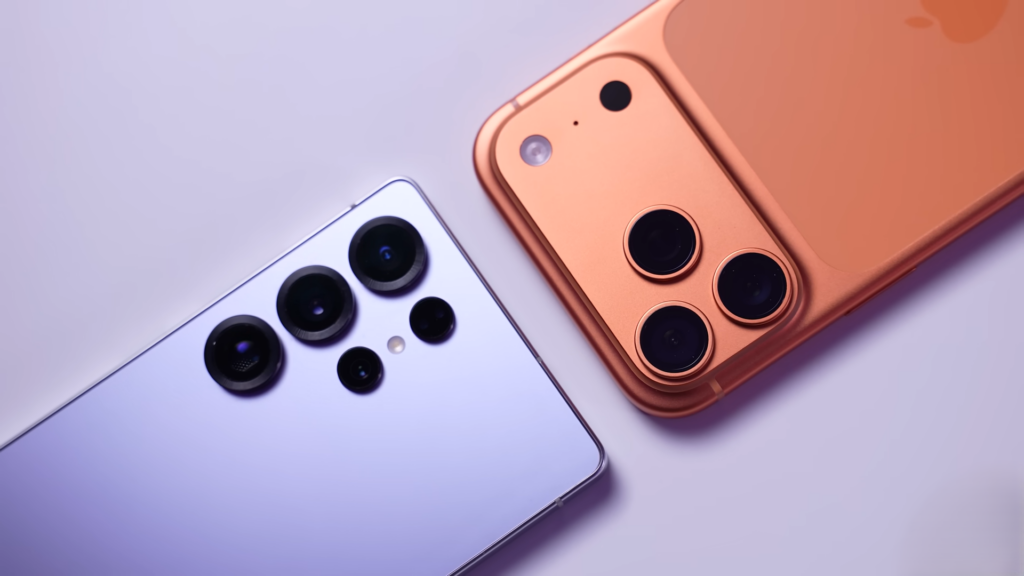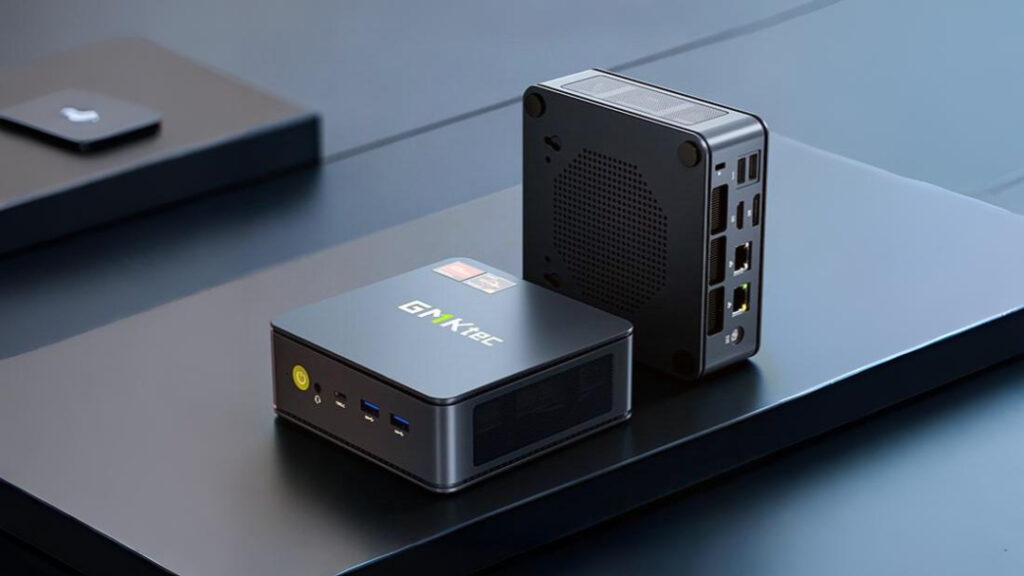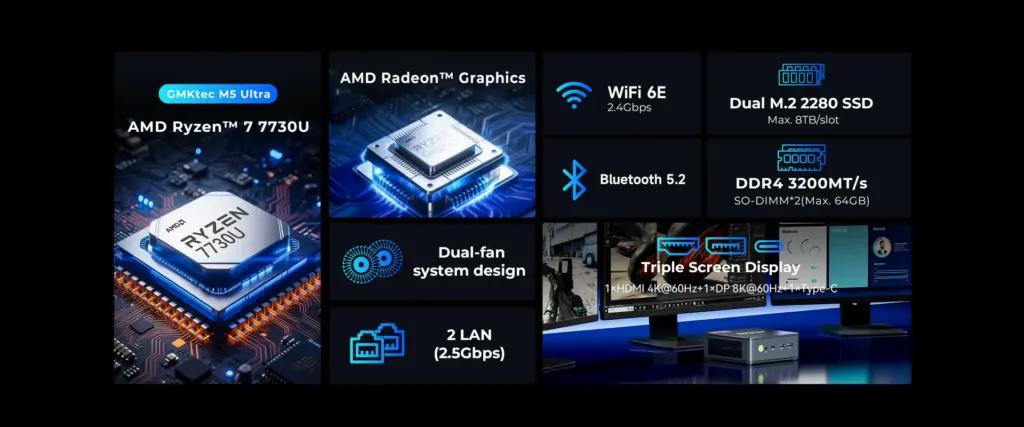
A new leak suggests that OnePlus is prepping a dedicated gaming tablet and gaming smartphone. While the company is known for catering to mobile gamers, this would be one of its first devices dedicated to gaming. If this report is true, OnePlus might be looking to enter the gaming tablet and smartphone space. So here’s everything we know at the moment.
OnePlus’s First Gaming Phone & Gaming Tablet Could Arrive with a 165Hz Screen
The Chinese brand is rumored to be working on a tablet for gaming. Known tipster Smart Pikachu claimed that OnePlus’s gaming tablet is in the works, along with a gaming smartphone. To recall, the flagship OnePlus 13 featured a 120Hz refresh rate, while the highest ever refresh rate was a 144Hz panel on the new Ace 5 Ultra model. Meanwhile, the latest OnePlus Pad 3 also offered a 144Hz refresh rate.
OnePlus Pad 3
While these are already quite high, the dedicated gaming tablets and gaming smartphones will get reportedly an even higher 165Hz screen. Keep in mind that this is still just speculation at this point, so take this news with a pinch of salt for now. The OnePlus 13 and OnePlus Pad 3 came equipped with the Snapdragon 8 Elite, which is one of the fastest processors that powers Android devices. It also offers great improvements in graphical performance.
In other words, these new devices could feature the same processor or the MediaTek’s latest and greatest Dimensity 9400+, like the Ace 5 Ultra. Entering the gaming tablet and gaming smartphone segment, OnePlus will likely compete with other established gaming brands like Lenovo with its Legion lineup and Nubia’s Red Magic.
For more daily updates, please visit our News Section.
We are not so far now from the launch of Samsung’s newest foldables. The Flip 7 among them is probably Samsung’s most predictable foldable, and that’s not necessarily a bad thing. After six iterations of the Flip series, Samsung seems content refining the formula rather than rethinking it.
Samsung Galaxy Z Flip 7 Leaked Render
For this generation, Samsung is expected to make the foldable more durable, reduce the crease, and possibly bring back its in-house silicon. Here’s everything we know about the Galaxy Z Flip 7 so far.
If you were expecting a radical design overhaul, you’ll probably be disappointed. The Galaxy Z Flip 7 will retain the basic silhouette of previous models but with a few noticeable changes.
Based on leaks, the device will be slightly taller than the Flip 6, measuring at 166.6 mm (vs 165.1mm) when unfolded, though thickness will remain unchanged at 6.9mm.
Aesthetically, the biggest change will be on the outside. Samsung might finally ditch its unique “folder cutout” cover screen for a full-width rectangular display that houses the camera lenses within the panel area itself. This will increase the outer display length from 3.4 inches to a more usable 4.0 inches.
The internal folding display might also see minor dimensional changes, going from 6.7 inches to 6.85 inches.
2. Display and Durability Improvements
The Z Flip 7 will still use Samsung’s Dynamic LTPO AMOLED 2x panel with a 120Hz refresh rate and 2600 nits of peak brightness. There’s also speculation that Samsung might include its Color Filter on Encapsulation (CoE) display technology for glare reduction and screen efficiency.
However, the Flip 7 will still miss out on some flagship features from its flagship slabs. This includes anti-reflective coating from S25 Ultra, along with Pro Scaler display tech and S Pen support.
Moreover, leaks say Samsung will refine the hinge mechanisms on the new foldable to increase smoothness and reduce wear over time. Combined with thinner display layers and fewer mechanical parts, this may help reduce the infamous crease that persists across foldables.
3. Cameras are still the same
Sadly, the Flip 7 won’t bring any camera upgrades this generation as well. Multiple leaks suggest it will recycle the Flip 6’s hardware: a 50MP main sensor, a 12MP ultrawide camera, and a 10MP selfie camera. That’s… fine, but not much else.
For a device likely priced above $1,000, the absence of a dedicated telephoto lens is disappointing. And while foldable phones aren’t primarily known for camera excellence, Samsung has had years to do more with the Flip’s imaging setup. Still, we could see some improvements on the software front, with new AI-powered photo tools expected as part of One UI 8.
4. Exynos or Snapdragon chip?
Perhaps the most debated change for the Z Flip 7 is the chipset. While early rumors hinted at Qualcomm’s Snapdragon 8 Elite, newer reports suggest Samsung is going back to using its in-house Exynos chips, specifically the Exynos 2500.
This 3nm processor is expected to power most Z Flip 7 units globally, including in Europe. It has a deca-core setup featuring one Cortex-X925 at 3.3GHz, two Cortex-A725 cores at 2.75GHz, five more Cortex-A725s at 2.36GHz, and two Cortex-A520 cores at 1.8GHz. Graphics will be handled by the Xclipse 950 GPU, which uses AMD’s RDNA 3.5 architecture.
In fact, the phone has been spotted on Geekbench with the same chip scoring 2012 and 7563 single and multi-core points, respectively. Still, it’s not sure whether Samsung will regionally divide the chipset choice like it did in the past.
Regardless of the SoCs, the phone will be available with 8GB or 12GB of RAM paired with 256GB or 512GB of storage.
There is also talk of a larger vapor chamber to improve thermal performance, which could help reduce throttling under heavy use. This would also support longer sustained performance, especially useful for multitasking and gaming.
5. Battery and charging
One of the more tangible upgrades is battery size. The Flip 7 is rumored to pack a 4,300mAh battery, up from 4,000mAh in the Flip 6 and 3,700mAh in the Flip 5. That’s not insignificant, especially when paired with a more efficient chipset and display.
However, Samsung seems reluctant to improve on the charging front. It is expected to retain 25W wired and 15W wireless charging.
6. One UI 8 and Android 16 out of the box
As for the software version, Samsung might skip ahead this year and launch the Z Flip 7 with Android 16-based One UI 8. That is because Google has ramped up the launch of Android 16. The new version should refine AI features, improve core apps, and build on One UI 7’s functionality.
7. Colors and pricing
So far, the Galaxy Z Flip 7 has been leaked in Blue Shadow and White Black, though Samsung typically launches with more shades later via Bespoke Edition options.
As for pricing, the Flip 7 is expected to launch at the same $1,099 starting price as the Flip 6. That price already saw a $100 hike over the Flip 5, so Samsung may be reluctant to go higher again. However, with new U.S. tariffs and fluctuating global production costs, some regional price increases aren’t out of the question.
Motorola Edge series has been offering great value-for-money smartphones with striking design and color options. The latest Edge 60 series is no exception, but picking one from the lineup can be challenging, especially when they all look almost identical.
If you are not sure which model to pick out of Edge 60, Edge 60 Pro, and Edge 60 Fusion, keep reading this article as we’ll dive into the crucial differences among these Edge 60 phones to help you make an informed decision.
Motorola Edge 60 vs Edge 60 Pro vs Edge 60 Fusion – the ultimate comparison
Pricing and availability
All three Motorola Edge 60 phones fall within the sub-INR 30,000 price segment, also known as the mid-range segment. Here are the pricing details:
The most affordable option here is the Edge 60 Fusion, starting at just INR 22,999. Going up a little will get you the vanilla Edge 60, starting at INR 25,999, and then comes the most premium in the lineup, Edge 60 Pro, for a starting price of INR 29,999.
As I write this post, the Motorola Edge 60 series phones are available for purchase in many parts of Asia (including India and China) and Europe. It will expand to more markets over the coming weeks and months.
The Edge 60 trio has an identical appearance, featuring a square camera module that smoothly blends into the rear panel and a hole-punch selfie camera. All of them are IP68/IP69-certified, which means they can withstand dust, debris, and high-pressure water jets. They are also MIL-STD-810H-certified, which ensures survival in challenging environmental conditions.
What separates them here is their rear design. The Edge 60 and Edge 60 Pro feature plastic rear panels, but Motorola elevates them with unique finishes and textures to set them apart from standard glossy or matte plastic. They come in a special finish that mimics a textile or fabric feel —and there’s also a vegan leather option available. The Pro model also has an option with a wood-like finish.
The Edge 60 Fusion features a vegan leather finish, providing a soft, premium feel with a better grip than standard plastic.
Coming to the screen, the three Edge 60 models have the same Gorilla Glass 7 protection. They all have nearly the same-sized pOLED screens with 1220 x 2712 pixels resolution, 120Hz refresh rate, and 4500nits of peak brightness.
Performance and software
The Motorola Edge 60 and Edge 60 Fusion come in two chip versions: the Dimensity 7400 for India and the Dimensity 7300 for other markets. The Edge 60 Fusion also features the Dimensity 7400 in Indonesia. There’s no drastic performance difference between these two Dimensity chips. So, that shouldn’t be a point of concern.
The Edge 60 Pro, however, comes with a significantly more powerful Dimensity 8350 Extreme chipset. It pulls off impressive numbers on benchmarks. Take a look at the benchmark scores below to have some idea about the performance gap.
Geekbench result:
Geekbench
Single core
Multi core
Motorola Edge 60
1042
2993
Motorola Edge 60 Pro
1431
4475
Motorola Edge 60 Fusion
1047
3034
AnTuTu result:
AnTuTu score
Motorola Edge 60
659,743
Motorola Edge 60 Pro
1,357,012
Motorola Edge 60 Fusion
655,981
The Edge 60 and Edge 60 Fusion with Dimensity 7300/7400 offer a smooth, lag-free experience for everyday operations, such as browsing, scrolling through social media, and messaging. However, for gaming, the powerful Dimensity 8350 Extreme-powered Edge 60 Pro does a much better job.
These Edge 60 models boot Android 15 out of the box and promise three major Android updates. This means Android 18 will be the last major upgrade for these Motorola phones.
The Motorola Edge 60 and Edge 60 Pro have the same set of cameras. The triple rear cameras include a 50MP (Sony LYTIA 700C) primary camera with OIS, a 10MP telephoto camera with OIS and 3x optical zoom, and a 50MP ultrawide camera with a 122˚ field of view. The other side features a 50MP selfie shooter. Both smartphones can record up to 4K video from front and rear cameras.
The Edge 60 Fusion also features the same 50MP primary camera but lacks a telephoto shooter. The ultrawide camera resolution is also lowered to 13MP. This means the other phones will perform better in terms of zoom and ultrawide shots. The Edge 60 Fusion has a 32MP selfie camera. It can also record up to 4K videos from both sides.
Battery and charging
The Edge 60 and Edge 60 Fusion sold in India have a larger 5,500mAh battery than their global versions, which have a 5,200mAh capacity. The battery should last for a day (at least) with normal usage, and the 68W wired charging refills it in quick time.
The Edge 60 Pro, on the other hand, brings a 6,000mAh battery, which obviously lasts longer than the other two Motorola phones. It also features a faster 90W wired charging. Additionally, the Pro model supports 15W wireless charging and 5W reverse wired charging.
Audio and connectivity
The Edge 60, Edge 60 Pro, and Edge 60 Fusion have stereo speakers with Dolby Atmos for an immersive sound experience. They offer the same set of connectivity features, except for one notable difference: Wi-Fi 6E support for the Edge 60 Pro, while the other two support Wi-Fi 6. The newer Wi-Fi standard leverages the new 6GHz spectrum to offer improvements in speed, capacity, latency, and reliability — especially in congested environments.
Motorola Edge 60 vs Edge 60 Pro vs Edge 60 Fusion: Which is the best for you?
Choosing between the Motorola Edge 60, Edge 60 Pro, and Edge 60 Fusion depends entirely on your needs and budget. If you want the best performance, camera versatility, battery life, and extras like wireless charging, the Edge 60 Pro clearly stands out — but it also comes at a slightly higher price.
For those seeking a balanced mid-range phone with strong everyday performance, a great display, and solid cameras, the Edge 60 hits the sweet spot. And if you’re on a tighter budget but still want a stylish, feature-rich phone with an excellent screen, smooth everyday performance, and decent battery life, the Edge 60 Fusion offers excellent value without major compromises.
No matter which one you pick, all three phones deliver clean software, sharp displays, and Motorola’s refined design language — making the Edge 60 series one of the most well-rounded mid-range lineups right now.
Edge 60
Edge 60 Pro
Edge 60 Fusion
Released
April 2025
April 2025
April 2025
Dimensions Weight
161.2 x 73.1 x 8.2mm 181g
160.7 x 73.1 x 8.2mm 186g
161 x 73 x 8.0mm 178g
Protection
IP68/IP69 dust and water resistant Gorilla Glass 7i screen protection MIL STD-810H military grade protection
Vivo has introduced the T4 Ultra 5G in India as the successor to last year’s Vivo T3 Ultra. The new model brings a flagship-grade quad-curved OLED display, a powerful Dimensity 9300+ chipset, and a triple camera setup with a periscope lens. Read ahead to know all about the Vivo T4 Ultra’s specifications, features, and pricing.
Vivo T4 5G specifications and features
Vivo T4 Ultra
The Vivo T4 Ultra features a 6.78-inch quad-curved OLED panel with a 1.5K resolution (2800 x 1260 pixels), 120Hz refresh rate, local peak brightness of 5,000 nits, and 2160Hz PWM dimming for eye comfort. The screen features an in-screen fingerprint scanner and comes with Schott Xensation α cover glass protection. With an IP64 rating, the device measures 160.5 x 75.02 x 7.43mm and weighs 192 grams.
Under the hood, the T4 Ultra is powered by the MediaTek Dimensity 9300+ processor paired with LPDDR5 RAM, UFS 3.1 storage, and up to 12GB virtual RAM. The device packs a 5,500mAh battery with 90W fast charging and reverse charging support.
For photography, the phone houses a 32-megapixel front camera with 4K video recording. The rear setup includes a 50-megapixel Sony IMX921 main camera with OIS, an 8-megapixel ultrawide lens, and a 50-megapixel IMX882 periscope camera offering 3x optical zoom, 10x telephoto macro, and up to 100x digital zoom.
The T4 Ultra runs Android 15 with Funtouch OS 15. Vivo promises three major OS upgrades and four years of security patches. It comes equipped with several AI-driven features, such as AI Note Assist, Circle to Search, AI Transcript Assist, and AI Call Translation. Other features include dual stereo speakers, a large 4362mm² vapor chamber cooling system, Wi-Fi 7, Bluetooth 5.3, NFC, and USB-C connectivity.
Vivo T4 Ultra price in India, availability
The Vivo T4 Ultra is priced at Rs 39,999 for both the 8GB+256GB and 12GB+256GB variants, while the 12GB+512GB model is priced at Rs 41,999. Color options include Phoenix Gold and Meteor Grey.
The phone will go on sale starting June 18 via Flipkart, Vivo India’s website, and offline stores. Launch offers include Rs 3,000 instant discount through select bank cards or up to Rs 5,000 exchange bonus and up to 9 months of no-cost EMI.
For more daily updates, please visit our News Section.
Recent reports have revealed that Vivo is gearing up to launch the Vivo Y400 Pro 5G mid-range phone in India. While the company is yet to confirm its arrival, the rumour mill has already leaked several details about it. Now, in a fresh development, a premature Amazon India listing of the Vivo Y400 Pro has been spotted via GSMArena. The listing includes official images of the Freestyle White variant of the phone, revealing its design from all angles. It also mentions a few specifications of the device.
Vivo Y400 Pro Amazon listing
Vivo Y400 Pro’s premature Amazon India listing
The Amazon listing, which has since been taken down, revealed that the Vivo Y400 Pro features a 6.77-inch AMOLED panel that supports a 1.5K resolution. It also showed that the device will be available with a Dimensity 7300 chipset, 8GB of RAM, 128GB of storage, and a 5,500mAh battery with 90W charging support. Reports have claimed that there will also be an 8GB+256GB version of the device.
The listing also revealed that the Y400 Pro will have a 32-megapixel front-facing camera, along with an OIS-enabled 50-megapixel Sony IMX882 primary camera and a 2-megapixel auxiliary camera on the back. It mentions Funtouch OS 14, which could be inaccurate, considering all recent Vivo phones come with the latest Funtouch OS 15 edition. The device measures 164 x 75 x 8mm and weighs 182 grams.
Vivo Y400 ProVivo Y400 ProVivo Y400 ProVivo Y400 Pro
As per reports, the Vivo Y400 Pro will come in three shades, namely Nebula Purple, Festival Gold, and Freestyle White. The Amazon listing included images of the white variant and showcased its design from all angles.
As can be seen, the Vivo Y400 Pro will feature a quad-curved AMOLED screen on the front. The back panel of the device has a vertical camera module, which houses two cameras and a squircle LED flash unit.
Vivo Y400 ProVivo Y400 ProVivo Y400 Pro
The left spine of the Y400 Pro is completely barren, whereas its right edge features a volume rocker and a power key. On top, there is a microphone, and the bottom edge houses a SIM slot, another microphone, a USB-C port, and a speaker grille.
For more daily updates, please visit our News Section.
Vivo is all set to announce the Vivo X Fold 5 foldable phone this month in China. Today, Han Boxiao, Vivo’s Product Manager, shared the periscope telephoto camera samples of the phone and addressed the common belief that large foldable phones must compromise on camera capabilities to remain slim and lightweight.
Vivo X Fold 5 camera samples
Vivo X Fold 5 periscope camera sample
Boxiao revealed that the upcoming Vivo X Fold 5 breaks this stereotype by offering top-tier imaging performance without sacrificing design. Despite being thinner and lighter than the previous generation—measuring just 4.x mm when unfolded—the X Fold 5 manages to house a periscope telephoto lens that surpasses the one found on the X Fold 3 Pro.
Vivo X Fold 5 periscope camera sample
To support this claim, Boxiao shared three telephoto camera samples, including 1x and 20x zoom shots that clearly capture distant mountain peaks with fine detail. The device also supports telephoto macro photography, showcasing even the tiniest subjects, such as spider webs, with incredible clarity.
Vivo X Fold 5 periscope camera sample
According to him, the X Fold 5 delivers an imaging experience on par with mainstream flagship smartphones and even rivals some “Pro” models, proving that foldable users, too, can enjoy a true flagship-level camera experience. However, he did not share any details about the device’s camera configuration.
A recent leak revealed that the Vivo X Fold 5’s rear camera setup will comprise a 50-megapixel Sony IMX921 main camera with OIS support and a 50-megapixel ultra-wide sensor with autofocus support. The setup will also include a 50-megapixel Sony IMX882 periscope telephoto camera with 3x optical zoom and OIS.
The camera placed on the Vivo X Fold 5’s cover screen will be a 32-megapixel lens. On the inside, it is likely to feature another 32-megapixel camera.
For more daily updates, please visit our News Section.
Recently, a Vivo smartphone with the model number V2507A was approved by China’s 3C certification platform. At the time, Chinese tech bloggers speculated that it could be the upcoming Vivo X Fold 5. Previous reports had suggested that the X Fold 5 would feature a 6,000mAh battery. However, a new report by XpertPick indicates that the V2507A may actually house an 8,000mAh battery. This discrepancy suggests that the V2507A model number likely does not belong to the X Fold 5, but to a different, yet-to-be-identified Vivo / iQOO device.
V2507A packs a massive 8,000mAh battery
Vivo V2507A CMIIT listingVivo V2507A CMIIT source code
As mentioned above, it is still unclear whether the V2507A is a Vivo or an iQOO smartphone. The device was initially spotted with a 90W charger in the 3C certification, and it has now also received approval from China’s CMIIT platform. According to the source code of the CMIIT listing, the device will be equipped with a rated 7,840mAh battery, suggesting a typical capacity of around 8,000mAh.
Such a large battery capacity is more likely to appear in an iQOO smartphone rather than a Vivo device. Currently, the only other mainstream phone with an 8,000mAh battery is the Honor Power, which launched in April in China.
V2507A 3C certified
So far, iQOO has introduced the iQOO Z10x, Z10 Turbo, and Z10 Turbo Pro in its home market. These models are powered by the Dimensity 7300, Dimensity 8400, and Snapdragon 8s Gen 4 chipsets, respectively. Notably, the standard iQOO Z10 is yet to be launched in China.
Rumours suggest that the iQOO Z10 will be equipped with the Snapdragon 7 Gen 4 chipset, setting it apart from the version available in India and other regions. This device is also expected to offer a 120Hz OLED display and support 90W fast charging.
Given these details, it remains to be seen whether the V2507A with an 8,000mAh battery will be introduced as the iQOO Z10 or as an entirely different device.
For more daily updates, please visit our News Section.
Oppo is expected to unveil the Oppo Find X9 series of smartphones in September this year in China. In the said month, the brand is expected to announce three models: Find X9v, Find X9 Plus, and Find X9 Pro. A new update from reliable tipster Digital Chat Station reveals three major changes that will be seen in the X9 family.
Oppo Find X9 series: Three major changes
Oppo Find X9 series leak
The tipster claims that he has accessed the engineering prototypes of the Find X9 series and identified three key changes. The first is that the series will feature a flat OLED panel with 1.5K resolution, moving away from the micro quad-curved display design found on the Find X8 and X8 Pro.
The screen will have large, rounded corners and ultra-narrow, symmetrical bezels on all four sides, made possible by LIPO technology. Previous reports have claimed that the Find X9+ and X9 Pro will come with 6.59-inch and 6.78-inch displays, respectively, while the Find X9 may sport a 6.3-inch screen.
Under the hood, the Find X9 series will be powered by the Dimensity 9500 chipset, which is an upgrade over last year’s Dimensity 9400. The new chip, built on TSMC’s N3P process, uses a next-generation full-large core architecture comprising 1 x Travis + 3 x Alto + 4 x Gelas cores, and retains an 8-core design. It integrates the Immortalis-Drage GPU and adopts a new micro-architecture to enhance ray tracing performance while reducing power consumption. The computing power is expected to reach 100 TOPS.
The third and major change is the departure from the large round camera island design that has been used since the Find X7 series, which debuted in January 2024. Instead, one of the unreleased design prototypes features a matrix-style camera layout positioned in the top-left corner.
Oppo Find X8 Pro
While the tipster has not mentioned it in today’s leak, another major change rumored for the Find X9 Pro is that it will ditch the dual periscope camera setup. Instead, it may come equipped with a single 200-megapixel periscope telephoto camera. The dual periscope camera solution could be reserved for the Find X9 Ultra, which is expected to feature the Snapdragon 8 Elite 2 chip and launch in the first half of 2026.
For more daily updates, please visit our News Section.
In January, itel unveiled the itel Zeno 10, a budget smartphone for first time users. Now, the brand is back with a new 5G-enabled phone from the series. The Zeno 5G smartphone, which has been officially launched in India, features AI-driven capabilities, a Dimensity 6300 chipset, and a slim design. Here’s a look at the specifications, features, and price of the device.
itel Zeno 5G specifications and features
itel Zeno 5G
The itel Zeno 5G sports a 6.67-inch HD+ punch-hole display with a 120Hz refresh rate and 240Hz touch sampling rate. Despite its large screen, the phone maintains a sleek 7.8mm profile with a stylish matte finish. The device is protected with IP54-rated resistance against dust and water, and it comes with Panda MN228 glass for added screen durability.
The itel Zeno 5G phone includes a 50-megapixel AI-enabled Super HDR rear camera. On the front, there is an 8-megapixel front camera.
Under the hood, the Zeno 5G runs on the Dimensity 6300 chipset and offers 8GB RAM (4GB physical + 4GB virtual) along with 128GB internal storage. It packs a 5,000mAh battery, paired with a 10W charger for basic power needs.
It runs Android 14 out of the box and comes with productivity-oriented features like Aivana AI assistant and Ask AI, which helps users write, translate, and correct content easily. Other additions include dual 5G SIM support, Wi-Fi, Bluetooth, GPS, an IR blaster, and a USB-C port.
itel Zeno 5G price in India, availability
The itel Zeno 5G is priced at Rs 9,299 (inclusive of a Rs 1,000 Amazon coupon) and will be sold exclusively on Amazon starting June 10. It comes in three color options—Calx Titanium, Shadow Black, and Wave Green. The company is offering free screen replacement within 100 days of purchase.
Apple just unveiled its latest software developments — from new names to a Liquid Glass design — and it caught the attention not only of its users but also of its biggest Android rival: Samsung. In fact, Samsung didn’t just watch from the sidelines — it joined in with mockery, calling out Apple’s “familiar” designs and underwhelming AI features.
“Customizable apps? Floating bars? That sleek glass UI? Looks… familiar 🤔,” reads a post from Samsung Mobile US on X. The Liquid Glass design does resemble Windows Vista’s Aero UI, and the new app icon styling in iOS 26 and macOS 26 arguably makes it harder to recognize apps or read text clearly.
Samsung also took the opportunity to flex its Galaxy AI, which already powers many of the features Apple is just now beginning to beta test.
“New to live translations? Welcome aboard! We’ve been translating text and speech in real-time for a while now… #GalaxyAI,” and “AI is coming to your watch? Cute. Ours already knows when you’re too tired to care 😴 #GalaxyAI,” read two other posts on Samsung’s official X account.
Apple’s WWDC stood apart from recent AI-heavy keynotes by Google and Samsung in one major way: Apple barely mentioned AI at all. Siri was referenced only twice during the entire 90-minute event. The Cupertino company appears to be treading carefully, emphasizing user privacy while slowly integrating AI — and that gives Samsung (and Google) more room to gloat, at least for now.
Anbernic has launched its new RG35XX Pro vertical retro handheld gaming console in both the Chinese and global markets. The RG35XX Pro builds on the existing RG35XX and introduces a dual joystick design for the first time in this series. The console supports a wide range of retro games across several classic platforms while improving control flexibility for modern 3D titles.
Anbernic RG35XX Pro Specifications
Anbernic equips the RG35XX Pro with an Allwinner H700 processor that features four Cortex-A53 cores clocked at 1.5GHz. Graphics tasks are handled by a dual-core G31 MP2 GPU. The console includes 1GB of LPDDR4 RAM and comes with a 64GB microSD card for storing games, with support for storage expansion up to 512GB.
The device features a 3.5-inch fully laminated IPS display with a 640×480 resolution. The laminated screen reduces reflections and enhances clarity during gameplay. The handheld measures 12.8cm by 8.1cm by 2.2cm and weighs 191 grams. The updated design uses more angled shoulder buttons to improve grip comfort.
Anbernic includes a 3200mAh lithium-polymer battery, which provides up to 7 hours of continuous gameplay. The battery supports USB-C fast charging. In terms of connectivity, it features dual-band Wi-Fi (2.4GHz and 5GHz) and Bluetooth 4.2, allowing users to pair wireless controllers and other accessories. The console also supports Micro HDMI output for connection to larger displays.
The RG35XX Pro supports both handheld and console modes. It can stream AAA games or handle local multiplayer gaming through its Wi-Fi connection. The device supports a wide array of classic game platforms, including PSP, PS1, Dreamcast, NDS, SNES, NES, MAME, Game Boy series, Neo Geo Pocket Color, PC Engine, and more. It also works with third-party software such as RixelHK for game downloads.
Anbernic equips the console with dual analog joysticks, a D-pad, and conductive rubber gaming buttons, along with L1/L2 and R1/R2 shoulder buttons. It features a vibration motor that adds feedback during gameplay. The handheld is also fitted with dual high-fidelity speakers to deliver an enhanced audio experience.
Beyond gaming, the RG35XX Pro functions as a multimedia device. It includes a video player, music player, file manager, e-book reader, and supports online streaming platforms such as Bilibili.
Pricing and Availability
The RG35XX Pro is now available in China through JD.com at a price of 298 yuan. For global customers, the device can be purchased from Anbernic’s official website. The base 64GB version is currently priced at $44.99 until June 13, after which the price will rise to $49.99.
Anbernic is also offering higher-capacity bundles, with the 128GB version priced at $59.99 and the 256GB version priced at $74.99. The RG35XX Pro comes in three color options: Black, White, and Transparent Teal.
In related news, Razer’s new Phantom series introduces see-through gaming gear with RGB lighting, while the Aokzoe A1X emerges as a powerful handheld featuring a Ryzen AI 9 HX 370 processor and a 120Hz VRR display.
For more daily updates, please visit ourNews Section.
Xiaomi is bringing one of its smart home appliances to the global market. The Xiaomi Smart Graphene Heater is finally leaving the brand’s home market of China, and has started rolled out in Europe. It arrives with smart features, built-in safety functions, and rapid room warming. So let’s check it out.
Xiaomi Smart Graphene Heater: What does it offer?
The Chinese tech giant’s new smart heater arrives with a PTC ceramic heating with a graphene coating and far-infrared resonance tech (FIR). Thanks to this, Xiaomi claims that the Smart Graphene Heater can kick start heating in just seconds, which enables it to warm up your room faster. It also offers three different airflow modes for finer control over the output, along with a temperature control system.
Xiaomi Smart Graphene Heater
Users can get access to these settings from the touch controls that are housed on the upper panel. But since the new Xiaomi heater is a smart home product, you get access to remote control from the Xiaomi Home and Google Home apps. There is even voice support via the Google Assistant. The Xiaomi Smart Graphene Heater packs a bunch of safety features that can prevent overheating and even has a tilt detection that automatically switches off the device if it tilts.
Other notable features include 2000W power, a 70 degree oscillation angle, and a 2.3-kilogram weight. As of right now, the Xiaomi Smart Graphene Heater has only made an appearance on the brand’s official global website, so pricing details and availability details are still unclear. In related news, Xiaomi just unveiled the Mijia Pocket Photo Printer Pro with AR video support.
For more daily updates, please visit our News Section.
Vivo‘s next top photography flagship just had its camera technology tipped in a new leak. The upcoming Vivo X300 Ultra might take camera photography to the next level with a camera sensor that is exclusive to Sony’s flagship smartphones. So here’s what you need to know.
Vivo X300 Ultra Tipped with Exclusive Sony Camera Tech
The Chinese tech giant’s upcoming photography flagship just surfaced in a fresh tip from known leaker Digital Chat Station. He recently claimed that the next gen Vivo X300 series is set to include four models, namely X300, X300 Pro, X300 Pro Mini, and X300 Ultra. In his latest Weibo post, DCS stated that the Vivo X300 Ultra will pack three larger camera sensors with a 200MP resolution.
Vivo X200 Ultra
But what’s more notable is the fact that the primary sensor supports a multifocal and continuous optical zoom function. To recall, the continuous optical zoom hardware has been seen before on Sony’s Xperia 1 series of flagship phones. These are exclusive to the Xperia 1s, like the latest Xperia 1 VII, which allows its telephoto shooter to offer the entire 85-170mm range (3.5x to 7.1x). So it’s not just two different sets of zooms but an actual moving part.
With the X300 Ultra also bringing this technology, it might be getting a custom Sony sensor for this technology. The Vivo X200 Ultra made its global debut not too long ago, so the X300 Ultra release is still a while away. It is also worth noting that this is still just an unconfirmed report despite DCS’s track record with leaks. So take this news with a pinch of salt for now.
For more daily updates, please visit our News Section.
OnePlus Pad 2 Pro, also known globally as the OnePlus Pad 3, is a high-performance Android tablet designed for users who need power, speed, and a large display for multitasking and media. With a sleek build, premium features, and a strong hardware setup, this tablet aims to provide a flagship-level experience whether you’re working, streaming, or gaming.
Price and Availability
OnePlus Pad 2 Pro is now available for purchase on Giztop, starting for $549. It comes in two elegant color options, Blue and Silver, offering users a choice between sleek and modern finishes. With its high-end features and competitive pricing, the Pad 2 Pro presents strong value for anyone seeking a premium Android tablet for work or entertainment.
Big, Bright Display for an Immersive View
The tablet features a large 13.2-inch LCD display with a sharp resolution of 3392×2400 pixels. It supports a fast 144Hz refresh rate, 10-bit color depth, and offers an 89.3% screen-to-body ratio. These specs ensure smooth scrolling, vivid color reproduction, and a nearly edge-to-edge viewing experience, making it ideal for video watching, drawing, or document editing.
Top-tier Performance with Snapdragon 8 Elite
Under the hood, the OnePlus Pad 2 Pro runs on the powerful Qualcomm Snapdragon 8 Elite processor built on a 3nm architecture. With an octa-core CPU (2×4.32GHz + 6×3.53GHz) and Adreno 830 GPU, it delivers blazing-fast performance for multitasking, gaming, and app usage. Coupled with 8GB or 12GB of LPDDR5X RAM and UFS 4.0 storage options of 256GB or 512GB, the tablet ensures fast loading and smooth operation even under pressure.
All-day Battery with Fast Charging
The Pad 2 Pro is equipped with a massive 12140mAh battery, which supports 67W SuperVOOC fast charging. This combination provides excellent endurance and rapid charging, allowing users to stay unplugged for longer and recharge quickly when needed.
Decent Cameras and Audio Setup
The device includes a 13MP rear camera and an 8MP wide-angle front camera, making it suitable for taking quick photos and attending video calls. For audio, the quad-speaker setup supports Dolby Atmos and Hi-Res audio, delivering a rich and immersive sound experience ideal for movies and music.
Connectivity and Cooling
Connectivity is solid with dual-band Wi-Fi (2.4GHz/5GHz) and Bluetooth 5.3, ensuring stable and fast wireless connections. To keep the tablet running cool under heavy workloads, it features a multi-layered graphite and silicone heat dissipation system with a total area of 27,413mm², helping maintain top performance during long use.
Smart Software and Extra Features
Running on Android, the OnePlus Pad 2 Pro supports smart productivity tools like two-finger split-screen, four-finger pinch, and parallel windows. It also enables cross-device collaboration, making it easier to switch work between OnePlus devices.
Key Specs:
Display: 13.2-inch LCD, 3392×2400 resolution, 144Hz refresh rate, 10-bit color
Alongside the Nano Power Bank 5K, Anker has announced another portable power bank with a capacity that is twice as large. While there are some trade offs from the smaller variant, this model offers a built-in USB-C cable that brings faster charging support.
Anker Nano Power Bank 10K: Your new travel buddy?
Power Banks become essential during travels but some models with big capacities can be quite bulky and hefty. Anker, on the other hand, makes this new Power Bank more travel friendly thanks to its portable design. It weighs just 232 grams and measures 3.2 x 2.0 x 1.4 inches in dimensions. This body houses a 10,000mAh cell that supports PD, QC and Samsung Fast Charging 2.0. It has a built-in USB Type-C cable that can deliver up to 45W charging.
Anker Nano Power Bank 10K
This cable is also retractable for added convenience. Anker claims that it can juice up an iPhone 16 Pro to 50 percent in 27 minutes. Charging from the USB-A port drops the total output down to 22.5W, which can further drop to 7.5W when all three ports are in use. The Anker Nano Power Bank 10K takes around two hours to fully charge through a USB-C port that supports a 30W charging speed.
The company has announced the new power bank in the UK and Germany in multiple color variants. This includes green, black, and white versions. It is currently listed in these markets for a 49.99 Euros/49.99 Pounds Sterling price tag. A wider release within Europe and the US will likely follow soon.
For more daily updates, please visit our News Section.
JBL has introduced its new Bar MK2 series of Dolby Atmos soundbars. The updated lineup includes five models, starting from the entry-level Bar 300MK2 and going up to the flagship Bar 1300MK2. The company aims to cover a wide range of users, from casual viewers to those seeking a full cinematic audio experience.
The top-end JBL Bar 1300MK2 supports 11.1.4 channels and delivers up to 2470W of peak power output. It features dual 8-inch compact subwoofers and two detachable rear surround speakers with standalone Bluetooth support. JBL plans to release this model in October 2025 at a retail price of $1,699.95.
JBL has also launched four other models, all of which will go on sale starting in June 2025. The Bar 1000MK2 comes with a 7.1.4 channel setup, a 10-inch wireless subwoofer, and detachable rear speakers. It supports Dolby Atmos and DTS:X 3D audio, with a peak power output of 960W. JBL has added PureVoice 2.0 for better voice clarity and updated its MultiBeam technology to version 3.0. This model is priced at $1,199.
The Bar 700MK2 features a 7.1 channel configuration and shares the same detachable speaker design. It includes a 10-inch subwoofer and delivers up to 780W. However, it only supports virtualized Dolby Atmos. JBL will sell it for $899.
The Bar 500MK2 uses a 5.1 channel setup and comes with a 10-inch subwoofer. It offers 750W of output but lacks support for true Dolby Atmos and detachable speakers. It is priced at $649.
The Bar 300MK2 rounds out the series with a 5.0 channel configuration and 450W of output. It does not include a subwoofer or detachable components and will retail for $449.
All Bar MK2 soundbars support Wi-Fi, Bluetooth, AirPlay 2, Spotify Connect, and Roon Ready streaming. The soundbars can be managed through the JBL One app, which enables custom audio tuning and device control.
The updated models are set to compete with premium Dolby Atmos soundbars from brands like Samsung, Sonos, TCL, and Sony later this year.
ASUS just dropped six new gaming laptops in India, covering both ROG and TUF series. Prices start at ₹1,44,990 and go up to ₹2,29,990. All models pack NVIDIA’s new RTX 5060 or RTX 5070 GPUs. It’s the second wave of 2025 gaming laptops launched by ASUS in the Indian market, after the initial launch of the ROG Strix Scar 16/18, Strix G16, and the ROG Flow Z13 last month.
The ROG Zephyrus G14 (GA403UM-QS007WS) costs ₹1,84,990. It runs on AMD Ryzen 9 270 processor with NVIDIA GeForce RTX 5060 graphics. The 14-inch OLED screen delivers 2880×1800 resolution at 120Hz with 16:10 aspect ratio.
You get 16GB LPDDR5X RAM and 1TB PCIe 4.0 NVMe M.2 SSD. The keyboard is backlit with single lighting and includes a Copilot key. There’s a 1080p FHD IR camera for Windows Hello. The 73WHr battery charges to 50% in 30 minutes. It comes in Eclipse Gray and runs Windows 11 Home.
2. ROG Strix G16 Models
ASUS ROG Strix G16
The G614PM-S5046WS model runs AMD Ryzen 9 8940HX processor with NVIDIA GeForce RTX 5060 graphics for ₹1,69,990. It has a 16-inch WQXGA display with 2560×1600 resolution, 16:10 aspect ratio, and 240Hz refresh rate. RAM is 16GB DDR5 with 1TB PCIe 4.0 NVMe M.2 SSD.
The keyboard has 4-zone RGB lighting and a Copilot key. You get a 1080p FHD camera and a 90WHr battery that charges 0-50% in 30 minutes. Color is Eclipse Gray with Windows 11 Home.
The G615LP-S5022WS costs ₹2,29,990. It uses an Intel Core Ultra 9 processor with NVIDIA GeForce RTX 5070 graphics. Same 16-inch WQXGA display specs as above. This one has 32GB DDR5 RAM and 1TB PCIe 4.0 NVMe M.2 SSD.
It includes a 4-zone RGB backlit keyboard with Copilot key, 1080p FHD IR camera for Windows Hello, and the same 90WHr battery. Also comes in Eclipse Gray with Windows 11 Home.
3. TUF Gaming F16 Models
Two F16 models are available. The FX608JMR-RV049WS costs ₹1,44,990 and uses an Intel Core i7 processor with NVIDIA GeForce RTX 5060 graphics. The FX688JPR-QT043WS costs ₹1,79,990 and packs NVIDIA GeForce RTX 5070 graphics with an Intel Core i7 processor.
Both have 16-inch displays with a 16:10 aspect ratio and a 165Hz refresh rate. Resolution options are 1920×1200 or 2560×1600 pixels. You get up to 32GB DDR5 RAM and 1TB PCIe 4.0 NVMe M.2 SSD. The backlit keyboard has 1-zone RGB lighting and a Copilot key. Both include a 1080p FHD IR camera for Windows Hello and a 90WHr battery. They come in Jaeger Gray with Windows 11 Home.
4. TUF Gaming A16
The TUF Gaming A16 (FA608PP-QT014WS) costs ₹1,69,990. It runs AMD Ryzen 9 8940HX processor with NVIDIA GeForce RTX 5070 graphics. The 16-inch WQXGA display has 2560×1600 resolution, 16:10 aspect ratio, and 165Hz refresh rate.
Specs include 16GB DDR5 RAM, 1TB PCIe 4.0 NVMe M.2 SSD, and Windows 11 Home. The backlit keyboard has 1-zone RGB lighting and a Copilot key. You get a 1080p FHD IR camera for Windows Hello and a 90WHr battery with 0-50% charging in 30 minutes. Color is Jaeger Gray.
5. Where to Buy
All laptops are available on Amazon with discounts from the original list prices. ASUS offers exchange benefits, bank offers, and no-cost EMI on all models.
For more daily updates, please visit our News Section.
After wrapping up its OnePlus 13s launch, OnePlus seems to be shifting attention to its mid-range lineup. A new leak from tipster Yogesh Brar claims that the company is preparing to announce the OnePlus Nord 5 and Nord CE 5 globally on July 8.
The information adds to growing speculation around the two smartphones. Both devices are expected to follow OnePlus’ usual mid-year refresh cycle. What’s more interesting is that early reports suggest these models could be repackaged versions of the recently released Ace 5 Ultra and Ace 5 Racing Edition, which were launched exclusively in China.
What to expect?
If the rumors hold up, the OnePlus Nord 5 might ship with a 6.83-inch AMOLED screen offering 1.5K resolution and a 120Hz refresh rate. Powering the device could be the MediaTek Dimensity 9400+, paired with up to 12GB of RAM and 256GB of internal storage.
It might have a 6,700mAh battery. On the optics front, the Nord 5 might feature a 50MP primary rear camera, an 8MP ultrawide lens, and a 16MP selfie camera.
OnePlus Nord 4
Meanwhile, the Nord CE 5 may come slightly toned down but still competitive. It’s rumored to include a 6.77-inch AMOLED display with a 120Hz refresh rate. The chipset could be the Dimensity 9400e, which is a slightly less powerful variant compared to the Nord 5’s.
The CE model might house an even larger 7,100mAh battery and could feature a 50MP primary rear camera. According to reports, it will also have an IR blaster and a dedicated Plus Key shortcut.
As usual, regional variants of the phones may differ in terms of specifications or features. With a July 8 launch date being floated, more concrete information should surface in the coming weeks.
For more daily updates, please visit our News Section.
The Oppo K13x is expected to launch by the end of June 2025, with some significant improvements over the K12x, which launched back in July last year. In the latest news, the retail box of the phone has been leaked (via 91mobiles), offering us a glimpse of the phone’s front design.
Judging from the retail box, it appears that the side bezels will be slightly slimmer than those of its predecessor. The box also confirms that the phone will support 5G connectivity. For the uninitiated, this is an entry-level phone and is expected to be priced around ₹15,000. For reference, the 6GB + 128GB and 8GB + 256GB models of the K12x were priced at ₹12,999 and ₹15,999, respectively.
While the pricing is expected to remain similar, speculations point toward a major improvement in build and durability. Oppo recently teased the K13x as a “durable performer,” reportedly “designed for users who demand resilience and performance in equal measure.”
To recall, the K12x is powered by the 6nm Dimensity 6300 chipset and a 5100mAh battery. The recently launched K13 (currently priced at ₹17,999 on Flipkart) packs a massive 7,000mAh silicon carbon battery, and this new battery technology is also expected to enhance the endurance of the K13x by a significant margin.
Surprisingly, Google Play Console suggests the K13x will be powered by the same chip as its predecessor, and it will also have a 4GB RAM variant. Just like the previous model, it’s expected to feature an HD+ IPS LCD display.
Overall, it seems Oppo has focused on endurance and durability rather than innovative features or raw performance. Nonetheless, much of what’s mentioned above is based on leaks and rumors, and Oppo will likely make things official as we inch closer to launch. So stick around.
ASUS Republic of Gamers (ROG) has launched the ROG Strix GS-BE18000 gaming router. It offers fast wired and wireless speeds for gamers and network users.
The router supports tri-band WiFi 7 with speeds up to 18,000Mbps. It uses 320MHz channels, 4K-QAM modulation, and Multi-Link Operation (MLO) for stable performance. For wired connections, it has two 2.5G gaming ports that provide up to 20Gbps combined. These ports automatically prioritize gaming traffic.
A 2.0GHz quad-core CPU powers the router. It uses eight internal antennas, six copper heat pipes, and independent Front-End Modules (FEMs) to cover up to 3,300 square feet and reduce dead zones.
The router includes Smart Home Master features. Users can manage the network through the ASUS Router app or web interface. It supports custom SSIDs, allows MLO device connections, and provides a dedicated network for kids or IoT devices. VPN support is built-in for accessing restricted gaming or streaming content.
Security features include Triple-Level Network Security with AiProtection Pro, a one-tap Security Scan, and Safe Browsing to block threats. The router also includes Aura RGB lighting on an iridescent ROG logo, adding a visual touch to gaming setups.
We use cookies on our website to give you the most relevant experience by remembering your preferences and repeat visits. By clicking “Accept”, you consent to the use of ALL the cookies.
This website uses cookies to improve your experience while you navigate through the website. Out of these, the cookies that are categorized as necessary are stored on your browser as they are essential for the working of basic functionalities of the website. We also use third-party cookies that help us analyze and understand how you use this website. These cookies will be stored in your browser only with your consent. You also have the option to opt-out of these cookies. But opting out of some of these cookies may affect your browsing experience.
Necessary cookies are absolutely essential for the website to function properly. This category only includes cookies that ensures basic functionalities and security features of the website. These cookies do not store any personal information.
Any cookies that may not be particularly necessary for the website to function and is used specifically to collect user personal data via analytics, ads, other embedded contents are termed as non-necessary cookies. It is mandatory to procure user consent prior to running these cookies on your website.