Advertisement

Lofree Flow 2 mechanical keyboard launched with new switches and a touch bar in the aluminum shell

Lofree has announced the launch of the Flow 2 mechanical keyboard, a follow-up to the original Flow and Flow Lite models. The new version introduces several upgrades aimed at both mechanical keyboard enthusiasts and general users looking for a premium low-profile option. It retains the CNC-machined aluminum body seen in its predecessors, with two color options: Silver and Space Grey.

Lofree Flow 2 mechanical keyboard

Lofree Flow 2 Specifications

The Flow 2 is available in three sizes: 68-key (65%), 84-key (75%), and 100-key (96%), allowing users to choose based on their desk space and typing preferences. Each layout is built with a full aluminum chassis and features a refined design for better portability and durability.

Lofree has introduced a new set of low-profile switches called the Cloud Series. These switches use POM material and are designed to let more LED light pass through. The company has enlarged the LED window by 3.2 times compared to the previous switches, aiming to improve backlight visibility in dim environments.

The Flow 2 keyboard now features a touch-sensitive bar on its right side that supports swipe gestures for adjusting volume and screen brightness. This new addition helps distinguish it from many other compact mechanical keyboards available in the market.

The keyboard includes VIA compatibility, allowing users to remap keys, assign macros, and customize the touch bar functions using the open-source configuration software. This marks a shift from the first-gen Flow, which lacked deep software customization.

In terms of connectivity, it supports Bluetooth 5.3, 2.4GHz wireless, and USB-C wired connectivity. Its USB-C port is located on the right side and comes with a right-angle adapter to help manage cables more efficiently, especially on crowded desks. It is compatible with macOS, Windows, and Linux systems.

Coming to the battery life, it reaches up to 40 hours on a single charge, depending on usage and lighting levels. The keyboard supports fast charging and can fully recharge in about three hours.

Lofree Flow 2 mechanical keyboard

Pricing and Availability

Lofree has opened pre-orders for the Flow 2. The 68-key version starts at $89, the 84-key version is priced at $99, and the 100-key variant is available for $109. These prices are part of the VIP reservation program that allows early buyers to pay $1 to lock in the discounted rates.

In related news, be sure to check out our guide on the best budget mechanical keyboards of 2025.

For more daily updates, please visit our News Section.

Stay ahead in tech! Join our Telegram community and sign up for our daily newsletter of top stories! 💡

(Source)

Boat launches SmartRing Active Plus in India with health tracking, 5ATM resistance & 30-day battery life

Boat has launched the SmartRing Active Plus, a new smart wearable in the form of a ring that tracks health and fitness metrics. This follows the brand’s first-generation Smart Ring and aims to offer a compact alternative to wrist-worn trackers. The SmartRing Active Plus is now available in India for Rs. 2,999 ($35) on Boat’s official website and Amazon.

Boat SmartRing Active Plus Specifications

The ring features a stainless steel body and weighs only 4.7 grams. It is available in three color options: Midnight Black, Radiant Silver, and Rose Gold. Boat offers six size options, ranging from size 7 to 12, to cater to a wide range of users.

Boat has equipped the SmartRing Active Plus with several sensors that enable automatic tracking of key health metrics. These include heart rate, heart rate variability (HRV), SpO2, stress levels, sleep patterns, and skin temperature. The ring displays real-time skin temperature readings and alerts users about sudden changes, which could help with early illness detection.

The device supports integration with the Boat Crest app, which allows users to log their fitness data, participate in challenges, and monitor health trends over time. It also includes multiple sports mode tracking and a remote camera control function called “Shake & Take,” which lets users trigger the phone camera by shaking their hand.

The SmartRing Active Plus is rated 5ATM for water resistance. This means it can withstand dust, sweat, and splashes, and is suitable for use during workouts or in the shower. The ring connects via Bluetooth 5.0 and comes with a magnetic charging case.

The smart ring offers up to five days of battery life on a single charge. When paired with the magnetic charging case, usage can be extended to 30 days. The case also doubles as a protective storage unit when the ring is not in use.

In related news, Boat recently launched the Storm Infinity smartwatch featuring Bluetooth calling, over 100 sports modes, and up to 20 days of battery life. Additionally, the company has introduced the Nirvana Crystl earbuds in India, priced at Rs 2,499, featuring a transparent case design.

Please Note: When you buy something using the links in our articles, we may earn a small commission at no cost to you.

For more daily updates, please visit our News Section.

Stay ahead in tech! Join our Telegram community and sign up for our daily newsletter of top stories! 💡

(Via)

BenQ launches pro-grade PV3200U 4K monitor with Mac color sync, 95% DCI-P3 & built-in 2.1 audio

BenQ has introduced a new 31.5-inch professional-grade monitor, the PV3200U, aimed at content creators working across video production, post-processing, and color grading. The monitor is now available in China on JD.com, priced at 4999 yuan (approximately $696). It focuses on delivering precise color reproduction with hardware and software features optimized for both PC and Mac users.

BenQ PV3200U Monitor

BenQ PV3200U Monitor Specifications

The PV3200U uses a 31.5-inch IPS panel with a resolution of 3840×2160 (4K UHD) and a 16:9 aspect ratio. The display supports a 60Hz refresh rate and a 5ms grey-to-grey response time, making it suitable for general creative workflows.

In terms of color, the monitor supports 10-bit color depth and covers 100% of the sRGB and Rec.709 color gamuts, along with 95% of the DCI-P3 space. BenQ ships the display with factory calibration and includes an individual calibration report. The monitor achieves a Delta E≤2 accuracy rating out of the box. The peak brightness is rated at 400 nits, which ensures good visibility under typical indoor lighting conditions.

BenQ equips the PV3200U with several professional-grade display enhancements aimed at color accuracy and workflow consistency. It features iDevice Color Sync, which automatically aligns the monitor’s color output with Apple devices such as MacBooks, iPads, and iPhones for seamless visual consistency across platforms. The monitor is also compatible with BenQ’s Palette Master Ultimate (PMU) calibration software, enabling quick hardware calibration using a supported colorimeter. Under standard conditions, the monitor can be recalibrated in just five minutes.

To meet professional standards, the monitor carries multiple industry certifications. It is CalMAN Verified and Pantone Validated, ensuring high levels of color fidelity and consistency. It also stands out as the world’s first monitor to receive Pantone SkinTone certification, reinforcing its suitability for color-critical applications, including skin tone rendering.

In terms of eye comfort, the PV3200U includes TÜV Rheinland certifications for low blue light and flicker-free operation. It also supports BenQ’s ColorTalk software for six-axis color tuning, making it ideal for multi-monitor setups and cross-device workflows that demand precise screen matching.

For connectivity, the PV3200U offers a wide selection of ports. It includes three HDMI ports, two USB-C ports (one with 65W power delivery for laptop charging), and three USB-A ports with KVM functionality. The monitor supports reverse charging and can function as a central hub for multi-device workflows. It also comes with Display Pilot 2 software and a bundled controller for quick access to color, brightness, and sound settings.

Ergonomically, the stand supports 115mm height adjustment, -5° to 20° tilt, ±15° swivel, and 90° pivot rotation. This gives users flexibility to set up the monitor for editing, reviewing, or vertical content layouts.

Unlike most professional monitors, the PV3200U includes a built-in 2.1-channel treVolo speaker system. It features two 2W speakers and a 5W subwoofer, powered by a DSP audio chip.

In related news, MSI has introduced the MPG 242R X60N gaming monitor with a blazing 600Hz refresh rate and 0.1ms response time, while LG has launched the UltraFine 40WT95UF, the world’s first 5K2K monitor featuring Thunderbolt 5 connectivity.

For more daily updates, please visit our News Section.

Stay ahead in tech! Join our Telegram community and sign up for our daily newsletter of top stories! 💡

Vivo Y400 Pro Confirmed for India: Full Specs, Design, and Variants Leaked

Vivo has officially confirmed that the Y400 Pro is coming soon to India. The confirmation follows a recent Amazon listing that revealed key details before it was taken down. Vivo also shared a glimpse of the white color variant, which matches the earlier leak.

Vivo Y400 Pro

As per the Amazon listing, the Vivo Y400 Pro will have a 6.77-inch quad-curved AMOLED display with a 1.5K resolution and 120Hz refresh rate. It will be powered by the MediaTek Dimensity 7300 chipset and come with 8GB RAM and 128GB storage. A 256GB variant is also expected.

The phone will include a 5,500mAh battery with support for 90W fast charging. It will run on Funtouch OS 15, although the listing had incorrectly mentioned OS 14.

For cameras, the rear will have a 50MP Sony IMX882 main sensor with OIS and a 2MP secondary sensor. The front camera will be 32MP. The rear camera module is vertically placed and includes a square-shaped LED flash.

The phone measures 164 x 75 x 8mm and weighs 182 grams. The right side has the power and volume buttons, while the left side is empty. On the bottom, there’s a SIM slot, a USB-C port, a speaker grille, and a microphone. Another mic is placed on the top.

The Vivo Y400 Pro will be available in Freestyle White, Festival Gold, and Nebula Purple.

For more daily updates, please visit our News Section.

Stay ahead in tech! Join our Telegram community and sign up for our daily newsletter of top stories.
(Source)

Vivo X200 FE India launch timeline tipped in new leak

Vivo could soon unveil its first FE-branded smartphone in the X200 series. The X200 FE has already been spotted on Bluetooth SIG and India’s BIS certification websites. Now, a new report by XpertPick claims to have revealed the launch timeframe for the upcoming flagship.

According to the leak, the smartphone will debut in India in July. It is said to be a compact device, featuring a 6.31-inch display housed in a body measuring approximately 8mm thick and weighing 200 grams.

Vivo X200 5G

Moreover, a Geekbench listing for the phone suggests it will be powered by the Dimensity 9300 Plus chipset, paired with 12GB of RAM and running Android 15.

The aforementioned specs are reminiscent of the Vivo S30 Pro mini, which recently launched in China. That device features a similarly sized display and the same chipset under the hood. As a result, the X200 FE is expected to be a rebranded version of the S30 Pro mini for the global market. 

What you can expect

If the rumor holds true, you can expect the Vivo X200 FE to sport a 120Hz AMOLED display on the front, with 10-bit color depth and a peak brightness of 5,000 nits. A 50MP selfie camera is housed inside a punch-hole notch on the screen.

On the rear, the phone could feature a 50MP main sensor, an 8MP ultrawide, and a 70mm 50MP periscope telephoto lens with 3x optical zoom. Both the main and telephoto lenses are expected to support OIS (optical image stabilization).

Vivo-S30-Pro-Mini
Vivo S30 Pro mini

Vivo is using a silicon-carbon battery in the S30 Pro Mini—a 6,500mAh cell that supports 90W wired and PD charging. The X200 FE could retain these attributes.

Other features may include an under-display fingerprint scanner, stereo speakers, and IP68/IP69 ratings for dust and water resistance.

As for pricing, the X200 FE is tipped to launch in India at Rs 54,999. However, with launch offers and discounts, it is expected to retail for around Rs 49,999.

For more daily updates, please visit our News Section.

Tech enthusiast? Get the latest news first! Follow our Telegram channel and subscribe to our free newsletter for your daily tech fix! ⚡

POCO F7 Appears on Flipkart, Revealing Massive Battery & Other Key Features

POCO will launch the F7 smartphone in India later this month. Ahead of the launch, the Flipkart landing page and new render images have confirmed several key details.

The POCO F7 will come with a 7550mAh battery, which the brand claims is the largest in India for a smartphone. It is expected to last up to 2.18 days on moderate use and retain 80 percent battery health after 1600 charge cycles. The phone will support 90W wired fast charging and 22.5W reverse wired charging. POCO is using Silicon Carbon Battery Technology to fit this larger battery into an 8mm thick body, the same thickness as the previous POCO F6 with a 5000mAh battery.

The phone has appeared in two color variants. One is a plain Black version with a pill-shaped dual-camera module, an LED strip on the right, and POCO branding at the bottom left. The second is a Black x Grey/Silver dual-tone version with the branding placed on the bottom right.

The launch is expected in the third or fourth week of June 2025. The F7 is confirmed to run on the Snapdragon 8s Gen 4 processor. Other expected features include LPDDR5X RAM, up to 12GB RAM, UFS 4.0 storage, and a 6.83-inch 1.5K OLED display with a 120Hz refresh rate. The camera setup includes a 50MP main sensor with OIS, an 8MP ultra-wide lens, and a 20MP front camera. POCO may also release a special edition version for the Indian market.

Earlier, the phone appeared on Geekbench with single-core and multi-core scores of 1937 and 6021. While these results seem modest for a Snapdragon 8s Gen 4 device, the lower performance could be due to a power-efficient tuning strategy or ongoing adjustments by Poco to optimize performance and battery life.

For more daily updates, please visit our News Section.

Stay ahead in tech! Join our Telegram community and sign up for our daily newsletter of top stories.
(Source, via)

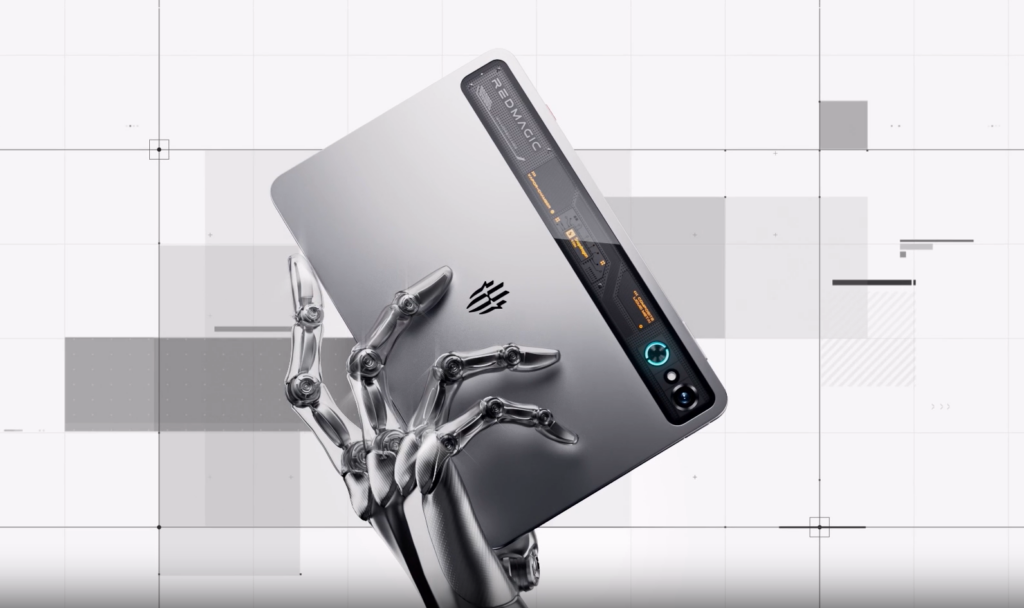
Redmi K Pad Compact Gaming Tablet Surfaces on Geekbench With Dimensity 9400+, Android 15

Redmi has officially confirmed that the Redmi K80 Ultra and Redmi K Pad will launch in China later this month. While an exact date hasn’t been disclosed, both devices have already surfaced on the Geekbench database, revealing several key specifications.

The Redmi K Pad, listed under the model number 25079RPDCC, is powered by the same processor as the K80 Ultra, featuring a three-cluster CPU setup: four cores at 2.4GHz, three at 3.3GHz, and one at 3.73GHz. It comes with 16GB of RAM and runs Android 15 out of the box. Source code from the benchmark listing confirms the presence of the Mali-G925 Immortalis MC12 GPU, which, along with the CPU specs, points to the MediaTek Dimensity 9400+ SoC powering both devices.

The K Pad also appeared on China’s 3C and CMIIT certification databases, confirming support for 67W wired fast charging. Additional details shared by tipster Digital Chat Station include an 8.8-inch LCD display with a 3K resolution, a 165Hz customizable refresh rate, and a 16:10 aspect ratio, suggesting a strong focus on media and gaming performance.

The Redmi K80 Ultra’s Geekbench listing has revealed that it will also be equipped with the high-end Dimensity 9400+ chipset. It is also expected to feature a 7,400mAh battery paired with 120W fast charging support, positioning it as a performance-heavy flagship contender in its segment.

For more daily updates, please visit our News Section.

Stay ahead in tech! Join our Telegram community and sign up for our daily newsletter of top stories.
(Via: Abhishek Yadav)

Oppo K13 Turbo key specifications leaked well before launch

Oppo is reportedly working on the K13 Turbo smartphone for the Chinese market. Rumored to be equipped with the Snapdragon 8s Gen 4, the handset is expected to rival the likes of the Redmi Turbo 4 Pro and iQOO Z10 Turbo Pro in the home market. A leaked image and a schematic that have emerged in the past have already revealed the design of the phone. A new leak, courtesy of tipster Digital Chat Station, has revealed everything about the device’s specifications.

Oppo K13 Turbo specifications (rumored)

Oppo K13 Turbo
Oppo K13 Turbo schematic by DCS

According to the tipster, the Oppo K13 Turbo will feature a 6.8-inch flat OLED screen that supports a 1.5K resolution (2800 x 1280 pixels) and a 144Hz refresh rate. On the front, it will feature a 16-megapixel selfie camera and a 50-megapixel + 2-megapixel dual-camera system

The Oppo K13 Turbo will feature the Snapdragon 8s Gen 4 chipset, LPDDR5x RAM, and UFS 4.0 storage. The device’s topmost model will offer 16GB of RAM and 512GB of storage. The leak has no information about the battery and fast charging capabilities of the device. It is expected to run on ColorOS 15-based Android 15.

Oppo K13 Turbo

The K13 Turbo will have an in-screen fingerprint sensor and a built-in active cooling fan. It will also have other features, such as a plastic mid-frame and an IPX8-rated chassis.

Currently, Oppo is silent on the existence of the Oppo K13 Turbo. Likely, the device may debut later this month or in July.

For more daily updates, please visit our News Section.

Stay ahead in tech! Join our Telegram community and sign up for our daily newsletter of top stories.
Apple Mac Mini with M4 Chip gets Rs 4000 Bank Discounts

Apple Mac Mini with M4 Chip is now on sale, and there are some exciting discounts on Amazon India. The Mac Mini is now listed for the price of Rs 53,990, but with the discount of Rs 4000, Bank offers, the buyers can grab it for the final price of Rs 49,999. It is a time-limited offer, and you may hurry to grab the offer.

Bank offers are only applicable if you’re using the ICICI or Axis Credit Card while making the purchase. Moreover, if you’re using an Amazon ICICI Bank Card, you can get a Rs 4000 discount on EMI transactions and Rs 2500 cashback for non-EMI transactions.

Apple has quietly upgraded the Mac Mini with the new M4 chip, bringing faster performance in the same compact design. The latest M4 chip offers a noticeable boost in CPU and GPU efficiency, making the Mac Mini more capable for both everyday tasks and heavier workloads like video editing or app development. Apple M4 chip comes with up to a 10-core GPU and up to 24GB of unified memory, which means better multitasking and smoother graphics performance.

In terms of design, there are no major changes—the aluminum chassis remains compact and fanless, making it a great option for minimal desk setups or media centers. It comes with a good selection of ports, including two USB-A ports, two Thunderbolt / USB 4 ports, HDMI (now supporting up to 8K), Ethernet, and a 3.5mm headphone jack. It also supports Wi-Fi 6E and Bluetooth 5.3 for faster, more stable connectivity. The Mac Mini with M4 runs on macOS Sequoia and supports up to two external displays, making it a powerful and affordable choice for users who want desktop-level performance in a small footprint.

Getting Rs 4000 instant discount seems like a crowning stroke to maximize the purchase of the Apple Mac Mini.

Please Note: When you buy something using the links in our articles, we may earn a small commission at no cost to you.

Apple 2025 MacBook Air with M4 Chip on sale for ₹79,490

Apple 2025 MacBook Air is once again retailing at the all-time low price of Rs 79,490. However, it is not the listing price, but you can get up to Rs 12,500 discount via Bank Discounts, and an additional Rs 2299 off via coupon collection. With all these discounts, the Apple 2025 MacBook Air with 16GB RAM and 256 GB storage, which is retailing for Rs 90,900, will be yours for the price of Rs 79,490.

It is a time-limited deal that may last until the last stock is available. At the time of writing, the MacBook Air Midnight black was the only color in stock; the remaining colors were already out of stock. You should hurry if you want to grab the MacBook Air at such a price.

Apple’s 2025 MacBook Air comes with the latest M4 Chipset that brings better speed and fluidity. It is even more efficient and offers up to 18 hours of battery life. It is available in 13.6-inch and 15-inch screen sizes. It bundles a 12MP center stage camera with three mics and four speakers for spatial audio. It features two Thunderbolt 4 ports and a MagSafe charging port.

In connectivity, the Apple MacBook Air packs 4 Thunderbolt ports, a MagSafe charging port, a headphone jack, WiFi 6E, and Bluetooth 5.3.

You can enjoy the bright screen, best performance, and efficiency at the discounted price of Rs 79,490.

Running on macOS Sequoia, the M4 MacBook Air is designed for a seamless experience, especially if you use it with an iPhone or iPad.

Please Note: When you buy something using the links in our articles, we may earn a small commission at no cost to you.

Samsung Galaxy F36 shows up in Google Play Console with Exynos 1380, Android 15, and familiar design

Samsung is gearing up to launch the Galaxy F36, and ahead of the official announcement, the device has been spotted in the Google Play Console. The listing provides us with our first clear look at the design and reveals a few key specifications of the phone.

On the front, the Galaxy F36 features a waterdrop notch display. It’s certainly a dated design, but Samsung still prefers using it for some of its more affordable phones. 

Here’s what the Galaxy F36 looks like

Around the back, it has a single pill-shaped main camera module where two of the sensors are nested inside another oval cutout, and a third one is placed separately below. The LED flash is positioned off to the right. Altogether, it sticks to Samsung’s typical layout for mid-range hardware.

The listing also confirms the screen has a resolution of 1080 x 2340 pixels and a pixel density of 450 ppi. Under the hood, the Galaxy F36 is powered by the in-house Exynos 1380 SoC.  It’s paired with 6GB of RAM, and the software side shows Android 15 running with Samsung’s One UI 7 on top. 

This new appearance comes after the Galaxy F36 was spotted on Samsung India’s support site earlier this month, as well as on the Bluetooth SIG certification site. The device is expected to launch in India soon, possibly before the end of the month. As with other F-series phones, it’s likely to be sold via Flipkart, while its sibling, the Galaxy M36, could land on Amazon.

Interestingly, the Play Console and Google Play Supported Devices list point to the F36, M36, and a third model called the Galaxy Jump 4, all sharing the same internal codename, “m36k.” The Jump 4 was listed with model number SM-M366K, the M36 with SM-M366B, and the F36 with SM-E366B. 

All signs suggest these are just regional rebrands of the same hardware, tailored for different markets. If Samsung sticks to its usual strategy, the F36 will be India-focused, the M36 will see a broader release, and the Jump 4 may stay confined to Korea or China.

Stay ahead in tech! Join our Telegram community and sign up for our daily newsletter of top stories!

For more daily updates, please visit our News Section.

(Via)

Poco F7 leak in a set of high-quality renders

We got an early glimpse of the Poco F7’s design last week via a hands-on image. Now, a fresh set of renders has appeared to give us a clearer, more complete look at the phone.

The overall design lines up with the previous leak. The Poco F7 has a vertical, pill-shaped camera module housing two lenses stacked vertically. What stands out visually are the two diagonal green accent lines crossing the camera island.

There likely is a special-edition Poco F7

Unlike the earlier leak, though, this version skips the dual-tone finish and the semi-transparent window that seems to reveal a Snapdragon chip underneath. That suggests the earlier unit might’ve been a special edition of the Poco F7. The latest leak shows us the device in a more standard black variant.

As for the specs, here’s what we know so far. The Poco F7 is expected to sport a 6.83-inch AMOLED display with a resolution of 1280 x 2272 and a smooth 120Hz refresh rate. 

Under the hood, it may be powered by Qualcomm’s upcoming Snapdragon 8s Gen 4 chip. This is likely to be paired with 12GB or 16GB of RAM and 512GB or 1TB of storage. Camera hardware seems pretty typical for the mid-premium range—a 50MP main sensor with OIS, an 8MP ultrawide, and a 20MP selfie camera. 

Poco F7 live image

Moreover, the F7 might ship with a hefty 6,550mAh cell with support for 90W fast charging. Interestingly, the Indian variant of the device is said to pack an even bigger 7550mAh cell with the same charging support. 

There’s still no word from Poco on a launch date or regional availability, but given the pace of recent leaks, an official reveal feels right around the corner.

Stay ahead in tech! Join our Telegram community and sign up for our daily newsletter of top stories!

For more daily updates, please visit our News Section.

(Via)

Xiaomi Smart Temperature and Humidity Monitor 3 Mini Listed Globally: Full Specs and Features

Xiaomi has listed the Smart Temperature and Humidity Monitor 3 Mini on its global website, hinting at an upcoming launch outside China. The device is a smaller version of the existing Monitor 3, with updated features and a more compact build.

Xiaomi Smart Temperature and Humidity Monitor 3 Mini

It measures 53 × 45.3 × 13mm and weighs 30g. The screen is 2.1 inches with a 5.1mm thin bezel, offering a larger and clearer display compared to the older Mi Monitor 2. The monitor uses a high-precision sensor to detect changes in temperature (as small as 0.1°C) and humidity (1% RH). It refreshes data every 6 seconds and displays both values at the same time. Xiaomi recommends keeping indoor temperature between 19–27°C and humidity between 20–85% RH for best comfort.

It runs on a CR2450 button cell battery. In standard mode, battery life is up to 2 years. In save battery mode, it can last up to 3 years. Save battery mode can be enabled through the Xiaomi Home app (version 10.0 or later).

Xiaomi Smart Temperature and Humidity Monitor 3 Mini

Users can connect the monitor to the Xiaomi Home app via a Bluetooth Mesh gateway (sold separately). Once connected, it can trigger smart devices like fans or humidifiers based on preset temperature and humidity limits.

The device stores data locally for 3 months and in the cloud for 6 months. In standard mode, it sends data to the gateway every 1 to 5 minutes. In save battery mode, updates happen every 3 to 13 minutes.

The monitor can be placed on a surface using the included stand or mounted on a wall using double-sided adhesive. It also shows comfort levels through small facial icons on the screen. It is made of ABS plastic, supports Bluetooth Low Energy 5.0, and works in the 0°C to 60°C temperature range and 0% RH to 99% RH humidity range.

Pricing & availability

There’s no confirmed global release date yet. In Germany, it is priced at €14.99.

(via: Notebookcheck)

Dimensity 7300 vs 7200: the results are surprising

Dimensity 7300 vs Dimensity 7200

The Dimensity 7300 and 7200 are popular choices among budget-segment smartphones. At first glance, it appears like the Dimensity 7300 is an upgrade over 7200 and should offer better performance and features, which it should (based on the naming scheme), but that’s not the case here. The Dimensity 7200 puts a better show on the benchmarks. Here’s how the two chips stack up against each other.

Let’s begin with the spec sheet:

Dimensity 7300Dimensity 7200
AnnouncedJune 2024February 2023
Process node4nm (TSMC)4nm (TSMC)
Cores88
CPU architecture4 x Cortex-A78 @ 2.5 GHz
4 x Cortex-A55 @ 2 GHz
2 x Cortex-A715 @ 2.8 GHz
6 x Cortex-A510 @ 2 GHz
GPUMali-G615 MC2
MediaTek HyperEngine
Mali-G610 MP4
MediaTek HyperEngine
NPUMediaTek NPU 655MediaTek APU 650
CameraImagiq 950 ISP (12-bit)
Up to 200MP camera
Imagiq 765 ISP (14-bit)
Up to 200MP camera
MemoryLPDDR4X, LPDDR5
Up to 6400Mbps
LPDDR4X, LPDDR5
Up to 6400Mbps
StorageUFS 3.1UFS 3.1
DisplayWFHD+ @ 120Hz
Full HD+ @ 144Hz
Full HD+ @ 144Hz
ConnectivityMediaTek 5G modem
Downlink: 3.27 Gbps
Wi-Fi 6E
Bluetooth 5.4
MediaTek 5G modem
Downlink: 4.7 Gbps
Wi-Fi 6E
Bluetooth 5.3

MediaTek Dimensity 7300 vs Dimensity 7200 – Benchmark comparison

Note: The tests were conducted on the iQOO Z10x (Dimensity 7300) and iQOO Z9 (Dimensity 7200).

AnTuTu comparison

Dimensity 7300Dimensity 7200
AnTuTu score698,377726,538
CPU201,825239,432
GPU148,546175,592
Memory187,384126,586
UX160,622184,928

In the AnTuTu benchmark comparison, the Dimensity 7200 takes the lead with an overall score of 726,538 — about 4% higher than the Dimensity 7300’s 698,377. This edge primarily comes from its stronger CPU and GPU performance. The 7200’s CPU score is 239,432, which is roughly 19% higher than the 7300’s 201,825, and its GPU score is also about 18% better, making it more capable for gaming and demanding tasks.

However, the Dimensity 7300 pulls ahead in memory performance, scoring 187,384 compared to 126,586 — a 48% improvement. This suggests smoother multitasking and faster app loading. Still, with higher scores in CPU, GPU, and UX, the Dimensity 7200 shows slightly better all-around performance.

Geekbench comparison

Dimensity 7300Dimensity 7200
Single core8751,157
Multi core2,5612,674

In Geekbench tests, the Dimensity 7200 clearly outperforms the Dimensity 7300 in both single-core and multi-core scores. With a single-core score of 1,157, it delivers a 32% performance boost over the 7300’s 875. This means faster app launches, better UI responsiveness, and snappier everyday usage.

The multi-core difference is smaller but still in favor of the 7200, scoring 2,674 compared to the 7300’s 2,561 — about a 4% improvement. Overall, the Dimensity 7200 offers stronger CPU performance, particularly in single-threaded tasks.

MediaTek Dimensity 7300 vs Dimensity 7200 – key differences that matter

Let’s understand why Dimensity 7200 outperforms 7300.

Performance

The Dimensity 7300 and 7200 are built using the same TSMC’s 4nm process, but they have different core structures. The Dimensity 7300 features four Cortex-A78 and four Cortex-A55 cores, whereas the Dimensity 7200 utilizes more powerful Cortex-A715 and Cortex-A510 cores. The latter chip also operates at a higher peak frequency.

The graphic tasks are handled by Mali-G615 MP2 on the Dimensity 7300 and Mali-G610 MP4 on the Dimensity 7200. The latter runs at a higher frequency (1130MHz vs 1047MHz) and features higher pipelines and FLOPS. The MediaTek chips also feature MediaTek HyperEngine for additional gaming enhancements.

Camera

The Dimensity 7300 chip features a 12-bit Imagiq 950 HDR-ISP, supporting up to 200MP camera. Additionally, it offers a range of camera features, including hardware MCNR, 4K video with HDR, and AI-based auto-exposure, auto-focus, and auto-white balance.

On the other hand, the Dimensity 7200 brings a 14-bit premium-grade Imagiq 765 HDR-ISP. It also supports up to 200MP camera, dual simultaneous video capture, and video EIS, similar to the Dimensity 7300, but doesn’t feature AI-based auto exposure. Both chips, however, support up to 4K/30fps video recording.

Connectivity

Both MediaTek chipsets feature integrated 5G modems, although the peak download speeds differ: 3.27Gbps (on the Dimensity 7300) and 4.7Gbps (on the Dimensity 7200). While the peak download speed is lower on Dimensity 7300, it features a newer Bluetooth 5.4 standard (vs 5.3 on Dimensity 7200). Everything else remains unchanged, meaning you get Wi-Fi 6E and the same set of positioning features on both chips.

Display and storage

The Dimensity 7300 supports a higher WFHD+ resolution at a 120Hz refresh rate, while the Dimensity 7200 peaks at FullHD+ (144Hz).

There’s no difference in terms of memory and storage — both MediaTek chips support UFS 3.1 storage and LPDDR4x/LPDD5 with a maximum frequency of 6400Mbps.

MediaTek Dimensity 7300 vs Dimensity 7200: Conclusion

In conclusion, while the Dimensity 7300 appears newer and boasts advantages such as newer Bluetooth and support for higher display resolution, the Dimensity 7200 still comes out on top in overall performance. It consistently leads in benchmark scores, particularly in CPU and GPU performance, making it a better choice for users who prioritize speed, gaming, and responsiveness.

The Dimensity 7300 offers a few notable upgrades in specific areas, such as connectivity and multitasking, but it doesn’t deliver the performance leap you might expect from a successor. So, if performance is your primary concern, the Dimensity 7200 remains the more capable and well-rounded chipset in this matchup.

MediaTek Dimensity 7300 phones:

MediaTek Dimensity 7200 phones:

ASUS ROG Xbox Ally & Ally X: What Makes Them Stand Out?

ASUS has just unveiled the ROG Xbox Ally and ROG Xbox Ally X, two new handheld gaming devices created in collaboration with Xbox. While they still run on Windows, these new consoles arrive with special optimizations that help them stand out. So, are these the true Xbox portables fans have been waiting for? Here’s what sets the ROG Xbox Ally series apart.

1. ROG Xbox Ally vs Ally X: Specs & Hardware

ASUS ROG Xbox Ally X
ASUS ROG Xbox Ally and ROG Xbox Ally X

Getting the specs out of the way first, both models sport a 7-inch 1080p IPS LCD display with a 120Hz refresh rate and Gorilla Glass Victus protection, offering solid visuals and durability. However, under the hood is where the differences emerge.

The ROG Xbox Ally is powered by the Ryzen Z2 APU (based on RDNA 2), paired with 16GB RAM, 512GB storage, and a 60Wh battery. It includes dual USB-C ports with DisplayPort 2.1 and USB 3.2 Gen 2 support. On the other hand, the ROG Xbox Ally X bumps things up with the Ryzen Z2 Extreme chip, 24GB RAM, 1TB storage, a beefier 80Wh battery, and USB 4.0/Thunderbolt 4 support. Both offer WiFi 6E, Bluetooth 5.4, and user-replaceable M.2 SSDs via microSD or internal storage upgrades.

Please Note: When you buy something using the links in our articles, we may earn a small commission at no cost to you.

2. Xbox Optimizations: Where it Truly Shines

The biggest leap isn’t in hardware, but software. Past Windows handhelds were kind of like tiny laptops trying to be consoles. Other gaming handhelds that ran on Windows had some drawbacks owing to the Windows design. Microsoft’s popular OS isn’t ideal for touch or gamepad navigation, struggling with scaling and UI optimizations. The constant Windows updates or new drivers occasionally lead to something breaking.

But what held these portable consoles the most were the issues with battery life and some performance hits. Some models faced excessive battery drains, while various Windows processes in the background took up memory or APU performance that impacts gaming.

On the other hand, the new ROG Xbox Ally series came with modifications that minimize the background activity, defer non-essential tasks, and dedicate more system resources to the games. A great example of the background Windows process is the desktop wallpaper, taskbar, and others, which took up 2GB of RAM before Xbox optimized the handheld consoles.

Now, ASUS’ ROG Xbox Ally and Ally X offer an Xbox full screen experience, despite not being dedicated Xbox consoles. There is even a dedicated Xbox button to bring up the Game Bar overlay that integrates the ASUS Armory Crate.

3. An Xbox Experience

While it’s technically not an Xbox OS, the Xbox Ally’s full-screen launcher and tight Xbox ecosystem integration. Pairing this with the Xbox Game Pass, Xbox Cloud Gaming, and controller-first design, the new ROG Xbox Ally series feels more like a genuine Xbox handheld. This helps bridge the gap between a Windows PC and a streamlined gaming console.

For more daily updates, please visit our News Section.

Don’t miss a thing! Join our Telegram community for instant updates and grab our free daily newsletter for the best tech stories!

Bose Upgrades QuietComfort Ultra Earbuds with True Flagship-Grade ANC

Bose is back with a refreshed version of its QuietComfort Ultra TWS earbuds, this time finally adding what many felt was missing the first time. Despite the original QuietComfort Ultra being a premium pair of earbuds, they lacked the essential ANC (Active Noise Cancellation) feature. But with the latest refresh, Bose has corrected its course by introducing advanced ANC.

QuietComfort Ultra TWS Refreshed with Bose’s Best ANC

The QuietComfort Ultra Gen 2 is a refresh over the original QuietComfort Ultra, which was announced in early 2024. While these featured great sound quality, the missing noise cancellation was a major aspect that turned many away, owing to their premium price tag. But the new QuietComfort Ultra packs what appears to be the best ANC tech from Bose. The new Quiet Mode is capable of lowering ambient sounds, while the Aware Mode functions as a transparent mode.

Bose QuietComfort Ultra TWS

Bose’s new flagship earbuds bring CustomTune that let’s users personalize the sound from these earbuds through the Bose app. It analyzes the shape of the ear canal to customize the sound based on the individual. The refreshed QuietComfort Ultra packs four microphone setup for an improved calling experience as well. Among the new features, there is also spatial audio, multipoint Bluetooth connection and support for audio codecs like SBC, AAC, and Qualcomm aptX Adaptive.

On a single full charge, the earbuds can offer up to 6 hours of audio playback, with the charging case offering an additional 18 hours. Bose’s new QuietComfort Ultra supports Qi wireless charging as well. It is already listed on the brand’s official website for 299 US Dollars and arrives in three color options, namely white, black, and red.

For more daily updates, please visit our News Section.

Tech enthusiast? Get the latest news first! Follow our Telegram channel and subscribe to our free newsletter for your daily tech fix! ⚡

Garmin Venu X1 Launches at $799 with Advanced Health Tracking & Built-in GPS

Garmin has officially announced a brand-new smartwatch with a premium price tag and cutting-edge specs and features. The new Venu X1 is the new wearable that arrives with a sleek new design, premium chassis, and more. So here’s everything you need to know.

This release also arrives after the brand unveiled the Garming Instinct 3 Tactical Edition with features built for spies ike James Bond.

Garmin Venu X1: Advanced Hardware in a Slim Body

The brand’s latest smartwatch has just been announced with a slim 8mm case, which uses titanium casing to achieve a lighter body (up to 40 grams). Meanwhile, the 2-inch AMOLED display is protected by a scratch-resistant sapphire lens. This screen offers 448 x 486 pixel resolution and Always-on support. Garmin packs the Venu X1 with built-in speakers and microphones for calling, and even a bright LED flashlight to help users in dimly lit environments.

Garmin Venu X1
Garmin Venu X1

This model is packed with various health related sensors for advanced bio-data monitoring. This includes heart rate variability (HRV), sleep monitoring, stress tracking, breathing variations, Pulse Ox, and Body Battery energy. Garmin’s new watch also uses this data to offer summarized reports for sleep, training, and HRV status as well. For fitness enthusiasts, the Venu X1 features over 100 sports modes along with TopoActive maps like CourseView that support over 43,000 golf courses across the globe.

Other notable features include voice commands support with voice assistant integration, 5ATM water resistance, 32GB of memory, Bluetooth, WiFi, GPS, Galileo, QZSS, BeiDou, GLONASS, Find My Phone, multiple watch faces for personalization, and much more. The Garmin Vanu X1 is currently listed on the brand’s official website, with first sales kicking off on 18th June 2025. It has a price tag of 799.99 US Dollars and can be purchased in either moss or black color variants.

For more daily updates, please visit our News Section.

Don’t miss a thing! Join our Telegram community for instant updates and grab our free daily newsletter for the best tech stories!

Redmi K80 Ultra surfaces in Geekbench with Dimensity 9400 Plus

Xiaomi’s sub-brand Redmi today confirmed that the K80 Ultra smartphone will launch in China later this month. Shortly after the announcement, the device has now surfaced on the Geekbench benchmarking platform, revealing key performance metrics.

According to Geekbench, the K80 Ultra (model number 25060RK16C) is powered by an octa-core processor featuring a prime core clocked at 3.73GHz, three performance cores at 3.30GHz, and four efficiency cores at 2.40GHz. Graphics duties are handled by the Immortalis-G925 GPU.

Both the CPU and GPU setups suggest that the chip powering the Redmi K80 Ultra is the MediaTek Dimensity 9400 Plus. It’s a flagship chip, and the benchmark scores are accordingly. 

In single-core performance, the K80 Ultra manages 2679 points, while its multi-core score hits 8358. The unit tested is paired with 16GB of RAM and runs on Android 15, likely skinned with Xiaomi’s HyperOS.

Rest of the specs

Aside from the chip, the phone has also received approval from China’s 3C authority. The listing reveals that it may ship with a 120W fast charger, though the device itself may cap out at 100W charging speed. The phone is said to house a 7500mAh battery, which no surprise, will be a silicon-carbon battery.

Other rumored specs include a 6.8-inch LTPS OLED panel with a 1.5K resolution and a 50MP triple camera setup. The build may also feature a metal middle frame with IP68 or IP69 dust and water resistance ratings.

As with earlier Ultra models, the K80 Ultra is expected to stay within the Chinese market. However, Xiaomi is likely to rebrand it for international markets, with the Xiaomi 15T Pro tipped to be its global counterpart sometime in Q3 2025.

For more daily updates, please visit our News Section.

Stay ahead in tech! Join our Telegram community and sign up for our daily newsletter of top stories

(Via)

HUAWEI Pura 80 Ultra & Pro Plus Hands-on: The Most Insane Telephoto Camera on Earth

Here we have the brand new HUAWEI Pura 80 Pro+, I am sure you still remember the Pura 70 Ultra which has a retractable lens. Well, on the Pura 80 series, it’s gone. But the new series comes with a ground-breaking lens structure inside, along with some new camera features. We are lucky enough to have it (China version) right after the launch event, now let’s take a first look.

Camera

We were invited to the launch event, where my colleague experienced the legendary Switchable Tele Lens, meaning “one sensor, with two focal length lenses” on the Pura 80 Ultra.

The telephoto cameras of this phone share the same sensor to achieve two different focal lengths, and the movable prism is the key to this technology. When using the 10x telephoto, it is the same as a normal periscope telephoto. When switching to the 3.7x camera, the prism moves to the second lens.

There are many advantages to doing this, the most obvious of which is saving space inside the phone. Compared to other 4-lens phones, the camera module on this phone is a little smaller. The space saved can be used to fit a larger battery or a larger Vapor Chamber.

The second advantage is image quality. As you all know, Sony has achieved 85-170mm optical zoom on mobile phones, which changes the focal length by moving the lens back and forth. Although the principle of the Pura 80 Ultra is similar, the 3.7x to 10x is still digitally cropped. Because HUAWEI knows that the optical quality of a zoom lens is hard to match that of a fixed-focus lens, they chose to make two fixed-focus lenses instead of one zoom lens. The photo quality must be better.

In addition to the telephoto camera, there is also a new one-inch main sensor made in China, which is worth paying attention to. The retractable structure is cancelled, the variable aperture is still there, and the dynamic range is further improved. I am looking forward to using it for more photography creations, and I will definitely do a more detailed camera review after we buy the Pura 80 Ultra.

Pura 80 Pro+

I have also listed the other camera specs in a table, all of which are world-class. Except for the camera part, other specs of the Pro+ and Ultra versions are almost the same. So… (Take out the phone) I borrowed the Pro+ from HUAWEI, and now let’s talk about the more affordable Pura 80 Pro+.

Design

The overall design of the Pura 80 series has not changed much compared to the 70 series. The camera module is still placed in the upper left corner, but it is a little bigger. The module isn’t in the way of the finger, which is a good thing. The frame is arc-shaped, so the phone is like a pebble with a screen.

The one we borrowed is the bright black version with a ceramic coating, so you can really use it as a mirror. One controversial thing is that the fingerprint recognition sensor has been moved from under the screen to the power button. Some people like it and some don’t. I am not sure what I think yet.

Although due to the limitations of HarmonyOS NEXT, we cannot know its specific processor model. But according to the data of GeekBench 6, it must be Kirin 9020 at least. Maybe it is the new Kirin 9030? I don’t know, we still need time to explore.

Screen & Others

The screen of Pura 80 Pro+ does not look changed, and it is also a popular four-curved screen recently. The maximum brightness has increased, and there are not many upgrades other than that.

The battery is definitely bigger, it is a 5700mAh battery plus 100W wired charging power, which is what a flagship phone should have. Of course, there are also features like 80W wireless charging and satellite communication. Anyway, you have spent $1,100, HUAWEI will embrace your requests.

Ending

It is obvious that the Pura 80 series has evolved again. The stronger screen and processor, the one-inch sensor made in China, and the two telephoto cameras of the Ultra version they’ve made everyone marvel at the talent of HUAWEI engineers. There are very few new technologies on mobile phones that can make people say WOW, and the debut of Pura 80 Ultra has made everyone excited.

OnePlus Bullets Wireless Z3 Neckband Earphones Launching in India Next Week

OnePlus is getting ready to launch its next affordable audio product in India. The new OnePlus Bullets Wireless Z3 soon, which is a pair of neckband earphones. A new teaser has confirmed the launch date for these wireless earphones, so here’s everything we know so far.
OnePlus Bullets Wireless Z3: When does it launch?

The Chinese tech giant just announced that the OnePlus Bullets Wireless Z3 will be making its global debut in the Indian market on 19th June 2025 at 12 PM IST. This official teaser also revealed that the neckband wireless earphones will be sold in two color options, namely Mambo Midnight and Samba Sunset. OnePlus claims that the next gen Bullets Wireless Z3 brings improvements in sound quality thanks to AI and deeper bass.
OnePlus Bullet Wireless Z3 Neckband Earphones
OnePlus Bullet Wireless Z3 Neckband Earphones Launches Next Week

On a single full charge, the hearables can offer up to 36 hours of audio playback or around 21 hours of talk time. The wireless neckband earphones likely have physical buttons, track switching, support for voice assistants, and an IP rating for water and dust resistance. The older Bullets Wireless Z2 debuted for under 2,000 INR. In other words, we can expect the Bullets Wireless Z3 to carry a similar price tag, but there is likely a slight price bump.

As per official notes, the latest neckband earphones will go on sale on the brand’s official website, OnePlus Store app, OnePlus Exclusive stores, Amazon, Flipkart, and authorized retail partners. This is all the information we have at the moment, so stick around for more.

For more daily updates, please visit our News Section.

Tech enthusiast? Get the latest news first! Follow our Telegram channel and subscribe to our free newsletter for your daily tech fix! ⚡