OnePlus has started rolling out OxygenOS 15.0.2.601 for the Nord CE 5. The update is currently live in India under build number CPH2717_15.0.2.601(EX01) and is being pushed in batches. A wider rollout will follow in the coming days.
The update brings smoother animations when tapping Live Alerts or notifications while the screen is locked. A new map album has been added, which lets users view all photos with location tags on a map. Photos moved out of the Private album will now return to their original folders, making them easier to find.
Privacy settings have also been updated. Users can now change their privacy password from each secondary page of Private Safe as well as in the Locked album of Photos. App Management in Phone Manager now shows daily and weekly screen time. The IR Remote app has an improved layout for the remote control panel buttons.
On the system side, the September 2025 Android security patch has been added to improve device security.
The OTA rollout is incremental. A limited number of users in India will receive the update first, expanding to more devices after confirming stability. Users can manually check for the update by going to Settings > System > System Updates.
For more daily updates, please visit our News Section.
Samsung has launched the Galaxy F17 5G in India, the successor to the Galaxy F16 5G. The new phone brings a thinner and lighter build, a redesigned camera module, Gorilla Glass Victus protection, and Samsung’s Exynos processor, while keeping the same display size, battery, and camera setup as the previous model.
The Galaxy F17 5G has a 6.7-inch FHD+ Infinity-U Super AMOLED display with a 90Hz refresh rate. The screen is protected by Corning Gorilla Glass Victus. It is powered by the Exynos 1330 5nm processor with Mali-G68 MP2 GPU, replacing the MediaTek Dimensity 6300 used in the F16 5G. The phone comes with 4GB or 6GB RAM and 128GB storage, expandable up to 2TB with a microSD card. It uses a hybrid dual SIM slot.
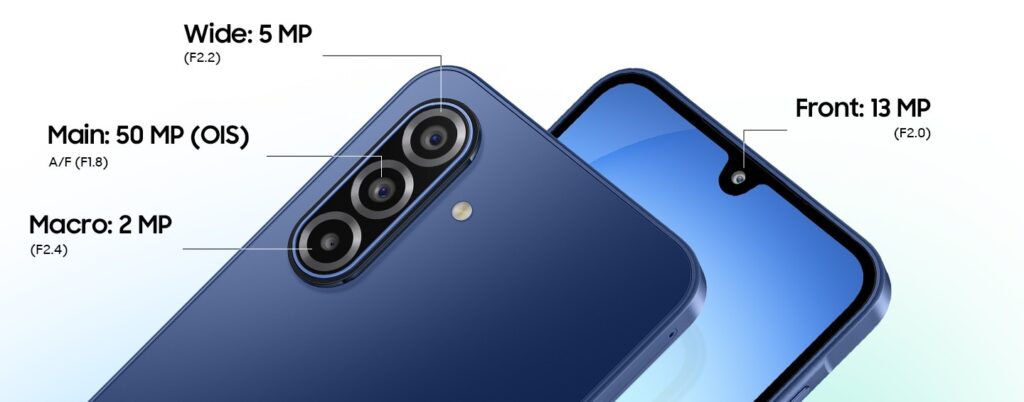
The rear camera setup includes a 50MP main camera with OIS, a 5MP ultra-wide camera, and a 2MP macro camera. On the front, it has a 13MP camera. The phone runs Android 15 with One UI 7 and will get 6 OS updates and 6 years of security updates.
It has a 5000mAh battery with 25W charging support. The phone also has a side-mounted fingerprint scanner, bottom-ported speakers, USB Type-C audio, and NFC. Connectivity options include 5G SA/NSA with support for N1, N3, N5, N7, N8, N26, N28, N66, N40, N41, N77, and N78 bands. Other features are dual 4G VoLTE, Wi-Fi 802.11 ac on 2.4GHz and 5GHz, Bluetooth 5.3, GPS, GLONASS, and USB Type-C. The device is IP54 rated for dust and water resistance. It measures 164.4 x 77.9 x 7.5mm and weighs 192g.
Pricing & availability
The Galaxy F17 5G is priced at Rs 14,499 for the 4GB + 128GB model and Rs 15,999 for the 6GB + 128GB model. It is available in Violet Pop and Neo Black. Sales start today through retail stores, Samsung.com, and Flipkart. Launch offers include Rs 500 cashback on HDFC Bank and UPI payments and no-cost EMI up to 6 months.
For more daily updates, please visit our News Section.
Lenovo has announced a new configuration for its Bellator Zhan 7000 Core Edition gaming laptop. The latest model features Intel’s Core i7-13650HX processor and carries a price tag of 6299 yuan ($884) for early buyers. Lenovo will begin sales on September 16. This release follows the launch of the Ryzen edition last month.
Lenovo Bellator 7000 Core Edition Specs
The Core i7-13650HX packs 14 cores and 20 threads in a 6P+8E layout, boosting to 4.9 GHz with 24 MB L3 cache and up to 120 W power for desktop-class speed. Lenovo pairs it with Nvidia’s RTX 5060 Laptop GPU, based on Blackwell, offering 8 GB GDDR7, 115 W Dynamic Boost, DLSS 4, and 572 TOPS of AI compute.
The laptop features 16GB of DDR5-4800 RAM in a dual-channel layout and a 512GB PCIe 4.0 SSD. Both the memory and storage are upgradeable. Lenovo includes two SO-DIMM slots and two M.2 SSD slots, with one of each left open for expansion.
The display is a 16-inch 2.5K panel with a resolution of 2560×1600. It supports a 180Hz refresh rate, 500 nits brightness, HDR, VRR, DC dimming, and 100% sRGB coverage.
Cooling is handled by Lenovo’s Hurricane architecture. The system uses three fans, four heat pipes, and a large 29,783mm² thermal surface. The total system power reaches 200W.
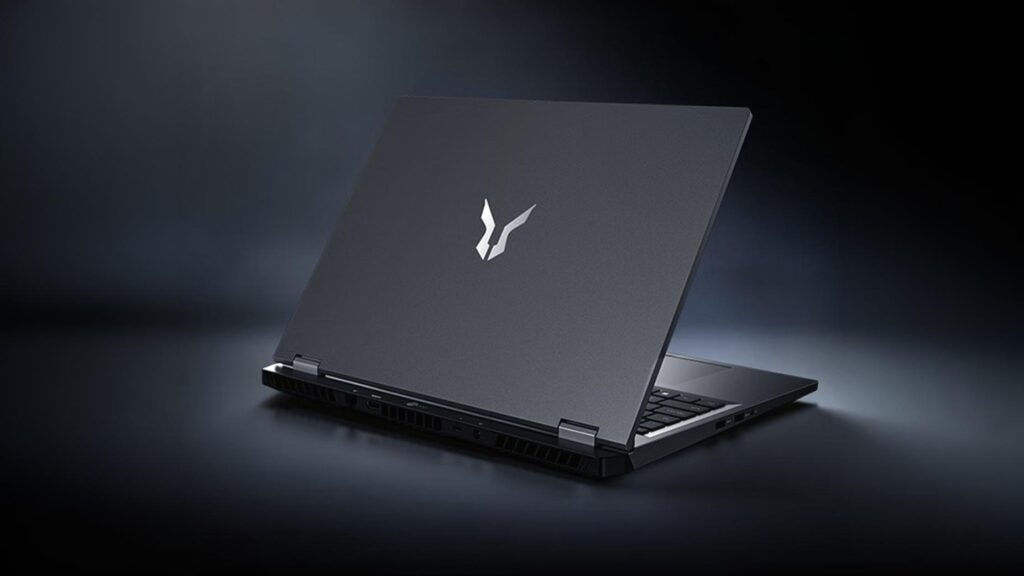
The chassis comes with a matte grey metal lid and a polished Bellator logo. The full-sized keyboard offers 1.5mm key travel, full-height arrow keys, and three-stage backlighting with memory.
The device includes a 60Wh battery and supports 100W USB-C PD fast charging. Lenovo says the laptop maintains a net charge during stress testing over USB-C.
Port selection includes HDMI 2.1 (48Gbps), a full-feature USB-C port, four USB-A ports, a 3.5mm combo audio jack, RJ45 Ethernet, and a DC charging port.
Compared to the earlier i7-14650HX variant, the new model lowers the CPU power from 130W to 120W, reduces memory speed, and cuts the SSD size in half. The battery also drops from 80Wh to 60Wh. These changes reduce the price by 700 yuan ($98). The GPU, cooling system, and display remain the same.
For more daily updates, please visit ourNews Section.
Acer has introduced the Nitro V 15 gaming laptop in India, aimed at students, budget buyers, and entry to mid-level gamers. The laptop has a plastic chassis in Obsidian Black, weighs 2.1 kg, and comes with an amber backlit keyboard. It features a 15.6-inch Full HD display with a 165Hz refresh rate, 3ms response time, and 100 percent sRGB color coverage.
The Nitro V 15 is powered by up to a 13th Gen Intel Core i7-13620H processor with Intel’s hybrid architecture. Graphics are handled by up to an NVIDIA GeForce RTX 5060, which supports DLSS 4 and next-generation ray tracing for smoother gameplay and 4K video editing.
Cooling is managed by a dual-fan, dual-intake, dual-exhaust system, with a NitroSense key that lets users monitor performance, fan speeds, and power plans in real time. The laptop supports up to 32GB of DDR5 RAM and up to 2TB PCIe Gen 4 NVMe SSD storage.
Connectivity options include Wi-Fi 6, Thunderbolt 4 Type-C, HDMI 2.1, USB 3.2 Gen 1 ports, and RJ45 LAN. It also features a Copilot Key for AI productivity tools on Windows 11. The NitroSense Experience Zone provides PurifiedVoice AI noise cancellation, PurifiedView AI webcam enhancements, PLANET9 ProClip for gameplay recording, auto-framing, background blur, and eye contact correction for video calls. DTS:X Ultra audio delivers spatial sound for gaming and media use.
Pricing & availability
The Nitro V 15 is priced at Rs. 89,999 for the i5 variant and Rs. 99,999 for the i7 variant. It is available at Acer exclusive stores, Acer’s online store, Amazon.in, and Flipkart.com.
For more daily updates, please visit our News Section.
Google’s in-house Tensor chips from the beginning have faced criticism for not offering solid performance. While they are excellent for everyday tasks, the performance gap is pretty significant when compared with the latest flagships from Qualcomm and MediaTek.
The latest Tensor G5, despite Google claiming a “major performance boost,” couldn’t get anywhere near the Snapdragon 8 Elite’s benchmark figures. The story remained unchanged when compared against Snapdragon 8 Gen 3 — again, a big performance gap in Snapdragon’s favor. Now, we’re interested in finding out if the Tensor G5 can match or outperform a nearly three-year-old Snapdragon 8 Gen 2.
Let’s get straight to the benchmark numbers.
Tensor G5 vs Snapdragon 8 Gen 2: Benchmark score
AnTuTu comparison
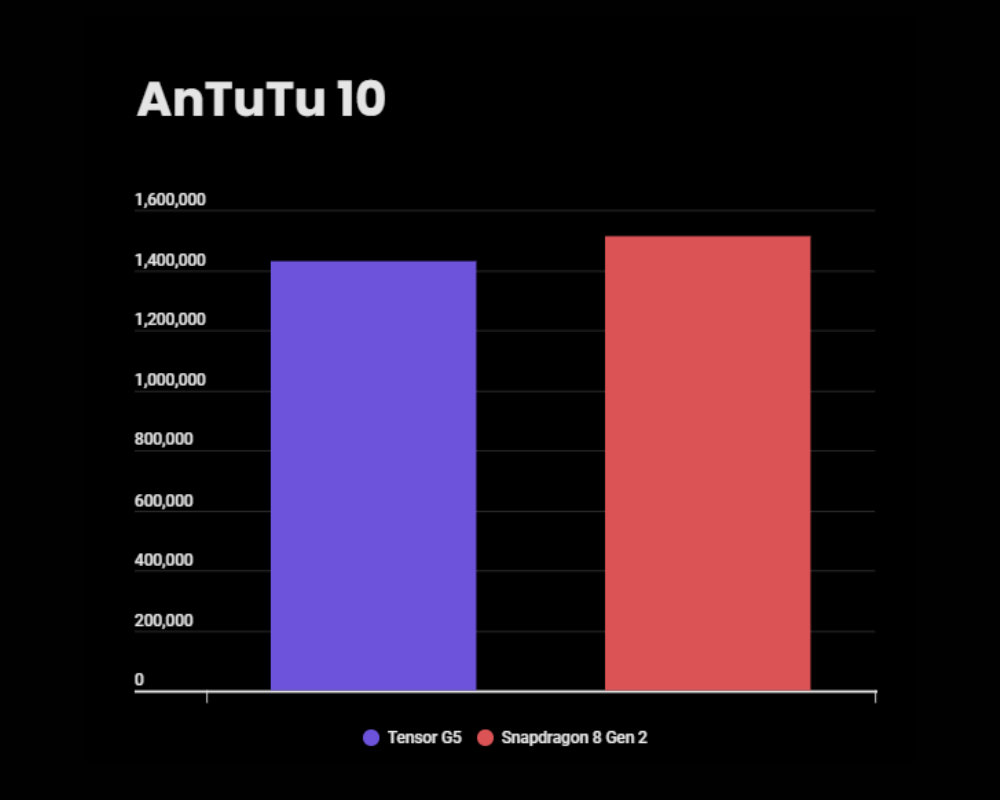
The Snapdragon 8 Gen 2 still holds a slight edge in overall AnTuTu with a score of 1,512,682, compared to the Tensor G5’s 1,429,557. But the story gets more interesting when you look at the breakdown.
The Tensor G5 pulls ahead in the CPU department, scoring 483,989 vs 373,687 — a 29% lead that shows Google’s new custom cores are much stronger for raw processing. On the other hand, the Snapdragon 8 Gen 2 still holds a higher GPU score, with 599,957 vs 416,313 — a massive 44% advantage. That means Qualcomm’s older chips are still superior to the latest Tensor G5 for graphics-intensive workloads, such as gaming and 3D rendering.
Memory and UX scores are closer, with Tensor G5 slightly ahead in memory (293,467 vs 273,714) and Snapdragon 8 Gen 2 leading in UX (265,325 vs 235,788). So, according to AnTuTu scores, both chips should feel smooth for day-to-day use, but Snapdragon’s stronger GPU still gives it the gaming edge.
Tensor G5
Snapdragon 8 Gen 2
AnTuTu score
1,429,557
1,512,682
CPU
483,989
373,687
GPU
416,313
599,957
Memory
293,467
273,714
UX
235,788
265,325
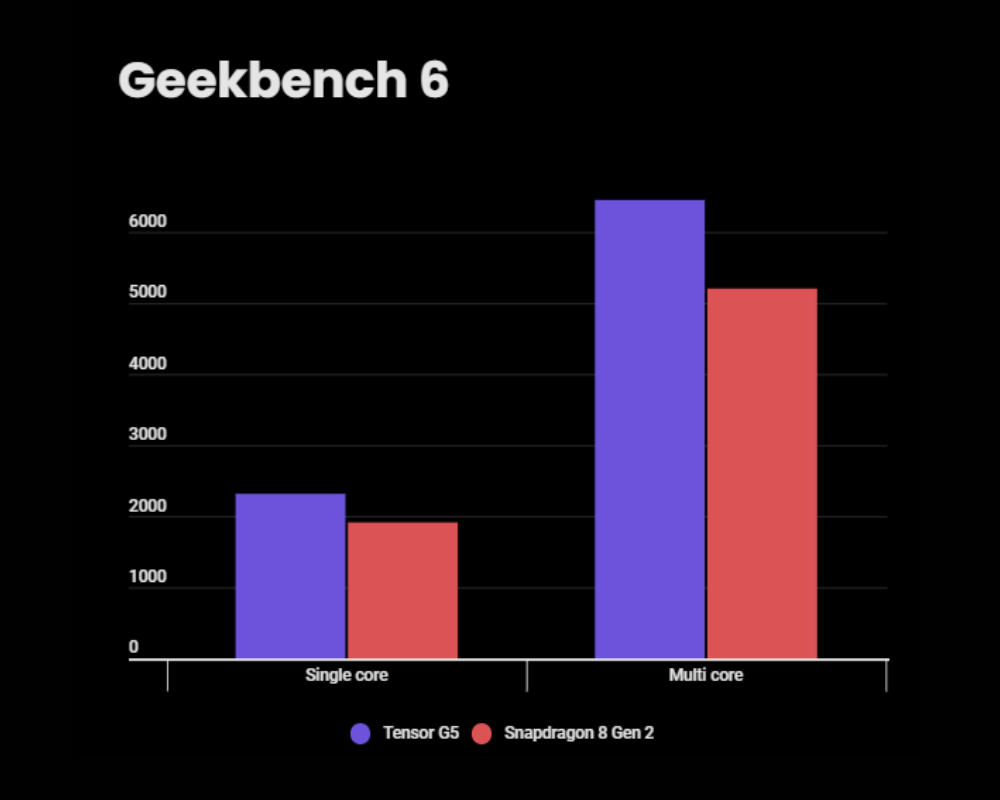
Geekbench (CPU) comparison
Google claims a 30% faster average CPU uplift for the Tensor G5 compared to last year’s G4, and this improvement is also reflected in benchmarks. On AnTuTu, Tensor G5 scored higher in CPU, and Geekbench also paints a similar picture.
In single-core performance, the Tensor G5 scores 2,316 vs 1,912, giving it a 21% lead. This means the latest Tensor should feel noticeably snappier in everyday tasks, such as app launches, UI responsiveness, and web browsing.
The gap widens even further in multi-core performance, with the G5 reaching 6,452 vs 5,204 — about a 24% advantage. This should result in better handling of multitasking, heavier apps, and background processes.
Tensor G5
Snapdragon 8 Gen 2
Single core
2,316
1,912
Multi core
6,452
5,204
Overall, while the Snapdragon 8 Gen 2 still has the edge in GPU and gaming (as seen on AnTuTu), both benchmarks (AnTuTu and Geekbench) show stronger CPU performance for the Tensor G5. So, except for gaming and other graphics-intensive tasks, the new Tensor should feel snappier and more responsive.
The spec sheet clearly shows why the Tensor G5 has a higher CPU score than the 8 Gen 2 on benchmarks. It uses newer CPU cores, which are more performance-friendly and power-efficient. Plus, they also run at a higher speed. Additionally, TSMC’s 3nm advanced manufacturing technology further enables the Tensor G5 to achieve better CPU performance and efficiency.
As for the GPU, the Tensor G5 features PowerVR DXT-48-1536, whereas the 8 Gen 2 comes with Adreno 740, which supports ray tracing and a full suite of Snapdragon Elite Gaming features. For on-device AI capabilities, the G5 has a new Google Edge TPU, which is likely more capable than the Qualcomm Hexagon NPU on the 8 Gen 2. Another notable difference is the newer Bluetooth v6.0 standard on the Tensor chip, whereas the 8 Gen 2 has Bluetooth 5.3.
Nikon has announced its first cinema camera, the Nikon ZR, marking the debut of the new Z Cinema series. The full-frame, ultra-lightweight camera is designed for both emerging cinematographers and professional creators, combining Nikon’s imaging expertise with RED’s color science.
The ZR records internally up to 6K/60p 12-bit RAW using the new R3D NE RAW codec, based on RED’s R3D RAW format. It offers over 15 stops of dynamic range and supports Log3G10 and REDWideGamutRGB, ensuring consistent color reproduction with RED cameras such as the V-RAPTOR [X] and KOMODO-X. Two base ISO options, 800 and 6400, provide flexibility for bright or low-light conditions, while ISO remains fully adjustable in post-production. The camera also supports N-RAW, ProRes RAW, and additional formats for diverse workflows.
A large 4-inch DCI-P3 LCD monitor provides high brightness for outdoor use, reducing reliance on external displays. Users can preview looks in real time with up to ten stored LUTs, including RED’s Creative LUT Kit. A new Cinematic Mode simplifies setup by automatically applying a 180-degree shutter, 24 fps recording, and RED Cine Bias Picture Control.
The ZR introduces 32-bit float audio recording with built-in and external microphones, a first for a cinema camera. It integrates Nokia’s OZO Audio technology, enabling directional sound capture with five selectable pickup patterns. A digital accessory shoe allows direct power and two-way communication with supported gear, such as the new ME-D10 shotgun microphone, priced at $339.95.
Image stabilization is rated at 7.5 stops, aided by Nikon’s Z mount, which supports a wide range of native and adapted lenses. Autofocus performance is driven by Nikon’s EXPEED 7 processor and AI-based subject detection, covering people, animals, and vehicles, with the ability to track small faces occupying just 3 percent of the frame. AF speed and sensitivity can be adjusted for creative control.
The ZR’s fanless magnesium alloy body is dust and drip resistant, designed for long shoots with uninterrupted recording of up to 125 minutes. USB power delivery supports extended sessions for events or interviews. The body weighs 1.19 lb. with a short 16mm flange distance for greater lens adaptability.
Additional features include shutter angle adjustment from 5.6° to 360°, slow-motion presets at 4K/120p and Full HD/240p, automatic vertical video rotation, tally light indicators, and compatibility with Frame.io Camera to Cloud. The camera also inherits several still-photo functions from the Z6III, including starscape presets and a dehaze tool.
Pricing & availability
The Nikon ZR Cinema Camera will be available in late October 2025 at $2,199.95 for the body. Kit options include bundles with the NIKKOR Z 50mm f/1.8 ($2,749.95), NIKKOR Z 35mm f/1.4 ($2,849.95), or NIKKOR Z 24-50mm f/4-6.3 ($2,499.95).
In related news, Nikon has launched a silver edition of its full-frame Z f mirrorless camera, inspired by classic film models like the Nikon F. New customization options include Premium Exterior colors in Cognac Brown, Teal Blue and Mauve Pink.
For more daily updates, please visit our News Section.
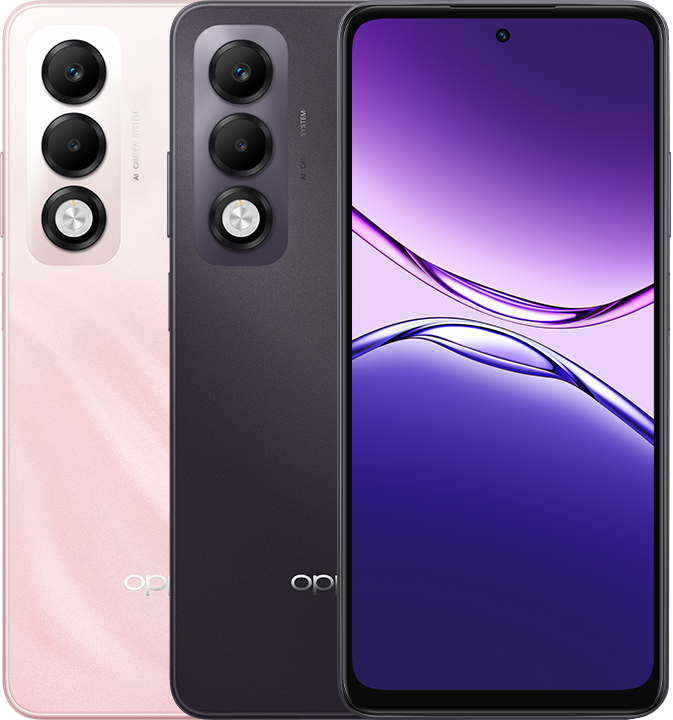
Oppo India is preparing to introduce its new F31 series on Sept. 15. According to the company, the lineup is designed to provide reliable performance and durability in extreme heat conditions, aiming at users such as traders, delivery workers and professionals who depend on all-day efficiency. The upcoming series has been confirmed to include three models, such as the Find F31, F31 Pro, and F31 Pro+.
Oppo F31 series performance, camera specs
OPPO F31 series
The Oppo F31 Pro+ is officially confirmed to feature the Snapdragon 7 Gen 3 chip. It offers up to 12GB of RAM, 12GB of virtual RAM, UFS 3.1 storage, and a vapour chamber measuring 5,219 mm², significantly larger than its predecessor for better thermal control.
The F31 Pro will run on the Dimensity 7300-Energy, with a 4,363 mm² vapor chamber and graphite sheets for heat dissipation. The standard F31 will feature the Dimensity 6300 SoC and a 4,300 mm² vapor chamber, which improves cooling efficiency by 21 percent over the earlier model.
For photography, the F31 Pro+ and Pro will feature a 50-megapixel main sensor with OIS and a 32-megapixel front camera, while the F31 will offer a 50-megapixel main lens with a 16-megapixel front sensor. The series also supports 4K video recording, AI-enhanced portraits and underwater photography up to 1.5 metres for 30 minutes, backed by IP68 water resistance.
All three phones are equipped with a 7,000mAh battery and support 80W SuperVOOC charging, providing 58 percent charge in half an hour. The F31 series will feature AI-driven tools such as VoiceScribe for transcription and translation, Call Assistant for real-time bilingual support, and AI Notes for editing and restructuring text. In addition, OPPO Docs will provide translation and summarisation tools, while Outdoor Mode 2.0 will cater to delivery workers with enhanced readability and network priority for essential apps.
Durability and smoothness
To handle India’s summer temperatures, the F31 series is built to perform smoothly at up to 43°C and adopts an adaptive heat strategy that raises the throttling threshold to 44–45°C. The lineup is also rated IP69, IP68 and IP66, offering protection against dust, drops and water, including resistance for up to 1.5 metres underwater. In addition, the devices have received an A+ certification from SGS for High-Temperature Fluency, confirming responsive touch, steady frame rates and fluid animations under heavy workloads.
For more daily updates, please visit our News Section.
Qualcomm is set to launch its next flagship chip on September 22, tentatively called the Snapdragon 8 Elite Gen 5. Most of its details have already surfaced through earlier leaks, and now a new one is filling in the performance picture.
According to tipster Digital Chat Station, the Snapdragon 8 Elite Gen 5 scores between 4.20 and 4.40 million points on AnTuTu v11. That would make it the highest number we’ve seen for any mobile processor so far on the benchmark.
However, Qualcomm isn’t the only one chasing benchmark numbers. MediaTek’s upcoming Dimensity 9500 recently surfaced in a Vivo X300 Pro prototype, scoring 4,011,932 on the same test.
According to earlier reports, the Snapdragon 8 Elite Gen 5 is expected to feature two prime cores clocked at 4.61GHz, along with six performance cores running at 3.63GHz. For graphics, Qualcomm is pairing the processor with an Adreno 840 GPU clocked at 1.2GHz, which should deliver a major boost in gaming and AI workloads.
The Dimensity 9500 also uses an all big-core setup, with four Cortex-X930 and four Cortex-A730 cores. Vivo further confirmed that it’s working directly with Arm on the design and that the chip will support the SME2 instruction set.
As for launch hardware, Xiaomi’s 16 series is expected to debut the Snapdragon 8 Elite Gen 5, while Vivo’s X300 series will be the first with MediaTek’s Dimensity 9500. Both lineups are slated to arrive later this month.
For more daily updates, please visit our News Section.
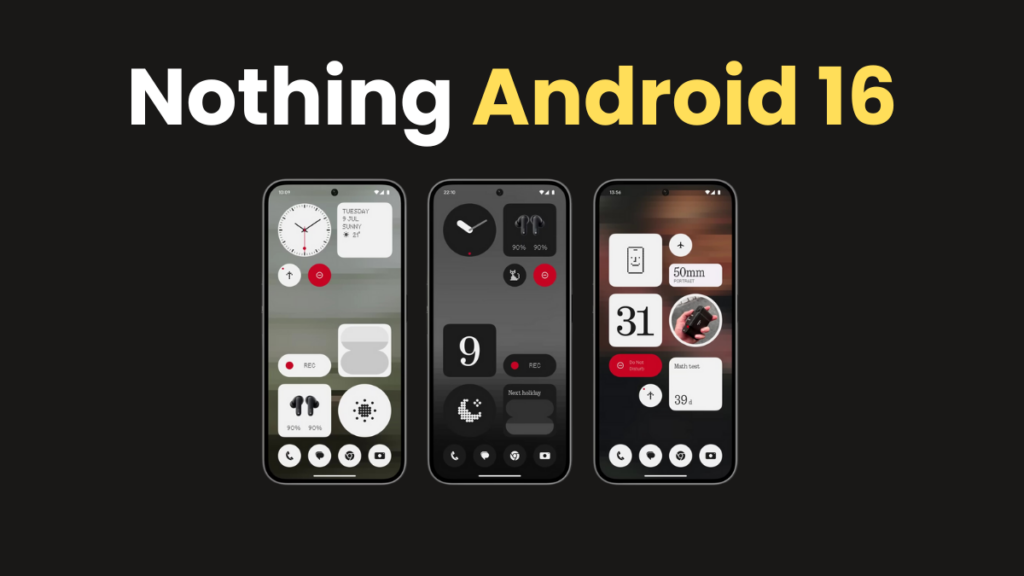
Nothing has officially teased the arrival of its next major OS upgrade, Nothing OS 4.0. The new software is based on Android 16 and promises to bring major changes to Nothing phones. While the brand hasn’t announced a release date, it says the new OS is “coming soon.”
The arrival of Nothing OS 4.0 was teased in a post on X, which also states that this upgrade is “Refined” and “Redefined.” This could mean improvements across the system and several major upgrades.
The London-based brand first teased Nothing OS 4.0 during the launch of Nothing Phone (3), the company’s first true flagship smartphone, in early July. Later that month, the brand released Nothing OS 4.0 closed beta to a limited number of Nothing Phone (3) users. Unfortunately, it didn’t expand to other Nothing smartphones. It appears they will receive the stable build directly.
With the stable release drawing near, you may be wondering if your Nothing phone is eligible for this major upgrade. So, here’s the confirmed list:
Nothing Phone (3)
Nothing Phone (3a)
Nothing Phone (3a) Pro
Nothing Phone (2)
Nothing Phone (2a)
Nothing Phone (2a) Plus
CMF Phone 1
CMF Phone 2 Pro
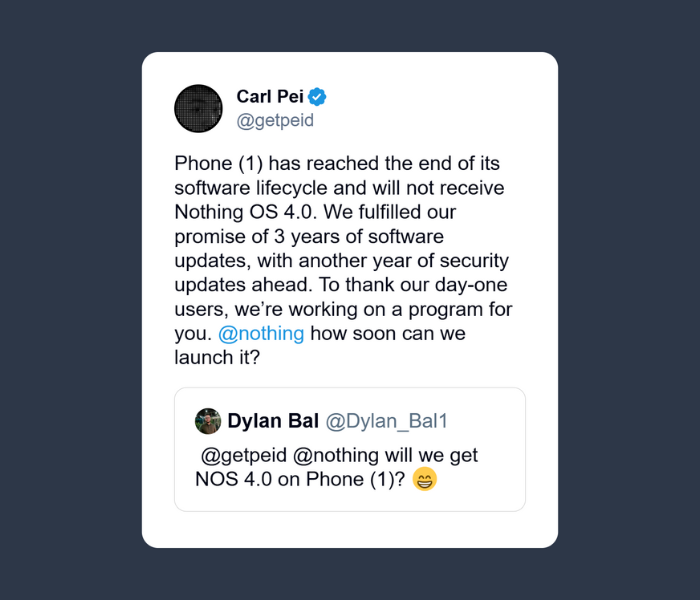
Nothing’s first phone, Phone (1), is missing from the list as it has already received three OS updates promised by the brand. Carl Pei, CEO of the company, also confirmed this recently in a post on X.
He also revealed that the brand is working on a program for Nothing Phone (1) users without revealing any details about it. Perhaps this will be a smartphone upgrade program, allowing Phone (1) users to upgrade to a newer model at some discount.
The Nothing Phone (3), being the most recent and the company’s first flagship phone, will be the first to receive a stable Nothing OS 4.0 update. The rollout should gradually cover the remaining eligible devices. Since Nothing doesn’t have an extensive portfolio of smartphones, the rollout shouldn’t take long to complete once it kicks off.
Please Note: When you buy something using the links in our articles, we may earn a small commission at no cost to you.
We’ll keep you updated with the latest updates around Nothing OS 4.0. Make sure to visit our Nothing section regularly, or you can join us on Telegram to stay up-to-date with the latest happenings in tech.
As the festive season approaches, Amazon is rolling out unprecedented discounts on Samsung’s latest Galaxy smartphones, making it the perfect time to upgrade or switch to Samsung.
Packed with cutting-edge technology and sleek designs, these devices are available at slashed prices, with exclusive savings through select bank credit/debit cards, especially from HDFC Bank offers (terms and conditions apply, so check eligibility before purchasing).
From powerful flagships to innovative foldables, here’s a look at the craziest deals you can grab now on Amazon prior to the Great Indian Festival sale. Stocks are limited, so act fast to secure your device and elevate your smartphone game with the Korean giant’s cutting-edge technology!!
Note: Prices and offers are subject to change. Verify details on Amazon India.
Discounts on Samsung Galaxy Phones Before Big Festive Sales
Samsung’s foldable lineup shines brighter with these festive deals, offering innovative designs and cutting-edge technology at unbeatable prices.
Galaxy S25 Edge
Offer Price: ₹99,999 (Including bank offer) | ₹1,09,999
Kicking off with the Galaxy S25 Edge, this flagship is priced at just ₹99,999, down from ₹1,09,999. Its thinnest body is its selling point. Powered by a high-performance processor, it ensures smooth multitasking and a premium experience for style-conscious users. The advanced camera system captures vivid photos, and the long-lasting battery keeps you going all day..
Please Note: When you buy something using the links in our articles, we may earn a small commission at no cost to you.
Galaxy S25 Ultra 5G
Offer Price: ₹1,17,999 | ₹1,29,999
The Galaxy S25 Ultra 5G, now available at ₹1,17,999 (MRP ₹1,29,999), is a powerhouse. It boasts a pro-grade camera system with AI-powered features for stunning photography, even in low light. The blazing-fast processor and 5G connectivity ensure seamless performance for gaming, streaming, and productivity. With a sleek design and robust battery life, it’s a top-notch premium smartphone experience.
Please Note: When you buy something using the links in our articles, we may earn a small commission at no cost to you.
Galaxy S25+ 5G
Offer Price: ₹91,999 (Including bank offer) | ₹99,999
For those seeking a balance of power and value, the Galaxy S25+ 5G is a steal at ₹91,999 (MRP ₹99,999). This device offers flagship features like a vibrant AMOLED display, a powerful processor, and 5G connectivity. Its versatile camera system and long-lasting battery make it ideal for gamers, photographers, and multitaskers looking for premium performance at a great price.
Please Note: When you buy something using the links in our articles, we may earn a small commission at no cost to you.
Galaxy Z Flip7 FE 5G
Offer Price: ₹79,999 (Including bank offer) | ₹95,999
The Galaxy Z Flip7 FE 5G, priced at ₹79,999 (MRP ₹95,999), combines a compact flip design with upgraded performance. Its vibrant foldable display and improved hinge durability make it perfect for any generation of users. The device features a capable camera system for social media-ready shots and 5G connectivity for fast browsing, making it a stylish yet practical choice.
Please Note: When you buy something using the links in our articles, we may earn a small commission at no cost to you.
Galaxy Z Flip7 5G
Offer Price: ₹97,999 (Including bank offer) | ₹1,09,999
The Galaxy Z Flip 7 5G, now at ₹97,999 (MRP ₹1,09,999), takes foldable design to the next level. It features enhanced durability, a larger cover screen for quick interactions, and a powerful processor for seamless performance. With 5G connectivity and AI-powered cameras, it’s ideal for those who want a versatile, compact device with a premium feel.
Please Note: When you buy something using the links in our articles, we may earn a small commission at no cost to you.
Galaxy Z Fold6
Offer Price: ₹1,24,999 | ₹1,64,999
For those eyeing the ultimate productivity device, the Galaxy Z Fold6 is a steal at ₹1,24,999 (MRP ₹1,64,999). Its expansive foldable display and multitasking capabilities make it perfect for professionals and tech enthusiasts. With a pro-grade camera, powerful processor, and 5G support, it’s a game-changer for work and entertainment on the go.
Please Note: When you buy something using the links in our articles, we may earn a small commission at no cost to you.
With features like AI-powered cameras, long-lasting batteries, and seamless 5G connectivity, these Galaxy models cater to gamers, photographers, and multitaskers alike. Don’t wait for the festive rush, grab these deals on Amazon now. For more discounts, check out our deals section.
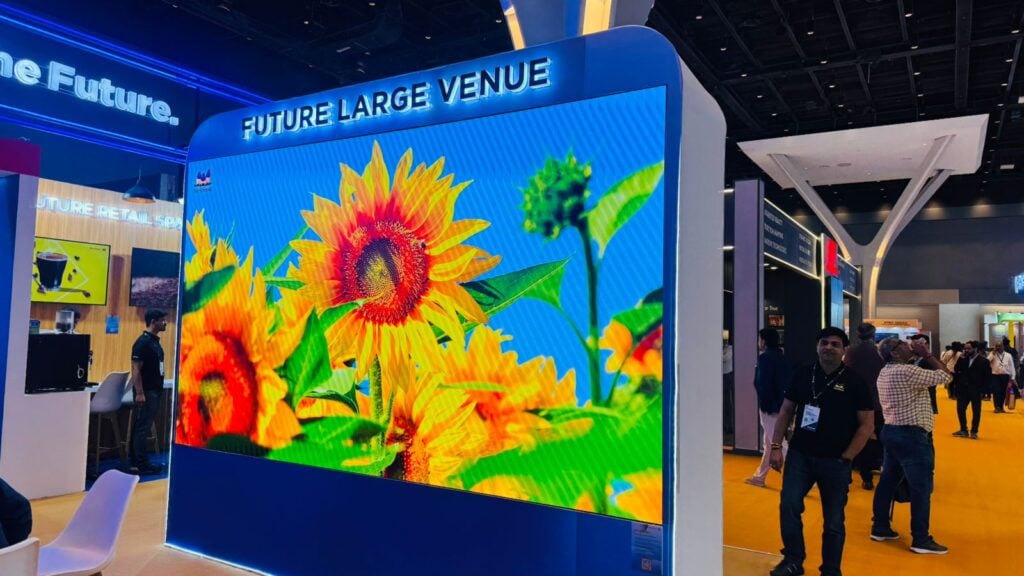
At InfoComm India 2025, ViewSonic announced the introduction of its latest innovations for enterprise, education, and retail spaces. The highlight of the event was a new customizable direct view LED display, accompanied by a showcase of immersive meeting room and retail solutions. The company outlined how these products align with the rising demand for advanced collaboration and display technologies in India.
LDC027G-091C and other LED innovations
ViewSonic LDC027G-091C COB LED display
The centerpiece of the launch was the LDC027G-091C COB LED display, designed with ultra-fine 0.9mm pixel pitch for 4K visuals. It delivers detailed clarity even at close viewing distances, making it suitable for control rooms, boardrooms, and corporate branding environments. Equipped with common cathode technology, it reduces power use by over 40 percent, while its high contrast ratio ensures deeper blacks and vivid imagery.
Alongside this, ViewSonic displayed the LDC031G-251, a 168-inch video wall in portrait orientation. It features GOB protection, IP54 and IK06 durability ratings, and a fine pixel pitch, making it well-suited for public venues, classrooms, and retail spaces where resilience and visual quality are critical. Both models underline ViewSonic’s focus on energy efficiency and durability while supporting flexible deployment.
In addition to LED displays, ViewSonic recreated real-world setups to demonstrate versatility. The Future Meeting Room showcased a 105-inch interactive ViewBoard with Microsoft Teams Rooms-certified TeamJoin and TeamOne software for seamless hybrid conferencing. The Future Retail Solution highlighted 4K signage with 24/7 reliability, USB-C connectivity, wireless casting support, and flexible orientations to deliver engaging customer experiences in high-traffic areas.
By integrating LED video walls, interactive displays, monitors, and collaboration software, ViewSonic aims to provide a connected ecosystem for enterprises, education, and retail, setting benchmarks in energy efficiency, flexibility, and visual performance.
For more daily updates, please visit our News Section.
In June this year, Oppo introduced the K13x 5G in Midnight Violet and Sunset Peach. Now, the brand has confirmed that the smartphone will soon be available in two new colourways. According to Oppo, this refresh builds on the device’s strong market performance and high consumer ratings, particularly on Flipkart, where it is among the best-rated models in its segment.
Oppo K13x 5G new color options incoming
Oppo K13x 5G to soon arrive in Mist White and Breeze Blue
According to Oppo, the Oppo K13x 5G’s upcoming Mist White will be a limited-edition offering with an elegant finish, while Breeze Blue, already a fan favourite with over 1.7 million users from the K12x 5G, is now making its way to the newer model.
Oppo K13x 5G specifications and features
The Oppo K13x 5G features a 6.67-inch LCD display with HD+ resolution, a 120Hz refresh rate, 240Hz touch sampling, and peak brightness of 1,000 nits in HBM mode. Protection is handled by Gorilla Glass 7i.
Performance is driven by the MediaTek Dimensity 6300 chipset paired with 4GB, 6GB, or 8GB of LPDDR4X RAM and 128GB of UFS 2.2 storage, expandable via microSD. It runs ColorOS 15.1 based on Android 15. Powering the device is a 6,000mAh battery with 45W charging.
For imaging, the smartphone carries a dual rear setup consisting of a 50-megapixel main sensor and a 2-megapixel auxiliary lens. On the front, there is an 8-megapixel selfie camera in a punch-hole cutout. Additional features include a side-mounted fingerprint reader, dual SIM support, 5G connectivity, Wi-Fi 5, Bluetooth 5.4, GPS, and a USB-C port.
Oppo K13x 5G price in India
Oppo K13x 5G
Currently, the Oppo K13x 5G is available in three variants: 4GB+128GB at Rs 11,999, 6GB+128GB at Rs 12,999, and 8GB+128GB at Rs 14,999.
The new Mist White and Breeze Blue editions will be added to the lineup, with availability through Flipkart and authorised retail channels. With the Flipkart Big Billion Days Sale approaching, customers can also expect special offers, making the Oppo K13x 5G an appealing option in the budget 5G category.
In related news, Oppo has announced special festive prices on two of its entertainment-focused products. The Enco Buds 3 Pro, offering long-lasting playback, are now available for Rs 1,499, while the Pad SE, equipped with an 11-inch eye-friendly display and a large 9,340mAh battery with 33W charging, is listed starting at Rs 10,999 on Flipkart.
For more daily updates, please visit our News Section.
BenQ has revealed two advanced collaboration products at InfoComm India 2025, positioning India as the first market to receive these solutions. The announcement highlights the country’s growing influence in shaping global workplace technology. The devices are specifically designed to reduce connectivity issues that frequently disrupt hybrid meetings and group presentations, enabling enterprises to focus on productivity instead of troubleshooting.
BenQ InstaShow VS25 and WDC15 specifications and features
BenQ InstaShow VS25
The InstaShow VS25 has been built for flexible Bring Your Own Device and Bring Your Own Meeting environments. It can accommodate up to 64 buttons, with four people sharing content at the same time. With Wi-Fi 6 support and compatibility across Microsoft Teams, Zoom, and Google Meet, the system is intended to fit seamlessly into hybrid office setups.
Features such as AirPlay, ChromeCast, and Miracast ensure that laptops, tablets, and smartphones can connect without delay. The output is 4K at 60Hz, providing clarity for both in-room and remote participants. Touchback control is included, allowing direct interaction with content through interactive displays, which is particularly useful in collaborative brainstorming sessions.
The VS25 also covers a wireless range of 40 metres and operates without apps, drivers, or IT setup. Security is addressed with AES 128-bit encryption, WPA3 protection, and CVSS 4.0 certification.
The InstaShow WDC15 is designed for scenarios requiring more participants, such as boardroom meetings, training environments, and workshops. It allows up to 16 presenters to connect simultaneously, with 4K at 30Hz resolution and touchback functionality.
Connectivity options include HDMI, USB Type-A, and USB Type-C interfaces, giving flexibility across devices. The wireless coverage extends to 15 metres, and the hardware-based connection eliminates dependency on corporate networks. It maintains the same security standards as the VS25, giving enterprises confidence in protecting sensitive data.
BenQ InstaShow VS25 and WDC15 price and availability
BenQ has confirmed pricing for the Indian market, with the InstaShow VS25 listed at Rs 1,99,000 and the InstaShow WDC15 available at Rs 99,000. Both products will be distributed through the company’s authorized partner network. Enterprises with specific requirements can approach BenQ India for customized packages and integration support. By launching these systems in India first, BenQ signals its belief in the region’s readiness for advanced workplace technologies and its central role in influencing global collaboration practices.
For more daily updates, please visit our News Section.
Tipster Digital Chat Station has revealed that Huawei’s next-generation flagship, the Mate 80 series, is scheduled to arrive in November. According to the leak, the upcoming range will include four models and introduce significant upgrades across design, imaging, and performance, positioning it as a strong contender against the newly launched iPhone 17 series.
Huawei Mate 80 series: What to expect?
Huawei Mate 80 series leak by DCS
It can be said based on the above leak that the Huawei Mate 80 lineup is said to feature the Mate 80, Mate 80 Pro, Mate 80 Pro+, and Mate 80 RS. Camera specifications differ across models, with the Mate 80 expected to house a 50-megapixel 1/1.5-inch primary sensor, the Pro version moving to a 50-megapixel 1/1.3-inch unit, and both the Pro+ and RS adopting a larger 50-megapixel 1/1.3-inch SmartSens 590 sensor.
Display options include 2.5D flat screens on the Pro model and possibly 3D face recognition, while the Pro+ and RS are tipped to test both 2.5D and 4D deep curvature designs.
The highlight is the Mate 80 RS, which may come with a 6.9-inch dual-layer OLED display. This display structure, with stacked emission layers, is expected to deliver higher brightness, lower power consumption, and longer life compared with conventional OLED panels. Alongside this, Huawei is reportedly testing titanium alloy frames and glass backs with ceramic-like texture for a premium feel.
Under the hood, the series is tipped to debut the Kirin 9030 processor with an internal design breakthrough. Battery capacity could exceed 6000mAh, with support for 100W wired and 80W wireless charging. Connectivity may include 5G and satellite communication.
Huawei Mate 70 Pro
On the software side, HarmonyOS is expected to deepen Huawei’s ecosystem advantage, with possible support for eSIM and expanded AI features. Analysts suggest these upgrades could help Huawei close the gap with Apple, particularly in power efficiency, communication technology, and AI services.
For more daily updates, please visit our News Section.
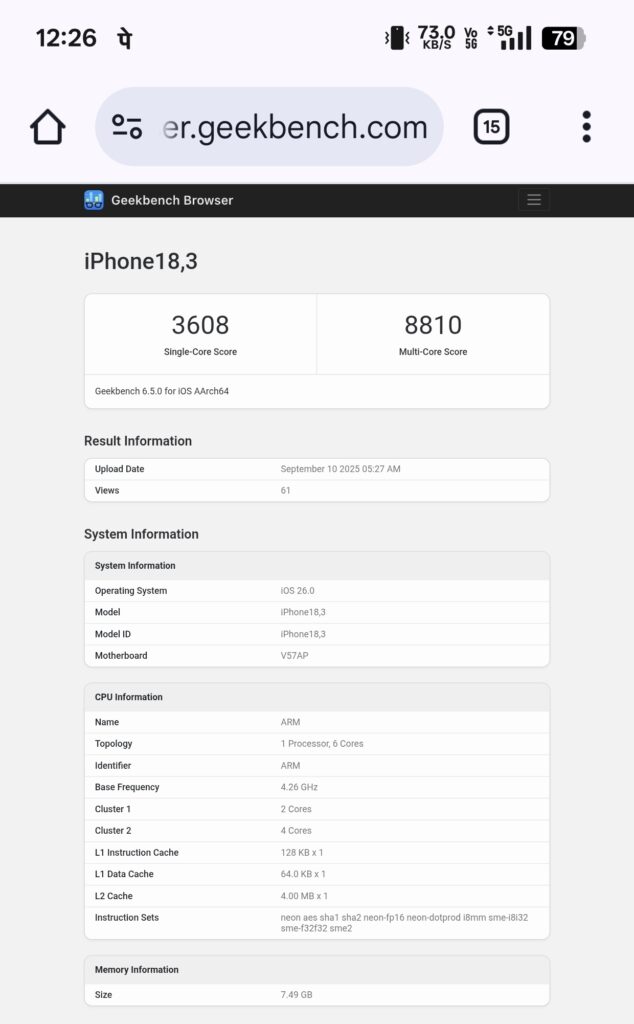
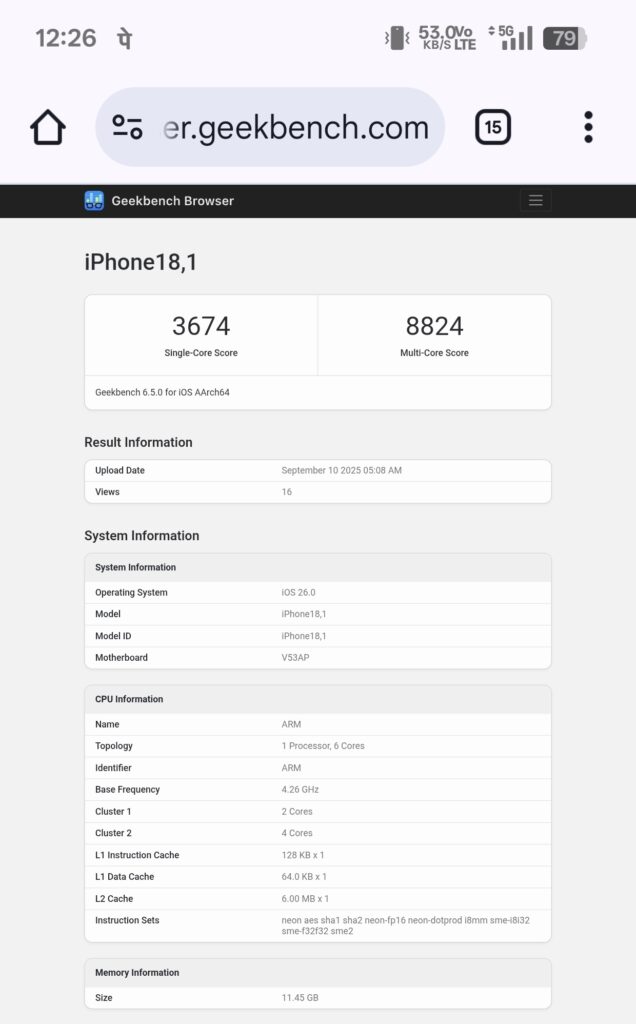
Apple unveiled the iPhone 17 lineup on September 9, and just hours later, early Geekbench scores claiming to show the new A19 and A19 Pro chips began circulating online. If accurate, the results suggest Apple has kept CPU improvements fairly modest this year.
According to numbers spotted by partofstyle.com, the iPhone 17 Pro Max powered by the A19 Pro reached 3,781 points in single-core and 9,679 in multi-core tests. That’s roughly a 10% bump over the iPhone 16 Pro Max’s A18 Pro, which managed 3,479 and 8,568. The regular iPhone 17, running the standard A19, posted 3,608 single-core and 8,810 multi-core scores — around 7% better than the A18 in last year’s iPhone 16.
The relatively small gains line up with earlier reports that Apple’s latest chips, reportedly built on TSMC’s 3nm N3P process, are designed more for efficiency and AI performance than for raw CPU speed. The A19 Pro in the iPhone 17 Pro and Pro Max is paired with vapor chamber cooling for sustained workloads, while the base iPhone 17 and the new iPhone Air miss out on this feature.
As always with early benchmarks, the results are unverified and may not reflect final performance. More reliable tests will come as reviewers get their hands on the devices.
Still, the takeaway is clear: Apple’s silicon roadmap this year seems to emphasize energy savings, thermal management, and Neural Engine upgrades rather than headline-grabbing CPU jumps. That may not thrill benchmark chasers, but it could translate into smoother performance and better battery life in everyday use.
TCL looks ready to bring its paper-like display technology to a smaller, more portable device. A new leak points to the company preparing an 8-inch NxtPaper tablet with 5G support, giving fans of the eye-friendly screen tech a new option beyond the larger models already on the market.
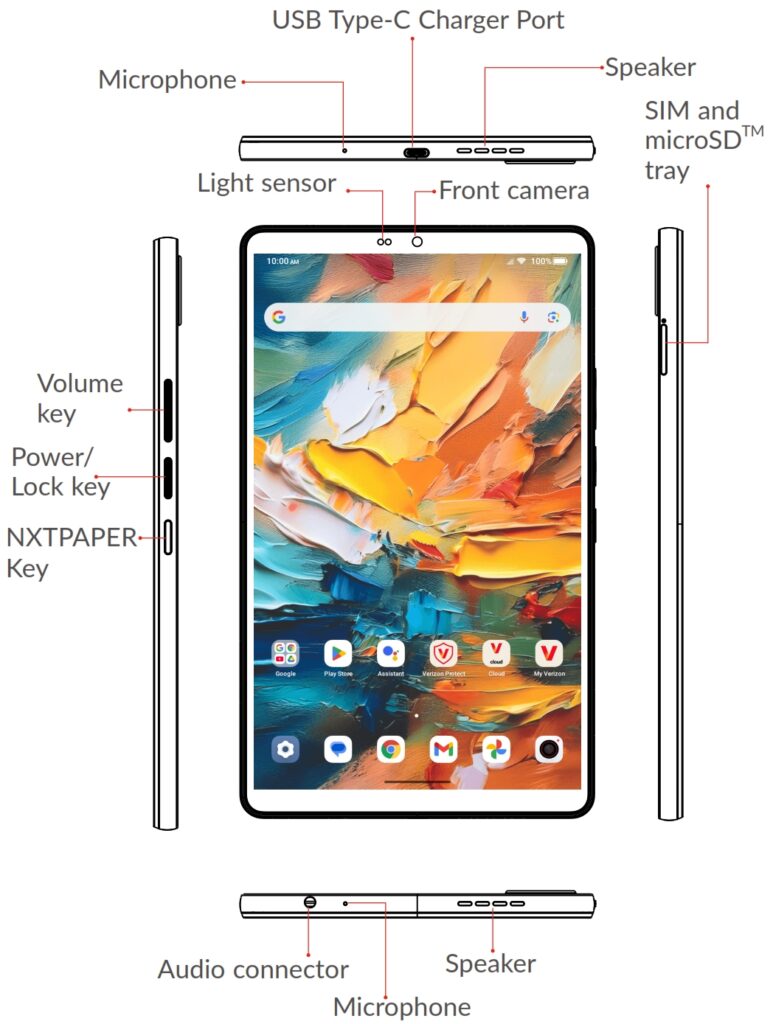
Tipster Evan Blass has shared images of the TCL Tab 8 NxtPaper 5G. The tablet will reportedly use TCL’s fourth-generation NxtPaper panel, a display designed to reduce glare and eye strain. Like its bigger siblings, it features low blue light, zero flicker, and the ability to switch between full color and a monochrome E Ink-style mode. A dedicated “NxtPaper Key” on the side makes that toggle quick and easy, and stylus support aims to replicate a true pen-and-paper feel for note-taking or sketching.
The design shown in leaked renders keeps things clean and compact. Slim bezels line the sides, while slightly larger ones frame the top and bottom. Dual speaker grilles sit at either end, and TCL has even kept a 3.5 mm headphone jack. A SIM tray that doubles as a microSD slot points to carrier availability, with Verizon expected to offer the device in the U.S.
While the leak confirms support for 5G connectivity, other details such as resolution, processor, RAM, and pricing have yet to surface. The model is expected to follow on from the TCL Tab 8 4G released back in 2022.
By shrinking its NxtPaper technology into an 8-inch 5G tablet, TCL could attract readers, students, and mobile professionals who want a more comfortable screen for long sessions. If priced competitively, the Tab 8 NxtPaper 5G might become one of the more practical small tablets to watch in the coming months.
Xiaomi is preparing its next flagship launch, and the spotlight this time falls on the huge battery of the compact Xiaomi 16. Fresh leaks suggest the phone won’t just rely on raw performance but will also bring notable improvements in other aspects, including battery life, durability, and cameras. With its debut expected in China this month, the device could prove to be one of the year’s most competitive flagships.
Tipster Yogesh Brar has shared key specifications of the Xiaomi 16, reaffirming recent rumors that point to major changes compared to last year’s Xiaomi 15. The phone is expected to run on Qualcomm’s latest Snapdragon 8 Elite 2 chipset, also referred to in some reports as the Snapdragon 8 Elite Gen 5. In fact, the Xiaomi 16 series is expected to be the first to feature this chip, with the OnePlus 15 likely to follow next month.
But perhaps the most eye-catching rumor about the Xiaomi 16 is the battery: a 7,000 mAh unit that easily outpaces most premium smartphones today. Charging is equally ambitious, with 100 W wired (up from 90W on its predecessor) and 50 W wireless support on board. Xiaomi is also said to be raising the bar on durability with an IP69 water- and dust-resistance rating, a feature more common on rugged devices than slim flagships.
The cameras get some targeted refinements rather than a full overhaul, with the rear setup sticking to three 50 MP lenses — a 50 MP Omnivision primary, a 50 MP ultra-wide, and a 50 MP JN5 telephoto — largely unchanged from the predecessor. Rounding things out is a 6.3-inch OLED display, slightly smaller than the 6.32-inch panel on the predecessor.
If accurate, these upgrades put the Xiaomi 16 in a strong position against the iPhone 17, Galaxy S25, and many other 2025 flagships. A massive battery, faster charging, and improved durability — all wrapped in a refreshed exterior with more rounded corners — could make it a standout option when it launches later this month.
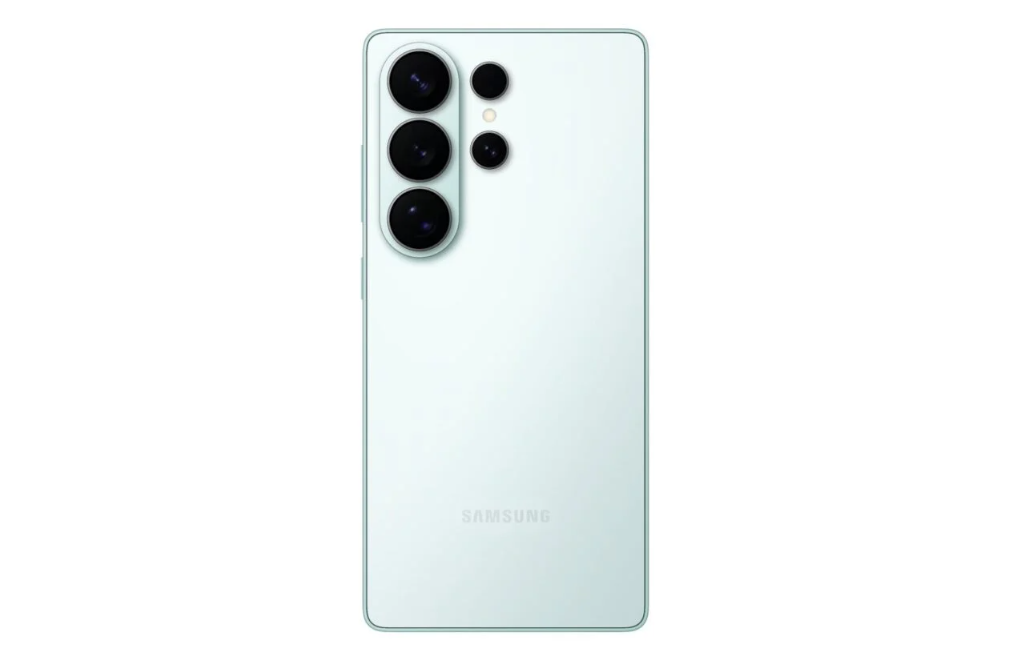
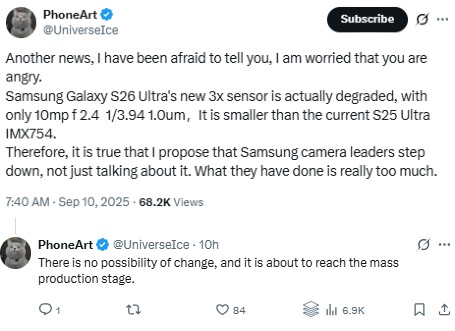
Samsung is expected to take the wraps off the Galaxy S26 series in January 2026, but a new leak has sparked debate among fans who were hoping for another round of camera upgrades. Instead, it seems the Ultra model could take a step backward on one of its telephoto lenses.
According to leaker Ice Universe, the Galaxy S26 Ultra may ship with a 12MP (cropped to 10MP) 3x telephoto camera using a 1/3.94-inch sensor and 1.0µm pixels. On paper, that’s smaller than what the Galaxy S25 Ultra offered — a Sony IMX754 sensor that delivered 12MP (cropped to 10MP) with a 1/3.52-inch size and 1.12µm pixels. The difference might look small, but in camera hardware, sensor size and pixel pitch directly affect how much light is captured, which can impact detail and low-light performance.
The rest of the camera setup appears largely unchanged. The S25 Ultra’s standout 50MP 5x periscope telephoto (1/2.52-inch, 0.7µm, 111mm) remains competitive, though rivals are moving fast. Apple’s iPhone 17 Pro offers a 48MP 5x telephoto, while several upcoming ‘Ultra’ flagships from China are rumored to adopt Sony’s new 200MP sensor. Ice Universe suggests Samsung did consider alternatives — like moving to a 50MP 4x telephoto — but technical and timing issues ruled it out. A 200MP telephoto, meanwhile, seems too expensive to fit into the S26 Ultra.
With the main 200MP wide and 50MP ultra-wide cameras reportedly unchanged, the rumored downgrade raises questions about Samsung’s strategy. The thicker camera bump on leaked renders has fueled speculation about new optics, but so far there’s little detail to support that.
If the leak proves accurate, Samsung may lean more heavily on software tricks and image processing to close the gap with competitors. Whether that will be enough in the flagship camera race remains to be seen.
Baidu is back with another AI announcement, and this time they’re really swinging for the fences. The Chinese tech giant just rolled out Ernie X1.1, which they’re calling a major upgrade to their previous Ernie X1 model.
What’s New Under the Hood?
Wang Haifeng, Baidu’s Chief Technology Officer, presented the new model as something special. Built on their Ernie 4.5 foundation, X1.1 uses what they call a “hybrid reinforcement learning framework”, basically combining different AI training techniques to make the model smarter.
The technical details might sound dry, but the results Baidu is claiming are pretty impressive. They say X1.1 is significantly better than its predecessor:
34.8% more accurate with facts
12.5% better at following instructions
9.6% improvement in handling complex tasks
The Big Claims
Here’s where things get interesting (and a bit bold). Baidu isn’t just comparing their new model to their own previous work; they’re taking shots at the competition. They claim Ernie X1.1 outperforms DeepSeek’s R1-0528 model across multiple tests.
But wait, there’s more. They’re also saying their model can go toe-to-toe with some of the biggest names in AI, specifically mentioning performance comparable to GPT-5 and Google‘s Gemini 2.5 Pro in certain areas.
Where Can You Try It?
If you’re curious to test it out, Baidu has made X1.1 available through their usual channels – the Ernie Bot website and their Wenxiaoyan app. For businesses and developers, they’ve also deployed it on their Qianfan AI Cloud platform.
The Bigger Picture
This launch isn’t happening in isolation. Baidu also updated their PaddlePaddle deep learning framework to version 3.2, making it better for training large AI models and working with different types of hardware. They’ve been busy updating their development tools too.
The numbers they’re throwing around are pretty staggering – apparently, their AI ecosystem now supports over 23 million developers and serves 760,000 companies. That’s a massive user base, especially concentrated in China.
What This Really Means
Let’s be honest – every AI company is making big claims about their latest models these days. But Baidu’s push with X1.1 represents something important: the global AI race is heating up, and Chinese companies aren’t content to just follow along.
Whether Ernie X1.1 actually lives up to these bold comparisons with GPT-5 and Gemini remains to be seen. Independent testing and real-world use will be the real judge. But one thing’s for sure, Baidu is clearly positioning itself as a serious player on the global AI stage, not just in China.
The competition between AI giants is only getting more intense, and that’s probably good news for everyone who uses these tools.
Baseus is rolling out an updated version of its PicoGo 10K slim magnetic power bank, and this time it comes with a notable boost in charging tech. The new model, known as the PicoGo AM52, sticks with the same 10,000 mAh battery capacity but brings faster speeds and a more polished design to the table.
The highlight feature is support for Qi2.2 wireless charging, letting the AM52 deliver up to 25 W. This is more than the Galaxy S25 Ultra can take in wirelessly, and just enough to match the peak speed of Apple’s iPhone 17 models. For wired use, the USB-C port handles up to 45 W, meaning you can quickly top up tablets, laptops, or two devices at once — one on the cable and one wirelessly. The bank itself recharges at 30 W, so downtime between uses should be shorter compared to the older version.
Baseus has also reworked the hardware to keep heat under control. The AM52 uses graphene cooling and temperature monitoring to make sure it runs efficiently even when pushing higher power. On the outside, it carries an aluminum alloy frame with a soft matte silicone finish that resists smudges and improves grip. Its curved, slim shape is designed to sit neatly behind a phone, making it practical for day-to-day carry.
The new PicoGo AM52 is scheduled to launch in November 2025, with an introductory price of $47.99 before it moves back to $59.99. With the blend of faster wireless speeds, higher wired output, and a more durable build, Baseus is positioning this as a strong option for anyone who needs reliable charging on the go without adding too much bulk.
We use cookies on our website to give you the most relevant experience by remembering your preferences and repeat visits. By clicking “Accept”, you consent to the use of ALL the cookies.
This website uses cookies to improve your experience while you navigate through the website. Out of these, the cookies that are categorized as necessary are stored on your browser as they are essential for the working of basic functionalities of the website. We also use third-party cookies that help us analyze and understand how you use this website. These cookies will be stored in your browser only with your consent. You also have the option to opt-out of these cookies. But opting out of some of these cookies may affect your browsing experience.
Necessary cookies are absolutely essential for the website to function properly. This category only includes cookies that ensures basic functionalities and security features of the website. These cookies do not store any personal information.
Any cookies that may not be particularly necessary for the website to function and is used specifically to collect user personal data via analytics, ads, other embedded contents are termed as non-necessary cookies. It is mandatory to procure user consent prior to running these cookies on your website.