Advertisement

The Top 10 Compact Smartphones of 2025

Compact smartphones have become increasingly rare in recent years, but 2025 has delivered a surprisingly strong lineup for those who prefer smaller handsets. While most flagships now push beyond 6.7 inches, several new launches stay comfortably under the 6.3-inch mark or use foldable designs to remain pocket-friendly without sacrificing screen size.

Here are the top compact phones you can pick up this year. The list includes both traditional bar-style phones and modern flip phones, many of which earn their place thanks to their compact form factor.
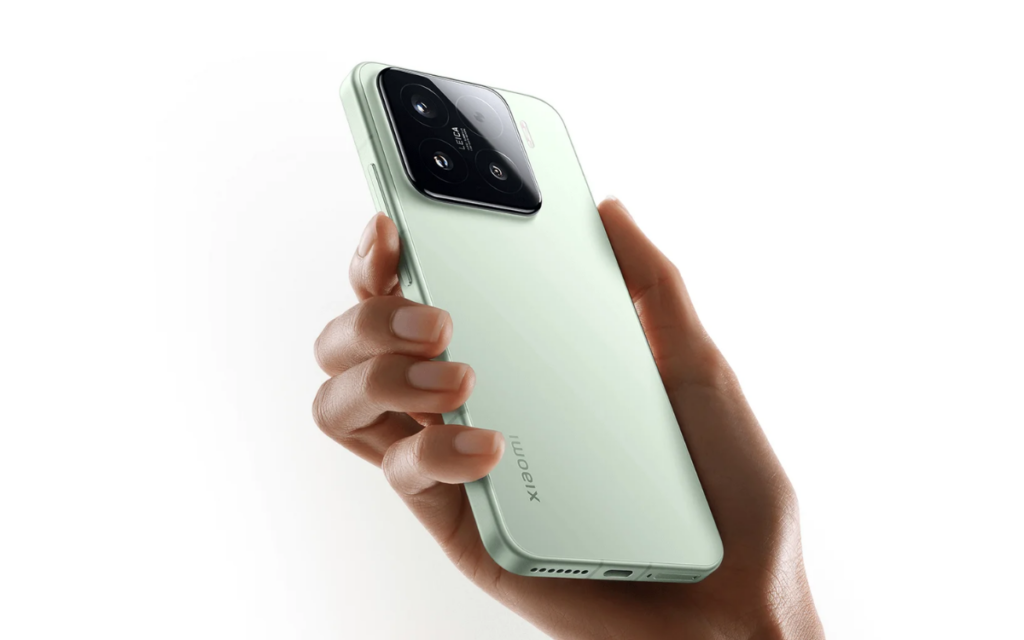
Xiaomi 15
Xiaomi 15

1. Samsung Galaxy S25

Samsung launched the Galaxy S25 as one of the most compact Android flagships of the year. It features a 6.2-inch flat Dynamic AMOLED 2X display with LTPO technology, supporting up to 120Hz refresh rate. The panel peaks around 2600 nits, offering strong visibility even in bright conditions.

The device runs on the new Snapdragon 8 Elite processor, paired with 12GB of RAM. It delivers a noticeable performance boost over the Galaxy S24 and handles gaming, multitasking, and AI features with ease. The camera setup includes a 50MP main sensor, a 12MP ultra-wide lens, and a 10MP telephoto lens with 3x optical zoom. Image quality remains consistent across the board.

Samsung fitted the Galaxy S25 with a 4000mAh battery, which offers solid endurance thanks to the chip’s improved efficiency. The phone supports 45W wired and fast wireless charging. It also features IP68 water resistance and an ultrasonic fingerprint sensor. Pricing starts around $800 globally.

Please Note: When you buy something using the links in our articles, we may earn a small commission at no cost to you.

2. Vivo S30 Pro Mini

The Vivo S30 Pro Mini is one of the most compact flagships Vivo has released in 2025. It features a 6.31-inch LTPO AMOLED display with a 1.5K resolution and 120Hz refresh rate. The screen supports 4320Hz PWM dimming for reduced eye strain and peaks at up to 5000 nits brightness, making it among the brightest compact phones available.

The phone is powered by the Dimensity 9300+ processor and comes with 12GB or 16GB RAM and up to 512GB UFS 3.1 storage. It runs Android 15 with OriginOS 5 in China.

Vivo includes a triple rear camera setup: a 50MP Sony IMX921 main sensor with OIS, an 8MP ultra-wide lens, and a 50MP periscope telephoto offering 3x optical zoom. The phone also has a 50MP autofocus front camera, making it capable of detailed selfies and sharp video calls.

Battery life is impressive with a 6500mAh cell, and charging speeds are strong at 90W. The phone is currently available in China, with pricing starting around CNY 3999 (approximately $560).

3. iPhone 16 Pro

Apple’s iPhone 16 Pro continues its trend of offering premium features in a compact, highly refined package. The 6.3-inch Super Retina XDR OLED display supports ProMotion up to 120Hz, peaks at 2000 nits outdoors, and remains one of the most color-accurate panels in any phone.

Under the hood, the 16 Pro runs on the A18 Pro chip with a vastly improved 16-core Neural Engine. This powers everything from real-time photo editing to Apple’s new on-device “Apple Intelligence” features, introduced with iOS 18.

The triple-camera system includes a 48MP main sensor, an ultra-wide, and a 5x telephoto, bringing long-range zoom to the smaller Pro for the first time. Image quality is excellent across the board, and Apple remains unmatched in mobile video. Build quality is also top-notch with a titanium frame and Ceramic Shield front.

At $999 for the 128GB model, the iPhone 16 Pro is priced as a premium device. But it’s easily one of the most powerful and compact phones you can buy, perfect for iOS users who don’t want a Max-sized screen.

Please Note: When you buy something using the links in our articles, we may earn a small commission at no cost to you.

4. Google Pixel 9 Pro

Google reduced the size of its Pixel 9 Pro this year, introducing a more compact 6.3-inch model. The OLED panel features QHD+ resolution, 1–120Hz variable refresh rate, and high HDR brightness nearing 3000 nits.

The phone uses the Tensor G4 chip with 16GB RAM and prioritizes AI performance over raw benchmark numbers. It handles tasks smoothly and supports Google’s AI features such as Gemini, Magic Eraser, and Call Screen. The camera system includes a 50MP main sensor, a 48MP ultra-wide lens, and a 48MP telephoto lens with 5x optical zoom.

Google fitted a 4700mAh battery, offering good battery life. The phone supports 27W fast charging, wireless charging, and reverse wireless charging. It runs on Android 15 with seven years of software support. The Pixel 9 Pro starts at $999.

Please Note: When you buy something using the links in our articles, we may earn a small commission at no cost to you.

5. Xiaomi 15

Xiaomi introduced the Xiaomi 15 in late 2024, and it became globally available in 2025. It features a 6.36-inch LTPO AMOLED display with 1–120Hz refresh and peak brightness over 3500 nits. The design is flat with slim bezels and IP68 certification.

It runs on the Snapdragon 8 Elite processor and comes with up to 12GB of LPDDR5X RAM and UFS 4.0 storage. The triple-camera system includes three 50MP sensors covering wide, ultra-wide, and 2.6x telephoto zoom, developed in collaboration with Leica.

The phone includes a 5400mAh silicon-carbon battery that delivers long screen-on time and supports 90W wired and 50W wireless charging. Xiaomi ships the phone with HyperOS 2.0 based on Android 15. Global pricing starts at €799 for the 12+256GB variant.

Please Note: When you buy something using the links in our articles, we may earn a small commission at no cost to you.

6. Vivo X200 Pro Mini

Vivo launched the X200 Pro Mini as a smaller member of the X200 lineup. It features a 6.31-inch 2K AMOLED display with 120Hz refresh and 1440Hz PWM dimming. The phone weighs just 187g and is easy to use one-handed.

It is powered by MediaTek’s Dimensity 9400 processor and comes with up to 16GB RAM. Vivo paired the device with a triple 50MP camera setup co-engineered with Zeiss, including a main sensor, ultra-wide lens, and periscope telephoto zoom. The front camera is a 32MP sensor.

Battery life is a standout, with a 5700mAh unit and 90W wired charging. The phone runs OriginOS 5 based on Android 15. Pricing in China starts at around CNY 4999 (approximately $700).

7. Google Pixel 9a

The Pixel 9a is Google’s newest compact mid-range phone for 2025. It features a 6.3-inch FHD+ OLED display with 120Hz refresh and peak brightness up to 2700 nits. The design stays clean and compact, with Gorilla Glass 3 protection and IP68 water resistance.

Google uses its Tensor G4 chip in the 9a, paired with 8GB RAM and up to 256GB storage. Performance is solid for daily use, and the phone benefits from Google’s latest AI features. The rear camera setup includes a 48MP main sensor with OIS and a 13MP ultra-wide lens. On the front, there’s a 13MP camera that supports 4K video recording and wide-angle selfies.

Battery life holds up well with a 5100mAh cell, and charging is handled via 23W wired and 7.5W wireless options. The Pixel 9a ships with Android 15 and is eligible for seven years of OS and security updates. Pricing starts at $499.

Please Note: When you buy something using the links in our articles, we may earn a small commission at no cost to you.

8. Samsung Galaxy Z Flip 6

Samsung launched the Galaxy Z Flip 6 last year as its most polished Flip model to date. When folded, it is compact enough to fit in a small pocket. When opened, it offers a 6.7-inch Dynamic AMOLED display with a 120Hz refresh rate. The cover display measures 3.4 inches and allows quick access to widgets and notifications.

The Flip 6 runs on the Snapdragon 8 Gen 3 for Galaxy and features 12GB of RAM. The dual-camera system includes a 50MP main sensor and a 12MP ultra-wide lens. Users can take selfies using either the front 10MP camera or the rear cameras via the cover screen.

The battery has a capacity of 3700mAh, with support for 25W wired and 15W wireless charging. Samsung offers seven years of software updates. The phone launched at $999 and is available globally.

Please Note: When you buy something using the links in our articles, we may earn a small commission at no cost to you.

9. Motorola Razr Ultra (2025)

Motorola introduced the Razr Ultra 2025 as its most advanced foldable yet. The phone features a 6.9-inch internal pOLED display with a 165Hz refresh rate and a large 4.0-inch outer display that also runs at 165Hz. Both screens are bright, smooth, and usable for full apps.

It uses the Snapdragon 8 Elite chipset and comes with 16GB RAM and 512GB storage. Motorola includes a 50MP main and 50MP ultra-wide camera on the rear, while the inner display has a 50MP under-display selfie camera. The camera system supports advanced video features and offers hands-free shooting when the phone is partially folded.

The Razr Ultra houses a 4700mAh battery and supports fast charging. Motorola includes AI features through a dedicated side button and supports Ready For wireless desktop mode. The phone is priced around $1099 in Europe and is available in select regions.

Please Note: When you buy something using the links in our articles, we may earn a small commission at no cost to you.

10. Xiaomi Mix Flip

Xiaomi launched the Mix Flip as its first flip-style foldable. The main display measures 6.86 inches with a resolution of 2912×1224 and 120Hz refresh. The outer screen is a 4.01-inch near-square OLED that also supports 120Hz.

It is powered by the Snapdragon 8 Gen 3 chip and comes with 12GB RAM and 512GB storage. Xiaomi’s unique camera setup includes a 50MP main sensor and a 50MP telephoto lens, omitting an ultra-wide lens. The front camera is a 32MP sensor located on the inner display.

The Mix Flip includes a 4780mAh battery with 67W wired fast charging. Wireless charging is not supported. The phone runs HyperOS and is priced around £1099 in the UK.

For more daily updates, please visit our News Section.

Stay ahead in tech! Join our Telegram community and sign up for our daily newsletter of top stories! 💡

HMD Skyline 2 GT / Skyline 2 specifications leaked, may launch soon

Last year, HMD launched the Skyline smartphone with a Lumia-like design and Snapdragon 7s Gen 2 chipset. There have been reports that the brand is working on a successor edition of this phone. While the Skyline 2 is said to be in the works, a new leak has also revealed the existence of a more powerful Skyline 2 GT. Here’s a look at the leaked specifications of both devices. 

HMD Skyline 2 GT, Skyline 2 specifications (rumored)

Alleged HMD Skyline 2 / Skyline 2 GT prototype

According to HMD Meme, the Skyline 2 GT will feature a 6.55-inch flat P-OLED panel that supports a 144Hz refresh rate and up to 2000nits of peak brightness. While the screen’s resolution is not mentioned, it may support an FHD+ resolution like the Skyline 2.

Under the hood, the Skyline 2 GT will feature the Snapdragon 7 Gen 3 chip and 12GB of RAM. The device will pack a 5,000mAh battery with 45W wired charging and Qi 2.0 wireless charging support with a built-in magnet. It will come preloaded with Android 15.

The Skyline 2 GT will have a 50-megapixel front camera and an OIS-assisted 108-megapixel + 50-megapixel + 50-megapixel triple camera setup on the back. The rear setup will also include a 3D ToF sensor. It will arrive with other features, such as a Quick button, a camera button, Bluetooth 5.3, dual speakers, and an IP67-rated chassis. 

The Skyline 2 is said to be equipped with a 6.55-inch P-OLED screen that offers an FHD+ resolution, a 144Hz refresh rate, and 1200nits brightness. It will feature the Snapdragon 7s Gen 3 chip and a 5,000mAh battery with 33W charging and Qi 2.0 wireless charging with a built-in magnet.

For optics, the Skyline 2 will feature a 50-megapixel front camera and an OIS-enabled 108-megapixel + 13-megapixel triple camera unit on the back. Its other rumored features include Android 15 with 3 years of upgrades, dual speakers, an IP54 rating, and self-repair Gen 2 support. The above image is an alleged prototype of the Skyline 2 or Skyline 2 GT.

The brand is also said to be working on the Rubber 1 and Rubber 1S smartwatches powered by WearOS. Readers can visit this post to know the specifications of both smartwatches.

For more daily updates, please visit our News Section.

Stay ahead in tech! Join our Telegram community and sign up for our daily newsletter of top stories.

(source 1, 2)

Vivo X Fold 5 bags multiple certifications, 90W charging revealed

A recent report revealed that Vivo may host a launch event on July 10 in India to unveil the Vivo X200 FE and Vivo X Fold 5. The X200 FE is expected to be a compact flagship phone, while the X Fold 5 will be a foldable device. The X200 FE has recently appeared in multiple certification listings, and both the Chinese and global variants of the X Fold 5 have also received several certifications.

Vivo X Fold 5 spotted with a 90W charger

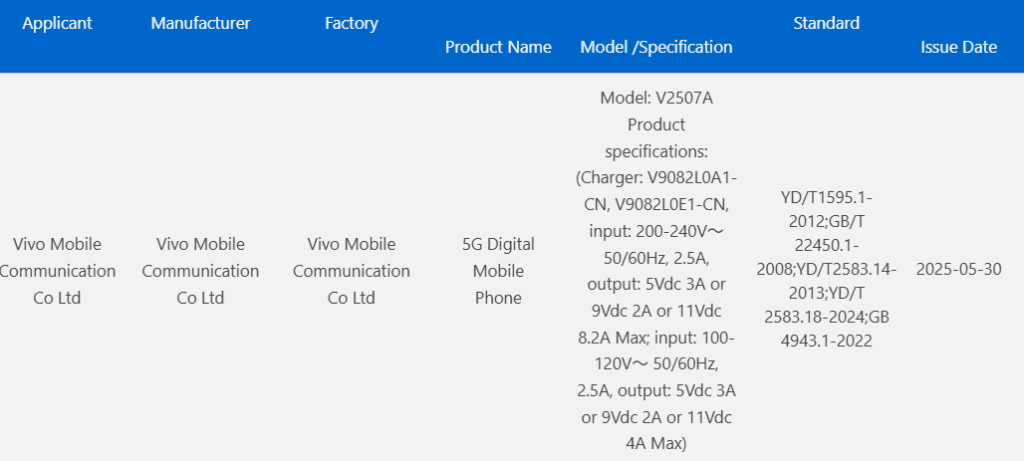
Vivo X Fold 5 (V2507A) 3C certified

A new Vivo smartphone with the model number V2507A has been listed in the database of China’s 3C certification platform. This device is believed to be the Chinese variant of the Vivo X Fold 5.

The alleged X Fold 5 was spotted with support for a 90W charger in the 3C certification. Speculation suggests that the X Fold 5 may debut in July in China

Vivo X Fold 5 (V2429) IMDA listing
Vivo X Fold 5 (V2429) SIRIM listing

As shown in the screenshots, a Vivo phone with the model number V2429 has been certified by the IMDA authority in Singapore and the SIRIM certification platform in Malaysia.

While the IMDA listing provides no details about the device’s name or specifications, the SIRIM listing confirms that it will be marketed as the Vivo X Fold 5. Thus, the V2429 is the global version of the X Fold 5.

Vivo X Fold 5 specifications (rumored)

As per a recent report, the Vivo X Fold 5 will feature an 8.03-inch 2K+ 120Hz AMOLED inner display and a 6.53-inch FHD+ 120Hz LTPO AMOLED cover screen. Powered by the Snapdragon 8 Gen 3, it will sport a triple 50-megapixel camera setup (Sony IMX921 main, ultra-wide, and IMX882 with 3x optical zoom) with Zeiss optics and a 32-megapixel selfie camera.

The device offers a 6,000mAh battery with 90W wired and 30W wireless charging. It will also feature a side-mounted fingerprint sensor, an IPX8 rating, and will measure 4.33mm in the unfolded state.

For more daily updates, please visit our News Section.

Stay ahead in tech! Join our Telegram community and sign up for our daily newsletter of top stories

Oppo A6i 5G in works, specifications revealed via TENAA listing

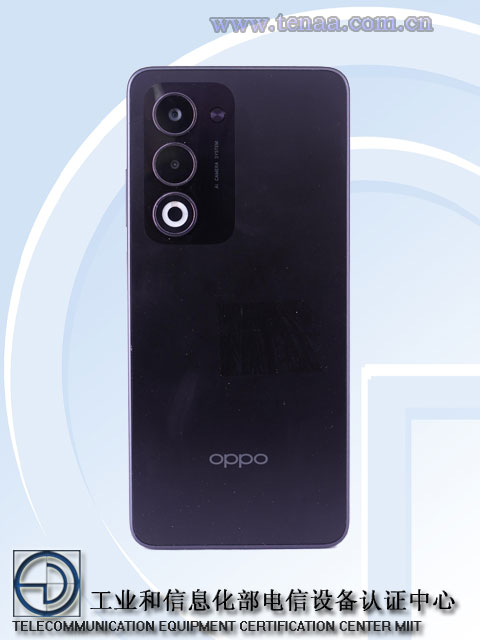
An upcoming Oppo smartphone with model number PKW120 surfaced in the database of China’s TENAA certification platform last month. While the listing revealed the specifications and images of the device, its final moniker was not known. In a new development, the device has been spotted in the Google Play Supported Devices list with the “Oppo A6i 5G” moniker. In all likelihood, the device may go official soon in China. 

Oppo A6i 5G Google Play Supported Device Listing

Oppo A6i 5G appears in the Google Play Supported Devices list

As can be seen in the image, the Oppo A6i 5G has appeared with model number PKW120 and codename OP5DF5L1 in the Google Play Supported Devices list. Interestingly, the same codename also belongs to the PKW110 phone, which has already debuted as the Oppo A5x 5G in China. 

Oppo A6i 5G specifications

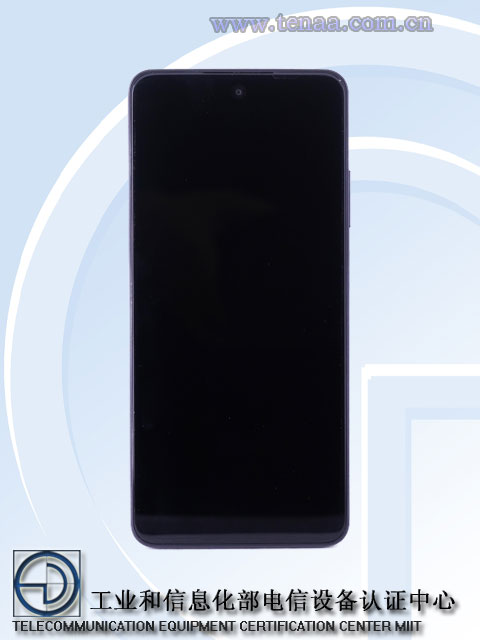
As per the TENAA listing, the Oppo A6i 5G (PKW120) features a 6.67-inch LCD panel that offers an HD+ resolution of 720 x 1604 pixels. It is powered by a 2.4GHz octa-core processor, which appears to be the Dimensity 6300 chip. For security, it has a side-facing fingerprint sensor.

The device has 6GB or 8GB of RAM and 128GB or 256GB of storage. It has a 5,860mAh rated battery, with a typical value of around 6,000mAh. It has an 8-megapixel front camera and a 50-megapixel + 2-megapixel dual-camera system. The device measures 165.71 x 76.25 x 7.99mm and weighs 194 grams. 

To put this into context, the Oppo A5x 5G (PKW110), which comes with a 12GB+256GB configuration, is priced at 2,299 Yuan (~$320) in China. The A5x has a 32-megapixel primary camera and a 5-megapixel selfie camera. The rest of the specifications appear to be identical on both phones.

For more daily updates, please visit our News Section.

Stay ahead in tech! Join our Telegram community and sign up for our daily newsletter of top stories

Jovi V50 5G launched with four 50MP cameras, Jovi V50 Lite 5G debuts alongside

It was reported a few months ago that Vivo may launch Jovi-branded smartphones in the market. Well, that has finally come true, as the Jovi V50 5G and Jovi V50 Lite 5G have been officially announced in Brazil. These are the first Jovi-branded phones to hit the Brazilian market. Previously, Jovi was thought to be a new sub-brand from the company. However, it is not a sub-brand but a strategic rebranding of Vivo Mobile’s products specifically for the Brazilian market due to a trademark conflict with Telefônica Brasil, which owns the “Vivo” brand name in the country.

Jovi V50, V50 Lite specifications and features

Jovi V50 5G
Jovi V50 5G

In terms of specifications, the Jovi V50 5G and Jovi V50 Lite 5G offer the same innards as the Vivo V50 5G and Vivo V50 Lite 5G available in other markets.

The Jovi V50 is an IP68/69-rated phone featuring a 6.77-inch curved-edge AMOLED panel that supports a 1.5K resolution, a 120Hz refresh rate, up to 4500nits peak brightness, and an in-display fingerprint sensor. The device is powered by the Snapdragon 7 Gen 3 chip and a 6,000mAh battery with 90W charging.

The V50 ships with 12GB of LPDDR4x RAM and 512GB of UFS 2.2 storage. On the front, it features a 50-megapixel selfie camera, and its rear panel is equipped with a 50-megapixel main camera with OIS, a 50-megapixel ultra-wide, and an Aura LED flash. The phone comes preloaded with Android 15 with a layer of FunTouch OS 15 on top.

Vivo V50 Lite 5G
Vivo V50 Lite 5G

The V50 Lite 5G, on the other hand, has a 6.77-inch 1.5K 120Hz AMOLED panel with up to 1800nits max brightness. The Dimensity 6300-powered phone has 8GB of LPDDR4x RAM, 256GB of UFS 2.2 storage, and a 6,500mAh battery with 90W charging.

For selfies, the device has a 32-megapixel front camera. On the back, it features a 50-megapixel Sony IMX882 primary camera and an 8-megapixel ultra-wide lens. Other features include FunTouch OS 15-based Android 15, an in-screen fingerprint sensor, and an IP65-rated body.

At present, there is no information on the pricing of the Jovi V50 and V50 Lite.

For more daily updates, please visit our News Section.

Stay ahead in tech! Join our Telegram community and sign up for our daily newsletter of top stories.

Realme C73 5G India Launch on June 2: Dimensity 6300, 45W Fast Charging, More Details

Realme is set to launch the new Realme C73 5G smartphone in India on June 2 at 12 PM. The launch has been confirmed, and a dedicated microsite is now live on Flipkart.

Realme C73 5G

The Realme C73 5G features a 120Hz Eye Comfort display and runs on the MediaTek Dimensity 6300 processor. It will be available in a 4GB + 8GB RAM configuration with 128GB internal storage. The device is powered by a 6000mAh battery and supports 45W fast charging and 5W reverse charging.

Realme claims the battery can support up to 46.4 hours of calling, 17.9 hours on Instagram, 15.7 hours of YouTube streaming, and 13.3 hours of gaming. Despite the large battery, the phone is 7.94mm thin.

Realme C73 5G

The phone also offers IP64-rated dust and water resistance along with military-grade shock resistance. For audio, it supports an ultra-volume mode with 300% louder output. Connectivity is covered with 5G support for faster internet access.

On the design front, the Realme C73 5G features a dual-camera setup with LED flash on the rear and a punch-hole cutout for the front-facing camera. It will be available in Green, Purple, and Black color options.

In related news, Oppo has launched the Pad SE LTE tablet in Europe, now available in the Netherlands for €269. The tablet features an 11-inch 2K LCD display with a 90Hz refresh rate and 500 nits brightness, supported by an anti-reflective matte finish for better eye comfort.

For more daily updates, please visit our News Section.

Stay ahead in tech! Join our Telegram community and sign up for our daily newsletter of top stories!

(via)

Huawei’s Pura 80 series tipped to launch in July

Leaks around Huawei’s upcoming Pura 80 Ultra suggest it’s ready to take on heavyweights like the Xiaomi 15 Ultra and Samsung Galaxy S25 Ultra. Armed with a groundbreaking camera system and running on Huawei’s self-made HarmonyOS, this flagship is reportedly set for a launch just around the corner, tied to China’s Dragon Boat Festival.

Huawei Pura 80 Ultra leaked render

According to Weibo leaker Fixed Focus Digital (via Notebookcheck), the Pura 80 series is expected to open pre-orders right after China’s Dragon Boat Festival, which runs from May 31 to June 2, 2025. A formal release is likely in July, possibly running HarmonyOS 5, Huawei’s latest OS iteration with enhanced ecosystem and AI features. Speculations point towards a June 11 unveiling, aligning with the festival’s timing, though Huawei hasn’t confirmed this.

The Ultra model is primed to dominate smartphone photography and videography, thanks to its in-house SmartSens SC5A0CS 1-inch sensor. This beast of a camera, developed by Huawei’s XMAGE division, promises “terrifying” recording capabilities, potentially outshining rivals with its advanced light sensitivity via RYYB pixel-matrix tech. The setup is also expected to include a 2MP color temperature sensor—up from 1.6MP in the Pura 70 Ultra—for improved color accuracy.

Unfortunately, there’s no reliable information yet on the Pura 80 series’ chipset. Some speculation points to a “new” Kirin 9020, which powered last year’s Mate 70 series. According to a recent leak, the Chinese tech giant is working hard to make 3nm in-house chips a reality — you can learn more about that here.

With a limited global availability due to trade restrictions, the Pura 80 Ultra may remain exclusive to China. Still, its launch could steal the spotlight from Apple’s WWDC and Samsung’s summer foldables. Keep an eye out as more details are likely to surface as we inch closer to the launch.

Don’t miss a thing! Join our Telegram community for instant updates and grab our free daily newsletter for the best tech stories!

For more daily updates, please visit our News Section.

Sources (in Chinese): 1, 2, 3

Anker Soundcore Boom 3i Launched with 50W Output and 16-Hour Battery

Anker has introduced the Soundcore Boom 3i, a new rugged Bluetooth speaker designed for outdoor enthusiasts.

Soundcore Boom 3i

The Boom 3i is built for extreme environments. Its IP68 rating ensures water and dust resistance, including tolerance to saltwater. It also withstands drops from up to one meter. Measuring 210 x 85 x 78.5 mm, the speaker is easily portable with an integrated strap.

Audio output peaks at 50W, reaching 96 dB. Anker’s BassUp 2.0 technology enhances low-end frequencies, though it can be disabled for a balanced sound. Stereo pairing is possible with two Boom 3i units.

Battery life extends to 16 hours on a single charge, ideal for prolonged outdoor activities. A unique “dust shake” function aids in maintaining speaker cleanliness.

Further functionality is accessible via the Soundcore app, offering voice messaging, sound profile customization, and device management. Priced at $189.99, it’s currently available on Anker’s website with a $40 checkout discount.

In other news, Anker has launched the Soundcore Sleep A30 earbuds, built for side sleepers. They offer 3-way noise cancellation, snore masking, and AI-powered Brainwave Audio. Battery life is 9 hours on a single charge and up to 45 hours with the charging case.

For more daily updates, please visit our News Section.

Stay ahead in tech! Join our Telegram community and sign up for our daily newsletter of top stories!

Oppo Pad SE LTE Launches in Europe with 2K Display, 9340mAh Battery

Oppo has launched the Pad SE LTE tablet in Europe. It is currently available through authorized dealers in the Netherlands. The tablet also recently debuted in Malaysia.

Oppo Pad SE tablet-
Oppo Pad SE

Oppo Pad SE features

The Oppo Pad SE features an 11-inch 2K LCD display with a 90Hz refresh rate. It offers 500 nits of brightness and uses an anti-reflective matte finish to reduce glare and improve eye comfort, making it suitable for various lighting conditions.

Oppo Pad SE

Powering the tablet is a 9,340mAh battery that supports 33W fast charging. This allows for longer use without frequent recharging.

For productivity and multitasking, the tablet includes Google Gemini and O+ Connect, which allows fast file sharing between Oppo devices and iPhones. It also supports App Relay, Multi-Screen Connect, and Multi-Window Display, enabling users to switch between apps and devices with ease.

The Pad SE also includes a Kids Mode, which gives parents control over screen time and content access. It supports YouTube Kids, usage limits, and an eye protection feature to reduce strain during long sessions.

Pricing & availability

The Oppo Pad SE is now available to buy through authorized dealers in the Netherlands for €269, plus €5 for shipping. The tablet was also recently launched in Malaysia, with a starting price of MYR 699 (~$163).

For more daily updates, please visit our News Section.

Stay ahead in tech! Join our Telegram community and sign up for our daily newsletter of top stories!

Thunderobot Aura AI glasses launched with 12MP snapper, real-time translation & AI assistant

Thunderobot, known for its gaming laptops and accessories, has launched its latest wearable AI device, Aura AI smart glasses, in the Chinese market. The glasses are now up for pre-order on JD.com. They come in three versions: Piano Gloss, Matte, and a Blue-Light Blocking model. The standard variants are priced at 2099 yuan (approximately $290), while the Blue-Light Blocking edition costs slightly more at 2199 yuan ($305).

Thunderobot Aura AI glasses

Thunderobot Aura AI Glasses Specifications

The Aura AI glasses weigh just 39 grams and feature a sunglasses-inspired design. Thunderobot has used TR90 skin-friendly material for the frame and included IP54 certification for basic water and dust resistance. The glasses also feature flexible hinges that support an adjustment range of -5° to +10°, along with 30° adjustable nose pads to ensure a secure and comfortable fit.

The device includes a 12MP Sony IMX681 sensor paired with a 5P optical lens. It supports 1080p video recording at 30fps and offers a 109° field of view. The camera also supports multi-frame noise reduction (MFNR), HDR+ fusion, distortion correction, and electronic image stabilization (EIS) for improved clarity. Users can activate the camera with a one-second quick snap feature for capturing spontaneous moments.

The glasses run on Qualcomm’s Snapdragon AR1 platform, built on a 4nm process. Thunderobot claims the chip delivers up to 40% improved power efficiency compared to previous solutions. It enables smart image processing, real-time translation, AI photo enhancement, and automatic correction features.

The integrated AI assistant supports voice commands for capturing images, generating social media captions, providing historical information about nearby landmarks, and offering outfit suggestions. The real-time translation engine allows users to communicate across multiple languages, making the glasses useful for travel.

Audio is delivered through open-ear sound (OWS) technology. The system allows users to hear surrounding sounds while listening to music or calls. Touch controls on the glasses let users adjust volume, play or pause media, and end calls with simple gestures. Connectivity options include dual-band Wi-Fi 6 and Bluetooth 5.3.

The glasses come with a 173mAh battery, while the included 3000mAh charging case supports up to 12 full recharges. The case can charge the glasses up to 80% in 40 minutes. Thunderobot has also included its own custom AI model to support features like smart health guidance and a gaming assistant that suggests optimal strategies.

In related news, TCL recently launched the RayNeo Air 3s and 3s Pro AR glasses, featuring dual-layer OLED panels similar to those used in the iPad Pro.

For more daily updates, please visit our News Section.

Stay ahead in tech! Join our Telegram community and sign up for our daily newsletter of top stories! 💡

Xiaomi Mijia Smoke Purifier S20 Launches with 120,000 RPM Motor and Smart App Support

Xiaomi has launched the Mijia Smart Smoke Purifier S20, a new kitchen hood focused on strong suction, low noise, and easy control. It uses a straight-line air inlet to create a 12m/s airflow that pulls in smoke quickly. A front curtain and side panels help block fumes from escaping on all sides. It also includes a PM2.5 sensor that shows real-time air quality while cooking.

The purifier runs on a variable frequency fan that spins up to 120,000 RPM. It includes a redesigned air duct that keeps noise low while maintaining strong performance. It supports a maximum static pressure of 1000Pa and moves air at a rate of 11m³ per minute. Noise during use is capped at 65dB(A). Power usage is 168W, including 165W for the main motor and 3W for the light. Standby power use is 2W. It has an energy rating of Level 1.

Xiaomi Mijia Smart Smoke Purifier S20

The S20 has no oil mesh, so there’s no need to remove and clean it. It separates oil with 90% efficiency and reduces odors by 95% in normal use. The unit weighs 26kg and measures 895 × 427 × 903mm. It comes in dark grey with a silver glass back panel.

The device supports Xiaomi’s smart home system, including Mijia App control, Xiaoai voice commands, and scene automation. It can start automatically when the gas stove is turned on and shut down on its own once the smoke is cleared. Users can also operate it with hand gestures.

Pricing & availability

The Mijia Smart Smoke Purifier S20 is now available on JD.com. The launch price is ¥2,599 ($361), with a national subsidy price of ¥2,079.2 for a limited time.

In other news, Xiaomi has also launched the Mijia High-Speed Hair Dryer Pro in China, available for pre-order at 579 yuan (around $80). Designed for safe and efficient hair drying, it features a 110,000 RPM brushless motor that delivers airflow up to 70 meters per second, along with a constant-temperature mode that maintains 50°C to protect the scalp.

Don’t miss a thing! Join our Telegram community for instant updates and grab our free daily newsletter for the best tech stories!

For more daily updates, please visit our News Section.

Huawei exec ‘accidentally’ reveals first official look at a Pura 80 model

Huawei’s upcoming Pura 80 series just stole the spotlight in an unexpected way. During a high-profile car launch, a company executive inadvertently revealed what appears to be the Pura 80 Ultra, giving fans a glimpse of its new camera design. With whispers of a June launch swirling, here’s what this slip-up tells us about Huawei’s next flagship.

On May 30, 2025, Huawei and JAC unveiled the MAEXTRO S800, an electric sedan, at a consumer event packed with cutting-edge tech demos. At the event, He Gang — CEO of Huawei’s Consumer Business Group — was caught on camera holding an unreleased device, believed to be part of the Pura 80 series. Its camera setup suggests it’s a high-end model.

Huawei Pura 70 Ultra (left), alleged Pura 80 Ultra (right)

It’s believed to be the much anticipated Pura 80 Ultra, sporting a massive triangular camera module that dominates the back. Unlike the Pura 70 series, this bump is wider, and is speculated to house dual-periscope cameras. This is paired with a 1-inch SmartSens SC5A0CS main sensor, an ultra-wide, and an LED flash. For those confused, the camera cutout on the top includes two lenses.

The phone’s design keeps the Pura line’s signature plain leather back, with Huawei’s logo in the bottom-right corner and power/volume buttons on the right edge. The dual-periscope system aligns with earlier leaks from tipster Fixed Focus Digital, who hyped the Pura 80 Ultra’s “terrifying” videography potential.

This “accidental” reveal suggests a launch is imminent, with pre-orders reportedly opening post-Dragon Boat Festival (June 2) and sales starting in July. Running HarmonyOS 5, the Pura 80 Ultra aims to challenge rivals like Samsung’s Galaxy S25 Ultra.

Don’t miss a thing! Join our Telegram community for instant updates and grab our free daily newsletter for the best tech stories!

For more daily updates, please visit our News Section.

(Via)

90FPS BGMI support coming to Infinix Note 50x in June 2025 update

Budget gamers in India are in for a treat as Infinix gears up to supercharge its Note 50x with a game-changing update. The affordable smartphone is set to become a standout in its price range, promising 90fps gameplay for one of the country’s most popular mobile games. Curious about what’s coming? Here’s what’s new.

Infinix Note 50x 5G
Infinix Note 50x 5G

Infinix has announced that an over-the-air (OTA) update rolling out in June 2025 will bring 90FPS gaming support for Battlegrounds Mobile India (BGMI) to the Note 50x. Once installed, users can activate this feature by navigating to Settings > Graphics > Frame Rate in BGMI and selecting the “Extreme+” option.

Credit: GSMArena

This upgrade will make the Note 50x the only smartphone under ₹12,000 ($140/€125) in India capable of running BGMI at 90FPS with Extreme+ settings, offering an enjoyable gameplay experience at a competitive price. For those curious, this phone packs the MediaTek Dimensity 7300 Ultimate SoC.

Launched back in March this year, the Infinix Note 50x is a budget beast. It’s currently priced at ₹11,499 ($135/€120) for the 6GB/128GB variant and ₹12,999 ($150/€135) for 8GB/128GB on Flipkart. It boasts a 6.67-inch 120Hz HD+ LCD, a 50MP primary camera, and a 5,500mAh battery with 45W fast charging. It also features bypass charging at this price point, helping gamers reduce heat buildup and battery cycle during long, intensive sessions — ultimately reducing battery wear and extending the phone’s lifespan.

Running Android 15 with XOS 15, it also features an IP64 rating, MIL-STD-810H durability, and AI tools like Folax assistant. Its octagonal “gem-cut” camera module with Active Halo Lighting adds flair, doubling as a notification and selfie timer.

Don’t miss a thing! Join our Telegram community for instant updates and grab our free daily newsletter for the best tech stories!

For more daily updates, please visit our News Section.

Google’s Pixel 10 series could launch much earlier than its predecessor, suggests Pixel Superfans invite

Rumors were already swirling about an earlier-than-expected debut for the Pixel 10 series. Now an exclusive invite to a Pixel Superfans event in London has dropped major hints that the next-gen smartphones could arrive sooner than the Pixel 9’s August 2024 launch. With Android 16 also on a fast track, here’s what’s got everyone talking.

pixel-10-pro-xl-design-render
Pixel 10 concept render

According to Android Authority, Google has invited Pixel Superfans to a 90-minute “Pixel Penthouse” event on June 27, 2025, in London, where 25 lucky attendees will get hands-on time with “pre-release Pixel devices and features.” While the invite doesn’t explicitly name the Pixel 10 series, it’s a safe bet that these are the stars of the show, given the lack of other major Pixel hardware on the horizon.

The event, dubbed Google’s “exclusive pre-launch event” for 2025, suggests the Pixel 10 lineup—likely including the Pixel 10, 10 Pro, 10 Pro XL, and 10 Pro Fold—could launch as soon as late June or early July, a significant shift from the Pixel 9’s August timeline.

Android 16’s accelerated schedule also fuels the speculation. Google has confirmed a stable release in Q2 2025, before June ends, much earlier than Android 15’s rollout. This aligns perfectly with a potential July launch for the Pixel 10 series, which is expected to showcase the new OS alongside a TSMC-built Tensor G5 chip on a 3nm process for better performance and efficiency. The Superfans event also promises Q&A sessions with Googlers and Pixel-themed goodies, adding to the hype.

Google’s been shaking up its launch cadence lately—last year’s Pixel 9 dropped in August, not October, and the Pixel 9a arrived in March 2025. An early Pixel 10 debut could help Google steal the spotlight before Apple’s iPhone 17 in September or Samsung’s Galaxy Z Fold 7 in July. While it’s possible the June 27 event is just a teaser, with a full launch still in August, the early preview suggests Google is ready to move fast.

Don’t miss a thing! Join our Telegram community for instant updates and grab our free daily newsletter for the best tech stories!

For more daily updates, please visit our News Section.

(Source)

Casio G-Shock G-5600SFJ-9 Launched in Japan and UK with Surfrider Foundation

Casio launched the G-Shock G-5600SFJ-9, a special edition watch made with Surfrider Foundation Japan. The watch is built for surfers and outdoor users who care about ocean conservation.

Casio G-Shock G-5600SFJ-9

Design and Materials

Casio G-Shock G-5600SFJ-9

The watch has yellow and beige colors that look like morning sun over the ocean. Each watch looks different because of how the mixed-resin molding works. The strap and case are made from bio-based resin instead of regular plastic. You’ll see the Surfrider Foundation Japan logo on the watch face and back. The band loop has #oceanfriendlylifestyle printed on it. The watch measures 46.7 × 43.2 × 12.7 mm and weighs 47g. It is shock-resistant and water-resistant up to 200 meters.

Battery and Power

Casio’s Tough Solar technology powers the watch. A full charge lasts 12 months with normal use, or 22 months in power-saving mode. The screen turns off in the dark to conserve battery.

Features and Functions

The watch has World Time, which lets you track 5 different time zones from 31 options. The stopwatch counts to 1/100-second for the first 60 minutes, then switches to 1-second timing after that. The countdown timer goes up to 24 hours.

There are 5 daily alarms, and one has a snooze function. The Super Illuminator backlight turns on automatically, and you can pick how long it stays on. The calendar works automatically until 2099.

Other features include 12/24-hour time display, day names in different languages, a mute button, and a battery level indicator.

Availability and Price

The G-5600SFJ-9 will be available in Japan and the UK starting June 2025. It’s priced at ¥20,900 in Japan (around $145). The Casio UK site lists the watch but hasn’t revealed the price yet.

In other news, Casio has also launched the MTG-B4000 series in Japan, its first G-Shock watches co-designed with AI. Using historical shock-resistance data, AI helped create the Dual Core Guard structure by combining carbon and stainless steel through iterative 3D modeling refined by designers.

For more daily updates, please visit our News Section.

Stay ahead in tech! Join our Telegram community and sign up for our daily newsletter of top stories!

(via)

TCL Launches Q6C QD-Mini LED Gaming TVs in India with 144Hz FreeSync Support, Starting Below ₹52,000

TCL launched its Q6C QD-Mini LED TV series in India. The lineup has three sizes: 55-inch, 65-inch, and 75-inch models. All three are available exclusively on Amazon India.

TCL Q6C Premium 4K QD-Mini LED TV

What’s Inside

These TVs utilize QD-Mini LED technology, which combines QLED color accuracy with OLED contrast. Each model has 4K resolution at 3840×2160 pixels and runs at a 144Hz refresh rate. They include over 512 local dimming zones and use HVA panel technology with TCL’s halo control system.

TCL Q6C Premium 4K QD-Mini LED TV

The TVs support IMAX Enhanced, HDR10+, MEMC, and Auto Low Latency Mode. For gaming, all models work with AMD FreeSync Premium Pro to stop screen tearing and stuttering.

Performance Specs

A 64-bit quad-core AIPQ Pro processor runs the show. The AI features include Scene, Contrast, Color, Motion, HDR, and Clarity enhancements. Each TV has 3GB RAM and 32GB of storage space.

The TVs run Google TV and come with a voice remote. The remote has quick buttons for Netflix, Prime Video, Sony Liv, TCL Channel, and YouTube.

Connections and Audio

You get Wi-Fi 802.11ac that works on both 2.4GHz and 5GHz bands, plus Bluetooth 5.0. There are four HDMI 2.1 ports with one supporting eARC, one USB 3.0 port, S/PDIF, AV input, Ethernet, and digital audio output.

The audio system uses ONKYO 2.1 channel speakers with Dolby Atmos support.

Prices

The 55-inch TCL 55Q6C costs ₹51,990. The 65-inch TCL 65Q6C is priced at ₹70,990. The largest 75-inch TCL 75Q6C costs ₹1,14,990. All three models are now available only through Amazon.in. These TVs were also recently launched in the European market with a starting price of £679 / €599.

For more daily updates, please visit our News Section.

Stay ahead in tech! Join our Telegram community and sign up for our daily newsletter of top stories!

Apple revives Haptic Button plans for iPhone, iPad, and Apple Watch

While the latest rumor about the iPhone 17’s chipset may be disappointing, not everything is staying the same. Apple is cooking up something new for its gadgets, and it’s all about buttons—or rather, the lack of them. A fresh rumor says the tech giant is diving back into developing haptic buttons, and this time, it’s not just for iPhones but also iPads and Apple Watches. These solid-state controls could change how you interact with your devices

According to Weibo tipster Setsuna Digital (in Chinese), Apple is restarting its haptic button project, which has been rumored for years. Unlike traditional buttons that click, haptic buttons don’t move—they’re fixed surfaces that use vibrations to mimic a press, cutting down on mechanical wear since there’s nothing to wear out. They also need to be touch-sensitive, potentially making them highly customizable. You could assign different actions for light or firm presses, short or long taps, and even swipe gestures—unlocking a wide range of new control options.

The catch? Apple is reportedly struggled with mistouches—accidental presses that throw off the experience. That’s why haptic buttons, once tipped for the iPhone 15 and later the iPhone 16 Pro, never made it to the retail units.

Now, Apple is not just revisiting haptics for iPhones but expanding to iPads and Apple Watches, suggesting a big push to rethink how we interact with across its ecosystem. Unfortunately, the rumor doesn’t say when we’ll see these buttons in action. Given Apple’s perfectionist streak, don’t expect them in on 2025’s iPhone 17 lineup. The iPhone 18 family in 2026, maybe, or even later for iPads and Watches, if especially if mistouch issues persist.

Why go all-in on haptics? Durability is a big plus—fewer moving parts means less breakage. Plus, the flexibility of software-driven buttons could make its devices more intuitive, like a MacBook’s Force Touch trackpad. If Apple nails the accuracy problem, this could be a game-changer. For now, we’re left guessing, but WWDC 2025 might drop some more hints.

Tech enthusiast? Get the latest news first! Follow our Telegram channel and subscribe to our free newsletter for your daily tech fix!

For more daily updates, please visit our News Section.

(Source)

Baseus launches 10,000mAh power bank with 22.5W fast charging, LED display & built-in cable

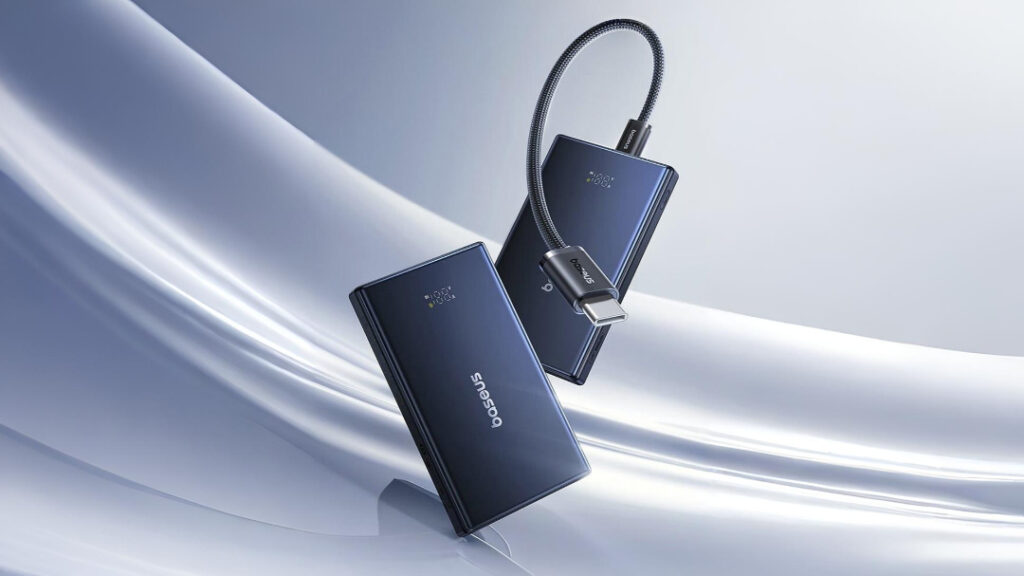
Baseus has launched a new ultra-slim power bank under the EnerZest series, now available on JD.com for 107 yuan ($15). The device is officially called the Baseus EnerZest P1 and is designed to combine portability, fast charging, and safety features in a slim 1.5cm thick form factor.

Baseus EnerZest P1 Specifications

The EnerZest P1 uses a high-density 10,000mAh lithium polymer battery and supports up to 22.5W of fast charging. It includes a 2C + 1A port configuration with two USB-C ports and one USB-A output. Both USB-C ports support input and output, while the USB-A port supports standard output. All three ports are compatible with multiple fast charging protocols, including PD, SCP, FCP, and QC, allowing support for Apple, Huawei, Xiaomi, and Samsung devices.

Baseus has integrated a short USB-C cable into the power bank. The cable is detachable and can function as a hanging strap, allowing users to carry the power bank conveniently when attached to a bag. The device weighs approximately 170 grams.

The power bank features a leather-textured finish on the back and a metallic gloss on the front. It includes a semi-transparent digital display that shows real-time data, including remaining battery percentage, charging voltage, and current. This helps users monitor the power status at a glance.

Baseus has equipped the EnerZest P1 with an AI-based smart chip that monitors temperature and manages current flow with ±1°C accuracy. The power bank also uses high thermal conductivity graphene material to improve heat dissipation. These safety features help protect against overheating, overcharging, and short-circuiting.

It also supports a dedicated low-current mode, which is useful for charging small devices like earphones and smartwatches. The device meets civil aviation standards and is certified for air travel, making it suitable for use on planes and high-speed trains.

In related news, Baseus recently introduced the MC1 Pro AI clip-on earbuds featuring LDAC support, built-in AI assistant, and up to 40 hours of battery life. The company has also launched a new 67W 3C GaN charger equipped with a retractable cable, AI-powered thermal control, and a foldable plug design.

For more daily updates, please visit our News Section.

Stay ahead in tech! Join our Telegram community and sign up for our daily newsletter of top stories! 💡

(Source)

CMF Phone 2 Pro Review: Does it Deliver on a 2000km Drive?

Two years ago, Nothing introduced its CMF sub-brand, aiming to deliver premium aesthetics and quality at a budget-friendly price tag.

This year in April, CMF announced its newest model, the CMF Phone 2 Pro. The question is, does this device uphold the brand’s philosophy, and does it excel in delivering on that promise?

That’s what I’ll try to find out in this CMF Phone 2 Pro review. 

Since specs tell only part of the story (and most of you know how it stands on paper), I’ll focus on my real-world experience using the phone over the past few weeks. 

When I received this phone for review, I was excited because I was about to head out on one of the longest drives of my life – a 2000km ride from Mumbai to Dharamsala. 

For five days, I made the CMF Phone 2 Pro my trusted companion, relying on it for everything from navigation to daily tasks, putting it to the ultimate test.

[affiliate_genie_cta]

DESIGN

Staying true to the brand’s ideology, the CMF Phone 2 Pro brings a beautiful design that stands out in this price range. 

I’ve got the light green color, which is subtle yet elegant. This color paired with the industrial design of the phone makes it stand out in its segment. The screws and accessory point, while functional (allowing you to attach a modular case), enhance the device’s aesthetic appeal.

At just 185 grams and 7.8mm thick, the phone feels remarkably comfortable and easy to handle.

The 6.77-inch screen makes the CMF Phone 2 Pro a sizable device, yet it feels manageable in hand. The green color unit with me has a glossy finish on a plastic body.

Besides Light Green, the CMF Phone 2 Pro comes in three other colors: black, orange, and white. The orange and white variants feature a stylish dual-tone finish, while black remains solid.

For those wondering about accessories, the CMF Phone 2 Pro requires a universal cover that screws onto the back, allowing you to attach add-ons. Options include a wallet, stand, lenses, and a lanyard, with the added benefit that older accessories appear compatible.

Overall, in the design department, I think CMF has done a fantastic job with the Phone 2 Pro. 

My only complaint is the IP54 rating, which, while an improvement over its predecessor, lags behind competitors in this price range offering up to IP65 protection.

DISPLAY

Alongside its design, display is one of the selling points of the CMF Phone 2 Pro. 

The CMF Phone 2 Pro features a 6.77-inch FHD+ flexible AMOLED display, boasting up to 3000 nits peak brightness, a 120Hz refresh rate, and a 1000Hz touch sampling rate.

How does this translate to real-world use?

The display delivers an outstanding viewing experience, whether you’re watching videos, scrolling through social media, or gaming. The 120Hz refresh rate ensures smooth animations and scrolling, which is complemented by excellent touch responsiveness. The phone’s slim bezels further enhance the immersive viewing experience.

I personally feel the brightness could have been higher, but the display performed well even in outdoor conditions without any major viewability issues.

In short, for a phone in its price range, the display is excellent.

READ MORE: HONOR 400 Review – The Software Truly Became ‘Friendly’ with AI!

PERFORMANCE & SOFTWARE

On paper, the processor may be the CMF Phone 2 Pro’s weakest link.

Under the hood, the CMF Phone 2 Pro features the Dimensity 7300 Pro, paired with 6/8GB of RAM and up to 256GB of expandable storage.

The Dimensity 7300 Pro isn’t the fastest chip in its price range, but it performs reliably. When you pair it with ample 8GB RAM and Nothing OS, it delivers a consistently smooth user experience.

During my journey, I frequently switched between apps and ran navigation for 7-8 hours straight, yet the phone never felt underpowered or sluggish. It didn’t visibly overheat either, even with continuous GPS usage.

The UI is smooth and responsive, with apps loading quickly and no noticeable lag when using the camera or handling demanding tasks. While I’m not a heavy gamer, the phone handled everything I threw at it with ease.

While a faster processor would be ideal on paper, in real-world use, the performance is more than adequate for regular users.

This hardware, paired with Nothing OS 3.2, delivers a seamless and delightful user experience. Its minimalist design, free from the bloat of other brands, combined with smooth animations and subtle design touches, makes the phone a joy to use daily.

Add to that, you get three years of OS upgrades and an extended six years of security updates too – which is good for a device in its price class. 

Essential Space

A new feature is the dedicated Essential Button, designed to organize your notes. It allows you to save screenshots and voice notes, with AI-driven organization in the app.

Honestly, I found the Essential Button largely unnecessary and frustrating, as I often misclicked it while reaching for the power button. While some may find it useful, I suspect it will appeal to only a niche group of users.

CAMERA

There are three cameras on the CMF Phone 2 Pro – a 50MP f/1.8 primary sensor, another 50MP telephoto sensor, and an 8MP ultra-wide-angle shooter. 

Unlike some budget phones where the third camera is merely decorative (often a macro lens), the telephoto sensor here is impressively capable. In fact, it is the ultra-wide-angle sensor that is the weakest of the trio.

Main 50MP Camera

The primary camera captures good-quality, saturated photos right out of the default camera app. So you can directly share those photos on social media without significant edits. The level of detail from the primary sensor is also pretty good for a camera in its price class. 

In low light, the primary camera struggles somewhat, but it remains usable with minor adjustments.

Telephoto 50MP Camera

This unexpected addition to the camera system significantly enhances its functionality.

The 2x portraits are a delight with this sensor, delivering sharp background separation from the subject in focus. Zooming up to 2x outputs impressive photo and video quality.

For example, consider this 2x telephoto shot of Jaipur’s Hawa Mahal. Despite half the monument being under construction, the telephoto sensor allowed me to capture its intricate patterns beautifully.

Low-light performance in night mode is also pretty effective with this sensor. For example, a shot of Jaipur’s Jal Mahal at midnight, with minimal light, still produced a decent image.

Ultra-Wide Angle 8MP Camera

As noted earlier, the ultra-wide-angle sensor is the weakest part of the camera system.

In good lighting, the ultra-wide-angle sensor produces decent shots, but its clarity and detail fall short of higher-quality sensors.

At night, its performance declines significantly, especially in terms of details. Check the samples below to see this sensor’s real-world performance.

Video Shooting

The phone captures 4K 30fps videos with solid quality and detail, but the lack of OIS requires careful handling for stable footage.

Overall, if you stick to the two 50MP sensors on the device, you should be pretty happy with the phone’s camera performance. 

BATTERY 

On paper, the CMF Phone 2 Pro doesn’t boast the largest or longest-lasting battery.

But in real-world use, the 5000mAh battery proves more than adequate, delivering 6-7 hours of screen-on time without causing battery anxiety, thanks to efficient power management. Whether scrolling through social media, streaming videos on Netflix or YouTube, or enjoying occasional gaming, it keeps up reliably.

Even during my 2000km drive, using the phone as my GPS with reliable accuracy, the battery remained stable with gradual drain. It also stayed cool, a reassuring improvement over some previous phones I’ve used.

Honestly, being used to faster charging, I found the 33W charger somewhat slow. It’s not a major complaint, but charging to 100% takes well over an hour, which may feel sluggish by 2025 standards.

That said, the 33W charging is sufficient for a decent top-up before heading out.

VERDICT

In recent years, budget phones under Rs. 20,000 ($250) have matured offering solid performance, reliable batteries, capable cameras, and vibrant displays for seamless daily use.

Yet, the CMF Phone 2 Pro stands out with its well-rounded performance and smooth, bloat-free experience—a rarity at this price—making it a good daily driver.

The phone comes with a stunning display, unique design, dependable battery, and good performance, though the ultra-wide lens and mono speaker fall short.

Ultimately, the CMF Phone 2 Pro delivers good value and a delightful experience, marking its place as an affordable smartphone that most won’t regret choosing.

iPhone 17 will use the same chip and RAM as iPhone 16, claims new leak

Apple’s iPhone 17 is shaping up to be a bit of a surprise, and not entirely in a good way. While rumors are swirling about a larger display, a new report suggests the base model won’t see the performance boost many were hoping for. With the same chipset and RAM as its predecessor, is Apple playing it too safe with the iPhone 17? Let’s dive into the details.

iphone 16

According to a research note from GF Securities analyst Jeff Pu, the iPhone 17, set to launch in September 2025, will reportedly sport a 6.3-inch display, up from the 6.1 inches of the iPhone 16, matching the Pro model’s screen size. That’s a nice upgrade for those wanting a bigger canvas for streaming or multitasking. But here’s where things get puzzling: the iPhone 17 will reportedly stick with the A18 chip and 8GB of RAM—identical to the iPhone 16. Meanwhile, the iPhone 17 Air, Pro, and Pro Max are all expected to jump to the A19 chip with a beefier 12GB of RAM, leaving the base model feeling like a bit of a holdover.

There was chatter earlier about Apple possibly bumping up the iPhone 17’s RAM to match its siblings, but Pu’s note suggests that plan got scrapped. Keeping the A18 chip is an even odder choice, as it could make the iPhone 17 feel less competitive, especially for advanced AI features.

The A18 is no slouch—it powers the iPhone 16 with solid efficiency—but sticking with it might signal Apple’s pushing buyers toward pricier Pro models or the ultra-slim Air model.

The iPhone 17 will likely keep its 48MP main camera and IP68 rating, with iOS 26 rumored to include new tricks like external display support. But with no chip or RAM upgrade, it risks being overshadowed by its flashier siblings. Apple’s WWDC on June 9 might shed more light, but for now, the iPhone 17 seems like a bigger screen in last year’s clothes.

The tech giant was recently rumored to be working on a 200MP camera for a future iPhone model — you can learn more about it here.

Don’t miss a thing! Join our Telegram community for instant updates and grab our free daily newsletter for the best tech stories!

For more daily updates, please visit our News Section.

(Via)