Advertisement

Samsung Galaxy Z Flip 8 vs Galaxy Z Flip 7: Should you upgrade?

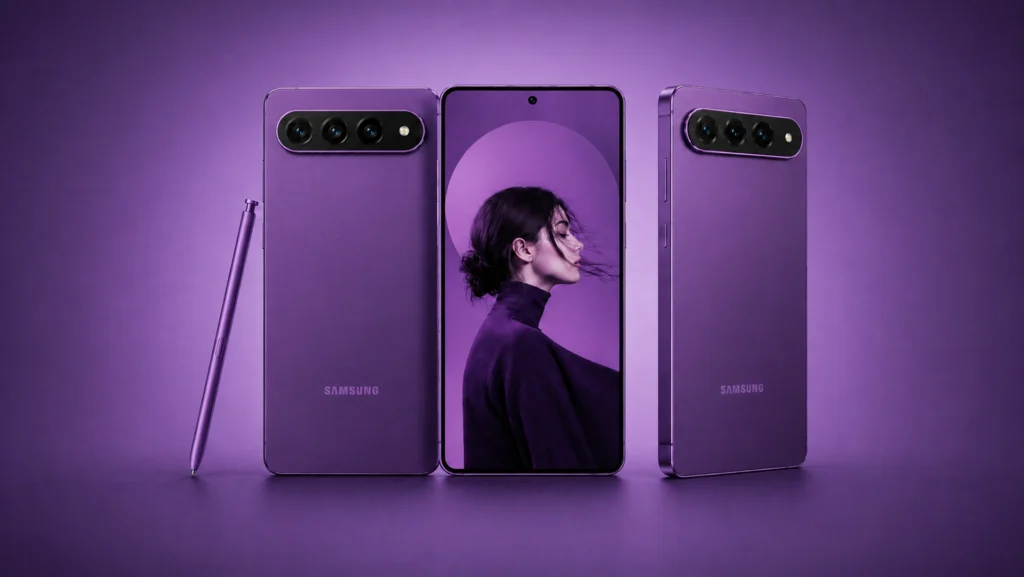
Samsung recently announced the Galaxy Z Flip 8, following up on last year’s Galaxy Z Flip 7. Looking at the two devices side by side, the differences aren’t immediately obvious.

The Flip 8 is a bit thinner, slightly lighter, and places a heavier emphasis on software features. It also comes with a higher price tag. If you are trying to decide between the two, here is a look at what has actually changed.

Samsung Galaxy Z Flip 8

1. Design and Display

The Galaxy Z Flip 7 was already a relatively compact phone, measuring 13.7mm thick and weighing 188 grams. For the Flip 8, Samsung managed to trim those numbers down further. The new model weighs 180 grams and measures 6.1mm when unfolded, compared to the Flip 7’s 6.5mm.

It is a modest reduction, but in the foldable space, small changes in weight and thickness can make a device more comfortable to hold and carry in a pocket. Samsung also says improvements to the hinge mechanism and the Armor Aluminum frame for better overall durability.

The displays, however, remain unchanged. Both phones feature a 4.1-inch Super AMOLED cover screen, which Samsung calls the FlexWindow, and a 6.9-inch internal display with a 120Hz adaptive refresh rate. If you liked the large outer screen on the Flip 7, you will get the exact same viewing experience on the Flip 8.

2. Performance and Software

The internal hardware sees a standard year-over-year update. The Flip 7 runs on a 3nm Exynos 2500, while the Flip 8 moves to a 2nm Exynos 2600 (or the Snapdragon 8 Elite Gen 5, depending on your region). Both devices come standard with 12GB of RAM.

The main focus for the Flip 8 is how it uses that new processor for software. The Flip 7 introduced features like Gemini Live and the Now Brief widget on the cover screen, and the Flip 8 builds on this out of the box with Android 17 and One UI 9. The aim is to make the cover screen more functional without needing to open the phone, allowing you to trigger specific app actions via voice or a dedicated side key.

The Flip 8 also introduces the AI Assistant Activity Dashboard, which lets users see exactly what these background tasks are doing and manage their permissions for better transparency. However, this won’t be exclusive to the new model, as the Flip 7 will also receive the dashboard when it gets updated to One UI 9.

3. Cameras

If you were looking for new camera hardware, the Flip 8 doesn’t offer it. It uses the same 50MP main sensor, 12MP ultra-wide lens, and 10MP front-facing camera as the Flip 7.

The software experience is also largely similar, as both phones feature the ProVisual Engine for improved portrait shots and the Camcorder Grip mode that offers zoom controls when the phone is folded at a 90-degree angle.

The main addition to the Flip 8 is a new stabilization feature called Super Steady with Horizontal Lock. It is designed to keep your video level and suppress motion tilt, making recording on the go a bit easier and more stable.

4. Battery and Pricing

Battery capacity remains identical across both generations. The Flip 7 featured a 4,300mAh battery, which provided solid daily usage, and the Flip 8 keeps that same capacity. Both phones also support 25W wired charging and 15W wireless charging.

The most significant change for buyers might be the cost. The Galaxy Z Flip 7 started at $1,099 for the 256GB model. The Galaxy Z Flip 8 raises the entry price by $100, starting at $1,199, with the 512GB version priced at $1,399.

5. Verdict

The Galaxy Z Flip 8 is a straightforward, iterative update. It takes the foundation of the Flip 7, slims it down slightly, and adds a newer processor alongside some helpful software tools. However, the $100 price increase makes it a tougher sell for anyone looking for an accessible foldable.

If you currently own a Galaxy Z Flip 7, there is very little reason to upgrade. The hardware is too similar to justify the cost. But if you’re upgrading from a Flip 5 or an older slab phone, the Flip 8 represents the most polished, refined clamshell foldable Samsung has ever built. You just have to be willing to pay the premium for it.

For more daily updates, please visit our News Section.

Stay ahead in tech! Join our Telegram community and sign up for our daily newsletter of top stories!

Global Redmi Note 17 series prices leak ahead of launch

Redmi brought the Note 17 and Note 17 Pro to China this month, and the brand is now preparing to launch the lineup worldwide. The series is rumored to debut in India on August 6, and it looks like buyers in Europe and other global markets won’t have to wait much longer either. A report by YTECHB has shared the pricing details for the international Redmi Note 17 lineup.

According to the report, Redmi will increase the number of models in global markets to four. The lineup will reportedly include the Redmi Note 17 (4G), Redmi Note 17 (5G), Redmi Note 17 Pro 5G, and Redmi Note 17 Pro Max 5G. International buyers are getting a choice of both 4G and 5G variants.

Redmi Note 17 Series Price in Europe

In Europe, the base configuration will start at 4GB of RAM paired with 128GB of storage. The standard Note 17 will carry a 108MP main camera and will come in Black, Blue, and Purple color options.

On pricing, the Redmi Note 17 4G will open at €250 for the 4GB/128GB model, with the 6GB RAM and 256GB storage version costing €300. Buyers who want 5G connectivity will need to pay €400 for the 6GB/256GB variant.

Redmi Note 17 Pro

The Pro model is to sit higher up the price ladder. The Redmi Note 17 Pro 5G in 6GB RAM and 256GB storage will cost €500. At the top, the Redmi Note 17 Pro Max 5G will be priced at €600, and it has 8GB RAM alongside the same 256GB storage.

As always, the Note lineup sits as a midrange entry point in Xiaomi’s ecosystem. With the India launch expected within days, official confirmation of pricing and full specs should follow soon. We’ll keep tracking developments as more details surface.

Don’t miss a thing! Join our Telegram community for instant updates and grab our free daily newsletter for the best tech stories!

For more daily updates, please visit our News Section.

(Source)

Qualcomm plans to raise chip price by double-digit percentages

The global chip market is feeling the squeeze again as one of its biggest players starts passing higher costs down the line. Qualcomm has told customers it’s raising prices on its chips, and that move is expected to hit smartphones, wearables, and a bunch of other connected devices in the months ahead.

According to Bloomberg, Qualcomm sent a formal notice to its customers saying prices will jump by a double-digit percentage for anything shipping after September 1. The company basically said it can’t keep absorbing the higher supply-chain costs anymore and is also looking for alternative sources for components. It pointed to what it called historic shortages across the tech industry, the kind that are hitting everything from phones and supercomputers to cars.

Snapdragon 8 Elite Gen 6

Qualcomm relies heavily on TSMC, the world’s largest contract chipmaker. Competition for that capacity is fierce, and Apple and Nvidia are both major customers too.

Qualcomm’s chips end up in phones from almost every known smartphone brand, plus wearables from companies like Meta, so the higher prices are likely to ripple into a lot of different products. Analysts have already been saying that memory shortages have limited smartphone production this year.

TSMC has already warned that supply constraints could stick around even as it builds more capacity. Samsung and Intel have advanced manufacturing of their own, but they still haven’t fully matched TSMC’s scale or the level of customer trust for the most advanced chips. That keeps TSMC right at the center of the global electronics supply chain and leaves Qualcomm with limited short-term options.

This double-digit price hike is a clear sign of how AI-driven demand is cascading into everyday consumer electronics. Phone makers and other device companies will have to decide whether to swallow the higher component costs or pass them on to buyers.

Multiple smartphone brands have already adjusted their prices, with the impact being most noticeable in the value-oriented segment. How they respond to this latest round of price hikes will be worth watching as the September start date nears.

Don’t miss a thing! Join our Telegram community for instant updates and grab our free daily newsletter for the best tech stories!

For more daily updates, please visit our News Section.

(Source: Bloomberg)

Honor confirms August 12 launch for world’s first Robot Phone

Honor has finally confirmed the launch date for its anticipated Honor Robot Phone. The company will release the phone — developed jointly with German camera maker ARRI — on August 12. It’s marketing the phone as the world’s first “robot phone.”

Honor Robot Phone Launch Date

The company has already opened pre-orders on its official website. Buyers who want early access must pay a 500 yuan deposit. Paying the deposit only unlocks a special purchase channel; it does not guarantee that a buyer can secure the phone or lock in a specific color or storage option. 

Once the order confirmation period opens, deposit holders can choose their preferred version. After Honor confirms an order, buyers must pay the remaining balance within 24 hours. Since supply is limited, Honor will fill orders in the sequence that buyers complete their payments.

Honor will sell the phone in two colors, Star Trail Silver and Moon Shadow Gray, and two storage configurations: 12GB+512GB and 16GB+1TB.

What makes Honor Robot Phone Special?

The phone’s standout feature is a mechanical gimbal built into the top of the device. This four-degree-of-freedom titanium arm uses small motors and takes up 70% less space than typical gimbal designs. 

Users can tuck the arm away for everyday use, then pop it out with one tap for photography. Once deployed, it can rotate a full 360 degrees, track a subject automatically, and adjust framing on its own. Honor rates its stabilization at CIPA 5.5, which should let users shoot steady vlog-style footage without a separate handheld stabilizer.

Honor Robot Phone
Honor Robot Phone

On the camera side, the phone carries three rear lenses: a 200MP main sensor with an f/1.6 aperture mounted on the gimbal, a 50MP ultra-wide lens, and a 200MP periscope zoom lens. Honor partnered with ARRI to bring Log-C color profiles and cinematic LUTs to the camera app, along with manual controls like focus lock and white balance lock for creators who edit their footage afterward.

The phone will run on a Snapdragon 8 Elite Gen 5 chip and could also be the first device to carry the core of Honor’s new AgenticOS system.

For more daily updates, please visit our News Section.

Stay ahead in tech! Join our Telegram community and sign up for our daily newsletter of top stories!

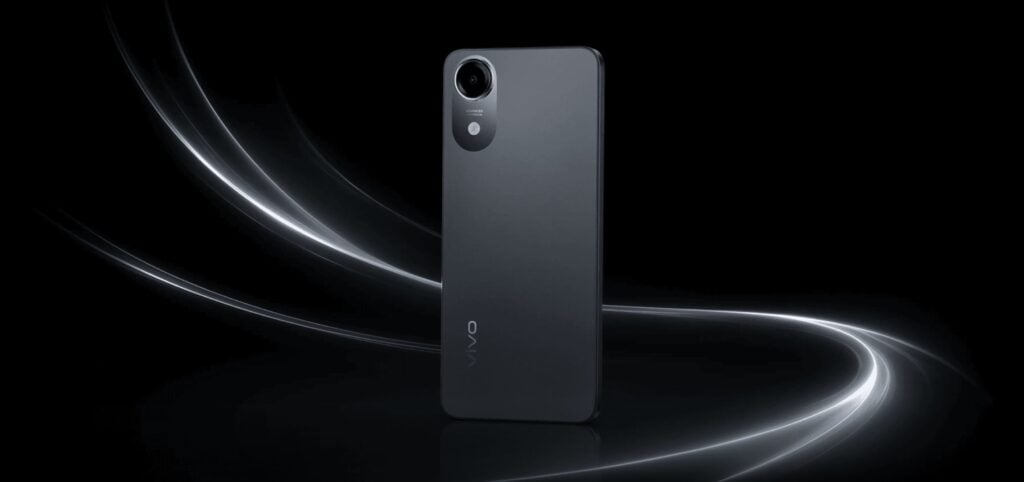
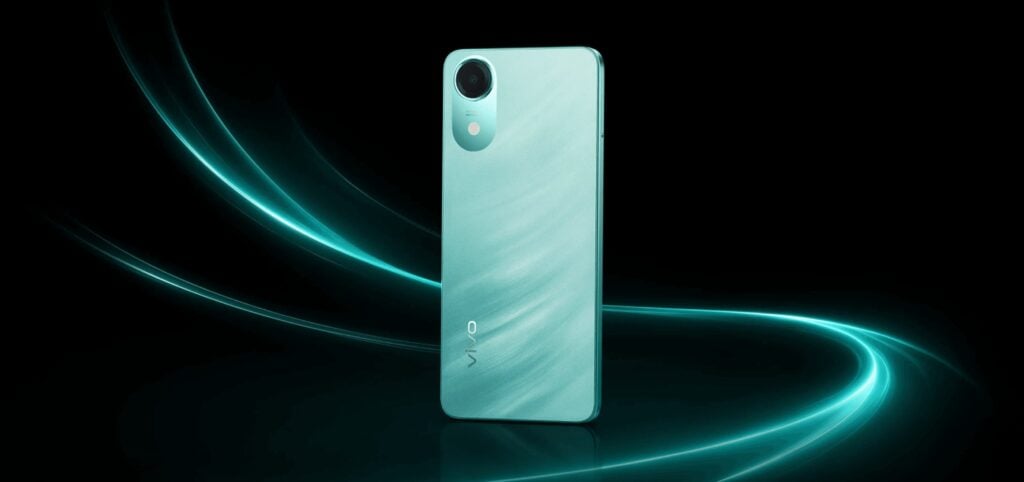
Vivo launches T5e budget smartphone in India with 6.74-inch 90Hz display & 5500mAh battery

Vivo has released a new budget smartphone in India, the T5e. It is a 4G device and focuses primarily on battery capacity and basic durability for everyday use.

Vivo T5e

Vivo T5e Specifications

The phone features a 6.74-inch HD+ LCD screen with a 90Hz refresh rate. The resolution is 1600 x 720, and the panel reaches a peak brightness of 570 nits. Vivo has included a few software adjustments for the display, such as adaptive brightness and a blue light reduction mode intended for nighttime use.

Under the hood, the T5e is powered by a 12nm Unisoc T7225 octa-core processor. It comes in a single configuration featuring 4GB of LPDDR4X RAM and 64GB of eMMC 5.1 storage.

Vivo T5e

You can expand the storage via a microSD card slot that supports cards up to 2TB. The phone runs OriginOS 6, based on Android 16, and includes several AI-powered tools for document scanning and text summarization.

The camera hardware is basic, consisting of an 8MP rear camera and a 5MP front-facing camera. Rather than adding secondary camera lenses, Vivo included a high-output flashlight with four adjustable brightness levels, along with a speaker tuned for higher volume output.

The device is equipped with a 5,500mAh battery that Vivo claims can maintain over 80% capacity after 1,600 charge cycles. It supports 15W charging and reverse charging functionality.

Vivo T5e

For build and connectivity, the T5e has an IP64 rating for dust and splash resistance. The touchscreen is designed to register inputs even if the user’s hands are wet or greasy. It weighs 199 grams, measures 8.19mm thick, and uses a side-mounted fingerprint scanner. Connectivity options include dual 4G SIM support, dual-band Wi-Fi, Bluetooth 5.2, and a USB-C 2.0 port.

Vivo T5e

Pricing and Availability

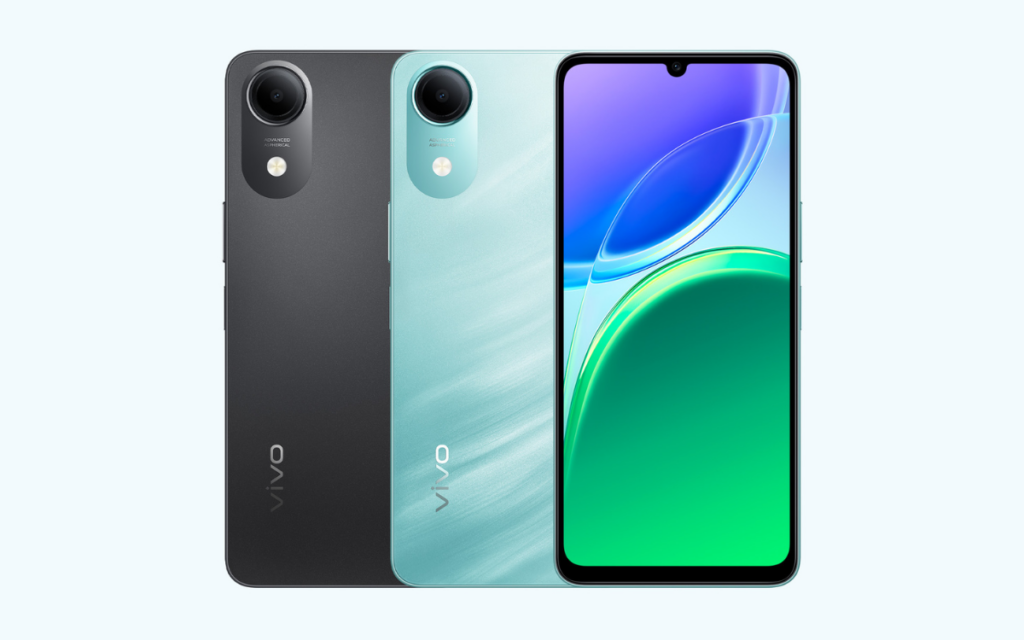
The Vivo T5e is priced at Rs. 13,999. It is now available in Aero Blue and Shadow Grey through Vivo’s official website, Flipkart, and physical retail stores across India.

For more daily updates, please visit our News Section.

Stay ahead in tech! Join our Telegram community and sign up for our daily newsletter of top stories!

Honor Band 11 series now open for pre-orders; Pro GPS model joins the lineup

Honor has quietly opened pre-orders today for the Honor Band 11 series across both online and offline sales channels in China. The lineup includes three models: the Honor Band 11, the Honor Band 11 Pro, and the Honor Band 11 Pro GPS Edition.

The Honor Band 11 Pro GPS Edition is a first for the series. It is the first Honor Band model to include an independent GPS chip. This lets users record their running, cycling, or other outdoor routes and track exercise data without carrying a phone.

Honor Band 11 Pro Announced

All three models add a dedicated badminton mode and sleep health tracking. Battery life differs by model. The standard Honor Band 11 lasts up to 18 days on a single charge. The Pro series, which covers both the Pro and Pro GPS models, extends that to up to 26 days.

As for the color options, the standard Honor Band 11 comes in Sea Salt White, Taro Purple, and Caviar. The Pro series, including the GPS version, comes in Almond White, Cocoa Black, and Avocado.

The Honor Band 11 series succeeds last year’s Honor Band 10, which came in standard and NFC versions. The Band 11 series builds on the visual design of Band 10, which also features a 1.57-inch AMOLED display at 256×402 resolution, a body just 8.99mm thick, a weight of about 22.1 grams with the strap, and quick-release strap swaps.

The Band 10 also introduced the Honor Heart Health Research feature that combines several heart monitoring signals to flag possible atrial fibrillation, irregular heartbeats, premature beats, and abnormal heart rates. It can also screen for signs of sleep apnea risk. 

Honor Band 11 Pro Colors

On the fitness side, it supports 96 sports modes in total, made up of 11 professional modes such as outdoor and indoor running, outdoor cycling, pool swimming, rope skipping, elliptical training, and rowing, along with 85 customizable modes.

More details on the HonorBand 11 series are expected as the pre-order window continues.

Don’t miss a thing! Join our Telegram community for instant updates and grab our free daily newsletter for the best tech stories!

For more daily updates, please visit our News Section.

Galaxy S27 series camera sensor upgrades detailed in new leak

Samsung’s next big flagship lineup is back in the spotlight. Fresh leaks are focusing on the cameras of the Galaxy S27 lineup, and they’re giving us the first real look at what Samsung might change for 2027.

According to WinFuture, the S27 series should come in four models with internal codenames: NM1 for the regular Galaxy S27, NM2 for the S27+, NM3 for the S27 Pro, and NM4 for the Ultra. “NM” stands for “Next Miracle,” which follows the “Miracle” name they used for the S26 series.

The biggest claimed upgrade is on the ultra-wide cameras of the Pro and Ultra. Both are supposedly switching to Sony’s IMX855 sensor, a 1/2.55-inch sensor with 0.7µm pixels. That’s a change from the Samsung ISOCELL JN3 (50MP) ultra-wide on the current S26 Ultra.

For context, the S26 Ultra uses a 200MP Samsung ISOCELL HP2 main camera (with a brighter f/1.4 aperture), a 50MP Sony IMX854 5x telephoto, and a 12MP Sony IMX874 front camera. On the S27 Pro and Ultra, the selfie camera is expected to jump to a new 16MP Samsung sensor with autofocus. Some database entries even hint that the Pro’s front camera might get optical image stabilization.

The base S27 and S27+ look more modest. They’re said to stick with a 50MP main camera that has OIS, a 12MP ultra-wide, and a zoom camera whose exact resolution and zoom level still aren’t clear. So Samsung seems to be keeping the usual split, saving its best hardware for the Pro and Ultra.

WinFuture has a pretty solid track record with early Galaxy hardware info. The move to a new Sony ultra-wide and a better front camera with autofocus (and possible OIS) feels more like steady refinement than a radical overhaul.

We’ll almost certainly hear more about the main and telephoto sensors, processing tweaks, and camera features as development continues. For now, these early details suggest Samsung is focused on stronger stabilization.

Don’t miss a thing! Join our Telegram community for instant updates and grab our free daily newsletter for the best tech stories!

For more daily updates, please visit our News Section.

(Source: WinFuture)

The Best Budget Smartphones You Can Buy in Mid-2026

Let’s face it: the golden era of the ₹15,000 budget smartphone is officially dead. If you’ve been paying attention to the tech industry in 2026, you already know the grim reality. We are currently grappling with a relentless global chip and memory shortage, and manufacturers have predictably passed those costs down to us.

Just a year ago, you could snag a highly capable daily driver for under 15K without breaking a sweat. Today? That price bracket has violently breached the ₹20,000 mark.

If you are looking to upgrade in mid-2026, here are the absolute best budget smartphones you can buy right now.

1. CMF Phone 2 Pro

CMF Phone 2 Pro

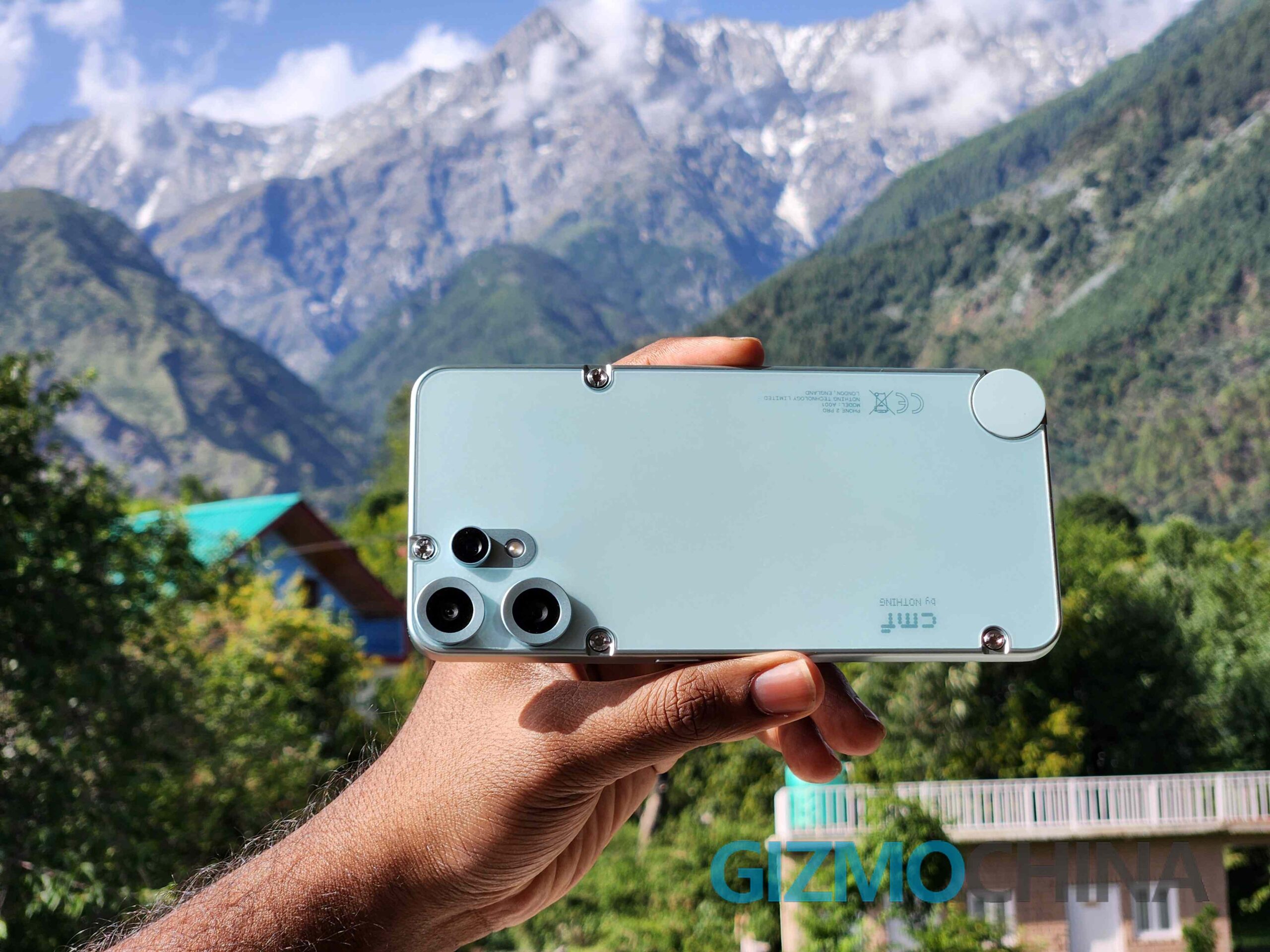
Although a chip price crisis prevented CMF from releasing a new model this year, the company continues to sell the previous version without raising the price. Starting at ₹18,999, the CMF Phone 2 Pro by Nothing remains highly distinctive thanks to its modular design.

It retains the customizable back cover from the first generation, which users can easily unscrew to switch colors or attach various accessories, such as a kickstand, a lanyard, or specialized macro and fisheye lenses.

Beyond the design, it features a 6.77-inch 120Hz AMOLED display that gets plenty bright for outdoor use. Inside, it runs on the MediaTek Dimensity 7300 Pro, which handles daily tasks smoothly and includes an NPU for basic AI functions.

The camera setup is also quite capable for the price, featuring a 50MP main sensor and a 50MP 2x telephoto lens. It runs Nothing OS 3.2, which remains one of the cleaner Android interfaces available, and the company is promising three years of OS updates.

2. Realme P4x 5G

Realme-P4x-5G

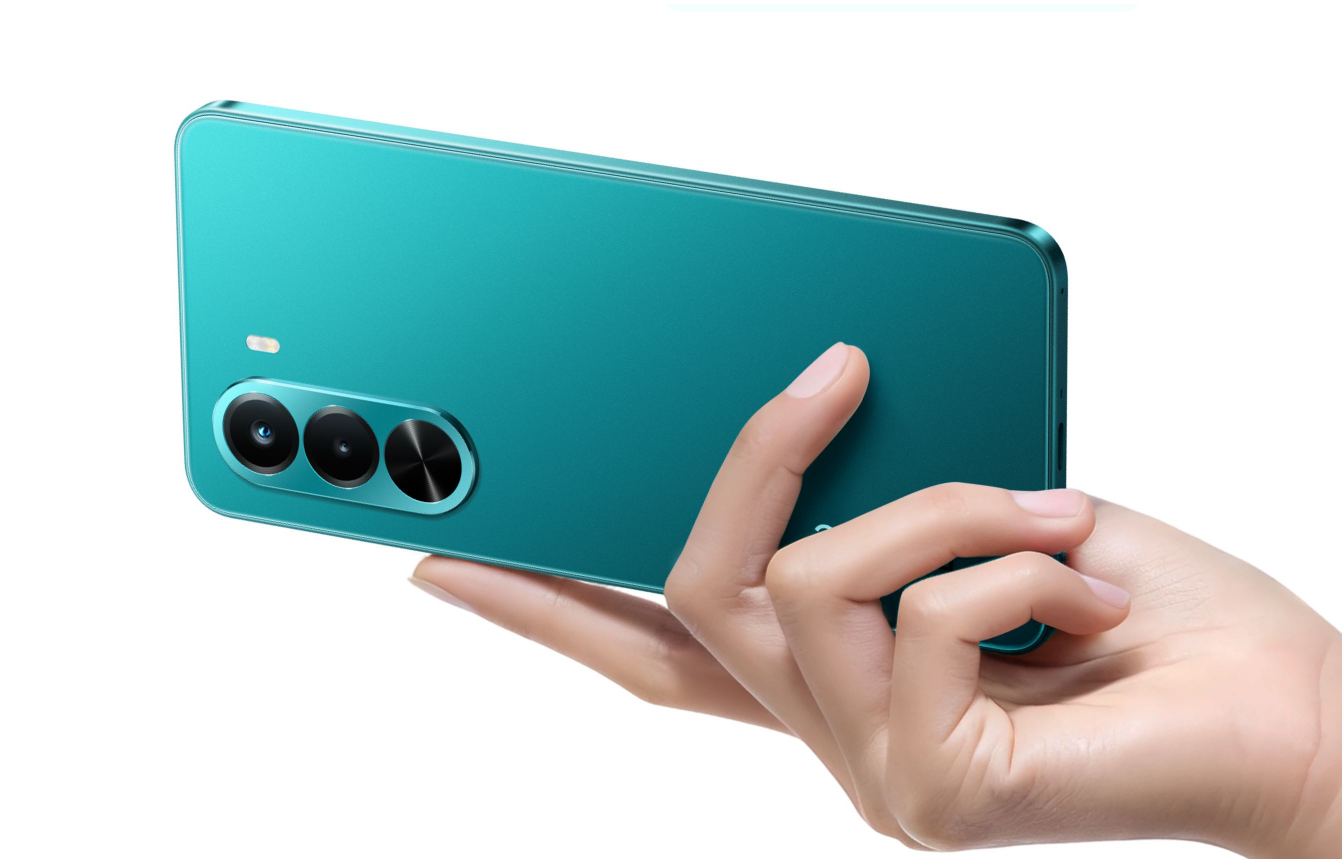
If you spend a lot of time playing mobile games like BGMI or Free Fire, the Realme P4x 5G is built specifically with that use case in mind. Priced around ₹20,999 (often lower with standard discounts), it uses a 6.72-inch 144Hz LCD and is powered by the Dimensity 7400 Ultra processor.

What makes it interesting for gaming is its thermal management. It includes a large vapor chamber cooling system and a very practical feature called Bypass Charging.

When you are playing a game while plugged in, the phone routes power directly to the motherboard rather than the battery. This prevents the phone from overheating during long sessions and helps preserve the health of the 7000mAh battery over time.

3. Realme P4R 5G

Realme-P4R-5G

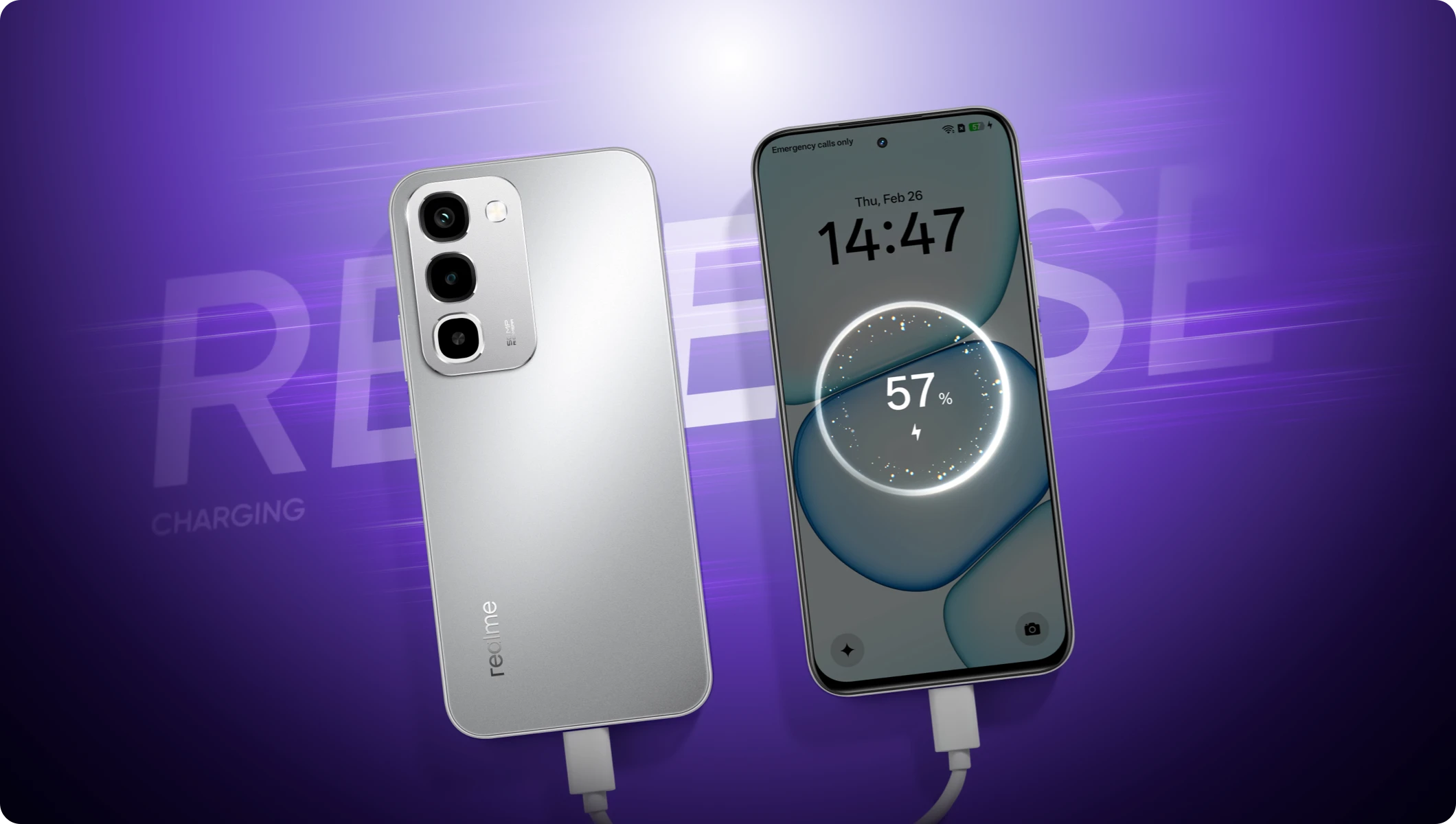
For those who just want a phone that rarely needs to be plugged in, the Realme P4R 5G starts at ₹18,999 and includes a massive 8000mAh battery. Realme says it can last up to three days on a single charge, which aligns with what you’d expect from a capacity this large.

Despite the battery size, the phone is relatively standard in its dimensions at 8.8mm thick. It runs on the Dimensity 6300 and has a 6.8-inch 144Hz LCD. It also features an IP65 rating and MIL-STD-810H certification, meaning it can handle minor drops and splashes.

You can even use it to reverse-charge other devices via a cable, making it a useful tool if you carry around wireless earbuds or a smartwatch.

4. Moto G37 Power

Moto-G37-Power

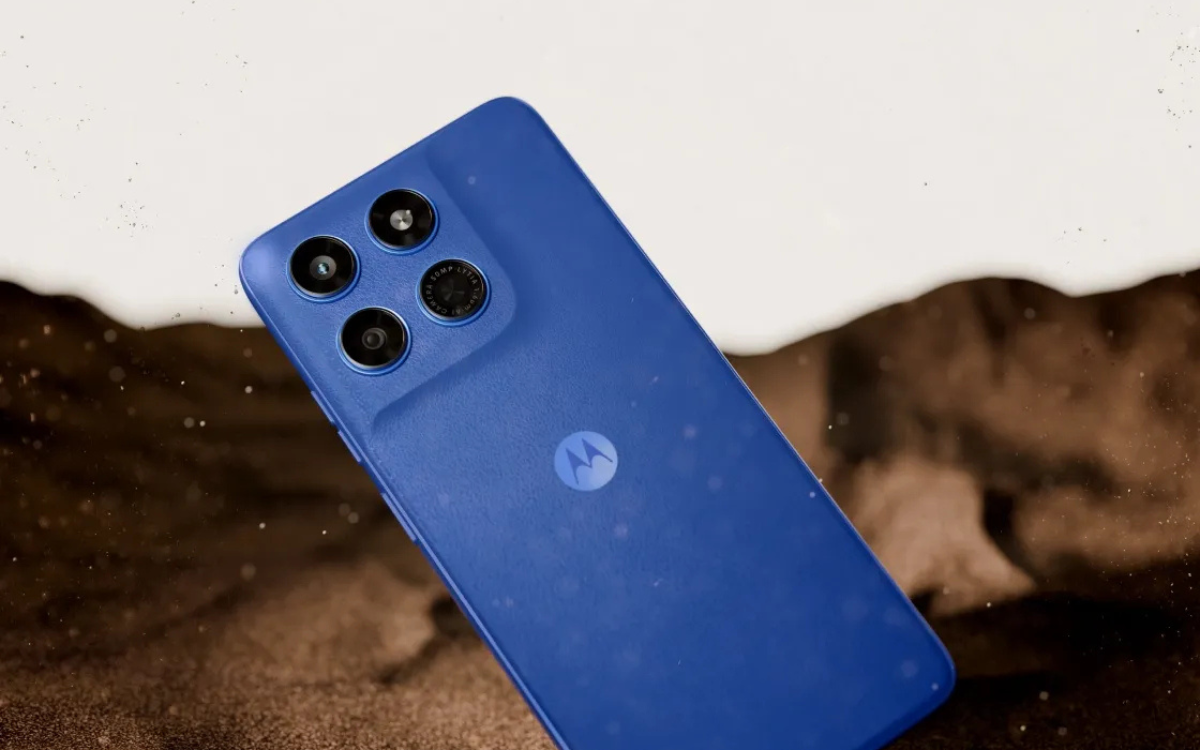
Motorola continues to offer reliable phones with minimal fuss, and the Moto G37 Power is a great example. Starting at ₹15,999, it provides a clean software experience with Android 16 and very little bloatware.

It features a 6.7-inch HD+ 120Hz LCD, the Dimensity 6400 processor, and a 7000mAh battery with 30W charging. It also has IP64 water and dust resistance, Gorilla Glass 7i for screen protection, and stereo speakers with Dolby Atmos support.

If your budget is strictly under 16k-17k, this phone is a very safe bet. It offers a stylish look with its textured Pantone color options and delivers smooth, reliable performance for all your daily essentials like web browsing, texting, and media consumption.

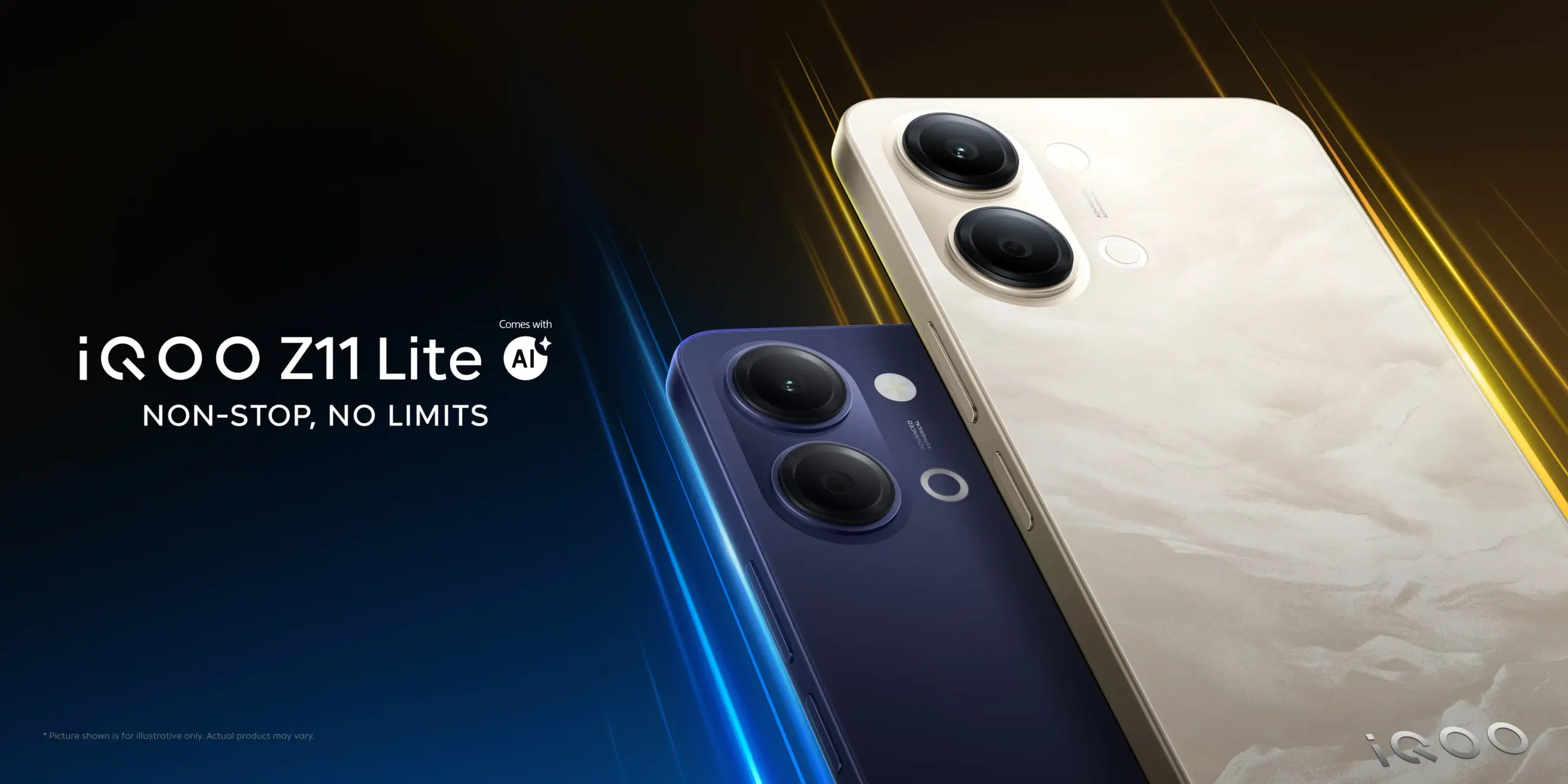
5. iQOO Z11 Lite

iQOO-Z11-Lite

Priced at ₹19,499, the iQOO Z11 Lite focuses on physical durability and software additions. It shares the MIL-STD-810H military-grade rating and IP65 resistance seen on some of the other phones on this list, making it a sturdy option.

The display is a 6.74-inch HD+ 120Hz LCD that reaches up to 1200 nits of brightness, making it easy to read outdoors. It runs on the Dimensity 6300 and includes a 6500mAh battery with 44W fast charging.

The device comes with OriginOS, which includes built-in AI tools for generating text and summarizing audio or video recordings. If you find those kinds of productivity features useful, it’s worth considering.

In other news, we’ve rounded up the 7 best camera smartphones available in July 2026. Check it out as well.

For more daily updates, please visit our News Section.

Stay ahead in tech! Join our Telegram community and sign up for our daily newsletter of top stories!

OnePlus N6x teaser confirms battery, front design

The affordable OnePlus N6x is locked in for an India launch on July 31, and the company has finally confirmed one of the most important specs: a 7,000mAh battery.

Earlier, OnePlus only said it could last up to 2.5 days without sharing the exact capacity. Now we know it’s 1,000mAh smaller than the 8,000mAh cell in the N6, but still very competitive in the endurance game.

A promotional page on Amazon India breaks down the claimed numbers on a full charge:

  • About 20.56 hours of video playback
  • 133.56 hours of music playback
  • 25.04 hours of social media scrolling
  • 11.26 hours of video recording

These real-world estimates matter more than just the mAh number.

Charging speed is still a mystery. The N6 supports 45W, so most people expect the N6x to land somewhere close to that. We’ll have to wait for the official reveal to know for sure.

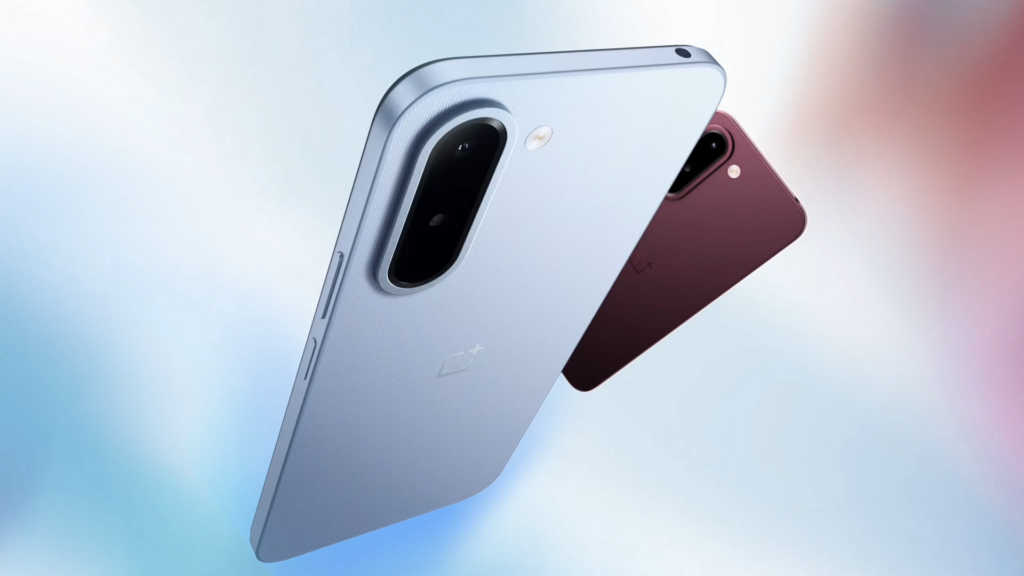
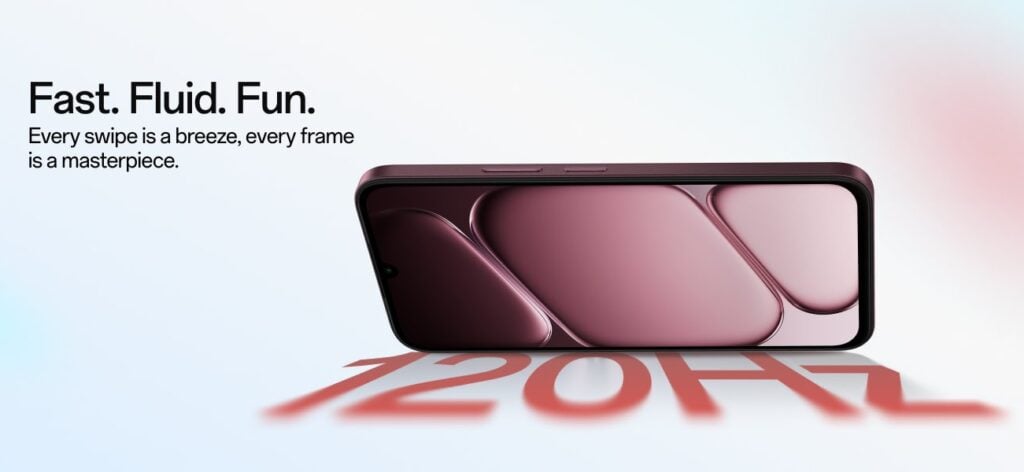
One of the biggest differences between the N6 and N6x is the design. The more affordable model gets a pill-shaped camera island, a notable departure from the rounded-square module on the N6. The front also sees a change. While OnePlus has largely focused on showcasing the rear design of the N6x, one image on the Amazon microsite reveals a waterdrop notch for the selfie camera, unlike the hole-punch cutout used on the N6.

The design changes appear to be aimed at giving the two phones distinct identities, allowing them to target different price segments without looking too similar. The bezels, however, do not appear to differ significantly between the two models.

Color options for the N6x include light blue and burgundy. The slightly smaller battery compared to the N6 could mean a thinner design, better component balance, or simply cost savings, while still offering multi-day battery life in real-world use.

Don’t miss a thing! Join our Telegram community for instant updates and grab our free daily newsletter for the best tech stories!

For more daily updates, please visit our News Section.

(Sources: Amazon)

itel’s Zeno 100 Pro debuts alongside 10,000mAh and 20,000mAh Zeno powerbanks

A new budget smartphone and a pair of fast-charging powerbanks have made their debut in India, giving buyers another affordable option in the entry-level segment. The latest products come under itel’s Zeno branding and combine everyday smartphone features with portable charging accessories designed for users who are always on the move.

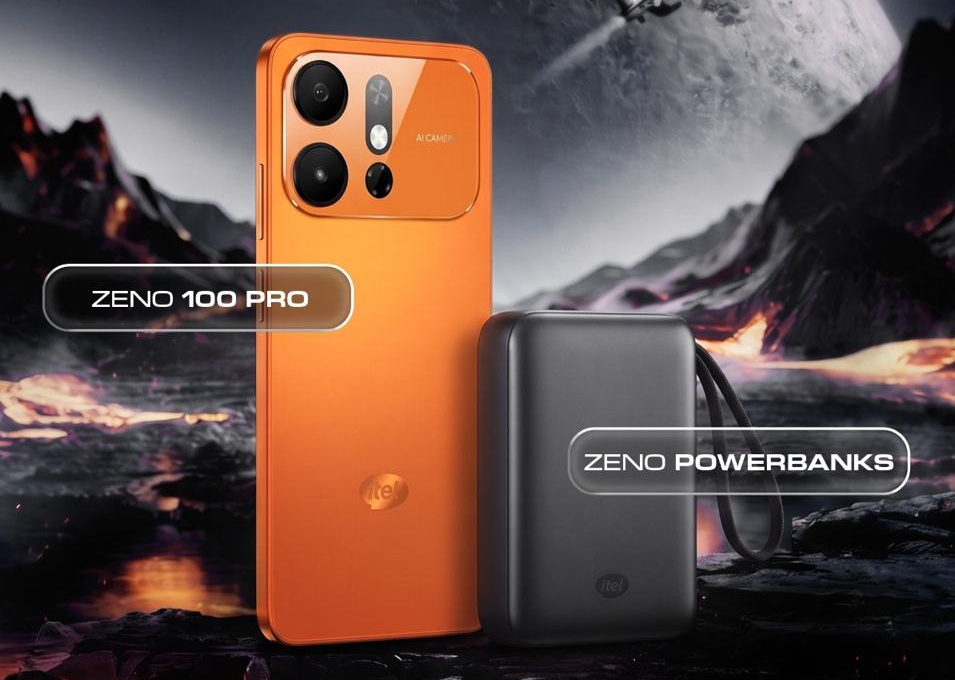
itel Zeno 100 Pro and powerbanks launched in India

Itel Zeno 100 Pro and powerbank

itel has announced the Zeno 100 Pro smartphone alongside new 10,000mAh and 20,000mAh Zeno powerbanks. The smartphone is priced at Rs 8,599 on Amazon, while the 10,000mAh and 20,000mAh powerbanks cost Rs 1,299 and Rs 2,069, respectively, with an additional 10 percent launch discount. The company has also confirmed that the recently launched Zeno Lite with 2GB RAM and 64GB storage is available for Rs 7,999.

The Zeno 100 Pro features a 6.6-inch HD+ IPS display with a 90Hz refresh rate and a waterdrop notch. It is equipped with a Unisoc T7100 octa-core processor, 3GB RAM with support for an additional 5GB virtual RAM, 64GB of storage, and Android 15 Go Edition.

The phone packs a 5,000mAh battery with 10W charging, an 8-megapixel rear camera, a 5-megapixel front camera, a side-mounted fingerprint scanner, face unlock support, a DTS speaker, an IR blaster, and UltraLink connectivity. It also carries MIL-STD-810H military-grade durability certification and comes in Comet Orange, Cloud White, and Black shades.

Alongside the smartphone, itel has launched two Zeno powerbanks. The 10,000mAh model supports 22.5W fast charging, features a digital battery display, dual output ports, and includes a 3A USB Type-C to Type-C cable with a lanyard.

The 20,000mAh version offers 45W fast charging, supports laptops, includes a built-in Type-C cable, features a digital battery display, and is compatible with charging standards such as PD 3.0, QC 3.0, and Apple 2.4A. Both models are designed to offer convenient charging while travelling.

For more daily updates, please visit our News Section.

Stay ahead in tech! Join our Telegram community and sign up for our daily newsletter of top stories.

MediaTek Dimensity 9600 lineup may feature 9600s, Pro, and Pro Max variants

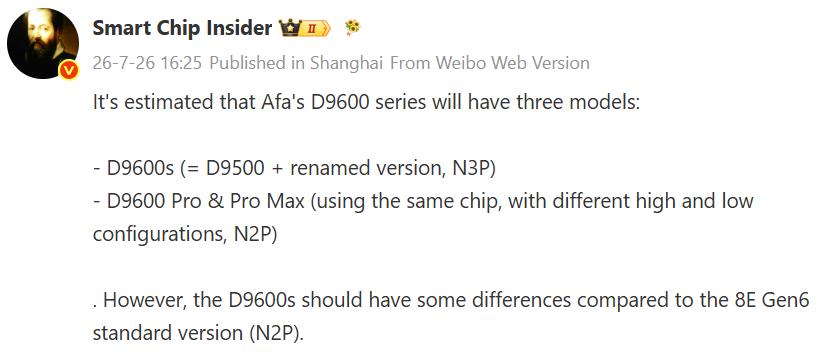
Qualcomm has already confirmed that its next Snapdragon Summit will be held in September this year. There are speculations that MediaTek may hold its own event a couple of days before Qualcomm’s event in September. The upcoming Dimensity 9600 lineup may include as many as three chipsets initially. Well ahead of the launch, tipster Smart Chip Insider has revealed some key details about the D9600 lineup.

MediaTek Dimensity 9600 series details tipped

According to the leak, the series is expected to include three chipsets: the Dimensity 9600s, Dimensity 9600 Pro, and Dimensity 9600 Pro Max. The Dimensity 9600s is said to be a rebranded version of the Dimensity 9500 built on TSMC’s N3P process, while the Pro and Pro Max variants are expected to use the same chip based on the more advanced N2P process, with differences likely coming from their clock speeds or configurations.

The tipster also claims that the Dimensity 9600s is expected to trail Qualcomm’s Snapdragon 8 Elite Gen 6 standard version, which is also rumored to be manufactured on the N2P node.

As per a recent Weibo post by tipster Smart Pikachu, the Vivo X500 series will debut the Dimensity 9600 lineup. It is also expected to power the Oppo Find X10 series lineup.

As per a recent report, the standard Find X10 may feature the Dimensity 9600s. On the other hand, the X10 Pro and X10 Pro Max may feature the Dimensity 9600 Pro and 9600 Pro Max chipsets, respectively. A report dating from last month claimed that the Dimensity 9600 series chip will be pricier by around $215 as compared to the Dimensity 9500. If this is true, it will have direct impact on the phone’s pricing, which suggests that the Vivo X500 and Oppo Find X100 series will cost a lot more than their previous generation.

For more daily updates, please visit our News Section.

Stay ahead in tech! Join our Telegram community and sign up for our daily newsletter of top stories.

Xiaomi replaces Game Turbo with Game Space, bringing game-specific optimization

Xiaomi has started rolling out a major update for its gaming experience on HyperOS by replacing the existing Game Turbo feature with the new Game Space. The upgrade brings a dedicated hub that offers game management, personalized performance settings, and customization tools for supported Xiaomi smartphones.

Game Space brings a dedicated gaming hub

Xiaomi's new Game Space
Xiaomi’s new Game Space

The new Game Space is now integrated into the latest HyperOS builds and is gradually reaching eligible devices. One of its biggest additions is automatic game organization. Once enabled, newly installed games are placed inside Game Space without any manual setup. Frequently played titles are also prioritized, making it easier to access favorite games while keeping the home screen less cluttered.

The update also introduces game-specific performance profiles instead of relying on a single gaming mode for every title. Multiplayer online battle arena games can be configured with high-performance settings alongside Do Not Disturb mode to reduce interruptions during matches. Open-world games can be assigned profiles that prioritize graphics quality while balancing thermal management. Once configured, these settings are saved and automatically applied whenever the selected game is launched.

Xiaomi has added new personalization options to make Game Space feel more like a dedicated gaming center. Users can customize wallpapers, startup animations, and widgets while setting their favorite game characters as backgrounds. These additions focus on creating a more immersive gaming environment rather than improving raw performance.

The rollout is currently limited to devices running the latest version of HyperOS, with Xiaomi confirming that availability will expand gradually. Users who have not yet received the feature will need to wait until the update reaches their compatible smartphone.

For more daily updates, please visit our News Section.

Stay ahead in tech! Join our Telegram community and sign up for our daily newsletter of top stories.

Poco M8 Power packs 8,000mAh battery, AMOLED screen

Poco has started revealing the key specifications of the Poco M8 Power. Scheduled to launch next month, the Power variant will be the latest addition to the M8 lineup, which already includes the Poco M8, M8 Pro, and M8s. Here are the first details of the phone that have been officially confirmed by the brand.

Poco M8 Power launch date confirmed

Poco M8 Power launch date-
Poco M8 Power launch date

Poco has confirmed that the M8 Power will be unveiled on August 4 in India and will be sold through Flipkart. As seen in the official teaser, the Power variant will pack a massive 8,000mAh battery, which the company claims can deliver up to three days of usage on a single charge.

On the front, the M8 Power features an AMOLED display, although the screen size and other display specifications have not been confirmed yet. The teaser also confirms that the phone will be available in an orange color option. It features a raised camera module with the camera sensors and LED flash on the left, while the microphone, “50MP AI Camera” branding, and Poco logo are positioned on the right. The rest of the phone’s specifications remain under wraps.

Previous reports suggest that Poco is also working on another smartphone called the Poco X8 5G, which was earlier rumored to have been canceled. The device is expected to sit below the Poco X8 Pro, which debuted earlier this year. It is believed to be a rebranded version of the Redmi Note 17 Pro 5G, which recently launched in China. As for the Poco M8 Power, it is also rumored to be a rebranded version of the Redmi Note 17.

For more daily updates, please visit our News Section.

Stay ahead in tech! Join our Telegram community and sign up for our daily newsletter of top stories.

Motorola expands Android 17 beta to Moto Edge 60 Pro

Moto Edge 60 Pro

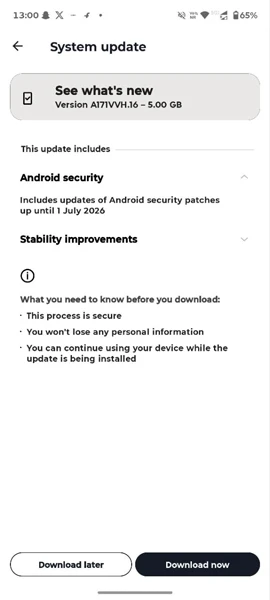
Motorola has quietly begun rolling out the Android 17 beta update to the Moto Edge 60 Pro users. It’s one of the very first Motorola phones to receive this major beta update, which has recently been released for Motorola Signature, Moto Edge 70, and Moto G57 Power.

The Android 17 beta update for the Edge 60 Pro is reportedly rolling out in India with the firmware version A171VVH.16. It should soon begin to expand to other regions. This major upgrade has a download size of 5GB, which is larger than any major OS upgrade released in the past for the Edge 60 Pro. However, the changelog doesn’t reveal anything except for the July 2026 security patch and stability improvements.

Moto Edge 60 Pro Android 17 beta

If you have a Motorola Edge 60 Pro and you’ve already participated in the Android 17 beta program, the update may arrive anytime soon. To manually check for available updates, go to Settings > System updates, then tap Check for updates.

Please note that Motorola usually rolls out updates in batches, and so it can take a couple of days for them to reach all the users. The availability depends on your region.

Once you’ve upgraded to Android 17 beta, you’ll start to notice changes immediately. There’s an updated notification panel and control center, new clock faces for the lock screen, and an updated Settings page. The update also introduces a new volume mixer and upgraded Live Activities that now also work with calls, music, and torch.

We’ll learn more about the new features and changes once we have the complete changelog.

Stay tuned with us for the latest updates. You can visit the Motorola section or join our Telegram channel to receive the latest information.

OnePlus 16’s October launch tipped with ultra-thin bezels, refined rear design

OnePlus is one of the brands gearing up to launch its next-generation flagship phone in the coming months. A new leak, courtesy of tipster Digital Chat Station, sheds light on the OnePlus 16’s design and launch timeframe. Read on to find out what to expect from the upcoming flagship.

OnePlus 16’s design, launch timeline tipped

According to the tipster, the upcoming OnePlus 16 prototype continues to follow the brand’s existing design direction rather than introducing a major visual overhaul. The device is said to feature a 6.78-inch flat display with ultra-narrow, symmetrical bezels enabled by LIPO packaging technology. Under the hood, it is expected to feature the forthcoming Snapdragon 8 Elite Gen 6 Pro chipset.

On the rear, the phone is expected to retain a compact square camera module, which debuted on the OnePlus 15. DCS added that the OnePlus 16 is currently scheduled to launch in October. In the comments, when asked whether the device’s battery plan had been finalized, the tipster replied that it is expected to pack a battery of around 9,000mAh.

Responding to another comment about the possibility of the iQOO 16, one of the OnePlus 16’s closest rivals, also launching in October, DCS said it is possible, noting that the late September launch window is already very crowded.

Previous reports have claimed that the OnePlus 16’s ultra-thin bezels will measure less than 1mm and that the display will support a 185Hz refresh rate. It is also expected to be the company’s first phone to come preloaded with ColorOS 17 based on Android 17.

Reports have also revealed that the OnePlus 16’s rear camera setup could receive a major upgrade in the form of a new 200-megapixel primary camera. It may be accompanied by a 50-megapixel ultra-wide lens and a 50-megapixel periscope telephoto camera. The handset is also expected to support 100W wired and 50W wireless charging.

For more daily updates, please visit our News Section.

Stay ahead in tech! Join our Telegram community and sign up for our daily newsletter of top stories.

Oppo A7 Pro Max with 10,000mAh battery officially revealed, launching soon

Recent reports have revealed that Oppo is gearing up to unveil its first A7-series phone, dubbed the A7 Pro Max, in China. Ahead of its expected launch, the brand has released its first teaser, showcasing the phone’s rear design for the first time. Here’s a look at what’s known about the device.

Oppo A7 Pro Max design revealed

Oppo A7 Pro Max image
Oppo A7 Pro Max’s first teaser released

As seen above, the Oppo A7 Pro Max features a slightly raised rectangular camera module on the back, with the camera sensors positioned on the left and an LED flash unit on the right. The power button and volume keys are located on the right edge of the device.

Reports have revealed that the camera setup will include a 50-megapixel main camera alongside a 2-megapixel auxiliary lens. For selfies, it is said to feature a 50-megapixel front-facing camera.

On the front, the device is expected to feature a 6.78-inch OLED display offering a 1.5K resolution, a 120Hz refresh rate, and an in-display fingerprint sensor. It will come preloaded with ColorOS 16 based on Android 16.

The key highlight of the A7 Pro Max is its battery, which is expected to be the largest ever seen on an Oppo smartphone. The footnote in the above image confirms that it packs a huge 10,000mAh battery with support for 80W fast charging. Despite the large battery, the device is said to measure just 8.47mm thick and weigh 226 grams.

A recent Geekbench listing revealed that the A7 Pro Max will be powered by the Snapdragon 4 Gen 5 chipset. It will be paired with up to 12GB of RAM and possibly up to 512GB of storage.

 For more daily updates, please visit our News Section.

Stay ahead in tech! Join our Telegram community and sign up for our daily newsletter of top stories.

Vivo X300e launches with Snapdragon 8 Gen 5, 7200mAh battery, 50MP triple cameras

Vivo has finally unveiled the Vivo X300e, which has been in the news for the past few days. It is the fifth X300 series phone to debut in China after the Vivo X300, Vivo X300 Pro, Vivo X300s, and Vivo X300 Ultra. While the Vivo X300 FE is also part of the global X300 lineup, it has not been released in China. The new Vivo X300e arrives with flagship hardware, a ZEISS-backed camera setup, a massive battery, and a premium display. Here is everything the device brings along with its pricing details.

Vivo X300e specifications and features

Vivo X300e
Vivo X300e

The Vivo X300e features a 6.59-inch AMOLED flat display with a 2750 x 1260 pixel resolution, a 144Hz refresh rate, 10-bit colors, P3 wide color gamut support, and up to 2,000Hz instant touch sampling in supported games. It also includes 4320Hz PWM dimming, AI eye comfort features, SGS low blue light certification, and an ultrasonic in-display fingerprint scanner that supports unlocking even with wet fingers.

The handset is powered by the Snapdragon 8 Gen 5 chipset, paired with LPDDR5X RAM and UFS 4.1 storage. It packs a 7,200mAh battery with 90W fast charging and runs Android 16 with OriginOS 6.

Vivo X300e
Vivo X300e

The phone sports a 50-megapixel Samsung JN1 front camera with autofocus. On the back, it features a 50-megapixel Sony IMX921 primary camera with OIS, an 8-megapixel ultra-wide lens, and a 50-megapixel Sony IMX882 periscope telephoto camera with OIS and up to 3x optical zoom. It supports up to 4K video recording from the front camera, main camera, and telephoto lens. Unlike other X300 series phones, this one does not support a telephoto extender accessory.

Vivo X300e
Vivo X300e

Other features include stereo speakers, an X-axis linear motor, VC cooling, NFC, an IR blaster, dual SIM 5G, Wi-Fi 7, Bluetooth 5.4, USB-C, and IP68 plus IP69-rated dust and water resistance. Depending on the color, the phone measures 7.79mm to 7.99mm thick and weighs between 199.5 grams and 203 grams.

Vivo X300e price and availability

Vivo X300e
Vivo X300e

The Vivo X300e is priced at 4,799 Yuan (~$710) for the 12GB+256GB variant and 5,299 Yuan (~$780) for the 12GB+512GB edition. It comes in Moonlight White, Midnight Black, and Sunlight Orange color options. The smartphone is currently available in China and is expected to launch in global markets later, although Vivo has not officially confirmed its international rollout yet.

For more daily updates, please visit our News Section.

Stay ahead in tech! Join our Telegram community and sign up for our daily newsletter of top stories.

TCL unveils affordable 360Hz gaming monitor with 1440p Mini LED panel

Thunderobot is releasing a new 24.5-inch gaming monitor, the 25Q6A Pro, on July 31. The display has an official retail price of 1,649 yuan (around $244) in China. The company has also mentioned a subsidized launch price starting somewhere in the 1,300 yuan ($192) range, though the exact final discount hasn’t been confirmed yet.

Thunderobot 25Q6A Pro gaming monitor

Thunderobot 25Q6A Pro Specifications

The monitor features a 24.5-inch Fast IPS panel manufactured by TCL under its FFALCON brand ecosystem, with a 2560 x 1440 resolution and a 16:9 aspect ratio. For gaming, it offers a 360Hz refresh rate and a 1ms GTG response time to deliver smoother motion and quicker pixel response.

For lighting, the monitor relies on a Mini LED backlight system. It features 180 local dimming zones, which helps improve black levels by turning off the backlight in darker areas of the screen. This setup gives the monitor a dynamic contrast ratio of 1,000,000:1, compared to its standard static contrast of 1000:1. It can also reach a peak brightness of 800 nits and has a DisplayHDR 600 certification.

On the color side, Thunderobot says the panel covers 95% of the DCI-P3 color gamut and 99% of the sRGB space, with a factory color accuracy of ΔE < 2. It also includes support for variable refresh rates through AMD FreeSync Premium and Nvidia G-Sync compatibility to help prevent screen tearing.

Thunderobot 25Q6A Pro gaming monitor

The physical hardware is fairly standard. The monitor measures 556 x 226 x 501 mm and weighs 5.3 kg with the stand attached, or 3.3 kg without it. The included grey stand allows for height adjustments and rotation, and there is a standard 100 x 100 mm VESA mount on the back if you prefer to use a monitor arm.

For connectivity, it has HDMI 2.1 and DisplayPort 1.4 inputs, along with a standard audio output jack. It doesn’t have built-in speakers and uses a 65W external power adapter. The monitor also includes basic eye-care features, such as DC dimming to prevent screen flickering and a hardware-level low-blue-light mode.

In related news, Lenovo has recently launched an affordable 280Hz gaming monitor with a 27-inch IPS panel, while Philips has unveiled a budget-friendly 425Hz gaming monitor featuring a 27-inch 2K display.

For more daily updates, please visit our News Section.

Stay ahead in tech! Join our Telegram community and sign up for our daily newsletter of top stories!

(JD)

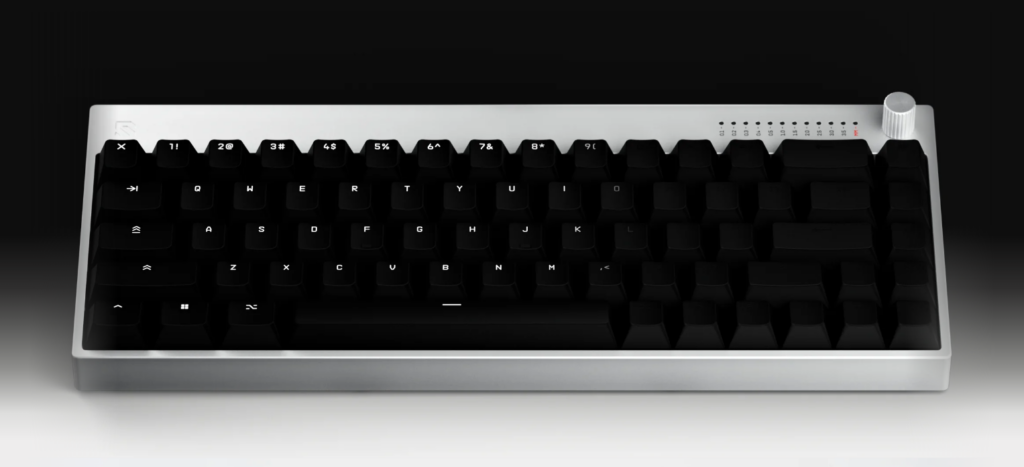
Wallhack launches K-001 gaming keyboard with Rapid Trigger, 8K polling & Hall Effect switches

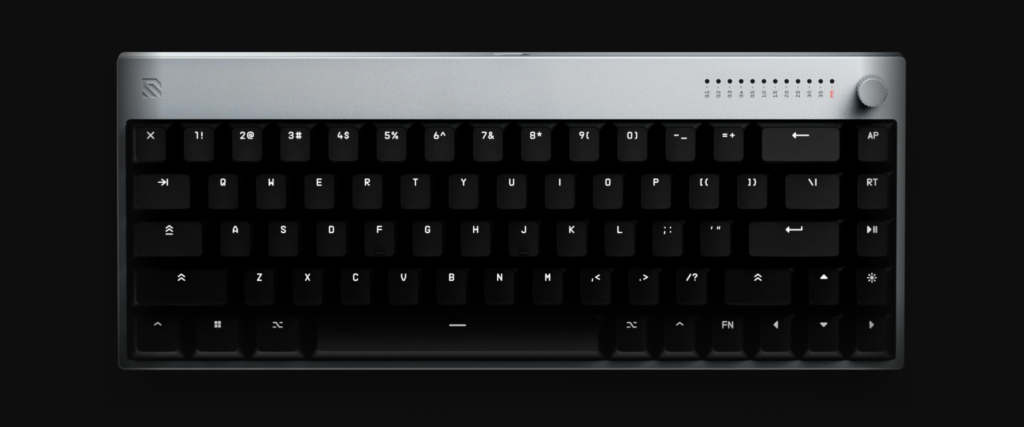
Wallhack, a company primarily known for making glass mousepads, is releasing its first keyboard. The K-001 is a wired, 65% mechanical keyboard that uses magnetic Hall Effect switches. It is designed mainly for competitive gaming, where adjustable key inputs are becoming a standard requirement.

Wallhack K-001 gaming keyboard

Wallhack K-001 Specifications

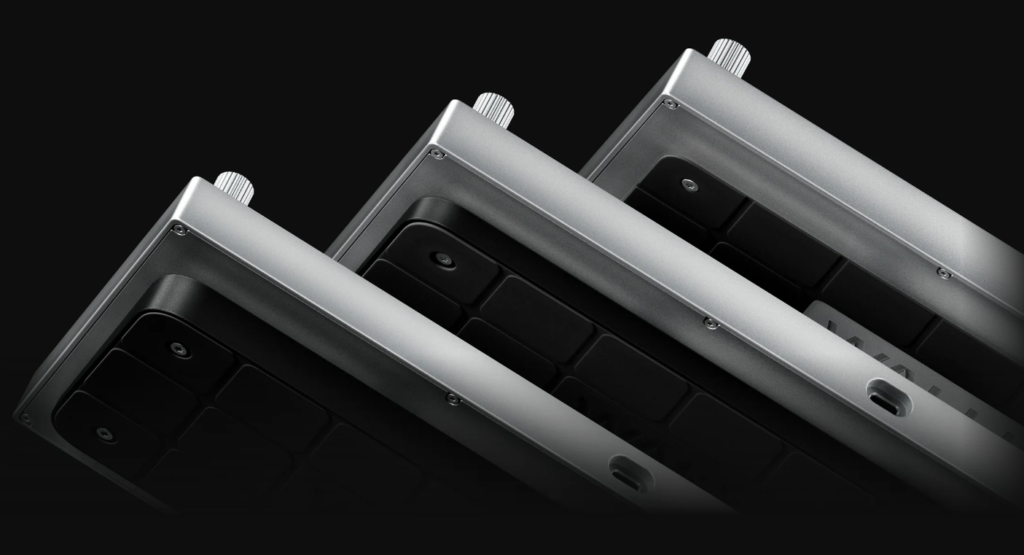
The K-001 is built from CNC-machined 6063 aluminum and comes in two standard colors: Natural and Slate. It uses a fixed mounting system for adjusting the typing angle.

The keyboard sits flat at zero degrees out of the box. If you want an angle, you have to use an included screwdriver to attach one of two solid aluminum risers to the bottom, which tilt the board at either 4 or 7 degrees.

Wallhack K-001 gaming keyboard

Inside, the keyboard uses a tray mount design with a black anodized aluminum plate. There are four layers of sound-dampening material, including a silicone mid-layer and foam, to reduce hollow noises when typing.

For the switches, Wallhack partnered with Gateron to make the KS-TR Linear magnetic switches. The keyboard comes standard with the medium-weight version (48-63gf), though light and heavy variants will be sold separately.

Wallhack K-001 gaming keyboard

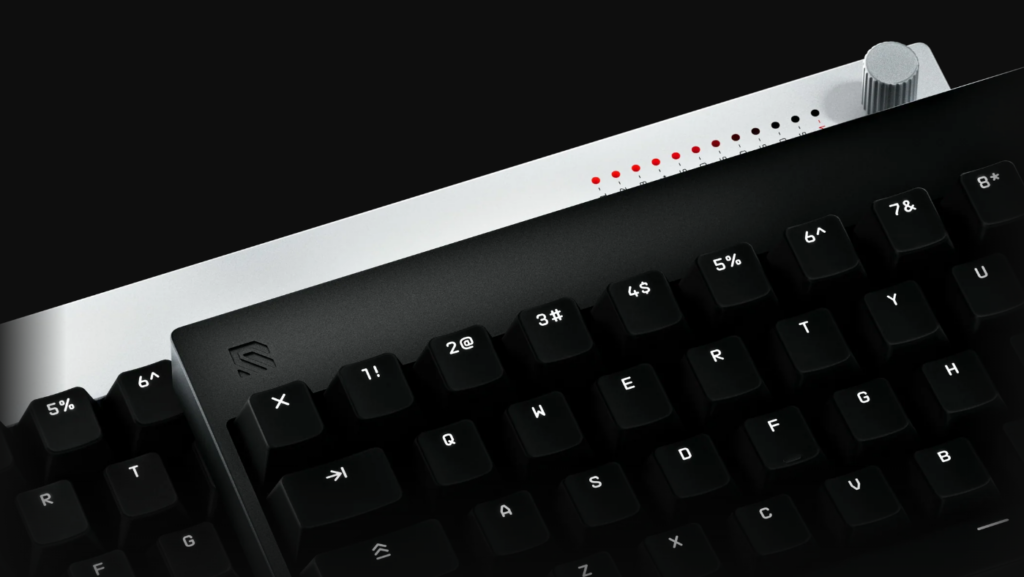
Because the switches are magnetic, you can adjust the exact point where a keypress registers, down to a 0.01mm resolution, and enable rapid trigger features. You don’t necessarily need software to change this; there is a physical stepped dial on the top right of the keyboard that lets you adjust the actuation point and rapid trigger sensitivity directly.

The keycaps are double-shot PBT. Wallhack added a specific light guide to the switches that directs the LED lighting straight up through the keycap letters. The goal here is to prevent the backlight from bleeding out around the edges of the keys onto the switch plate.

Wallhack K-001 gaming keyboard

On the technical side, the K-001 has an 8,000Hz polling rate and a 16,000Hz scan rate. For software configuration, Wallhack is using a web-based tool called Wallhack Terminal. Instead of downloading a dedicated app to your computer, you use a browser to change deeper settings like gamepad emulation or SOCD rules.

Wallhack hasn’t yet revealed the pricing and availability details.

In related news, Lenovo has recently unveiled the Legion R7 RT75 gaming keyboard with a TFT display and Hall effect switches.

For more daily updates, please visit our News Section.

Stay ahead in tech! Join our Telegram community and sign up for our daily newsletter of top stories!
(Wallhack)

Samsung Galaxy Z Fold8 Ultra vs HONOR Magic V6: Is Samsung Worth the Extra $800?

Samsung Galaxy Z Fold8 Ultra and HONOR Magic V6 represent two very different approaches to the premium foldable experience. Samsung focuses on flagship cameras, productivity features, and a refined software ecosystem, while HONOR packs in a brighter display, a larger battery, faster charging, and aggressive pricing. Here’s a detailed comparison to help you decide which foldable delivers the better overall value for your needs. 


Major Features:

CategorySamsung Galaxy Z Fold8 UltraHONOR Magic V6Winner
Design & BuildGorilla Glass Victus Ceramic 3, Armor Aluminum, IP48IP68/IP69, Stylus support, NanoCrystal ShieldHONOR – Better durability
Display8.0-inch Dynamic LTPO AMOLED 2X, HDR10+LTPO2 AMOLED, Brighter panels, 4320Hz PWMHONOR – Brighter display
PerformanceSnapdragon 8 Elite Gen 5, Android 17Snapdragon 8 Elite Gen 5, UFS 4.1Samsung – Better software
Battery5,000mAh, 45W wired, 20W wireless6,660mAh, 80W wired, 66W wirelessHONOR – Longer battery
Main Camera200MP + 10MP + 50MP, 8K video50MP + 64MP + 50MP, 4K videoSamsung – Superior main camera
Selfie CameraDual 10MPDual 20MPHONOR – Higher resolution
SoftwareAndroid 17, One UI 9, DeXAndroid 16, MagicOS 10Samsung – Rich ecosystem
PricingAround $2,100 / ₹1,90,000Around $1,300 / ₹1,10,000HONOR – Better value
OverallPremium ecosystem and camerasBetter hardware and valueHONOR – Best overall value
Disclaimer: Specs are based on available data. Actual performance may vary. Verify details from official sources before buying.

1. Design and Display

Build and Feel

The Samsung Galaxy Z Fold8 Ultra and HONOR Magic V6 are both premium foldables built with flagship-grade materials, but they approach durability differently. Samsung combines Gorilla Glass Victus Ceramic 3 on the cover display, Gorilla Glass Victus 2 on the rear, and an Advanced Armor aluminum frame with an IP48 rating for water and limited dust resistance. HONOR, meanwhile, offers IP68/IP69 protection, a Super Armored Inner Screen, NanoCrystal Shield on the cover display, and stylus support on both displays. Samsung feels more refined for users invested in its ecosystem, while HONOR focuses on practical durability and added versatility.

Display Quality

Samsung features an 8.0-inch Dynamic LTPO AMOLED 2X display with HDR10+, 120Hz refresh rate, and up to 3,000 nits peak brightness. The 6.5-inch cover display also supports a 120Hz refresh rate. HONOR counters with a 7.95-inch LTPO2 AMOLED panel supporting 1 billion colors, 120Hz refresh rate, 4,320Hz PWM dimming, and up to 5,000 nits peak brightness, while its cover display reaches an impressive 6,000 nits. The HONOR display appears more eye-friendly and brighter outdoors, whereas Samsung delivers richer HDR content and polished color tuning.

Verdict

Samsung wins for premium refinement and display calibration, while HONOR stands out with brighter panels, superior durability ratings, and stylus functionality. Users who value multimedia may lean toward Samsung, whereas HONOR offers greater everyday practicality.

2. Specifications Including Battery

Performance

Both foldables are powered by Qualcomm’s Snapdragon 8 Elite Gen 5 chipset paired with the Adreno 840 GPU, making them capable of handling demanding games, multitasking, and AI-driven features effortlessly. Samsung ships with Android 17 and One UI 9, while HONOR runs Android 16 with MagicOS 10, and both promise seven major Android updates. Samsung’s chipset variant offers a slightly higher peak CPU frequency, giving it a small advantage in sustained flagship performance. HONOR, however, uses faster UFS 4.1 storage compared to Samsung’s UFS 4.x implementation, helping with quicker app loading and file transfers.

Battery and Charging

Battery life clearly favors HONOR thanks to its massive 6,660mAh global battery, paired with 80W wired and 66W wireless charging. Samsung includes a 5,000mAh silicon-carbon battery with 45W wired, 20W Qi2.2 wireless, and reverse wireless charging. Samsung’s battery is sufficient for a full day, but HONOR is better suited for power users who demand extended endurance and faster top-ups.

Verdict

Samsung delivers slightly stronger flagship performance and a more mature software experience, while HONOR comfortably wins on battery capacity and charging technology. For most users, the better battery life makes HONOR a more practical daily companion.

3. Camera

Main and Secondary Lenses

Samsung equips the Galaxy Z Fold8 Ultra with a flagship 200MP primary sensor, a 10MP telephoto camera offering 3x optical zoom, and a 50MP ultrawide camera with autofocus. It also supports 8K video recording alongside advanced HDR capabilities. HONOR features a 50MP primary camera, a 64MP periscope telephoto lens with 3x optical zoom, and a 50MP ultrawide camera, while recording up to 4K video. Samsung’s high-resolution main sensor captures more detail and offers greater flexibility for cropping, whereas HONOR’s larger periscope sensor provides stronger zoom performance and excellent versatility for distant subjects.

Selfie Camera

Samsung includes dual 10MP selfie cameras for the inner and cover displays. HONOR raises the resolution with dual 20MP selfie cameras capable of 4K recording. HONOR produces sharper selfies and better detail during video calls, while Samsung’s image processing delivers more natural skin tones in varied lighting conditions.

Verdict

Samsung is the stronger choice for photography enthusiasts thanks to its flagship 200MP sensor and 8K recording. HONOR remains highly competitive with superior selfie cameras and an excellent telephoto setup, making it a balanced option for everyday photography.

4. Pricing

The Samsung Galaxy Z Fold8 Ultra is priced around $2,100 (₹1,90,000), positioning it among the most expensive foldables currently available. The HONOR Magic V6 is priced around $1,300 (₹1,10,000), creating a price difference of roughly $800 (₹80,000). Samsung justifies its premium through One UI, DeX desktop mode, HDR10+ support, long-term software optimization, and a flagship-grade camera system. HONOR, however, delivers similar flagship hardware, a brighter display, a significantly larger battery, much faster charging, stylus support, and stronger durability at a considerably lower price.

Is the Price Justified?

Samsung offers premium software refinement and ecosystem integration, making its pricing easier to justify for loyal Galaxy users. HONOR provides exceptional flagship specifications for substantially less money, making it one of the strongest value propositions in the foldable market.

Verdict

For overall value, HONOR clearly offers more hardware for the price. Samsung remains worthwhile for users prioritizing software experience, productivity features, and long-term ecosystem benefits.

Disclaimer:
Prices are approximate and may vary based on country, region, launch timing, and applicable taxes. Always check whether the listed price is for a China unit or a global/international variant when purchasing.

5. Conclusion

The Samsung Galaxy Z Fold8 Ultra excels with its 200MP flagship camera, 8K video recording, Samsung DeX desktop experience, HDR10+ display, Qi2.2 wireless charging, and Android 17 with One UI 9. These features make it particularly attractive for productivity-focused users and those deeply invested in Samsung’s ecosystem.

The HONOR Magic V6 distinguishes itself with IP68/IP69 protection, stylus support on both displays, an exceptionally bright LTPO2 AMOLED panel, a 6660mAh battery, 80W wired and 66W wireless charging, faster UFS 4.1 storage, and outstanding value. It successfully combines flagship performance with features typically reserved for more expensive devices.

Verdict

Samsung Galaxy Z Fold8 Ultra is the better choice for users seeking the most polished foldable software experience, premium camera hardware, and advanced productivity features. The HONOR Magic V6, however, delivers a more complete hardware package with superior battery life, faster charging, brighter displays, and exceptional value. For most buyers, HONOR offers the smarter purchase, while Samsung remains the premium option for those who prioritize ecosystem integration and camera excellence.

Disclaimer: This comparison is based on the specifications provided and is intended for general informational purposes. Actual performance, camera results, battery life, and overall experience may vary depending on real-world usage, software updates, and individual preferences.

Read More: