Advertisement

Edifier K200 brings portable karaoke to your living room

Edifier is bringing a karaoke setup to your living room with the new K200 portable speaker. It is designed for both music playback and karaoke, and comes with two wireless microphones. The speaker will go on sale in China on August 31 at 20:00 for 799 yuan.

The K200 comes with two wireless microphones, and each microphone has its own volume and sound-effect controls. This means two people can sing together without having to use the same settings, and the speaker can also adjust to different voices and vocal styles.

Edifier K200 Design

Design-wise, the K200 also has a retro-inspired design that sets it apart from many modern portable speakers. It features a wood-style body with a large curved carry handle, a metal front grille, and physical buttons on the top. There’s also a small light strip along the bottom of the front panel. Edifier provides a dedicated storage box for keeping the speaker, microphones, and accessories together.

Under the hood

For audio, the K200 offers 28W of continuous power and a peak output of 56W. It uses a 22mm silk dome tweeter along with a 53 × 93mm racetrack-shaped long-stroke mid-bass driver. 
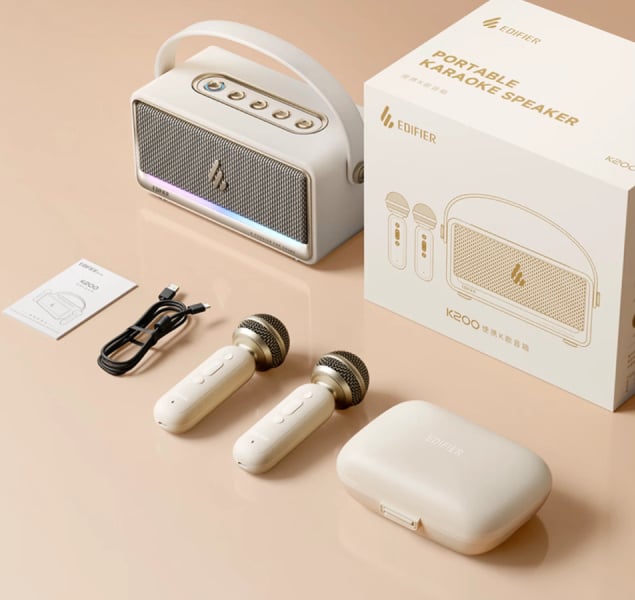
Edifier K200 Packaging

The speaker supports Bluetooth 6.0 and can connect to two devices at the same time. This makes it easier to switch between, for example, a smartphone and a laptop without disconnecting and pairing again. There are also USB sound card and TF card inputs for other playback options.

The K200 is powered by two built-in 2600mAh batteries. Edifier claims up to 17.5 hours of battery life when the ambient lighting is turned off.

🔌 You’ll NeedThe K200 has a TF card slot for offline playback — a memory card lets you skip streaming apps. Check TF card price on Amazon →

It also has a 32-bit high-precision DSP chip that handles the audio processing. The speaker offers more than five music sound effects, along with eight dedicated karaoke effects. It also works with popular Chinese music and karaoke apps, including WeSing, Changba, Kugou, NetEase Cloud Music, and QQ Music.

Edifier K200 Launch Specs Price

The K200 enters a growing portable karaoke speaker market. Products such as the Boat PartyPal lineup also combine wireless microphones with built-in sound controls. Edifier’s K200, however, focuses more on keeping the setup compact and easy to carry, while still offering enough power for home karaoke and music.

Don’t miss a thing! Join our Telegram community for instant updates and grab our free daily newsletter for the best tech stories!

For more daily updates, please visit our News Section.

(Via)

Vivo T5 5G teaser confirms September 2 India launch, Dimensity 7500 Turbo chipset and benchmark scores

Vivo is getting ready to expand its T5 series in India with a new 5G model, and the company has already locked in an official launch date. They’re teasing a few key features, pitching it as a slim phone with a high-refresh-rate screen in the mid-range space.

Vivo has confirmed the T5 5G will launch in India on September 2, 2026. It’ll come in two colours, Royal Bronze and Silver Green, and go on sale through Flipkart. The phone is expected to land somewhere in the ₹40,000 to ₹50,000 range.

The brand also confirmed the Dimensity 7500 Turbo chipset, claiming an AnTuTu score of 1.2 million points and on-device AI performance of 10 tokens/s on a 3-billion-parameter model.

What we know so far: the phone packs a big 7,050mAh battery. The display is a 1.5K 3D curved AMOLED with a 144Hz refresh rate and 2000 nits peak brightness, all in a body that’s about 7.9mm thick. Vivo is highlighting that as one of the slimmest designs in its class for a phone with a battery over 7,000mAh. Up front there’s a hole-punch cutout for the selfie camera.

The back uses a Skyline design similar to the Vivo S2, and teaser images show a dual-camera setup. It’ll ship with OriginOS 6 based on Android 16. RAM and storage options haven’t been detailed yet. The T5 5G joins the rest of the T5 lineup (T5 Pro 5G, T5 Lite 5G, and T5x 5G). Design and core hardware look very close to the recently launched iQOO Z11, so this could be a closely related or rebranded version tailored for the Vivo brand in India.

With the launch just a few days away, more details, especially around camera specs, battery life, and charging speed, should start rolling out soon. The mix of a high-refresh curved display, big battery, and slim body makes the T5 5G look like a practical mid-range option focused on everyday performance and battery life.

Don’t miss a thing! Join our Telegram community for instant updates and grab our free daily newsletter for the best tech stories!

For more daily updates, please visit our News Section.

(Source: Vivo)
Oppo Find X10 Pro Max to feature triple 200MP camera with Samsung’s new HPC Sensor

Insider Digital Chat Station has shared new details about the Oppo Find X10 Pro Max’s camera setup. According to the tipster, the phone could be the world’s first smartphone with three 200MP cameras for the main, ultra-wide, and telephoto lenses. The information matches earlier leaks about a triple 200MP camera system

The main camera is said to use Samsung’s new ISOCELL HPC sensor. Digital Chat Station says it is the industry’s only 200MP main camera with DeepPix ultra-high dynamic range. It has a 1/1.3-inch sensor and supports native 16-bit RAW output, which Samsung says is a first for smartphone CMOS sensors.

Oppo worked with Samsung on the ISOCELL HPC sensor

Oppo Find series product head Zhuo Shijie also shared Samsung’s announcement of the HPC sensor. He said Samsung’s new DeepPix pixel structure was developed together with Oppo’s imaging team. The technology offers high dynamic range with very high resolution without sacrificing one for the other.

Instead of relying on software to deal with this trade-off, DeepPix changes the pixel structure itself. Oppo says this can push single-frame dynamic range to as much as 17EV.

OPPO Find X9s Pro

The extra HDR data will also be handled by Oppo’s new Pro XDR image pipeline. It was developed to process the larger amount of image information produced by these high-resolution sensors. The system is also designed to record full-resolution 4K HDR video while using less power. 

The new camera setup follows several leaks about the Find X10 series over the past few months. An earlier report claimed that the standard Find X10 Pro would feature a 200MP main camera and a second 200-megapixel telephoto camera.

Oppo has not confirmed a launch date yet. However, the Find X10 series is expected to launch in China around September or October.

Don’t miss a thing! Join our Telegram community for instant updates and grab our free daily newsletter for the best tech stories!

For more daily updates, please visit our News Section.

(Source 1 | 2)

Hisense launches A10 e-ink smartphone with detachable color screen

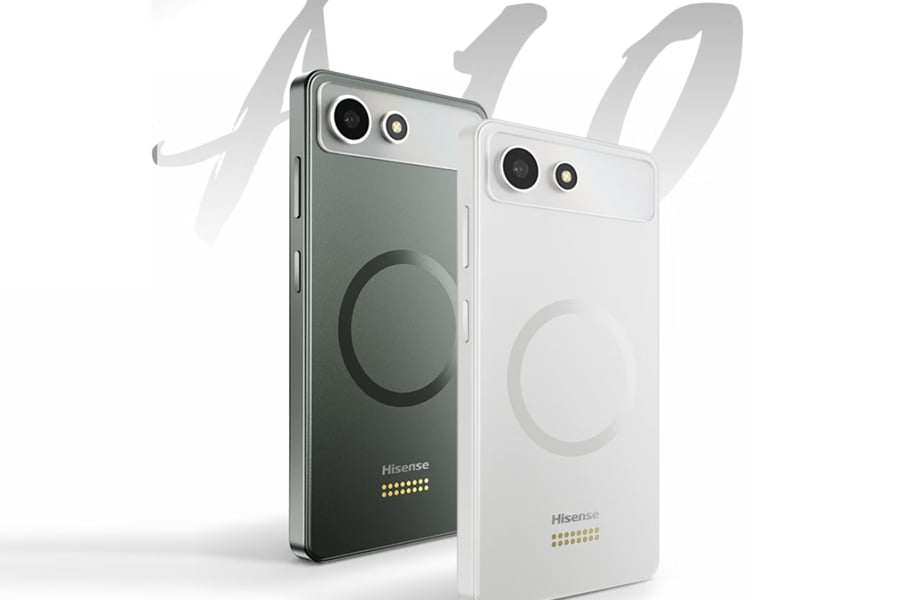
Hisense has finally launched the A10 e-ink phone after months of teasers. The lineup includes two models, the A10 Pro and A10 Ultra, with prices starting at 2,799 yuan.

The A10 Pro is available in three configurations. The 8GB+128GB model costs 2,799 yuan (~$416), while the 8GB+256GB and 12GB+512GB versions are priced at 2,999 yuan (~$446) and 3,499 yuan (~$521), respectively. 

The A10 Ultra costs 3,198 yuan (~$476) for 8GB+128GB, 3,398 yuan (~$506) for 8GB+256GB, and 3,898 yuan (~$580) for 12GB+512GB. Both models come in Moon White and Bamboo Green and weigh 190 grams.

A paper-like e-ink display

Both phones feature a 6.13-inch Carta 1300 e-ink display with a resolution of 1648 x 824 pixels and a pixel density of 300 PPI. The screen supports 256 levels of grayscale and 36 levels of dual-color front lighting.

Unlike a traditional phone display, the e-ink panel relies on reflected ambient light to produce an image. It also has no blue light and does not flicker. Hisense says the screen is designed for tasks such as reading e-books, annotating PDFs, and studying.

The display is also paired with an E Ink T2000 hardware TCON chip. This chip handles screen refresh independently, reduces ghosting, and takes some of the workload away from the main processor.

A detachable color screen

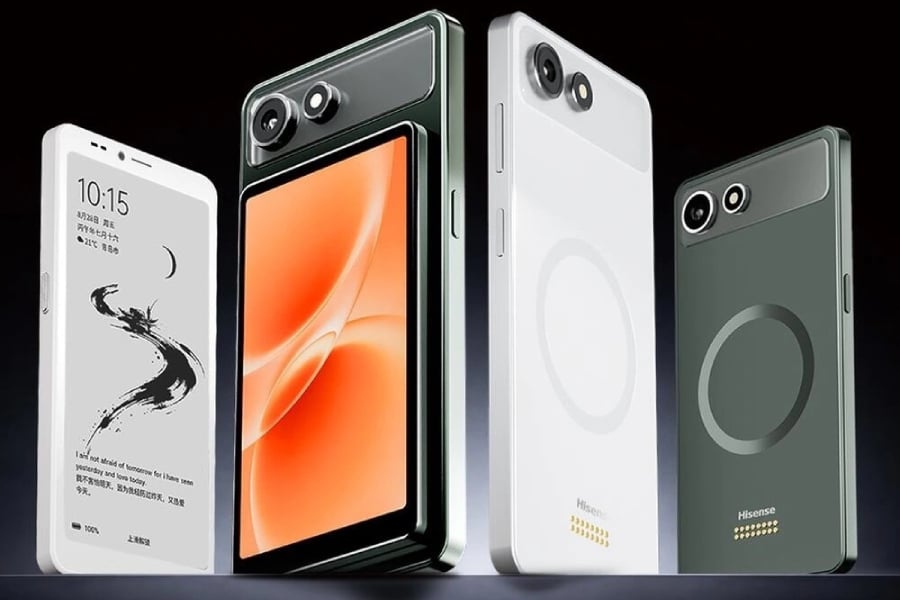
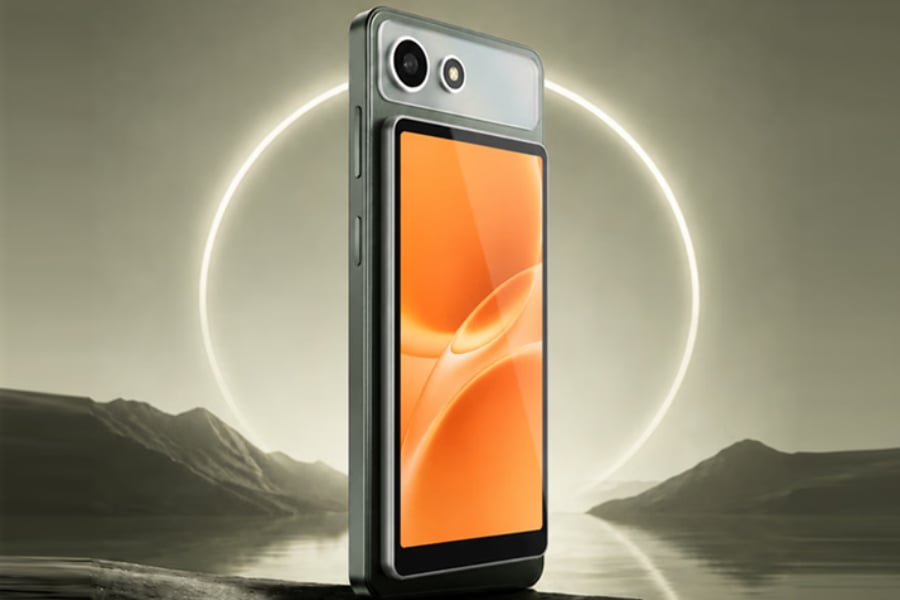
The biggest feature of the A10 series is the optional magnetic color screen. The 4.96-inch LCD panel attaches to the back of the phone using a magnetic ring and metal contacts. It can be attached or removed whenever needed.

With the color screen attached, the A10 can be used more like a regular smartphone. Users can browse color comics, view charts and images, watch short videos, and use social media apps. You can simply detach it when you do not need it.

The A10 Ultra comes with the magnetic color screen in the box. The A10 Pro, meanwhile, has the magnetic contacts built into the phone but does not include the secondary screen. Users can purchase the accessory separately if they want it.

Snapdragon chip with 5G

The A10 series is powered by Qualcomm’s QCM6690 octa-core processor, built on a 4nm process. The chip supports 5G connectivity and has been optimized for e-ink devices.

Hisense says the phone can automatically reduce the processor’s frequency and power consumption during static reading. For demanding tasks, it can increase performance to keep the interface responsive.

The phones pack 4,000mAh batteries with support for 18W wired charging and 15W wireless charging. The Ultra also supports magnetic wireless charging.

The A10 series runs Android 16 out of the box and supports long-term system updates and security patches. Unlike some e-ink phones that limit the apps you can install, the A10 allows users to install Android apps normally.

The phones also come with a 48MP main rear camera and an 8MP front camera. Other features include NFC, an infrared remote control, Wi-Fi 6, call recording, and app cloning.

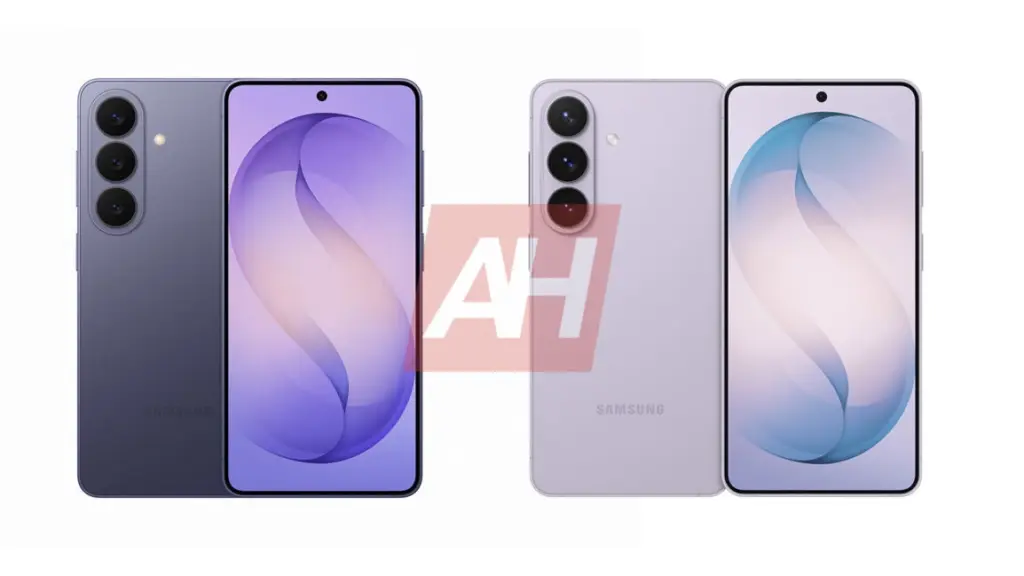
Galaxy S27 render reveals design almost identical to the S26

Some fresh CAD renders of the regular Galaxy S27 have leaked, courtesy of OnLeaks and Android Headline, giving us an early peek at next year’s base flagship. While the Ultra is getting more attention for possible redesigns, the standard S27 looks like it’s sticking with Samsung’s usual “refine, don’t reinvent” approach.

The leaked images show a phone that looks almost identical to the Galaxy S26, which itself didn’t stray far from the S25 design. The vertical triple-camera setup is still on the back, and the overall shape feels very familiar. Dimensions are listed at roughly 149.75 x 71.88 x 7.25 mm, only a tiny bit bigger than the S26’s 149.6 x 71.7 x 7.2 mm. The 6.3″ display is also expected to stay the same. Bigger design changes seem to be saved for the Ultra model.

On the chip side, Samsung could tweak its strategy. The base S26 used the Snapdragon 8 Elite Gen 5 for Galaxy in some markets and the Exynos 2600 in others. Early signs point to the Exynos 2700 performing well enough that a wider regional rollout is being considered. The base S27 is expected to stick with 12GB of RAM and 256GB of storage as the starting point.

Cameras are widely expected to carry over mostly unchanged from the S26, so the main, 3x telephoto, ultrawide, and front sensors should return for another year. Samsung is also reportedly working on silicon-carbon batteries for the series. The regular S27 could hit around 4,900 mAh (600 mAh more than the S26), while the Ultra might go higher, with rumors pointing to roughly 5,700 mAh.

The Galaxy S27 series is currently expected around February 2027, though Samsung hasn’t confirmed anything. There’s no word on the pricing yet. The S26 jumped to $899 in the US, and rising memory costs could push the price even higher this time around.

Don’t miss a thing! Join our Telegram community for instant updates and grab our free daily newsletter for the best tech stories!

For more daily updates, please visit our News Section.

(Source: Android Headlines)

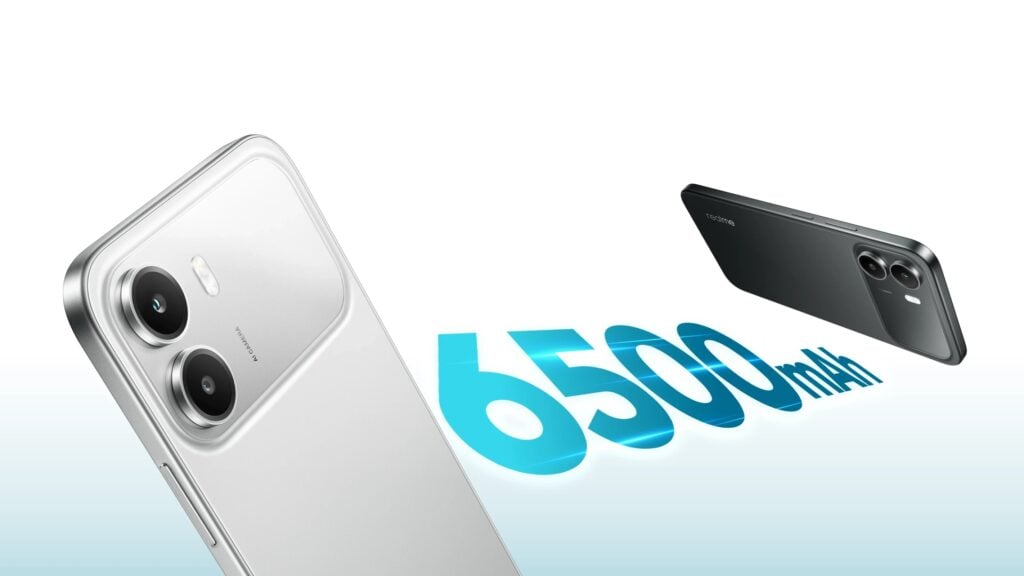
Realme C100i launches at ₹14,999 with 6.8″ HD+ LCD display, 6,500mAh battery, Unisoc T7250 chipset

Realme has dropped another affordable phone in its C series just weeks after the C100x, and the focus is clearly on the practical stuff people actually need day to day. With memory costs climbing, the company is trying to offer a long battery life without pushing the price too high.

The Realme C100i comes in a single 4GB + 64GB config at ₹14,999. Colour options are Skyline Silver and Midnight Black, and you can buy it from realme’s official site or Flipkart. Right now Flipkart buyers can knock ₹1,000 off with an IndusInd Bank credit card.

One of the main talking points is the ArmorShell build. It meets the MIL-STD-810H standard and is claimed to survive drops from up to 2 metres. On top of that it has an IP64 rating for dust and light water resistance, which is pretty solid for a phone in this price range.

The screen is a 6.8″ HD+ LCD with a 120Hz refresh rate, so scrolling feels smoother than what you usually get at this level. Power comes from a Unisoc T7250 chipset (12nm) with 4G connectivity. Its paired with 4GB of physical RAM (virtually expandable up to 12GB) and 64GB of storage that can take a microSD card up to 2TB.

Cameras stay basic, with 8MP at the back and 5MP up front, fine for casual photos and video calls. The real practical win is the big 6,500mAh battery with 15W charging, which should easily stretch past a full day for light to moderate use.

It runs Android 16 with realme UI 6.0. Overall, the C100i is a straightforward option for anyone looking for an entry-level phone with long battery life. Apart from older family members who would mainly use the phone for calls and a bit of content consumption, it can also be a good pick as a secondary phone.

Don’t miss a thing! Join our Telegram community for instant updates and grab our free daily newsletter for the best tech stories!

For more daily updates, please visit our News Section.

(Source: Realme)

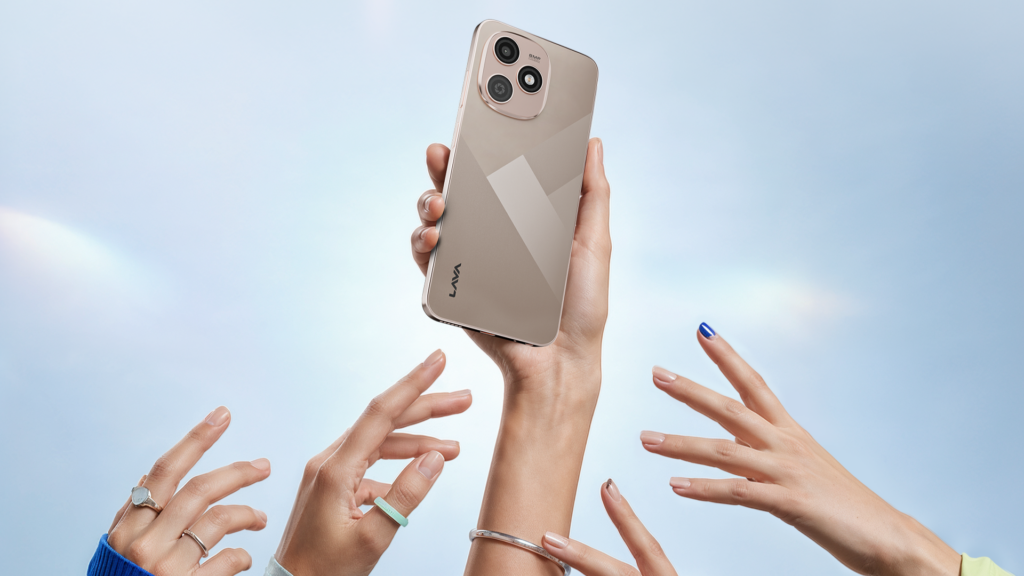
Lava Bold N4 Lite launched at ₹8,099 with 6.56″ qHD LCD display, 5,000mAh battery

Lava just added a new entry-level phone to its Bold series, aimed at people who want something simple and cheap without any extras. With component costs climbing and making budget phones tougher to build, the company is pitching this one as an easy everyday option.

The Lava Bold N4 Lite has an MRP of ₹8,099, but it’s launching at a limited-time price of ₹7,999 exclusively on Amazon. Sales kick off on September 3, 2026. It comes in Empire Gold and Ghost Silver.

It runs Android 16 Go Edition, which is built for lower-end hardware. The screen is a 6.56″ qHD display (960×540 resolution). Under the hood is an octa-core Unisoc 9863A chipset on a 28nm process. You get 3GB of RAM (which can virtually expand up to 6GB) and 32GB of storage, expandable with a microSD card.

Cameras are basic: an 8MP rear and a 5MP front, fine for quick snaps and video calls. The practical highlight is the 5,000mAh battery with 10W charging, which should easily last a full day for light use. It also has a side-mounted fingerprint scanner and MIL-STD-810H durability certification for better everyday toughness.

Lava is giving it two years of security patches and its Free Service @ Home program for doorstep support. In a market where memory shortages are driving prices up, the Bold N4 Lite sticks to the basics: solid battery life, some durability, and a low price, while clearly trading off performance and camera quality compared to pricier phones.

This one is squarely for people who just need a low-cost Android phone for calls, messages, light browsing, and simple apps, without expecting anything close to flagship speed or photo quality.

Don’t miss a thing! Join our Telegram community for instant updates and grab our free daily newsletter for the best tech stories!

For more daily updates, please visit our News Section.

(Source)

Best Smartwatches of 2026

This year’s smartwatch launches were packed into a short period. Samsung and Google introduced their new watches in July and August, while Garmin also released the Fenix 9 series just recently. 

Most of the major changes this year focus on health, fitness, and battery life. Samsung improved its sleep apnea and cardio tracking features, and Google introduced a breathing emergency detector that can contact emergency services automatically. Here are five of the best smartwatches to consider in 2026.

1. Best for iPhone Users

Apple Watch Series 11

The Apple Watch Series 11 keeps the familiar design, but Apple has added some useful health features. The biggest addition is hypertension notifications. The watch looks for signs of long-term high blood pressure by analyzing blood vessel responses over 30 days using its optical heart sensor. Apple trained the feature using data from more than 100,000 participants and tested it in a clinical study involving 2,000 people.

Apple also introduced a new sleep score system that looks at sleep duration, sleep stages, and bedtime consistency. You can check the score on the watch or through the Health app.

The Series 11 also supports 5G through a redesigned antenna system. Its fast charging can provide up to eight hours of use after just 15 minutes of charging. Battery life is rated at up to 24 hours with normal use and up to 38 hours in Low Power Mode.

The aluminum models use updated Ion-X glass, which Apple says is twice as scratch-resistant as the previous generation. The watch comes in 42mm and 46mm sizes. Prices start at $399 for the GPS model and $499 for GPS + Cellular.

For iPhone users, the Apple Watch Series 11 is the easiest option to recommend thanks to its close integration with Apple’s apps, notifications, and health features.

2. Best Rugged Option

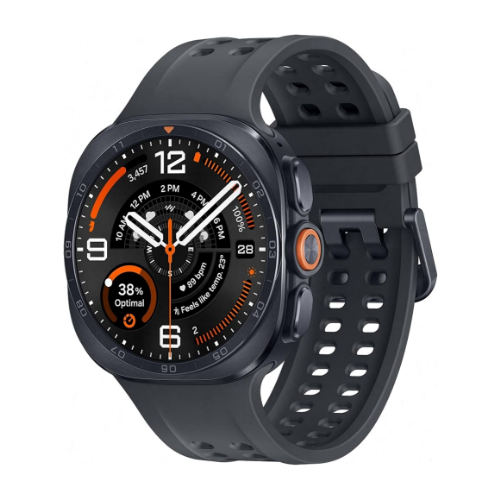
Samsung Galaxy Watch Ultra 2

The Galaxy Watch Ultra 2 is Samsung’s most rugged smartwatch, built for outdoor activities. It keeps the titanium case from the original Ultra but is 12% thinner. Its 1.52-inch Sapphire Crystal Super AMOLED display can reach 5,000 nits, making it easier to see in direct sunlight.

Samsung launched the Watch Ultra 2 alongside the Galaxy Watch 9. Both watches are powered by Qualcomm’s 3nm Snapdragon Wear Elite chipset. The battery has also grown to 800mAh, which is 35% larger than the battery in the previous Ultra. Samsung has added a Trail Run mode that tracks elevation and terrain during outdoor runs.

The watch uses Samsung’s BioActive sensor system for health tracking. It supports features such as FDA-cleared sleep apnea detection, Heart Health Score, and Daily Cardio Load tracking to help with workout recovery.

The Galaxy Watch Ultra 2 starts at $699 for the LTE version in the US and €749 in Europe. 

3. Best for Google Users

Google Pixel Watch 5

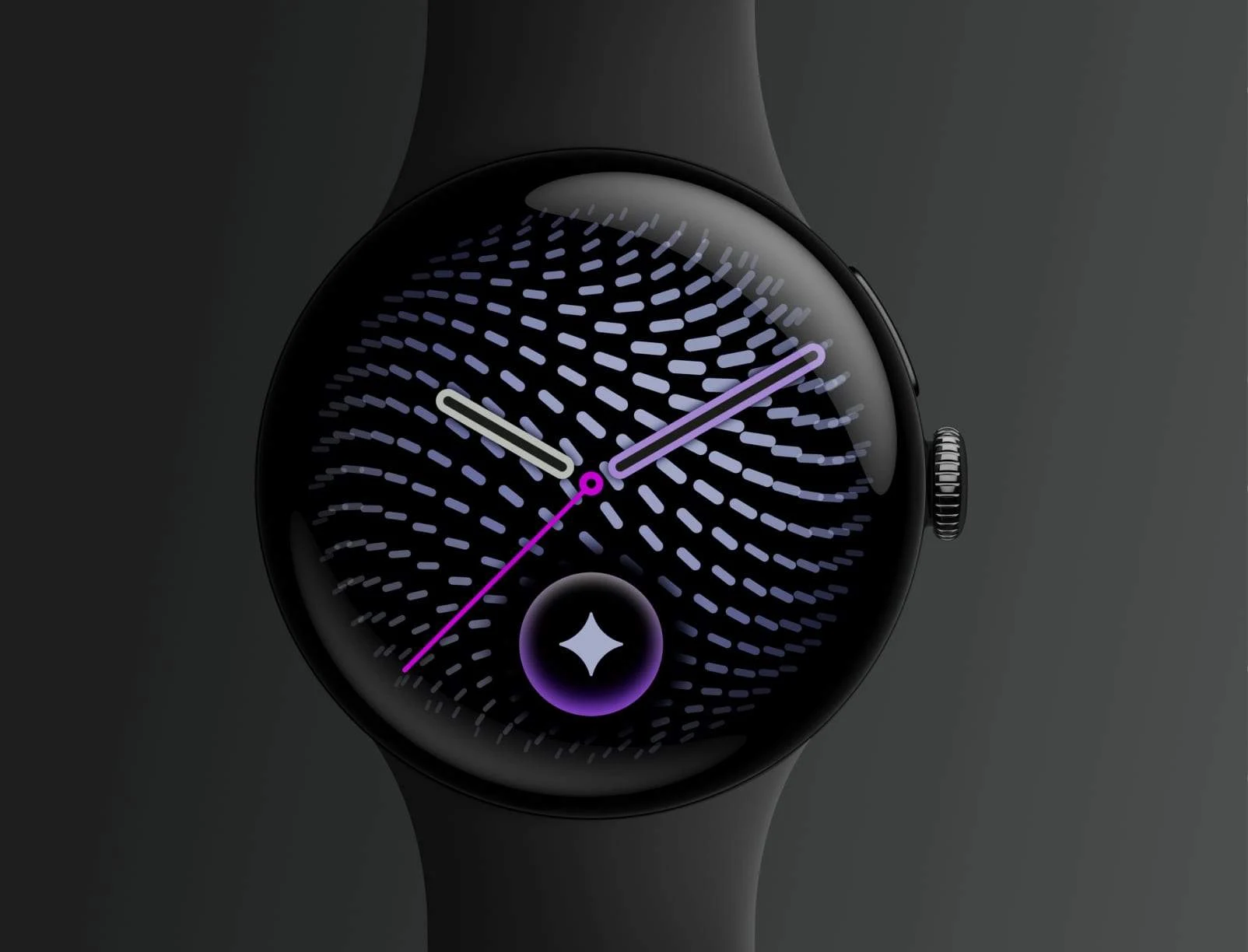
The Pixel Watch 5 keeps the round design with curved glass that has become a signature of the Pixel Watch series. This year’s model adds deeper Gemini AI integration along with several new health features.

One of the most notable additions is Breathing Emergency Detection, which will launch first in Europe. It monitors for major drops in blood oxygen and can automatically contact emergency services if the wearer becomes unresponsive.

Google also improved the battery life on both versions. The 41mm model has a 332mAh battery and is rated for up to 30 hours with the always-on display enabled. The larger 45mm model has a 465mAh battery and can last up to 40 hours. Both models can charge to 50% in around 15 minutes with the included charging dock.

The 41mm model starts at $399 for Wi-Fi and $499 for LTE. The 45mm version starts at $429 for Wi-Fi and $529 for LTE, making the Pixel Watch 5 more expensive than the previous generation.

4. Best for Outdoor Adventures

Garmin-Fenix-9

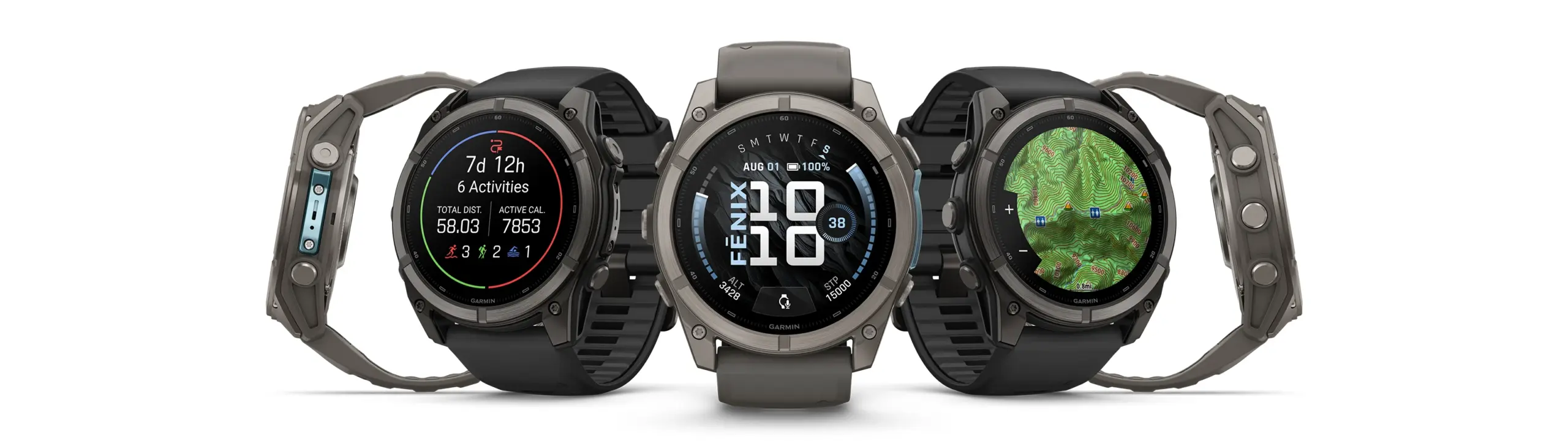
Garmin’s Fenix watches are designed for people who spend a lot of time outdoors, and the Fenix 9 continues that approach. It has a display that can reach 3,000 nits of brightness, satellite messaging support, and much longer battery life than most mainstream smartwatches.

Garmin rates the Fenix 9 for up to 57 days of battery life, depending on the mode you use. The company launched it alongside the Fenix 9 Pro, with the Pro model adding built-in inReach connectivity for two-way satellite messaging without a phone.

The watch has 64GB of storage, enough for around 7,000 offline songs. It also includes TopoActive maps for multiple continents and fitness features such as Training Readiness, Endurance Score, and an ECG app for AFib detection.

Garmin has also added Garmin Epic, which puts several days of activities, photos, and health data into a single timeline. The Fenix 9 starts at $999.99, while the Fenix 9 Pro starts at $1,099.99.

5. Best Value

Amazfit Balance 3

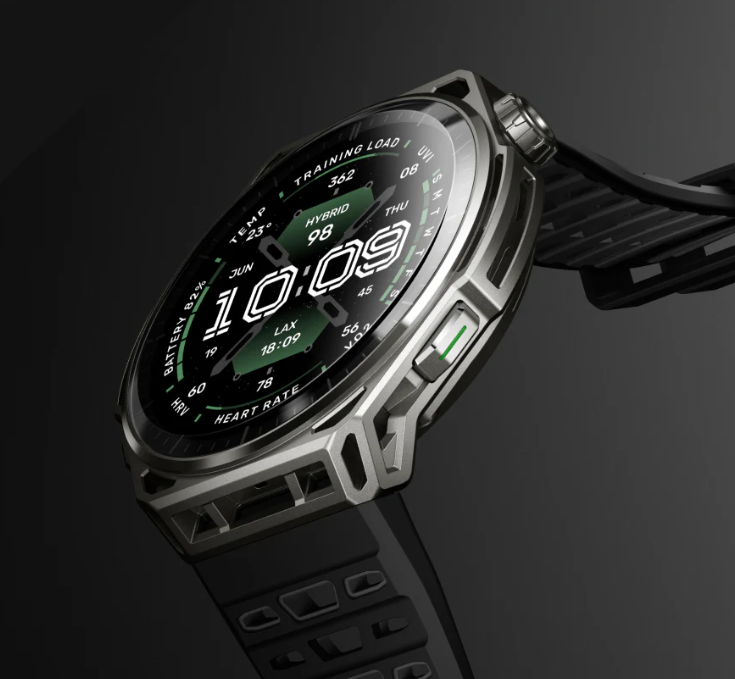
The Amazfit Balance 3 is made for people who want a capable smartwatch without spending flagship-level money. It has a 1.5-inch AMOLED display with sapphire crystal glass and can reach up to 3,000 nits of peak brightness.

Amazfit launched the Balance 3 with a 51.4mm case. It is 14.6mm thick and weighs 62 grams in the stainless steel version. A lighter 55-gram titanium version is also planned.

The watch has a 10ATM water resistance rating, and its HybridCharge Energy Intelligence system tracks training load, daily stress, and sleep. It can then use this information to suggest when you should focus on rest and recovery.

Amazfit has not announced global pricing for the Balance 3 yet. The previous Balance 2 launched at $299 in the US and Rs 24,999 in India, which gives us an idea of where the new model could be priced.

6. Which Smartwatch Should You Buy?

The Apple Watch Series 11 is the best choice for iPhone users who want seamless access to Apple’s apps, notifications, and health features. The Samsung Galaxy Watch Ultra 2 is a better fit for Android users who want a rugged design, strong health tracking, and a larger battery.

The Google Pixel Watch 5 makes the most sense for Pixel users and anyone who wants Gemini AI features built into their smartwatch. The Garmin Fenix 9 is the better choice for outdoor activities, navigation, and long battery life.

Finally, the Amazfit Balance 3 is a good option for anyone who wants a capable smartwatch without spending as much as they would on a flagship model.

For more daily updates, please visit our News Section.

Stay ahead in tech! Join our Telegram community and sign up for our daily newsletter of top stories!

Honor 600S 5G launches with an 8,100mAh battery, 120Hz display, AI Key, and a durable build

Honor has quietly unveiled the Honor 600S 5G, which brings together a large battery, durable build and several AI-powered features in a mid-range smartphone package. The phone has been listed officially with its specifications and key features, giving us a clear idea of what it offers. It is also set to reach Hong Kong and Taiwan markets with an affordable starting price.

Honor 600S 5G specifications and features

Honor 600S 5G
Honor 600S 5G

The Honor 600S 5G features a 6.87-inch TFT LCD with a 1592×720-pixel resolution, 120Hz refresh rate and up to 1020 nits peak brightness. The display supports DC and dynamic dimming, low blue light and dark mode.

Under the hood, the phone runs on the Snapdragon 4 Gen 4 chipset with 8GB RAM and 128GB storage, while Honor’s RAM Turbo technology can provide a virtual 16GB memory experience. It runs MagicOS 10 based on Android 16.

The phone packs an 8,100mAh battery with support for 45W wired charging. Honor claims the battery can retain more than 80% capacity after five years under its laboratory testing conditions. For photography, it features a 50-megapixel f/1.8 rear camera and a 5-megapixel front camera, with both supporting 1080p video recording.

The Honor 600S 5G also includes an AI key for quick access to features such as AI Memory, Circle to Search, AI image removal and AI summaries. Its AI Image-to-Video 2.0 feature can generate and edit short videos through conversational commands. Other features include NFC, a side-mounted fingerprint senor, and stereo speakers with a claimed 400% volume mode.

The device measures 168.3×78.54×8.30mm and weighs 216.5 grams. It also carries IP68, IP69 and IP69K ratings, along with a claimed 2.5-metre drop resistance certification.

Honor 600S price and availability

Honor 600S 5G
Honor 600S 5G

The Honor 600S 5G comes in Desert Gold, Misty Purple and Velvet Black color options. The phone is priced at HK$1,999 (~$255) for the 6GB+128GB version in Hong Kong. Apart from HK, Taiwan is the other market that’s expected to receive the Honor 600S.

For more daily updates, please visit our News Section.

Stay ahead in tech! Join our Telegram community and sign up for our daily newsletter of top stories!

Oppo’s ProXDR camera tech could bring 17EV dynamic range, 4K HDR video to Find X10

Oppo is preparing another major step in smartphone imaging, with the company revealing a new technology focused on improving how cameras capture and display high-dynamic-range content. The announcement comes from Oppo Chief Product Officer and OnePlus founder Liu Zuohu. It also provides an early look at the imaging direction expected on upcoming flagship devices.

Oppo ProXDR targets a wider dynamic range

Oppo ProXDR camera tech
Oppo’ ProXDR camera tech

The new-generation ProXDR technology combines real-time high-dynamic-range processing with high-resolution imaging in a single system. It is built around DeepPix, a new high-dynamic-range sensor technology, while Oppo has upgraded the complete imaging pipeline from light capture and image processing to final display output. The system can deliver a claimed single-frame dynamic range of up to 17EV.

For video recording, ProXDR supports full-size 4K HDR capture with lower power consumption and improved stability during extended use. Oppo also says users will not need to enable a dedicated setting or switch to a special shooting mode. High-dynamic-range processing is designed to remain active across different shooting conditions automatically.

The company is targeting a more natural representation of real-world scenes, particularly when a frame contains strong differences between bright and dark areas. The wider dynamic range should help retain more detail in highlights and shadows, while Oppo is also focusing on natural lighting transitions and accurate color reproduction.

ProXDR is only the first part of Oppo’s broader imaging plans. Liu Zuohu also revealed that the company is redesigning its native camera application, building on developments from previous generations while changing how the camera system presents and captures images.

The ProXDR technology is expected to arrive first on the Oppo Find X10 series, which is scheduled for a September launch. The upcoming lineup is also expected to focus heavily on flagship imaging hardware and processing capabilities, making ProXDR an important part of Oppo’s next camera push.

For more daily updates, please visit our News Section.

Stay ahead in tech! Join our Telegram community and sign up for our daily newsletter of top stories!

Vivo X500 Pro Max gets a massive 6.85-inch 2K display, promises better visuals and efficiency

For the past few days, Vivo Product Manager Han Boxiao has been confirming new features of the Vivo X500 series. In his latest Weibo post, he has confirmed details about the new display panel on the Vivo X500 Pro Max. The new panel is aimed at improving visual quality while addressing some of the compromises traditionally associated with high-resolution smartphone displays.

A 6.85-inch 2K display with major improvements

Vivo X500 Pro Max display specs

The Vivo X500 Pro Max will be the first smartphone globally to feature a 6.85-inch BOE’s Q11 2K Zeiss Master Color display with support for a 2K resolution. The higher pixel density should also help maintain sharper visuals as screen sizes increase.

The Q11 panel uses upgraded BOE light-emitting materials and platform-level improvements. According to Vivo, motion blur during scrolling has been reduced by 93% compared with the previous generation. Hardware-level Demura processing combined with Vivo’s pixel-level compensation algorithms also improves color uniformity by 43% and brightness uniformity by 22%. These changes are intended to deliver more consistent colors and brightness across the panel.

The display also targets the usual power and longevity trade-offs associated with 2K panels. Vivo says the screen consumes 21% less power than its previous-generation 1.5K display, while its lifespan has doubled. This means the higher resolution does not necessarily come at the expense of power efficiency or panel durability.

For brightness adjustment, the Vivo X500 Pro Max features an under-display high-precision multispectral sensor. It can detect visible light across different spectrums and color temperatures, with a claimed 98% match to the light visible to the human eye. Vivo says this helps the phone respond more naturally when ambient lighting changes.

The sensor works with 0.3-lux screen brightness adjustment precision, which the company describes as the best in the Android segment. Vivo is expected to reveal more information about the X500 Pro Max, including OriginOS 7 and the standard X500 and X500 Pro, next week. The X500 series is scheduled to launch in China in September.

For more daily updates, please visit our News Section.

Stay ahead in tech! Join our Telegram community and sign up for our daily newsletter of top stories!

Top 5 Alternatives for Vivo V80 Lite 5G in 2026

The Vivo V80 Lite 5G targets shoppers who want a lightweight profile, dependable daily endurance, and clean aesthetics in the accessible mid-range category. With a 6.83-inch 1.5K 120Hz AMOLED screen, a MediaTek Dimensity 7360-Turbo chip, 50-megapixel dual cameras, and a 7,050mAh battery with 44W charging, it provides solid everyday fundamentals.

Vivo V80 Lite 5G
Vivo V80 Lite 5G

However, buyers exploring the broader mid-range landscape will find that several competing devices offer sharper high-resolution displays, faster charging technologies, upgraded processors, and longer software commitments. Here are the top five alternatives to consider if you want the best balance of features without moving into premium price brackets.

5Samsung Galaxy A37 5G

Samsung-Galaxy-A37-5G
Samsung Galaxy A37 5G

A dependable all-rounder for buyers who prioritize Samsung’s ecosystem, familiar software, and long-term support.

The Galaxy A37 5G is the most conservative option here, but that can suit buyers who prefer a familiar software experience. It has a 6.7-inch 120Hz display, Samsung’s in-house Exynos 1480 processor, UFS 3.1 storage, and a 5,000mAh battery with 45W charging. These specifications are less aggressive than the Vivo’s, but Samsung’s ecosystem and software experience can make the phone easier to live with.

Its rear cameras include a 50-megapixel primary sensor, an 8-megapixel ultrawide, and a 5-megapixel macro camera. For selfies, it has a 12-megapixel front camera. Android 16 provides a current software base, while Samsung’s long-term support approach adds significant value. The Galaxy A37 5G is eligible for up to six major Android OS upgrades and six years of security updates, giving it the longest potential software lifespan among these five alternatives.

Other compelling alternatives across this tier include the balanced OnePlus Nord 6, the Motorola Edge 70 Pro and Edge 70 Pro+, the stylish Vivo V70 FE, last year’s flagship-grade Realme GT 7, the value-focused Realme GT 7T, the reliable Samsung Galaxy A27 5G, and the gaming-oriented Oppo K13 Turbo Pro with its dedicated active cooling fan.

For more daily updates, please visit our News Section.

Stay ahead in tech! Join our Telegram community and sign up for our daily newsletter of top stories!

Next

Best Fitness Bands in 2026

Fitness bands have moved well beyond simple step counting. Today’s fitness bands focus on continuous health monitoring, recovery insights, sleep quality, and long battery life, while keeping the design light enough for all-day wear. Here’s a look at some of the standout models currently available.

1. Google Fitbit Air

Google’s Fitbit Air is one of the lightest trackers available. The body weighs just 5.2 g without the band and is designed for continuous, low-profile wear. It offers up to 7 days of battery life and tracks heart rate, SpO2, skin temperature variation, sleep stages, steps, and activity.

Core metrics work without a subscription through the free Google Health app. A paid Google Health Premium plan unlocks the Gemini-powered Health Coach, adaptive fitness plans, deeper sleep insights, and more personalized guidance. Every Fitbit Air includes three months of Premium free; after that it costs around $9.99 per month or $99.99 per year (it is also included with Google AI Pro and Ultra plans).

The design is minimalist with no display, making it a strong choice for users who prefer a simple band that stays out of the way.

Price: The hardware costs $99.99 or around €95.99 to €99.99.

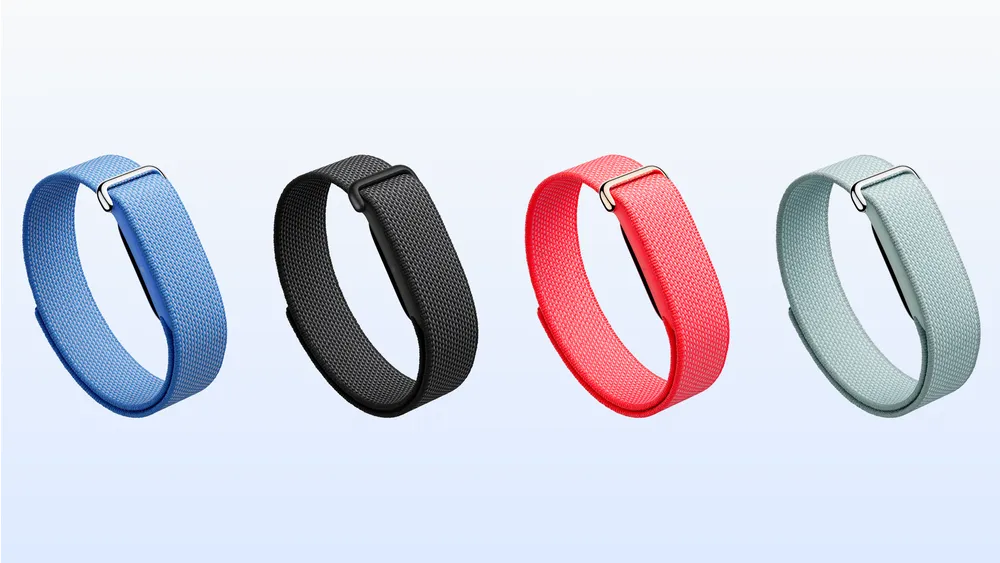
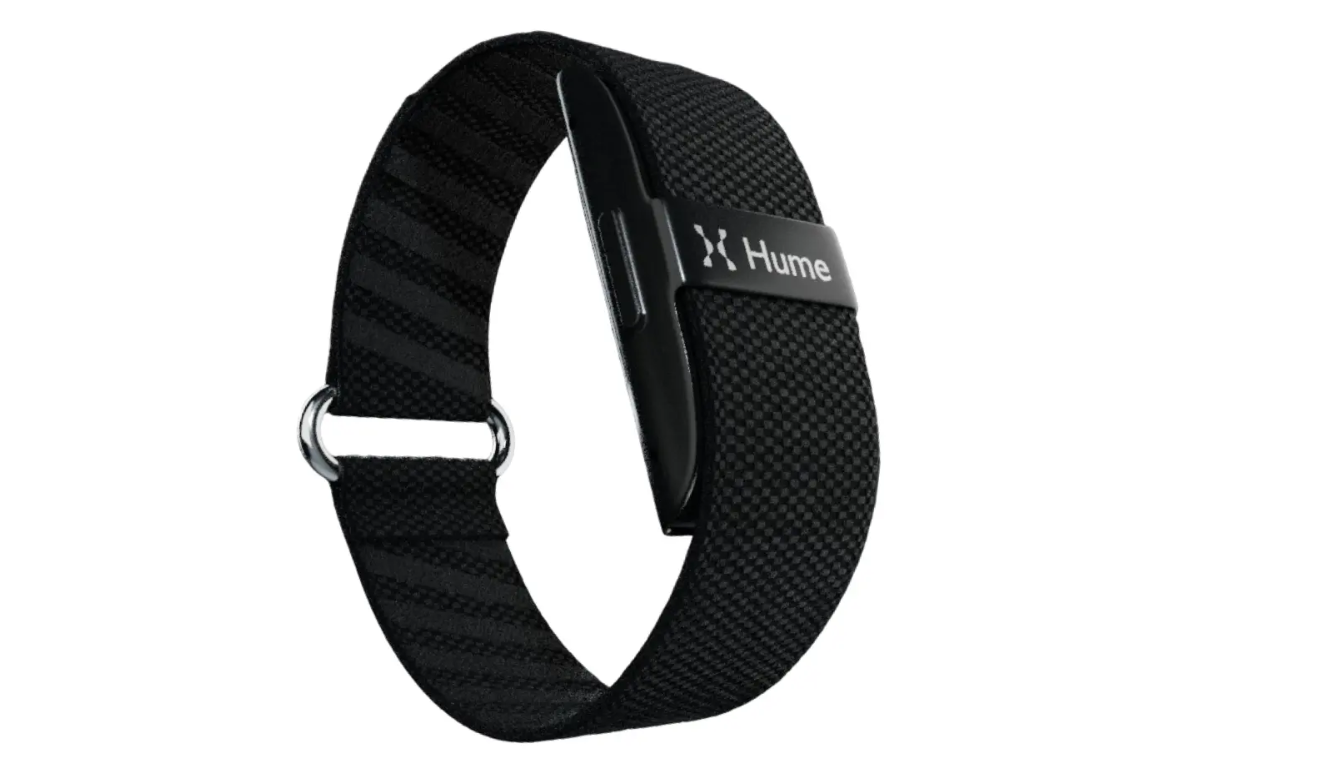
2. Hume Band 2.0

The Hume Band 2.0 is another screen-free option focused on longer-term health trends. It claims up to 14 days of battery life and tracks heart rate, HRV, SpO2, skin temperature, sleep stages, activity, and strain/recovery. A notable addition in the 2.0 version is blood pressure trend tracking. The band also generates metrics such as Biological Age and Pace of Aging.

All of these core health metrics and scores are available in the free Hume Health app with no subscription required. An optional Hume Premium plan (around $8.99 per month) adds AI-powered coaching, personalized recommendations, and deeper reports, but the device works fully without it. It’s aimed at users interested in longevity and early health signals rather than traditional sports tracking or notifications.

Price: Available from the official Hume Health store with worldwide shipping for around $249 (one-time purchase; check the official Hume site for current offers).

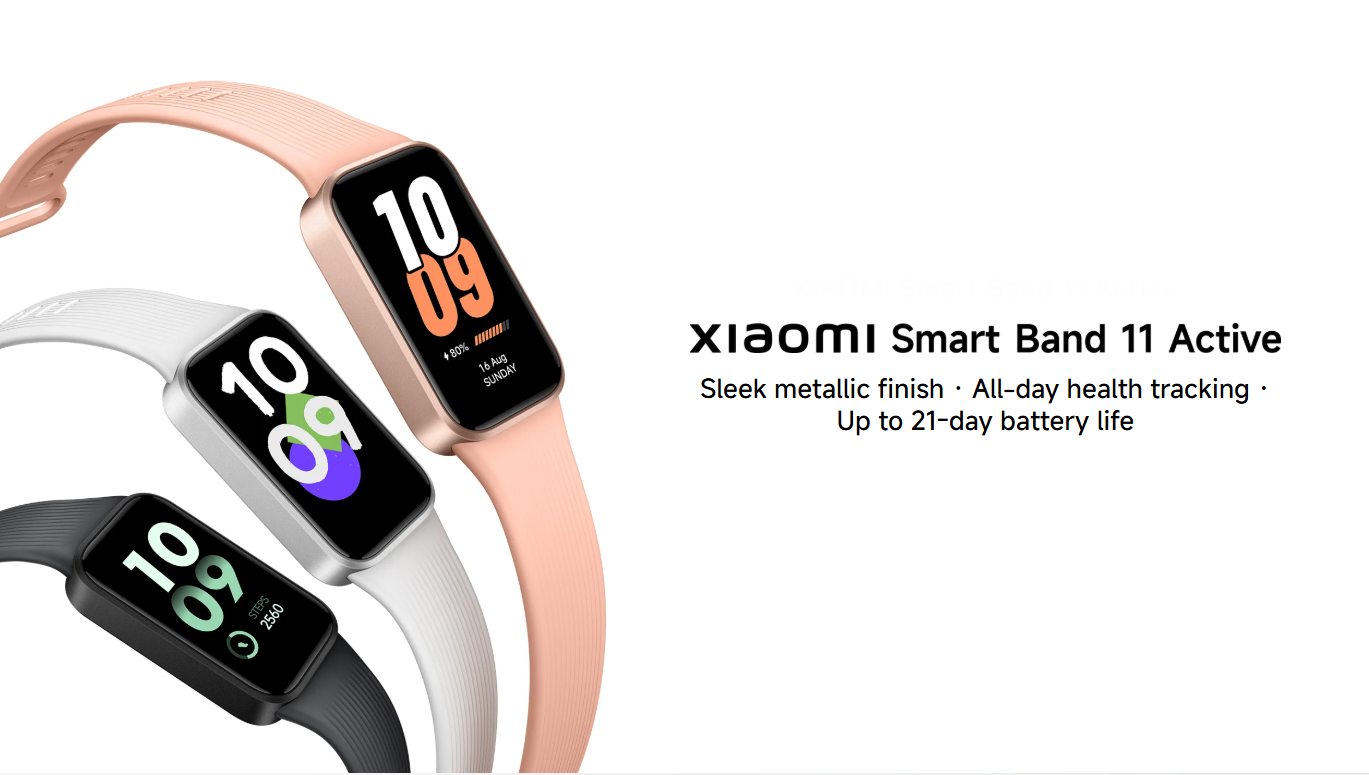
3. Xiaomi Smart Band 11 Active

Xiaomi’s affordable Smart Band 11 Active keeps things practical. It features a 1.47” color display and delivers up to 21 days of battery life in light use (around 8 days with more frequent tracking). Health features include all-day heart rate and SpO2 monitoring, stress tracking, and sleep tracking. It supports 50 workout modes and carries a 5ATM water-resistance rating. The metallic finish gives it a slightly more premium look than earlier budget bands while remaining lightweight.

Price: The Xiaomi Smart Band 11 Active is gradually rolling out to early markets in Europe and Asia. It costs PLN 139 (Poland), Php 1,999 (Philippines), and 990,000 VND (Vietnam). Outside these regions, expect a price around €30–€40.

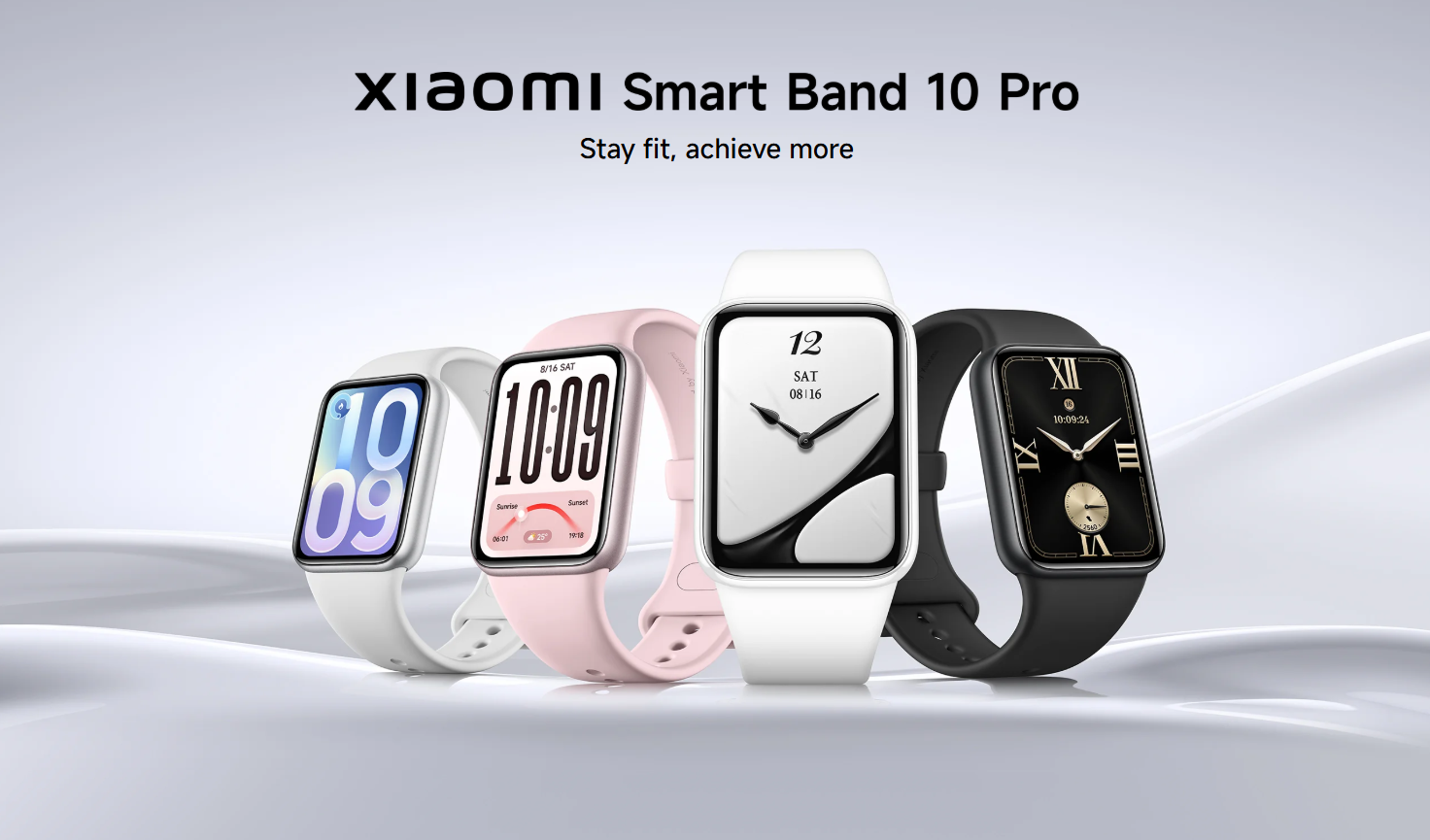
4. Xiaomi Smart Band 10 and 10 Pro

The standard Smart Band 10 sits in Xiaomi’s mainstream range, while the 10 Pro steps up the experience. The Pro version uses a larger 1.74” AMOLED display that reaches up to 2000 nits peak brightness, making it easy to read outdoors. Battery life reaches up to 21 days in light use. Health tracking covers continuous heart rate, SpO2, stress, sleep (including HRV during sleep on the Pro), and a wide selection of sports modes. The Pro also adds independent GNSS for better outdoor tracking and a more refined build with aluminium or ceramic options.

Price: The standard and pro variants cost about €45 and €65 respectively. Both models are available across global markets including Europe, Latin America, the Middle East, and Southeast Asia.

5. Huawei Watch Fit 5 Pro

The Watch Fit 5 Pro leans closer to a lightweight smartwatch while still functioning as a strong fitness band. It features a bright 1.92” AMOLED display and offers up to 10 days of battery life with lighter use (around 7 days with more typical tracking). Huawei’s TruSense system handles continuous heart rate, SpO2, sleep analysis (TruSleep), stress/emotion insights, and more. It also includes an ECG sensor. The design uses a rotating crown and a relatively slim profile, with solid water resistance for swimming and everyday wear.

Price: This one costs approximately €300, £249.99 in the UK, around 549 AUD in Australia. Check Huawei’s official store or authorised retailers for current regional pricing.

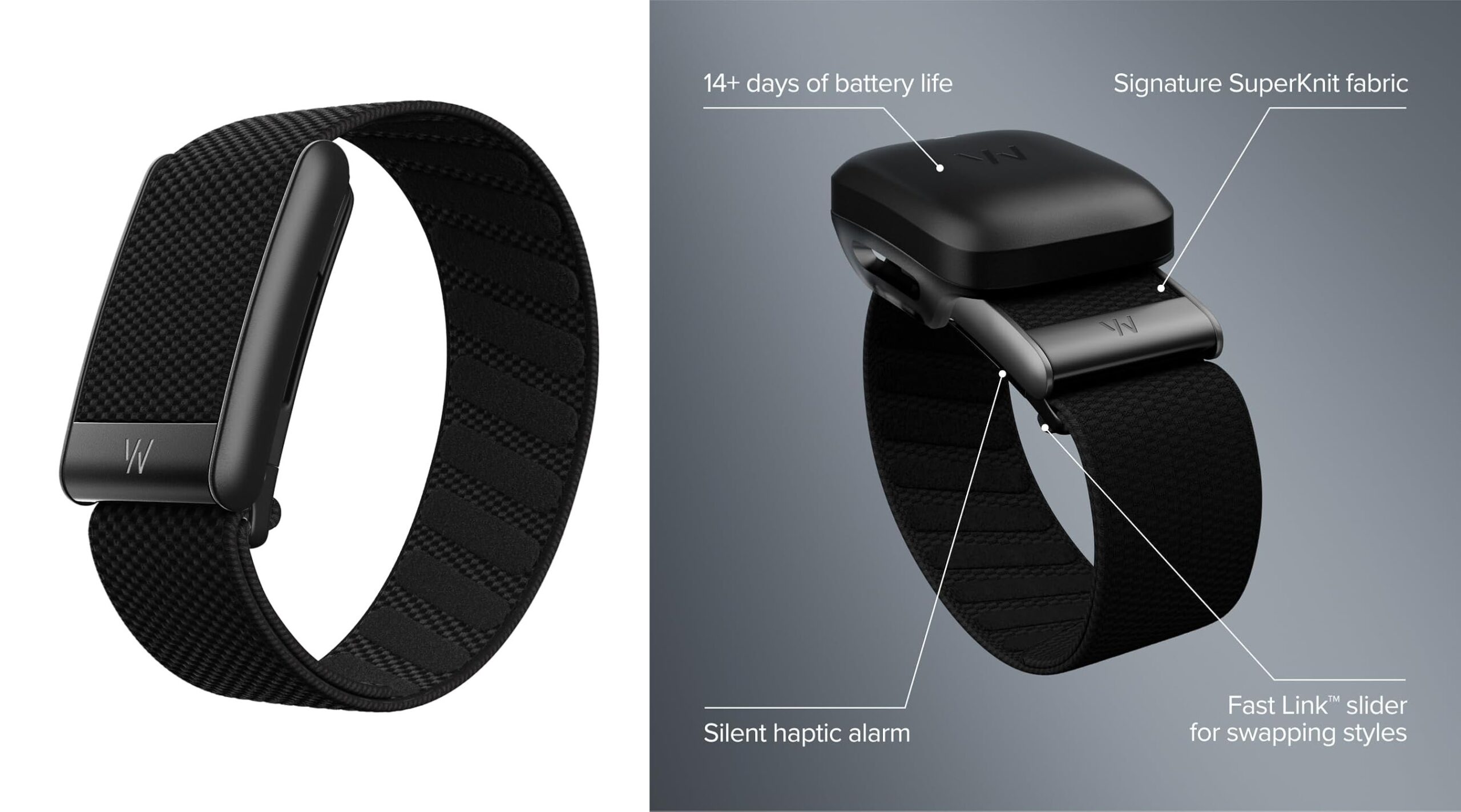
6. WHOOP 5.0 and WHOOP MG

WHOOP takes a different approach from most fitness bands. It relies on a mandatory subscription model. The WHOOP 5.0 delivers up to 14 days of battery life. It continuously tracks heart rate, heart rate variability (HRV), respiratory rate, skin temperature, sleep, and recovery. Its Healthspan features estimate physiological age and pace of aging based on long-term data. It’s designed for people who want deep recovery and training insights rather than on-wrist notifications or a bright display.

WHOOP MG delivers over 14 days of battery life, adds medical-grade features including on-demand ECG readings, daily blood pressure insights, and AFib detection.

Price: WHOOP offers three different subscription tiers:

  • WHOOP One: Includes WHOOP 5.0 device and features core fitness and sleep tracking for $199 per year.
  • WHOOP Peak: Includes WHOOP 5.0, a wireless PowerPack, and offers advanced health and stress monitors for $239 per year.
  • WHOOP Life: Includes specialized WHOOP MG hardware to provide medical-grade ECG and blood pressure tracking for $359 per year.

The hardware stops tracking once you cancel your membership.

Don’t miss a thing! Join our Telegram community for instant updates and grab our free daily newsletter for the best tech stories!

For more daily updates, please visit our News Section.

Caviar launches wild iPhone 17 Pro with Geiger counter, titanium body, and Swiss watch

If you’ve ever felt the need to check for gamma radiation while checking your text messages, Caviar has a new custom phone for you. The company, which usually makes headlines for covering Apple devices in gold or rare materials, just announced a modified iPhone 17 Pro that includes a built-in Geiger counter. It’s called the Geiger, and it starts at $13,130.

Caviar iPhone 17 Pro Built-In Geiger Counter

Design Details

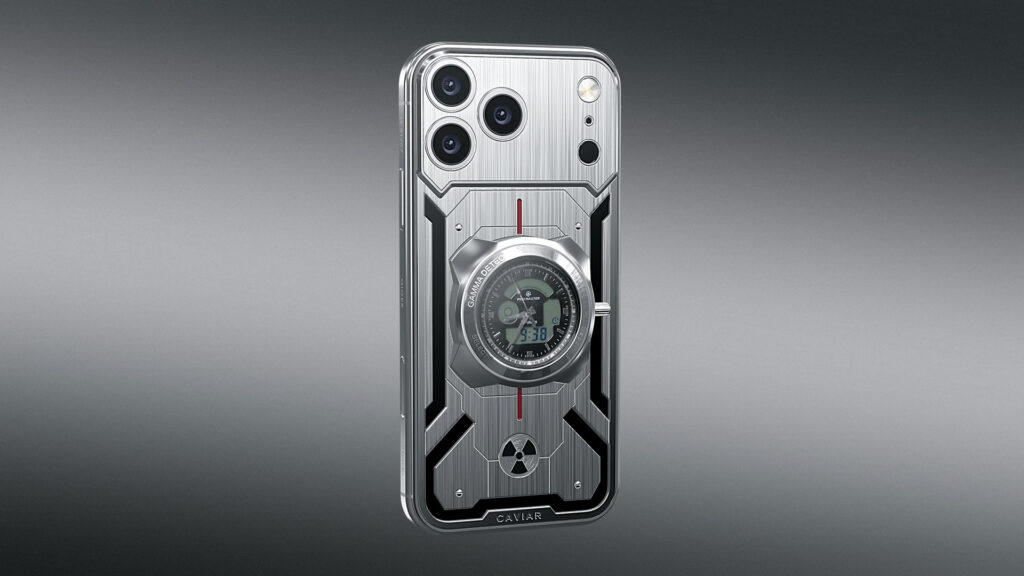
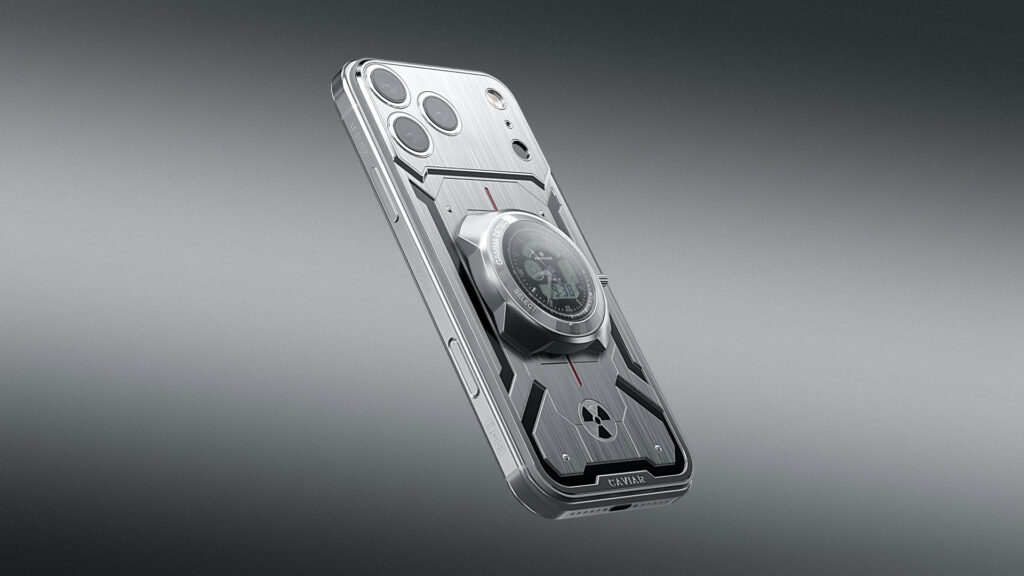
Instead of just making a rugged case, Caviar actually embedded a physical dosimeter watch, specifically the SIG-RM1208, into the back of the iPhone 17 Pro and Pro Max. This isn’t a digital trick or a companion app. It is a functional Geiger-Müller counter that reads gamma radiation levels in your immediate area.

The watch module sits right in the middle of the phone’s back panel. It has a small digital display that shows the current radiation readings, and you can set it to beep if the levels cross a certain threshold. Around that digital screen is a standard analog watch face, which runs on a basic Swiss Ronda 763 quartz movement to tell the time.

Caviar iPhone 17 Pro Built-In Geiger Counter

To make the phone match the hardware, Caviar completely changed the exterior. They swapped Apple’s standard glass back for a heavy-duty titanium shell. It looks like a piece of industrial equipment, complete with exposed screws, thick metal panels, and a red line running down the center.

There is also a raised radiation hazard symbol near the bottom, just in case the giant watch dial didn’t give it away. Naturally, all this extra metal and the watch mechanism add a lot of bulk, making the device significantly thicker and heavier than a normal iPhone.

Caviar iPhone 17 Pro Built-In Geiger Counter

Caviar is only making seven of these phones in total. Each one will have its production number engraved on the case and comes with a certificate of authenticity. The $13,130 starting price gets you the base 256GB iPhone 17 Pro, though the price goes up if you want more storage or the larger Pro Max model.

In related news, Caviar has recently unveiled an ultra-luxury iPhone Ultra featuring a sterling silver makeover with a hefty $18,840 price tag.

For more daily updates, please visit our News Section.

Stay ahead in tech! Join our Telegram community and sign up for our daily newsletter of top stories!

Citizen launches compact Eco-Drive watches with elegant designs

Citizen has added two new models to its UK watch lineup: the EW1277-15A and the EW1273-08A. Both watches are part of the EW127 series and are currently available for purchase on the Citizen UK website.

Citizen EW127 Eco-Drive watches

Design Details and Pricing

Both models share the exact same core design and specifications. They feature a small 23mm stainless steel case, making them very compact. The dial layout is identical on both versions: a plain white background with standard black Arabic numerals and a basic three-hand movement. Citizen has also included a subtle date window positioned at 3 o’clock, keeping the watch focused and highly functional.

The differences between the two watches are entirely cosmetic, limited to the case finish and the included strap. The EW1277-15A is priced at £149.00. It has a silver-tone stainless steel case and comes with a pink leather strap that fastens with a standard pin buckle. The EW1273-08A costs slightly more at £169.00. It features a gold-tone stainless steel case and is paired with a light brown leather strap.

Citizen EW127 Eco-Drive watches

Inside, both watches run on Citizen’s Eco-Drive technology. This system uses a solar panel hidden under the dial to convert natural and artificial light into electrical energy, which is then stored in a rechargeable cell. Because it charges continuously when exposed to ambient light, the watch does not require regular battery replacements.

The rest of the hardware is standard for watches in this price range. The dial is covered by mineral crystal, which provides basic protection but is more prone to scratching than the sapphire crystal used on higher-end watches.

🔌 You’ll NeedThe dial uses mineral crystal, which scratches more easily than sapphire — a protector film helps guard it. Check mineral crystal watch screen protector price on Amazon →

Both models have a water resistance rating of 30 meters. In practical terms, this rating means the watches can withstand light splashes from washing hands or rain, but they are not built to be submerged in water and should not be worn while swimming or showering.

In related news, Casio has launched its affordable MTP-VT06 watch series in India with stainless steel and leather strap options, while Timex has introduced a new automatic field watch featuring a titanium case and 200m water resistance.

For more daily updates, please visit our News Section.

Stay ahead in tech! Join our Telegram community and sign up for our daily newsletter of top stories!

(Citizen 1,2)

Xiaomi’s first NAS officially goes on sale

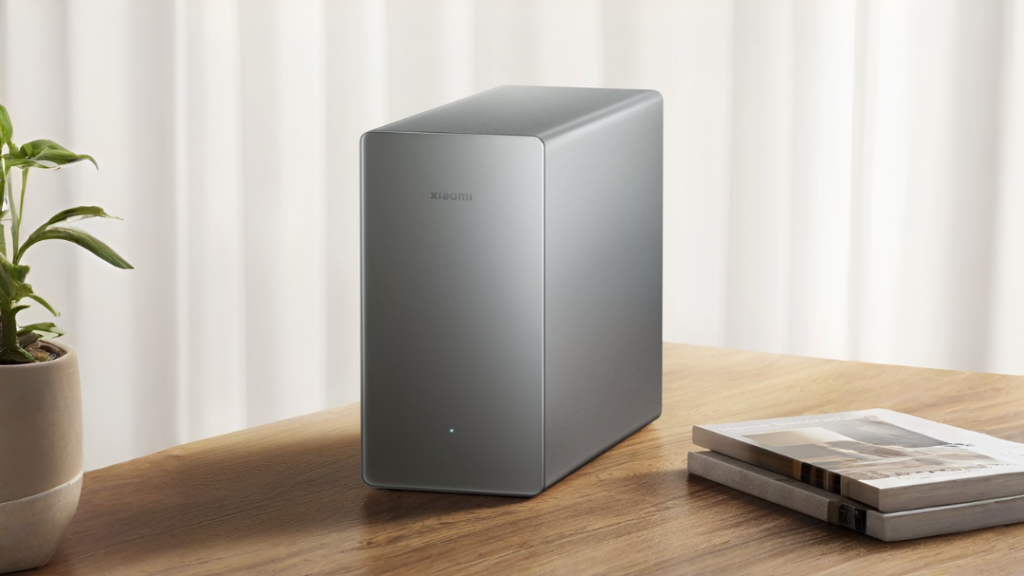
Xiaomi has officially started selling its first network-attached storage (NAS) device, the Xiaomi Smart Storage, in China following its recent unveiling.

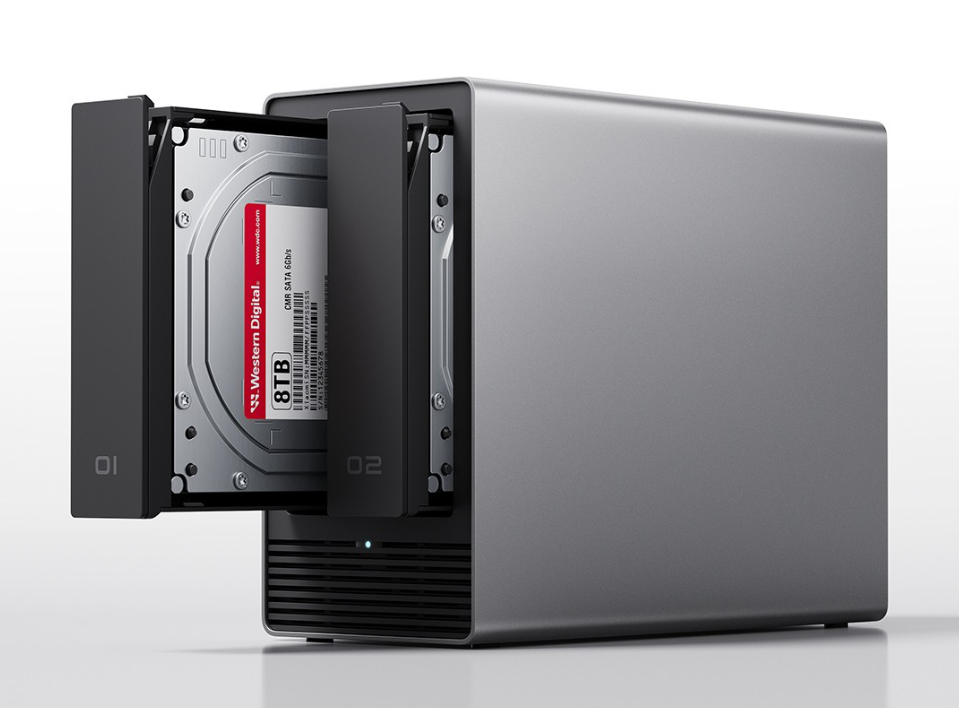
The device comes pre-populated with WD Red Plus drives. The base 4TB model (which uses two 2TB drives) costs 2,699 yuan ($401). There is also an 8TB version for 3,499 yuan ($520) and a 16TB version for 5,499 yuan ($818). If you need more space down the line, the system supports up to 60TB of total storage if you swap in two 30TB drives.

Xiaomi NAS
Edited

Xiaomi NAS Specifications

Physically, it’s a straightforward aluminum box with an active fan to keep the drives cool. It runs on 4GB of RAM and 32GB of internal storage, which handles the operating system and local processing tasks. The port selection is basic but covers the essentials: a 2.5GbE Ethernet port for your network, a USB-A 3.0 port for external accessories, and an HDMI 1.4 port. That HDMI connection lets you plug the NAS directly into a TV or monitor to play 4K video at 30Hz without needing a separate streaming box.

Xiaomi NAS

What makes this device interesting is how it ties into Xiaomi’s software ecosystem. If you use a Xiaomi phone running HyperOS 3.0 or newer, the NAS automatically shows up in the native file manager. It handles full device backups, including specific app data like WeChat histories. It also connects directly to compatible Xiaomi security cameras, allowing you to record and store local video feeds from up to four cameras at once.

Beyond storage, the NAS acts as a local hub for the Mi Home smart ecosystem. By processing smart home automations locally rather than sending commands to a cloud server, Xiaomi says device response times are noticeably faster.

Xiaomi NAS

On the software side, Xiaomi has included the kind of media management tools you usually see from established NAS makers like Synology. There is a photo app that uses local processing to group pictures by faces and locations, and it supports text searches to find specific images. For video files, the system automatically pulls in movie posters, titles, and ratings based on the file names.

You can access the NAS remotely through a dedicated app for iOS, Android, Mac, and Windows. Xiaomi provides up to 40Mbps of free remote bandwidth, which is enough to stream your stored movies or download files while you are away from the house. The system supports up to 16 separate user accounts, so multiple family members can back up their devices while keeping their data private.

The Xiaomi Smart Storage comes with a three-year warranty. The company hasn’t mentioned whether it will be sold in other regions.

🔌 You’ll NeedThe NAS supports drive swaps up to 30TB each, and WD Red Plus is the drive it ships with. Check WD Red Plus 4TB NAS hard drive price on Amazon →

In related news, Casio has launched three new Gravitymaster GWR-B3000 watches in the US, while Timex has launched the affordable Expedition Sierra Chronograph with a bold military-style dial.

For more daily updates, please visit our News Section.

Stay ahead in tech! Join our Telegram community and sign up for our daily newsletter of top stories!

(Xiaomi Youpin)

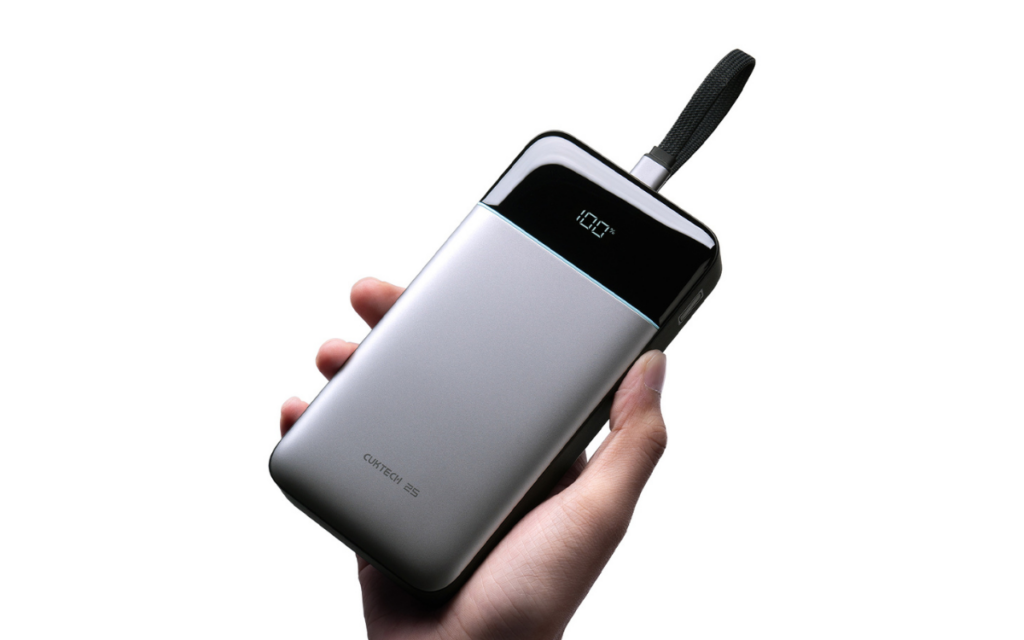
Cuktech launches new 100W 25000mAh power bank with built-in USB-C cable globally

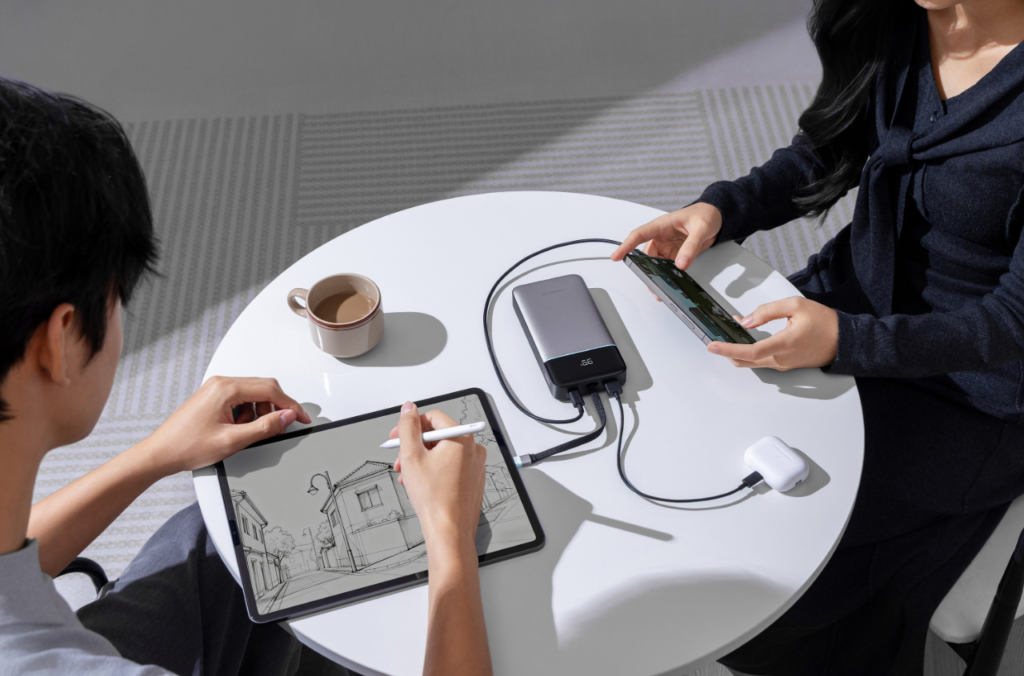
Cuktech has released the 25 Power Bank SE in the US and other global markets. The battery pack, which initially launched in China last year, is now available on Amazon for a standard price of $69.99, with an early discount bringing it down to $62.99.

Cuktech 25 Power Bank SE Specifications

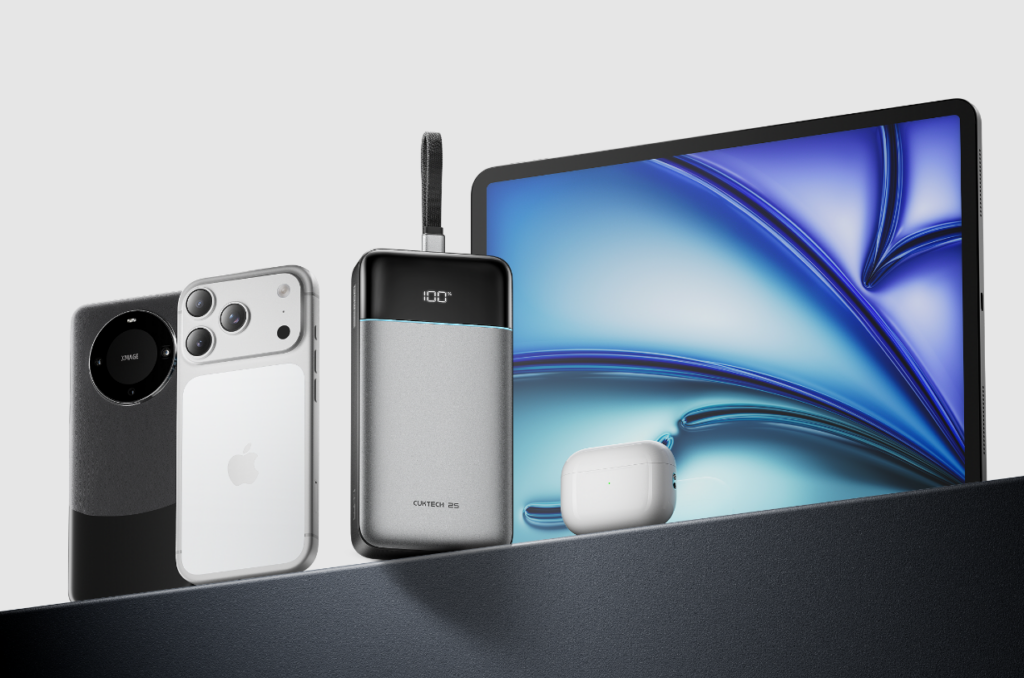
The power bank features a 25,000mAh battery rated at 90Wh, keeping it just below the 100Wh limit for carry-on luggage, which makes it suitable for frequent travelers. According to Cuktech, the battery can charge a MacBook Air around 1.2 times or an iPhone 17 Pro Max approximately 3.2 times on a full charge.

When it comes to charging speeds, the power bank can output up to 100W. That is enough wattage to charge most modern thin-and-light laptops at the same speed as their standard wall chargers. Cuktech says it can charge a 13-inch M3 MacBook Air to 56% in about 30 minutes. The battery pack also recharges at 100W if you use a compatible USB-C wall adapter. At that maximum input, plugging it in for 15 minutes will refill the battery by about 25%.

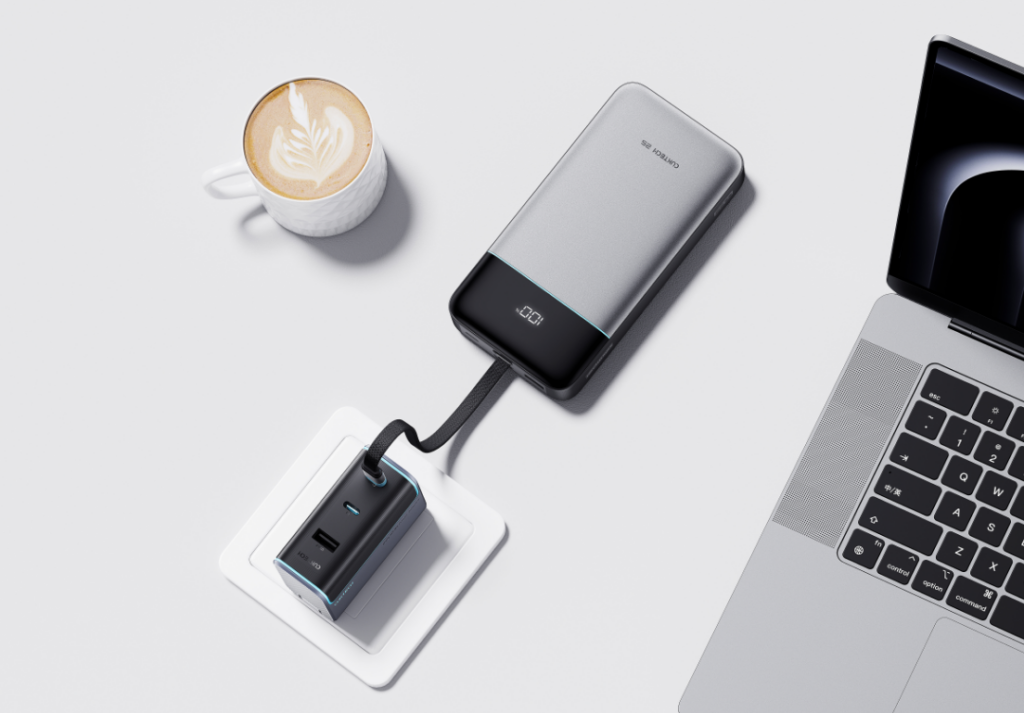
For charging your devices, the power bank features three outputs, including an integrated USB-C cable. Alongside the attached cable, there is one standard USB-C port and one USB-A port for older accessories. You can use all three to charge multiple devices simultaneously.

🔌 You’ll NeedIt only recharges at its full 100W with a compatible USB-C wall adapter, which isn’t included. Check 100W USB-C GaN wall charger price on Amazon →

The front of the power bank features a digital display that shows the remaining battery percentage and real-time charging output. This provides a convenient way to monitor power consumption and confirm whether a connected laptop or phone is receiving the expected wattage.

Internally, the device includes temperature monitoring to prevent overheating during sustained 100W loads. It supports standard fast-charging protocols, meaning it is compatible with hardware from Apple, Samsung, Google, and other major brands.

In related news, Casio has launched three new Gravitymaster GWR-B3000 watches in the US, while Timex has launched the affordable Expedition Sierra Chronograph with a bold military-style dial.

For more daily updates, please visit our News Section.

Stay ahead in tech! Join our Telegram community and sign up for our daily newsletter of top stories!

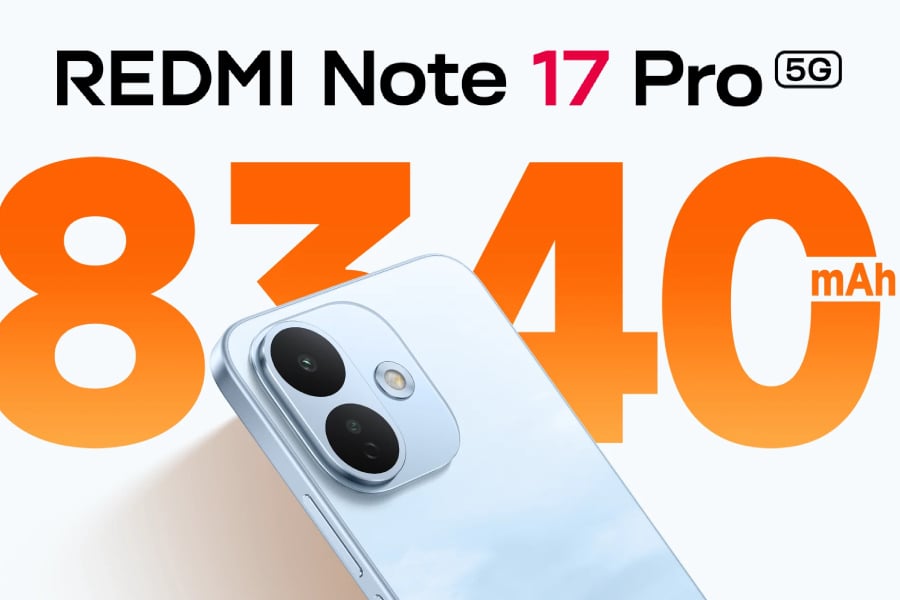
Redmi Note 17 Pro launches with an 8340mAh silicon-carbon battery

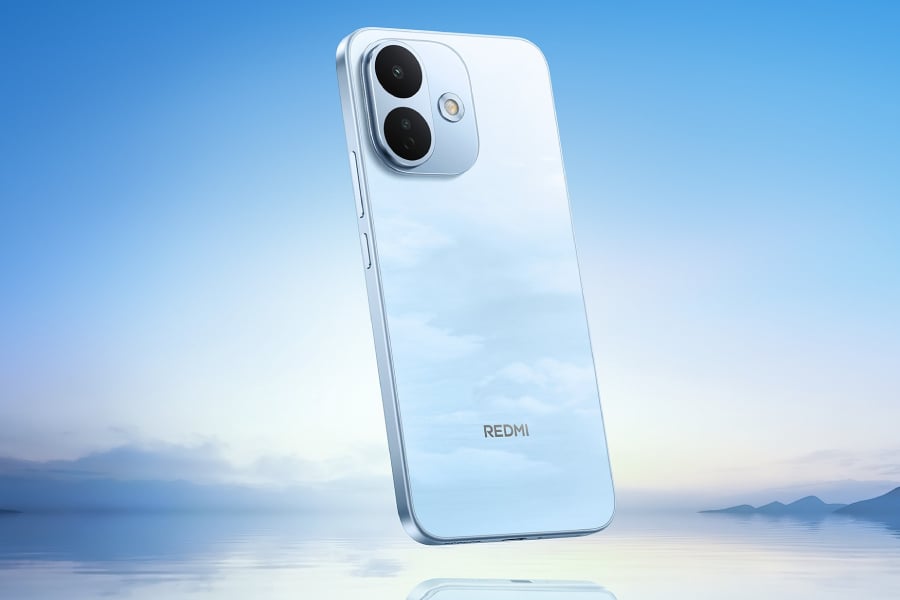
The Redmi Note 17 Pro is now official in global markets, launching alongside the Redmi Note 17 Pro Max as part of Xiaomi’s expanded Note 17 lineup. It replaces last year’s Redmi Note 15 Pro and brings several upgrades, including a much bigger battery, faster charging, and a new chipset. 

Redmi Note 17 Pro Specifications 

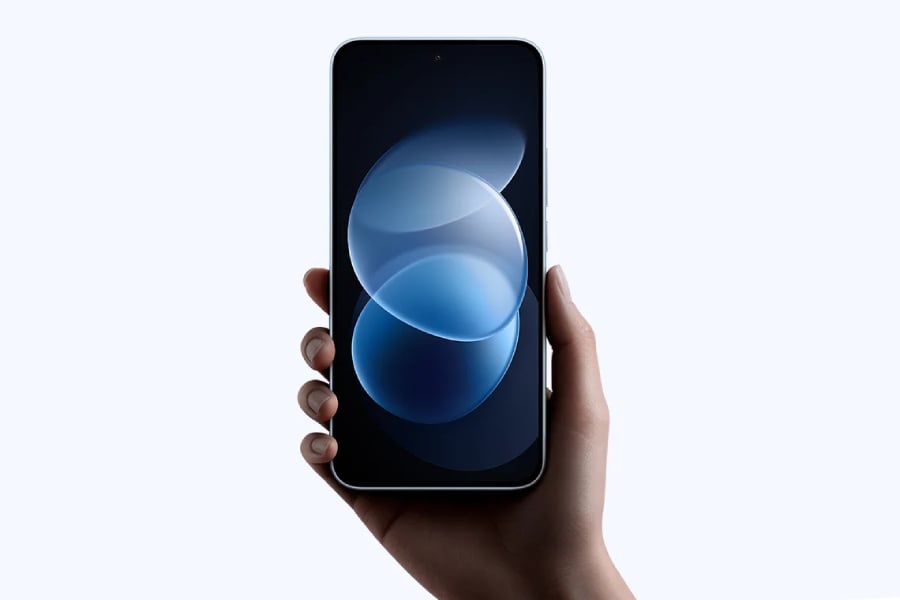
The display is mostly unchanged from the previous model, though. It has a 6.83-inch OLED panel with a 1,280 x 2,772-pixel resolution and a 120Hz refresh rate. It also supports 12-bit color, can reach up to 3,500 nits of brightness, and has Corning Gorilla Glass Victus 2 protection.

Under the hood, the Redmi Note 17 Pro uses a Snapdragon 6s Gen 4 chipset with 6GB, 8GB, or 12GB of LPDDR4X RAM and 128GB, 256GB, or 512GB of storage. Most versions use UFS 3.1 storage, while the base 128GB model uses the slower UFS 2.2 standard.

The phone also gets improved water and dust protection. It carries IP66 and IP68 ratings and has passed a 3-meter underwater test lasting up to 72 hours. However, the Pro model does not get the IP69K rating offered on the Pro Max. The phone weighs 183.7 grams and measures 164 x 75.4 x 7.9mm.

For audio, the Redmi Note 17 Pro has stereo speakers with Dolby Atmos and a claimed 300% volume boost. It uses Bluetooth 5.1 for wireless connectivity and lacks a 3.5mm headphone jack. 

Not to forget, the phone has a 50MP main camera with optical image stabilization (OIS) and an 8MP ultra-wide camera. For selfies, the phone has a 16MP front-facing camera.

The Redmi Note 17 Pro runs HyperOS 3 out of the box and comes with six years of security updates. It is available in five storage configurations and comes in Sky Blue, Satin Orange, Purple, and Black.

The phone packs an 8,340mAh silicon-carbon battery that delivers up to 28 hours of video playback on a single charge. The battery supports 67W wired and 22.5W reverse charging.

🔌 You’ll NeedThe 8,340mAh battery supports 67W wired charging, but a compatible GaN brick isn’t guaranteed in the box. Check Xiaomi 67W GaN charger price on Amazon →

The Redmi Note 17 Pro starts at $400.

Best Bluetooth Trackers in 2026

Losing your keys, bag, or luggage is one of those small annoyances that never really goes away. Thankfully, Bluetooth trackers have gotten a lot better over the years. Battery life is longer, finding lost items nearby is more precise, privacy protections are stronger, and the tracking networks are much larger than they were 5 years ago.

The biggest question now is which tracking network you want to use. If you’re an iPhone user, the AirTag is the obvious choice, while Samsung users will probably want the Galaxy SmartTag2. For other Android users, there are solid options from brands like Motorola and Xiaomi.

While Google’s recently announced Pixel Tag won’t go on sale until November 11, 2026, these are the trackers that stand out right now.

1. Moto Tag 2

Moto Tag 2 supports ultra-wideband connectivity to deliver precise, step-by-step directional tracking through Google’s Find My Hub network. It also supports Bluetooth 6 with Channel Sounding, a feature that allows devices to measure the exact distance between each other.

Bluetooth acts as the heavy lifter for general tracking, background updates, and battery efficiency, while ultra-wideband activates only when you are very close to the object, about 10m, to guide you to its exact spatial location.

The tag weighs 8.5g and measures 31.9 × 31.9 × 8 mm. It can produce a maximum sound of 77db at a distance of 10cm. It is also IP68-rated to withstand water, dust, rain, and rough conditions.

The company claims a battery life of 600 days, and when you finally need to replace the battery, the standard CR2032 battery is easy to swap out and widely available.

It can be attached to bags, keychains, camera gear, or travel essentials using a wide range of third-party holders and cases.

Price:

The Moto Tag 2 is widely available across North America and Europe. In the US, it is priced at $29.99 and is often discounted to $19.99. In Europe, the price hovers around €40. While it has not yet had an official retail launch in India, cross-border units are imported and sold online through various platforms, including Amazon India.

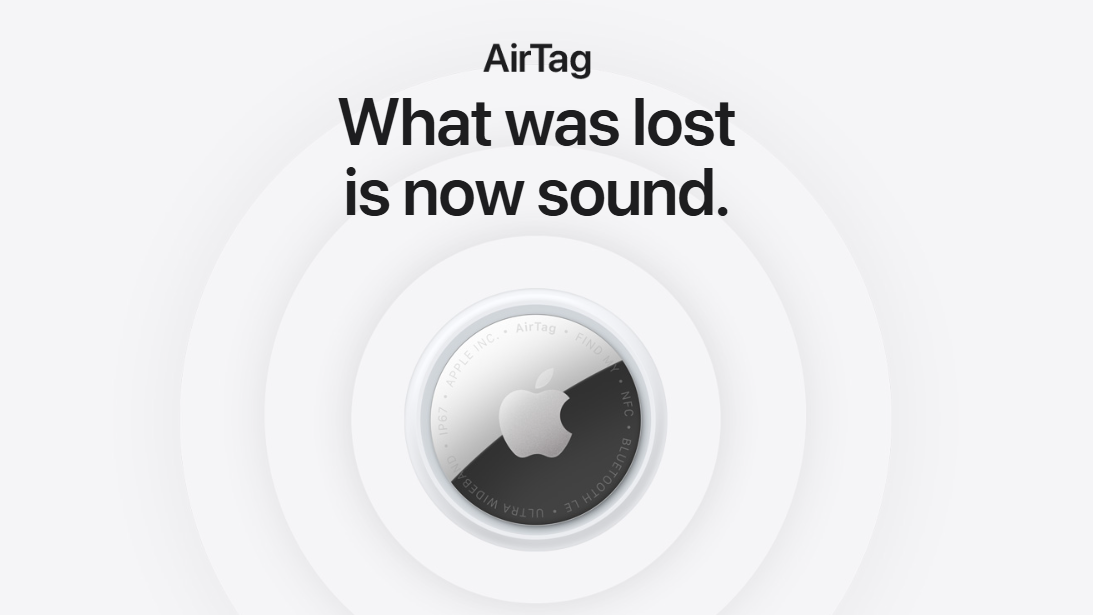
2. AirTag (2nd generation)

AirTag 2 uses Apple’s second-generation Ultra Wideband chip for Precision Finding, which delivers directional guidance and distance information through the Find My network.

Bluetooth handles general proximity tracking and network updates, while the improved UWB chip extends the range of precise locating compared with the previous AirTag. It also includes NFC for Lost Mode.

The tag measures 31.9 mm in diameter and 8.0 mm in height, and weighs 11.8 g. It has a built-in speaker that Apple rates as 50% louder than the first-generation model, making it easier to hear from farther away. It carries an IP67 rating for water and dust resistance.

Apple claims a battery life of more than a year on the user-replaceable CR2032 coin cell. When the battery eventually runs low, the standard cell is easy to swap out and widely available.

It can be attached to keys, bags, luggage, or other items using Apple’s own FineWoven accessories or a wide range of third-party holders and cases.

Price:

The AirTag 2 is widely available worldwide. In the US it is priced at $29 for a single unit and $99 for a four-pack. In Europe the price is typically around €35 for a single unit and approximately €119 for a four-pack. In India it’s priced at ₹3,790 for one and ₹12,900 for a four-pack.

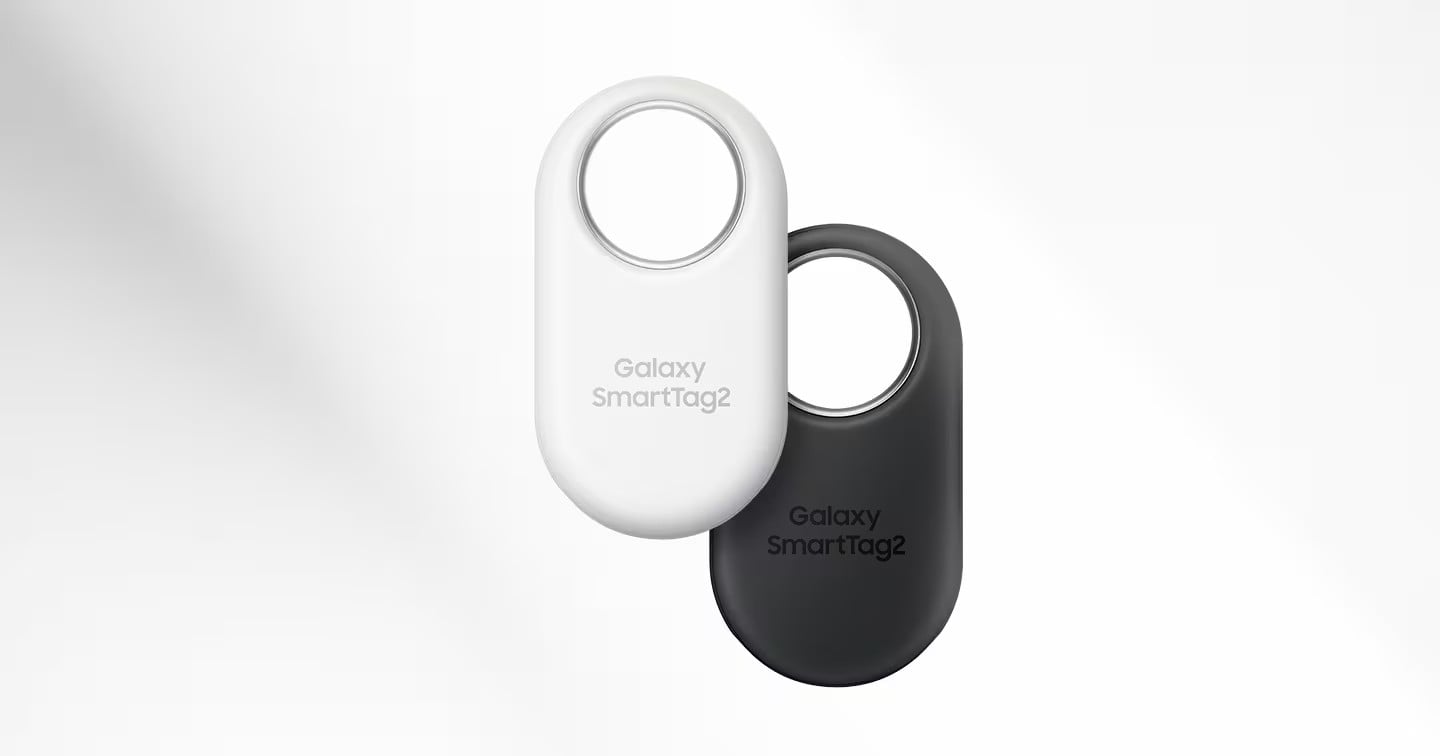
3. Galaxy Smart Tag2

The Galaxy SmartTag2 supports Bluetooth Low Energy 5.3 and ultra-wideband for precise directional tracking through Samsung’s SmartThings Find network. Just like the AirTag and Moto Tag, bluetooth handles general tracking and background updates, while UWB enables Compass View and Search Nearby for more accurate guidance when you’re close.

It measures 28.8 × 52.44 × 8.0 mm and weighs 13.75 g. It has a built-in buzzer and carries an IP67 rating for dust and water resistance.

Samsung claims up to 500 days of battery life on the replaceable CR2032 cell (or longer in Power Saving Mode). When the battery eventually runs low, the standard cell is easy to swap out.

Price:

The Galaxy SmartTag2 is widely available. In the US it is typically priced at $29.99 for a single unit. Pricing in other regions is generally in a similar range.

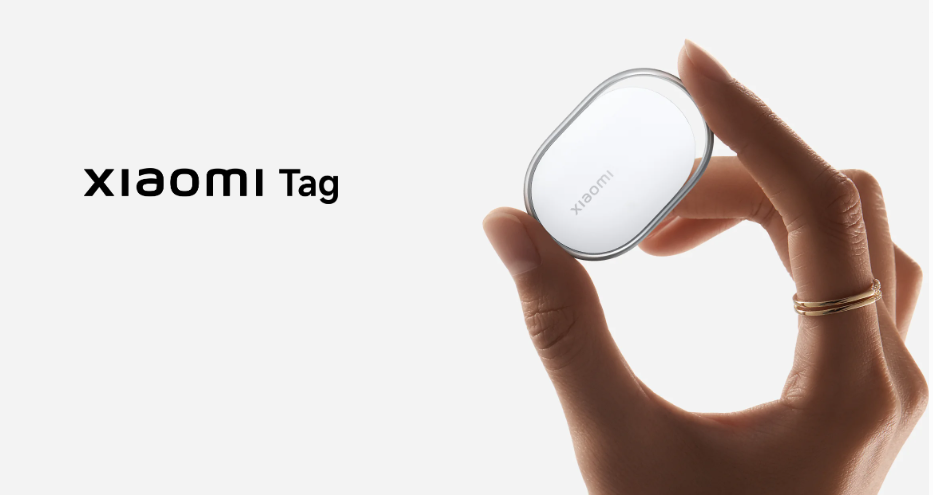
4. Xiaomi Tag

If you want a more affordable tracker and don’t need ultra-wideband precision finding, the Xiaomi Tag is a solid option. It uses Bluetooth Low Energy 5.4 and works with either Google’s Find Hub network or Apple’s Find My network (one network at a time). It also includes NFC for Lost Mode when used with Find My.

It measures 46.5 × 31 × 7.2 mm and weighs just 10 g. It has a built-in piezoelectric buzzer and carries an IP67 rating for dust and water resistance.

Xiaomi claims more than one year of battery life on the user-replaceable CR2032 cell. When the battery runs low, the standard cell is easy to swap out.

It can be attached to keys, bags, luggage, or other items using third-party holders and cases.

Price:

The Xiaomi Tag is one of the more budget-friendly trackers available. Single units are commonly priced at €14.99 or £12.99, with multi-packs offering further savings depending on the market.

Don’t miss a thing! Join our Telegram community for instant updates and grab our free daily newsletter for the best tech stories!

For more daily updates, please visit our News Section.

Top 5 Alternatives for Redmi Note 17 Pro Max in 2026

The Redmi Note 17 Pro Max stands out as Xiaomi’s endurance champion, packing a massive 10,000mAh silicon-carbon battery (9,210mAh in select markets), a 6.83-inch 1.5K 120Hz display, a Snapdragon 6 Gen 5 chip, and 100W HyperCharge fast charging. It sets a strong benchmark for users who want multi-day battery life without carrying a rugged power-bank brick.

Redmi Note 17 Pro Max

The five alternative devices featured in this lineup do not occupy the exact same price bracket as the Redmi Note 17 Pro Max, but they are selected specifically because they also pack enormous, high-capacity battery units designed for extreme longevity. If uninterrupted battery runtime is your top buying criterion, these five options deliver outstanding stamina.

5Vivo T5 Pro

Vivo T5 Pro
Vivo T5 Pro

A durable battery powerhouse combining long endurance, fast charging, and a balanced mid-range experience.

The Vivo T5 Pro takes a slightly more balanced approach by combining a very large battery with a familiar mid-range hardware package. Its 9,020mAh battery supports 90W charging, while the Snapdragon 7s Gen 4 handles processing. The phone features a 6.83-inch display and is designed around long battery life without moving into a dedicated gaming-phone category.

The rear camera setup consists of a 50-megapixel primary camera and a 2-megapixel secondary sensor. Vivo uses LPDDR4X RAM and UFS 3.1 storage, while OriginOS 6 based on Android 16 handles the software experience. The T5 Pro receives three major Android OS updates and five years of security patches.

The phone also carries IP68 and IP69 ratings, which give it added protection against dust and water. Its combination of a 9,020mAh battery, 90W charging and durable construction makes it a practical alternative to the Redmi Note 17 Pro Max for users who want endurance without focusing exclusively on performance.

Additional devices featuring extended battery life include the rugged Tecno Pova 8 5G, the standard Vivo V80 Lite 5G (also known as Vivo S2 in select markets), the Southeast Asian variant of the Vivo V80 Lite 5G packing a 10,000mAh battery that launches in early September as a rebranded version of China’s iQOO Z11S, and last year’s reliable Poco F7.

For more daily updates, please visit our News Section.

Stay ahead in tech! Join our Telegram community and sign up for our daily newsletter of top stories!

Next