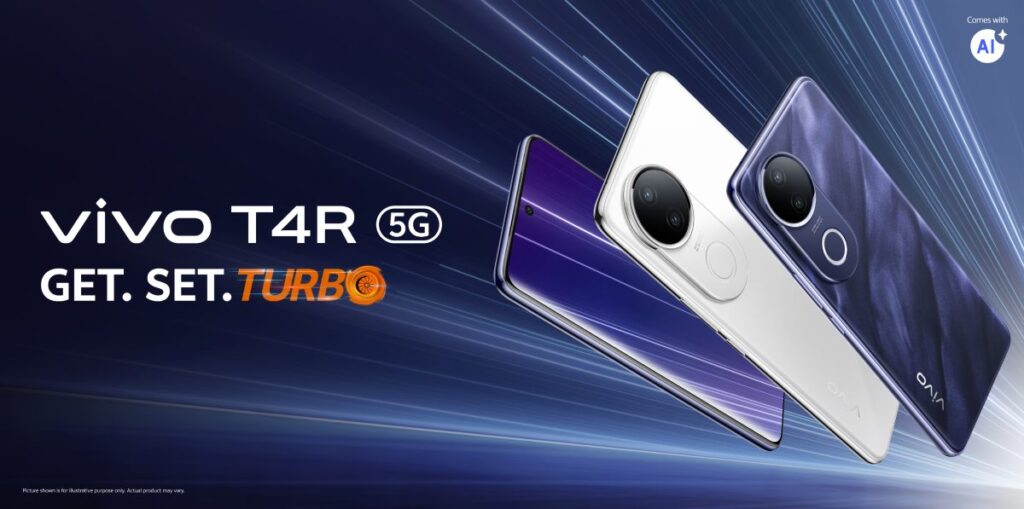
The Vivo T4R has just been officially announced in India. The smartphone features a Dimensity 7400 chipset and a 50MP main camera with a Sony IMX882 sensor.
On paper, the Vivo T4R shares much of its DNA with the recently launched iQOO Z10R, including the overall design and most of the core specs. But there are a few subtle differences that set the two apart, which we’ll get into shortly.
Vivo T4R 5G Specifications
The company claims the T4R 5G is the slimmest phone yet to feature a quad-curved screen, a 6.77-inch full-HD+ AMOLED panel that refreshes at 120Hz and peaks at 1,800 nits of brightness. It also comes with HDR10+ certification and low blue light protection (SGS certified).
Under the hood, the phone is powered by MediaTek’s Dimensity 7400 chipset, paired with up to 12GB of LPDDR4X RAM and 256GB of UFS 2.2 storage. It runs Android 15 out of the box with Vivo’s FuntouchOS 15 skin on top.
The camera setup includes a 50MP Sony IMX882 main sensor and a 2MP bokeh lens on the rear. On the front, you get a 32MP selfie shooter. Both front and back cameras are capable of shooting 4K videos.
As for the battery life, it comes with a 5,700mAh cell. Vivo also touts the phone’s IP68 and IP69 ratings for dust and water resistance.
The key differences between the Vivo T4R and the iQOO Z10R come down to charging speeds and color choices. The T4R supports 44W fast charging and is available in Arctic White and Twilight Blue. In contrast, the iQOO Z10R offers faster 90W charging and comes in Aquamarine and Moonstone finishes.
Pricing and Availability
The Vivo T4R 5G will be available starting August 5 via Flipkart, Vivo’s online store, and select retail outlets. Pricing starts at Rs 17,499 for the base 8/128GB variant. The mid-tier 8/256GB costs Rs 19,499, and the highest-end model (12/256GB) is priced at Rs 21,499.
For more daily updates, please visit our News Section.
As mid-range phones get better each year, picking the right one isn’t easy. The OnePlus Nord CE 5 and OPPO Reno 14F both offer strong features at a reasonable price. This comparison helps you see which phone gives more value, whether you care more about speed, battery life, or camera quality.
Build and Feel: The OPPO Reno 14F boasts a more rugged and premium construction, thanks to its IP68/IP69 rating, offering complete dust protection and water resistance for submersion and high-pressure sprays. The Nord CE 5, while still water-resistant with IP65, cannot match this durability. Both phones use sturdy materials, but OPPO’s certification gives it an edge for reliability in harsher environments. The Reno 14F is also slightly thinner and lighter, enhancing one-handed usability.
Display Quality: Both smartphones offer AMOLED panels with 1B color support and 120Hz refresh rate, but the Nord CE 5 pulls ahead in peak brightness, hitting 1430 nits versus Reno 14F’s 1400 nits (HBM). Additionally, it supports Ultra HDR and HDR10+, making it a better pick for HDR video content. However, Reno’s display is slightly sharper at ~397 ppi versus ~387 ppi. Still, OnePlus offers better viewing outdoors and stronger brightness control.
Verdict: OPPO Reno 14F wins in build quality with its superior waterproofing, but OnePlus Nord CE 5 delivers better screen brightness and HDR support, making it more appealing for media-heavy users.
2. Specifications
OnePlus Nord CE 5
Performance: The Nord CE 5 features the newer Dimensity 8350 Apex chip, which offers higher peak clock speeds (3.35 GHz) and better GPU (Mali-G615 MC6) performance than the Snapdragon 6 Gen 1 found in the Reno 14F. The Dimensity chip is also more efficient on 4nm and handles multitasking and gaming more fluidly. While both offer UFS 3.1 and up to 12GB RAM, OnePlus also includes the latest Bluetooth 5.4 and broader codec support like LHDC 5.
Battery and Charging: The Reno 14F includes a larger 6000 mAh battery versus Nord’s 5200 mAh (global) or 7100 mAh (India). However, the OnePlus features much faster 80W wired charging and supports bypass charging, a key feature for gamers. OPPO’s 45W charging is decent but lags in speed. Moreover, OnePlus offers better thermal management under load with bypass support, while OPPO includes reverse wired charging as a bonus.
Verdict: Nord CE 5 outperforms in raw speed and charging tech, making it better for performance-driven users, while OPPO Reno 14F appeals more to endurance-focused users with its massive battery and practical reverse charging.
3. Camera
OPPO Reno 14F
Main and Secondary Lenses: Both phones offer a 50MP main sensor with OIS and an 8MP ultrawide, but Reno 14F adds a 2MP macro and a color spectrum sensor for better white balance. Its ultrawide also includes autofocus, a rare bonus in this class. Video capture is similar, but Nord offers higher slow-motion frame rates and more resolution options. Reno’s image processing is slightly better tuned for color accuracy and lighting due to the extra sensor.
Selfie Camera: The Reno 14F is the clear winner with a 32MP selfie shooter featuring autofocus, a major advantage over Nord’s fixed-focus 16MP unit. While both record 1080p video, Reno delivers sharper and clearer self-portraits, especially in low light. For video calls and social media, Reno’s camera offers significantly better versatility.
Verdict: OPPO Reno 14F provides a superior camera experience overall with its better selfie camera, more versatile rear setup, and color accuracy enhancements, making it better suited for creators and social media users.
4. Pricing
The OnePlus Nord CE 5 is priced around $400, while the OPPO Reno 14F sits at $500. For $100 less, Nord offers a more powerful chipset, faster charging, and a comparable display. Reno justifies its higher price with a bigger battery, stronger water protection, and better cameras.
However, for budget-conscious buyers who prioritize performance and charging, the Nord CE 5 is the more value-focused option.
5. Conclusion
OPPO Reno 14F
The Reno 14F stands out with its IP69 waterproofing, reverse wired charging, color spectrum sensor, and superior selfie camera features that cater to outdoor users and photography enthusiasts. On the other hand, the Nord CE 5’s strengths lie in its Dimensity 8350 Apex chipset, faster 80W charging, higher peak brightness, and bypass charging, which appeal more to performance and gaming-oriented users.
Verdict: Choose the OPPO Reno 14F if you value photography, durability, and battery life. Go with the OnePlus Nord CE 5 if your priority is performance, fast charging, and HDR media experience, especially considering its lower price.
Xiaomi has just launched a clever little gadget for the summer. The new Smart Desktop Air Circulation Fan is a tiny little useful tech that has hit the European market. It is surprisingly feature packed, so here’s everything you need to know.
Xiaomi’s Tiny Desktop Fan Hits Europe With a Bunch of Smart Features
This isn’t the first time Xiaomi has unveiled this gadget. Back in March 2025, the Chinese tech giant launched this desktop fan under its MIJIA branding. Now, this model is hitting the European market as the Smart Desktop Air Circulation Fan. This smart fan measures just 12.8 x 7.9 x 13.1 inches in dimensions and weighs around 2 kilograms. It offers auto 3D air distribution thanks to its oscillating design, which allows 120° horizontally and 100° vertically.
The Tiny Xiaomi Smart Desktop Air Circulation Fan
Xiaomi’s compact fan supports 100 speed levels with the lowest being only 28.4dB loud, making it suitable for nighttime use. This gadget also comes with 2.4GHz WiFi, Google Home, Amazon Alexa, and Xiaomi Home app compatibility. It is powered by an 18W adapter, so one can even run it via a power bank. Xiaomi claims that a 10,000mAh power bank can run this small fan for up to 26 hours.
Thanks to its size and features, it makes a great companion for the European summer. As of right now, the Xiaomi Smart Desktop Air Circulation Fan is listed in France, Germany, and even the UK for 99.99 Euros, while Spain gets the cheapest 89.99 Euro price tag. This release also arrives after the brand unveiled two new humidifiers that run on HyperOS.
For more daily updates, please visit our News Section.
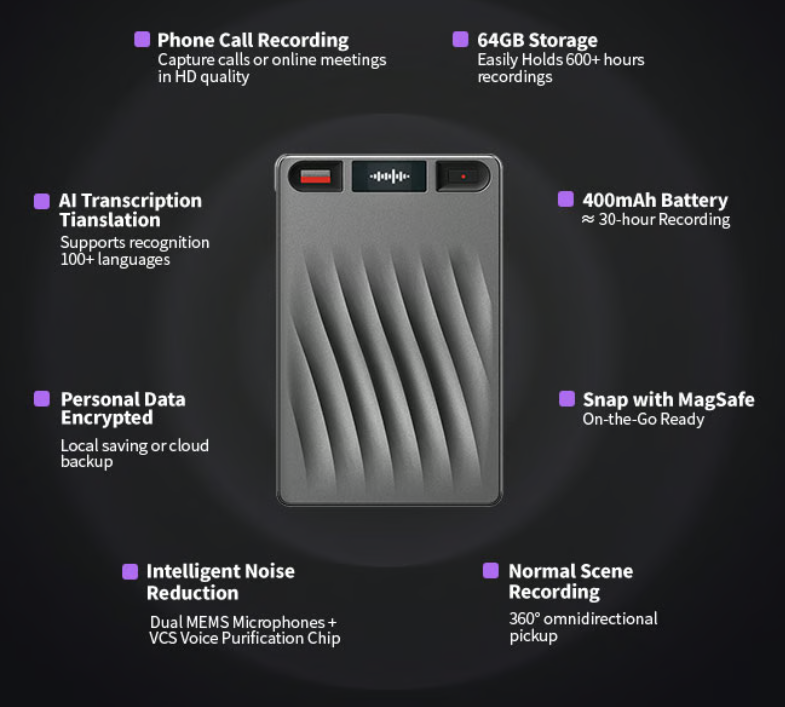
RECPOINT NOTE, the world’s first AI voice recorder that goes beyond capturing audio by offering real-time transcription, translation in over 100 languages, and AI-generated summaries. Designed for professionals, global teams, students, and creatives, the device is set to redefine how spoken content is recorded and utilized.
Real-Time Transcription with 98% Accuracy
RECPOINT NOTE transcribes speech into highly accurate text with up to 98% precision. Each recording is instantly processed into readable notes, complete with bolded keywords, speaker labels, and a full timeline. The device eliminates the need for manual transcription, making it easier to track discussions and extract important points after meetings, calls, or lectures.
AI Summarization with Actionable Insights
Each recording is analyzed by AI to deliver structured summaries, key phrases, and even to-do lists. Users also benefit from Highlight Mode, which extracts standout quotes, statistics, and final conclusions, ideal for quick reviews or sharing. The Default Mode automatically detects context and generates a natural outline of the entire conversation.
Multi-Speaker Recognition and 100+ Language Translation
Designed for global users, RECPOINT NOTE supports real-time translation in over 100 languages. It uses voiceprint technology to separate and label speakers in Interview Mode, while Meeting Mode splits conversations into modules and assigns tasks based on discussions. This makes it highly effective for multilingual teams, cross-border interviews, and international events.
Five Intelligent Recording Modes for Any Scenario
RECPOINT NOTE includes five AI-powered recording modes:
Default Mode for contextual structuring.
Phone Mode for transcribing calls with real-time keyword detection.
Interview Mode for speaker labeling and Q&A formatting.
Meeting Mode for task detection and module separation.
Speech Mode for emotion analysis and extracting impactful moments.
These modes allow the device to adapt to any recording environment, from quiet offices to live events.
Studio-Grade Audio with AI Noise Cancellation
To ensure high-quality sound, the recorder features dual MEMS microphones, a VCS noise reduction chip, and a multi-mic array. A 0.03mm ultra-thin diaphragm captures sound across 30Hz–20kHz, while adaptive noise filtering reduces background interference from typing, wind, or HVAC systems. This ensures clear voice capture in both solo and group settings.
Ultra-Slim, Portable, and MagSafe-Compatible Design
Weighing just 33g and only 0.14 inches thick, RECPOINT NOTE is ultra-compact and easy to carry. It supports MagSafe for convenient magnetic attachment and includes an OLED screen that displays live recording status, battery level, Bluetooth pairing, and more. This card-sized device is built for productivity on the go.
Long Battery Life and Ample Storage
Powered by a 400mAh battery, RECPOINT NOTE offers over 30 hours of continuous recording and 30 days of standby time. It includes 64GB of internal storage, capable of storing more than 600 hours of audio. A 4-pin magnetic cable provides fast charging and supports dual use for data transfer.
End-to-End Encryption and Cloud Backup
Security and accessibility are central to the RECPOINT experience. The device offers local and cloud storage with end-to-end encryption, giving users full control over their data. Files can be renamed, merged, exported, and organized directly from the companion app. BLE Bluetooth ensures fast and secure device syncing.
Offers and Availability
RECPOINT NOTE is now available on Kickstarter with limited-time early bird offers starting at HK$699 (~$90 USD) for a single unit, 40% off the retail price of $149. Backers can choose from single or double-unit bundles, with discounts ranging from 27% to 40%, depending on the tier. All bundles include 7 items such as the RECPOINT NOTE, MagSafe accessories, and a Charge & Sync cable. Shipping is available worldwide, with estimated delivery between September and October 2025.
Free Pro Membership and Launch Timeline
RECPOINT NOTE will begin shipping in September 2025. Buyers receive free Pro Membership until January 31, 2026, while early supporters who pre-paid $1 will enjoy extended access through April 30, 2026. The Pro plan includes access to advanced AI tools, extra cloud storage, and exclusive features.
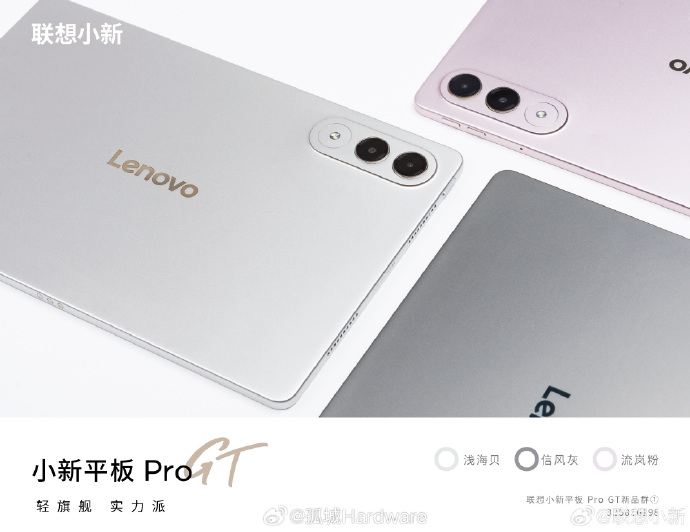
After a series of teasers, Lenovo finally revealed the pricing details for the Xiaoxin Pro GT. This upcoming gaming tablet packs some powerful specs and features, but more impressively, it won’t hurt your wallet. For under $300, this could be one of the best value gaming tablets. So here’s everything you need to know.
This $250 Lenovo Tablet Packs Snapdragon 8 Gen 3: Say Hello to Xiaoxin Pro GT
The Chinese tech giant just unveiled the pricing for the Xiaoxin Pro GT, confirming its starting price tag of just 1,799 Yuan in China. This is around $250, which is quite affordable considering the hardware it packs. Under the hood, it is equipped with the Snapdragon 8 Gen 3. To recall, the Honor Pad GT 2 Pro recently debuted as a great budget gaming tablet with the same chipset for around $350.
Lenovo Xiaoxin Pro GT
So Lenovo undercuts its competition by a notable $100 margin. The $250 IS FOR THE BASE 8GB + 128GB configuration, while the higher end 12GB + 256GB option is listed for 2299 Yuan (roughly $320). The company has also confirmed a tall 11.1-inch LCD screen on the front, which offers 98% DCI-P3 color gamut, a 144Hz refresh rate, and high resolution. A sizeable 8,860mAh battery pack powers this tablet, which supports 68W wired fast charging.
All of this is packed in an ultra slim 5.99mm body, with the tablet weighing 458 grams. Lenovo is gearing up to release the Xiaoxin Pro GT in the Chinese market soon; however, there is still no word on a global release. There could be a wider launch under its Legion branding, but this is just speculation at the moment.
For more daily updates, please visit our News Section.
Baidu has officially introduced its next-generation digital human technology, NOVA, at the World Artificial Intelligence Conference (WAIC) 2025. Developed by Huiboxing, Baidu’s AI digital human livestreaming platform, NOVA is designed to bring professional-level virtual presenters to mainstream industries. With an industry-wide rollout planned for October 2025, the technology is currently undergoing invite-only testing.
Built on Baidu’s ERNIE 4.5 Turbo model, NOVA introduces three key innovations. The first is master-level script generation, enabling digital humans to deliver fluent, natural livestream presentations. This system synchronizes speech with facial expressions and gestures, creating a more human-like experience for viewers. It eliminates the need for manual scripting and post-editing, making it efficient for businesses and content creators.
The second major advancement is the real-time AI brain. This component allows NOVA to process livestream data instantly, enabling features like intelligent Q&A handling, audience interaction management, and the automatic generation of trending content. With this, virtual hosts can react and respond like real presenters, enhancing engagement and viewer retention.
Perhaps the most revolutionary feature is NOVA’s rapid cloning technology. In just 10 minutes of sample footage, it can replicate a person’s voice, tone, and body language with high accuracy. This makes it possible to create emotionally expressive and personalized digital avatars that mirror real individuals. The potential for use in brand representation, education, and customer service is significant.
Early results from the testing phase already demonstrate strong performance. In education, a digital human created for a Chinese knowledge influencer increased viewer watch time by 101%. In healthcare, NOVA supported a virtual spokesperson for Mengniu’s senior-care brand, Yourui, resulting in a 33% rise in conversion rates. These figures point to the real-world impact of hyper-realistic virtual presenters.
A standout showcase came in June 2025, when a digital version of Chinese entrepreneur Yonghao Luo made its virtual debut during a livestream on Baidu’s AI e-commerce platform. The stream garnered over 13 million views and drove more than 55 million RMB in gross merchandise volume, highlighting the commercial potential of NOVA-powered presentations.
With more than 100,000 businesses already using Baidu’s digital human technologies across sectors like e-commerce, education, healthcare, and law, NOVA’s upcoming rollout marks a critical moment.
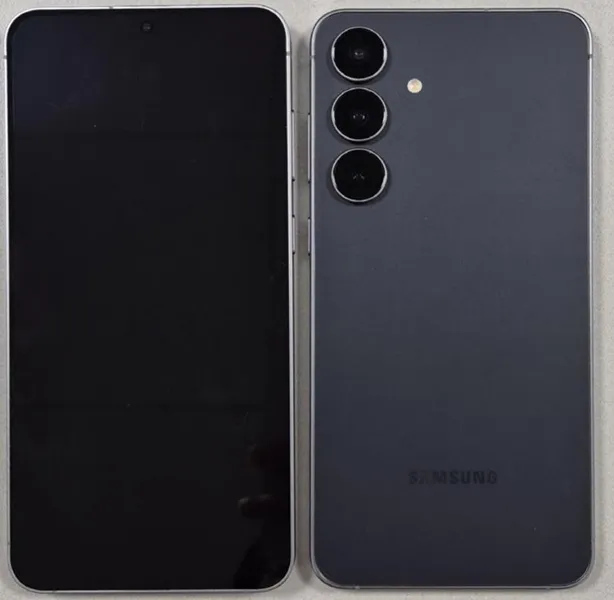
While the Galaxy S25 series debuted half a year ago, rumors of Samsung’s next flagship lineup have already been making the rounds online. But the S25 series has one more device in the pipeline, and the brand might be unveiling it sooner than initially expected. So here’s what we know about the launch window of the Galaxy S25 FE.
Samsung Hints at an Early Galaxy S25 FE Release
This news wasn’t shared in a rumor or leak, and comes directly from the brand. During the Q2 2025 earnings call, Daniel Araujo, the Vice President of Samsung’s Mobile Experience division stated that the Galaxy S25 FE will have an earlier launch. Unfortunately, the senior official did not reveal the exact launch date or timeline, however, the Android Authorityreport believes it might drop sometime in late August or early September.
Samsung Galaxy S25 FE
For those unaware, Samsung’s FE (Fan Edition) family of smartphones are a part of its flagship Galaxy S lineup but offer high end specs and features at a more accessible price point. Based on what we know so far, the Galaxy S25 FE may feature a slimmer design and a 6.7-inch 120Hz AMOLED display with thinner bezels.
The camera system is expected to be the same as its predecessor, packing a 50MP (Main) + 12MP (Ultra Wide) + 8MP (Telephoto) camera setup on the rear and a 12MP selfie shooter on the front. A 4,700mAh battery pack could power this model, with rumored fast charging rate matching the S25 Ultra (45W). Thanks to a GeekBench sighting, we expect the S25 FE to feature the Exynos 2400, 8GB of RAM and Android 16 OS out of the box.
For more daily updates, please visit our News Section.
A few years ago, buying decent wireless earbuds for under $100 meant living with a lot of trade-offs. Sound quality was often underwhelming, active noise cancellation was rare, comfort was hit-or-miss, and the controls could feel like a guessing game. However, that’s no longer the case in 2025.
Today’s budget earbuds come with features that punch well above their price tags. Almost all the models mentioned in this list offer overall great sound quality, and some even include AI-powered tricks you’d typically only see in flagship earbuds.
So here are five of the most interesting budget earbuds you can get right now.
OnePlus Buds 4
The OnePlus Buds 4 are unapologetically ambitious for a pair of budget earbuds. Available in Zen Green and Storm Grey, they buds have a dual driver setup of an 11mm woofer with a high-end ceramic-metal diaphragm and a 6mm flat tweeter.
With this, OnePlus claims the buds can cover a frequency range from 15Hz all the way to 40kHz. You also get support for Hi-Res Audio and the LHDC 5.0 codec, which allows streaming at up to 1Mbps and 24-bit/192kHz resolution.
More useful to everyday listeners is the Buds 4’s adaptive ANC. OnePlus says it cancels noise up to 55dB across a 5,500Hz range, and there’s an adaptive mode that adjusts between transparency and full noise-canceling depending on your environment.
For calls, it has a triple-mic setup and AI Clear Call algorithm, and it also includes features like real-time AI translation (limited to select OnePlus phones), OnePlus 3D Audio, and personalized sound tuning.
Anker is no stranger to the earbuds game, and it knows how to make a great pair of earbuds, whether in budget or premium. As for the budget, the Soundcore P40i may be its best value-focused pair.
Selling for around $50, they come with six sizes of eartips for a snug fit and offer a surprisingly complete package: ANC, transparency mode, multipoint Bluetooth, solid call quality, and powerful bass.
They are bass-heavy by default, but not sloppy or bloated. You still get clarity and a surprisingly wide soundstage. The Soundcore app also lets you tweak EQ settings if you want something more neutral or brighter. It’s not studio-grade audio, but for this price, the tuning is impressive.
One of the P40i’s most clever features is the charging case. It can double as a stand for your phone. You can flip the lid and prop your device up to make it stable.
Please Note: When you buy something using the links in our articles, we may earn a small commission at no cost to you.
Samsung Galaxy Buds Core
Samsung launched the Galaxy Buds Core in June 2025 as a more affordable alternative to its premium earbuds, but they still manage to include some standout features. For starters, they come with ANC and a “new dynamic driver” that delivers deep bass and richer sound.
The buds have a three-mic system for calls that Samsung claims is best in its class. But perhaps the most headline-worthy feature is Galaxy AI’s Interpreter mode, which brings two-way, real-time translation directly to your ears.
They’re also IP54-rated, have touch controls, and support auto-switching between devices within the Galaxy ecosystem. The buds can last up to 35 hours without ANC and around 20 with it. The Buds Core come in black or white and pair best with Galaxy phones, though they’ll work with other Android devices as well.
Please Note: When you buy something using the links in our articles, we may earn a small commission at no cost to you.
Apple AirPods 4
The sole Apple listing on this list is the AirPods 4. Launched at a base price of $129, these earbuds are currently enjoying a solid discount on Amazon, where you can get them for around $90.
The AirPods 4 come in two models: a base version and an ANC version, which also adds wireless charging and a speaker in the case for easier tracking. The pricier model is the more interesting of the two; it’s the first open-style earbud (without silicone tips) with effective active noise cancellation.
Open earbuds usually sacrifice bass and sound isolation, but Apple’s tuning keeps things surprisingly balanced. The sound quality is impressive for this design, and the call quality is excellent.
They also include Apple’s H2 chip for improved efficiency and connectivity, along with Spatial Audio support and intuitive pinch controls. They’re a particularly good choice for those who dislike in-ear tips or want to stay more aware of their surroundings, especially during commutes or workouts.
The only downside of AirPods 4 (for some) could be their fit. They may not fit securely in all ears. And if you’re after stronger ANC or better passive isolation, the AirPods Pro 2 remain the better pick.
Please Note: When you buy something using the links in our articles, we may earn a small commission at no cost to you.
Beats Solo Buds
The Beats Solo Buds are the cheapest option in the Beats lineup, and that shows in a few ways. There’s no ANC, no sensors for auto-pause, and—oddly—no battery in the case.
That last part means you’ll need a USB-C cable and an external power source to charge the buds if they’re inside the case, which might be a dealbreaker for some.
Beats Solo Buds
Still, they get the basics right. They’re lightweight, sound decent, and perform well on voice calls, nearly matching the pricier Studio Buds Plus in that area. And despite the minimalist case, battery life is strong. You’ll just have to remember to keep them charged the old-school way.
Google Pixel users have been enjoying Android 16 for over a month now, but it’s yet to reach devices from other brands. Realme, however, promised to be among the first brands to deliver the update to its flagship devices. This also means that mid-range and cheaper models should get the update faster than usual.
The Android 16 update for Realme phones will come with Realme UI 7.0 skin at the top, which is said to bring many new features, customizations, and meaningful changes across the system. The sad part, though, is that many Realme users are going to miss out on this major upgrade. We’ve prepared a list of those devices below. Review it to find out if you’ll need an upgrade to receive the latest features and enhancements.
Realme phones that are not eligible for Android 16 update
Relme hasn’t announced which devices will or won’t be upgraded to Android 16-based Realme UI 7.0. So, we had to rely on the software update policy and a little bit of guesswork to prepare the following list:
Realme GT series
Realme GT 2
Realme GT 2 Pro
Realme GT 2 Explorer Master
Realme GT 5G
Realme GT Master
Realme GT Neo series
Realme GT Neo 3
Realme GT Neo 3T
Older GT Neo series models
Realme number series
Realme 11 (LTE/5G)
Realme 11 Pro
Realme 11 Pro+
Realme 11x
Older number series models
Realme Narzo series
Realme Narzo 60
Realme Narzo 60 Pro
Realme Narzo 60x
Older Narzo series models
Realme Narzo N series
Realme Narzo N55
Realme Narzo N53
Realme C series
Realme C67
Realme C55
Realme C53
Realme C51
Realme C51s
Older C series models
If your Realme smartphone is on the list, it’s unlikely to receive the Android 16 update. However, I’d still recommend checking the official list for the final confirmation before you start looking around for an upgrade.
Realme’s update policy needs an upgrade
Realme is fairly quick with software updates, but the update promise falls short of what most Android brands offer. The brand has long offered just three Android upgrades to its high-end phones, the GT series. Only recently, it started offering four of them with the GT 7 series release.
While it’s a nice move, Realme is still a step behind Oppo and Nothing, which offer up to five OS updates, and much behind Samsung and Google, promising up to seven Android updates.
The mid-range and cheaper models from Realme max out at just two OS upgrades, while its rivals offer up to four. Samsung is in a different league, offering up to six OS updates to its newer mid-range models. So, longer software updates are no longer exclusive to flagship devices, and Realme needs to learn that. The brand should offer extended software support to non-flagship phones, too.
Which Realme device do you have, and is it eligible for the Android 16 upgrade? Do let us know in the comment section below. Also, don’t forget to visit our Android 16 section regularly for the latest updates.
OnePlus started rolling out OxygenOS 15.0.2.313 for the Nord 5 in India (check out our OnePlus Nord 5 review). The update goes out in batches, so only some users get it today. More users will get it over the next few days.
The update has build number CPH2707_15.0.2.313(EX01). It brings changes to the camera, gaming, and system.
Camera Gets Better
OnePlus improved camera performance for better overall use. The update also makes the camera more stable, which should help with photo and video quality.
Gaming Works Better
The gaming experience got improved too. OnePlus didn’t say what specific changes they made to gaming.
System Updates
OnePlus added the July 2025 Android security patch to make the device more secure. They also improved system stability.
This is an over-the-air update that follows OnePlus’s usual pattern of rolling out updates slowly to more users over time.
If You Have Problems
OnePlus Nord 5 users in India can report issues in two ways if they face problems after updating:
Open the OnePlus Community App, go to your profile, and use the “Bug Report” section
Dial *#800# on your phone to access the feedback tool
The update targets three main areas but keeps the specific gaming improvements under wraps. Users should expect better camera performance and stronger security once they install the update.
Casio has listed the G-Shock GBM-2100A-2B and GBM-2100A-4B watches on its UK website. The GBM-2100A-2B has a blue dial with silver indexes, while the GBM-2100A-4B features a burgundy dial with the same layout. Both watches use a stainless-steel bezel and a bio-based resin case and band.
G-Shock GBM-2100A-2BG-Shock GBM-2100A-4B
The watches measure 49.3 × 44.4 × 11.9 mm and weigh 72 g. The bezel has a brushed finish on top and a mirror finish on the sides. The dial includes a horizontal grid pattern, silvery indexes, and phosphorescent hands. A double LED light improves visibility in the dark.
Both models are shock resistant and water resistant up to 200 meters. They support Bluetooth and connect to the Casio Watches app. App features include automatic time updates, world time across 38 time zones, phone finder, time and place logs, reminders, and easy settings adjustment.
The watches include a 1/100-second stopwatch, countdown timer, five daily alarms, and a full auto-calendar up to the year 2099. The hands shift out of the way to keep the digital display clear when needed. There is also a button mute option and a 12/24-hour format switch.
Casio’s Tough Solar system powers the watches. They can run for around 7 months on a full charge under normal use and up to 18 months in power-saving mode. A battery level indicator is included. The dial is protected by mineral glass, and the band fits wrist sizes from 145 to 215 mm. Both models are made in China.
Pricing & availability
Casio has priced the GBM-2100A-2B and GBM-2100A-4B at £229 each in the UK. They are listed on the official Casio online store, but no release date has been confirmed yet. Customers can sign up for stock alerts.
For more daily updates, please visit our News Section.
Casio has officially announced the G-Shock MRG-B5000HT-1 for the UK market. This limited-edition model is part of the brand’s premium MR-G series and was first revealed in Japan. It retains the classic square design of the original 1983 G-Shock but features modern materials and updated construction.
The bezel and bracelet are hand-hammered using the traditional Japanese tsuiki technique. Each piece is crafted by Kazuya Watanabe, a master metalworker, using his own “yuragi” method. This creates a textured, uneven surface that gives each watch a unique look. No two units are exactly the same.
The case and bracelet are made from DAT55G, a titanium alloy that is three times harder than pure titanium. Both parts are coated with a diamond-like carbon (DLC) layer for added scratch resistance. The watch uses a Multi-Guard Structure with buffer materials between the bezel parts to improve shock resistance. The case is made from 25 individual components, each one polished by hand.
The MRG-B5000HT-1 has a case size of 49.4 × 43.2 × 12.9 mm and weighs 112 g. It is shock resistant and water resistant up to 200 metres. It features a screw-lock titanium back plate, sapphire crystal with anti-reflective coating, and a solid titanium band with a three-fold clasp. The watch is solar powered and connects via Bluetooth to the CASIO WATCHES app for features like auto time adjustment, phone finder, and world time support for over 300 cities.
Other features include five daily alarms, a 1/100-second stopwatch, a countdown timer, an LED backlight with auto illumination, and a full auto-calendar to 2099. Battery life is up to 10 months with regular use and up to 22 months on power-saving mode.
Pricing & availability
Casio has listed the MRG-B5000HT-1 on its UK online store for £6,200. It’s scheduled for release in August 2025, though a specific date hasn’t been given. Only 500 units will be available worldwide, each with its own serial number.
Realme recently confirmed that it is restructuring its smartphone lineup in a bid to reduce confusion caused by overlapping models. Francis Wong, Realme India’s returning Chief Marketing Officer, confirmed that the lineup would be streamlined to three series, namely GT, Numbered, and P. Now, a new report reveals that the brand may soon discontinue its Narzo lineup.
Realme N-series to be sold via Amazon
Realme Narzo
According to SmartPrix, Realme is preparing to introduce a new ‘N’ series of smartphones, which could signal the end of the Narzo lineup. Like the Narzo series, the new ‘N’ series is reportedly being designed as an Amazon India exclusive, aligning with a dual-platform strategy that Realme is adopting.
Realme’s P-series will be sold via Flipkart, and the N-series will serve as a complementary offering for Amazon. This mirrors Samsung’s approach, where its M-series is targeted at Amazon and F-series at Flipkart. With this move, Realme seems to be clearly defining its offerings across the two major online retailers.
While exact specifications for the N-series remain under wraps, it is likely to target the sub-Rs 20,000 segment, a space previously occupied by Narzo phones. The Narzo series saw inconsistent updates in recent months, and its sudden disappearance from Realme’s plans hints at a strategic retreat.
If the new N-series brings rebranded or similarly specced models as the P-series, it could help Realme cater efficiently to different consumer segments without overlapping product lines.
Wong also confirmed that a new online-only series would debut around Diwali this year. Probably, this could be the upcoming N-series that the new report is claiming about.
For more daily updates, please visit our News Section.
It’s 2025, and Chinese smartphone makers aren’t just playing catch-up; they’re setting the pace. While Apple and Samsung continue refining their core design philosophies, the likes of OnePlus, Xiaomi, Vivo, Oppo, Huawei, and Red Magic have come out swinging with devices that are not just spec monsters but bold experiments in camera tech, cooling, and display design.
Whether you’re a photography enthusiast, a performance nerd, or someone who just wants the best screen money can buy, there’s a Chinese flagship this year that fits your needs. Here are the best ones you can actually buy right now.
OnePlus isn’t content being the “budget flagship” anymore. The OnePlus 13 (review) goes all in with a 6.82-inch BOE X2 AMOLED display rated for a scorching 4,500 nits peak brightness. It’s also the first to score DisplayMate’s elusive A++ rating on this new panel type.
Under the hood, the Snapdragon 8 Elite SoC teams up with up to 24GB LPDDR5X RAM and a whopping 1TB UFS 4.0 storage, backed by a massive 9925mm² dual VC cooling system. The 6000mAh silicon-carbon battery is fast too, charging fully in 36 minutes via 100W wired or 50W wireless.
On the camera front, OnePlus keeps its Hasselblad tuning but adds a more refined 50MP triple setup, including a LYT-600 periscope telephoto that’s both lighter and quicker to focus thanks to a new multi-prism design.
And yes, the iconic Alert Slider stays, on the left this time, with new integrated antenna enhancements aimed at gamers. Priced from ₹69,999/$899.99, the OnePlus 13 is arguably the most complete Android phone for the price.
Please Note: When you buy something using the links in our articles, we may earn a small commission at no cost to you.
2. Xiaomi 15 Ultra
If photography is your priority, the Xiaomi 15 Ultra (hands-on) is the one to look at. Built like a Leica DSLR in phone form, the camera system features a 1-inch sensor on the main 50MP camera, an ultra-wide, a floating telephoto, and a whopping 200MP periscope zoom.
It shoots 4K at 120fps and supports full 10-bit Log video on all four sensors—stuff normally reserved for cinema gear. On top of that, Xiaomi’s partnership with ACES ensures professional-grade color calibration straight from the phone.
Performance doesn’t take a backseat either. The Snapdragon 8 Elite chip, 16GB RAM, and advanced IceLoop cooling keep things smooth. Its 5410mAh battery isn’t the biggest, but 90W wired and 80W wireless charging keep downtime minimal.
There’s even a Photography Kit Edition with physical shutter controls, a filter adapter, and a 2000mAh add-on battery. Starting at ₹1,09,999/€1,500, it’s aimed at content creators who want a serious tool in their pocket. You can alternately purchase it from GizTop.
Please Note: When you buy something using the links in our articles, we may earn a small commission at no cost to you.
3. Vivo X200 Ultra
The Vivo X200 Ultra (camera review) doesn’t just chase camera quality; it reinvents how phone cameras work. Co-developed with Zeiss, this phone packs a 50MP dual main camera setup using Sony’s latest LYT-818 sensor, plus a 200MP Zeiss APO telephoto with a three-group periscope design.
But it’s the dual imaging chip setup (VS1 and V3+) that makes it unique. These chips split image processing tasks for faster, better shots, kind of like a DSLR pipeline in a phone. Features like 4K 120fps, 4K time-lapse, and 10-bit Log video are all here.
Vivo goes a step further with optional add-ons: a Zeiss 2.35x telephoto lens and a photographer kit with battery grip, shutter button, and 67mm filter mount. The 6000mAh battery with 90W charging and a sleek curved 2K AMOLED screen round things out.
Please Note: When you buy something using the links in our articles, we may earn a small commission at no cost to you.
4. Oppo Find X8 Ultra
Oppo’s Find X8 Ultra (camera review)makes bold claims and backs them up. Sporting a five-camera system with dual periscope telephotos and a 50MP 1-inch Sony LYT-900 sensor, it’s a phone that captures detail and dynamic range with cinematic precision.
Oppo’s Lumo imaging system uses pixel-level color analysis via a spectral color sensor, promising unmatched skin tones and color fidelity. There’s Dolby Vision video at all focal lengths, up to 4K 120fps, and up to 120X zoom.
The phone itself is a visual treat: a 6.82-inch QHD+ 1-120Hz AMOLED panel with ultra-narrow bezels, running on a Snapdragon 8 Elite chip with up to 1TB storage. The 6100mAh battery is massive, with 100W wired and 50W wireless charging.
Oppo has added a new shortcut button for AI-based memory boost and customizable functions. The device starts at 6,499 yuan in China and isn’t available in the global market yet, but you can buy it on Giztop for $959.
5. Huawei Pura 80 Ultra
Huawei’s Pura 80 Ultra (hands-on) is one of the most impressive phones of the year, at least on paper. It uses a 1-inch variable aperture sensor, dual telephoto lenses with OIS and sensor shift, and a 40MP ultra-wide. It supports up to 9.4x optical zoom and 100x digital.
The 6.8-inch LTPO OLED panel supports high refresh, Kunlun Glass protection, and high-frequency dimming. Inside is Huawei’s own Kirin 9020 chip (no 5G due to sanctions), and the EMUI 15 software based on Android.
Battery life is handled by a 5170mAh cell with 100W wired and 80W wireless charging. Priced at 1499 Euros globally, it’s expensive and lacks Google services. Still, if you’re comfortable sideloading apps and want top-tier hardware, it’s one of Huawei’s best.
6. Red Magic 10S Pro
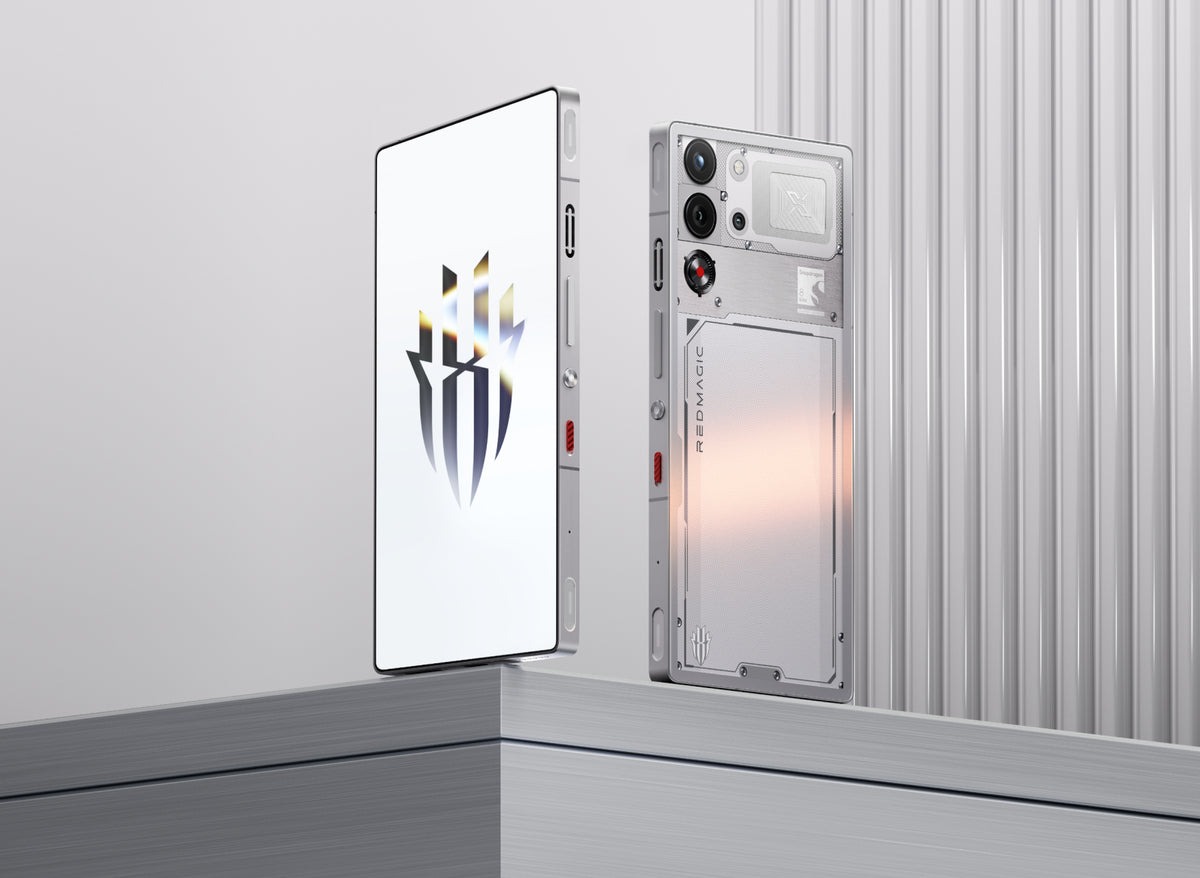
Not every flagship needs to focus on cameras. The Red Magic 10S Pro is unapologetically built for gaming, and it shows. With up to 24GB of LPDDR5T RAM, UFS 4.1 Pro storage, and a Snapdragon 8 Elite Leading Edition running at 4.47GHz, this thing flies.
The 6.85-inch 1.5K OLED display supports 144Hz refresh and up to 2592Hz PWM dimming. There’s an under-display 16MP camera, shoulder triggers, and a built-in 23,000 RPM turbofan cooled by liquid metal.
Cameras are basic: a 50MP main + ultra-wide and a 2MP macro. But the massive 7050mAh battery with 80W charging ensures marathon sessions. Starting at $699, it’s an absolute steal for mobile gamers.
For more daily updates, please visit ourNews Section.
iQOO launched the iQOO 13 in October last year. Since then, there have been mixed rumors regarding the name of its successor. While some speculated it would be called the iQOO 14 or iQOO 15, the official poster released by the brand has now confirmed that the upcoming flagship will be named the iQOO 15. This naming choice is likely due to the number “4” being considered unlucky in some Asian countries, including China. To recall, iQOO had previously skipped the number “4” as well, moving directly from the iQOO 3 to the iQOO 5.
iQOO 15 moniker officially revealed
IQOO’s ChinaJoy poster confirms the iQOO 15 moniker
The above poster reveals that iQOO has officially kicked off promotions for its upcoming iQOO 15 series by launching an “experience officer” recruitment campaign. The brand revealed this initiative on its social channels, aligning it with the 2025 ChinaJoy event, hinting at an earlier-than-usual arrival for its next-gen flagship. While the phone will not be showcased live at the event, winners will receive their units once the model is officially released.
On Aug. 1, iQOO will host a special “Honor of Kings” 5v5 tournament at its ChinaJoy booth, where eight teams will be selected on-site for a competitive showdown. The winning team will be rewarded with a free iQOO 15 for each player once its launched later this year. This campaign is being used to build hype around the iQOO 15 without giving away too many product details before the official reveal.
Leaks suggest the iQOO 15 series will include two devices, such as the iQOO 15 and 15 Ultra. The entire series will be packed with top-notch hardware, including a 6.85-inch 2K LTPO OLED screen, a Snapdragon 8 Elite 2 chipset, and a triple rear camera setup with all three sensors rated at 50 megapixels, as well as a 3x periscope telephoto lens with a mid-sized sensor.
Gaming performance is also a key focus, with iQOO’s self-developed discrete display chip making a return, and rumors indicating a battery size over 7,000mAh. The Ultra edition is expected to feature an active cooling fan and gaming trigger buttons. The series is also expected to feature an ultrasonic in-screen fingerprint sensor and wireless charging support. It is expected to break cover in October this year in China.
For more daily updates, please visit our News Section.
In a surprising turn of events, Apple’s official Support account on China’s Weibo platform accidentally shared a promotional video for a foldable phone from its biggest rival — the Galaxy Z Flip7. This event quickly drew attention from both fans and rivals.
Samsung Galaxy Z Flip 7
The post, which briefly appeared on Apple’s verified account, featured a sleek trailer showcasing Samsung’s next-generation clamshell-style foldable phone. While the video was deleted shortly after, screenshots and screen recordings had already spread across social media, sparking confusion and plenty of jokes online.
A costly mix-up or something else?
One working theory is that the mistake may have come from an external agency that handles marketing content for both brands. The theory is simple: someone uploaded the wrong file, and it went live before anyone double-checked. With both Apple and Samsung having major presences in China, shared vendor relationships aren’t uncommon — but errors like this rarely make it to the public eye.
Interestingly, there’s another possible explanation. According to MacRumors, the issue might not have originated from Apple’s side or any marketing agency at all. Instead, a bug in Weibo’s platform could have caused the video to display in that unusual place, showing content from another account rather than what Apple intended to post.
So far, neither Apple nor Weibo has commented on the incident, leaving the cause up for debate. But regardless of how it happened, the mistake has stirred conversation about how digital assets are managed across platforms — and just how easy it is for even the big tech giants to slip up.
Foldable rivalry heating up
The timing of the post couldn’t be more interesting. Samsung just surprised everyone with its 7th generation foldables. Meanwhile, speculations suggest Apple’s first-generation “iPhone Fold” will launch with the iPhone 18 lineup in September 2026.
After teasing the arrival of the iQOO Z10 Turbo+ in China, iQOO has finally confirmed its launch date. Today, iQOO revealed that the Z10 Turbo+, TWS Air 3 Pro, and a power bank will be announced on Aug. 7 in the home market. Here’s a look at the details confirmed about the upcoming devices.
iQOO Z10 Turbo+ color options confirmed
iQOO Z10 Turbo+ launch date
The Z10 Turbo+ is powered by the most powerful MediaTek chipset, the Dimensity 9400+. The phone is backed by a massive 8,000mAh battery and supports 90W fast charging. iQOO claims this setup enables up to 20 hours of gaming in Honor of Kings, nearly 77 hours of music playback, and over 34 hours of voice calls.
The new device is also the first Z-series phone to include the self-developed Q2 gaming chip, designed to improve image clarity, reduce latency, and manage power more efficiently. The gaming enhancements include support for 1.5K resolution and 144fps simultaneously in PUBG Mobile.
iQOO Z10 Turbo+ colors
The Z10 Turbo+ features a flat OLED panel that supports a 1.5K resolution, a 144Hz refresh rate, and up to 2000nits brightness. The panel is described as delivering an experience close to ultra-premium displays. For thermal management, the device includes the largest 7K vapour chamber cooling system in iQOO’s history. It will be available in three colors: Cloud Sea White, Desert Sand, and Polar Grey.
iQOO TWS Air 3 Pro and 22.5W power bank
iQOO TWS Air 3 Pro
Alongside the Z10 Turbo+, iQOO is also introducing two new accessories: the iQOO TWS Air3 Pro and a power bank. Confirmed to arrive in white and black options, the TWS Air3 Pro is positioned as the strongest semi-in-ear noise-cancelling earbuds of the year. The brand also confirmed that the power bank will support 22.5W fast charging, but it didn’t reveal its battery capacity.
For more daily updates, please visit our News Section.
Qualcomm recently held its ‘Snapdragon for India: Auto Day’ event, revealing its strategy for advancing smart and connected mobility. The gathering included key figures from India’s auto industry and the government, including Nitin Gadkari, signalling a joint commitment to transforming the future of transportation.
Driving change through Snapdragon Digital Chassis
Qualcomm India President and Vice President Savi Soni addressing at the Snapdragon Auto Day
At the centre of the event was Qualcomm’s Snapdragon Digital Chassis portfolio, which includes platforms such as Snapdragon Cockpit, Ride, Ride Flex, Auto Connectivity, and Car-to-Cloud. These solutions are designed to support India’s diverse driving conditions and are already being adopted by leading Indian automakers. Companies like Maruti Suzuki are enhancing their connected vehicle systems, while Mahindra is working with Qualcomm to develop more immersive cabin experiences. Spark Minda is also contributing by developing smarter digital interfaces for drivers.
With over 350 million vehicles globally running on its automotive platforms, Qualcomm has firmly established itself in India. Its engineering operations in Hyderabad, Bangalore, Chennai and Gurgaon contribute to telematics, cockpit systems, ADAS, and two-wheeler connectivity.
Qualcomm is also advancing the two-wheeler segment with partners such as Hero MotoCorp, Ultraviolette, Royal Enfield and Pricol. These collaborations are focused on delivering connected cluster systems, real-time telematics, and enhanced rider safety features.
A creative collaboration with will.i.am introduced FYI RAiDiO and Melodic Drive, which use vehicle motion and driver input to generate dynamic musical experiences. Demonstrated in Mahindra’s BE 6 and XEV 9e models, these systems blend technology and entertainment within the driving experience.
The event also marked the first Indian demo of Snapdragon Ride. With a wide network of collaborators, including Bosch, Tata Elxsi, Harman, and ZF, Qualcomm is driving India’s progress toward becoming a global hub for intelligent and connected mobility solutions.
For more daily updates, please visit our News Section.
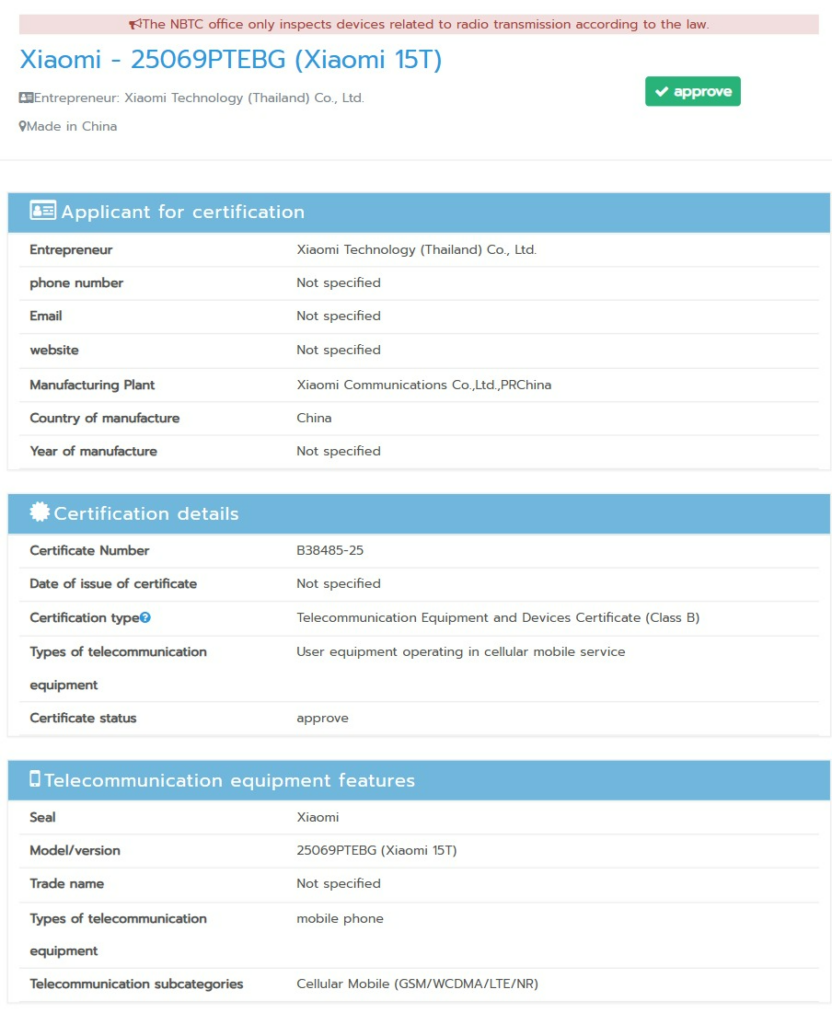
The global launch of Xiaomi’s 15T series appears to be just around the corner, as both the Xiaomi 15T and 15T Pro have cleared major regulatory hurdles. With official certifications now granted in Thailand and Singapore, expectations are rising for an August or September debut.
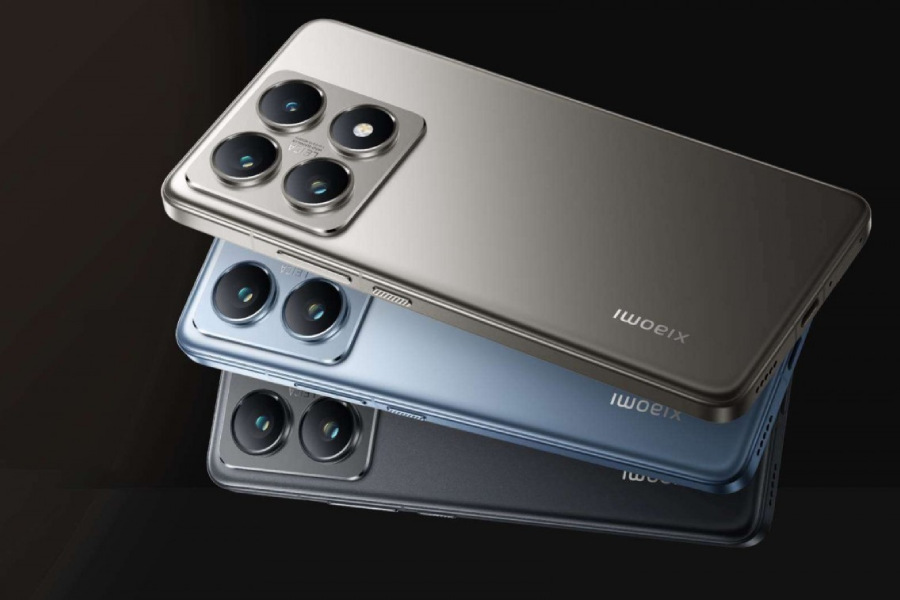
Xiaomi 14T series
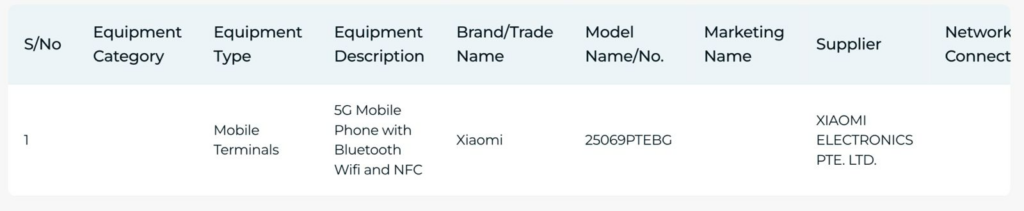
As of July 30, the Xiaomi 15T (model number 25069PTEBG) received approval from Thailand’s NBTC and Singapore’s IMDA (via Xpertpick), following the 15T Pro’s earlier appearances on multiple certification platforms including the FCC and Geekbench. These developments strongly hint at a global rollout in the coming weeks—right in line with Xiaomi’s usual T-series schedule.
The Xiaomi 15T Pro is rumored to pack the latest Dimensity 9400+ chip, 12GB of RAM, and Android 15 with HyperOS 2. Benchmarks suggest solid performance, with high single- and multi-core scores that put it among the faster phones in its category. It may include a massive 7,500mAh battery and support 120W fast charging.
Camera upgrades are also expected to be a major highlight. The Xiaomi 15T is tipped to feature a triple-camera system with a 50MP OmniVision OVX8000 main sensor, a 13MP ultra-wide lens, and a 50MP Samsung JN5 telephoto unit. It’s likely to be backed by a 5,500mAh battery supporting 67W fast charging. Leica-branded optics are also in the mix, though full hardware details haven’t been confirmed yet.
Meanwhile, a separate Xiaomi device (model 25082RNC1C) recently appeared in China’s 3C database with 33W charging support, possibly a part of the Redmi 15 series that targets the entry-level segment.
With both the 15T and 15T Pro now officially certified, Xiaomi fans won’t have to wait long to see what these budget-friendly flagships bring to the table. Between upgraded cameras, flagship-grade chips, and fast charging, the 15T series could be a serious contender in the mid-range space.
Honor looks set to finally debut an Ultra model in its flagship smartphone lineup. According to a new leak on Weibo by reliable tipster Digital Chat Station, the upcoming Honor Magic 8 series will include a Magic 8 Ultra, joining the standard Magic 8 and Magic 8 Pro.
The Ultra variant has been rumored since the Magic 7 generation but never actually launched, until now, it seems.
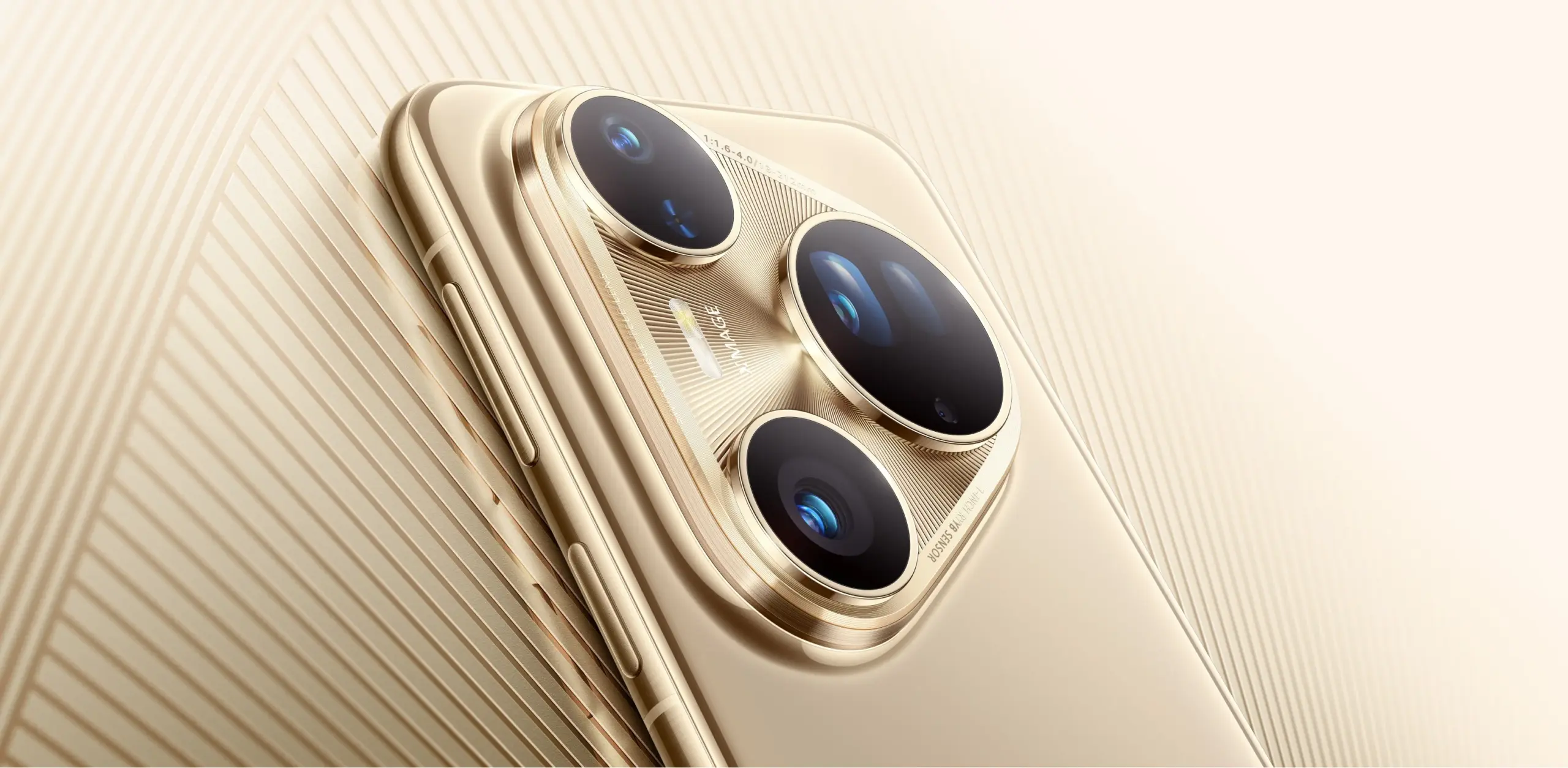
The Magic 8 Ultra could be the end of the company’s co-branded camera partnership. Instead, the Magic 8 Ultra is expected to feature a self-developed imaging system called AiMage, which will reportedly enable new camera hardware and AI-powered photo features.
Honor Magic 8 Ultra incoming?
Under the hood, the Ultra model is rumored to be powered by Qualcomm’s second-generation Snapdragon 8 Elite chip (SM8850). On the camera front, it could feature an OmniVision LOFIC main sensor, along with a 200-megapixel periscope lens.
While Honor has made it clear the phone won’t use a 1-inch main camera, the company’s imaging chief, Luo Wei, teased that the Ultra model will deliver a camera experience “no one has ever seen before.”
Luo added that Honor will focus on meaningful hardware improvements, especially in areas where AI alone can’t deliver results. He said the company aims to “leave competitors behind” in the next three years by building products that directly benefit users rather than chasing flashy designs.
According to another tipster who goes by the name Factory Manager Guan (via MyDrivers), Honor will first launch the Magic 8 and Magic 8 Pro models before unveiling the Magic 8 Ultra. The full lineup is expected to arrive in October and will use both MediaTek’s Dimensity 9500 and Qualcomm’s latest flagship chips.
For now, details like battery size and display features remain under wraps. We’ll keep you in the loop as more information becomes available.
We use cookies on our website to give you the most relevant experience by remembering your preferences and repeat visits. By clicking “Accept”, you consent to the use of ALL the cookies.
This website uses cookies to improve your experience while you navigate through the website. Out of these, the cookies that are categorized as necessary are stored on your browser as they are essential for the working of basic functionalities of the website. We also use third-party cookies that help us analyze and understand how you use this website. These cookies will be stored in your browser only with your consent. You also have the option to opt-out of these cookies. But opting out of some of these cookies may affect your browsing experience.
Necessary cookies are absolutely essential for the website to function properly. This category only includes cookies that ensures basic functionalities and security features of the website. These cookies do not store any personal information.
Any cookies that may not be particularly necessary for the website to function and is used specifically to collect user personal data via analytics, ads, other embedded contents are termed as non-necessary cookies. It is mandatory to procure user consent prior to running these cookies on your website.