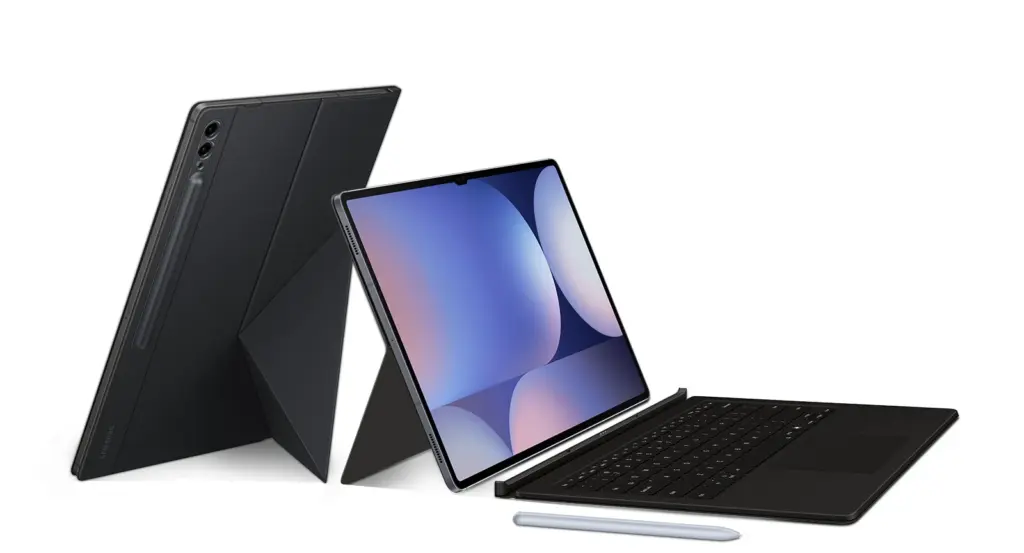
Samsung’s flagship tablet lineup is set for a refresh later this year, and the company has now offered the clearest hint yet about when the Galaxy Tab S11 series will arrive. The new lineup, expected to bring upgraded hardware and AI-driven features, is officially slated for release in the second half of 2025.
During its Q2 2025 earnings call on August 1, Samsung confirmed that the Galaxy Tab S11 series will launch in the second half of the year. While a specific date hasn’t been announced, this lines up with previous Galaxy Tab S launches, which typically happen around August or September. In addition to the flagship Tab S11 models, Samsung also hinted at upcoming mid-range and entry-level tablets, suggesting a broader push to strengthen its tablet lineup across price segments.
What to expect from the Tab S11 and S11 Ultra
Both are expected to feature the MediaTek Dimensity 9400+ chipset, paired with up to 16GB of RAM and 256GB of storage. MicroSD card support is likely to return, offering additional flexibility for users who need more space.
Battery capacities are also getting a bump. The Tab S11 is said to pack an 8,160mAh battery, while the Ultra model could come with a larger 11,600mAh cell. Both are expected to support 45W fast charging.
Design-wise, a recent live image of the Tab S11 Ultra shows a sleeker look with a single front-facing camera — a shift from the dual-camera setup seen on the Tab S10 Ultra — hinting at refinements in both form and function.
With more powerful internals, large batteries, and Samsung’s latest AI features on board, the Tab S11 series looks like a meaningful step forward for the company’s Android tablet offerings. As we get closer to the expected August–September timeframe, more official details should surface — but it’s clear Samsung is aiming to stay competitive in the high-end tablet space with this next-generation lineup.
Gaming laptops have exploded in popularity over the last few years, and with more brands entering the space. So choosing the right one has become a lot trickier. Among the major players in this segment, we have the Lenovo LOQ series and the ASUS ROG (Republic of Gamers) lineup. So what’s unique about both brands and what makes them special? Read on to find out.
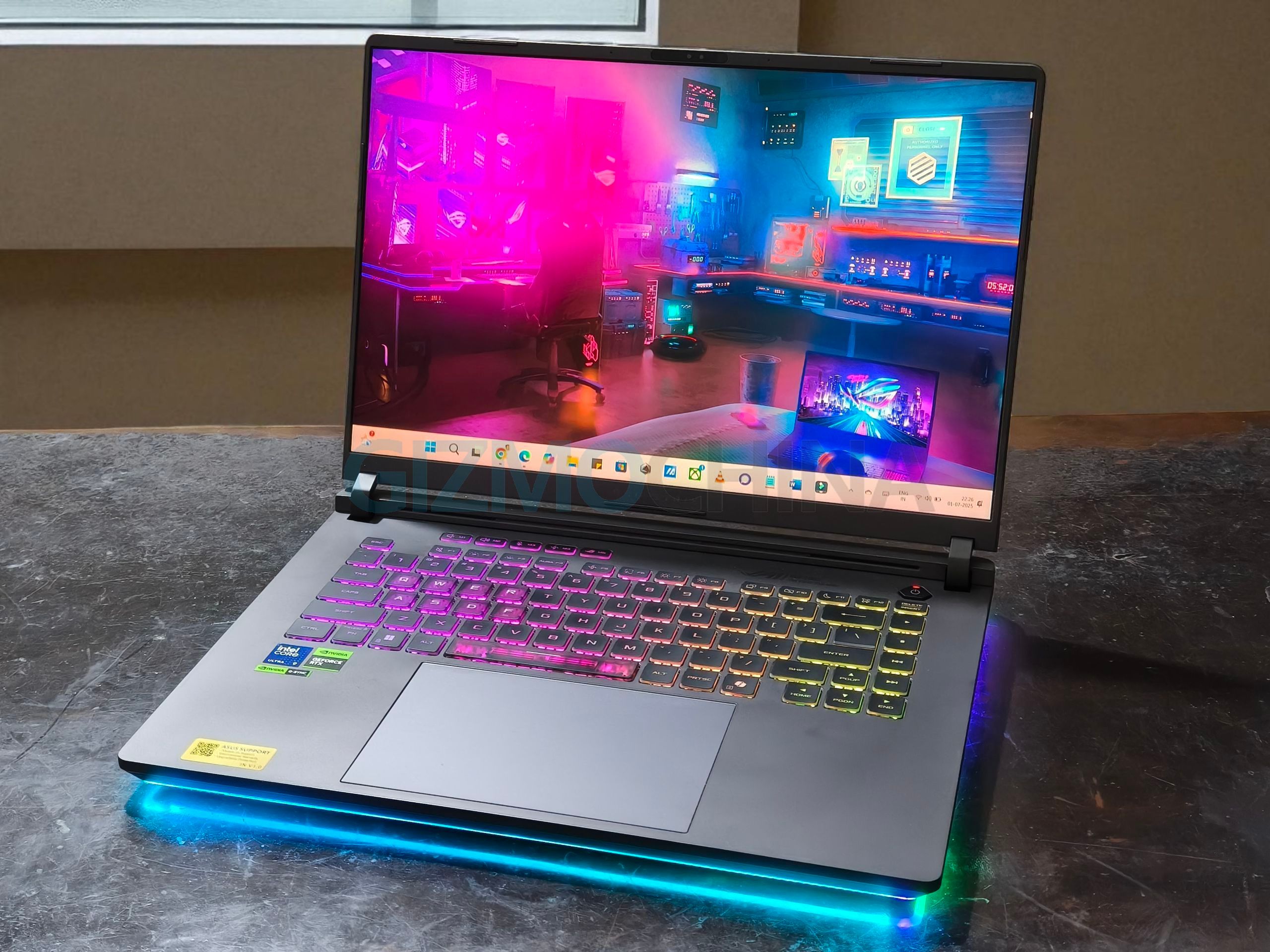
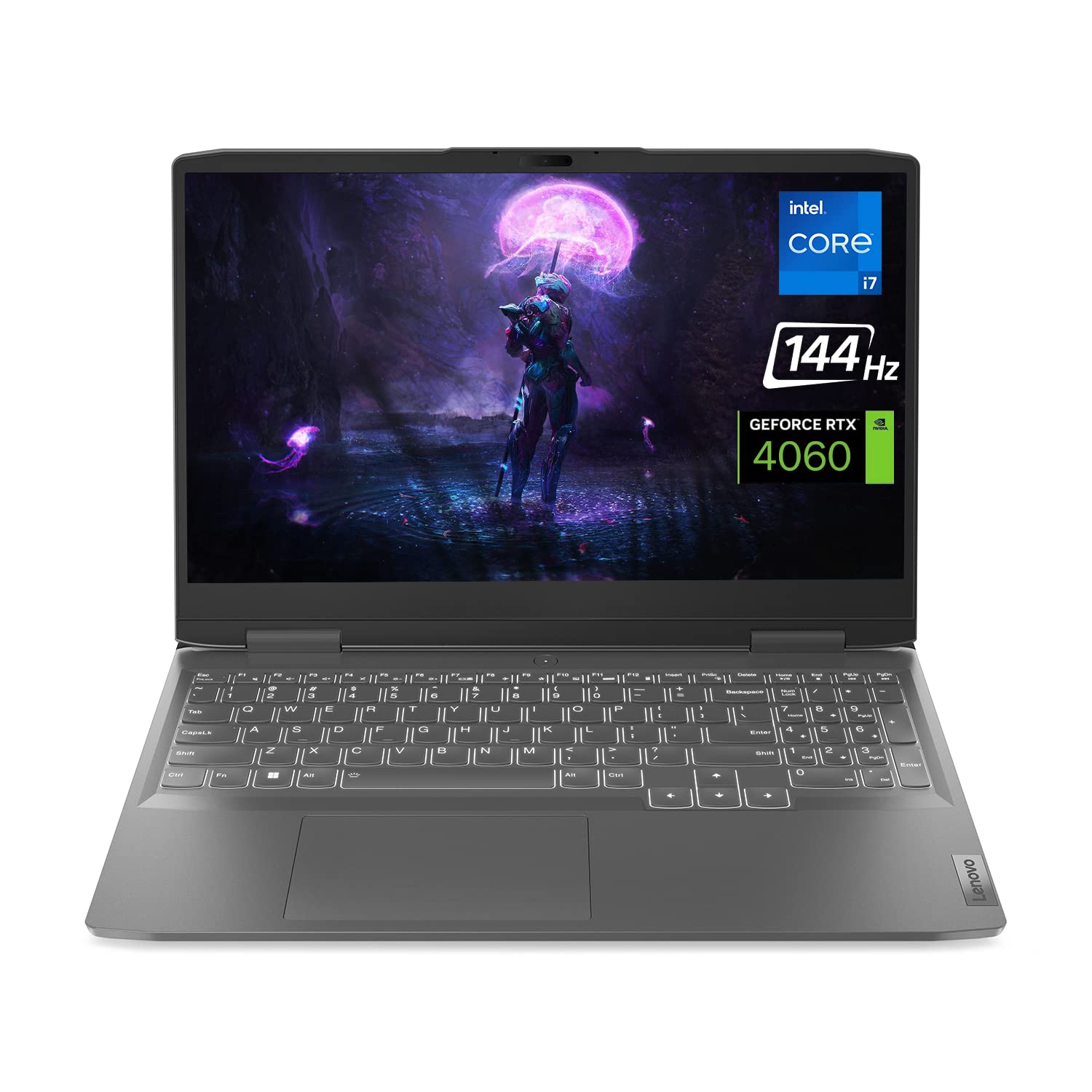
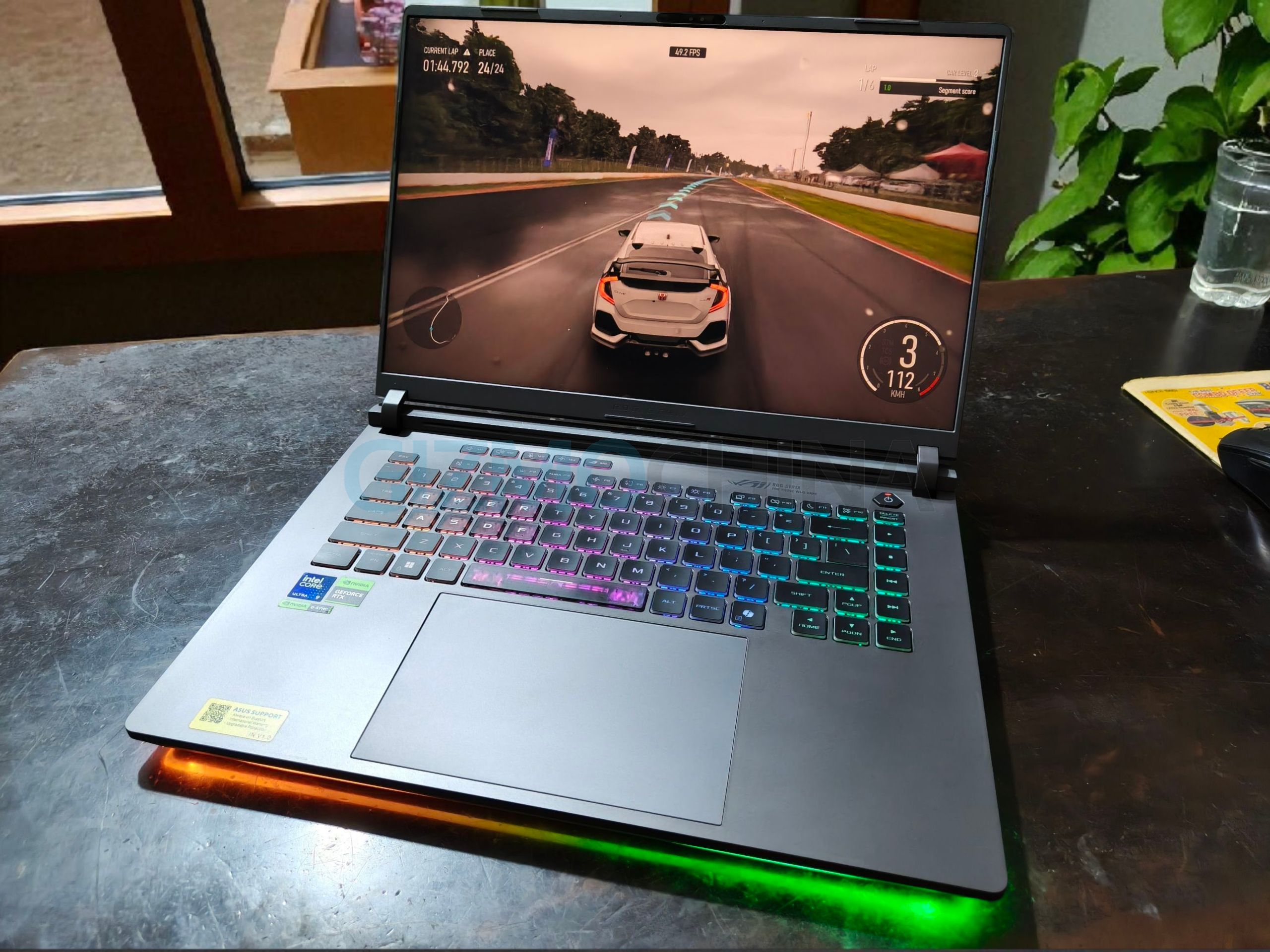
ASUS ROG is synonymous with high-end gaming (check out our ASUS ROG Strix G16 2025 review). It carries a legacy of high performance machines built for hardcore gamers. These are often loaded with advanced cooling solutions for its powerful specs, RGB lighting, and more. On the other hand, the Lenovo LOQ is a newer entry in the gaming space, which targets gamers on a budget and even casual players.
2. Performance & Hardware Options
In the ROG family, there are plenty of different series to choose from, including the ROG Zephyrus, Strix, and Flow. All of these offer cutting edge specs but meet different needs for gamers. These are even popular for some creative professionals thanks to their beefy and latest GPUs (typically Nvidia) and either Intel or AMD processors.
Meanwhile, the Lenovo LOQ is a less extravagant and built to offer great value machines that get the job done. These usually top out at mid-range gaming hardware, like an RTX 4060 GPU, along with either Intel or AMD offerings.
3. Price & Value for Money
This is where LOQ truly shines. Most LOQ laptops are priced in the $700 to $1200 price range, making them ideal for gamers on a budget or students. But the ASUS ROG laptops often cross the $1200 mark and can even cost nearly $3000 for some top end models. If you’re only gaming occasionally or play less intensive titles at 1080p, Lenovo’s LOQ will be more than enough for you, but ROG still holds the crown for true AAA gaming.
Please Note: When you buy something using the links in our articles, we may earn a small commission at no cost to you.
4. Software & Ecosystem
Asus ROG Strix G16 (2025)
ASUS ROG comes with Armoury Crate, a unified platform to control performance profiles, RGB lighting, and system monitoring. It’s polished and built for gamers. However, Lenovo’s LOQ laptops use a simpler Lenovo Vantage software, which leans more towards function over form.
5. Final Verdict: Choose Based on Your Needs
If you’re chasing raw power, cutting-edge features, and premium build, ASUS ROG is still the gold standard. But if you need a cost-effective machine that can handle most modern games without breaking the bank, Lenovo LOQ is an excellent entry point into PC gaming in 2025.
For more daily updates, please visit our News Section.
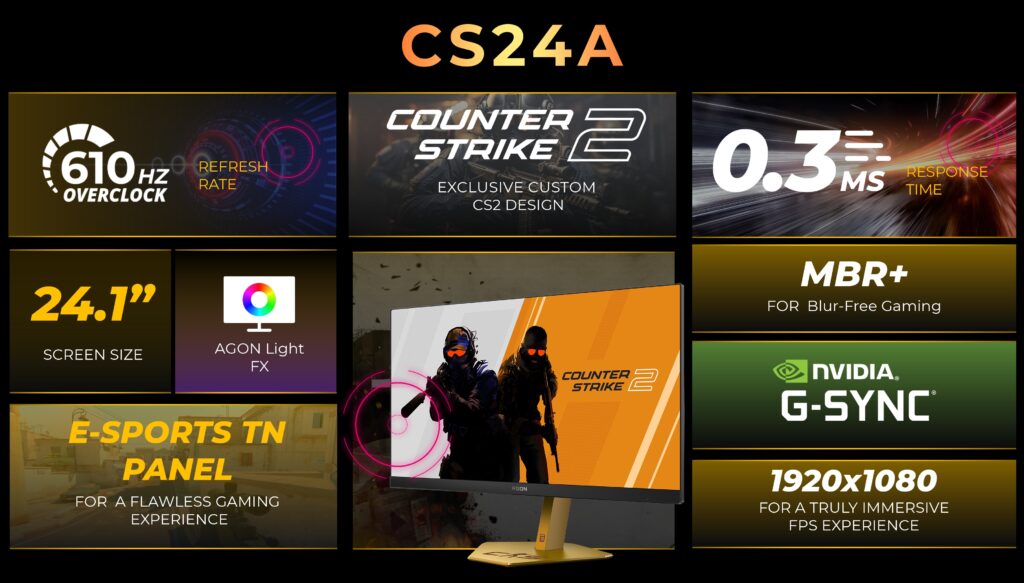
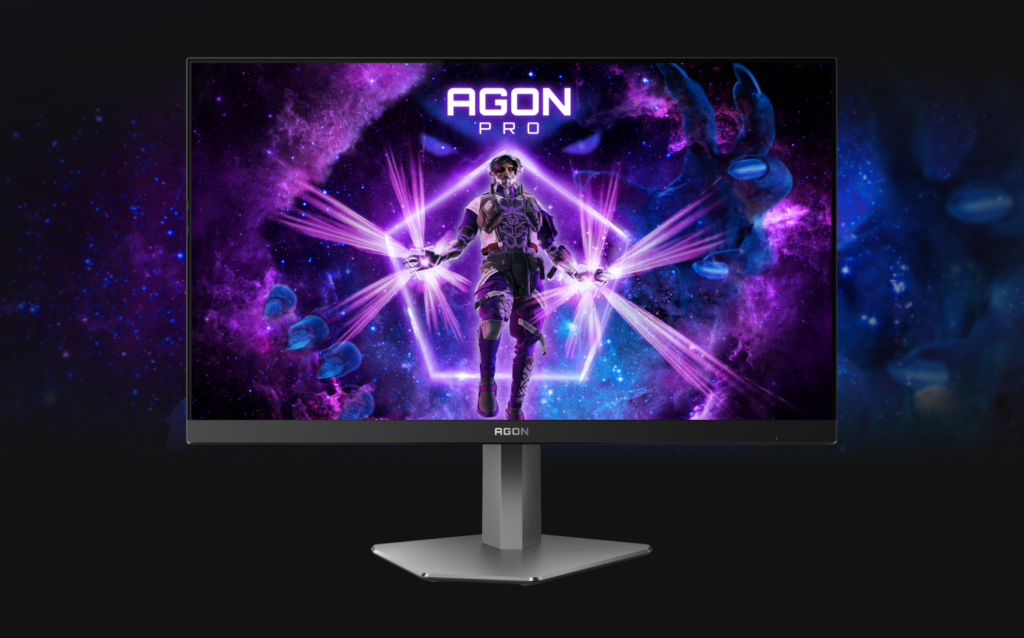
AGON by AOC has announced two new 24.1-inch gaming monitors: the AGON PRO CS24A and the AGON PRO AG246FK6. Both offer a 600Hz refresh rate, overclockable to 610Hz, and are built for esports-level performance. They use a Full HD (1920×1080) TN panel with 0.5 ms GtG and 0.3 ms MPRT response times.
The CS24A is made in collaboration with Counter-Strike 2 and features exclusive CS2 branding with orange accents. It includes a dedicated CS Mode that adjusts contrast, shadow control, and MBR+ backlight strobing for better clarity in CS2 matches. The AG246FK6 delivers the same performance in AGON PRO’s standard design and includes three FPS modes for different shooter games.
Both models use AGON’s new MBR+ technology. It has a dual backlight with 20 LED groups, controlled by a driver that syncs strobing with the high refresh rate. This reduces motion blur and ghosting during fast gameplay. The monitors are DisplayHDR 400 certified and reach a peak brightness of 500 cd/m².
Color accuracy is high, with 99.8% sRGB and 93.6% DCI-P3 coverage. The sRGB gamut area reaches 125.1%, and color performance stays consistent with an average DeltaE under 2. Both displays support Adaptive-Sync, AMD FreeSync Premium, and are NVIDIA G-SYNC compatible.
Connectivity includes two HDMI 2.1 ports, one DisplayPort 1.4, and a USB 3.2 Gen 1 hub with four ports. A wired QuickSwitch controller lets players change settings like brightness and gaming modes without going into menus. The CS24A includes CS Mode, FPS2, and FPS3. The AG246FK6 offers FPS1, FPS2, and FPS3.
The stand supports 130 mm height adjustment, tilt, swivel, and pivot. Both models include a built-in headset holder and a 3-sided frameless design for better multi-monitor setups. AGON will debut the CS24A at IEM Cologne 2025 at the G2 booth, where pros will test it on a new Counter-Strike 2 map built for the event.
Pricing & availability
The AG246FK6 goes on sale in August 2025 for £599. The CS24A will be available in September 2025 at the same price.
For more daily updates, please visit ourNews Section.
Lenovo‘s Legion Go 2 has surfaced in yet another leak after its initial sighting. This time around, we get to see this handheld in action, taking on intensive titles and even outperforming some of its rivals. The benchmarks have revealed interesting performance metrics, so let’s check it out.
Lenovo’s Legion Go 2 Outpaces MSI Claw A8 in Benchmarks
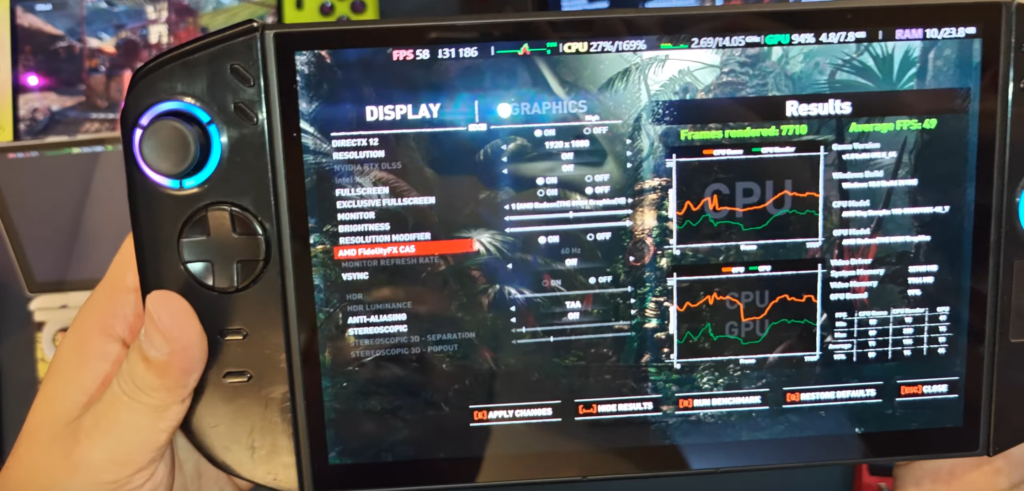
In a video shared on YouTube (Via NotebookCheck), another Legion Go 2 prototype was seen running the Shadow of the Tomb Raider. The video showcases multiple handheld consoles running this game, which even includes the recently unveiled MSI Claw A8. Despite both handhelds running on the same Ryzen Z2 Extreme APU, the Legion Go 2 managed a higher average framerate of 49fps, over the Claw A8’s 44fps.
Lenovo Legion Go 2 Prototype in Action
The built-in benchmark on the Shadow of the Tomb Raider was run at 1080p resolution. What’s more interesting is the fact that the Legion Go 2 outpacing the Claw A8 in the video was a prototype model. As of right now, the MSI Claw A8 is one of the more powerful gaming handhelds, so this paints a positive picture of what we can expect from Lenovo’s next gaming handheld generation.
The video further goes on to add that the Legion Go 2 might be offering better performance thanks to the additional 8GB of RAM and a better thermal dissipation system. While RAM might not have a big impact on performance after a certain capacity, heat management is can play quite a role in such a form factor. These devices are expected to run AAA titles in a portable body.
For more daily updates, please visit our News Section.
Samsung’s upcoming Galaxy S26 lineup is starting to take shape, and early leaks hint at some noteworthy improvements in battery life. As anticipation builds ahead of the expected January 2026 launch, new details about the Galaxy S26 Pro and S26 Edge suggest Samsung is addressing user concerns around battery performance.
Bigger batteries for the Pro and Edge
A report from GalaxyClub claims the Galaxy S26 Pro will pack a 4,300mAh battery — a decent bump from the 4,000mAh unit in last year’s S25. The S26 Edge, which is expected to replace both the S25 Edge and S25 Plus, is said to include a 4,200mAh battery. That’s up from 3,900mAh in the S25 Edge, but still notably smaller than the 4,900mAh battery found in the S25 Plus.
The Galaxy S26 Ultra, meanwhile, is sticking with its tried-and-tested 5,000mAh battery, which is rumored to support 60W fast charging — an upgrade over the 45W on its predecessor. While the capacity gains are modest, they seem targeted — particularly in response to battery life complaints about the S25 Edge. That said, the S26 Edge’s smaller battery compared to the outgoing Plus model is already raising eyebrows.
What makes things even more concerning is Samsung’s chipset choice for the S26 lineup. The S26 Ultra is almost confirmed to use the Snapdragon 8 Elite 2, while Samsung has hinted that the Exynos 2600 will also be part of the lineup. If past trends are any indication, the Edge and Pro models could very well end up with the Exynos 2600 — making power efficiency and battery life even more uncertain.
Whether the 2nm process node of the Exynos 2600 (paired with improved resource management) can avoid canceling out the 300mAh battery gain — or if the phone ends up offering better battery life at all — remains to be seen.
Epson has launched the Pro Cinema LS9000, a 4K HDR 3LCD laser projector aimed at high-end home theaters and gaming setups. It’s built to deliver crisp visuals, smooth motion, and easy installation, whether you’re watching in a dark room or a brightly lit space.
The projector features Epson’s proprietary 4K display technology with HDR10+ support, producing 8.29 million pixels on-screen. It runs on the Epson ZX Picture Processor, which handles real-time frame interpolation, contrast, HDR, and resolution enhancement for accurate and consistent picture quality.
With 2,200 lumens of color and white brightness, the projector uses a 3-chip 3LCD engine to show 100 percent of the RGB color signal in every frame. This ensures a wide color gamut without rainbow effects or brightness drop-offs found in other projection technologies. The solid-state laser light source is rated for 20,000 hours and features a vapor-cooled thermal design, eliminating the need for bulb changes.
The LS9000 supports 4K content at up to 120 frames per second and has input lag under 20 milliseconds, making it ideal for gamers. It includes HDMI 2.1 ports and supports ARC and eARC for easy integration with current gaming consoles and audio systems.
Installation is simplified with a motorized lens system that offers powered zoom, focus, and lens shift. The lens can shift up to 96 percent vertically and 24 percent horizontally without image distortion. Users can save up to ten lens memory presets for different screen setups.
It supports a variety of AV sources and screen types and integrates with smart home control systems like Control4, Crestron, and PJLink. The projector will be demonstrated at Audio Advice Live in Raleigh, North Carolina, from August 1 to 3, 2025.
Pricing & availability
The Epson Pro Cinema LS9000 is available now through authorized Epson dealers at a price of $3,999. It comes with a three-year limited warranty, two-business-day full unit replacement, free shipping, and lifetime technical phone support.
For more daily updates, please visit our News Section.
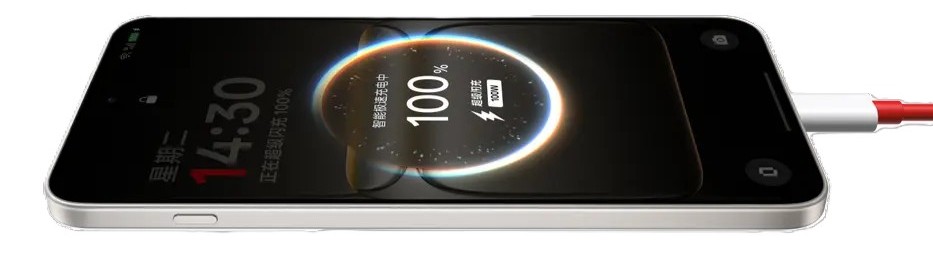
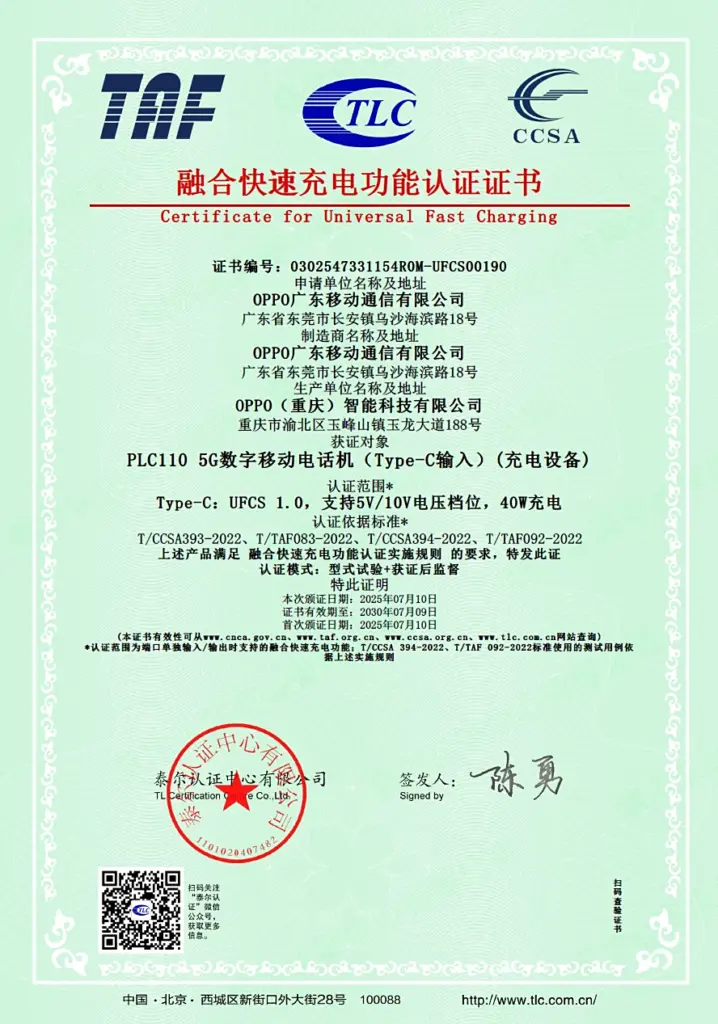
The OnePlus Ace 5 Ultra is the first smartphone to earn 40W UFCS (Universal Fast Charging Specification) certification, setting a new bar for fast-charging compatibility across devices. The certification, granted by the FCA Terminal Fast Charging Industry Association, could signal a shift toward more universal and user-friendly fast-charging standards.
According to the association, the OnePlus Ace 5 Ultra has officially received the first integrated 40W UFCS fast charging certificate (ID: 0302547331154ROM-UFCS00190). That means the device supports third-party UFCS chargers at 40W, in addition to OnePlus’ proprietary 100W Super Flash Charge and Fusion Fast Charge systems.
The goal is to make charging more transparent and consistent for users across brands. UFCS is a collaborative industry effort backed by major Chinese tech players, aimed at creating a unified fast-charging protocol that cuts across ecosystems.
The Ace 5 Ultra isn’t just about charging. It’s powered by MediaTek’s Dimensity 9400+ chip, and features a large 6.83-inch LTPO AMOLED screen with a 2800×1272 resolution and a smooth 144Hz adaptive refresh rate. On the back, there’s a 50MP Sony IMX906 sensor with OIS and an 8MP ultra-wide lens for versatile photography.
Under the hood is a 6,700mAh battery built with silicon anode technology — what OnePlus calls a “Glacier Battery.” Combined with 100W charging, the phone can go from zero to full in under 30 minutes, making it one of the fastest-charging phones in its class.
The Ace 5 Ultra launched in China in May 2025, and with this certification, OnePlus moves closer to making fast charging more open, reliable, and hassle-free.
In a world where even “universal” PD charging can come with its own set of compatibility quirks, this unified fast charging standard—backed by major Chinese tech brands—is a welcome change. It’s a step forward that deserves recognition and could make life easier for users juggling multiple USB-C powered devices.
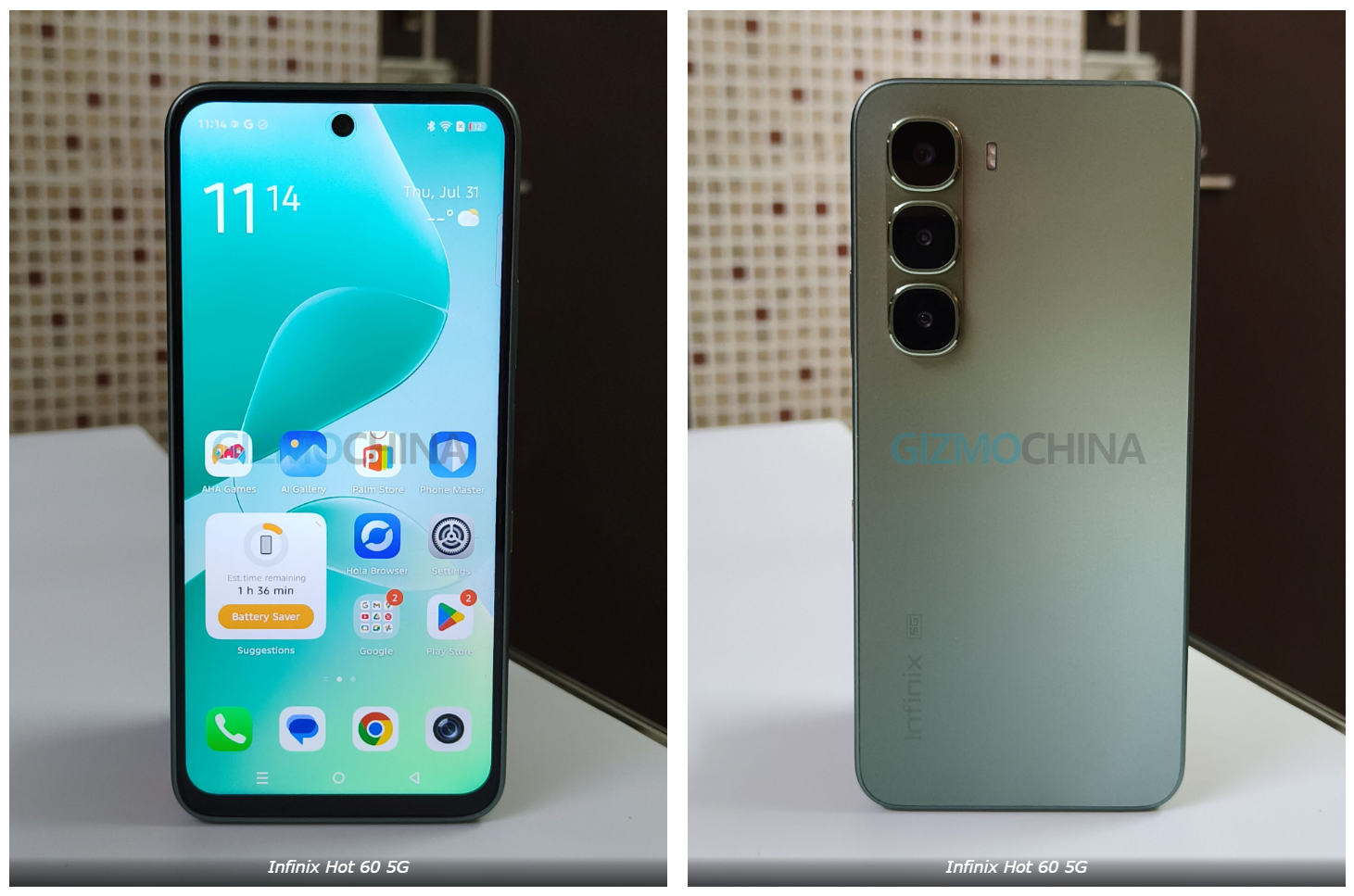
The Infinix Hot 60 5G is not just another budget 5G phone; it aims to offer several AI-driven features at an entry-level price. After using the Infinix Hot 60 5G for a week as my secondary device, I got a fair sense of what it offers, where it delivers well and where there is room for improvement.
6Final Thoughts
Priced at Rs 10,499 for the sole 6GB+128GB option, the Infinix Hot 60 5G manages to pack in a lot: a stylish build, dependable performance, AI enhancements, and long-term reliability, all under a competitive price tag. It also comes in shades like Sleek Black, Shadow Blue, and Caramel Glow.
The inclusion of a One Tap AI Button and LPDDR5x RAM gives it an edge in the segment. While a higher resolution display or stereo speakers could have made it a near-perfect budget phone, it still stands out as one of the most innovative offerings in its category.
For more daily updates, please visit our News Section.
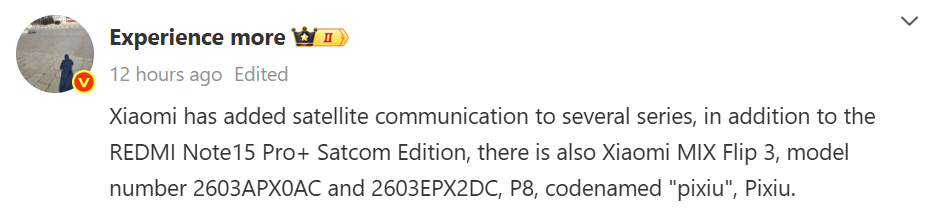
Xiaomi appears to be making a significant push into satellite communication, with new reports suggesting the advanced feature will soon be available across multiple smartphone lineups, including the upcoming Mix Flip 3 foldable and Redmi Note 15 Pro+. This marks a significant shift in the mobile industry, as satellite messaging, traditionally reserved for ultra-premium flagships, looks set to become more accessible to a wider audience.
Xiaomi Mix Flip 2
According to insights from Weibo tipster “Experience More,” Xiaomi is actively integrating satellite communication into its ecosystem. Leading this charge is the Redmi Note 15 Pro+ Satellite Edition, followed by the upcoming Mix Flip 3 foldable, identified by model numbers 2603APX0AC and 2603EPX2DC, codenamed “Pixiu.”
Xiaomi’s satellite ambitions were confirmed earlier this month, when a device bearing model number “25104RADAC” received radio approval, explicitly confirming support for BeiDou short message satellite communication. This device is widely believed to be the Redmi Note 15 Pro+ Satellite Edition, making it the first Redmi phone and the first in the entire Redmi lineup, including the premium K and K Ultra series, to support satellite messaging.
Popular tipster Digital Chat Station clarified that satellite messaging won’t be a standard feature across all variants. Xiaomi reportedly plans to enable the feature only in a special version of the phone, targeting users who truly need off-grid communication.
As for the Mix Flip 3, details remain scarce since the Mix Flip 2 only recently launched in China. However, reports suggest the 2603APX0AC will be the satellite-enabled variant, while the 2603EPX2DC will serve as the standard edition.
The addition of satellite messaging is a major step forward for the Redmi Note series. This technology allows users to send and receive messages even in areas without cellular coverage, making it a crucial feature for emergencies, remote travel, or maintaining communication in isolated regions. Until now, this capability has largely been exclusive to high-end flagships, highlighting Redmi’s effort to democratize advanced features for a broader consumer base.
For more daily updates, please visit ourNews Section.
Samsung’s Exynos 2500 is the company’s most powerful mobile chipset that recently debuted with the Galaxy Z Flip 7. It features a 10-core CPU that we don’t see often on mobile chips, paired with a powerful Xclipse 950 GPU, brings serious performance upgrades. The NPU has also received considerable improvements.
The Exynos 2500 brings nice upgrades that are too good to ignore, but how does it stack up against the Snapdragon 8 Elite, the most popular choice among flagship devices? We’ll review benchmark scores and delve into key differences to find out who has the edge.
Let’s begin with the spec sheet:
Exynos 2500
Snapdragon 8 Elite
Announced
June 2025
October 2024
Process node
3nm
3nm
Manufacturer
Samsung
TSMC
CPU
1 x 3.3 GHz — Cortex-X925 2 x 2.74 GHz — Cortex-A725 5 x 2.36 GHz — Cortex-A725 2 x 1.8 GHz — Cortex-A520
2 x 4.32GHz — Oryon 6 x 3.53GHz — Oryon
GPU
Samsung Xclipse 950 GPU Ray tracing support
Adreno 830 GPU Ray tacing support Snapdragon Elite Gaming features
NPU
Yes 59 TOPS
Qualcomm Hexagon NPU
Memory
LPDDR5x, up to 4.2GHz
LPDDR5x, up to 5.3GHz
Storage
UFS 4.0
UFS 4.0
Camera
Up to 320MP single camera Up to 8K/60fps video recording
Spectra triple 18-bit AI ISPs Up to 320MP single camera Limitless real-time semantic segmentation Up to 8K/30fps video recording
Connectivity
Download speed: 12.1Gbps (peak) Upload speed: 3.67Gbps (peak) Wi-Fi 7 Bluetooth v5.4 Satellite messaging support
Download speed: 10Gbps (peak) Upload speed: 3.5Gbps (peak) Wi-Fi 7 Bluetooth v6.0 Ultra Wideband (UWB) support
Exynos 2500 vs Snapdragon 8 Elite: Benchmark scores
Note: The tests were conducted on the Samsung Galaxy Z Flip 7 (Exynos 2500) and Samsung Galaxy S25 Ultra (Snapdragon 8 Elite).
AnTuTu comparison
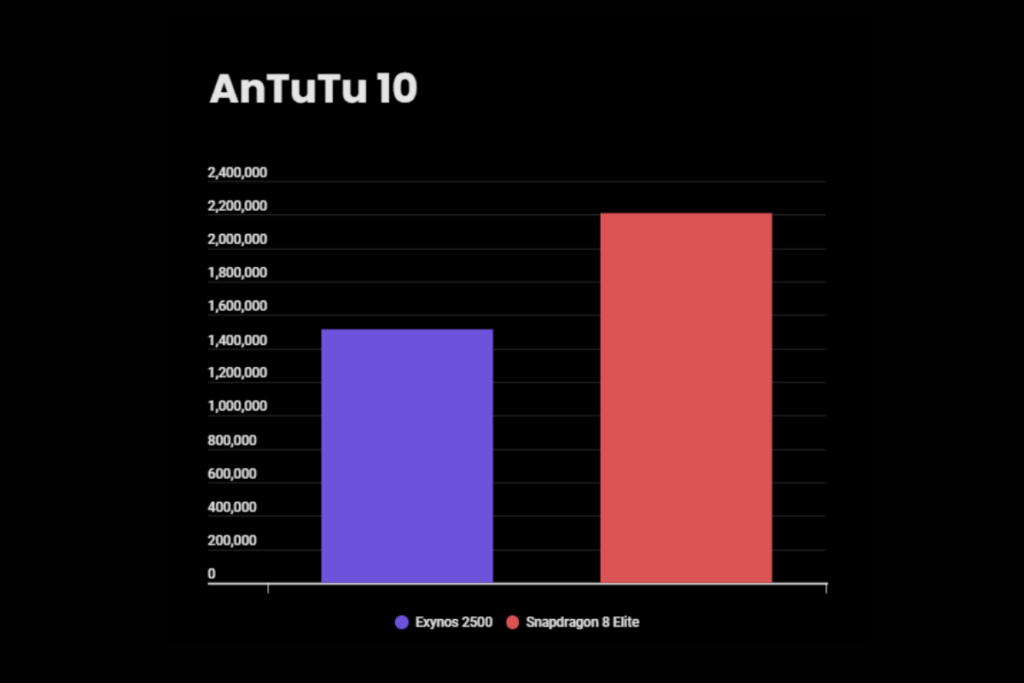
On AnTuTu, the Snapdragon 8 Elite delivers a massive performance lead over the Exynos 2500, scoring over 2.2 million points compared to Exynos’s 1.5 million. The biggest gap shows up in the GPU department, where the 8 Elite pulls ahead by more than 59%, indicating significantly better graphics and gaming performance. The CPU score also favors Snapdragon by around 51%, suggesting faster processing power in demanding workloads.
Even in memory and UX scores, the Snapdragon chip maintains its edge, though the difference is less dramatic. Overall, the benchmark shows strong gains for the Snapdragon 8 Elite.
Exynos 2500
Snapdragon 8 Elite
AnTuTu score
1,514,821
2,209,476
CPU
379,468
574,518
GPU
529,420
842,351
Memory
360,718
437,621
UX
245,215
354,986
Geekbench comparison
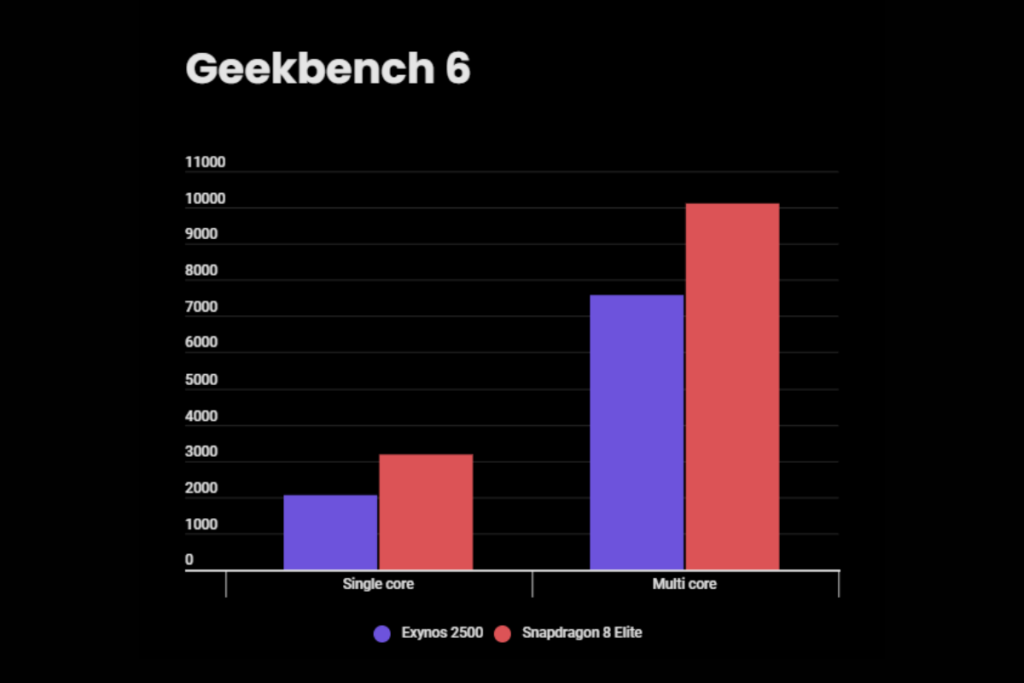
The Geekbench scores further highlight the performance gap between the Snapdragon 8 Elite and the Exynos 2500. In single-core tests, the Snapdragon hits 3,179 points, beating Exynos’s 2,058 by over 54% — a major advantage for tasks that rely on raw speed and responsiveness. The multi-core score paints a similar picture, with the 8 Elite reaching 10,114 compared to the Exynos’s 7,583, marking a 33% lead.
Exynos 2500
Snapdragon 8 Elite
Single core
2,058
3,179
Multi core
7,583
10,114
The Snapdragon 8 Elite greatly outperforms the Exynos 2500 on various benchmarks, but that doesn’t show the complete picture. So, let’s look at the real-world differences to understand things better.
Exynos 2500 vs Snapdragon 8 Elite: Key differences that matter
Manufacturing
While both chips utilize 3nm process nodes, the Exynos 2500 has been manufactured by Samsung, and the Snapdragon 8 Elite is manufactured by TSMC. Both use advanced, cutting-edge manufacturing facilities; however, TSMC chips generally exhibit better power efficiency.
CPU
The two flagship chipsets differ significantly in terms of the CPU. The Exynos 2500, for instance, has a 10-core CPU, while the Snapdragon 8 Elite has an 8-core CPU. Furthermore, the Exynos chip has ARM-based CPU cores (1 x Cortex-X925, 7 x Cortex-A715, and 2 x Cortex-A520), whereas the Snapdragon chip uses custom Oryon cores.
For comparison, the Oryon cores in the Snapdragon 8 Elite are more powerful and power-efficient, and they also run at a higher speed, giving them a performance edge over the Exynos 2500’s cores.
GPU
The Exynos 2500 has an Xclipse 950 GPU with more pipelines and higher FLOPS. Despite that, it gets crushed by the Adreno 830 GPU inside the Snapdragon 8 Elite. That’s because the Snapdragon chip has a higher memory bandwidth and GPU frequency. On top of this, Qualcomm’s optimizations help Adreno GPUs make better utilization of hardware resources. This not only improves performance but also helps the chip achieve sustained gaming performance without any significant drop.
AI & NPU
The Exynos chip has a powerful NPU that can run up to 59 trillion operations per second (TOPS). The on-device AI performance is 39% better than its predecessor. The Qualcomm chip, on the other hand, is equipped with a Hexagon NPU that delivers 45% higher AI performance and 45% better performance per watt compared to its predecessor.
Camera
The Exynos 2500 supports up to 320MP camera resolution and up to 8K/60fps video recording. While not going into detail, Samsung states that there’s a new ISP capable of capturing vivid images and videos in high resolution. It also features several on-device generative AI capabilities, including removing unnecessary objects and expanding the background.
On the other hand, the Snapdragon 8 Elite features an 18-bit Spectra triple ISP with a maximum resolution of 320MP and up to 8K/30fps video recording. The chip supports multi-frame noise reduction (MFNR) and zero shutter lag (ZSL) at up to 108MP single camera or 48+48+48MP triple cameras. Qualcomm has equipped the chip with a host of features, including real-time semantic segmentation, Truepic photo capture, Video super resolution, and Bokeh Engine.
Connectivity
The Exynos chip offers higher speeds on a 5G connection, with download speeds of up to 12.1Gbps and upload speeds of up to 3.67Gbps, while the Snapdragon 8 Elite peaks at 10Gbps (download) and 3.5Gbps (upload). It also supports satellite messaging. Wi-Fi 7 is present on both chipsets, though.
The Snapdragon chip isn’t without its own perks. It supports the newer Bluetooth 6.0 standard with LE Audio (versus older Bluetooth 5.4 on the Exynos chip). Additionally, it integrates premium audio features such as aptX Lossless and XPAN for spatial audio, and adds ultra-wideband (UWB) support for precise device finding.
Exynos 2500 vs Snapdragon 8 Elite: Conclusion
Samsung has come a long way with the Exynos 2500. It’s a serious step forward, offering a powerful 10-core CPU, beefed-up AI capabilities, and impressive connectivity upgrades. But when placed head-to-head with the Snapdragon 8 Elite, it still lags behind in raw performance.
On both AnTuTu and Geekbench, the Snapdragon chip delivers a commanding lead — especially in GPU and single-core CPU performance — which translates to better gaming, smoother multitasking, and snappier everyday use. Qualcomm’s custom Oryon cores, superior GPU optimizations, and more power-efficient 3nm node from TSMC all give it an edge where it counts.
That said, the Exynos 2500 isn’t without wins. It offers faster 5G speeds, powerful AI compute, and impressive camera support. It’s clearly no longer the weak link in Samsung’s lineup — but if ultimate performance and efficiency are your top priorities, the Snapdragon 8 Elite still takes the crown.
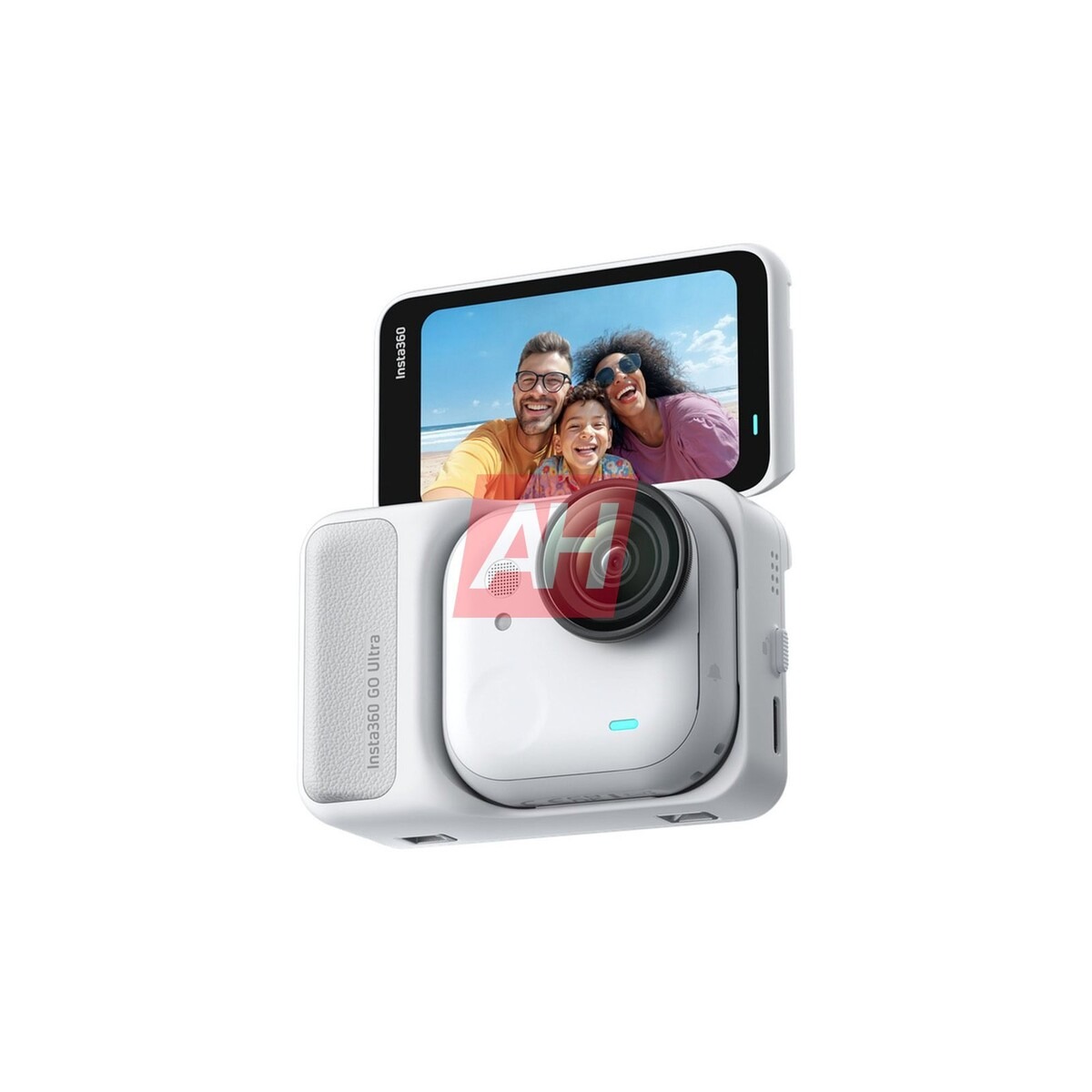
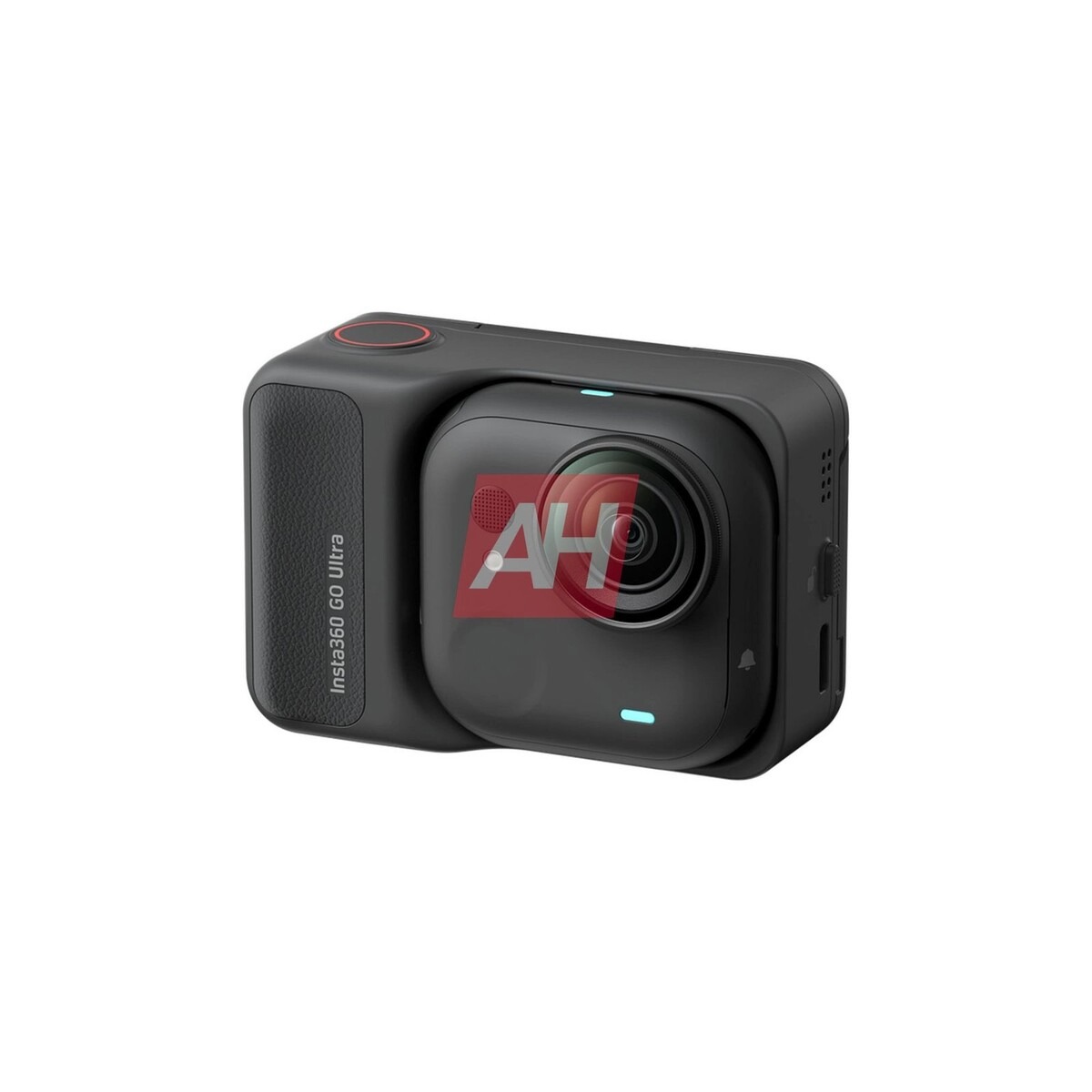
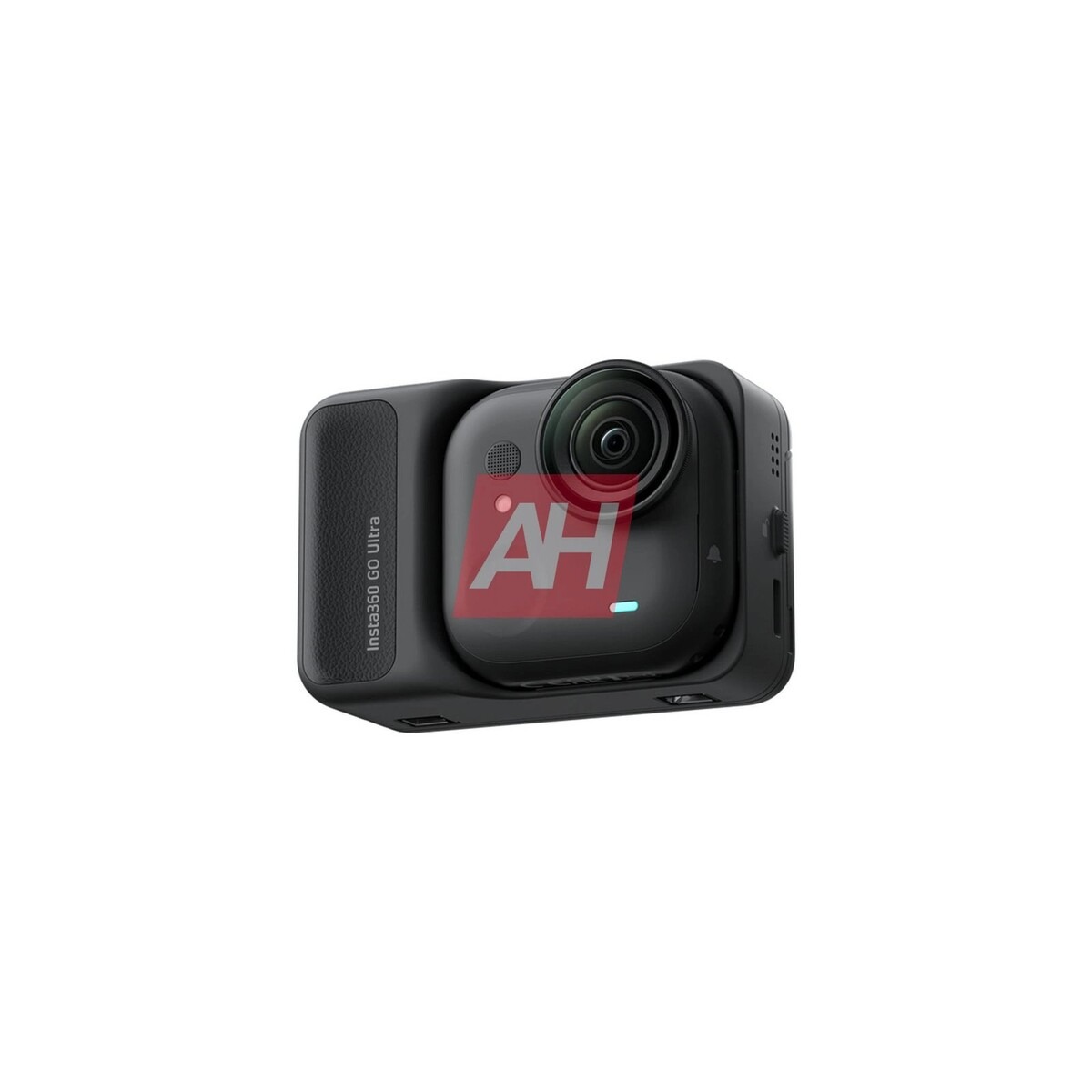
Earlier today, DJI unveiled its first 360 camera, the Osom 360, which supports native 8K panoramic video recording at up to 50fps and offers up to 13.5 stops of dynamic range. Its competitor, Insta360, also has a new adventure camera in the pipeline called the Insta360 Go Ultra. Android Headlines has leaked images and promo material for the upcoming camera.
As per the report, the Insta360 Go Ultra will be the successor to last year’s Go 3S, bringing key upgrades, including 4K video at 60FPS and a redesigned square body.
The Go Ultra will keep its focus on portability. It’s small, lightweight, and clips easily onto shirts, bags, or helmets. Like its predecessor, it’s waterproof and designed for action use. The square design replaces the rectangular shape of the Go 3S, making it easier to handle.
The biggest upgrade will be the ability to shoot 4K video at 60FPS. The Go 3S was limited to 4K at 30FPS, so this is a major improvement for smoother footage. The flip-up screen returns, useful for vlogging or recording yourself on the go.
There are recording indicator lights on both the camera and the screen. This helps others see when it’s filming, even if the camera is detached and mounted somewhere else.
The modular design is unchanged. You can pop the camera out and attach it anywhere. It’s still a tiny action cam that can go almost anywhere and capture high-quality footage.
The Insta360 Go Ultra will be available in black and white. While there’s no official launch date yet, it’s expected to be announced by early September, possibly around IFA 2025.
For more daily updates, please visit ourNews Section.
Samsung has launched the Galaxy Book 4 Edge 15-inch laptop in India. It is priced at ₹64,990 ($743), with a ₹5,000 bank cashback bringing the effective price down to ₹59,990 ($686). The laptop promises up to 27 hours of battery life on a single charge, making it a strong option for users who need all-day usage without carrying a charger.
The laptop has a 15.6-inch Full HD IPS anti-glare display. It weighs 1.5 kg and measures 35.66 × 22.98 × 1.5 cm. The body is slim and made using recycled plastic, glass, and aluminum. It is available in Arctic Blue.
The Galaxy Book 4 Edge runs on the Qualcomm Snapdragon X processor with 8 cores up to 3.0GHz. It features a Qualcomm Adreno GPU and Hexagon NPU. It comes with 16 GB LPDDR5X RAM (onboard) and 512 GB eUFS storage. The operating system is Windows 11 Home.
The laptop includes a 61.2 Wh battery and charges via a 65W USB Type-C adapter. It supports Wi-Fi 7 (802.11be) and Bluetooth 5.4. Ports include HDMI 2.1, USB 3.2, two USB 4.0 ports, a microSD card reader, and a headphone/mic combo jack.
It has a 2MP HD camera and stereo speakers with Dolby Atmos, along with dual microphones. Security features include a fingerprint reader, TPM, and a security slot. It also includes Samsung Knox and Microsoft Secured-core PC protection.
AI features include Microsoft Copilot+ tools like Recall, Live Translate, and Cocreator. Samsung’s Galaxy AI adds Chat Assist. It also supports Microsoft Phone Link for syncing and screen mirroring with Galaxy smartphones.
The Galaxy Book4 Edge is available via Samsung’s website, Flipkart, the Samsung Shop App, Samsung Experience Stores, and other authorized retail outlets in India.
For more daily updates, please visit ourNews Section.
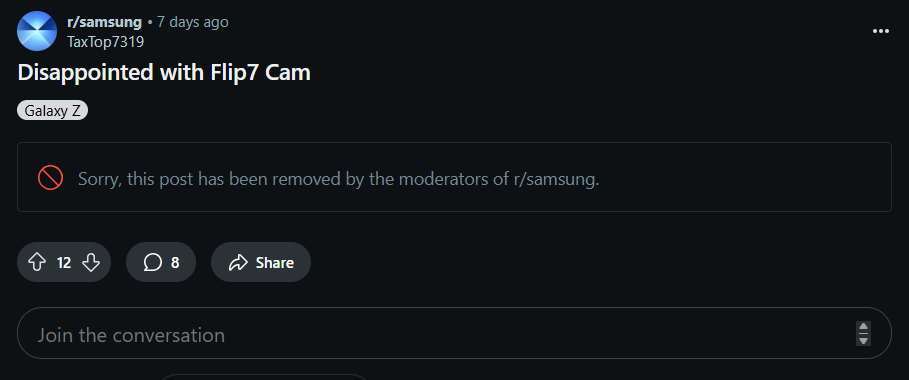
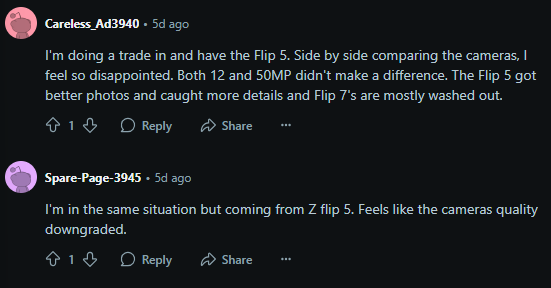
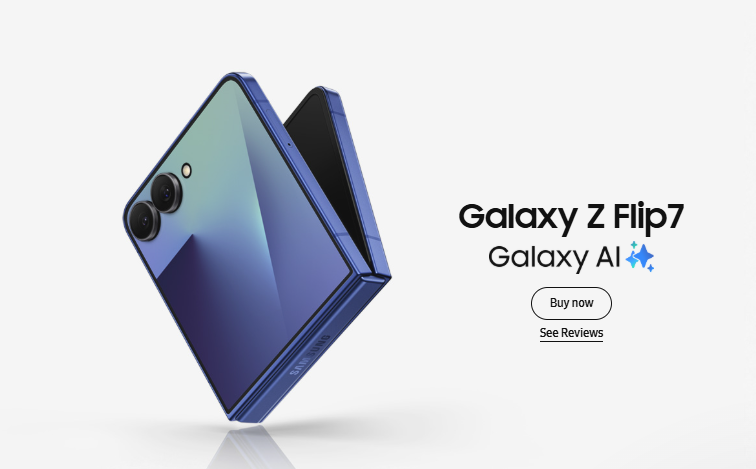
Samsung‘s new Galaxy Z Flip7 has landed with plenty of fanfare. But while its upgraded outer screen continues to turn heads, the phone’s camera performance is attracting criticism — and a now-removed Reddit post is drawing even more attention to the issue.
The deleted post, titled “Disappointed with Flip 7 cam”, was shared on the r/Samsung subreddit. In it, multiple users of the Flip7 described how the Z Flip7’s photos looked worse than those taken on the two-year-old Flip5. Despite not appearing to break any of the community’s rules, the original post was removed by moderators — but not before other users chimed in with similar experiences. Some buyers say they’re surprised by the image quality, describing it as grainy or washed out — especially disappointing for a phone that starts at $1,099.99.
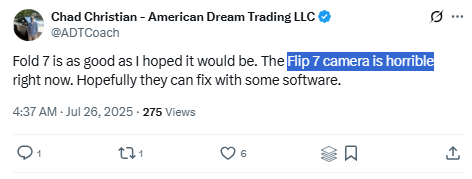
It’s not just Reddit users raising concerns. Several early reviews suggest that the camera doesn’t live up to expectations for a premium foldable. Over on X, some users have gone so far as to call the camera “horrible,” with others questioning whether Samsung cut corners to prioritize other features.
The Flip7 is, in fact, the first foldable to use an Exynos chip — the Exynos 2500, which is currently exclusive to the Flip7. As Redditor thegman993 speculates, the underwhelming camera performance could be related to the image signal processor (ISP) of the Exynos 2500. That said, nothing is certain unless Samsung addresses the issue — if they choose to respond at all.
Samsung Galaxy Z Flip 7
Questions around the deleted post
The fact that the original Reddit post was removed has only added fuel to the fire. This act questions whether criticism of the phone is being overly moderated — or even silenced. It’s not the first time online communities have debated moderation choices, but in this case, it’s giving more visibility to an issue Samsung probably hoped wouldn’t go mainstream.
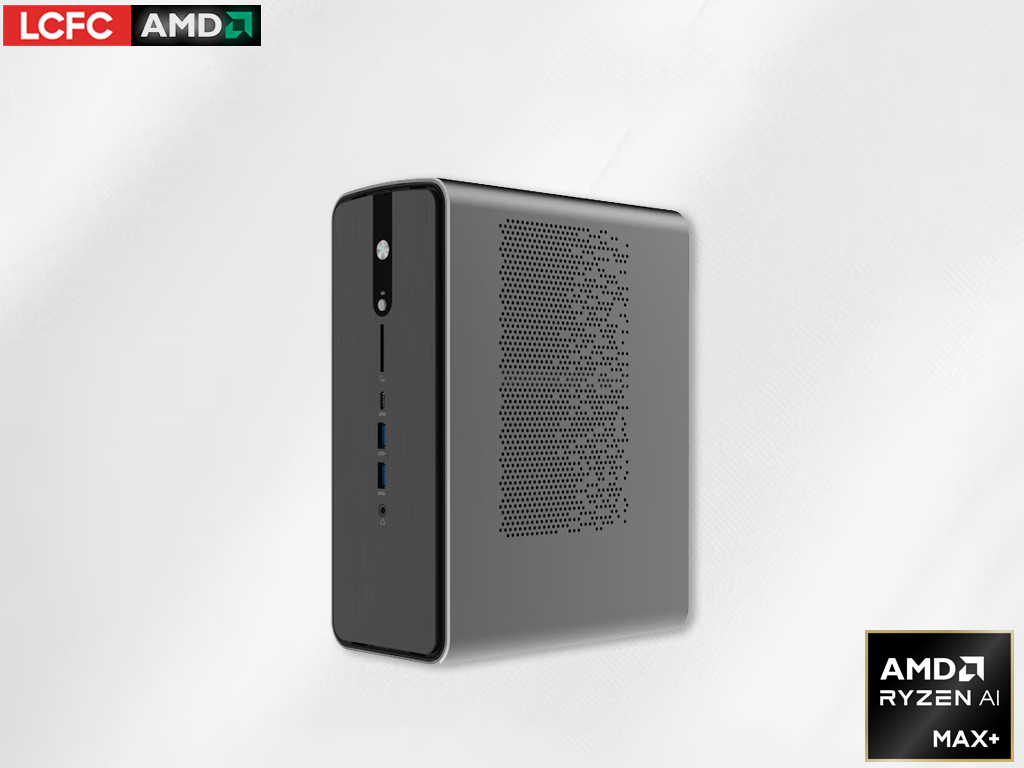
LCFC, Lenovo‘s largest global R&D and production base (focusing on PCs), has just announced a beast of a mini PC. Lenovo quietly launched an affordable and capable mini PC last week, but the new LCFC H02 takes things to the next level with AMD’s flagship chips. So let’s check it out.
LCFC New AMD-Powered Mini PC Is a Tiny Beast
The Chinese tech giant silently unveiled the LCFC H02, a new AMD Strix Halo powered mini PC in China. Despite its small form factor, this PC can be configured with up to a Ryzen AI Max+ 395. This is a high end APU with 16 cores and the powerful Radeon 8060S integrated graphics. You can even pair this with up to 128Gb of LPDDR5 RAM and two slots for M.2 PCIe 4.0 SSD storage (2TB Samsung 990 EVO Plus).
The LCFC-H02 Mini PC With AMD’s Most Powerful Processors
All of these specs make it a great system that easily handles intense tasks as a workstation. You also get a healthy selection of ports, including two USB4, two USB 2.0 Type-A, three USB 3.2 Gen 2 Type-A, a 3.5 mm audio and mic combo, an SD 4.0 card reader, a 2.5G Ethernet, a DisplayPort 1.4, and an HDMI 2.1.
LCFC H02 starts from 17,999 Yuan (roughly 2500 US Dollars), while the top end model with Ryzen AI Max+ 395 costs 19,999 INR (roughly 2800 US Dollars). There is even a Ryzen AI Max+ 390 variant that goes for 18,999 Yuan or about 2700 US Dollars. As of right now, this monster of a mini PC is exclusive to China, with no information on a global release.
For more daily updates, please visit our News Section.
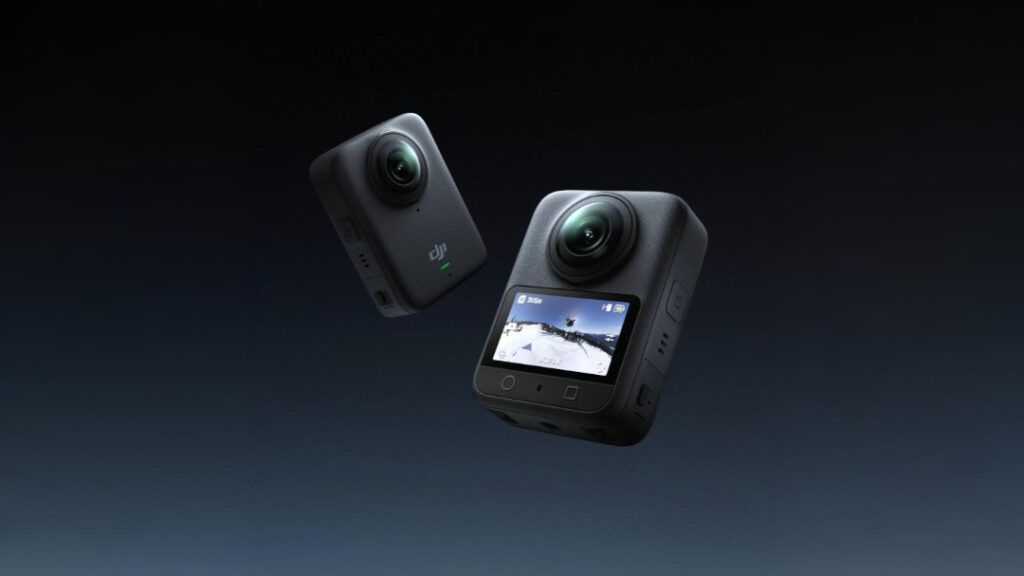
DJI has officially entered the 360-degree camera space with the launch of its first panoramic shooter, the Osmo 360. This isn’t a modest debut. Instead, DJI has gone all-in with flagship-grade imaging specs, pro-friendly features. Let’s check out its key specs.
DJI Osmo 360 Specifications
The Osmo 360 comes with two 1-inch square sensors. These sensors aim to reduce dead zones and improve low-light performance. The camera supports native 8K panoramic video recording at up to 50fps and offers up to 13.5 stops of dynamic range. In flat video mode, the device records 4K footage at up to 120fps with a 170° ultra-wide field of view. It also captures 1.2 billion-pixel panoramic photos, equivalent to 16K resolution.
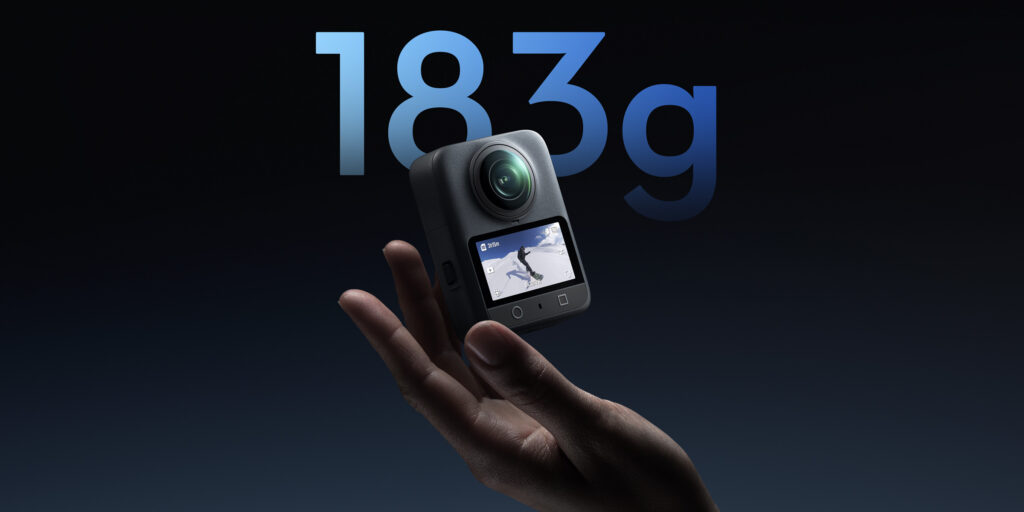
DJI has equipped the Osmo 360 with a lightweight 183g body that includes an advanced internal cooling system. The camera can record 8K video at 30fps continuously for up to 100 minutes. It can also record 6K panoramic video for up to 190 minutes. The device supports 10-bit color and D-Log M for enhanced color grading.
The Osmo 360 includes 105GB of usable internal storage and a microSD card slot for additional expansion. It supports fast charging via USB-C PD 3.0. DJI has also included a 1/4-inch thread mount and support for the magnetic quick-release system found in the Osmo Action series.
For audio, the Osmo 360 features four microphones and supports both stereo and mono recording. It supports DJI’s OsmoAudio technology, which enables direct connection to two DJI wireless microphone transmitters without a receiver. The camera supports voice control, gesture commands, and Bluetooth headset integration for remote operation.
DJI has provided multiple shooting modes, including seamless lens switching in single-lens mode up to 4K/60fps and an invisible selfie stick feature for 360-degree footage. The camera is IP68 certified, making it waterproof up to 10 meters and freeze-resistant to -20°C.
Pricing and Availability
The Osmo 360 is available now in China, starting at 2,999 yuan for the Standard Combo and 3,799 yuan for the Creator Combo. In Europe, the camera is priced at €479.99 including VAT, while the Adventure Combo retails for €629.99. Canadian pricing is listed at $430 and $580 respectively, though DJI has not confirmed availability or pricing for the US market.
In related news, DJI recently unveiled the Agras T100, a high-performance agricultural drone designed for modern farming, and also introduced the FlyCart 100, its new flagship cargo drone capable of carrying up to 80kg, complete with advanced safety features.
Samsung’s new Galaxy Z Flip7 surprised everyone with its larger outer screen, but one big question remains for many buyers: how durable is the screen? Samsung Display recently revealed how durable the Galaxy Z Fold7’s inner screen is, and now everyone’s wondering if the Flip7 can match up.
Samsung Galaxy Z Flip 7
According to Samsung Display (via Android Authority), the Z Flip7 uses the same advanced materials found in the Galaxy Z Fold7, which recently underwent durability testing by Bureau Veritas. “We internally assess that the foldable panel used in the Galaxy Z Flip7 also offers durability on par with that of the Fold7, as it incorporates various durability-enhancing technologies,” a Samsung Display spokesperson told Android Authority in response to concerns.
The book-style foldable can withstand:
500,000 folds at room temperature (25°C)
300,000 folds in high heat (60°C)
60,000 folds in freezing conditions (-20°C)
That’s a major improvement over last year’s Galaxy Z Fold6, which was rated for just 200,000 folds under normal conditions. If we compare the Z Flip7 to the 2023 Z Flip5, the difference is clear:
Z Flip 5 was rated for 200,000 folds at room temperature
Just 30,000 folds in the cold (-20°C)
And 150,000 folds in heat (60°C)
The Z Flip7’s numbers — based on shared components with the Fold7 — suggest that Samsung has made major strides. For example, assuming you open and close the phone 100 times a day, the Flip7’s screen could last over 13 years under normal conditions, or around four years in freezing cold, even with regular use. While durability in harsh temperatures has improved, Samsung still recommends using the device in environments between 0°C and 35°C for best performance.
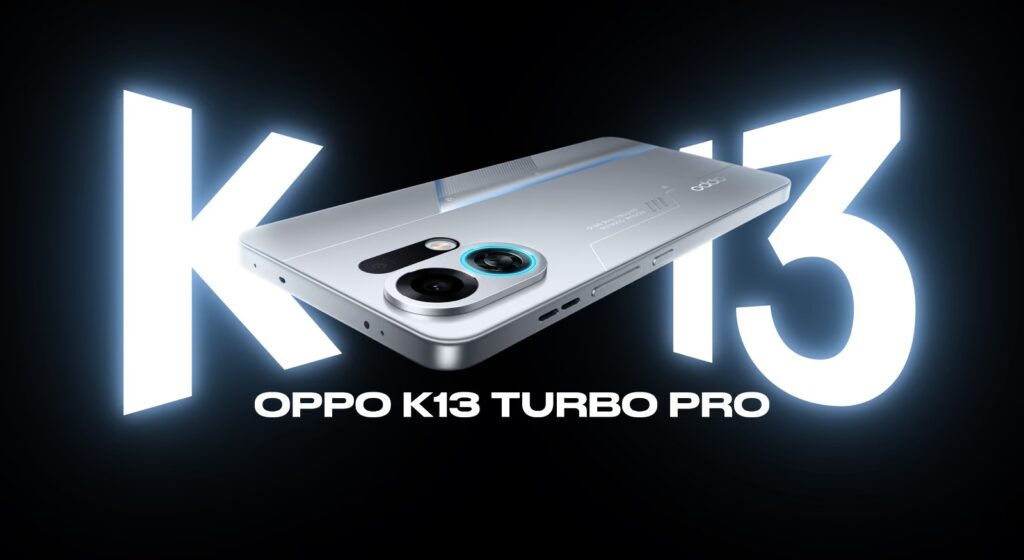
Oppo appears ready to bring its newly launched K13 Turbo series to India, with the lineup shaping up to be more than just another mid-range offering. According to an exclusive leak from a “reliable source” cited by GSMArena, the phones are expected to arrive between August 11 and 14, with Flipkart set to handle sales. While official confirmation is pending, teaser campaigns and early promotions are already building buzz — particularly among mobile gamers.
Oppo K13 Turbo series
Powerful chips and rare hardware features
The series includes two models — K13 Turbo and K13 Turbo Pro. The Turbo runs on MediaTek’s Dimensity 8450, while the Pro steps things up with the Snapdragon 8s Gen 4, putting it in direct competition with phones like the iQOO Neo 10 and Poco F7 Pro.
Both devices are also expected to feature a 6.8-inch 1.5K AMOLED panel, 120Hz refresh rate, 50MP dual rear cameras, and a 16MP selfie shooter. Battery life should be strong too, thanks to a 7,000mAh cell with 80W fast charging.
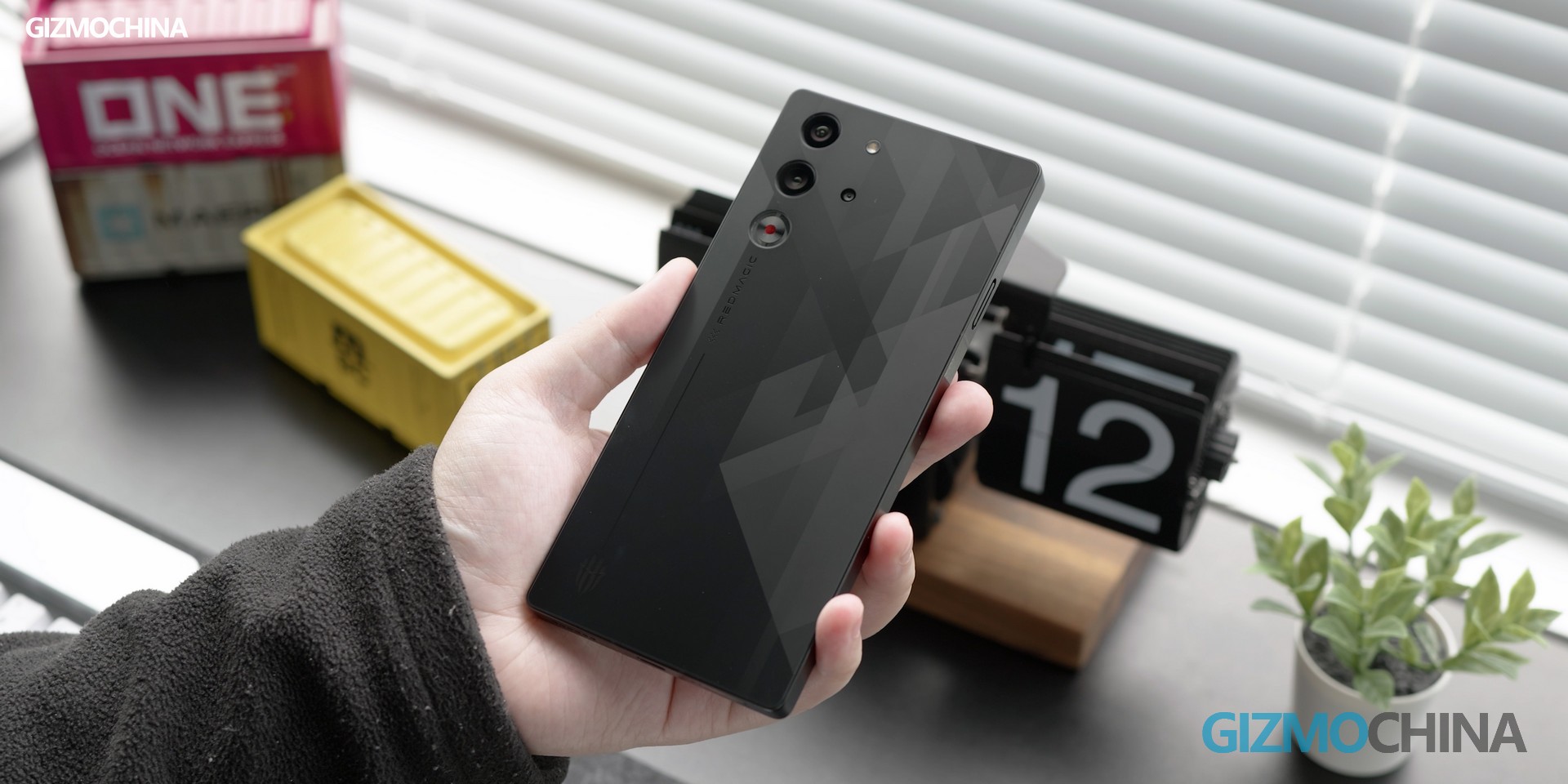
But what really sets the K13 Turbo series apart is its hardware — namely, the active cooling fan paired with IPX9 water resistance. That’s an unusual combination. Even high-end gaming phones like the REDMAGIC 10 Pro (with active cooling fan) offer only IP54 splash protection. By contrast, Oppo’s Rapid Cooling Engine promises to lower temperatures by up to 4°C during heavy use — all while being certified for IPX6, IPX8, and IPX9 water resistance. It’s a rare blend of performance and durability, even among flagship-tier devices.
The year is already fifty percent done. Over these six months, Gizmochina Review have released hundreds of videos and articles, many of which featured impressive smartphones and tablets. I often see YouTube comments asking which phone is my favorite. Well, this article will answer those questions, while also summarizing the standout devices of the past half-year. I have to say, the list is still subjective with the team’s preference — these are the phones highly matching the reviewers’ preference and expectation. If you disagree, feel free to share your own opinions in the comments.
Camera Master
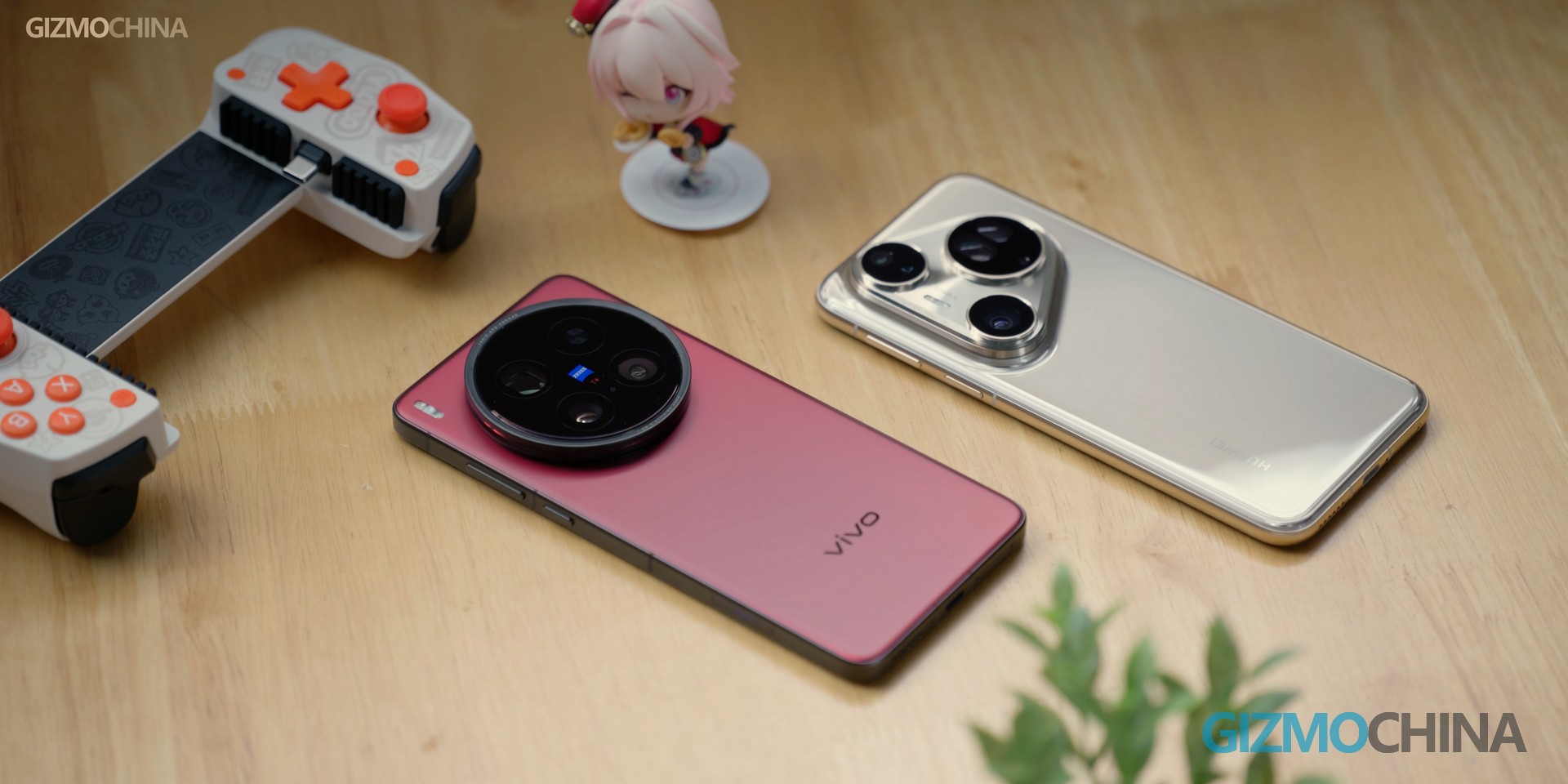
Over the past few months, every major brand has released their “Ultra” flagship models, each boasting incredible camera capabilities—any one of them could rightfully be called a “Camera Master.” But if I had to pick just one, I’d still give the Master title to the HUAWEI Pura 80 Ultra.
That said, the vivo X200 Ultra is a strong contender, especially since last year’s “Best Camera Phone” was the vivo X100 Ultra. My choice ultimately comes down to the Pura 80 Ultra’s periscope zoom system. We have to admit that the innovative dual-focal-length telephoto setup stunned everyone—sharing a single sensor between two lenses was a stroke of genius. And in real-world use, both lenses deliver performance worthy of the “Camera Master” title. And the vivo X200 Ultra’s AI enhancement sometimes messes up my photos, so yes, the Pura 80 Ultra takes the crown as my current favorite camera phone.
Gaming Beast
For gaming phones in the first half of 2025, I’d recommend two. The first is undoubtedly the RedMagic 10S Pro.
While we haven’t made a dedicated review video for it, we’ve tested its sibling, the 10 Pro. Given the RedMagic 10 Pro’s outstanding gaming performance, there’s every reason to believe the 10S Pro is also one of the best gaming phones out there.
For those on a tighter budget, I’d also recommend the OnePlus Ace 5 Pro.
As one of the cheapest phones with a Snapdragon 8 Elite chipset, its gaming performance is surprisingly good, complete with features gamers love, like frame interpolation and bypass charging. While it may not excel in other areas, this segment is purely about raw performance, and the Ace 5 Pro absolutely delivers.
In short, choose between these two based on your budget; both deserve the “Gaming Beast” title.
Smartphone Supreme
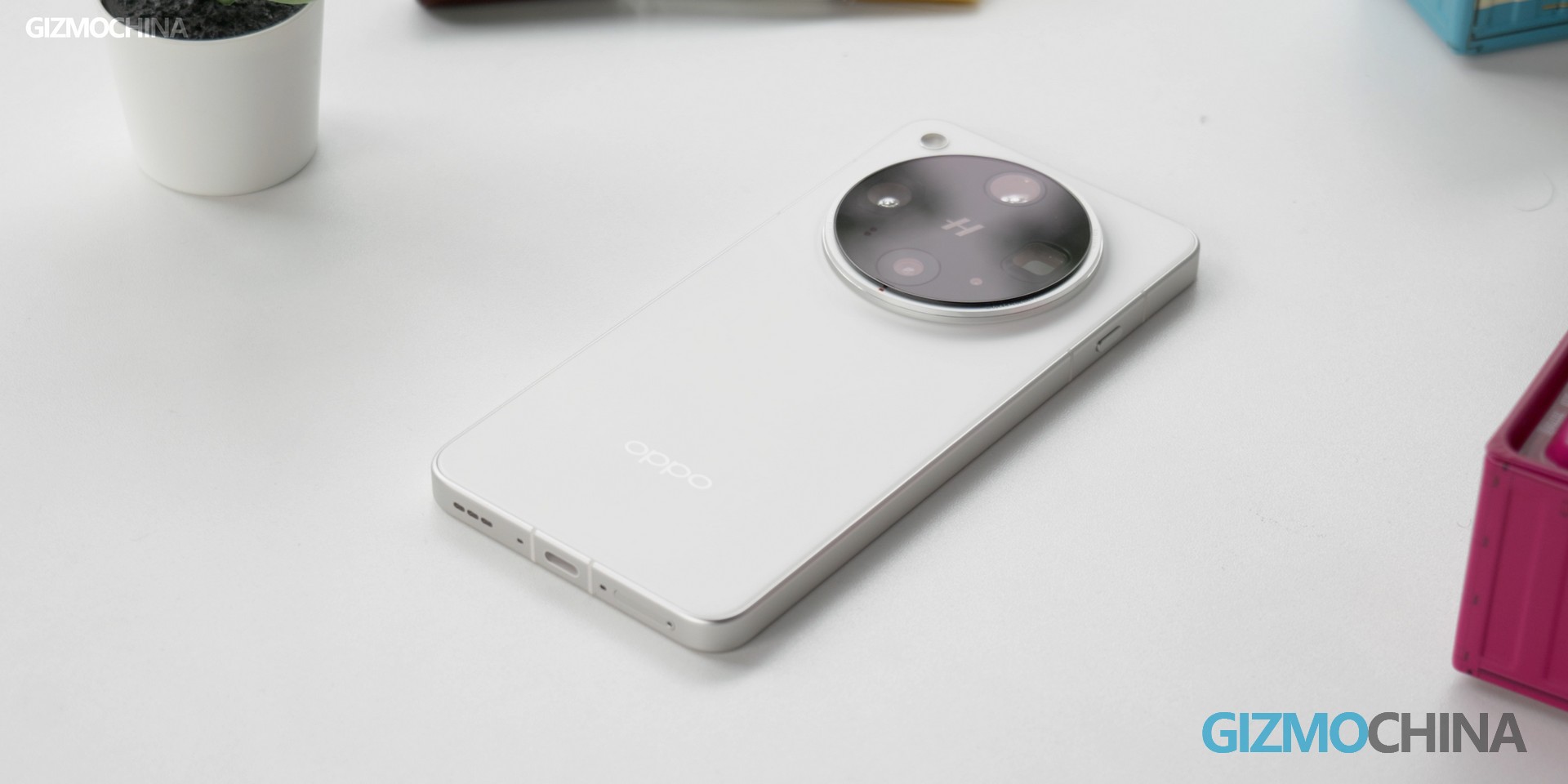
If I had to pick just one phone from our reviews to use long-term, I’d probably go with the OPPO Find X8 Ultra as my daily driver.
It offers camera capabilities on par with other Ultra models, but without their bulkiness. I also prefer flat screens, and Samsung’s One UI on the Galaxy S25 Ultra just doesn’t click with me. Plus, the Find X8 Ultra has no glaring weaknesses and is reasonably priced. So yeah, my reasons for loving this phone are pretty straightforward.
Flagship Killer
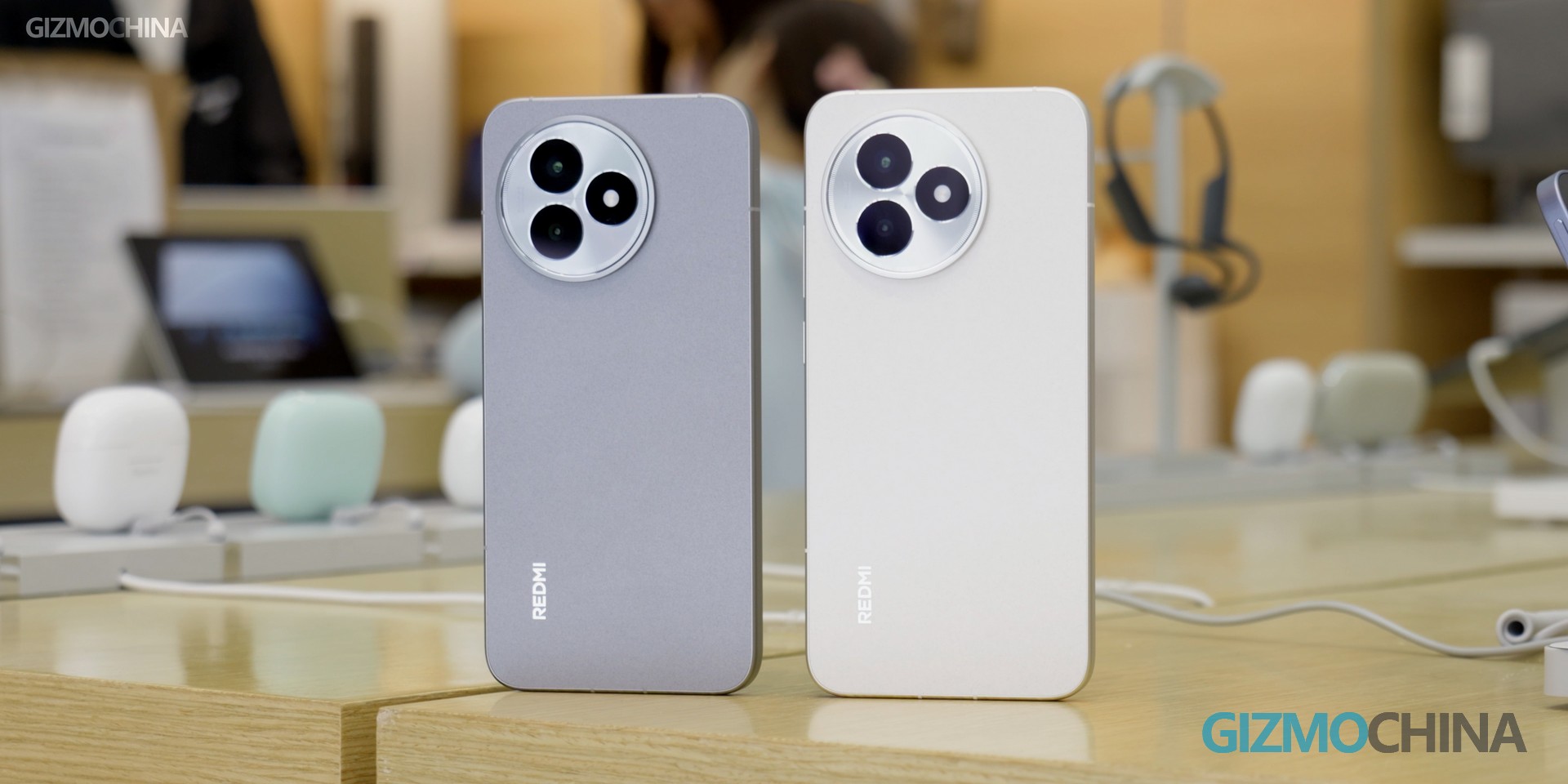
The “Ultra” model in REDMI’s K series has always been the flagship killer of its year, and the REDMI K80 Ultra lives up to that legacy.
Since early 2025, I haven’t found any phone that fits the “Flagship Killer” label better. Premium build quality? Check. Flagship-tier display and processor? Check. It even has symmetrical stereo speakers, an ultrasonic fingerprint scanner, and a massive battery—all for half the price of a typical flagship. If you can live with its mediocre camera system, this phone is a no-brainer.
Mini Tablet King
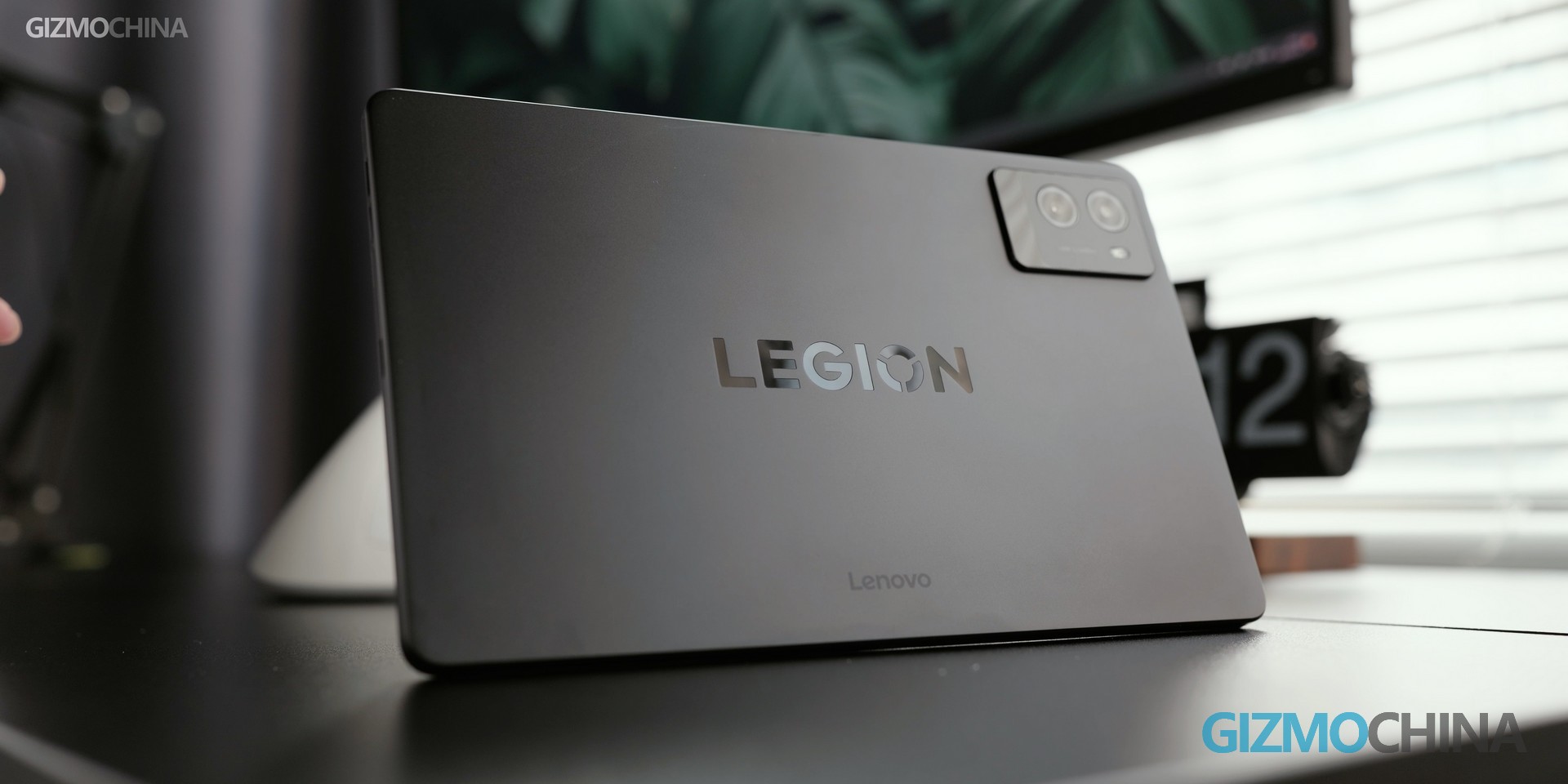
This year’s compact tablet competition has been fierce. Alongside the returning Lenovo LEGION Y700 (Gen 4), both RedMagic and REDMI have entered the small-tablet arena. We’ve tested all three—check out our earlier reviews if you’re curious. My pick, I think still the Lenovo LEGION Y700 (Gen 4).
The RedMagic Astra’s OLED screen is tempting, but it’s way too expensive, and its built-in fan doesn’t even help much with thermals. The REDMI K Pad and Y700 each have their strengths: the K Pad’s HyperOS offers a smoother daily experience, but its gaming performance falls short of the Y700’s. Since I do play mobile games on my tablet, I’ll stick with the LEGION Y700.
“Most Impressive”
If you asked me which phone impressed me the most in the first half of 2025, I wouldn’t hesitate: the Xiaomi 15S Pro.
Why? Simply because it’s powered by the XRING O1, Xiaomi’s most powerful custom SoC. This isn’t Xiaomi’s first time making their own chip, but it’s the first time come shockingly close to Qualcomm’s flagship silicon in performance. This means that, barring U.S. interference, Xiaomi could soon replicate the success Huawei once achieved with its Kirin chips, paving the way for more affordable flagship and mid-range phones. I still remember the excitement when I tested this chip and found it neck-and-neck with the Snapdragon 8 Elite. That’s why the 15S Pro earns my “Most Impressive” title.
Final Thoughts
Okay, those are my picks for the first half of 2025. They might not be the “best” in an objective sense, but they’re the ones I love. I’ve told you what I pick—now it’s your turn. Drop your favorites in the comments! And don’t forget to subscribe to our YouTube channel.
iQOO has appointed Vedang Vikas Chavan, a 25-year-old esports coach from Navi Mumbai, as its new Chief Gaming Officer (CGO). The announcement comes after a nationwide talent hunt that attracted over 80,000 gamers from more than 400 cities and towns across India. Vedang emerged as the winner after three months of competition, earning a ₹10 lakh prize and a strategic role within the company.
Vedang started his journey in gaming at the age of 10. He previously represented India at international PUBG PC tournaments in Japan, Malaysia, Singapore, the Philippines, and Australia. After transitioning into coaching, he built teams from the ground up and guided them to podium finishes at several major esports events. iQOO stated that Vedang was selected based on gameplay, communication, knowledge, and overall personality.
“I’m genuinely overwhelmed and grateful to be named iQOO’s new Chief Gaming Officer,” Vedang said. “I first came across this opportunity on LinkedIn, I saw it as the perfect way to challenge myself, a chance to grow, upgrade my skills, and do something meaningful in the esports space. The competition was intense, and every finalist I met was incredibly talented.”
iQOO CEO Nipun Marya welcomed Vedang, calling his journey “a perfect example of passion and perseverance.” Marya said Vedang’s experience as both a player and coach will help shape the brand’s gaming direction and deepen its connection to the esports community.
As CGO, Vedang will collaborate with iQOO’s leadership team and provide insights to enhance the gaming experience on iQOO smartphones. He will also work with professional gamers across India.
iQOO also appointed Harshvardhan Singh as its official caster. Singh has previously won the Nodwin Gaming Talent Hunt multiple times and has experience in match analysis, editing, and casting. iQOO said his role will support the brand’s efforts to strengthen its esports presence.
The CGO 2.0 program follows the debut edition in 2023, which named Shwetank Pandey as the first CGO.
For more daily updates, please visit ourNews Section.
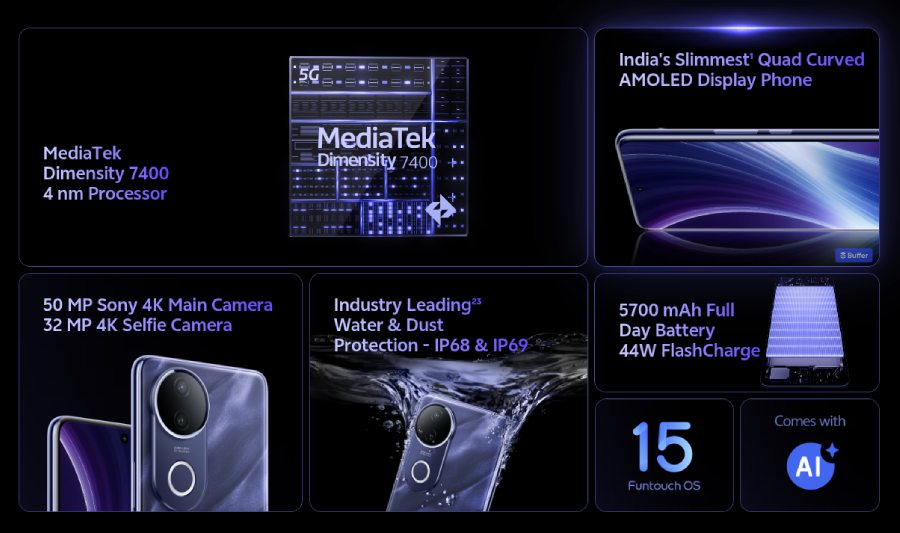
The Vivo T4R has just been officially announced in India. The smartphone features a Dimensity 7400 chipset and a 50MP main camera with a Sony IMX882 sensor.
On paper, the Vivo T4R shares much of its DNA with the recently launched iQOO Z10R, including the overall design and most of the core specs. But there are a few subtle differences that set the two apart, which we’ll get into shortly.
Vivo T4R 5G Specifications
The company claims the T4R 5G is the slimmest phone yet to feature a quad-curved screen, a 6.77-inch full-HD+ AMOLED panel that refreshes at 120Hz and peaks at 1,800 nits of brightness. It also comes with HDR10+ certification and low blue light protection (SGS certified).
Under the hood, the phone is powered by MediaTek’s Dimensity 7400 chipset, paired with up to 12GB of LPDDR4X RAM and 256GB of UFS 2.2 storage. It runs Android 15 out of the box with Vivo’s FuntouchOS 15 skin on top.
The camera setup includes a 50MP Sony IMX882 main sensor and a 2MP bokeh lens on the rear. On the front, you get a 32MP selfie shooter. Both front and back cameras are capable of shooting 4K videos.
As for the battery life, it comes with a 5,700mAh cell. Vivo also touts the phone’s IP68 and IP69 ratings for dust and water resistance.
The key differences between the Vivo T4R and the iQOO Z10R come down to charging speeds and color choices. The T4R supports 44W fast charging and is available in Arctic White and Twilight Blue. In contrast, the iQOO Z10R offers faster 90W charging and comes in Aquamarine and Moonstone finishes.
Pricing and Availability
The Vivo T4R 5G will be available starting August 5 via Flipkart, Vivo’s online store, and select retail outlets. Pricing starts at Rs 17,499 for the base 8/128GB variant. The mid-tier 8/256GB costs Rs 19,499, and the highest-end model (12/256GB) is priced at Rs 21,499.
For more daily updates, please visit our News Section.
We use cookies on our website to give you the most relevant experience by remembering your preferences and repeat visits. By clicking “Accept”, you consent to the use of ALL the cookies.
This website uses cookies to improve your experience while you navigate through the website. Out of these, the cookies that are categorized as necessary are stored on your browser as they are essential for the working of basic functionalities of the website. We also use third-party cookies that help us analyze and understand how you use this website. These cookies will be stored in your browser only with your consent. You also have the option to opt-out of these cookies. But opting out of some of these cookies may affect your browsing experience.
Necessary cookies are absolutely essential for the website to function properly. This category only includes cookies that ensures basic functionalities and security features of the website. These cookies do not store any personal information.
Any cookies that may not be particularly necessary for the website to function and is used specifically to collect user personal data via analytics, ads, other embedded contents are termed as non-necessary cookies. It is mandatory to procure user consent prior to running these cookies on your website.