Trump Mobile has officially entered the wireless market, unveiling its first smartphone alongside its cellular service offering. As revealed in a press announcement featuring Donald Trump Jr. and Eric Trump, the T1 Phone marks the beginning of the brand’s efforts to provide a high-performance yet value-driven mobile solution for American consumers. The announcement coincided with the 10-year anniversary of Donald Trump’s first presidential campaign.
Trump Mobile T1 Phone specifications
Trump Mobile T1 Phone
The Trump Mobile T1 is a sleek, gold-finish device featuring a 6.78-inch punch-hole AMOLED screen with an in-screen fingerprint sensor and AI face unlock. It runs on Android 15 and is powered by a chipset paired with 12GB of RAM and 256GB of internal storage.
For photography, the Trump Mobile T1 features a 50-megapixel primary rear camera, supported by 2-megapixel depth and macro sensors. On the front, the phone includes a 16-megapixel selfie shooter.
A 5,000mAh battery supports 20W PD fast charging, and the phone includes a USB Type-C port with OTG support as well as a 3.5mm headphone jack. For additional storage, it features a microSD card slot.
Trump Mobile T1 price and availability
Priced at $499, the T1 Phone is set to go on sale in August across the US, with exact pricing yet to be announced. Trump Mobile’s services are based on the infrastructure of all three major 5G networks in the country.
Its flagship plan, called “The 47 Plan,” is priced at $47.45 per month and offers unlimited talk, text, and data, along with features such as device protection, 24/7 roadside assistance, telehealth support, and free international calling to over 100 countries, including those with US military bases. There are no contracts or credit checks required. Customer service is entirely US-based and human-staffed, operating 24/7.
For more daily updates, please visit our News Section.
A leak that surfaced in May claimed that iQOO will launch a compactgaming tablet in the second half of 2025. Now, a leak, courtesy of tipster Digital Chat Station, has revealed the key details of this mysterious device. Continue reading ahead to learn what to expect from it.
iQOO’s compact gaming tablet: What’s known so far?
iQOO compact gaming tablet details leaked
According to DCS, iQOO is working on a new tablet aimed at the high-performance gaming segment. The device is expected to feature an 8.35-inch custom LCD panel with support for 3K+ resolution and an ultra-high refresh rate.
The leak mentions that it is based on an N-1 platform, which likely refers to a previous generation chipset platform under consideration. While it is expected to debut in the second half of the year, it is unlikely to feature the Snapdragon 8 Elite 2 or Dimensity 9500 chipset, which are expected to debut in September of this year.
Internally, the engineering prototype is said to be considering either the Snapdragon 8 Elite or the Dimensity 9400+ chipset, indicating flagship-level performance. The device is being positioned as a lightweight gaming flagship tablet. However, it is still in the early stages of development, with the hardware specifications yet to be finalized.
iQOO is expected to unveil the iQOO 15 and 15 Pro by the end of September or October in China. It is unclear whether its gaming tablet will debut alongside the iQOO 15 series or earlier.
For more daily updates, please visit our News Section.
Realme is gearing up to shift its focus to the Realme 15 series in the second half of the year. While the company has yet to officially confirm the launch, leaks surrounding the upcoming series have already begun surfacing. The Realme 15 Pro is speculated to carry the model number RMX5101. Now, a new report by XpertPick reveals that a device with the model number RMX5000 — believed to be the Realme 15 Lite — is also in development.
Realme 15 Lite configurations, color options leaked
Realme 15 Lite leak by XpertPick
According to the report, the Realme 15 Lite will be available in three RAM and storage variants: 8GB+128GB, 8GB+256GB, and 12GB+256GB. Based on its base configuration, it appears the 15 Lite will not be the most affordable model in the series. It’s likely that another model, such as the Realme 15x or something similarly branded, could serve as the entry-level device in the lineup.
The report also reveals that the Realme 15 Lite will come in three colour options: Dark Purple, Speed Green, and Victory Gold. Other specifications of the device remain under wraps for now.
This will be the first time Realme is introducing a “Lite” model under its numbered series. For reference, the Realme 14 lineup included models like the Realme 14x, 14, 14T, 14 Pro, and 14 Pro+. However, the standard Realme 14 did not make it to the Indian market. It remains to be seen how many Realme 15-series models will be released in India.
A recent report suggests that the Realme 15 Pro may debut in India by the end of July. It is expected to come in four configurations: 8GB+128GB, 8GB+256GB, 12GB+256GB, and 12GB+512GB. Colour options may include Velvet Green, Silk Purple, and Flowing Silver. Further details are still awaited.
For more daily updates, please visit our News Section.
After teasing the arrival of the Poco F7 for the past few days, Poco has finally confirmed its launch date for the Indian market. To recall, the company unveiled the Poco F7 Pro and F7 Ultra earlier this year for the global market. While the Poco F7 will also debut globally next week, it will be the only F7-series model to launch in India.
Poco F7 launch date revealed
Poco F7 India launch date
So far, the official teasers available on Flipkart confirm that the Poco F7 packs a 7,550mAh battery with 90W fast charging support. Additionally, it can be used as a power bank to charge other devices at a speed of up to 22.5W. The brand is expected to reveal more details about the F7 in the days leading up to the launch.
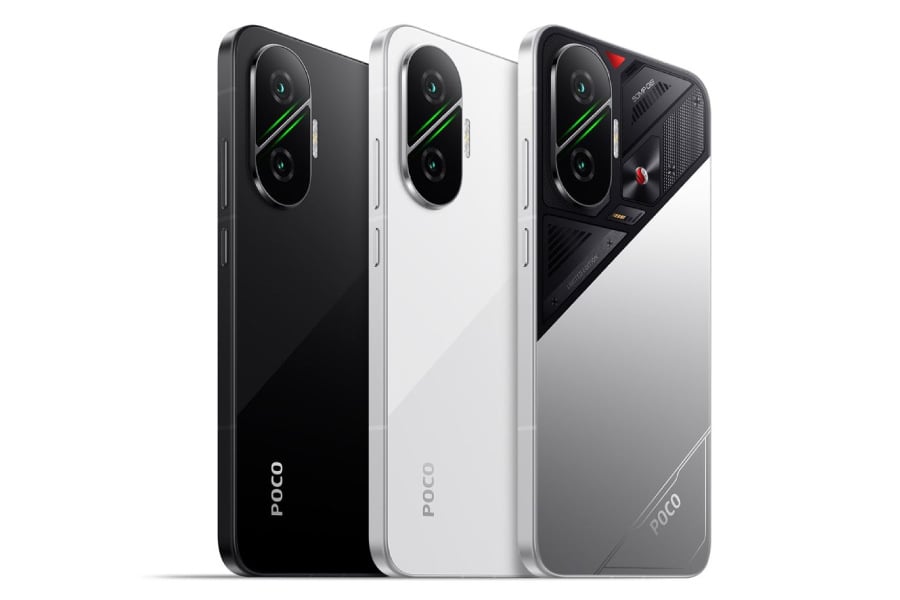
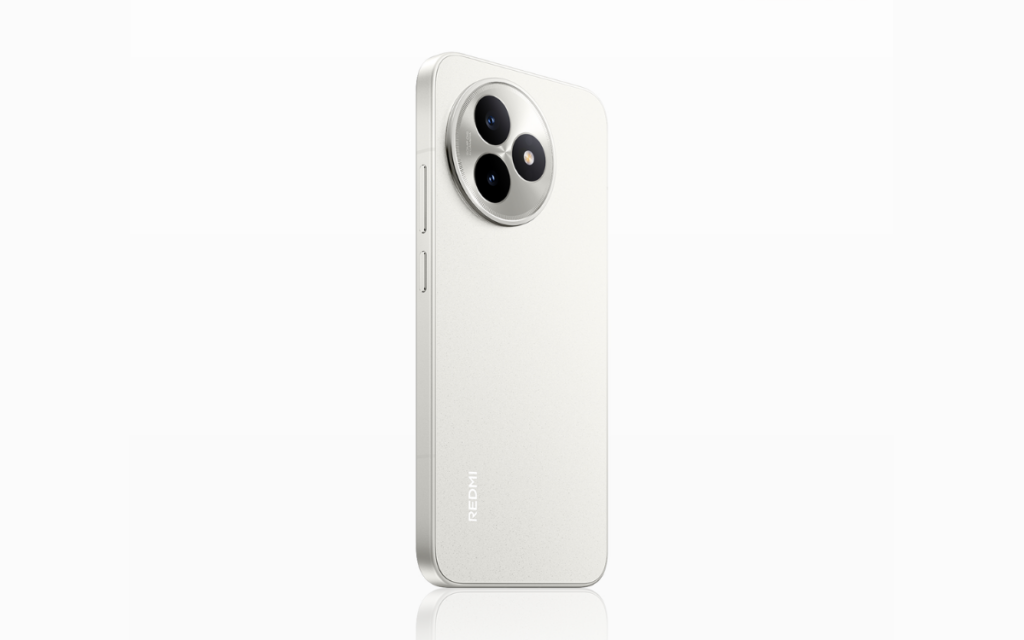
The image above shows what is being referred to as a special color variant of the device. Additionally, it is expected to arrive in black and white options. Recent reports have already revealed most of the specifications, and it is known that the F7 will be based on the Redmi Turbo 4 Pro, which debuted in April in China.
Poco F7 specifications (rumored)
According to reports, the Poco F7 will feature a 6.83-inch LTPS OLED screen that supports a 1.5K resolution and a 120Hz refresh rate. It will house a 20-megapixel front-facing camera and a dual rear camera setup comprising a 50-megapixel main sensor with OIS and an 8-megapixel ultra-wide lens.
Like the iQOO Neo 10 available in India, the Poco F7 will be powered by the Snapdragon 8s Gen 4 chipset. While the Indian variant is said to pack a 7,550mAh battery, the global edition may come with a smaller 6,550mAh unit.
The Poco F7 will run HyperOS 2.0 based on Android 15. Other expected features include an in-screen fingerprint sensor, dual speakers, an IR blaster, a metal middle frame, and an IP68-rated chassis.
For more daily updates, please visit our News Section.
According to a leak from tipster Digital Chat Station, these new flagship chips will offer AI computing power that is double that of their predecessors. As a result, the tipster claims that phone manufacturers are considering offering 24GB of RAM and 1TB of storage to meet the increased demands for AI.
Next Android flagships will have 24GB of RAM
Just a year ago, most brands pulled back from launching 24GB models due to rising memory costs. The short-lived push for oversized memory in smartphones lost momentum as prices climbed and mainstream demand remained limited. That left the market settling around 12GB and 16GB of RAM as the typical maximum.
But the AI hardware race might shift priorities. The Snapdragon 8 Elite 2 reportedly delivers up to 100 TOPS (trillion operations per second) of AI performance, and we expect something similar from the Dimensity 9500 as well.
As a result, DCS claims that the top five smartphone brands are now preparing to reintroduce premium-tier models with 24GB + 1TB configurations. However, with increased memory, smartphone prices might also see a rise. While the tipster doesn’t explicitly mention pricing, a jump in memory specs will almost certainly lead to higher smartphone prices.
In related news, leaked Geekbench 6 scores give us an early look at just how powerful these chips might be. The Snapdragon 8 Elite 2 reportedly hits over 4,000 points in single-core tests and surpasses 11,000 in multi-core performance. MediaTek’s Dimensity 9500 isn’t far behind, scoring over 3,900 in single-core and also breaking past 11,000 in multi-core benchmarks.
OnePlus has officially confirmed its Summer Launch Event will take place on July 8, where it plans to unveil several new products, including the Nord 5 and Nord CE 5. While the brand is building hype around the Nord 5 series, a new report from AndroidHeadlines has leaked almost all the major details about the two upcoming smartphones, along with images showing off their design.
OnePlus Nord 5 specifications (rumored)
OnePlus Nord 5OnePlus Nord 5OnePlus Nord 5
The OnePlus Nord 5 is said to come with a 6.83-inch AMOLED display offering a 120Hz refresh rate and a resolution of 2800 x 1272 pixels. It could be powered by the Snapdragon 8s Gen 3 chipset, paired with either 8GB or 12GB RAM and 256GB or 512GB of internal storage.
Camera setup includes a 50-megapixel main camera and an 8-megapixel ultra-wide lens, while on the front, it may offer a 50-megapixel selfie shooter. The phone reportedly packs a 5,200mAh battery with support for 80W SuperVOOC fast charging. Color options may include Dry Ice, Marble Sands, and Phantom Gray.
OnePlus Nord CE 5 specifications (rumored)
OnePlus Nord CE 5OnePlus Nord CE 5
The OnePlus Nord CE 5 could feature a slightly smaller 6.77-inch AMOLED screen with the same 120Hz refresh rate and a 2392 x 1080 pixel resolution. It may run on the MediaTek Dimensity 8350 chip, featuring 8GB of RAM and storage variants of 128GB or 256GB.
Like the Nord 5, the CE 5 may include a 50-megapixel main and 8-megapixel ultra-wide rear cameras, but the front camera could be a 16-megapixel unit. A 5,200mAh battery with 80W charging is also expected. The phone could be available in Black Infinity and Marble Mist finishes.
These specifications are reportedly for the US and European markets. In other regions, such as India, the Nord 5 is tipped to feature a larger battery of around 6,600mAh capacity, while the Nord CE 5 could offer a 7,100mAh battery. Other specifications are expected to remain unchanged.
For more daily updates, please visit our News Section.
OnePlus has confirmed that the Buds 4 will launch globally on July 8 in India, Europe, North America, and the UK. The earbuds were first released in China last month and will carry the same design and specs for the international markets.
The OnePlus Buds 4 come in black and green colors. They feature a closed-ear design with silicone tips and a protruding stem. Each earbud is equipped with an 11mm woofer, a 6mm tweeter, and dual DACs. The earbuds support Hi-Res Audio Wireless, LHDC 5.0, and 3D spatial audio.
While OnePlus has not shared the complete global spec sheet, the Buds 4 are expected to include 55dB active noise cancellation, three microphones on each earbud, a low-latency gaming mode, and IP55 dust and water resistance, just like the China model.
Battery life is rated at 11 hours on a single charge and up to 45 hours with the charging case. With ANC turned on, playback time drops to 6 hours, or 5.5 hours when using the LHDC codec. The total battery life with ANC on is 24 hours, or 22 hours with LHDC.
Pricing hasn’t been confirmed for global markets, but the Chinese retail price is CNY 449 (approximately $63 / €54), making them competitively priced against other mid-range ANC earbuds.
The earbuds will debut alongside the upcoming Nord series smartphones, including the much-awaited Nord 5 and the Nord CE 5, both of which are confirmed to launch on July 8.
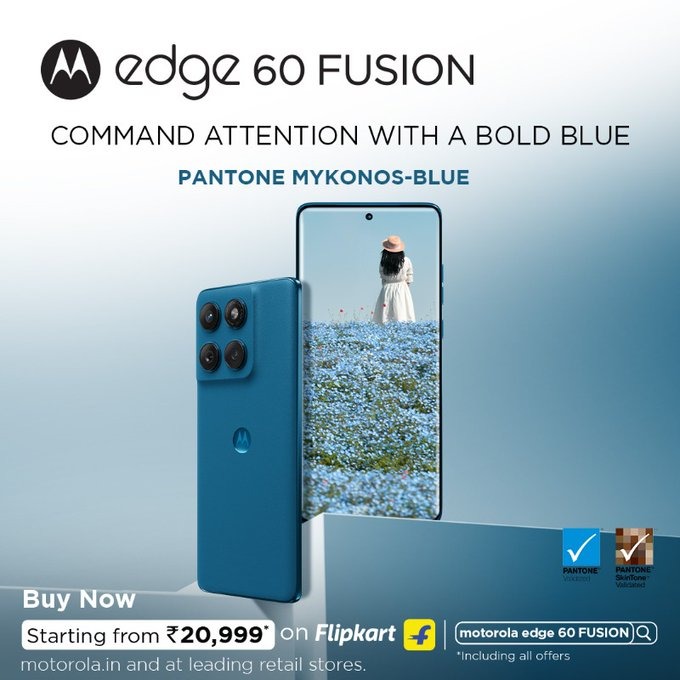
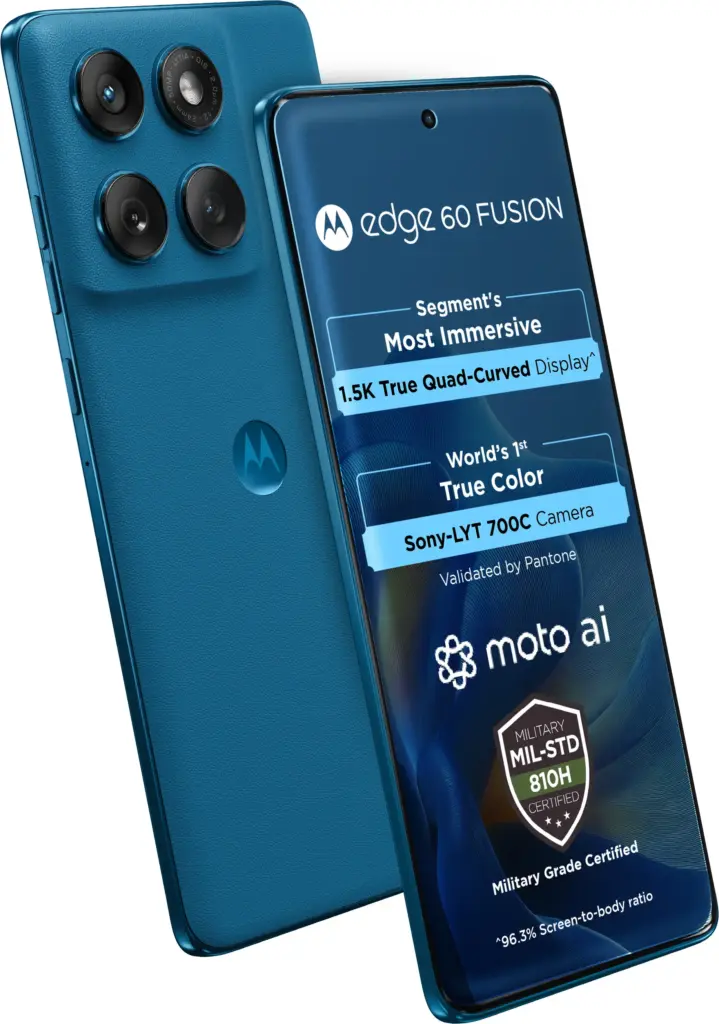
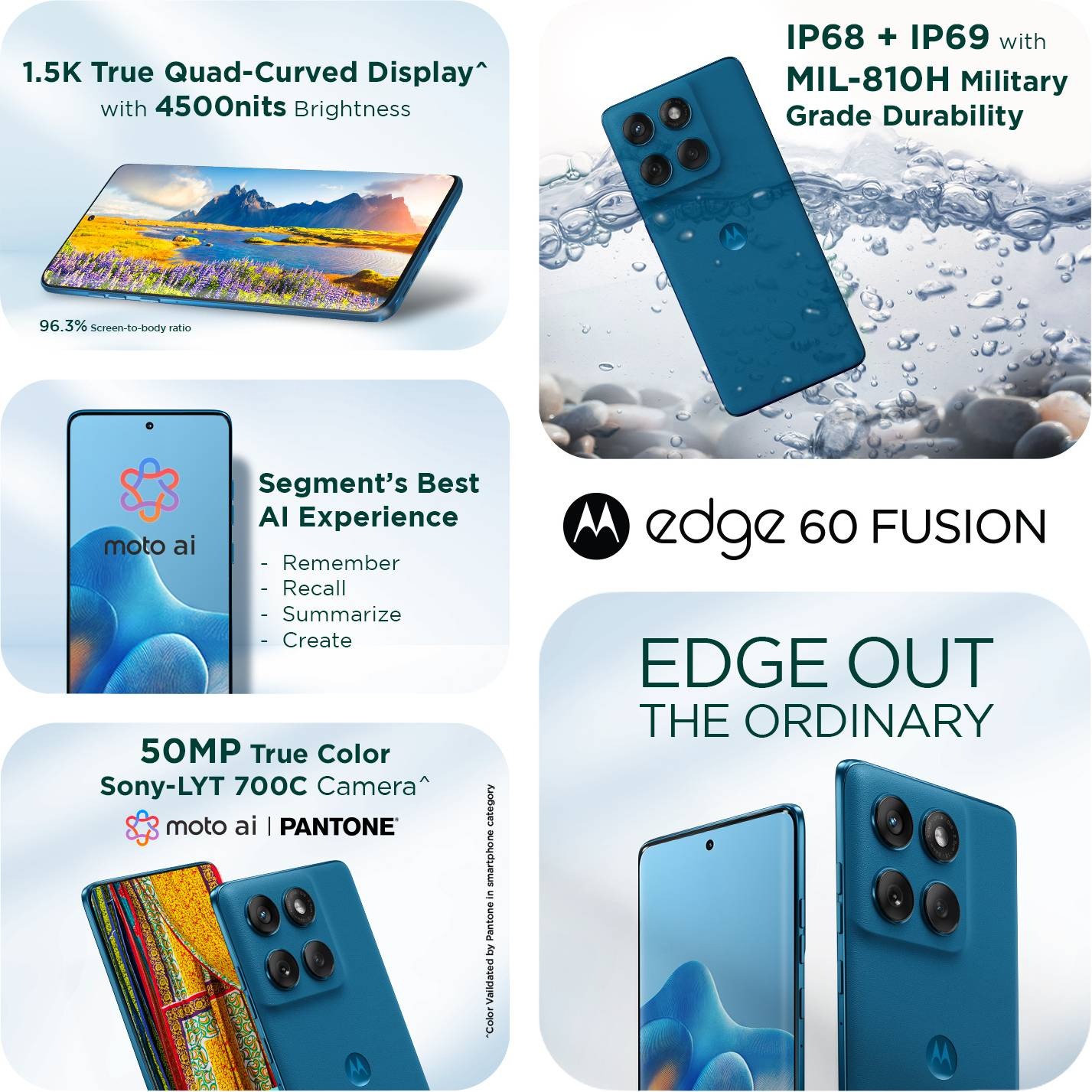
Motorola has added a new color option to the Edge 60 Fusion lineup. The new shade is called Pantone Mykonos Blue and is exclusive to the Indian market. This brings the total number of colors to four, joining Pantone Slipstream, Amazonite, and Zephyr.
The new color will be available in 8GB + 256GB and 12GB + 256GB variants. It is currently available on Flipkart for ₹22,999 (~$267) and ₹24,999 (~$290), respectively. Currently, a special promotion is available for HDFC, IDFC, and Axis Bank Credit Card users, which knocks the price down by ₹2,000 on EMI and Non-EMI transactions.
Motorola Edge 60 Fusion features
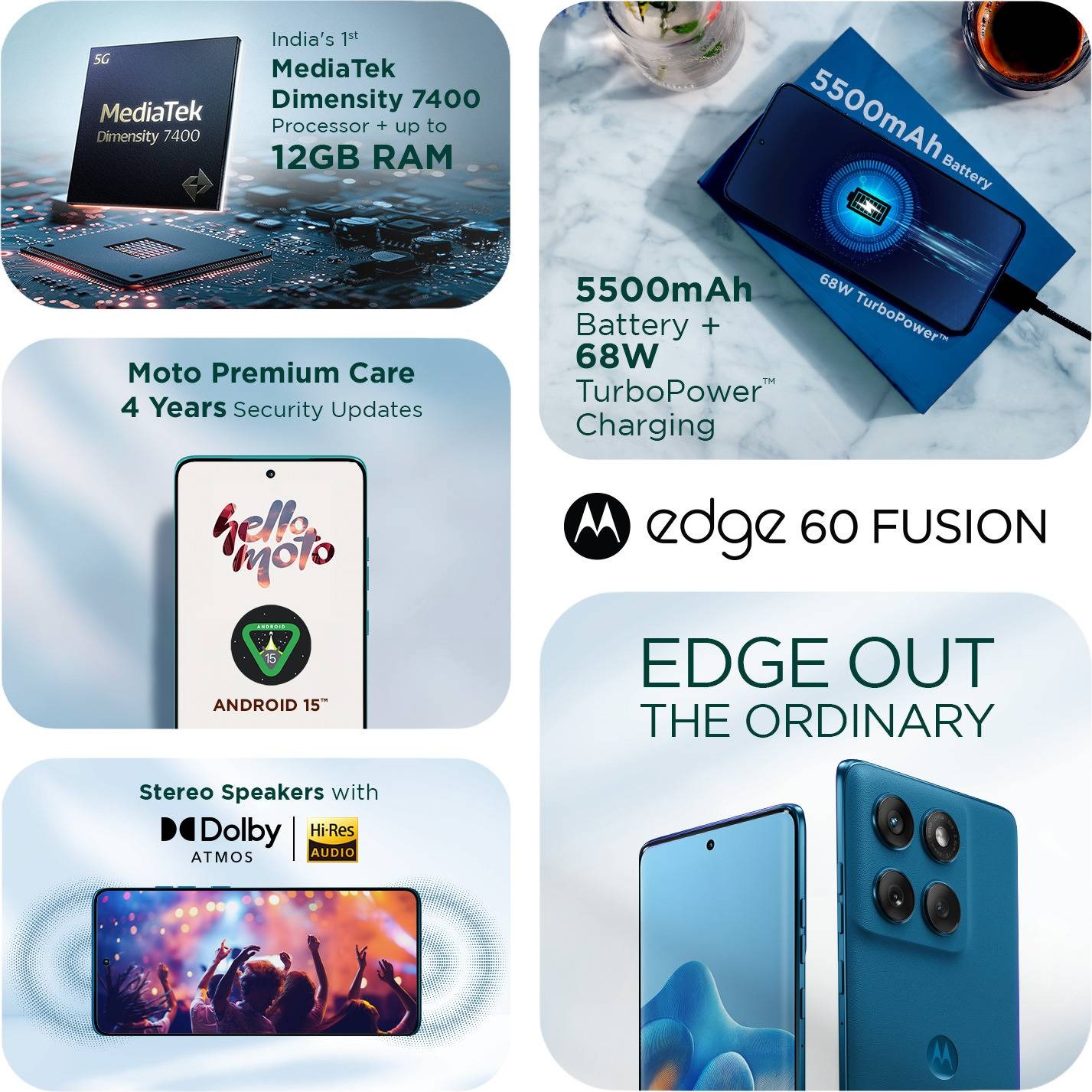
The Motorola Edge 60 Fusion is MIL-STD-810H certified and has passed 16 military-grade durability tests. It can operate in temperatures ranging from -20°C to 60°C and withstand up to 95% humidity. It also carries IP68 and IP69 ratings for dust and water resistance, including protection against high-pressure water jets.
It features a 6.7-inch 1.5K curved pOLED display with HDR10+, Pantone Validated color accuracy, a 120Hz refresh rate, and 360Hz touch sampling. Peak brightness reaches 4500 nits (1400 nits in HBM). The display is protected by Corning Gorilla Glass 7i and includes an in-display fingerprint sensor.
The phone runs on a 4nm MediaTek Dimensity 7400 processor with four Cortex-A78 cores at 2.6GHz and four Cortex-A55 cores at 2.0GHz. It ships with Android 15 and Motorola promises three years of OS updates and four years of security patches. The 5500mAh battery supports 68W TurboPower fast charging.
The camera system includes a 50MP main sensor (Sony LYTIA 700C, f/1.88, OIS), a 13MP ultrawide with macro (120° FOV), and a 32MP front camera. All three can record in 4K at 30fps. Video features include stabilization, timelapse, slow motion, audio zoom, and dual capture.
Other features include Dolby Atmos stereo speakers, USB-C audio, hybrid dual SIM, 5G, Wi-Fi 6, Bluetooth 5.4, and NFC.
For more daily updates, please visit our News Section.
Samsung‘s 7th-generation foldables are just around the corner—expected to arrive sometime in mid-July—and this year, the book-style model finally seems to be getting meaningful hardware upgrades. It’s reportedly going to be much thinner than its predecessor and may feature a slightly larger display. But that’s not all—the camera system also appears to be getting a major overhaul.
A previously leaked prototype image showed a repositioned flash, hinting at a larger main sensor. This supports ongoing rumors of a 200MP primary camera. However, one detail we didn’t explore in our previous report is the protrusion of the camera module itself. A recently leaked render of a Thinborne case for the Z Fold7 offers a first visual hint at that.
While the render doesn’t mention exact dimensions, the protrusion appears reasonable when you consider the rumored specs. The Galaxy S25 Ultra, which also uses a 200MP 1/1.3″ ISOCELL HP2 sensor, is 8.2mm thick. In contrast, the Z Fold7 is said to measure just 4.54mm when unfolded—making it Samsung’s slimmest foldable yet. If Samsung reuses the HP2 sensor and a similar lens setup, the protrusion on the Z Fold7 would likely exceed that of the S25 Ultra by over 3mm—lining up with the render.
And let’s not forget what we saw with the Galaxy S25 Edge. That “razor-thin” bar phone (5.8mm) is still thicker than the Z Fold7 (unfolded), which suggests the protrusion on the foldable could be even more pronounced—assuming Samsung’s ALOP lens tech doesn’t make the leap from patents and blog posts to actual production hardware.
We’re inching closer to the big reveal, and Samsung has already started spilling the beans—one detail at a time. Stick around for more updates.
ViewSonic has announced a new 24.5-inch gaming monitor, the VX25G26, in the Chinese market. The monitor is priced at 1099 yuan ($153) and is now available on JD.com. Let’s check out its key specs.
ViewSonic VX25G26 Monitor Specifications
The VX25G26 uses a Fast IPS panel with a resolution of 2560×1440. It delivers a pixel density of around 120 PPI, providing sharp and clear images suitable for competitive gaming. The screen supports an overclocked refresh rate of up to 250Hz and has a 1ms GTG response time, enabling smooth motion performance in fast-paced games.
The monitor supports HDR and reaches up to 450 nits of brightness. It covers 100% of the sRGB color space and 90% of DCI-P3, which helps produce accurate and vivid colors. It is compatible with both AMD FreeSync and Nvidia G-Sync technologies to reduce screen tearing and stuttering during gameplay.
ViewSonic has equipped the VX25G26 with hardware-level low blue light technology that reduces blue light emissions to under 40% without distorting color balance. The screen also supports DC dimming, which eliminates flicker and improves comfort during long viewing sessions.
The monitor offers two HDMI 2.1 ports and two DisplayPort 1.4 inputs. HDMI supports up to 144Hz at QHD resolution, while DisplayPort enables the full 250Hz in overclocked mode. It also features a built-in power supply, removing the need for an external brick and helping maintain a tidy desktop setup.
The VX25G26 monitor adopts a three-sided narrow-bezel design that maximizes screen space while maintaining a sleek profile. It rests on a metal ultra-thin stand, contributing to the monitor’s minimal footprint.
For user control, it integrates a five-way joystick that simplifies on-screen menu navigation. Around the back, a distinctive RGB ambient light shaped like a “G” reinforces the monitor’s gaming-centric appeal.
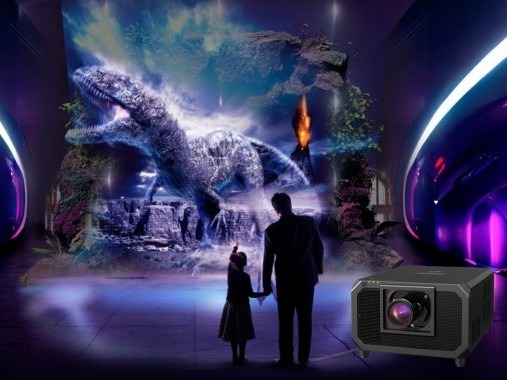
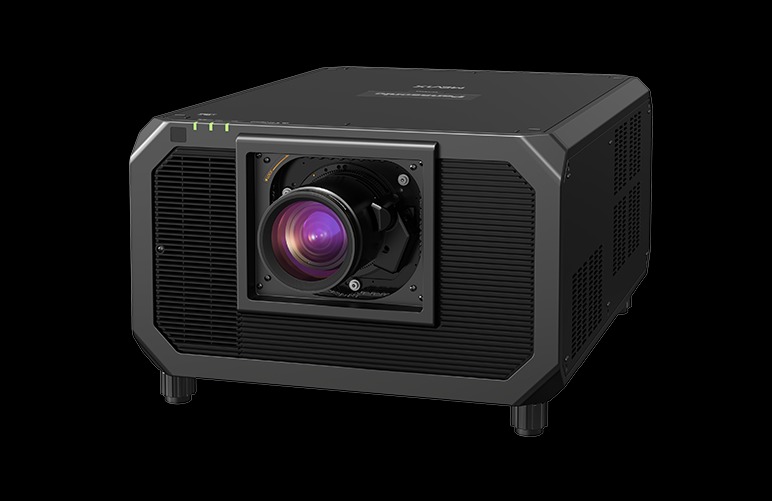
Panasonic Connect has announced the launch of the PT-RQ45K Series, a 3-Chip DLP projector with 40,000 lumens brightness and 4K resolution. It is scheduled to be released between July and September 2026.
This is Panasonic’s first projector in the 40,000-lumen category. It is built for rental and staging professionals who need high brightness for large venues and outdoor projection mapping.
The PT-RQ45K offers a resolution of 3840×2400 and supports high frame rate signals, including 1080/240p. It uses Quad Pixel Drive and a laser engine that includes dual blue and single red laser diodes.
It delivers 10,000 lumens more brightness than the earlier RQ35K model, while keeping the same chassis. This allows it to work with existing rental frames, flight cases, and lenses.
The projector has three 0.96-inch DLP chips, each with 1920×1200 pixels and a 16:10 aspect ratio. It includes a 5-inch LCD screen on the projector body for live system updates and image previews. It also supports Intel SDM expansion modules.
Panasonic says the PT-RQ45K remains compact and lightweight despite the brightness upgrade. Both standard and ANSI brightness are rated at 40,000 lumens, pending final confirmation.
In other news, Panasonic has launched the RB-F10 open-ear earbuds, offering an affordable alternative in the niche segment. They support Bluetooth 5.4, multipoint connection, background noise removal, and voice assistants.
For more daily updates, please visit our News Section.
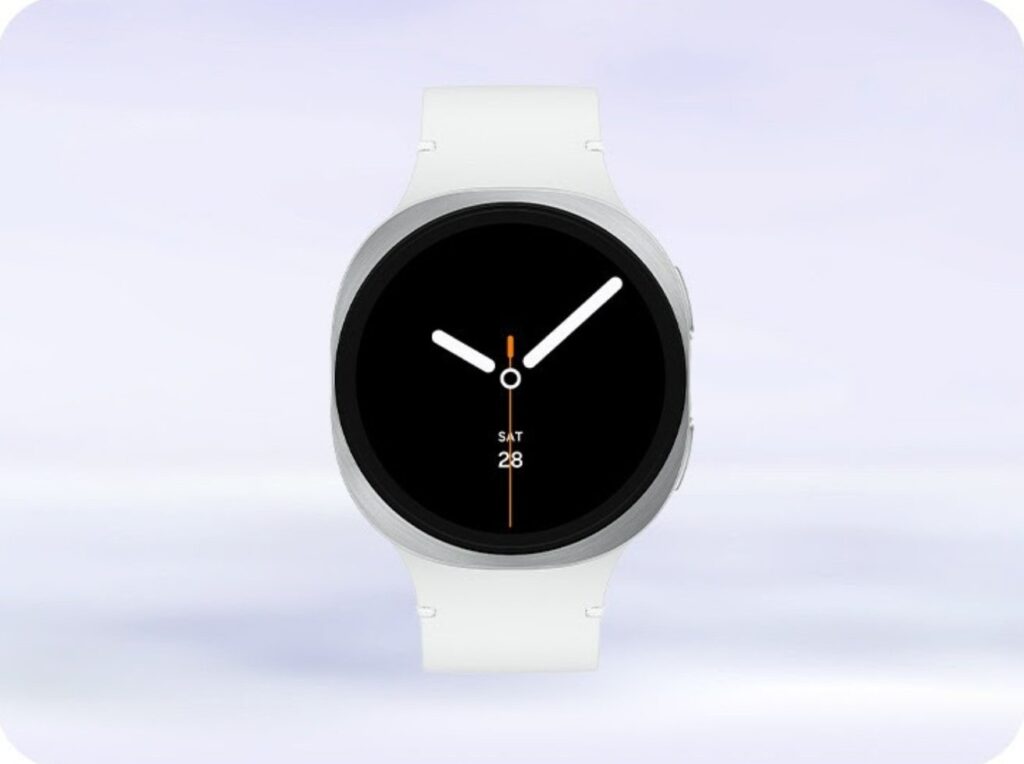
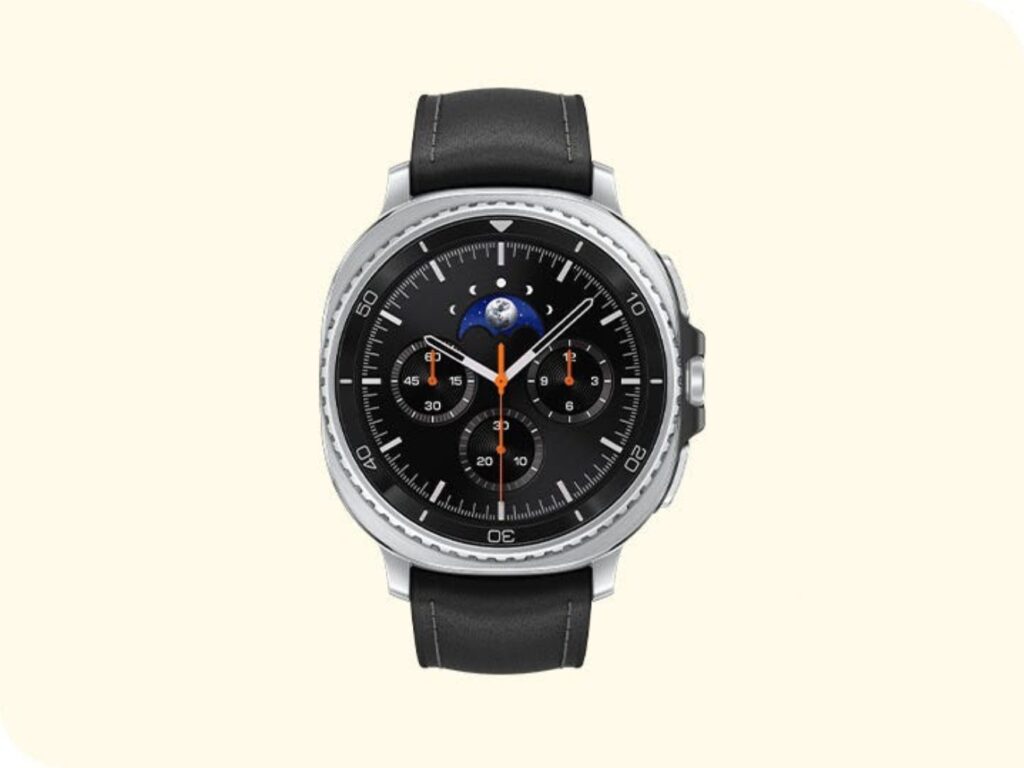
Samsung’s next Galaxy Unpacked event is just around the corner. Fresh renders of the Galaxy Watch 8, Watch 8 Classic, and a potential Galaxy Watch Ultra 2 have now surfaced, giving us a peek at what’s to come. With a bold new design and upgraded features, these smartwatches are gearing up to make a splash.
Galaxy Watch 8Galaxy Watch Ultra 2
Courtesy of leaker Evan Blass, new front-facing renders of the Galaxy Watch 8, Watch 8 Classic, and a possible Galaxy Watch Ultra 2 have hit the web. The renders showcase a unified “squircle” design—a squarish chassis with a round display—first introduced with the original Galaxy Watch Ultra. This new aesthetic now defines the entire Watch 8 lineup, setting it apart from previous models.
Galaxy Watch 8 Classic with physical rotating bezel
The Galaxy Watch 8 Classic marks the return of the beloved physical rotating bezel, a fan-favorite feature for intuitive navigation. Like the Ultra, it sports three side buttons: a home/power key, a back key, and a round Quick/Action button for launching apps or workouts. A prototype of the Watch 8 Classic recently surfaced on eBay, which you can check out here.
These watches are set to launch with One UI 8 Watch, based on Wear OS. Expect advanced tracking like carotenoid level measurements, personalized running guidance, and improved sleep monitoring tools. The Galaxy Watch 5 series and newer models will also get these perks via the One UI 8 Watch beta program, rolling out later in June 2025. Posts on X from tipsters like @OnLeaks suggest the Watch Ultra 2 could feature a titanium frame and enhanced durability, while the Watch 8 and Classic focus on larger displays and longer battery life. The Unpacked event, rumored for July 13, 2025, in New York City, is expected to confirm these details alongside the Galaxy Z Fold7 and Z Flip7.
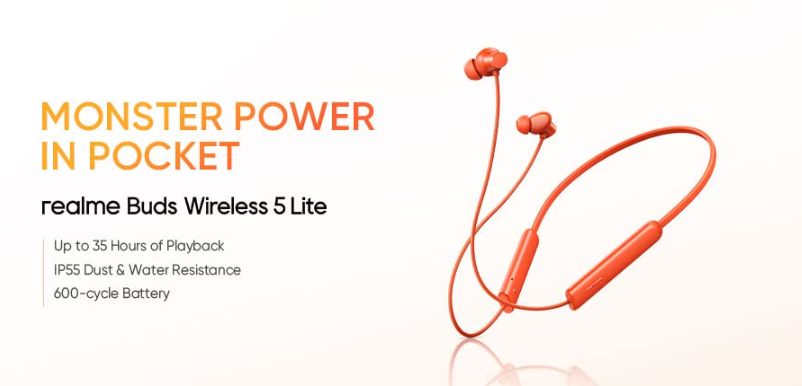
Realme has confirmed that the Buds Wireless 5 Lite will launch in India on June 23, 2025. The Amazon listing is live, showing the full specs and design of the upcoming neckband headset.
The Buds Wireless 5 Lite features 12.4mm dynamic bass drivers, Bluetooth 5.4, and support for SBC and AAC codecs. It can connect to two devices at once and has magnetic earbuds that snap together to pause or disconnect. The headset uses physical buttons for control.
It comes with AI ENC for better call clarity by cutting background noise. There is also a 45ms low latency mode made for gaming. The neckband has an IP55 rating, making it water and dust-resistant.
Battery life is rated at up to 35 hours on a full charge. A 10-minute charge gives 4 hours of playback. Charging is done through a USB Type-C port. realme says the battery can handle up to 600 charging cycles, which should keep it healthy for long-term use.
The Buds Wireless 5 Lite will be available in three colors: Cyber Orange, Haze Blue, and Void Black. Price and wider availability will be announced on launch day.
For more daily updates, please visit our News Section.
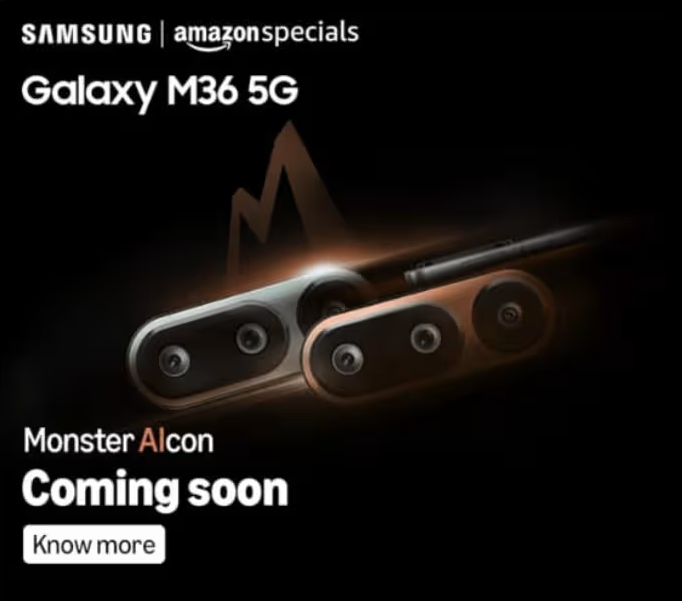
Samsung has started teasing the Galaxy M36 5G in India. Set to debut as an Amazon exclusive, this device promises a blend of affordability and modern features. With a launch looming, what’s in store for this intriguing addition to Samsung’s lineup?
The teaser (via 91mobiles) showcases a sleek design with a triple rear camera setup and hints at AI-powered features, aligning with Samsung’s push for smarter devices. The phone will also launch as the Galaxy F36 5G on Flipkart and as the Galaxy Jump 4 in South Korea, essentially the same device under different names. While no exact launch date is set, sources suggest it could arrive within weeks, possibly by late June 2025.
The Galaxy M36 5G is powered by the Exynos 1380 chipset and is expected to be priced similarly to its predecessor. This two-year-old processor includes four Cortex-A78 cores at 2.4GHz, four Cortex-A55 cores at 2GHz, and a Mali-G68 GPU. It boasts a Super AMOLED display with Full HD+ resolution and a punch-hole cutout for the selfie camera. The Exynos 1380, paired with 6GB RAM and 128GB or 256GB storage, scores around 1000 and 2880 in Geekbench’s single and multi-core tests, as reported by the source.
To recall, the Galaxy M35 featured the same Exynos 1380 chip, a 6,000mAh battery with 25W charging support, and a triple rear camera setup comprising 50MP + 8MP + 2MP sensors. It launched at a starting price of Rs. 19,999. The teaser image for the Galaxy M36 also showcases a triple-camera layout housed within a redesigned camera island, though details about the sensors remain under wraps for now.
Since its predecessor debuted in May last year, the Galaxy M36 is likely just around the corner, and Samsung is expected to reveal more details soon.
If you’re an iPhone user looking for a timepiece that blends effortlessly into your daily life, Casio has some great options. From sleek analog styles to feature-packed G-Shock models with Bluetooth support, the brand offers watches that not only look but also work well with iPhones. So now, we’ve found 3 Casio watches that might be the perfect pair to match your iPhone’s aesthetic.
Casio G-Shock GBA-950 Series
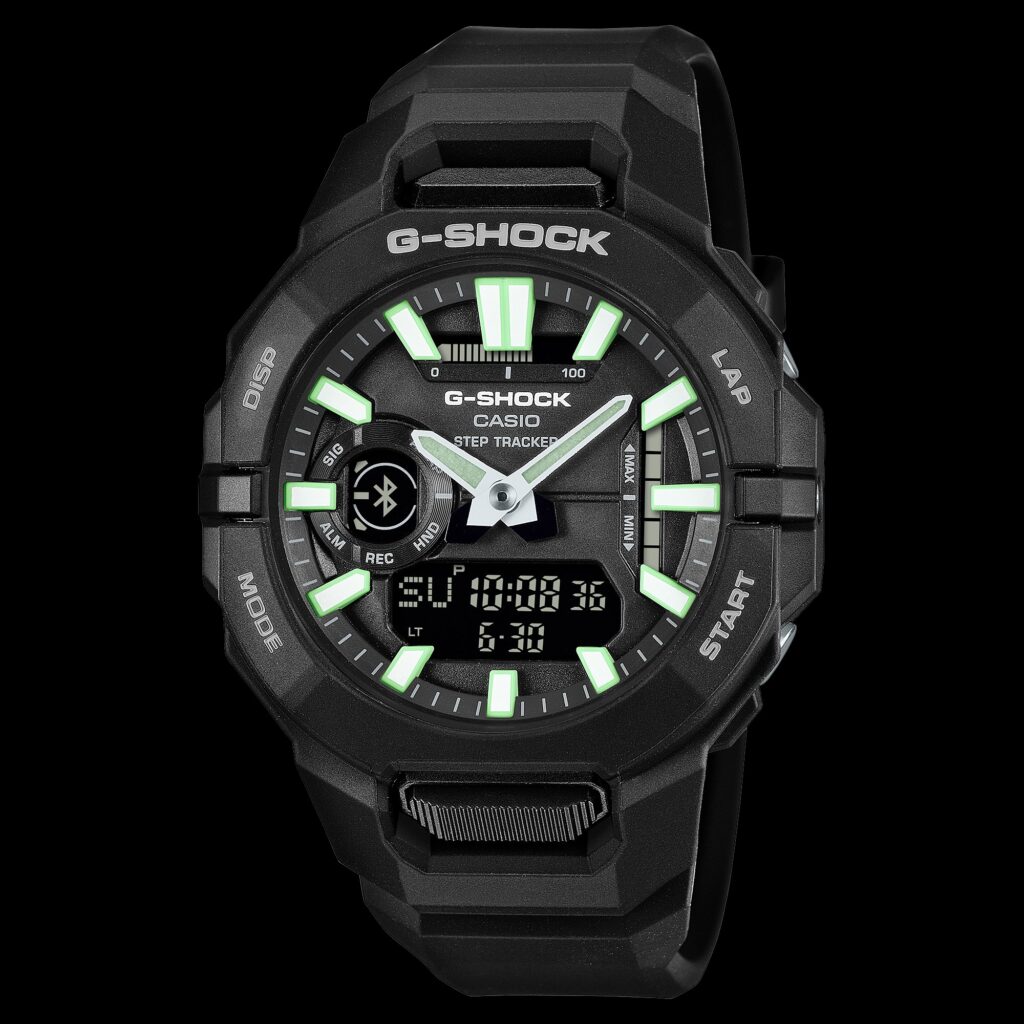
Kicking off this list, we have the G-Shock GBA-950 series that recently made its debut in Japan. iPhone users who are also fitness enthusiasts typically pair devices with an Apple Watch for its various health related sensors. But not everyone likes to use a smartwatch. This is where the new sports-focused G-Shocks come in. It supports features like step tracking, running distance and pace measurement, calorie tracking, interval timer, lap time tracking, and auto-lap.
Casio G-Shock GBA-950-1A
Since it can connect to the iPhone via Bluetooth and the Casio Watches app, the GBA-950 series can use the iPhone’s GPS to correct distance data. The GBA-950-1A in particular has a sleek all-black body with luminous hands and indexes for better visibility in low light. You also get a carbon fiber reinforced resin case, 20 ATM water resistance and a shock resistant body. Unlike an Apple Watch, the G-Shock doesn’t need charging every now and then.
Casio MR-G Kurogane-Iro Series
If you’re looking for a more premium design, Casio just unveiled the MR-G Kurogane-Iro models with a unique aesthetic. This includes the MRG-B2000BG-3A and MRG-B2000RG-3A variants. The former has a solid titanium bezel and band, both hardened and finished with green DLC (Diamond-Like Carbon) coating, while the latter uses a recrystallized titanium bezel, evoking patterns found in Japanese sword blades. So it pairs perfectly with the latest iPhone Pro’s titanium finish, but with adds its own personality.
Casio MR-G Kurogane-Iro
Both models come with a sapphire crystal glass, shock resistance, and 200 meter water resistance. These support Bluetooth pairing via the Casio Watch apps, world time (300 cities), and are powered by Casio’s Tough Solar system, which allows the G-Shocks to run for around 5 months per charge or just over 2 years in power saving mode.
Casio G-Shock Move
Health tracking is an essential smartwatch feature that is often a must-have for many. This feature isn’t common in typical watches but Casio has just the right model for you, blending form and function. The G-Shock Move DWH5600 lineup is a great pick that brings the company’s classic toughness with health monitoring features. It features the iconic octagonal shape and metal bezel, with the gray and black variants offering a sleek and elegant look.
Casio G-Shock DWH5600MB1A4
Casio packs the DWH5600 with useful features that are suited for both dedicated and casual athletes. These watches bring real-time heart rate monitoring via an optical sensor along with an accelerometer that can track your steps and estimate the calories you burn. There is even a blood oxygen sensor as well as a partnership with Polar that brings performance analyzing tools.
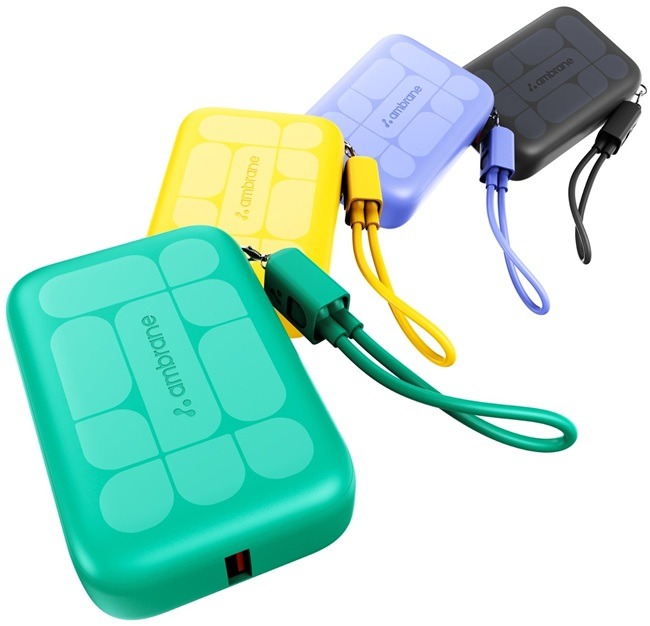
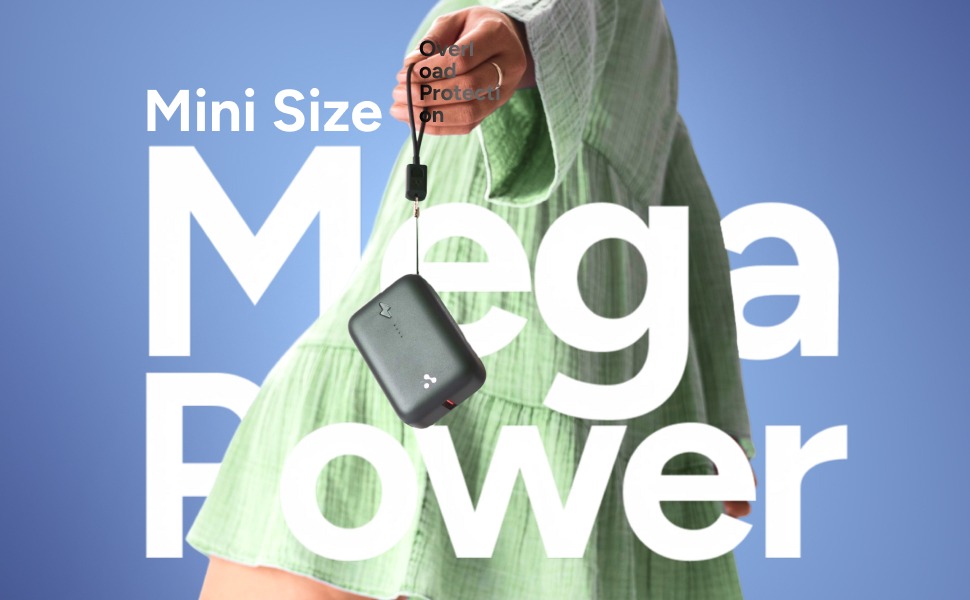
Ambrane has launched the PowerMini 10, a compact 10,000mAh power bank made in India at its Sonipat facility near Delhi. It is small enough to fit in a pocket and weighs just 184 grams. The body measures 8.6 x 2.5 x 5.8 cm.
The power bank features a built-in detachable Type-C cable that also works as a hook to hang it from a bag or carry it easily. It supports 22.5W BoostedSpeed charging and offers three output options: the built-in Type-C cable, a separate Type-C port with 22W output, and a USB-A port with 22.5W output.
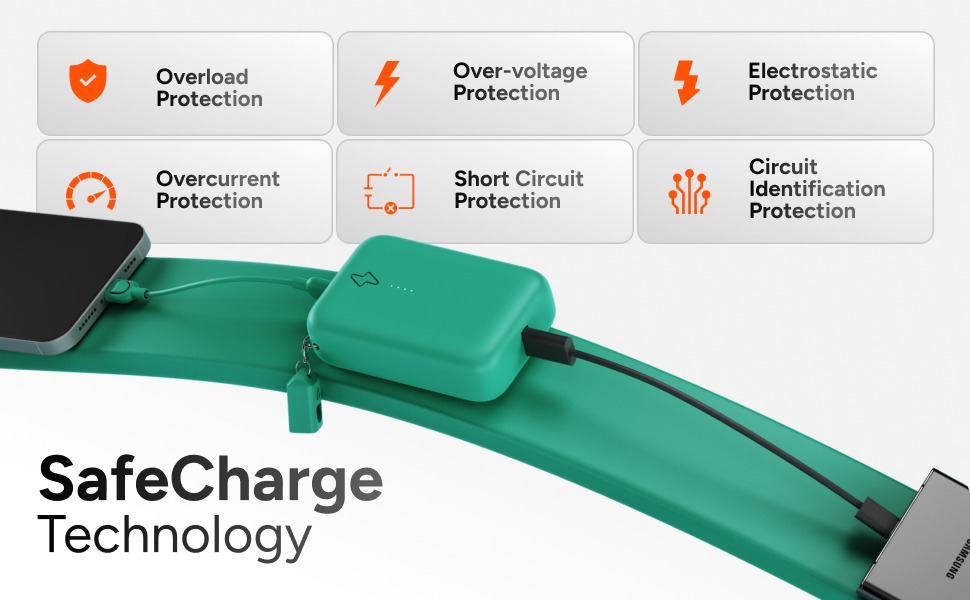
It is compatible with a wide range of devices and uses Ambrane’s SafeCharge Technology for safe and efficient charging. The unit is BIS certified and includes LED indicators to show charging levels.
Pricing & availability
The PowerMini 10 comes in four color options: Black, Yellow, Purple, and Green. It is priced at ₹1,399, but for a limited time, it is available at ₹1,299 on Amazon.in and the Ambrane website. It includes a 6-month warranty.
Please Note: When you buy something using the links in our articles, we may earn a small commission at no cost to you.
Previously, Ambrane has launched two new power banks in India, the Stylo N20 (20,000mAh) and Stylo N10 (10,000mAh). Both feature a compact design, rubberized finish, loop holder with an integrated Type-C cable, dual ports, 22.5W fast charging, Safe Charge Tech, and Smart LED indicators. The N20 weighs 414g, while the N10 weighs 234g.
For more daily updates, please visit our News Section.
Earlier today, Xiaomi revealed the design of the upcoming Redmi K80 Ultra. Now, the company has shared new details on Weibo about the device’s chipset and thermal management. Aimed at gamers and power users, the K80 Ultra is shaping up to be one of Redmi’s most performance-focused flagships to date.
The device will be the first to combine MediaTek’s flagship Dimensity 9400+ chipset with Xiaomi’s in-house D2 discrete graphics chip. This powerful pairing has already scored over 3.24 million points on AnTuTu V10, setting a new record on the platform. While benchmark scores don’t always reflect real-world performance, the result signals serious capability, especially for a phone expected to launch within the 3000 yuan ($418) bracket.
Xiaomi has matched this raw power with a redesigned thermal architecture. The K80 Ultra will feature Redmi’s largest-ever 3D IceLoop vapor chamber, built to handle sustained gaming and multitasking loads. It is further supported by Fury Engine 4.0, a software optimization suite designed to push performance tuning even further.
Leaked specifications suggest the K80 Ultra will come with a 6.83-inch LTPS OLED display at 1.5K resolution, a 7,500mAh battery with 100W fast charging, and an IP68-rated build. It features a flat panel with subtle corner curves, a quad-curved metal frame, and a premium fiberglass back.
Xiaomi has confirmed additional premium features such as an ultrasonic fingerprint sensor, an upgraded stereo speaker setup, a refined tactile vibration motor, and a metal mid-frame for structural rigidity.
Alongside the smartphone, Xiaomi is preparing to launch the Redmi K Pad. The tablet features an 8.8-inch LCD display with 3K resolution and a 165Hz refresh rate. It is powered by the Dimensity 9400+ chipset, runs Android 15, and is expected to offer up to 16GB of RAM with 67W fast charging support. The design is minimal, with a single rear camera and LED flash, and it is positioned to compete with tablets like the iPad Mini 7, Red Magic Gaming Tablet 3 Pro, and Lenovo Legion Y700 (Gen 4).
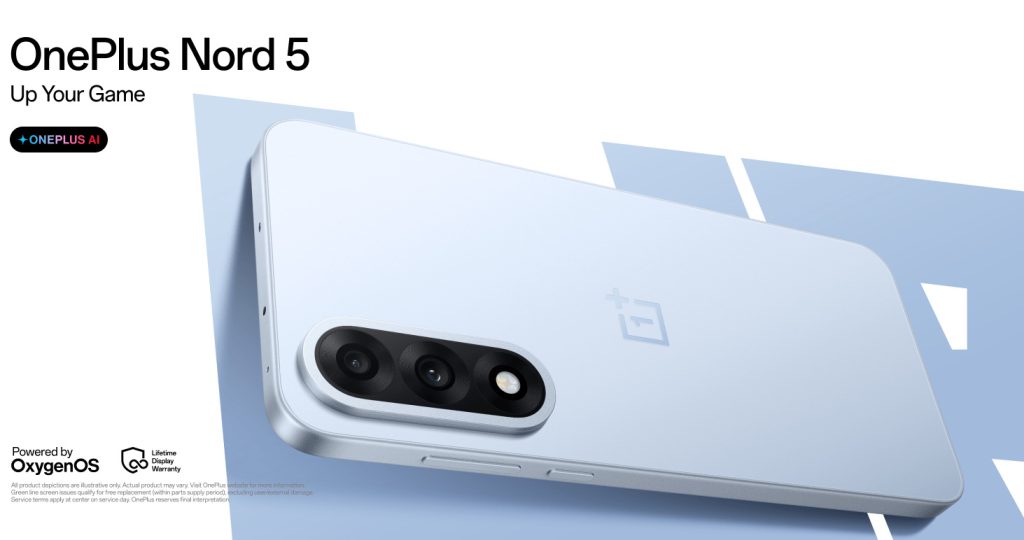
The OnePlus Nord 5 will be among the latest entries in the brand’s popular Nord series. This will be an upper mid-range smartphone, packing some impressive specs and upgrades over its predecessor. From teasers to leaks, here’s a quick roundup where we break down all the key details surrounding the upcoming phone.
The Chinese brand’s new Nord 5 is basically a rebranded global version of the Ace 5 Ultra Edition. While there are slight differences in terms of specifications, the overall design is identical. So you get a flat front display and a flat rear panel with rounded corners. The back also has a vertically stacked dual camera setup in an oval shaped module. OnePlus released the Ace 5 Ultra with an IP65 rating for water and dust resistance, and the Nord 5 likely offers similar protection.
This model may launch in India in White and Black color options. The display specs of the next-gen Nord are still unknown, but it might be the same as the Ace 5 Ultra as well. OnePlus launched the Ace 5 Ultra with a tall 6.83-inch AMOLED display with a 1.5K resolution, a 144Hz refresh rate, 1400 nits of peak brightness, and 3840Hz PWM dimming.
2. Specifications
Unfortunately, the Nord 5 was just teased with the Qualcomm Snapdragon 8s Gen 3 SoC, making it the first Nord model with a Snapdragon 8 series processor. This is a downgrade over the Ace 5 Ultra that was announced with MediaTek’s latest and greatest Dimensity 9400+ SoC. It is expected to pack a huge battery, which could have a 6,550Ah capacity. The device may support 80W wired fast charging as well.
This processor also enables it to run Call of Duty Mobile and BGMI at 144fps via frame interpolation. The chip is rumored to be paired with at least 8GB of RAM (12GB top model) and a starting storage option of 256GB. Keeping these beefy specs cool is a large 7300 mm² VC cooling mechanism. Other notable features likely include an optical in-display fingerprint scanner, stereo speakers, Bluetooth 5.3, Android 15 OS based OxygenOS 15 custom skin out of the box, and an infrared sensor.
3. Camera
Once again, the camera hardware details have yet to be confirmed. We can assume that the specs are the same as the Ace 5 Ultra. So the rear could have a 50MP primary camera and an 8MP ultra wide angle lens, while the front houses a 16MP shooter for selfies and video calls.
4. Launch Date
OnePlus just confirmed the official launch date of the Nord 5, Nord CE 5, and the OnePlus Buds 4. These products will be debuting globally in the Indian market on 8th July 2025 at 2PM IST. Availability details have yet to be confirmed but the teaser did reveal a lifetime warranty for the display. This is likely related to the infamous green issue that plagued previous OnePlus phones. Thanks to these specs and its expected competitive pricing, the Nord 5 is set to be the most powerful Nord series smartphone.
For more daily updates, please visit our News Section.
Announced in April, the Snapdragon 8s Gen 4 is a high-end premium chipset from Qualcomm that offers excellent performance and efficiency. It features a high-performance octa-core CPU that operates at up to 3.2GHz and a capable Adreno 825 GPU, ensuring smooth graphics performance.
On the other hand, the Dimensity 8400 Ultra is a mid-range announced back in December 2024. It also features a capable CPU and GPU that operate at a higher speed than the Snapdragon 8s Gen 4. However, there’s much more beneath the surface, which we will uncover in this detailed comparison. How do these two chipsets stack up against each other? Which offers the better performance and features? Let’s break it down.
Let’s begin with a spec sheet:
Snapdragon 8s Gen 4
Dimensity 8400 Ultra
Announced
April 2025
December 2024
Manufacturing
4nm (TSMC)
4nm (TSMC)
CPU
1 x 3.21 GHz — Cortex-X3 3 x 3 GHz — Cortex-A720 2 x 2.8 GHz — Cortex-A720 2 x 2.02 GHz — Cortex-A720
1 x 3.25 GHz — Cortex-A725 3 x 3 GHz — Cortex-A725 4 x 2.1 GHz — Cortex-A725
GPU
Adreno 825 GPU Ray tracing support Snapdragon Elite Gaming features
Mali-G720 MP7 Ray tracing support MediaTek HyperEngine features
NPU
Qualcomm Hexagon NPU
MediaTek NPU 880
Storage/Memory
UFS 4.0 LPDDR5x, up to 4.8GHz
UFS 4 + MCQ LPDDR5x, up tp 8533Mbps
Camera
Spectra triple 18-bit AI ISP Up to 320MP single camera Semantic segmentation support Up to 4K/60fps video recording
Imagiq 1080 ISP Up to 320MP single camera Semantic segmentation support Up to 4K/60fps video recording
MediaTek 5G modem Peak speed: 5.17Gbps Wi-Fi 6E Bluetooth 5.4
Snapdragon 8s Gen 4 vs Dimensity 8400 Ultra: Benchmark battle
Note: The following benchmark tests were conducted on the Redmi Turbo 4 Pro (powered by Qualcomm Snapdragon 8s Gen 4) and Poco X7 Pro (powered by MediaTek Dimensity 8400 Ultra).
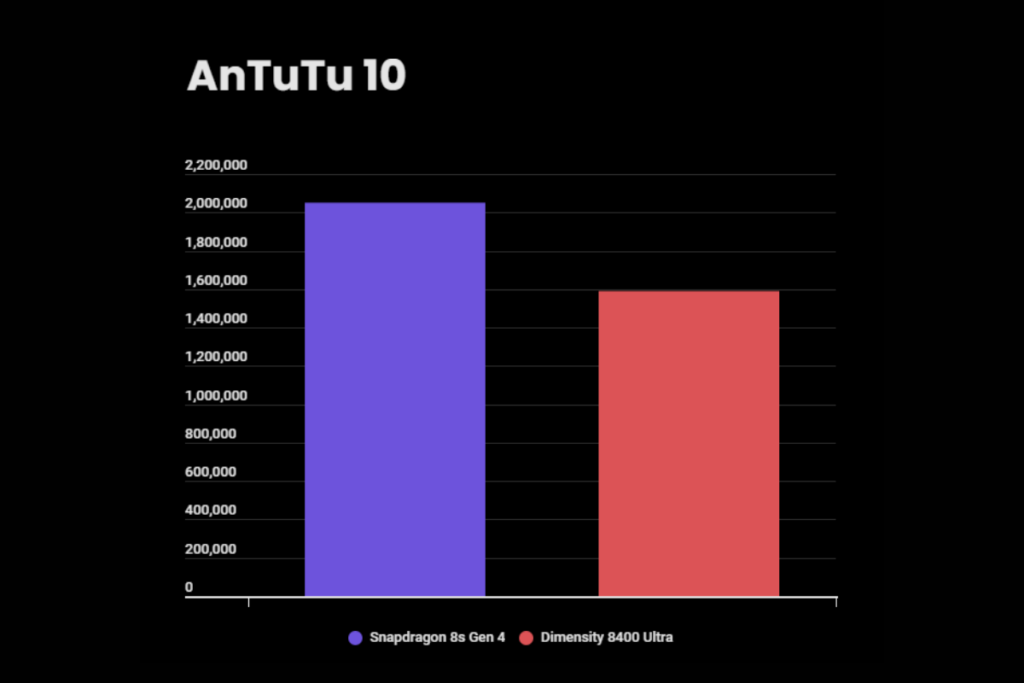
AnTuTu comparison
SD 8s Gen 4
D8400 Ultra
AnTuTu score
2,050,881
1,590,202
CPU
460,339
370,994
GPU
852,942
567,384
Memory
410,236
329,331
UX
327,364
322,493
In the AnTuTu benchmark comparison, the Snapdragon 8s Gen 4 clearly outperforms the Dimensity 8400 Ultra with a total score of 2,050,881 — roughly 29% higher than the 8400 Ultra’s 1,590,202. This advantage is consistent across every test category.
The Snapdragon chip delivers 24% better CPU performance (460,339 vs 370,994), making it more capable in handling demanding tasks and multitasking. Its GPU score is also significantly higher — 852,942 vs 567,384 — marking a 50% improvement in graphics performance. Additionally, the 8s Gen 4 leads in both memory (410,236 vs 329,331) and UX (327,364 vs 322,493), although the UX difference is marginal. Overall, the Snapdragon 8s Gen 4 stands out as the more powerful and well-rounded performer in synthetic benchmarks.
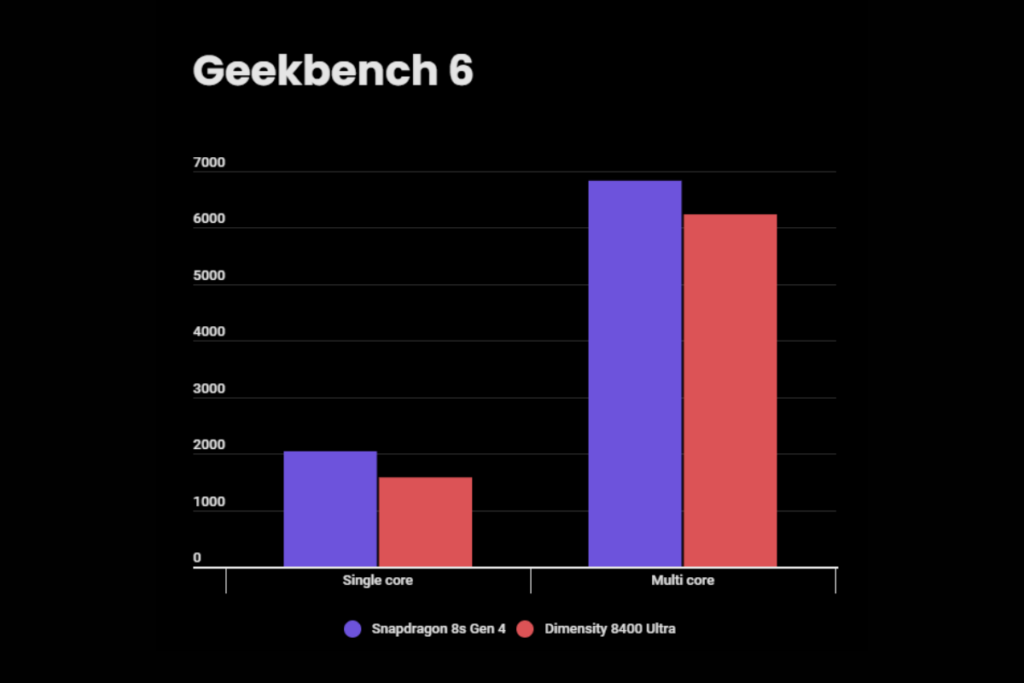
Geekbench comparison
SD 8s Gen 4
D8400 Ultra
Single core
2,041
1,579
Multi core
6,833
6,238
The Snapdragon 8s Gen 4 shows a decisive performance lead over the Dimensity 8400 Ultra. It scores 2,041 in the single-core test — about 29% higher than the Dimensity chip’s 1,579. This means improved responsiveness in tasks such as app launches, UI navigation, and light multitasking.
In multi-core performance, the Snapdragon 8s Gen 4 also maintains an edge with a score of 6,833, outperforming the Dimensity 8400 Ultra’s 6,238 by nearly 10%. This gives it an advantage in handling heavier workloads, such as multitasking and gaming. Overall, the Snapdragon chip proves to be stronger across the board in raw CPU power.
Snapdragon 8s Gen 4 vs Dimensity 8400 Ultra: key differences that matter
Performance
The Snapdragon 8s Gen 4 and Dimensity 8400 Ultra utilize TSMC’s 4nm process node and the same ARMv9.2-A instruction set, but they have distinct CPU architectures. The 8s Gen 4 features one Cortex-X4 core and seven Cortex-A720 cores. In contrast, the Dimensity 8400 Ultra features all Cortex-A725 cores.
The Cortex-X4 is significantly more powerful than Cortex-A720 and is designed to handle demanding tasks. In contrast, the Cortex-A725 is better optimized for efficiency and sustained performance rather than peak speed. That’s why the Snapdragon 8s Gen 4 achieves higher scores on benchmarks.
For graphics, the Snapdragon 8s Gen 4 features Adreno 825, while the Dimensity chip utilizes Mali-G720 MP7 GPU. While the latter has a slightly higher peak frequency, the Adreno 825 features higher shading units, total shaders, and FLOPS, which are crucial for gaming performance. The result is better GPU performance on the Snapdragon chip.
Both chips also feature NPUs with support for various LLMs, enabling on-device intelligence. The AI also works with the camera for fine-tuning images.
Camera
The Snapdragon 8s Gen 4 features a Spectra 18-bit Triple AI ISP with support for up to 320MP camera. With zero shutter lag, it supports up to 108MP single-camera or 36MP triple-camera setups. The chip also supports real-time semantic segmentation in photos and videos with up to 250 layers. Additionally, the chip offers a range of camera features, including AI-based auto-exposure, low-light capture, Truepic photo capture, Video super resolution, and Bokeh Engine.
The Dimensity 8400 Ultra has an Imagiq 1080 ISP with support for 320MP (maximum resolution). It can record HDR videos throughout the entire zoom range. The chip allows up to 4K video recording, similar to the Snapdragon 8s Gen 4.
Connectivity
The Snapdragon 8s Gen 4 has an integrated 5G modem with a maximum download speed of 4.2Gbps. On a Wi-Fi 7 connection, the maximum speed can reach up to 5.8Gbps.
The Dimensity 8400 Ultra has a slightly lower peak connection speed of 5.17 Gbps. The Wi-Fi and Bluetooth standards are also slightly downgraded — Wi-Fi 6E (vs. Wi-Fi 7) and Bluetooth 5.4 (vs. 6.0).
Snapdragon 8s Gen 4 vs Dimensity 8400 Ultra: Conclusion
In conclusion, the Snapdragon 8s Gen 4 emerges as the more powerful and versatile chipset when compared to the Dimensity 8400 Ultra. It dominates across all major benchmark categories — CPU, GPU, memory, and UX — and consistently delivers better scores in both AnTuTu and Geekbench tests. With its inclusion of a high-performance Cortex-X4 core and the capable Adreno 825 GPU, the 8s Gen 4 excels in demanding tasks, gaming, and multitasking scenarios.
While the Dimensity 8400 Ultra holds its ground with solid efficiency and slightly higher clock speeds, it ultimately prioritizes sustained performance over peak power.
The Snapdragon 8s Gen 4 also excels in connectivity, AI capabilities, and imaging features, making it a better fit for users who want a truly premium smartphone experience without going full flagship.
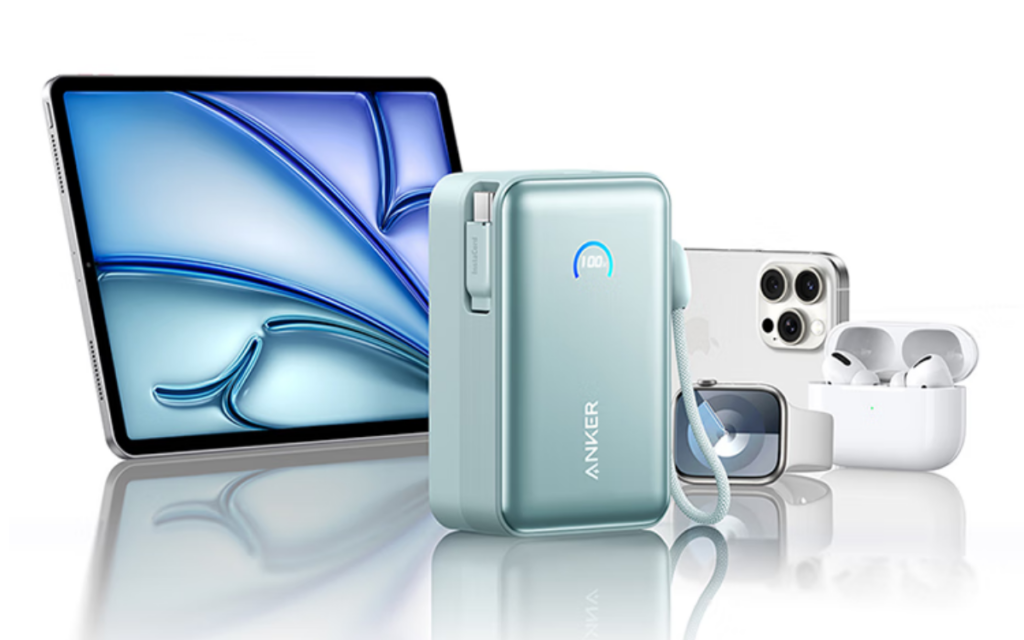
Anker has officially launched the S1 power bank in the Chinese market. The new model, which landed in the global market earlier this month, features a built-in retractable USB-C cable, 45W fast charging support, and a hidden display. It is available in black and white color options, priced at 299 yuan ($42).
Anker S1 Power Bank Specifications
The Anker S1 includes a 10,000mAh battery with a rated capacity of 5,800mAh. It features a compact design, measuring 81.5 x 50.5 x 36mm and weighing 235g. The body size is comparable to a small makeup case, making it easy to carry in a pocket or small bag.
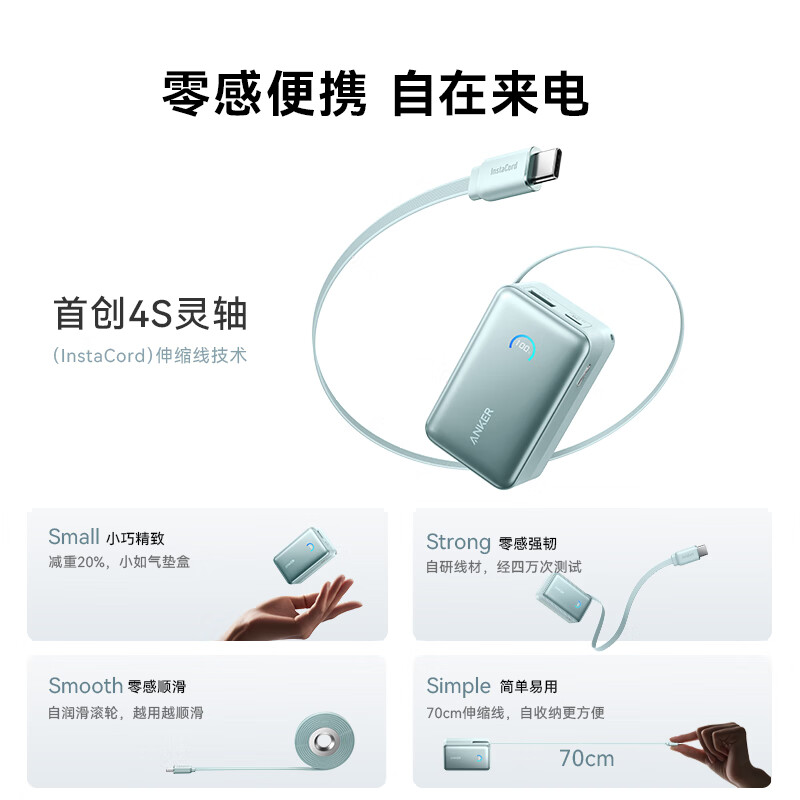
Anker has equipped the power bank with its proprietary 4S InstaCord retractable cable system. The built-in 70cm USB-C cable can withstand more than 20,000 pulls and 20,000 swings, according to Anker’s durability tests. The cable supports up to 45W fast charging and retracts automatically when not in use.
In addition to the retractable cable, the S1 includes one USB-C port and one USB-A port. Both USB-C outputs support 45W power delivery, while the USB-A port supports up to 22.5W. When multiple ports are used at the same time, the total output is limited to 24W. The USB-C port also supports 30W fast input for recharging the power bank.
The front of the device hides a TFT display beneath the surface. The screen activates during charging to show real-time output power, remaining battery percentage, and internal temperature. The display adds functionality while keeping the design clean and minimal.
Anker has implemented a three-layer thermal management system in the S1. The system uses low-resistance MOSFETs, graphene thermal sheets, and aerogel insulation materials. This setup helps manage heat during high-speed charging and protects the battery’s health.
The power bank supports a wide range of devices, including iPhones, iPads, Android smartphones, laptops, Nintendo Switch, wireless earbuds, and smartwatches. Anker claims the S1 can charge an iPhone 16 Pro to 50% in just 27 minutes. For older Apple models or Lightning-based devices, a separate Lightning cable version is available.
We use cookies on our website to give you the most relevant experience by remembering your preferences and repeat visits. By clicking “Accept”, you consent to the use of ALL the cookies.
This website uses cookies to improve your experience while you navigate through the website. Out of these, the cookies that are categorized as necessary are stored on your browser as they are essential for the working of basic functionalities of the website. We also use third-party cookies that help us analyze and understand how you use this website. These cookies will be stored in your browser only with your consent. You also have the option to opt-out of these cookies. But opting out of some of these cookies may affect your browsing experience.
Necessary cookies are absolutely essential for the website to function properly. This category only includes cookies that ensures basic functionalities and security features of the website. These cookies do not store any personal information.
Any cookies that may not be particularly necessary for the website to function and is used specifically to collect user personal data via analytics, ads, other embedded contents are termed as non-necessary cookies. It is mandatory to procure user consent prior to running these cookies on your website.